Before green screens, motion-capture suits, and computer-generated worlds, filmmakers built everything by hand. They constructed miniature cities, painted elaborate backdrops, and wrestled with real water, real animals, and real mechanical monsters. The actors and directors of Hollywood’s golden age worked under hot studio lights with limited technology, and what they produced still holds up decades later. These rare behind-the-scenes photos pull back the curtain on some of the most celebrated films ever made — and they reveal just how inventive, physical, and sometimes chaotic the process really was.

Gone With the Wind was one of the most ambitious productions Hollywood had ever attempted by 1939. Vivien Leigh’s casting as Scarlett O’Hara came after an exhaustive search, and the pressure on the entire cast was enormous. Moments like this one — a quiet break between takes — were rare on a set that demanded so much from everyone involved.

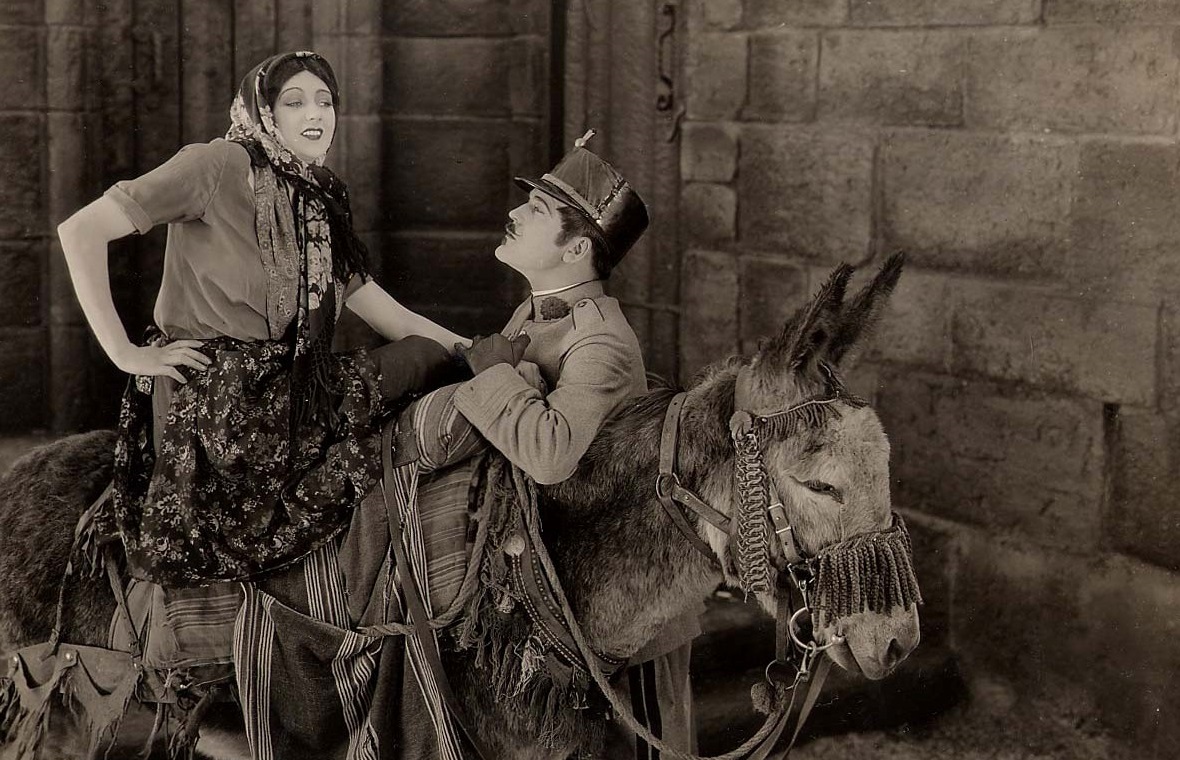
Hollywood wasn’t the only place producing big-screen spectacles. Mexican cinema had its own thriving industry, and films like The Batwoman brought superhero-style action to audiences south of the border. The costume and production work on films like this one rivaled anything being done in the United States at the time.

Cecil B. DeMille was known for his enormous, detail-obsessed productions. On the set of The Sign of the Cross in 1932, he worked closely with his cast to ensure every scene hit exactly the tone he wanted. Claudette Colbert, one of the era’s biggest stars, was a key part of making that vision work on screen.

The 1924 silent film adaptation of Peter Pan required dozens of costumed performers to bring J.M. Barrie’s fantasy world to life. Between takes, the actresses cast as mermaids relaxed in full costume — a reminder that even in the silent era, productions went to great lengths to create believable, detailed fictional worlds.

Spartacus in 1960 was a massive undertaking — a sword-and-sandal epic that required thousands of extras and months of production. Stanley Kubrick, who took over the director’s chair from Anthony Mann during production, worked through the logistics of the film alongside his cast, including Tony Curtis. The two men’s on-set dynamic shaped how many of the film’s key scenes came together.

Television production in the 1960s moved fast and demanded long days from its casts. Felix Silla, who played Cousin Itt on The Addams Family, spent hours under his signature costume during each shoot day. Candid moments like this one show the human side of performers who were almost entirely hidden from their audiences.

Not all of these images come from the comfort of a studio. This photograph from 1916 shows a filmmaker positioned at the edge of a real battlefield during the Battle of the Somme — one of the deadliest engagements in human history. The resulting documentary footage gave civilian audiences their first direct look at the reality of industrial-scale warfare.

The 1955 film Lady Godiva of Coventry dramatized the famous medieval legend, and filming Maureen O’Hara’s central scene required careful coordination between the director, camera crew, and the actress herself. O’Hara was one of Hollywood’s most respected leading women, known for taking on challenging roles without hesitation.

Few films in Hollywood history are as controversial and rarely seen as The Day the Clown Cried. Jerry Lewis directed and starred in this 1972 production about a clown imprisoned in a Nazi concentration camp who is forced to lead children to the gas chambers. The film was never officially released, and Lewis kept the only known print locked away until after his death.

Alfred Hitchcock’s Notorious brought together one of cinema’s most celebrated directors, one of its greatest actresses, and a cinematographer whose eye for light and shadow helped define the film’s tense atmosphere. This 1946 photo from RKO’s Culver City studio captures the working relationship between Hitchcock, Ingrid Bergman, and cinematographer Ted Tetzlaff — three professionals at the top of their craft.

The James Bond franchise brought its cast to some of the world’s most striking locations. Filming The Man With The Golden Gun in Hong Kong in 1974 gave the production an authentic visual backdrop that no studio set could replicate. Roger Moore, in his second outing as Bond, is pictured here alongside his co-stars between takes.

Escape to Victory brought together an unlikely cast — professional footballers and Hollywood actors — for a 1981 war film about a POW soccer match against a German team. Pelé, widely regarded as the greatest footballer who ever lived, took a break between takes. The film also featured Sylvester Stallone and Michael Caine, making it one of the more unusual casting decisions of the decade.

Bringing Herman Melville’s Moby Dick to the screen required building one of the largest prop animals ever constructed for a film. At Elstree Studios in London in 1954, the production team assembled and filmed the enormous mechanical whale used throughout John Huston’s adaptation. The scale of the build was staggering even by modern standards.

The African Queen took its cast and crew deep into the Congo and Uganda to film on location, and the physical demands on the actors were very real. For Humphrey Bogart’s famous leech scene, the makeup department applied rubber props directly to his skin — a painstaking process that the camera then captured in close detail.

The 1926 silent version of Ben-Hur was, at the time, the most expensive film MGM had ever produced. Francis X. Bushman played the villain Messala, and the production’s chariot race sequence required real chariots, real horses, and real danger. Several horses were killed during the filming of that sequence.

Japanese cinema developed its own remarkable techniques for depicting naval warfare on screen. In Shin-Toho’s studio pool in 1953, the production team for Battleship Yamato constructed and filmed detailed scale models of warships to recreate some of the Pacific War’s most dramatic engagements. The results were convincing enough to stand alongside anything Hollywood was producing at the time.

Capturing London from above in 1930 meant physically positioning a cameraman at height with bulky, heavy equipment. This photo of a crew member filming over Baker Street shows just how committed early filmmakers were to getting the shot — long before cranes, drones, or helicopter rigs became standard tools of the trade.

The Sound of Music filmed extensively on location in Austria as well as on studio sets in Hollywood. Eleanor Parker, who played the Baroness, and Richard Haydn, who played impresario Max Detweiler, are caught here in a candid moment between scenes. Behind the polished final film were weeks of precise rehearsals and long days on set.

Before James Cameron built his full-scale Titanic replica in 1997, filmmakers tackled the ship using intricate scale models. For the 1980 film Raise the Titanic!, professional frogman Courtney Brown was filmed underwater towing a 55-foot model of the vessel — a practical effects solution that required as much engineering as it did filmmaking.

The Misfits in 1960 was one of Marilyn Monroe’s most serious dramatic performances, and the production was deeply troubled. Monroe was dealing with personal difficulties throughout filming, and her relationship with co-star Clark Gable and director John Huston was strained. This photo captures her off-set during what would be one of her final film appearances.

The Gill-Man costume worn by Ben Chapman in Creature from the Black Lagoon took several hours to apply each day. The 1954 Universal monster film required Chapman to perform in a full rubber suit under hot lights, with limited visibility and no way to cool down between takes. The character became one of the most iconic monsters in horror history.

Seinfeld’s final season wrapped in 1998 after nine seasons and 180 episodes, and the mood on set during the last days of filming was notably emotional. The show had redefined American sitcom comedy, and the cast had spent nearly a decade together. This photo documents the end of that era.

Adam West’s Batman TV series launched in January 1966 and became an immediate cultural phenomenon. The production moved quickly — two episodes filmed per week — and West spent nearly every working day in the Batsuit. His portrayal of Bruce Wayne mixed deadpan seriousness with deliberate camp, a tone that the entire crew worked hard to maintain consistently.

Laurel and Hardy’s chemistry on screen looked effortless, but their films were carefully constructed and frequently revised during production. A deleted scene from 1928’s Their Purple Moment, featuring Edgar Kennedy alongside the duo, shows how much material the team shot and later cut in pursuit of the right comic rhythm.

Harold Lloyd’s clock-hanging scene in Safety Last is one of the most famous shots in silent film history. What this behind-the-scenes photo reveals is that Lloyd performed the stunt on a real building, with careful rigging designed to catch him if he fell — but with genuine height and genuine danger. Lloyd had already lost his right thumb and index finger in an earlier accident, making his continued stunt work all the more extraordinary.

Alfred Hitchcock was not permitted to film on or around the actual Mount Rushmore monument, so his production team built a detailed studio replica for the climactic sequence of North by Northwest. This behind-the-scenes photo from 1959 shows the scale of that construction — a full set designed to make audiences believe Cary Grant was clinging to the faces of American presidents.

The Batman TV series used inventive low-budget techniques to create its colorful, kinetic visual style. Shooting scenes with Adam West required creative camera placement and quick turnarounds to meet the show’s demanding production schedule. West remained fully committed to his character throughout, treating every scene with the same level of seriousness regardless of how absurd the situation on screen.

On the Waterfront was filmed entirely on location in Hoboken, New Jersey, giving the 1954 film a raw, documentary-like texture that set it apart from studio productions of the era. Marlon Brando and Karl Malden, both trained in method acting, developed their characters through rehearsal and improvisation. Their work together produced some of the most studied performances in American cinema.

The 1931 version of Dr. Jekyll and Mr. Hyde was praised for its transformation scenes, which director Rouben Mamoulian achieved through a combination of makeup changes and colored lens filters — no optical effects required. Frederic March won the Academy Award for Best Actor for his dual performance, and this photo captures the three key creative figures behind that achievement between setups.

West Side Story’s choreography demanded weeks of rehearsal before a single frame was filmed. Rita Moreno, who played Anita and won the Academy Award for Best Supporting Actress for the role, worked through the film’s complex dance sequences with the same precision she brought to every other aspect of her performance.

Alfred Hitchcock’s Marnie brought together two very different screen presences in Sean Connery and Tippi Hedren. The film’s themes were dark and psychologically complex, but this candid photo shows the lighter atmosphere that existed on set between takes — the kind of energy that kept long productions manageable for their casts.

Low-budget monster films of the early 1970s relied entirely on practical costume work to create their creatures. Actor Read Morgan getting into his Octaman suit in 1971 shows just how much physical labor went into bringing these characters to the screen — a process that could take hours and left the performer with little room to move or breathe.

The Goldfinger title sequence became one of the most iconic openings in the entire Bond franchise. Margaret Nolan was painted gold and filmed for the sequence in 1964 — footage that accompanied Shirley Bassey’s celebrated theme song. The visual concept of a gold-painted woman was directly tied to the film’s central villain and his method of killing.

Federico Fellini’s La Strada required its lead actress, Giulietta Masina, to portray Gelsomina — a childlike, deeply vulnerable character — with complete authenticity. Masina’s makeup was designed to emphasize those qualities, and this behind-the-scenes photo from 1954 shows the careful preparation that went into each day of filming.

Jaws nearly destroyed itself in production. The mechanical shark — nicknamed Bruce by the crew after Spielberg’s lawyer — malfunctioned so often that Spielberg was forced to keep it off-screen for most of the film, a decision that accidentally made the shark far more frightening. This photo of Spielberg inside Bruce’s jaws captures a lighter moment in what was, by all accounts, an extraordinarily difficult shoot.

Champion in 1949 was the film that turned Kirk Douglas from a supporting actor into a full-blown Hollywood star. Before production began, the makeup department ran tests to determine how Douglas would look under studio lighting in various conditions — a standard part of pre-production that ensured consistency across weeks of filming.

John Lennon’s only solo acting role came in Richard Lester’s 1967 anti-war film How I Won the War. Lennon played Private Gripweed and filmed his scenes in Spain while the Beatles were on hiatus. It was during this production that Lennon first wore the wire-rimmed glasses that became one of his most recognizable features.

The promotional artwork for The Outlaw became as controversial as the film itself. Jane Russell posed for illustrator Zoe Mozert, whose painted poster was considered so provocative that it was banned in many markets. The resulting publicity helped turn Russell into one of Hollywood’s biggest names before the film even secured a wide release.

On Her Majesty’s Secret Service was notable for replacing Sean Connery with George Lazenby as Bond — a decision that required extensive casting work for every role in the film. Director Peter Hunt and actor John Richardson are seen here during auditions in 1969, working through the enormous task of assembling the film’s supporting cast.

When Seinfeld filmed its first episode in 1989, nobody involved knew it would become one of the most successful television comedies ever made. This photo of Jerry Seinfeld on day one of production shows the beginning of a run that would last nine seasons. The show’s creators, Seinfeld and Larry David, had pitched it to NBC as a show about nothing — a concept that clearly worked.

By 1969, John Wayne had been making westerns for over four decades. The Undefeated, filmed in Mexico, was one of his later entries in the genre, and this candid photo shows the veteran actor taking a moment to rest between scenes. Wayne’s on-screen persona as the rugged American frontiersman was built through hundreds of productions just like this one.

Esther Williams built her entire Hollywood career on aquatic films, performing elaborate underwater routines that required exceptional swimming ability and precise choreography. For Jupiter’s Darling, camera crews were positioned underwater to capture Williams in action — a technically demanding setup that required waterproofed equipment and careful coordination between the director and his submerged cinematographers.

Alfred Hitchcock directed Grace Kelly in three films — Dial M for Murder, Rear Window, and To Catch a Thief — and their professional relationship was one of the most productive in his career. This photo from the Riviera-set production in 1955 shows a relaxed moment between director and star, far removed from the suspense playing out on screen.

David Lynch’s 1984 adaptation of Dune was a massive practical effects production. The film’s enormous machinery — including the harvester vehicles used to collect the spice melange — was built as large-scale physical models and filmed against carefully composed backgrounds. The production’s ambition matched the scale of Frank Herbert’s original novel, even if the final film divided audiences.

Busby Berkeley was the master of the Hollywood musical spectacle, known for his overhead geometric dance formations and elaborate staging. On the set of Girl Crazy in 1943, he worked with Judy Garland and Mickey Rooney — two of MGM’s biggest stars — to produce a film that leaned heavily on their chemistry and natural showmanship.

In early Hollywood, the sound of tap dancing was often recorded separately from the visual performance and synced in post-production. Ann Miller, one of the fastest and most technically precise tap dancers in film history, recorded the audio for her routines in Reveille With Beverly in a controlled environment to ensure the sound was captured cleanly.

Ocean’s Eleven in 1960 assembled the Rat Pack — Frank Sinatra, Dean Martin, Sammy Davis Jr., Peter Lawford, and Joey Bishop — for a Las Vegas heist story that was as much a showcase for their collective personalities as it was a traditional narrative film. This test shot of Sammy Davis Jr. documents the pre-production process behind what became a defining document of early-1960s Hollywood cool.

The shower scene in Psycho is one of the most analyzed sequences in film history. Hitchcock shot it over seven days using 70 different camera setups to produce 45 seconds of finished footage. This behind-the-scenes photo shows the director at work with Janet Leigh on the Bates Motel bathroom set — a sequence that permanently changed what audiences expected from horror films.
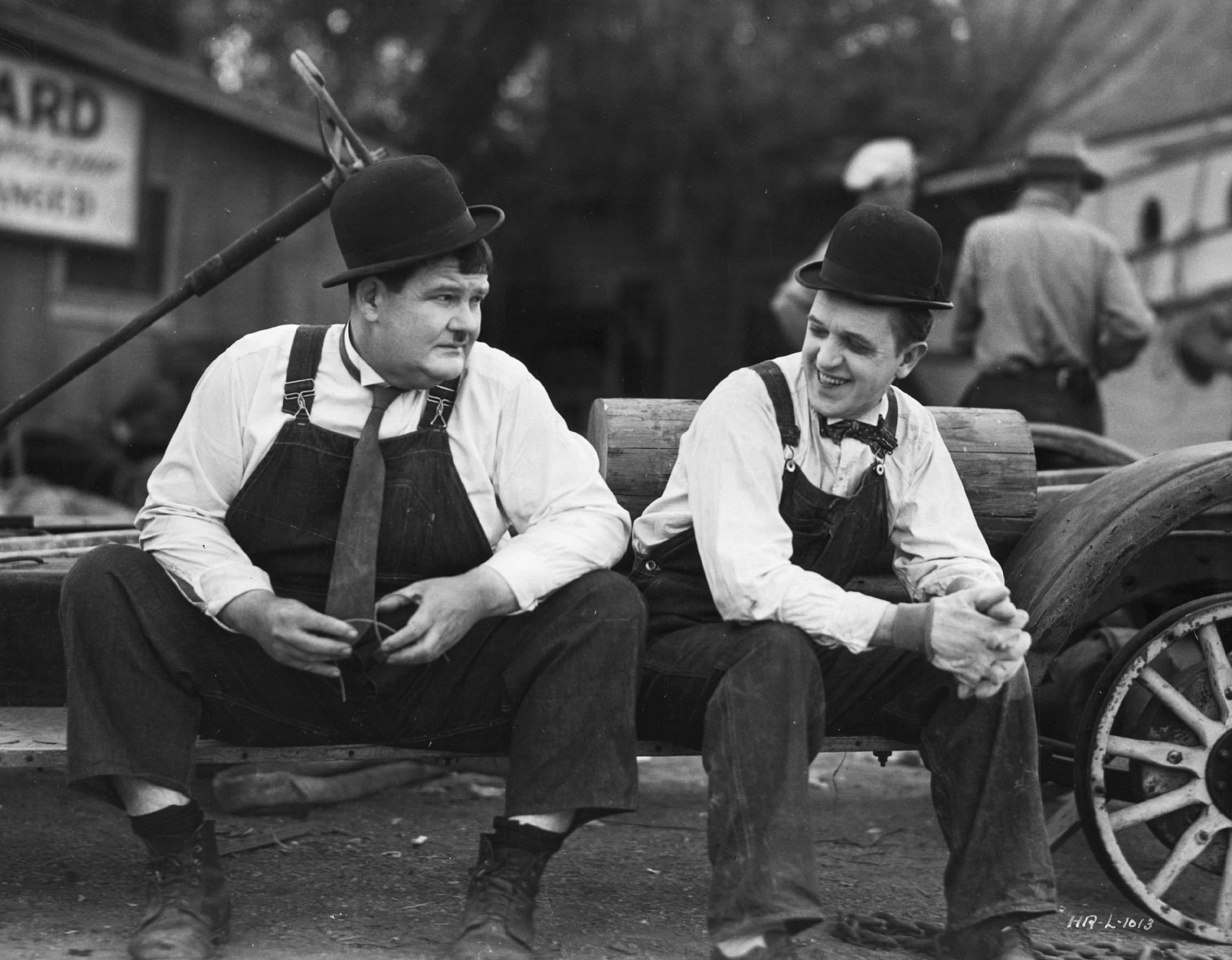
Laurel and Hardy’s Hal Roach productions operated on tight schedules and modest budgets, but the pair consistently delivered films that audiences returned to watch repeatedly. Towed in a Hole, filmed in 1932, is considered one of their finest short films. This break between takes shows the two men out of their familiar screen characters and simply at rest.

Beach Party in 1963 launched a whole series of sun-and-surf films that defined a specific strain of early-1960s American pop culture. Annette Funicello and Frankie Avalon were the faces of the franchise, and their natural ease with each other on camera came through clearly in the finished films. This behind-the-scenes shot shows the production’s relaxed, fun-first atmosphere.

Raquel Welch was one of Hollywood’s biggest stars by 1968, and The Biggest Bundle of Them All cast her in a comedic heist film alongside Robert Wagner and Vittorio De Sica. This candid photo from production shows Welch between scenes — a glimpse behind the polished surface of a film built around its star’s powerful screen presence.
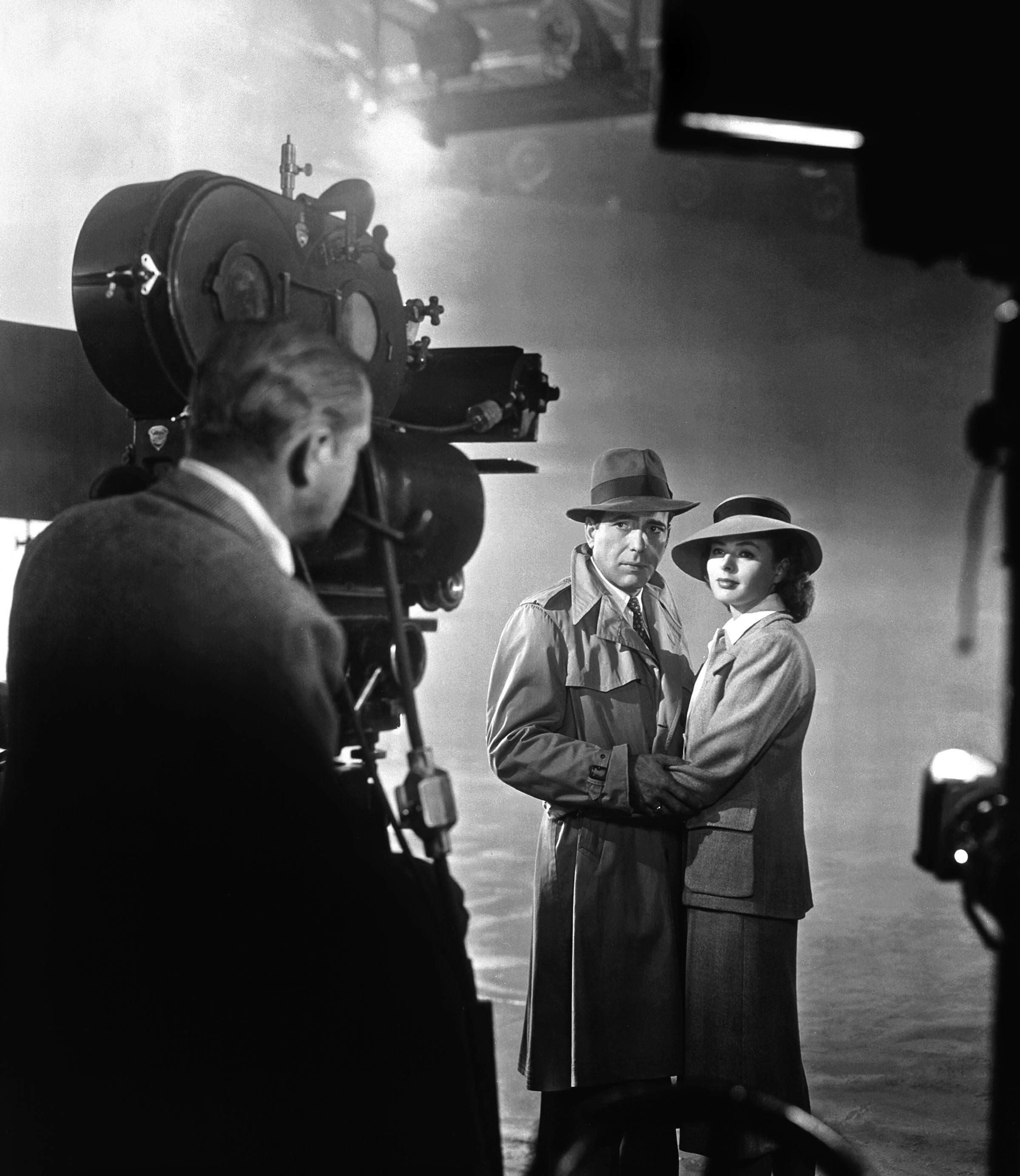
Casablanca is one of the most celebrated films ever made, and its production in 1942 was famously chaotic. The script was being rewritten daily, the ending wasn’t finalized until late in shooting, and the cast frequently didn’t know what direction the story was heading. The fact that the finished film feels as seamless as it does is a testament to the talent assembled in front of and behind the camera.

Blackmail in 1929 was Alfred Hitchcock’s first sound film and Britain’s first full-length talkie. Actress Anny Ondra had a strong Czech accent that was considered unsuitable for the role, so another actress spoke her lines into a microphone off-camera while Ondra mouthed them on set — an early example of the creative technical problem-solving that characterized Hitchcock’s entire career.

Superman in 1978 promised audiences they would believe a man could fly — and it delivered. The production used wire rigs, blue-screen compositing, and innovative camera work to put Christopher Reeve in the sky convincingly. This photo of Reeve and Margot Kidder during production captures a moment from what was, at the time, the most technically ambitious superhero film ever attempted.

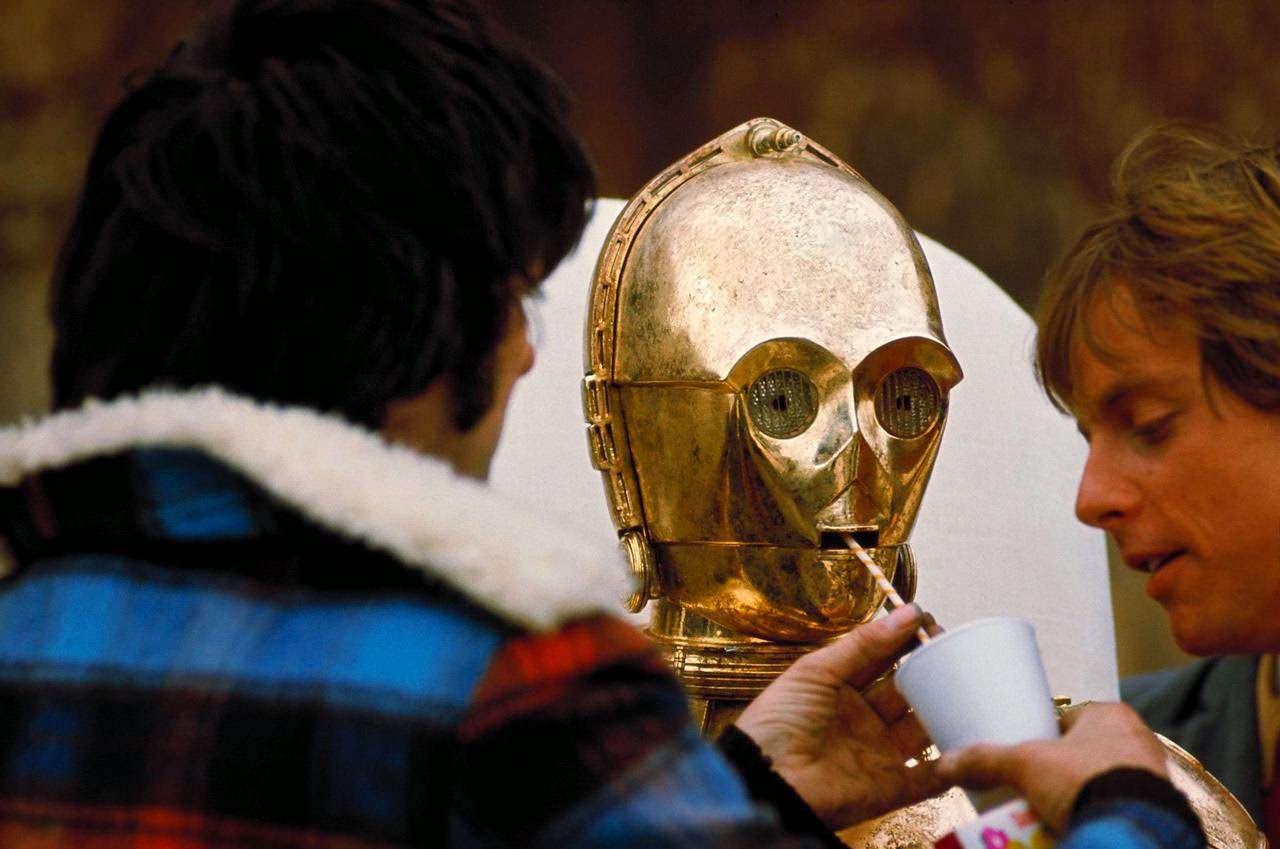
The opening crawl of every Star Wars film was produced by physically moving a camera along a long strip of illuminated text set at an angle. This photo from the production of The Empire Strikes Back in 1979 shows the simple but effective rig used to achieve the effect — a reminder that many of cinema’s most iconic visuals were created with surprisingly straightforward methods.

Laurence Olivier’s 1955 film version of Richard III brought one of Shakespeare’s most celebrated roles to the screen with full cinematic production values. Salvador Dalí, already one of the world’s most famous artists, contributed to the production’s visual development — a collaboration that underscores just how seriously filmmakers of the era treated their craft as high art.

John Huston filmed much of Moby Dick on the open Atlantic Ocean, which made for genuinely grueling conditions for the cast and crew. Gregory Peck, playing the obsessive Captain Ahab, spent days on the water in period costume while the production struggled with weather, mechanical whale malfunctions, and the physical demands of open-sea filming.

The 1959 Ben-Hur was filmed at Cinecittà Studios in Rome with a cast of thousands and a budget that was, at the time, the highest in Hollywood history. Between takes, the production’s army of costumed extras and actors waited on a set that blended ancient Rome with mid-century Italy — as this photo of a centurion on a Vespa makes abundantly clear.

The original Godzilla, released in Japan in 1954, was built on detailed miniature sets that the performer in the monster suit could destroy on camera. The production team at Toho Studios constructed scale models of Tokyo’s buildings, streets, and infrastructure with remarkable precision, then systematically demolished them for filming. The technique set the template for the entire kaiju genre.

The Birds was one of Hitchcock’s most technically demanding productions. Creating convincing attacks by hundreds of birds required a combination of trained animals, mechanical birds, optical effects, and — in some scenes — real birds attached to the actors with thin wires. This photo from 1962 shows Hitchcock on set, managing the controlled chaos of a film that pushed practical filmmaking to its limits.

Julie Andrews filmed The Sound of Music’s outdoor sequences on location in the Austrian Alps, and the conditions were frequently cold and uncomfortable. This photo from 1964 shows Andrews being drenched with water during production — one of many physically demanding moments that the actress worked through during what would become one of the highest-grossing films in Hollywood history.

Robert Shaw’s performance as Quint in Jaws is one of the most memorable in the film’s celebrated cast. This photo shows Shaw between takes on the scene in which Quint meets his end — eaten by the mechanical shark on the deck of the Orca. The relaxed pose in the photo contrasts sharply with one of cinema’s most visceral death sequences.

Broadway in 1928 was one of Universal’s most expensive silent productions, featuring elaborate nightclub sets and a large cast of performers. This photo of chorus girls in the dressing room between scenes offers a rare look at the day-to-day reality behind the glamour — the waiting, the costumes, and the long hours that defined life for performers deep in a major studio production.

Hitchcock’s presence on set was always deliberate. He famously pre-visualized every shot before production began, meaning that by the time cameras rolled, the film already existed in his mind in near-complete form. This second photo from The Birds set in 1962 shows the director at work — overseeing a production that required a level of logistical coordination that few directors before or since have matched.

Rebel Without a Cause was filmed just months before James Dean’s death in a car accident in September 1955. This photo of Dean and Natalie Wood listening to director Nicholas Ray between takes captures a moment in a production that neither of its young stars knew would become one of the defining films of their generation.

The Godfather’s production in 1971 was famously contentious. Paramount initially opposed the casting of both Marlon Brando and Al Pacino, and Francis Ford Coppola faced constant pressure from studio executives throughout filming. This photo of Coppola with Pacino and Diane Keaton shows a calmer moment on a set that frequently operated under intense scrutiny.

Dr. Strangelove required Peter Sellers to play three distinct characters, and his creative process on set was famously unpredictable. Stanley Kubrick gave Sellers a wide degree of freedom to improvise, and the collaboration between the two men — both perfectionists in very different ways — produced some of the sharpest political satire in film history. This photo from 1963 shows the two switching roles in a moment of on-set humor.

Cesar Romero’s Joker in the 1960s Batman series became iconic for one specific reason — he refused to shave his mustache for the role, so the white clown makeup was applied directly over it. This photo from 1967 shows Romero preparing for a surfing scene with Adam West, fully committed to a physical scene in a character costume that few actors would have taken on without hesitation.

Limelight in 1952 was Charlie Chaplin’s most personal film — a semi-autobiographical story about an aging music hall comedian facing irrelevance. Chaplin wrote, directed, starred in, and composed the music for the film. This photo from the set captures the filmmaker in a moment of quiet reflection during production of what many regard as his most emotionally honest work.

The Misfits was the final completed film for both Marilyn Monroe and Clark Gable. Gable died of a heart attack just eleven days after filming wrapped, and Monroe died in August 1962 before her next film was completed. This photo of the two on set in 1960 carries a particular weight knowing what followed so shortly after.
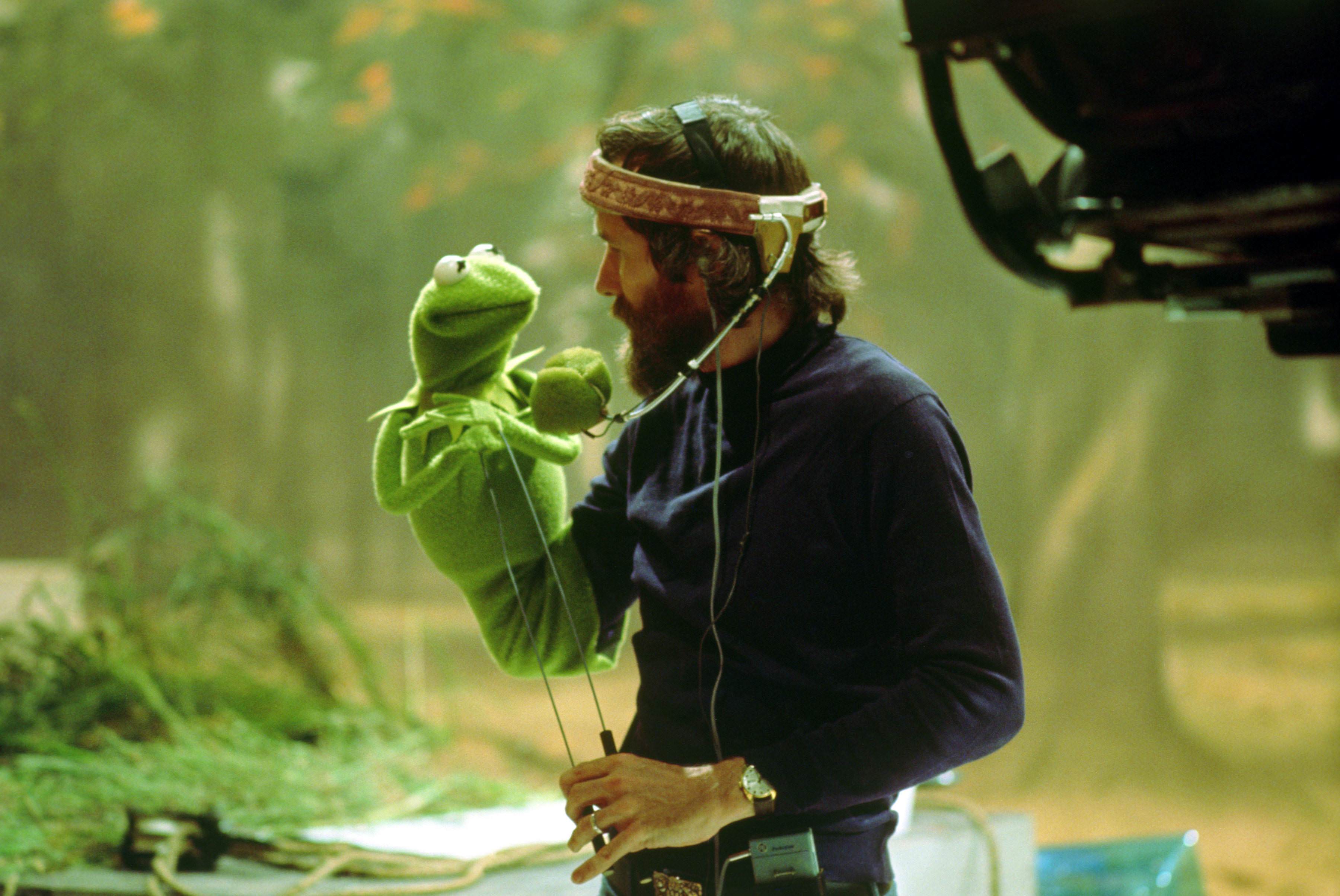
The Muppet Movie in 1978 was the first feature film for Jim Henson’s characters, and it required entirely new puppeteering techniques to place the Muppets in real outdoor locations. Henson and his team operated their characters from below the camera frame, often lying flat on the ground or working from concealed positions to maintain the illusion. This photo of Henson with Kermit documents a pivotal moment in the history of puppetry on film.
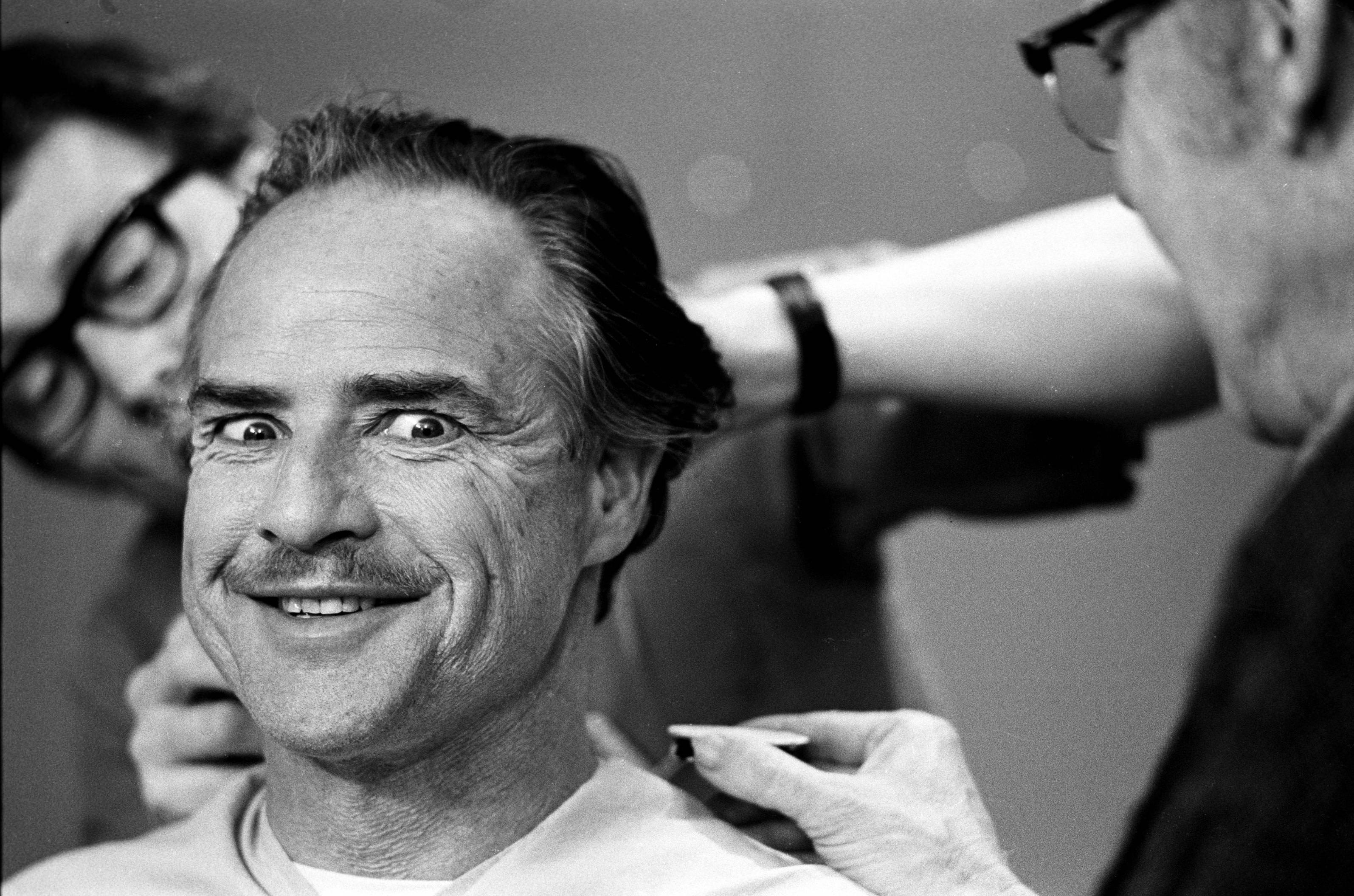
Marlon Brando’s transformation into Vito Corleone required prosthetic cheeks and careful makeup work to age the 47-year-old actor into the elderly patriarch. This photo from the New York shoot in 1971 shows Brando in the makeup chair — a rare glimpse of the man behind one of cinema’s most celebrated performances, clearly enjoying the process.