Most beauty contests in 1936 judged women from head to toe. This one was different. That year, England held a competition with a single, narrow focus: finding the six women with the most beautiful eyes in all of Britain. It was an unusual idea, but it drew real attention — and the photographs it produced are striking even today.
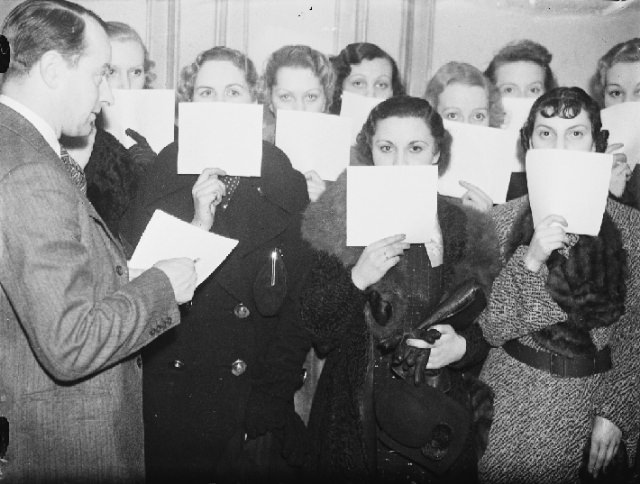
The contest was judged by Ernest Heasman, who evaluated each entrant based on her eyes alone. To make sure the judging stayed true to that standard, the women held sheets of paper across the lower halves of their faces. Nothing but the eyes could influence the outcome. No smile, no jawline, no lipstick — just the gaze.
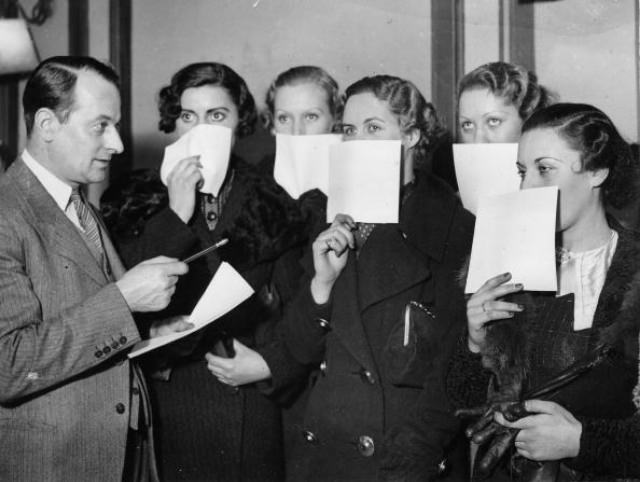
Photographer Edward Malindine captured the event for the Daily Herald newspaper. His photos show the women posed carefully, each holding paper up to their face in the same deliberate way. Yet despite the identical setup, no two women look the same. The eyes carry everything — alertness, warmth, confidence, quiet reserve. Each pair tells you something distinct about the person behind them.
The format stripped away many of the tools women typically used to present themselves in public. There was no full outfit to admire, no hairstyle to notice, no painted lips to draw the eye. The competition forced both the judges and the audience to look closely at something they might otherwise overlook — or take for granted.
By the mid-1930s, traditional beauty pageants were firmly established in Britain, with their familiar emphasis on figures, faces, and fashionable presentation. A contest that threw all of that out and focused on one feature alone was a genuine departure. It signaled a growing curiosity about what beauty actually meant — and whether the usual markers were really the right ones to measure it by.
Women in 1936 were also navigating a shifting social landscape. They had held the right to vote in Britain since 1918 for those over 30, and since 1928 on equal terms with men. Public life for women was evolving, and so were the ways they were seen and represented. A competition that celebrated individual expression — even within the narrow frame of a single facial feature — fit neatly into that broader shift.
The Daily Herald’s decision to cover the contest and publish Malindine’s photographs brought it to a wide audience. Readers across Britain could see the finalists and form their own opinions. For a single day in 1936, the most important thing about a woman wasn’t her dress or her figure — it was the look in her eyes.