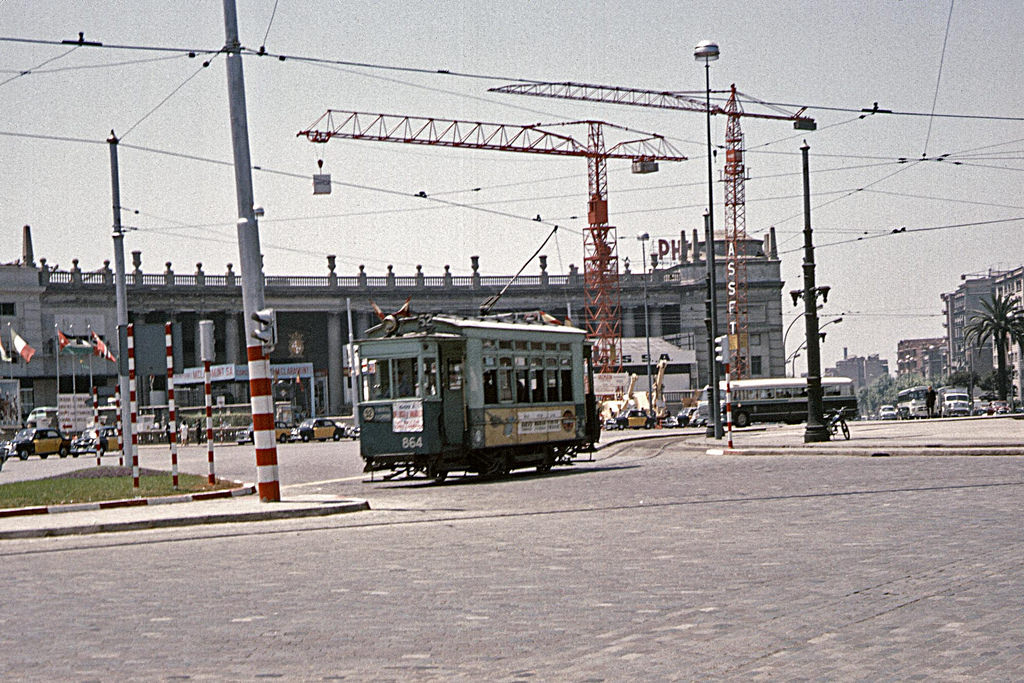
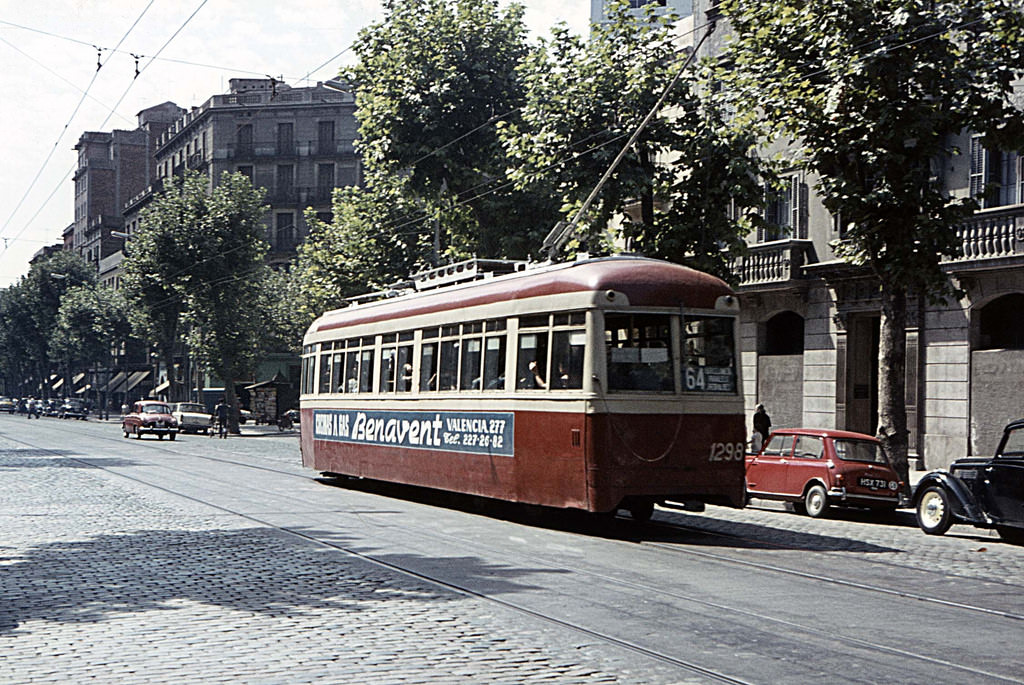
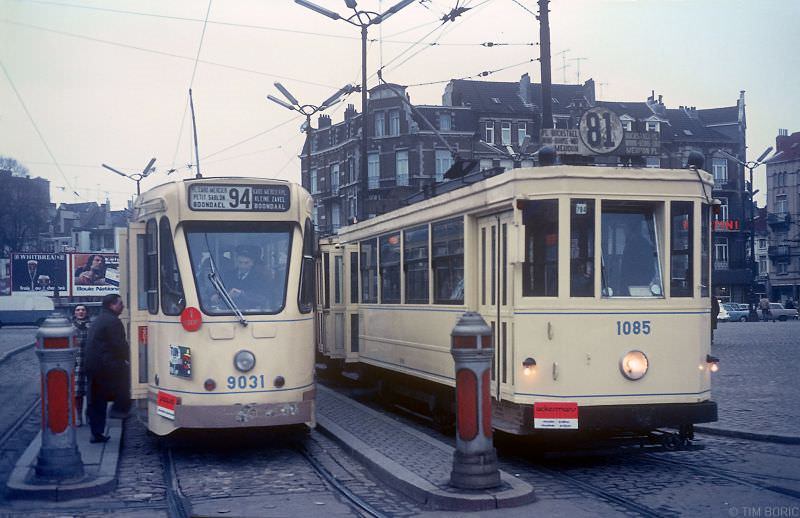
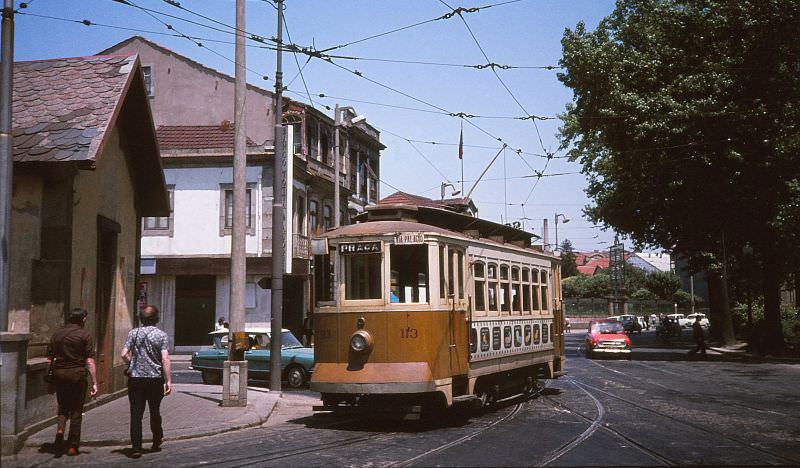
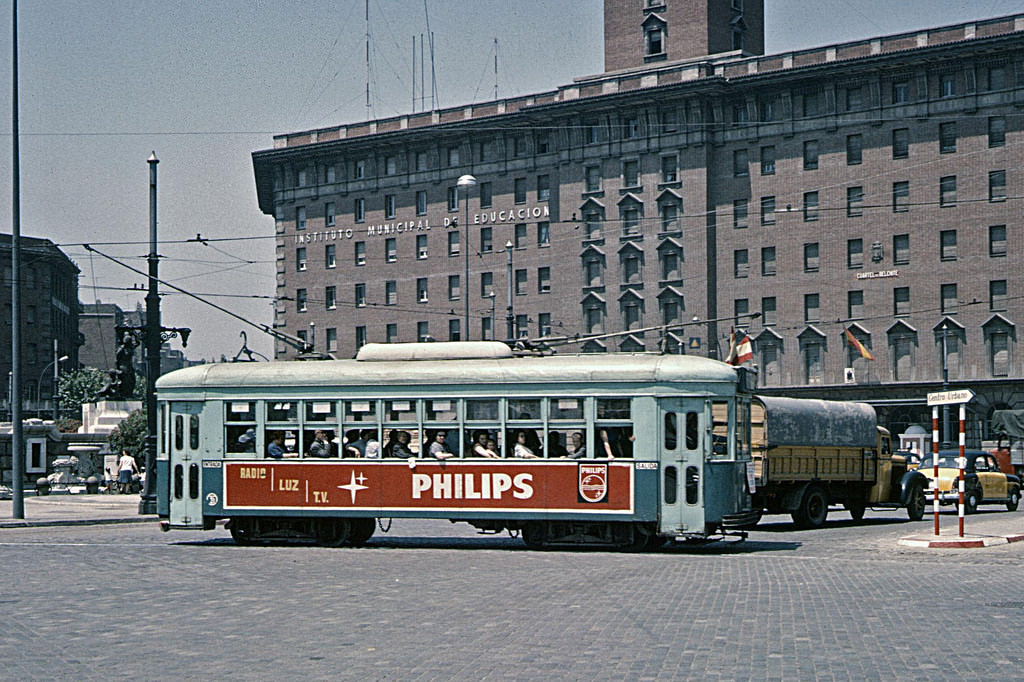
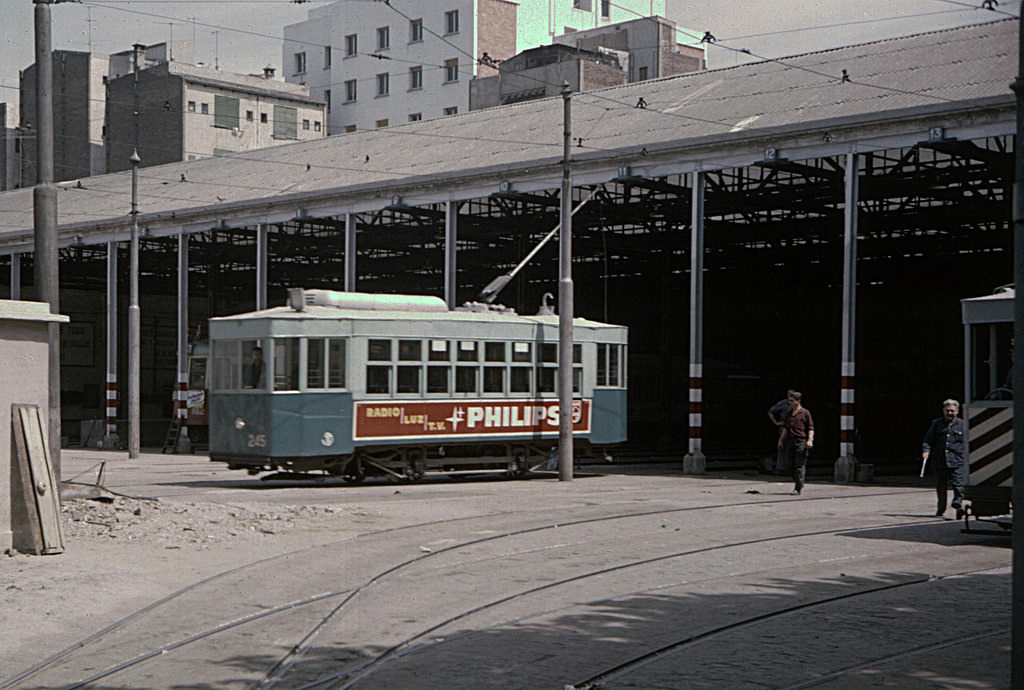
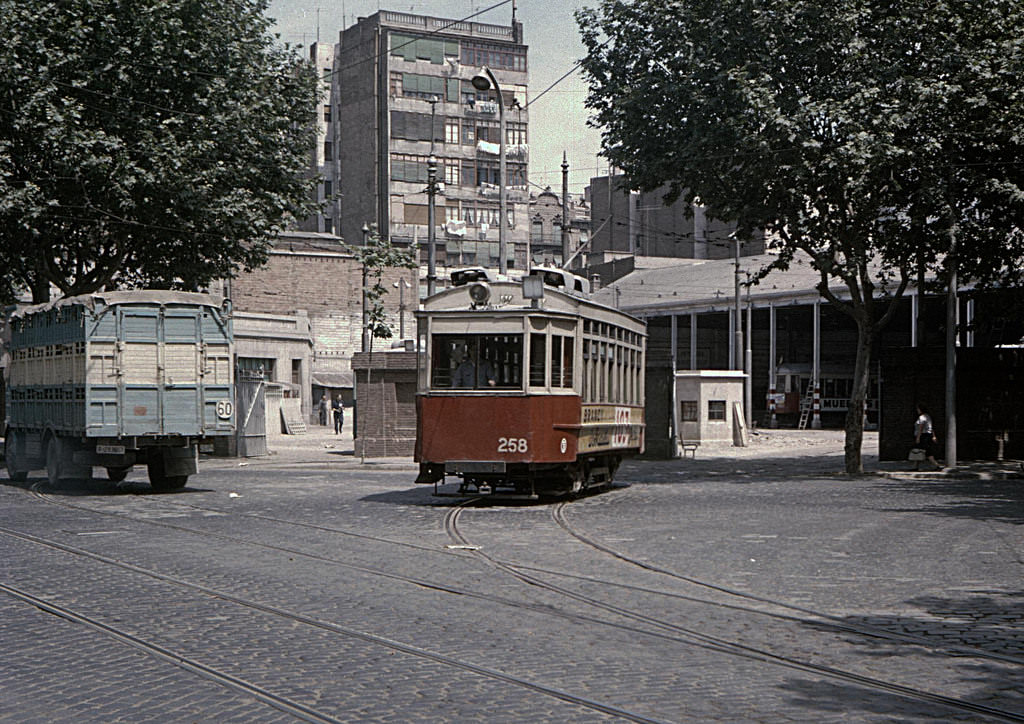
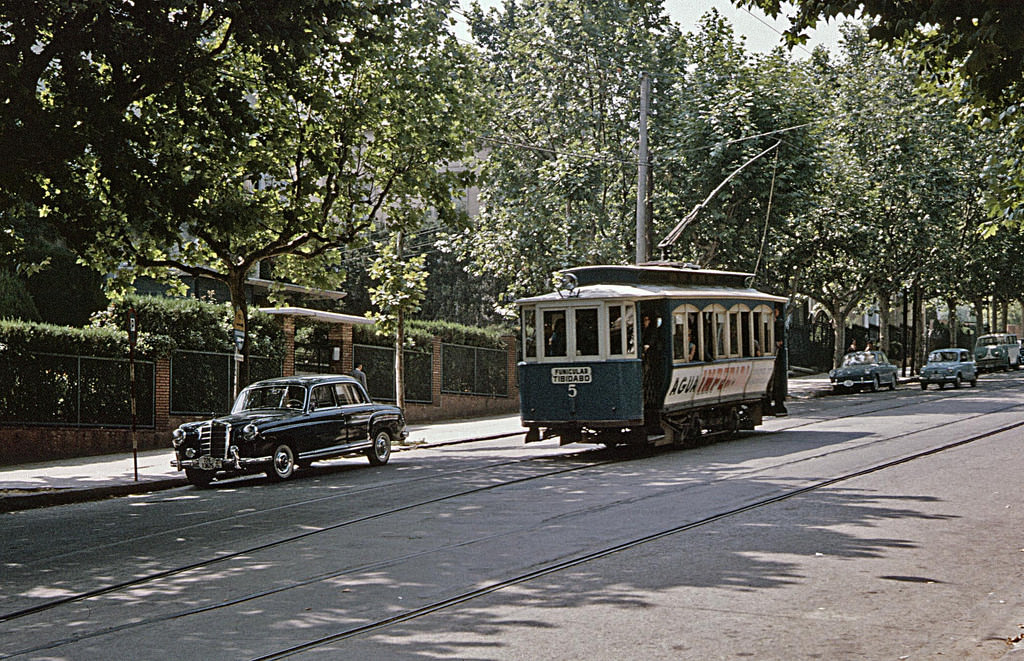
Barcelona once had one of the most extensive tramway networks in Europe. At its peak, tram lines crisscrossed nearly every corner of the city, carrying workers, families, and goods through its busy streets. By the 1960s, however, the network was in its final chapter. These rare color photographs capture the trams during those last years — a vivid record of a system that would almost entirely disappear by 1971.
The story of Barcelona’s trams begins in 1872, when the city’s first tram line opened. Those early trams were horse-drawn, slow, and basic. Everything changed in the 1900s when the network was electrified, making trams faster and far more practical for a growing city.
With electrification came organization. Route numbers were introduced in 1910, giving passengers a clearer way to navigate the expanding system. Several private companies had built and operated lines across the city, but by the early 1900s, two stood above the rest: Barcelona Tramways and Compañía General de Tranvías.
In 1925, those two dominant companies merged to form Tranvías de Barcelona, known as TB. The merger brought the network under unified management and helped standardize operations across dozens of routes. For a time, the trams thrived as the backbone of public transport in the city.
Then came the Spanish Civil War. Between 1936 and 1939, the conflict caused severe damage to the tramway infrastructure. Tracks were torn up, vehicles were destroyed, and maintenance ground to a halt. The war left the network in a battered state that took years to address.
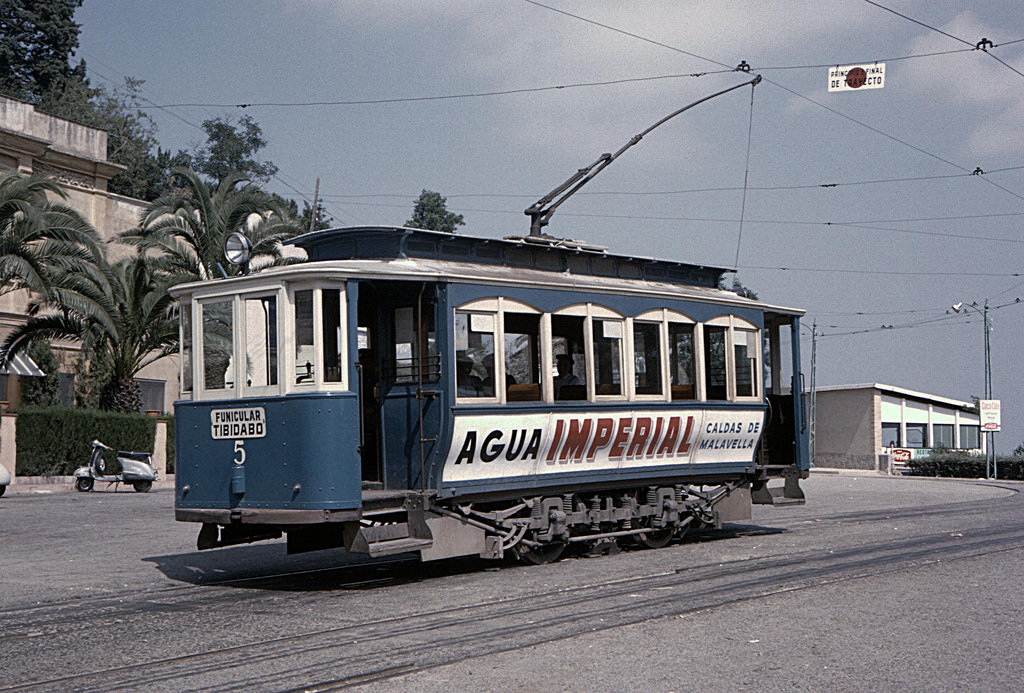
Despite the recovery efforts after the war, the trams faced a new challenge in the postwar decades: competition. Buses were cheaper to operate and far more flexible — they didn’t need fixed rails or overhead wires. The Barcelona Metro was also expanding, offering faster underground travel across the city.
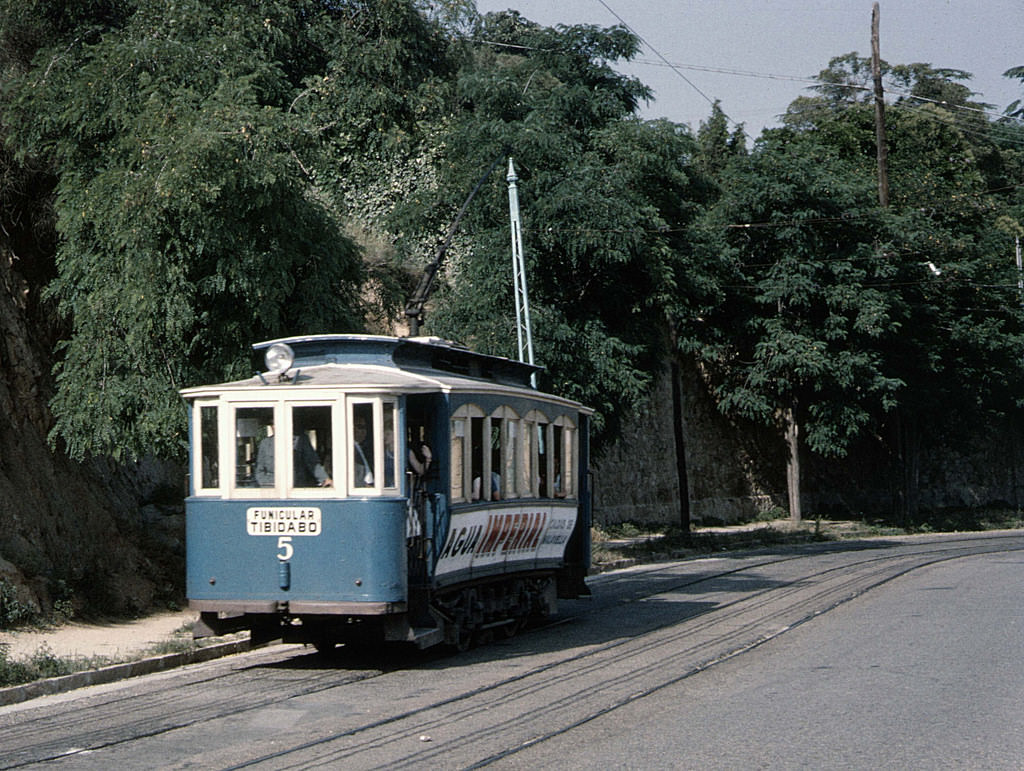
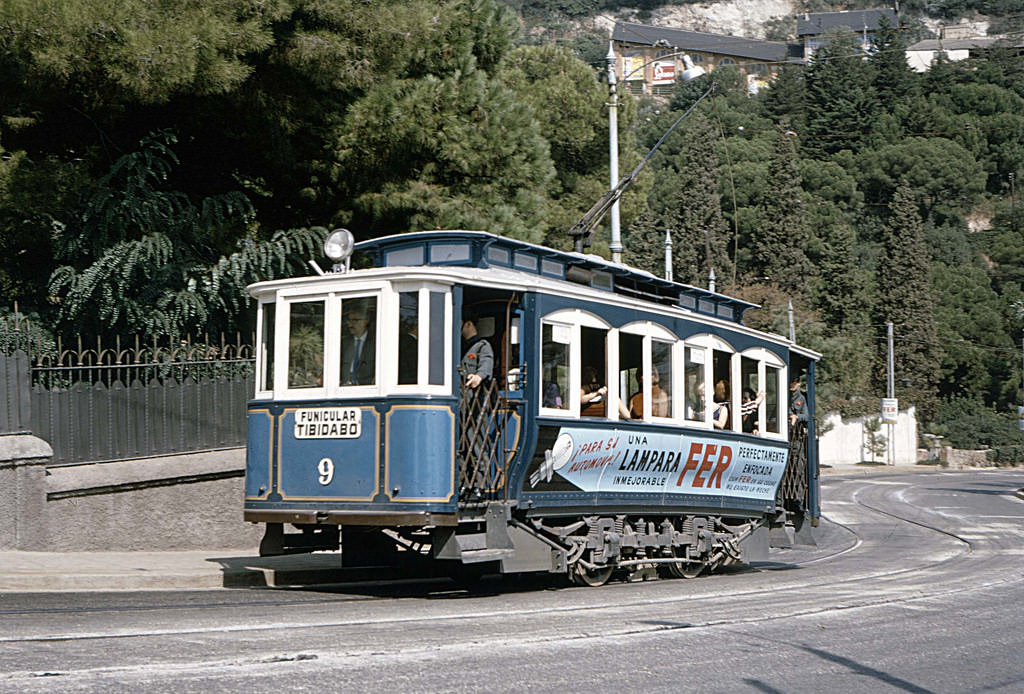
Through the 1950s and into the 1960s, tram lines were closed one by one. City planners saw the trams as obstacles to modern traffic flow. The tracks took up road space, and as car ownership rose in Spain during the 1960s economic boom, the pressure to remove them grew stronger.
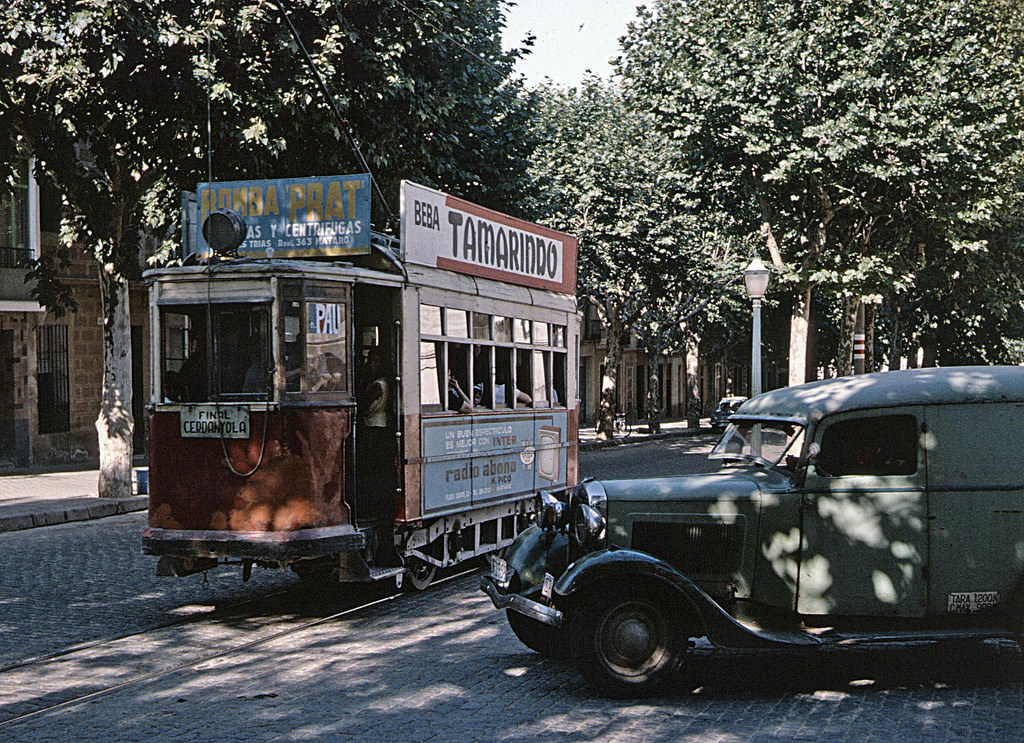
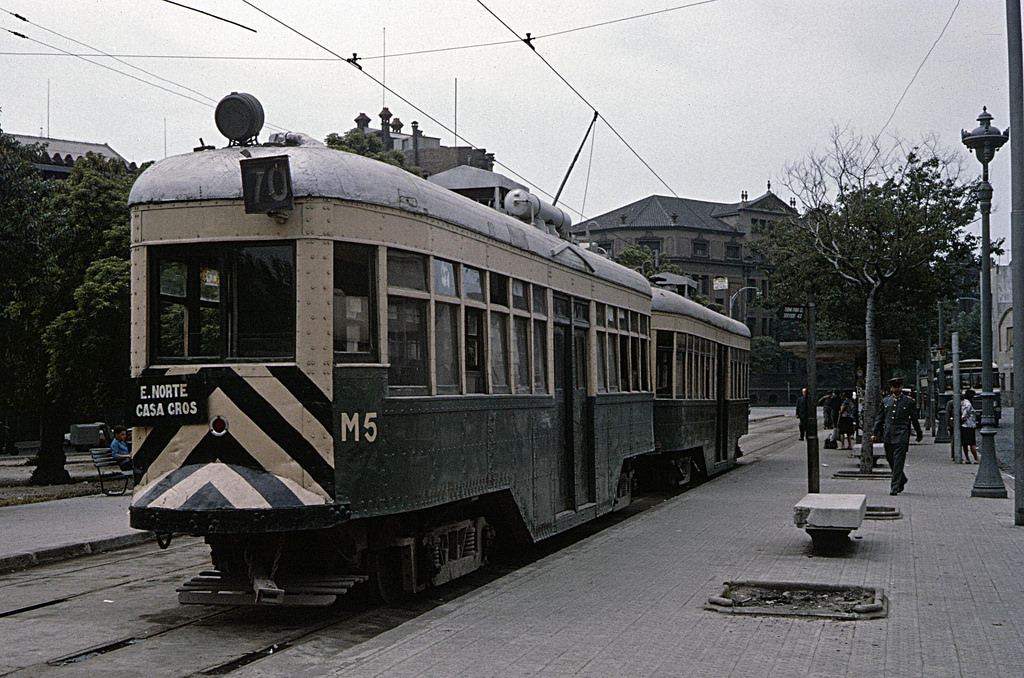
The color photos from this era are especially valuable because so much tram photography from earlier decades was shot in black and white. These images show the trams in their working environment — on busy commercial streets, passing through residential neighborhoods, and navigating the wide avenues that define Barcelona’s urban layout.
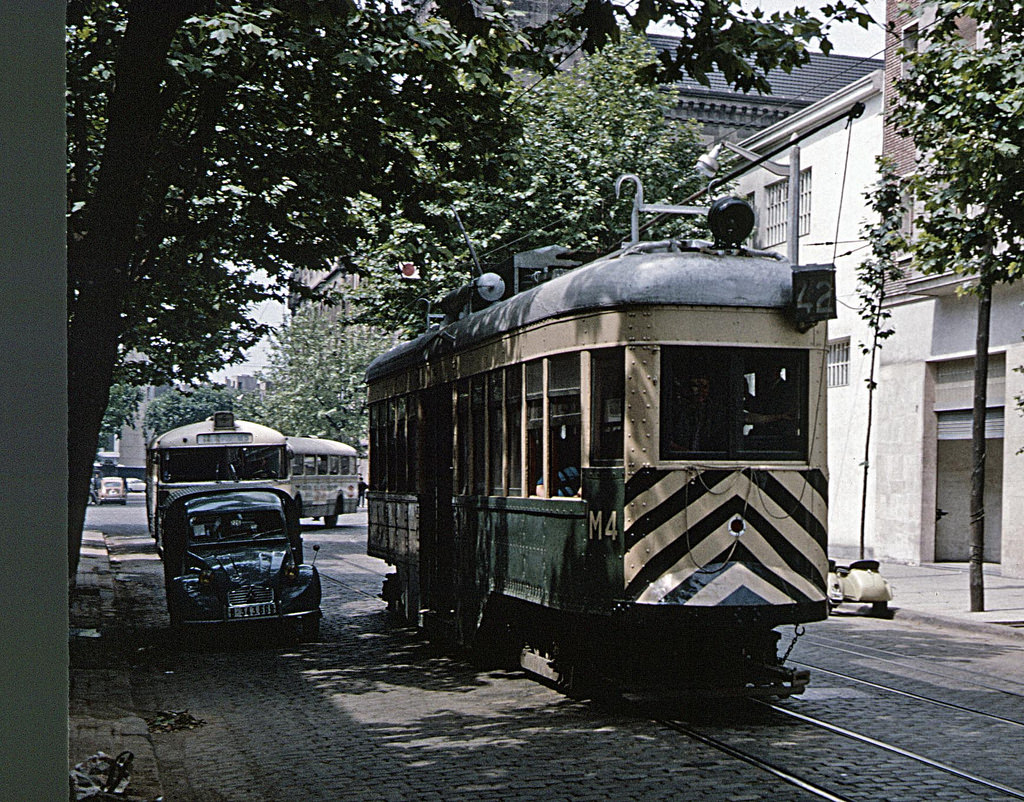
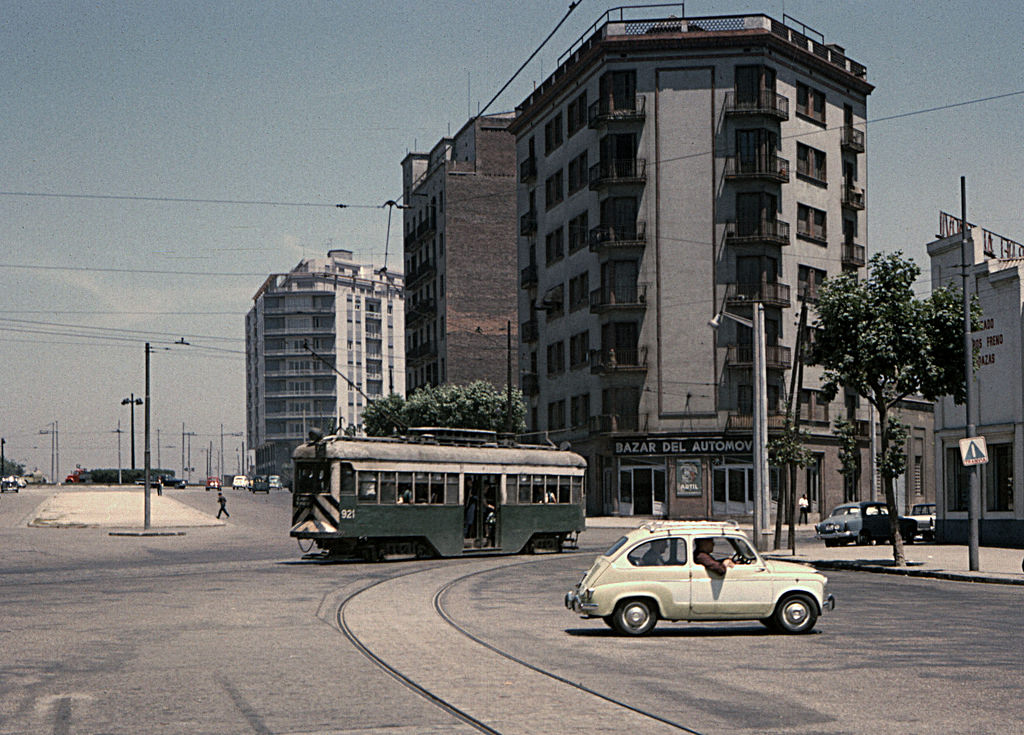
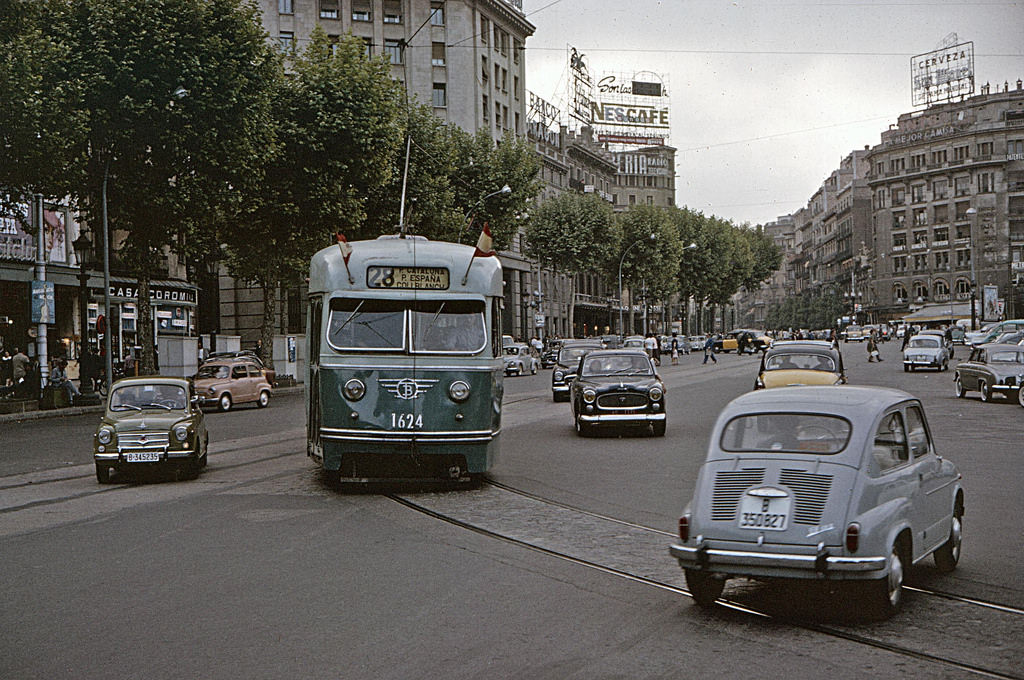
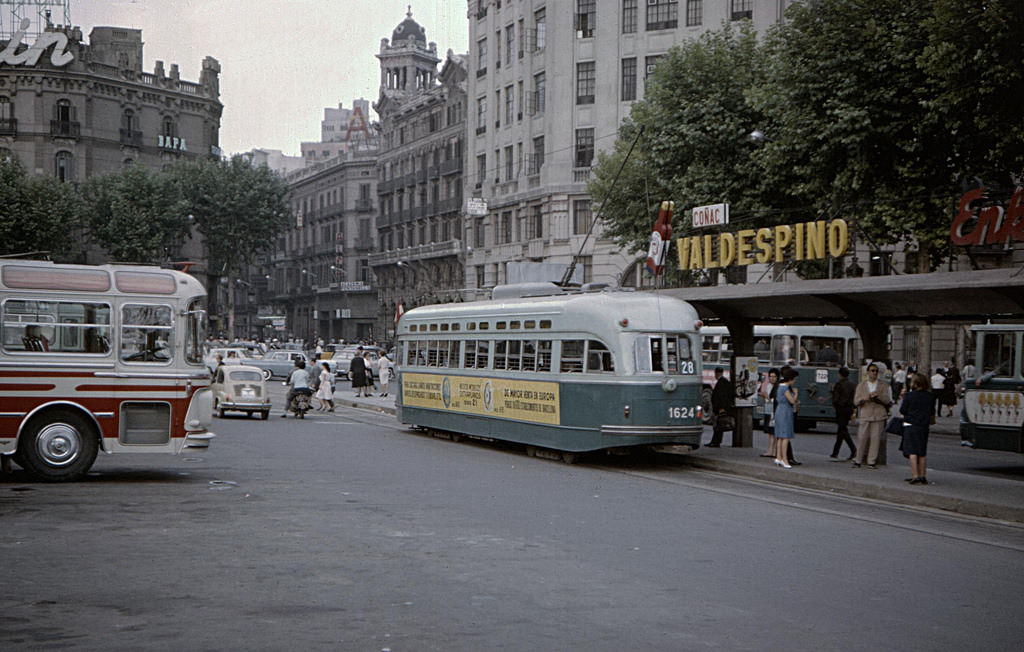
The trams themselves had a distinctive look. Their bodies were typically painted in the yellow and black livery of Tranvías de Barcelona. Destination boards on the front showed route numbers and terminal stops. Overhead pantographs collected electricity from the wires strung above the tracks.
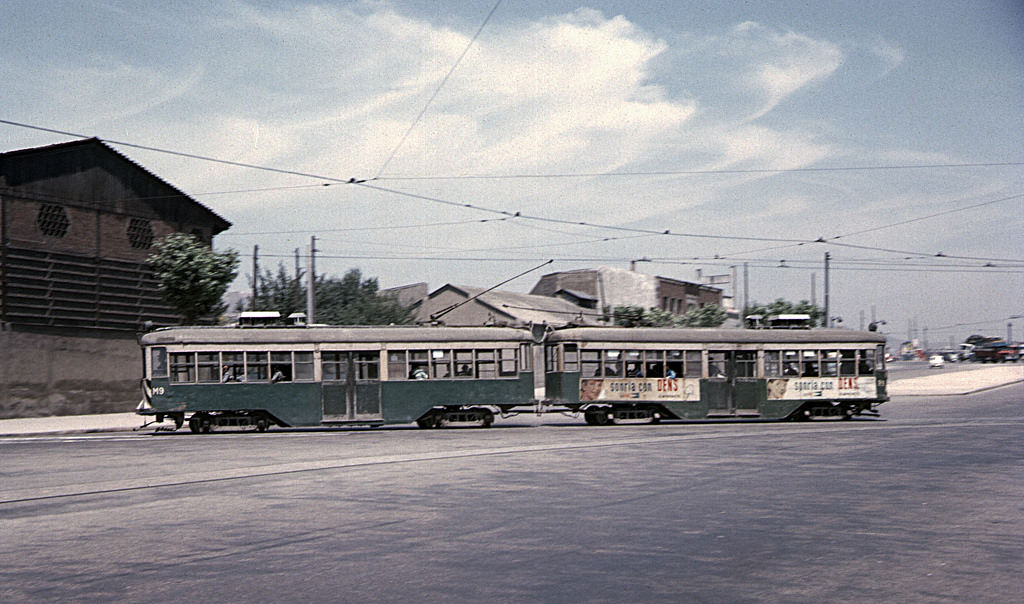
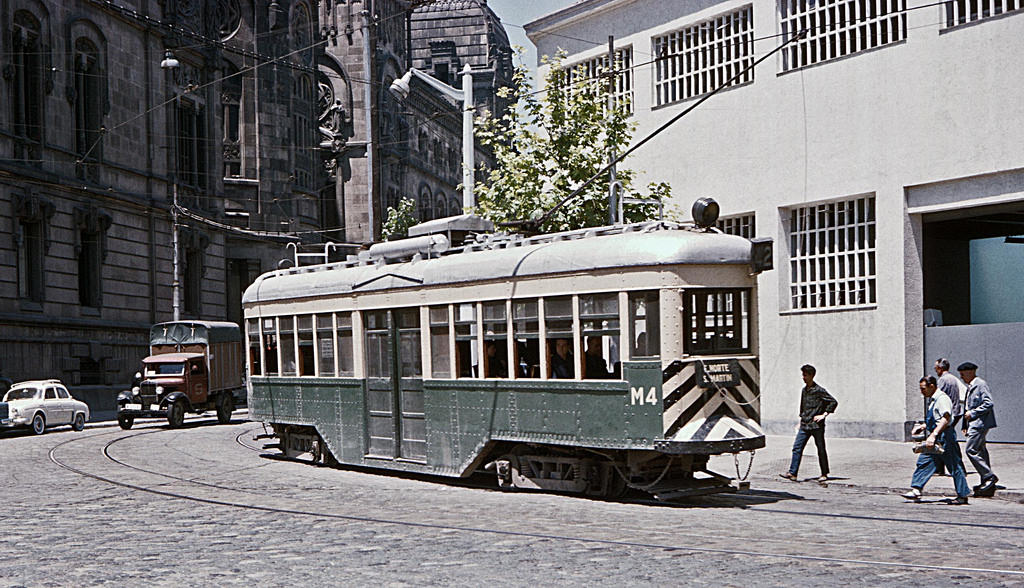
Passengers boarded from both ends of the tram, and conductors collected fares onboard. During peak hours, trams were packed. Workers heading to factories, students going to school, and shoppers visiting the city’s markets all relied on the network. For many residents, the tram was simply part of daily life.
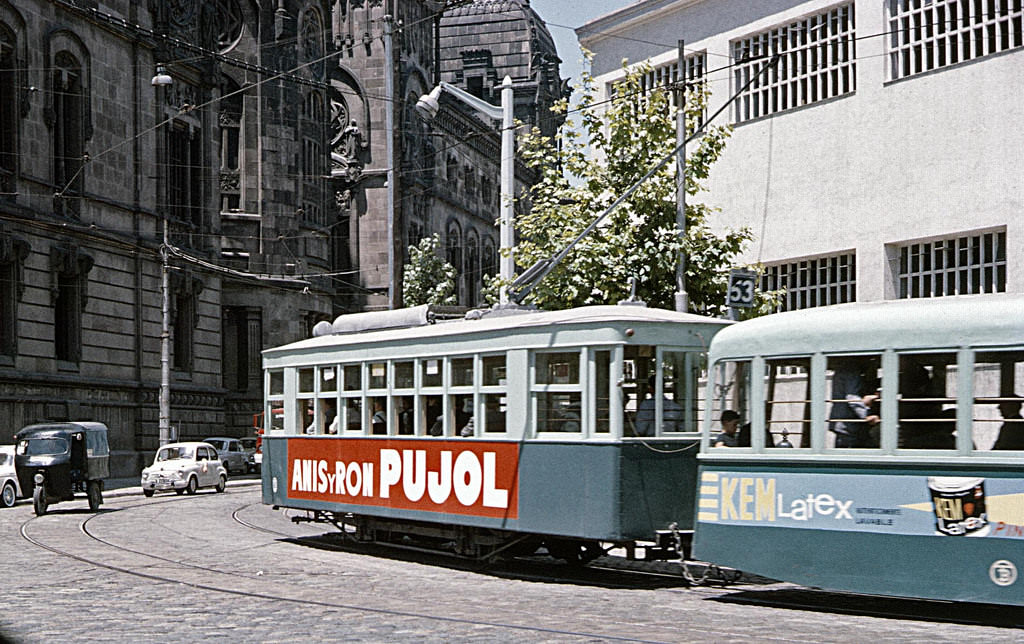
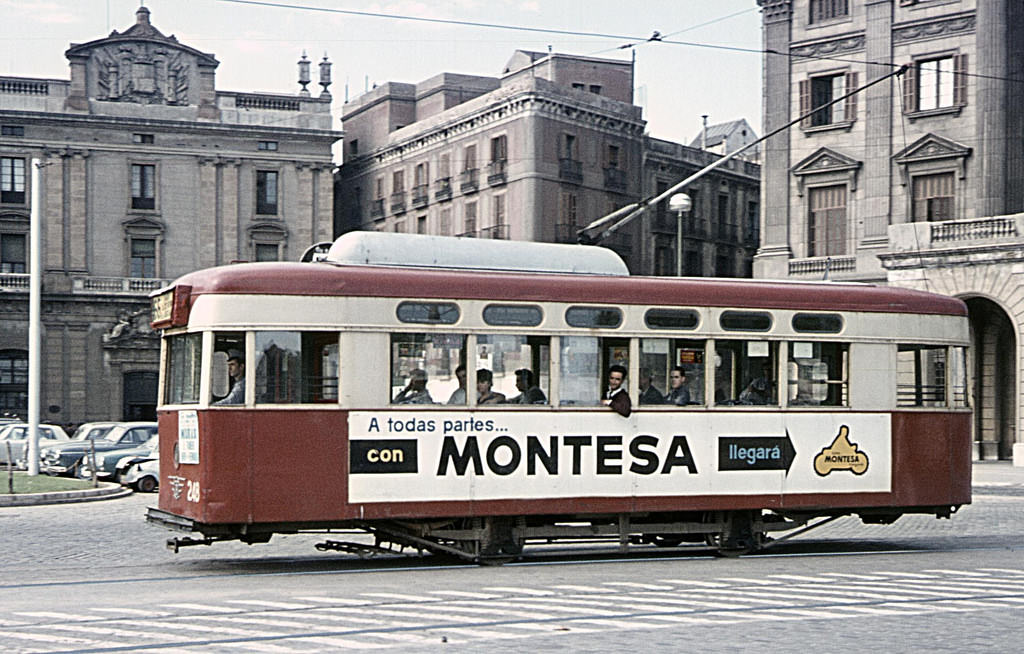
Some routes ran along Barcelona’s most iconic streets. The wide boulevard of the Diagonal, the commercial stretch of the Parallel, and the neighborhoods of Gràcia and Sarrià all had tram service at various points. The network connected the old city center to outer districts that were growing rapidly in the postwar years.
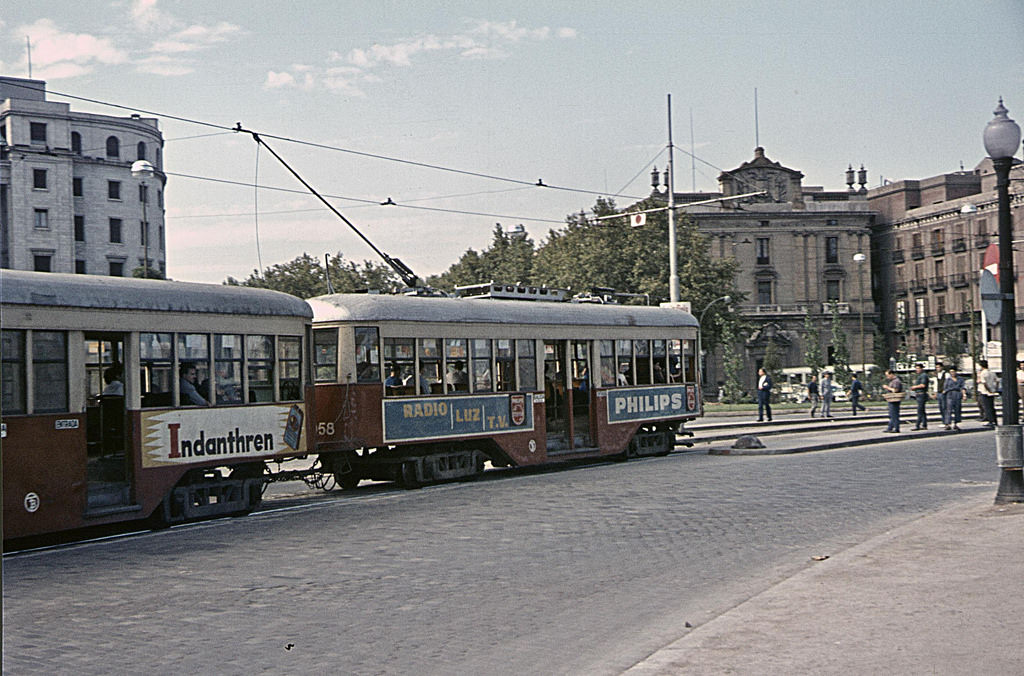
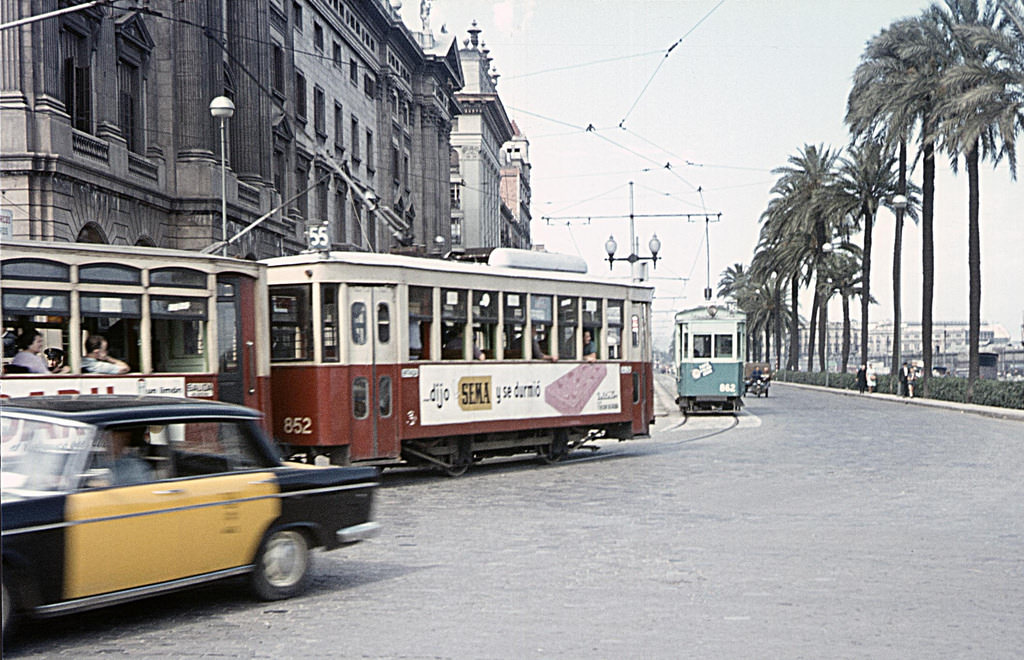
By the mid-1960s, only a handful of lines remained active. The closures accelerated toward the end of the decade, and the final tram lines in Barcelona ceased operation in 1971. Nearly a century of continuous tram service came to an end within the span of just a few years.
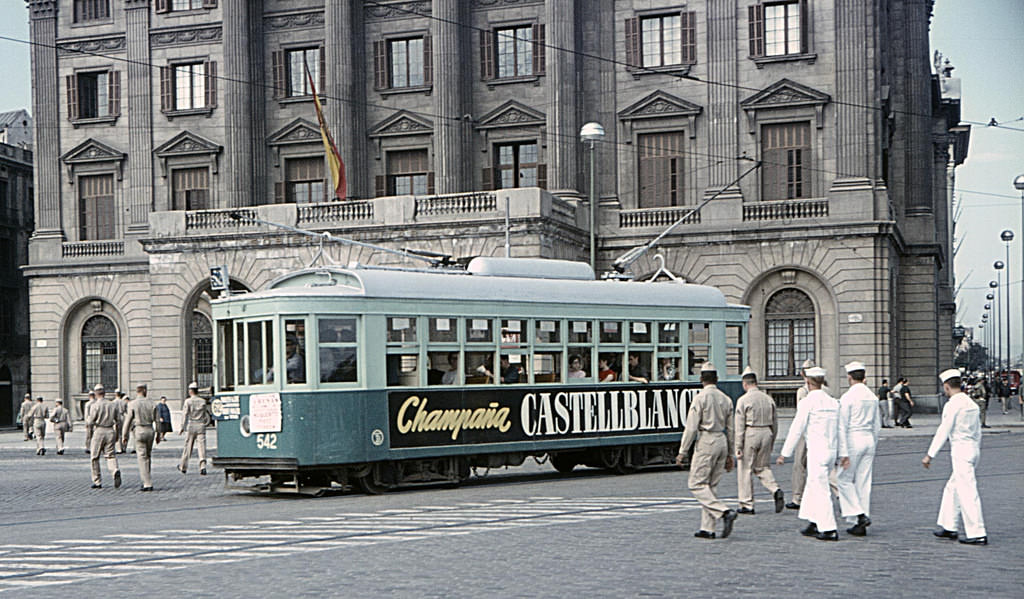
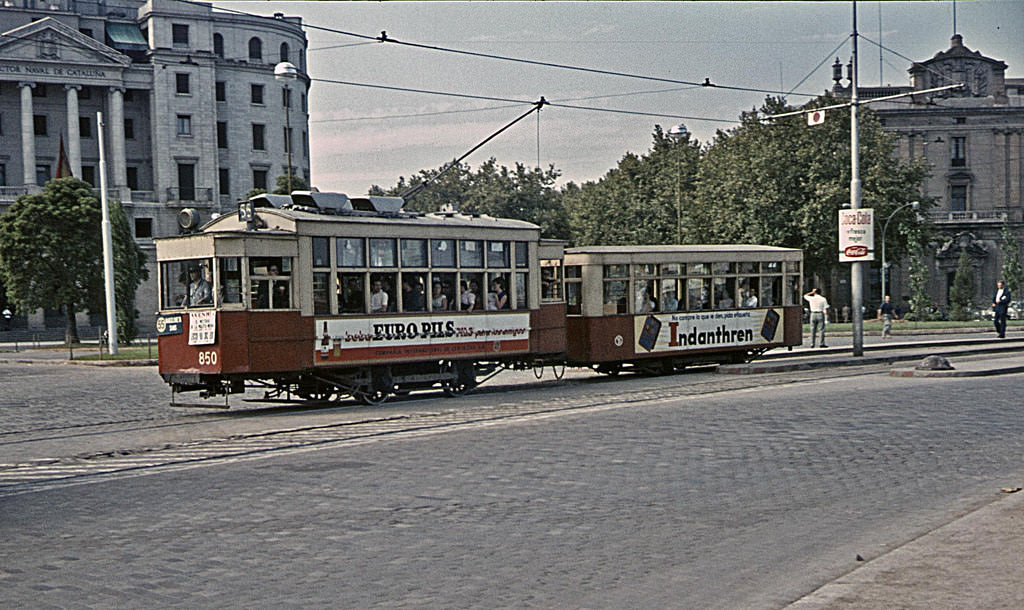
The photographs in this collection were taken during the system’s final active years. They show trams that were still in service, still carrying passengers, and still a functional part of the city. The color adds a dimension that black-and-white images simply cannot — the warmth of the sunlight on the tram bodies, the colors of the storefronts, and the clothing of the people waiting at stops.
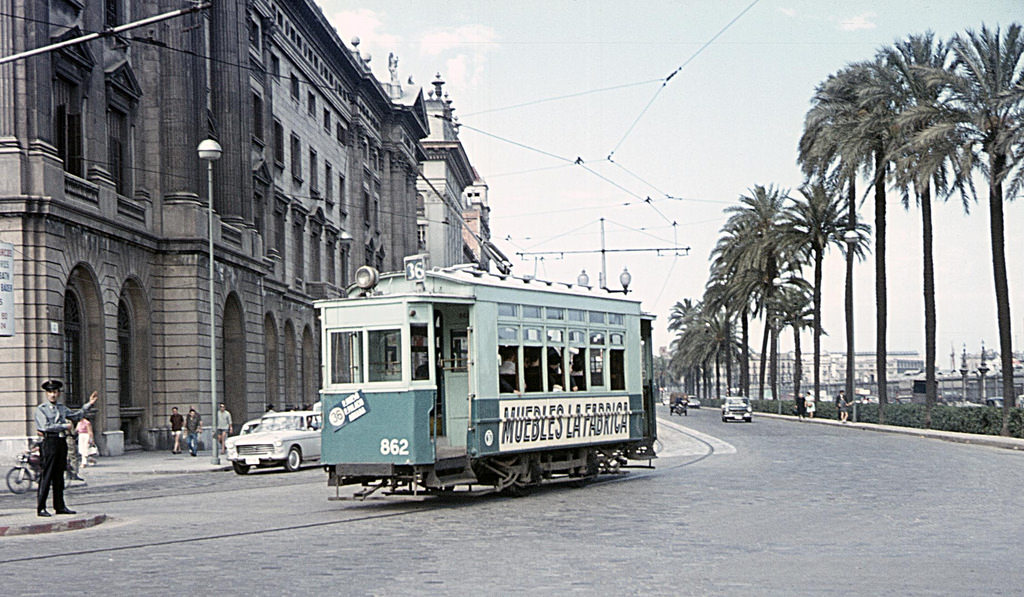
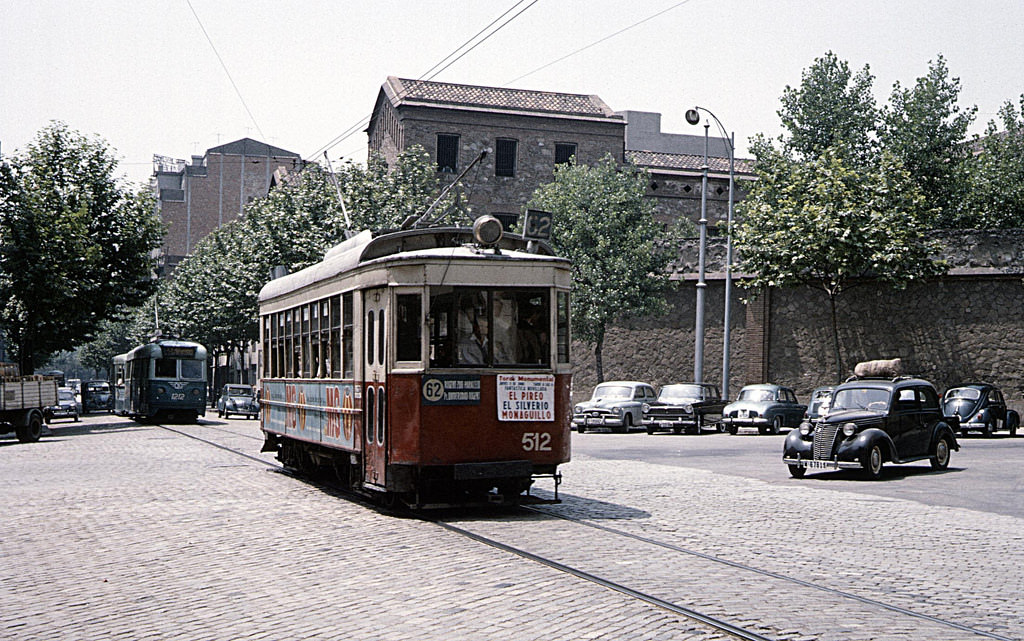
Street scenes around the tram stops reveal a Barcelona that looked very different from today. Fewer cars, more pedestrians, and buildings unmarked by decades of later development. The trams fit naturally into those streets, sharing space with cyclists, delivery carts, and the occasional taxi.
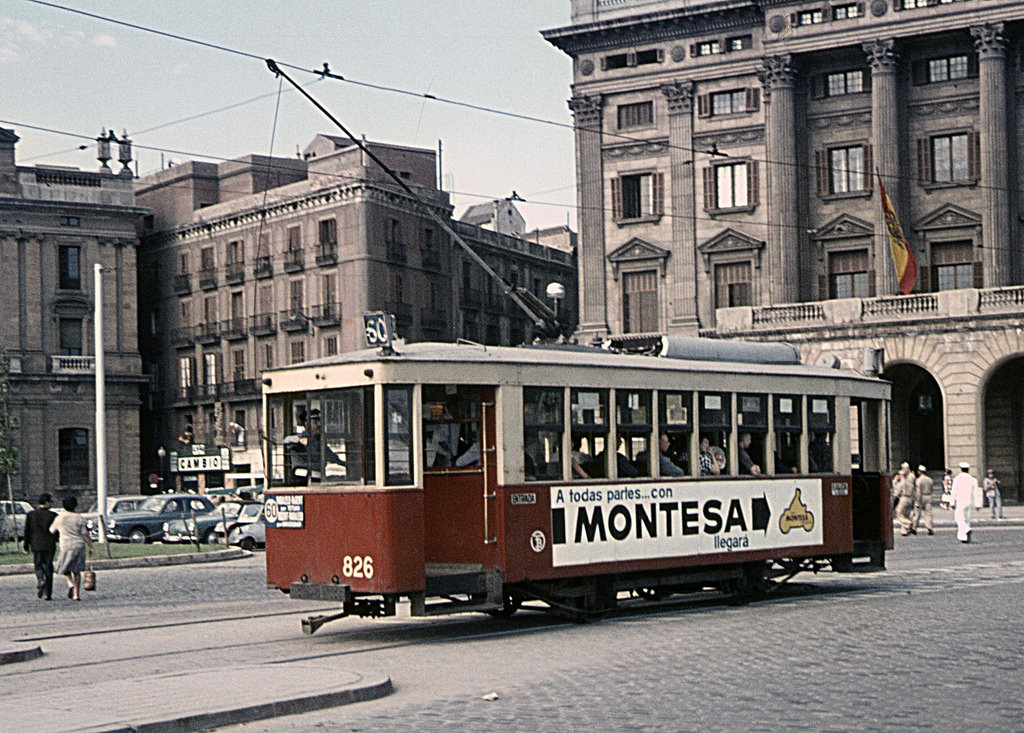
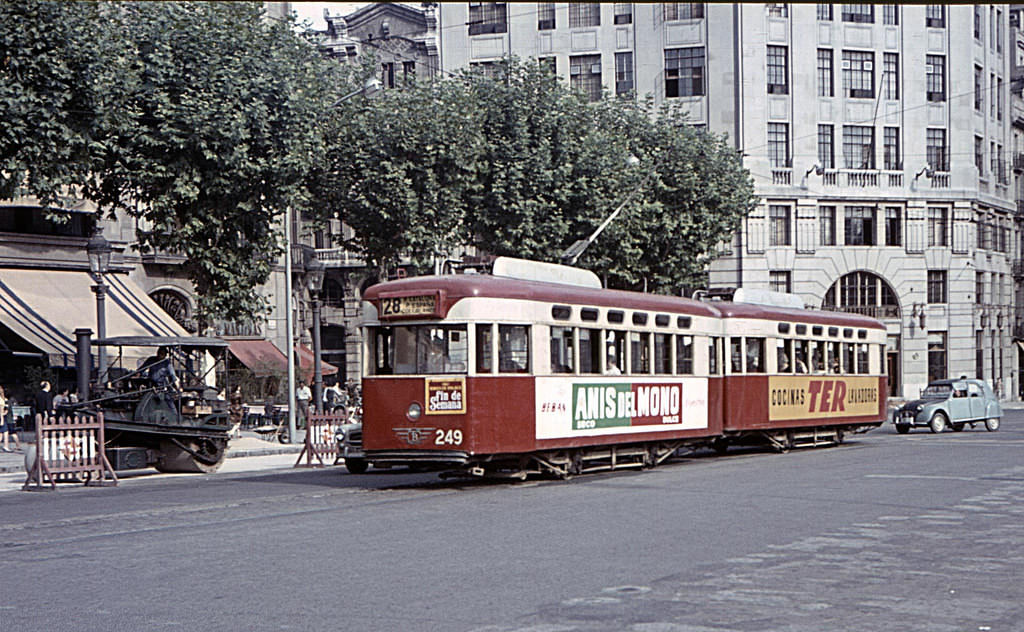
The vehicles themselves varied in age and design. Some were older models that had been running since before the Civil War, patched up and kept in service through necessity. Others were newer cars introduced in the late 1940s and 1950s as TB worked to modernize what remained of the fleet.
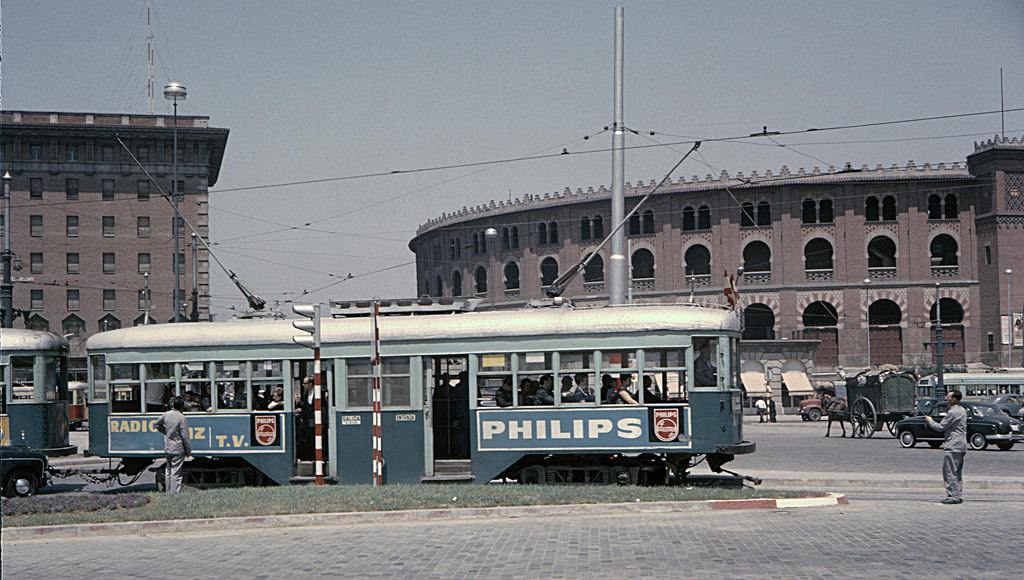
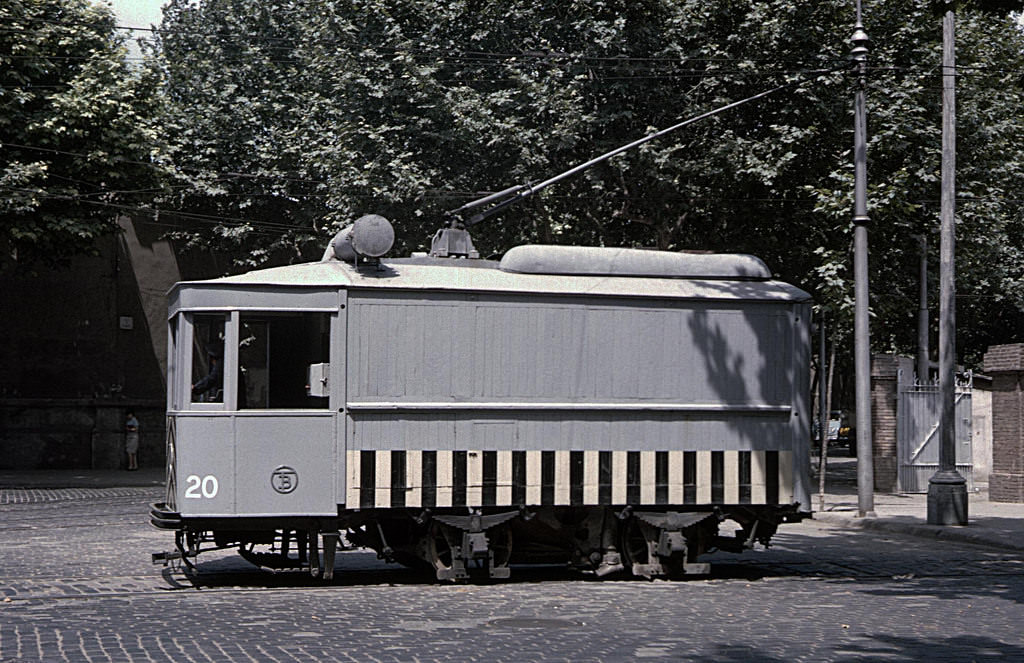
What makes these photos so compelling is the ordinariness they capture. No one in the images knew they were being photographed for posterity. Passengers wait, conductors go about their routines, and the trams roll on as they had for decades. It is that everyday quality that makes the record so complete.