
Barcelona in the 1990s was a city in motion. Cranes dotted the skyline, neighborhoods were being rewired, and a decade-long transformation was underway that would permanently change how the world saw this Catalan capital. These photographs capture the city at a rare moment — just before, during, and after the upheaval that made it one of Europe’s most visited cities.
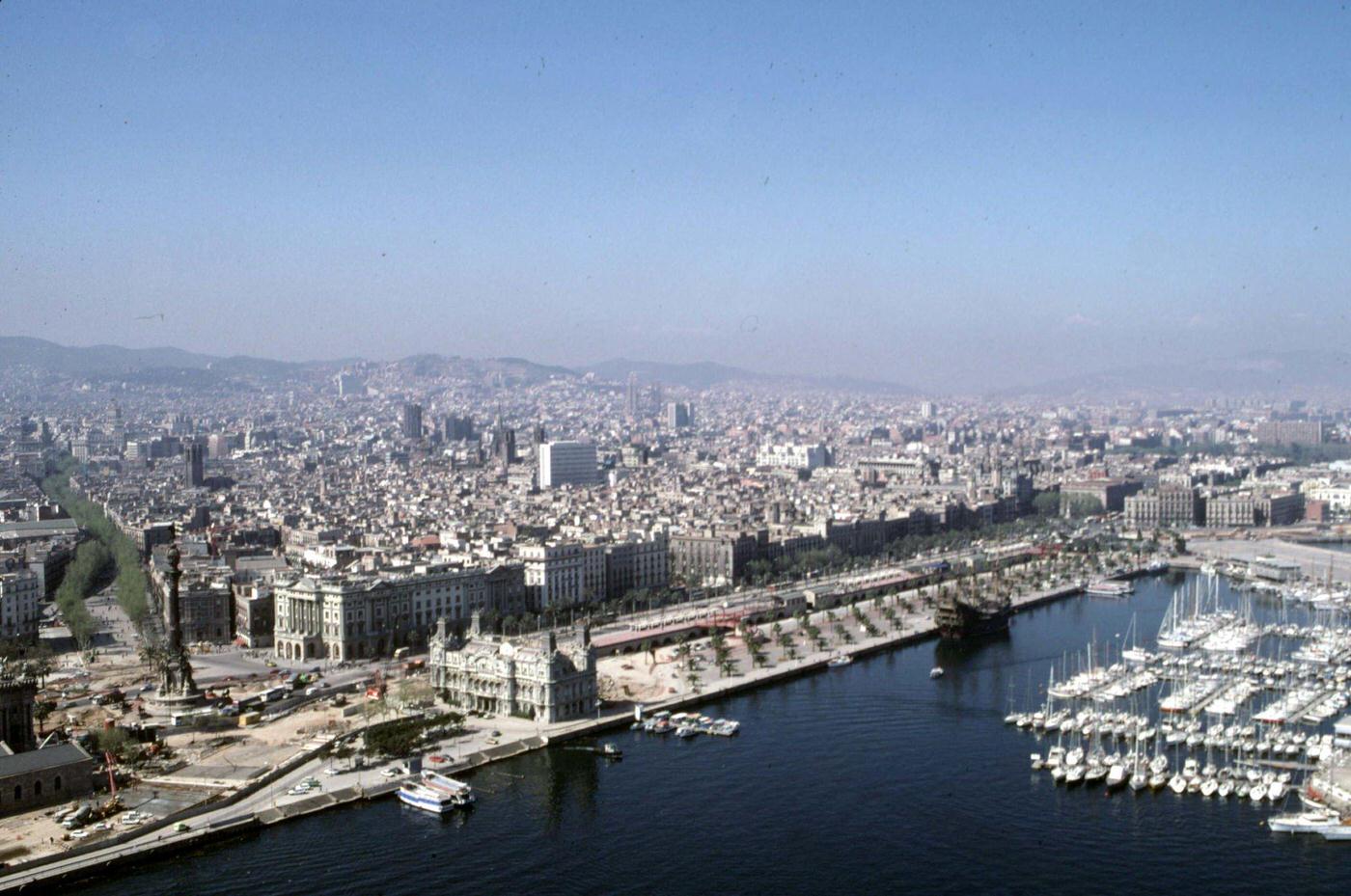
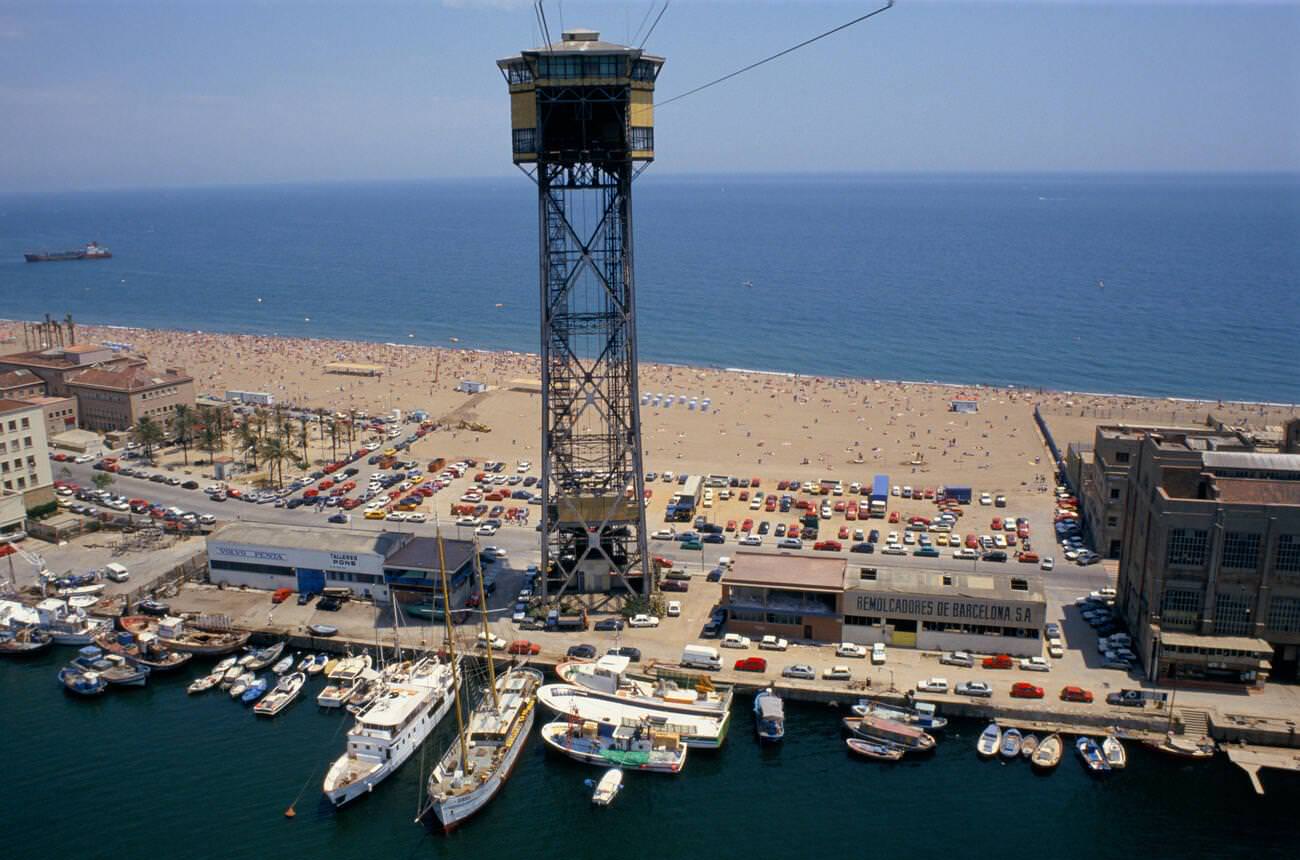
At the heart of that transformation was the 1992 Summer Olympics. Winning the right to host the Games gave city planners the political will and the funding to tear down what wasn’t working and build what Barcelona had long needed. The waterfront — previously an industrial stretch closed off from residents — was completely overhauled. New beaches were laid, marinas were built, and the Port Olímpic was created from scratch. Entire neighborhoods were connected to the sea for the first time.
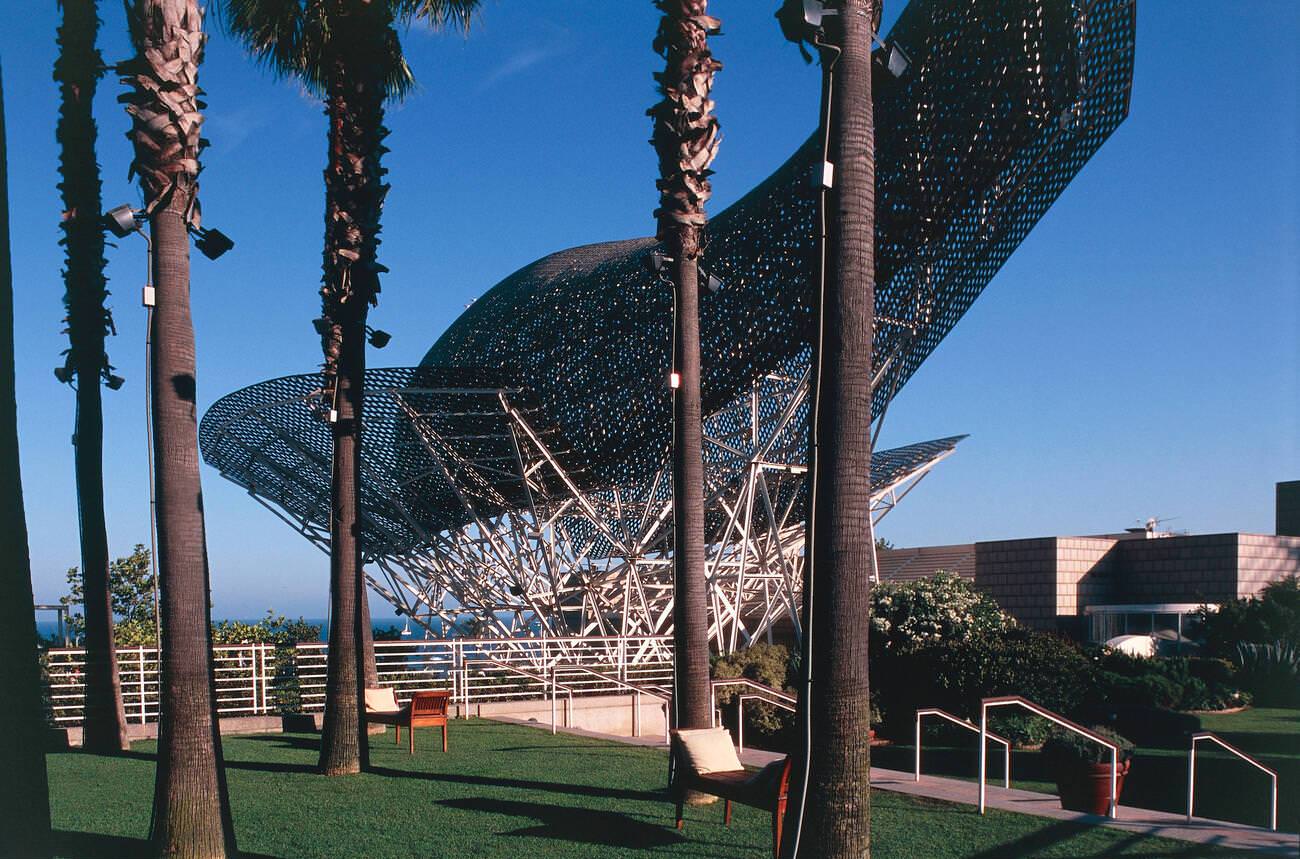
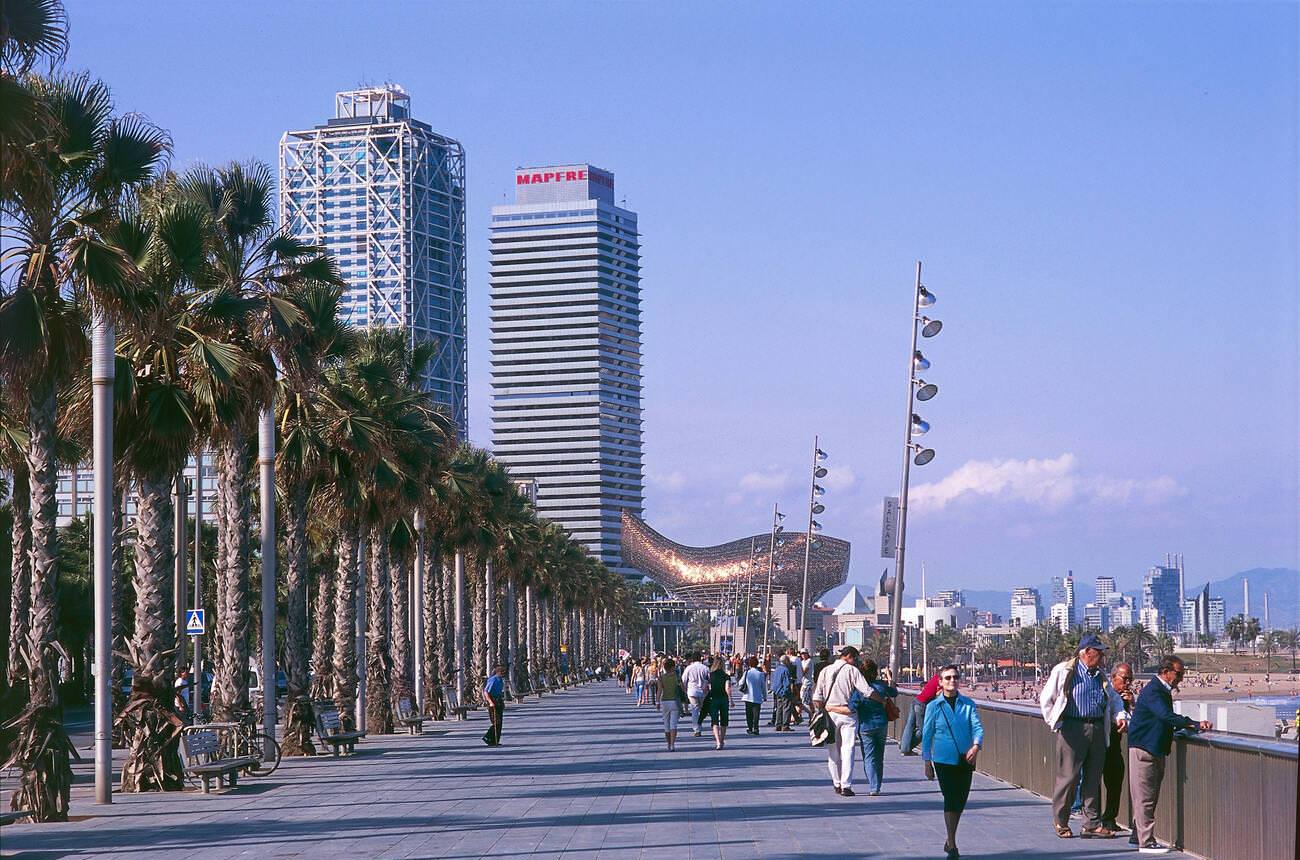
The Vila Olímpica, built to house the 7,000 athletes competing in the Games, became a permanent residential district after the closing ceremony. Two landmark towers — the Mapfre Insurance building and the Hotel Arts — rose alongside it, giving Barcelona a new skyline anchor on its coast.
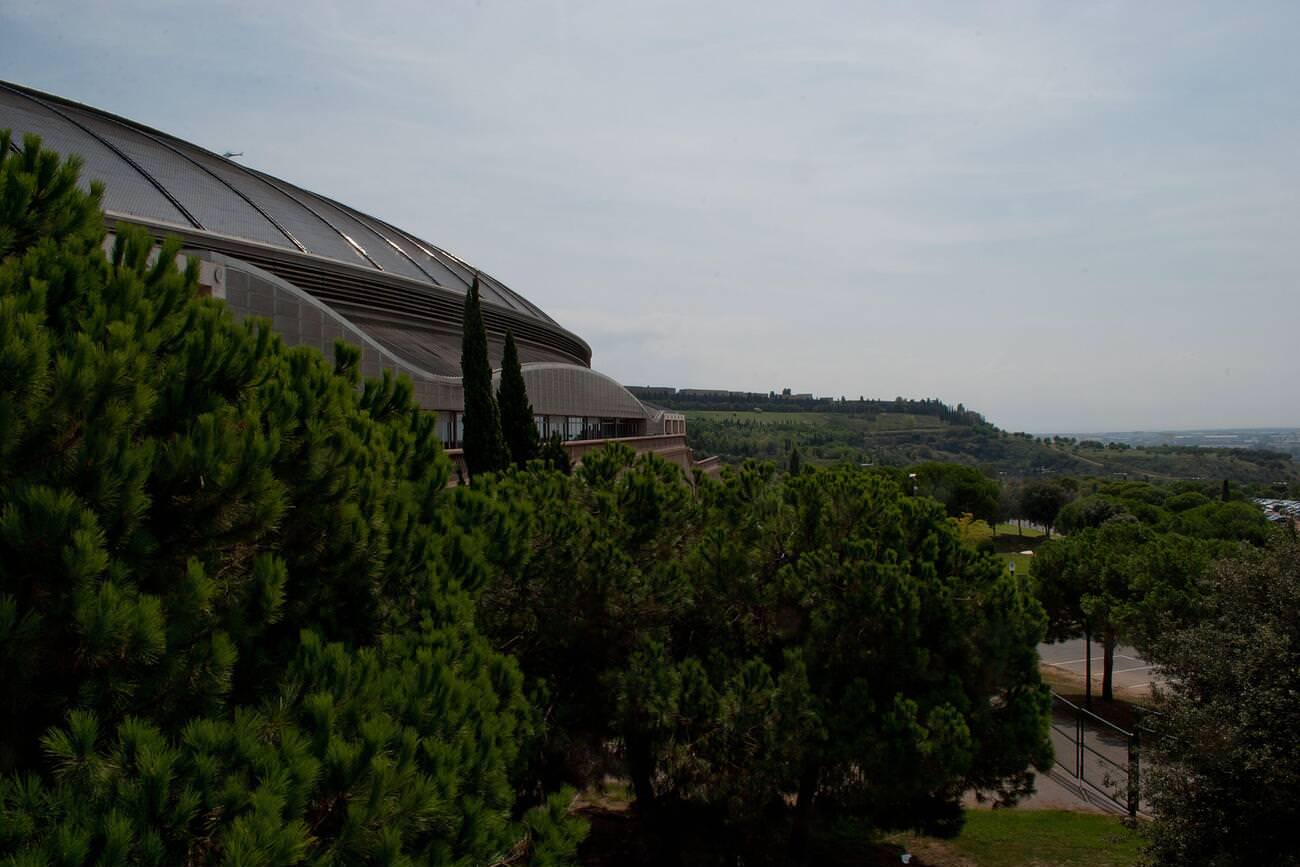
The Palau Sant Jordi, designed by Japanese architect Arata Isozaki, was constructed as one of the main Olympic venues. Its sweeping roof — built using a technique where the structure was assembled on the ground and hydraulically lifted into place — became one of the defining buildings of the decade.
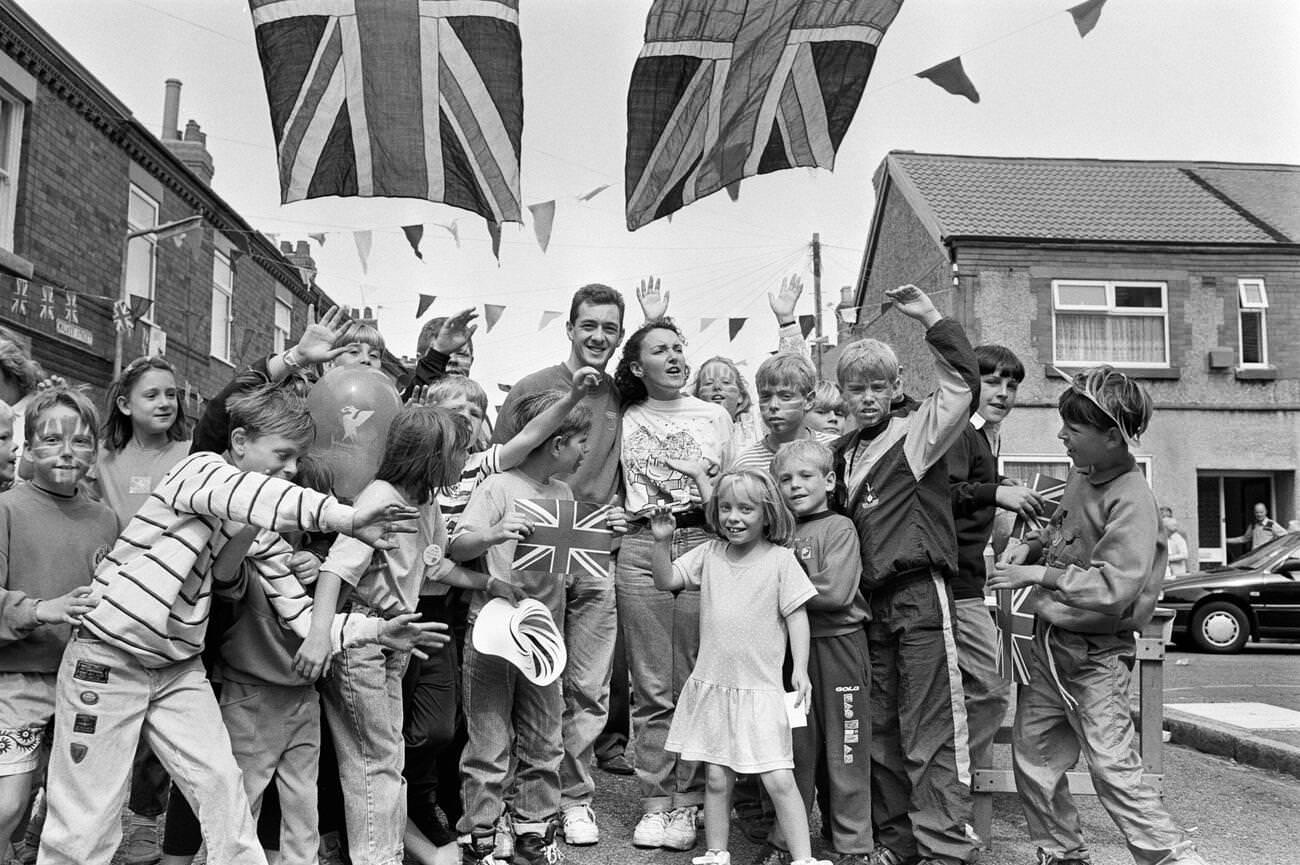
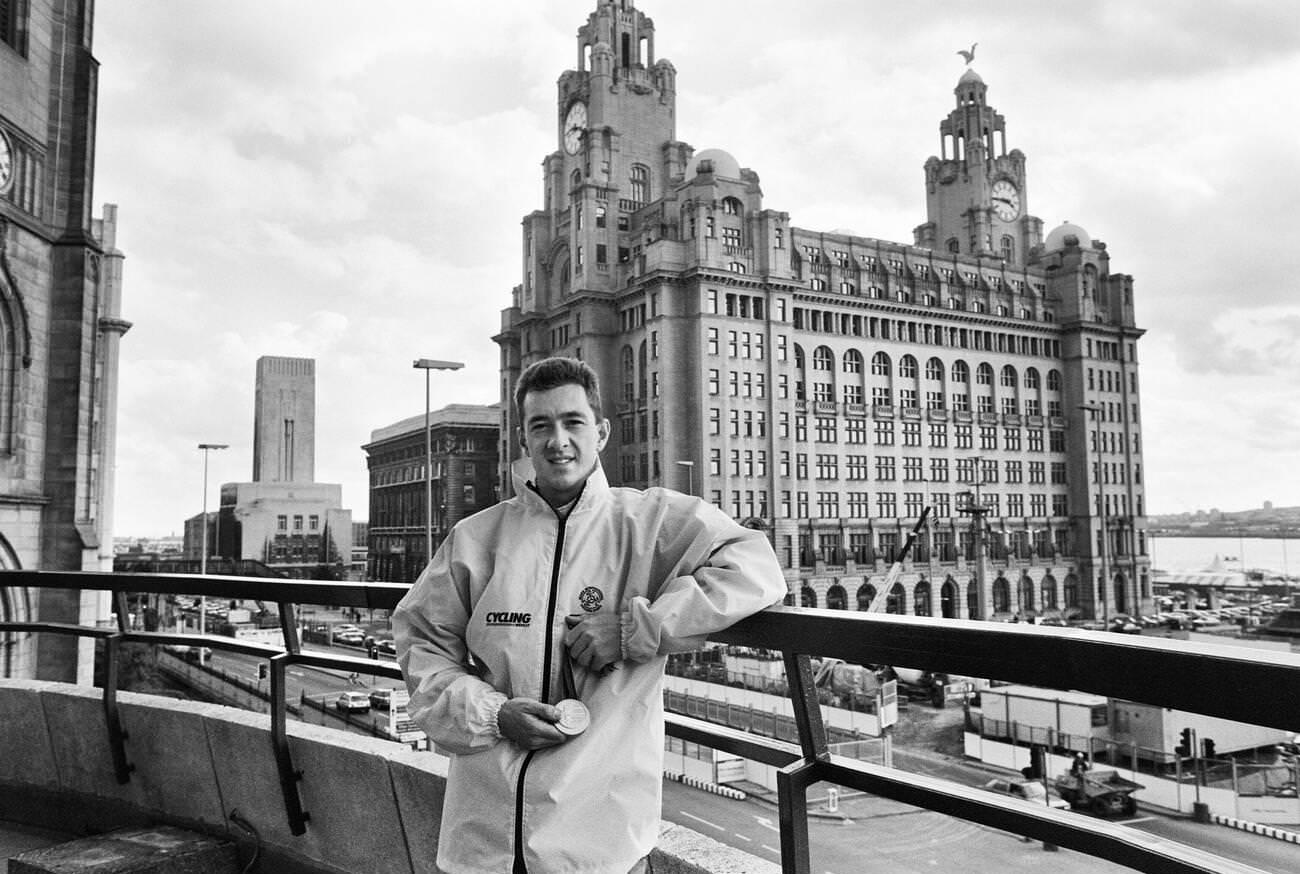
British cyclist Chris Boardman delivered one of the most memorable moments of the Barcelona Games, winning gold in the 4,000-metre individual pursuit. He rode a revolutionary carbon-fibre Lotus bike with an aerodynamic monocoque frame — a machine so advanced it sparked rule changes in competitive cycling. The streets back home in Liverpool celebrated his win with a public party.
Away from the Olympic buzz, daily life in Barcelona had its own distinct rhythm. Plaça de Catalunya — the large central square that divides the old city from the modern expansion — served as a gathering point for everyone. Shoeshine men set up their chairs there, street clowns worked the crowds, and the Zurich Bar on its edge was a fixture for locals and tourists alike.
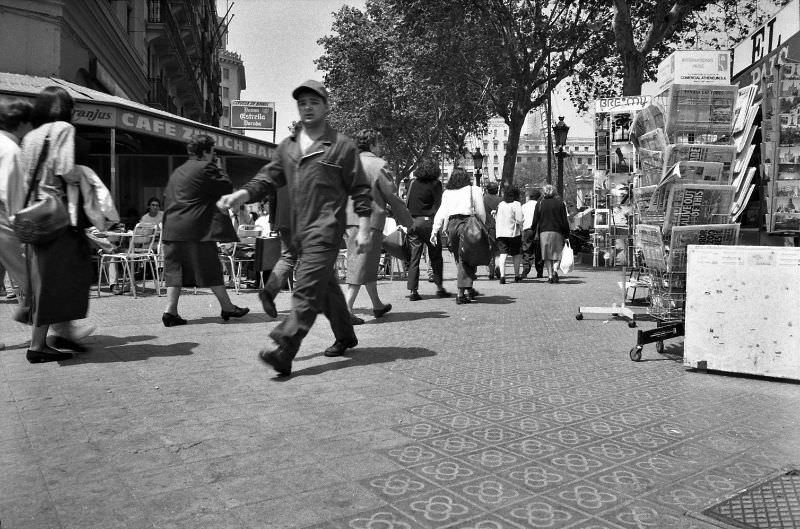
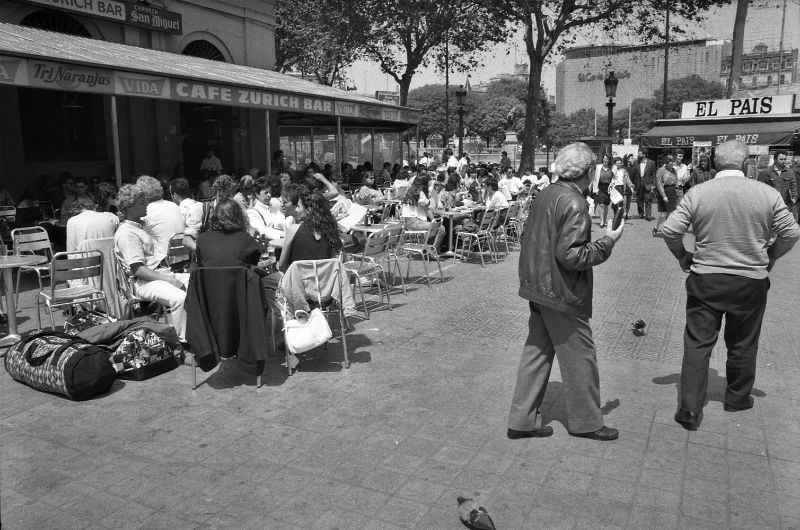
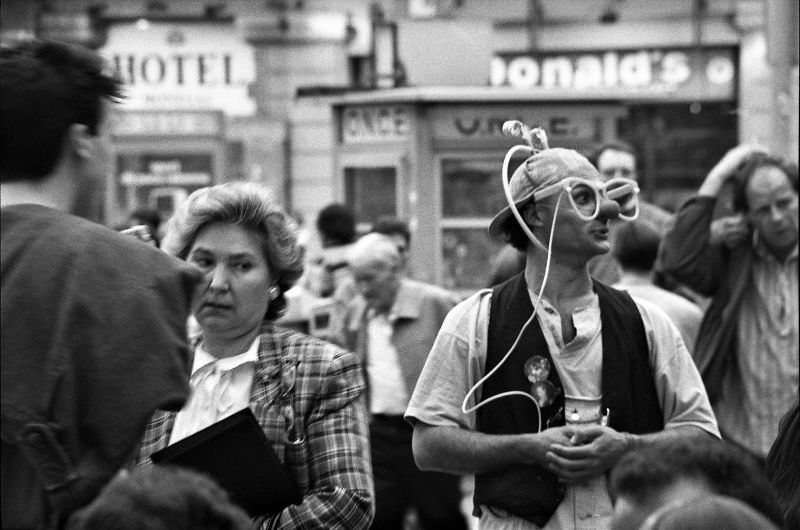
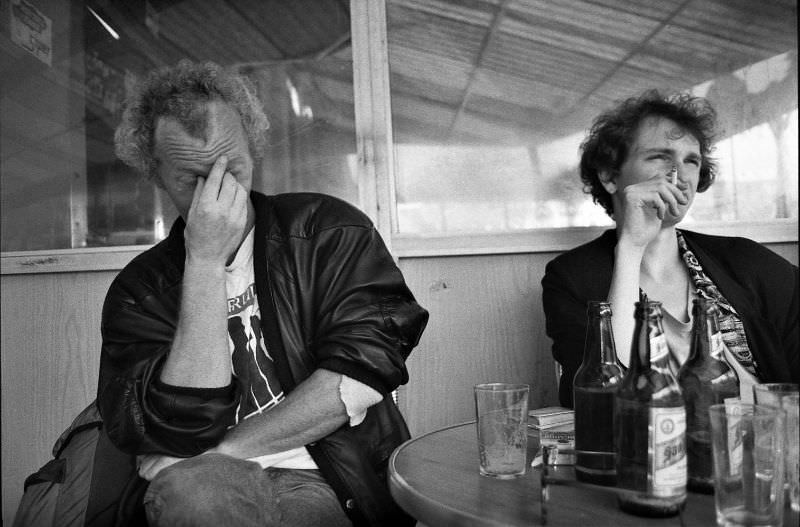
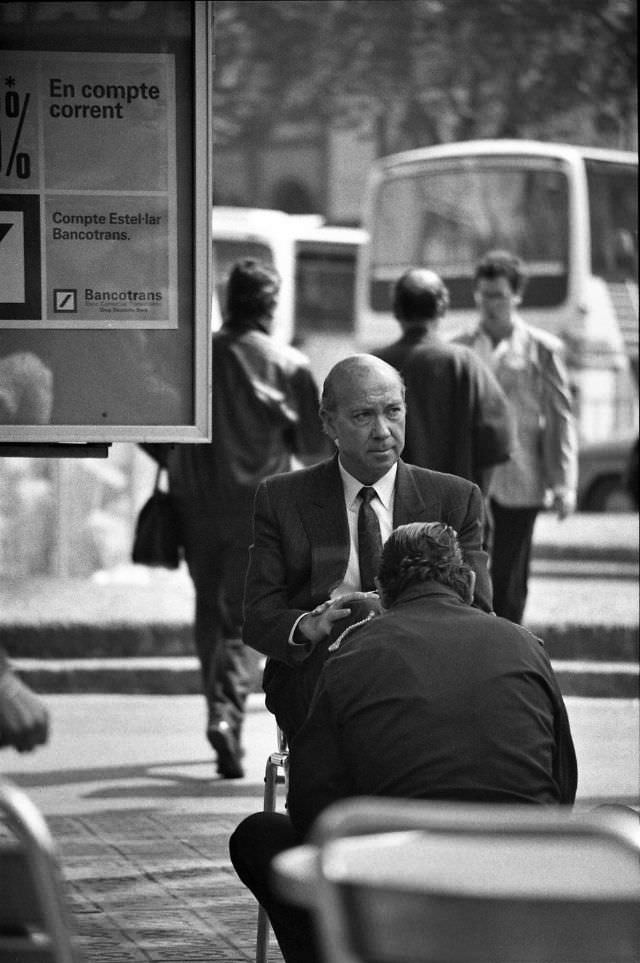
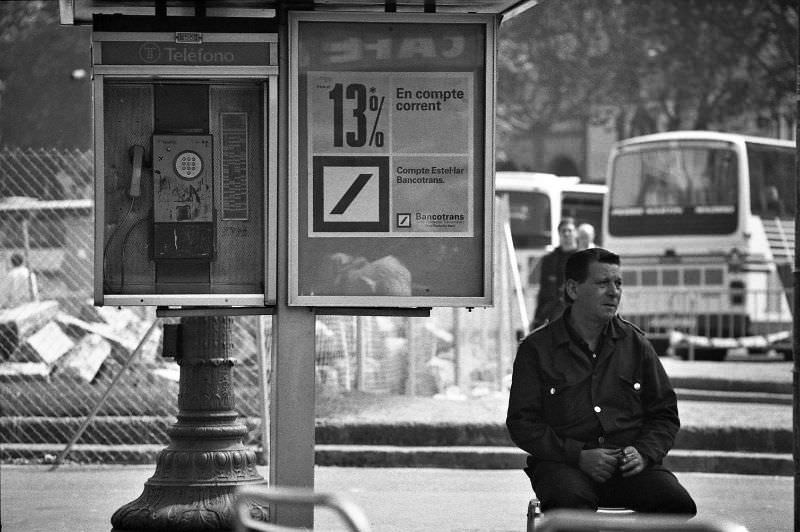
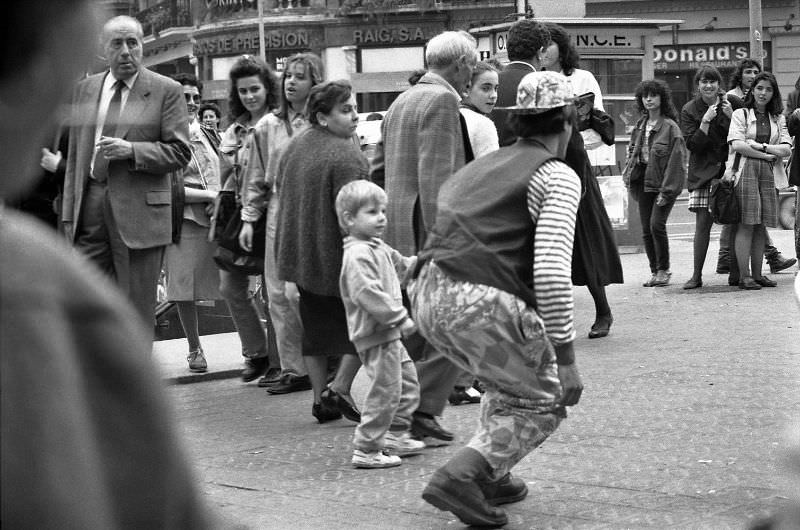
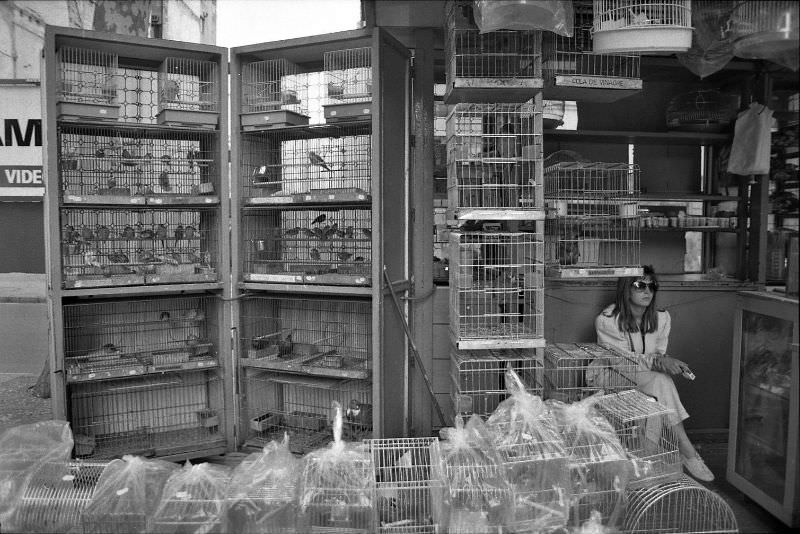
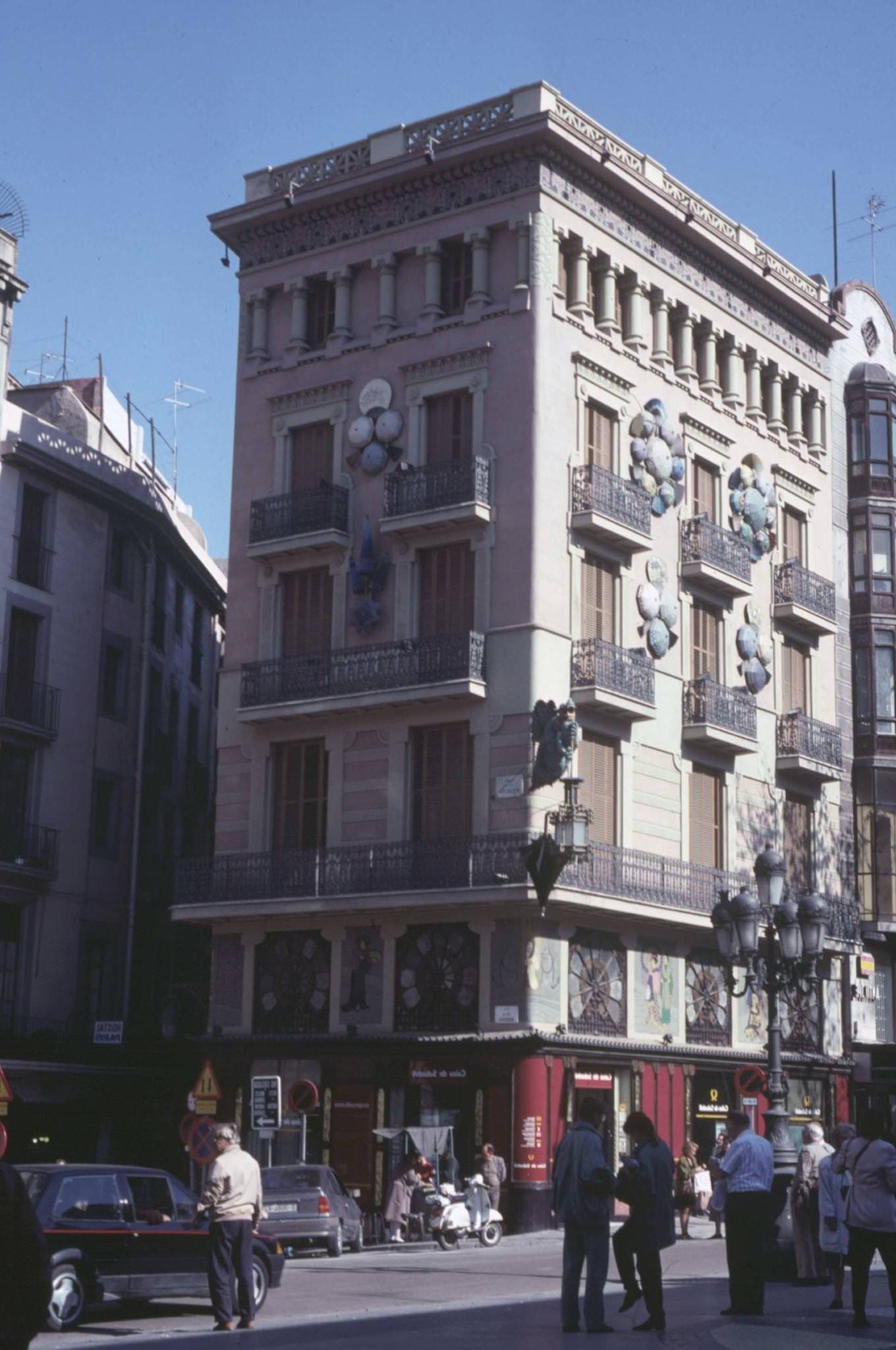
La Rambla — the long pedestrian boulevard running from Plaça de Catalunya down to the port — was the city’s main artery for street life. Vendors sold live birds from stalls, performers sang for passing crowds, and the constant flow of people gave it an energy unlike anywhere else in the city.
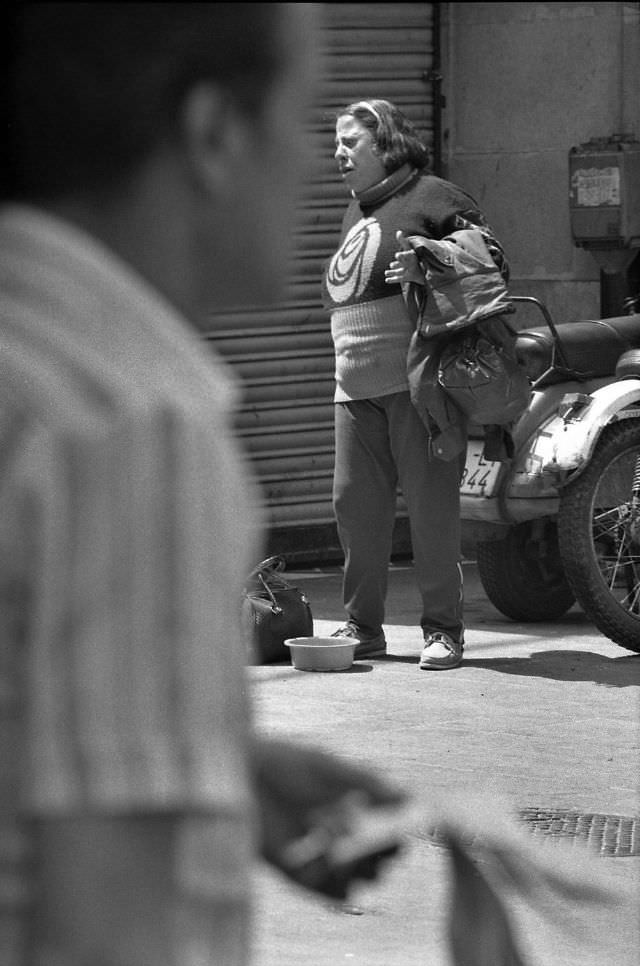
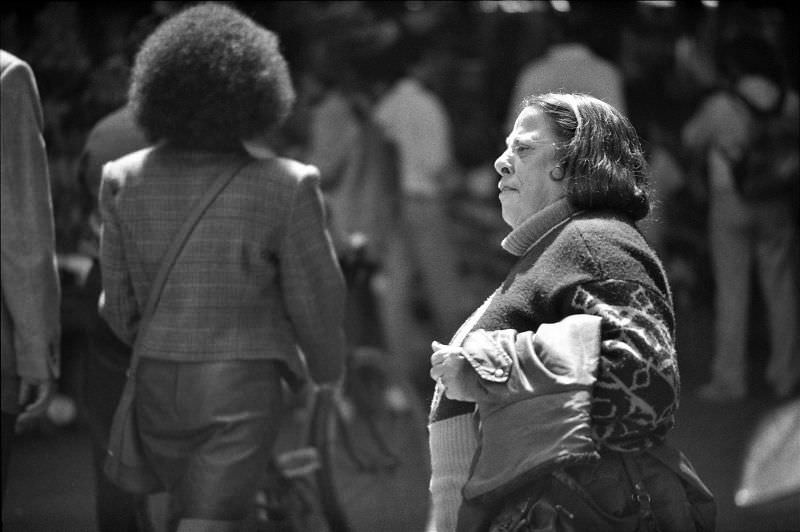
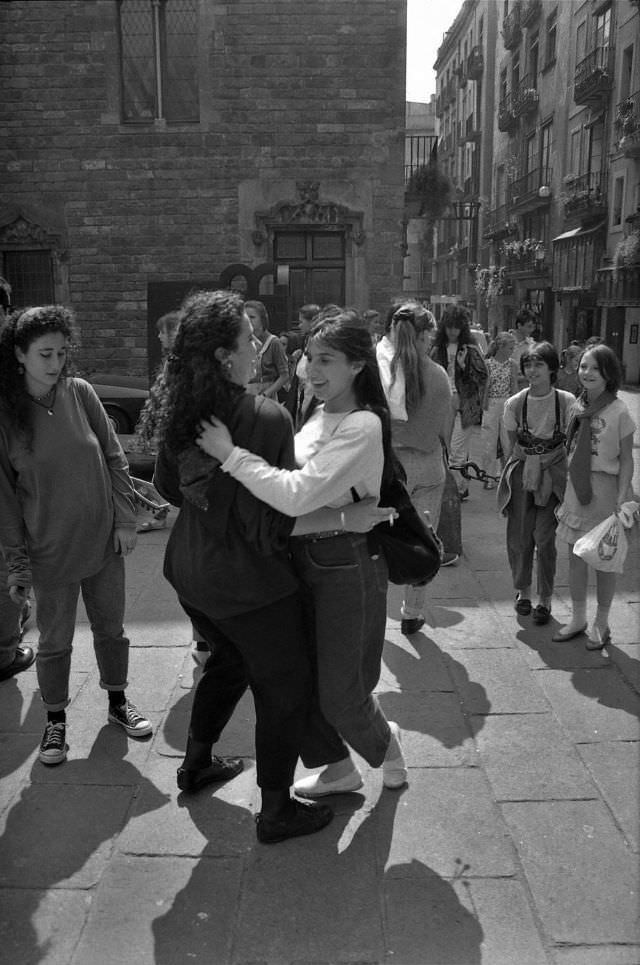
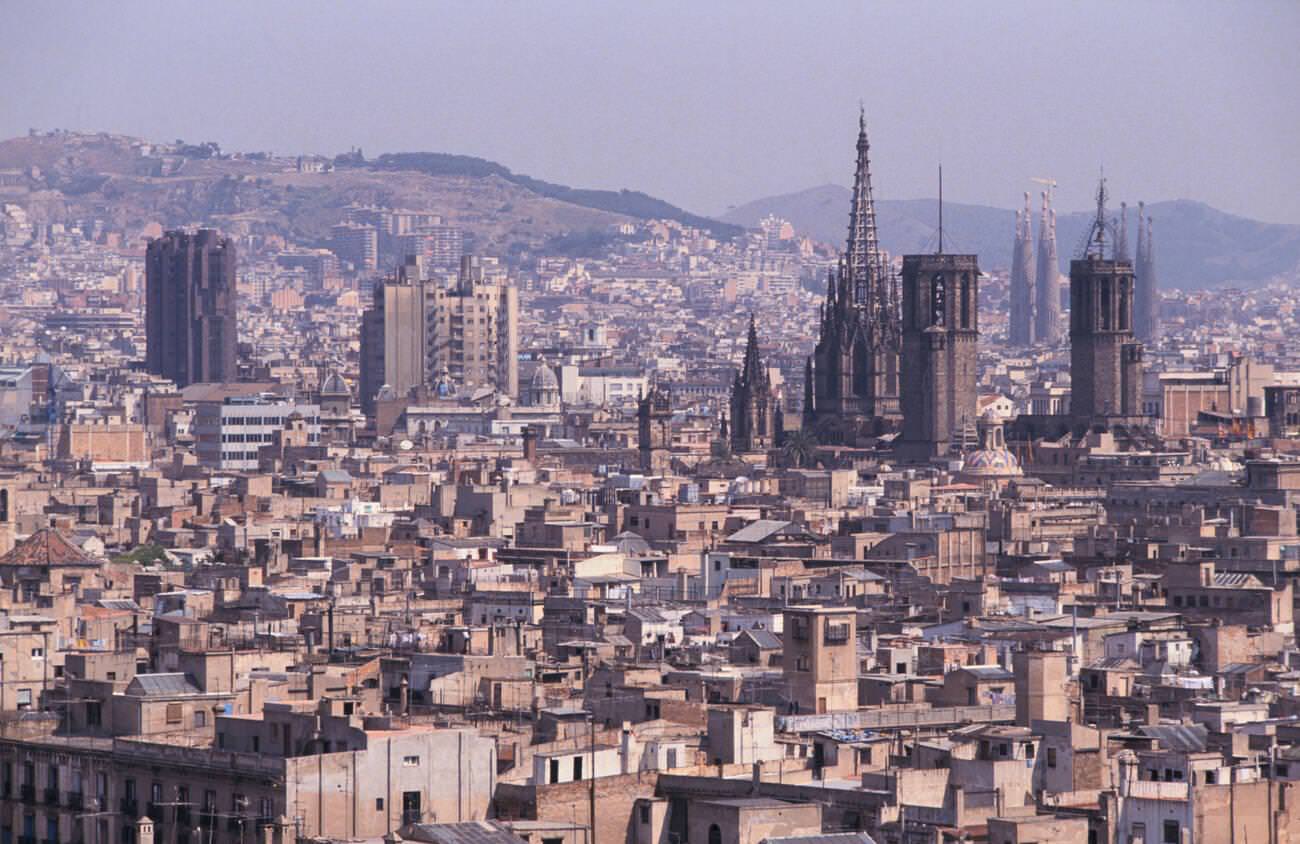
The Barri Gòtic — the Gothic Quarter — held the city’s oldest streets and some of its most visited landmarks. The Plaça del Rei, a medieval square surrounded by stone palaces, was used for outdoor dancing and public gatherings. Nearby, the Barcelona Cathedral stood as a fixture of the neighborhood, complete with its famous resident geese that have lived in the cloister for centuries.
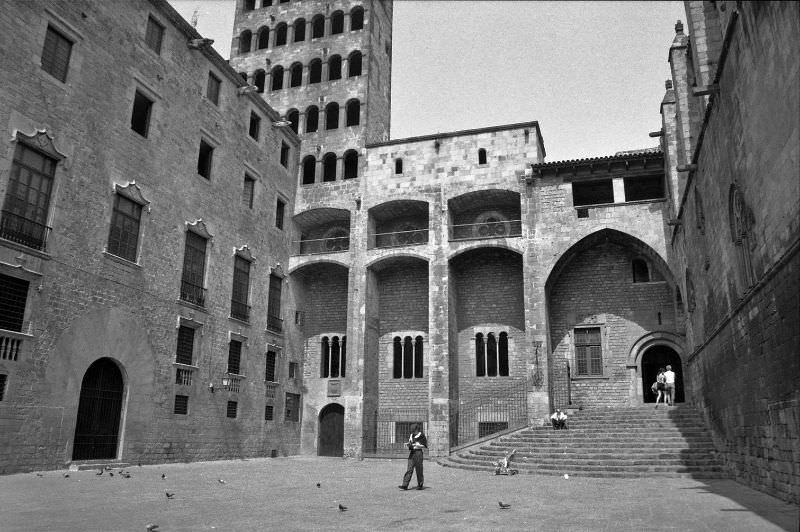
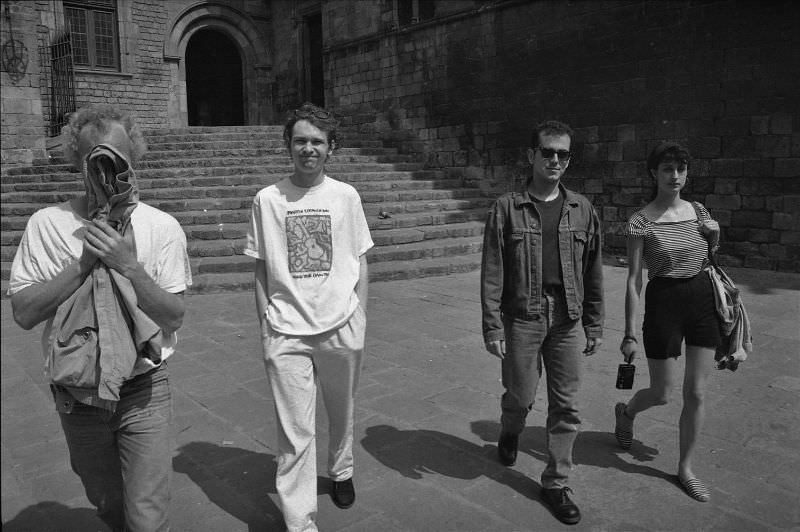
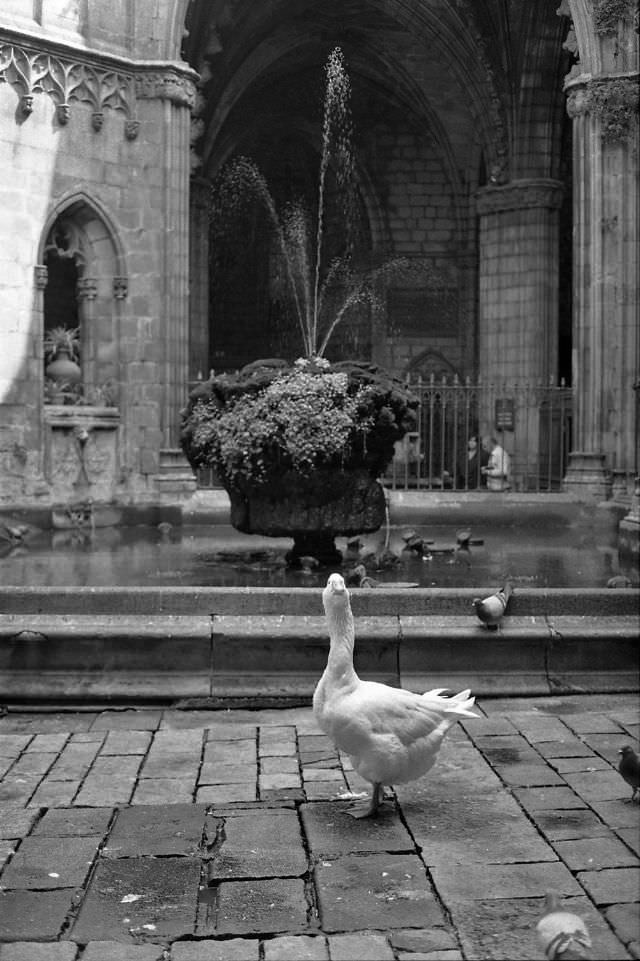
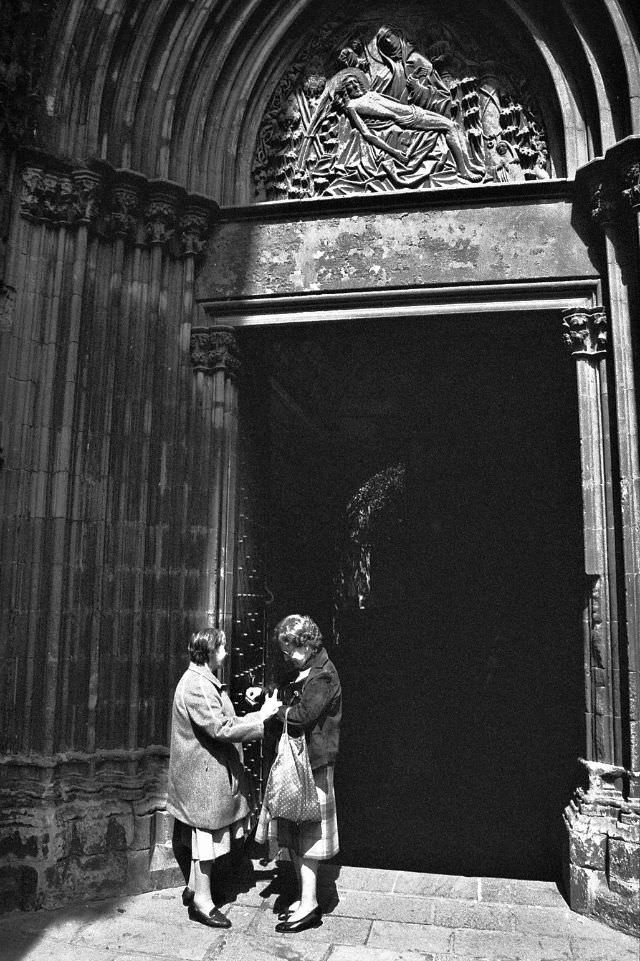
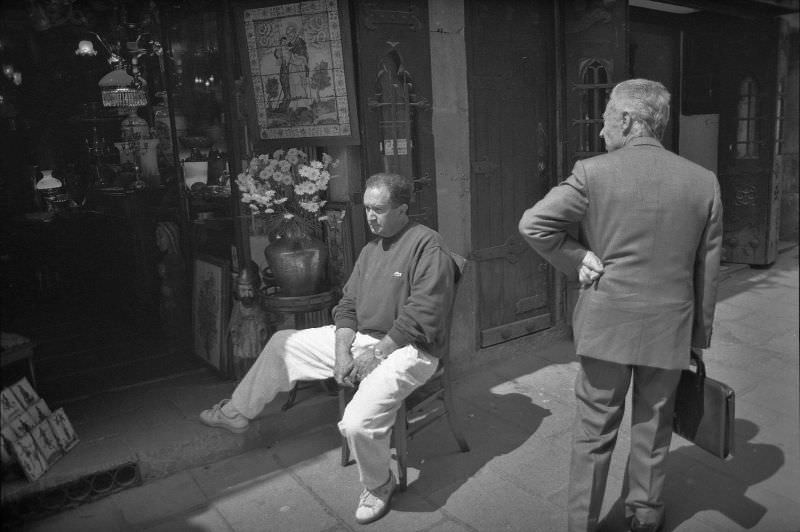
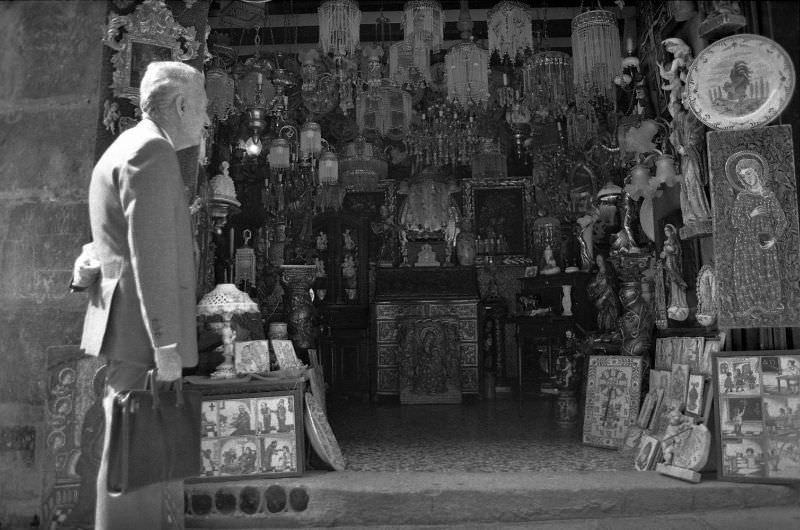
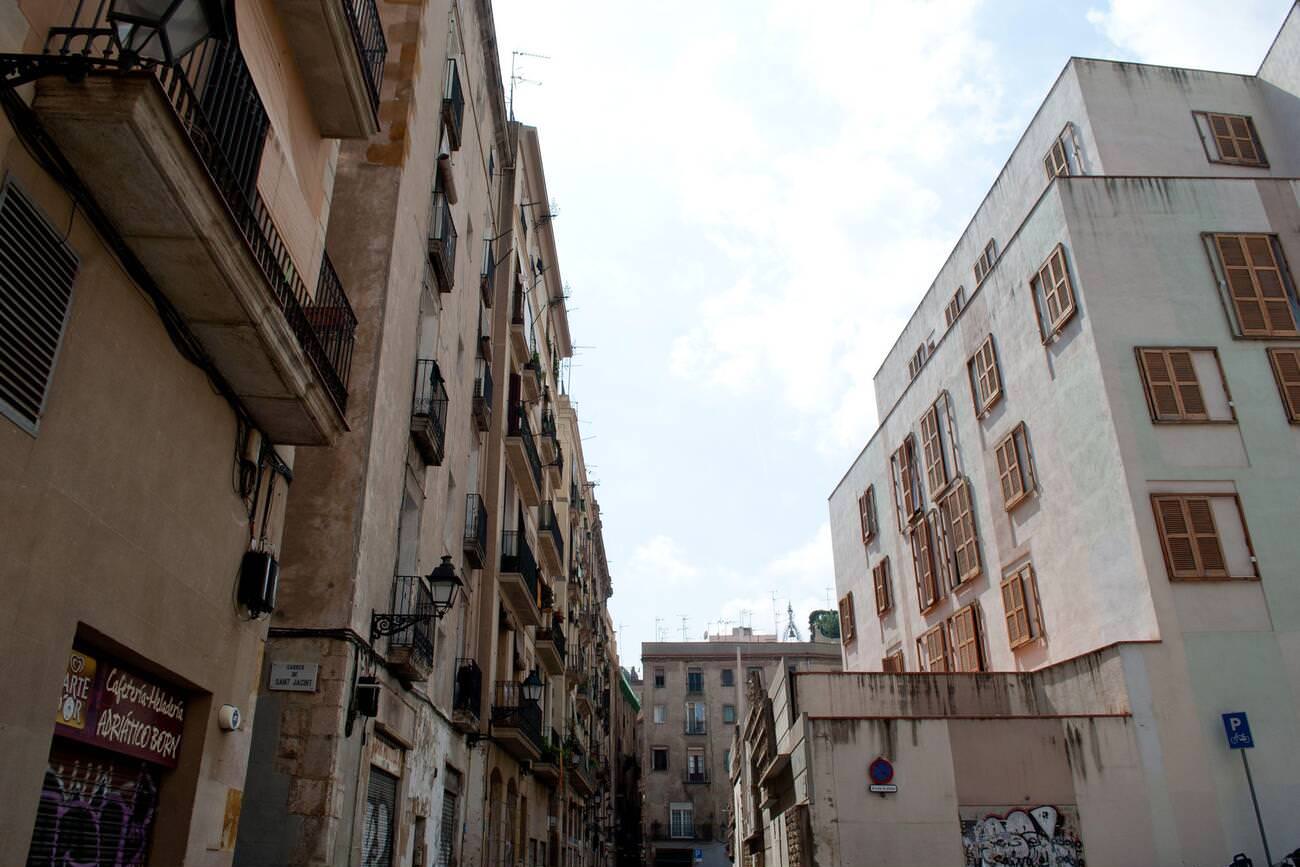
Carrer del Veguer, a narrow street near the cathedral, was a busy spot for street traders. Vendors pushed their goods hard to passersby, selling everything from religious items to everyday curiosities. The street’s tight medieval lanes made it a natural funnel for foot traffic — and for commerce.
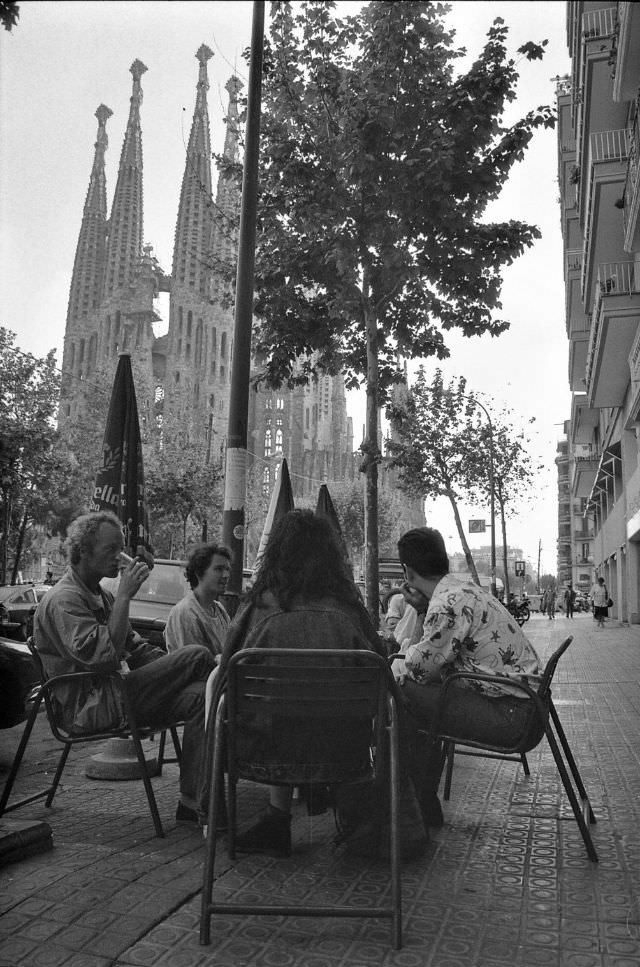
Antoni Gaudí’s unfinished basilica, the Sagrada Família, was still very much a construction site in the 1990s. Work had been ongoing since 1882, and the towers visible from across the city were nowhere near their final height. From the top of the existing towers, the surrounding urban grid of the Eixample district stretched out in every direction.
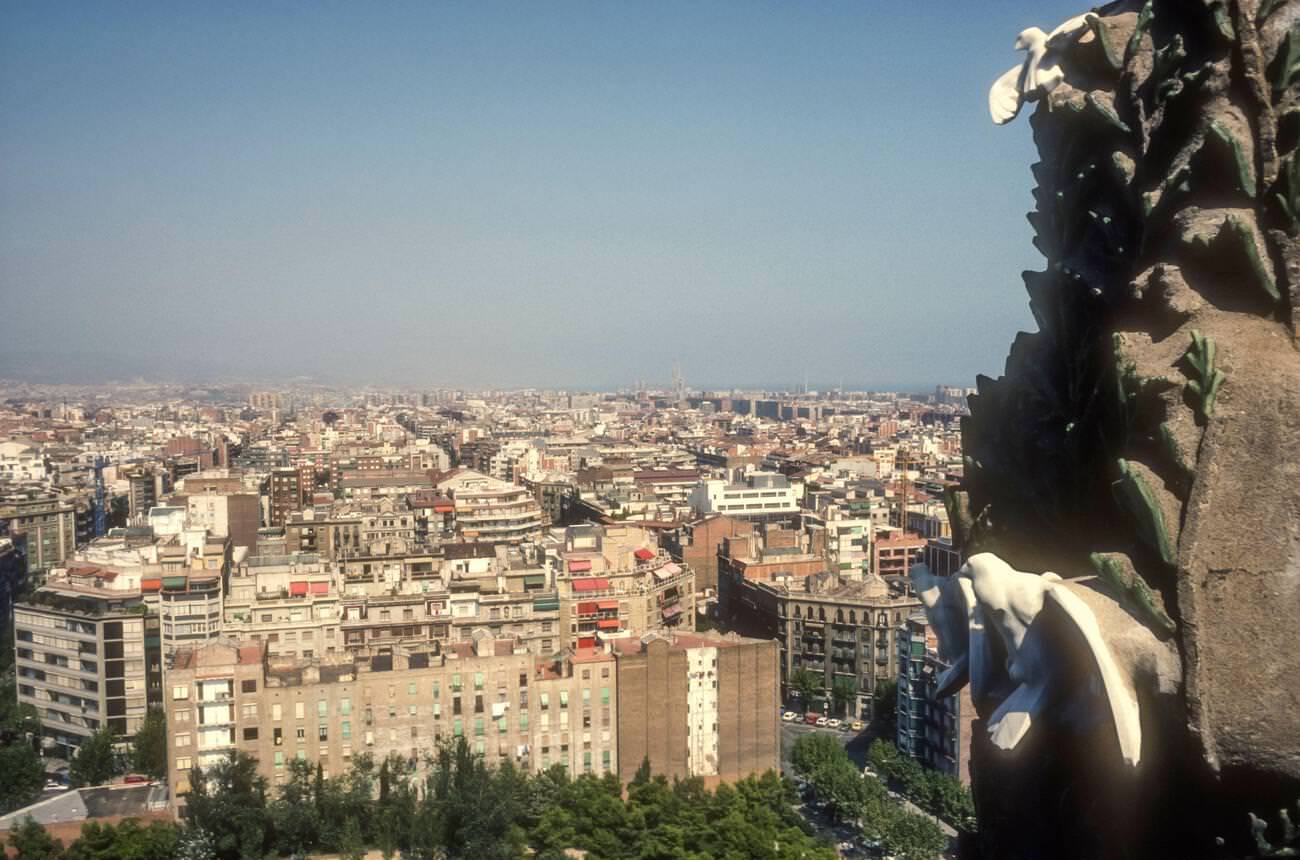
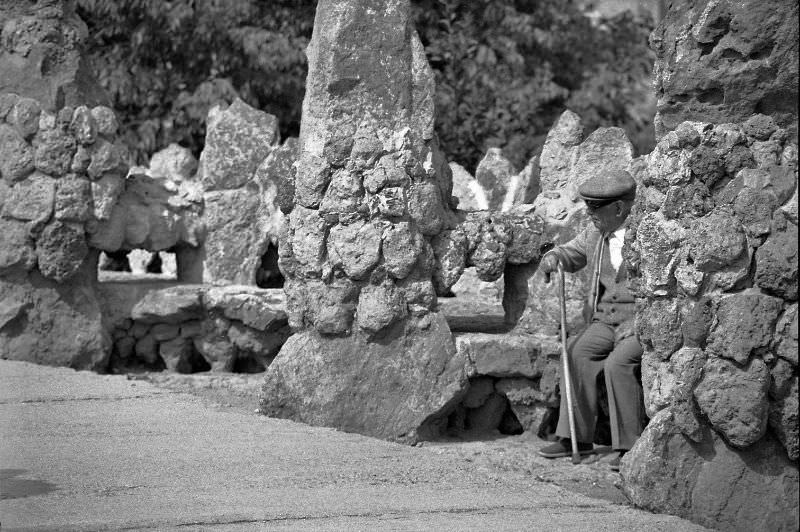
Parc Güell, another Gaudí creation on the hillside above the city, was already a well-worn destination by 1990. Its mosaic terraces and stone viaducts attracted visitors looking for sweeping views over Barcelona’s rooftops and down to the Mediterranean.
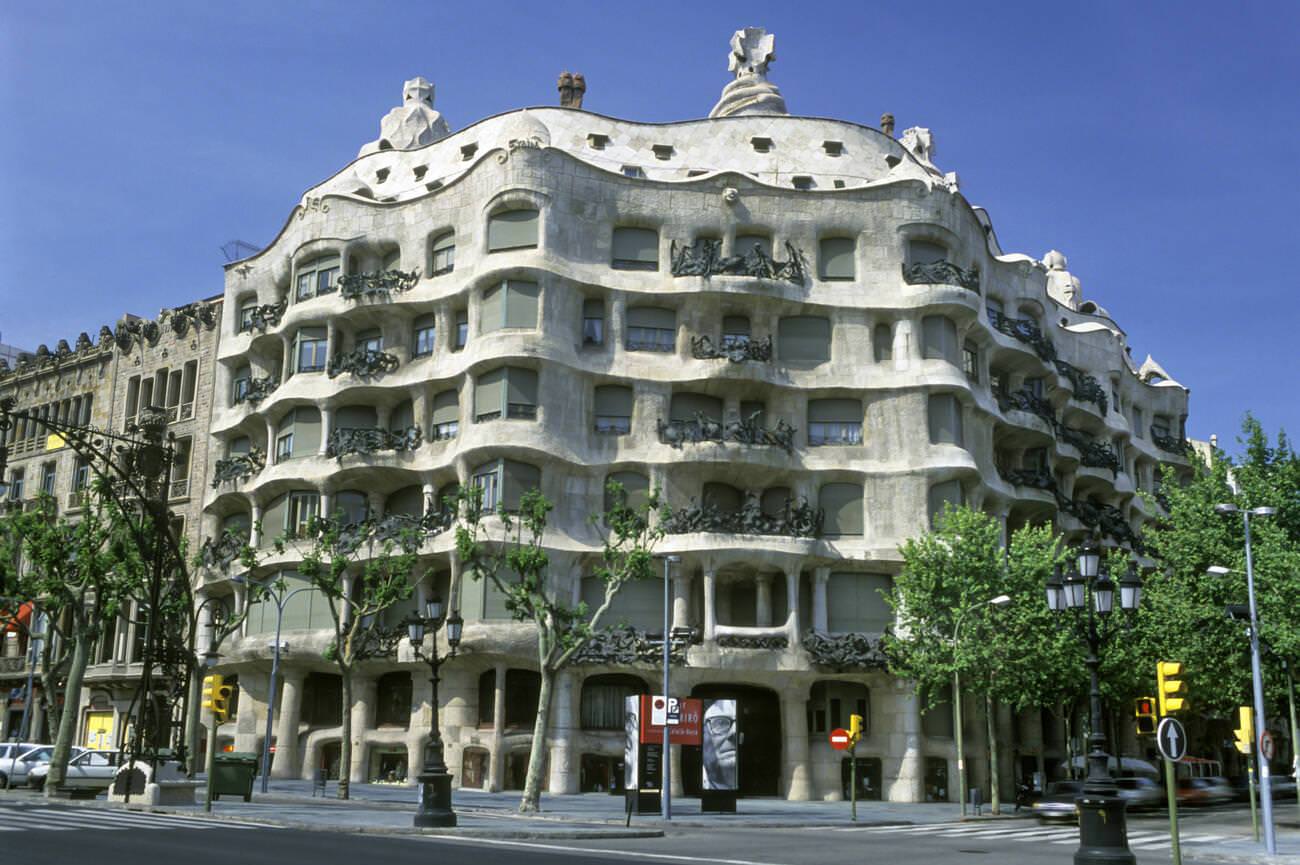
Passeig de Gràcia — the wide boulevard running through the Eixample — was lined with some of Catalonia’s most celebrated Modernista buildings. Casa Milà, known locally as La Pedrera, sat on its corner with its rippling stone facade and iron balconies. The building, completed in 1912, was designed entirely by Gaudí and remained one of the most distinctive structures in Europe.
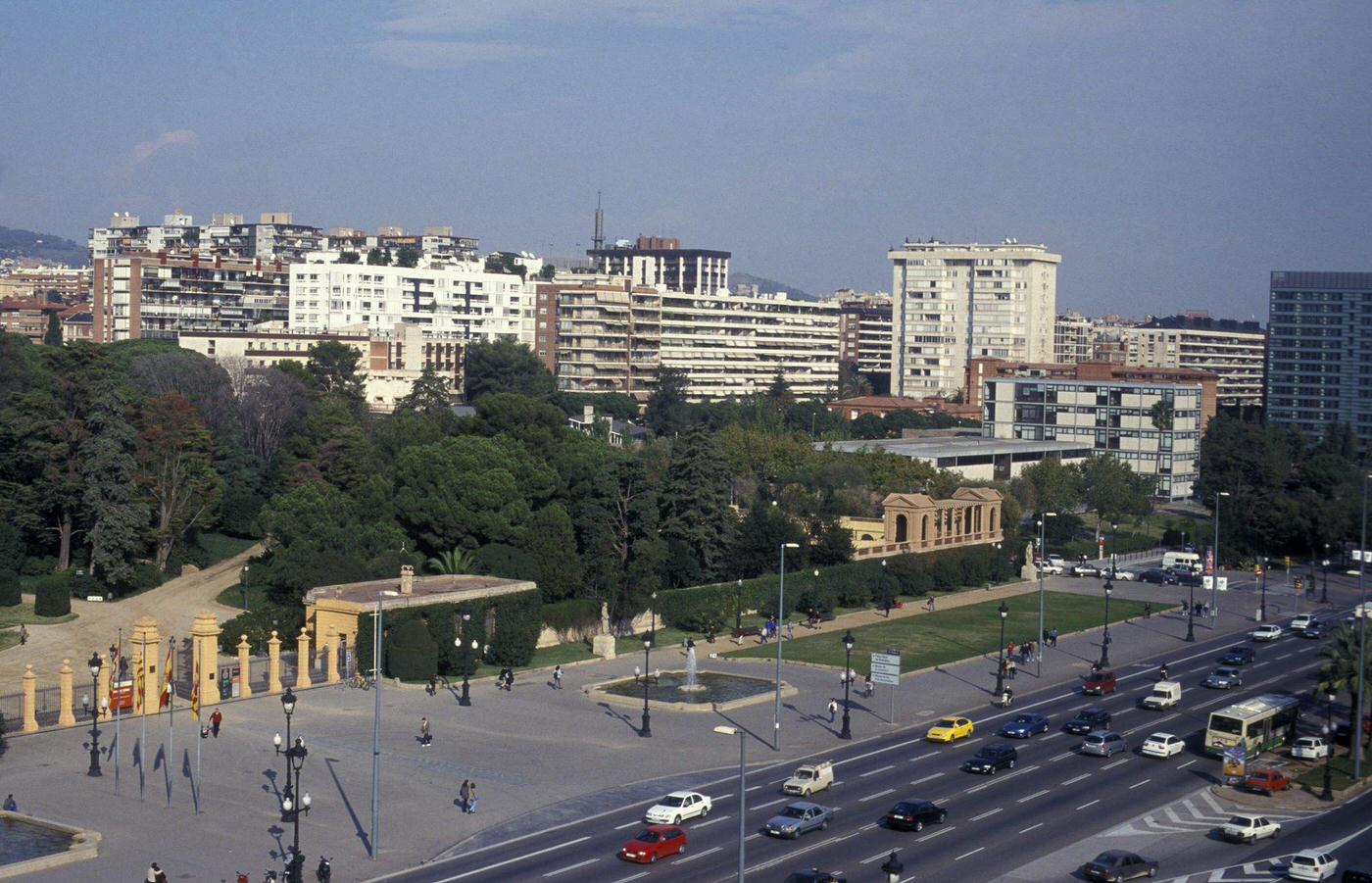
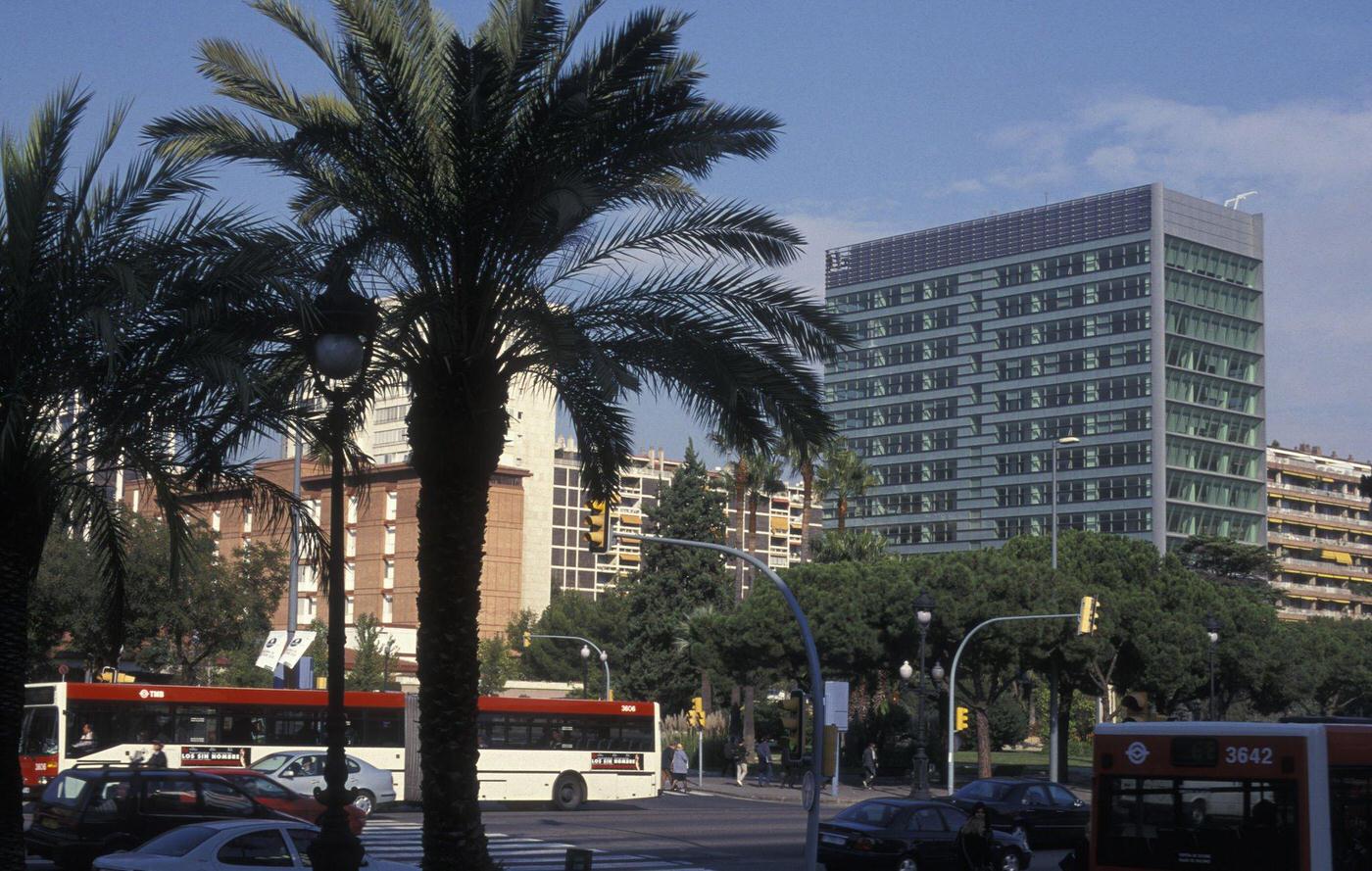
Avinguda Diagonal — one of the city’s main thoroughfares — cut through the urban grid at a distinctive angle, giving the Eixample its most recognisable interruption. Along its length, traffic moved through a city that was simultaneously historic and rapidly modernising.
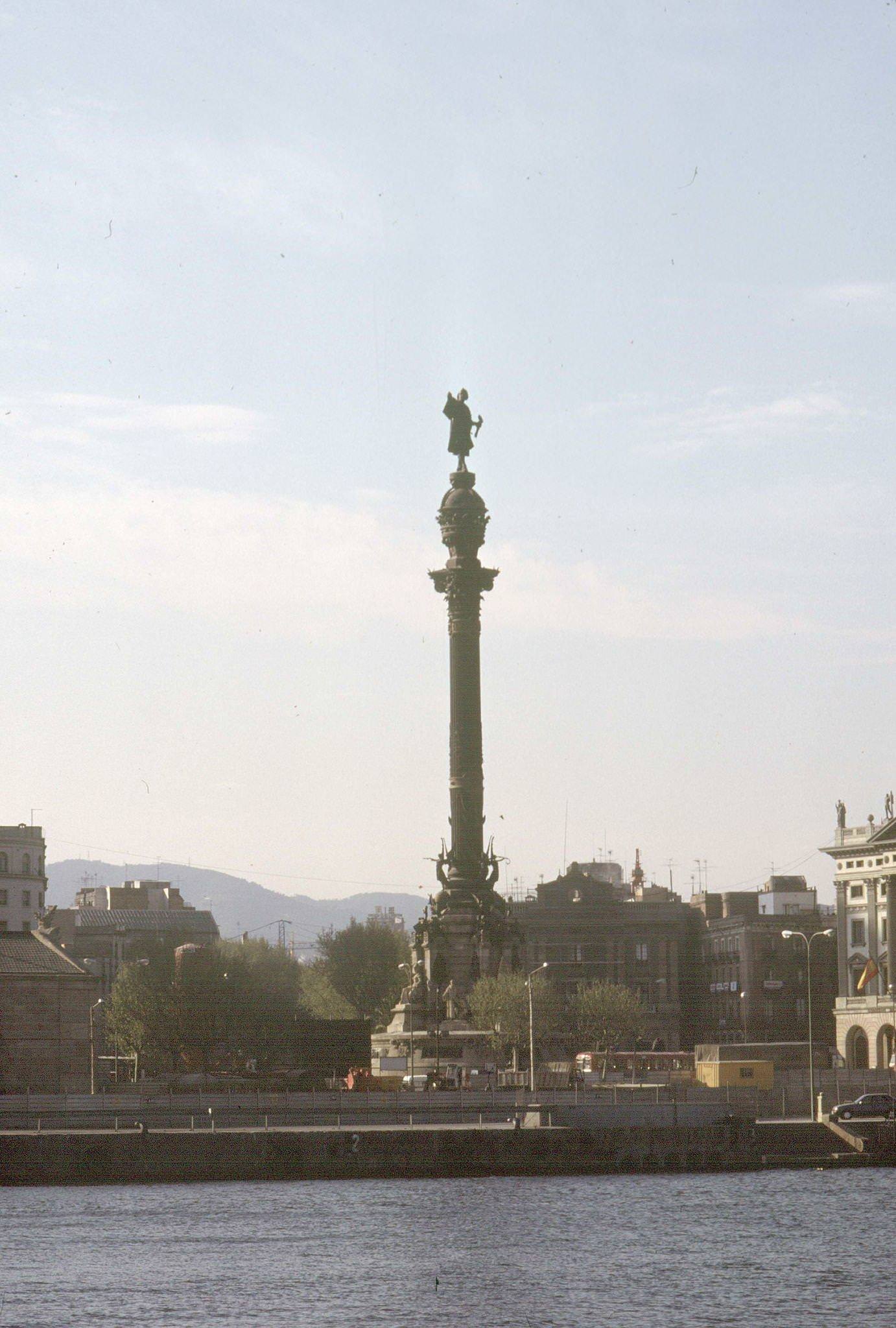
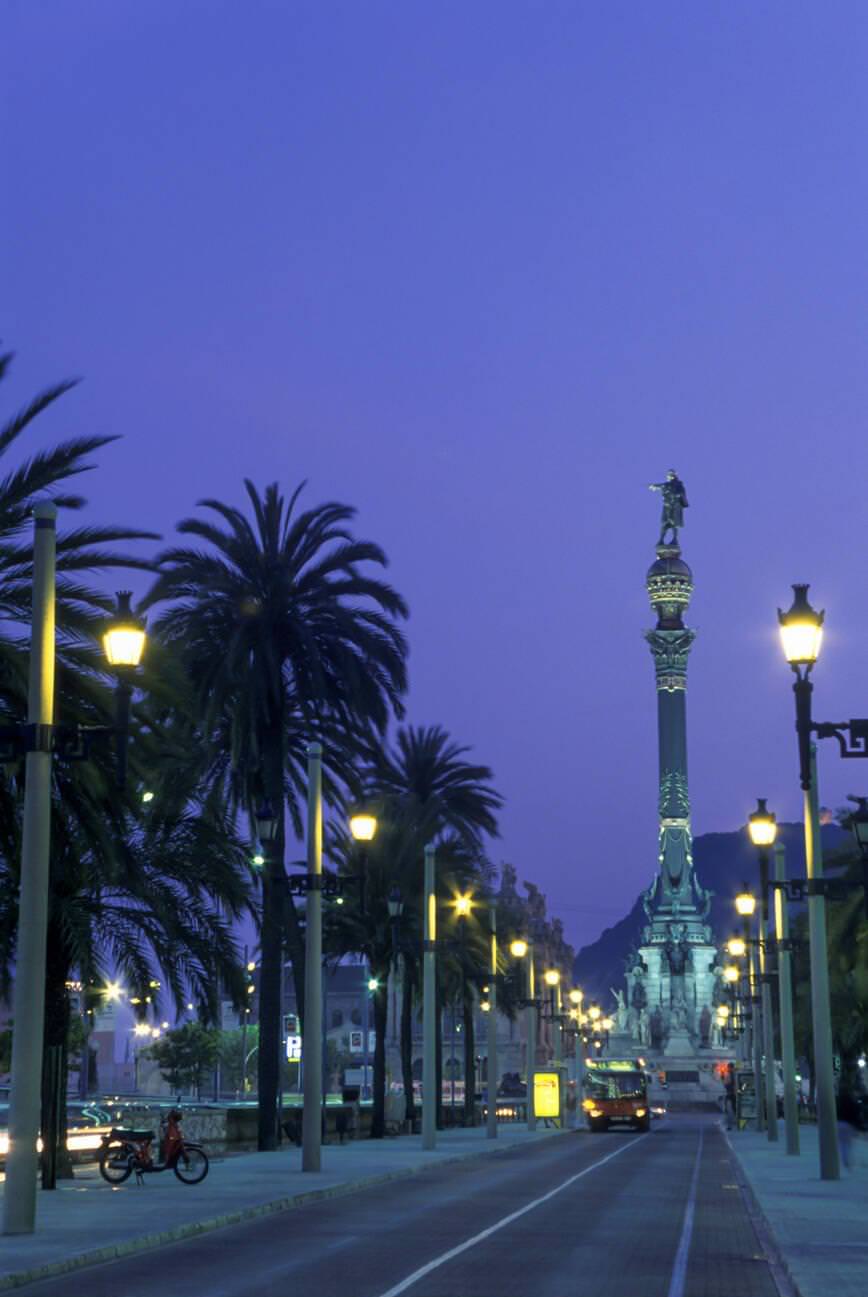
The Christopher Columbus monument at the bottom of La Rambla marked the point where the city met the sea. The 60-metre column, topped with a statue of Columbus pointing out to the Mediterranean, stood near the port and served as a reference point for both residents and visitors navigating the city.
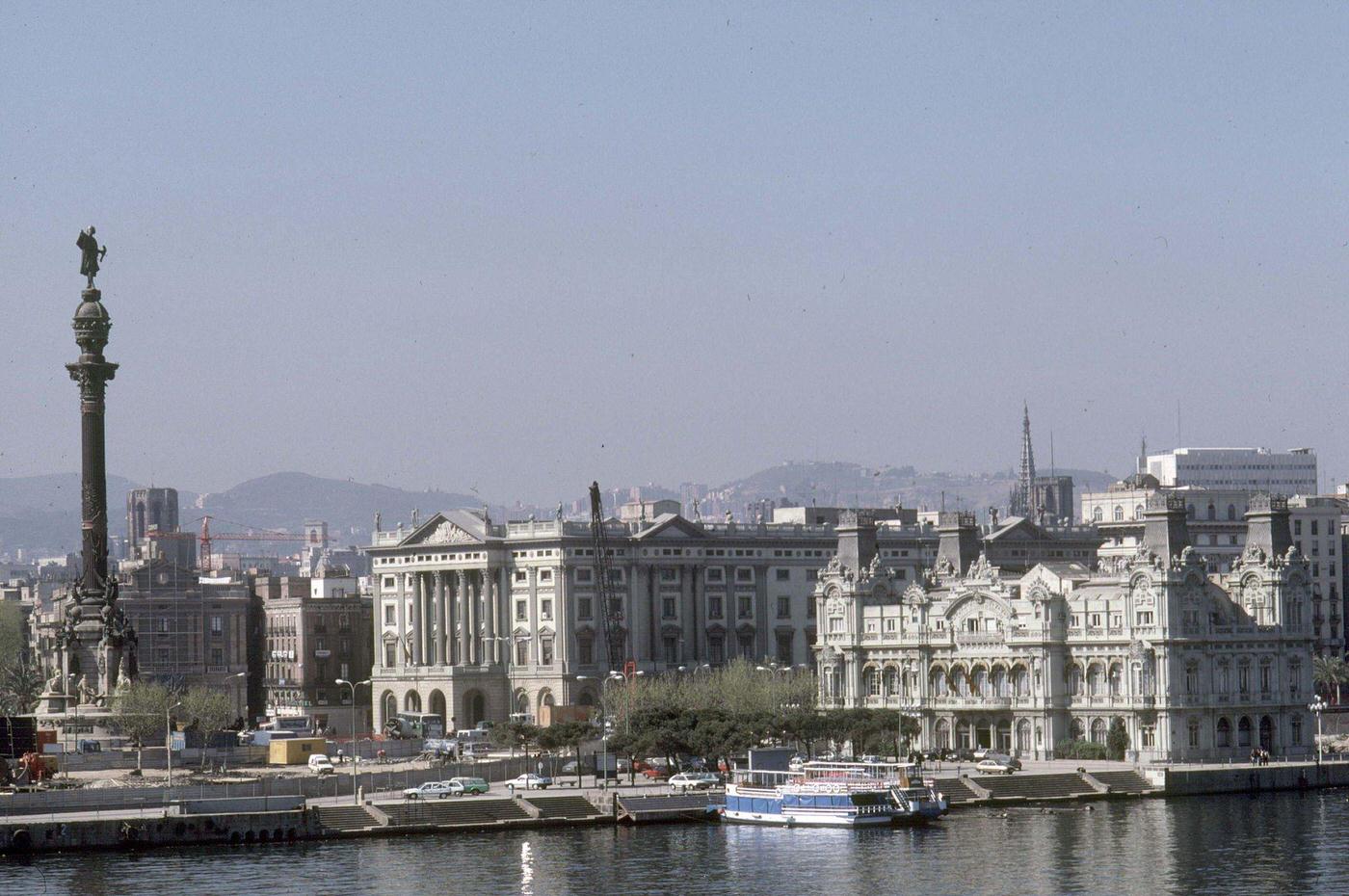
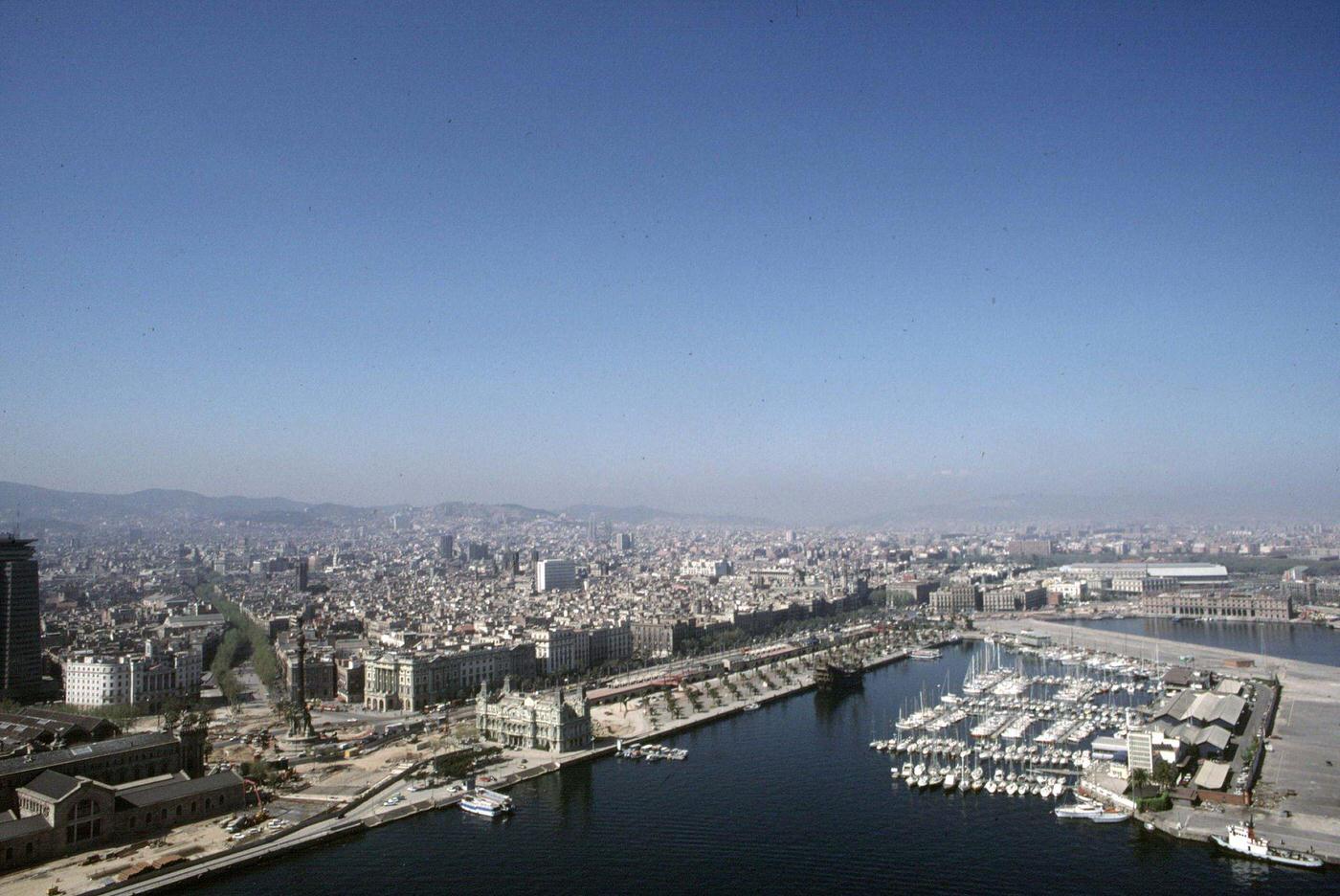
Barcelona’s port district in the early 1990s still carried the character of a working waterfront. The streets around it were dense with activity — bars, small traders, and residents going about their daily routines. Before the post-Olympic redevelopment fully took hold, this part of the city retained a rougher, more lived-in feel.
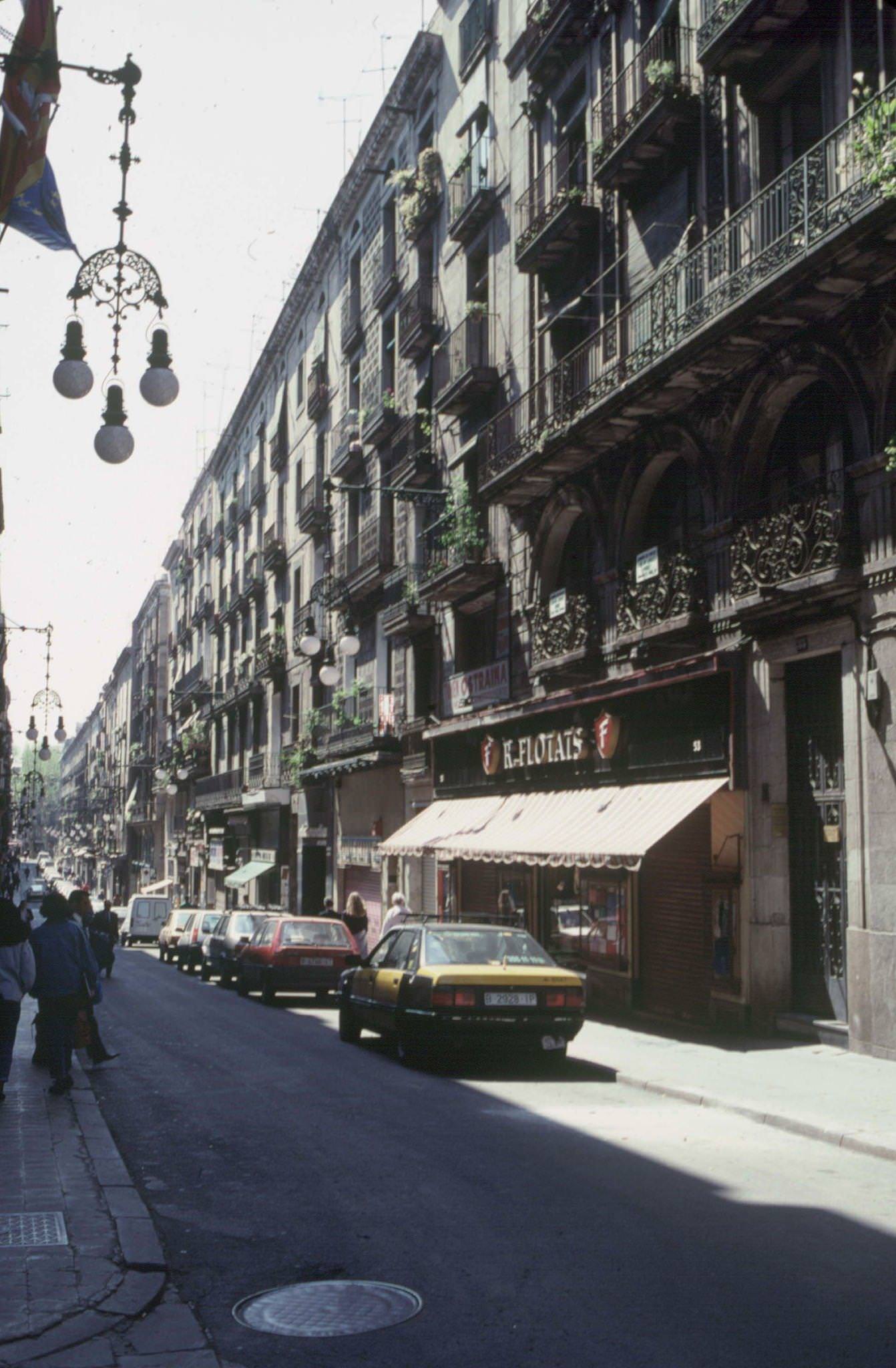
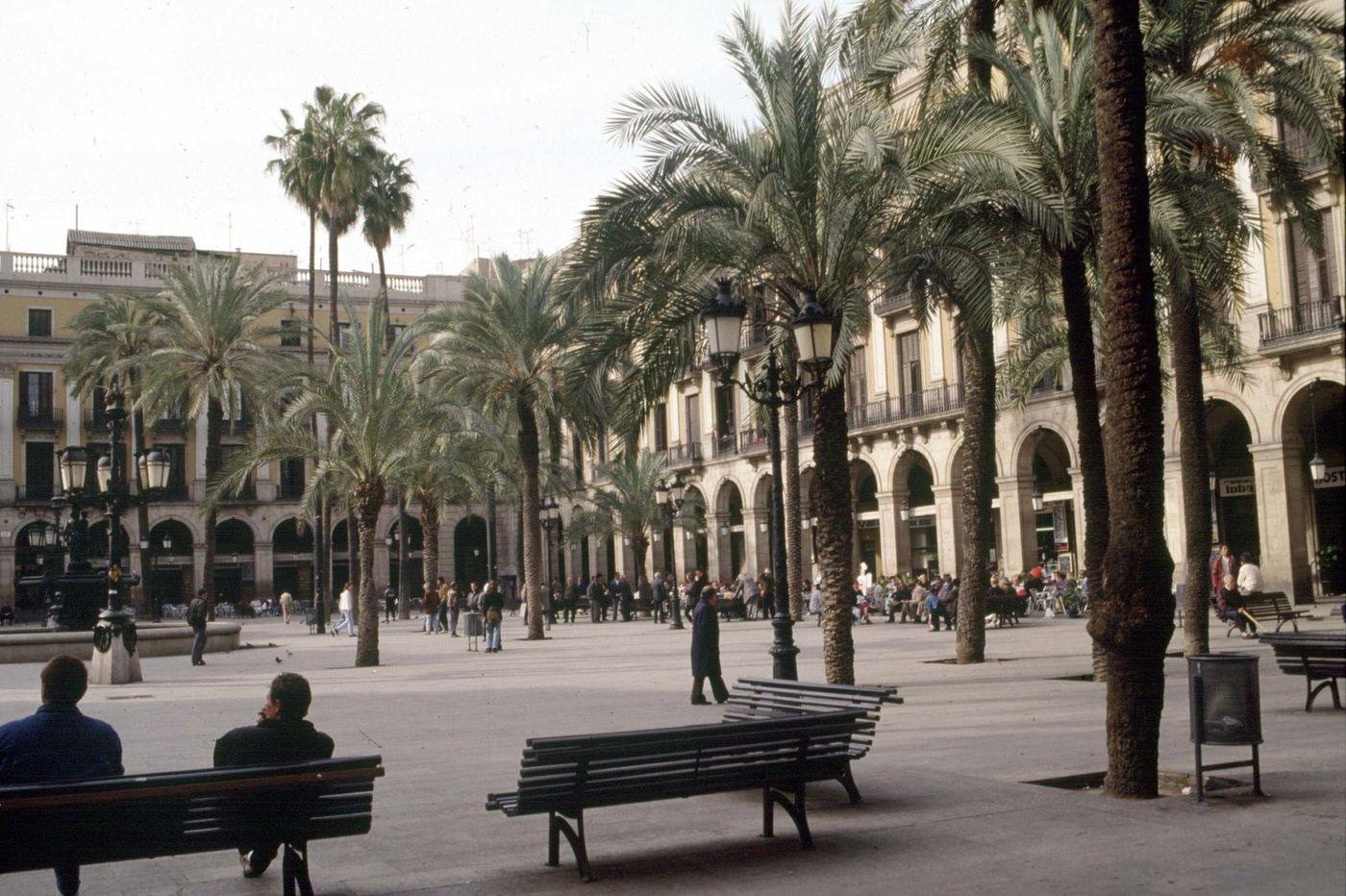
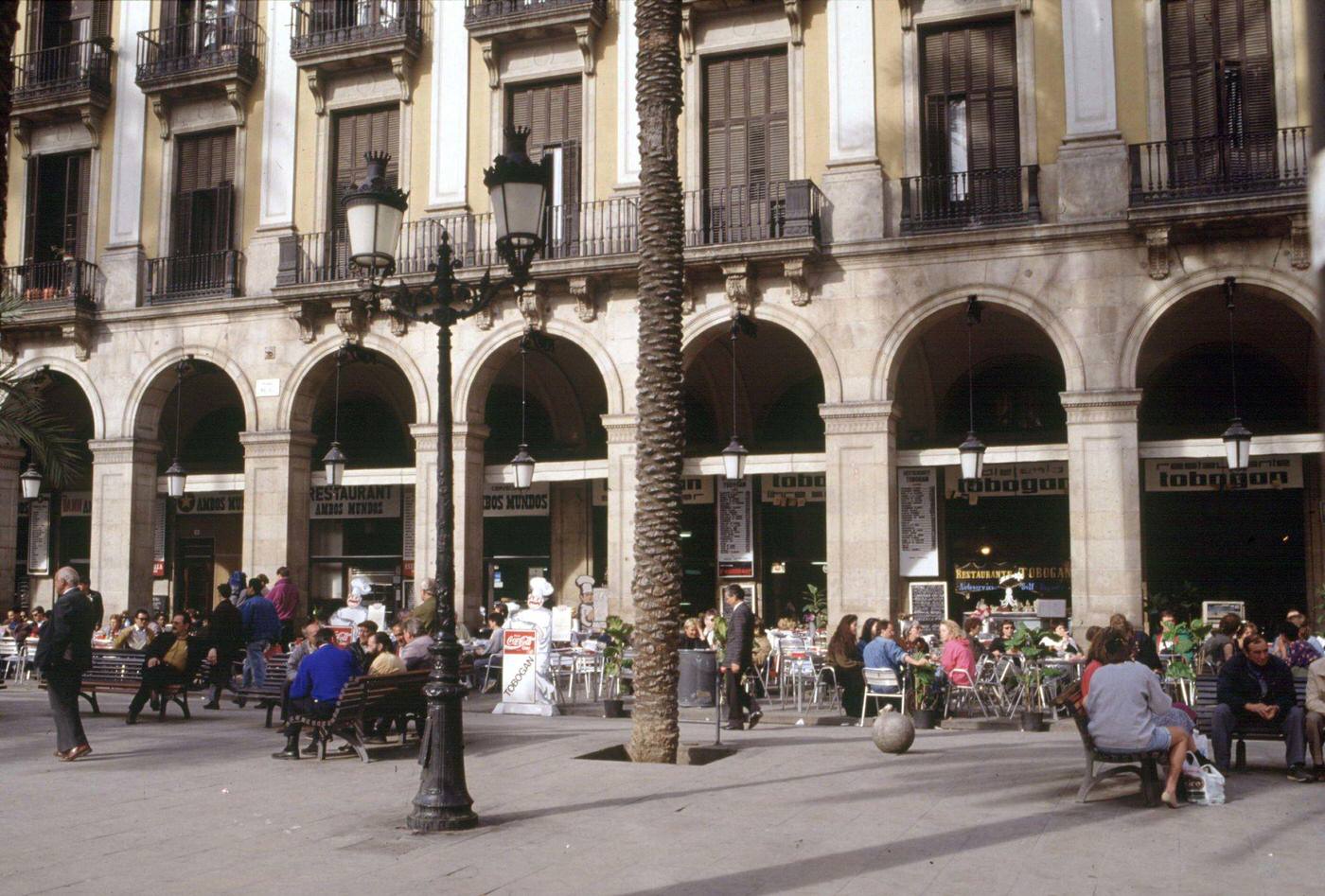
Plaça Reial, a large neoclassical square just off La Rambla, was a popular meeting point. Its colonnaded arcades and palm trees gave it a distinct character, and the square’s lamp posts — designed by a young Gaudí in 1879 — were among the earliest commissions of his career.
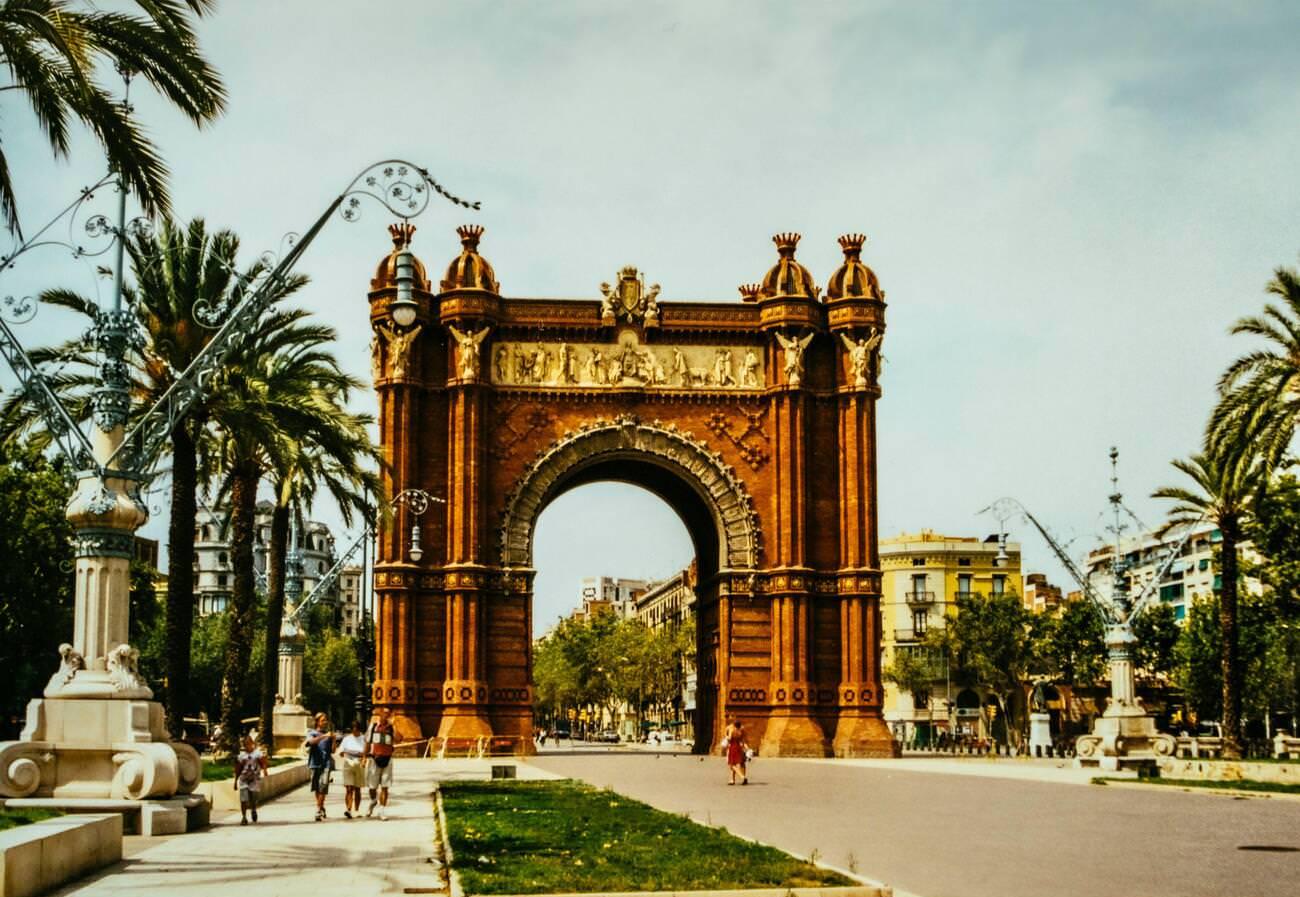
The Arc de Triomf, built as the main entrance gate for the 1888 Universal Exhibition, stood at the top of Passeig de Lluís Companys. Its red brick arch and decorative friezes made it one of the most photographed structures in the city, particularly in the years following the Olympics when tourist numbers climbed sharply.
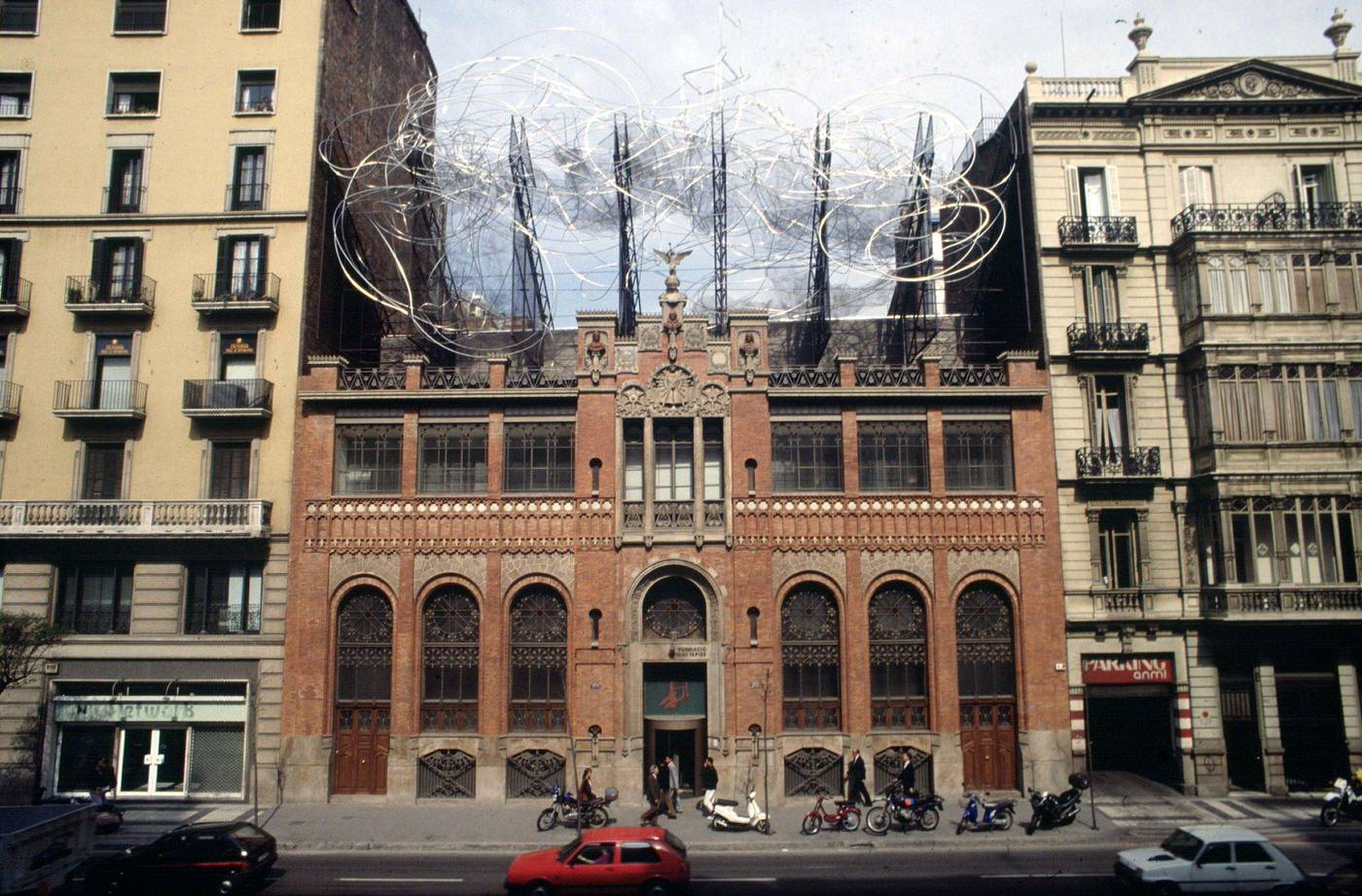
The Fundació Antoni Tàpies, housed in a restored Modernista publishing house on Carrer d’Aragó, opened in 1990. Its facade — topped with a tangle of wire and tube sculpture by Tàpies himself called ‘Cloud and Chair’ — announced itself as an institution willing to push boundaries. It became one of the city’s key contemporary art spaces during the decade.
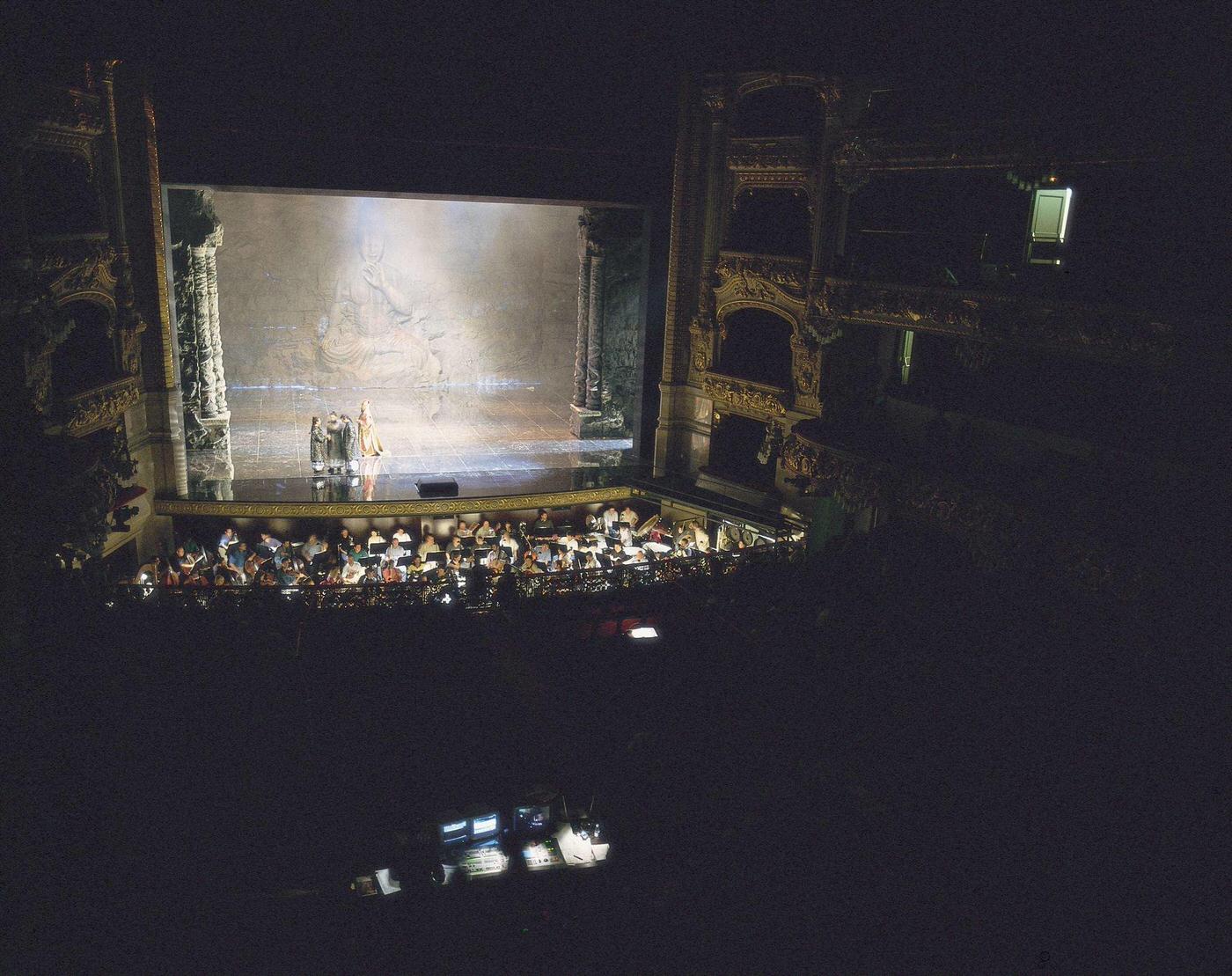
The Gran Teatre del Liceu on La Rambla was Barcelona’s opera house and one of the largest in Europe. Rehearsals behind its grand facade brought together performers at the highest level of the form. The theatre would suffer a devastating fire in 1994, caused by a welder’s spark during maintenance work, destroying much of the auditorium before being rebuilt and reopened in 1999.
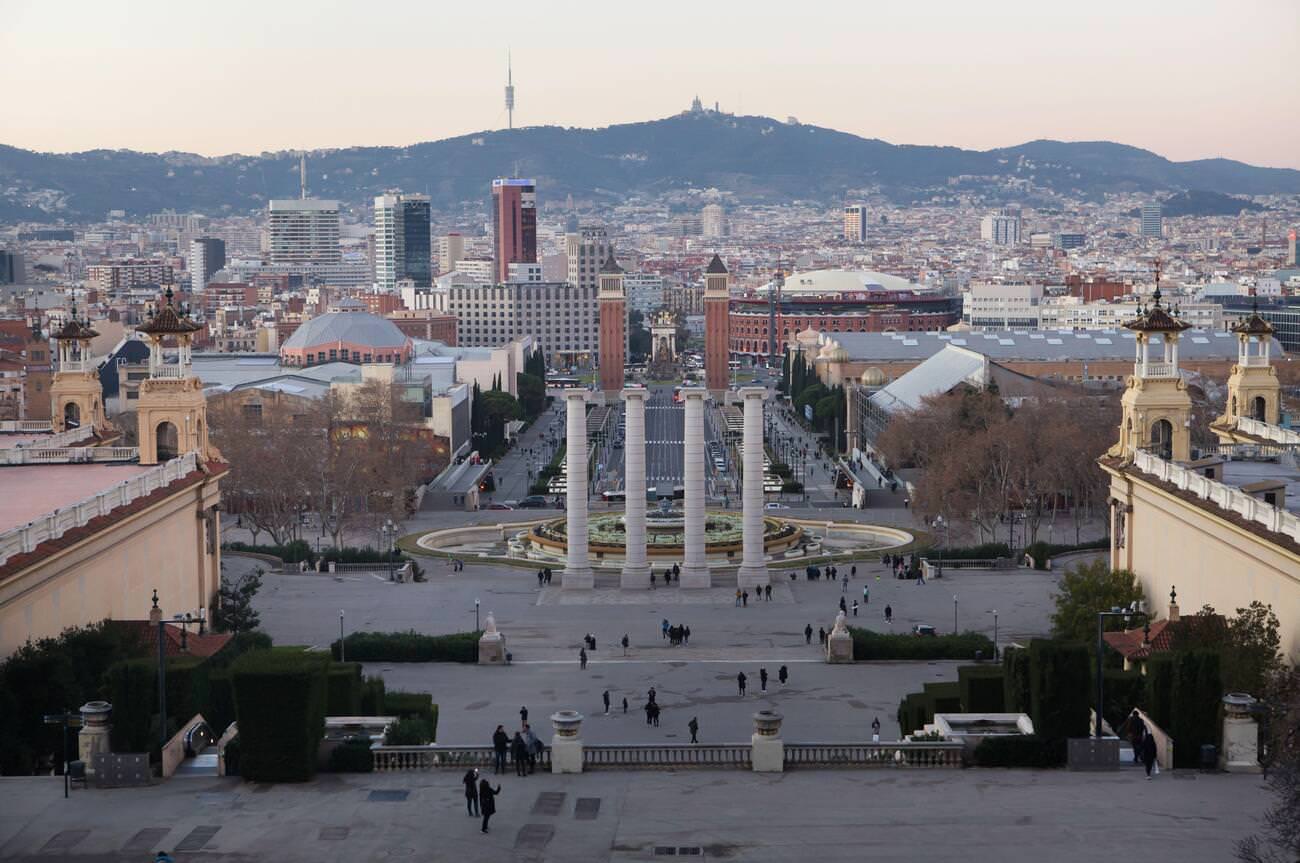
The Magic Fountain of Montjuïc, positioned at the foot of the hill below the National Palace, had been a spectacle since its construction in 1929. In the 1990s, its light and water shows continued to draw crowds in the evenings. Nearby, the Four Columns — reconstructed replicas of originals demolished under Franco — stood as a symbol of Catalan identity.
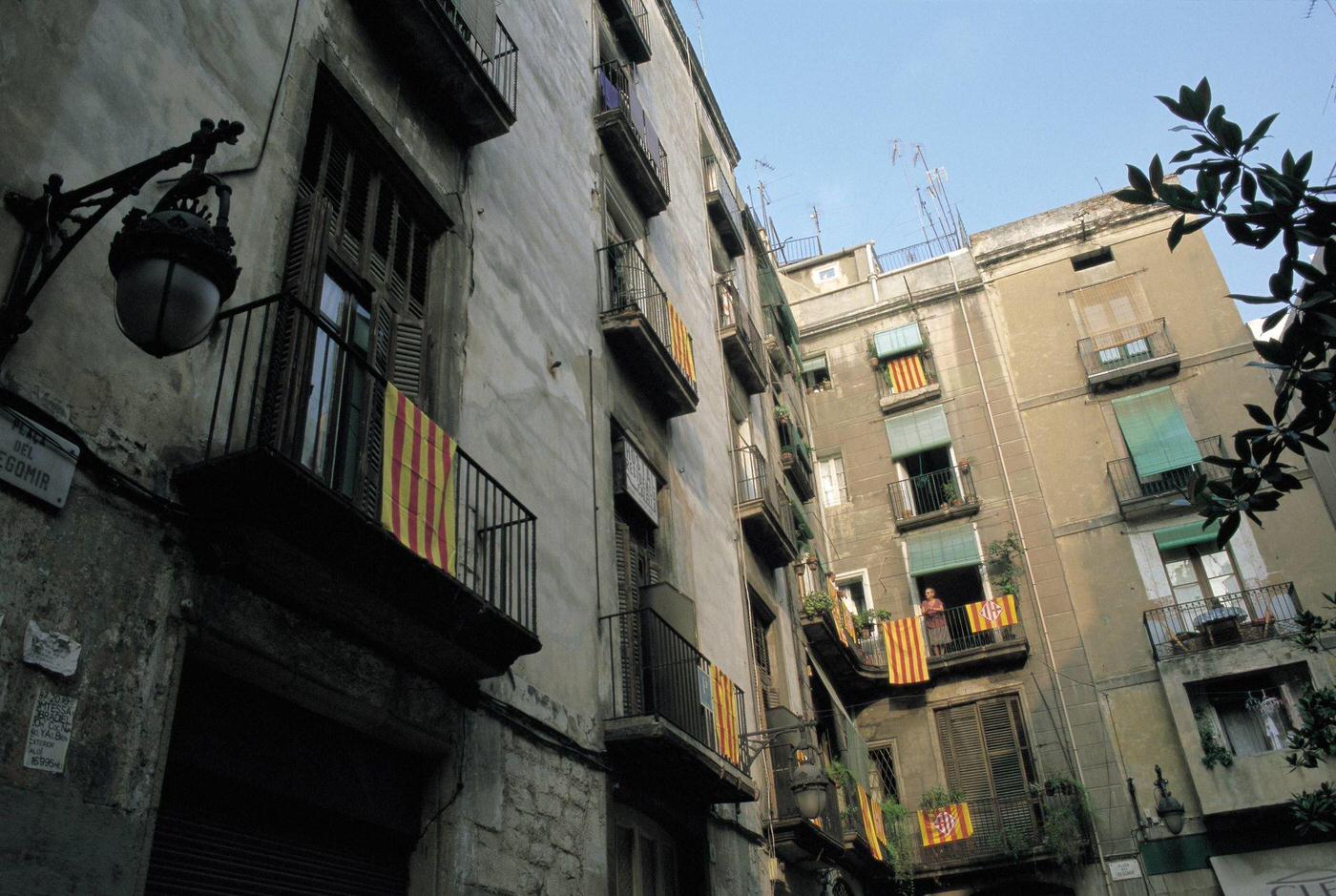
Catalan identity ran visibly through the city. Senyera flags — the red and yellow stripes of Catalonia — hung from apartment balconies across Barcelona’s neighbourhoods. The display was both cultural and political, a reminder that many residents saw themselves as Catalan first.
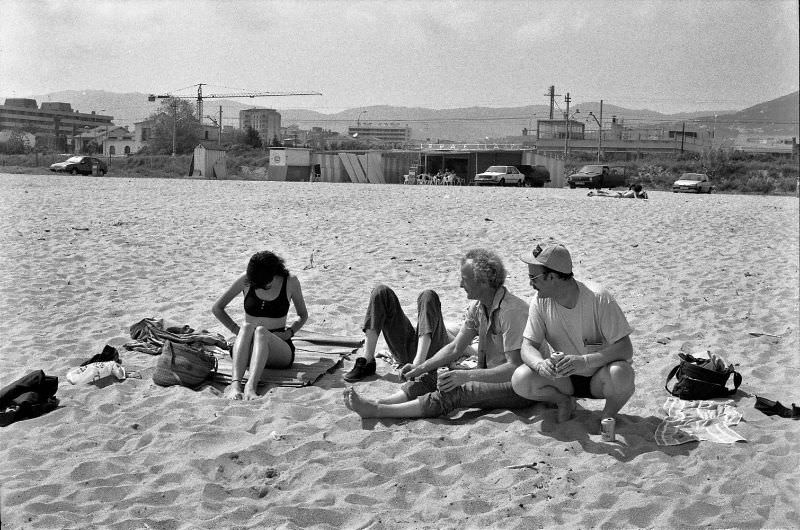
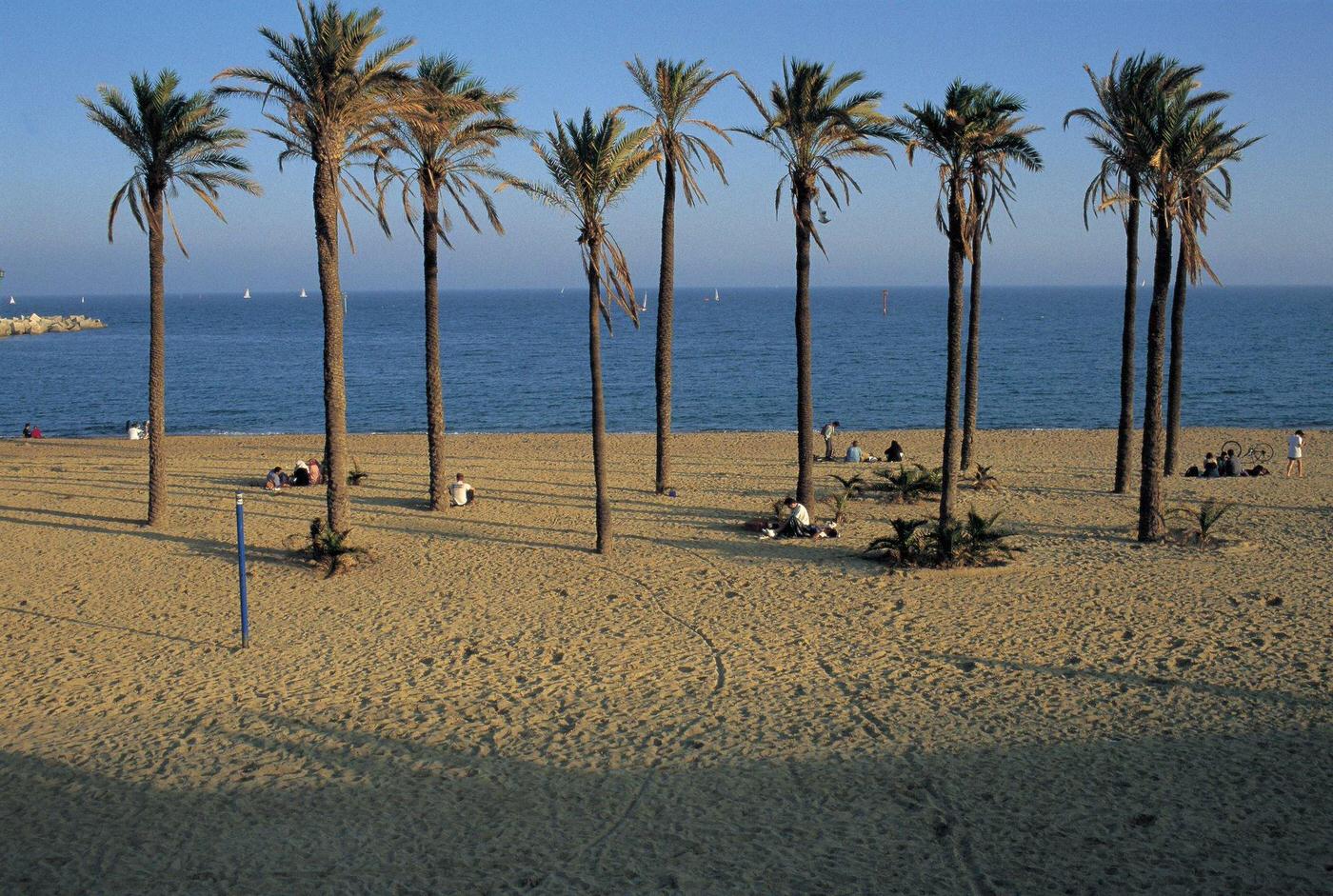
The beaches of Barcelona were a different story in 1990 compared to what came after. Before the Olympic redevelopment, the city’s coastline was largely industrial and not particularly inviting. The creation of new sandy beaches as part of the Games preparation changed that entirely, and by the mid-1990s, sunbathers filled the newly built stretches of Barceloneta and beyond.
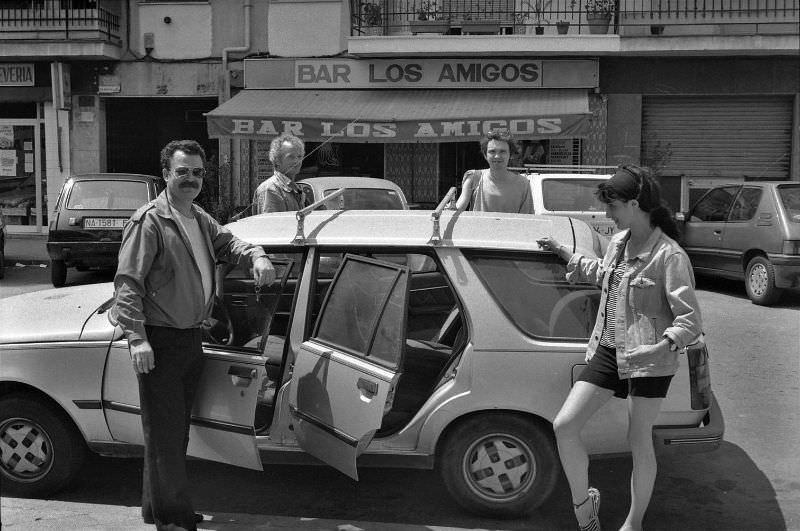
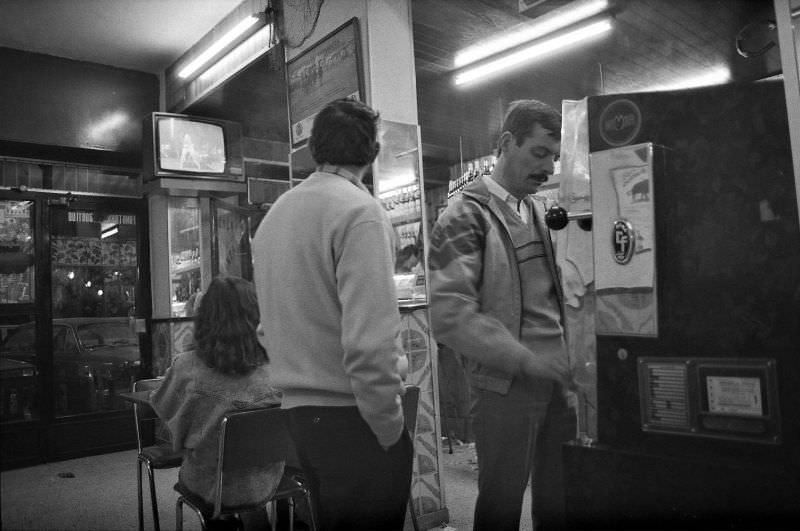
Neighbourhood bars like Bar Los Amigos in Besòs served the working-class communities on the city’s eastern edge. Slot machines lined the walls, and regulars gathered the way they did in local bars across Spain — unhurried, familiar with each other, and entirely unconcerned with the tourism boom happening closer to the centre.
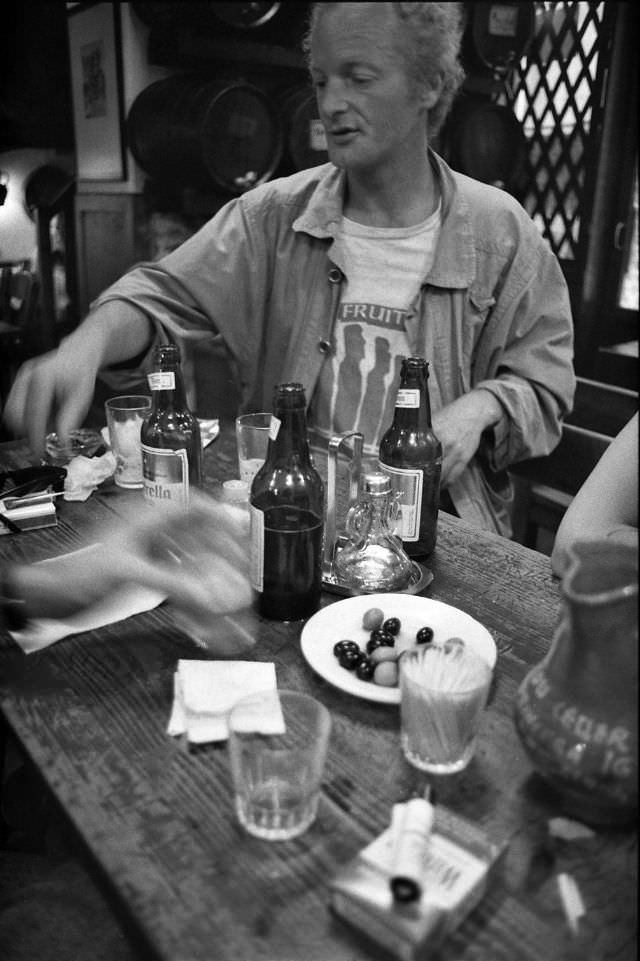
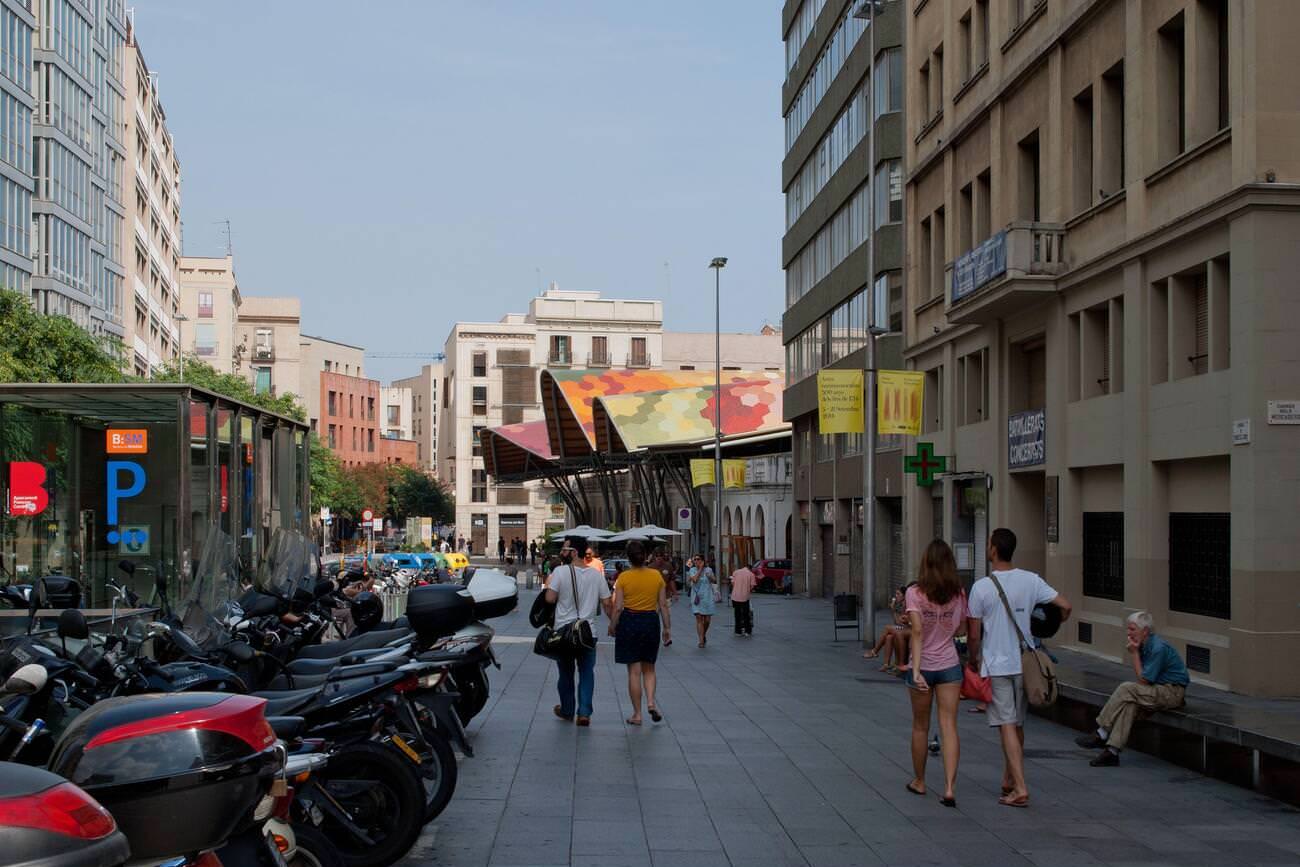
Barcelona’s food culture was visible everywhere. Tapas — small plates of cured meats, cheese, anchovies, and patatas bravas — were served in bars throughout the city. The Santa Caterina Market in the Barri Gòtic was one of the main local food markets, selling produce to residents of the surrounding streets.
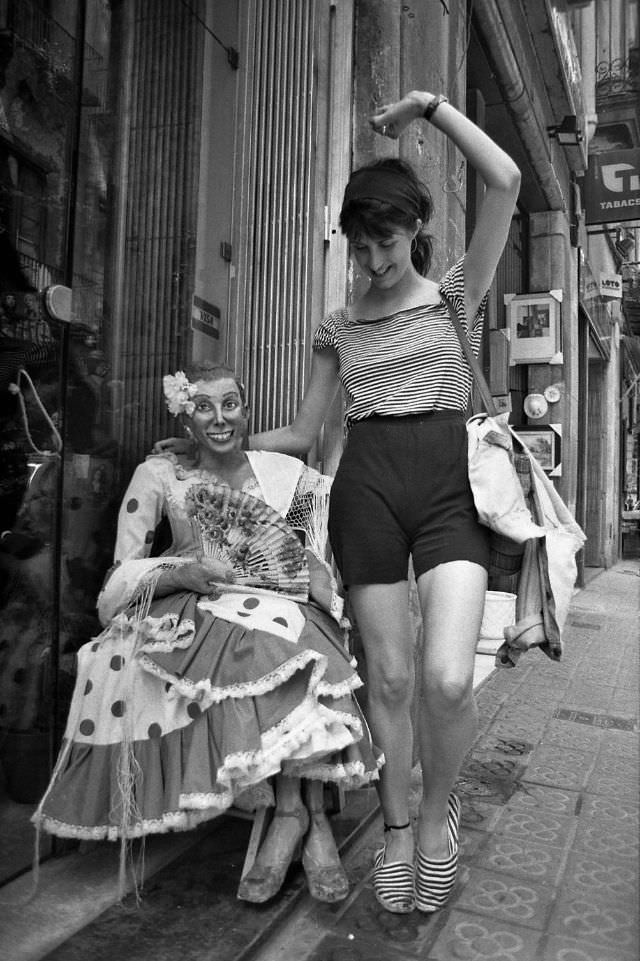
Street performance of every kind filled the public spaces. Flamenco dancers performed outdoors, and the art form — though rooted in Andalusia rather than Catalonia — drew large crowds wherever it appeared in Barcelona. The city’s openness to different cultural expressions made it a natural stage for performers from across Spain and beyond.
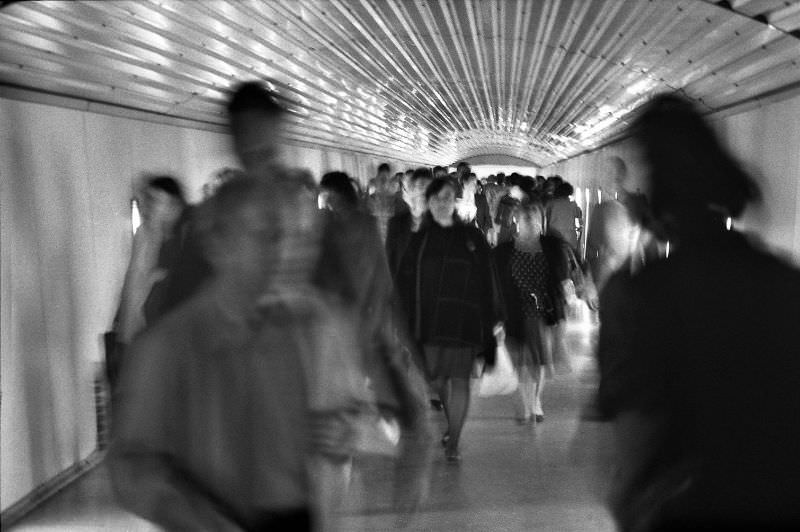
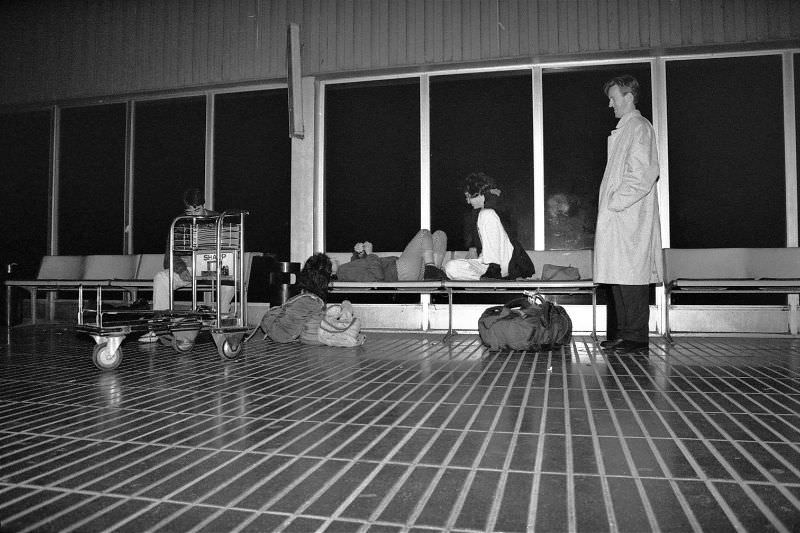
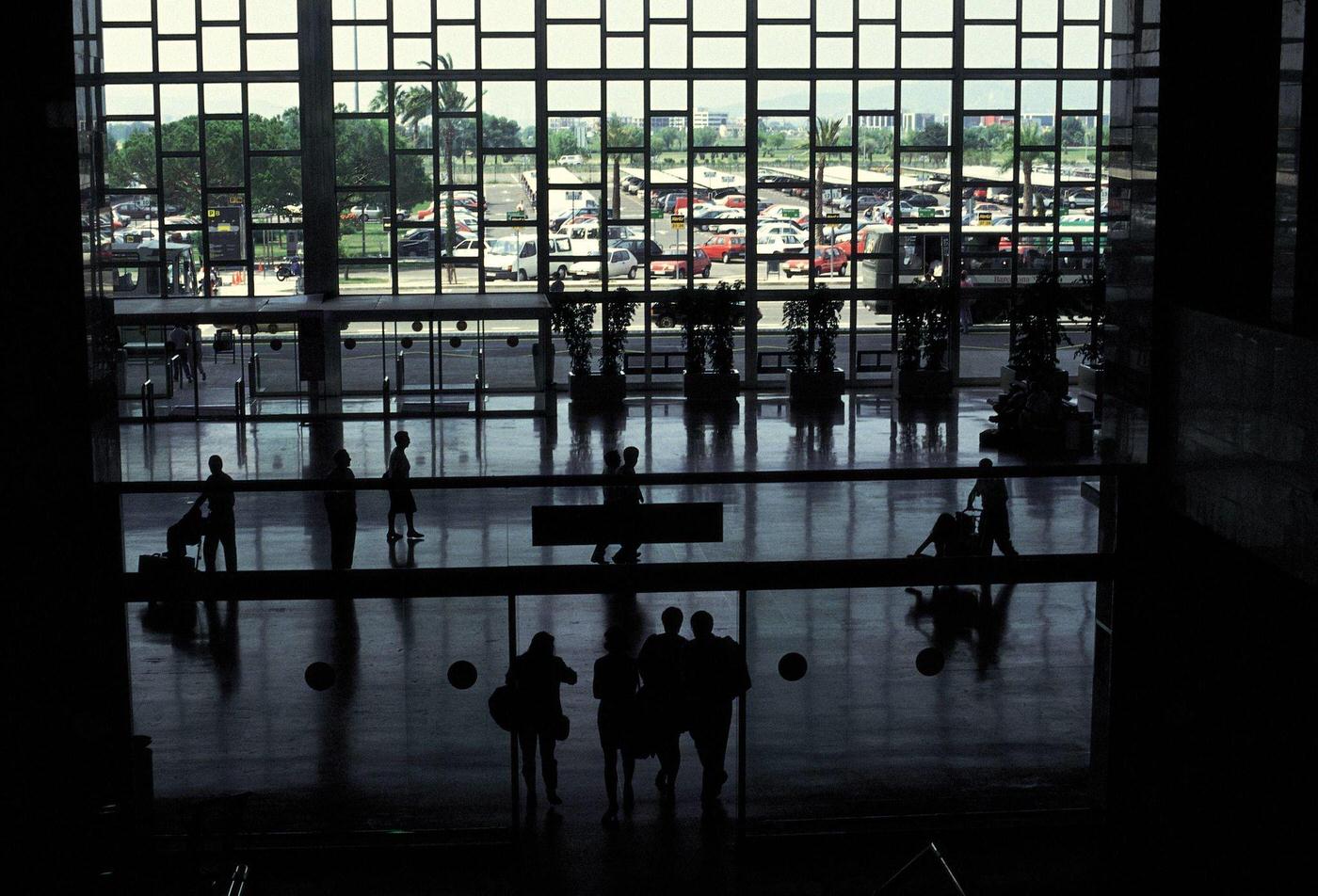
Getting around the city in 1990 meant navigating a subway system that was functional but not yet fully expanded. Tiled station walls and fluorescent-lit carriages were the backdrop for daily commuters. El Prat airport, meanwhile, was the main gateway into the city, with early-morning arrivals waiting for the first trains into the centre.
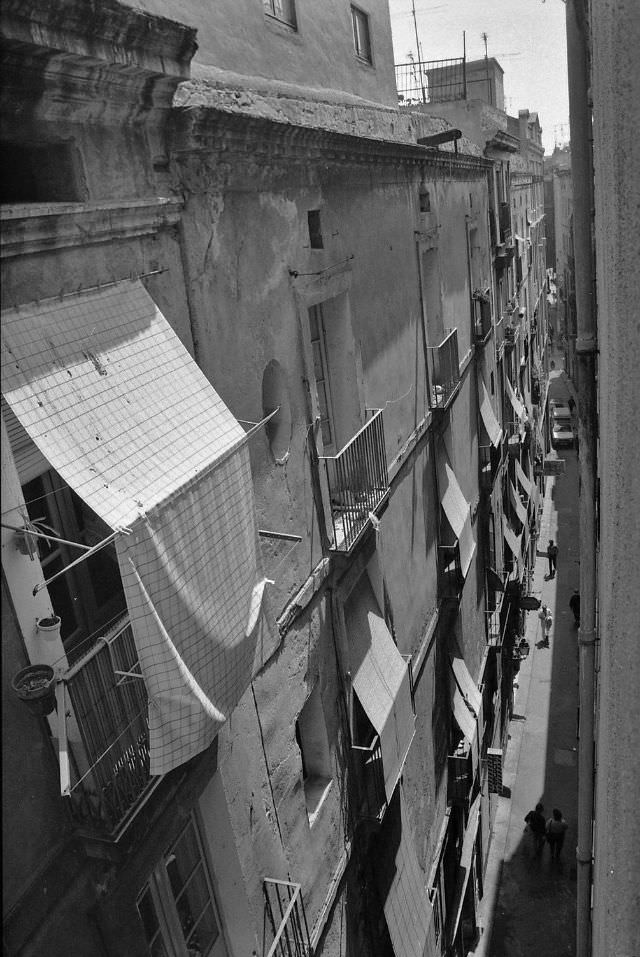
Budget accommodation in 1990s Barcelona was plentiful. Small hostals — family-run guesthouses — were scattered across the old city. The Hostal Dalí offered views over the rooftops that money couldn’t buy at any five-star hotel: terracotta tiles, hanging laundry, water tanks, and the chaotic geometry of the Barri Gòtic stretching out below.
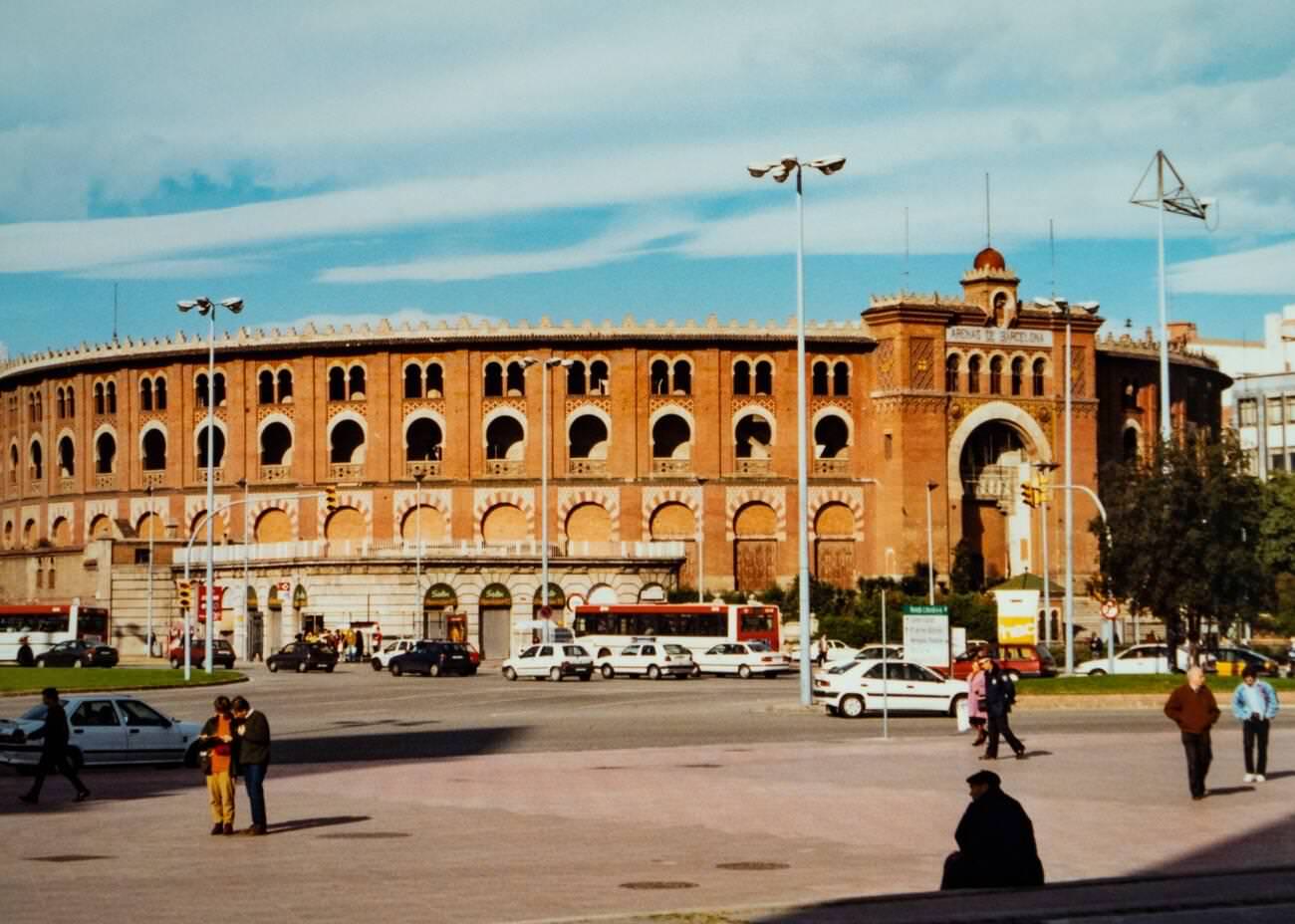
The Arenas de Barcelona — a circular bullring built in 1900 in the Moorish Revival style — was still operating as a venue in the early 1990s near Plaça Espanya. By the end of the decade, bullfighting had declined significantly in Catalonia, setting the building on a path toward its eventual conversion into a shopping centre and leisure complex.





Some pictures do seem more recent than they’re supposed to be, right? Like the four columns in the Fira were added back not that long ago, and the Santa Caterina market roof is from 2005 IIRC.
You want a trip down to memory lane of BCN in the 90’s? Watch Plats Bruts.