
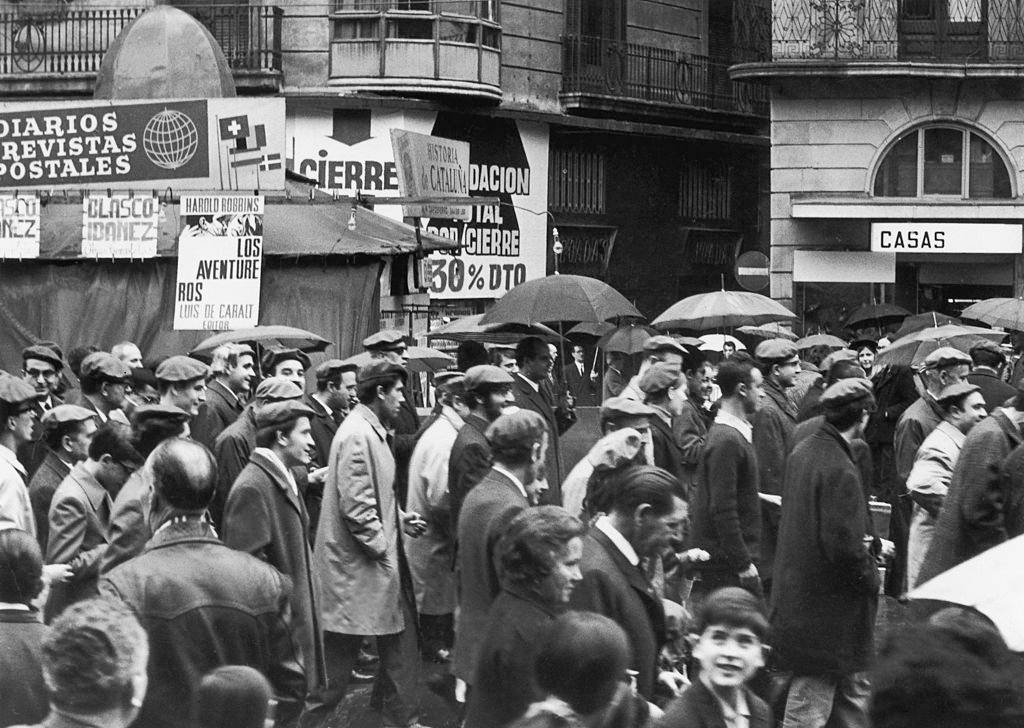
By the time the 1960s arrived, Barcelona was shaking off the hardships of the previous decade. The 1950s had been a period of economic strain for much of Spain, but the new decade brought a wave of growth, movement, and change to the city. People poured into Barcelona from other regions of the country, drawn by the promise of work and a better life. The city’s population swelled rapidly, and neighborhoods expanded to absorb the newcomers. What emerged was a Barcelona that was at once ancient and modern — a place where narrow medieval lanes sat just blocks away from wide, tree-lined boulevards.
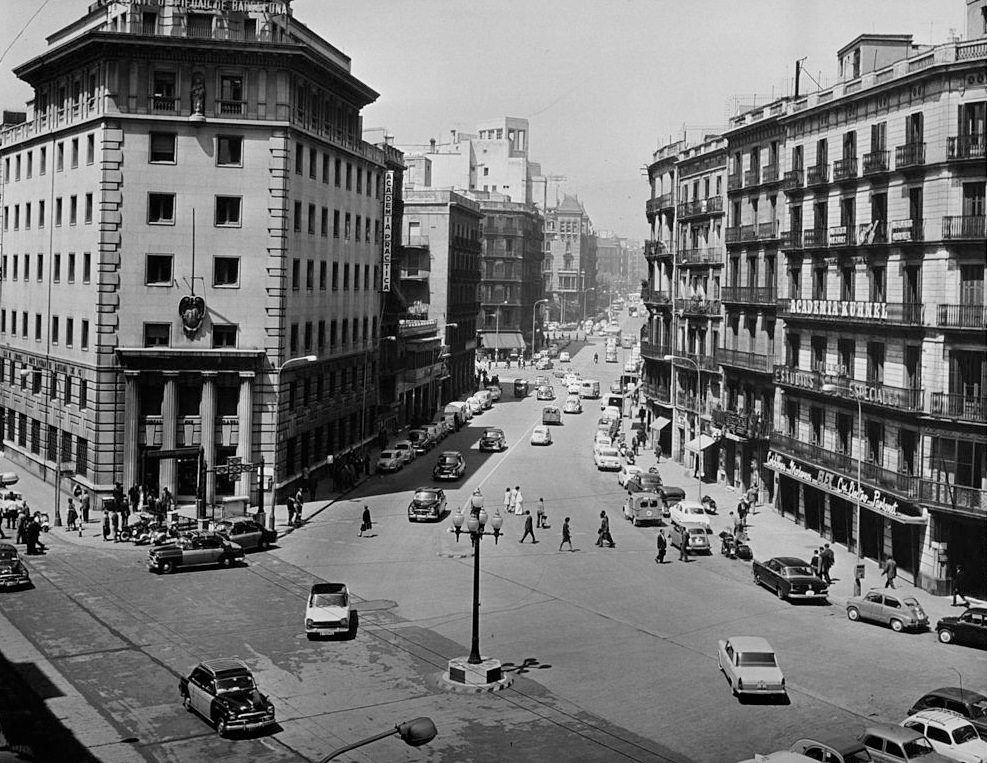
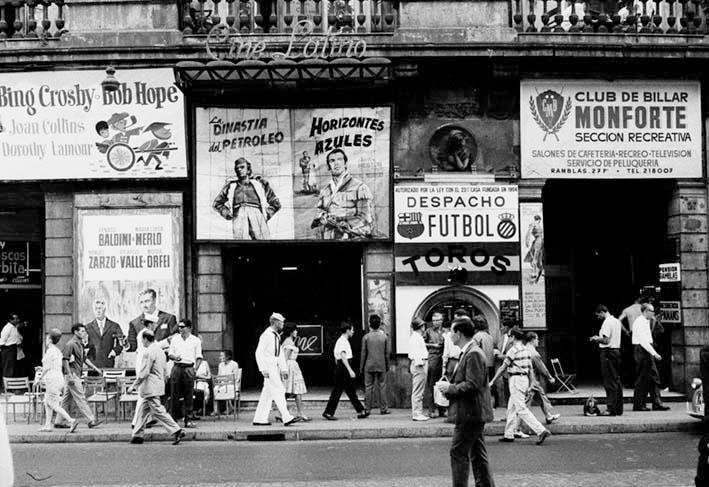
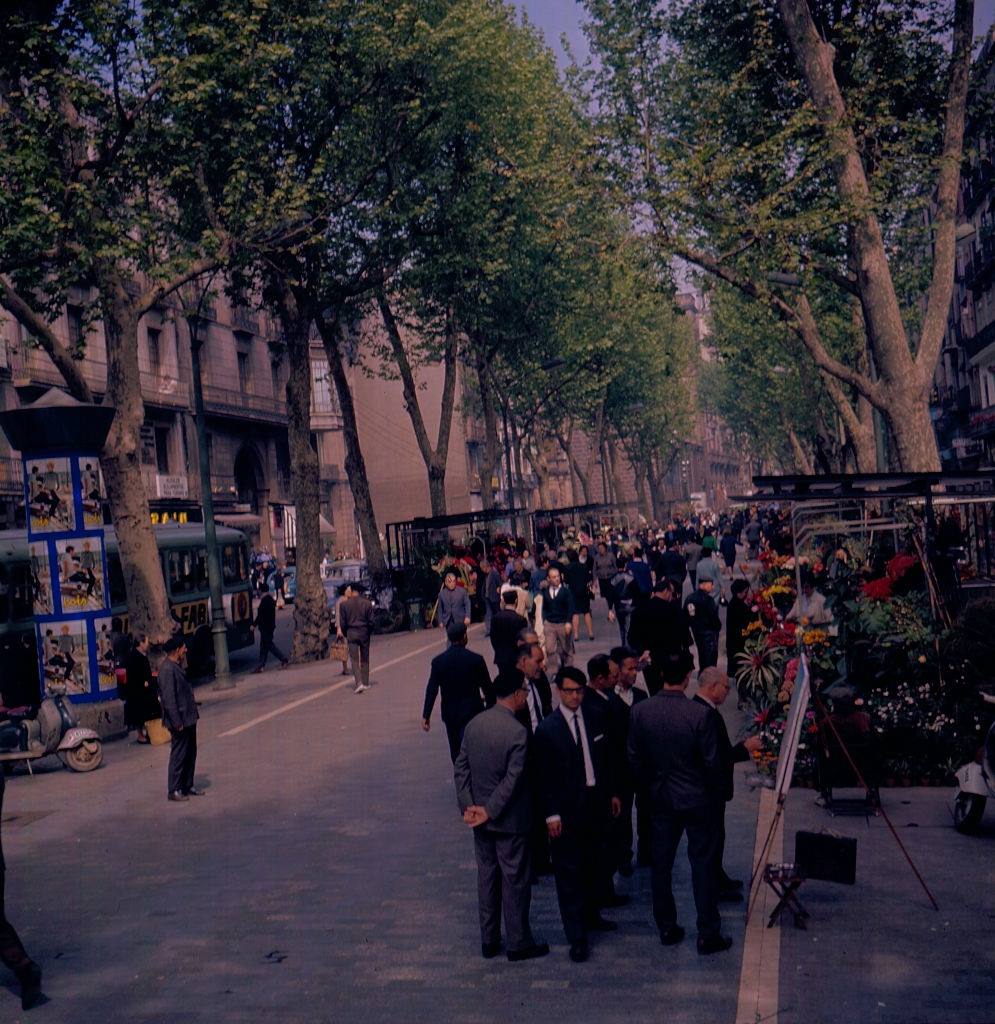
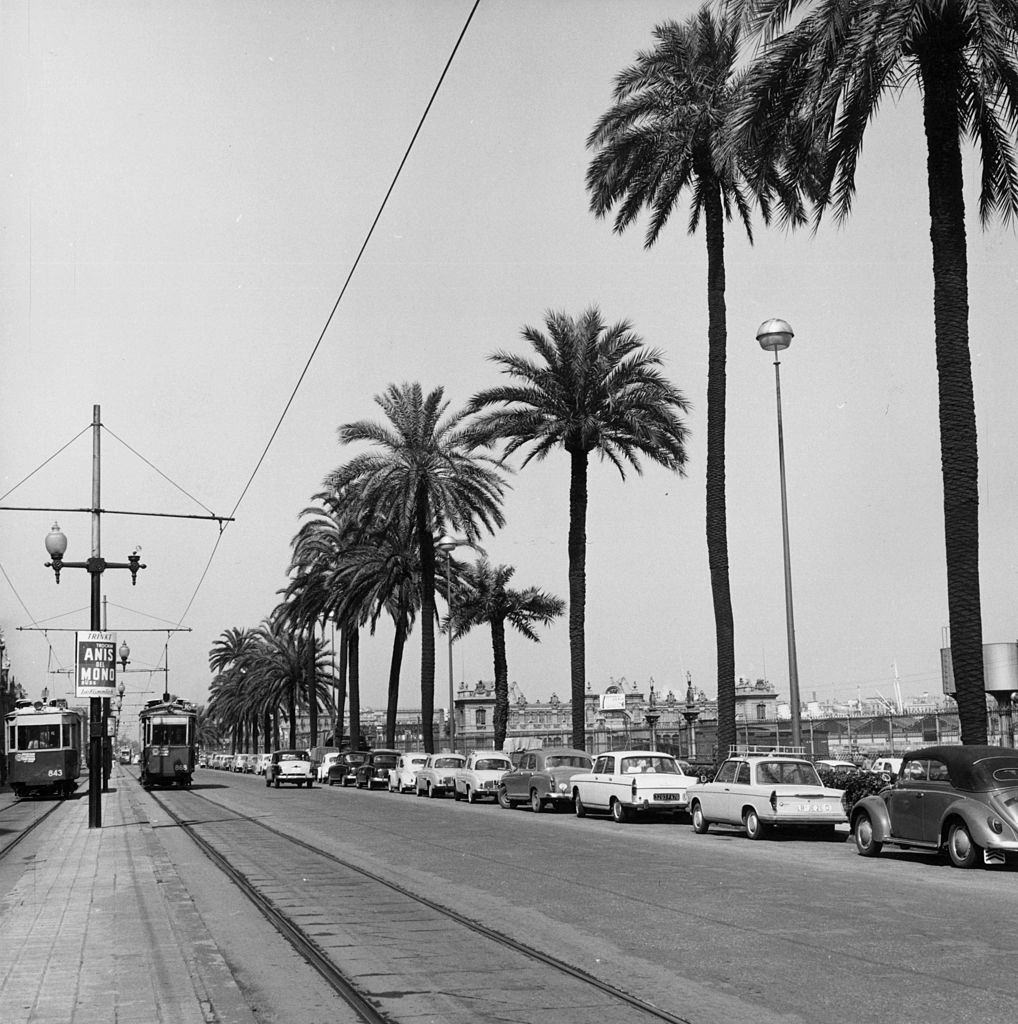
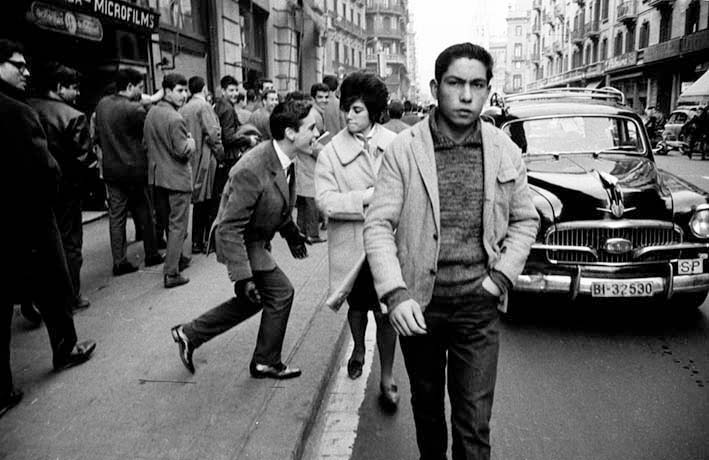
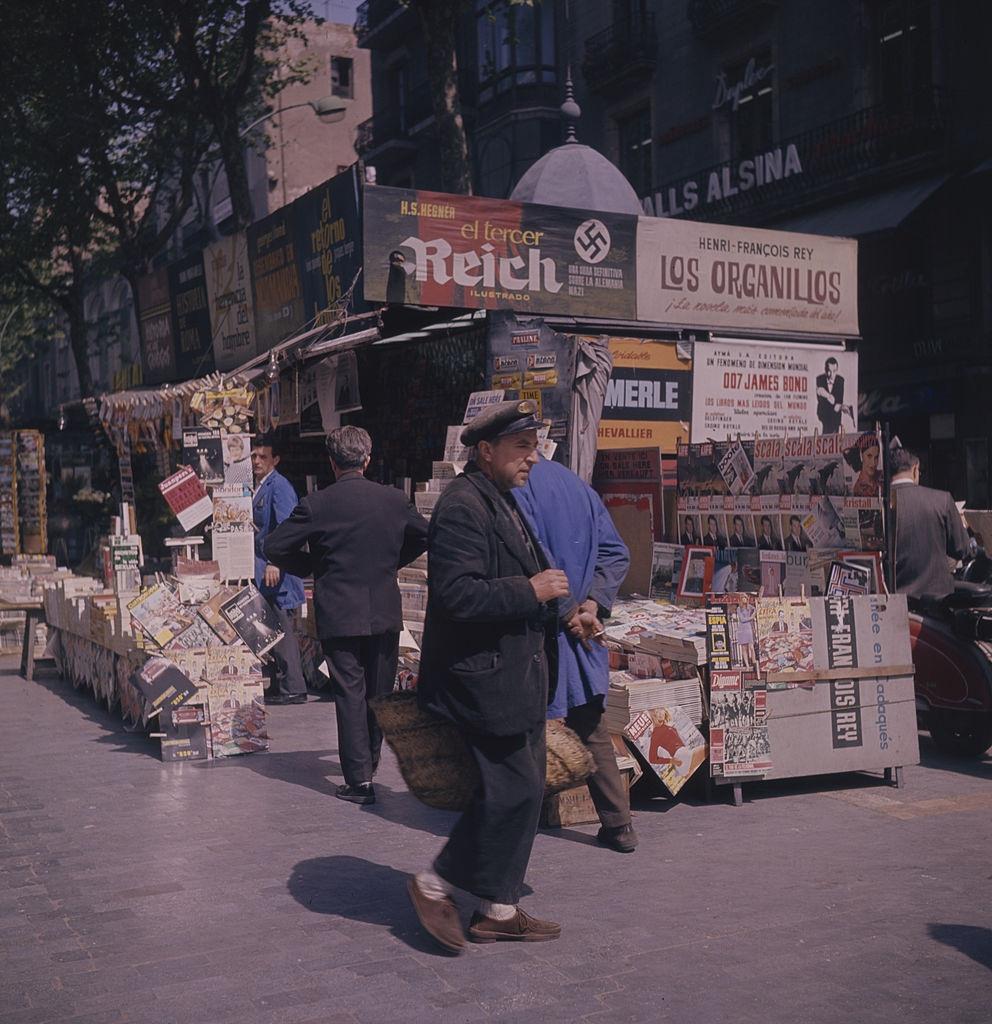
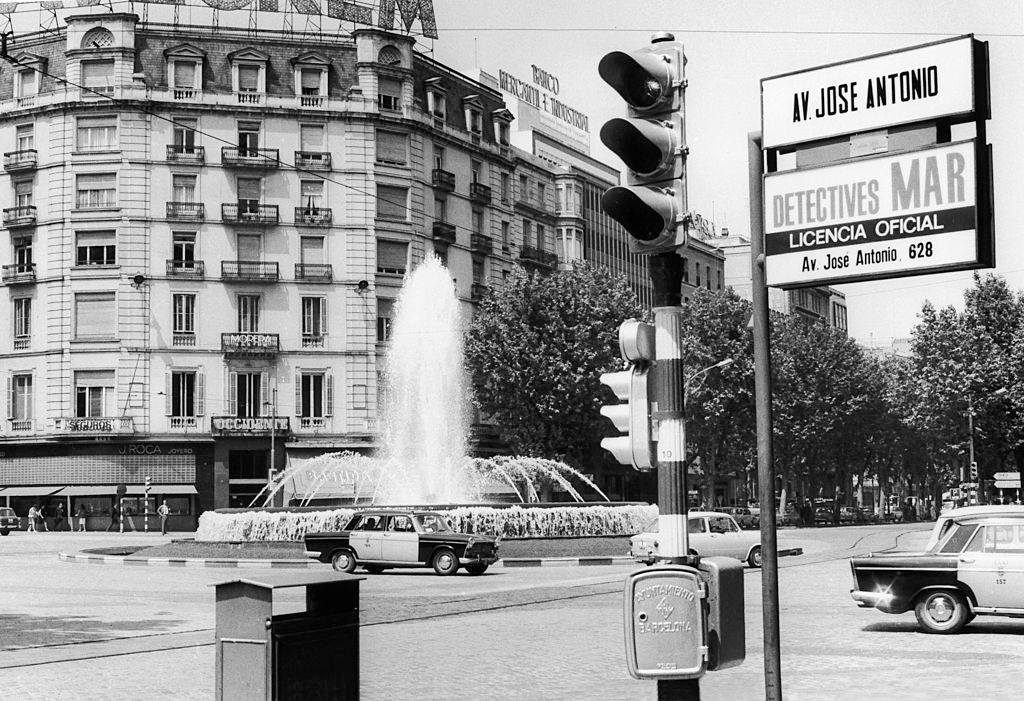
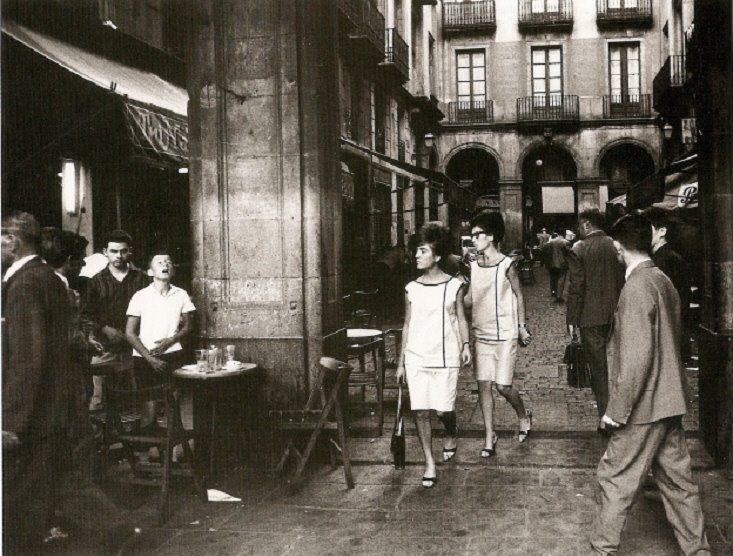
The streets told the story of a city in motion. Trams rolled through palm-lined avenues while pedestrians filled the sidewalks of districts like El Born and the Gothic Quarter. Las Ramblas hummed with activity — flower sellers, street artists, cinemas, and football offices all competing for attention along its famous stretch. The contrast between the old city and its newer, gridded expansion was one of Barcelona’s defining features throughout the decade.
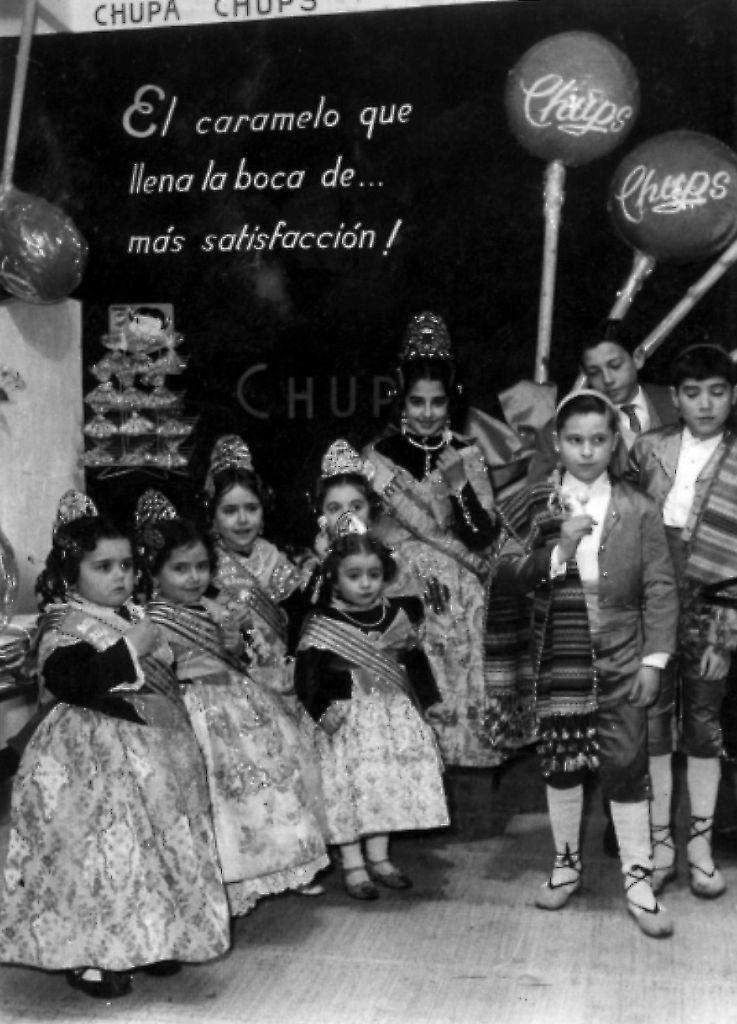
Barcelona was also quietly making its mark on the world of commerce. The Chupa Chups company, founded in the city in 1958, was growing fast through the 1960s. The iconic lollipop brand would go on to become one of Spain’s most recognized exports, but in these early years it was still a local operation building its identity in the same city where its workers lived and shopped.
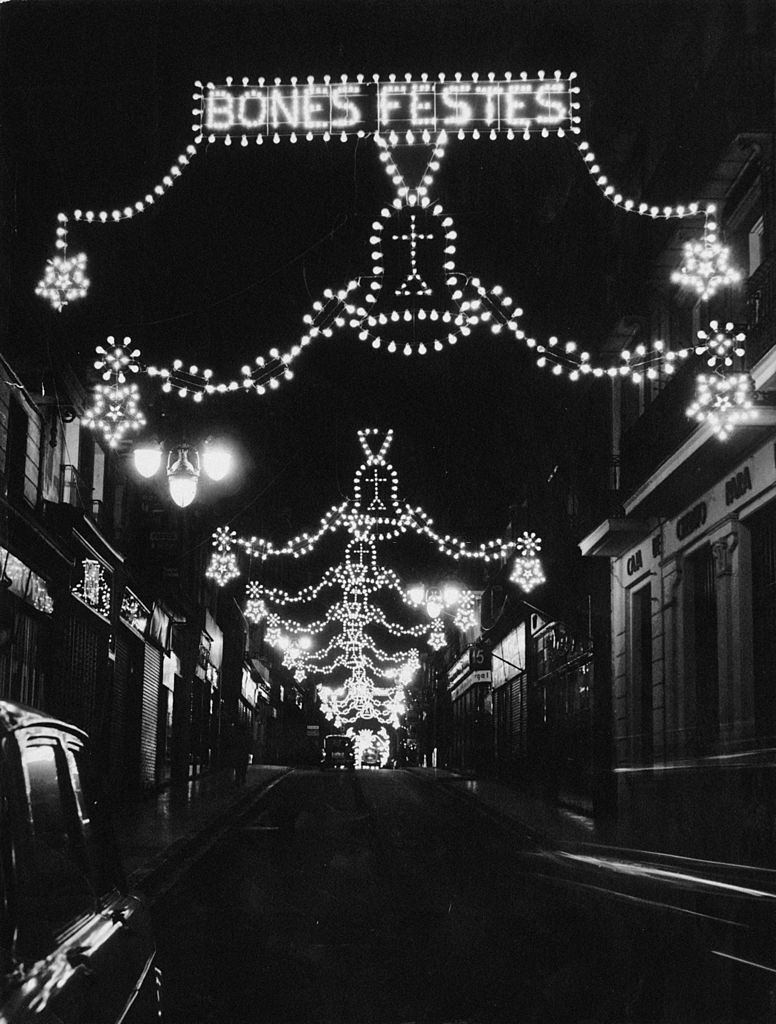
Life in Barcelona followed familiar rhythms through the seasons. Christmas brought strings of lights to the city’s streets, and the annual cycle of festivals, religious processions, and public gatherings kept neighborhoods connected. Even under the rule of Francisco Franco’s regime, which still held firm over all of Spain, daily life carried on with its own texture and energy.
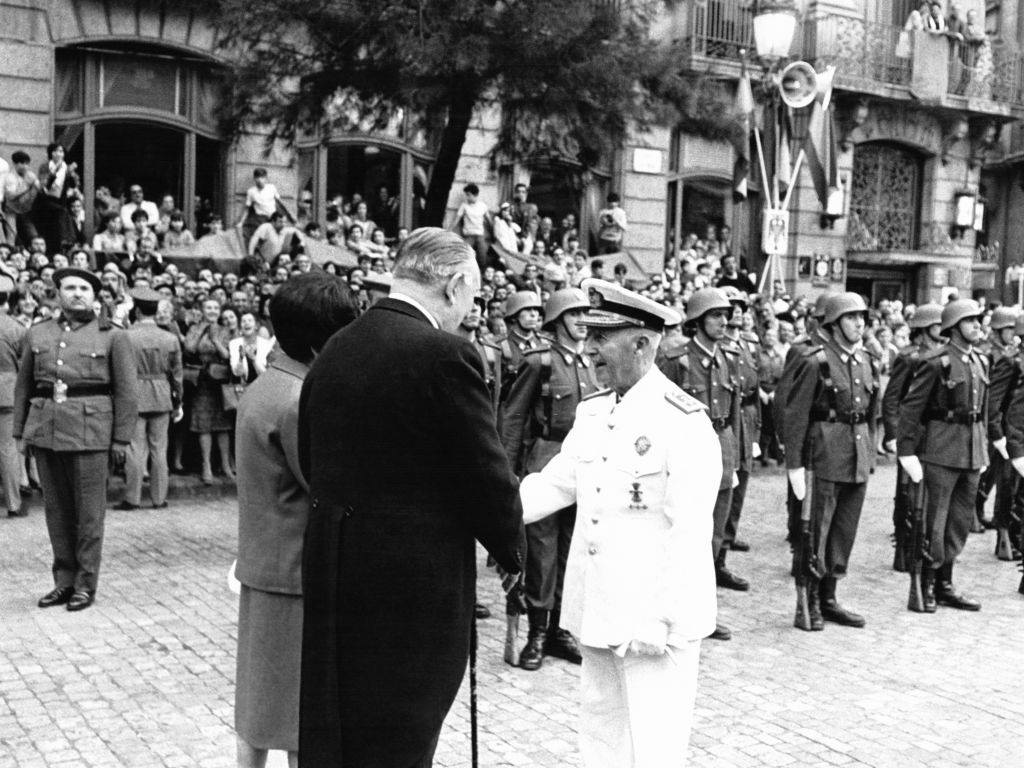
Franco remained the dominant political figure in Spain throughout the entire decade. Public appearances like the one captured above were carefully managed affairs, designed to project strength and popular support. In Catalonia, Franco’s government suppressed the Catalan language and regional culture, yet Barcelona continued to develop its own identity beneath the surface of official Spain.
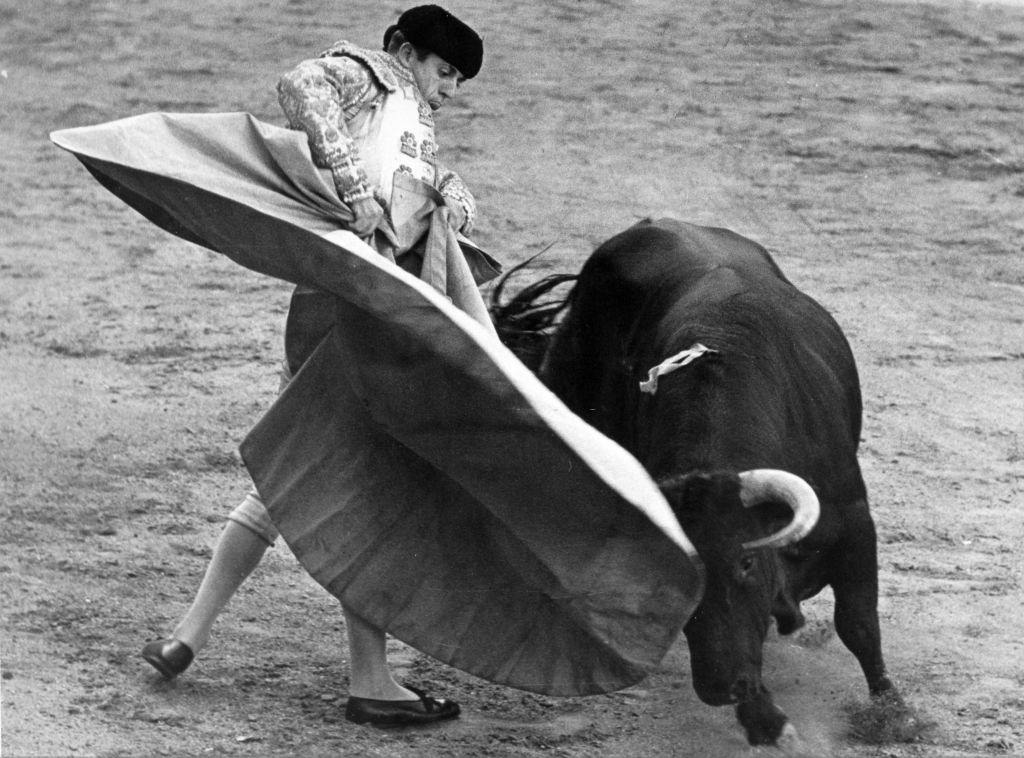
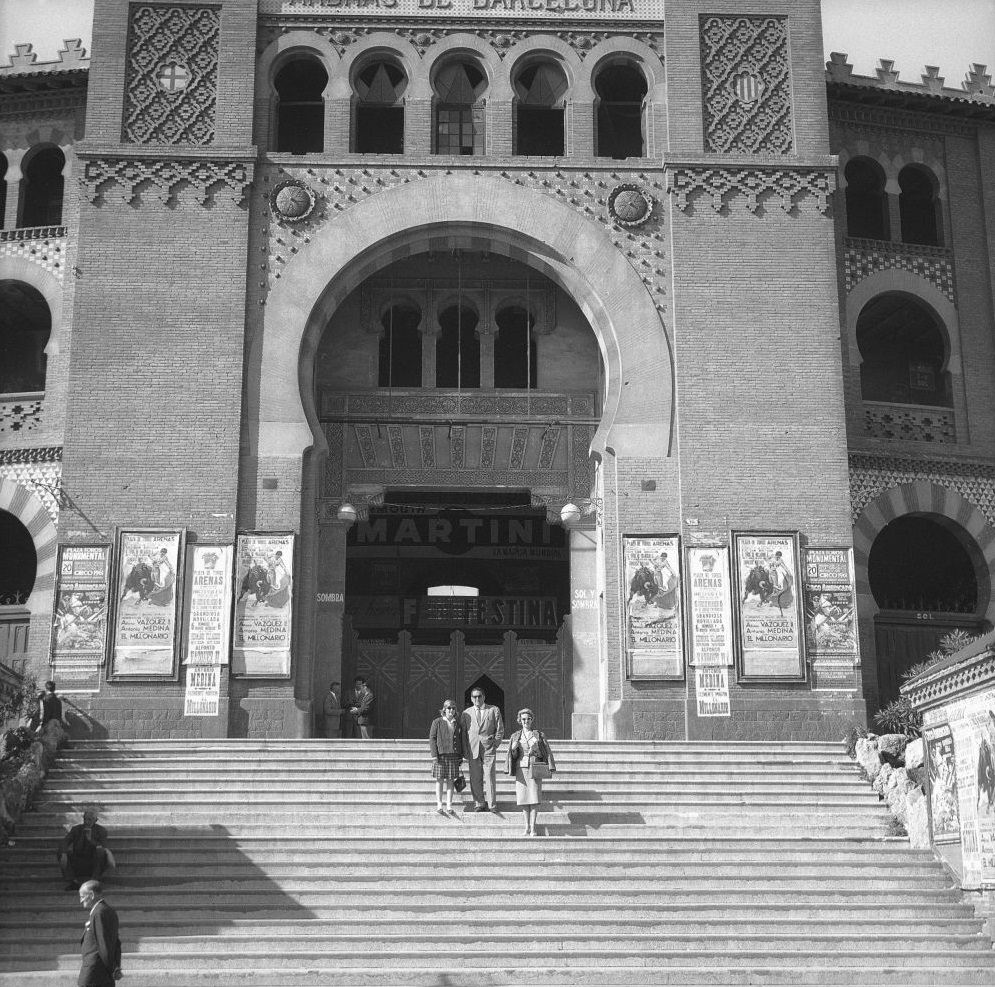
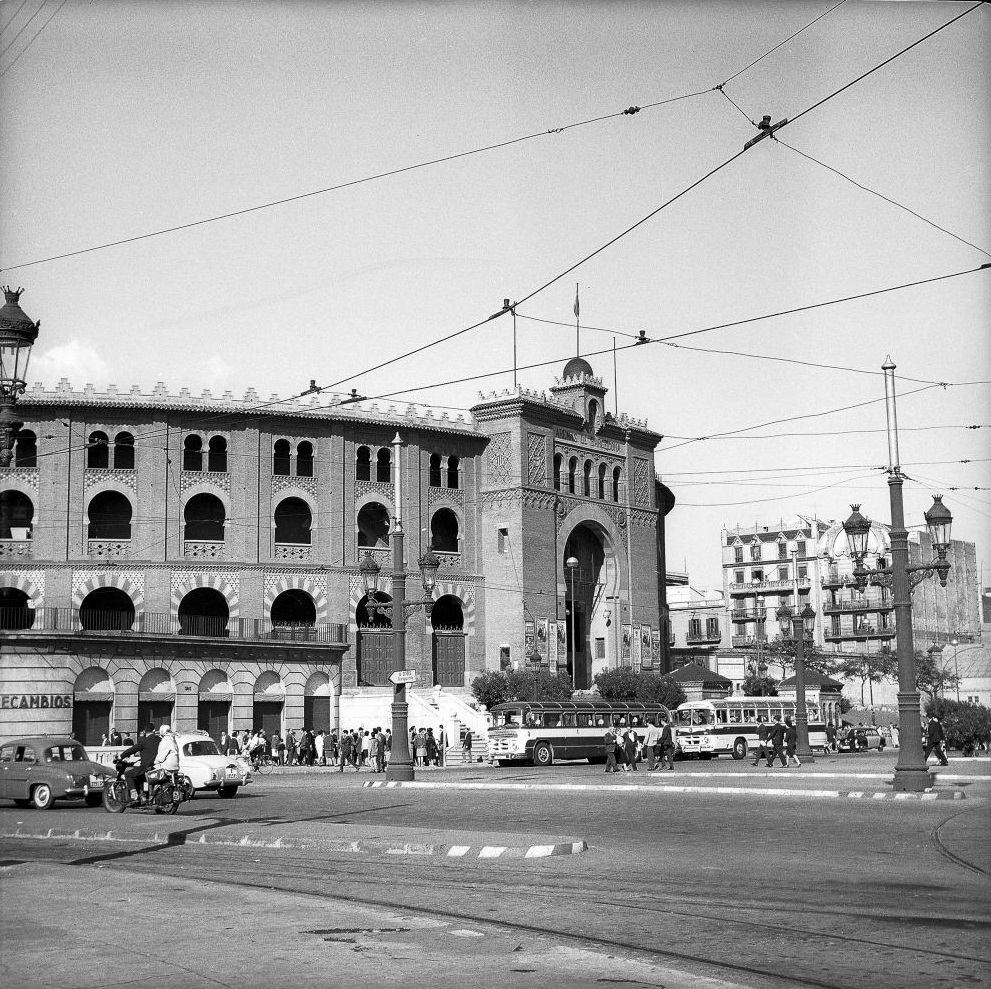
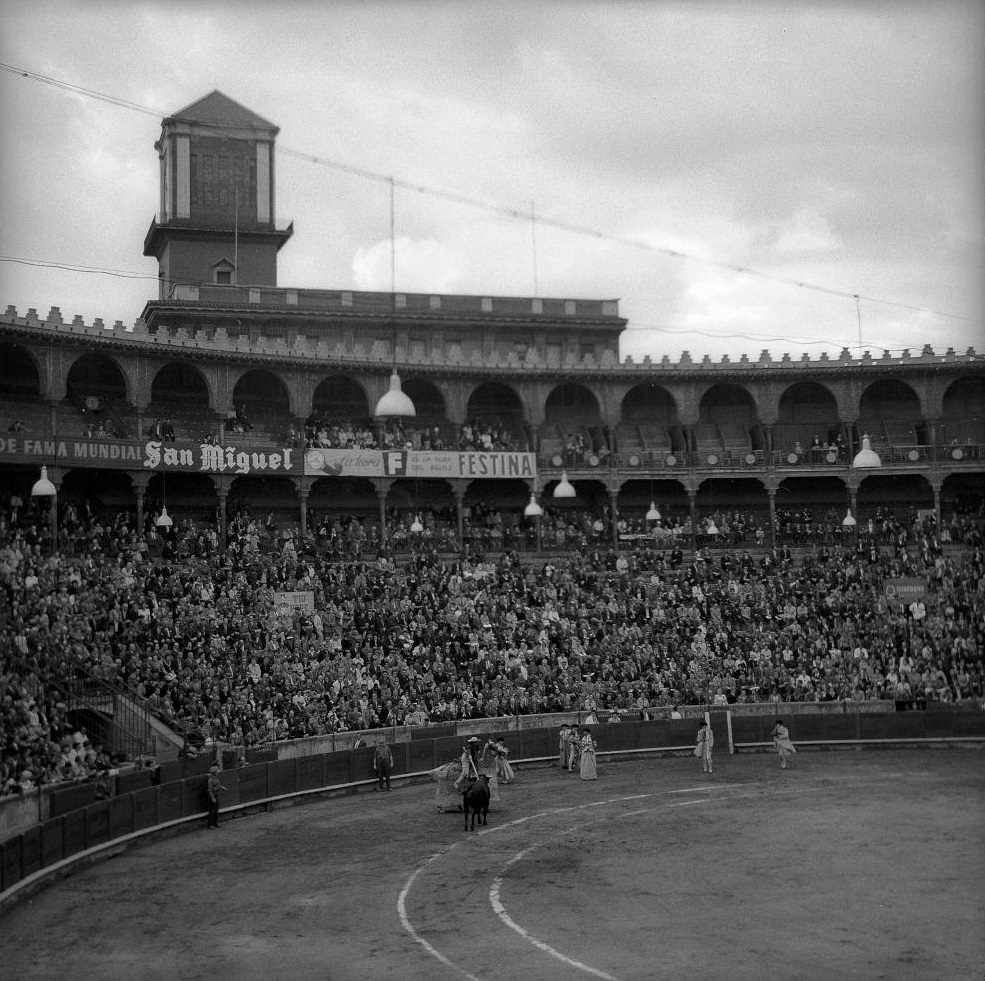
Bullfighting was a major part of Spanish public life in the 1960s, and Barcelona’s La Monumental arena was one of the most storied venues in the country. Matadors drew large crowds, and young fighters built their reputations in its ring. Manuel Benítez, known as ‘El Cordobés,’ made some of his earliest appearances at La Monumental, fighting in front of audiences eager to see the next generation of the sport’s stars.
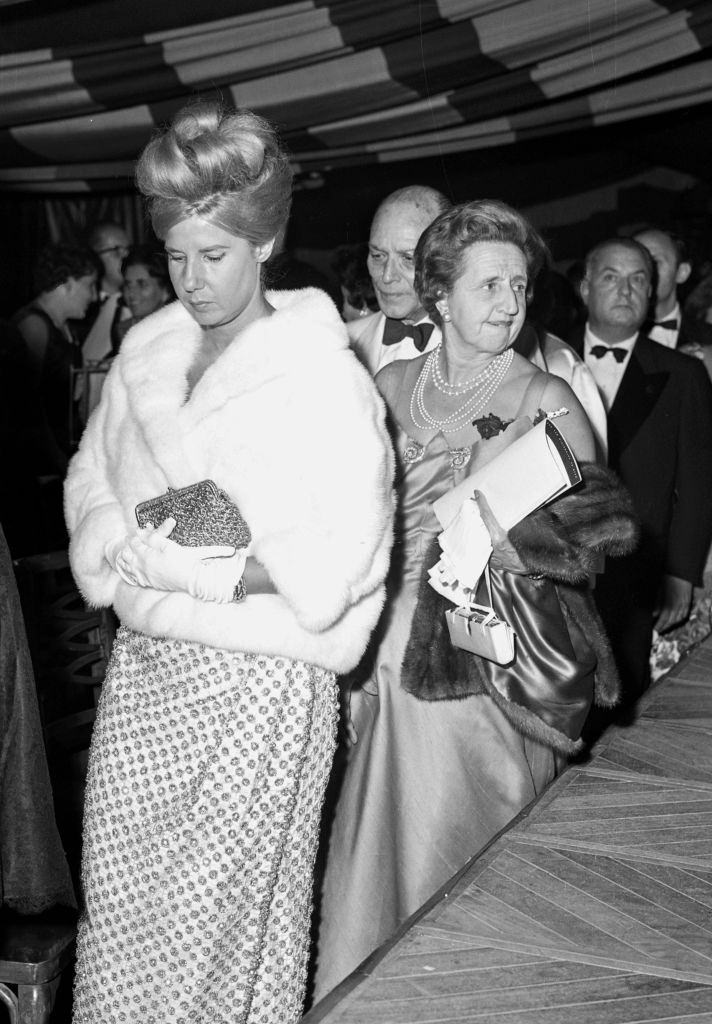
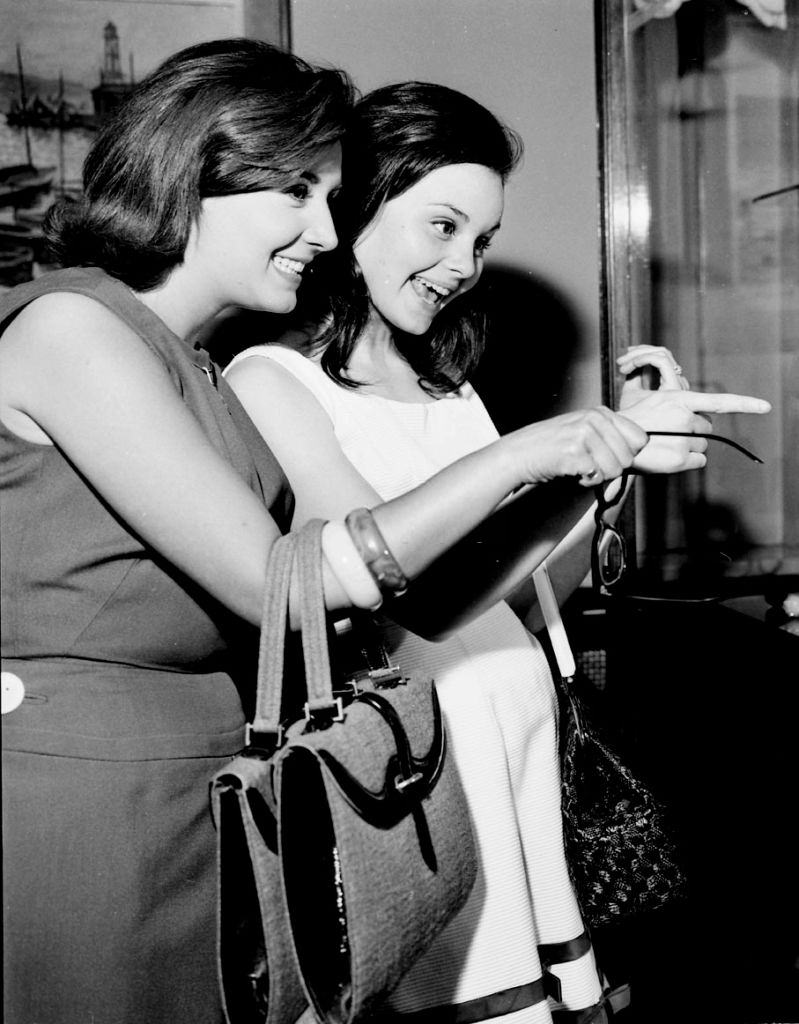
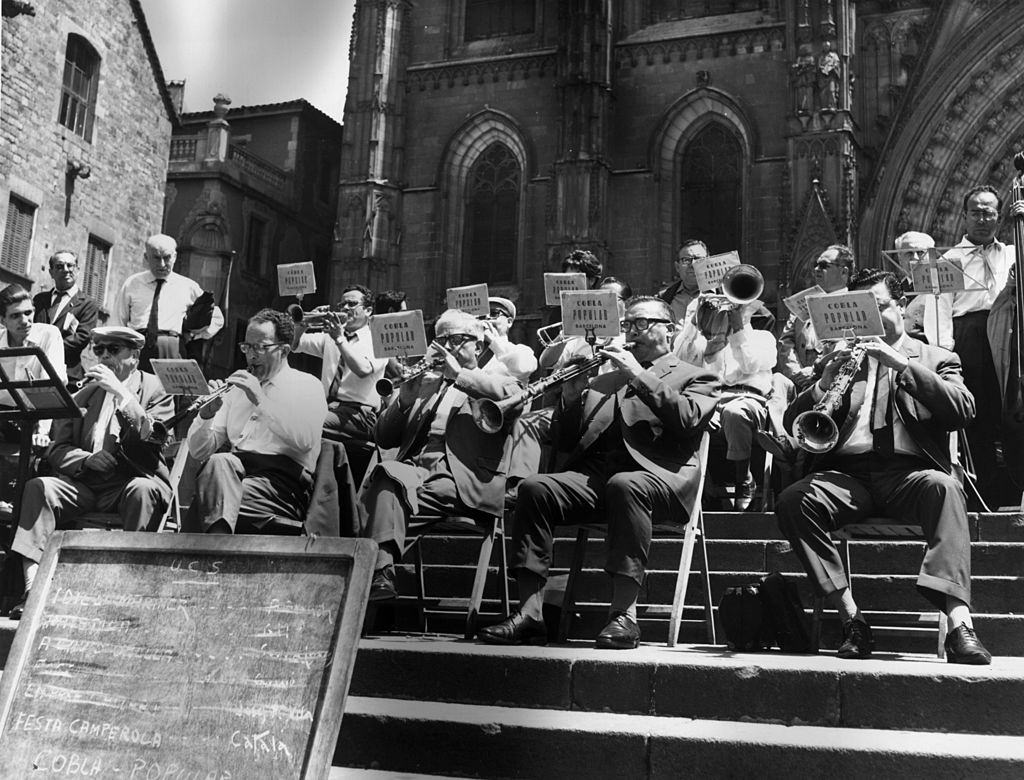
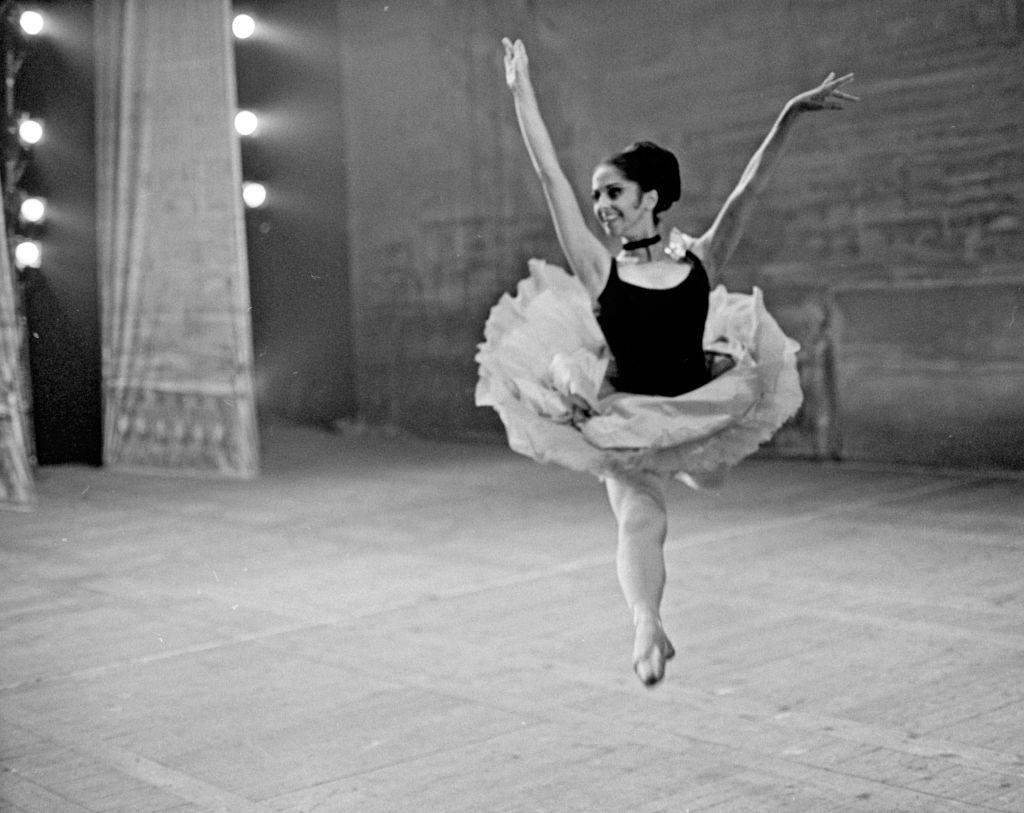
Beyond the bullring, Barcelona had a rich cultural scene. The Duchess of Alba attended high-society events like the Gala of the Silk, while popular entertainers from across Spain came to perform. Singer and actress Rocío Dúrcal visited in 1961, photographed both alone and alongside actress Concha Velasco walking the city’s streets. The Harkness Ballet performed here in 1966, and the Cobla Popular band played on the steps of the cathedral. Culture moved through Barcelona at every level — from elite galas to street corners.
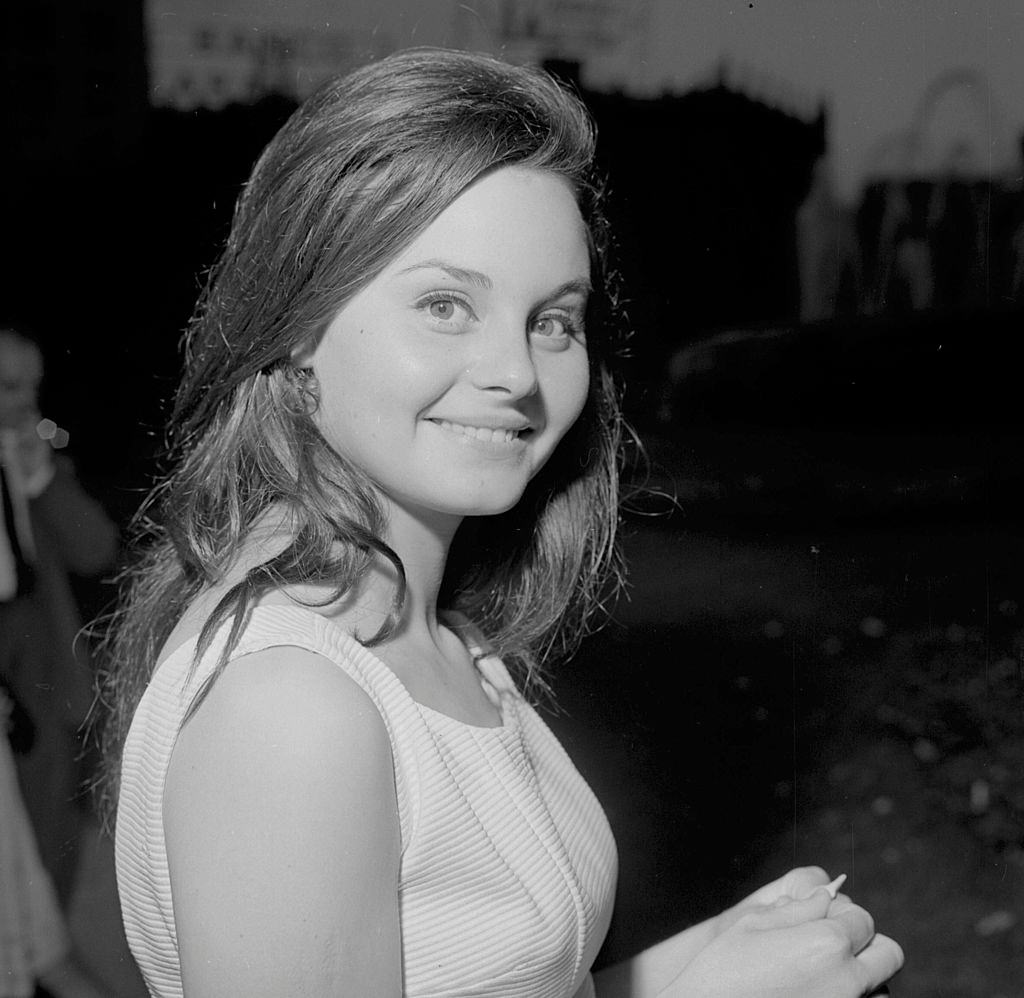
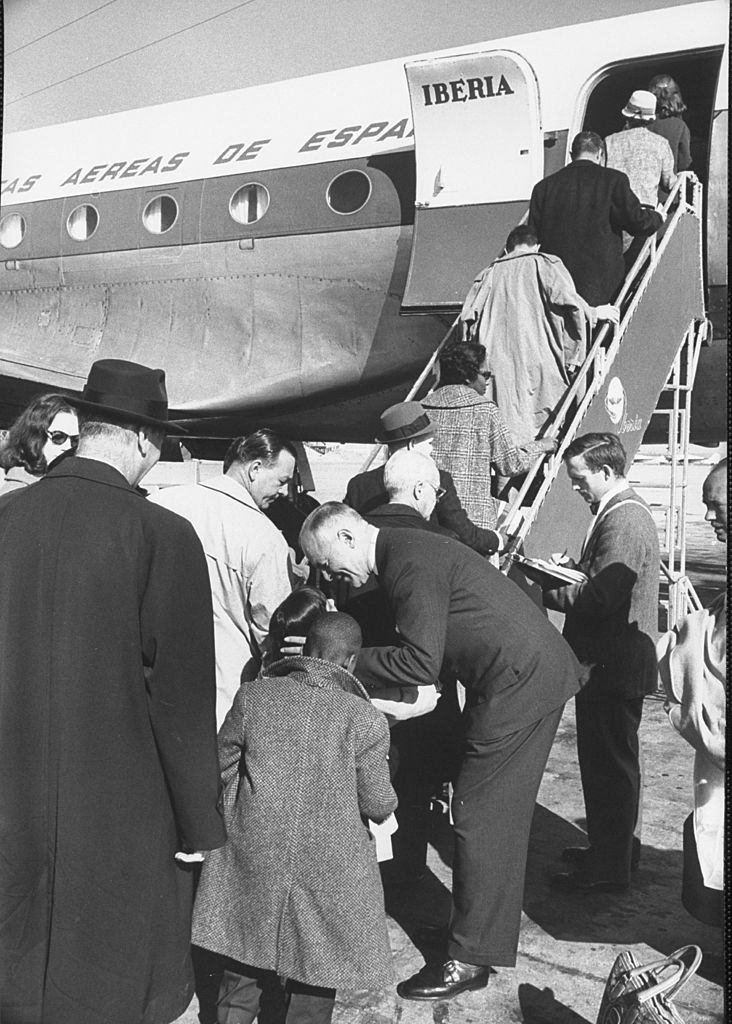
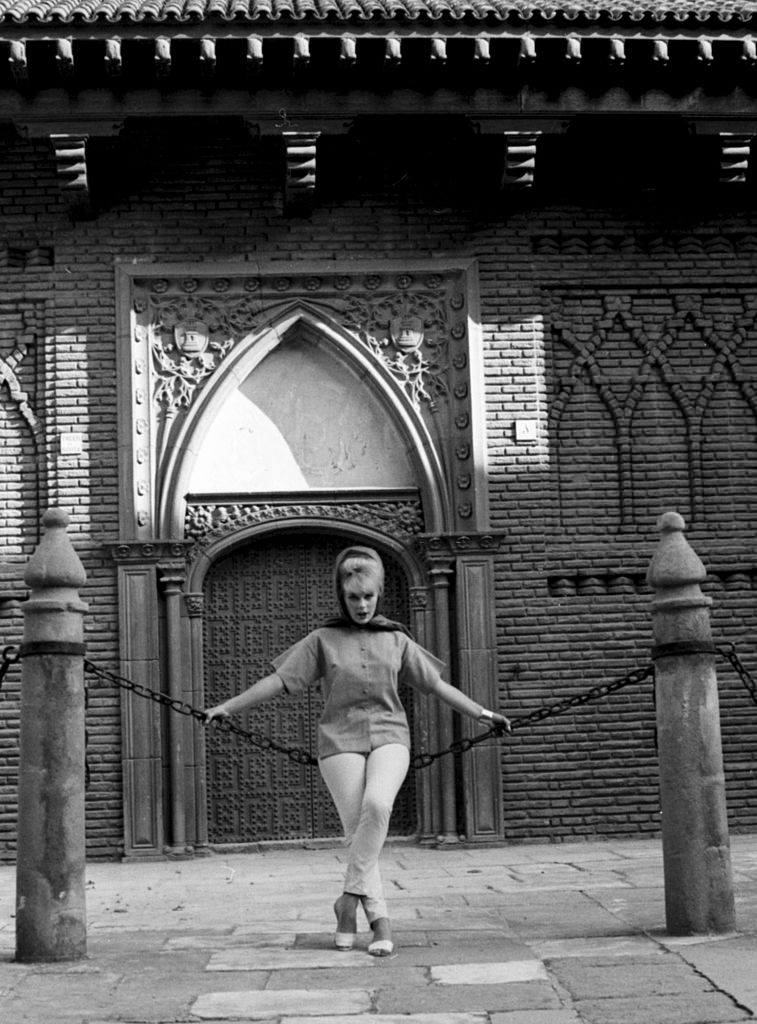
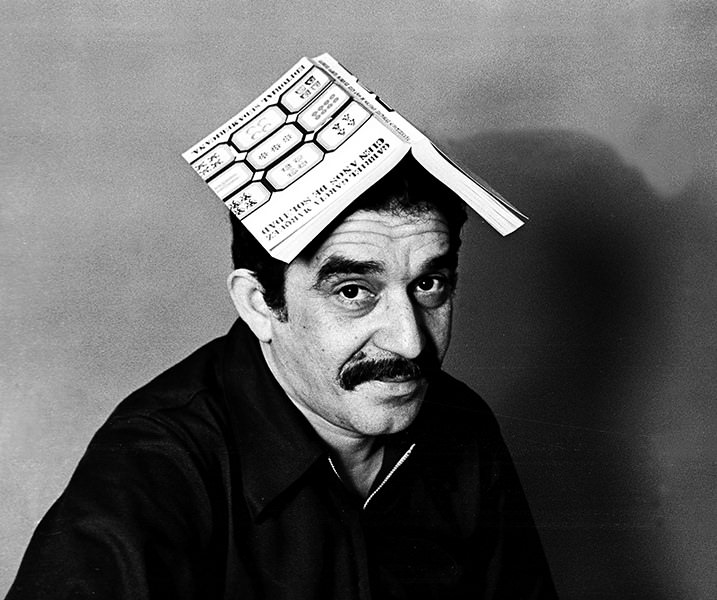
The city also attracted international visitors, performers, and journalists. The American Repertory Theatre Guild boarded a plane for Barcelona in 1960. German actress Elke Sommer arrived for a press photo shoot in 1962. Italian singer Gigliola Cinquetti came through in 1964. Even Colombian novelist Gabriel García Márquez spent time in Barcelona in the late 1960s, part of a broader wave of Latin American writers who found the city welcoming during those years.
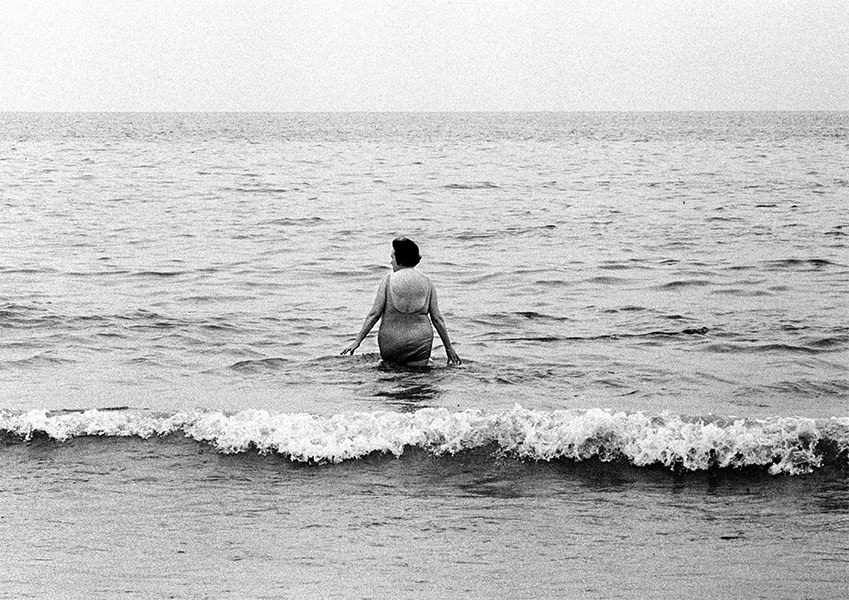
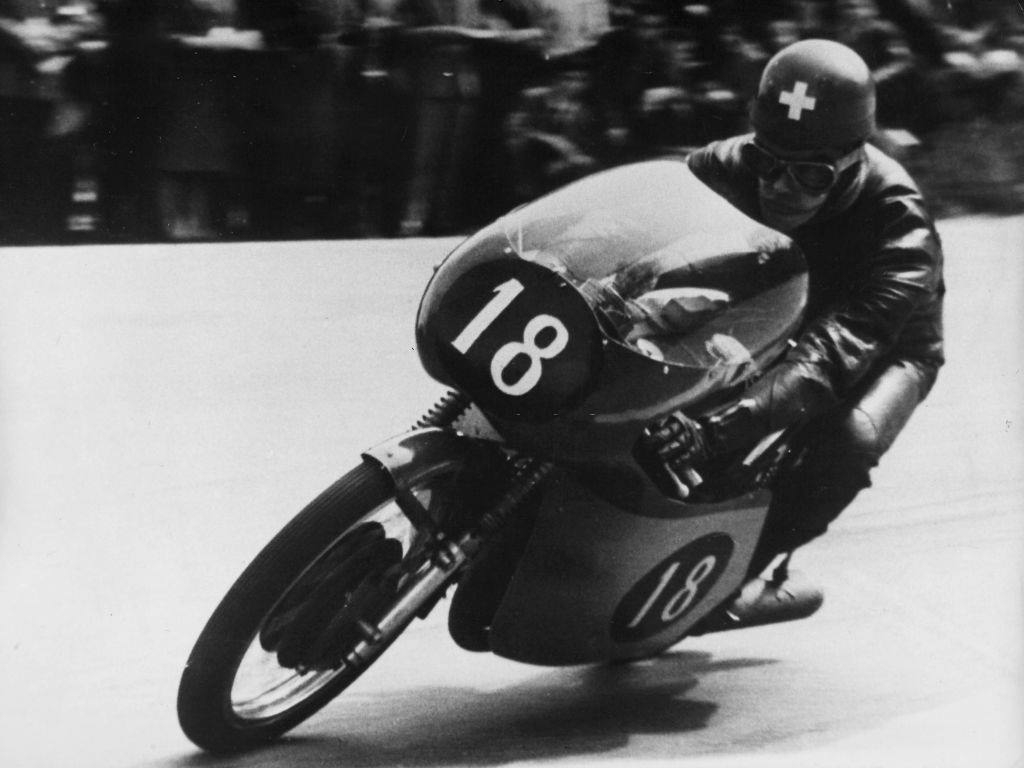
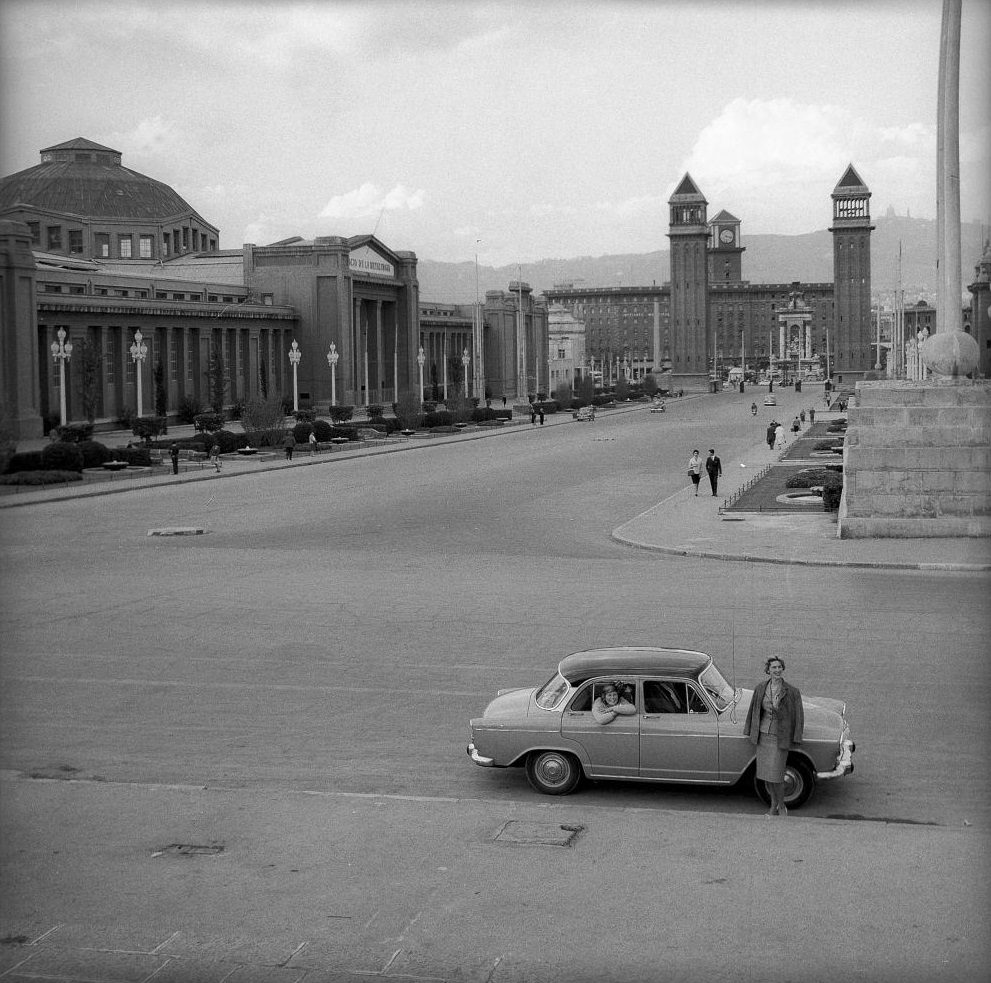
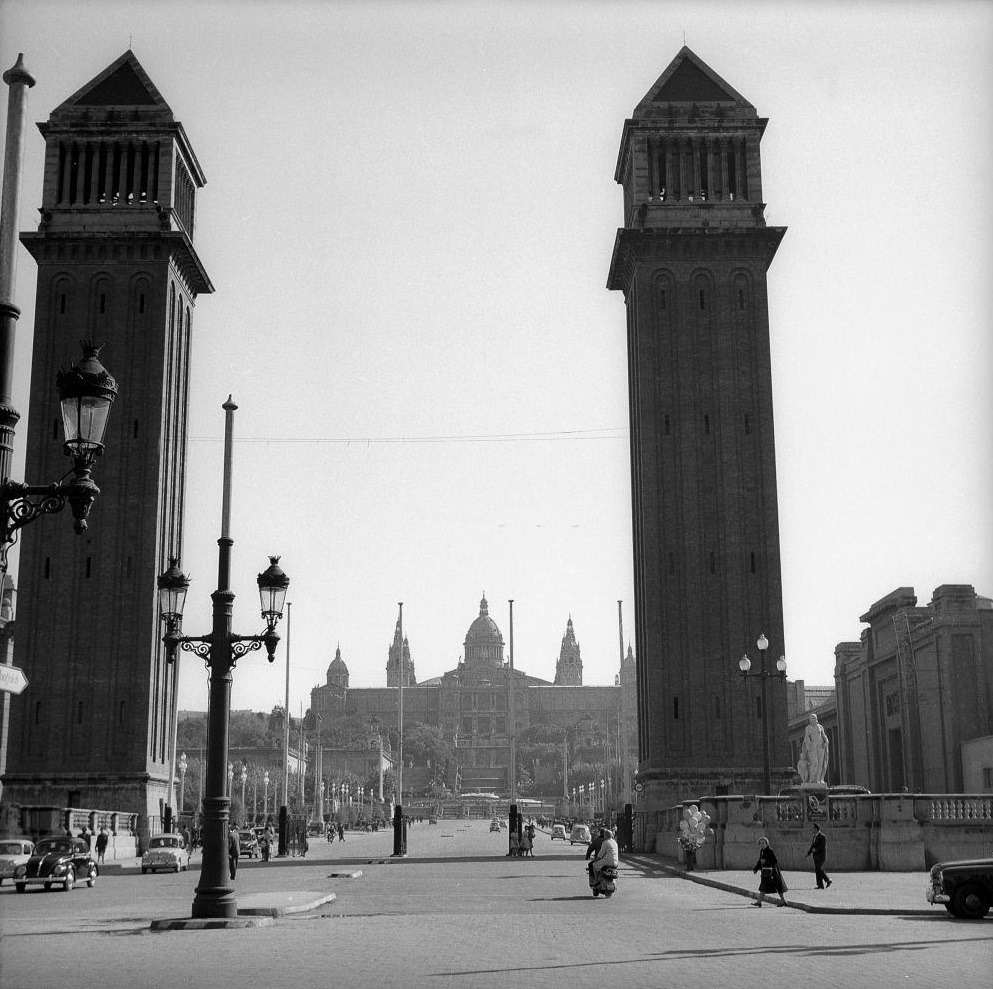
Motorsport fans also had reason to celebrate. Swiss rider Luigi Taveri won the Grand Prix of Barcelona in 1960, adding another chapter to the city’s history as a venue for competitive racing. That same year, tourists were already filling the Plaza de España, photographing the Venetian Towers and the wide open square that had been built for the 1929 World Exposition.
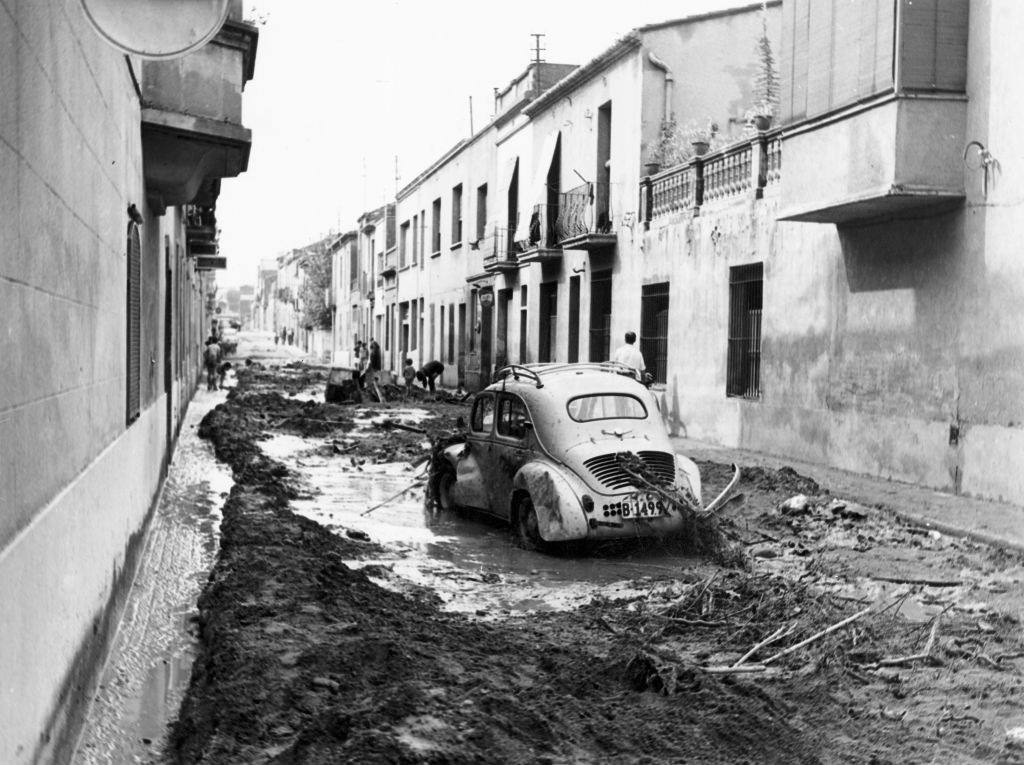
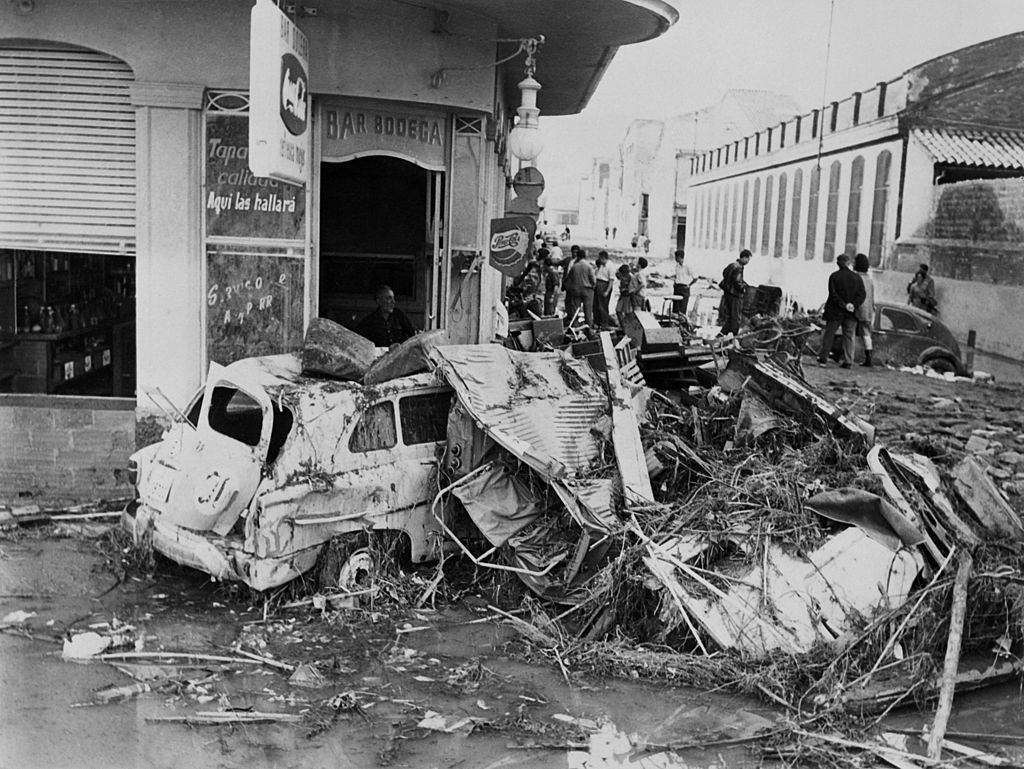
September 1962 brought disaster. Severe flooding struck Barcelona and its surrounding suburbs, causing widespread destruction. The images from the aftermath show the scale of damage left behind — submerged streets, ruined buildings, and communities left to rebuild. It was one of the most serious natural disasters the city faced during the decade.
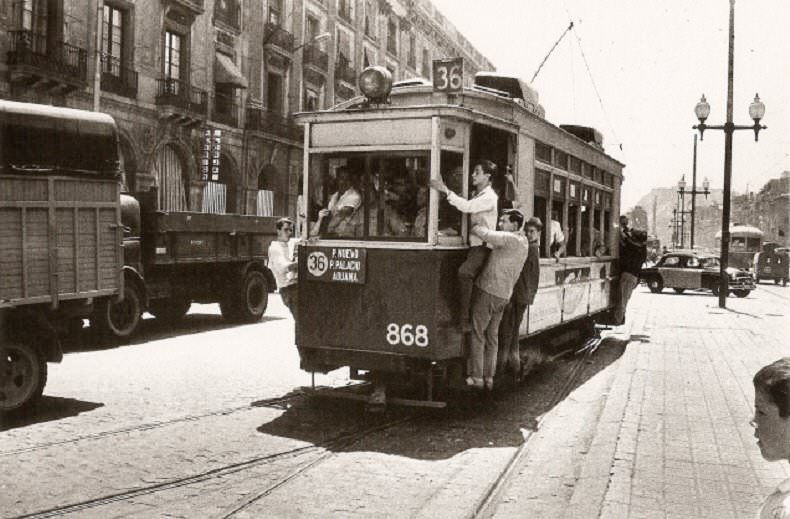
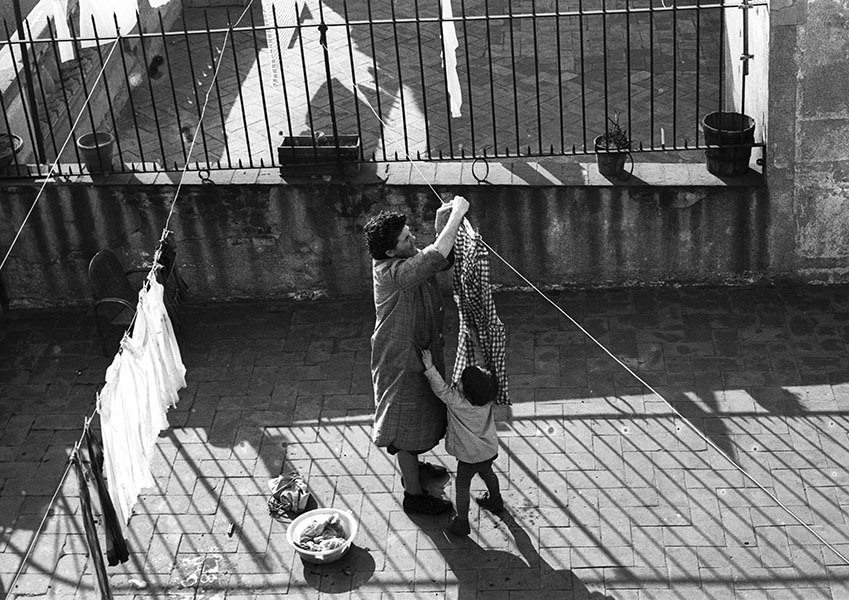
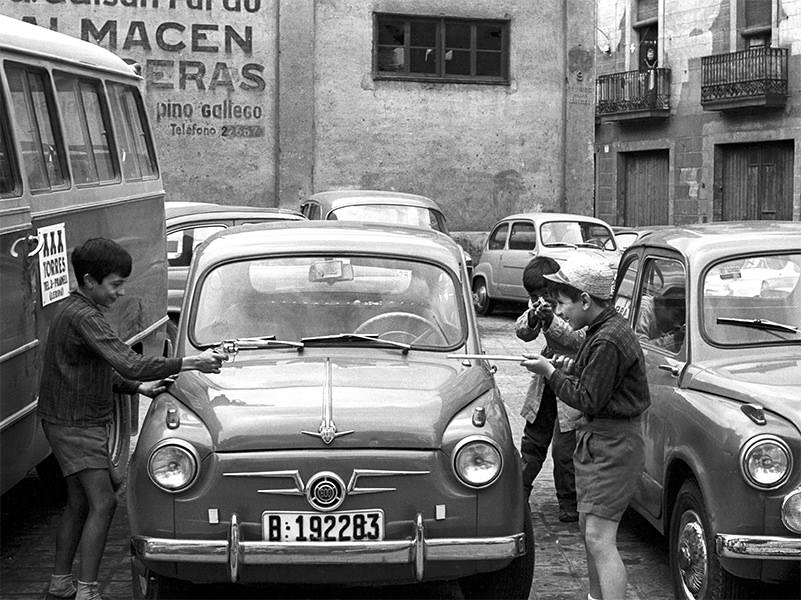
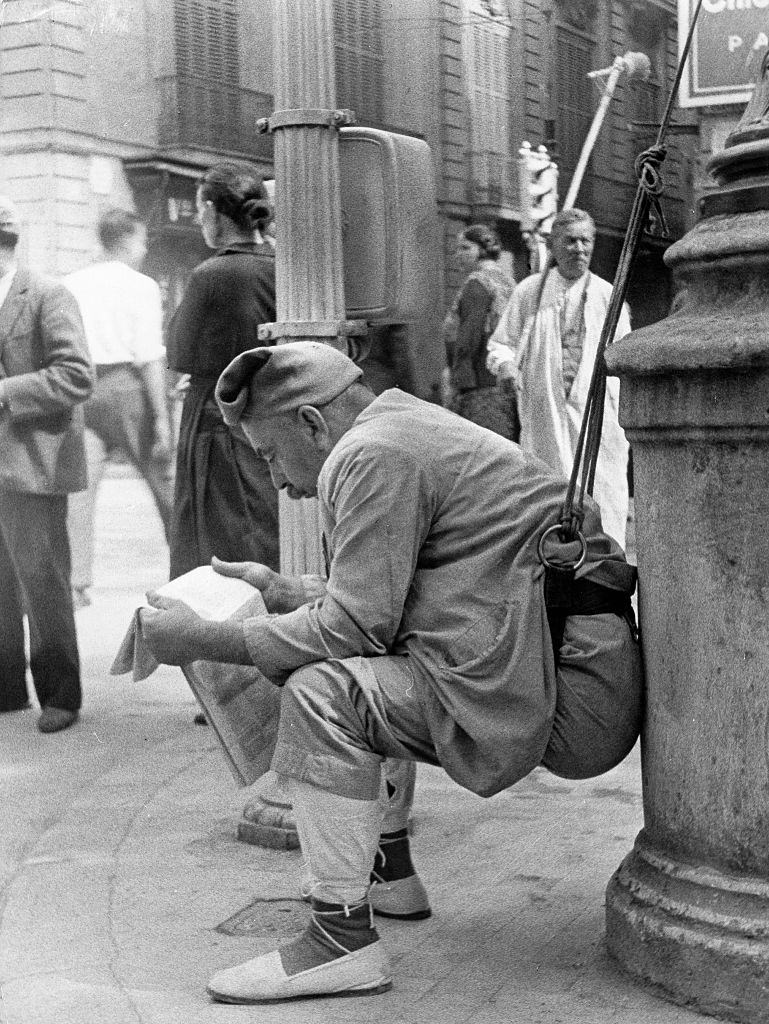
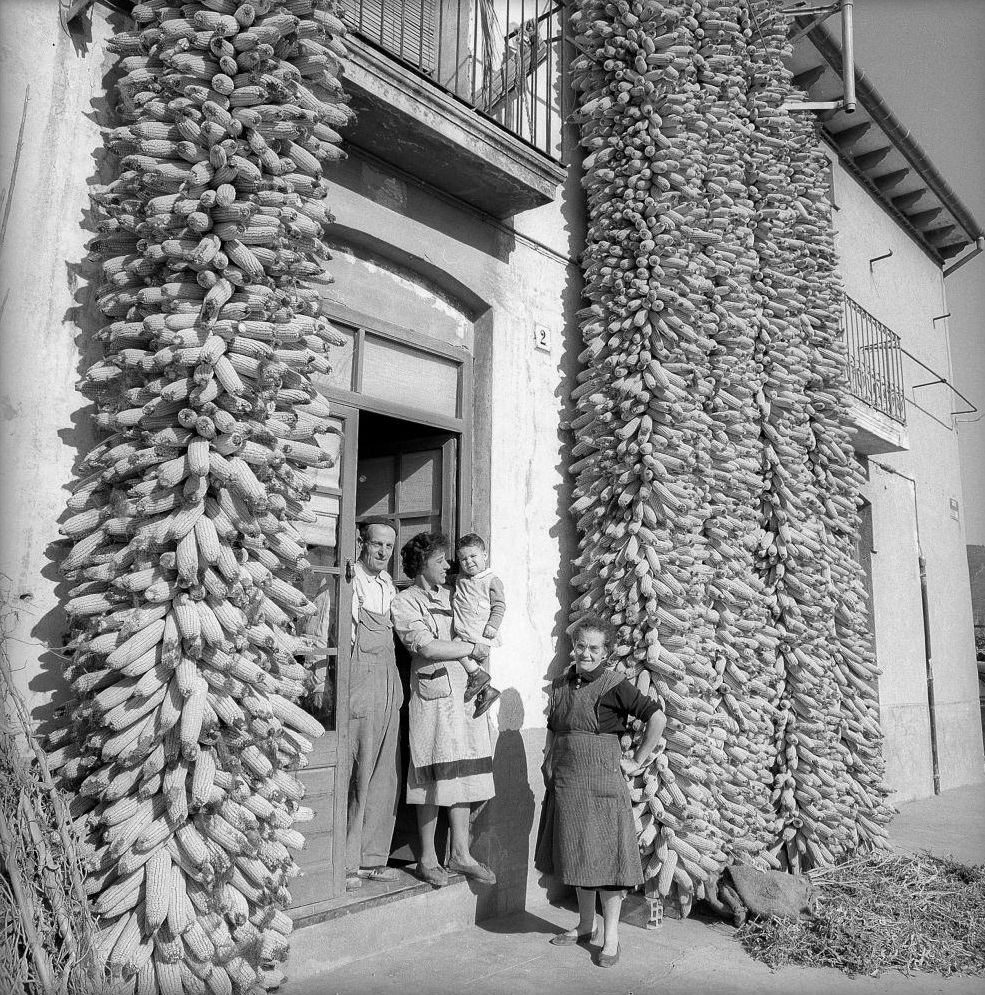
Meanwhile, the rhythms of ordinary life continued throughout the city. Tram Number 36 carried passengers through the streets in 1965. A woman hung laundry outside her window in 1964. Children played with toys in 1965. A commissionaire read his newspaper in 1961. Families posed at their doorways with corn crops. These everyday moments — unglamorous, unscripted — form the most honest record of what Barcelona’s 1960s actually looked like for most of its residents.
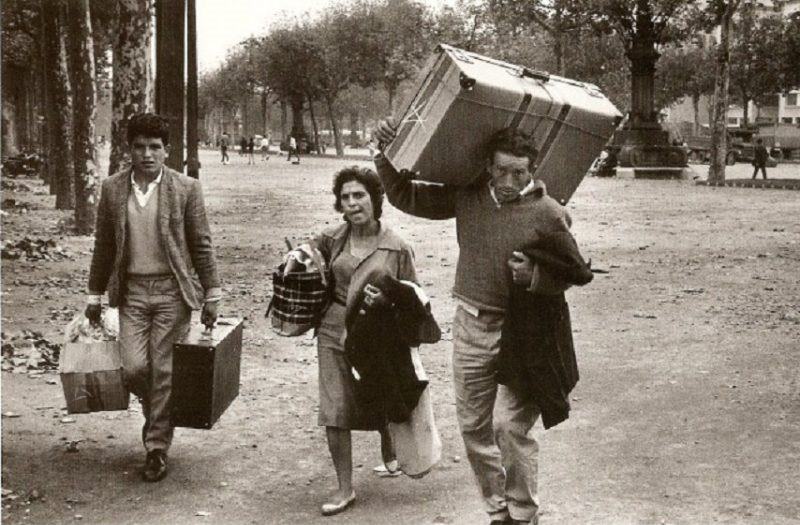
The internal migrants who flooded into Barcelona during the 1960s often arrived with very little. Many came from Andalusia, Murcia, and Extremadura. Photos taken near the French railway station in 1962 captured these new arrivals — families with bags and bundles, stepping into a city they barely knew. They settled in the outskirts and working-class neighborhoods, building new lives from scratch.
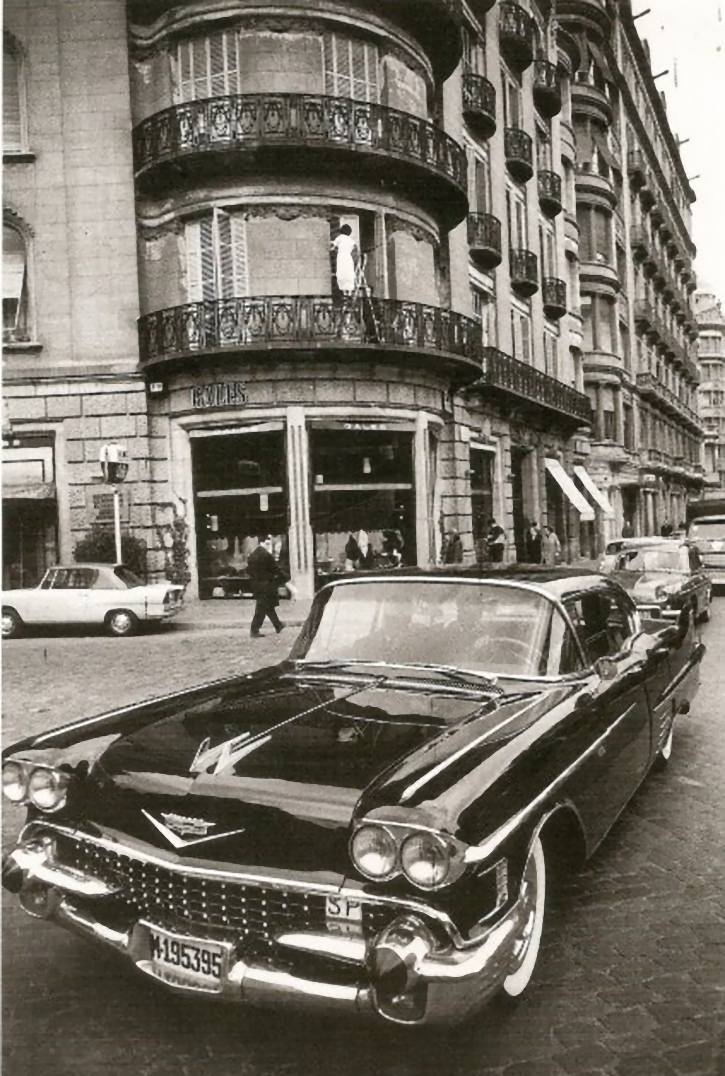
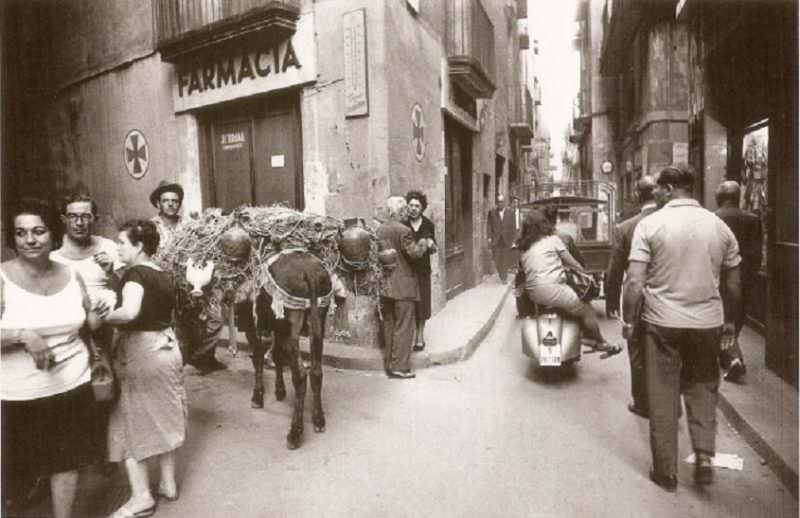
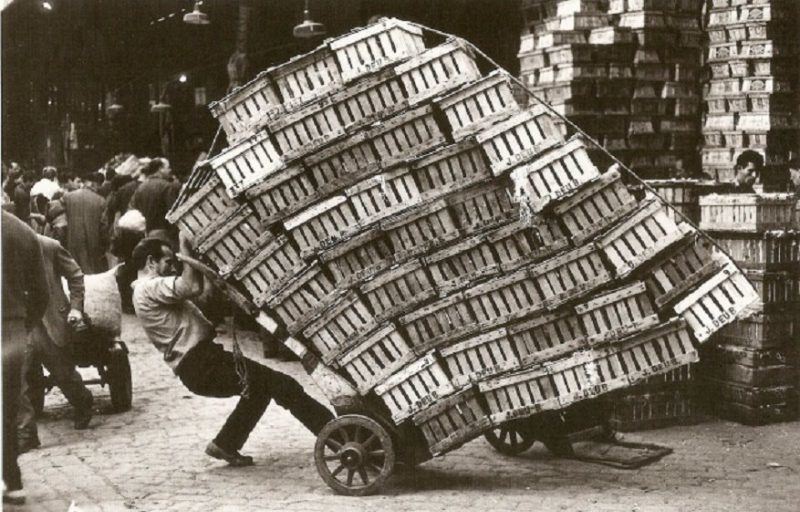
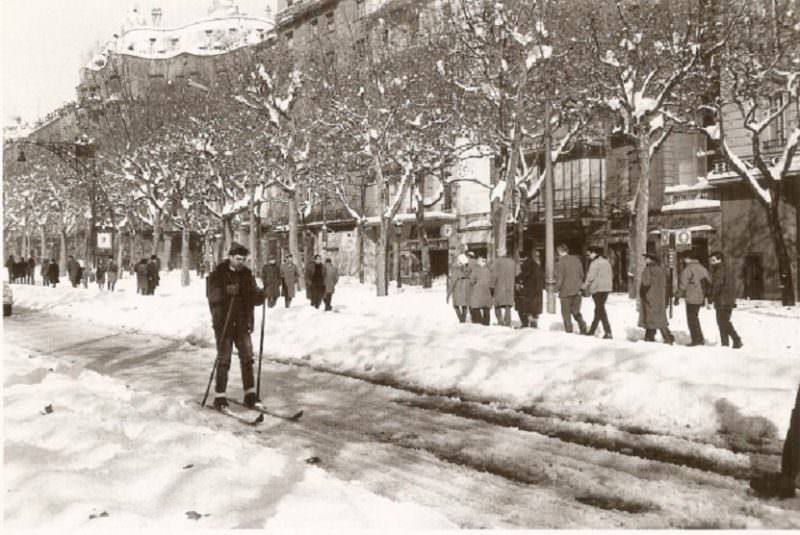
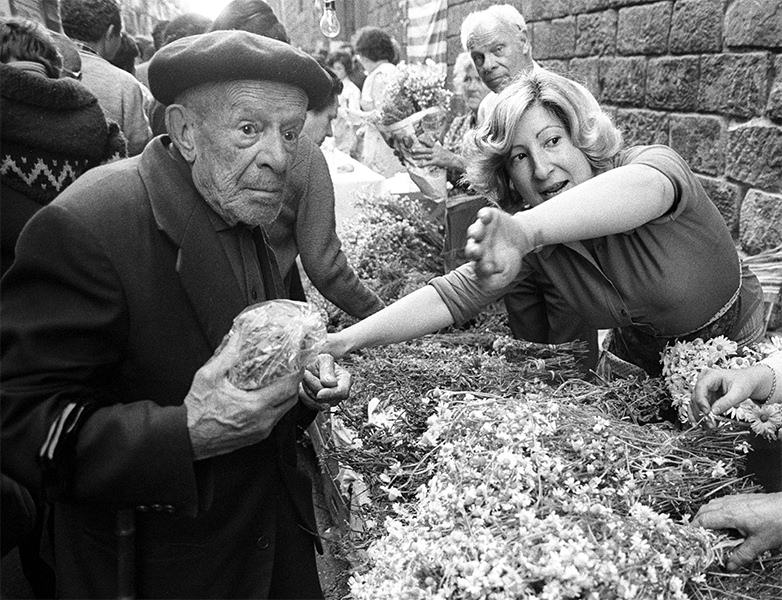
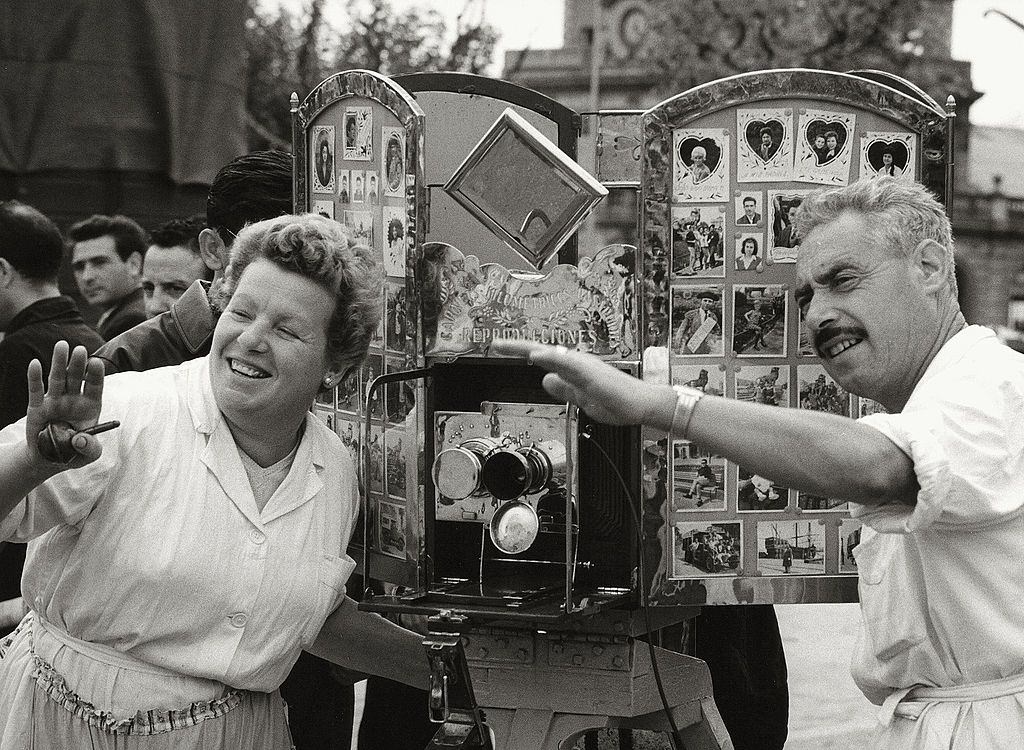
Las Ramblas served as the city’s social artery, drawing people from every corner of Barcelona. Flower sellers set up their stalls there, and the Latin Cinema and the Football Office were among the businesses that lined the boulevard. Photographers worked the streets, capturing the city’s endless movement. Bars and restaurants along every block offered cheap meals and drinks to workers and families who gathered there in the evenings.
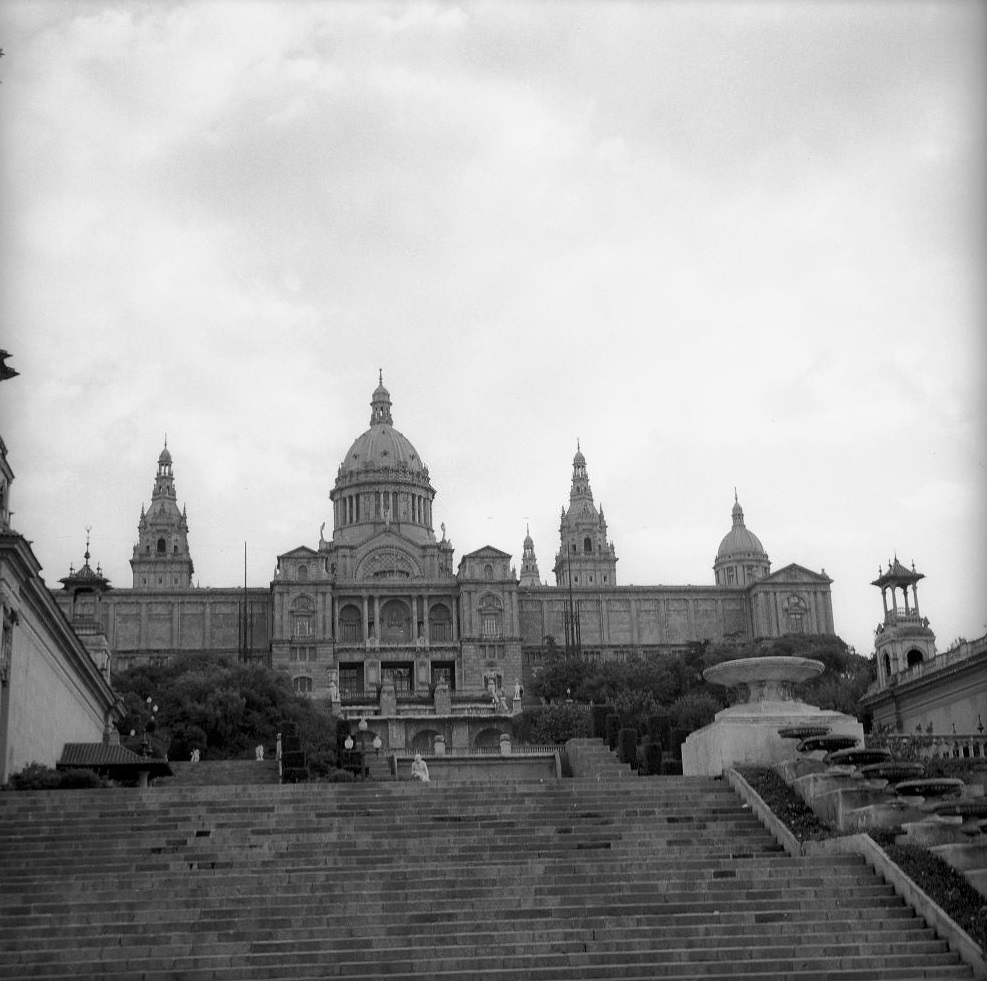
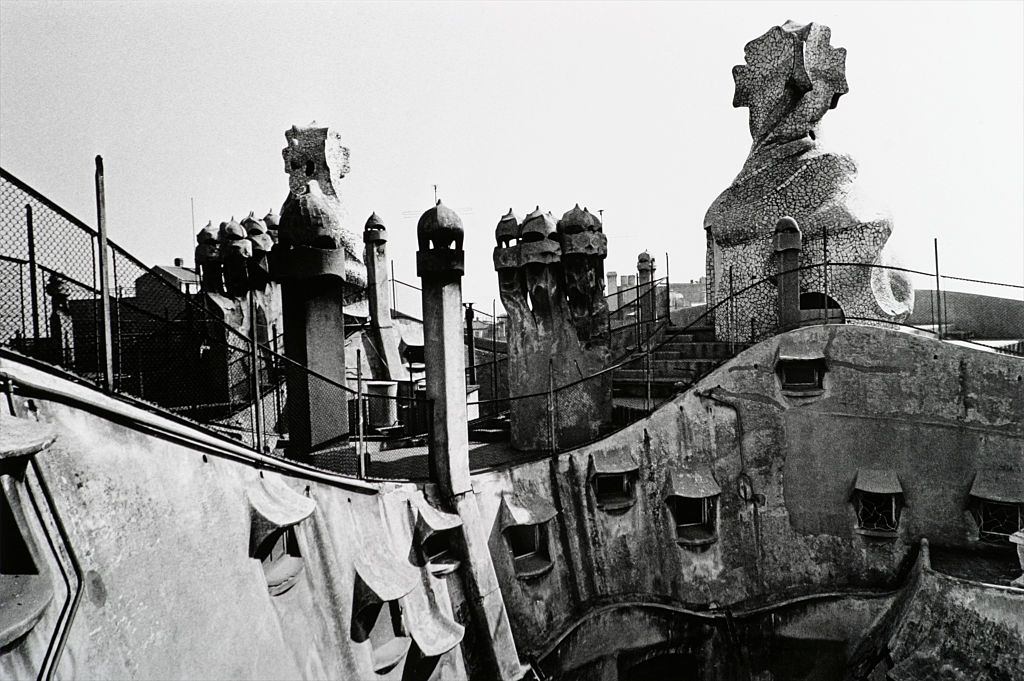
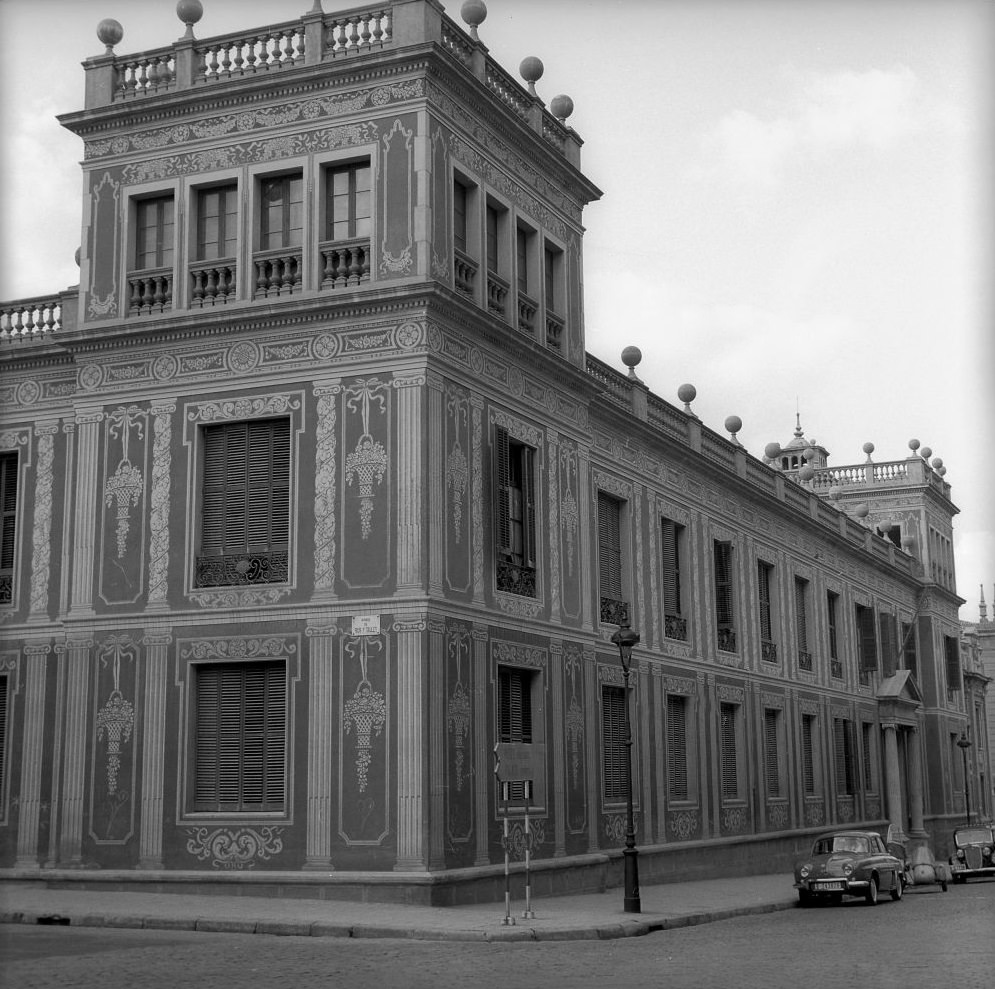
Barcelona’s architecture gave the city its unmistakable character. Antoni Gaudí’s buildings, built decades earlier, were already drawing admiring visitors. By 1969, photographs of the rooftop of the Casa Milà — with its surreal chimneys and sculpted forms — appeared in international press. The Picasso Museum opened its doors in 1963, giving the city a new cultural landmark. Montjuïc, overlooking the city from its hilltop, remained a popular destination for both residents and tourists throughout the decade.
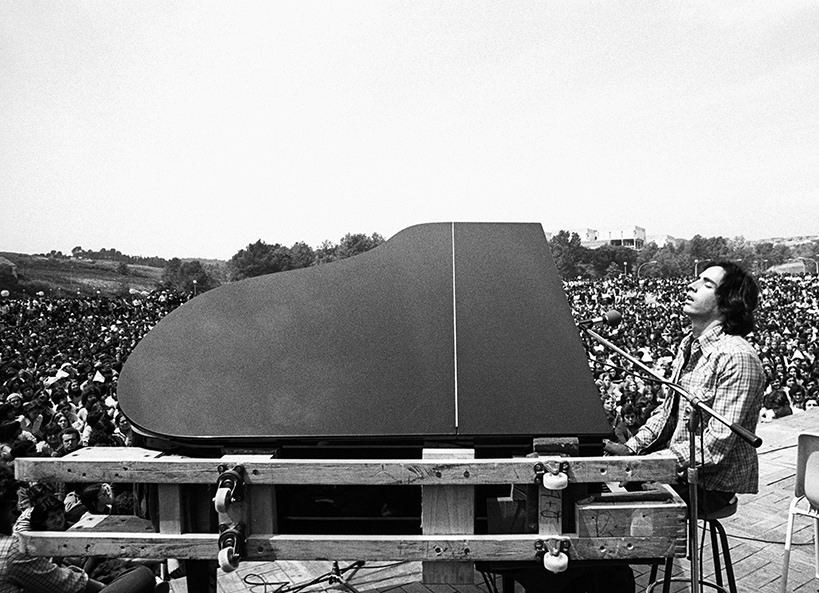
By the late 1960s, new tensions were visible in the city. A Carlist demonstration in 1969 showed that political frustrations still ran close to the surface. Catalan folk singer Maria del Mar Bonet was gaining an audience, and Lluís Llach — whose music became deeply tied to Catalan resistance — was beginning to perform. Nightclubs like Bocaccio on Carrer de Muntaner became gathering points for Barcelona’s creative class, mixing fashion, art, and music in ways that pushed against the conservative culture of Franco’s Spain.
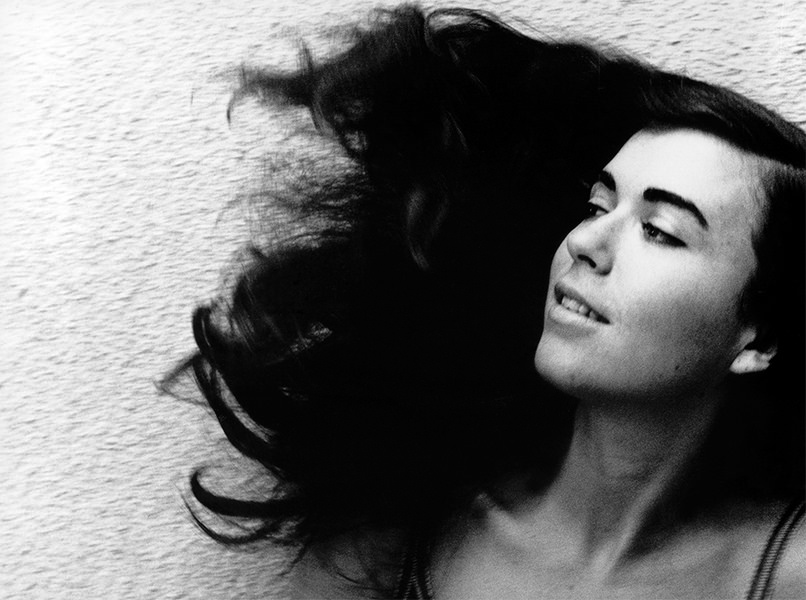
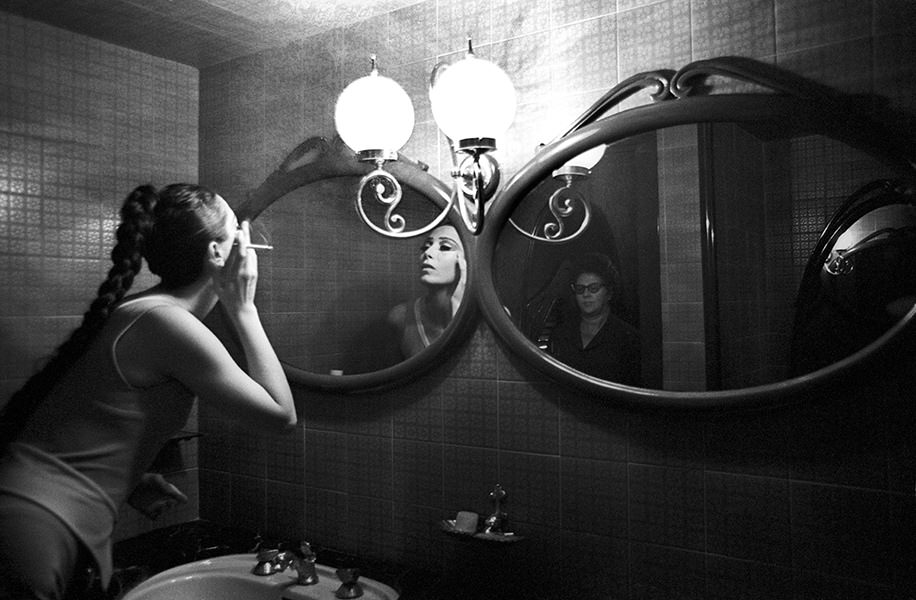
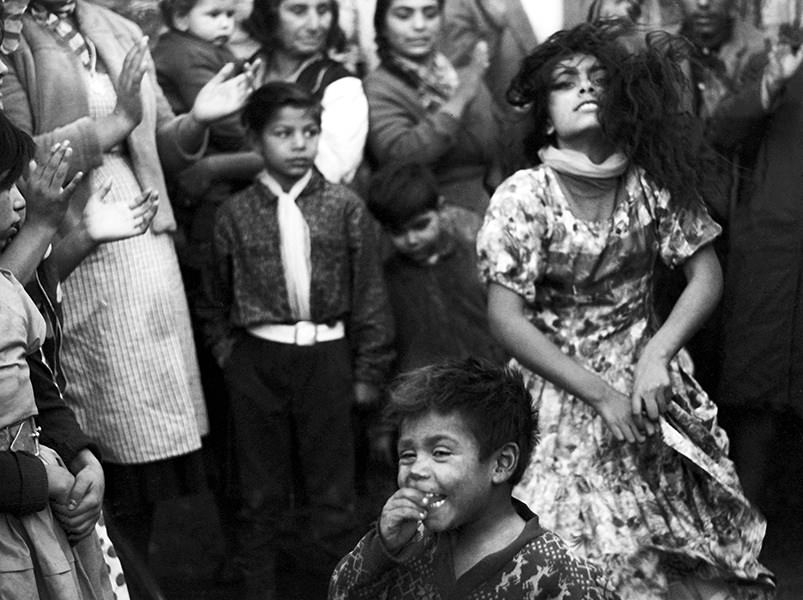
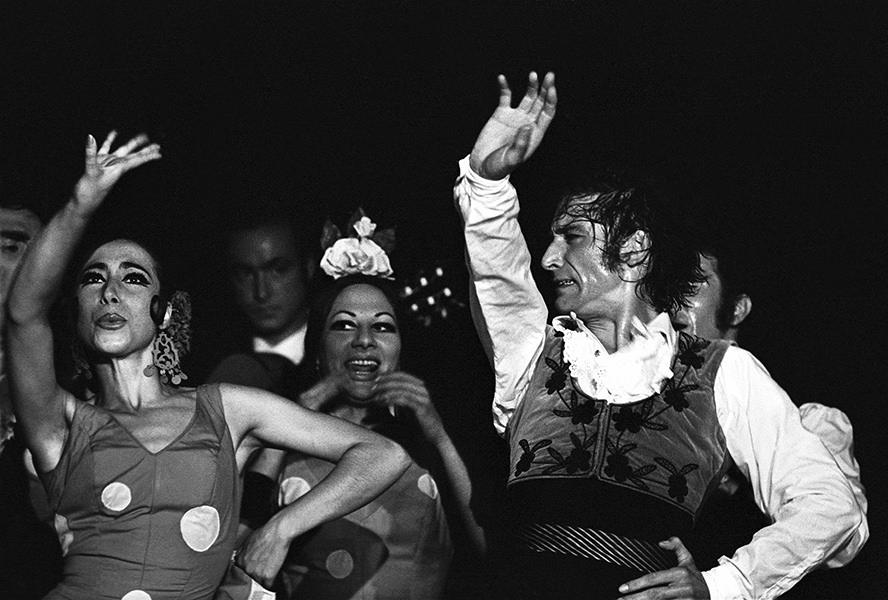
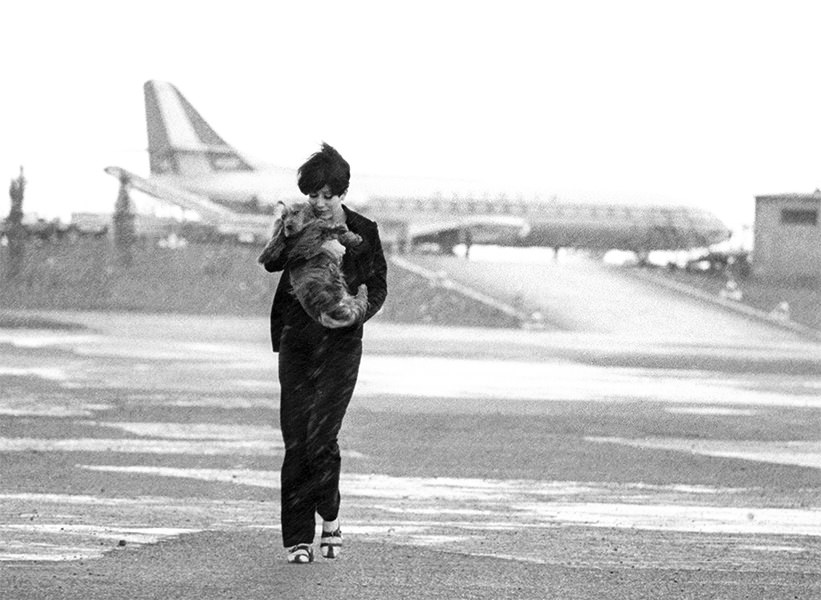
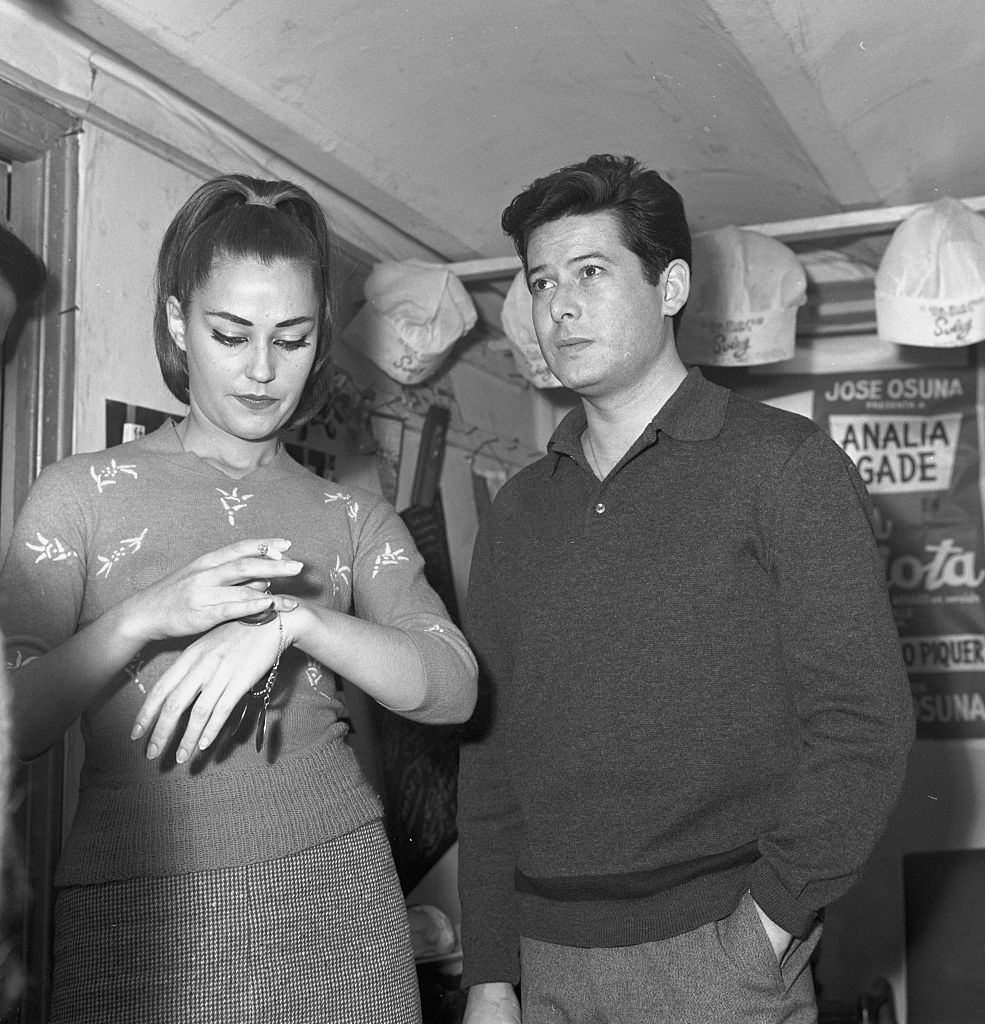
Flamenco also had a presence in Barcelona during this era. Antonio Gades, one of Spain’s most celebrated flamenco dancers, was photographed in the city alongside Cristina Hoyos in 1969. Fashion model and designer Elsa Peretti was photographed in Barcelona in 1968, years before her work with Tiffany & Co. would make her internationally famous. The city was, in many ways, a crossing point for artists, performers, and intellectuals moving through a Spain that was slowly — and uneasily — opening to the outside world.
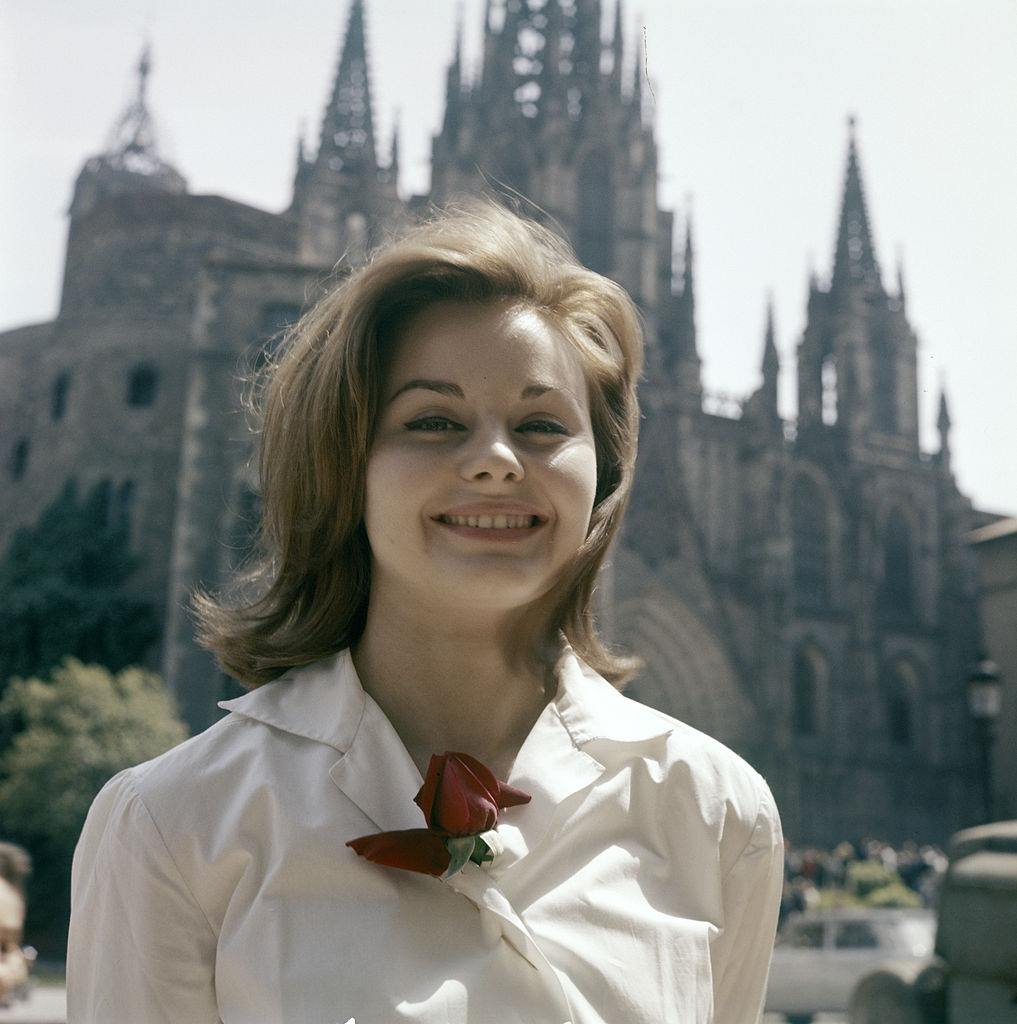
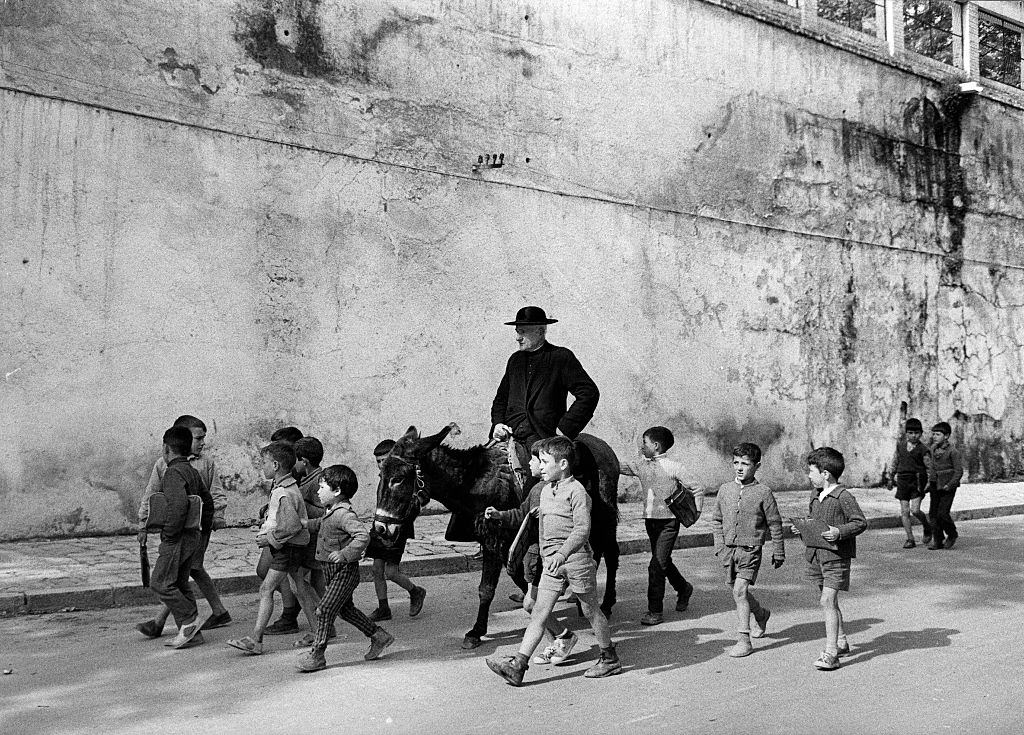
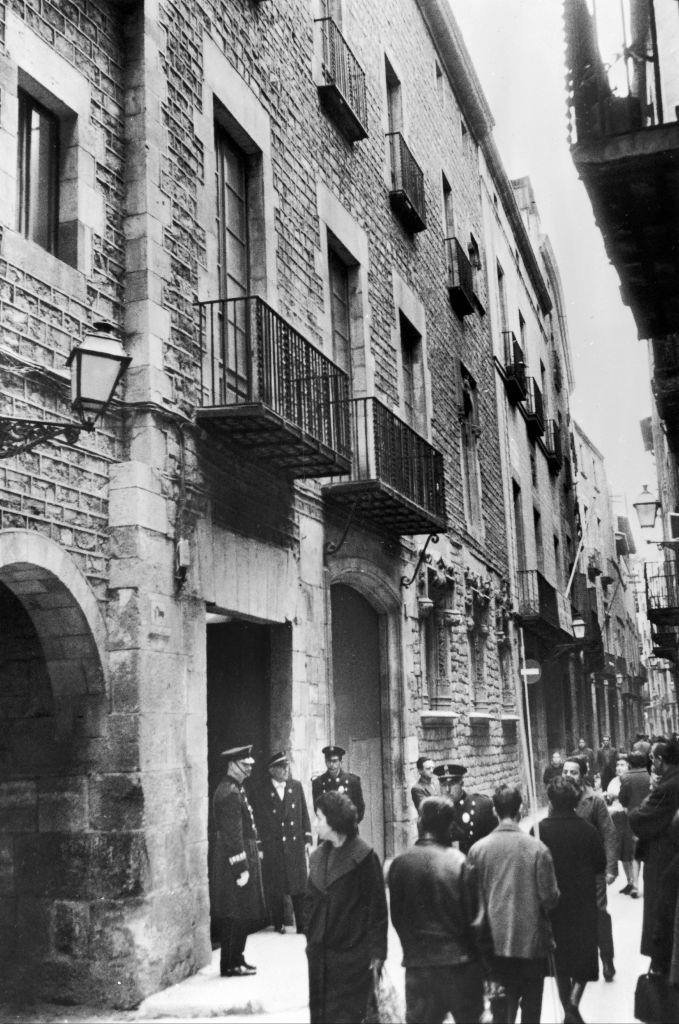
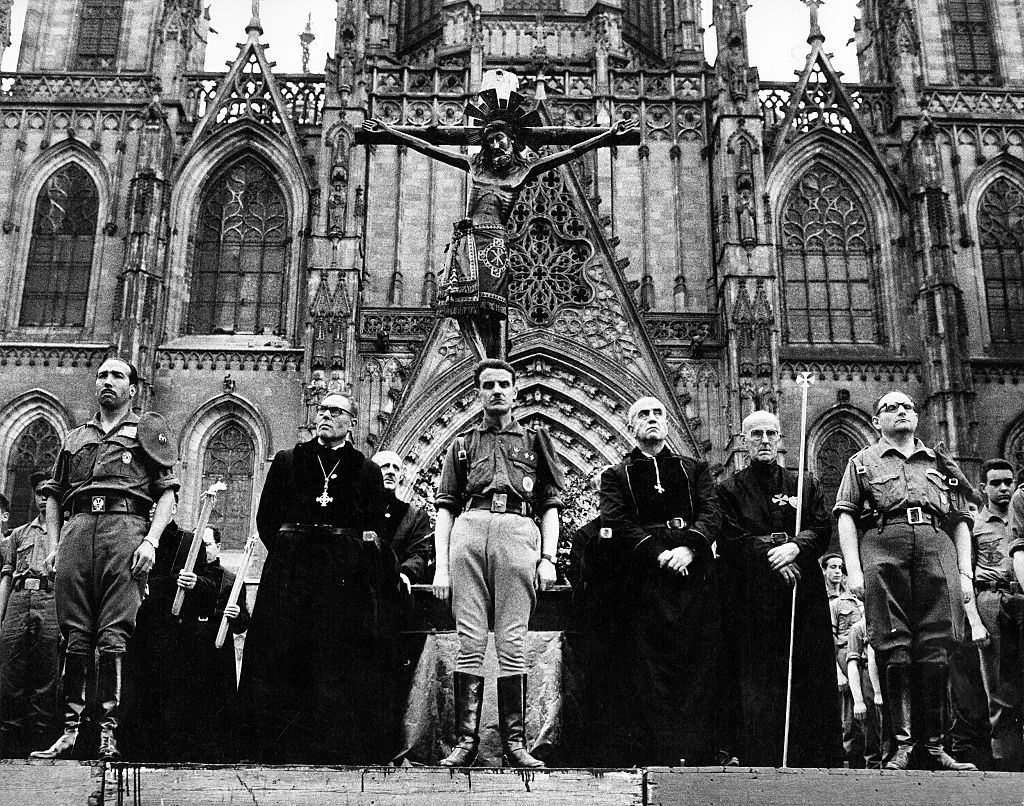
Religion remained central to public life. Clerics and soldiers stood together outside the Cathedral of Santa Eulàlia in 1962. A priest rode a donkey through a neighborhood in 1969, surrounded by children. The Church’s presence was visible in the streets, in the calendar, and in the institutions that shaped daily routines for Barcelona’s residents.
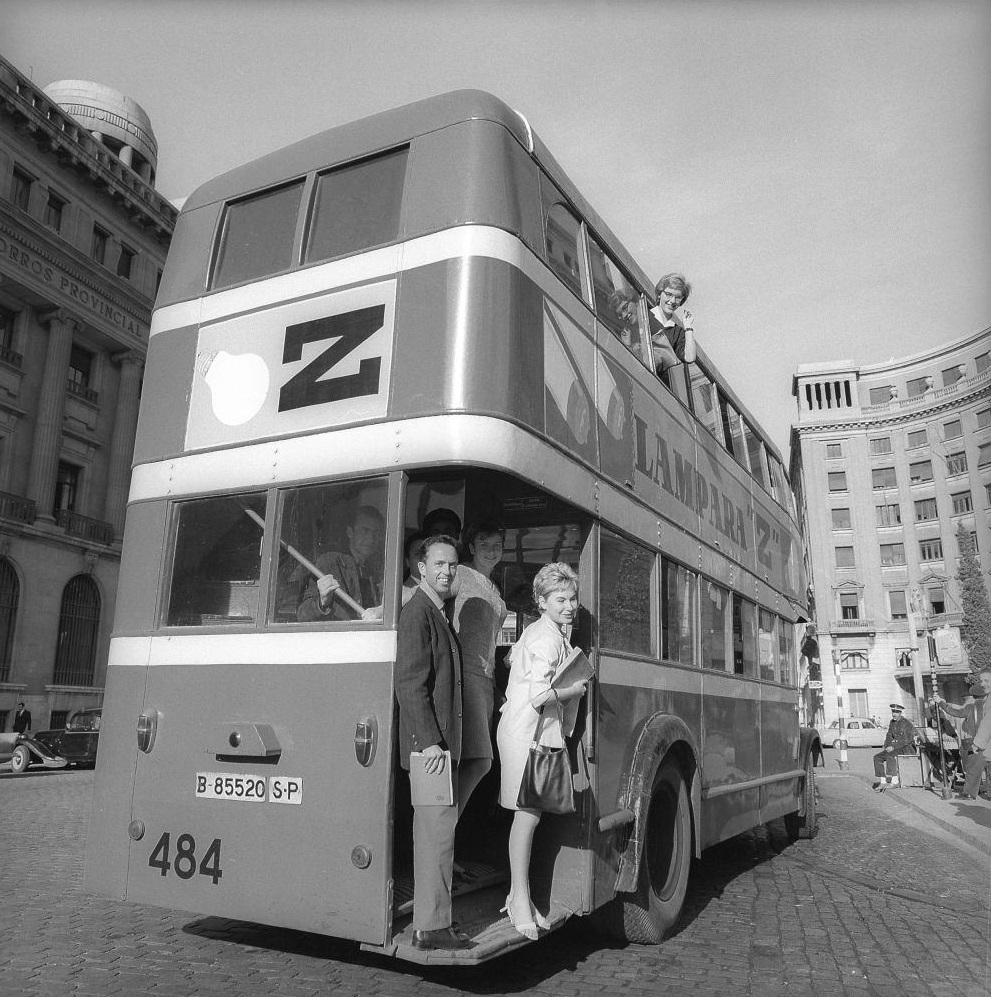
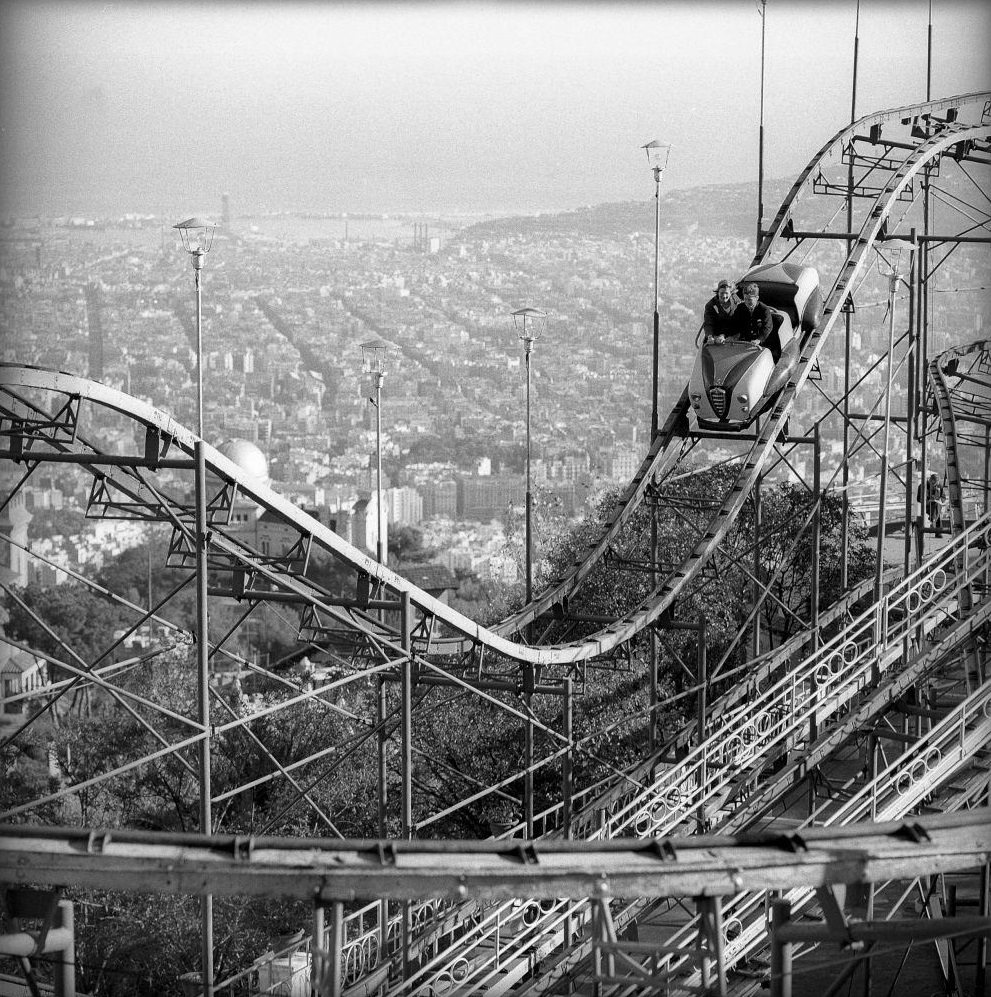
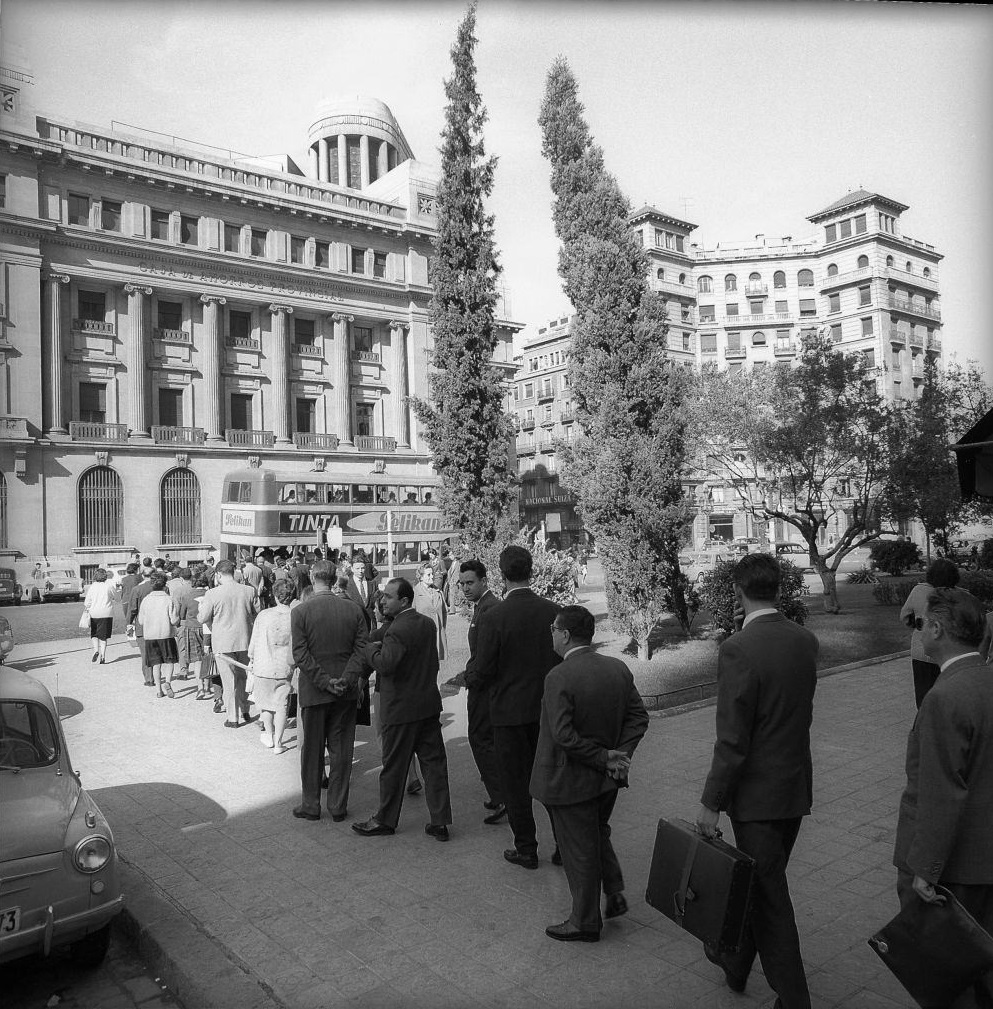
Transportation defined how the city moved and who could access its different parts. Double-decker buses carried passengers through central streets. The funicular climbed to Tibidabo, where the amusement park sat perched above the city. Queues formed at bus stops and public offices alike. The tram network, which would be dismantled later in the decade, was still a working part of daily life for hundreds of thousands of barcelonins.
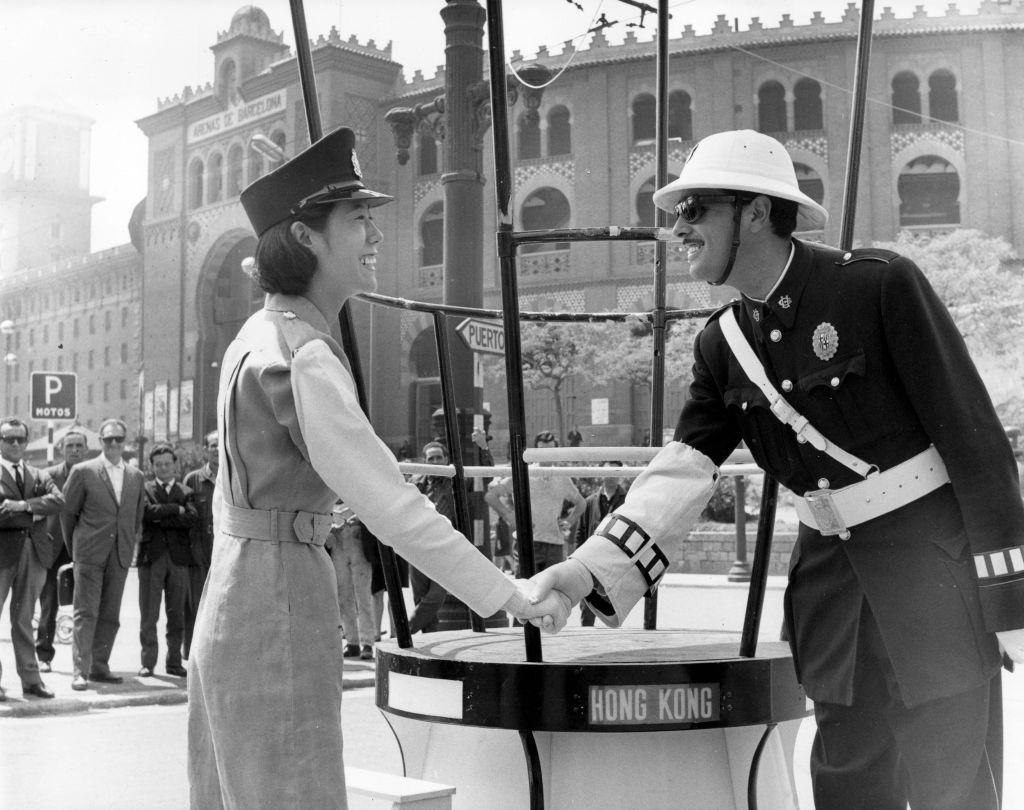
The International Samples Fair brought the world to Barcelona in 1966, when a policewoman from Hong Kong shook hands with a Spanish officer in what was a genuinely rare cross-cultural encounter for the era. The fair was one of Europe’s major trade events and drew exhibitors and officials from dozens of countries. It underscored Barcelona’s role as a commercial city with ambitions that extended well beyond Spain’s borders.
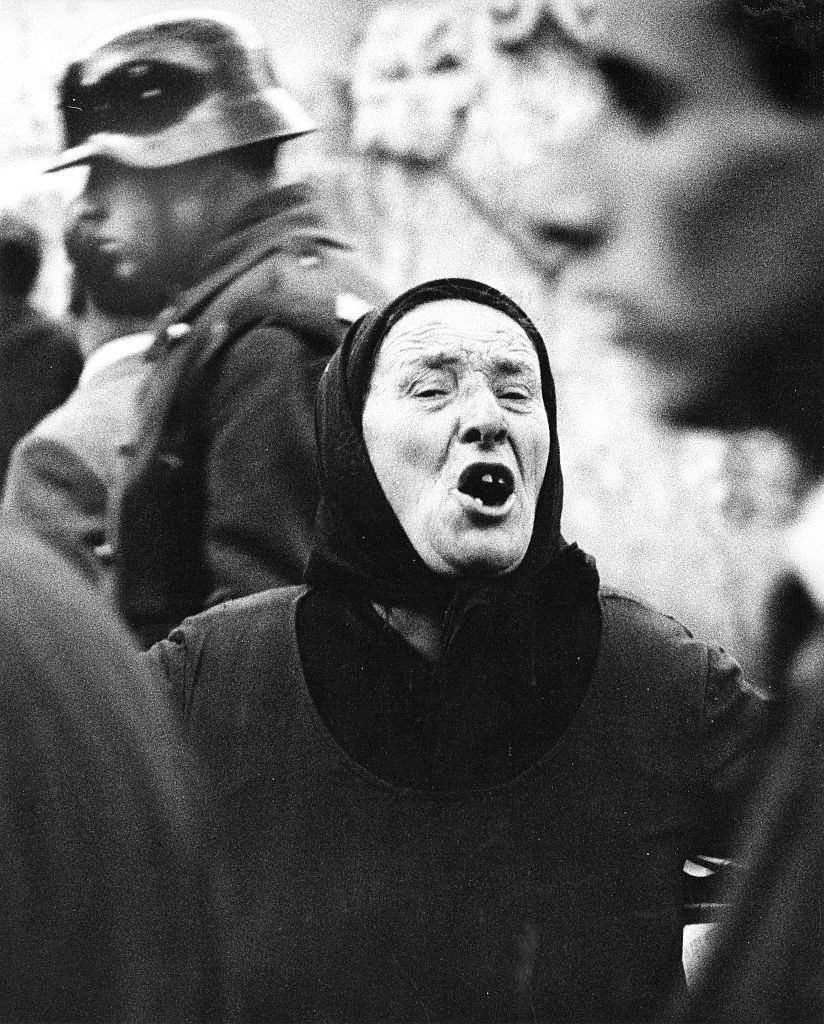
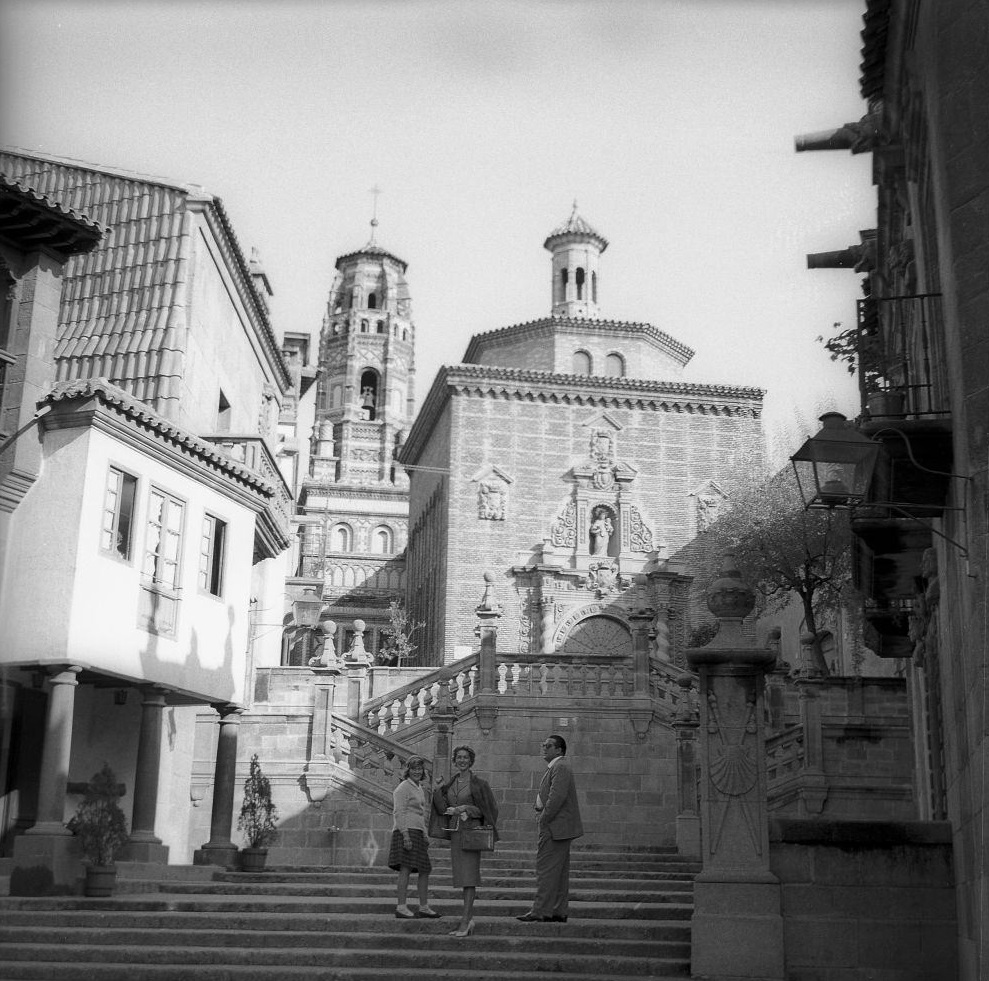
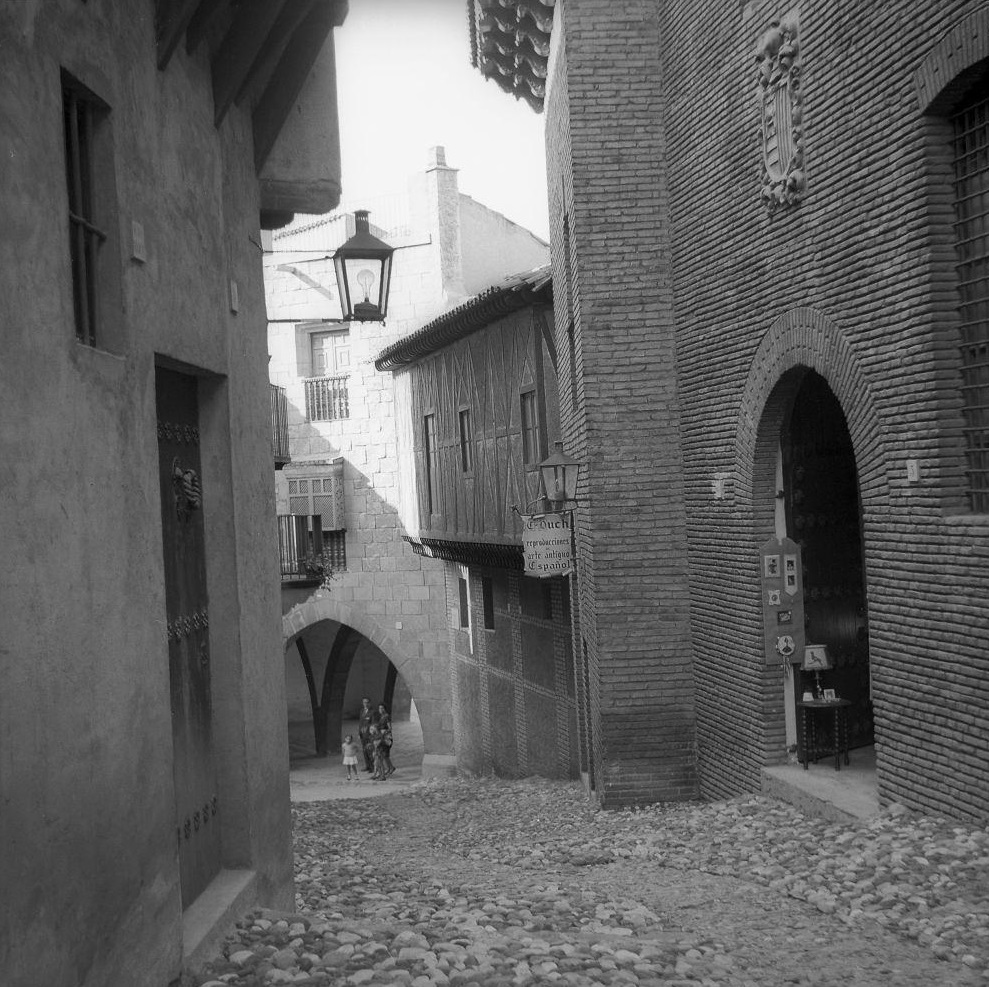
The Poble Espanyol — an architectural open-air museum built for the 1929 Exposition on Montjuïc — continued drawing visitors through the 1960s. Its reconstructed buildings from across Spain made it both a tourist attraction and a somewhat odd symbol of national unity in a city whose own identity was being actively suppressed. Barcelona held these contradictions together, block by block and decade by decade.





Great pics but a lot of really incorrect captions.
Thank you for sharing; this was amazing
The pic of Lluís Llach appears to be at UAB. My in-laws work there, and they attended the concert.
I wonder if anyone is interested in identifying the unnamed streets (e.g. the one with the corn crops), just to see how they look today.
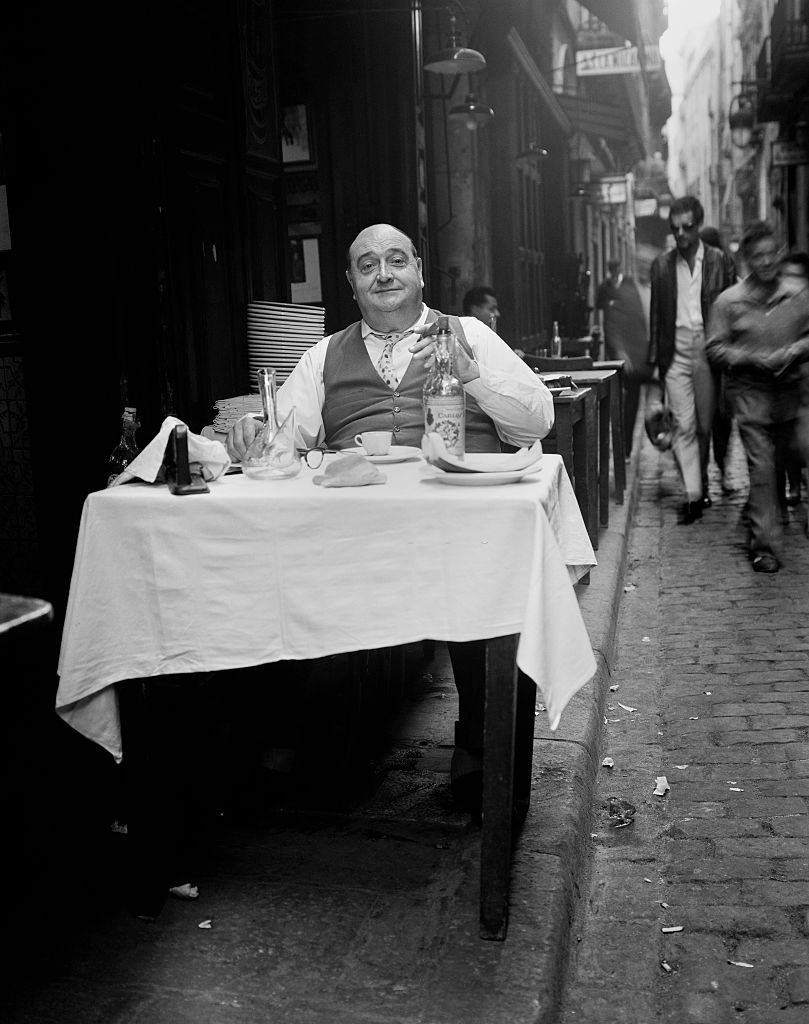
The man dining is the owner of the restaurant Caracolas.
I taught that man’s grandchildren (the owner of Los Caracoles). The restaurant has been there since 1835.
I’m quite surprised to see the “bones festes” in the 5th photo. I didn’t realize that such public displays in Catalan were tolerated.
Wow that was awesome 🙂
I worked there for a whole year!