
Atlantic City sits near the southern tip of New Jersey, hugging four miles of the Jersey Shore. Today it has a population of around 40,000, but in the early 1900s, it was one of the most visited resort destinations in the entire country. Wealthy travelers, working-class families, and everyone in between made their way to its famous boardwalk, its grand hotels, and its wide, crowded beaches. These photographs capture that world in vivid detail — a city at the height of its power and popularity.
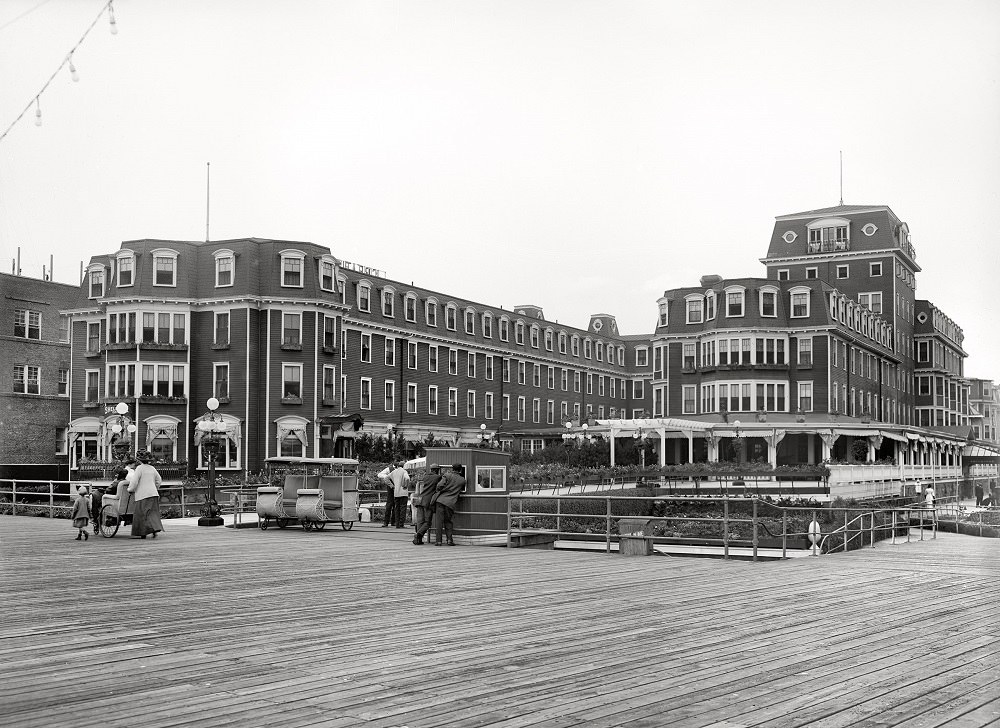
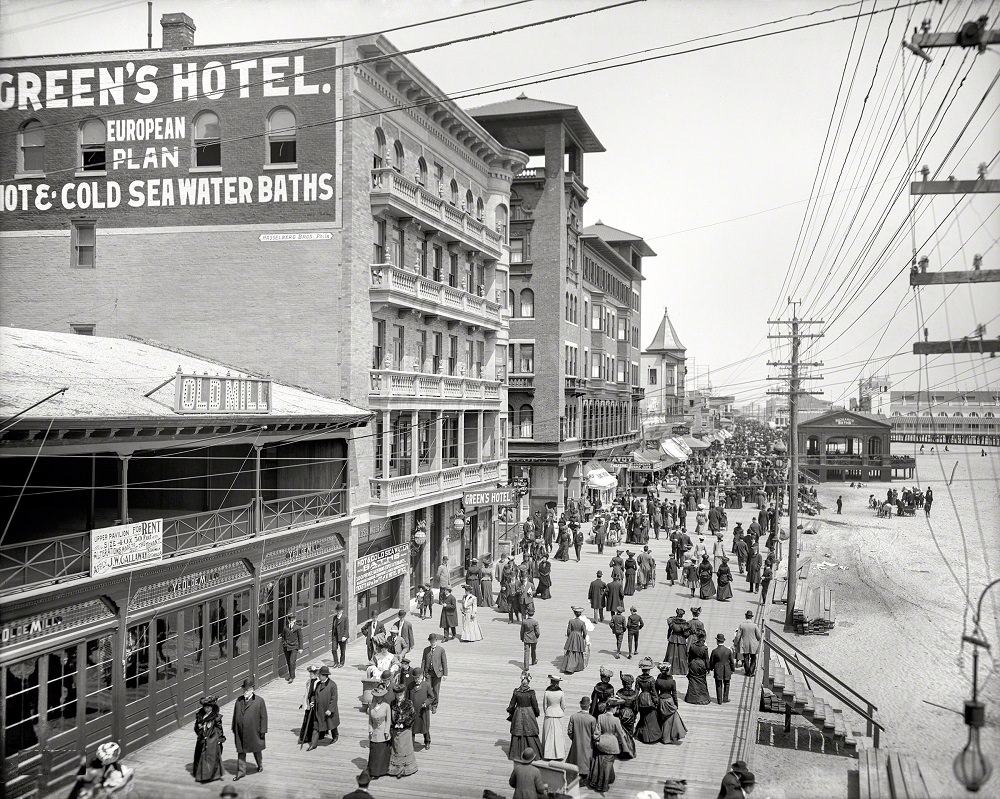
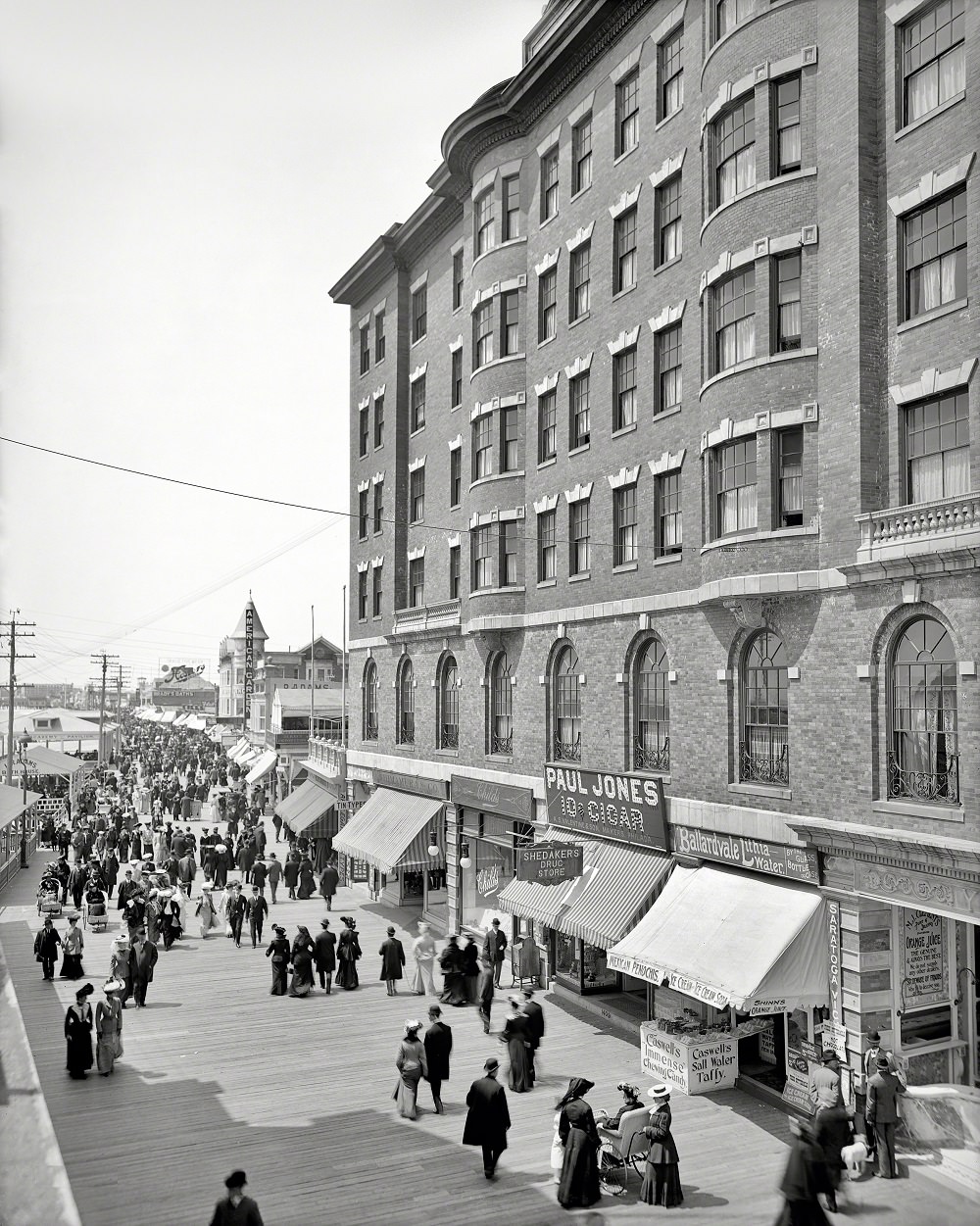
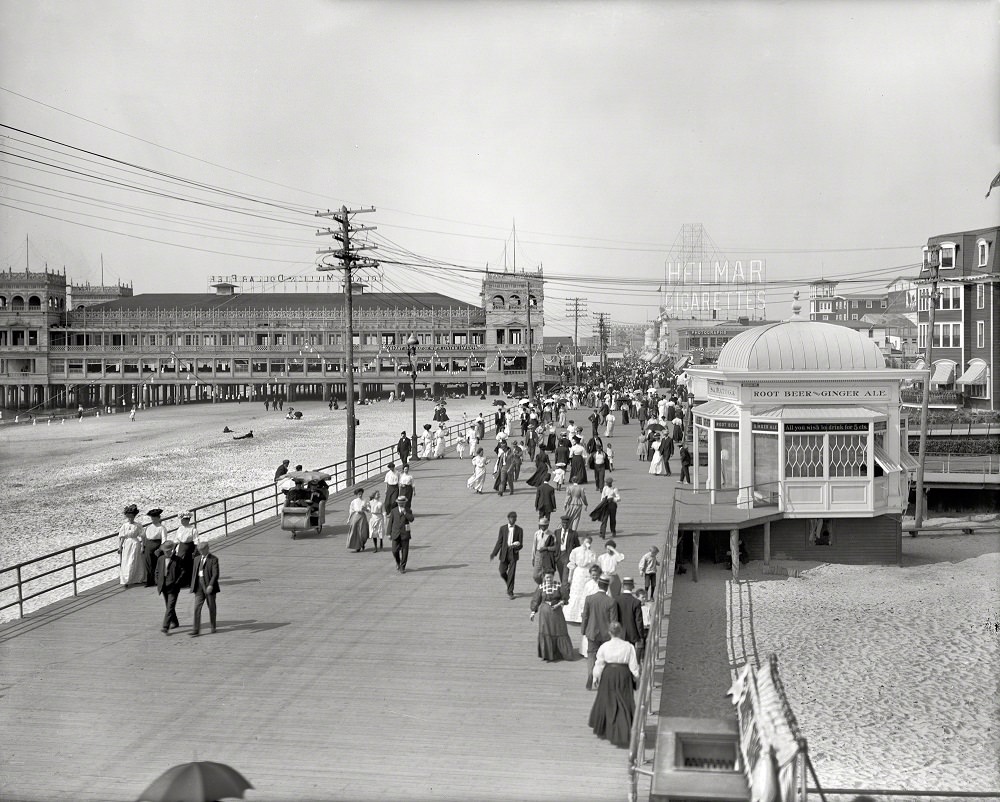
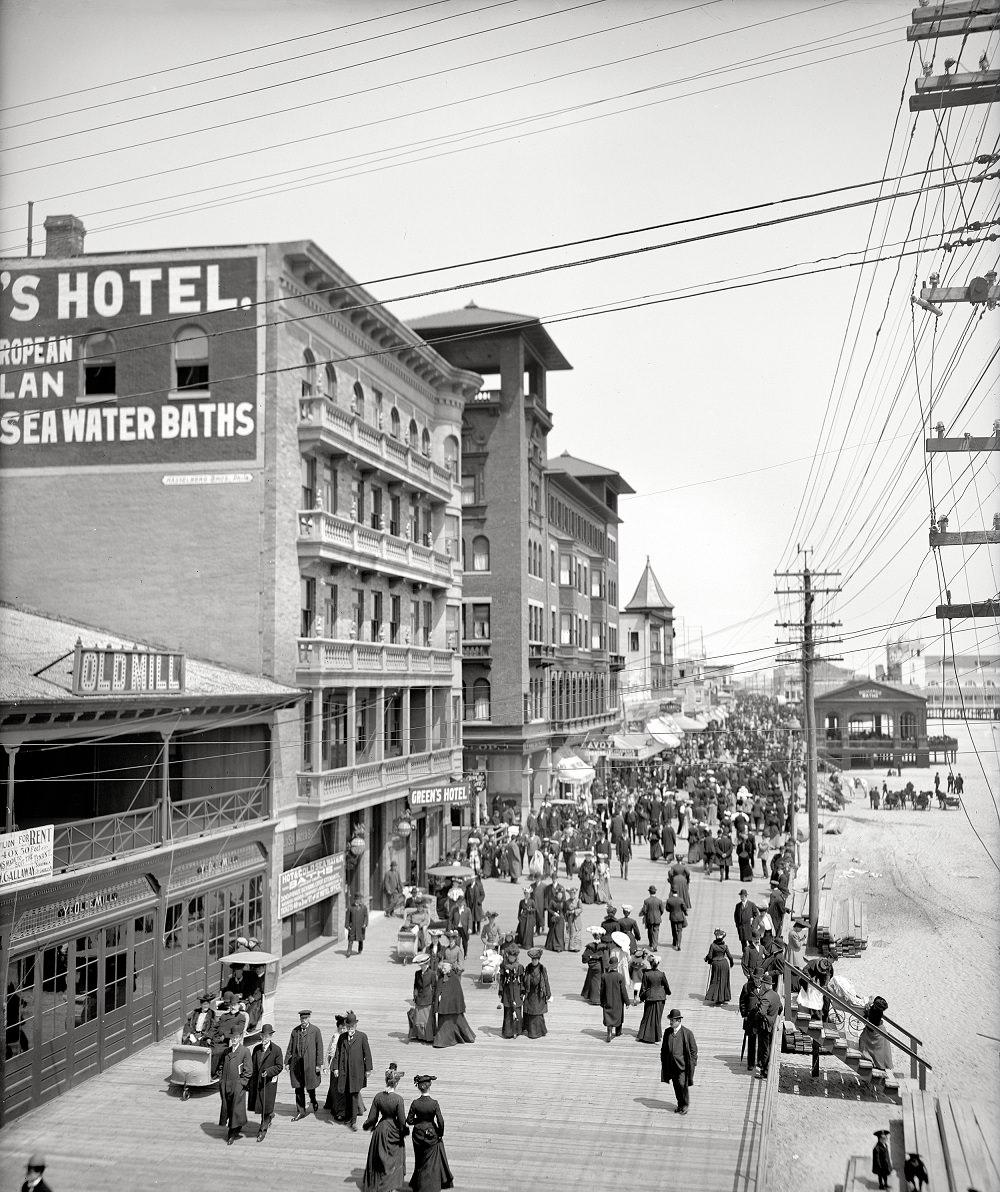
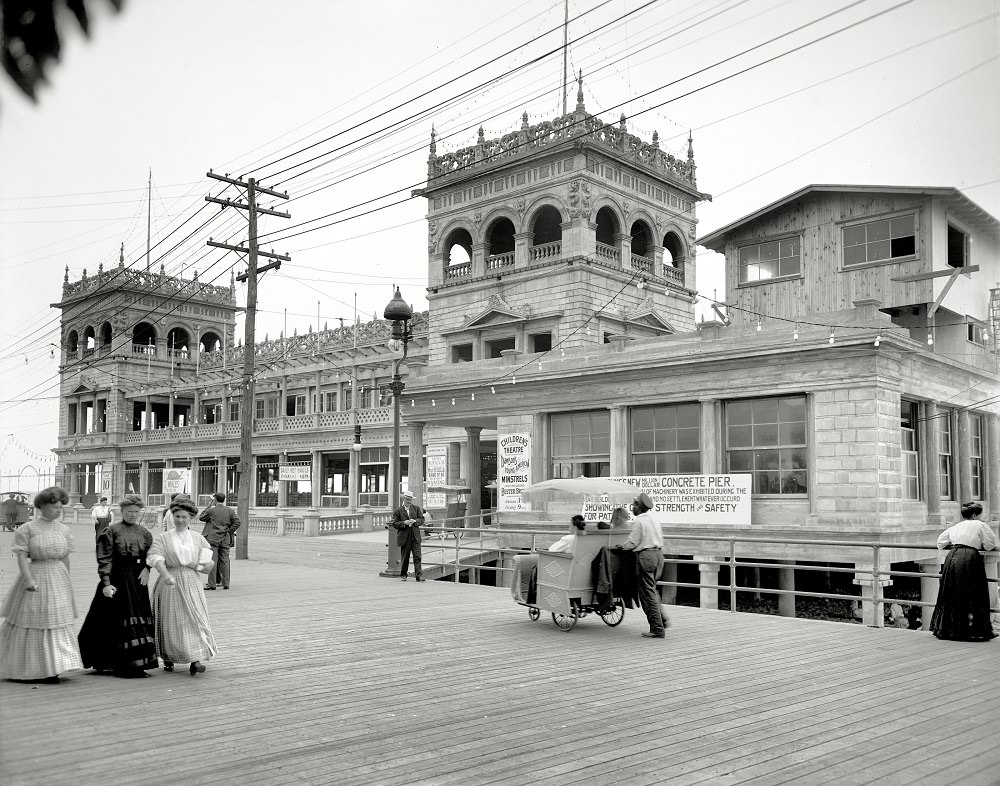
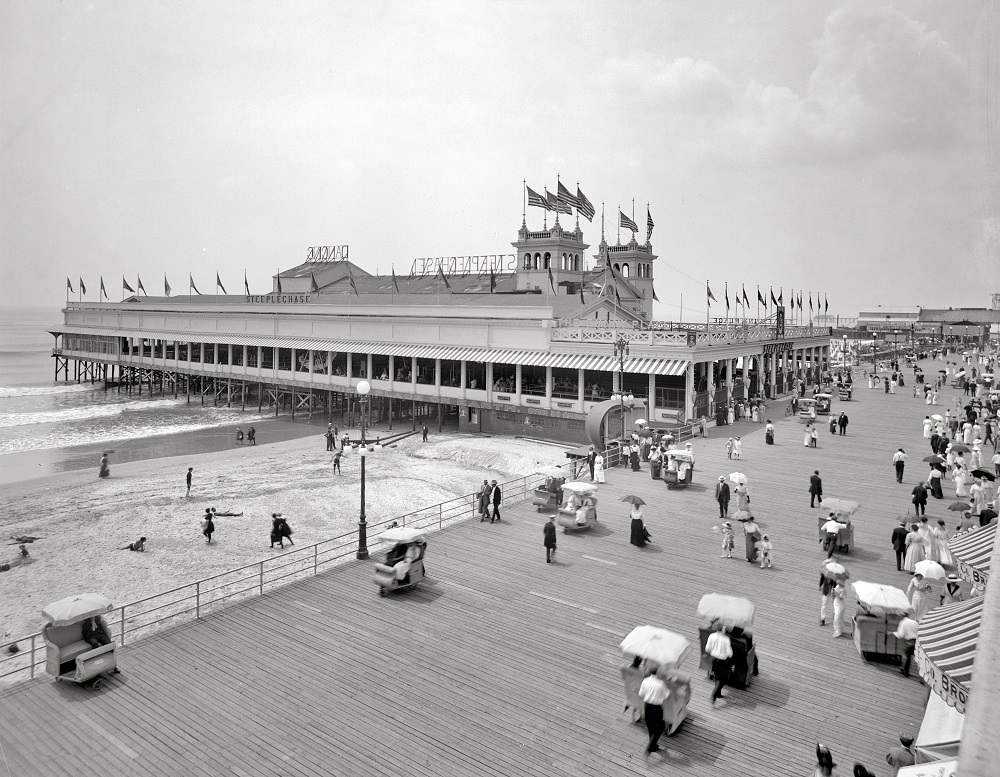
The boardwalk itself was the backbone of Atlantic City. The first version was built in the 1870s as a simple wooden walkway running along the beach. By the early 1900s, it had grown into a full commercial and social hub lined with hotels, shops, amusement piers, and rolling chairs for hire. Visitors strolled it in their finest clothes, and the city made sure there was always something to see or do along its length.
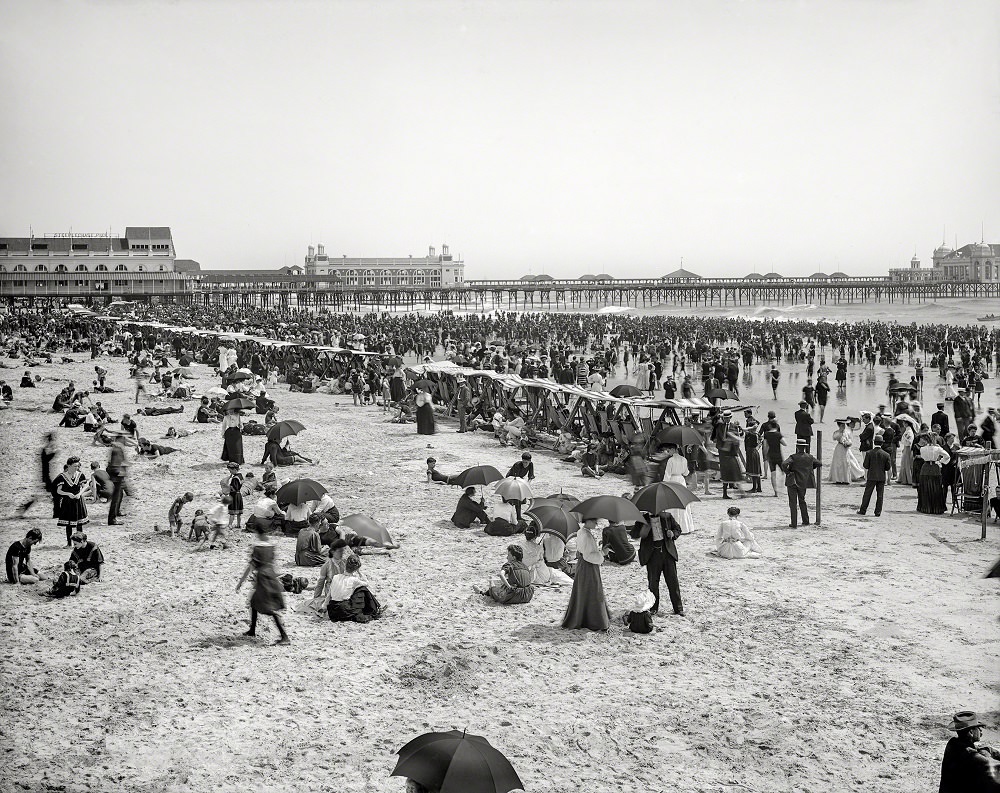
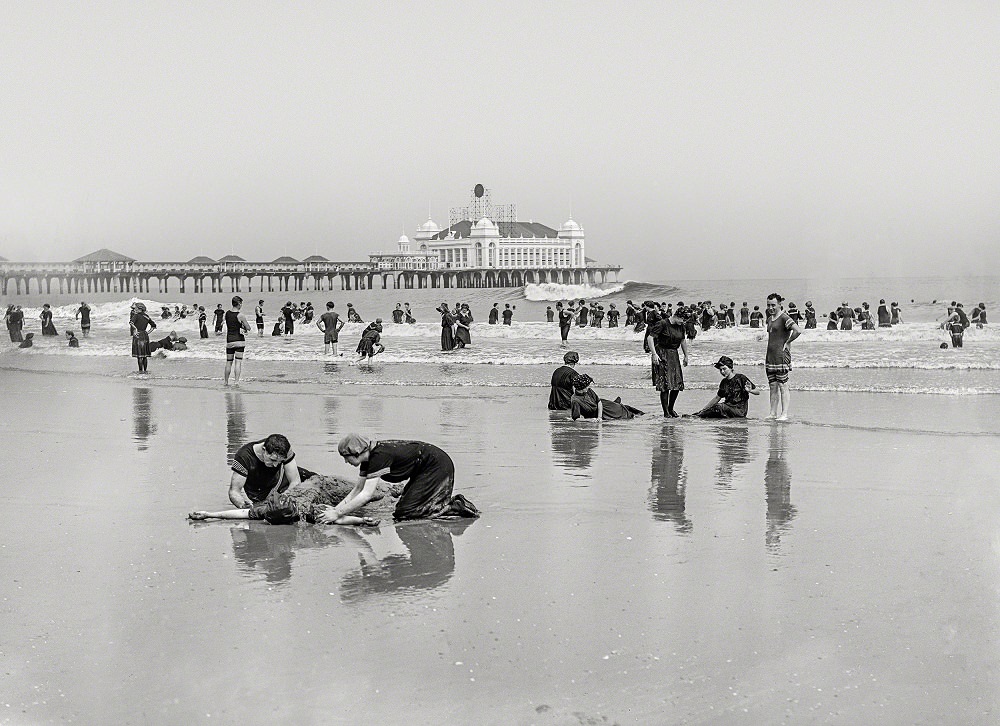
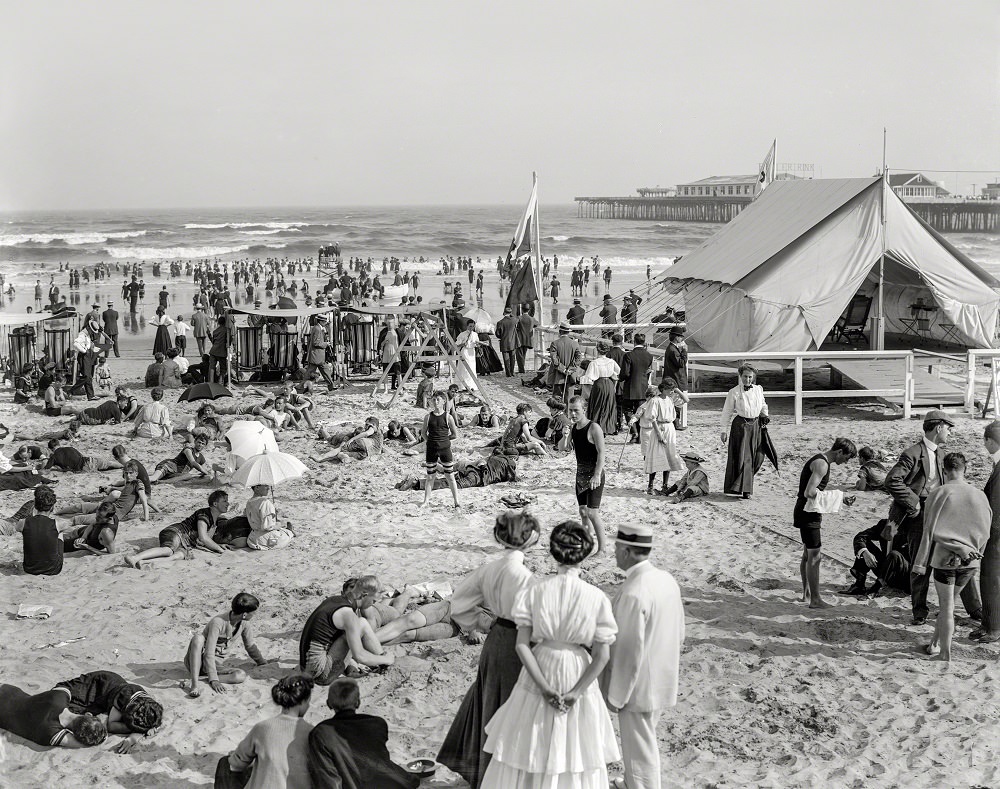
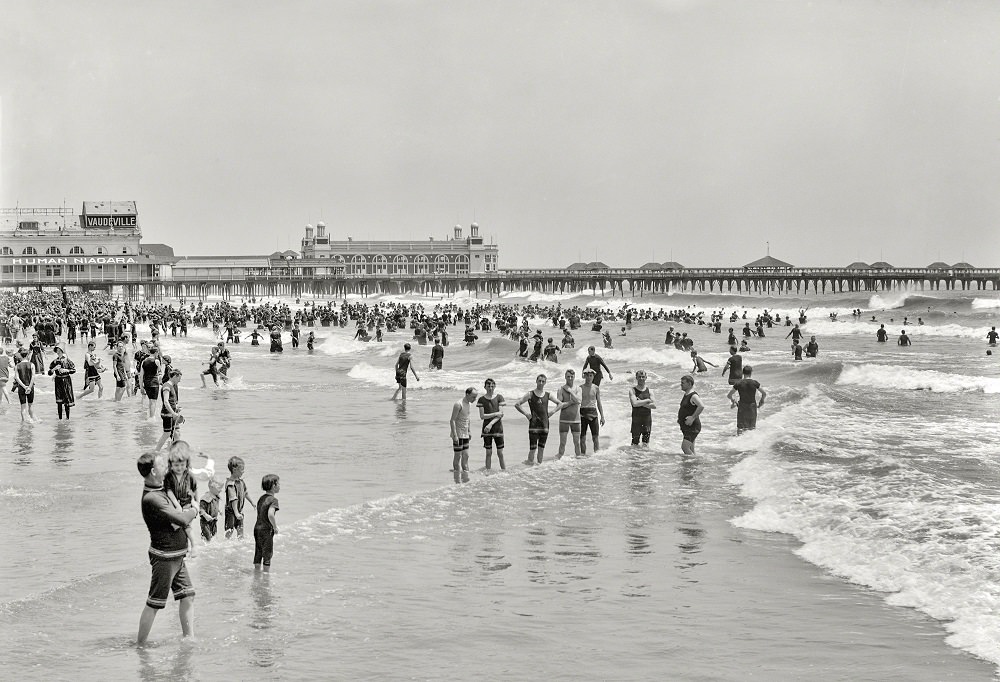
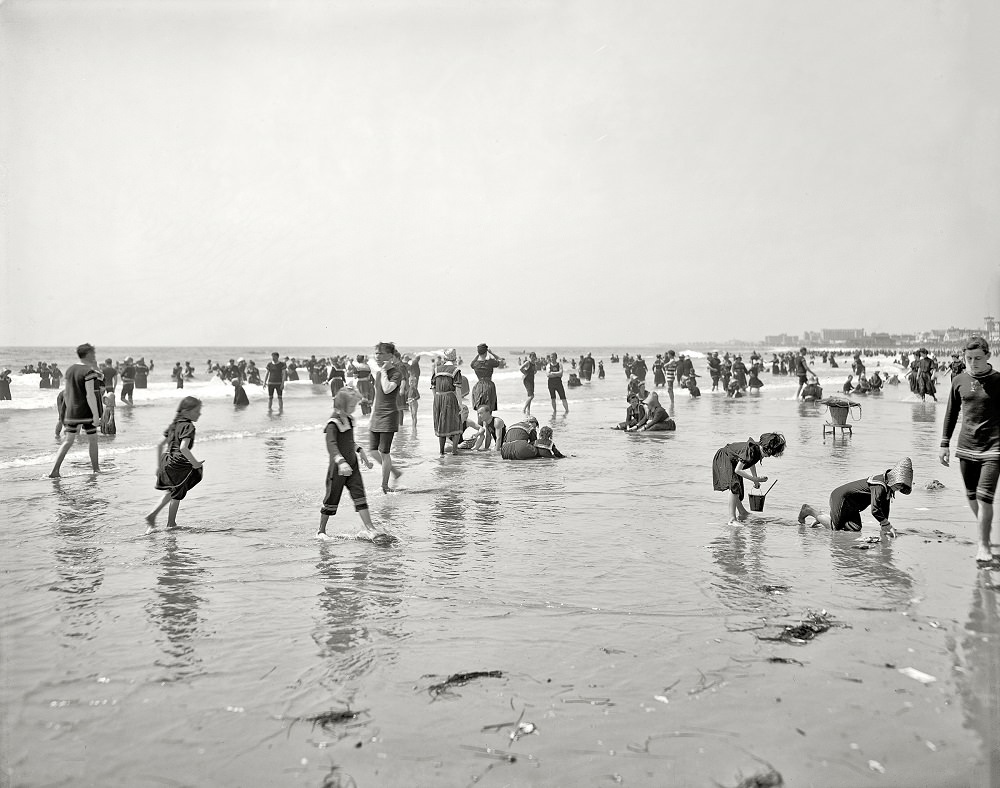
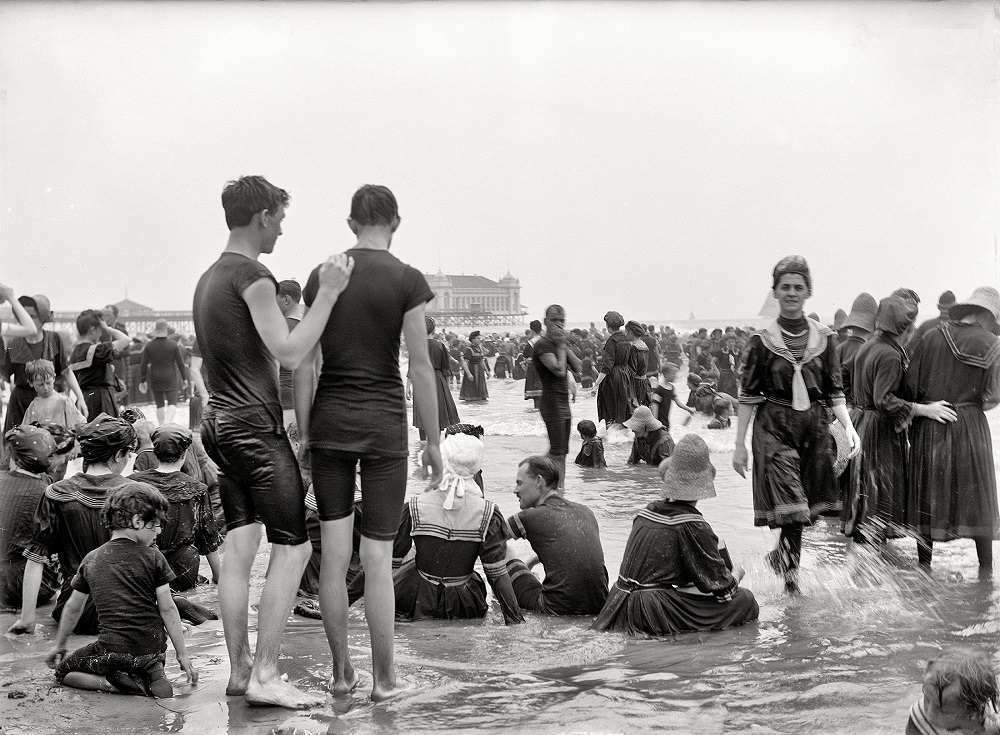
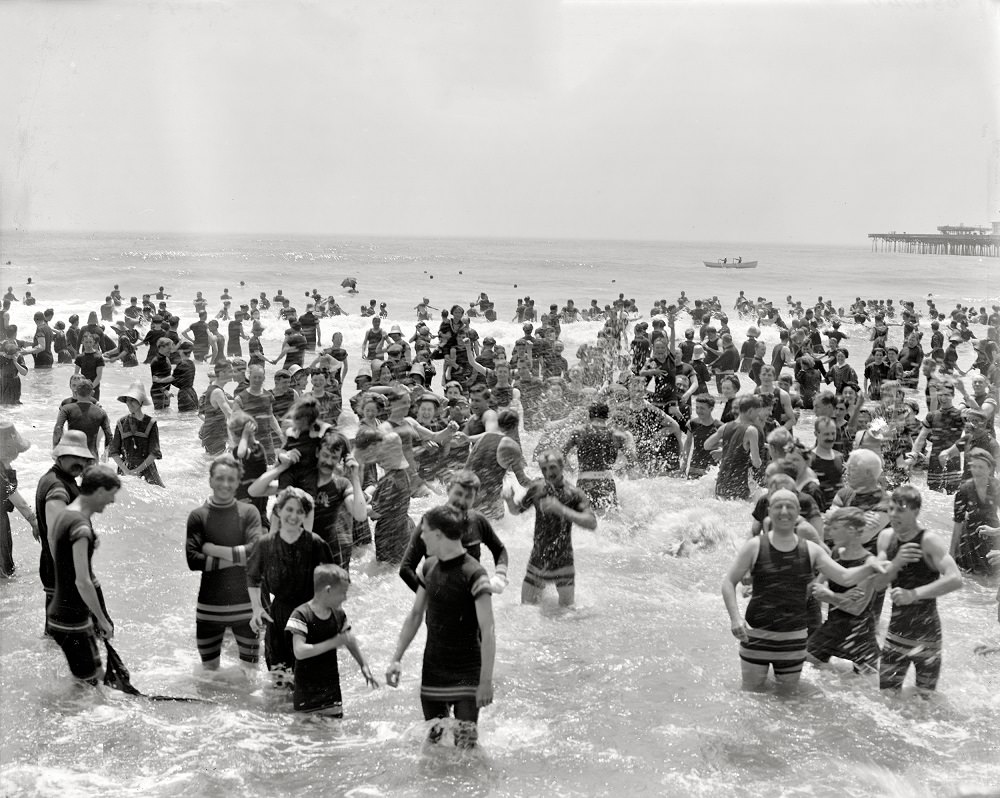
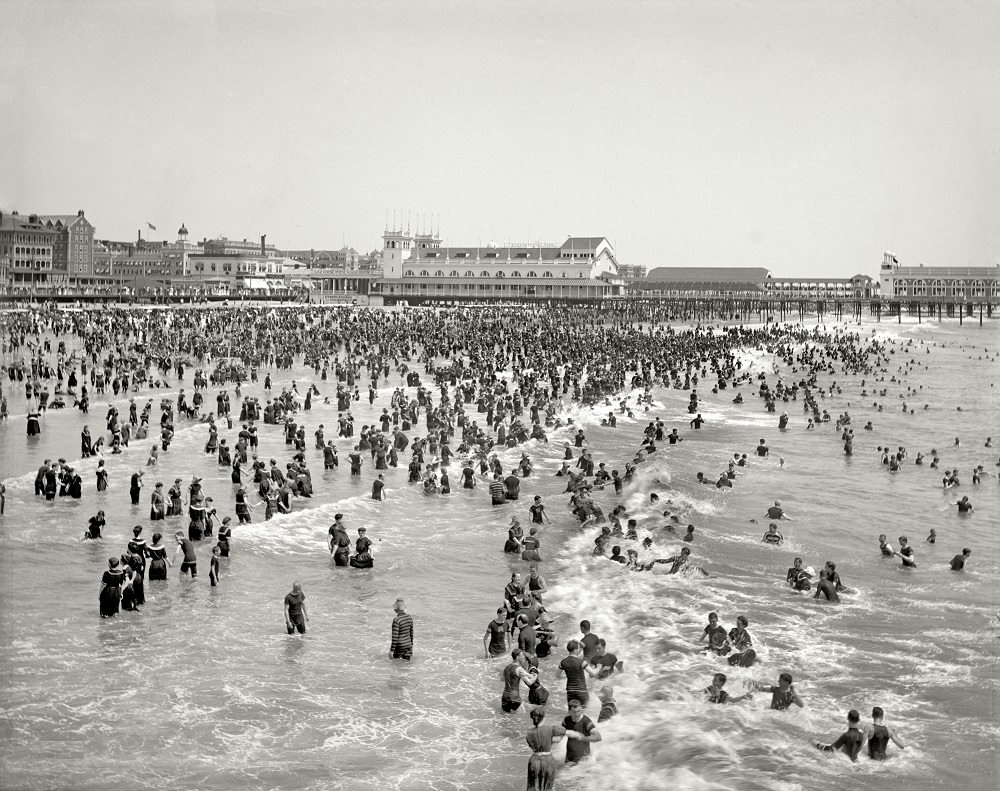
Swimming in the ocean was a major draw. During the designated bathing hours, the beaches packed with visitors dressed in the full-coverage wool bathing costumes of the era. Men, women, and children waded into the Atlantic surf together, and lifeguards stationed along the shore kept watch over the crowds.
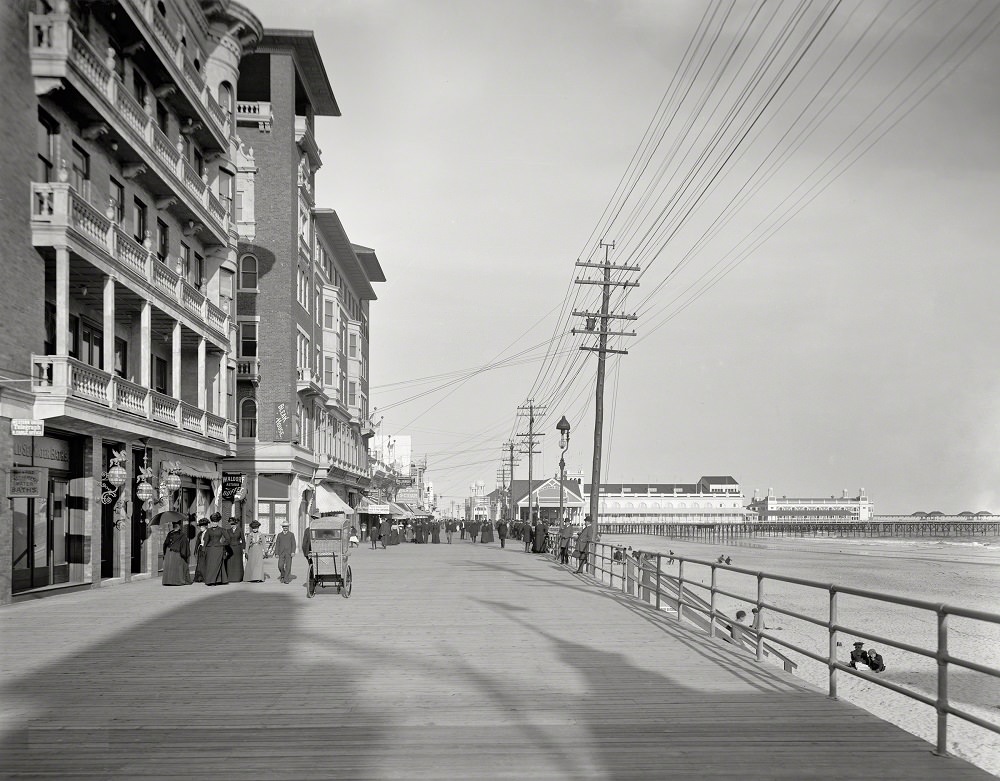
The piers were among the city’s most distinctive features. They extended directly over the ocean, giving visitors the sensation of being out on the water while still on solid ground. Auditorium Pier hosted large public events and performances. Steel Pier, one of the most famous, packed in entertainment acts, exhibits, and concessions. Steeplechase Pier offered amusements and rides. Each pier had its own personality and loyal crowd.
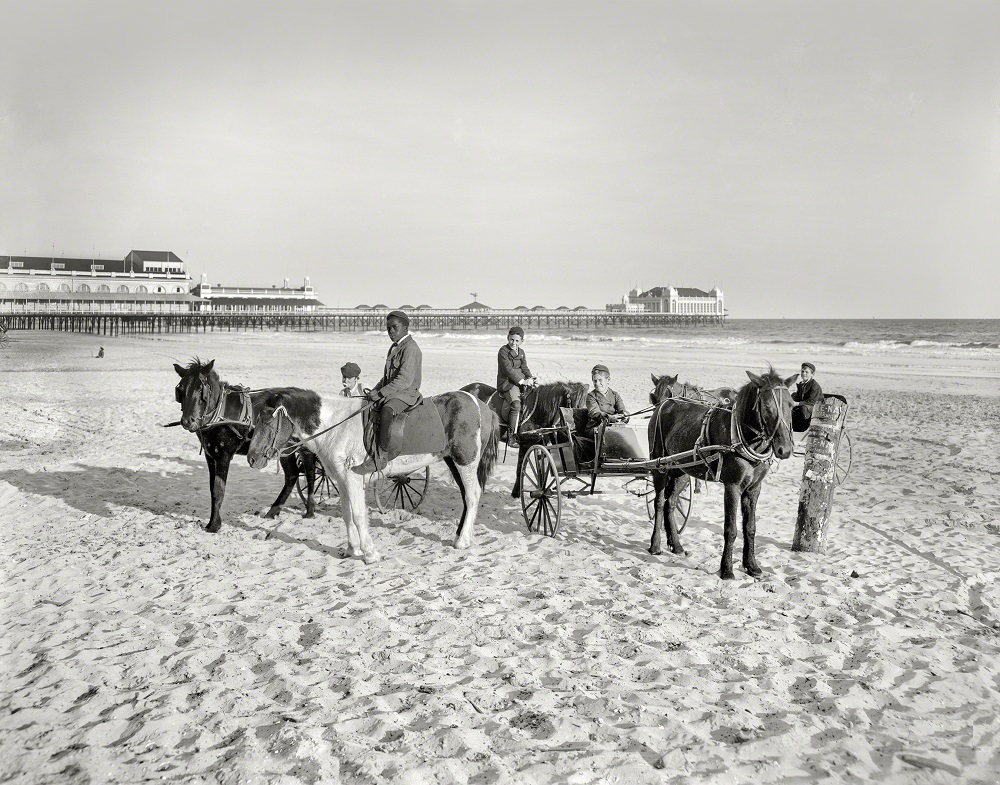
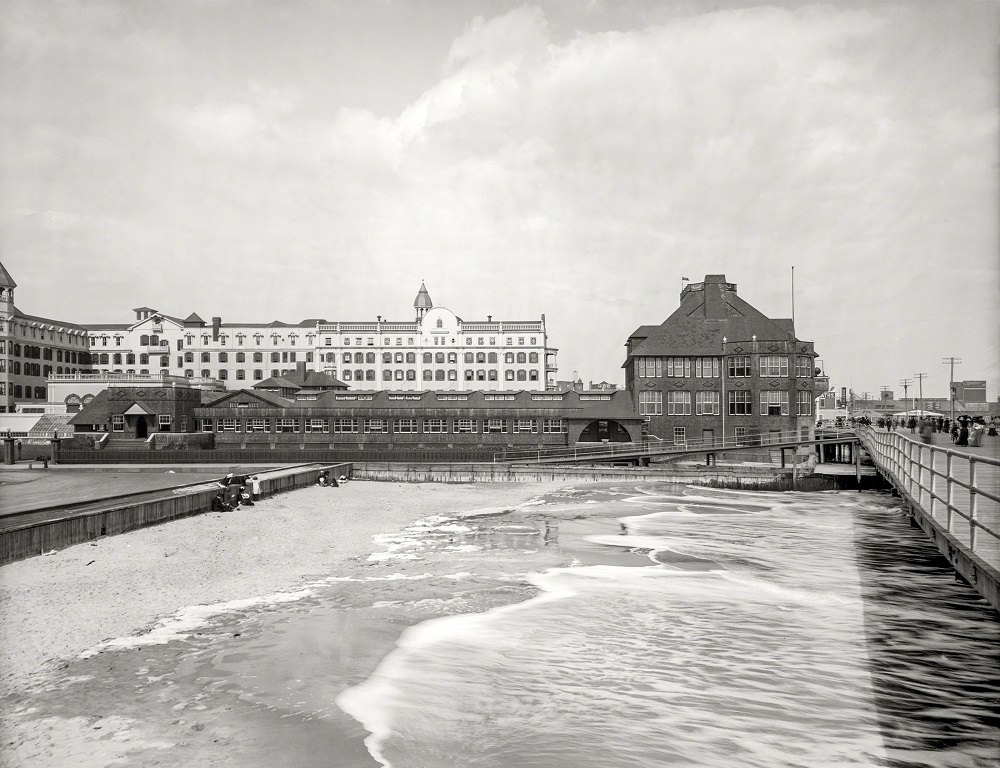
Beyond the beach and the boardwalk, Atlantic City offered a wide range of entertainment. Ponies were led along the beach for rides, particularly popular with children. The Brighton Casino — which functioned more as a social and entertainment venue than a strict gambling hall in this period — drew well-dressed crowds looking for an evening out.
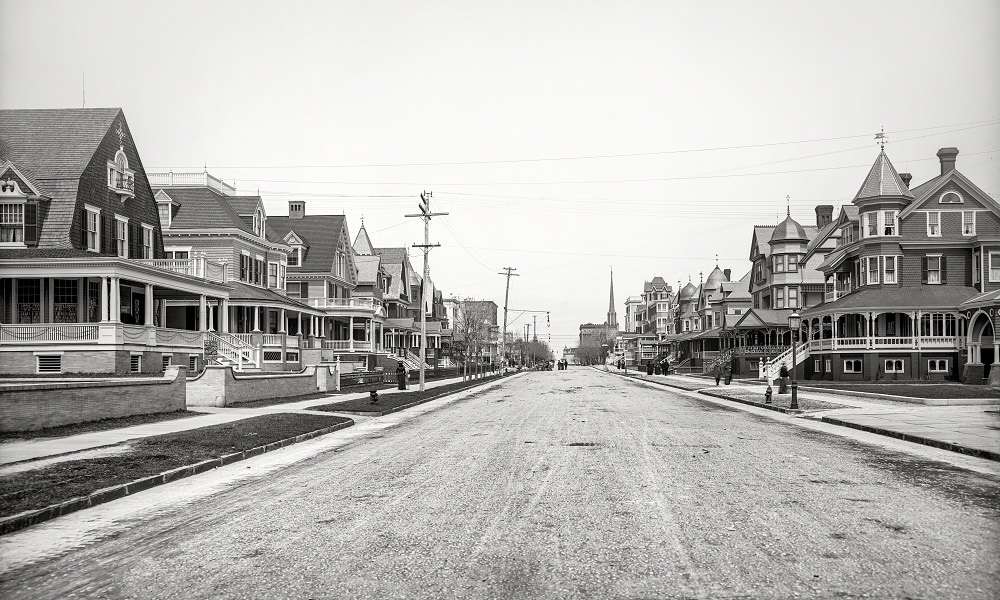
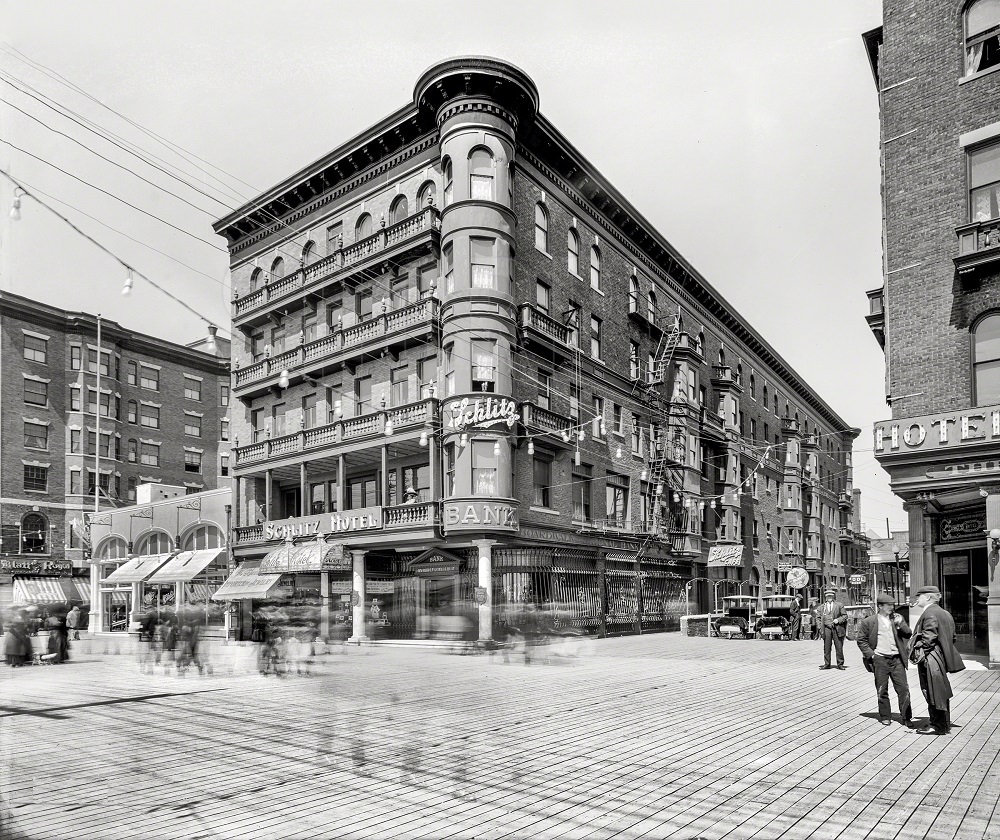
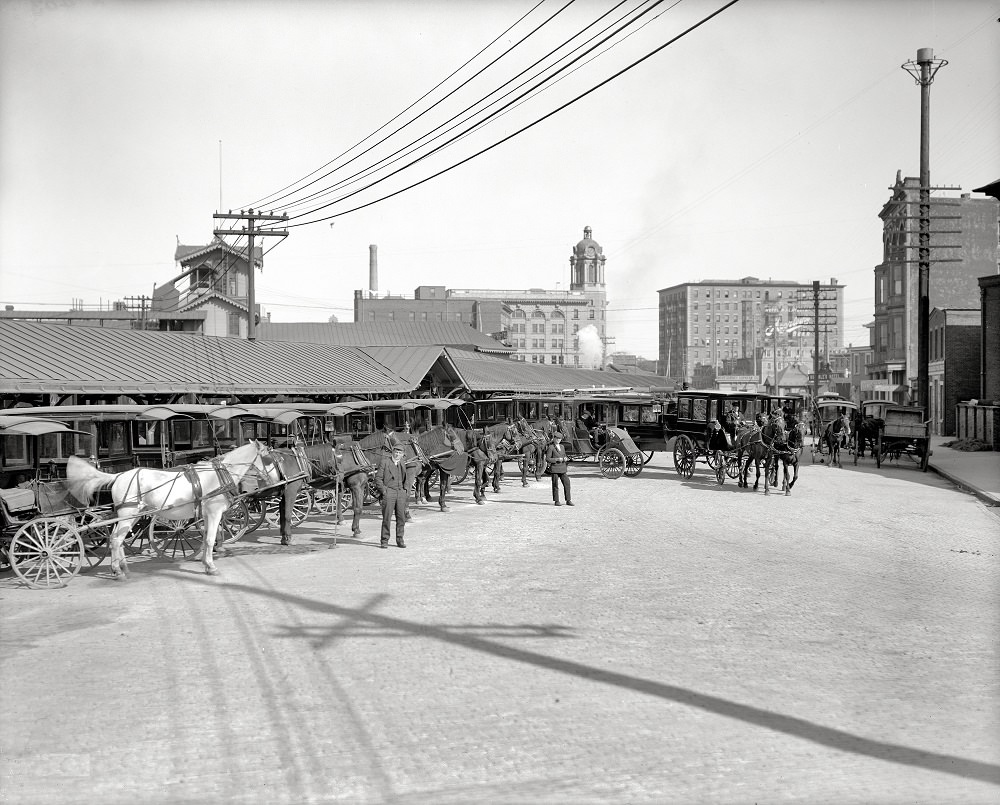
The streets running from the boardwalk inland were just as busy as the beachfront itself. Pennsylvania Avenue and Virginia Avenue served as major commercial corridors, lined with hotels of every size and price range, shops catering to tourists, and the horse-drawn vehicles that still dominated city traffic in the early 1900s. The avenue scenes show a city fully in motion — carriages, pedestrians, storefronts, and the constant movement of a resort town at full capacity.
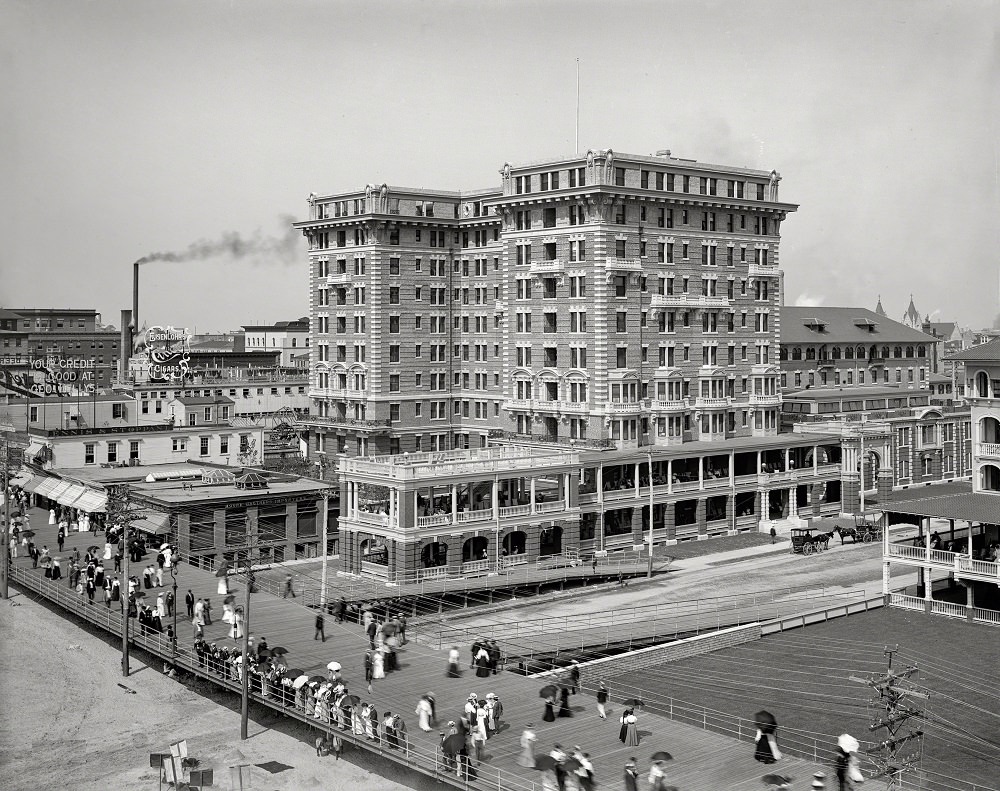
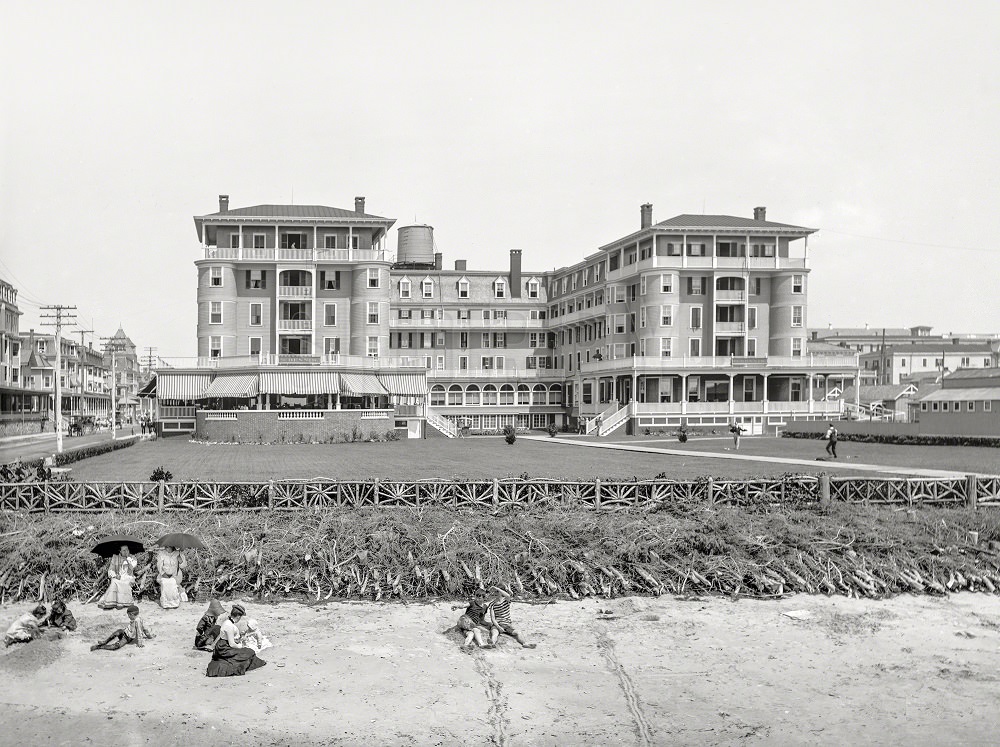
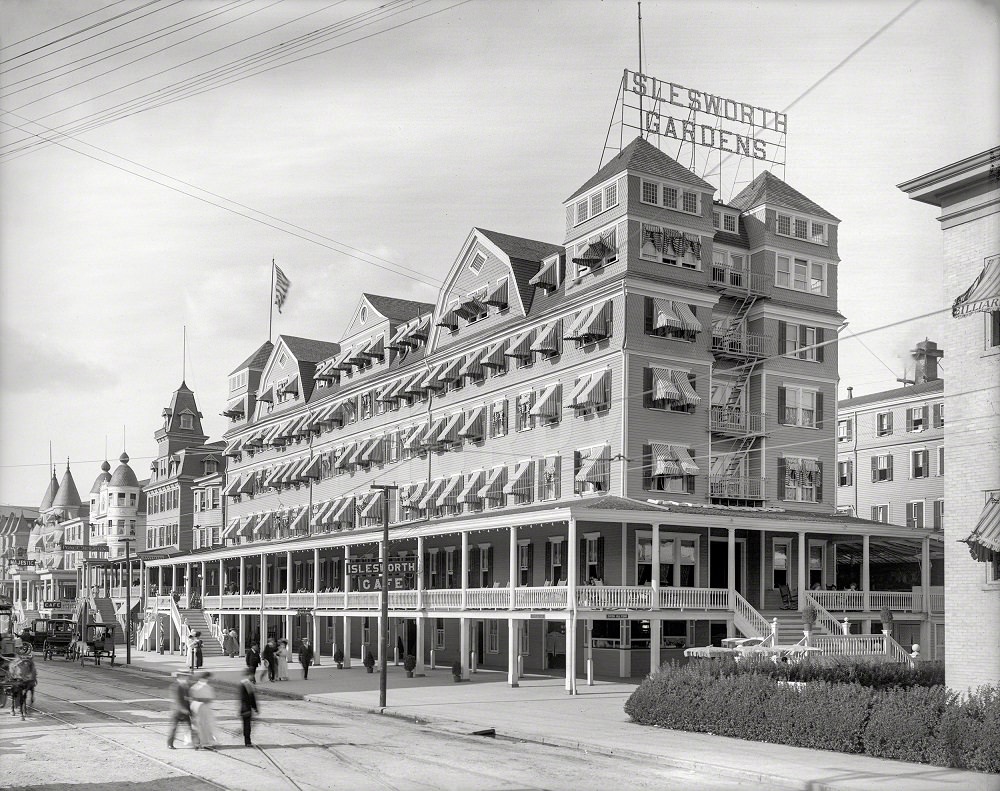
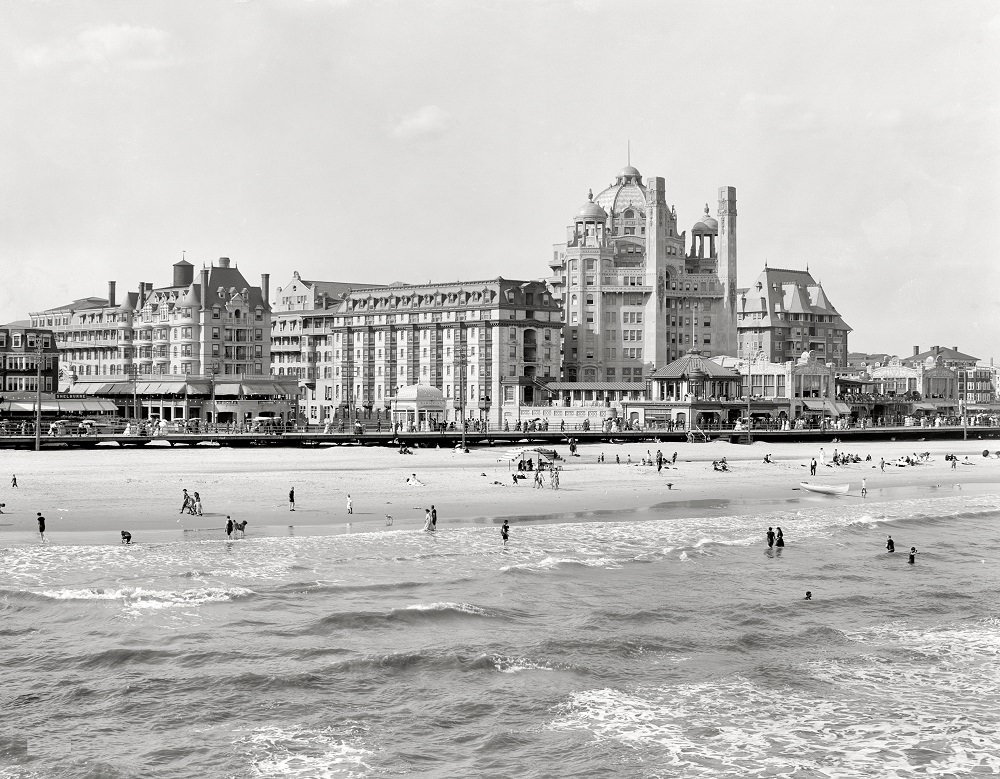
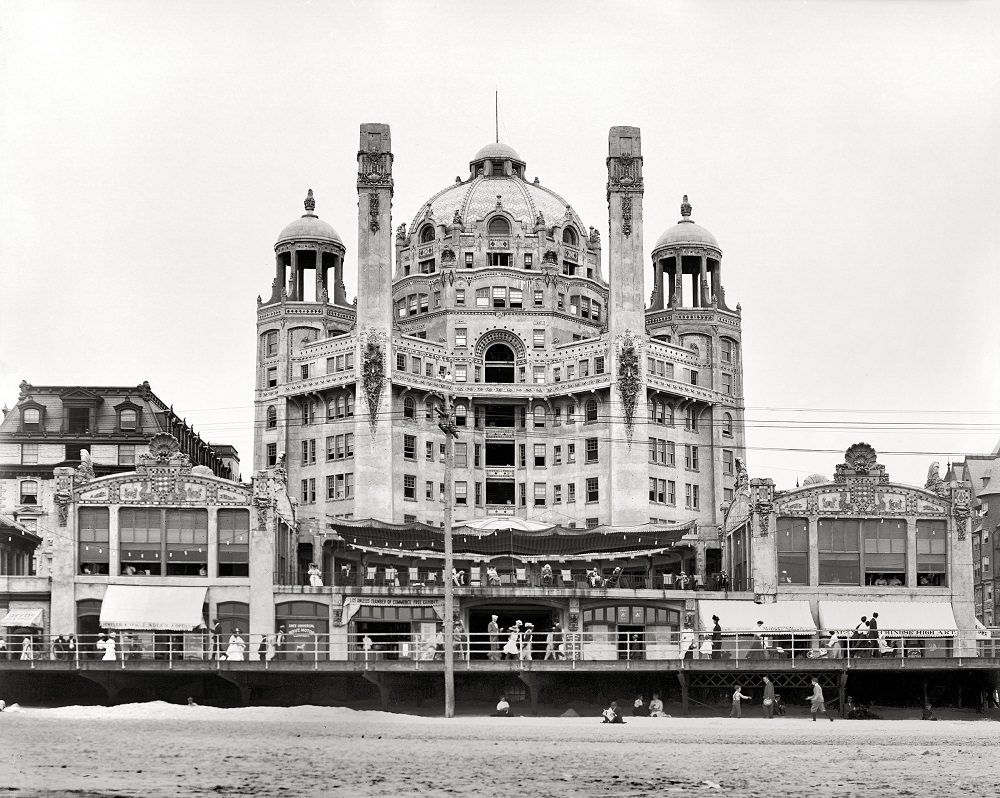
The hotels of Atlantic City were as much a part of the attraction as the ocean itself. The Chalfonte, the Shelburne, the Dennis, the Marlborough-Blenheim, the Windsor, and Haddon Hall were among the most recognized names on the boardwalk. These were not modest guesthouses — they were large, architecturally ambitious buildings designed to impress from the street. The Marlborough-Blenheim, which opened in 1906, was notable for its early use of reinforced concrete construction, a relatively new technique at the time.
Keeping the beaches safe required a dedicated workforce. Lifeguards — called lifesavers at the time — were stationed at regular intervals along the shore. They scanned the water constantly, watching for bathers caught in the surf or pulled by the undertow. Their presence was a fixed part of the beach scene throughout the season.
The first fifteen years of the twentieth century brought massive economic growth to Atlantic City. New hotels were constructed every year. Old ones expanded. The boardwalk was widened and improved. The railroad brought visitors directly from Philadelphia and New York in just a few hours, which kept the crowds coming season after season. Atlantic City was not just a beach town — it was a full-scale resort industry.
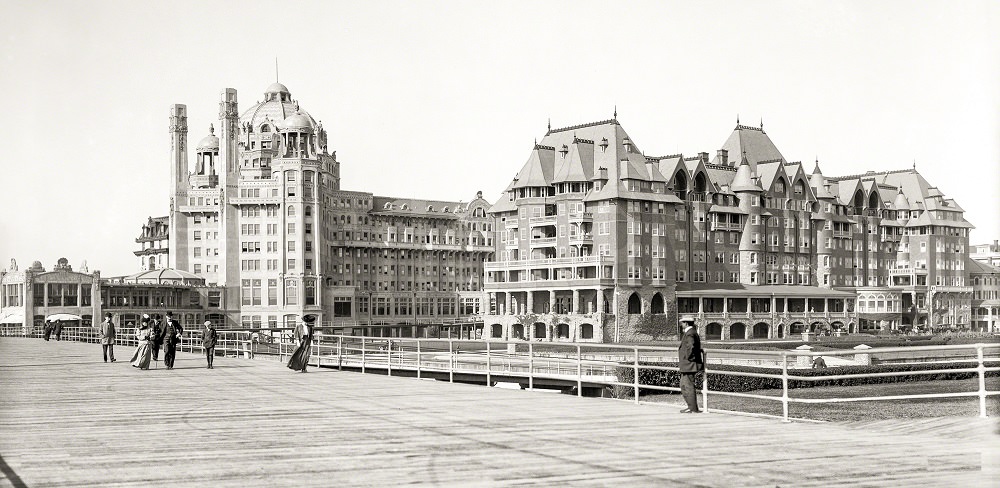
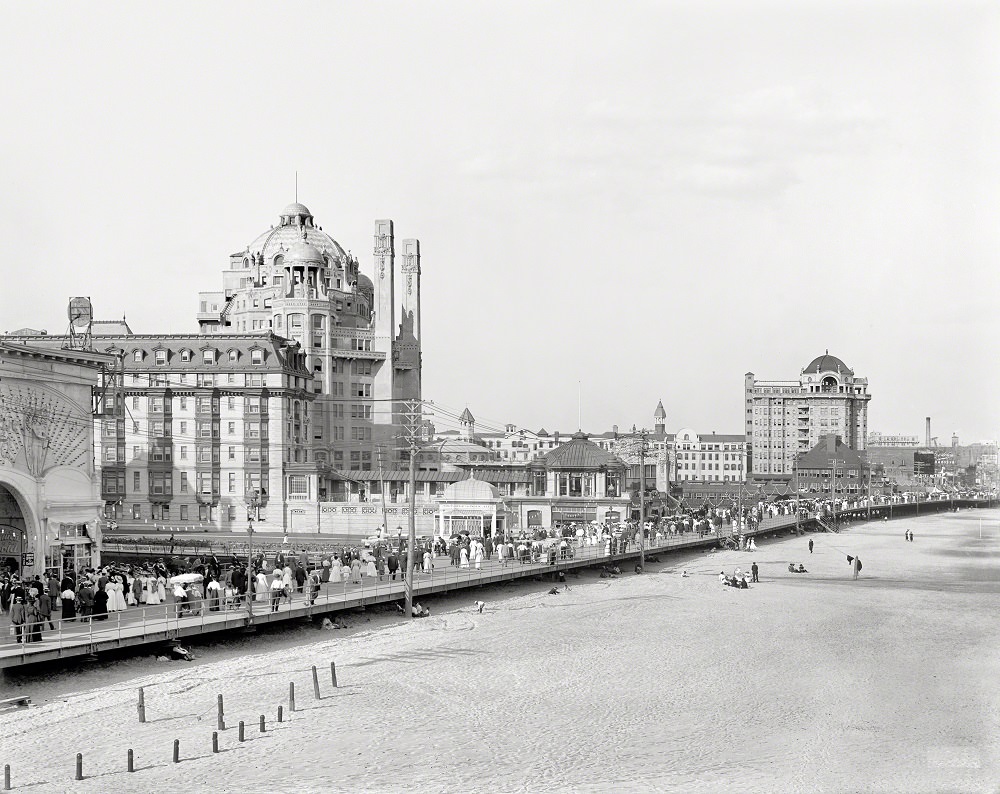
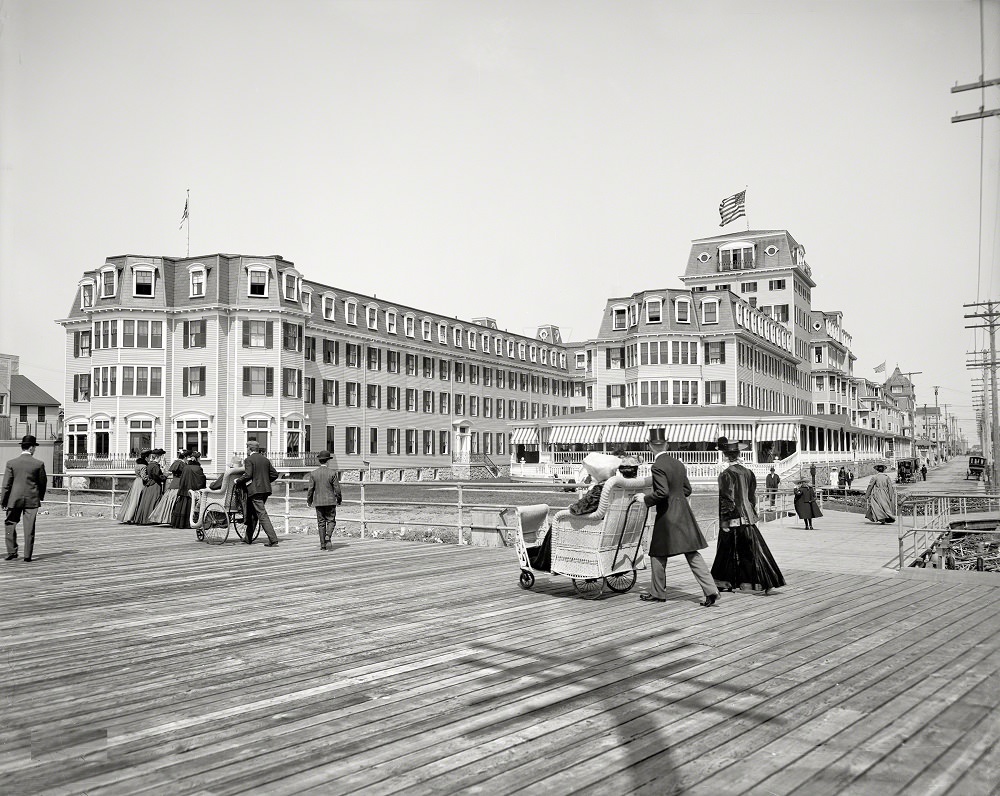
Looking down the boardwalk in any direction in this era meant looking at a wall of hotel facades. These buildings competed with each other not just on price and service, but on sheer visual presence. Grand awnings, ornate facades, and wide verandas facing the ocean were standard features. The photographs from around 1906 show just how densely developed the boardwalk corridor had already become.
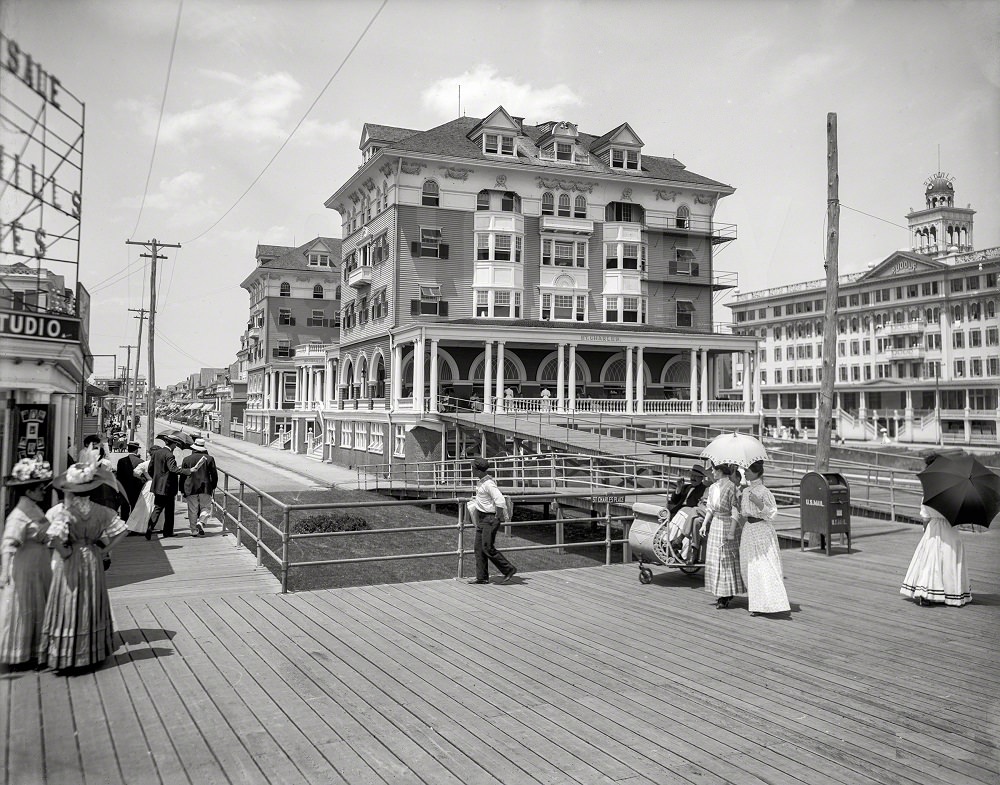
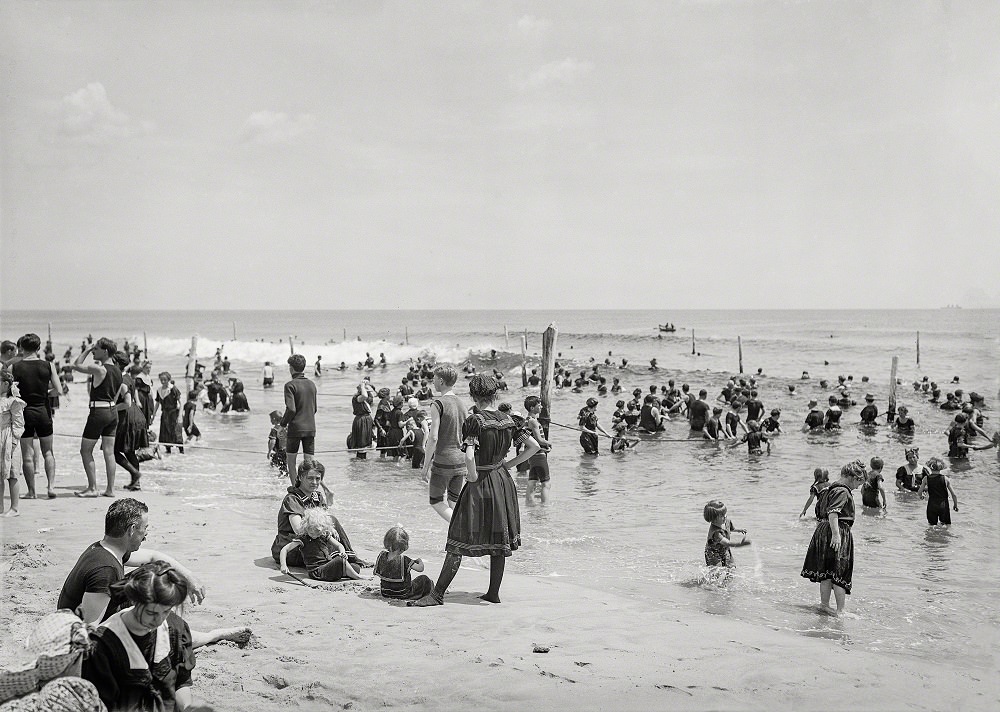
The 1920s became Atlantic City’s true golden age, but the groundwork was fully laid by 1910. When Prohibition took effect nationally in 1920, Atlantic City became one of the few places in America where it was openly ignored. Hotels and restaurants continued serving liquor without serious interference from local law enforcement. The city’s political machine — led by figures like Enoch ‘Nucky’ Johnson — effectively sheltered the city from federal enforcement and kept the resort economy running without interruption.
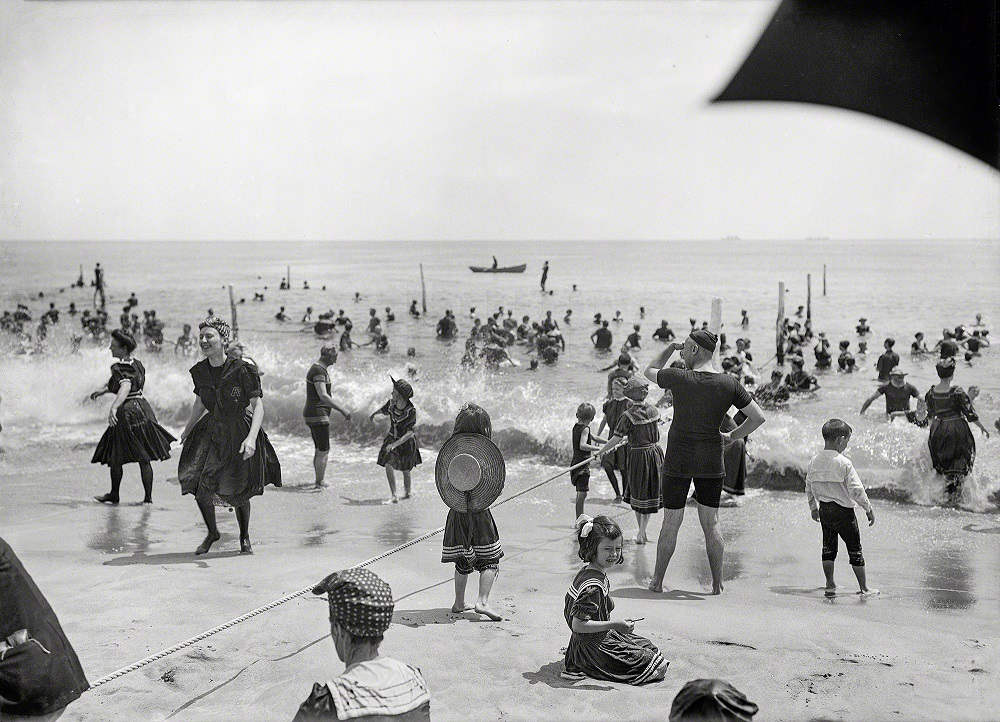
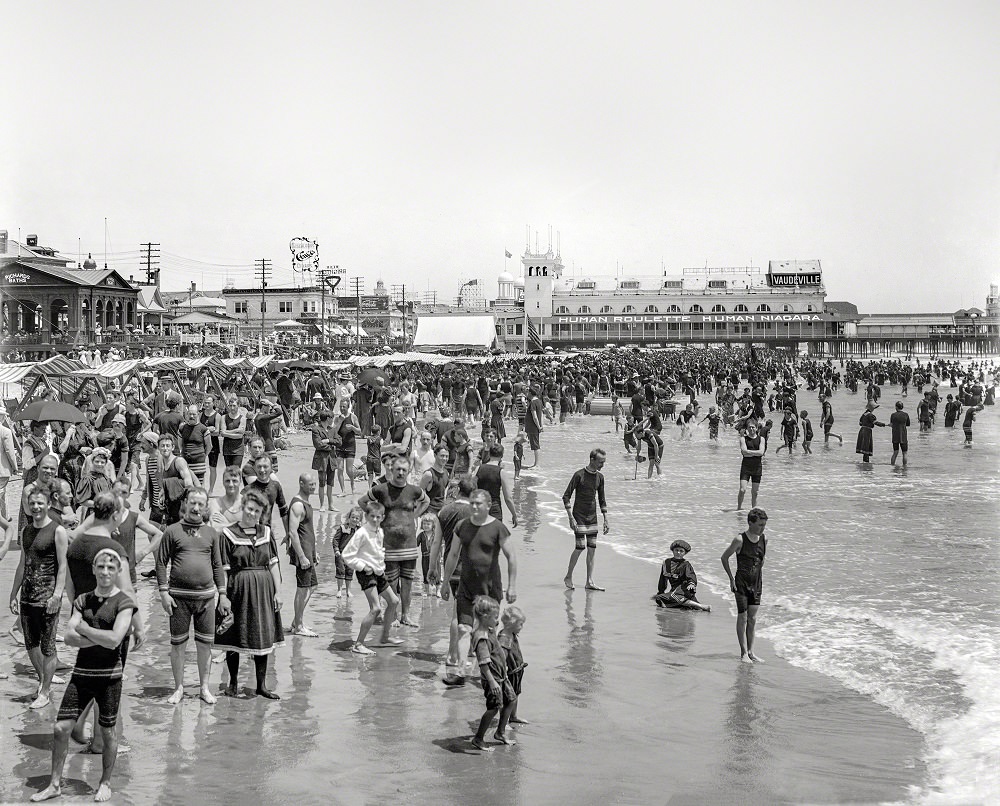
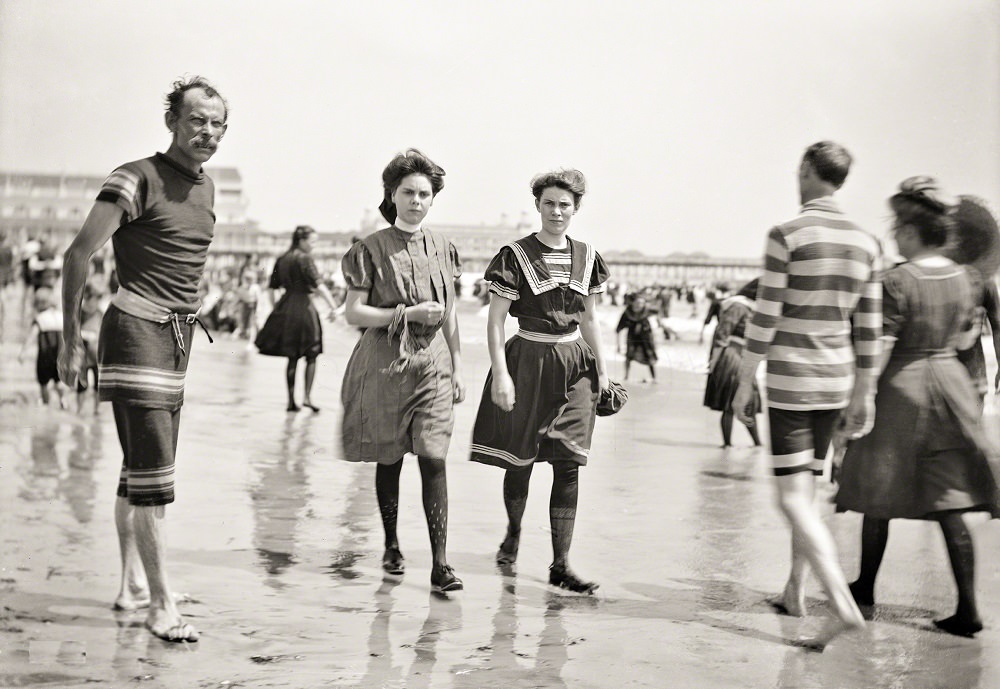
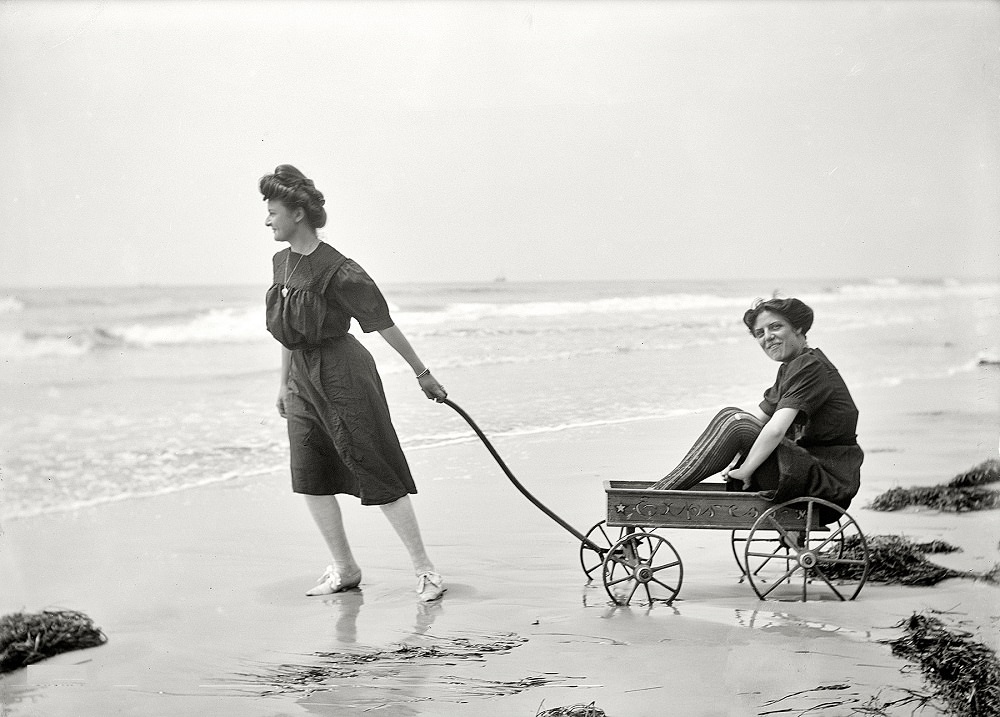
The beach crowds in these photographs are striking. Thousands of people filled the sand on a busy summer day, all dressed in the layered bathing fashions of the era. Women wore full-length bathing dresses with stockings. Men wore tops and shorts that covered most of the body. The idea of sunbathing for a tan had not yet taken hold — most visitors came for the water and the air, not to lie in the sun.
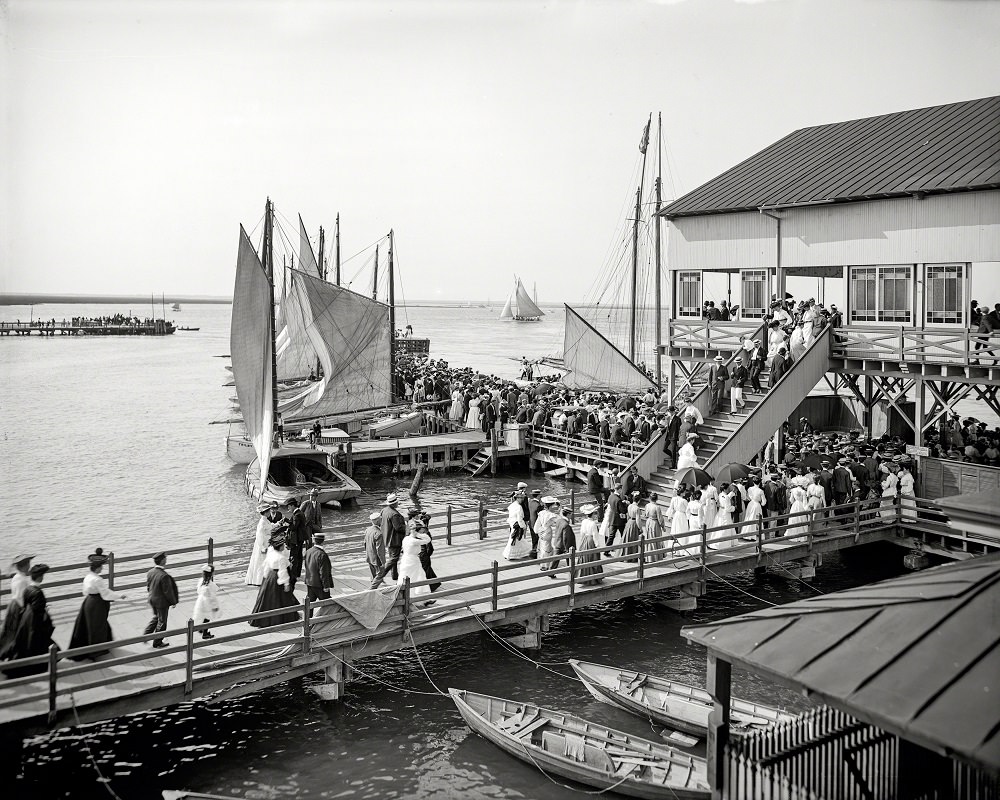
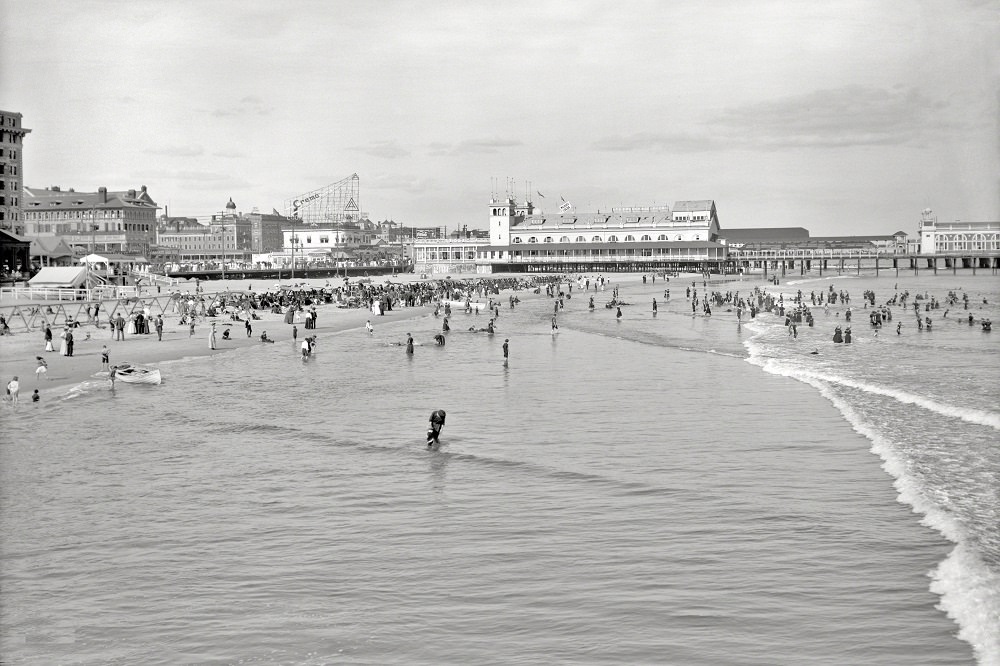
The inlet at the northern end of Atlantic City provided a calmer stretch of water and hosted its own pier. Fishing, boating, and quieter beach activities drew visitors who wanted something different from the main boardwalk crowds. Steeplechase Pier, visible in many of these photographs, remained one of the most recognized landmarks on the beachfront through the entire decade.
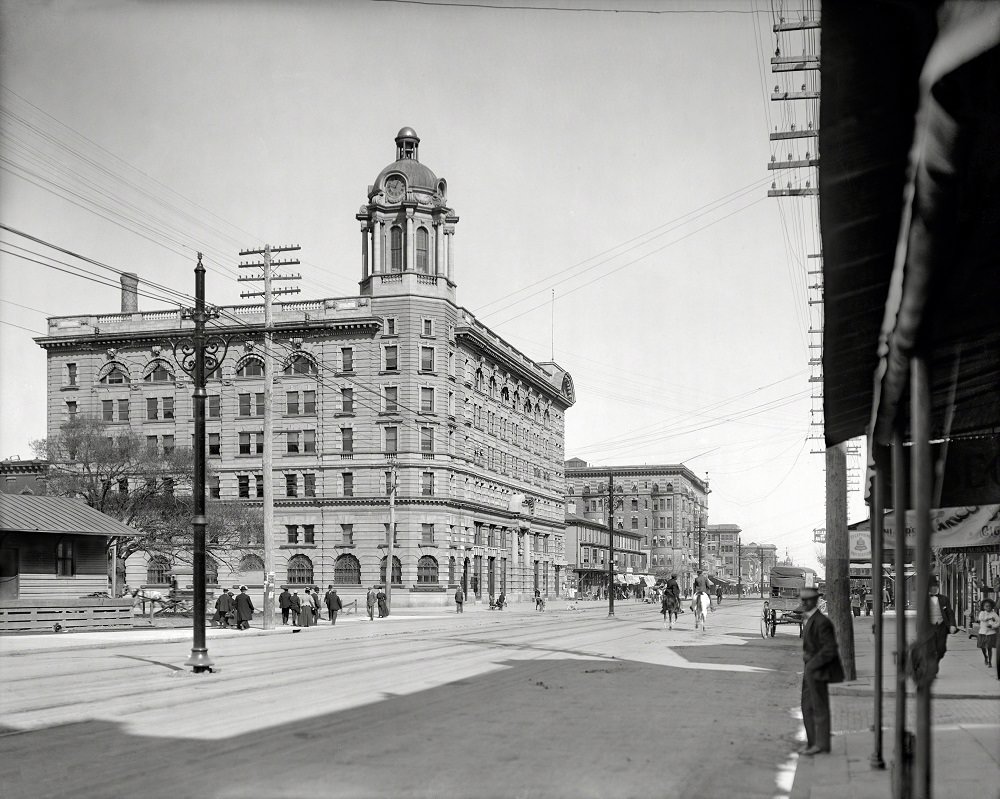
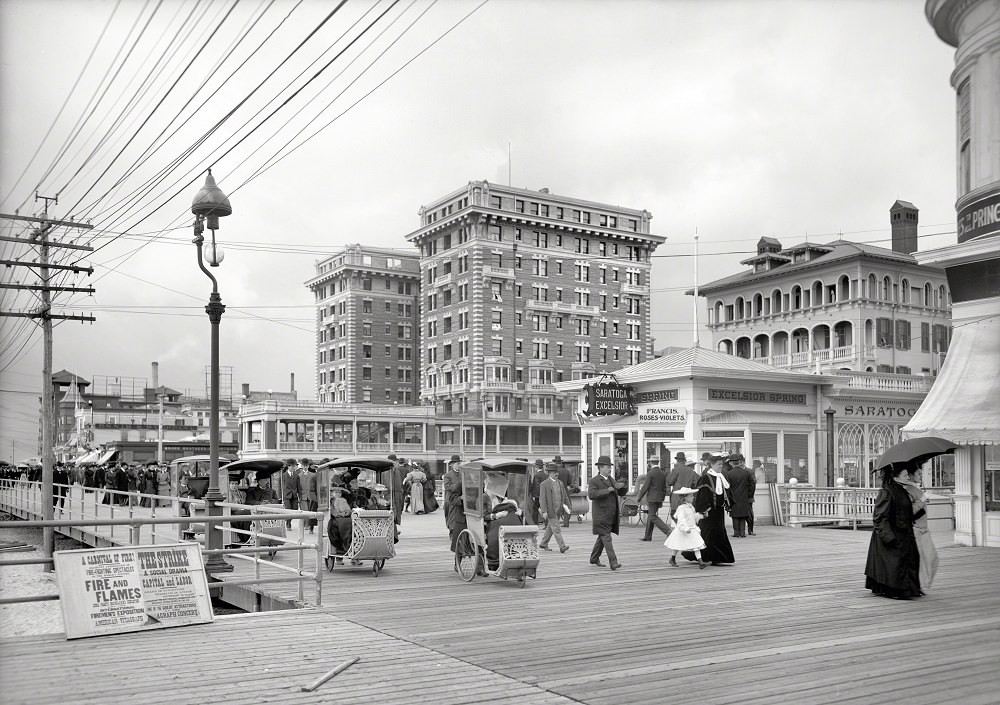
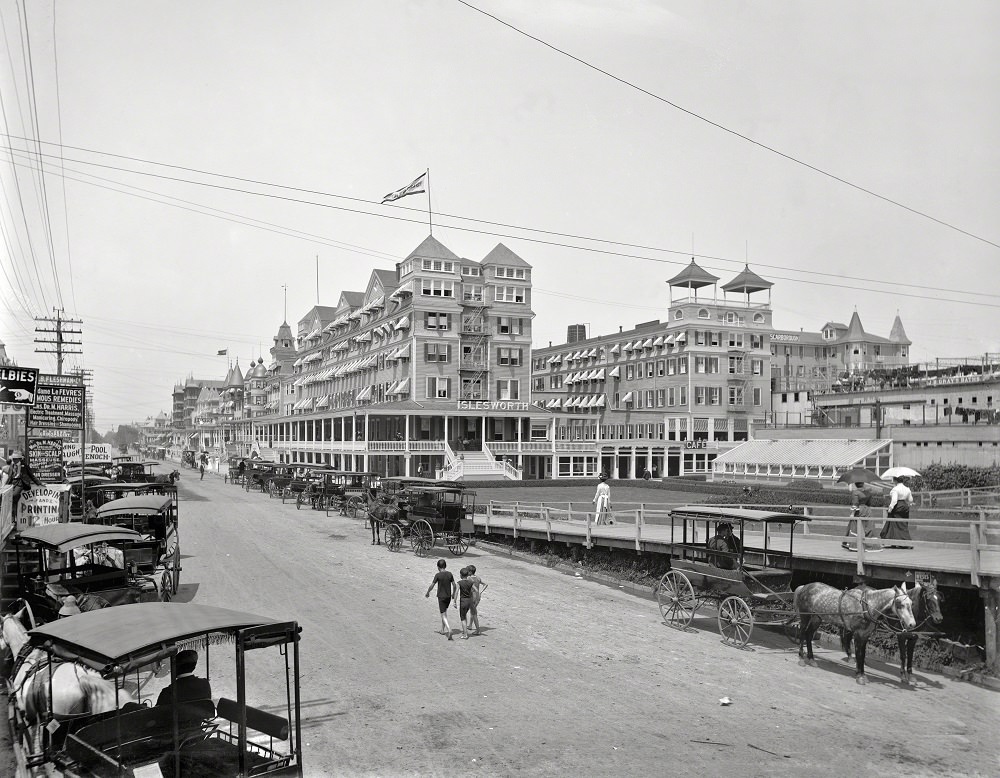
Atlantic Avenue ran parallel to the boardwalk and served as one of the city’s main commercial streets. The 1908 photograph shows a street already built up with multi-story commercial buildings, trolley infrastructure, and heavy foot traffic. Young’s Hotel, visible on the boardwalk, was another well-known establishment that catered to the steady flow of resort visitors moving through the city.
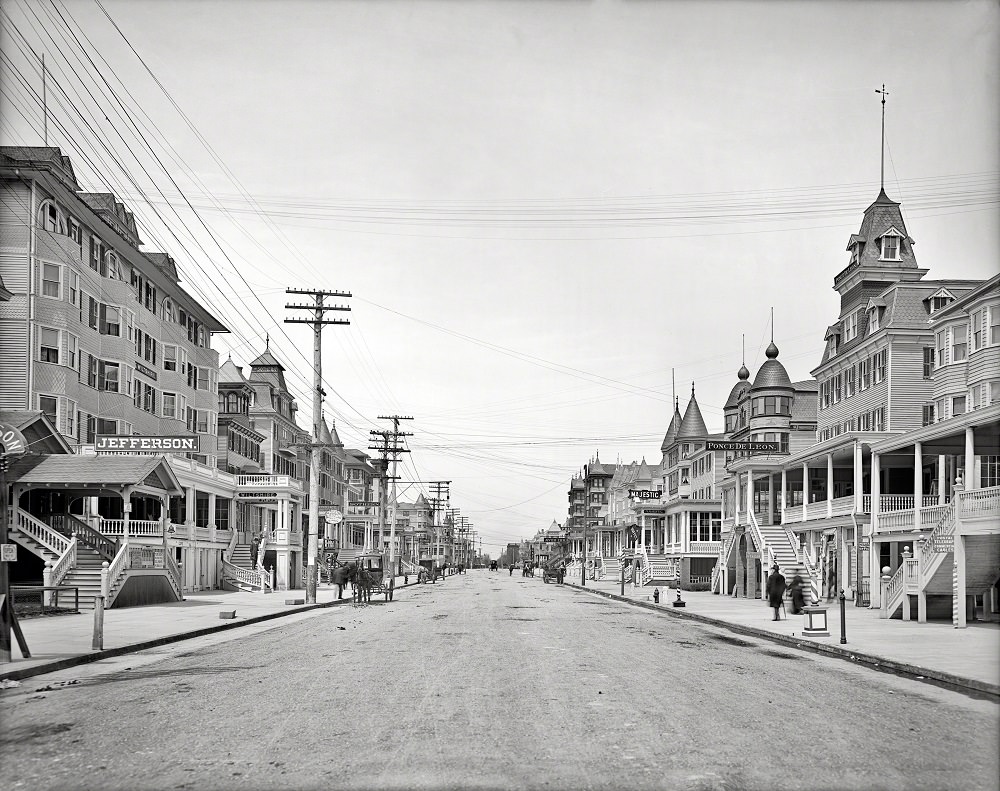
Virginia Avenue was one of the central spokes connecting the boardwalk to the rest of the city. Early photographs from 1901 and 1904 show it already lined with hotels and foot traffic. The street’s role as a pedestrian corridor connecting the train depot area to the ocean made it one of the busiest in the city during peak season.
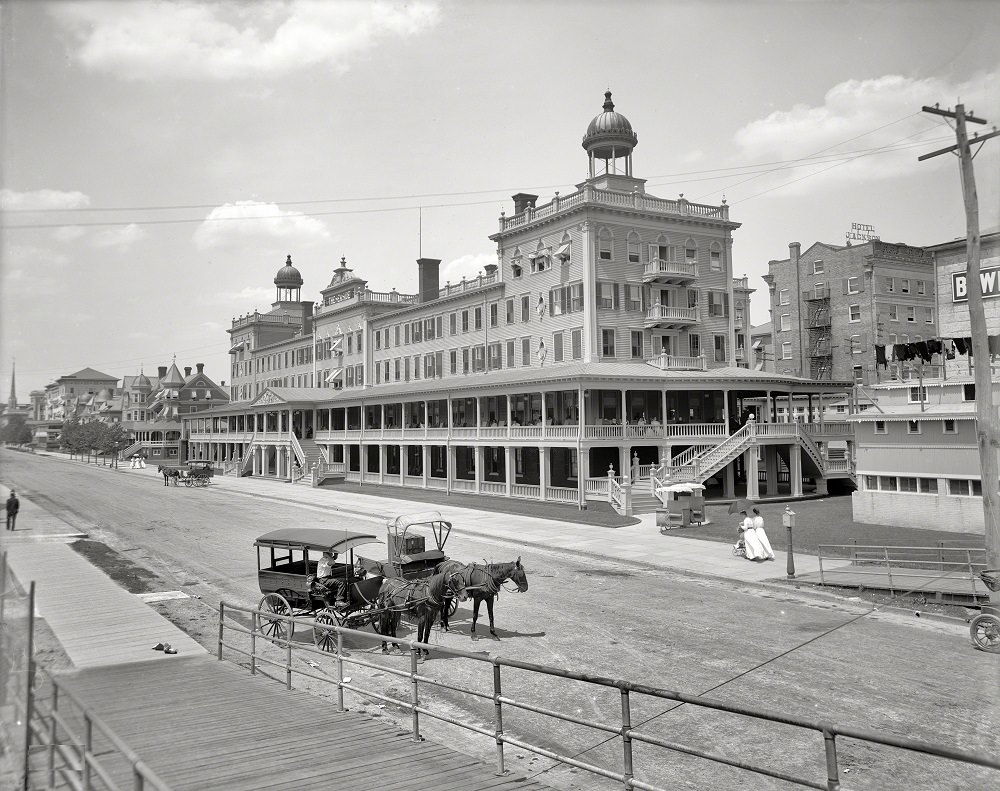
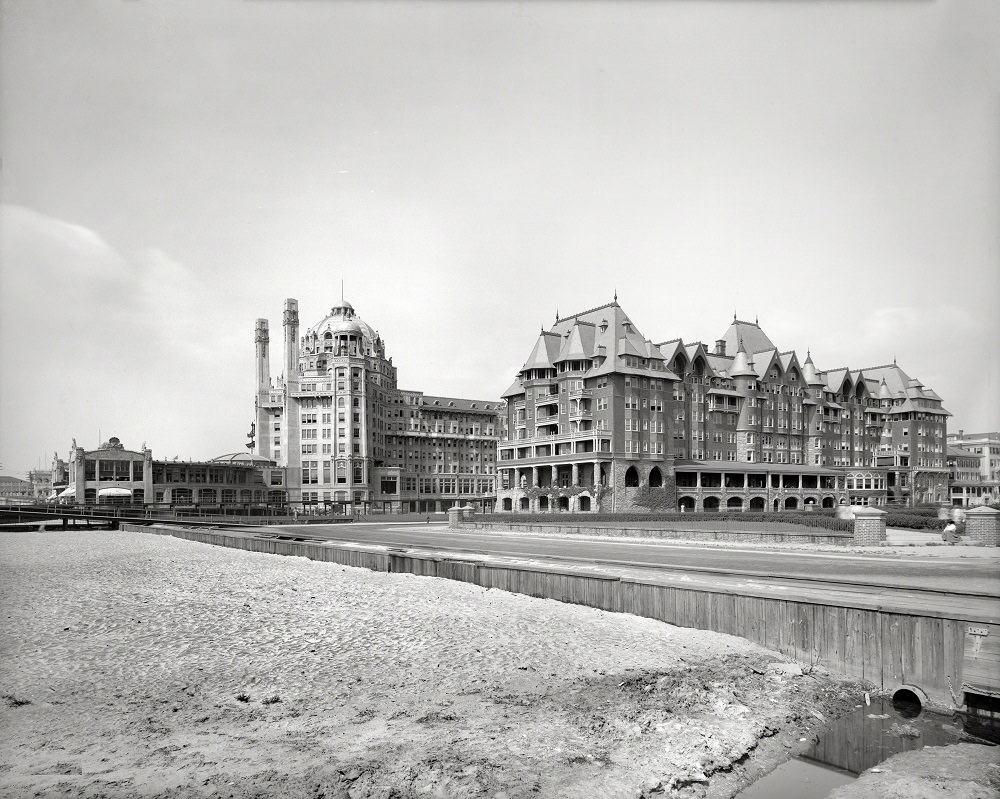
Smaller hotels like the Seaside House served visitors who could not afford the grand establishments directly on the boardwalk. These properties were still well-kept and conveniently located, filling an important part of the market. Not every visitor to Atlantic City was wealthy — the city actively courted middle-class families, day-trippers, and working people who could afford a weekend away by train.
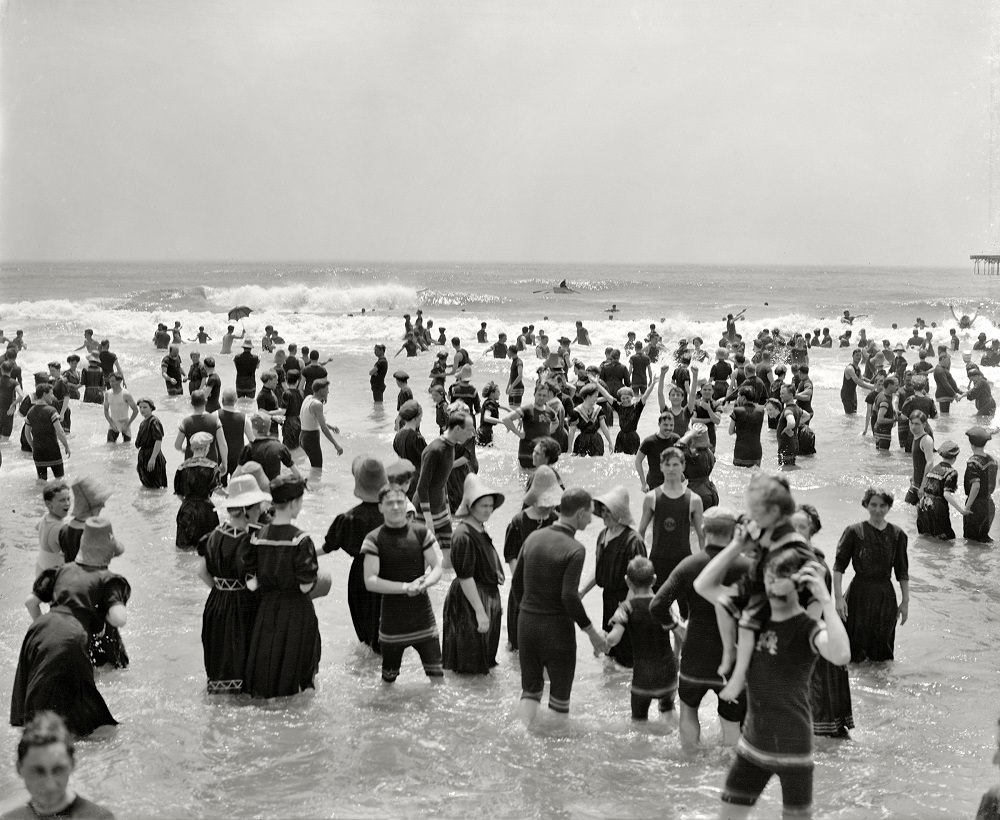
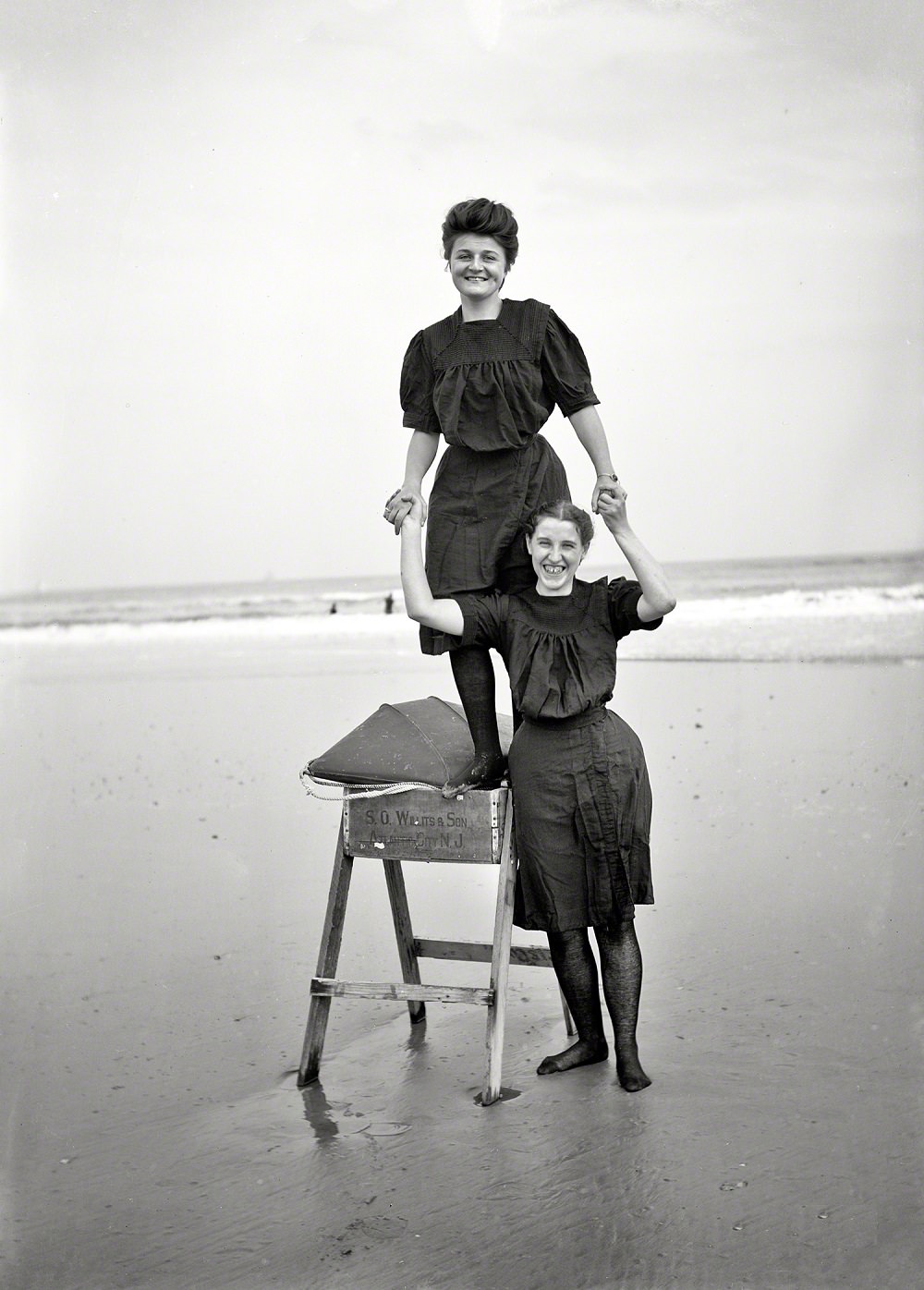
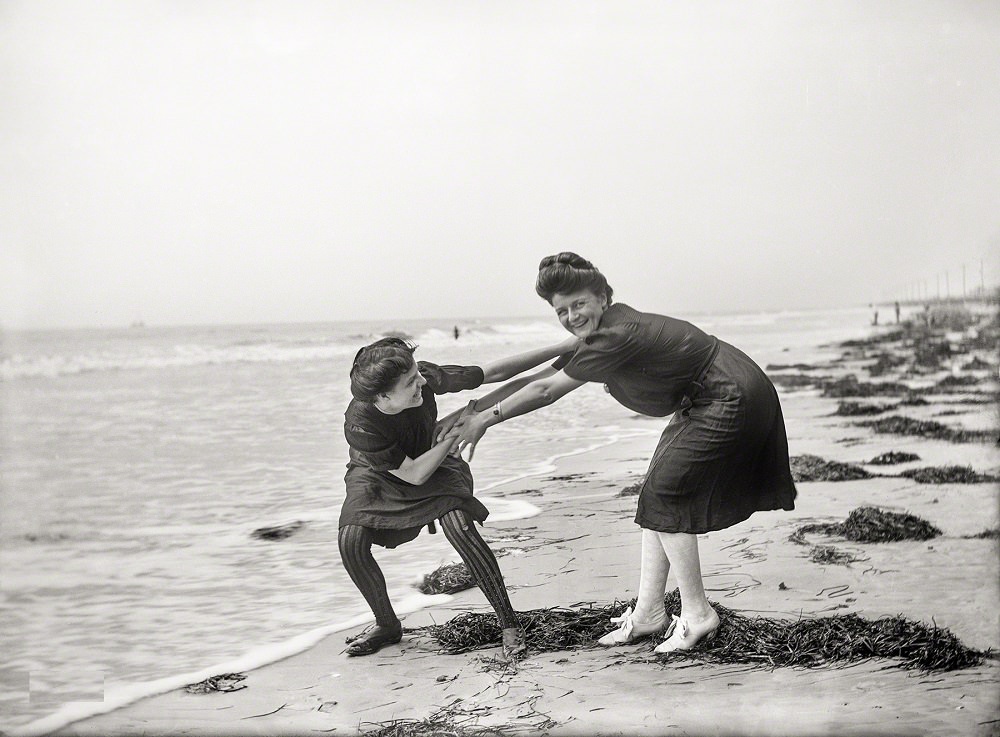
Beach culture in the early 1900s involved a great deal of social performance. Groups posed for photographs, played in the shallow surf, and took part in organized amusements on the sand. The 1905 photograph of bathers playing on a sawhorse captures the relaxed, playful atmosphere that defined a day at the shore during this period.
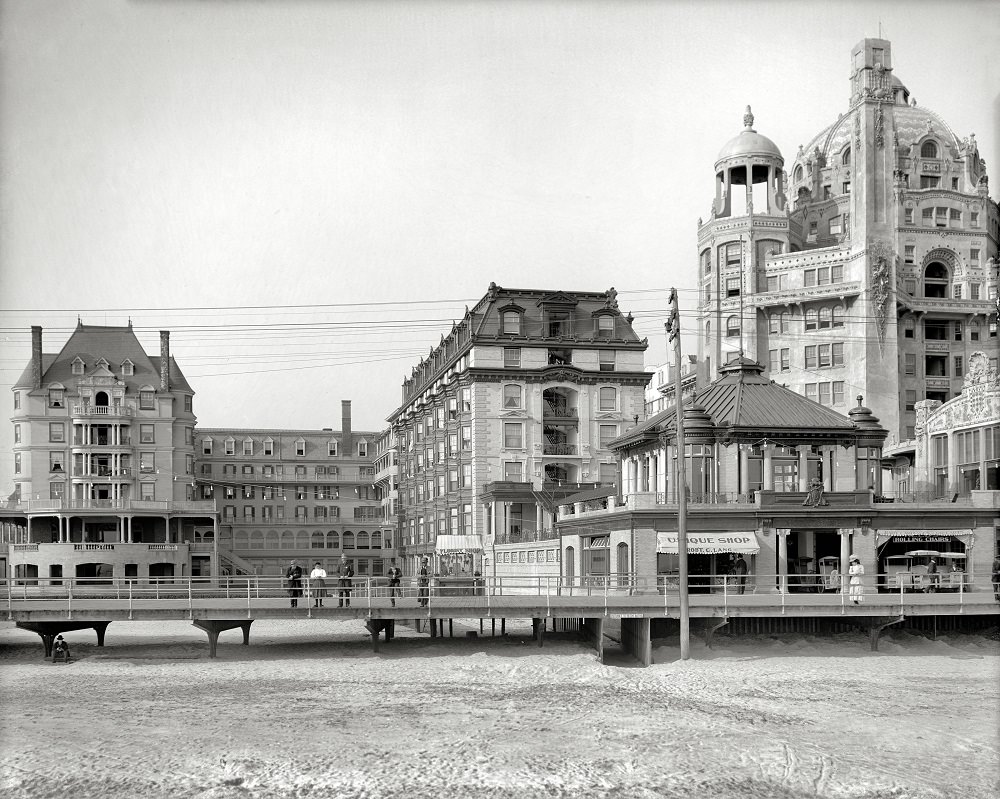
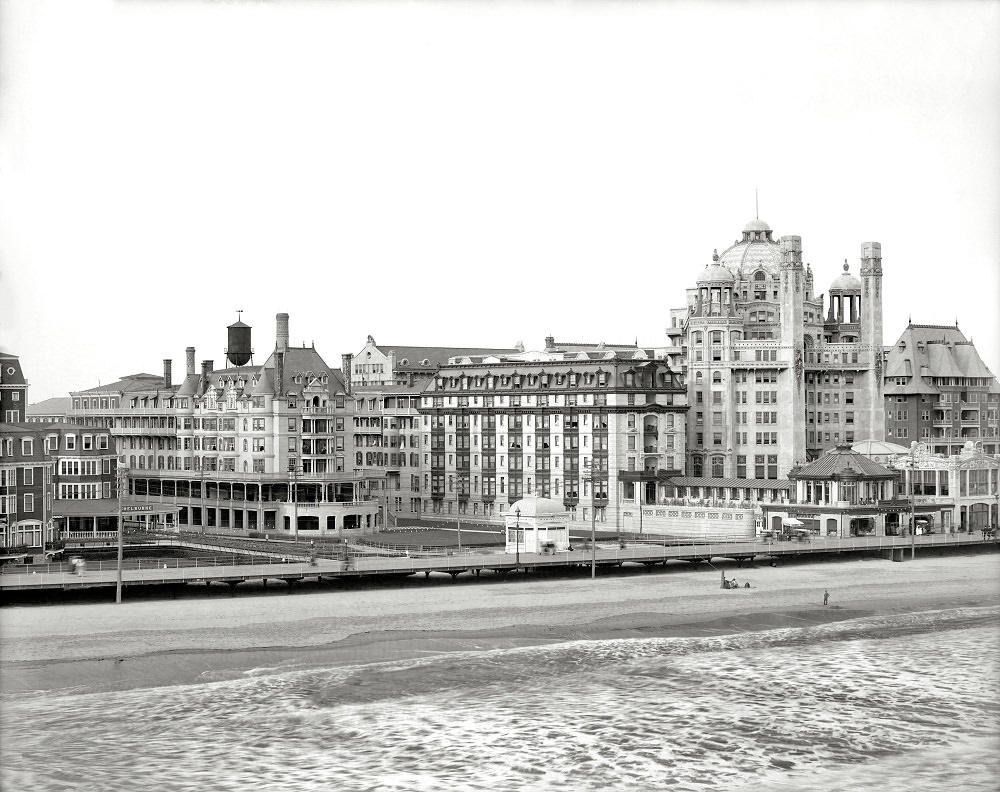
The 1908 photograph showing the Shelburne, Dennis, and Marlborough-Blenheim hotels side by side is one of the clearest illustrations of just how concentrated the resort development had become. Three major hotel properties, each filling a city block, standing shoulder to shoulder along the boardwalk. This kind of density was Atlantic City’s defining characteristic — nowhere else on the East Coast had built up resort infrastructure at this scale and speed.
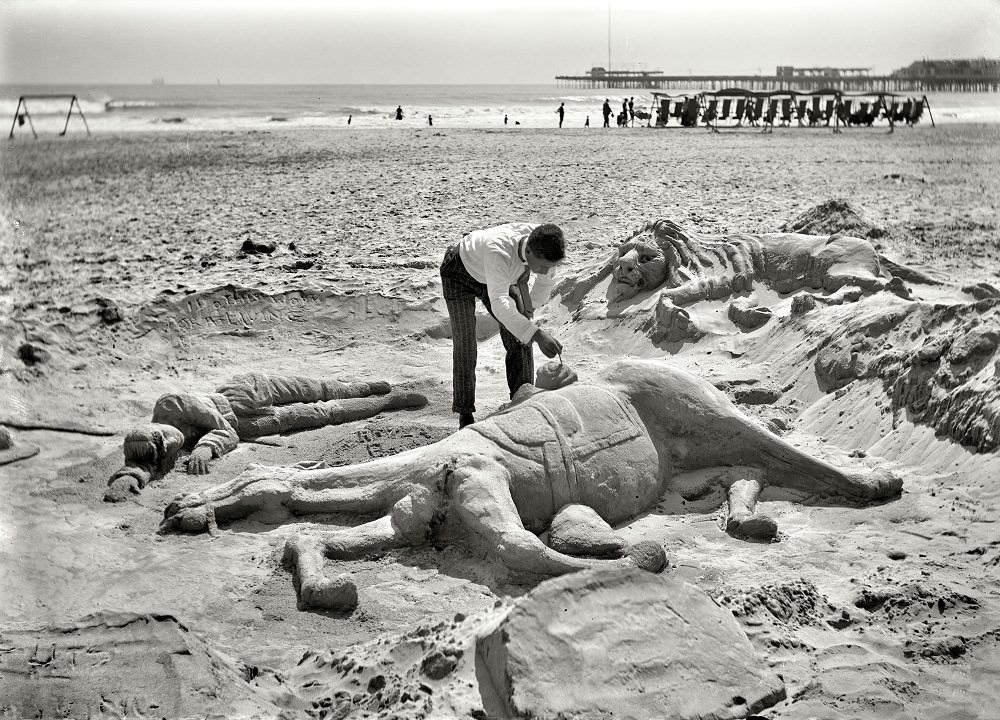
Street performers and beach artists added to the atmosphere along the shore. The ‘sand man’ — an artist who sculpted detailed figures and scenes from wet beach sand — was a fixture at Atlantic City and drew crowds of onlookers willing to leave a coin in appreciation. These informal entertainers were part of the broader ecosystem of amusement that kept visitors engaged throughout the day.
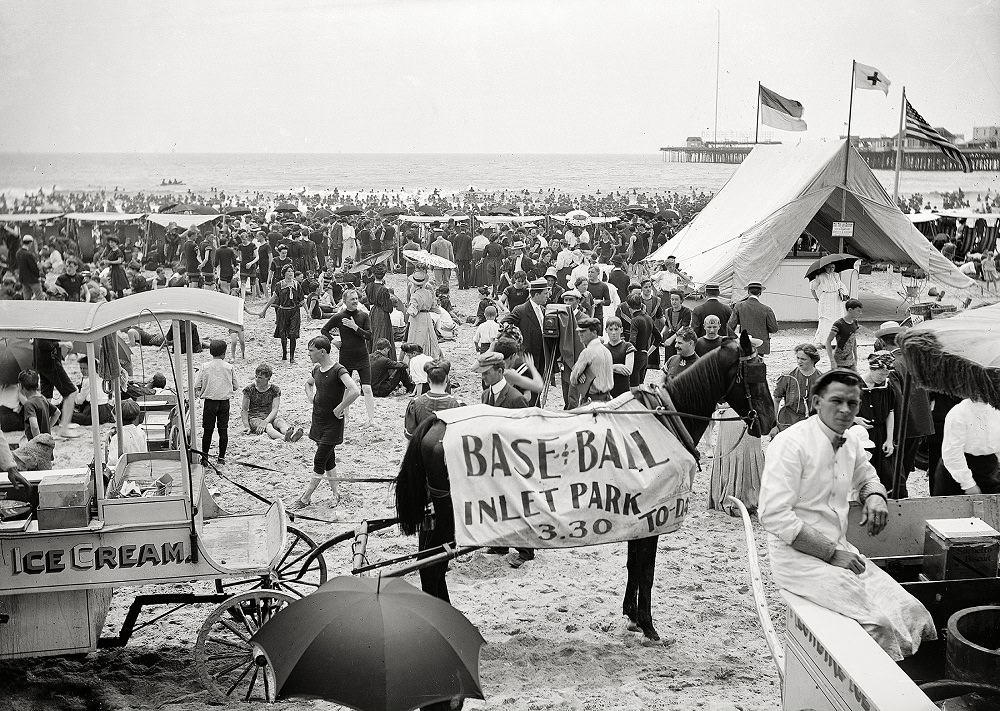
Horses and donkeys were a common sight on the beach in this period, used for rides and for transporting equipment and supplies. Children and adults alike could pay for a short ride along the waterline. The mix of bathers, animals, vendors, and entertainers made the beach feel more like a fairground than a quiet stretch of coast.
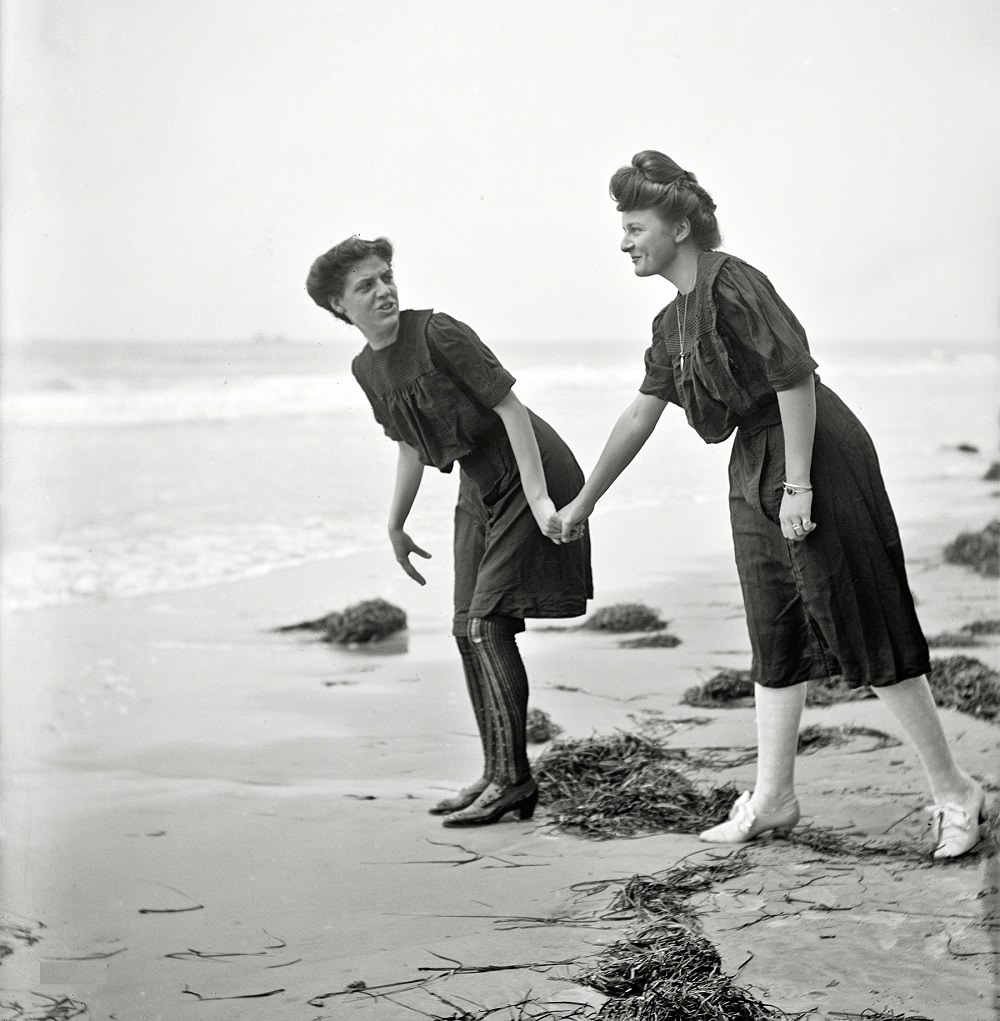
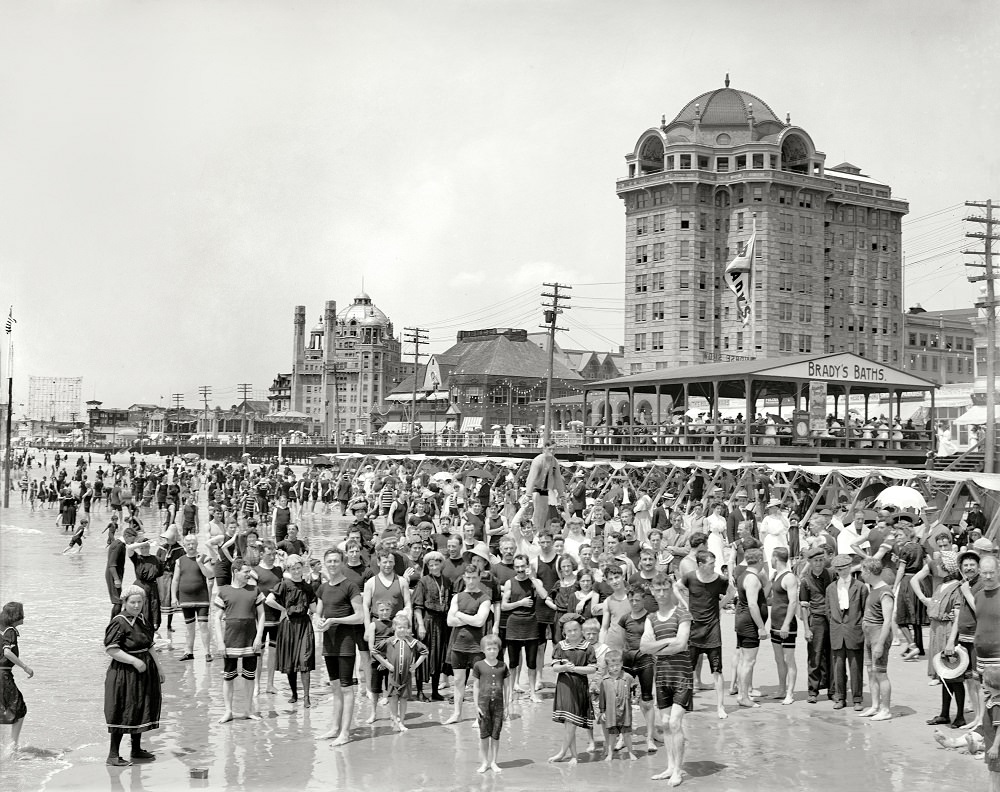
The faces in these photographs look directly into the camera with the same mixture of curiosity and self-consciousness that people show in photographs today. They wore their best beach clothes, arranged themselves for the shot, and looked out at whoever would eventually be on the other side of the lens. More than a hundred years later, that gaze still comes through clearly.
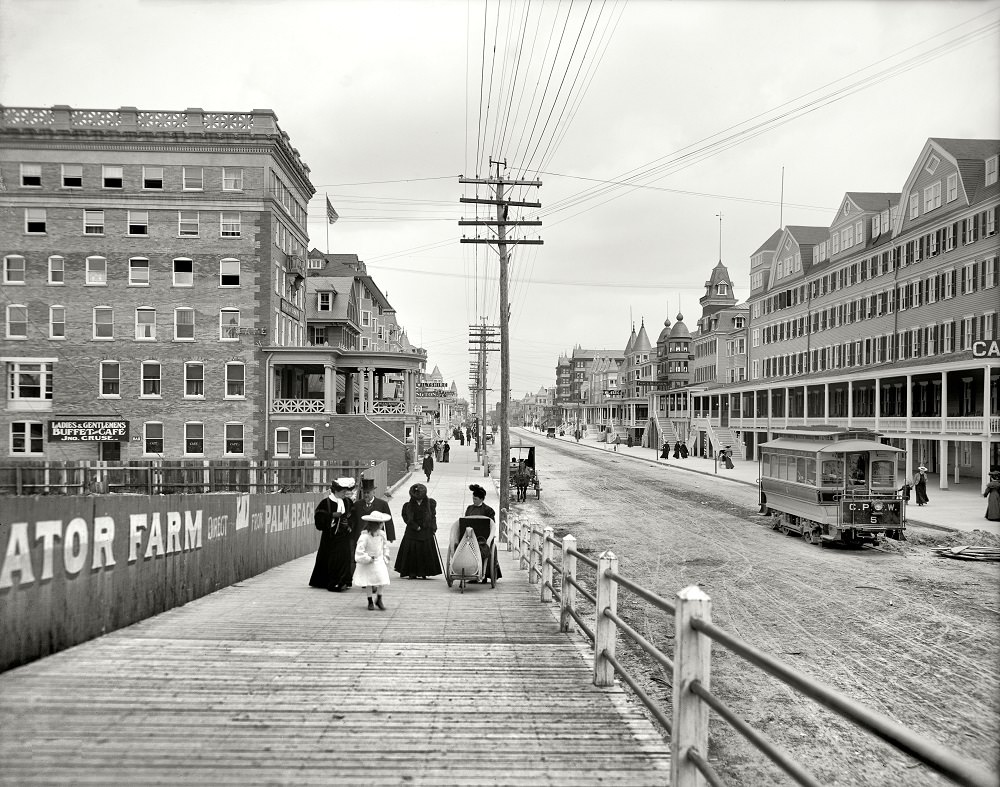
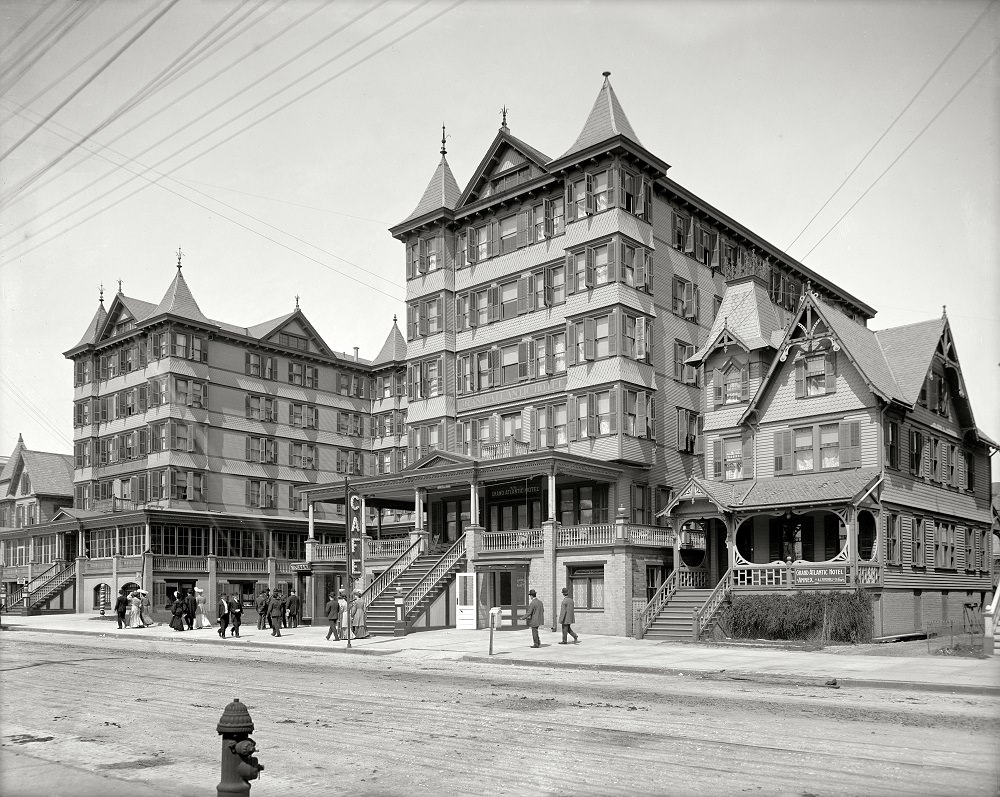
Rolling chairs — large wicker chairs on wheels pushed by attendants — were one of the most iconic features of the Atlantic City boardwalk. Visitors who didn’t want to walk the full length of the boardwalk could hire a rolling chair and be pushed along at a leisurely pace. The chairs were available on Virginia Avenue and throughout the boardwalk area, serving everyone from elderly guests to fashionable young visitors who simply enjoyed the novelty.
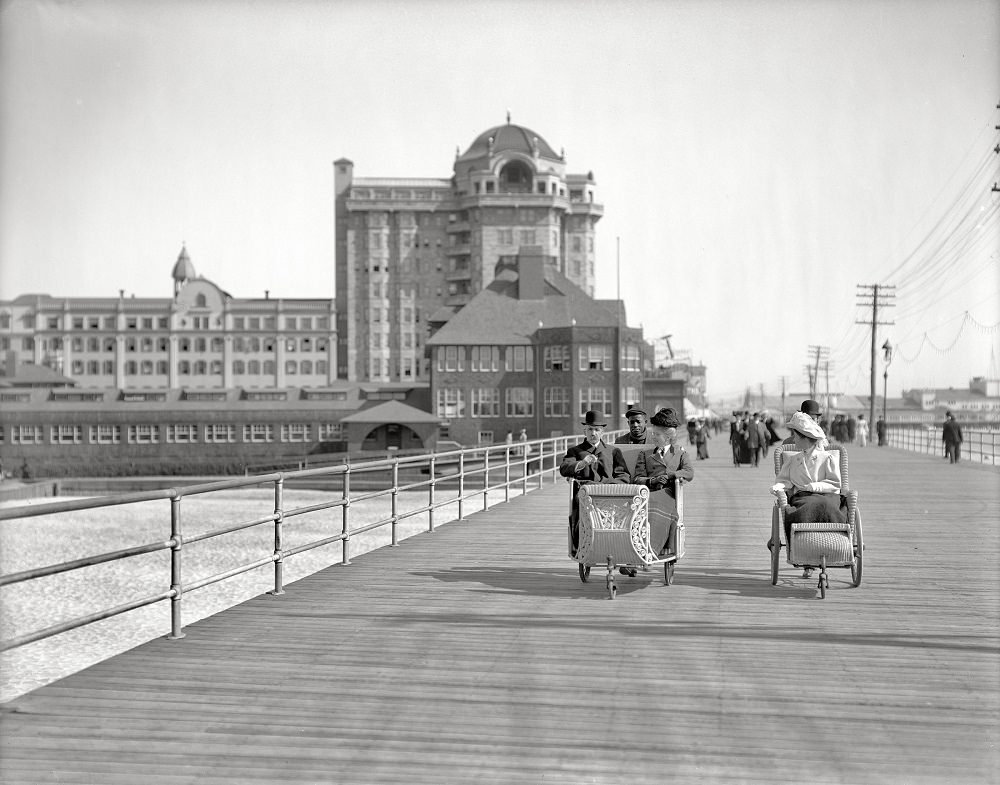
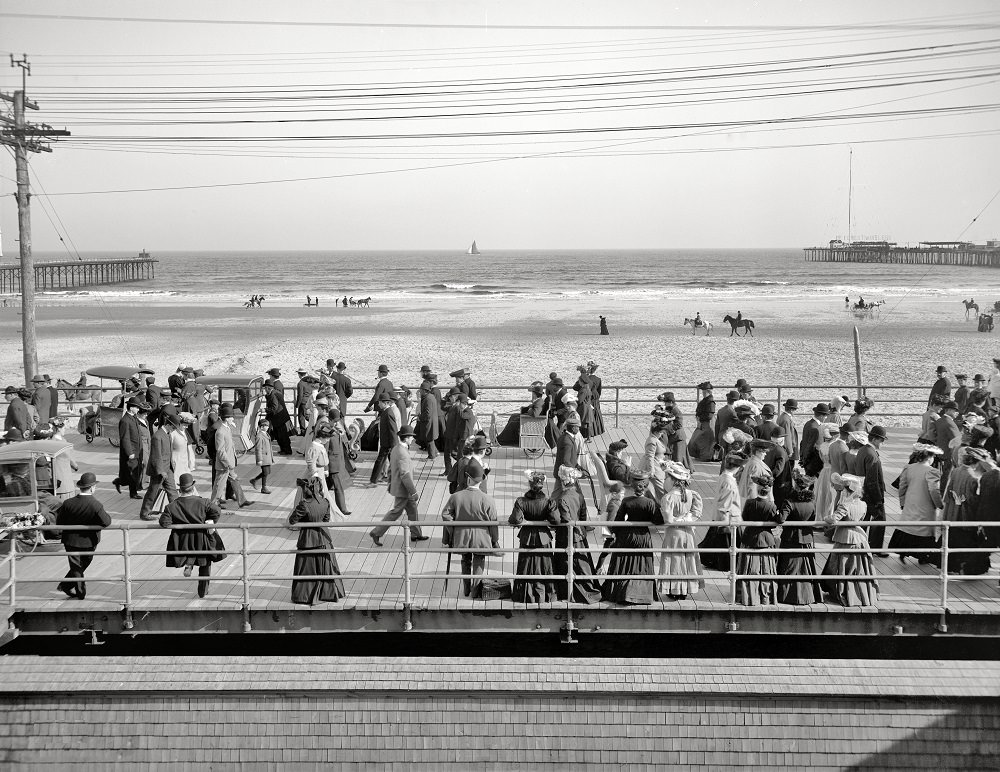
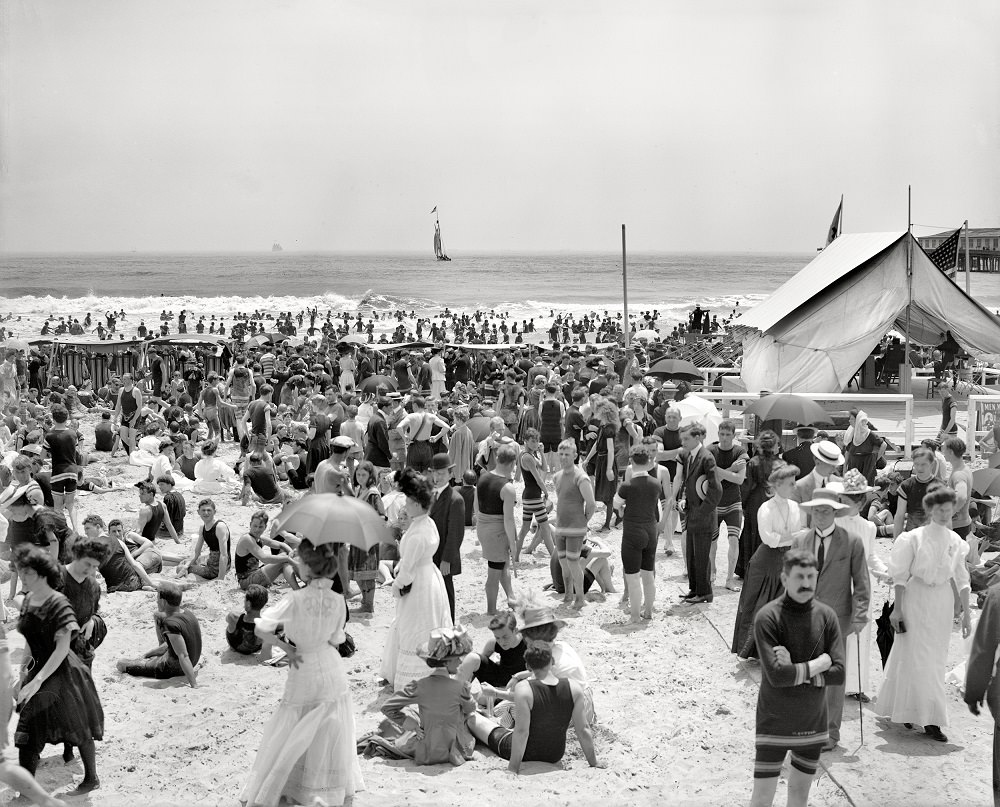
By 1908, Atlantic City had fully established itself as the dominant resort destination on the East Coast. The boardwalk photographs from this year show a city that had moved well beyond its modest 1870s origins. The wooden walkway was now flanked by massive hotel structures, electric lighting was replacing gas lamps, and the crowds arriving by rail each weekend numbered in the tens of thousands.
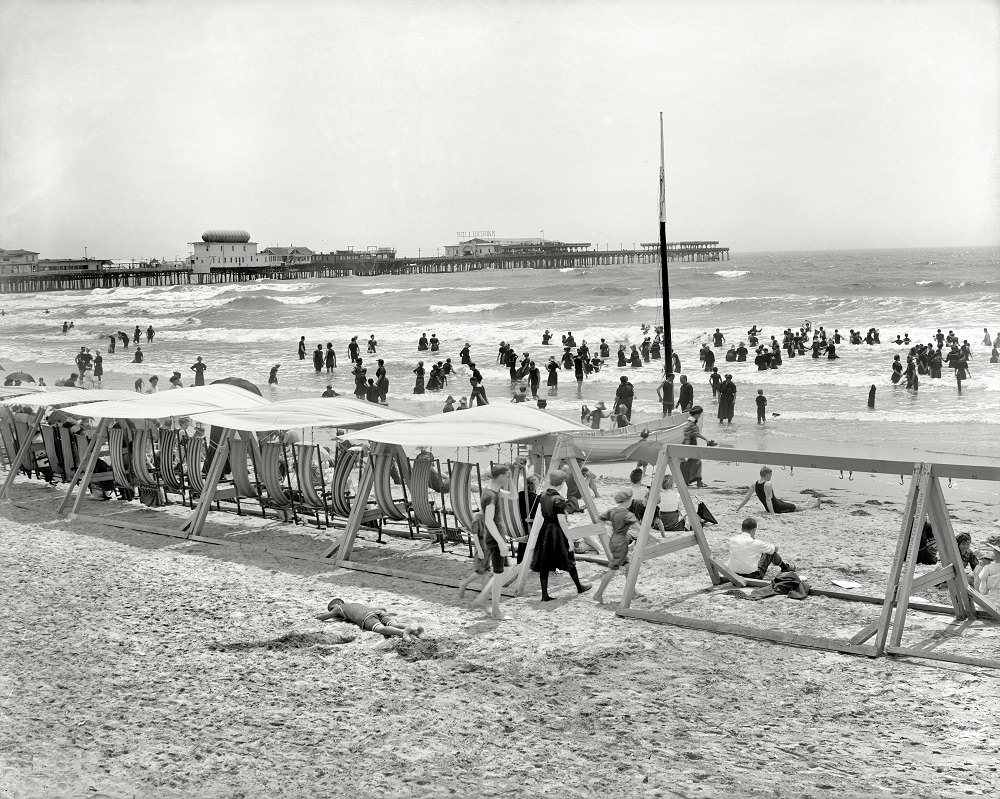
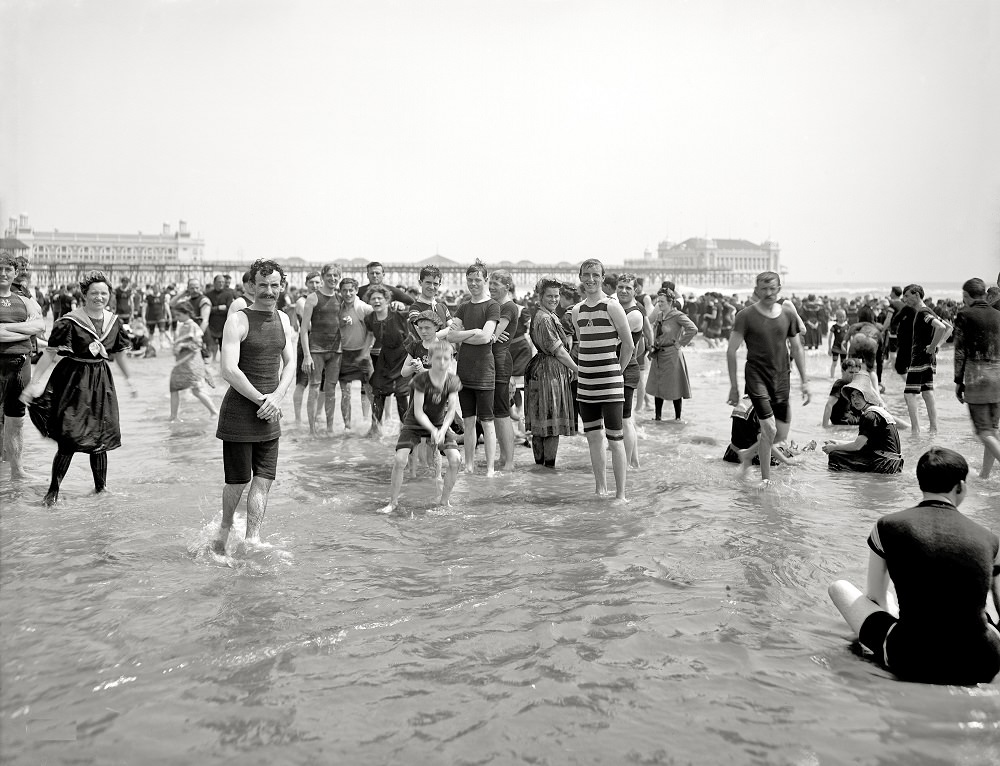
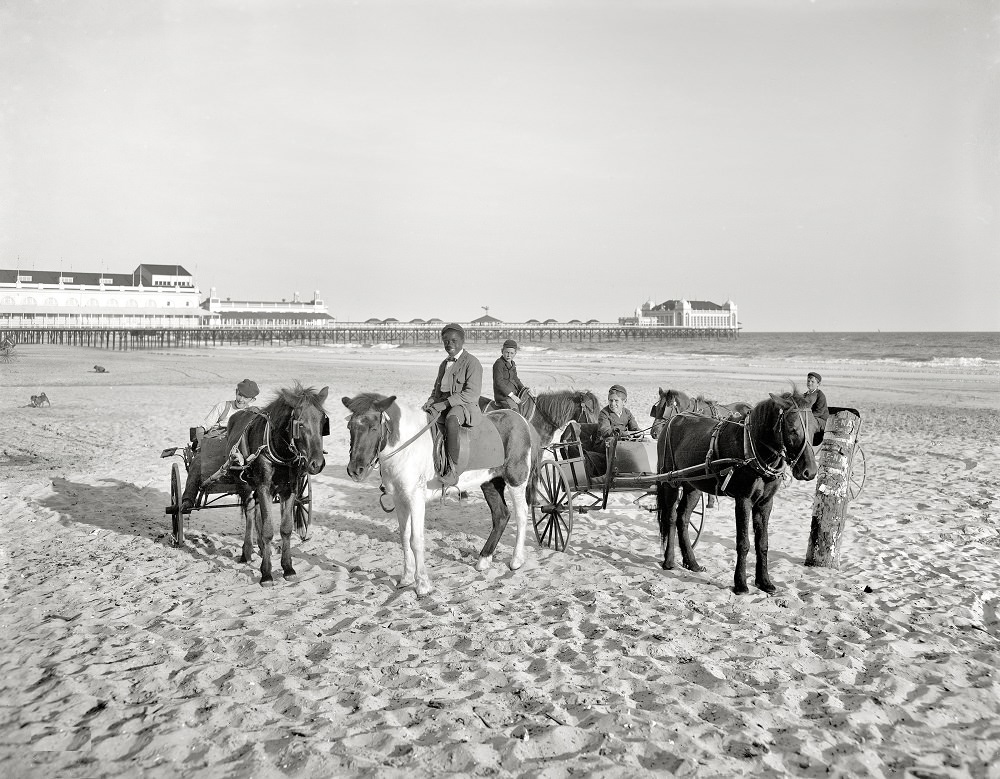
Summer season on the beach ran from June through early September, and during those months the city operated at full throttle. Hotels were booked solid. The beaches were standing room only on weekends. Every vendor, entertainer, hotel worker, and transport operator was working at maximum capacity. For the business owners and operators of Atlantic City, the summer season had to earn enough revenue to sustain the city through the quieter winter months.
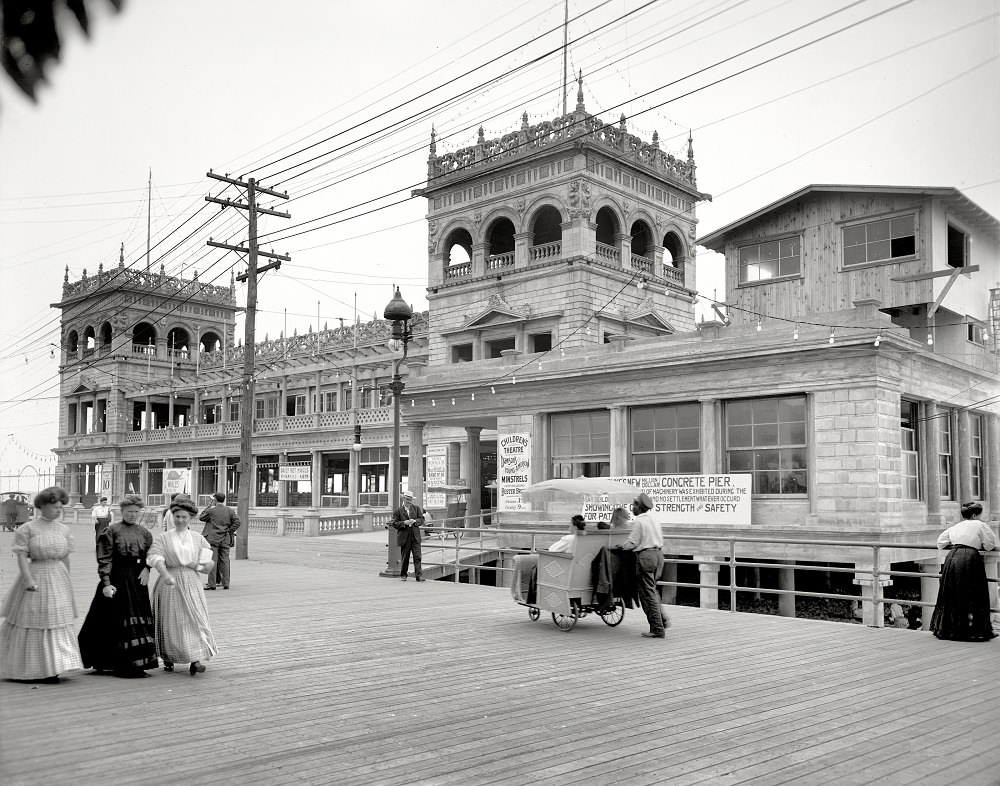
The range of photographs taken between 1901 and 1910 shows how quickly the city changed during this single decade. Hotels that were new construction in 1901 had established reputations by 1908. Streets that appeared lightly developed in early photographs were densely built up just a few years later. Atlantic City was growing faster than almost any other resort town in the country.
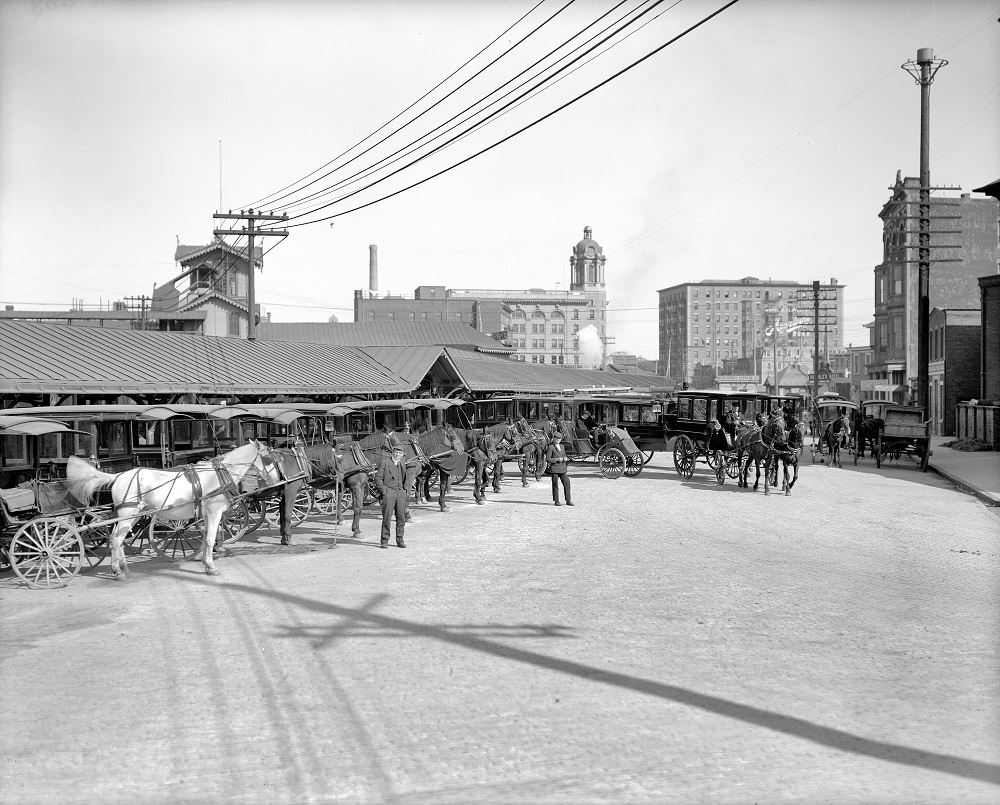
The Pennsylvania Railroad depot was the arrival point for most visitors. Hotel buses — horse-drawn and, later, motorized — waited at the depot to collect guests and carry them to their accommodations. The 1906 photograph of hotel buses lined up at the depot shows the organized competition among hotels to intercept arriving guests before they could be claimed by a rival property.
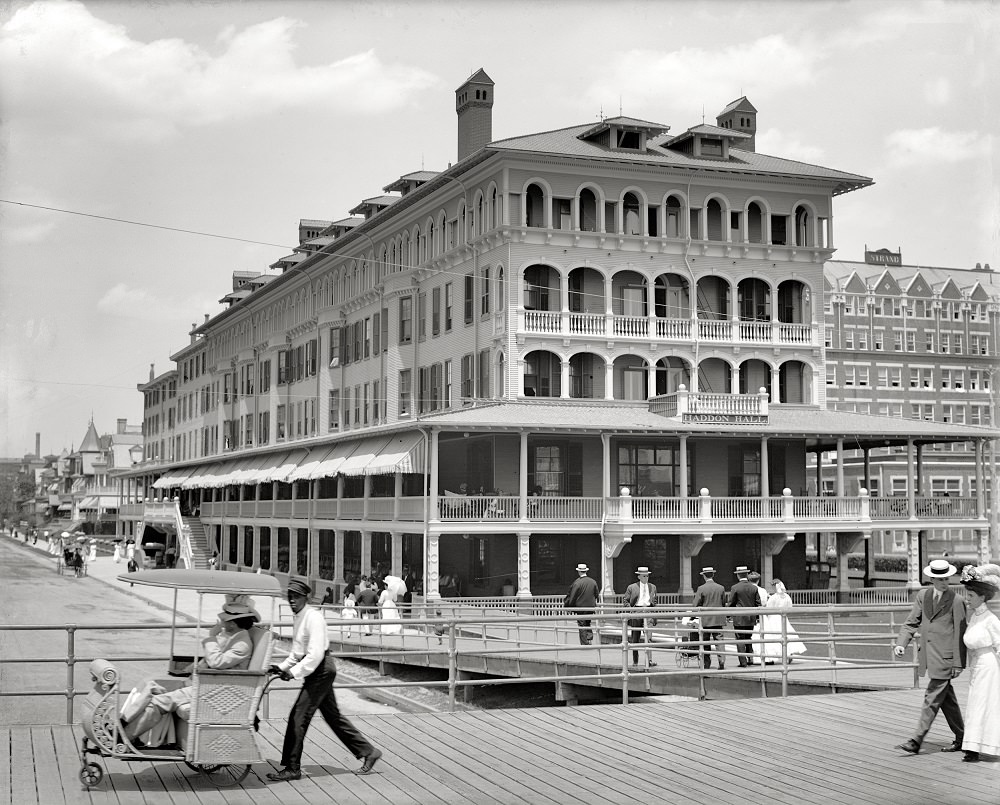
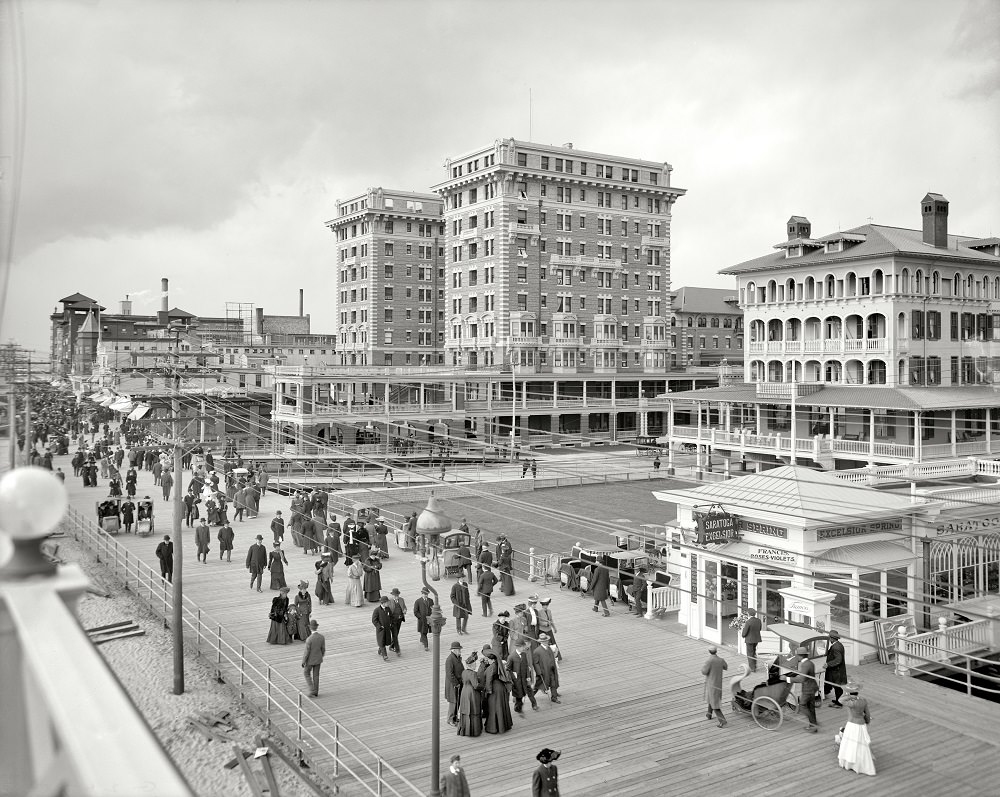
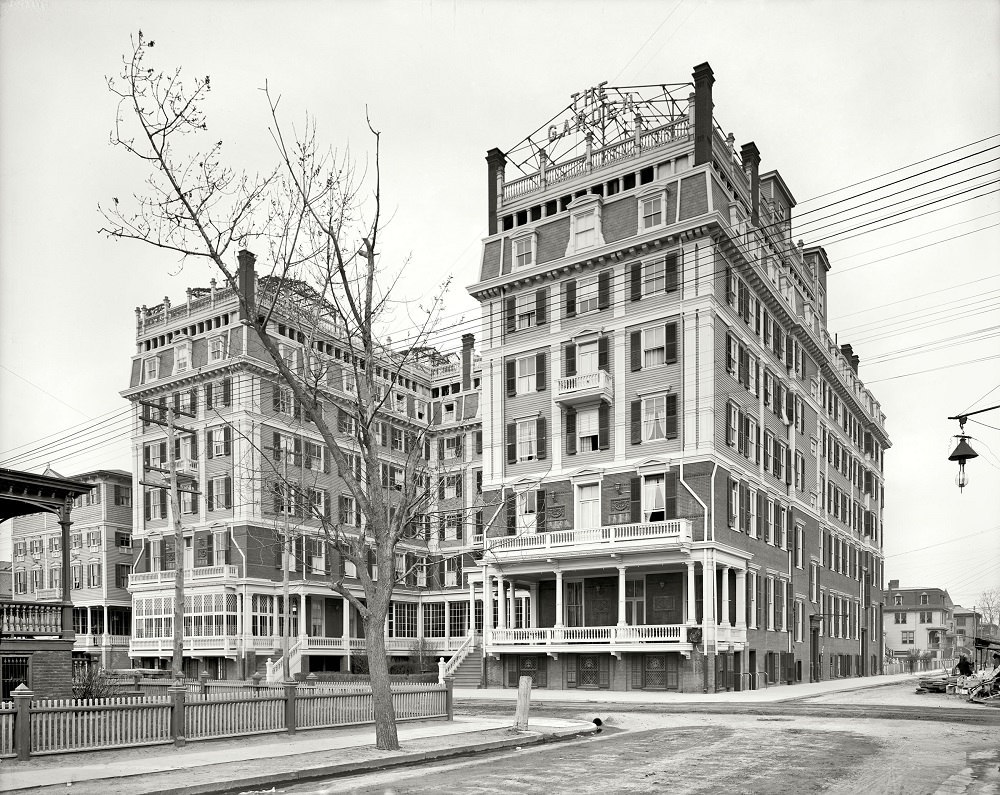
Haddon Hall, which opened in 1869 and expanded significantly over the following decades, stood as one of the most prominent properties on the boardwalk by 1907. The Hotel Chalfonte, one of the oldest continuously operating hotels in Atlantic City’s history, held its own alongside the newer, larger competitors that had risen up around it. Both buildings appear in multiple photographs across this collection, reflecting their central place in the city’s identity.
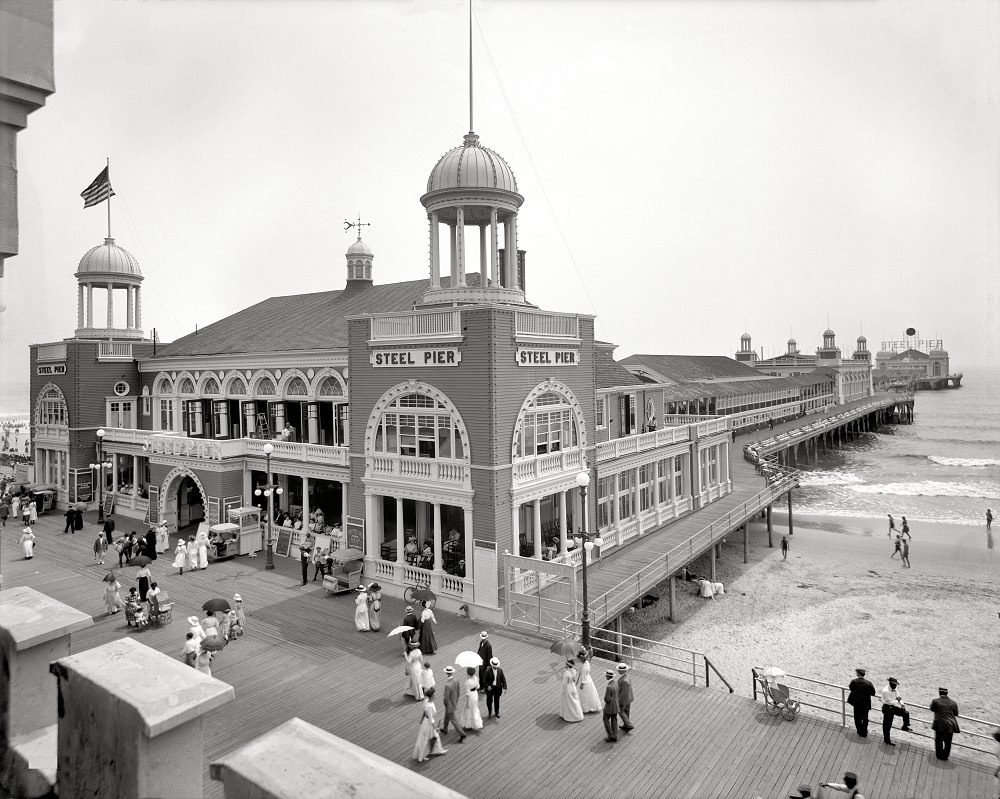
Steel Pier, which opened in 1898, had become the city’s premier entertainment venue by 1910. It hosted concerts, theatrical performances, film screenings, and a variety of live acts. Its position extending far out over the ocean gave it an atmosphere unlike anything on the mainland. By the time the 1910 photograph was taken, Steel Pier had already earned its reputation as ‘The Showplace of the Nation.’
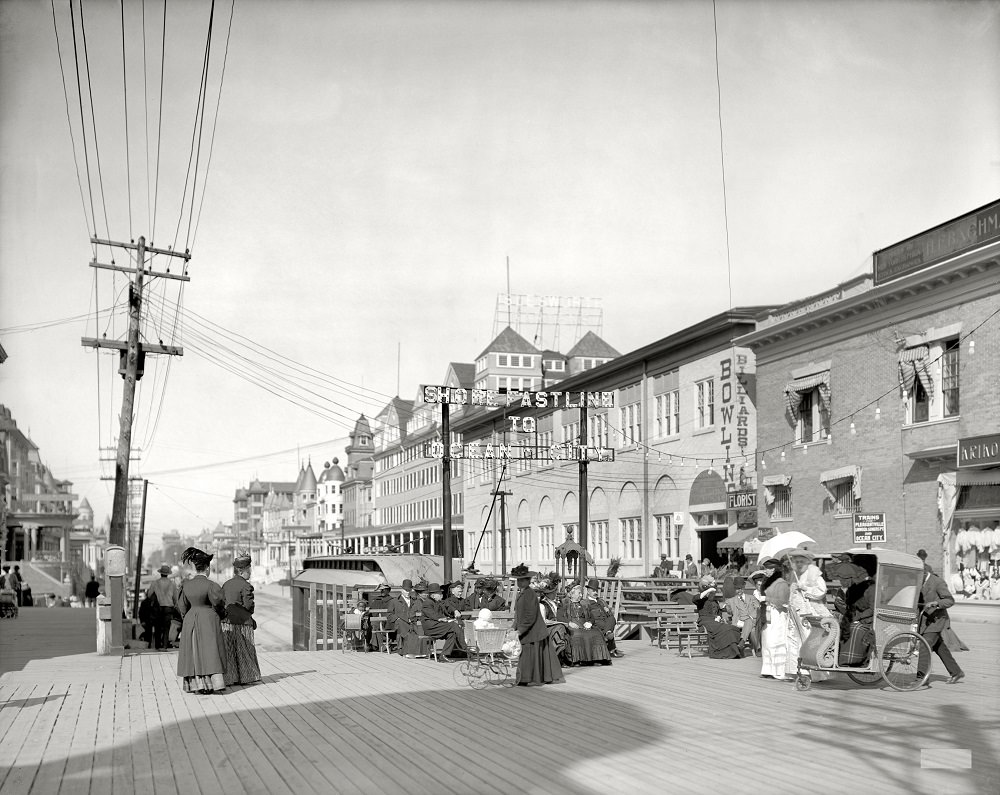
Looking down Virginia Avenue from the boardwalk in 1908 reveals how far the city extended inland. The street was lined with storefronts and hotels for several blocks before giving way to residential neighborhoods. The view from the boardwalk end of the avenue was one of the most photographed perspectives in the city, capturing in a single frame both the commercial scale of Atlantic City and its physical layout running away from the shore.
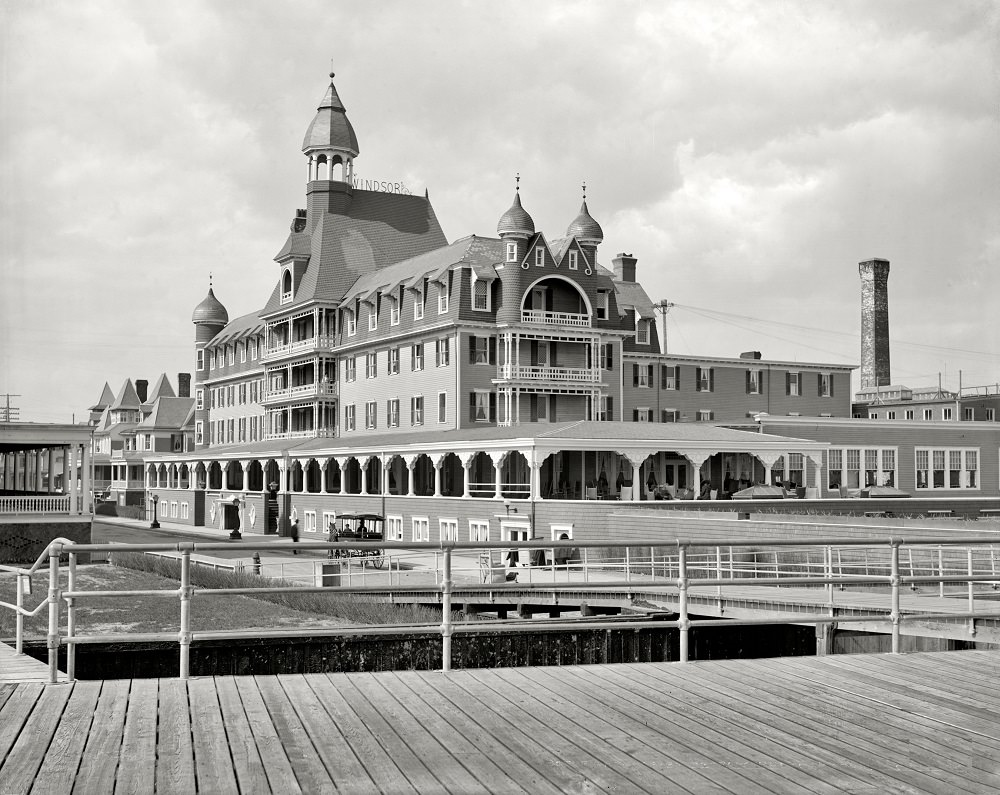
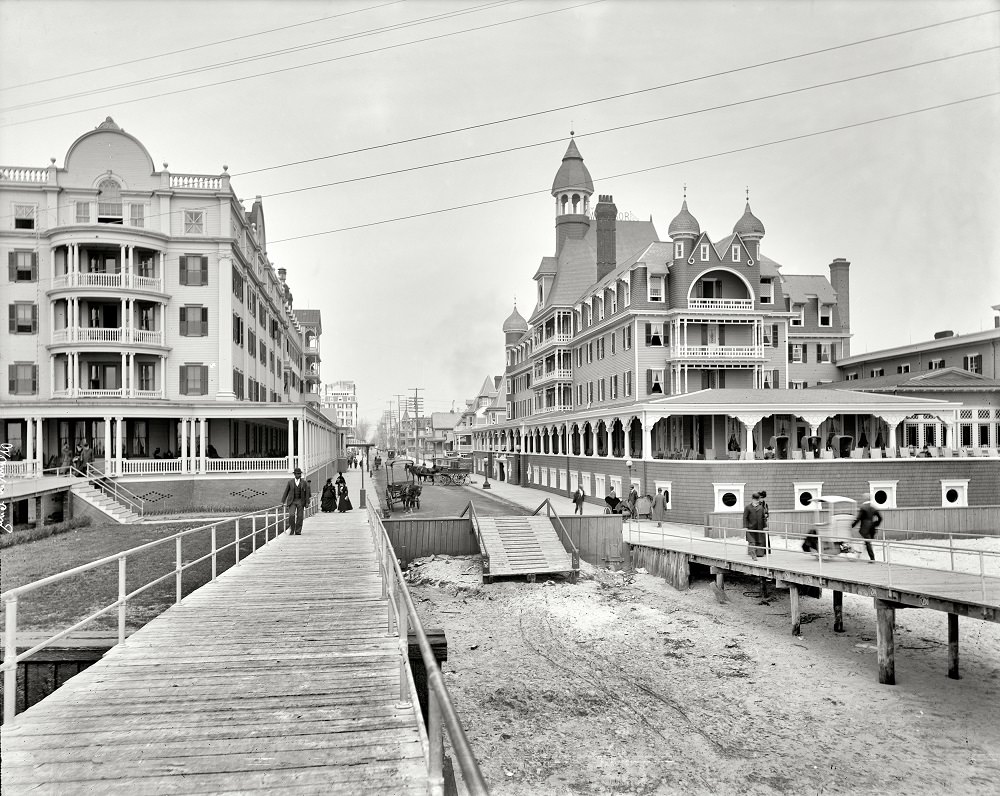
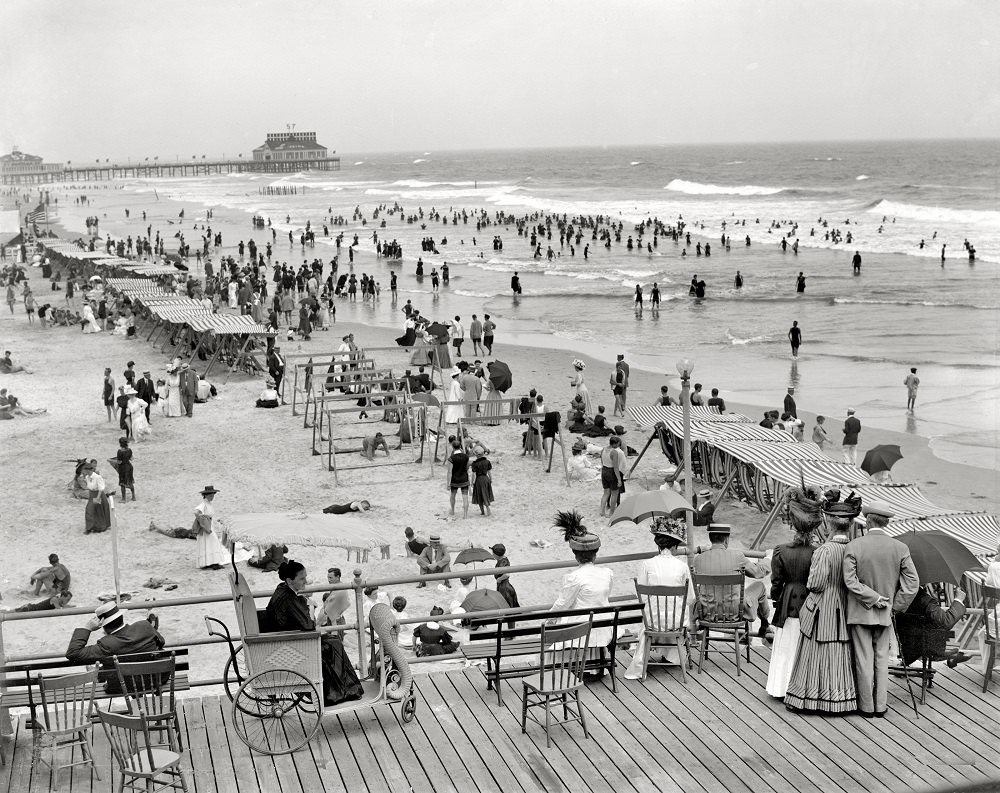
The Hotel Windsor appears in photographs from both 1900 and 1906, offering a rare side-by-side look at a single property across six years. The building’s exterior changed very little, but the surrounding boardwalk environment grew considerably denser over that time. By 1906, what had been open space near the Windsor in earlier photographs was filled in with adjacent structures and commercial activity.
After World War Two ended, Atlantic City’s economy fell into serious decline. Hotels and resort properties that had defined the city for decades were demolished. By the 1960s, large sections of the city had fallen into disrepair, and poverty, crime, and corruption became persistent problems. In 1976, New Jersey passed legislation legalizing casino gambling in Atlantic City, opening a new chapter for the city. These photographs from the 1900s, however, document a very different era — one when Atlantic City was at the peak of its appeal as America’s playground by the sea.





There are so many interesting people in those pictures. It’s crazy to imagine what their lives must have been like.
Old pictures always fascinate me. It makes me curious about their lifestyles back then.
For the time period, the picture quality is amazing. In fact, even the oldest cameras I’ve seen use tiny little film negatives. Just imagine carrying around panes of glass the size of printer paper for your negatives! Back then, photography was an amazing science. It’s as easy as whipping out your cell phone and snapping a picture.
I love AC, and enjoy seeing photos of the place from its start in the 1920s.
These are great! Thanks for sharing!
Hard to believe how much is gone. The size of the crowds!
Great pics! I often wish I could go back to that time. However, reality strikes and I realize everyone was dressed in suits and full length dresses in the summer with no air conditioning. It must have smelled of body odor, etc
The Hotel Dennis still stands; it is the more run-down part of Bally’s
Let me see Nucky Johnson.
Beautiful. I grew up spending a week every summer there from the late 60’s to the mid-70’s. It was a great time to be a kid roaming the boards.
I wish we would have maintained these beautiful buildings.
Absolutely criminal that they tore down most of those beautiful hotels.
The problem with these older hotels is that they are not up to code, the rooms are small, they cost a fortune to maintain, they cost more to heat, the wiring is outdated, there are 2 outlets in a room, elevators are old. Otherwise, they are nice to look at.
The rooms in the Dennis Tower at Bally’s are over 100 years old. People don’t want to stay in them. The Clairidge is also a relic. Next door is the Madison hotel, a couple years ago, some investors claimed they were going to renovate it, but it hasn’t happened. They were looking for investors, but I’m guessing they couldn’t convince anyone to write a check.