Hey There! Before You Go. 😧
Get the best vintage content straight into your inbox!

Don't worry, we don't spam

1960s Athens: Cool Vintage Photos Show Streets, Landmarks and Everyday life

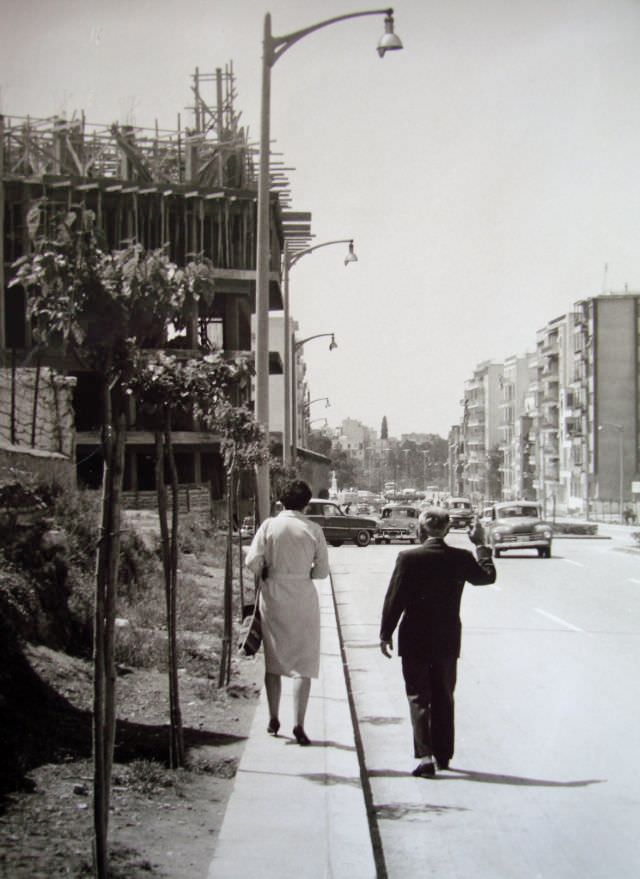
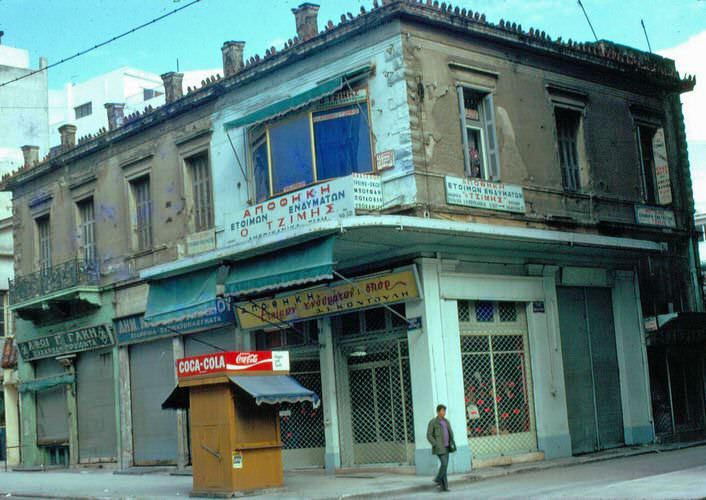
Athens in the 1960s was a city in motion. Greece was shifting from an agricultural economy to an industrial one, and its capital felt every bit of that change. New buildings rose across the city center, often in place of older neoclassical structures that were torn down to make way for modern architecture. The International Style — clean lines, flat facades, functional design — shaped much of what was built during this period. At the same time, the city’s young population was pushing back against tradition, fueling a decade of energy, debate, and cultural restlessness.
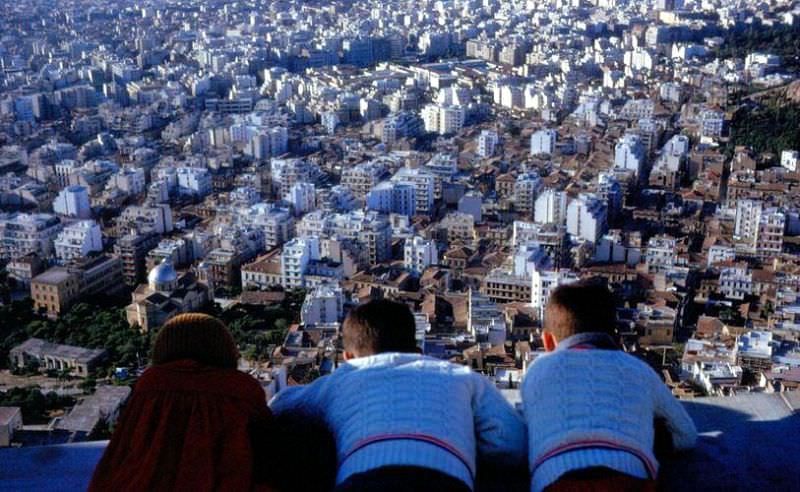
Athens from above
Athens from above

From above, Athens in this era looked like a city mid-transformation. The ancient Acropolis anchored the skyline, but around it, apartment blocks and commercial buildings were spreading in every direction. Neighborhoods that had once felt like separate villages — such as Peristeri and Petroupoli, visible from Lycabettus Hill — were being folded into the expanding urban sprawl.
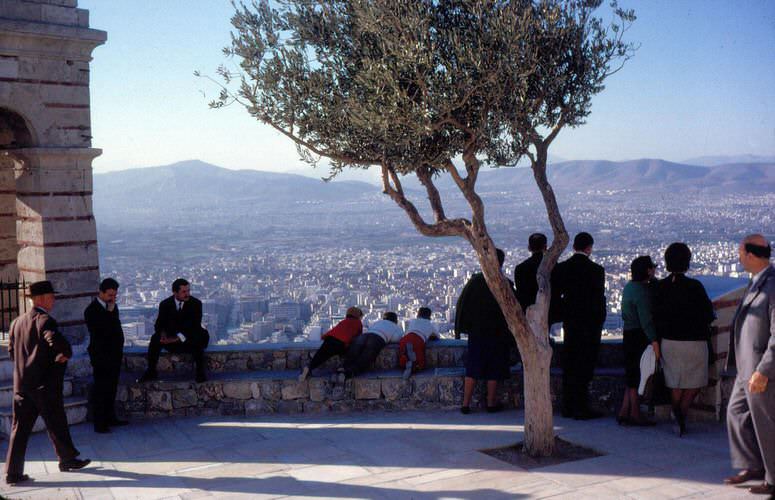
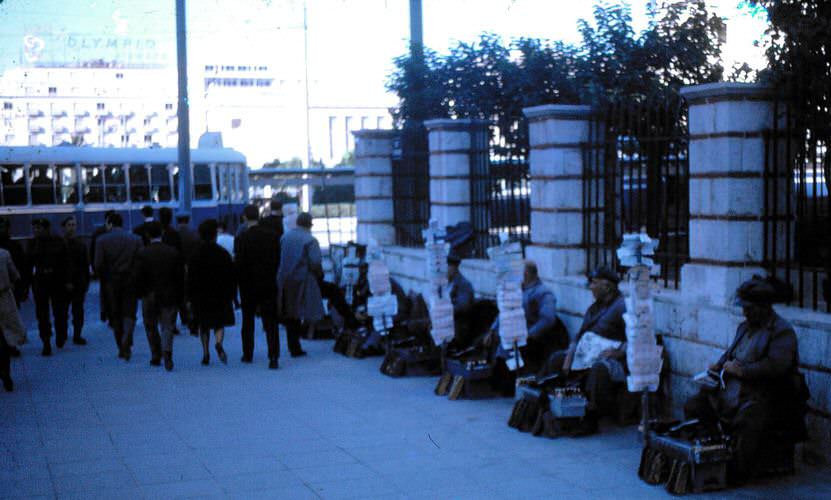
Lycavettos looking towards Peristeri and Petroupouli which were like separate villages

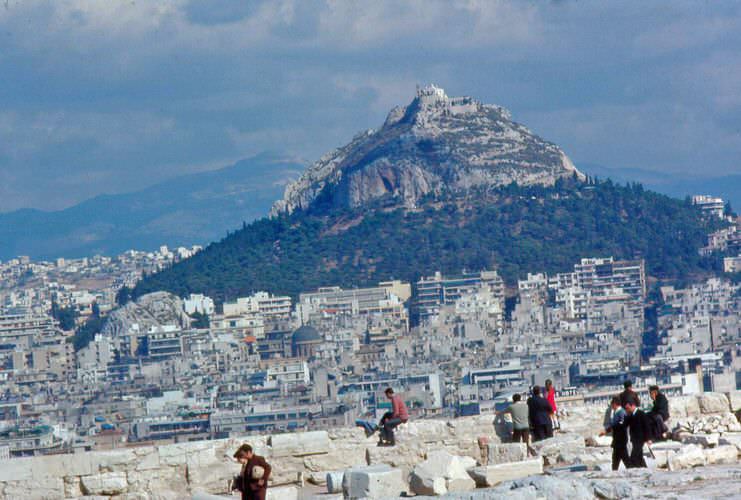
The Acropolis remained the city’s most iconic landmark. Seen from Filopappou Hill, the ancient site rose above the rooftops in sharp contrast to the modern city below. Mount Lycabettus, too, offered sweeping views that made the scale of Athens’ growth plain to see.
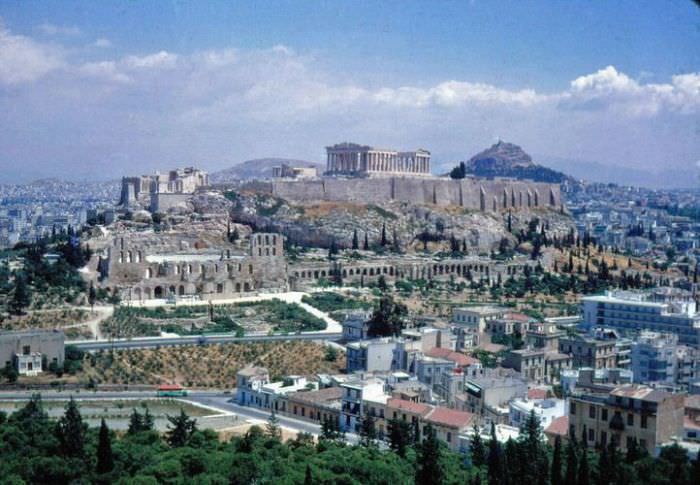
A view of Acropolis from Filopappou Hill
Mount Lycavettos from the Acropolis.

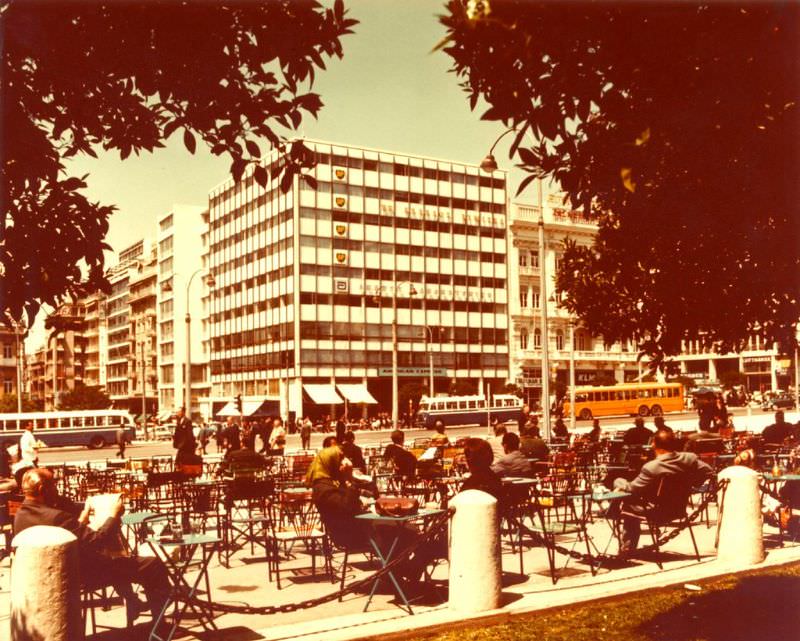
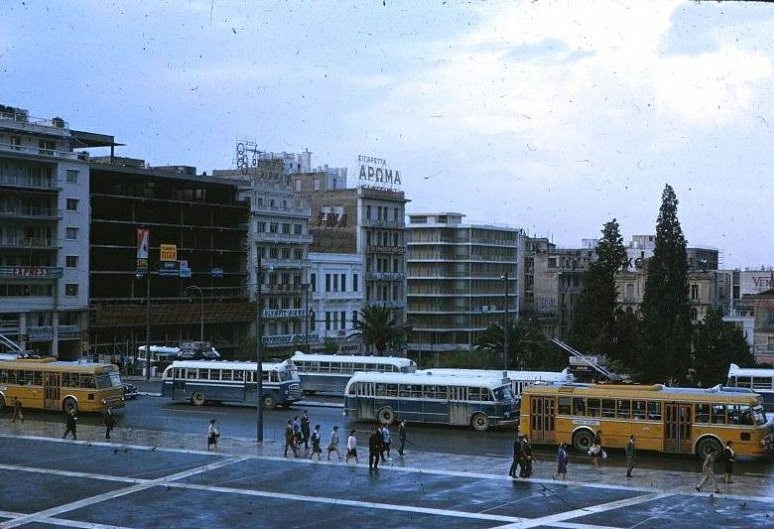
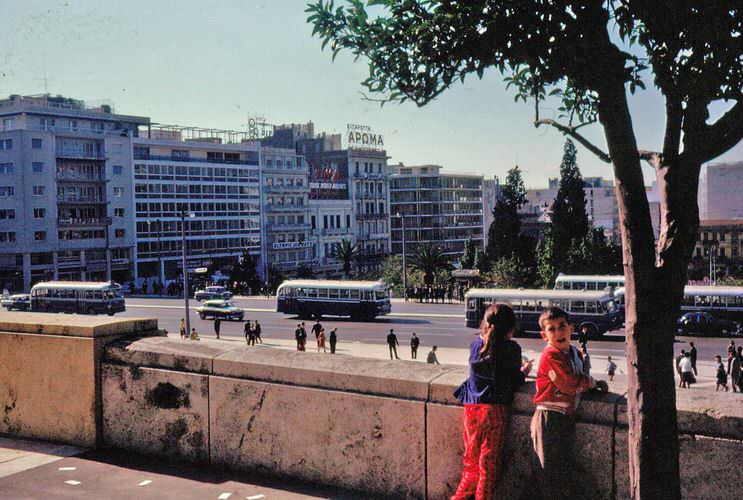
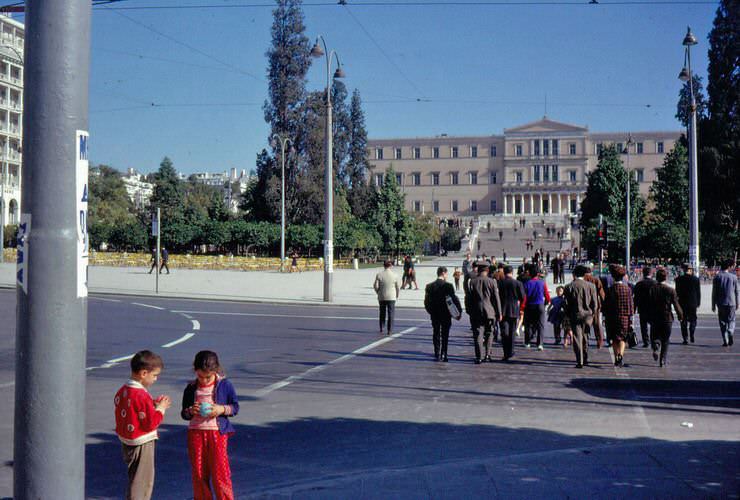
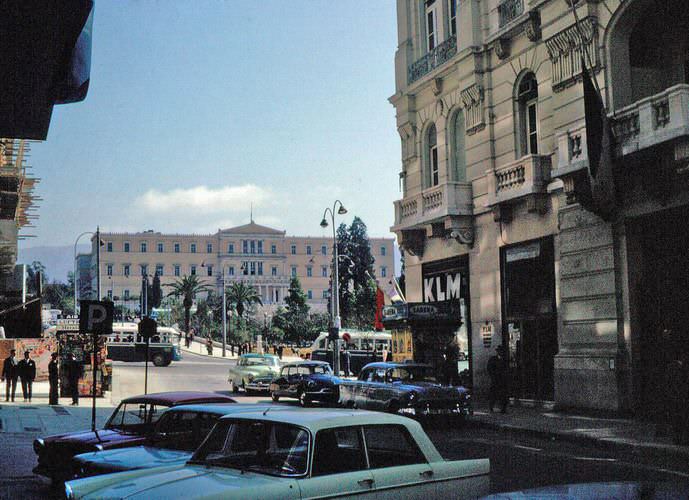
Syntagma Square was the beating heart of central Athens. Lined with hotels, cafes, and government buildings, it drew residents and visitors alike throughout the day. The Greek House of Parliament stood at its head, a constant reminder of the country’s political life — a life that was anything but quiet during the 1960s.
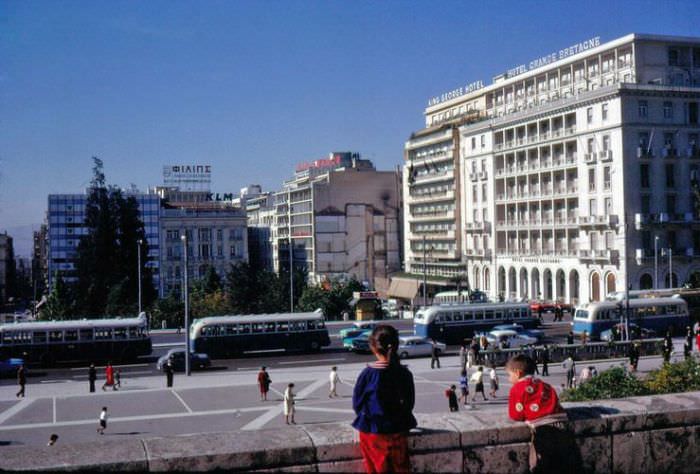
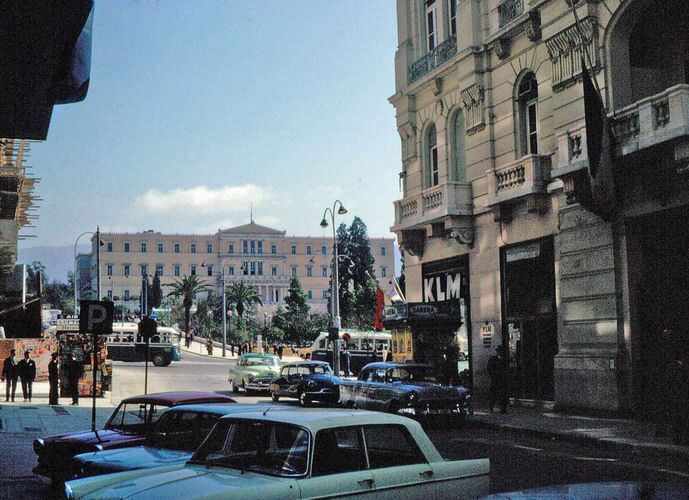
Syntagma Square
Syntagma Square
The Greek House of Parliament
Syntagma Square, Athens

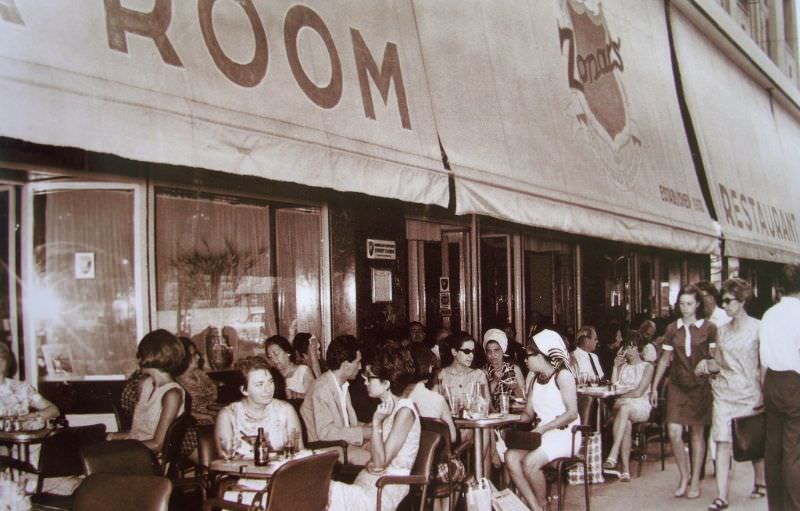
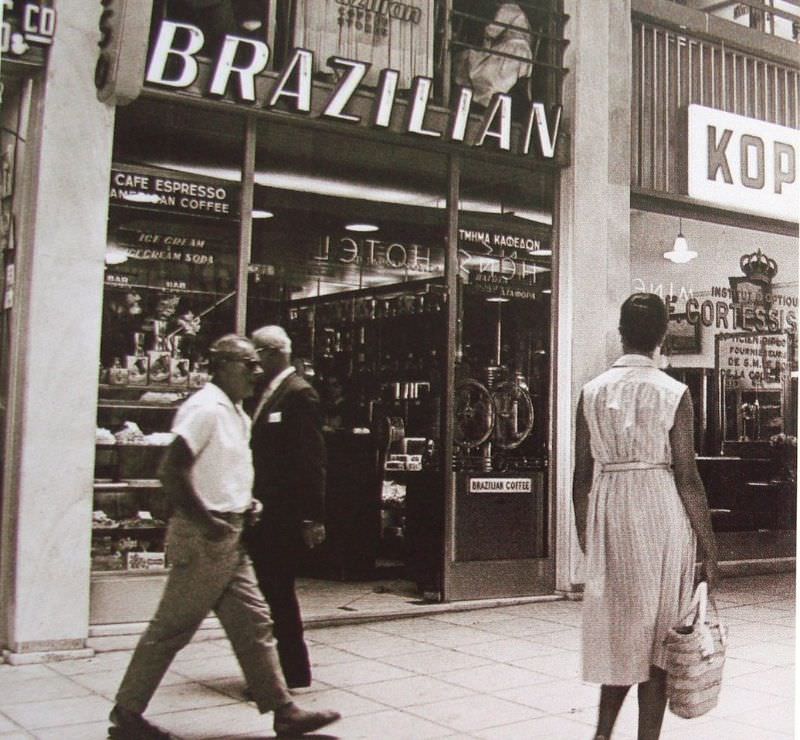
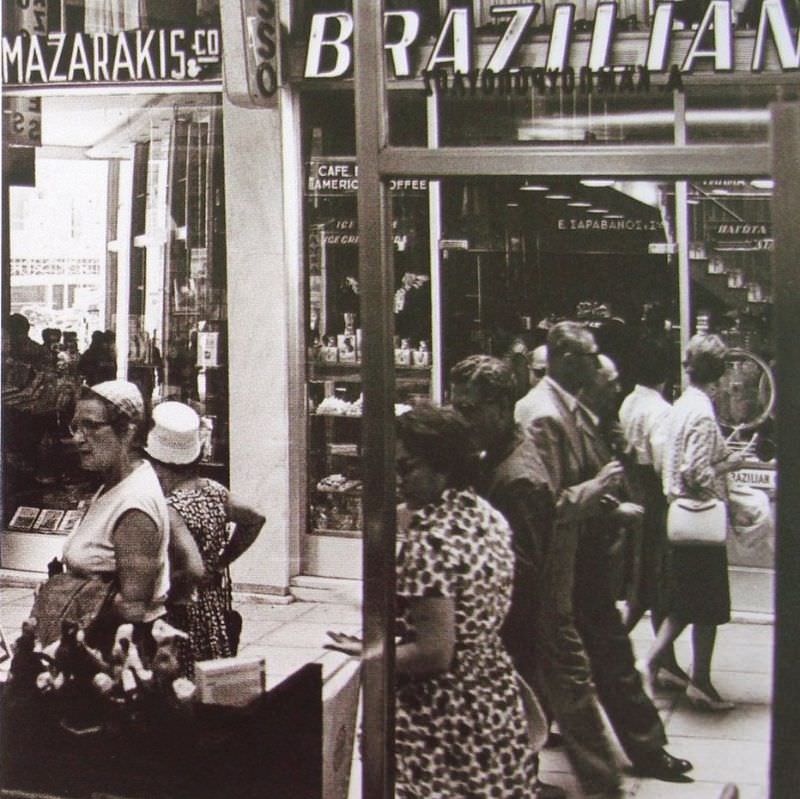
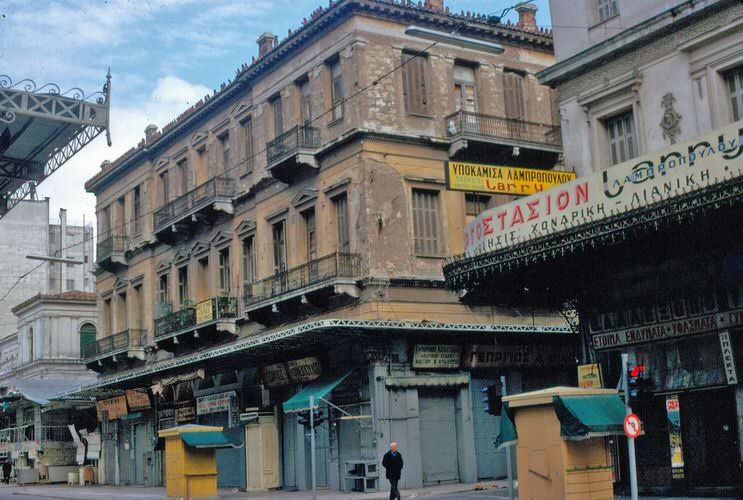
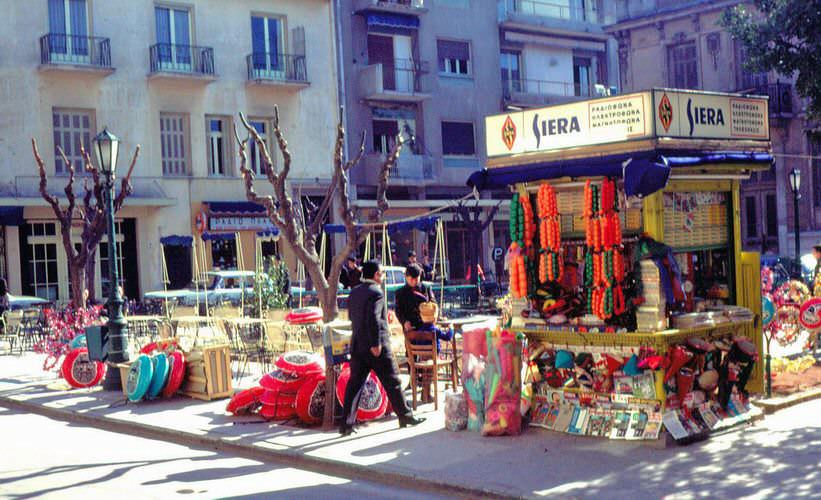
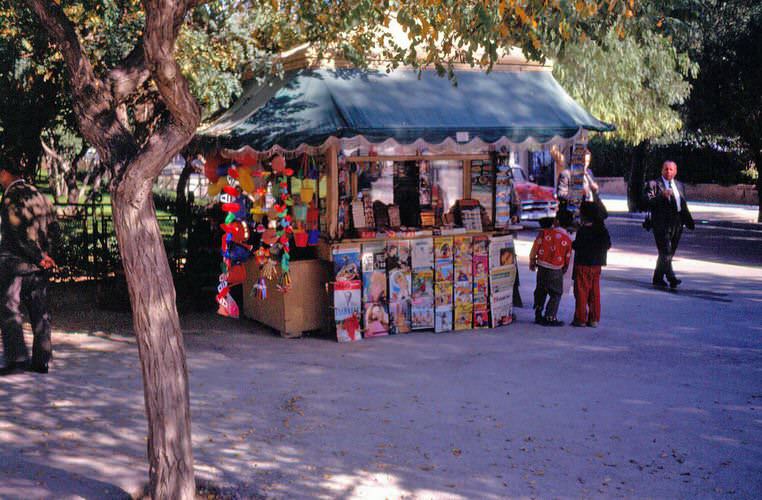
The streets around Syntagma buzzed with commerce and everyday movement. Kiosks sold newspapers and small goods. Bookstores like Eleftheroudakis on Stadiou Street drew students and intellectuals. Fashionable Athenians stopped at the Brazilian café or at Zonar’s, one of the city’s most beloved pastry shops and gathering spots.
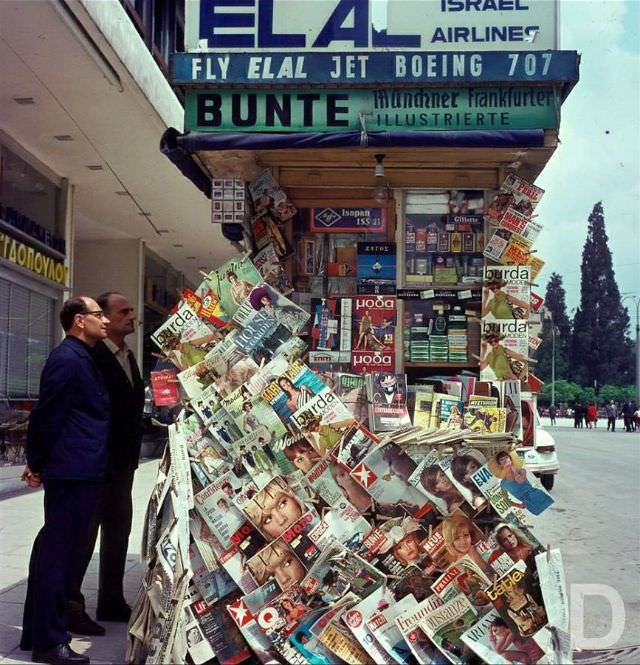
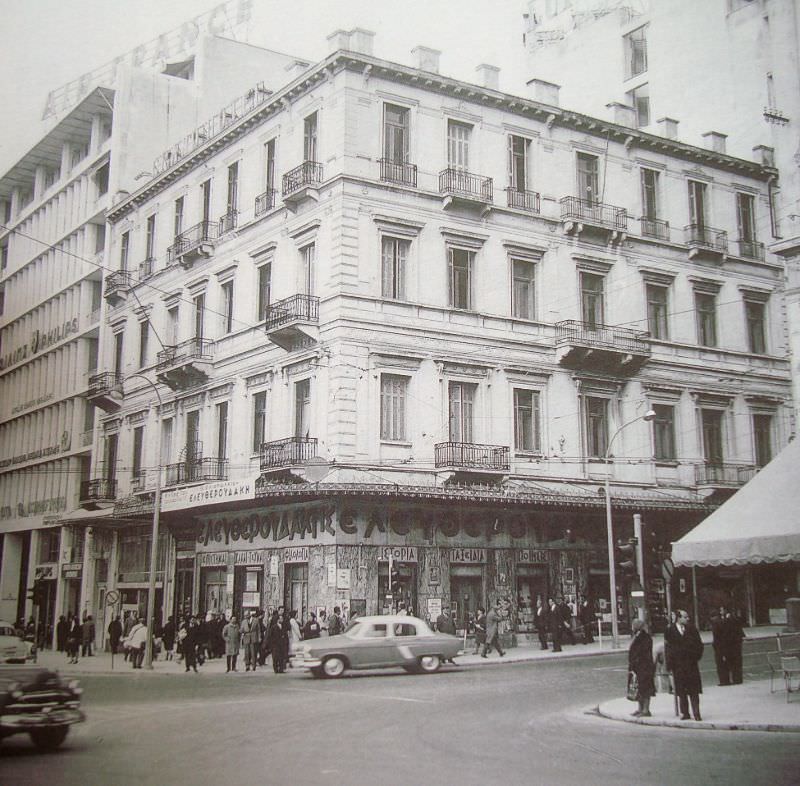
Kiok at Syntagma Square, Athens
Eleftheroudakis Bookstore, Stadiou street, Syntagma, Athens
Zonar's, Athens
Zonar’s, Athens
Brazilian, Athens
Brazilian, Athens
Brazilian, Athens
Brazilian, Athens

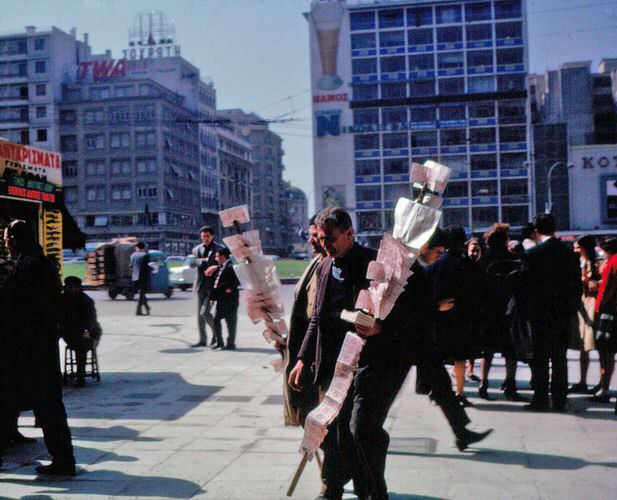
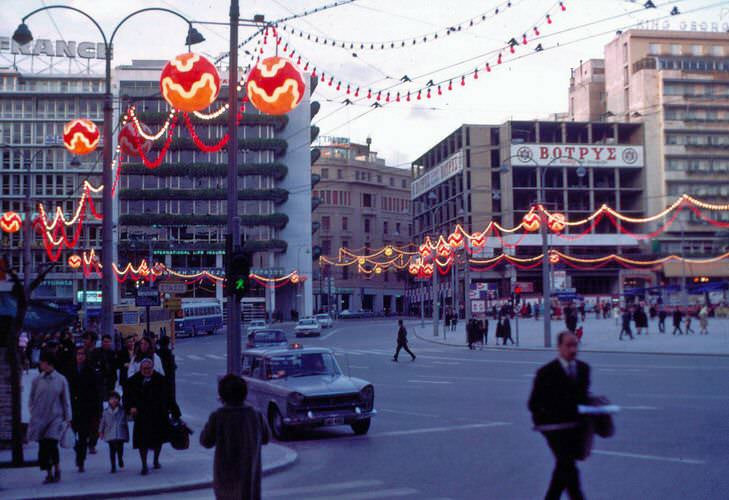
Omonia Square, on the other end of Panepistimiou Street, offered a different kind of city life. It was busier, noisier, and more working-class in character. Lottery ticket vendors worked the crowds, and the square’s fountain and busy traffic made it one of the most recognizable spots in Athens.
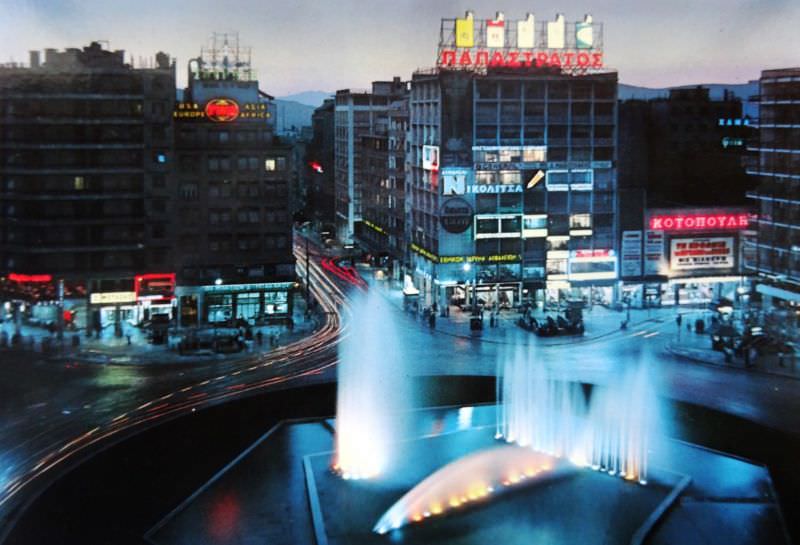
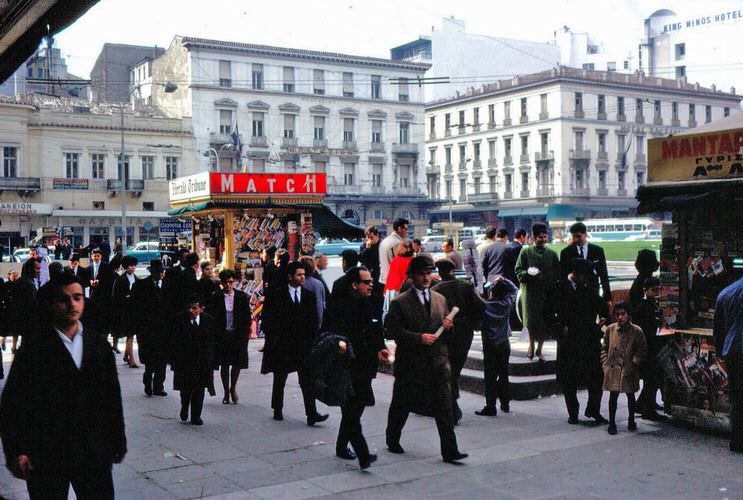
Omonoia, Athens
Omonoia, Athens
Omonia Square
Omonia Square
Laikeo-lottery tickets being sold in Omonia Square.

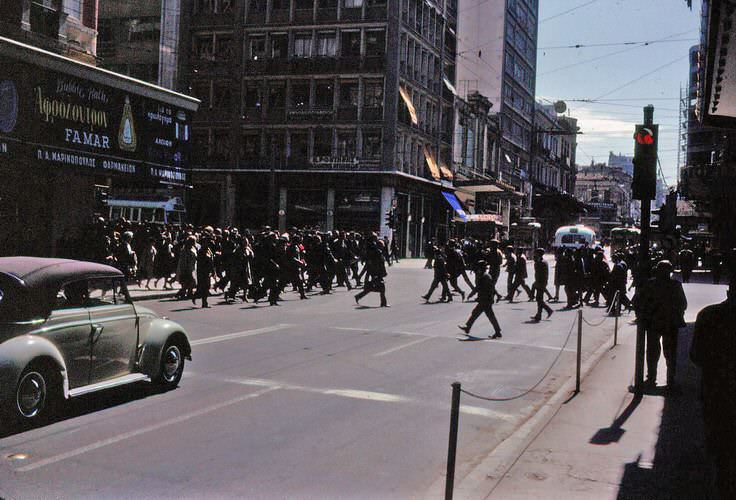
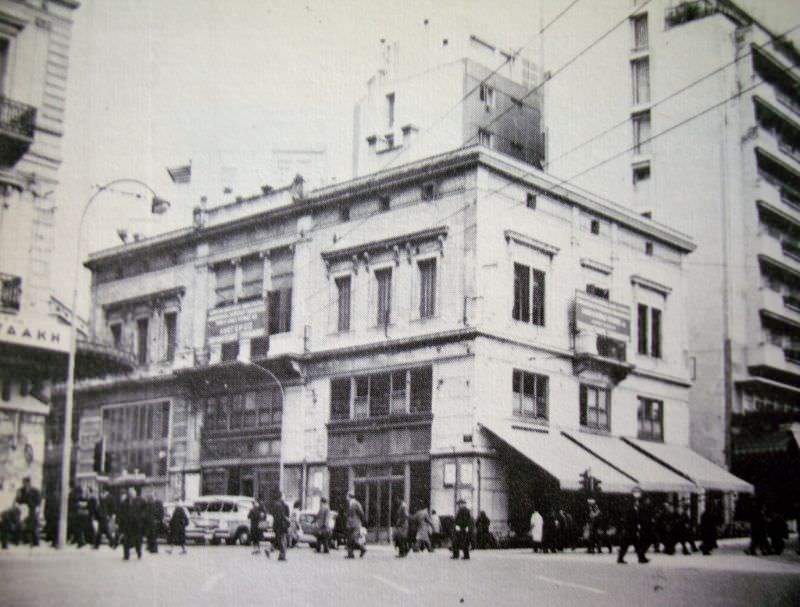
Panepistimiou Street connected these two great squares and passed by some of the city’s most impressive neoclassical buildings, including the University of Athens. It was one of the main arteries of the city, always full of pedestrians, cars, and the occasional military procession.
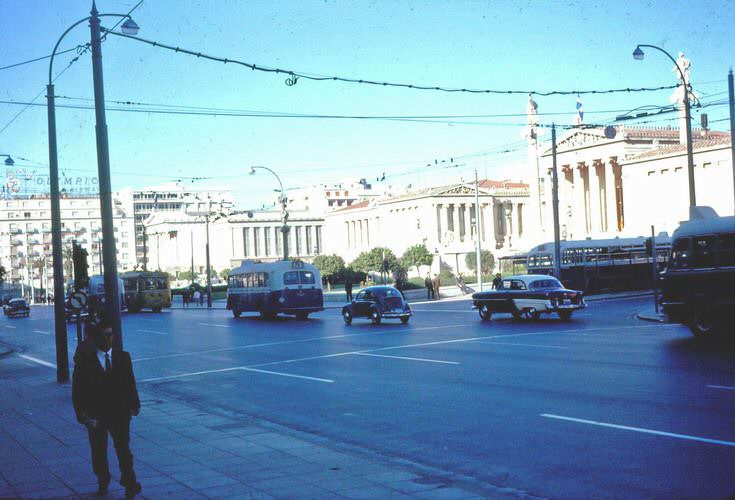
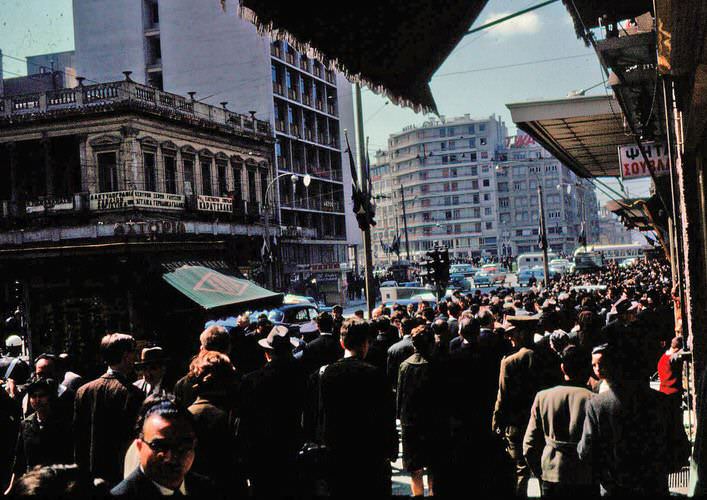
Panapistimiou street and the University of Athens.
Panapistimiou Street and Omonia Square.
Panapistimiou Street

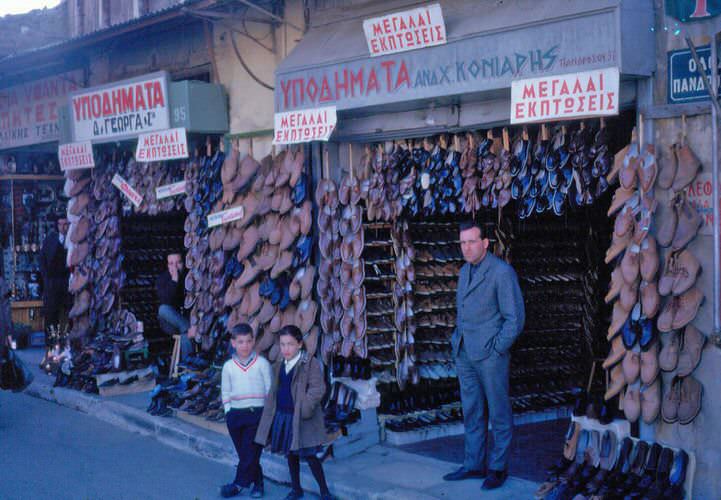
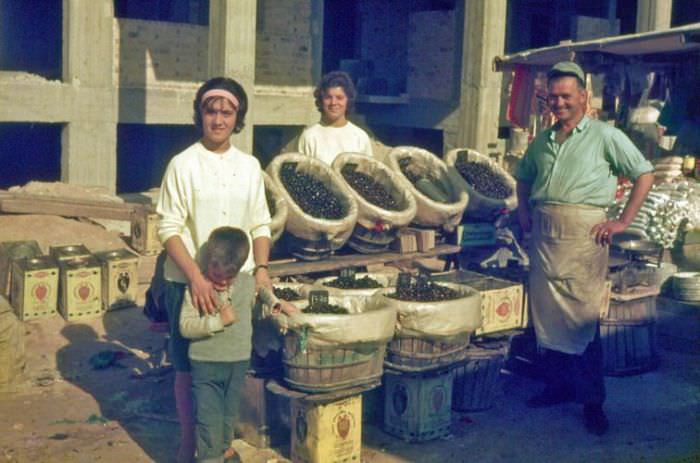
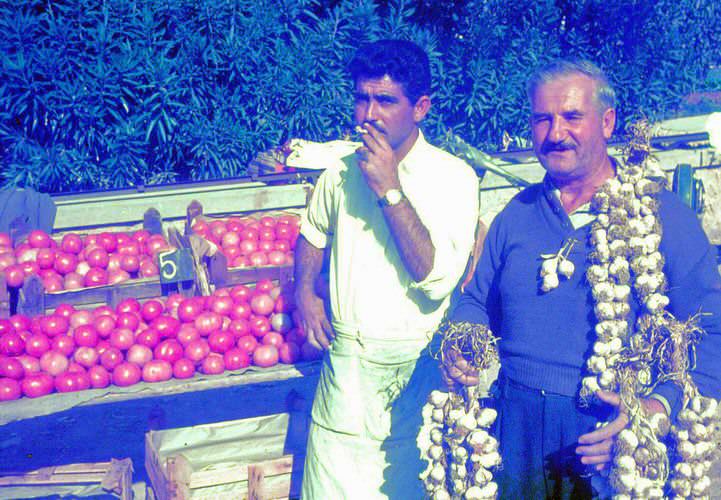
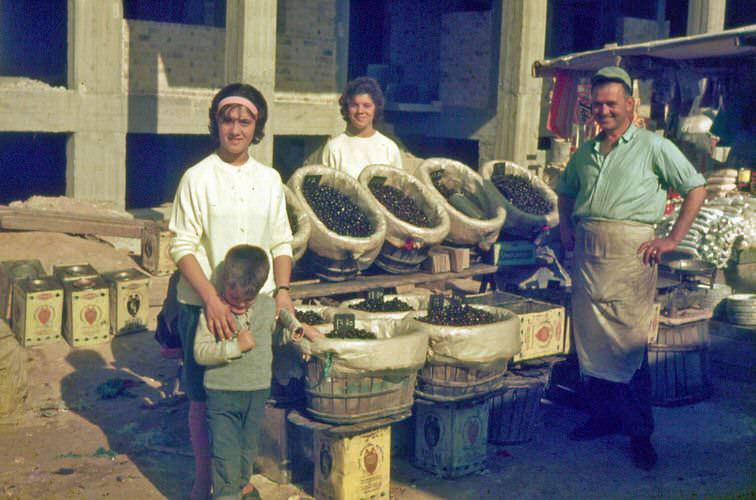
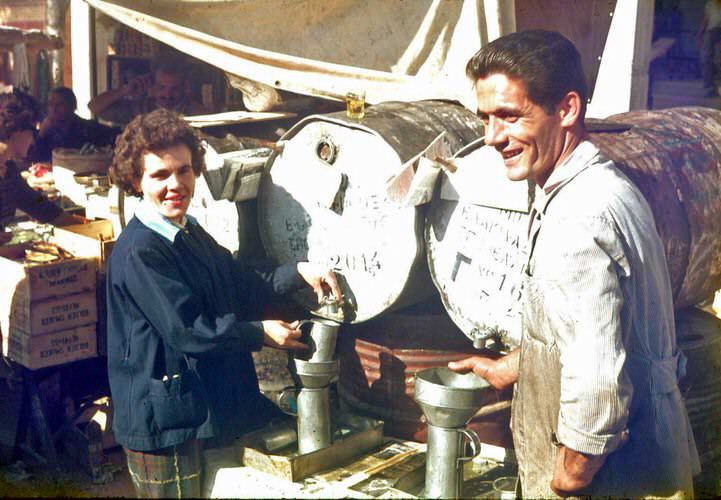
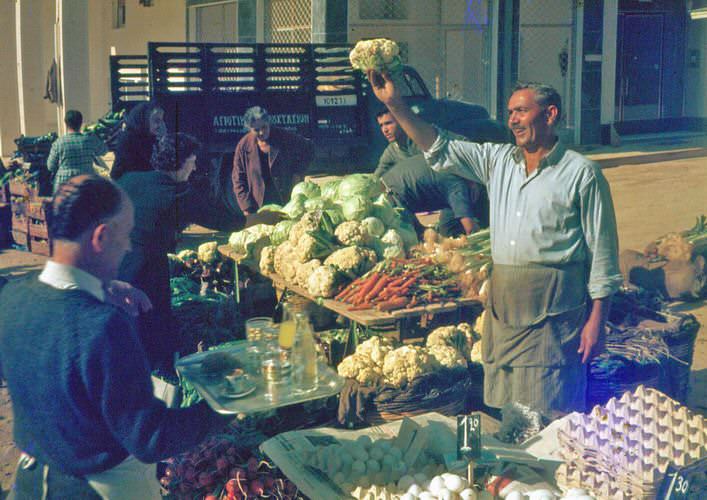
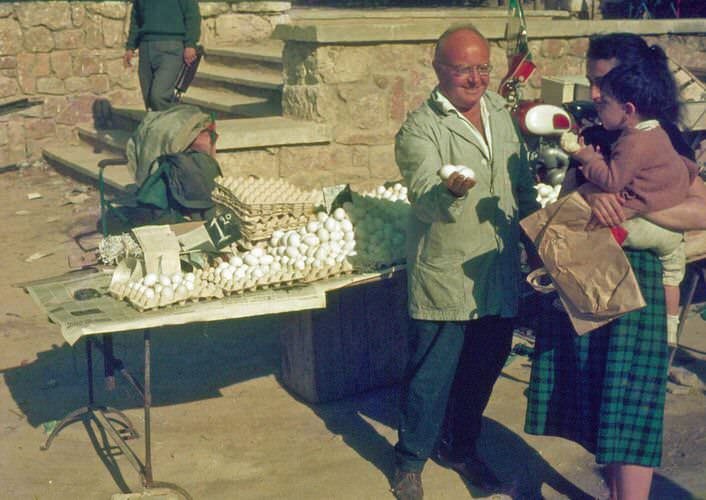
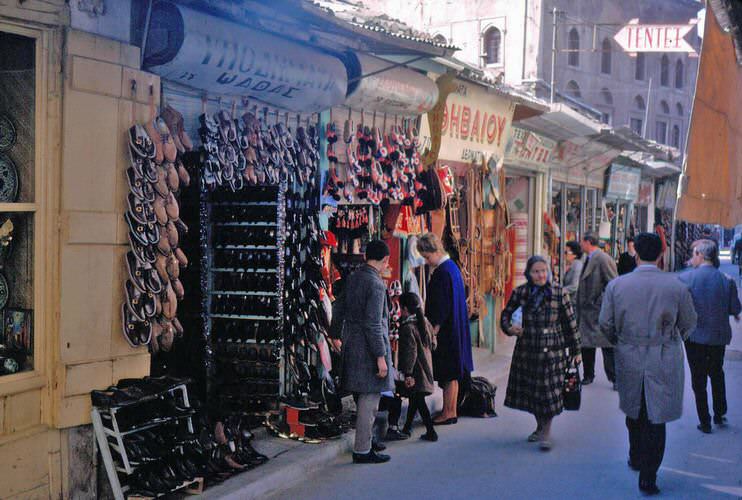
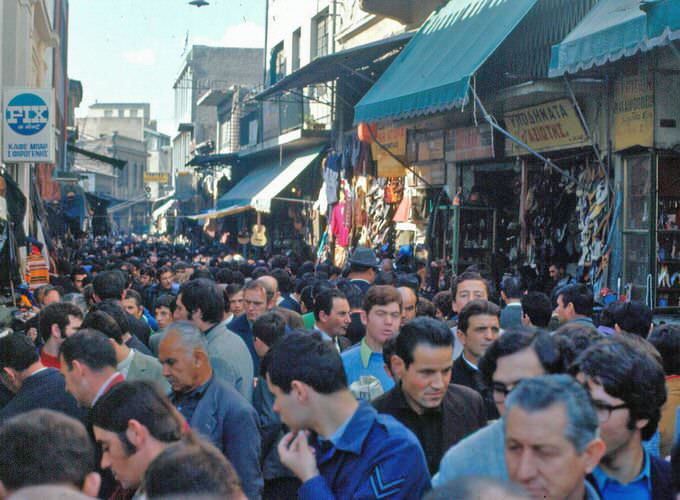
Markets were central to daily life in Athens. The Monastiraki area hosted a lively flea market where vendors sold everything from antiques to fresh goods. Pandrosou Street and Iphestou Street were lined with shoe stores and tourist shops. The Laiki Agora — the open-air street market — appeared in neighborhoods across the city, from Goudi to the city center, where sellers laid out olives, olive oil, and produce for local shoppers.
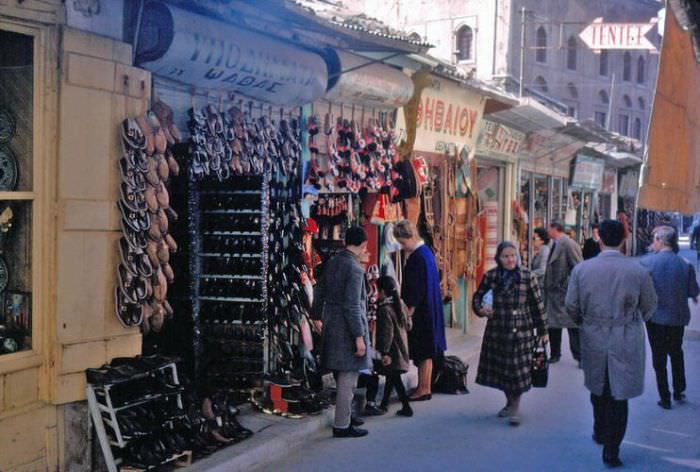
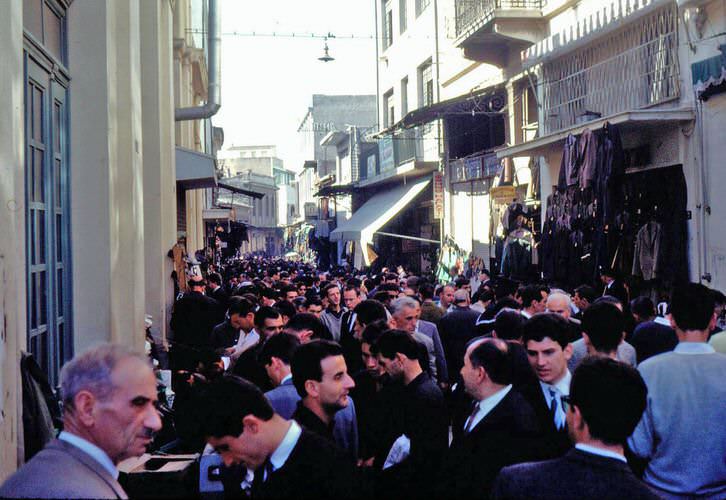
The market of Monastiraki
Monastiraki flea-market.
Shoe stores on Pandrosou Street in Monastiraki.
Selling olives at a local flea market
Laiki Agora
Laiki Agora
Olive-sellers at the Laiki Agora
Selling olive oil at the laiki agora
The laiki agora in Goudi

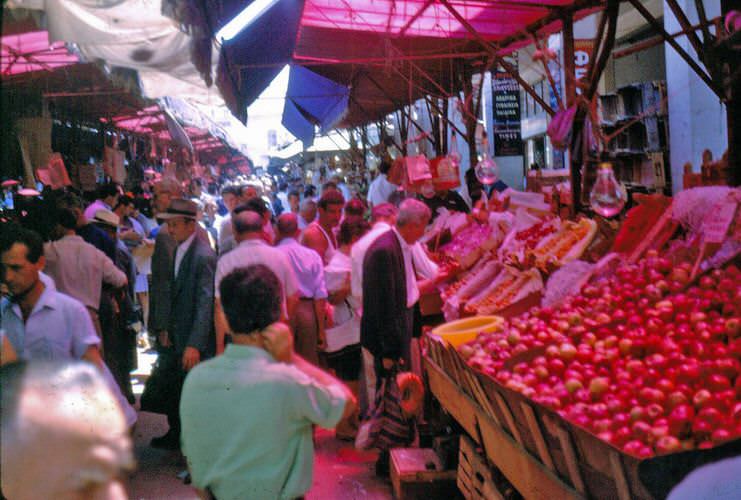
Food was everywhere in the streets of Athens. A psistaria in downtown Athens displayed roast lamb, chicken, and pork in its window. The Central Market was a sprawling, active space on weekdays — though on Sundays it stood quiet and nearly empty. The Plaka neighborhood’s old tavernas offered meals in a setting that had changed little for generations.
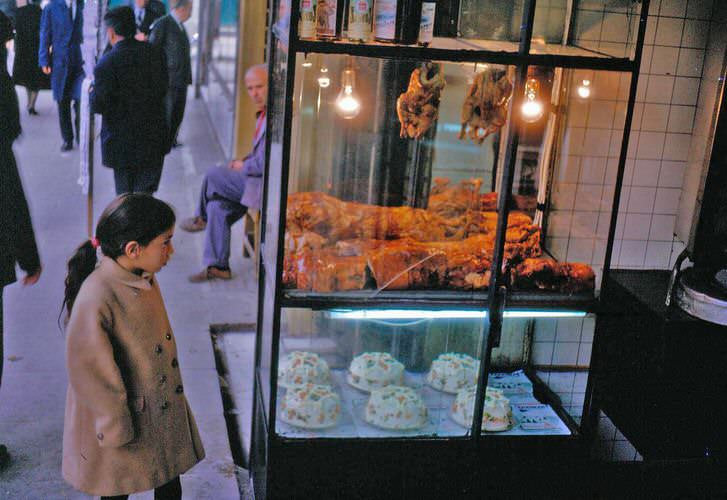
Cindy admiring roast lamb, chicken and pork at a psistaria in downtown Athens.
Central Market
Central Market
The central Market of Athens on a Sunday.
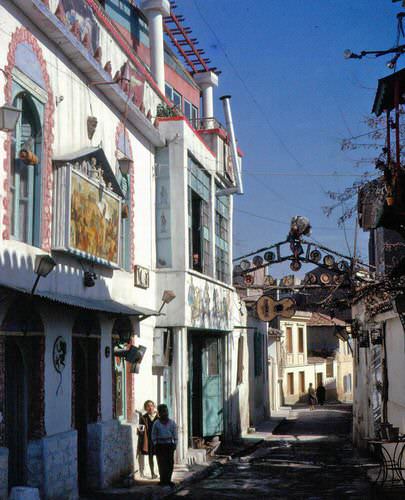
Old taverna in the Plaka

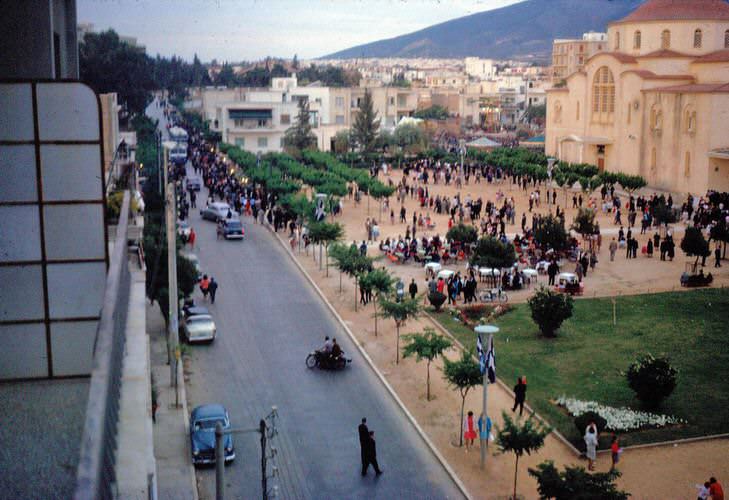
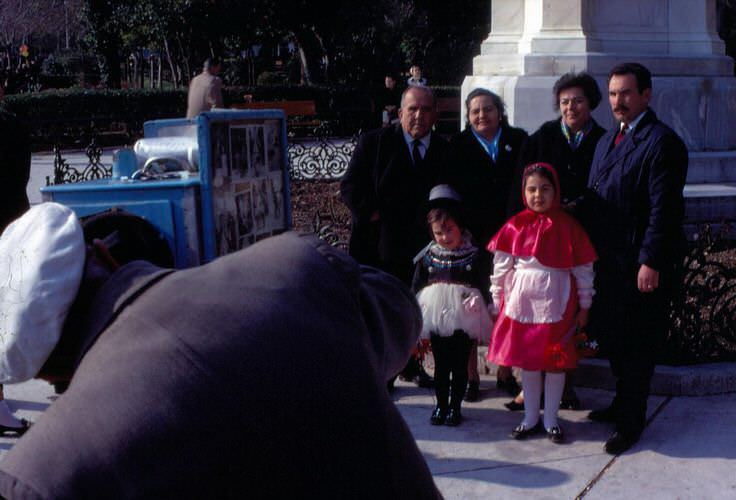
Religious life was deeply woven into Athens’ calendar. Easter was the most important celebration of the year. At Agio Thomas, crowds gathered outside the church after the Resurrection liturgy, carrying lit candles into the night. Fireworks lit up the sky across the city. The Apokreas carnival season — Greece’s equivalent of Mardi Gras — also brought costumes and festivities to Syntagma Square and the Plaka.
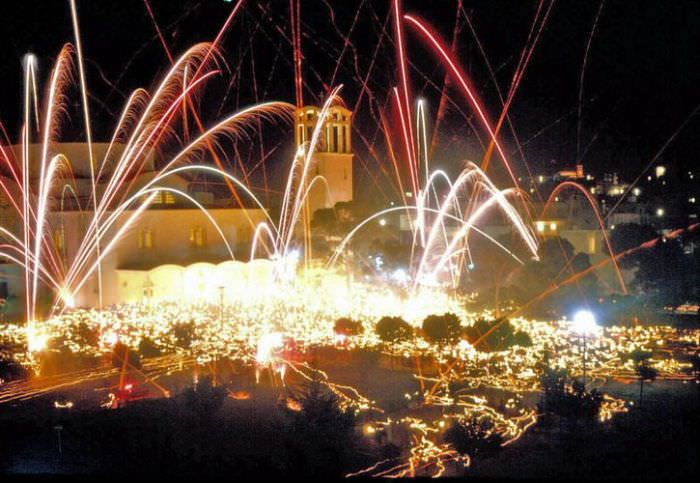
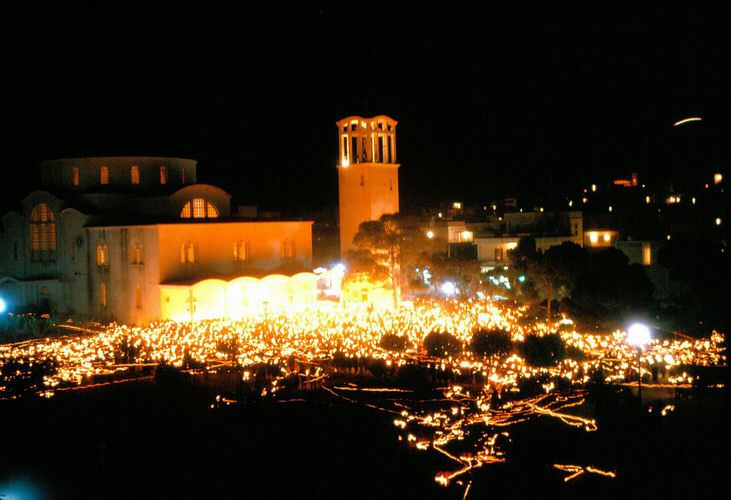
Fireworks in Athens after the Resurrection of Christ liturgy
Easter at Agio Thomas as people leave the church with their candles.
This may have been Easter Sunday at Ag Thomas.
Syntagma Square during Apokreas-Carnival Season.
Apokreas: The square in the Plaka and the predecessor of Thanasis' periptero.
Apokreas: The square in the Plaka and the predecessor of Thanasis’ periptero.
Apokreas
Apokreas

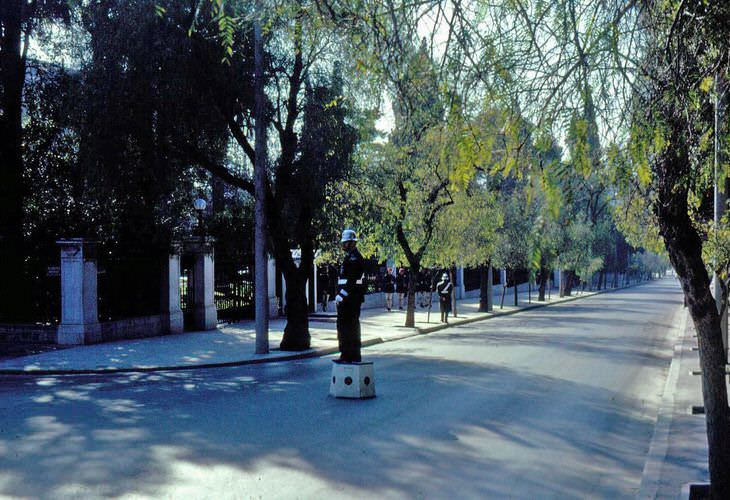
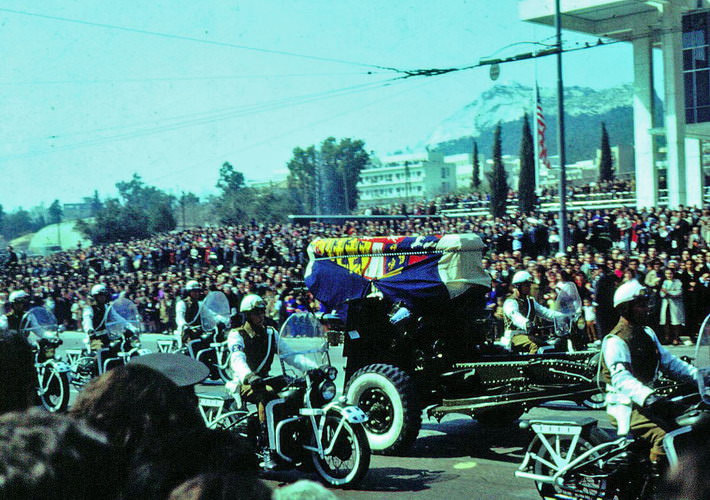
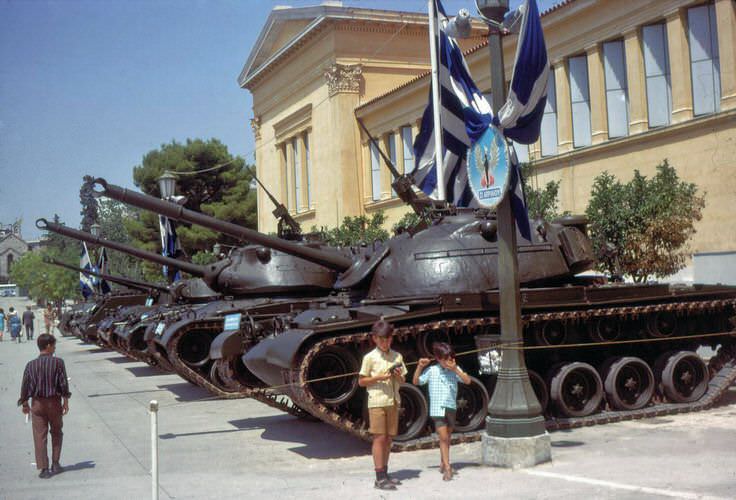
The military had a visible presence in the streets of Athens throughout the decade. Greek cavalry soldiers rode on horseback along Michalakopoulou Street, and a policeman directed traffic by the King’s Palace on Herod Attikou Street. King Paul’s funeral procession passed the American Embassy, drawing crowds along the route. Tanks were photographed at Zappeion — a sign of the political tensions that would culminate in the military junta of 1967.
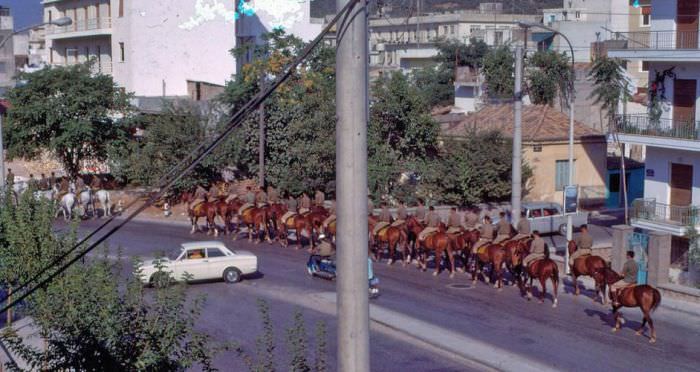
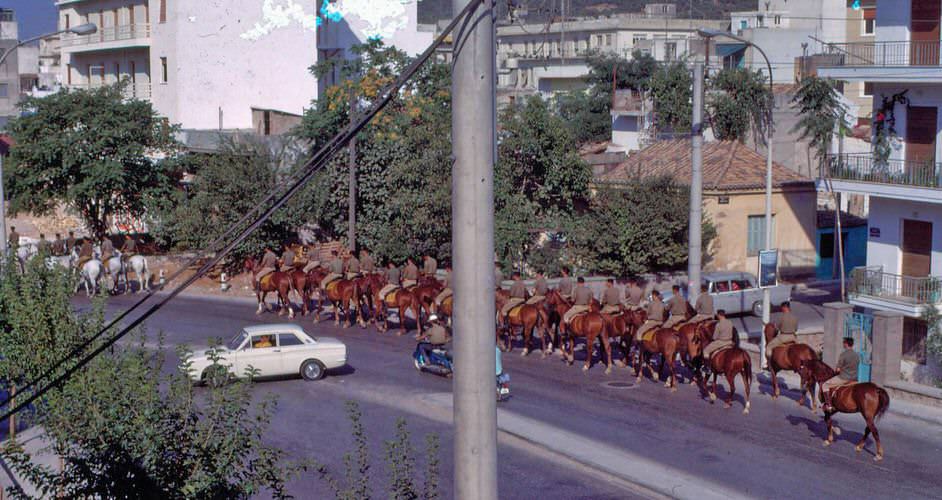
Soldiers of the Greek Cavalry in Michalakopoulou Street
Soldiers on horseback on Mikalakopoulou Street
Policeman directing traffic on Herod Attikou Street by the King's Palace.
Policeman directing traffic on Herod Attikou Street by the King’s Palace.
King Paul's casket passes the US Embassy
King Paul’s casket passes the US Embassy
Tanks at Zappion
Tanks at Zappion

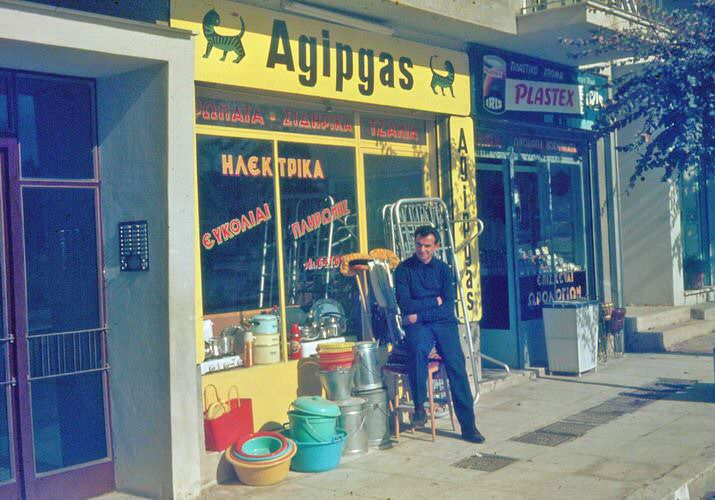
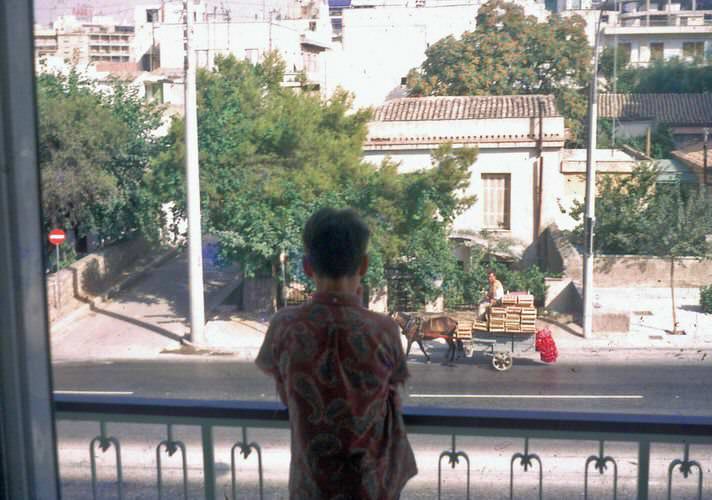
Neighborhood life in 1960s Athens had a distinctly human pace. Barbers like Spiro kept small shops in apartment buildings. Carts still passed through residential streets. Hardware store owners knew their customers by name. On Mikras Asias Street, a local barber and a hardware merchant were fixtures of daily life in a city still rooted in community, even as it modernized around them.
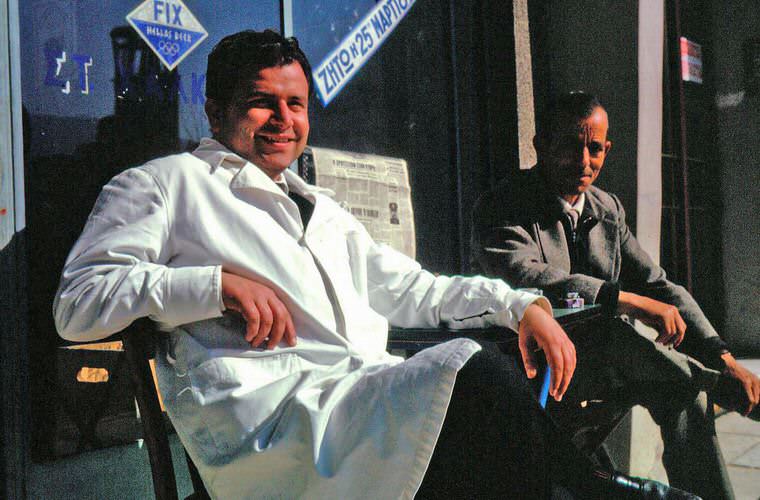
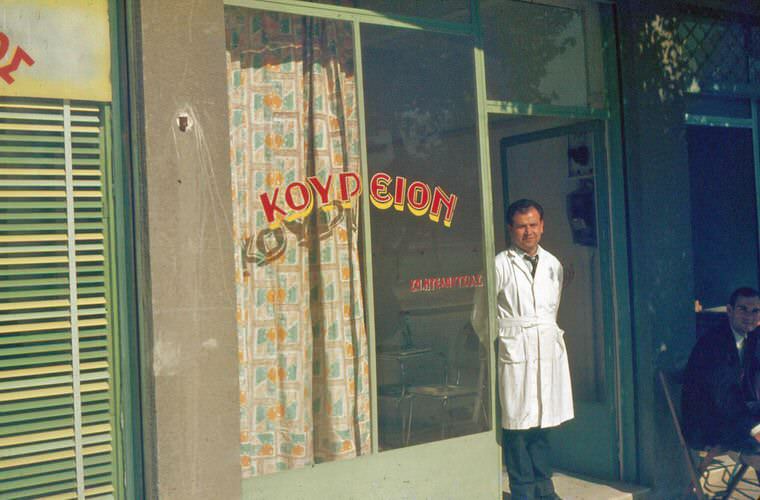
Spiro the barber had a shop in our building at 55 Mikras Asias.
Spiro the barber
Spiro the barber
The guy from the hardware store at 55 Mikras Asias
Cart passes our apartment on Myhalakopolou Street.
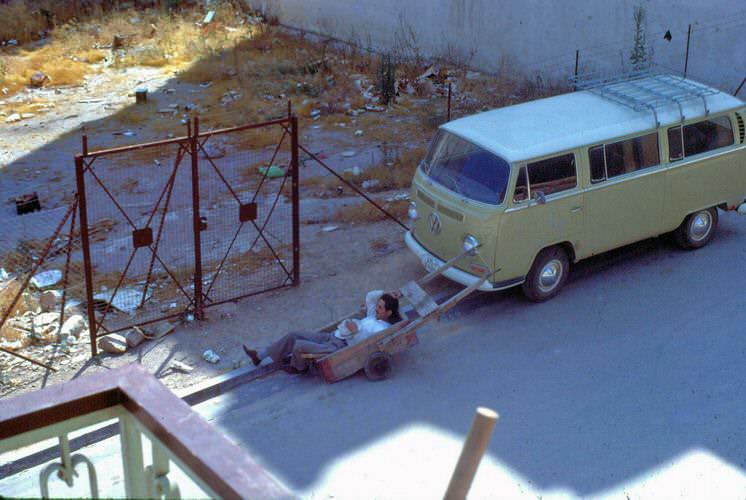
Worker taking a nap
Worker taking a nap

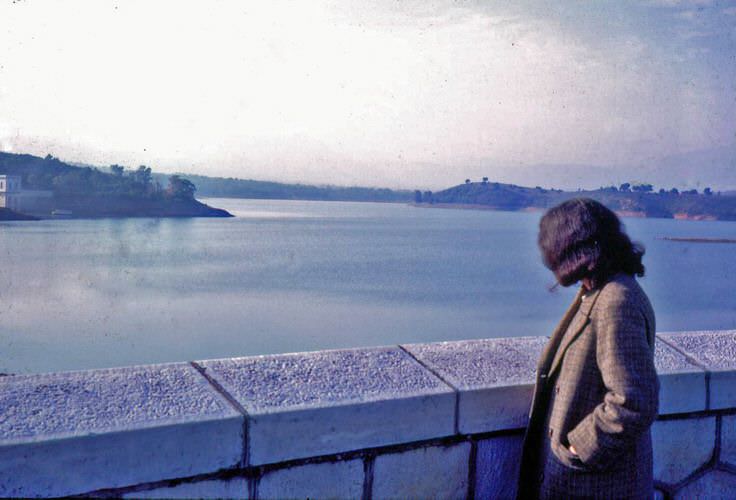
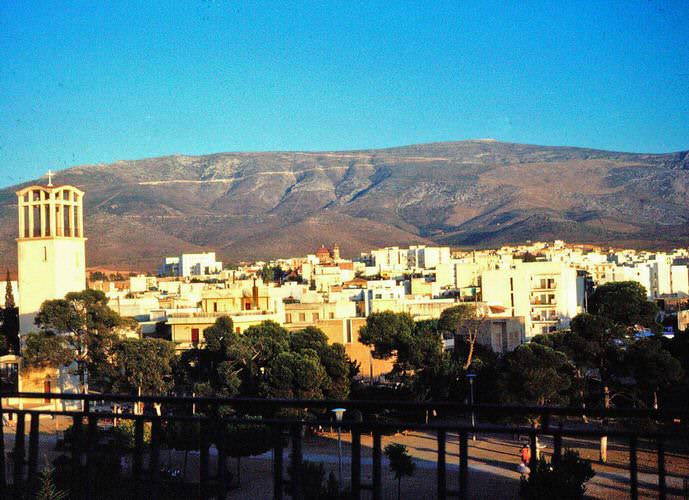
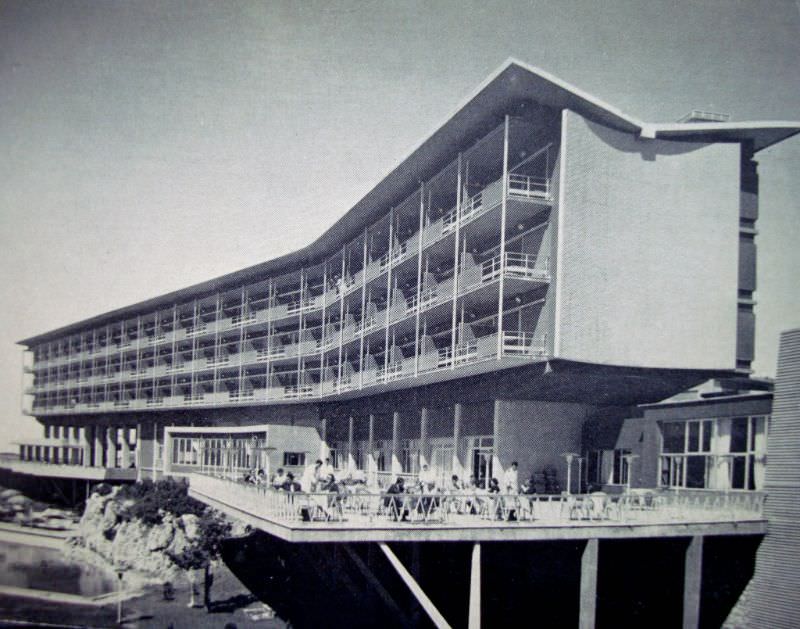
Beyond the city center, Athens offered a mix of green spaces, grand hotels, and natural landmarks. The National Garden provided shade and calm steps from Syntagma. The Mont Parnes Hotel sat high in the mountains north of the city, accessible by cable car. Marathon Lake, seen from its dam, supplied the city’s water and offered a rare view of stillness outside the urban rush. Mount Hymettus, visible from apartment balconies, formed the eastern backdrop of the city on clear days.
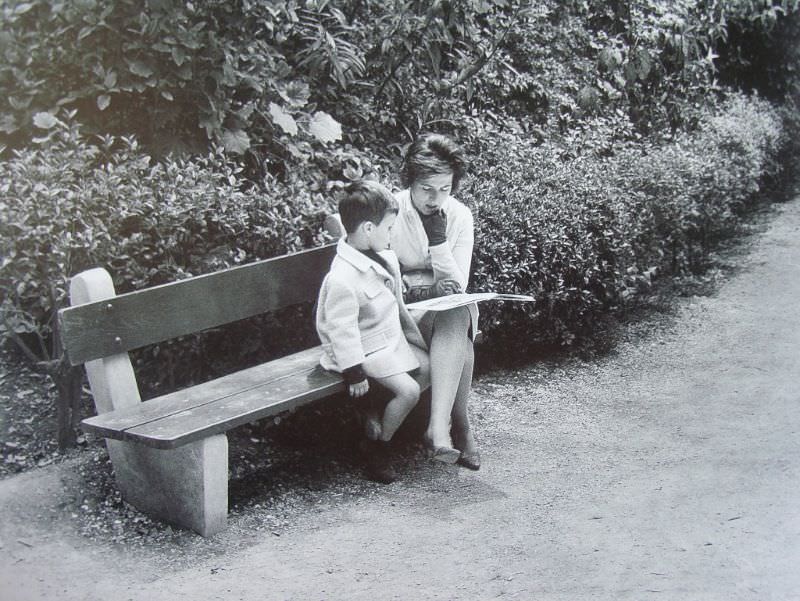
National Garden, Athens
Mont Parnes Hotel, Athens
Marathon lake from the dam
Mount Hymettos from our balcony

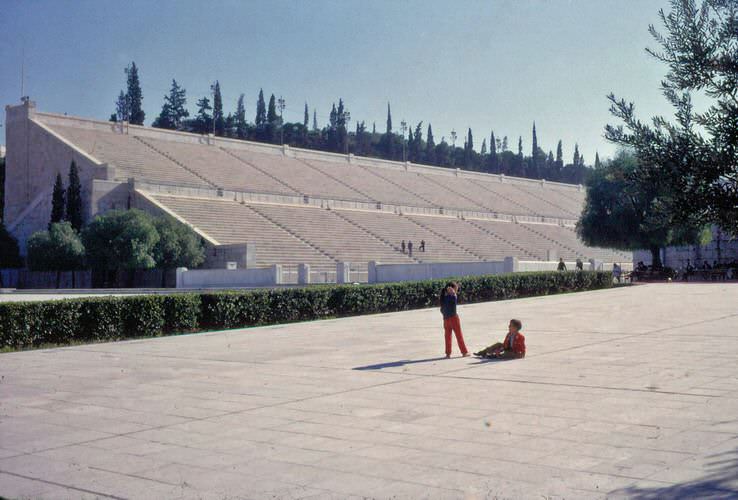
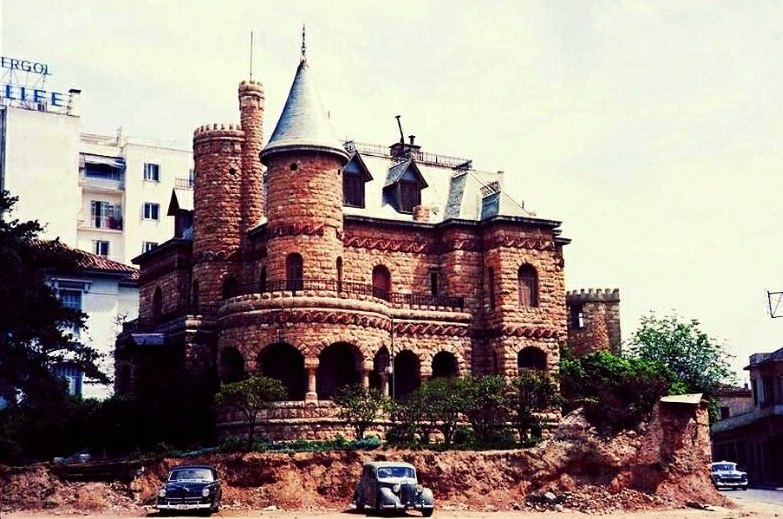
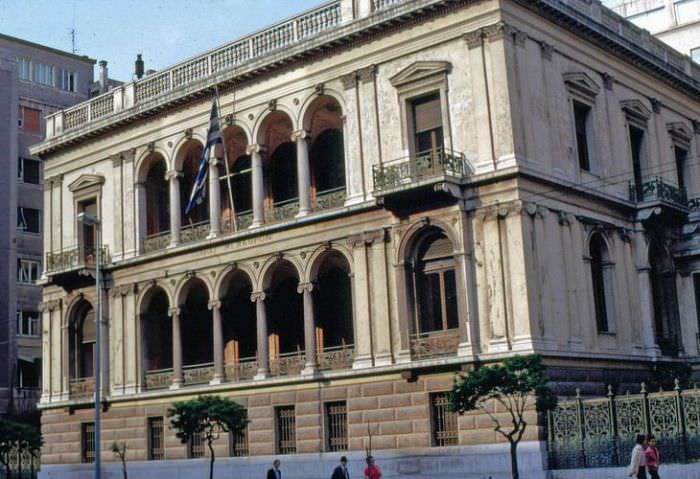
Major landmarks anchored different parts of the city. The American Embassy stood as a prominent modern structure in Athens. Heinrich Schliemann’s former house — the man who excavated Troy — operated as an elegant neoclassical building that would later become the Numismatic Museum. The Panathenaic Stadium, built entirely of white marble, remained a symbol of the city’s ancient sporting history.
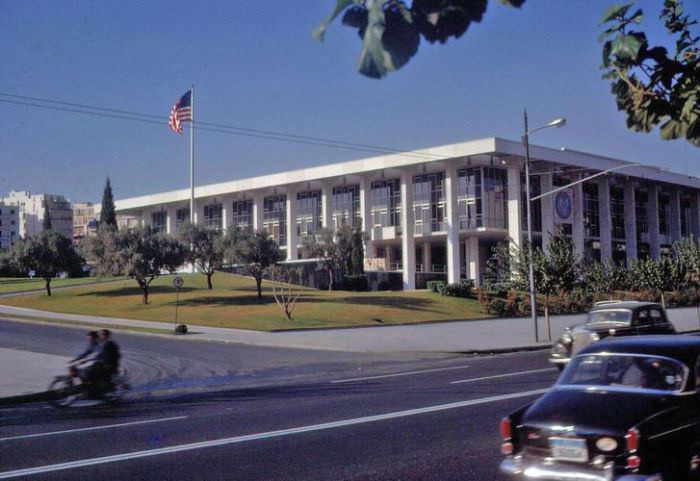
American Embassy in Athens
Heinrich Schliemann's house, which now operates as the Numismatic Museum of Athens
Heinrich Schliemann’s house, which now operates as the Numismatic Museum of Athens
The Stadium
The Stadium

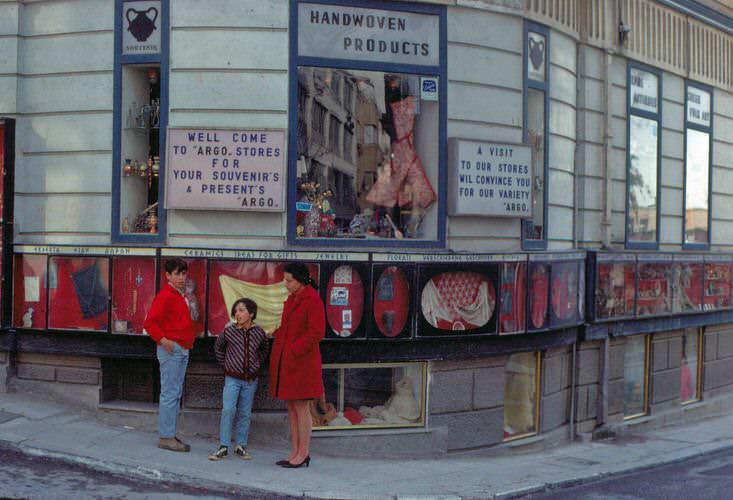
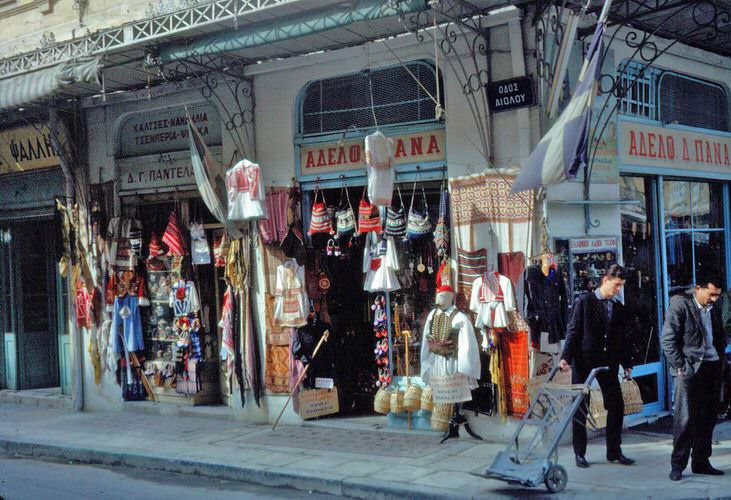
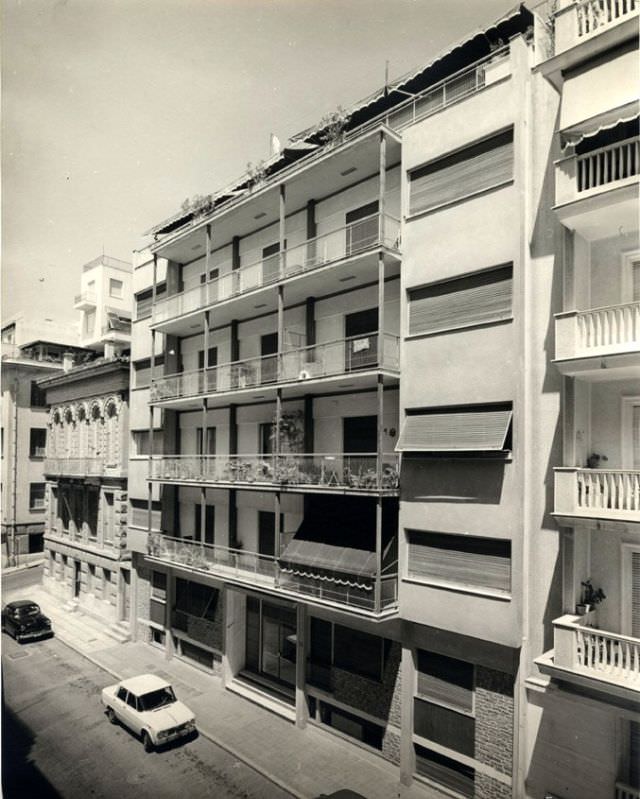
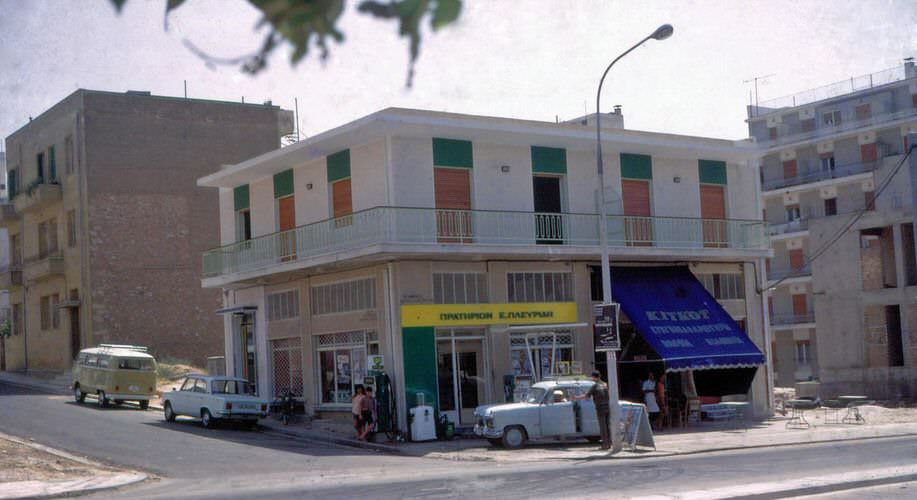
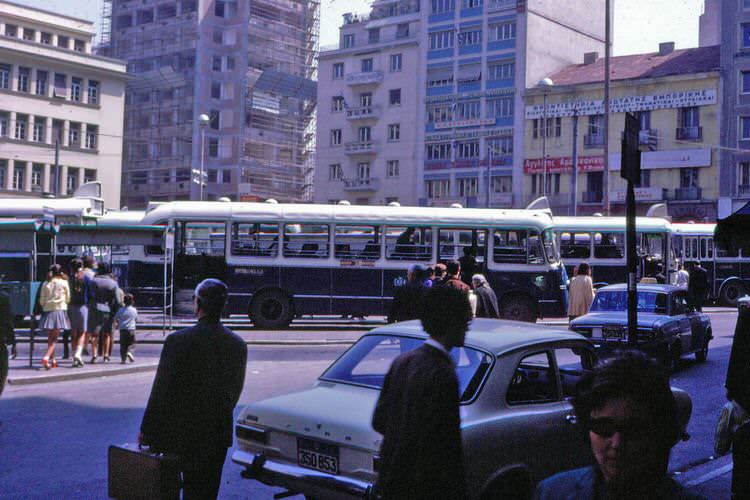
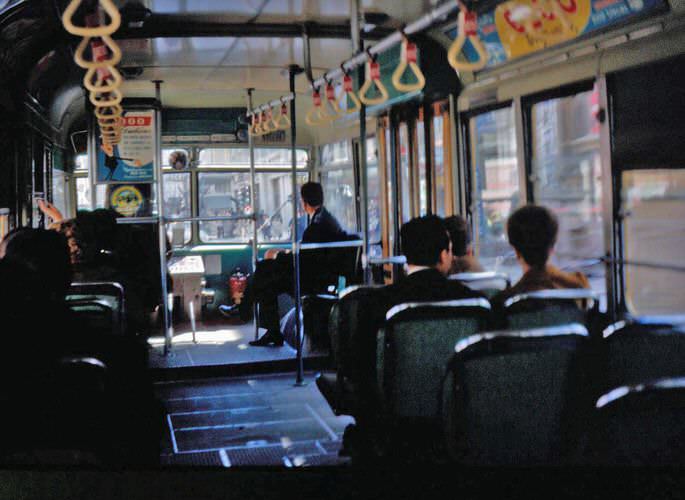
Athens’ streets in the 1960s were a mix of old and new, formal and informal. Sheep still crossed roads in Ampelokipoi. Buses packed with commuters moved through the city. Tourist shops stocked with souvenirs sat beside serious architecture firms. On Deinokratous Street, the office of architect Papazisis represented the professional class helping to shape the city’s new face.
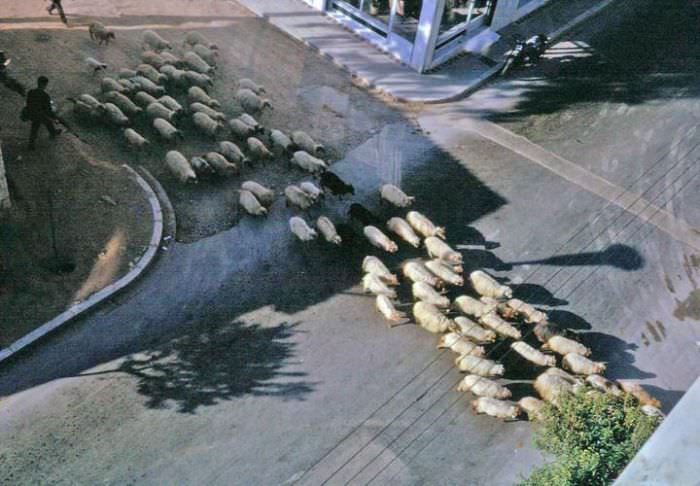
Sheep crossing the street in Ampelokipoi
Inside a Greek bus.
Inside a Greek bus.
Tourist shop in the Plaka.
Tourist shop on Aiolou Street in Monastiraki
Papazisis Architect, Deinokratous street, Athens

These photographs capture a city at a turning point — still connected to its old rhythms but clearly heading somewhere new. The streets, the faces, and the buildings together tell the story of an Athens that existed for only a brief window in time.
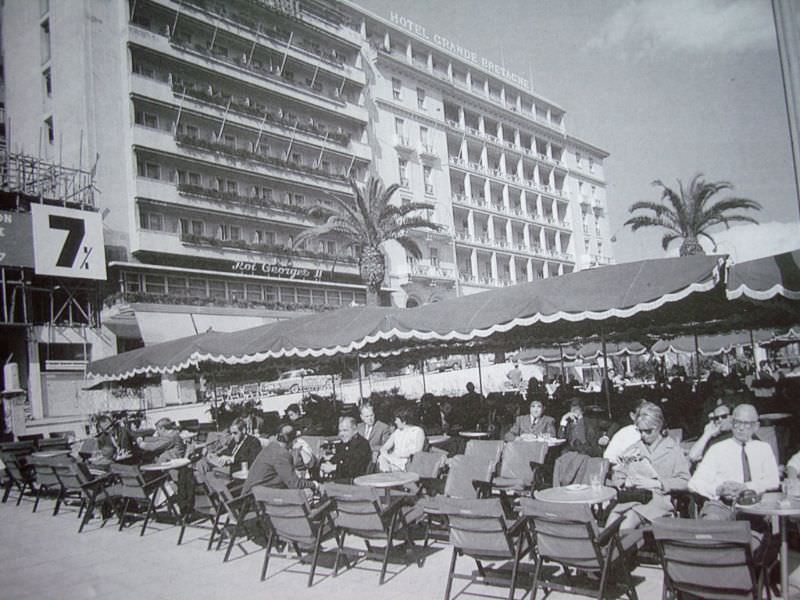
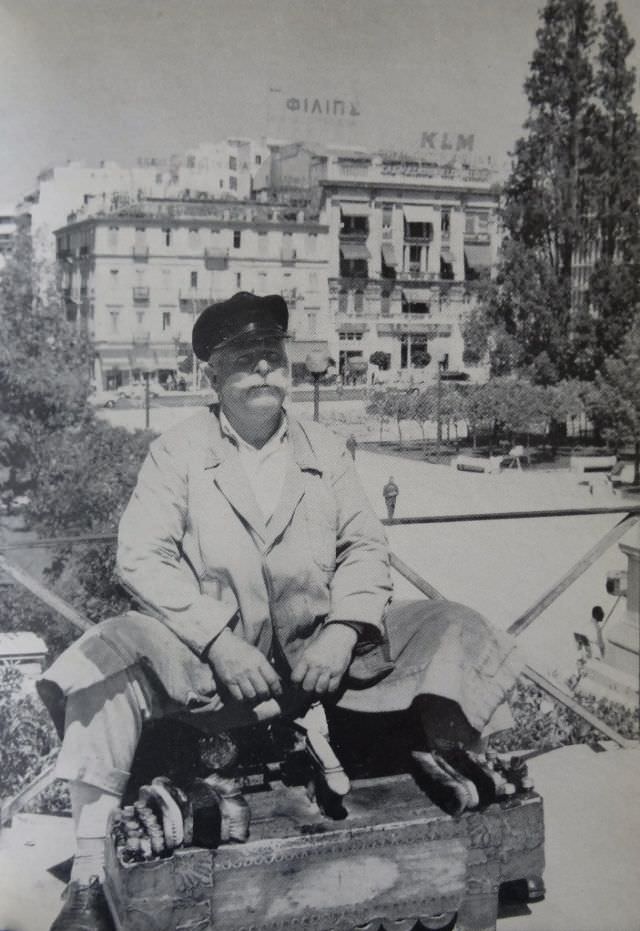
Syntagma Square, Athens
Syntagma, Athens
Syntagma, Athens
Syntagma, Athens
Syntagma, Athens
Syntagma, Athens
Syntagma, Athens
Vas. Konstantinou, Athens
Villa Margarita, Athens
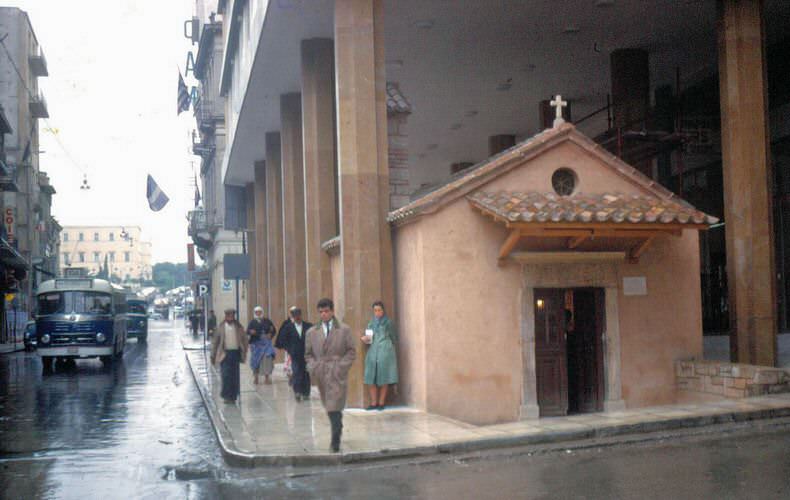
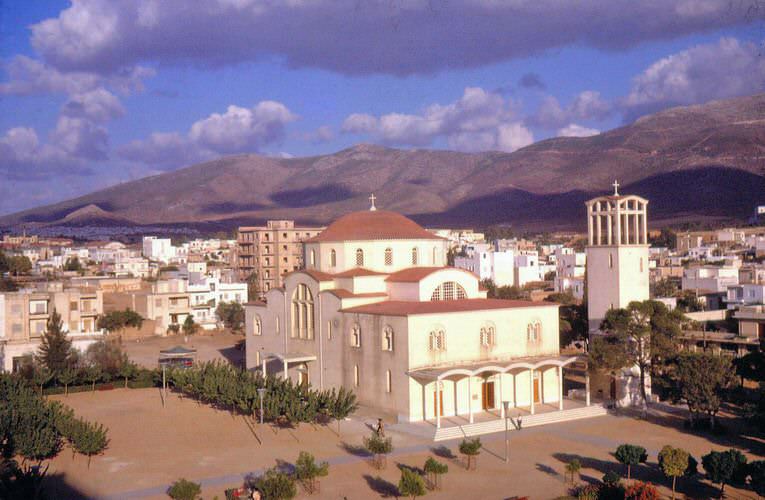
The steps behind lead to the park at Agio Thomas.
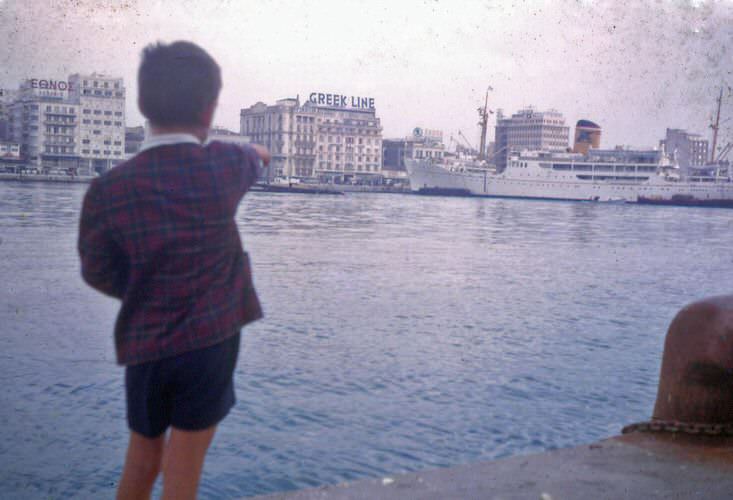
David in Pireaus
David in Pireaus
Syntagama Square
Syntagama Square
Syntagma Square
Syntagma Square
Metropolis Street
Metropolis Street
Pondrossou Street in Monastiraki
Athinas Street at the intersection of Vlahava Street.
Karageorgis Servias Street at Syntagma.
Kiosk on Herod Atticus Street by Zappion.
Ag Thomas.
Ag Thomas.
The corner of Aeoporou Papanastasiou and Mikalakopoulou Streets.
Iphestous Street in Monastiraki on Sunday
Kanigos Square
Kanigos Square
Mihalakopolou Street
Athens from Hilton towards Syntagma
Kallirois Avenue, Athens
Enjoyed this post? Get new ones in your inbox.

Leave a Comment

Your email address will not be published. Required fields are marked *

Share this Post 🥺

Please take a moment to share this content. Your support is greatly appreciated! 🙌🙏

Share this Post 🥺

Please take a moment to share this content. Your support is greatly appreciated! 🙌🙏
Scroll to Top
 
Hey Friend, Before You Go.. Please like & follow for more interesting content