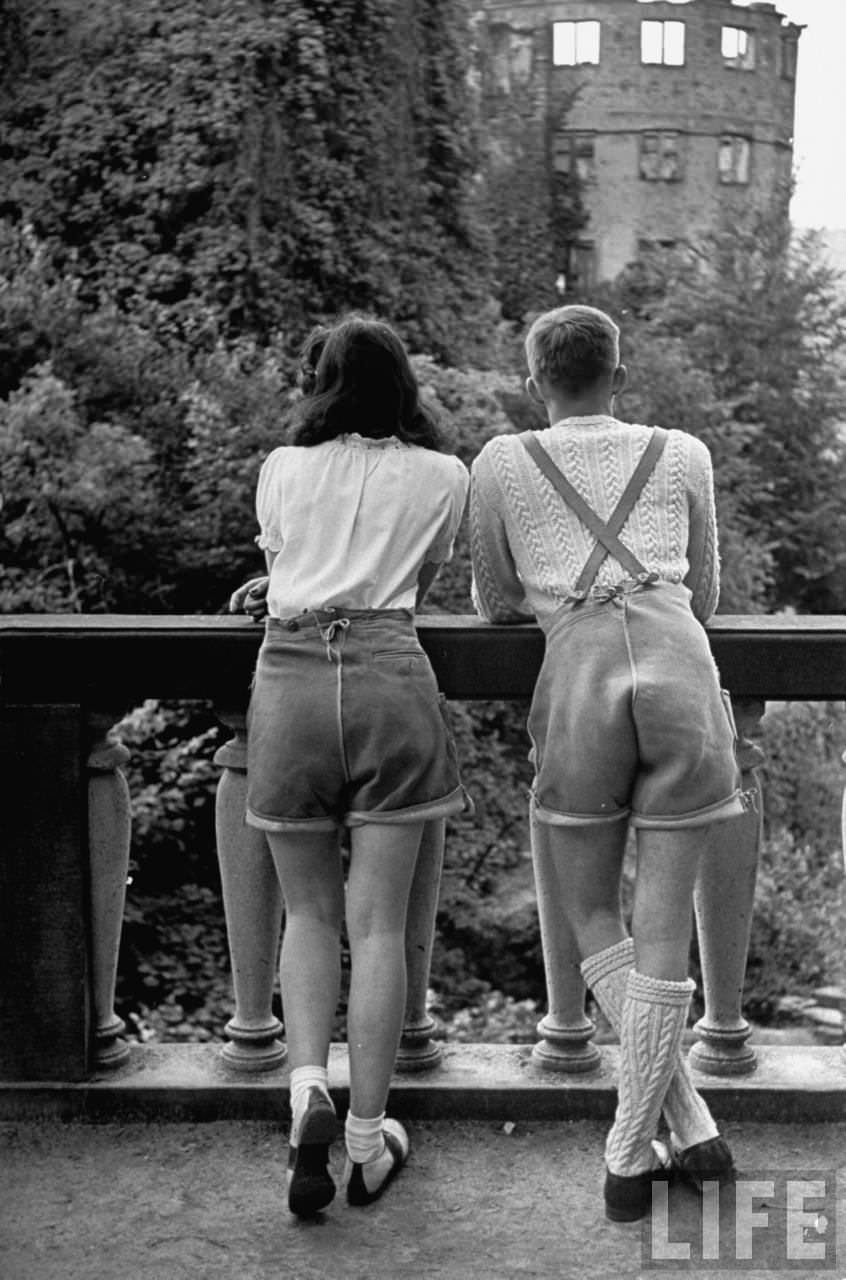
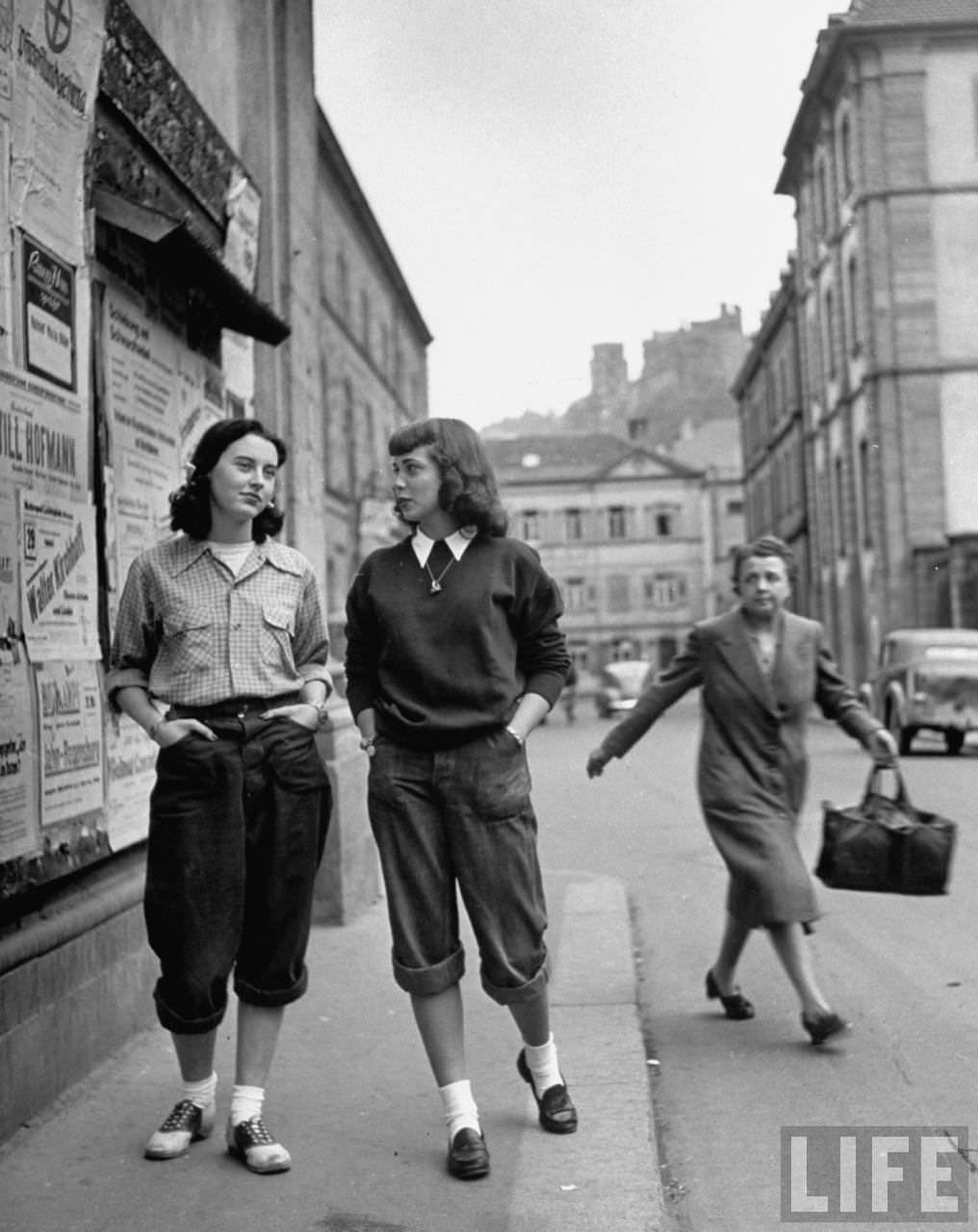
In 1947, Heidelberg, Germany was home to a striking cultural collision. American teenagers — children of military and civilian personnel stationed there after World War II — brought their own fashions, habits, and energy to one of Germany’s oldest university cities. Locals who had lived through years of war now watched young Americans stroll through ancient streets in saddle shoes, jeans, and flannel shirts.
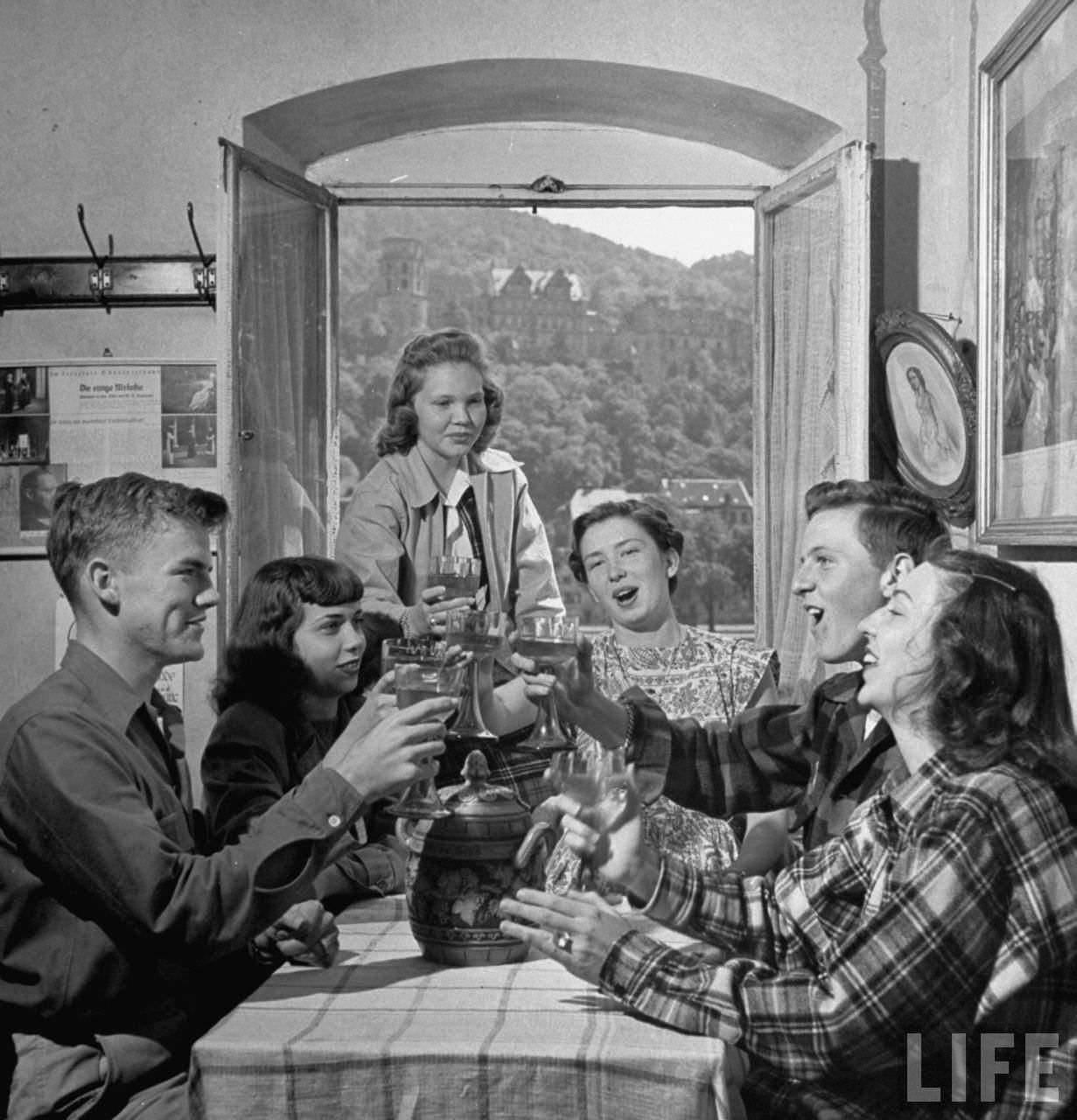
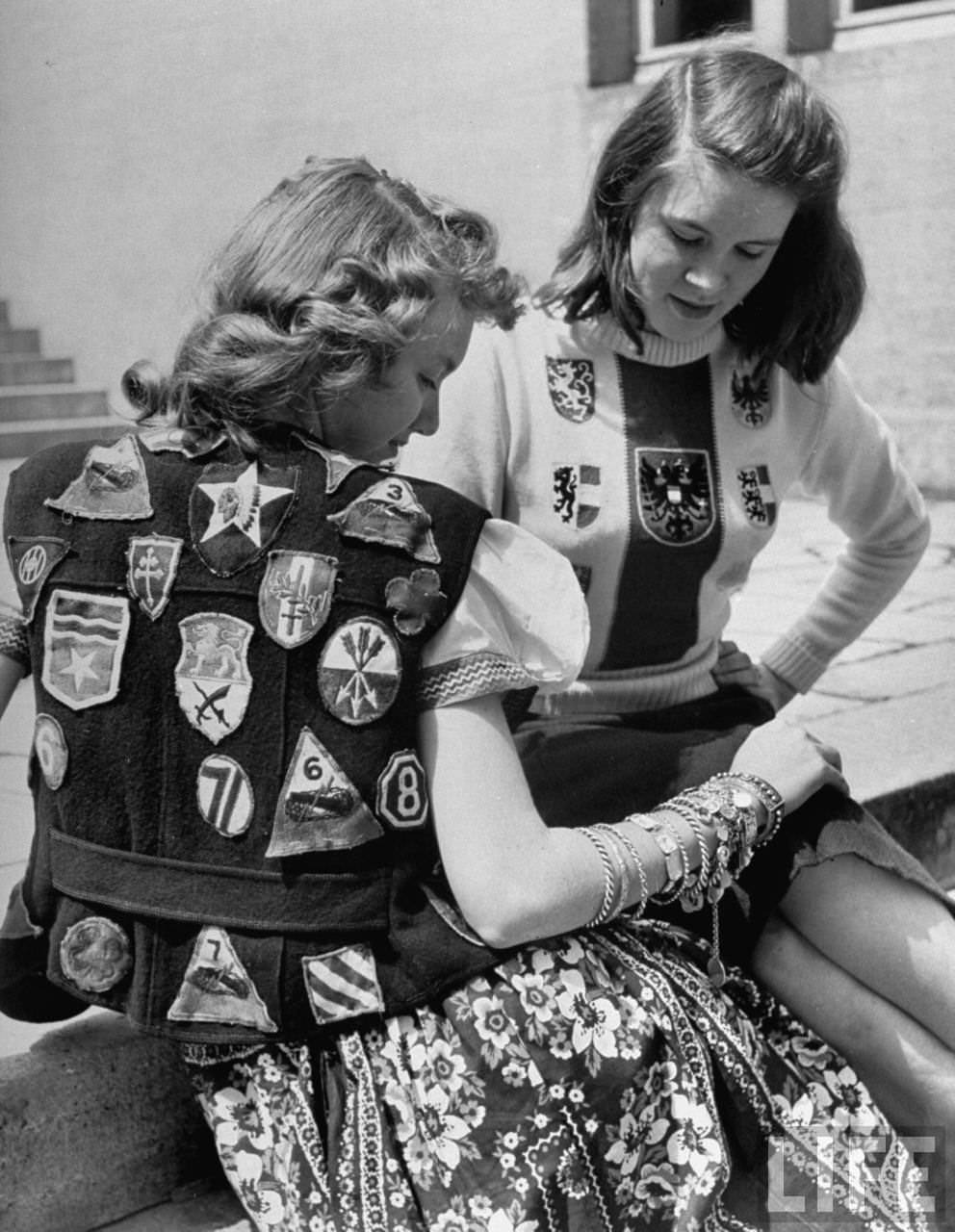
These teens didn’t just observe German culture — they absorbed pieces of it and wore them as their own. Army patches appeared alongside German coats of arms. Old university caps, typically earned through years of academic tradition, became casual accessories. Miniature Heidelberg sabers, a nod to the city’s fencing heritage, were pinned to sweaters like badges of belonging.
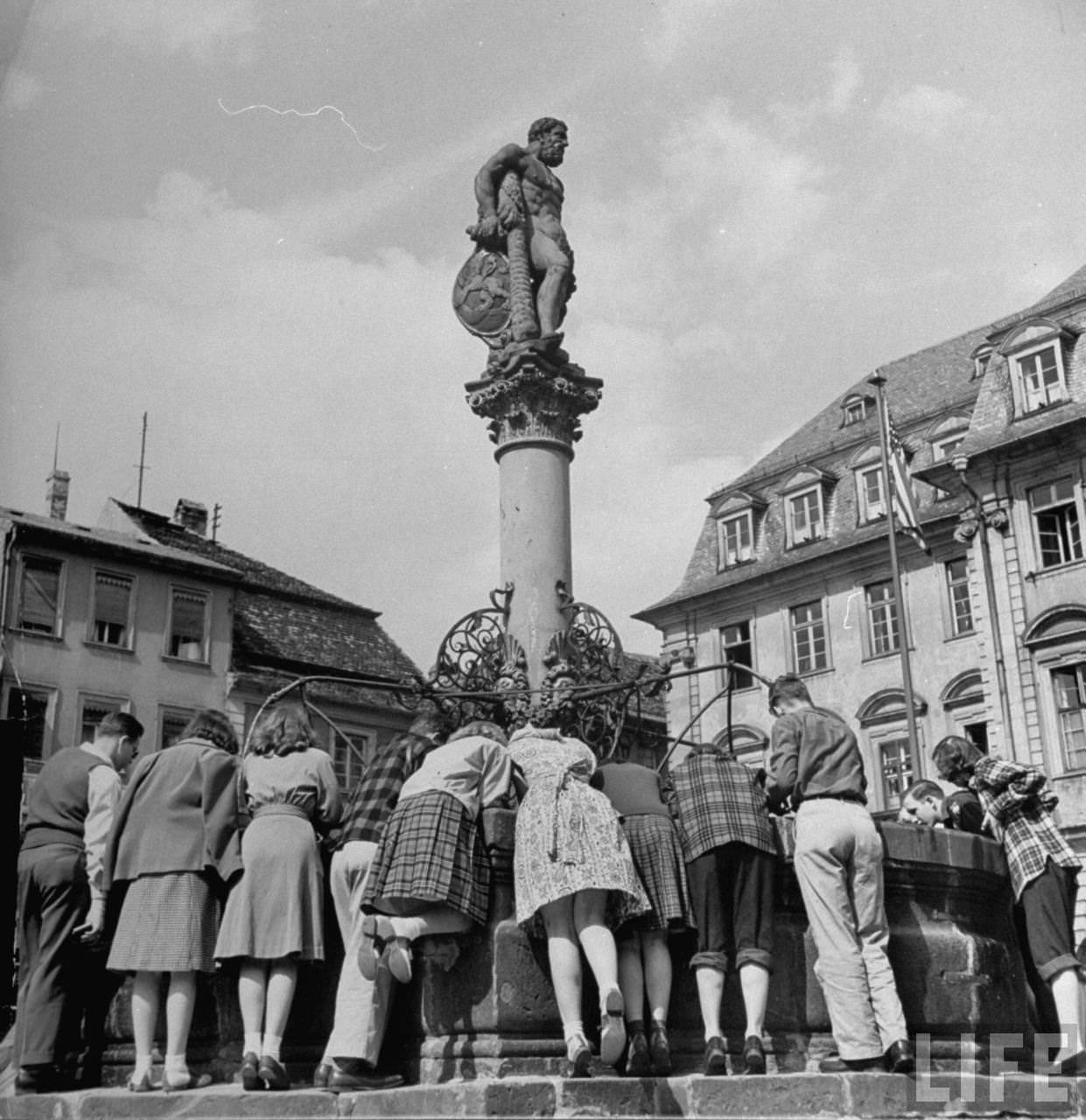
The sight of American girls walking freely in men’s clothing — jeans, oversized flannels, loafers — drew open stares from German women raised in a far more conservative postwar environment. The contrast between the two cultures played out visibly on every block.
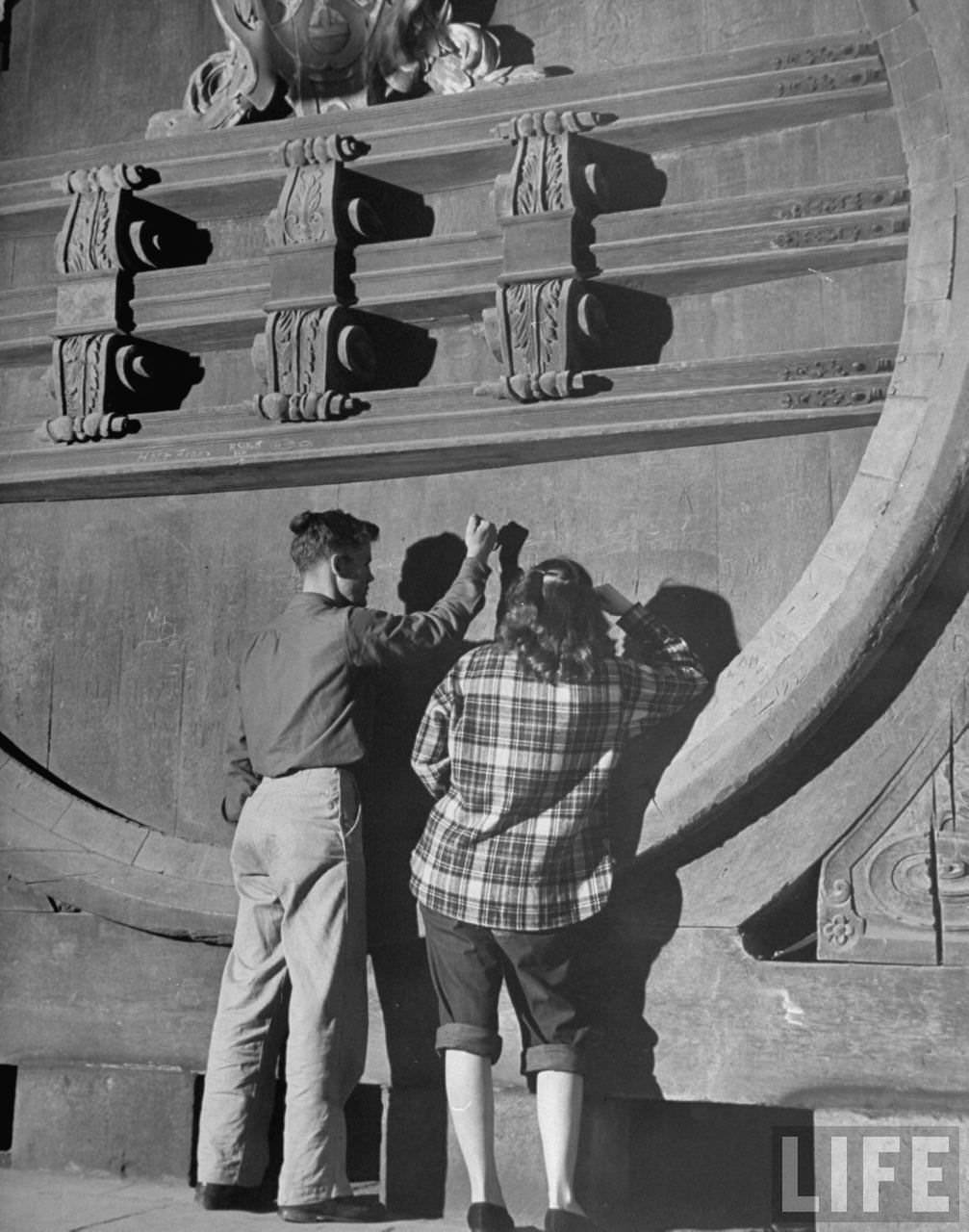
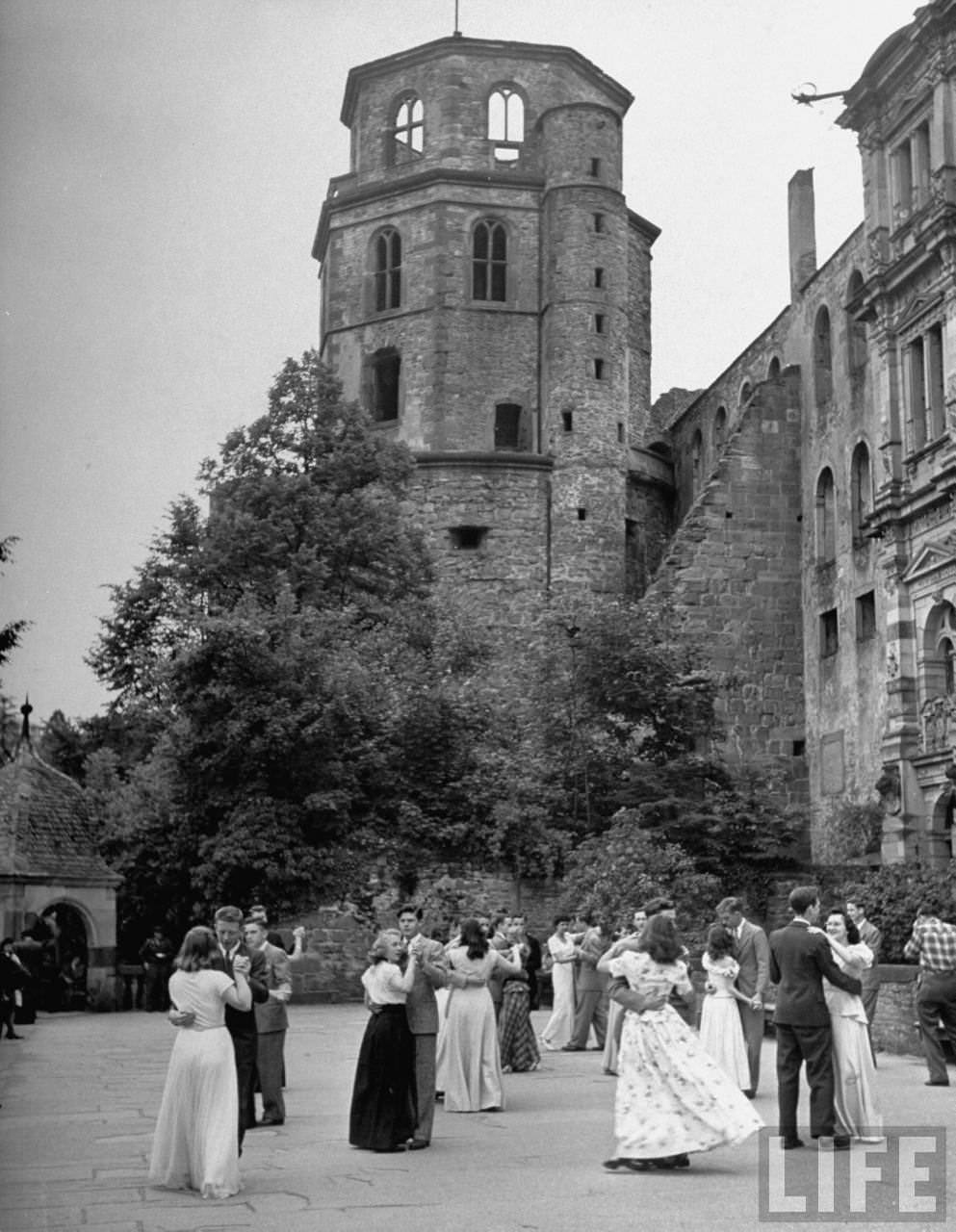
The Heidelberg Schloss, a famous ruined castle overlooking the city, became a gathering spot for these young Americans. They danced on its terraces, carved their names into the enormous wine vat in its cellar, and posed against its skyline for photographs.

Fashion among the group was a direct mix of both worlds. Seventeen-year-old Margaret Raymond typified the trend — sipping a milkshake while sporting a miniature Heidelberg saber pinned to her sweater. It was an unmistakably American teenage scene set against a very German backdrop.

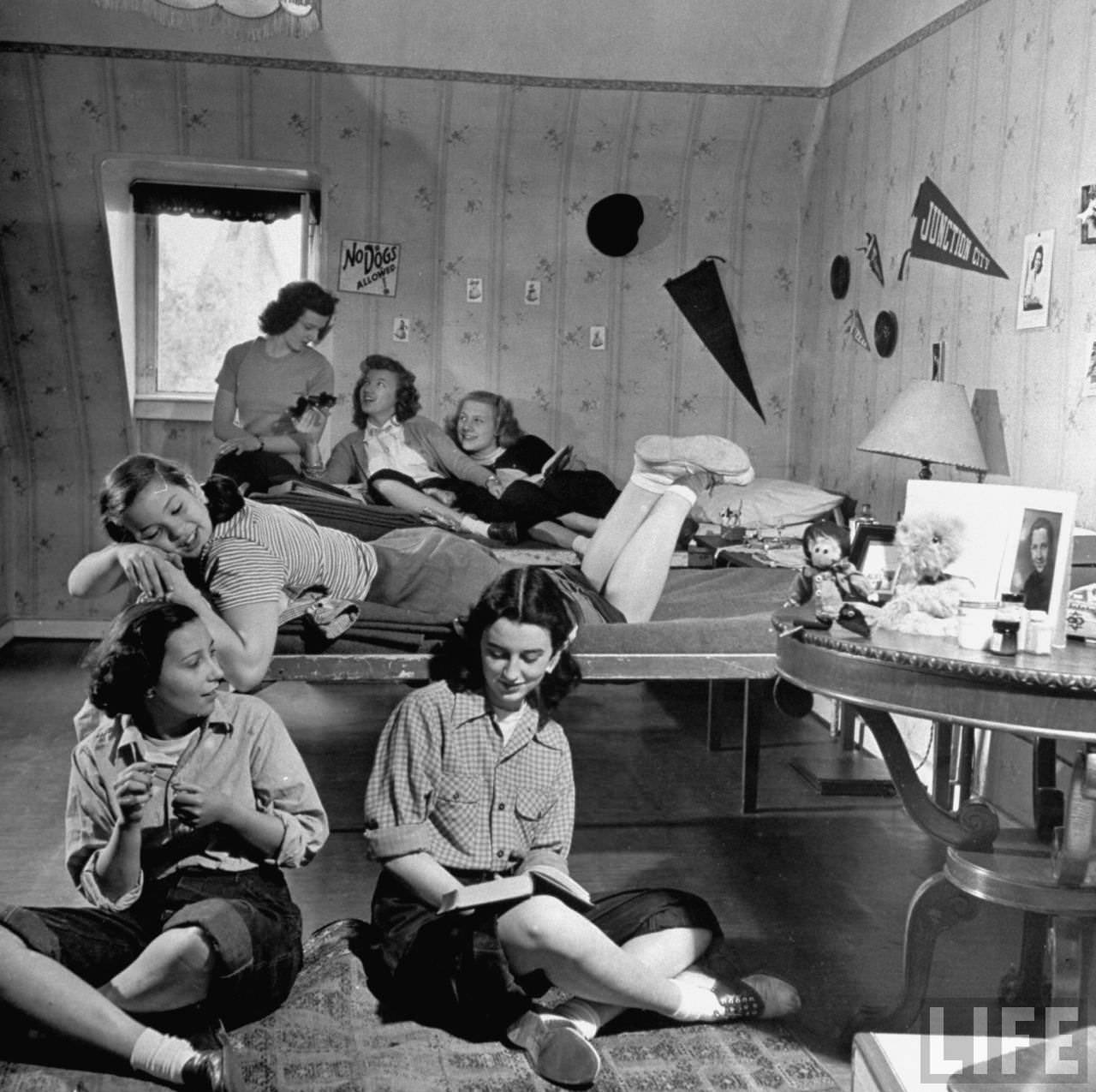
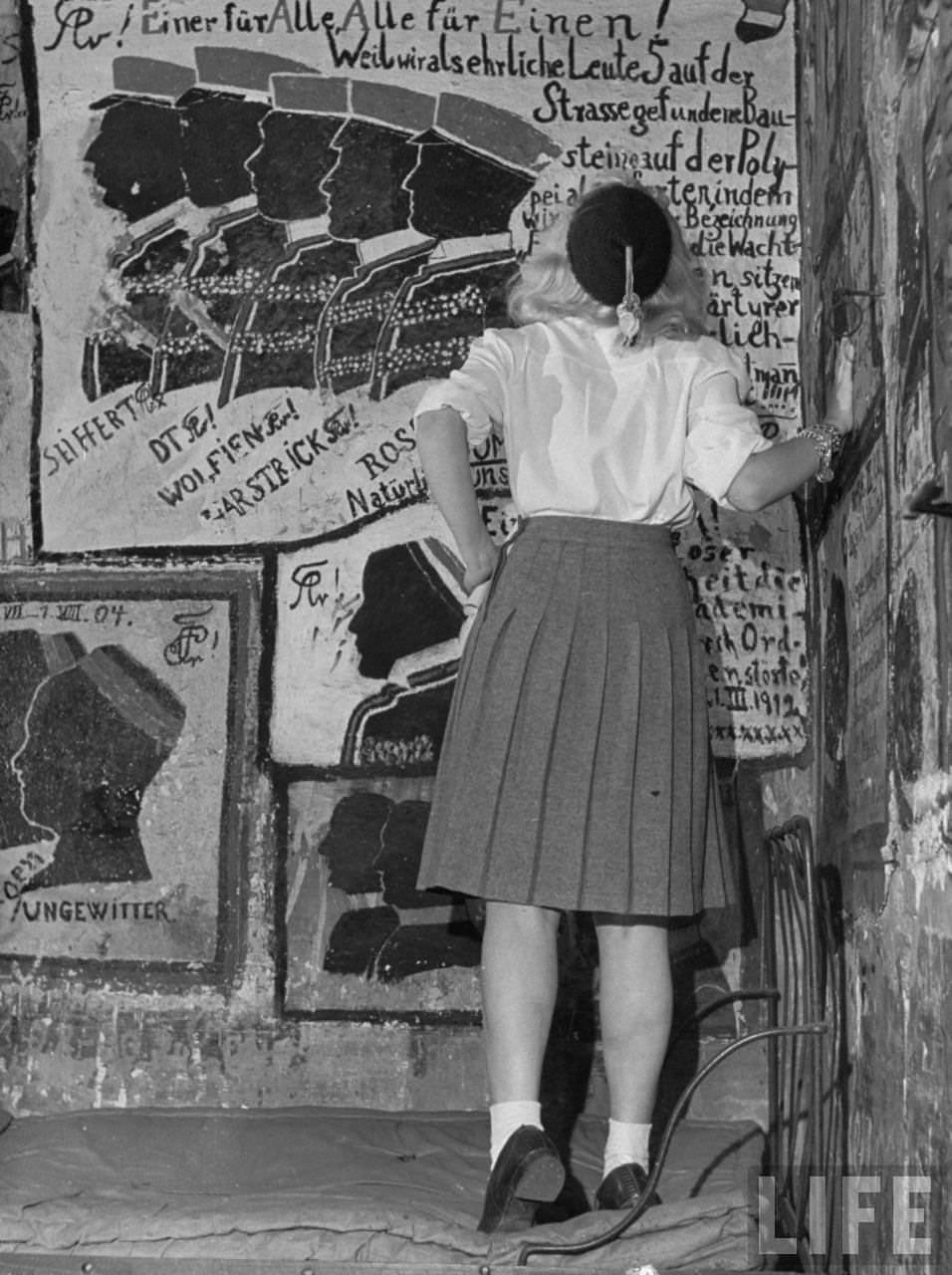
The students lived in a dormitory on the Schlossberg, the wooded hill that holds the castle above the city. From there, they had access to Heidelberg’s university buildings, its historic prison where students were once jailed for minor offenses, and its centuries-old academic traditions — all of which they engaged with on their own terms.

Perhaps no image captured the cultural blend more plainly than the combination of German leather lederhosen worn with American saddle shoes. Two garments from entirely different worlds, worn together without hesitation — a fitting symbol of what daily life looked like for American teenagers in postwar Heidelberg.