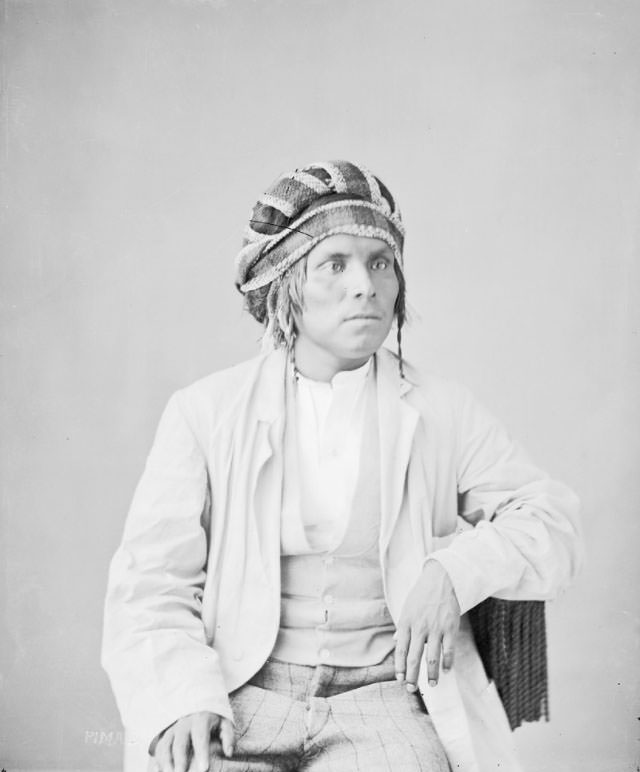

Alexander Gardner was born in Scotland and immigrated to the United States in 1856. He quickly established himself as one of the most skilled photographers of his era. His early career took him to the New York City studio of Mathew Brady, where he worked alongside other photographers and gained regular access to politicians and military figures. When the Civil War broke out, Brady sent his team into the field to document the conflict. Gardner was among them.
In 1862, Gardner left Brady’s studio and opened his own in Washington, D.C. General McClellan hired him as the official photographer of the U.S. Topographical Engineer Corps of the Union Army. After the war, Gardner’s lens turned to some of the most recognizable figures of the day — Abraham Lincoln, the Lincoln conspirators, and American Indian delegations visiting Washington. One of his most striking subjects was Buffalo Chief, captured here in full native dress.
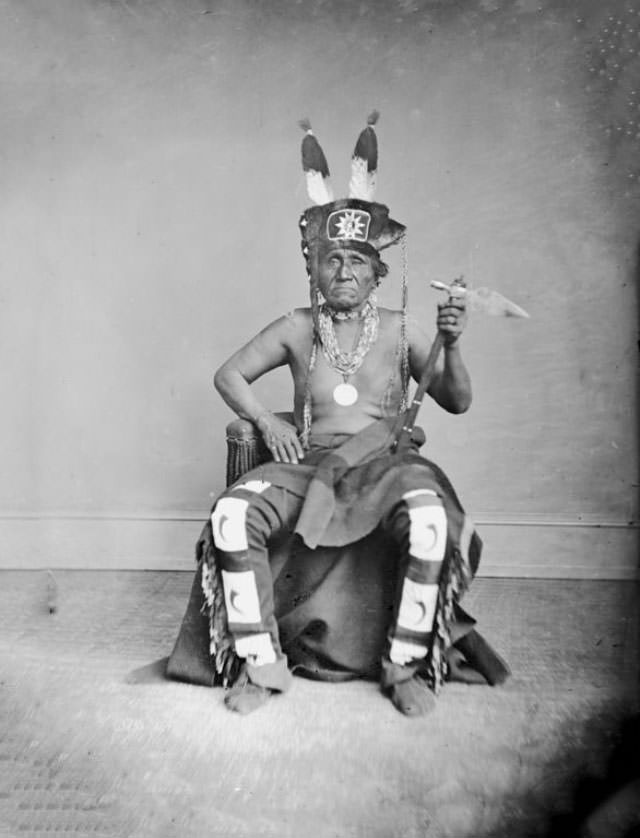
Gardner documented Indian delegations with the same careful attention he gave to war scenes and political portraits. These were formal sittings. The subjects were leaders and chiefs who traveled to Washington to negotiate with the U.S. government. Many wore peace medals — coins or medallions given by the government as symbols of diplomatic recognition. Nag-A-Rash, Head Chief of the Iowas, was among those Gardner photographed during these delegation visits.
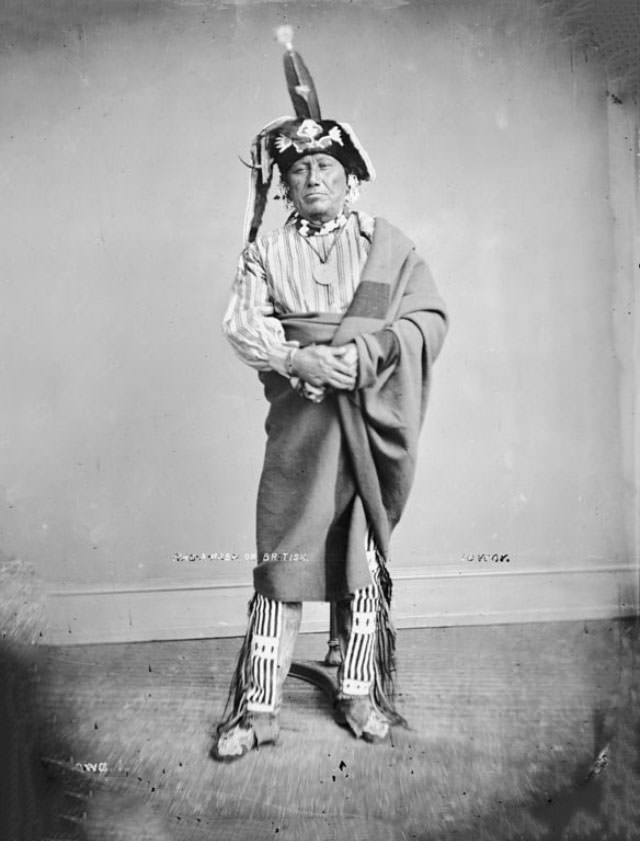
The Iowa delegation included multiple leaders, and Gardner photographed several of them individually. Mah-Hee, the Third Chief of the Iowas, sat for two portraits — one showing him from the front wearing his peace medal, and another capturing him holding his bow and arrows.
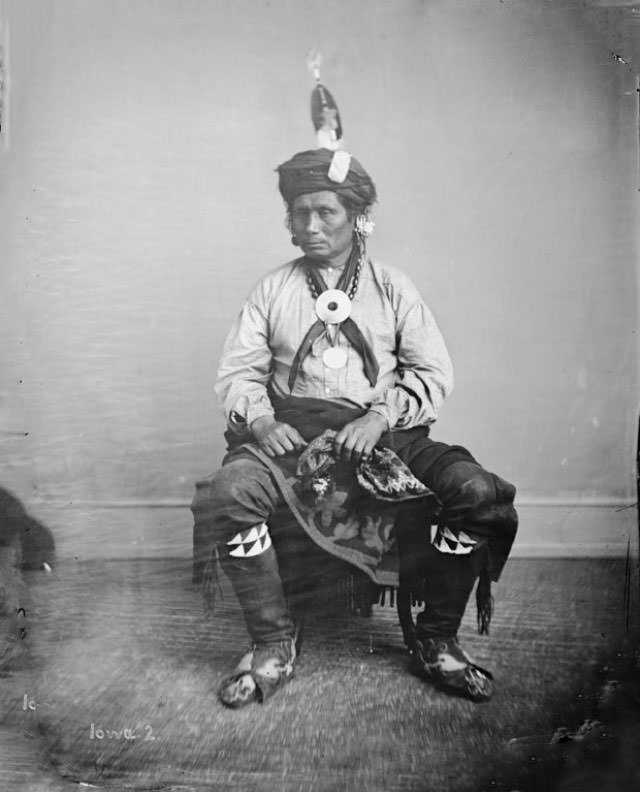
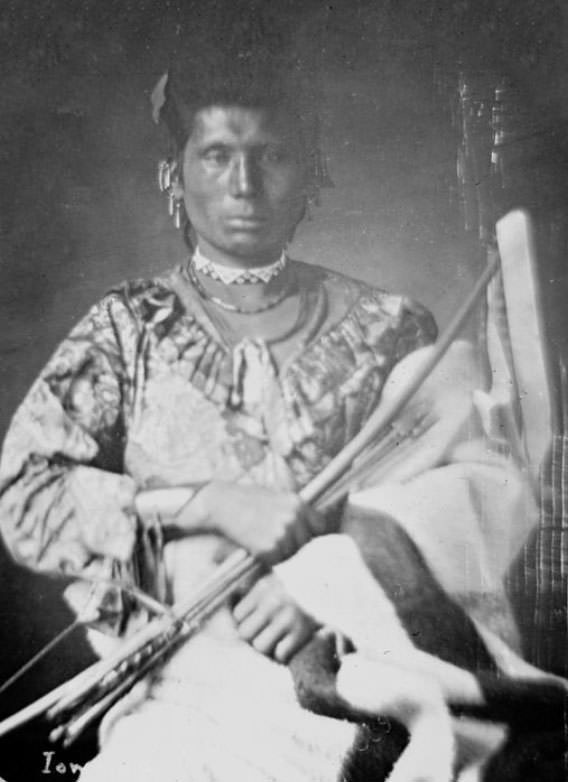
In 1867, Gardner joined the survey team for the Kansas Pacific Railroad. The railroad was pushing to extend its route from Kansas all the way to the Pacific Ocean — through Colorado’s mountains and the deserts of New Mexico, Arizona, and California. Gardner’s job was to photograph the proposed path, but he went further than simple landscape documentation. He produced detailed studies of the Indian nations living in the region and the settlements scattered along the route. Among his subjects were Ka-Ke-Ga-Sha and Quyulange, both photographed during this period.
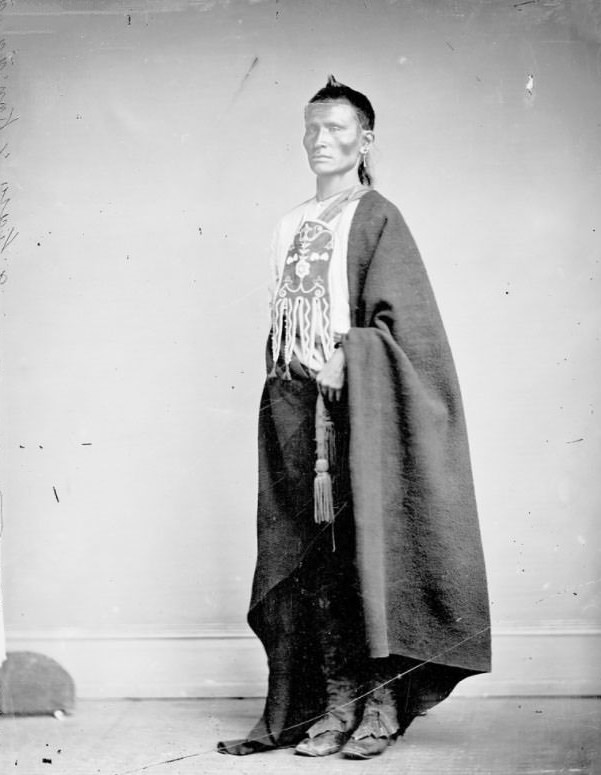
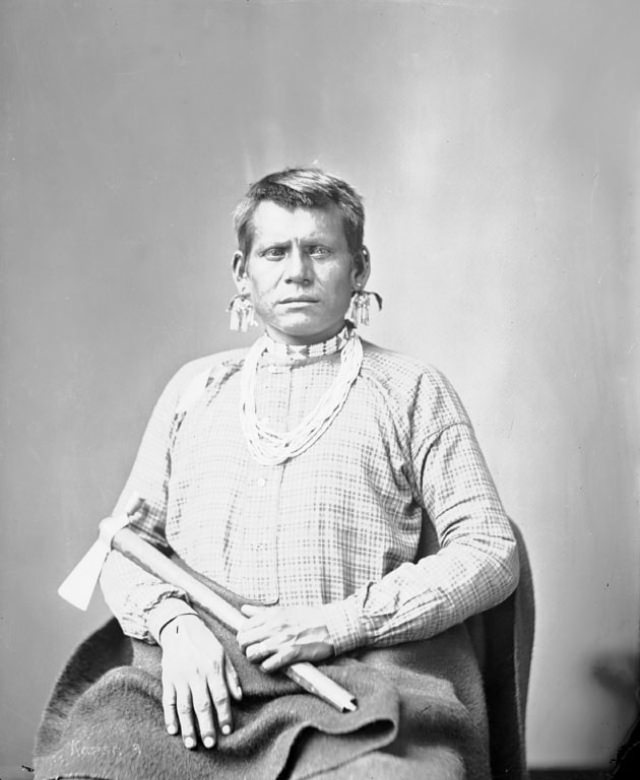
Gardner’s railroad survey photographs became the earliest known systematic series of photographs taken across the Great Plains. They covered a vast stretch of North America and captured tribal leaders who had rarely — if ever — been photographed before. Muncha-Huncha, also known as Big Bear or Joseph Powell, was Chief of the Bear Band. Guipago, known as Lone Wolf, was another prominent figure Gardner recorded during this era.
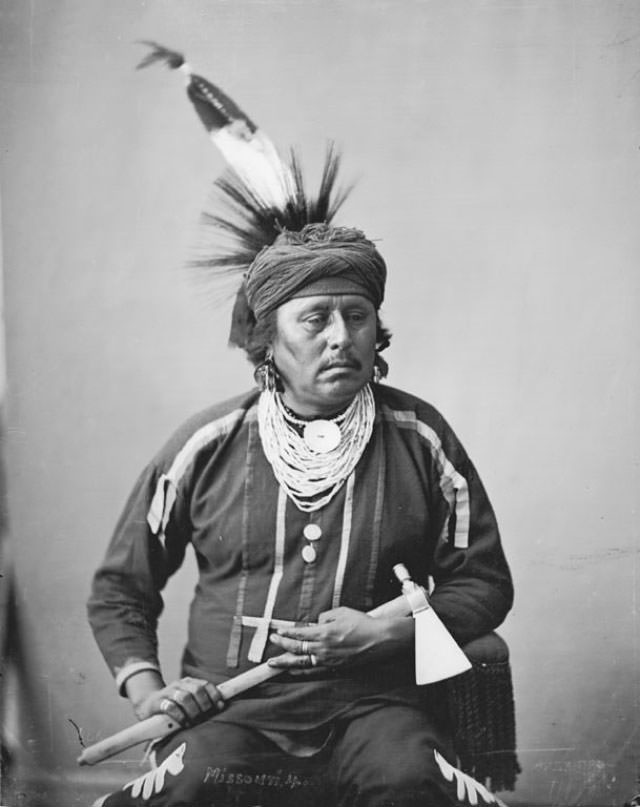
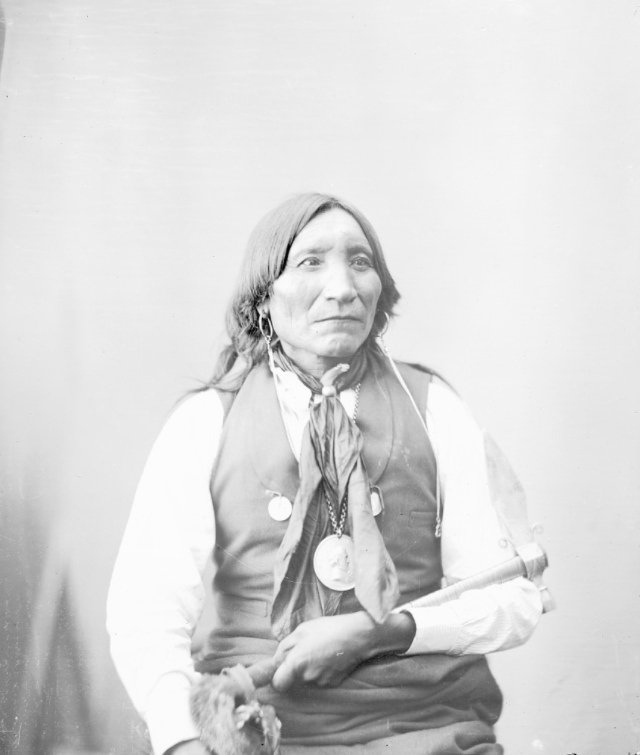
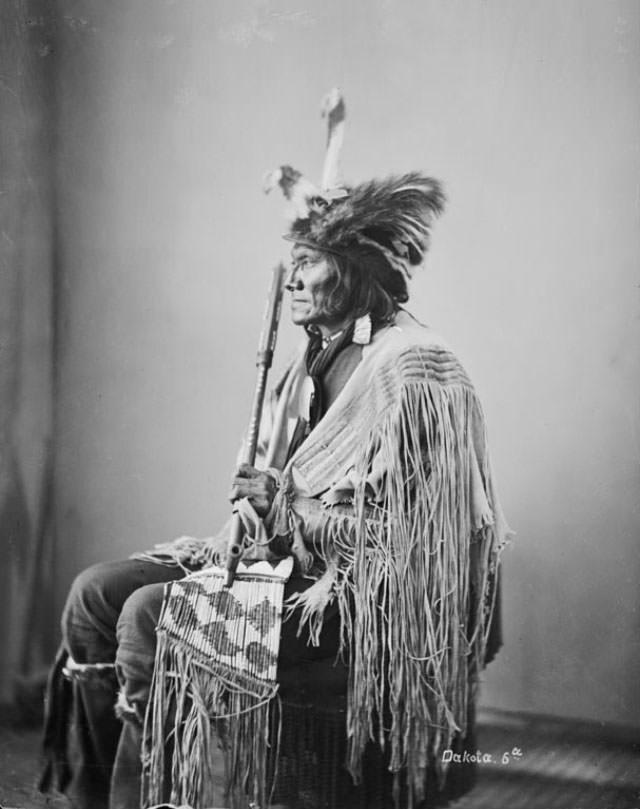
The northern plains tribes Gardner documented included the Crow, Arapaho, Oglala, Minneconjous, Brule, and Cheyenne. Each portrait was a formal record. The pipe-tomahawks, feathered headdresses, beaded bags, and peace medals visible across Gardner’s photographs were not props — they were markers of rank, diplomacy, and identity. Hatona, also called He-Otal or Many Horns, was photographed wearing his headdress and holding both a pipe and a feather fan.
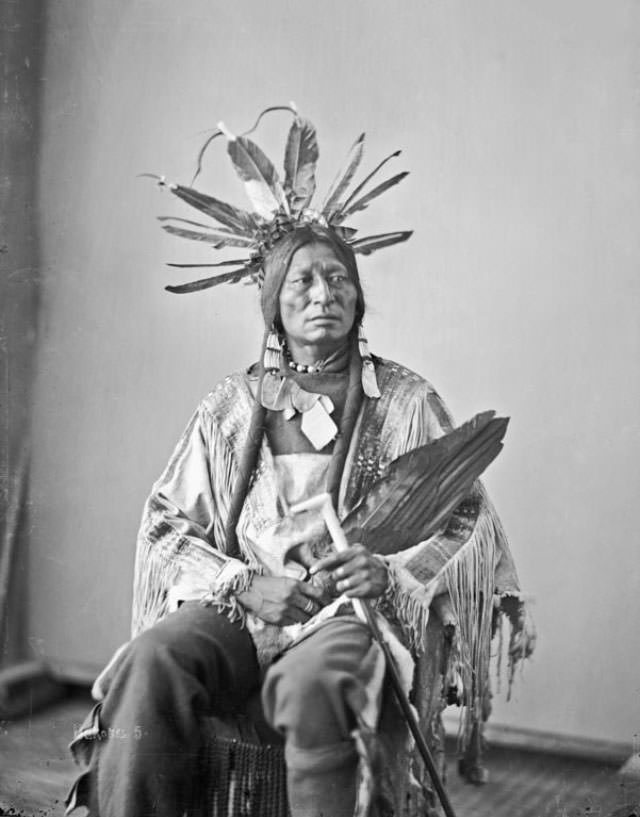
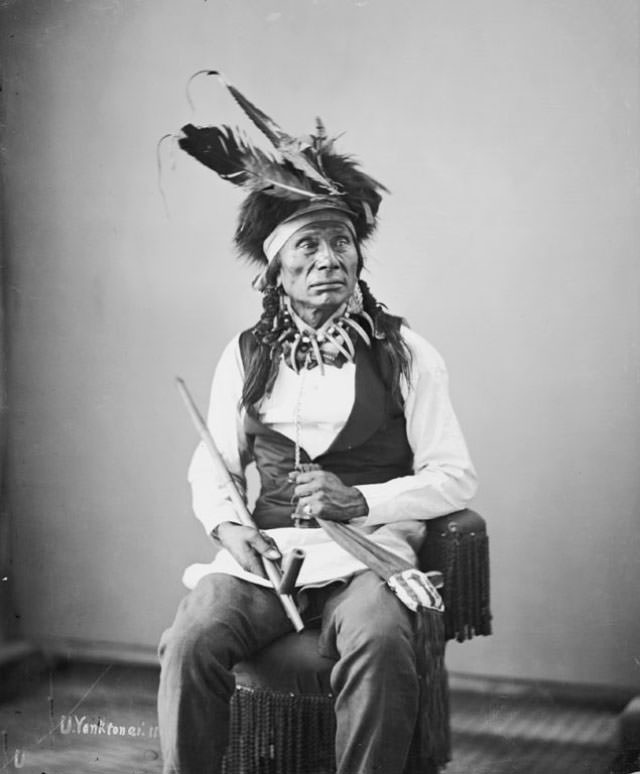
Gardner’s portraits preserved faces and identities at a pivotal and turbulent moment in American history. I-Ste-Sa-Pa, known as Black Eye, was captured holding a pipe and a beaded bag. Ta-Tan-Ka-Han-Ska, whose name translates to Long Fox or Long Buffalo Bull, sat for Gardner wearing a distinctive skunk hat and holding a pipe alongside a beaded and quilled bag — a portrait Gardner recorded more than once.
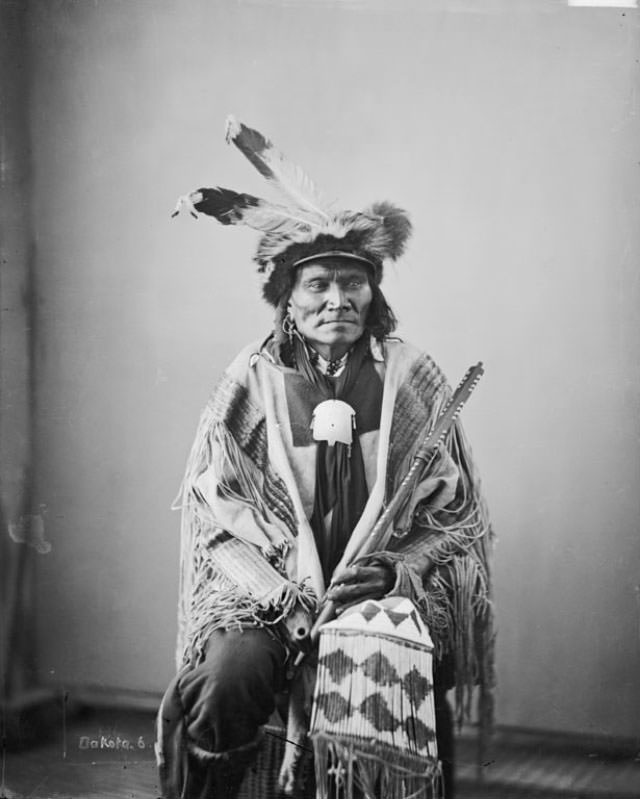
Gardner’s survey work along the Kansas Pacific Railroad route also brought him into contact with communities further southwest. Assencion Rios and Luig Morague — also recorded as Luis Morago — were among the individuals he photographed in those regions, adding to the geographic and cultural breadth of his archive.
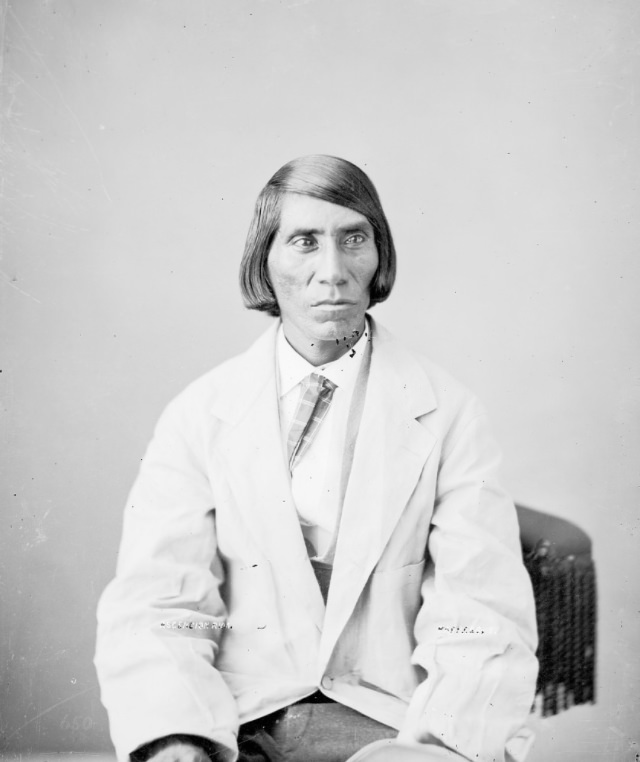
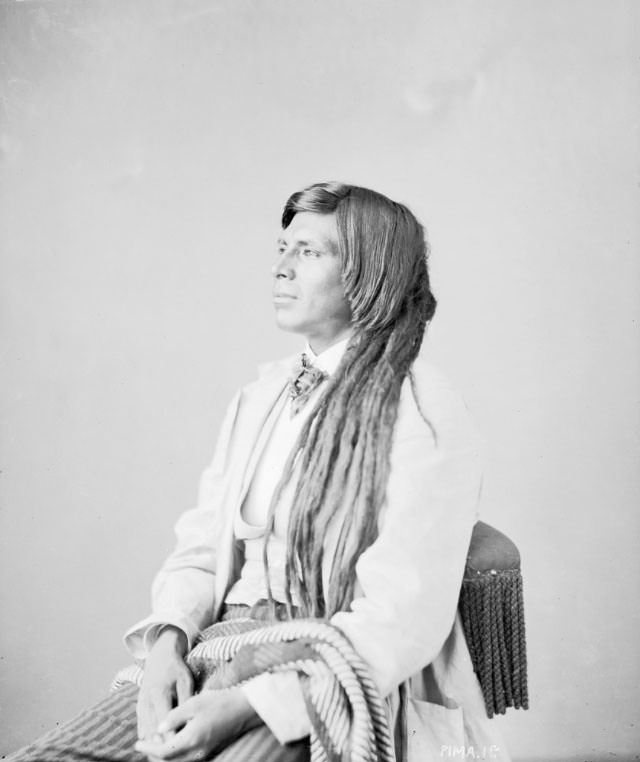
Chief Uva-A-Tuka, also known as Mavit-Kawutam or Antonio Azul, was another southwestern leader documented during Gardner’s survey. The range of names attached to many of these subjects reflects the layered reality of the period — individuals known by their own tribal names, Spanish names from colonial contact, and English names assigned by American authorities. Gardner’s final portrait of Ta-Tan-Ka-Han-Ska shows him once again in his feathered skunk hat, a consistent element of his self-presentation across multiple sessions.