The American Civil War began on April 12, 1861, when Confederate forces opened fire on Fort Sumter in Charleston, South Carolina. Over the next four years, the nation tore itself apart over slavery and the economic system built on it. The North and South had developed into two vastly different societies — one industrializing rapidly, the other dependent on enslaved labor to sustain its plantation economy. That divide turned into the deadliest war in American history. These colorized photographs, originally captured on glass plates and film by pioneering photographers like Mathew Brady, Alexander Gardner, and Timothy O’Sullivan, put faces to the conflict in a way that black-and-white images alone cannot.

Abraham Lincoln guided the Union through its most severe crisis. This portrait, taken in 1863 by Alexander Gardner, shows Lincoln at the height of the war — the same year he signed the Emancipation Proclamation. Lincoln visited the front lines more than once, meeting directly with his generals to assess the progress of the war.
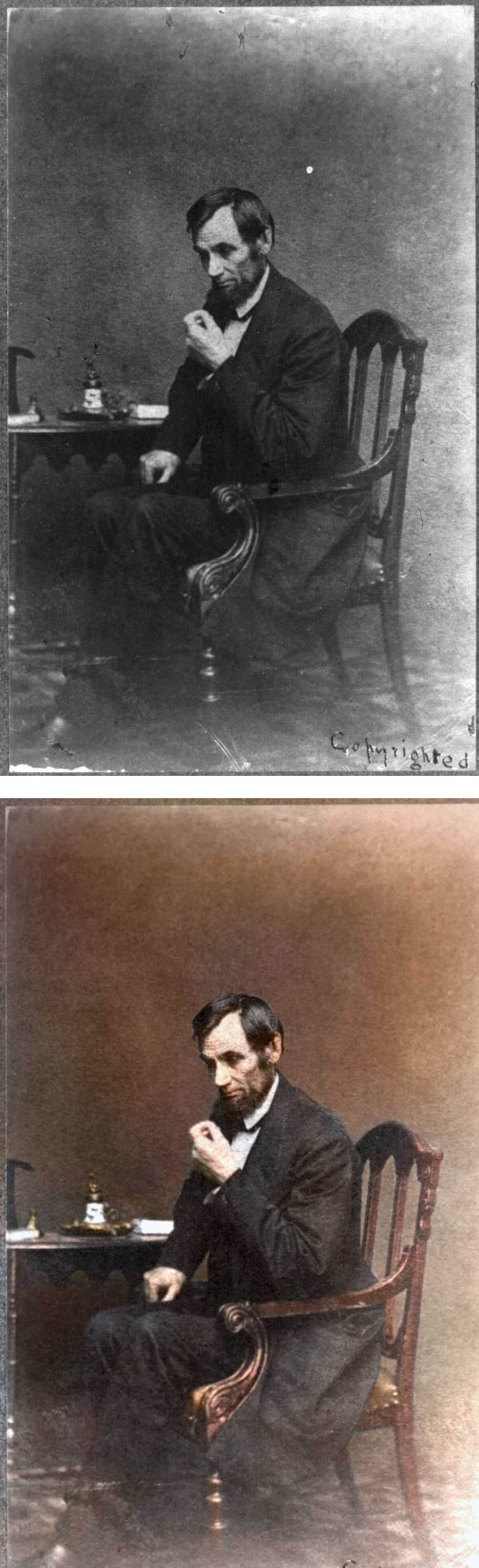
Just one month after Fort Sumter fell, Lincoln sat for this photograph in Washington. The war was barely weeks old, and the full weight of what lay ahead had already begun to settle on him. The Union had yet to field a disciplined army, and the Confederate states were moving fast to organize their forces. Lincoln would rely on a series of generals before finding the leadership he needed in Ulysses S. Grant.

The Battle of Antietam on September 17, 1862, remains the single bloodiest day in American military history, with nearly 23,000 casualties. Lincoln traveled to the battlefield to meet with his commanders personally. Here he stands alongside Allan Pinkerton, the founder of the famous detective agency who served as the Union’s chief intelligence operative, and Major General John A. McClernand.

Lincoln’s relationship with General George B. McClellan was famously strained. McClellan built a well-organized army but was repeatedly criticized for failing to press his advantage after battlefield victories. After Antietam, Lincoln urged McClellan to pursue the retreating Confederate forces. McClellan did not move quickly enough, and Lincoln removed him from command in November 1862.

Allan Pinkerton operated under the alias ‘E. J. Allen’ during his intelligence work for the Union Army. He organized the first systematic federal espionage effort in American history. Though his battlefield intelligence estimates were often inflated — contributing to McClellan’s excessive caution — his network of agents gathered crucial information behind Confederate lines throughout the early years of the war.

Lincoln was not a distant wartime president. He visited troops in the field and toured battlefield sites to stay close to the realities of the conflict. These visits also served a political purpose — showing soldiers and the public alike that their commander-in-chief understood the cost of the war at ground level.
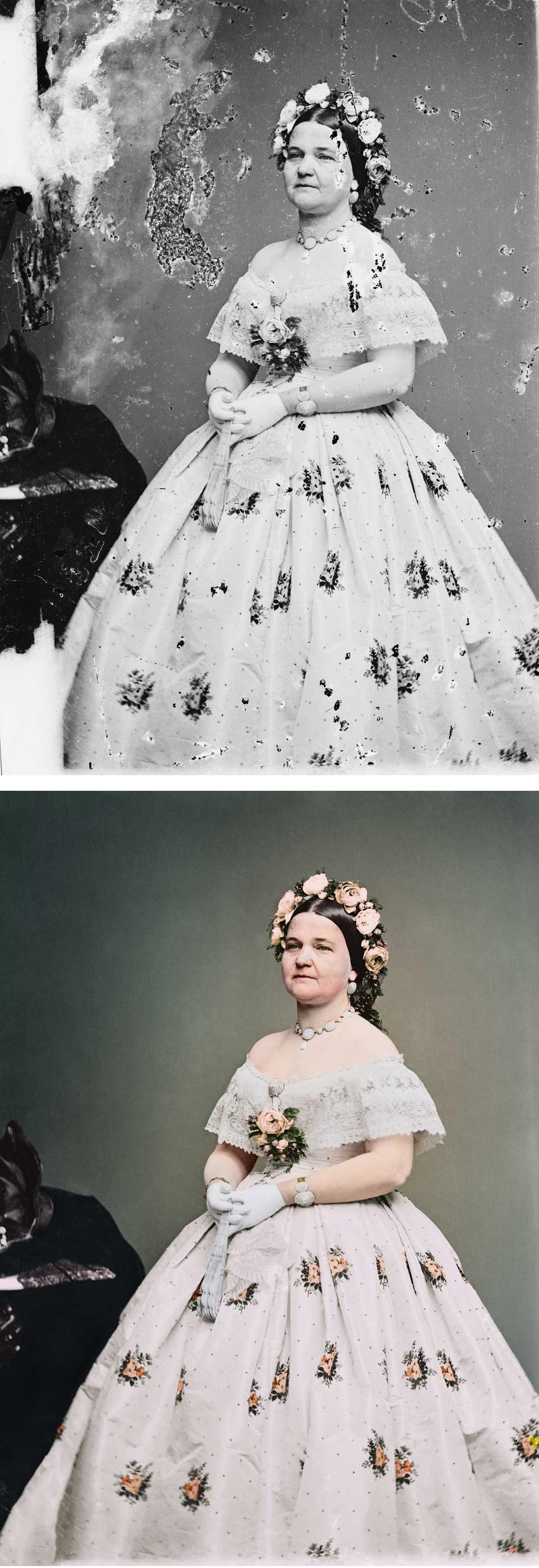
Mary Todd Lincoln occupied the White House during one of the most turbulent periods in its history. She faced public criticism throughout the war — some questioned her loyalty because she had family members fighting for the Confederacy. She and Lincoln also lost their son Willie to illness in 1862, a grief that weighed heavily on both of them during the conflict’s darkest years.
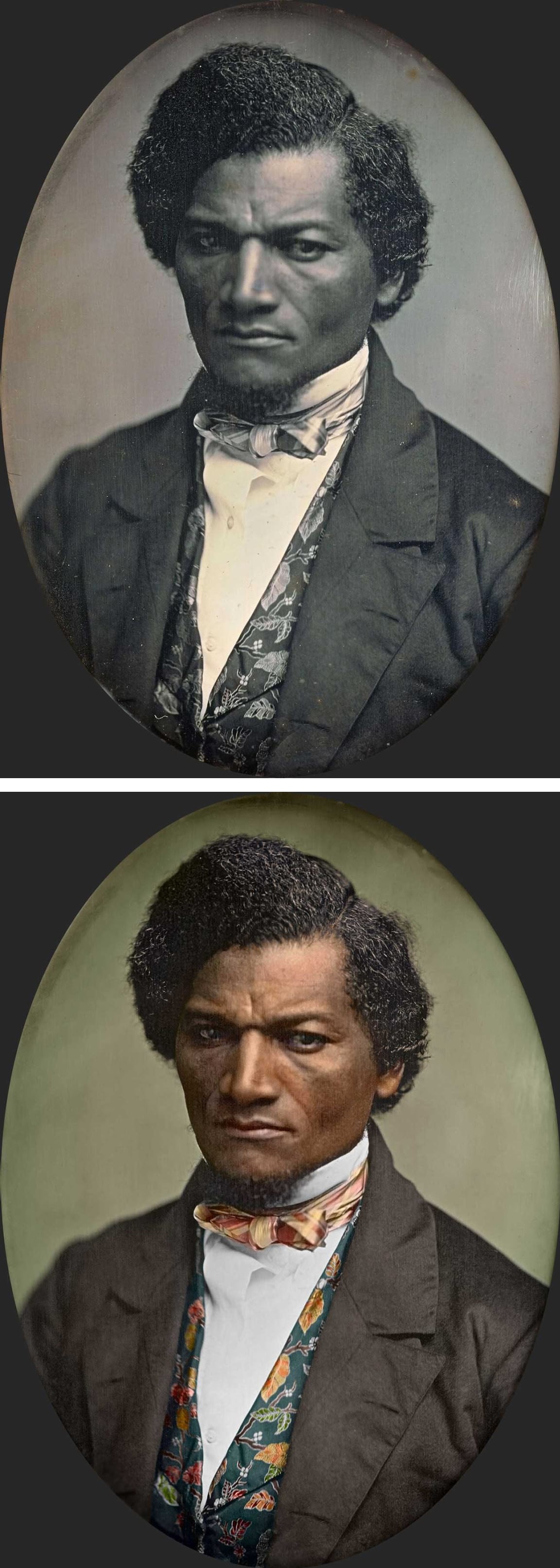
Frederick Douglass, a formerly enslaved man who became the nation’s most prominent Black abolitionist, pressed Lincoln throughout the war to make the abolition of slavery the Union’s central war aim. He met with Lincoln at the White House on multiple occasions and was a forceful advocate for the enlistment of Black soldiers into the Union Army. By the war’s end, more than 180,000 Black men had served in the United States Colored Troops.

This photograph of an unidentified Black Union soldier with his family captures the personal stakes of the war for African Americans. Black soldiers faced unique dangers — Confederate policy dictated that captured Black Union soldiers would not be treated as prisoners of war but could be re-enslaved or executed. Despite this, they enlisted in large numbers and fought with distinction at engagements including the Battle of the Crater and the assault on Fort Wagner.
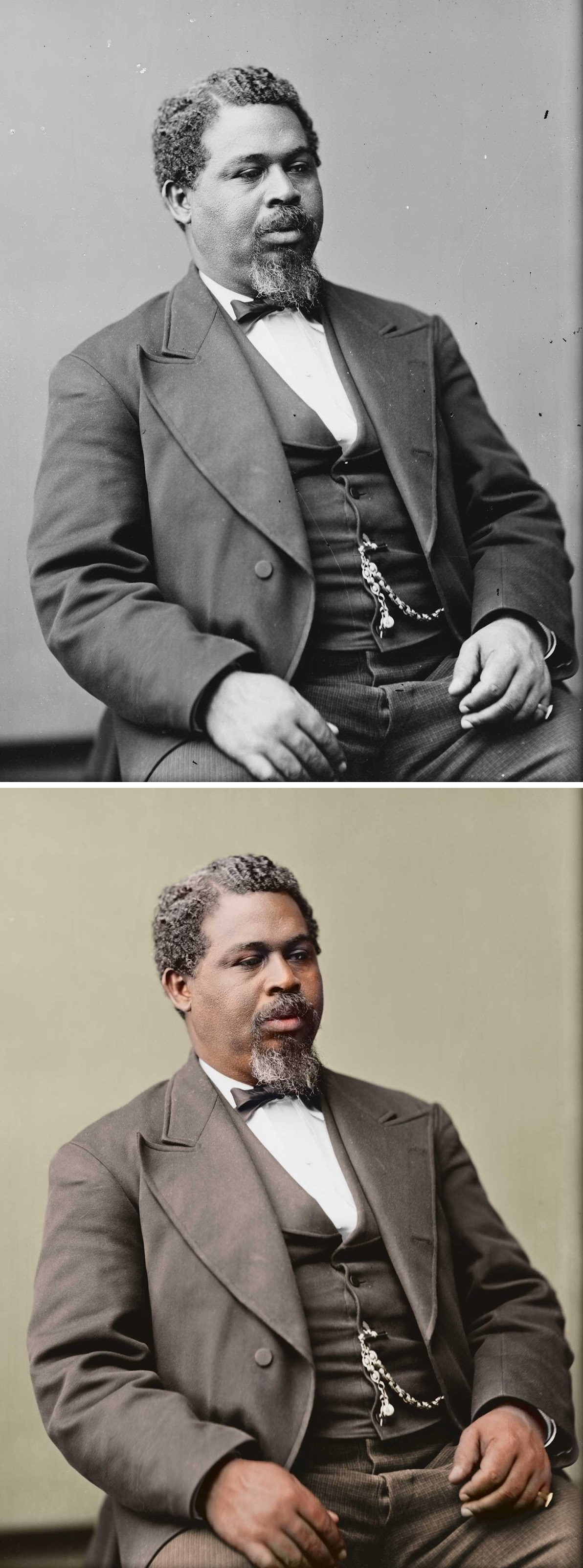
Robert Smalls was enslaved in Charleston, South Carolina, when the war began. In May 1862, he commandeered a Confederate transport ship, the CSS Planter, and sailed it out of Charleston Harbor to the Union blockade fleet, delivering the vessel — along with its Confederate codebooks and signal codes — to Union forces. He was celebrated as a war hero in the North and later served five terms in the U.S. House of Representatives.
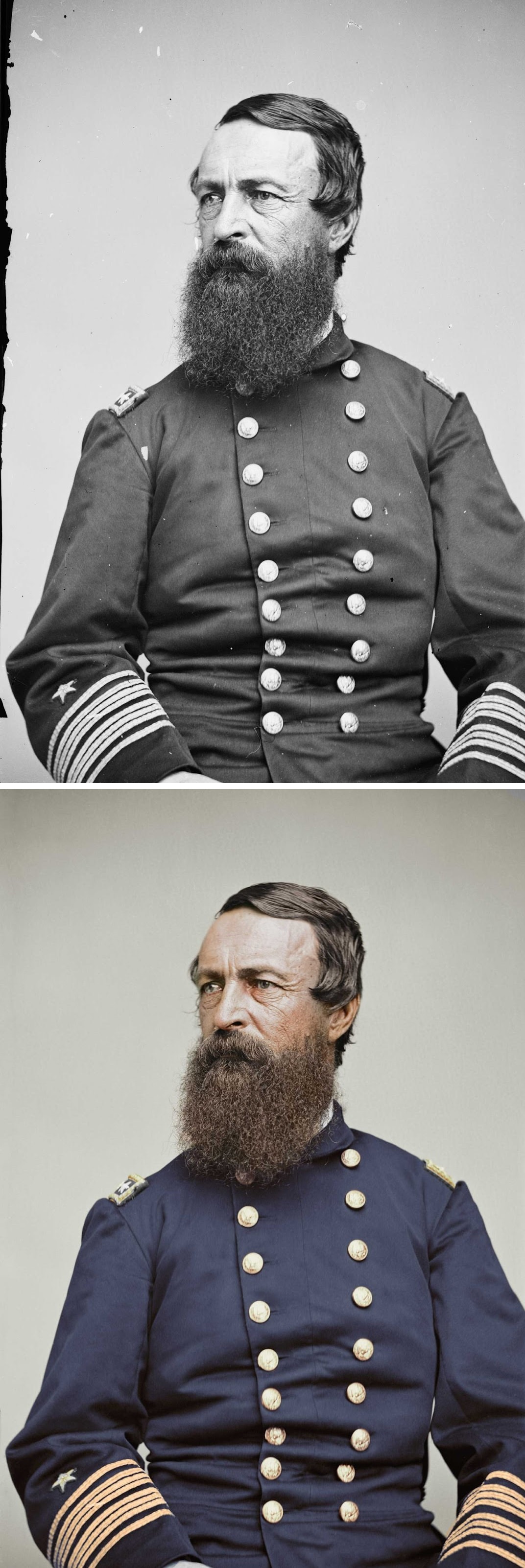
The Union Navy played a decisive role in the war’s outcome. Rear Admiral David D. Porter commanded the Mississippi Squadron and worked closely with Ulysses S. Grant during the Vicksburg Campaign, which split the Confederacy in two when the city fell on July 4, 1863. Control of the Mississippi River cut off Confederate supply and communication lines across a vast stretch of the South.
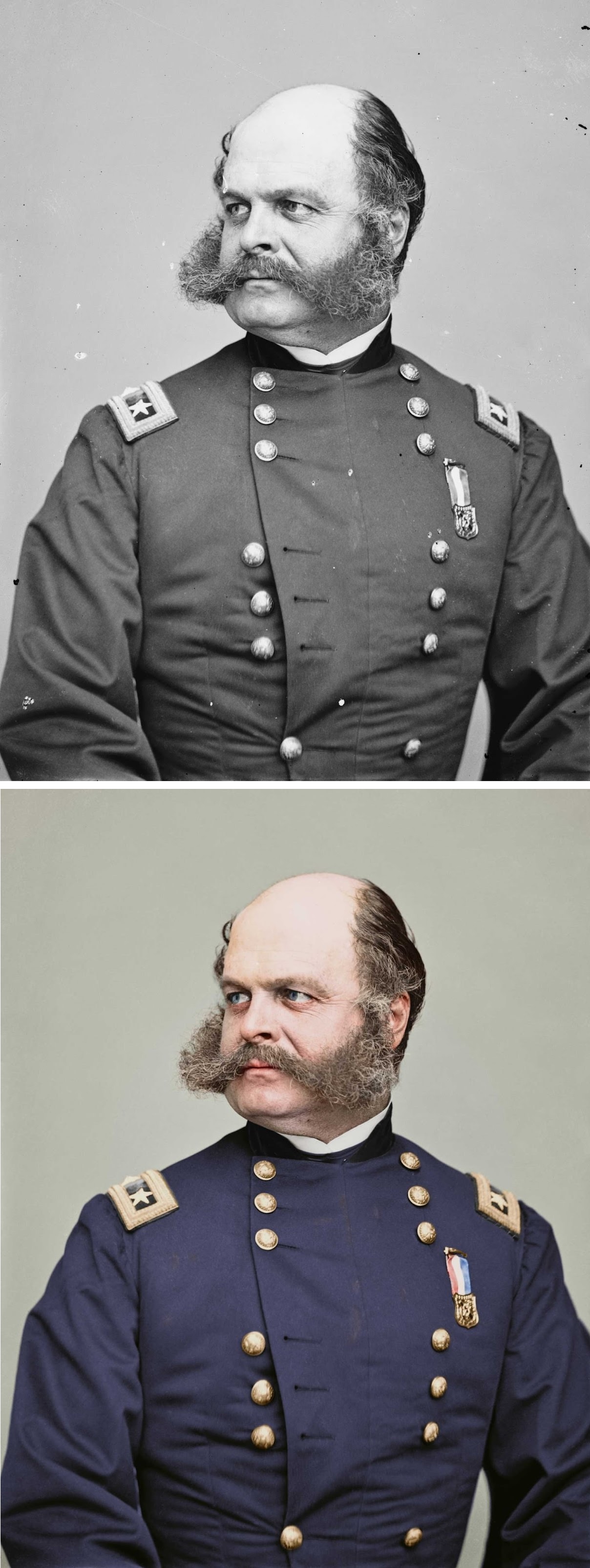
Major General Ambrose Burnside replaced McClellan as commander of the Army of the Potomac in November 1862, but his tenure was brief and costly. His attack at the Battle of Fredericksburg in December 1862 was a catastrophic Union defeat, resulting in more than 12,600 Union casualties. Lincoln relieved him of that command in January 1863. Burnside’s distinctive facial hair — clean-shaven chin with thick cheek whiskers — gave rise to the term ‘sideburns,’ derived directly from his name.
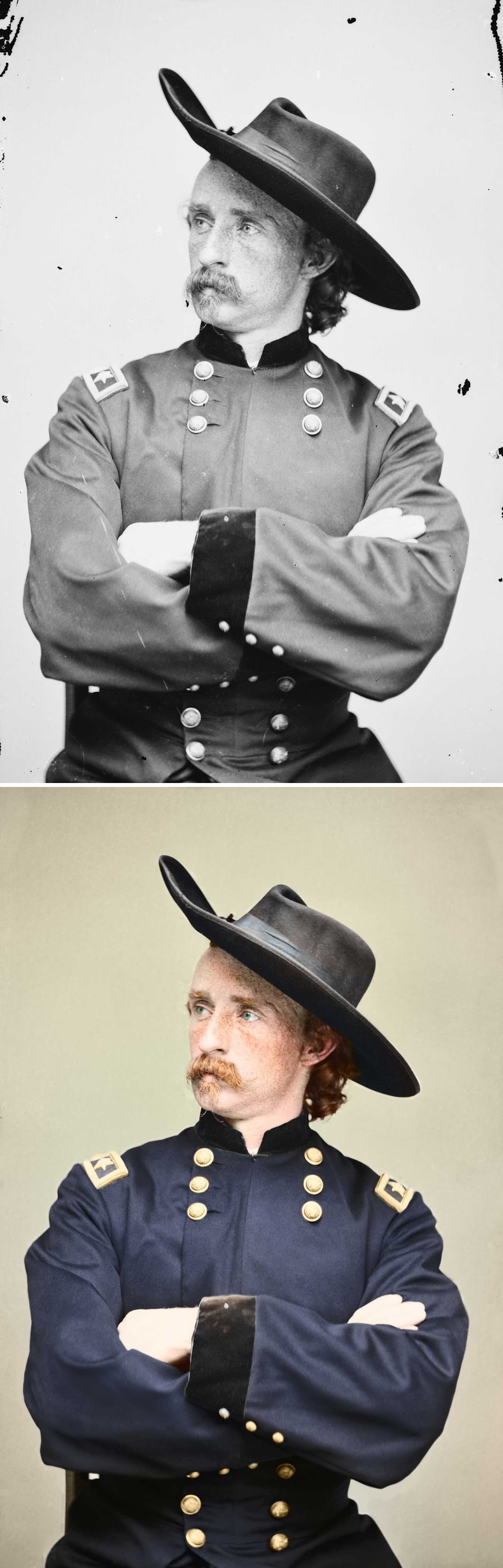
George Armstrong Custer graduated last in his class at West Point in June 1861 — just in time to be commissioned into a Union Army heading to war. He rose with remarkable speed, becoming a brigadier general of volunteers at just 23 years old. Custer earned a reputation as a reckless but effective cavalry commander, and his brigade played a key role at the Battle of Gettysburg, halting J.E.B. Stuart’s Confederate cavalry on the battle’s final day.
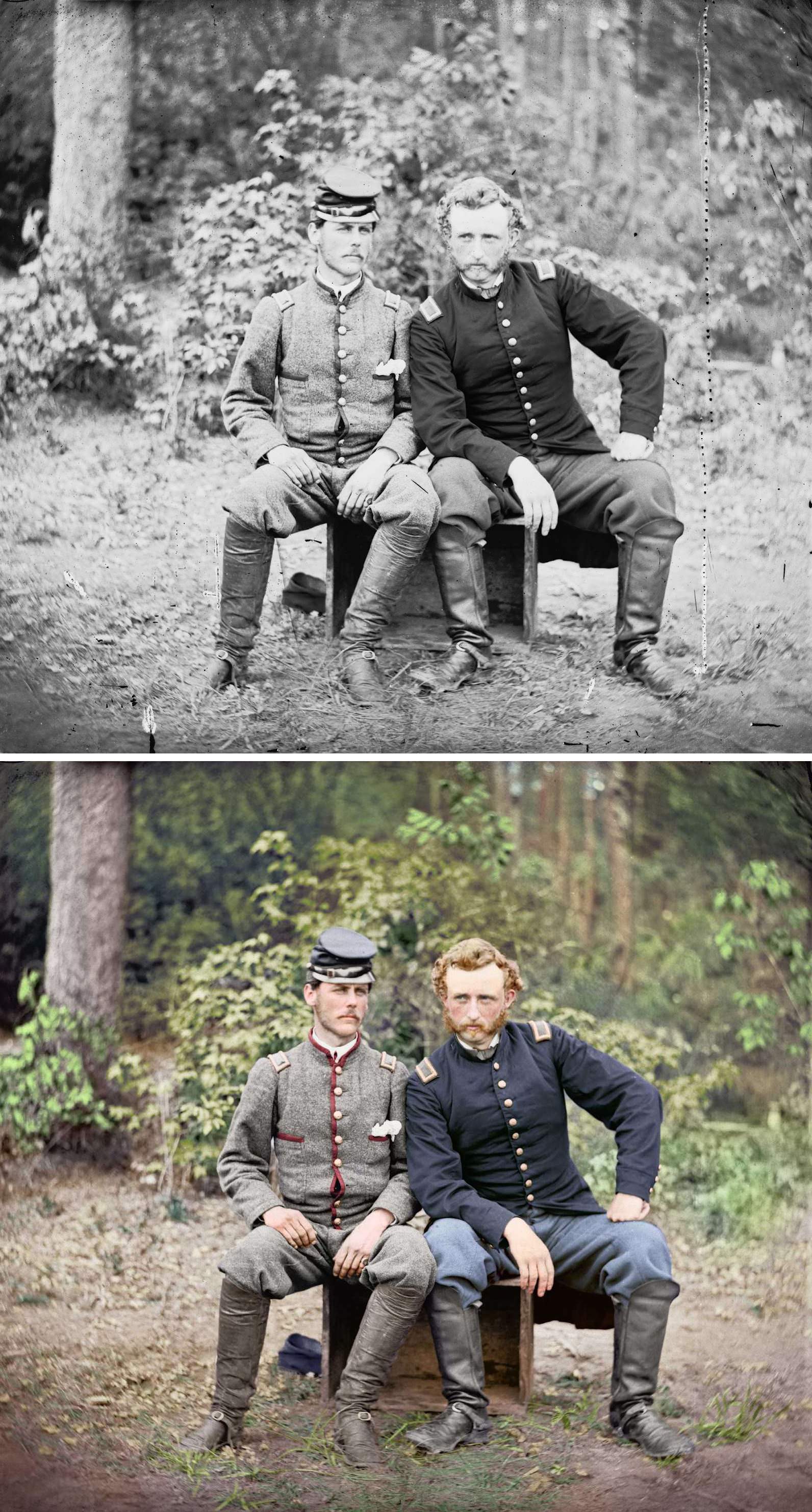
One of the war’s defining characteristics was the way it divided men who had trained together at the same military academies. West Point graduates fought on both sides of the conflict. In this photograph, Custer stands with a Confederate prisoner who had been his classmate — a quiet illustration of how deeply the war fractured American society, down to personal friendships and shared histories.
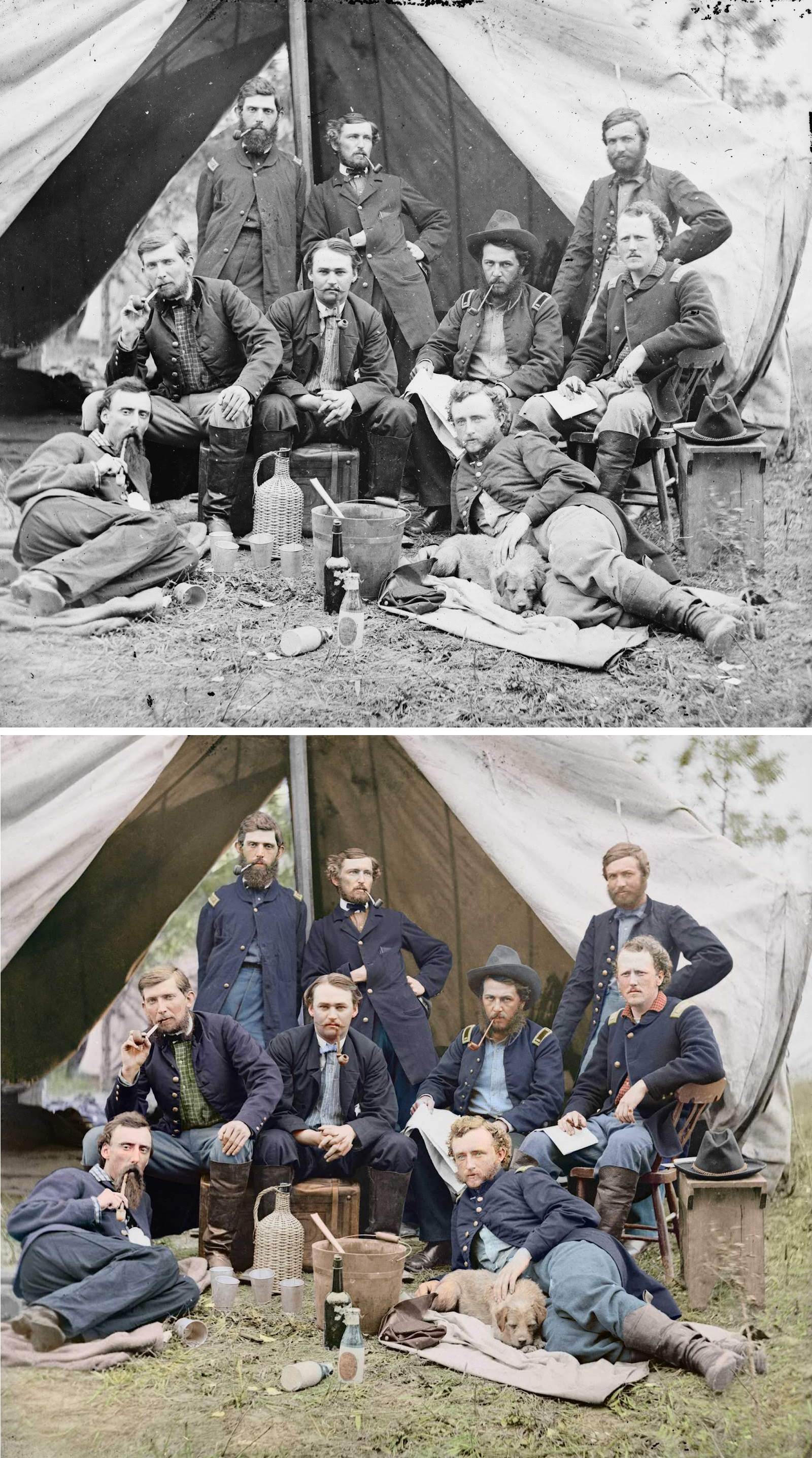
Camp life between battles was marked by long stretches of waiting, drilling, and routine. Officers like those photographed at Falmouth in 1863 spent much of their time managing logistics, planning, and maintaining the readiness of their men. The Army of the Potomac wintered near Falmouth after the disaster at Fredericksburg, reorganizing under a new commander before the Chancellorsville campaign began in the spring.
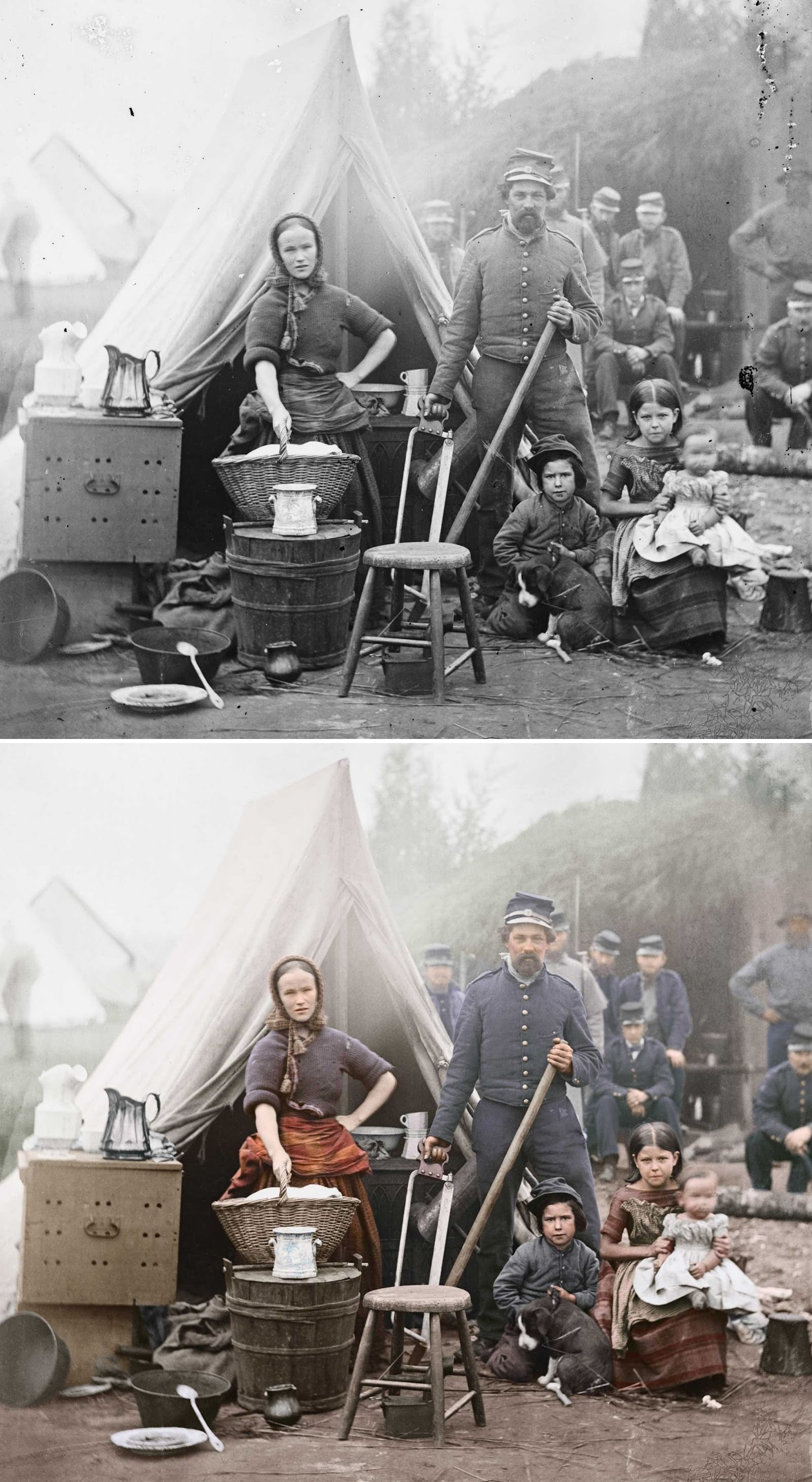
Early in the war, Union troops set up camps across the Washington area to defend the capital from Confederate attack. Fort Slocum was one of dozens of earthwork fortifications built in a ring around Washington. Soldiers of the 31st Pennsylvania Infantry lived in tent cities like this one throughout the early months of the conflict, training and waiting as the Union worked to build a fighting force capable of taking the offensive.

Officers in the Union Army ate separately from enlisted men — this photograph of Company E’s mess in Bealeton, Virginia, shows the relative comfort available to those with rank. The 93rd New York Volunteers served throughout the Eastern Theater. By August 1863, the regiment had already been through brutal fighting at Antietam, Chancellorsville, and Gettysburg.

Soldiers stationed near Petersburg during the long siege of 1864-1865 found ways to pass the time between engagements. Cockfighting was one of the more common diversions captured by photographers during this period. The siege of Petersburg lasted from June 1864 to March 1865, stretching Union and Confederate forces alike across miles of fortified trench lines in one of the war’s most exhausting and grinding campaigns.

The Overland Campaign of May and June 1864 was one of the most brutal sustained offensives of the war. Grant kept pushing south through Virginia, engaging Lee at the Wilderness, Spotsylvania, and the North Anna River. These soldiers, photographed bathing near the ruins of a railroad bridge, represent the human side of that relentless march — men grabbing brief moments of rest amid a campaign that suffered tens of thousands of casualties in just a few weeks.

Civil War medicine operated under conditions that made survival from wounds deeply uncertain. Surgeons working near the front lines, like those of the 3rd Division photographed at Petersburg in 1864, performed amputations at a rapid pace to prevent infection from spreading. Anesthesia — primarily chloroform and ether — was available and widely used. Disease, however, killed more soldiers than combat throughout the war.
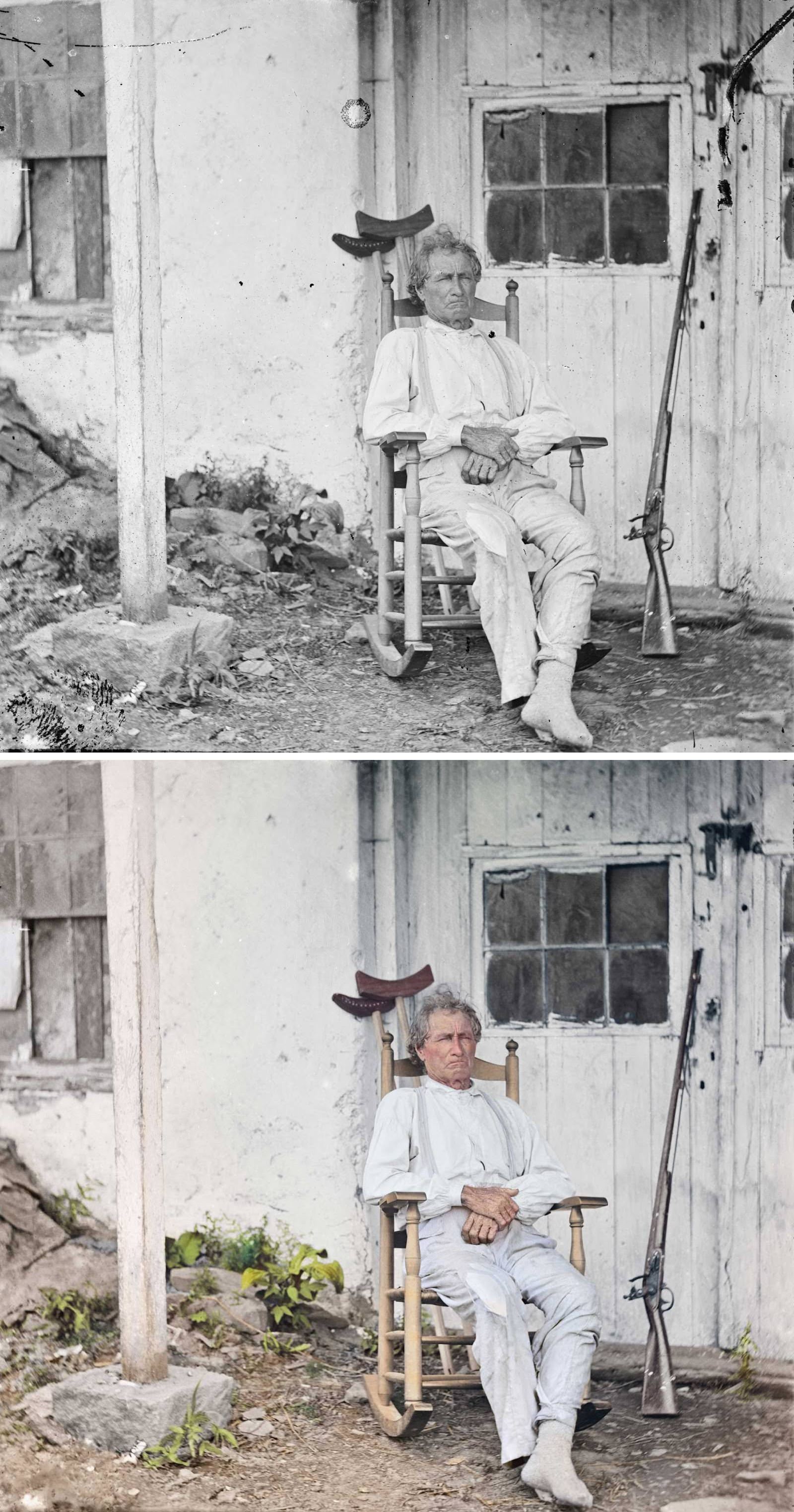
John L. Burns was a 69-year-old civilian when the Battle of Gettysburg erupted on his doorstep in July 1863. He grabbed his rifle and joined Union soldiers fighting on the first day of the battle, taking three wounds before being carried off the field. He was the only known civilian to fight alongside Union forces at Gettysburg and was celebrated nationally as a symbol of patriotic defiance.

The Battle of Gettysburg, fought July 1–3, 1863, resulted in roughly 51,000 total casualties and marked the turning point of the war in the East. These three Confederate prisoners — young, tired, and weathered — were among thousands captured during the three-day battle. General Robert E. Lee’s Army of Northern Virginia retreated back into Virginia after the defeat, never again mounting a major offensive on Northern soil.
![Camp of Captain [John J.] Hoff., in Gettysburg, Penn., July, 1865.](https://www.bygonely.com//wp-content/uploads/2019/10/American_civil_war_colorized_photos_7.jpg)
By July 1865, the war was over. Confederate General Robert E. Lee had surrendered at Appomattox Court House on April 9, and the remaining Confederate armies had capitulated in the weeks that followed. This photograph of a camp at Gettysburg was taken two full years after the battle that had soaked the same Pennsylvania ground with the blood of tens of thousands of men.
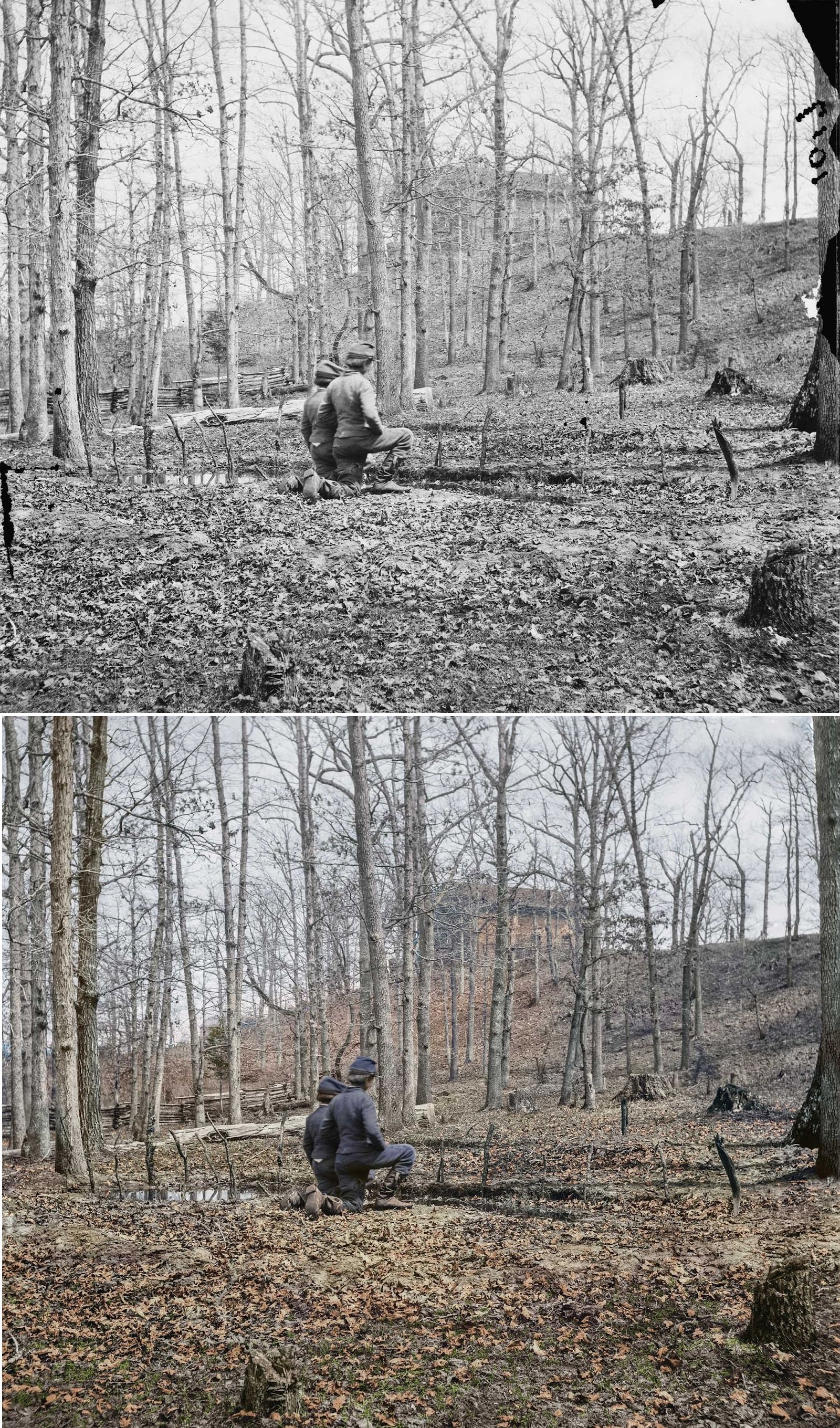
Sudley Church near Bull Run in Virginia served as a field hospital during the First and Second Battles of Bull Run. The dead from those engagements were buried in the surrounding area. By March 1862, when this photograph was taken, the site already carried the weight of early, shocking casualties that had dispelled any notion the war would be quick or clean.

Photography required long exposure times and could not yet capture action. To show battles as they happened, publications like Harper’s Weekly sent artists to the front. Alfred R. Waud was among the most prolific, producing hundreds of battlefield sketches throughout the war. Here he sits on the ground at Gettysburg, sketchbook in hand, documenting the aftermath of the battle’s conclusion.
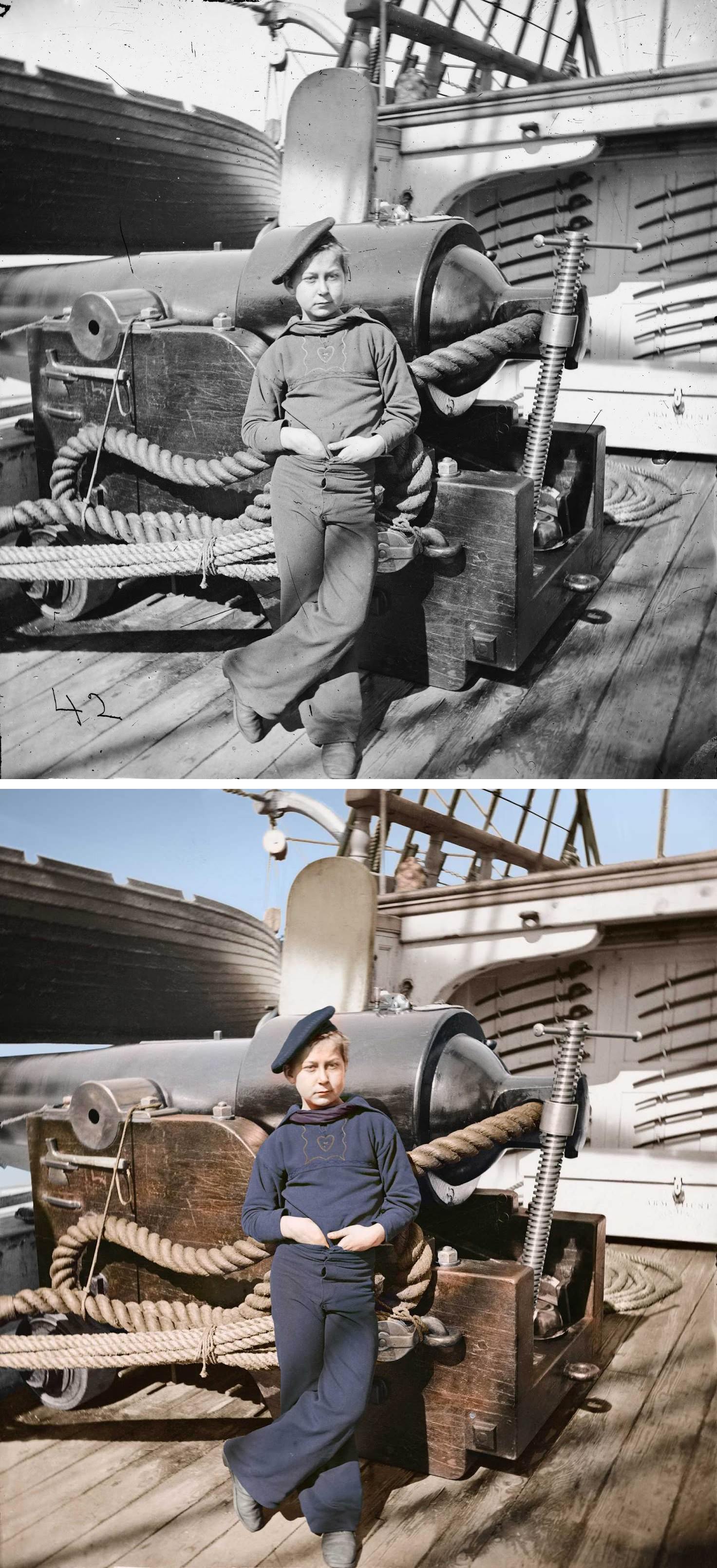
Powder boys — young sailors tasked with carrying gunpowder charges from the ship’s magazine to the cannons during battle — were a standard part of naval crews during this era. This boy, photographed aboard the U.S.S. New Hampshire off Charleston, represents one of the youngest faces of the war. Charleston, where the conflict began at Fort Sumter, remained a target of the Union Navy throughout the war and was subject to a years-long blockade.
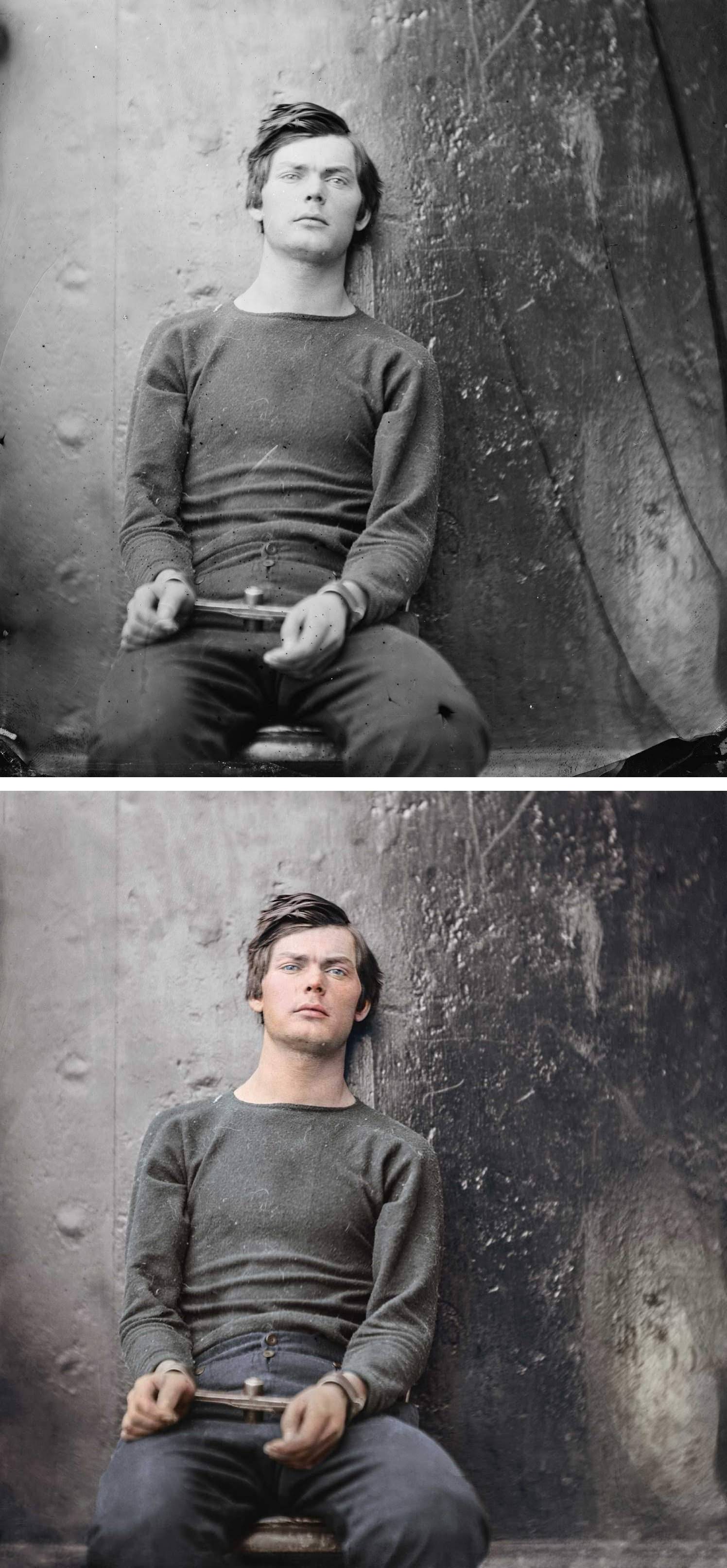
President Lincoln was shot on the evening of April 14, 1865, at Ford’s Theatre in Washington and died the following morning. The assassination was part of a coordinated plot. While John Wilkes Booth shot Lincoln, Lewis Payne — photographed here aboard a Union ship while in custody — broke into the home of Secretary of State William Seward the same night and attacked him with a knife, nearly killing him. Payne was tried by a military tribunal and hanged on July 7, 1865.
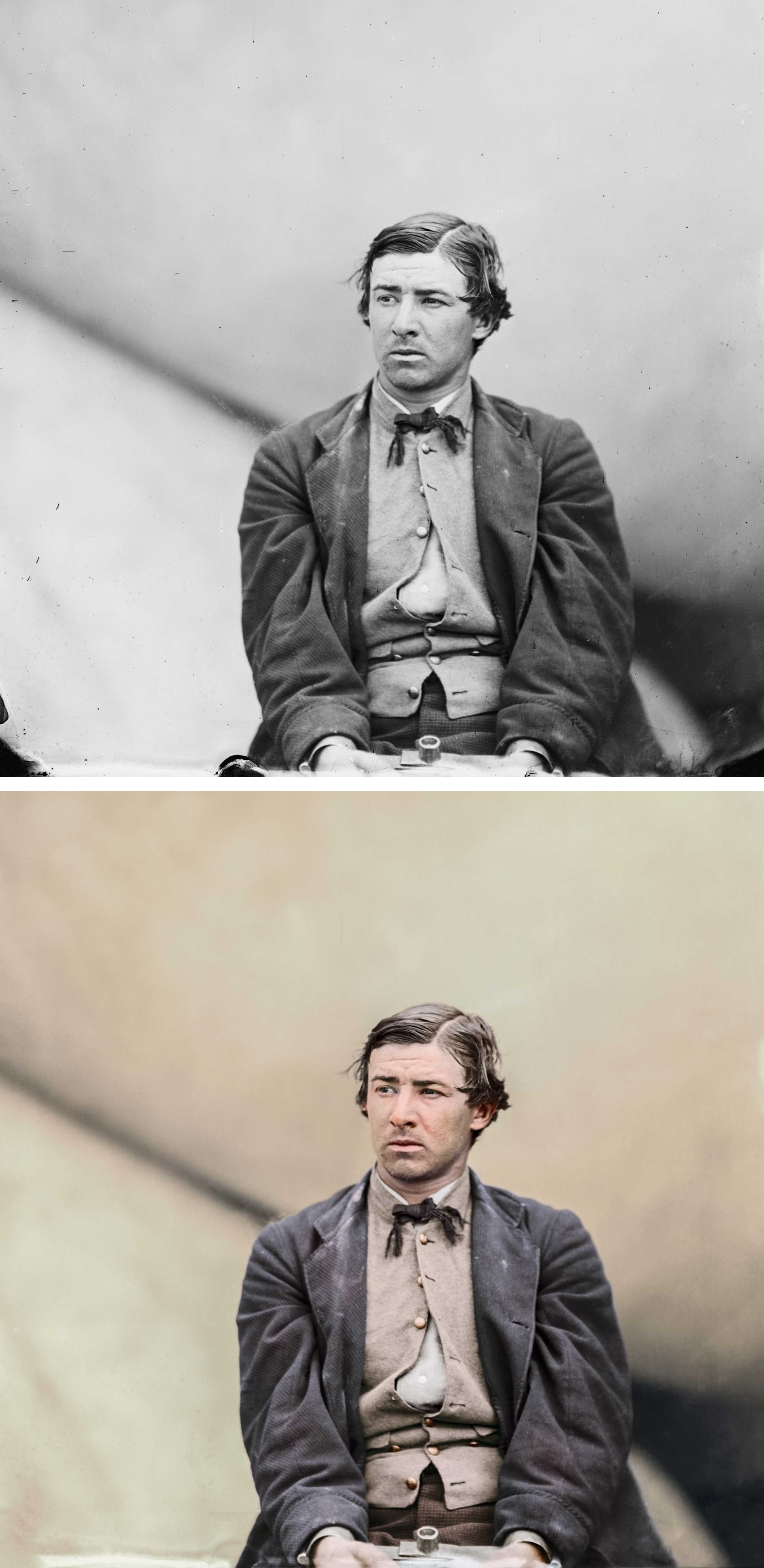
David E. Herold guided Lewis Payne to Secretary Seward’s home and then fled Washington with John Wilkes Booth after the assassination. The two were tracked down twelve days later, hiding in a Virginia tobacco barn. Booth was shot and killed by Union soldiers. Herold surrendered and was taken to the Washington Navy Yard, where this photograph was taken. Like Payne, he was convicted by military tribunal and hanged on July 7, 1865.