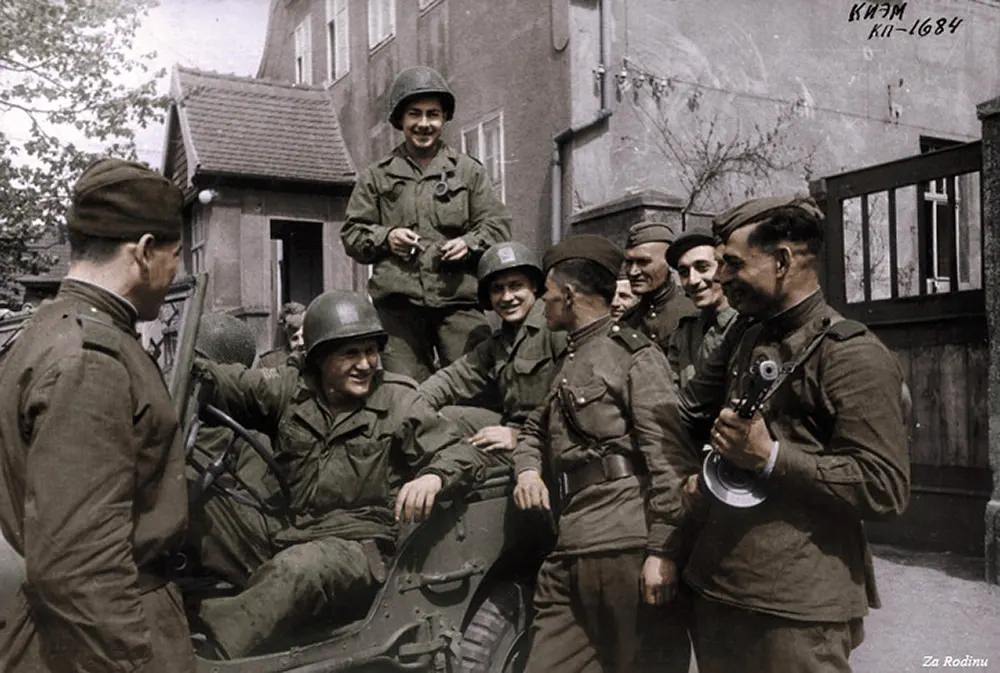
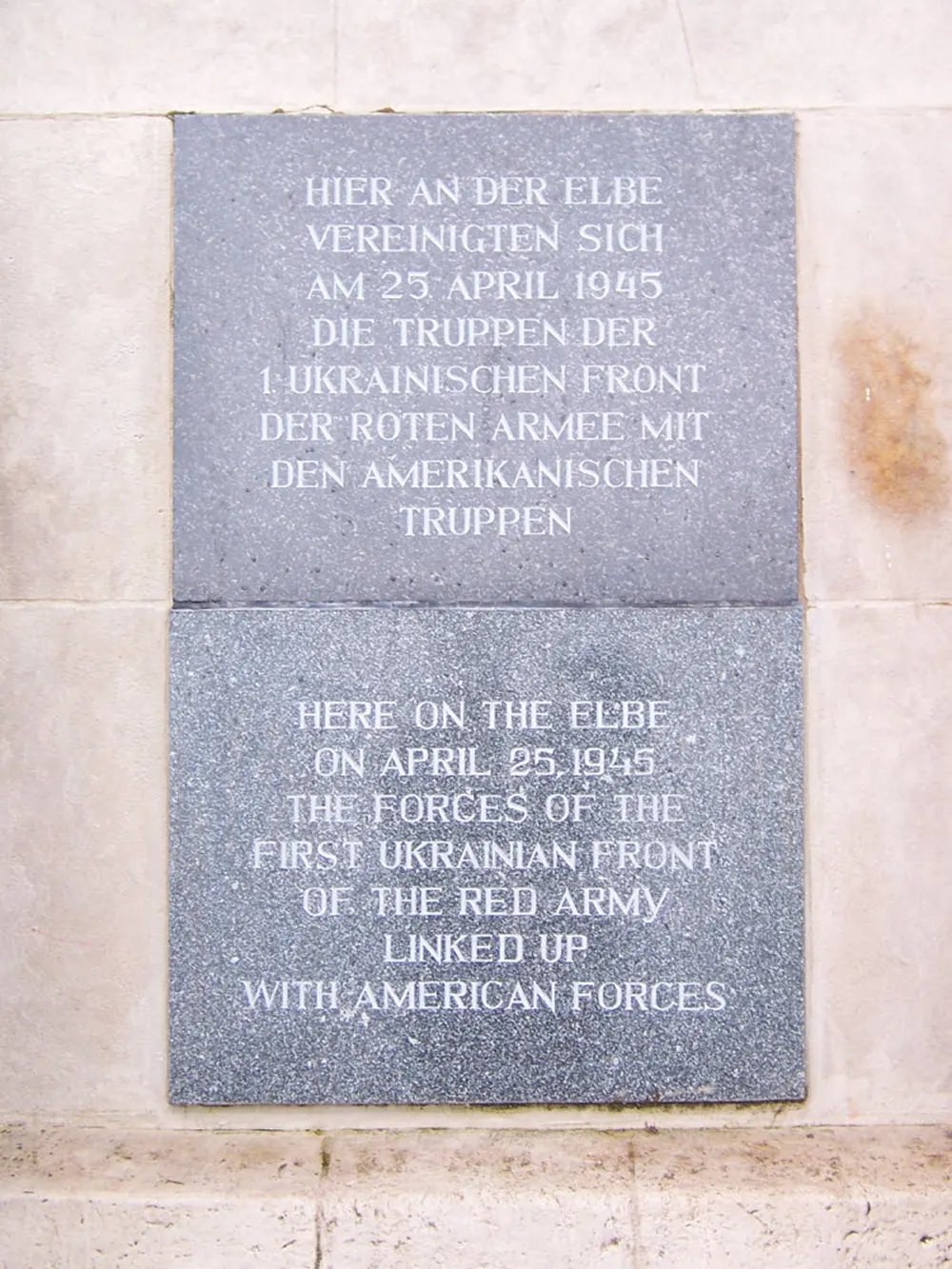
By April 1945, Germany was being squeezed from both sides. Soviet forces pushed west from the east, while American forces drove east from the west. The two armies were on a collision course, and everyone knew it. The question was where they would finally meet.
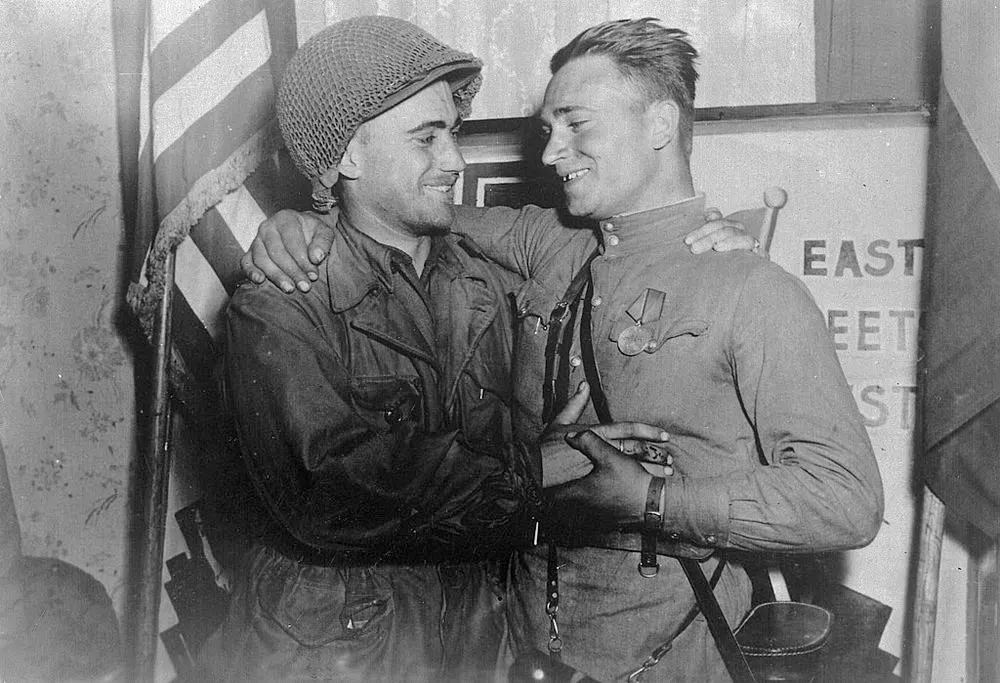
The answer came at the Elbe River, near the German town of Torgau. On April 25, 1945, First Lieutenant Albert Kotzebue of the U.S. Army crossed the Elbe with three men from an intelligence and reconnaissance platoon. On the eastern bank, they made contact with Soviet patrols under Lieutenant Colonel Alexander Gordeyev, who commanded a Soviet Guards rifle regiment of the First Ukrainian Front. It was the first confirmed link-up between American and Soviet ground forces on German soil.
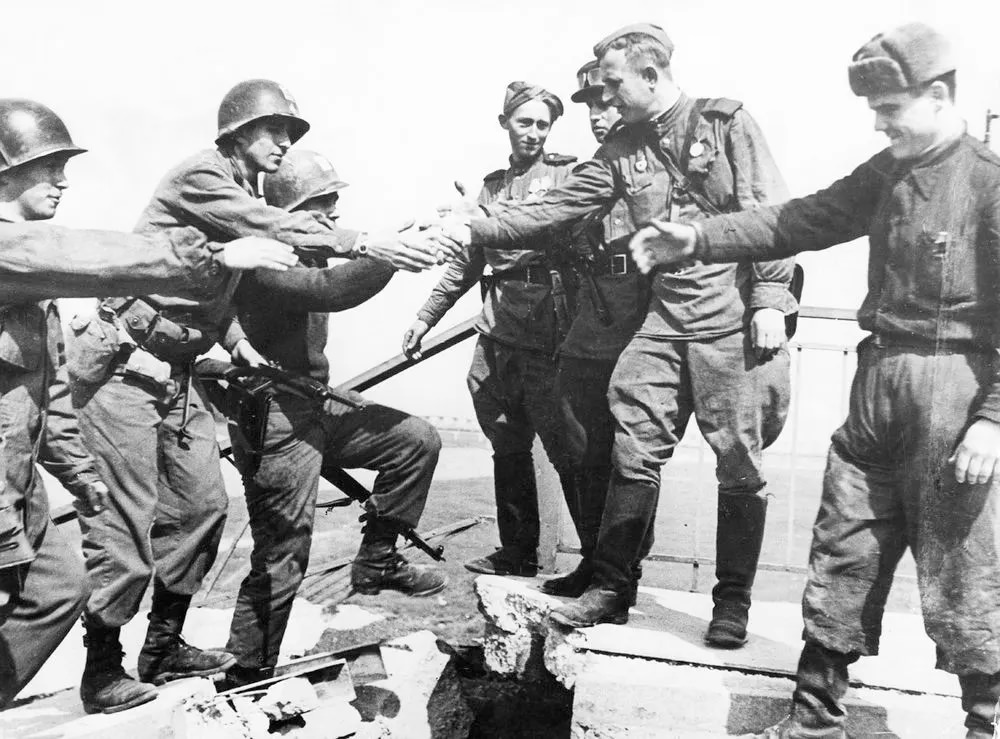
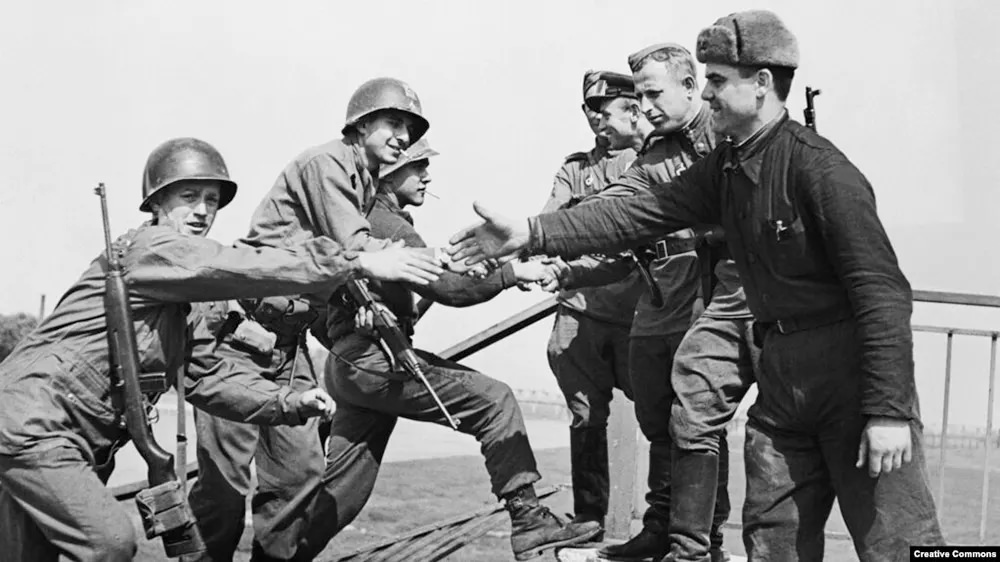
That same day, a second meeting took place on the destroyed Elbe bridge at Torgau. A Soviet patrol led by Lieutenant Alexander Silvashko encountered a patrol headed by Second Lieutenant William Robertson. The two men met amid the ruins of the bombed-out bridge, a moment that captured the raw, unscripted reality of the war’s final days in Europe.
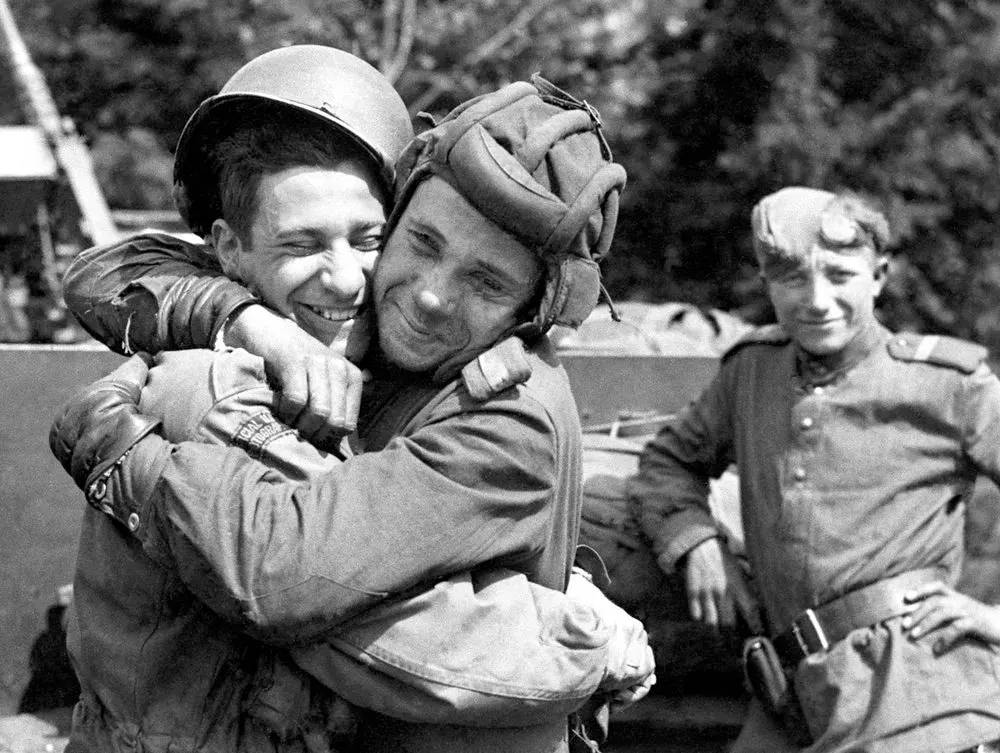
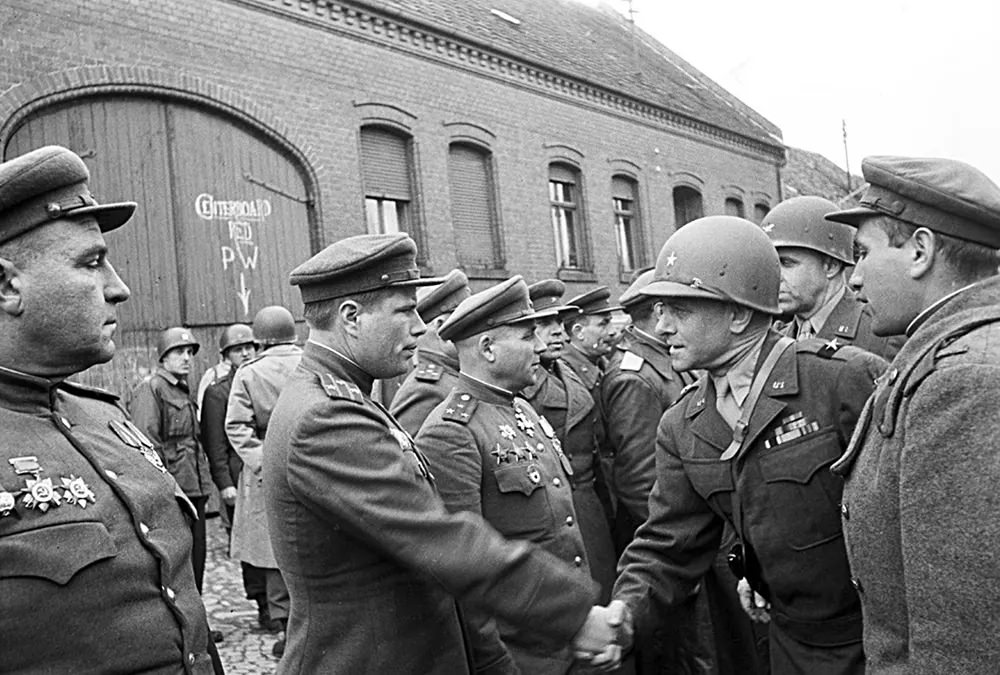
The following day, April 26, the meeting became official at the command level. U.S. General Emil F. Reinhardt, commander of the 69th Infantry Division of the First Army, met with Soviet General Vladimir Rusakov, commander of the 58th Guards Rifle Division of the 5th Guards Army, at Torgau — southwest of Berlin.
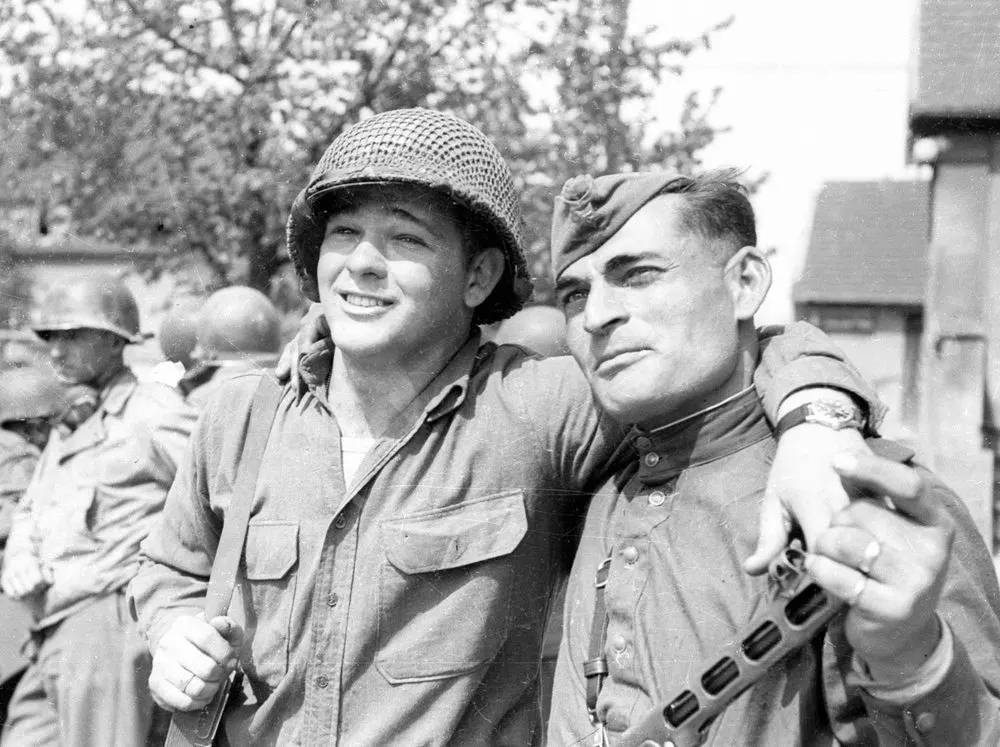
On April 27, Robertson and Silvashko stood together in front of photographers for what became known as the formal “Handshake of Torgau.” The image of two soldiers — one American, one Soviet — clasping hands on the shattered bridge became one of the most recognized photographs of the war.
World leaders responded quickly. U.S. President Harry S. Truman addressed the moment directly: “This is not the hour of final victory in Europe, but the hour draws near, the hour for which all the American people, all the British people, and all the Soviet people have toiled and prayed so long.” Soviet leader Joseph Stalin kept his focus on the fight still ahead: “Our task and our duty are to complete the destruction of the enemy to force him to lay down his arms and surrender unconditionally. The Red Army will fulfill to the end this task and this duty to our people and all freedom-loving peoples.”
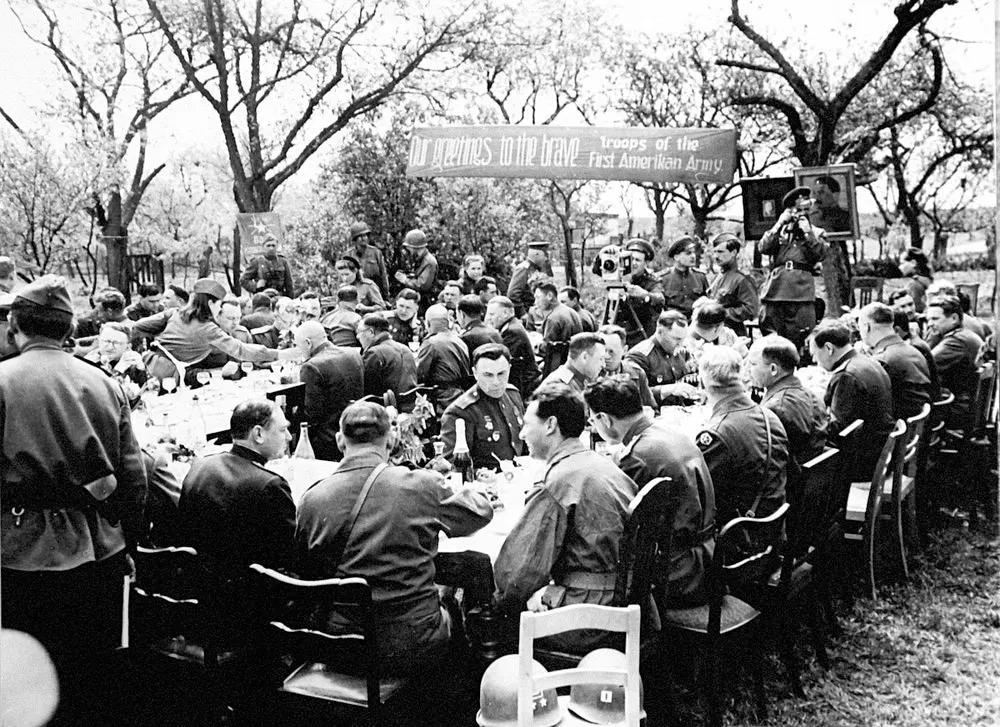
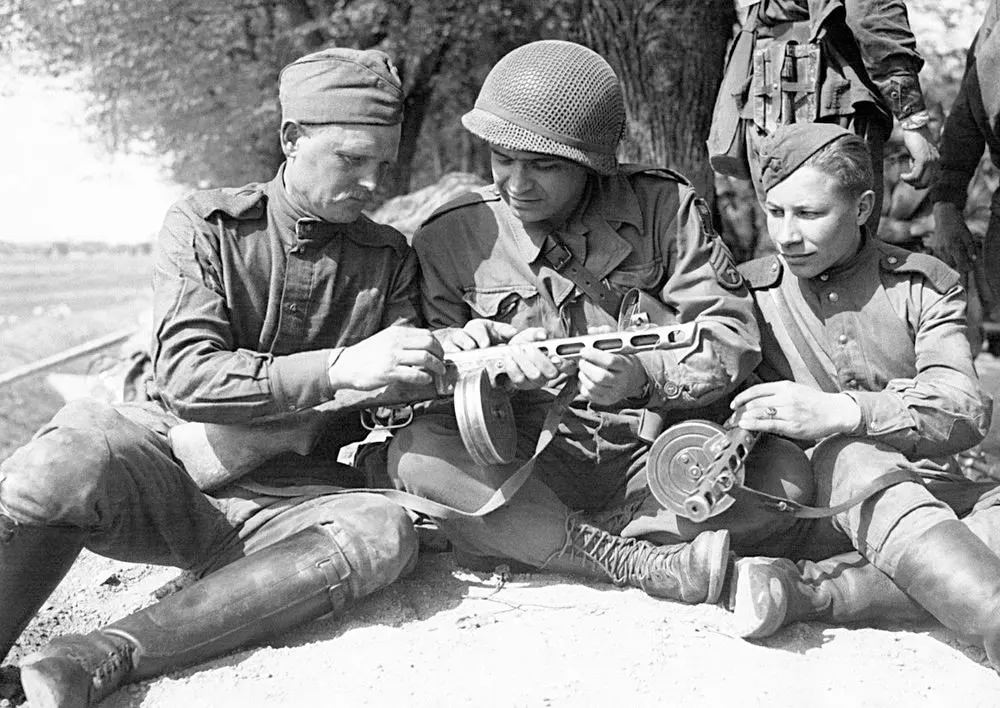
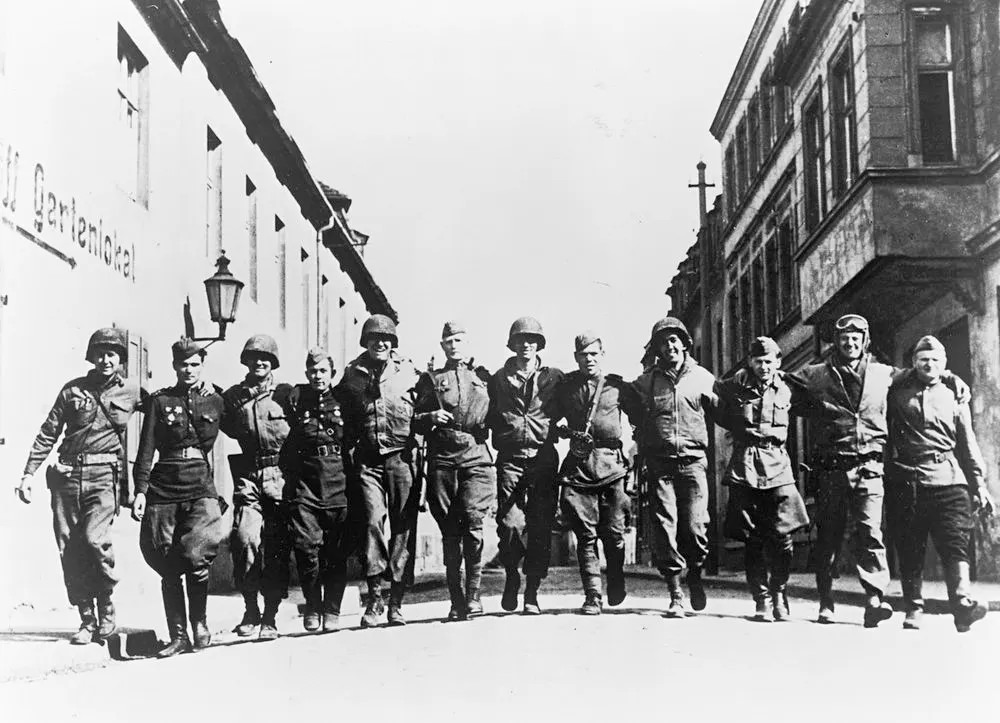
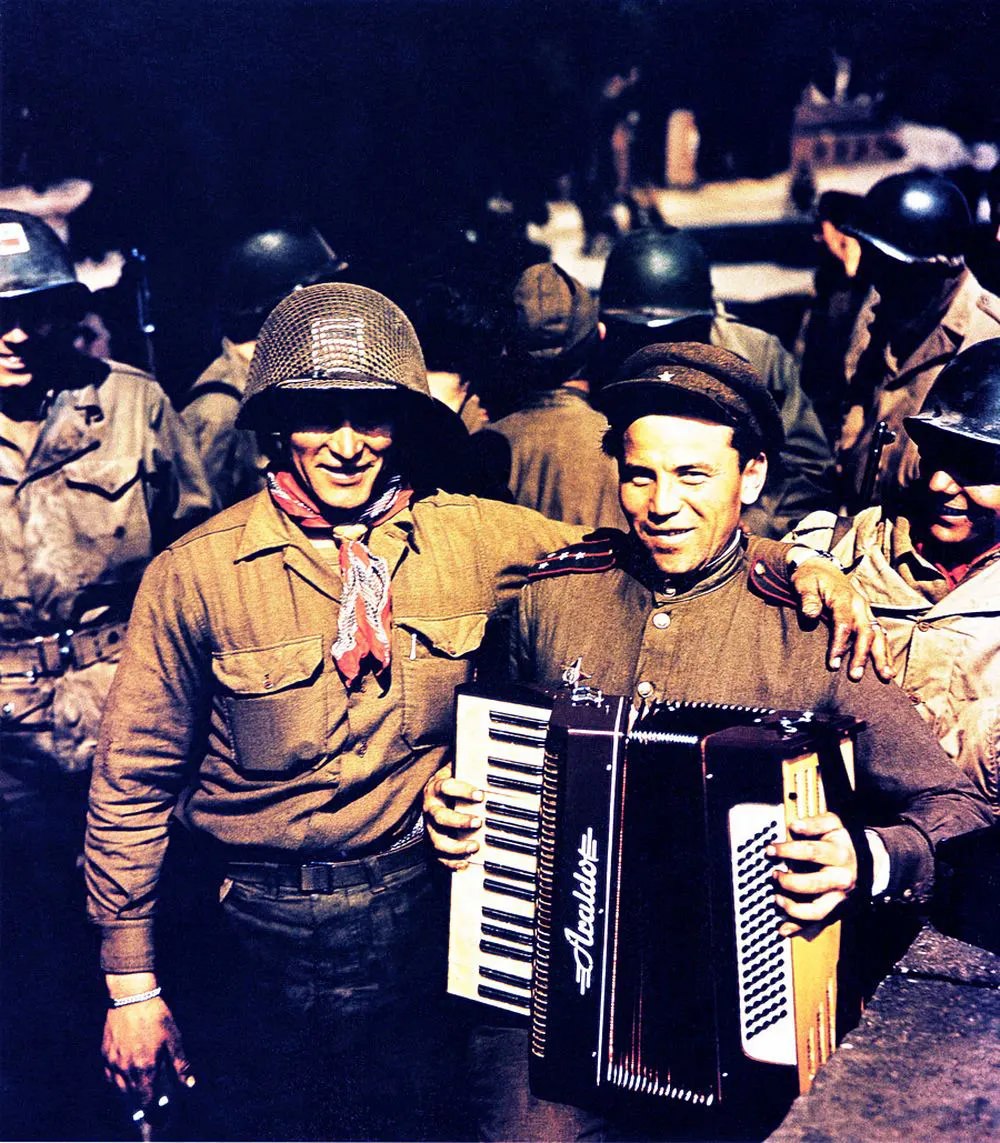
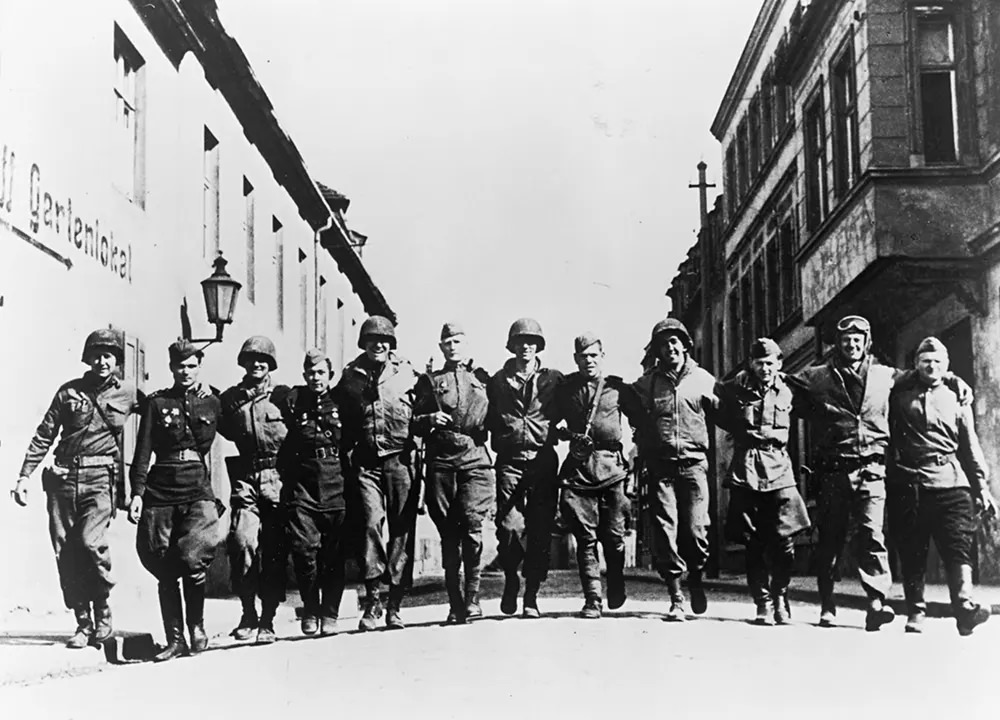
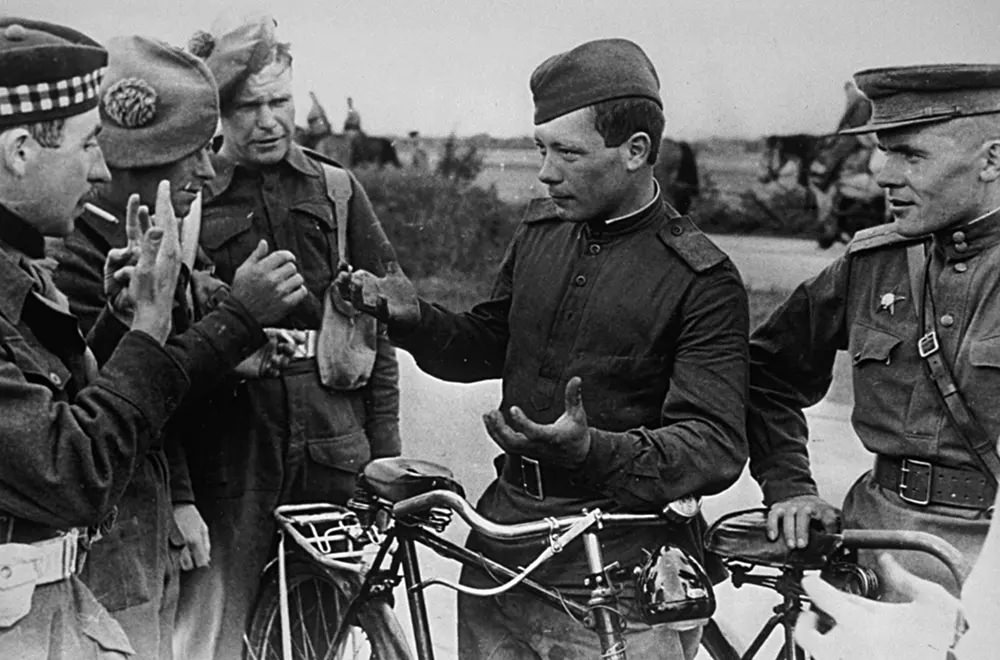
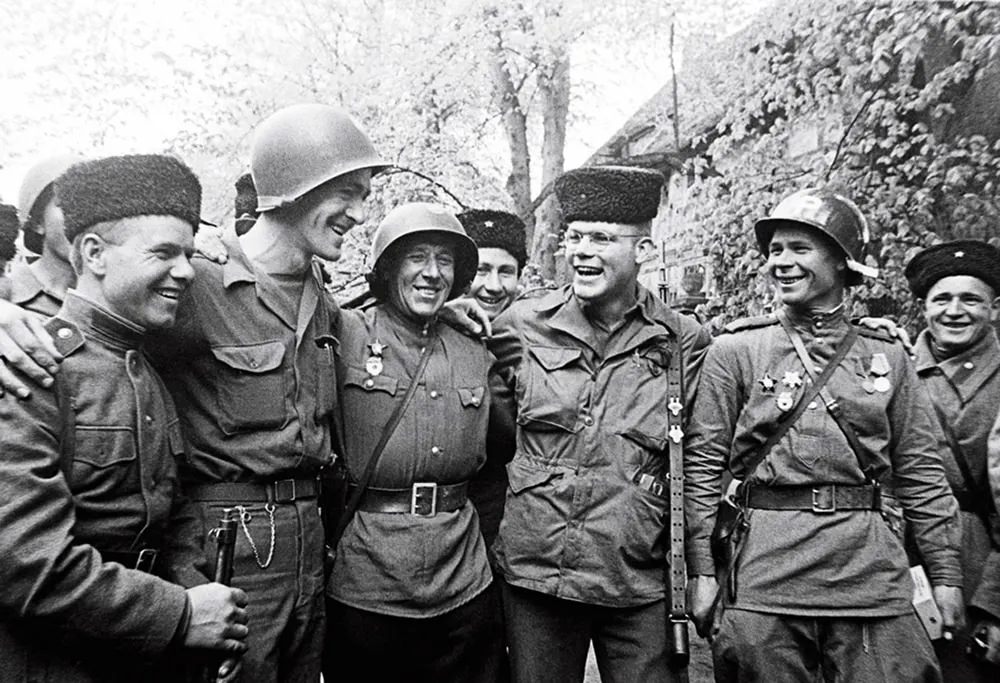
The photographs taken at Torgau show soldiers from two very different armies, speaking different languages, sharing a rare moment of relief and recognition. For the men on the ground, the meeting was proof that the end of the war in Europe was finally within reach.
The Elbe link-up, often called “Elbe Day,” divided Germany into two zones — north and south — cutting off what remained of the German military’s ability to operate as a unified force. Nazi Germany surrendered unconditionally just two weeks later, on May 8, 1945.
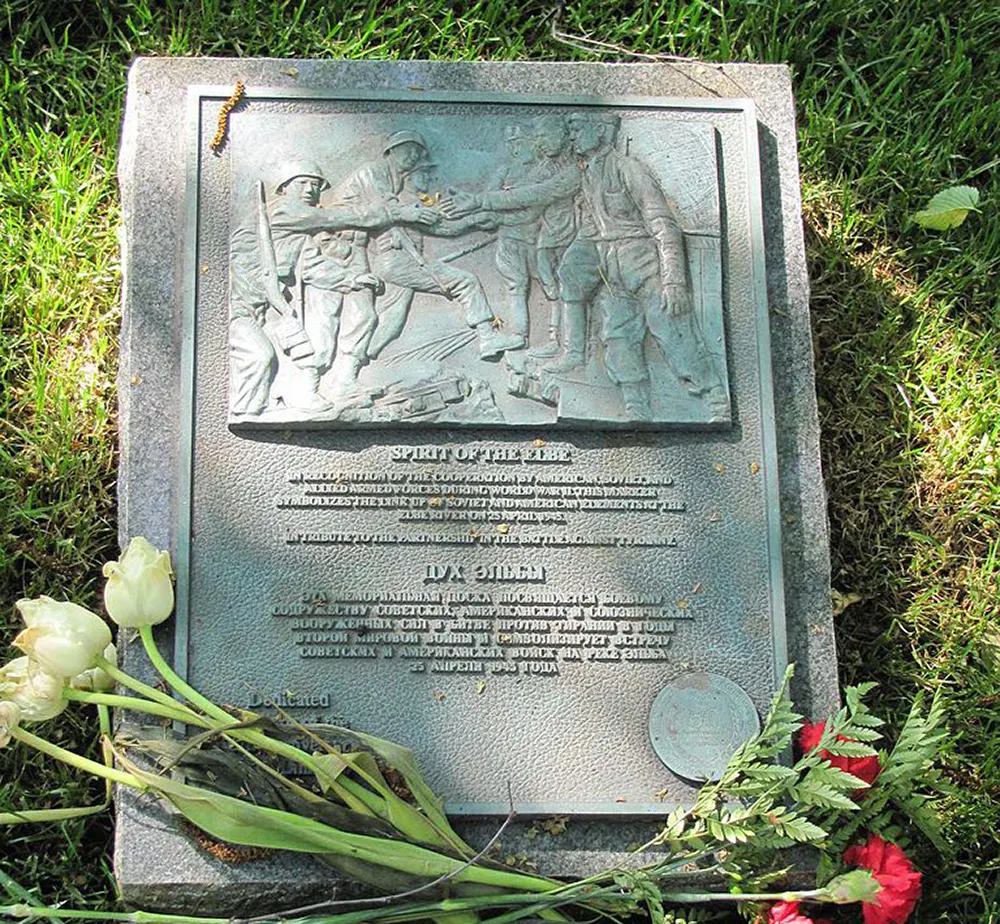
In the years that followed, the meeting at the Elbe was marked in concrete ways. Monuments were built at Torgau, Lorenzkirch, and Bad Liebenwerda. A “Spirit of the Elbe” plaque was installed at Arlington National Cemetery in the United States. Russia later issued a commemorative coin marking the 50th anniversary of the event.
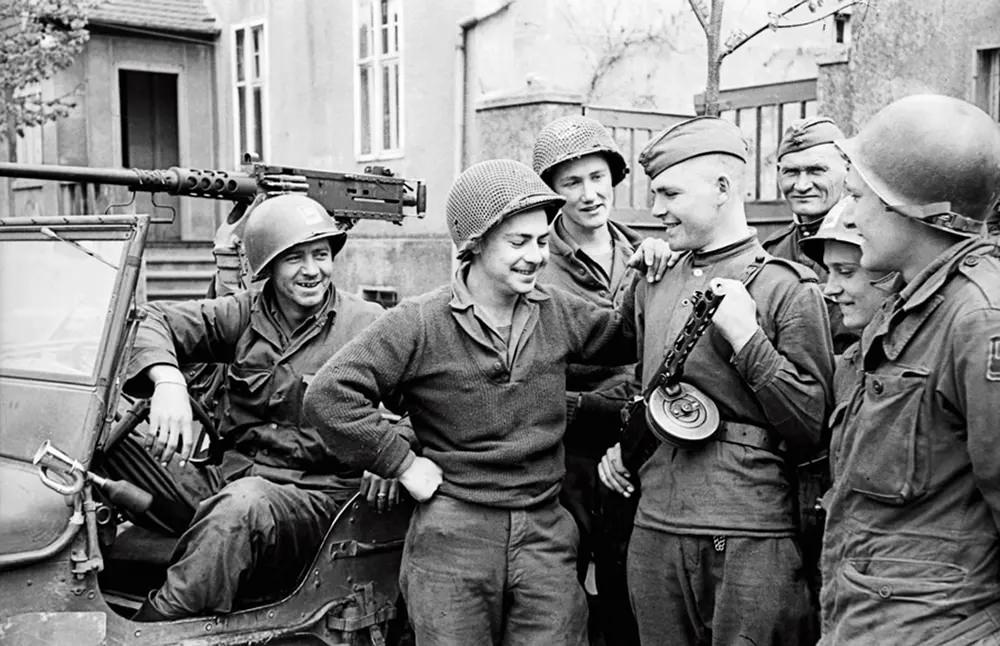
One of the soldiers present at the link-up later petitioned the United Nations to declare April 25 a “World Day of Peace.” The UN never officially adopted the designation, but the date remained meaningful to those who were there. In 2010, the presidents of the United States and Russia issued a joint statement commemorating April 25 and the “spirit of the Elbe.”
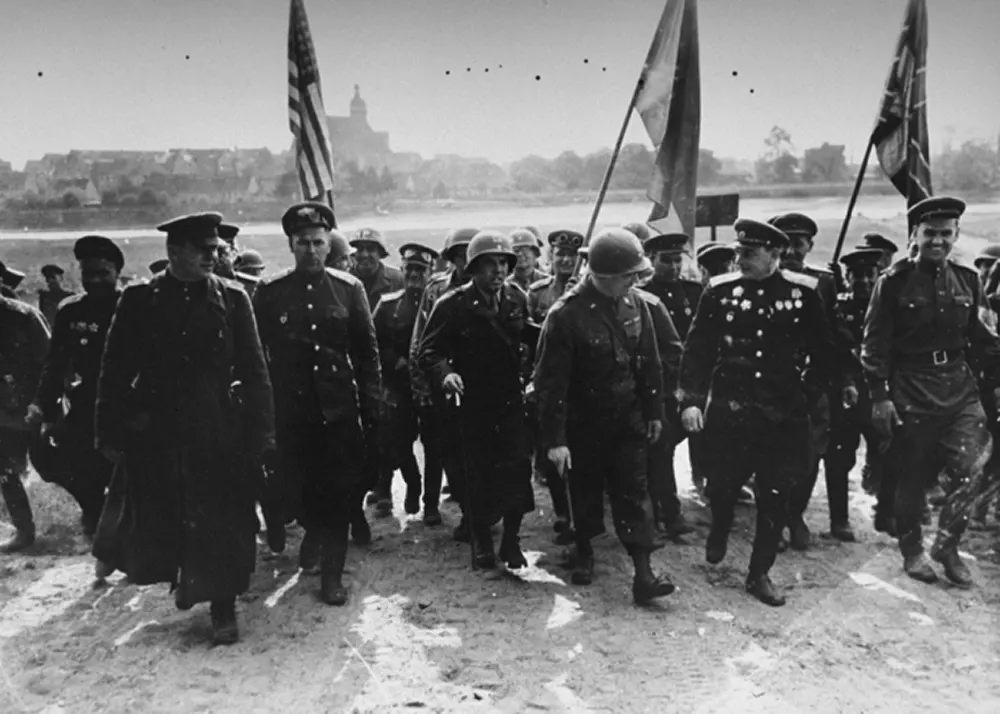
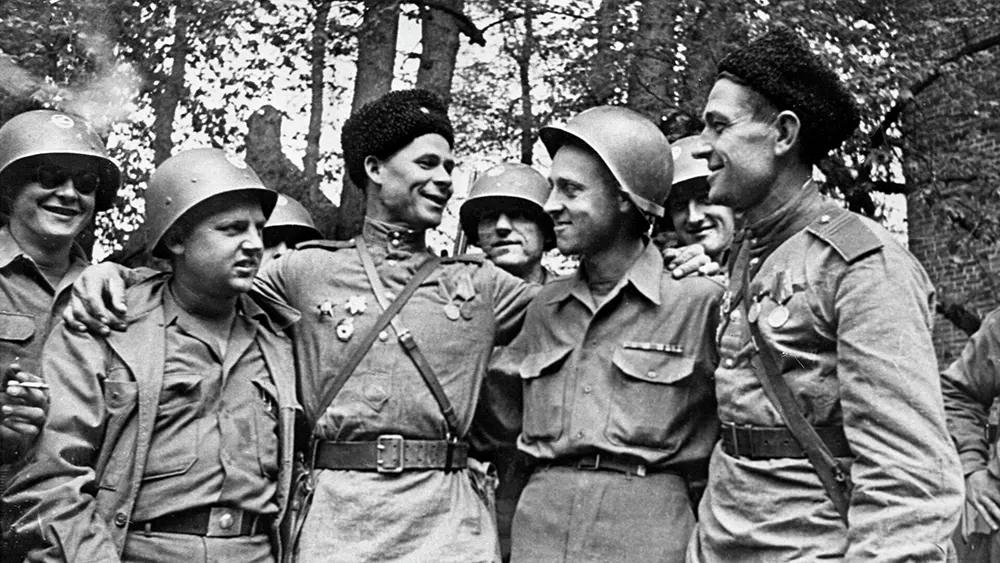
During the Cold War, when the U.S. and Soviet Union were locked in a tense global standoff, the Elbe meeting served as a reminder that the two nations had once fought side by side. The photographs from Torgau — soldiers shaking hands, laughing, and posing together — stood in sharp contrast to the decades of hostility that followed.