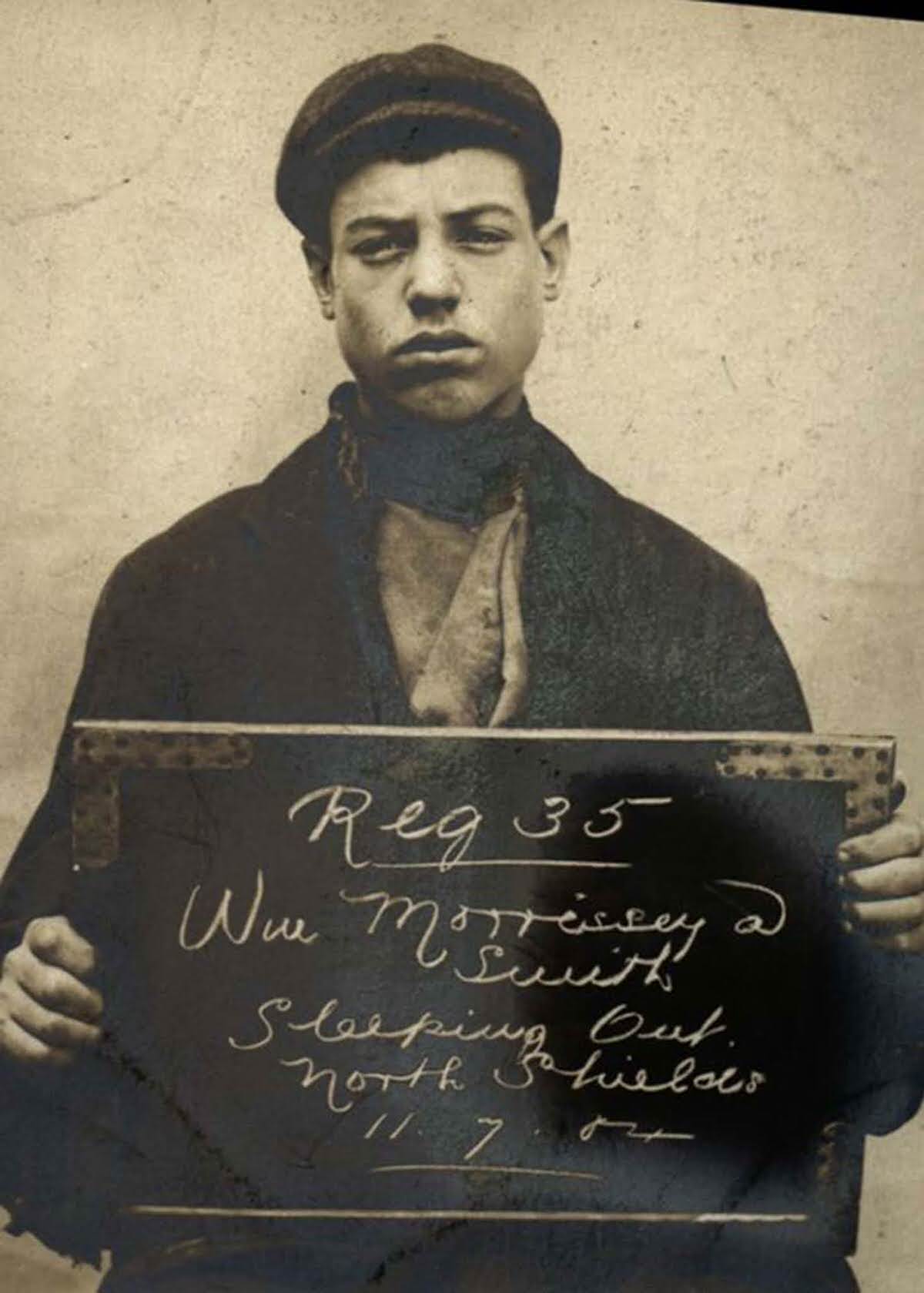
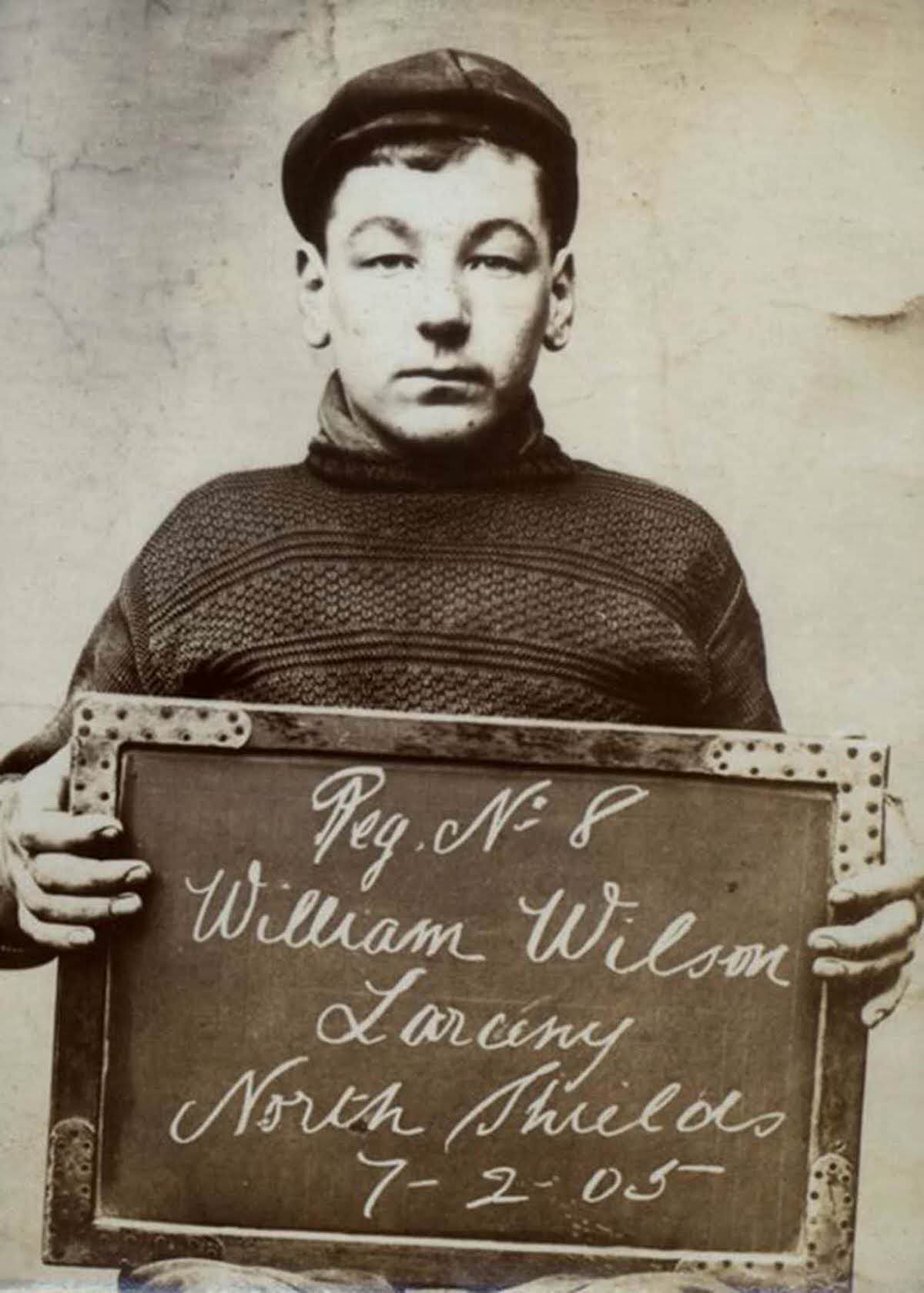
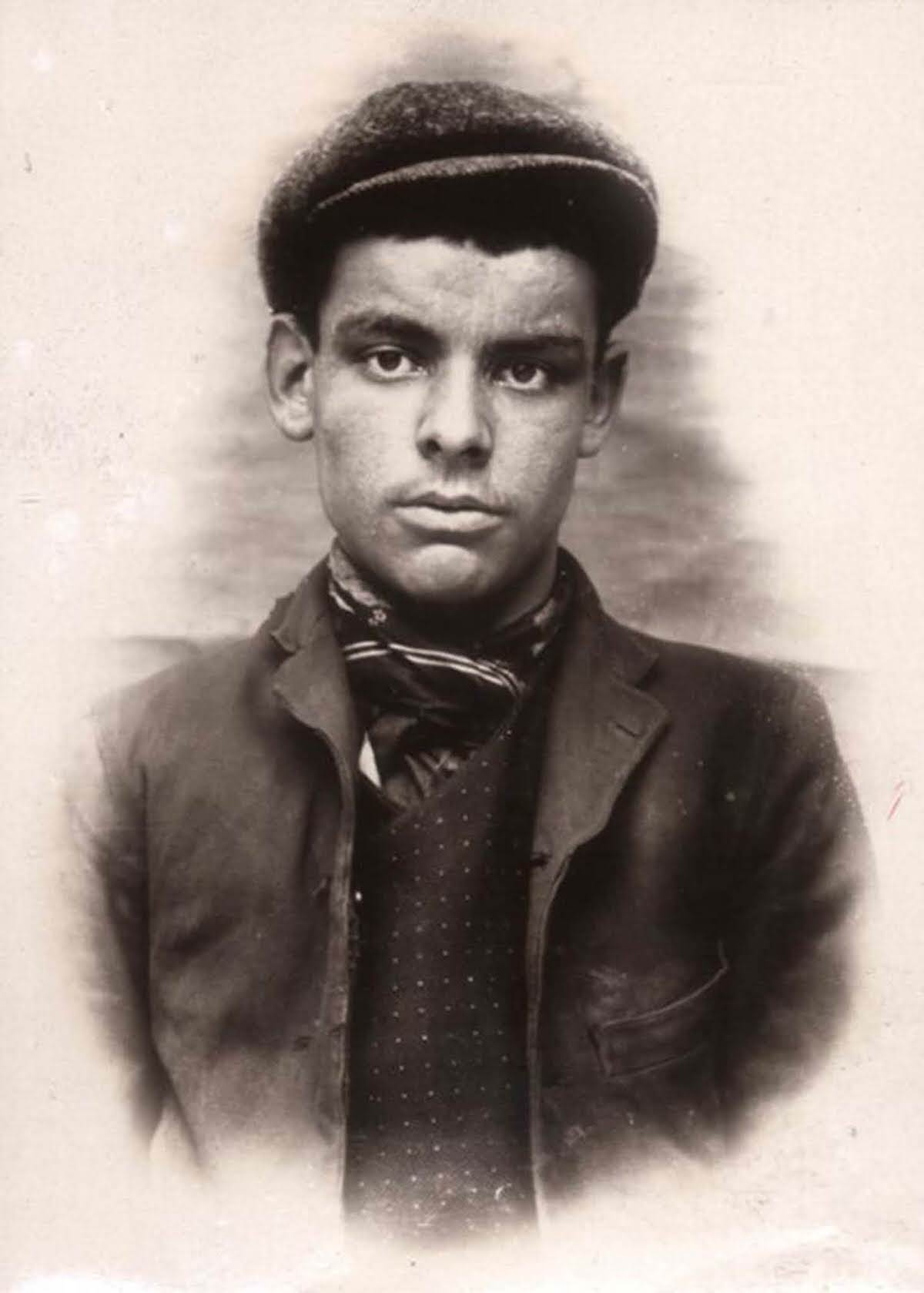
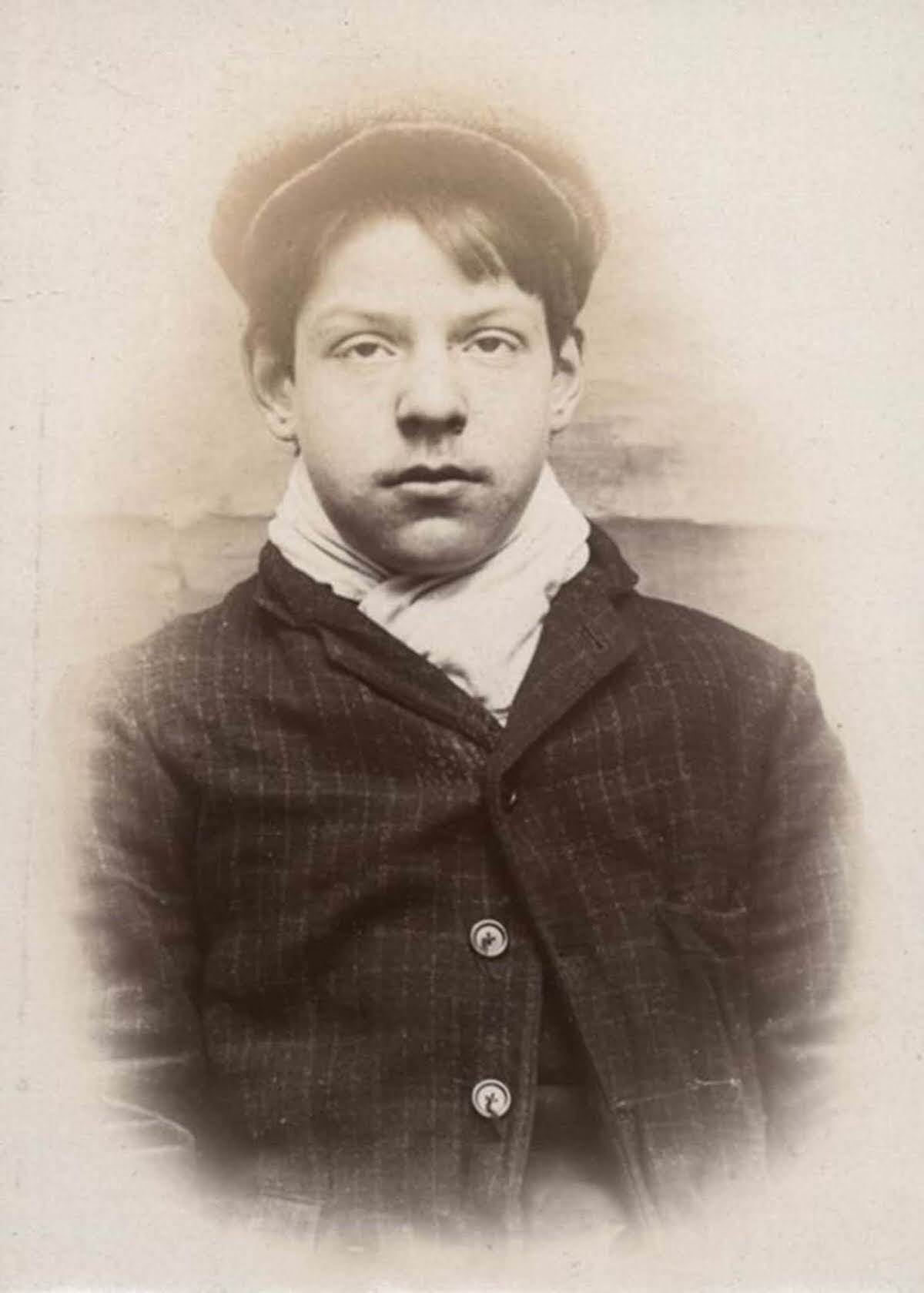
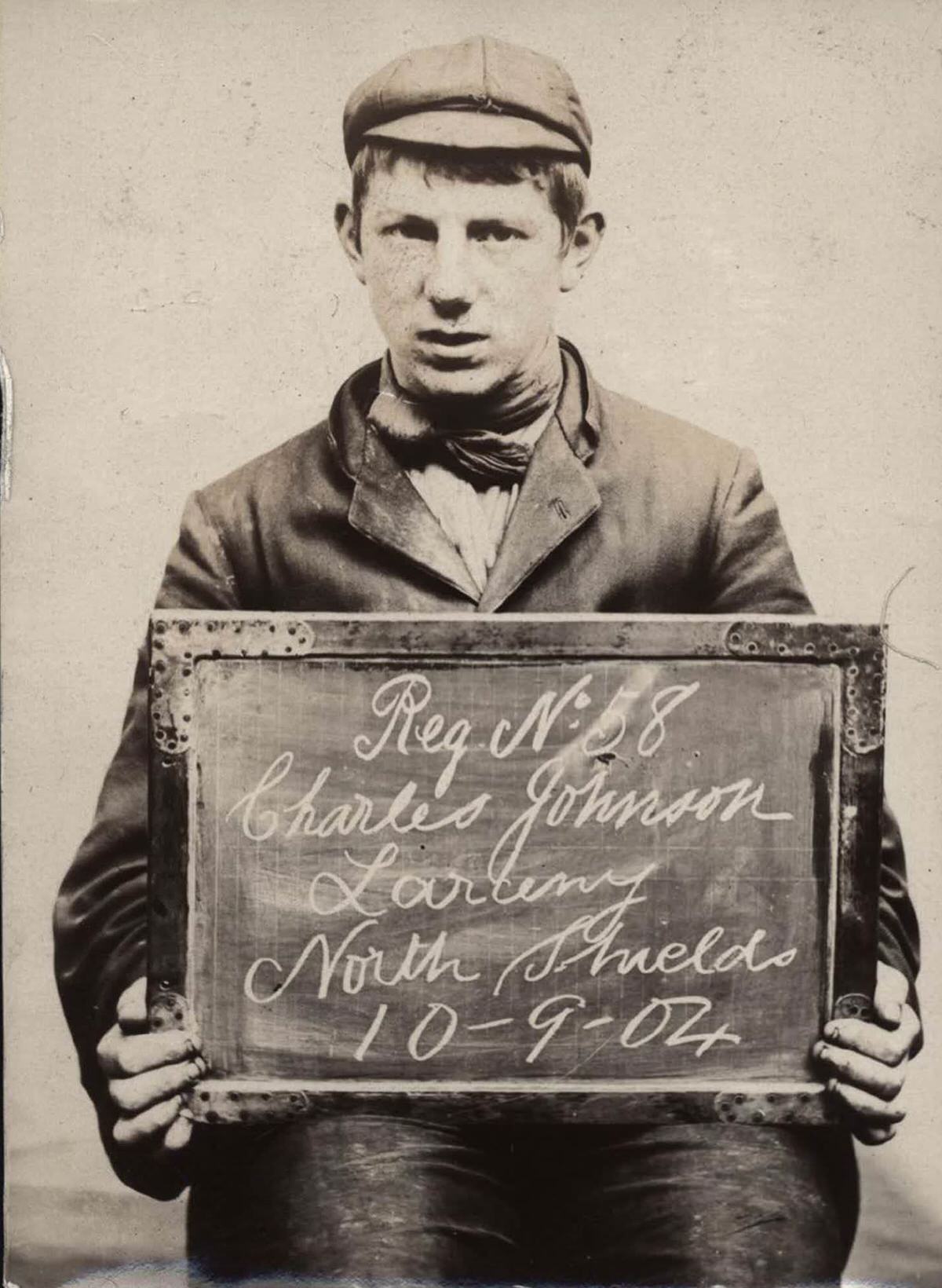
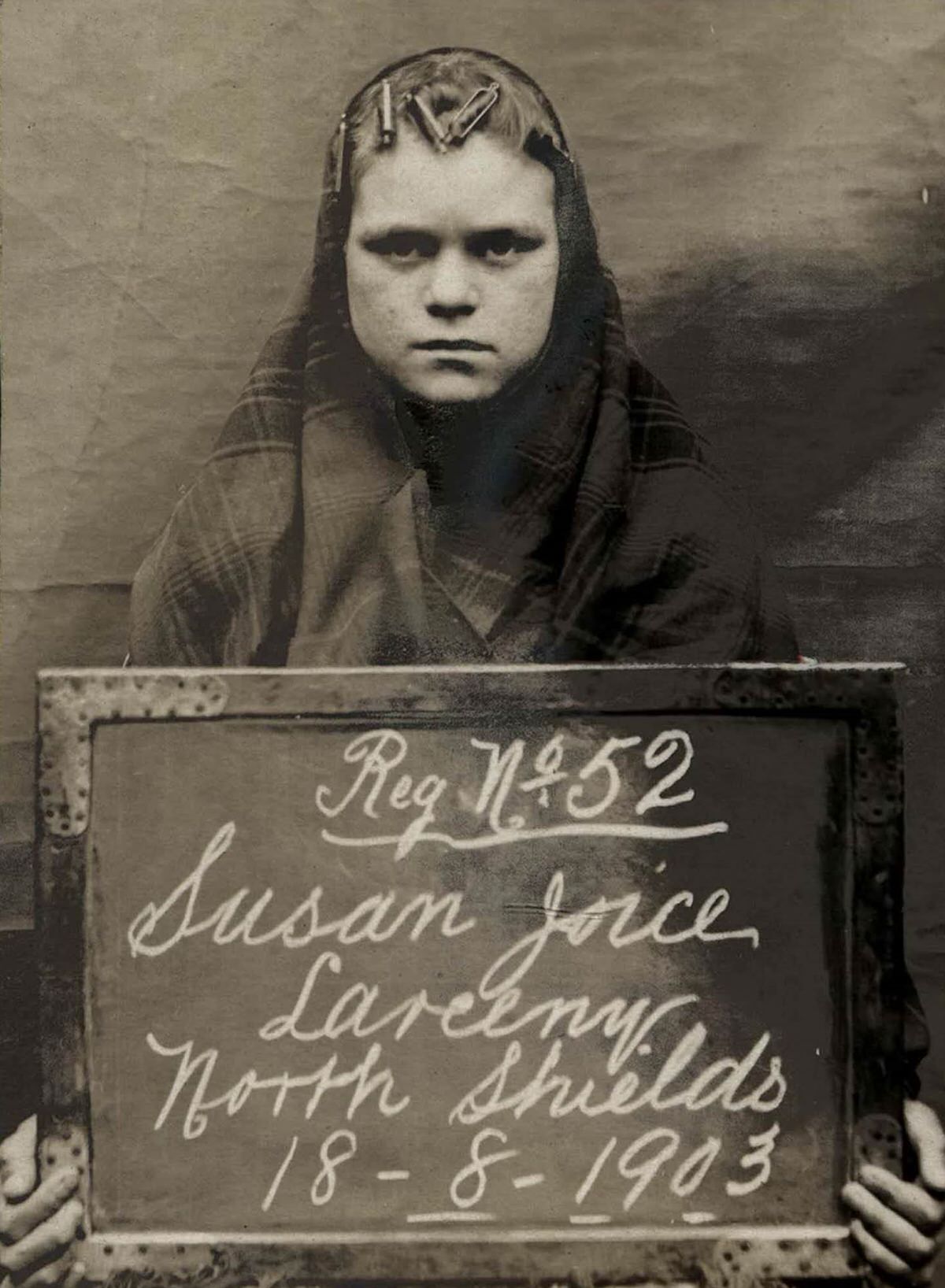
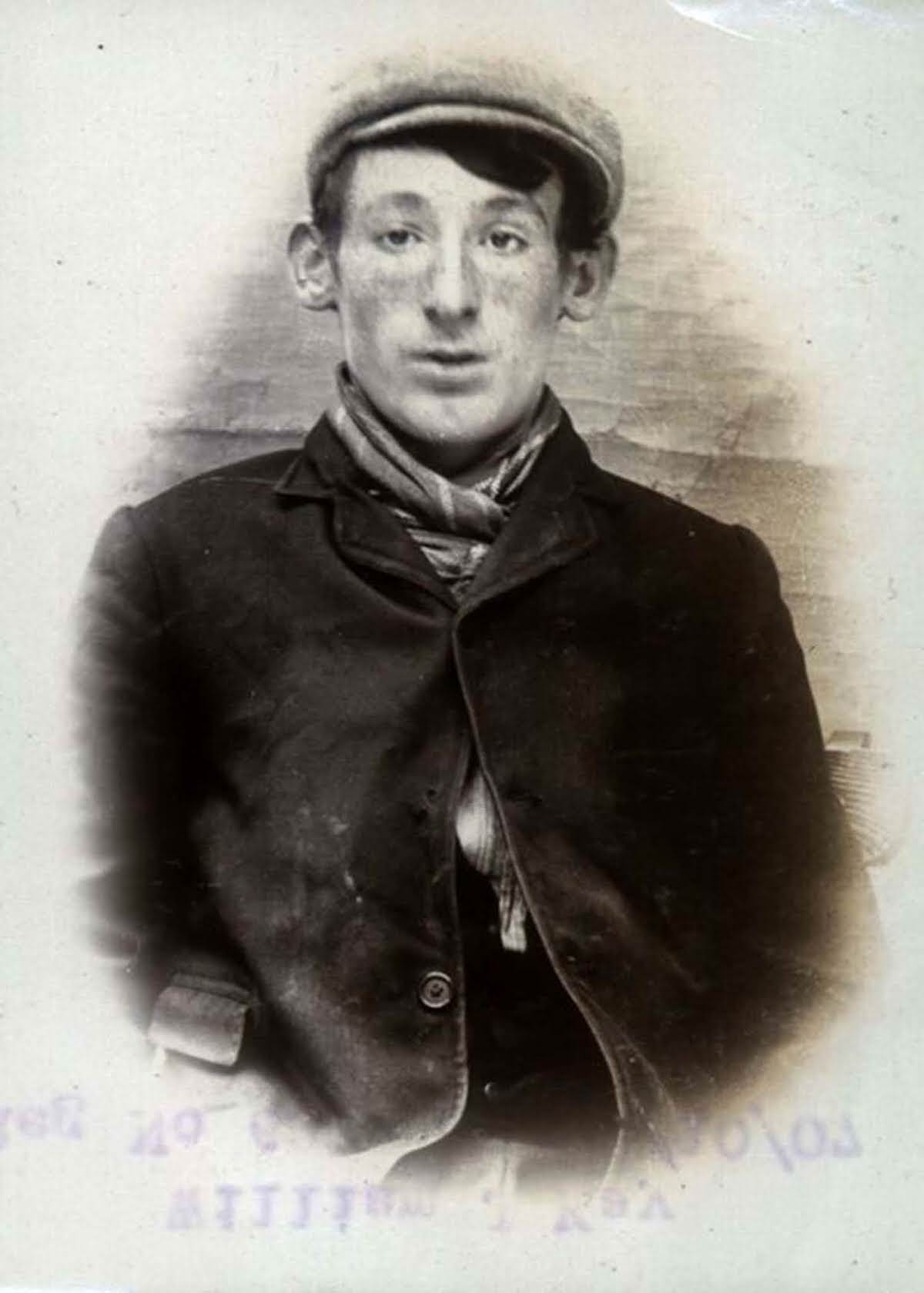
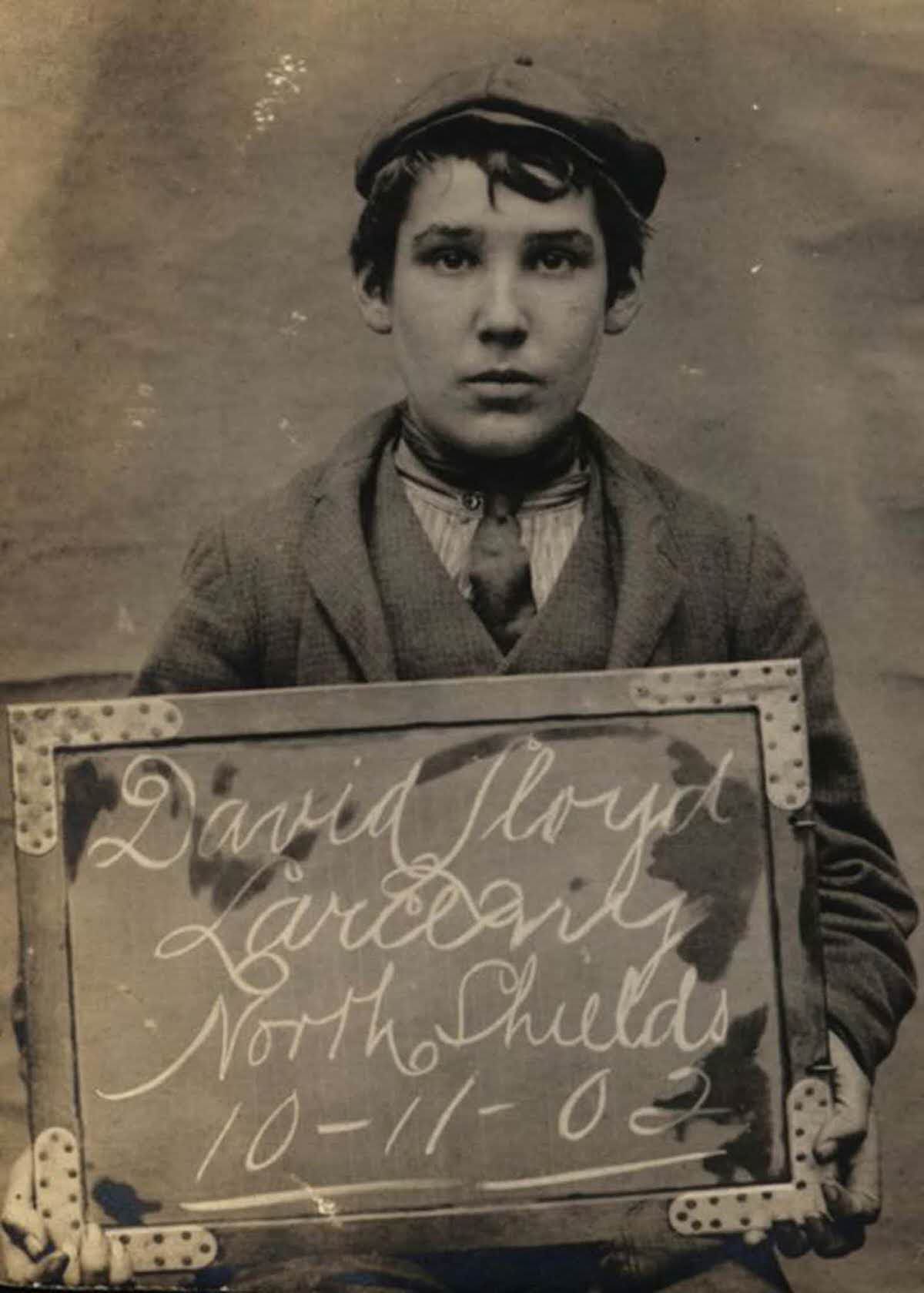
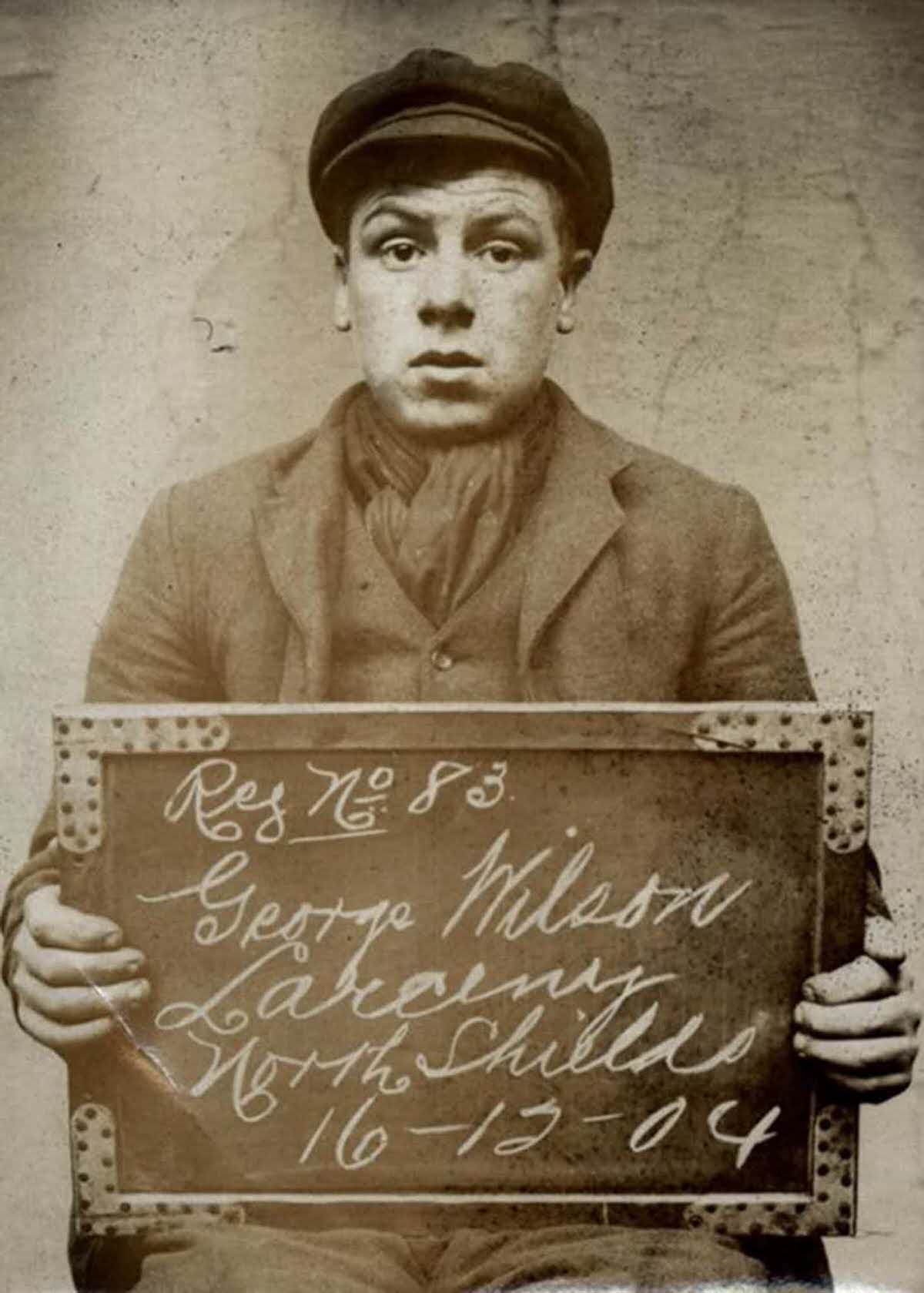
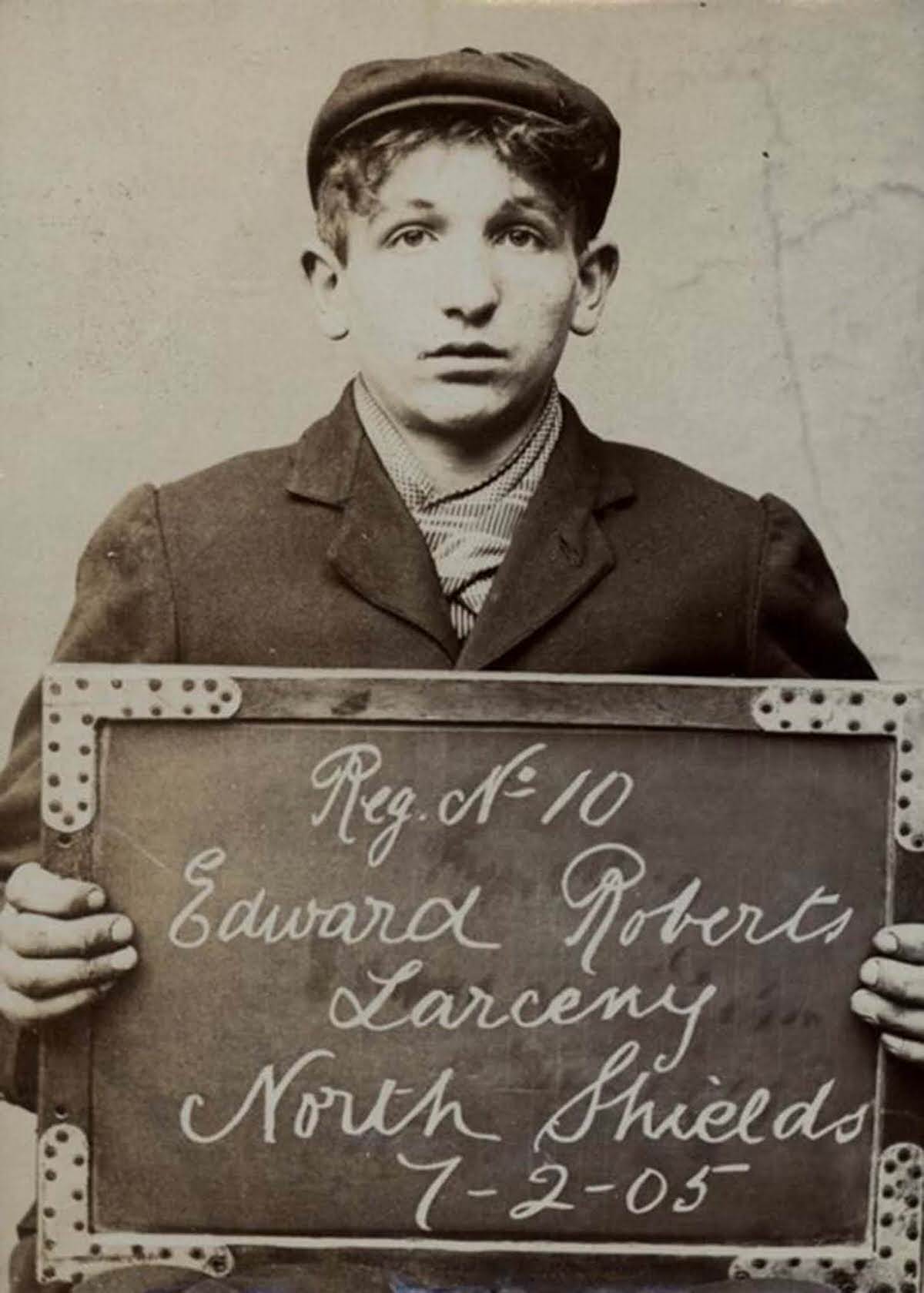
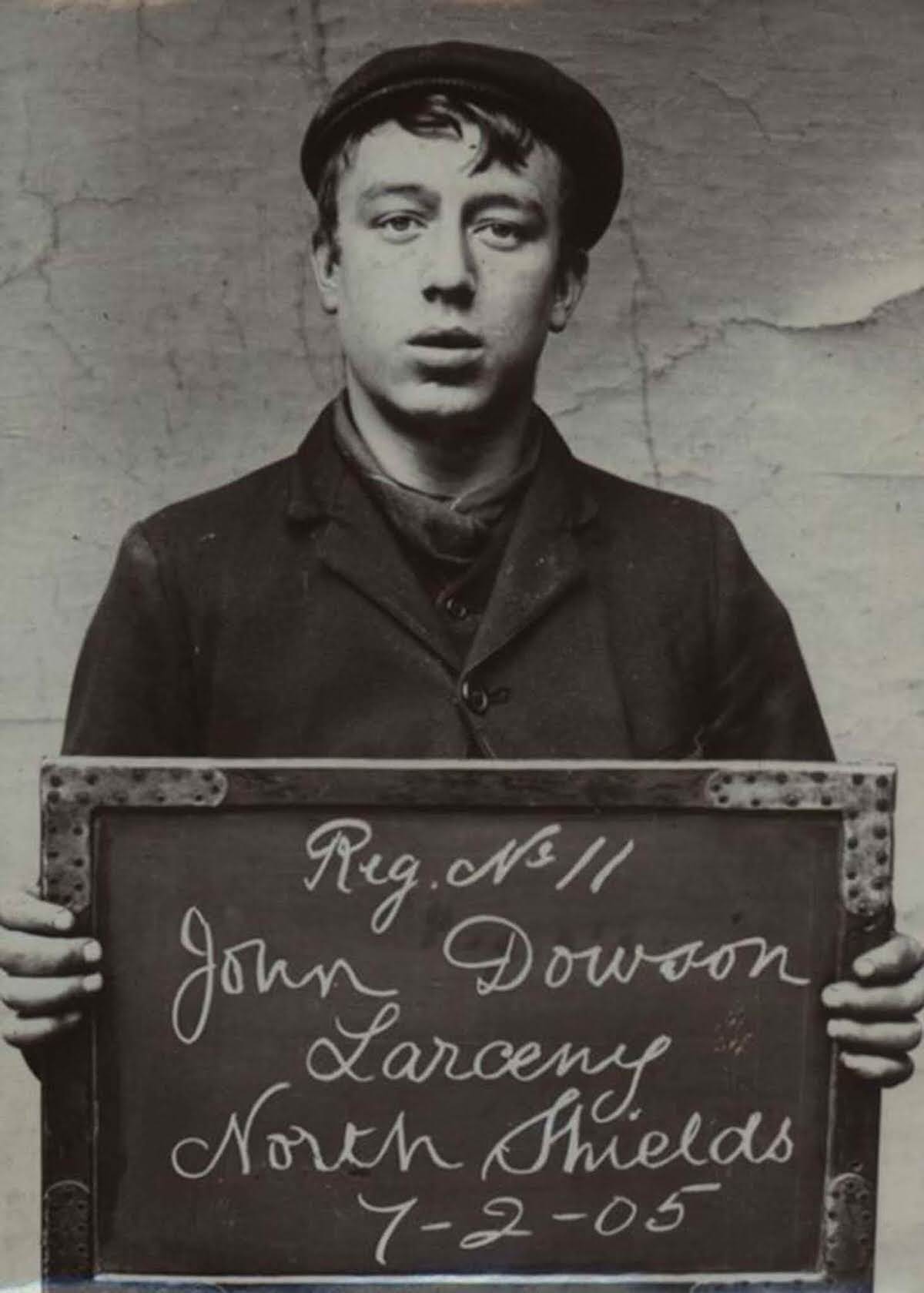
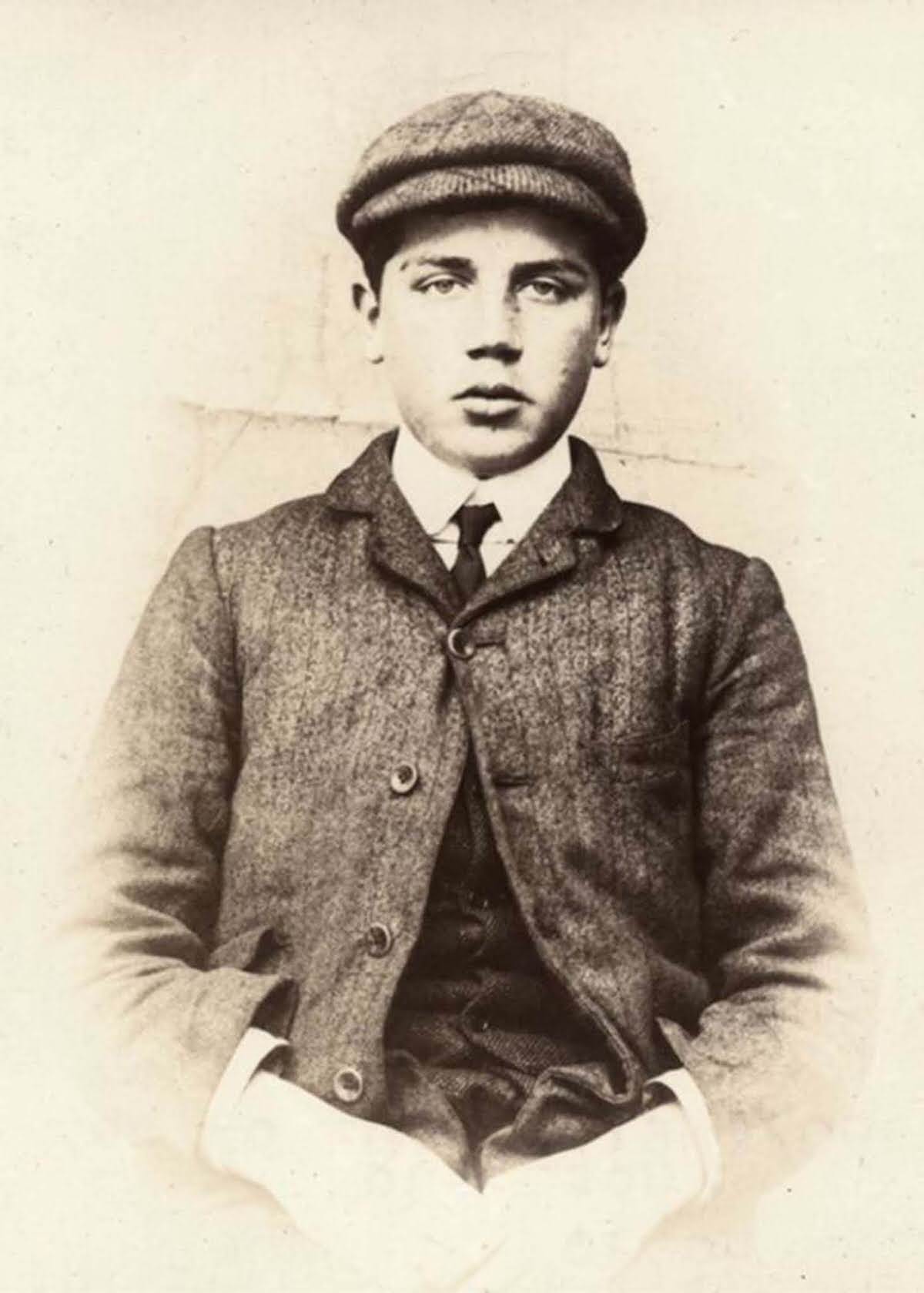
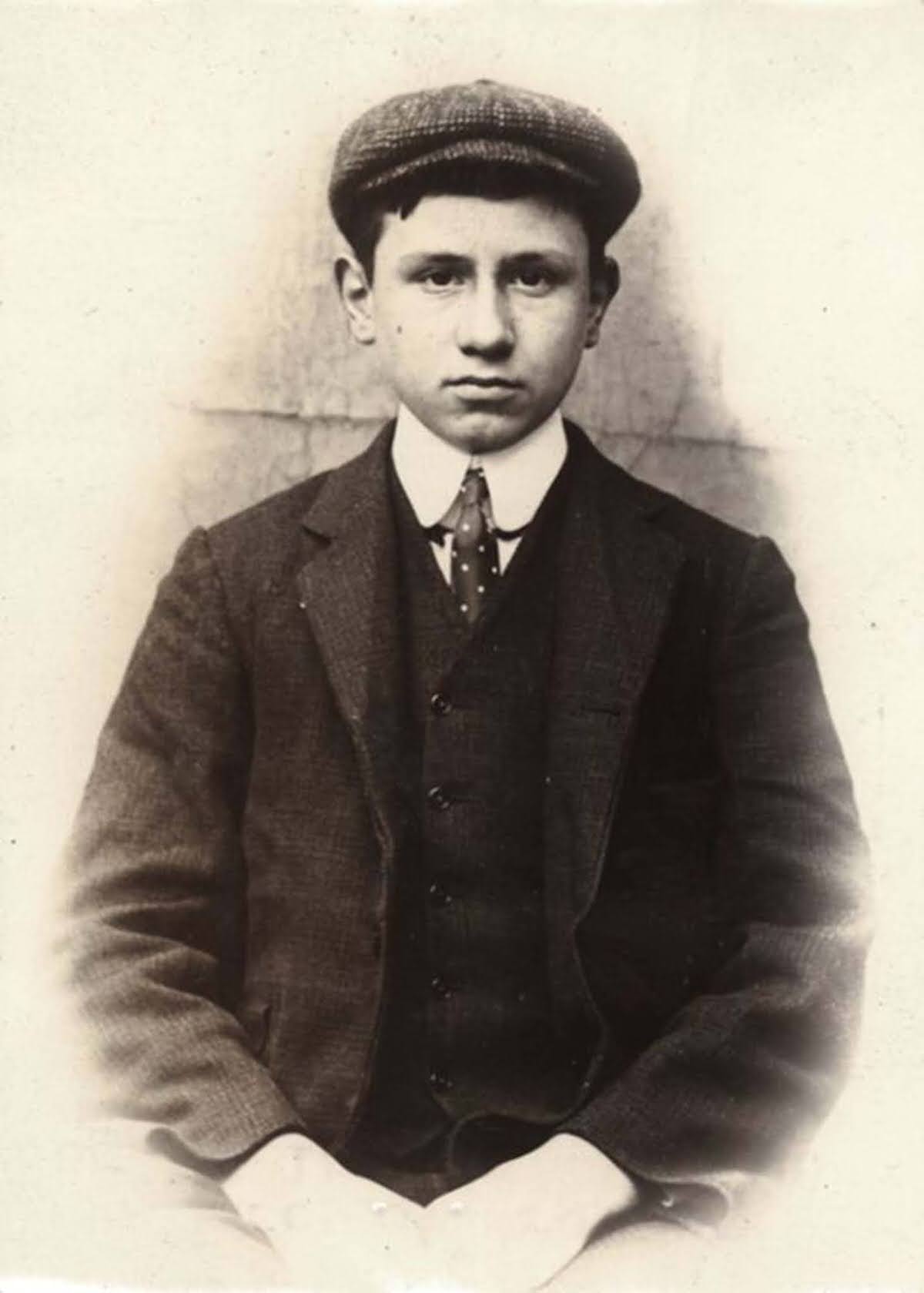
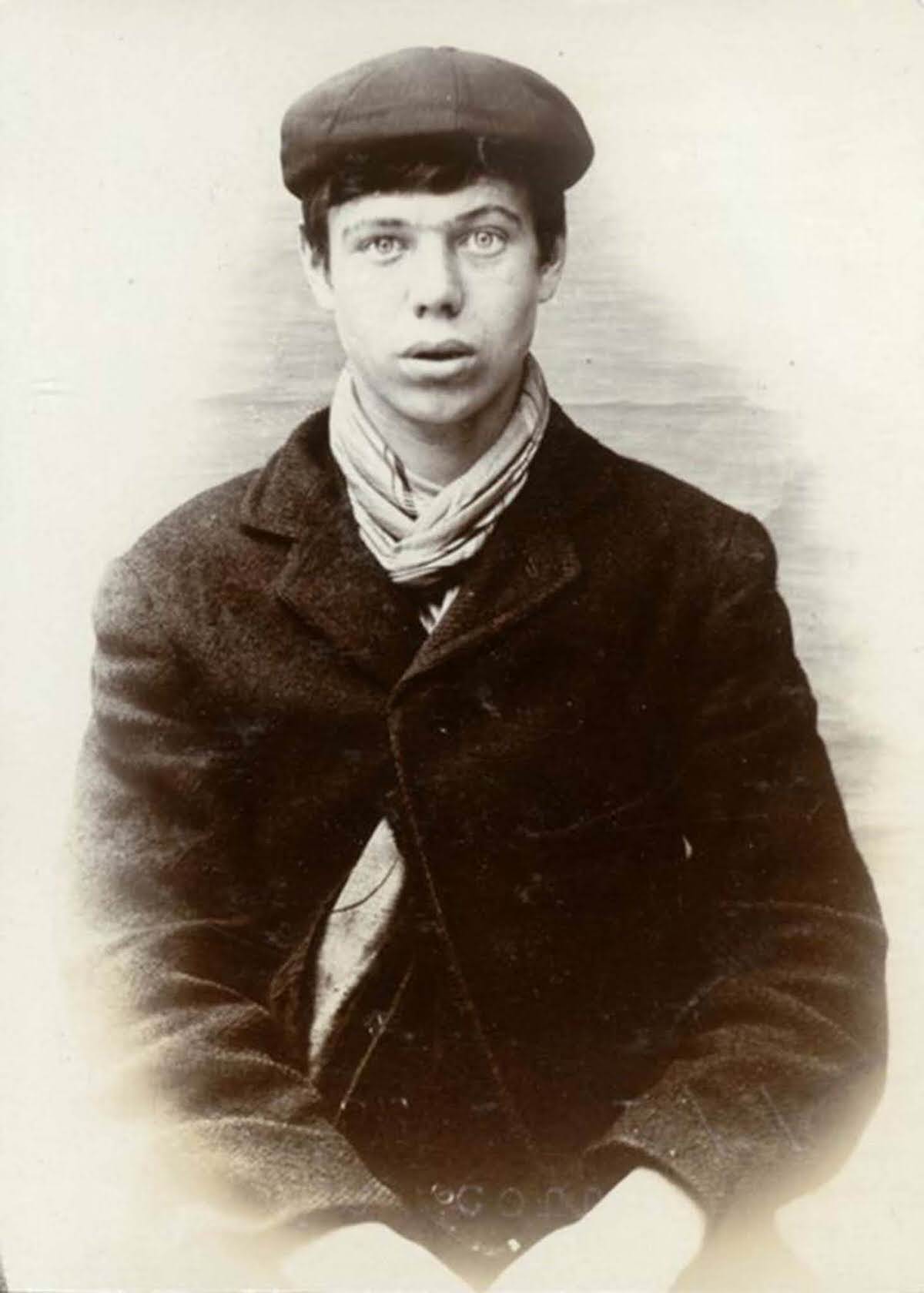
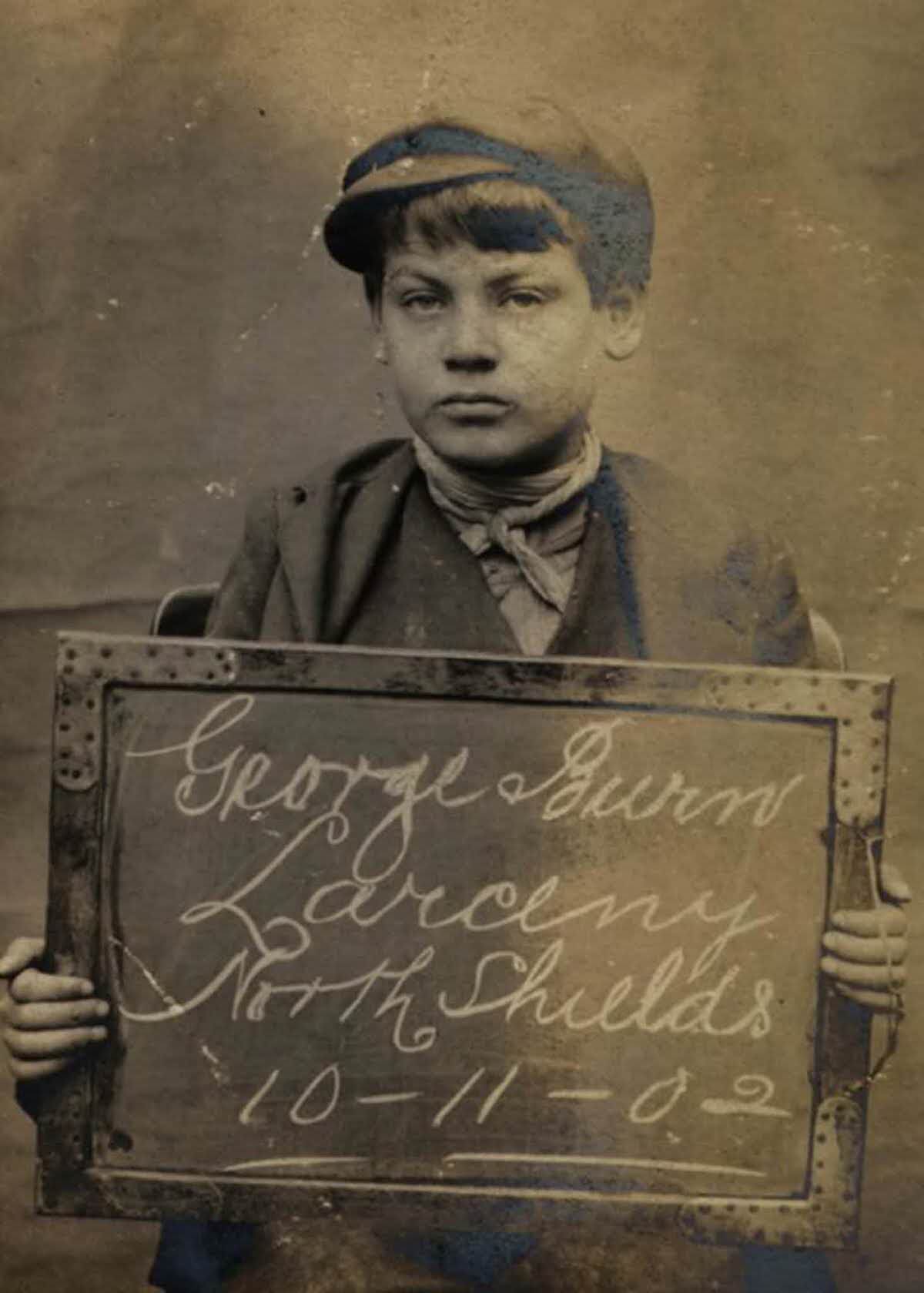
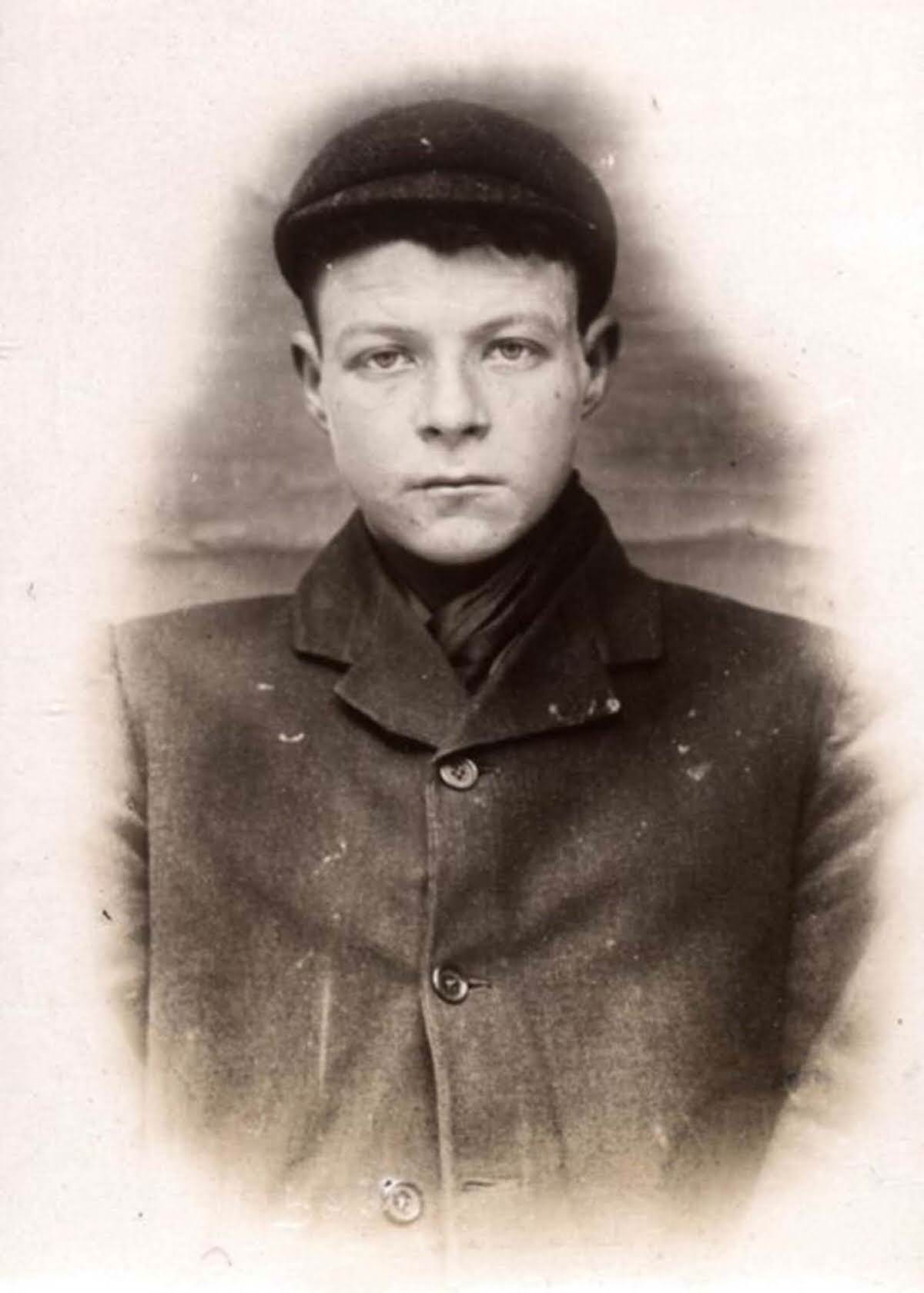
The faces in these photographs are startlingly young. Some look defiant, others blank, and a few appear almost bewildered. These are the mugshots of children and teenagers arrested in North Shields, a British port town in the northeast of England, during the early 1900s. The images are preserved as part of the Tyne and Wear Archives’ photographic collection — a rare and sobering window into the lives of young offenders during the Edwardian era.
The charges recorded alongside their names tell a story of desperation more than wickedness. Stolen fish. A copper vessel. Doormats. Money siphoned from a gas meter. These were not the crimes of hardened criminals. They were the acts of children surviving in circumstances most of us today would find unimaginable.
Britain in the Edwardian era — roughly spanning the reign of King Edward VII from 1901 to 1910 — was still the wealthiest nation in Europe. But that wealth was distributed very unevenly. While the upper and middle classes enjoyed relative comfort, the working poor were being squeezed from every direction. Wages had stagnated or fallen in many industries, while the cost of food, rent, and basic goods kept climbing. The gap between rich and poor was wide and growing.
Rapid industrialization pulled hundreds of thousands of people into cities and towns like North Shields. The promise of factory work and steady wages drew families from rural areas, but the reality often fell short. Overcrowded slums expanded faster than housing could be built. Sanitation was poor. Work was frequently unreliable. For children growing up in these conditions, the streets were both a playground and a workplace — and sometimes a place of survival.
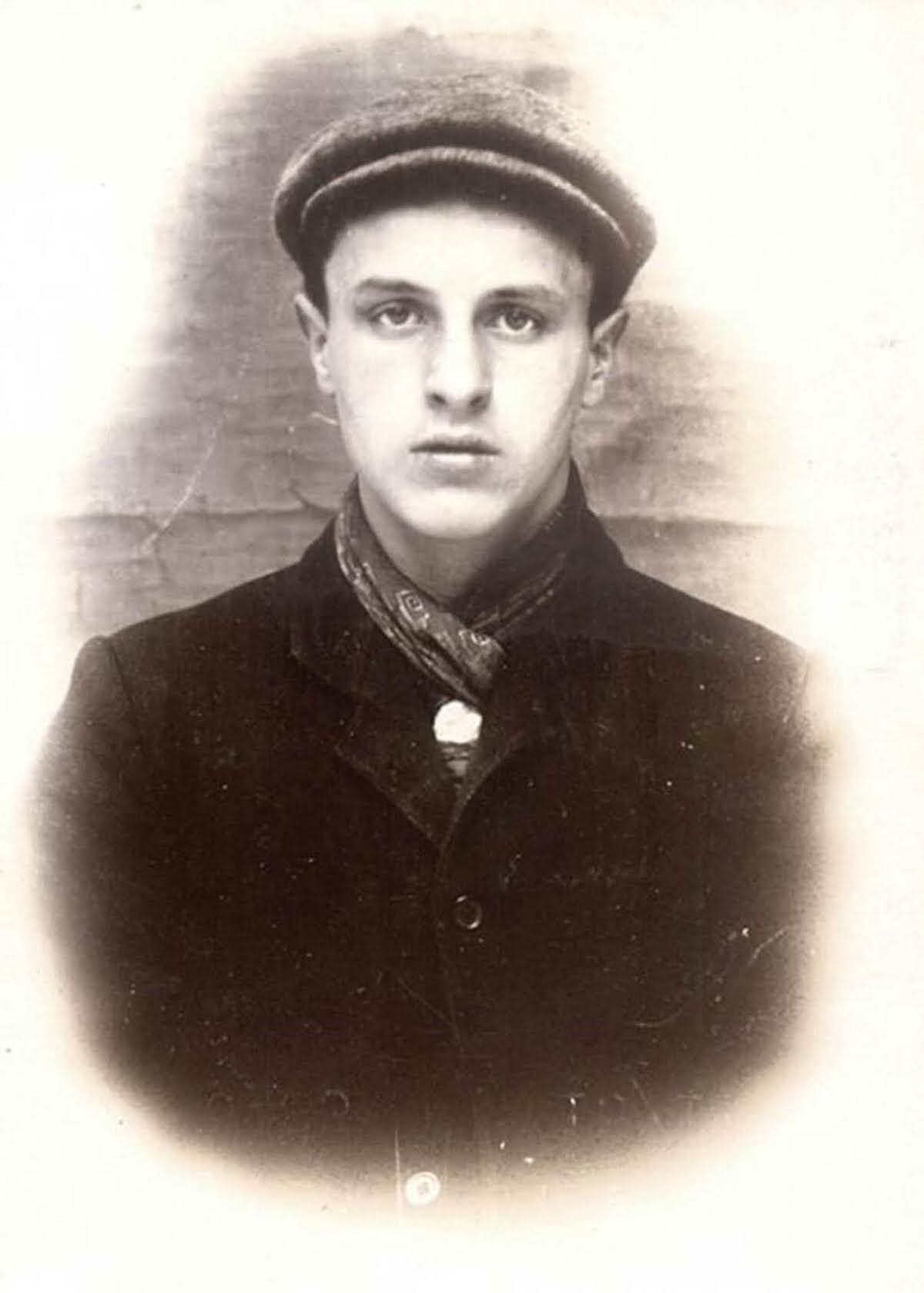
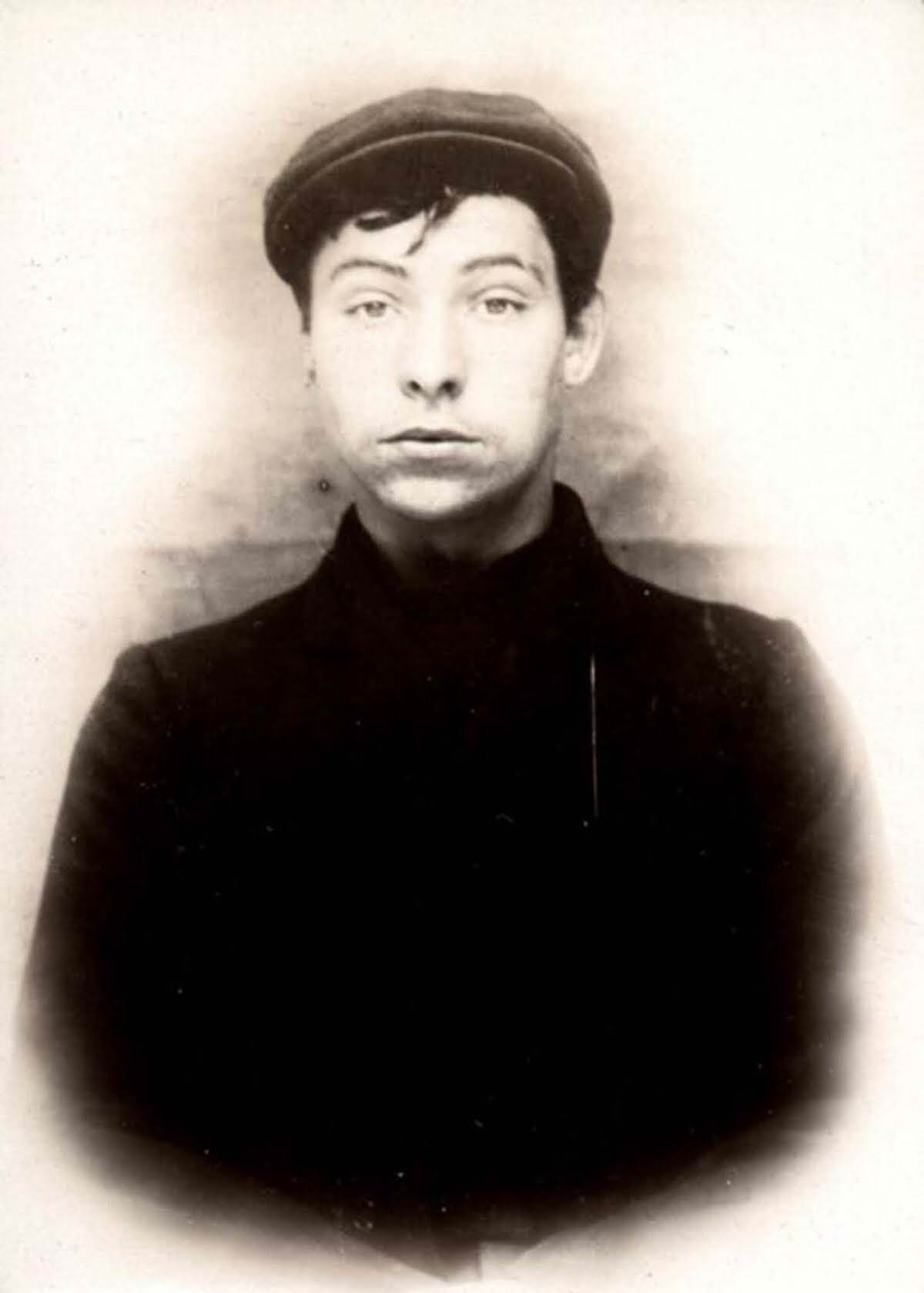
School attendance among poor children was inconsistent at best. Many families could not afford to lose the potential income a child could bring in, whether through odd jobs, errands, or outright theft. Children who skipped school drifted into street life, picking pockets, shoplifting, or targeting backyards, offices, and ship chandler’s stores. In a port town like North Shields, there were plenty of targets — and plenty of desperate young people willing to take the risk.
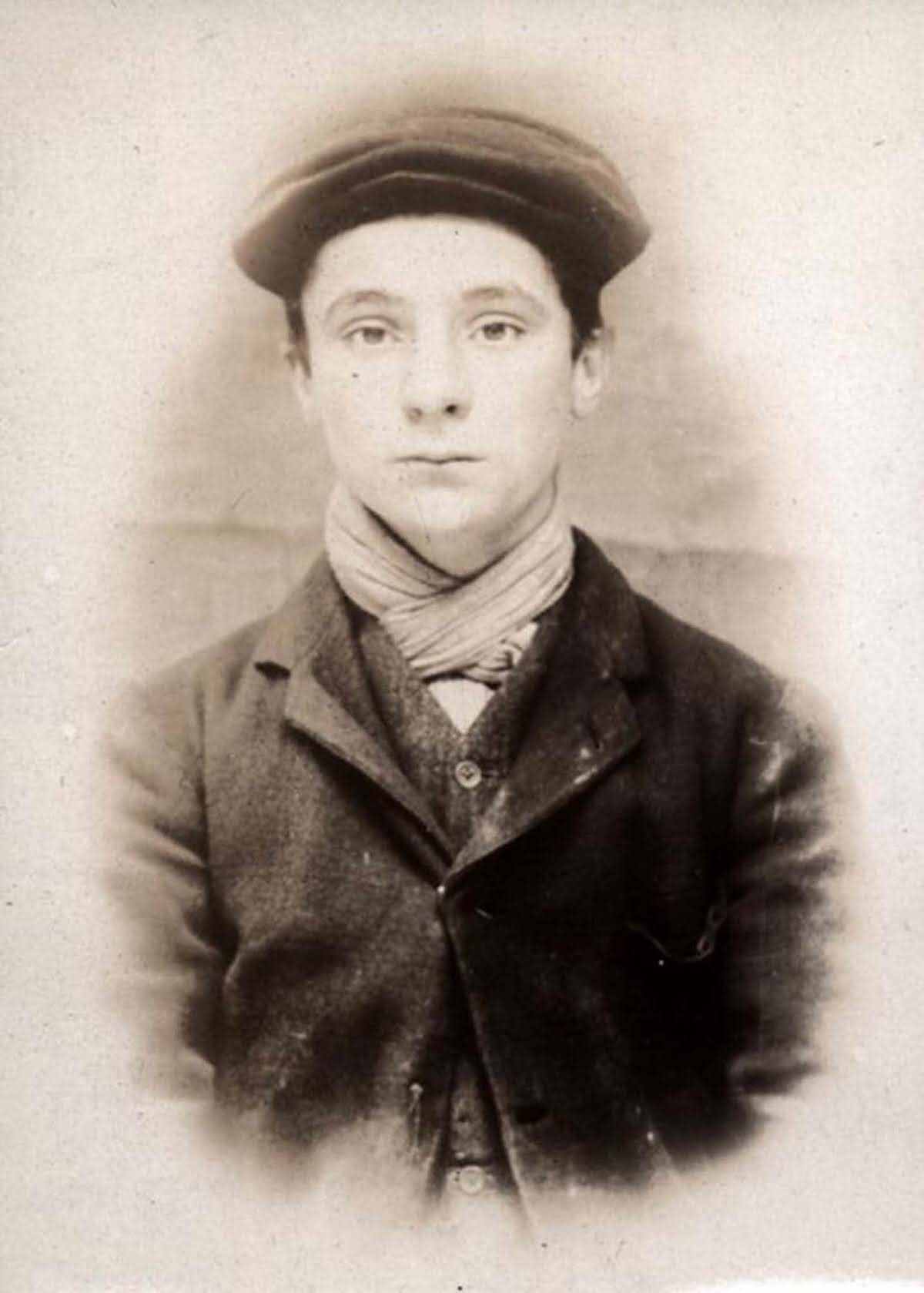
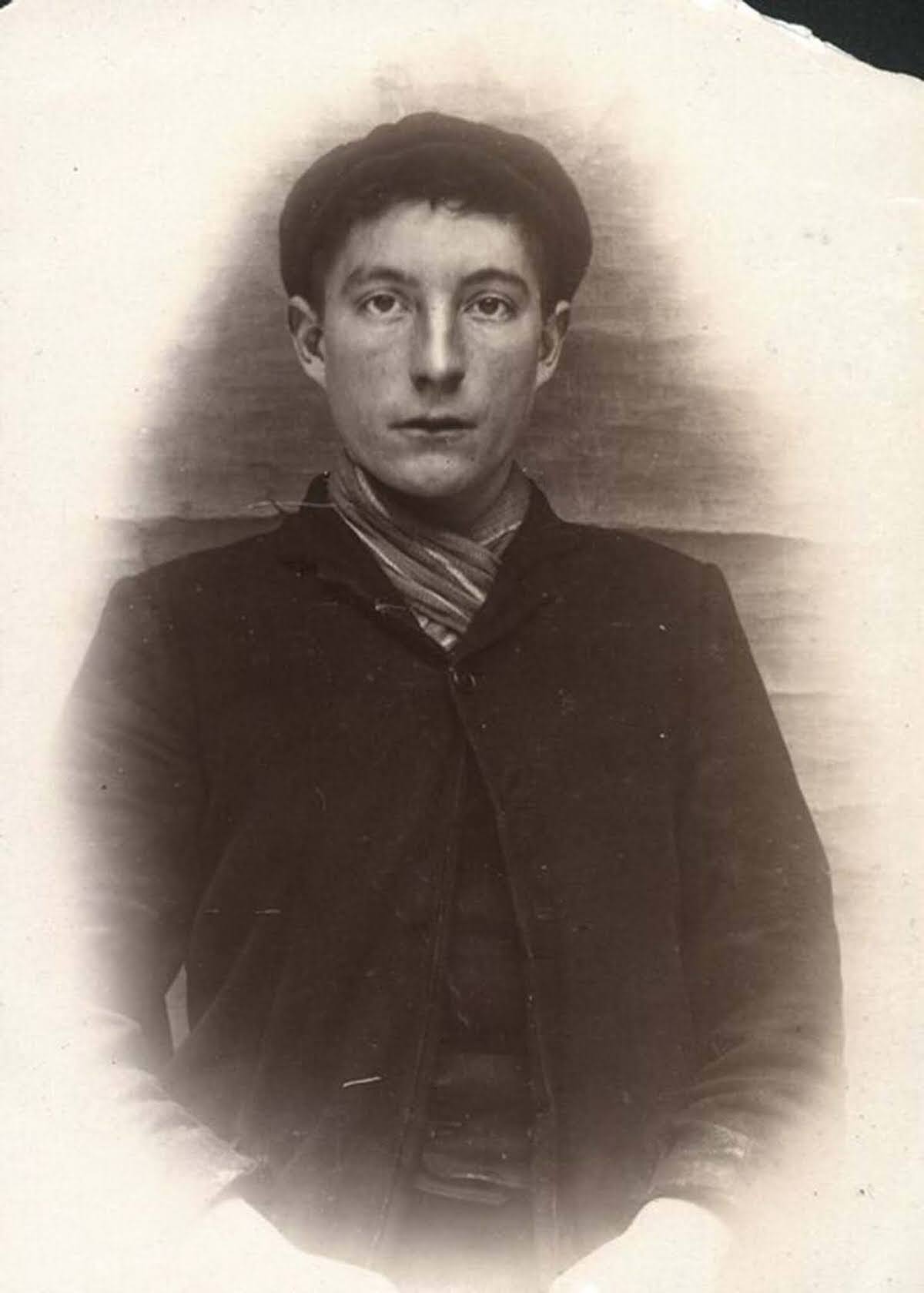
Gas meters were a frequent target. Several of the young people photographed here were arrested specifically for stealing from them. Gas meters in working-class homes typically held coins paid by residents for their gas supply. Breaking into one was relatively simple and yielded quick cash — enough, perhaps, for a meal or a night’s shelter. The crime appears repeatedly in this collection, pointing to how common and tempting the practice was.
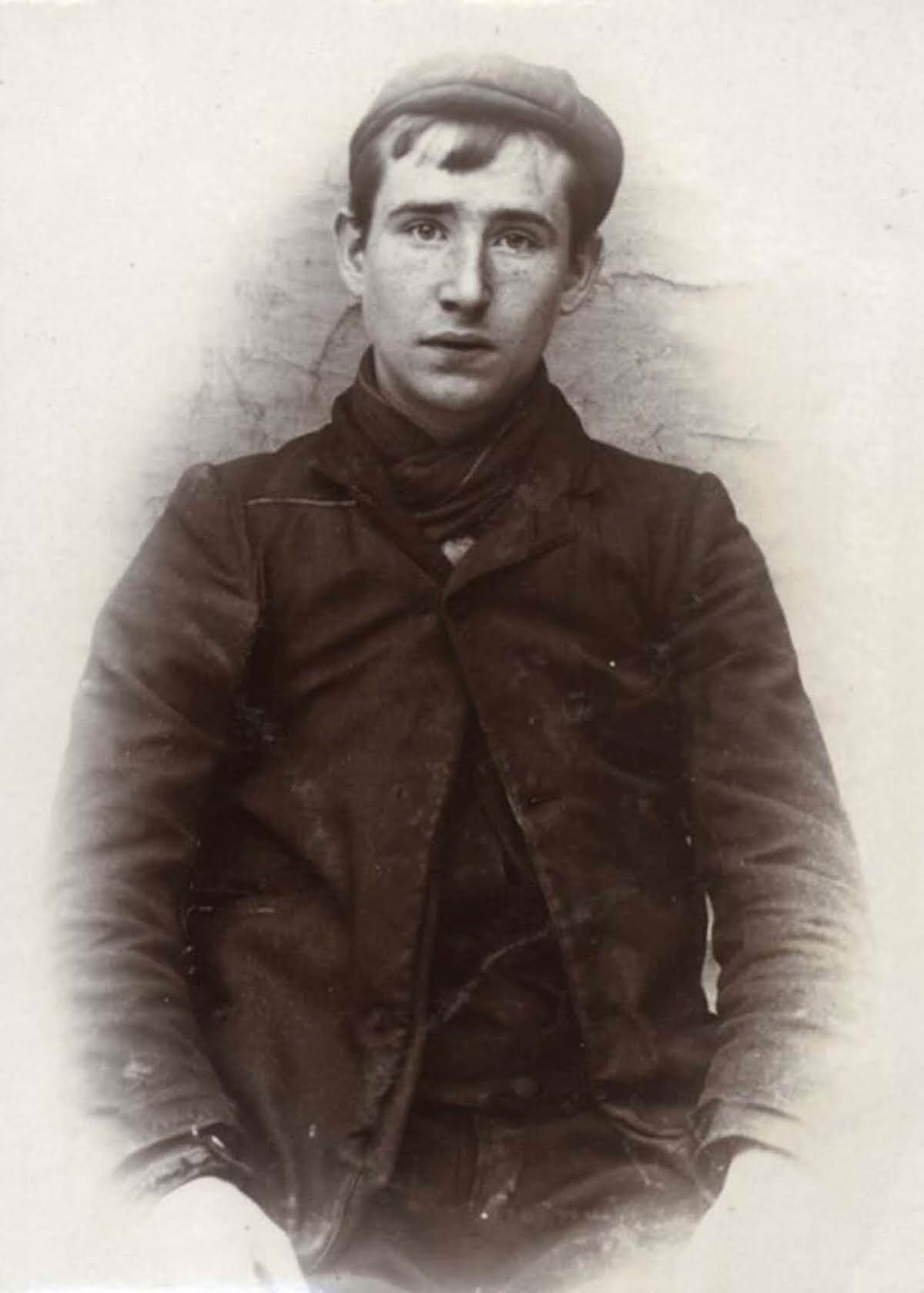
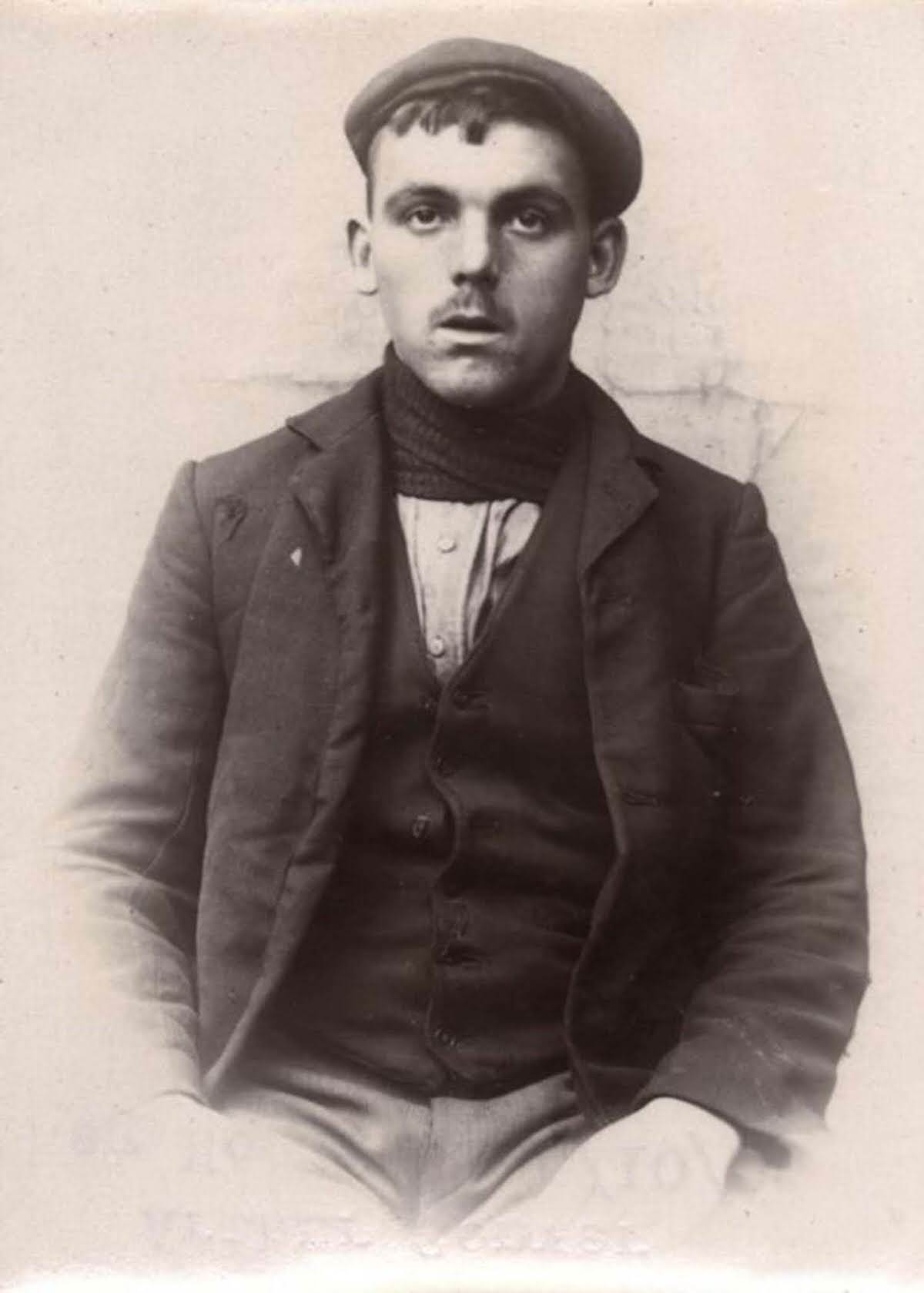
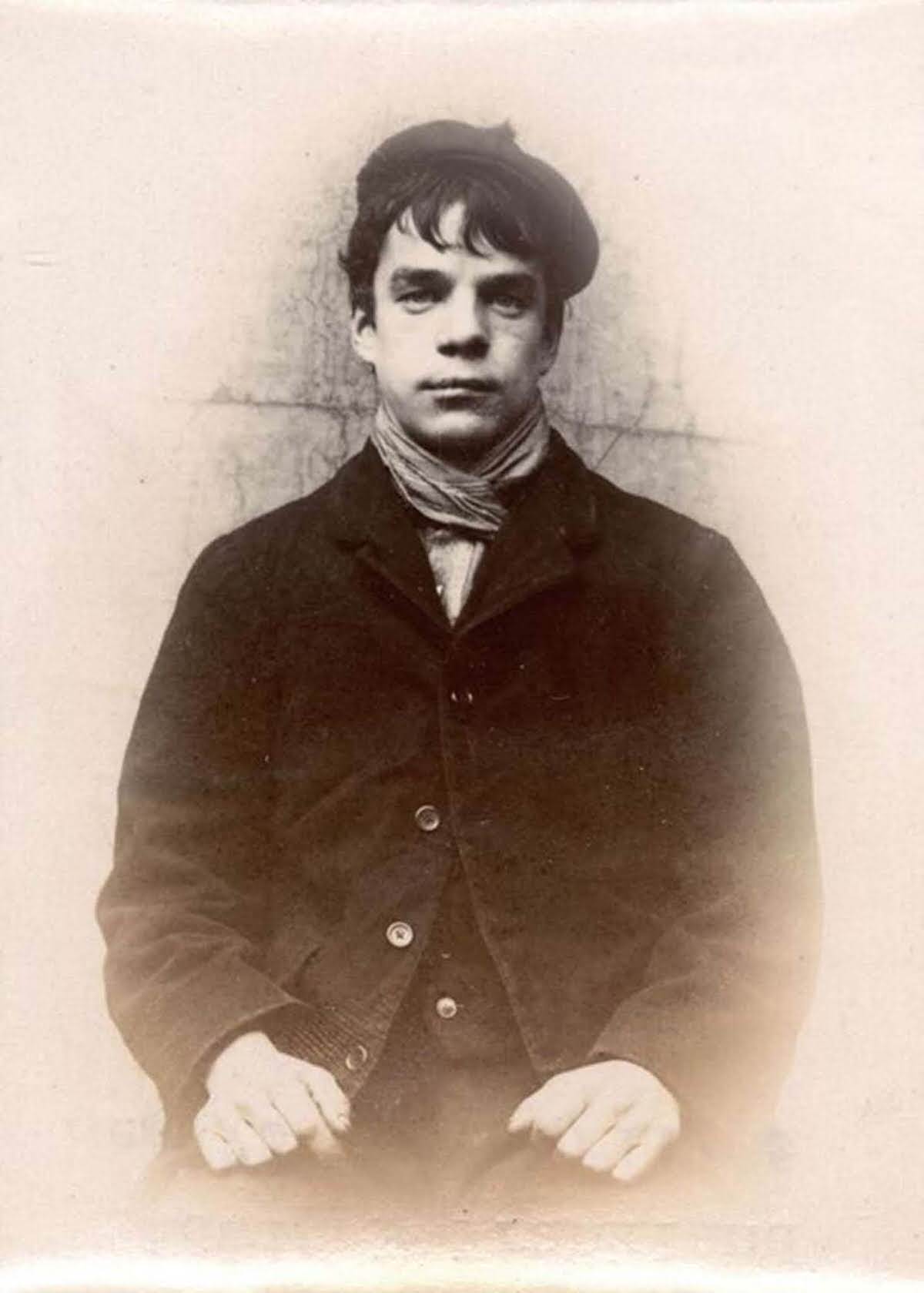
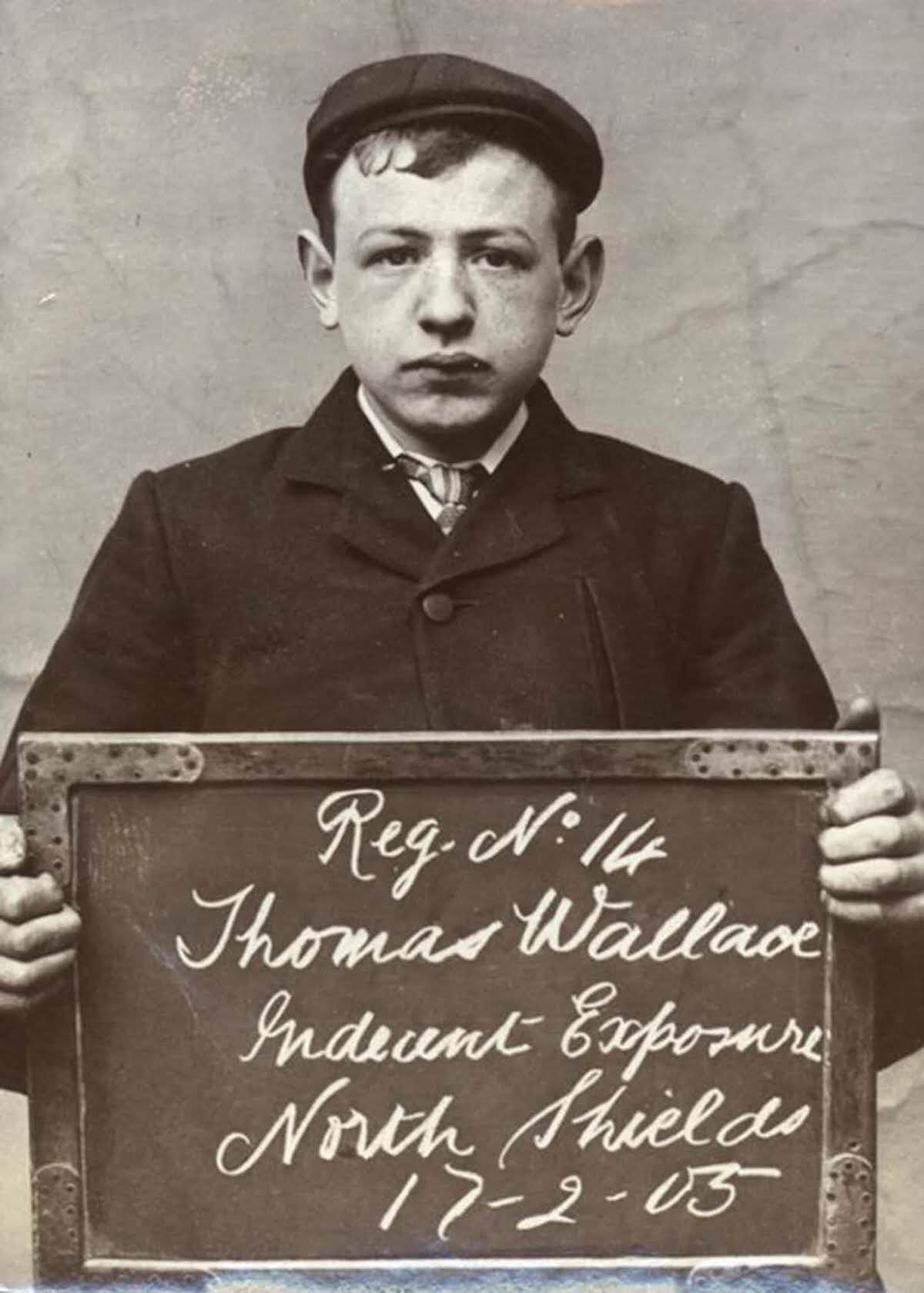
Not all of the offenses were theft. Thomas Wallace, 18, was arrested for indecent exposure. William Wadham and William Morrissey were both brought in simply for sleeping outdoors — a charge that reveals as much about the era’s policing attitudes toward the homeless as it does about the individuals themselves. Being visibly destitute in a public space was, in effect, a crime.
The British government had been slowly building a legal framework to deal with juvenile offending. Reformatory schools — intended to rehabilitate rather than simply punish — were introduced as early as the 1850s. Industrial schools followed, offering basic trade training to children considered at risk. In 1889, the Children’s Charter gave the state the legal authority to intervene in family life where children were being abused or neglected, and extended formal protections against cruelty.
These reforms reflected a changing understanding of childhood itself. Increasingly, social reformers and politicians argued that children were not simply small adults responsible for their own fates. Their environments — the poverty, violence, and lack of schooling they were raised in — shaped who they became. That idea, which seems obvious today, was a significant shift in thinking at the time.
The Children Act of 1908 marked a turning point. Passed by the Liberal Government, it established separate juvenile courts so that children would no longer be tried alongside adults. It banned the imprisonment of children under 14 and created a system of borstals — youth detention facilities — as an alternative to adult prisons. The same government also introduced school meals, medical inspections in schools, and pensions for orphans, all aimed at addressing the conditions that drove children into poverty and crime in the first place.
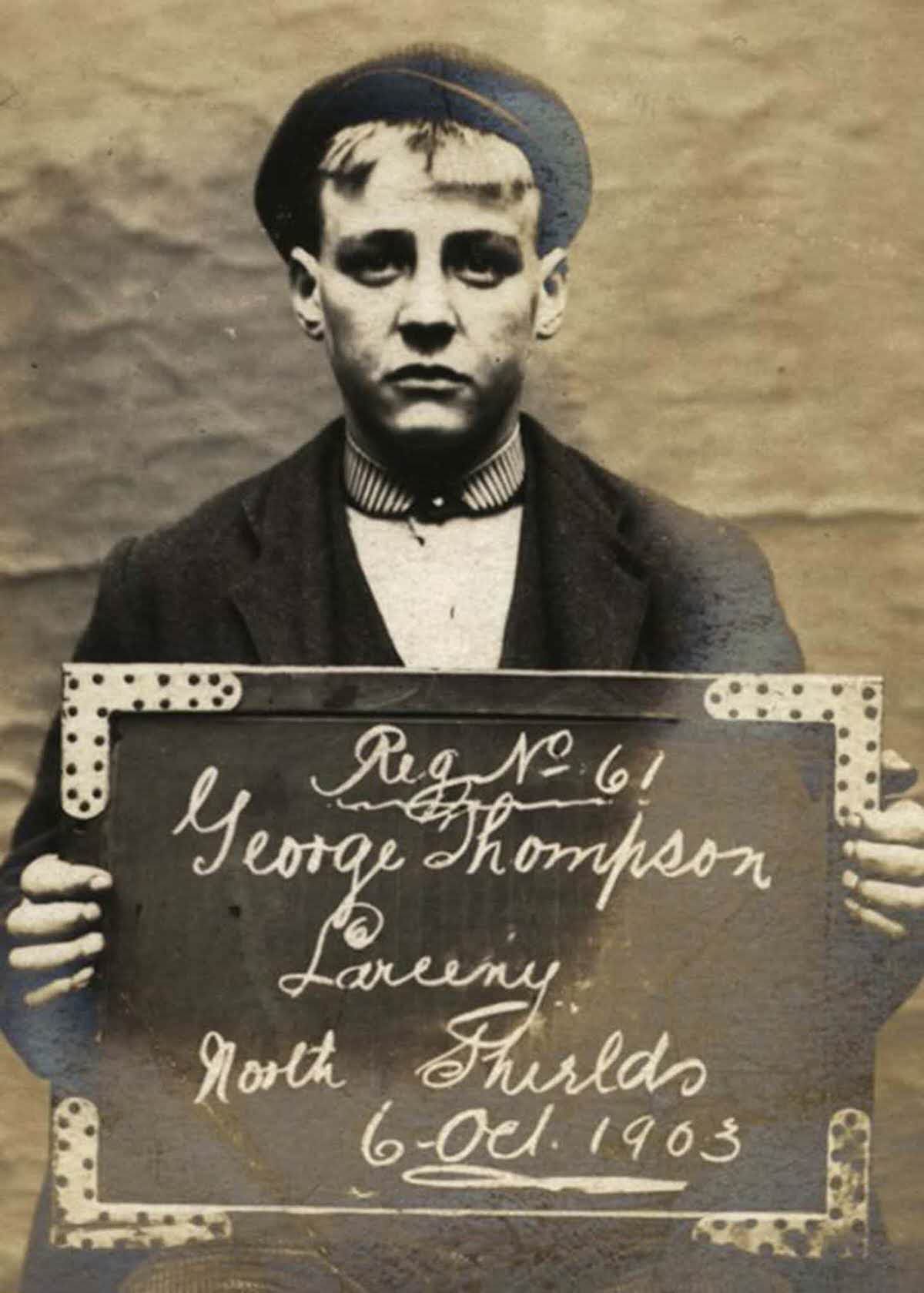
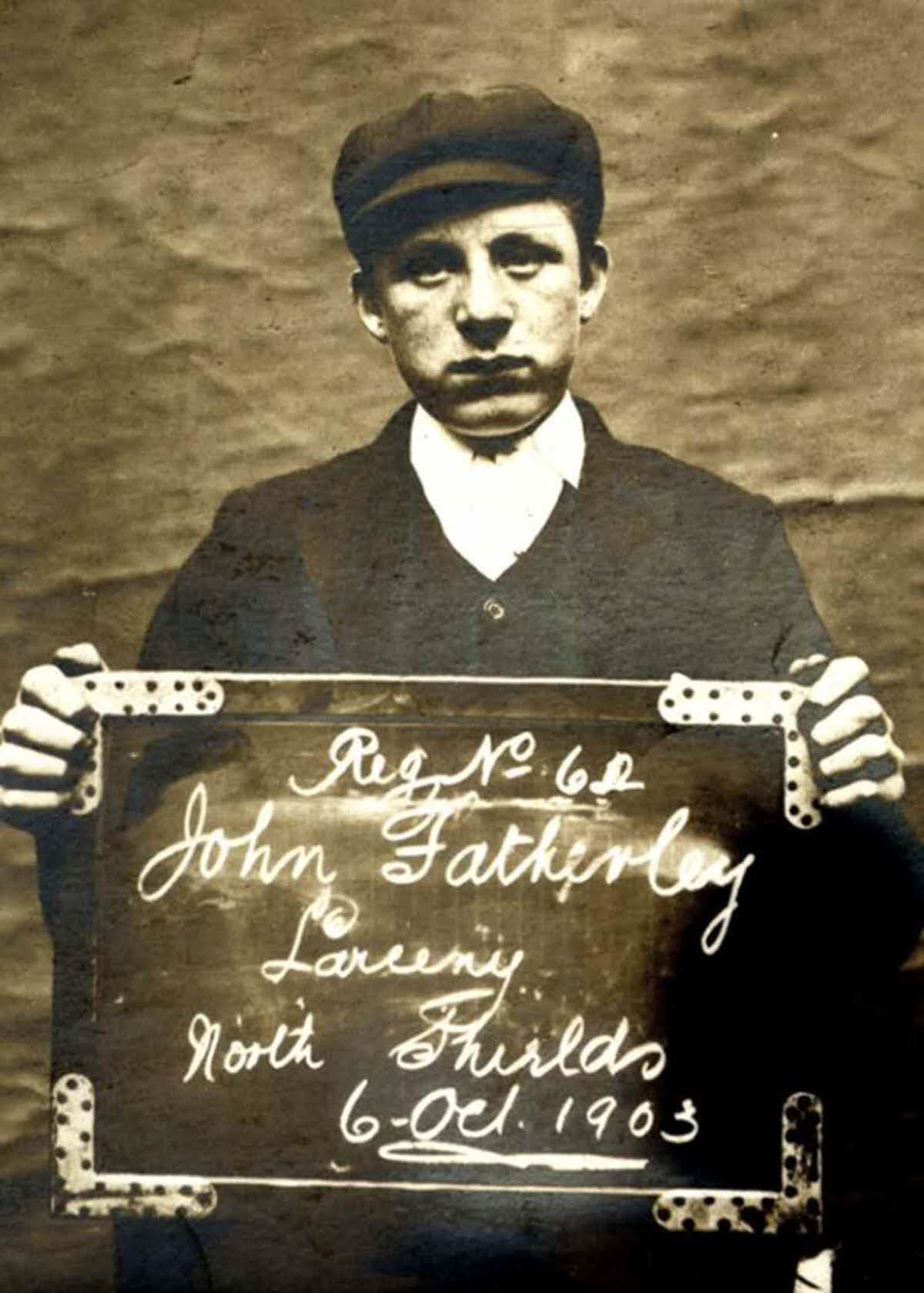
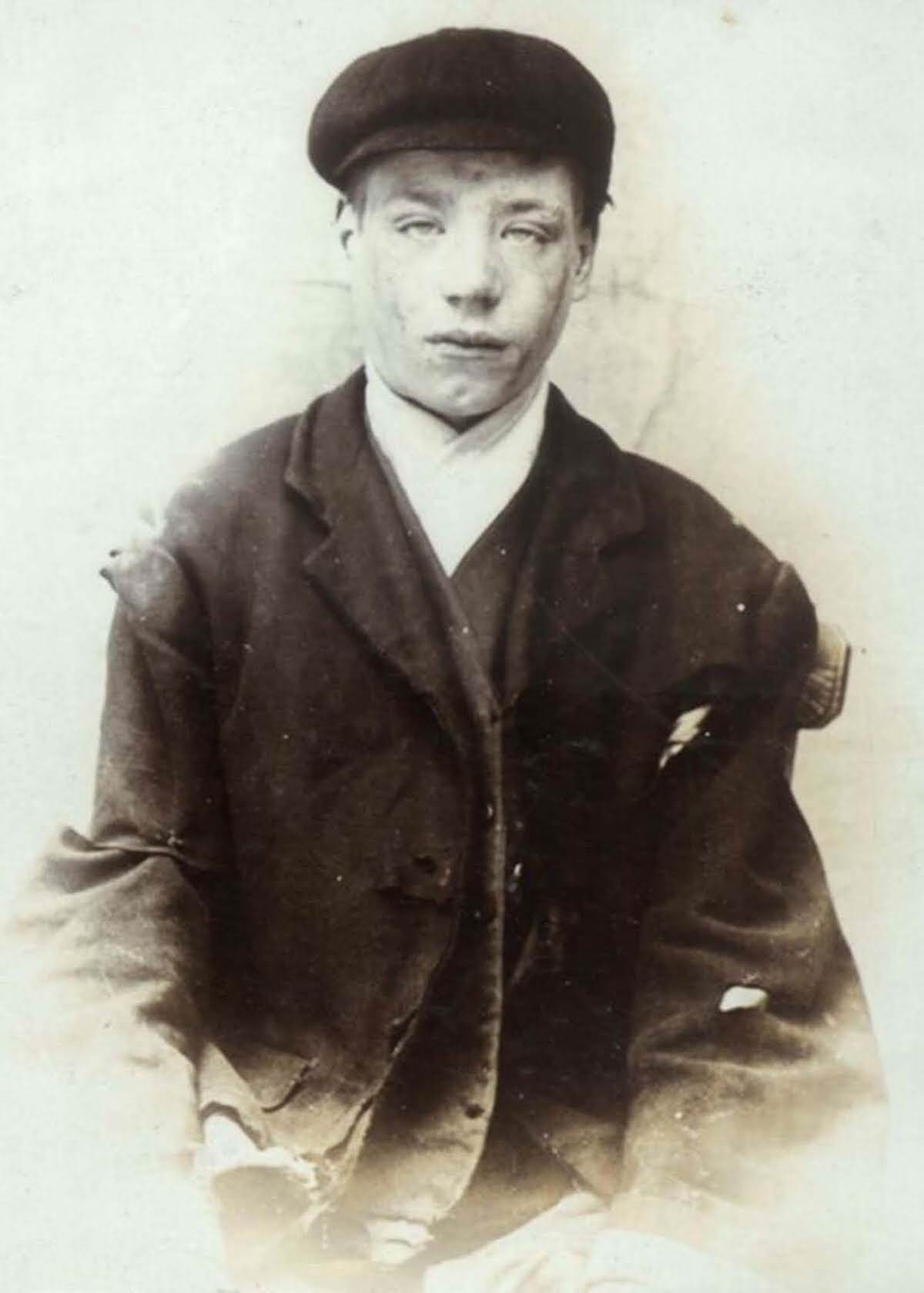
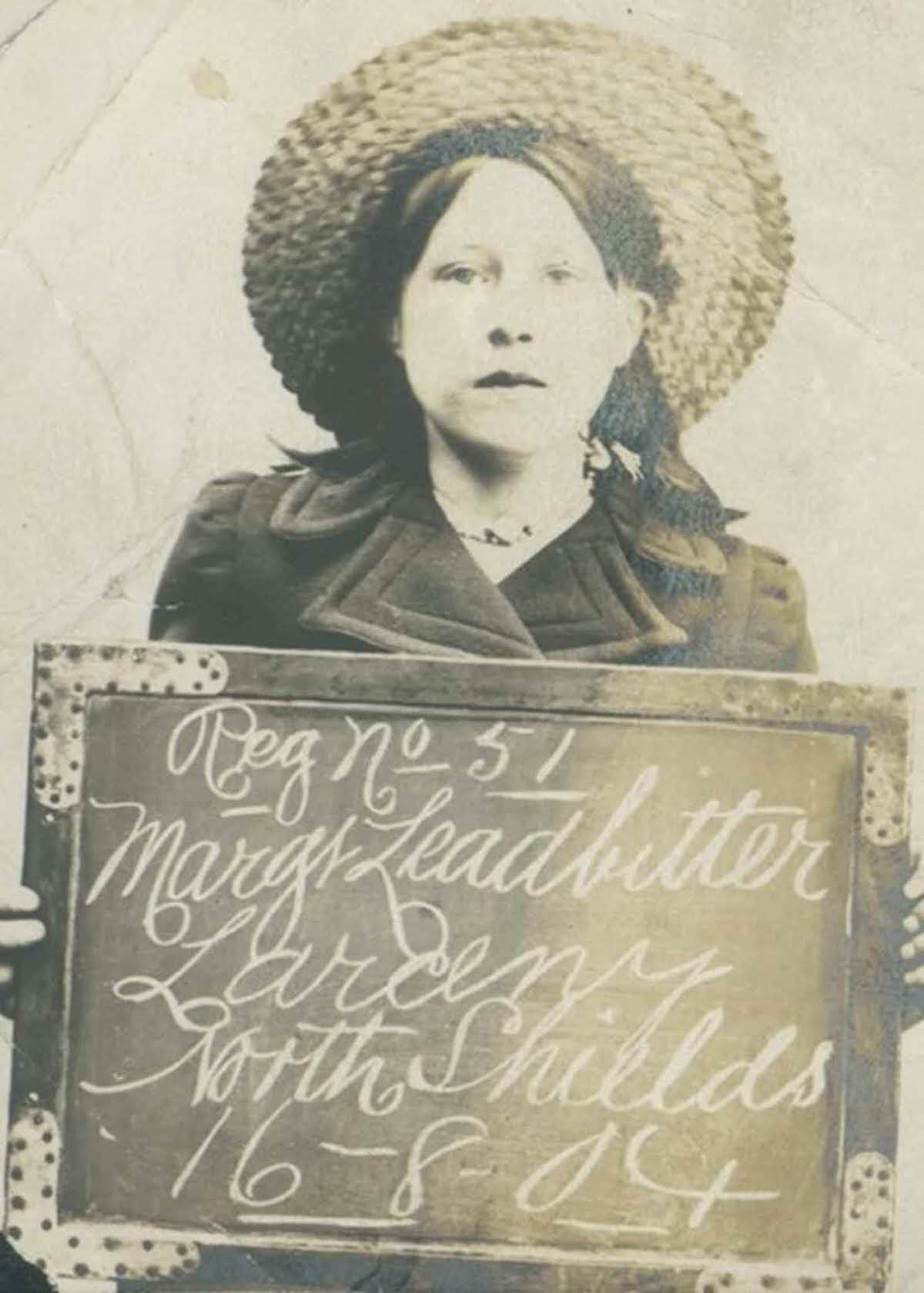
Looking at these photographs more than a century later, certain details stand out. The clothing is worn but neat in some cases, ragged in others. The expressions range from guarded to resigned. Margaret Leadbitter, just 12 years old, was arrested for stealing money from other children. Charles Marr was 14 when he was booked, his offense not even recorded in the surviving documents. Oscar Carlson and William Wadham’s ages were never noted at all.
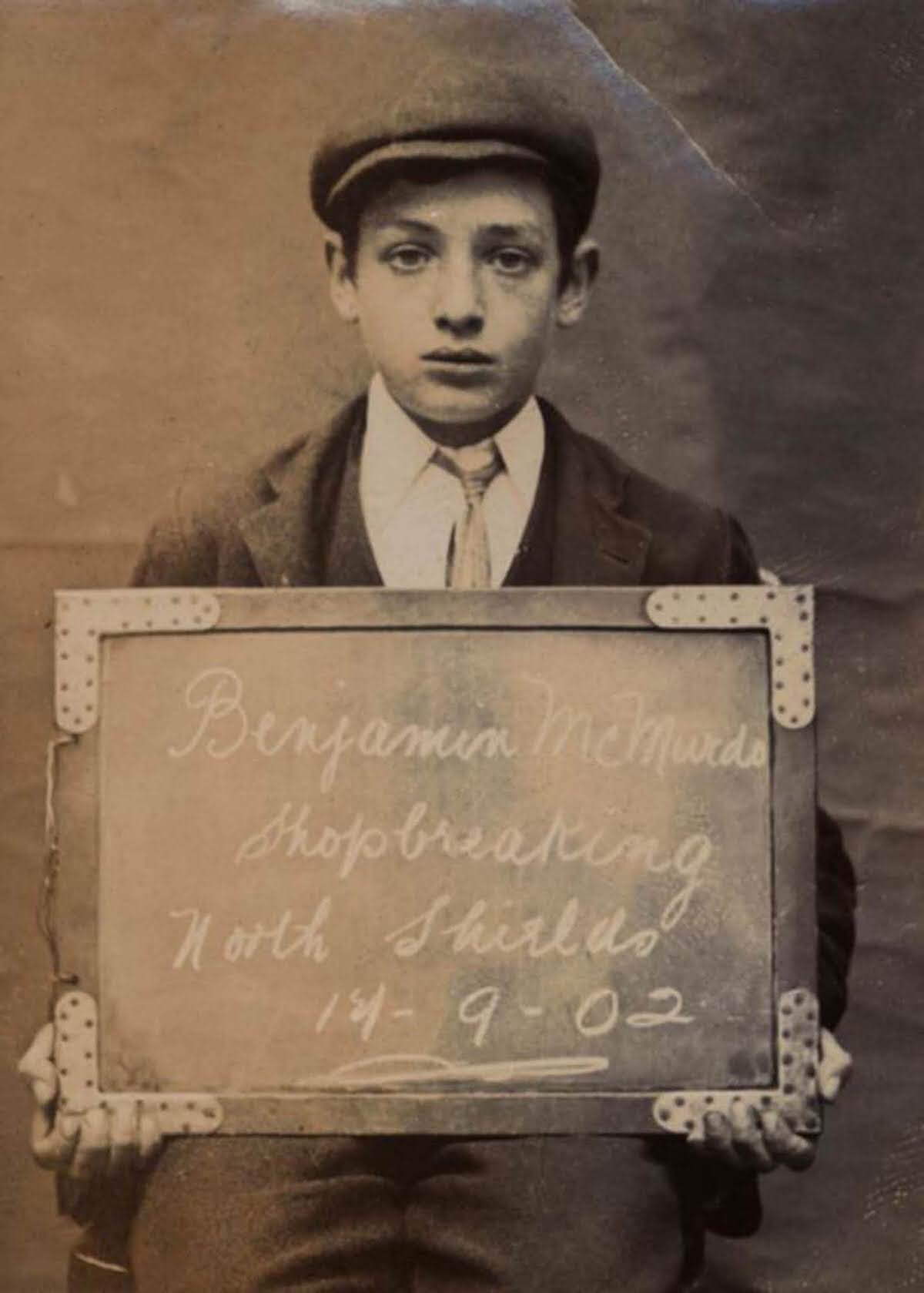
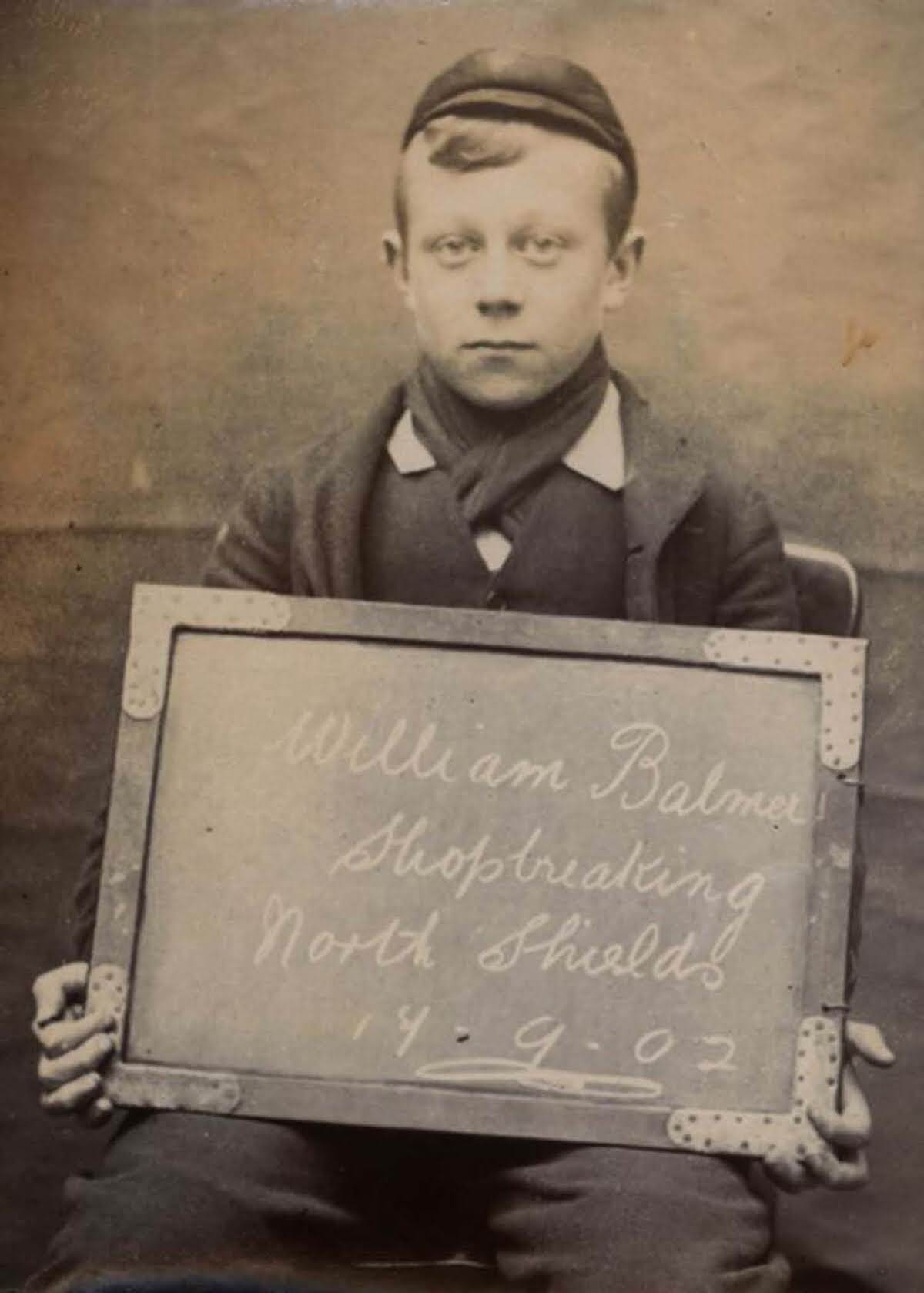
Some of the stolen items underscore just how marginal life was for the poorest residents of North Shields. Sidney Forrest, 17, was arrested for stealing a pair of reins and two whips. Thomas Kane, 16, made off with an entire pony, harness, and cart — a far more ambitious theft than most of his peers. George Burn and David Lloyd, both arrested in 1902, were charged with stealing brushes and a box. These were not luxury items. They were the tools and small commodities of everyday working life.
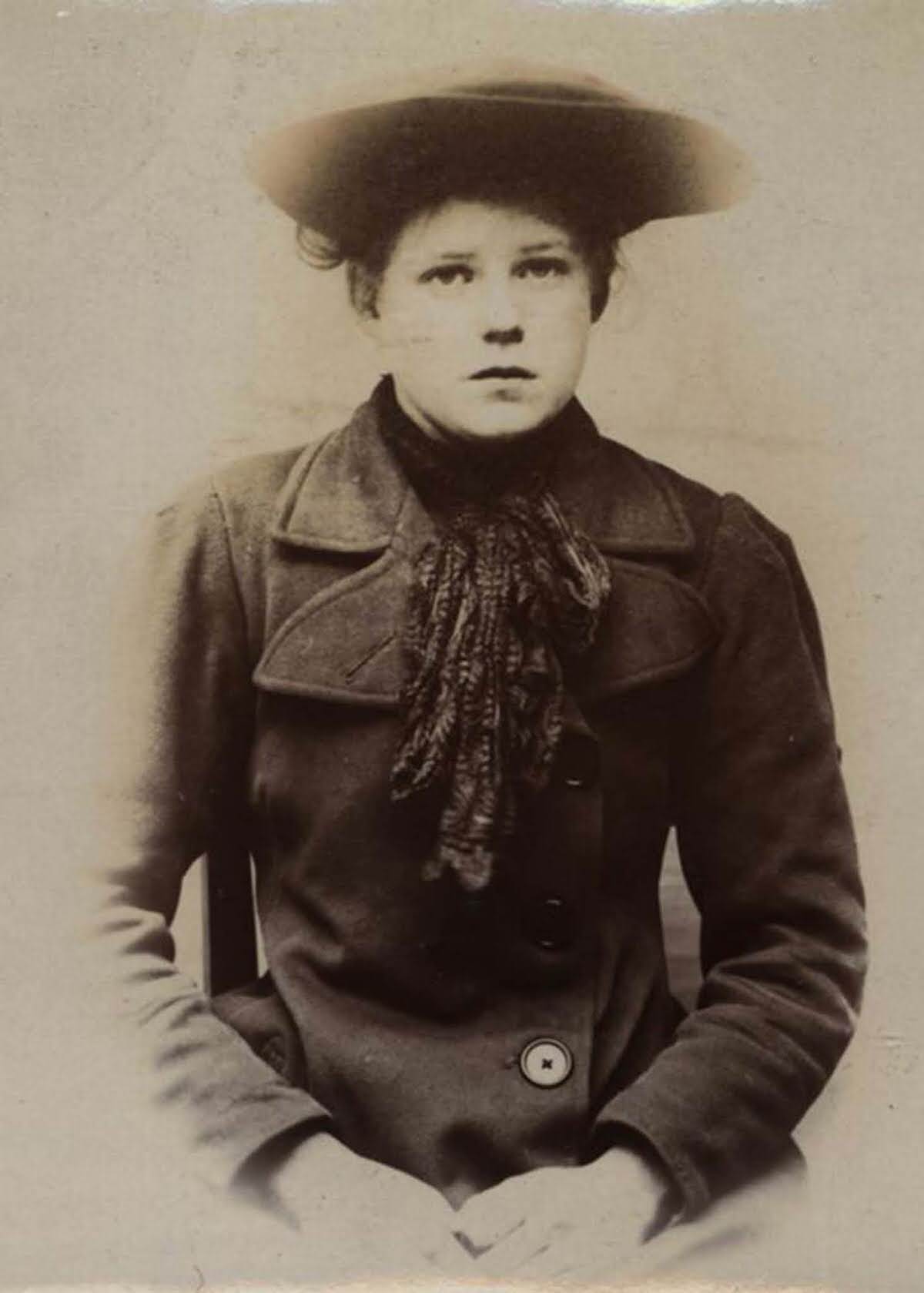
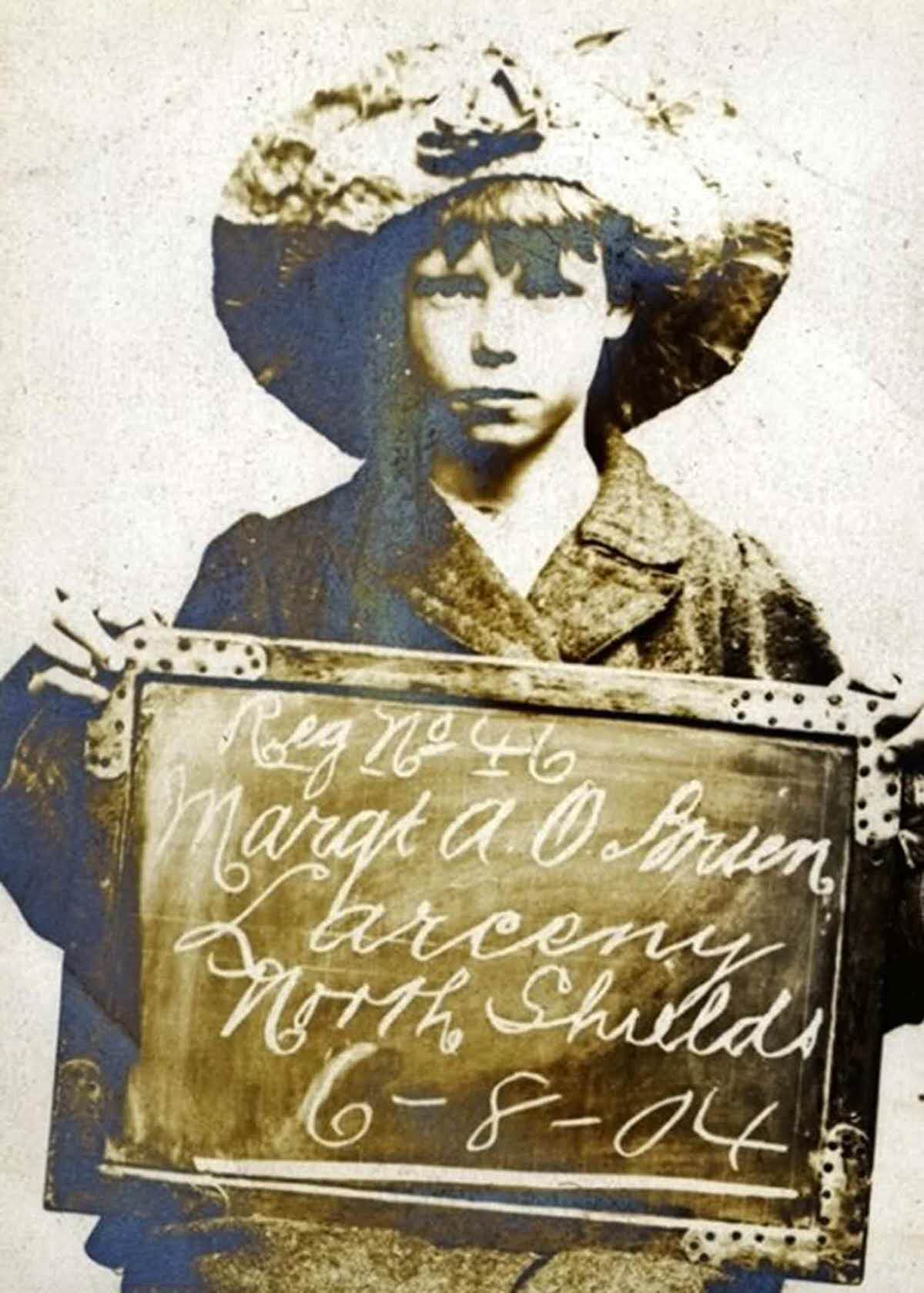
Girls appear in this collection too, though less frequently. Susan Joice, 16, stole money from a gas meter. Alice Maud Marr, 17, was arrested for taking doormats. Dora Agnes Sanderson, 16, was charged with theft. Margaret Ann O’Brien, 14, was picked up for obtaining money under false pretenses. Their presence in the archive is a reminder that poverty affected girls just as directly as boys — though their crimes, on paper at least, tended to be smaller in scale.
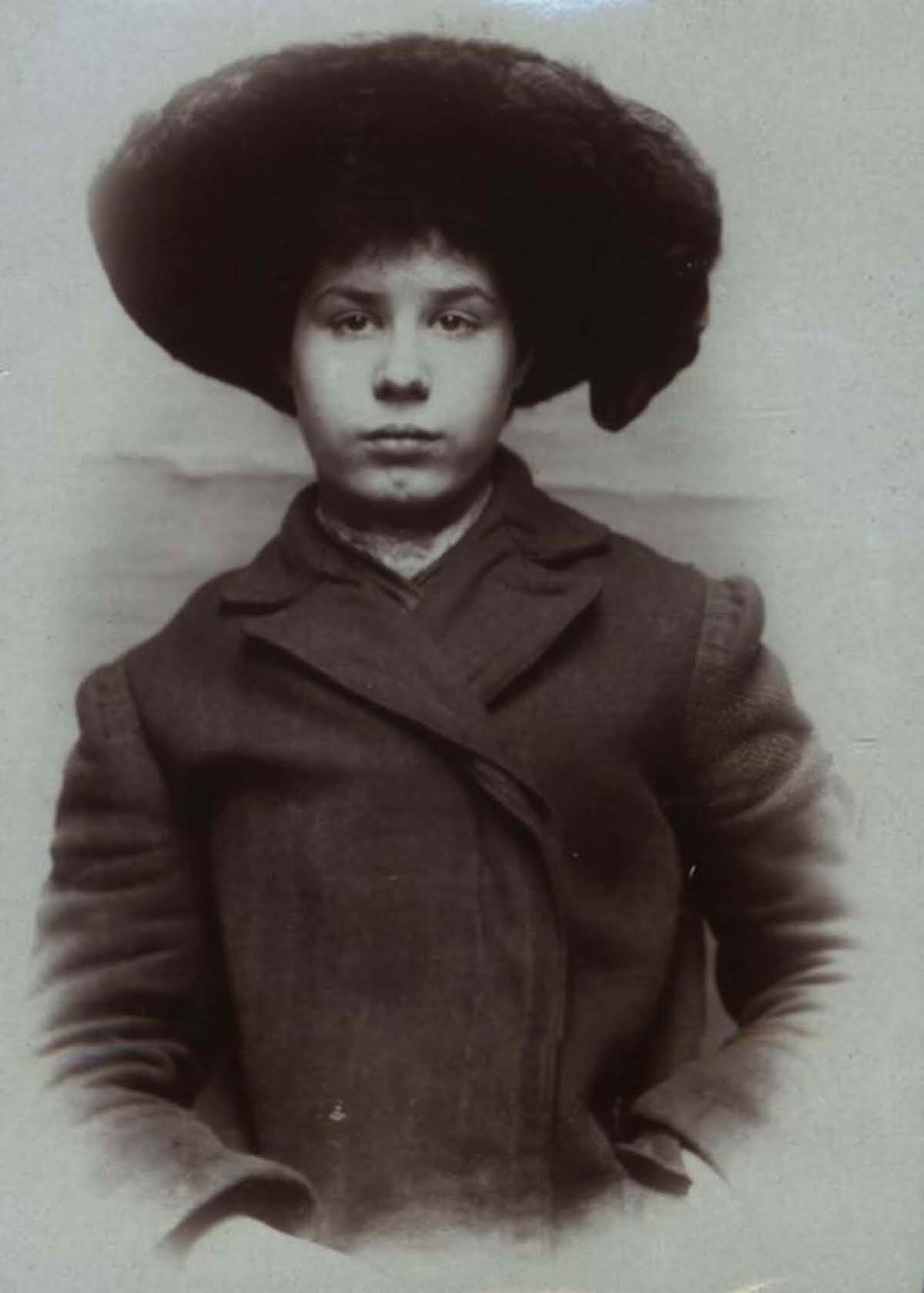
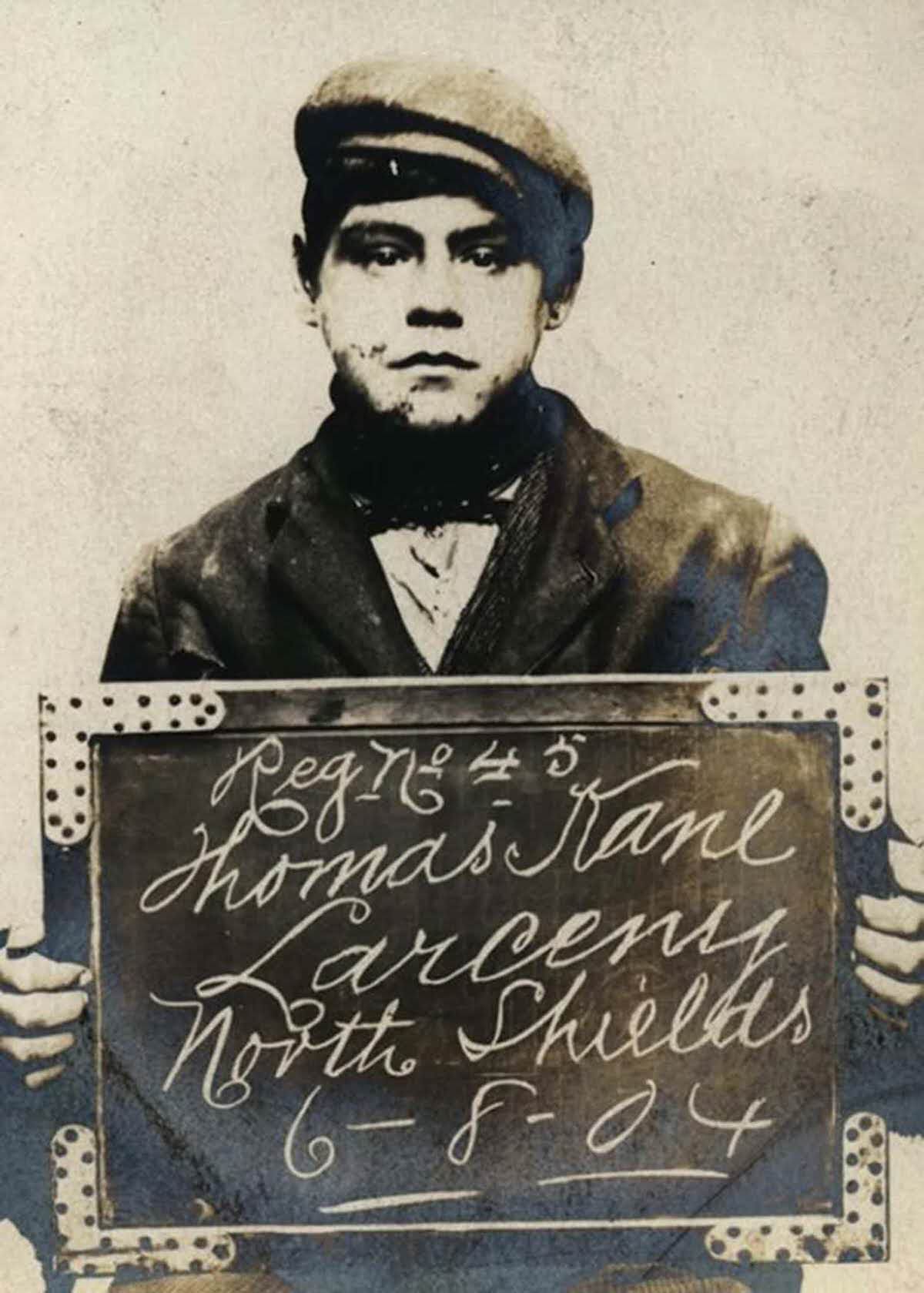
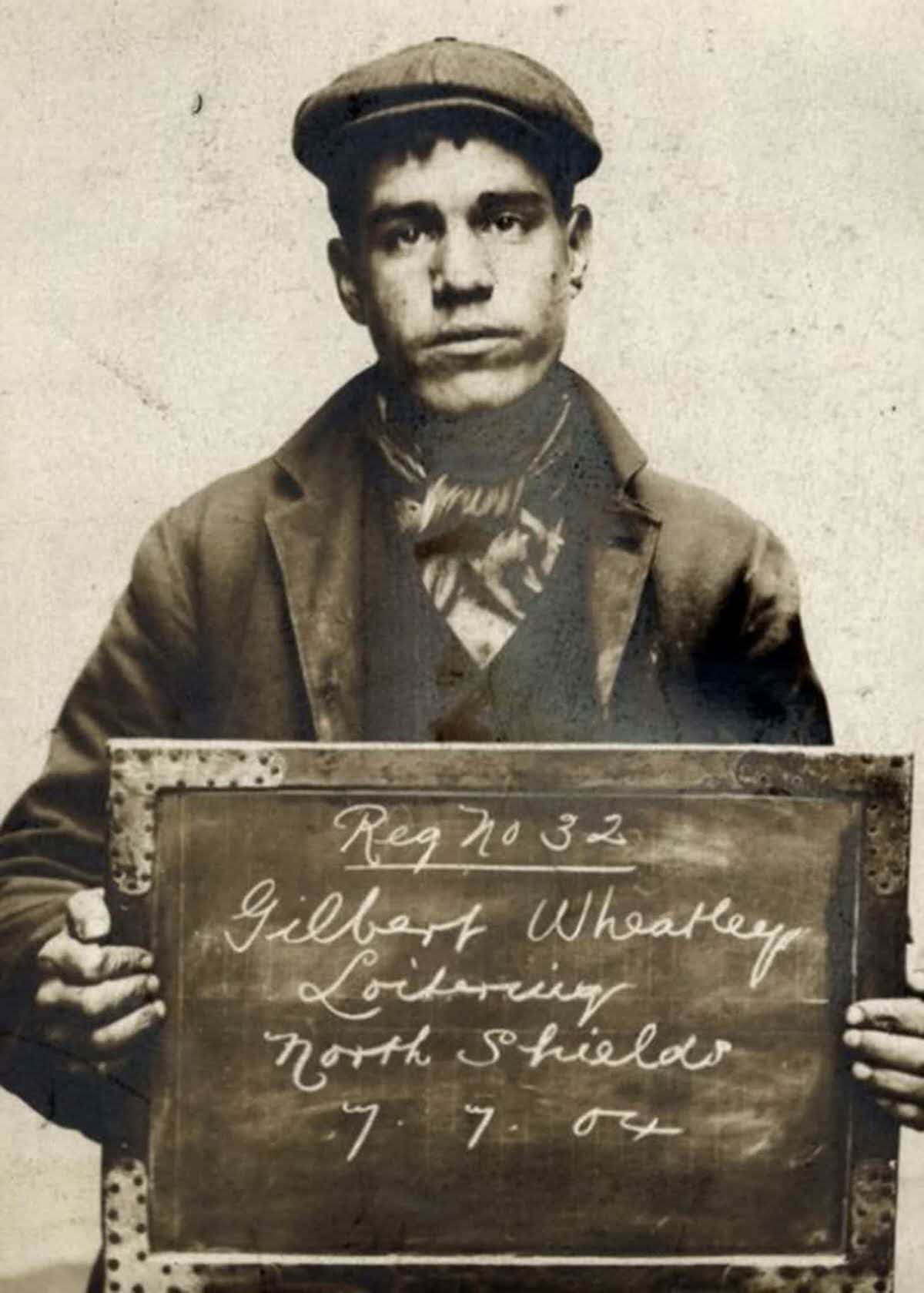
Several young men in the collection were not caught in the act of committing any specific crime. Gilbert Wheatley, 19, was arrested for loitering with intent to commit a felony. William J. Kay, 18, and George Taylor, 17, were both brought in on suspicion of planning to commit a felony. These charges show that police at the time were empowered to arrest individuals based on perceived intent — a significant amount of discretionary power that fell heavily on young men already known to authorities or simply deemed suspicious.
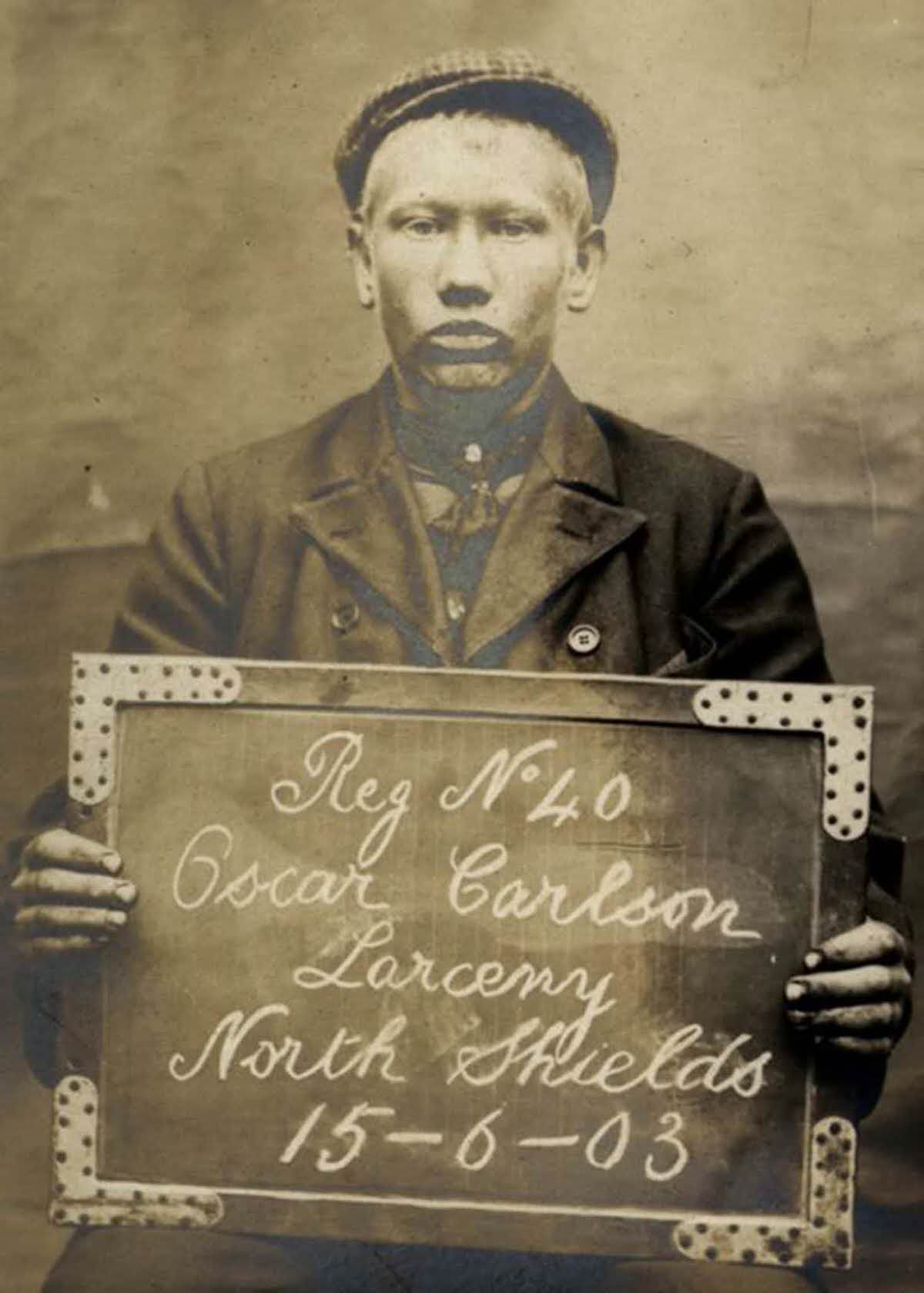
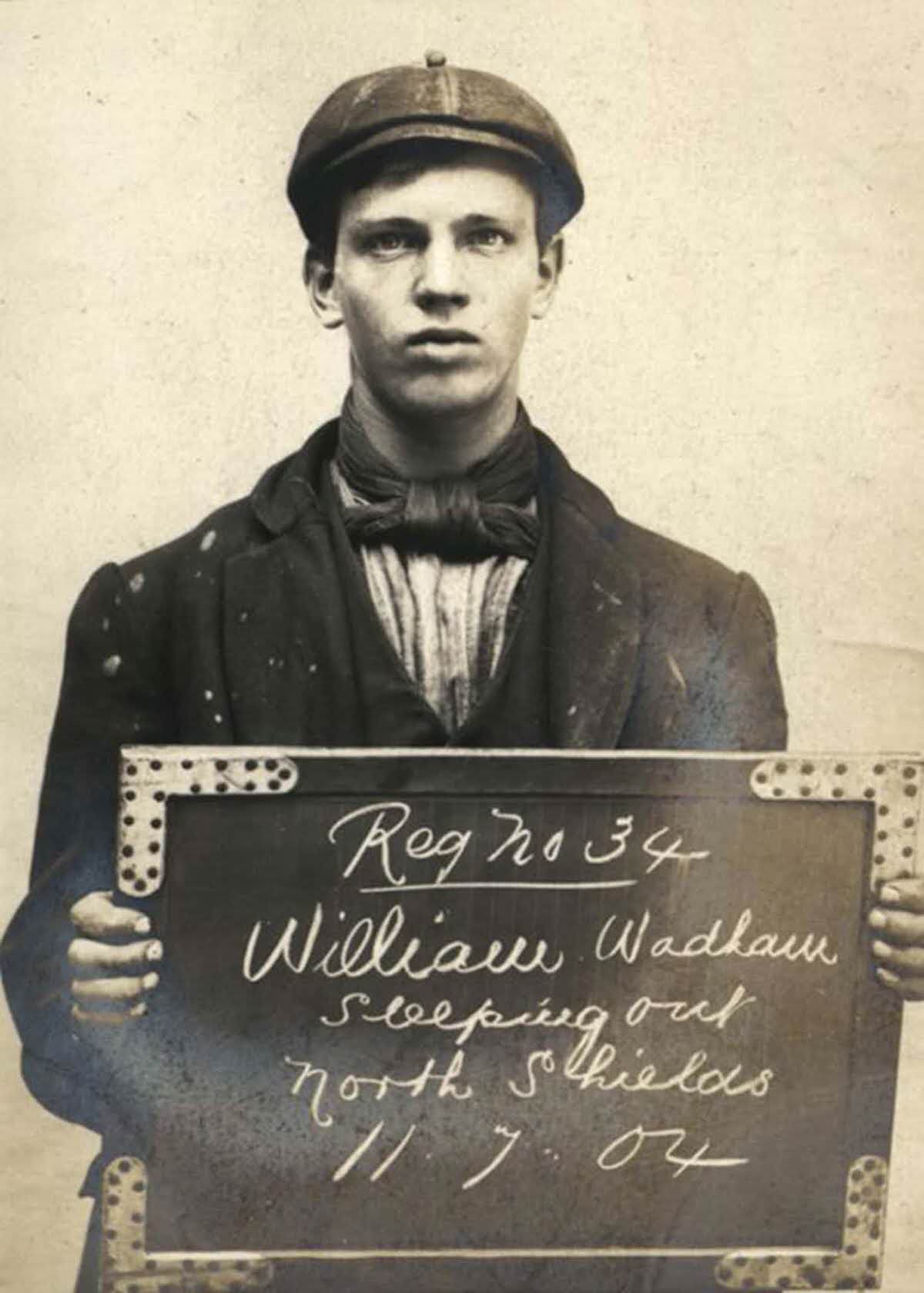
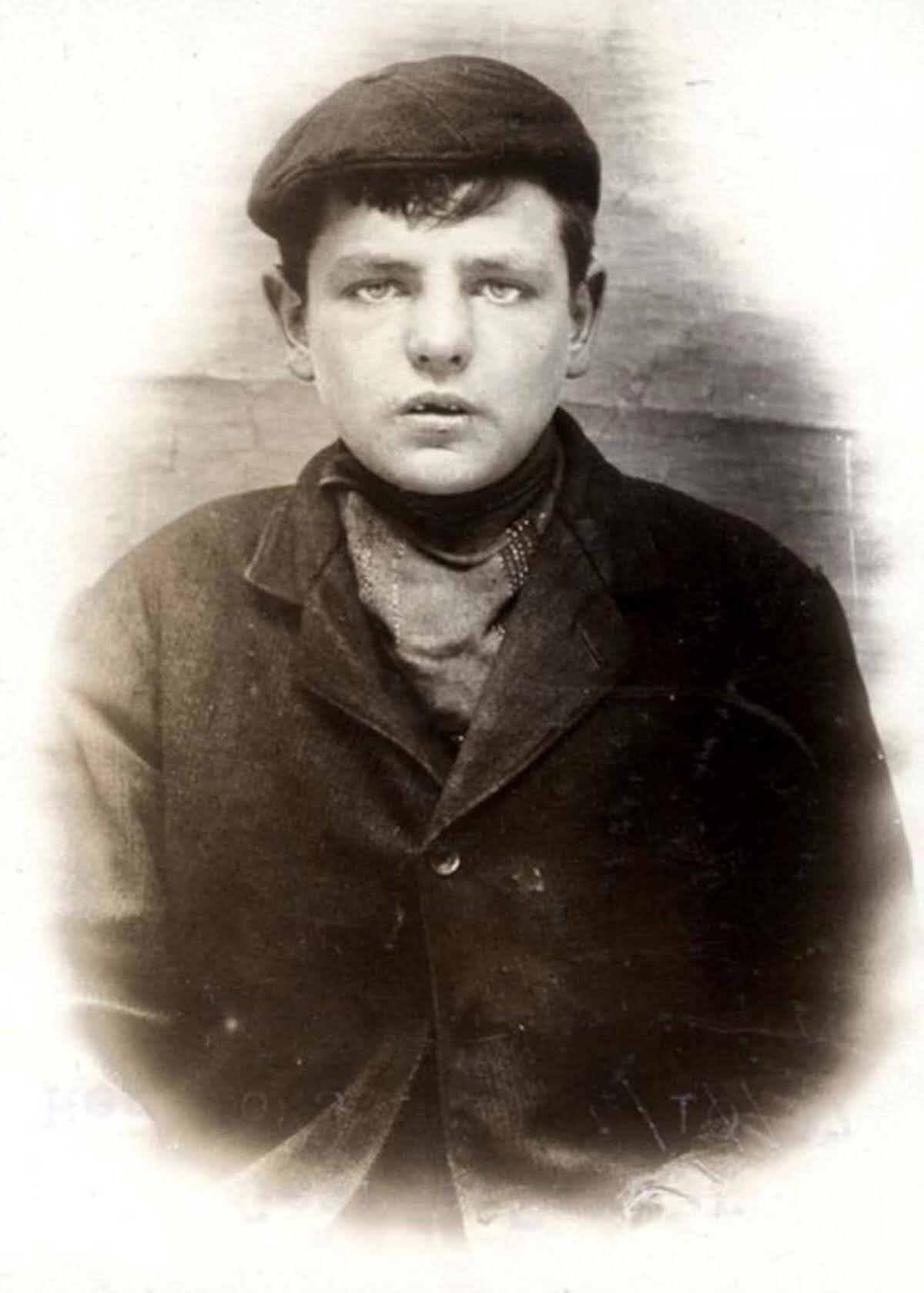
The practice of photographing arrested individuals — what we now call booking photos or mugshots — was relatively new in this period. Police forces across Britain had begun adopting it in the latter half of the 19th century as a systematic way to identify and track repeat offenders. The photographs taken in North Shields were part of that system. They were functional records, not portraits. Yet they have outlasted their original purpose and now serve as primary historical documents.
Each name in this archive belonged to a real person who lived through the conditions of Edwardian poverty. What happened to them after their arrest — whether they returned to crime, found stable work, or were sent to a reformatory — is largely unknown. The photographs capture a single moment: a face, a name, an age, and a charge. The rest of their stories have been swallowed by time.