
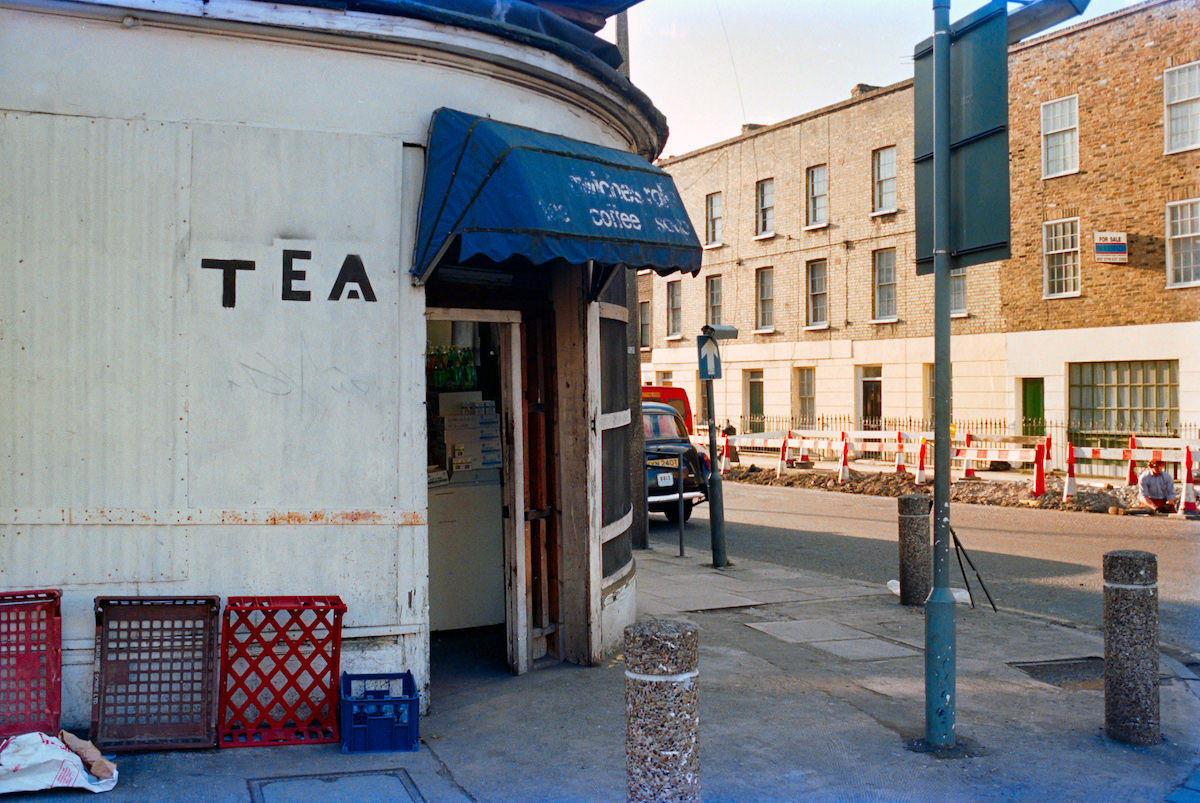
London has had cafes since the early 17th century, when the first one opened its doors to the city’s residents. By the 1980s, these spots had become a fixed part of daily life across every borough. They weren’t fancy — they were working-class staples. Mugs of tea, fried breakfasts, and hand-painted signs above the door. Photographer Peter Marshall walked the streets of London throughout the 1980s and captured these cafes in remarkable detail. His photographs show not just the buildings, but the character of entire neighborhoods.
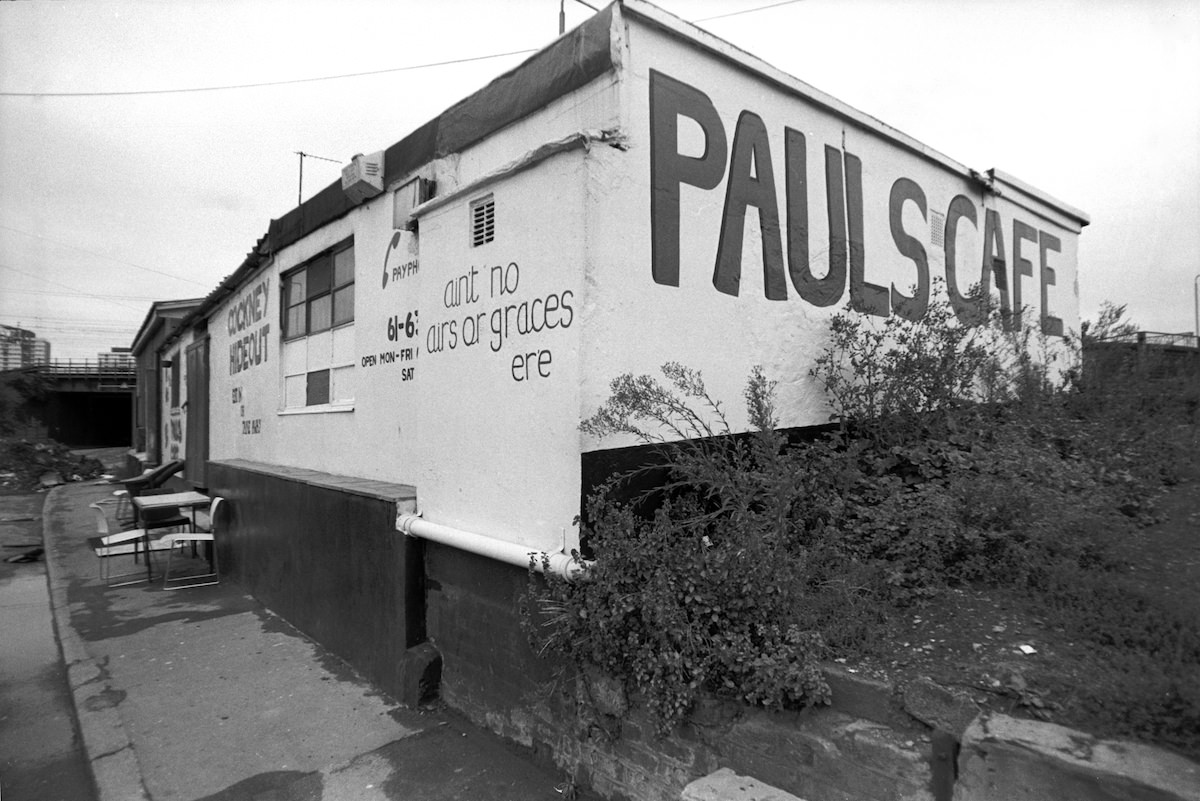
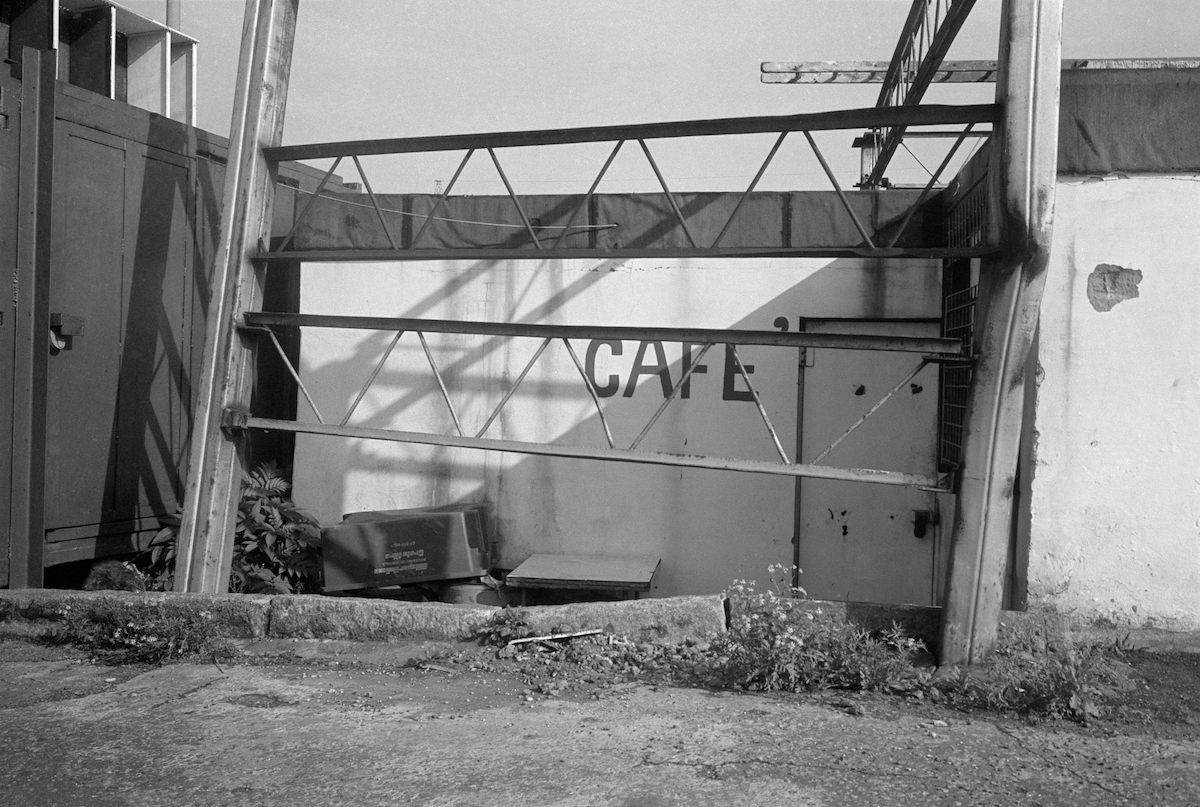
Stratford Marsh was a gritty, industrial part of East London in the early 1990s, far removed from the gleaming Olympic Park it would later become. Paul’s Cafe sat in that landscape as a no-frills gathering point for local workers. Not far away, another café on Marshgate Lane served the same stretch of Newham.
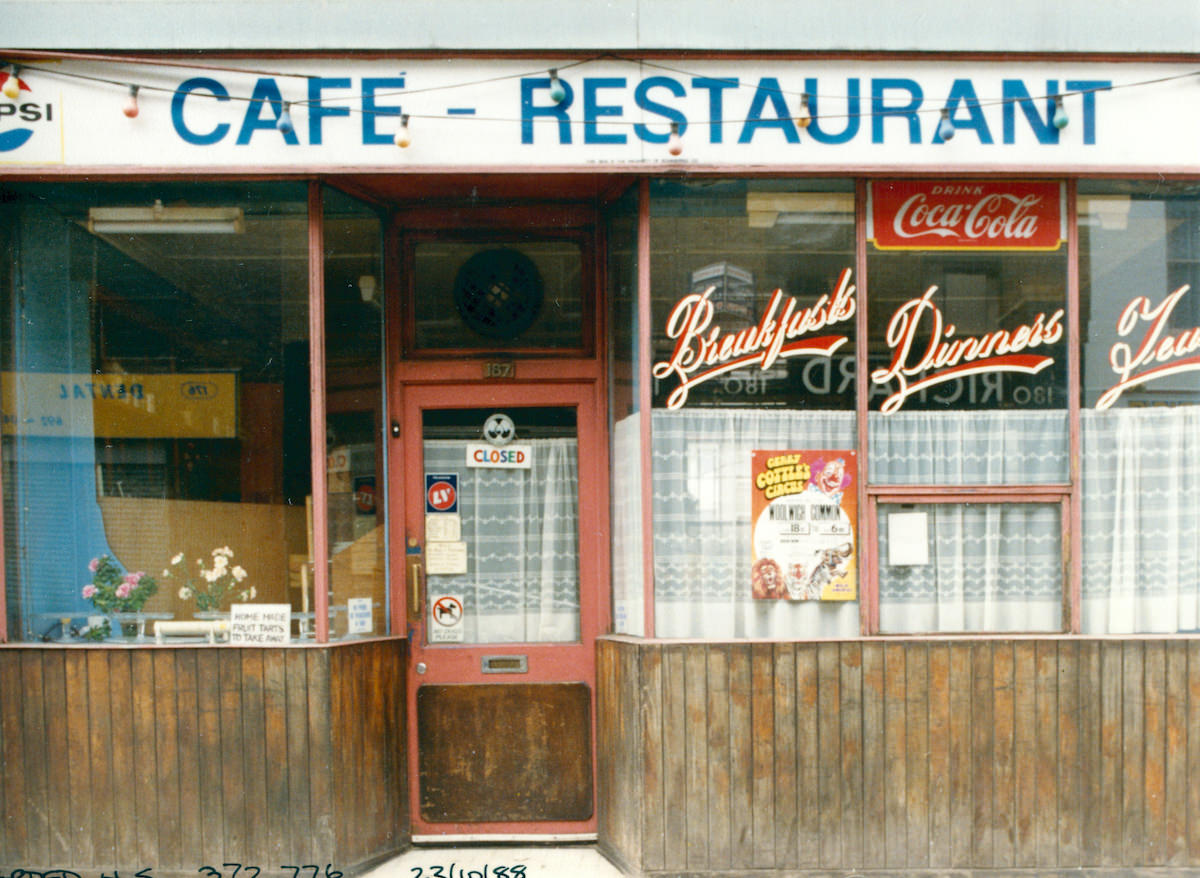
Deptford High Street in Lewisham was a busy commercial strip, and its cafes reflected the area’s working-class roots. Marshall photographed multiple spots there across the late 1980s, capturing storefronts with hand-lettered signs, steamed-up windows, and simple menus chalked on boards.
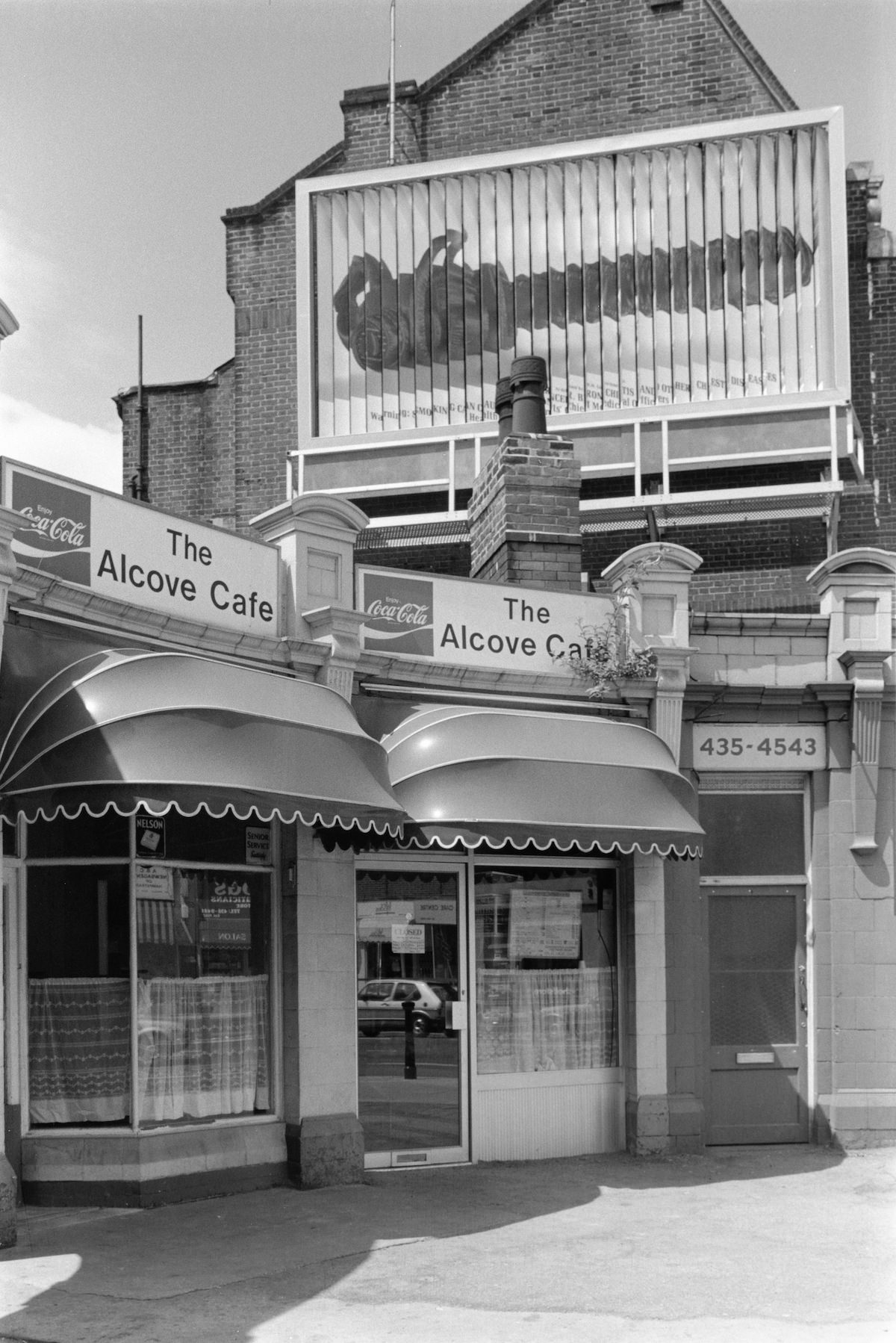
Camden was home to a wide range of café types. The Alcove on Finchley Road offered a quieter, tucked-away experience, while the Corner Cafe on Phoenix Road sat right beside the towering gas holders that once defined that part of the borough.
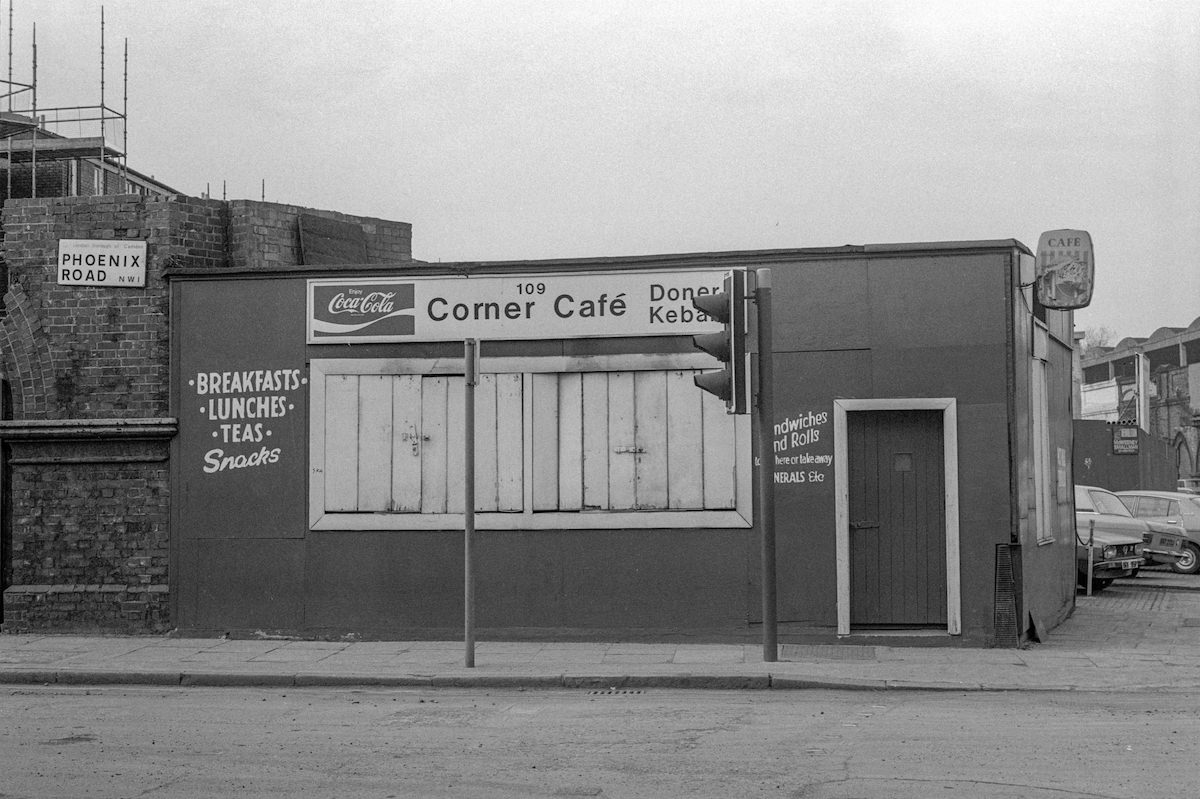
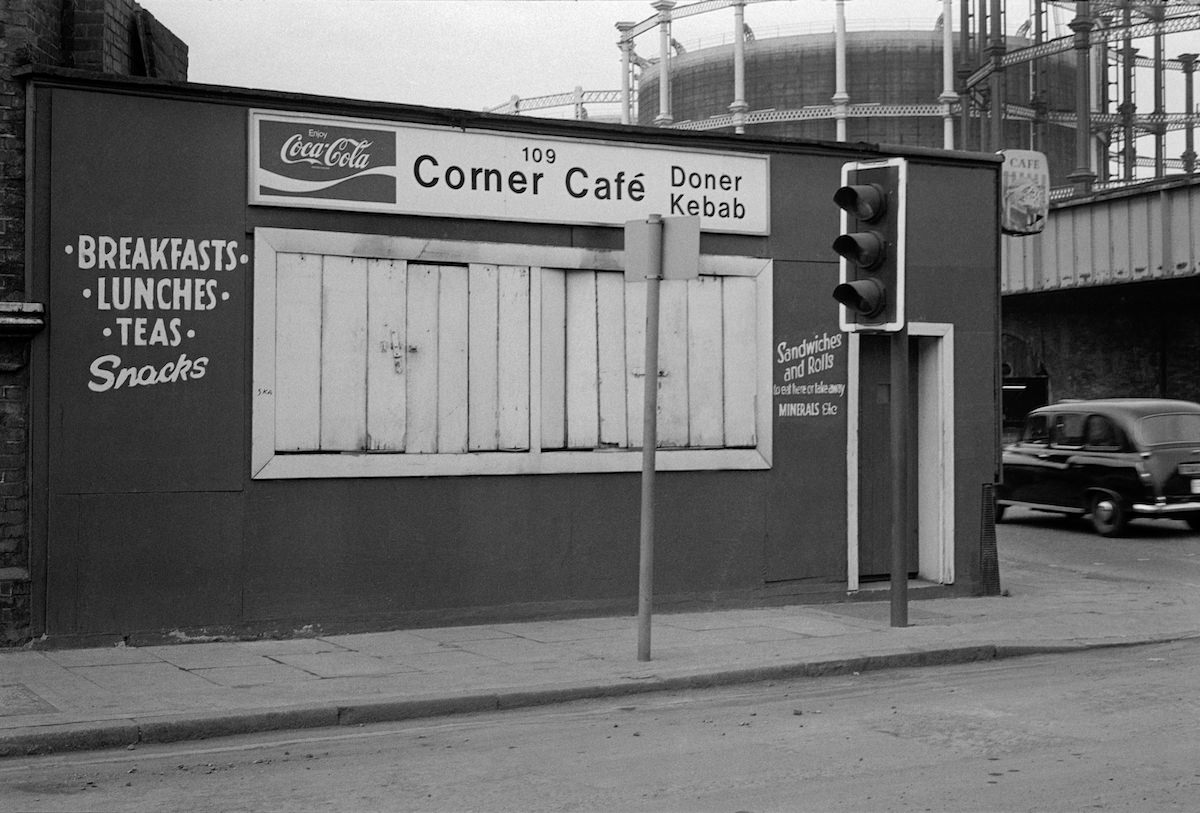
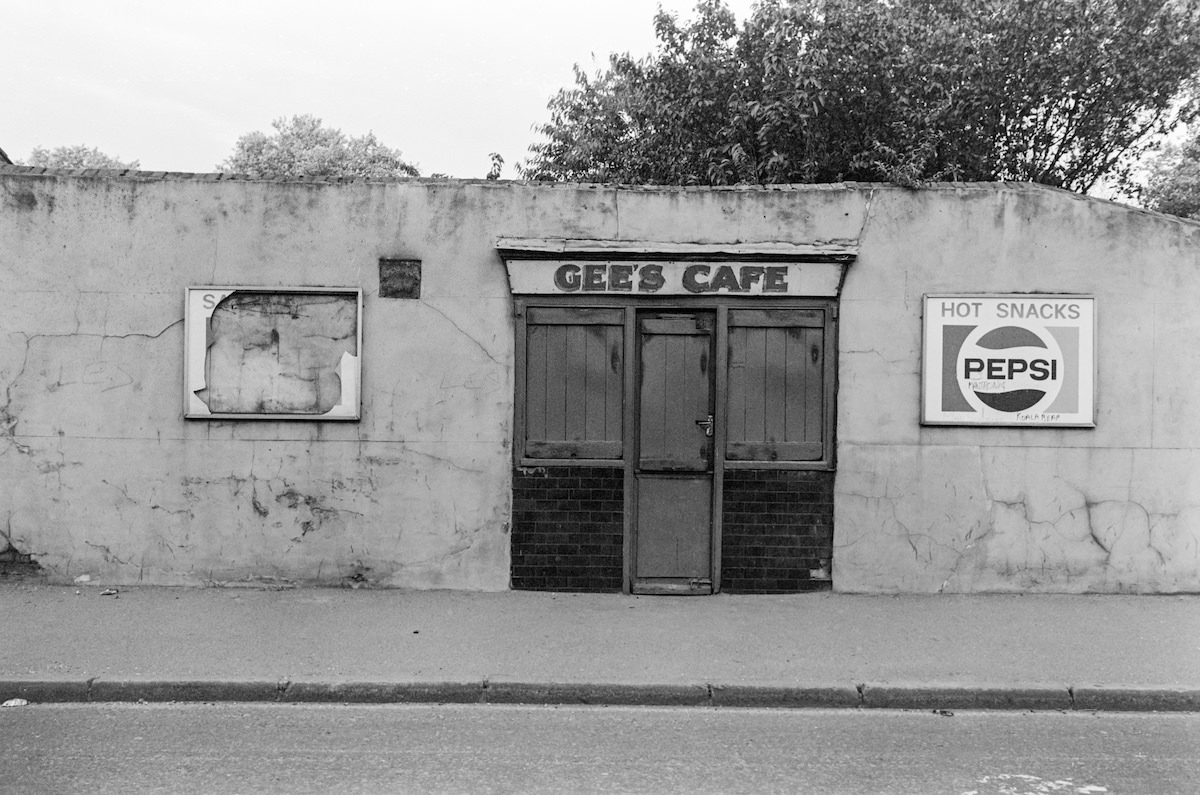
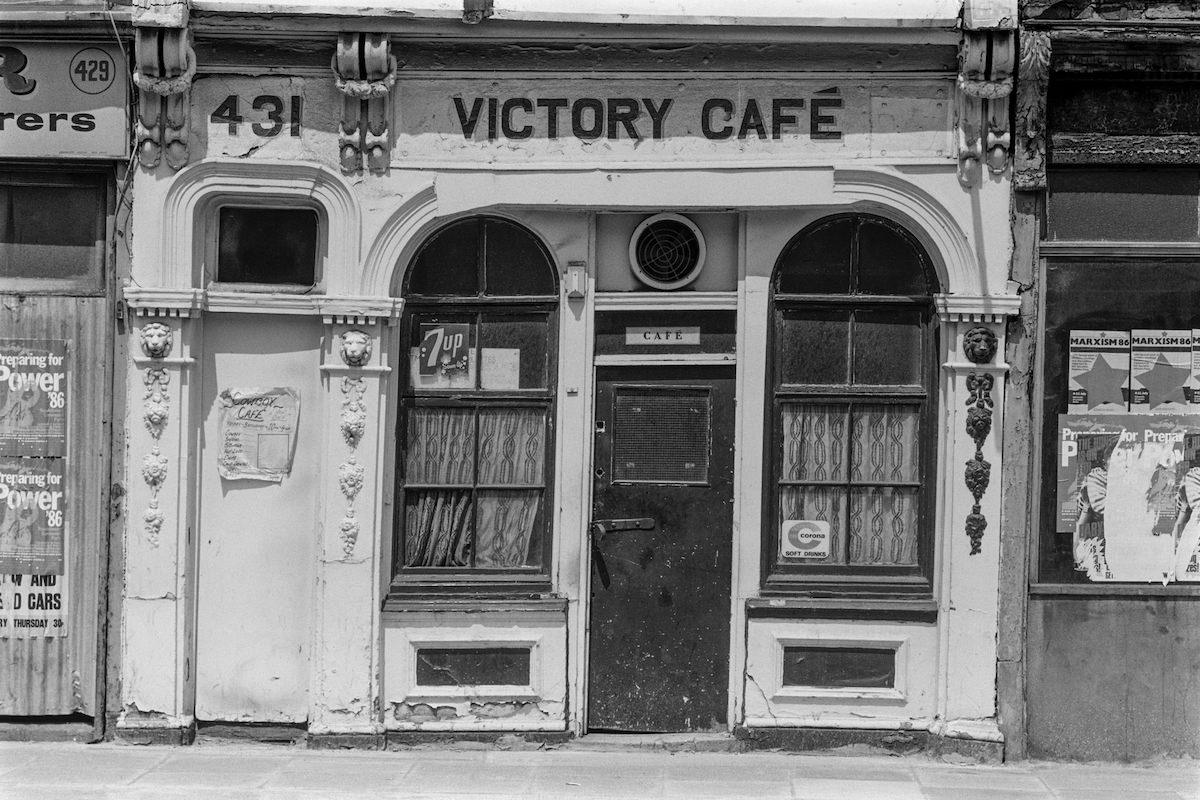
Hackney was well represented in Marshall’s work. Gee’s Cafe on Lansdowne Drive and the Victory Cafe on Hackney Road were typical of the area — small, unassuming shopfronts that served the local community day after day.
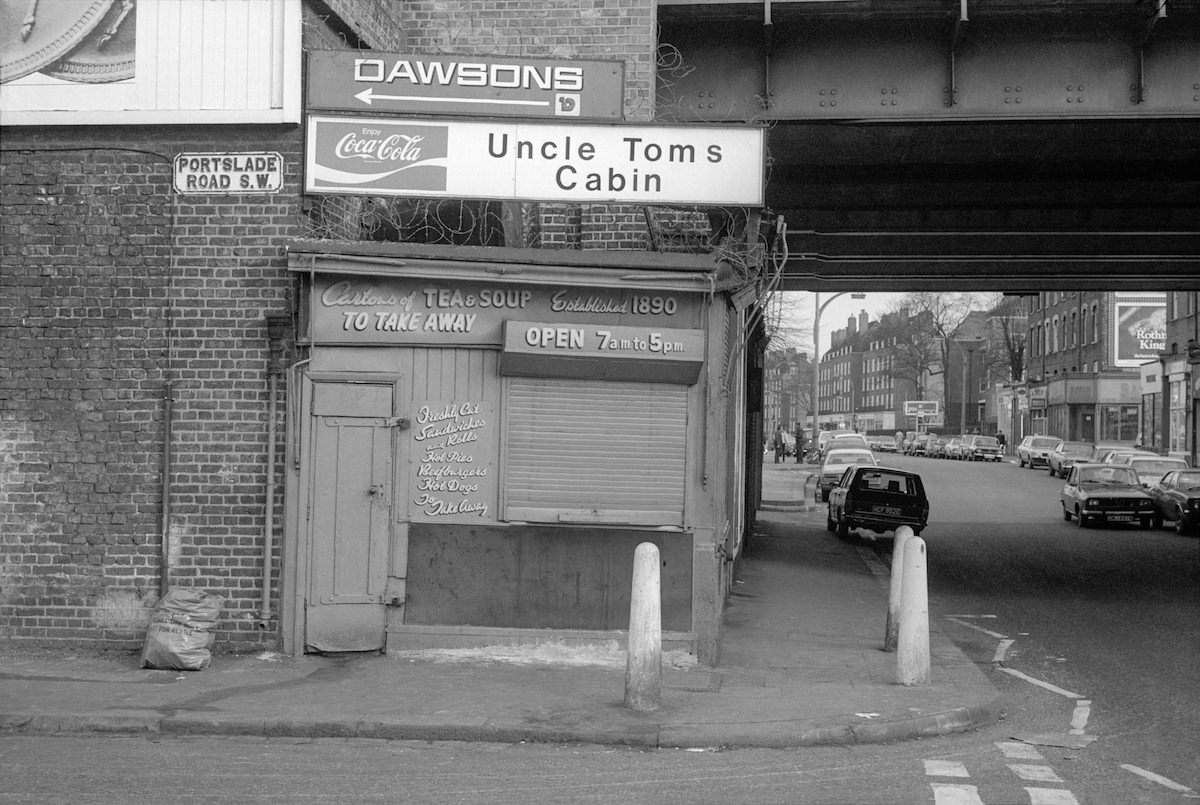
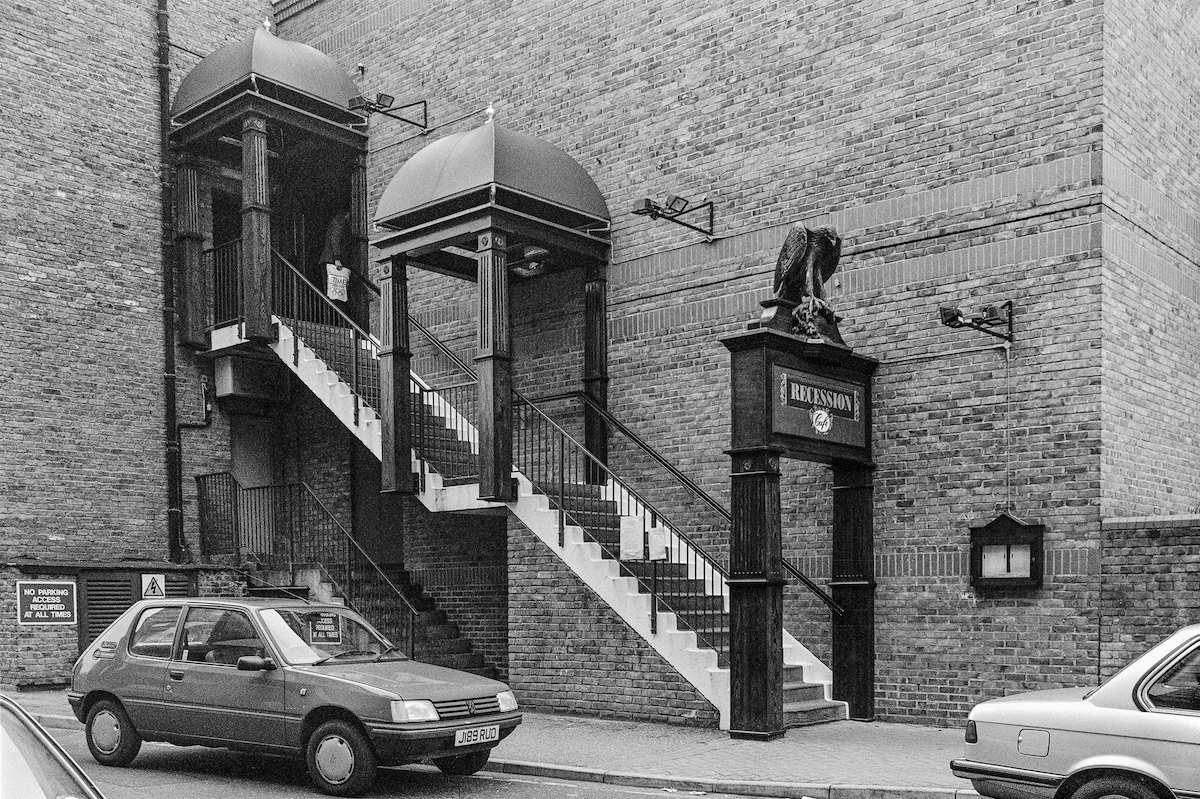
Some cafes had names that told a story on their own. Uncle Tom’s Cabin in Clapham, photographed in 1981, sat at the junction of Portslade Road and Wandsworth Road. The Recession Cafe on Islington Green, captured in 1989, wore the economic mood of the decade right on its sign.
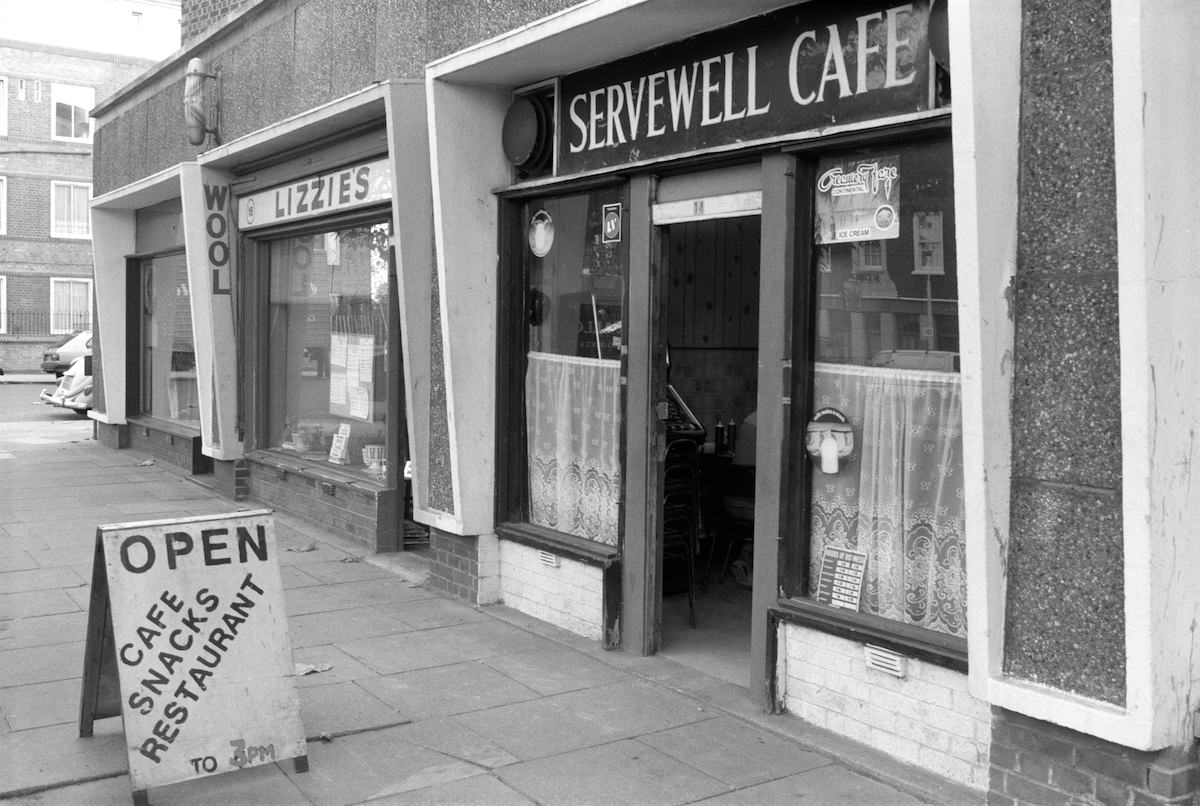
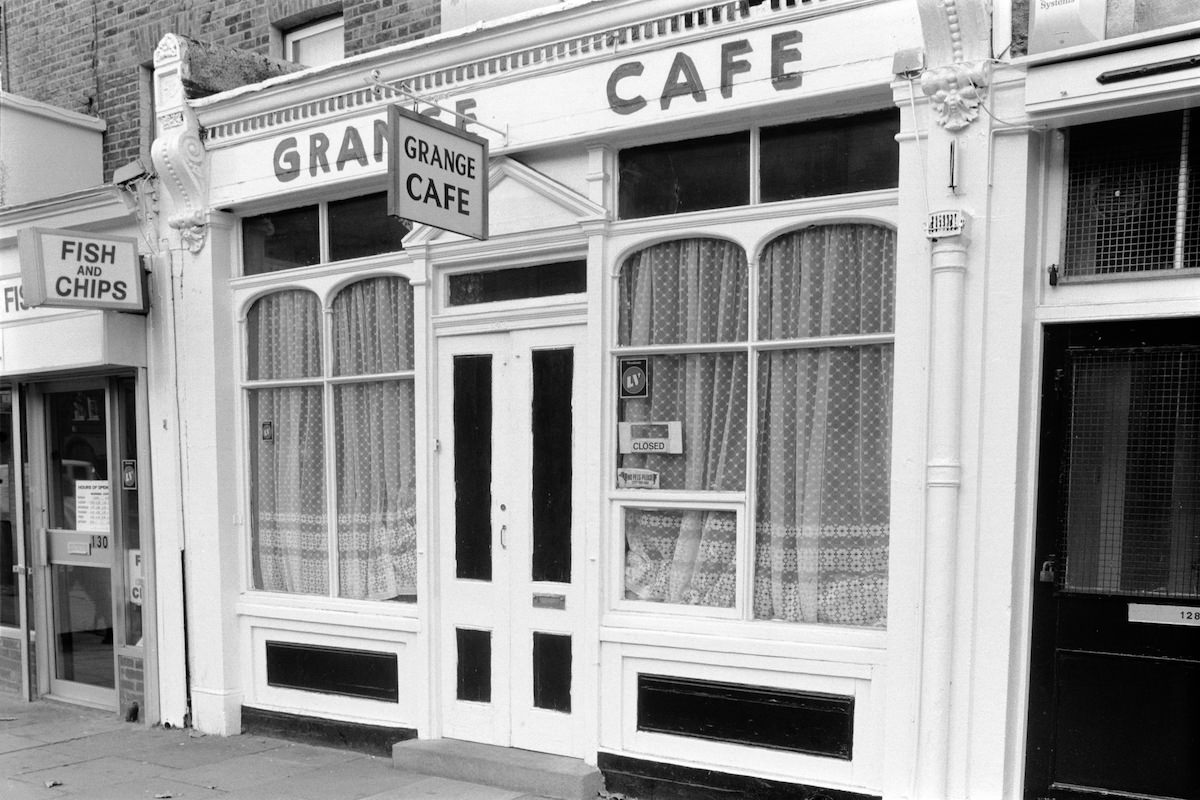
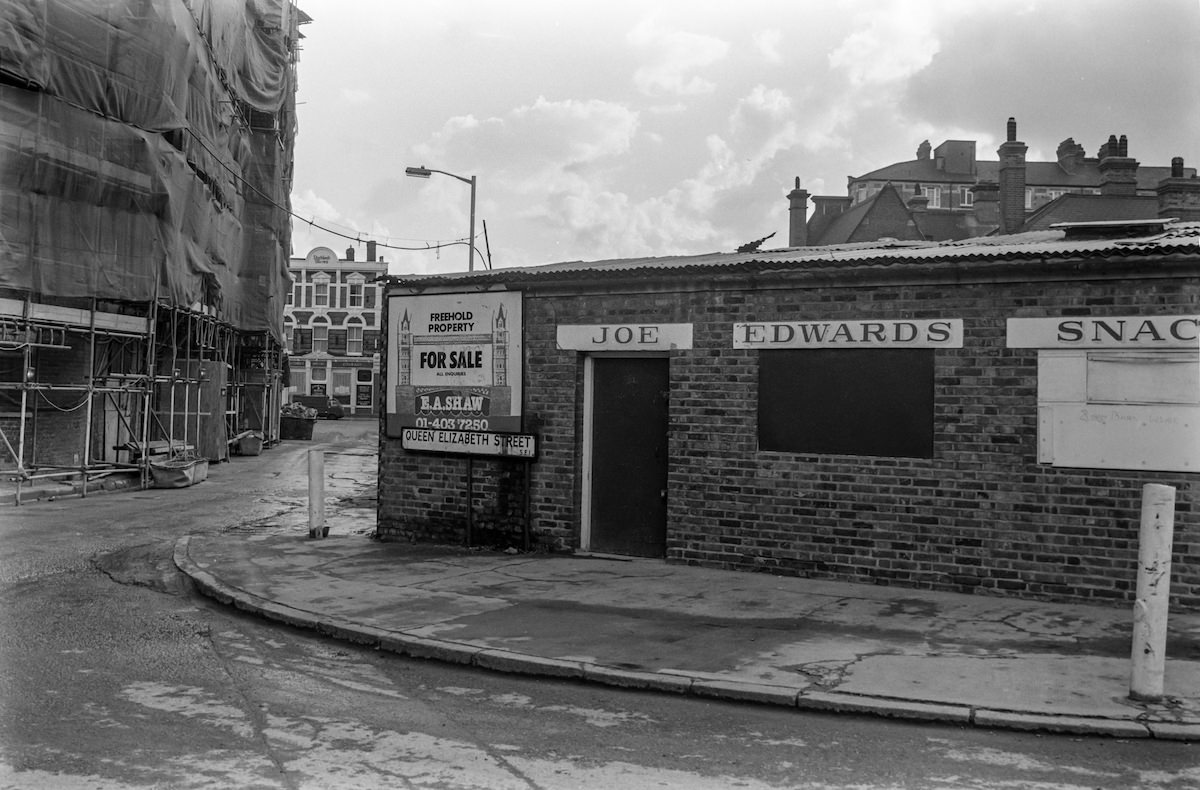
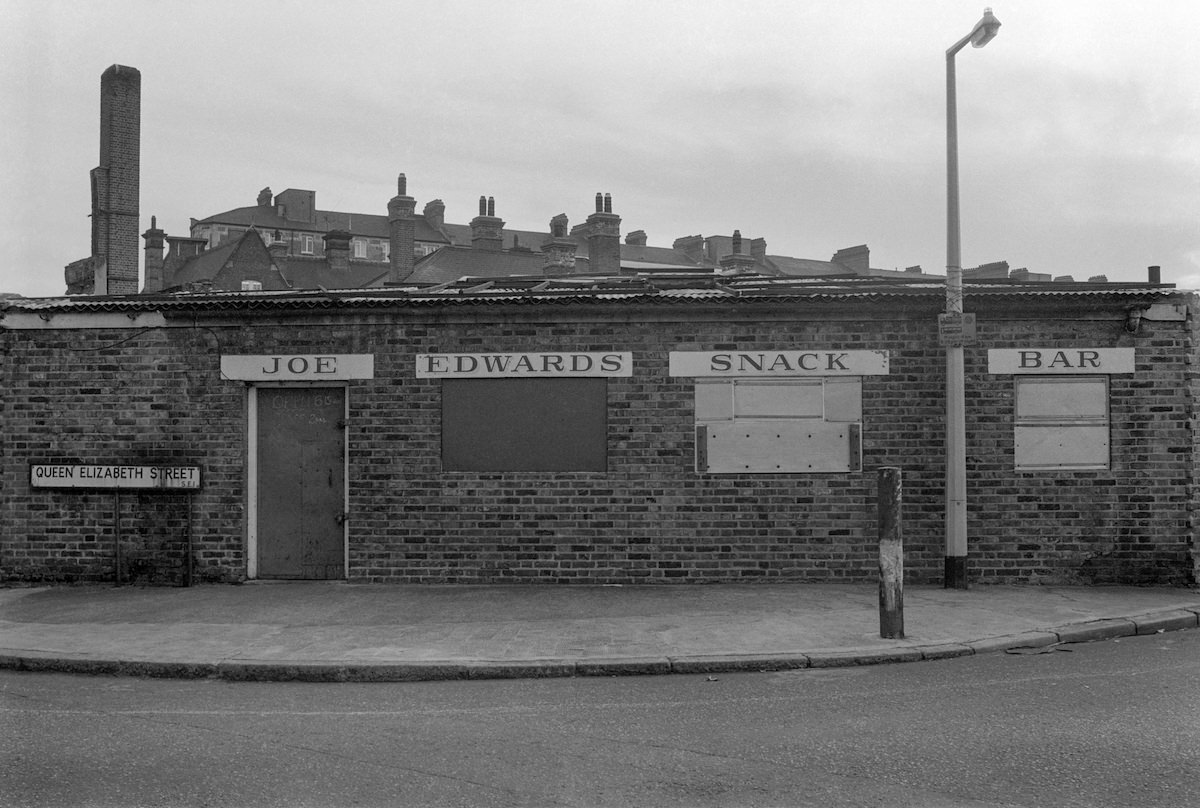
Bermondsey and Southwark had their own cluster of neighbourhood cafes. The Servewell Cafe on West Lane and the Grange Cafe on Grange Road both appeared in Marshall’s 1988 photographs, while Joe Edwards’ Snack Bar operated near Queen Elizabeth Street and Shad Thames.
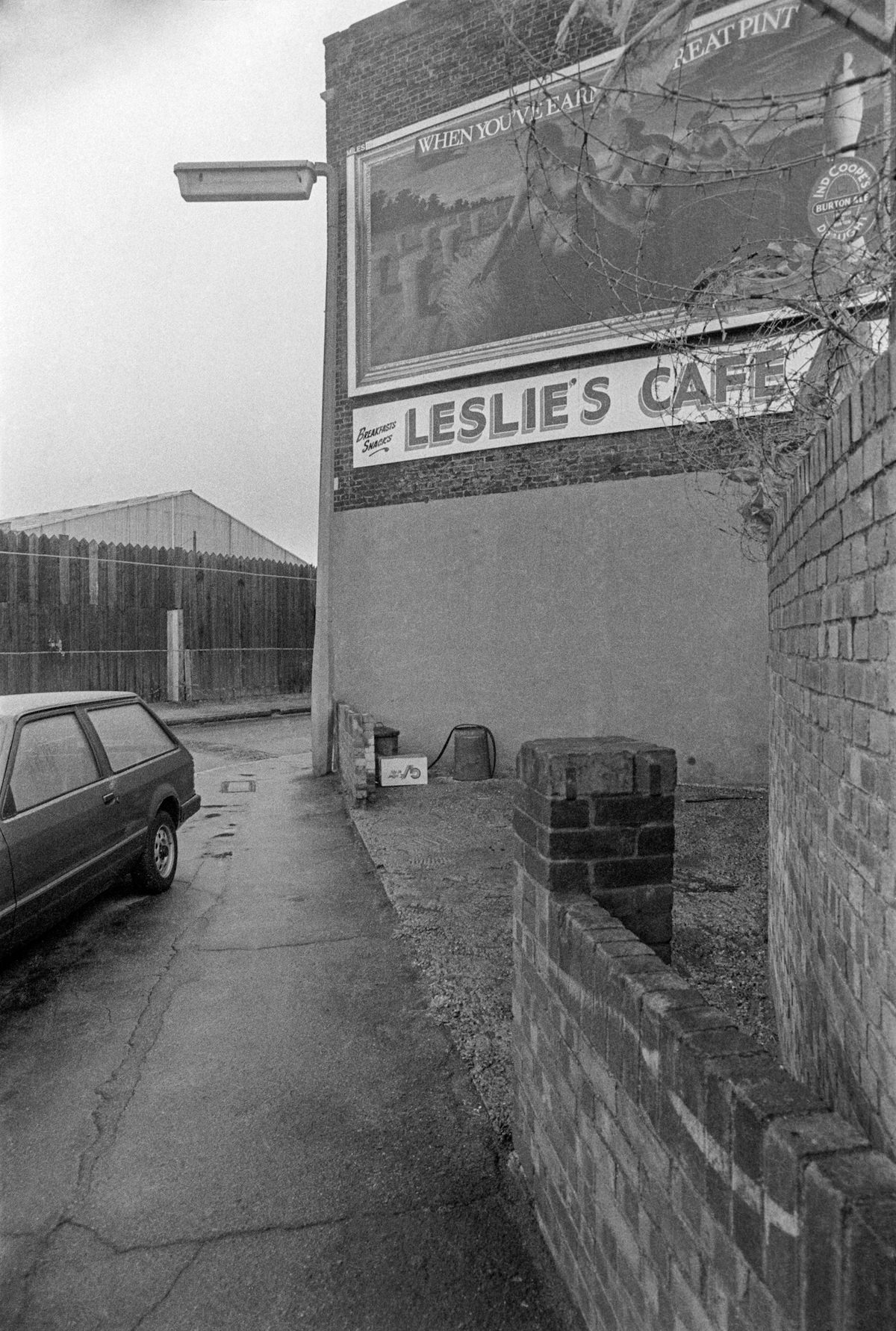
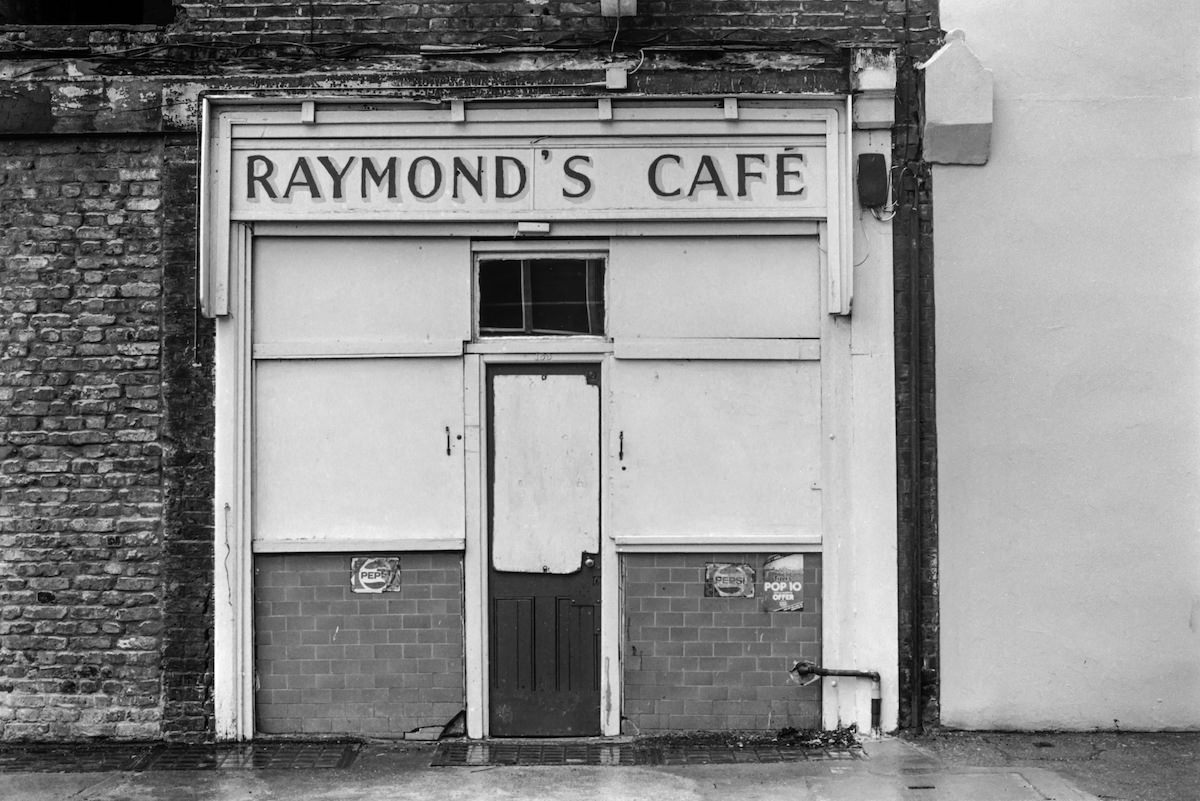
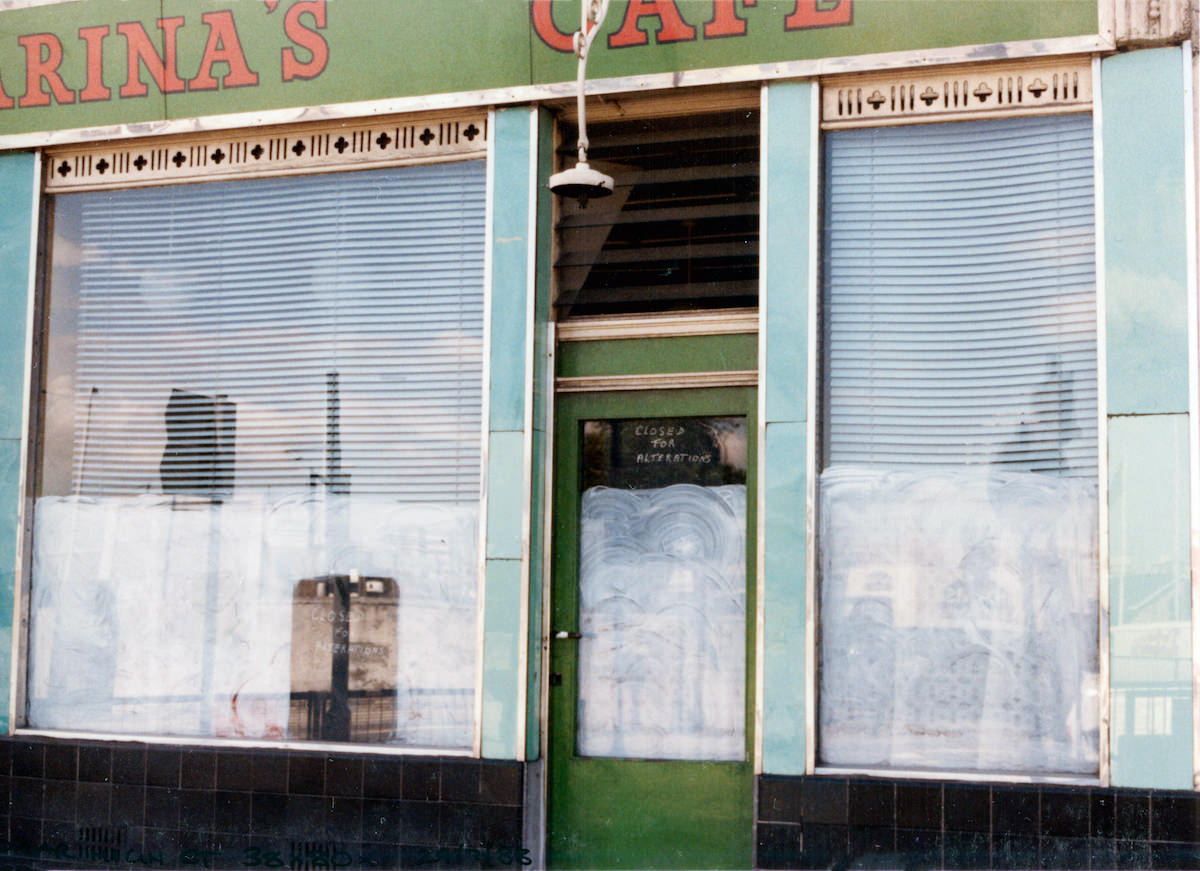
Tower Hamlets had some of the most memorable cafes in Marshall’s collection. Leslie’s Cafe on the Isle of Dogs, Raymond’s Cafe in Whitechapel, and Farina’s Cafe on Poplar High Street each captured a distinct pocket of the East End. The Snack Bar on Cheshire Street in Spitalfields, photographed in 1983, sat in a market area packed with traders and buyers on weekends.
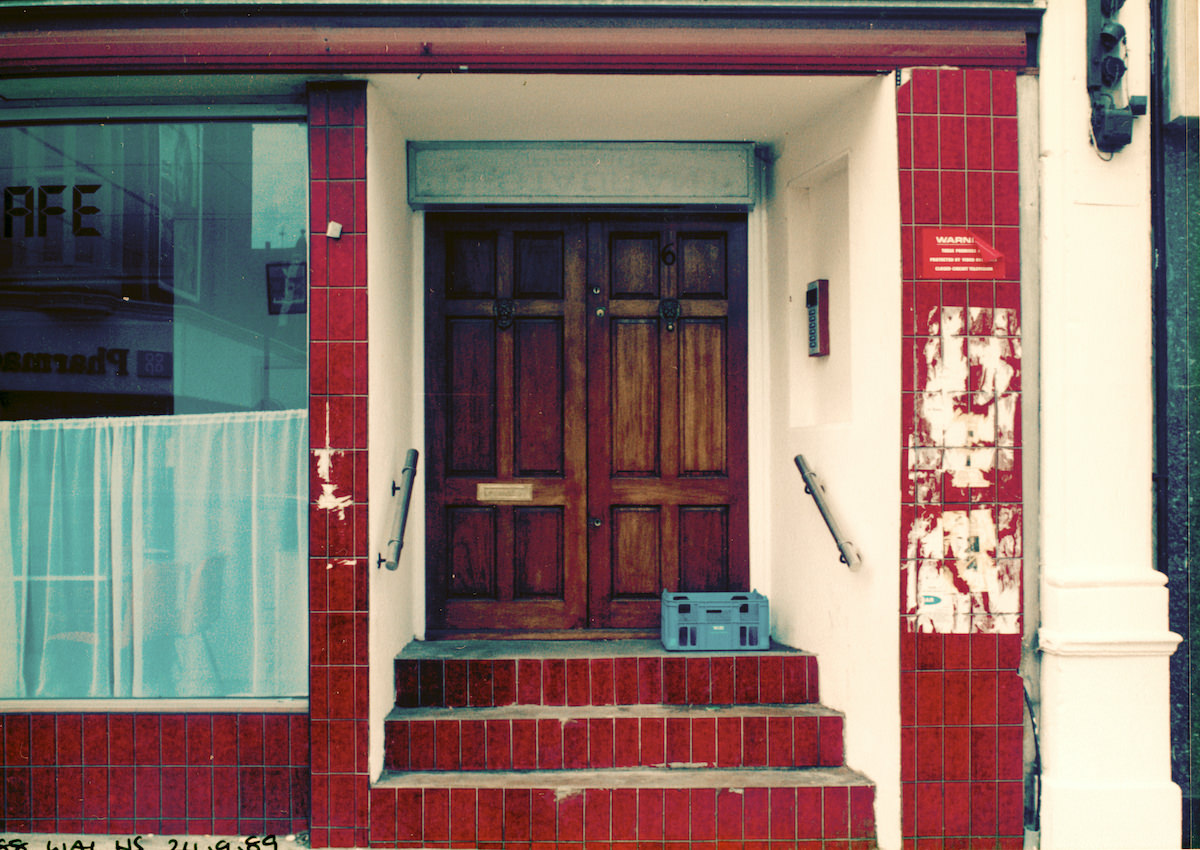
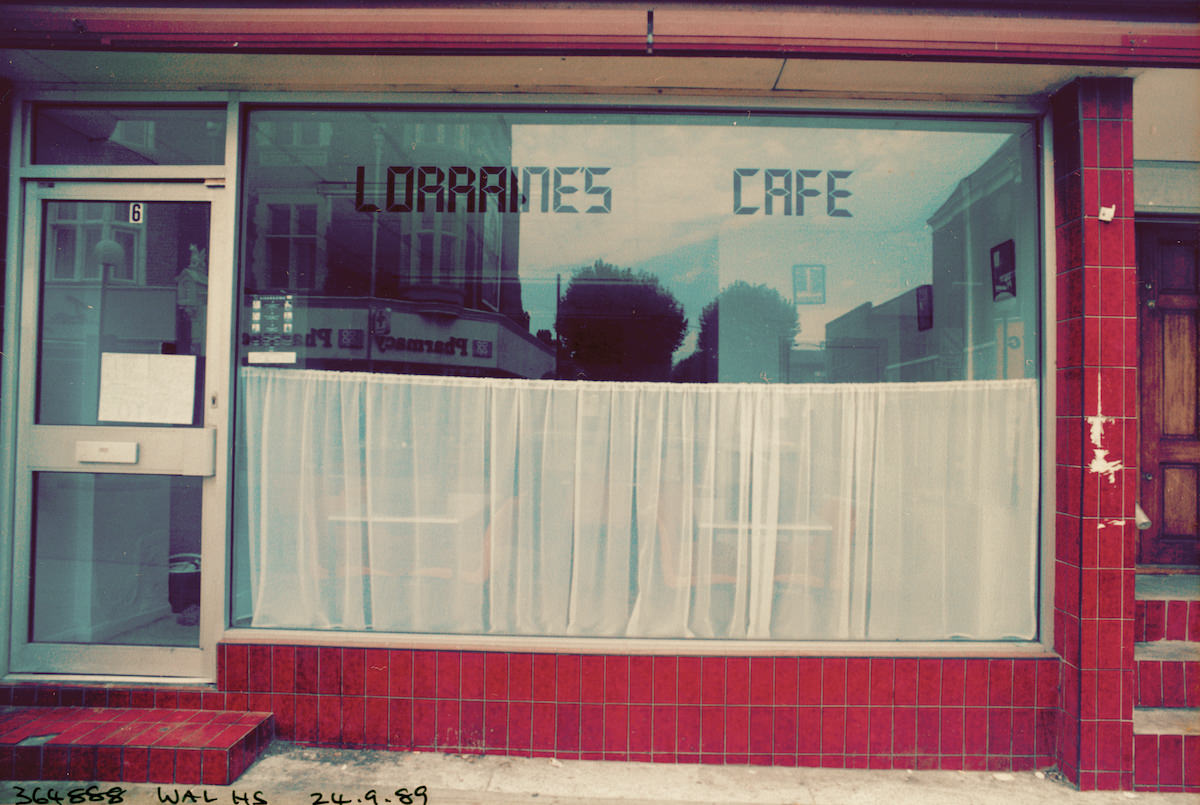
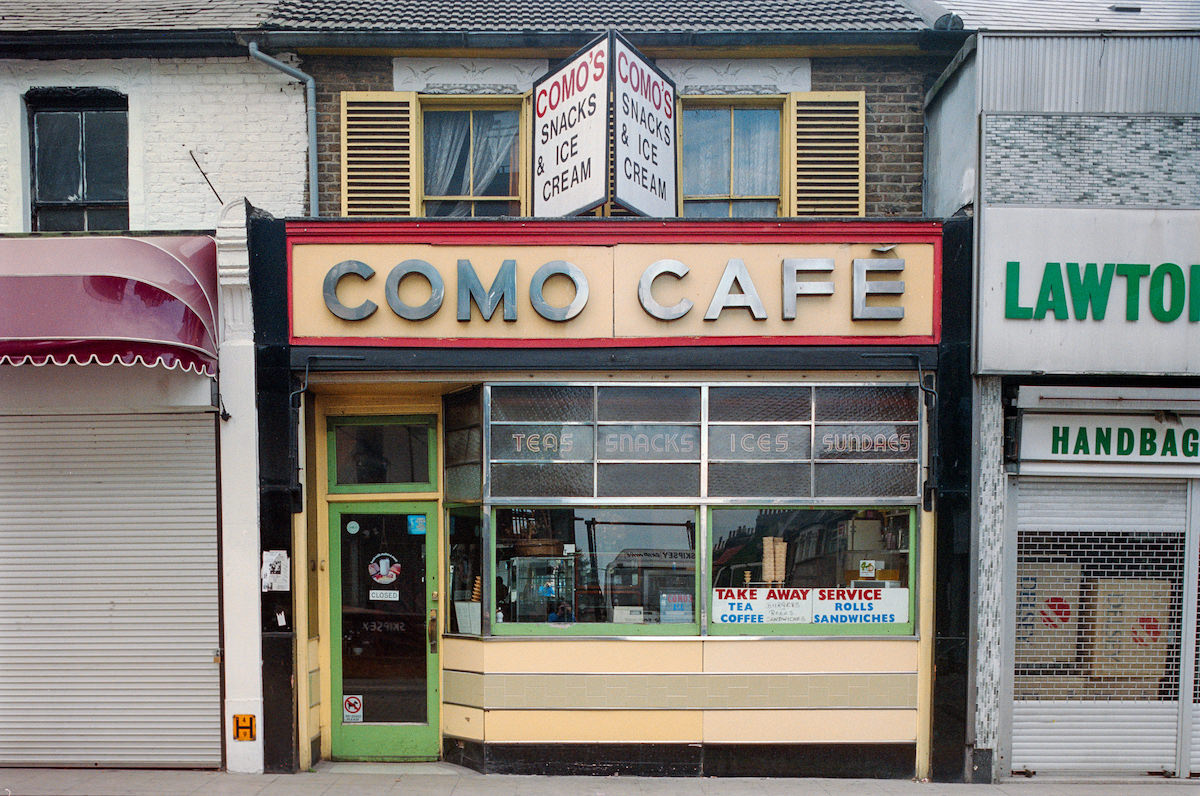
Walthamstow’s High Street hosted several cafes side by side. Lorraine’s Cafe and the Como Café both appeared in Marshall’s 1989 photographs, showing the mix of independent businesses that kept the high street alive before the rise of chain coffee shops.
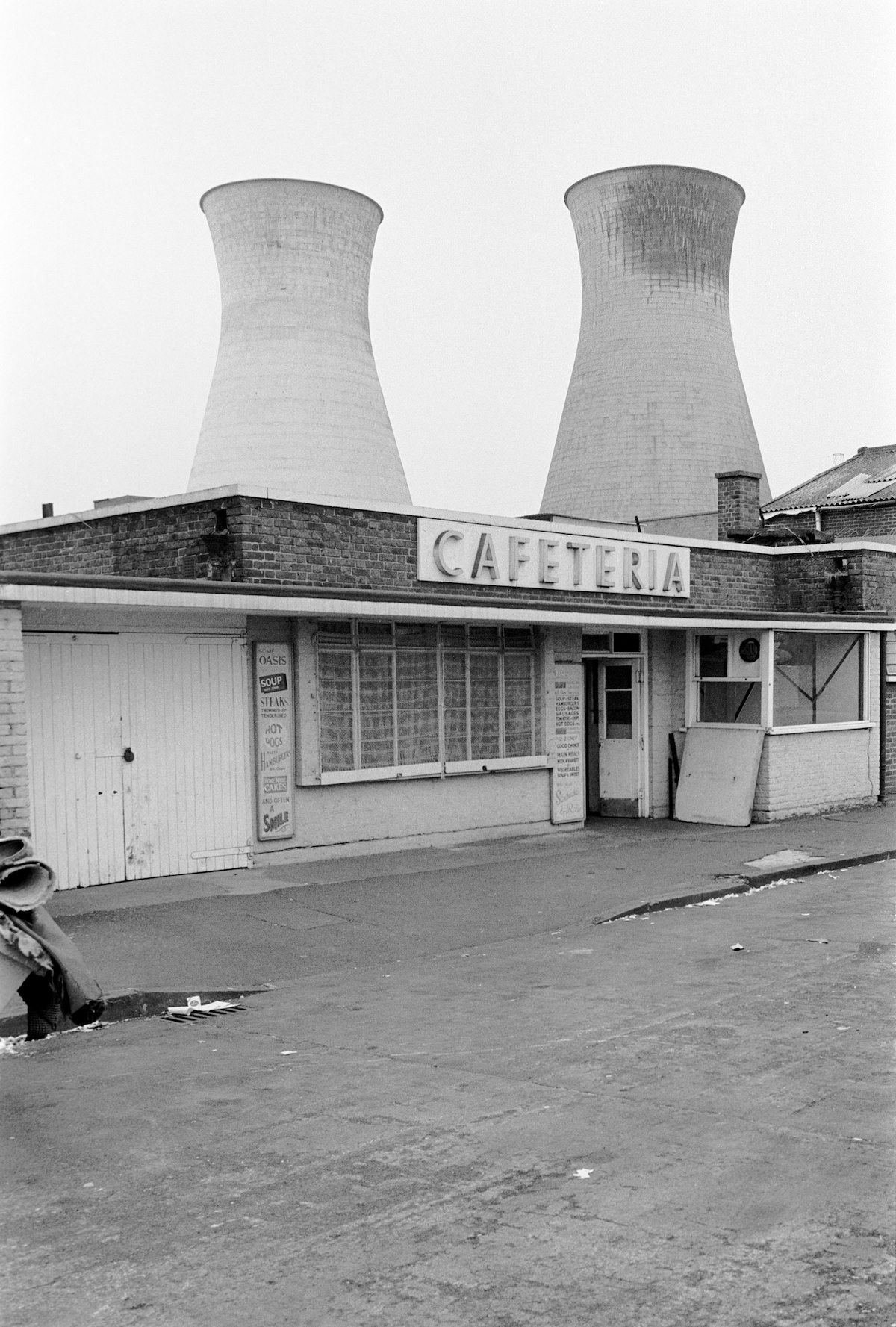
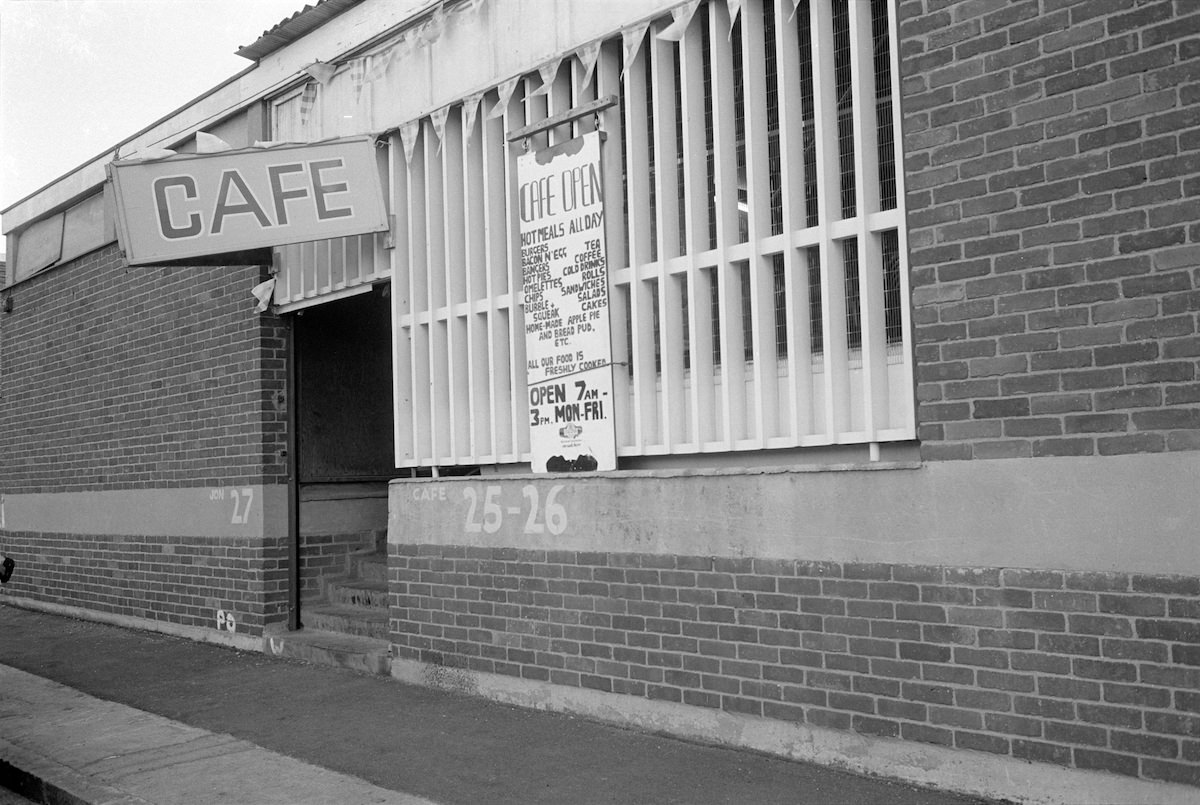
Some of Marshall’s most striking images came from industrial zones where cafes existed purely to serve nearby workers. The Oasis Cafeteria on Bidder Street in West Ham and the café on North Woolwich Road in Silvertown sat in areas dominated by warehouses, factories, and loading docks.
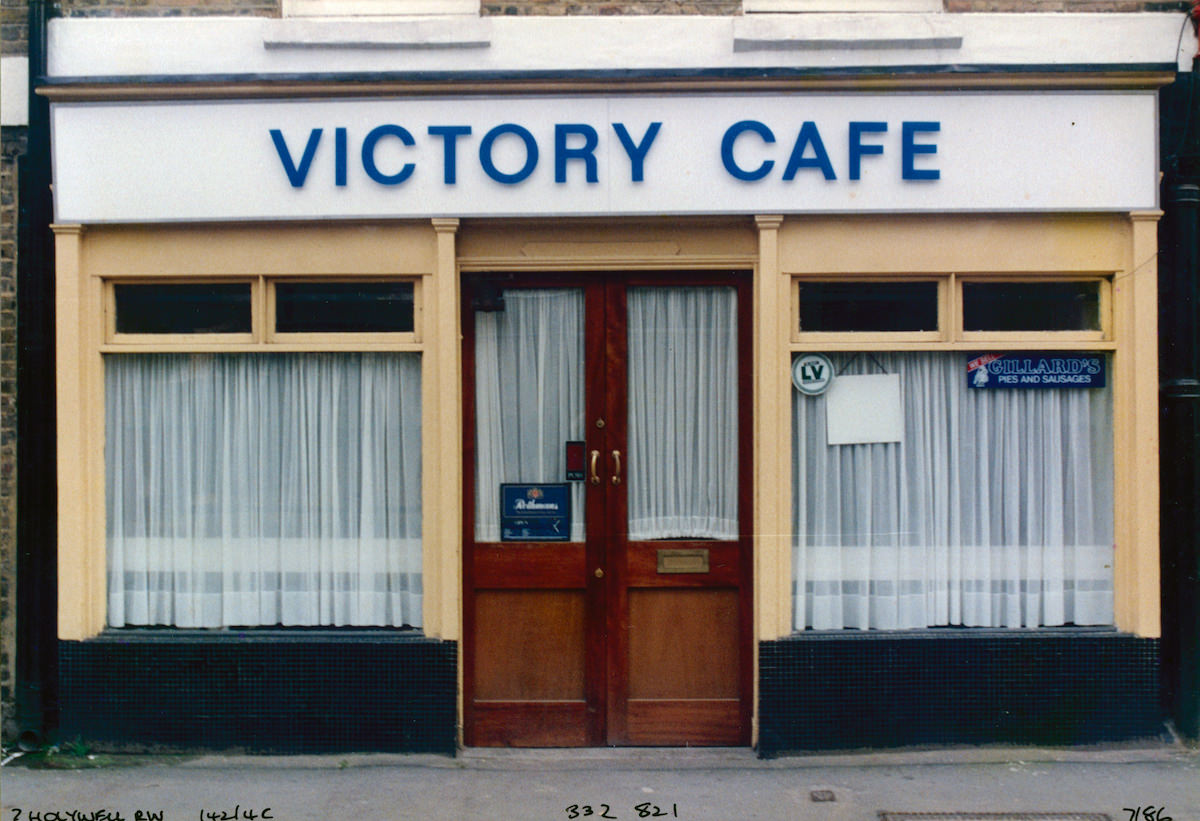
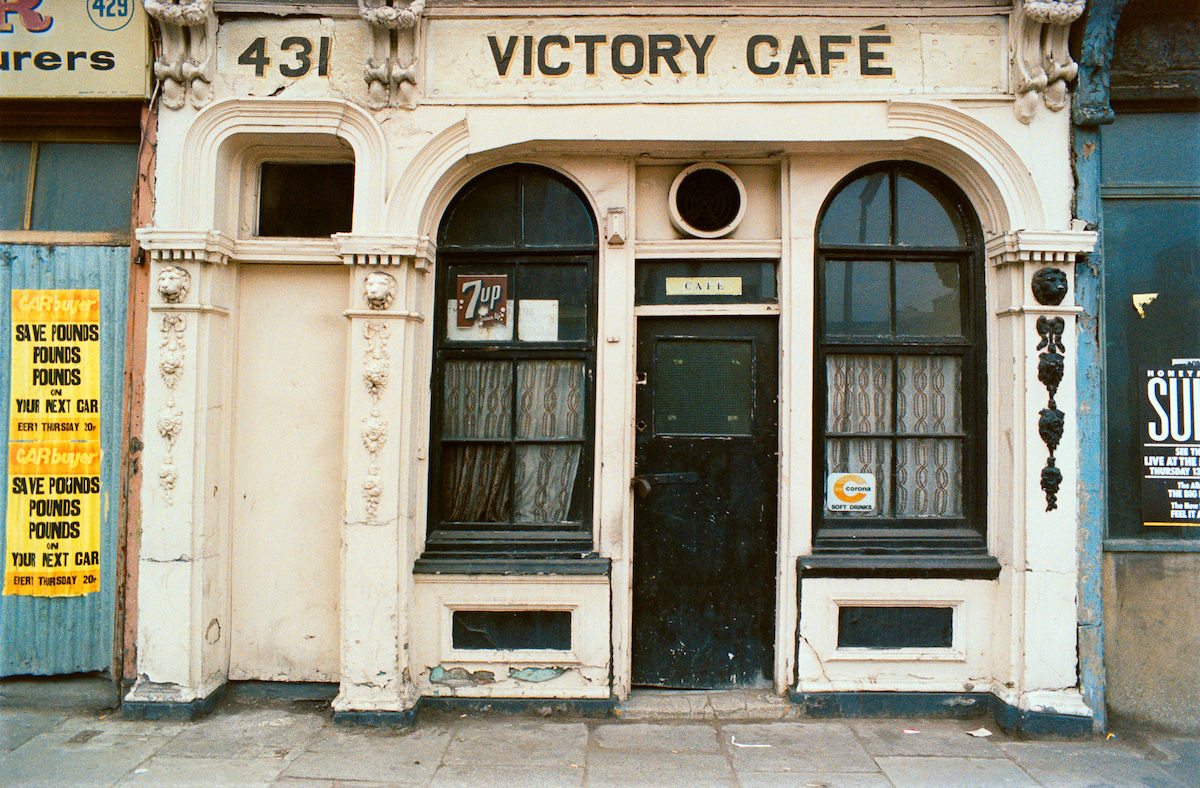
The Victory Cafe name appeared more than once across different parts of London. Marshall photographed one on Holywell Street in Shoreditch in 1986 and another on Hackney Road in 1988, suggesting the name was a popular choice among café owners of that era.
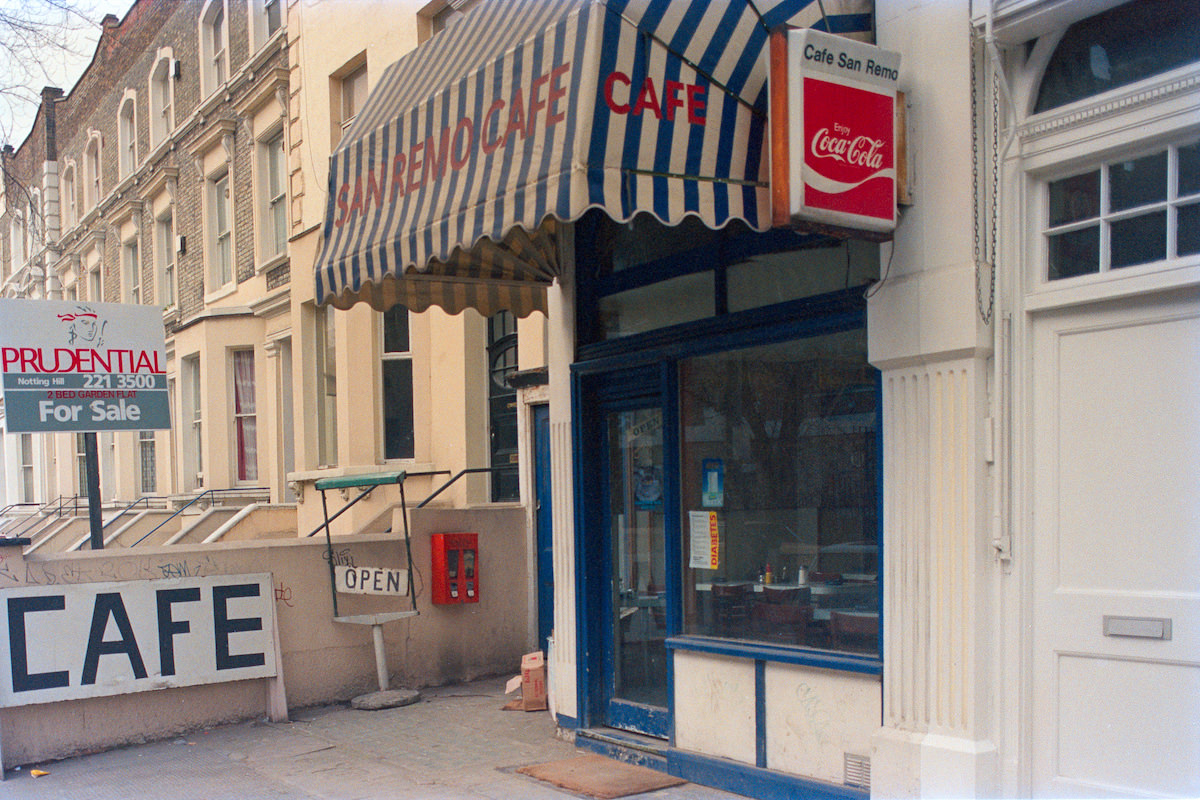
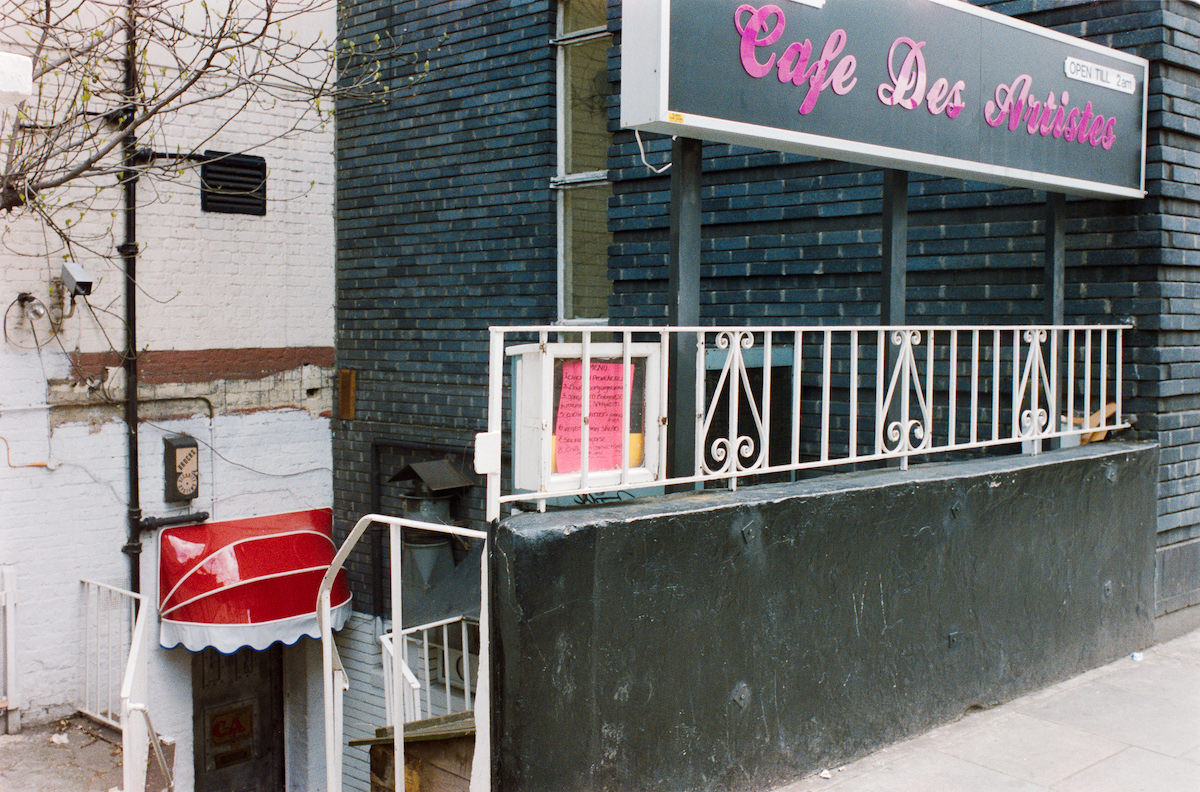
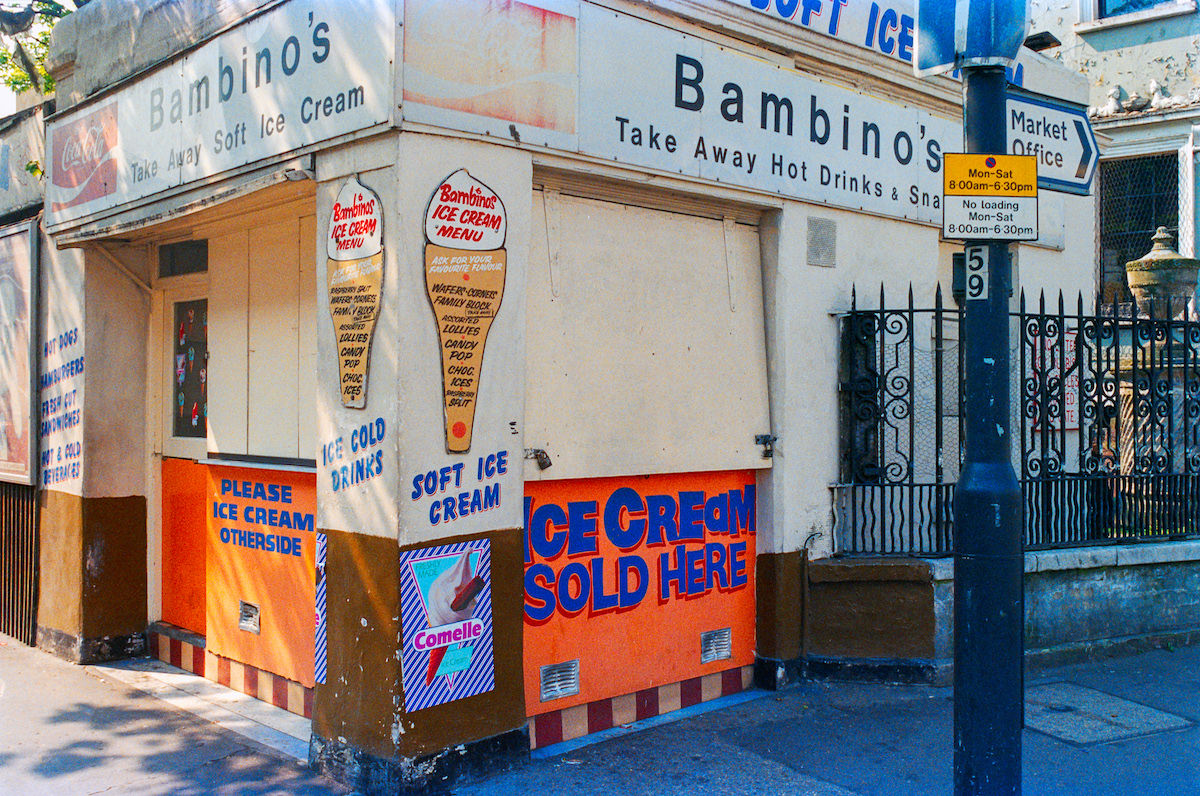
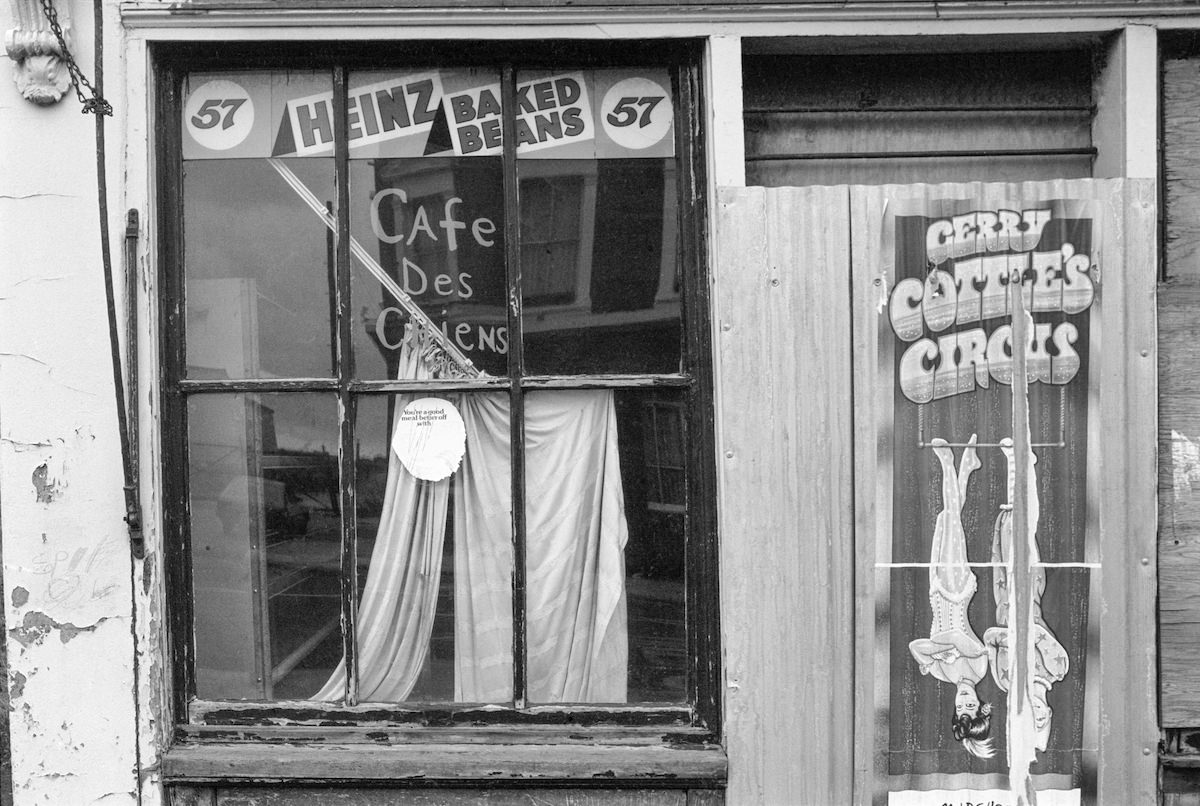
West London had its own café culture, though it looked quite different from the East End. The San Remo Cafe in Notting Hill, Café des Artistes in West Brompton, and Bambinos in Fulham each served distinct communities — from artists and students to local families.
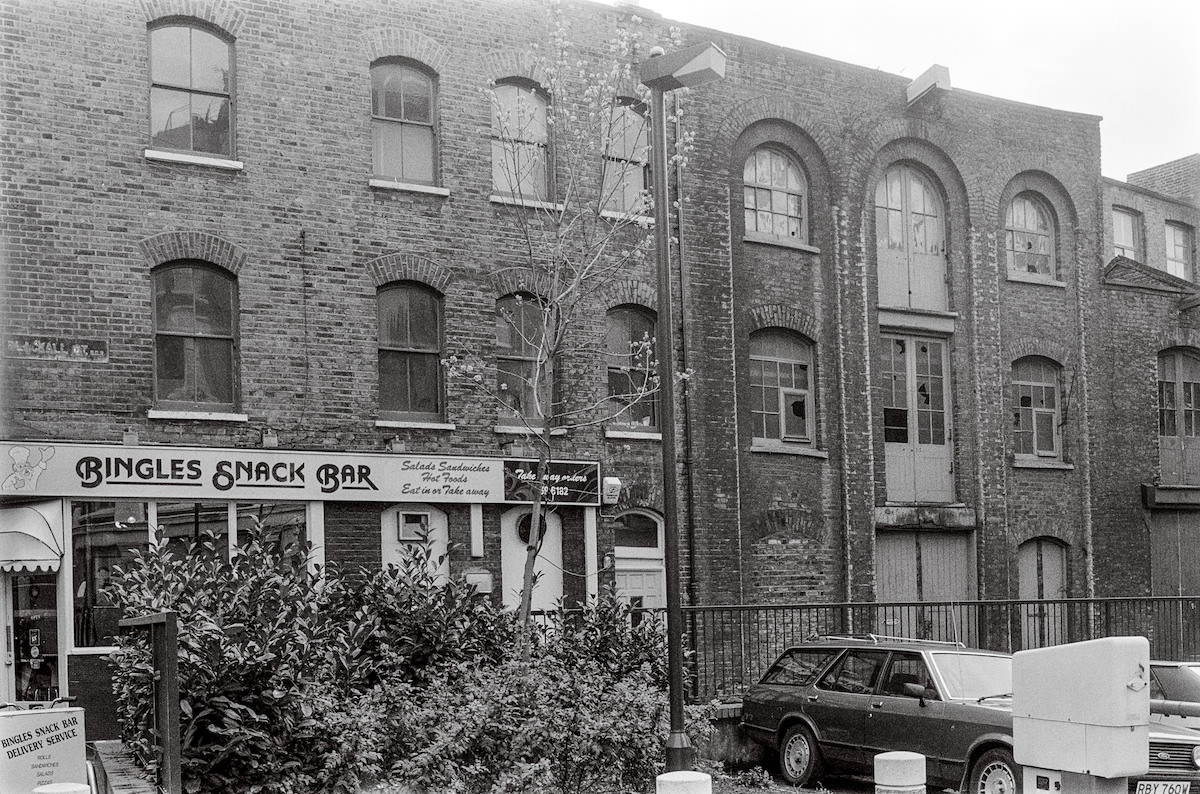
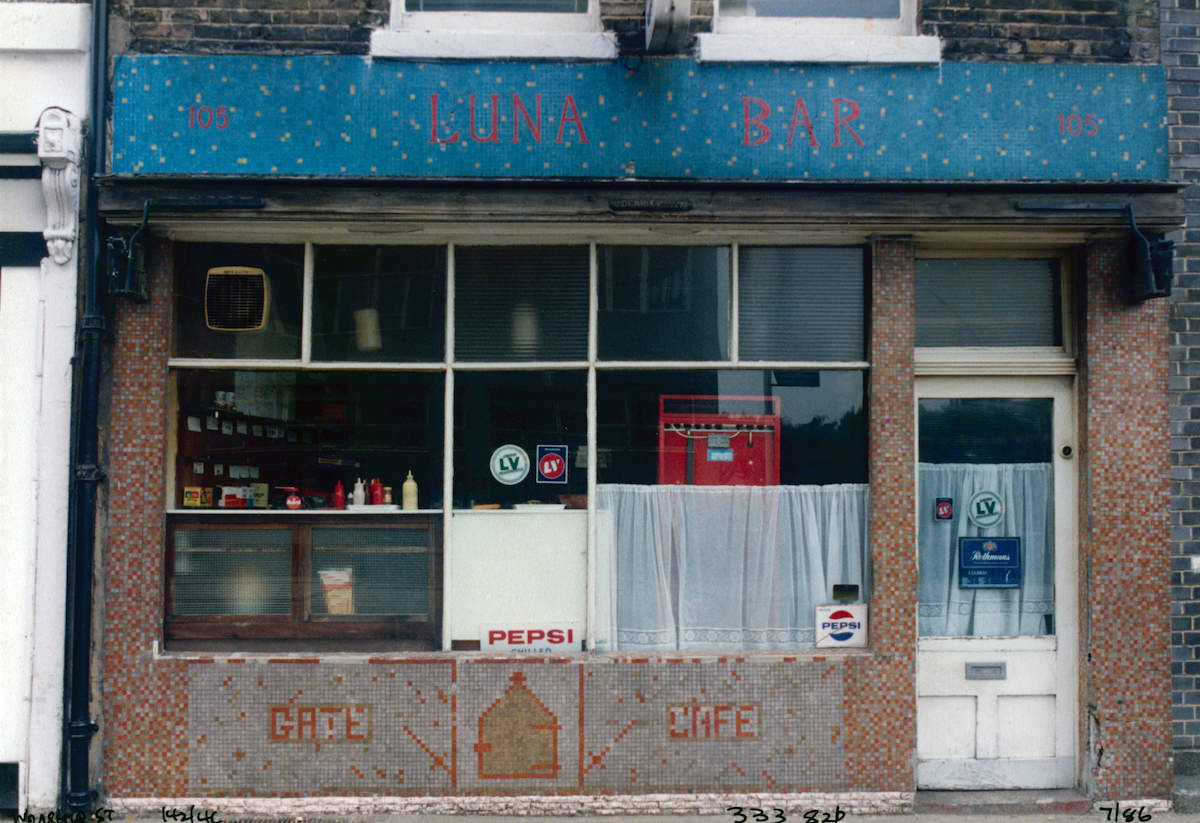
Shoreditch contributed several spots to Marshall’s archive, including Bingles Snack Bar on Blackall Street and the Luna Bar on Worship Street. Both were photographed in the mid-1980s, when Shoreditch was still a largely industrial and working-class district.
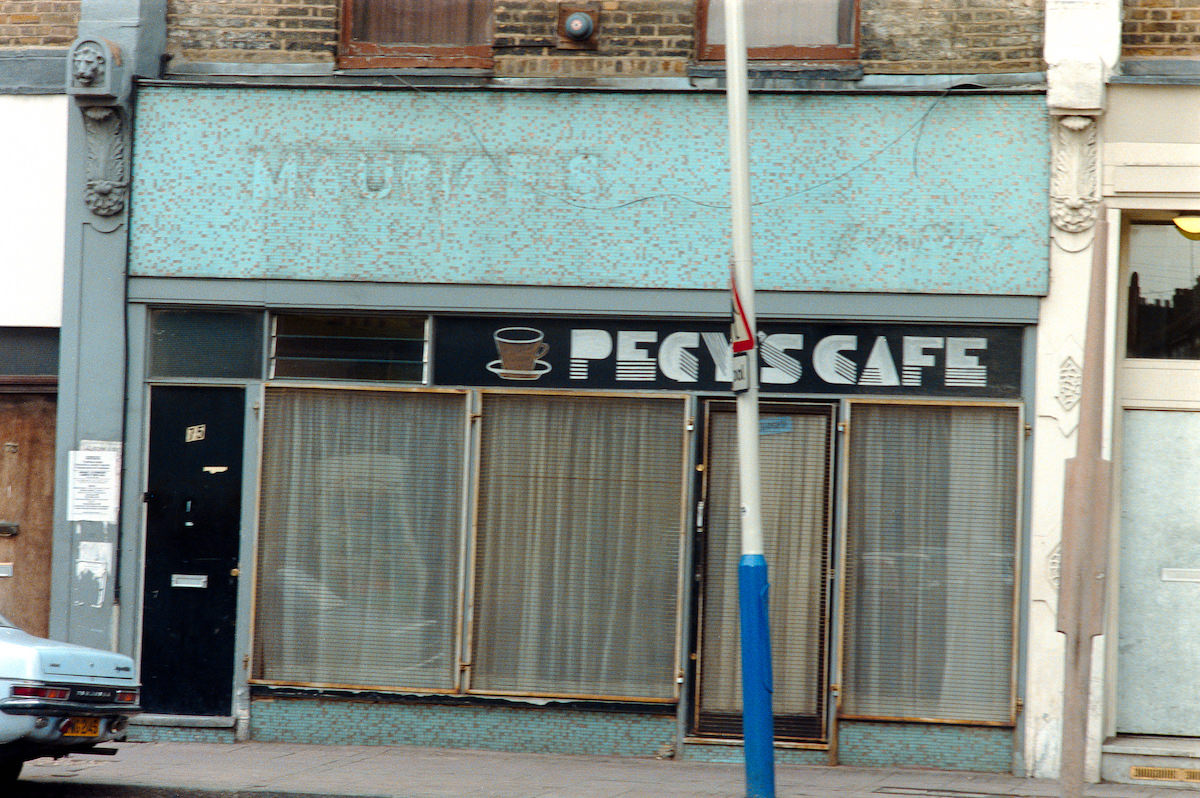
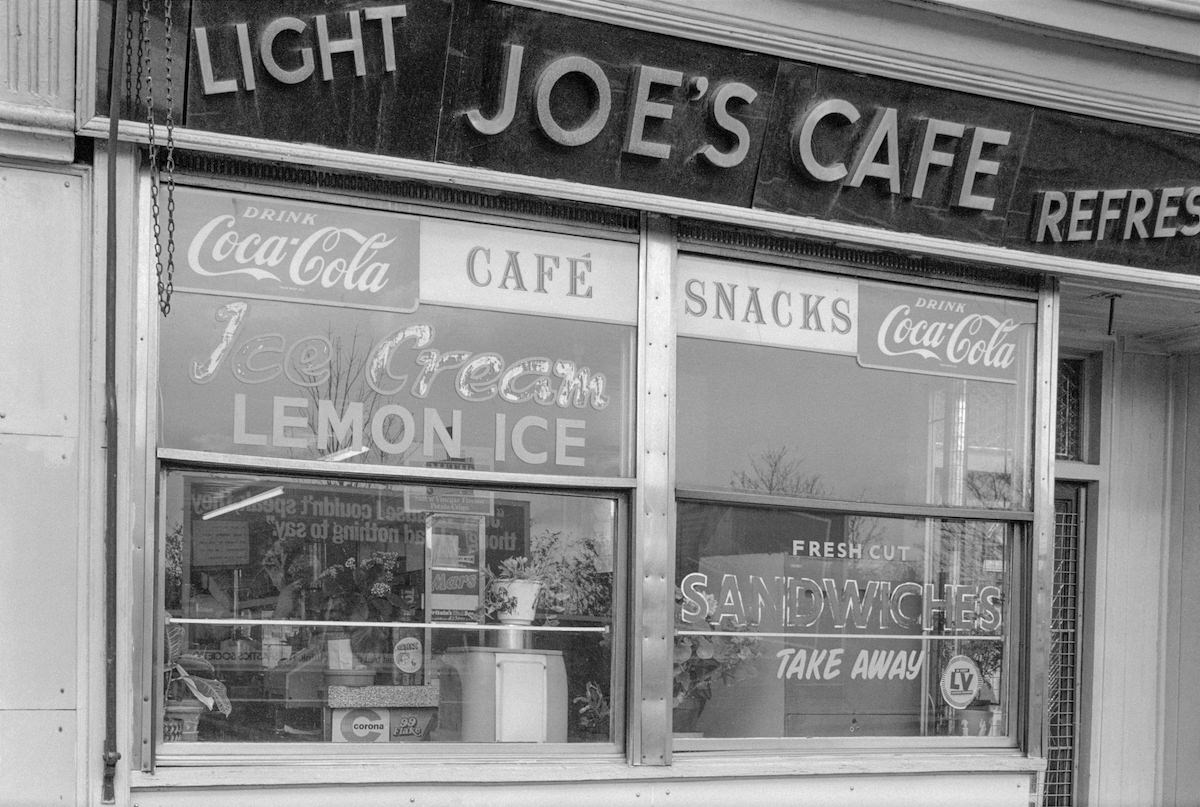
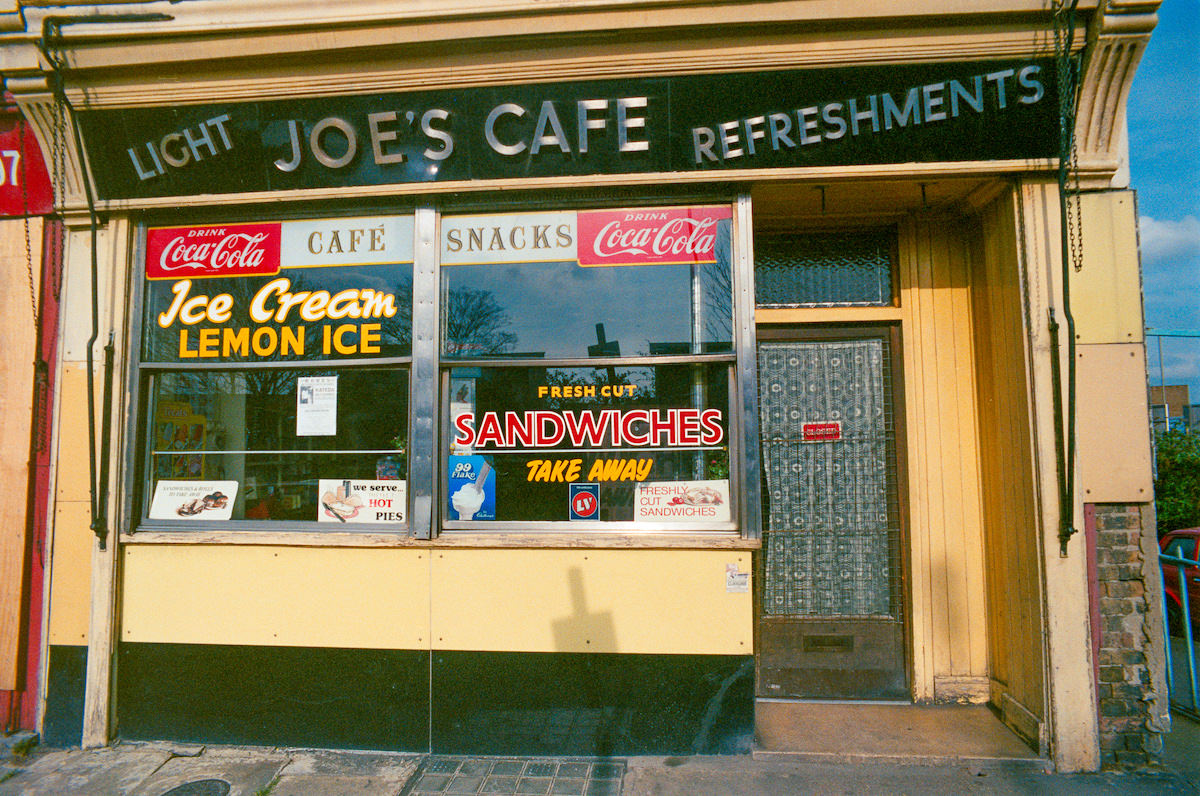
South London’s café scene ranged from Peggy’s Cafe on Atlantic Road in Brixton to Joe’s Cafe on the Old Kent Road in Peckham. These spots served communities that depended on them for affordable, hot meals and a place to sit during the day.
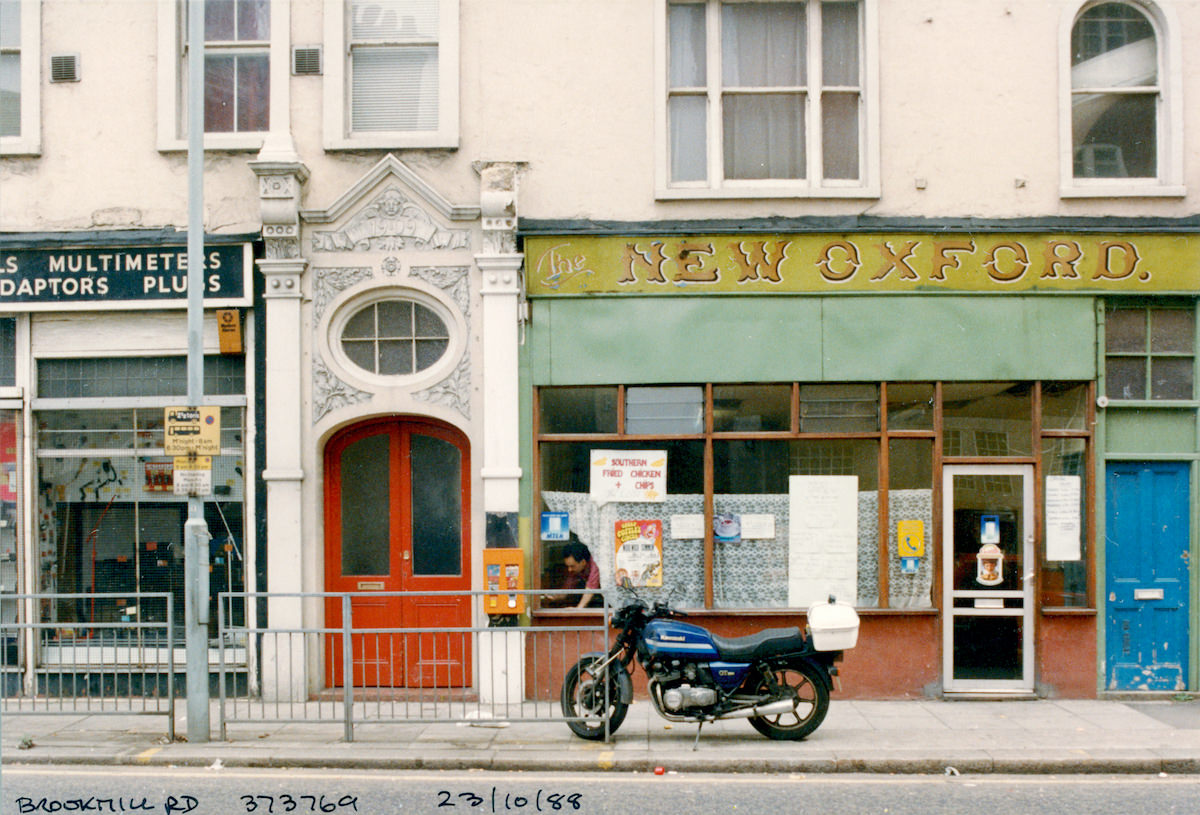
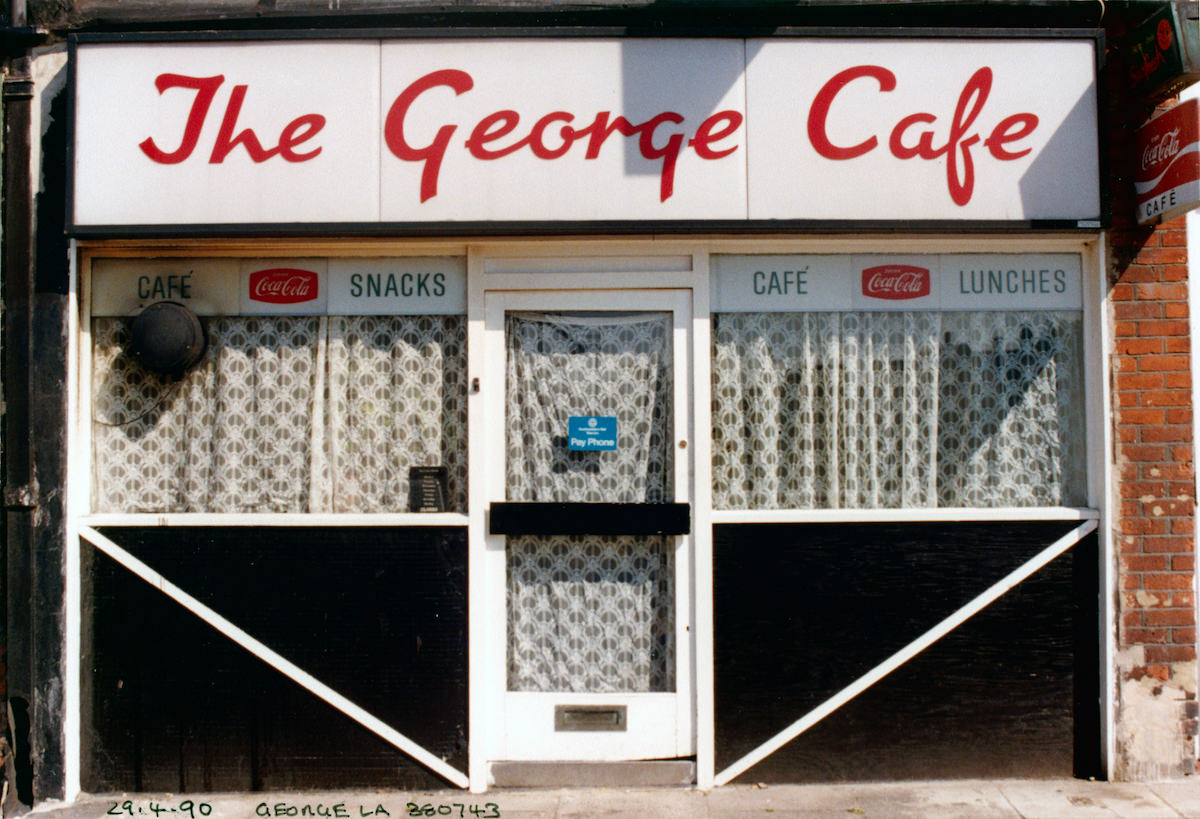
The New Oxford Cafe in Deptford and the George Cafe in Catford represented the kind of proudly local establishments that lined South East London’s streets. Their signage was bold, their interiors modest, and their regulars loyal.
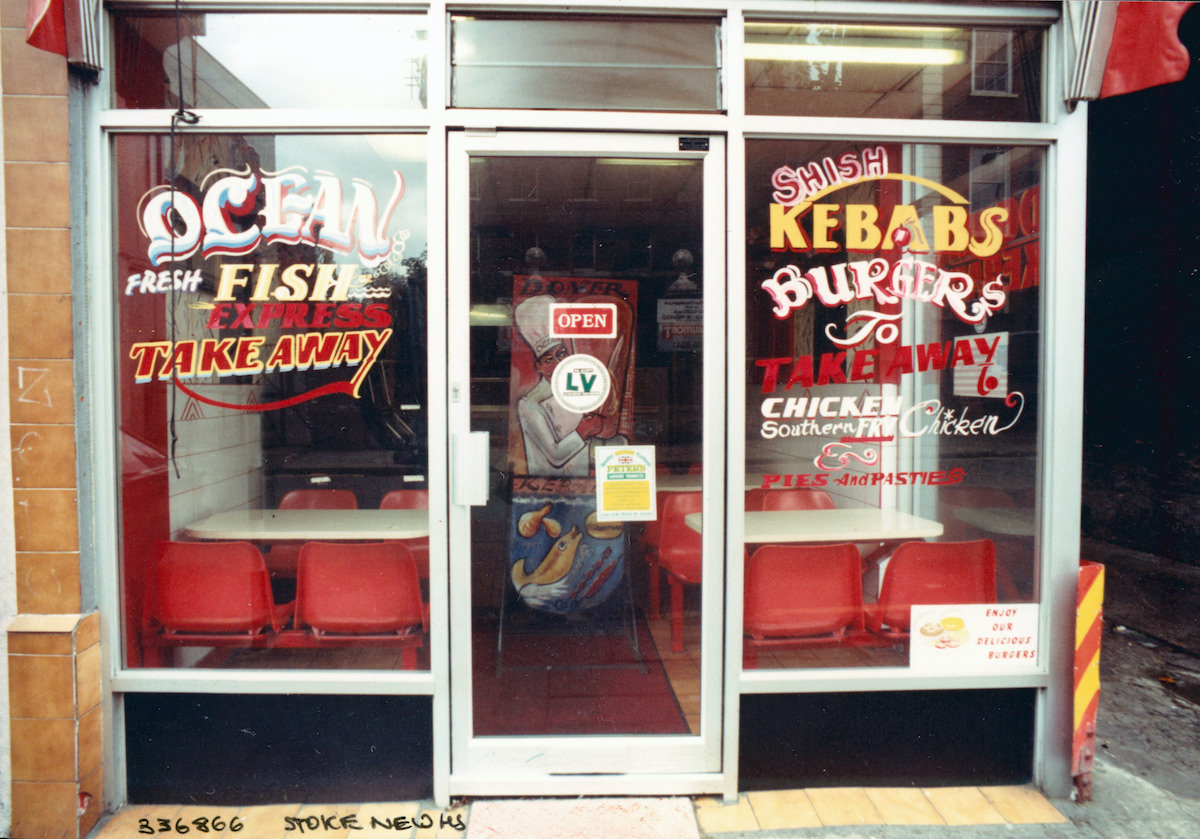
Stoke Newington in Hackney showed up twice in Marshall’s 1989 series — once on the High Street and once on Stoke Newington Road near Shacklewell. Both photographs show storefronts packed tightly together along busy pedestrian routes.
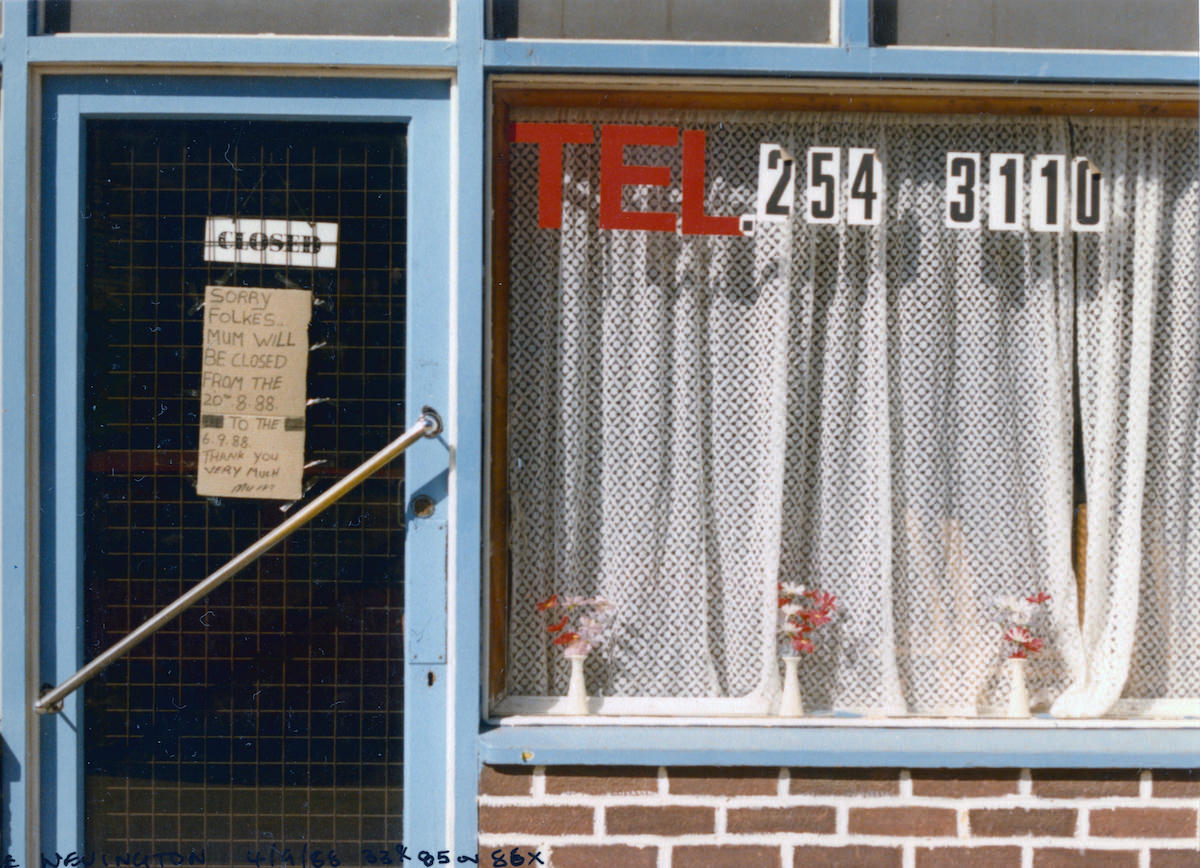
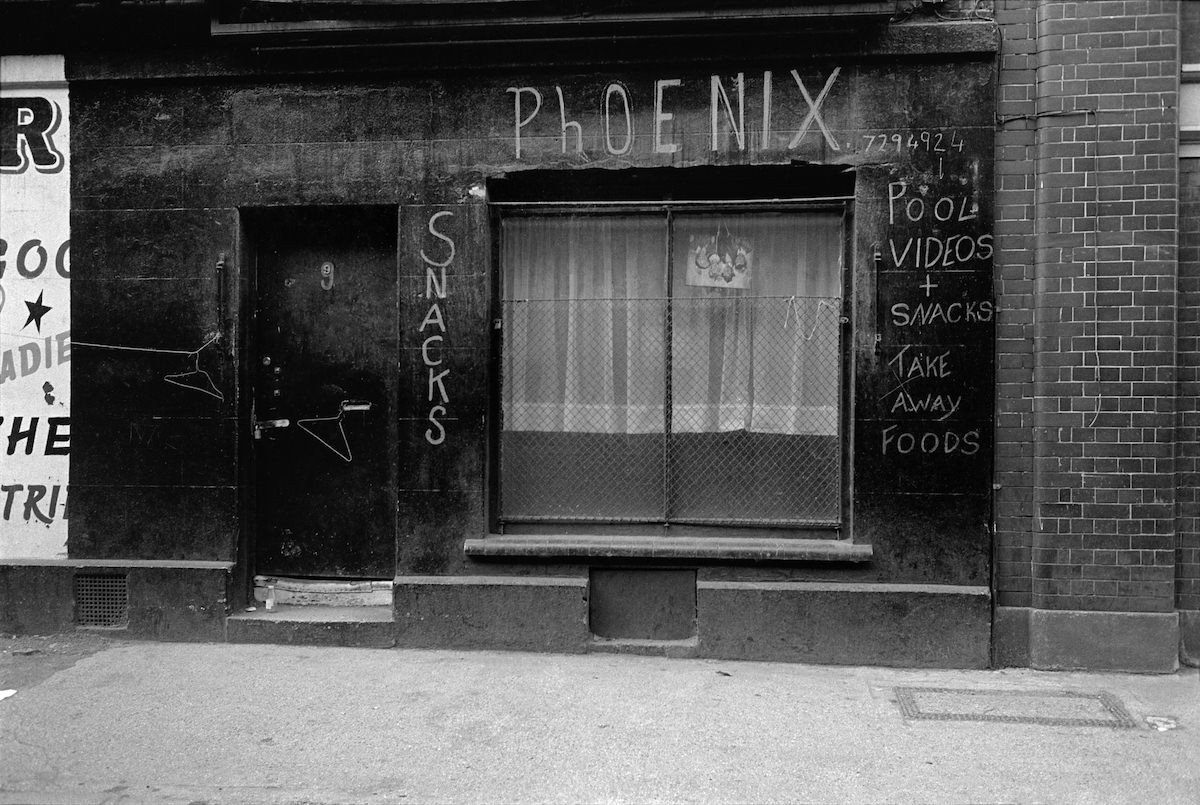
Some cafes Marshall documented were more than just places to eat — they were local landmarks. The Phoenix Cafe on Chalton Street in Somers Town, the Parma Cafe on Camden Road, and Ruby in the Dust on Camden High Street each had a distinct visual identity that set them apart.
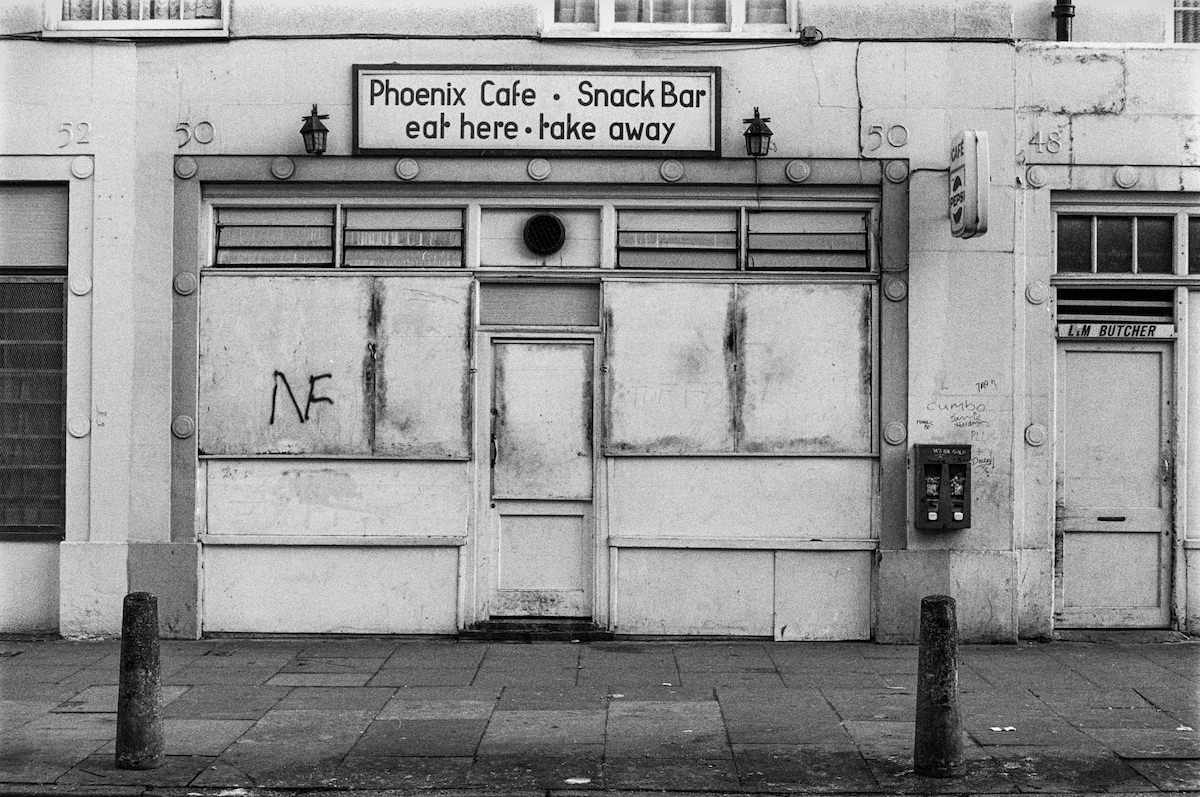
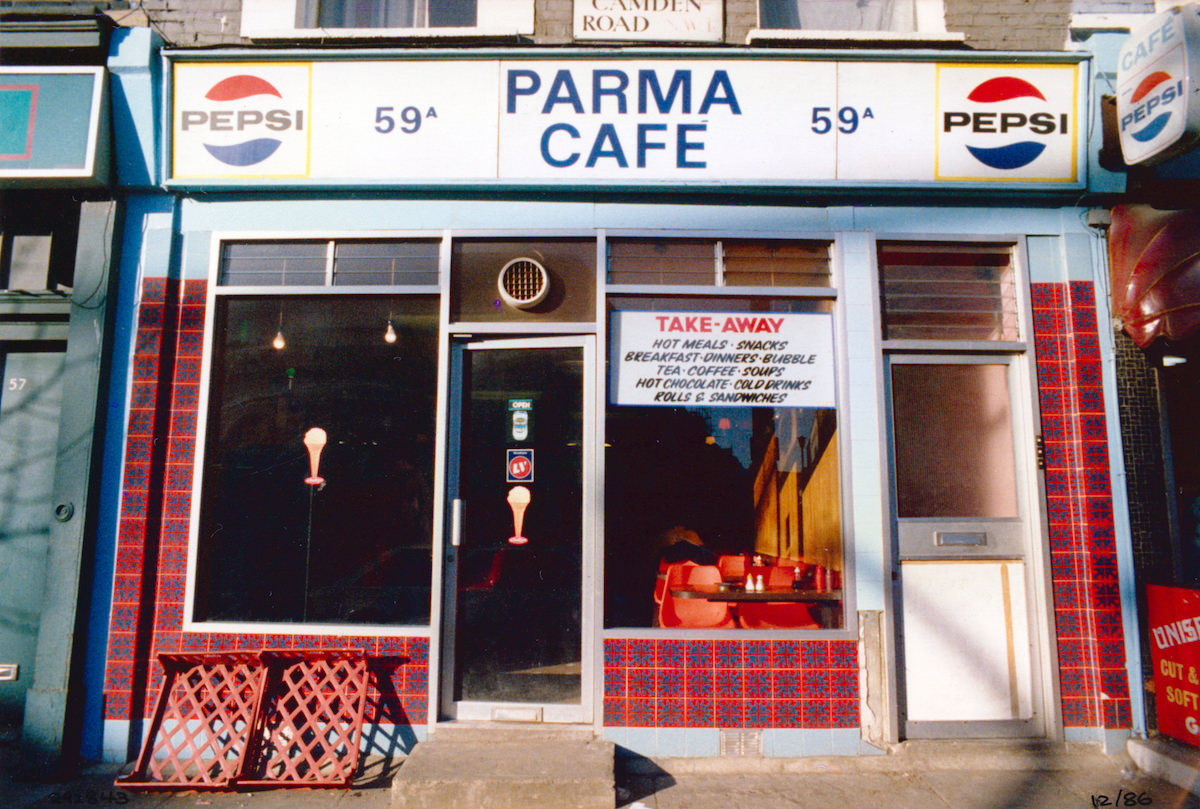
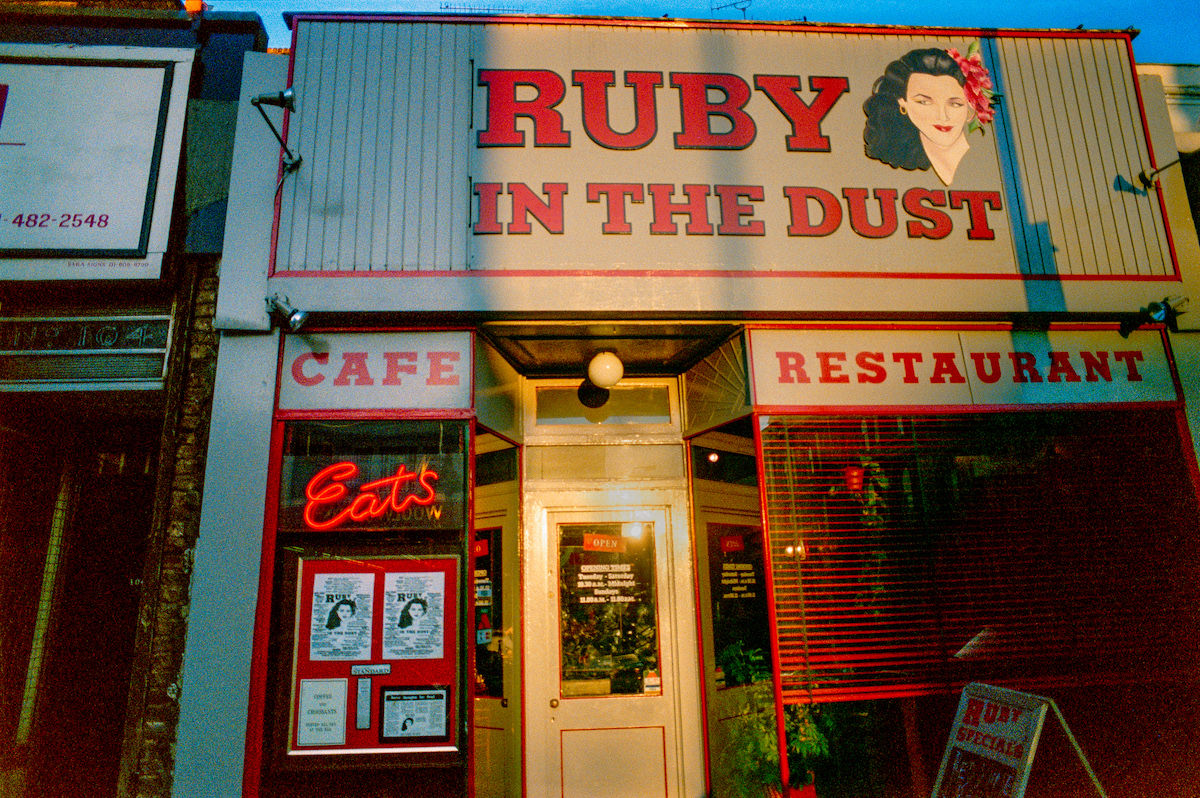
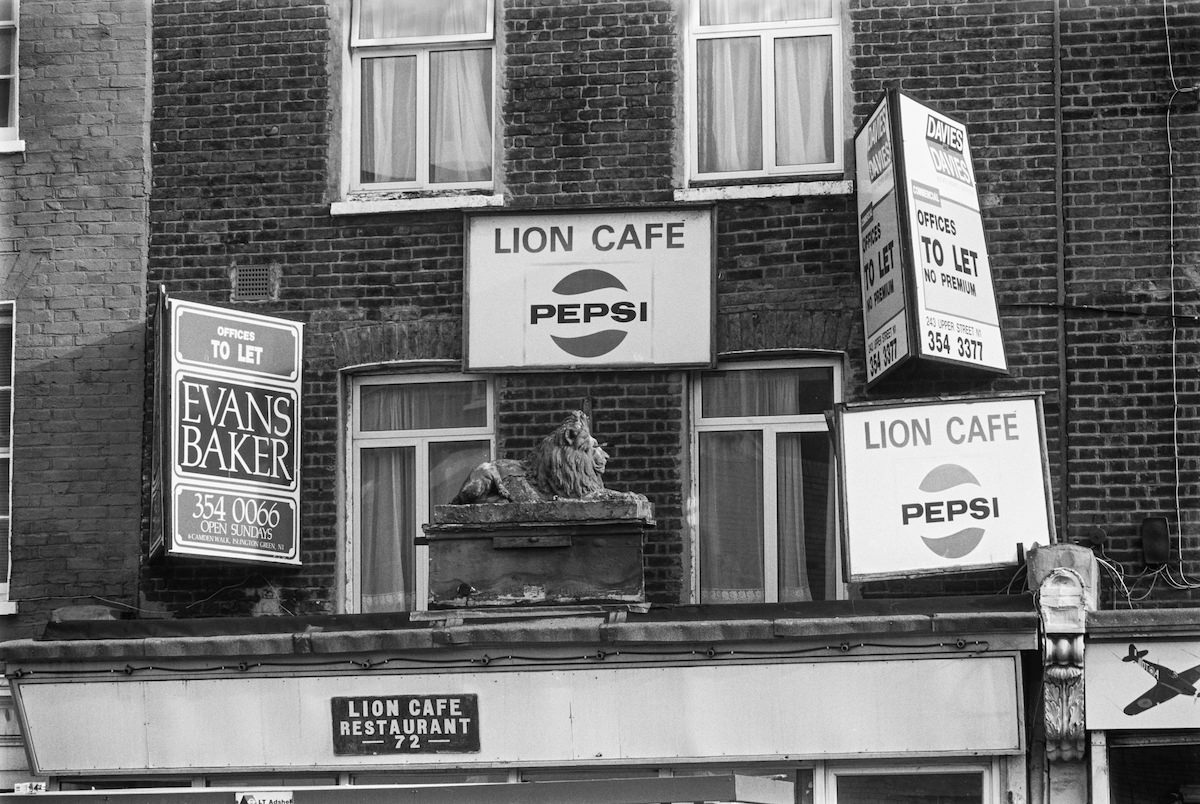
Islington gave Marshall the Lion Cafe on Essex Road and the Cafe on Caledonian Road in Pentonville. Both were typical of the borough at that time — straightforward, neighbourhood-serving spots with no pretension.
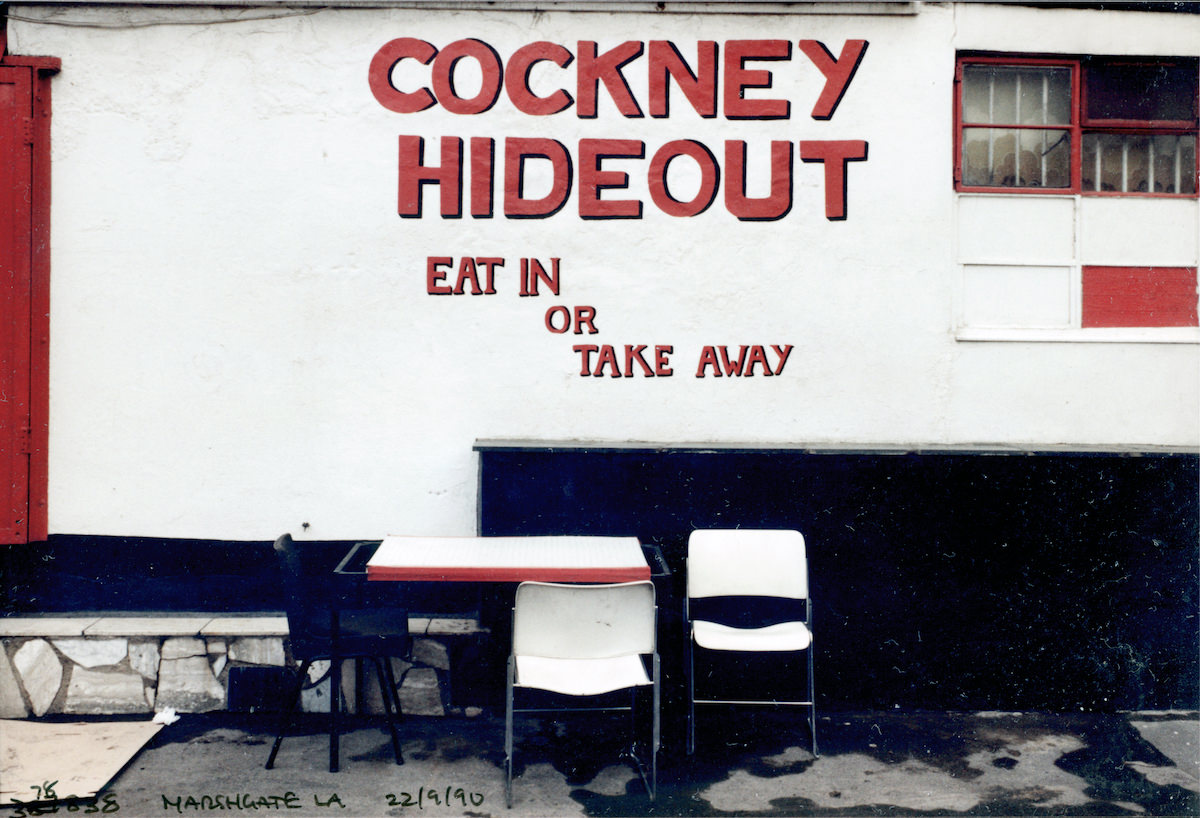
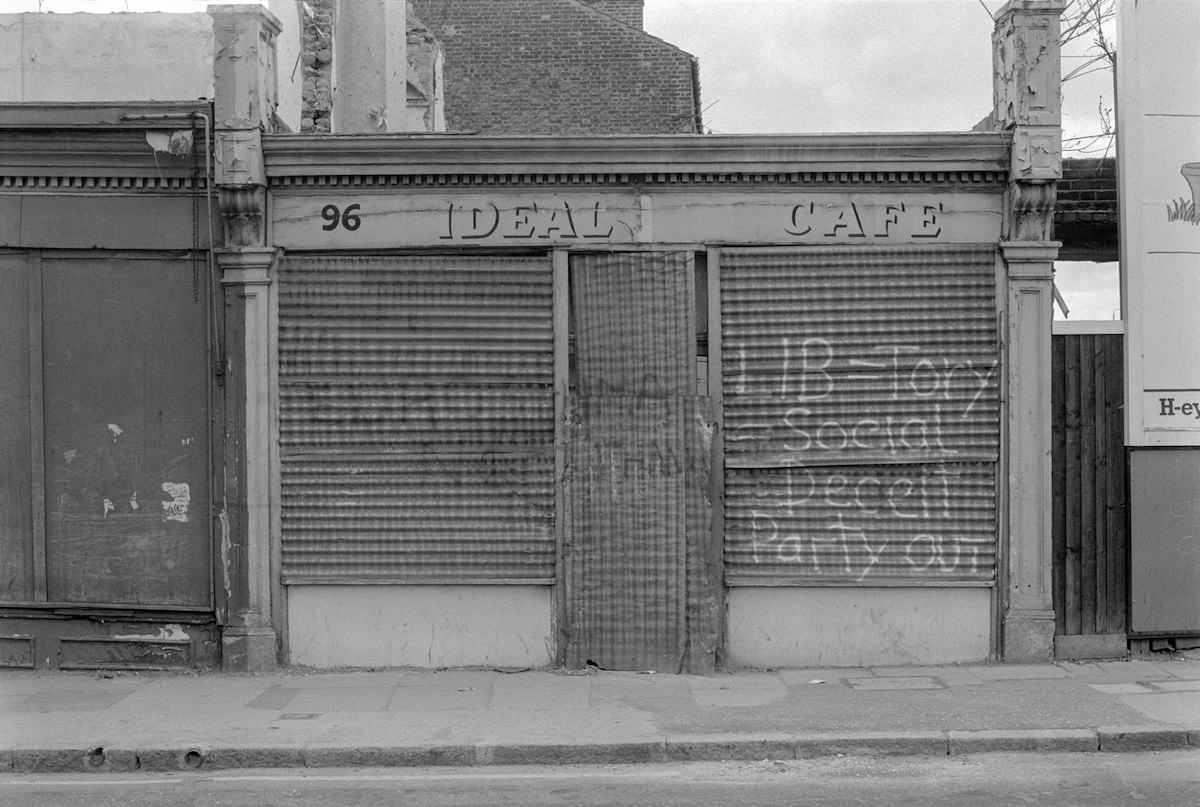
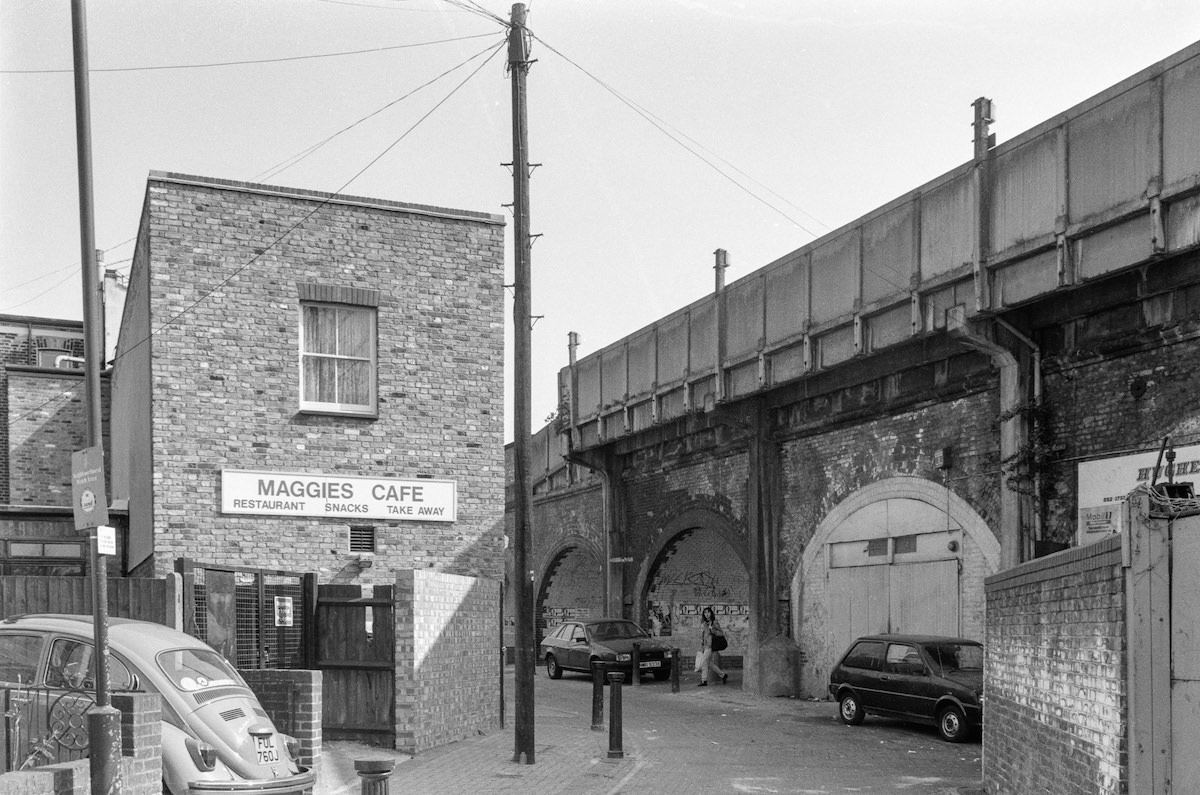
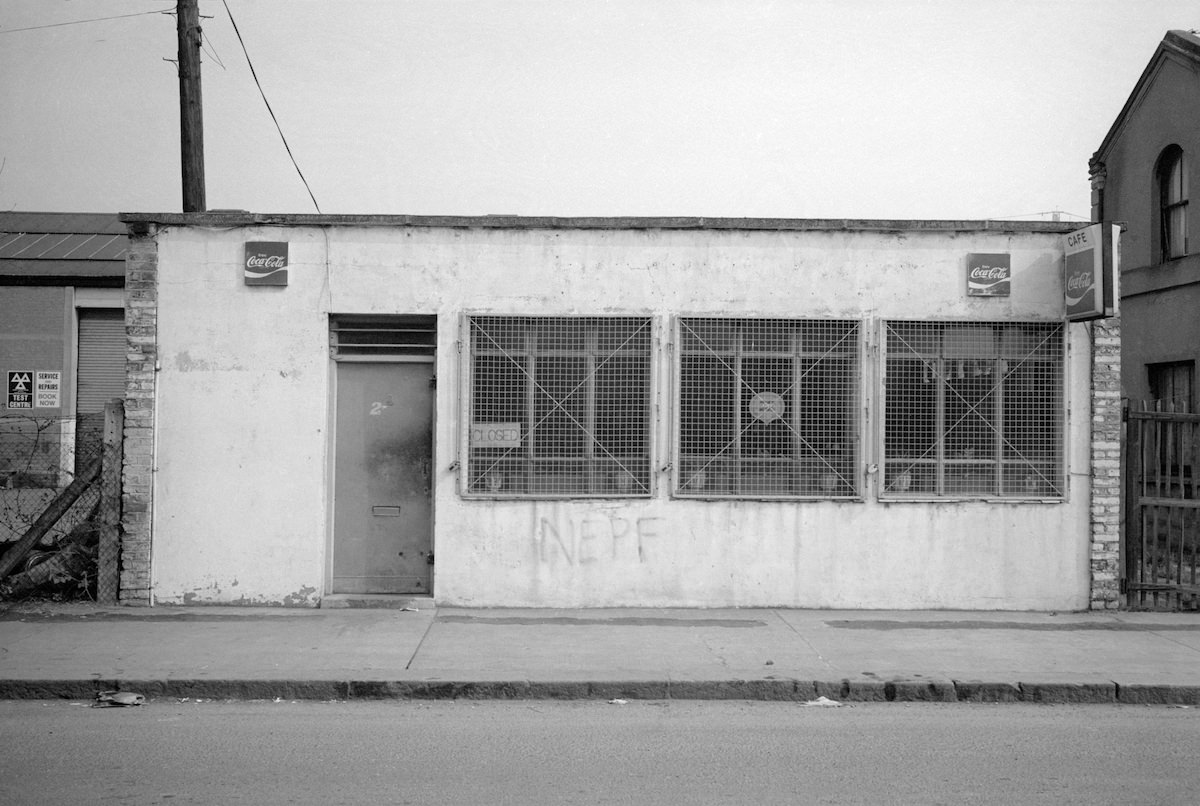
The Cockney Hideout on Marshgate Lane in Stratford Marsh — also known as Paul’s Cafe — appeared in 1990, by which point Marshall had been documenting London’s café culture for a full decade. The Ideal Cafe in Camberwell and Maggie’s Cafe in Lewisham rounded out his coverage of South London’s quieter streets.
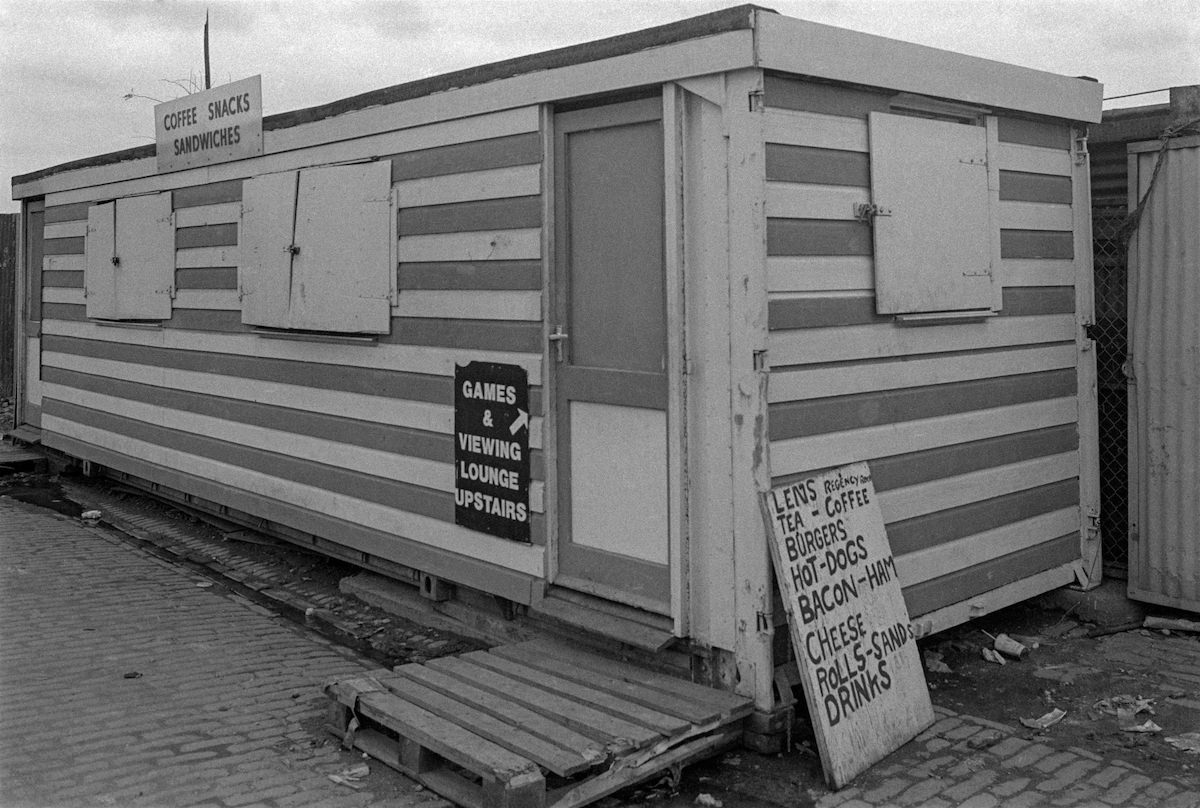
Wapping and the riverside areas of East London had their own working café scene. The Lens Snack Bar on Wapping High Street served dockers and warehouse workers in 1984, while the café on Nine Elms Lane in Wandsworth catered to a similar crowd near the old market.
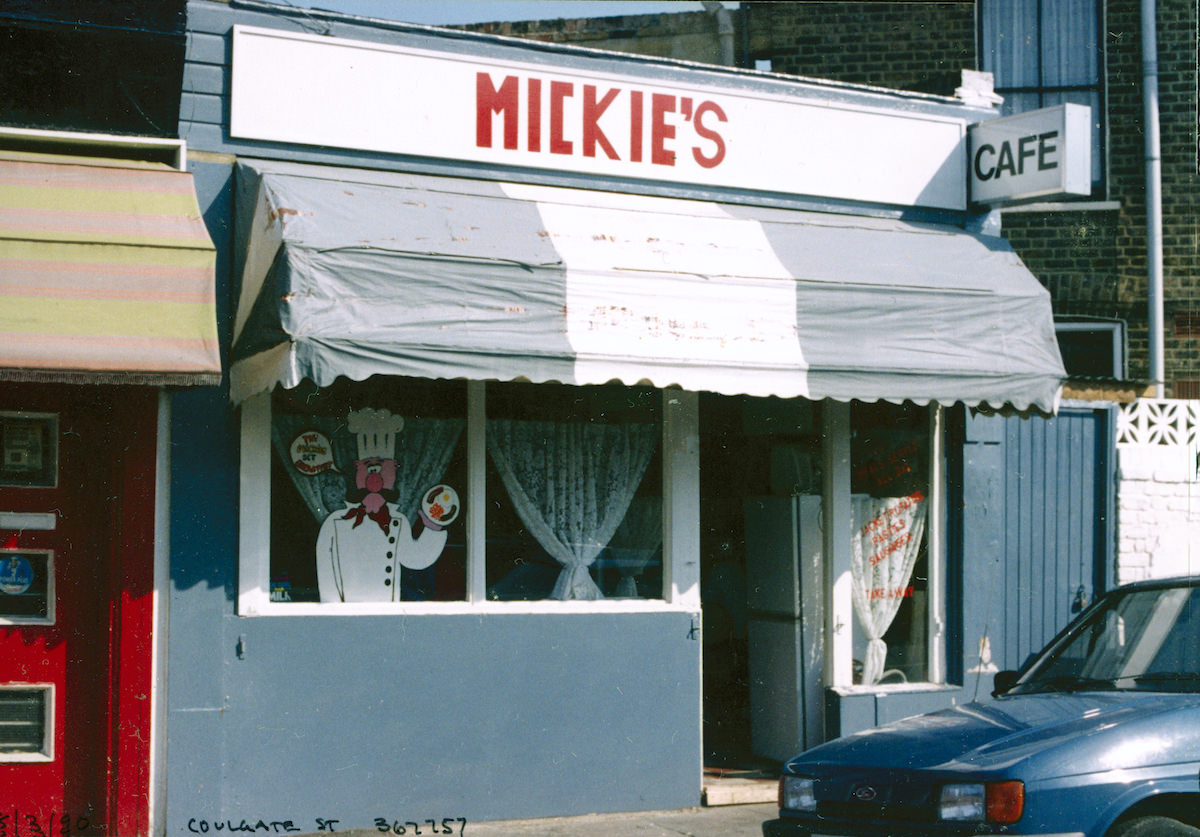
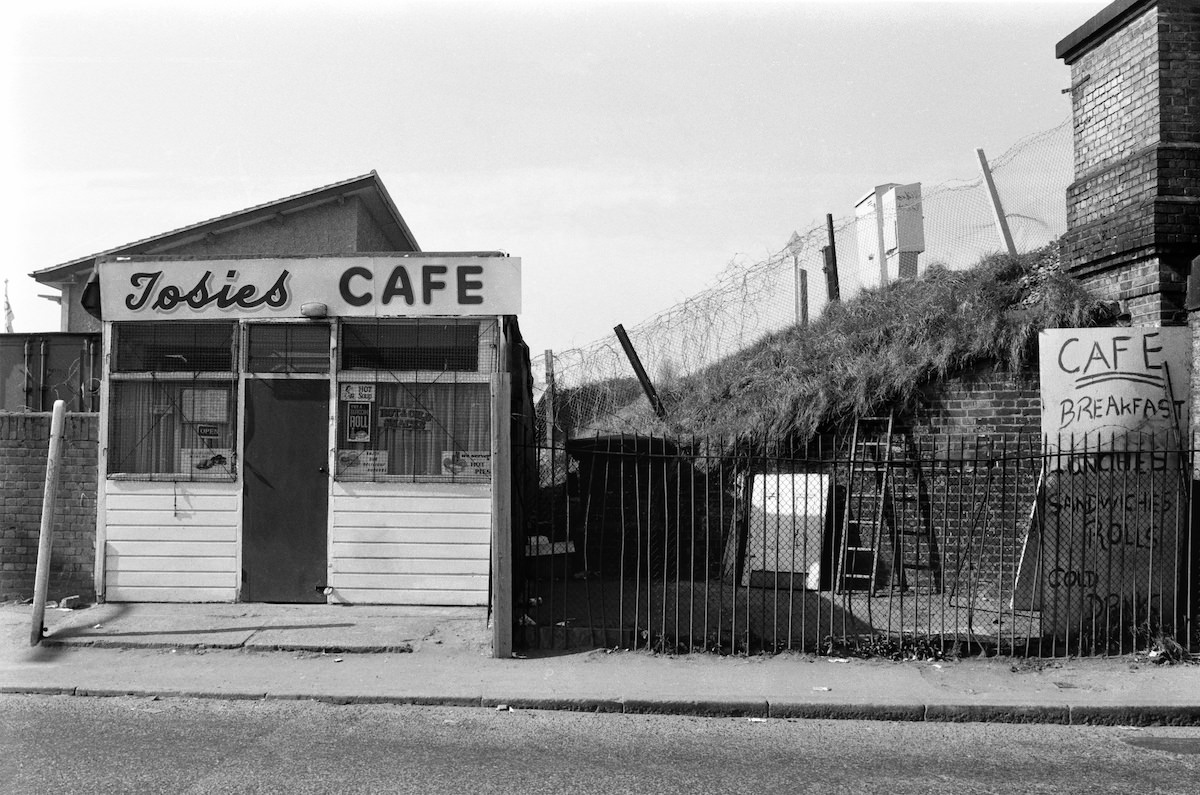
Brockley in Lewisham had both Mickie’s Cafe on Coulgate Street and Josie’s Cafe on Mantle Road, both photographed in 1990. Their painted shop fronts and hand-made signs were typical of how independent cafes branded themselves across London at the time.
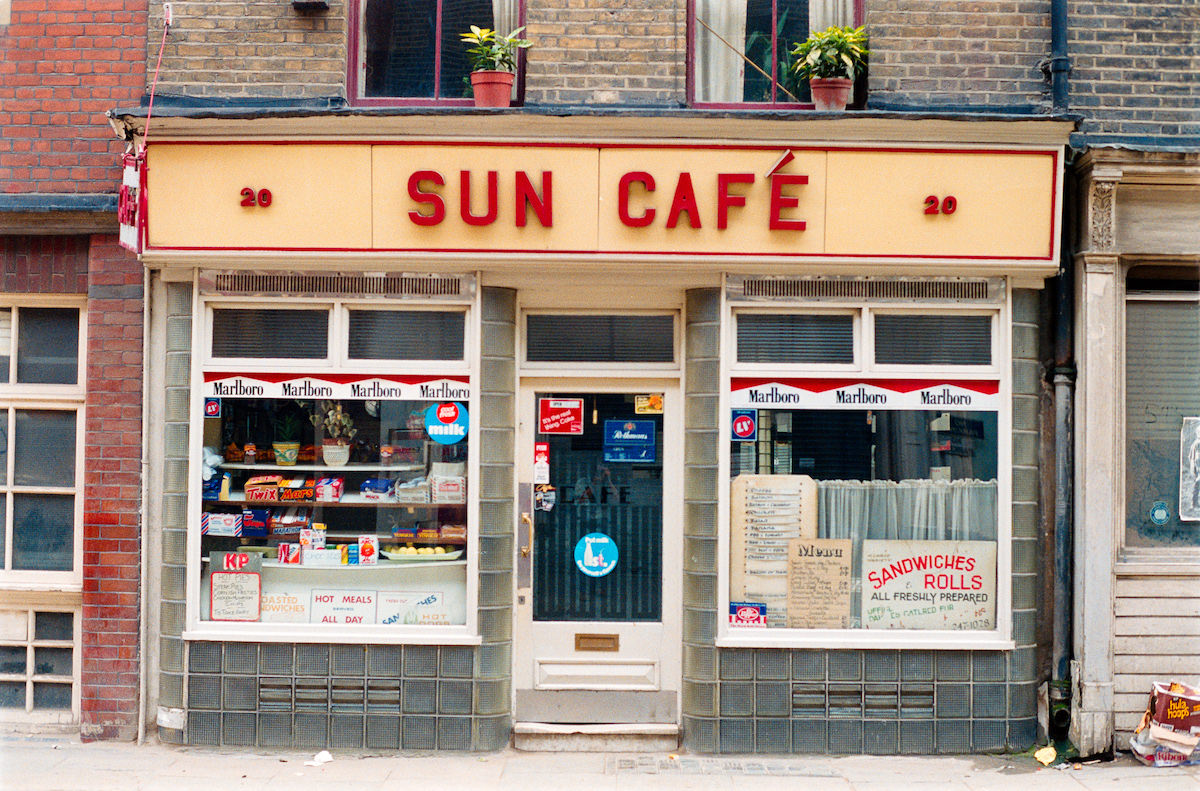
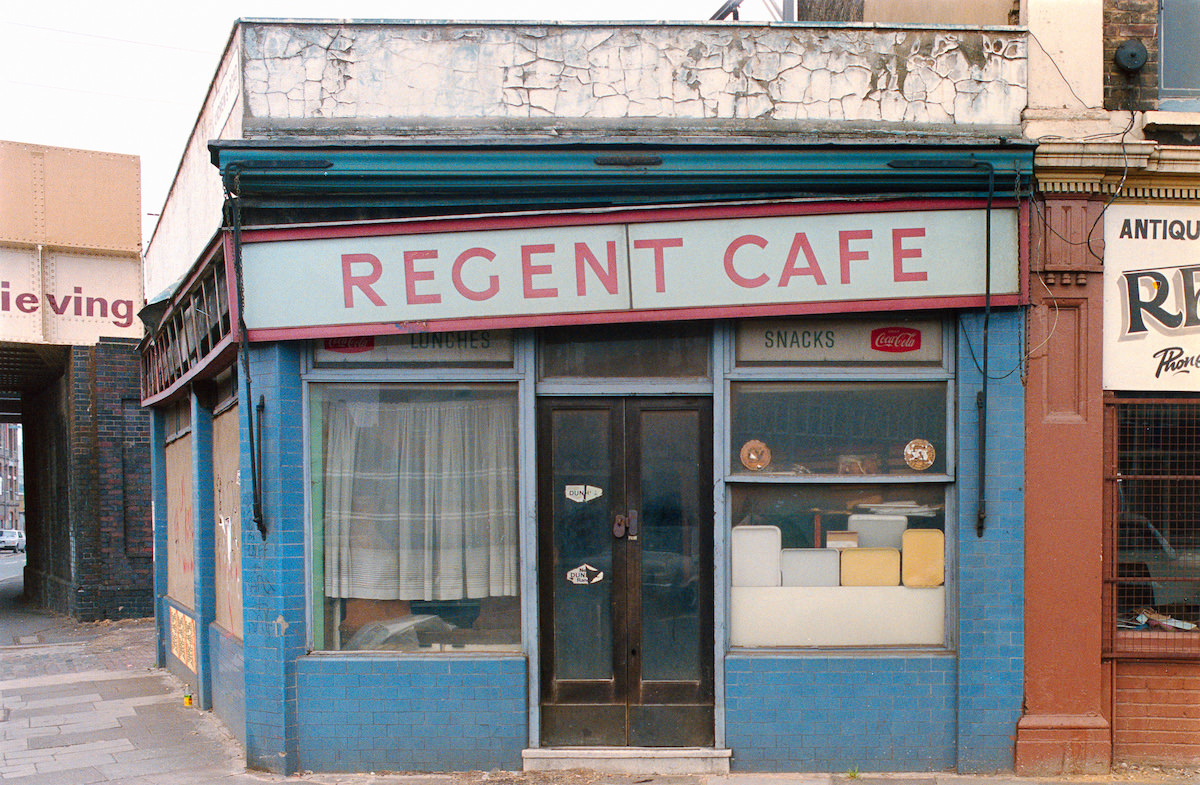
Haringey showed up in Marshall’s work through the café on West Green Road in Seven Sisters and the café on White Hart Lane in Tottenham. The Sun Cafe on Sun Street in Finsbury and the Regent Cafe on Cambridge Heath Road in Bethnal Green added to the spread of documented locations across Central and East London.
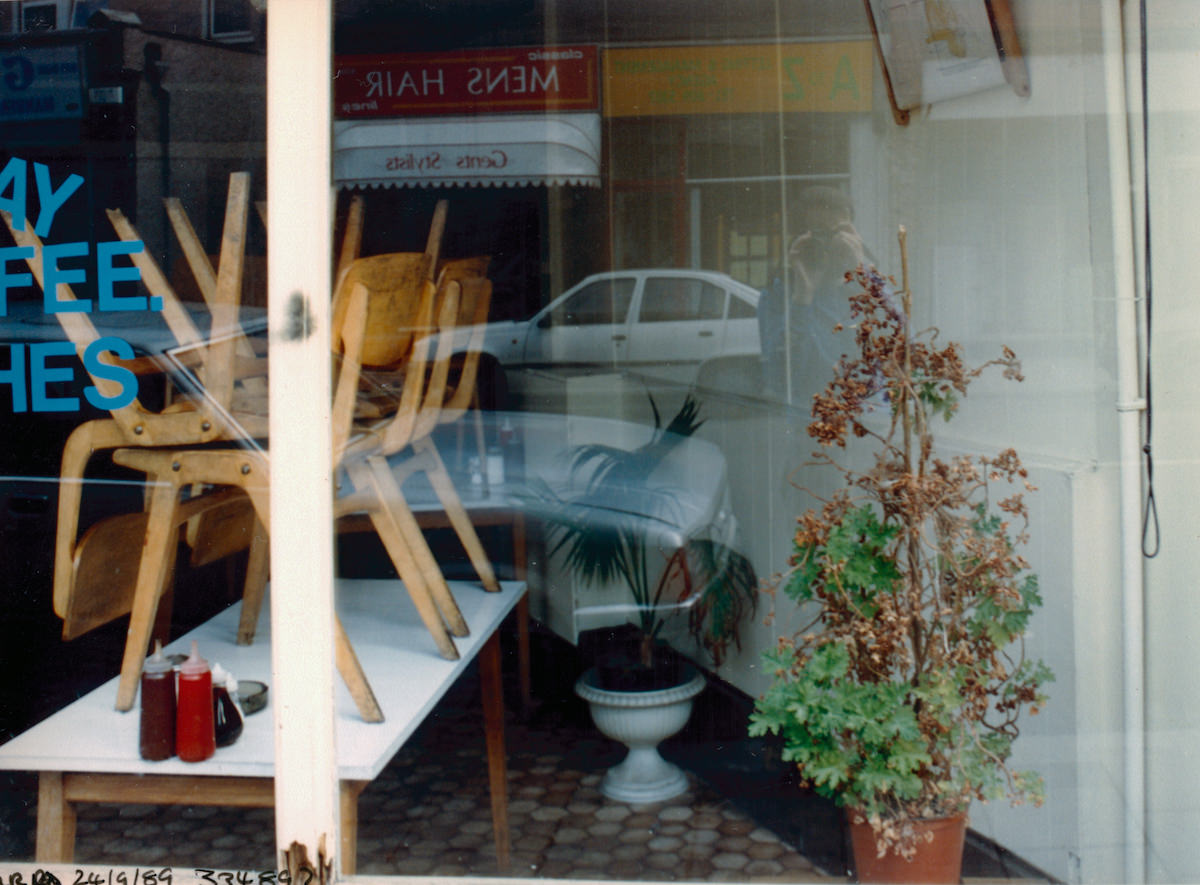
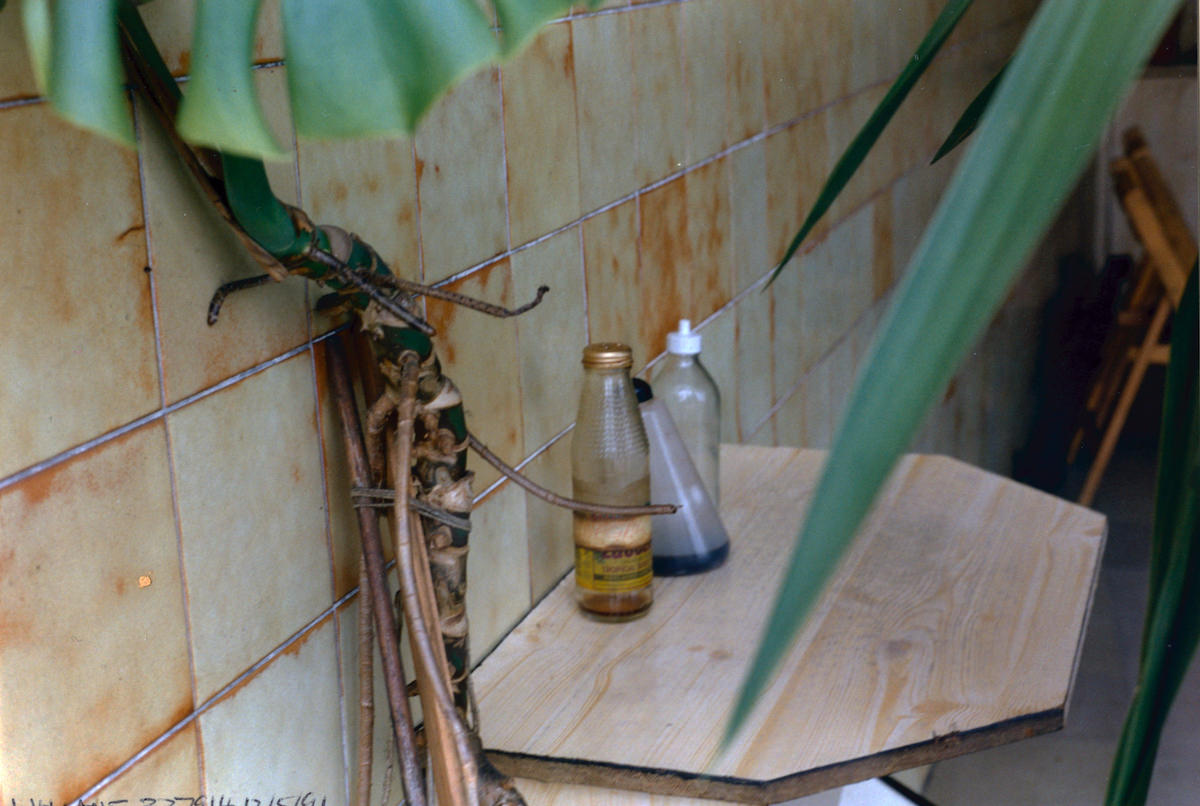
Joe Edwards’ Snack Bar appeared in more than one location in Marshall’s photographs, reflecting how some café operators ran multiple outlets across the borough of Southwark. The closed shop on Westferry Road on the Isle of Dogs, photographed in 1984, is a reminder that not every café survived the decade.
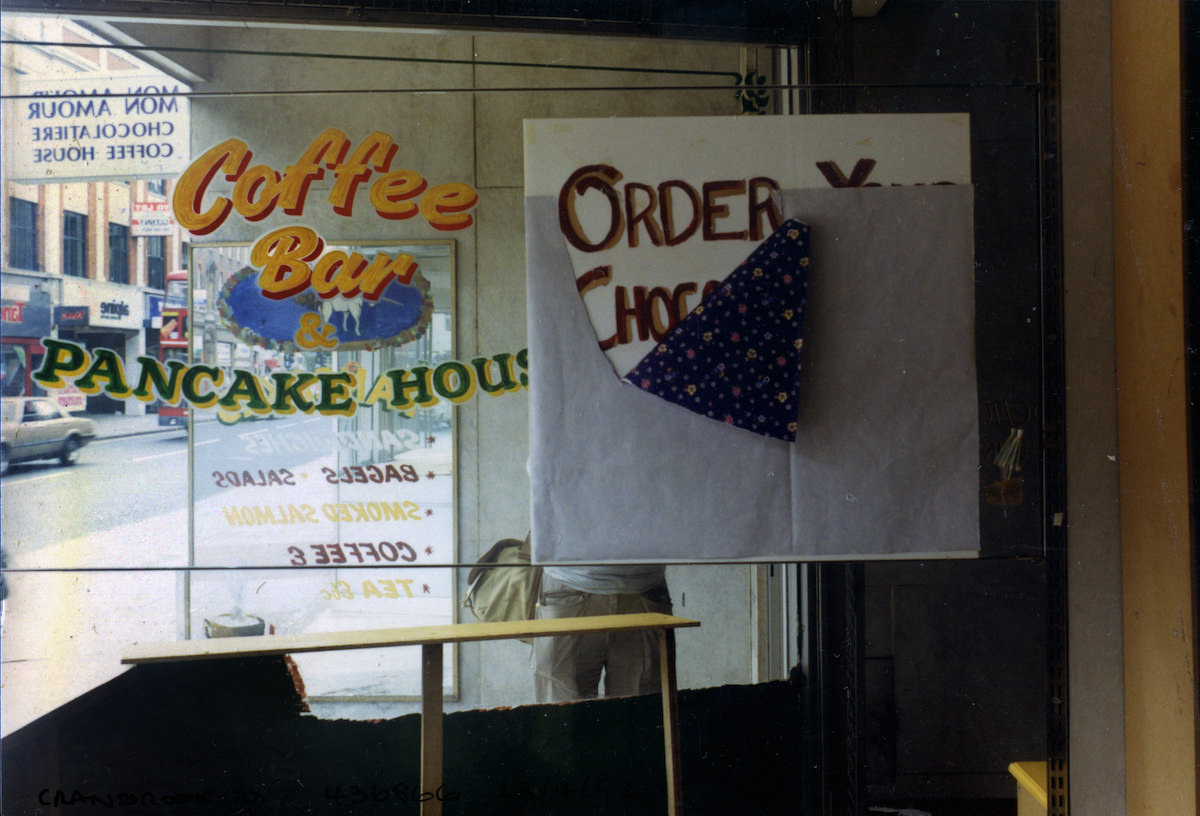
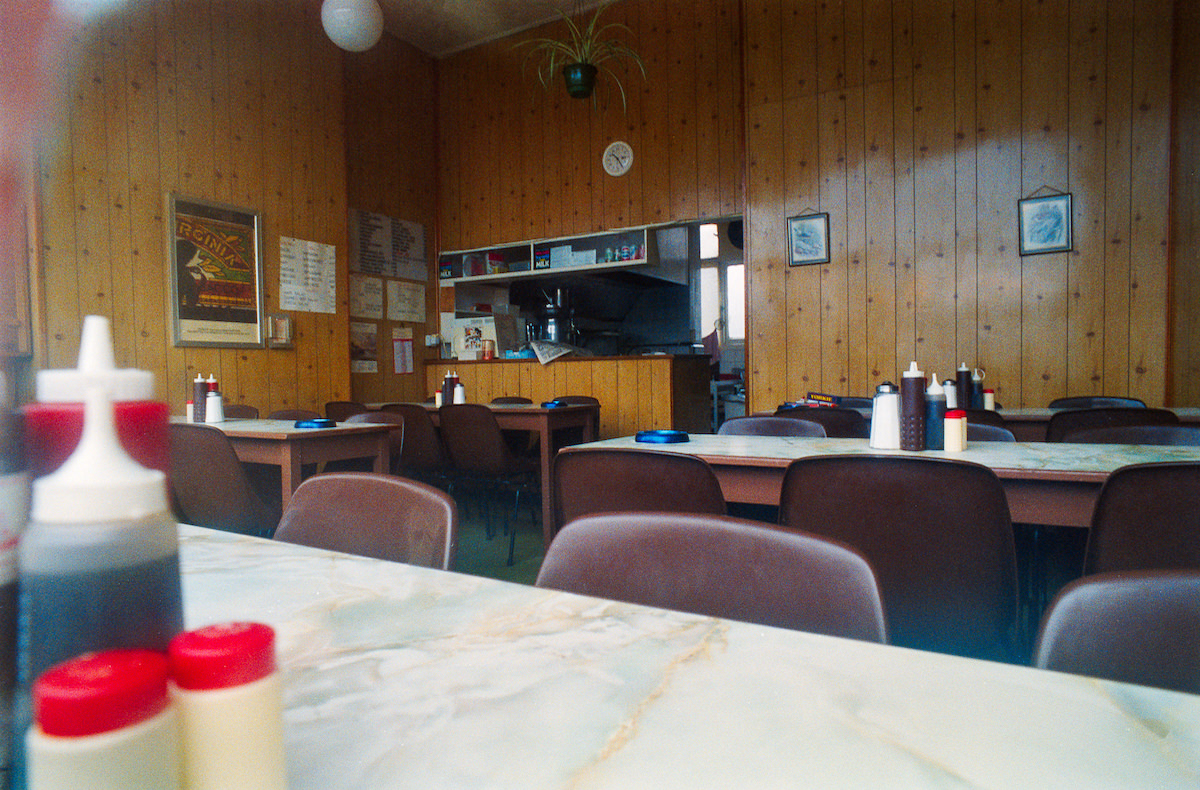
The café on Cranbrook Road in Ilford, photographed in 1992, sits just outside Marshall’s main 1980s body of work but fits squarely within the same visual tradition. By contrast, the Earl’s Court café in Kensington and Chelsea, shot in 1987, shows how the same café format appeared even in wealthier parts of the city.
The Blackwall Tunnel approach in Bromley-by-Bow and the café on Deptford High Street documented in 1988 show how tightly cafes were woven into the fabric of major road routes and transit corridors. Workers commuting on foot or by vehicle could always find a hot drink nearby.
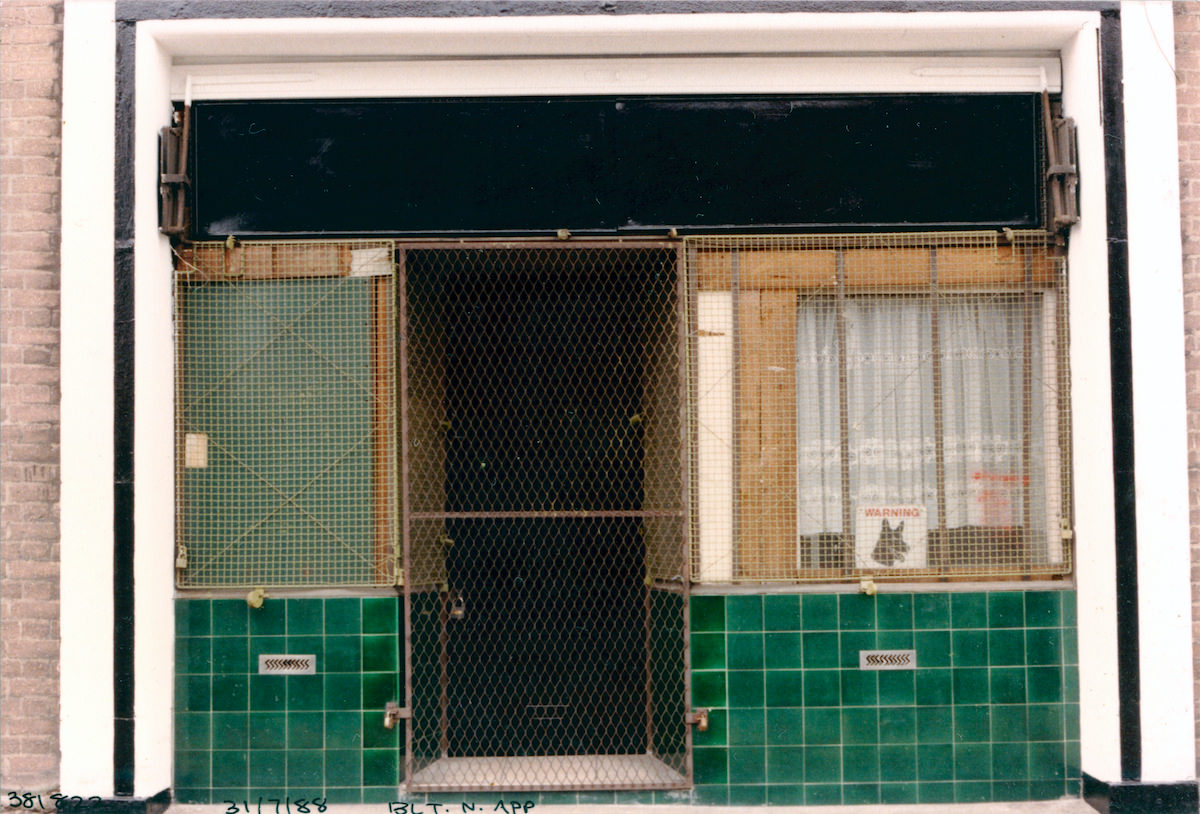
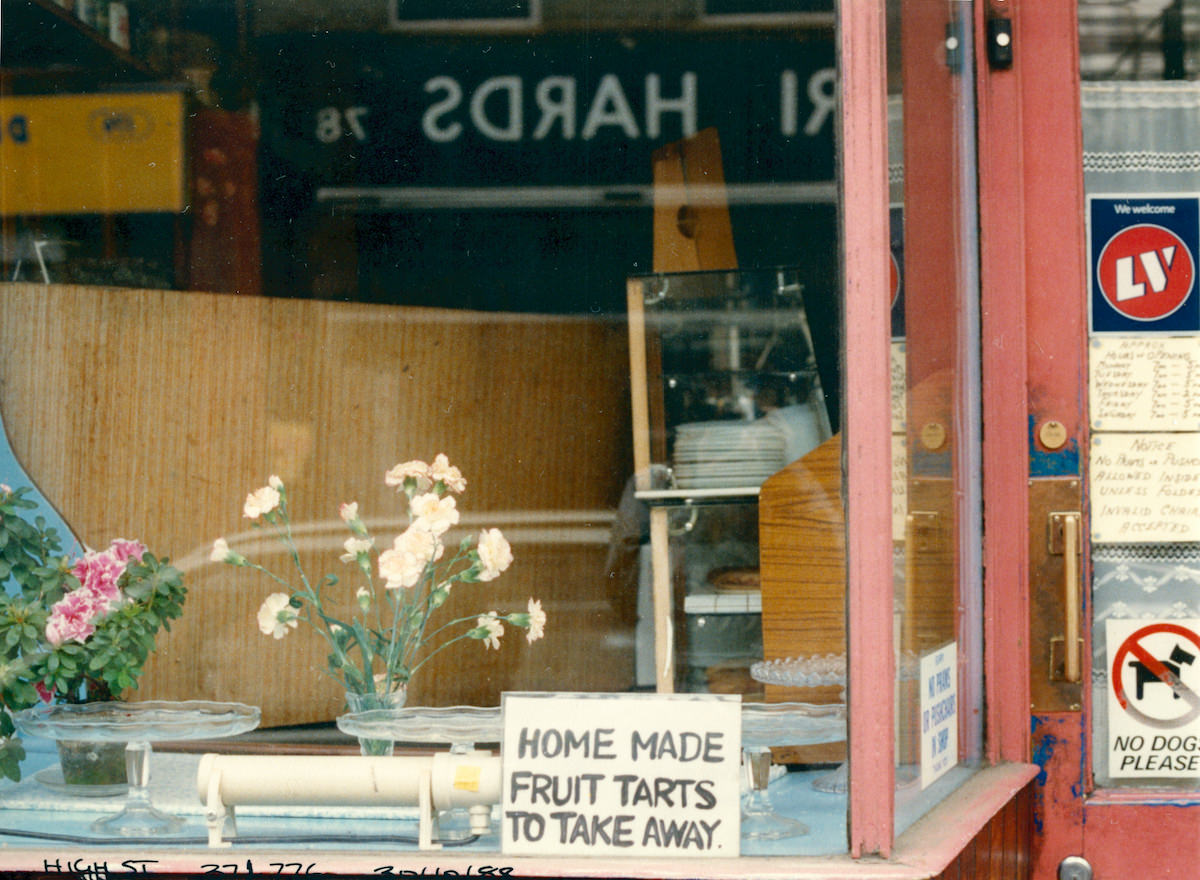
Mo’s Cafe in East Hull and the Ivy Café in Lewisham show the geographical range of Marshall’s lens. The St Pancras Cafe on Pancras Road near King’s Cross, photographed in 1990, sat in one of London’s busiest transit areas, serving passengers and locals alike.
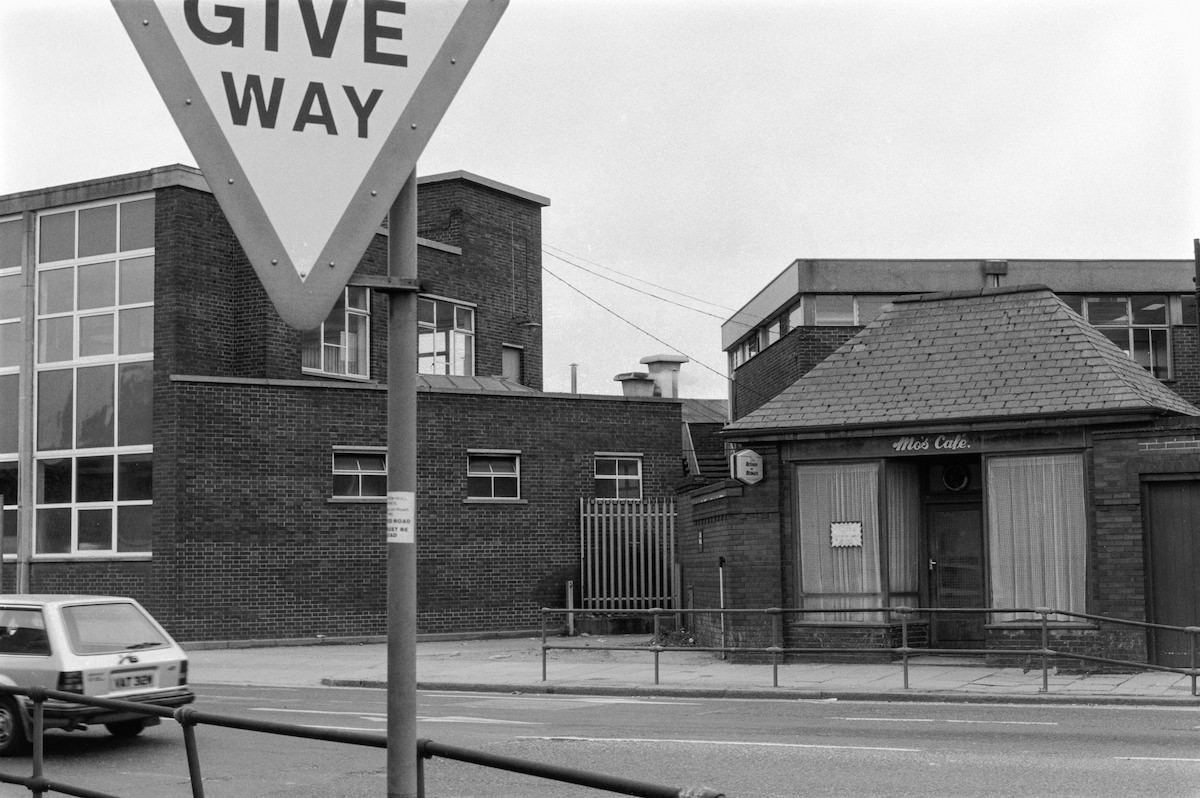
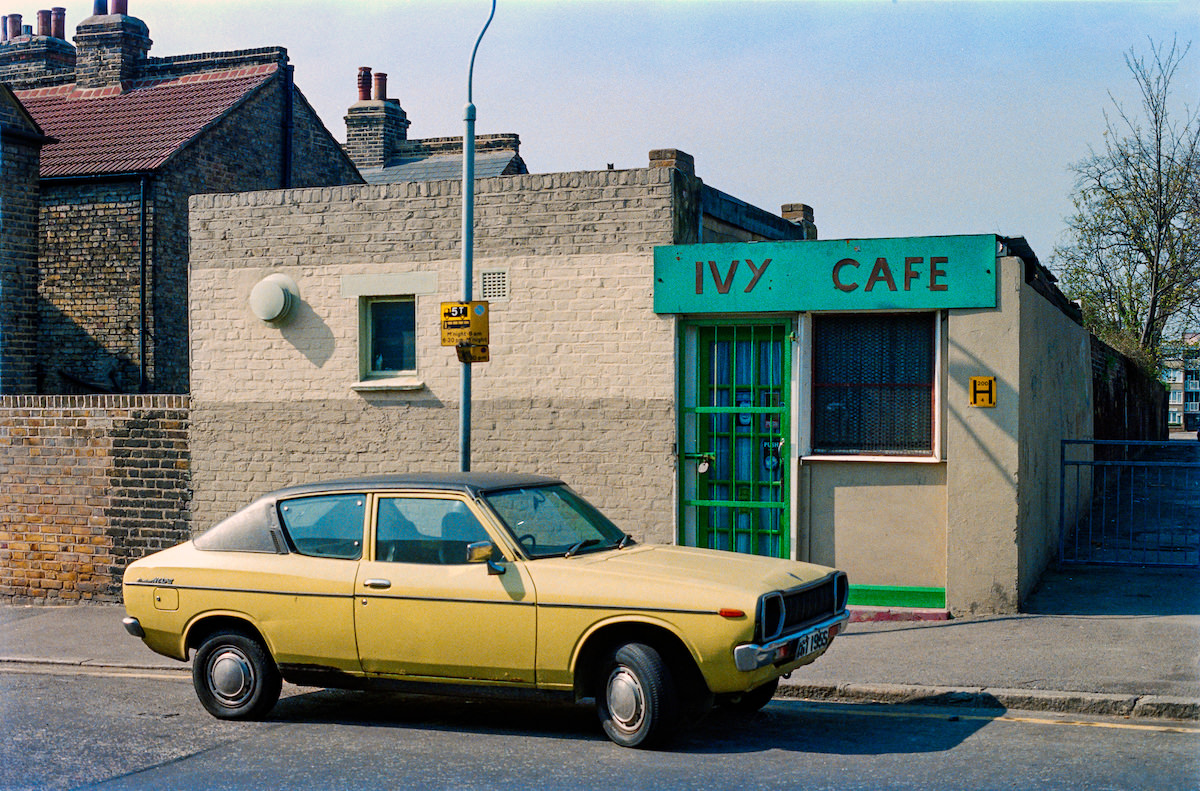
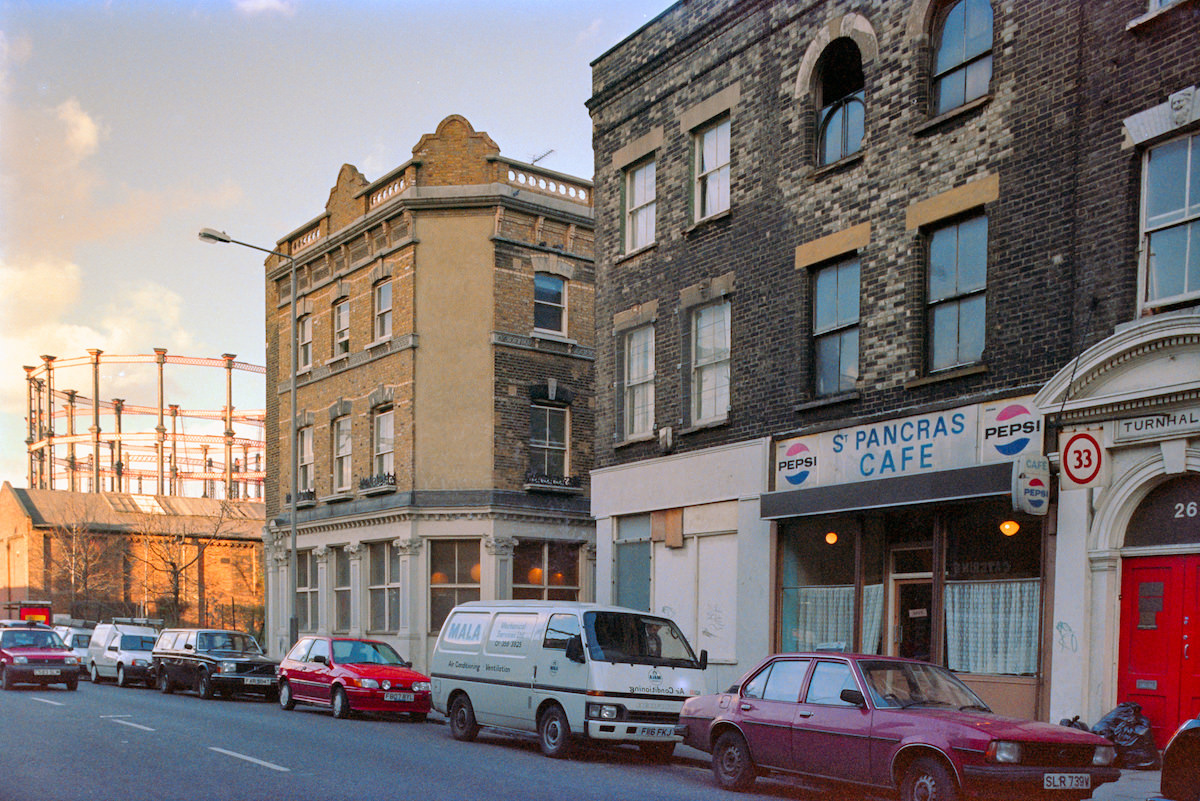
The Kilburn High Road café in Brondesbury, the takeaway café on Marsham Street, and the café in Poplar round out the breadth of Marshall’s documentation. Each image is a record of a place and a time that would change dramatically in the decades that followed.
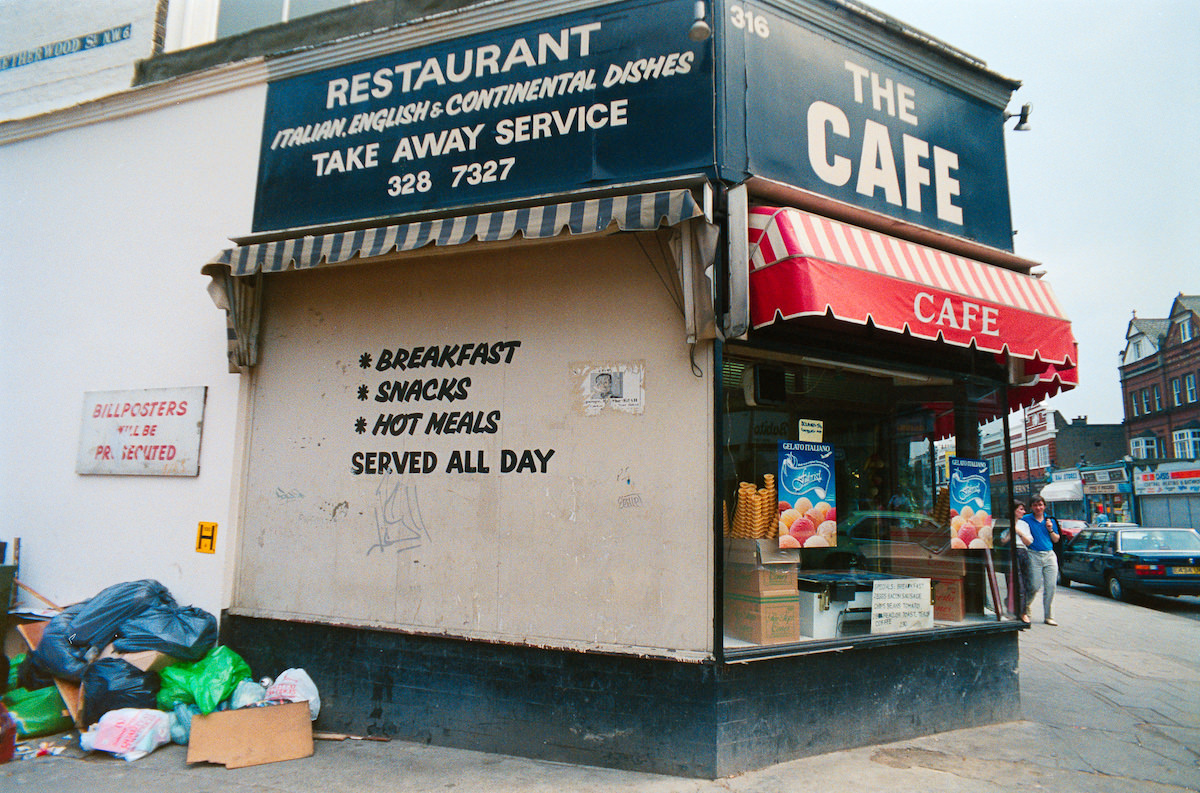
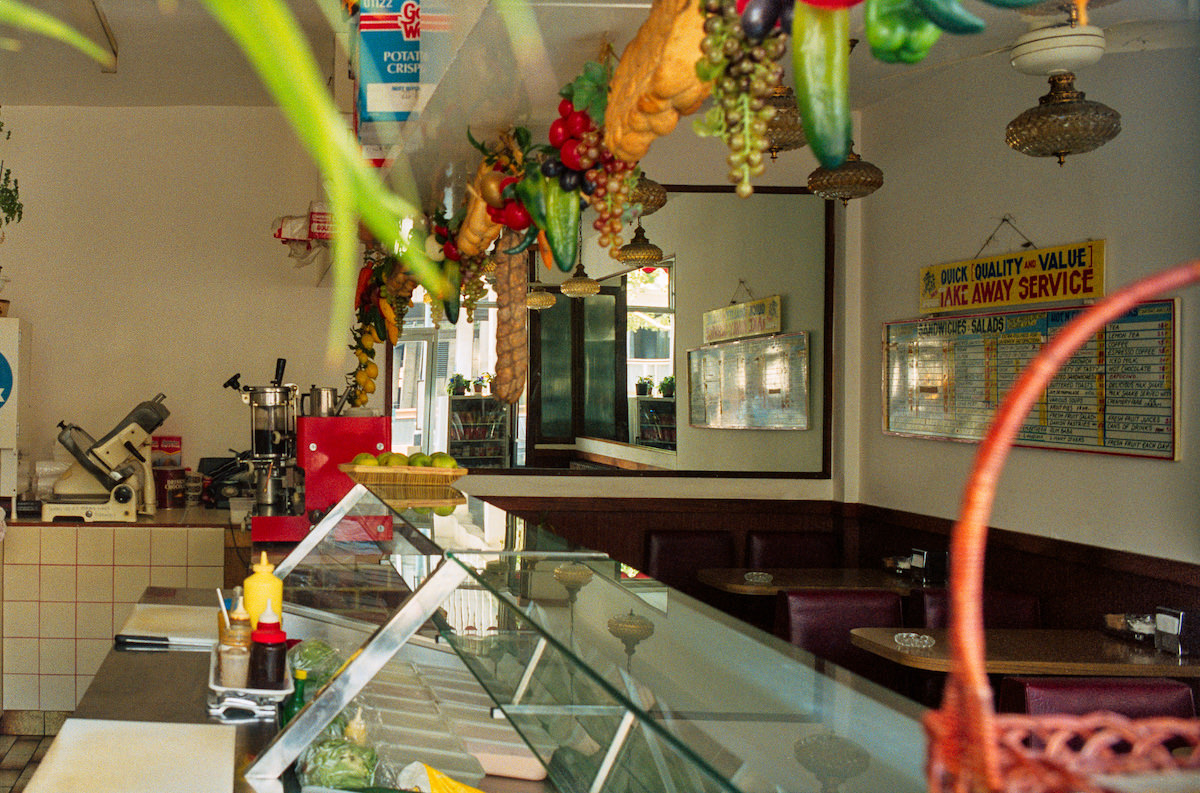

The final images in Marshall’s collection bring together the remaining cafes he documented across Walthamstow and Waltham Forest. These last photographs, taken in 1989, close out a remarkable visual survey of London’s café culture at its most authentic.
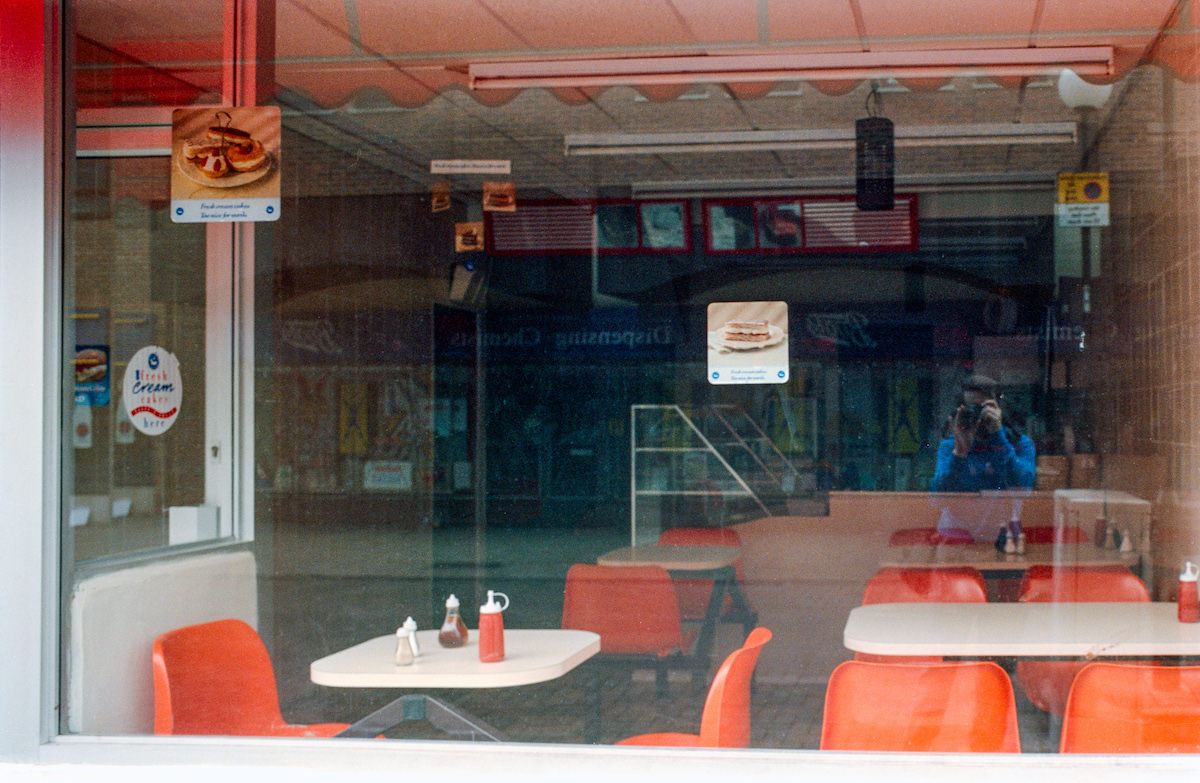





There are still plenty of places like that in South London. Streatham High Rd is full of them.
This is how the regency cafe on regency street still looks! The food is also excellent!
In Bermondsey, Servewell still serves a cracking fry up
It is still like this at the Electric Cafe in West Norwood. It has been used for filming many times.
I just discovered they demolished the alcove on Finchley Road.