
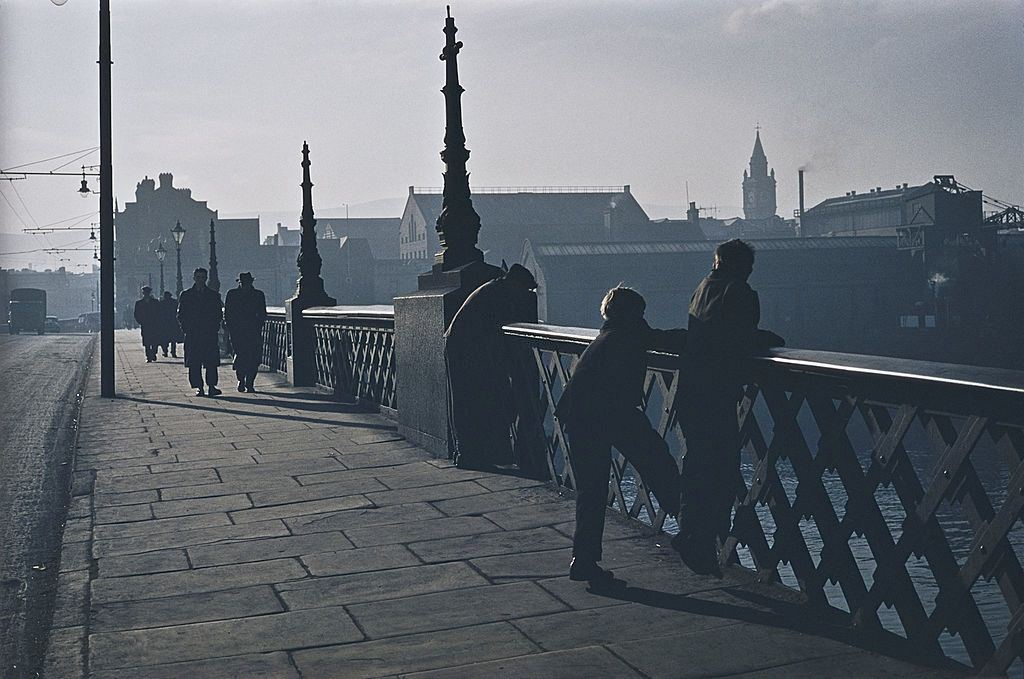
In 1955, Belfast was a city of around 432,000 people navigating an economic downturn. Documentary and press photographer Bert Hardy walked its streets that year and captured what he found — trolleybuses rolling through light traffic, lamplighters making their rounds after dark, horse-drawn carts crossing old bridges, and children claiming patches of waste ground as their own. The photographs he left behind are a precise and unguarded record of daily life in a mid-century industrial city.
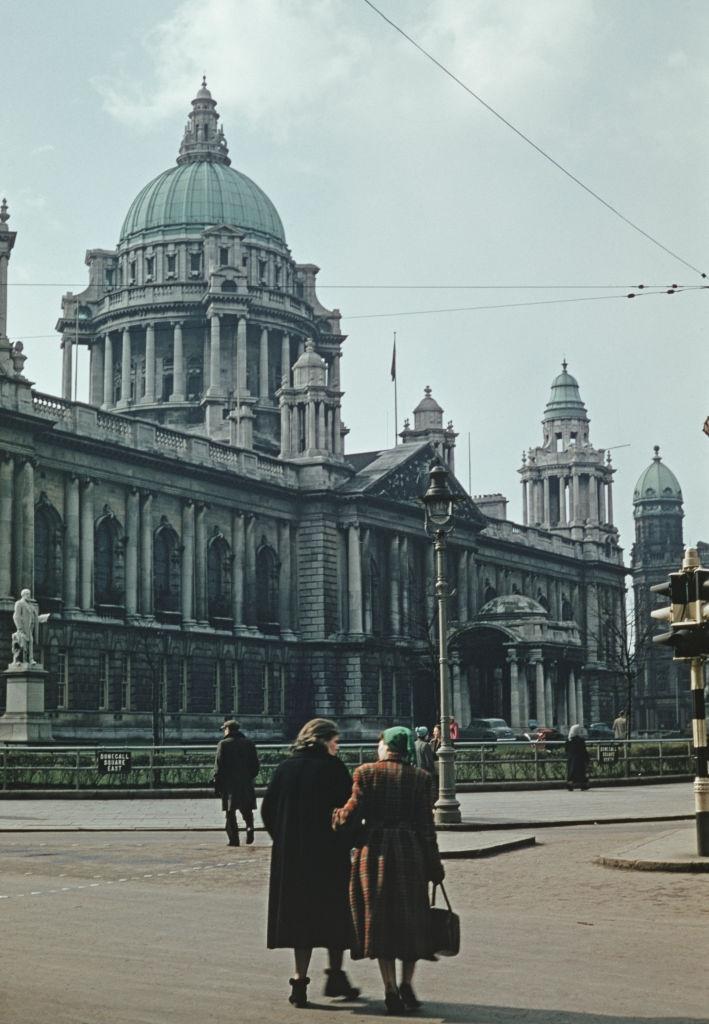
Belfast City Hall stood at the civic heart of the city on Donegall Square. Built from Portland stone and completed in 1906, it served as a landmark that working people passed every day on their way through the city center. Just outside its gates, life carried on at street level — news stands, street vendors, and pedestrians moving through the squares and archways that defined central Belfast.
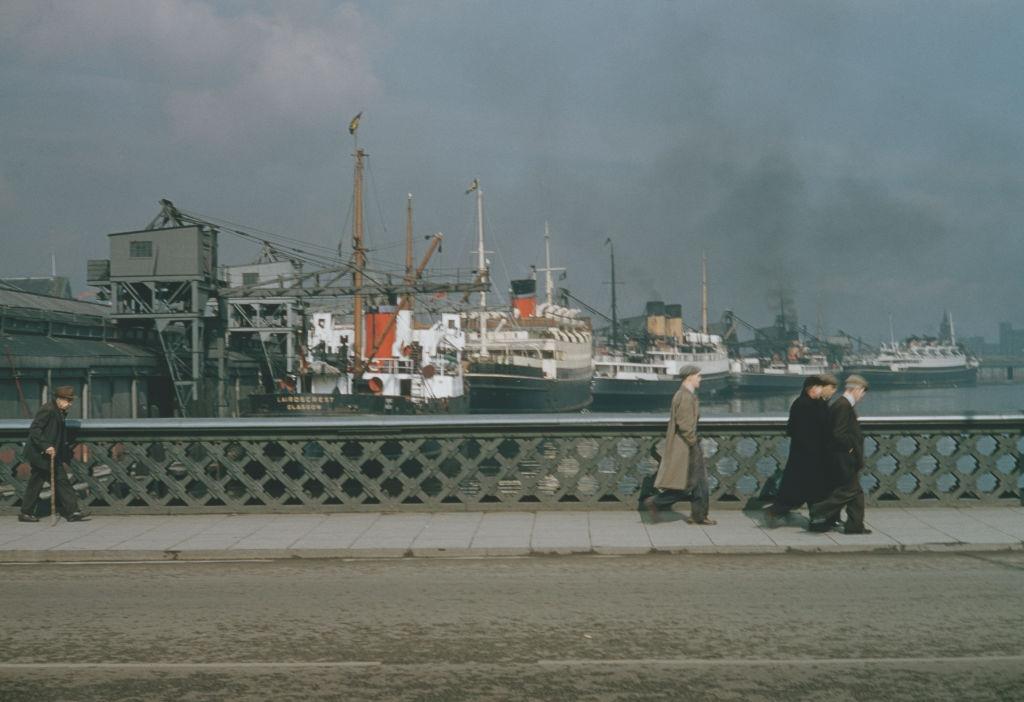
The waterfront told a different story from the city’s shopping streets. By the late 1950s, poultry, sardine, and potato processing companies were setting up plants along the harbour. Belfast had even taken to calling itself the “Broiler Capital of the World.” Each July, thousands turned out for Broiler Day to eat barbecued chicken — a celebration that grew out of the city’s food industry boom along the waterfront.
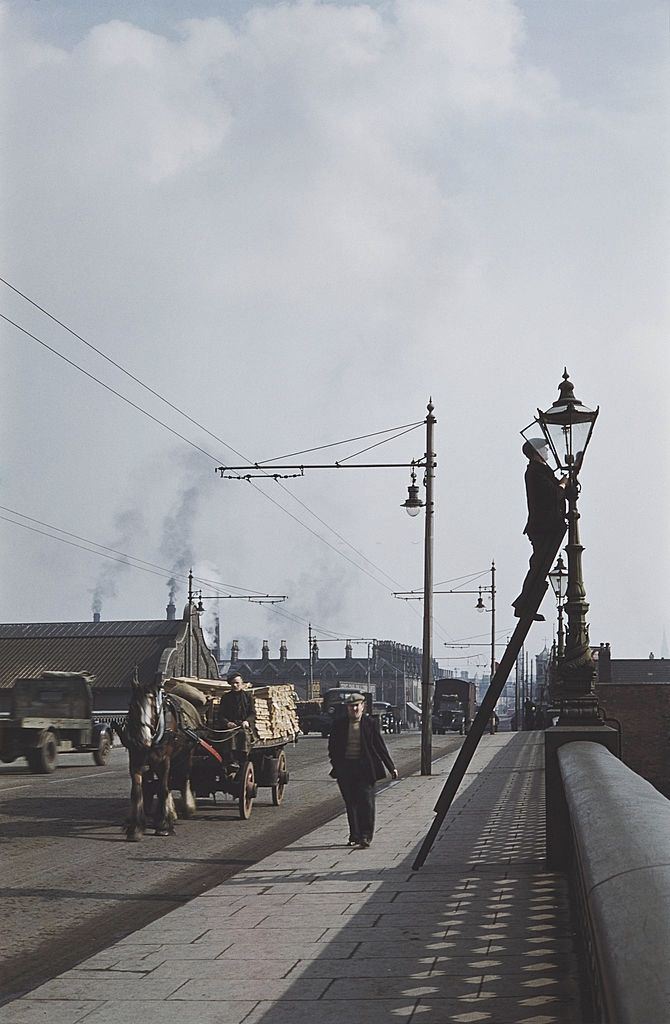
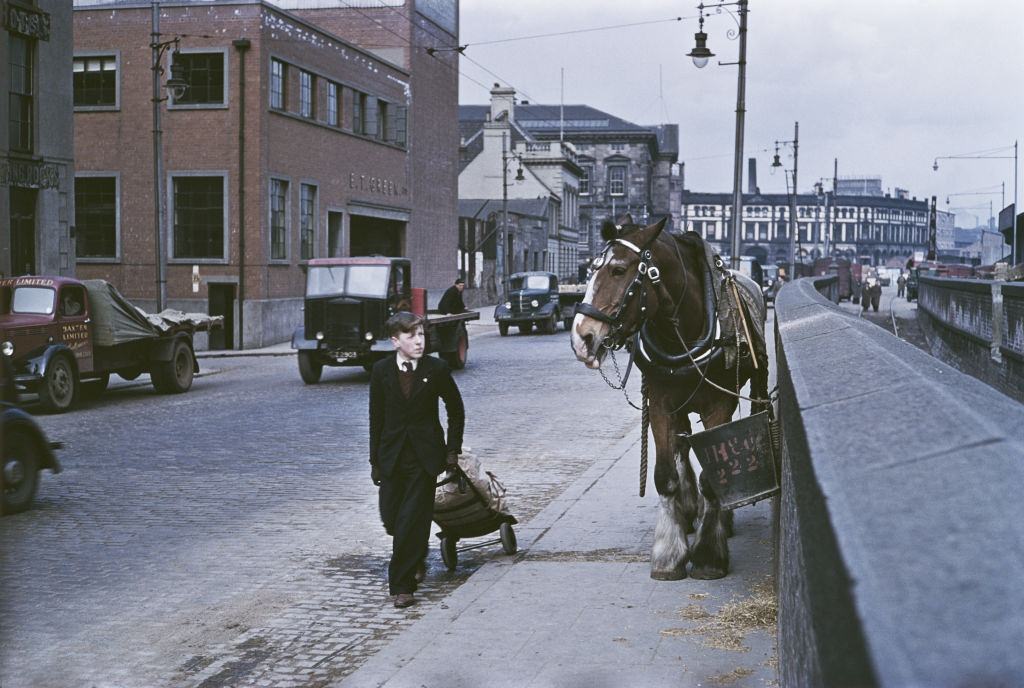
Horse-drawn transport was still a common sight on Belfast’s streets in 1955. Carts loaded with coal sacks or potato bags moved across the city’s bridges alongside early motor vehicles. The pace of the streets was slower than what came later, and a delivery boy passing a carthorse was an entirely ordinary thing to see. Hardy photographed these moments without staging them — they were simply the texture of Belfast life.
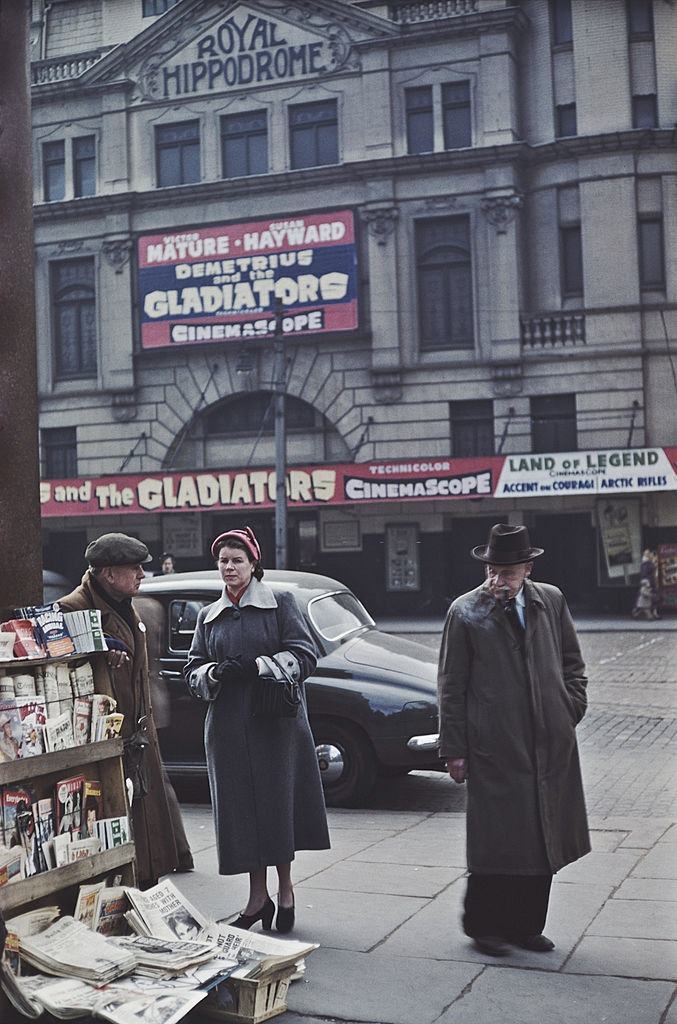
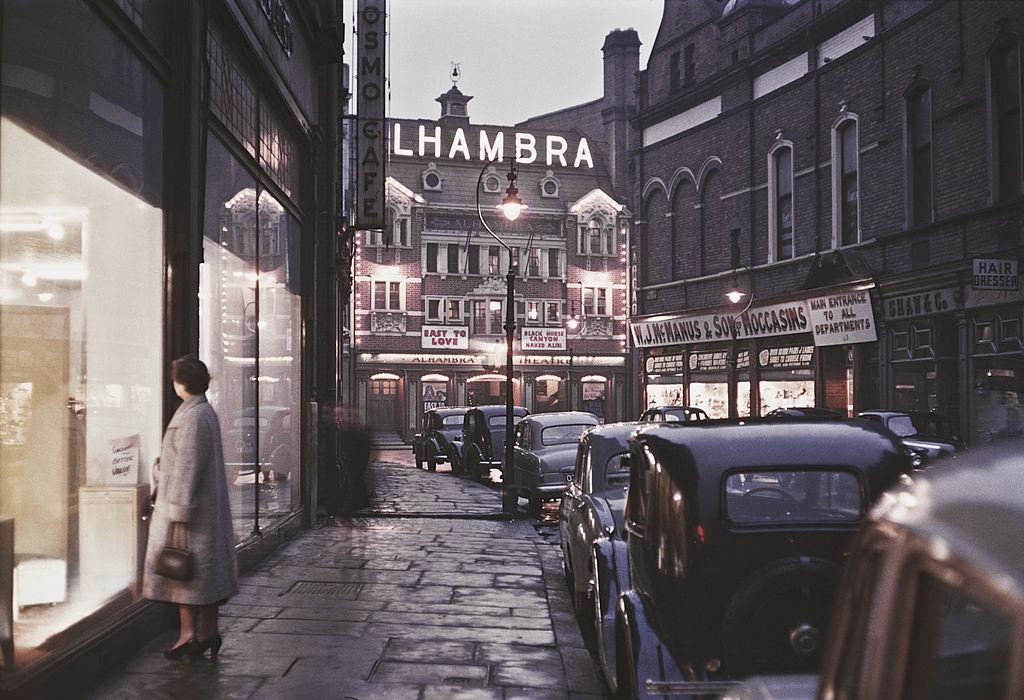
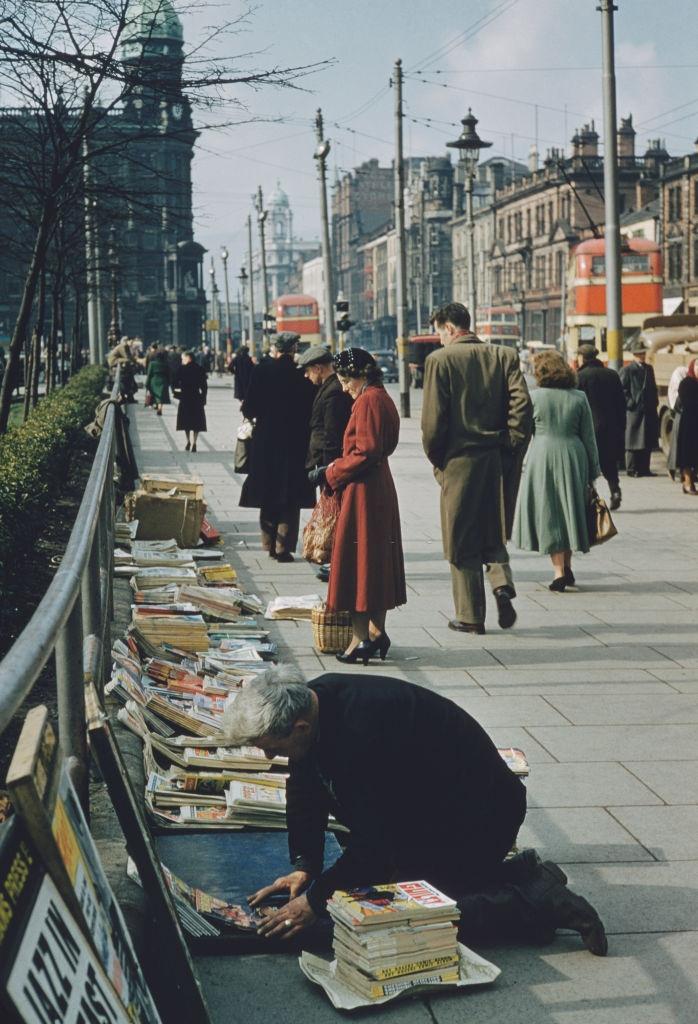
Victoria Street and Lower North Street were busy corridors of working-class commerce and entertainment. The Royal Hippodrome cinema and the Alhambra Theatre both drew regular crowds. News stands outside these venues did a brisk trade. The city’s tram network was still running in 1955, though its days were numbered. Tram 357 made the final journey of Belfast’s tram service on Saturday, 27 February 1957, traveling from the Ardoyne Depot to Mountpottinger Depot — ending an era that Hardy had already begun documenting two years earlier.
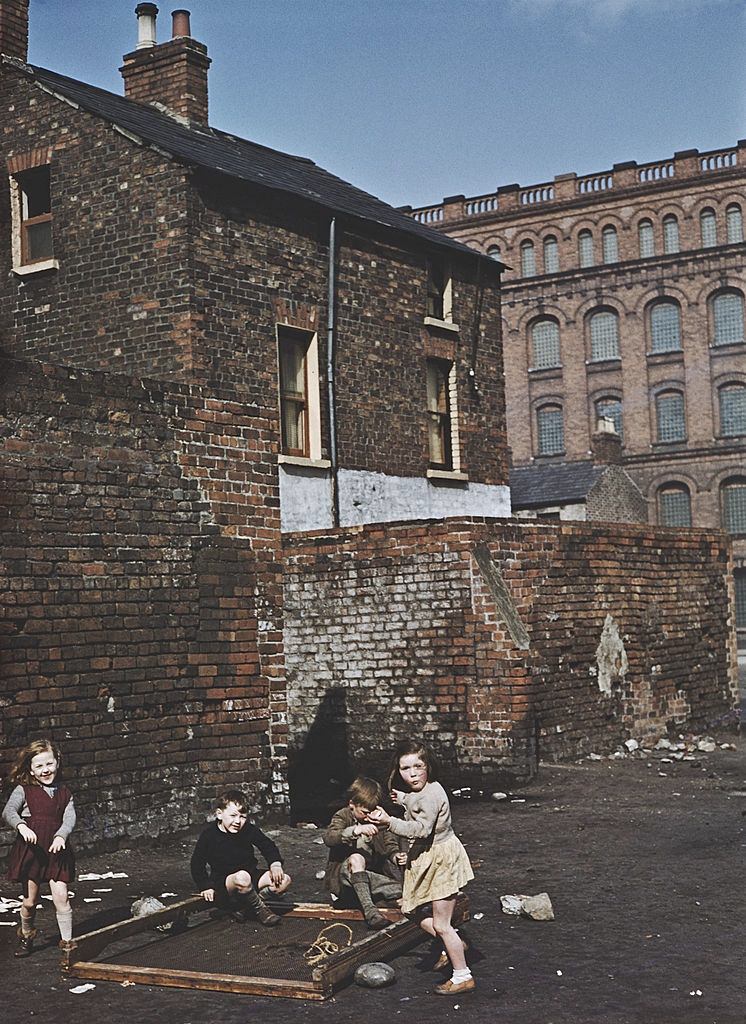
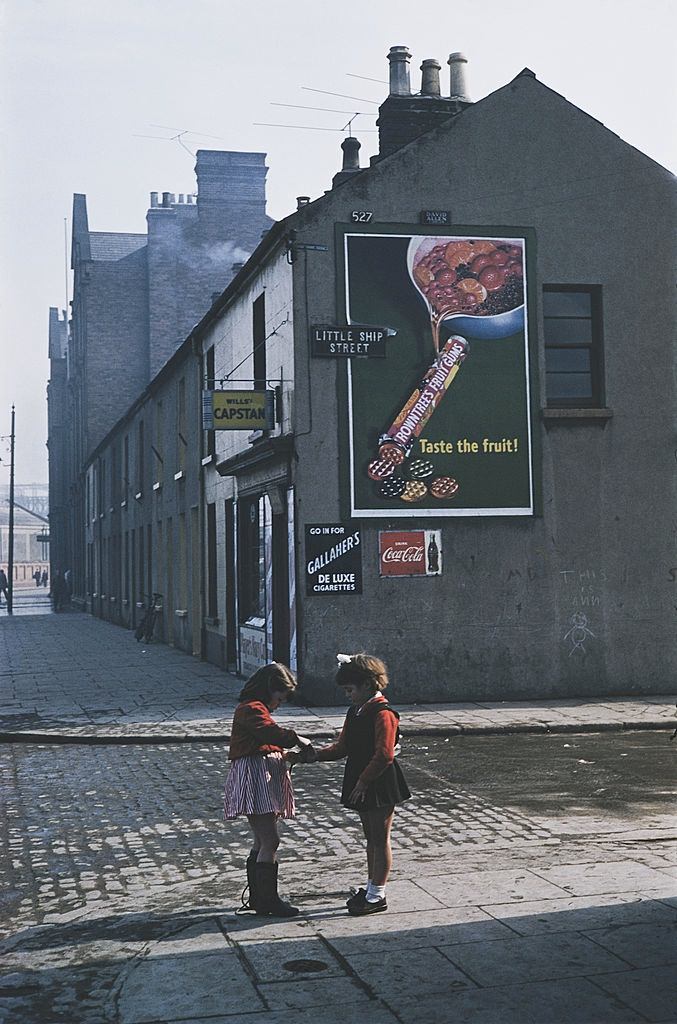
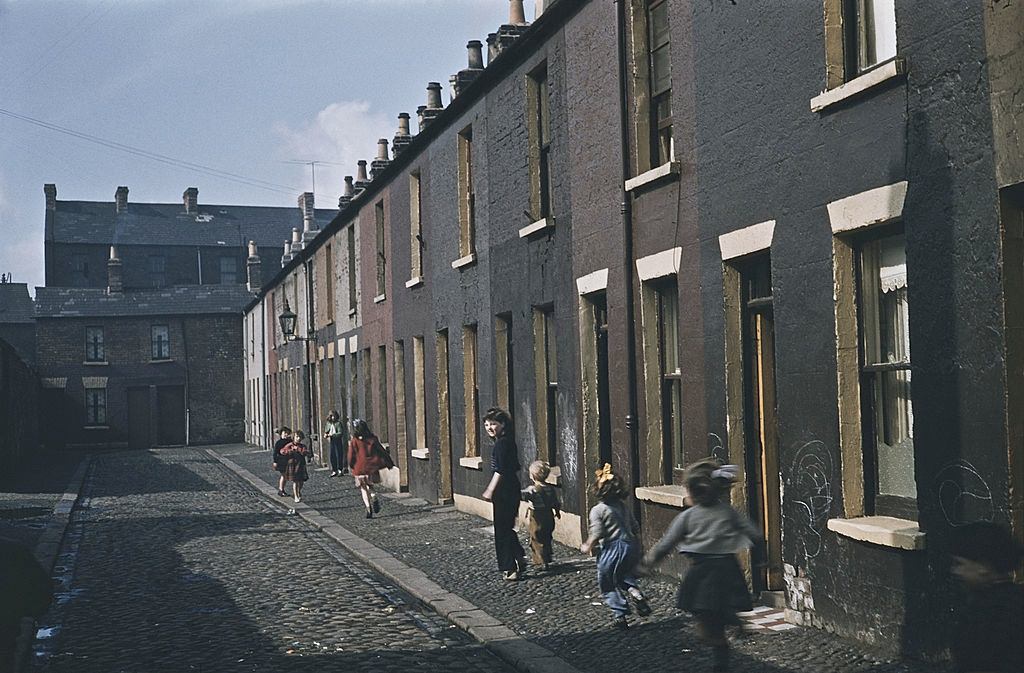
Children in 1955 Belfast made use of whatever space and materials they could find. Waste ground behind terraced houses became football pitches and playgrounds. An old bed frame was enough to keep a group of kids occupied for an afternoon. Hardy’s lens lingered on these moments — a boy crouching by a drain in a courtyard, a group on a terraced street, two girls on the corner of Little Ship Street. These images document childhood in a working-class city with no sentimentality, just clarity.
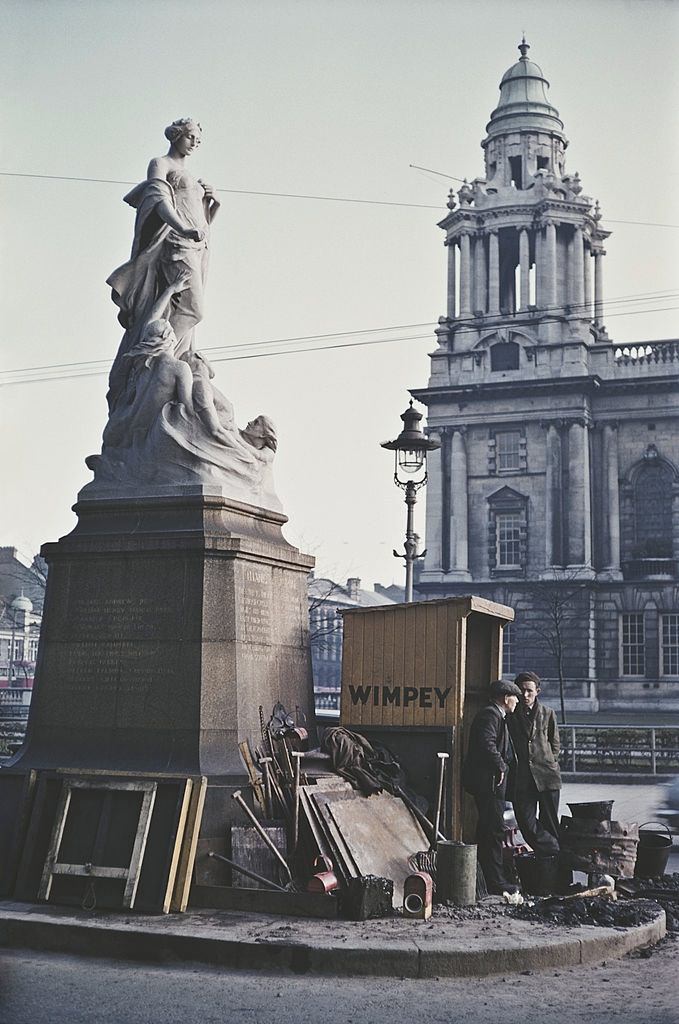
The Titanic Memorial outside City Hall was already a fixed part of the city’s landscape by 1955, erected in 1920 to honor the crew members lost when the ship sank in 1912. The ship itself had been built just across town at Harland & Wolff — the same yard that was still very much active in 1955, employing thousands of workers and launching new vessels.
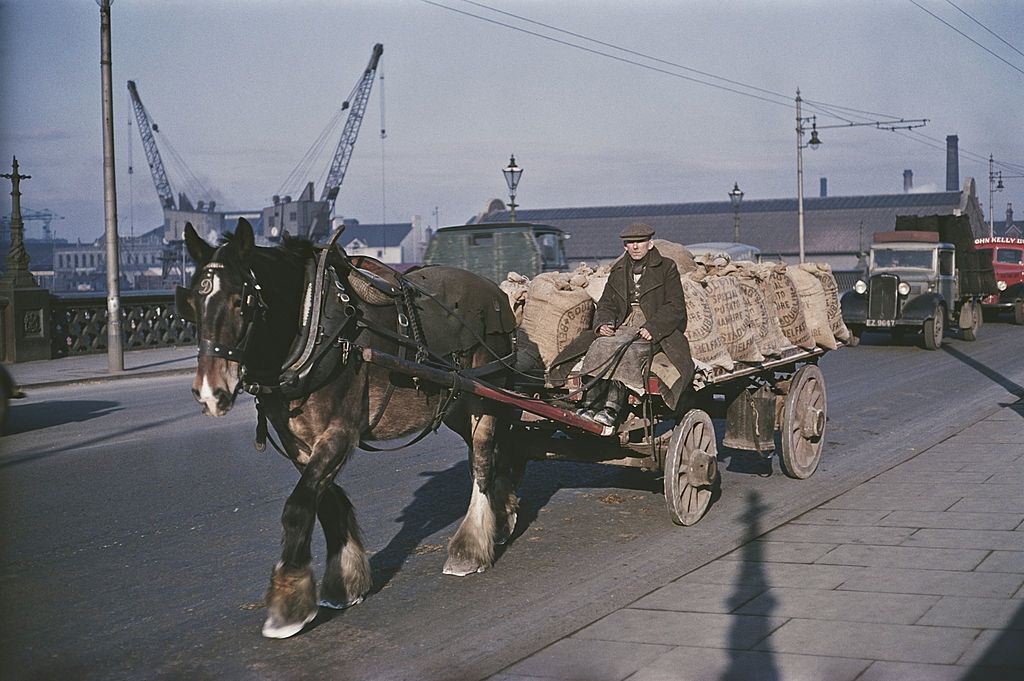
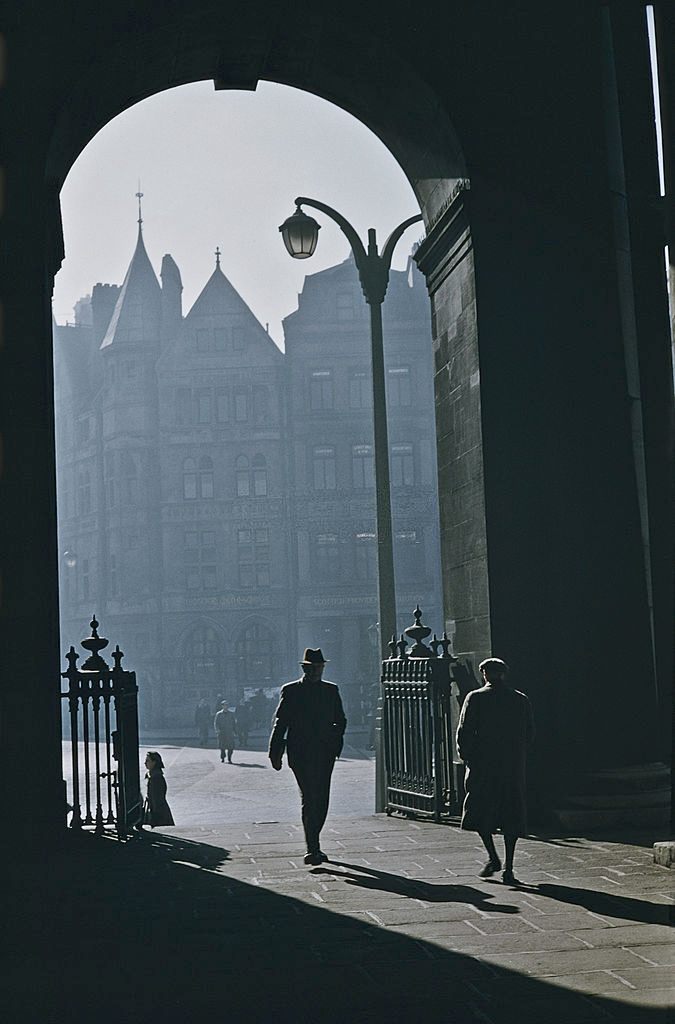
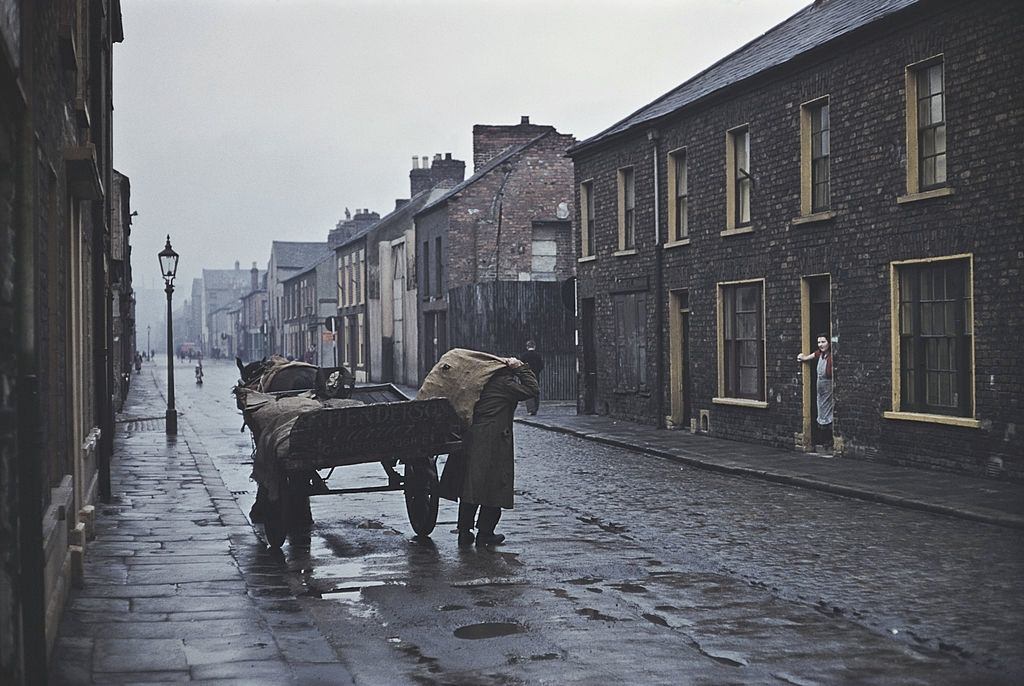
Coal delivery by horse and cart was still routine in 1955. Households across the city depended on coal for heating, and the men who hauled those heavy sacks were a familiar presence on residential streets. Alongside them, vendors sold goods from street corners, and pedestrians moved in and out of the arched gateways that connected Belfast’s older buildings to its main thoroughfares.
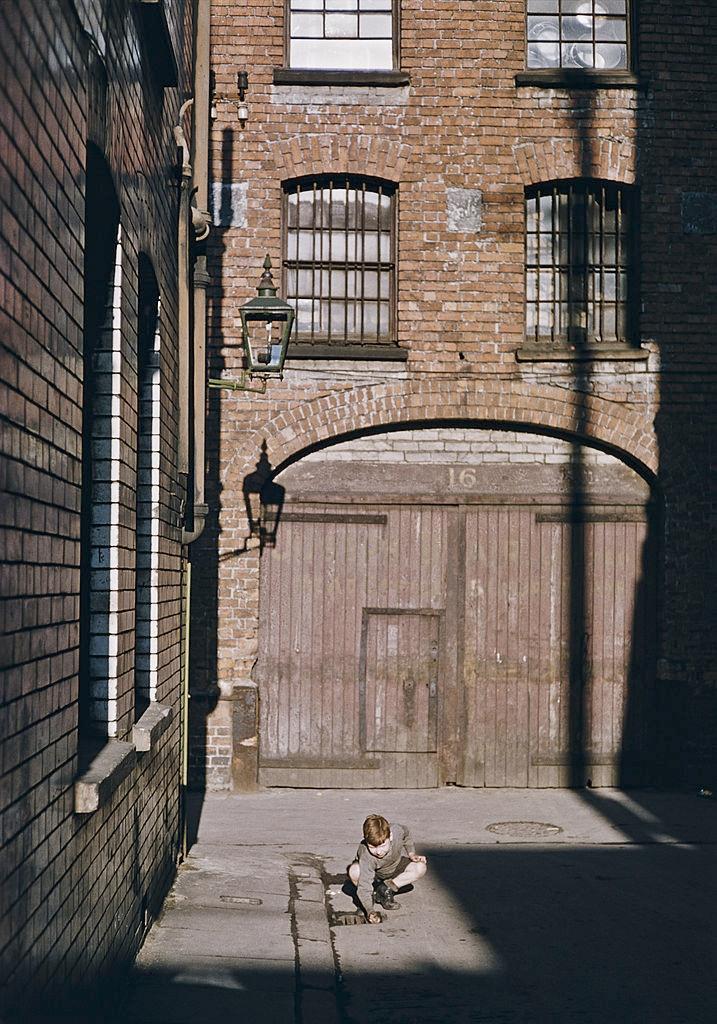
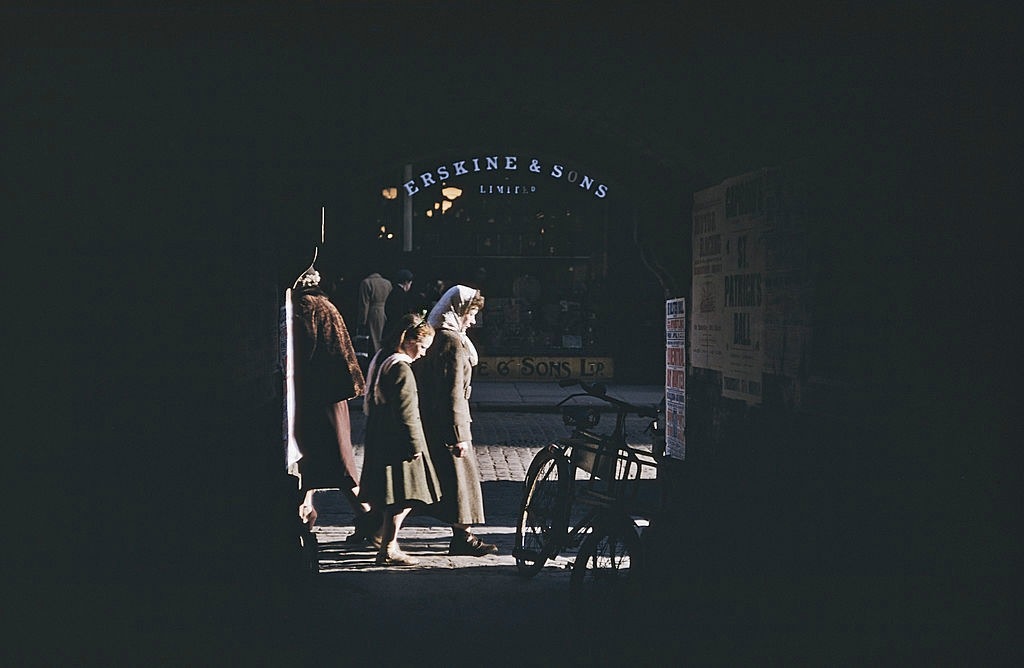
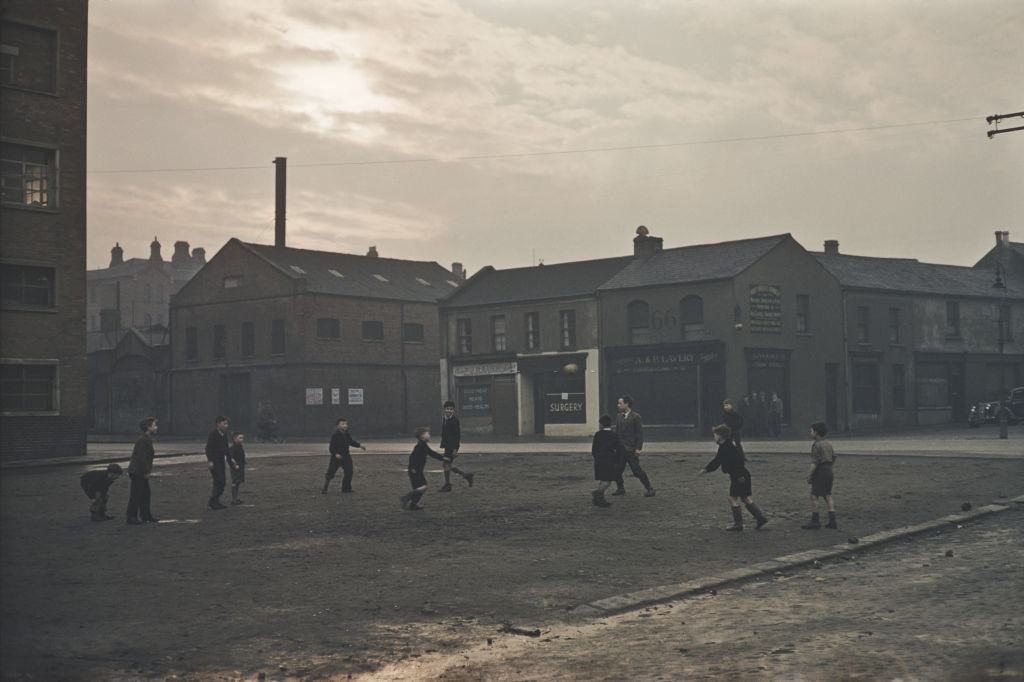
Street football was a constant in Belfast’s working-class neighbourhoods. Boys played in whatever open space the street or the waste ground offered, often in the shadow of rows of identical terraced houses. The city’s residential streets were dense and tightly packed, and the open areas between buildings — sometimes left over from cleared or bombed-out structures — served as informal recreation grounds.
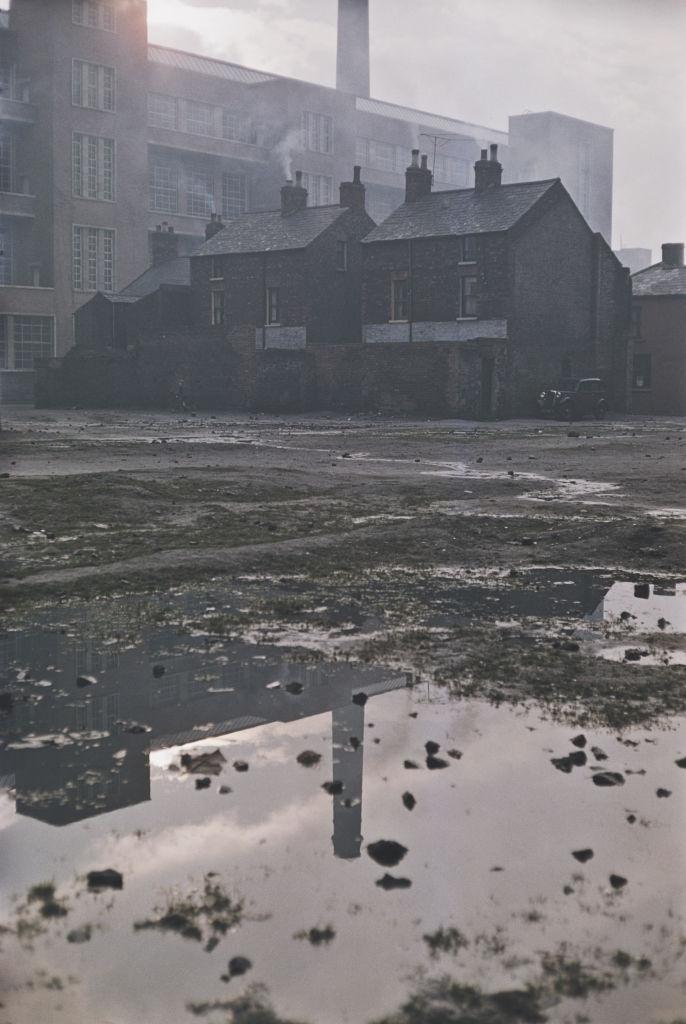
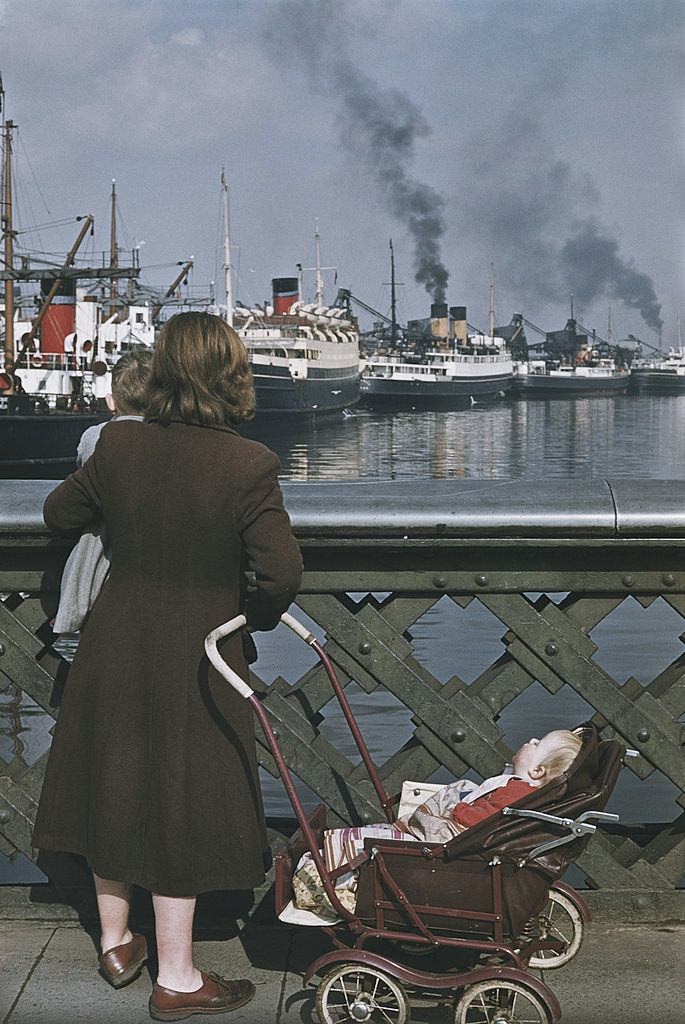
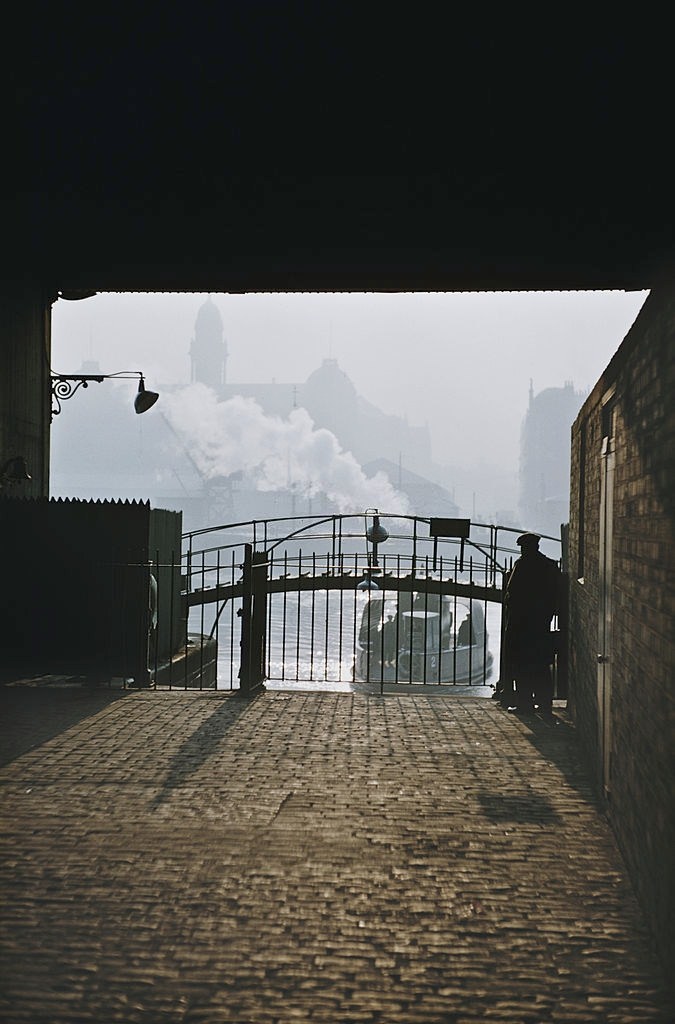
The harbour drew attention even from those who didn’t work there. Hardy photographed a woman and two children pausing at the waterfront to watch the ships. The port was a working place — cranes, cargo, and the constant movement of goods — and its scale was visible from the street. The Harland & Wolff shipyard, a short distance from the city center, was the engine behind much of Belfast’s industrial identity.
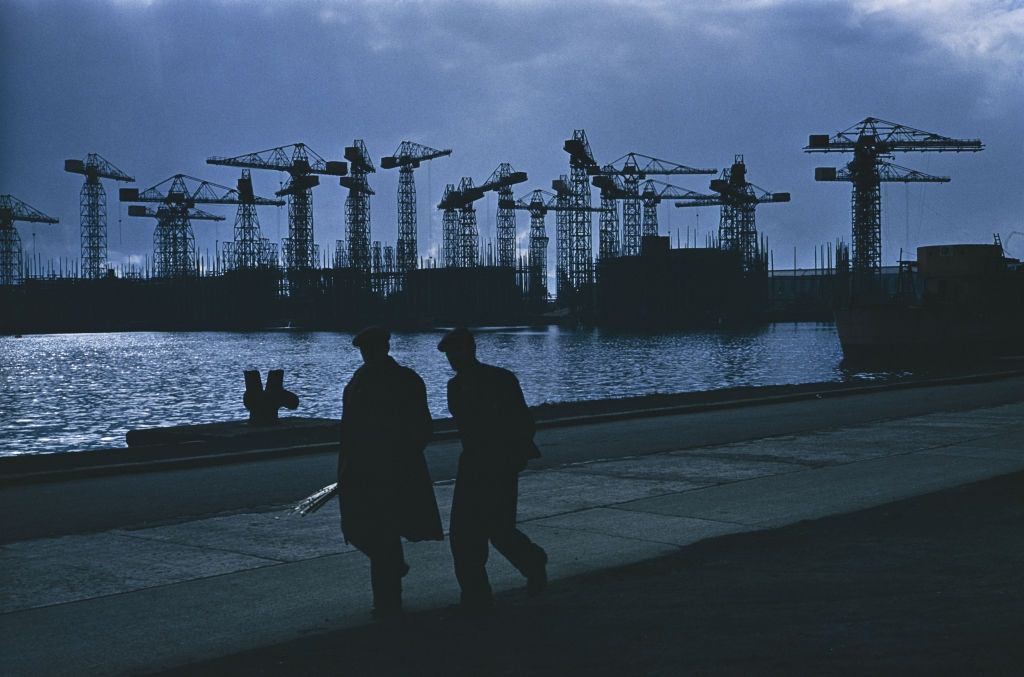
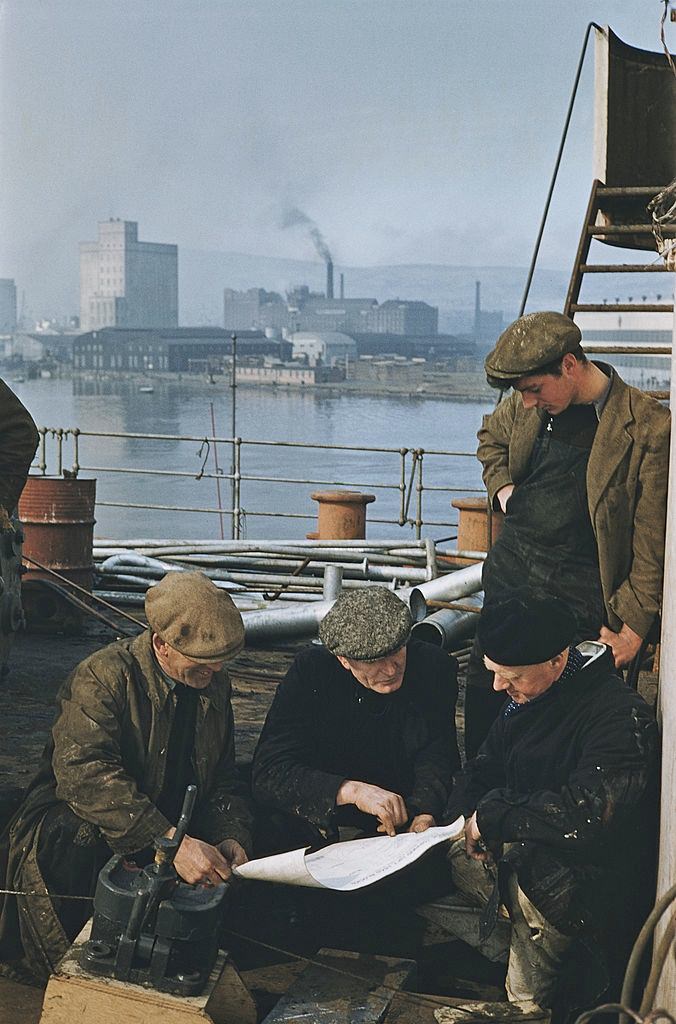
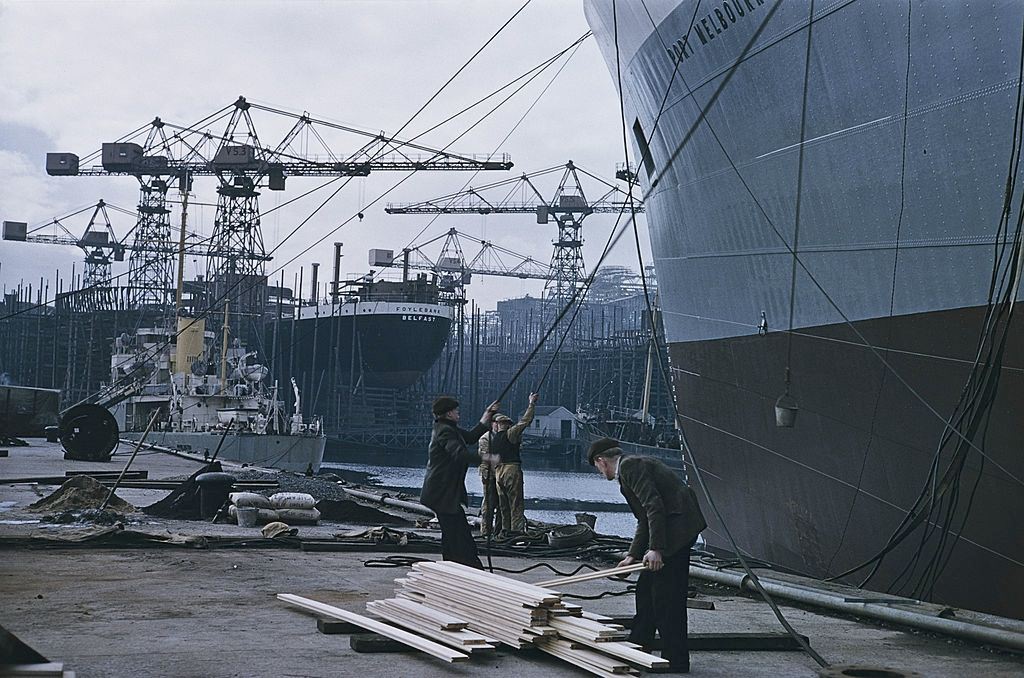
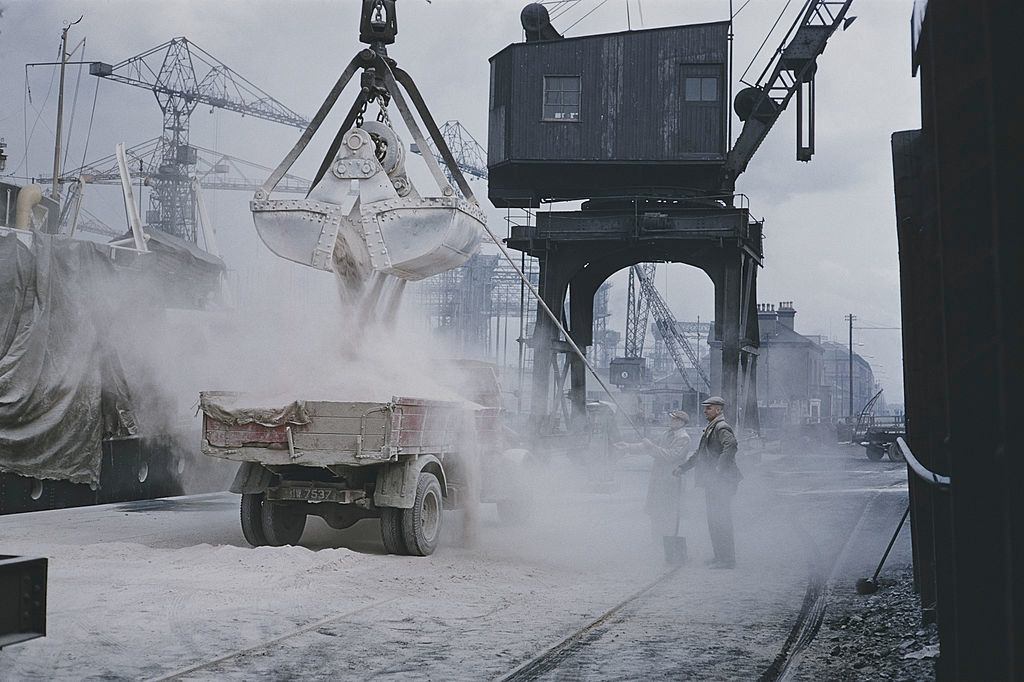
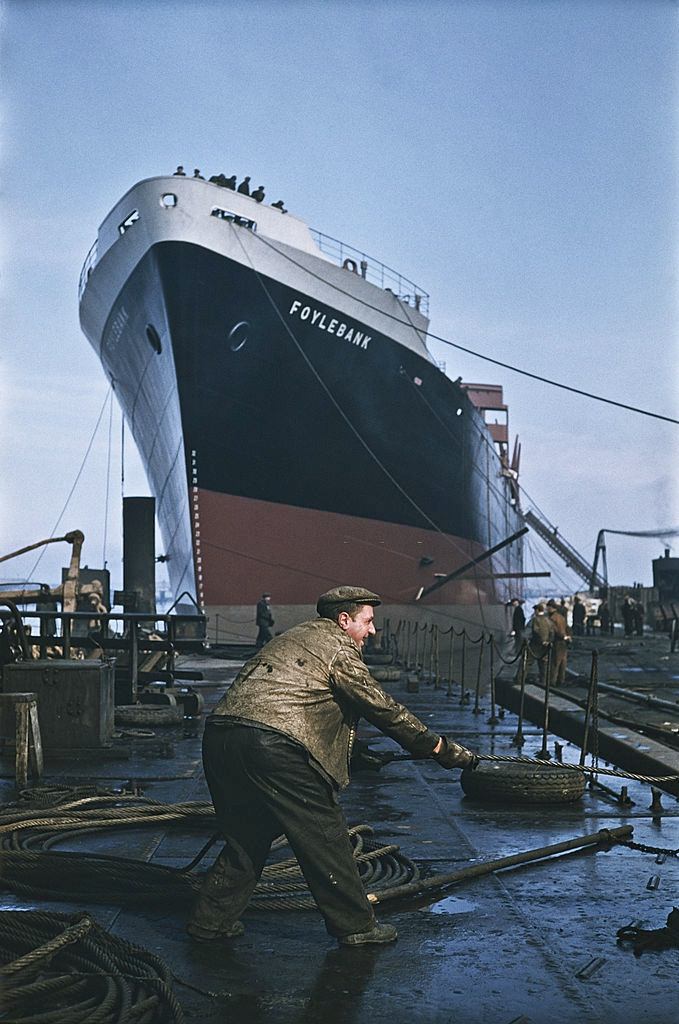
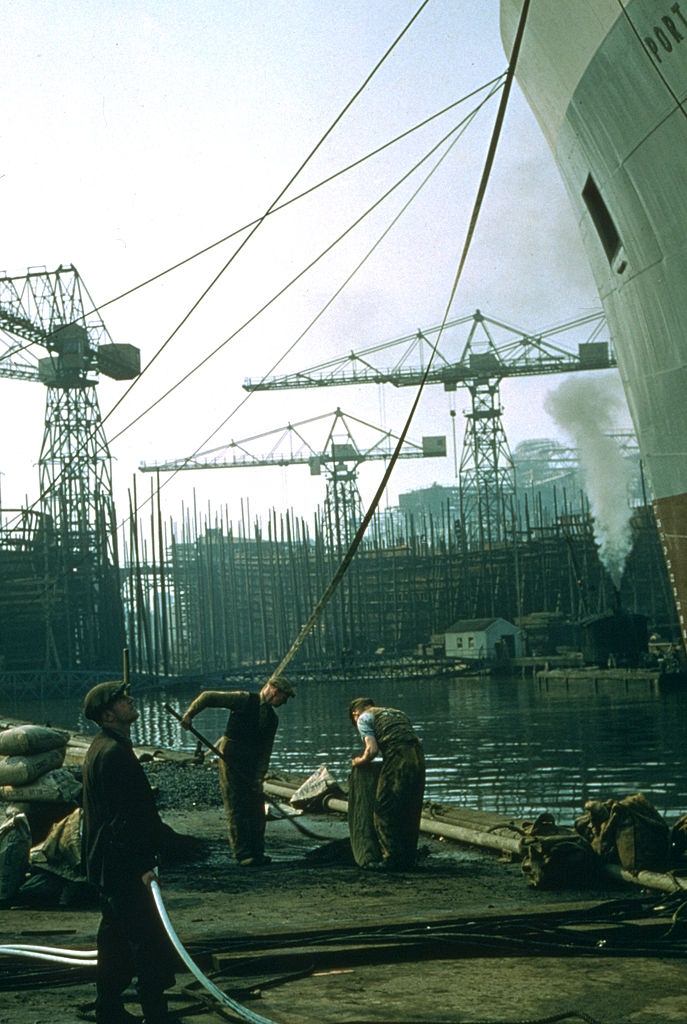
Harland & Wolff was one of the most famous shipyards in the world, and in 1955 it was still building large cargo vessels. Hardy spent time on the quayside and among the workers, documenting the yard’s scale and the men who kept it running. Lorries moved equipment across the site, cranes swung loads over the water, and massive hulls took shape in dry dock.
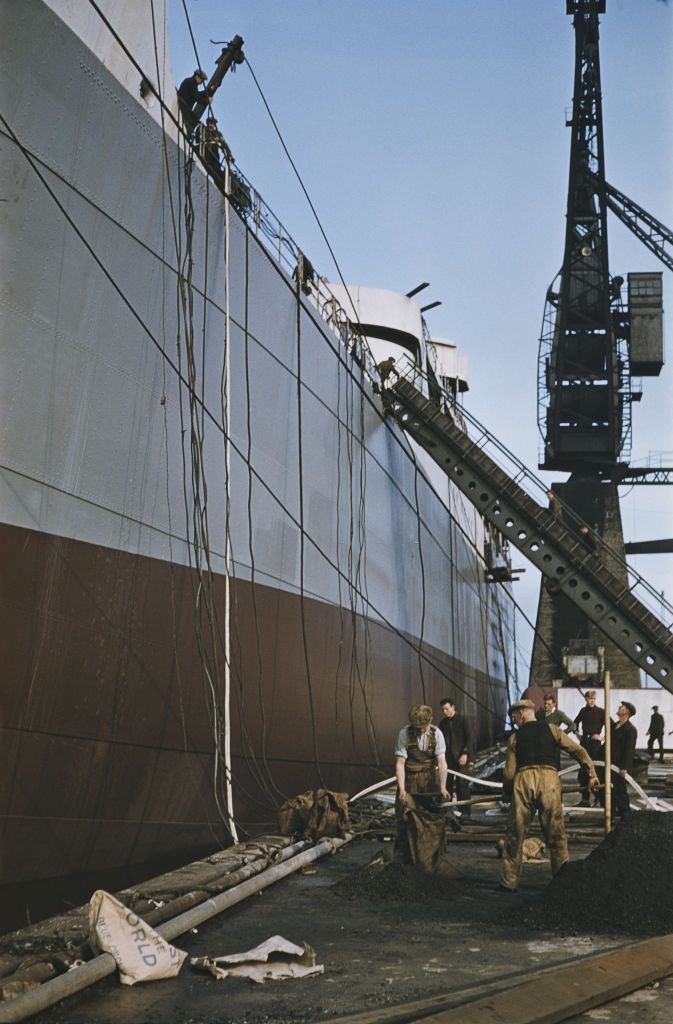
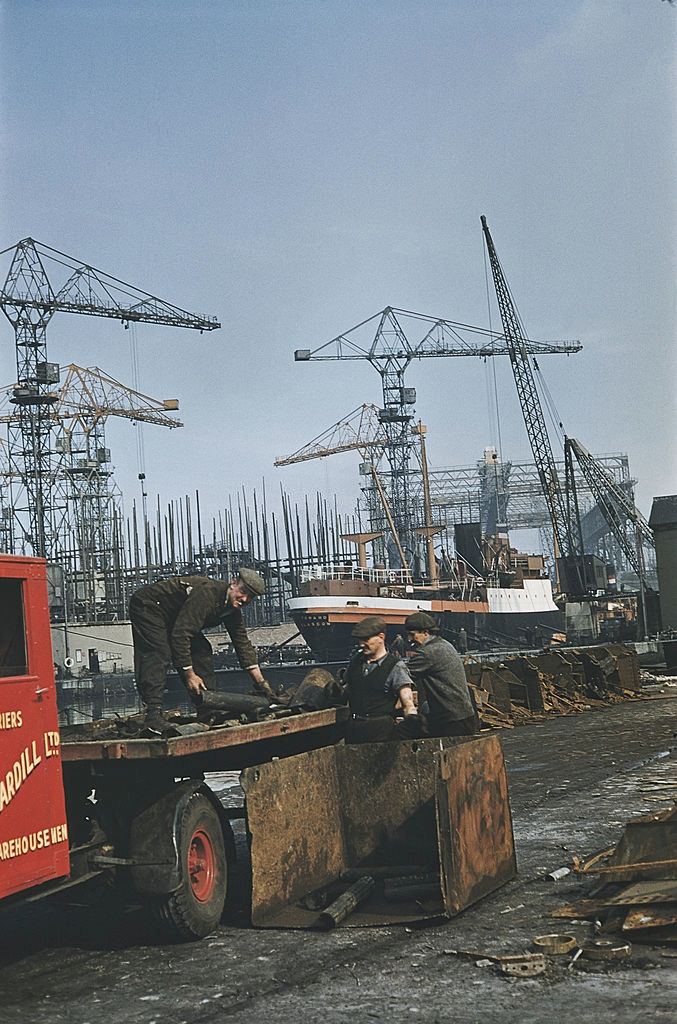
The cargo ship Port Melbourne was among the vessels under construction at Harland & Wolff during Hardy’s visit. Its steel hull dominated the dock as workers moved around and over it. The Foylebank was another ship taking shape in the yard that same year. These were not military vessels but working cargo ships — built to carry goods across international trade routes — and their construction required hundreds of skilled workers on site every day.





Where is that huge archway?
Glad I wasn’t alive around this time.
While it would have certainly been an improvement over the 60s and 70s, I agree.
It has a very industrial aesthetic with many Victorian-style buildings from an architectural standpoint.