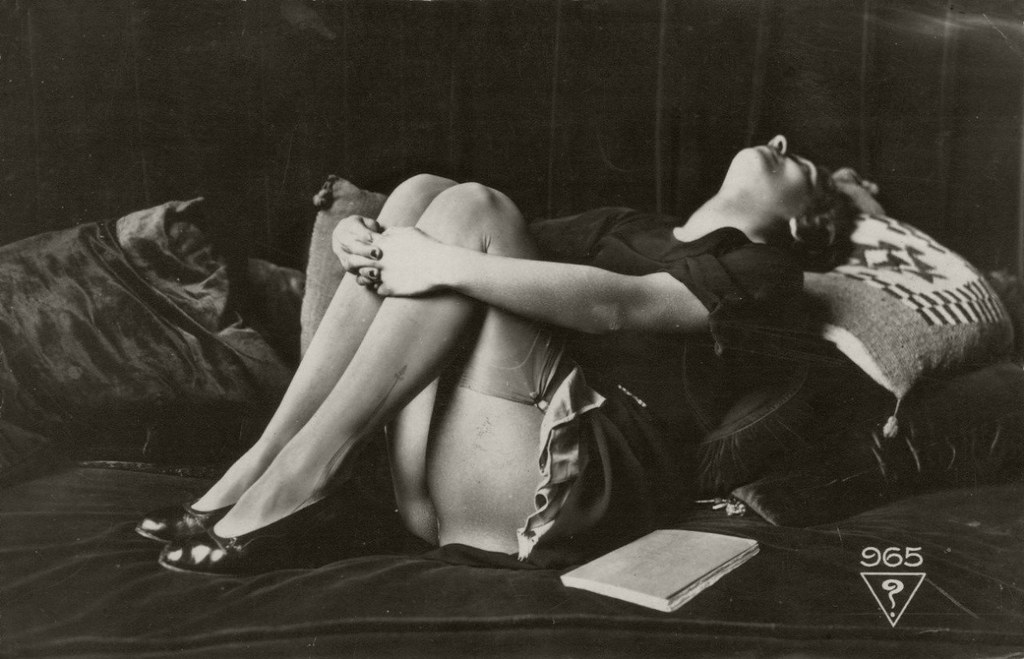
Monique Chevalier was one of the most recognizable faces in fashion during the 1950s and 1960s. Born Monique Graebener in Germany in 1937, she was educated in England and Switzerland before stepping in front of a camera as a teenager. Even in her earliest work, her gaze carried a self-assured authority that set her apart from other young models of the era.
Her professional career began in Europe, where she worked with noted photographers Regina Relang, Georges Saad, and Philippe Pottier. These early collaborations gave her a sharp foundation in the craft of high-fashion modeling. She then made the move to New York City, signing with the prestigious Ford Agency. Along the way, she changed her surname — first to Lefebvre, then to Chevalier — the name that would appear in the pages of Vogue and Harper’s Bazaar for years to come.
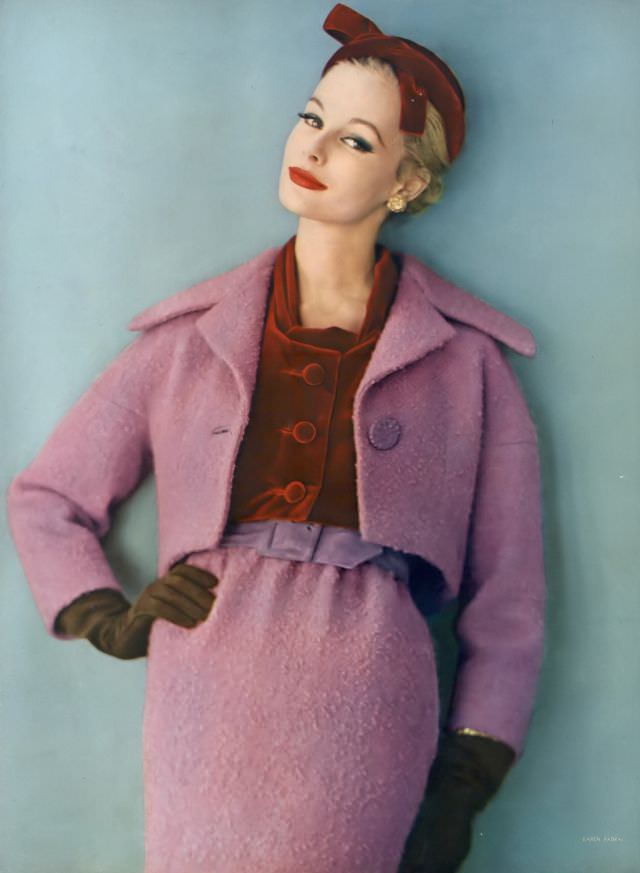
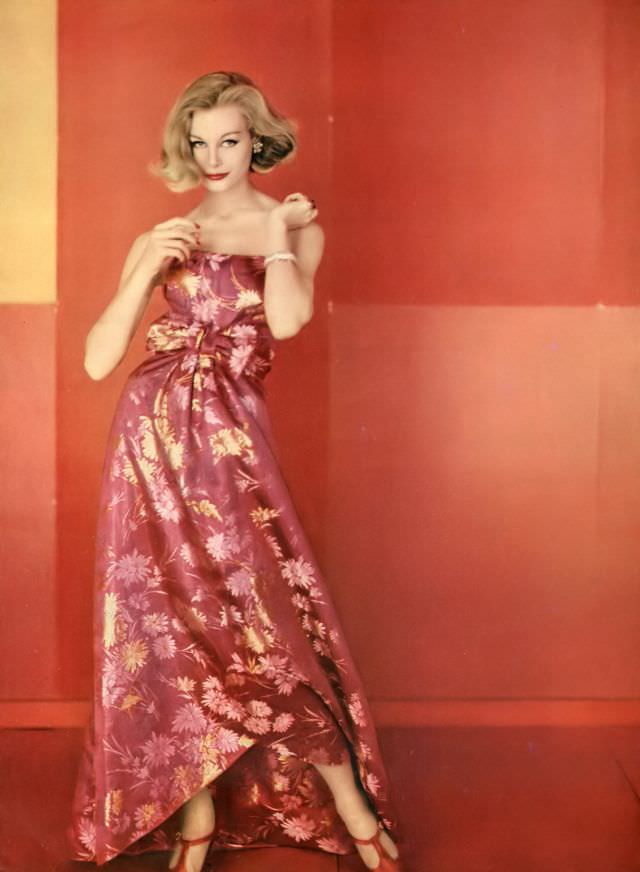
In New York, Chevalier quickly became one of the city’s most in-demand models. Her work spanned both sides of the Atlantic, and the photographers she collaborated with read like a list of the era’s finest talents — Irving Penn, Karen Radkai, and Richard Rutledge among them. The late 1950s were a particularly productive period, with a string of Vogue appearances that showcased the full range of high fashion at the time.
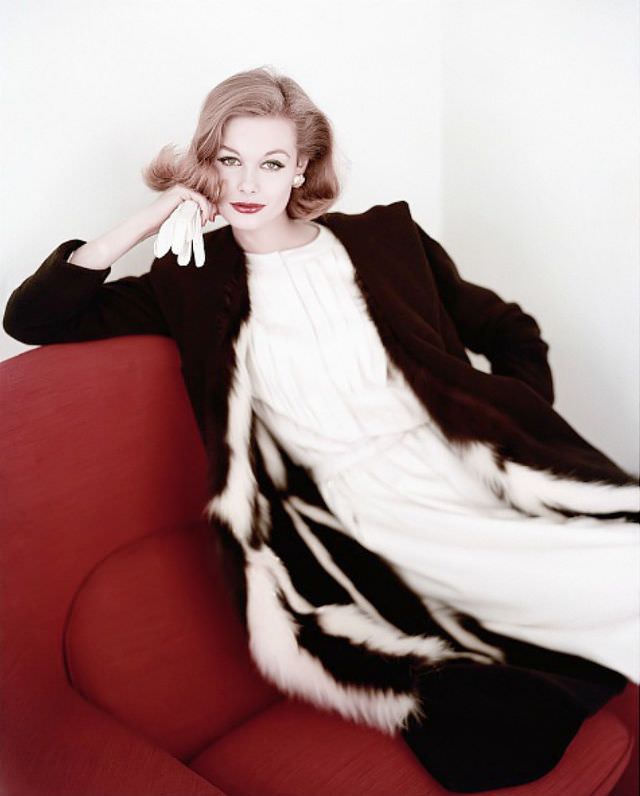
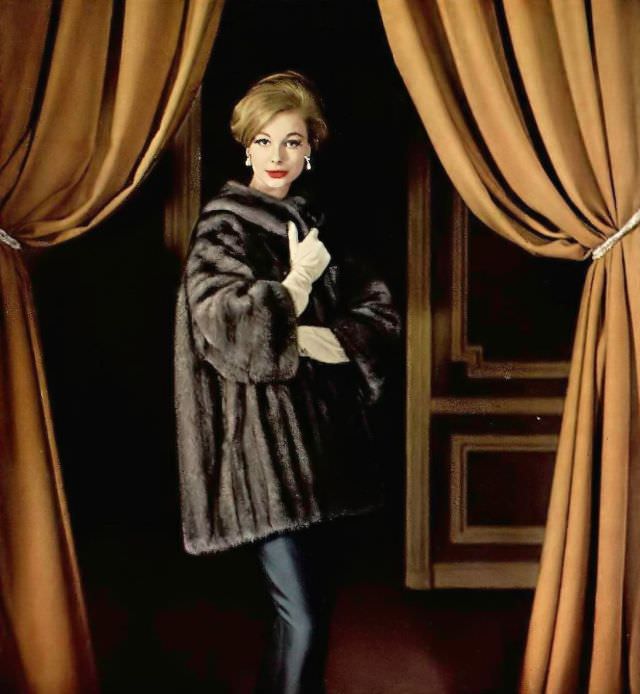
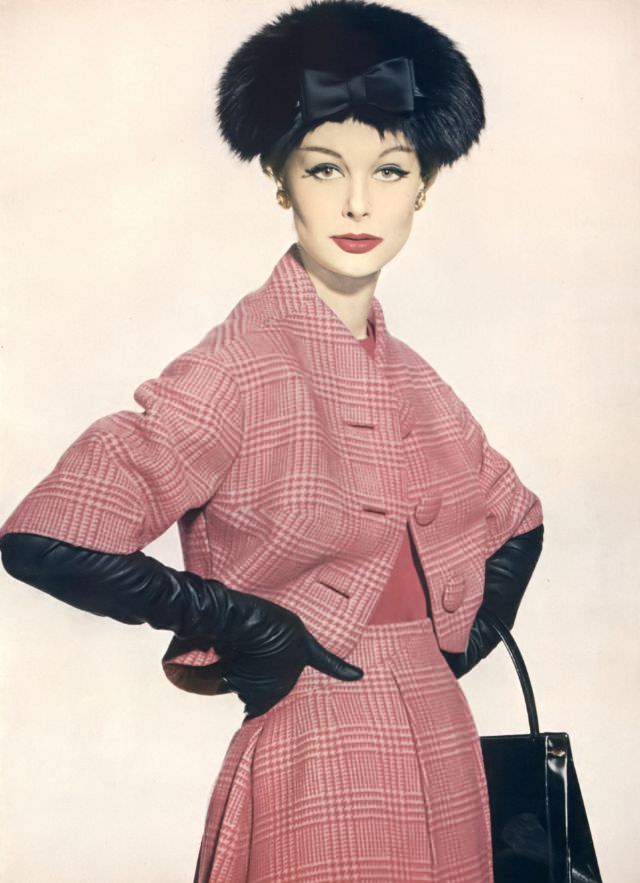
The autumn and winter collections of 1958 were particularly well-documented through Chevalier’s work. Fur-lined coats, rich wool suits, and velvet accents defined the season, and she wore them with the kind of composed elegance that made fashion editors take notice. Her ability to make structured, heavily tailored garments look effortless was a skill few models matched.
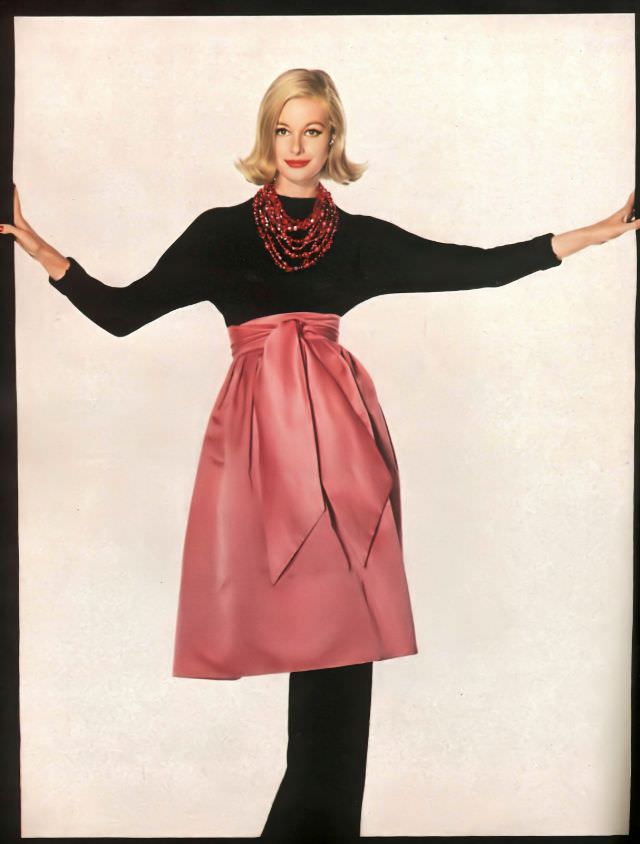
Not all of her 1958 work was heavy and structured. The December issue of Vogue that year featured a playful contrast — a bright pink apron in satiny cotton paired over a toe-length black sweater. It was a domestic-meets-chic styling that captured an interesting tension in women’s fashion at the time, and Chevalier carried it with the same authority she brought to fur coats and formal gowns.
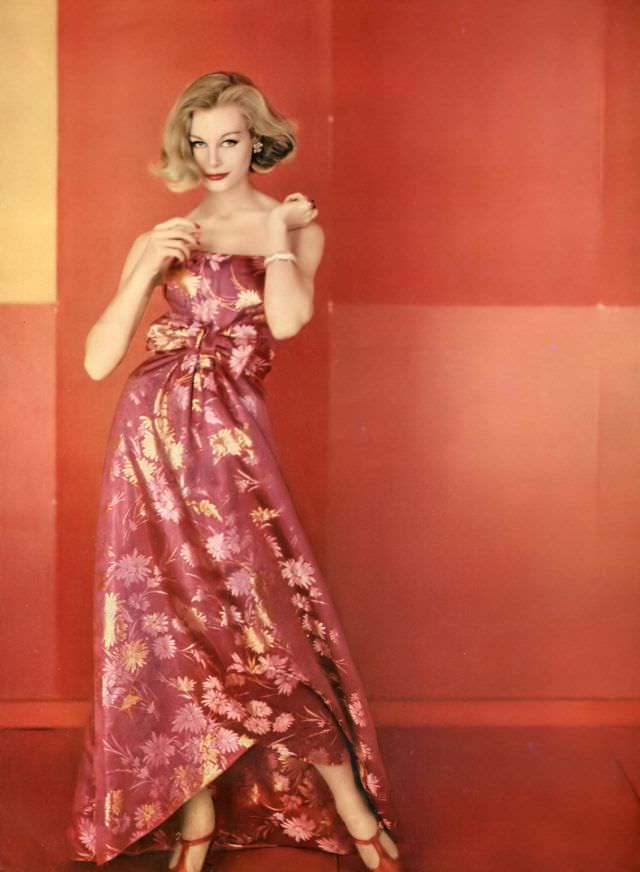
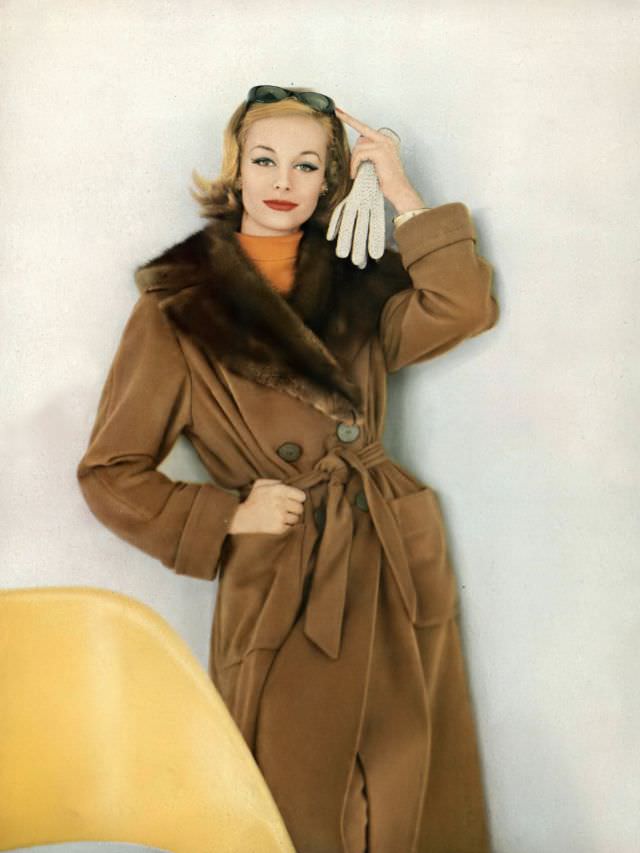
Among the standout pieces from her 1958 portfolio was a vicuña and natural Russian sable trenchcoat — a garment that represented the very top of luxury fashion. The combination of vicuña wool, one of the rarest and most expensive natural fibers in the world, with sable fur trim made for an extraordinary editorial image.
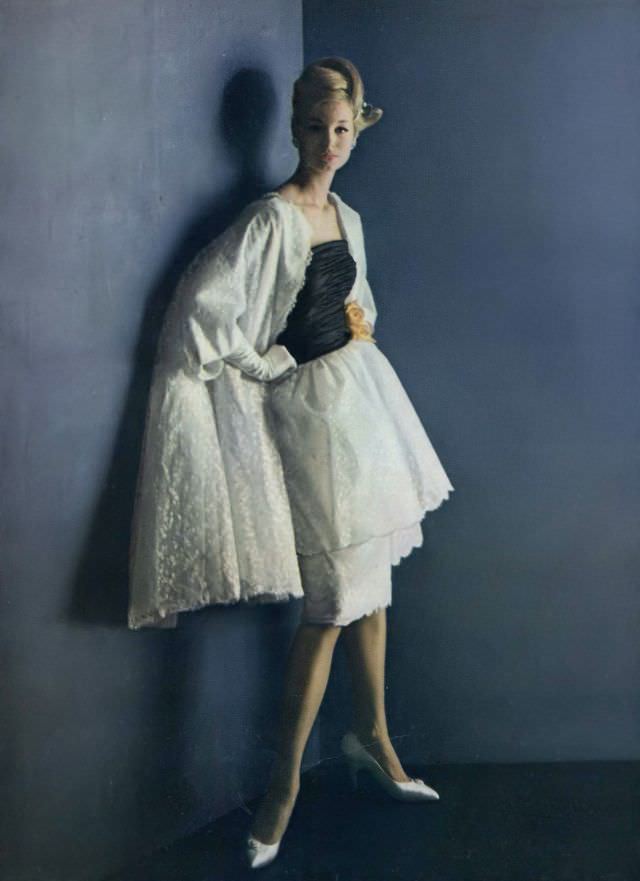
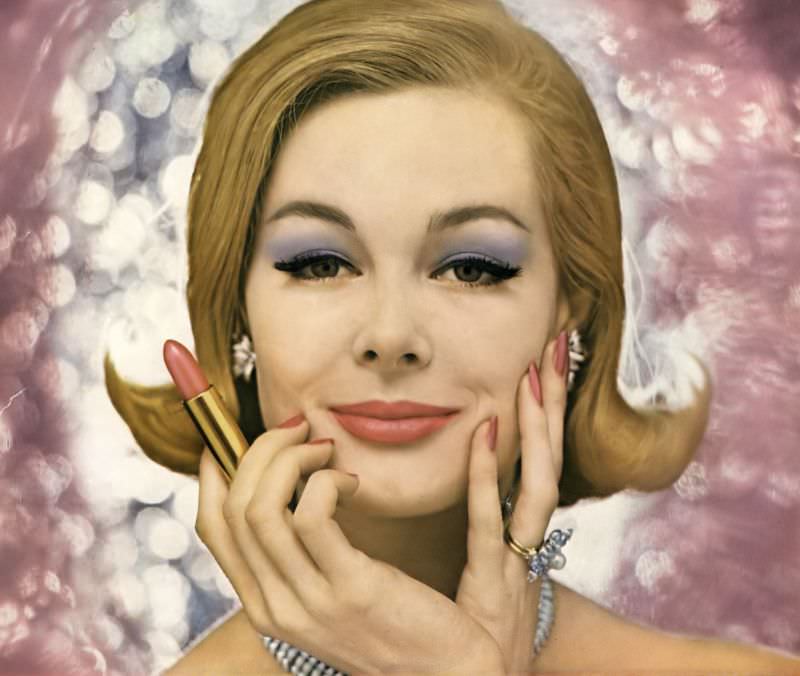
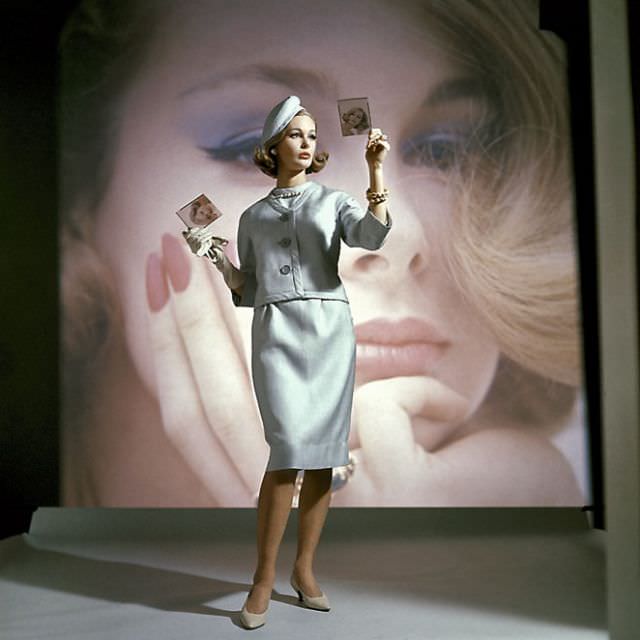
As the 1960s began, Chevalier’s career showed no signs of slowing. She appeared in Dior campaigns, modeled white lace evening gowns for Vogue’s spring issues, and lent her face to cosmetics brands like Pond’s. These advertisement appearances extended her reach beyond editorial fashion into the mainstream consumer market.
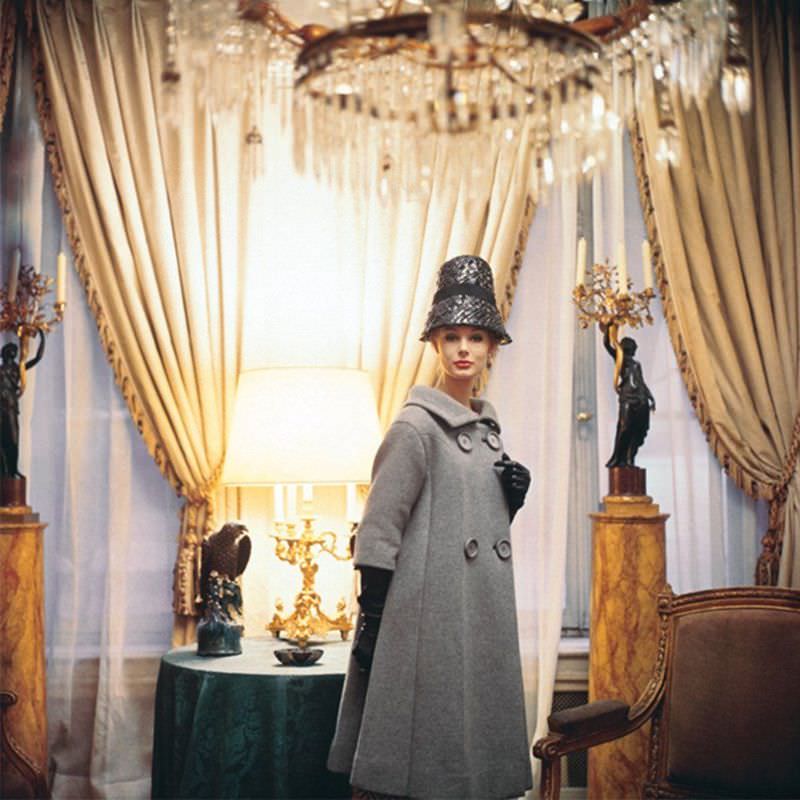
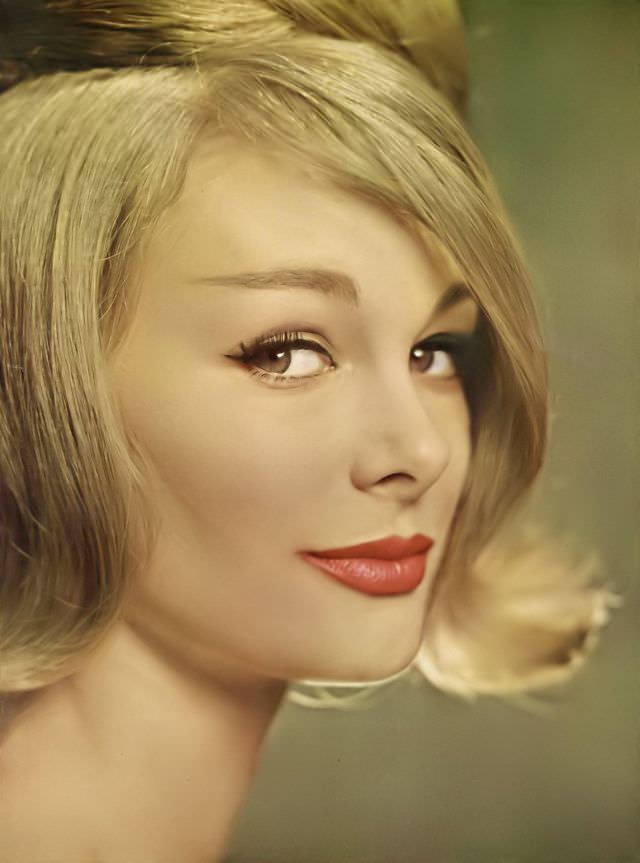
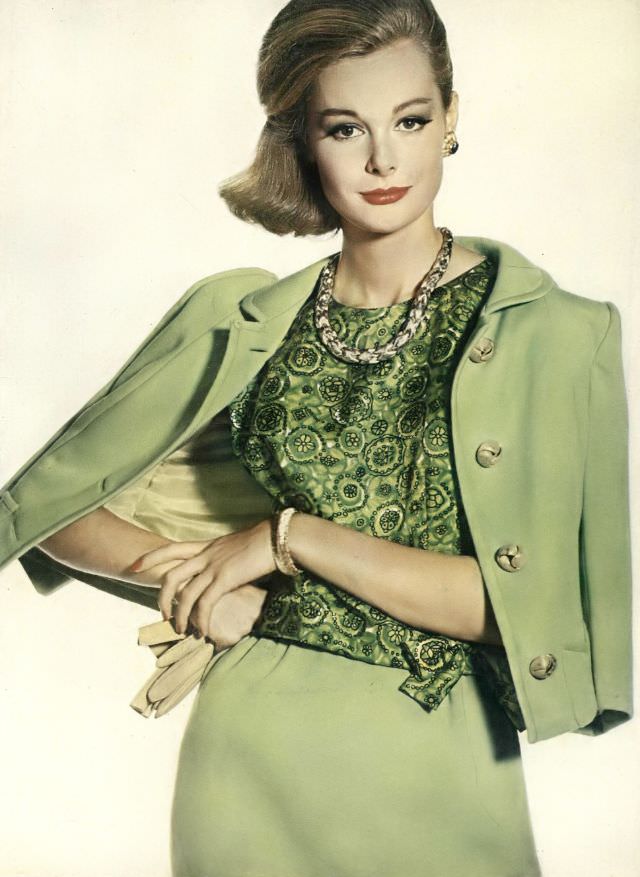
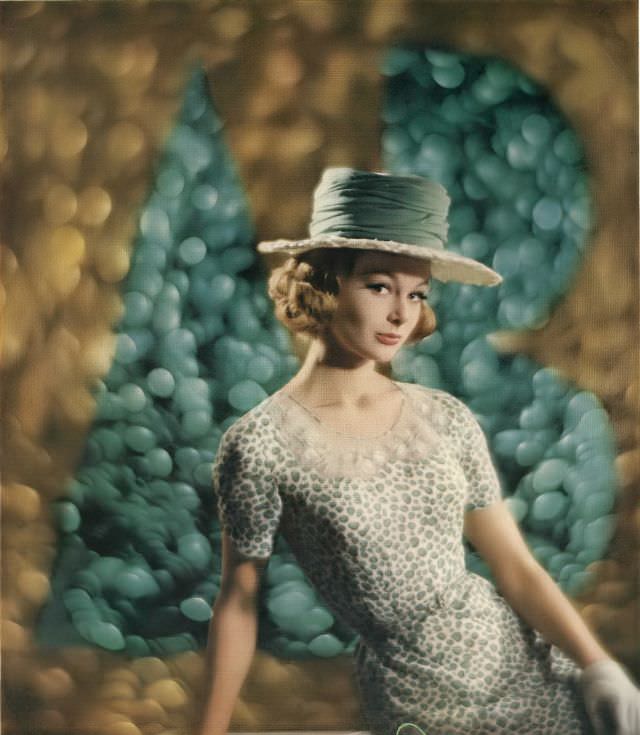
The year 1961 brought a wave of editorial work across multiple publications. From almond-green wool jersey suits paired with silk paisley blouses to lemon-yellow angora sweaters, Chevalier’s modeling that year reflected a shift toward brighter, lighter palettes. The heavy textures of the late 1950s gave way to softer silhouettes and bolder color choices.
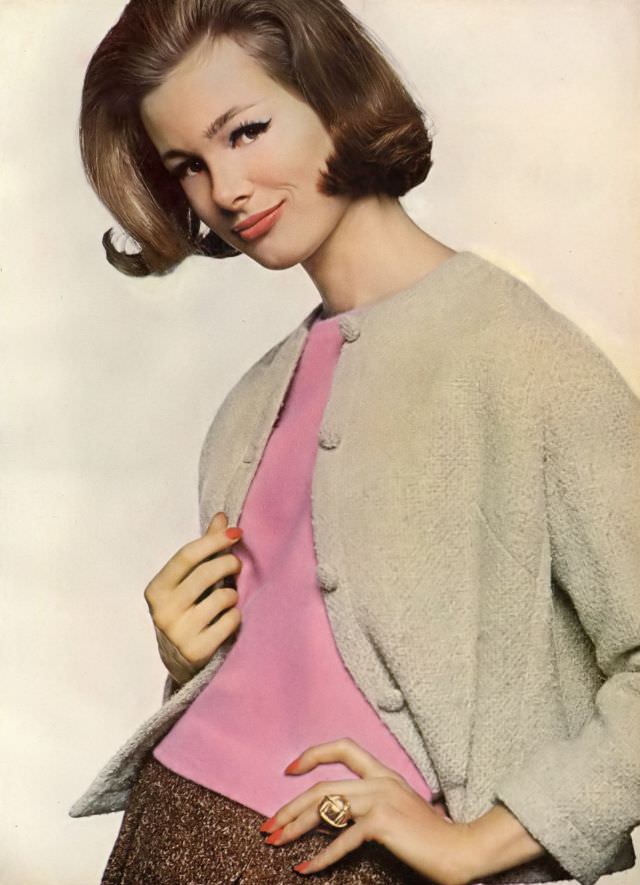
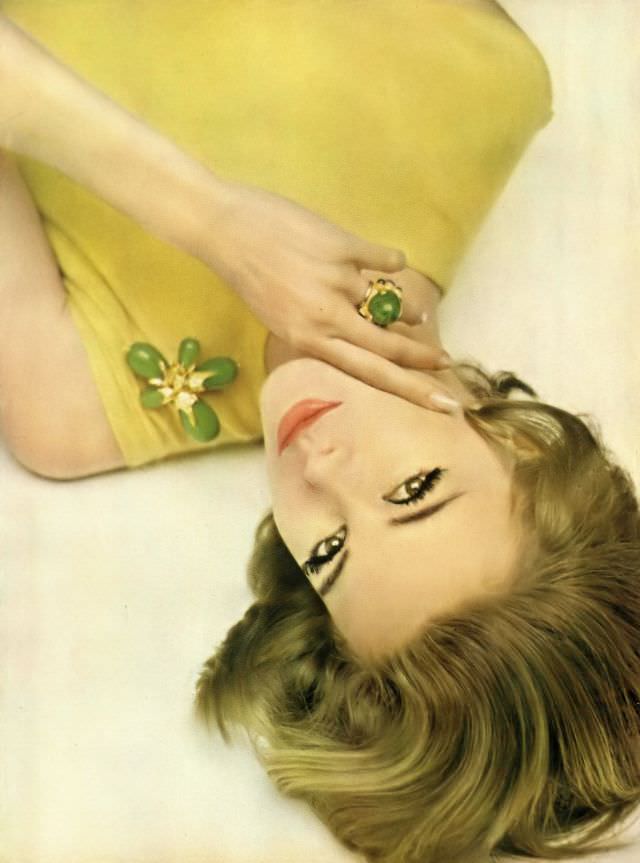
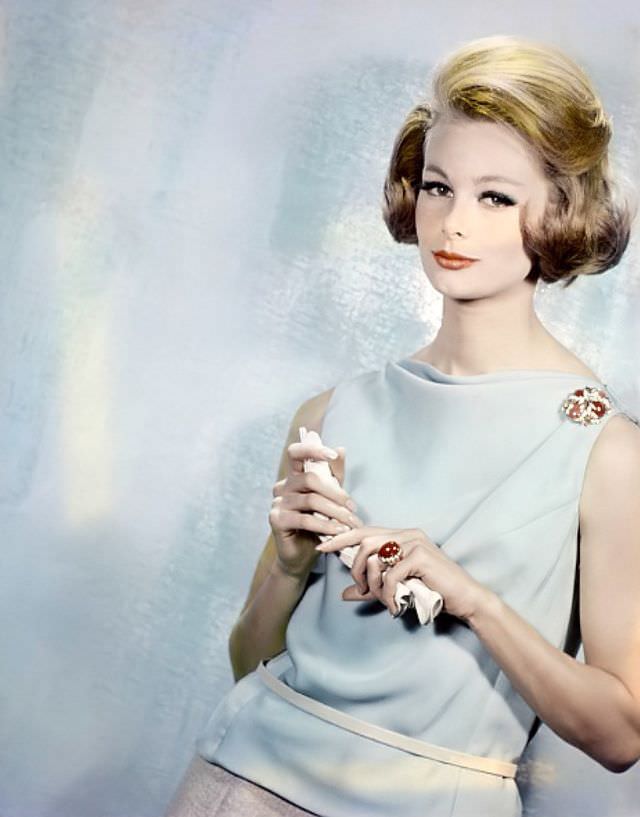
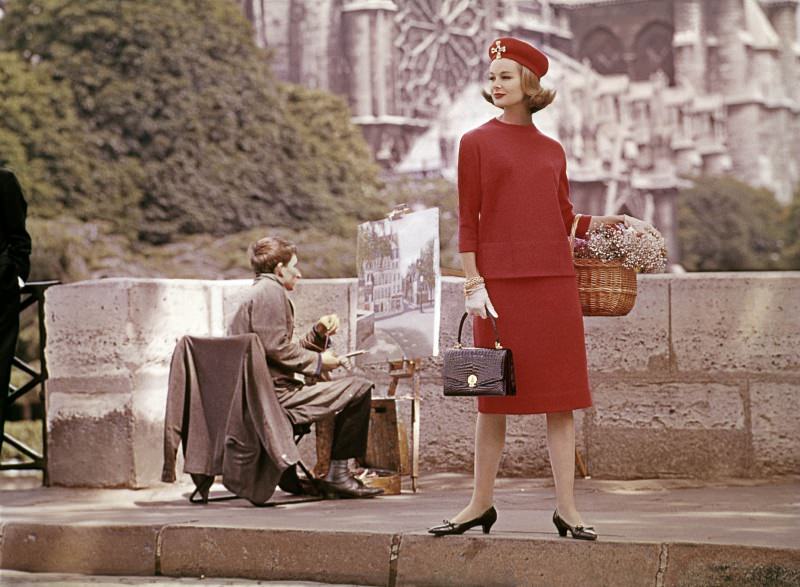
She also appeared in beauty campaigns in 1961, including a photograph for the ‘A Bouquet to Your Beauty’ campaign — a sign of how fully she had crossed over from runway-adjacent editorial work into broader commercial modeling. Her face sold products just as effectively as it sold clothing.
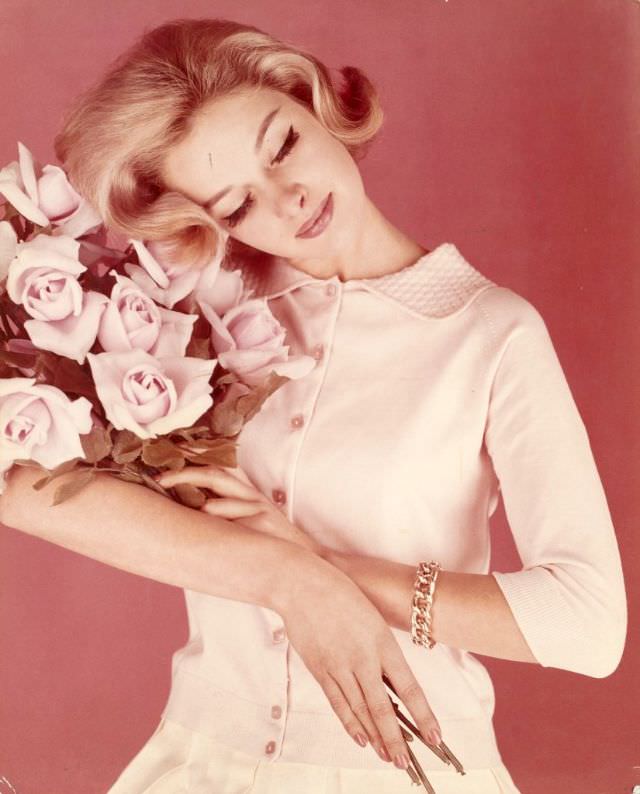
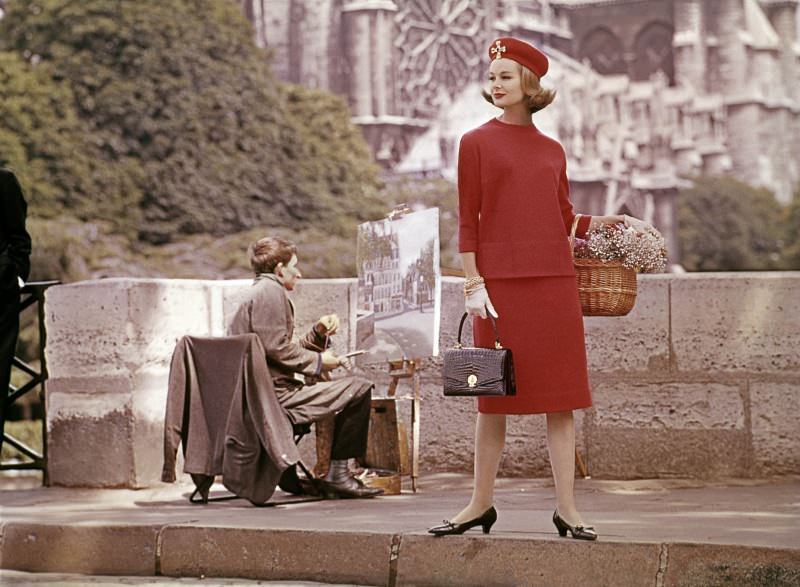
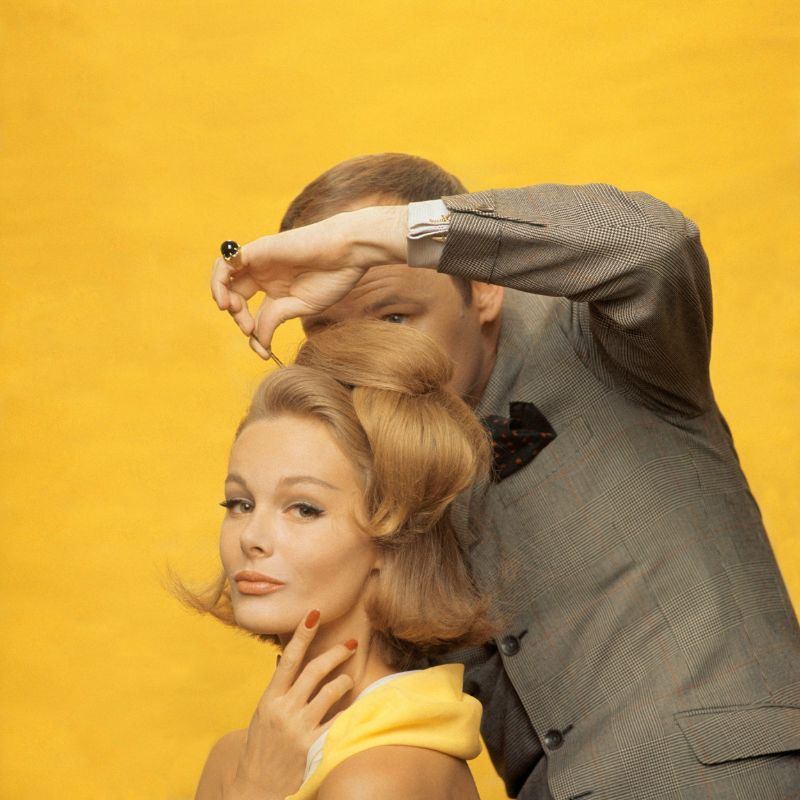
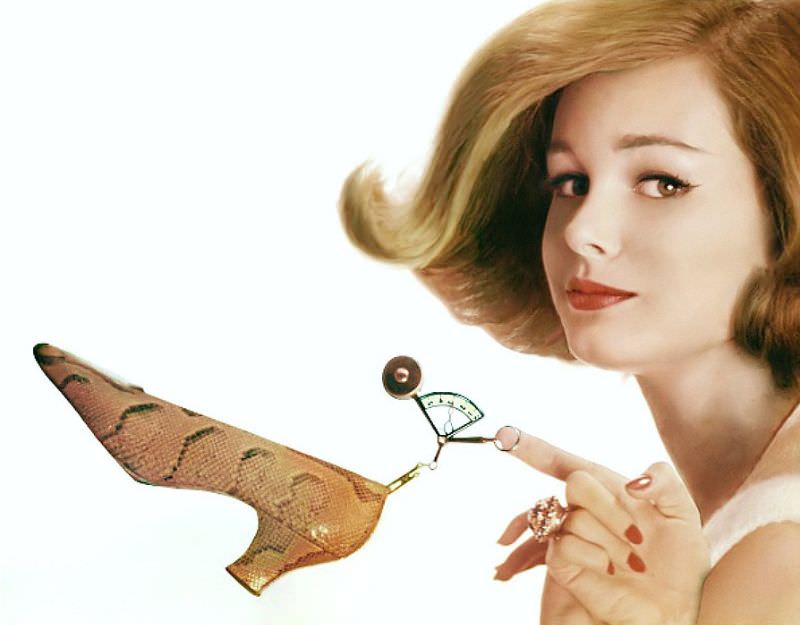
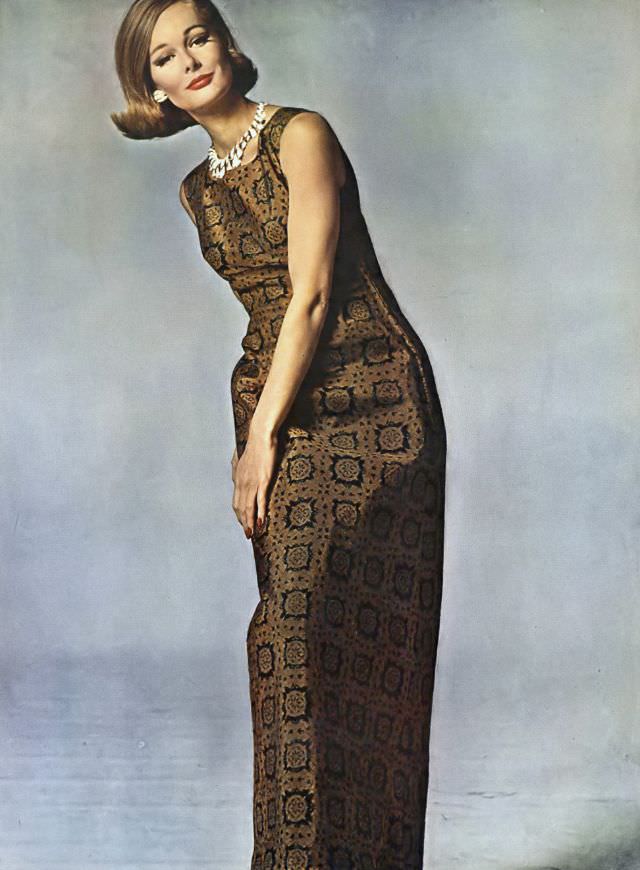
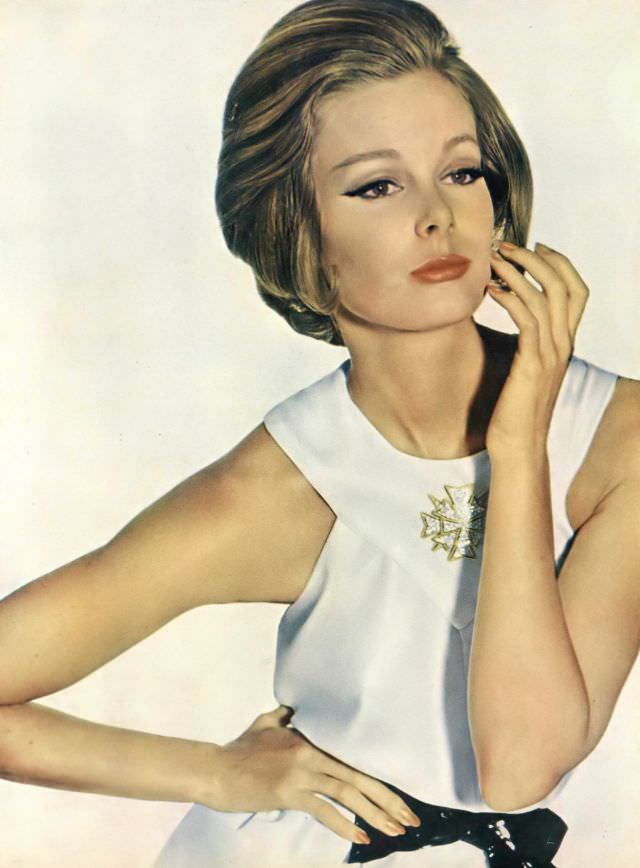
By 1962, Chevalier was appearing in Vogue nearly every month. Her work that year ranged from a long bronze silk sheath printed in black to a pure white silk crêpe dress, a snakeskin shoe advertisement for Fleming-Joffe, and an Avon cosmetics campaign alongside Connie Joannes. She was also photographed at Kenneth of Lilly Dache’s New York salon — a behind-the-scenes glimpse into the grooming rituals of top models of the day.
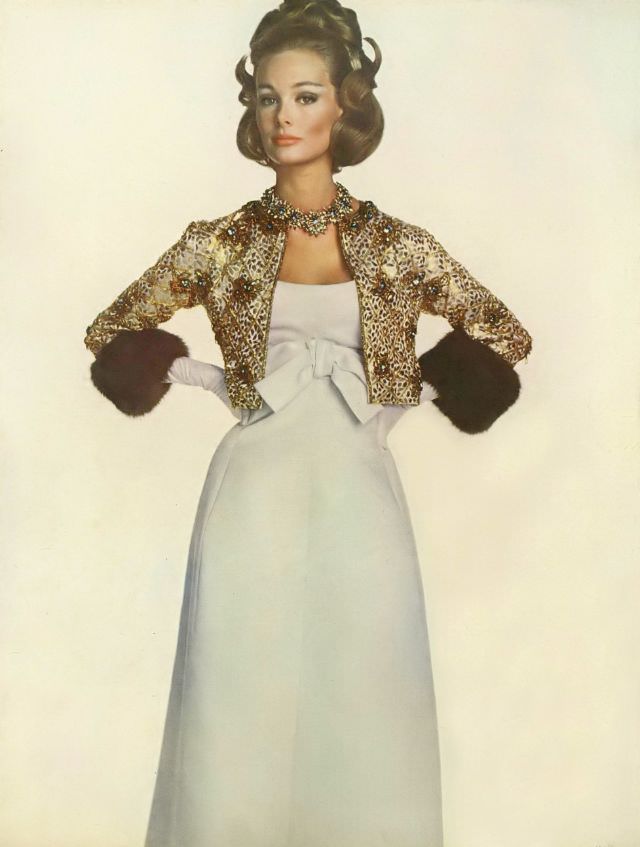
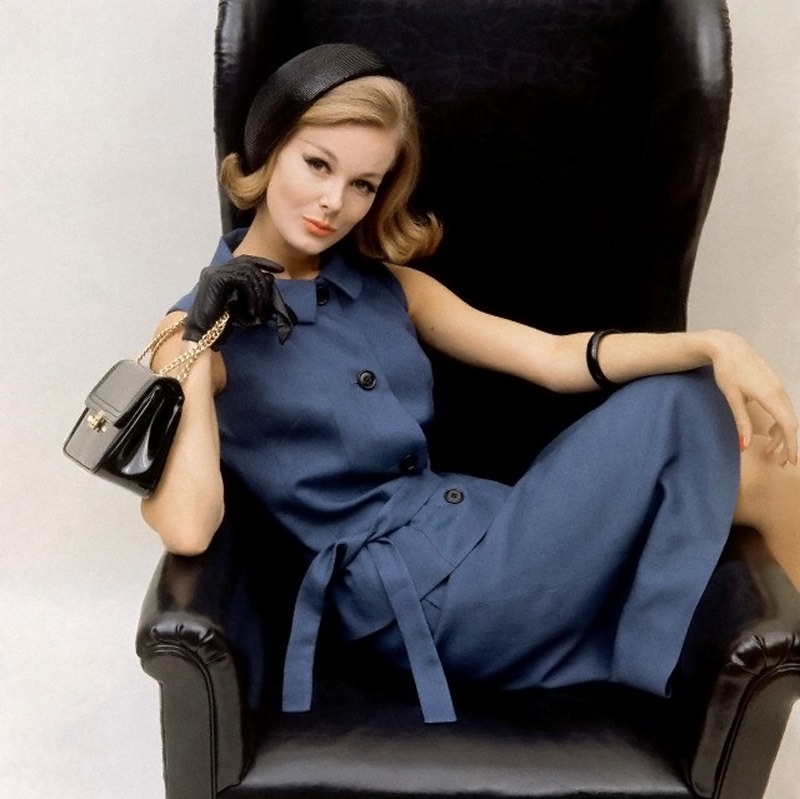
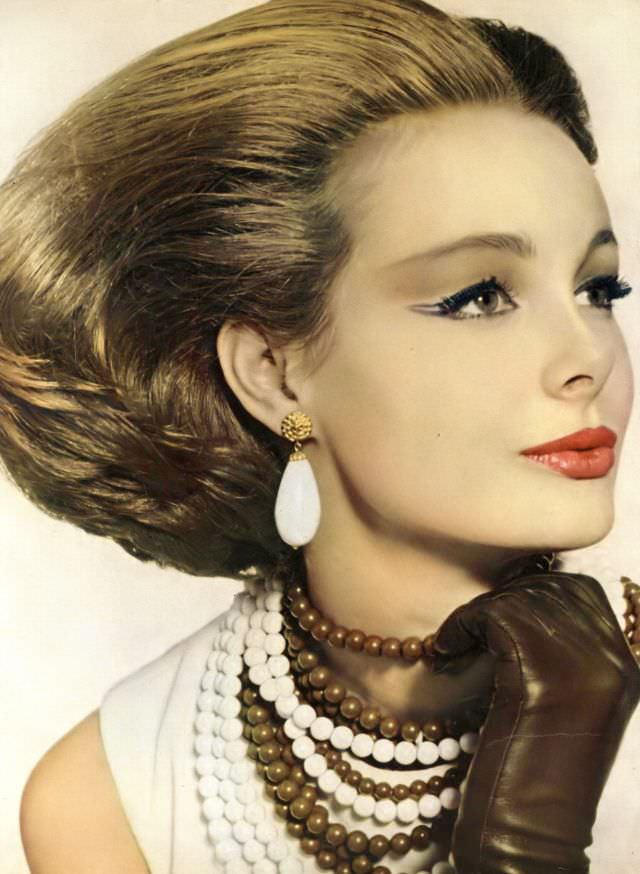
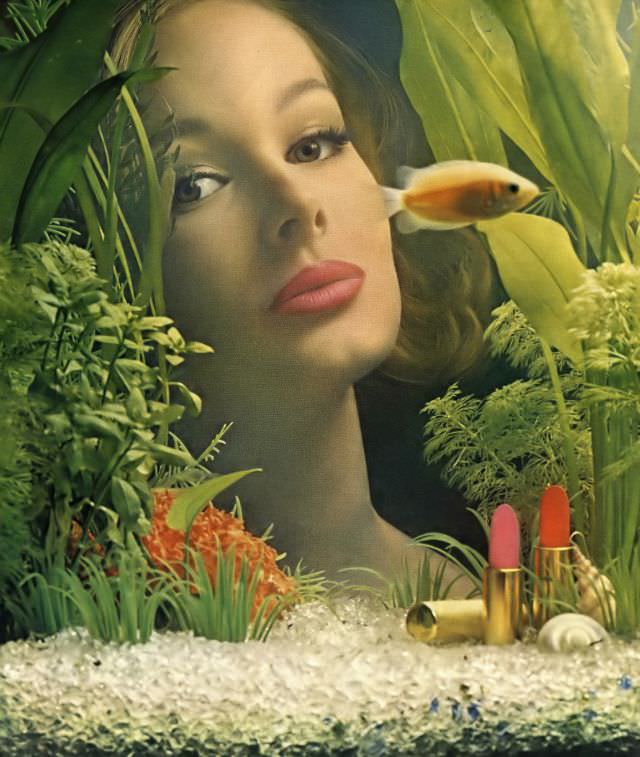
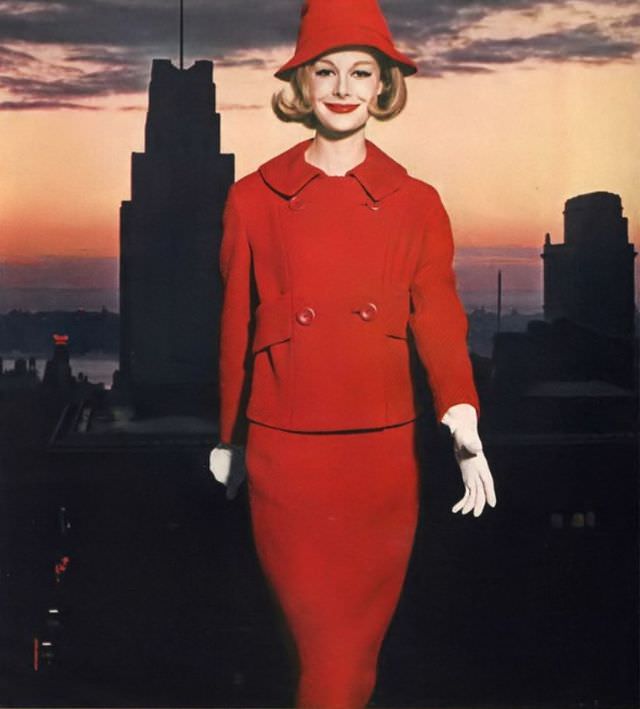
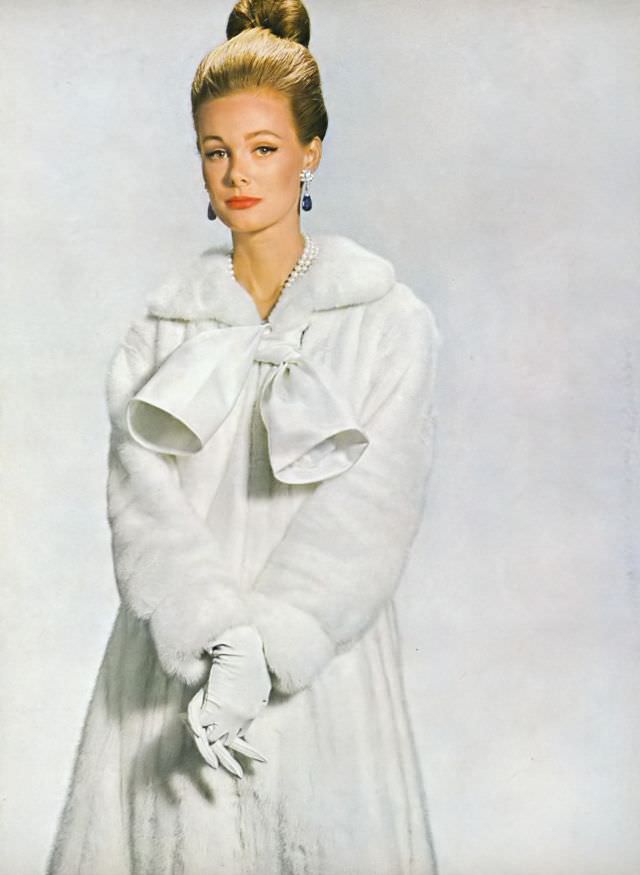
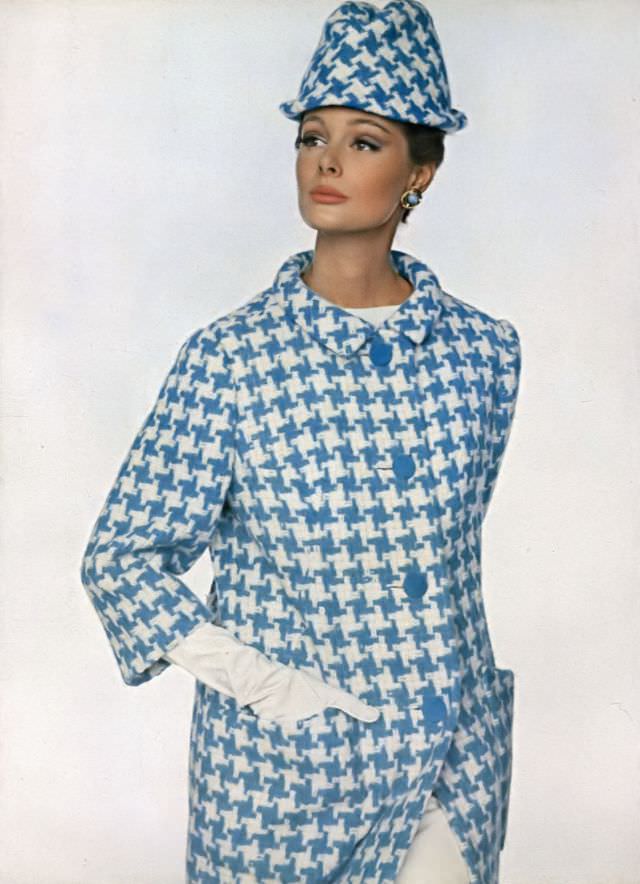
Her work in 1963 demonstrated the same versatility. She appeared on the pages of Harper’s Bazaar in a bleached-sand textured knit suit, wore a white mink coat-dress for an EMBA fur campaign in Vogue, and turned up in a MacShore Classics advertisement. Her editorial work that year also included a slim blue-and-white houndstooth coat for Vogue’s January issue — clean, graphic, and thoroughly modern for its time.
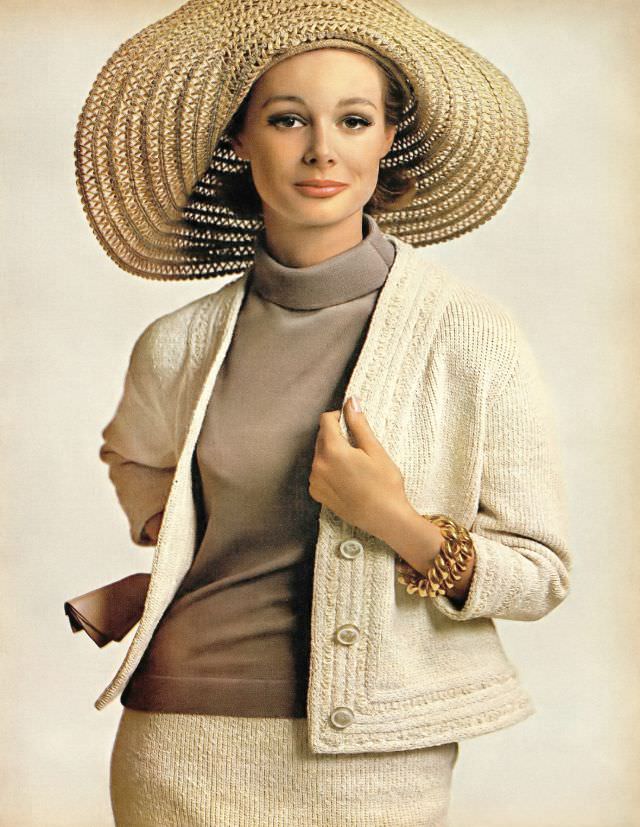
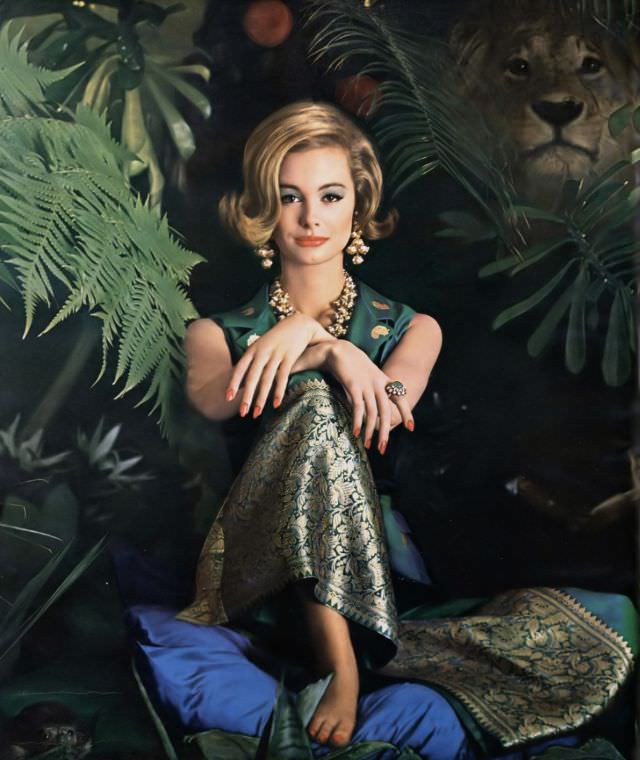
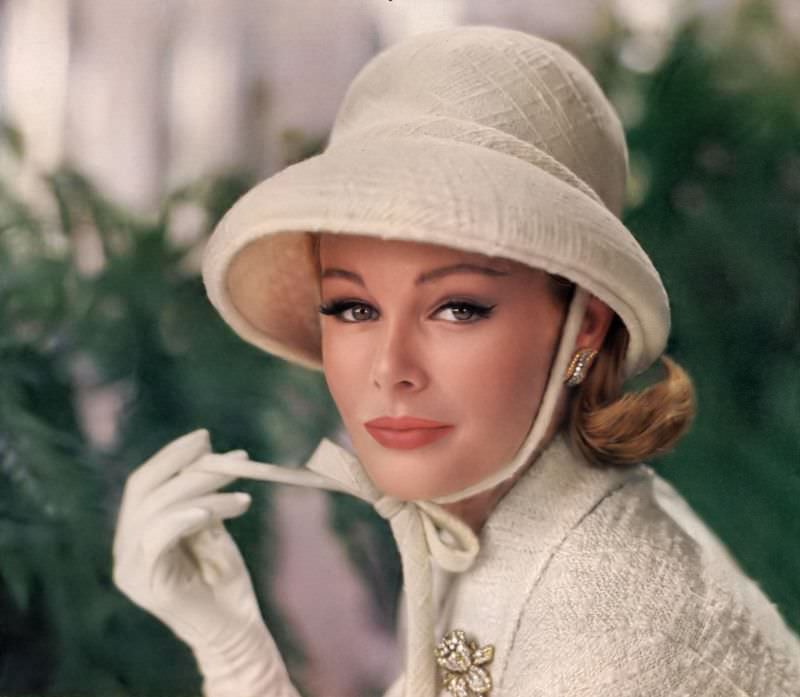
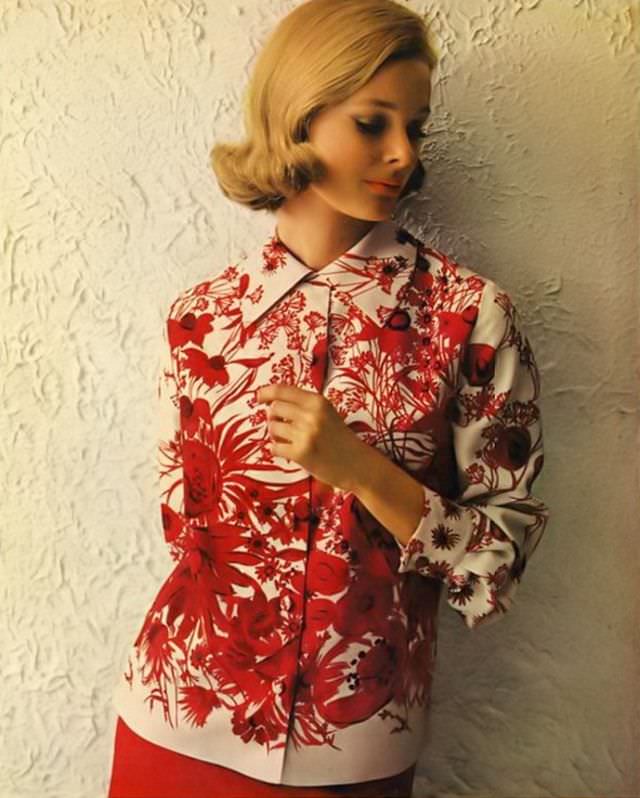
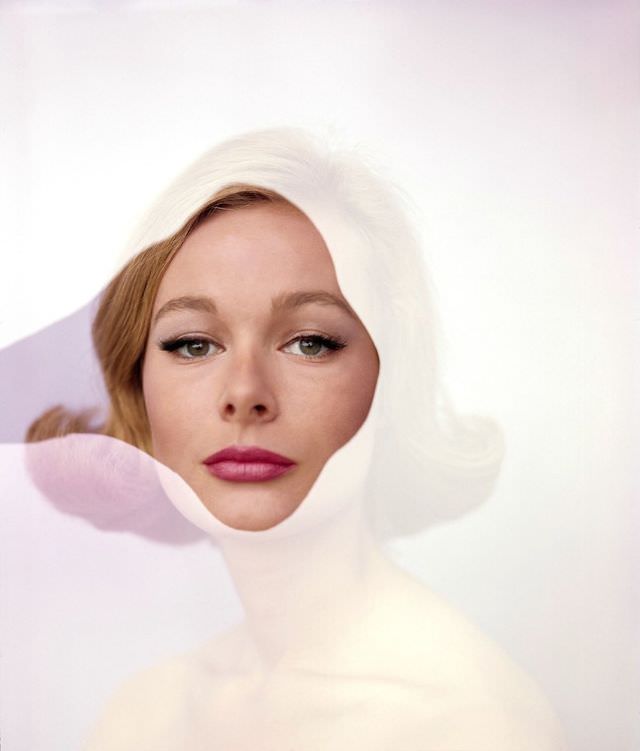
By 1965, Chevalier was still being sought out by photographers. A striking portrait by Tony Vaccaro — her face shown in cut-out form for Home Companion magazine — demonstrated that her image remained commercially powerful well into the mid-decade. Over the course of roughly fifteen years, she had moved from a teenager posing for European photographers to a fixture of American and transatlantic fashion publishing.