By 1910, Chicago was one of the most powerful cities in the world. Its population had already surpassed 1.7 million at the turn of the century, and by 1907 it crossed two million. The city’s rise was driven by a massive rail network that made it the largest rail hub on the planet, connecting the upper Midwest and East Coast with a web of freight and passenger lines. The Great Lakes fed Chicago’s port traffic, making it a shipping powerhouse as well. Manufacturing, meatpacking, retail, and banking all thrived under the same skyline. The photographs from this decade capture a city that was constantly building, moving, and transforming itself.
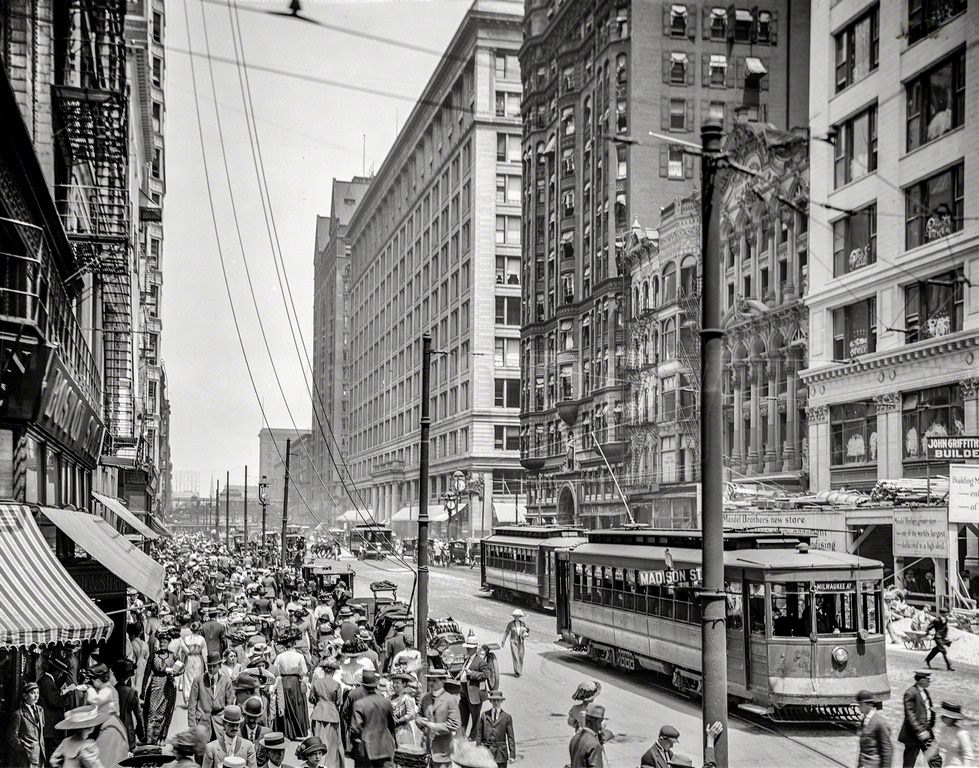
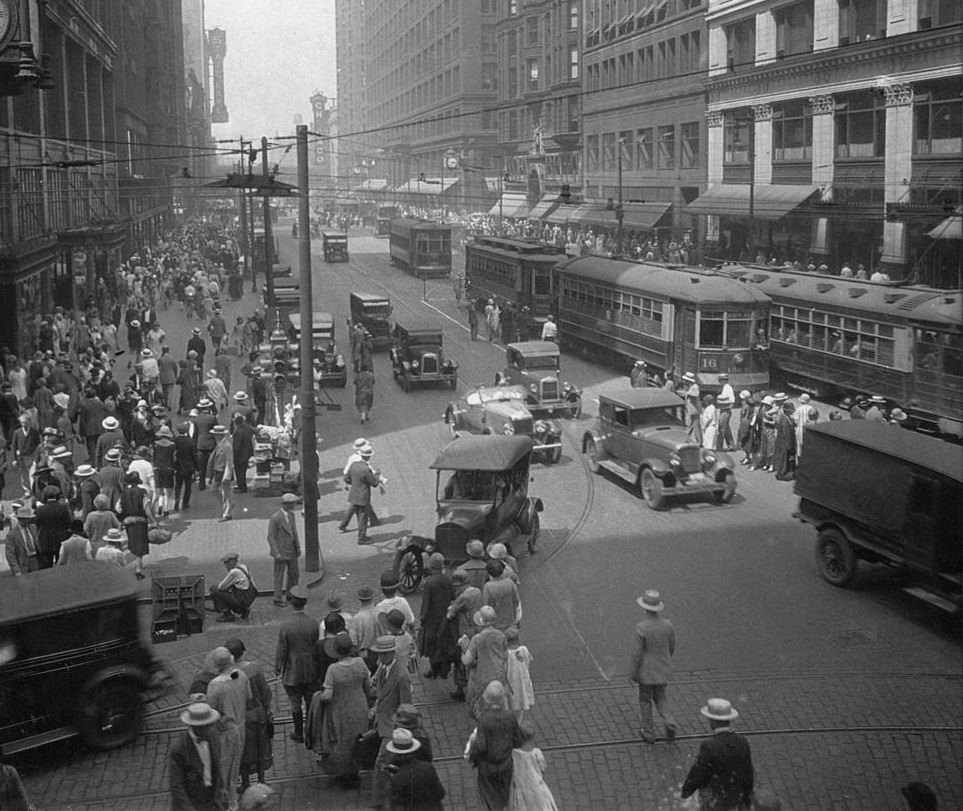
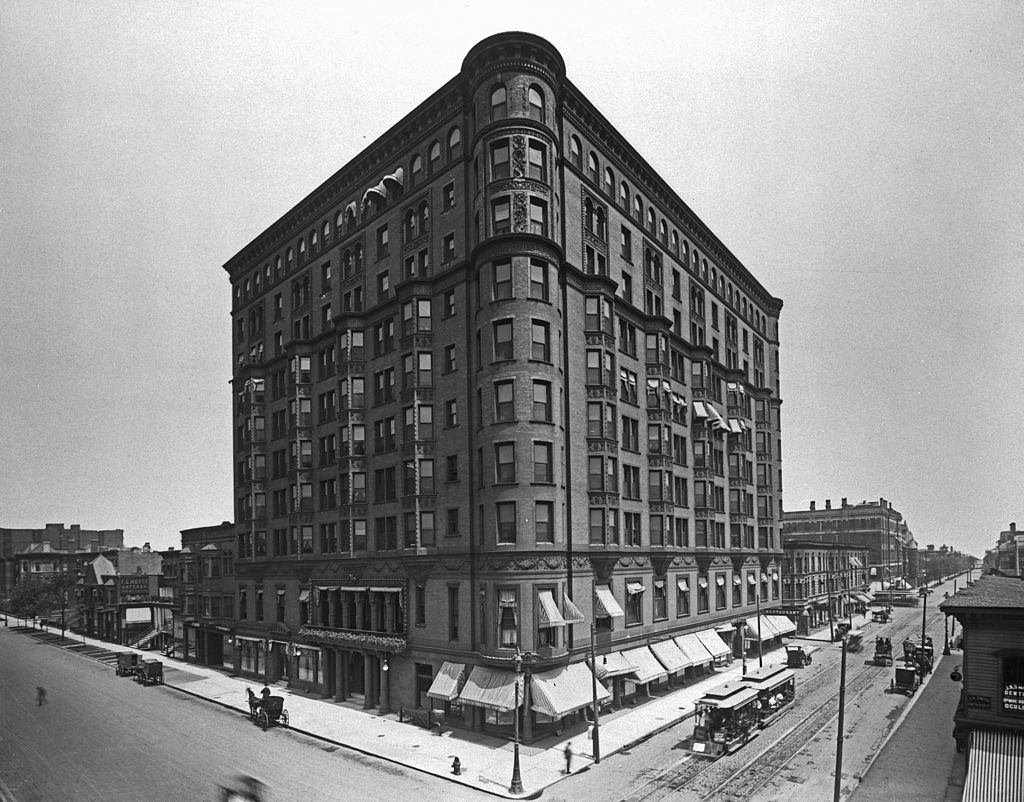
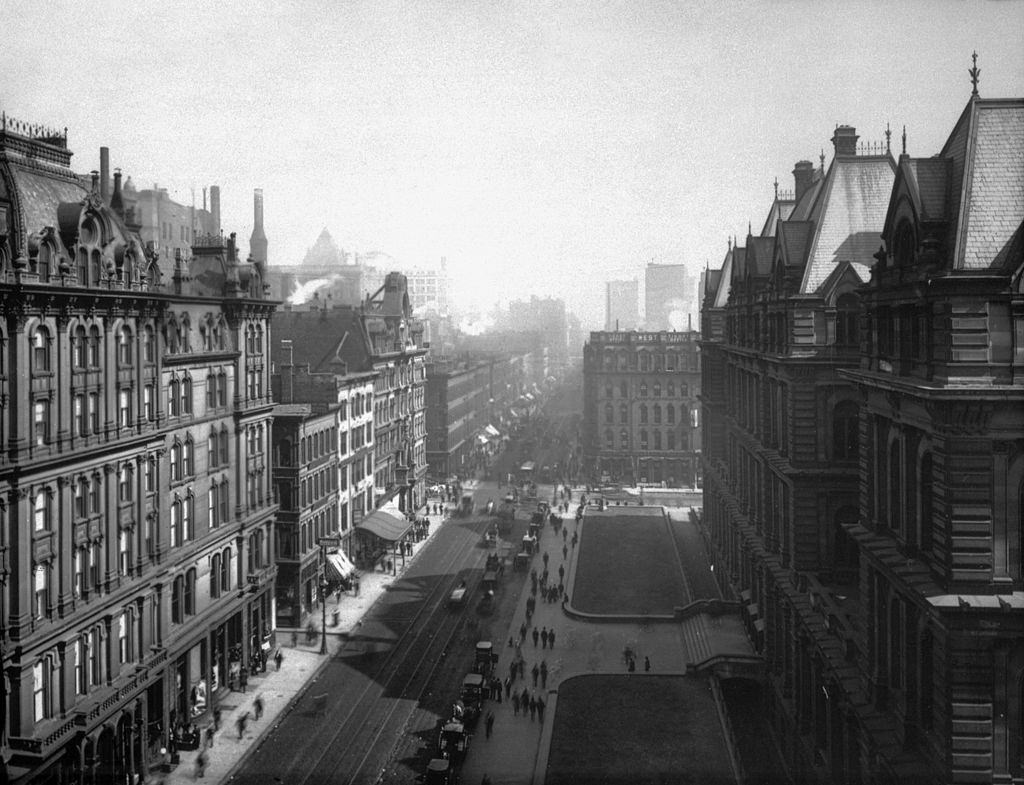
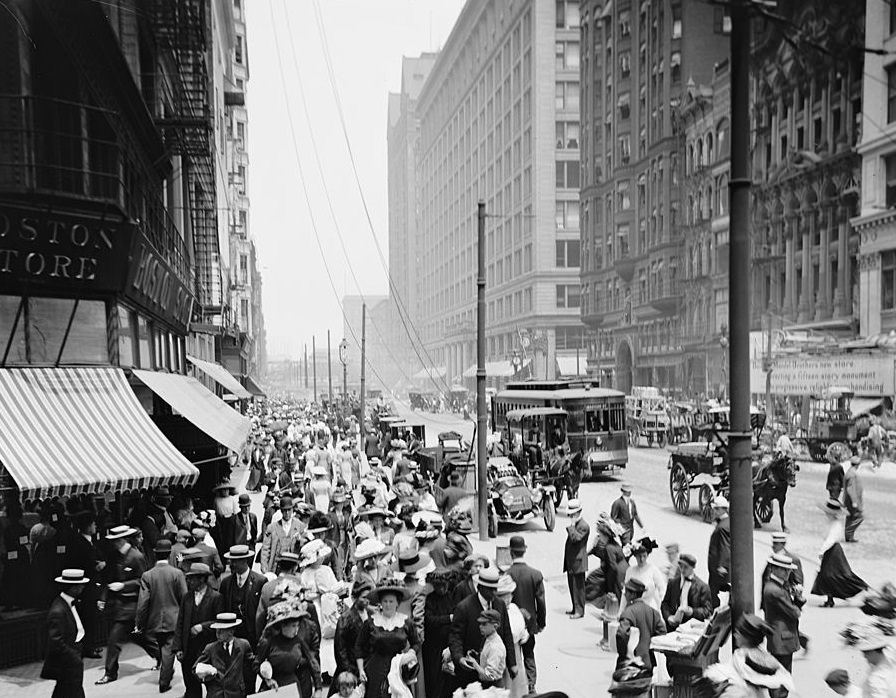
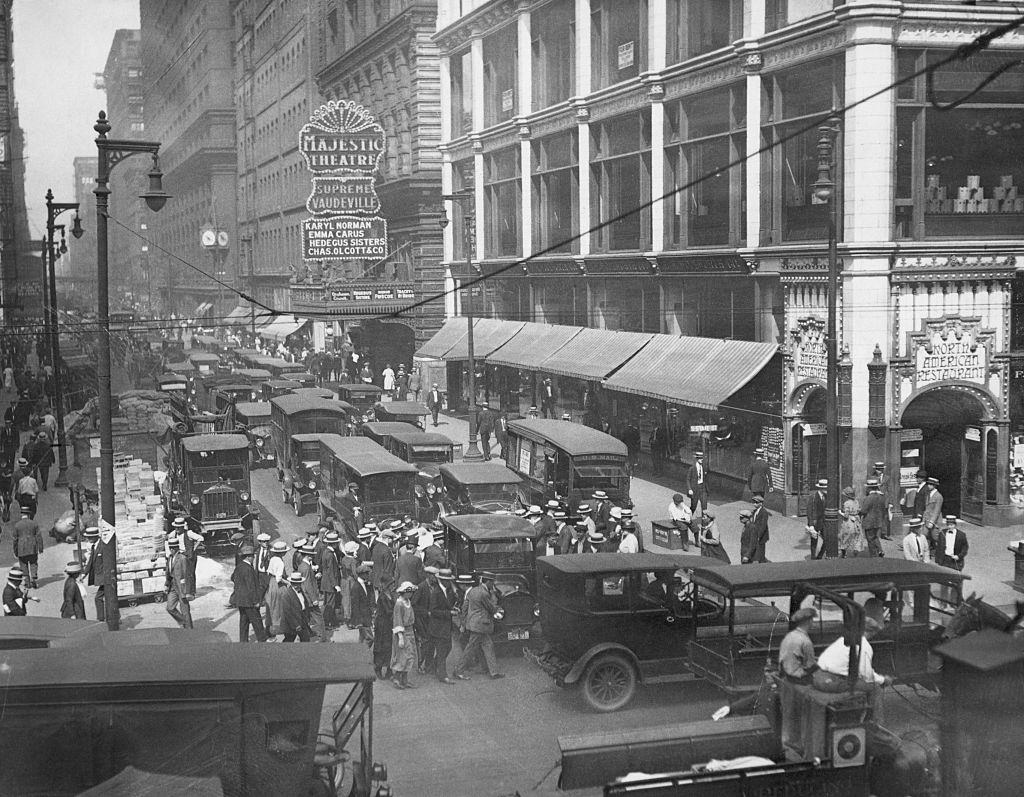
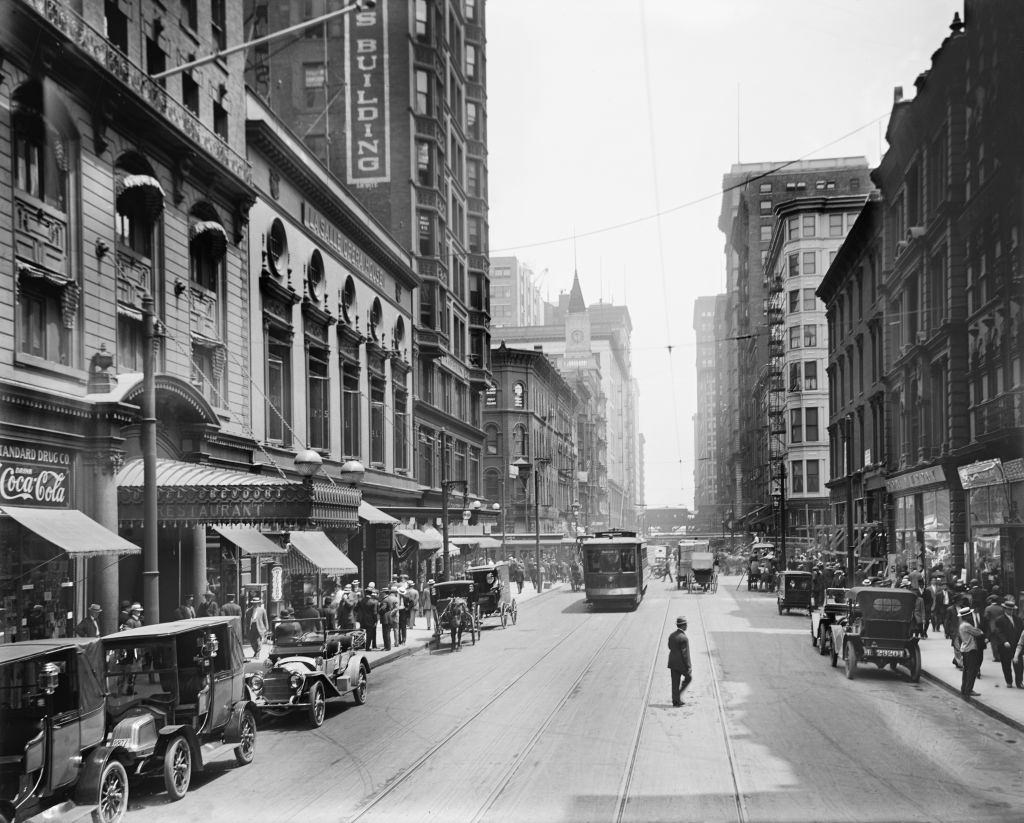
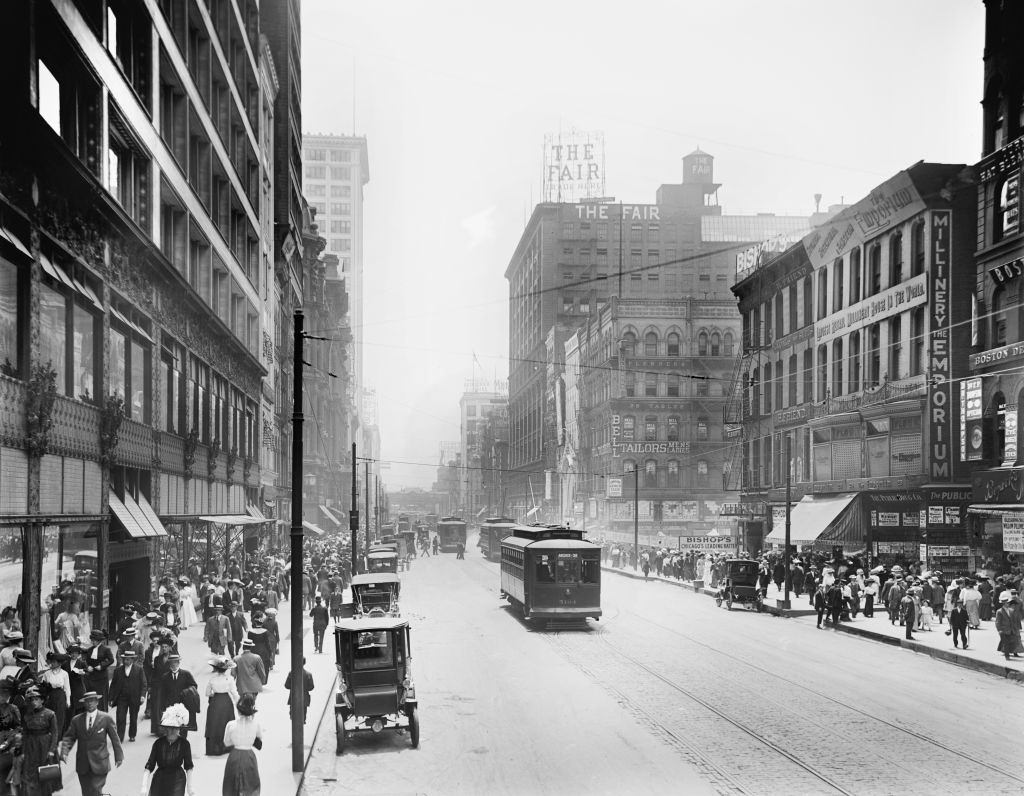
The streets of Chicago in the 1910s were alive with a mix of horse-drawn carts, early automobiles, and packed electric streetcars. Washington Boulevard and State Street were among the busiest corridors in the city, lined with shops, hotels, and office buildings. State Street in particular served as the commercial spine of Chicago, anchoring major department stores and drawing shoppers from across the region.
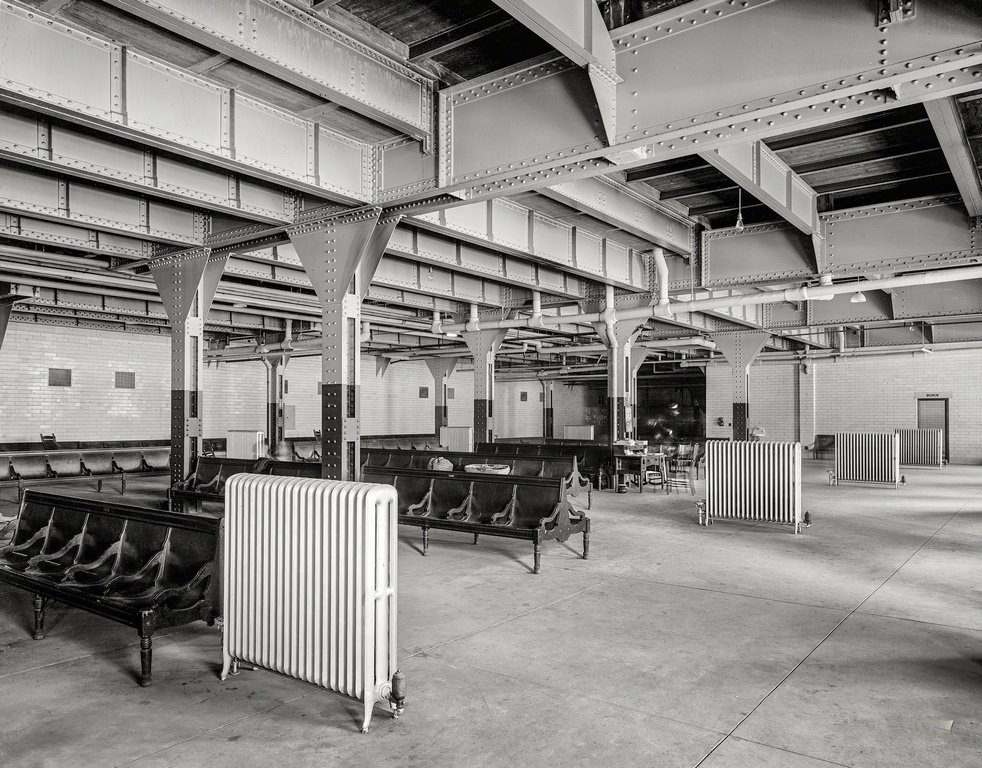
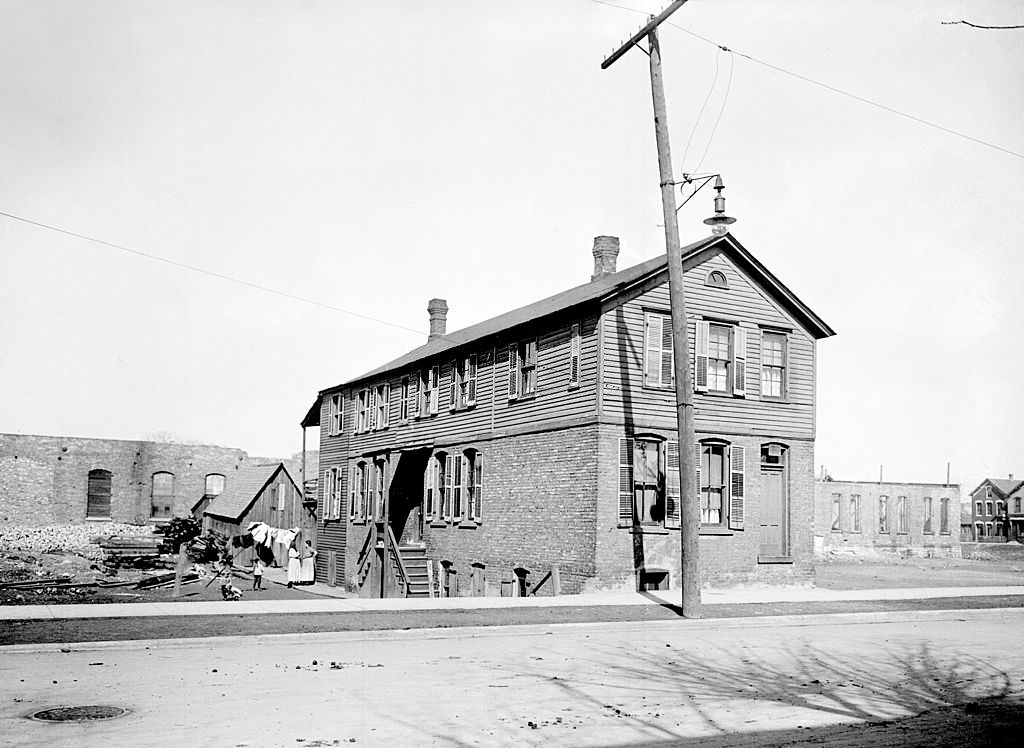
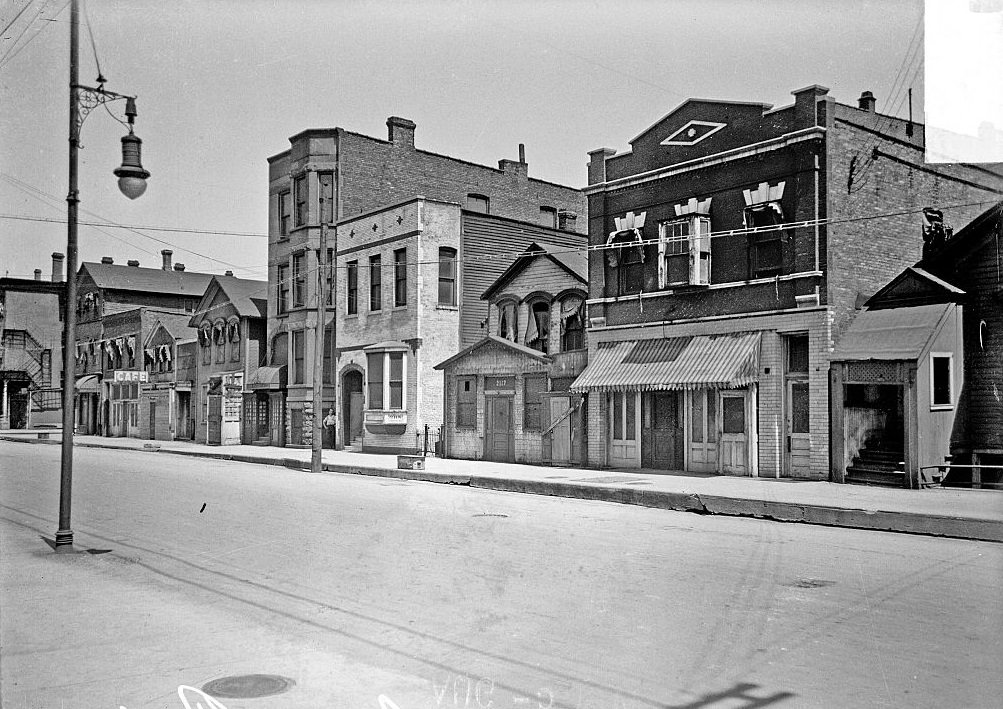
Chicago during this era was a city of immigrants. Thousands arrived each year from Southern and Eastern Europe, drawn by jobs in the stockyards, steel mills, and factories. Processing facilities and reception rooms for new arrivals were a common fixture of the urban landscape, reflecting just how much the city’s growth depended on foreign-born labor. Entire neighborhoods took on the character of the communities that settled them — Polish, Italian, Jewish, and Greek enclaves all had their own churches, markets, and institutions.
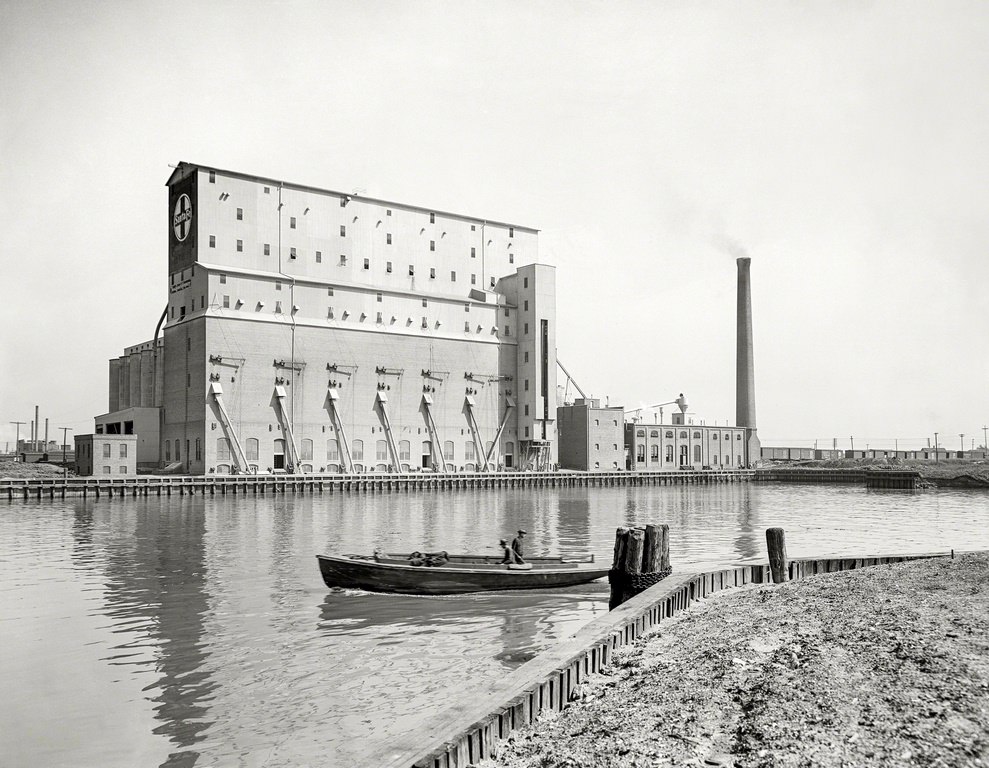
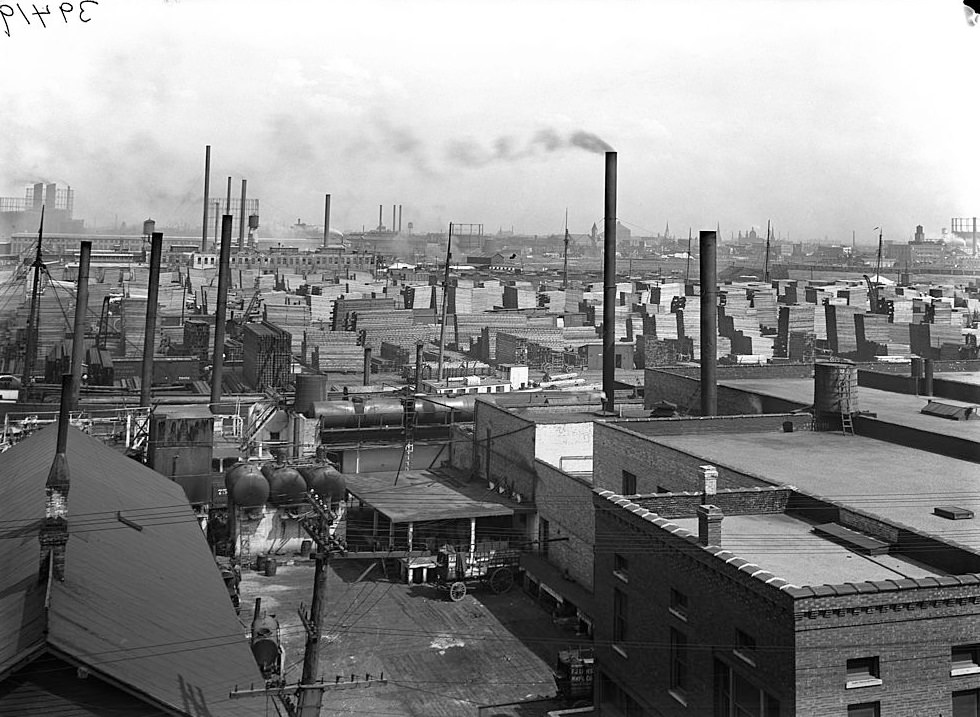
Chicago’s industrial backbone was visible everywhere along its waterways and rail yards. The Santa Fe grain elevators at the head of the canal were enormous structures that stored and transferred grain moving across the country. These elevators were central to the city’s role in feeding the nation, processing vast quantities of wheat and corn shipped in from Midwest farms.
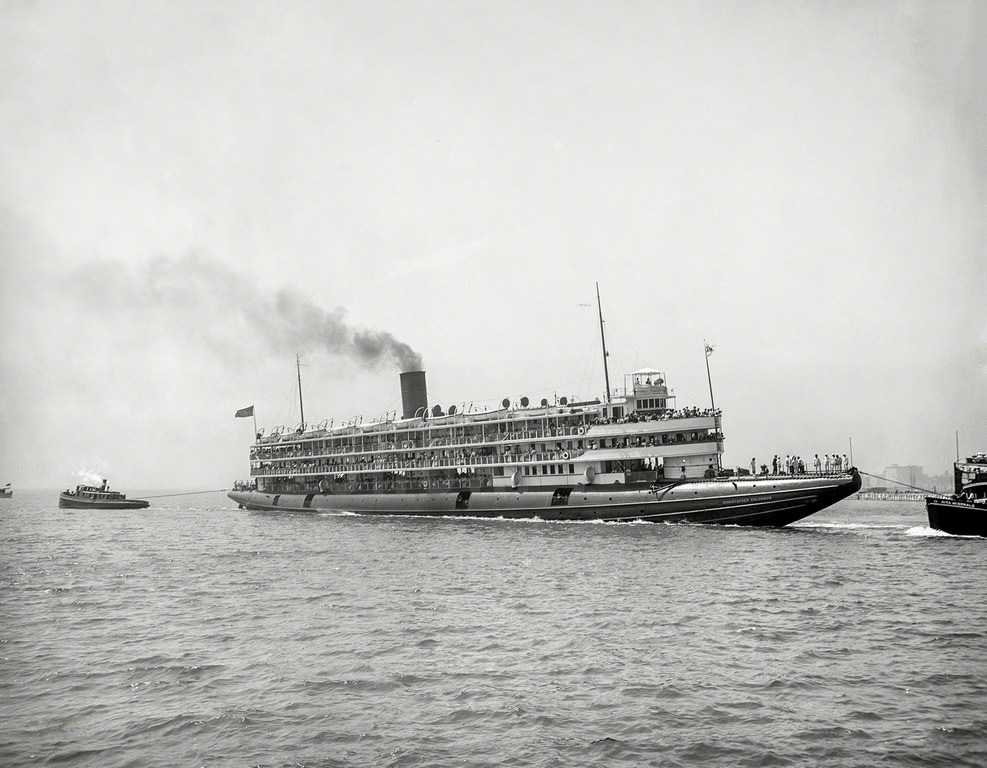
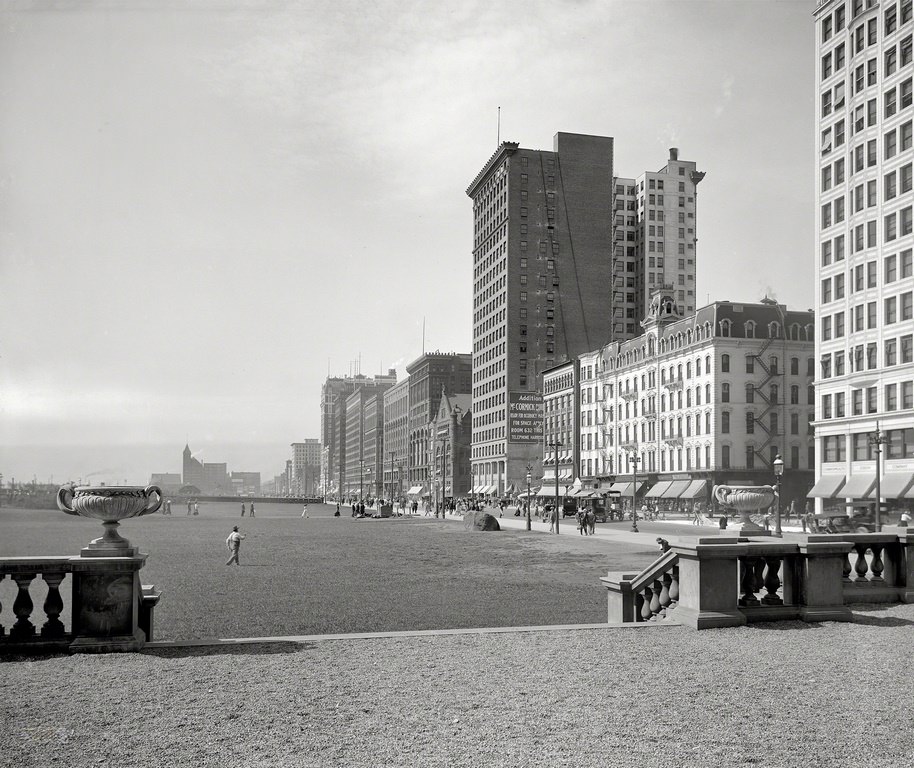
Water travel on Lake Michigan was a major part of Chicago life. The steamer Christopher Columbus was one of the most recognized vessels on the Great Lakes, regularly carrying passengers between Chicago and Milwaukee. It was known for its unusual design — a whaleback hull that sat low in the water — and was a popular attraction at the city’s docks. Grant Park, stretching along the lakefront, offered residents and visitors a green escape from the dense urban grid.
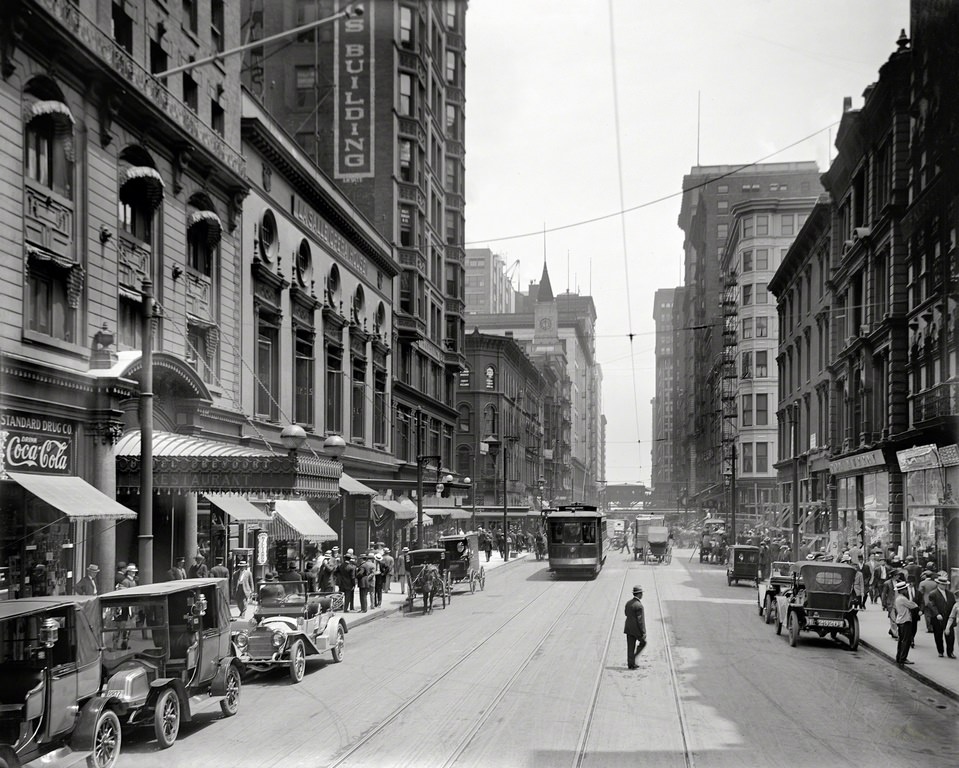
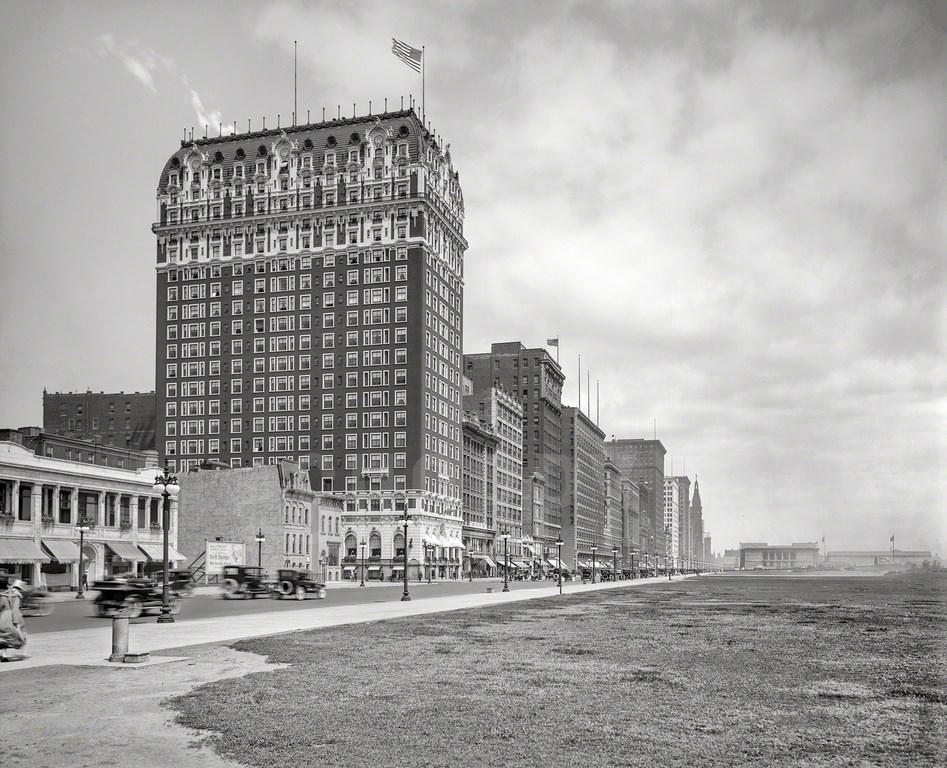
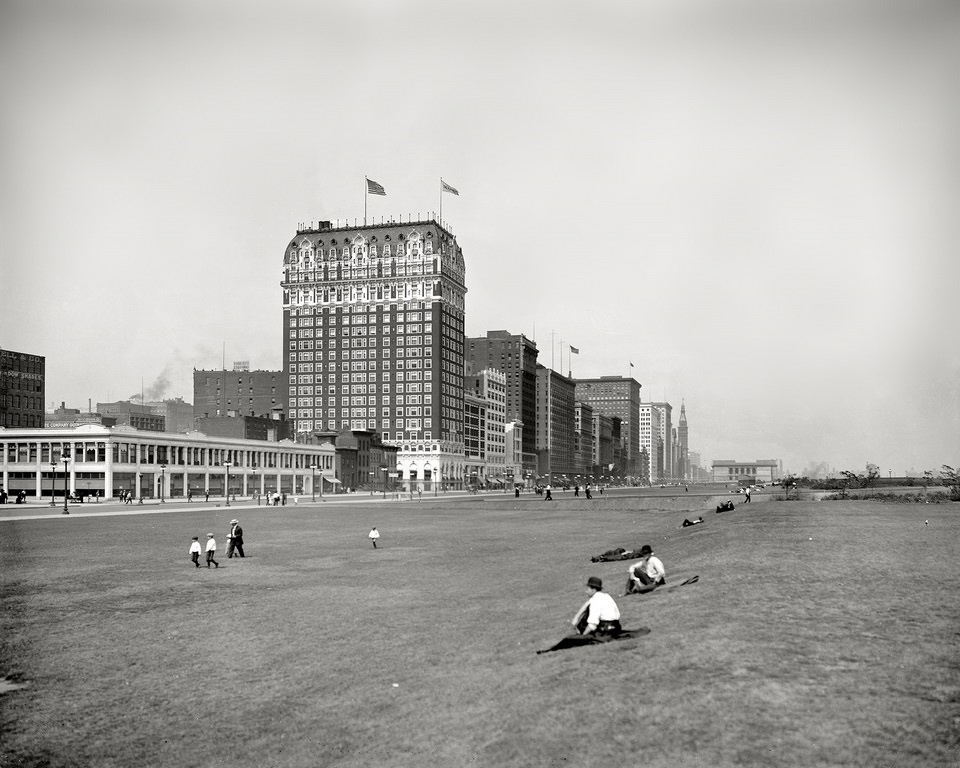
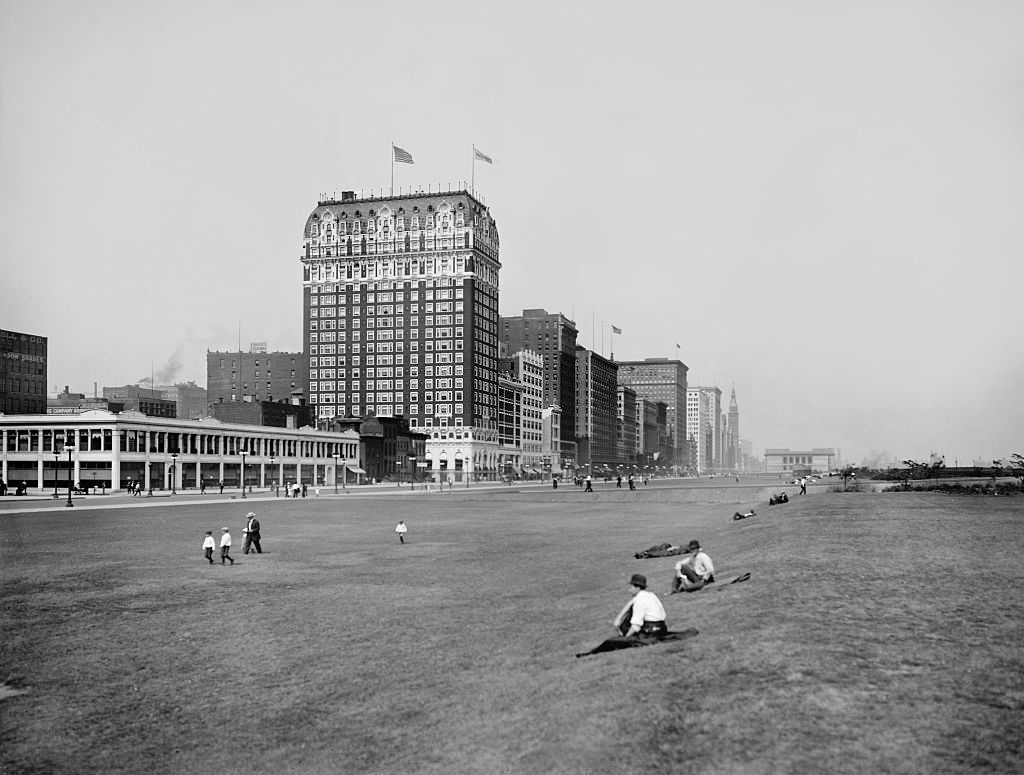
Madison Street in the Loop was a concentration of hotels, theaters, and cultural institutions. The Hotel Brevoort and La Salle Opera House stood as symbols of Chicago’s appetite for entertainment and refinement. Nearby on Michigan Avenue, the Blackstone Hotel opened in 1910 as one of the most luxurious accommodations in the Midwest, catering to politicians, celebrities, and business leaders.
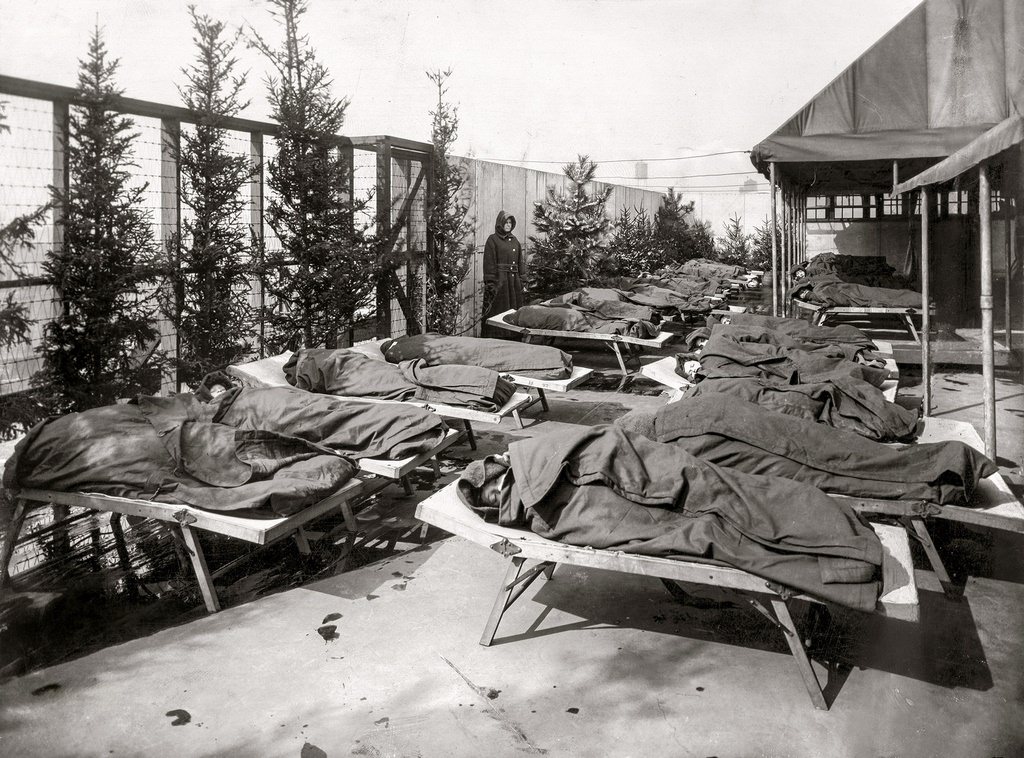
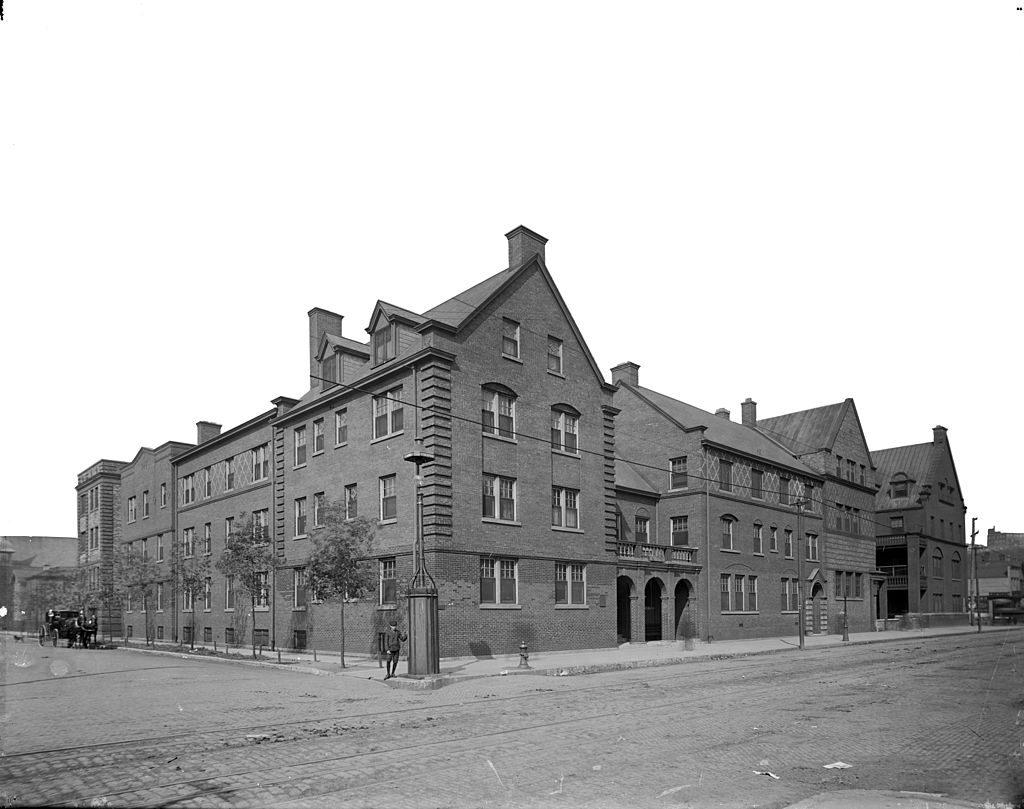
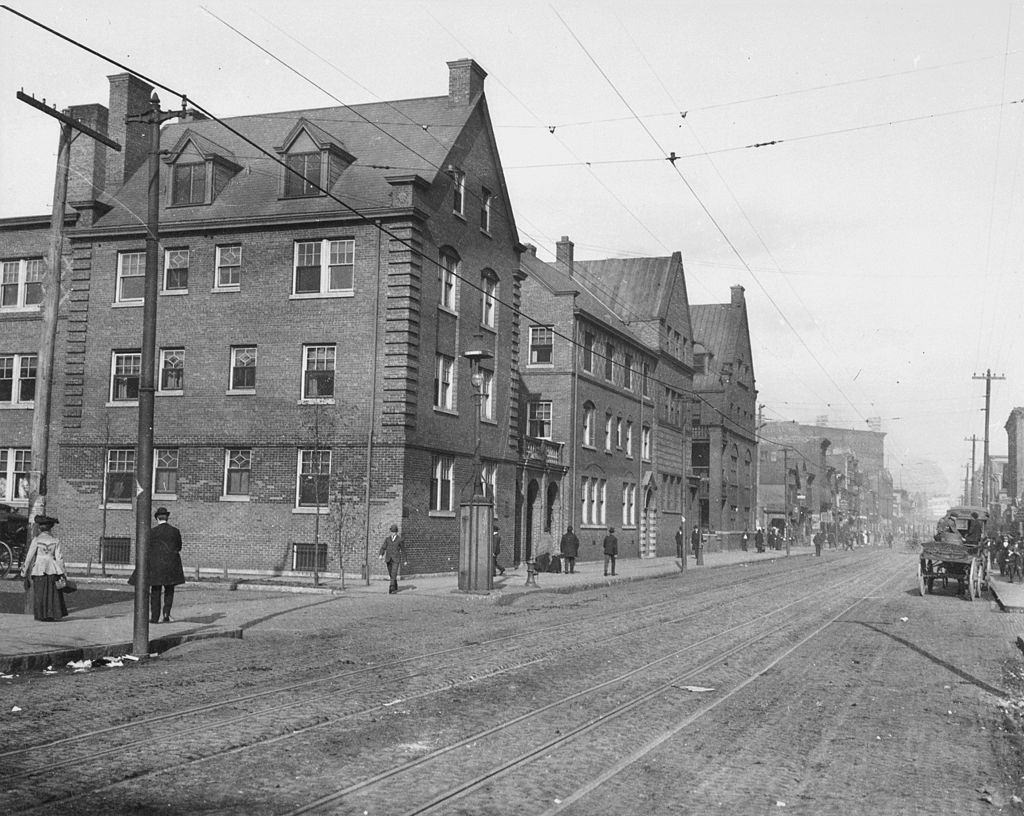
Education and social reform were priorities for many Chicago institutions during the 1910s. The Elizabeth McCormick Open Air School held classes on rooftops, a practice rooted in the belief that fresh air improved children’s health and focus — particularly important in an era when tuberculosis was still a serious concern. Hull House, the famous settlement house founded by Jane Addams on South Halsted Street, operated a kindergarten, daycare, classrooms, libraries, and community meeting spaces for the working-class and immigrant families of the Near West Side.
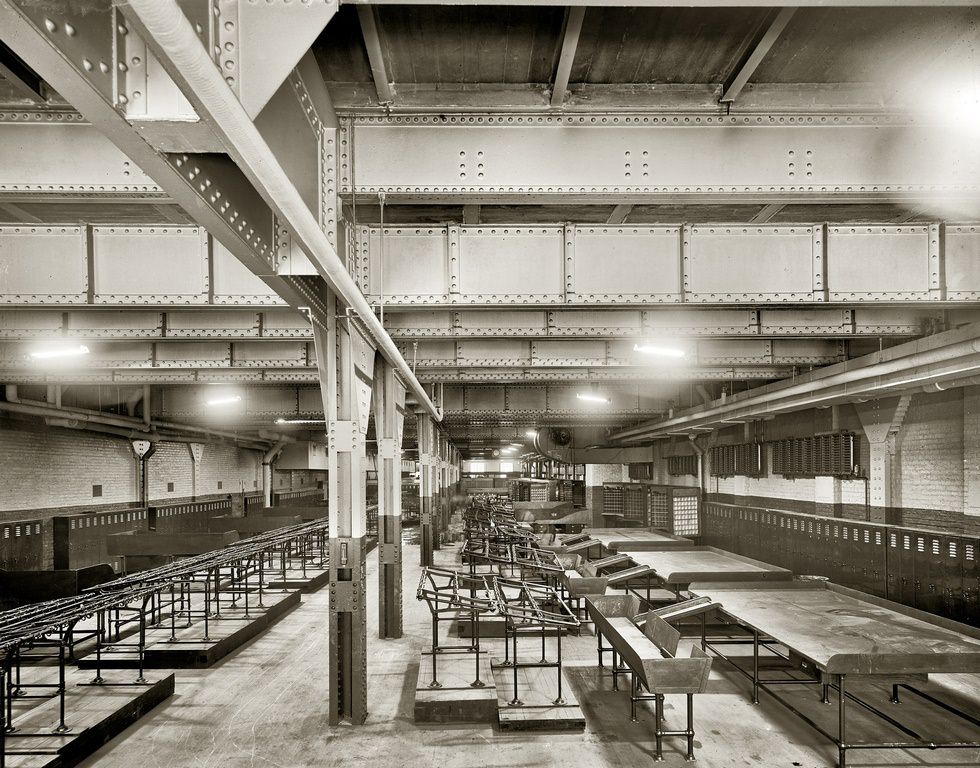
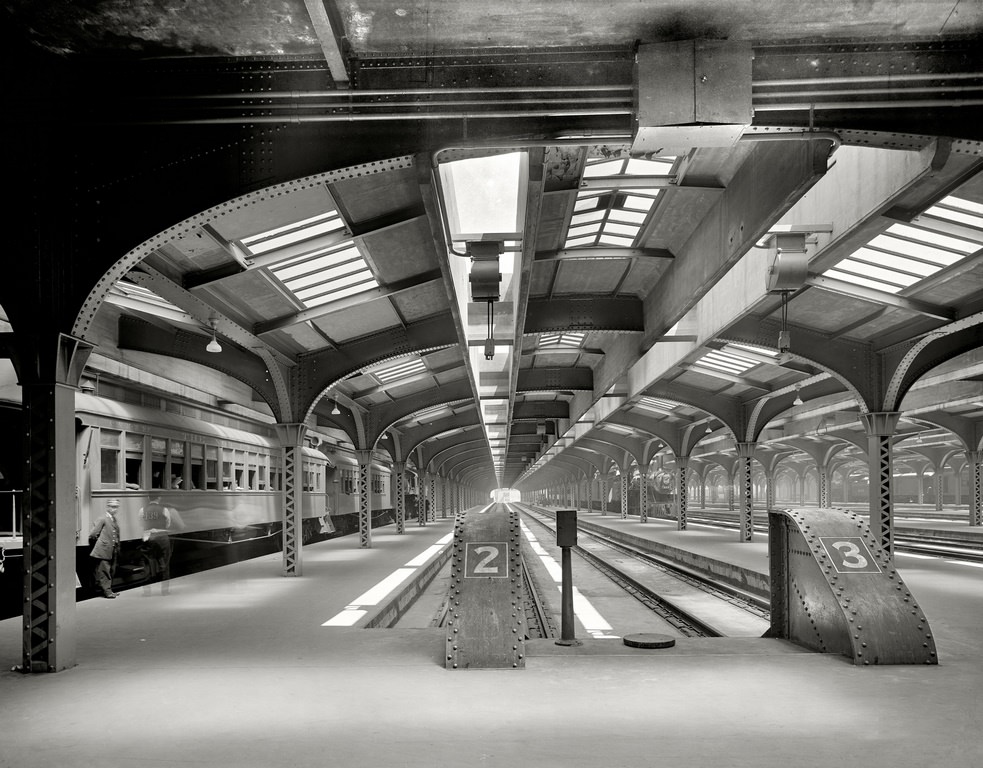
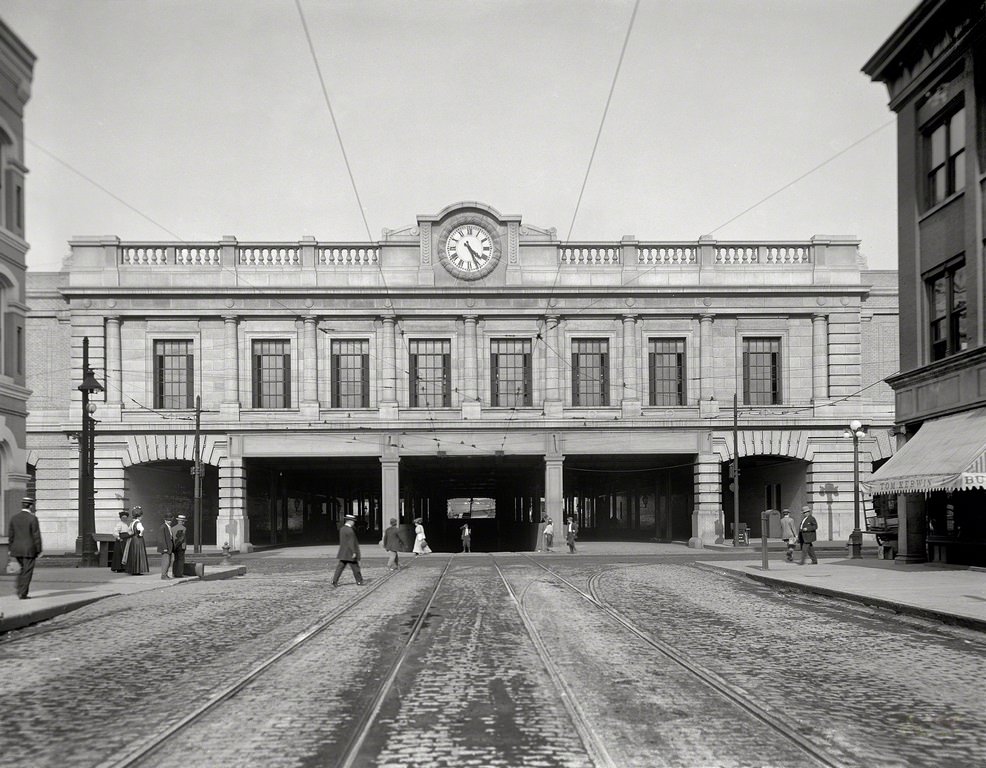
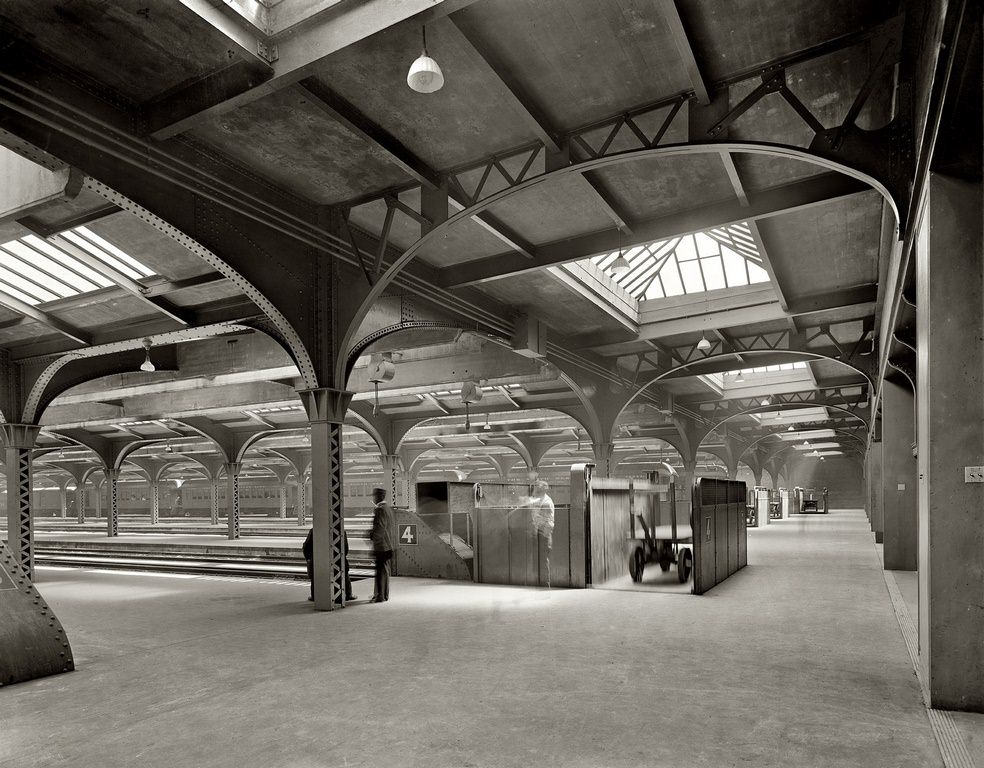
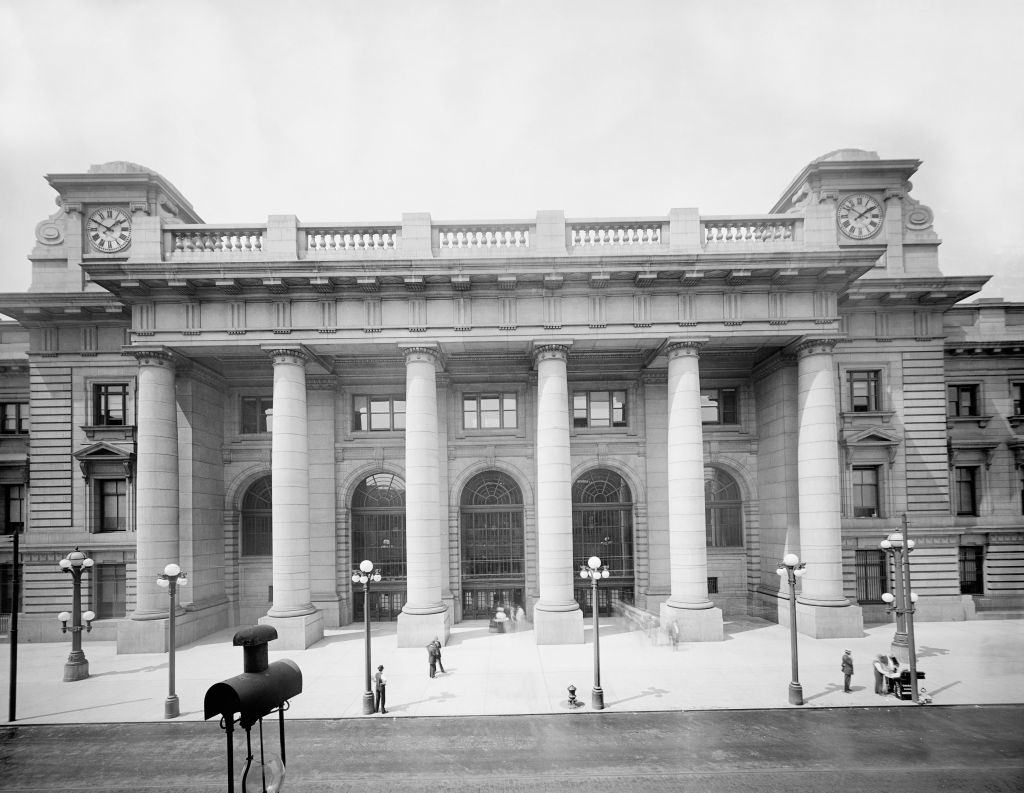
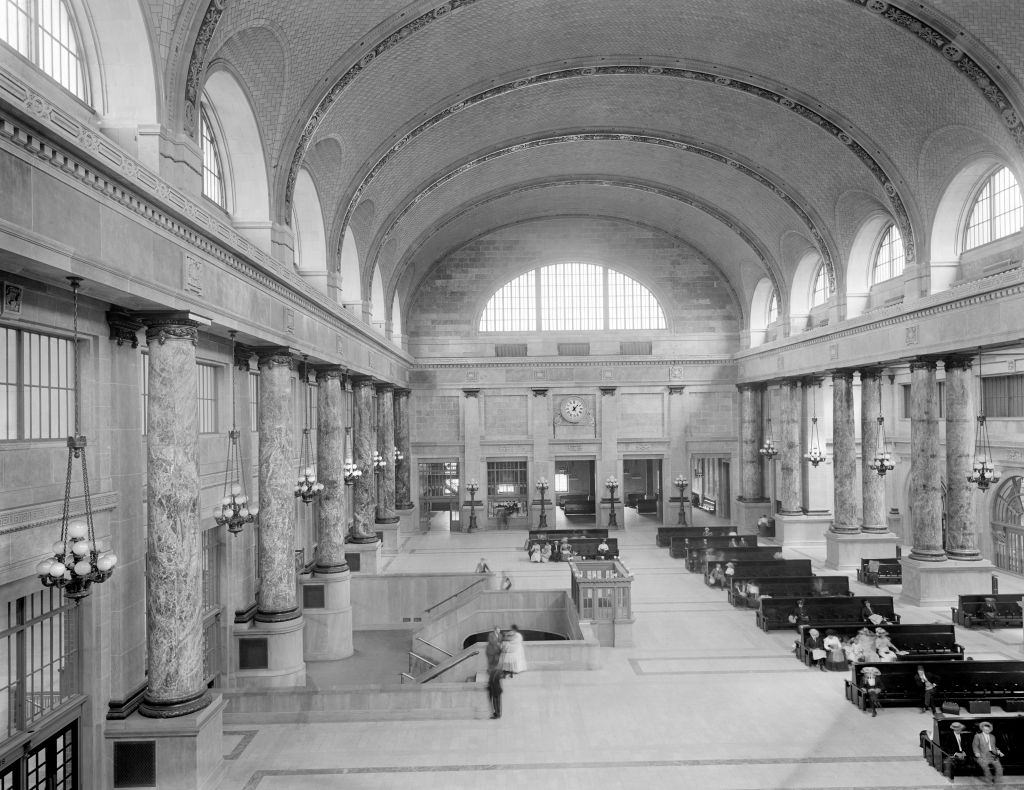
The Chicago and North Western Railway station was one of the city’s great transit hubs. Its massive train sheds sheltered dozens of tracks under a vaulted iron roof. The station also housed a U.S. Mail department, processing enormous volumes of mail carried by rail across the country. Chicago’s position as the nation’s railroad center meant that nearly every major rail line passed through the city, and its terminals were among the busiest in the world.
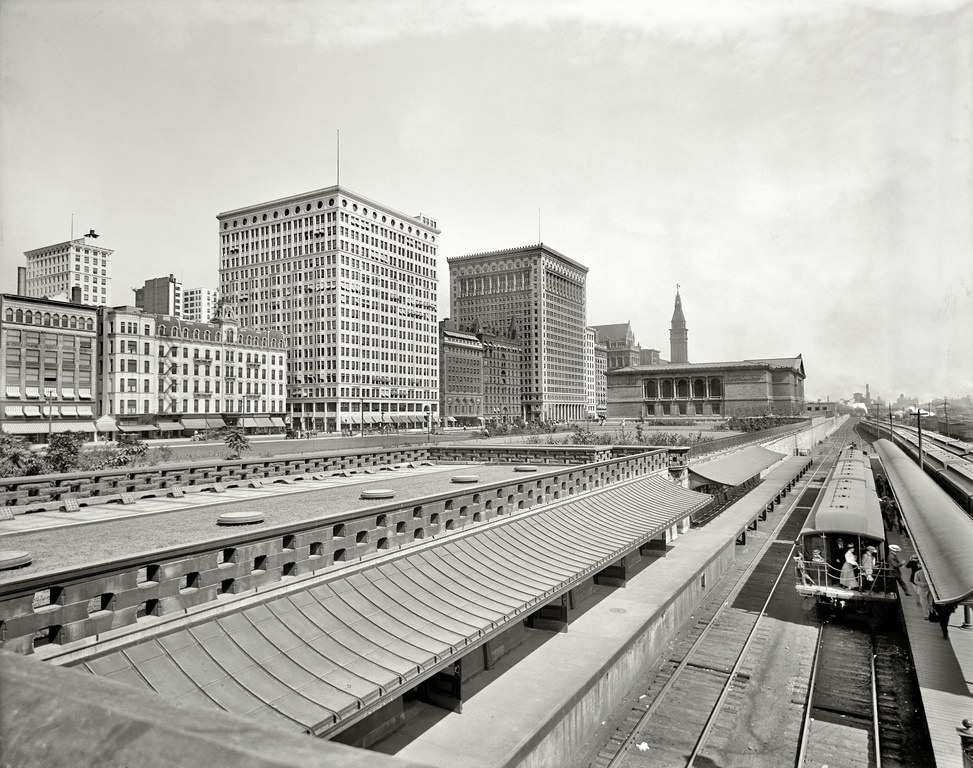
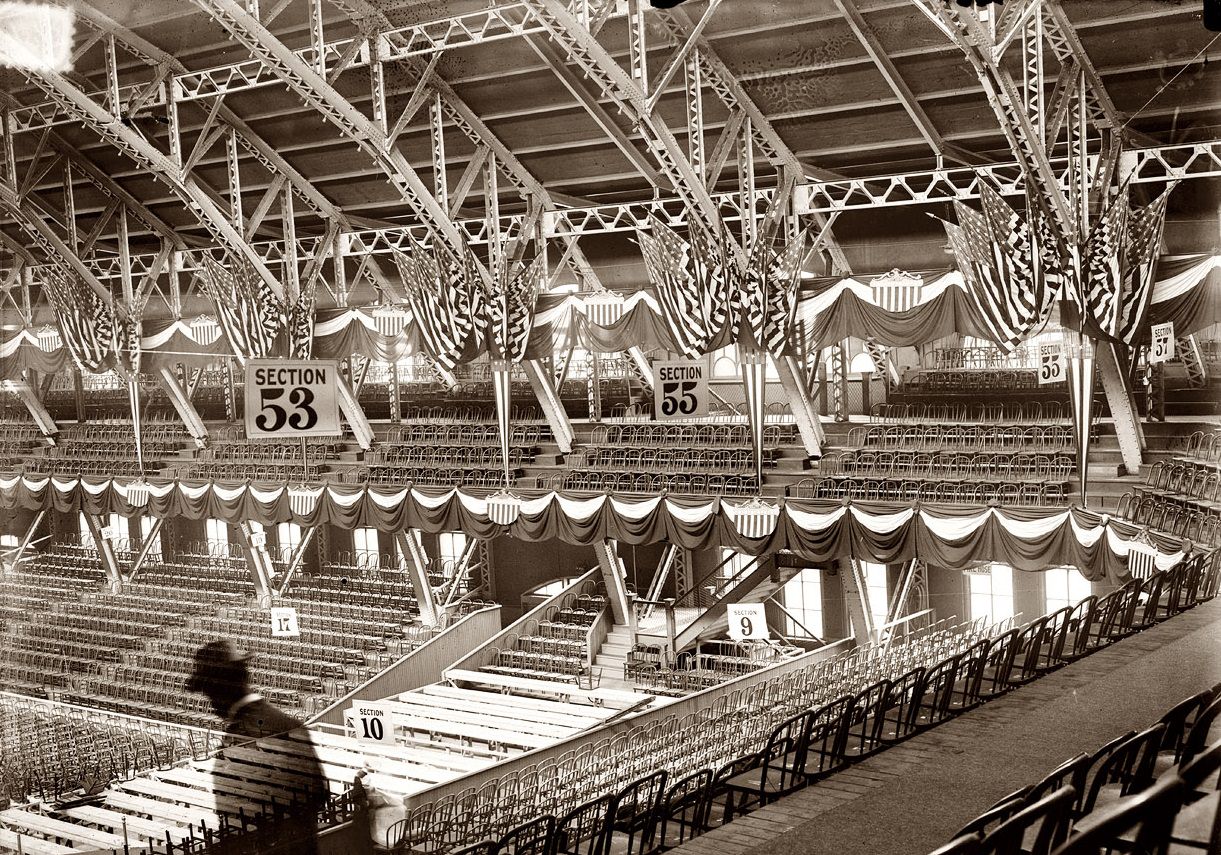
In June 1916, Chicago hosted the Republican National Convention at the Chicago Coliseum, the same venue that had hosted the party’s conventions in 1904 and 1908. The building’s grandstands were set up to accommodate thousands of delegates who would ultimately nominate Charles Evans Hughes to run against incumbent President Woodrow Wilson.
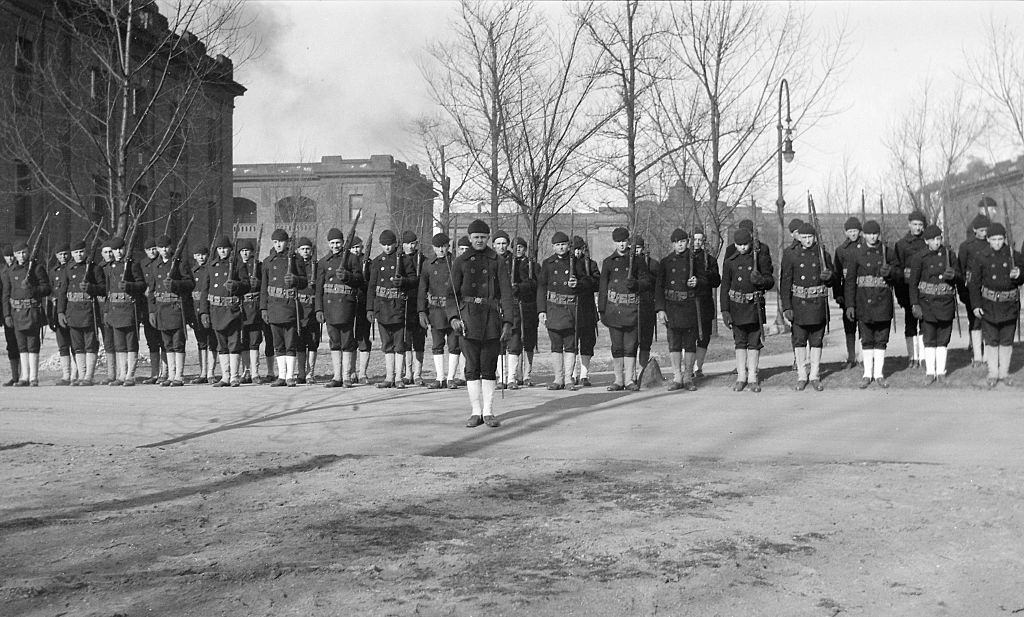
The Great Lakes Naval Training Station north of the city was a major military installation during this period. Established in 1911, it trained thousands of sailors for the U.S. Navy, and its population expanded dramatically as the country prepared for potential involvement in the First World War. By 1917, it had become the largest naval training station in the United States.
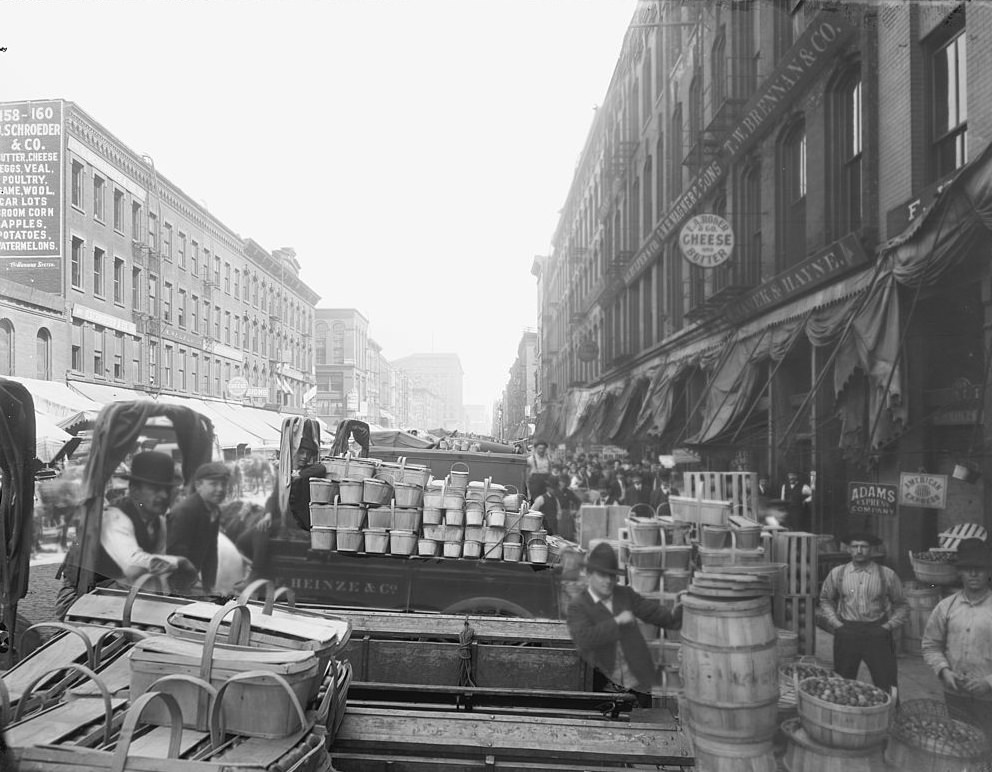
Clark Street in the Loop and the surrounding blocks were filled with a dense mix of businesses, saloons, theaters, and street vendors. The South Water Street Market, one of the city’s oldest outdoor wholesale markets, drew merchants and buyers every morning to trade in fruit, vegetables, and dry goods. It was a chaotic, crowded space that fed much of the city’s retail food supply.
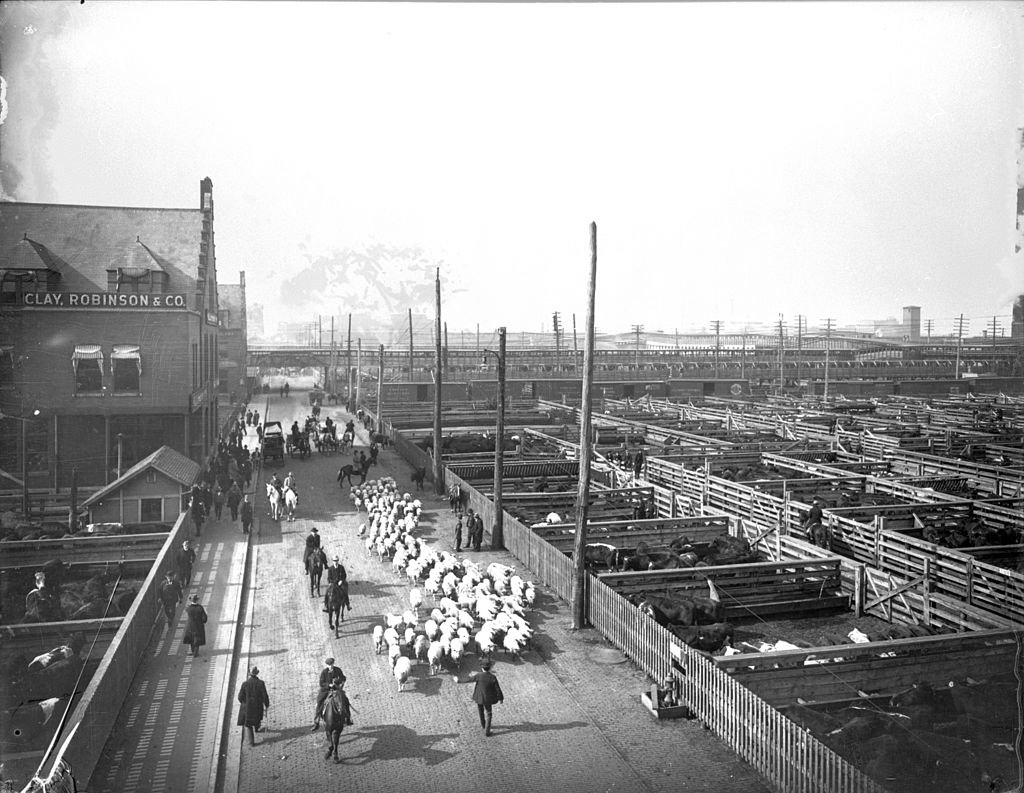
The Union Stock Yard was the economic engine of Chicago’s meatpacking industry. By the 1910s, it covered over a square mile and employed tens of thousands of workers. Cattle, hogs, and sheep arrived by rail in staggering numbers each day, processed by companies like Swift and Armour into meat shipped across the country and overseas. The yards were one of the most visited industrial sites in the world, drawing tourists who wanted to witness the scale of American food production firsthand.
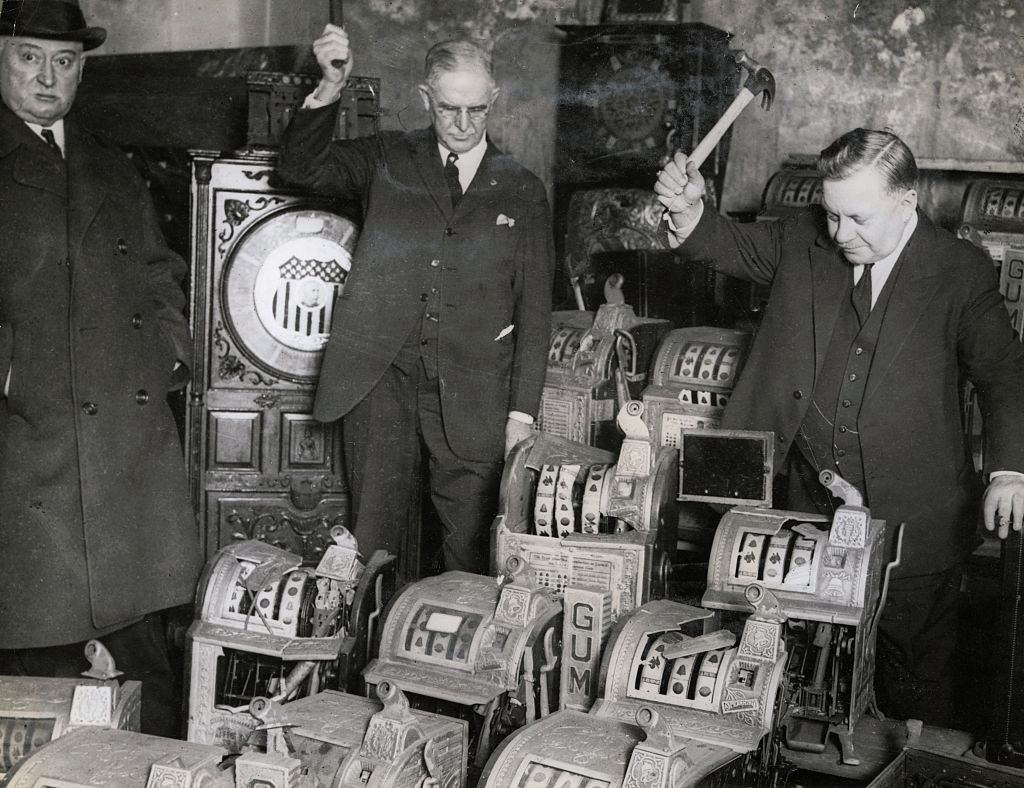
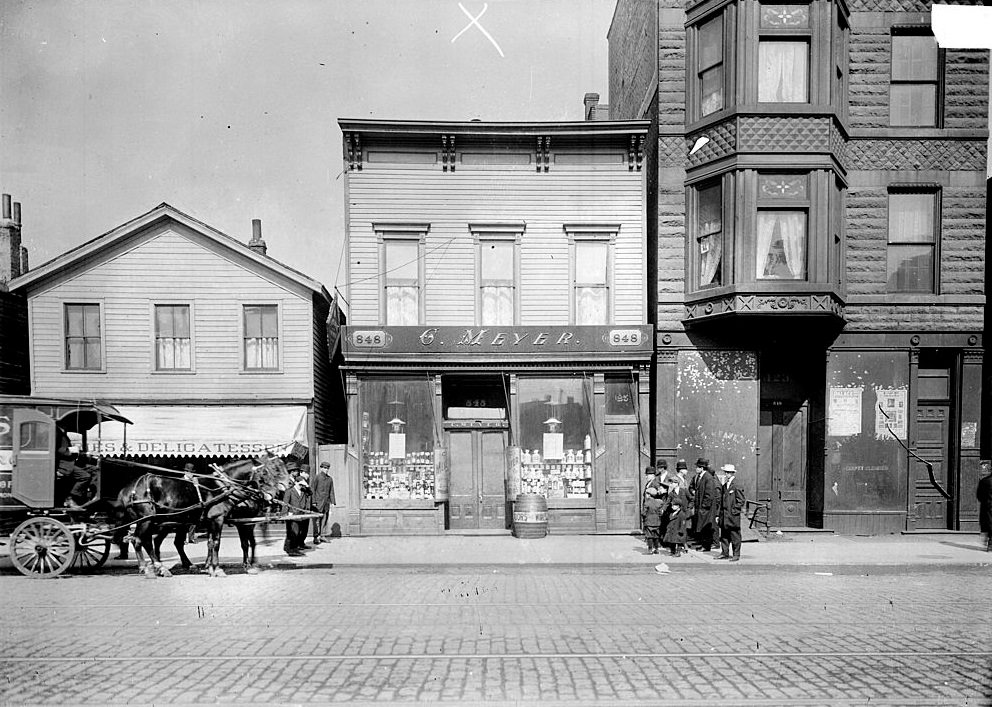
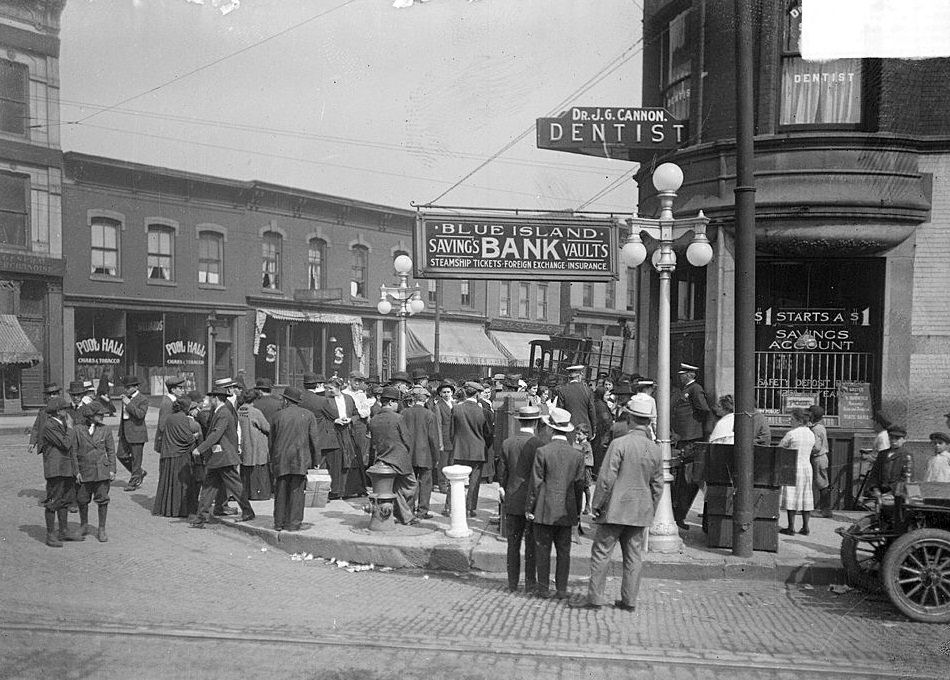
Law enforcement in 1910s Chicago had its hands full. The city had a well-documented problem with illegal gambling operations, and agents were regularly sent to raid establishments and destroy confiscated slot machines. Saloons like Cerf Meyer’s on Blue Island Avenue were central gathering points in working-class neighborhoods, and many doubled as informal political meeting places or fronts for illegal activity.
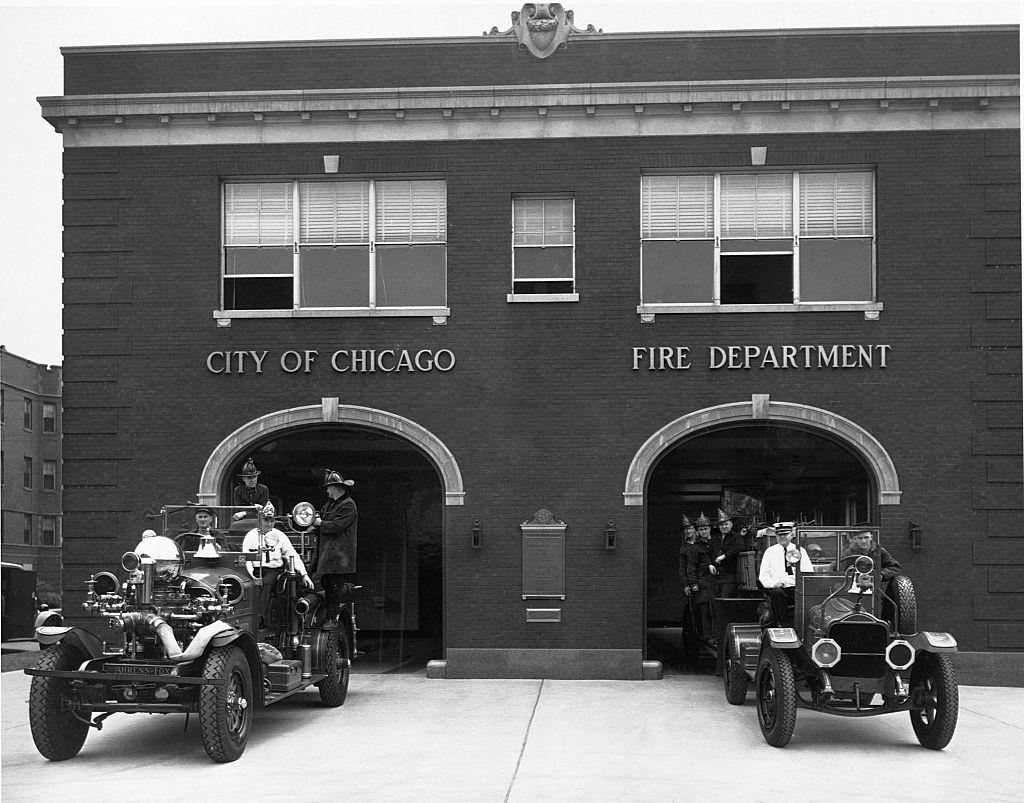
Chicago’s fire department underwent significant modernization during the 1910s. New fire stations were built throughout the city to handle the growing density of its neighborhoods and the increasing threat of industrial fires. The 1871 Great Chicago Fire remained a defining moment in the city’s memory, and fire prevention was taken seriously by city planners and officials alike.
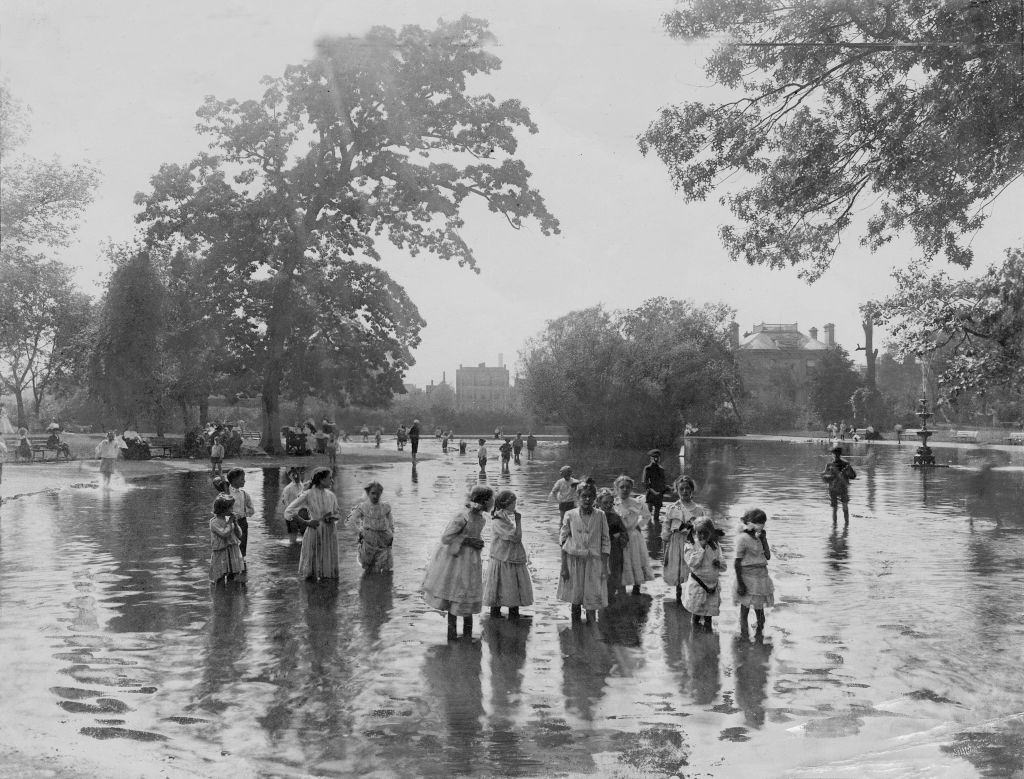
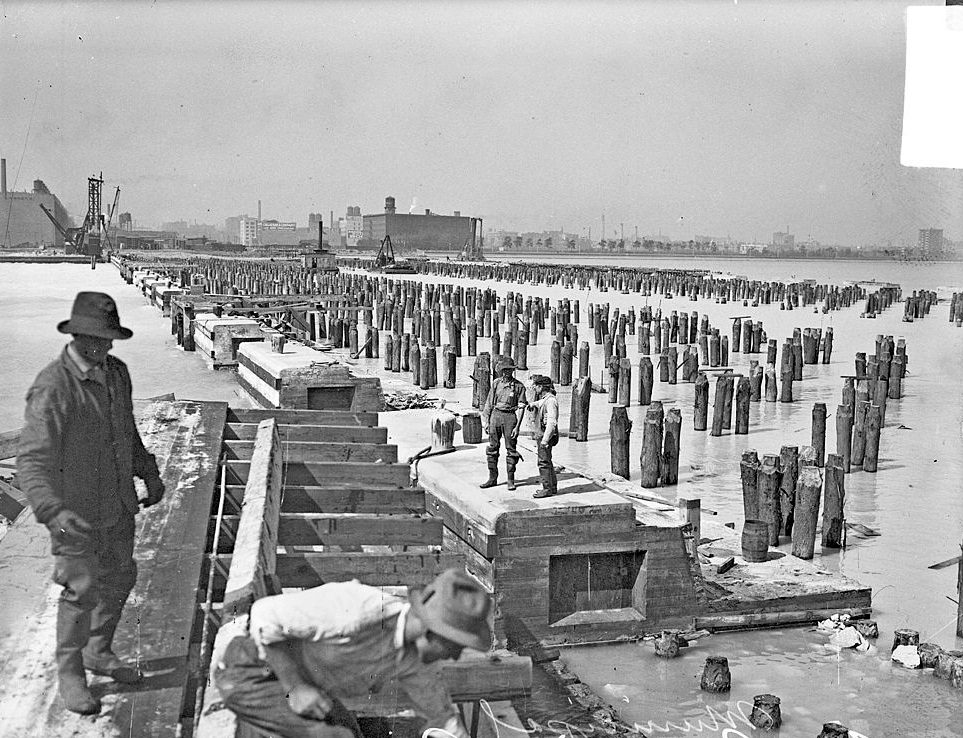
Public parks and recreational spaces were important outlets for Chicago’s dense urban population. Children splashed in the ponds at Lunapark, and residents picnicked in Grant Park along the lakefront. The 1916 completion of the 2.4-kilometer-long Municipal Pier — later renamed Navy Pier — gave Chicagoans a combination shipping warehouse and public recreation space stretching directly into Lake Michigan.
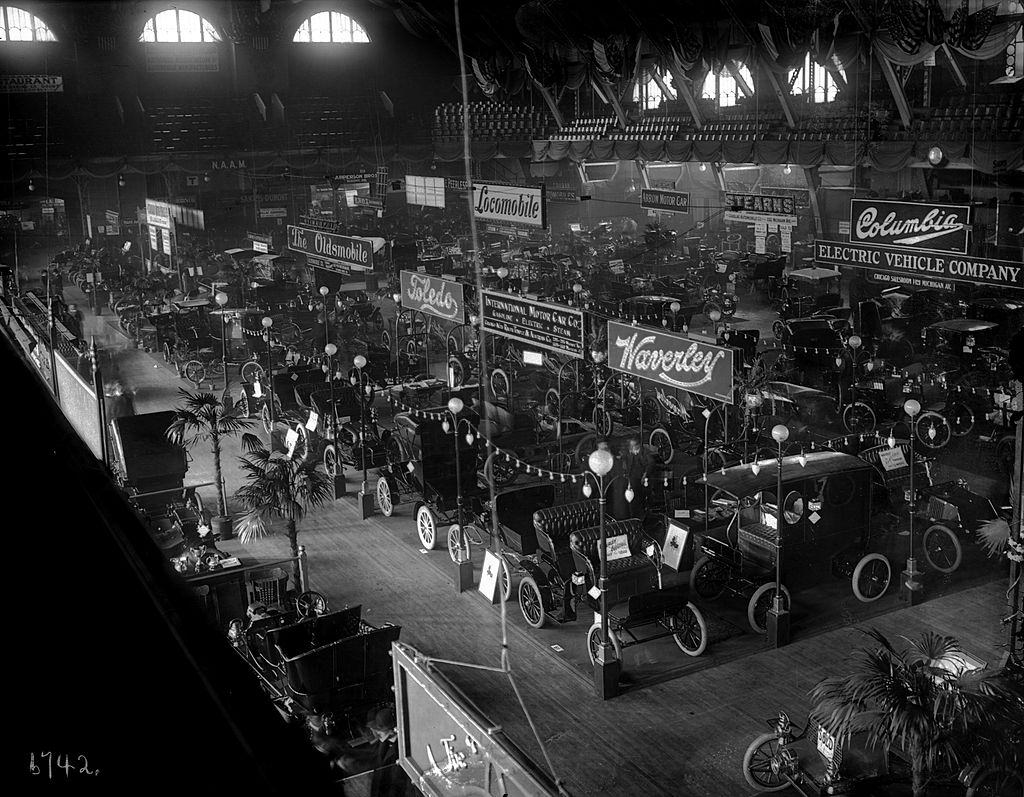
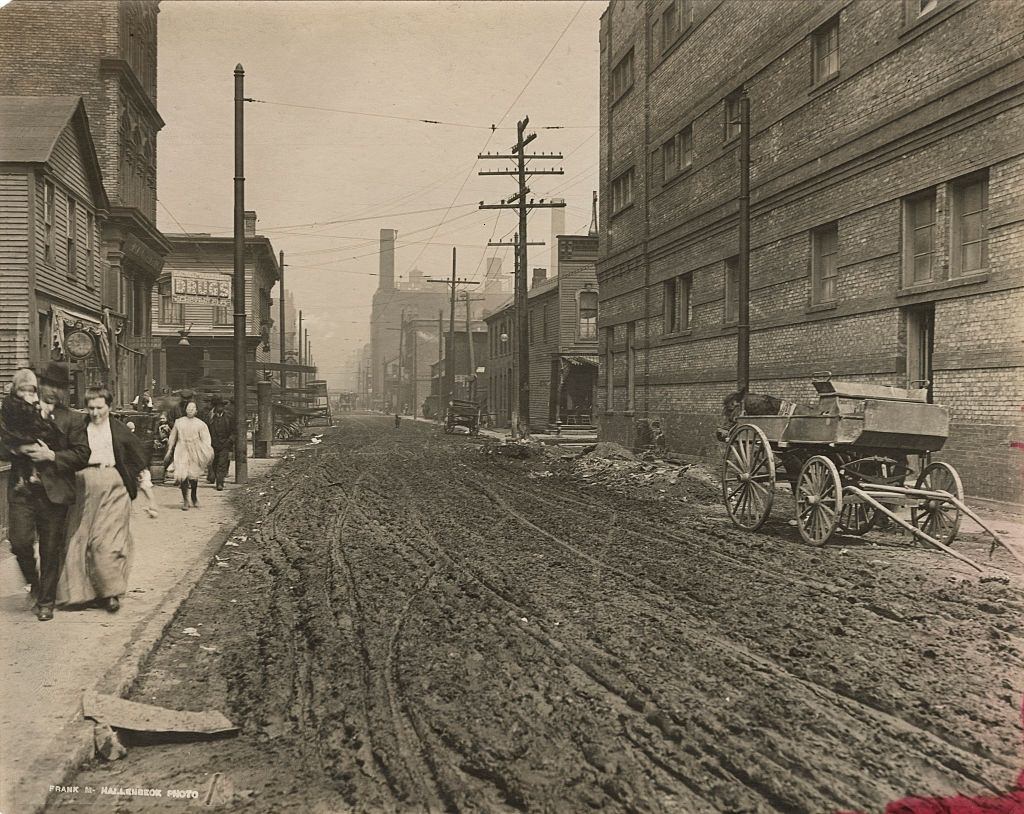
The automobile was still a novelty in the early 1910s, but Chicago’s Automobile Show drew massive crowds eager to see the latest models. By mid-decade, cars were becoming a common sight on State Street alongside horse-drawn wagons and electric trolleys. The transition was reshaping city streets and creating new demands for road infrastructure.
The city’s criminal underbelly was visible even in its architecture. A building at 6657 South State Street was documented by authorities as the base of a counterfeit coin operation. Saloons, gambling dens, and vice establishments clustered in the Levee District on Federal Street and surrounding blocks, operating with varying degrees of tolerance from local police and politicians.
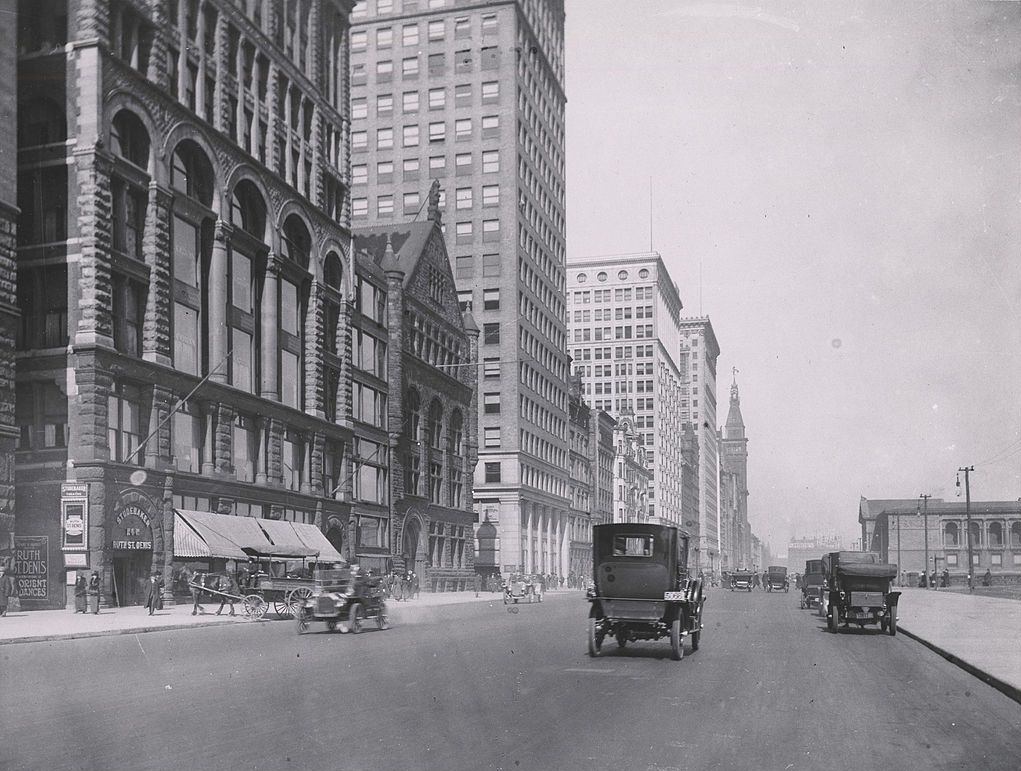
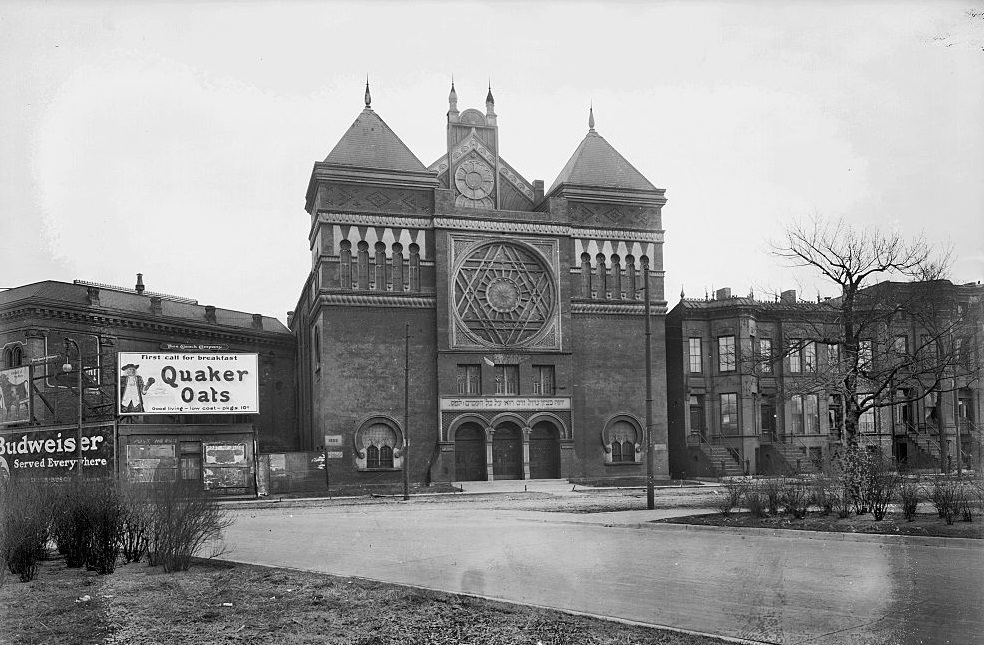
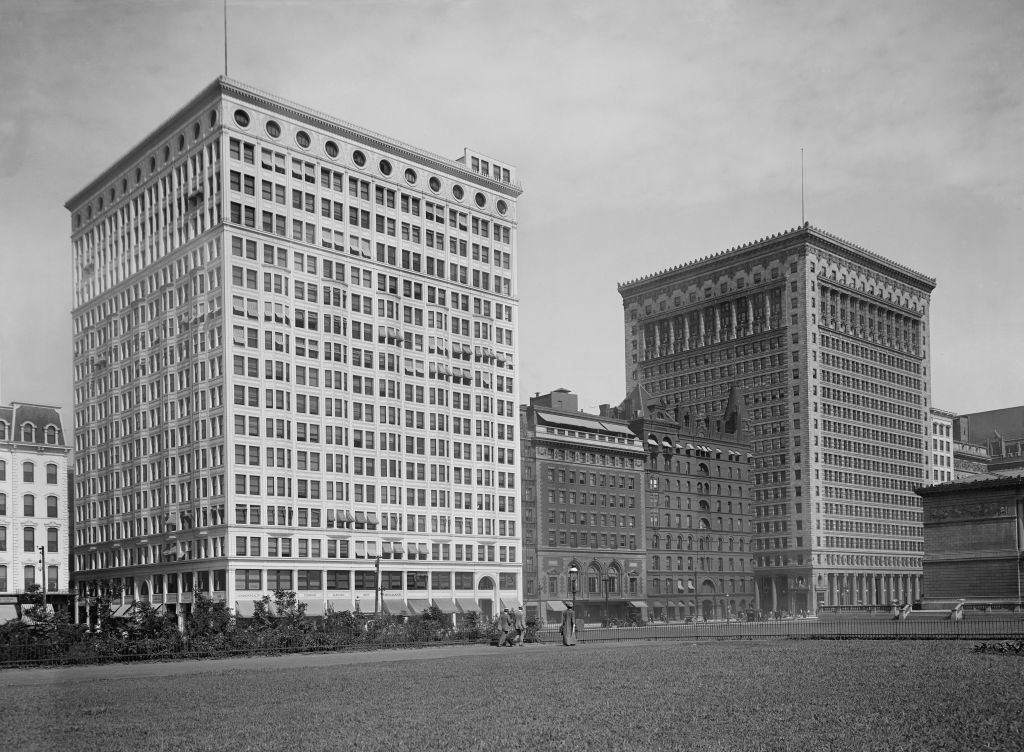
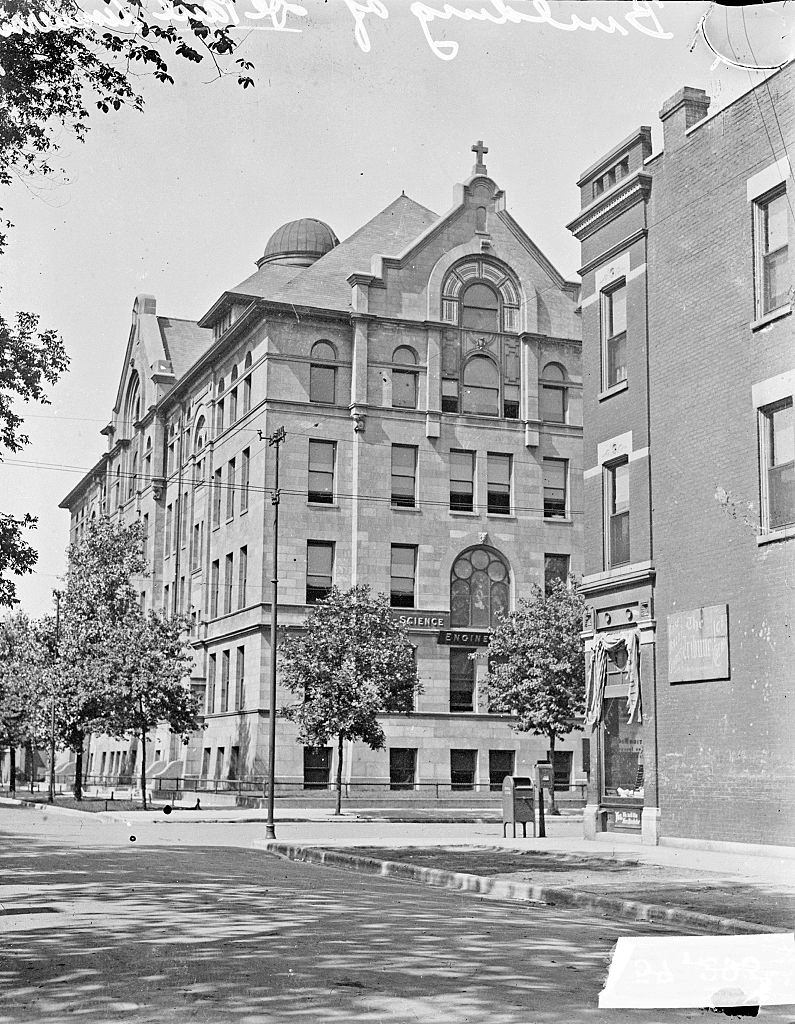
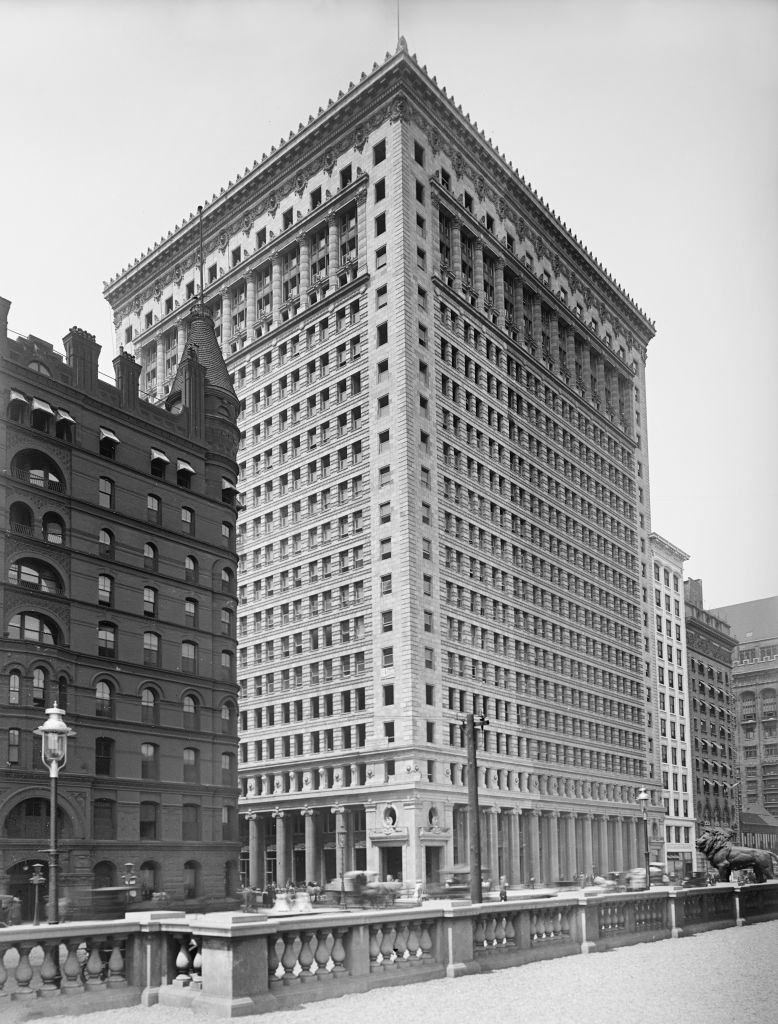
Religious institutions anchored many of Chicago’s neighborhoods. The Zion Temple on the Near West Side served a Jewish congregation in a community where synagogues, churches, and ethnic social clubs defined the social landscape. DePaul University, founded by the Vincentian Fathers in 1898, was growing its presence in the city by the early 1910s. The Peoples Gas Building and the Railway Exchange Building represented the city’s commercial ambitions in steel and stone.
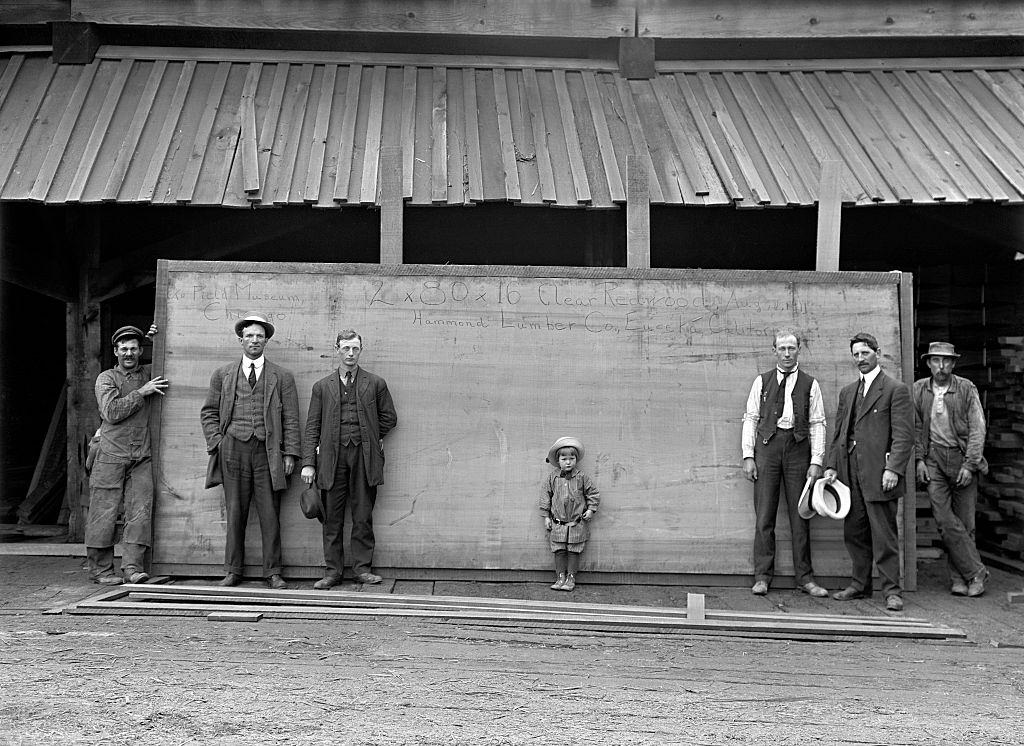
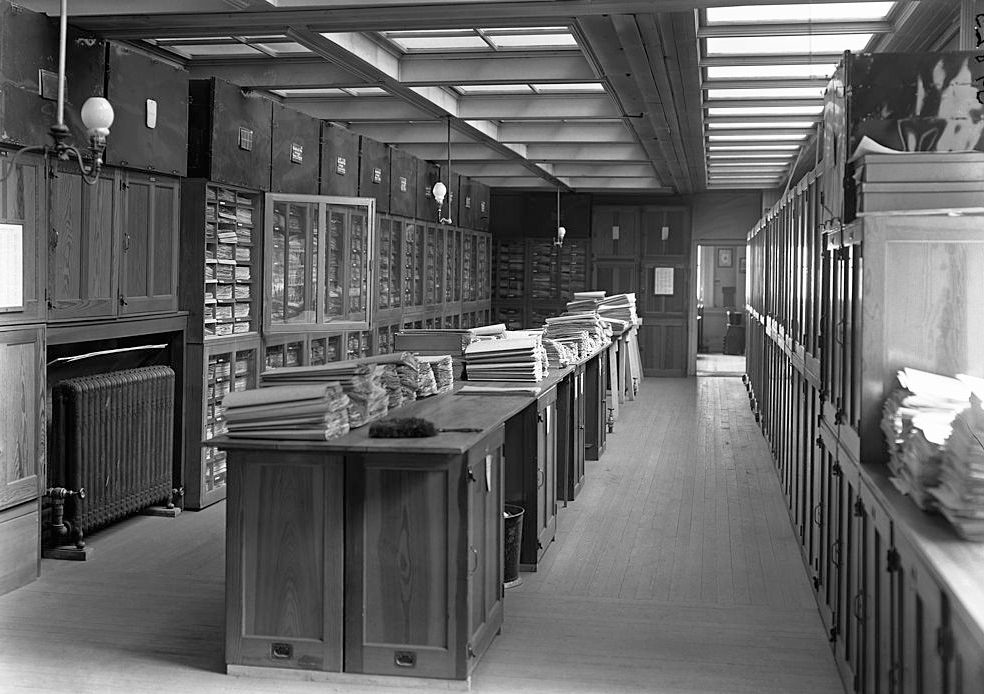
The Field Museum, still under construction during parts of the decade, was already building its scientific collections. Its botany department housed specimens from around the world, including a massive cross-section plank from a giant redwood tree that was large enough to serve as a table. Visitors gathered around it to take in its size. The museum’s herbarium specimens documented plant life from across the globe, part of the institution’s broader mission to catalog the natural world.
On May 27, 1912, Civil War veterans marched down South Michigan Avenue in a Grand Army of the Republic Memorial Day parade. By 1912, these men were in their sixties, seventies, and older — aging survivors of a war fought nearly fifty years earlier. Their presence in the streets of a booming modern city was a striking visual reminder of how recently the nation had torn itself apart.
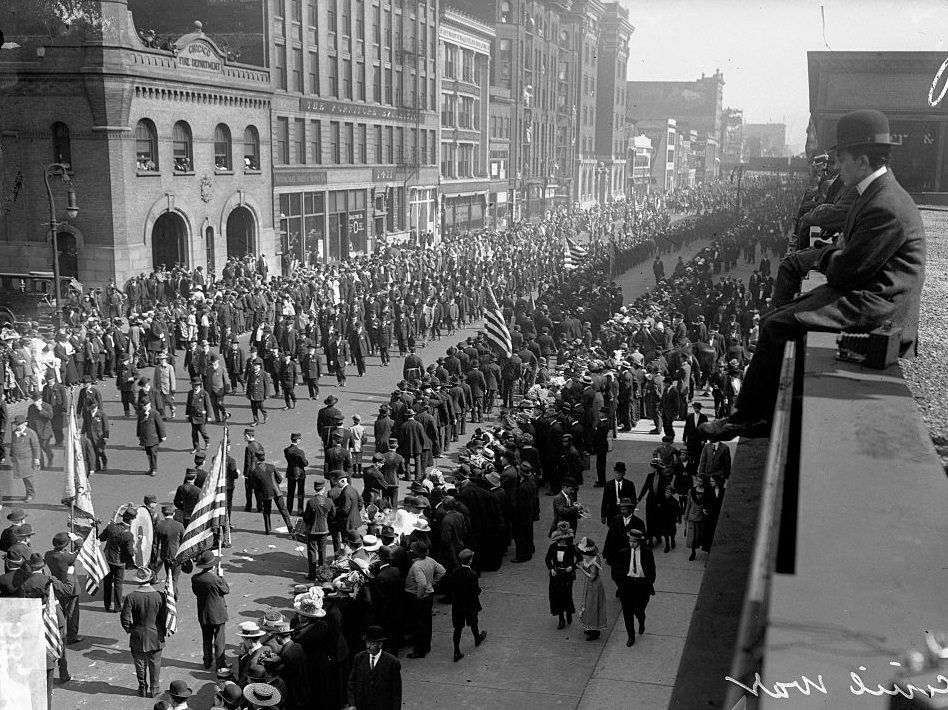
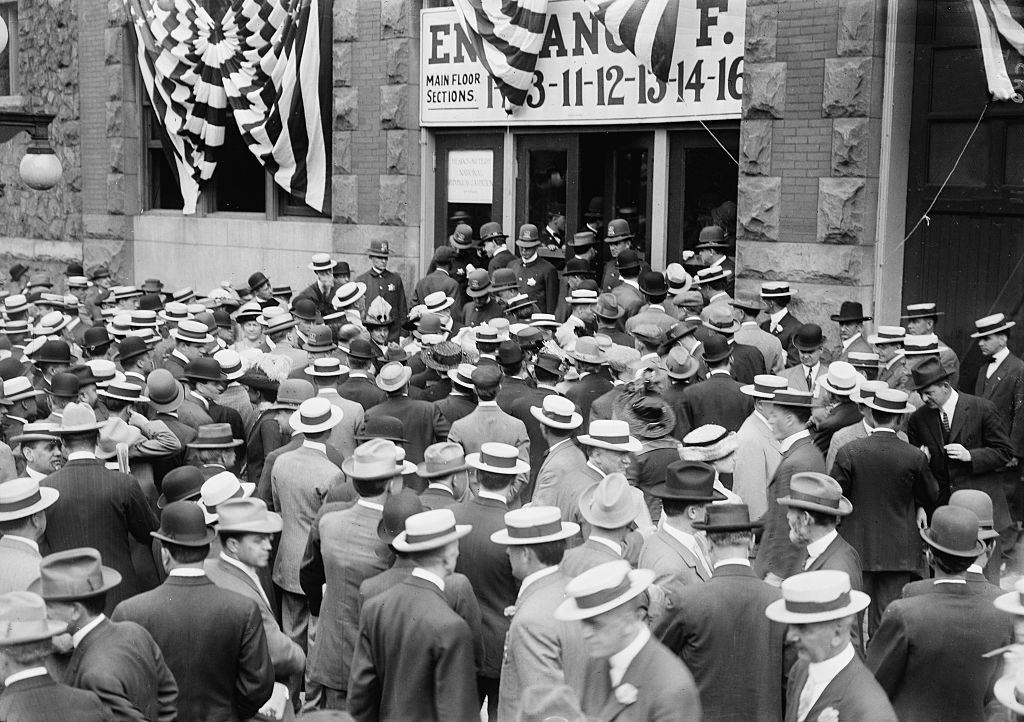
June 1912 also brought the Republican National Convention to Chicago, held at the Coliseum. Enormous crowds gathered outside the building, filling the surrounding blocks as delegates inside battled over the nomination between William Howard Taft and Theodore Roosevelt. The convention ended with Taft winning the nomination, prompting Roosevelt to launch his own third-party campaign.
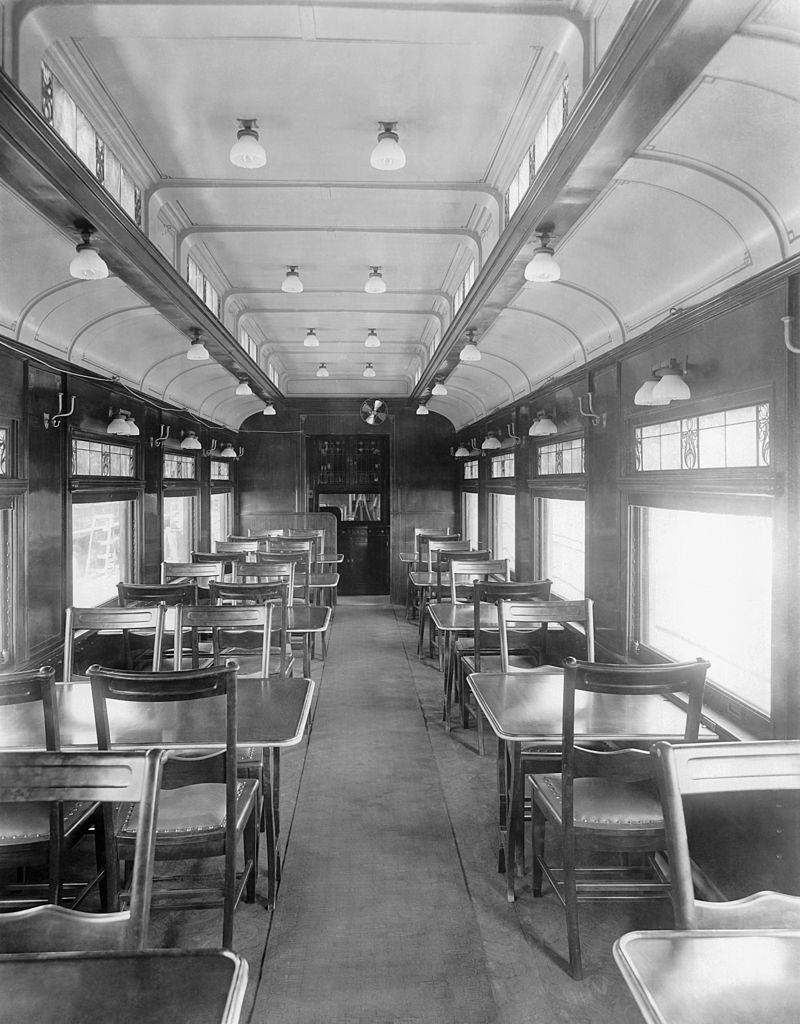
Rail travel was the dominant mode of long-distance transportation in the 1910s, and the Pullman sleeping car represented its most refined form. The interior of a Pullman car offered upholstered seats, polished wood paneling, and carefully designed sleeping berths — a sharp contrast to the crowded tenements many Chicagoans called home. The Pullman Company, headquartered in Chicago, was the largest employer of Black workers in the country during this era.
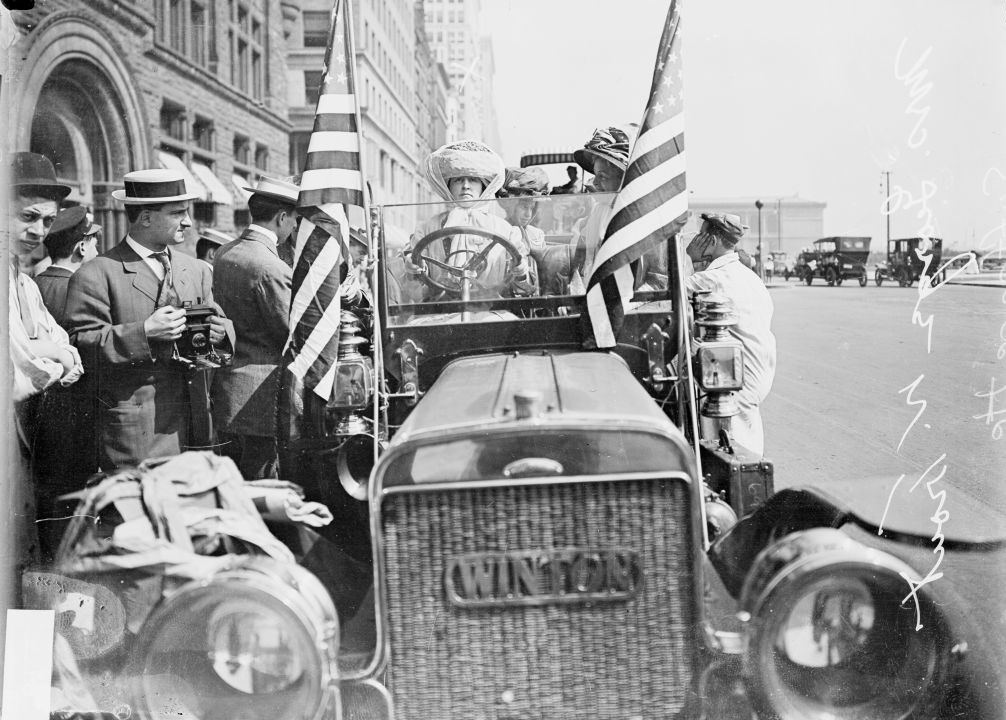
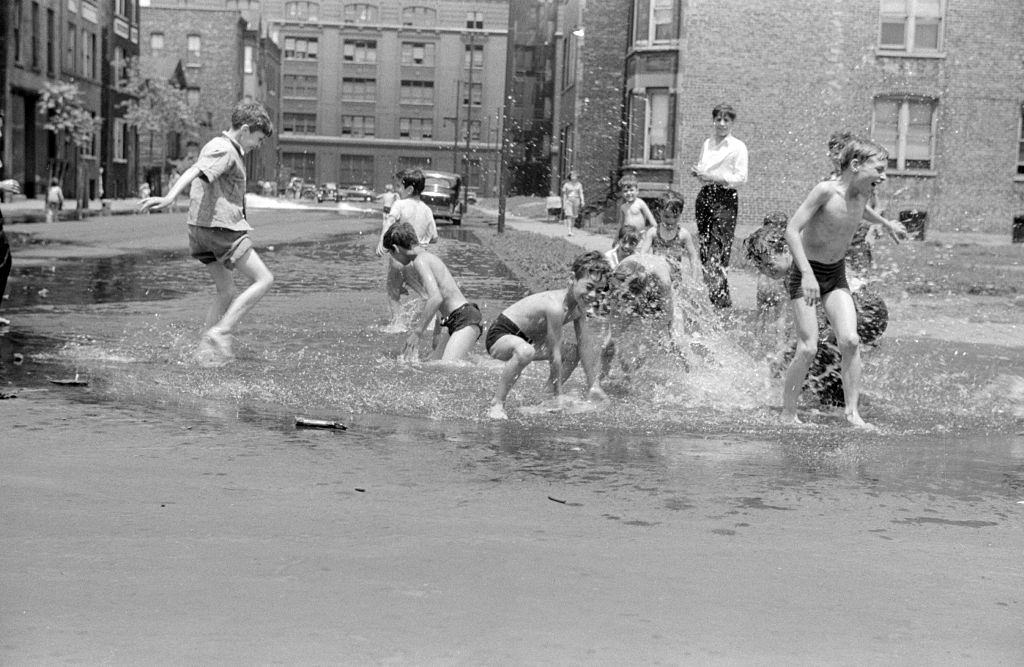
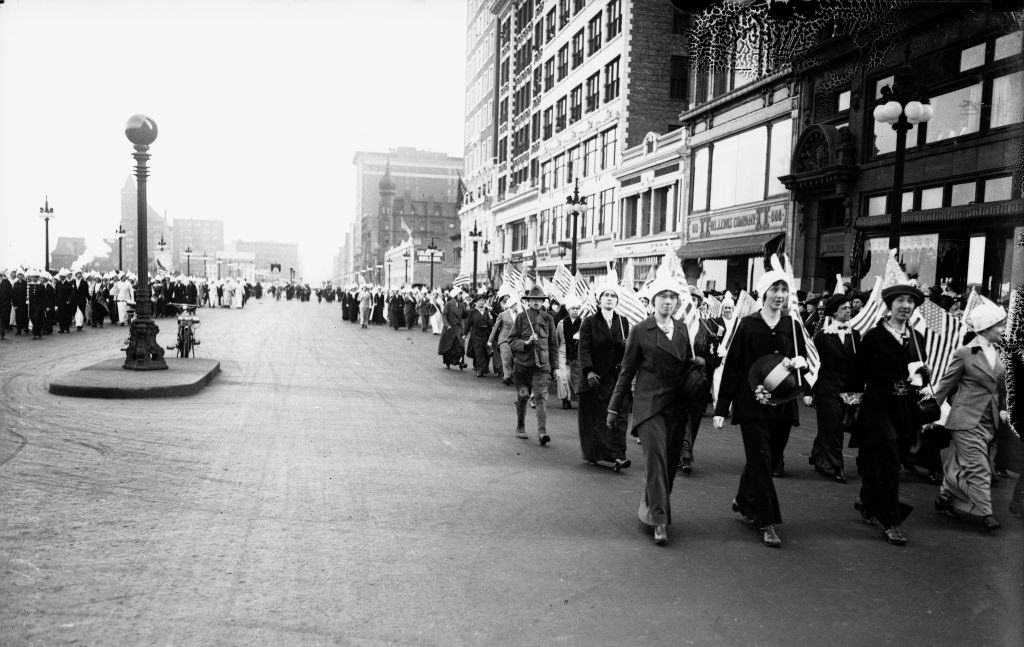
Summers in Chicago were brutal for children living in crowded South Side and West Side neighborhoods without air conditioning, shade, or access to pools. Opening fire hydrants became a common way for kids to beat the heat, flooding the street with cold water and creating impromptu play areas. Women’s suffrage marchers used Michigan Avenue as their stage in 1914, parading in organized columns to demand the right to vote — six years before the 19th Amendment was ratified.
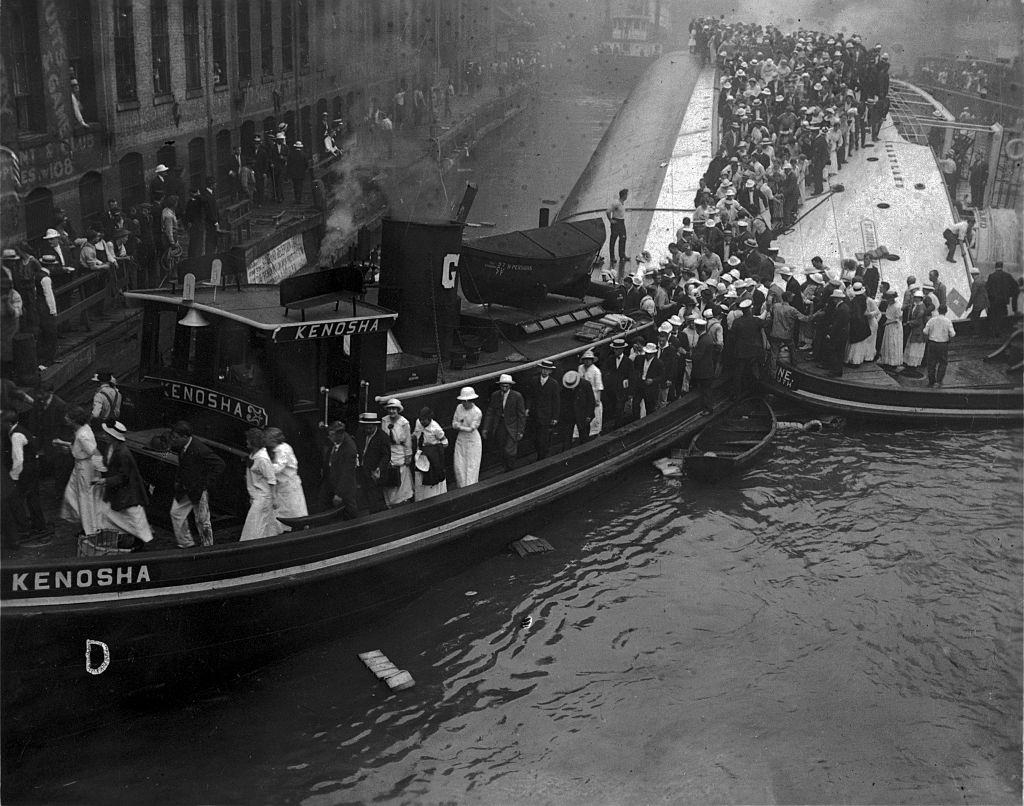
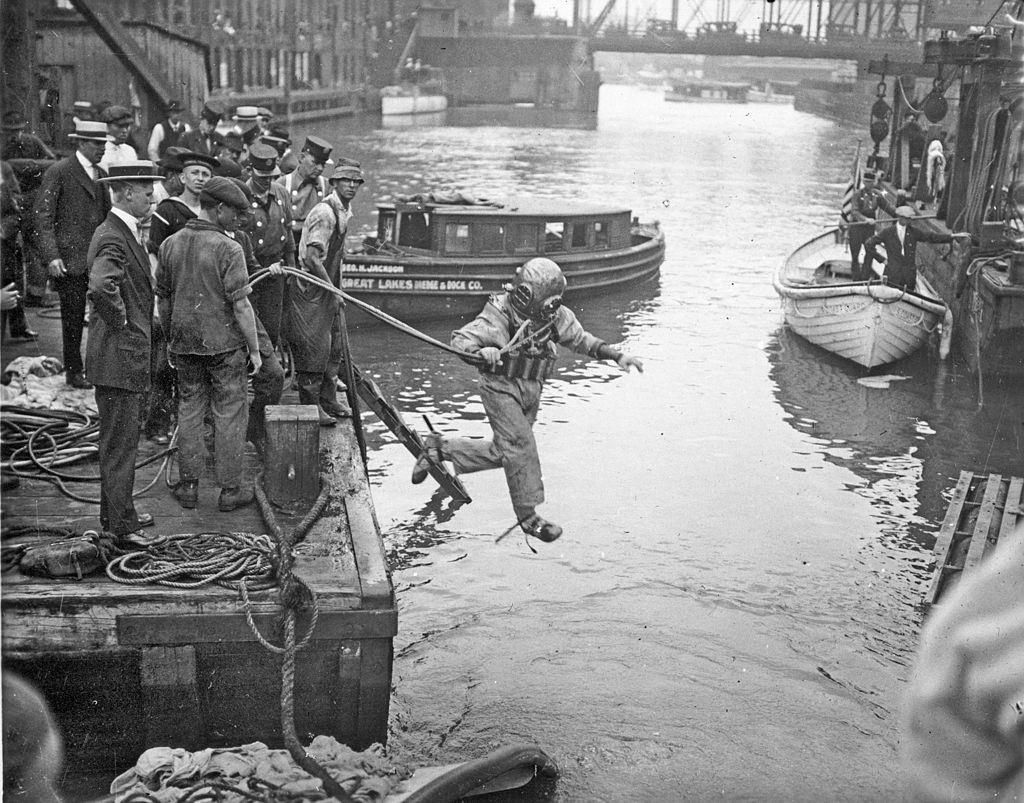
July 24, 1915, was one of the deadliest days in Chicago’s history. The steamship Eastland, docked in the Chicago River while loading Western Electric employees heading to a company picnic, capsized in less than twenty feet of water. 844 people drowned. Rescue workers in diving suits plunged into the murky river to recover bodies, and tugboats like the Kenosha pulled survivors to shore. The disaster killed more people than any other shipwreck on the Great Lakes.
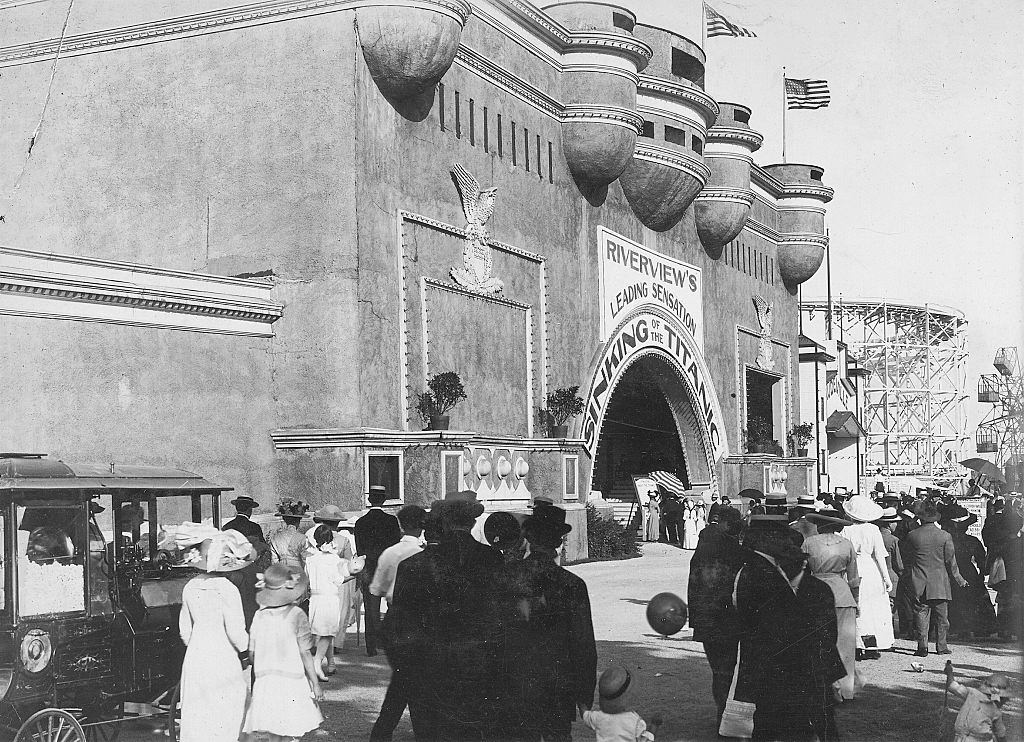
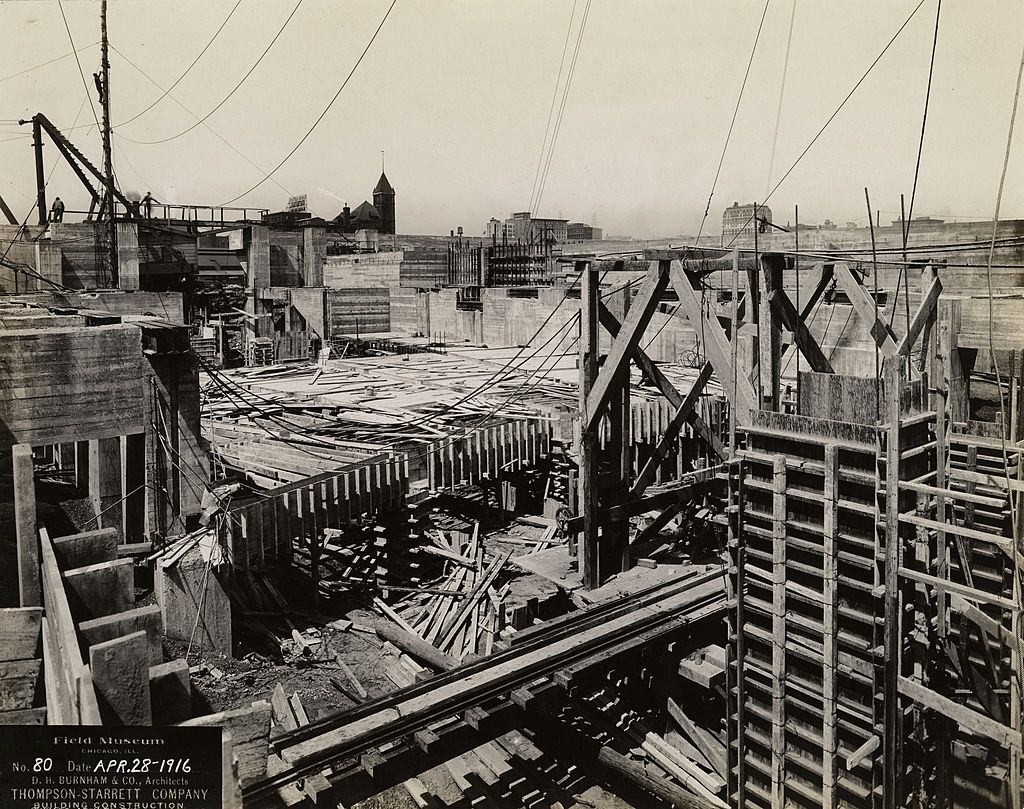
By 1916, Riverview Park — one of the largest amusement parks in the country — was capitalizing on public fascination with the Titanic disaster, which had occurred four years earlier. A Titanic-themed exhibition drew visitors to the park alongside its roller coasters and carnival attractions. That same year, construction on the permanent Field Museum building was underway, with workers hauling heavy materials up the outer walls of what would become one of the finest natural history museums in the world.
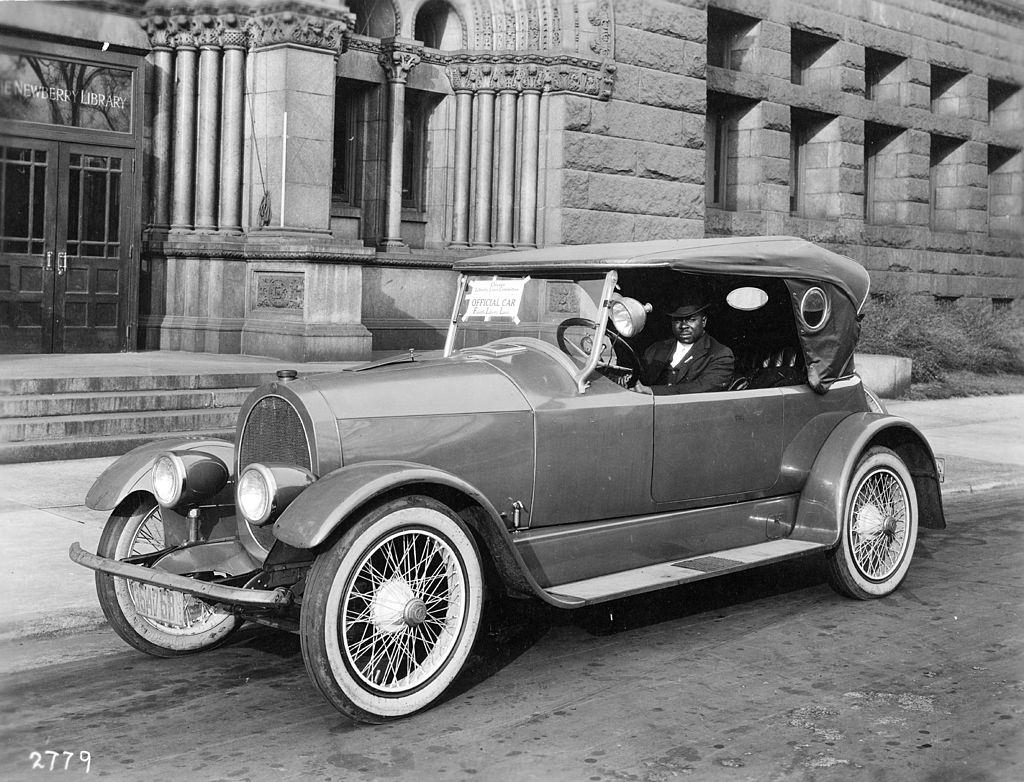
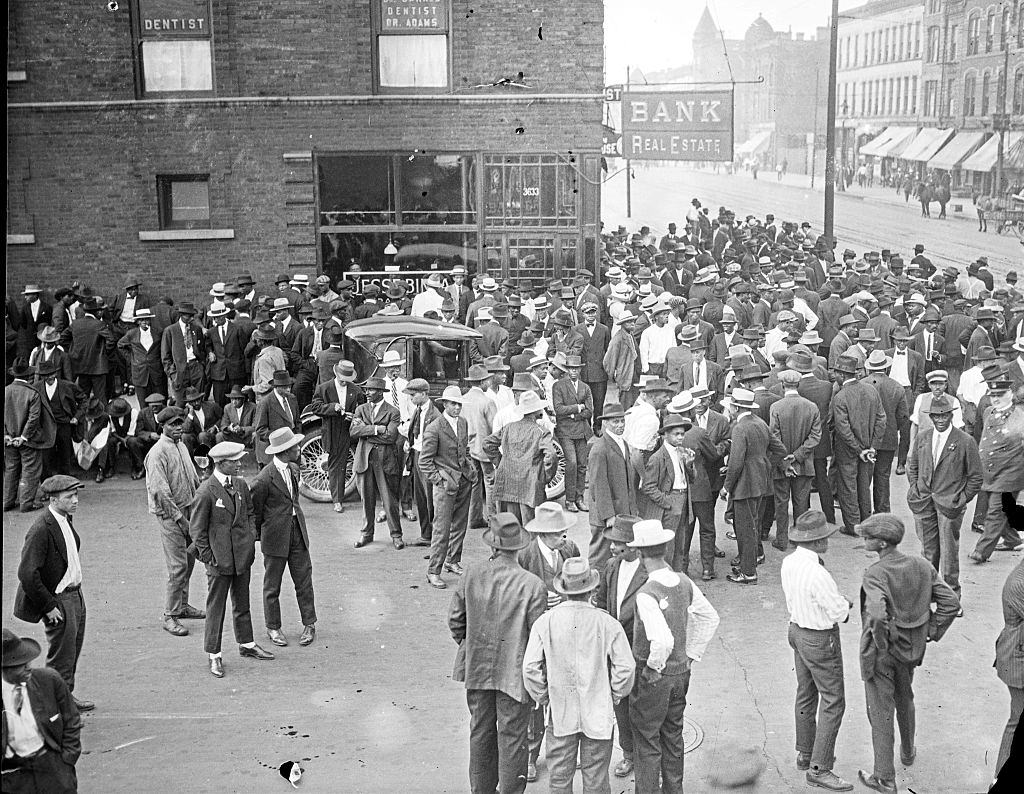
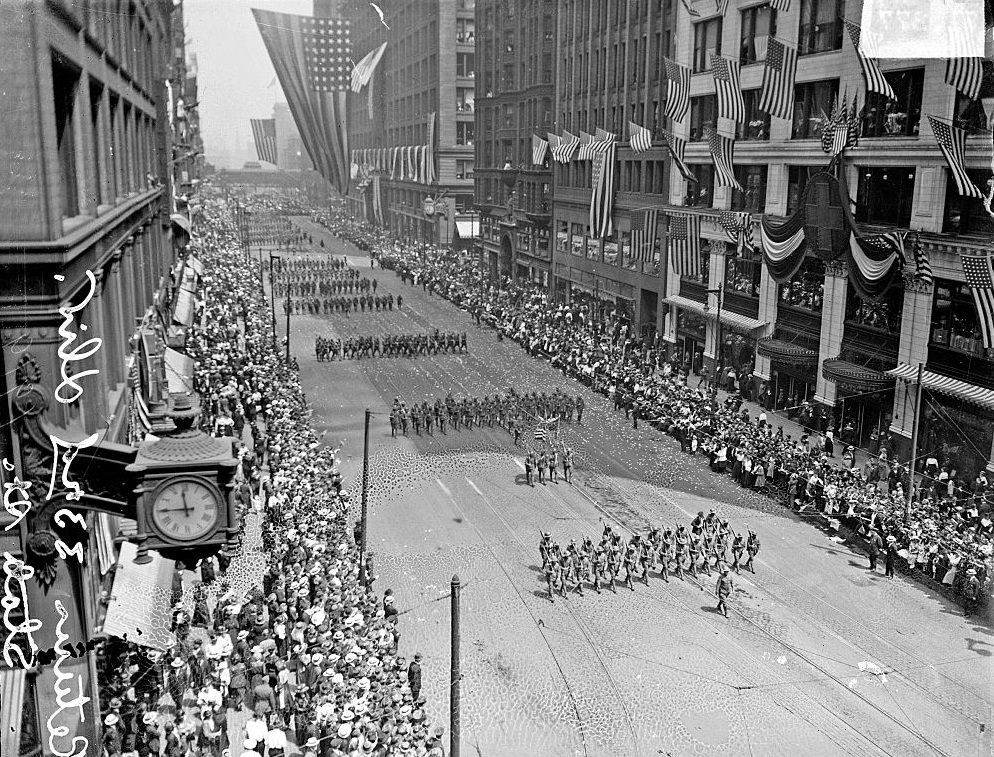
The Newberry Library, a private independent research library on Walton Street, stood as one of Chicago’s most important cultural institutions by 1918. Founded in 1887, it housed rare books and manuscripts on the history of Western civilization and was freely open to researchers. As the decade closed, Chicago faced a violent reckoning. In the summer of 1919, a racial confrontation on a South Side beach triggered nearly two weeks of riots. White mobs attacked Black neighborhoods, and armed confrontations left 38 people dead and over 500 injured. The U.S. Army’s 3rd Division was deployed to North State Street to restore order, their uniformed columns a stark image of a city that had grown fast but struggled to hold itself together.