
Hong Kong in the 1980s was a city in full sprint. Its population crossed five million in the early years of the decade and climbed to 5.73 million by 1989 — an increase of roughly 700,000 people in just ten years. That growth pressed itself into every corner of the city: more bodies on the trams, more stalls in the markets, more towers punching into the skyline. The world was starting to pay attention to Hong Kong as a financial powerhouse, but on the ground level, life was dense, loud, and unmistakably alive.
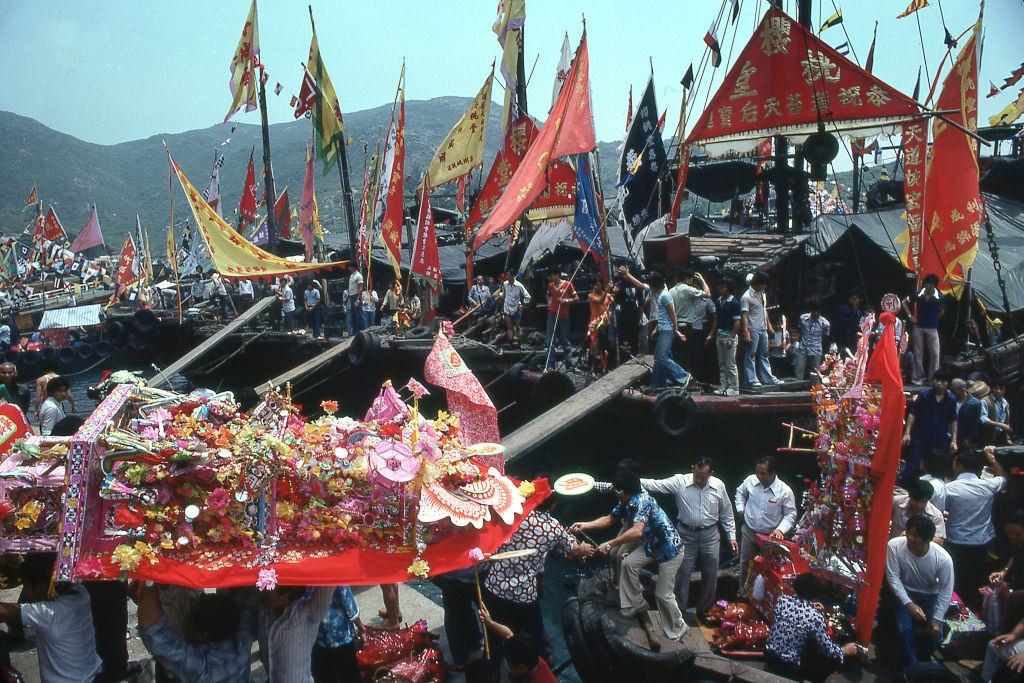
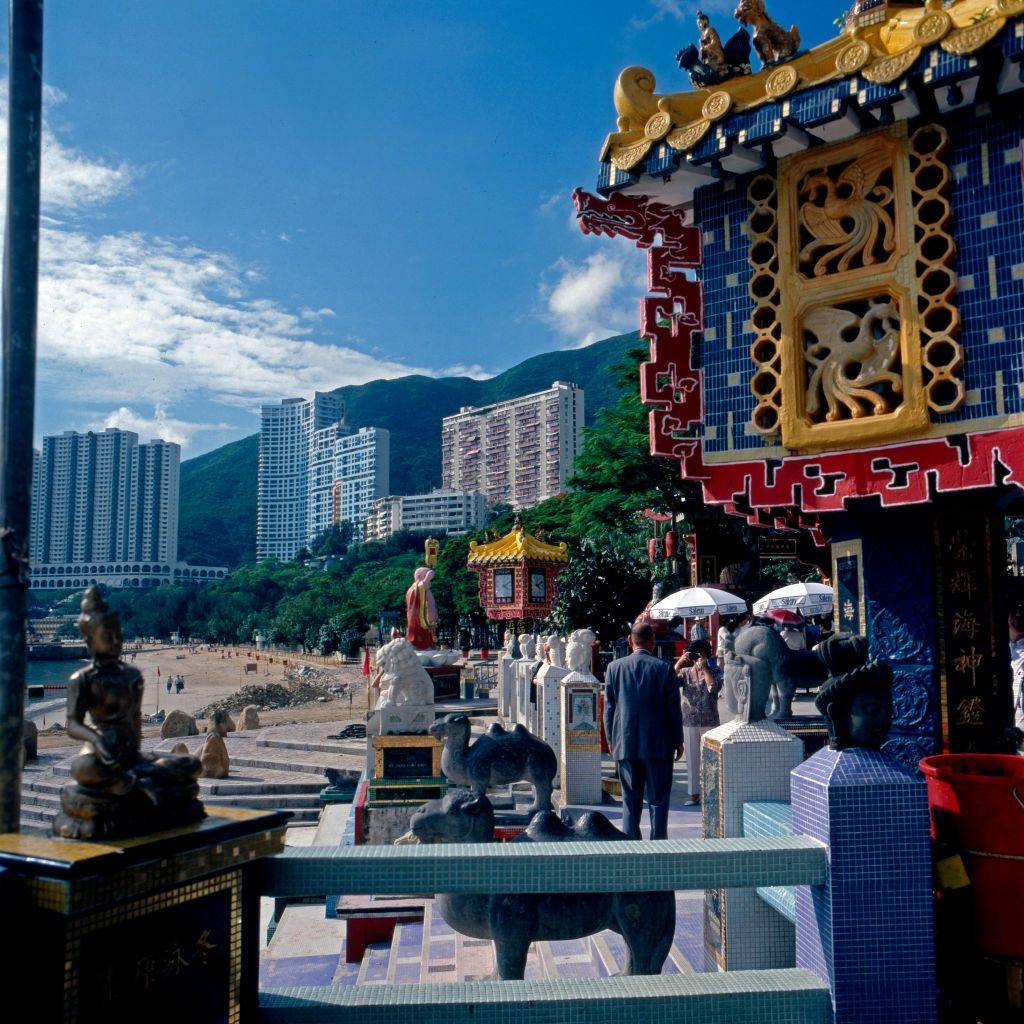
Religious life remained deeply woven into the fabric of daily existence. On outlying islands, festivals brought entire communities together in ways that had changed little over generations.
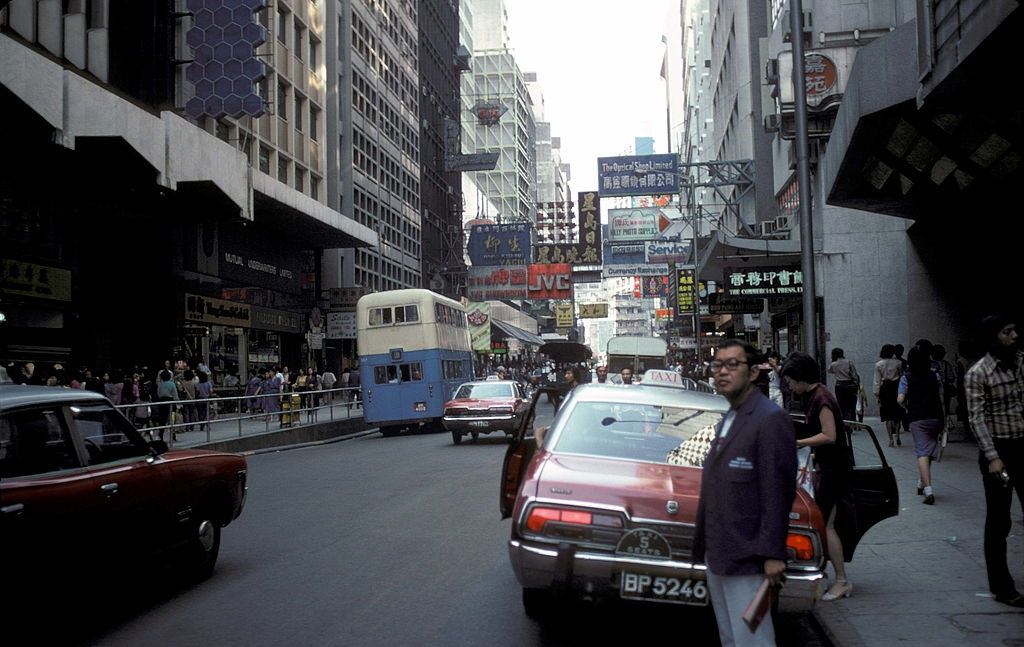
The streets of Hong Kong’s older districts told a different story from the gleaming bank towers rising in the financial center. Queen’s Road, one of the city’s oldest thoroughfares, mixed traditional shophouses with the everyday bustle of vendors, pedestrians, and trams.
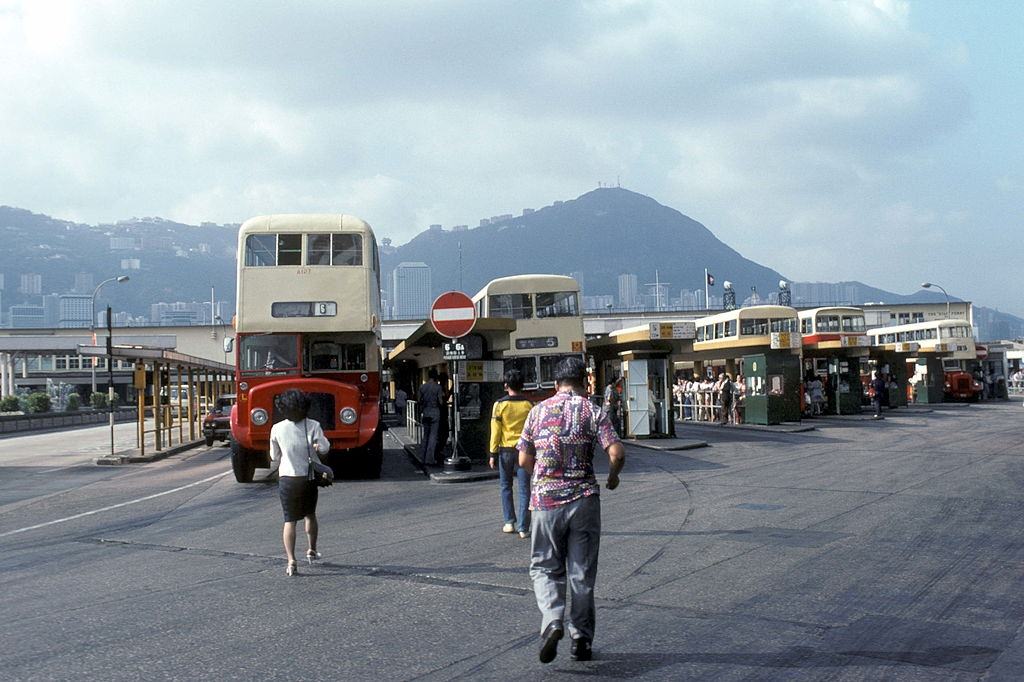
Kowloon served as the beating heart of transportation on the mainland side of the harbor. The ferry terminal’s coach station moved thousands of commuters and travelers daily, connecting them to boats that crossed to Hong Kong Island.
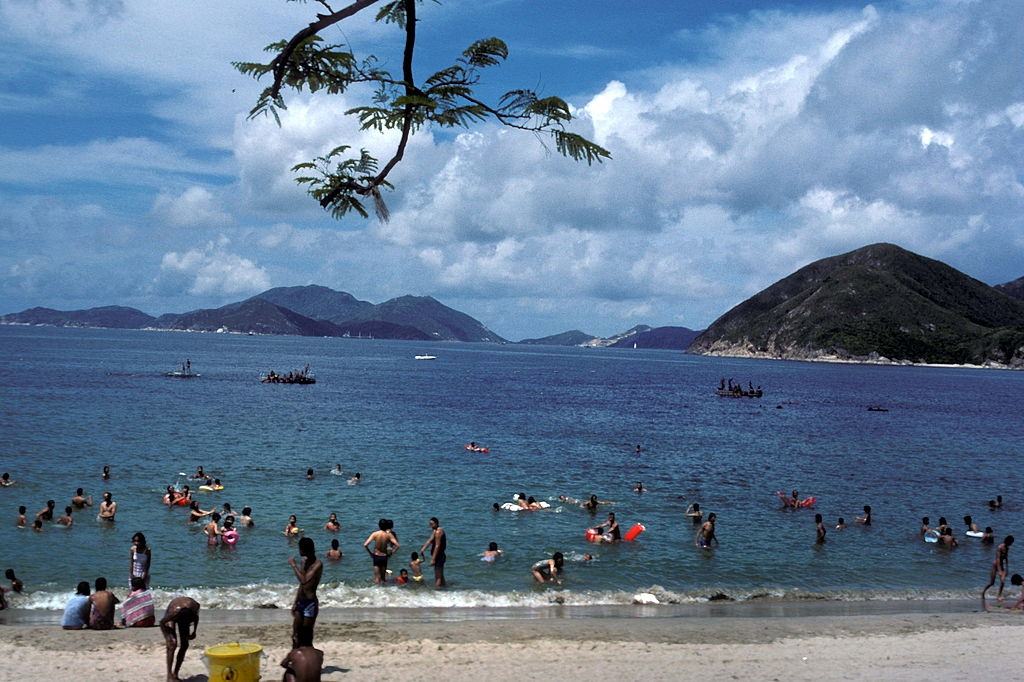
Away from the congestion of the urban core, Repulse Bay offered a rare stretch of open beach on the southern side of Hong Kong Island. On weekends, residents packed the shoreline to escape the city’s heat and noise.
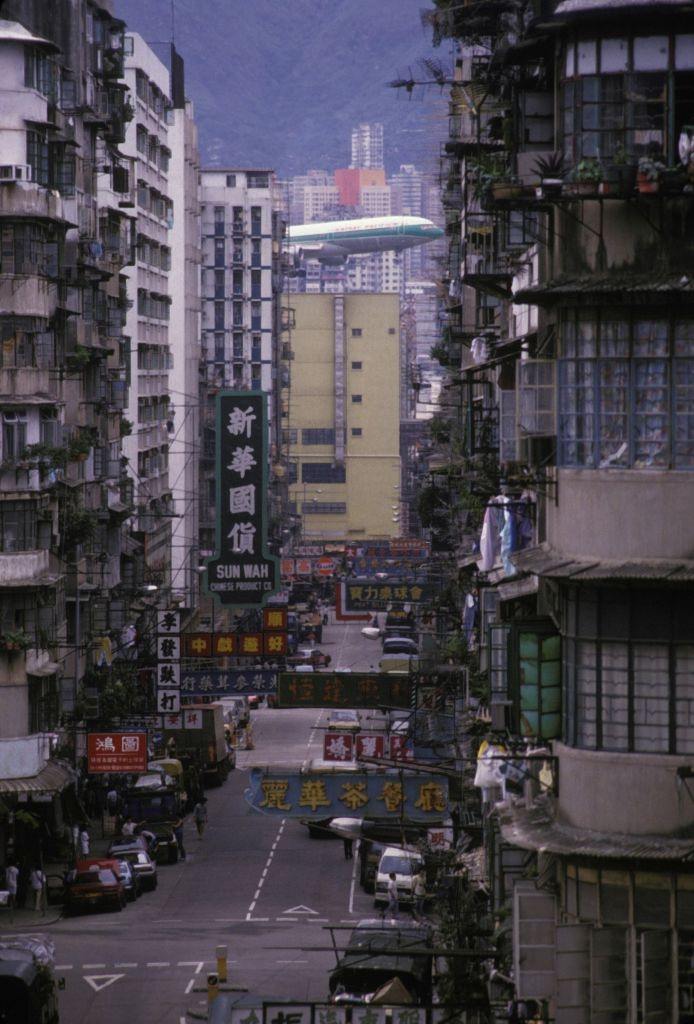
No image of 1980s Hong Kong captures the city’s edge quite like Kai Tak Airport. Built into the heart of Kowloon, its runway extended into Victoria Harbour, forcing pilots to execute a sharp, low-altitude turn over densely packed rooftops before touching down. Passengers and residents alike held their breath as aircraft passed close enough to the buildings that residents on upper floors could nearly look into the cabin windows.
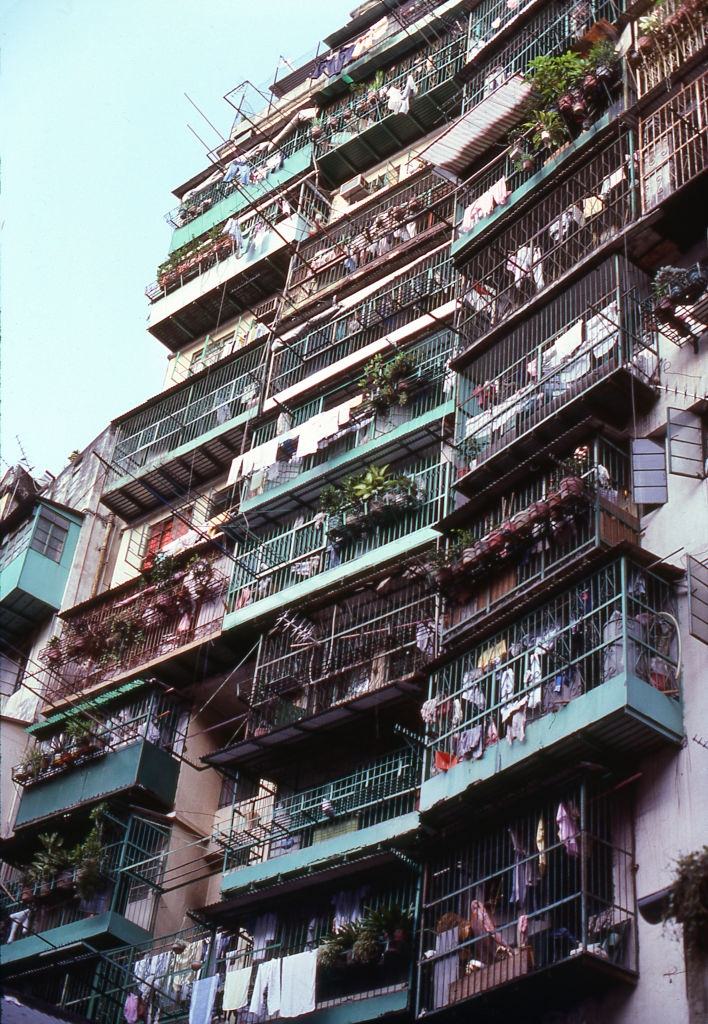
Nowhere in Hong Kong was more extreme than the Kowloon Walled City. Without formal government control, the settlement grew upward and inward in a completely unplanned way. Tens of thousands of people lived packed into a space barely larger than two city blocks, with buildings so tightly clustered that sunlight rarely reached the lower floors. The balconies of each unit jutted out within arm’s reach of the neighbors across the narrow gap.
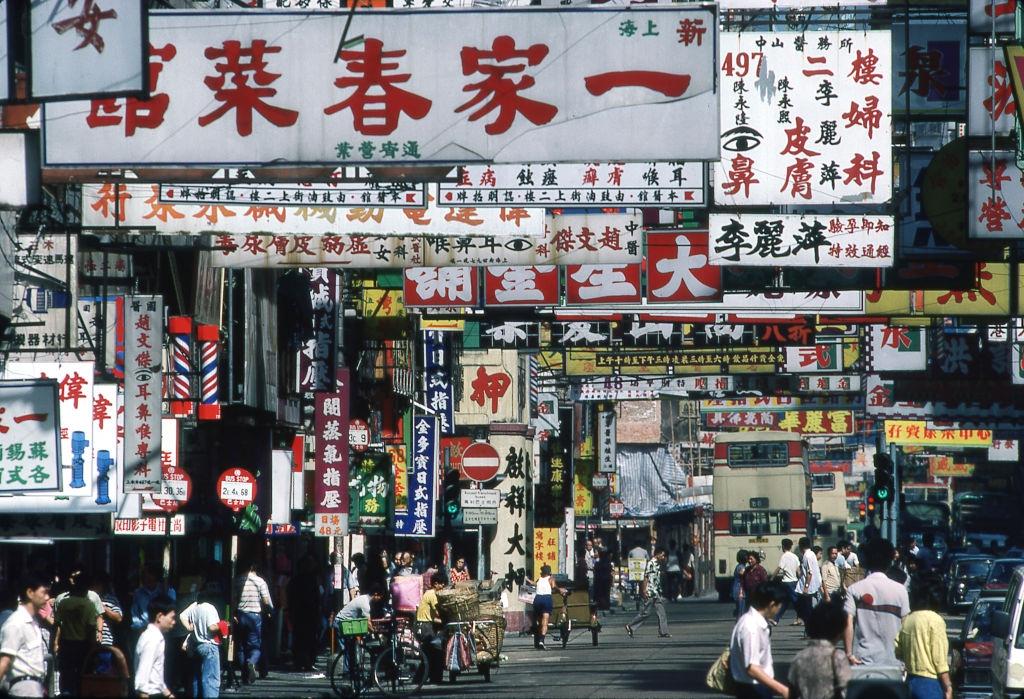
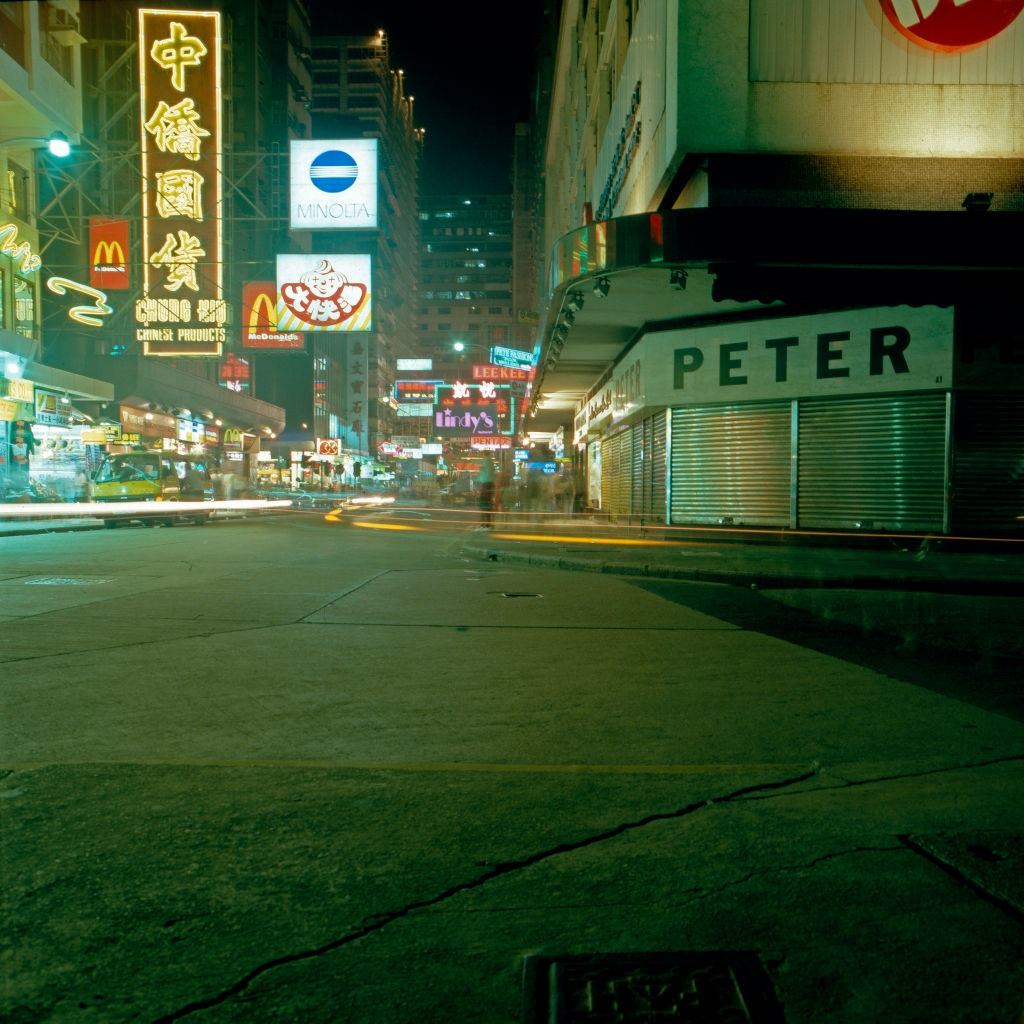
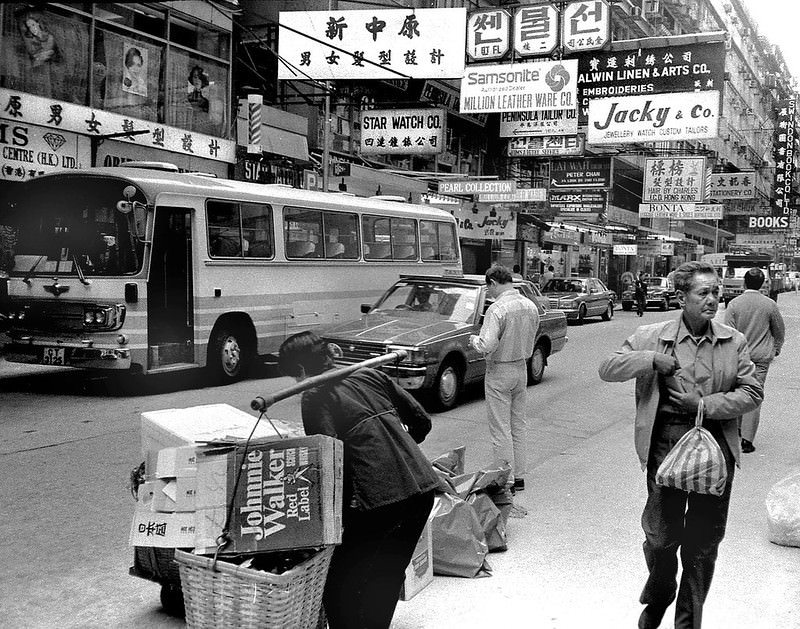
Beyond the famous landmarks, ordinary street life defined the decade. Neon signs competed for space above sidewalks, and small businesses of every kind operated side by side.
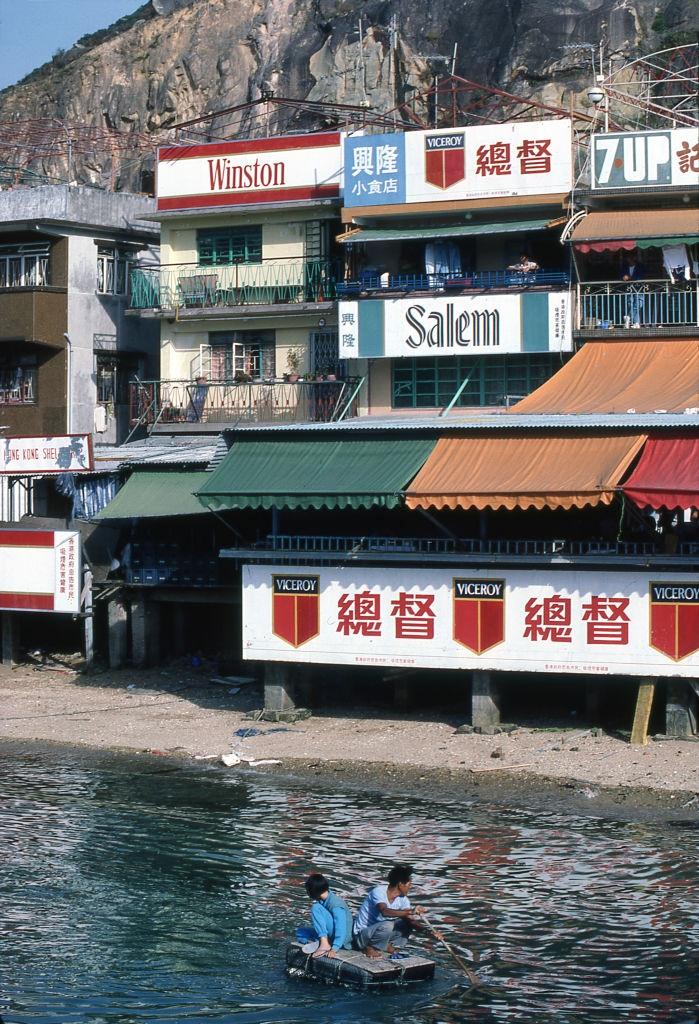
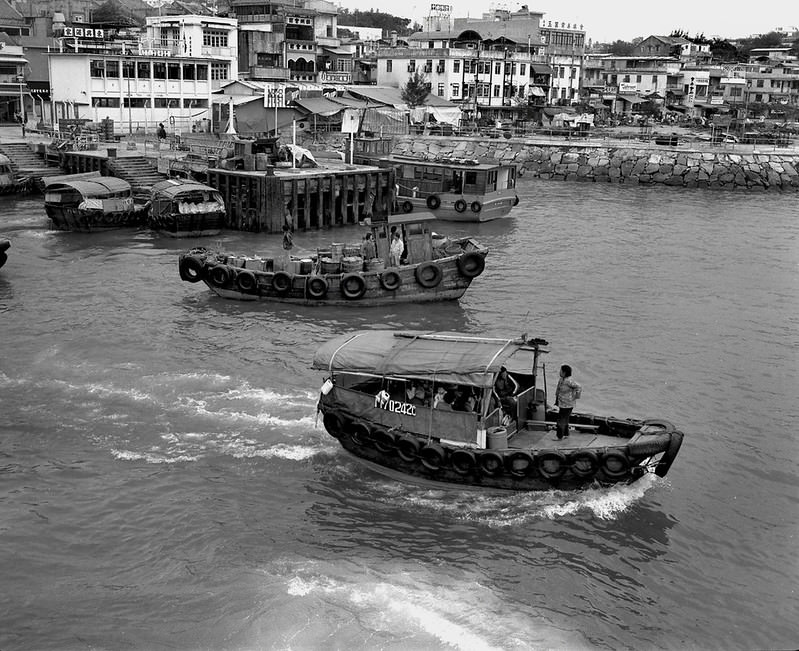
The outlying islands offered a quieter pace. Cheung Chau, a small dumbbell-shaped island southwest of Hong Kong Island, had no cars at all. Waterfront restaurants lined its harbor, serving fresh seafood to locals and day-trippers.
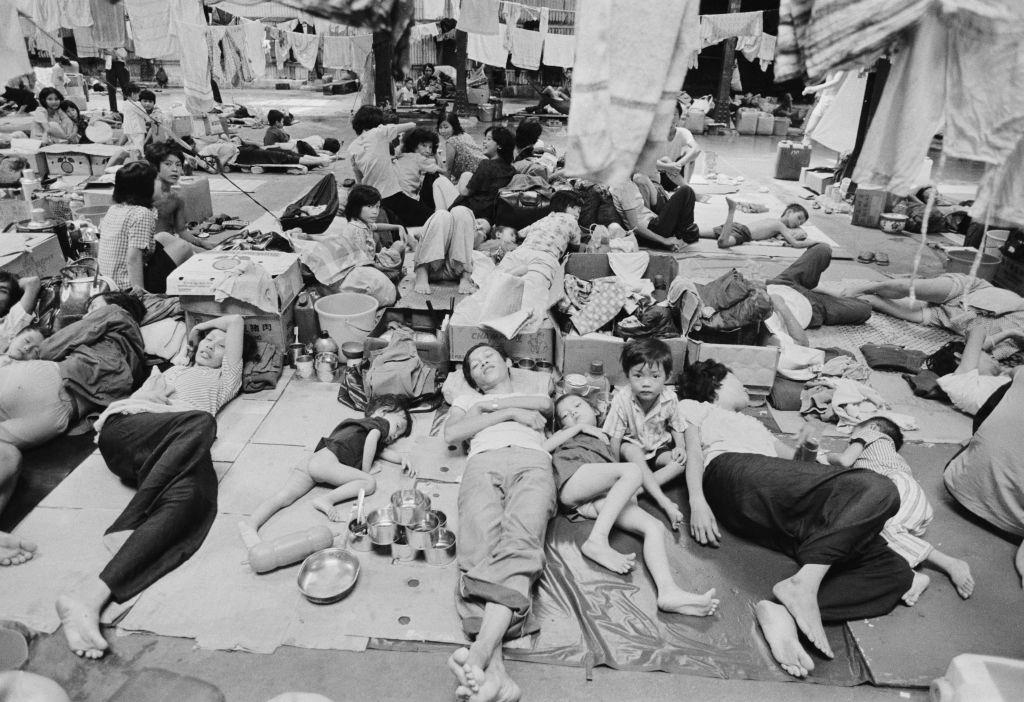
The early 1980s also marked a humanitarian crisis playing out along Hong Kong’s edges. Tens of thousands of Vietnamese refugees arrived by boat throughout the late 1970s and into the 1980s, fleeing the aftermath of the Vietnam War. Hong Kong took in a massive number of these arrivals, housing them in government facilities while their futures were determined.
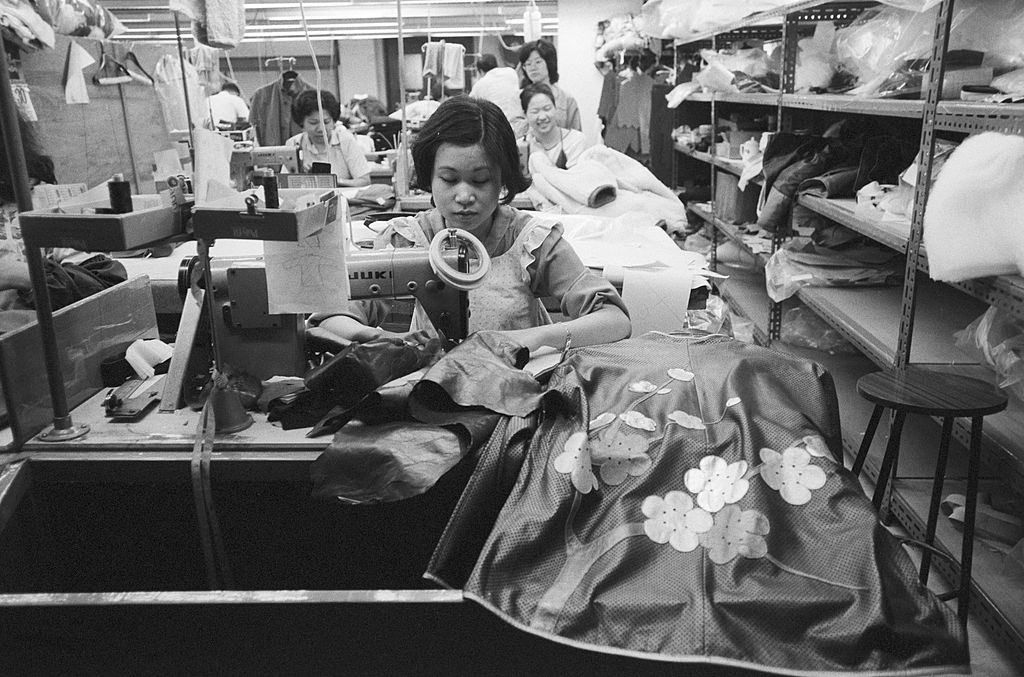
Manufacturing was a major pillar of Hong Kong’s economy through much of the 1980s. Garment production employed a large portion of the workforce, with many seamstresses working from small workshops or even within their own homes.
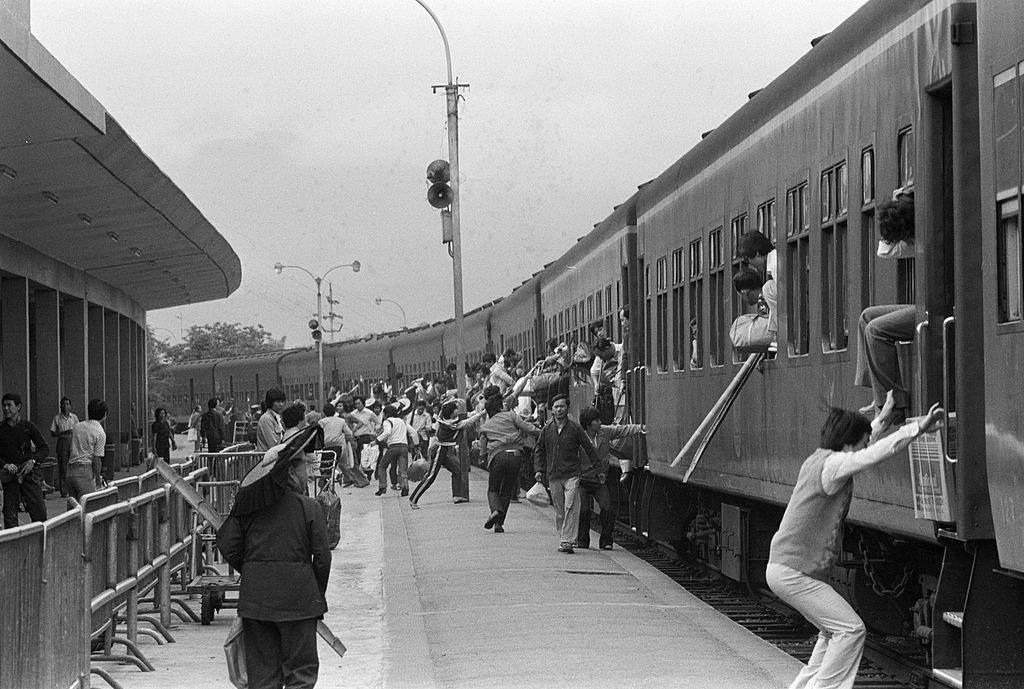
The rail network was another measure of Hong Kong’s density. At peak hours, passengers didn’t simply wait for the next train — they pushed through windows and squeezed past each other along crowded platforms to secure a spot.
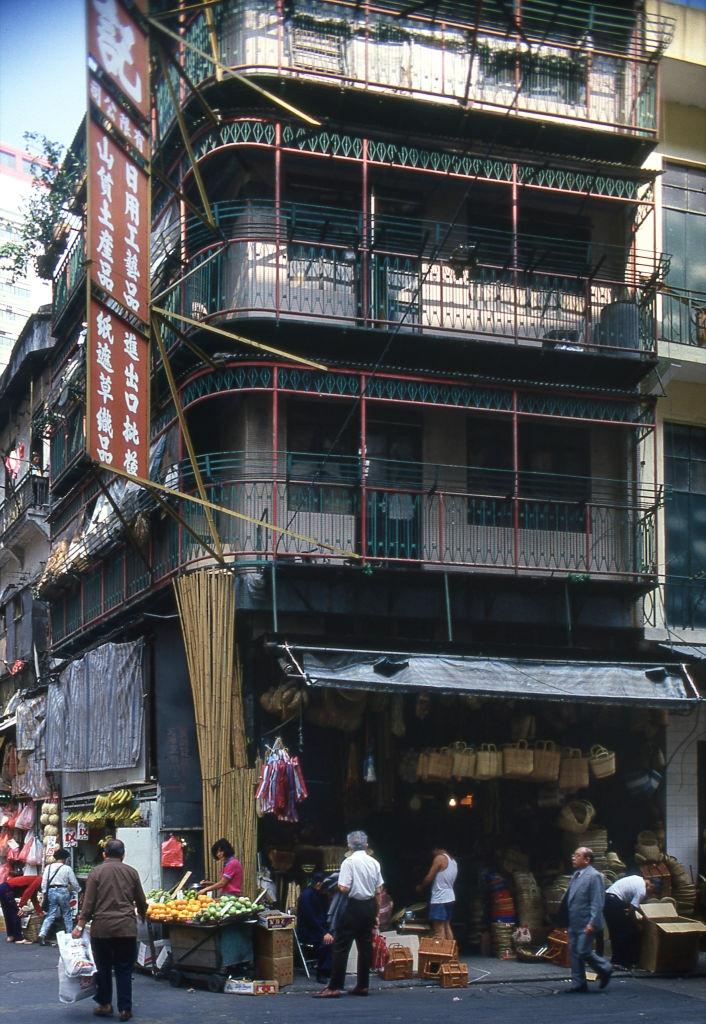
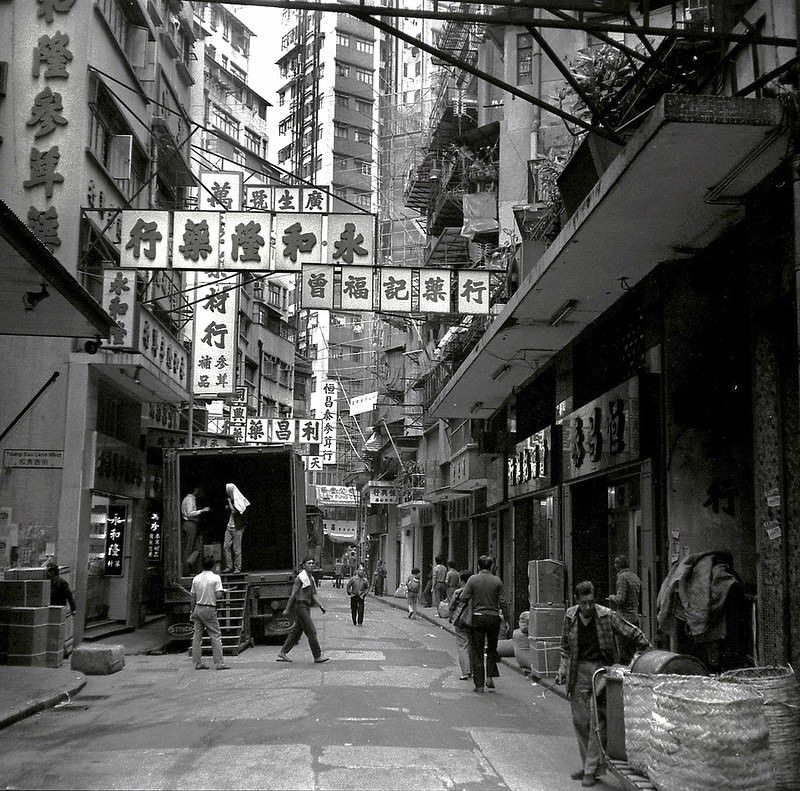
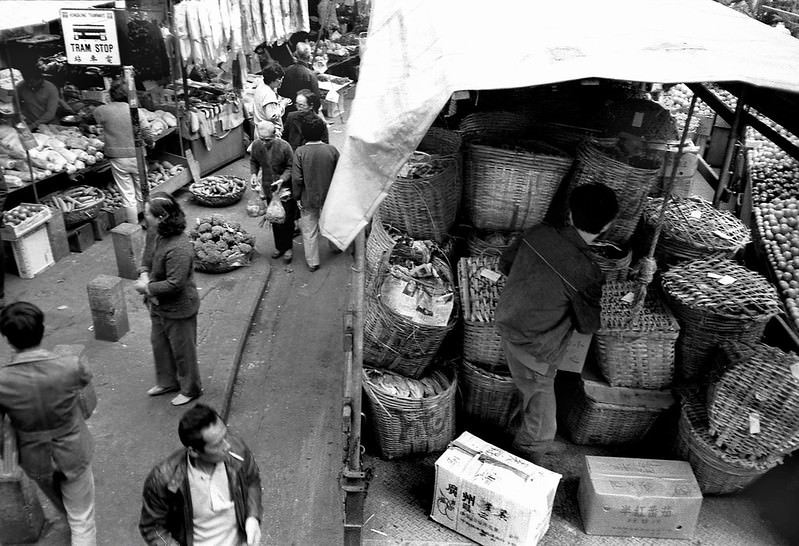
The Western District, one of Hong Kong Island’s oldest neighborhoods, retained a strongly traditional character into the 1980s. Its narrow streets were packed with dried goods shops, herbal medicine dealers, and hardware stores, their wares spilling onto the pavement.
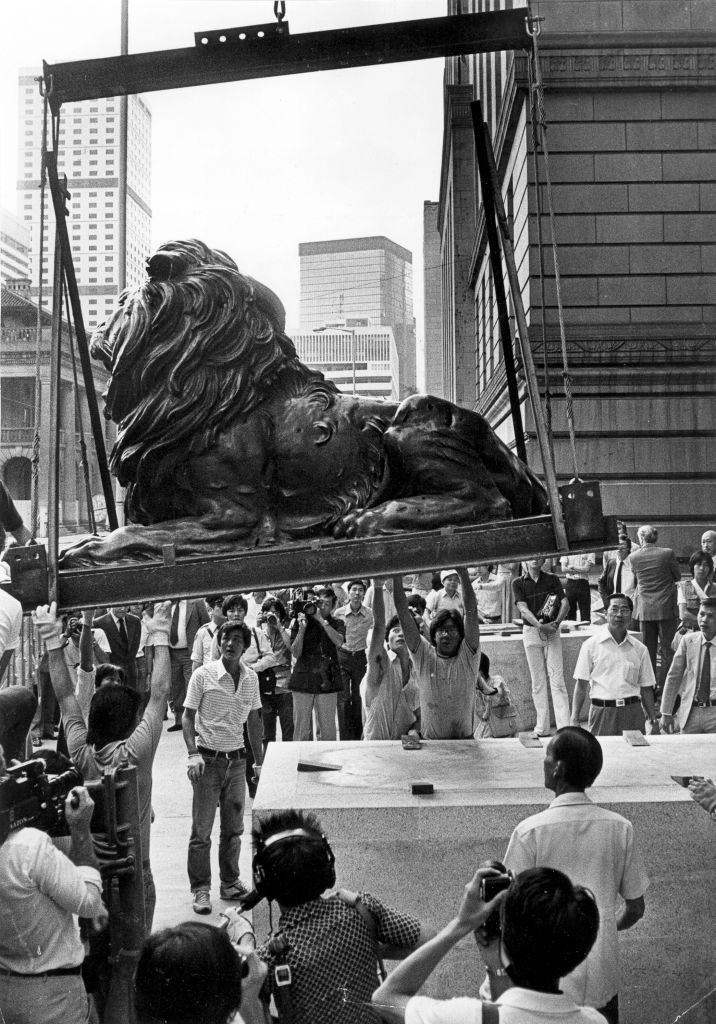
Even the city’s banking institutions were reshaping themselves during this era. The Hongkong and Shanghai Banking Corporation undertook a complete rebuild of its Central headquarters in the early 1980s, and its iconic bronze lions — known as Stephen and Stitt — were temporarily relocated during construction.
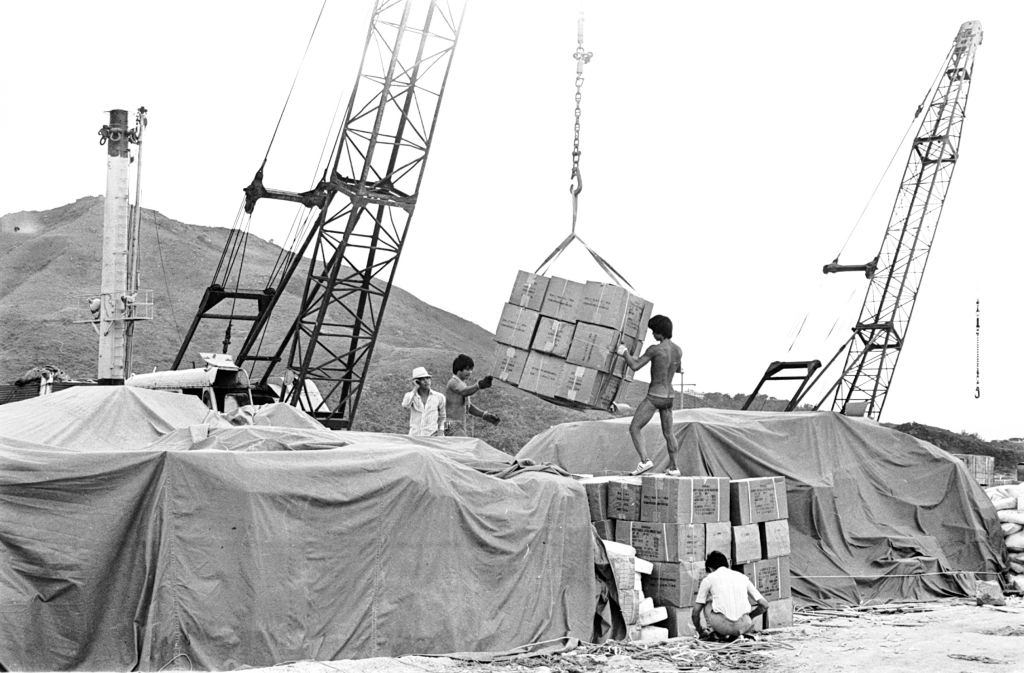
The port remained essential to Hong Kong’s identity as a trading hub. New cargo facilities like the Chai Wan pier expanded the city’s capacity to handle the growing flow of goods moving in and out of the territory.
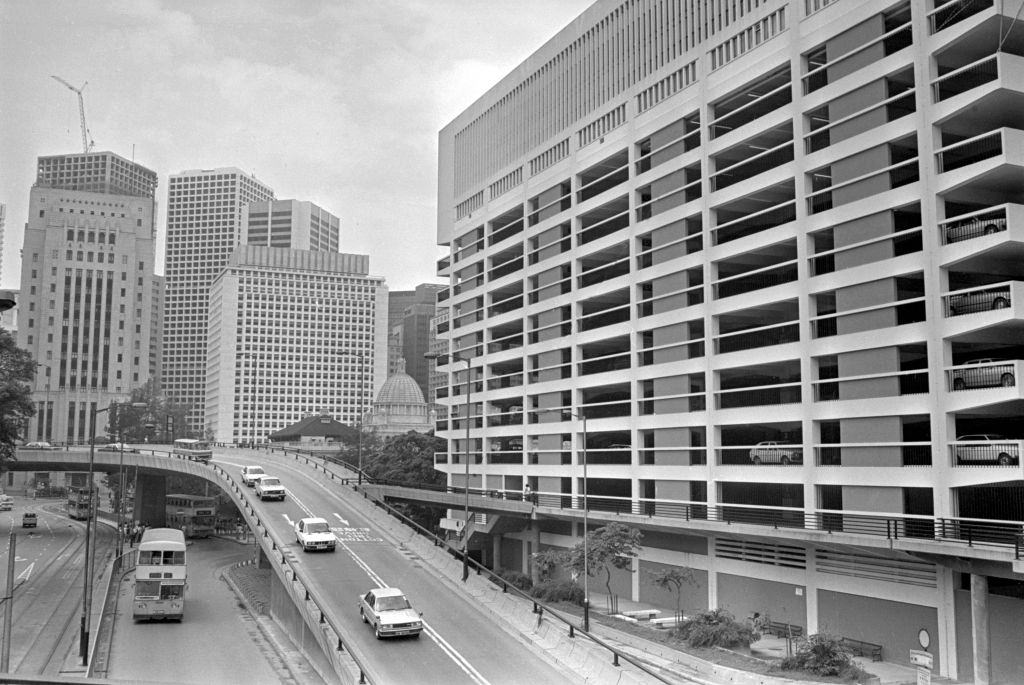
The early 1980s skyline was still a work in progress. The Murray multi-storey car park, a distinctive cylindrical building, stood alongside the Bank of China Building — both landmarks that defined the Central district before the next wave of construction swept them away or transformed them.
After dark, Hong Kong shifted registers. The neon-lit streets attracted vendors, diners, and crowds of people moving between bars, restaurants, and night markets. The city rarely went quiet.
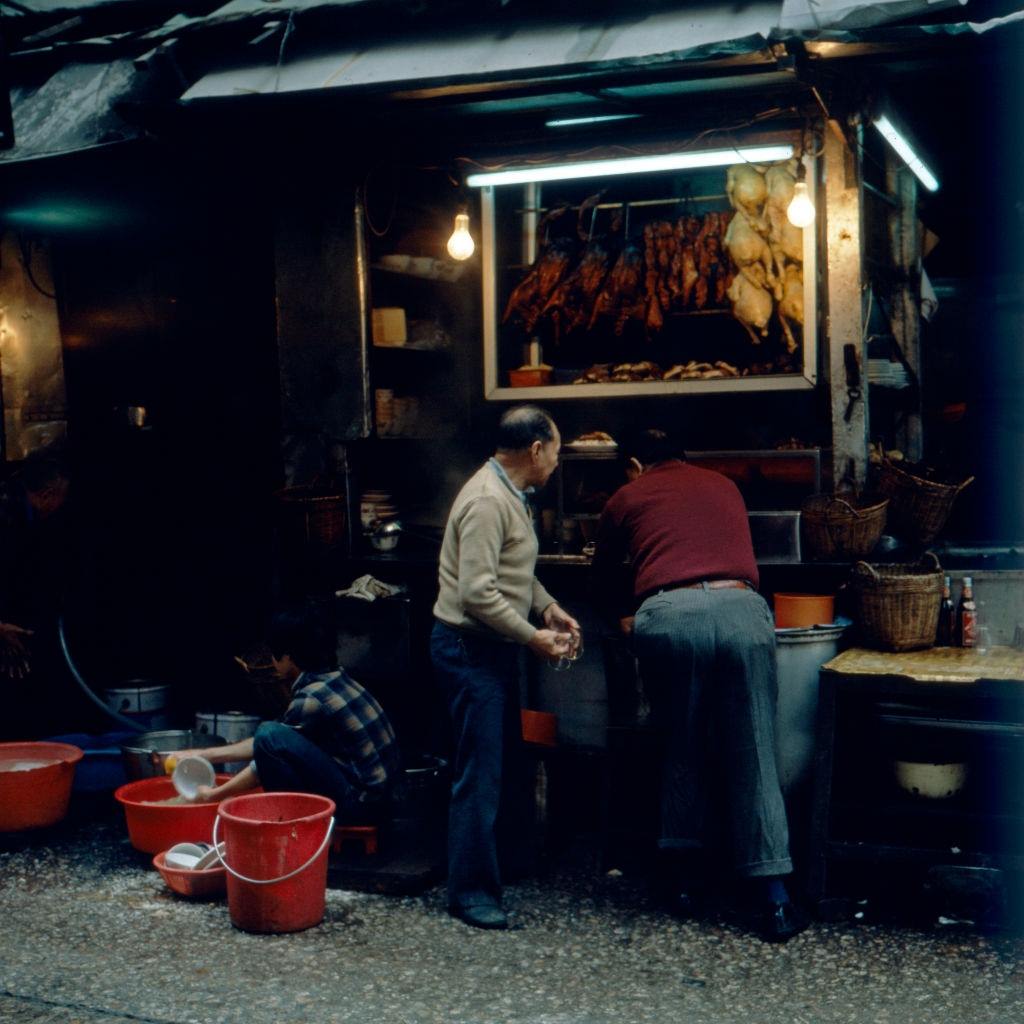
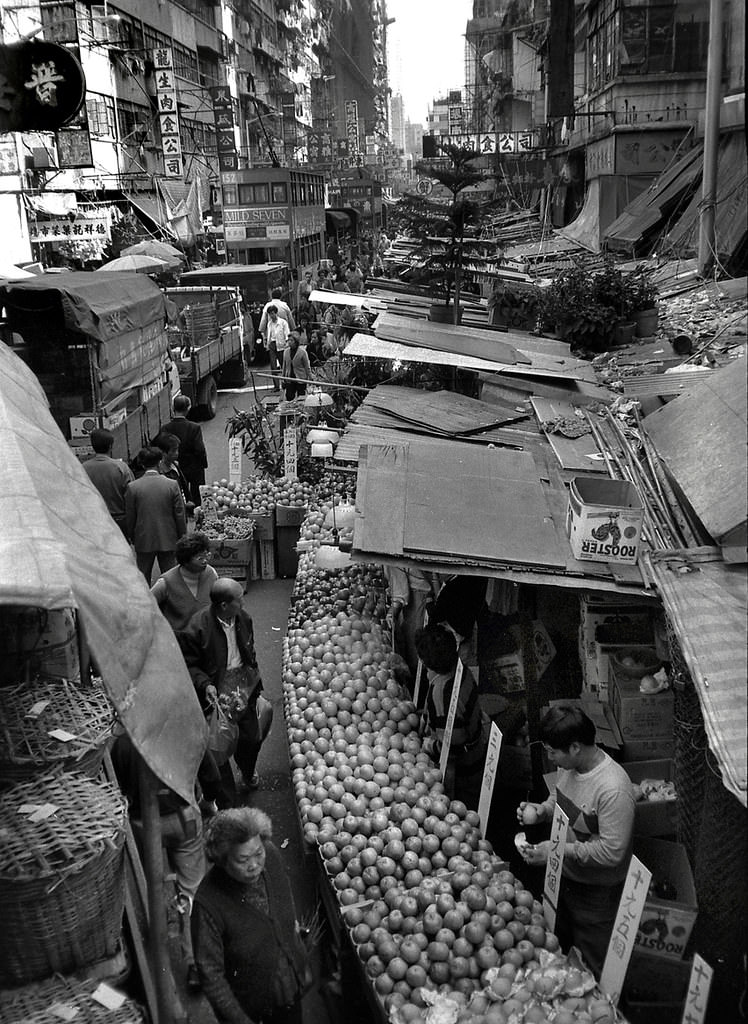
Street food was central to how most Hong Kong residents ate. Small cookshops set up on sidewalks and in narrow alleys served hot meals at prices almost anyone could afford. There was no emission standard regulating the smoke and smells that poured into the air from these stalls.
Public green spaces gave city residents a rare chance to slow down. Kowloon’s leisure parks offered walking paths and open ground in a city where such space was at a premium.
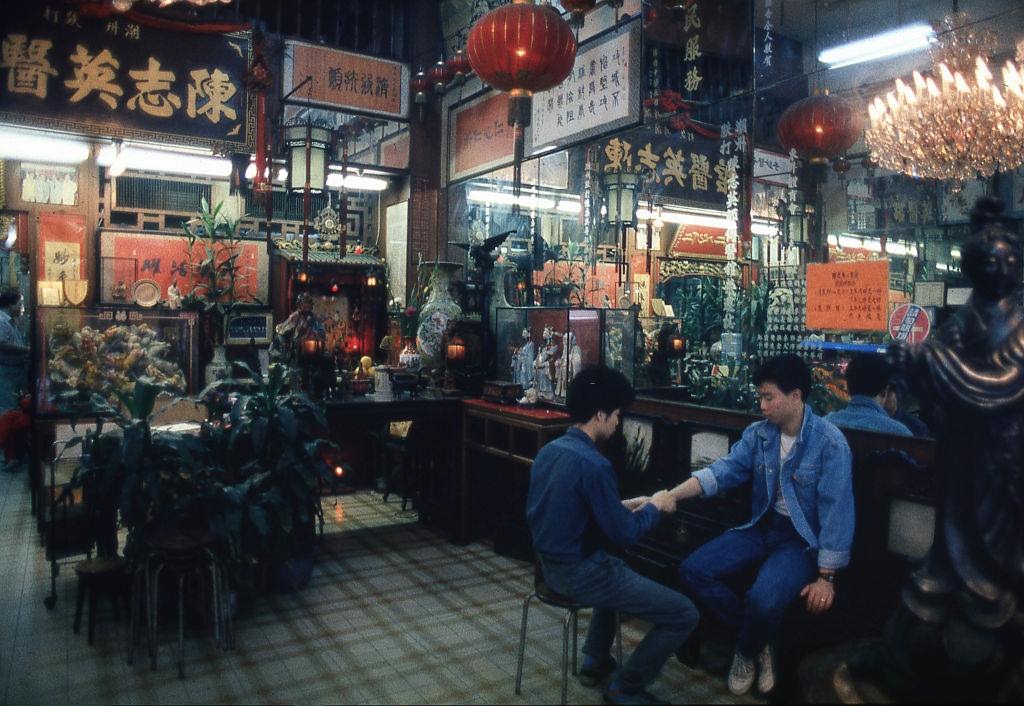
Traditional medicine remained a trusted part of everyday life. Chinese chiropractor clinics, herbalists, and acupuncture practitioners operated throughout the city’s neighborhoods, often just doors away from modern pharmacies.
By the mid-1980s, Queen’s Road had transformed visibly. The mix of old shopfronts and new commercial signage reflected a city caught between its colonial past and its rapid modernization.
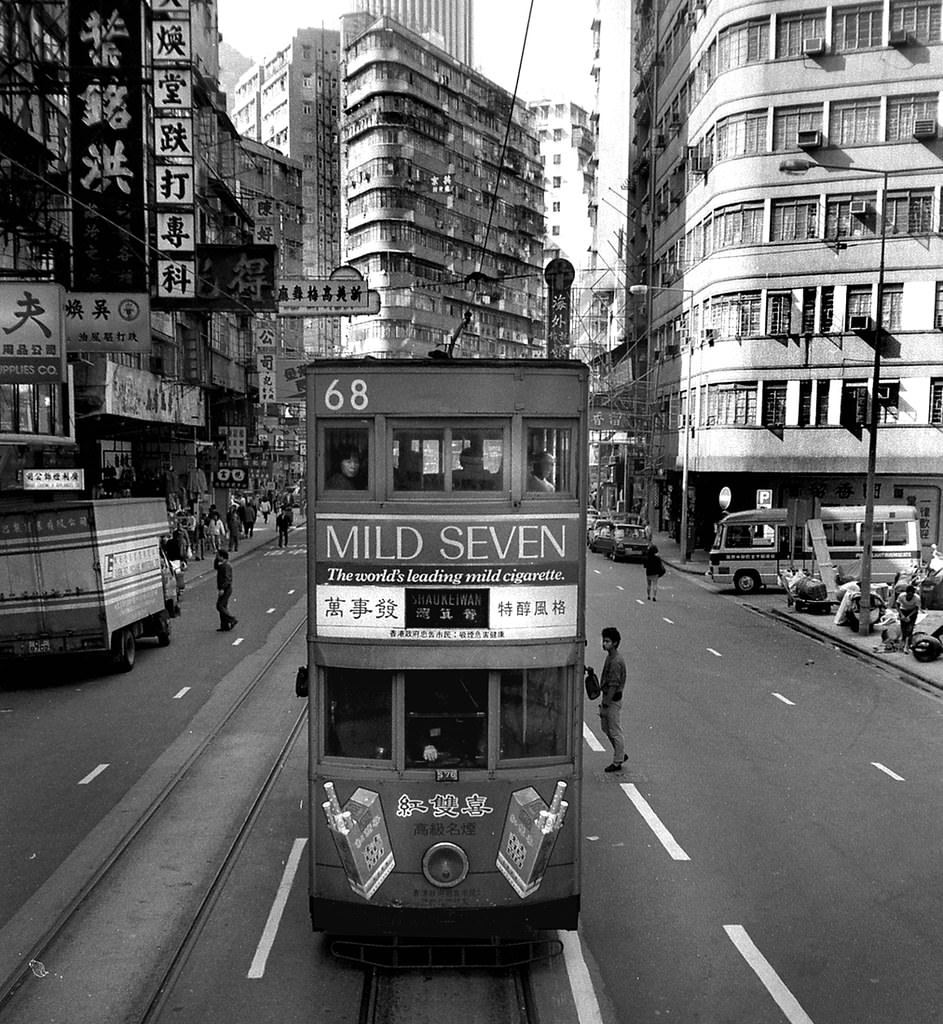
North Point, on the northeastern side of Hong Kong Island, was a densely populated residential and commercial district. Chung Yeung Street typified the neighborhood’s compact, layered character.
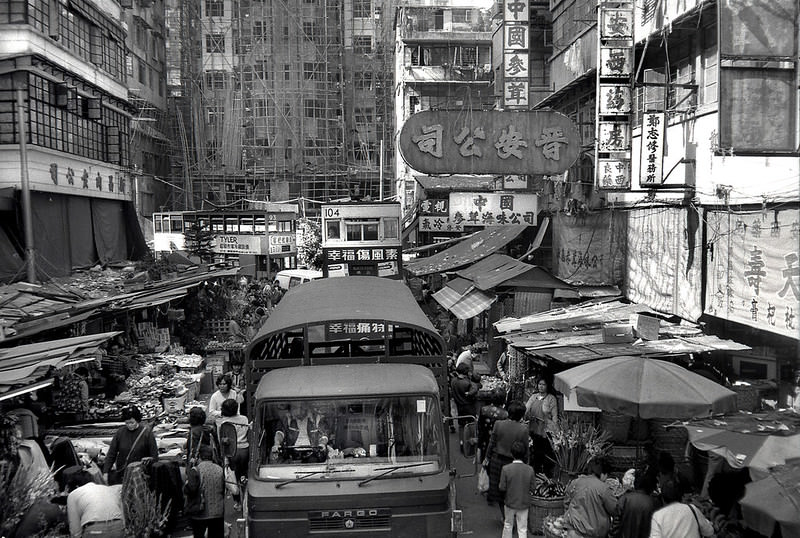
Queen’s Road remained one of the most photographed streets in the city throughout the decade, its double-decker trams threading through traffic as a constant fixture of daily life.
Chungking Mansions on Nathan Road was by the mid-1980s already one of the most ethnically diverse and chaotic buildings in the world. Its floors housed guesthouses, curry restaurants, money changers, and traders from across South Asia and Africa, all packed into a single block of tower blocks in Tsim Sha Tsui.
The fishing village of Tai O on Lantau Island kept its own pace. A rope ferry crossed a narrow channel at the heart of the village, carrying residents and visitors across in a system that had served the community for decades before a pedestrian bridge eventually replaced it.
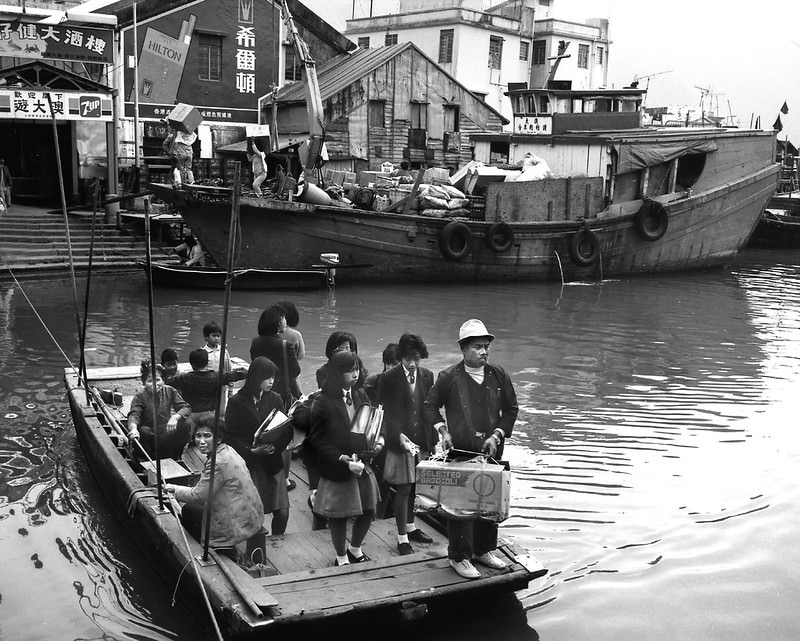
Ferry travel connected Hong Kong’s many islands and neighborhoods in a way that roads could not. For residents of Lantau, the ferry was not a leisure trip — it was simply how they got home.
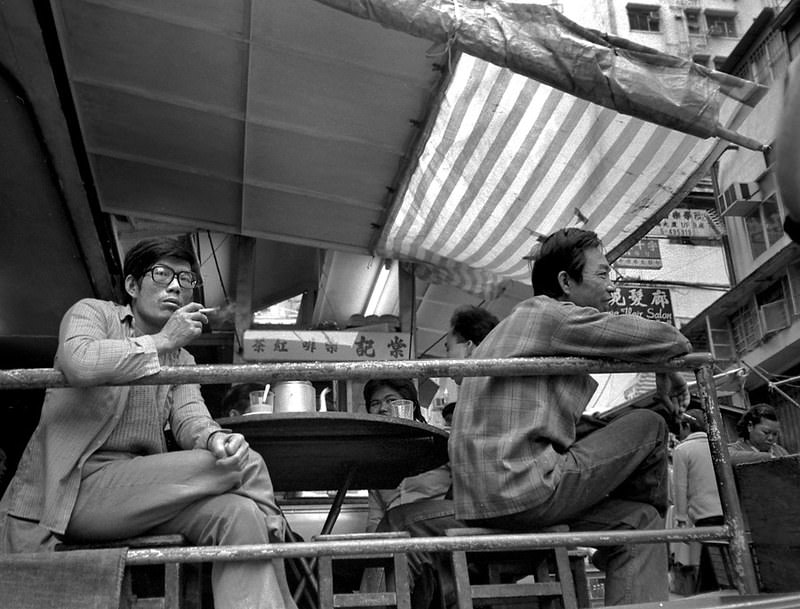
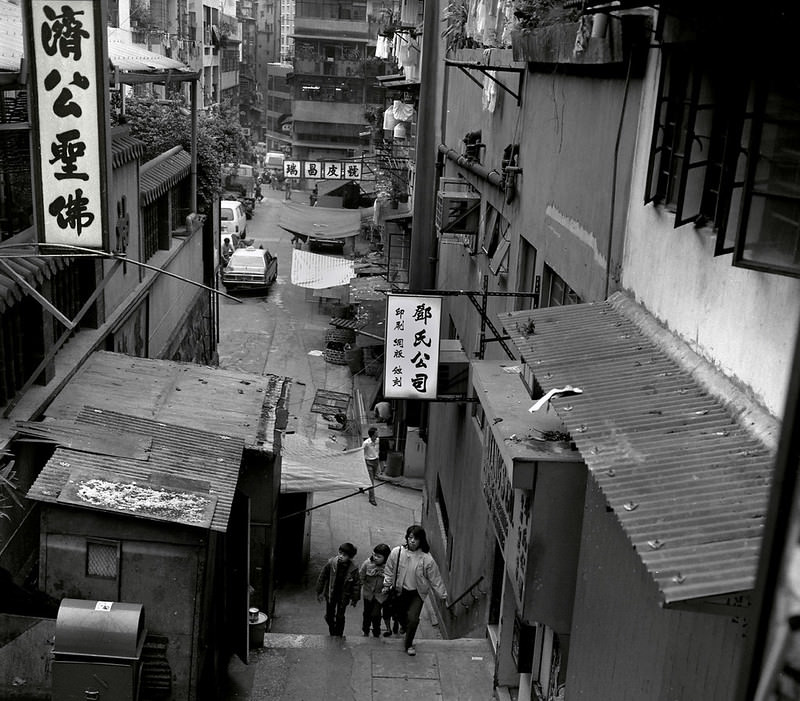
Ladder Street in the Sheung Wan district climbed steep ground in a series of granite steps. At the base, a tea shop offered a resting point for those making the climb, and it served as a neighborhood gathering place that reflected the slower rhythms of older Hong Kong.
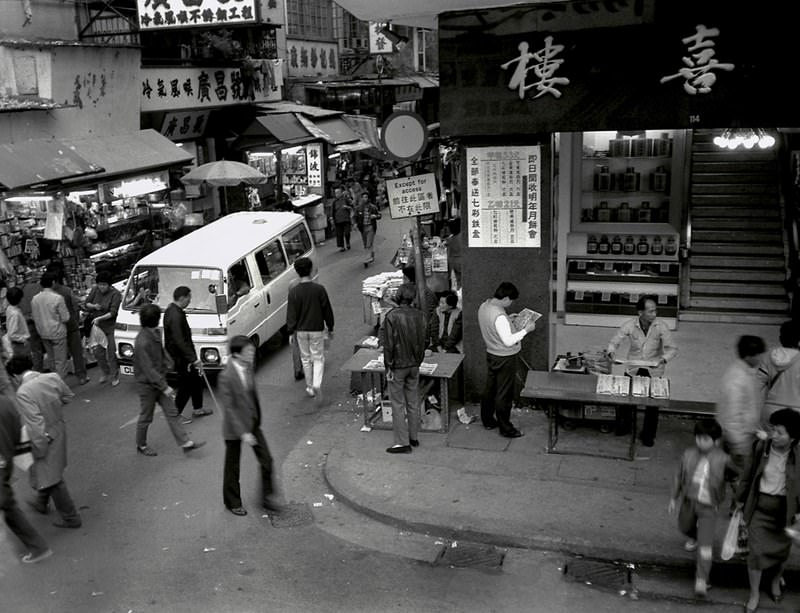
The smaller outlying islands like Peng Chau retained a village character well into the 1980s. Without high-rise development or heavy industry, these communities depended on fishing and small-scale trade, their harbors crowded with boats rather than container ships.
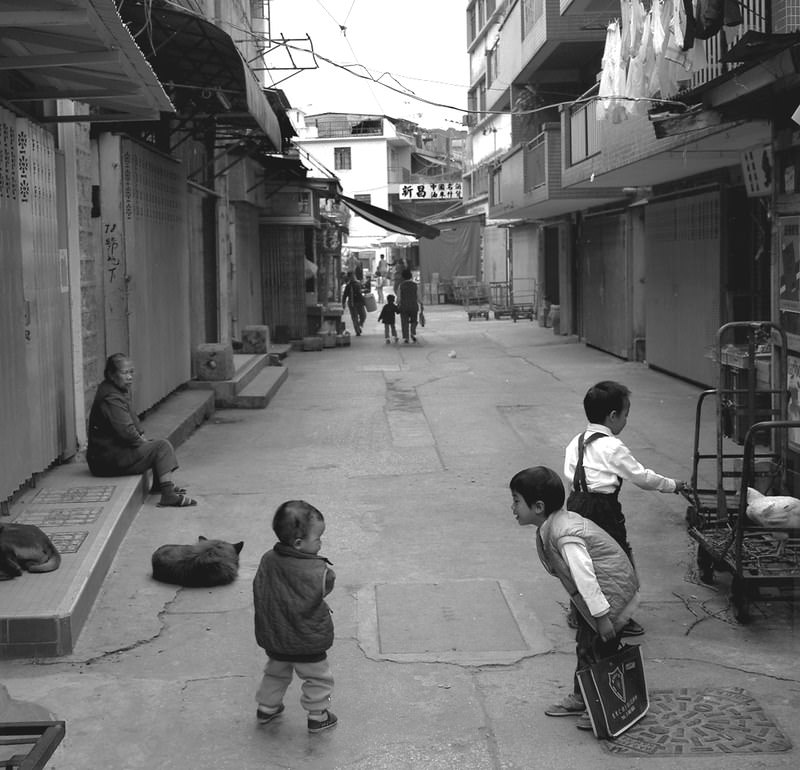
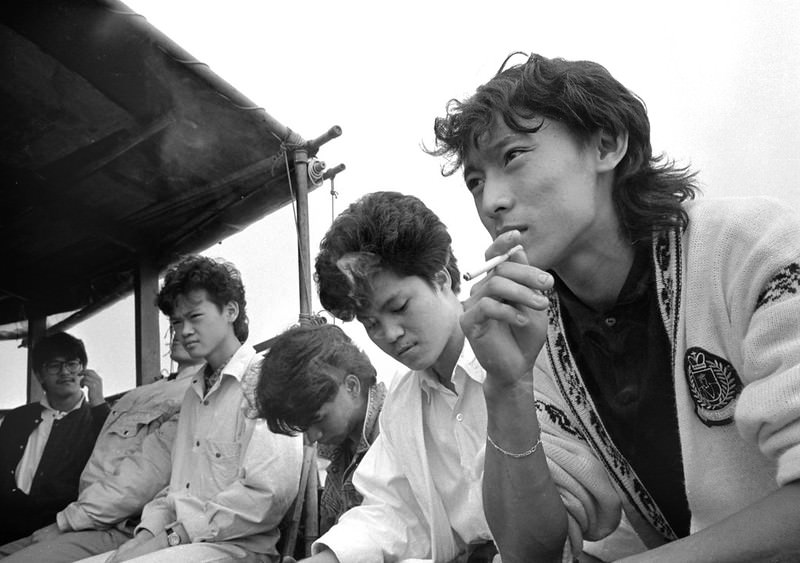
Water taxis moved through Hong Kong’s harbor and coastal waterways constantly, serving areas that ferries did not reach directly. The men who drove them knew the harbor’s currents and schedules better than any timetable.
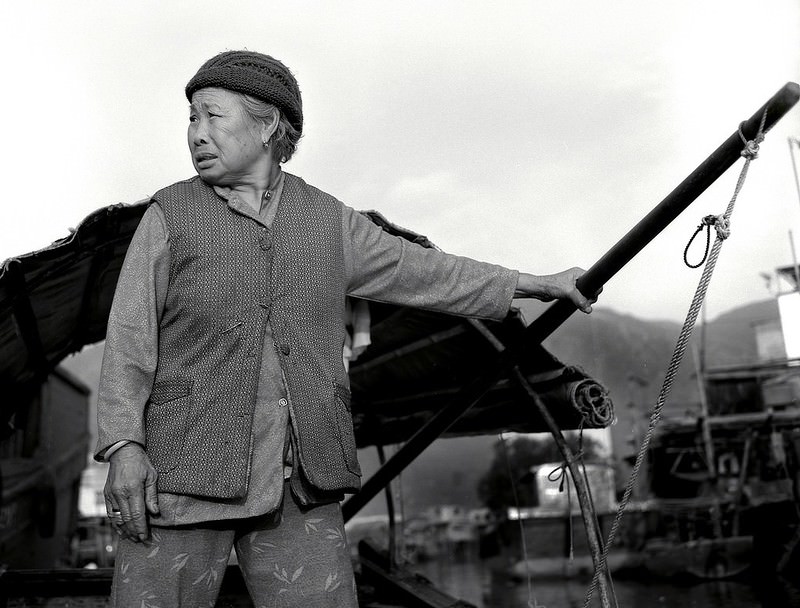
Construction never stopped in 1980s Hong Kong. Workers erected bamboo scaffolding around buildings at every stage — from single-story renovations to towering high-rise projects. The bamboo frameworks, tied together with strips of nylon, could reach dozens of floors and were used in preference to metal scaffolding throughout the city.
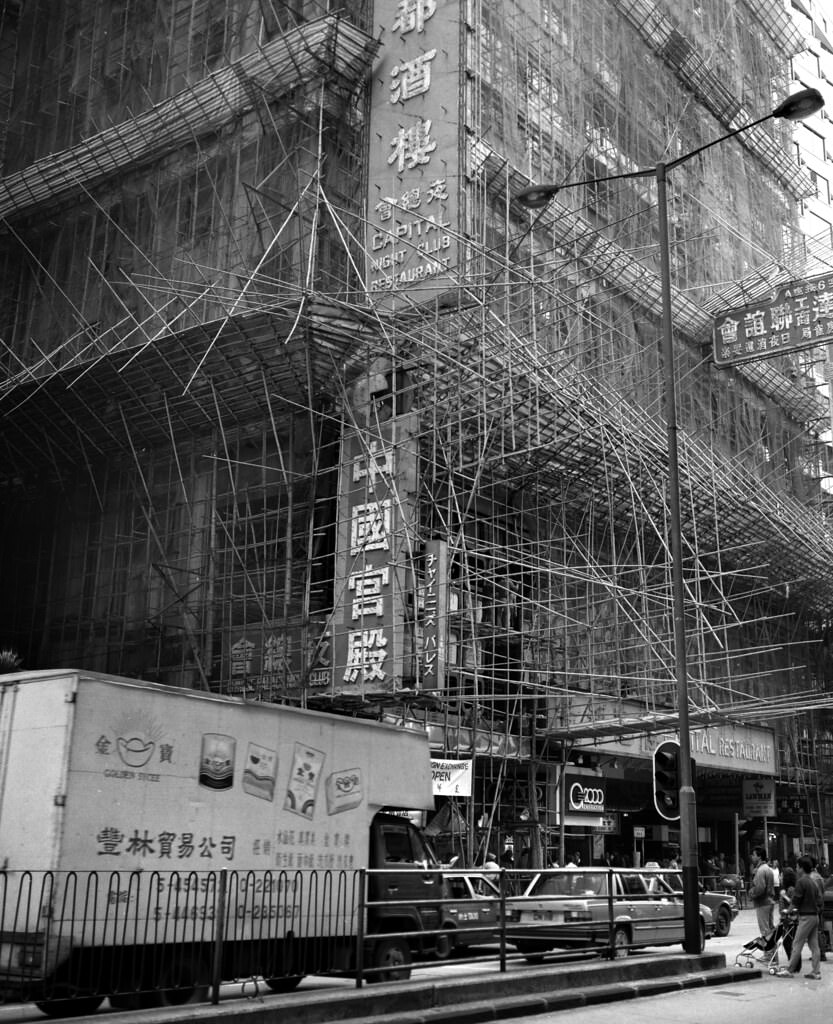
At street level, the rhythm of daily life continued regardless of what was being built overhead. Vendors, shoppers, and workers shared the same narrow pavements.
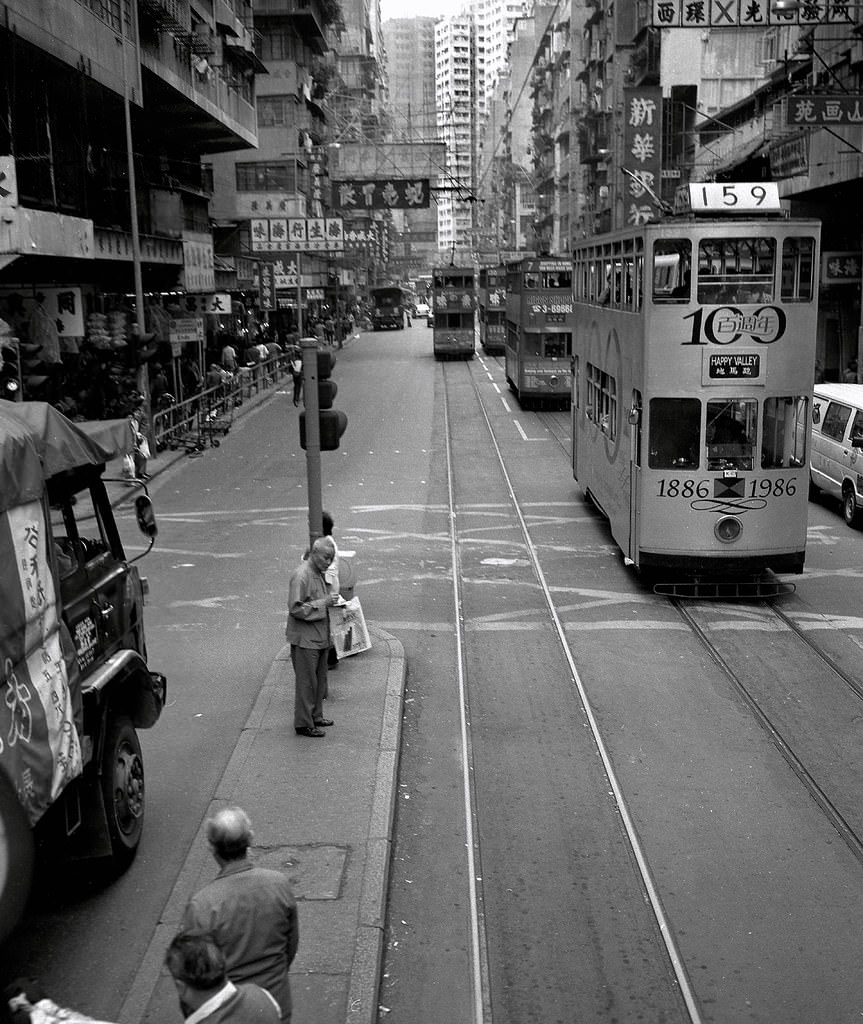
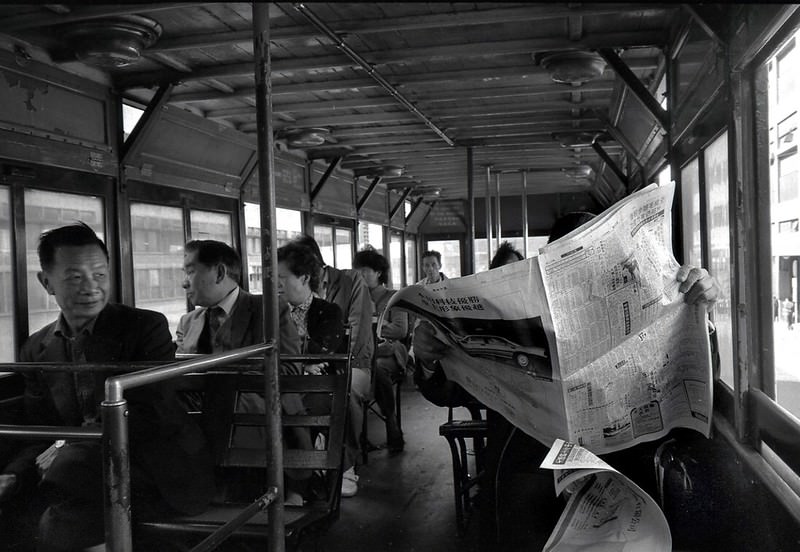
The trams of Hong Kong Island were a constant feature of Queen’s Road throughout the decade. Running on electricity since the early 1900s, the double-deckers were among the slowest and most affordable ways to travel along the northern shore of the island.
Wan Chai, once better known for its bars and nightlife catering to foreign servicemen, was settling into a more complex identity by the mid-1980s — a mix of entertainment venues, residential blocks, and commercial streets.
The outlying islands formed a world apart from the density of Kowloon or Central. Smaller communities, open water, and a slower pace defined island life in ways that photographs captured far better than statistics.
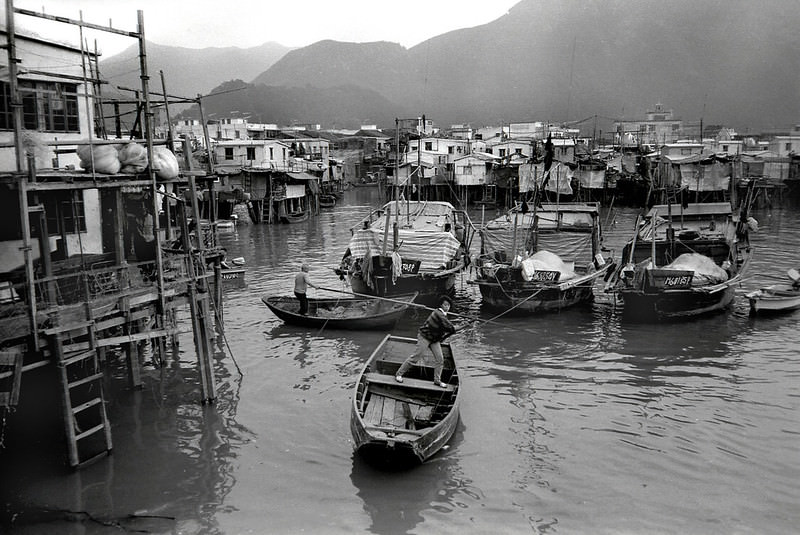
The Star Ferry crossing between Kowloon and Hong Kong Island was one of the world’s great short commutes. For just a few cents, passengers got a front-row view of one of the busiest harbor skylines on earth, with the towers of Central rising directly ahead.
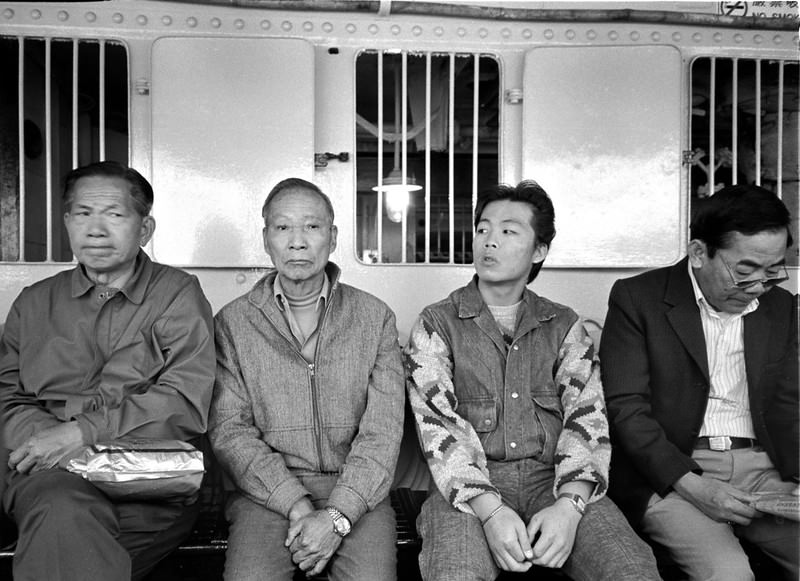
Kowloon’s nightlife carried its own distinct flavor. The Playboy Club on Nathan Road was part of a broader entertainment strip that drew both locals and the large expatriate community living across the territory.
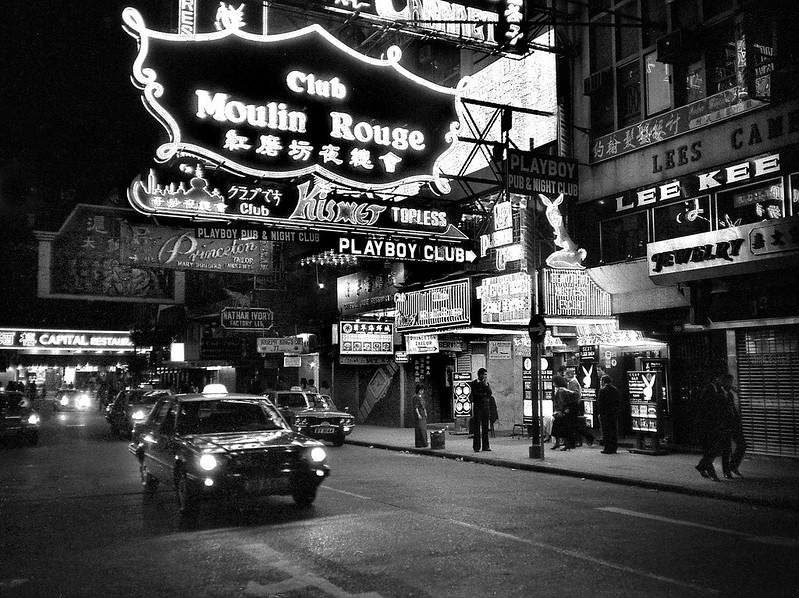
Sheung Wan, just west of the Central business district, was one of the oldest settled parts of Hong Kong Island. Its streets were lined with shops dealing in dried seafood, paper offerings, and traditional goods — a commercial culture that had operated there for well over a century.
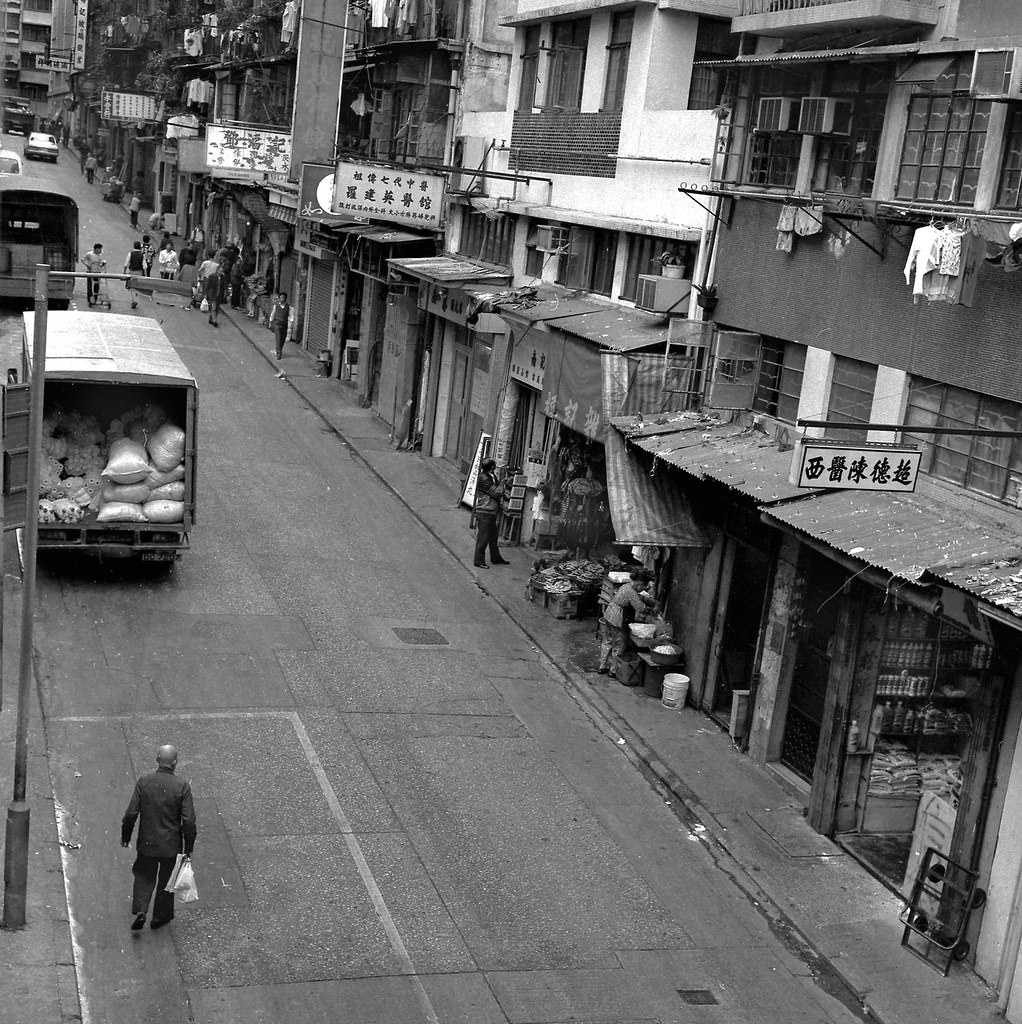
Nathan Road was Kowloon’s main artery — a wide boulevard stretching south from Mongkok to Tsim Sha Tsui. It earned the nickname “the Golden Mile” for the density of shops and hotels lining its length, their signs stacked high above street level in multiple languages.
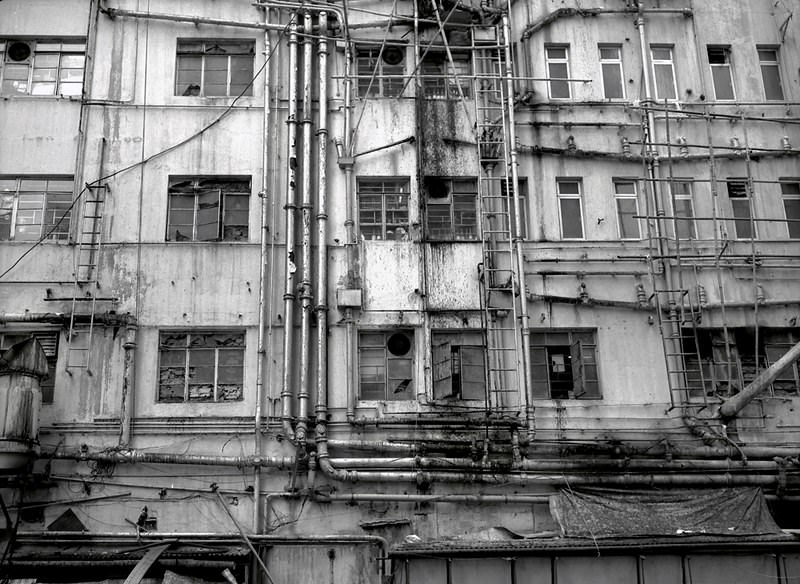
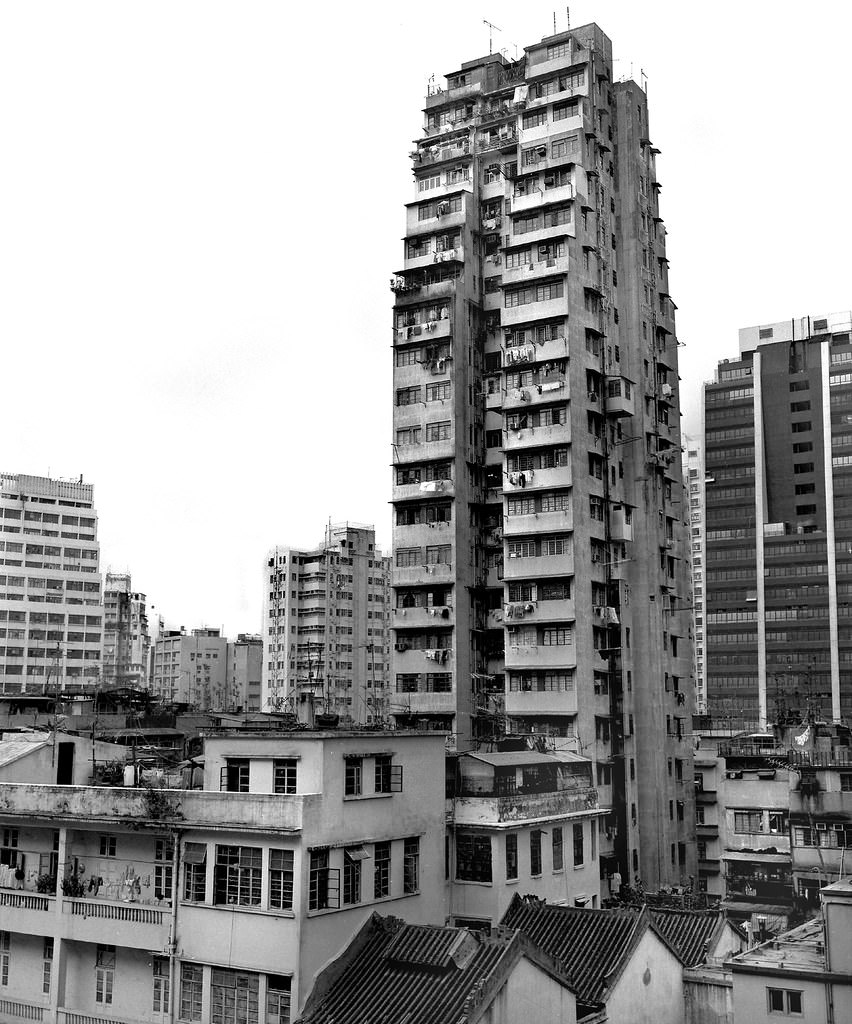
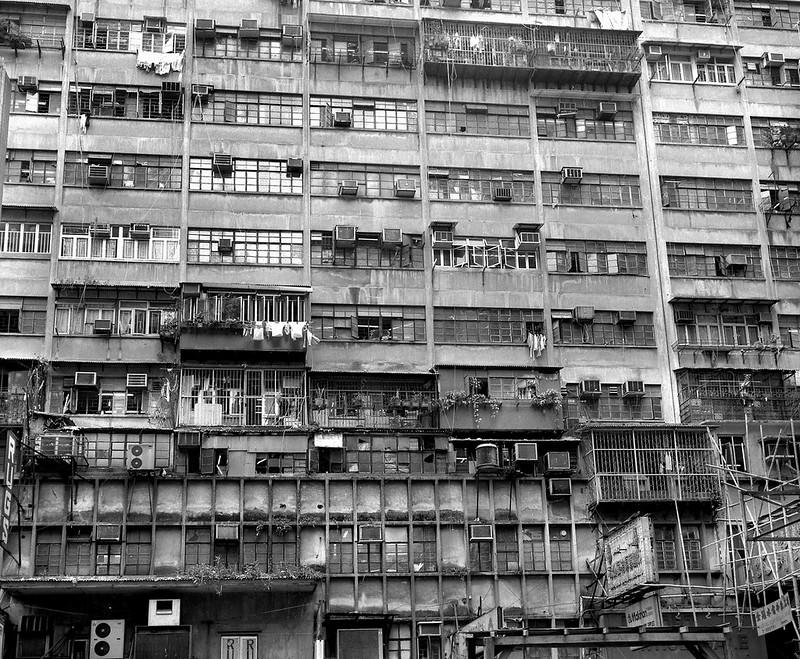
Mid-century apartment blocks filled Hong Kong’s residential neighborhoods with a particular look: concrete facades broken up by rows of air-conditioning units, laundry poles, and metal grilles over windows. These buildings housed a large portion of the city’s workforce.
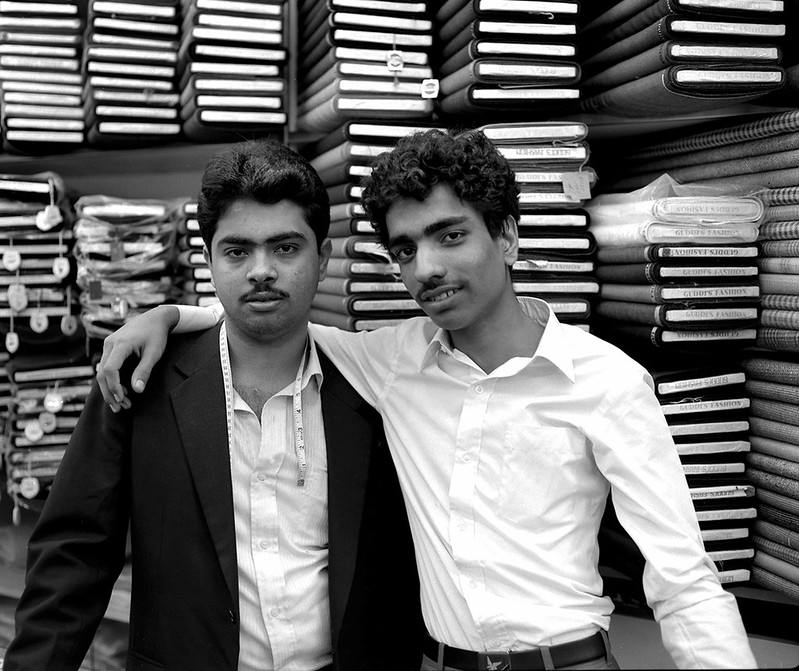
Kowloon was famous for its custom suit tailors. Small shops on side streets offered made-to-measure garments at prices that drew buyers from around the world. A suit could be completed in as little as 24 hours.
High-rise residential towers were the dominant form of housing across Kowloon by the 1980s. The towers were not luxury buildings — they were the practical answer to housing millions of people in one of the most land-scarce places on earth.
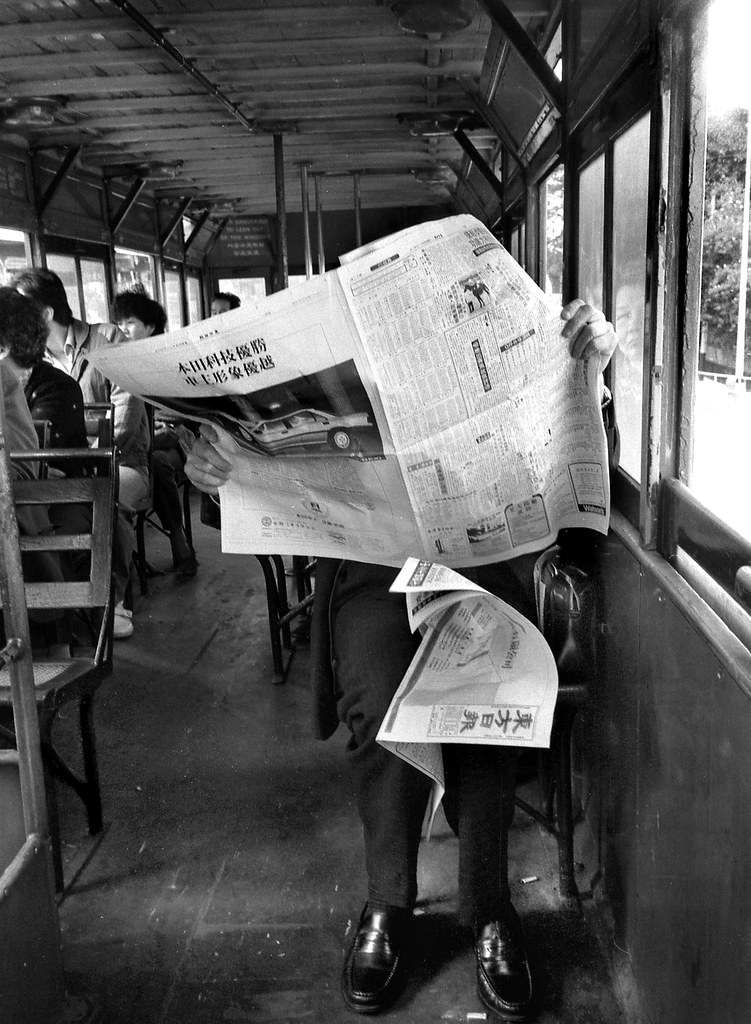
The trams carried a cross-section of Hong Kong society on every trip. Office workers, market vendors, school children, and elderly residents all shared the same wooden seats as the cars crawled along Queen’s Road.
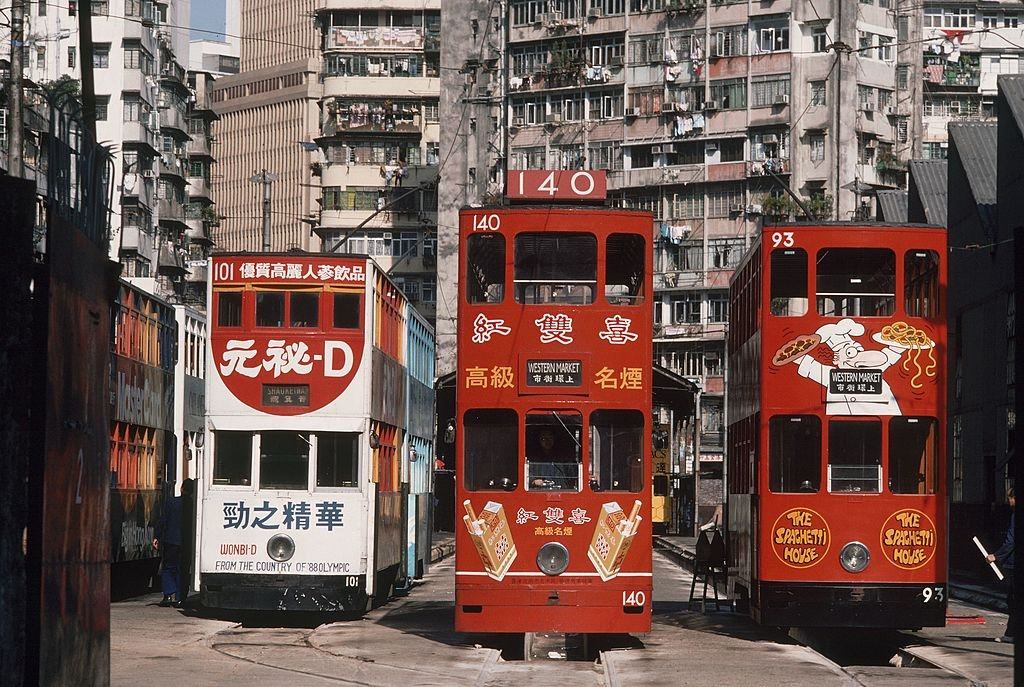
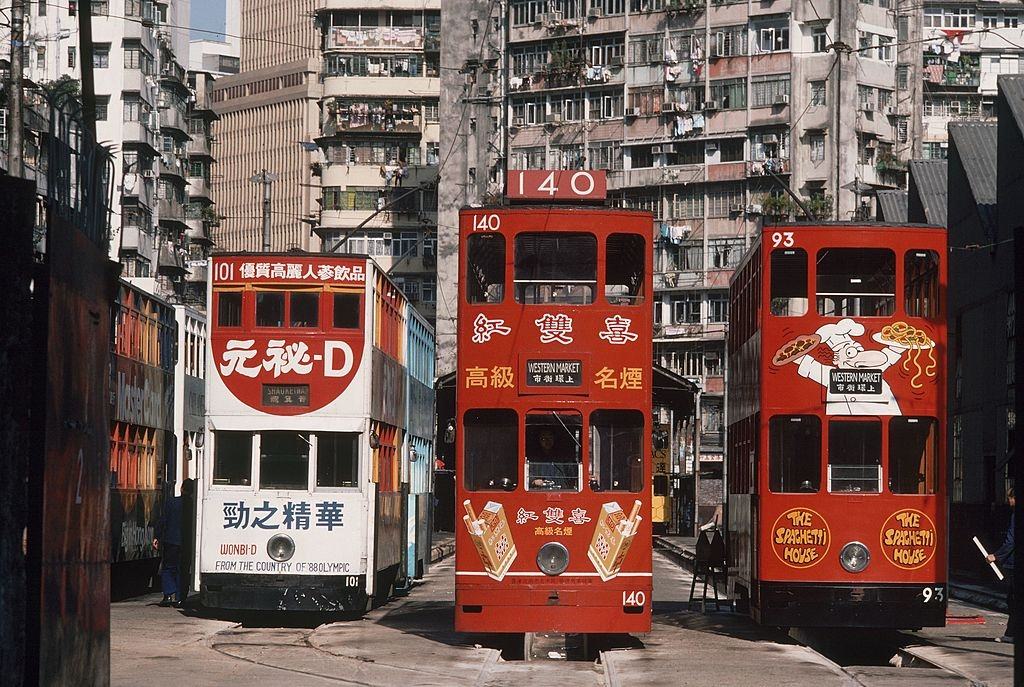
Even at the start of the decade, trams were a familiar anchor of Hong Kong’s streetscape. Three trams moving together along a city road was a common sight — slow, reliable, and running on a schedule that dated back generations.
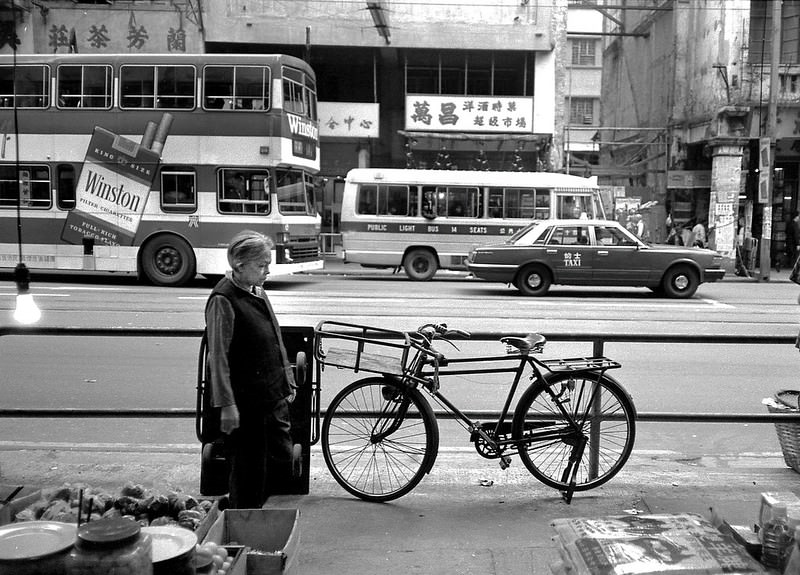
Wan Chai’s streets were busy at nearly every hour. The district’s mix of markets, restaurants, and entertainment venues meant foot traffic continued well into the night.
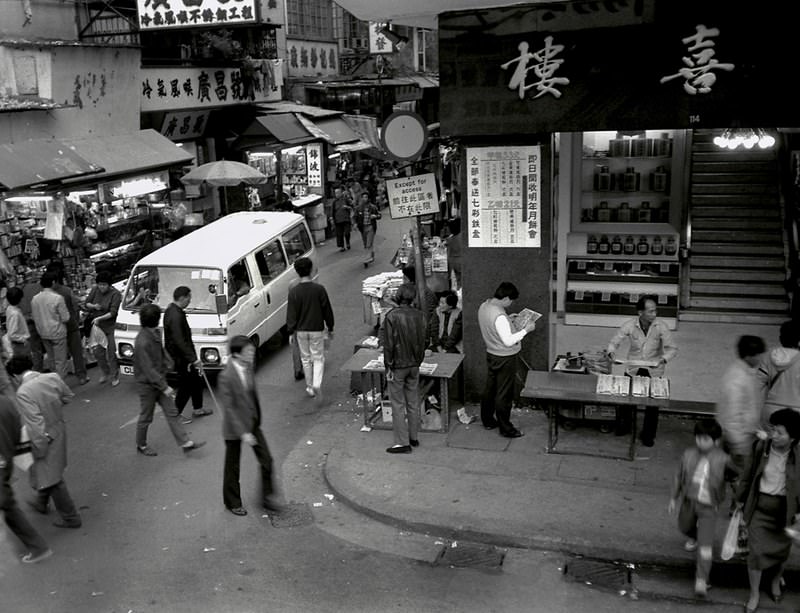
Causeway Bay was another of Hong Kong Island’s commercial powerhouses. By 1986, its shopping streets were packed with department stores, small retailers, and restaurants competing for the attention of one of the densest consumer populations in Asia.
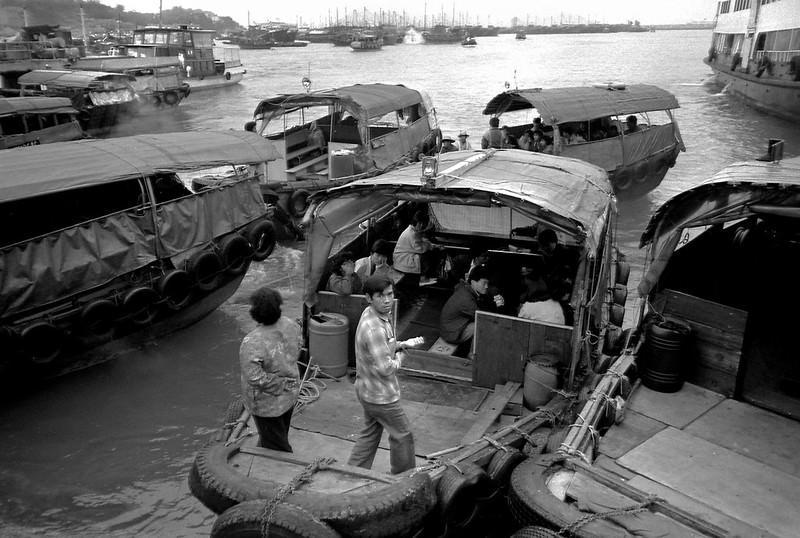
North Point sat at the northeastern tip of Hong Kong Island’s built-up core. By the mid-1980s, the district was solidly residential and commercial, its streets packed with the same energy that defined every corner of this rapidly growing city.
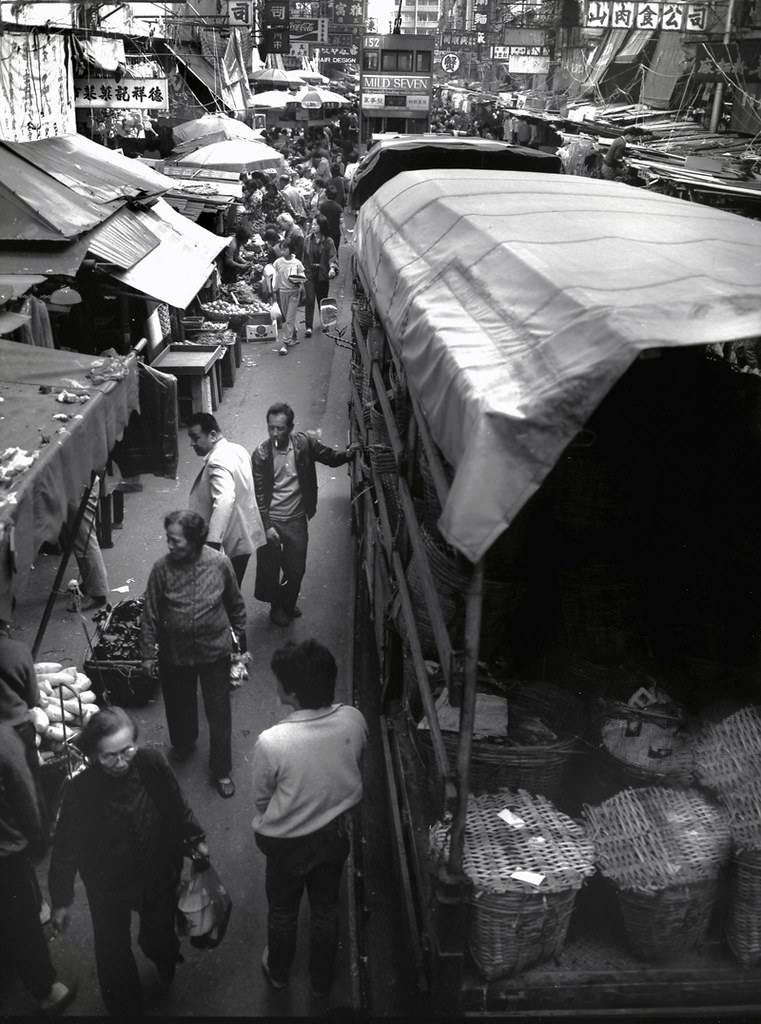





Fascinating how many cigarette ads and smokers there were back then!
Fabulous” is no exaggeration at all. Really cool pics!
Wow, brings back childhood memories. Thank you!
Ding dings didn’t have the “smile” they have now
I wish I had taken more photos when I arrived in the 1980s… CMB buses… argh!
what a time to have been alive.