
The 1930s hit New York City hard. The Great Depression had pushed unemployment to staggering levels, and those lucky enough to still have jobs were taking heavy wage cuts. Across the five boroughs, families who had once been stable found themselves unable to afford food or keep a roof over their heads. Evictions were common. Makeshift shelters appeared in parks. The city was struggling, but it never stopped moving. What makes this era so vivid today is the work of Berenice Abbott, a pioneering female photographer who spent much of the decade walking the streets of New York with her camera. Abbott documented side streets and storefronts, commuters and market workers, tenement blocks and grand terminals. Her images were distributed by the Federal Art Project to high schools, libraries, and public institutions across the country. Together, they form one of the most detailed visual records of Depression-era New York ever assembled. The photographs below span the full decade, capturing the city’s neighborhoods, its working people, and the textures of daily life that might otherwise have been lost.
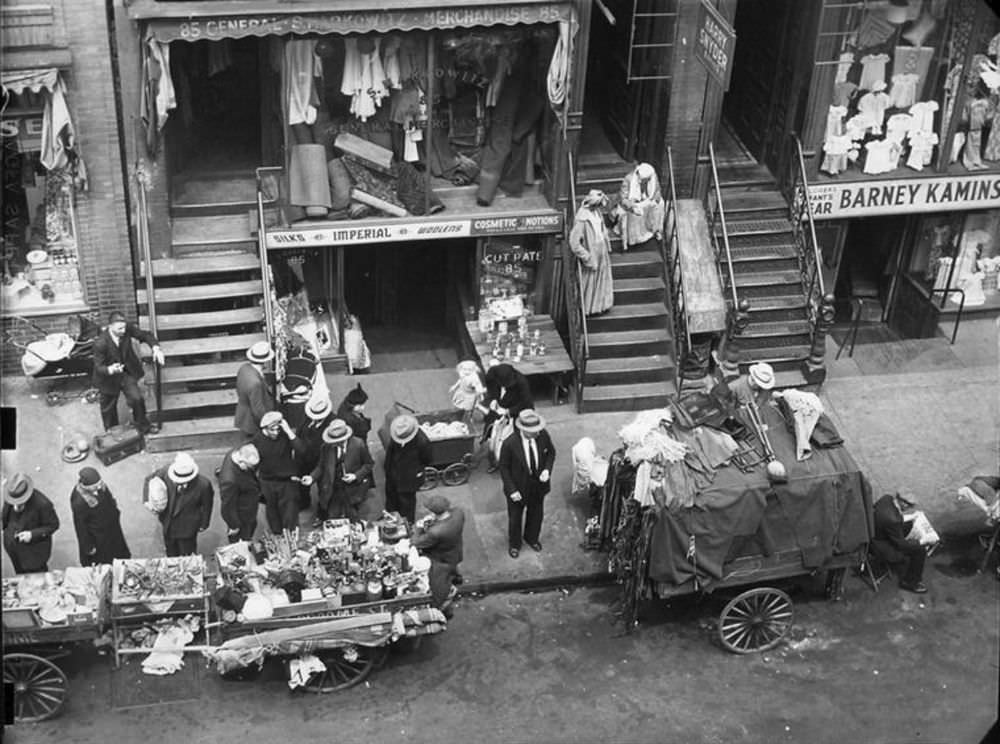
Hester Street on the Lower East Side was one of the most densely packed commercial corridors in the city. Peddlers lined the sidewalks, women sat on stoops watching children in carriages, and fabric and clothing stores competed for attention at street level. The neighborhood had long been a landing zone for immigrant families, and in the 1930s it retained that character — crowded, loud, and relentlessly active.
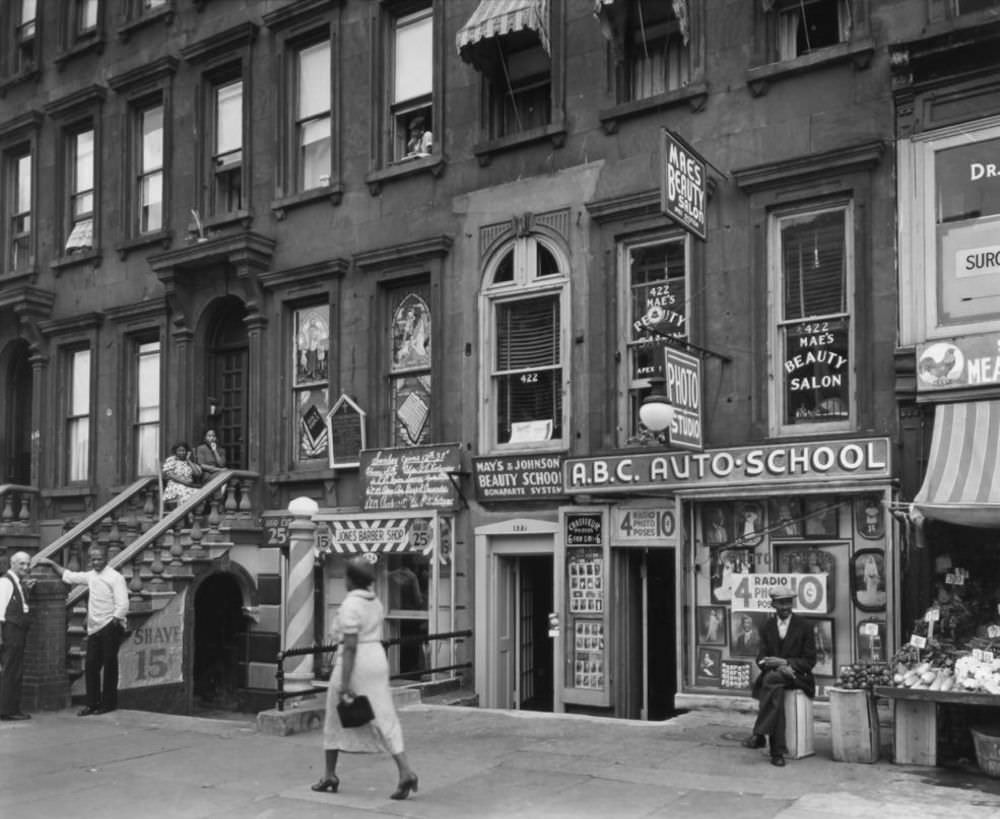
Harlem in the 1930s was a neighborhood of layered activity. Lenox Avenue, one of its central arteries, was lined with businesses catering to residents — barbershops, beauty parlors, auto schools, and storefronts that doubled as informal churches. Abbott captured the street-level rhythm of this community with the same attention she gave to downtown Manhattan.
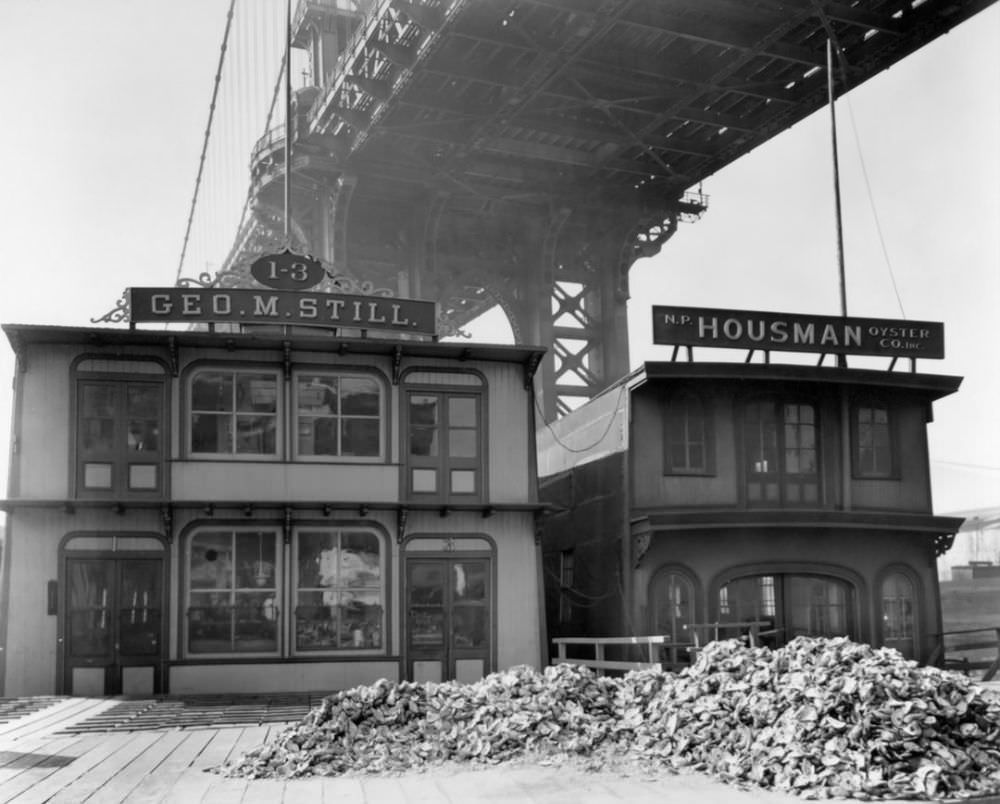
Along the waterfront at South Street and Pike Slip, the oyster trade was still very much alive. The George M. Still and N.P. Housman Oyster Co. operated here, with piles of oyster shells stacked in front of the building and the Manhattan Bridge arching overhead. The waterfront was a working place — loud, smelly, and essential to the city’s economy.
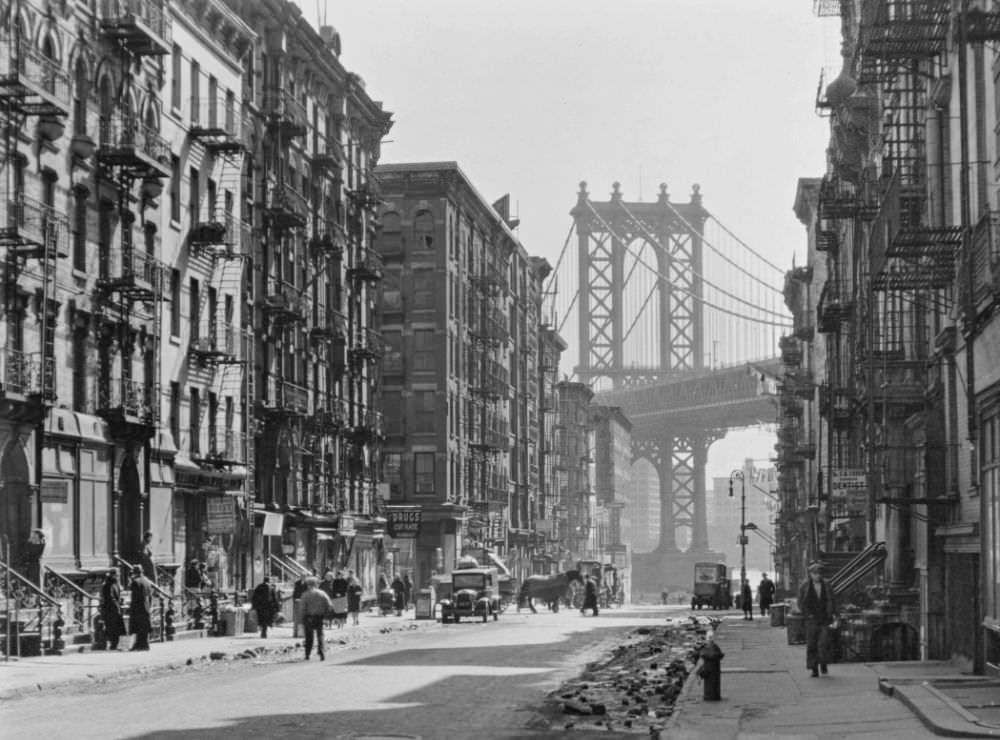
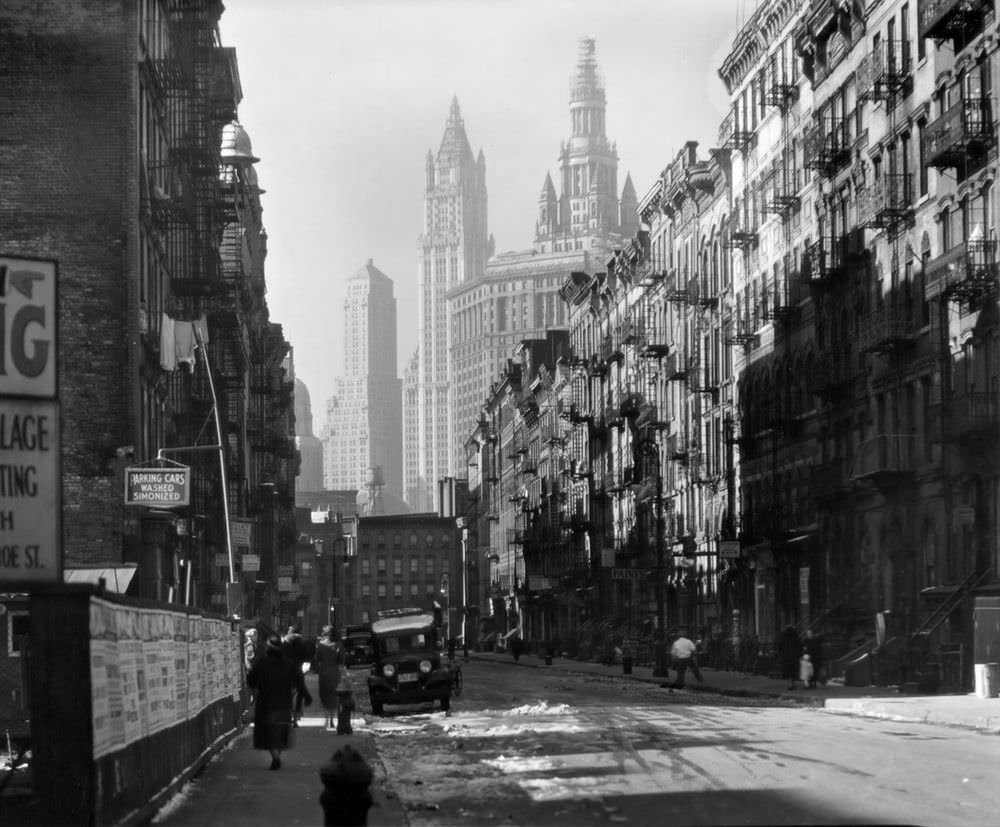
Looking down Pike Street toward the Manhattan Bridge, the scene is half lit and half in shadow, with rubble collecting in the gutters and light traffic moving through. It’s an honest picture of a neighborhood that wasn’t being maintained the way wealthier parts of the city were. The Depression showed up not just in people’s faces, but in the condition of the streets themselves.
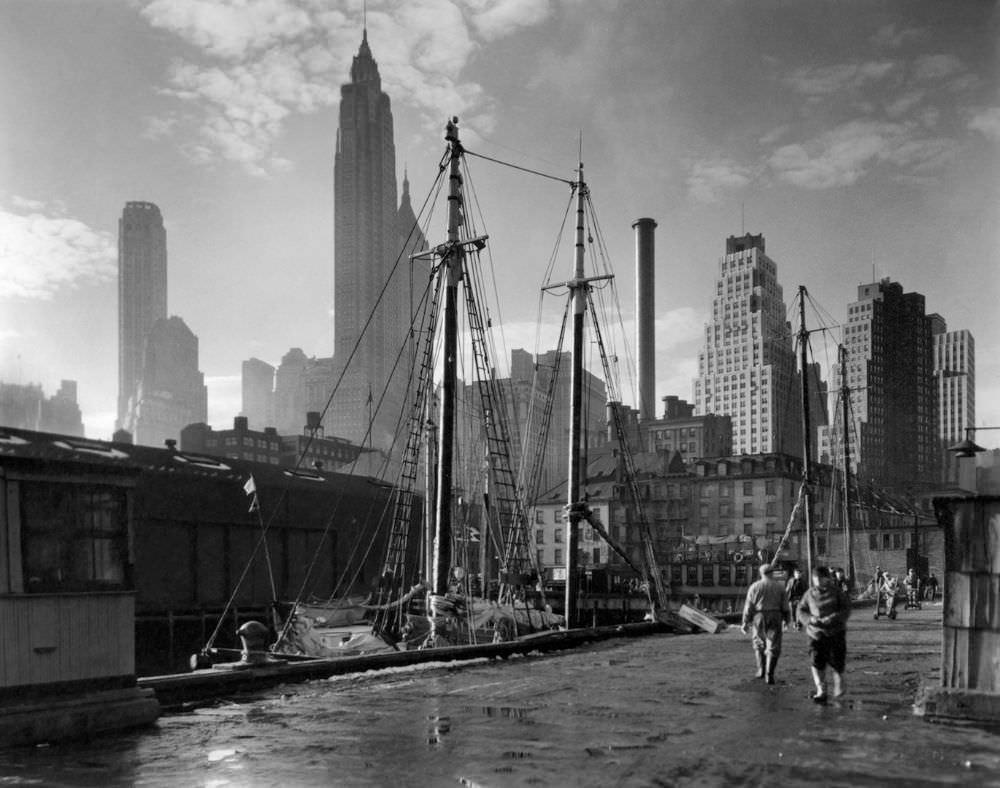
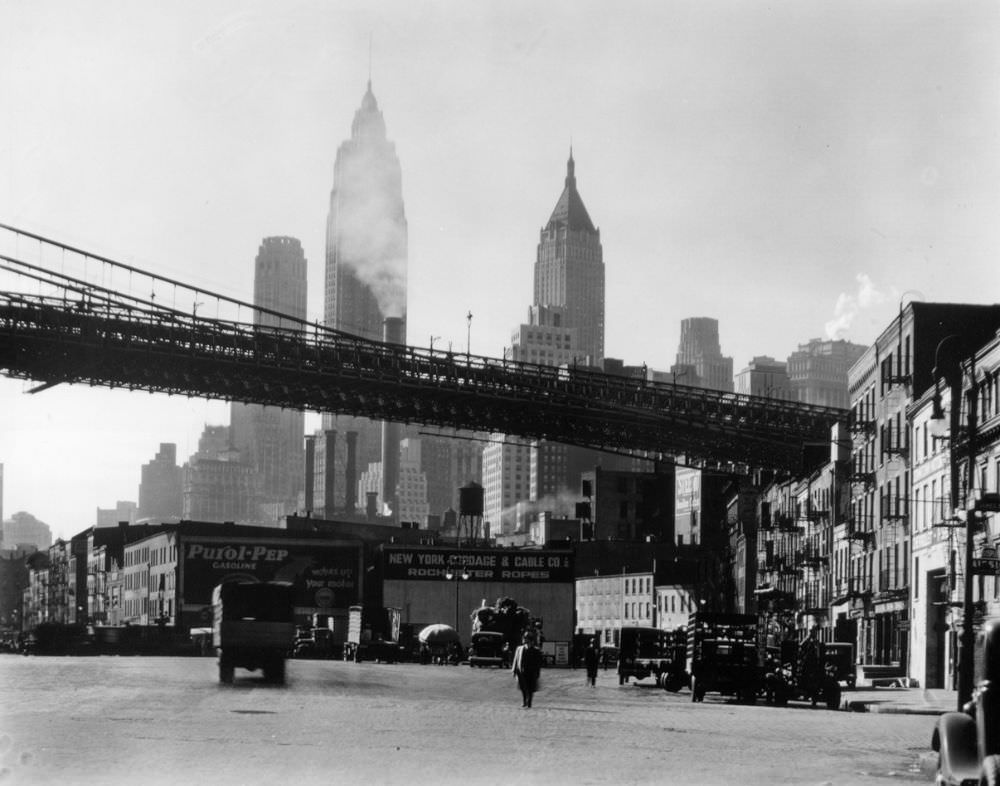
The waterfront was one of Abbott’s recurring subjects. At South Street near James Street, the Brooklyn Bridge’s span reached land above the street while tall buildings climbed behind it. Men walked piers where sailing vessels were moored at Fulton Street Dock, the city’s skyline rising in the background. These images show New York as a port city first — a place where commerce arrived by water before it moved inland.
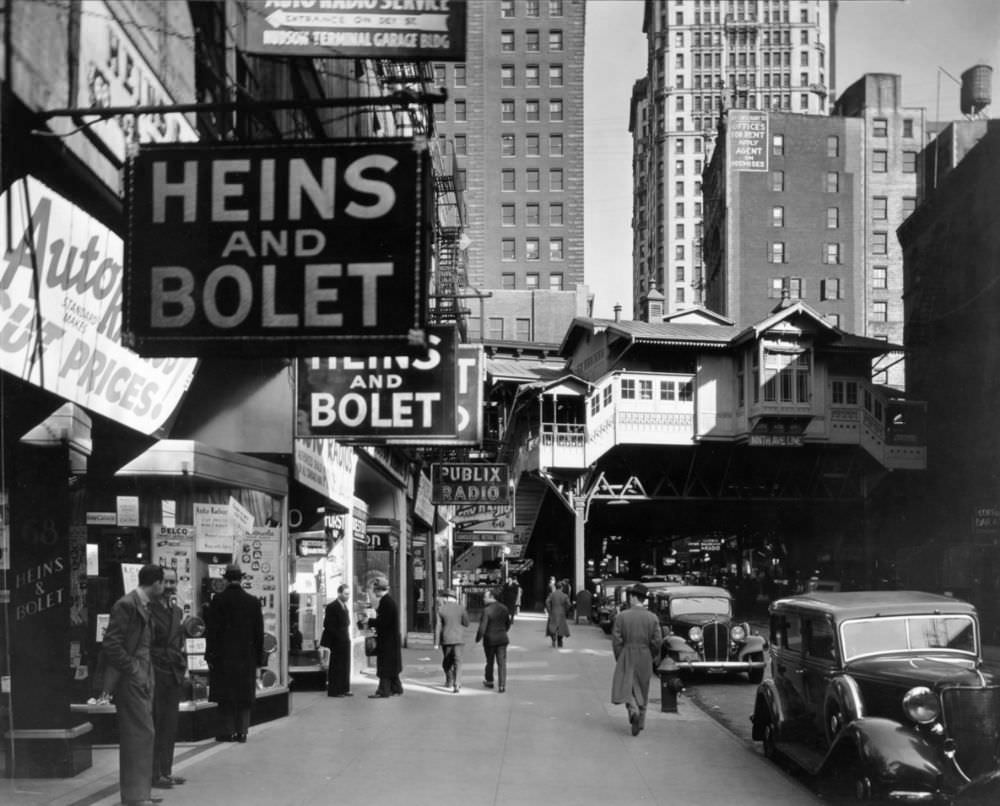
Cortlandt Street, known as Radio Row, was the go-to destination for electronics in Depression-era New York. Men gathered at shop windows to look at radios on display, with the elevated Ninth Avenue rail line running above and a subway entrance visible nearby. Radios were one of the few affordable comforts during the Depression — a way to receive news, music, and FDR’s fireside chats without leaving home.
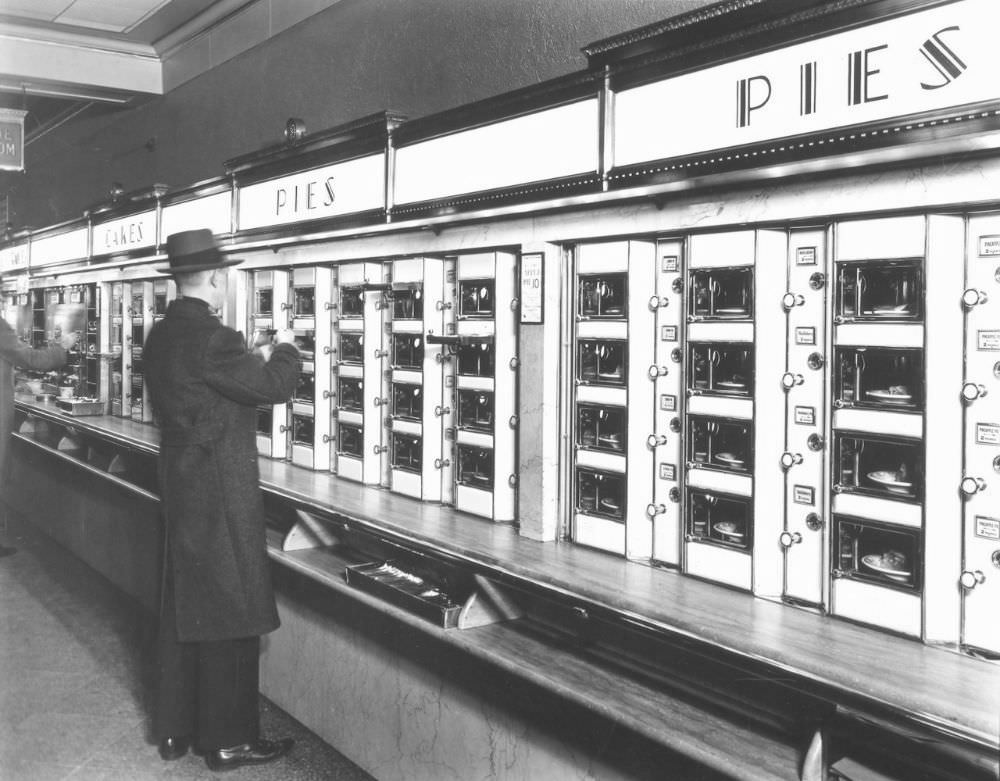
The Automat was a fixture of Depression-era New York dining. For a few coins, a customer could open a small glass door and retrieve a hot meal — no waiter, no fuss. At 977 Eighth Avenue, a man reaches into one of the metal and glass compartments to pull out a slice of pie. For many New Yorkers scraping by, the Automat offered a dignified way to eat cheaply.
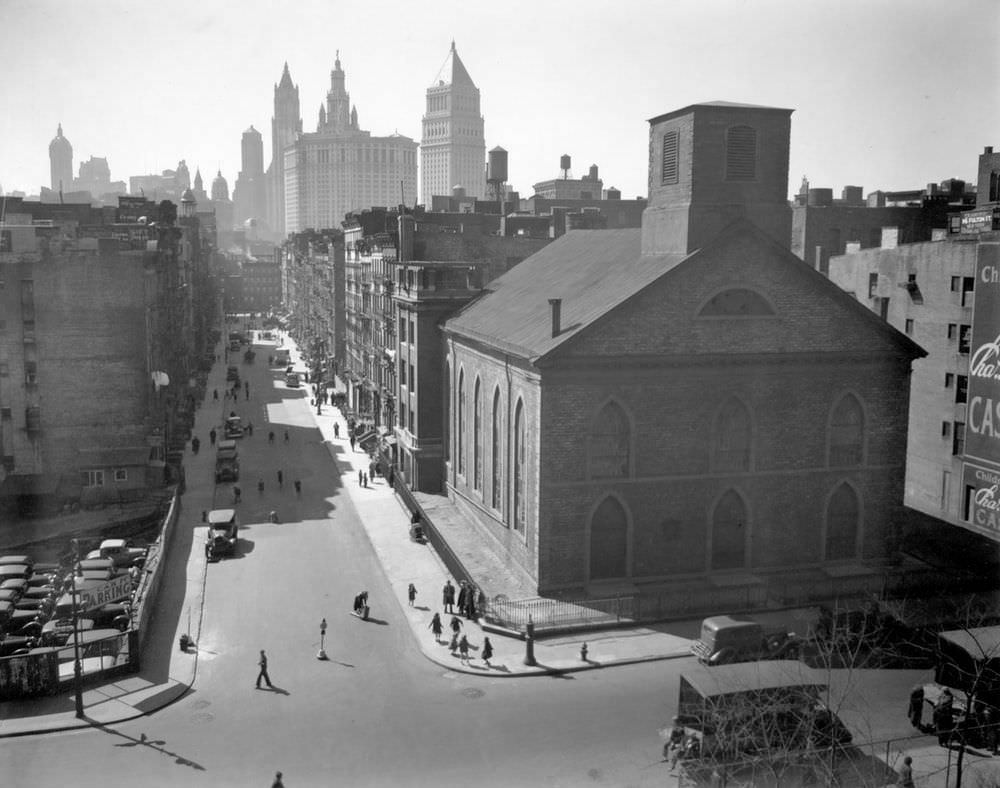
From the Manhattan Bridge, Abbott captured a sweeping view down Monroe Street toward the Municipal Building and the financial district beyond. Children played on a street corner near a church while a parking lot sat open on the left. The image compresses the city into a single frame — civic architecture, ordinary life, and commerce all visible at once.
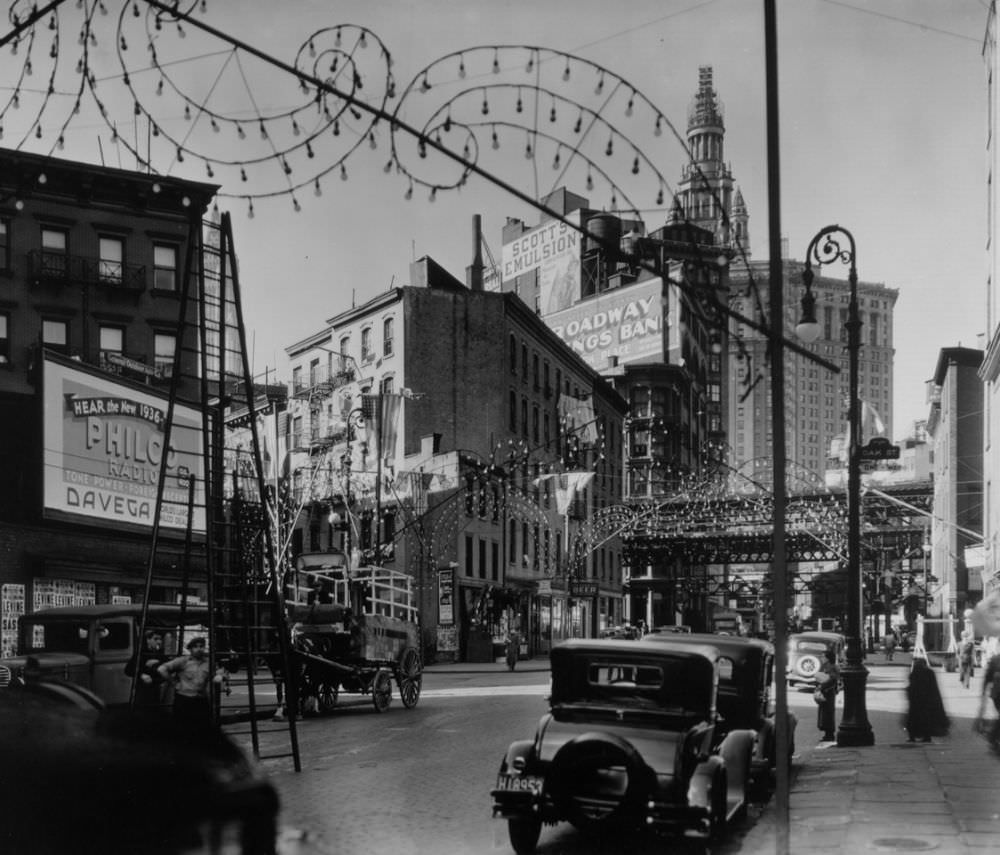
Decorative lights in curling designs arched over Oak and New Chambers Streets, with men setting them up using tall ladders alongside wagons and cars. Billboards competed for space on the buildings, and the elevated train and Municipal Building were just visible in the background. Even in the depths of the Depression, the city found reasons to string up lights.
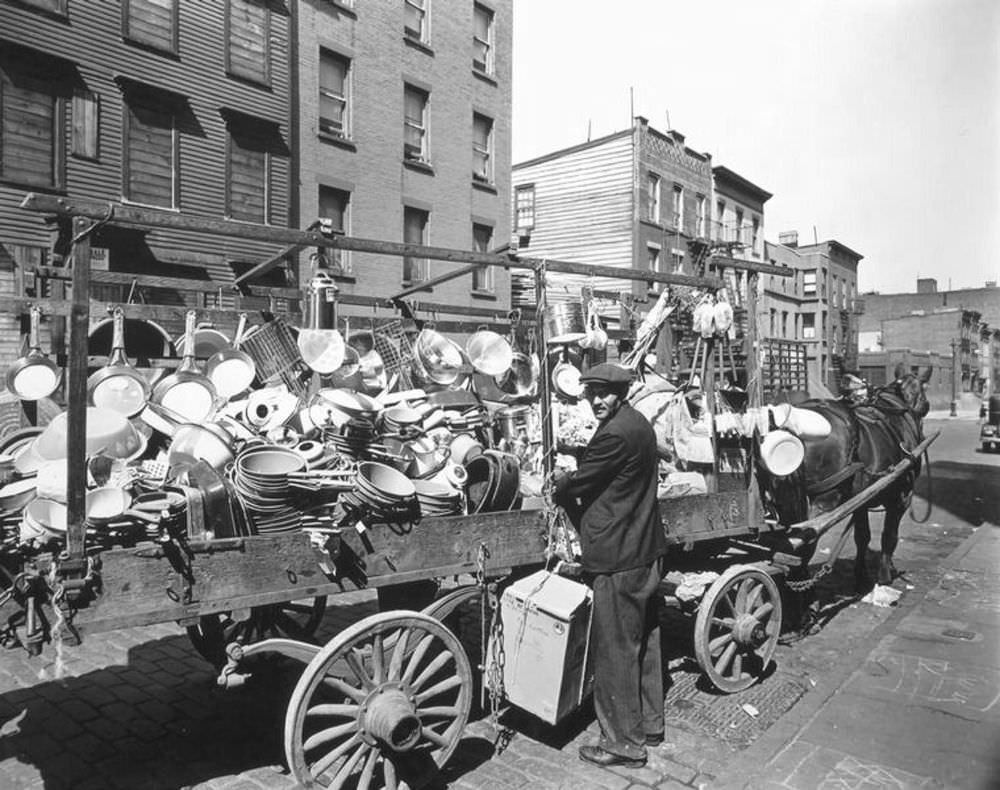
Not all commerce in 1930s New York happened in storefronts. A traveling tinker in Brooklyn carried his entire operation on a wagon — pans, brushes, and basins all secured to the load. He glances back at the camera as he ties down another box. Itinerant tradespeople like this one were a common sight in working-class neighborhoods, offering repair services to families who couldn’t afford to replace broken household items.
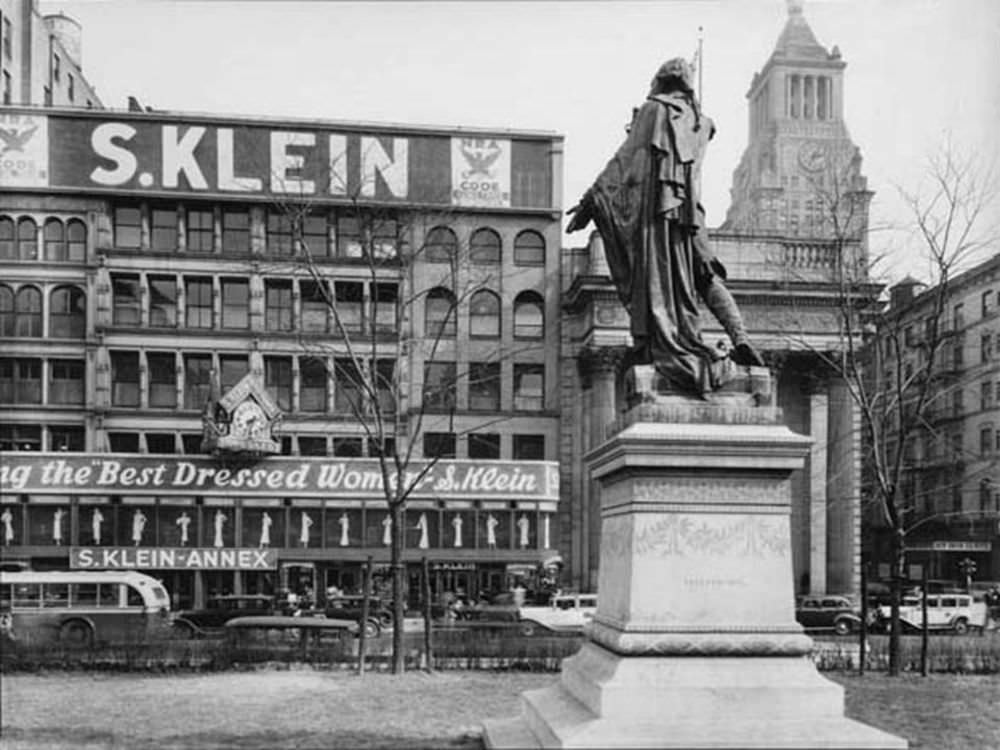
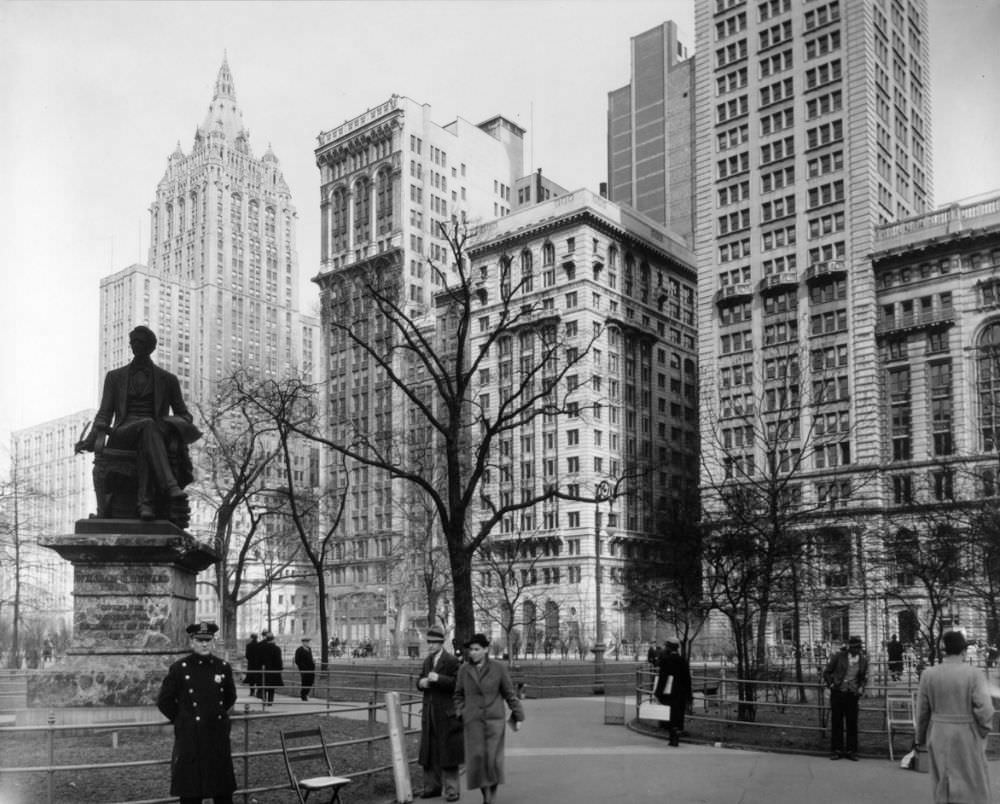
Union Square and Madison Square were two of the city’s most active public spaces. At Union Square, the statue of Lafayette stood above the surrounding commercial buildings — S. Klein’s, a bank, a hotel, and the Consolidated Edison Building all visible nearby. At Madison Square, a policeman stood near the statue of William Seward while a shoe-shine man lounged on the railing and the Metropolitan Life building rose above the park’s trees.
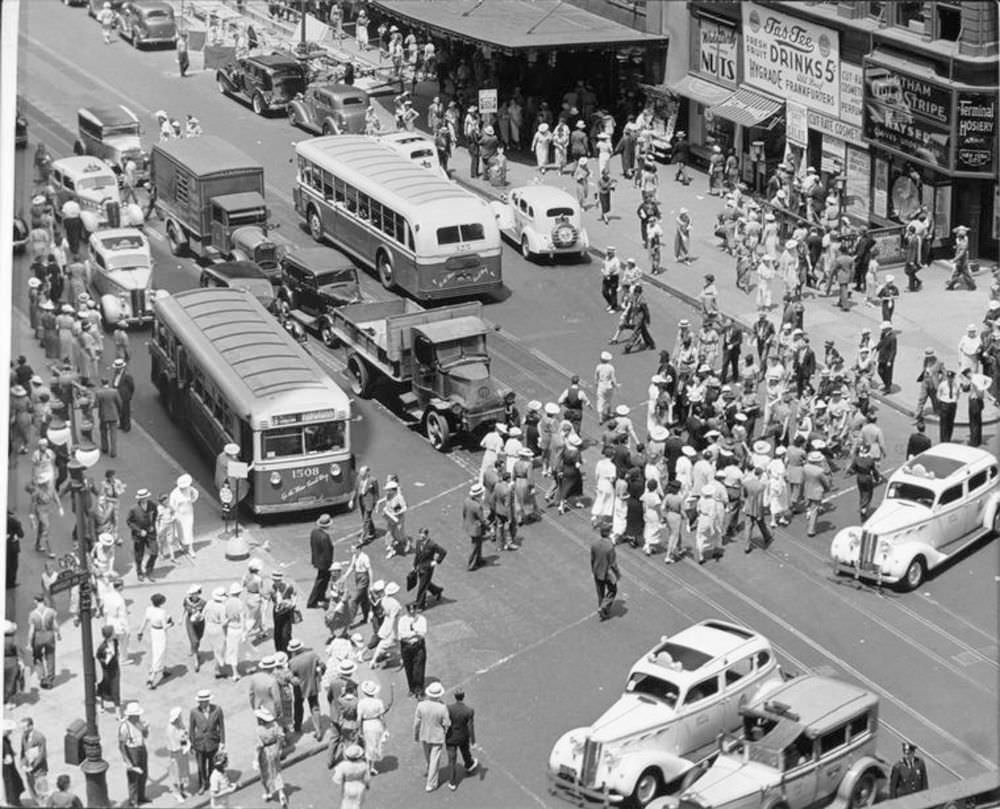
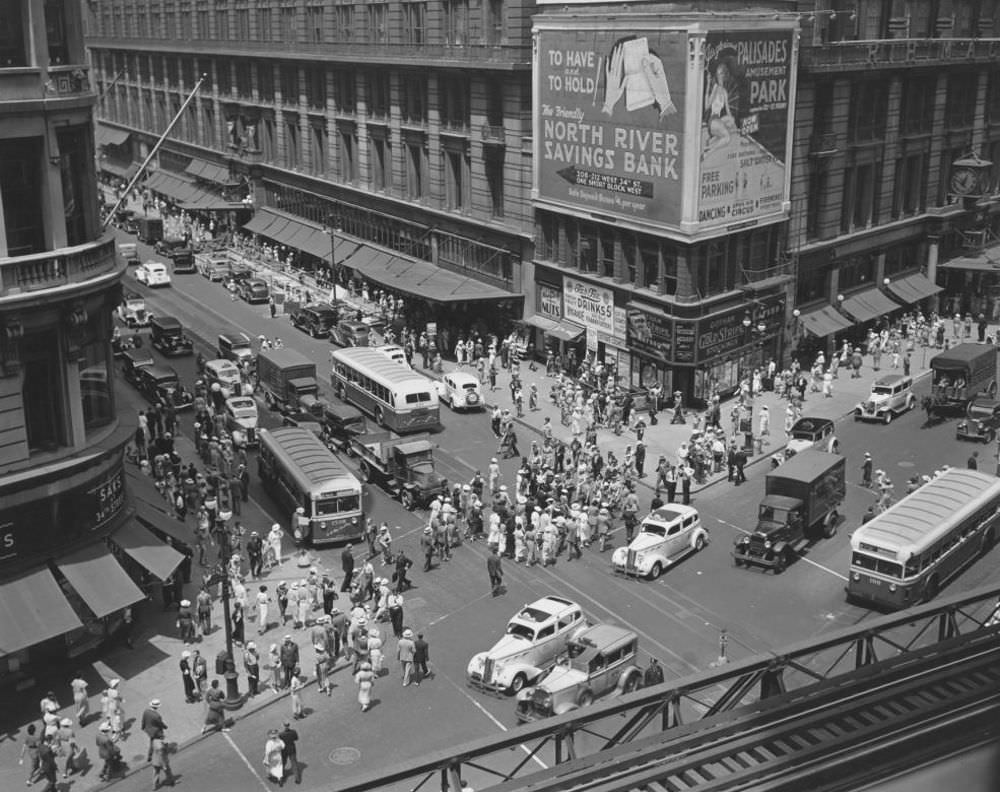
Herald Square at 34th Street and Broadway was one of the busiest intersections in the city. Abbott photographed it from above, looking down on a dense tangle of pedestrians, buses, trucks, taxis, and cars. Macy’s entrance was just visible, and a union picket line stood out front — a reminder that labor disputes were a constant feature of Depression-era New York, even at the city’s most prominent shopping destinations.
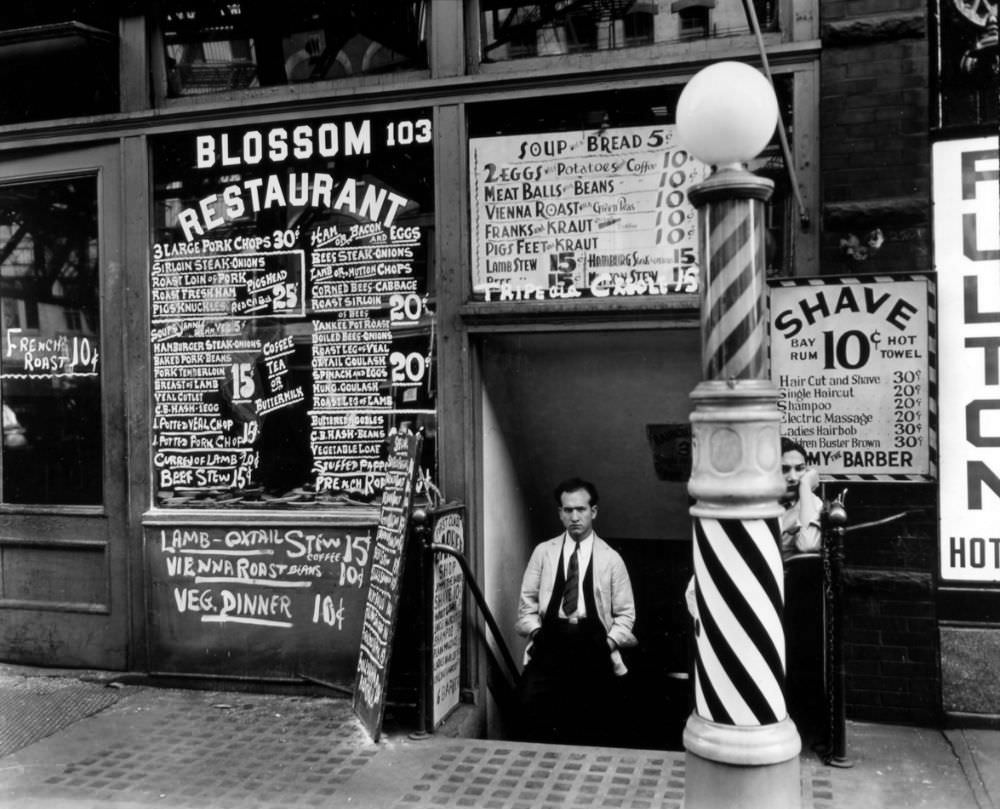
The Bowery was known as one of the rougher stretches of lower Manhattan, and the Blossom Restaurant at 103 Bowery captured that character. Men stood at the entrance to a barbershop beneath the restaurant, which had its menu painted directly onto the front windows. It was practical, affordable, and unadorned — exactly what the neighborhood called for.
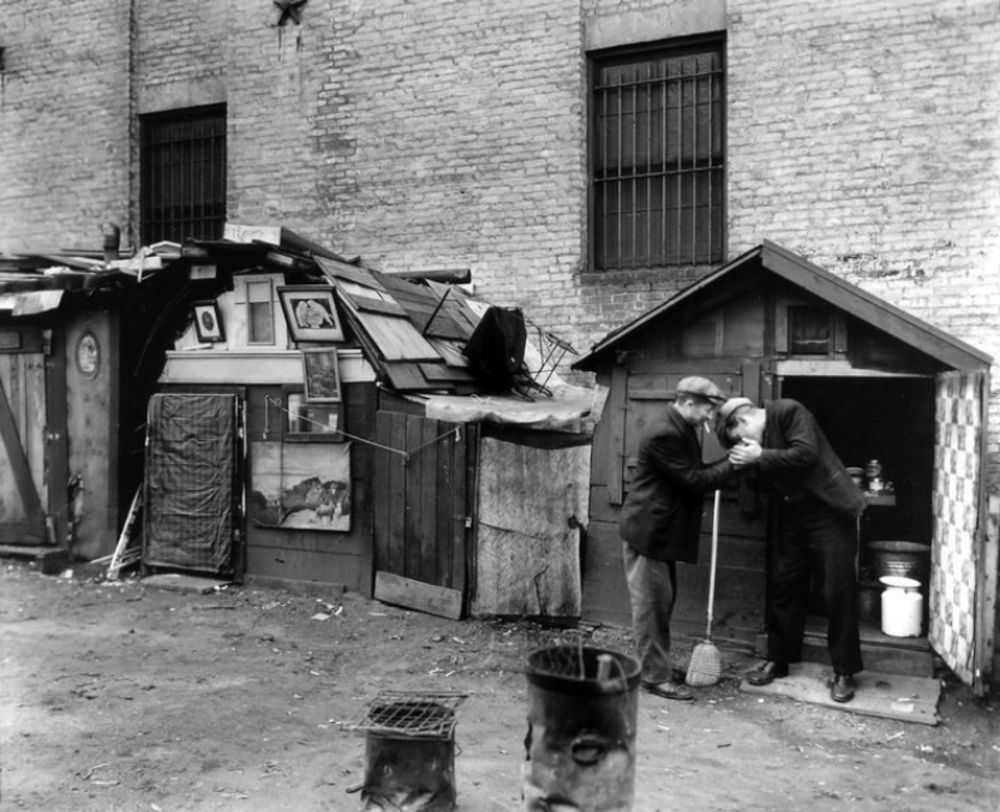
At West Houston and Mercer Street, unemployed men had built crude huts to live in. One hut had its door open, revealing a milk can and washtub inside. Another had framed pictures hung on its exterior walls — a small act of domesticity in genuinely desperate circumstances. These shanty settlements appeared across the city during the Depression, including in Central Park, where they were known as Hoovervilles.
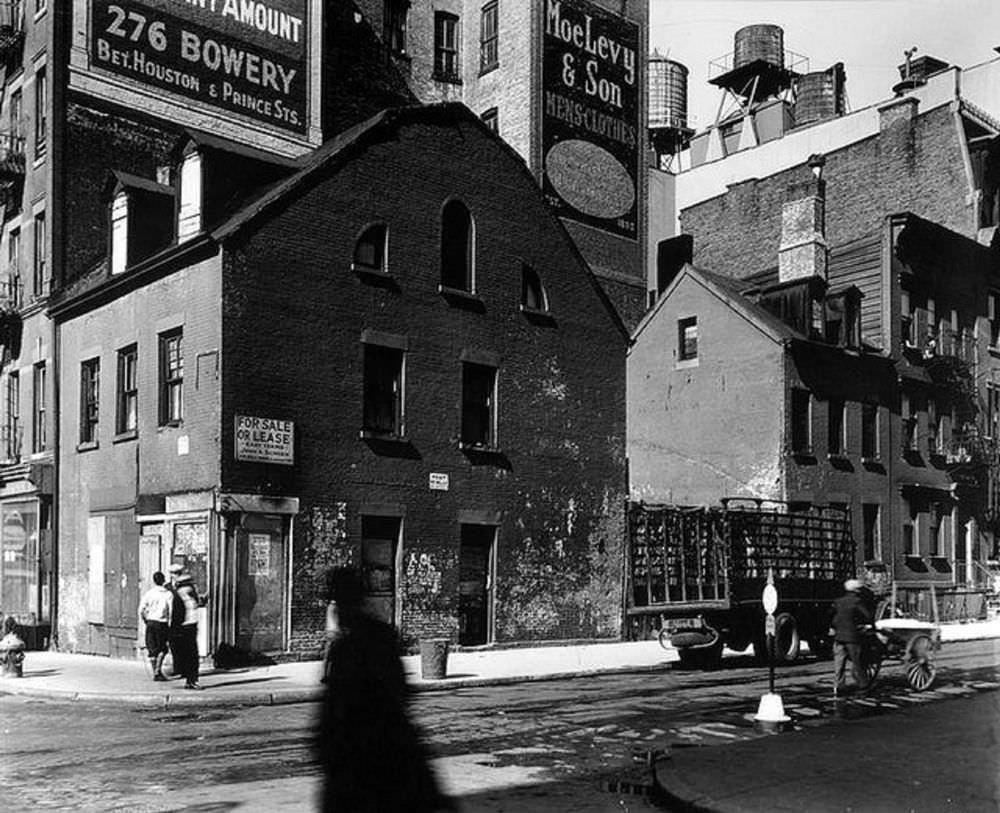
Mulberry and Prince Streets showed an older Manhattan still standing alongside the newer city. A building with a gambrel roof and dormers occupied the corner, with small houses lining the street where a man pushed a cart. Larger buildings topped with water towers rose in the background. Abbott had a particular talent for capturing this architectural mix — the old and new occupying the same block without resolution.
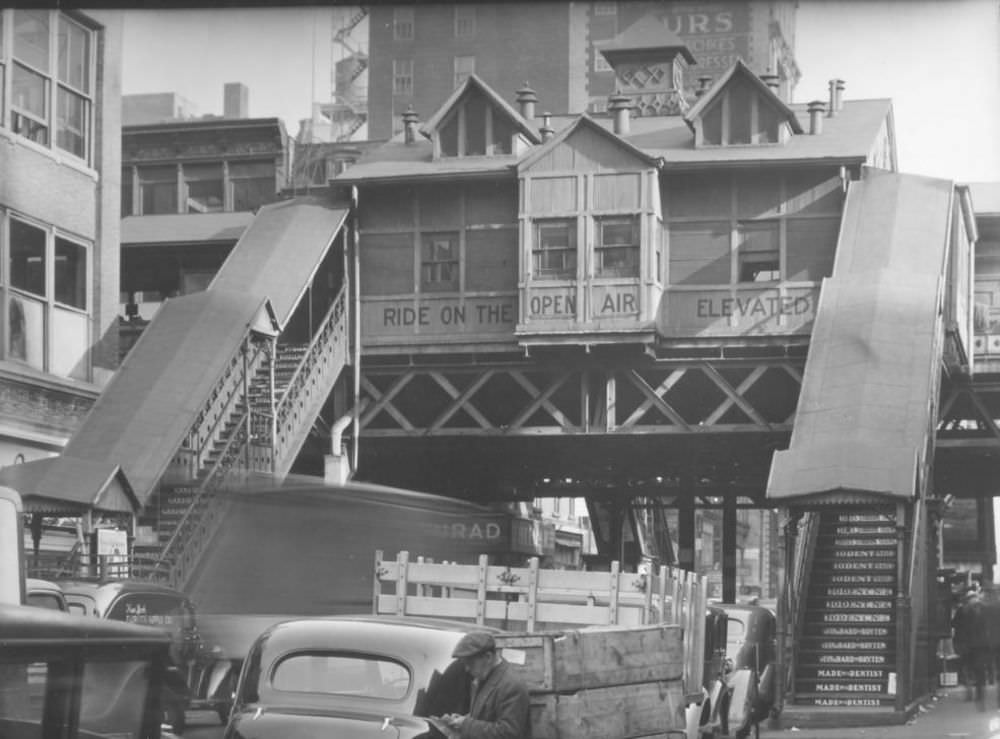
The elevated railway lines — the ‘el’ — were central to how New Yorkers moved around the city in the 1930s. At the 28th Street Station on the Sixth Avenue line, traffic clogged the street below while ads were painted directly onto the staircase leading up to the platform. A sign on the station read: ‘RIDE ON THE OPEN AIR ELEVATED.’ The el lines would begin coming down later in the decade, but in the early 1930s they were still the backbone of surface transit.
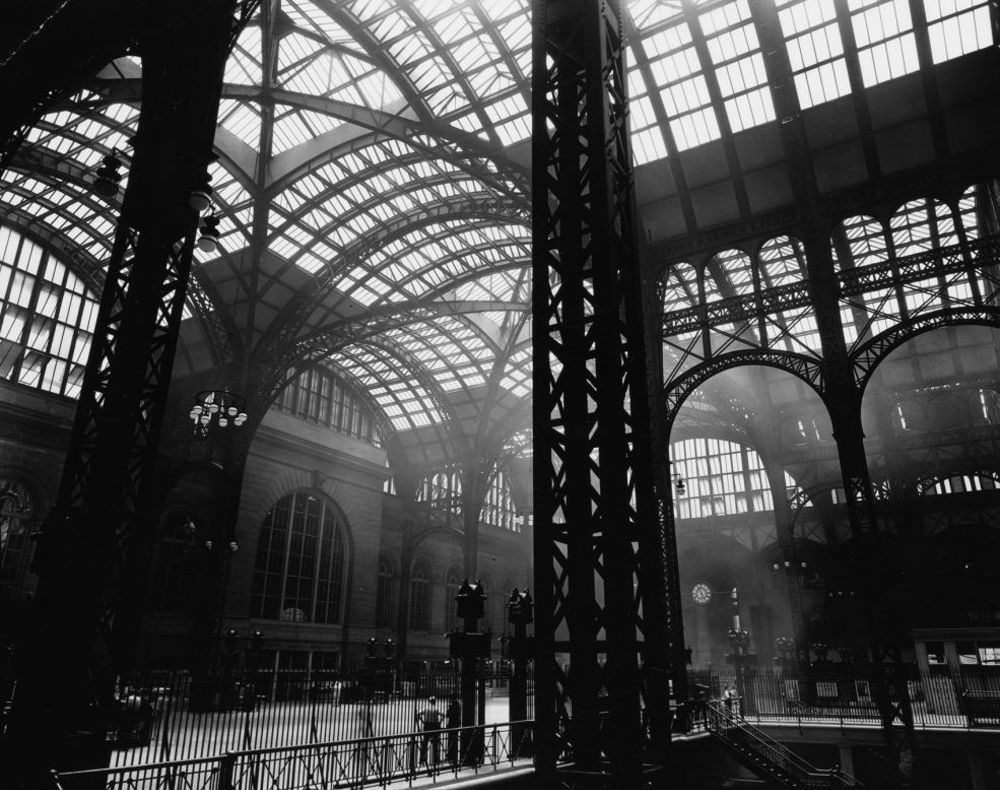
Penn Station in the 1930s was one of the grandest interior spaces in the country. Massive steel uprights rose from the floor, with lighter steel tracery and large windows filling the upper structure with natural light. Men stood near a stairway leading down to the trains. The station handled enormous passenger volumes during the Depression years, as people moved between cities in search of work.
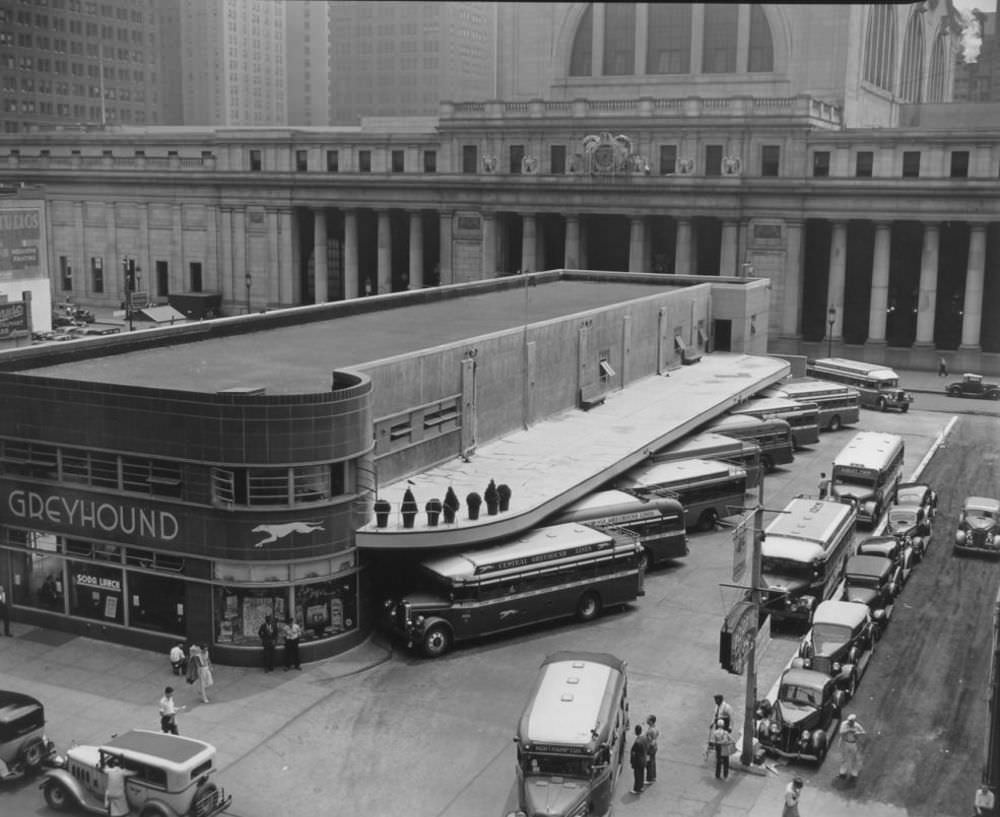
The Greyhound Bus Terminal between 33rd and 34th Streets was another major hub for people traveling in and out of the city. For those who couldn’t afford train fare, a bus ticket was often the only option. The terminal sat in the shadow of the midtown skyline, just blocks from Penn Station, in a part of the city that was always moving.
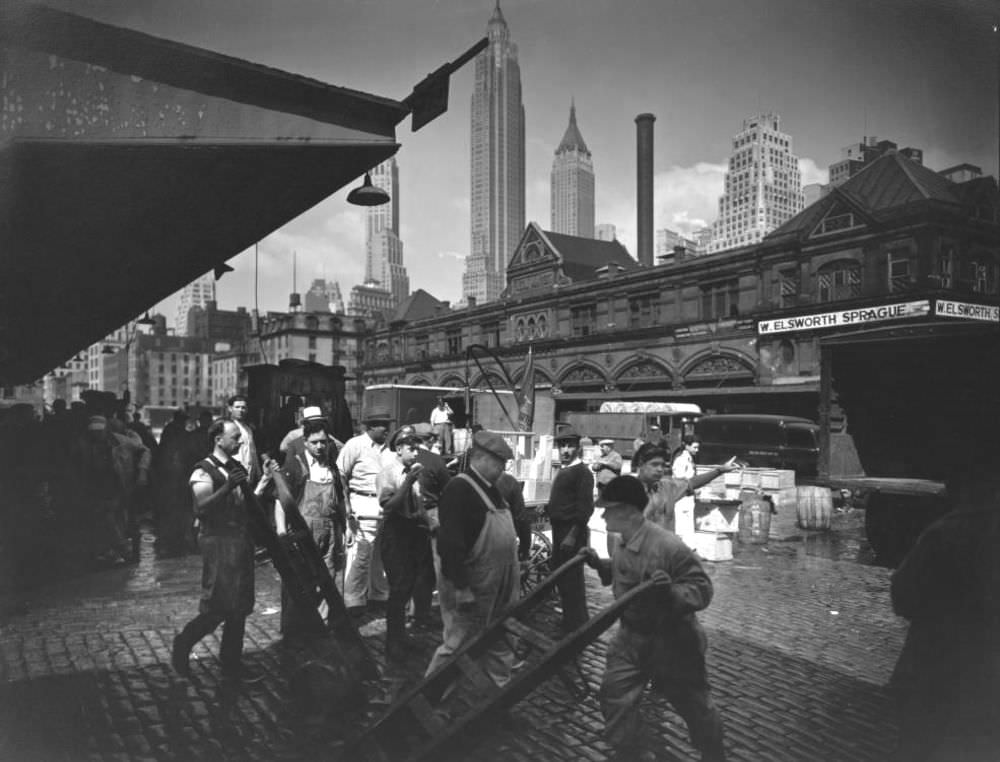
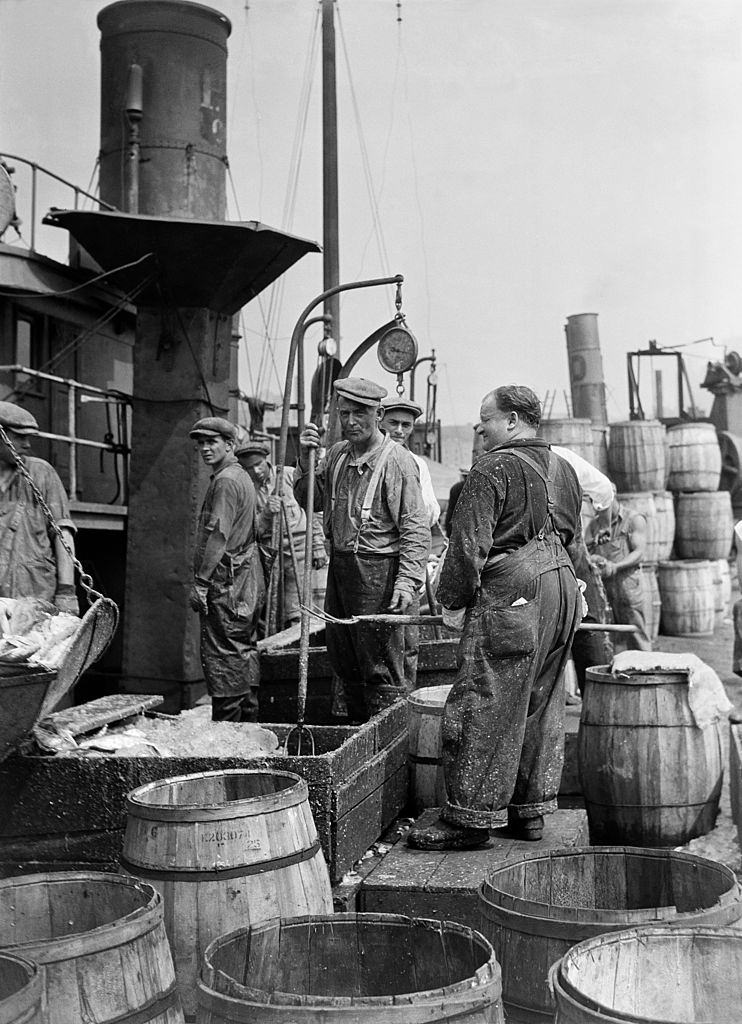
The Fulton Fish Market was the most important wholesale fish market in the United States and had been a fixture of the East River waterfront for nearly two centuries by the time Abbott photographed it. The market supplied restaurants and shops across the city, and its early morning hours made it one of the few places in New York that was fully alive before dawn.
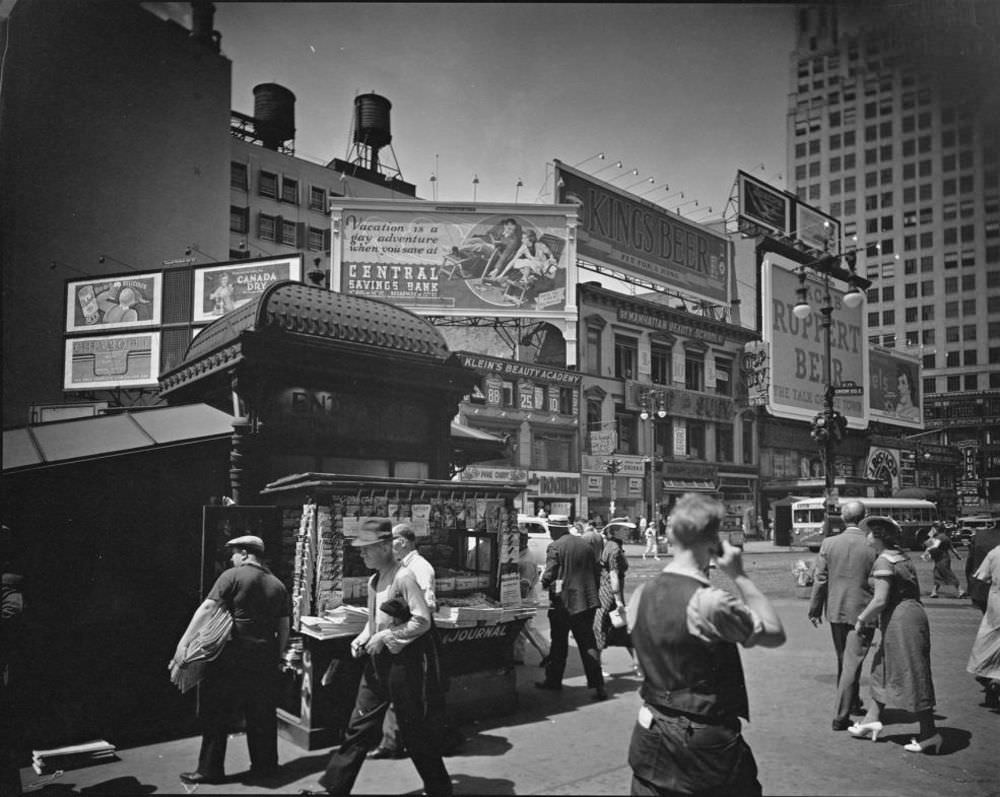
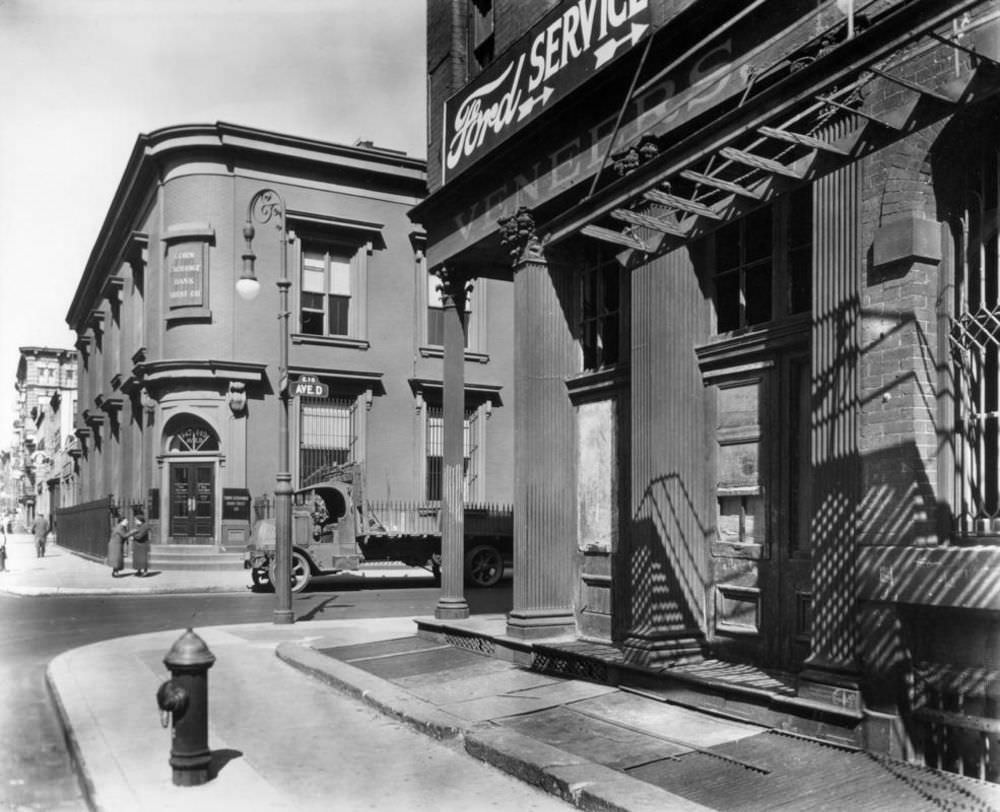
Union Square was both a commercial hub and a political gathering point during the 1930s. Subway and bus lines converged here, and the square regularly drew crowds — shoppers, workers, protesters, and passers-by. A few blocks away, the corner of East 10th Street and Avenue D showed a quieter slice of city life, with two women in conversation outside the Corn Exchange Bank Trust Co. and a truck parked at the curb.
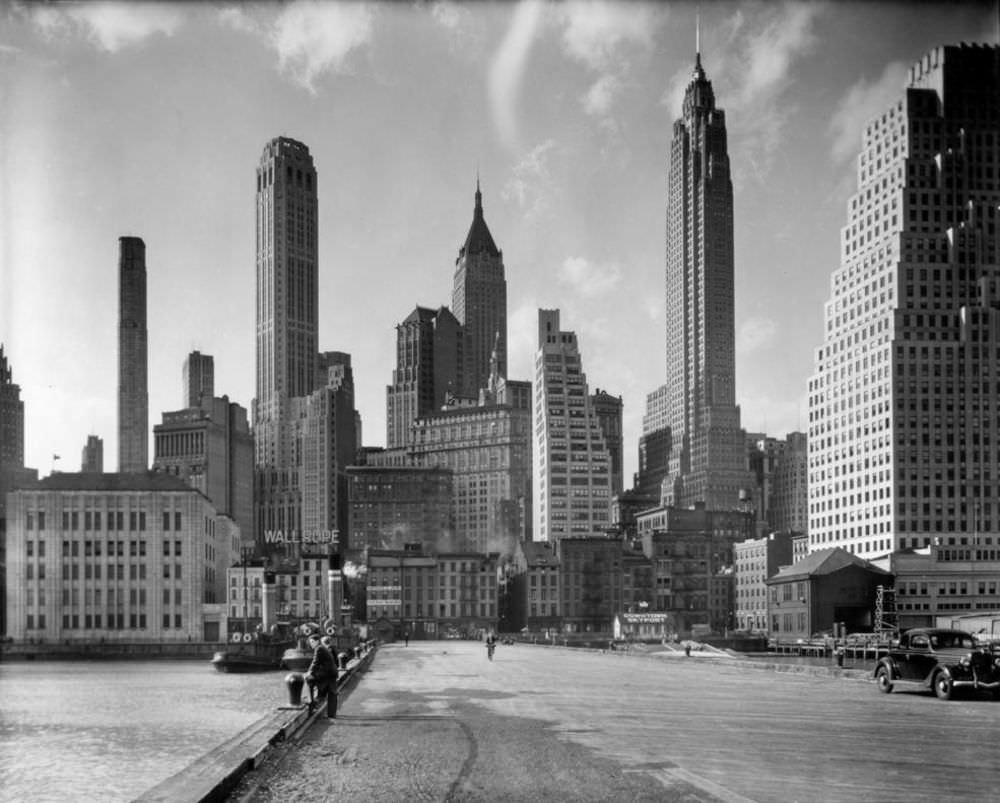
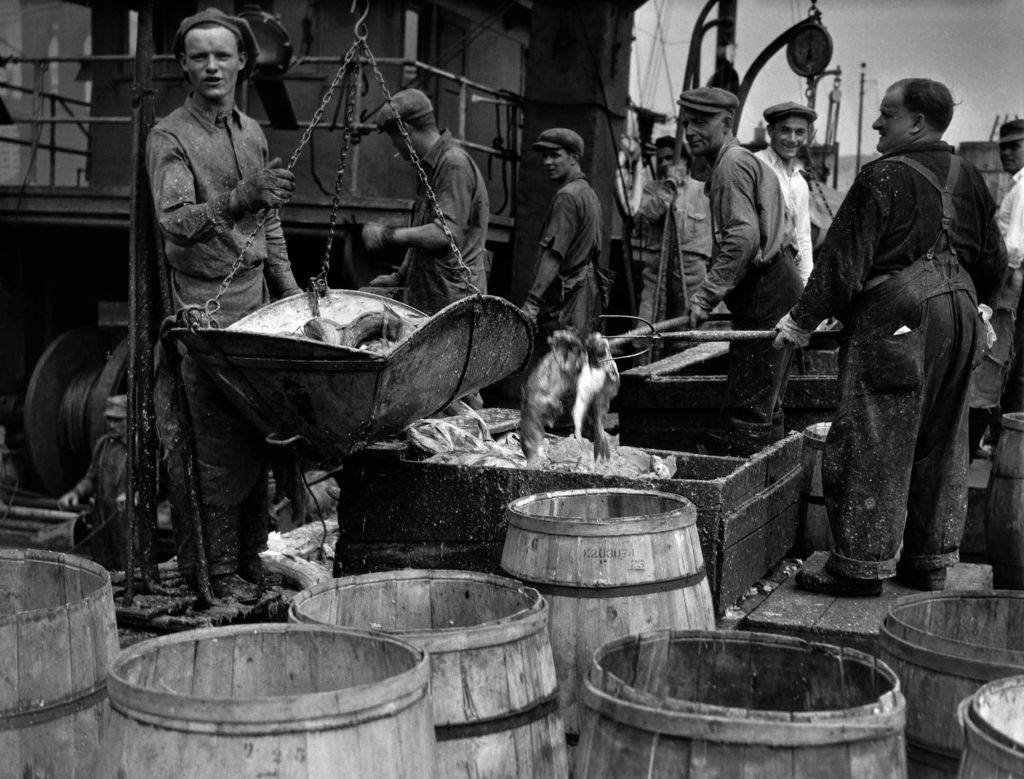
From the piers along South Street and Jones Lane, the Manhattan skyline rose above tugboats and the Downtown Skyport, the skyscrapers dense against the horizon. Abbott returned to this view more than once, drawn to the contrast between the working waterfront and the towers behind it. The fish market nearby was still in full operation, its stalls and vendors a daily fixture of the waterfront economy.
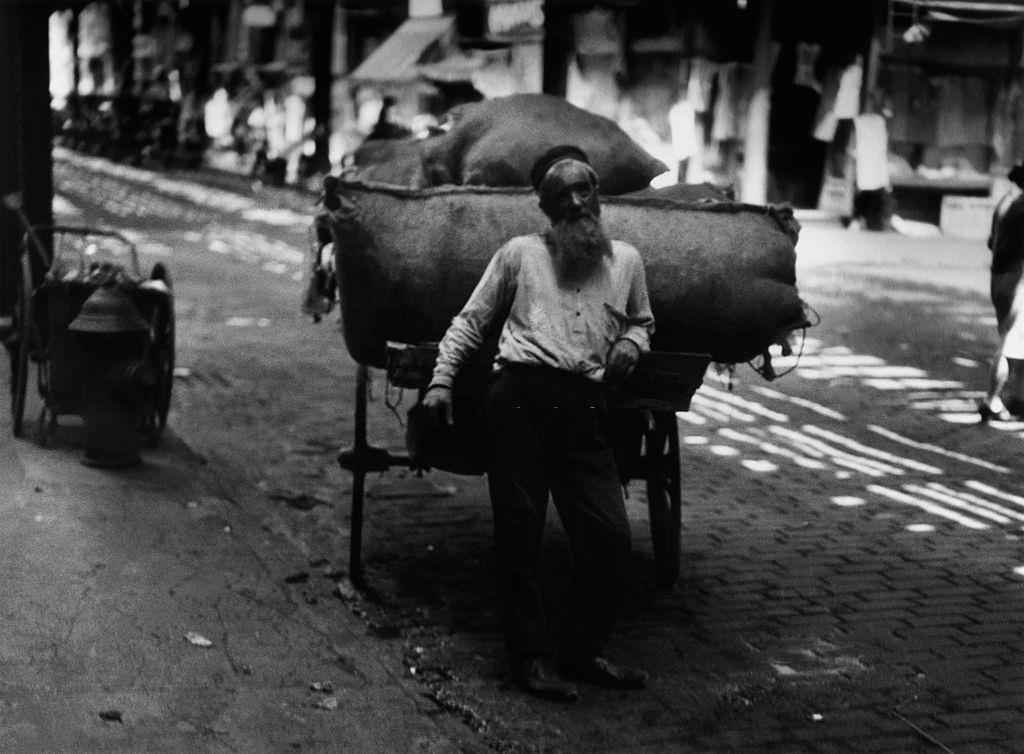
Rag merchants were a common sight in Depression-era New York. They collected discarded fabric and clothing, sorted it, and sold it on — a trade that existed at the lowest rungs of the city’s economy but served a real function in neighborhoods where nothing was wasted. The Lower East Side, in particular, supported a network of these street-level traders.
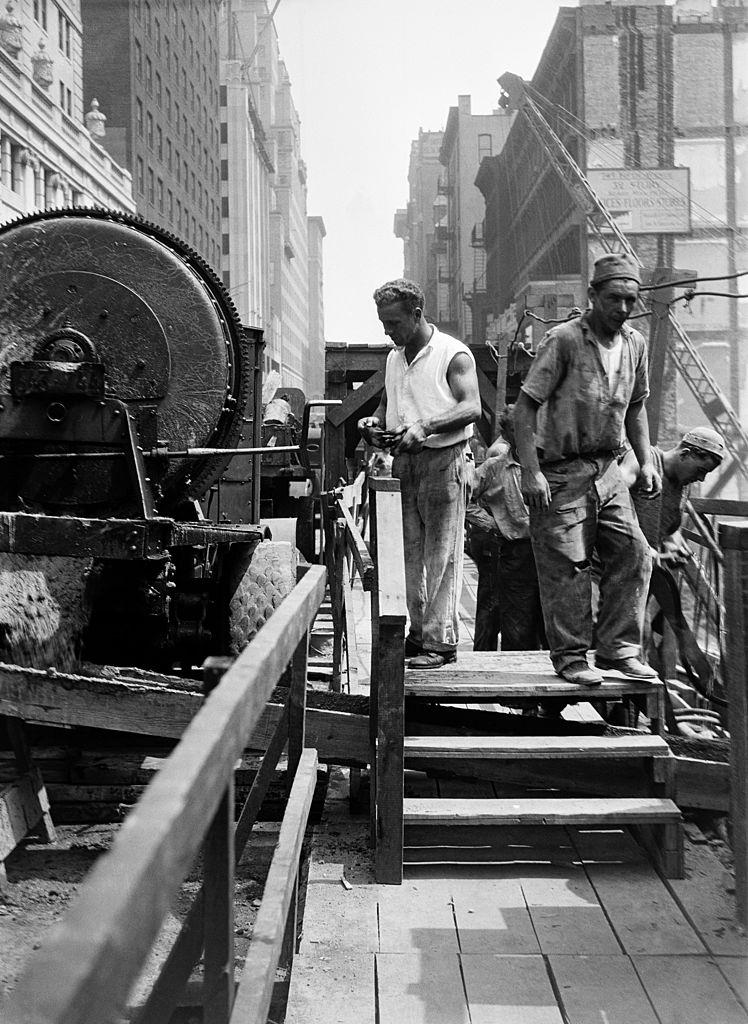
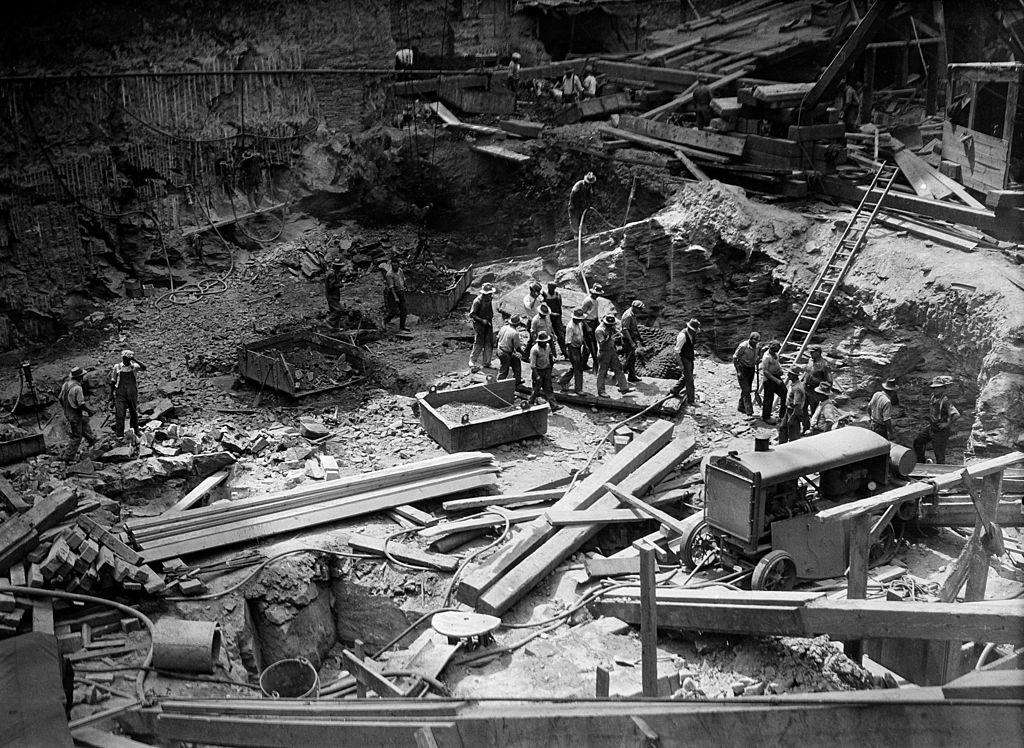
Even as the Depression deepened, construction continued in parts of New York. The Squibb Building at 745 Fifth Avenue was going up in 1930, and Abbott documented both the workers on the site and the structural progress of the project. These were among the coveted jobs of the era — steady, physical work in a city where stable employment was increasingly hard to find.
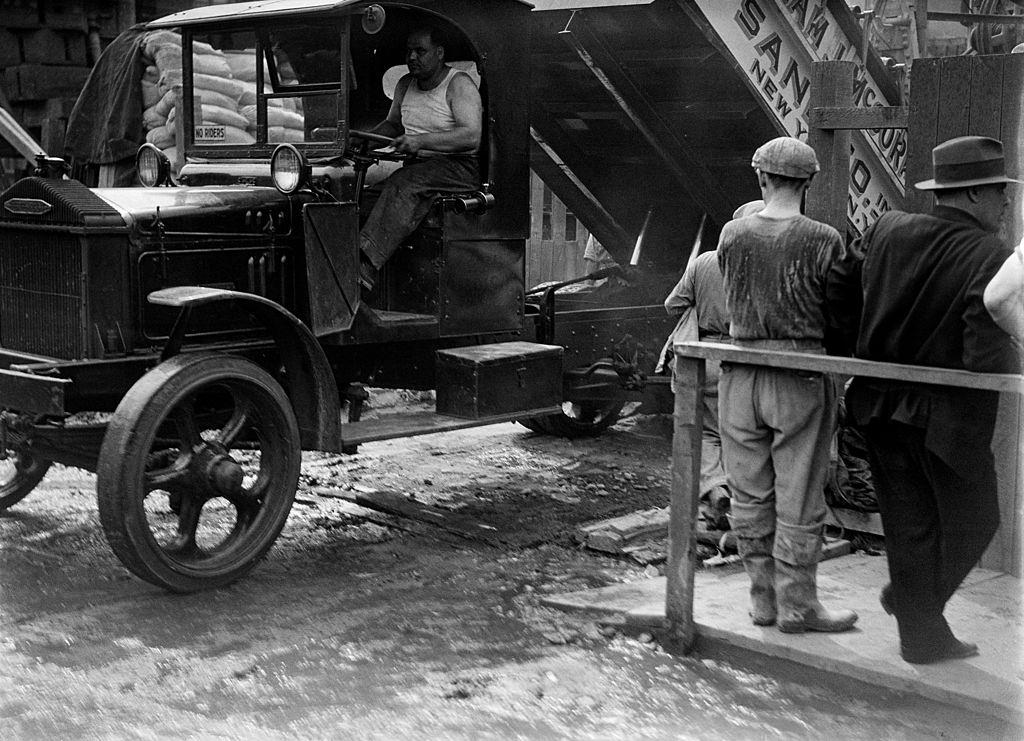
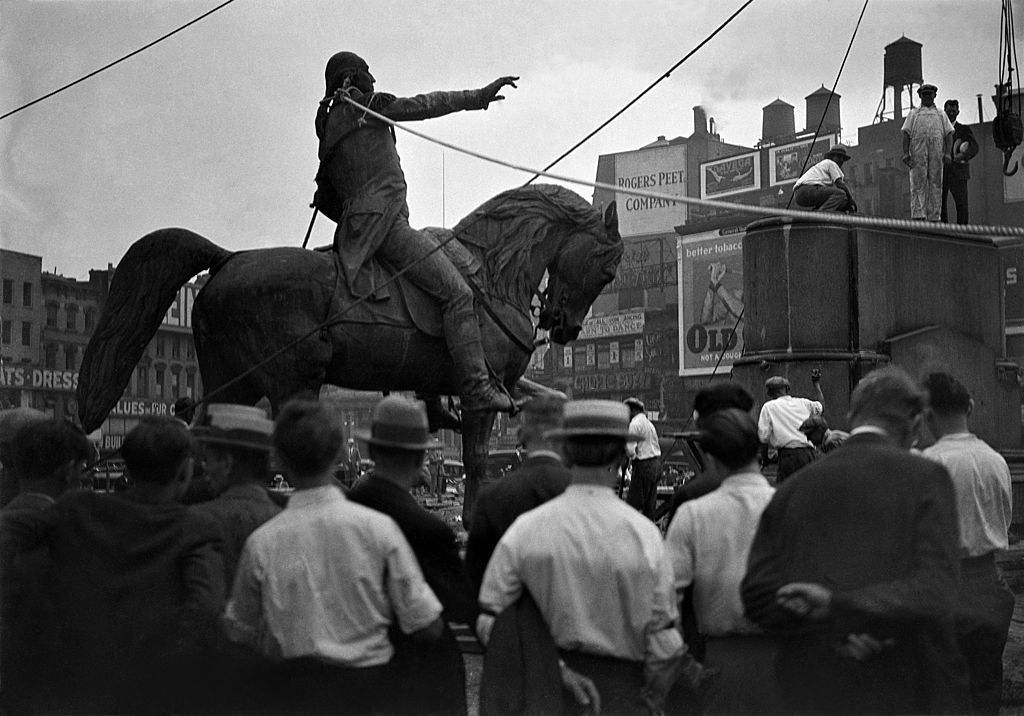
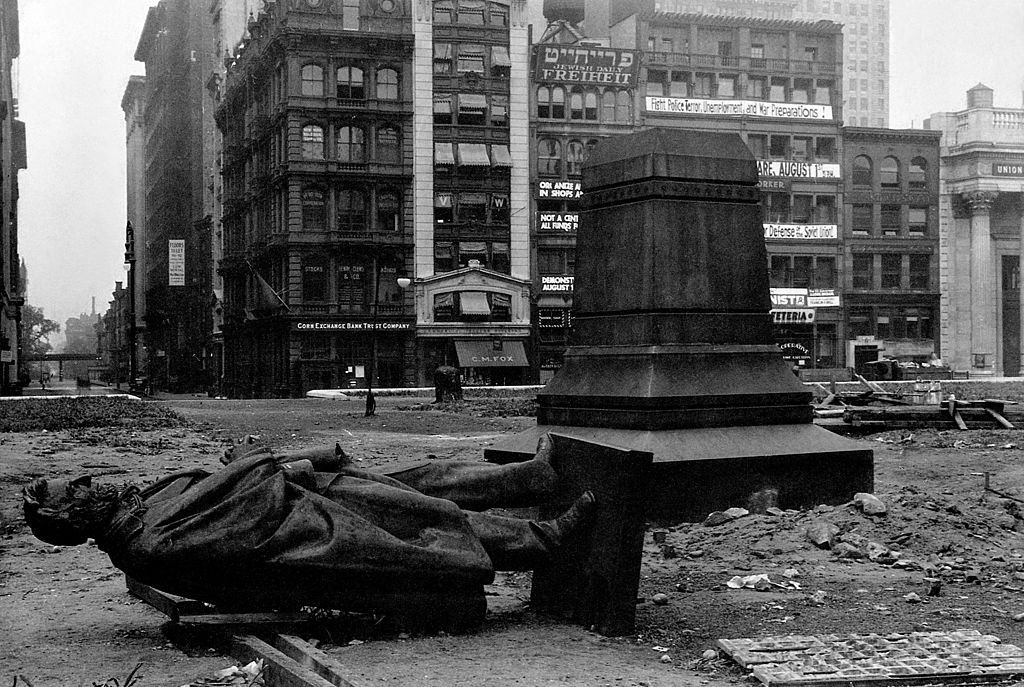
Henry Kirke Brown’s bronze equestrian statue of George Washington in Union Square was one of the city’s most recognizable public monuments. In 1930, the square was undergoing changes, and Abbott photographed both this statue and the nearby statue of Abraham Lincoln — also by Brown — as it awaited relocation. The movement of these monuments was a city project that drew public attention at a time when civic activity provided some relief from economic anxiety.
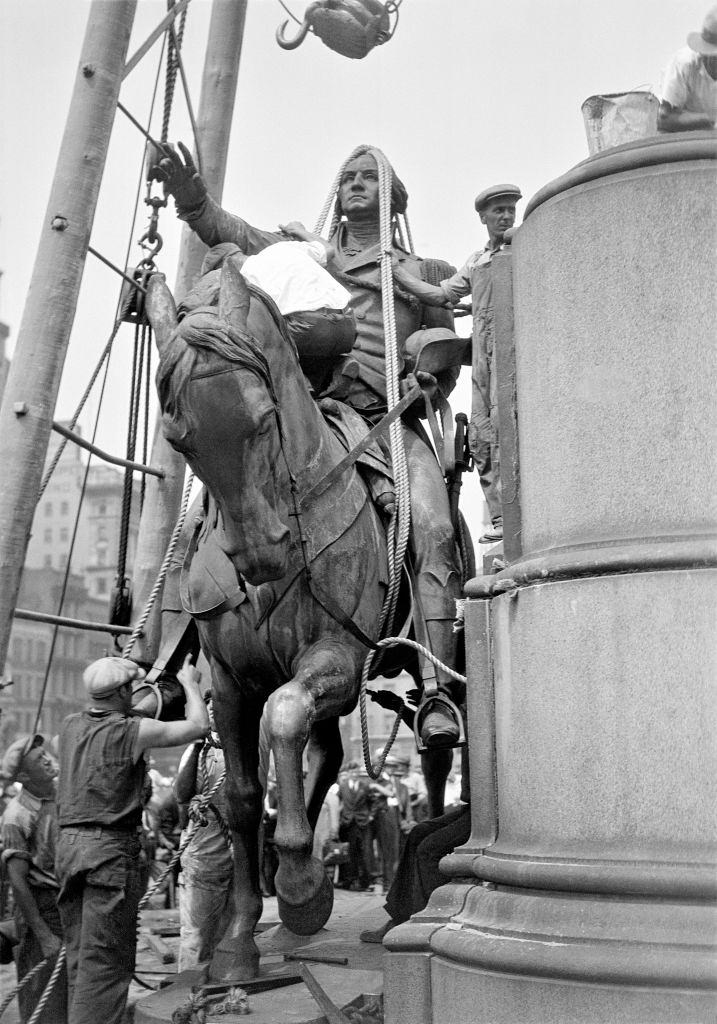
The hoisting of the Washington statue in Union Square was a significant logistical operation, and Abbott was there to photograph the preparations. Workers rigged the equipment needed to lift the heavy bronze figure, drawing onlookers who watched from the sidewalk. Public works and civic maintenance continued throughout the Depression, in part because they provided employment under programs like the Federal Art Project that also funded Abbott’s own documentation work.
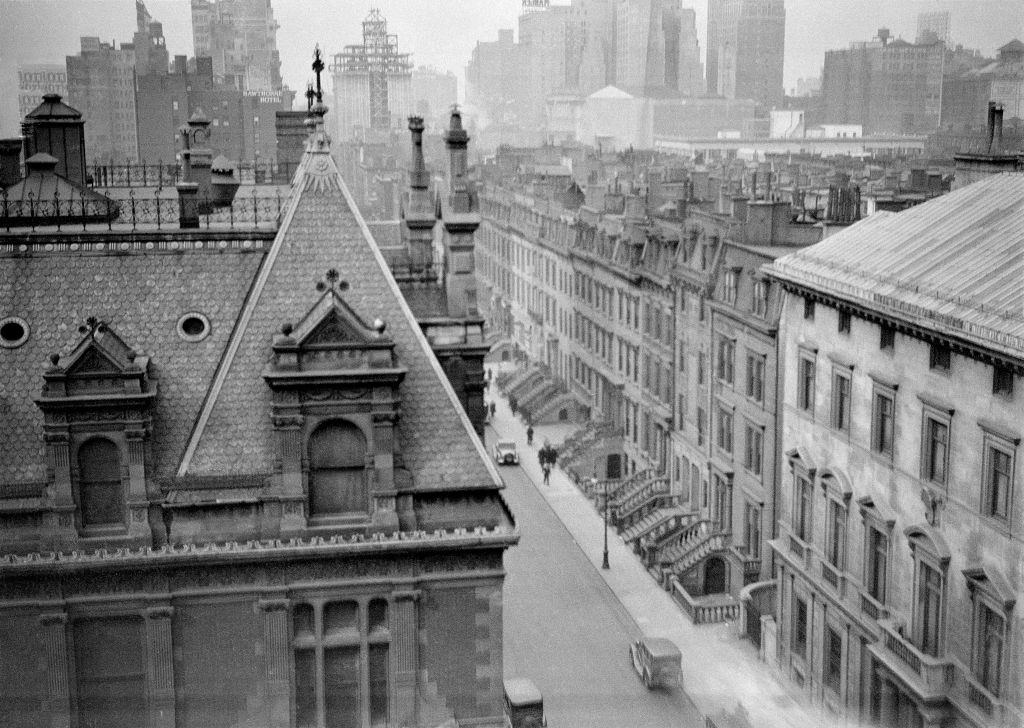
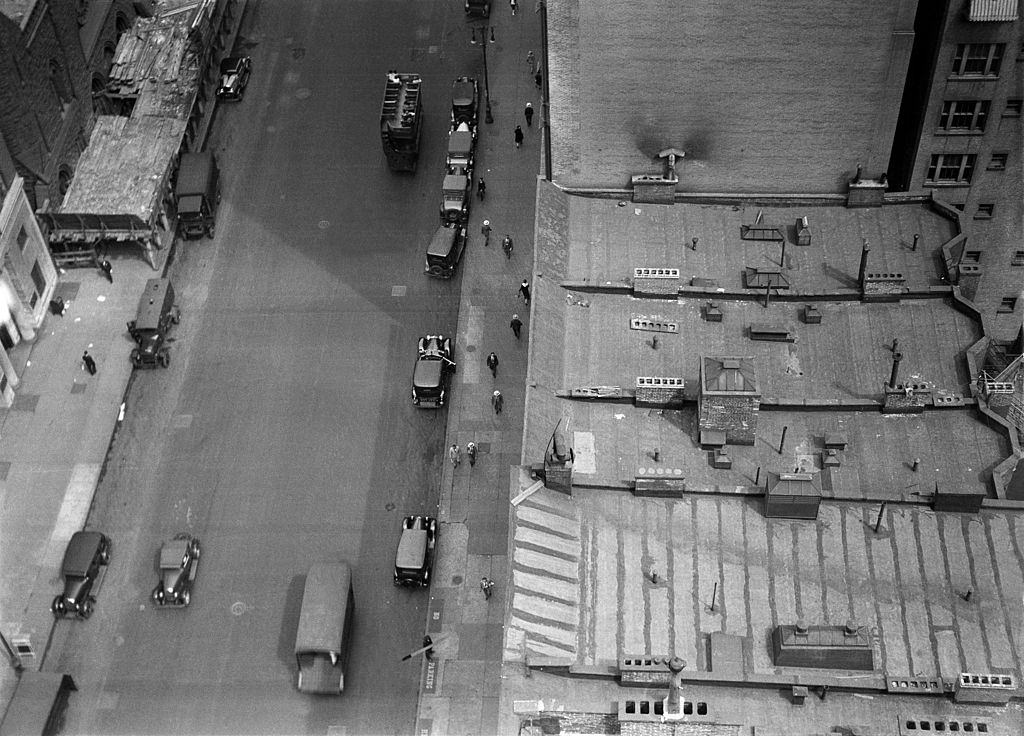
Midtown Manhattan in 1930 was a dense grid of commercial buildings, rooftop water tanks, and busy sidewalks. From above, the rooftops of West 57th Street stretched out between Sixth and Seventh Avenues in an unbroken line of brick and tar. Street level along 48th Street near Fifth Avenue showed the same density in a different register — storefronts, pedestrians, and the constant movement of a city that never quite slowed down.
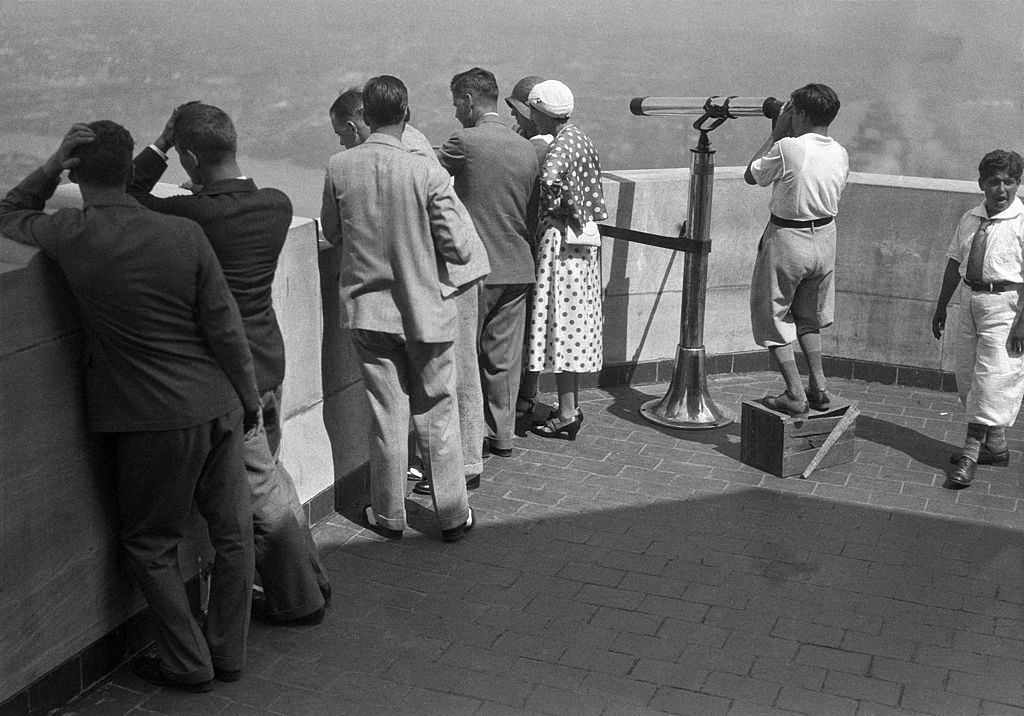
The Empire State Building opened in 1931, and its observation deck quickly became one of the city’s premier attractions. Tourists clustered at the railing to look out over a Manhattan that stretched in every direction. The building itself was a product of the optimism of the late 1920s, but it opened into the full force of the Depression — a symbol of ambition standing above a city in crisis.
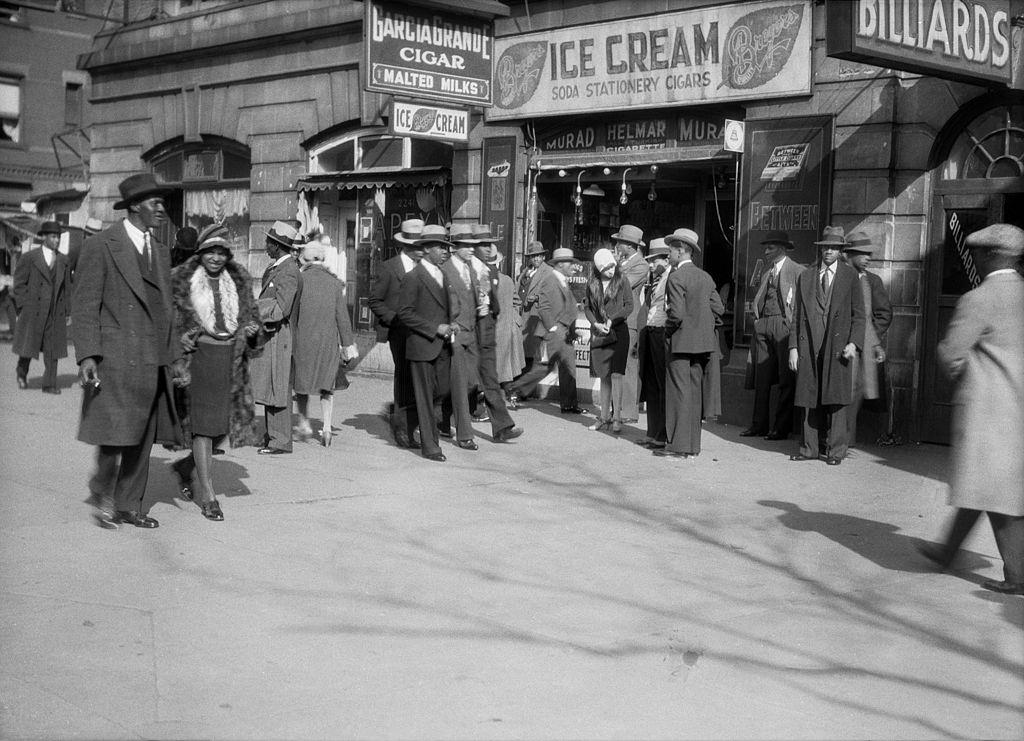
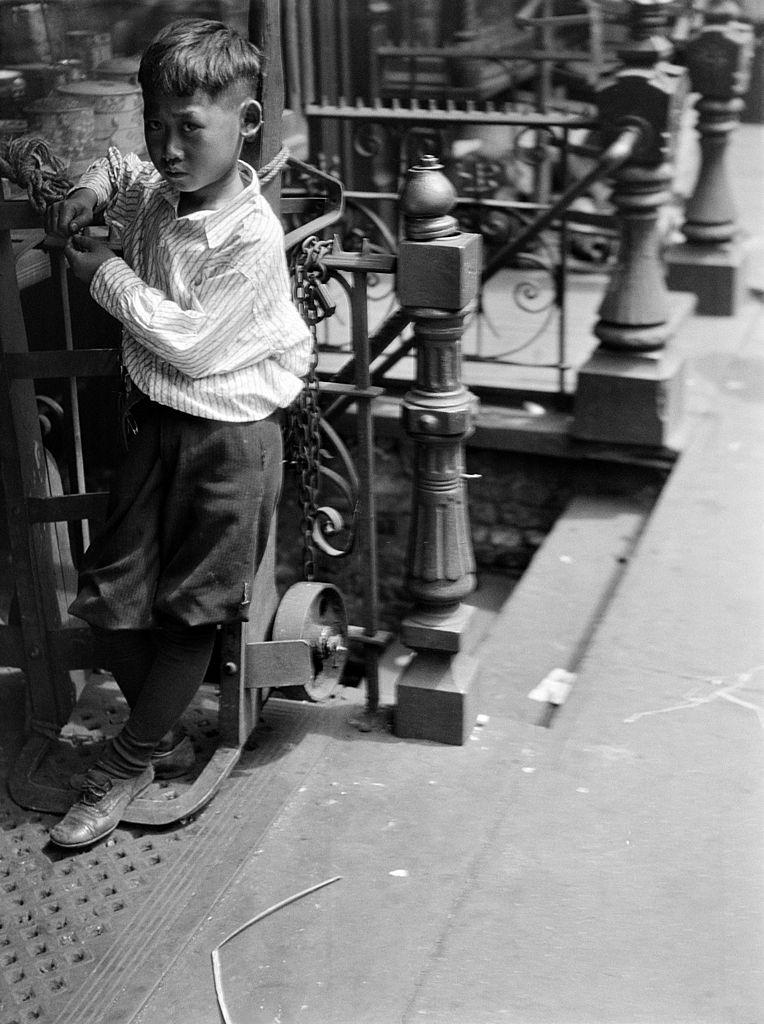
New York in the 1930s was a genuinely diverse city, and Abbott’s photographs reflect that. Harlem’s sidewalks were filled with Black New Yorkers going about their daily routines. Chinatown and the Lower East Side were home to large Chinese and Jewish populations respectively. A photograph of a young Chinese boy standing on a dolly captures the kind of candid, everyday moment that Abbott was drawn to — unposed and specific.
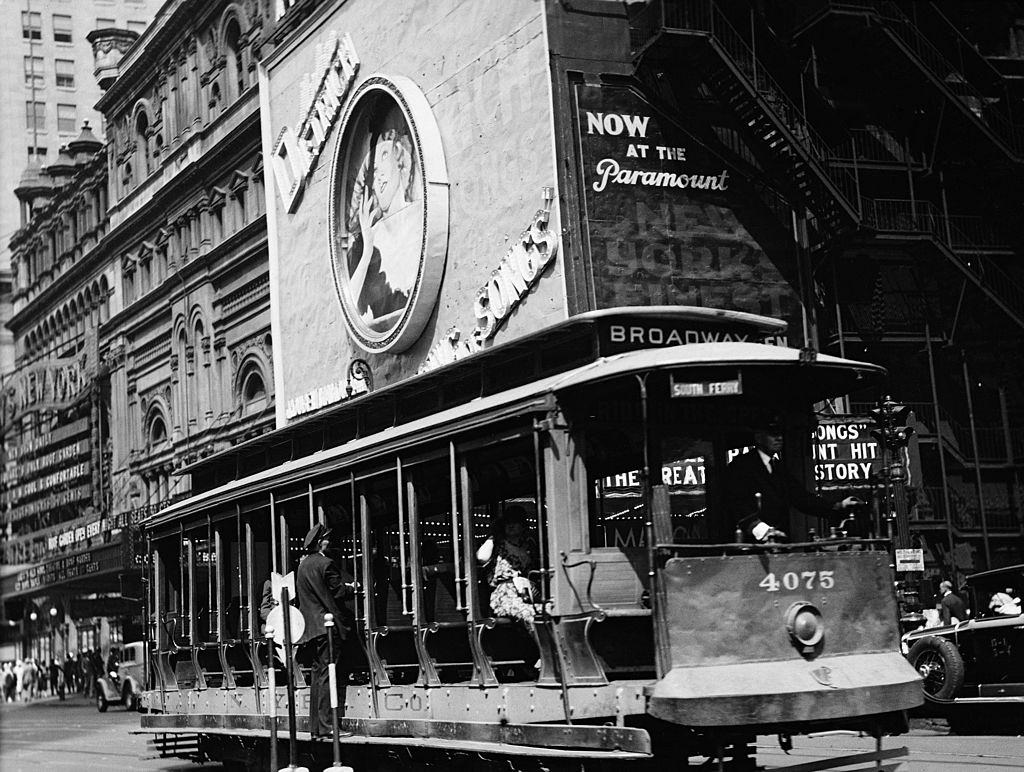
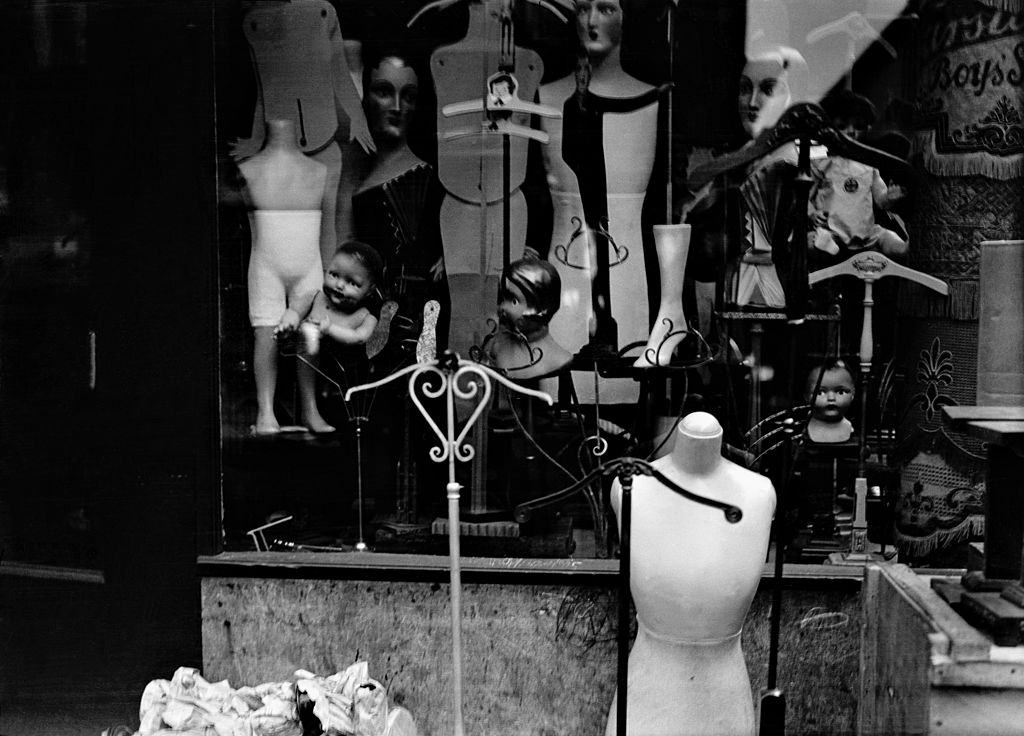
The Paramount Theater on 43rd Street was one of the city’s premier entertainment venues, and an open trolley running past it on a 1930 afternoon makes for a striking image — two symbols of the city’s public life sharing the same frame. On the Lower East Side, the Reliable Play Figure Company stored its mannequins in a scene that Abbott found worth recording: rows of artificial figures arranged with an accidental sense of order.
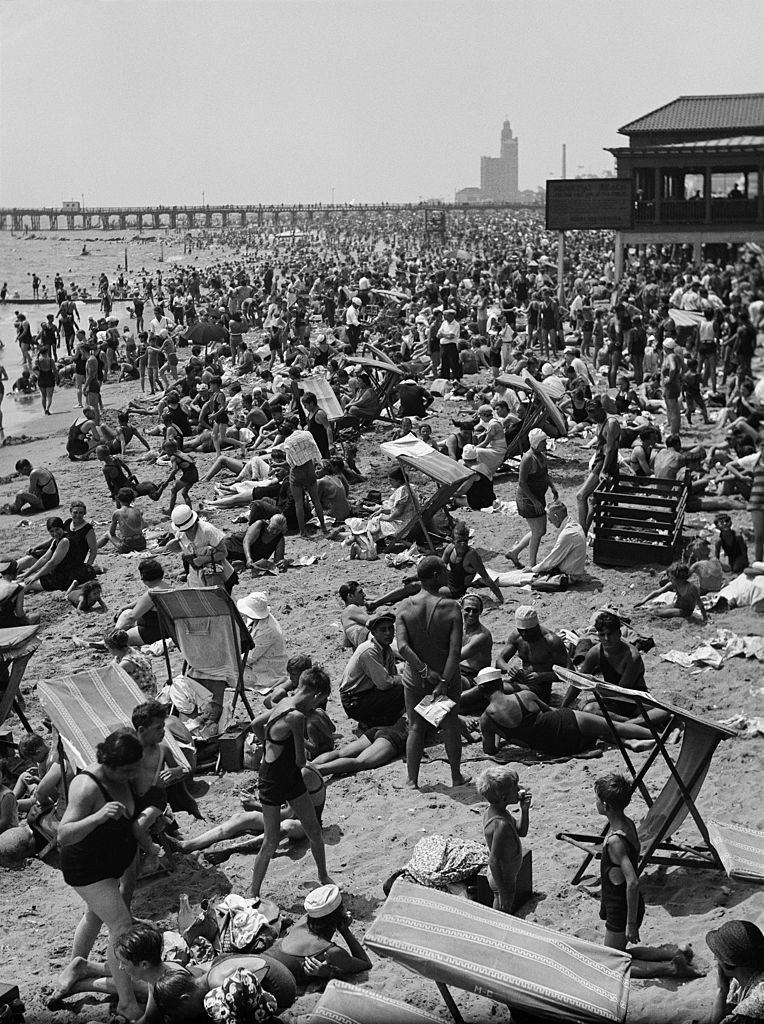
Coney Island was one of the few places working-class New Yorkers could go on a hot summer day without spending much money. In 1930, the beach was packed — thousands of people crowded onto the sand, escaping the heat of tenement apartments. The subway line to Coney Island was affordable, and for a day at least, the Depression receded into the background.
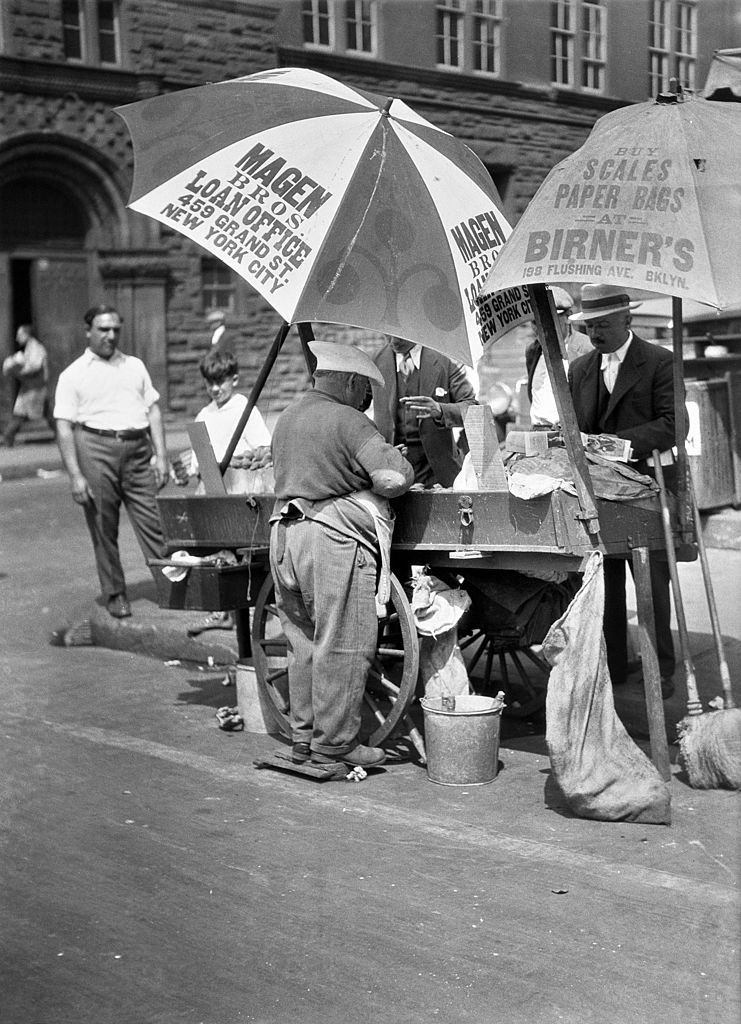
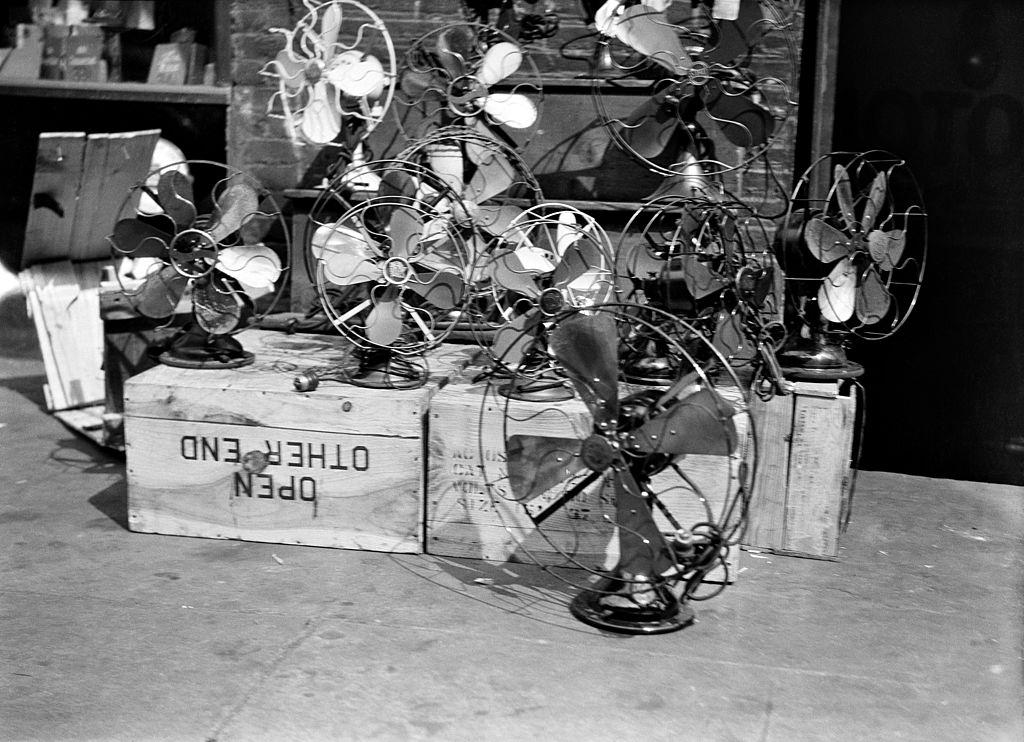
Street vendors were a constant feature of the Lower East Side. Near Grand Street, an oyster vendor worked from a cart, selling shellfish to passersby in one of the neighborhood’s oldest food traditions. Nearby, a sidewalk display of electric fans spilled out from a storefront — a practical product in a neighborhood of crowded, sweltering apartments during summer months.
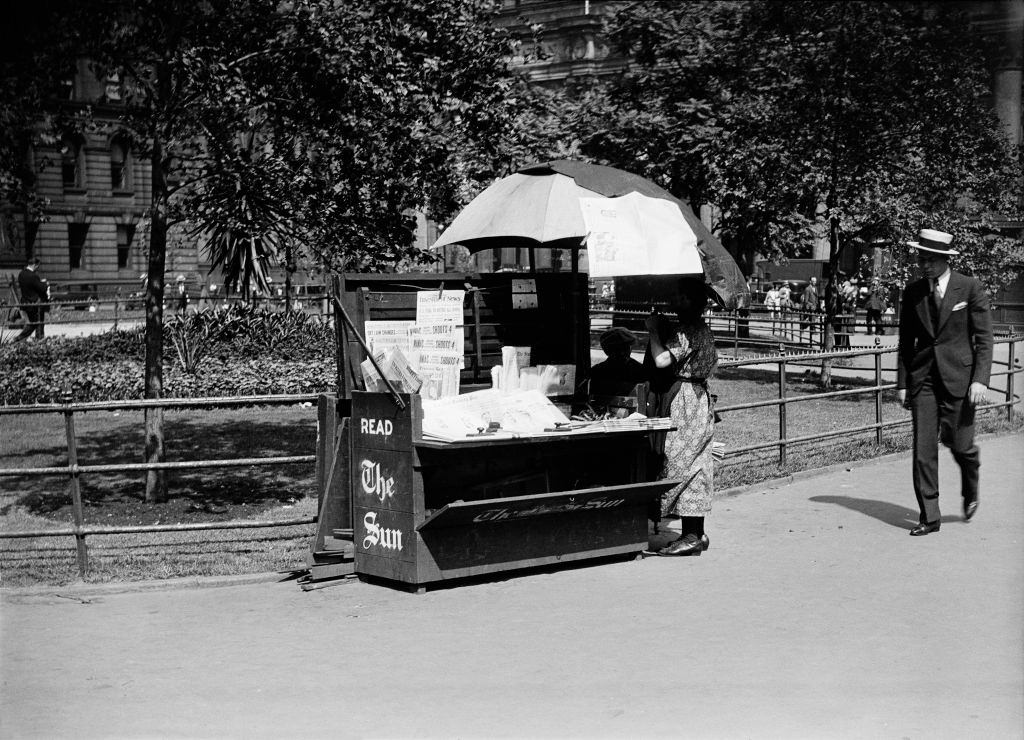
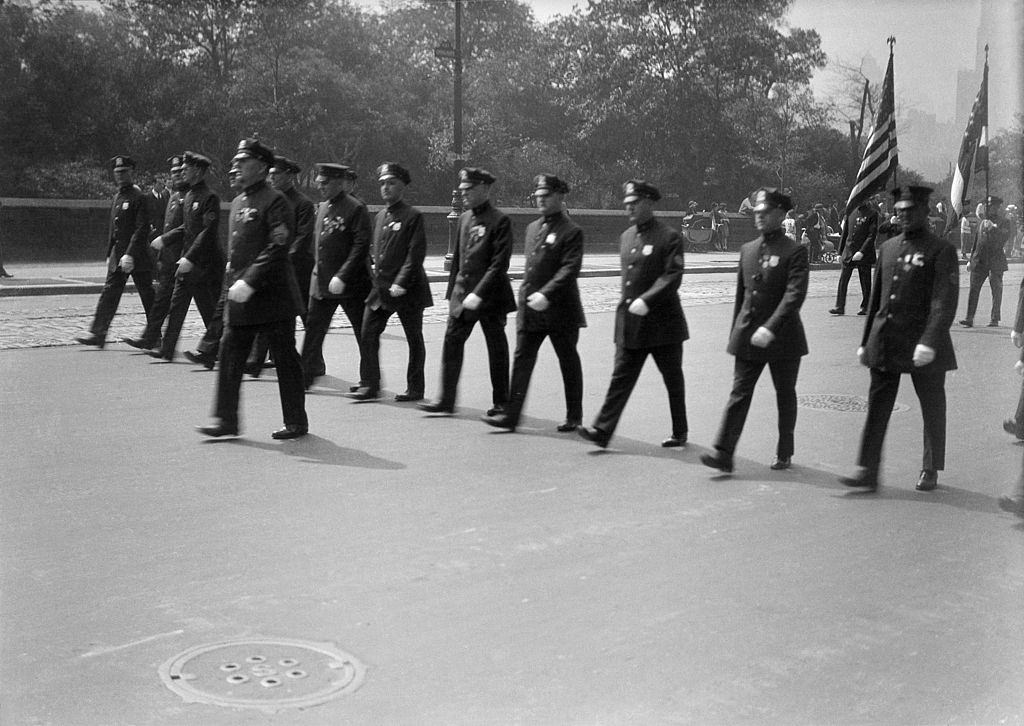
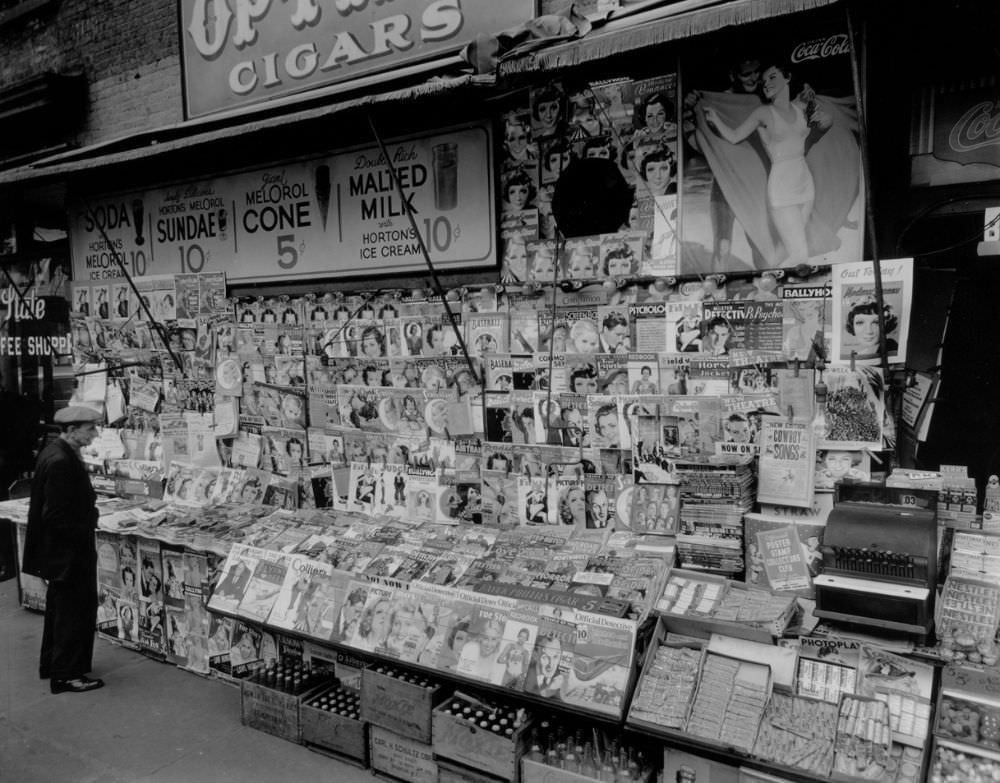
Near City Hall Park, a newspaper stand promoted the New York Sun, one of the city’s major dailies. In 1930, newspapers were still the primary source of news, and stands like this one were posted at corners across lower Manhattan. Public ceremonies continued throughout the Depression as well — policemen took part in the Memorial Day parade, maintaining the city’s civic traditions regardless of the economic conditions surrounding them.
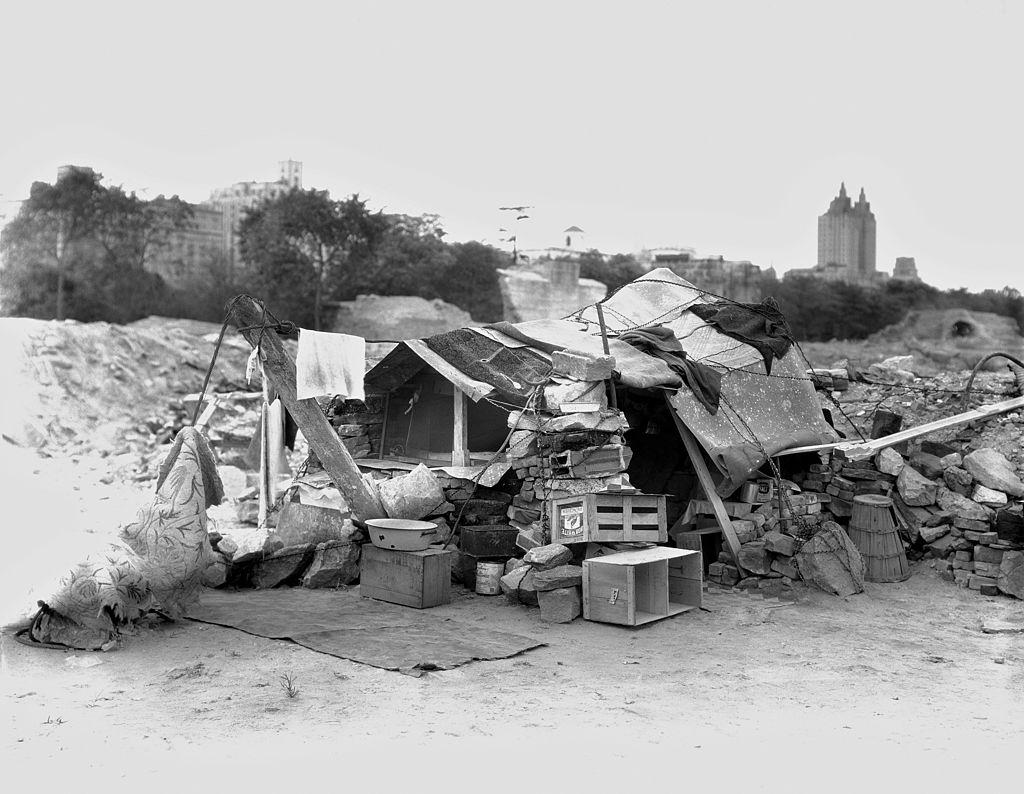
In Central Park, one of the city’s most famous green spaces, unemployed New Yorkers had built shacks out of scavenged materials. The settlement was called a Hooverville — a name applied sarcastically to Depression-era shanty towns across the country, referencing President Herbert Hoover, widely blamed for the economic collapse. The existence of a Hooverville inside Central Park made a powerful statement about how severe conditions had become.
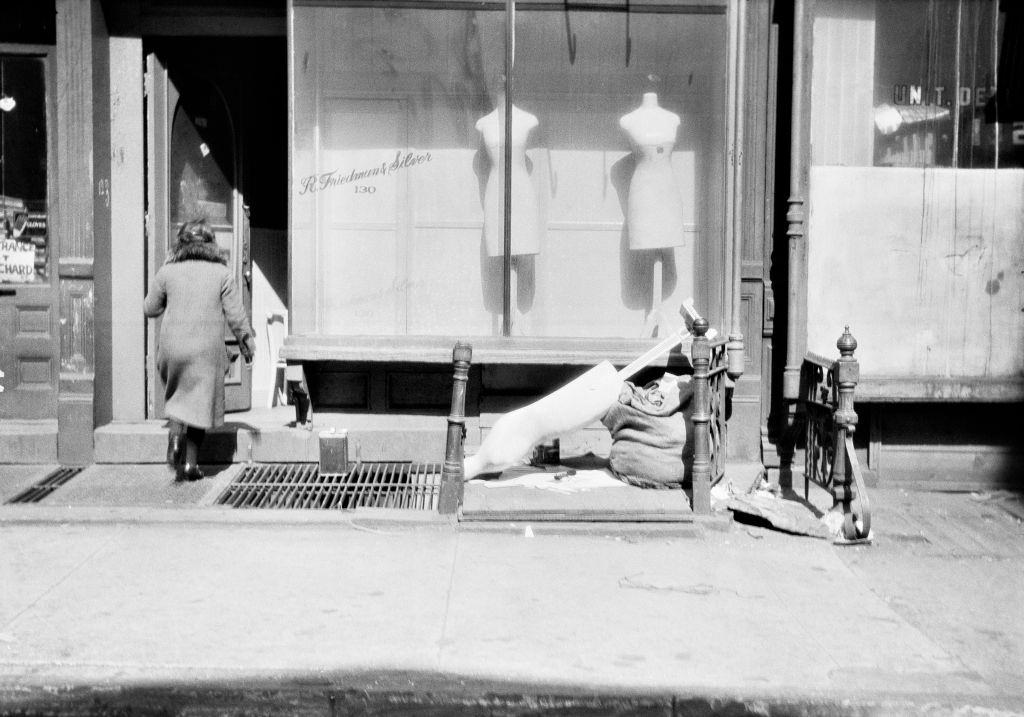
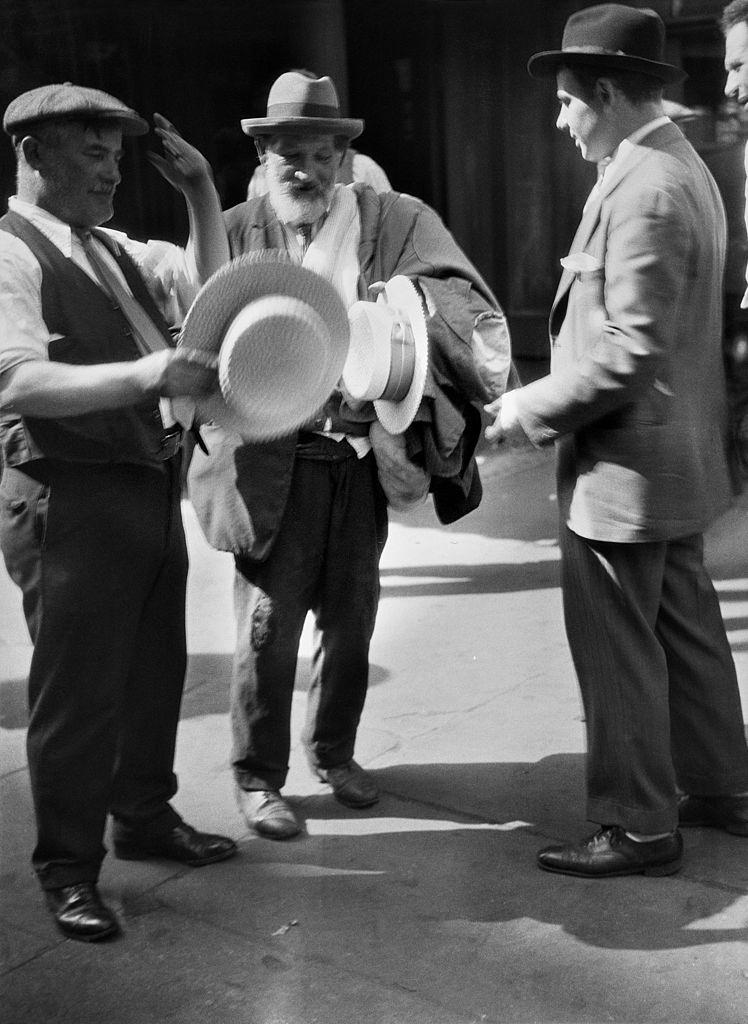
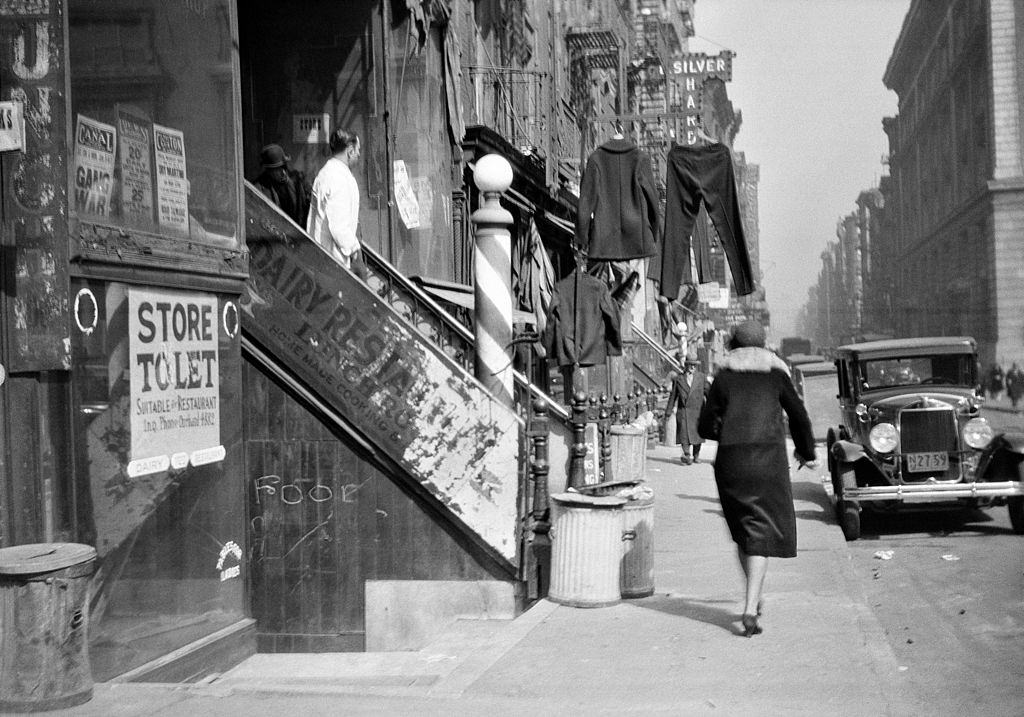
Empty storefronts were a visible sign of economic decline on the Lower East Side. The vacant shop of R. Friedman and Silver stood as one example of a business that hadn’t survived the Depression. Just down the block, a Jewish hat merchant continued to trade, his display of hats arranged outside the door. The neighborhood’s retail culture was resilient, but not every business made it through.
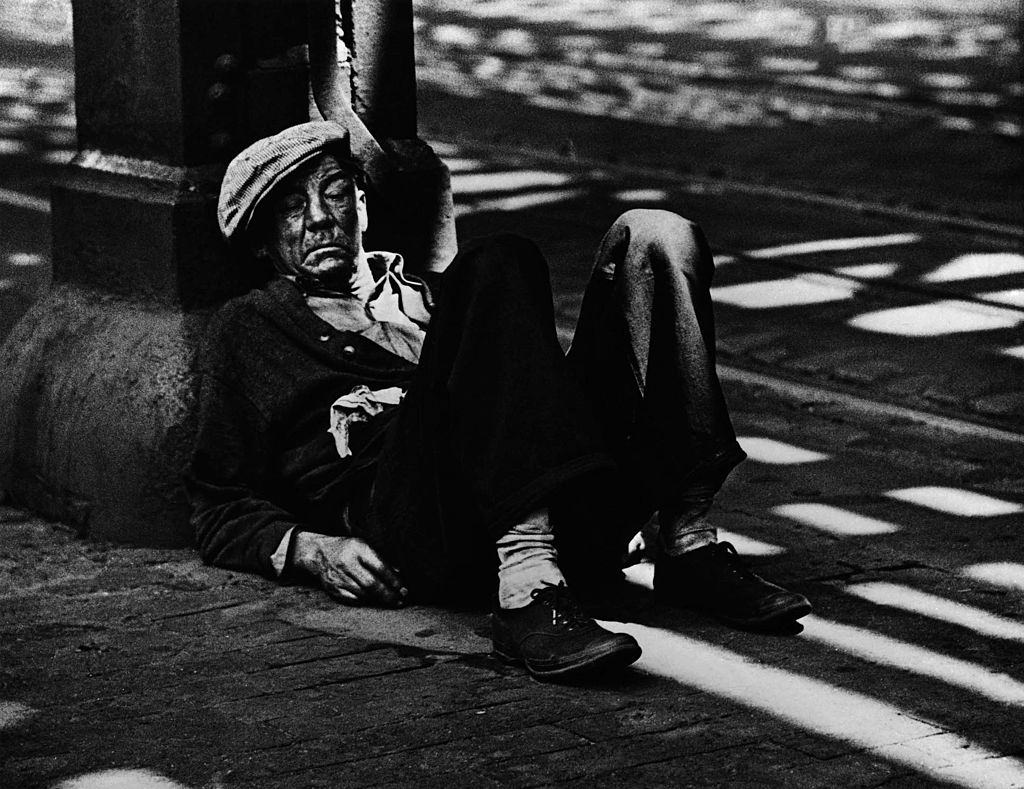
The Bowery had been associated with homelessness and poverty since the 19th century, and by 1932 the Depression had pushed more men onto its sidewalks than ever before. The term ‘Bowery Bum’ was the common label applied to homeless men living in the area — a blunt descriptor that revealed as much about period attitudes as it did about the men themselves. These were, in many cases, workers displaced by the economic collapse.
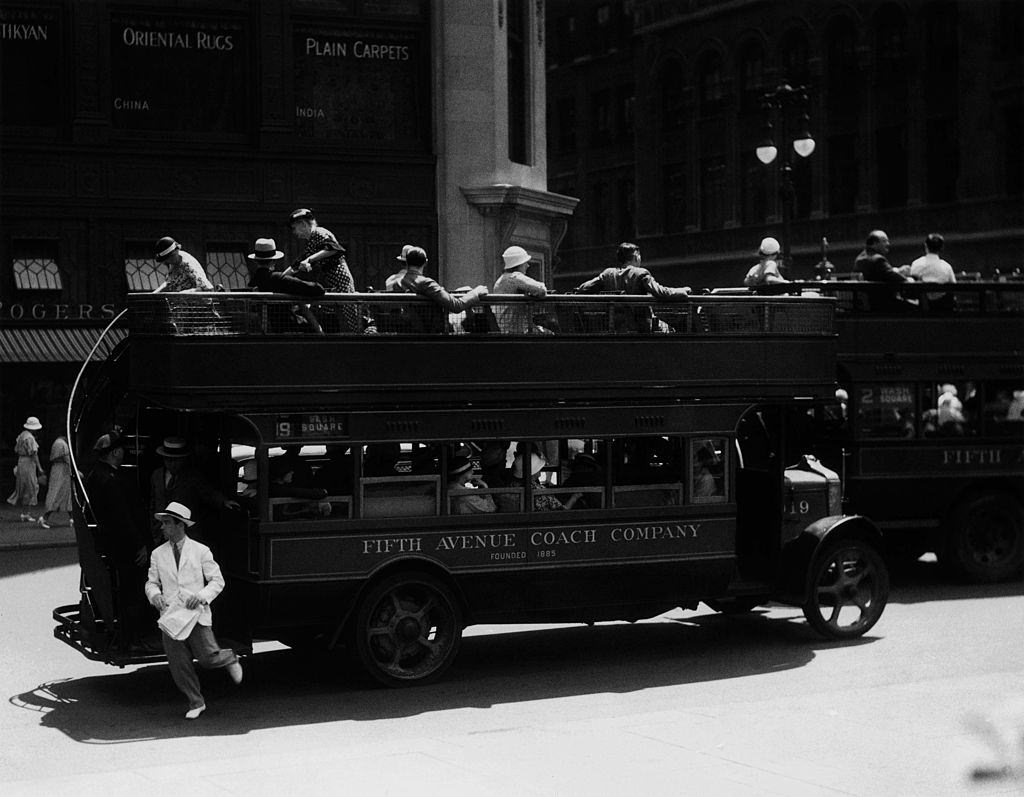
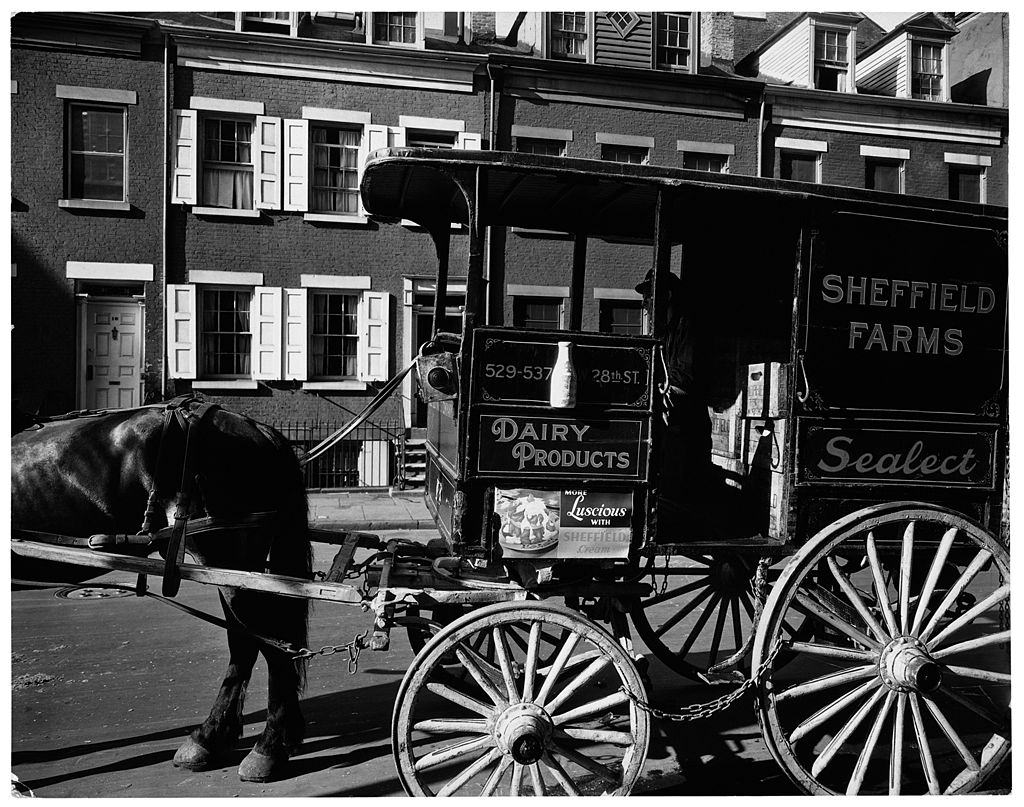
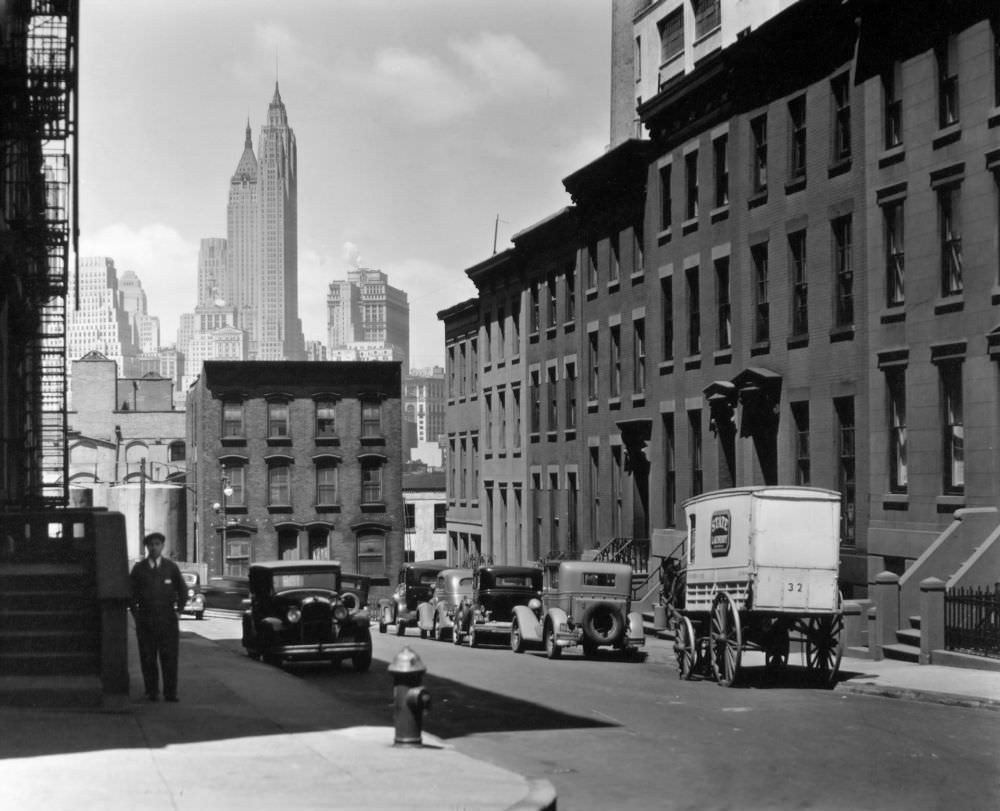
By the mid-1930s, the city’s transit mix still included horse-drawn vehicles alongside motor coaches. A milk wagon photographed in 1936 moves through a street lined with old rowhouses — a scene that was already starting to look anachronistic as the city modernized. The Fifth Avenue Coach Company’s buses, photographed in 1932, represented the more modern end of the spectrum, running one of the city’s most prominent bus routes.
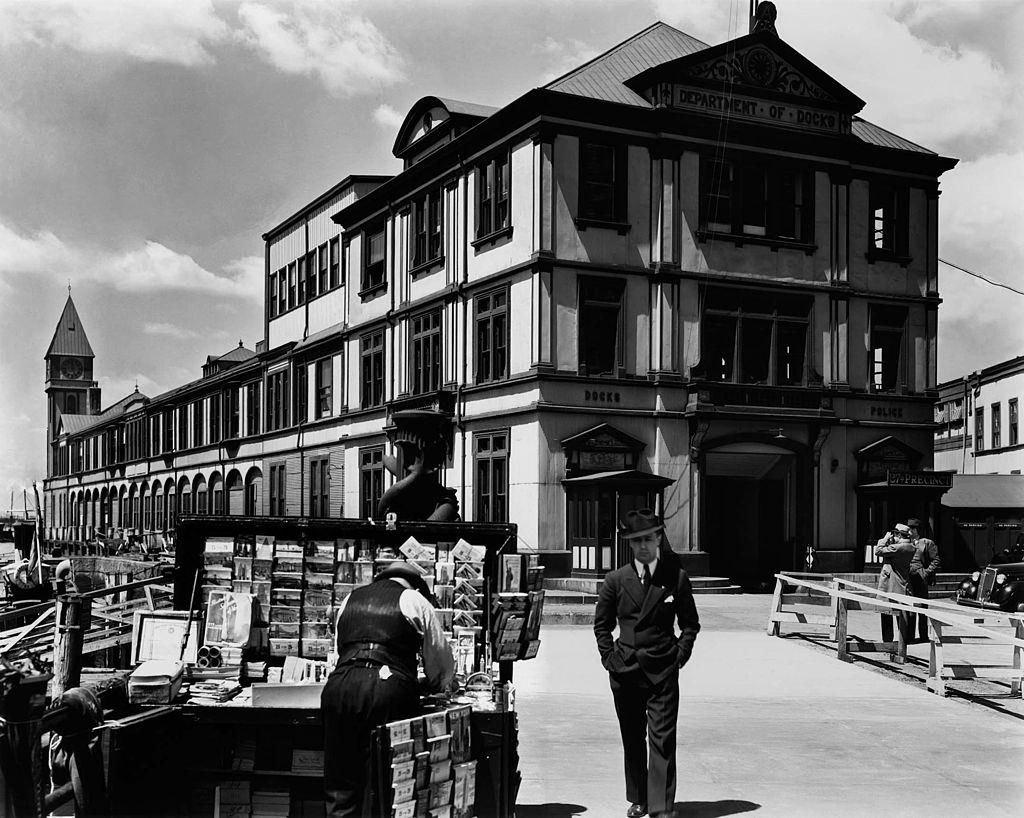
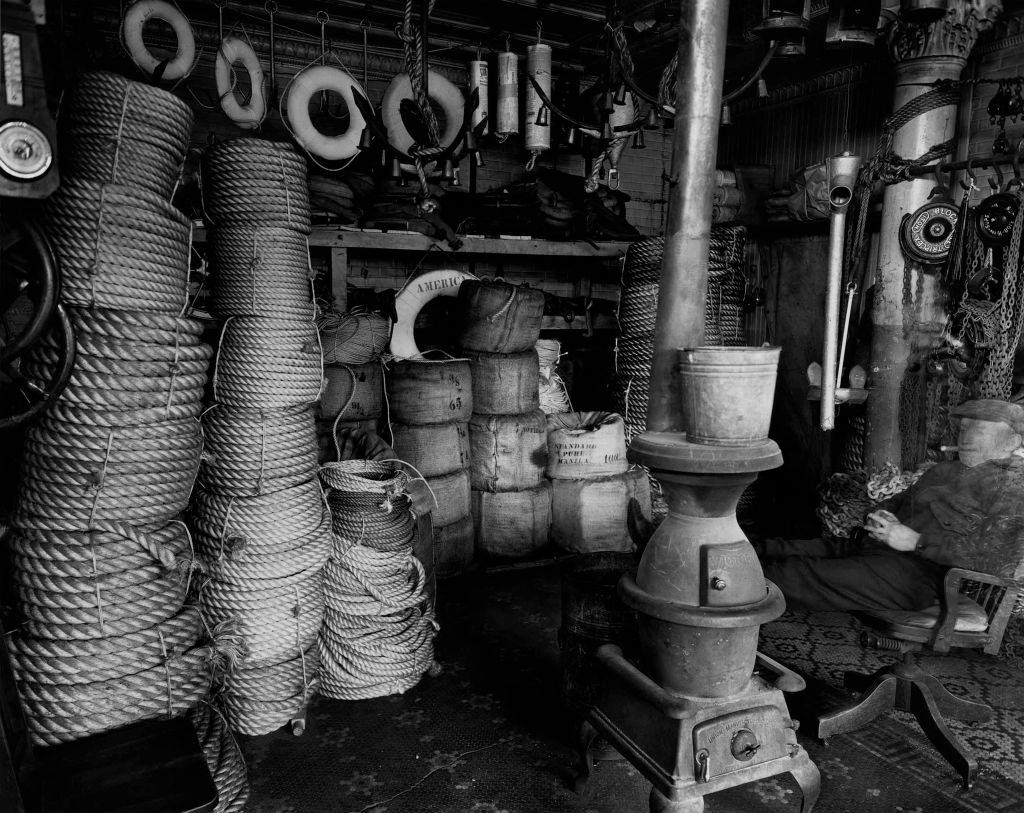
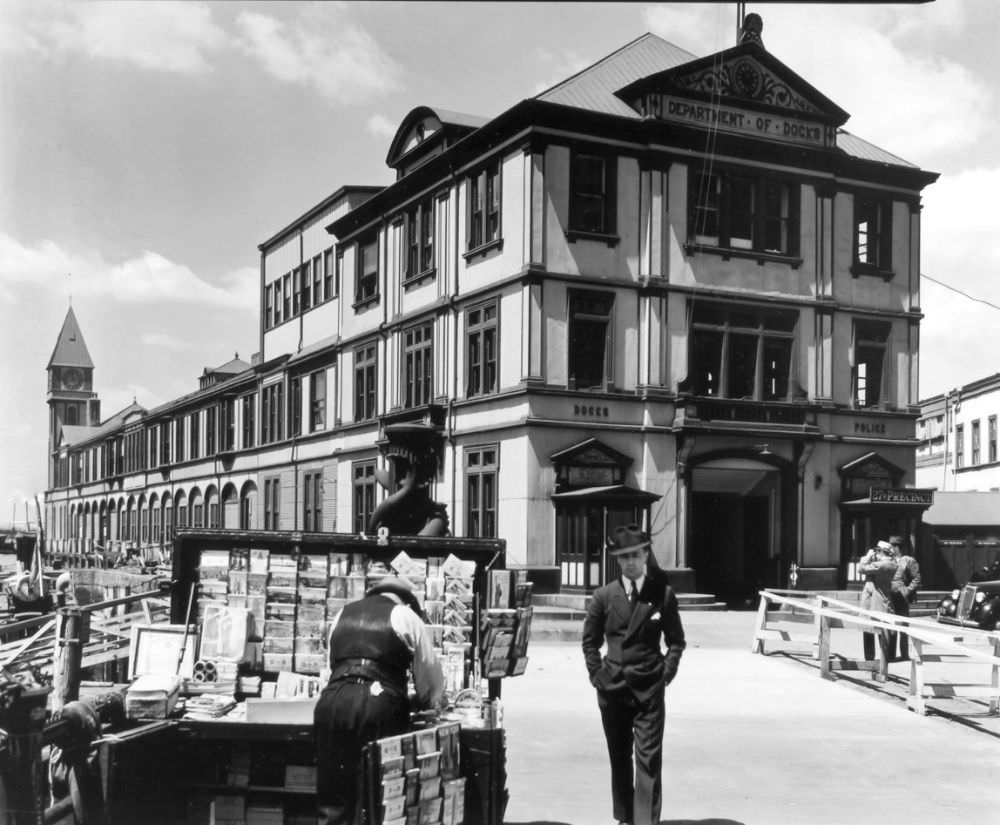
The Department of Docks managed New York’s extensive waterfront infrastructure, and its presence along the North River was a reminder of how central maritime trade remained to the city’s economy in the 1930s. Nearby, the interior of a rope store captured in 1936 shows the kind of specialized waterfront supply business that served the shipping industry — coils of rope stacked floor to ceiling, a working environment unchanged for generations.
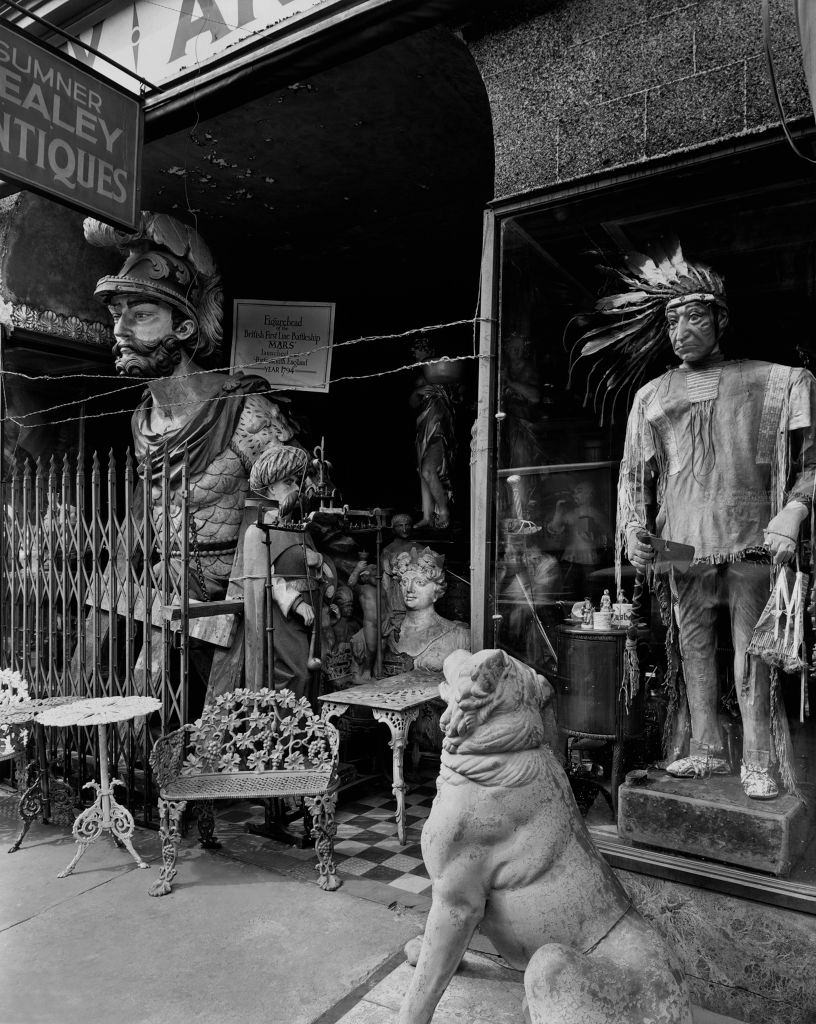
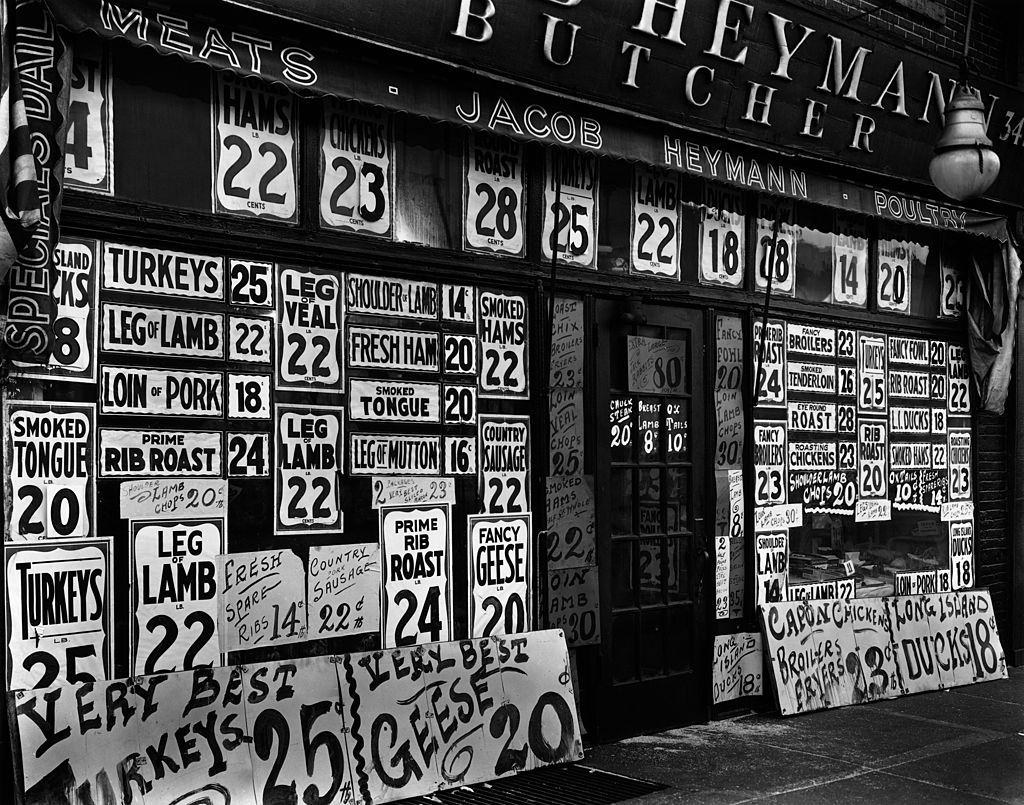
The Sumner Healey Antique Shop, photographed in 1936, represented the more refined end of New York’s retail landscape — a world apart from the push-cart vendors of the Lower East Side, yet just as much a part of the city’s commercial fabric. Two years later, Jacob Heyman’s butcher shop on the Upper East Side showed the neighborhood butcher still operating as a cornerstone of local food supply, as he had for decades before supermarkets changed the picture.
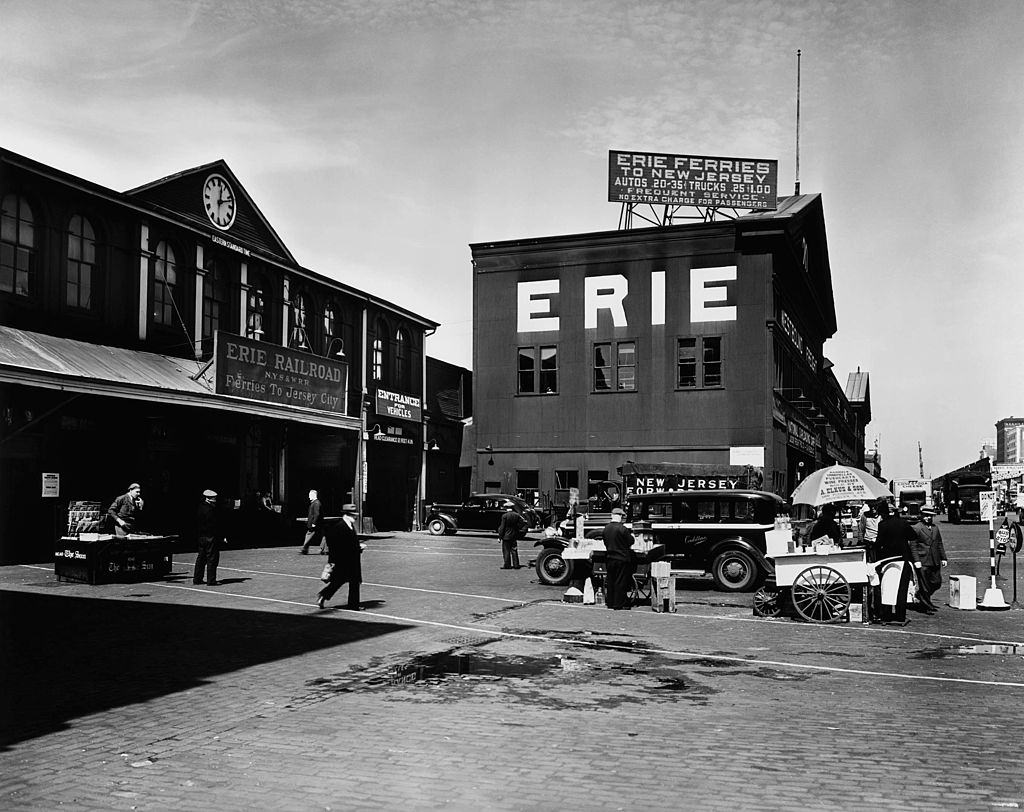
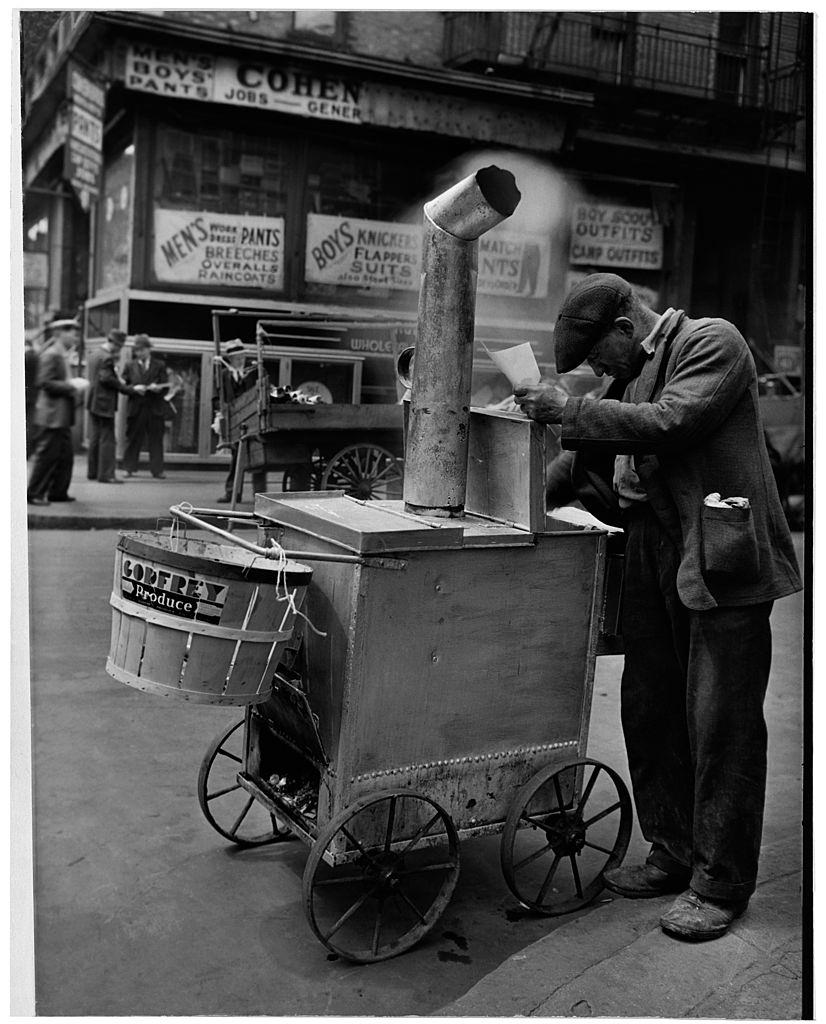
The Erie Railroad ferry station connected New Jersey rail passengers to lower Manhattan via ferry across the Hudson River. In 1938, it was still a busy terminal, processing thousands of commuters and travelers daily. On the street nearby, a man sold roast corn from a cart — one of the simplest and most affordable street foods in the city, unchanged in format from decades prior.
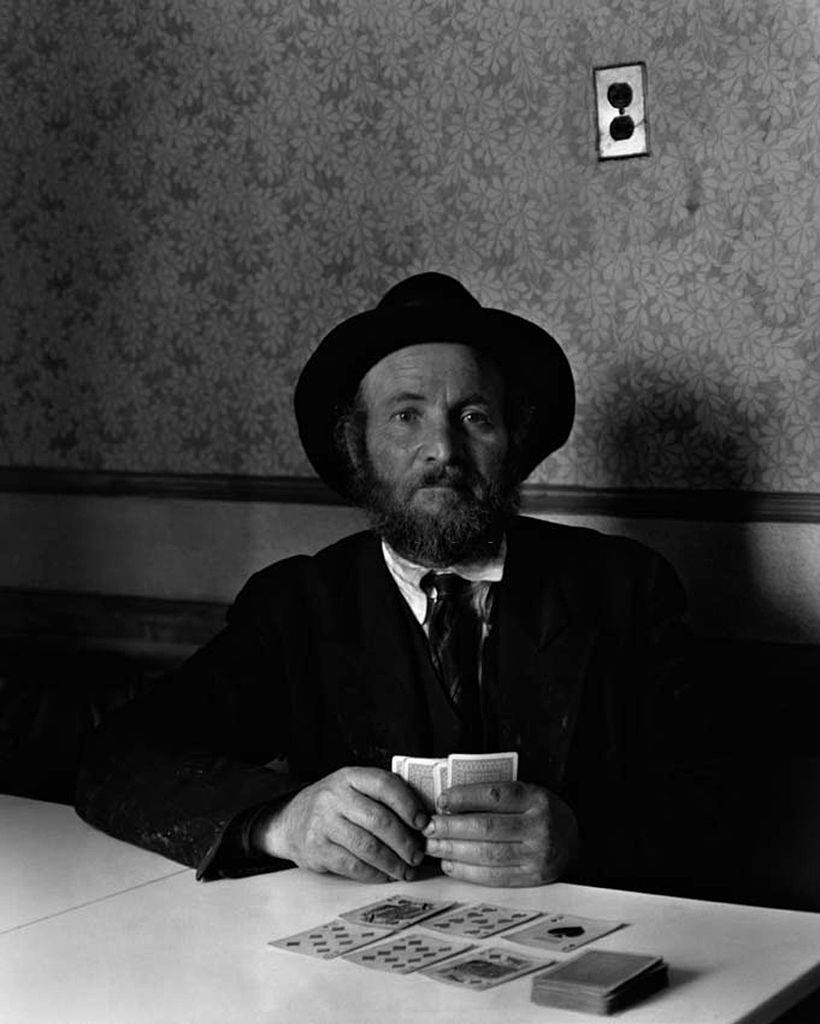
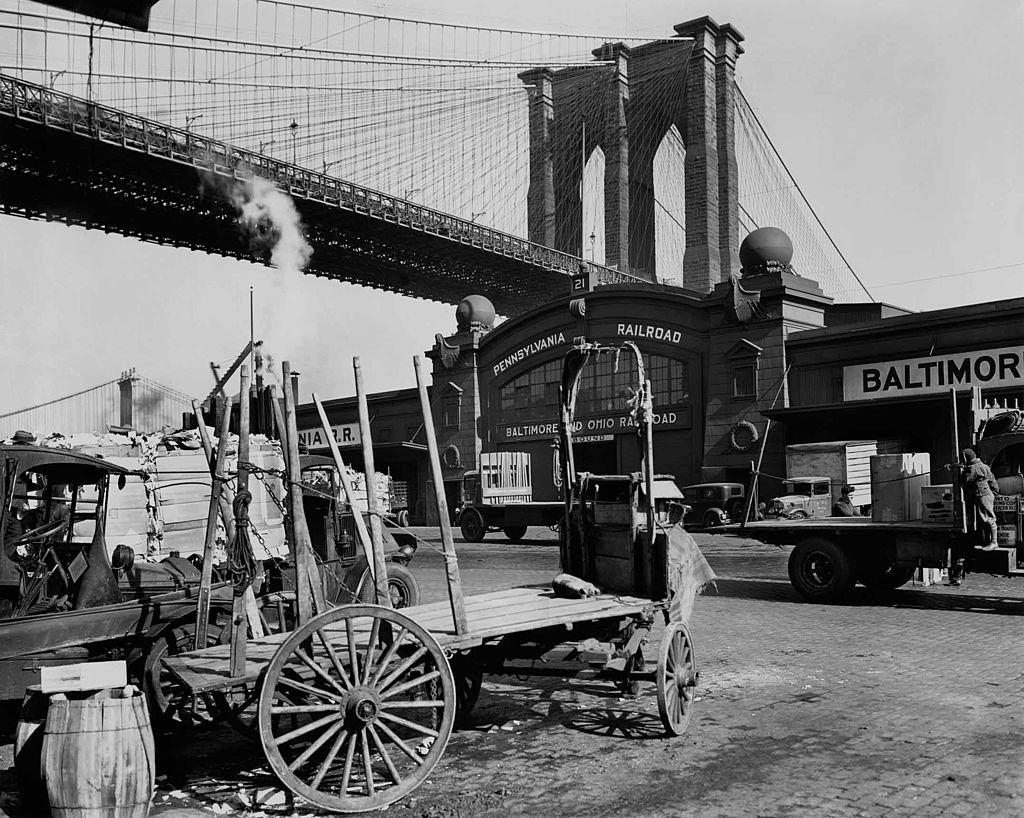
On the East Side in 1938, a man plays cards — a small, quiet moment in a decade defined by hardship and noise. By 1939, the decade was nearly over. The Brooklyn Bridge, photographed alongside Pier 21, stood as it had since 1883, unchanged above a waterfront that had shifted constantly around it. Abbott’s final photographs of the decade show a city that had endured a great deal and was still, unmistakably, New York.





Pic 43:
My dad’s first salaried job after coming to NYC after being liberated from Dachau was as a Window Display Designer for S. Klein.
Their motto was “S. Klein On The Square,” a double-meaning in that they offered fair deals and were located on Union Square.
Great photos. I’m always struck by the lack of street trees in these kinds of pictures. Does anyone know when they began to be planted?
Late 60’s early 70’s
Thanks. I was a child/teen in those days, so wasn’t paying much attention to trees, other than the (then very sad) ones in Central Park.
I remember those trees.
This is great, thank you for sharing this.