Taffeta has a history stretching back to the 12th century, when it was first produced in the Middle East. The word itself comes from the Persian word meaning “twisted woven,” which hints at the fabric’s tight, structured weave. Modern taffeta production took root in Italy and France, and by the time the 1950s arrived, the fabric had become a staple of high fashion. It is plain, crisp, and lightweight — and it holds its shape remarkably well, making it a favorite choice for ball gowns, evening wear, wedding dresses, and even corsetry.
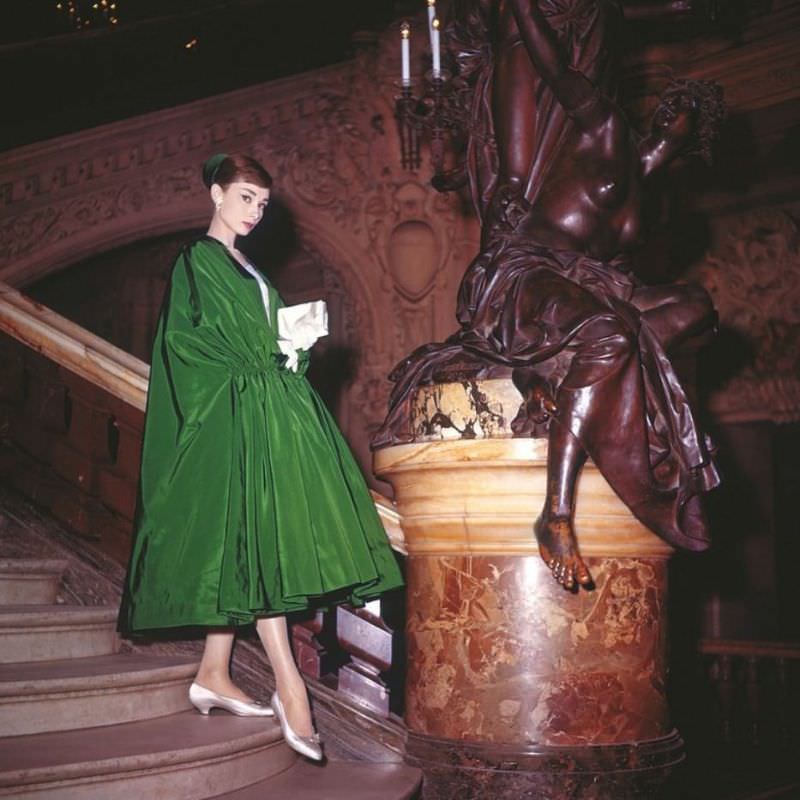
In the 1950s, taffeta was everywhere. Celebrities, actresses, and top models wore it in every style imaginable — one-shoulder silhouettes, strapless gowns, full-skirted frocks, and backless designs. Its signature rustle and sheen made it one of the most glamorous fabrics of the decade. The women photographed in these pages represent some of the most striking examples of how taffeta could transform a look from simply elegant to truly unforgettable. Audrey Hepburn was one such icon who wore the fabric with effortless grace.
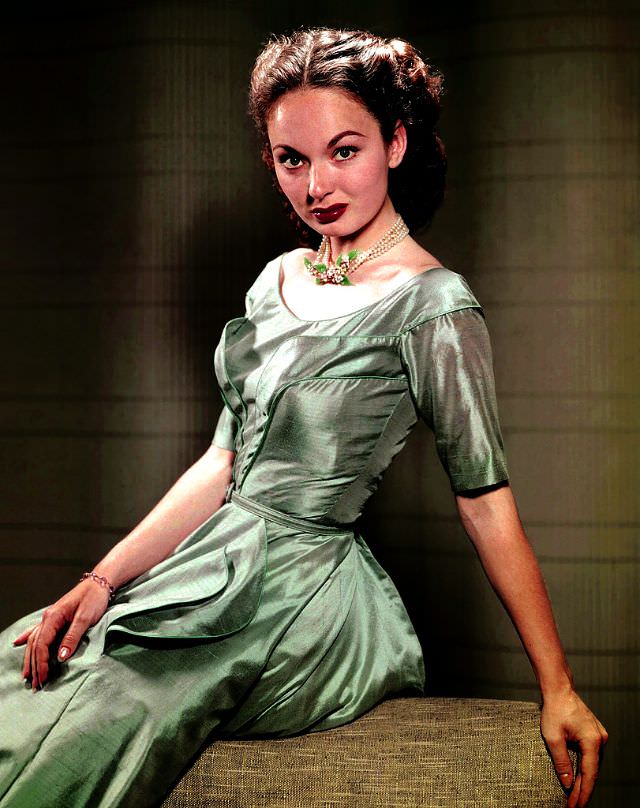
Ann Blyth was another actress who showed how well taffeta photographed, especially in softer, pastel tones. The fabric’s ability to catch light gave it a natural luminosity that worked beautifully both on screen and in still photography.
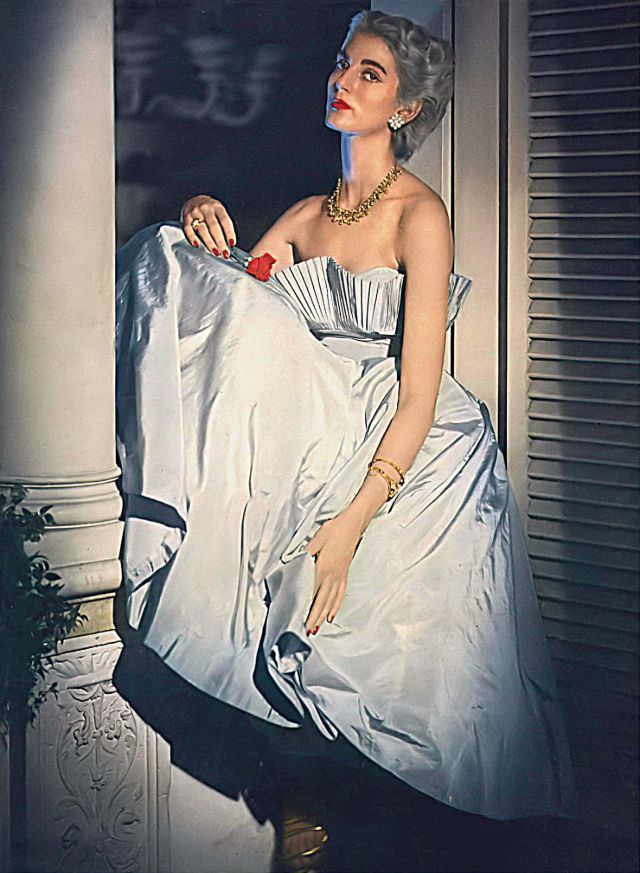
Designer Ceil Chapman was known for dressing some of the most photographed women of the era. His use of iridescent silk taffeta gave garments a shifting, almost alive quality depending on the angle of light. Carmen Dell’Orefice wore one of his short evening pieces with the kind of poise that only a top model of her generation could carry off.
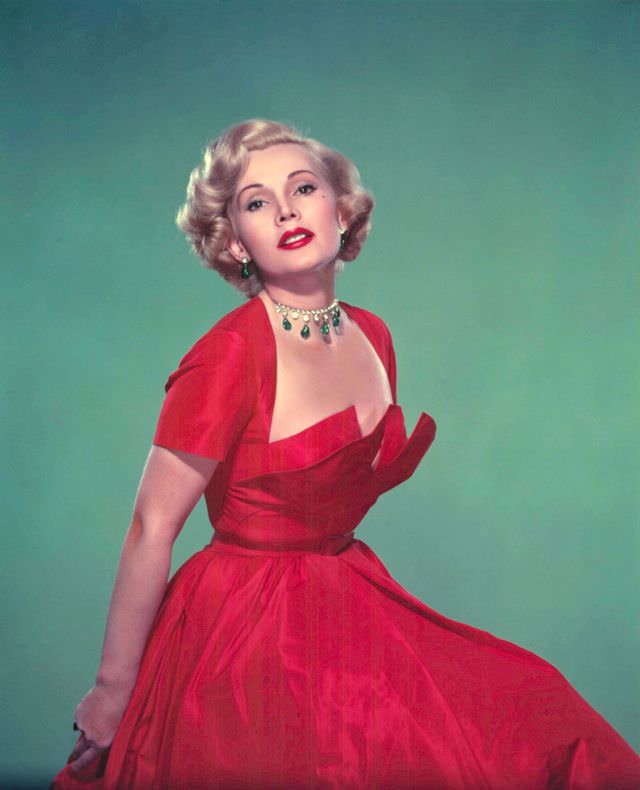
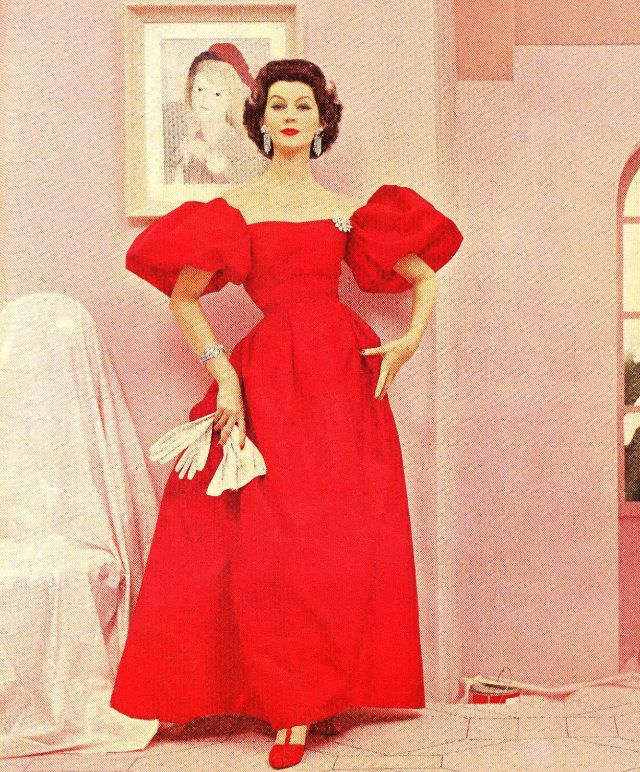
Red taffeta was among the boldest choices a woman could make in the 1950s. The fabric’s stiffness gave red gowns a dramatic, sculptural quality. Dovima — one of the top models of the decade — wore it with an authoritative confidence that few could match.
Pink taffeta was a natural fit for the 1950s party scene. Full skirts, fitted bodices, and the crisp body of taffeta combined to create looks that felt both playful and polished. Enid Boulting brought that spirit to life in her party dress.
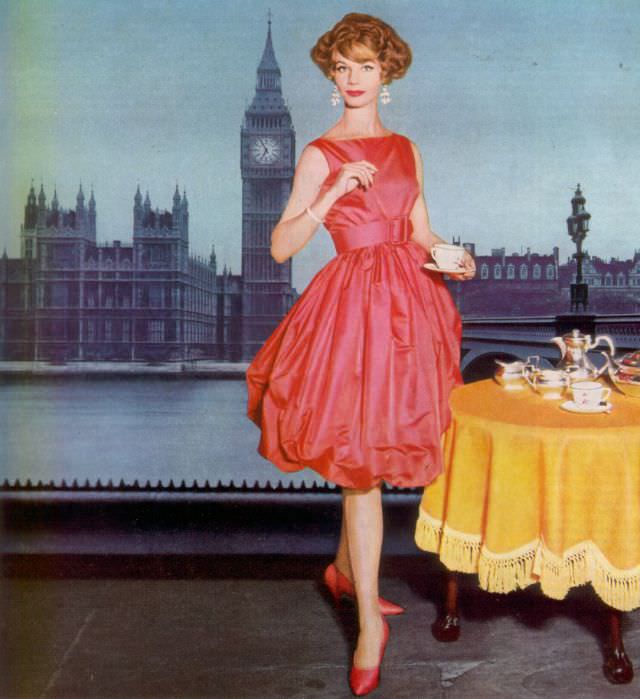
Black taffeta carried a different kind of weight — serious, romantic, and undeniably sophisticated. Eva Marie Saint, known for her composed on-screen presence, carried that same quality into her wardrobe choices.
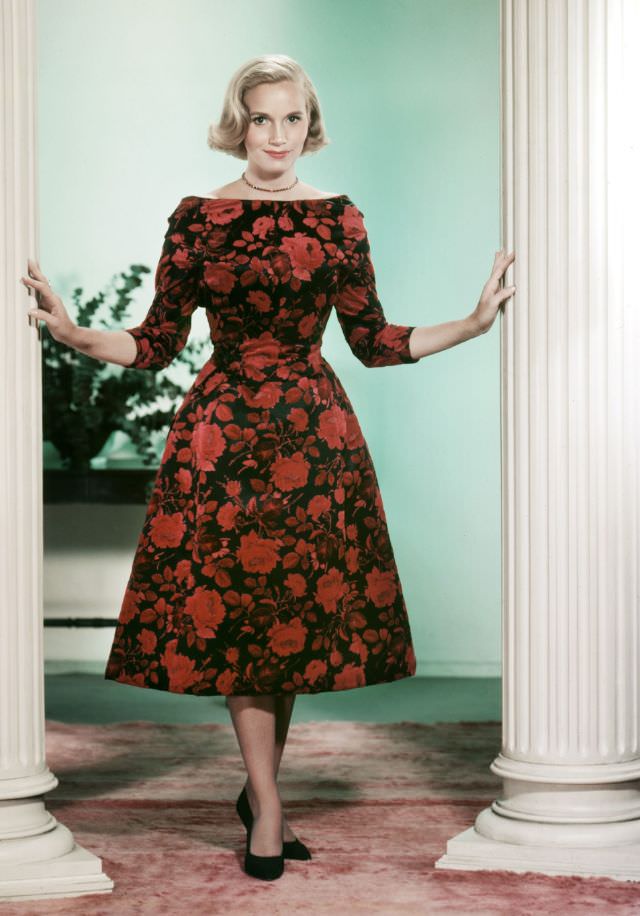
Silk taffeta also lent itself beautifully to prints. Harper’s Bazaar — one of the leading fashion publications of the era — regularly featured models in bold printed designs that showcased the fabric’s ability to hold pattern sharply and cleanly.
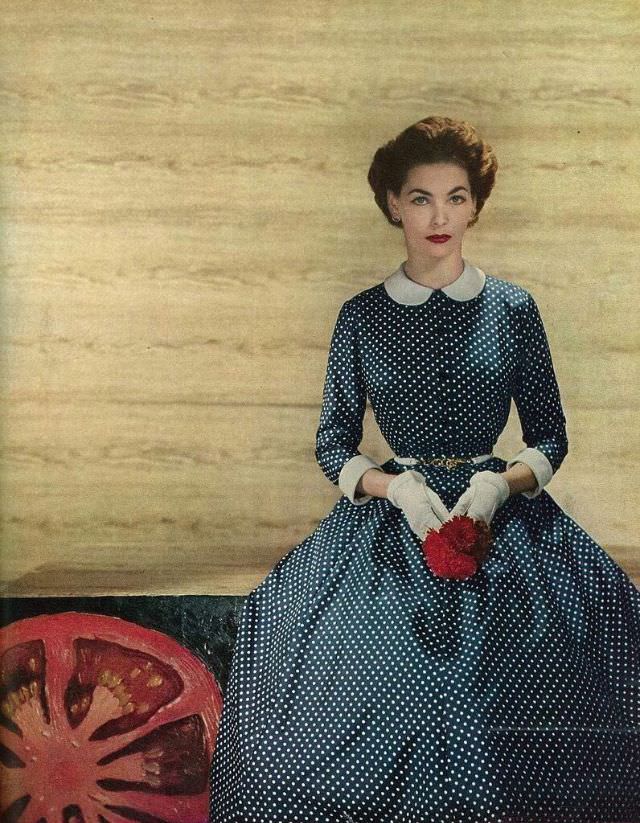
French designer Jacques Fath was one of the great names of postwar couture. His evening gowns were known for their dramatic construction and feminine lines — qualities that taffeta supported exceptionally well.
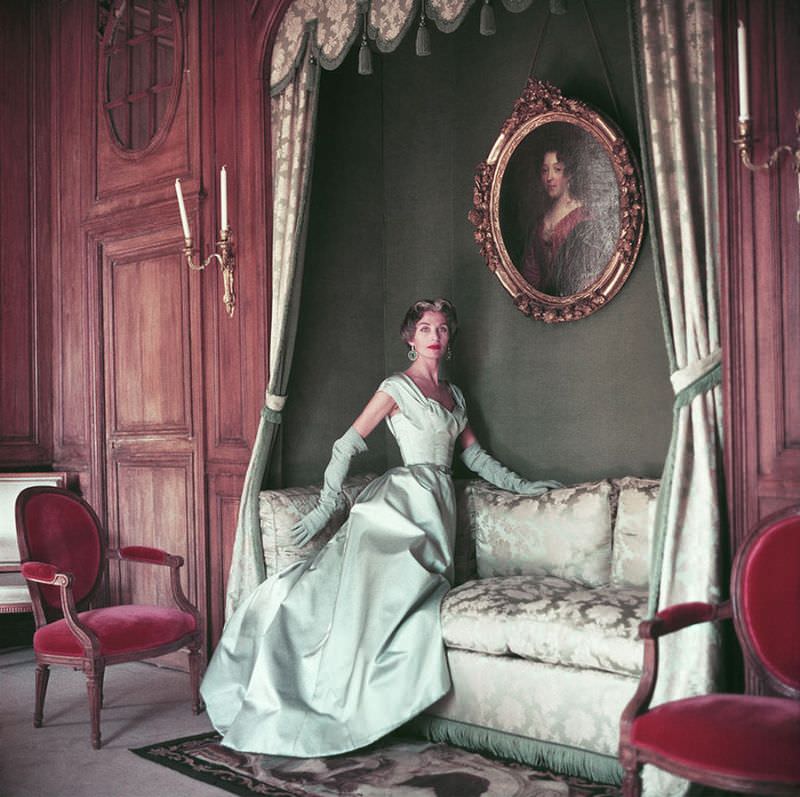
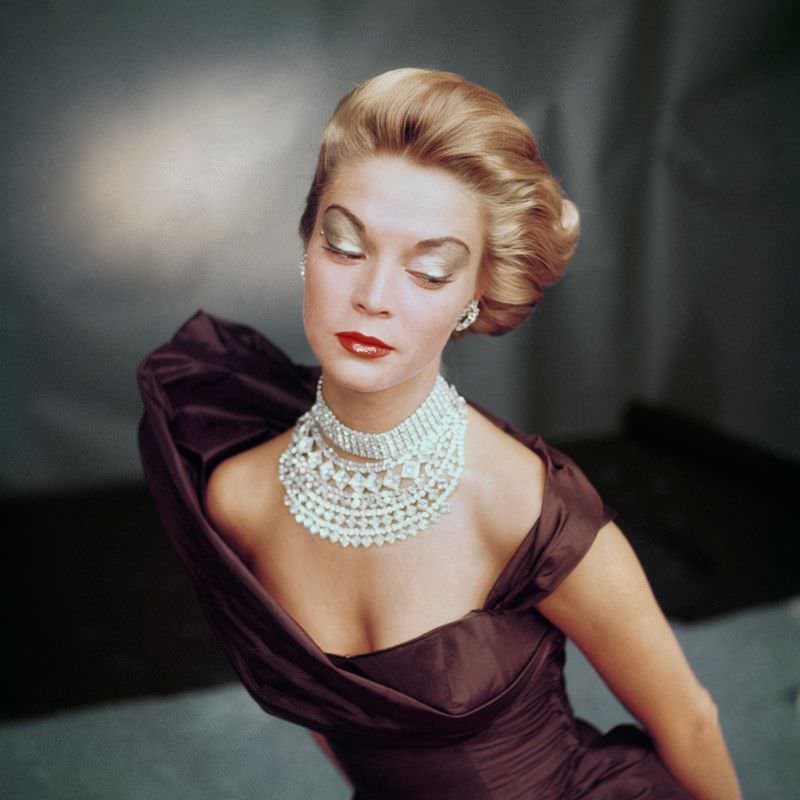
Not all taffeta looks from the era relied on bold color or grand volume. Some designers used the fabric more subtly — mixing textures and tones to create something quieter but just as refined. Jean Patchett, one of the most recognizable models of the 1950s, demonstrated that restrained approach.
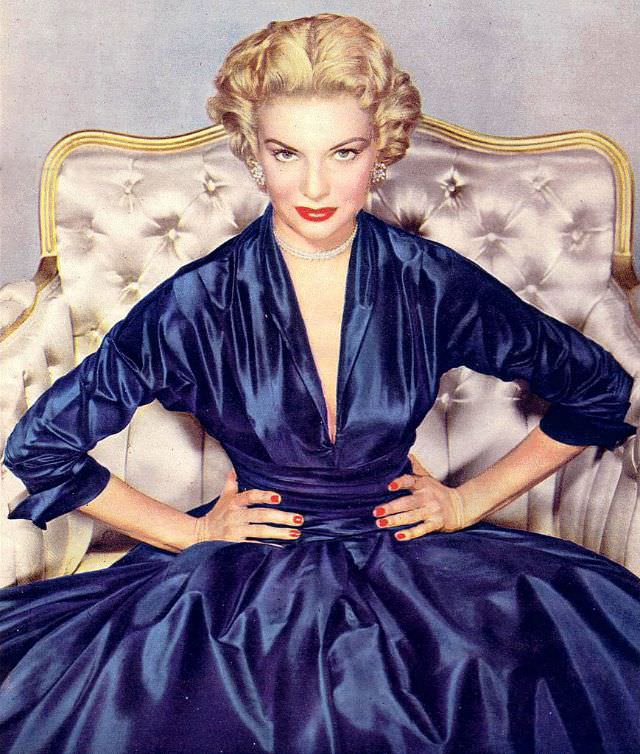
The rustle of taffeta — a sound almost as recognizable as its look — was part of its appeal. Moving through a room in taffeta was a statement in itself. Kathleen Hughes captured that feeling in a dress that made the most of the fabric’s natural movement.
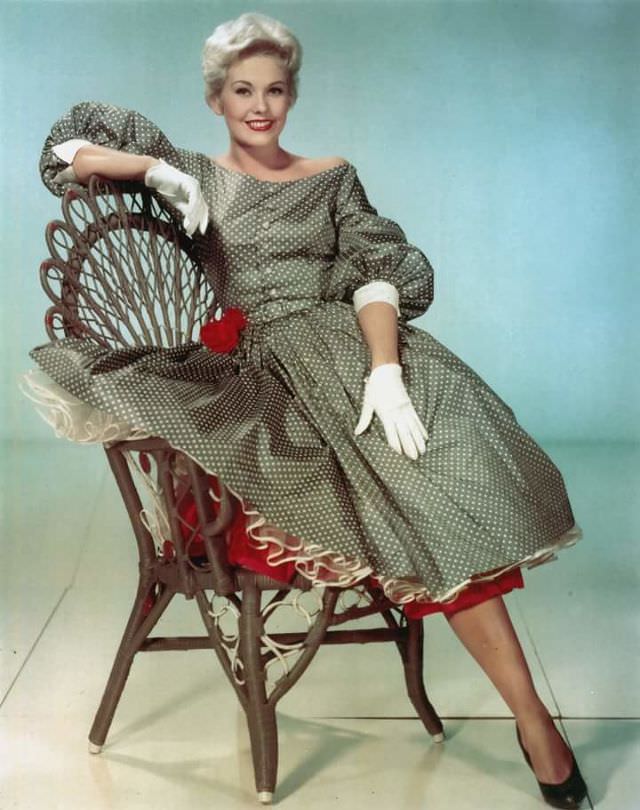
Taffeta was not strictly reserved for formal occasions. Lighter versions of the fabric found their way into summer dresses and daywear. Kim Novak wore a lightweight taffeta dress that showed off the petticoats underneath — a very 1950s touch.
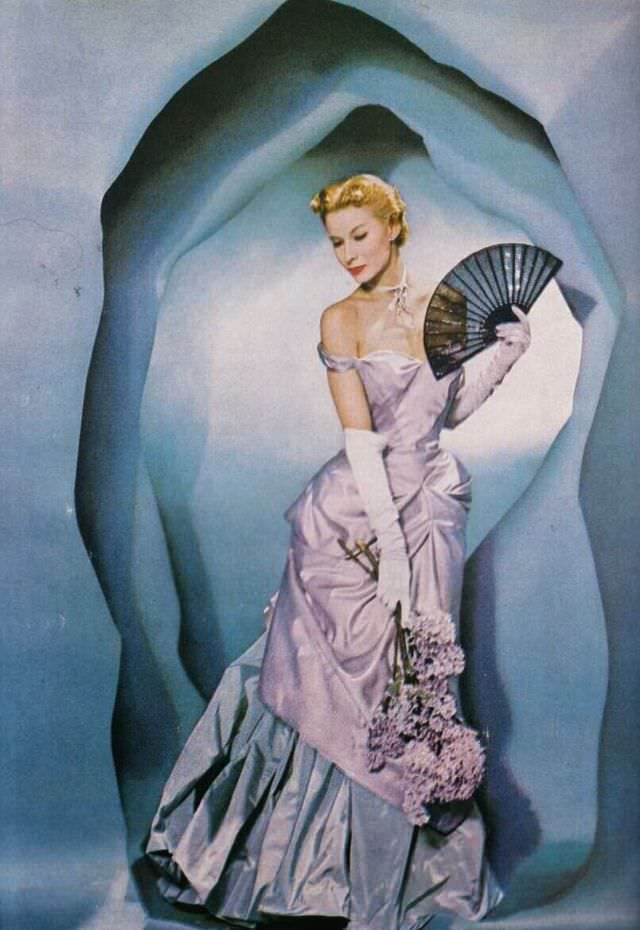
Charles James was one of the most technically gifted American designers of the 20th century. His gowns were constructed almost like architecture, with layers and seaming that gave them extraordinary structure. Lisa Fonssagrives — herself one of the most important fashion models of the era — posed in one of his two-tone taffeta creations.
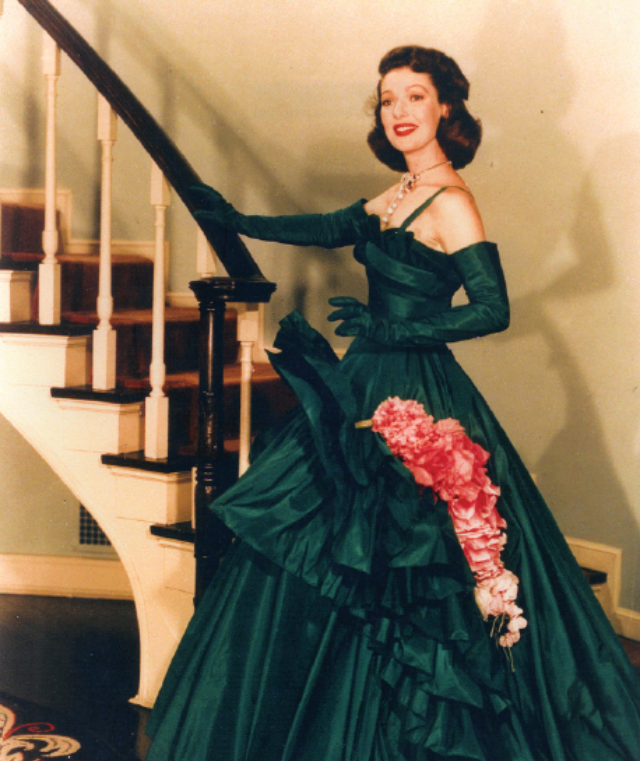
Adrian, the legendary Hollywood costume designer, brought his theatrical sensibility to ready-to-wear fashion after leaving MGM. His work with green taffeta for Loretta Young showed how fabric and color could be used together to create something with genuine dramatic force.
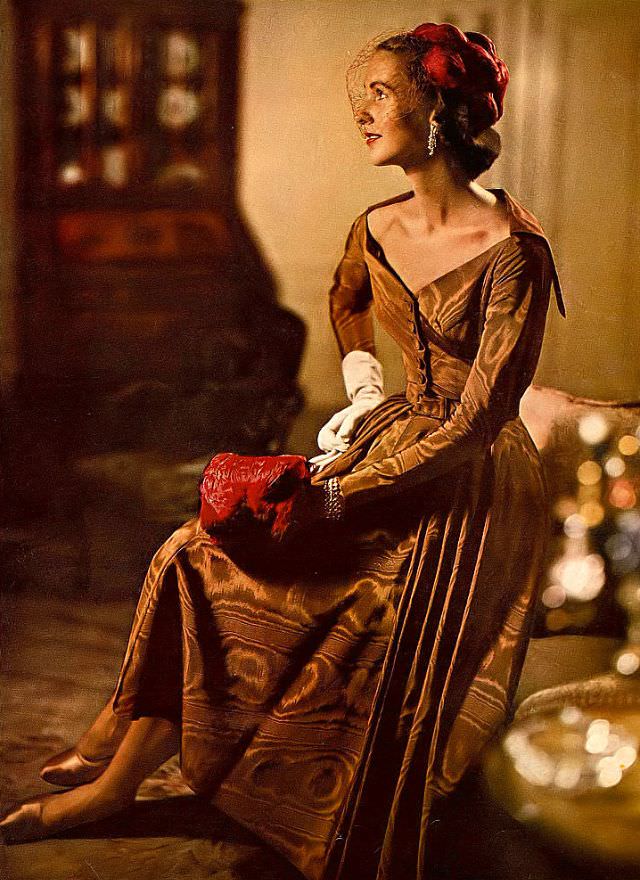
Moiré taffeta — also called watered silk — had a distinctive rippled pattern that appeared to shift as the fabric moved. It was a specialty finish that added texture and visual depth to an already rich material.
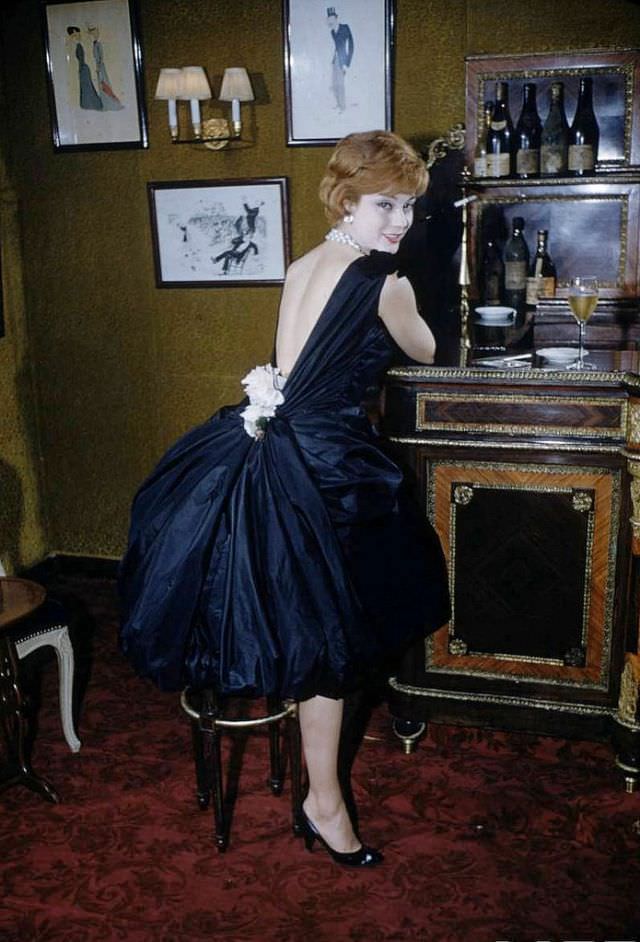
French designer Guy Laroche built his reputation on clean, modern lines. His silk taffeta backless dress pushed the fabric’s structural qualities in a different direction — away from volume and toward a sleeker, more contemporary silhouette.
Pierre Balmain was one of the defining voices of 1950s couture. His use of plaid taffeta in an evening gown — pairing a voluminous skirt with a tailored taffeta bustier — showed how the fabric could move between tradition and invention.
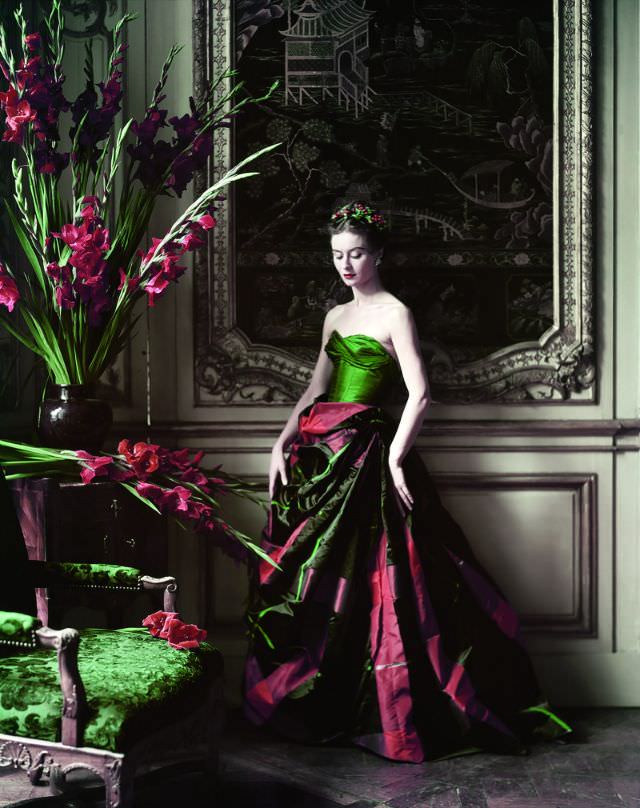
Draped evening gowns were another popular style of the decade. Draping required a fabric that could hold a fold without collapsing, and taffeta’s stiffness made it well-suited to the technique.
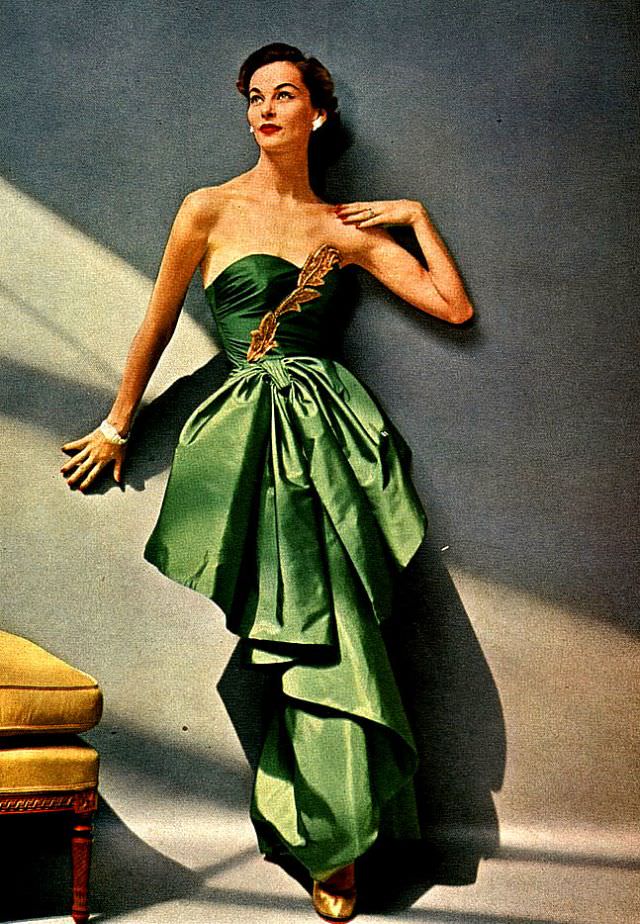
Taffeta also worked as a contrast layer beneath other fabrics. A black taffeta skirt underneath a silk organdie top created a play of sheer and opaque that was a common technique among designers working in the period.
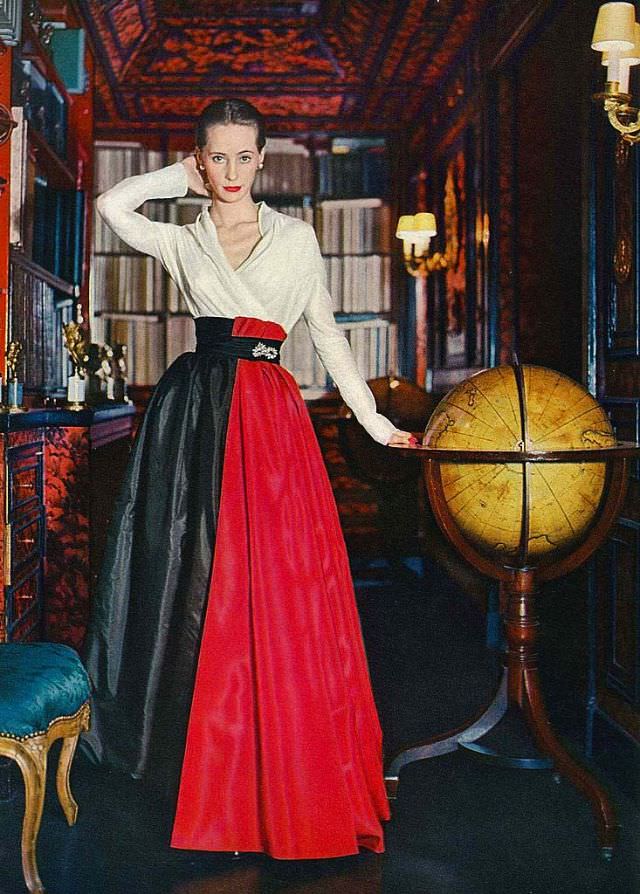
Norman Norell was one of the most respected American fashion designers of the 20th century. His strapless silk taffeta dress reflected his belief in precision tailoring and high-quality materials — a combination that defined American couture in the 1950s.
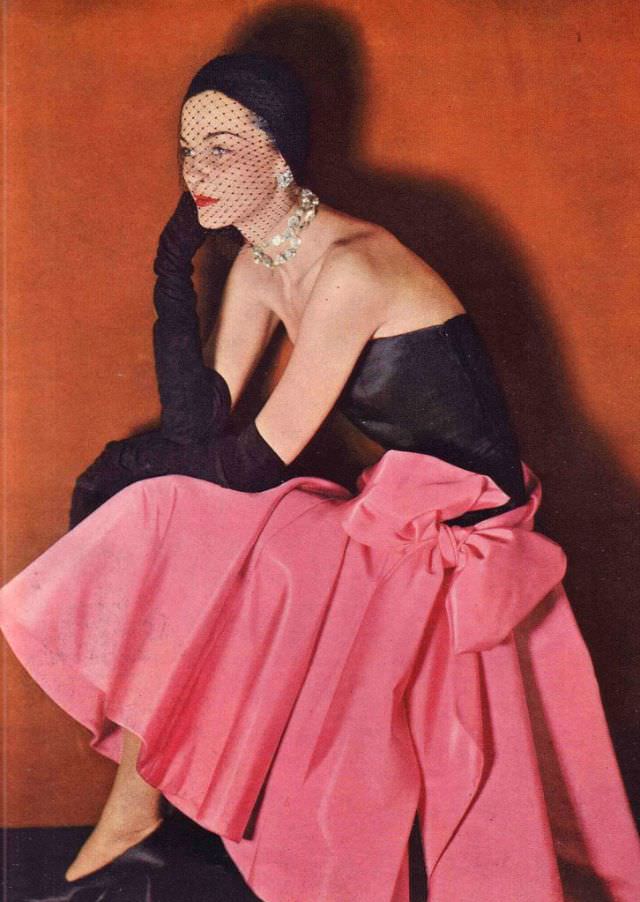
A strapless taffeta evening gown by Pierre Balmain demonstrated again why the designer was so central to the decade’s fashion identity. The cut and fabric together created a silhouette that was both grand and precisely controlled.
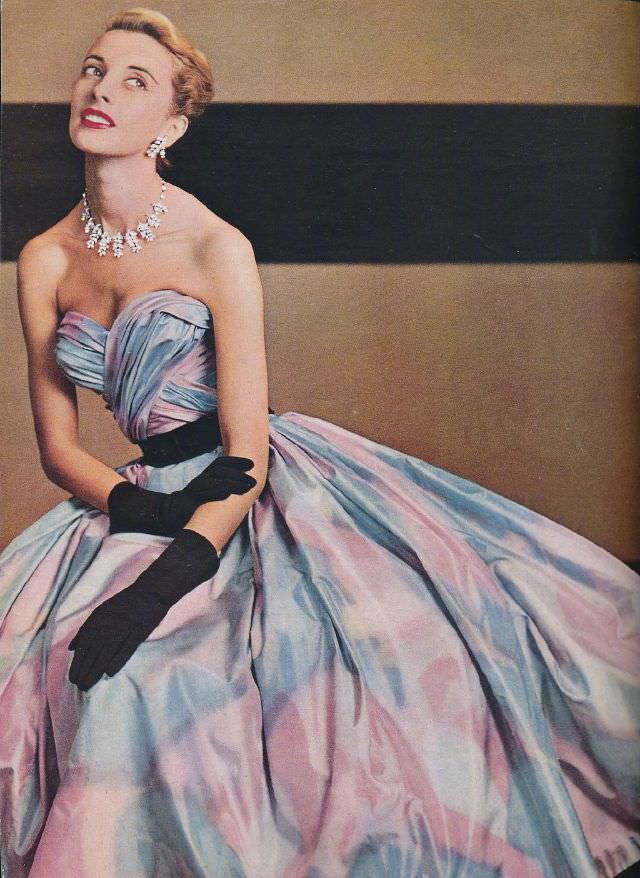
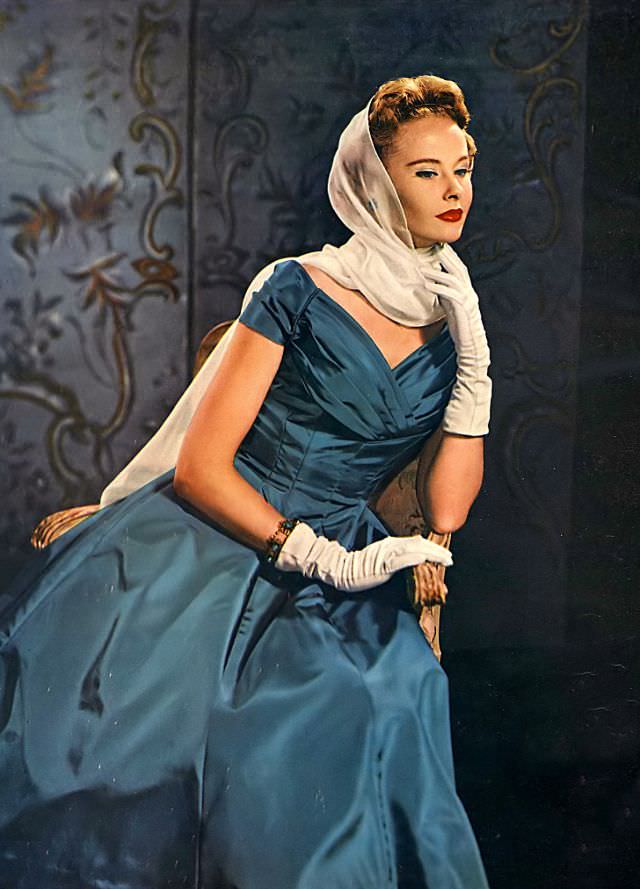
Arnel taffeta was a synthetic version of the fabric made from a triacetate fiber developed in the 1950s. It offered many of the same visual qualities as silk taffeta at a lower price point, and it was widely used in ready-to-wear fashion. Peacock blue was one of the decade’s standout colors.
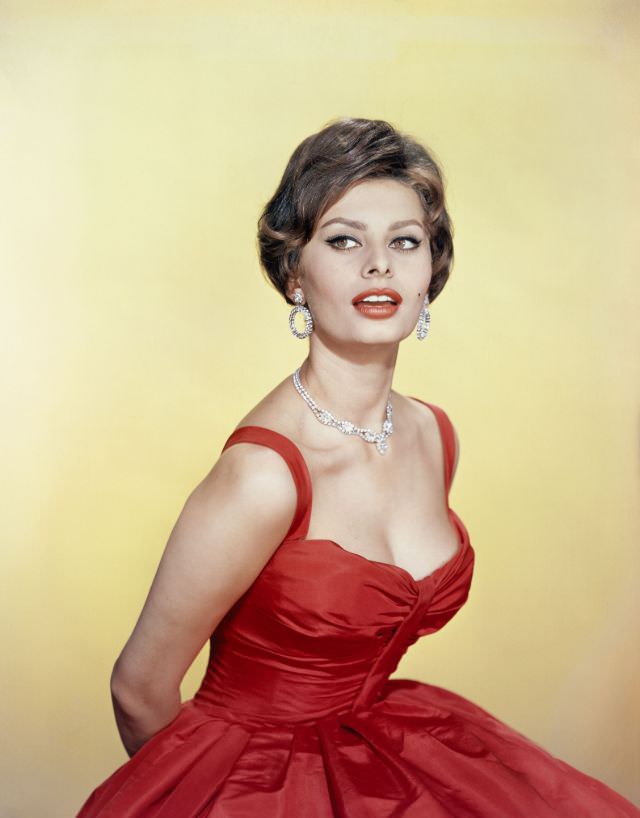
Sophia Loren’s presence in any garment carried an undeniable intensity. In a red taffeta evening gown, that presence was amplified — the color and the fabric’s sheen working together with her naturally commanding bearing.
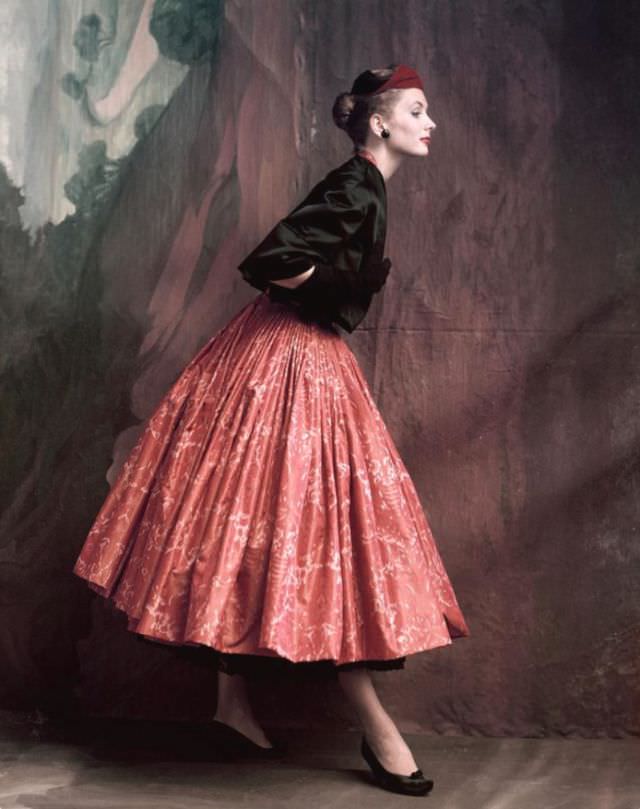
Givenchy was among the most inventive designers of the postwar years. Suzy Parker — one of the highest-paid models of the 1950s — wore a Chinese printed taffeta skirt from the house paired with a lace petticoat and quilted satin blouse, a combination that showed Givenchy’s skill at mixing textures and cultural references.
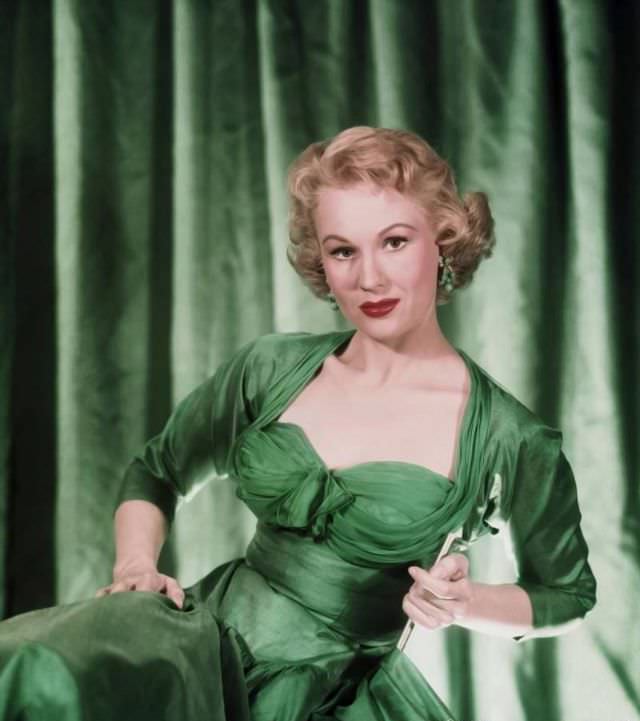
Green taffeta appeared throughout the decade in varying shades and styles. Virginia Mayo wore a gown that leaned into the fabric’s whispering quality — a term often used at the time to describe the soft, constant sound taffeta made with every movement.
Zsa Zsa Gabor was one of the most photographed women of the 1950s. Known for her love of luxury and spectacle, she was a natural fit for taffeta — a fabric that demanded attention and rewarded it.