Hey There! Before You Go. 😧
Get the best vintage content straight into your inbox!

Don't worry, we don't spam

New York City Blackout Of 1977: Causes, Facts, And Photos Show The Blackout From The Streets And Aftermath

At 9:34 p.m. on Wednesday, July 13, 1977, New York City went completely dark. A series of lightning strikes hammered Con Edison’s power lines and infrastructure throughout the evening, triggering a cascade of failures, overloads, and automatic shutdowns across the entire system. Within minutes, traffic lights went black, elevators stopped mid-floor, and subway trains ground to a halt in their tunnels. The Mets-Cubs game at Shea Stadium was cut short in the bottom of the sixth inning. Every borough of the city — from the Bronx to Brooklyn — lost power at once.
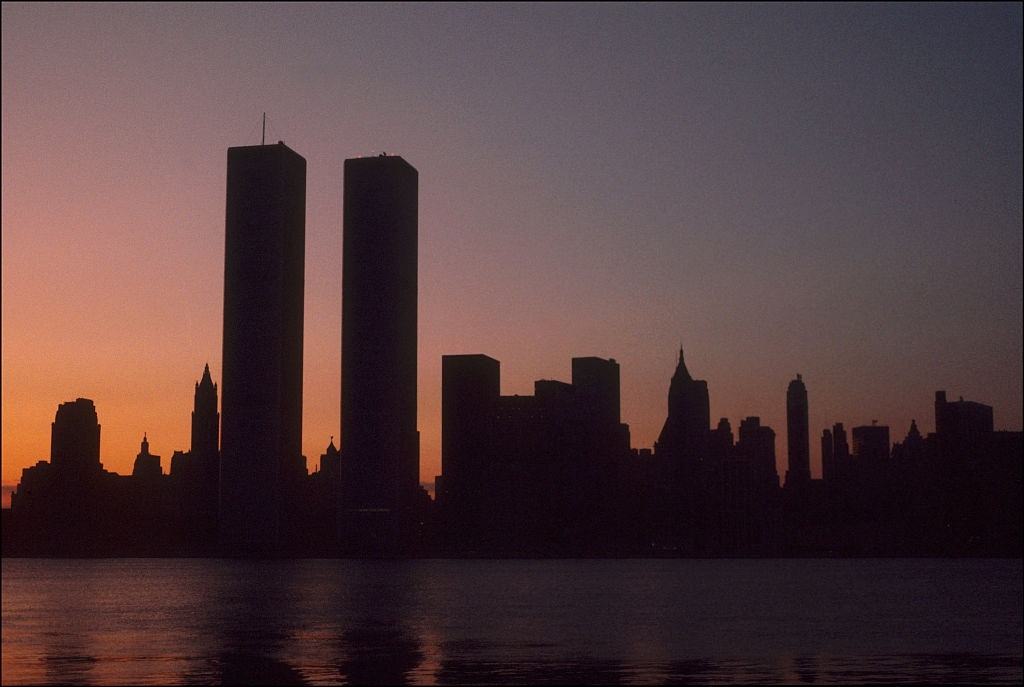
The twin towers of the World Trade Center on the first morning of the power blackout of July 1977

The blackout lasted 25 hours. Power was restored gradually across the city, with the last sections coming back online by 10:39 p.m. on July 14. For many New Yorkers, those hours in between were defined not just by darkness, but by sweltering July heat and a city suddenly stripped of every modern convenience. People poured into the streets, unsure of what was happening or how long it would last.
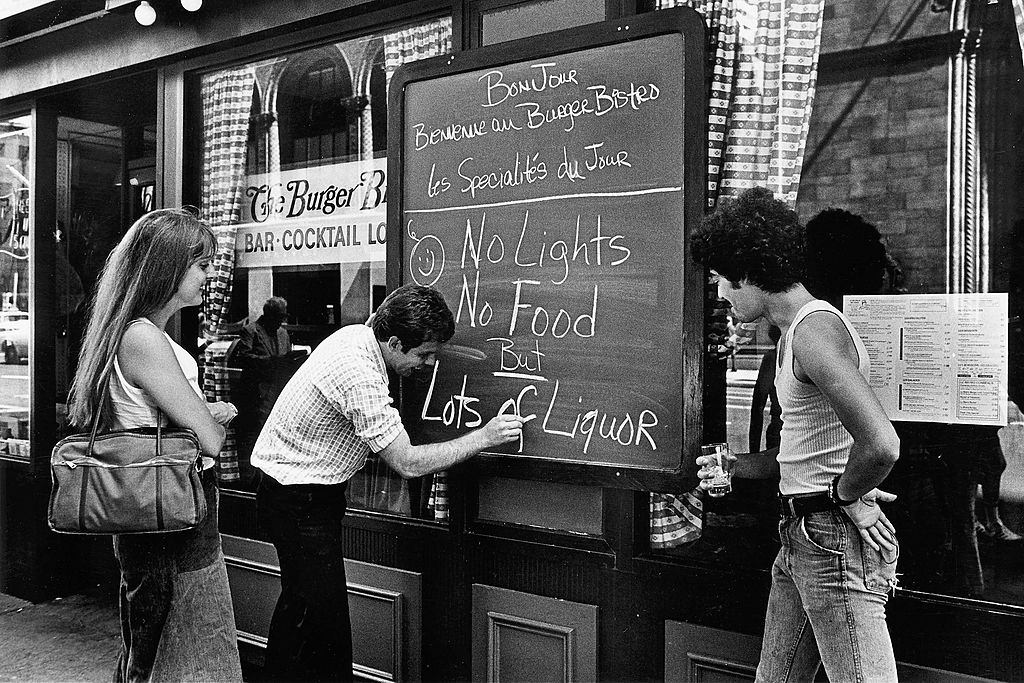
A restaurant owner writes a sign to advise cutsomers that there is no food and no lights, but lots of liquor after the New York blackout July 13, 1977
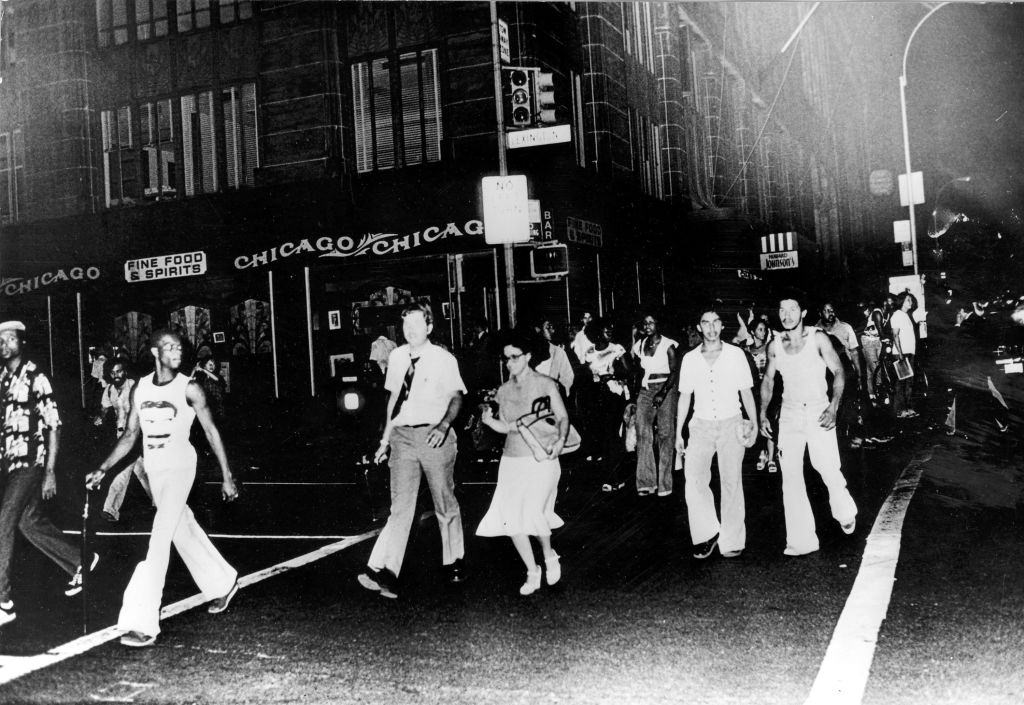
A crowd of New Yorkers make their way home during a power cut after a power station was struck by lightning July 13, 1977

With the subways shut down and traffic signals dark, getting across the city became a serious challenge. Buses were flooded with riders, and streets clogged with confused and stranded commuters. Some New Yorkers adapted quickly — gathering by candlelight, helping neighbors, and making the most of an unusual night.
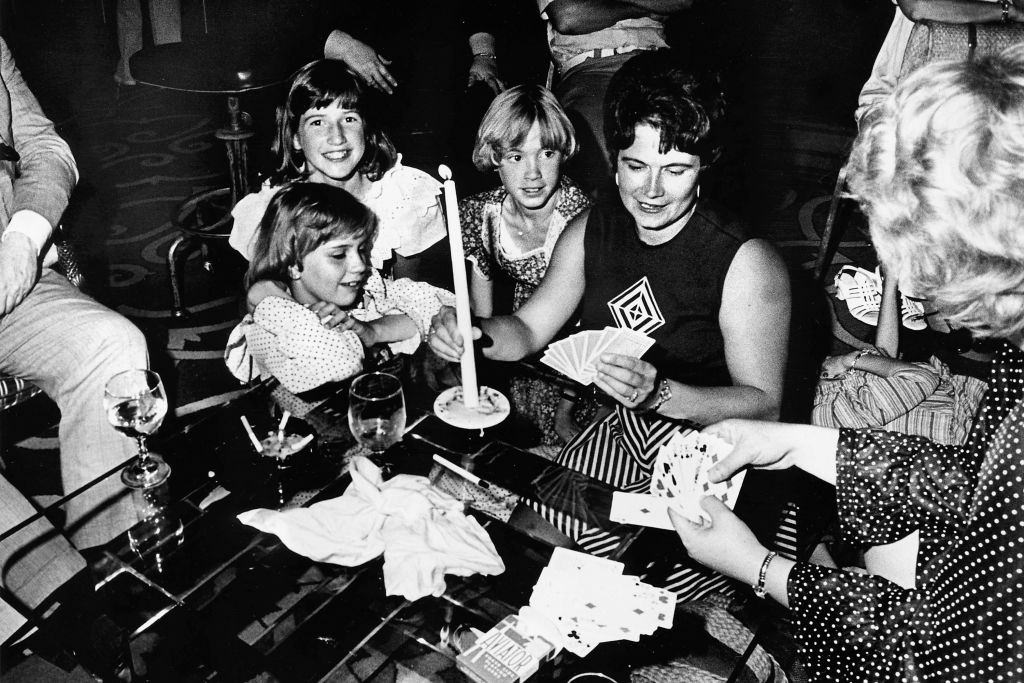
People playing poker game by candlelight during a power cut, New York, July 13, 1977
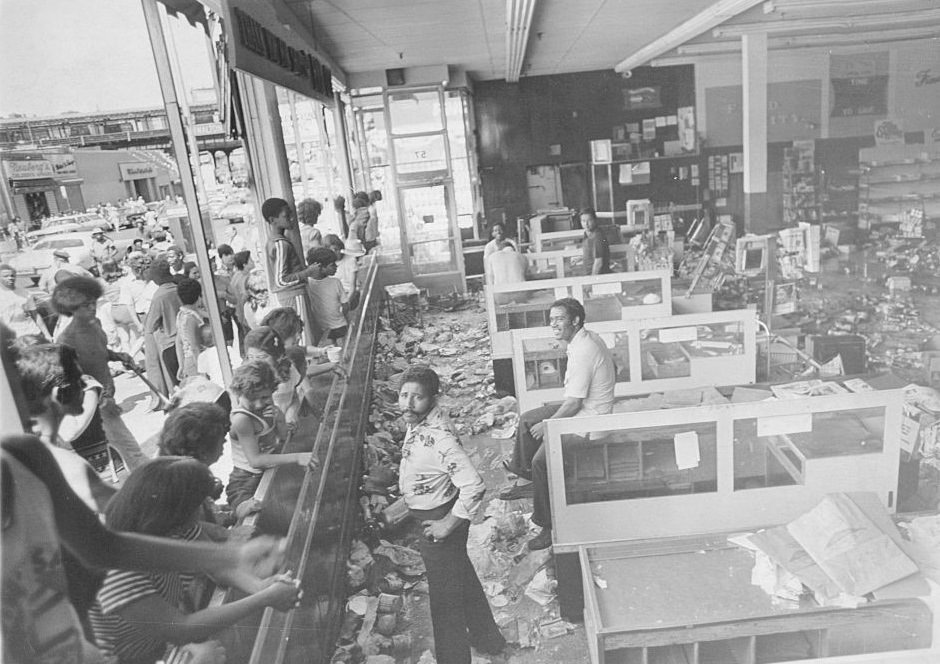
Some stores in the Bronx along the Grand Concourse have been vandalized during the blackout, New York City, July 13, 1977.

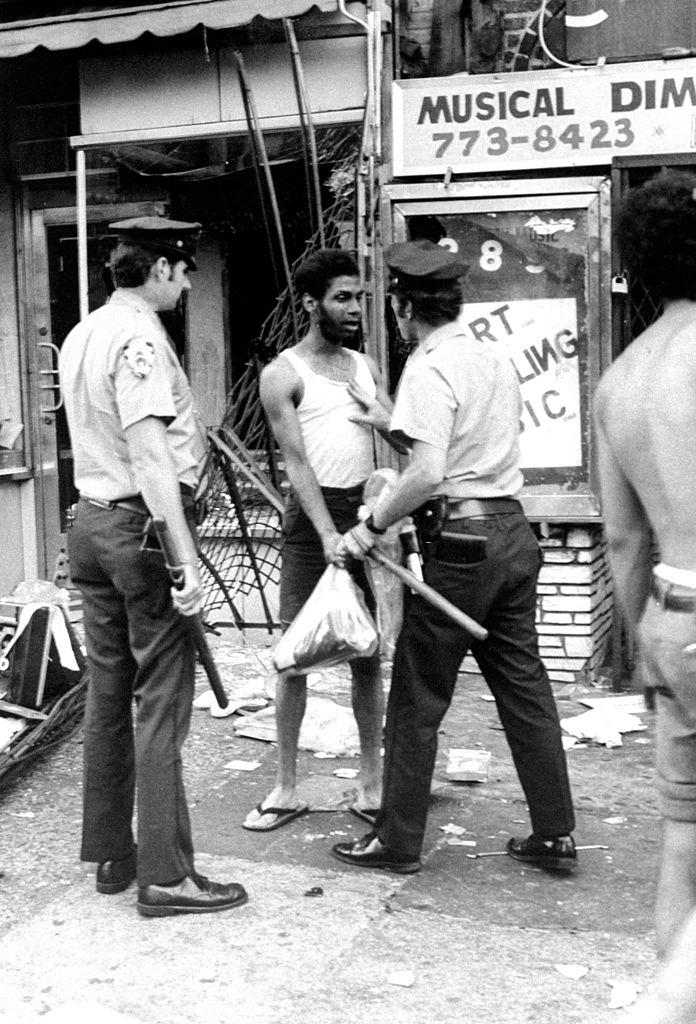
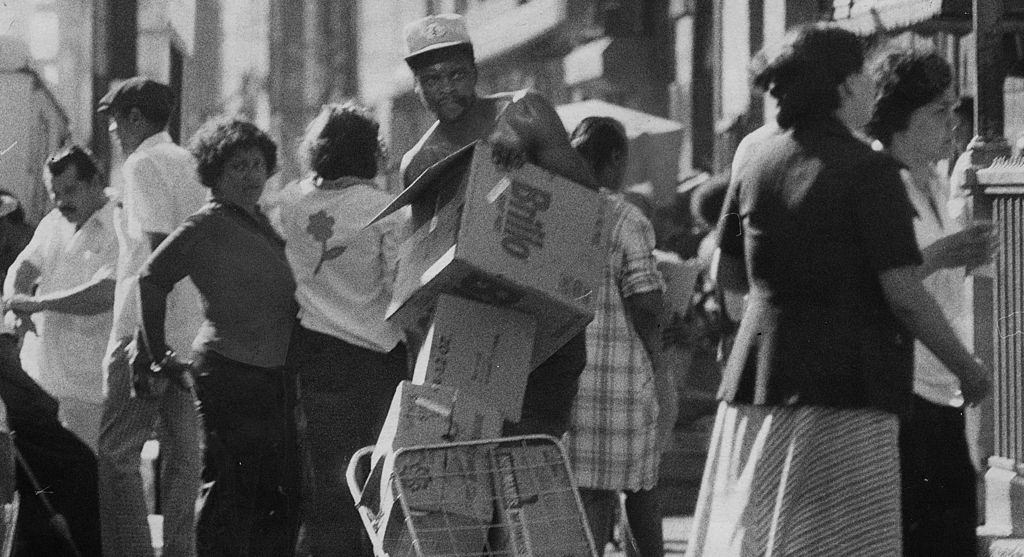
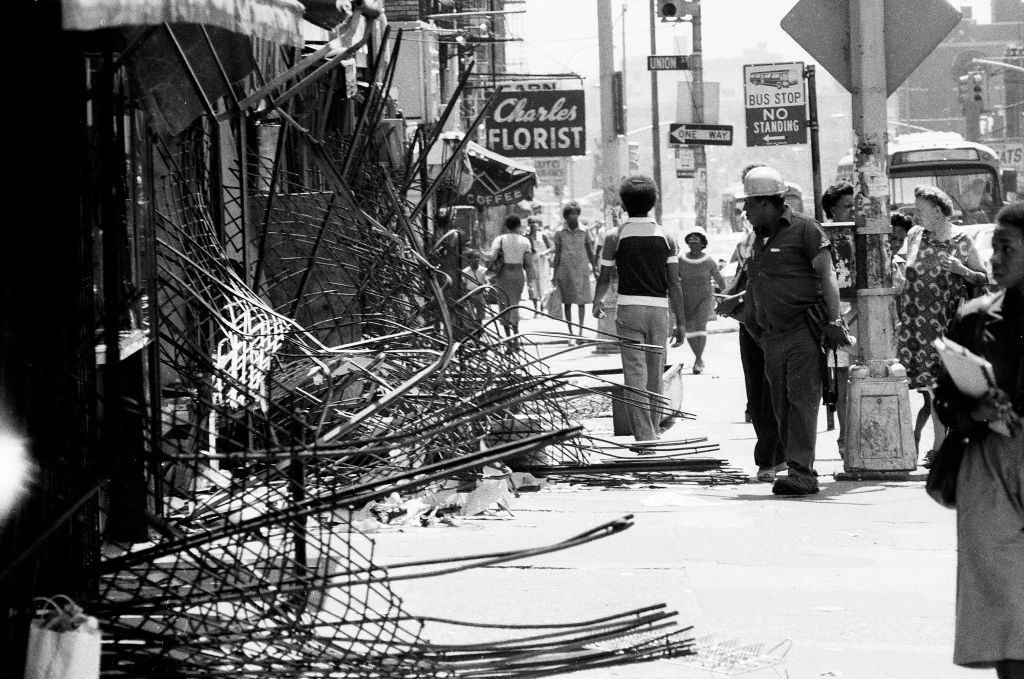
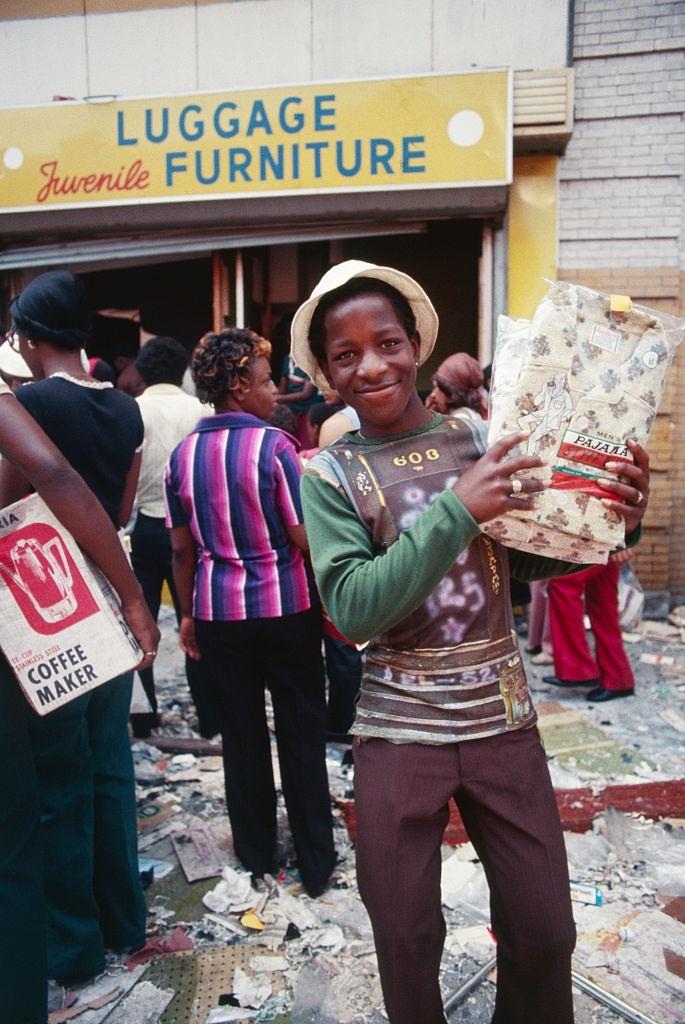
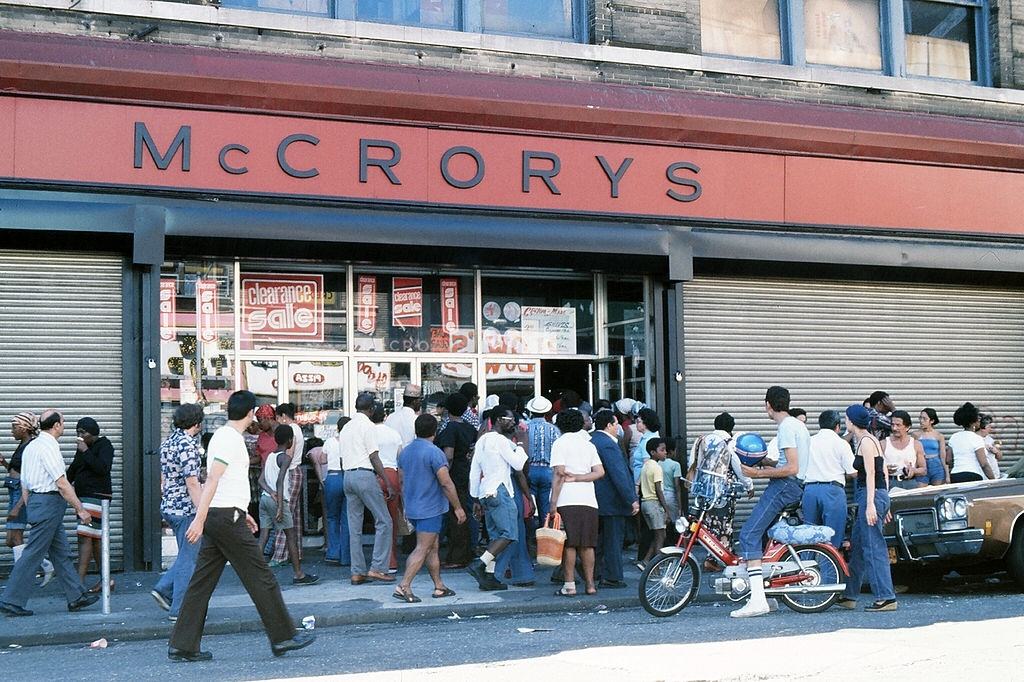
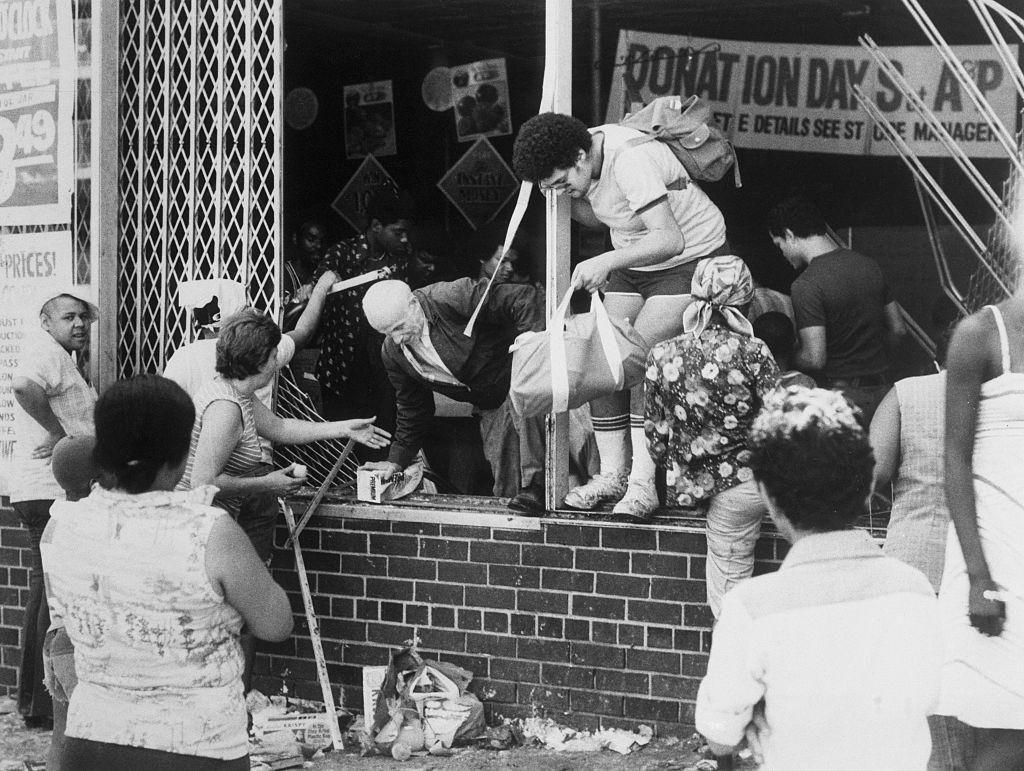
The looting began almost immediately after the lights went out. Across the five boroughs, people smashed storefronts, stripped metal security gates off their hinges, and emptied shelves. The targets ranged from supermarkets and clothing stores to furniture showrooms and car dealerships. Looters grabbed food, clothes, appliances, and in some cases entire vehicles. On darkened streets, some individuals were mugged by other looters. More than 1,600 stores were damaged or ransacked, and over 1,000 fires were reported as arsonists moved through neighborhoods under cover of the blackout.
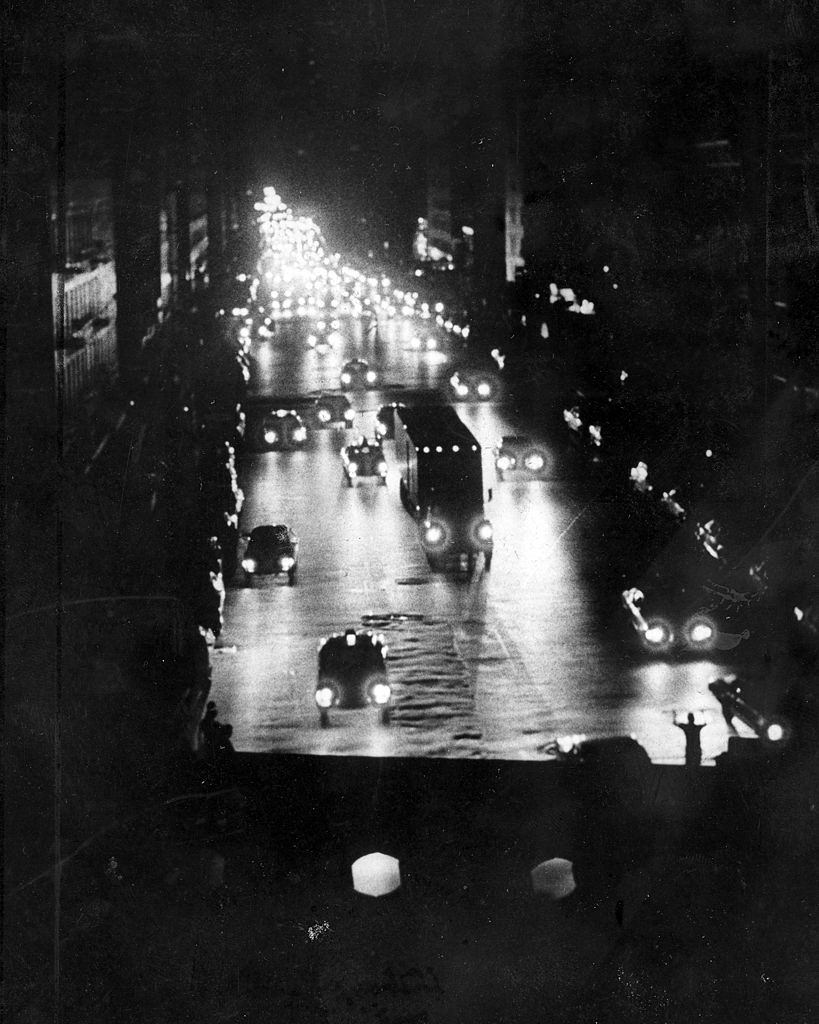
View of 34th St. in New York City during power outage, New York City, July 13, 1977.
View of 59th St. in New York City during power outage, New York City, July 13, 1977.
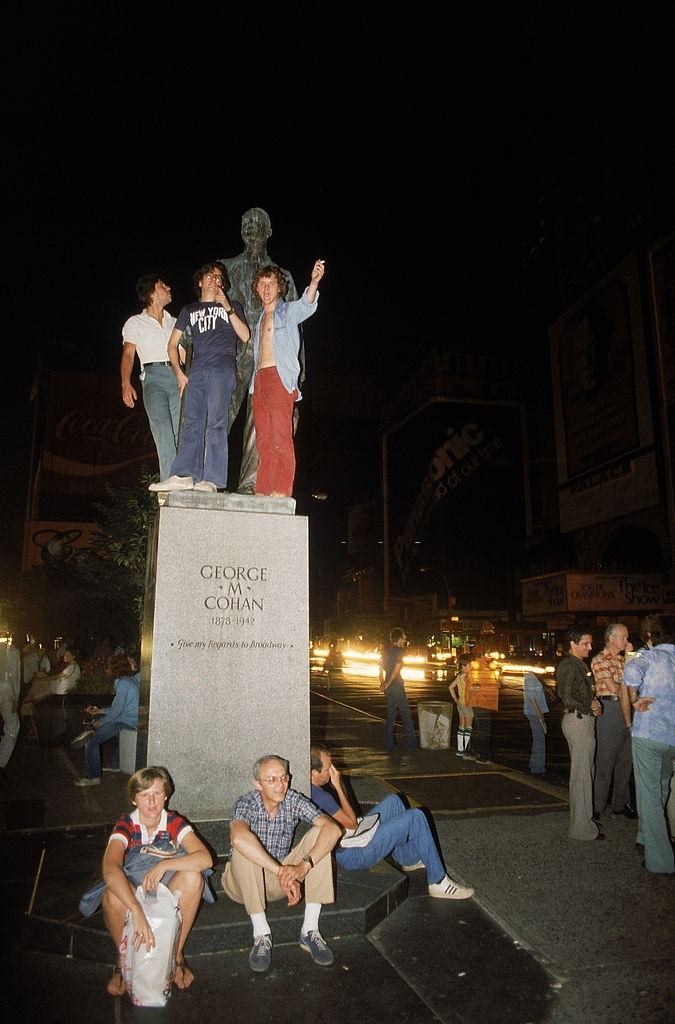
People gather on and around a monument to composer George M. Cohan in a darkened Times Square during a power outage, New York City, July 13, 1977.

Times Square, normally a wall of neon and noise, sat completely silent and dark. Across Midtown and beyond, hotels filled with stranded guests. The absence of working elevators forced people to climb stairwells in some of the city’s tallest buildings.
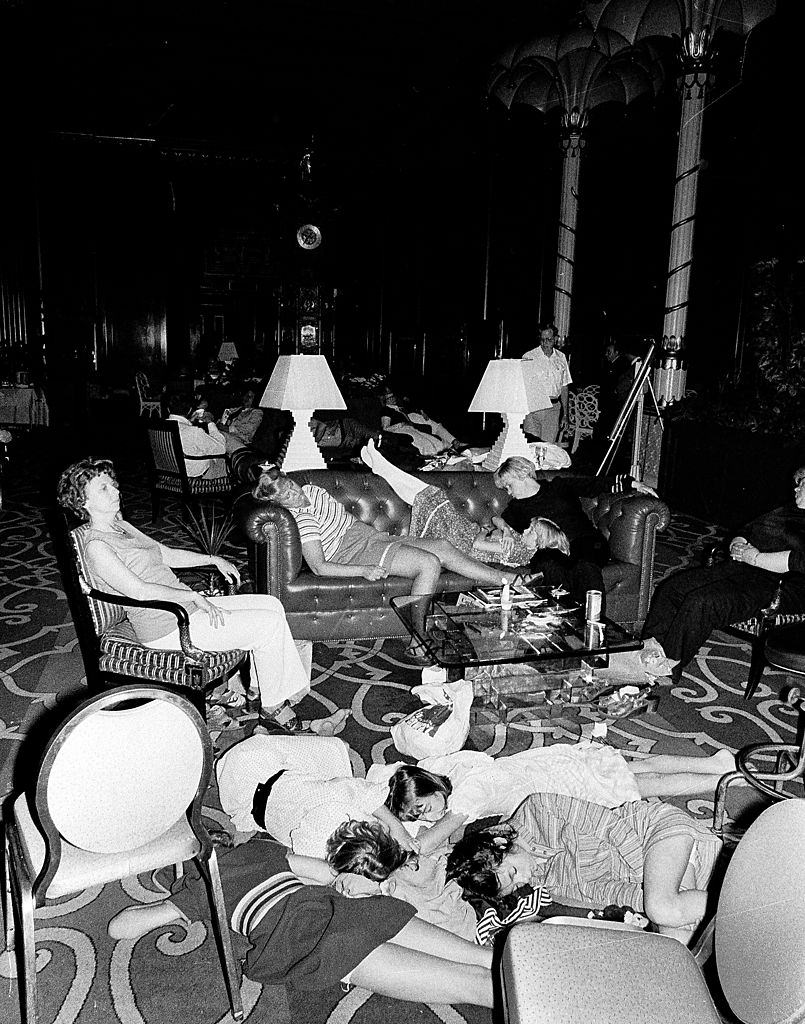
Stranded people sleeping in the lobby at the Waldorf-Astoria hotel, New York City, July 13, 1977.
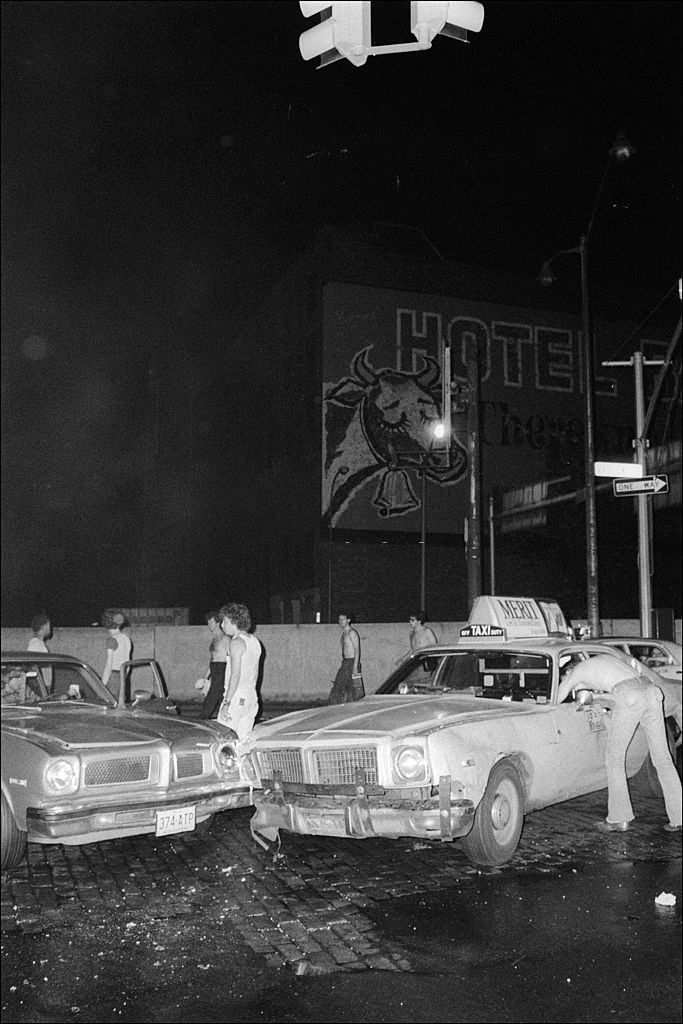
During a blackout, pedestrians on onlookers stand around the site of a traffic accident between a car and a taxi, New York City, July 13, 1977.

With no traffic signals functioning anywhere in the city, intersections became dangerous and chaotic. Accidents occurred throughout the night. At Shea Stadium, auxiliary lights and car headlights from center field were used to illuminate the field after the game was suspended.
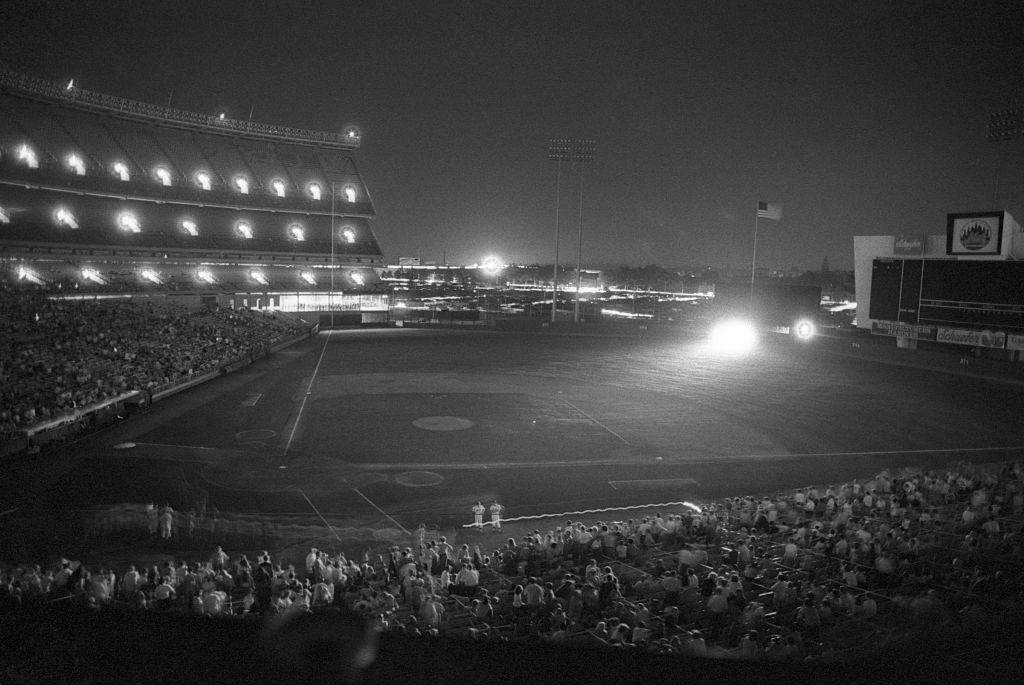
Auxiliary lights, including the headlights from cars in center field, light up Shea Stadium July 13th during the height of the blackout, New York City, July 13, 1977.
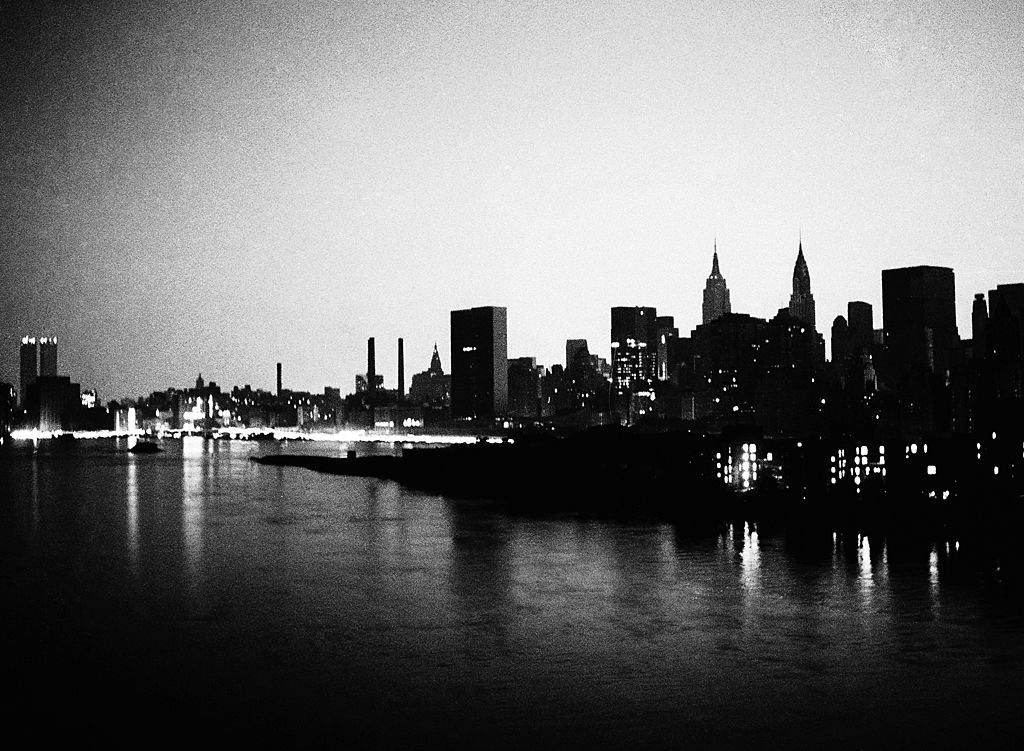
NYC skyline from Queens during the power blackout, July 13, 1977.
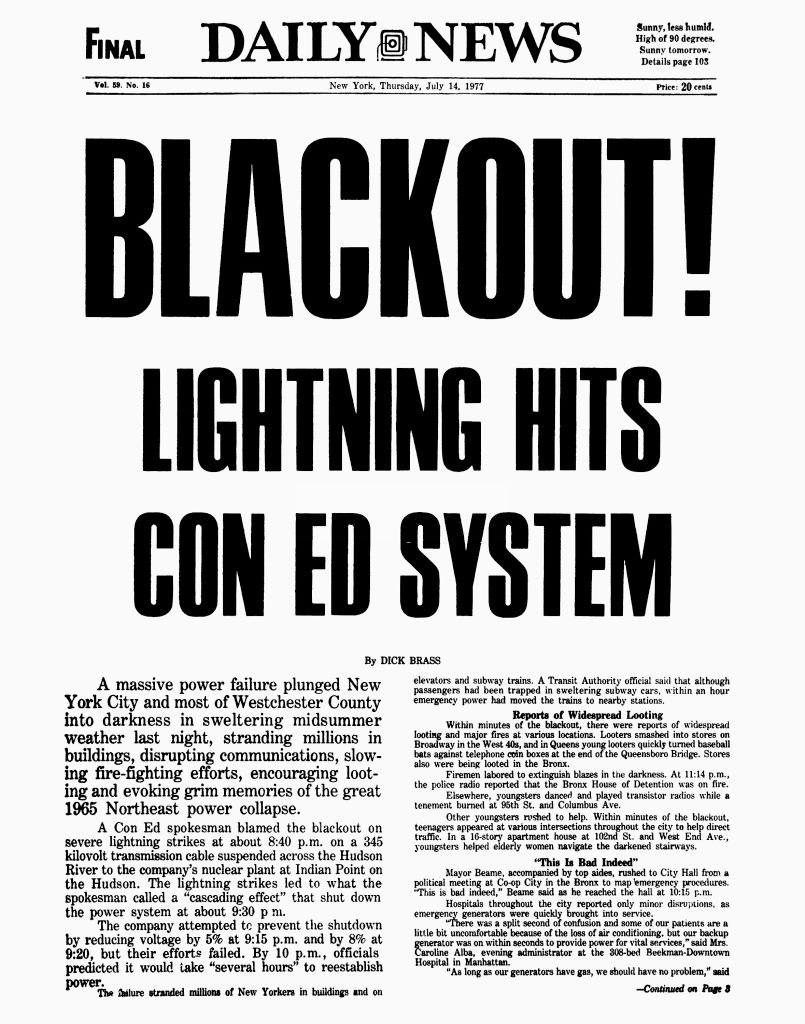
Daily News front page featuring NYC Blackout, July 14, 1977.

The next morning’s newspapers led with stark headlines. The Daily News captured the scope of what had happened in a single front page. The city was still reeling — fires still smoldering, storefronts stripped bare, and jails filling fast. By the time order was restored, police had arrested more than 3,700 people on looting and property destruction charges. The total property damage reached over $300 million in just 24 hours.
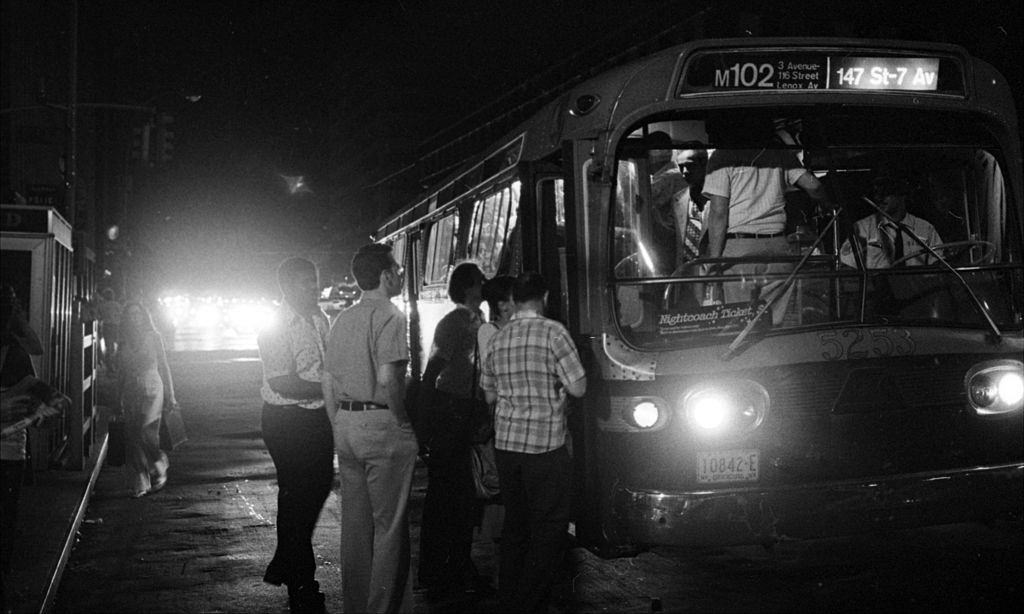
With subway service cut off, people crowd aboard a bus on Seventh Avenue, New York City, July 13, 1977.
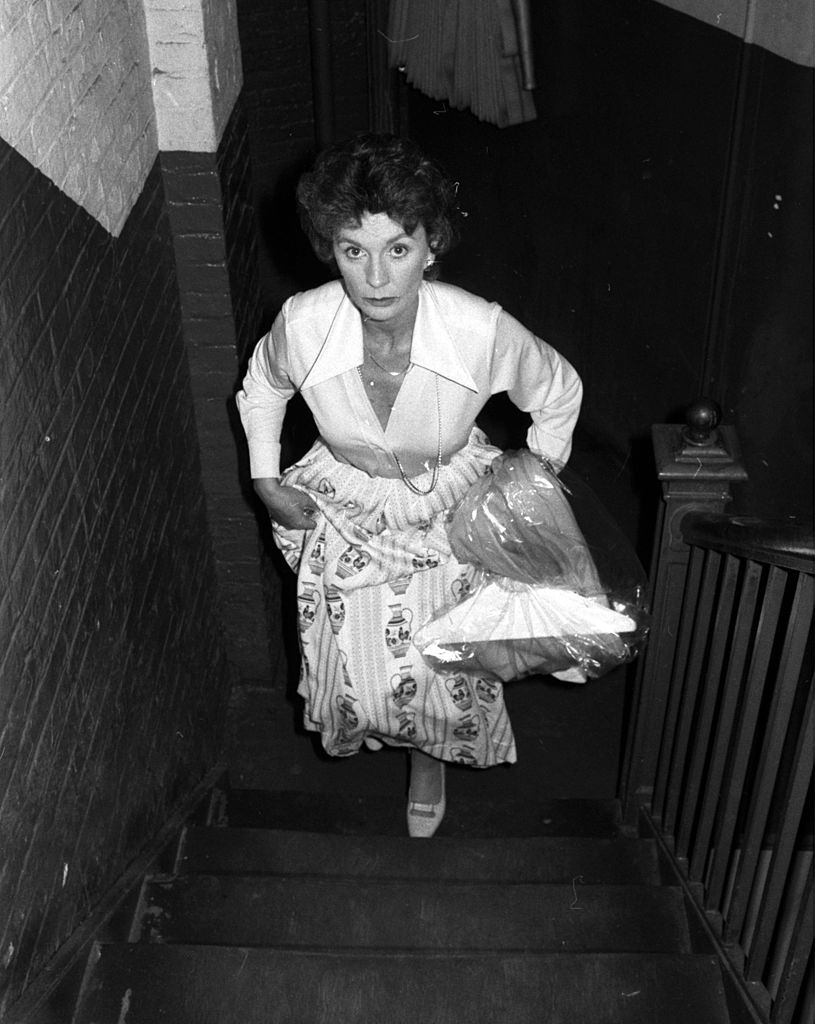
Actress Jean Simmons climbs four flights to rehearsal during the blackout of 1977.
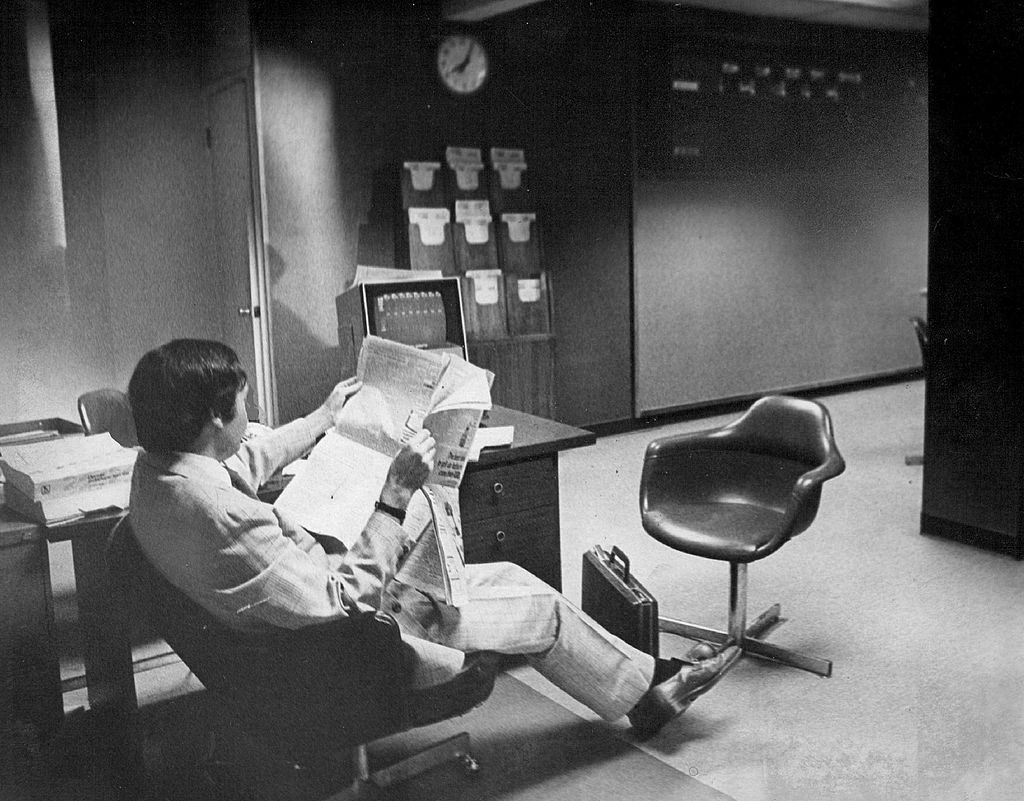
Stock Broker Paul R. Esserman gets Break from normally Busy Routine, New York, July 13, 1977.
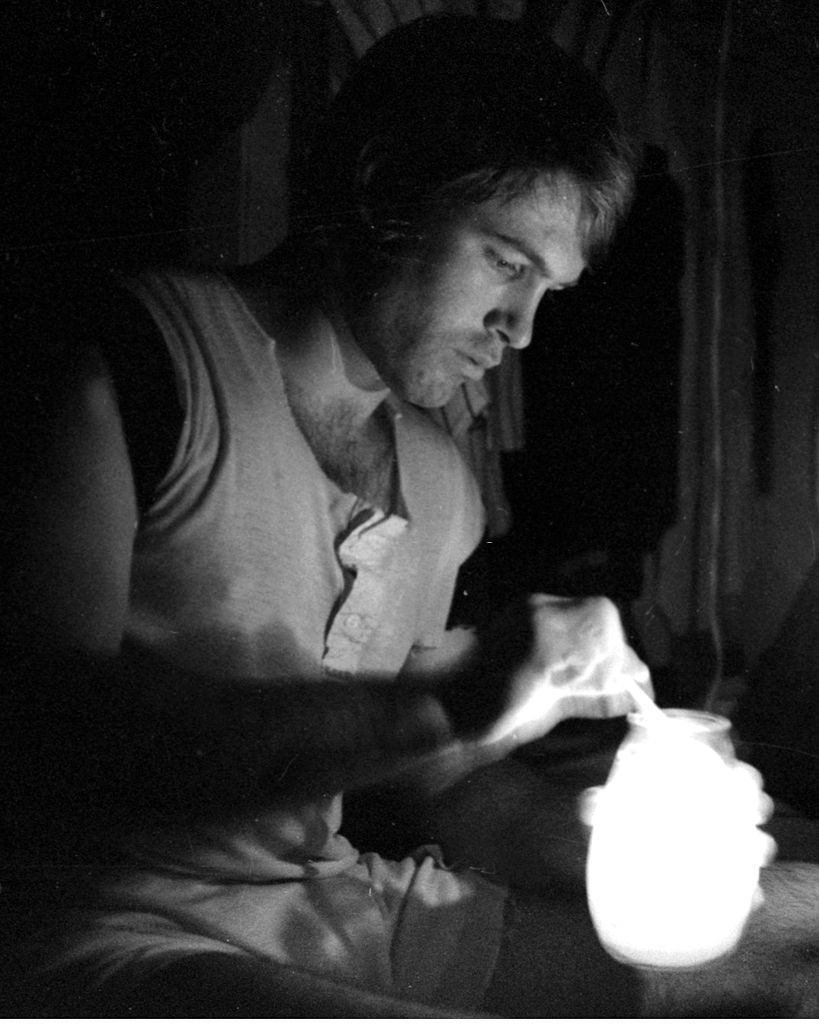
John Stearns catches some light at Shea, New York, July 13, 1977.

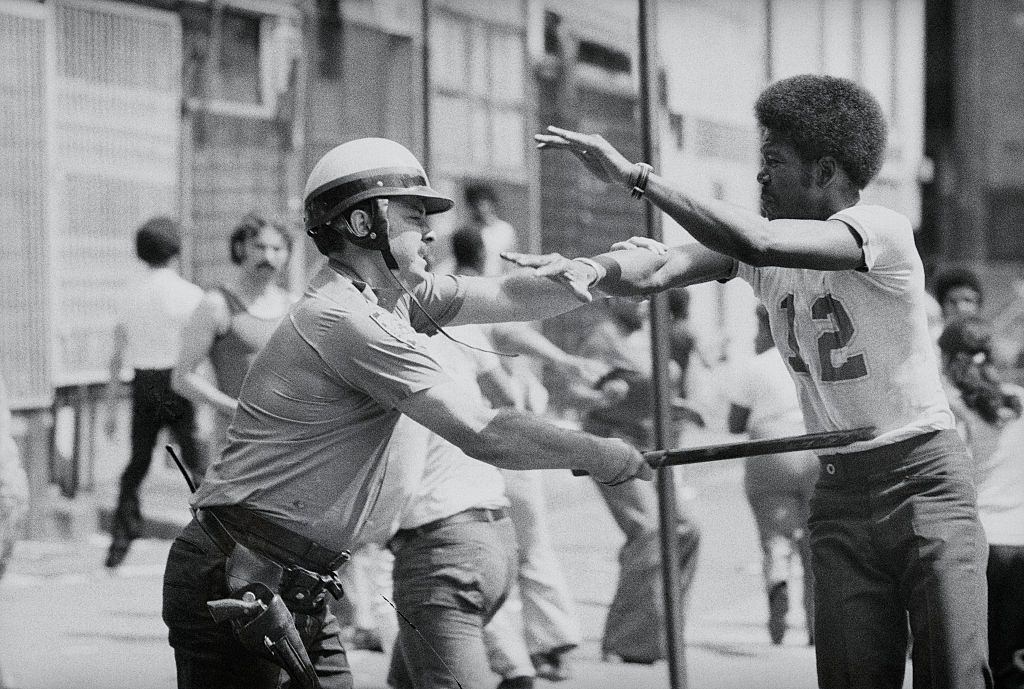
The scale of looting was unlike anything the city had seen before. In the Bronx, entire store inventories disappeared overnight. In Brooklyn’s Bushwick neighborhood, police made arrests on nearly every block. Officers were stretched thin across the city, unable to respond to every call as hundreds of incidents unfolded simultaneously.
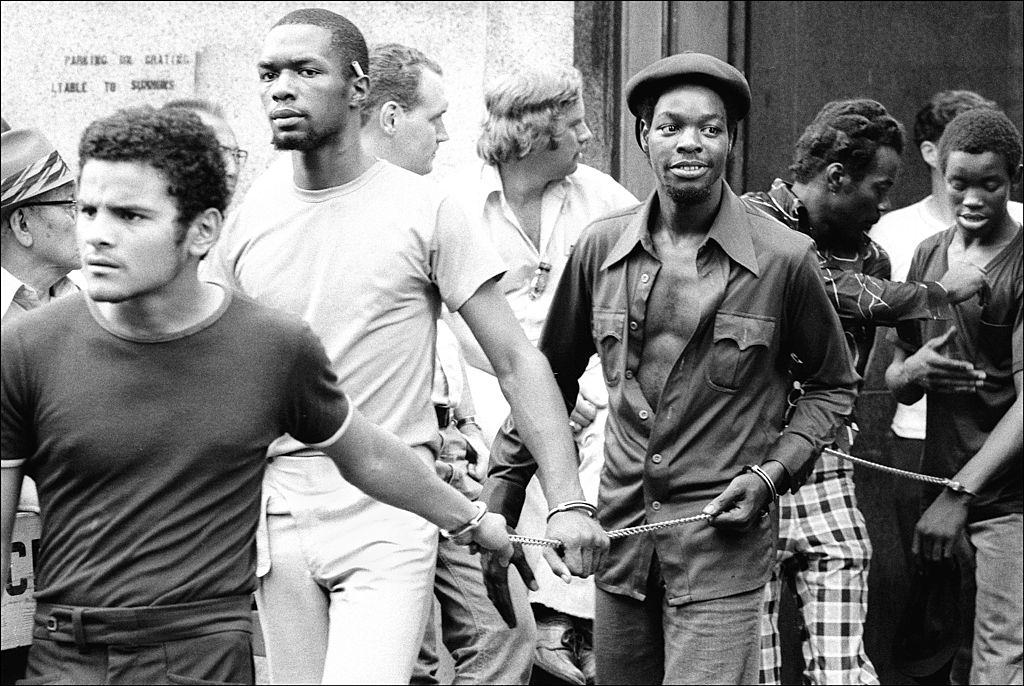
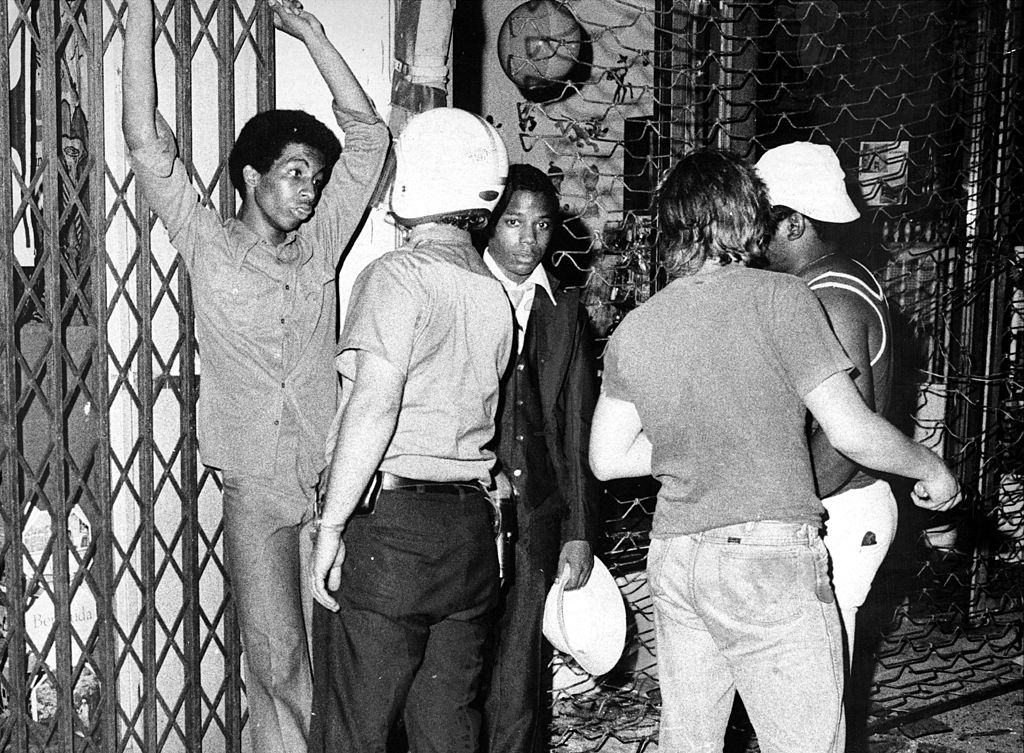
Handcuffed men who were arrested for looting during the blackout, New York City, 1977.
Looters, young and old, leave an A & P supermarket at Ogden Avenue and 166th Street in the Bronx through a broken window, New York, New York, 1977.
Cops contain suspected looters at Grand Concourse and Fordham Road in the Bronx, New York City, 1977.
Looter is arrested during 1977 Blackout Power Failure at Utica and Eastern Parkway, New York City, 1977.
Looters in Spanish Harlem during the 1977 blackout power failure, New York City, 1977.

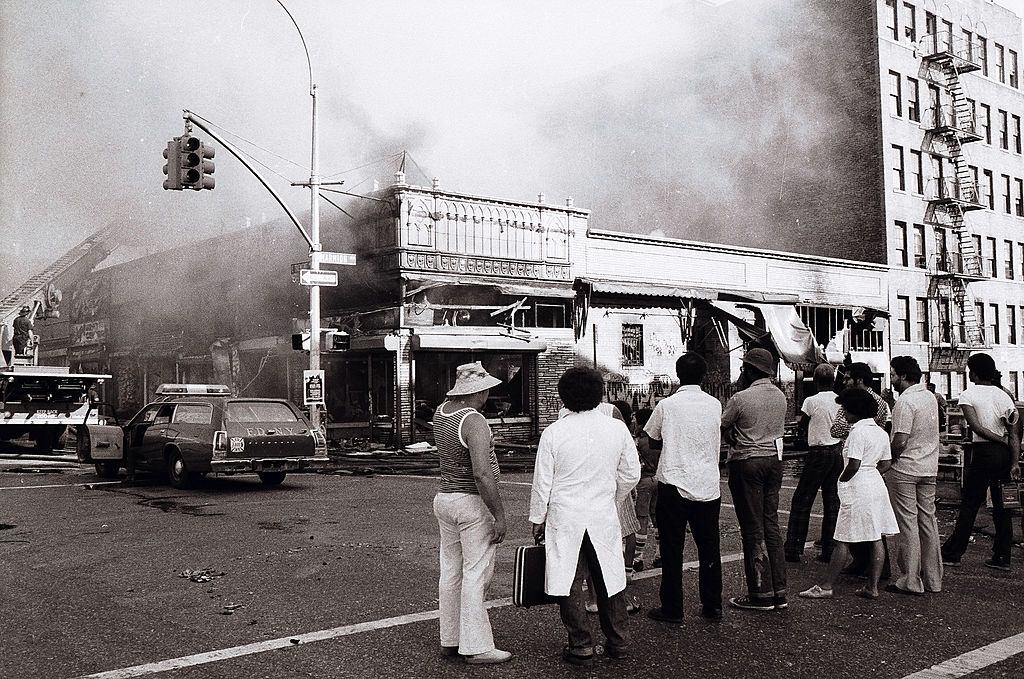
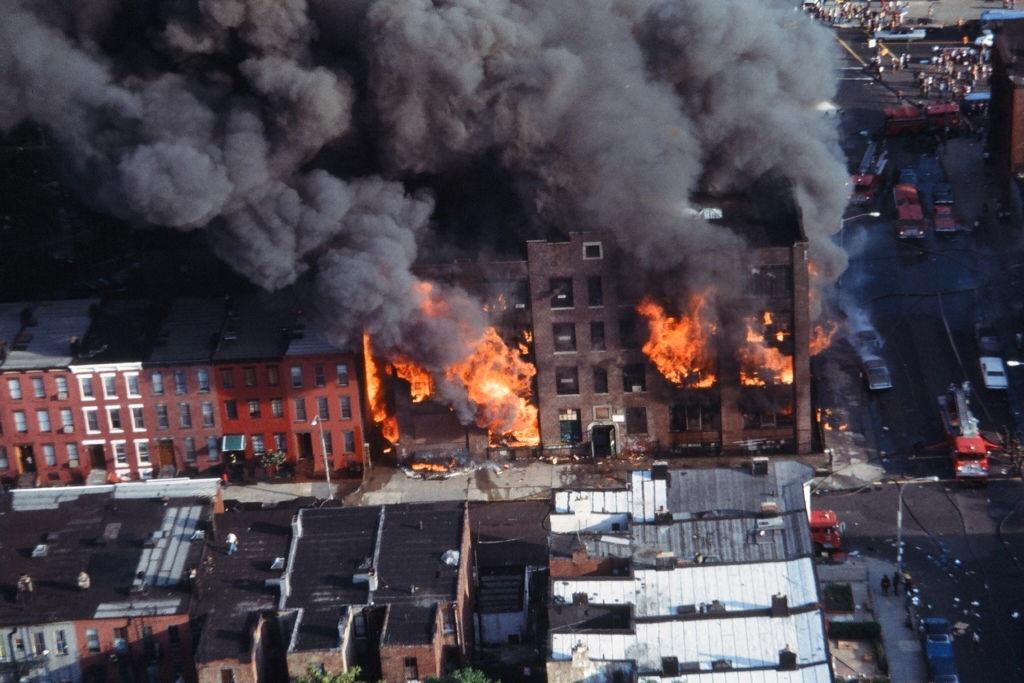
The arson was just as devastating as the looting. Fires burned through the night in Brooklyn and the Bronx, gutting factories, apartment buildings, and storefronts. Fire departments responded to over a thousand calls, with crews stretched across multiple simultaneous blazes. Some buildings burned to their frames before firefighters could reach them.
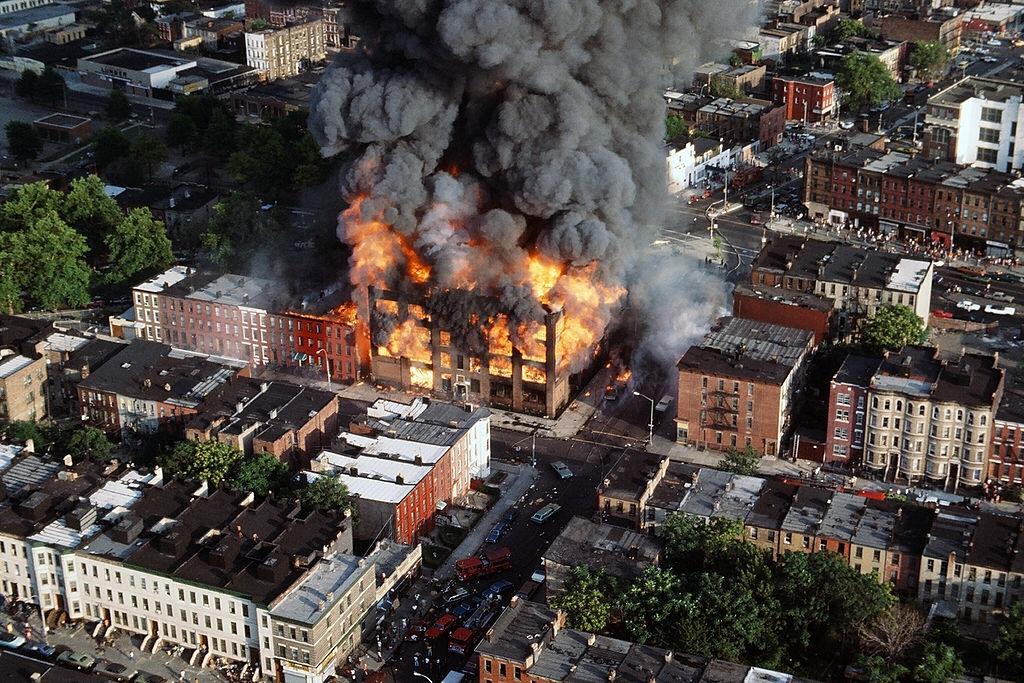
Aerial view of a building burning in the wake of the New York City blackout, Brooklyn, New York City, 1977.
view of a building burning in the wake of the New York City, July 13, 1977.
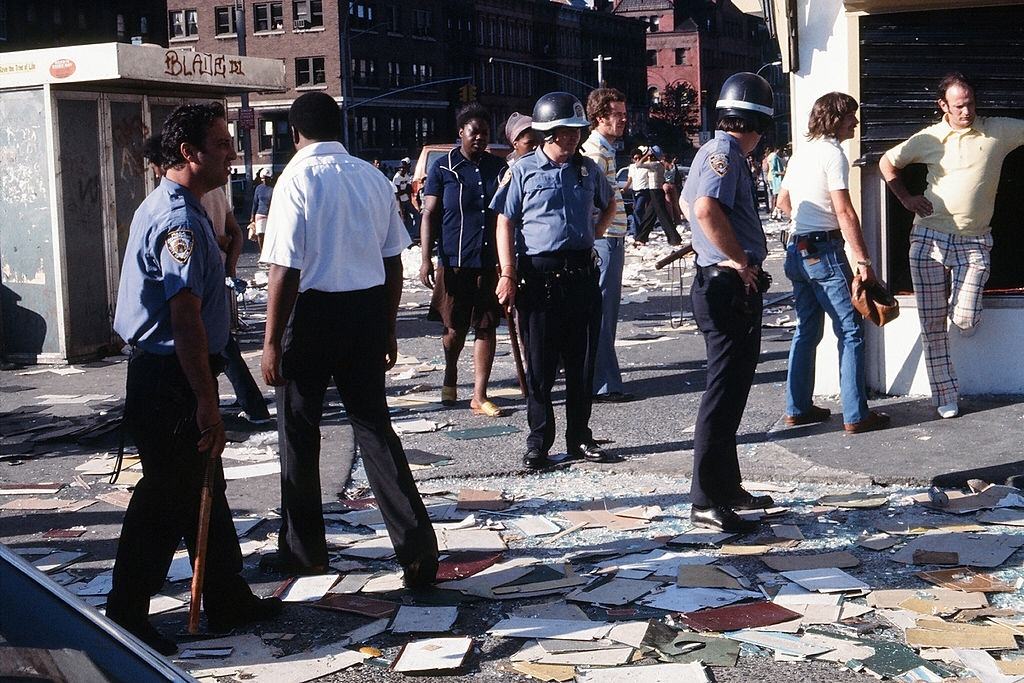
Police officers and passersby stand in front of a damaged store front, looted in the wake of the New York City blackout, New York City, 1977.
People look on on as firemen put an end to arsonist's handiwork on Marmion Ave, New York City, July 13, 1977.
People look on on as firemen put an end to arsonist’s handiwork on Marmion Ave, New York City, July 13, 1977.

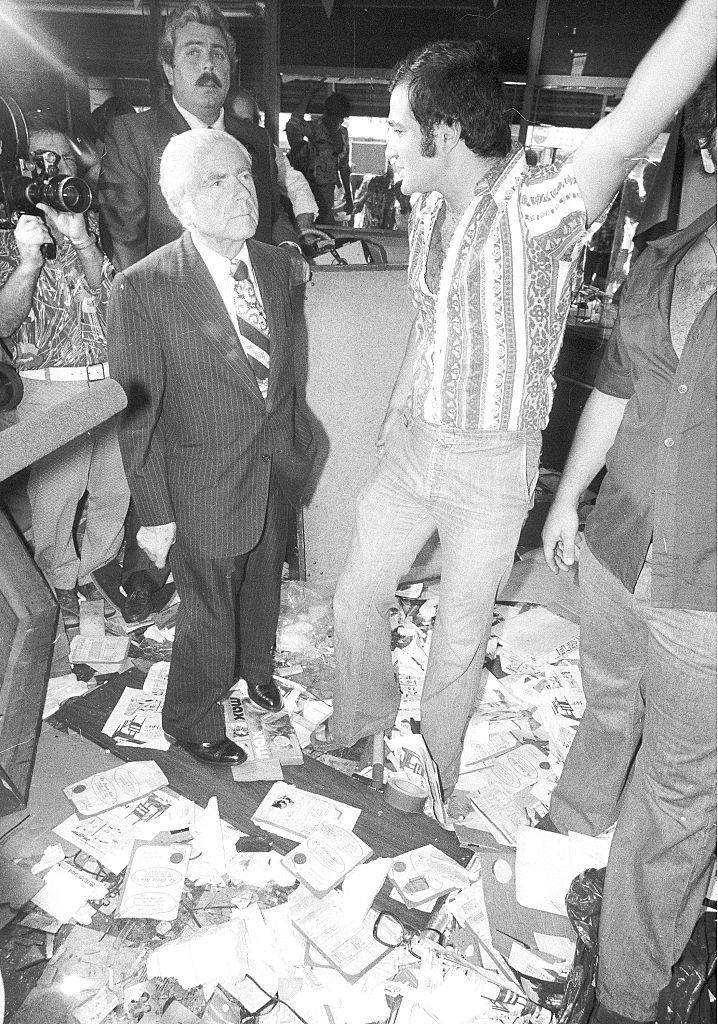
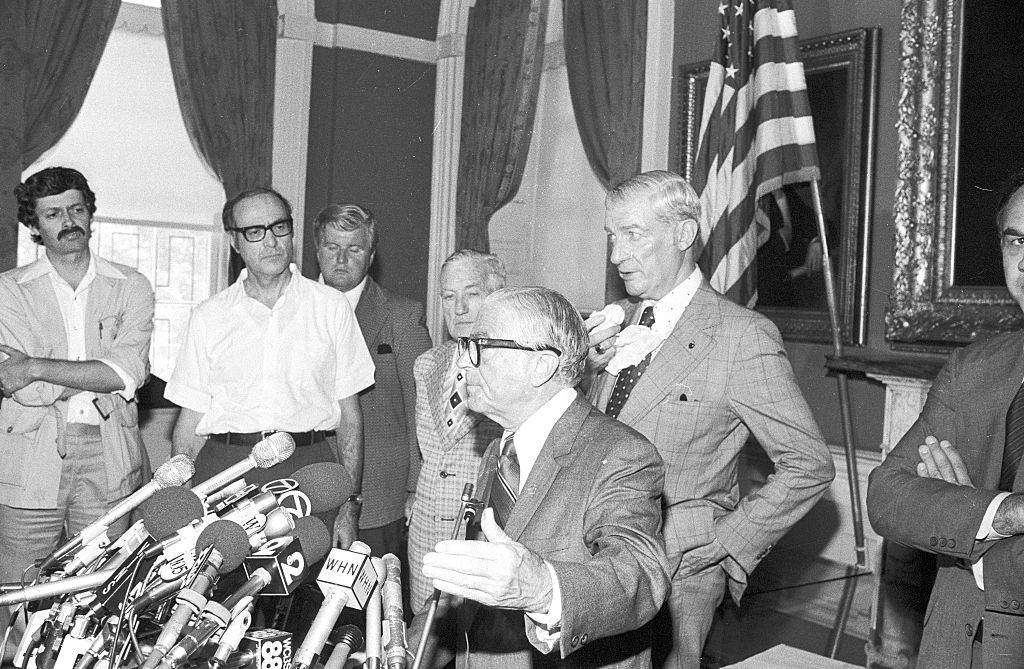
Mayor Abe Beame toured the hardest-hit neighborhoods in the aftermath, visiting merchants who had lost everything overnight. Many store owners described watching helplessly as their businesses were emptied or destroyed. Beame held a press conference with Police Commissioner Michael Codd at City Hall, where officials faced sharp questions about the city’s response to the crisis.
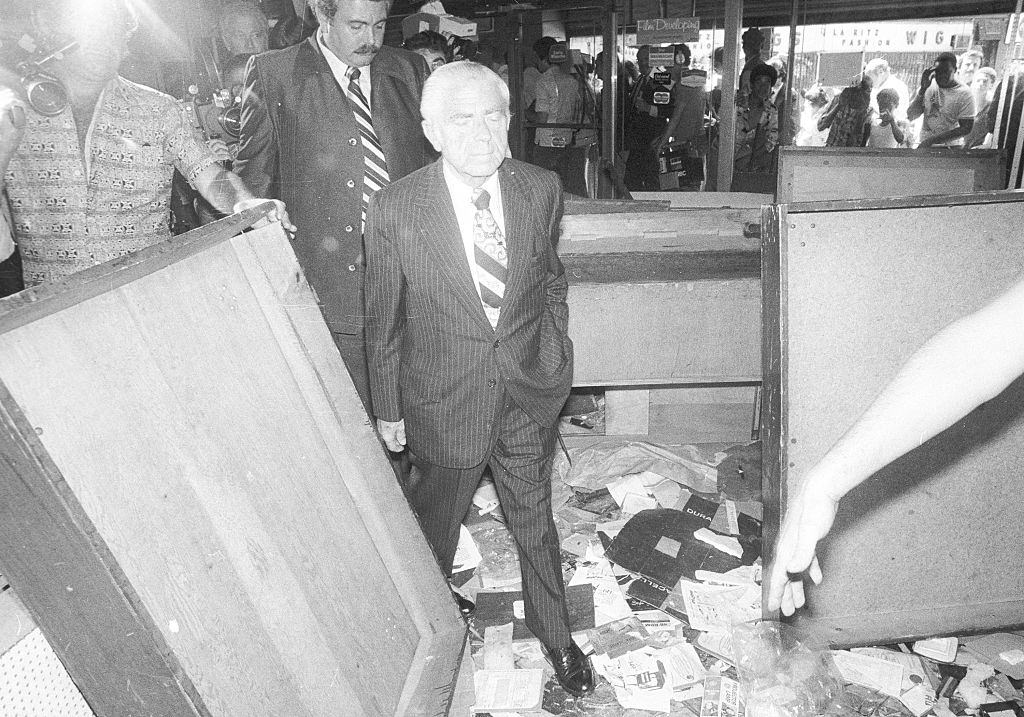
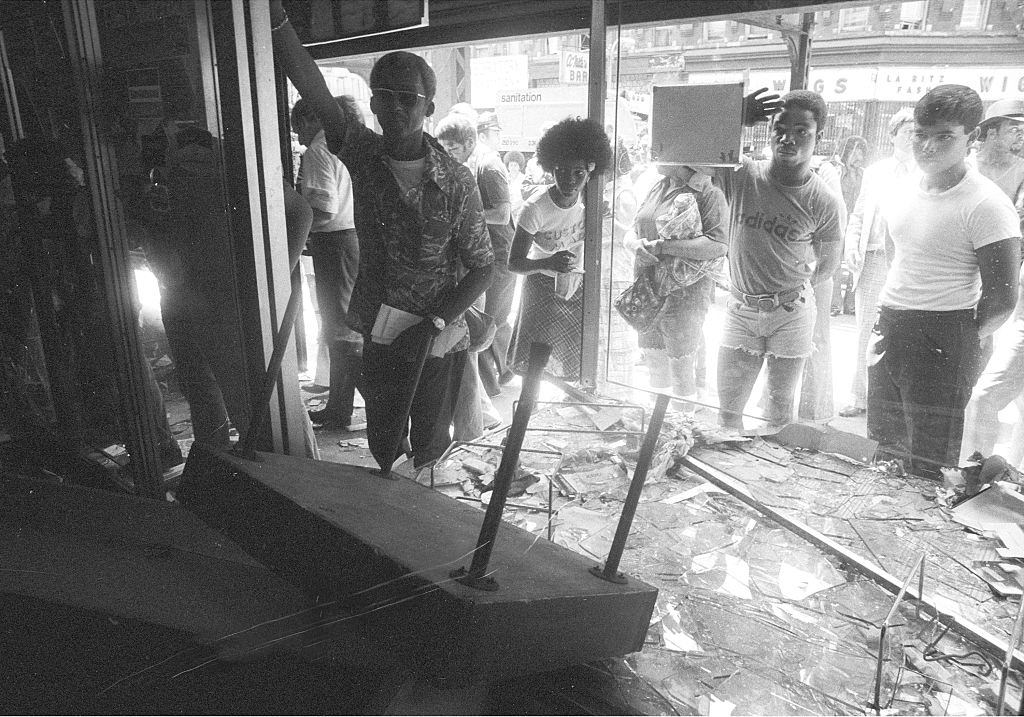
Mayor Abe Beame visits merchants on looting after the 1977 blackout power failure at Broadway, near Greene Avenue in Brooklyn, New York City, 1977.
Merchant after the 1977 blackout power failure, New York City, July 13, 1977.
Mayor Abe Beame listens to merchant story on looting after the 1977 blackout power failure at Broadway, New York City, July 13, 1977.
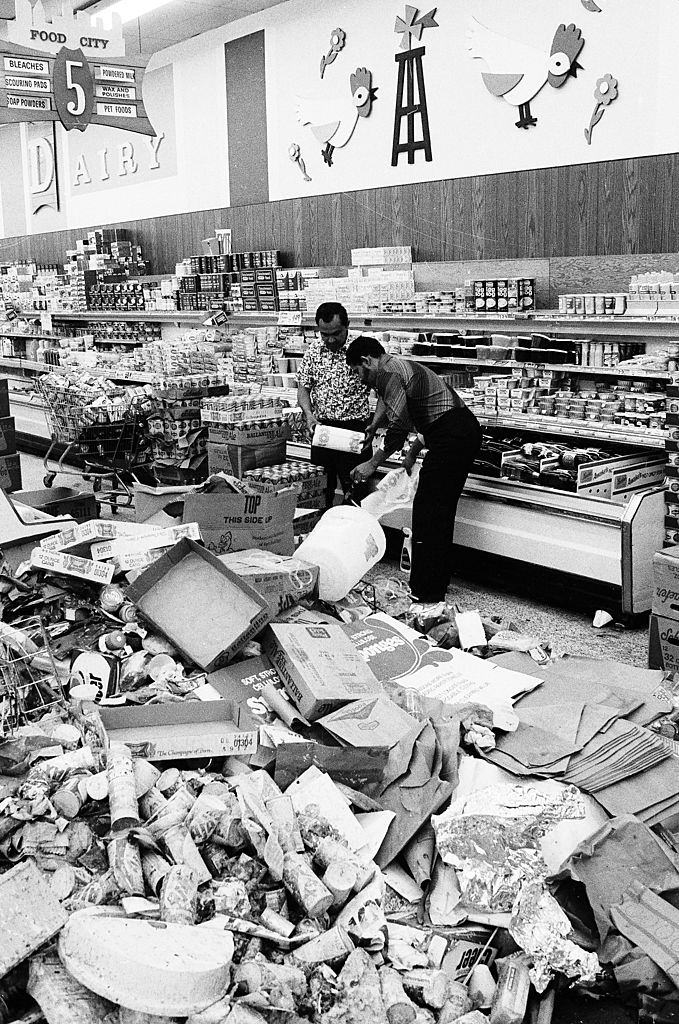
Interior of the Food City supermarket at Walton Ave. and East Burnside Ave. in the Bronx with spoiled food and looted discards as clerks restock the shelves, New York City, July 13, 1977.

The contrast with New York City’s previous major blackout in 1965 was striking. That outage had produced stories of community spirit and cooperation. In 1977, New York City was in a very different place — burdened by a fiscal crisis, rising crime, and neighborhoods that had been deteriorating for years. The 1977 blackout tore the lid off those conditions in a single night. Still, even amid the chaos, some New Yorkers directed traffic at dark intersections, checked on elderly neighbors, and worked to keep the peace in their blocks.
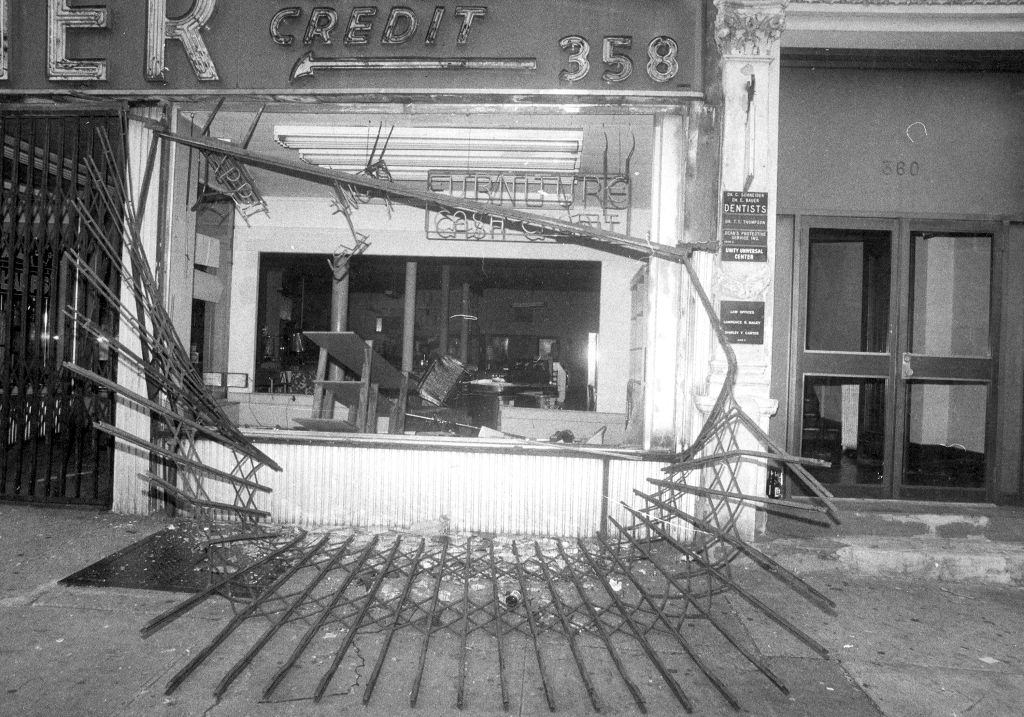
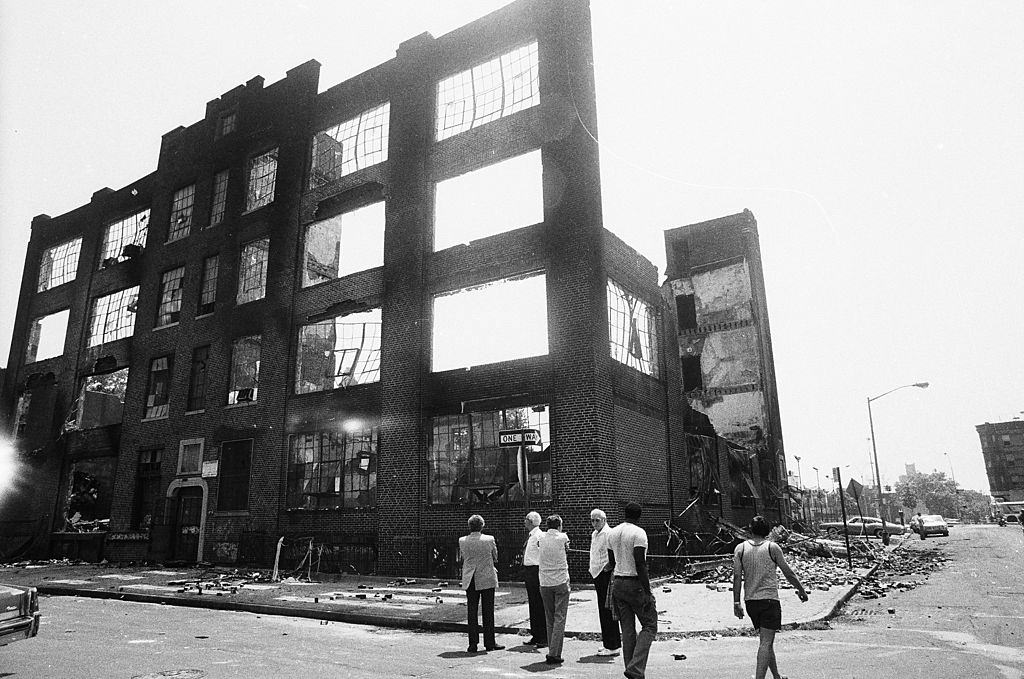
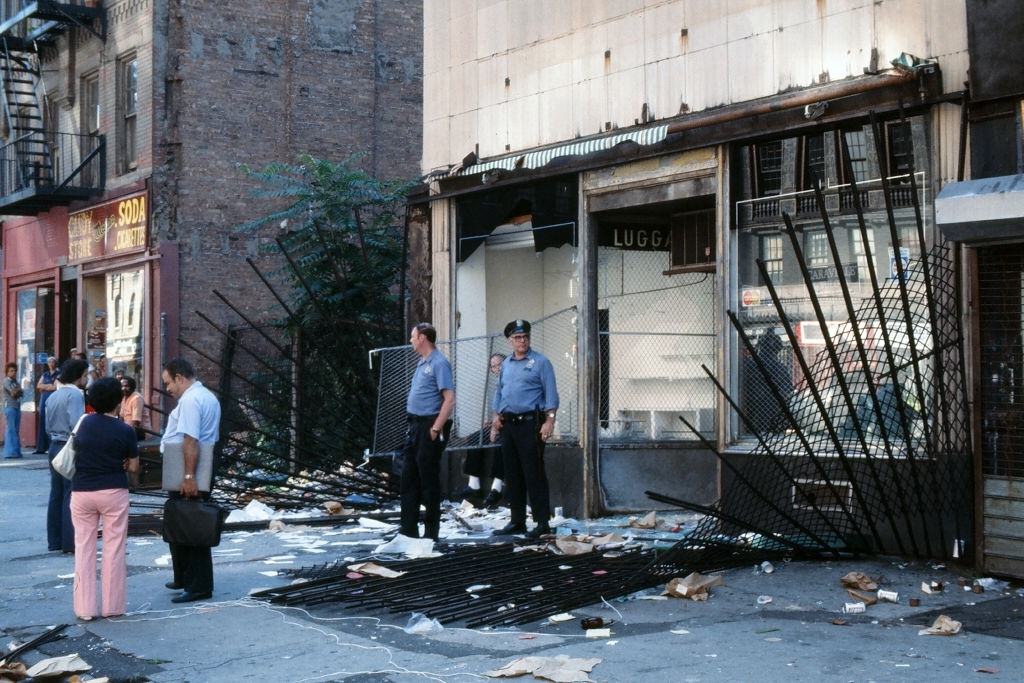
Protective gate in front of store on Broadway between 145th and 165th Sts. lies twisted on the street after looting during 1977 blackout.
The morning after the blackout brought with it a citywide hangover with too many painful symptoms such as this burned-out Brooklyn factory, New York City, 1977.
Aftermath of 1977 blackout power failure, New York City, July 13, 1977.

When daylight broke on July 14, the full scope of the destruction became visible. Burned-out buildings sat alongside gutted stores. In the Bronx and Brooklyn especially, entire commercial strips had been picked clean. Supermarket shelves lay empty, their contents looted or left to spoil on the floor. The cleanup was massive — and for many small business owners without insurance, the losses were permanent.
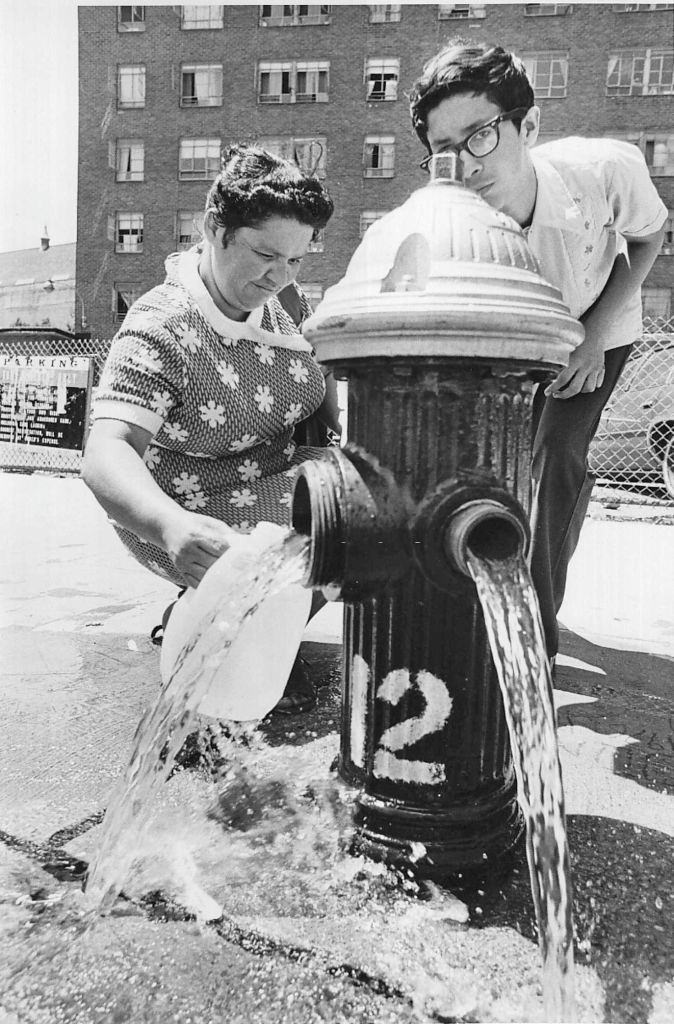
A woman taking water from a fire hydrant along 1st Avenue in East Harlem during the blackout on July 14, 1977.
A policeman collars a looter in the Bushwick section of Brookly, New York City, July 13, 1977.
A young looter holds up a pair of pajamas he has taken from a store in the Bushwick section of Brooklyn, New York City, July 13, 1977.

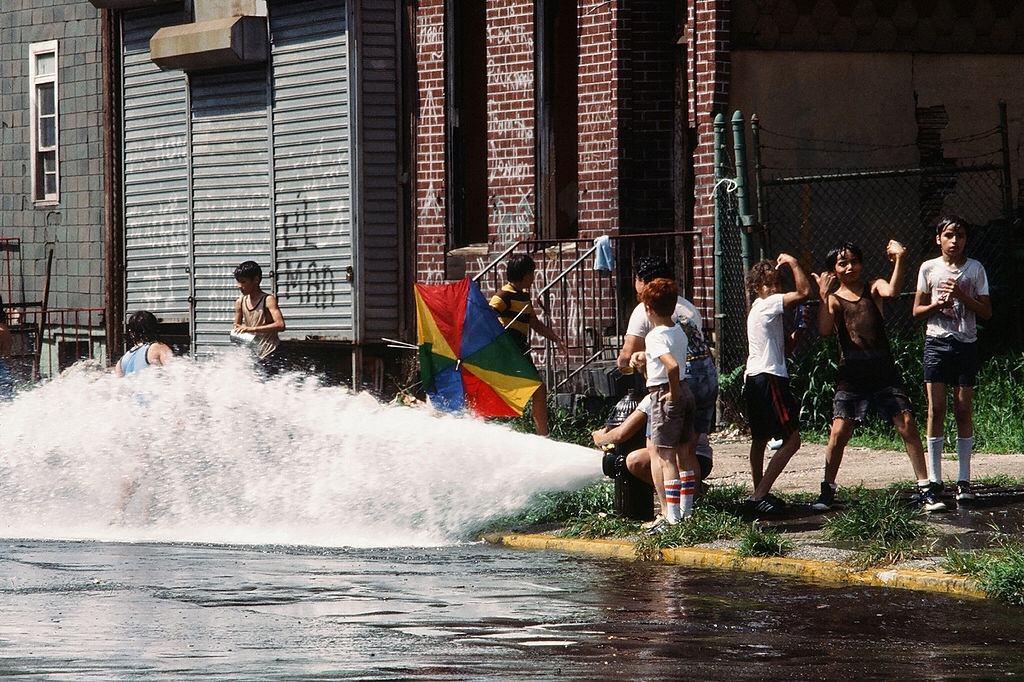
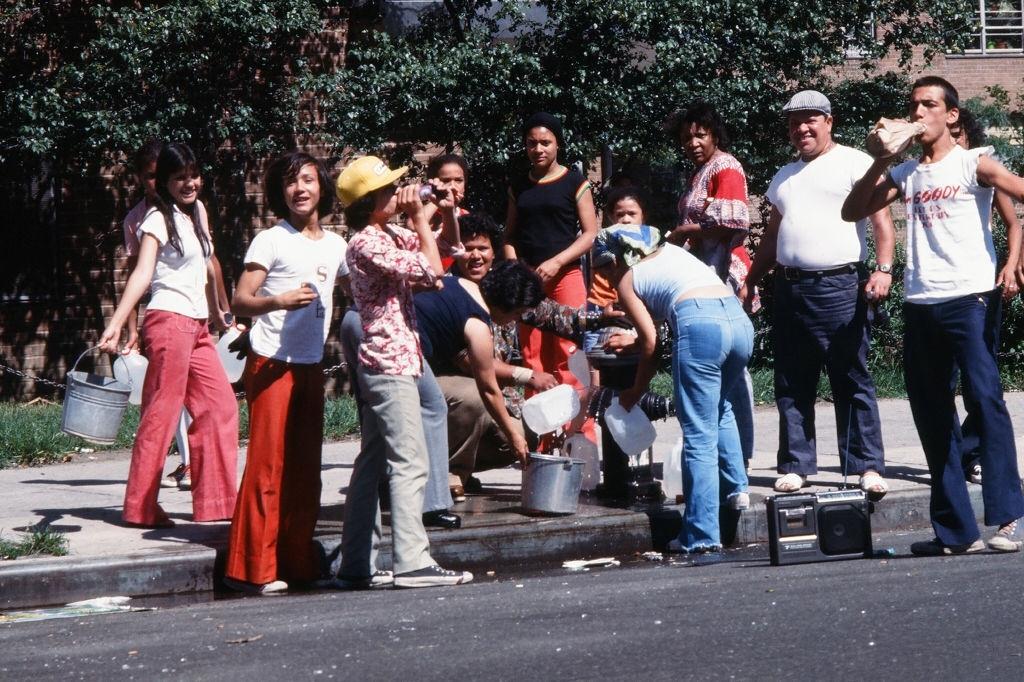
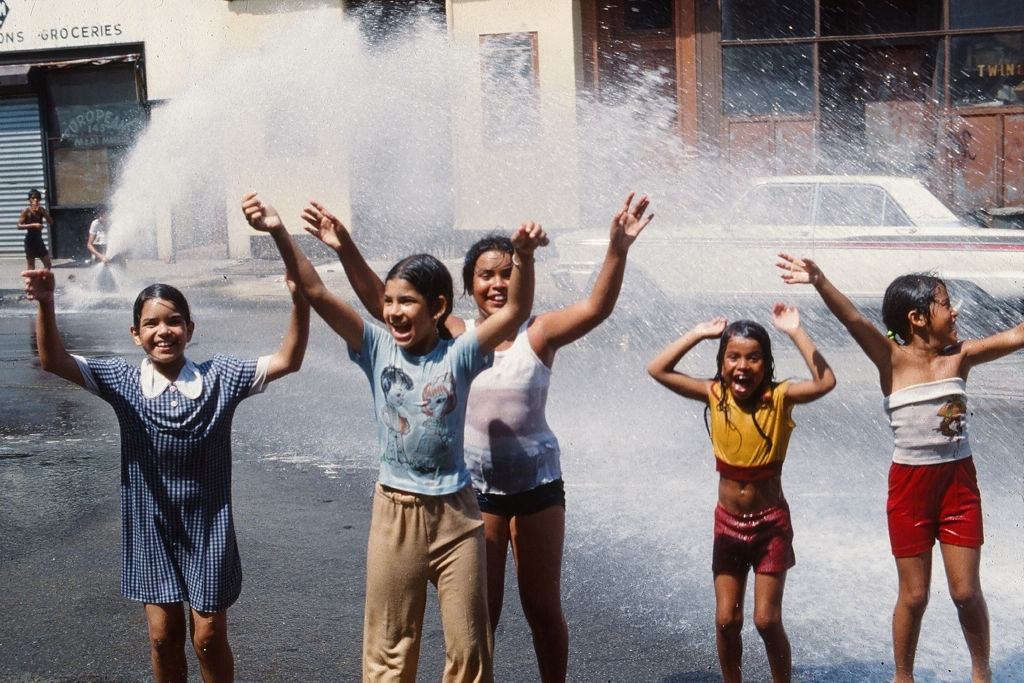
Not every scene from those 25 hours was defined by destruction. In SoHo and parts of Manhattan, neighbors gathered outside on sidewalks and turned the blackout into an impromptu block party. Fire hydrants were opened across Brooklyn and Harlem, with children playing in the streams of water while adults filled buckets and bottles to carry home.
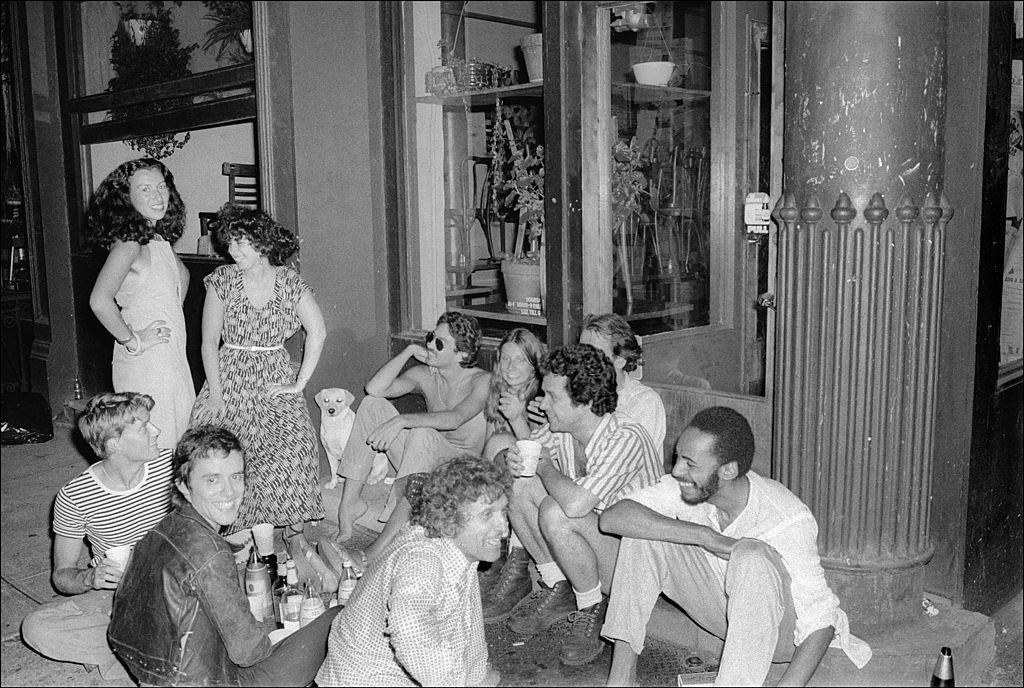
A group of people sits on the sidewalk and have a party outside the Food restaurant in SoHo, New York City, 1977.
Mayor Beame and Police commissioner Michael Codd at City Hall press conference about the 1977 blackout.
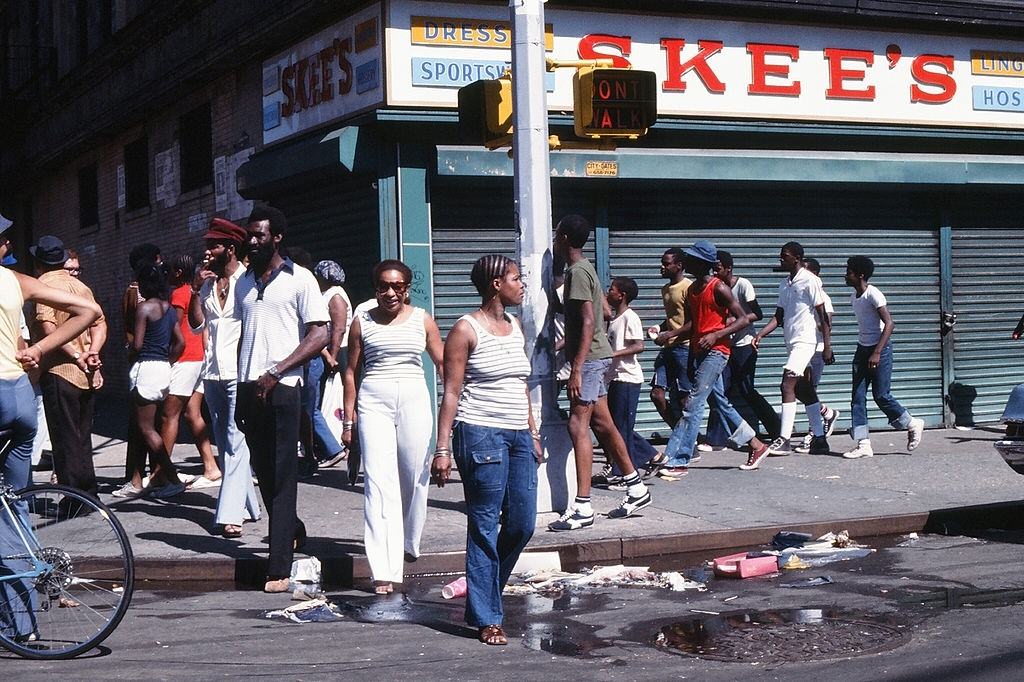
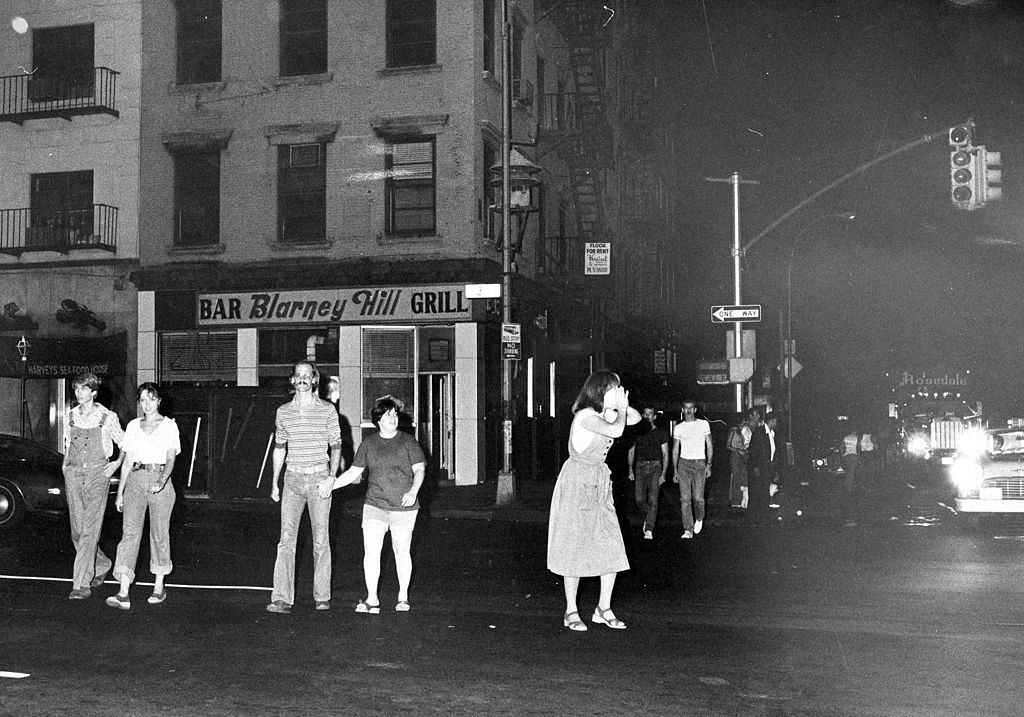
Pedestrians stand on a street corner in the wake of the New York City blackout, Brooklyn, New York City, July 13, 1977.
A group of children play in the water from an opened fire hydrant in Brooklyn Street, New York City, July 13, 1977.
People fill up buckets and bottles from an opened fire hydrant after the blackout, New York City, 1977.
Police officers and passersby stand in front of a damaged store front, during the blackout, New York City, 1977.
People fill up buckets and bottles from an opened fire hydrant after the blackout, New York City, 1977.
A group of young girls play in the water from an opened fire hydrant after the blackout of 1977.

With traffic signals still dark in some areas, ordinary citizens stepped in to direct the flow of cars and pedestrians at busy intersections. It was one of the clearest examples of New Yorkers taking matters into their own hands during those chaotic hours.
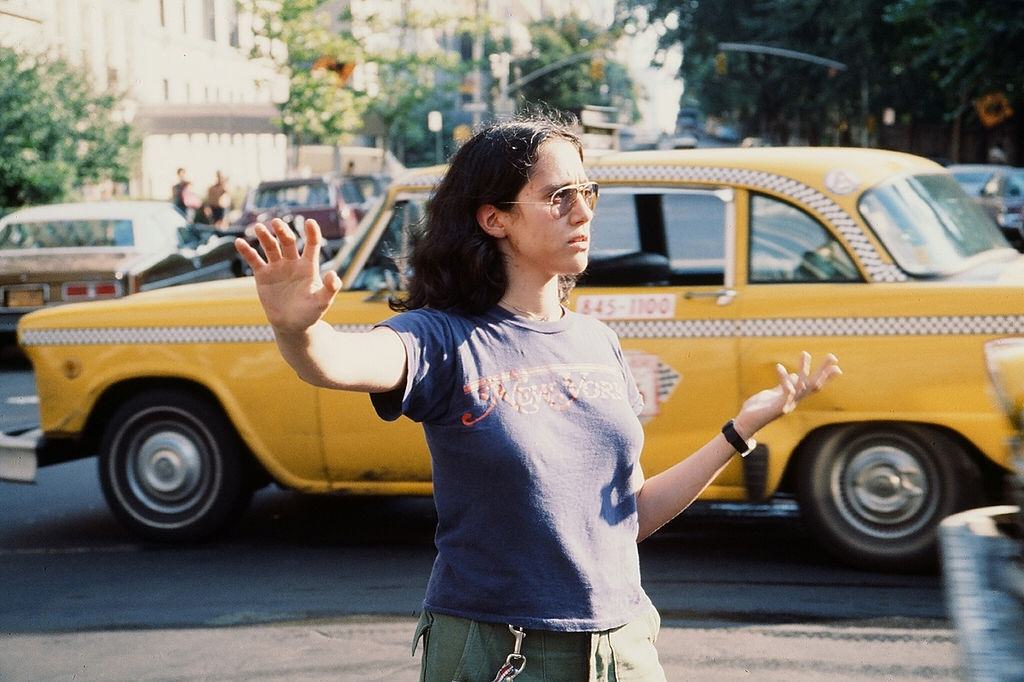

A young woman directing traffic in the wake of the New York City blackout, 1977.
Enjoyed this post? Get new ones in your inbox.

Leave a Comment

Your email address will not be published. Required fields are marked *

21 Comments

Load more comments

Share this Post 🥺

Please take a moment to share this content. Your support is greatly appreciated! 🙌🙏

Share this Post 🥺

Please take a moment to share this content. Your support is greatly appreciated! 🙌🙏
Scroll to Top
 
Hey Friend, Before You Go.. Please like & follow for more interesting content