
Jackson Hole is a sweeping valley nestled between the Teton Mountain Range and the Gros Ventre Range in northwestern Wyoming. The town of Jackson took its name in late 1893, when local resident Margaret Simpson began receiving community mail at her home before any post office existed. By the 1940s, the valley had grown into a beloved destination for dude ranch tourism, drawing visitors from across the country with its open skies, cold rivers, and dramatic peaks.
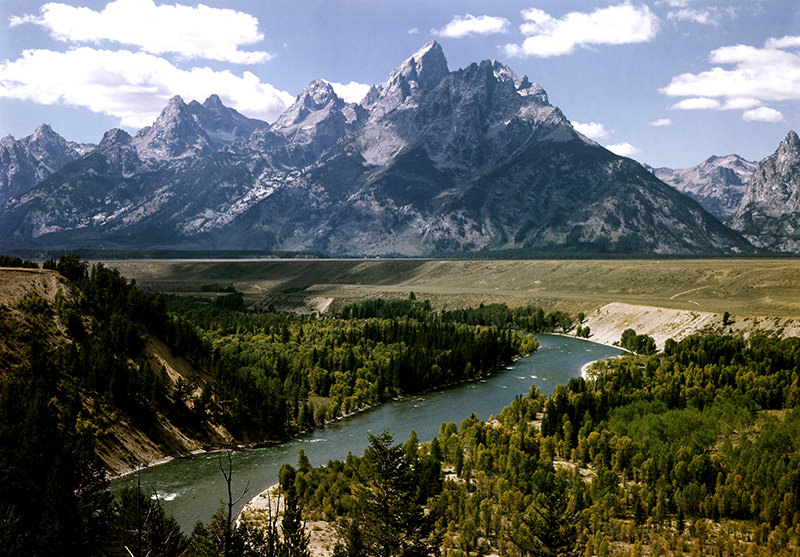
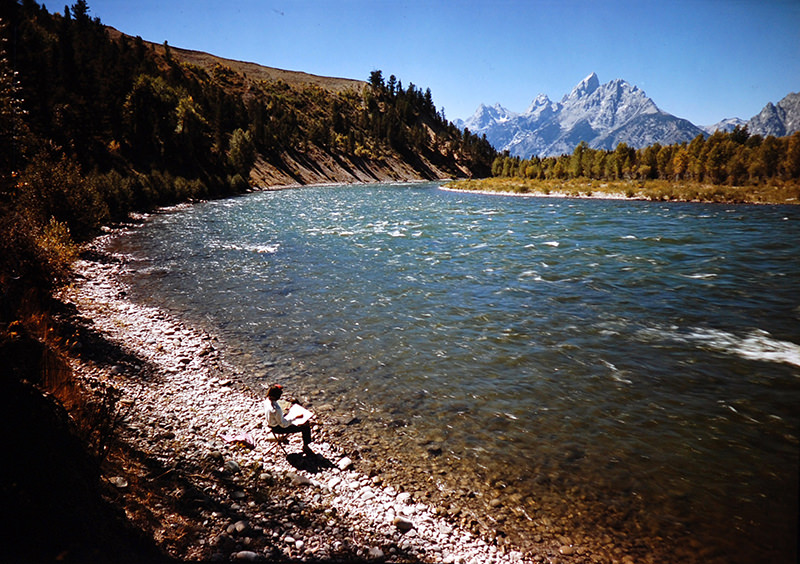
In 1948, LIFE magazine photographer Alfred Eisenstaedt traveled to Jackson Hole and documented the valley in vivid color. His images captured the Snake River winding beneath the Grand Tetons — a landscape that made the region famous long before modern tourism took hold.
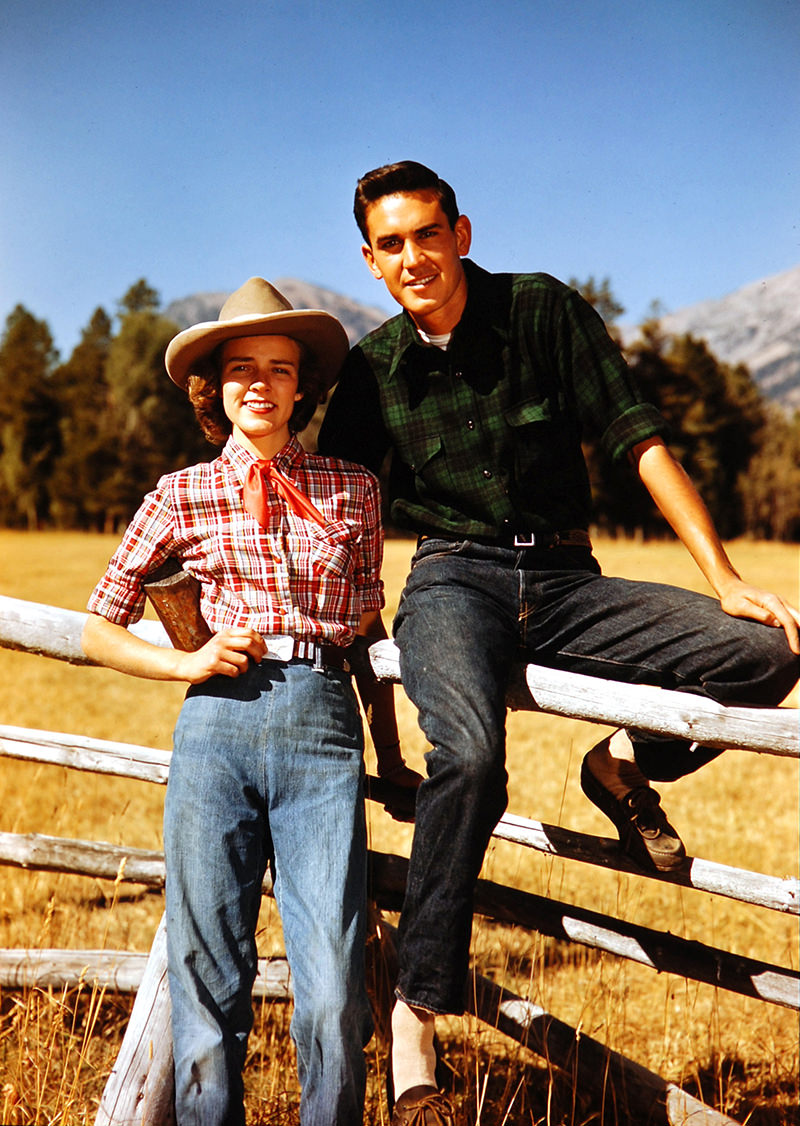
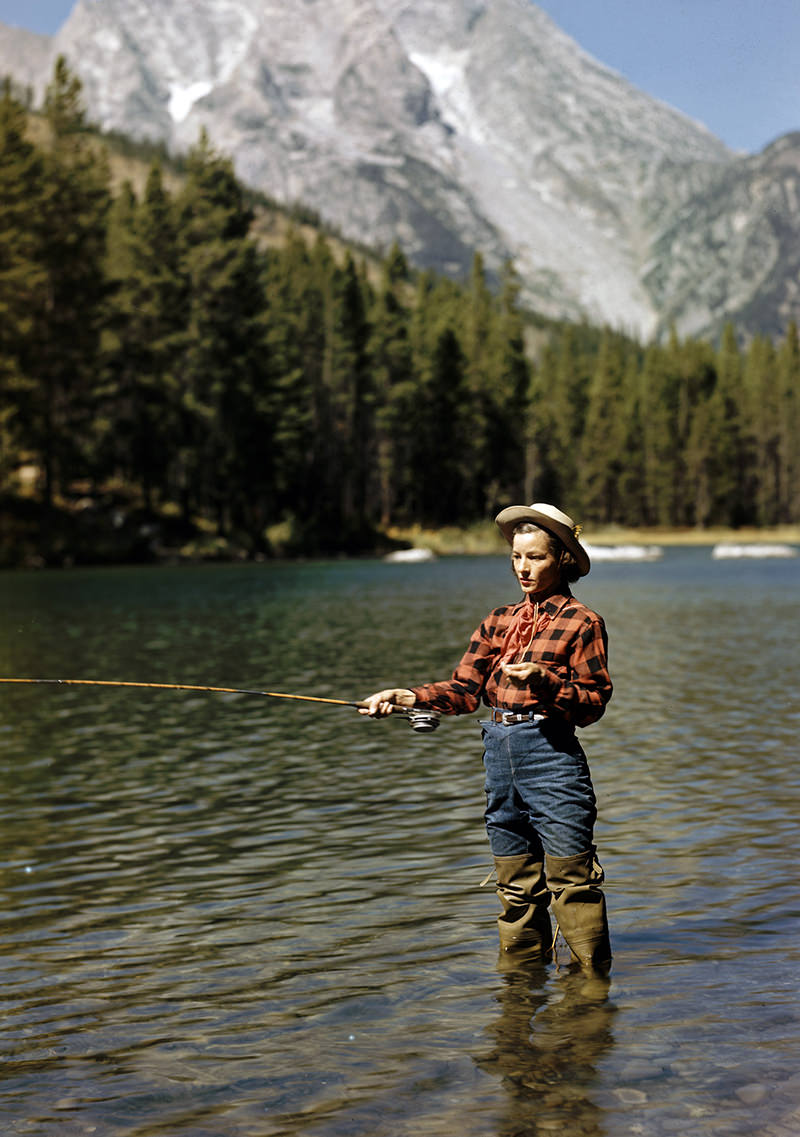
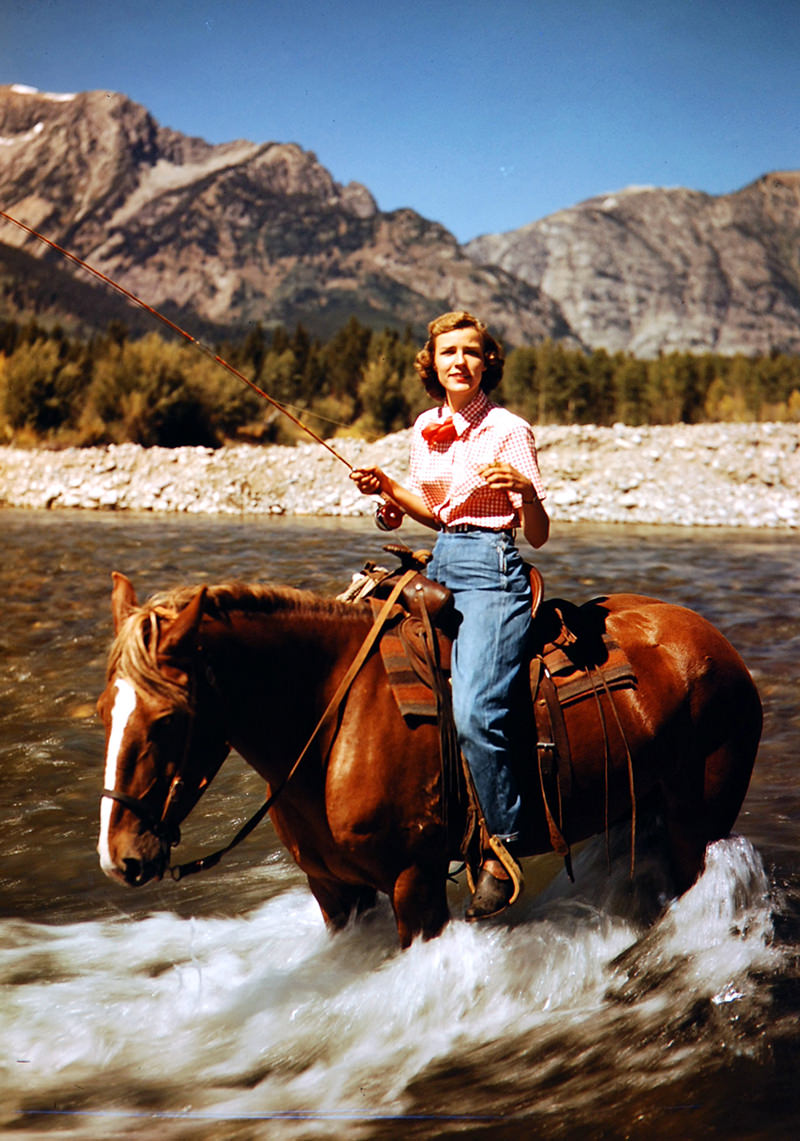
String Lake, fed by snowmelt from the Tetons, was a popular spot for fishing. Young cowgirl Esther Allen was among those who spent time along its banks, trout fishing with the mountain range rising sharply behind her.
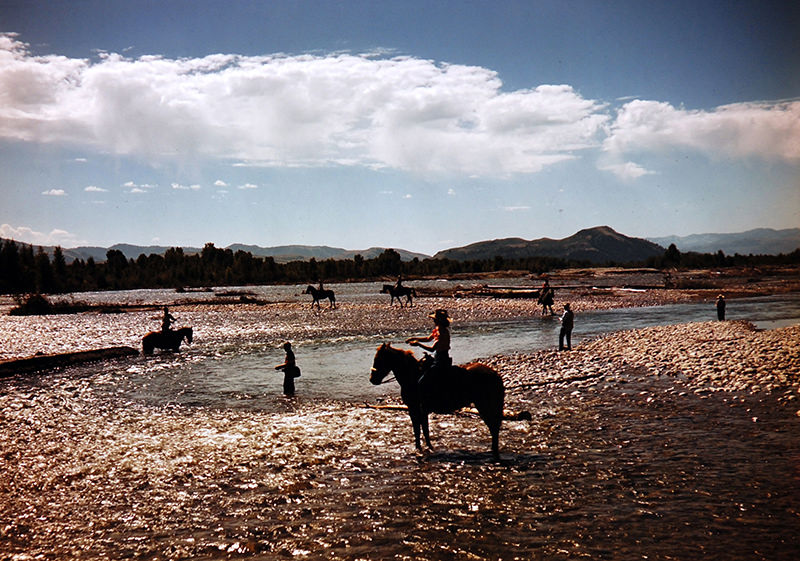
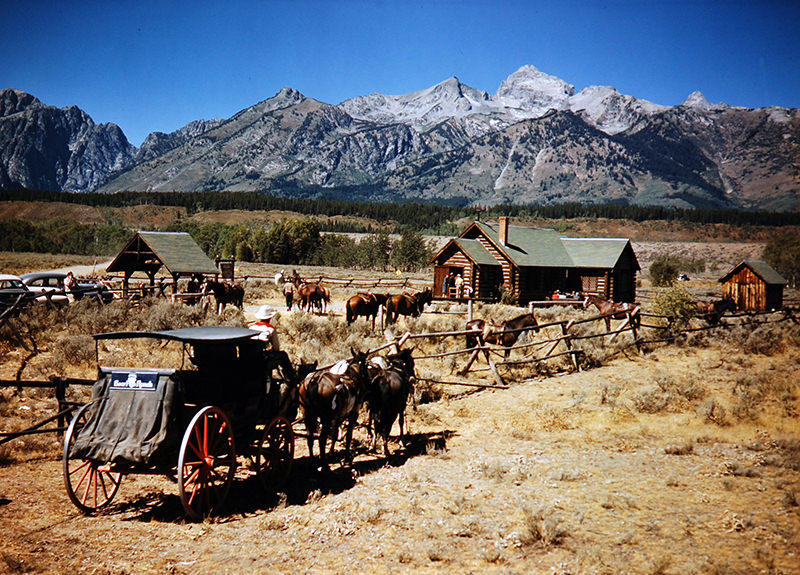
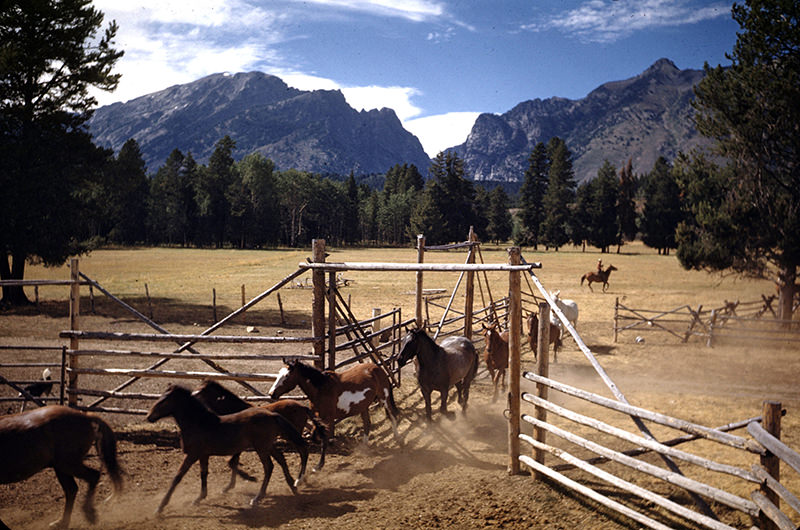
Horseback riding was central to life in the valley. Guests at dude ranches like Bearpaw Ranch spent their days in the saddle, exploring terrain that few roads could reach.
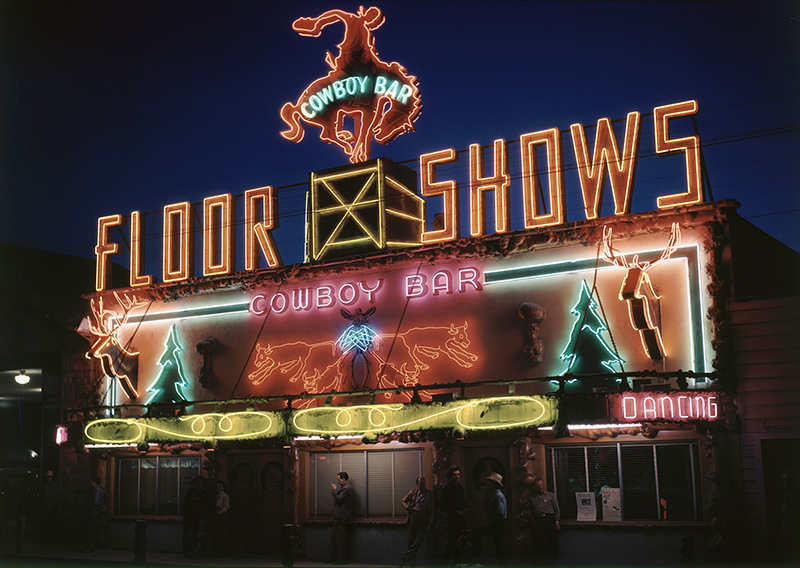
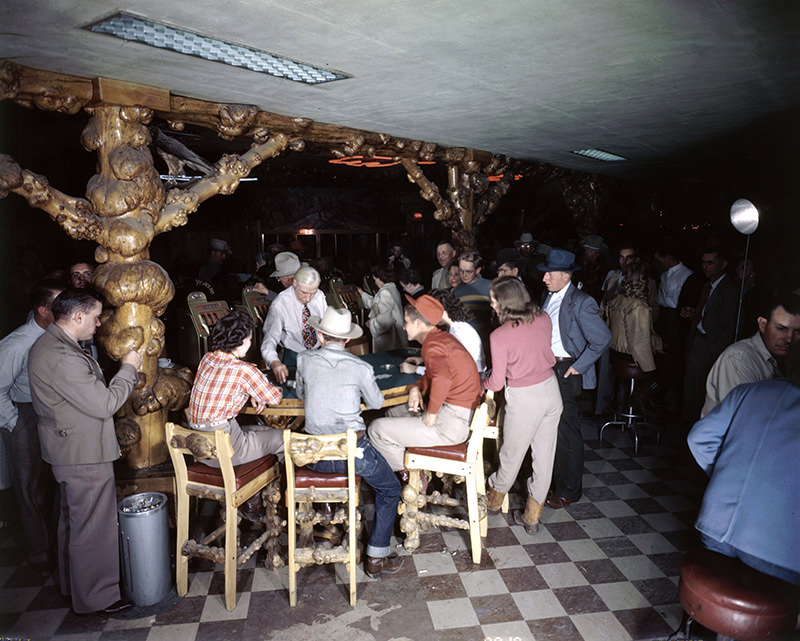
The town of Jackson itself had a lively social scene. The Cowboy Bar on the main strip drew both locals and tourists. During the summer tourist season, gambling was legally permitted inside, filling the bar with patrons crowded around tables.
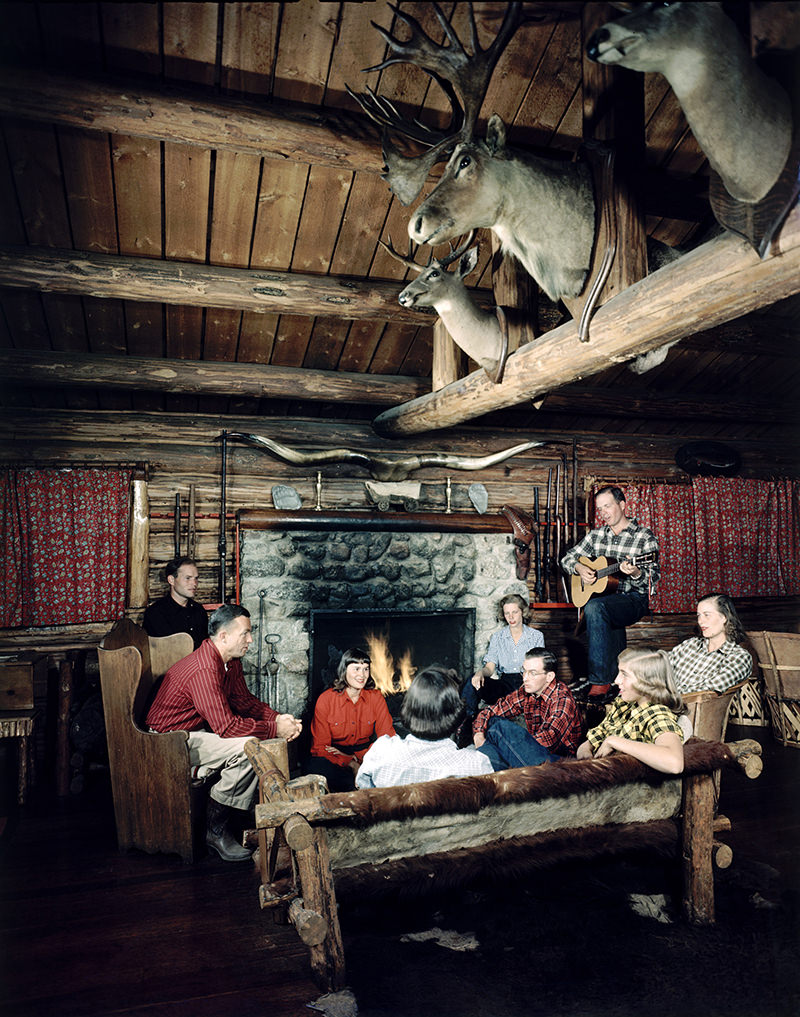
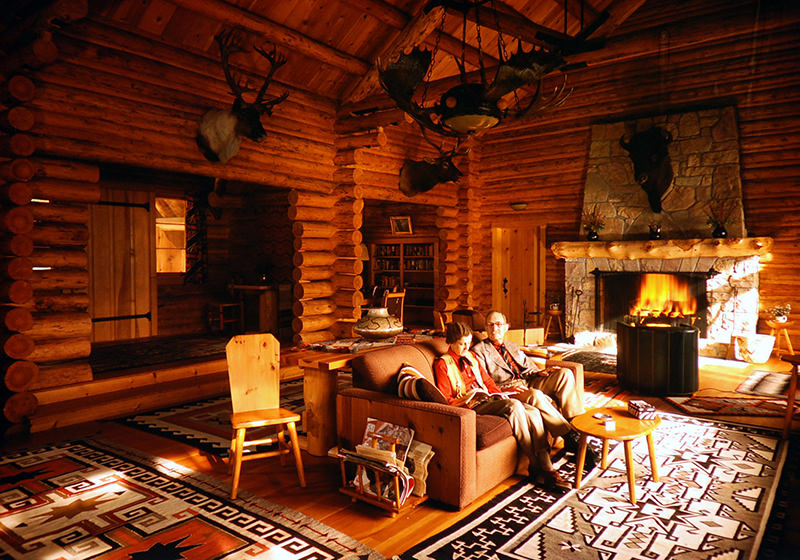
Evening life at the dude ranches was equally active. At Bearpaw Ranch, guests gathered around the fireplace for live music. Jack Huyler, son of the ranch’s owner, played guitar for the crowd — a nightly ritual that kept the ranch atmosphere warm and communal.
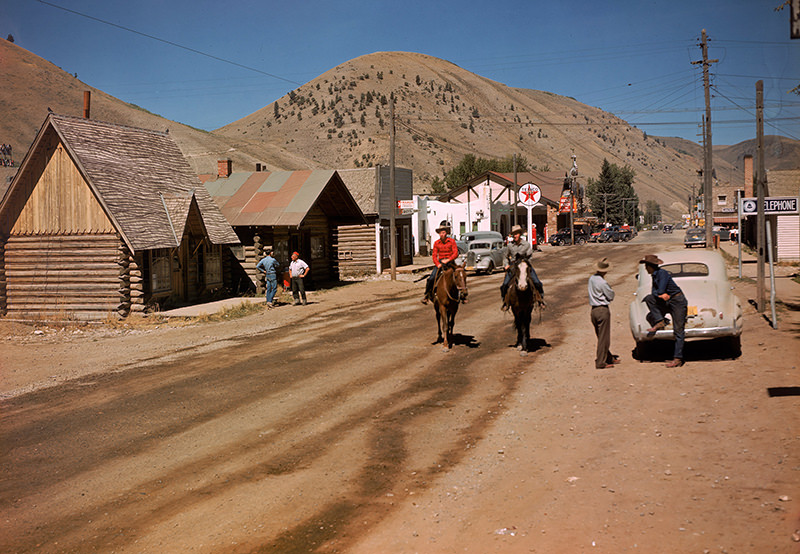
Broadway was the commercial heart of Jackson, lined with storefronts that served the growing flow of summer visitors arriving from across the country.
Inside Grand Teton National Park stood the Chapel of the Transfiguration, a small Episcopal log church built in 1925. Its rear window was positioned to frame the Teton peaks directly behind the altar — a deliberate design that made the mountains part of every service.
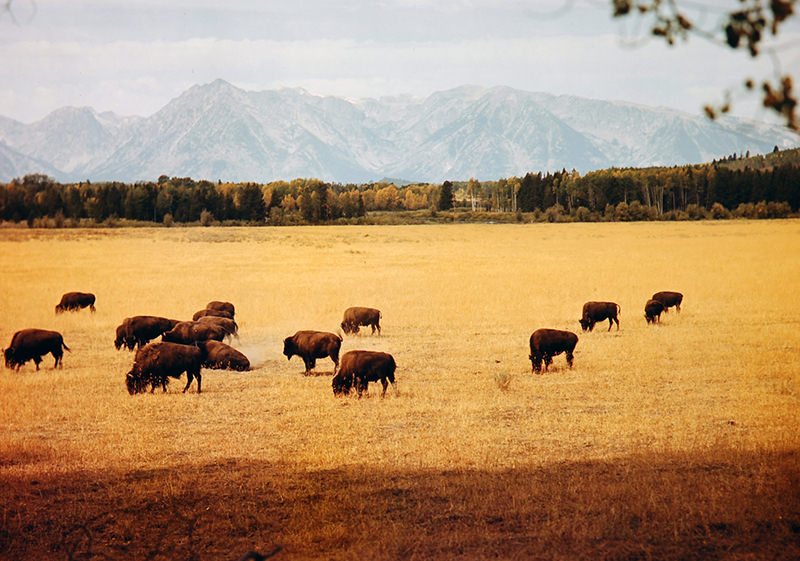
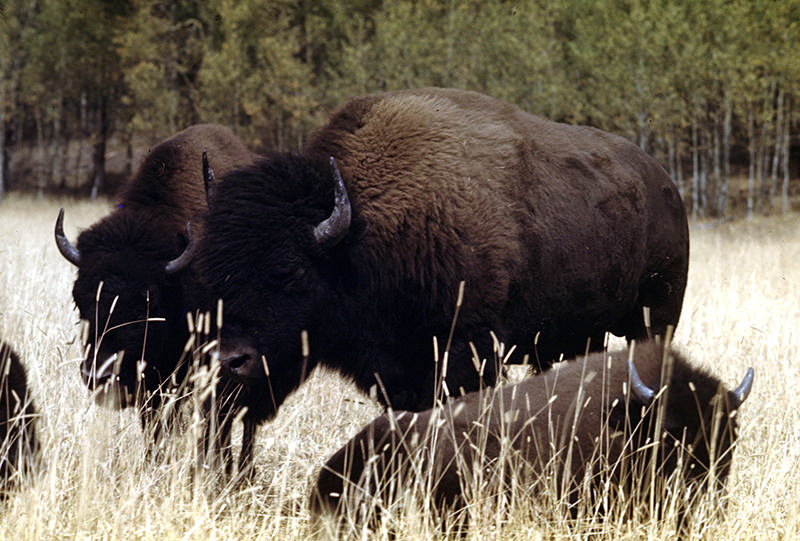
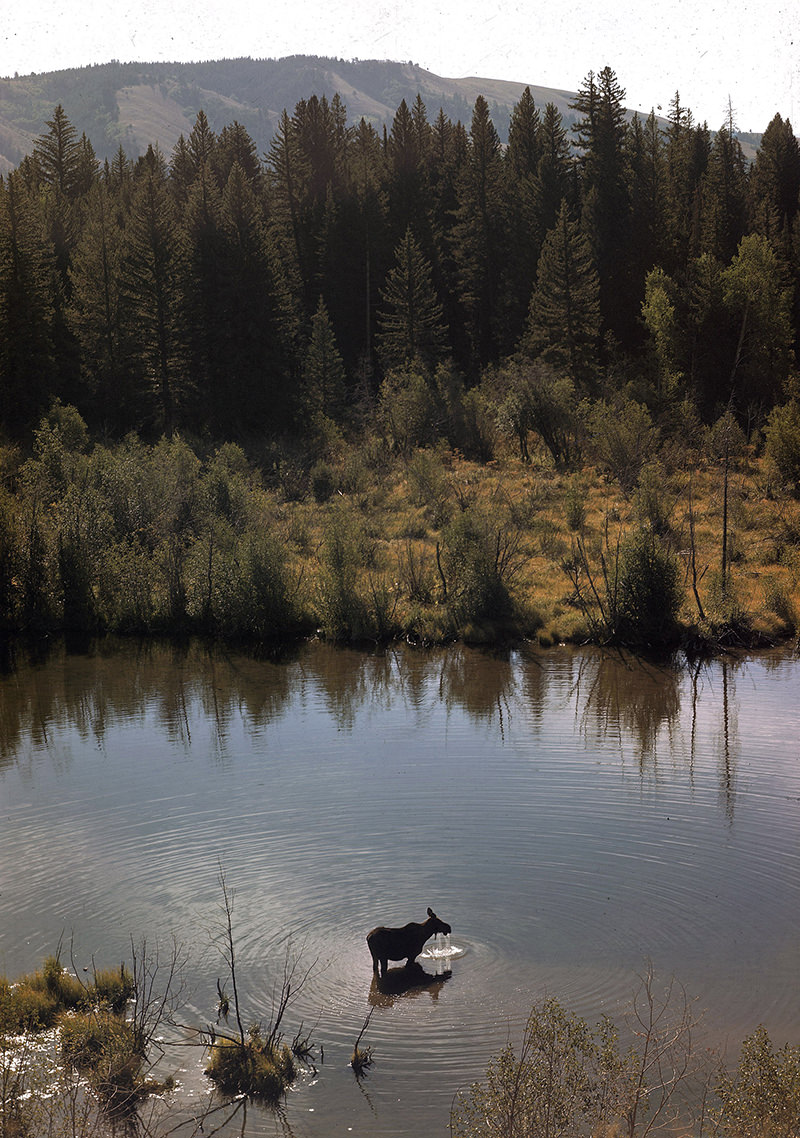
Wildlife roamed freely across the valley floor. Bison grazed in open meadows, and moose waded through shallow streams without disturbance. The valley’s ecosystems remained largely intact in 1948, making wildlife sightings a routine part of daily life.
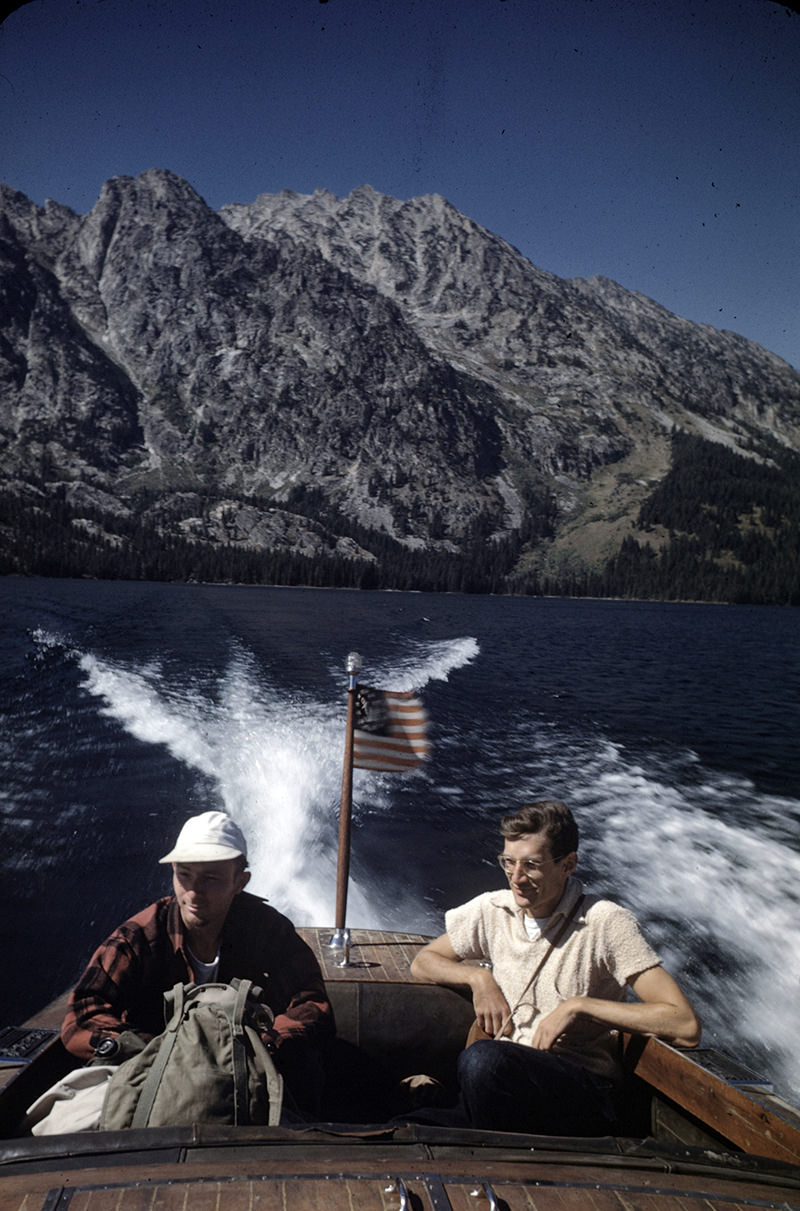
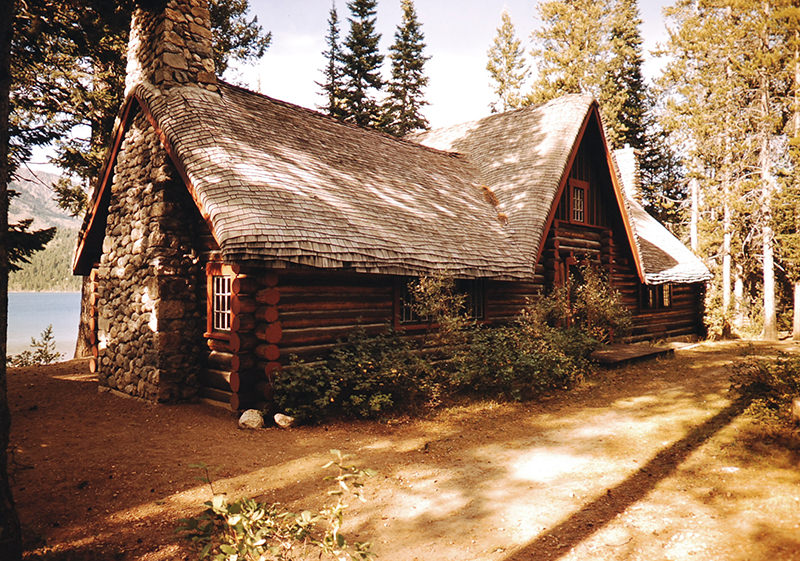
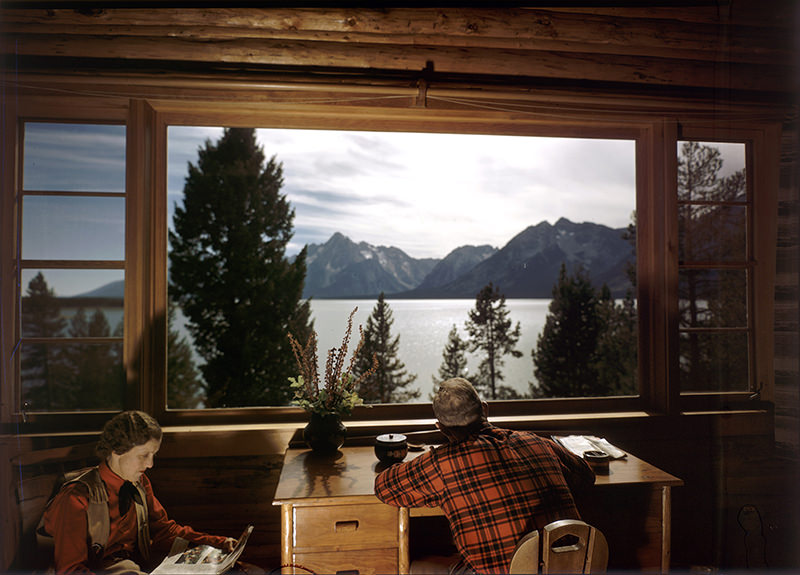
Jackson Lake offered some of the most commanding views in the entire valley. From the ranch owned by Mr. and Mrs. Berol, the full sweep of the Grand Teton Mountain Range reflected across the lake’s surface.
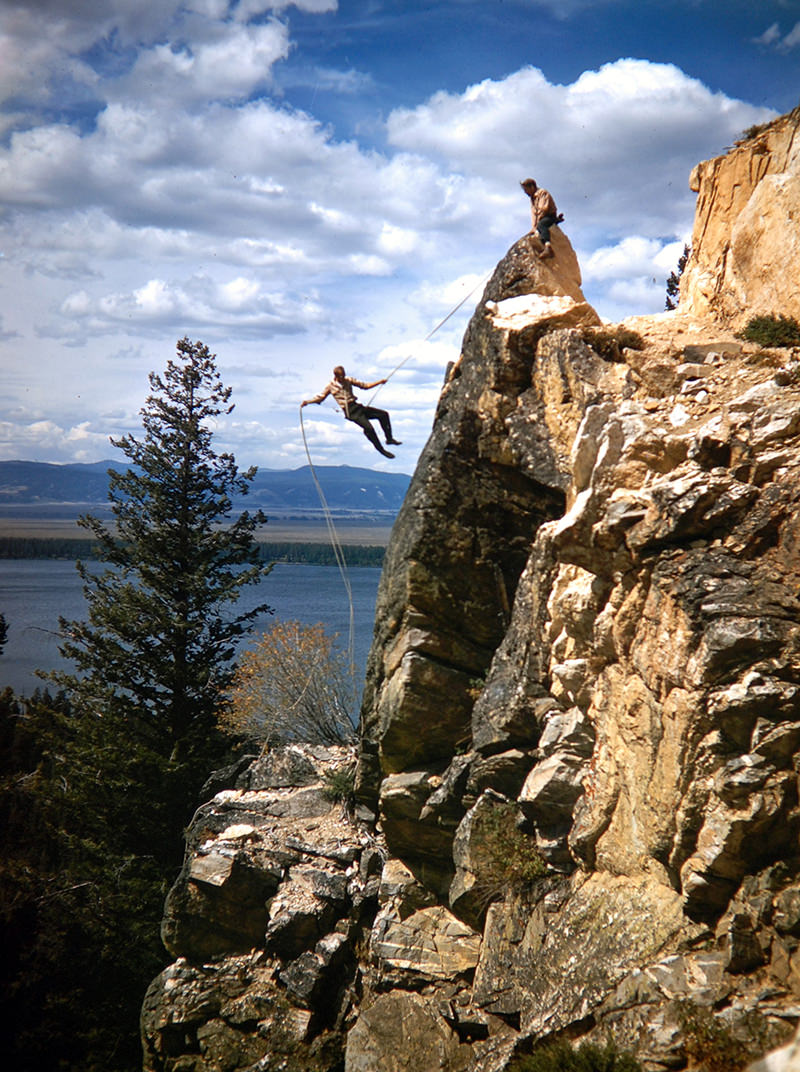
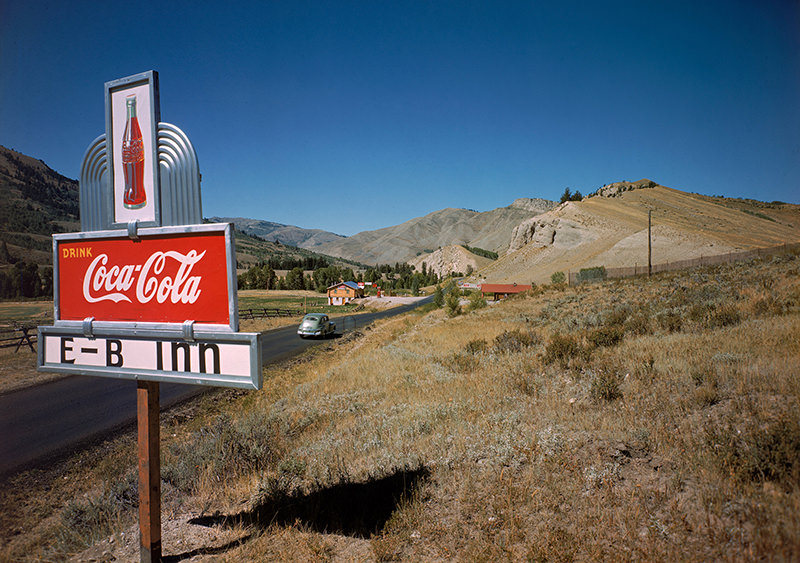
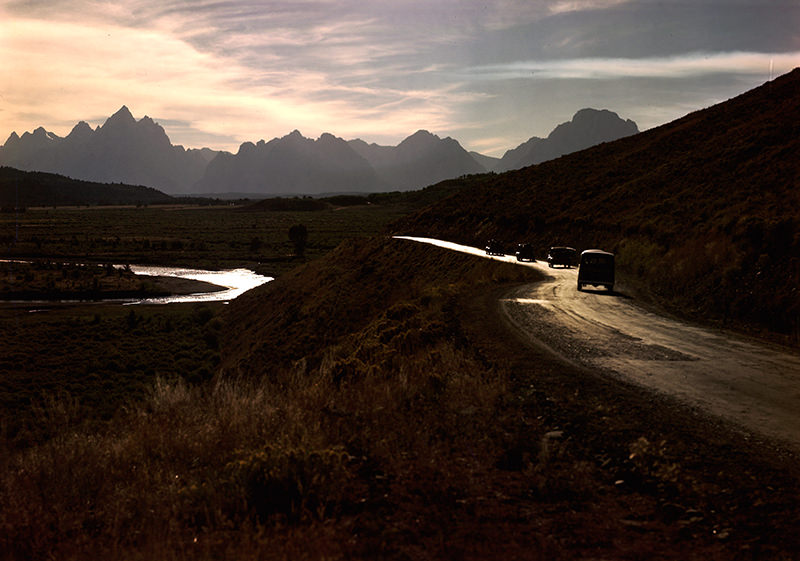
Eisenstaedt’s photographs document a valley that still operated at a slow, deliberate pace. Visitors arrived along routes like Blackrock Creek with the Tetons filling the horizon ahead of them — the same view that greeted every traveler entering Jackson Hole from the east.





Before rich, greedy, pigs built outrageous houses everywhere to sit in and watch TV two weeks out of the year.