
Florida in the early 1900s looked nothing like the sprawling resort state it would later become. It was largely agricultural and frontier land, with a total population of just 528,542. Nearly 44% of those residents were African American — roughly the same proportion as before the Civil War. The state’s economy ran on cattle, sugar cane, citrus fruits, tomatoes, and strawberries. Work was hard, land was wild, and cities were still finding their footing.
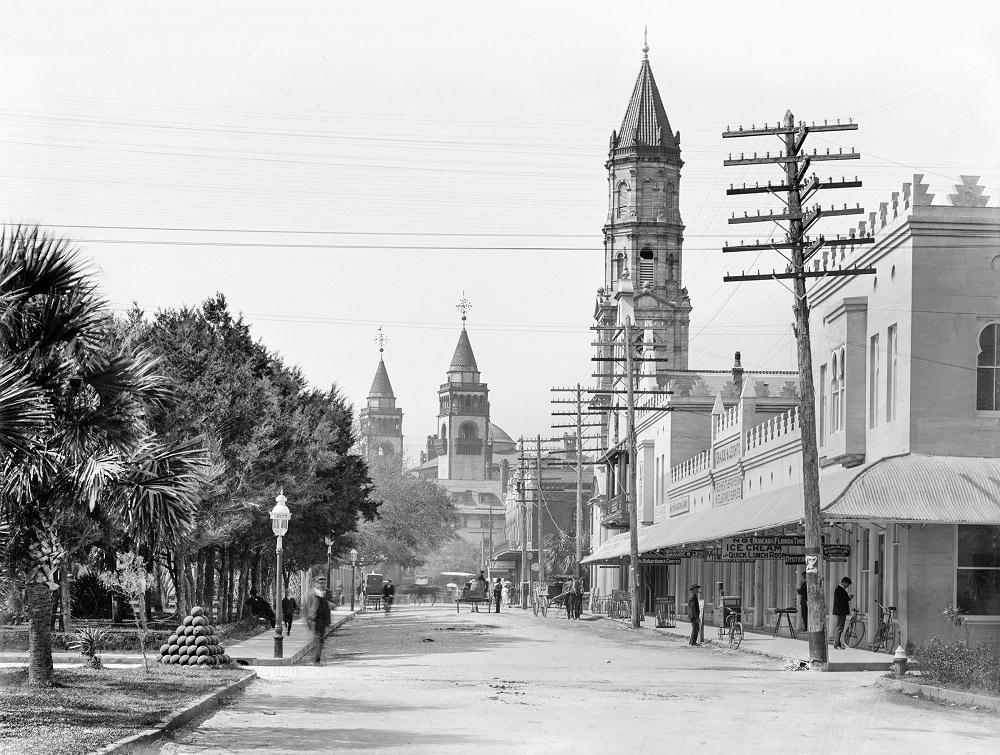
St. Augustine, founded in 1565, was already one of Florida’s most established cities by the time these photographs were taken. Its old streets, Spanish-era architecture, and grand hotels made it a destination unlike any other in the state. The city drew wealthy Northern tourists who arrived by Henry Flagler’s Florida East Coast Railway, seeking warmth and elegance during winter months.
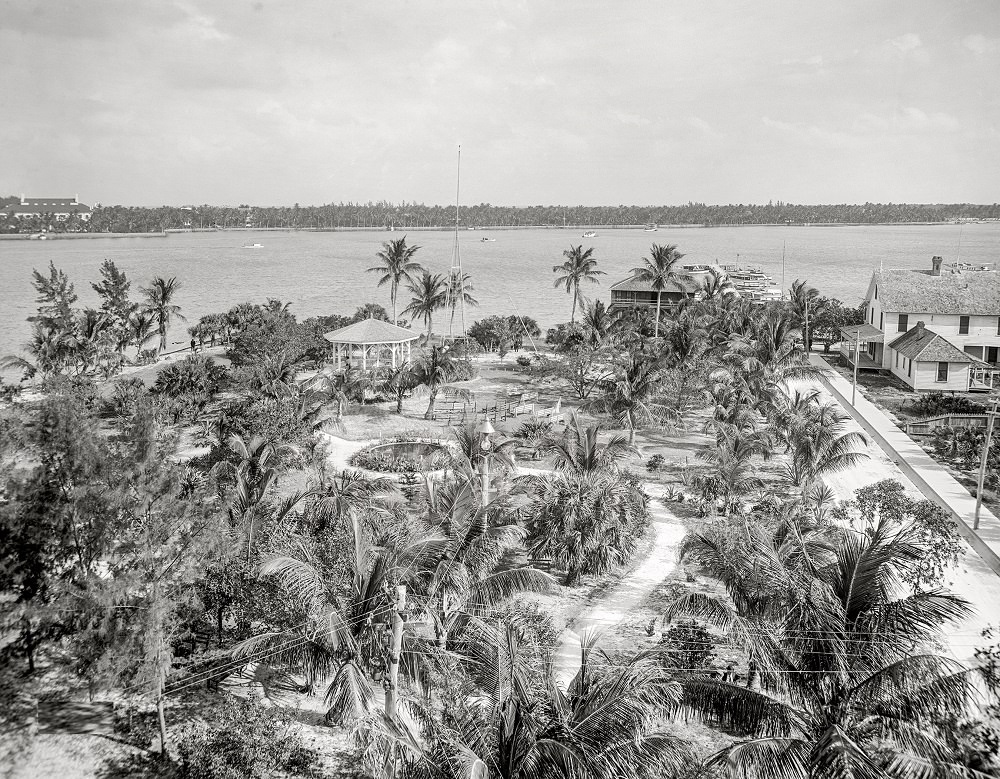
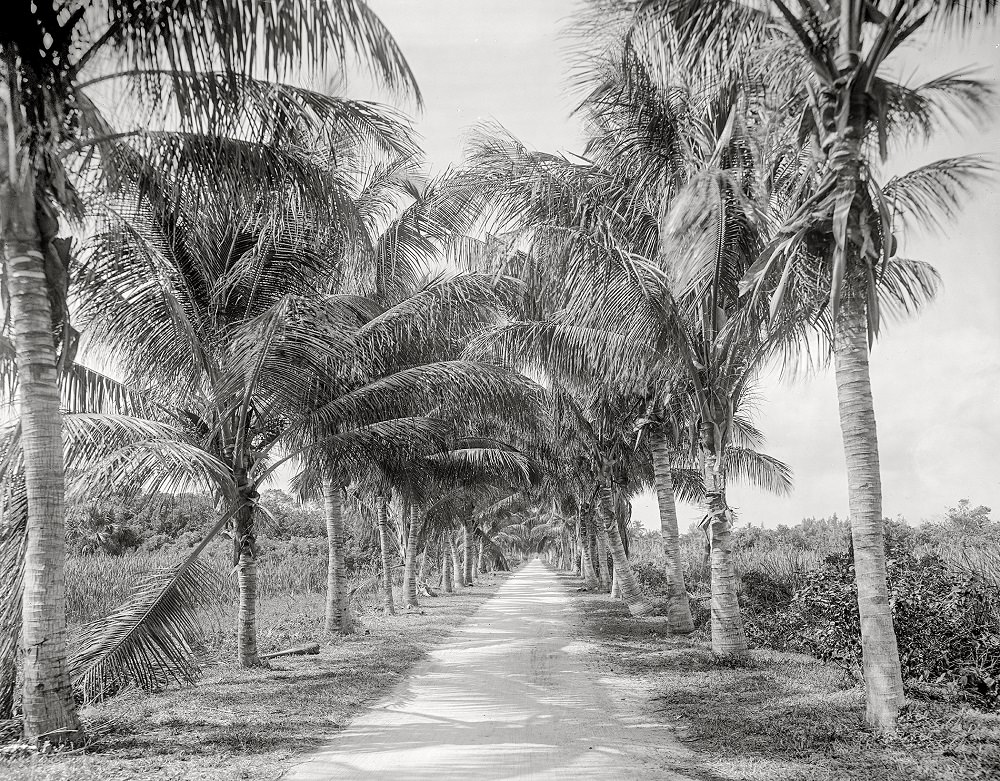
Palm Beach and West Palm Beach were two sides of the same coin. Palm Beach catered to the ultra-wealthy, with enormous resort hotels and manicured grounds, while West Palm Beach served as the working town that kept everything running. Narrow roads cut through thick tropical growth, as seen in photos from the era showing little more than sandy tracks lined by palms and dense jungle vegetation.
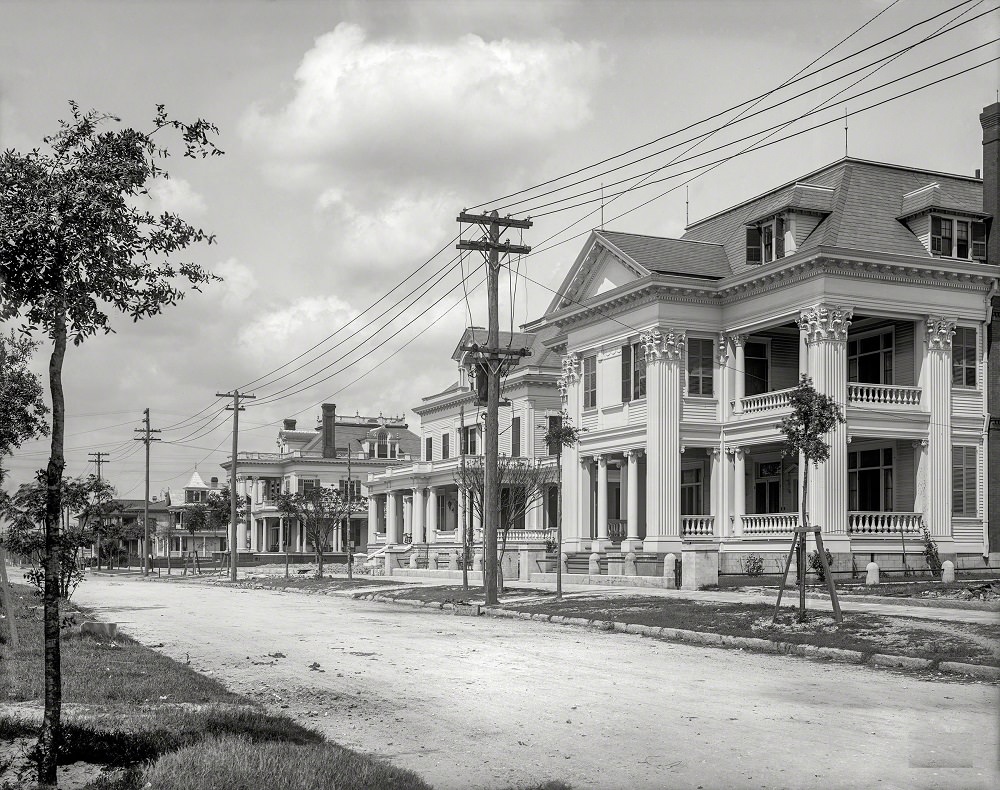
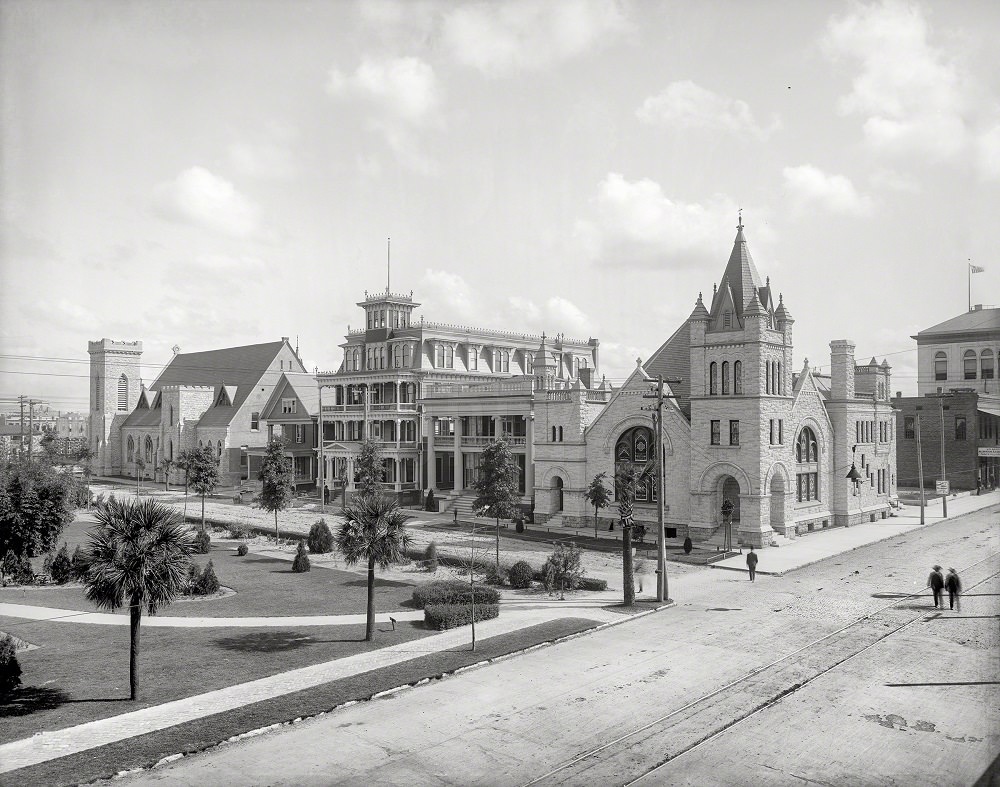
Jacksonville was Florida’s largest and most commercially active city in the early 1900s. Its position along the St. Johns River made it a major port and rail hub. Residential streets like Church Street featured modest but well-kept homes, while public spaces like Hemming Park served as the heart of civic life. The city had survived a devastating fire in 1901 and was rapidly rebuilding with brick and ambition.
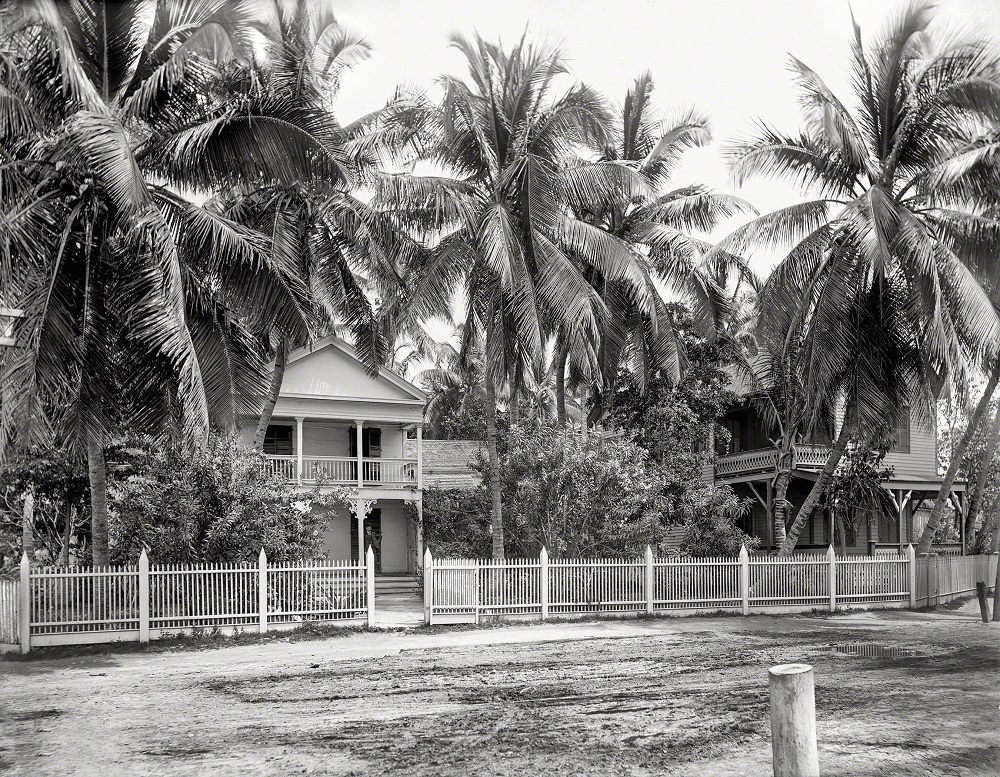
Key West sat at the far southern tip of the state, isolated from the mainland and accessible mainly by sea. In 1900, it was actually Florida’s most populous city. The town relied heavily on cigar manufacturing, sponge harvesting, and fishing. Life there had a distinctly Caribbean character — a mix of Cuban, Bahamian, and Anglo influences that set it apart from any other place in the state.
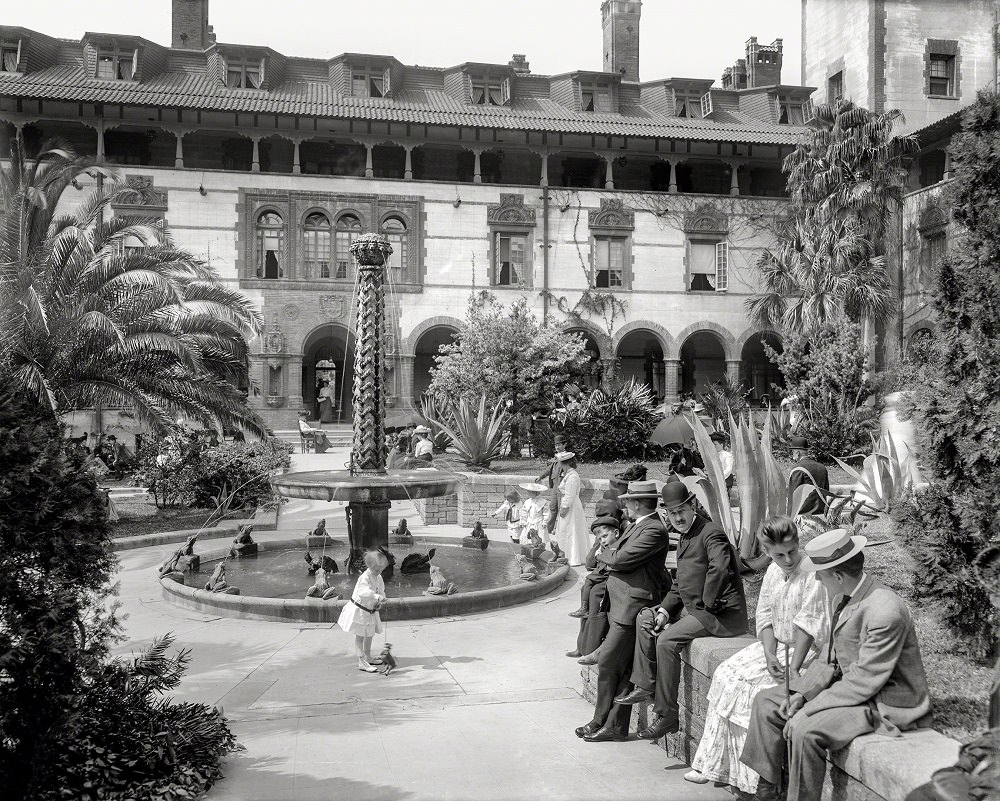
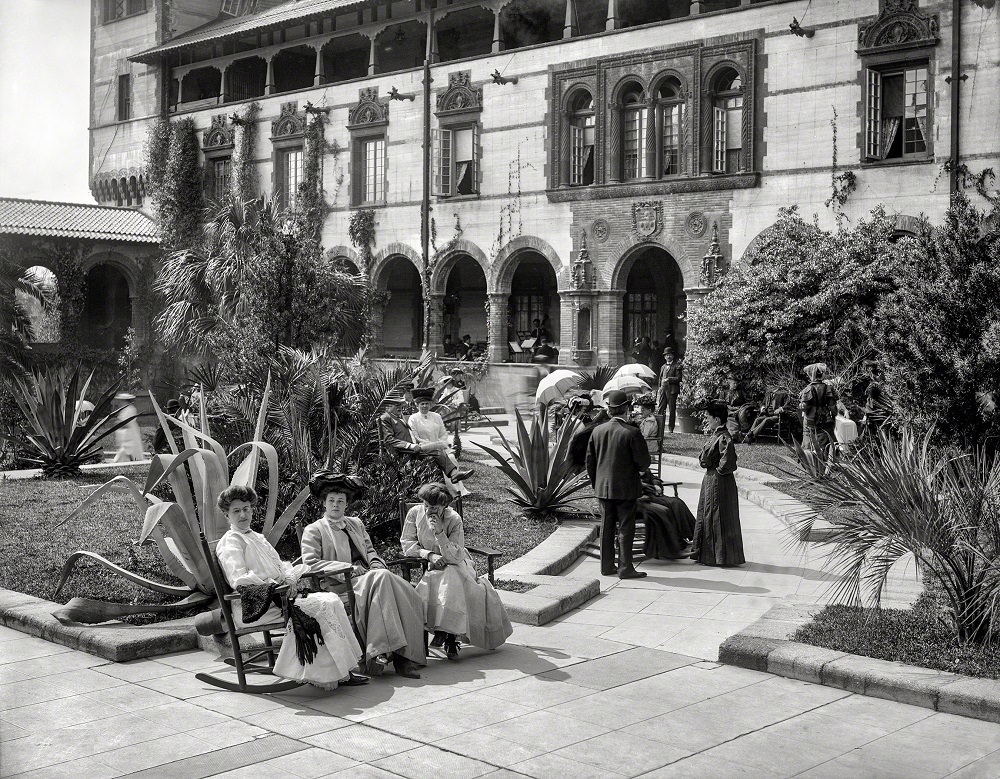
The Hotel Ponce de Leon in St. Augustine was one of the most extraordinary buildings in America when it opened in 1888. Built by Henry Flagler and designed by the firm of Carrère and Hastings, it was constructed almost entirely of poured concrete mixed with coquina shells. Its open courtyard, fountains, and ornate Spanish Renaissance design made it a showpiece of Gilded Age luxury.
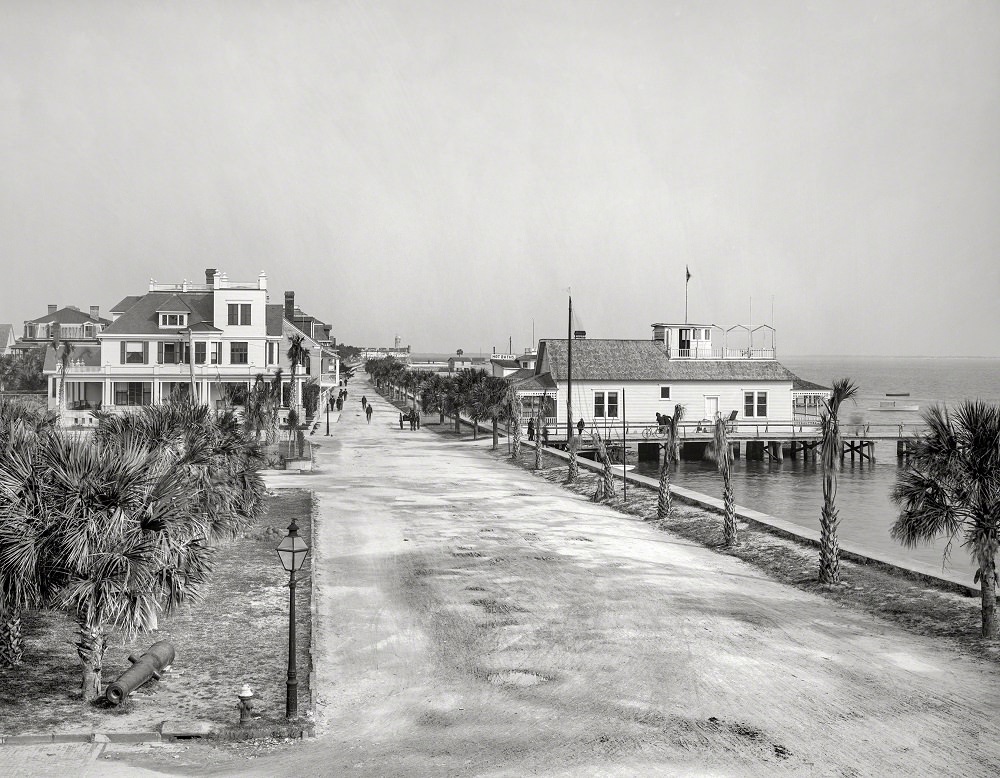
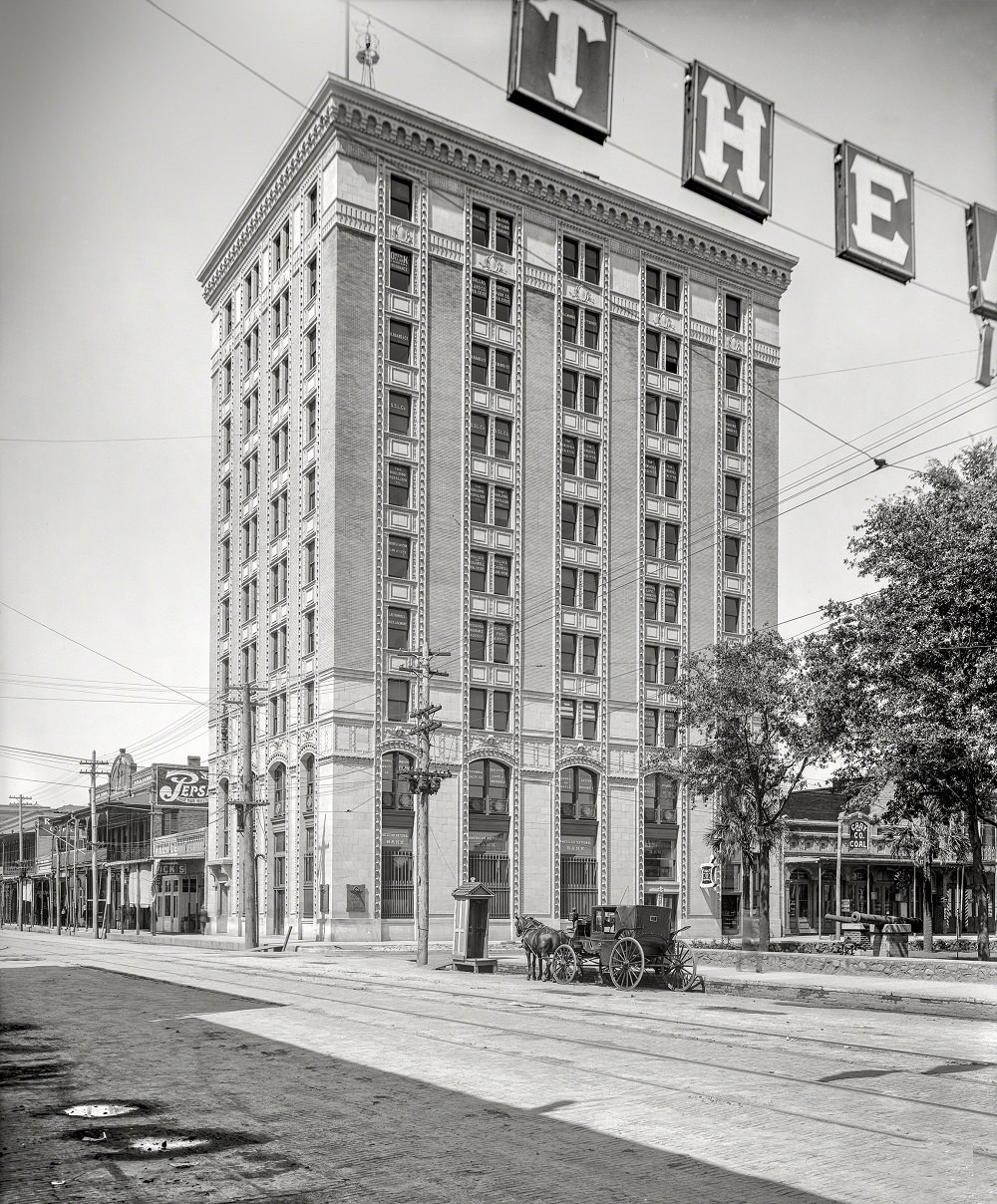
Commercial streets across Florida’s cities were filling in fast during the early 1900s. Banks, dry goods stores, and professional offices occupied new brick buildings that replaced earlier wooden structures. The seawall along St. Augustine’s bayfront gave residents and visitors a promenade that combined practical flood protection with a pleasant waterfront walk.
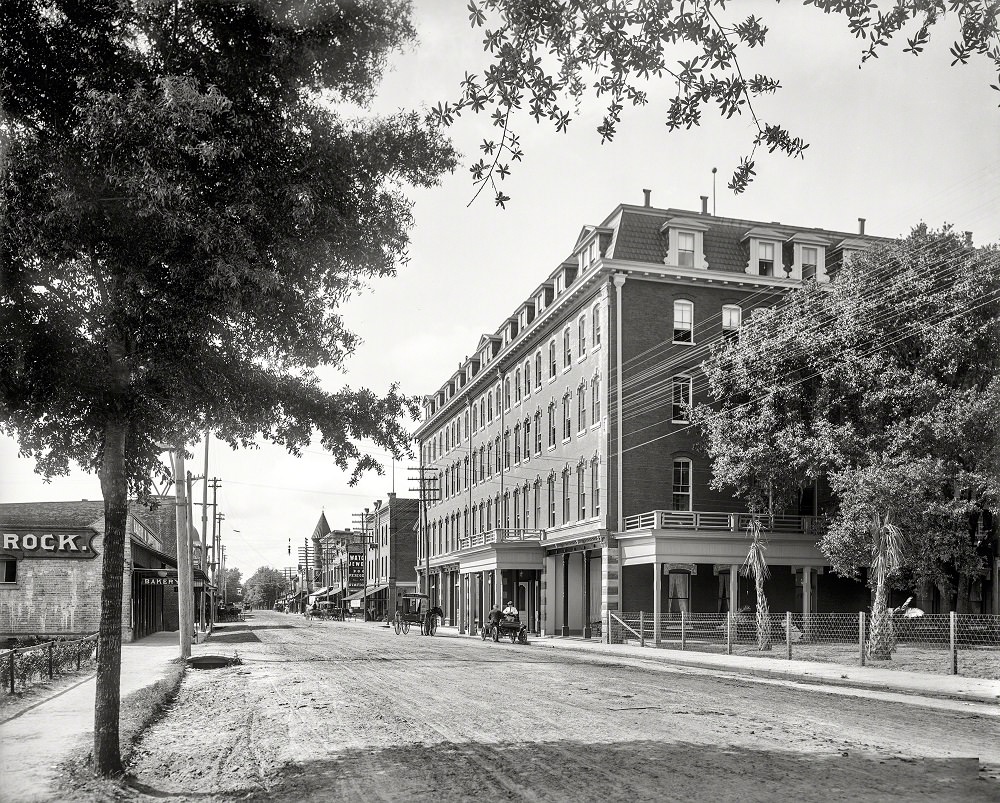
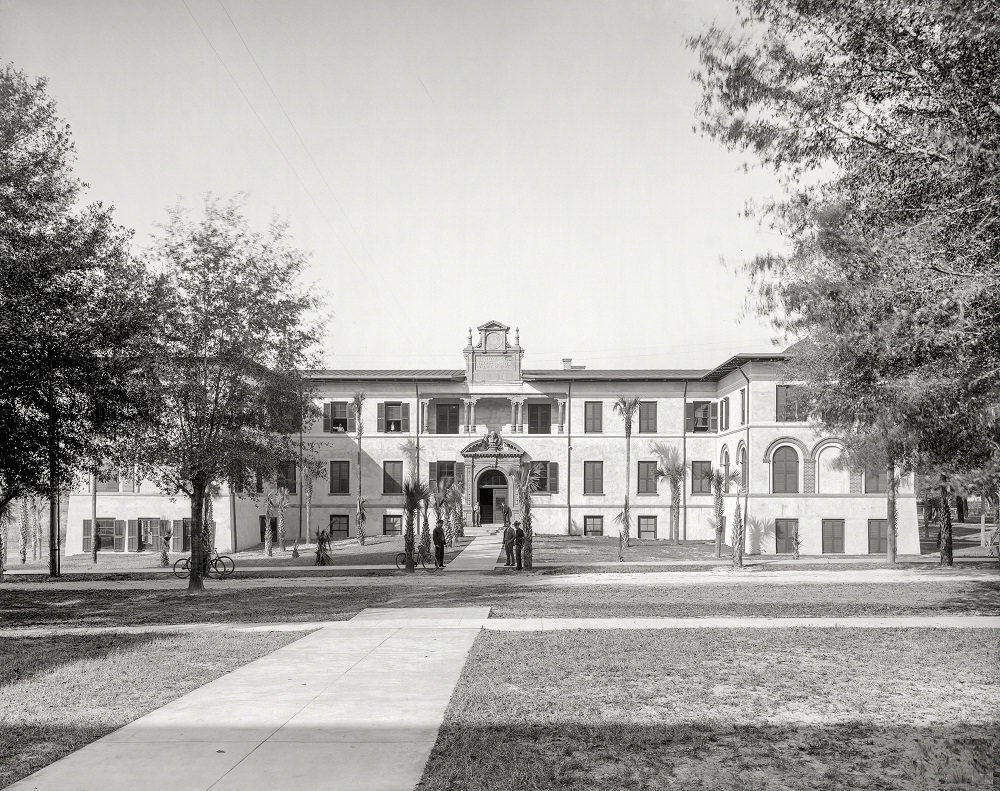
Orlando in 1904 was a quiet agricultural town centered around the citrus trade. Its main avenue showed a modest downtown of two-story buildings and unpaved roads. DeLand, just to the northeast, was home to John B. Stetson University — a private institution founded in 1883 that provided higher education to a region where such opportunities were rare. Its brick campus buildings stood in sharp contrast to the surrounding rural landscape.
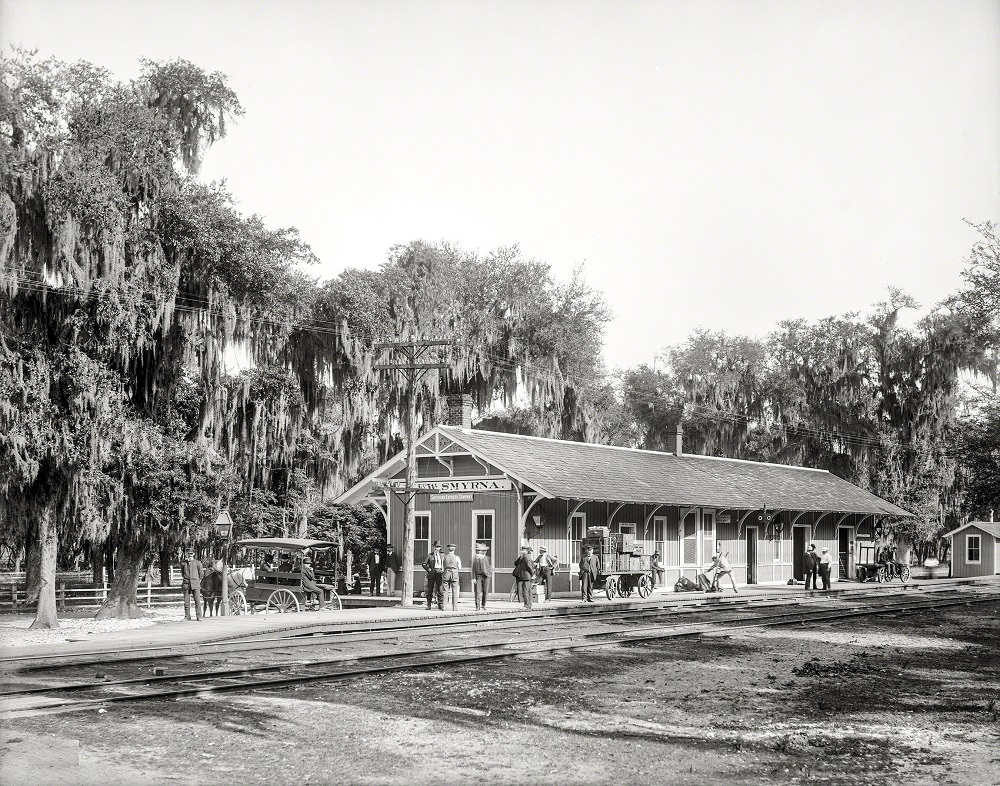
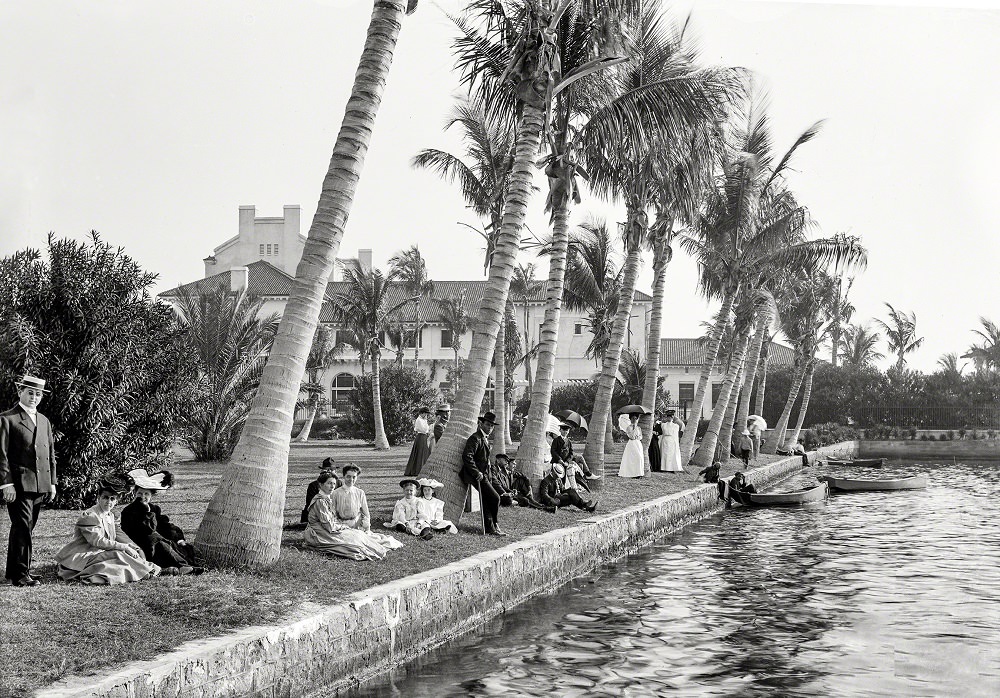
The Florida East Coast Railway was the artery that connected Florida’s coastal towns and made tourism possible. Stations like the one at New Smyrna Beach were essential gateways — the moment passengers stepped off the train, they entered a world of Atlantic breezes and tropical scenery. By 1906, Palm Beach had developed into a winter playground for America’s wealthiest families, its wide streets lined with royal palms and elegant estates.
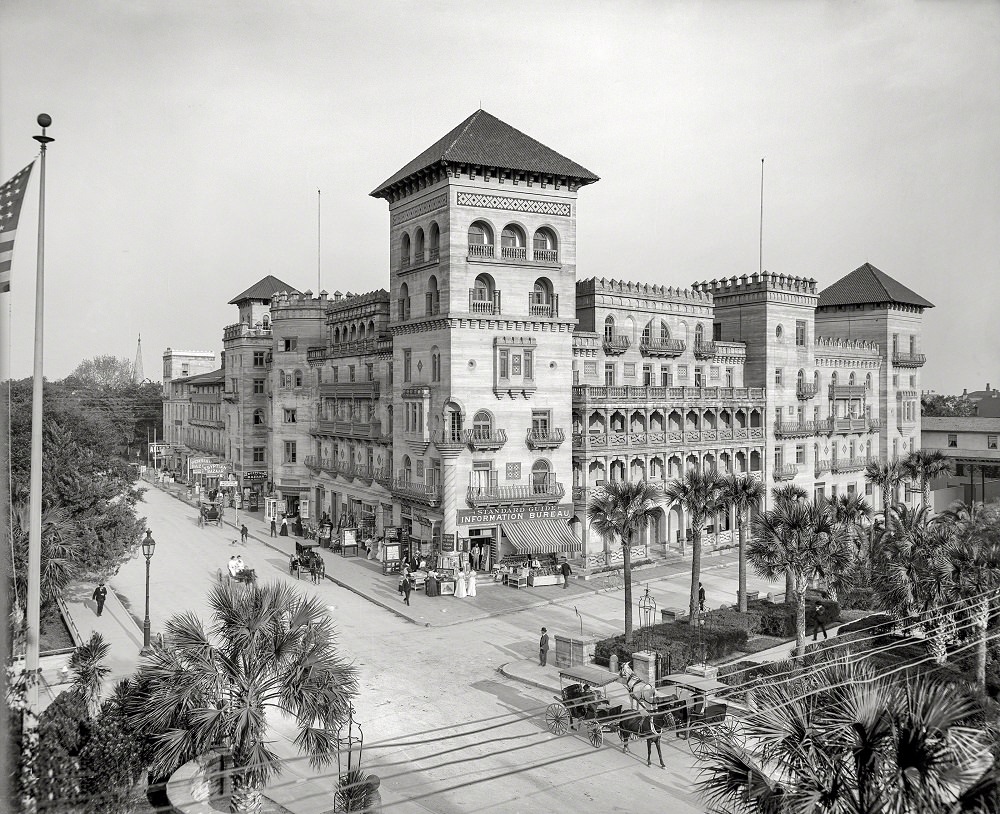
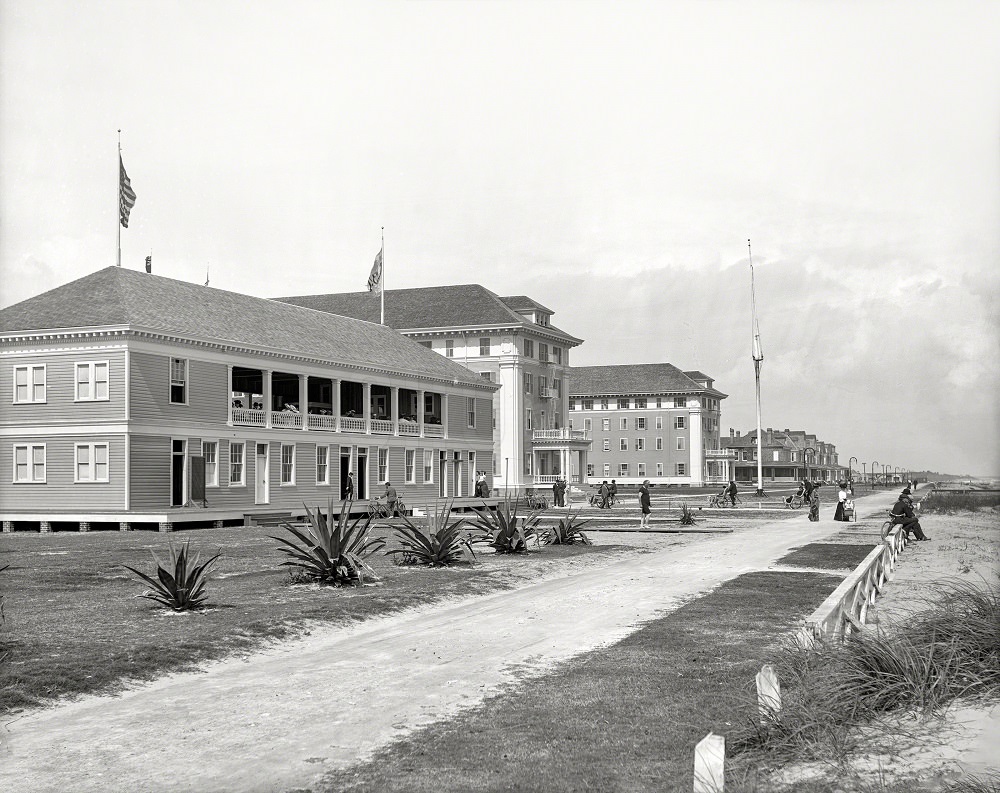
Flagler’s hotel empire stretched the length of Florida’s east coast. The Hotel Alcazar in St. Augustine housed what was at the time the largest indoor swimming pool in the world, along with a casino and therapeutic baths. Down in Palm Beach, the Breakers offered direct beach access with a casino and private cottages for guests who wanted their own space alongside the grand resort experience.
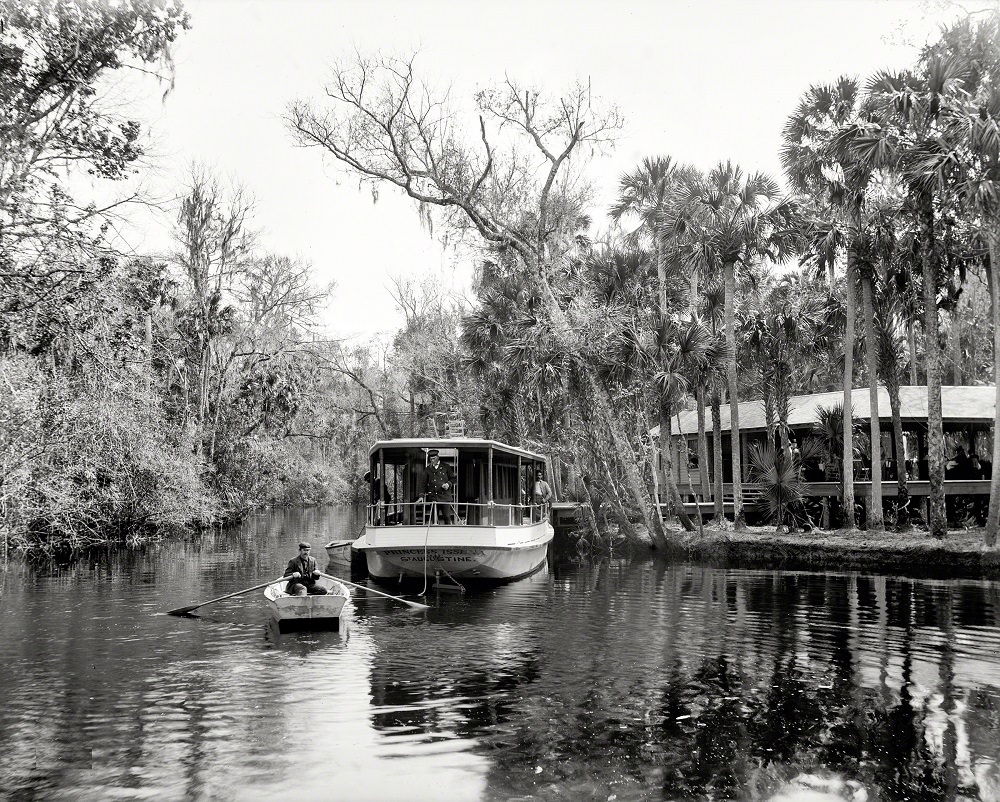
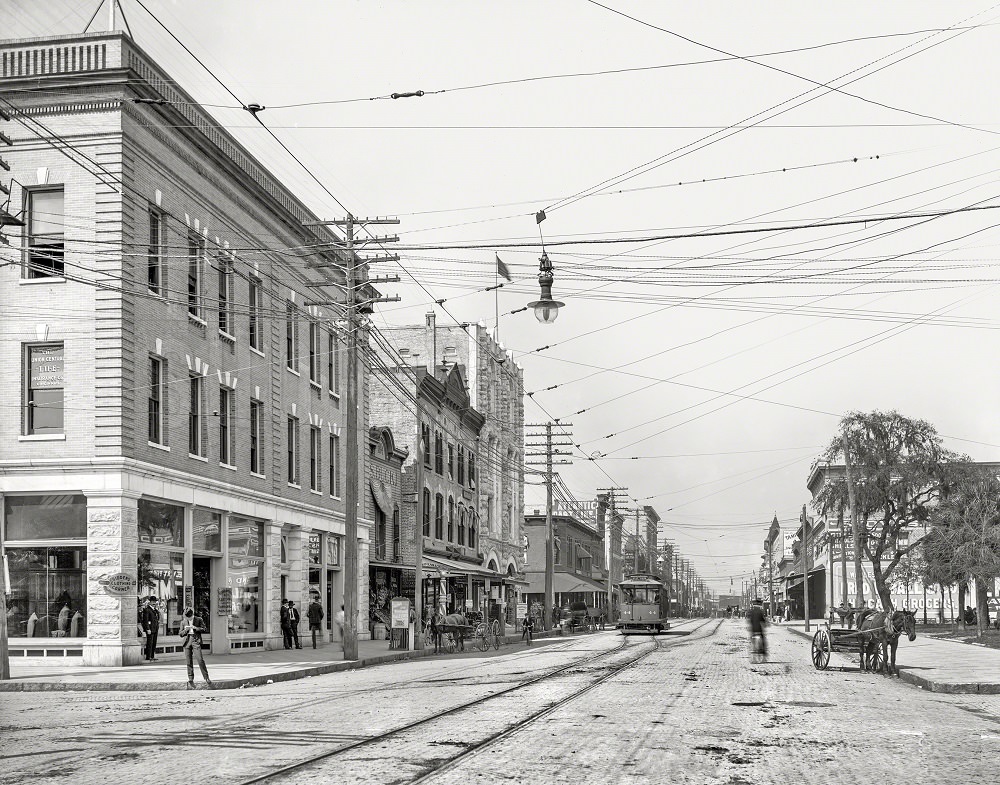
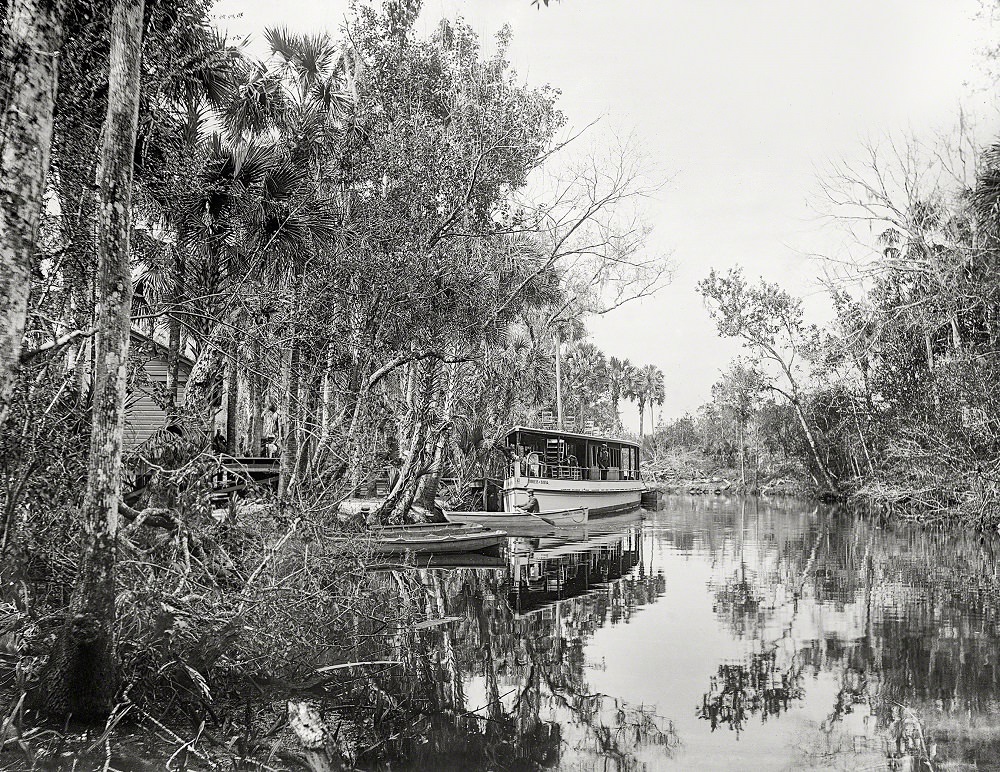
River excursions were a popular attraction for visitors and locals alike. The Tomoka River near Ormond drew tourists on steamboats that pushed through subtropical waterways lined with cypress and Spanish moss. Tampa, meanwhile, had developed into a major commercial city, its streetcar lines connecting downtown Franklin Street to neighborhoods like Hyde Park, which grew rapidly during this period as a middle-class residential district.
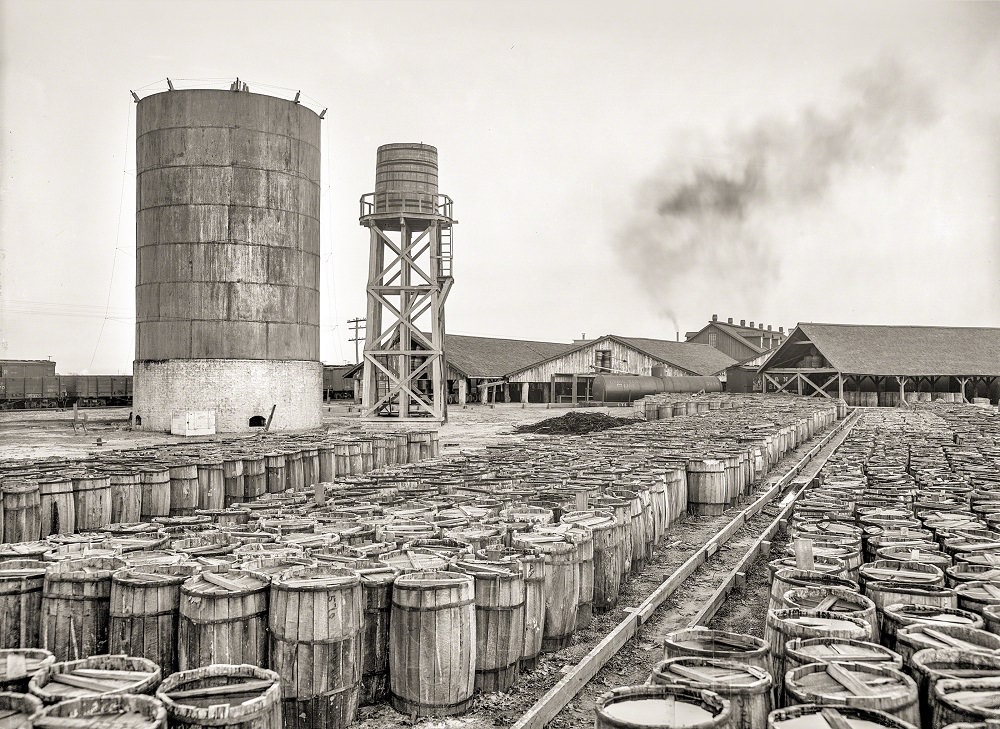
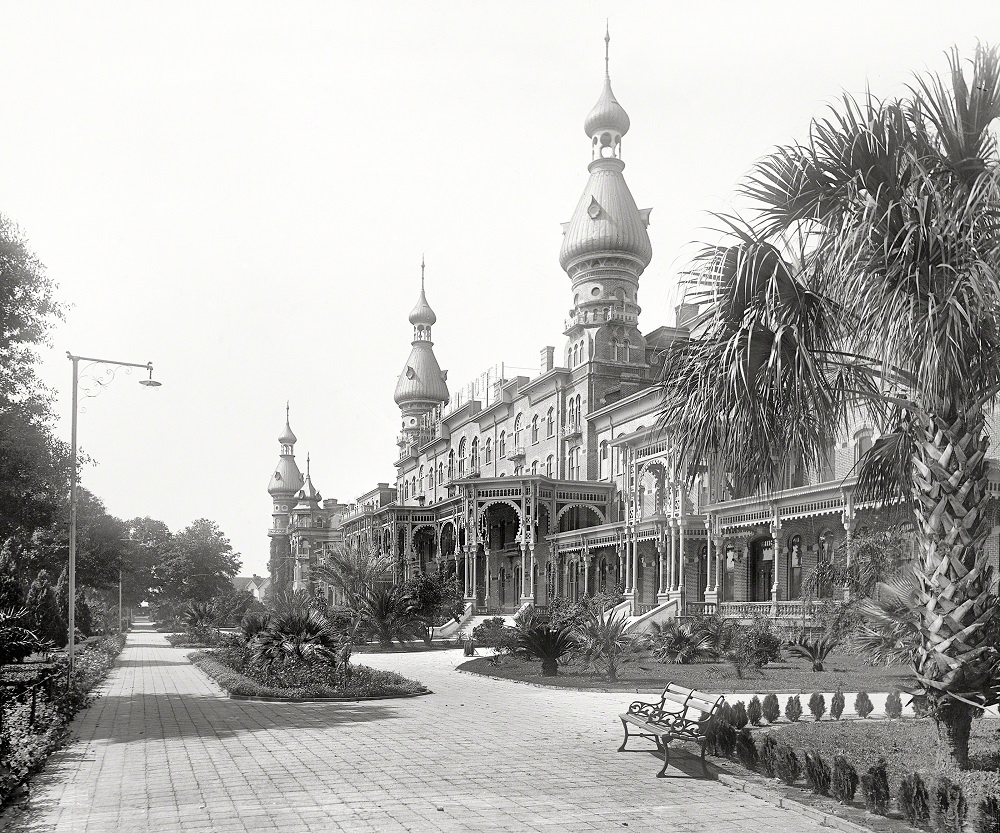
Pensacola’s economy in the early 1900s was built around its deep natural harbor and timber industries, including naval stores — a term for products like turpentine and rosin derived from pine trees. The Consolidated Naval Stores Company plant was a major employer. Tampa, by contrast, had its iconic Tampa Bay Hotel, built by railroad magnate Henry B. Plant in 1891. Its Moorish minarets made it one of the most visually striking buildings in the American South.
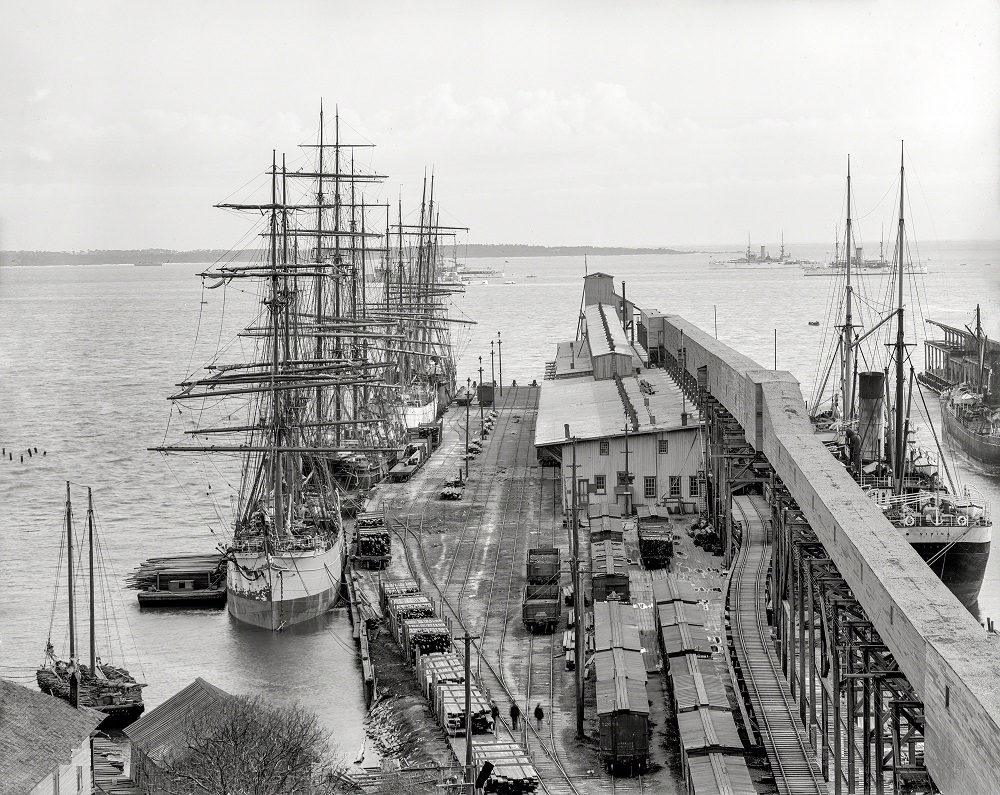
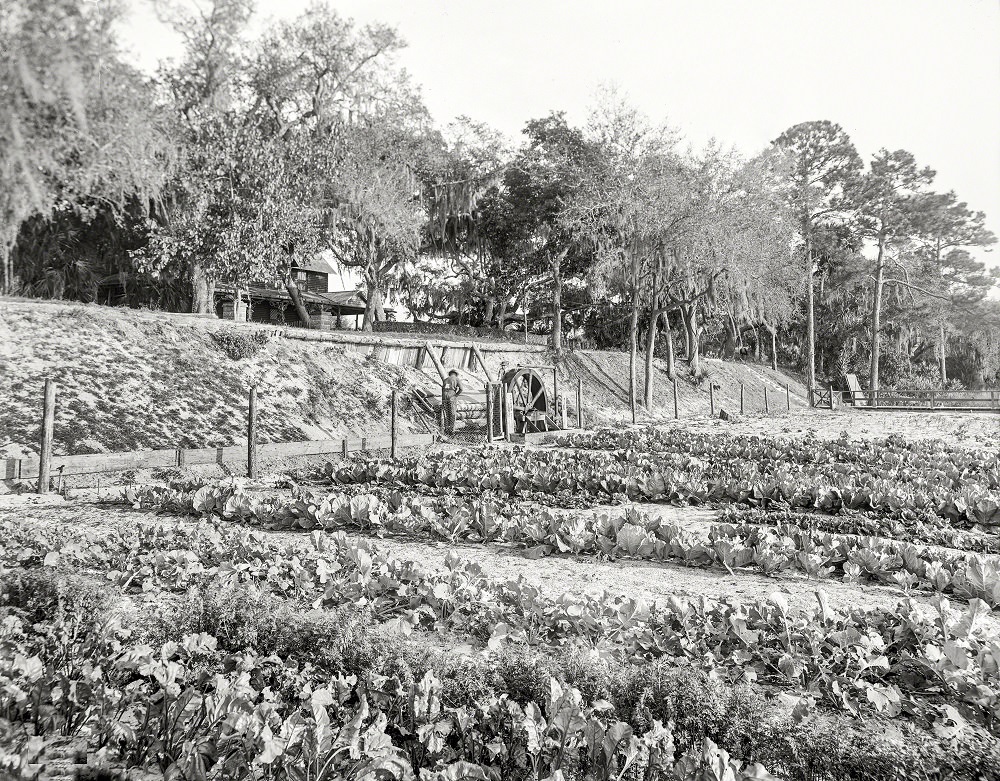
Pensacola’s harbor was among the finest on the Gulf Coast, handling lumber, cotton, and military vessels. Ships from across the Atlantic docked here regularly. Volusia County, east of Orlando along the Atlantic coast, was still mostly rural farmland and scattered settlements. Its wide, hard-packed beaches would later become famous for automobile racing, but in 1903, the county was quiet and largely undeveloped.
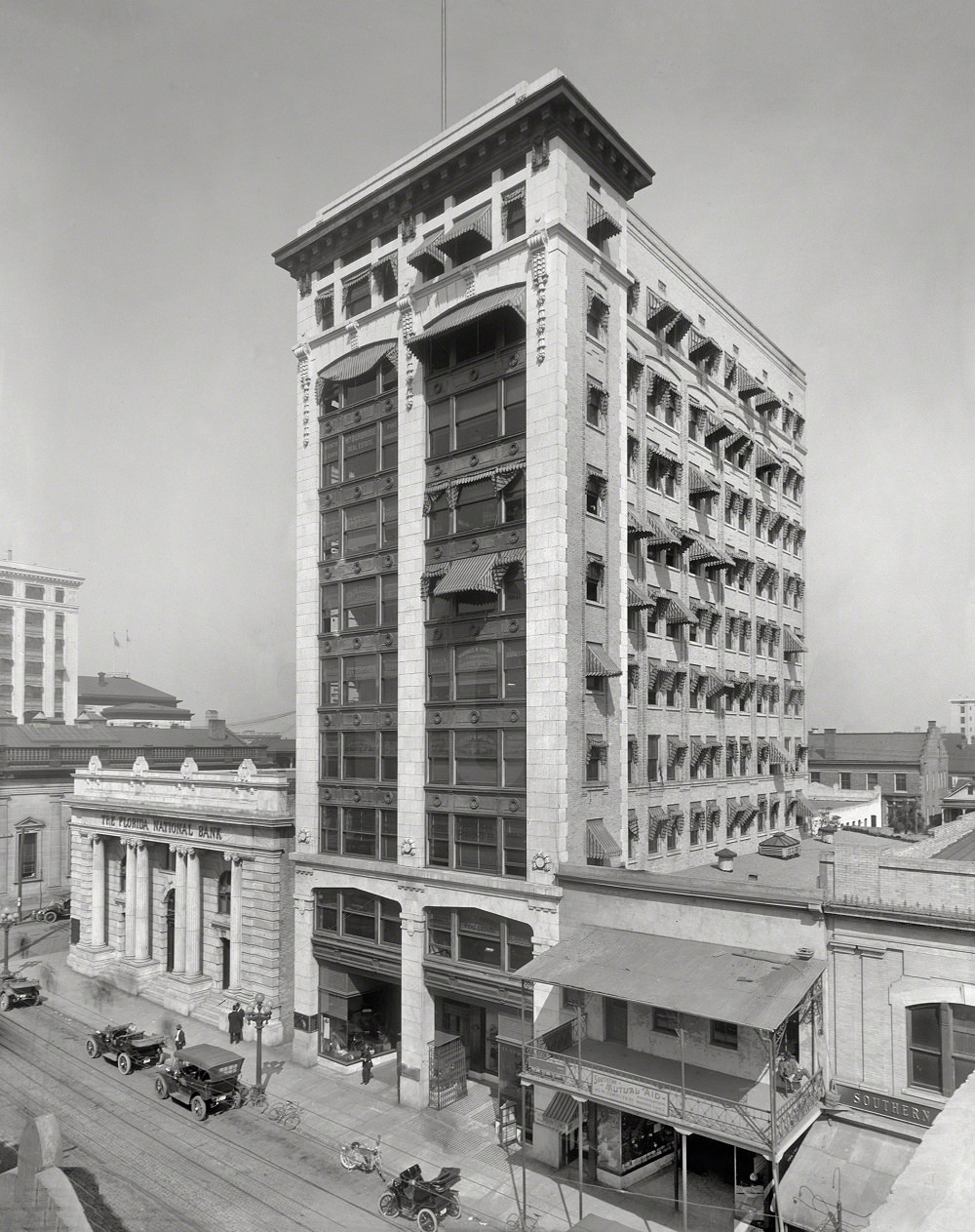
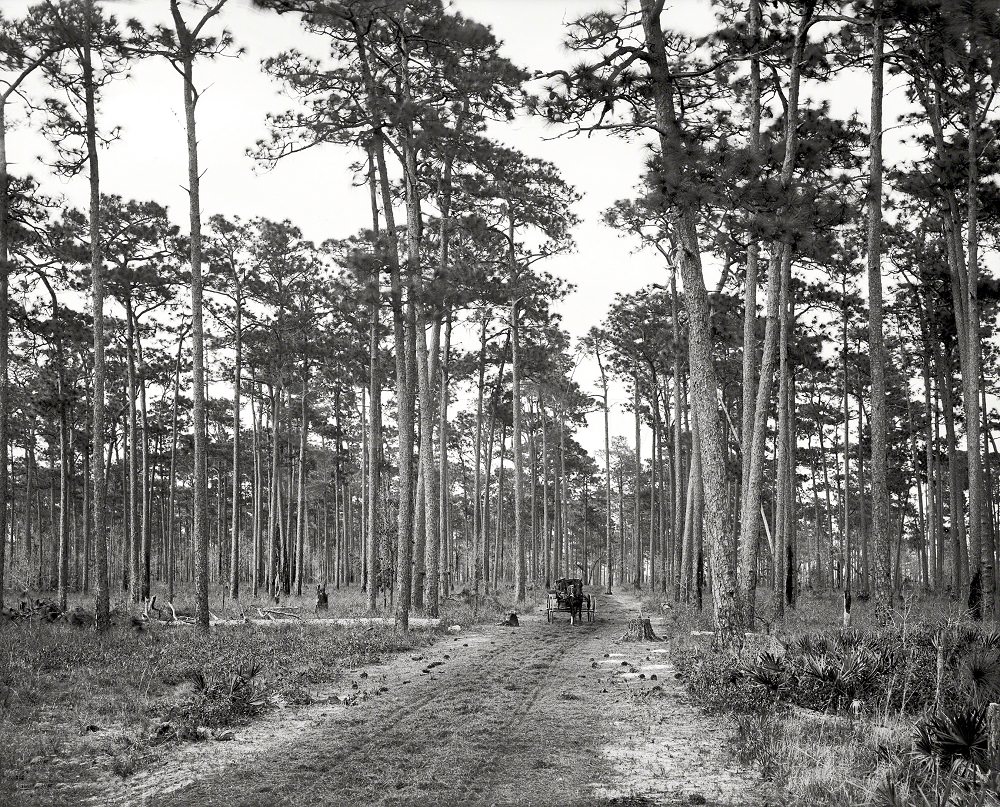
By 1910, Jacksonville was reaching upward. The Bisbee Building on Forsyth Street stood as the city’s first true skyscraper, a symbol of how quickly the post-fire city had rebuilt itself into a commercial powerhouse. Away from the cities, much of Florida remained dense pine forest. Turpentine workers and loggers moved through these woods daily, extracting the resources that fueled industries across the region.
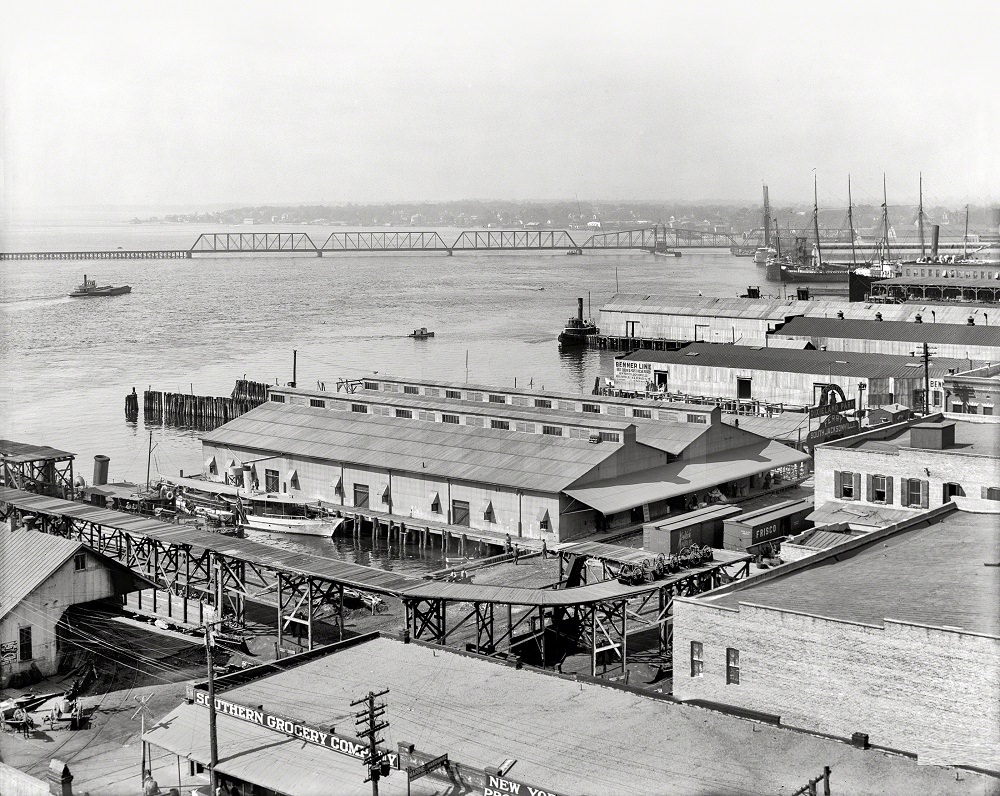
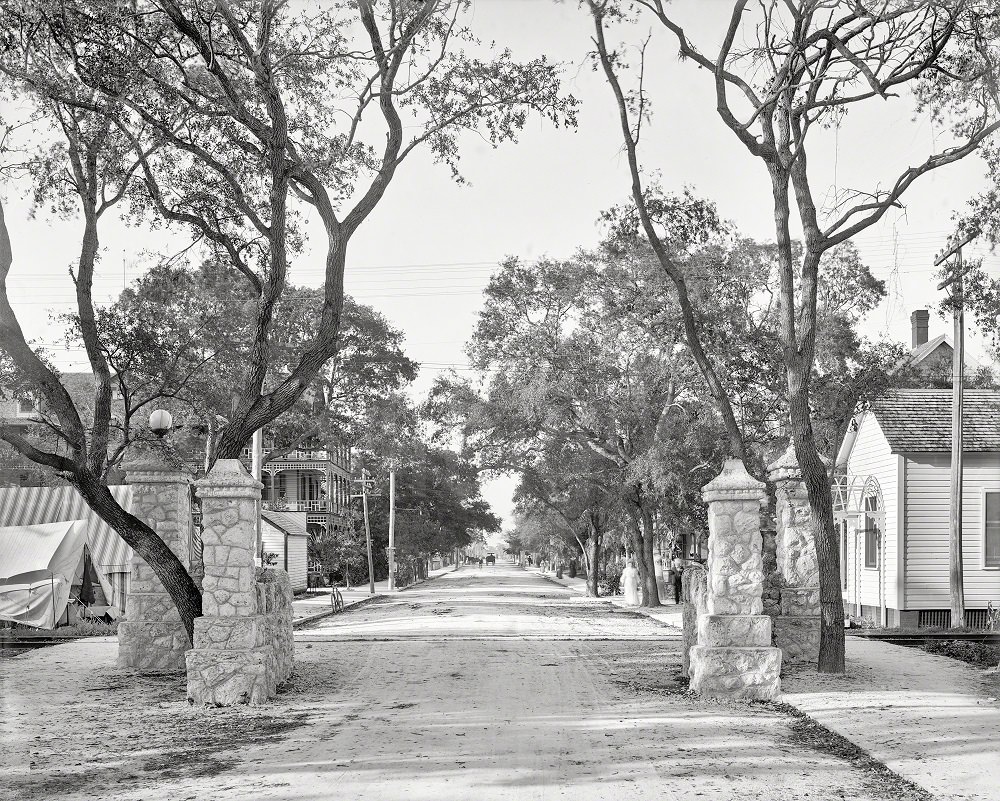
The St. Johns River was Jacksonville’s defining geographic feature — wide, navigable, and essential to commerce. By 1910, bridges and riverboats connected both banks of the city. Miami in 1904 was a tiny, newly incorporated town. Its streets were still being named and renamed as the city tried to establish order. What would become one of America’s great cities was, at this point, a dusty grid of young ambitions.
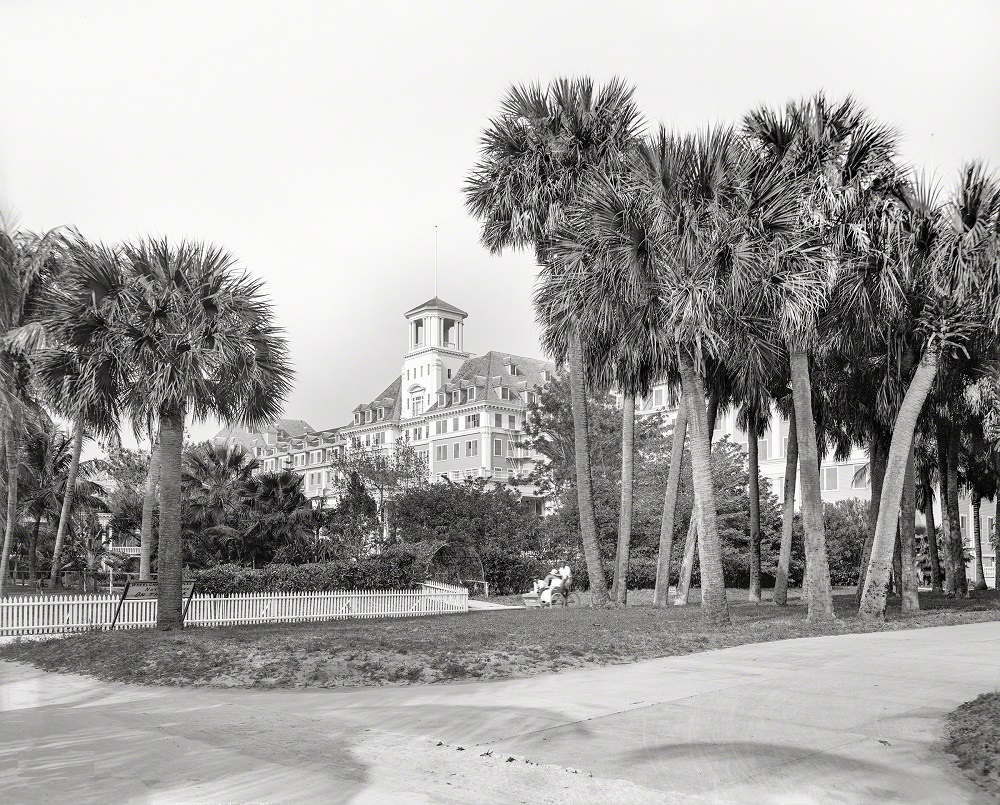
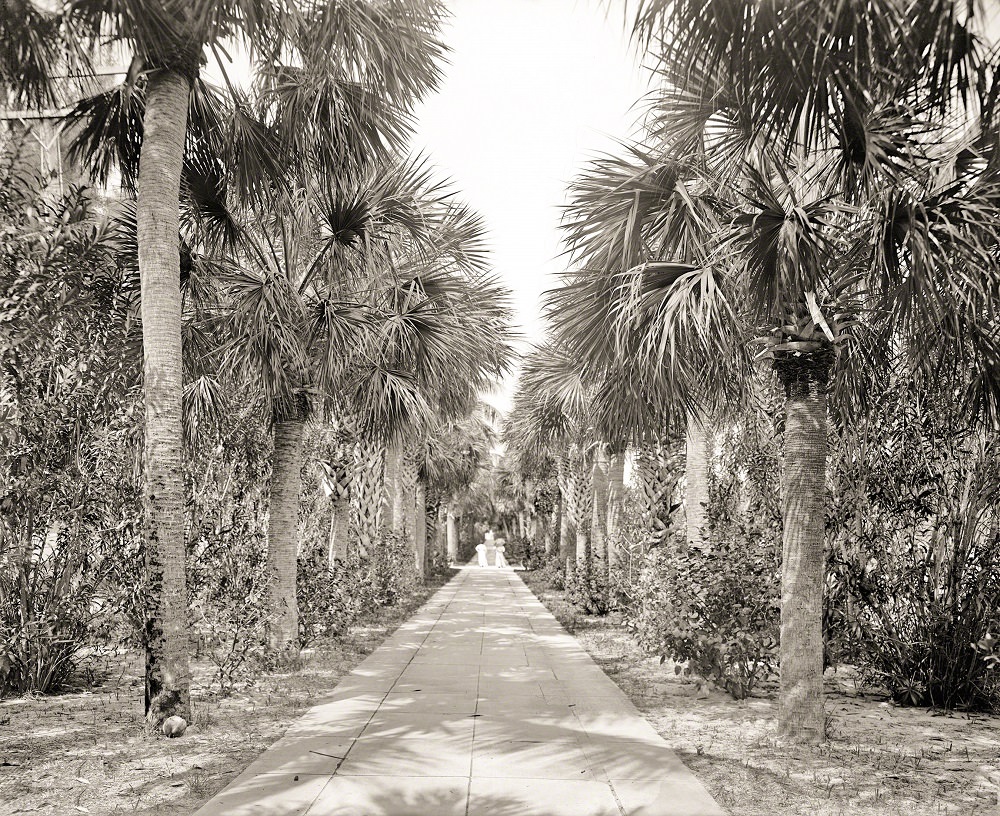
The Royal Poinciana Hotel in Palm Beach was, at its peak, the largest wooden structure in the world. Flagler opened it in 1894, and it quickly became the defining address of American high society each winter season. The Avenue of Palms connecting it to the Breakers was a promenade unlike anything else in Florida — a formal, landscaped boulevard between two massive resort hotels, all set against the backdrop of the Atlantic.
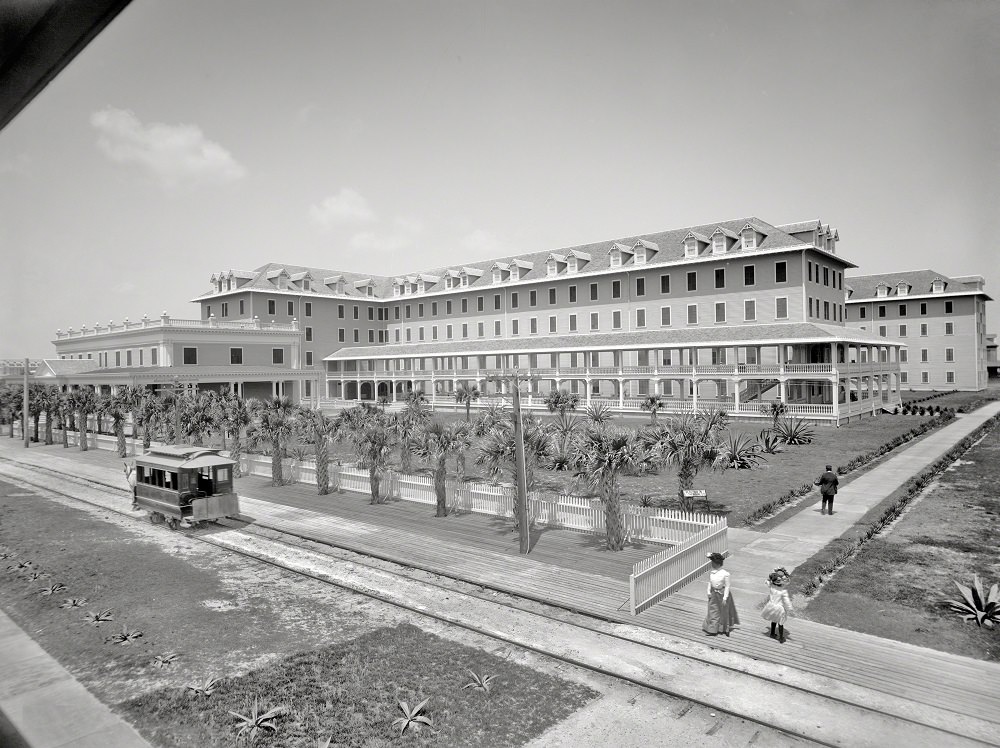
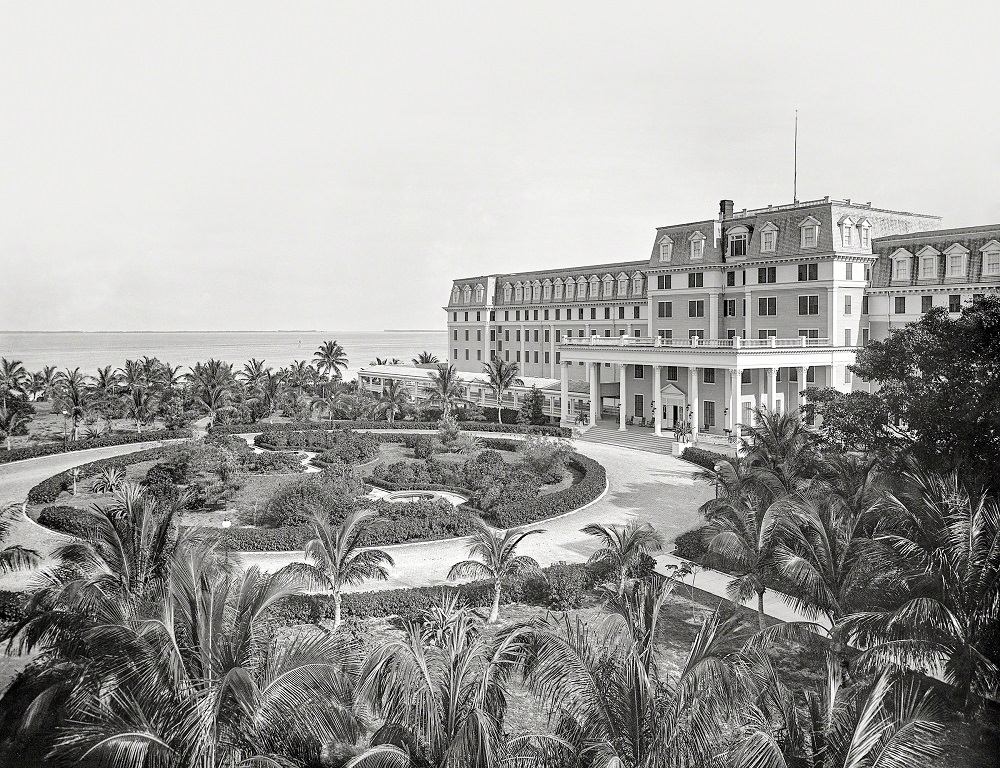
The Breakers occupied a prime stretch of Palm Beach oceanfront, and its casino — a social gathering space, not a gambling hall — looked directly out toward the Atlantic. In Miami, Flagler’s Hotel Royal Palm opened in 1897 at the mouth of the Miami River, offering 350 rooms, electric lights, and an enormous pool. It was the catalyst that transformed Miami from a trading post into a destination.
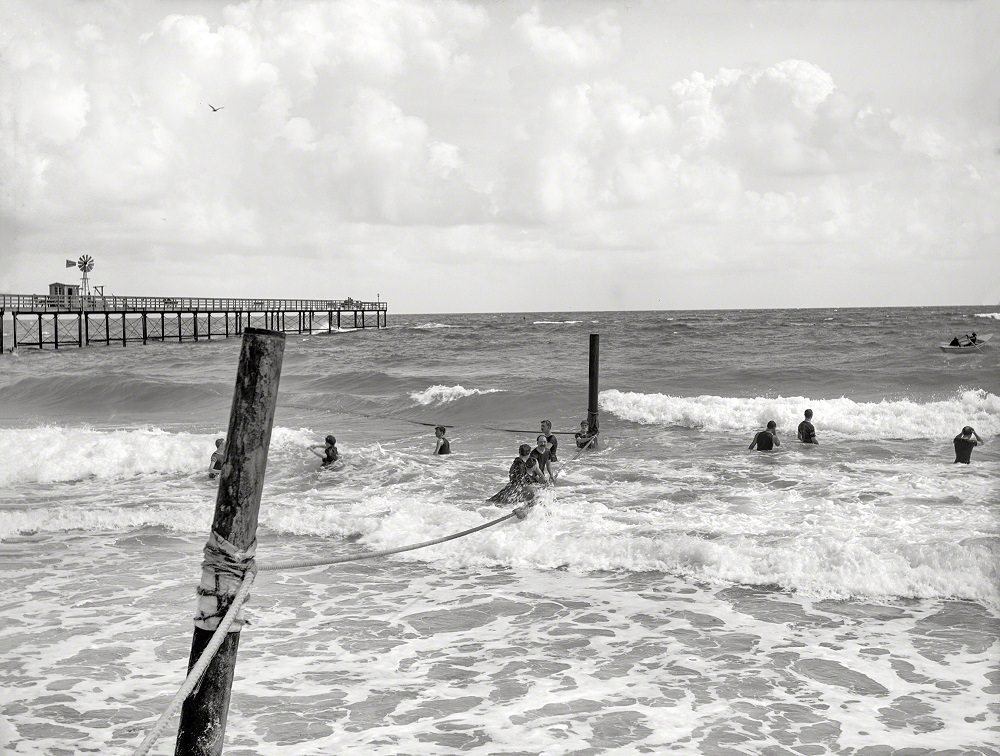
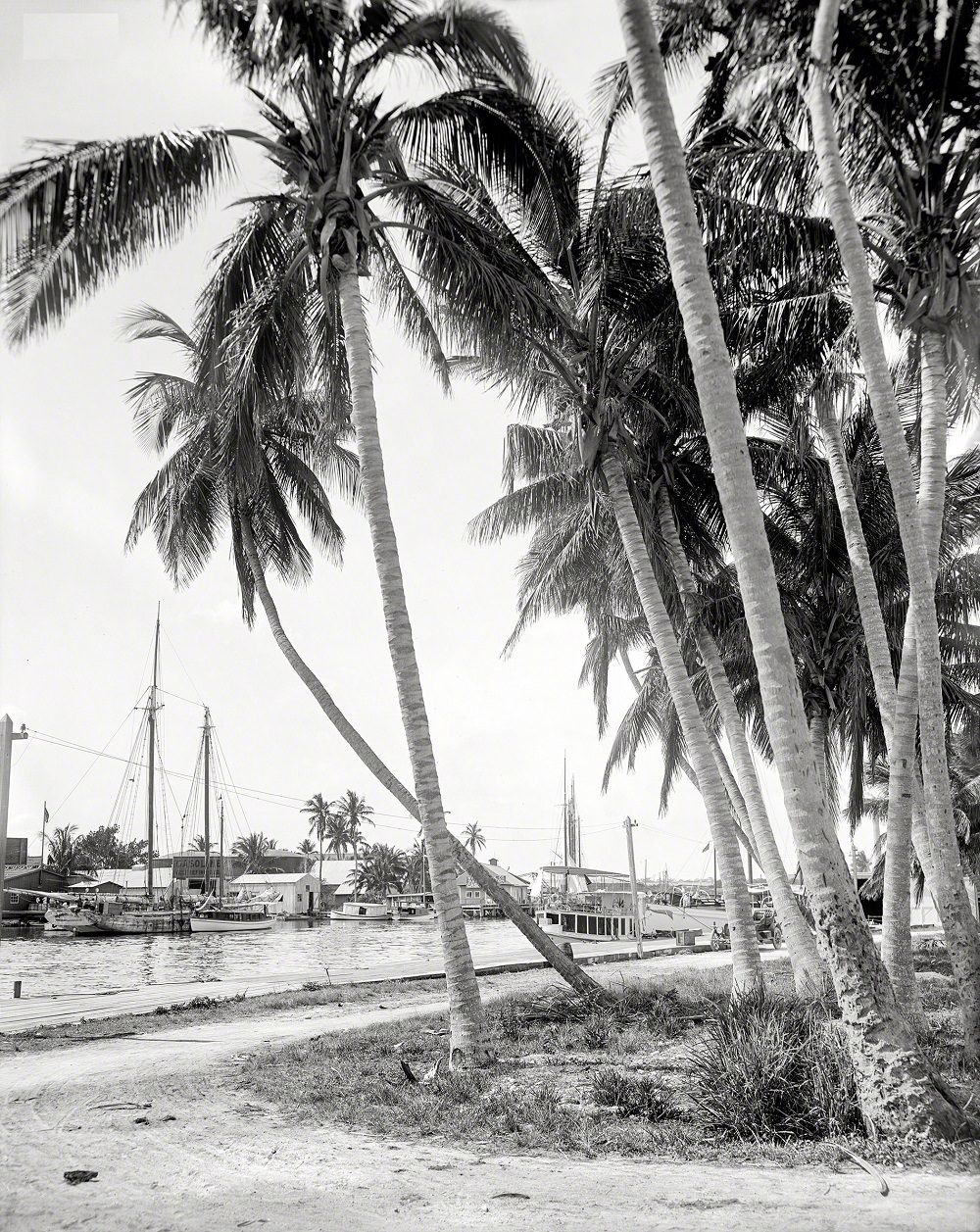
Ocean bathing was a fashionable activity for resort guests in the early 1900s, though bathing costumes of the era covered far more skin than modern swimwear. At Palm Beach, bathers waded into the surf fully clothed by today’s standards. Miami’s waterfront in 1908 showed a working harbor shaded by coconut palms, with small boats tied along docks that handled both cargo and passenger traffic up and down Biscayne Bay.
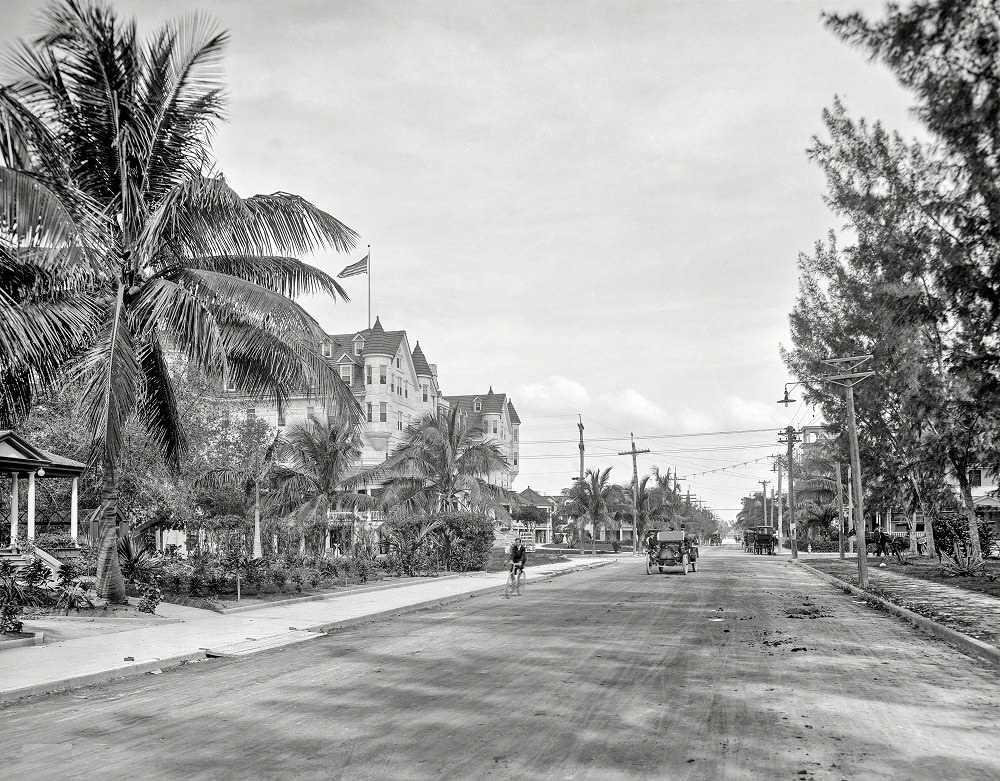
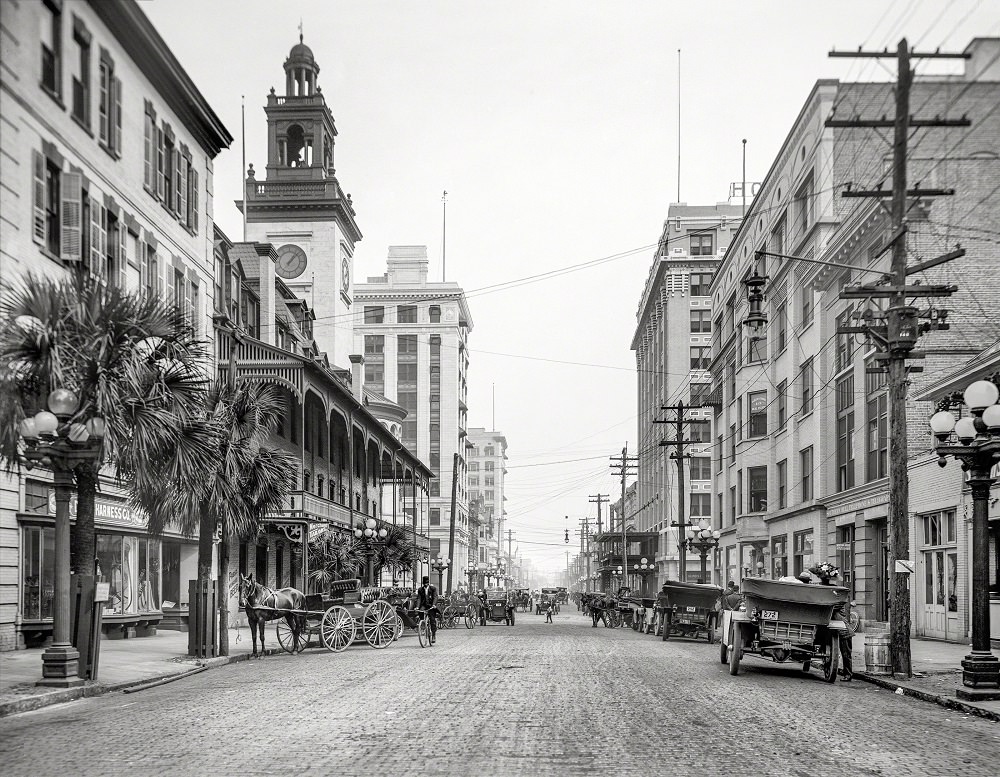
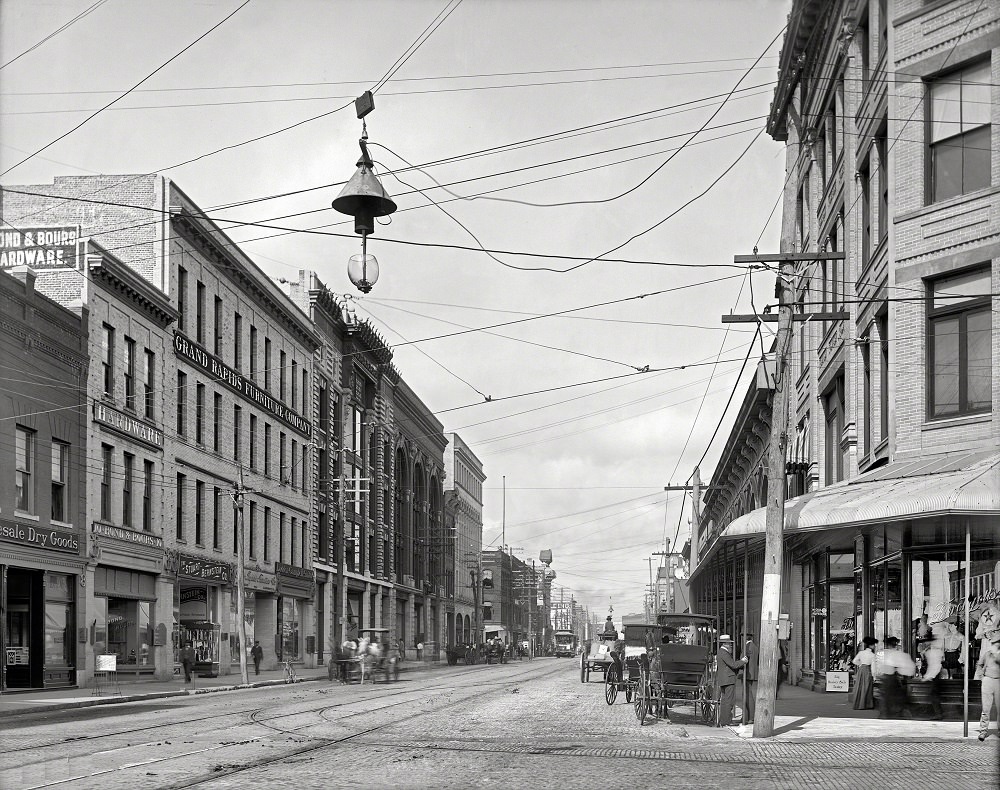
Miami’s downtown core was filling in rapidly by 1910. The Hotel Halcyon on Avenue B represented the city’s push toward modern hospitality infrastructure. Jacksonville’s Forsyth Street, photographed the same year, showed a mature commercial district with trolley lines, multi-story buildings, and heavy foot traffic — evidence of just how far the city had come in less than a decade since the great fire.
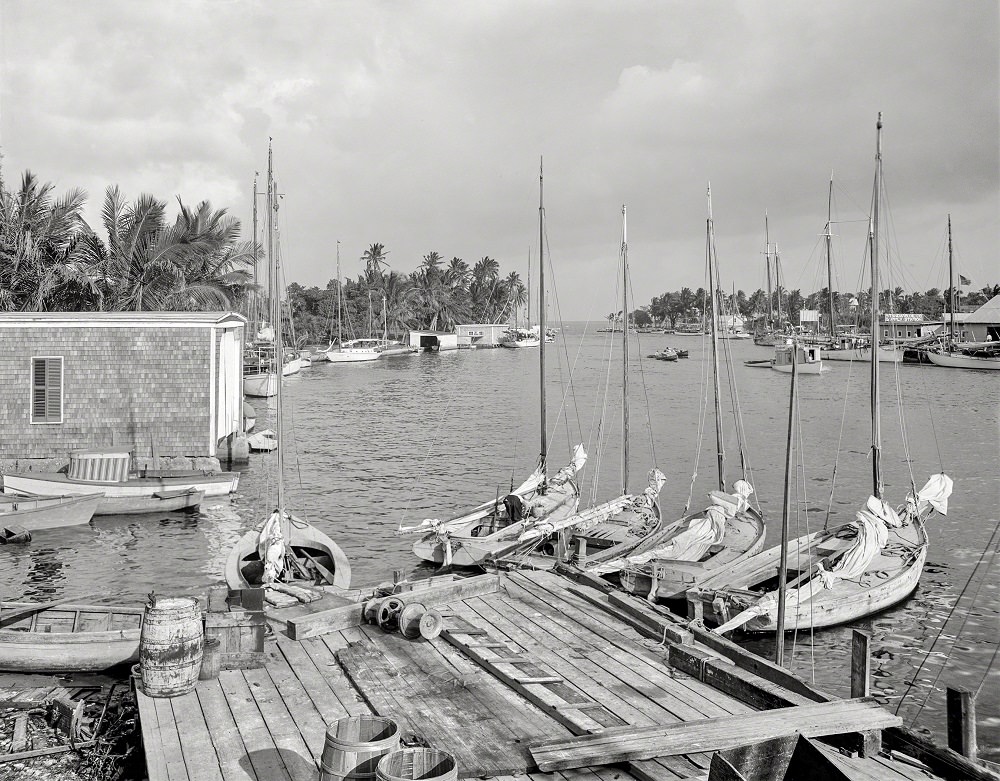
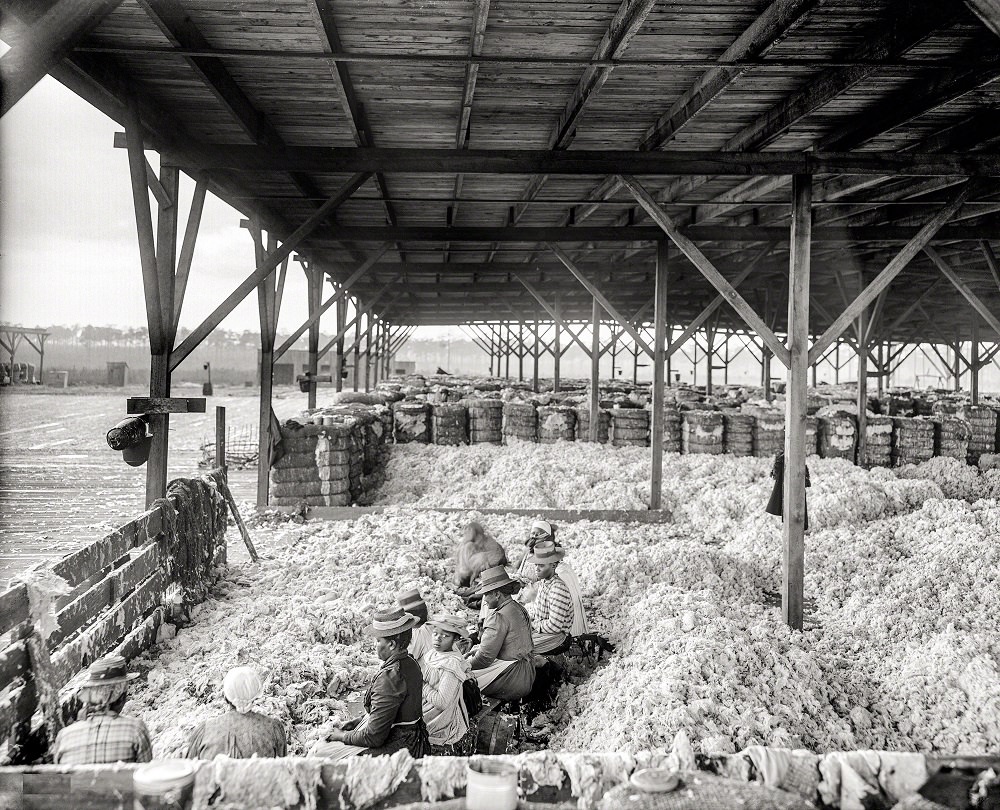
Where the Miami River meets Biscayne Bay, a small but growing port managed the flow of goods and passengers that kept the young city alive. Hundreds of miles to the northwest, Pensacola’s economy depended on industries like cotton compression. Workers at facilities like the Atlantic Cotton Compress Company sorted and baled raw cotton for shipment overseas — physically demanding labor performed largely by African American workers under strict and often exploitative conditions.
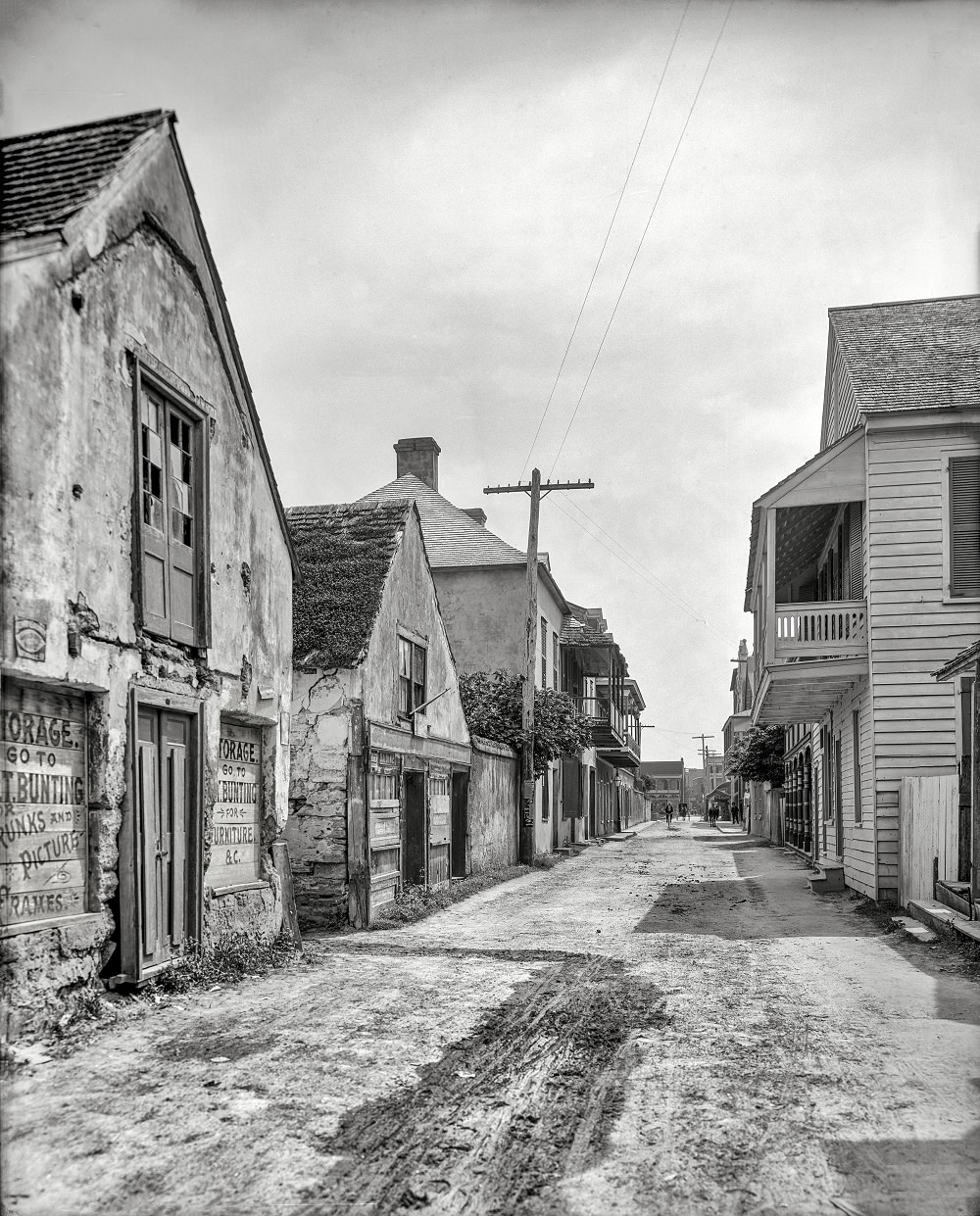
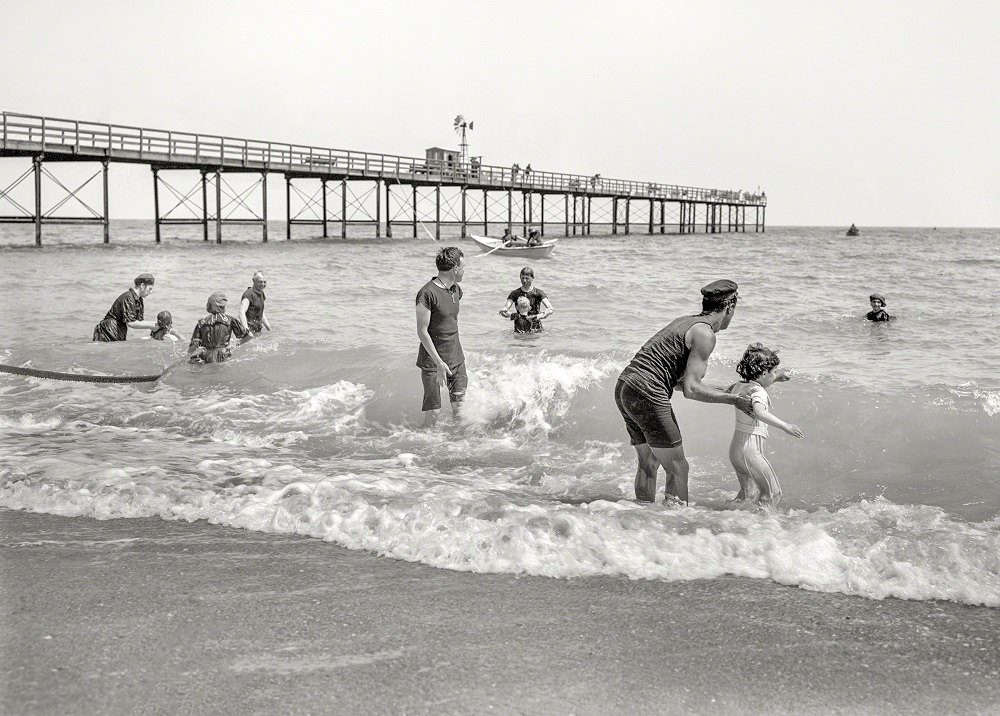
St. George Street in St. Augustine was one of the oldest continuously used roads in the United States, its narrow width reflecting a layout established by Spanish colonial planners centuries earlier. By 1910, it lined with shops and pedestrians moving between the old city gates and the commercial center. At Palm Beach, the beach scene a year earlier showed bathers in full dress enjoying the Atlantic, with the resort’s wooden bathhouses visible along the shore.
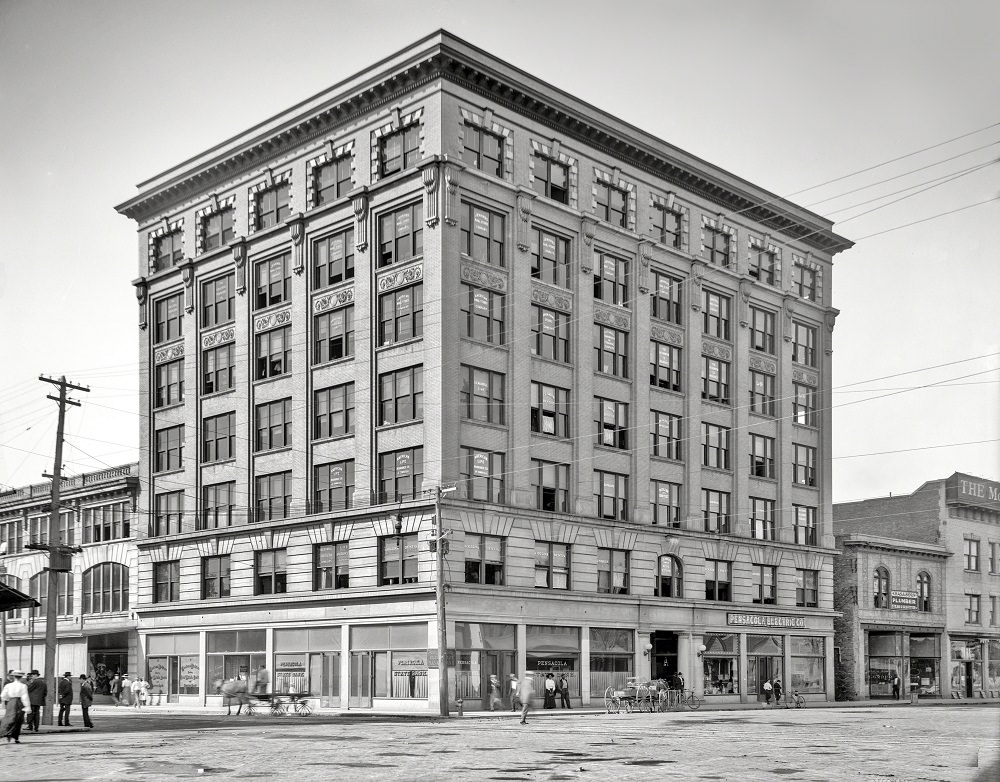
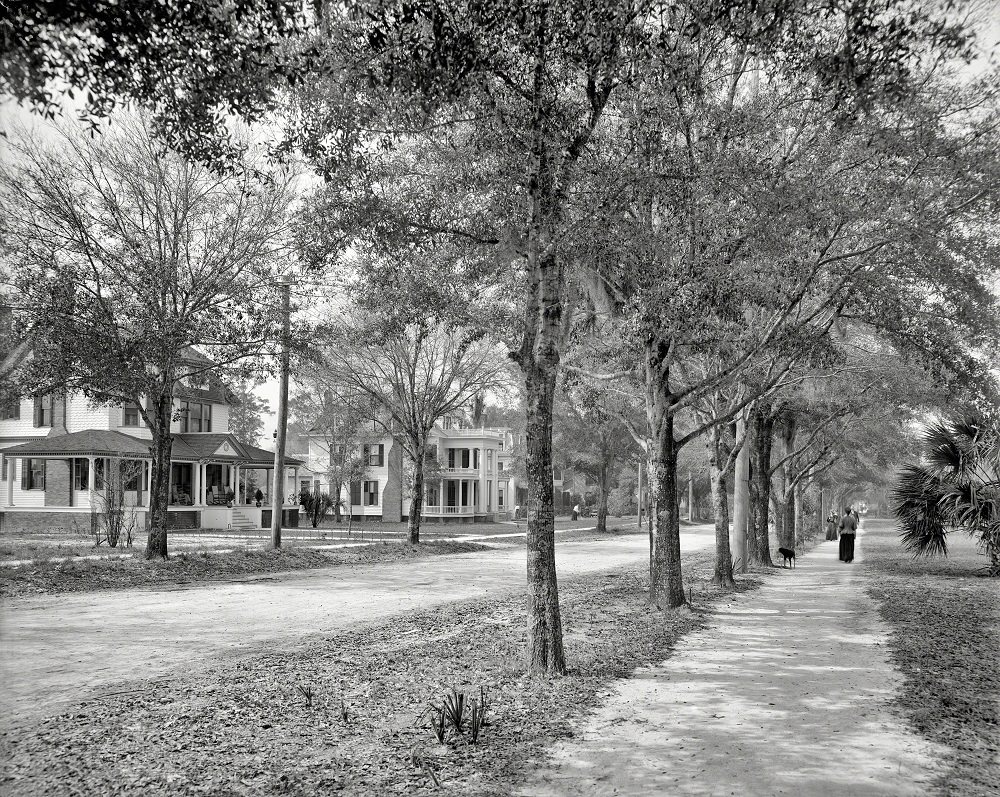
Pensacola’s Blount Building, completed in 1907, was a statement of commercial confidence in the Gulf Coast city. At eight stories, it dominated the skyline and housed offices for the region’s business and legal professionals. DeLand, a small inland town, retained a quiet, tree-lined character in 1905. It served mainly as a center for citrus growers and as the home of Stetson University, drawing a small but steady stream of students and academics.
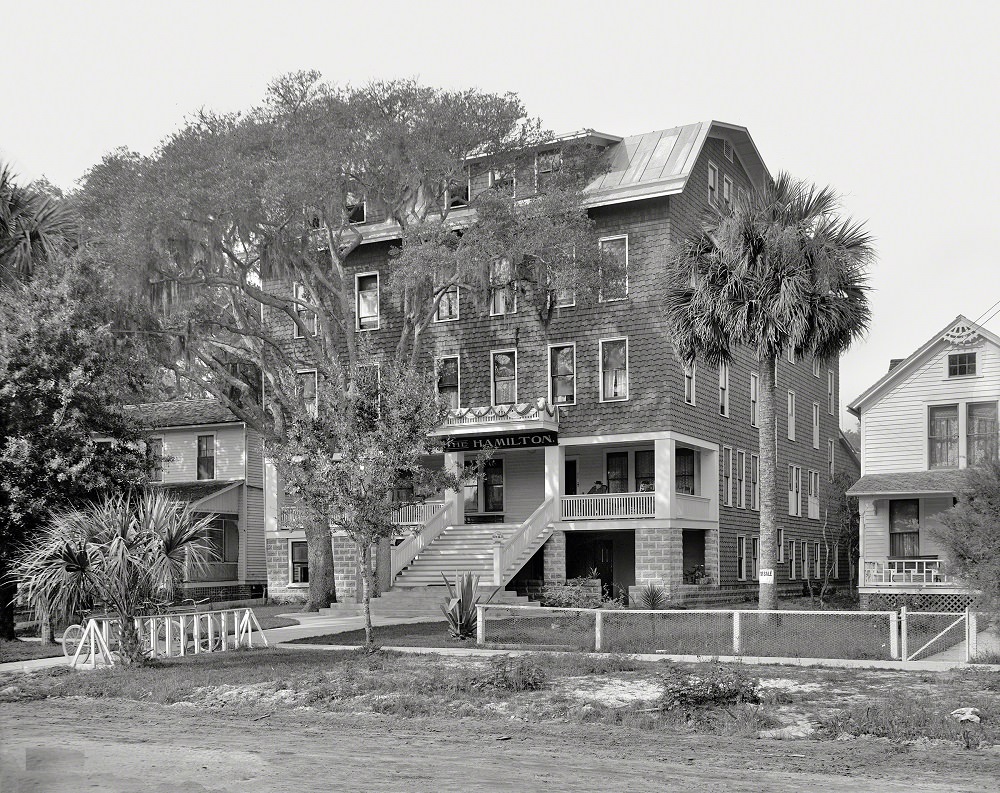
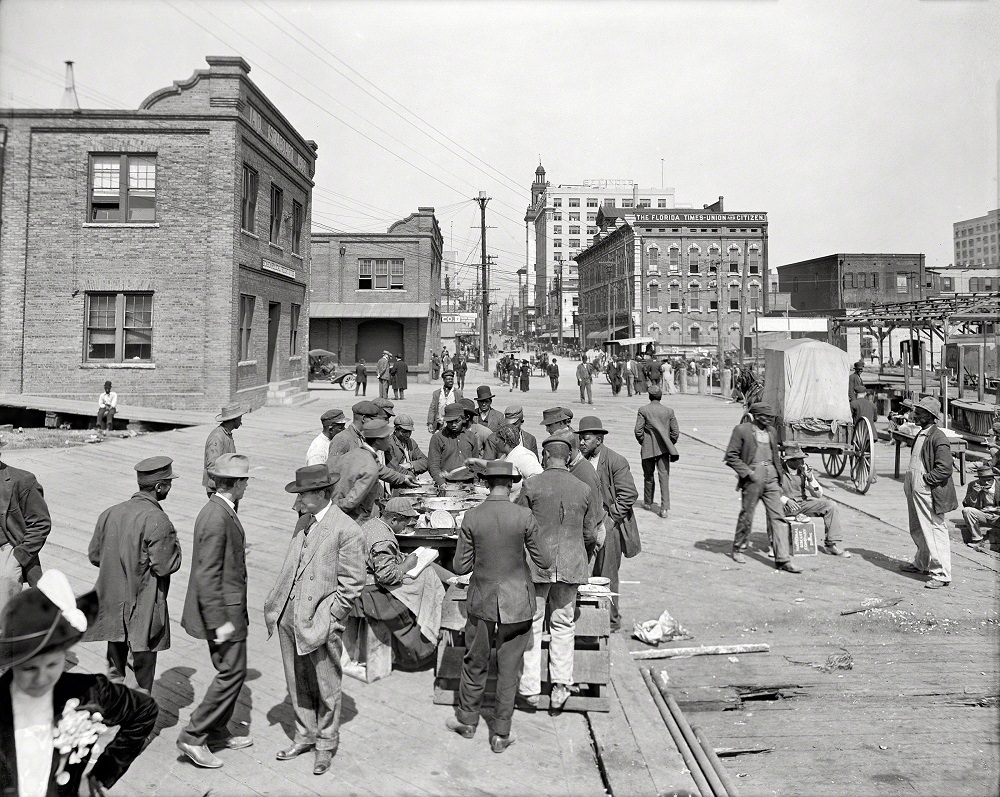
Daytona’s hotels catered to a mix of winter tourists and automobile enthusiasts who came to race on the famous hard-packed beach. The Hamilton was one of several respectable establishments competing for guests in the growing resort town. Back in Jacksonville, the docks at lunchtime told a different story — dockworkers, stevedores, and laborers taking brief breaks from loading and unloading the ships that kept Florida’s export economy moving.
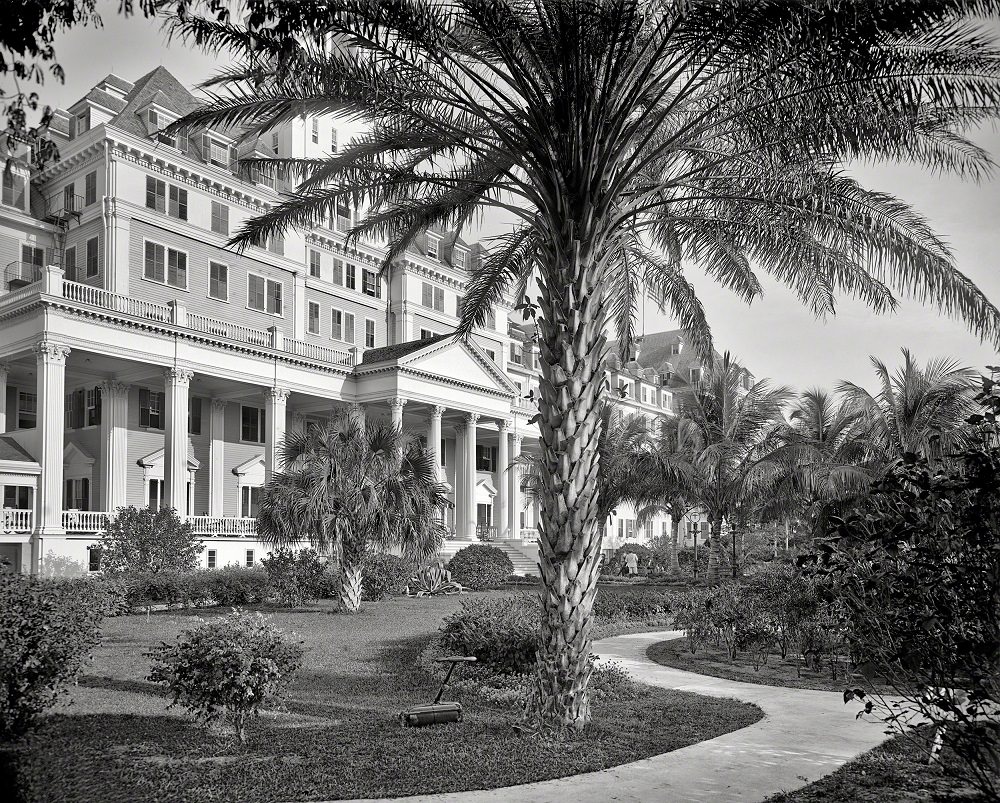
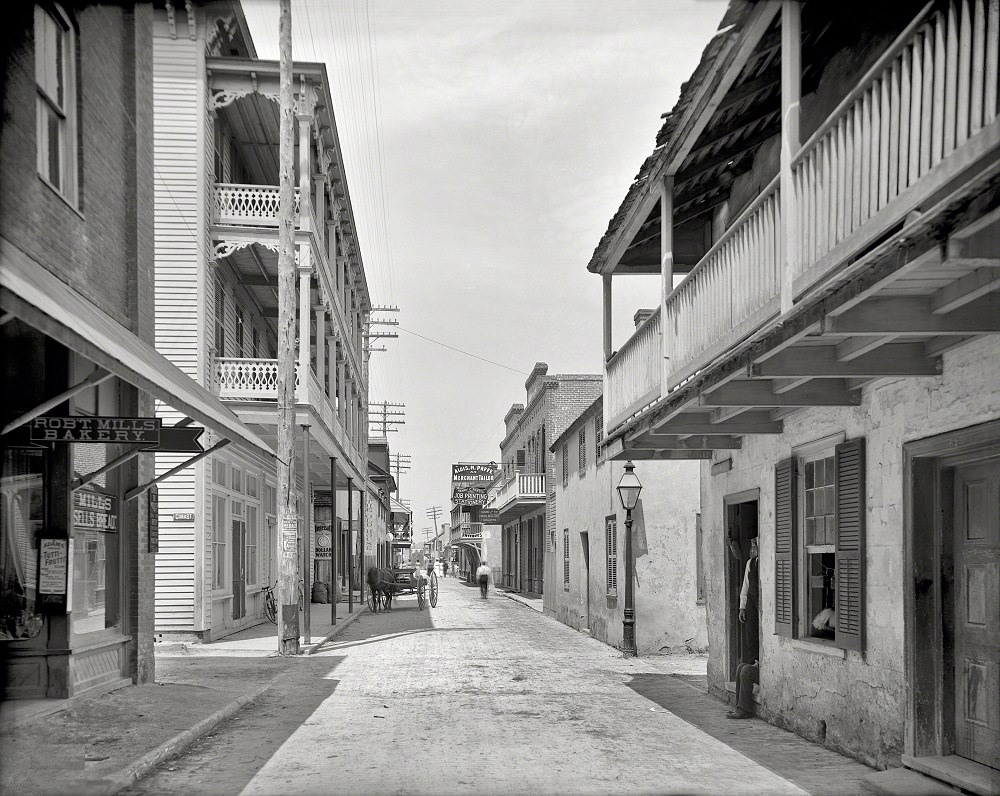
The entrance to the Royal Poinciana Hotel in 1902 was a spectacle in itself — wide verandas, manicured grounds, and a procession of wealthy guests arriving by carriage and bicycle. St. Augustine’s St. George Street, photographed multiple times across this period, shows a gradual increase in commercial activity and foot traffic as tourism steadily grew.
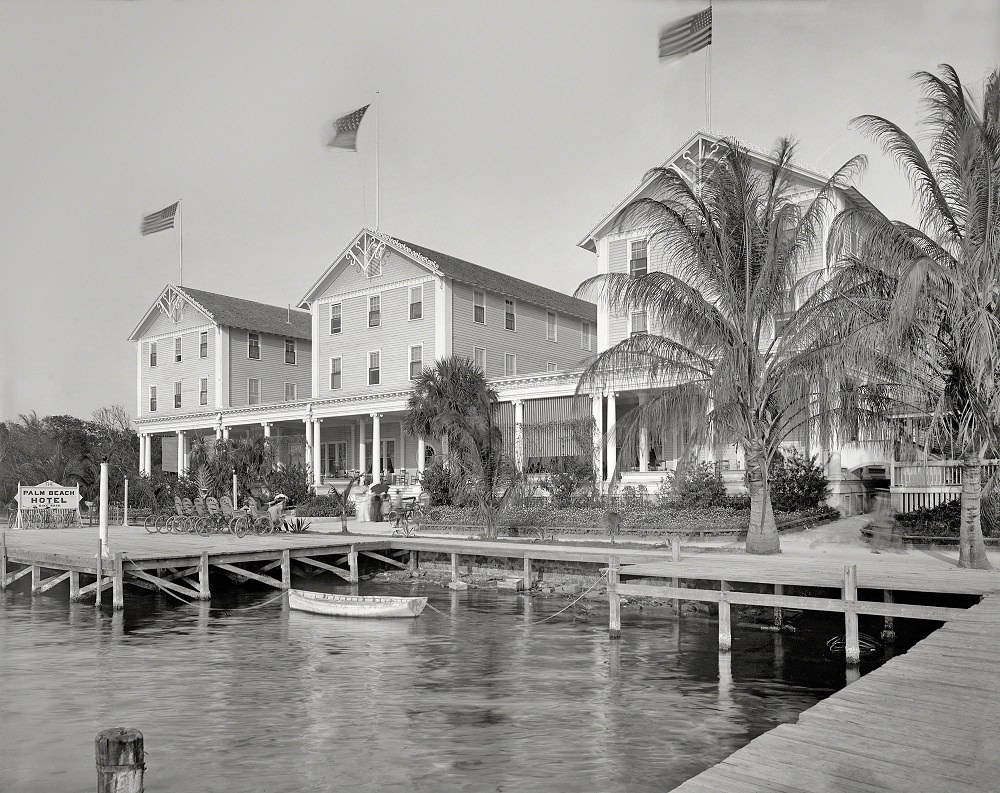
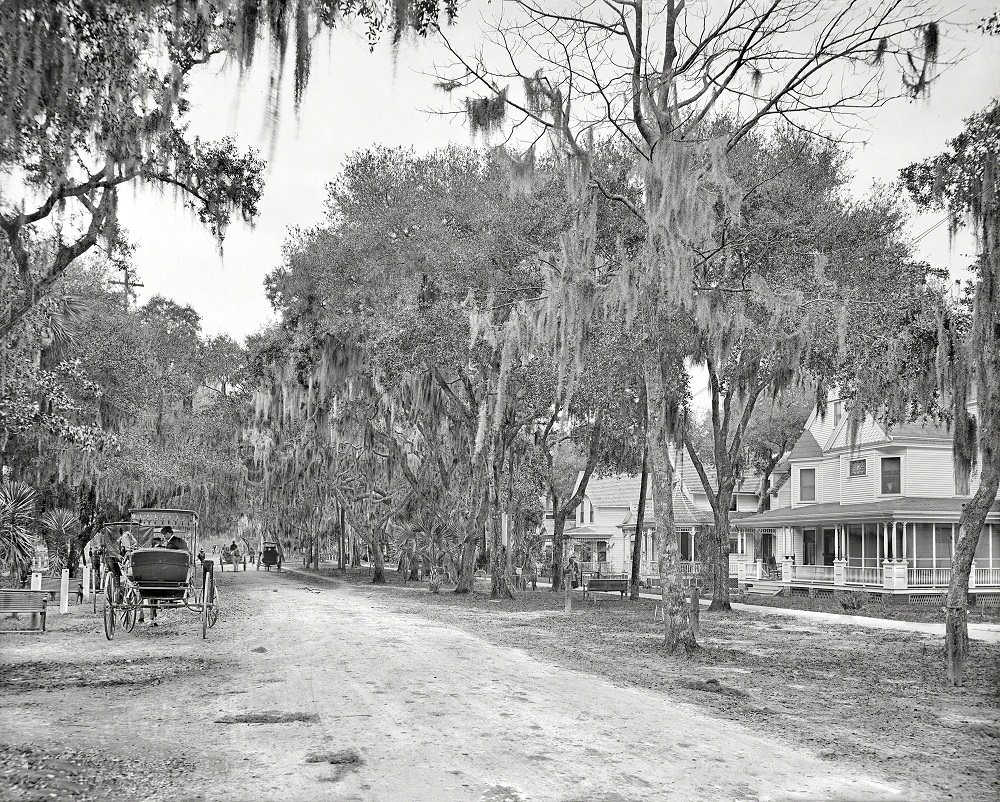
By 1910, Palm Beach had multiple hotels competing for the elite winter trade. Daytona’s Ridgewood Avenue in 1904 showed a broad, oak-shaded boulevard that gave the city much of its residential charm. Daytona was developing a dual identity — part refined resort town, part hub of early automobile culture, drawing both leisure seekers and speed enthusiasts to its famous beach.
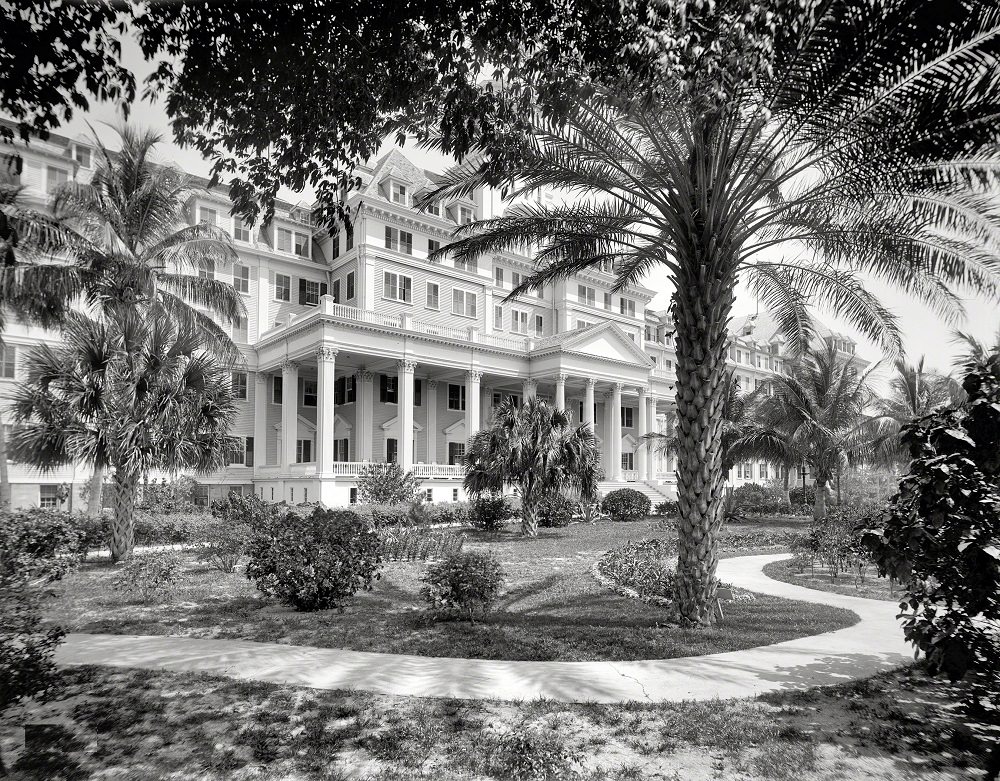
Seen from the northwest, the Royal Poinciana’s sheer scale was staggering — six stories and over 1,000 rooms spread across a structure painted a distinctive colonial yellow. Jacksonville’s Bay Street in 1904 presented a busy commercial waterfront lined with warehouses, offices, and docking facilities. The street ran parallel to the St. Johns River and was the commercial backbone of the city’s port operations.
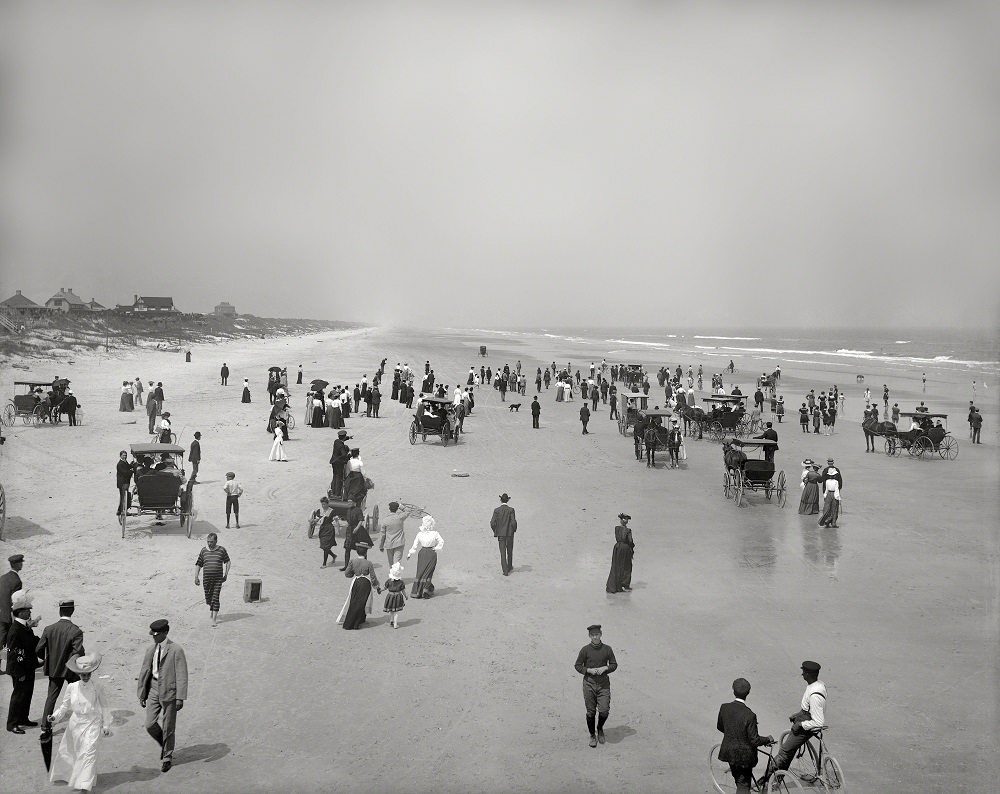
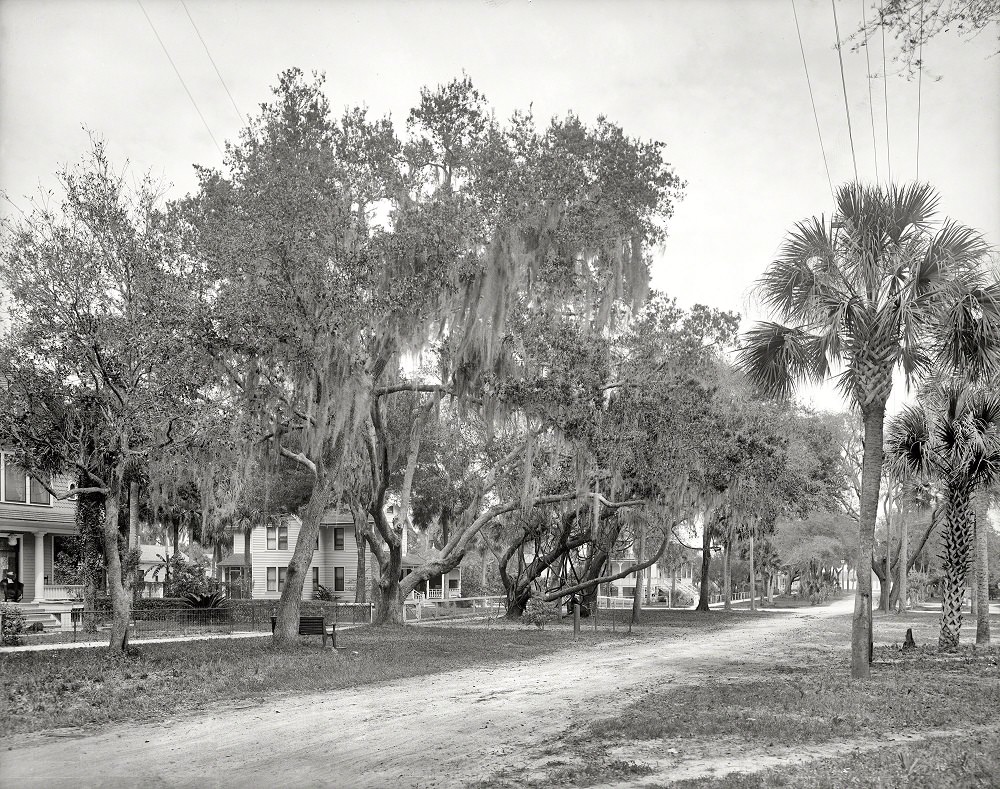
Seabreeze was a small community just across the Halifax River from Daytona, accessible by bridge or ferry. Its beach in 1904 was wide and flat, the same hard sand that drew automobile racers to set world land speed records in these early years of the century. Magnolia Avenue nearby offered another glimpse of Daytona’s quiet residential streets, shaded by the trees that gave the road its name.
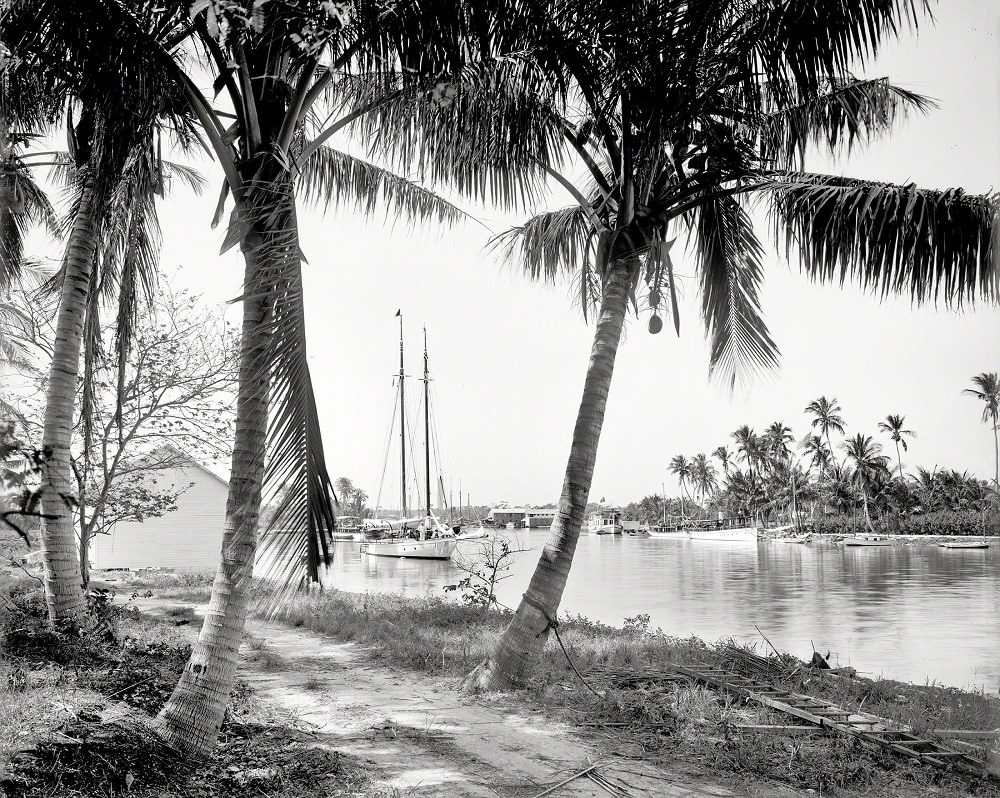
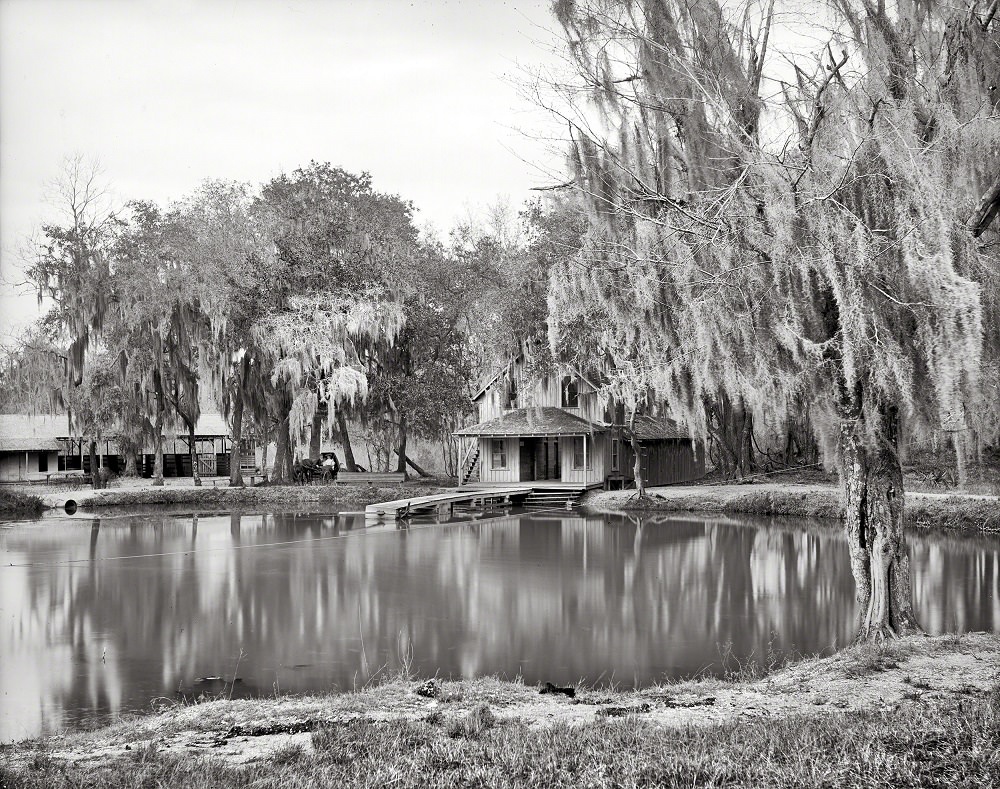
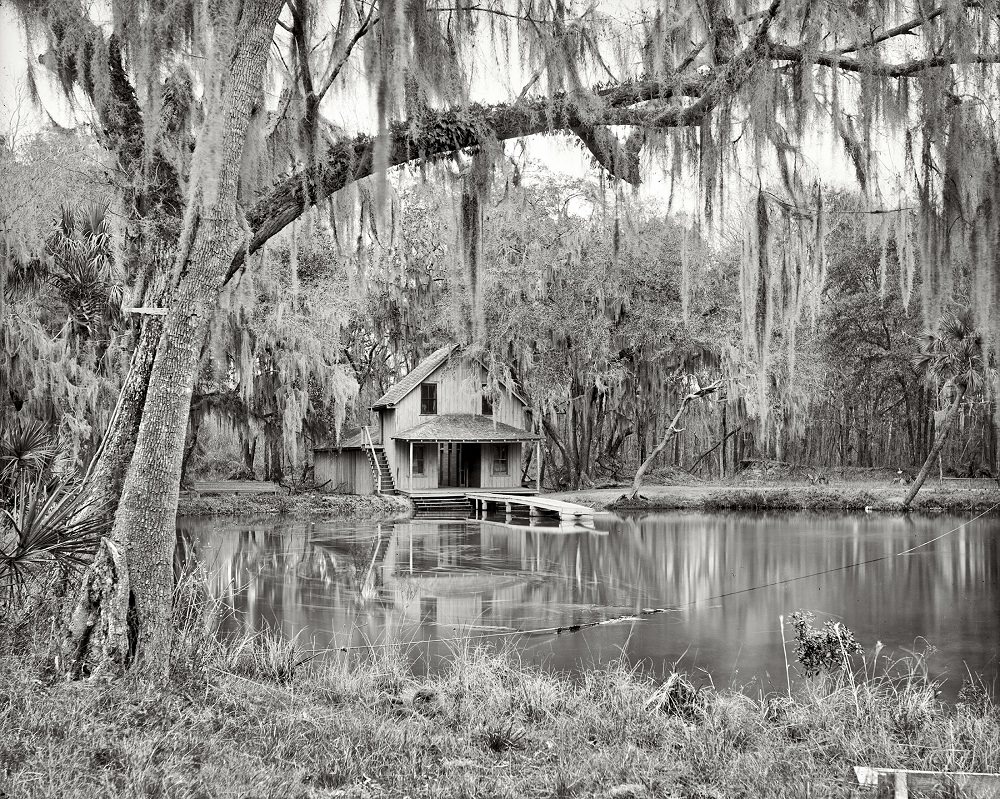
The Miami River was a working waterway in 1904, with small boats carrying produce, supplies, and passengers between the interior and the bay. It was lined with docks, tropical vegetation, and the occasional small home. DeLeon Springs, near DeLand, was a natural freshwater spring that drew visitors for swimming and picnicking. These clear springs — constant in temperature year-round — were used by Florida residents long before air conditioning made the summer heat more bearable.
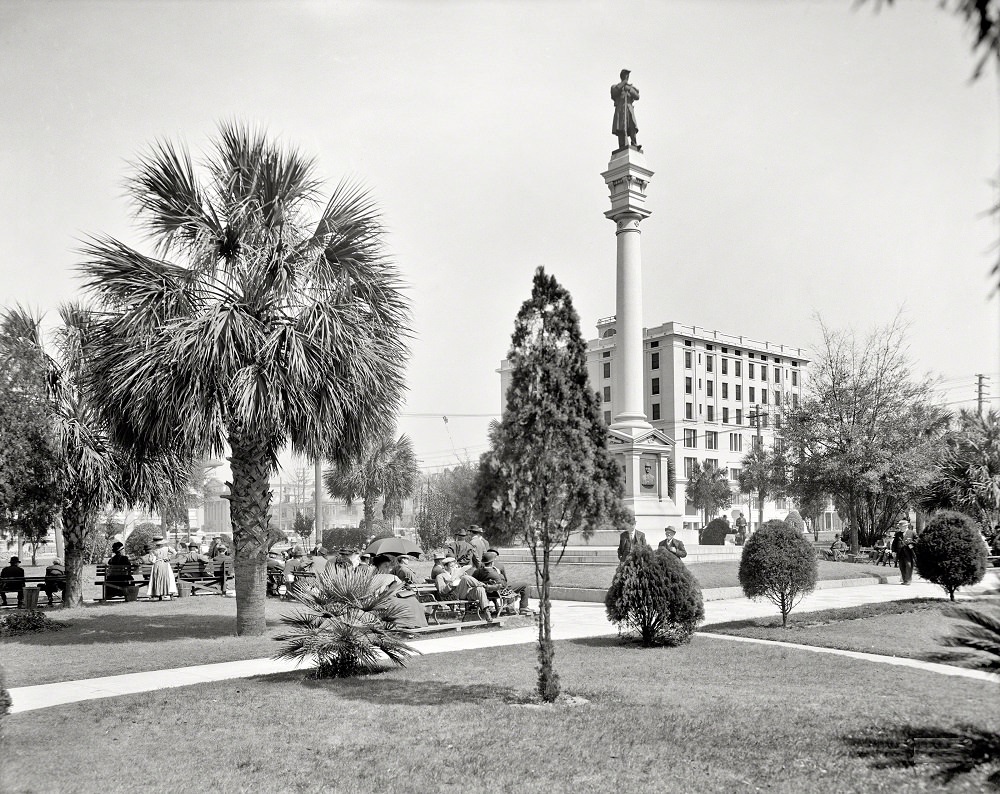
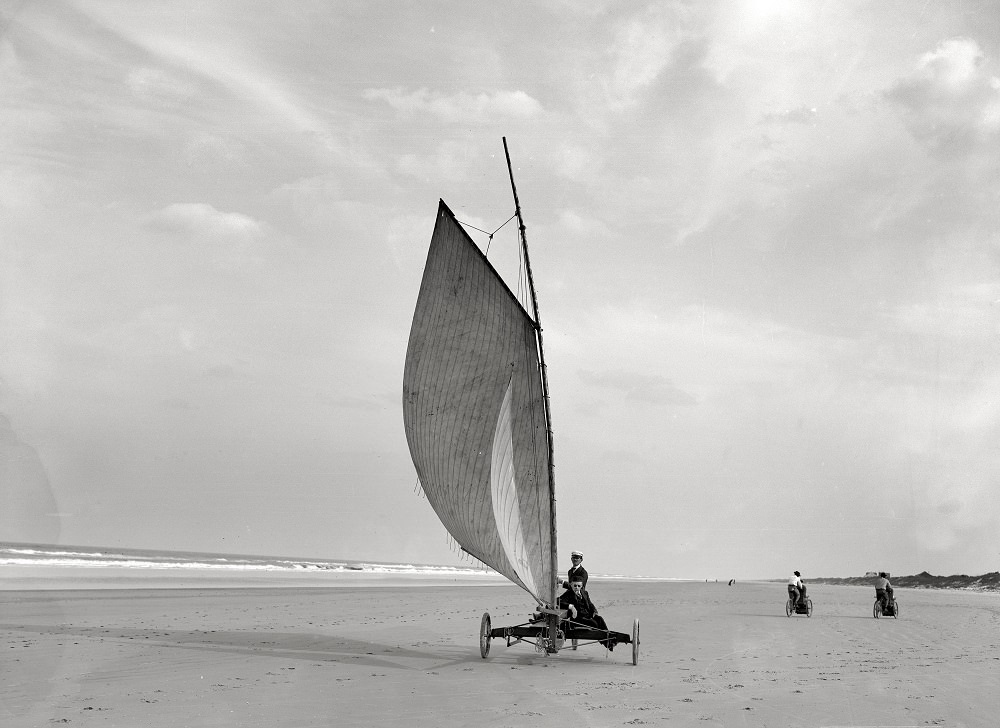
Hemming Park remained the civic center of Jacksonville throughout this period. Monuments, park benches, and surrounding commercial buildings made it a gathering place for all walks of life. At Ormond Beach, just north of Daytona, the hard beach surface was used not only for automobile racing but also for sailing craft fitted with wheels — an unusual and photogenic spectacle that attracted curious onlookers.
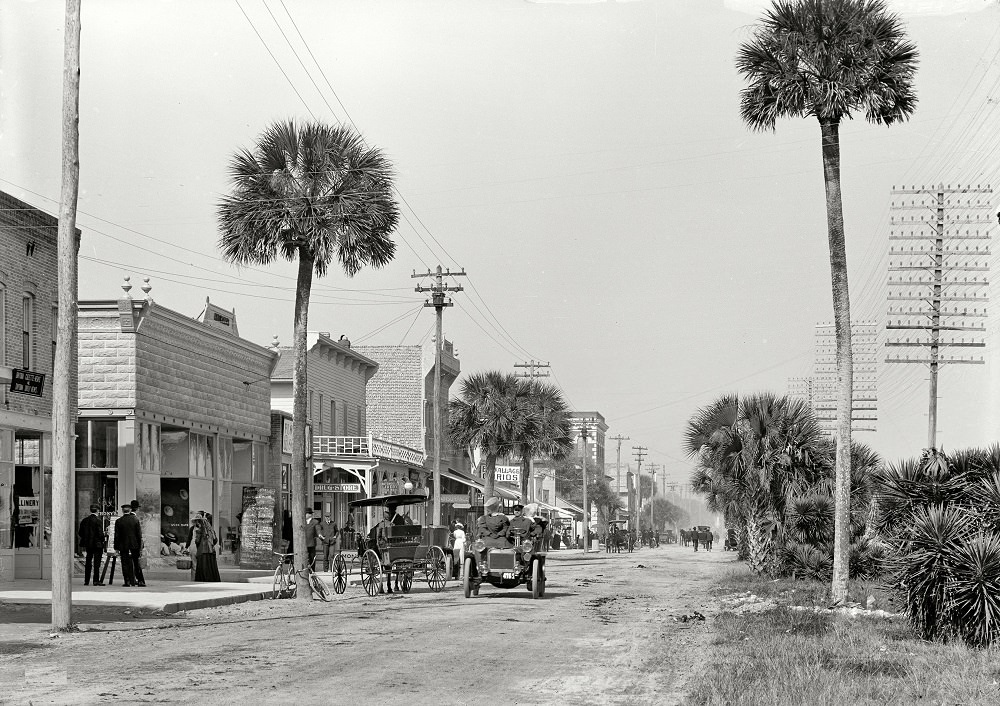
Volusia County’s rural character in 1904 reflected the broader reality of most of Florida’s interior — farmland, scattered homesteads, and dense natural landscape. Daytona’s Beach Street, by contrast, was already adapting to the automobile age. Auto livery businesses rented and serviced vehicles for visitors who wanted to drive on the beach, representing one of the earliest examples of car rental culture in America.
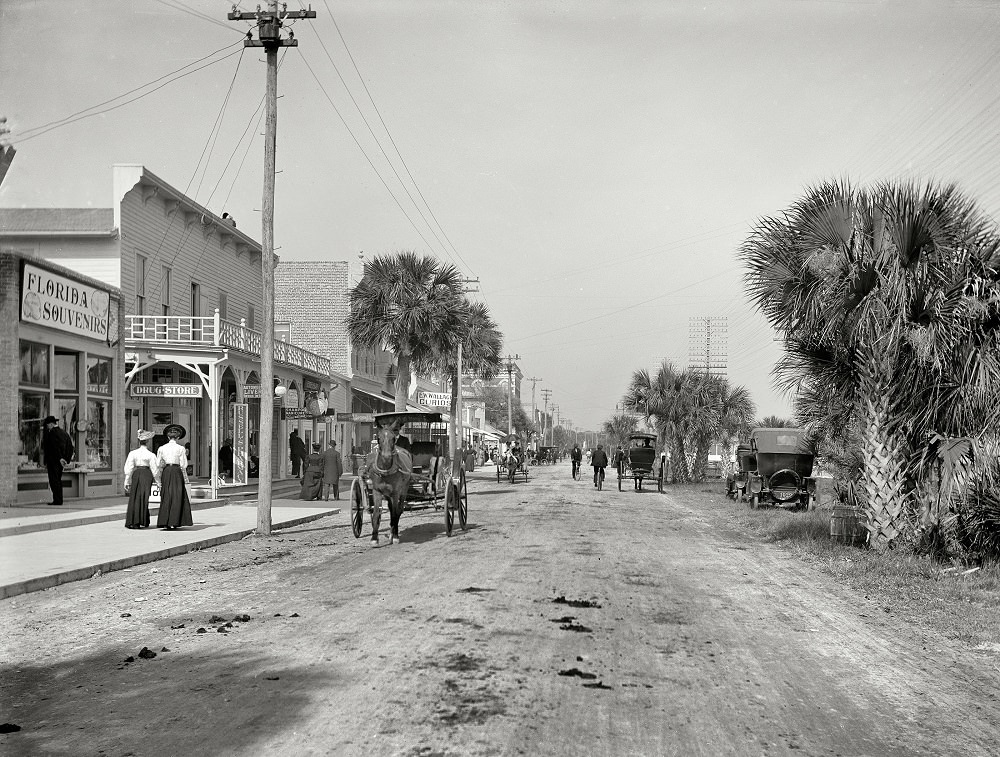
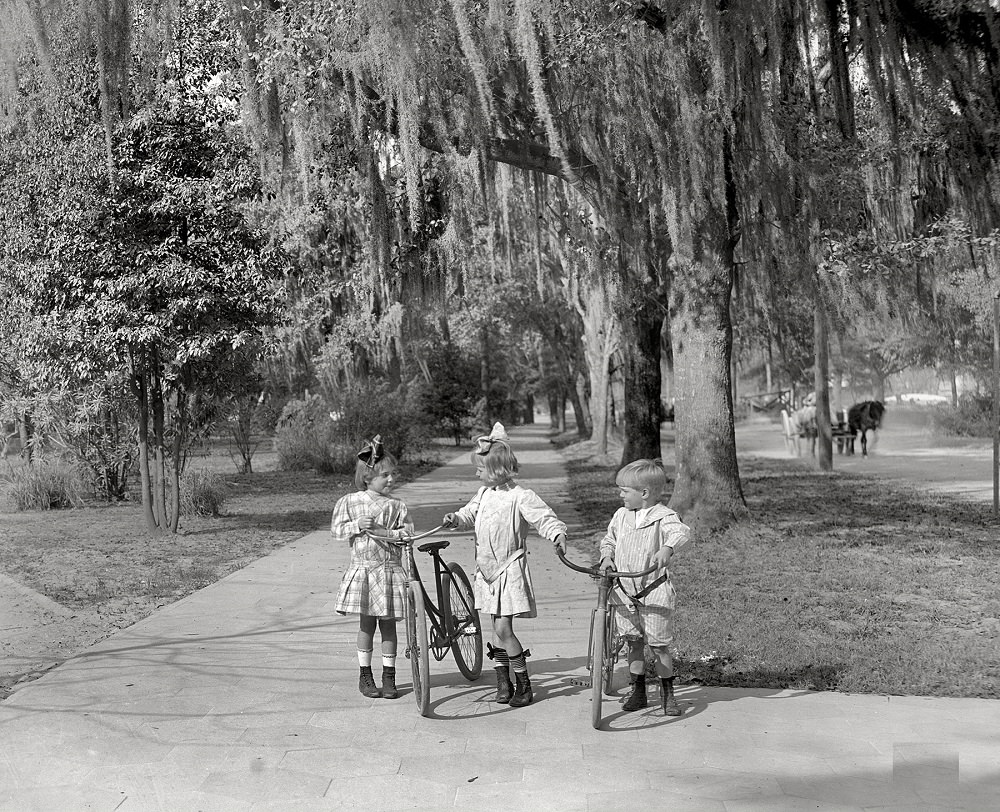
Souvenir shops along Daytona’s Beach Street in 1906 sold shells, postcards, and Florida mementos to tourists who were already arriving in large numbers. Jacksonville’s Riverside Park offered residents a landscaped escape from the city’s commercial bustle. By 1910, Jacksonville was investing in public green space as its population and prosperity continued to grow.
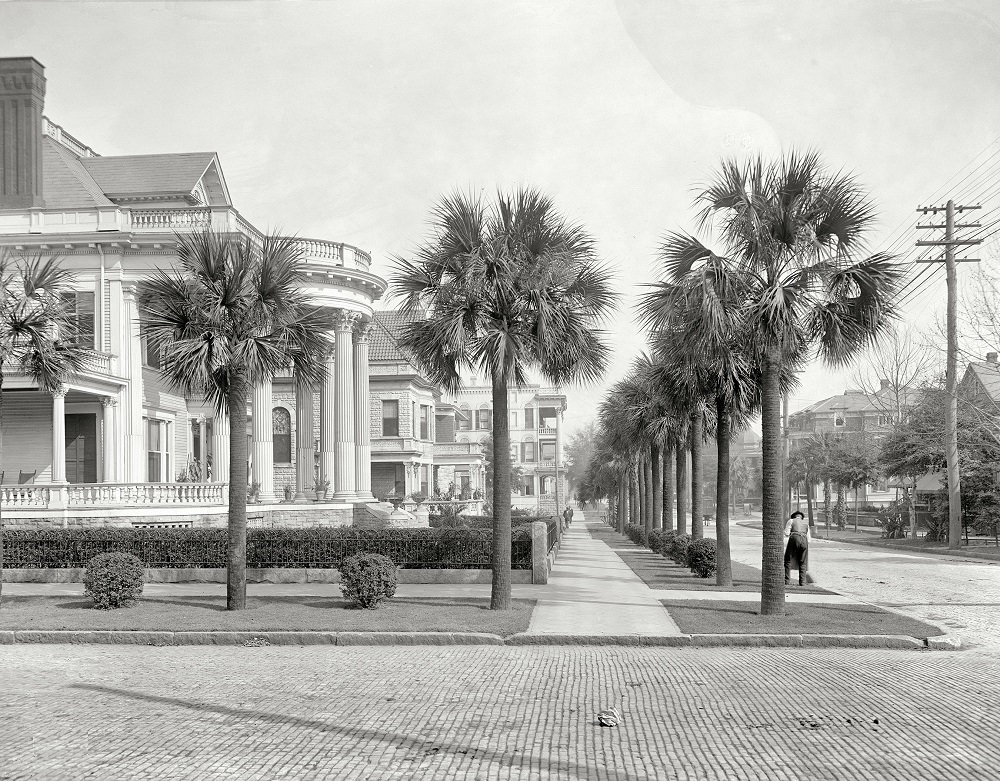
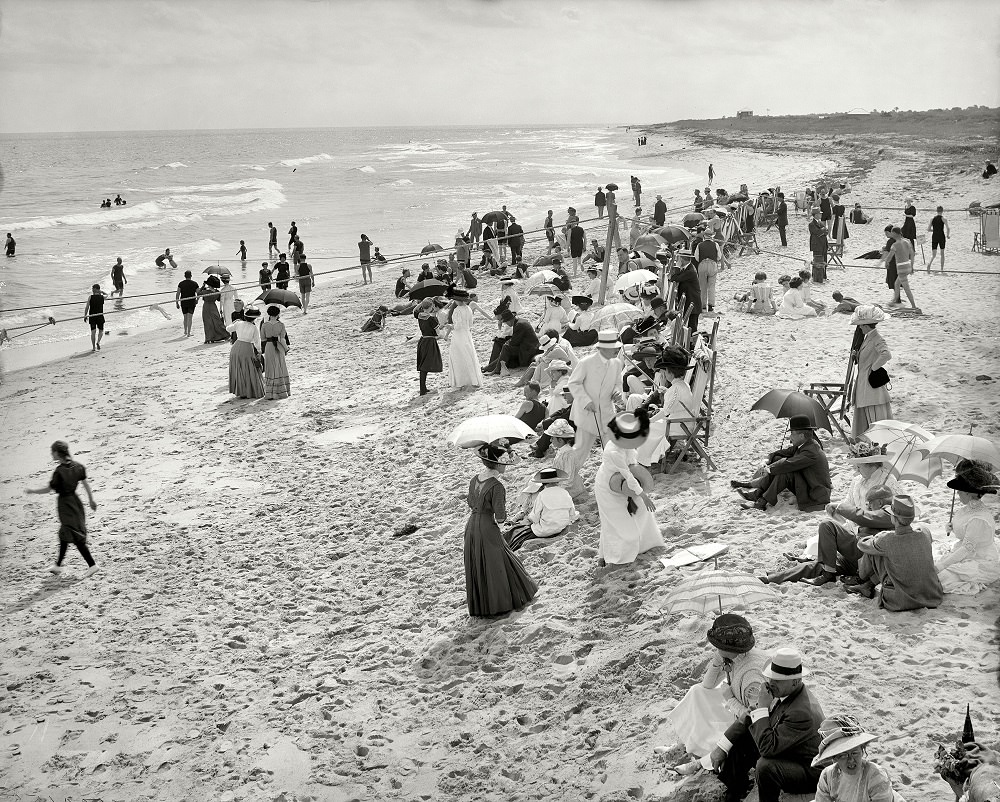
Jacksonville’s residential neighborhoods expanded steadily as the city’s commercial success attracted new residents. Corner properties on streets like Laura and Ashley featured two-story wood-frame homes typical of Southern construction of the era. West Palm Beach’s bathing scene in 1910 shows a more casual, working-class version of the beach culture visible across the lake at Palm Beach — the same sun and water, with far less formality.
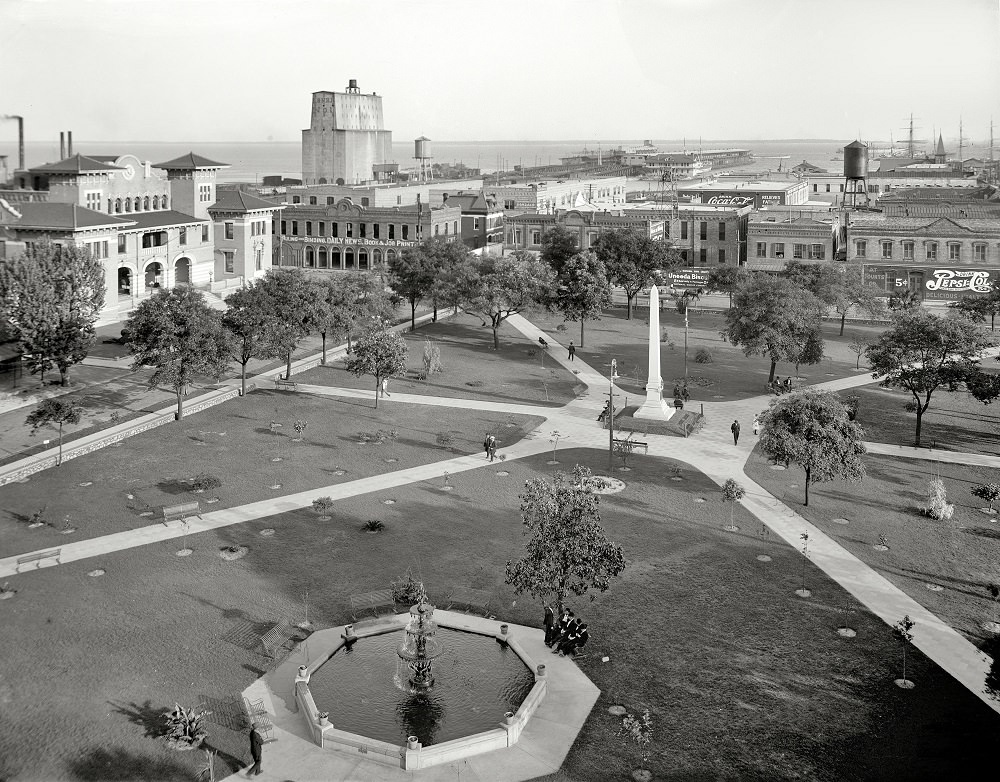
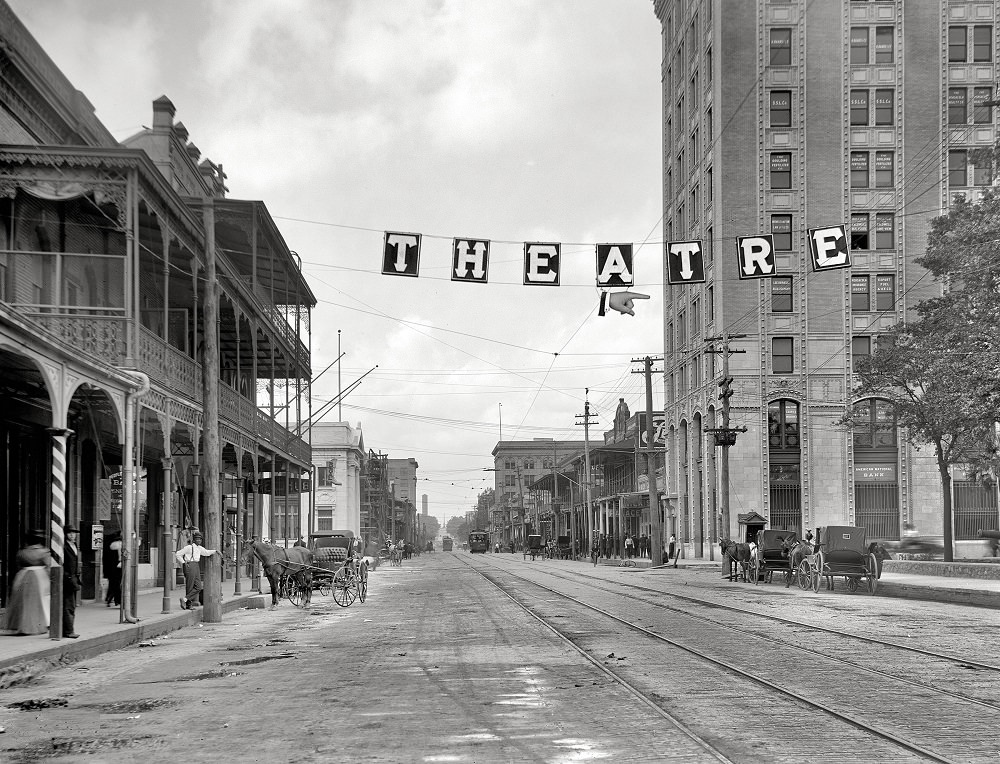
Pensacola’s Plaza Ferdinand was the historic center of a city with deep Spanish and French colonial roots. By 1910, it overlooked a harbor still active with timber and cotton shipping. Palafox Street, Pensacola’s main commercial corridor, displayed new bank buildings and retail storefronts that signaled the city’s economic confidence heading into the second decade of the century.
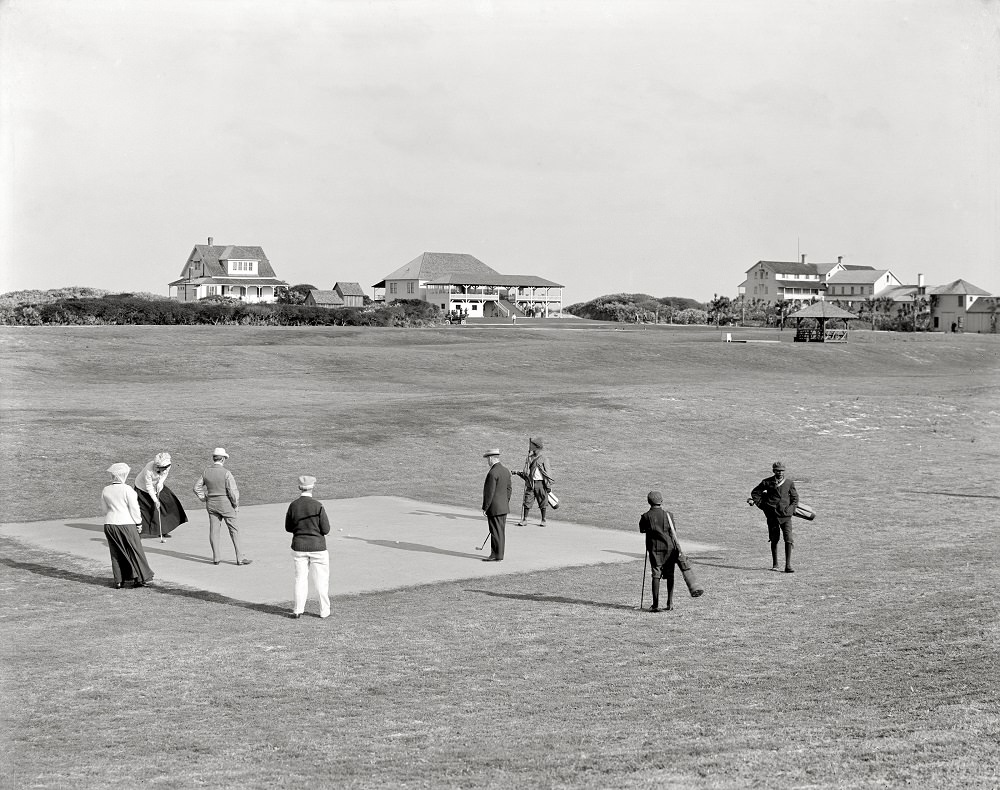
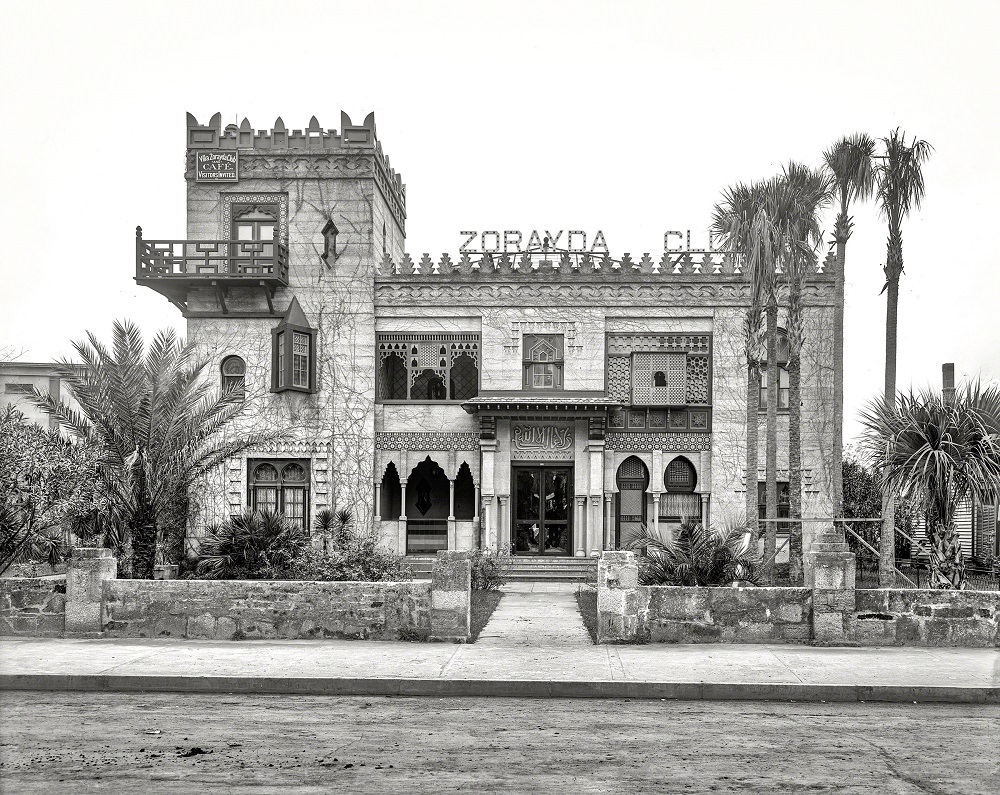
Ormond in 1910 showed a small, orderly town that had become well known internationally for automobile speed trials on its beach. The town’s hotels and streets reflected a quiet prosperity tied to tourism and winter visitors. In St. Augustine, the Zorayda Club on King Street was a Moorish Revival structure built in 1883, modeled loosely on part of the Alhambra palace in Spain. It added yet another layer to St. Augustine’s already eclectic architectural fabric — a city where Spanish colonial ruins, Gilded Age hotels, and exotic fantasy buildings all existed within a few blocks of each other. After World War I, Florida’s tourism industry exploded, with over one million visitors arriving in the early 1920s, and the population growing four times faster than any other state between 1920 and 1925. But these photographs capture the quieter years before all of that — a Florida still being discovered, still being built, and still very much in the process of becoming itself.





Wow cool..
Wonderful photos.
It’s amazing that some of those places are still here.
where are those coming from!!!??? wow