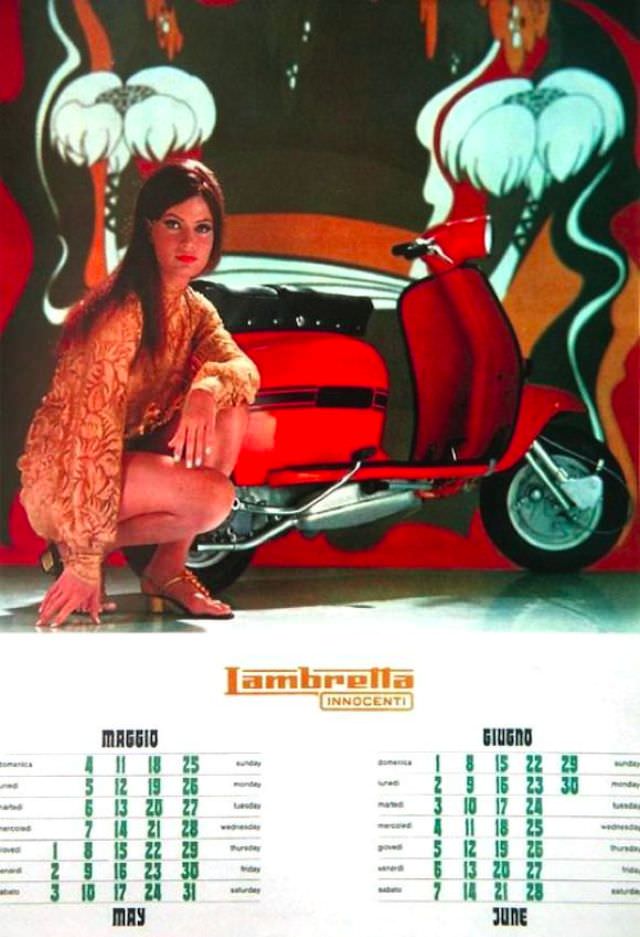
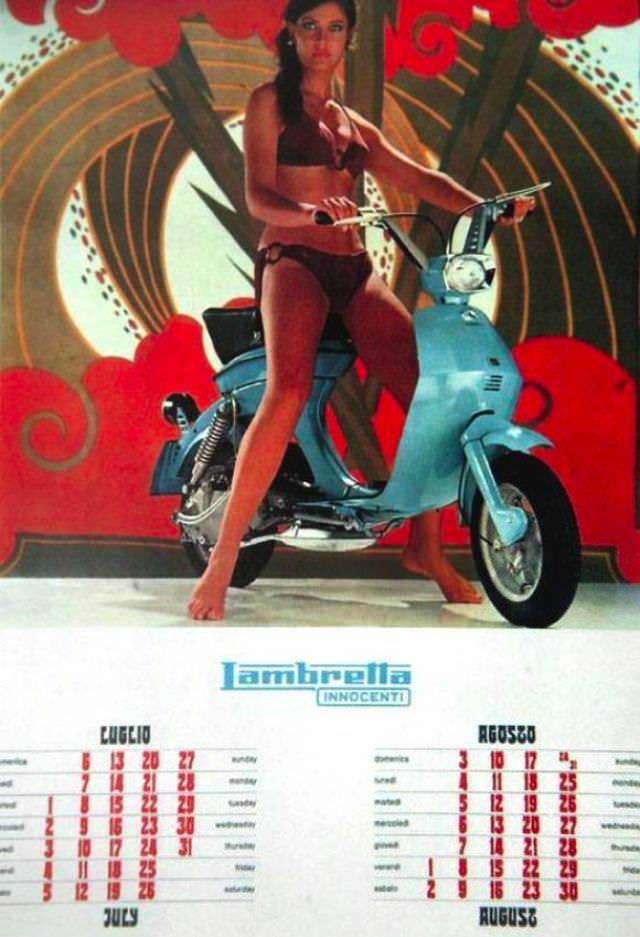
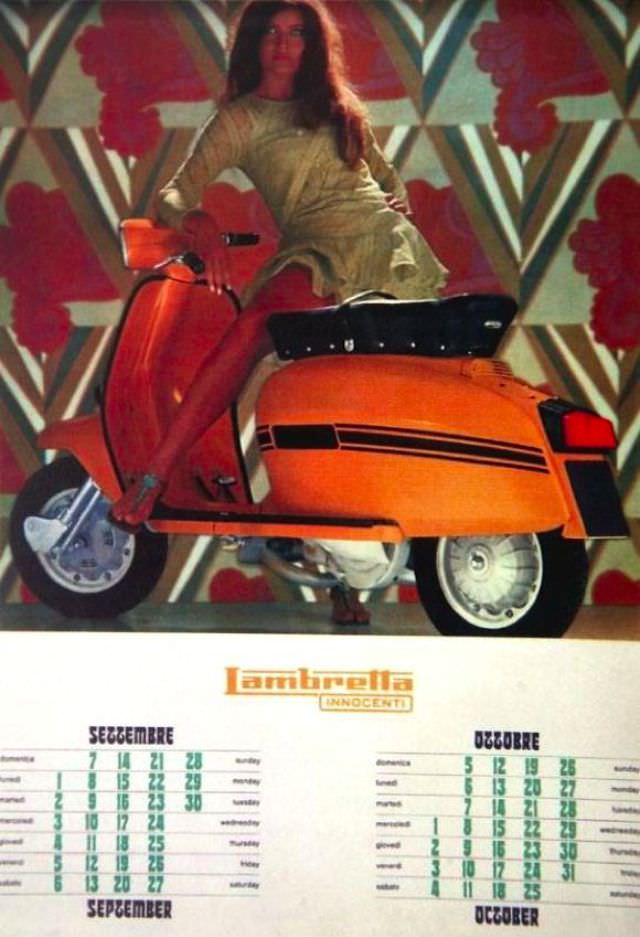
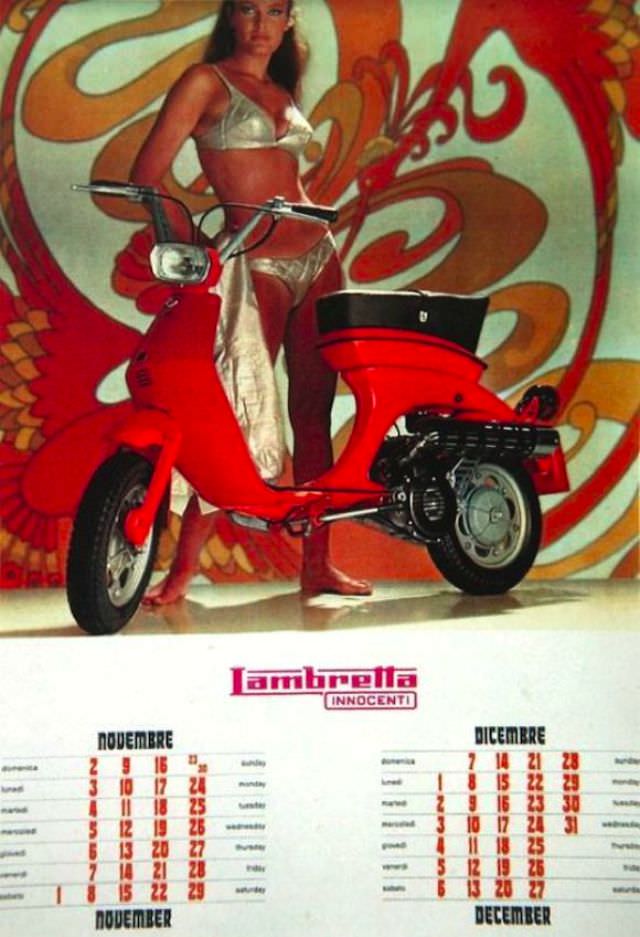
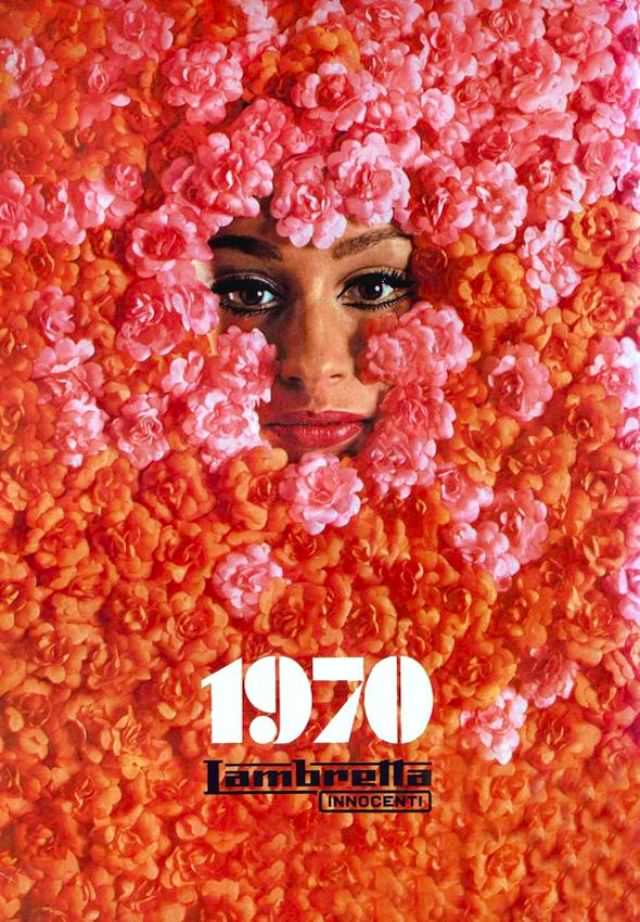
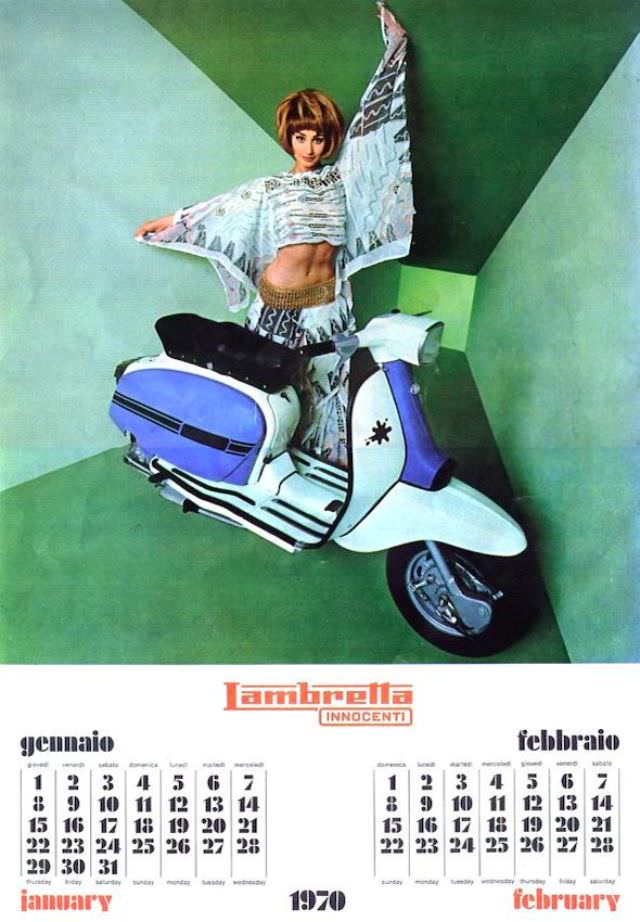
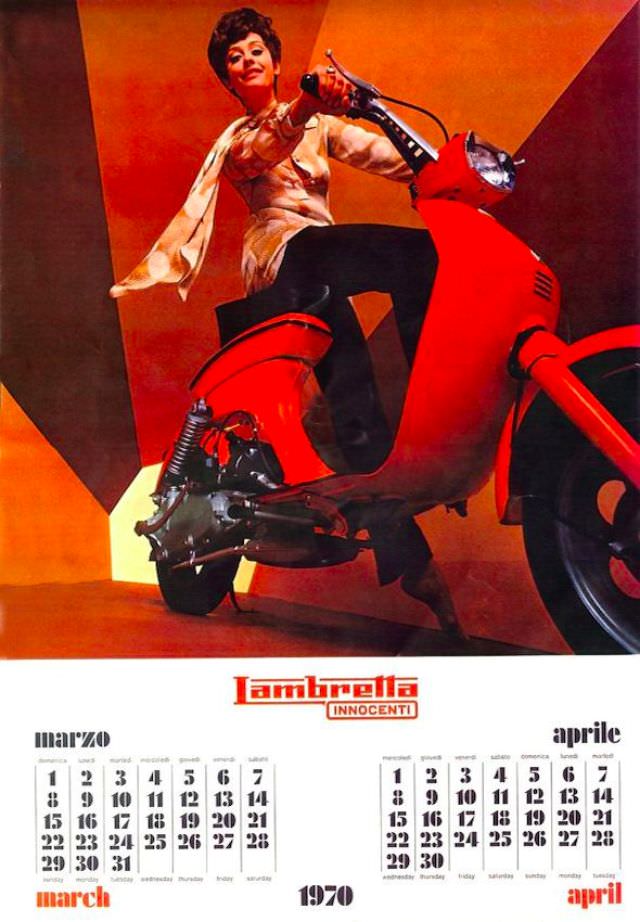
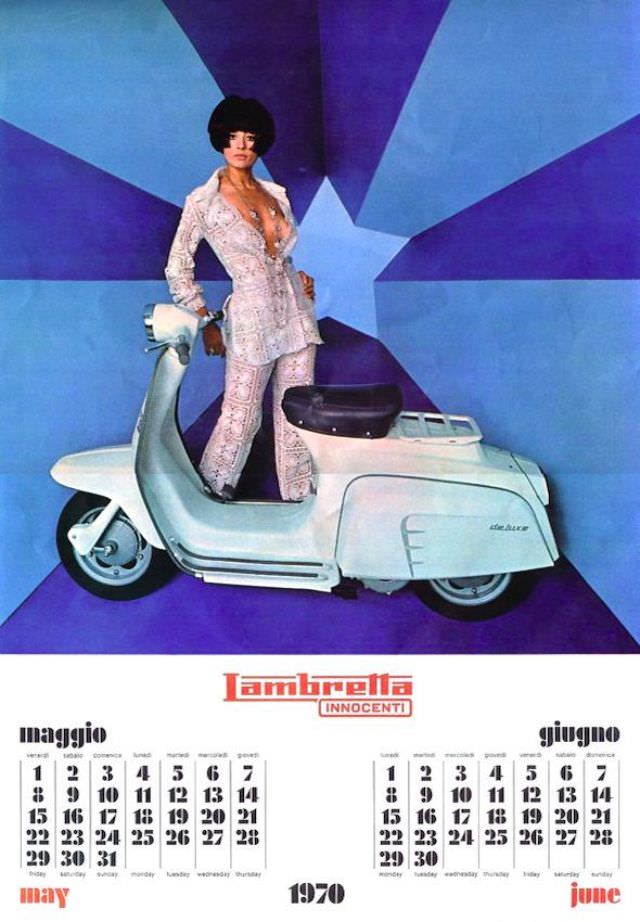
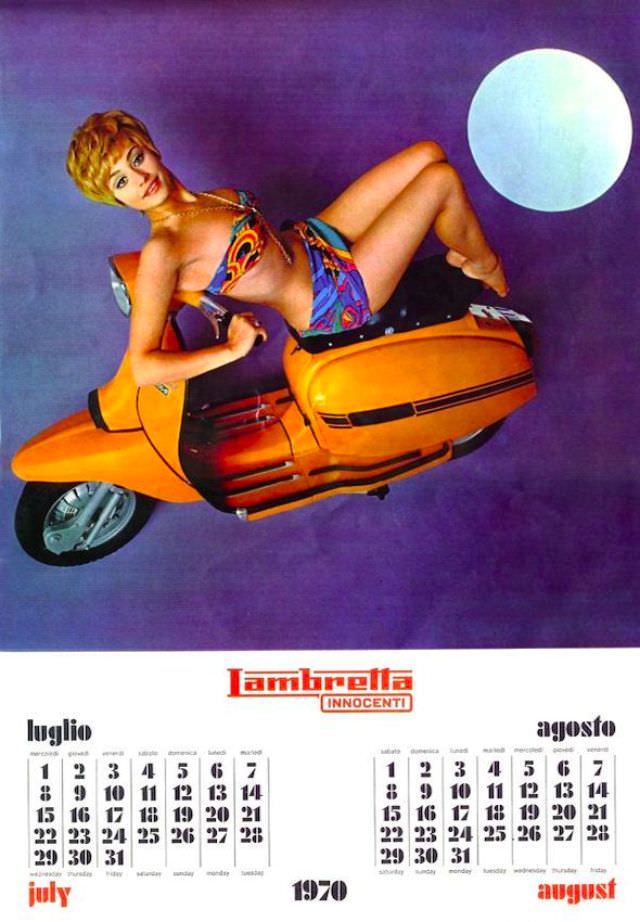
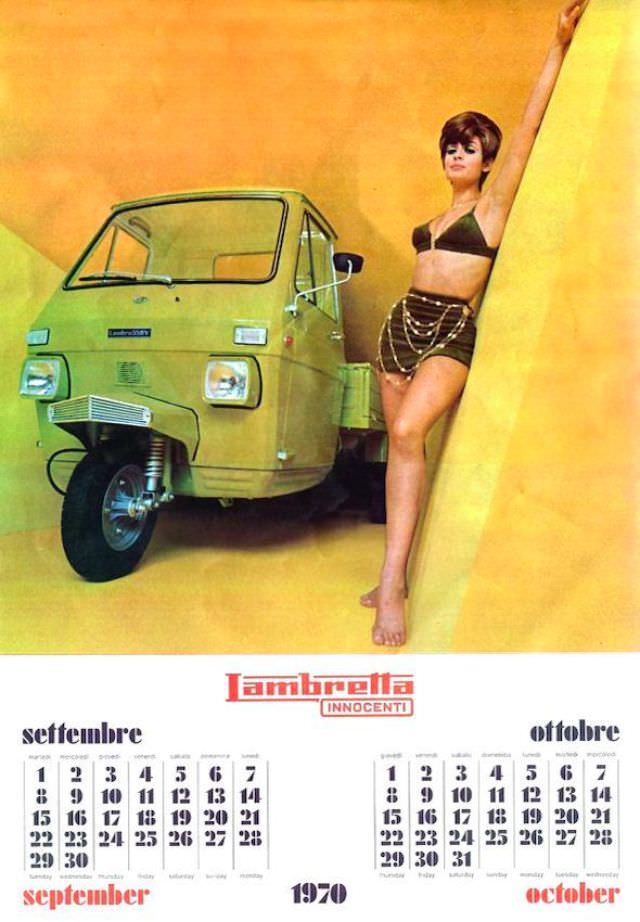
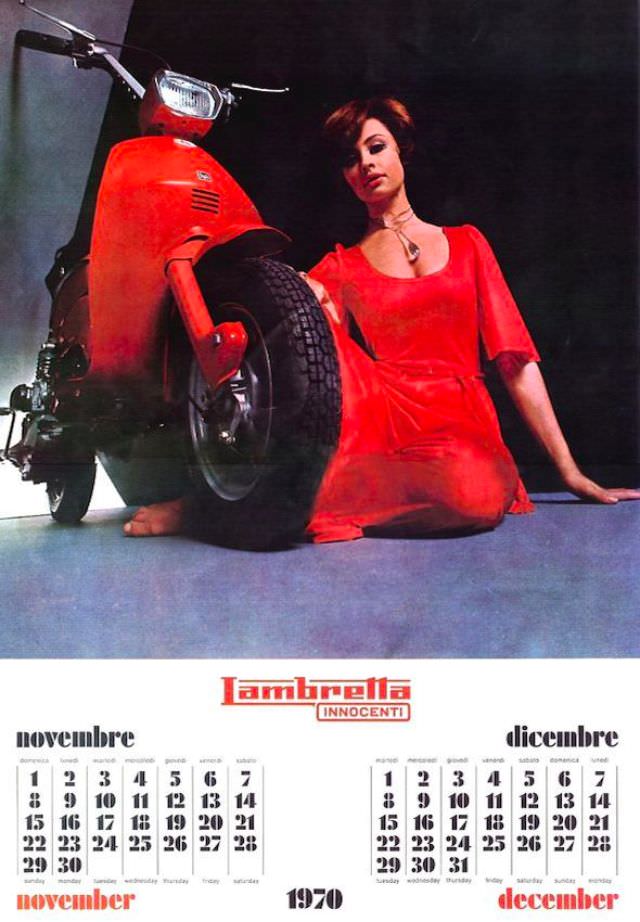
By the late 1960s, the Lambretta scooter had grown into more than a mode of transport. It stood for youth, freedom, and style across Europe. To push that image further, Lambretta launched a series of annual calendars starting in 1967. These weren’t simple product promotions — they were carefully produced fashion shoots that placed the scooters alongside some of the most recognizable faces of the era.
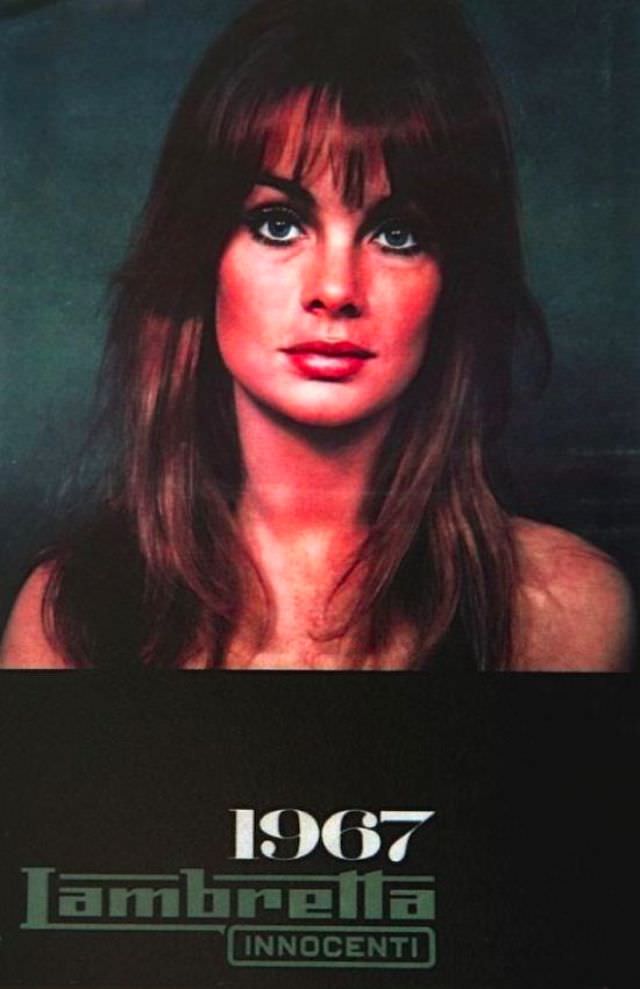
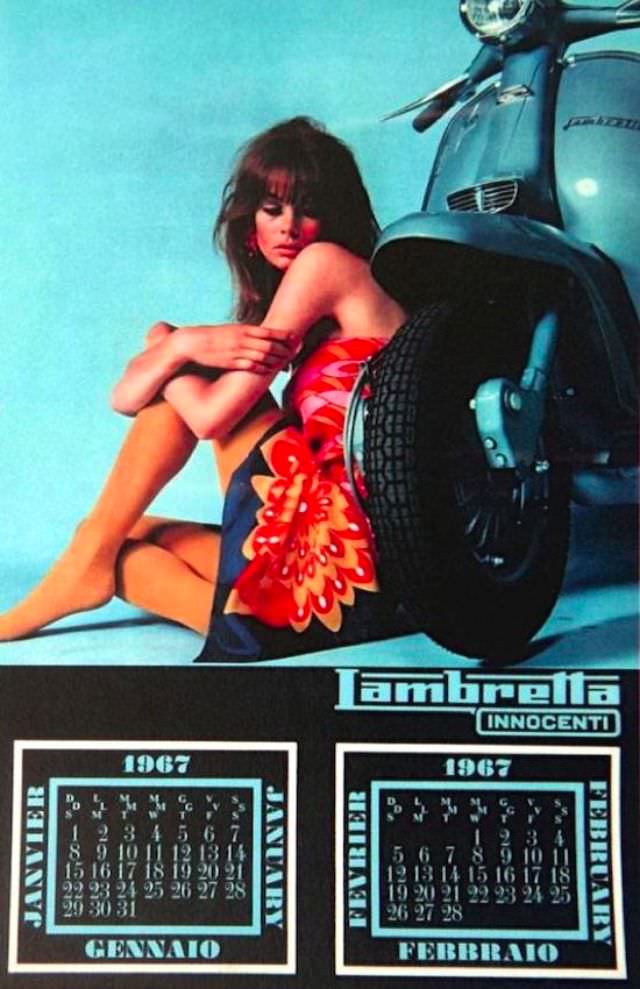
The 1967 edition set the tone immediately. Lambretta paired its machines with top-tier models and actresses, signaling that the brand belonged in conversations about fashion and culture, not just engineering. The photography was sharp and deliberate, with well-lit compositions that made both the scooters and the subjects look their best.
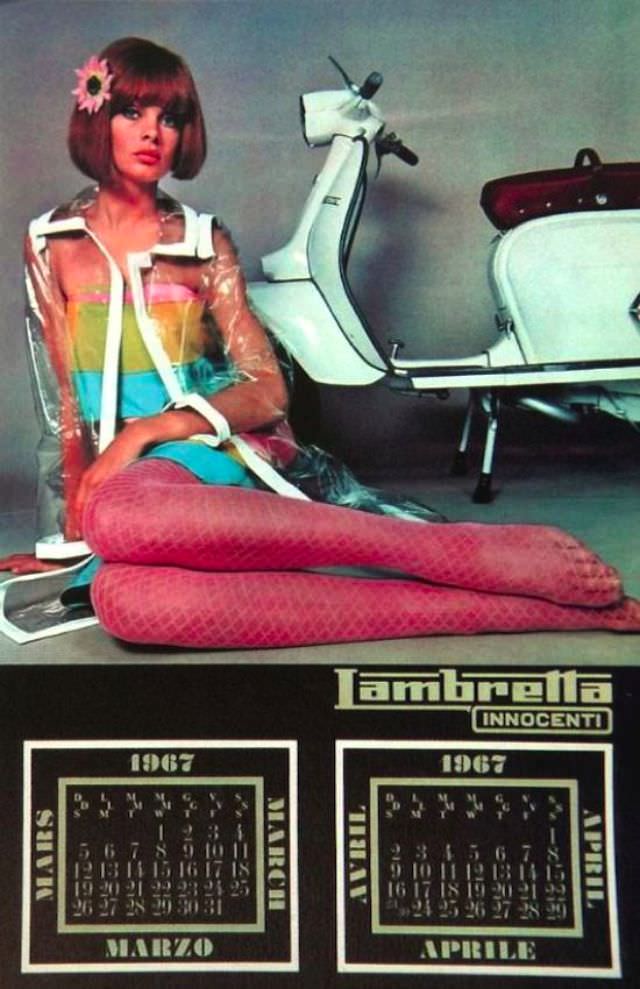
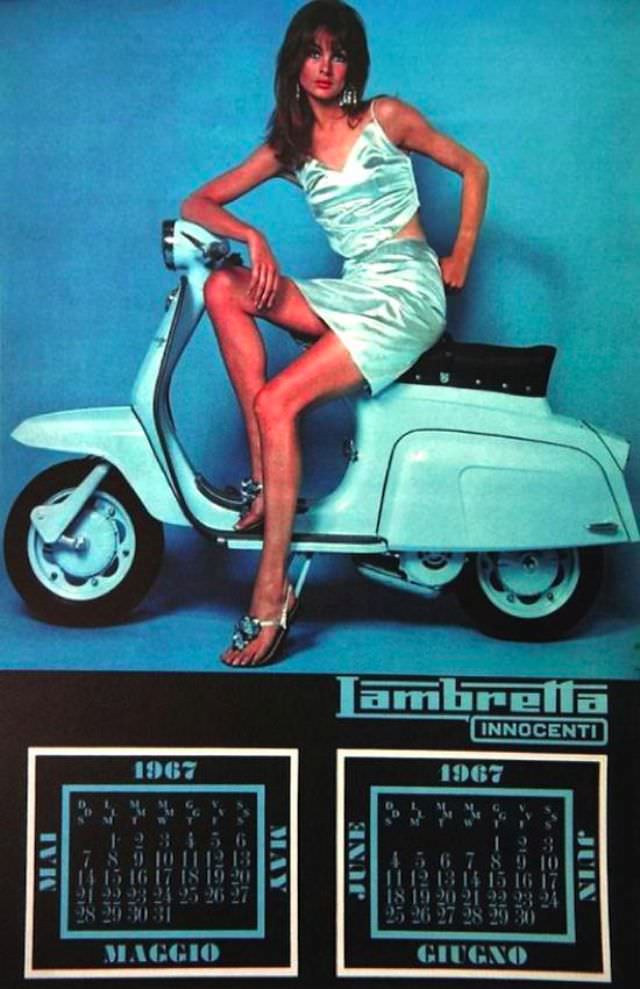
French actress Claudine Auger, widely known for her role in the 1965 James Bond film Thunderball, appeared in the calendar. Her international profile gave the editions a cross-border glamour that resonated well beyond Italy. Austrian actress Marisa Mell, a fixture in European cinema during this period, also featured prominently.
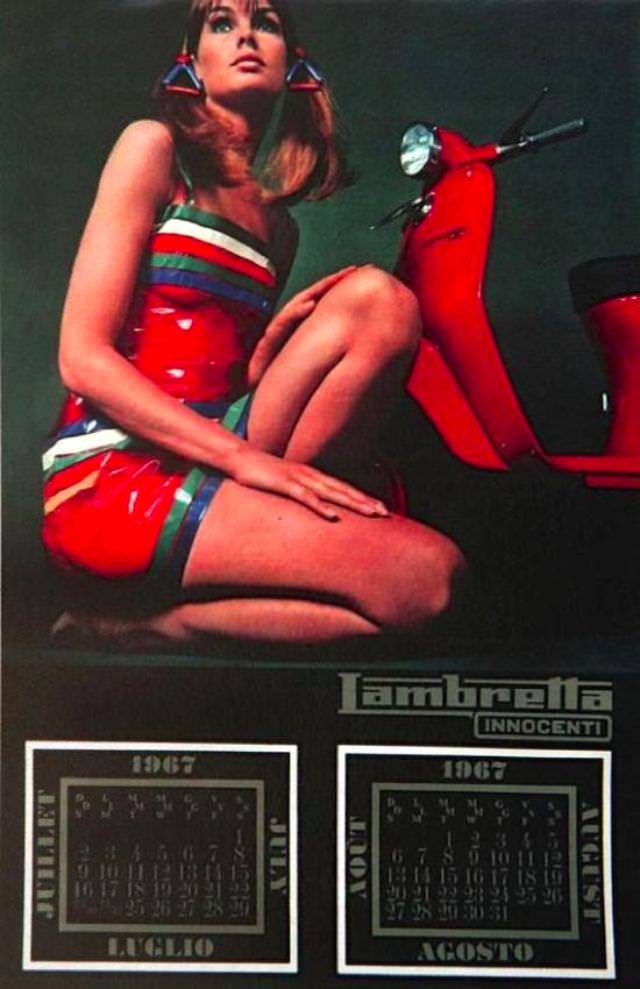
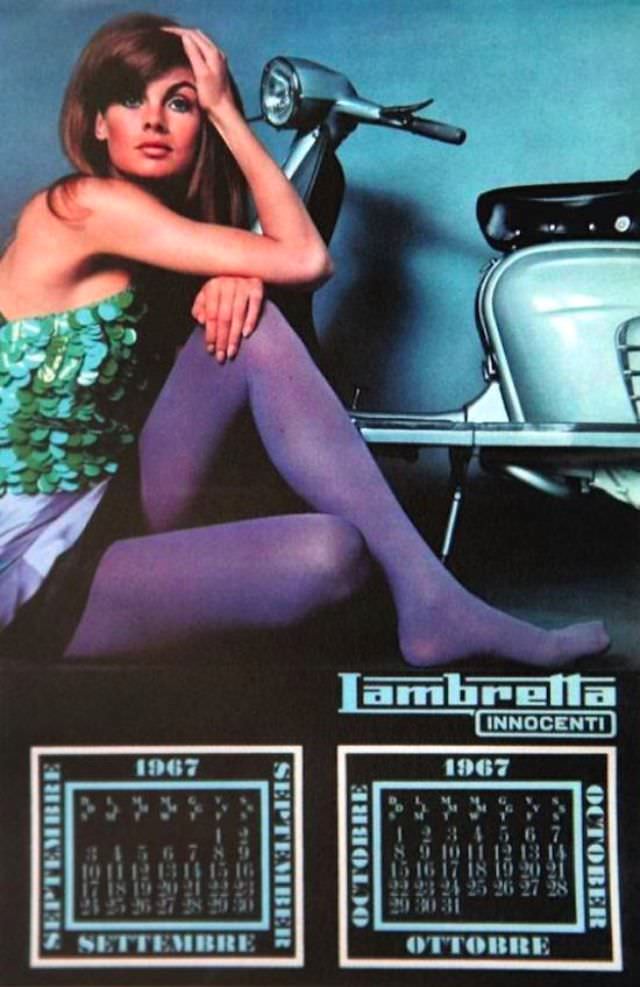
By 1968, the calendar’s reputation was firmly established. British supermodel Jean Shrimpton — one of the defining faces of 1960s fashion — appeared in the series, directly connecting Lambretta to the high-fashion world of London and beyond. Her presence alone confirmed the calendar as a serious collector’s item.
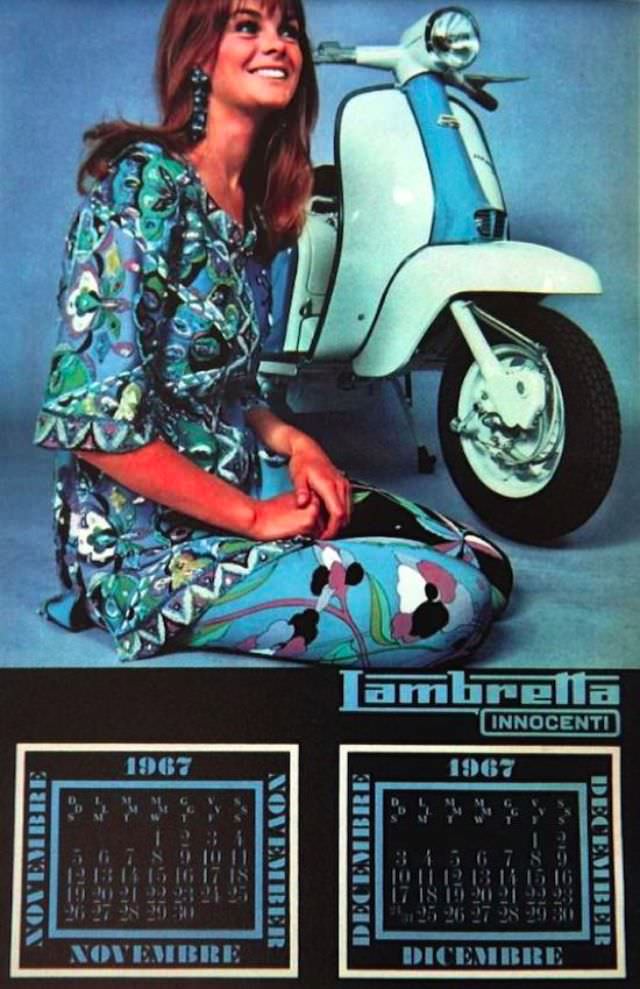
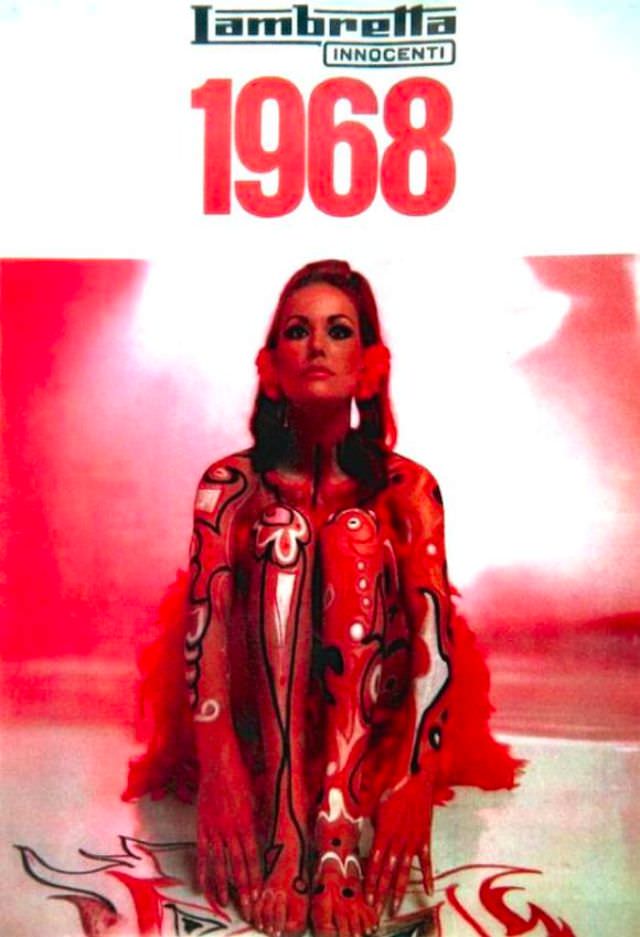
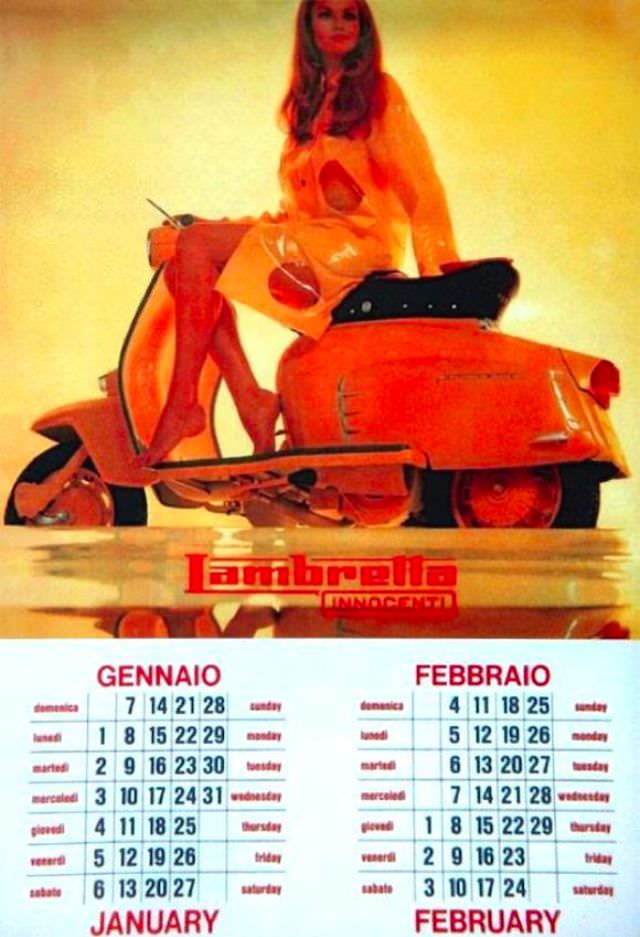
Italian entertainer Raffaella Carrà also graced the calendar. A singer, dancer, and television personality hugely popular across Europe, her inclusion broadened the calendar’s appeal to audiences who followed Italian pop culture as closely as they followed fashion.
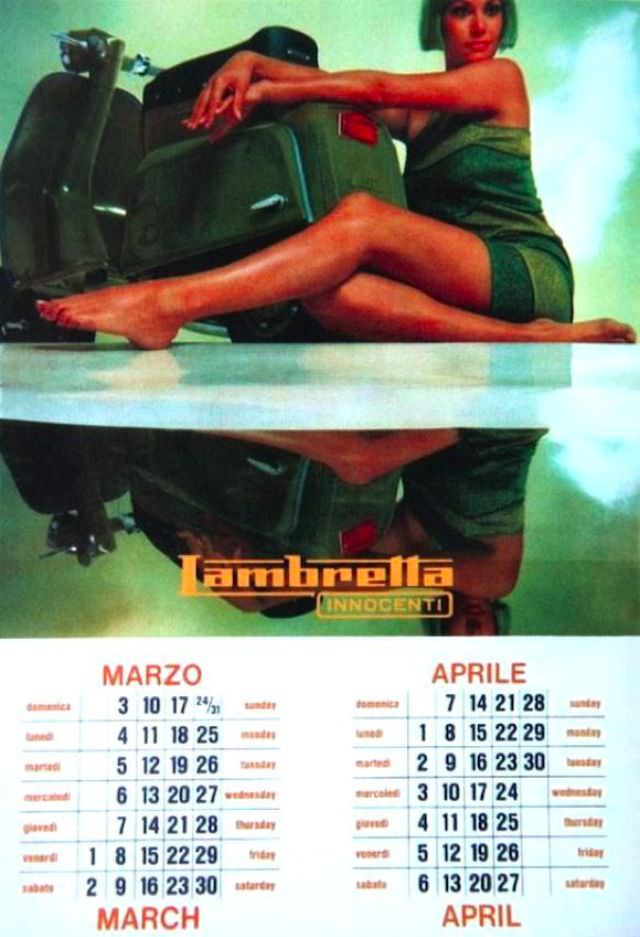
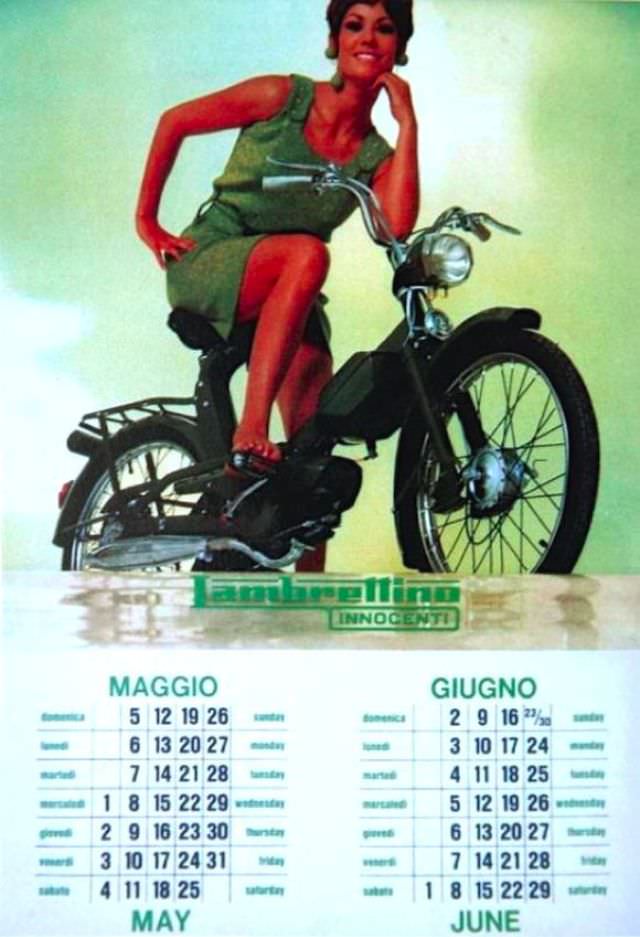
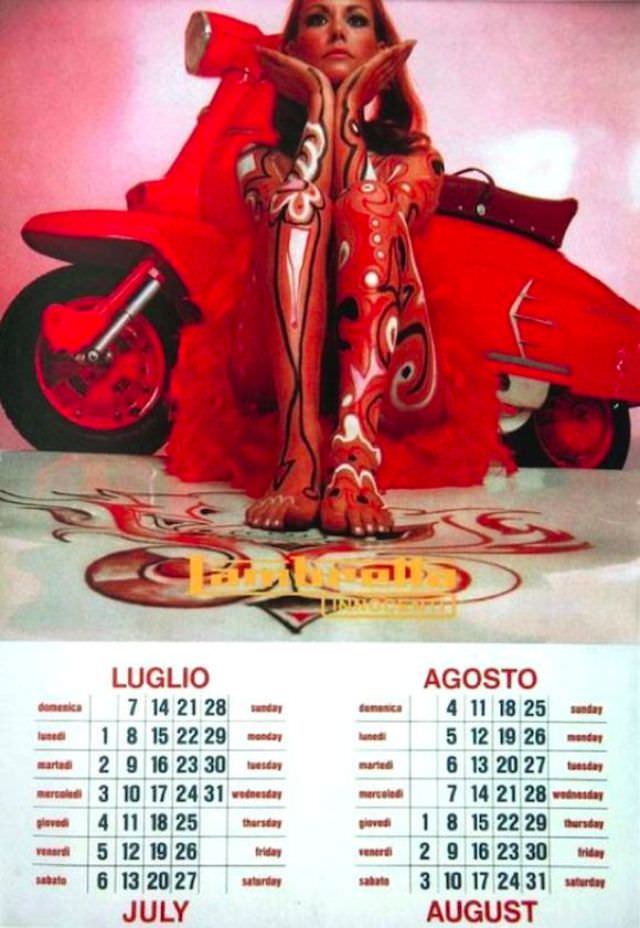
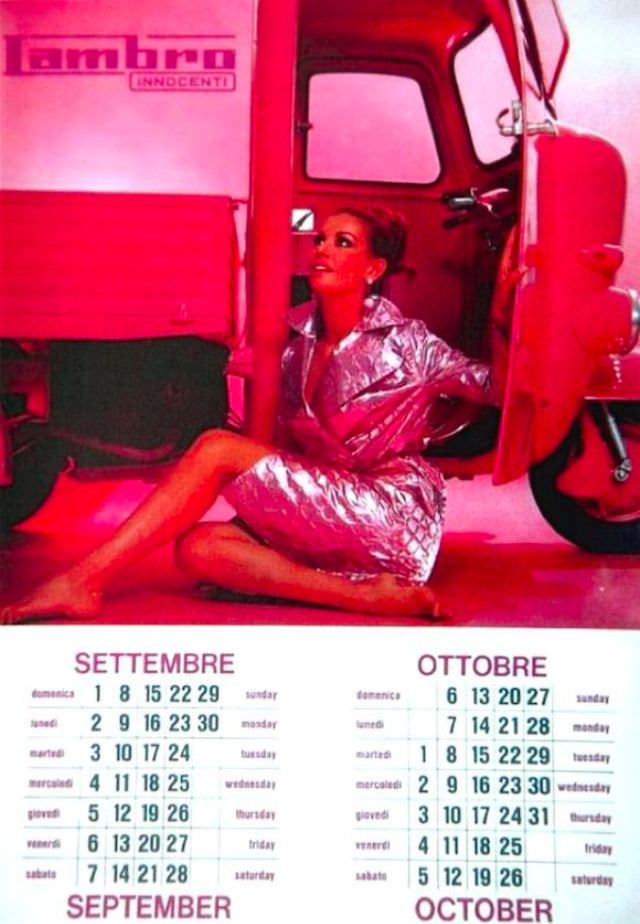
The 1969 and 1970 editions continued the same winning formula. Each year brought fresh faces and updated styling that reflected how quickly fashion was moving during this decade.
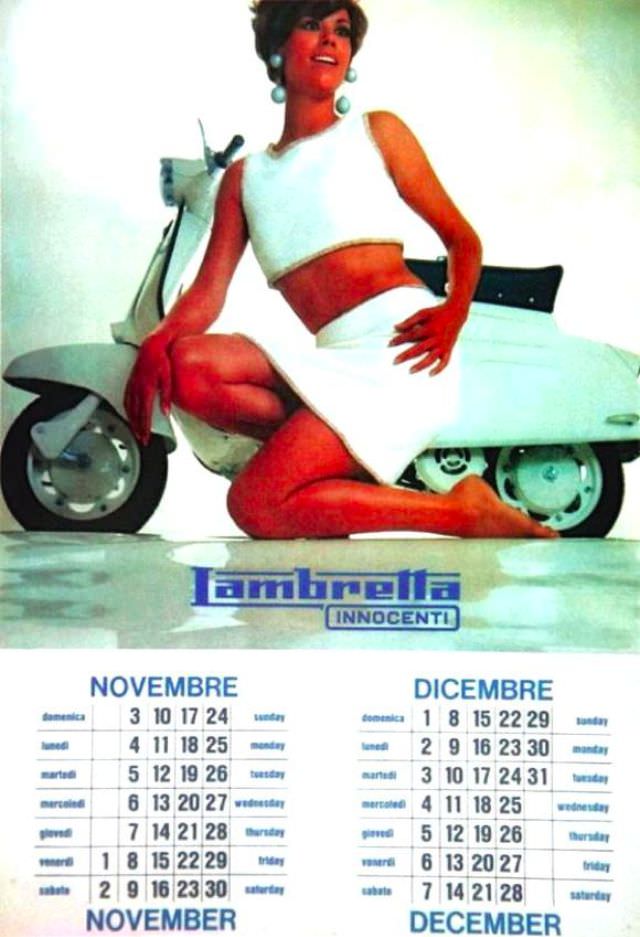
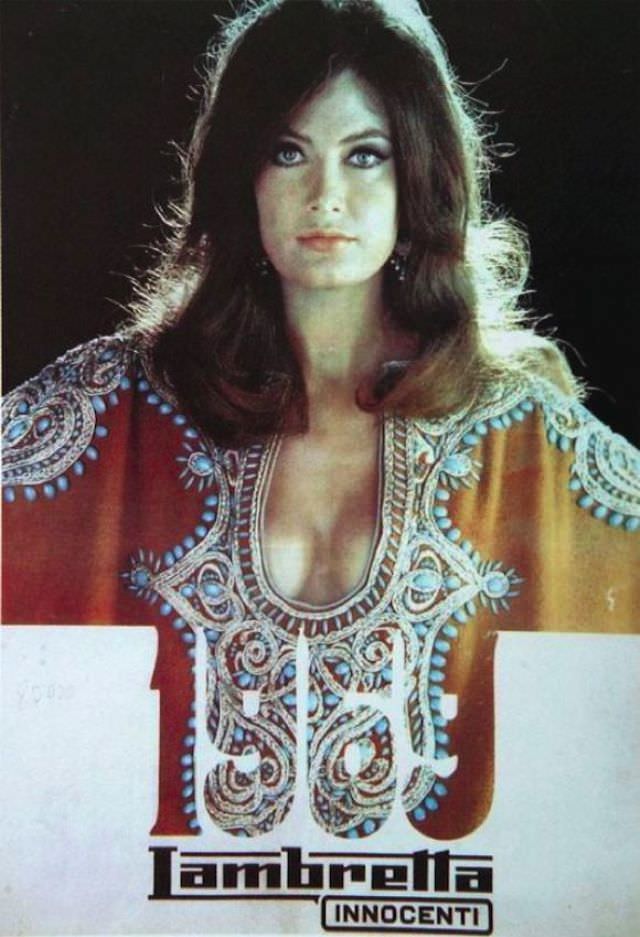
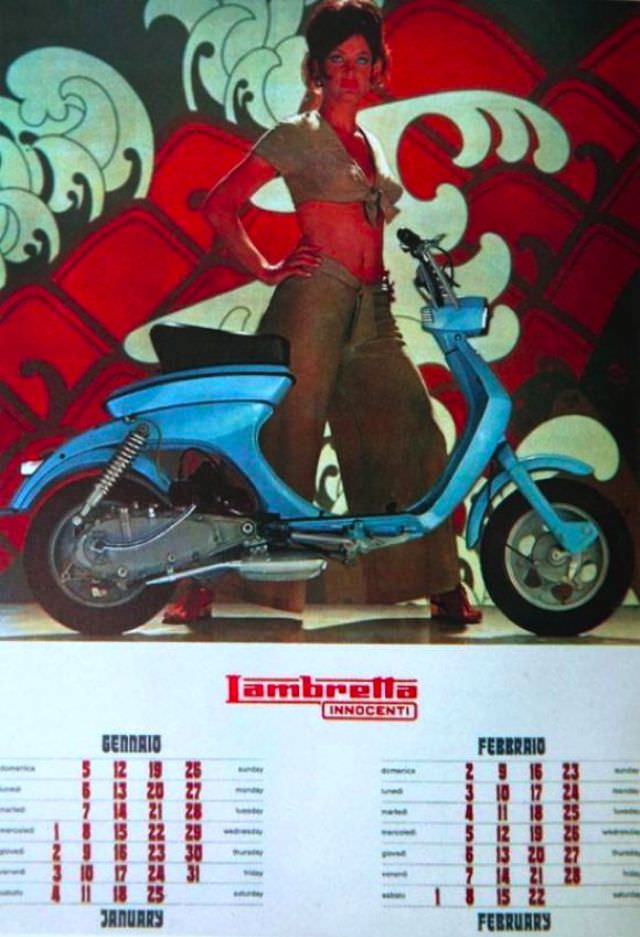
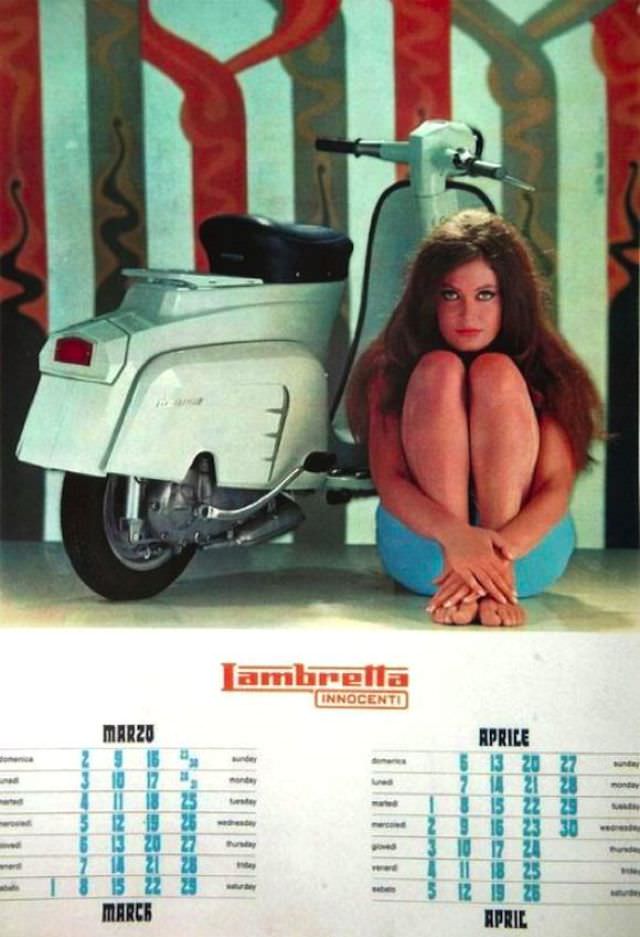
Taken together, the four years of calendars from 1967 to 1970 serve as a vivid snapshot of the era. The clothes, the poses, the color palettes, and the scooter designs all document a very specific moment in European popular culture — one where style and mobility were inseparable.