Hey There! Before You Go. 😧
Get the best vintage content straight into your inbox!

Don't worry, we don't spam

Flickering Memories: A Journey Through Vintage Photos of People Watching TV

Before television sets became household fixtures, people gathered wherever a screen could be found. In 1948, men pressed against store windows in Pennsylvania just to catch a glimpse of the moving image inside. The TV was a spectacle in itself — something worth standing in the cold to see.
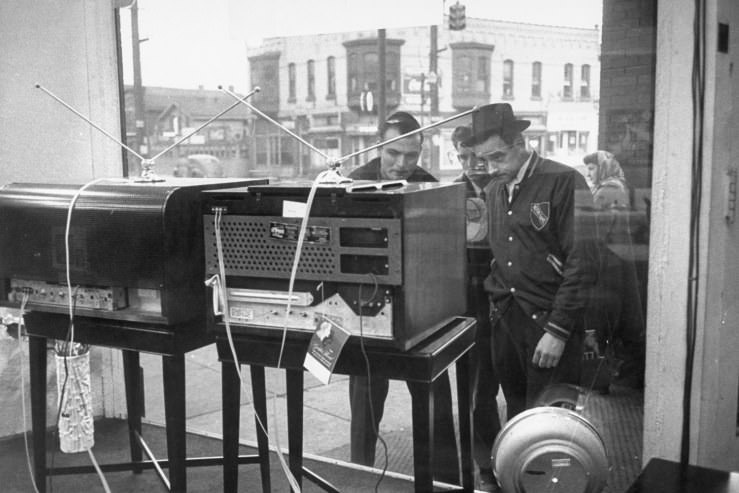
Men gather to watch TV through a store window in Pennsylvania in 1948

That same year, writer Russell Finch found a more comfortable arrangement — watching TV from his bathtub, cigarette in hand. It was an early sign that television would quickly fold itself into the rhythms of everyday life.
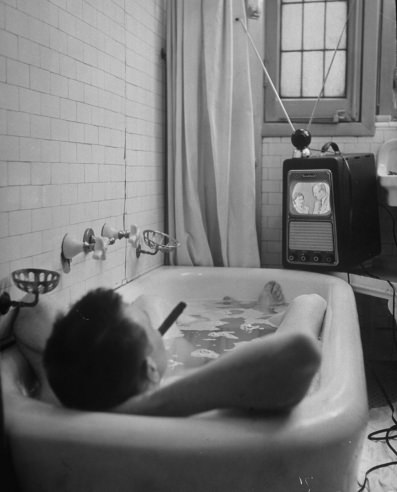
Writer Russell Finch enjoys a smoke, a bath and a TV show in 1948

By the early 1950s, television was pulling in audiences from every corner of society. Swimmers at an indoor pool paused their laps to watch Soviet ambassador Jacob Malik filibuster in the UN Security Council. A Western played on a living room set while families settled in after dinner.
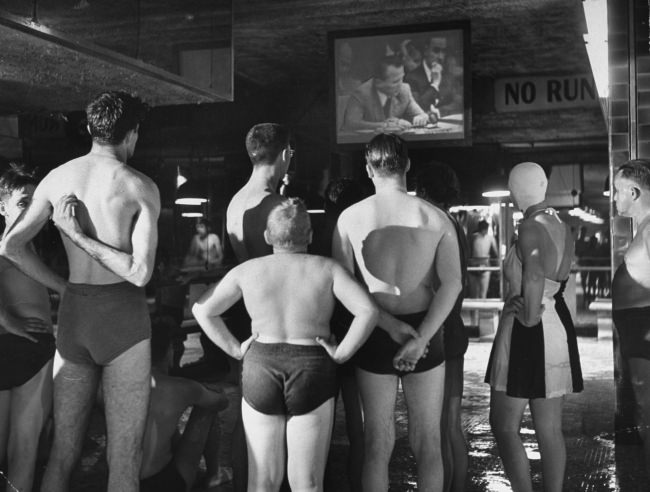
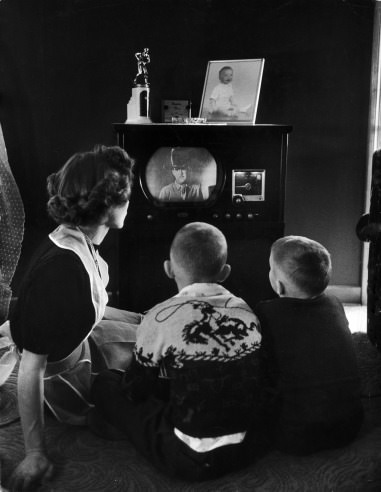
A group of swimmers at an indoor pool watch the Russian ambassador to the United Nations, Jacob Malik, filibustering in the UN Security Council in 1950
Watching a Western on TV in 1950

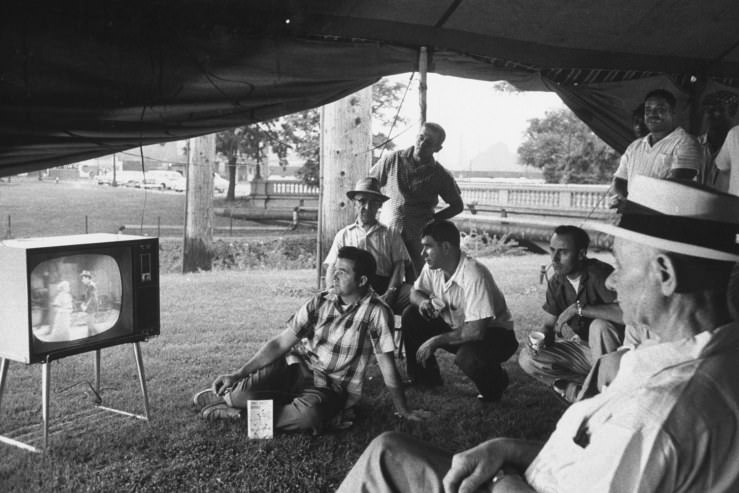
Television also stepped into the classroom. During a 1951 teachers’ strike in Minneapolis, grade school children received their lessons through a TV screen instead. That same year, striking steel workers in Gary, Indiana — years later, in 1959 — set up a tent outside the plant gates and brought a TV with them.
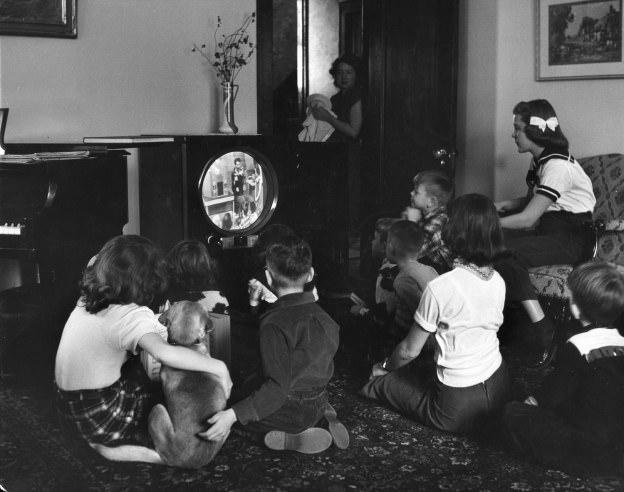
Grade school kids in Minneapolis watch a video "classroom lesson" on TV while the city's public schools are on strike in 1951
Grade school kids in Minneapolis watch a video “classroom lesson” on TV while the city’s public schools are on strike in 1951
Picketing workers watch TV in a tent outside the gates of a U.S. Steel plant in Gary, Indiana, during a strike in 1959

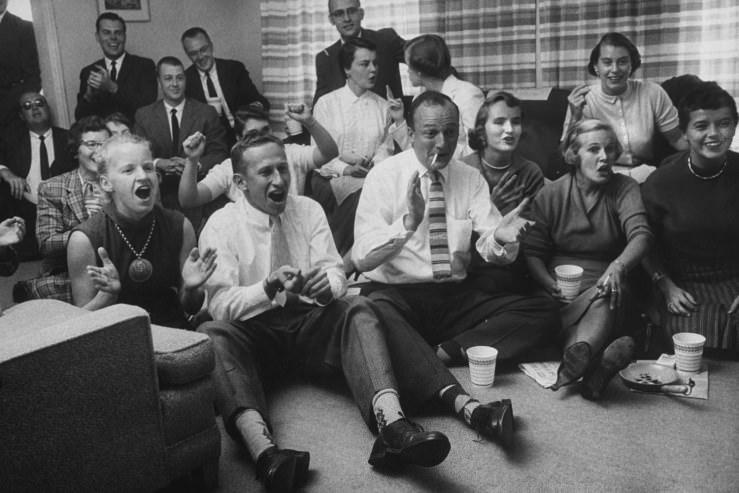
Sports became one of television’s great unifiers. In 1952, a packed Chicago bar fixed their eyes on the World Series between the Dodgers and Yankees. Five years later, Milwaukee Braves fans erupted as Lew Burdette’s three complete-game victories handed the Yankees a seven-game defeat.
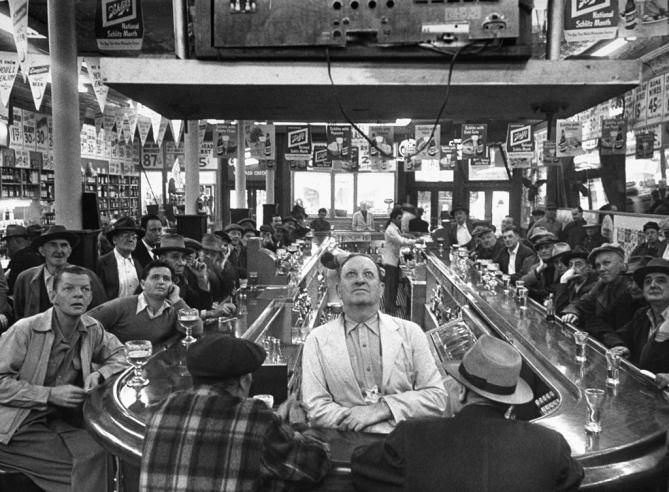
A rapt audience in a Chicago bar watches the 1952 World Series between the Dodgers and Yankees. (The Yankees won)
Milwaukee fans watch the 1957 World Series, when their Braves beat the Yankees in seven, behind three complete-game victories by the gutsy Lew Burdette
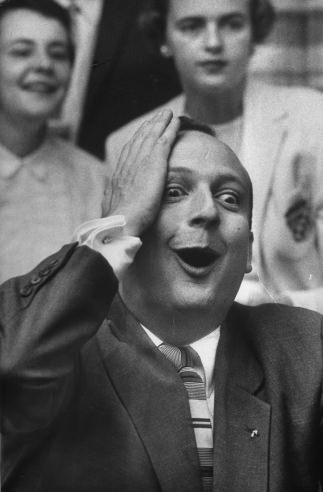
An awe-struck baseball fan is seized with utter delight as he watches the Braves win their first and only World Series while based in Milwaukee in 1957

Children found their own corner of TV culture. Six-year-old girls pressed plastic sheets onto their screens and drew along with Winky Dink, an interactive kids’ program that turned the TV into a canvas.
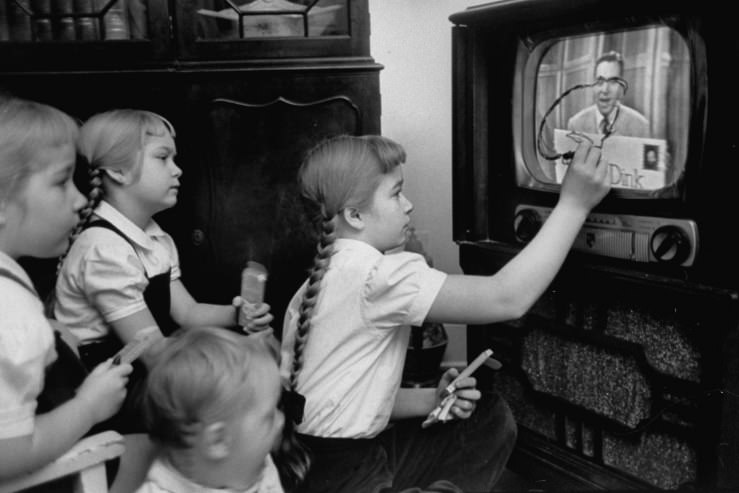
Six-year-old girls use a "Winky Dink" drawing kit on their home TV screen as they watch the kids' program.
Six-year-old girls use a “Winky Dink” drawing kit on their home TV screen as they watch the kids’ program.

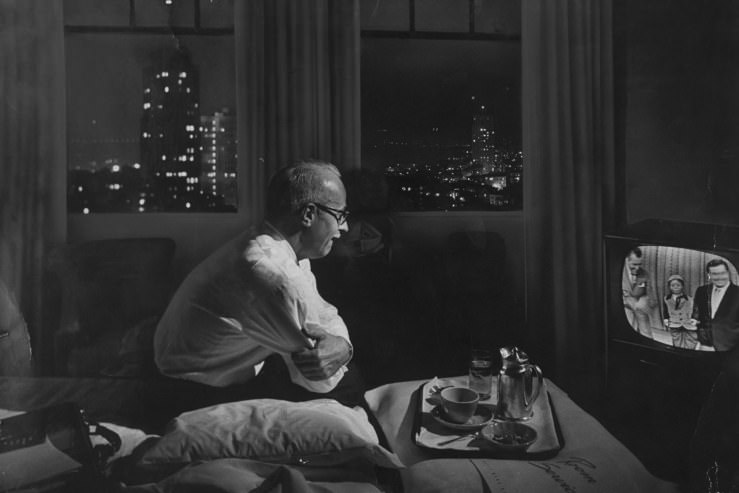
Television also found its way into the most personal spaces — a railroad worker’s trailer in Utah, a hotel room for a traveling businessman, and the living room of tenant farmer Thomas B. Knox, who sat with his family watching Ed Sullivan in 1958.
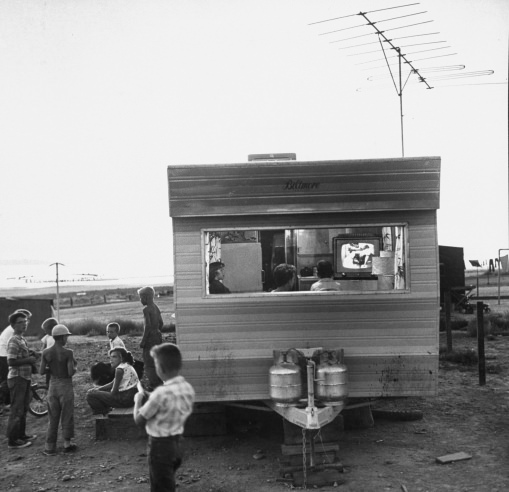
A railroad worker's family watches TV in a trailer at a camp for Southern Pacific employees in Utah in 1957
A railroad worker’s family watches TV in a trailer at a camp for Southern Pacific employees in Utah in 1957
A traveling businessman watches TV in a hotel room in 1958
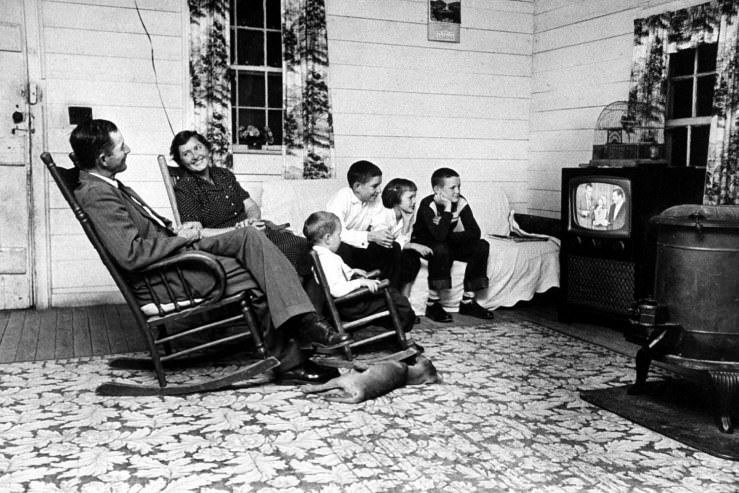
Tenant farmer Thomas B. Knox and his family watch Ed Sullivan and ventriloquist Rickie Layne on The Ed Sullivan Show in 1958

In 1956, a Korean war orphan named Kang Koo Ri watched television in his new home in Los Angeles — one of countless quiet moments where TV served as both comfort and window to a new world.
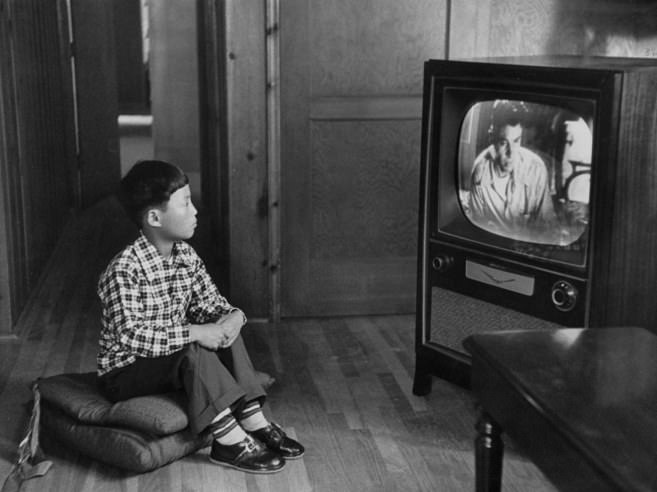
An adopted Korean war orphan, Kang Koo Ri, watches television in his new home in Los Angeles in 1956

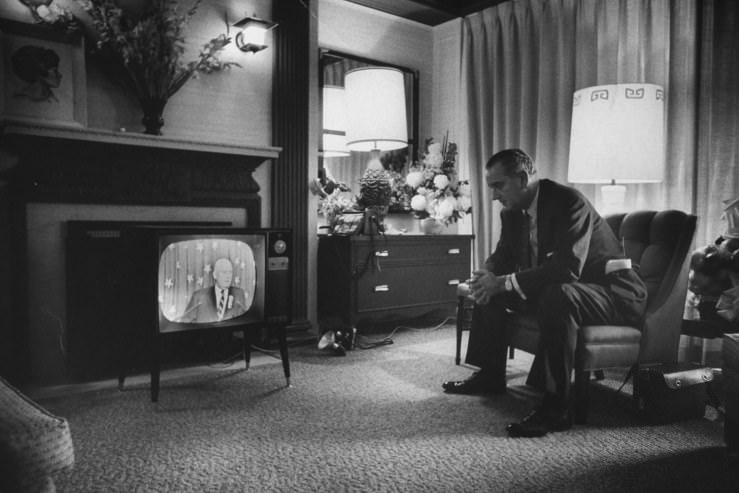
Politics found a permanent home on the screen too. Richard Nixon and his wife Pat watched the 1960 GOP convention from their Chicago hotel suite. Lyndon Johnson tracked the same year’s Democratic National Convention from Los Angeles.
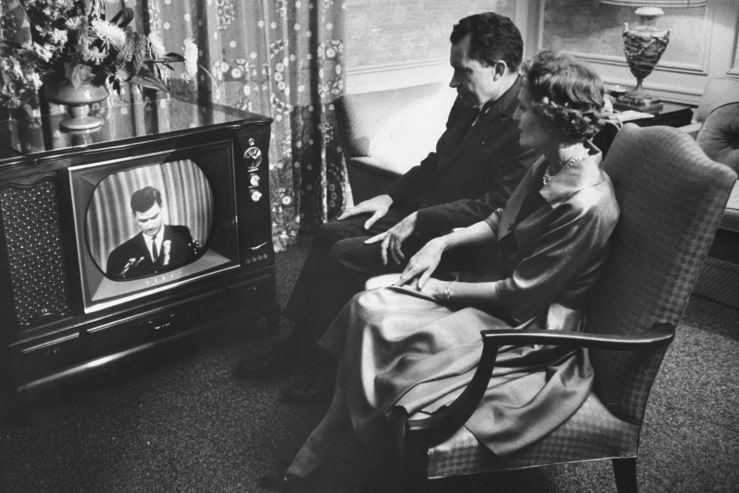
Vice President Richard Nixon and his wife, Pat, watch the 1960 GOP convention in Chicago from their hotel suite
Eventual VP candidate Lyndon Johnson watches TV during the 1960 Democratic National Convention in Los Angeles

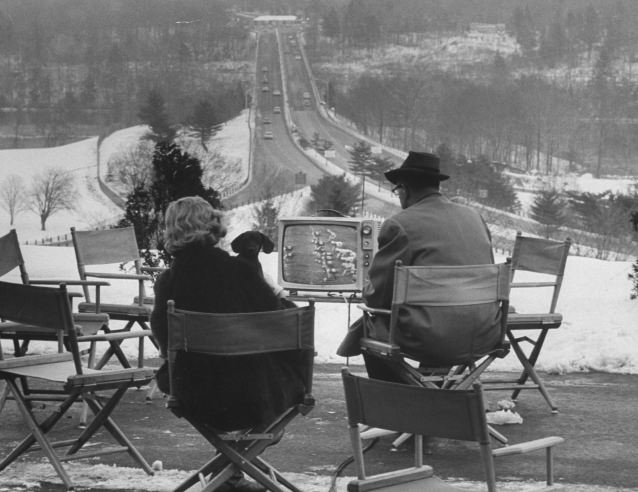
The Kim Sisters, a Korean-born singing trio building their American career, watched television in Chicago that same year. Meanwhile, die-hard New York Giants fans drove out of the city’s TV blackout zone in December 1962 just to catch their team play on a motel set.
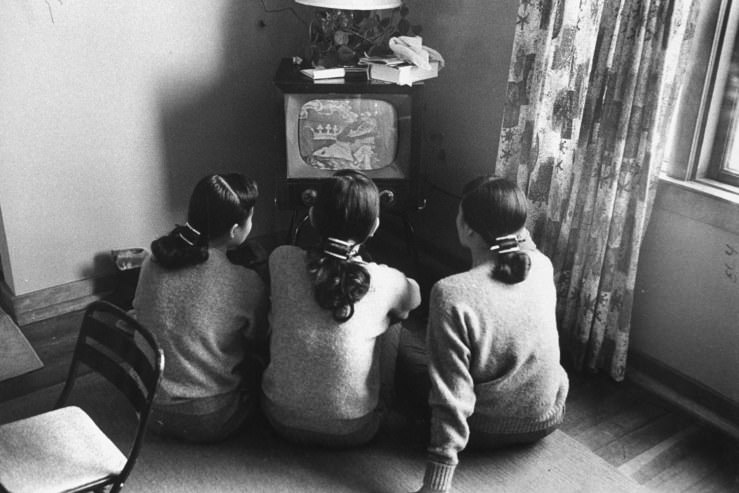
The Kim Sisters — a Korean-born singing trio who had some success in the U.S. in the 1960s — watch television in Chicago in 1960
Die-hard New York Giants fans watch a football game on a motel TV, out of the range of the New York-area TV blackout during home games in December 1962

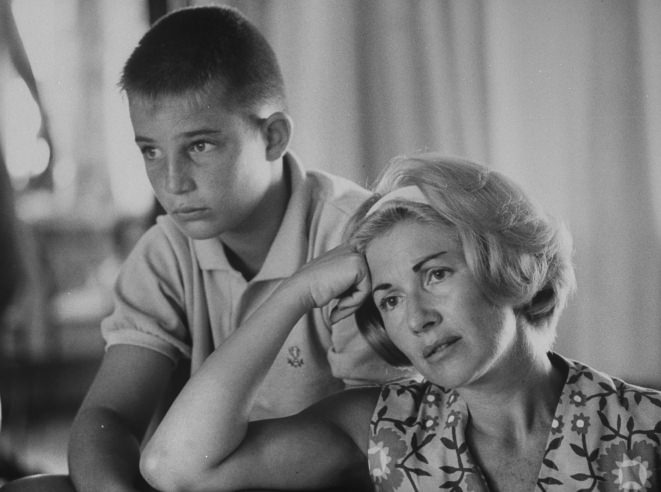
In October 1962, television carried one of the tensest moments in American history. Crowds gathered to watch President Kennedy address the nation about the Cuban Missile Crisis. That year, Rene Carpenter and her son Marc sat before the TV watching astronaut Scott Carpenter complete NASA’s second manned orbital flight.
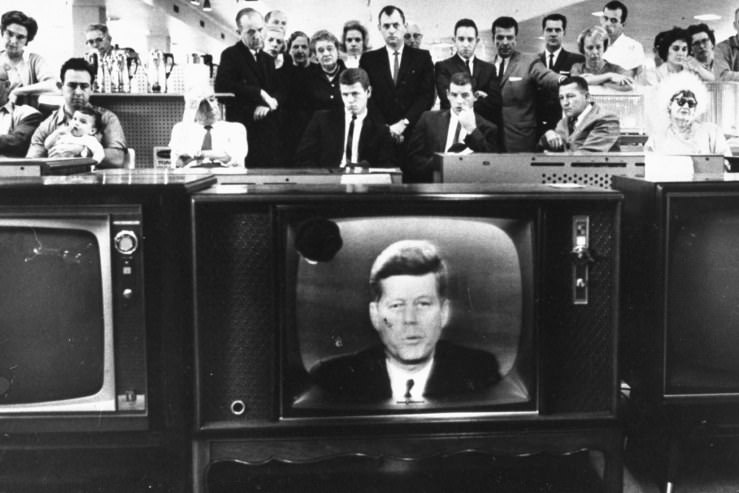
A crowd watches John F. Kennedy address the nation during the Cuban Missile Crisis, October 1962
Astronaut Scott Carpenter's wife, Rene, and son, Marc, watch his 1962 orbital flight on TV. Carpenter's was NASA's second manned orbital flight, after John Glenn's, and lasted nearly five hours
Astronaut Scott Carpenter’s wife, Rene, and son, Marc, watch his 1962 orbital flight on TV. Carpenter’s was NASA’s second manned orbital flight, after John Glenn’s, and lasted nearly five hours

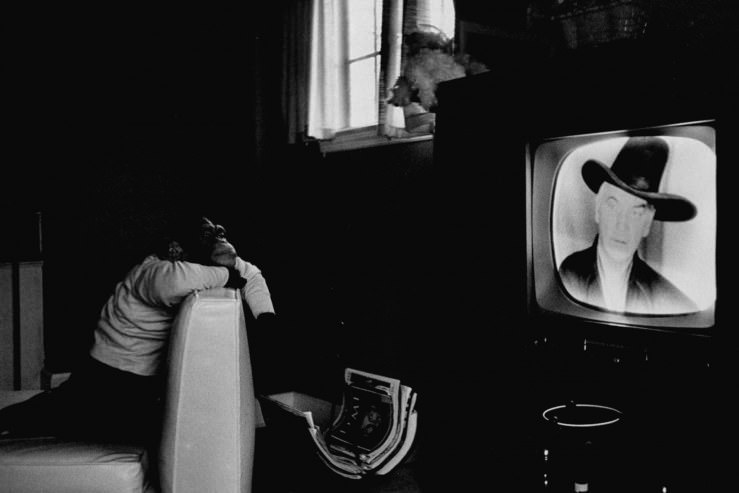
Even celebrities weren’t immune to the pull of the screen. Actress Diahann Carroll and journalist David Frost — briefly engaged — once sat together watching themselves on separate talk shows airing simultaneously. And Zippy the chimpanzee, a performing animal with a busy entertainment schedule, found time to sit down and watch TV in 1955.
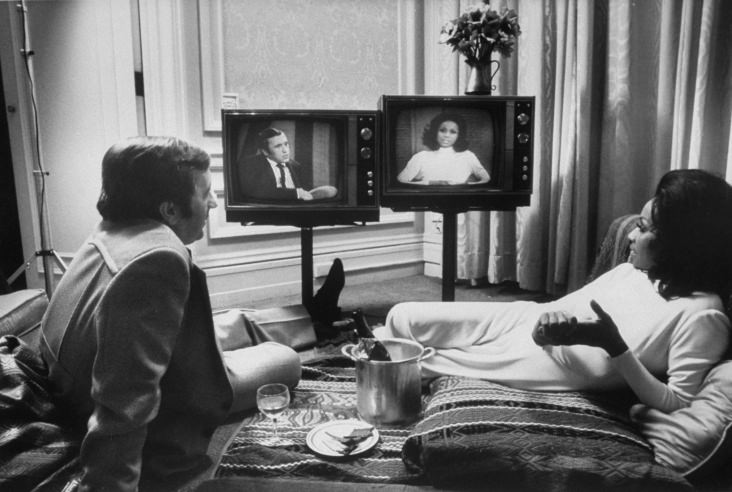
Actress Diahann Carroll and journalist David Frost watch themselves on separate talk shows. Carroll and Frost were engaged for a while, but never married
A performing chimpanzee named Zippy watches TV in 1955

By 1966, community antenna television systems in places like Elmira, New York were already expanding what subscribers could receive — a preview of the channel explosion still to come.
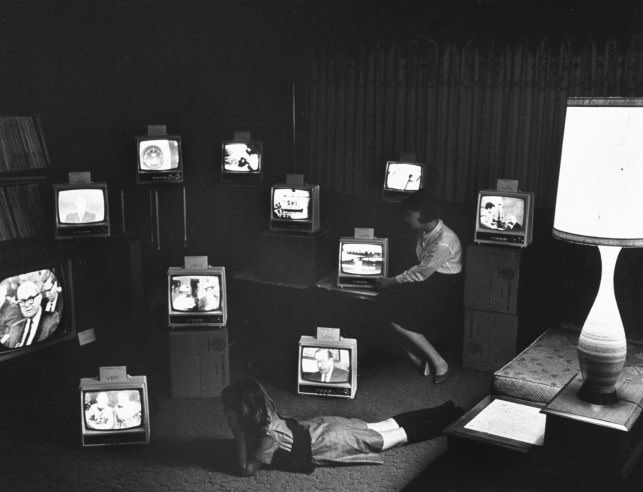

Different CATV (Community Antenna Television) stations available to subscribers in Elmira, New York, in 1966
Enjoyed this post? Get new ones in your inbox.

Leave a Comment

Your email address will not be published. Required fields are marked *

Share this Post 🥺

Please take a moment to share this content. Your support is greatly appreciated! 🙌🙏

Share this Post 🥺

Please take a moment to share this content. Your support is greatly appreciated! 🙌🙏
Scroll to Top
 
Hey Friend, Before You Go.. Please like & follow for more interesting content