in

The Brixton Riots of 1981: A Photographic Journey Through the Chaos, the Courage, and the Consequences

By 1981, Brixton in South London was a neighborhood under enormous pressure. Unemployment across Britain was at its highest in decades, and in Brixton, young people — particularly those from the Black Caribbean community — bore the worst of it. Poverty was widespread, housing was overcrowded, and opportunities were scarce. But the single most corrosive issue was the relationship between the community and the Metropolitan Police.
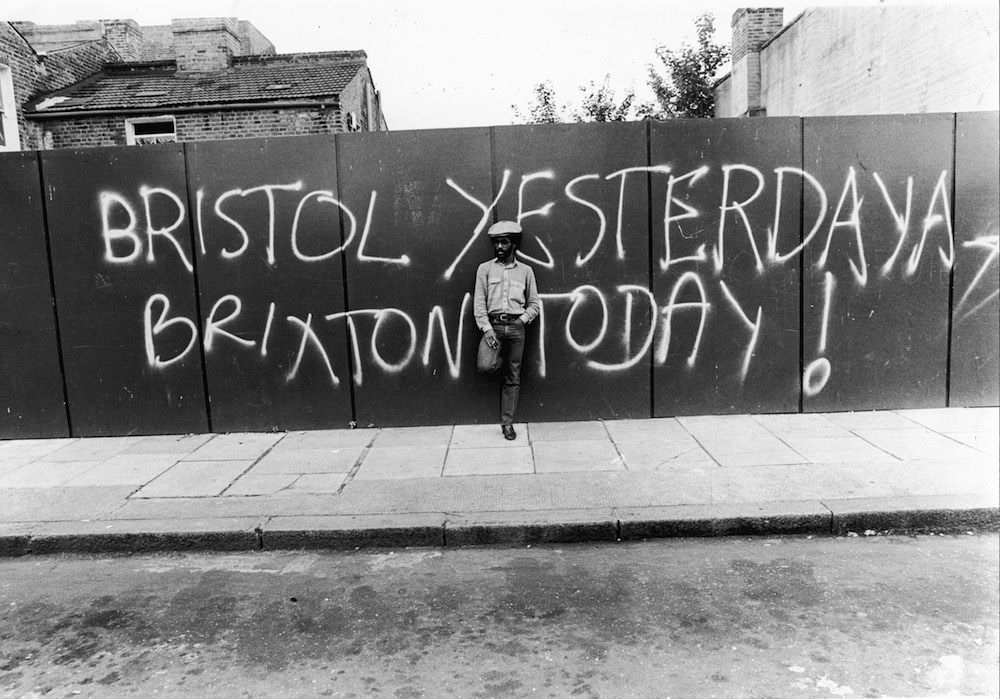
A young man standing in front of a fence with a graffiti message of racial unrest, 1980.

At the center of that tension was the ‘Sus law’ — short for ‘suspected person law’ — a piece of legislation that allowed officers to stop and search anyone they suspected of intending to commit a crime. In practice, it was applied overwhelmingly against Black men. No crime had to be committed. No evidence was required. The mere suspicion of an officer was enough. For Brixton’s residents, this was not an occasional inconvenience — it was a daily reality that built years of resentment.
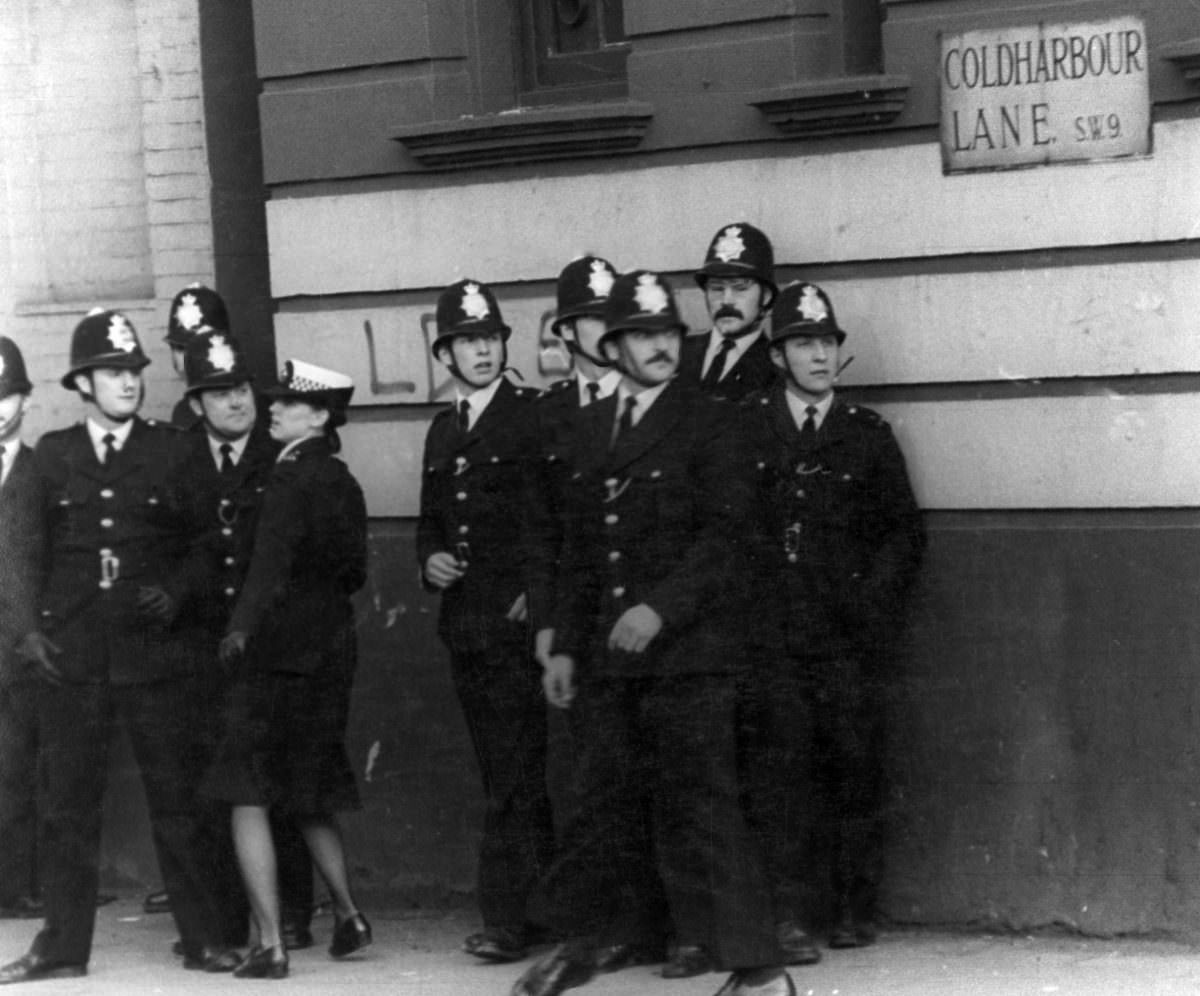
Brixton Riots, 1981.

On April 10, 1981, police stopped a young Black man named Michael Bailey, known locally as Mickey, in Brixton. He was injured during the encounter. Word spread quickly through the neighborhood that he had been mistreated, and the anger that had been simmering for years finally broke to the surface. That evening, crowds gathered on the streets. The atmosphere was electric with fury. Bottles and bricks flew toward police lines, and by nightfall, Brixton was in open revolt.
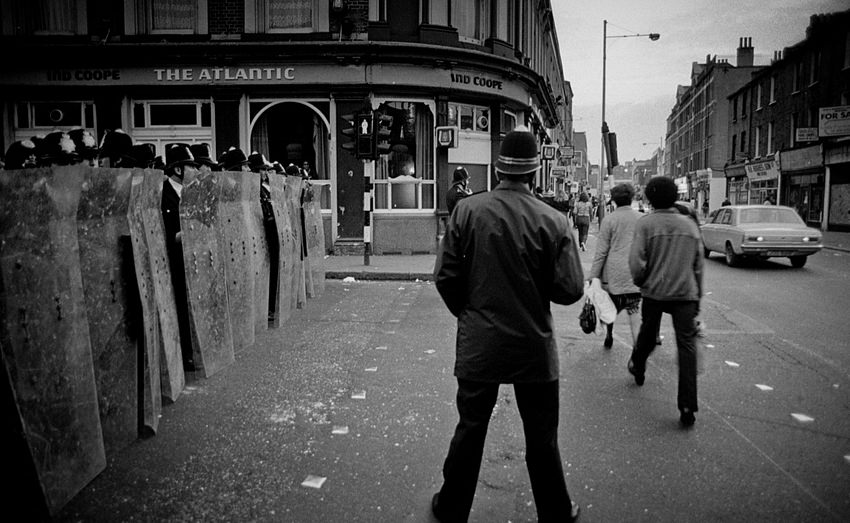
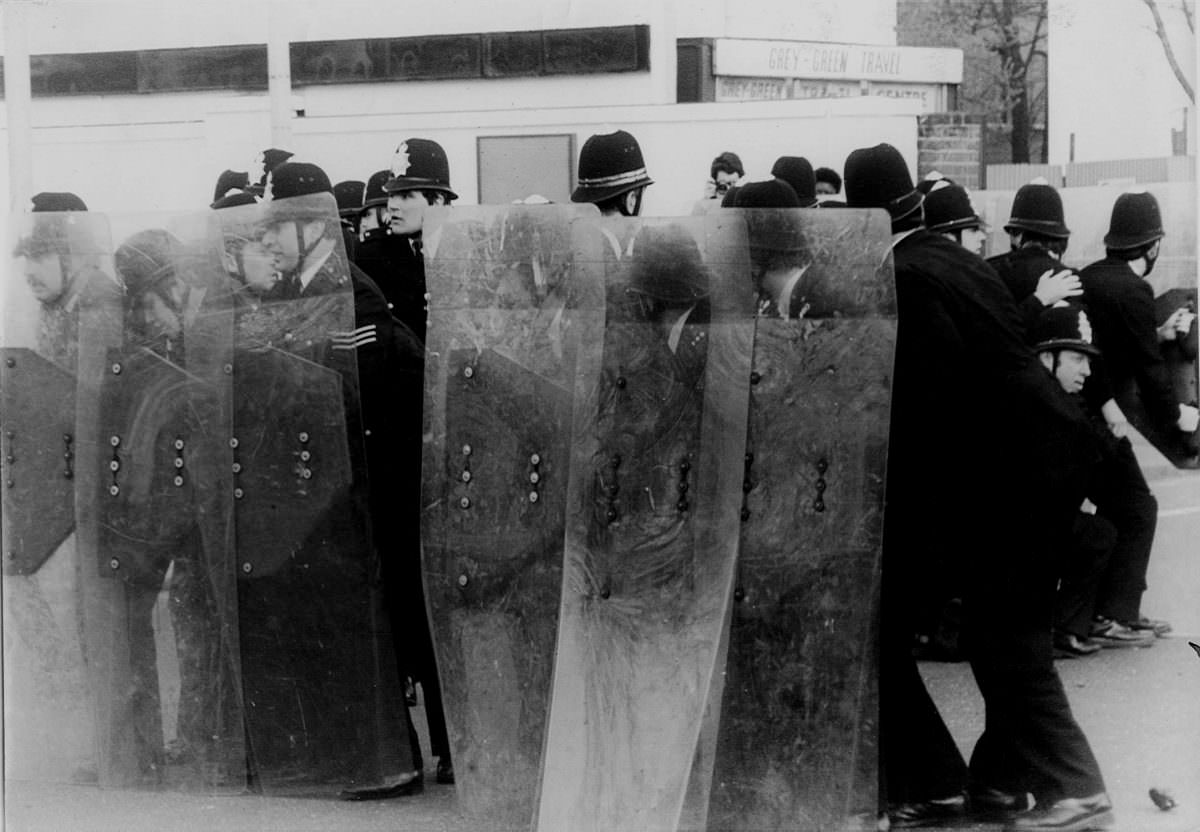
Police with riot shields form a cordon across Atlantic Road at its junction with Coldharbour Lane, 1981.

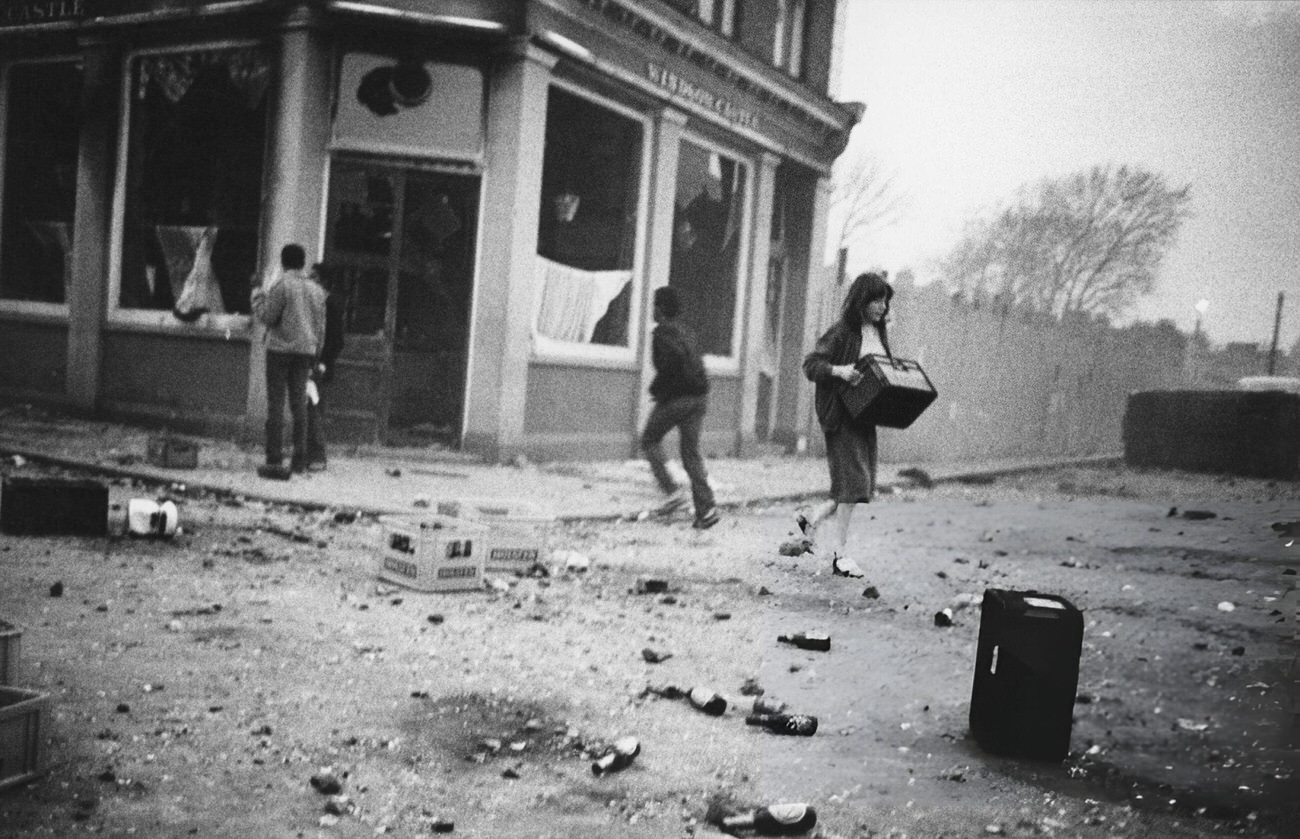
Police scrambled to hold their lines as fires broke out across the neighborhood. Shops were looted and buildings were set alight. Officers in riot gear — shields raised, batons ready — were pushed back repeatedly as rioters pressed forward. The scale of the unrest overwhelmed the initial police response. Vehicles burned at major intersections, and thick smoke rose over South London.
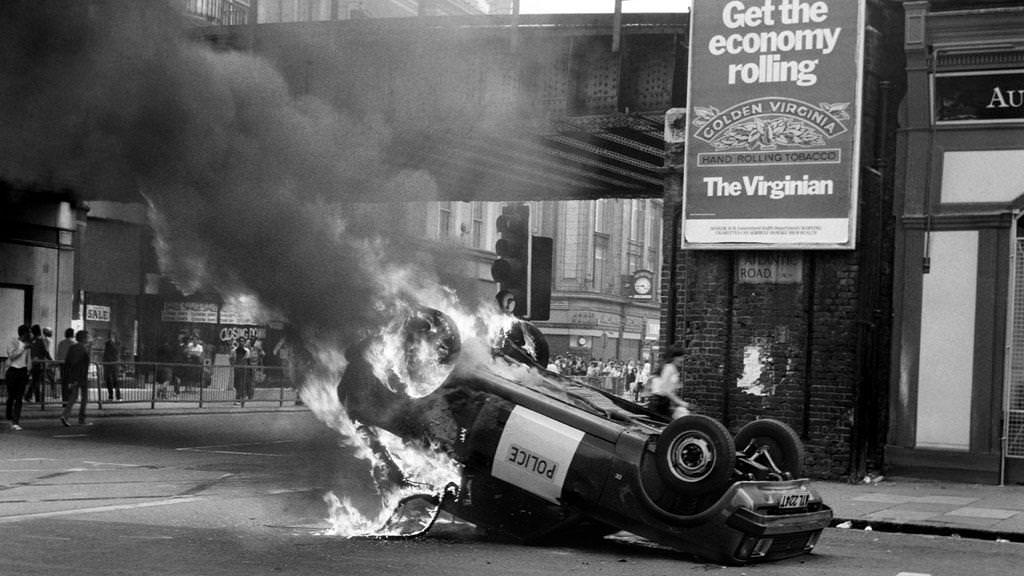
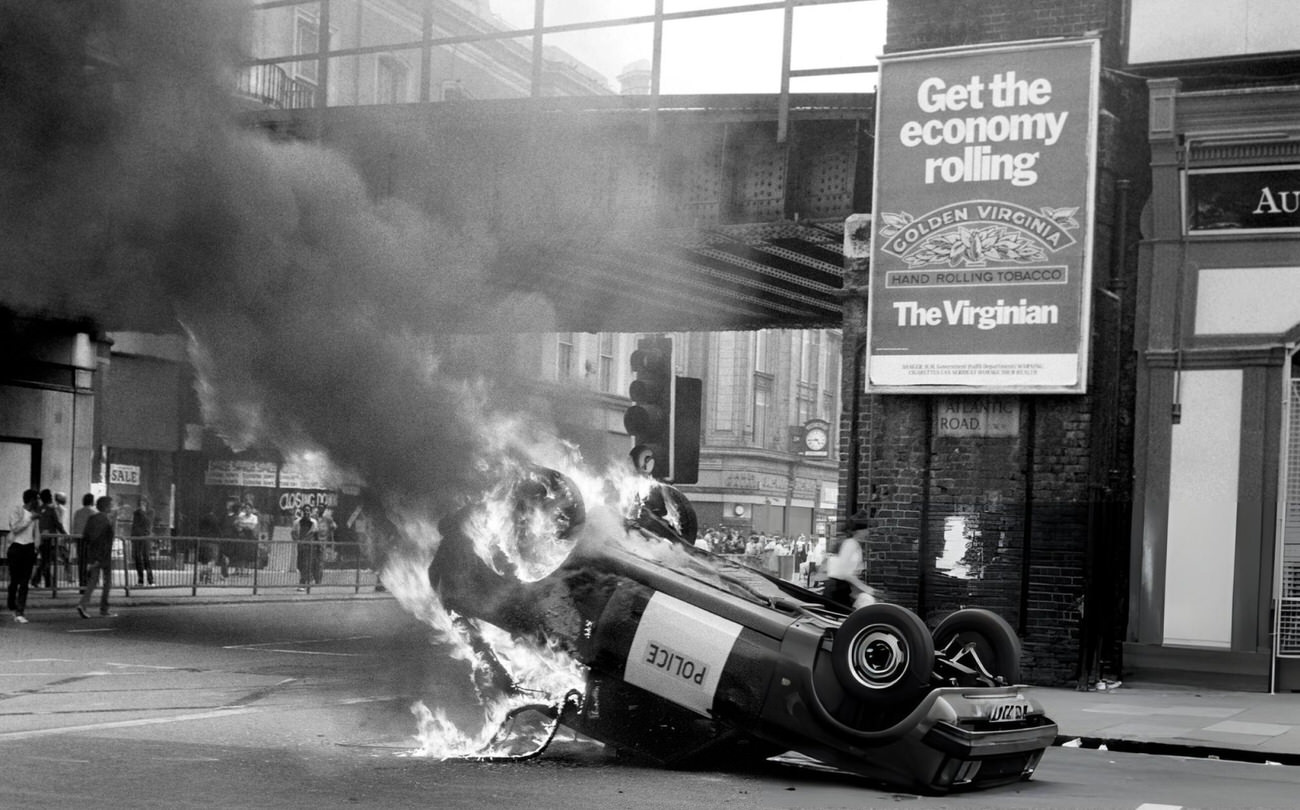
A police car blazes at the corner of Atlantic Road and Brixton Road in Brixton, South London, 1981.
Brixton Riots, 1981.

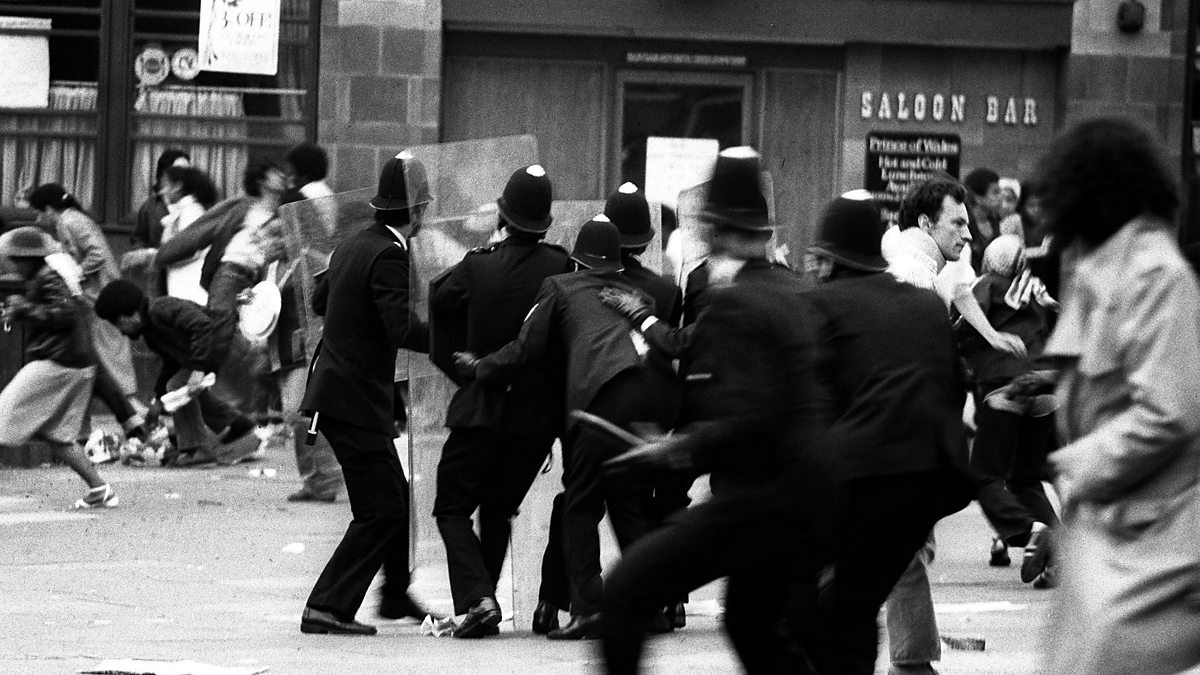
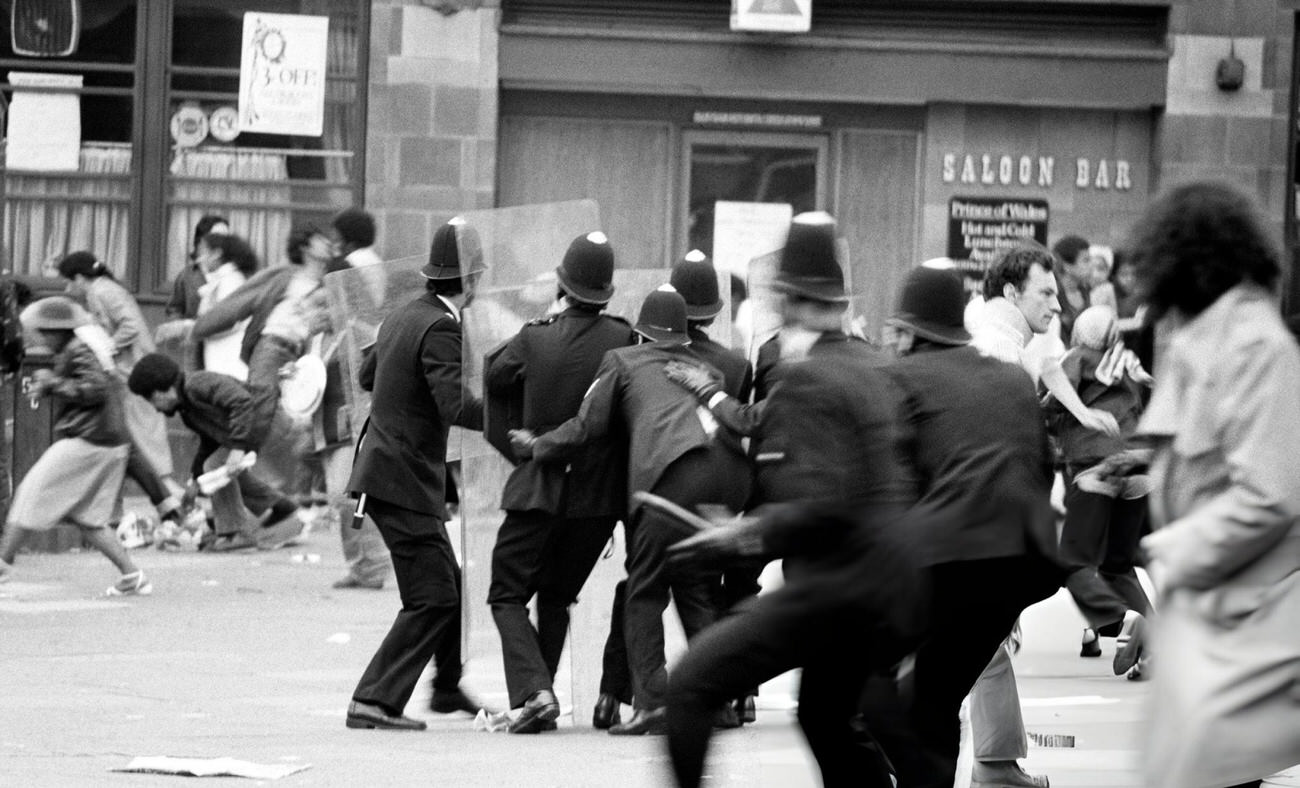
Street by street, officers faced rioters at close range. The clashes were brutal on both sides. Officers formed defensive cordons, shields locked together, while projectiles rained down. Rioters fought with bricks, petrol bombs, and anything they could find. The fighting was concentrated in streets like Mayall Road, Coldharbour Lane, and Atlantic Road — the heart of Brixton’s community.
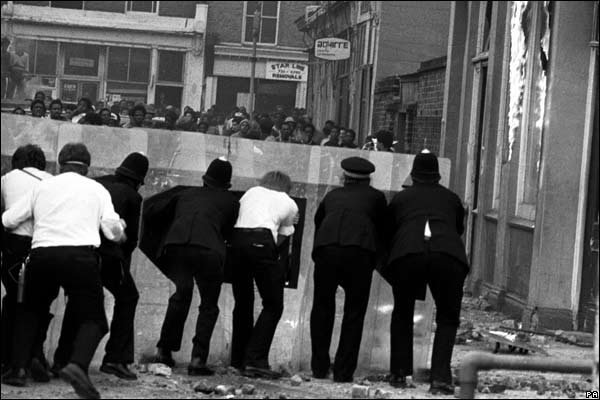
Police confront rioters from behind their shields in Mayall Road, Brixton, 1981.
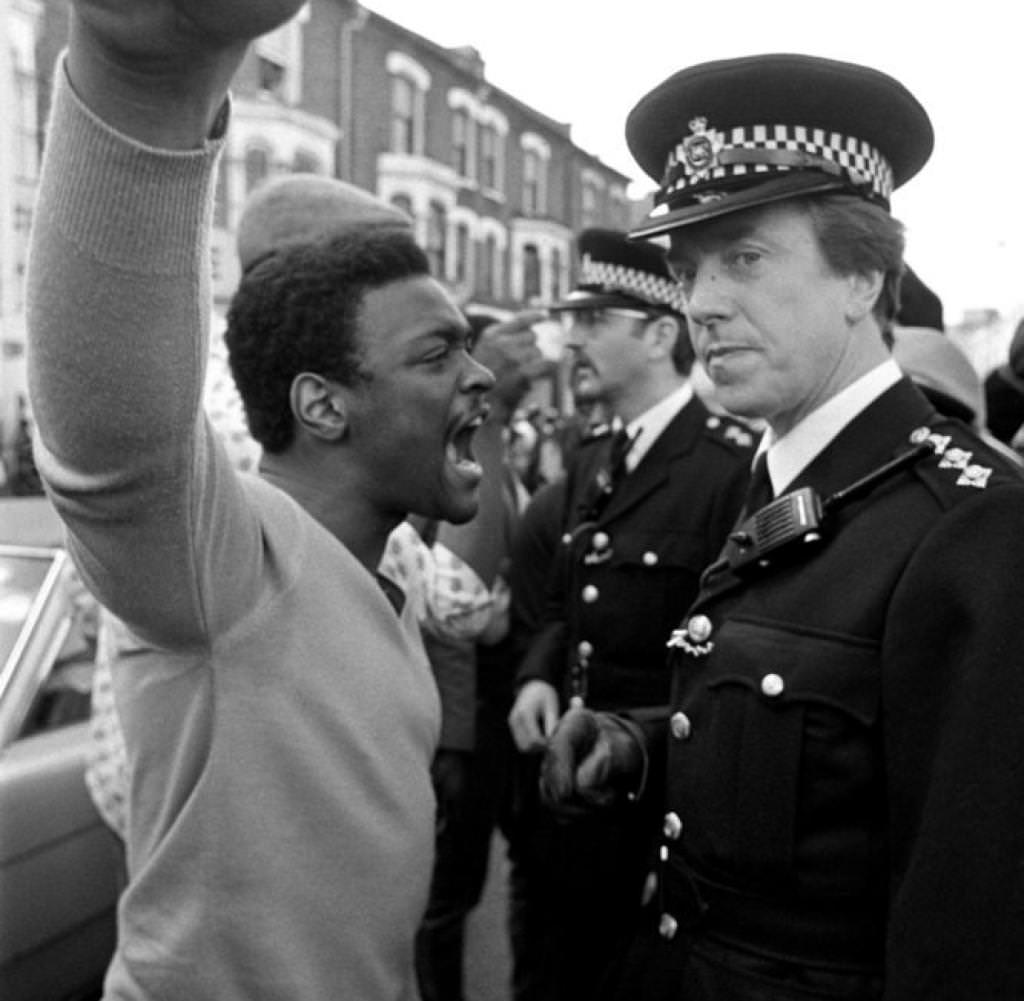
A Brixton man confronts a police officer during the street unrest, 1981.

Near Lambeth Town Hall on Acre Lane, between 200 and 400 youths were reported to be on the rampage. Shop windows along Brixton Road were smashed and looted. Police moved in on foot and in vans, huddling behind their shields as debris crashed around them. The violence showed no sign of stopping as midnight approached.
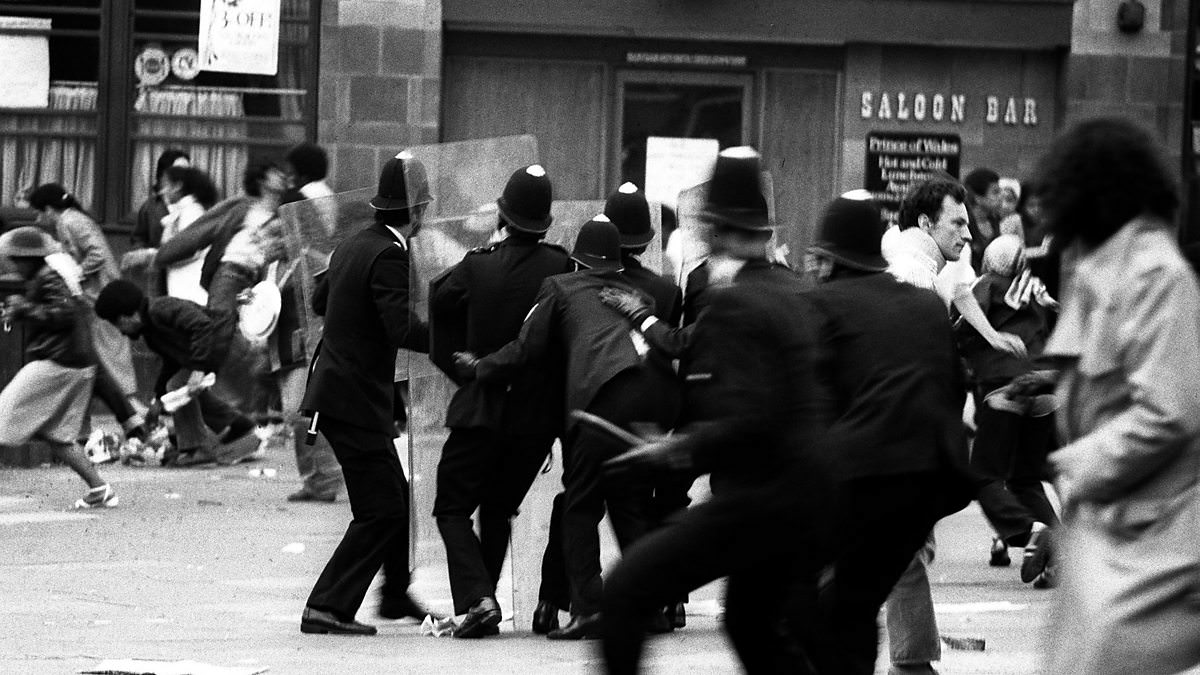
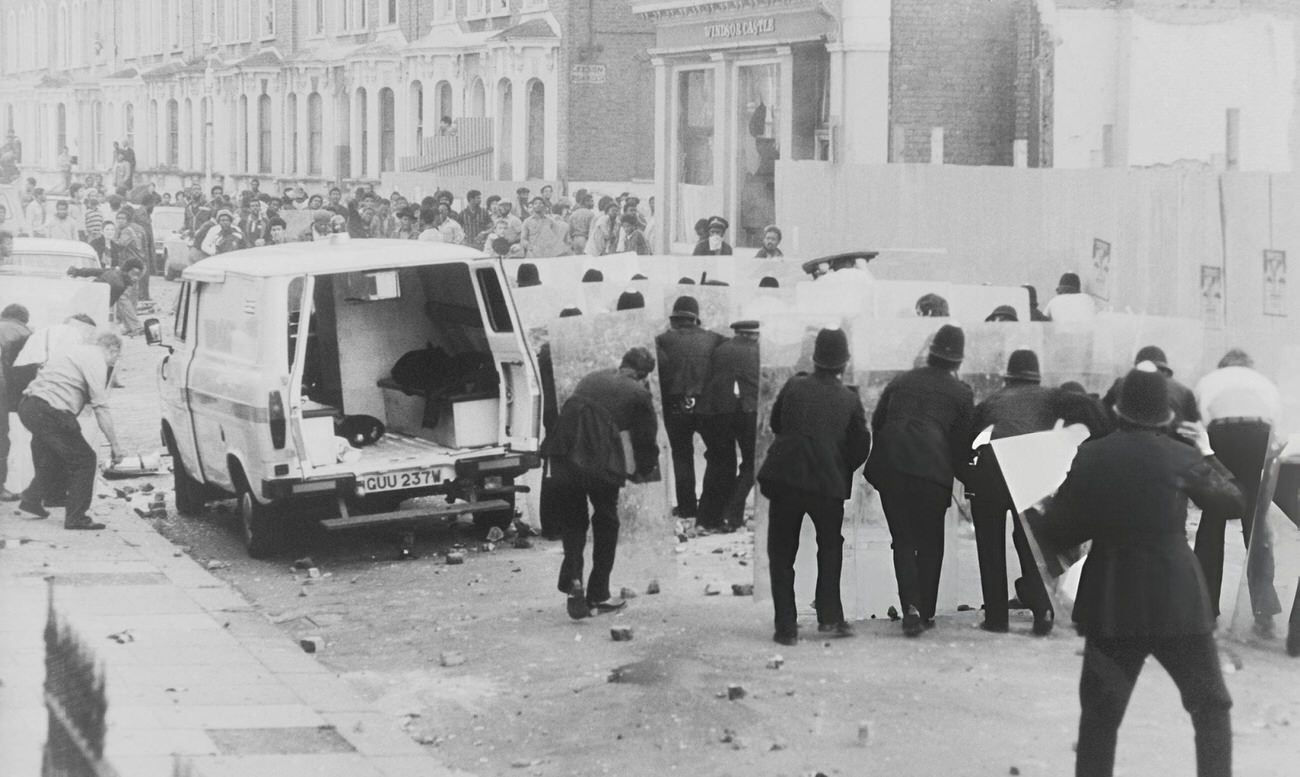
Armed with riot shields, police huddle together for protection as violence flared near Lambeth Town Hall in Acre Lane, Brixton, South London. Rioters smashed shop windows in the Brixton Road and began looting. Police squads moved in on foot and by van, 1981.
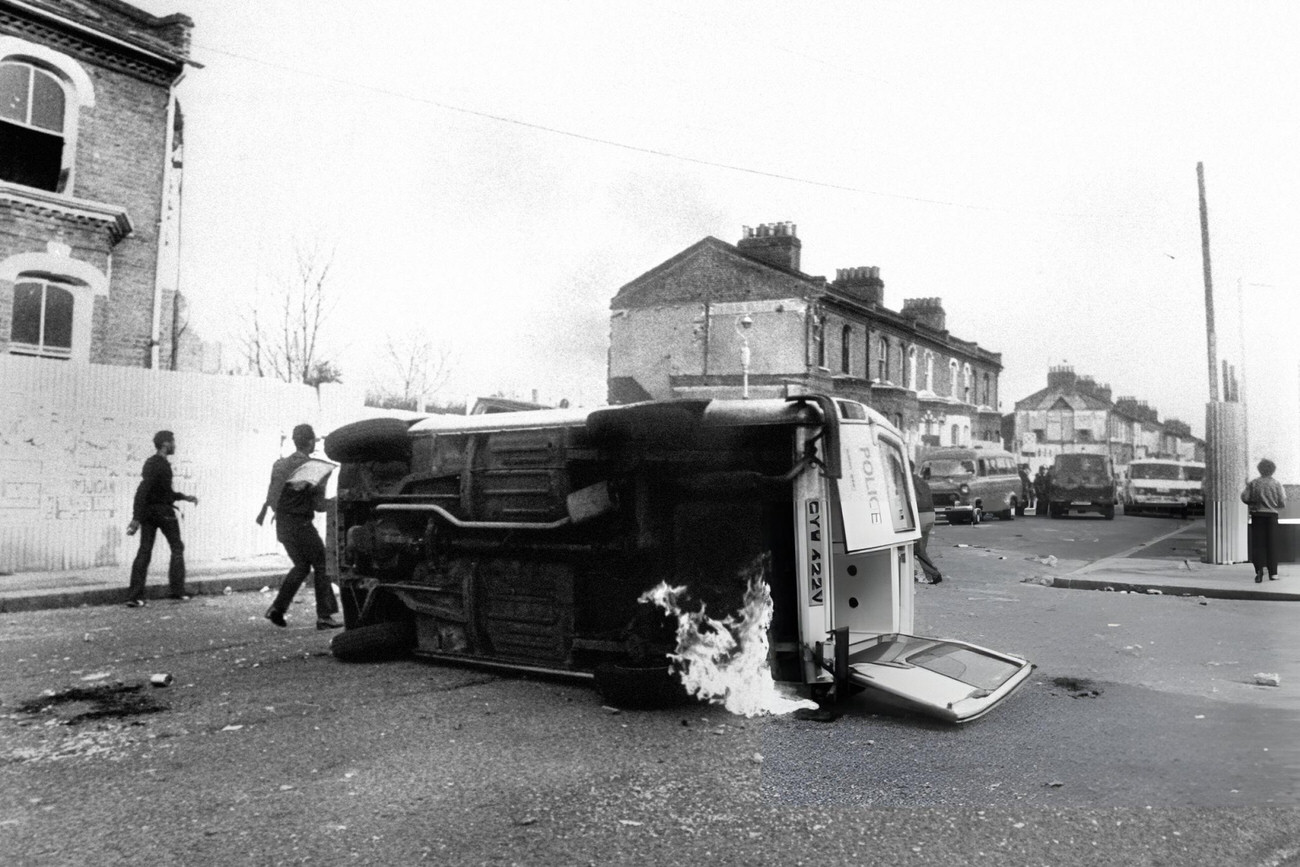
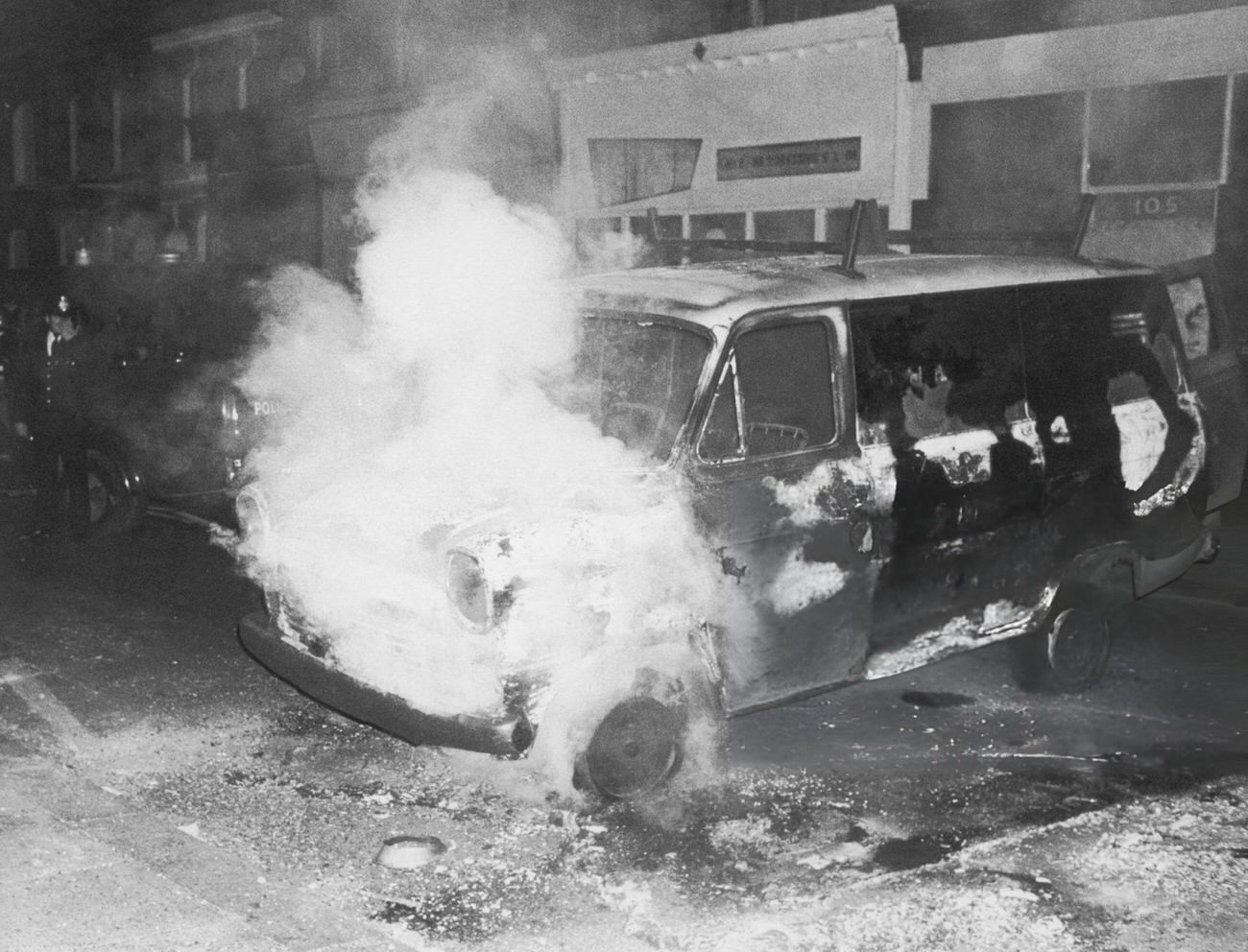
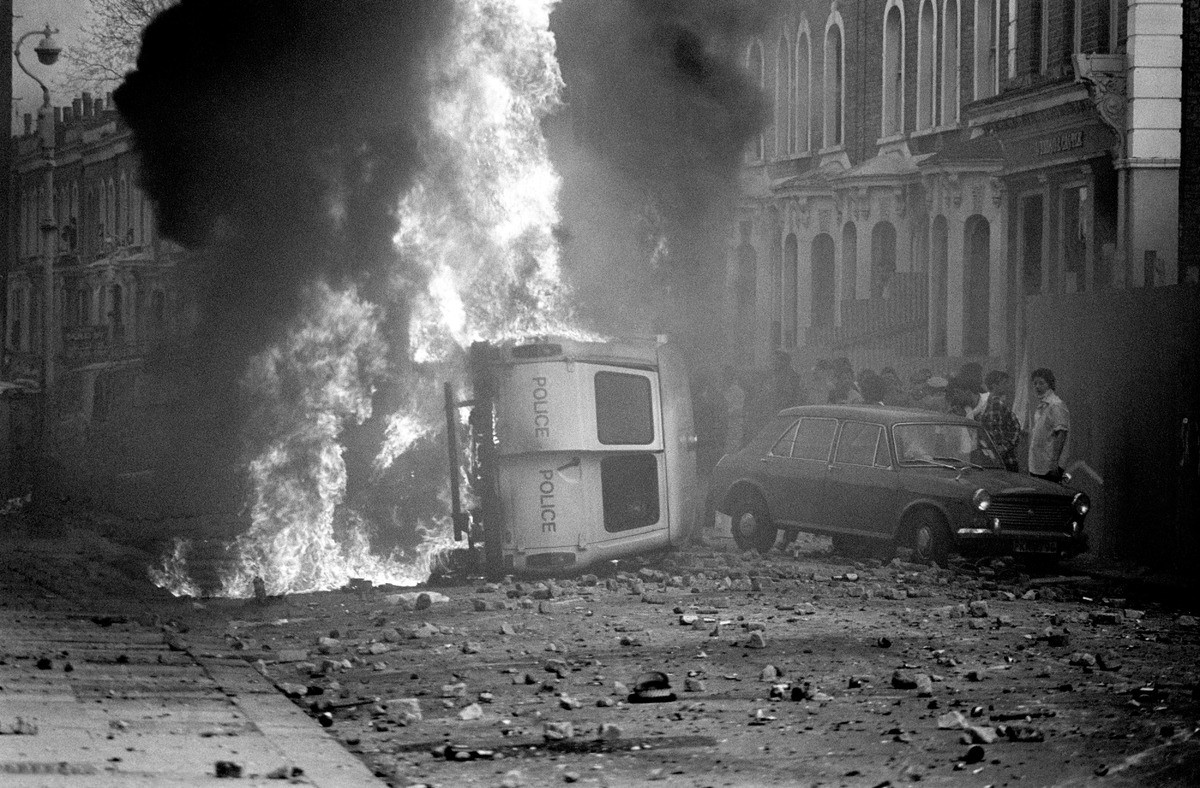
A police van on fire during the riot in Brixton, South London. 23 police officers were injured, 3 seriously, in attacks by brick throwing youths, 1981.
The Brixton Riots of 1981: A Photographic Journey Through the Chaos, the Courage, and the Consequences

When daylight came on April 11, the scale of the destruction was visible for the first time. Wrecked cars sat charred on the roads. Gutted buildings stood open to the sky. But the riots were not over. News of the previous night’s events had spread, and more people joined the unrest on the second day. Police reinforcements poured into Brixton, but the violence continued.
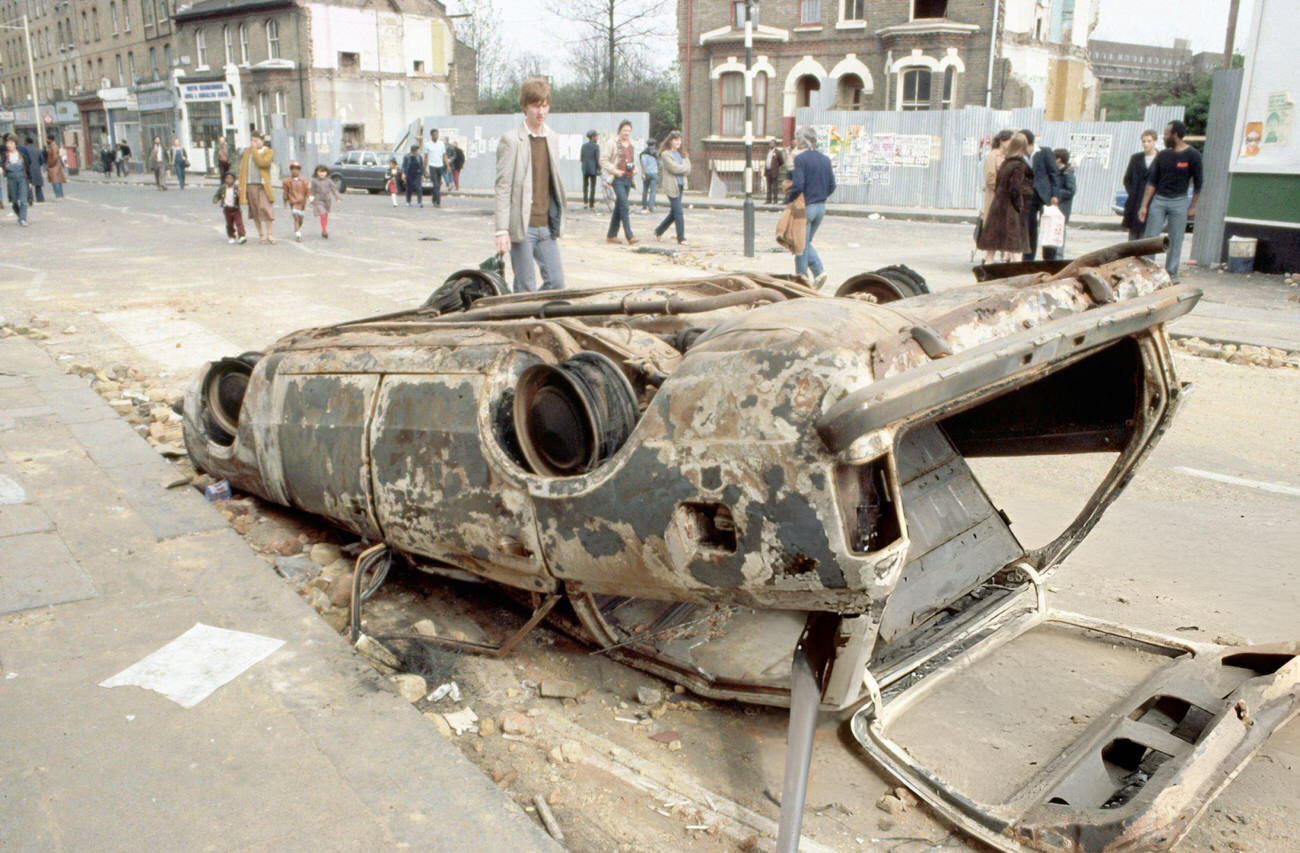
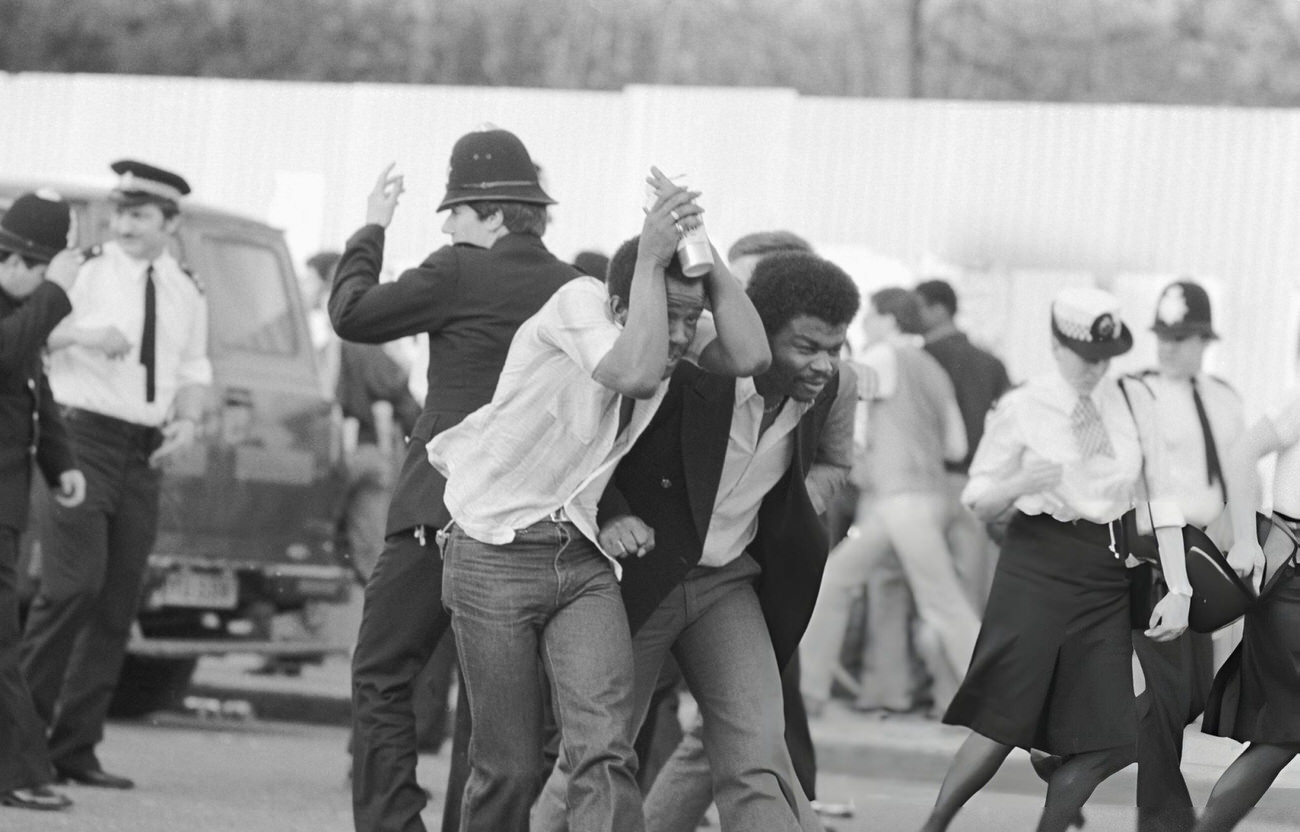
Wrecked buildings and cars in Brixton, London, following the 1981 riots.
Brixton Riot, 1981.
Brixton Riot, 1981.
Aftermath of the Brixton Riot, 1981.
Brixton Riot, 1981.
Brixton Riot, 1981.
Brixton Riot, 1981.
Brixton Riot, 1981.
Brixton Riot, 1981.
Brixton Riot, 1981.

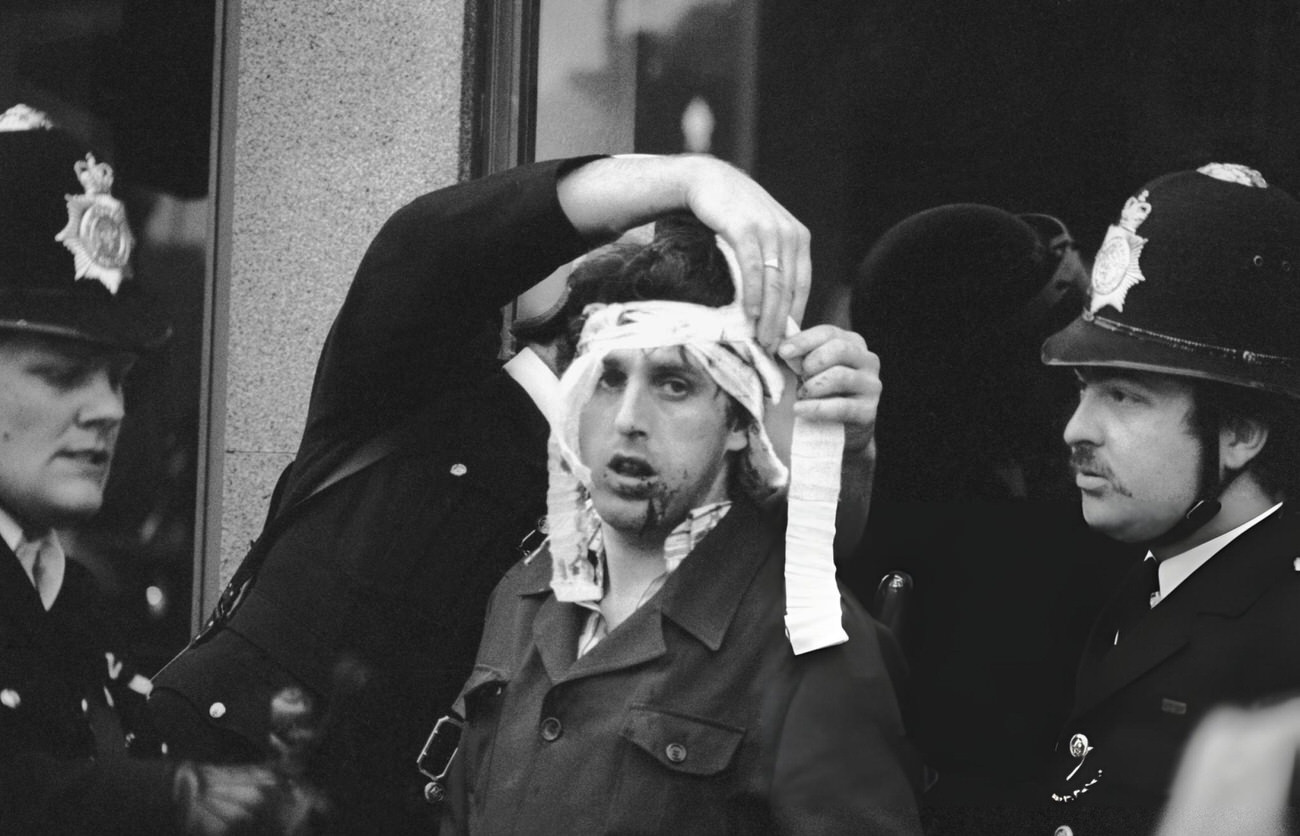
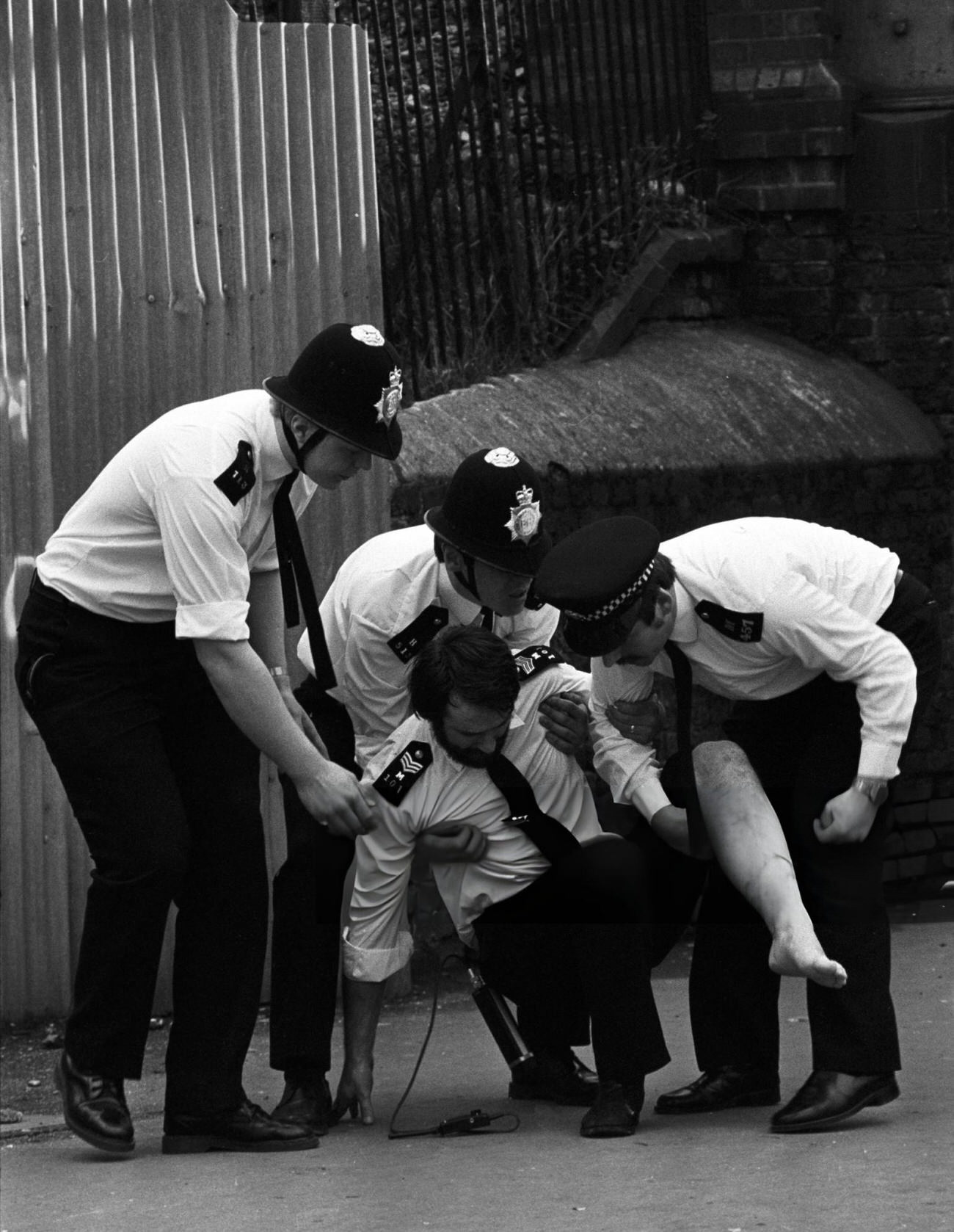
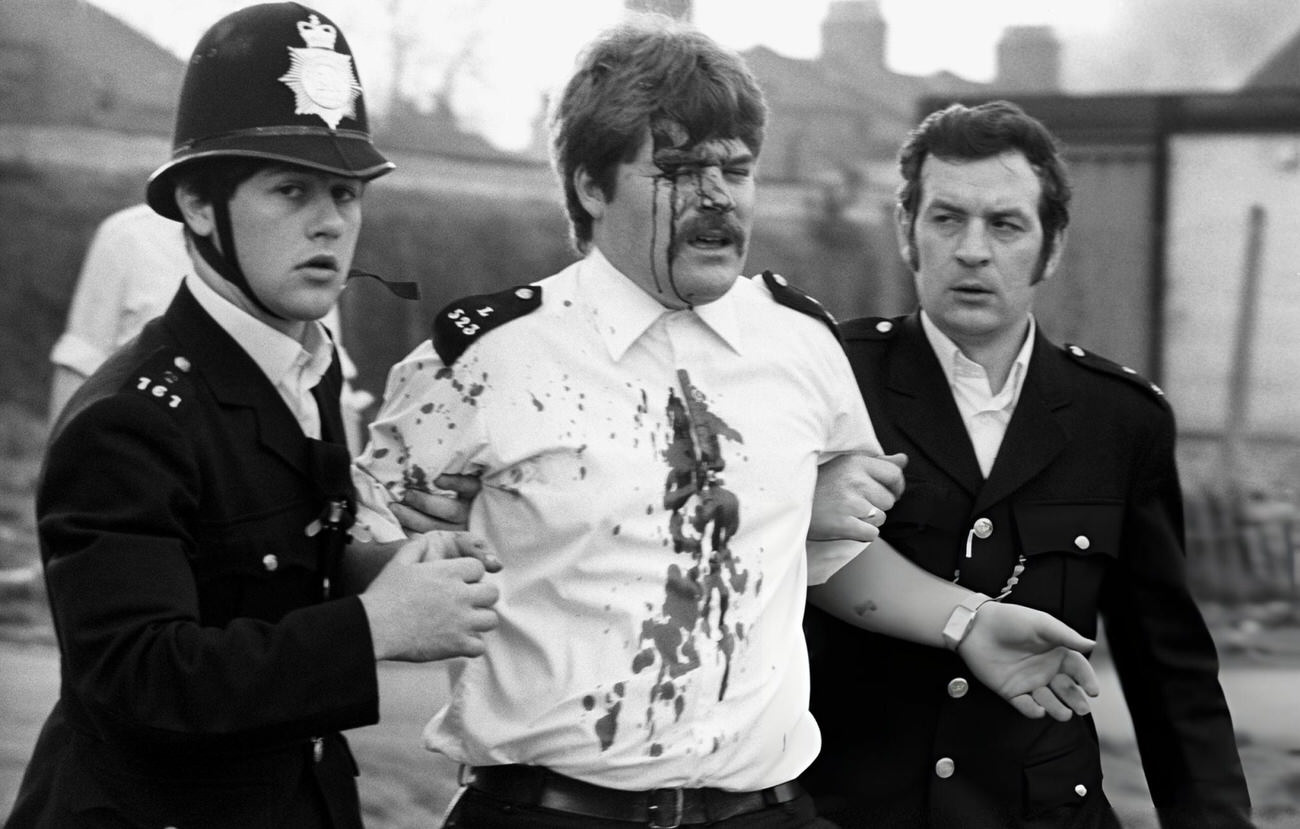
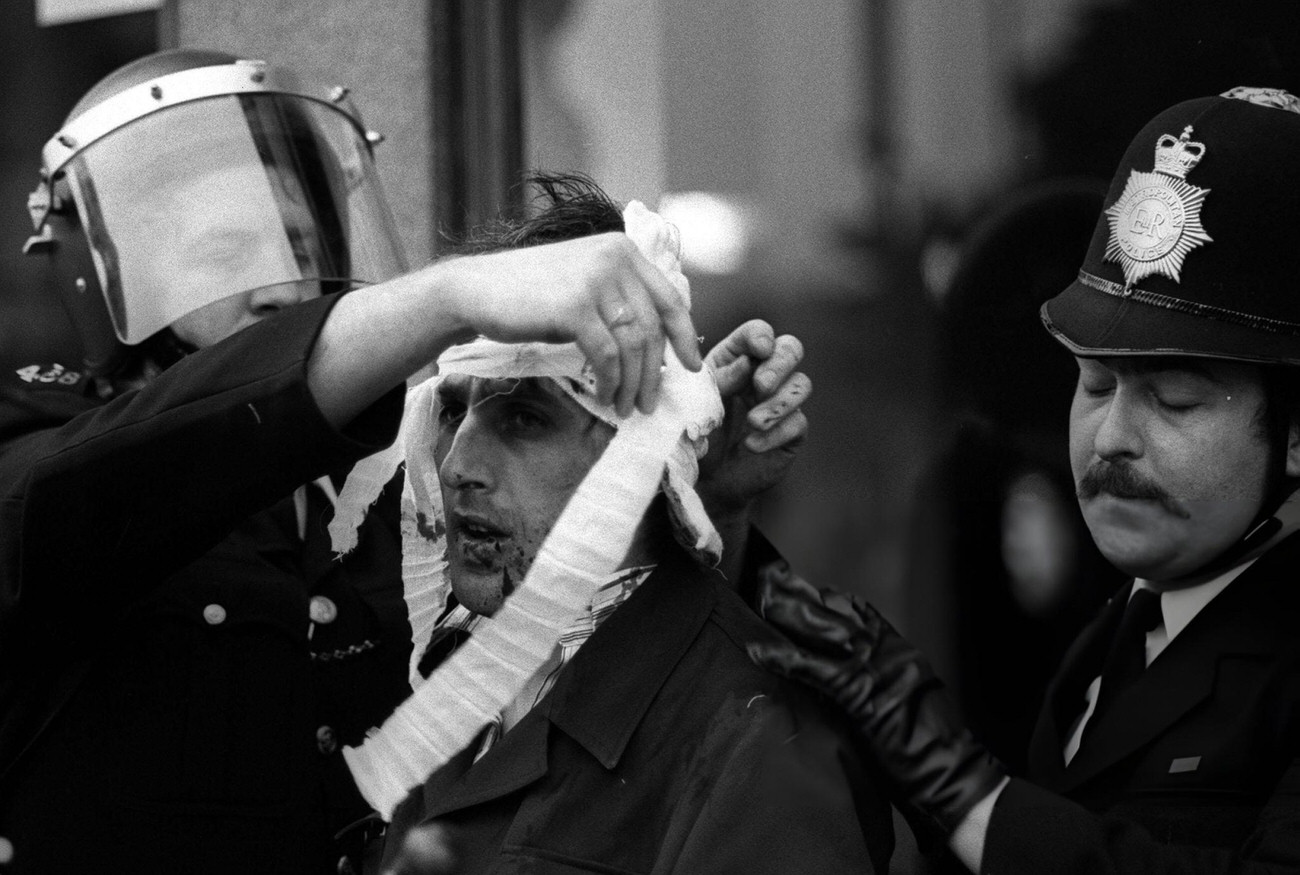
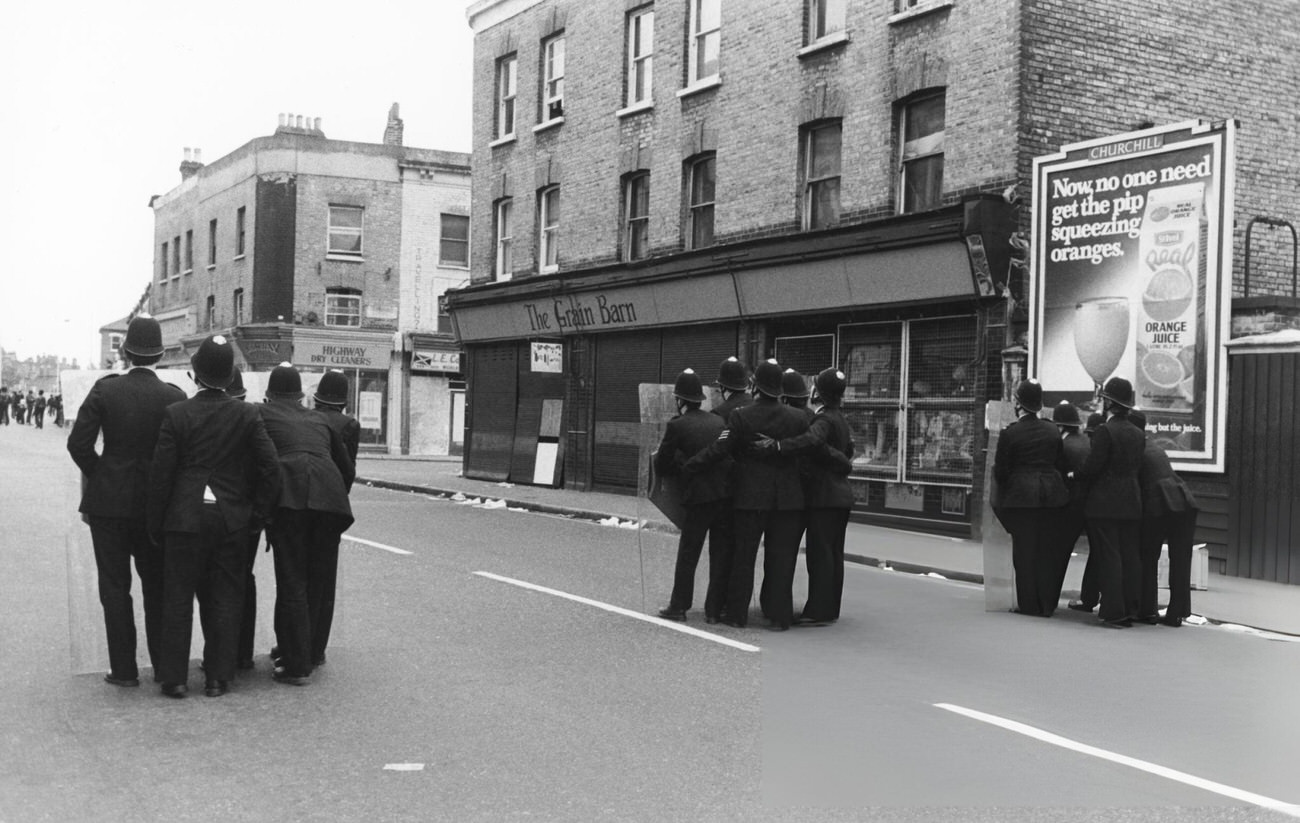
Police officers faced injuries throughout both days of fighting. Dozens were struck by bricks, burned by petrol bombs, or beaten in close-quarters confrontations. Officers were photographed with bloodied faces, burned uniforms, and bandaged wounds — treated by colleagues on the street because ambulances struggled to reach the injured through the chaos. In a historic first for mainland Britain, police deployed tear gas in an attempt to push back the crowds.
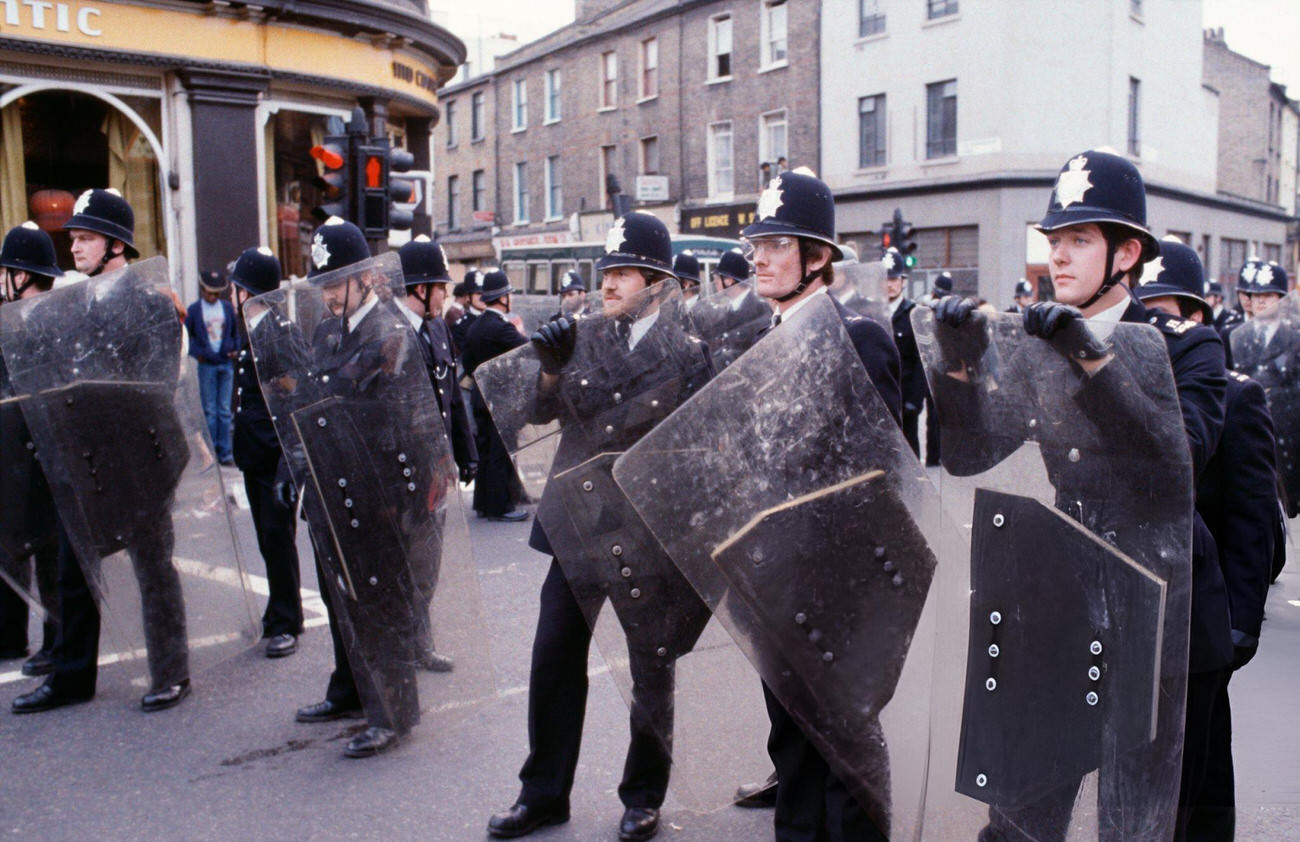
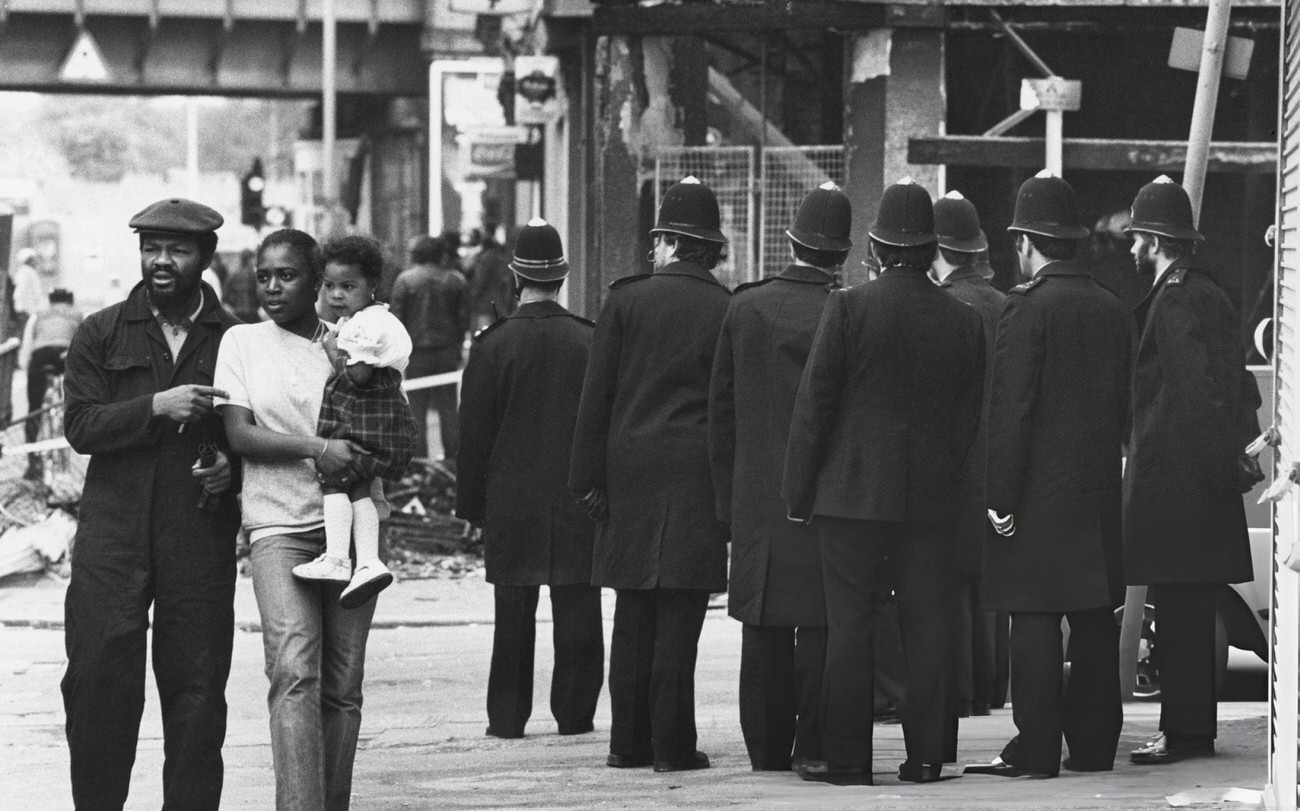
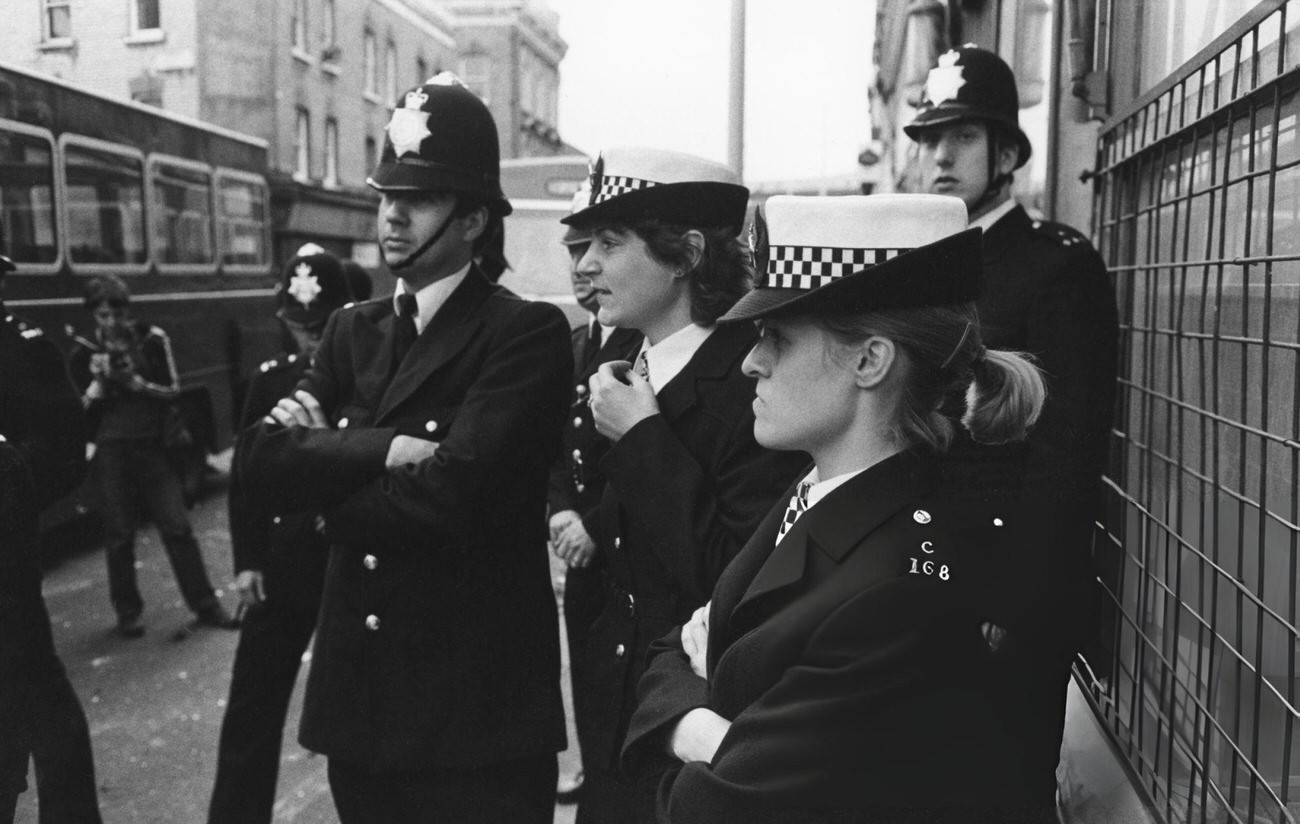
British police officers in uniform and sheltered behind shields in the street during the Brixton racial riots in London, 1981.
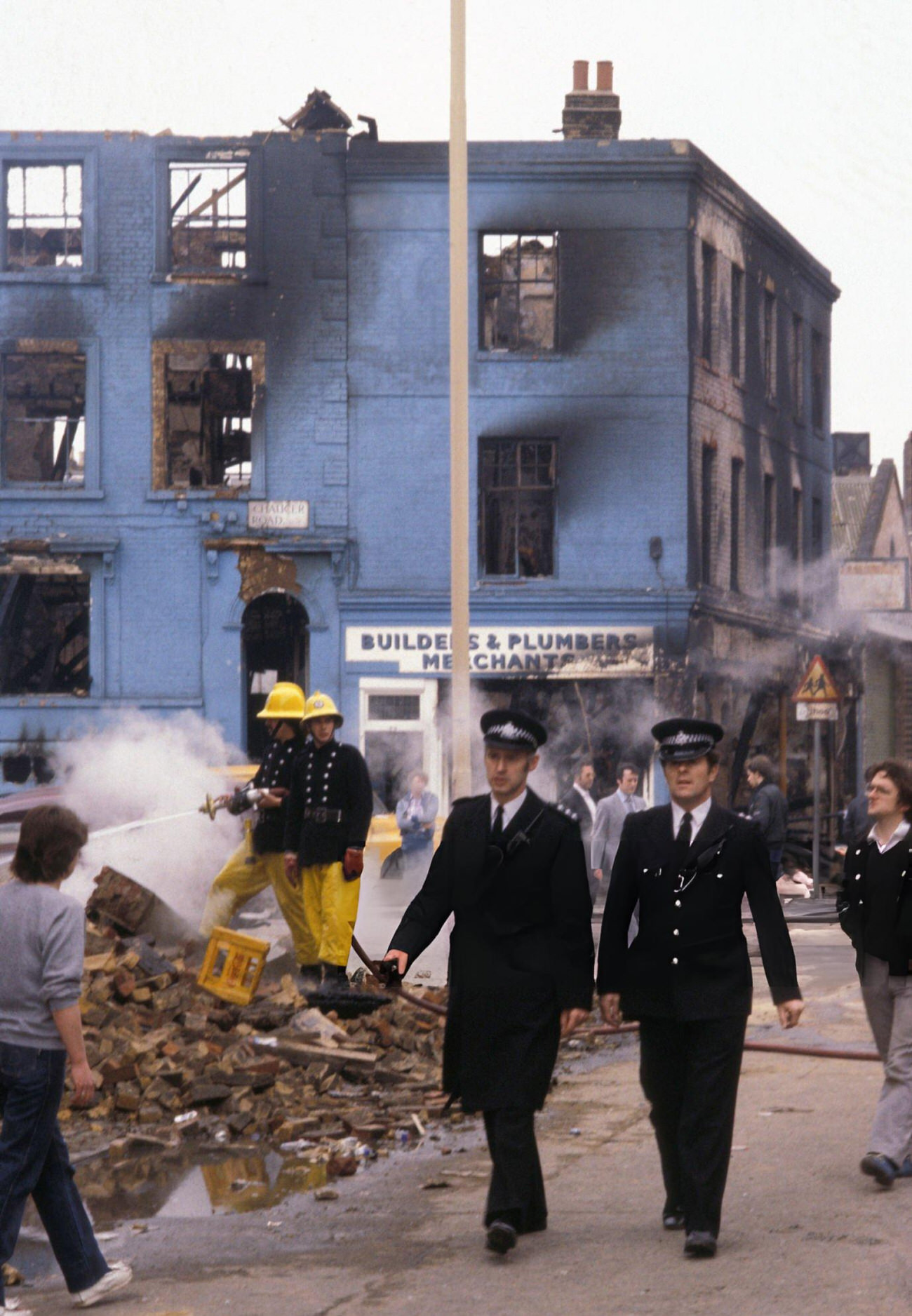
A building burned during the Brixton riots in London, 1981.

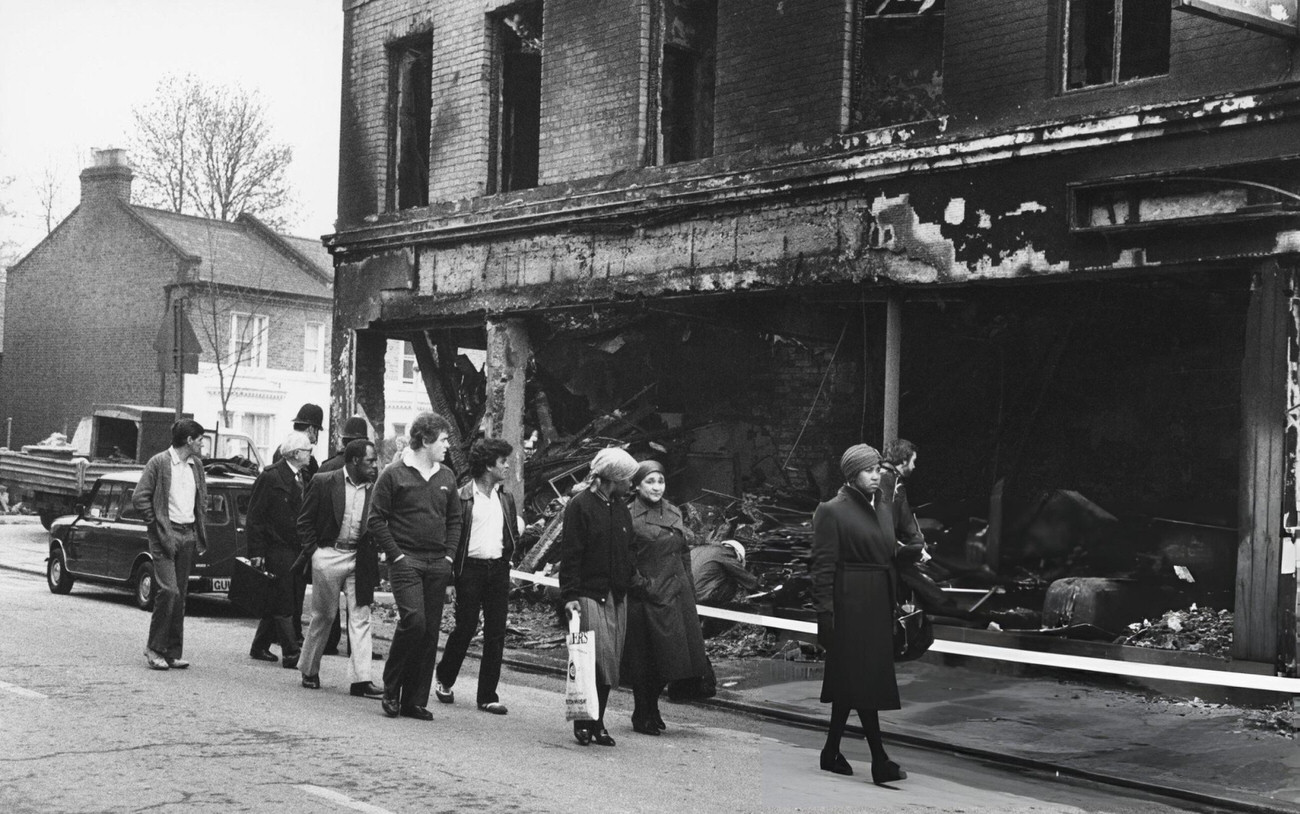
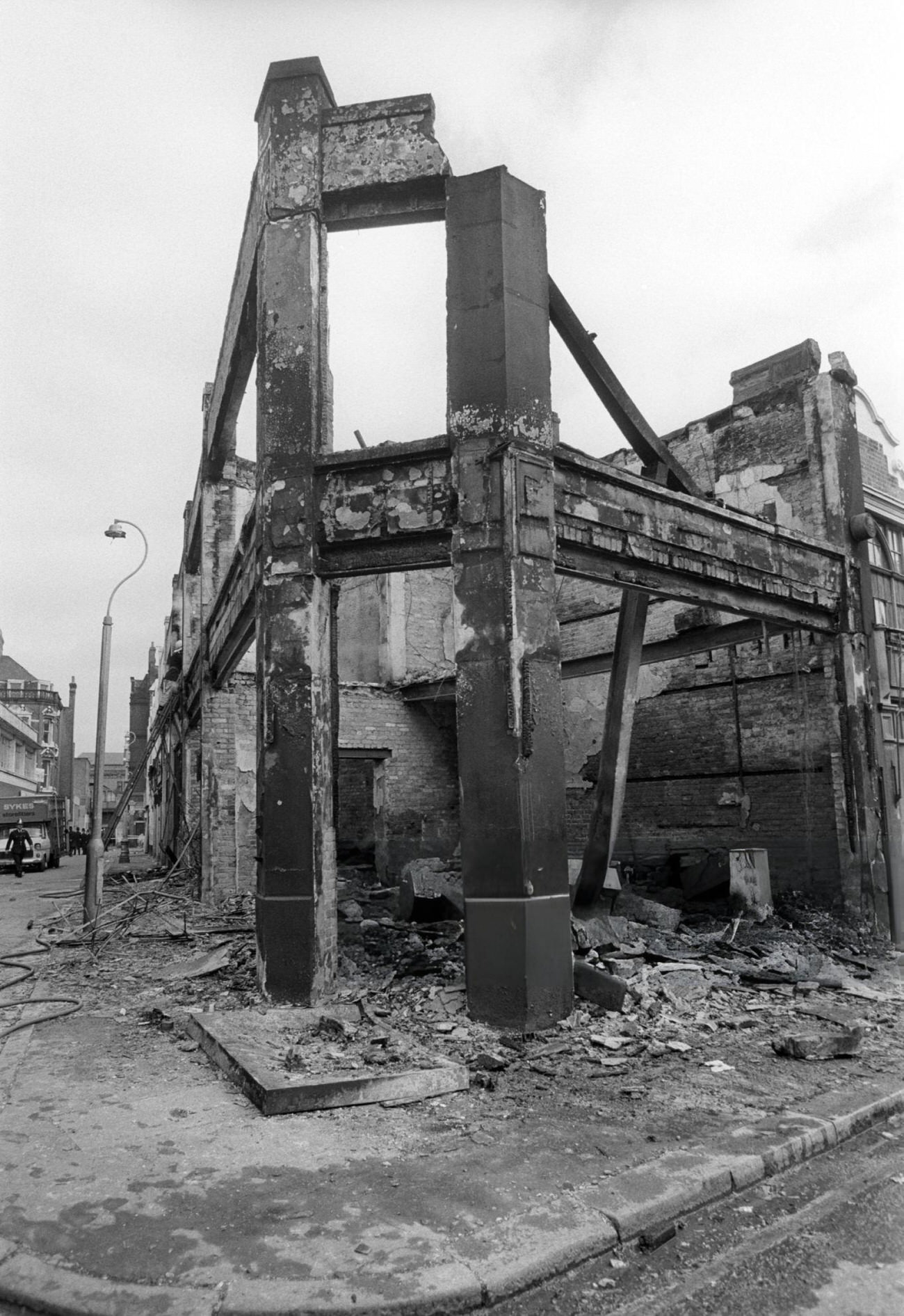
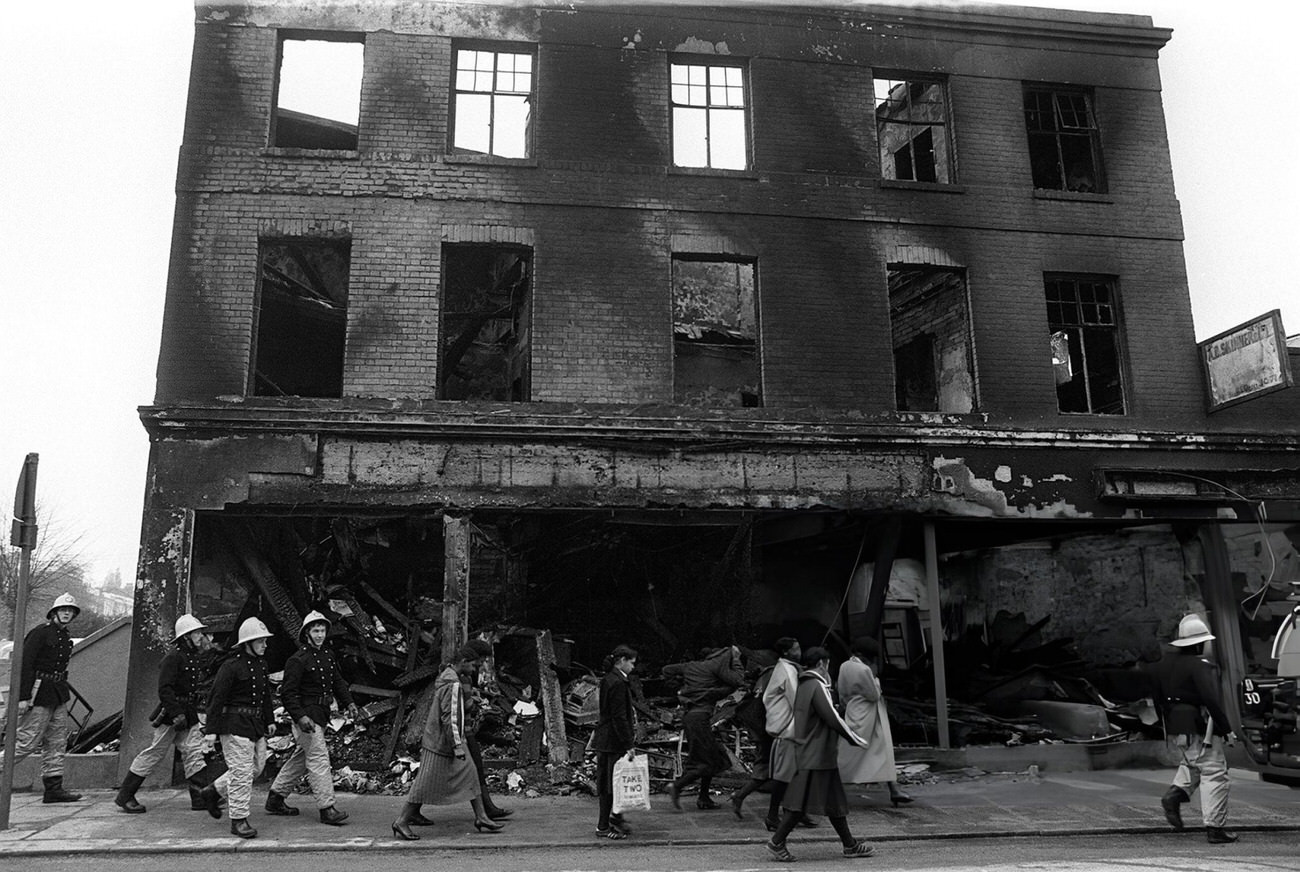
The fire damage across Brixton was extensive. At least 12 major fires were recorded during the two nights of rioting. Corner shops, residential buildings, and commercial properties were gutted. The ruins of a corner shop at Electric Lane and Coldharbour Lane became one of the defining images of the destruction. Inside burned-out properties, the remnants of ordinary businesses lay under ash and collapsed roofing.
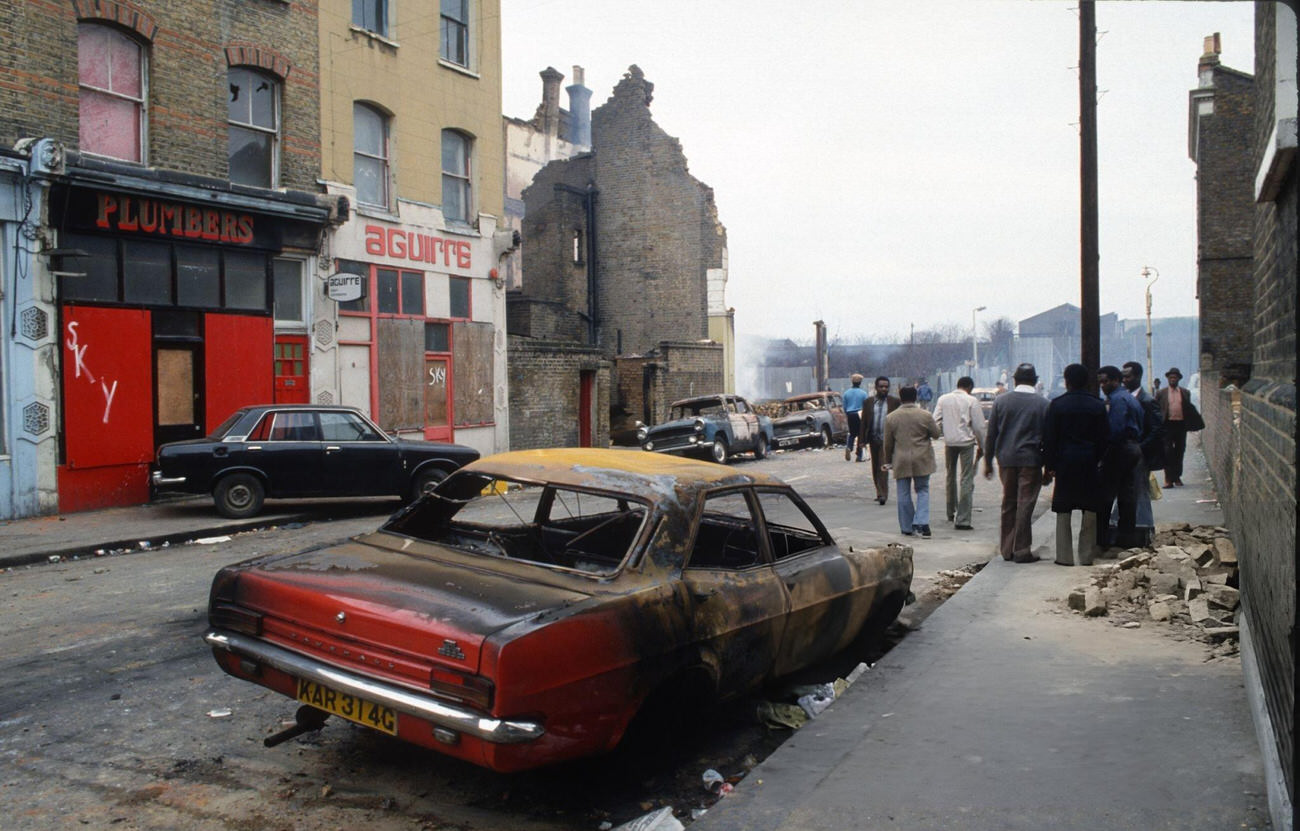
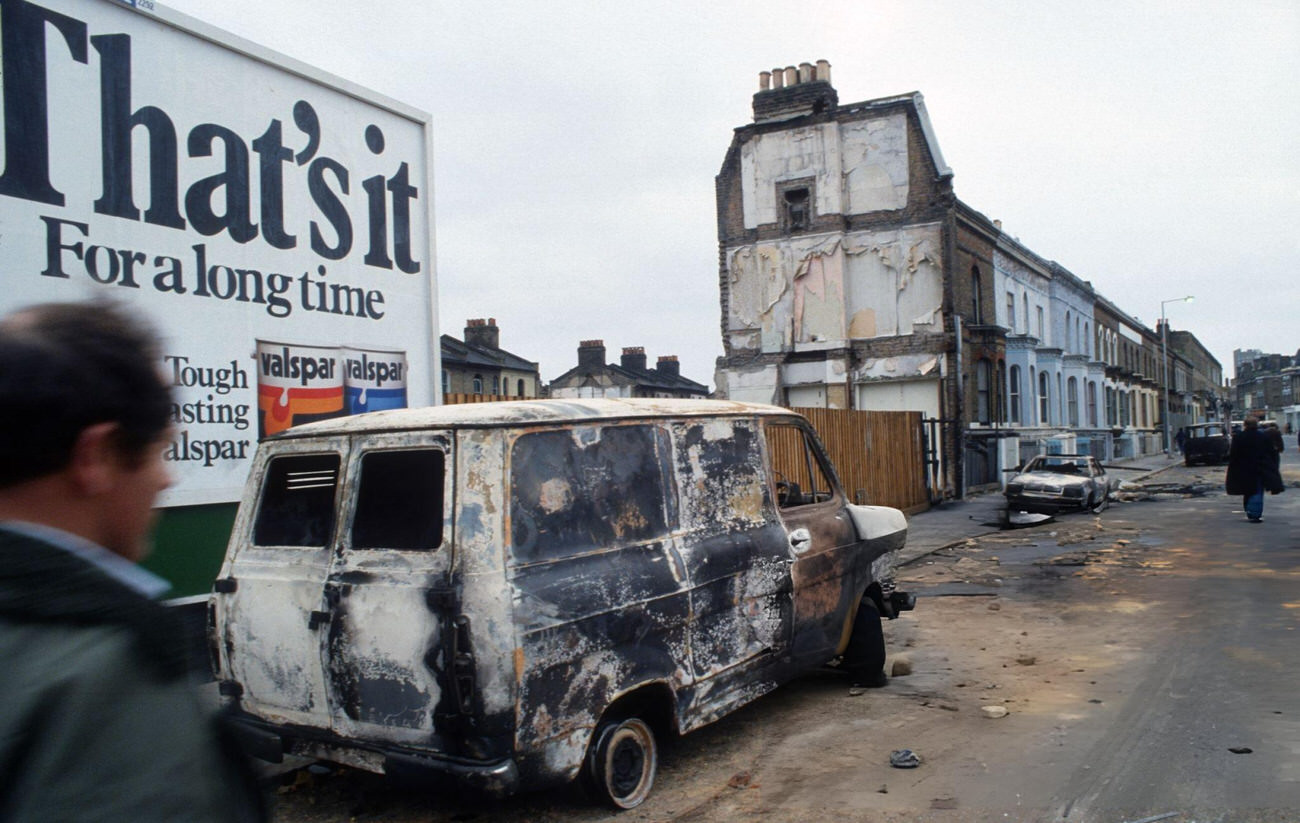
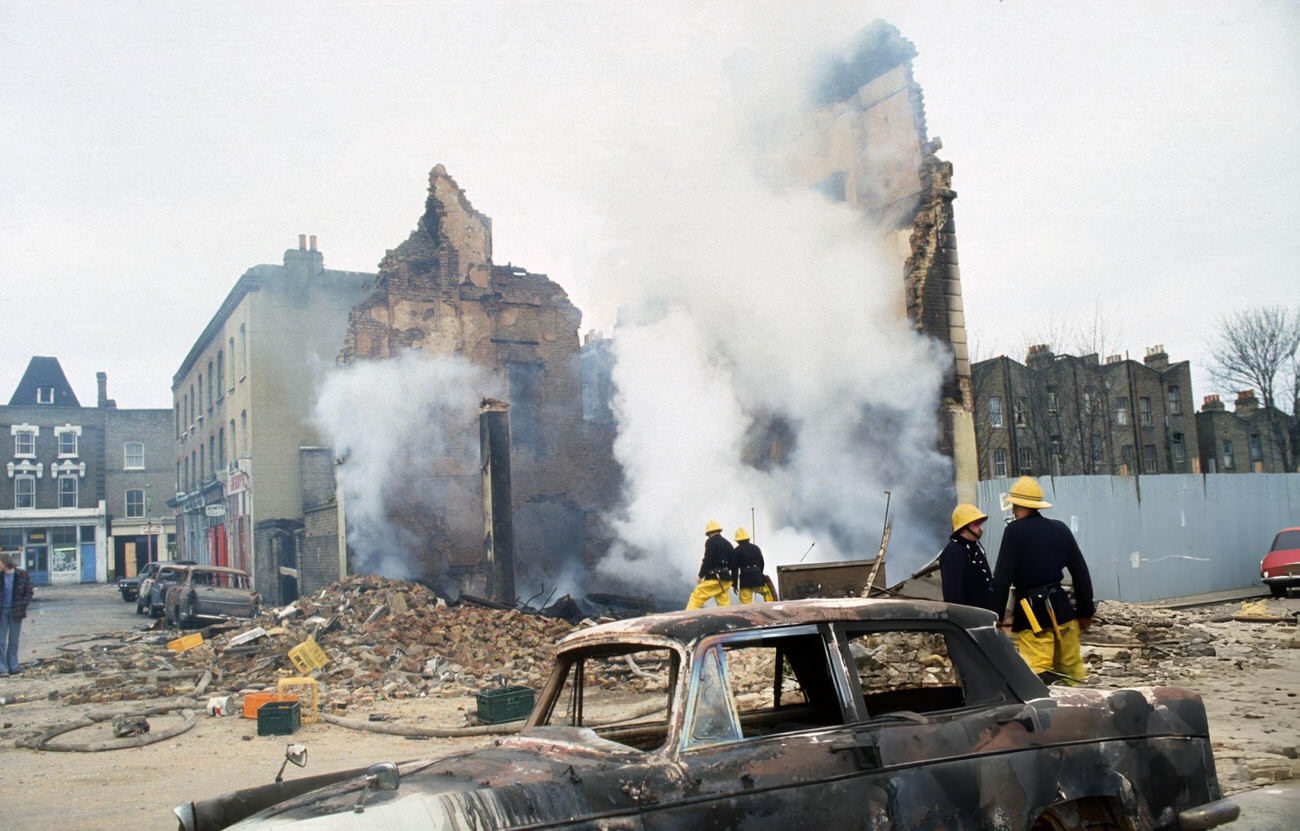
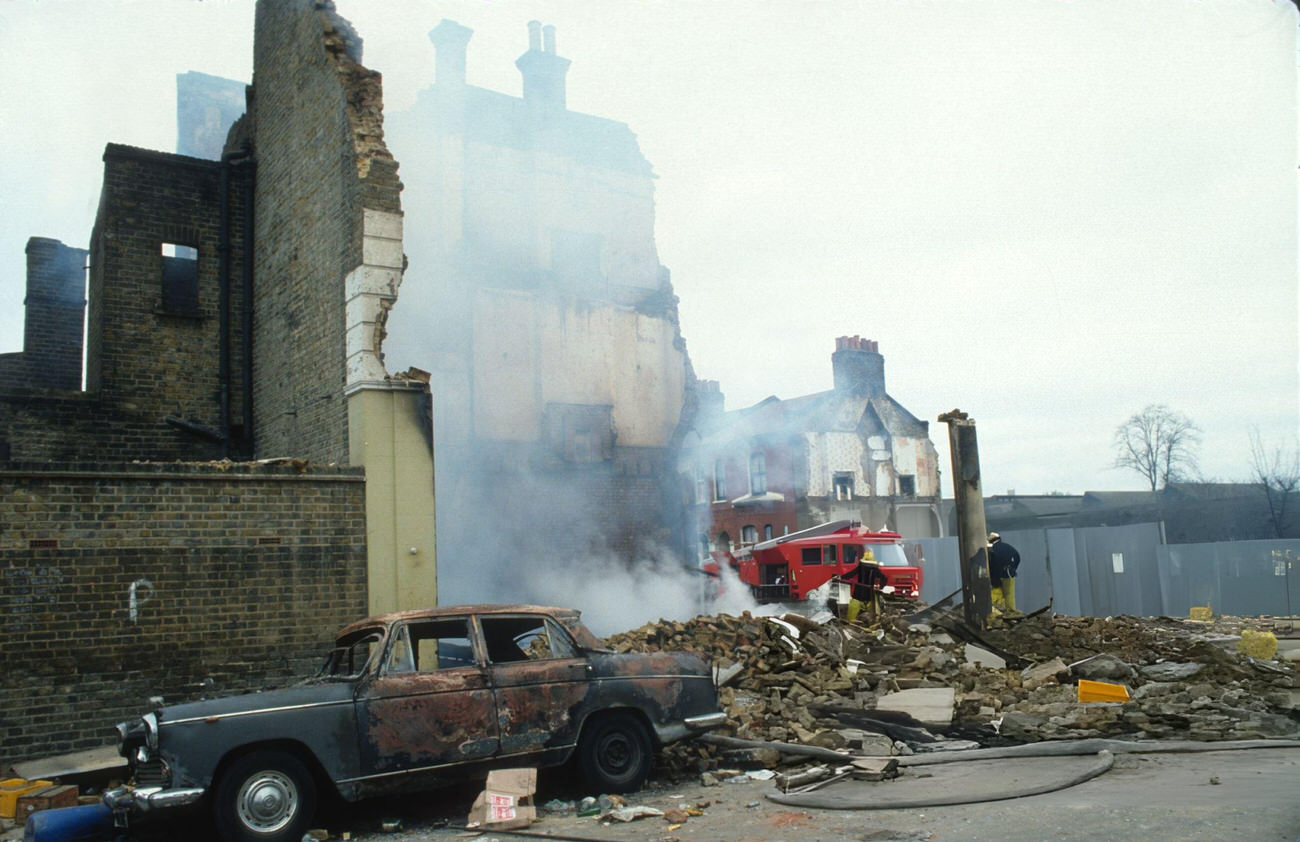
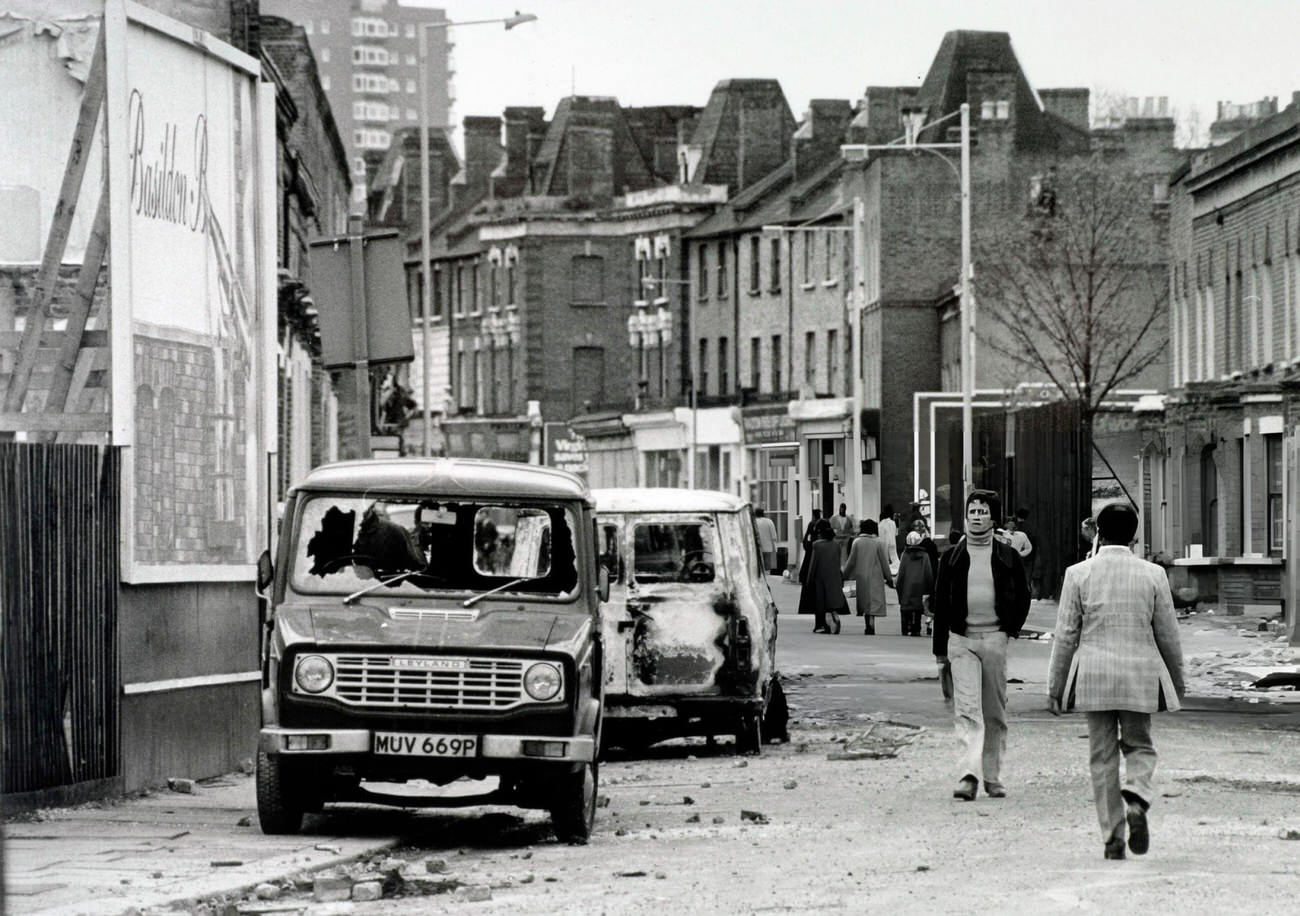
The aftermath of the Brixton Riot, showing damaged cars and buildings that had been set on fire in Brixton, London, 1981. The riot was a series of clashes between mainly black youths and the Metropolitan Police as a result of racist discrimination against the black community.
The aftermath of the Brixton Riot, showing damaged cars and buildings that had been set on fire in Brixton, London, 1981.

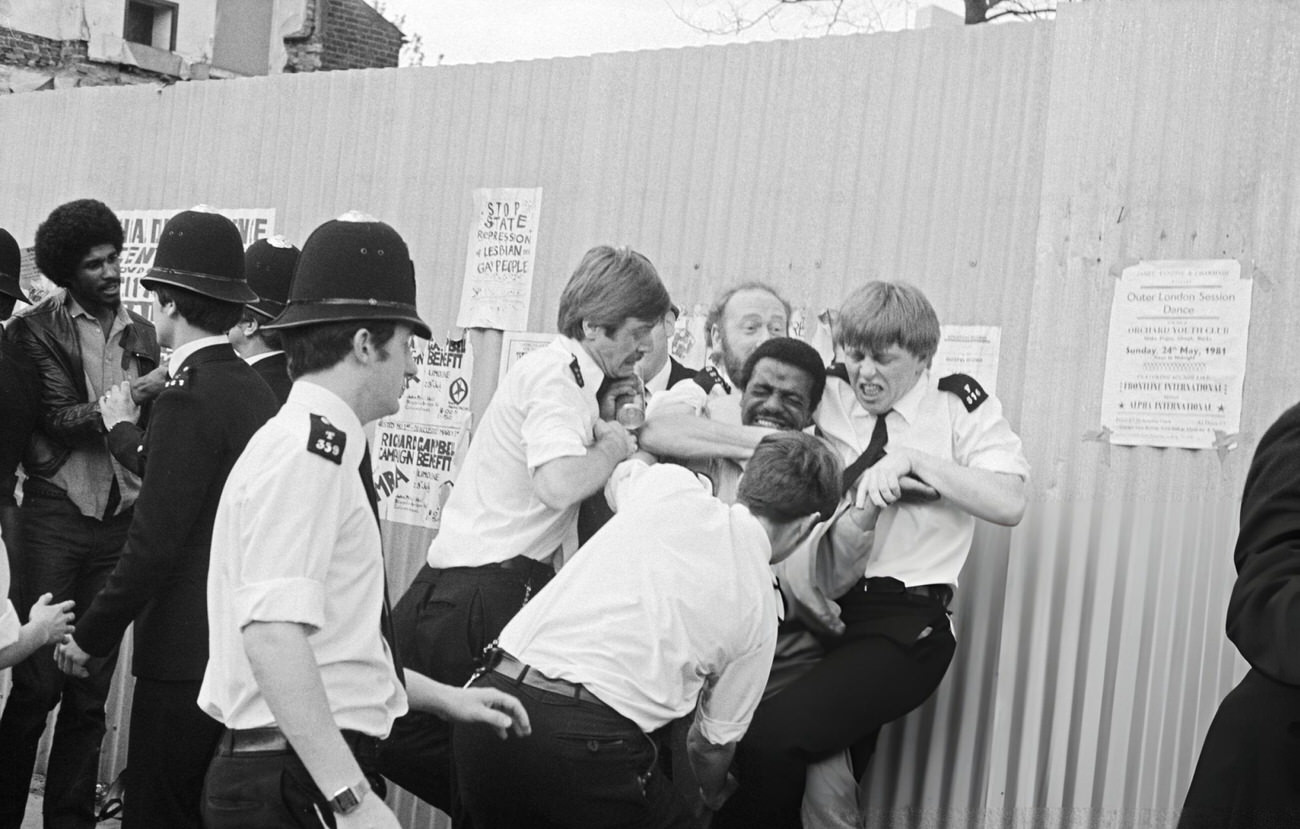
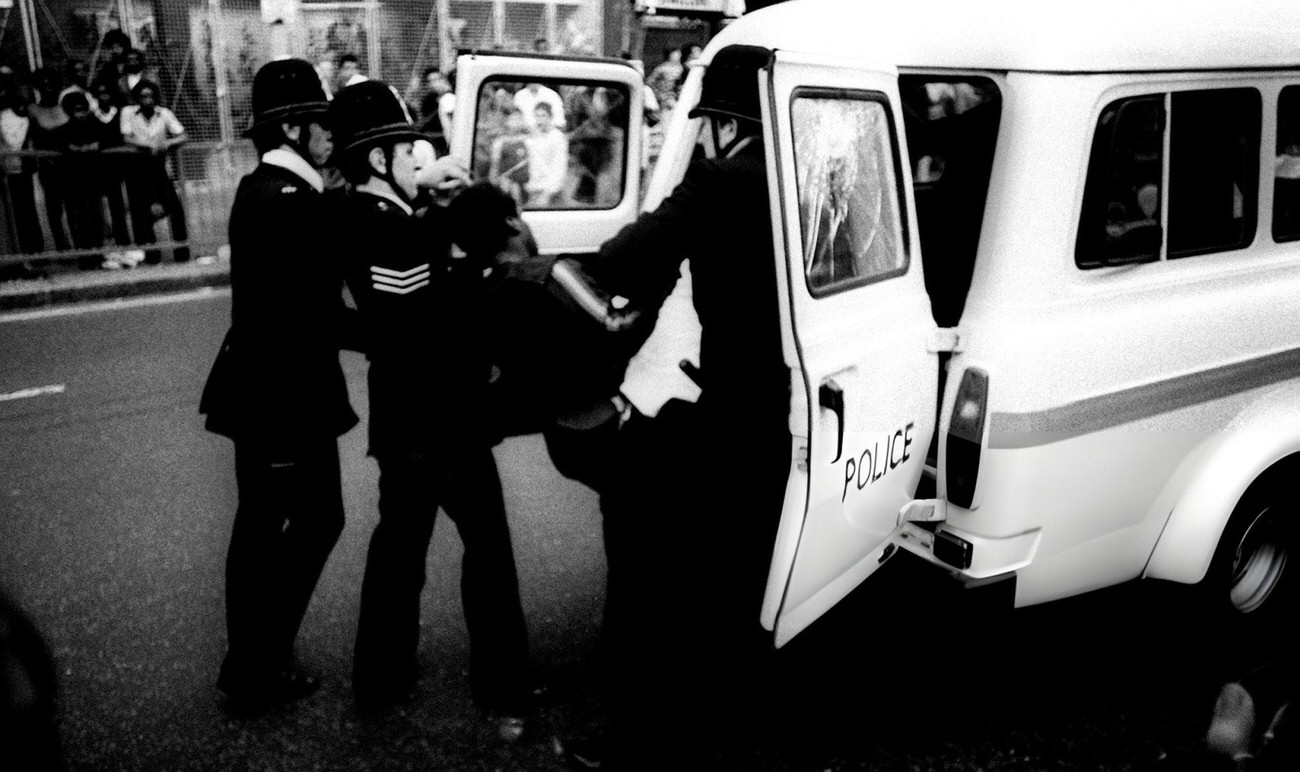
On April 11, the second day of rioting, police deployed in larger numbers around key landmarks in Brixton. Groups of officers ran through the streets outside a National Westminster Bank branch, responding to fresh outbreaks of violence. Arrests were made throughout the day, with officers physically detaining individuals amid still-smoldering debris and broken glass.
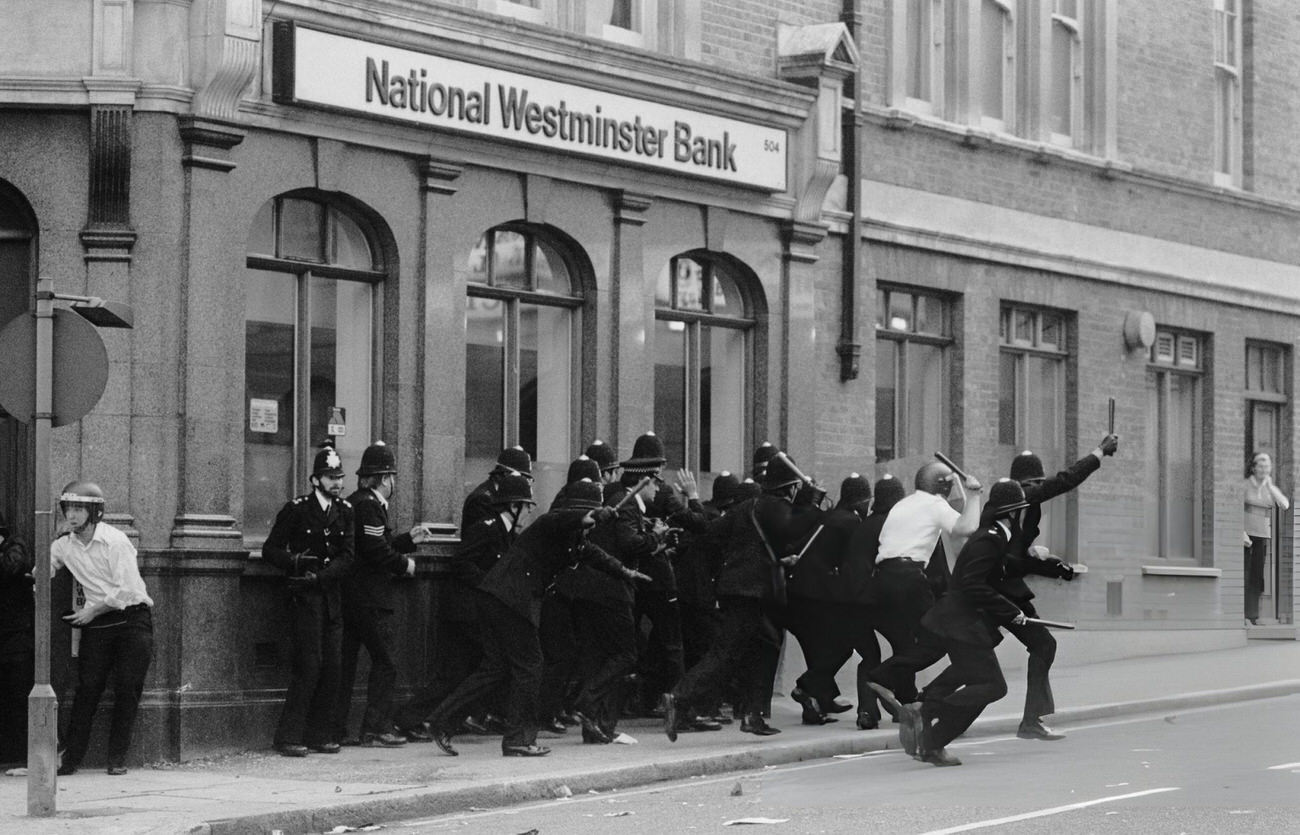
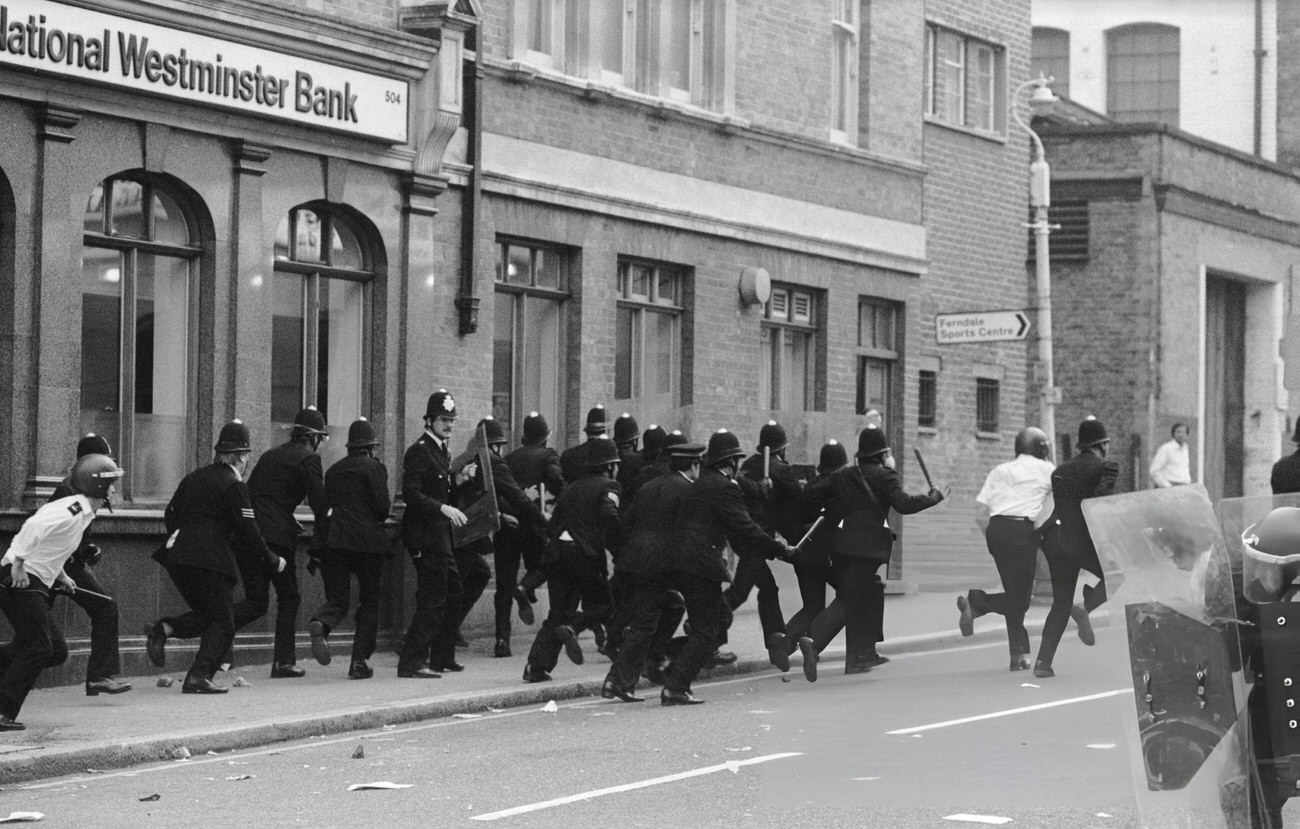
A group of policemen run with batons outside a National Westminster Bank during the Brixton Riot of April 11, 1981.
A large group of policemen outside a National Westminster Bank during the Brixton Riot of April 11, 1981.
The police help an injured man during the Brixton Riot of April 11, 1981.

The human cost was stark. Inspector Dennis Bell was photographed with blood covering his face after being struck by a flying brick — one of more than 300 people injured over the course of the riots. Police officers burned by petrol bombs were treated at the roadside at Mayall Road. Officers with severe head wounds were helped away by colleagues, unable to walk unaided. More than 100 vehicles were damaged or destroyed. The financial cost of the damage ran into millions of pounds.
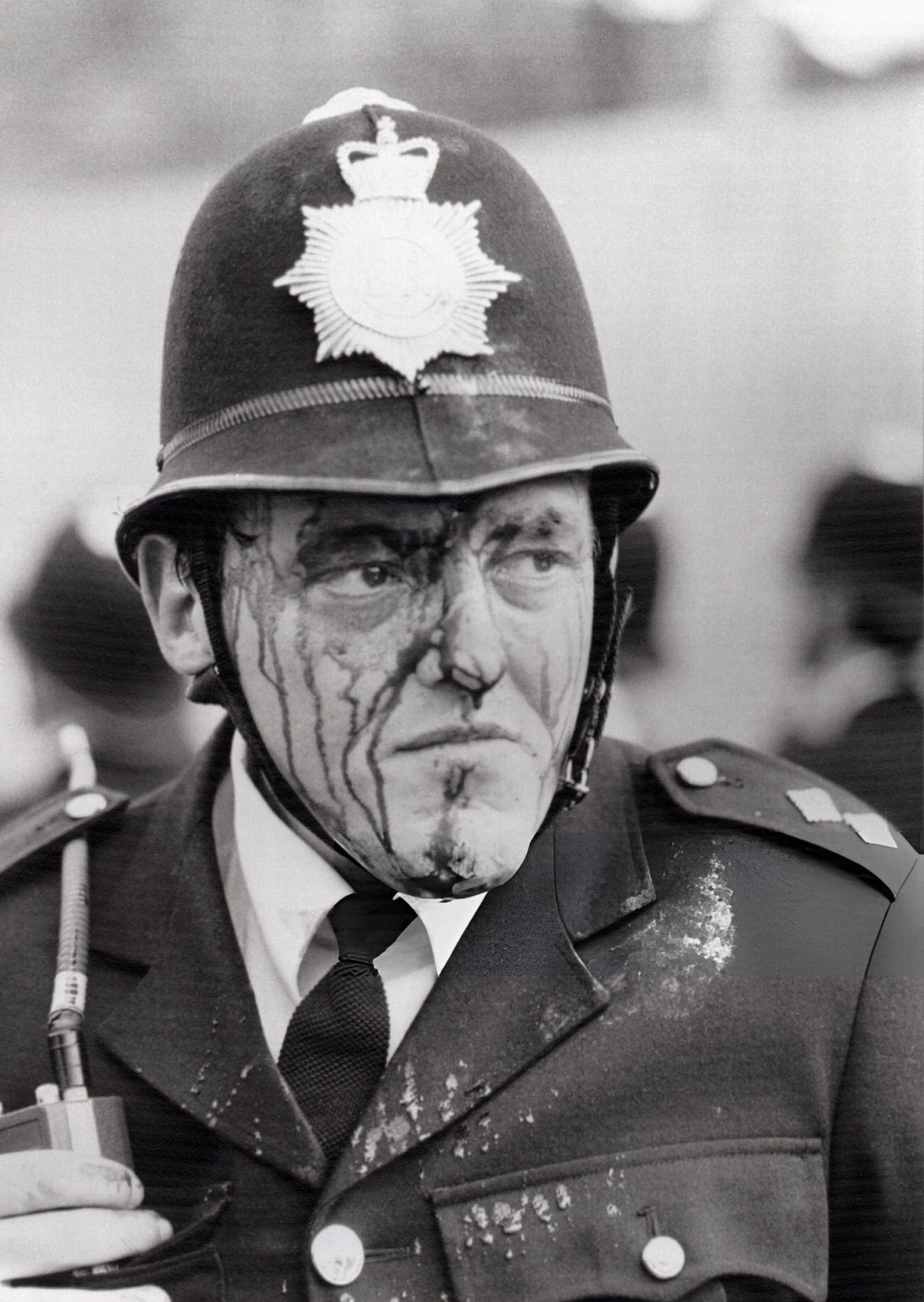
A bloodied inspector Dennis Bell, injured by a flying brick during hours-long riots between rampaging youths and police in Brixton, South London, 1981.
Police officers with riot shields approach a group of protesters during the Brixton Riot, London, 1981. The uprising was caused by the discontent within the Black community with the 'Sus Law' and the disproportionate use of police powers against black people.
Police officers with riot shields approach a group of protesters during the Brixton Riot, London, 1981. The uprising was caused by the discontent within the Black community with the ‘Sus Law’ and the disproportionate use of police powers against black people.
A police sergeant, believed to have been burned by a petrol bomb, being cared for by colleagues at Mayall Road, Brixton, 1981.
A police officer, blood streaming from a head wound, being helped away by colleagues in Brixton, South London, 1981.
A policeman in a riot helmet bandages an injured man at Brixton, South London, during an anti-racial rioting demo.

Police vehicles were primary targets throughout the unrest. Cars and vans were overturned, set on fire, and left burning in the roads. Officers sheltered behind their own vans as rioters attacked other vehicles nearby. Flames from overturned police vans lit the night sky on both April 10 and 11, with the fires visible across wide sections of South London.
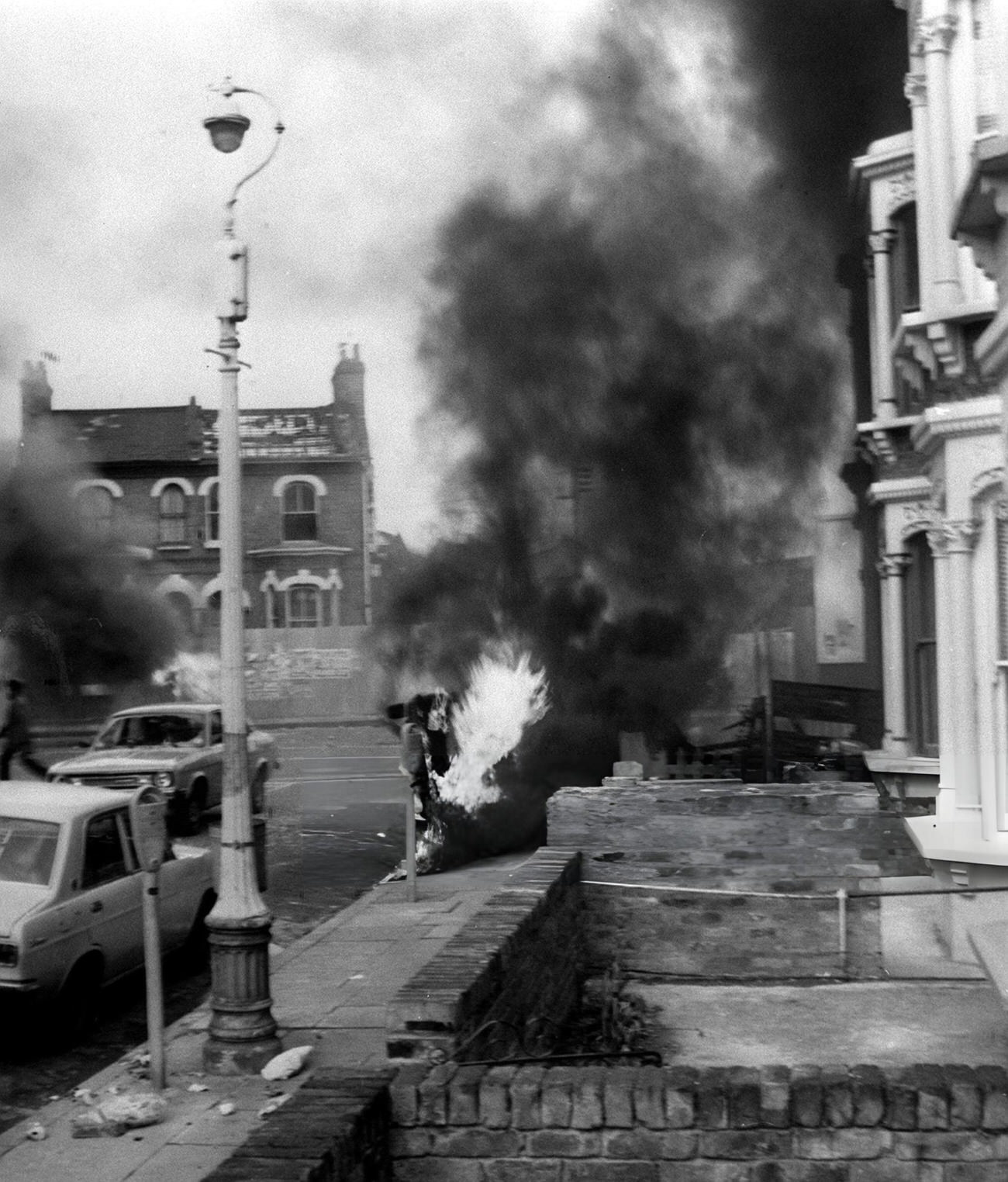
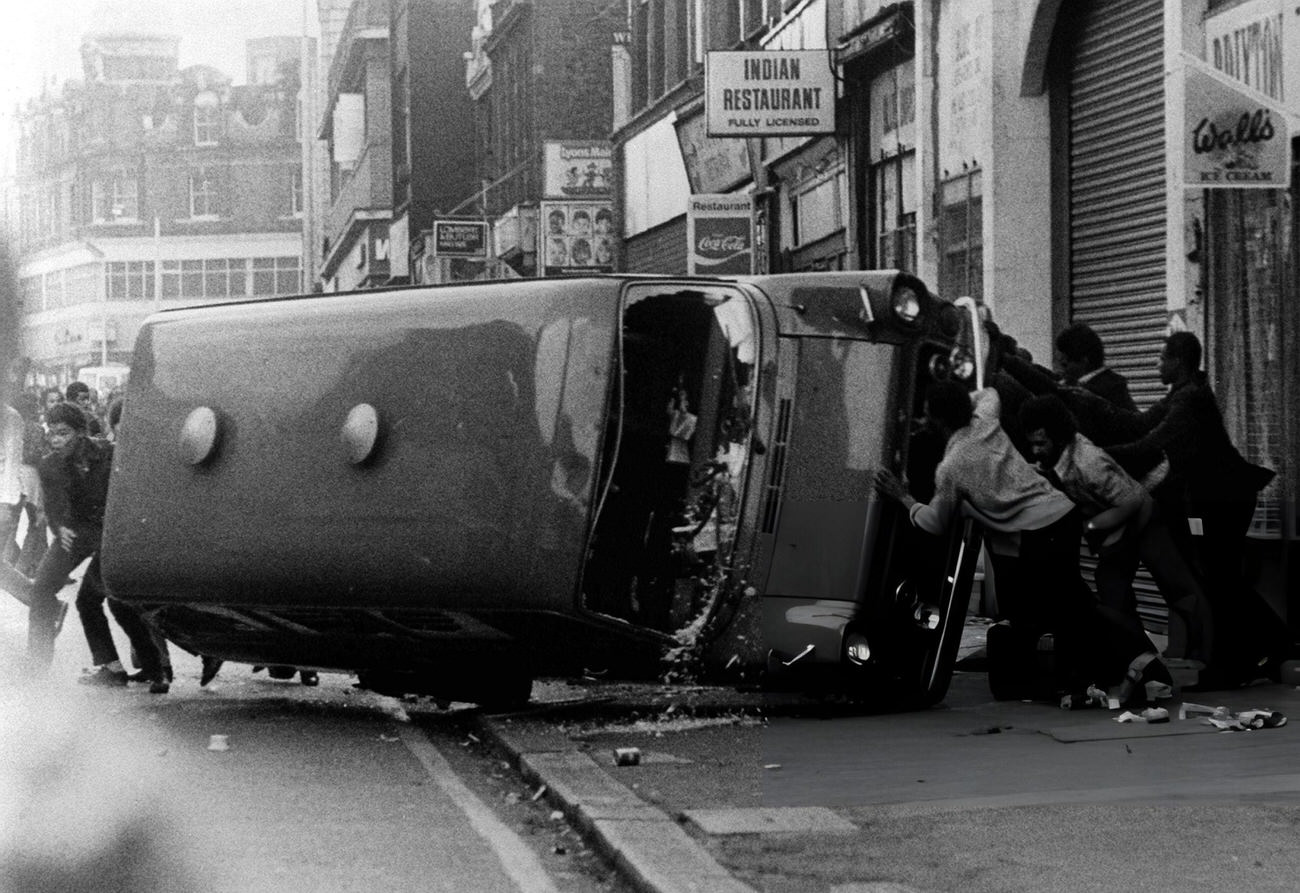
A blazing vehicle on a street at Brixton, South London, 1981.
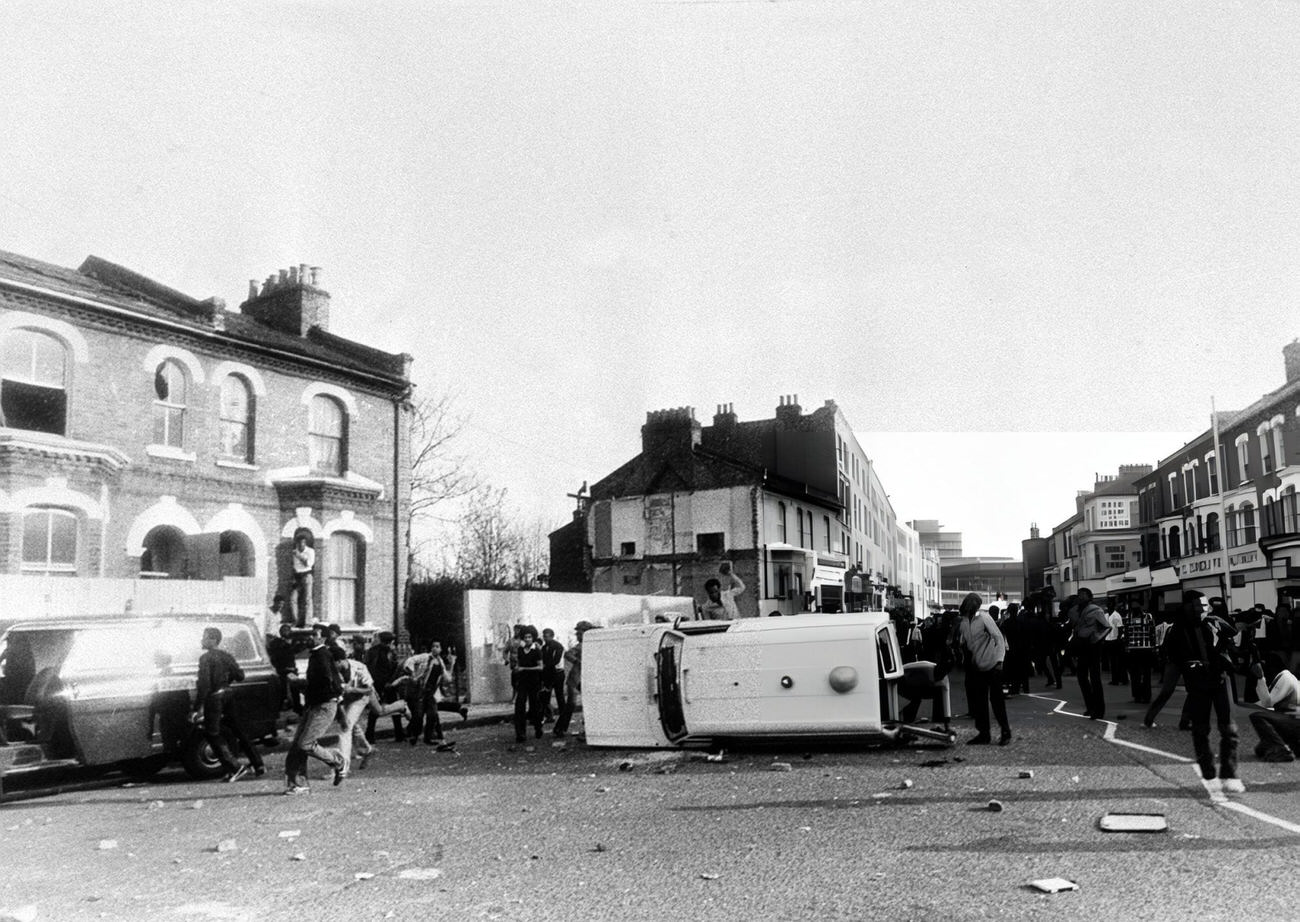
A Police vehicle is turned over at Brixton, South London, 1981.
Violence erupts and vehicles are turned over at Brixton, South London, 1981.
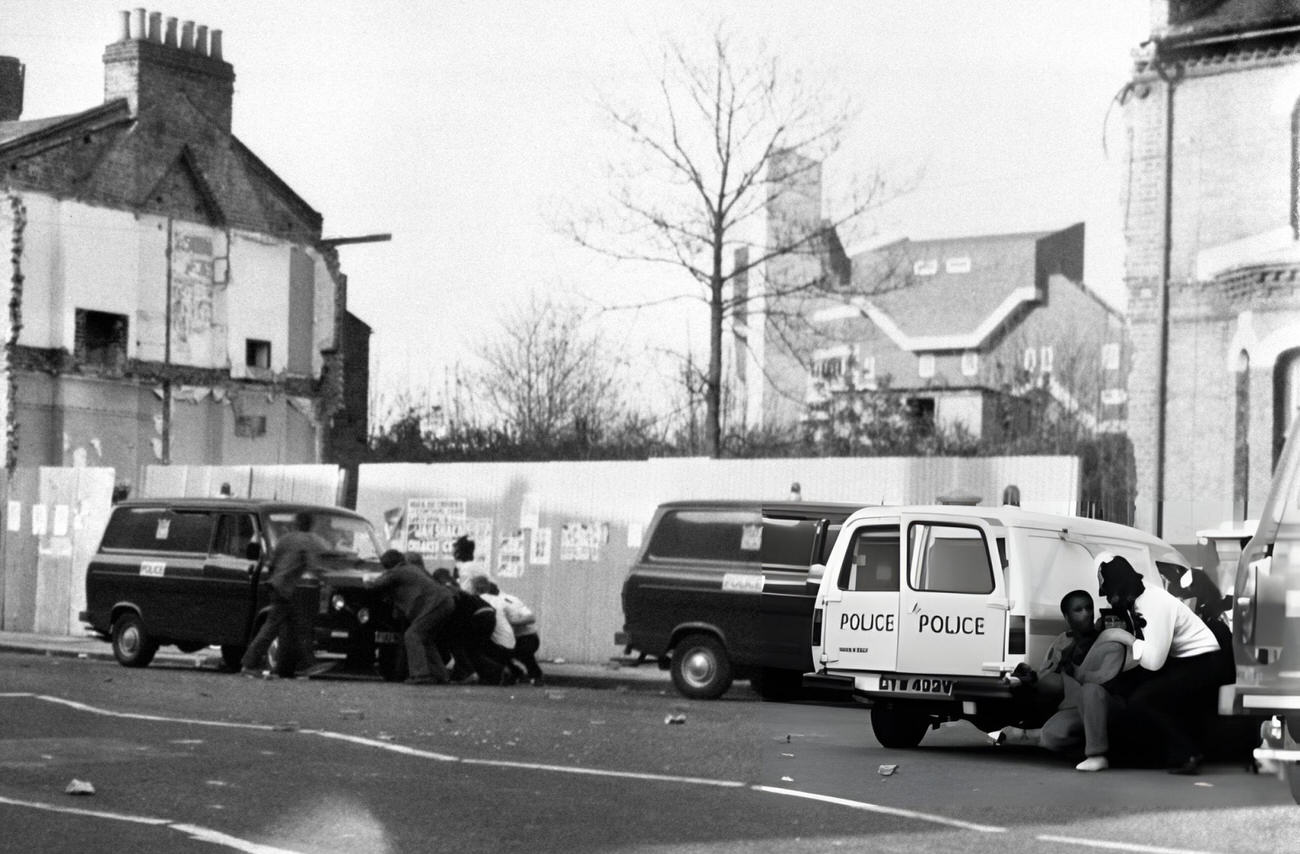
Police Officers shelter behind one of their vans as youths attack another vehicle. Ten Police Officers were injured in Brixton, South London during renewed fighting with black youths. At least one police vehicle was set on fire, 1981.
Flames coming from an overturned police van in Brixton, South London. Youths attacked Police Officers and their vehicles, 1981.

As police made arrests and attempted to restore order, they moved through streets littered with broken glass, burned-out shells of cars, and the wreckage of looted shops. By April 12, the worst of the violence had subsided. Recovery crews began towing away the charred remains of vehicles. Streets that had been battlegrounds just nights before were now quiet and scarred.
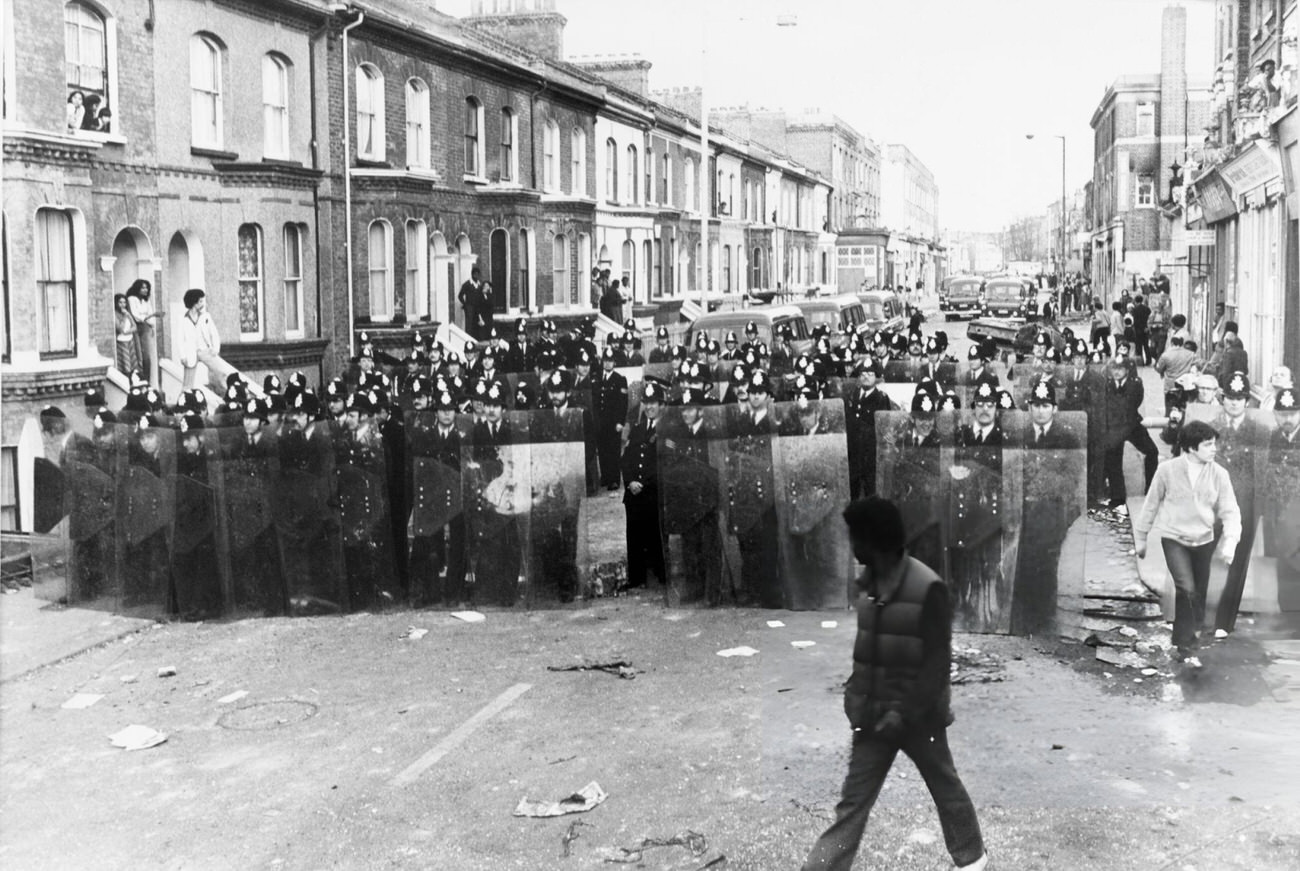
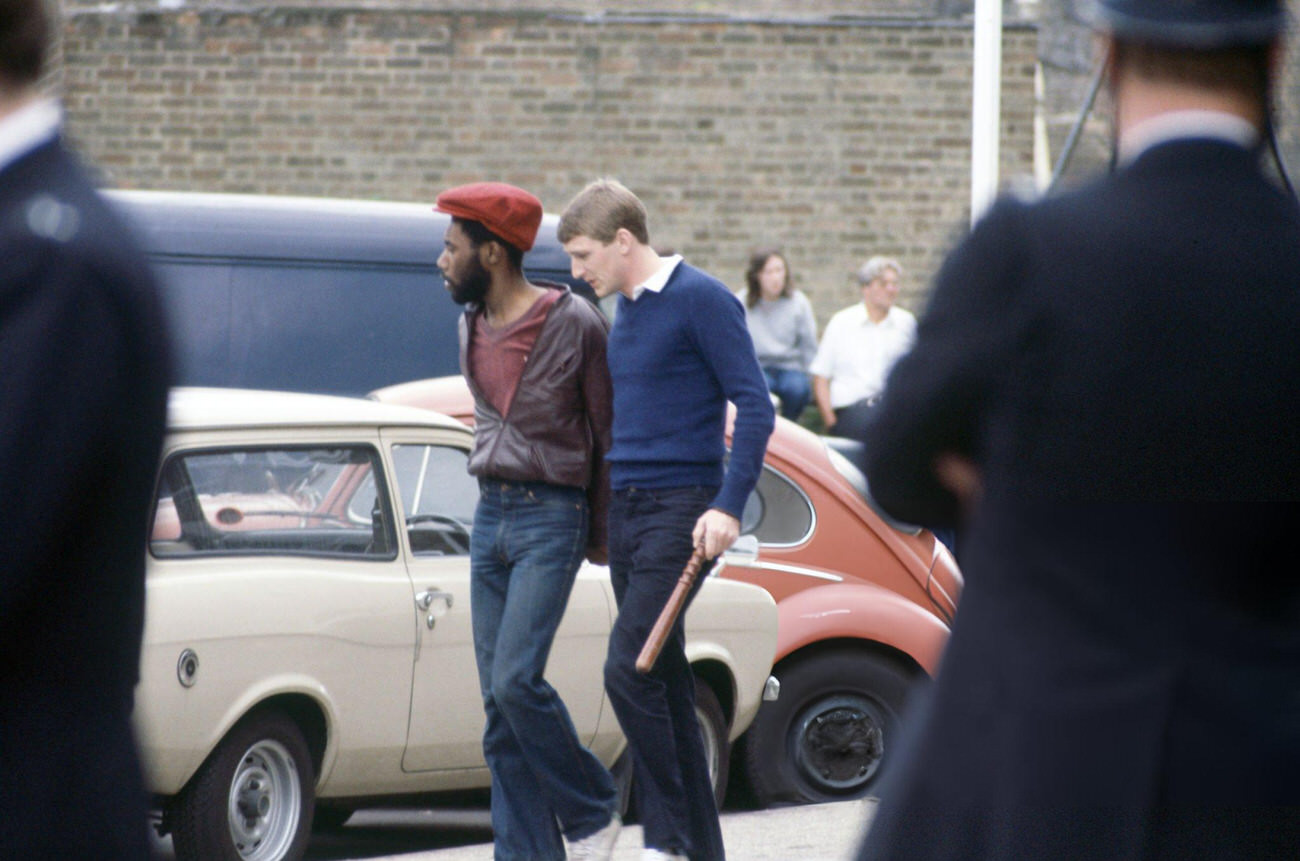
Police take action in the streets of Brixton during the Brixton riots in London, 1981.
A policeman with a man in custody following the Brixton riots in London on April 11, 1981.
A street in Brixton, south London after a night of severe riots, 1981.
Remains of a corner shop on Electric Lane and Coldharbour Lane, Brixton. This was one of many buildings gutted by fire during rioting the previous day. There were at least 12 major fires in the area, 1981.
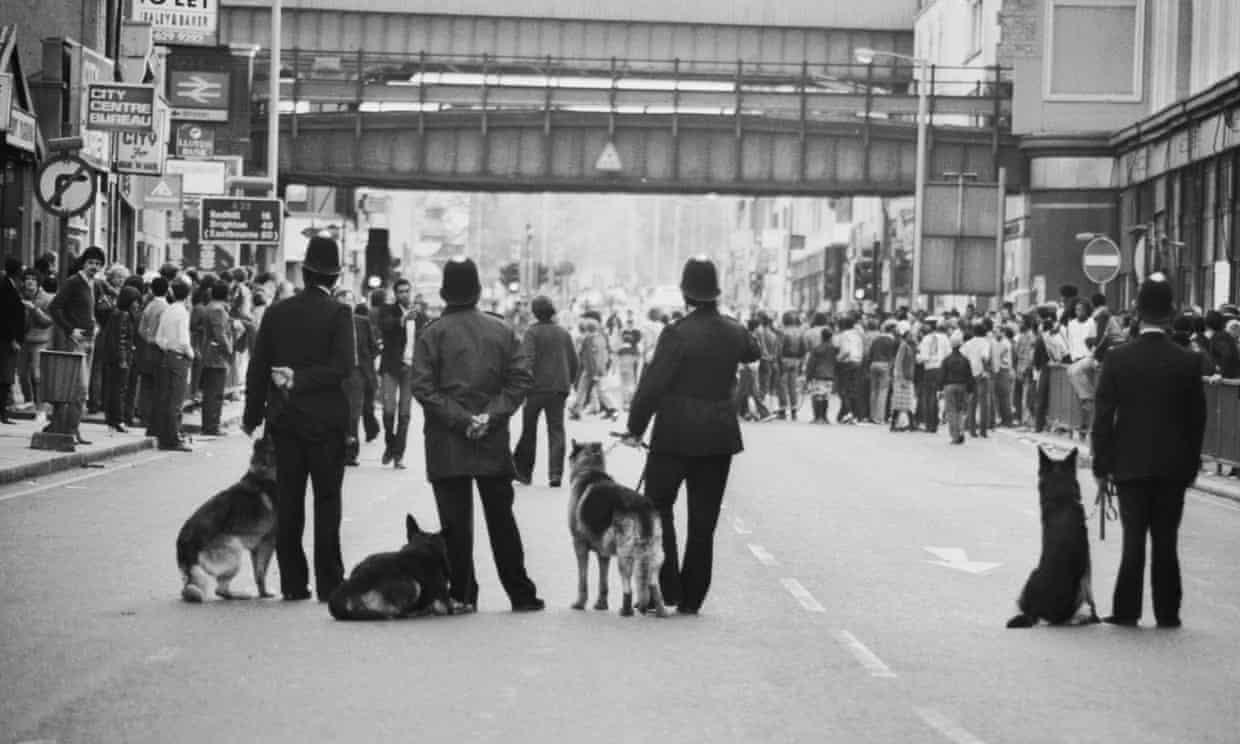
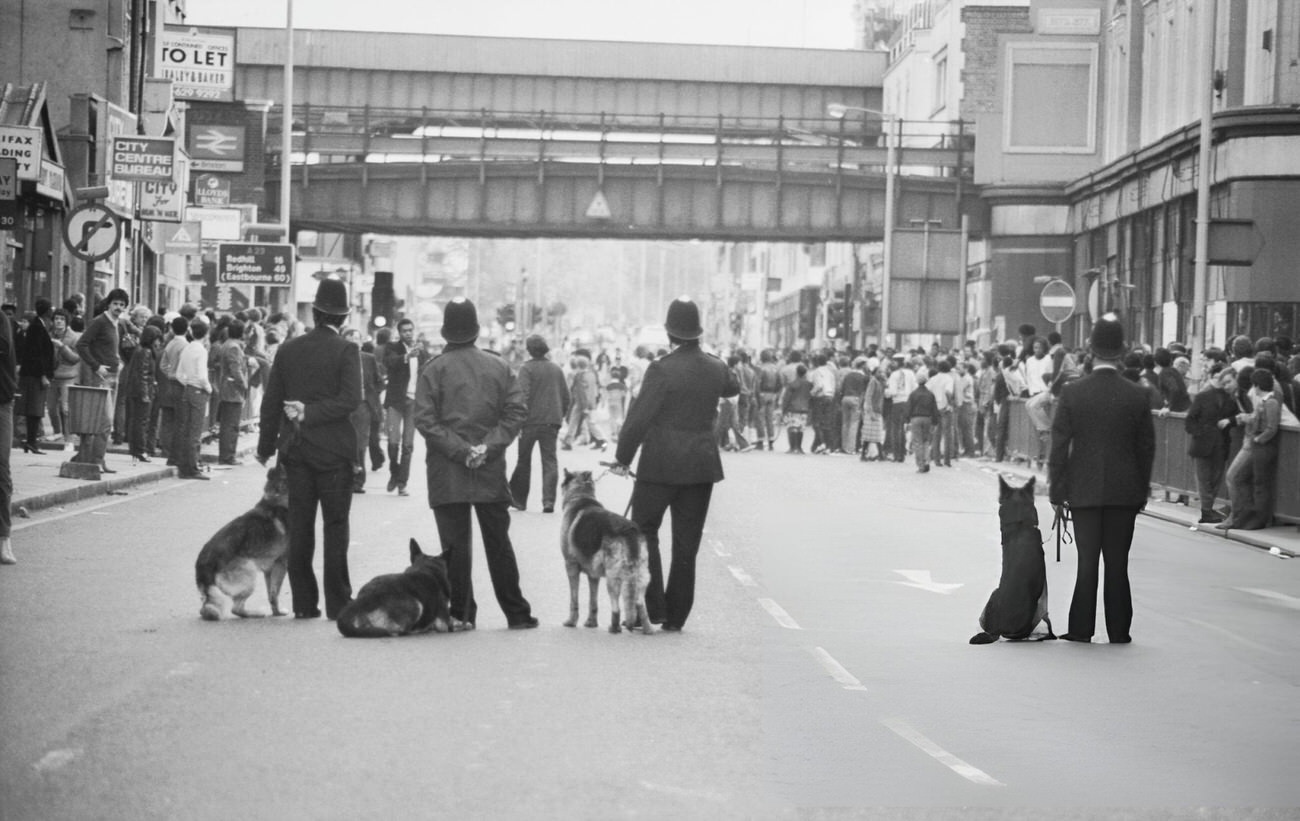
Police dog handlers on Atlantic Road on the second day of riots in Brixton, South London, 1981.
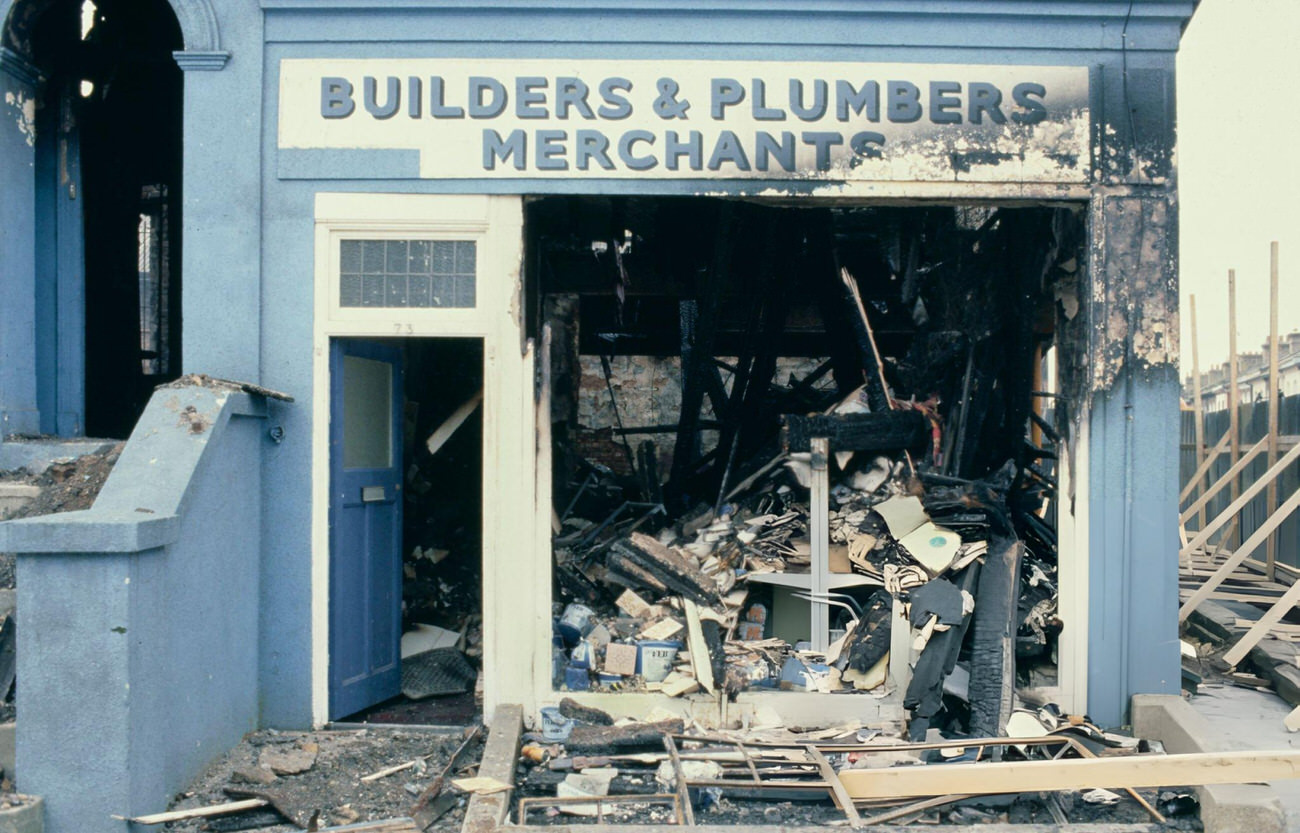
Debris in a burnt-out plumber shop after the first Brixton Riot, London, 1981.
Brixton Riots, 1981.

The government responded by launching a formal public inquiry. Led by Lord Scarman, it began taking evidence later in 1981, with protesters gathering outside Church House in Westminster to make their voices heard from the very first day of proceedings. The Scarman Report, published in November 1981, did not treat the riots as simple criminality. It identified unemployment, poor housing, and racial discrimination as root causes, and it directly criticized the Metropolitan Police for heavy-handed tactics. The Sus law was repealed. New guidelines on stop-and-search were introduced. Efforts began — slowly — to recruit officers from minority communities and to rebuild trust in Brixton.
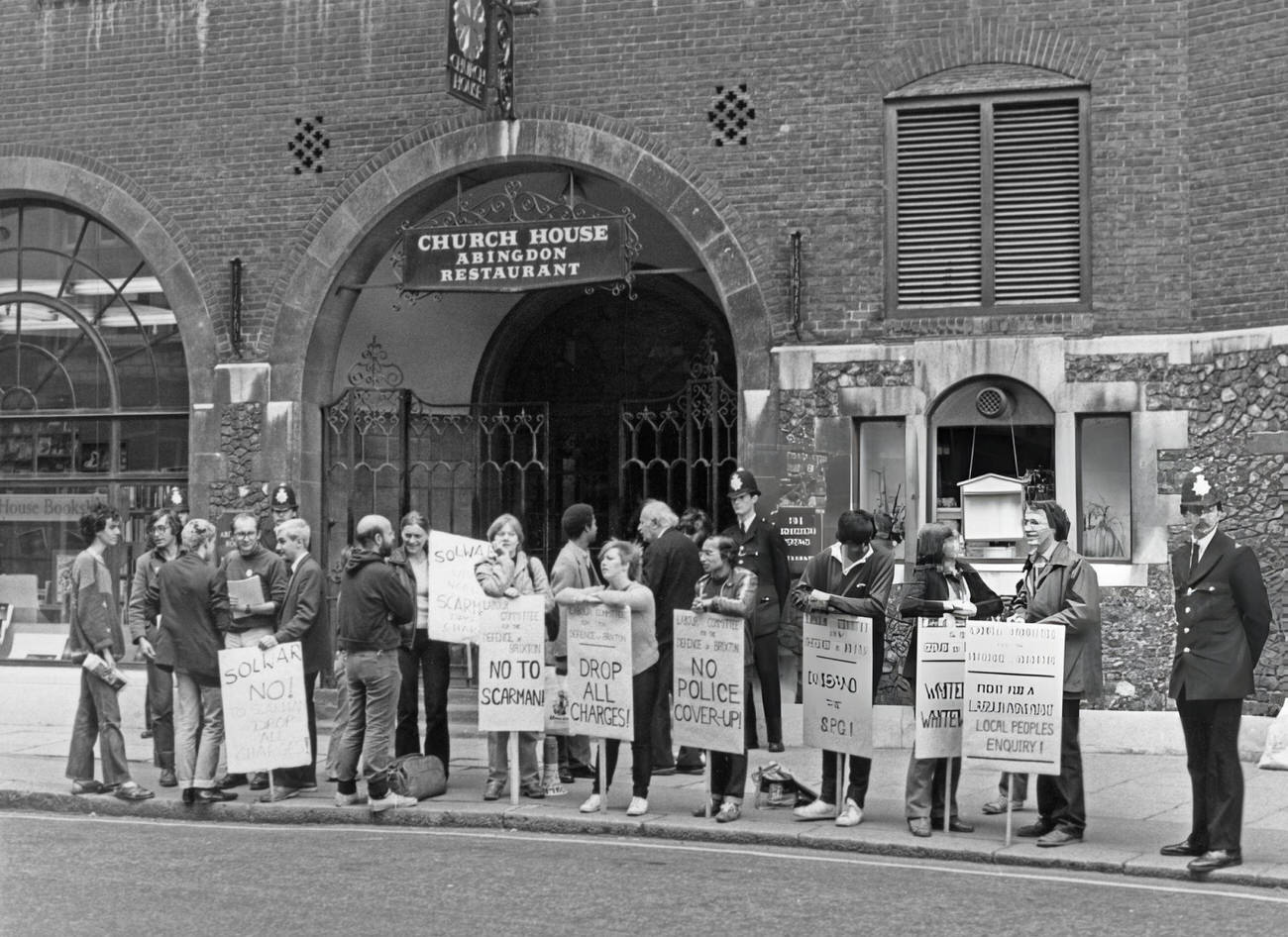
Protestors demonstrate at the start of the public inquiry, headed by Lord Scarman, into the 1981 riot in Brixton, outside Church House in Westminster, London, England, 1981.
Armed with riot shields, police huddle together for protection as violence again flared near Lambeth Town Hall in Acre Lane, Brixton, south London, where between 200 and 400 black youths were on the rampage. Rioters smashed shop windows in the Brixton Road and began looting. Police squads moved in on foot and by van, 1981.
A police car blazes at the corner of Atlantic Road and Brixton Road, Brixton, South London, 1981.

In the days and weeks after April 12, rioting did not fully stop. Unrest continued to flare in Brixton and spread to other parts of Britain through the summer, not subsiding entirely until the end of July 1981. Police on standby across London were photographed in candid moments — officers in Bow, East London, hanging their truncheons on goalposts and playing football with local children while waiting to be deployed. It was a striking contrast to the images coming out of Brixton.
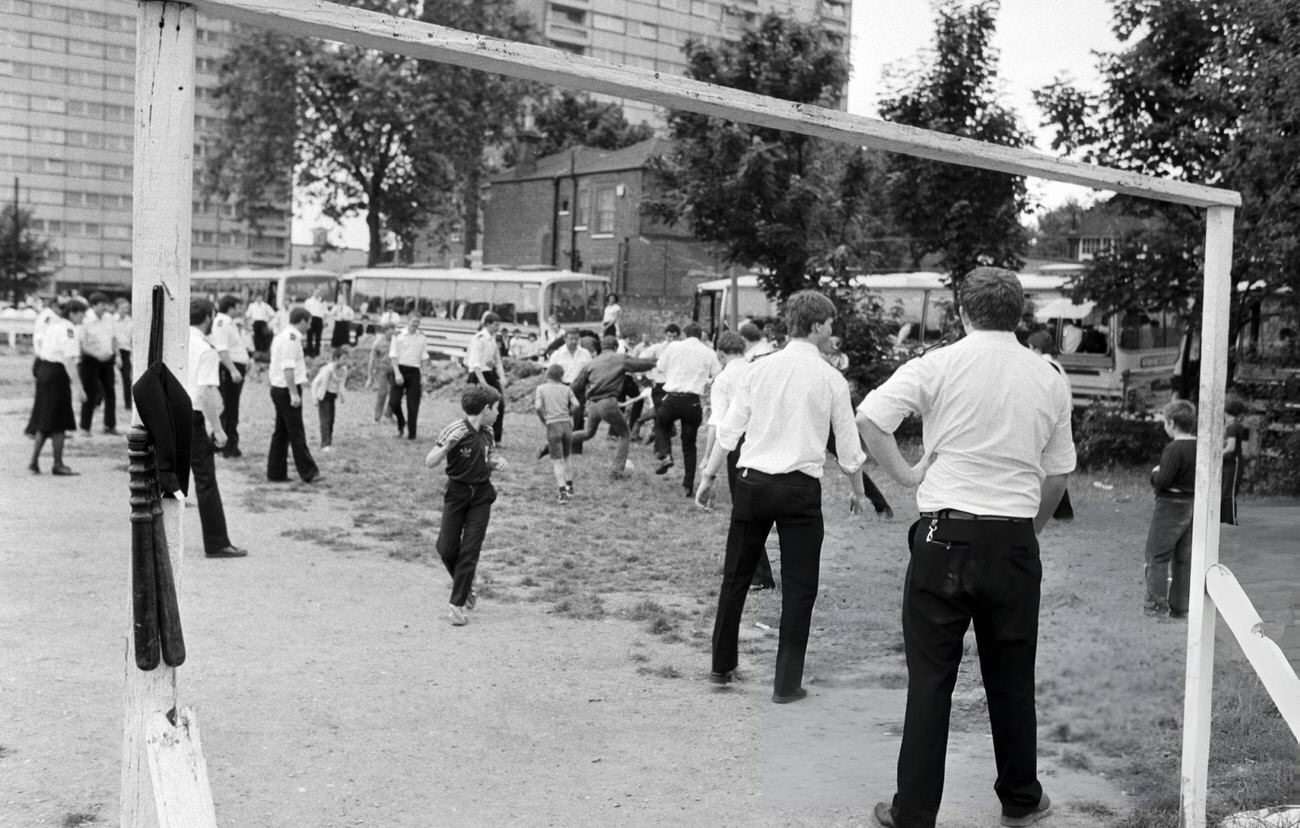
Policemen and women on riot stand-by in Bow, East London, pass the time playing football with local children. The officers had got out of their coaches, hung up their truncheons up on the goalposts and kicked-off, 1981.
Riots in a predominantly Afro-Caribbean neighborhood in Brixton, London, 1981.
A van burning during a night of rioting in Brixton, London, 1981.
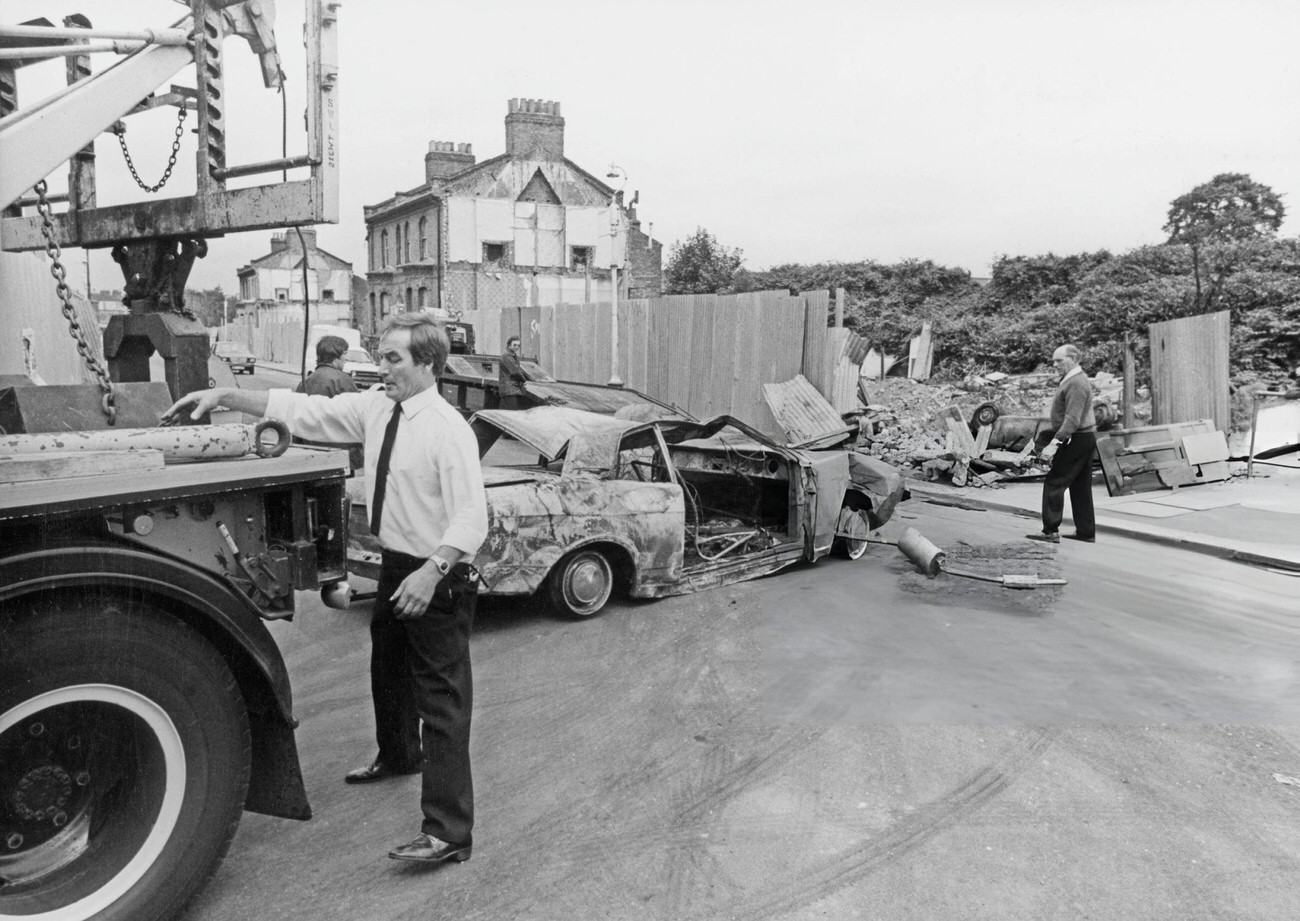
Recovery men towing away a burnt-out car after a night of violence on the streets of Brixton, London, England, 1981. Starting in April, rioting continued in Brixton and it was not until the end of July that the unrest began to subside.

Police raids on properties in Brixton during the unrest — some in search of drugs, others looking for petrol bomb materials — left interiors devastated. Residents returned to find furniture overturned, walls damaged, and belongings scattered. The raids added another layer of grievance to a community already raw from two nights of street warfare. The photographs taken inside raided homes on Railton Road showed destruction that was quieter than the fires outside, but no less significant to the people who lived there.
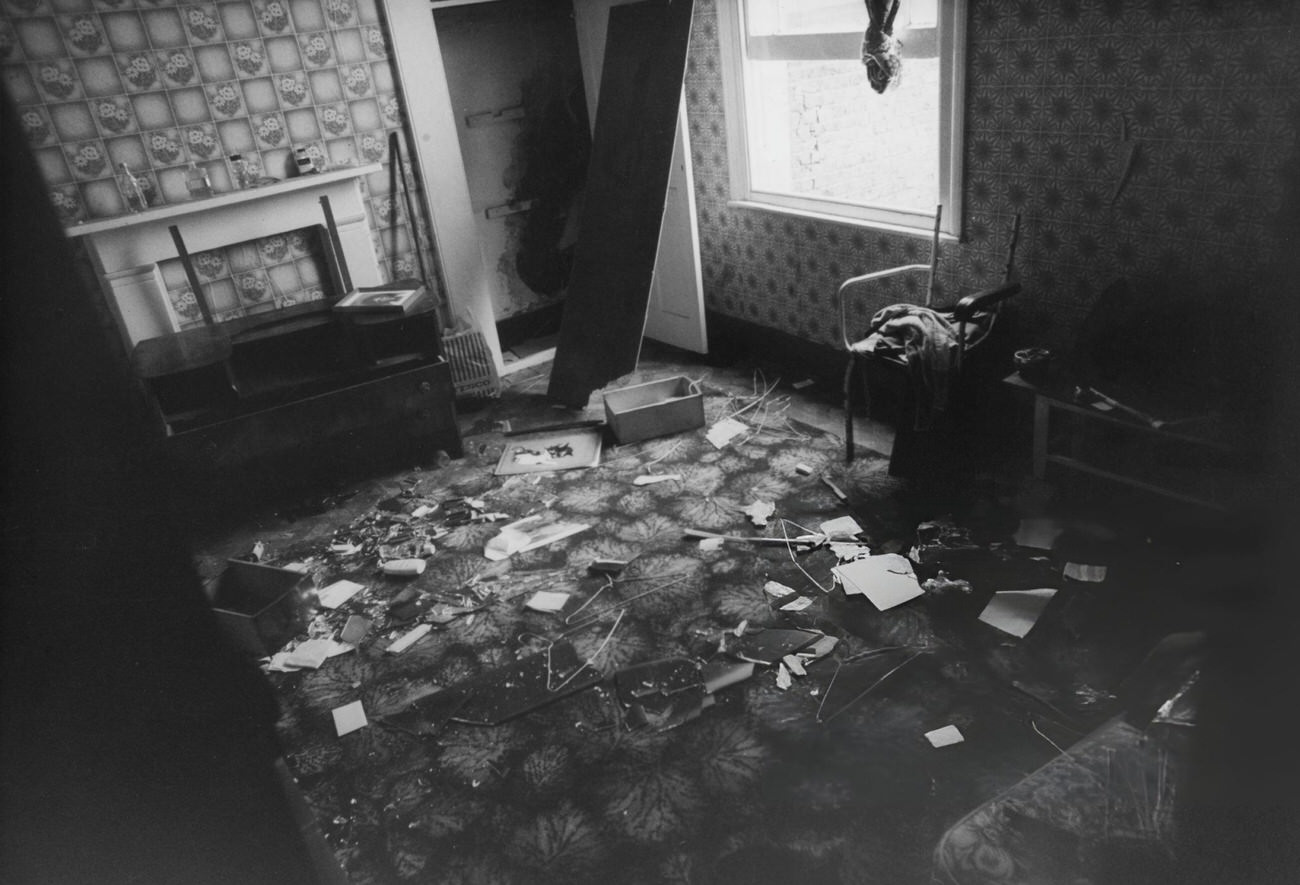
Interior of a property on Railton Road showing damage alleged to have been caused by police when raiding the area in search for drugs and petrol bomb-making equipment in Brixton, London, England, 1981.
Brixton Riots, 1981.
Enjoyed this post? Get new ones in your inbox.
Avatar of Andrew Thompson

Written by Andrew Thompson

Andrew Thompson is an archaeologist and historian who specializes in the study of war and conflict. He writes about the brutal history of warfare, including the World Wars and other significant conflicts. Through his work, he aims to deepen our understanding of the human cost of conflict and inspire us to work towards a more peaceful future.

Leave a Reply

Your email address will not be published. Required fields are marked *