Hey There! Before You Go. 😧
Get the best vintage content straight into your inbox!

Don't worry, we don't spam

50+ Historic Photos Of British Women At Work During World War I
When Britain entered the First World War in 1914, millions of men left their jobs to fight on the Western Front and beyond. The gap they left behind was enormous — and British women stepped in to fill it. From factory floors to railway platforms, from hospital wards to the cockpits of nascent aircraft, women took on roles that had never been open to them before. What followed was one of the most dramatic shifts in the British workforce in history.

The government did not act immediately. There was real resistance from employers, trade unions, and parts of the public who believed industrial and military work was strictly men’s territory. That resistance crumbled in 1916 when the government introduced conscription, forcing nearly all eligible men into military service. With no choice left, authorities launched coordinated campaigns to recruit women into the workforce at scale. The change was swift and sweeping.

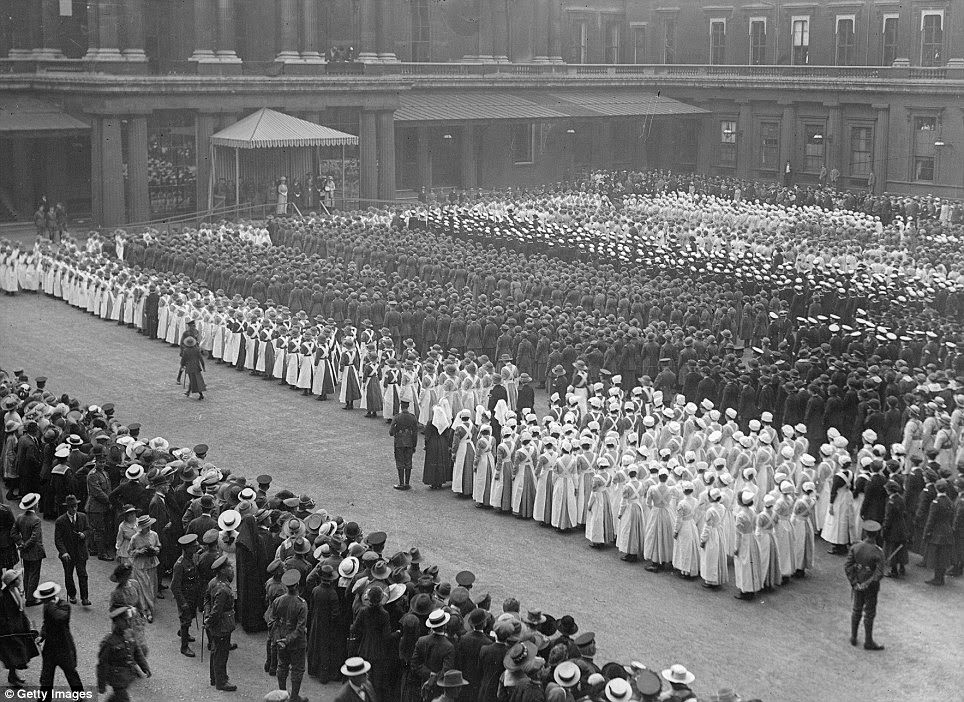
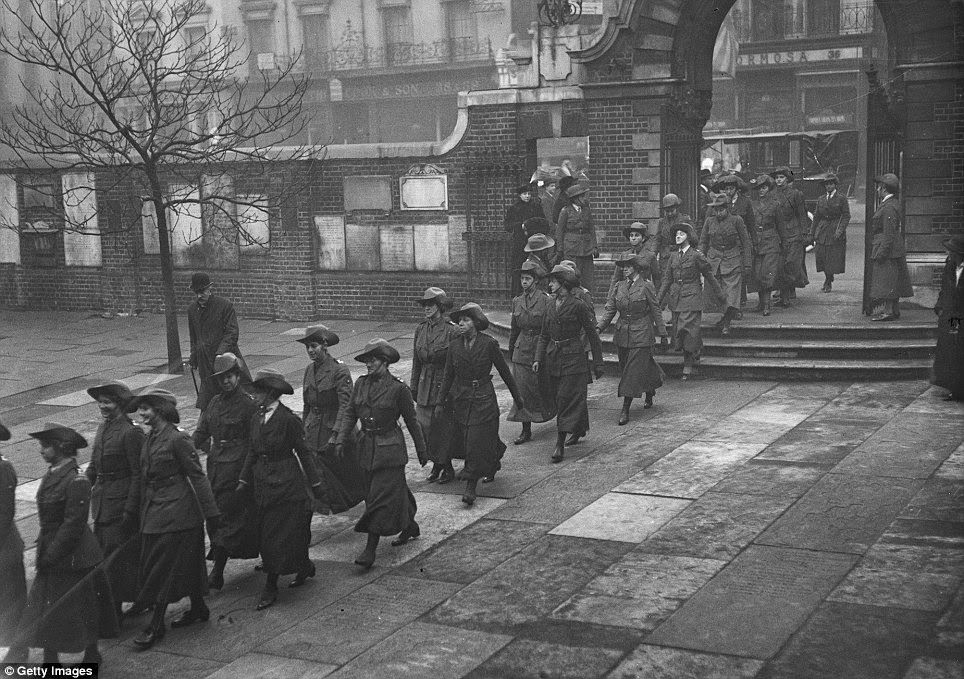
Women war workers, including the distinctively white-capped and aproned VAD nurses, parade outside Buckingham Palace in 1918.

By the end of the war, women had served in virtually every corner of the British war effort. Nurses from the Voluntary Aid Detachment — known as VADs — became one of the most visible symbols of women’s wartime service, recognized instantly by their white caps and aprons. They worked in military hospitals both in Britain and close to the front lines, treating casualties under conditions that were often dangerous and always demanding.

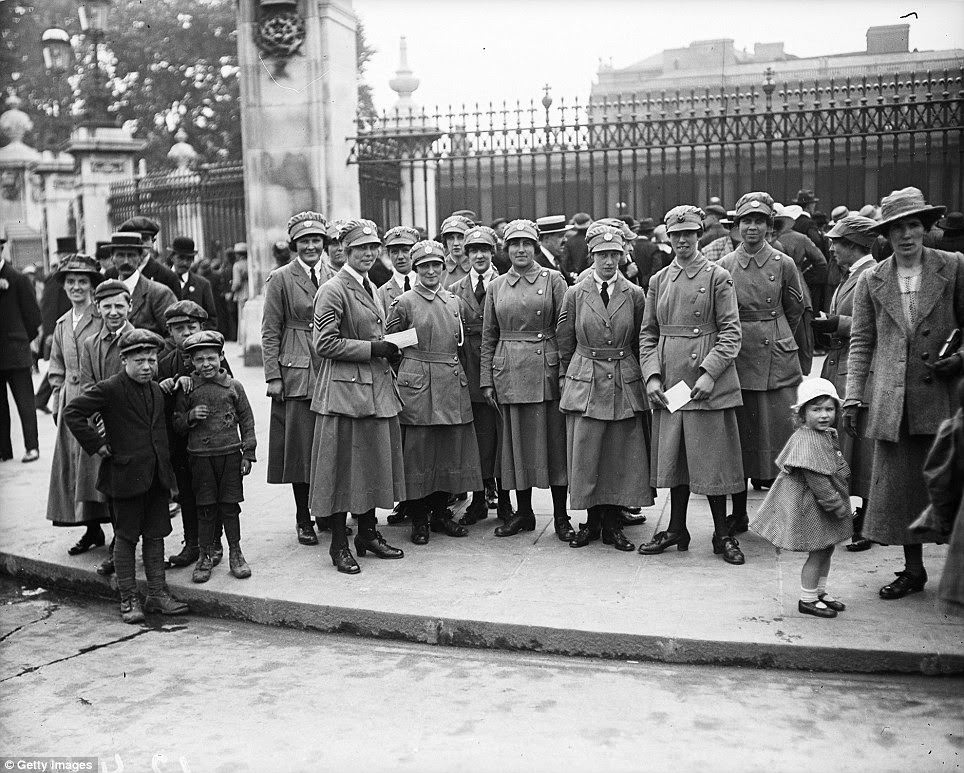
Members of the Women's Royal Air Force arrive at Buckingham Palace, London, to attend a party for war workers in 1919.
Members of the Women’s Royal Air Force arrive at Buckingham Palace, London, to attend a party for war workers in 1919.

Women’s contributions extended well beyond nursing. The Women’s Royal Air Force, formed in 1918, provided the technical and administrative support that kept the Royal Flying Corps — and later the RAF — operational. Members worked as mechanics, clerks, drivers, and cooks, freeing male personnel for active duty. Their presence at a Buckingham Palace celebration in 1919 reflected the official recognition their service had earned.

Female ambulance workers, such as this group photographed in November 1915, served both at home and on the front line.

Ambulance work put women directly in the path of danger. Female ambulance drivers transported the wounded from aid stations and field hospitals, often operating under fire or through devastated landscapes. Their work at the front was no different in risk from the men they drove alongside — just different in the recognition it received.

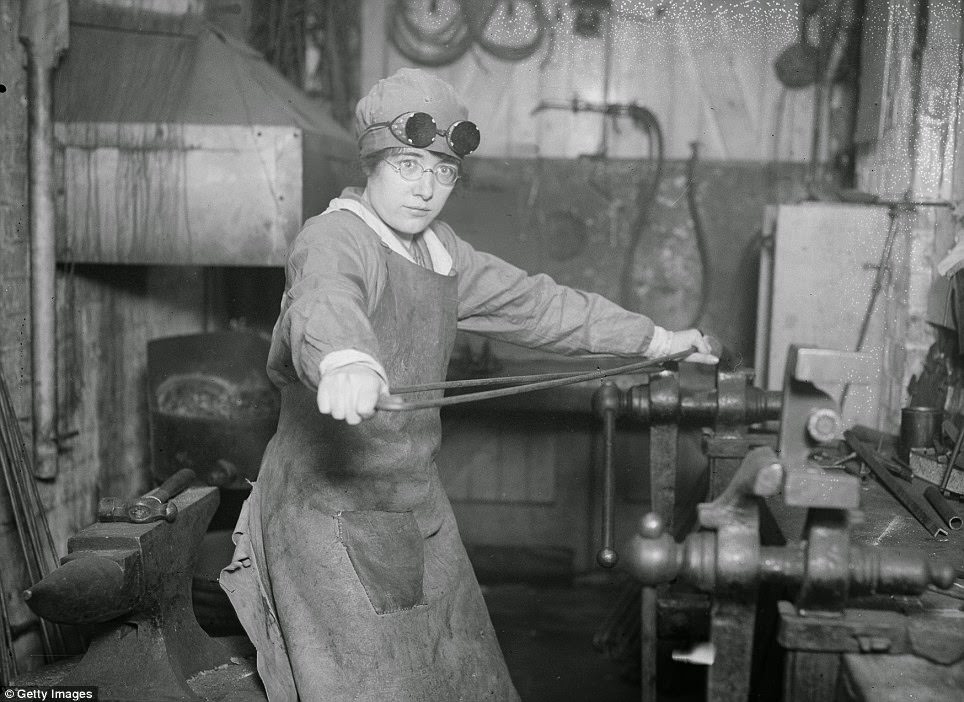
While some women became nurses, others worked in hospital workshops, such as this one at the Kensington War Hospital, making prosthetic limbs.

The scale of battlefield injuries created entirely new categories of medical need. At facilities like the Kensington War Hospital, women worked in workshops producing prosthetic limbs for soldiers who had lost arms or legs in combat. This was skilled, precise work — and it was performed alongside the more visible nursing duties that women are more commonly associated with from this period.

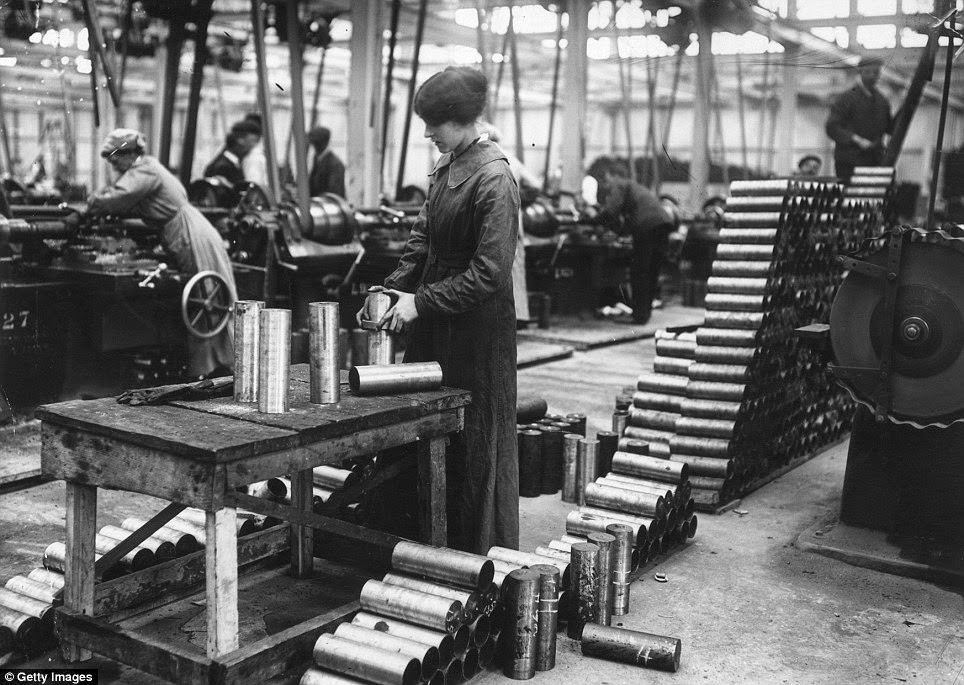
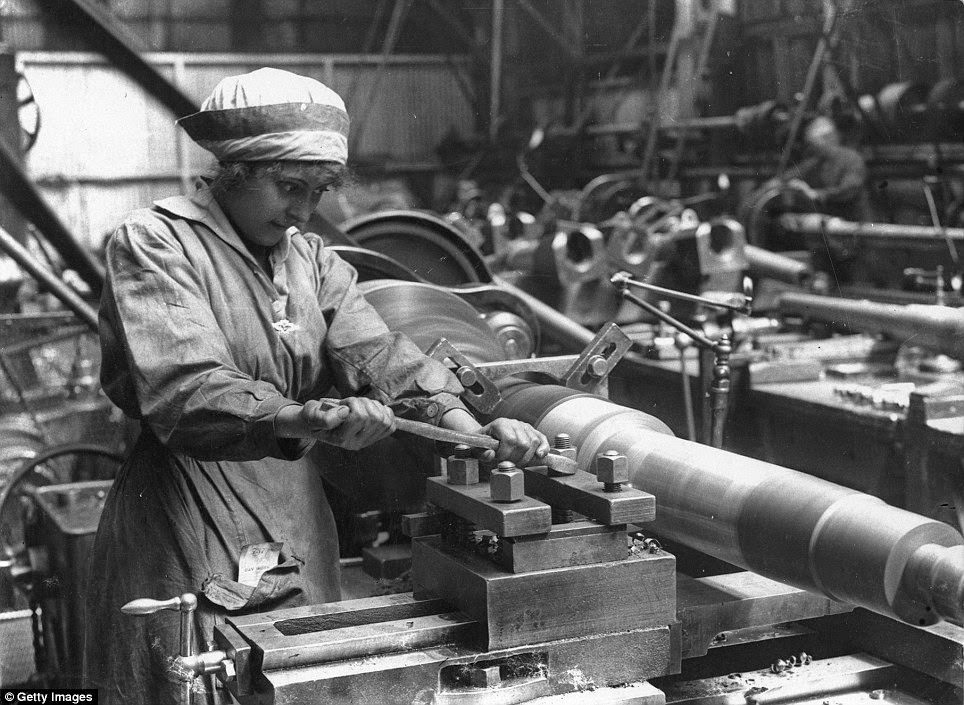
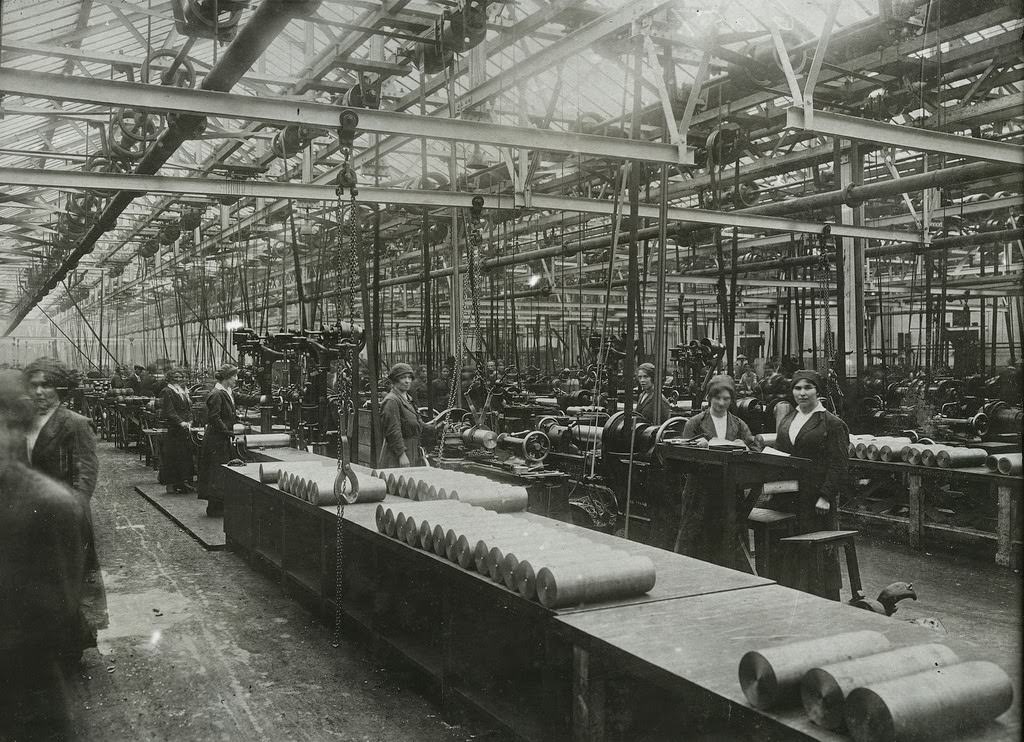
No single sector employed more women during the war than munitions manufacturing. By 1918, munitions factories had become the largest single employer of women in Britain, with approximately 950,000 female workers producing the shells, bullets, and explosives that the military demanded in staggering quantities.

950,000 female workers were employed in British factories, including this worker, pictured making shell cases in a Vickers factory in January 1915 .

The work was relentless and dangerous. Women who handled TNT and other explosive compounds were exposed to toxic sulphur, which turned the skin yellow — earning them the nickname “canary girls.” Factory explosions were a constant threat. One incident in 1917 alone killed 73 workers and destroyed around 900 homes in the surrounding area. By the war’s end, over 400 women had died as a direct result of factory working conditions.

400 women died in munitions factories, between 1914 (when this image was taken) and 1918, when the war ended.
Exposure to toxic sulphur left many workers with yellowed skin, while others were killed in explosions. One 1917 incident killed 73 and flattened 900 homes.

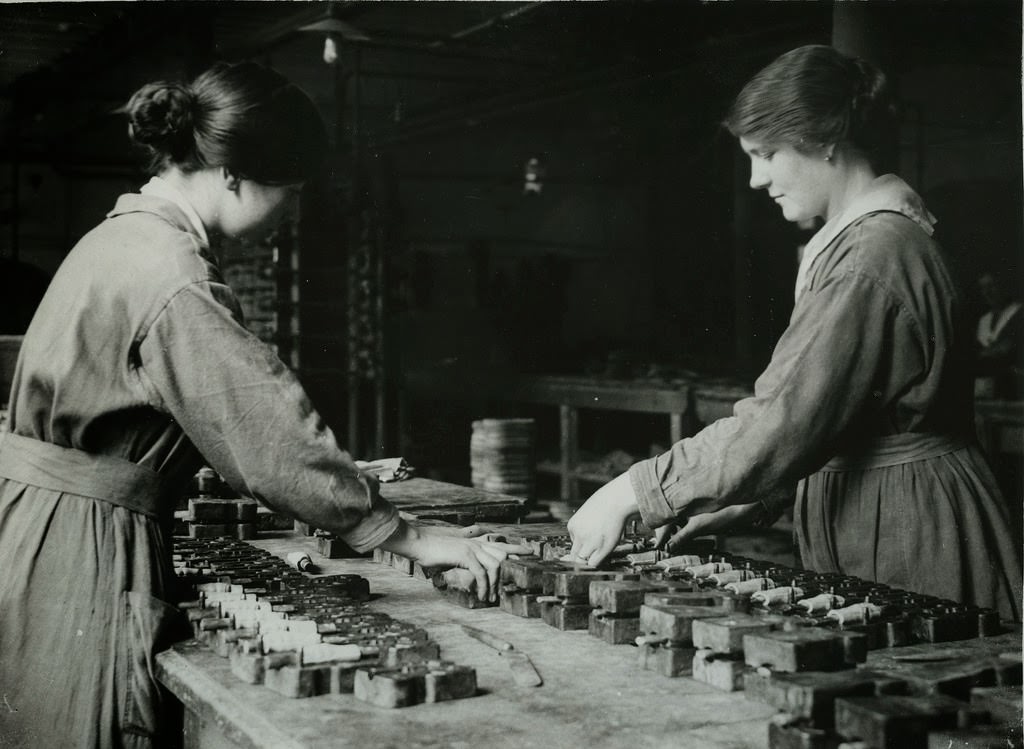
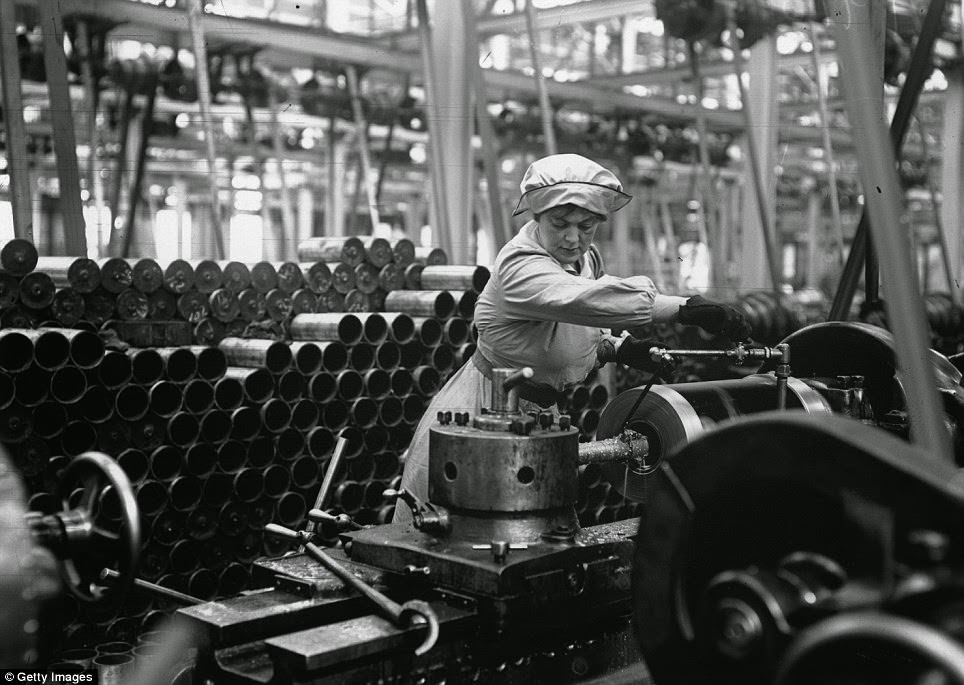
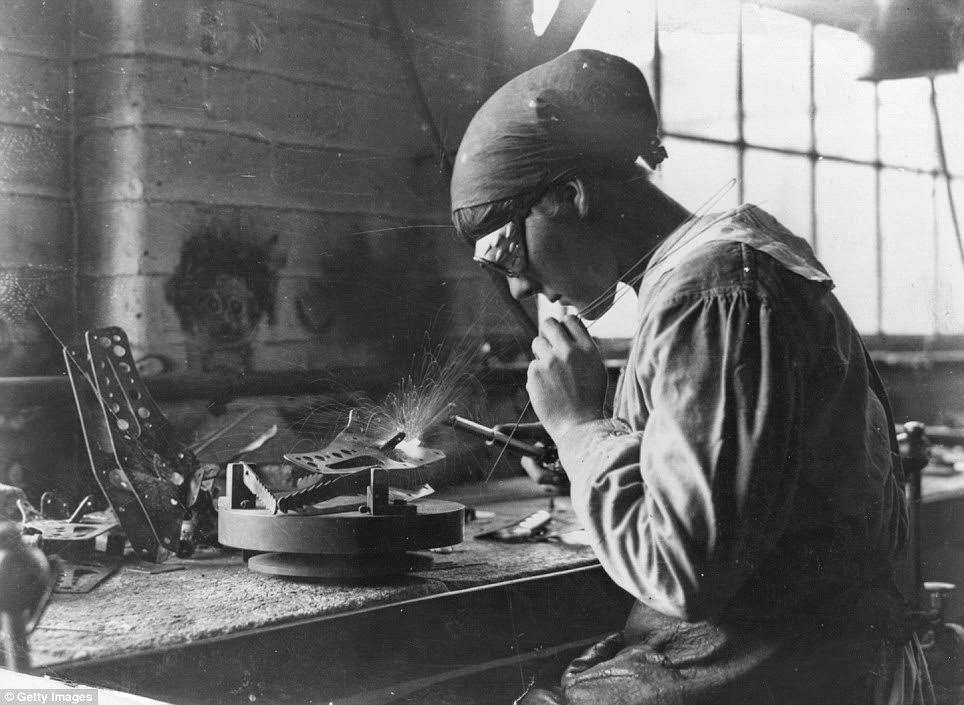
Despite the physical risks, women in munitions factories were paid less than the men they replaced. The work required fine motor skills, precision, and nerves of steel — yet the wage gap persisted throughout the war. Women banded together anyway, forming a workforce that became essential to Britain’s ability to fight.

Despite being paid less than their male counterparts, many of the female munitionettes undertook dangerous and fiddly work.

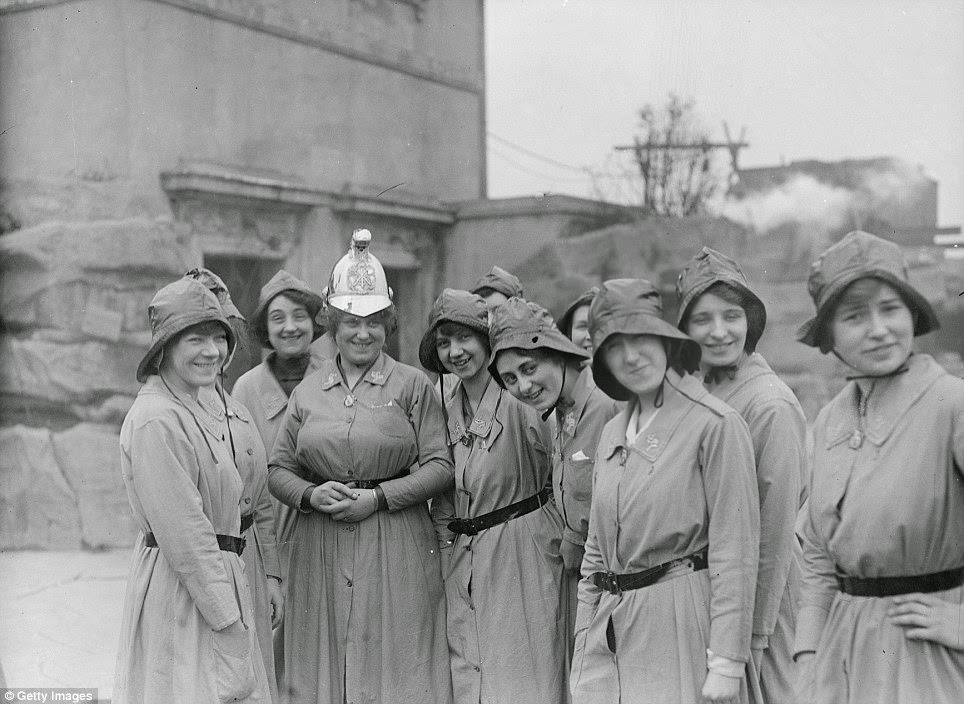
Women also took on fire-fighting roles that had no precedent. The Women’s Fire Brigade was formed to protect factories, warehouses, and other vital facilities during the war. Members trained rigorously with hoses and extinguishers, preparing for the kinds of industrial fires that were common in wartime manufacturing environments.

Members of the Women's Fire Brigade with their Chief Officer photographed in their uniforms beside an extinguished fire in March 1916.
Members of the Women’s Fire Brigade with their Chief Officer photographed in their uniforms beside an extinguished fire in March 1916.
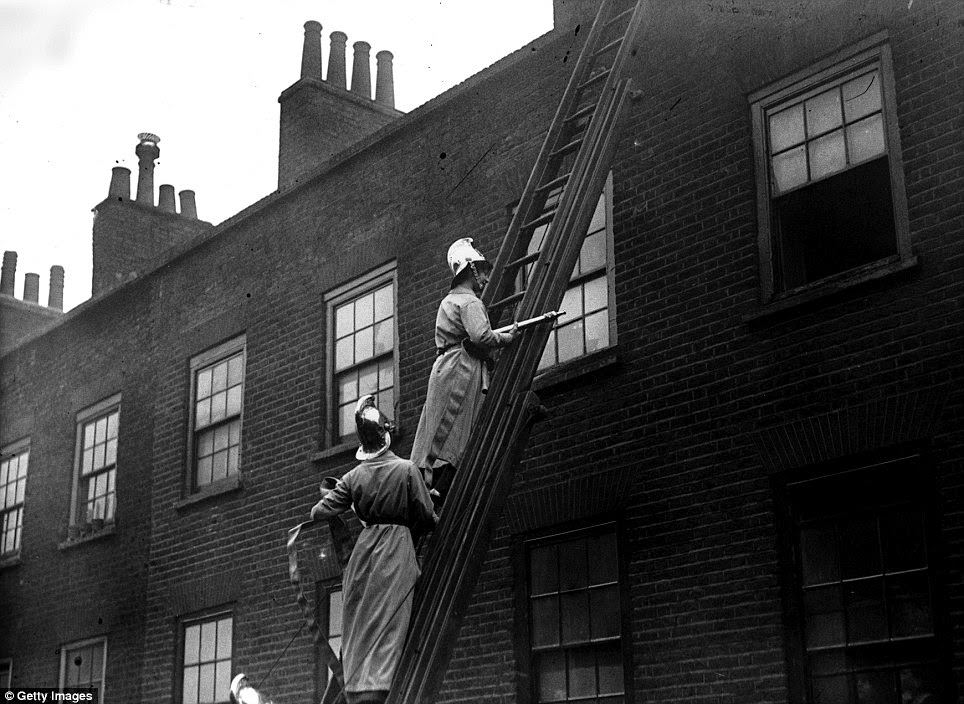
Members of the Women's Fire Brigade are put through their paces during a fire drill with hoses and extinguishers at full force in March 1916.
Members of the Women’s Fire Brigade are put through their paces during a fire drill with hoses and extinguishers at full force in March 1916.

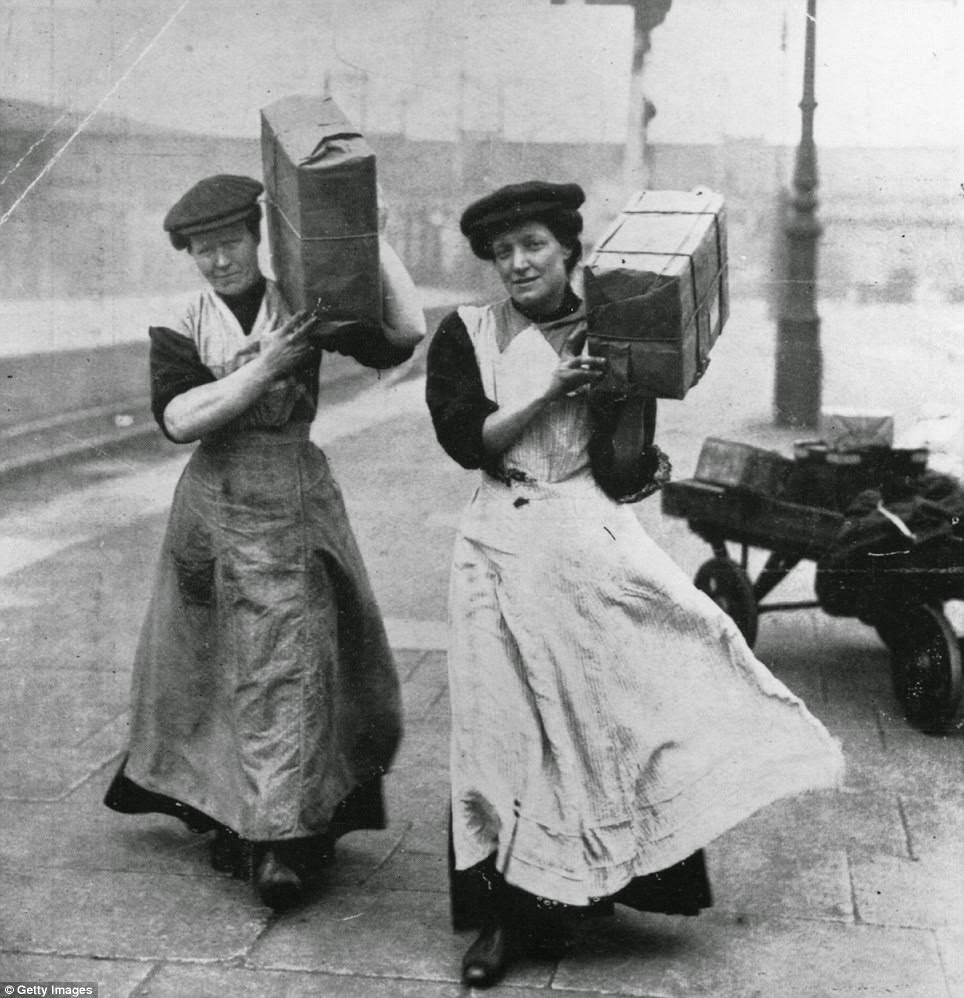
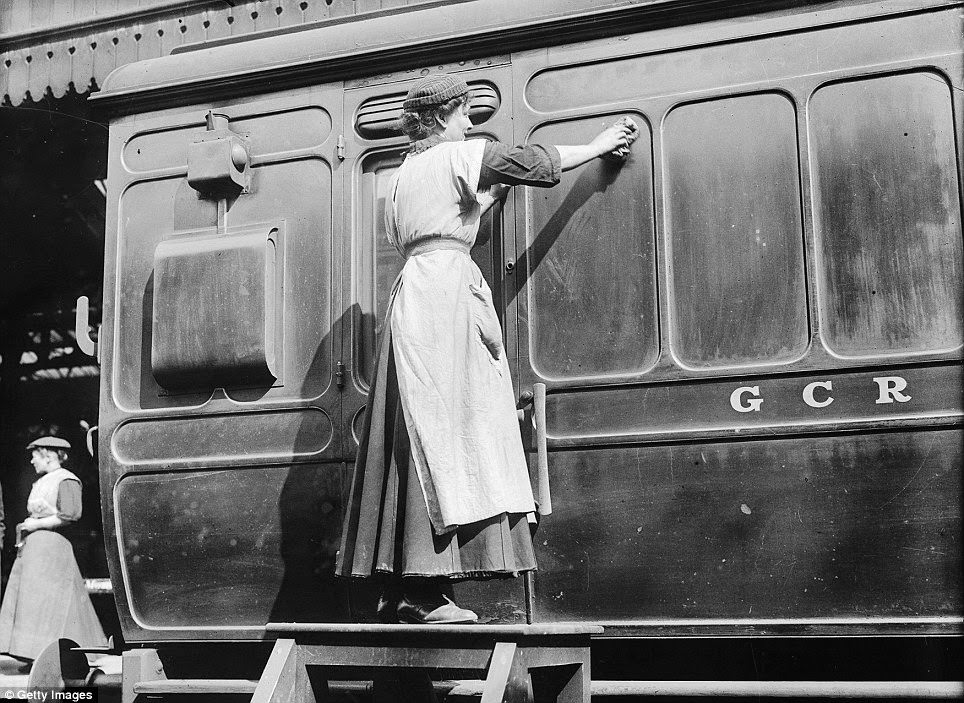
The railway network was another sector transformed by women’s labor. Women employed in transport increased by 555 percent during the war. They cleaned carriages, loaded goods, operated signal boxes, and served as porters at major stations like Marylebone. These were physically demanding roles that required strength and stamina — and women performed them daily.

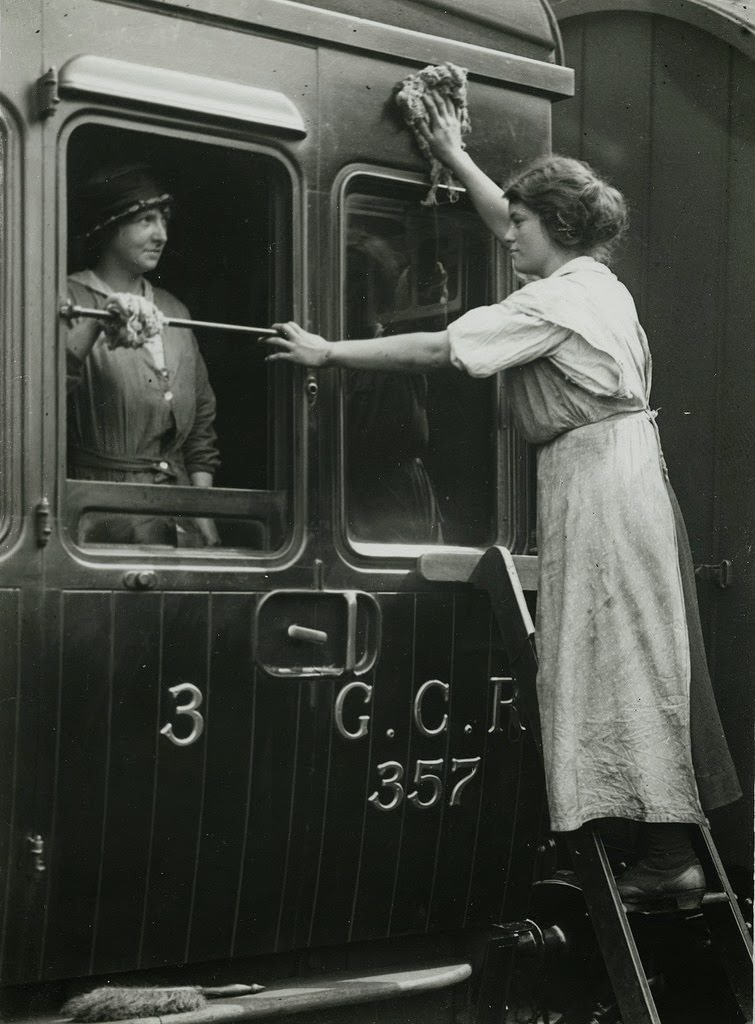
A member of the Women Porters At Marylebone Station Group, pictured in 1914 giving a Great Central Railways carriage a thorough clean.
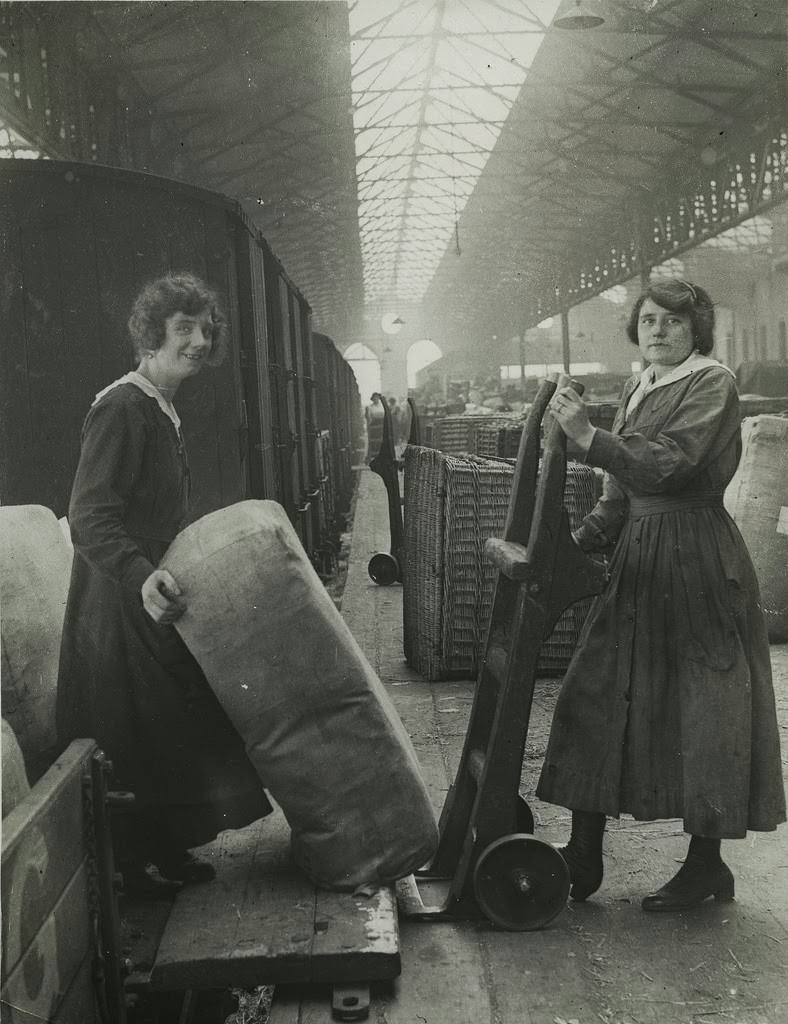
Women employed in the transport industry increased by 555 per cent during the war, and included this pair of female porters at Marylebone Station in 1915.
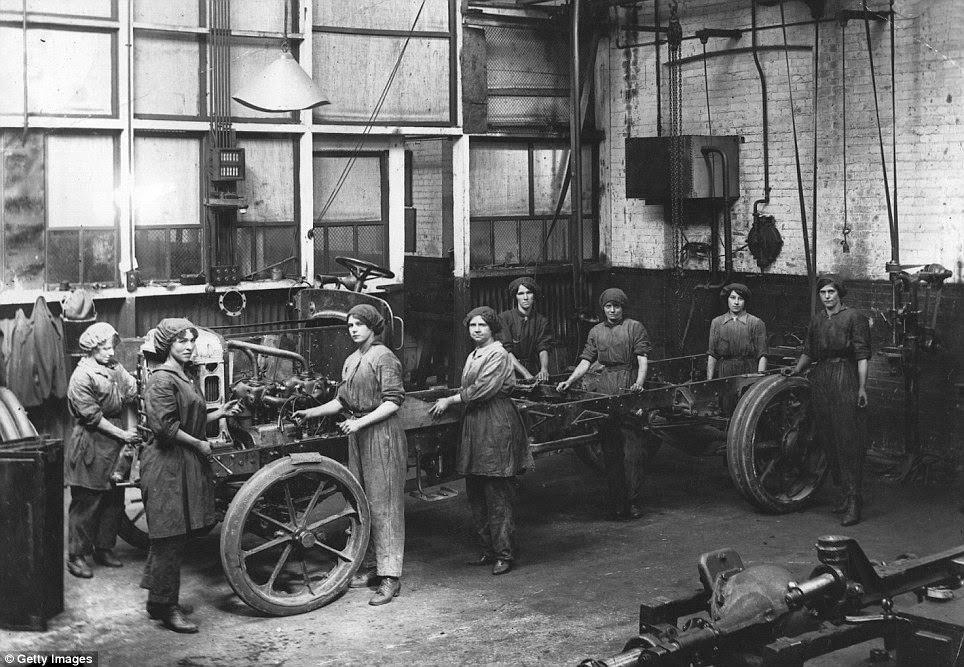
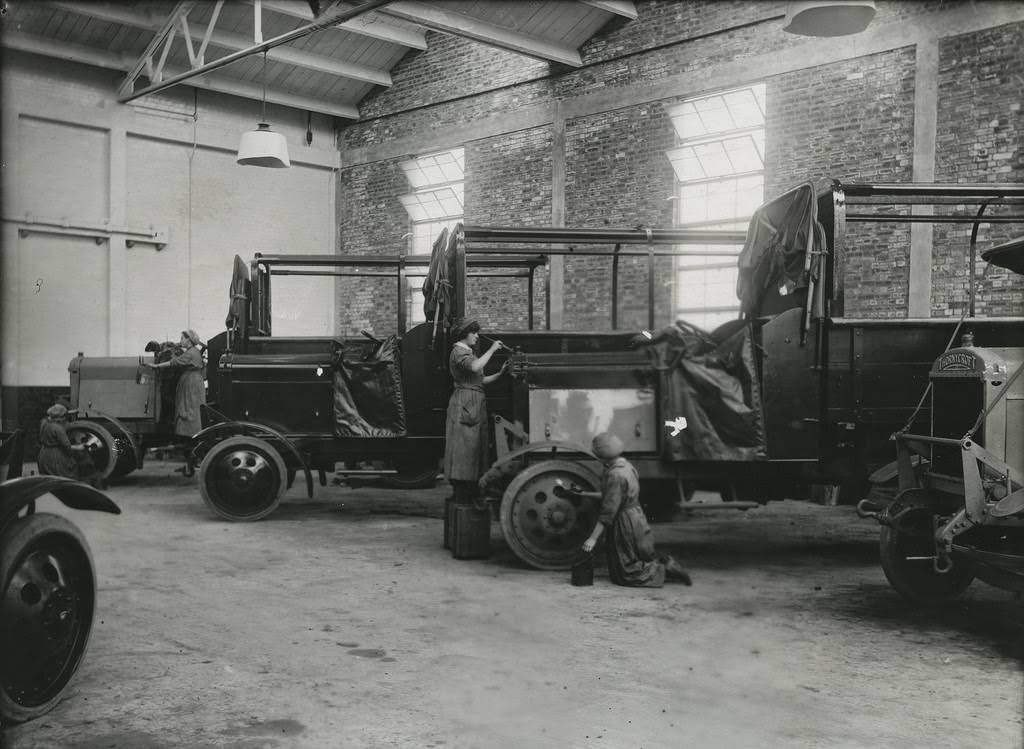
As this 1917 photograph shows, female war workers didn't just run trains and buses – they fixed and maintained them too.
As this 1917 photograph shows, female war workers didn’t just run trains and buses – they fixed and maintained them too.

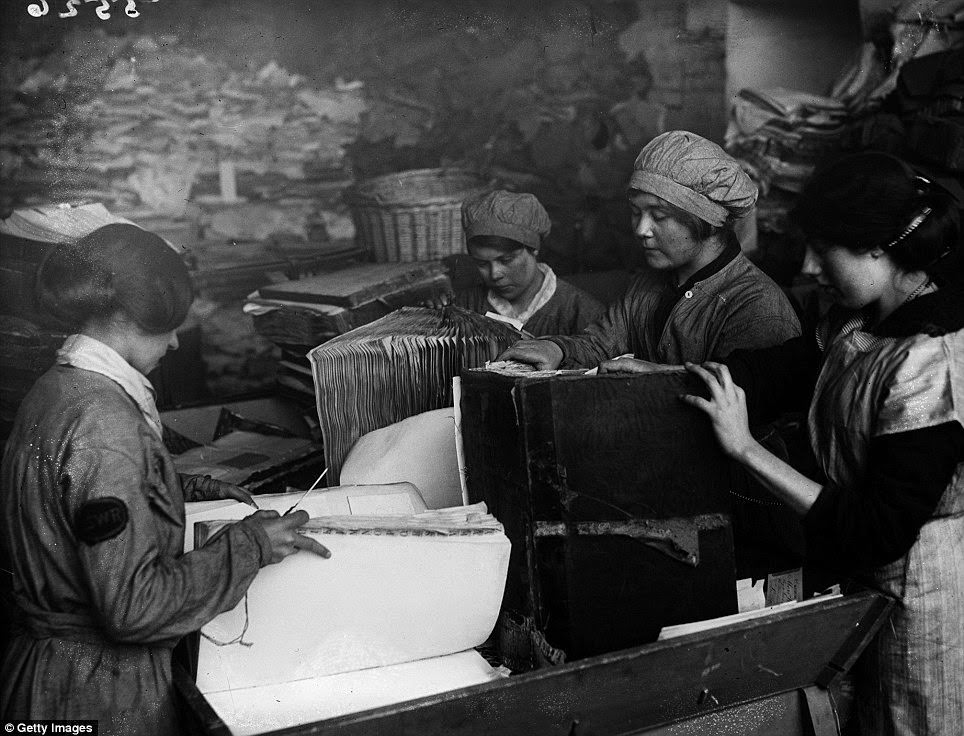
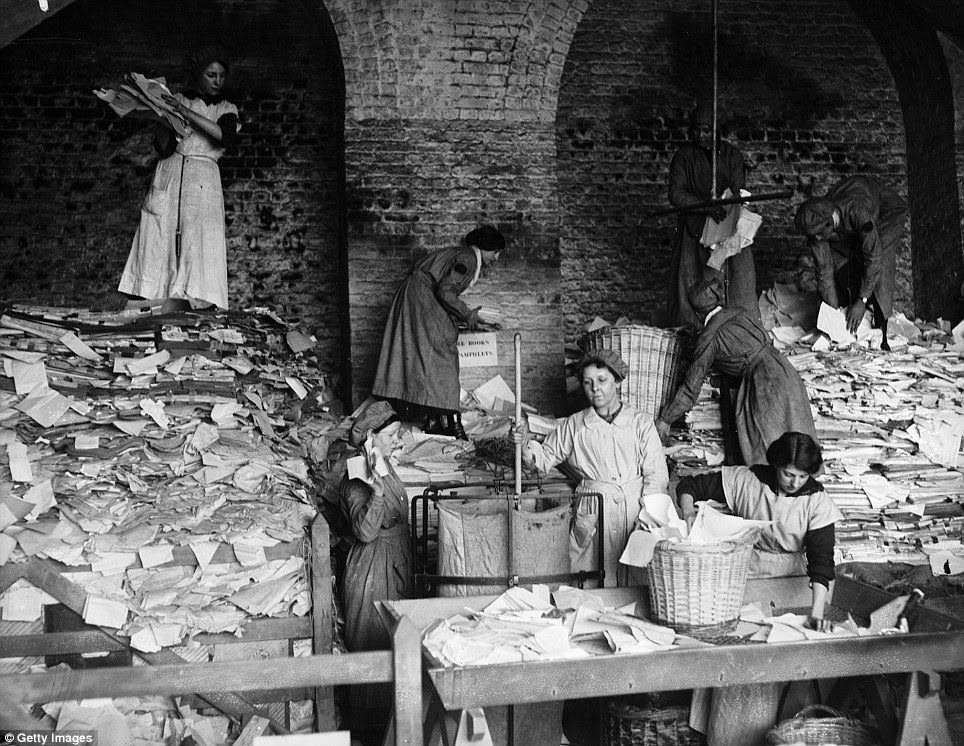
Even materials conservation became part of women’s wartime duties. Old paper was a resource the war effort could not afford to waste. Women were assigned to pull apart old railway ledgers, sort the pages, and prepare the material for reuse — a job that may seem unglamorous but was part of a larger, organized push to eliminate waste across every sector.

As part of the war effort, old paper had to be reused. These women are pulling apart old ledgers belonging to the London & South West Railway.
The paper, as this photo taken on the 16th April 1917 shows, then had to be sorted into piles and stored.
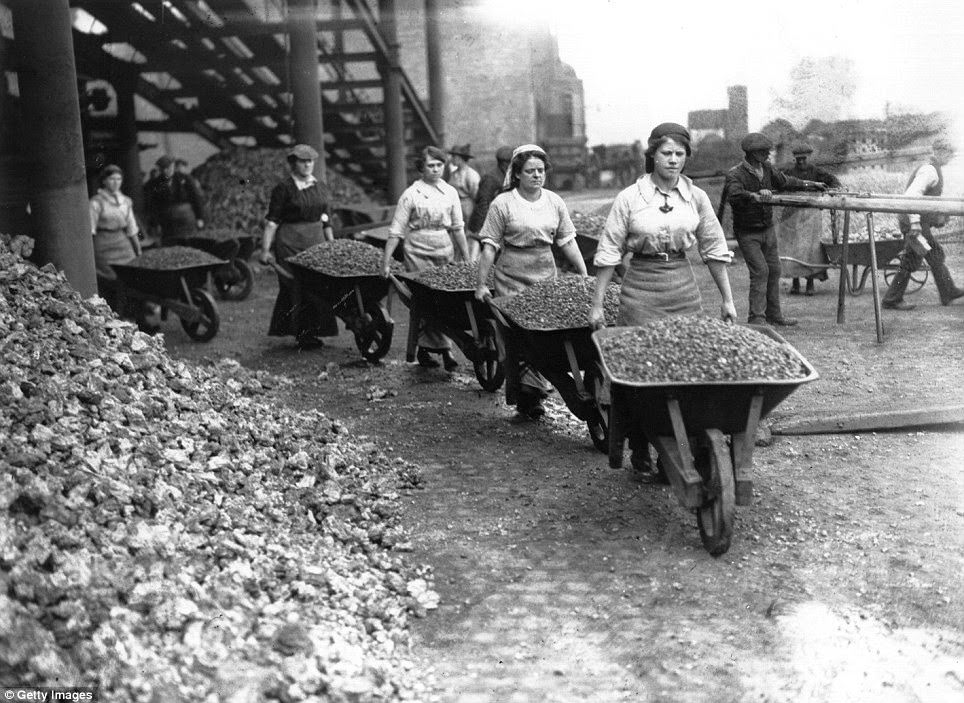
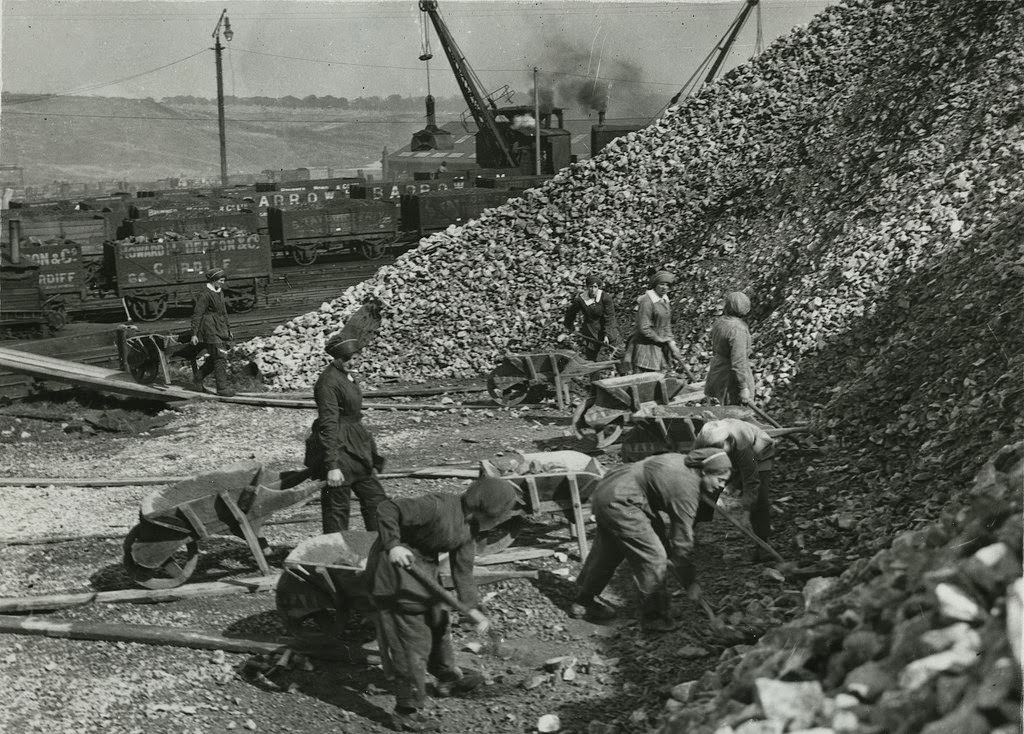
Women even took on tough, physical roles such as moving rubble, as seen in this photograph taken in Coventry during 1917.

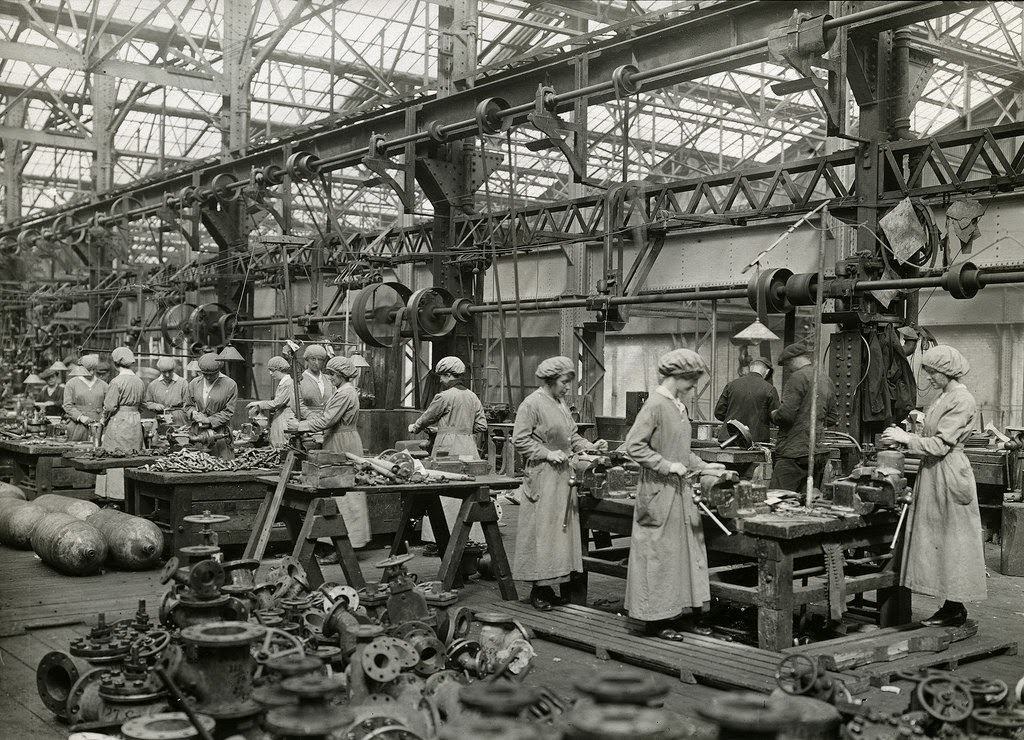
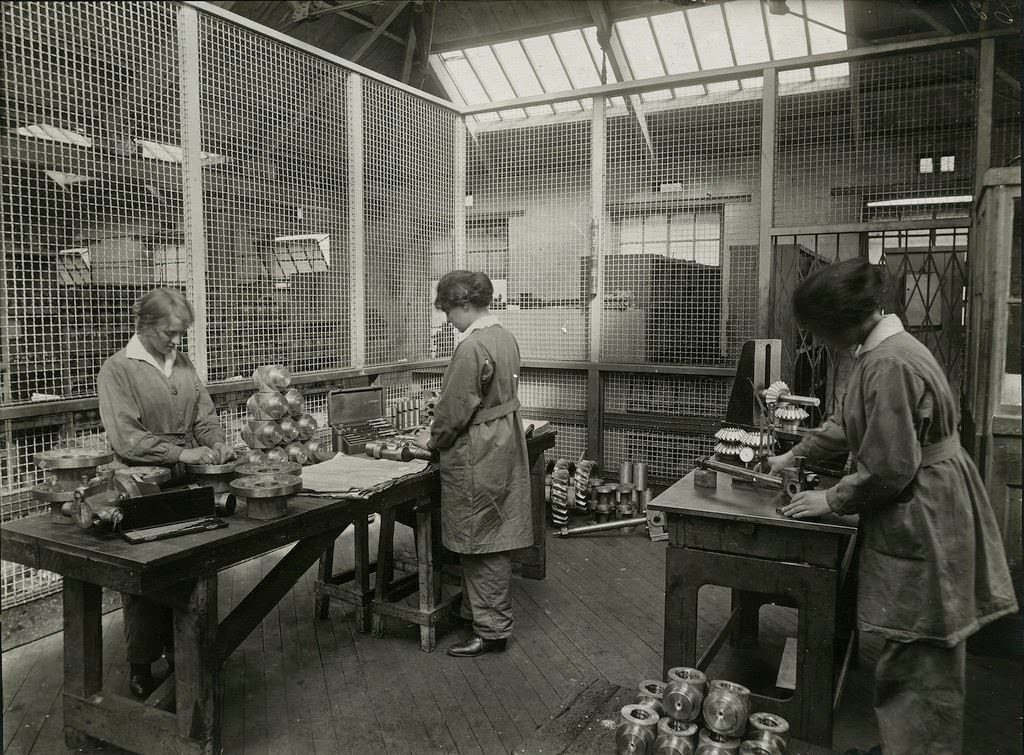
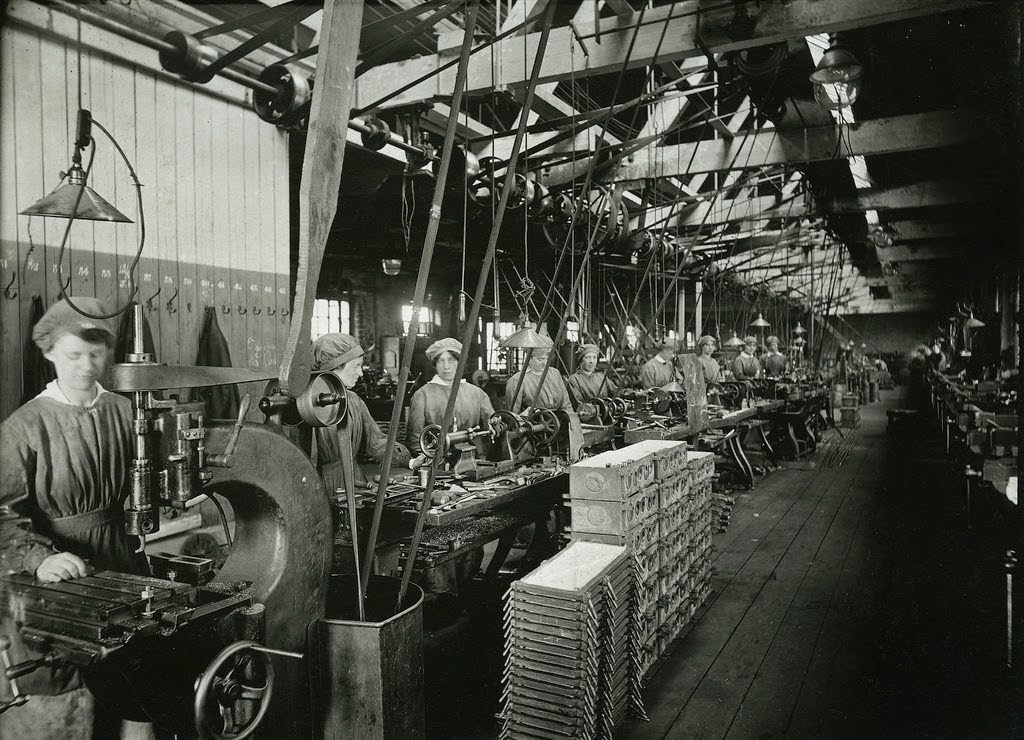
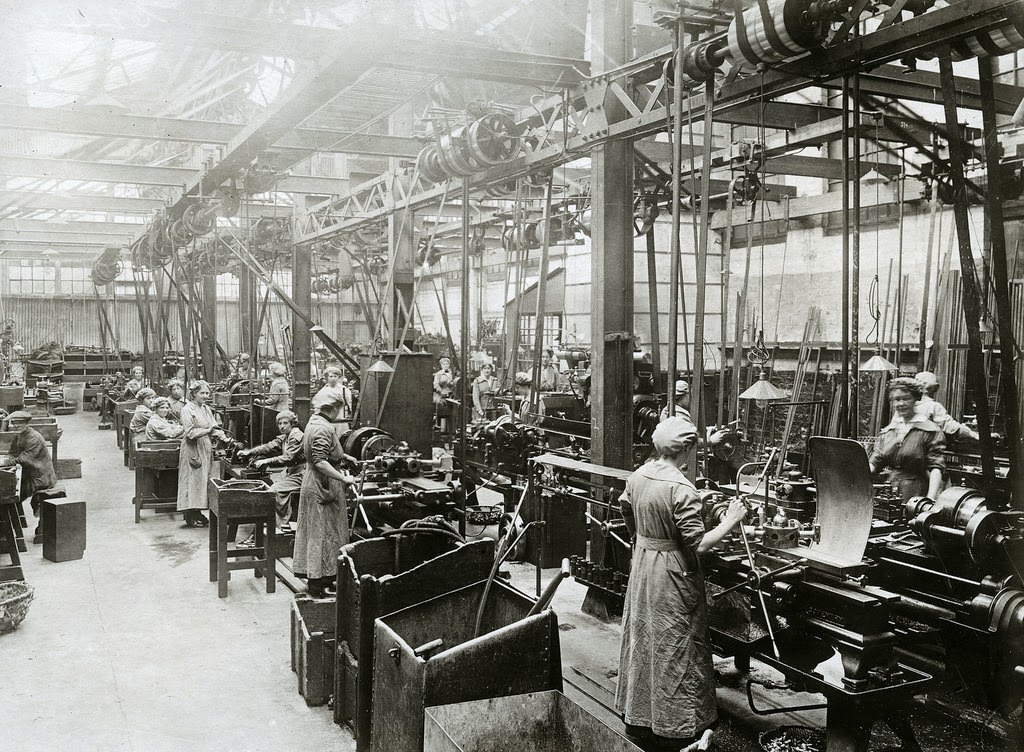
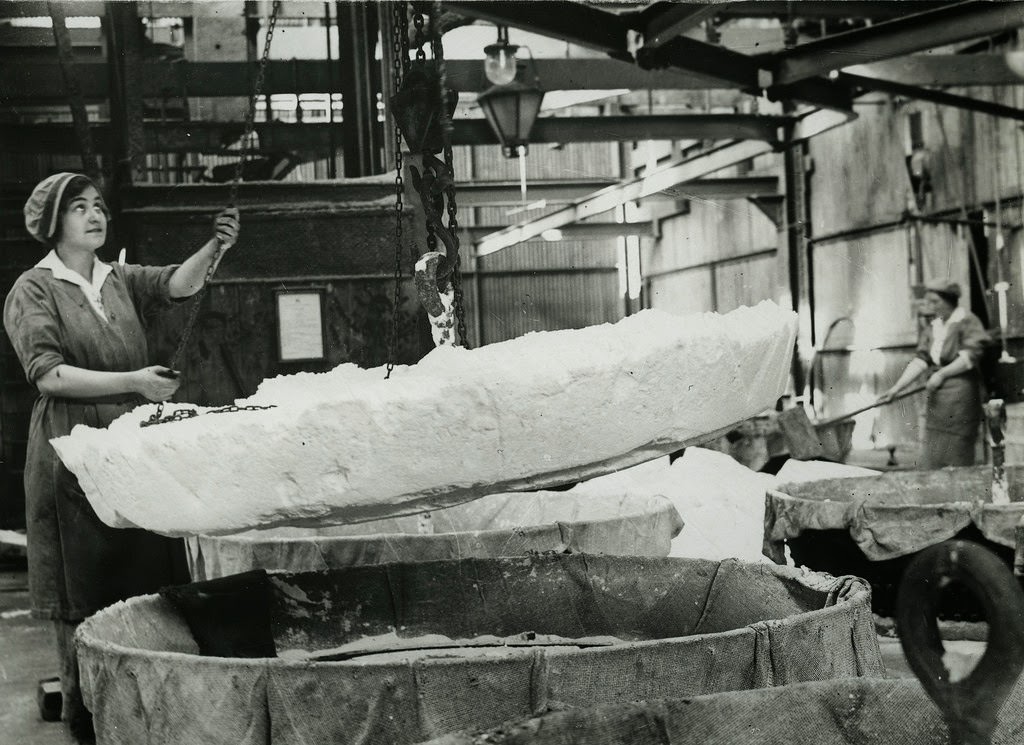
Inside factories across Britain, women operated heavy machinery, drilled metal, and worked on components for ships, aircraft, and military vehicles. The photographs below capture the sheer range of that industrial work — from brass fittings shops to airship shed construction, from marine engine parts to electrical fittings for the Admiralty.

General view of brass fittings shop
Women inspecting motor engine parts
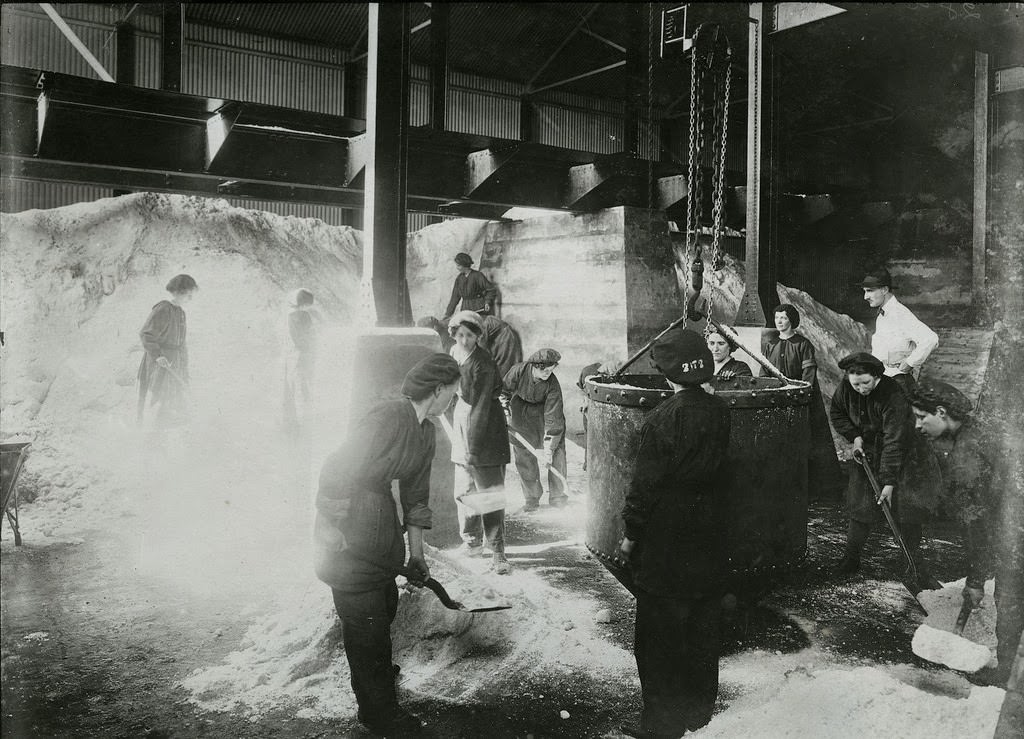
Women loading nitrate of soda into a skip
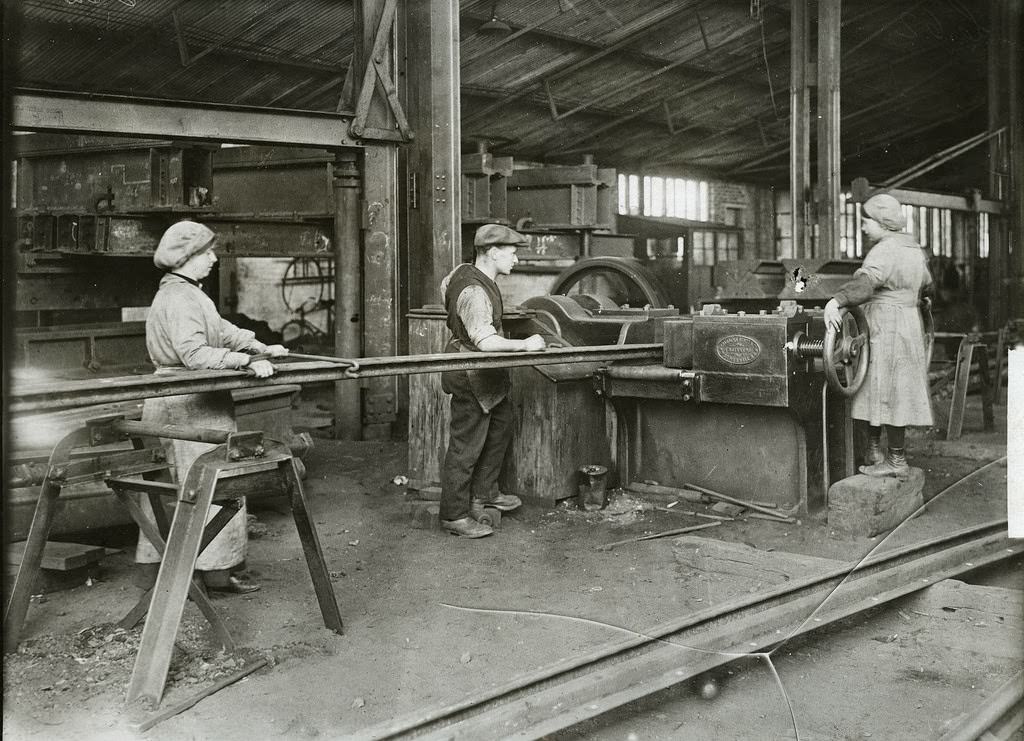
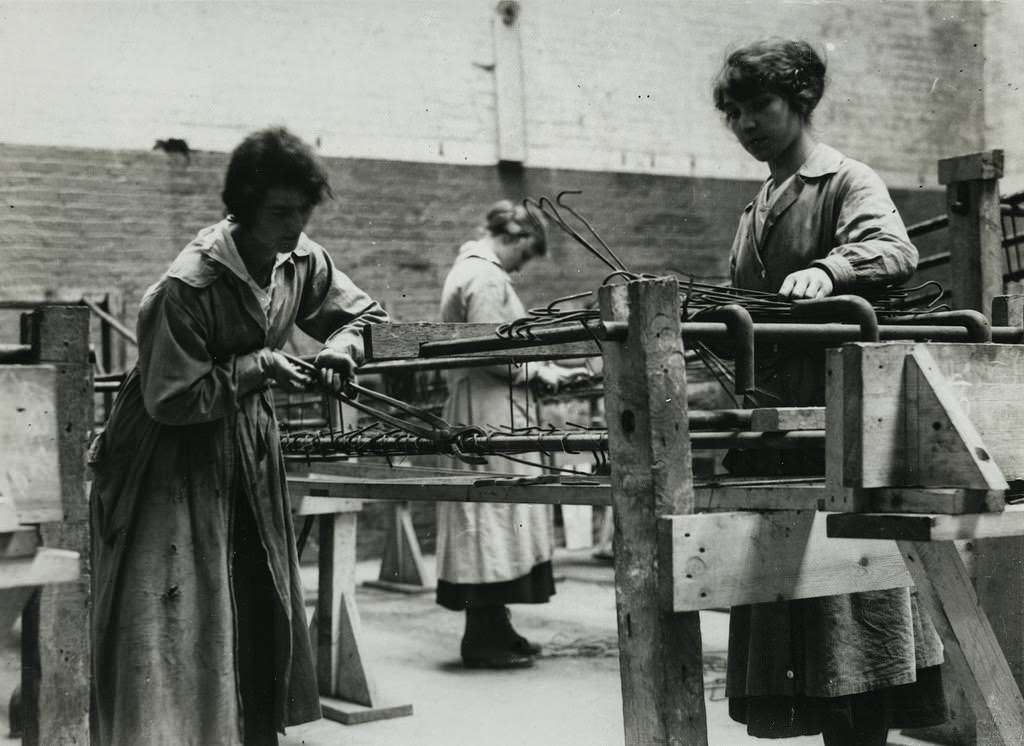
Women straightening and bending steel girder
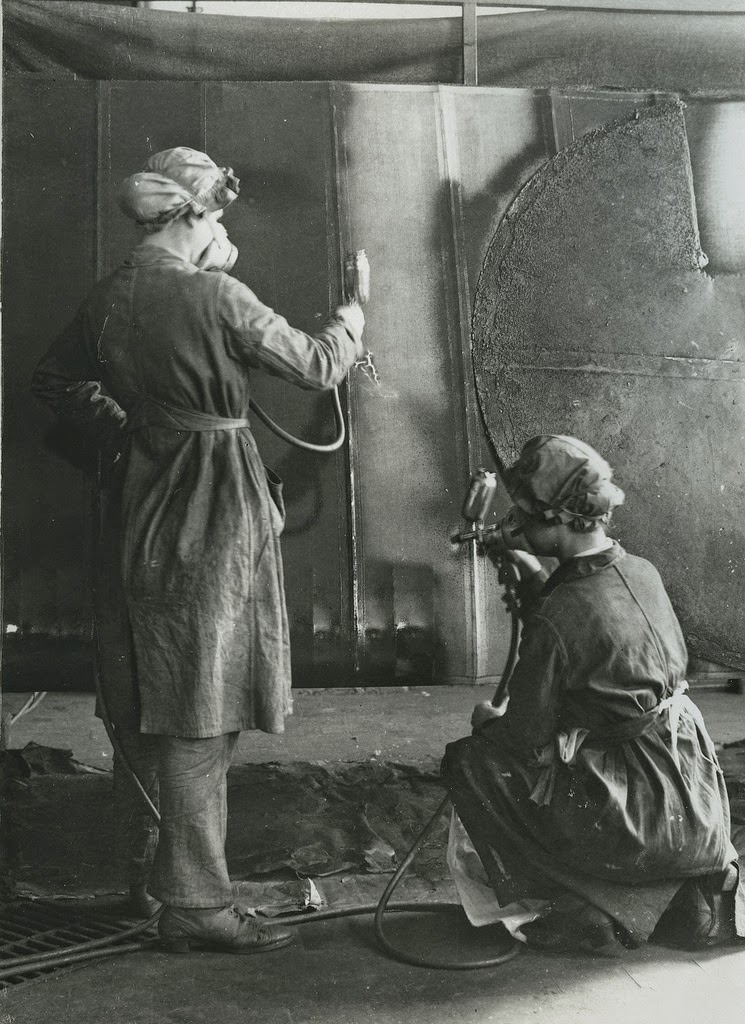
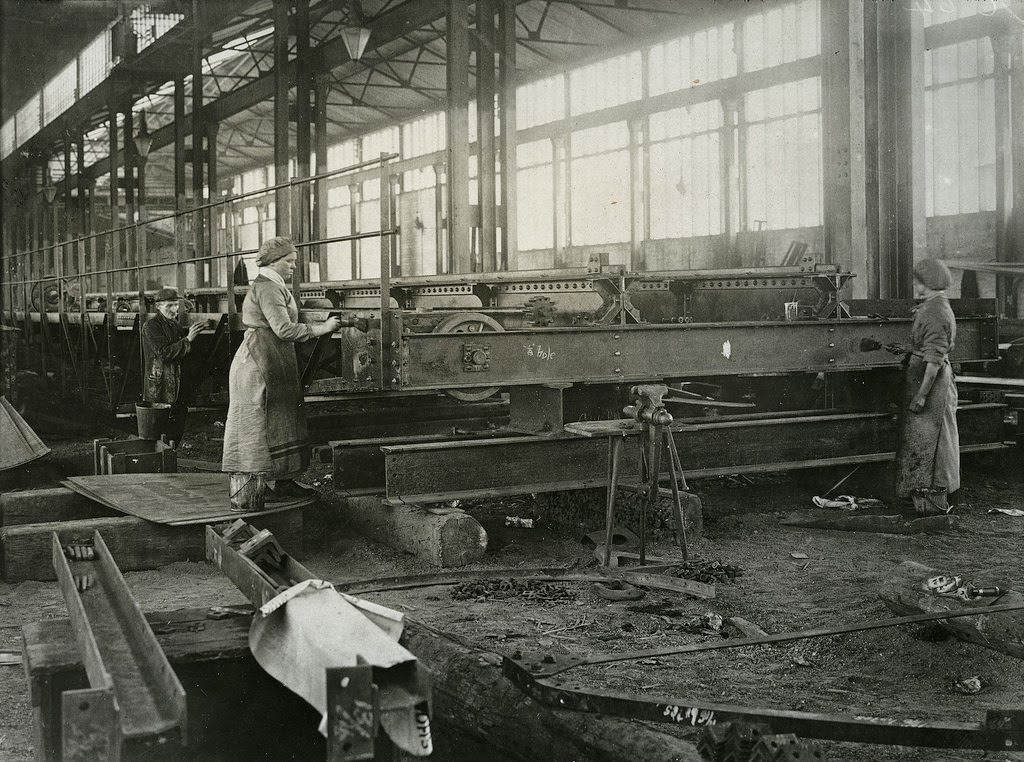
Women painting steel work
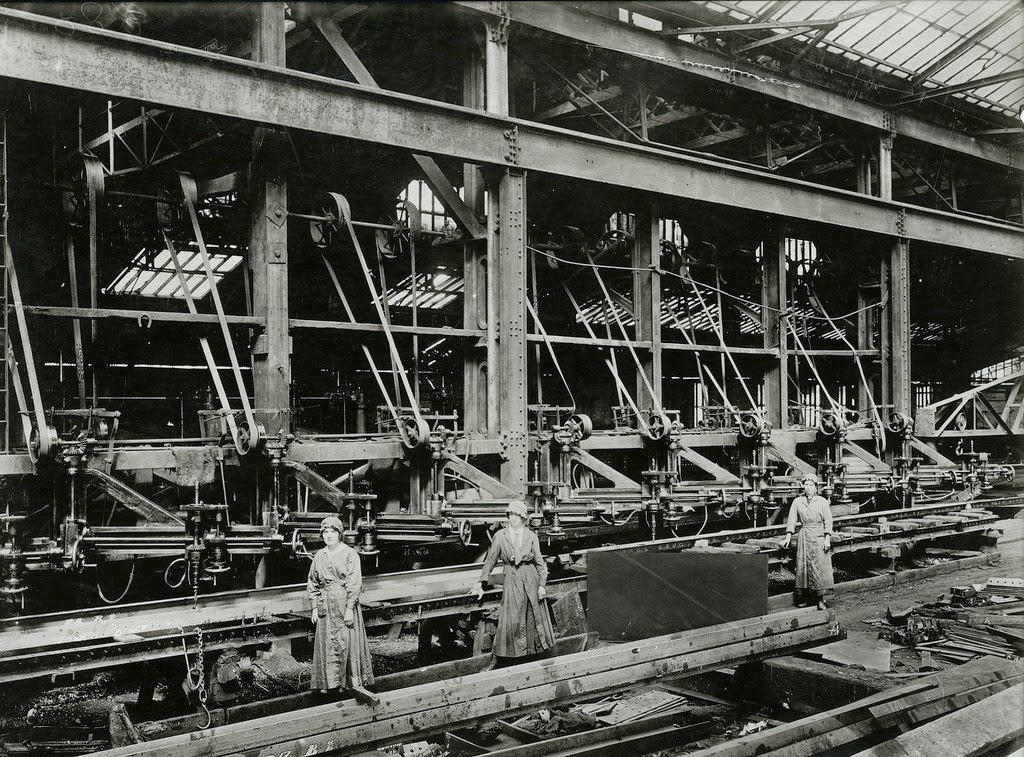
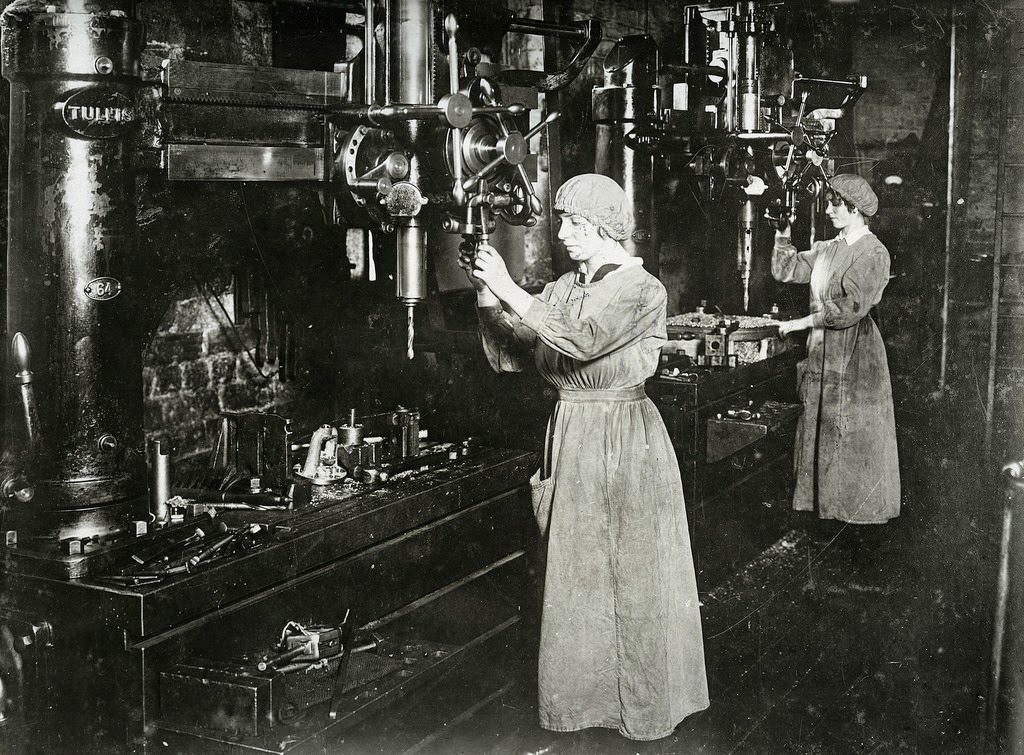
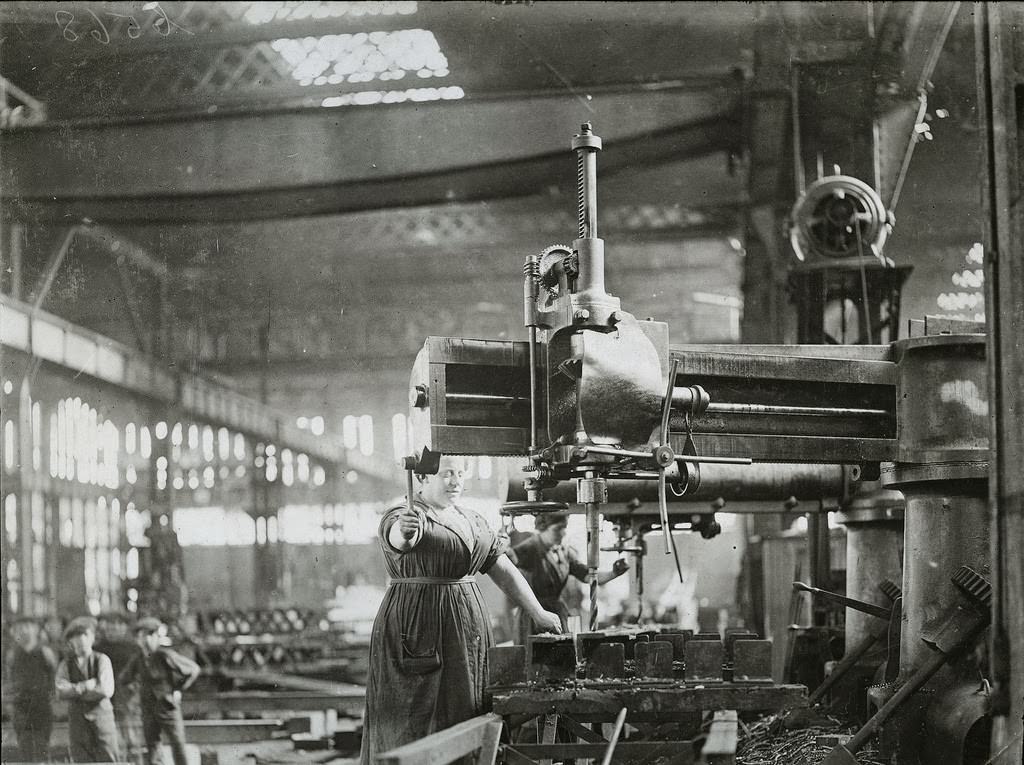
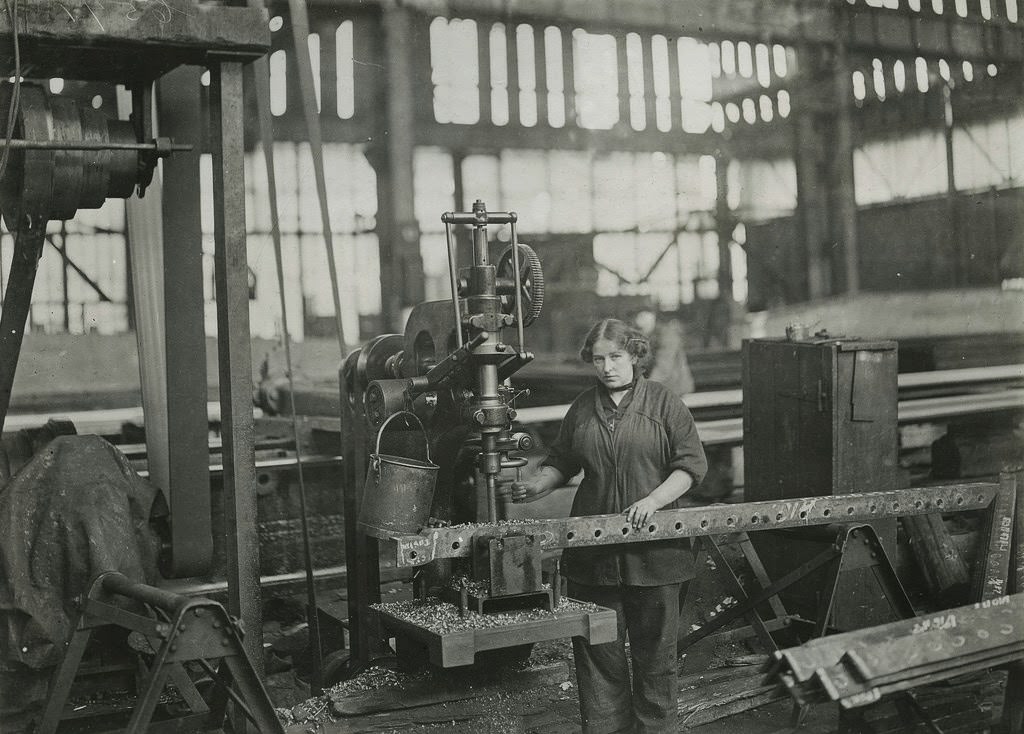
Women operating radial drilling machines, drilling holes in girders
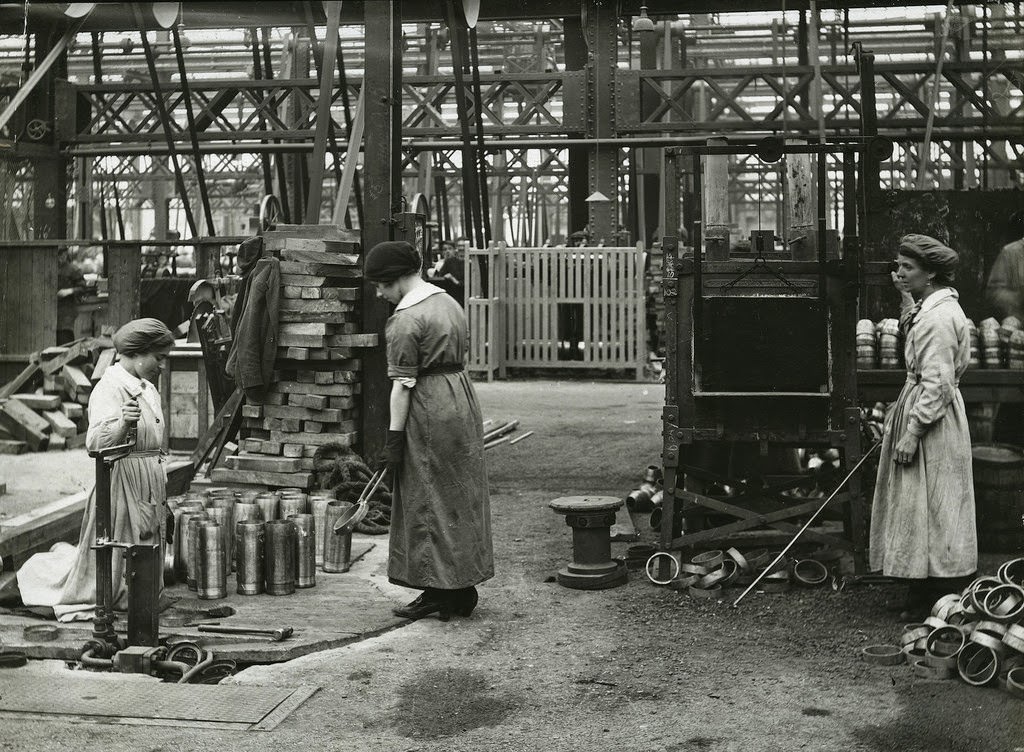
Women copper banding t60 pdr shrapnel
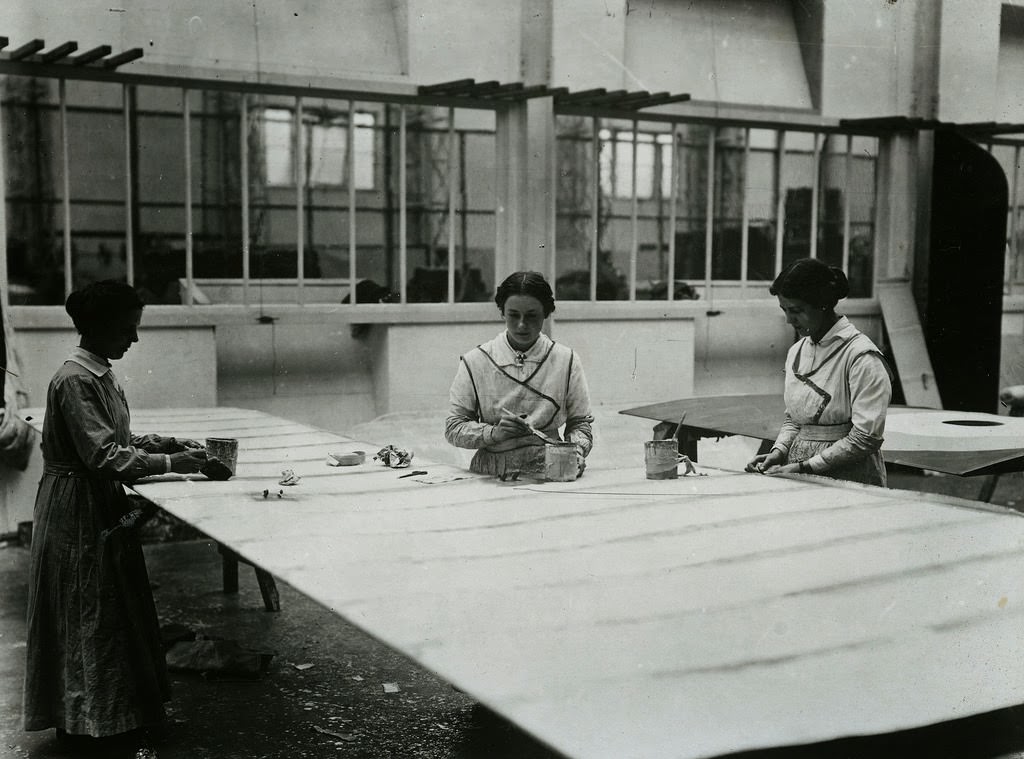
Women taping planes
Women taping planes
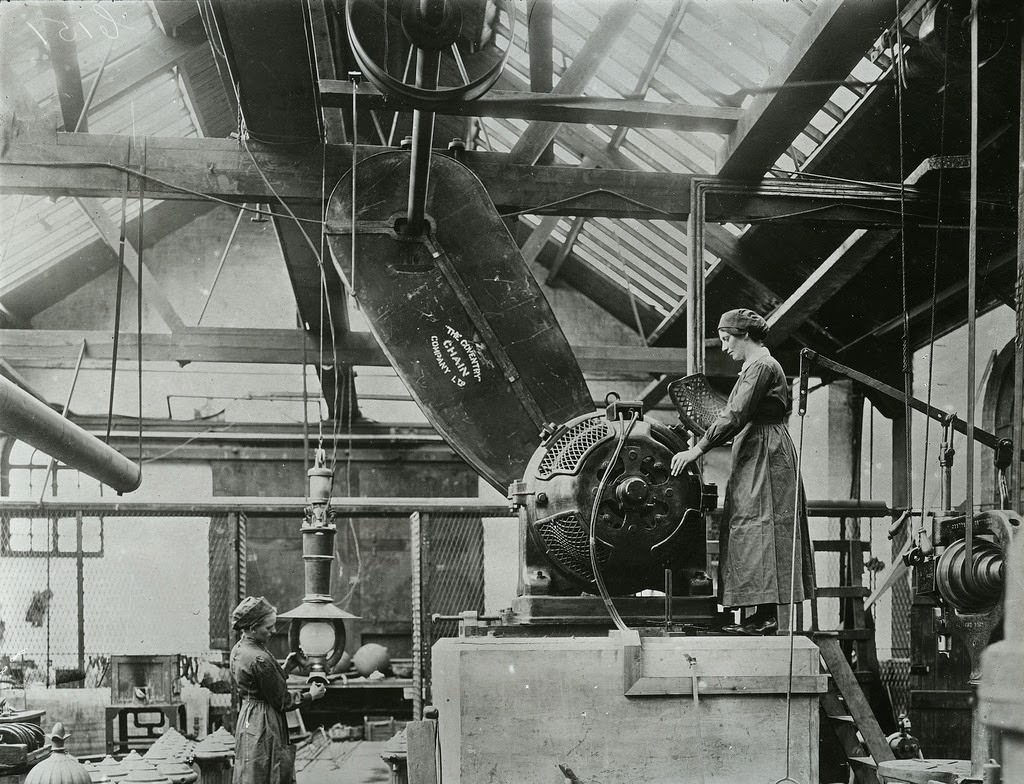
Women in charge of electric motor

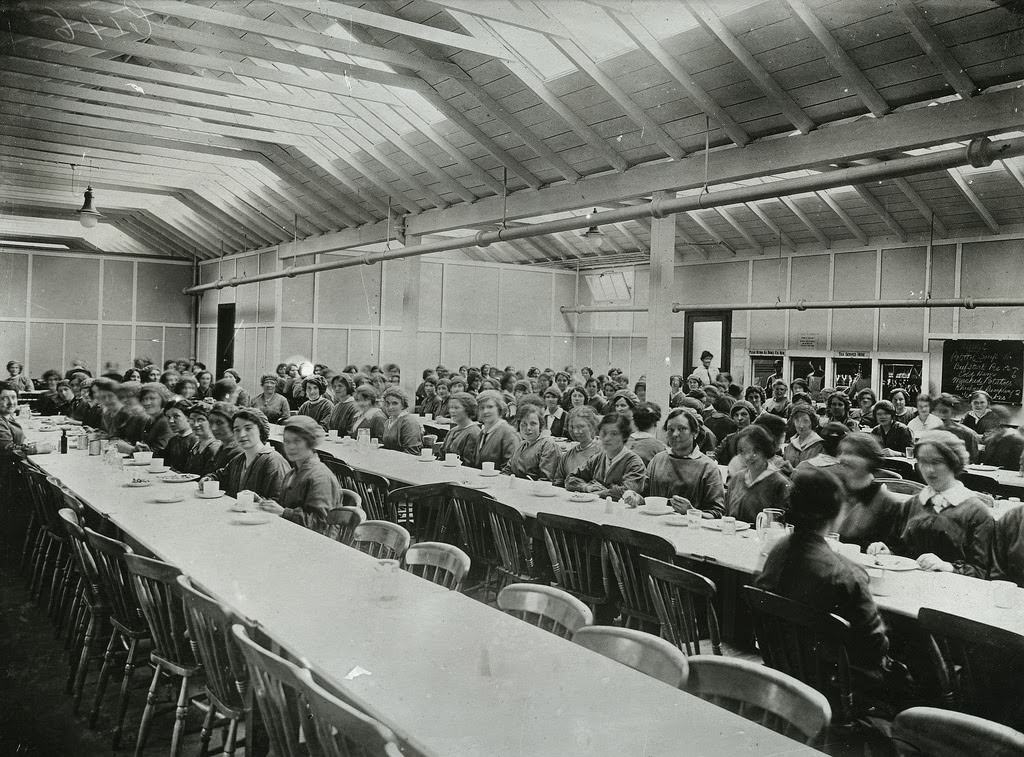
Factory canteens provided a rare moment of rest in a long and physically exhausting working day. Munitions workers could put in shifts of ten hours or more, six days a week. The canteen was one of the few spaces in the factory designed around the workers’ basic needs rather than production output.

View of canteen at munitions factory
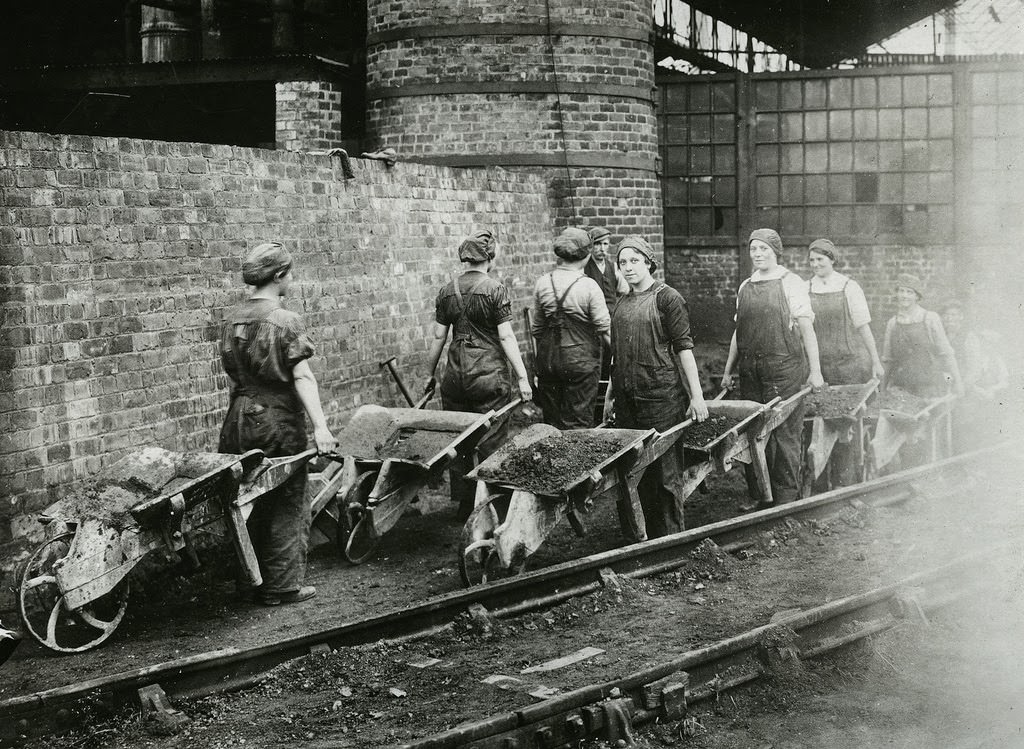
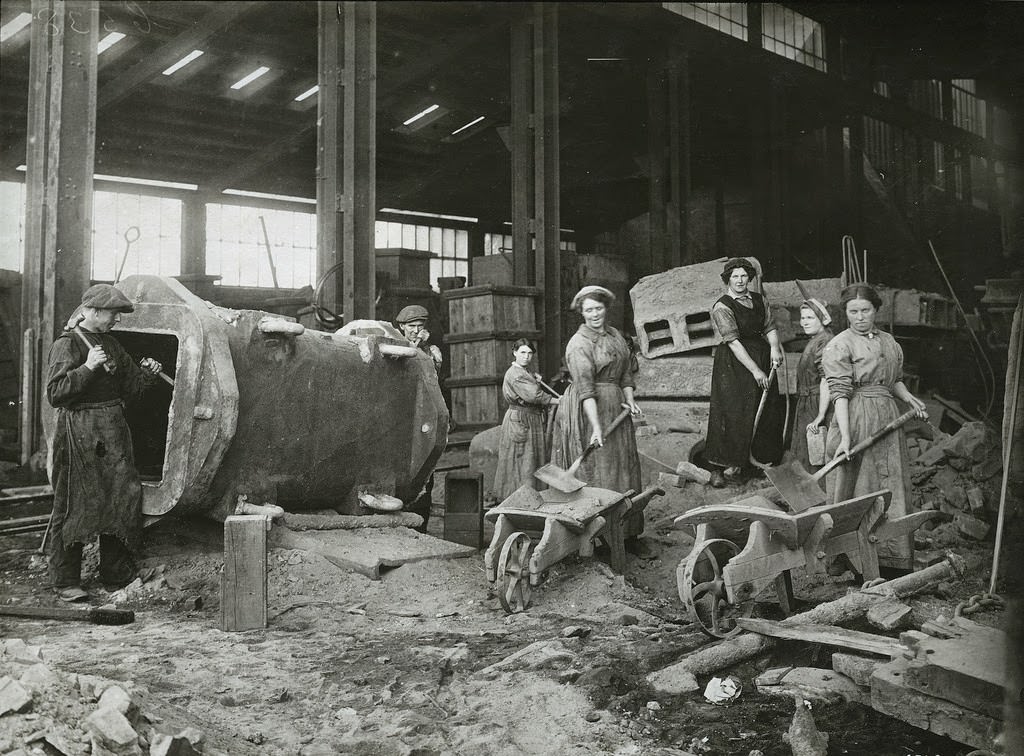
Women wheeling away earth excavated for the installation of hydraulic pumps
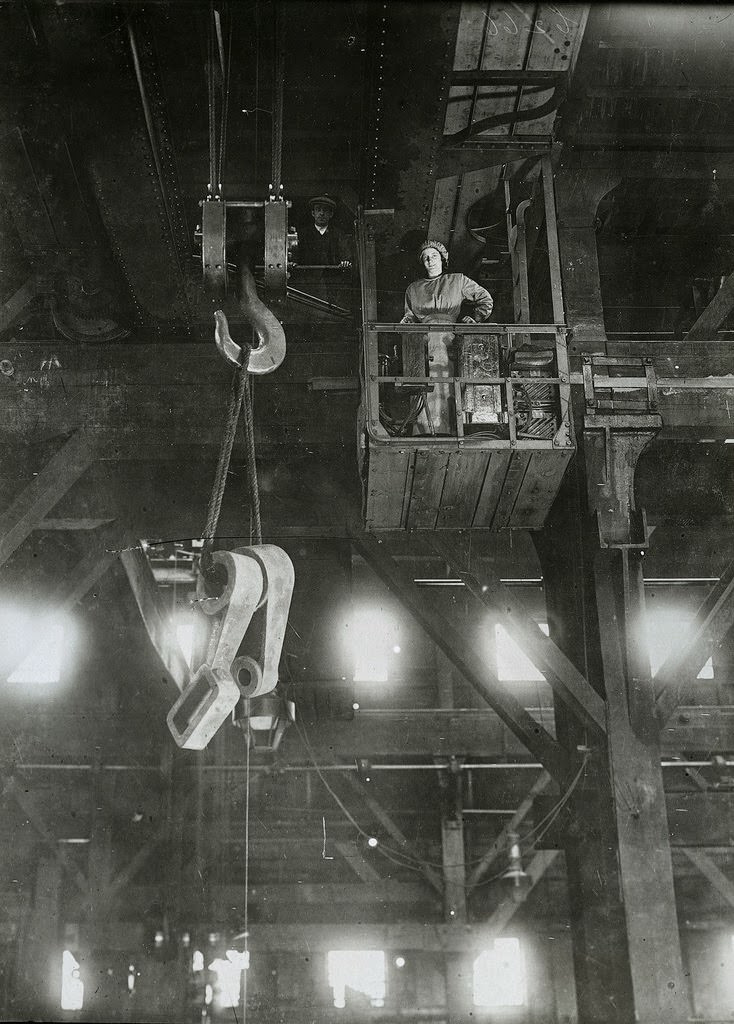
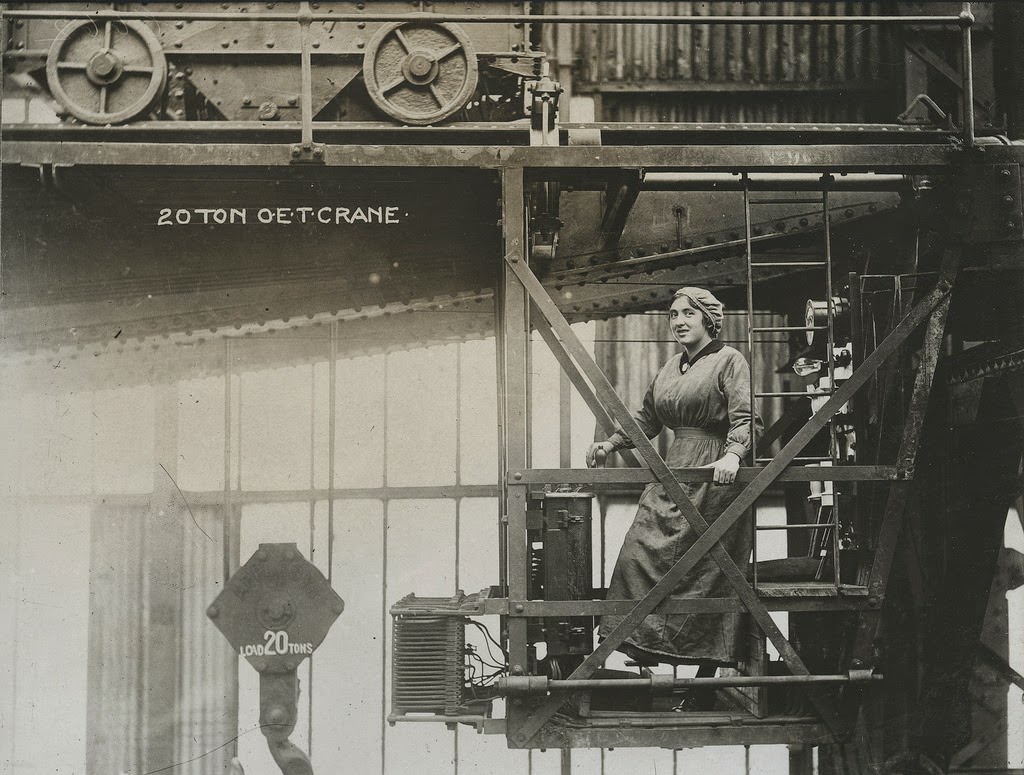
Woman driving O.E.T. crane
Women operating radial drills, drilling valve covers and strainer plates for weed boxes for marine engines
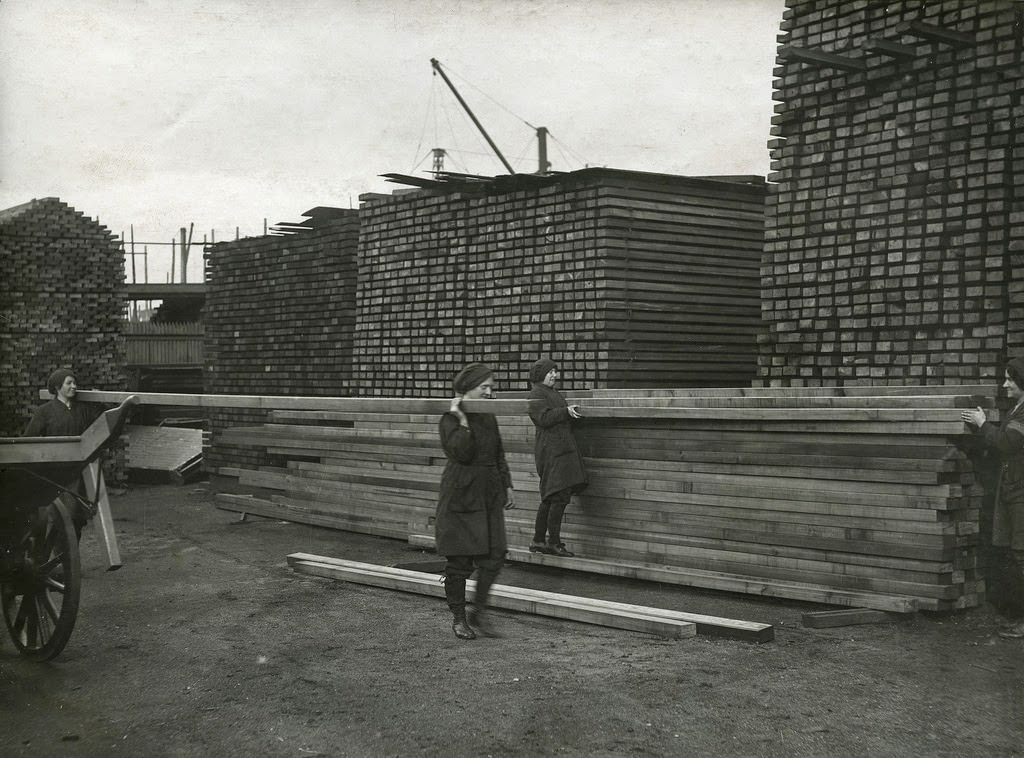
Women stacking wood
Women stacking wood
Women stacking wood
Women stacking wood
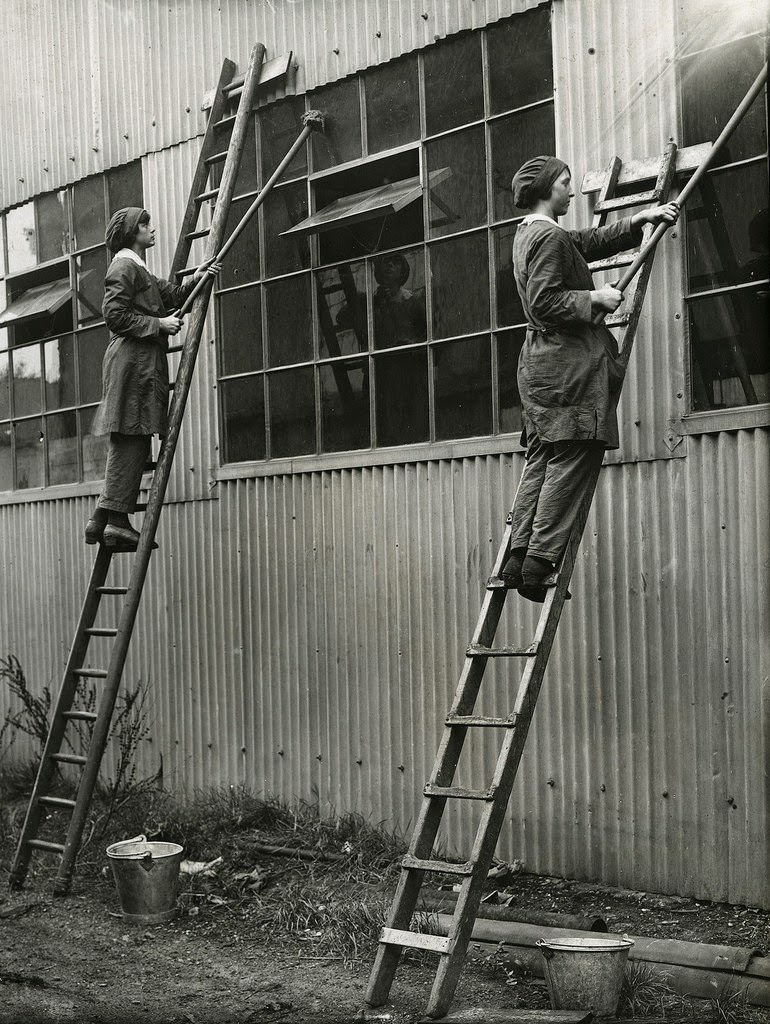
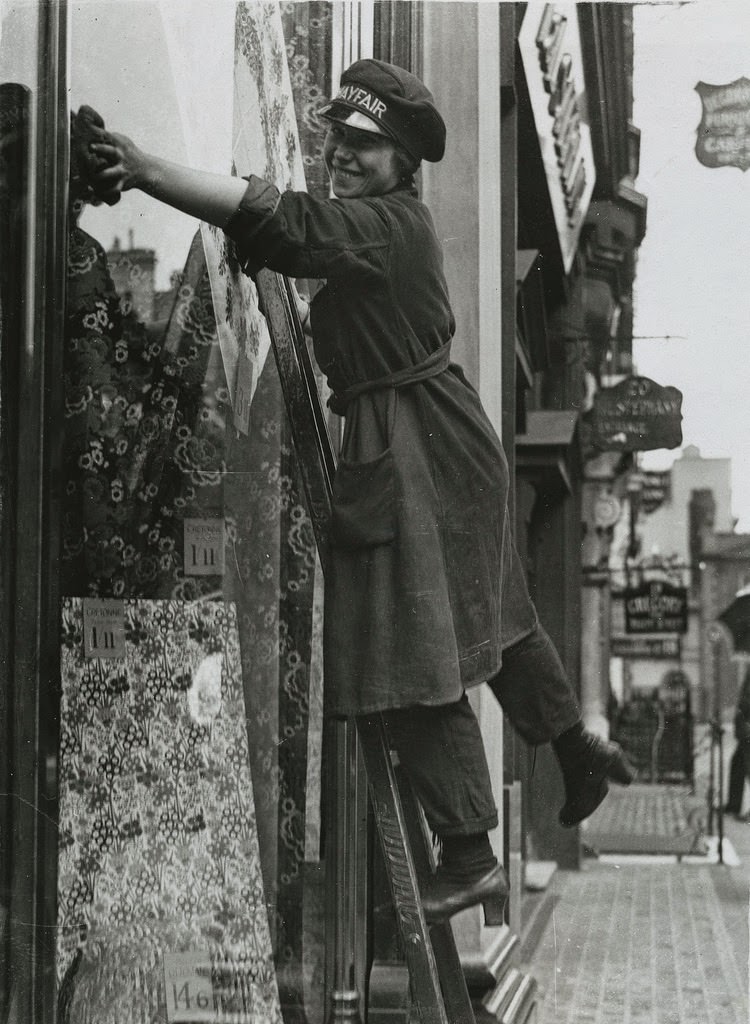
Women cleaning windows
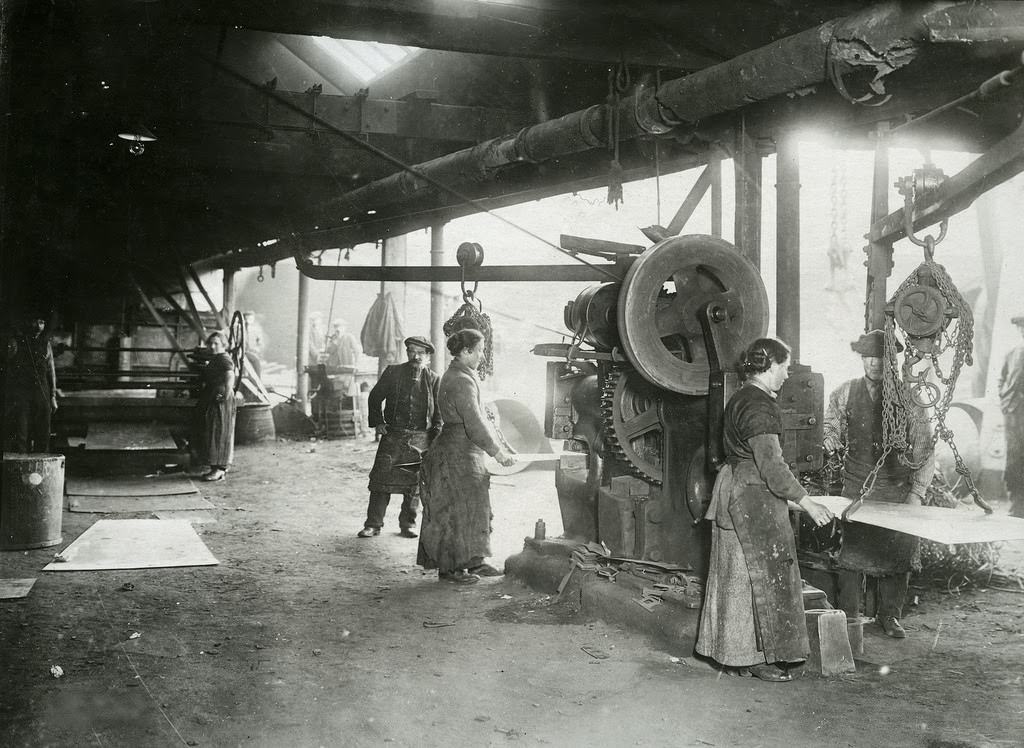
Woman acting as helper at punching and shearing machine
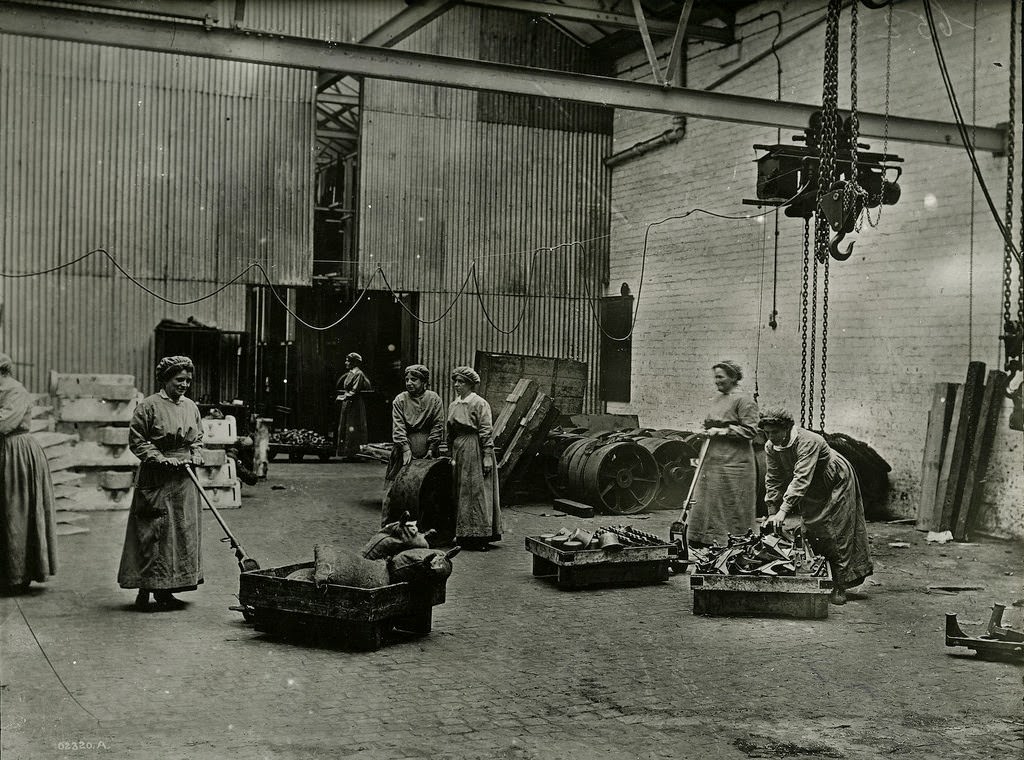
Women transporting rough castings to the General Store
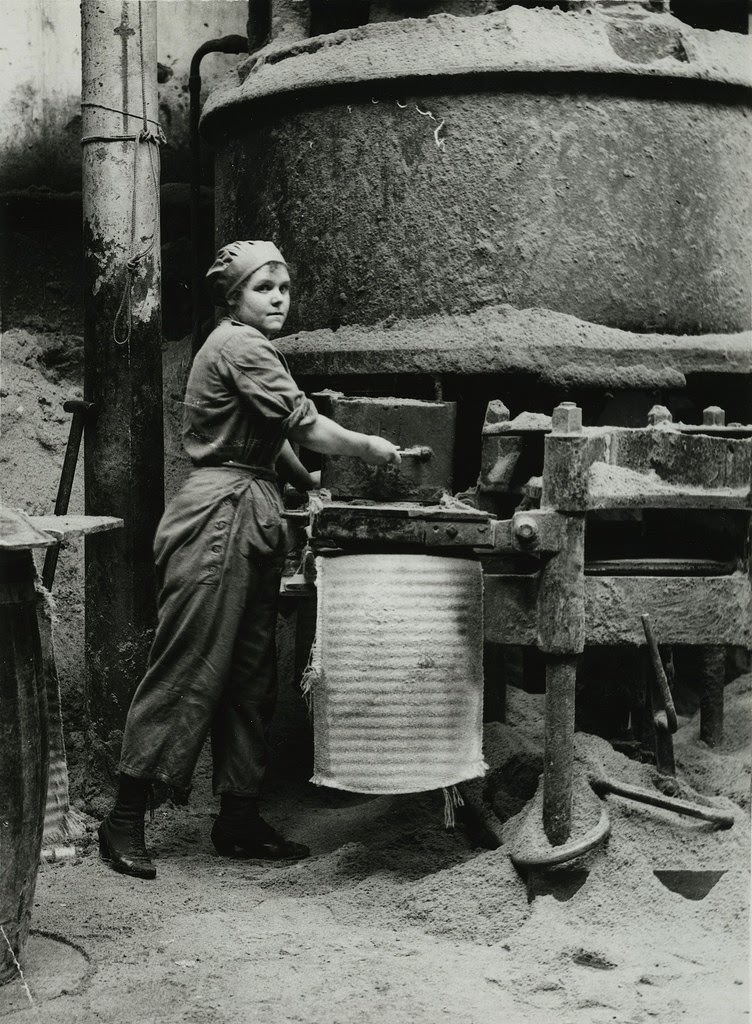
Women engaged in labouring work in dressing shop
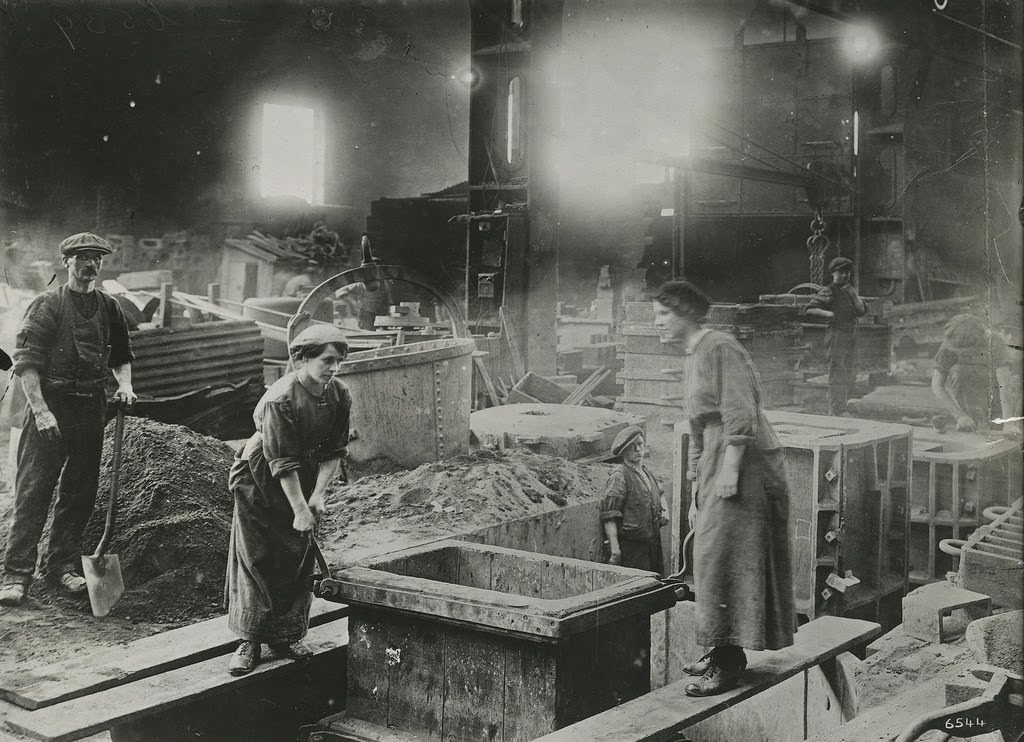
Woman are with cores for ingot mould

Aircraft production was one of the fastest-growing industries of the war. Women drilled angles and bars for the structural ribs of massive airship sheds, operated gear-cutting machinery, and worked alongside engineers to keep aircraft manufacturing moving at pace. Britain’s air power during the war depended in no small part on this factory labor.

Woman at battery drills, drilling angles and T bars for ribs of airship sheds
Woman operating vertical drilling machines, drilling angles for connections to ribs of airship sheds
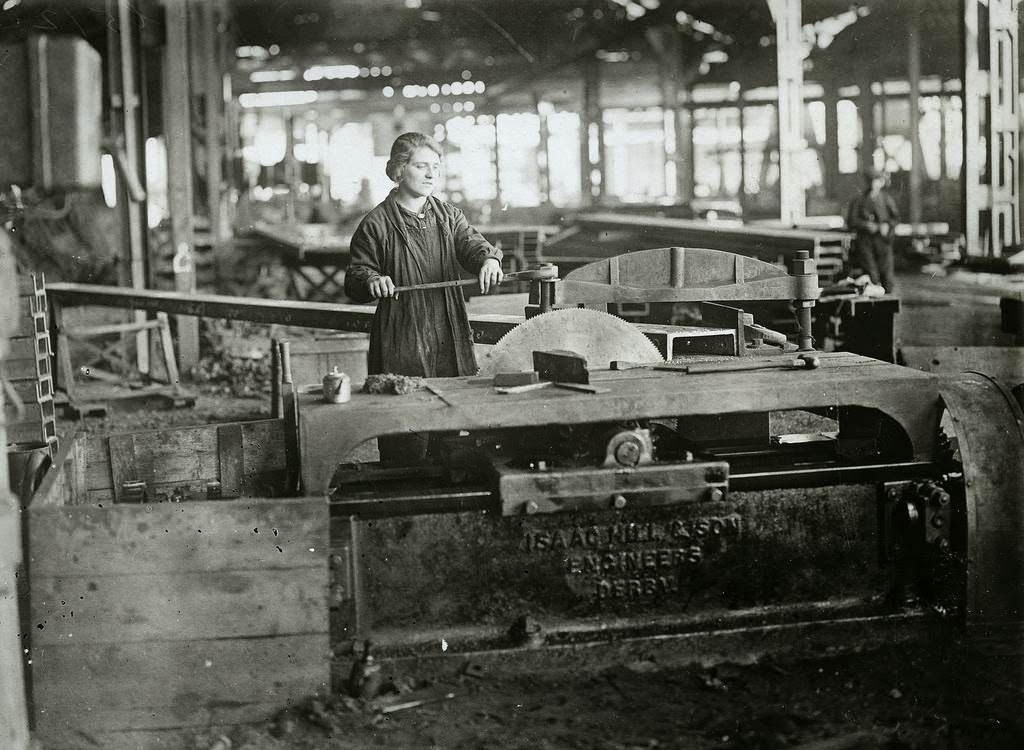
Women operating circular saw, cutting steel bar
Woman operating a Sunderland gear planer, gear cutting
Woman driving 20 ton O.E.T. crane
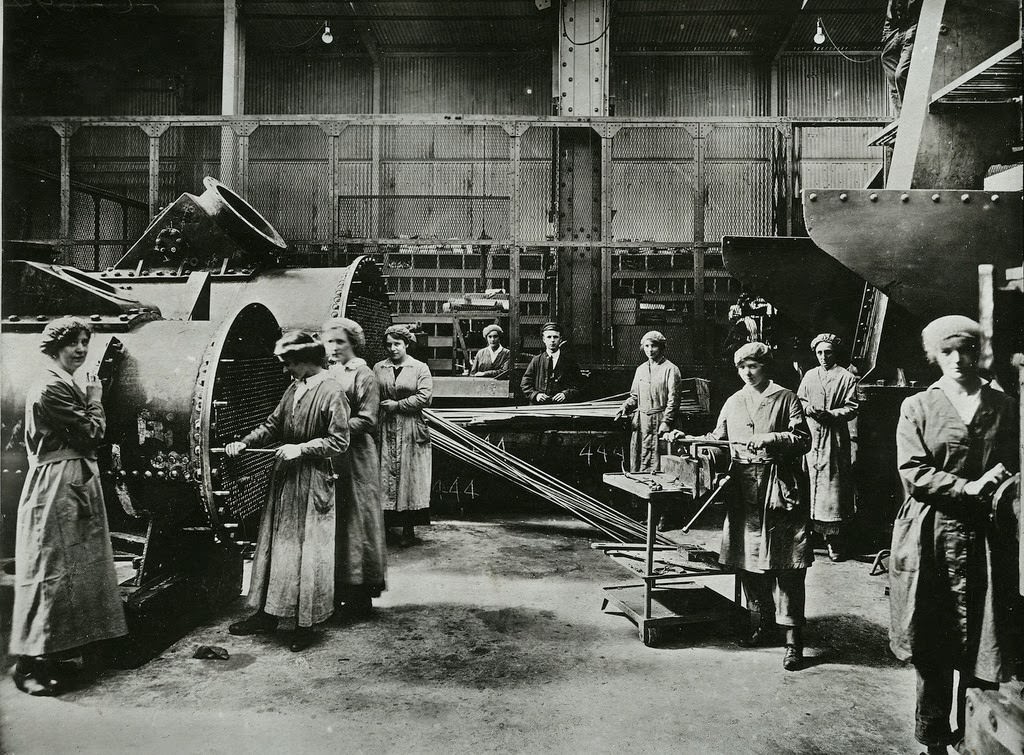
Women inserting and packing tubes in condensors for marine engines
Women machining Admiralty electrical fittings
General view of women engaged on small parts for boilers and condensors
Workers preparing for the construction of concrete ships

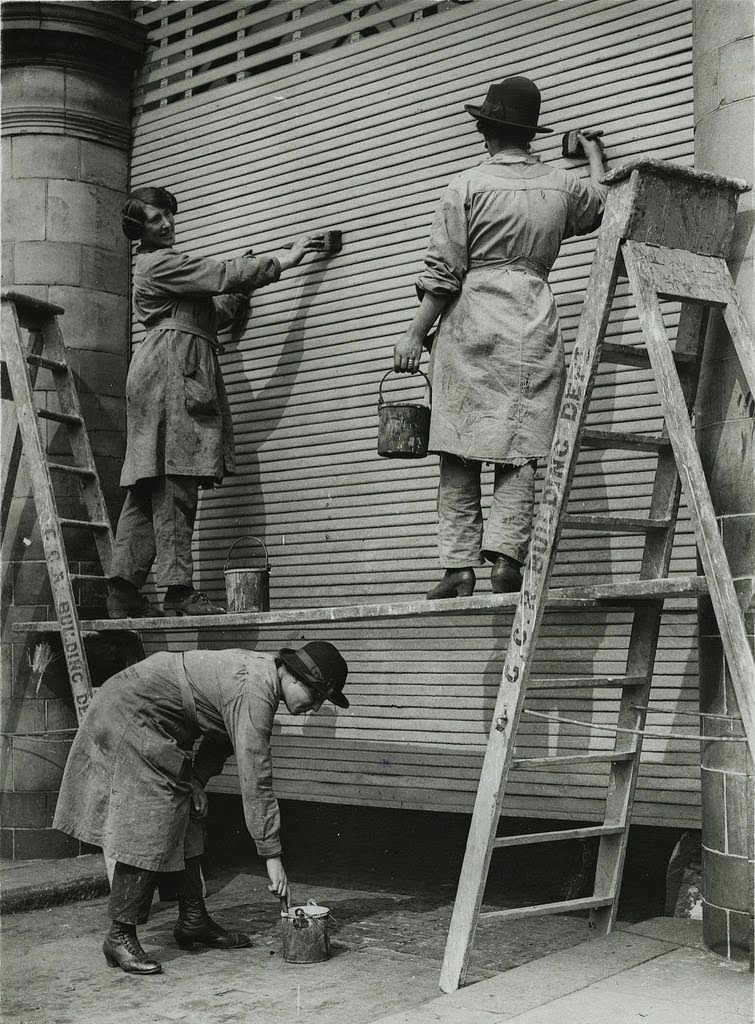
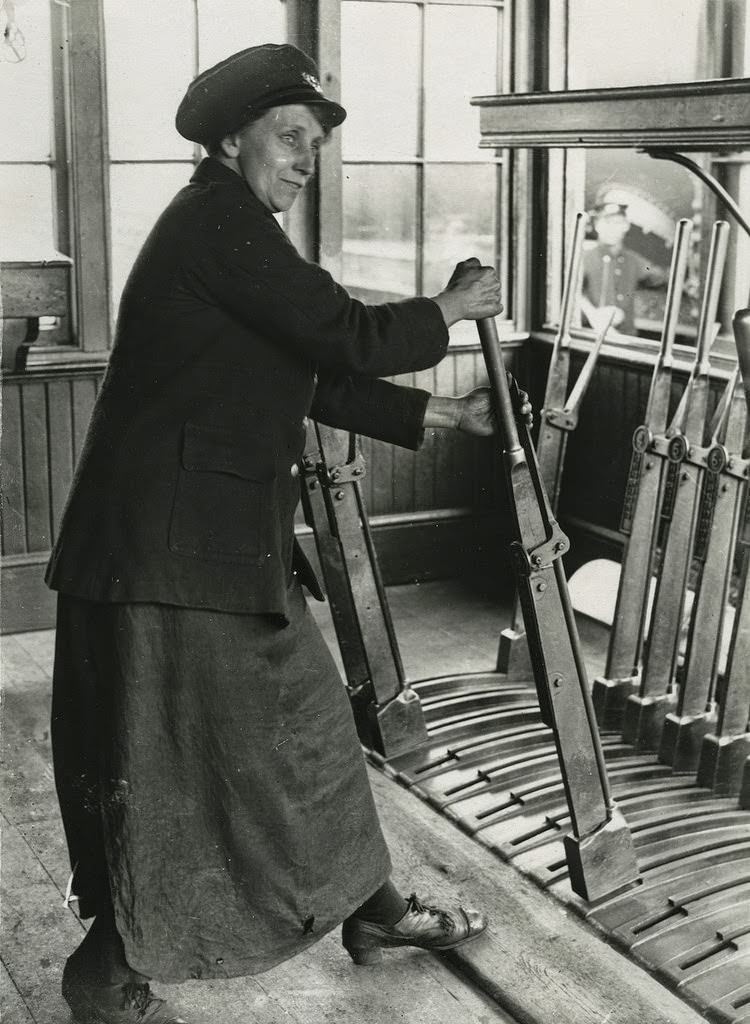
Rail workers performed an enormous variety of tasks. Beyond cleaning carriages and shifting luggage, women were placed in signal boxes where they operated levers that controlled train movements across busy networks. They unloaded goods from freight trains, painted rolling stock, and maintained the infrastructure that kept civilian and military supply lines functioning.

Railway workers cleaning carriages
Railway workers unloading goods from train
Women railway workers painting and decorating

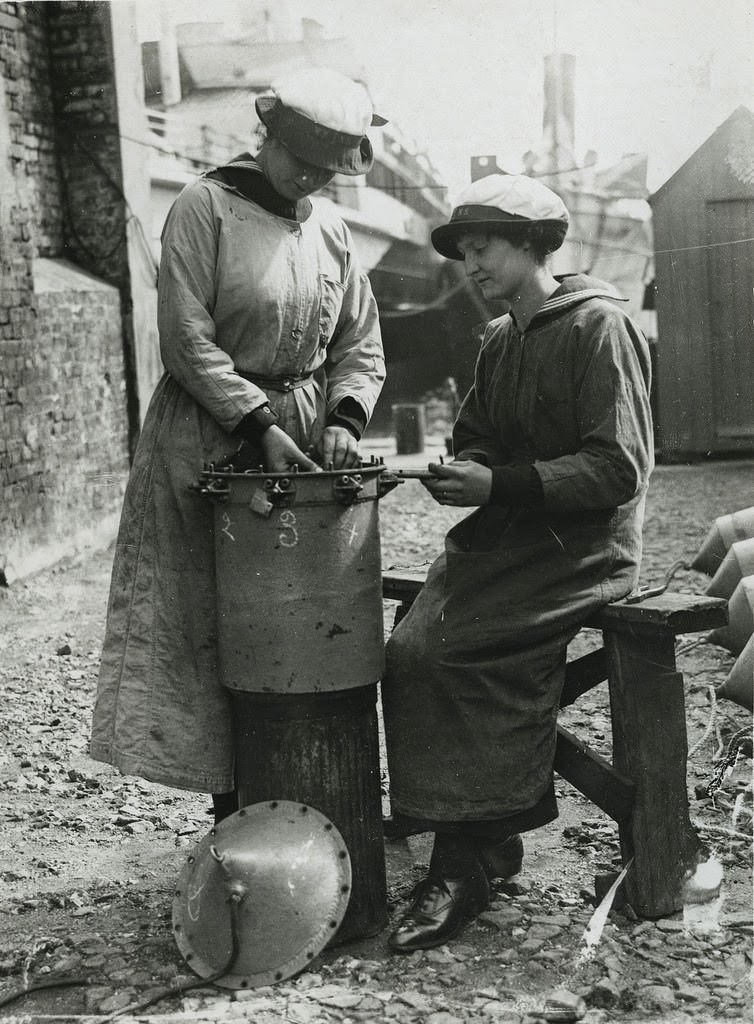
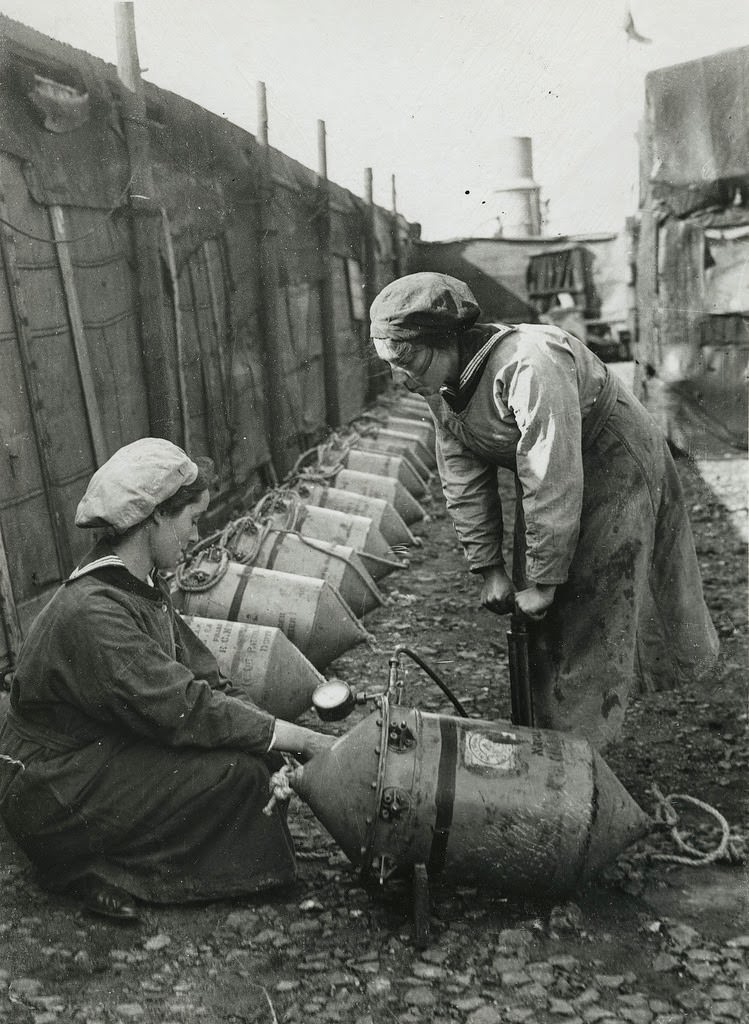
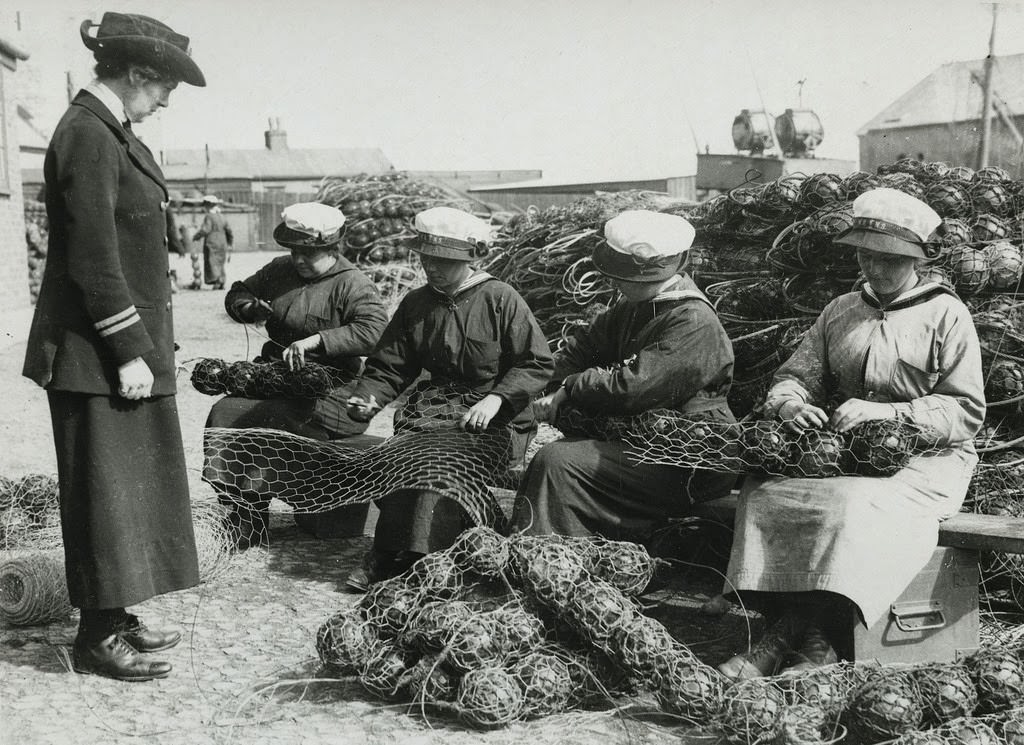
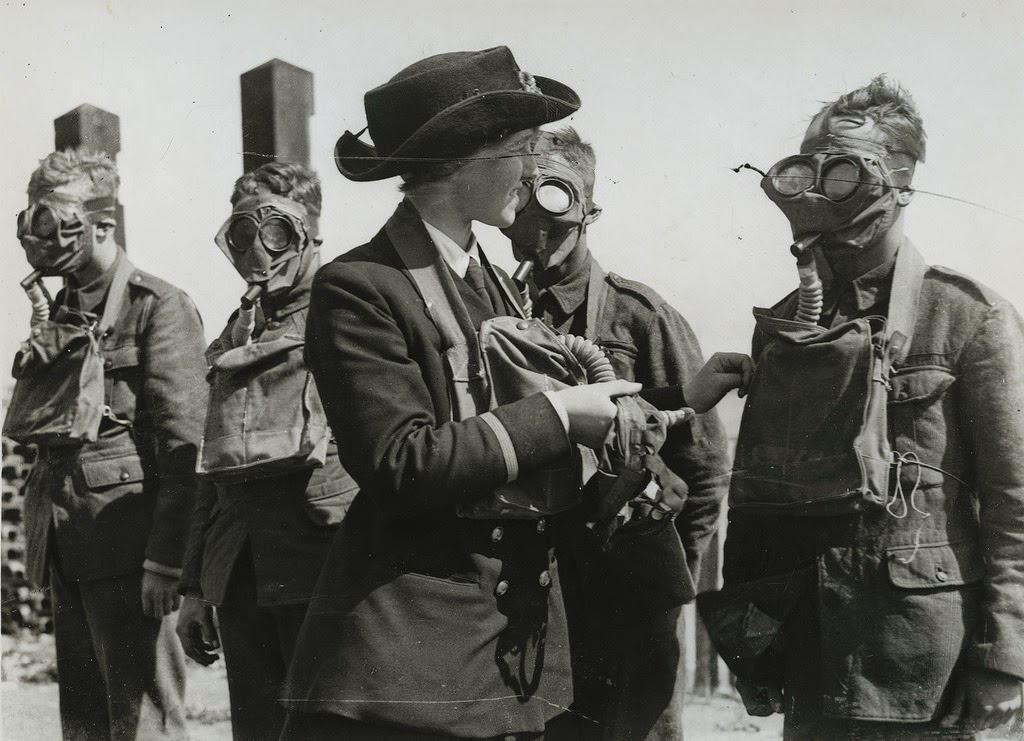
Women in the Women’s Royal Naval Service — the WRNS — took on some of the most technically specialized naval work of the war. They assembled and tested naval mines, working with components that were inherently explosive and required precise handling. WRNS instructors also trained military recruits in respirator and gas mask drills, passing on skills that could mean the difference between life and death in a gas attack.

Mine net workers wiring the floats together
W.R.N.S. fitting a mine
Women testing a mine with air presssure
W.R.N.S. instructor at respirator and mask drill for military recruits
Railway worker pulling signal box levers
Window cleaners
Window cleaners

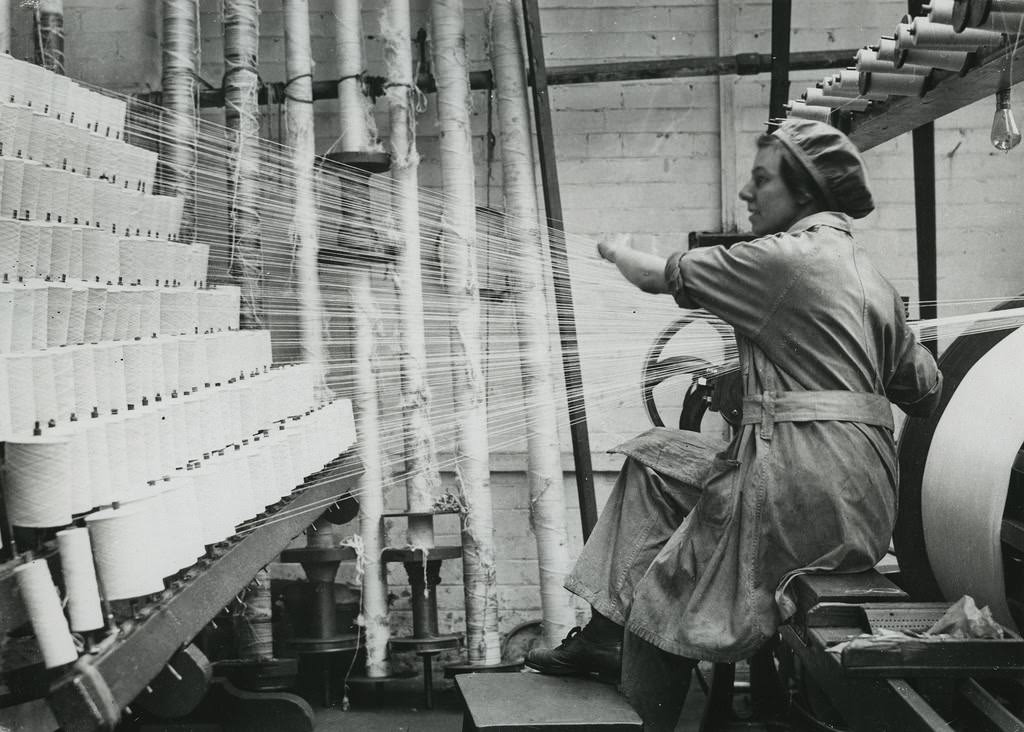
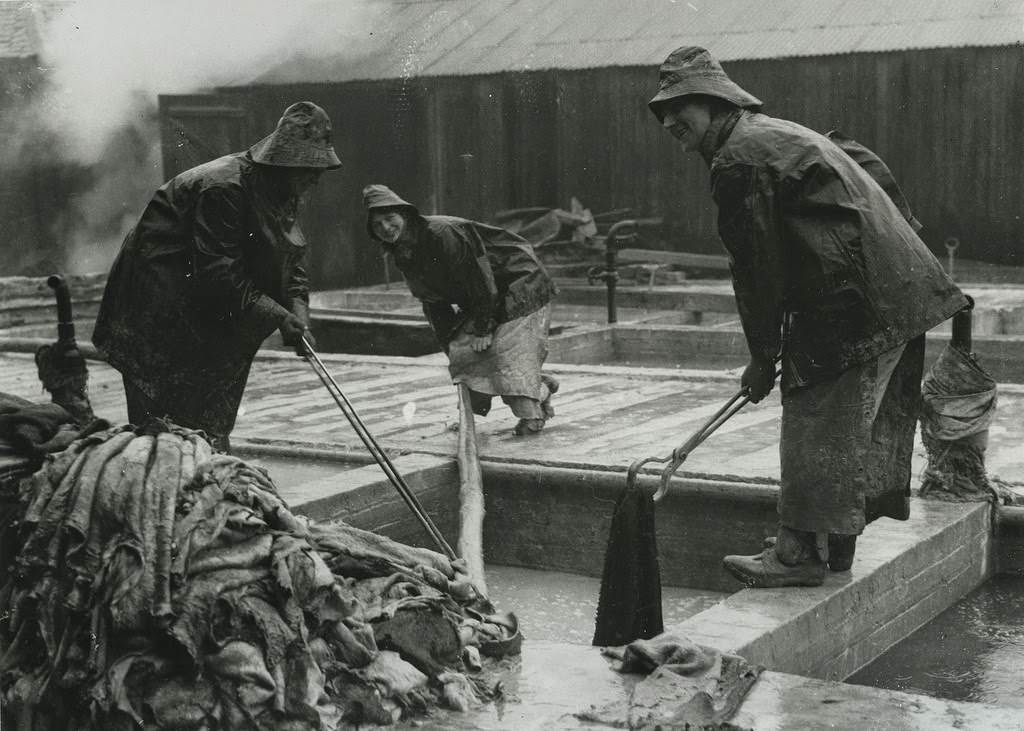
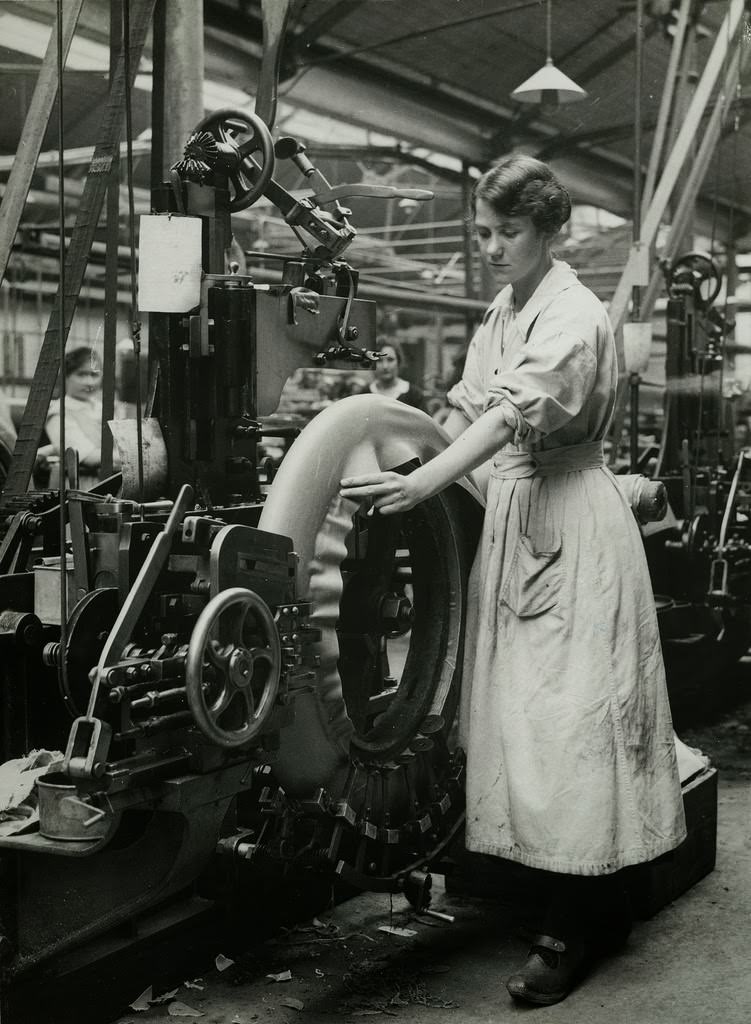
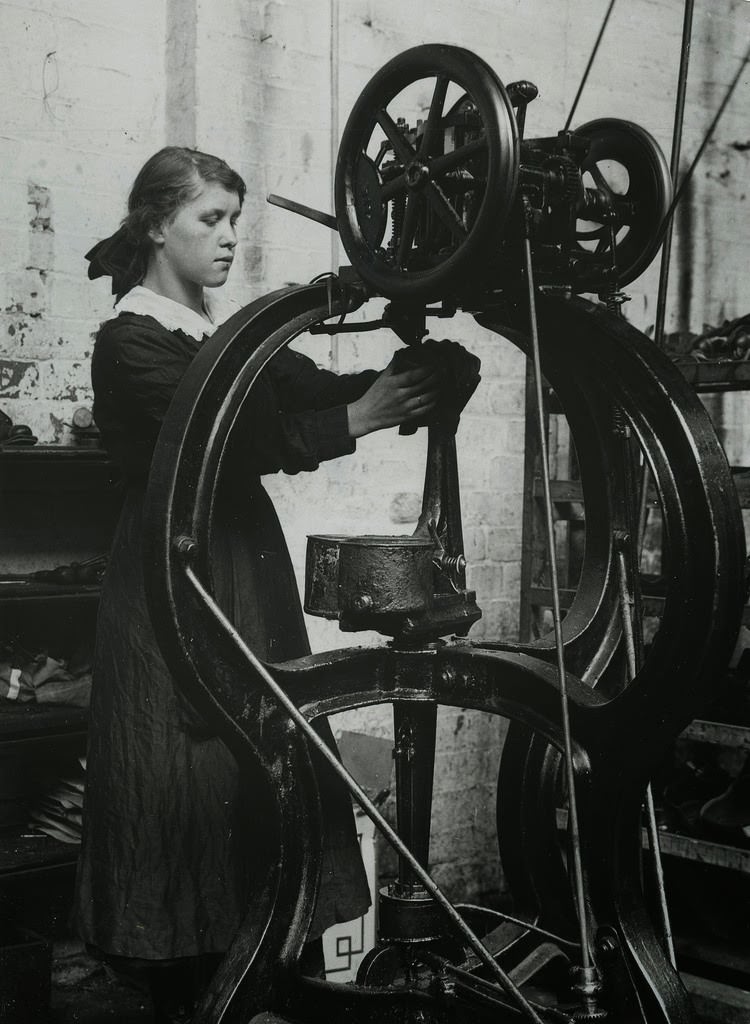
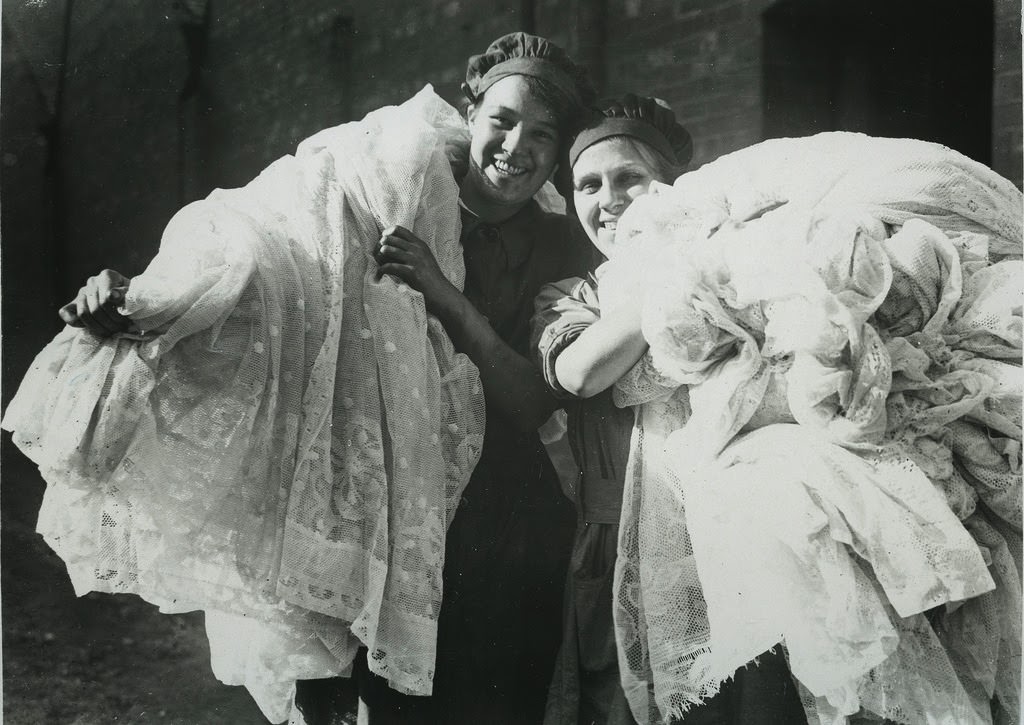
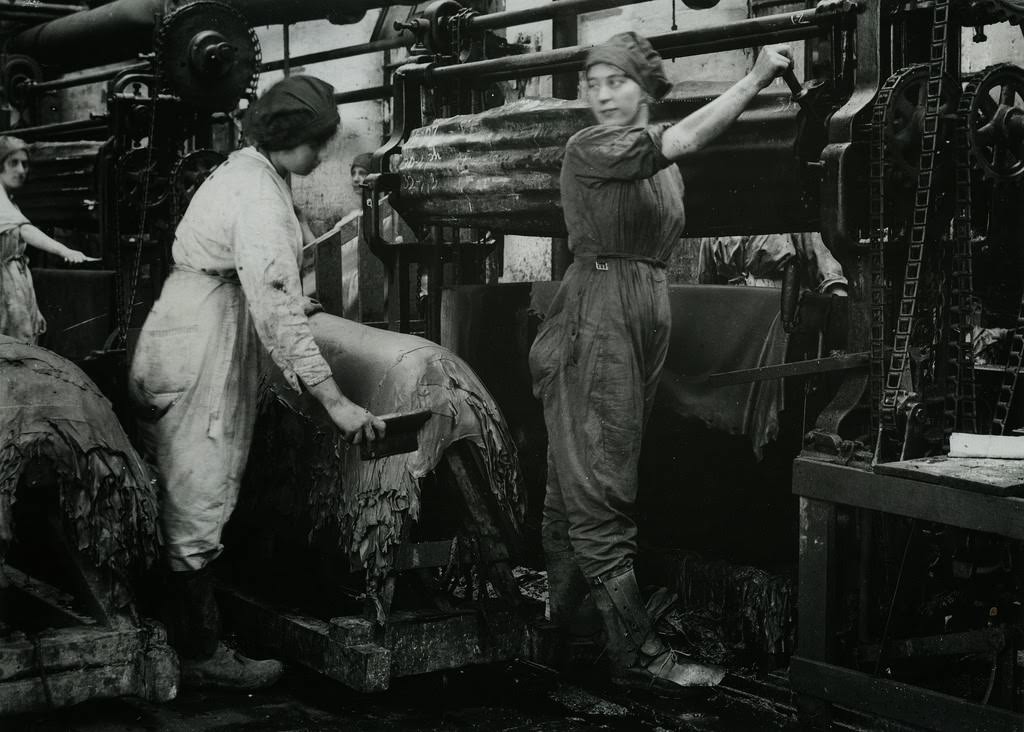
Outside the heavy industries, women continued working in the textile, rubber, glass, and chemical sectors — trades where female labor had existed before the war, but now operated under wartime pressure and at wartime scale. Factories in the Midlands and the North of England became hubs of this production. In Leicestershire, women operated stitching machines in boot factories and shaped stoneware fittings at terracotta works. In Nottingham, they ran lace machines and pulled hides from lime pits in tanneries — physically brutal work under harsh conditions.

Girl operating stitching machine in Leicestershire boot factory
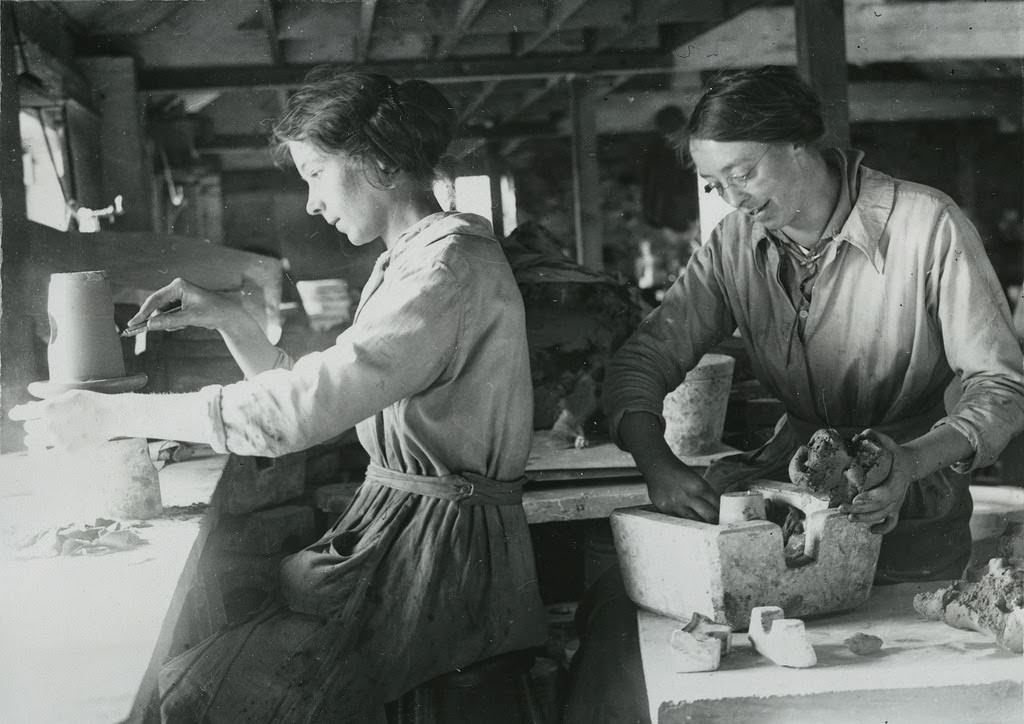
British women moulding and finishing stoneware taps at terra cotta works in Leicestershire
British woman winding cotton from spools on to rollers at lace factory in Nottingham
British women working in lace factory in Nottingham
British women working in tannery in Nottingham
British women in Nottingham tannery drawing skins from the lime pit

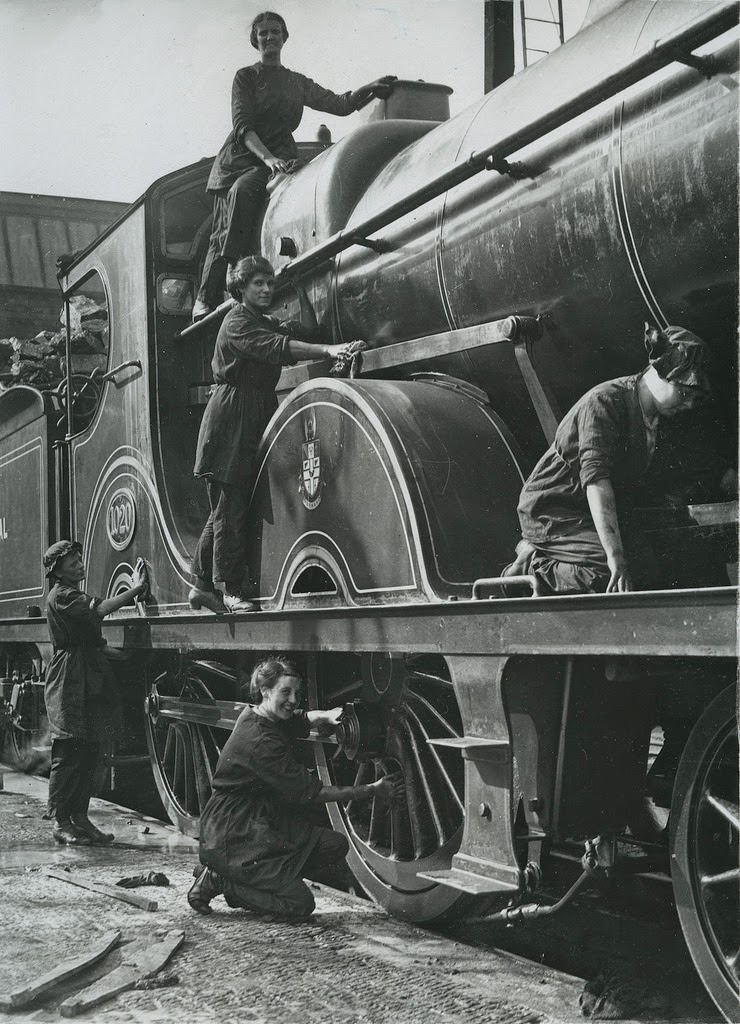
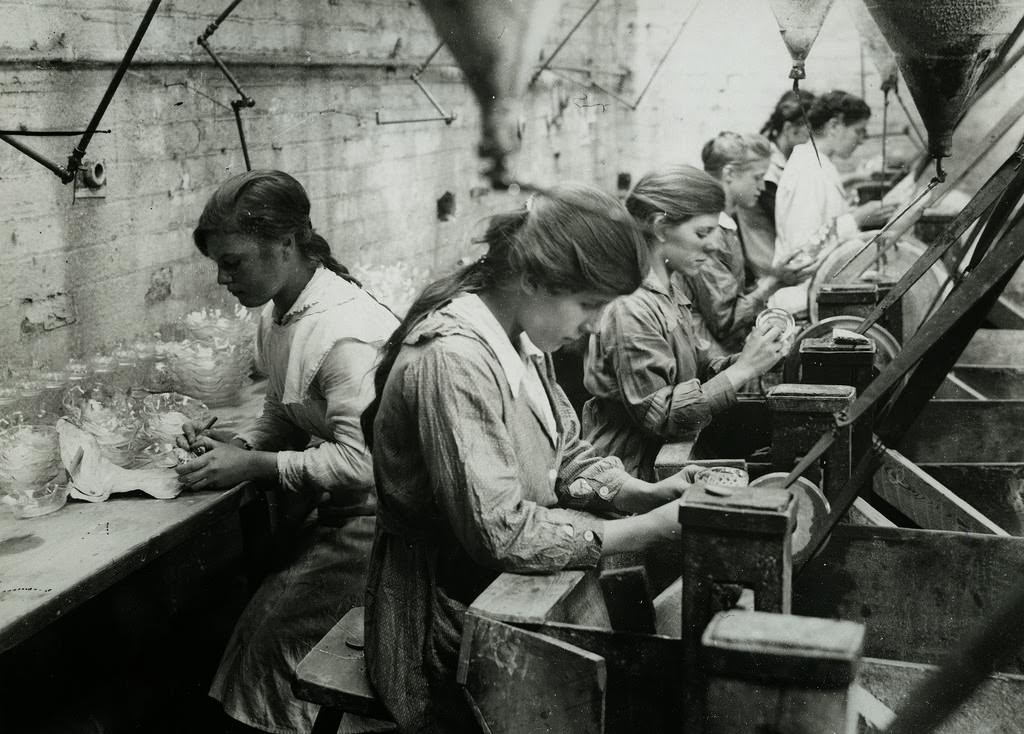
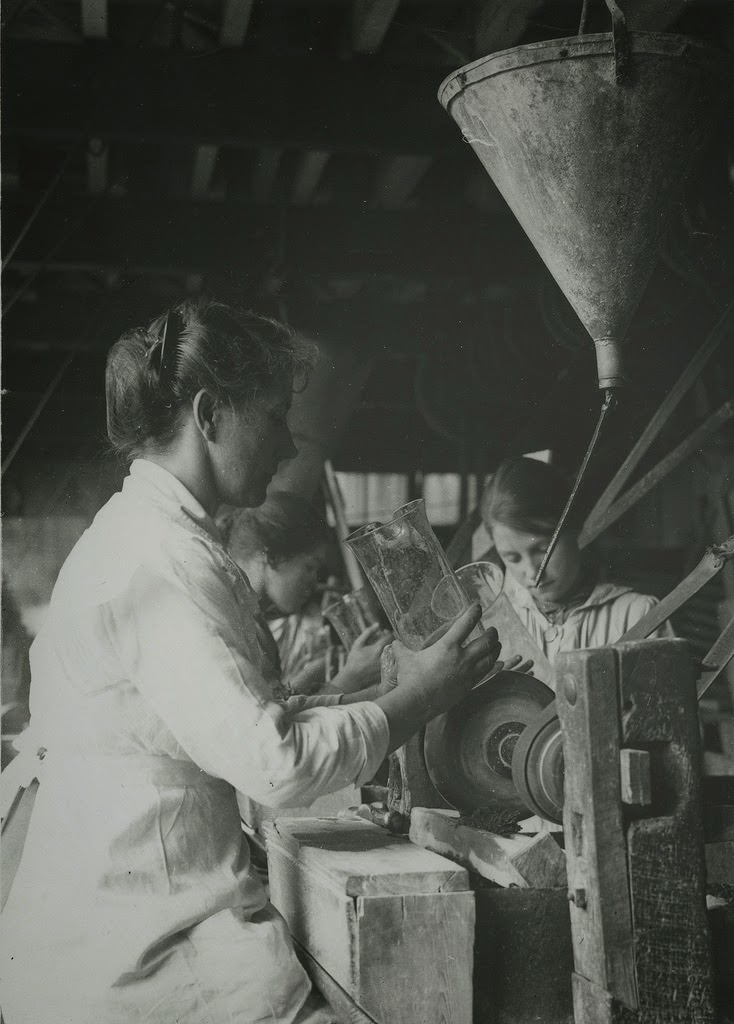
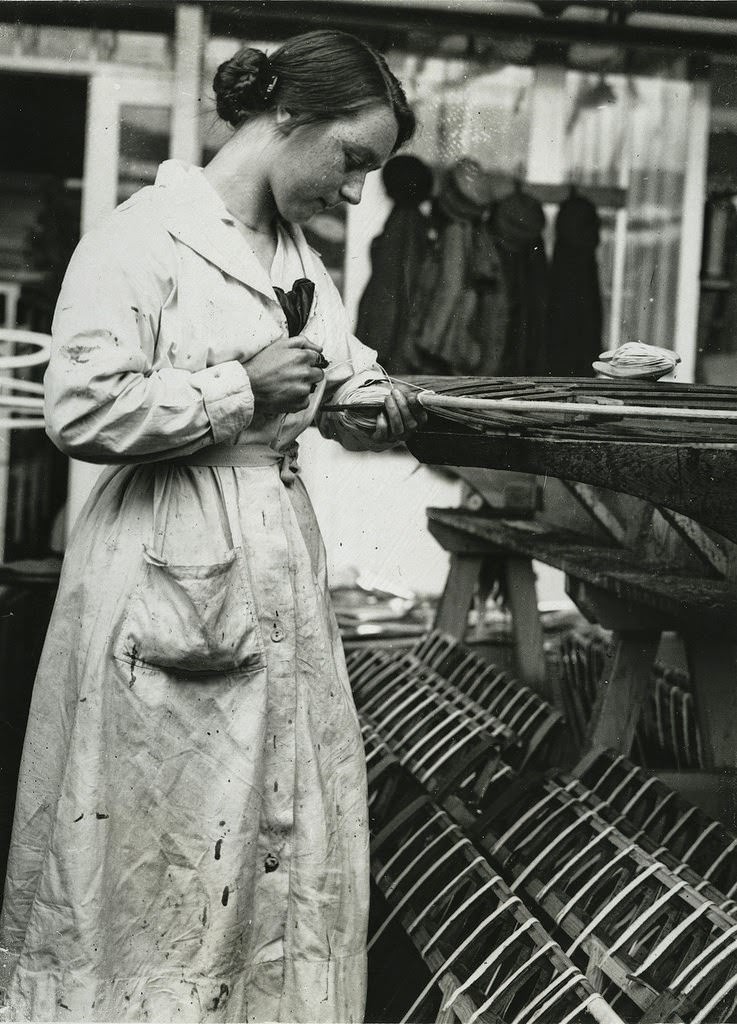
In the Midlands and near Birmingham, women cleaned locomotives, cut glass, and worked directly on aircraft. Some painted the fabric surfaces of planes. Others spliced joints in aircraft frames or welded the metal tubing that formed the structural skeleton of the machines Britain’s pilots flew in combat. These roles required technical training — and women received it.

British women cleaning locomotive in Midlands
British women in glass factory cutting shop near Birmingham
British women in glass factory near Birmingham
British women painting planes at aeroplane factory near Birmingham
British woman splicing airplane joints in aeroplane factory near Birmingham
British women aeroplane workers near Birmingham welding frame tugs for planes

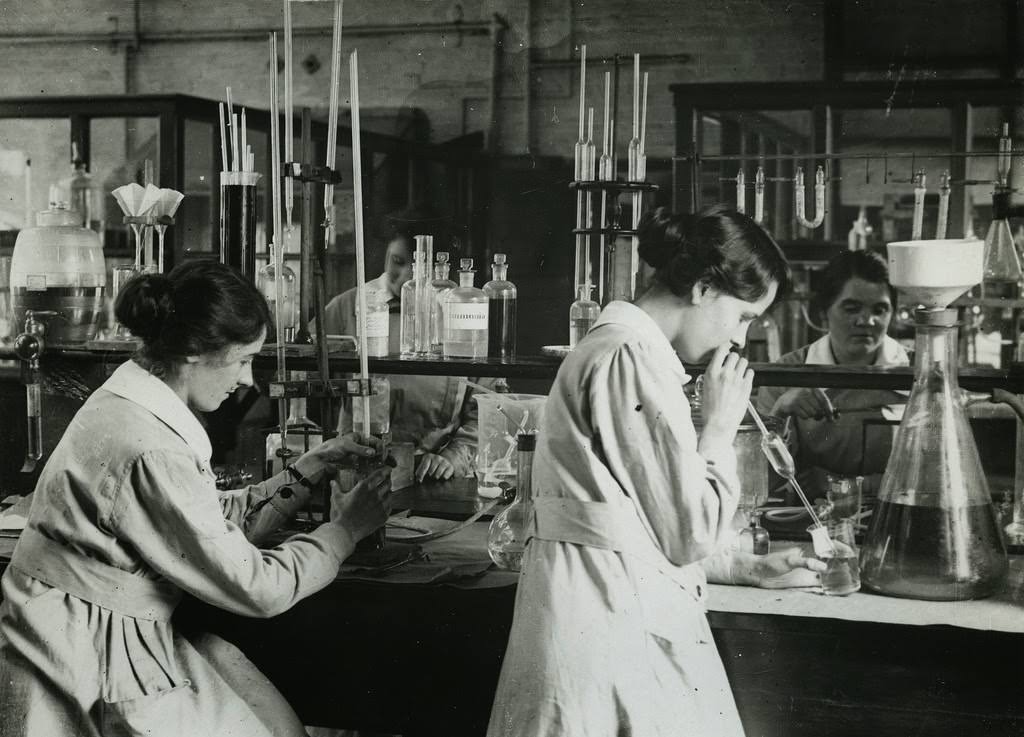
Chemical and rubber industries in Lancashire and the wider North also relied heavily on women. Workers in chemical plants near Manchester handled limestone and processed compounds in laboratory settings. Rubber workers produced vehicle tires and, critically, the mouthpieces for gas masks — equipment that soldiers on the front line depended on for survival. Asbestos workers, unaware of the long-term health consequences of their exposure, carried out manufacturing roles in Lancashire factories.

British women working in chemical laboratory near Manchester
Chemical works near Manchester - British women chemical workers in the Midlands
Chemical works near Manchester – British women chemical workers in the Midlands
British women chemical workers in the Midlands taking limestone from stock, loading and wheeling barrows of lime to wagons
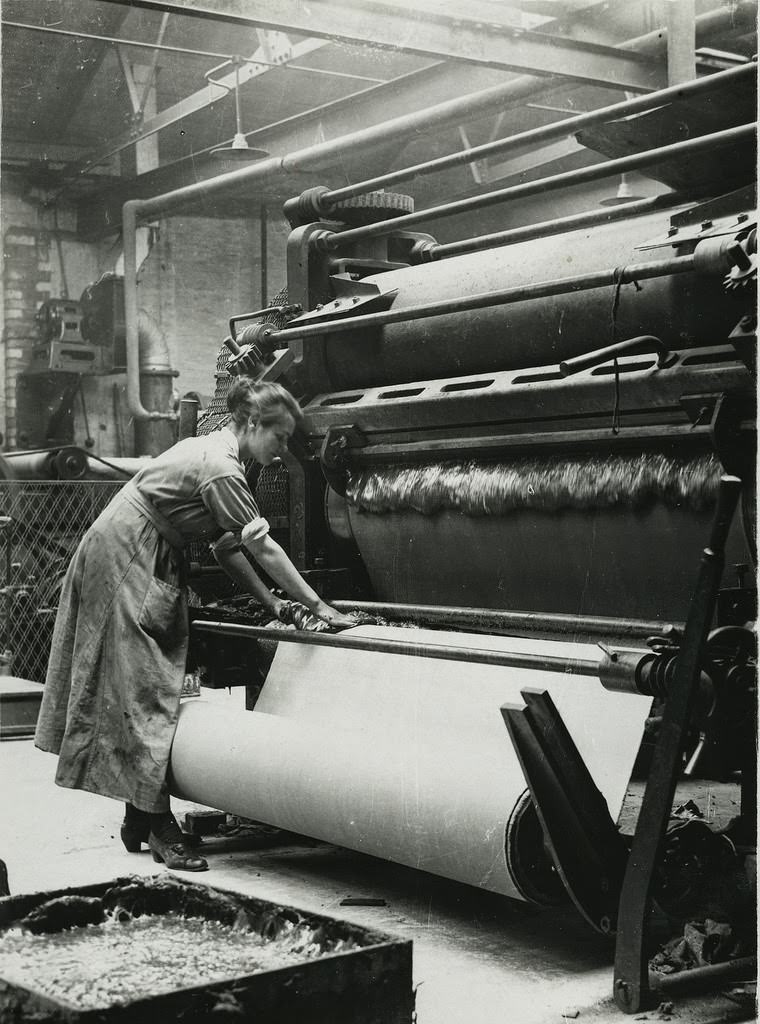
British rubber workers in Lancashire spreading machine for coaling canvas for tire making
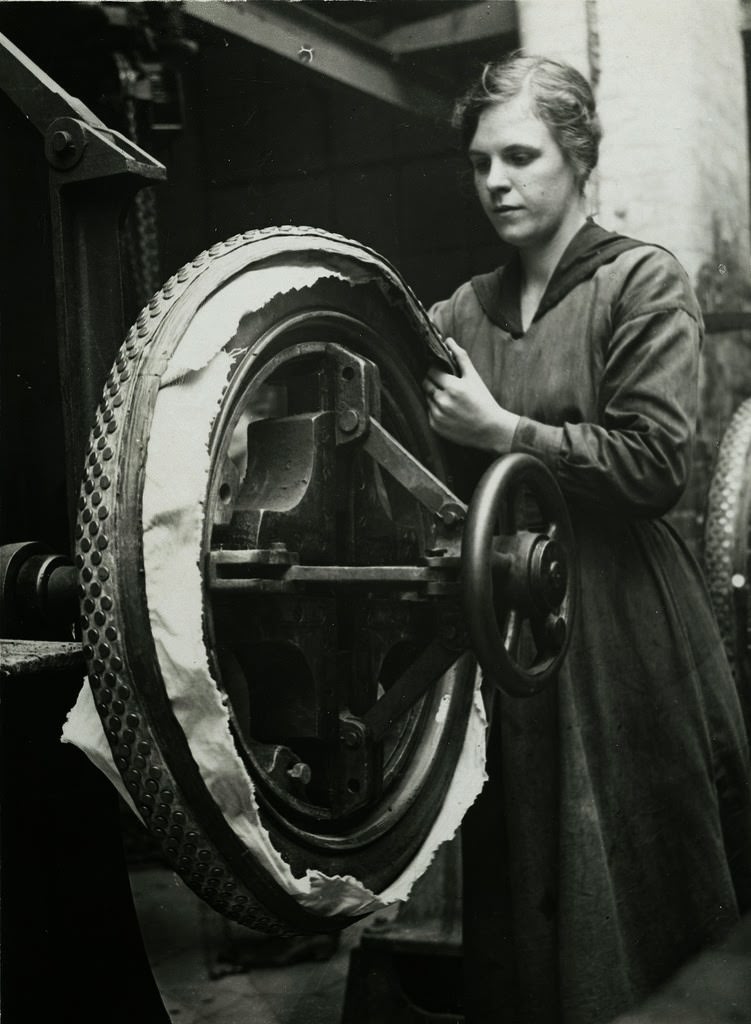
British women rubber workers in Lancashire fixing studded tires
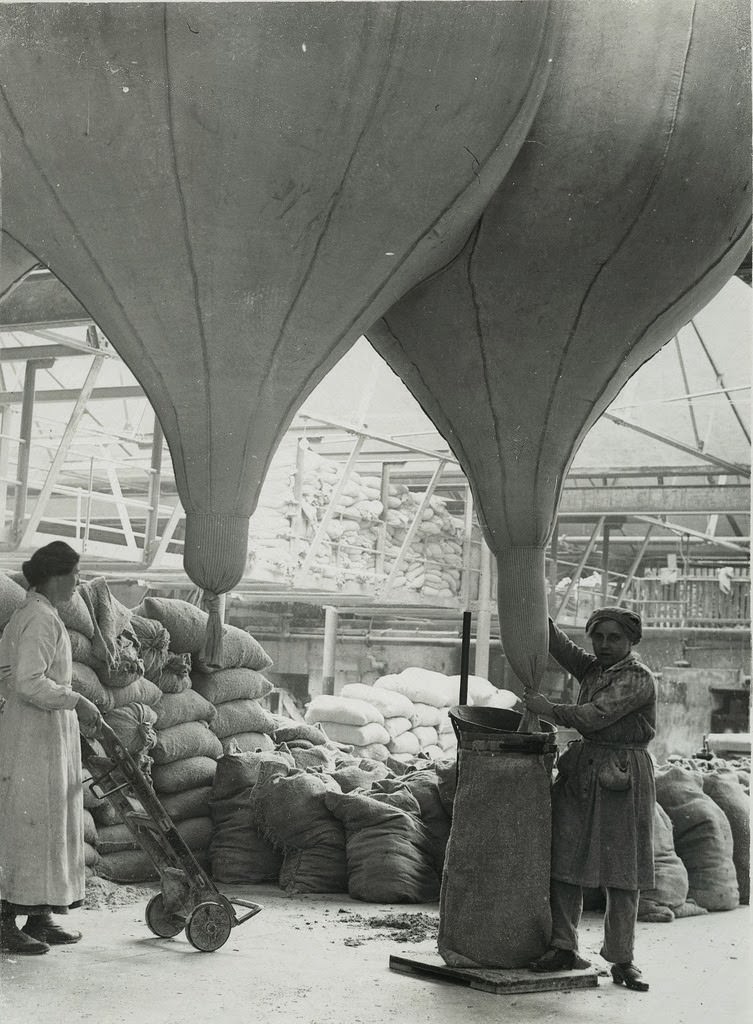
British women asbestos workers in factory in Lancashire
British women oil workers in Lancashire moulding cakes
British women rubber workers in Lancashire making mouth-pieces for gas masks
British women rubber workers in Lancashire forming the foundation for the tread
Enjoyed this post? Get new ones in your inbox.

Leave a Comment

Your email address will not be published. Required fields are marked *

One Comment

Share this Post 🥺

Please take a moment to share this content. Your support is greatly appreciated! 🙌🙏

Share this Post 🥺

Please take a moment to share this content. Your support is greatly appreciated! 🙌🙏
Scroll to Top
 
Hey Friend, Before You Go.. Please like & follow for more interesting content