Hey There! Before You Go. 😧
Get the best vintage content straight into your inbox!

Don't worry, we don't spam

A Photographic Look at the Dedication and Artistry of the Radio City Rockettes Throughout the Decades, 1930s-2000s

Russell Markert founded the group that would become the Radio City Rockettes in 1925 in St. Louis, Missouri. His inspiration came three years earlier, when he saw the Ziegfeld Follies and decided he could build something sharper and more disciplined. He envisioned a line of 16 American women who could kick higher, move in perfect unison, and perform across multiple dance styles—ballet, tap, and soft shoe. The group started as the Missouri Rockets, then briefly became the American Rockets and the Rosettes, before finally landing on the Rockettes name in 1934.
A Photographic Look at the Dedication and Artistry of the Radio City Rockettes Throughout the Decades, 1930s-2000s

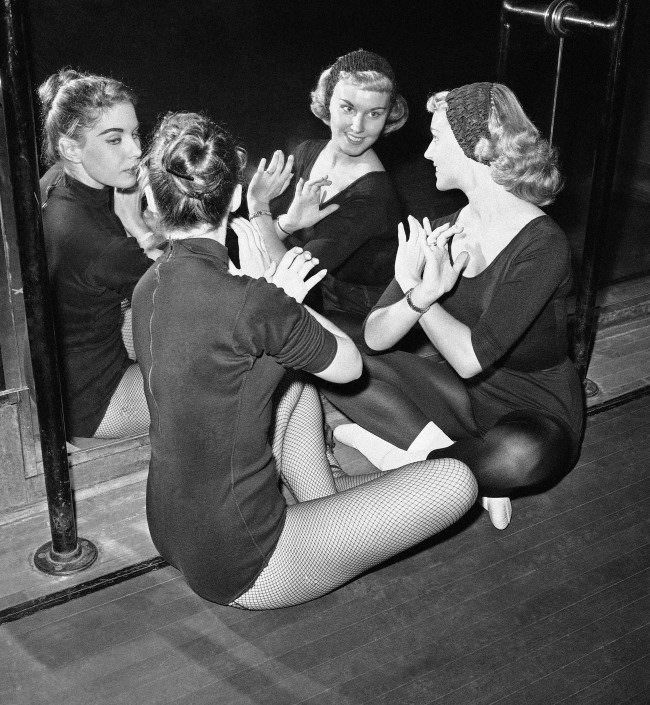
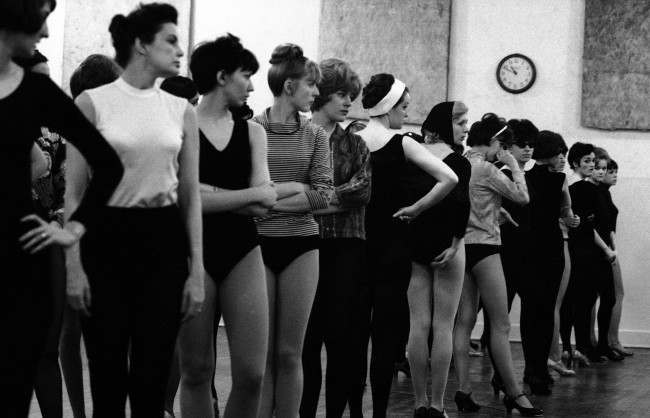
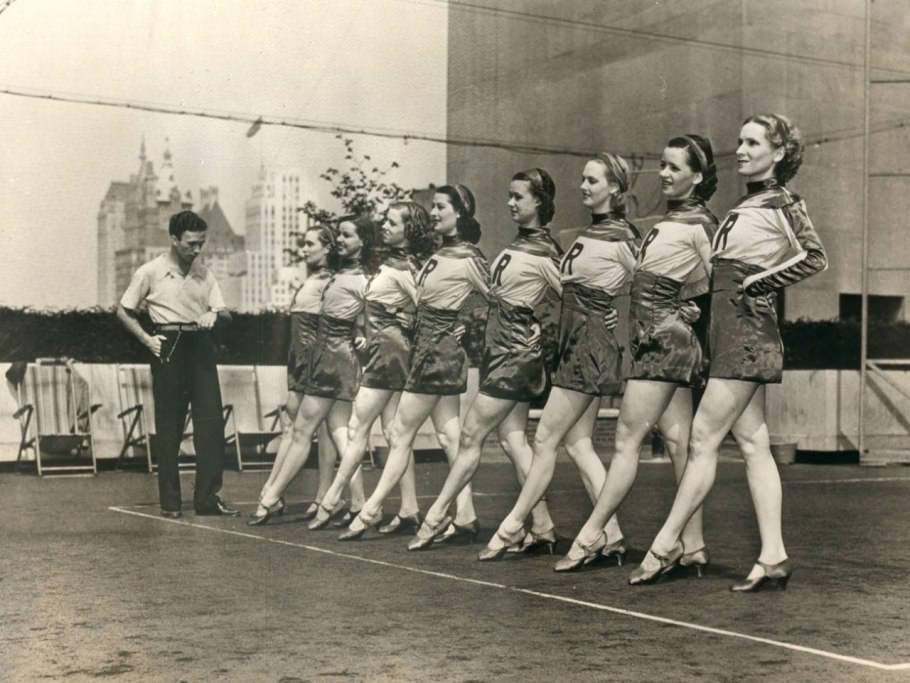
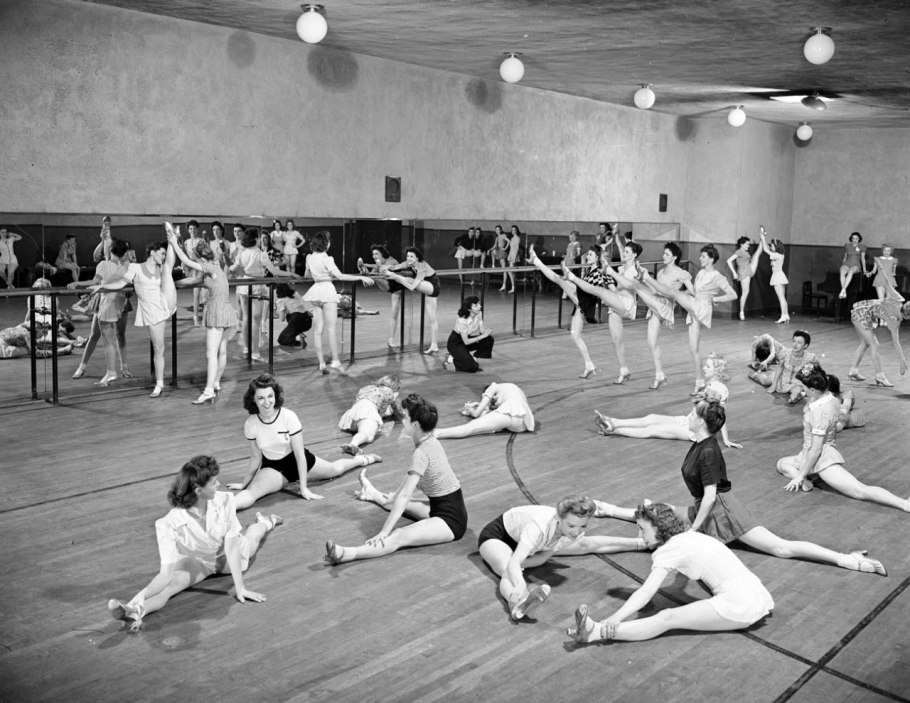
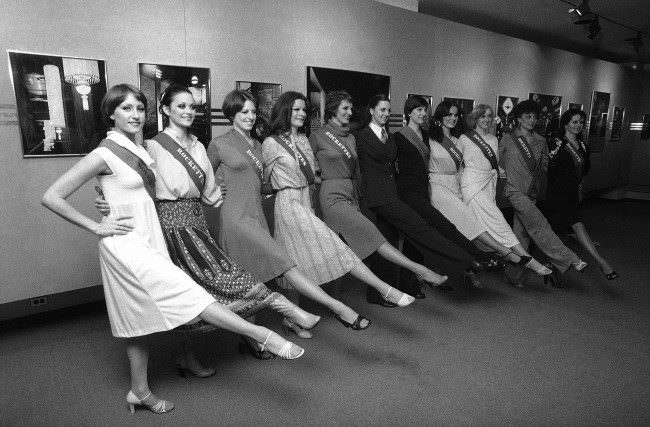
Getting into the Rockettes required meeting exacting standards from the very beginning. Dancers had to stand between 5 feet 5 inches and 5 feet 8 inches tall. They needed strong technique across multiple dance forms and had to kick at least 6 inches above their own heads. These standards kept the line visually uniform—something that was central to the entire act. Early rehearsal photos show dancers in their own skirts and character heels, a sharp contrast to the matching black spandex uniforms used in later decades.

Even in the beginning, there were strict standards for height, physique, and flexibility—here, a rehearsal in cheerleader-esque sweaters and skirts

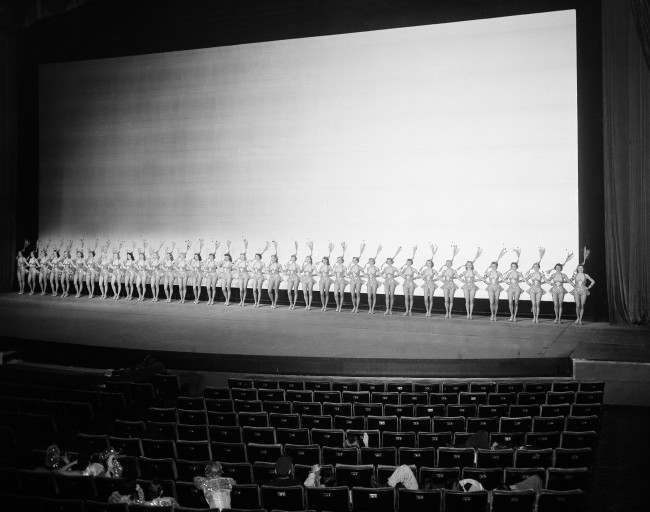
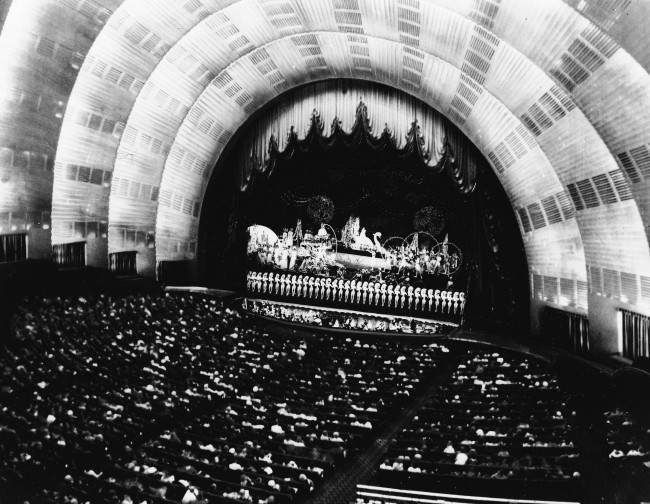
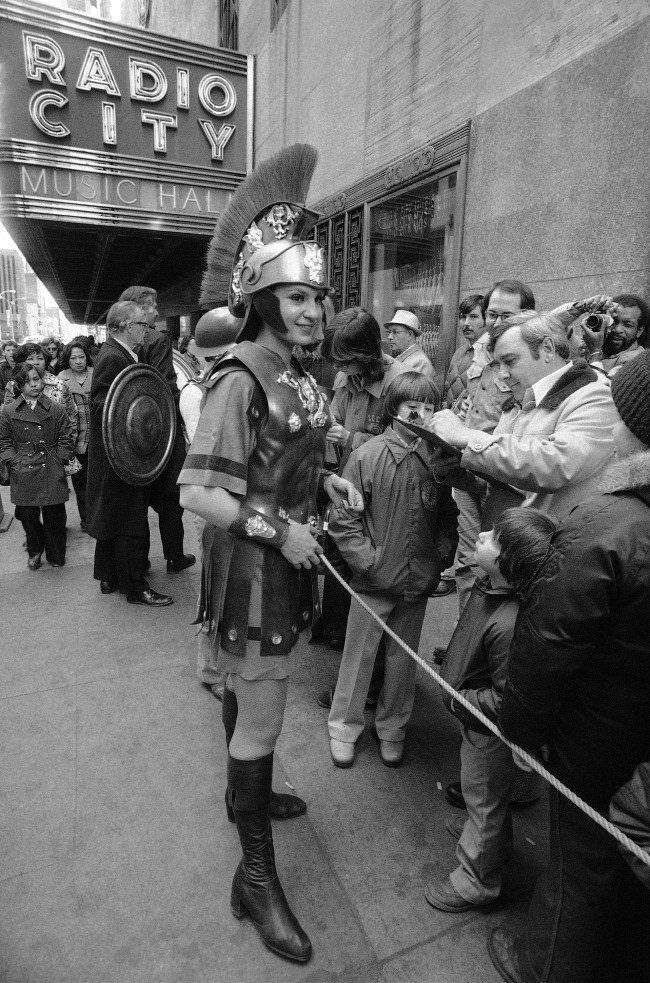
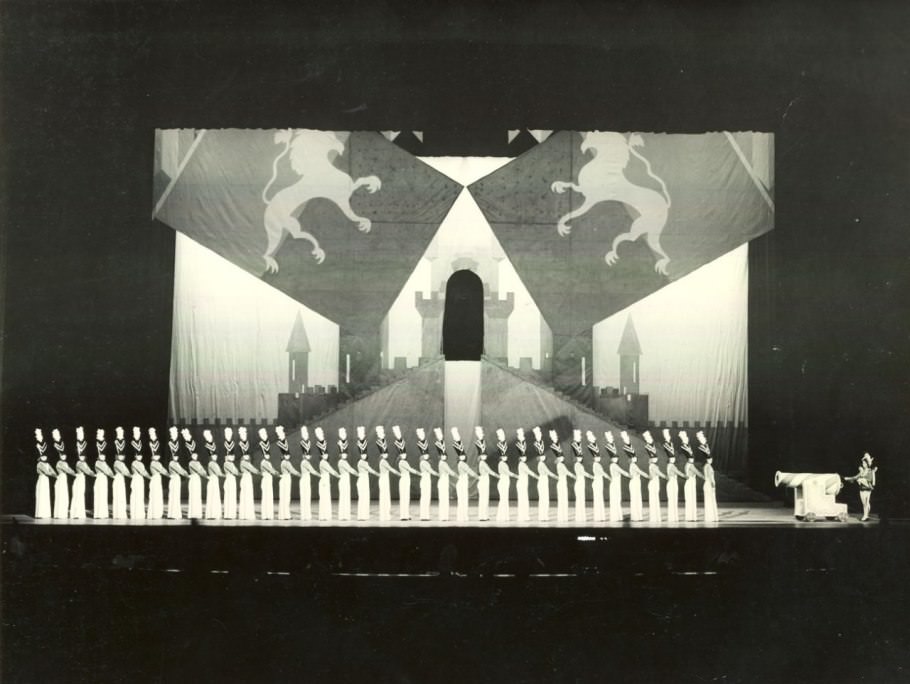
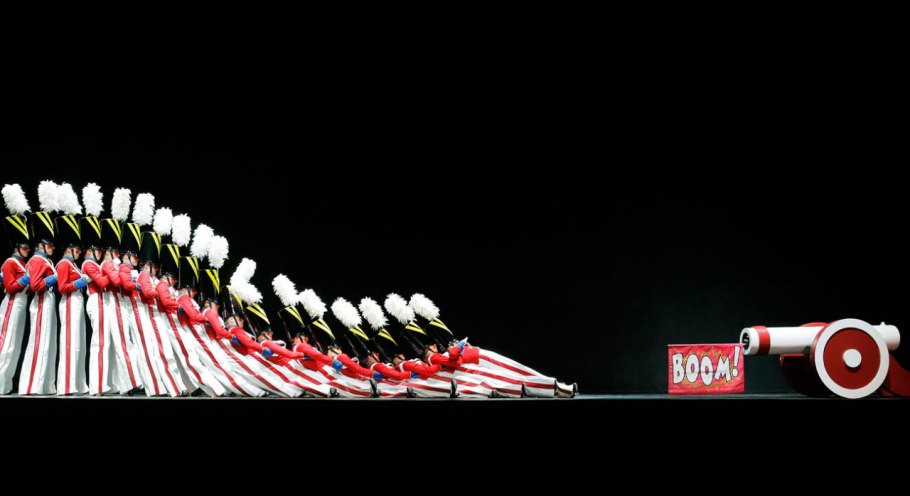
In 1932, the Rockettes took up permanent residence at Radio City Music Hall in Rockefeller Center, Manhattan. The venue seats 6,200 people—large enough to showcase the full scale of their productions. By 1933, the annual Radio City Christmas Spectacular had begun, and it quickly became a New York institution. The show’s “Parade of the Wooden Soldiers” number, which dates to the 1930s, features dancers in Minnelli-esque costumes collapsing like a row of dominoes when a cartoonish cannon fires.

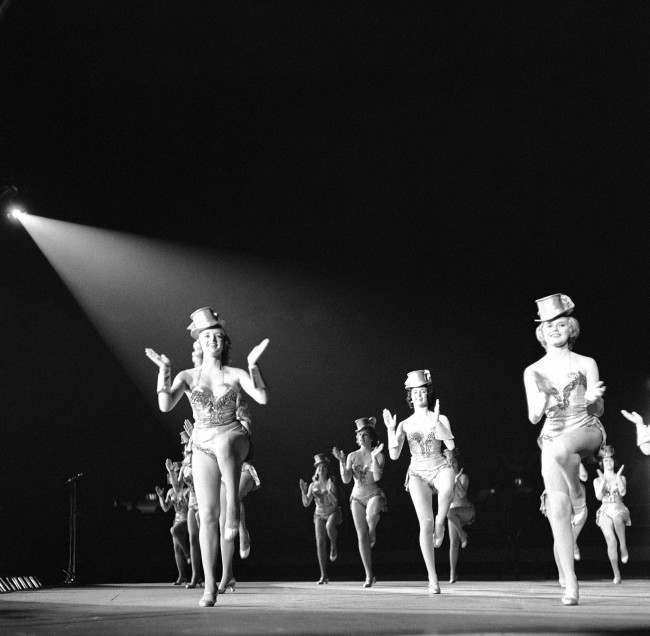
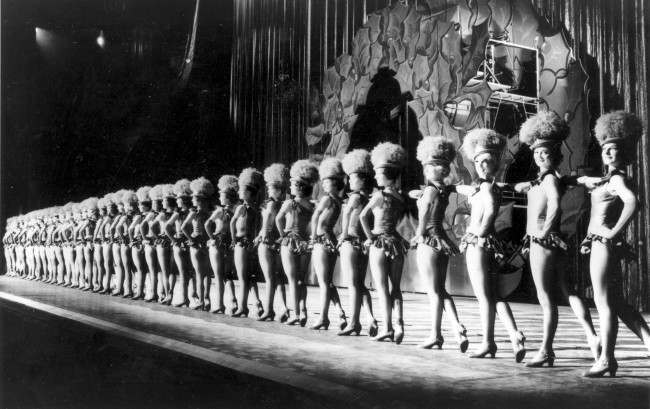
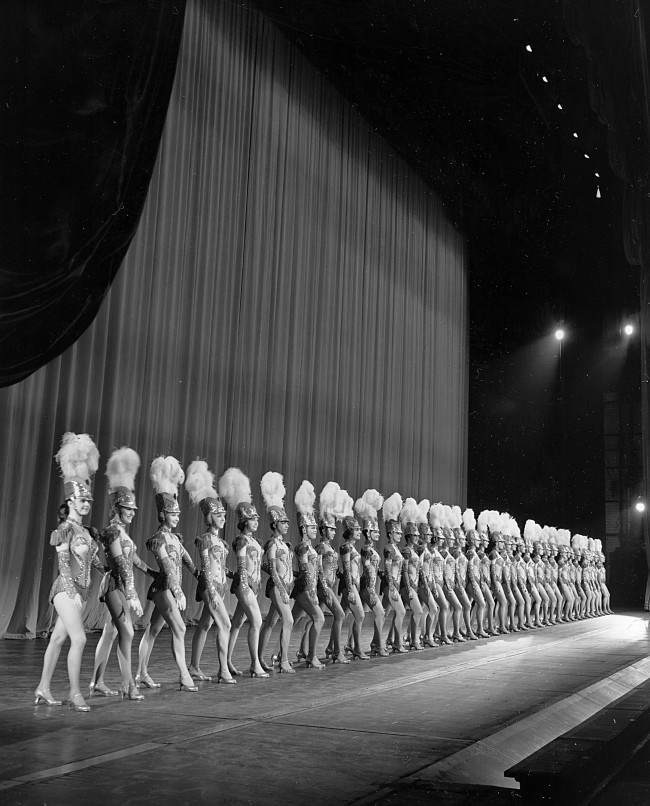
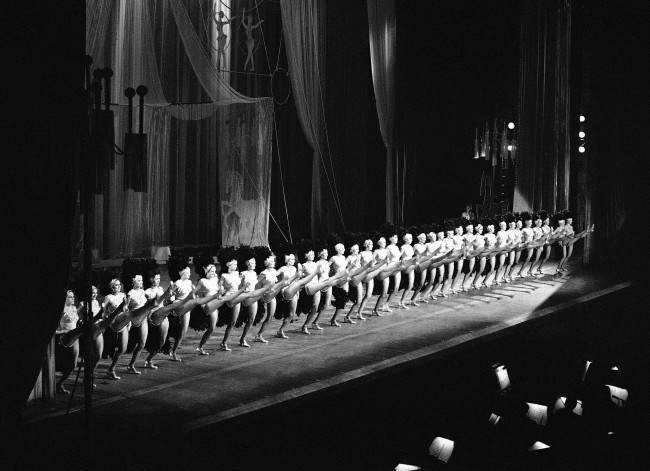
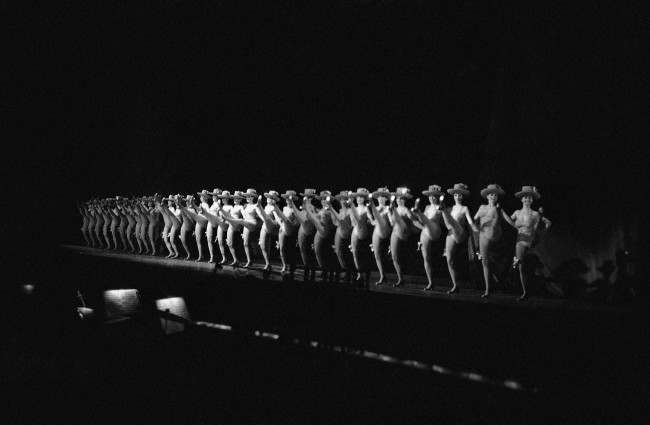
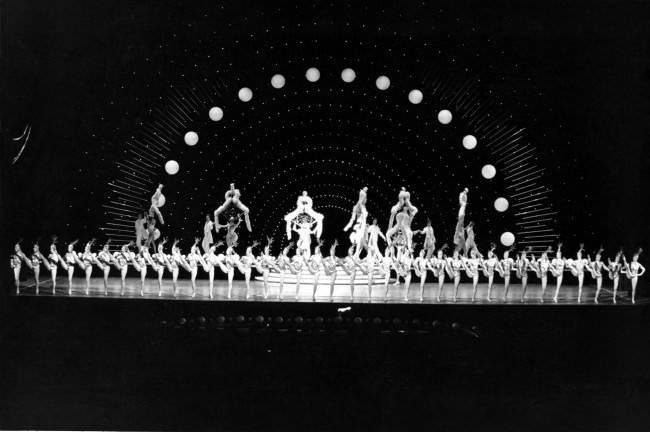
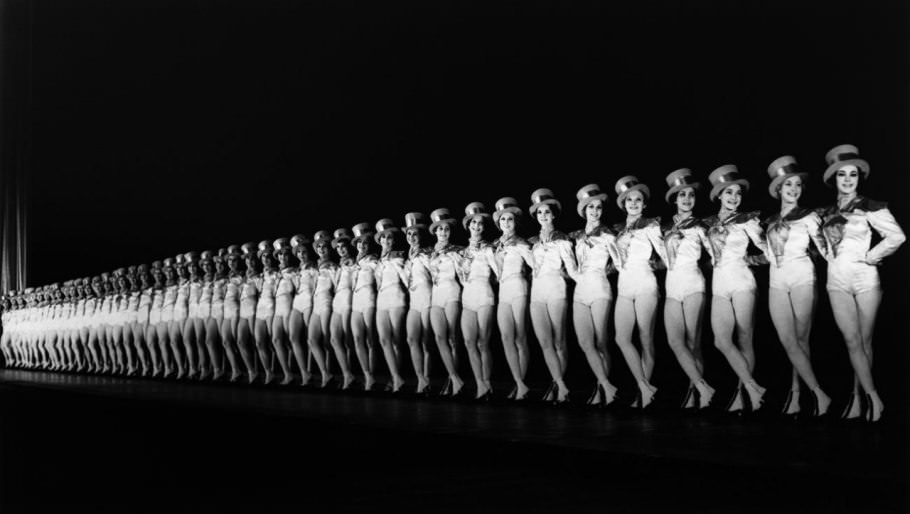
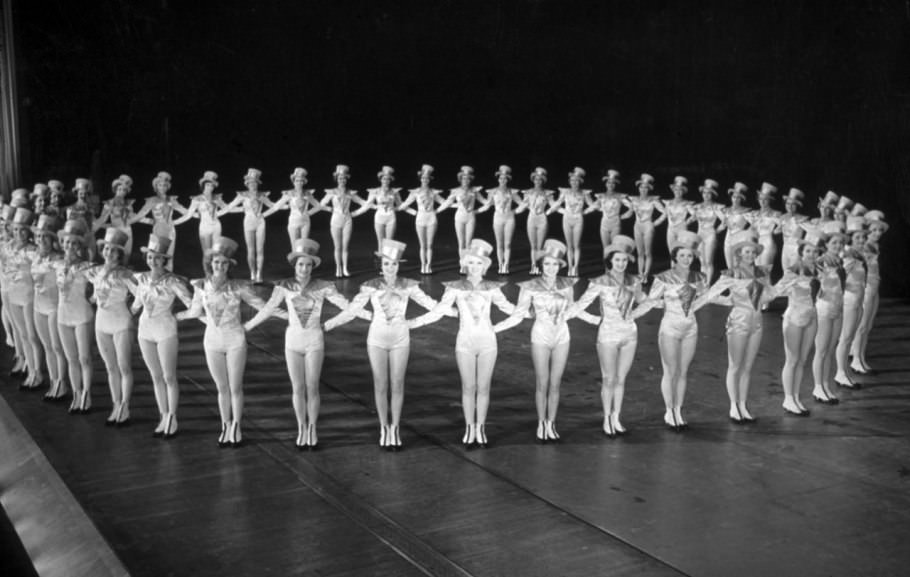
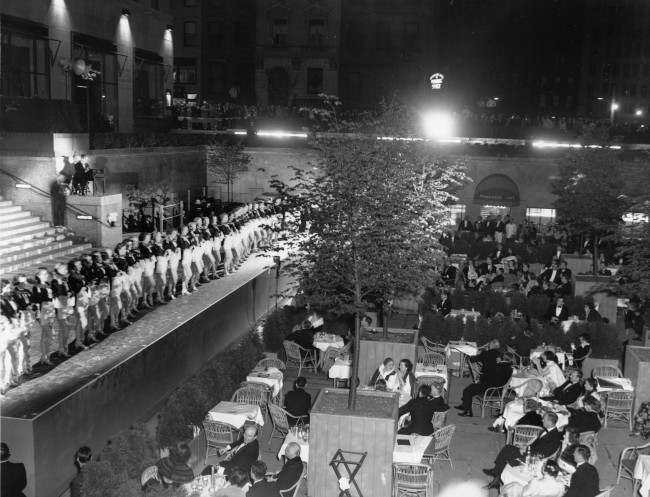
Onstage in 1937, the Rockettes cut a sharp, diagonally receding line—in white and top hats—against the dark backdrop. Originally just one line of dancers, the Rockettes today encompass two 40-girl casts.
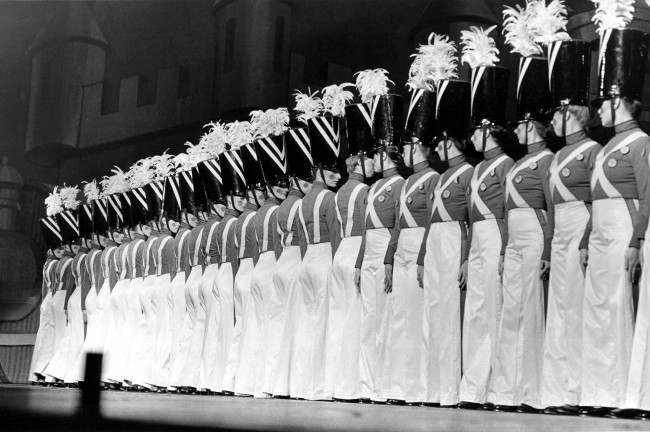
The troupe's famous "Parade of the Wooden Soldier" routine originated in the 1930s and remains an integral part of the show in 2012.
The troupe’s famous “Parade of the Wooden Soldier” routine originated in the 1930s and remains an integral part of the show in 2012.
Today, the wooden soldiers—still in Minnelli-esque costumes—collapse like a wall of dominoes at the firing of a cartoonish cannon.

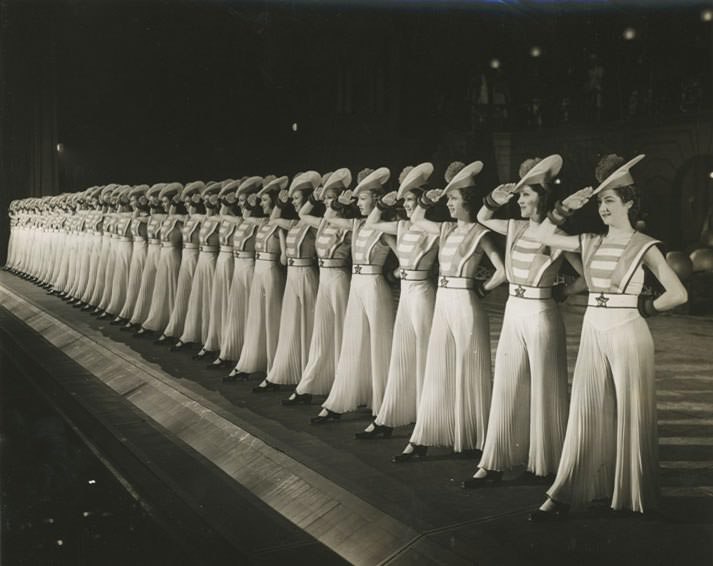
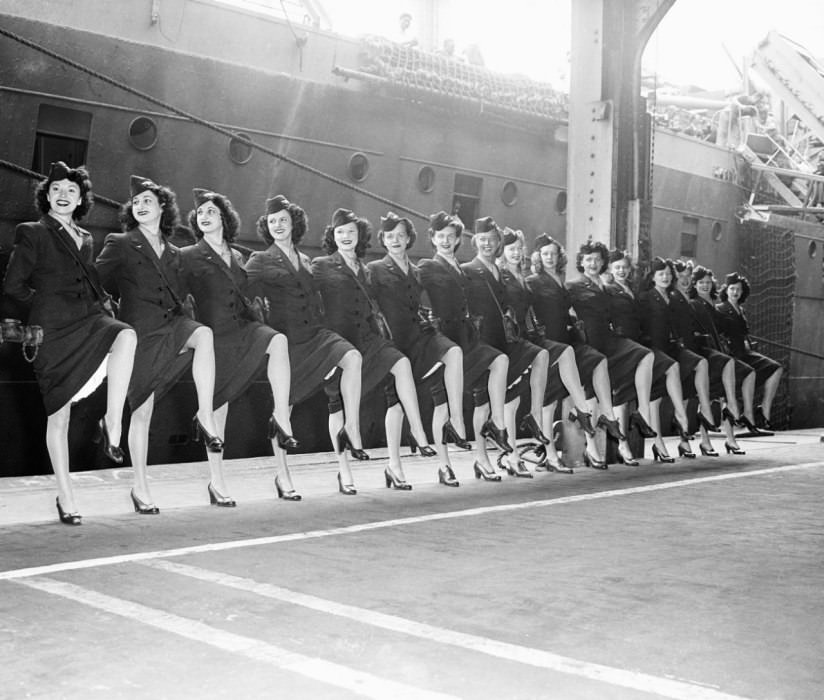
During World War II, the Rockettes stepped off the stage and into active service roles at home and abroad. They boarded ships to perform USO shows for American troops, arriving in military-inspired suits and miniature garrison hats perched on their waves. Back in New York, rehearsals in 1942 still drew full effort—dancers stretching their famous high-kick legs in their own kicky skirts and character heels. Onstage, they performed as sailors and stood in formation in white satin and jaunty hats.

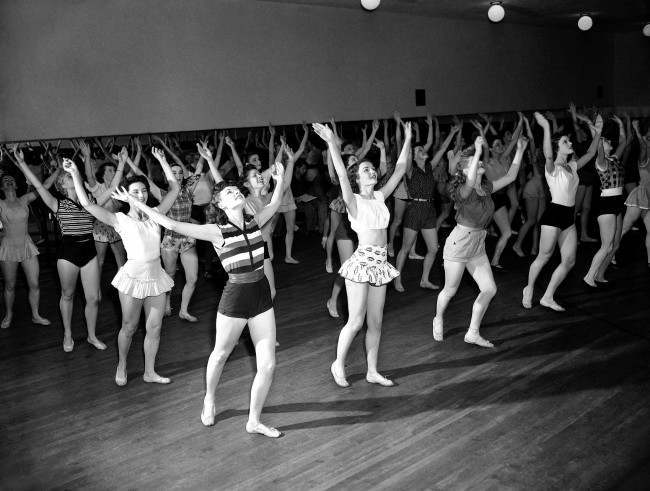
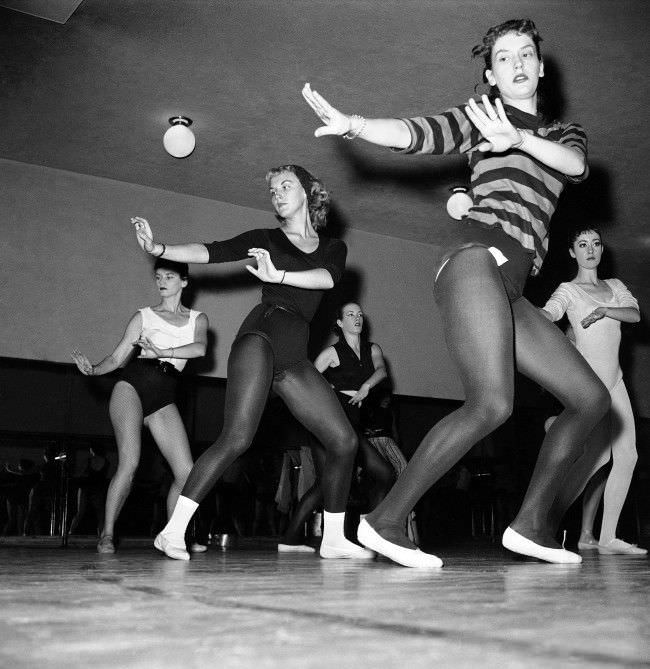
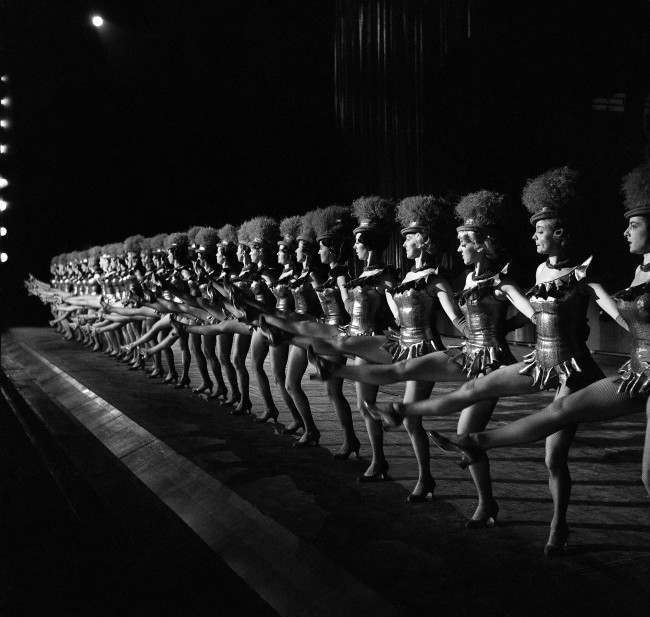
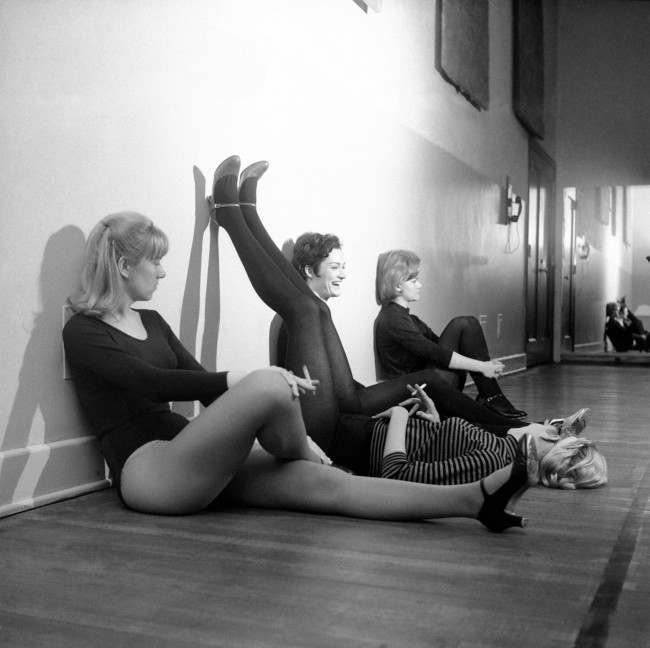
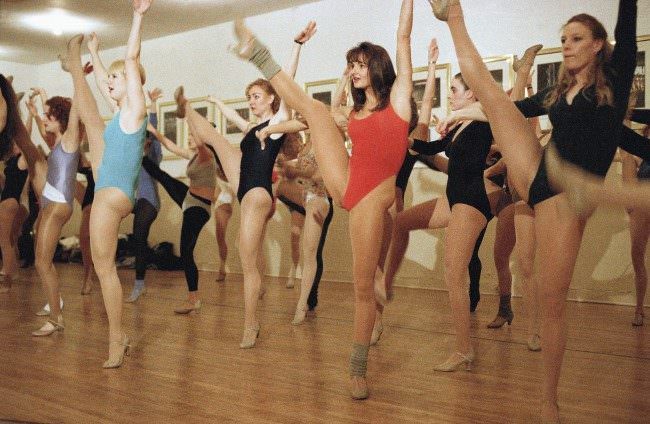
Rehearsal in 1942, at which the Rockettes stretch out their famous stems. Compared with modern-day rehearsals, where Rockettes wear identical black-spandex uniforms, all the girls here are in their own kicky skirts and character heels.
Standing at attention as sailors in the 1940s.
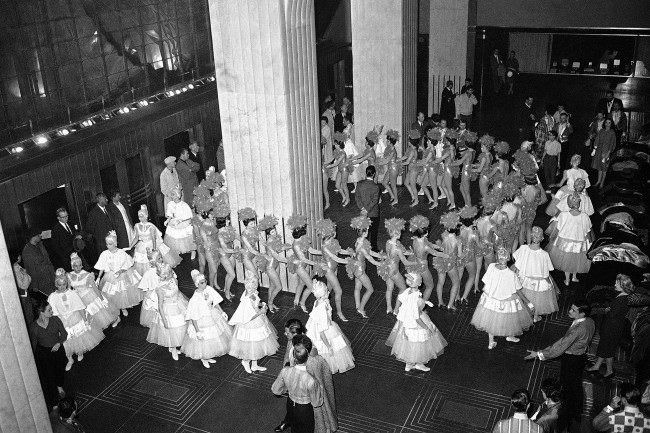
In white satin and jaunty hats, the group forms a perfect circle at Radio City in December of 1944.
Ready to board a ship that will freight them to various U.S.O. performances during World War II, the Rockettes look the part in their military-inspired suits and miniature garrison hats, perched on their waves.
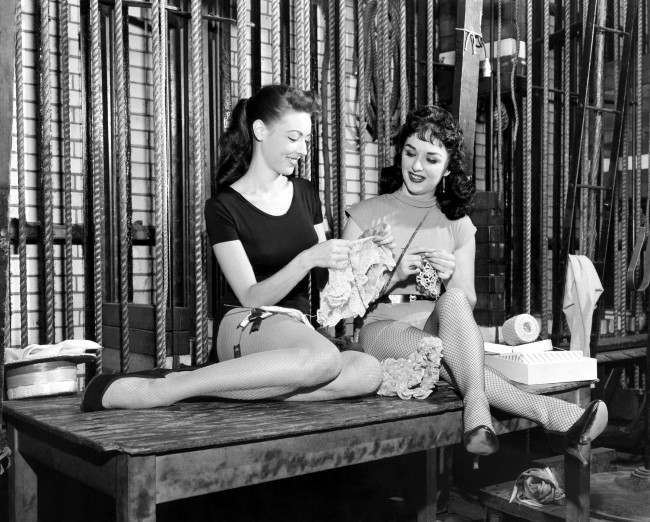
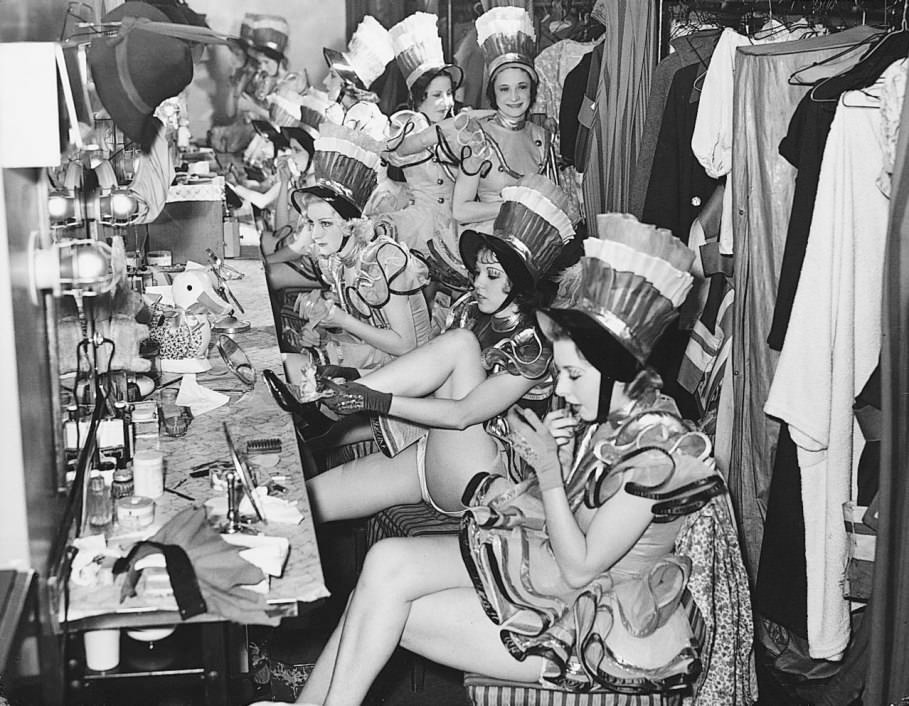
In rufflier takes on the soldier costumes, Rockettes apply final lipstick, zip each other into their suits, and affix ruffly details to their patent shoes before a performance.

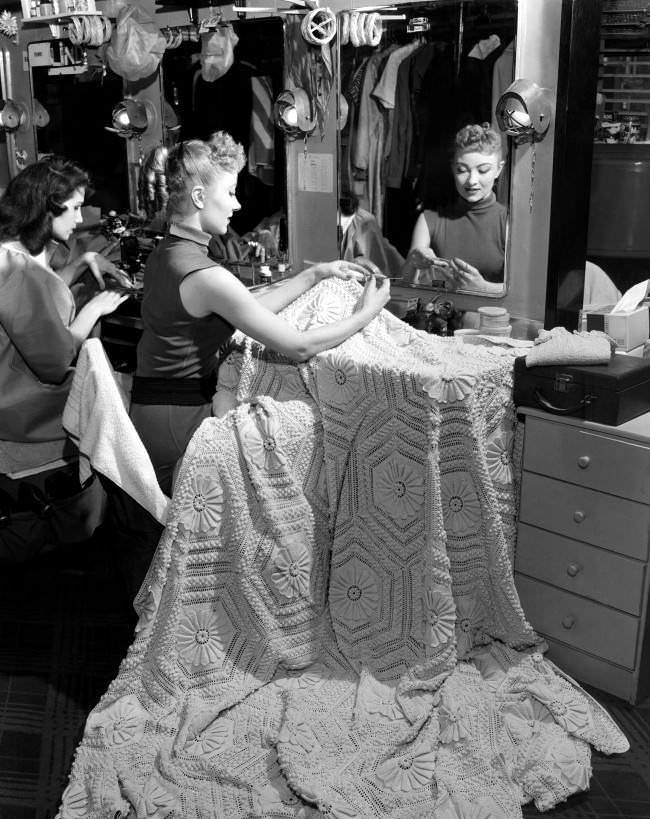
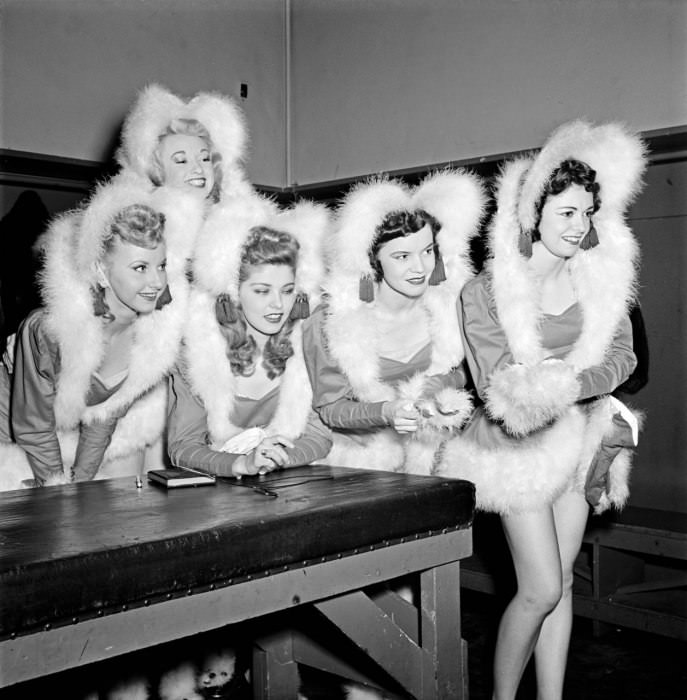
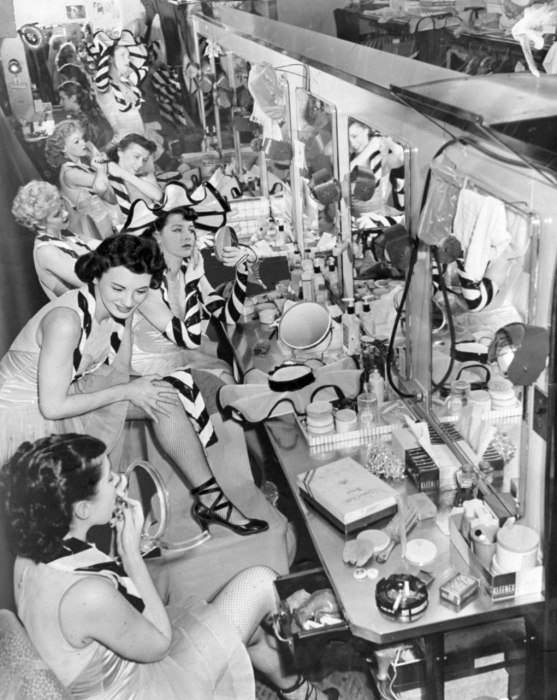
The 1950s brought a more polished backstage routine. By 1952, the vanity area behind the stage was a full operation—dancers setting their makeup with powder, adjusting stockings, and pinning down every last detail before curtain. The girly Santa suits trimmed in fuzzy white marabou, first seen in 1950, became one of the show’s most recognizable costumes. Animal numbers also appeared in the rotation, with zebra costumes complete with tasseled tails adding a theatrical flair.
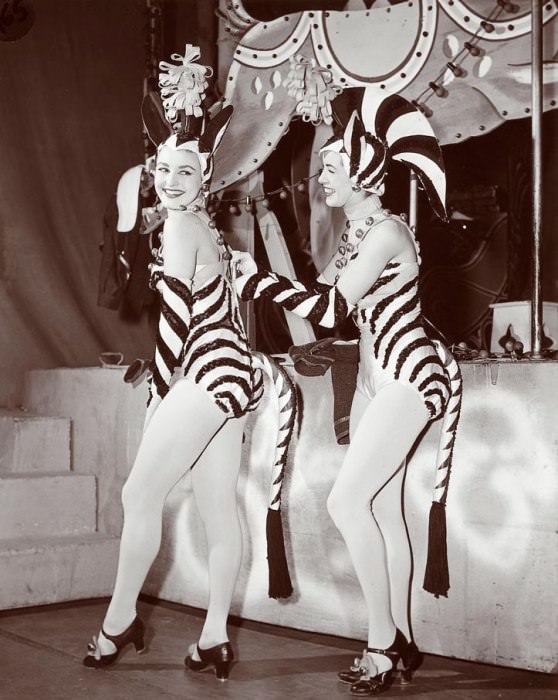
Two of the zebras flaunt their stripes—including flirty and anthropologically accurate tasseled tails.
Backstage at the vanity area in 1952, the Rockettes set their makeup with powder, adjust their stockings, and stick in their final bobby pins before going onstage.
The trademark girly Santa suits that would become a hallmark of Rockettes shows, shown here in 1950—they are trimmed in fuzzy white marabou.

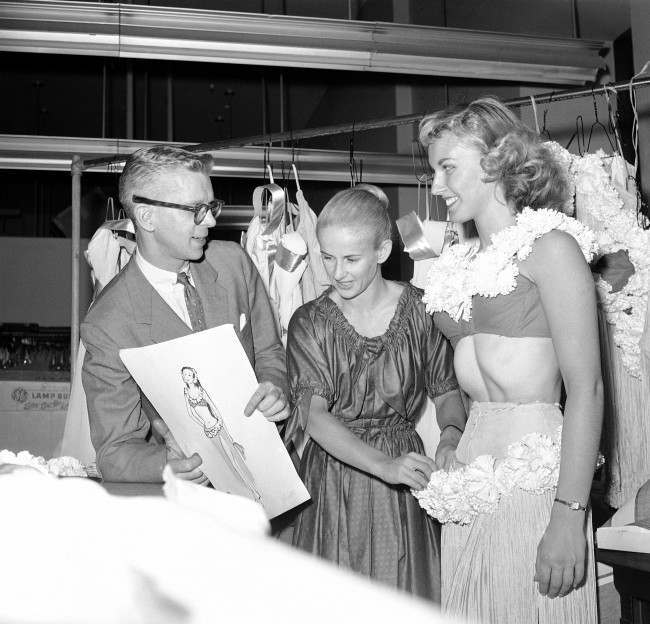
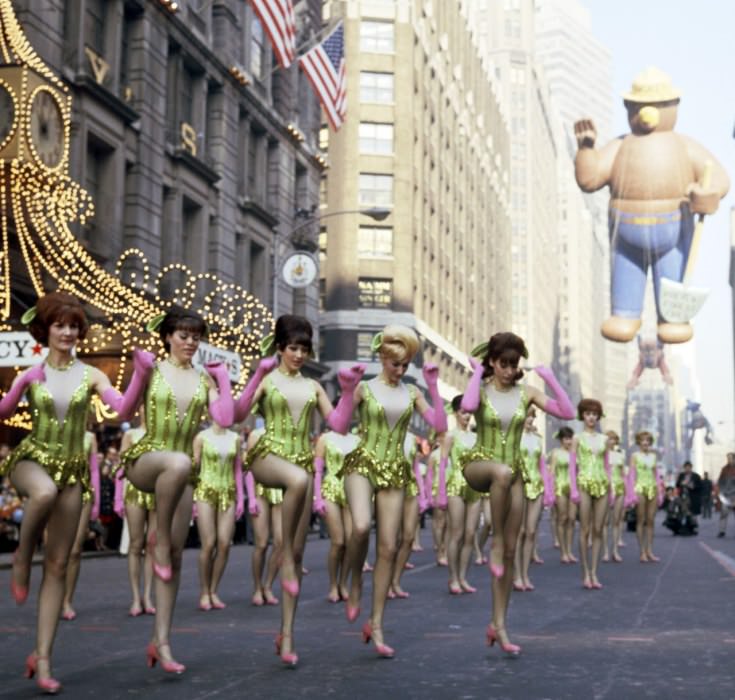
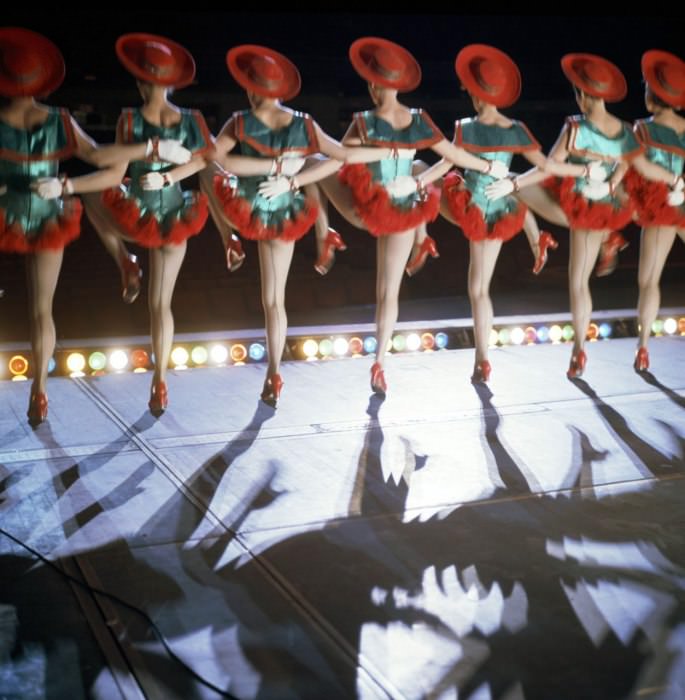
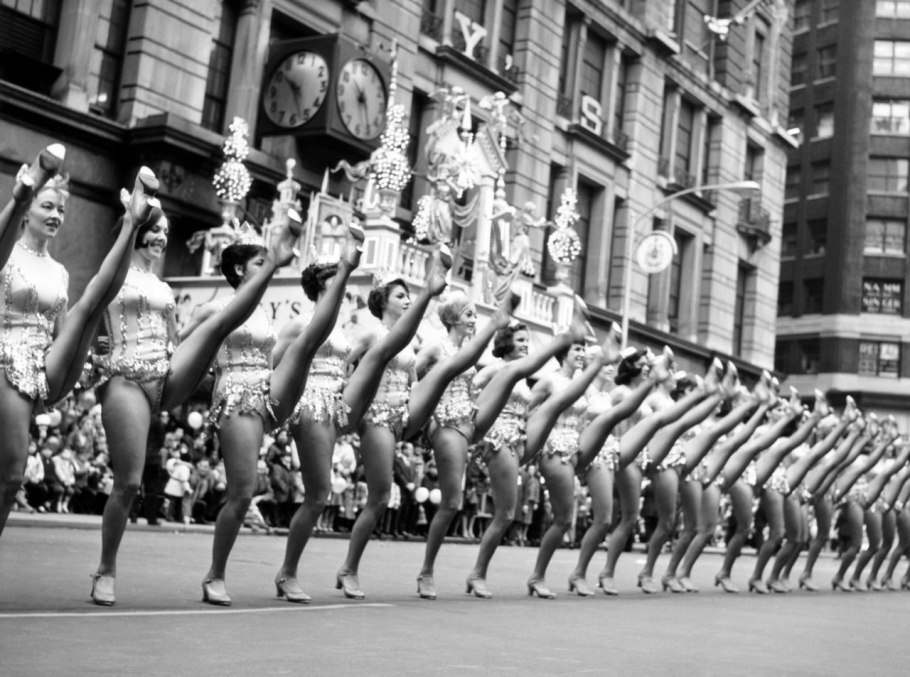
The 1960s pushed the Rockettes into new territory. Backstage photos from the decade show a space-suited Rockette having her astronaut gear adjusted by the costume shop. At the 1964 Macy’s Thanksgiving Day Parade, the group performed in front of thousands of bundled-up spectators in tiny onesies, landing their trademark high kicks in the open air. By 1966, beehive hairdos and tap-inspired choreography colored the parade appearance, and a year later, red and green cancan costumes with Spanish-inspired hats and seamed stockings marked the Christmas show.
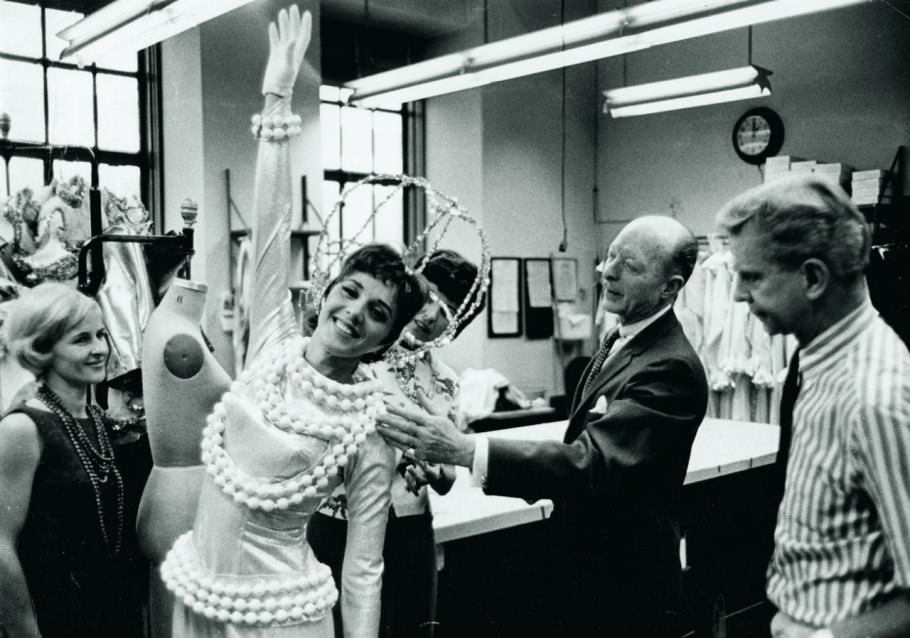
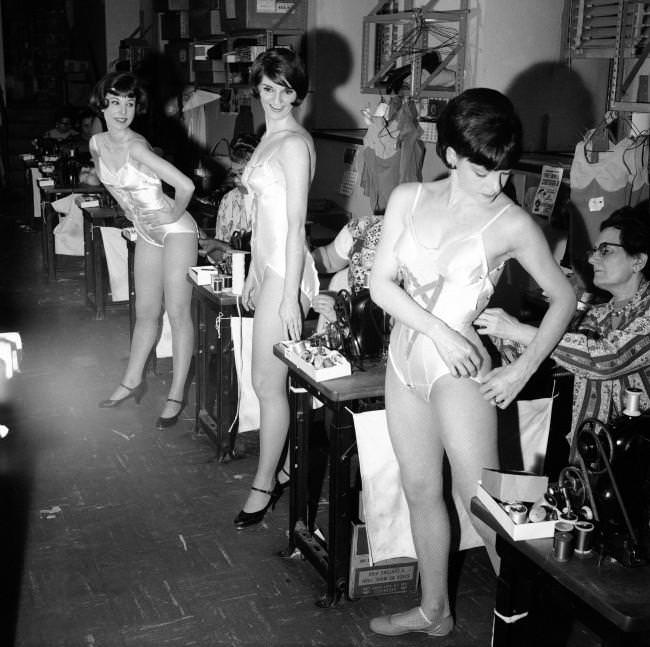
A beaming, space-suited Rockette gets her astronaut gear tweaked by nasa engineers—slash, the costume shop—backstage in the 60s.
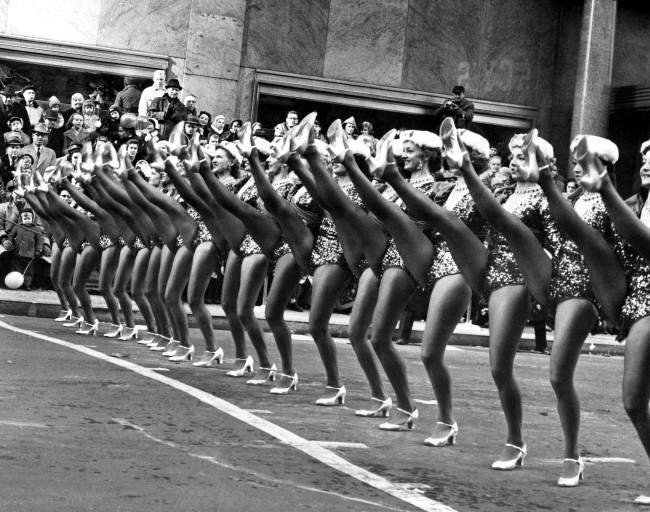
The famous high kick! At the Macy's Thanksgiving Day parade in 1964, the Rockettes (in teensy onesies) perform in front of thousands of bundled-up onlookers.
The famous high kick! At the Macy’s Thanksgiving Day parade in 1964, the Rockettes (in teensy onesies) perform in front of thousands of bundled-up onlookers.
Pink and green and beehives—and some tap-inspired choreography—for the parade in 1966, at which the Rockettes appear to have been the opener for Smoky the Bear (back right).
In 1967, the girls took traditional Christmassy red and green and put them on cancan costumes, complete with Spanish-inspired hats and sexy seamed stockings.

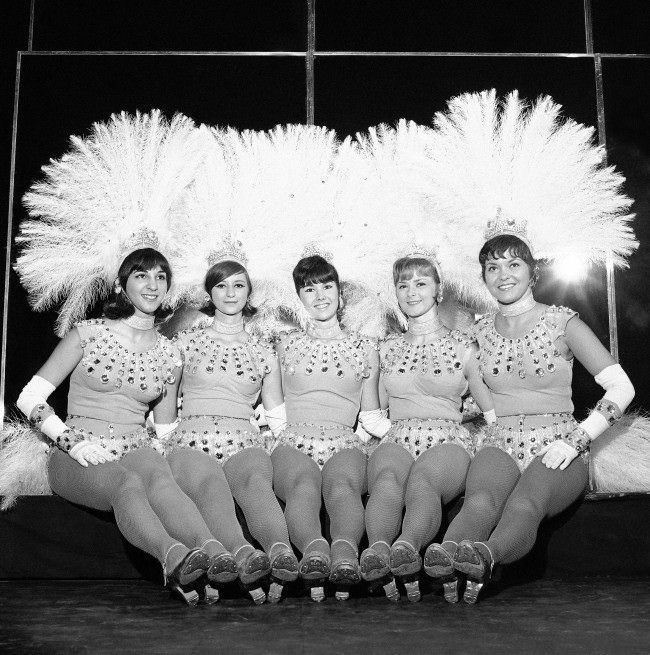
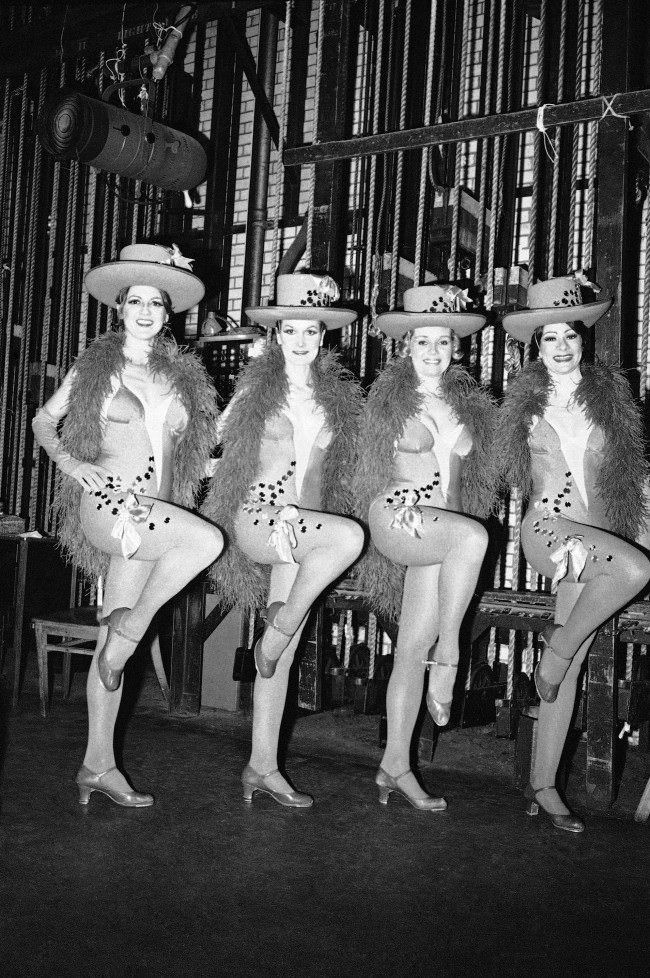
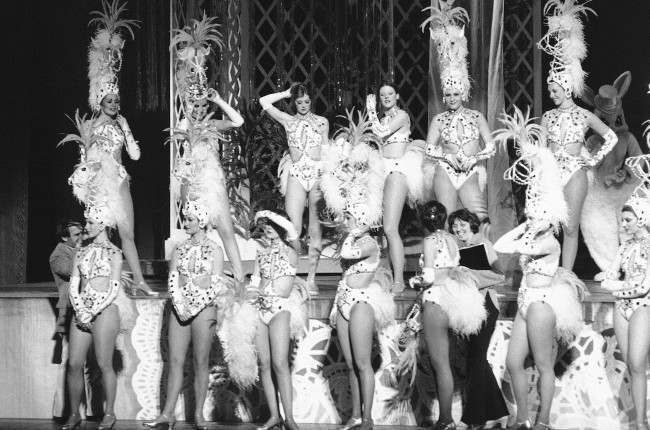
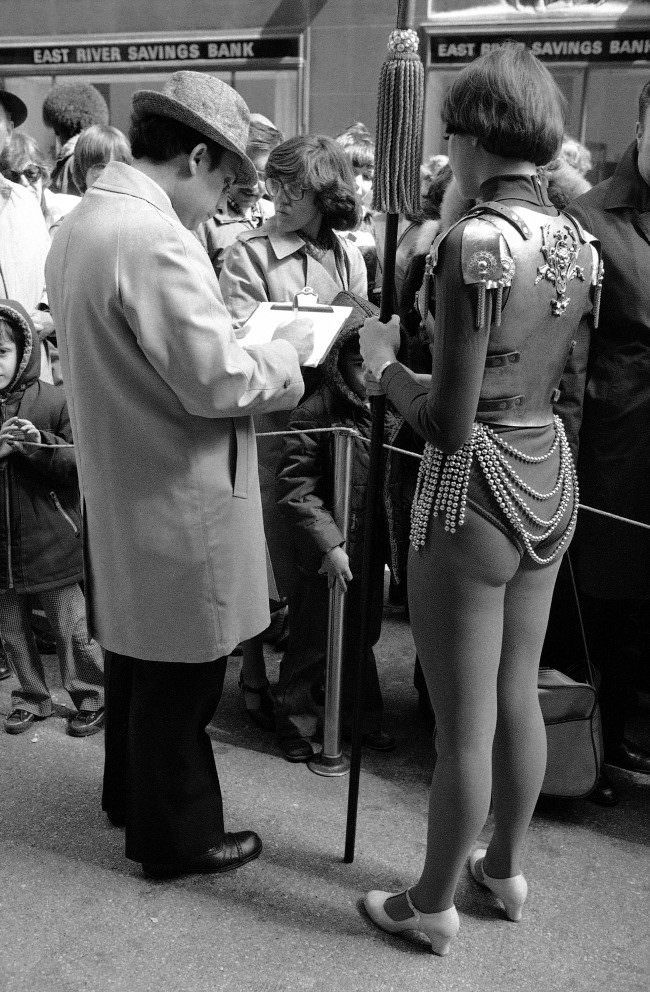
Into the 1970s, the parade costumes grew more elaborate—sparkling chokers, feathered showgirl hats, and thicker tights replaced the simpler looks of earlier decades. A 1973 New York Daily News caption accompanying one parade photo read: “Just to make sure Dad doesn’t get bored . . .” By the 1980s, the Rockettes were sharing the Radio City stage with Liberace for multiple engagements, performing in top hats, tails, and gold-lamé underwear.
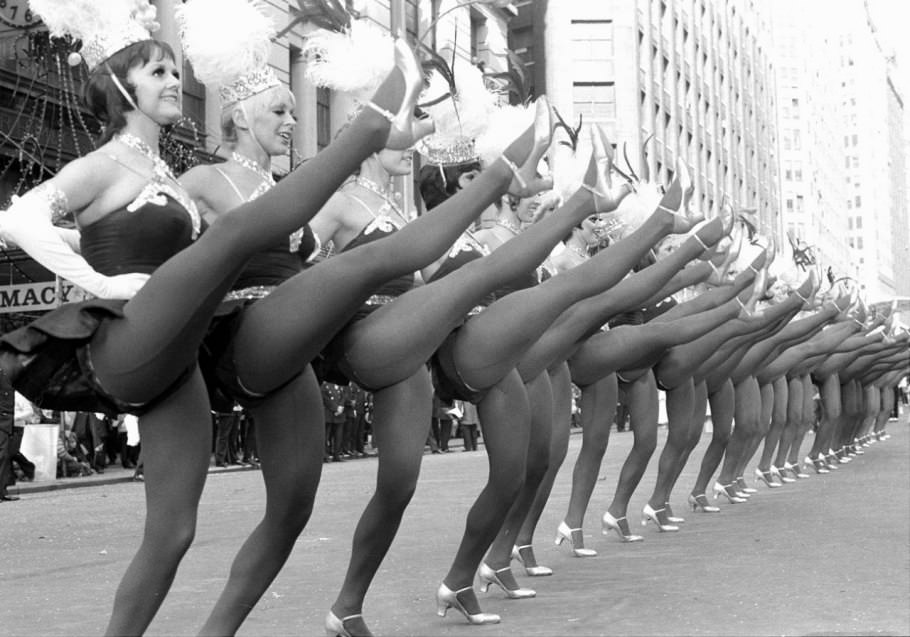
The parade-dancing routine embraced the 1970s with sparkling chokers, feather-sprouting showgirl hats, and thicker tights. The caption that ran with this photo in a 1973 edition of the New York Daily News? "Just to make sure Dad doesn't get bored . . . "
The parade-dancing routine embraced the 1970s with sparkling chokers, feather-sprouting showgirl hats, and thicker tights. The caption that ran with this photo in a 1973 edition of the New York Daily News? “Just to make sure Dad doesn’t get bored . . . “
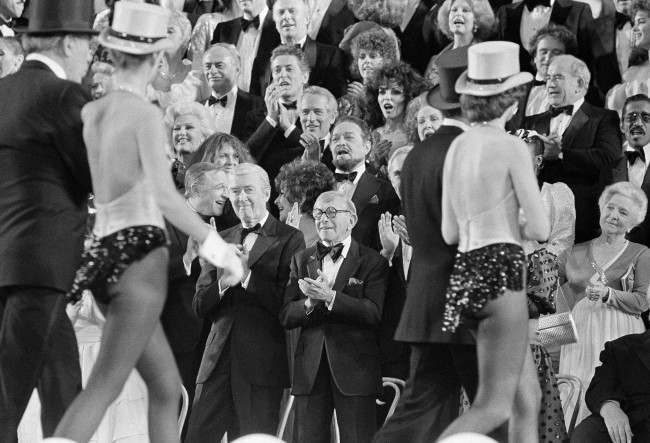
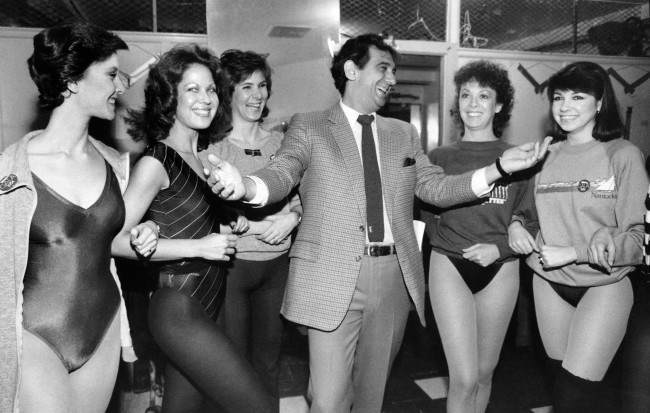
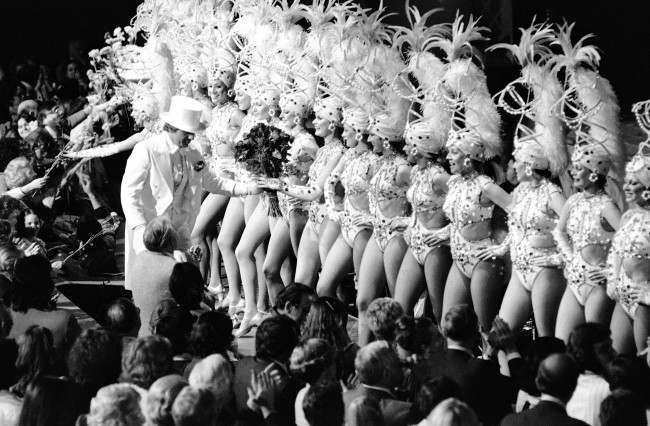
Top hats, tails, and gold-lamé underwear for—what else?—a Liberace concert at Radio City in 1985. The Rockettes would perform with Liberace for several engagements in New York in the 1980s.
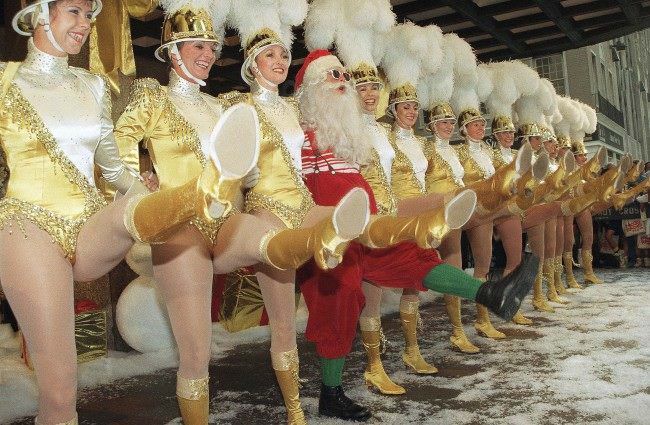
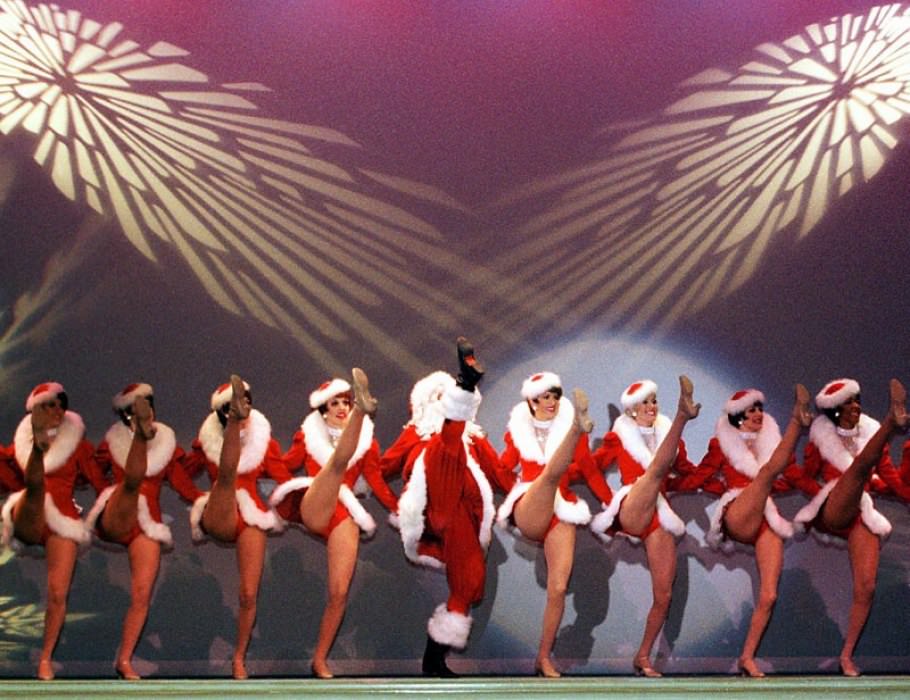
Santa can high-kick, too.

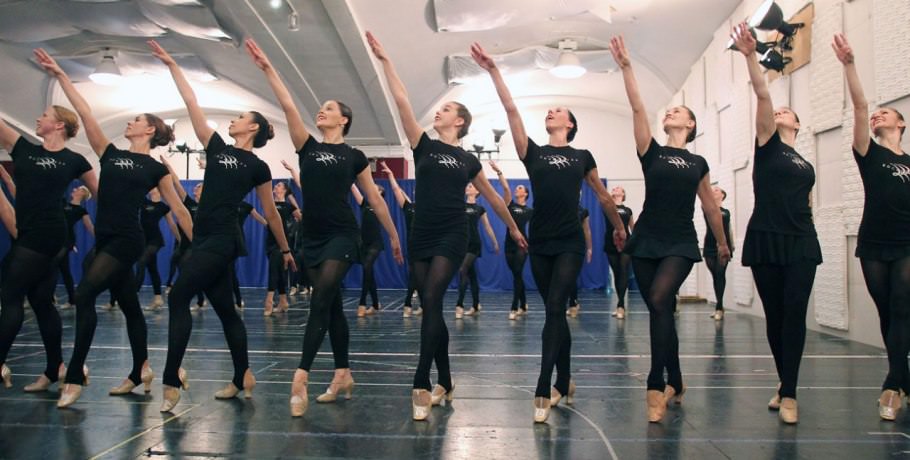
By the late 1990s and into the 2000s, the group had grown to two full 40-girl casts, each performing the Christmas Spectacular in rotation. The 1998 Thanksgiving parade troupe appeared in green velvet and white fur, bracing against the cold. Modern rehearsals shifted to a standardized look—matching black outfits and footless tights, with tape marks on the floor mapping out complex blocking for the Christmas show. The candy-cane costumes and silver-fringed leotards of the later era carried decades of choreographic tradition, performed in front of packed houses at Radio City Music Hall.
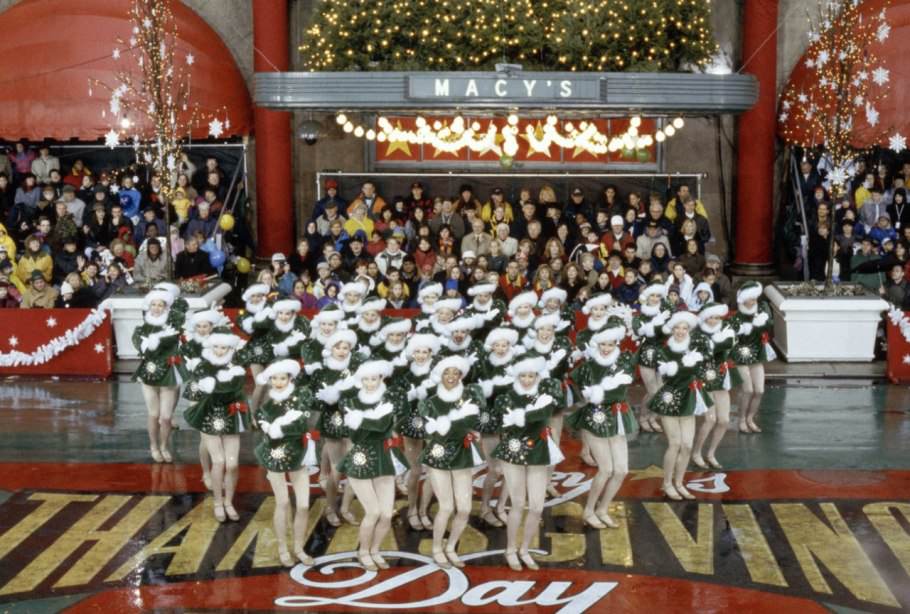
The 1998 Thanksgiving Day–parade troupe looks ahead to Christmas in green velvet, white fur, and an "I'm freezing!" pose.
The 1998 Thanksgiving Day–parade troupe looks ahead to Christmas in green velvet, white fur, and an “I’m freezing!” pose.
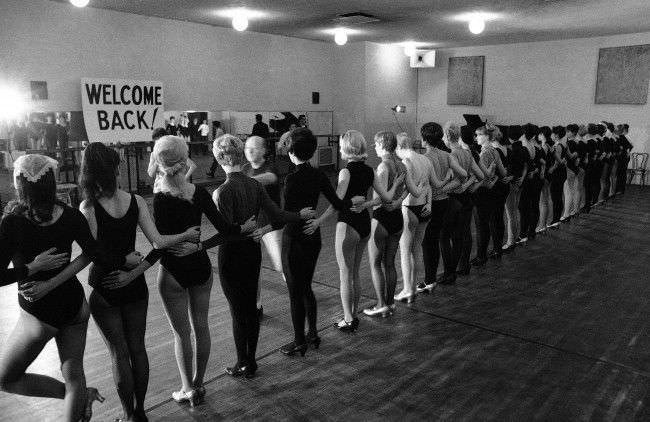
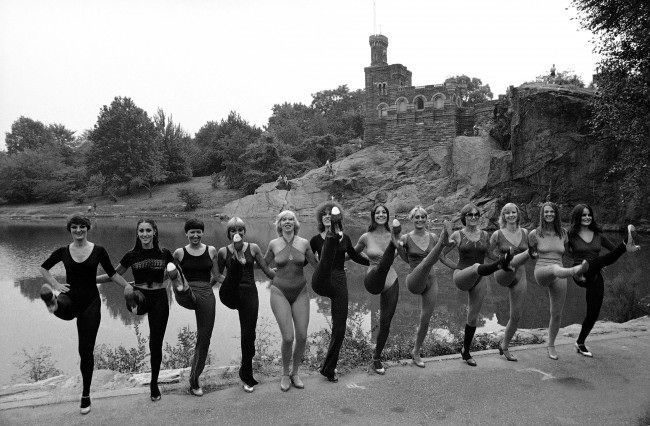
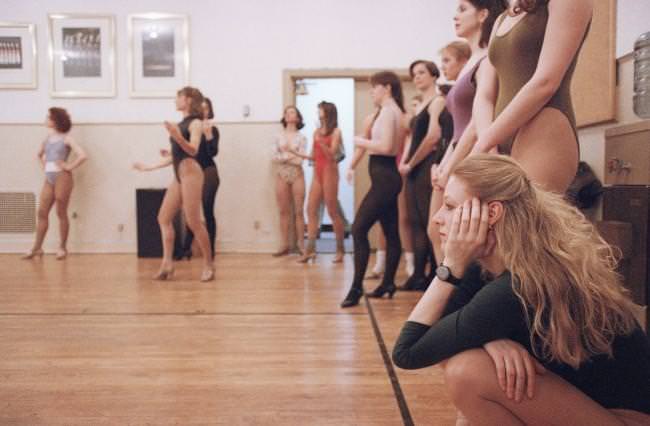
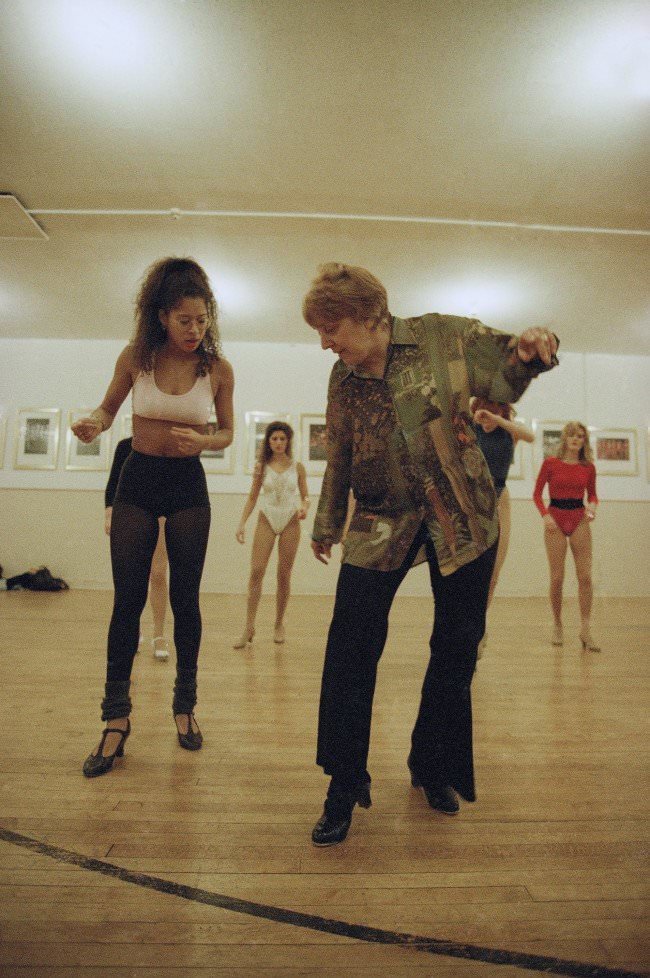
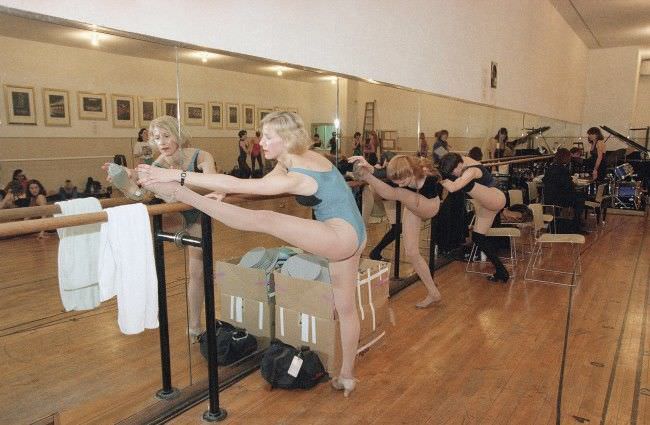
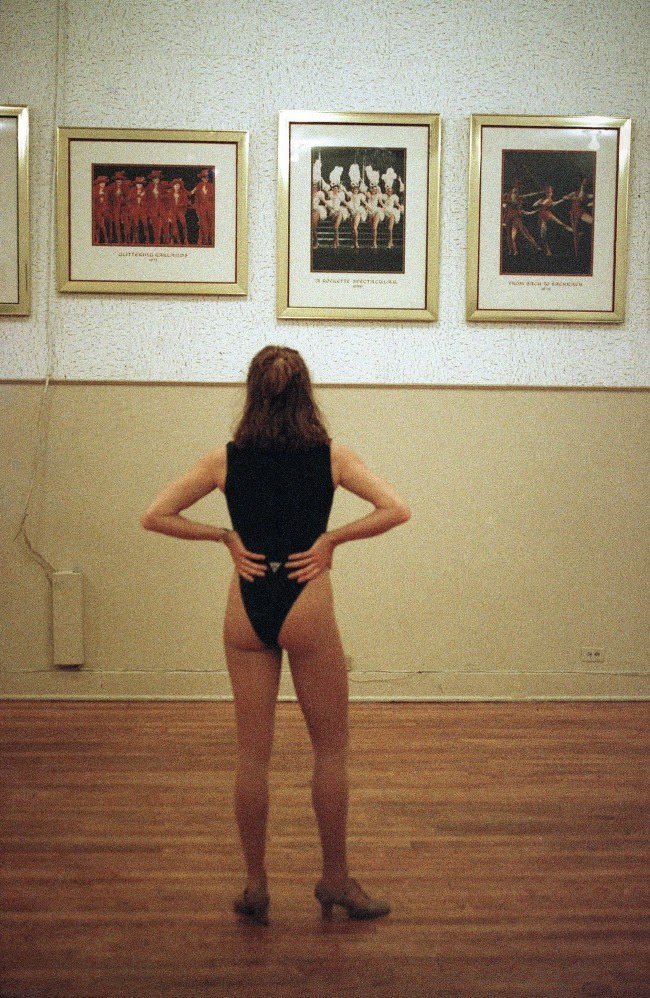
A handful of Rockettes strike a balletic pose at rehearsal, at which they all wear standard-issue black outfits and footless tights. The floor's tape marks complex blocking for the Christmas Spectacular routines.
A handful of Rockettes strike a balletic pose at rehearsal, at which they all wear standard-issue black outfits and footless tights. The floor’s tape marks complex blocking for the Christmas Spectacular routines.
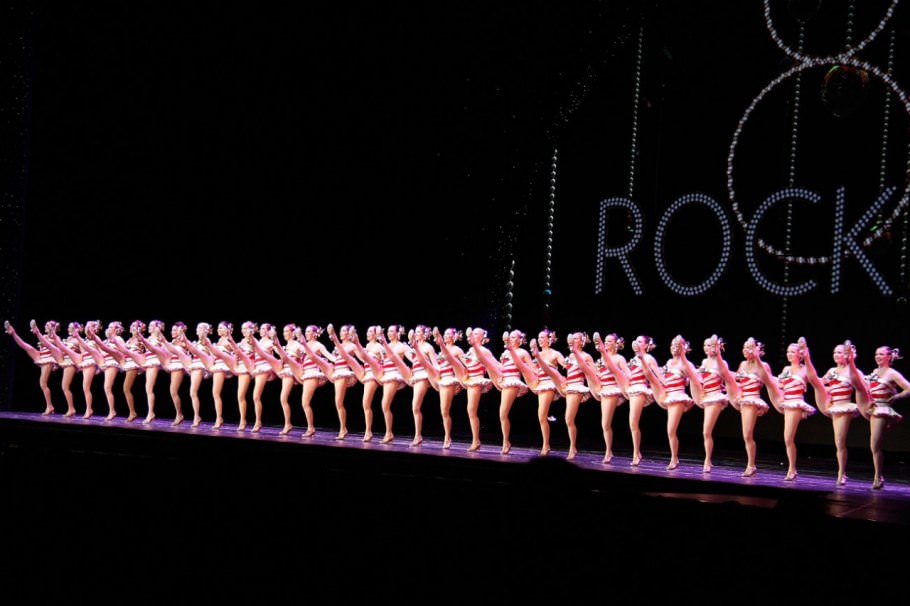
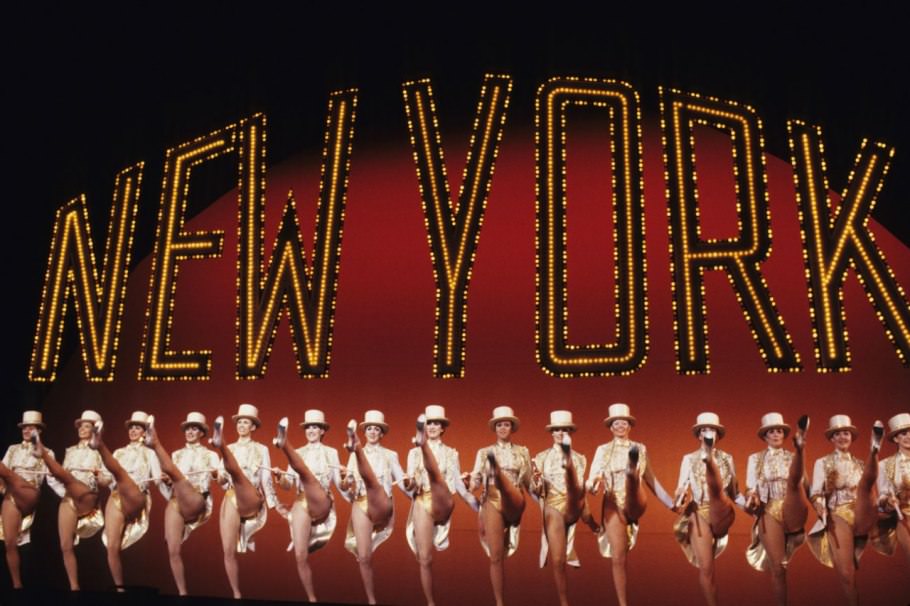
At 85, the troupe still reprises bits of earlier shows (a candy-cane motif on these costumes) and its trademark choreography.
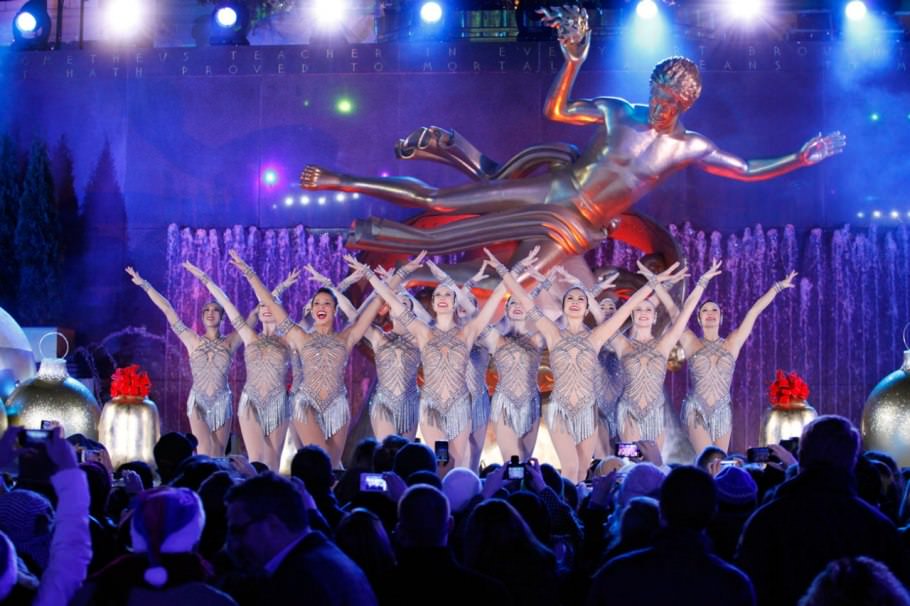
Earlier this year, the Rockettes—in silver-fringed leotards—strike a pose in front of a packed house.
Enjoyed this post? Get new ones in your inbox.

Leave a Comment

Your email address will not be published. Required fields are marked *

Share this Post 🥺

Please take a moment to share this content. Your support is greatly appreciated! 🙌🙏

Share this Post 🥺

Please take a moment to share this content. Your support is greatly appreciated! 🙌🙏
Scroll to Top
 
Hey Friend, Before You Go.. Please like & follow for more interesting content