Hey There! Before You Go. 😧
Get the best vintage content straight into your inbox!

Don't worry, we don't spam

50+ Heartwarming Photos Of Children During World War II
World War II reshaped the lives of millions of children across the globe. They were torn from their families, displaced from their homes, and thrust into a world of air raids, gas masks, and uncertainty. The scale of suffering among children during this period is almost impossible to fully grasp, but the photographs that survive tell a story no words can fully capture.
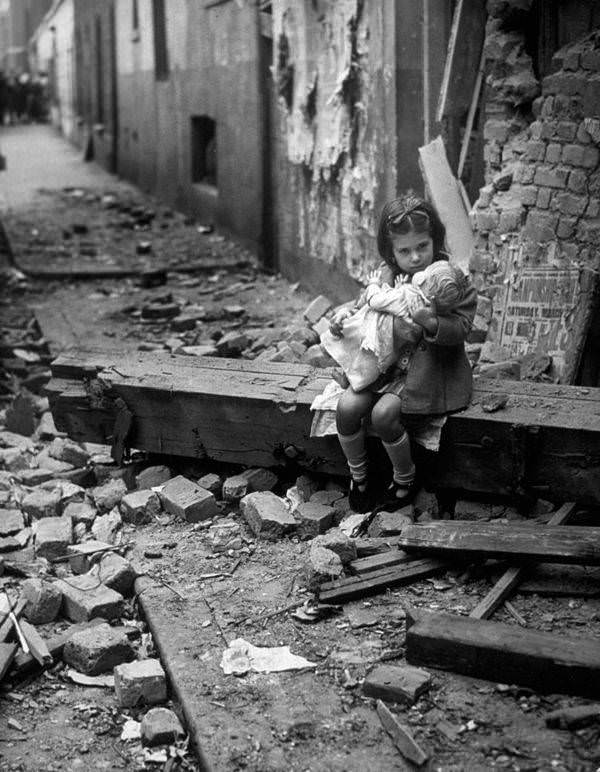
During the Blitz of London, which lasted from 1940 to 1941, children made up roughly one in ten of all deaths. German bombers struck residential neighborhoods night after night, leaving entire streets in ruins. Families who had nowhere to go picked through the rubble of what used to be their homes. For children, the destruction was not a distant news story — it was their backyard, their school, their street.

A little girl holds her doll in the rubble of her bomb-damaged home. England. 1940.

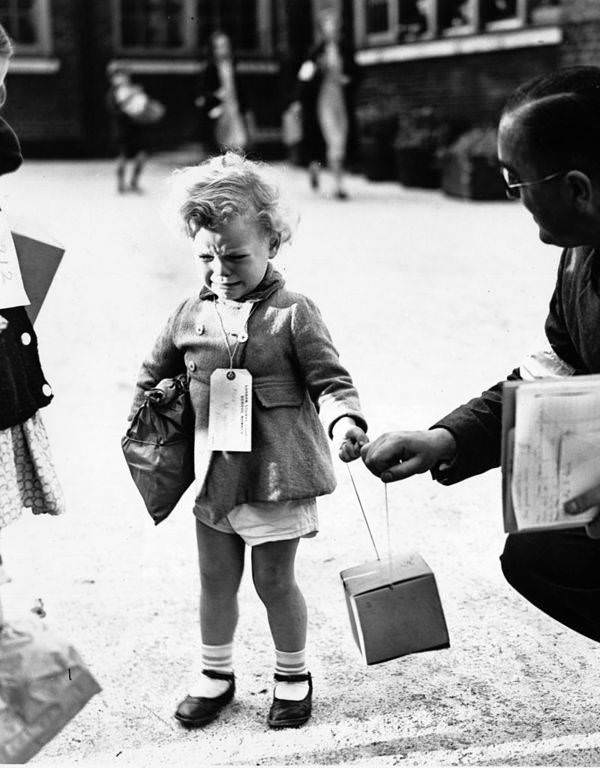
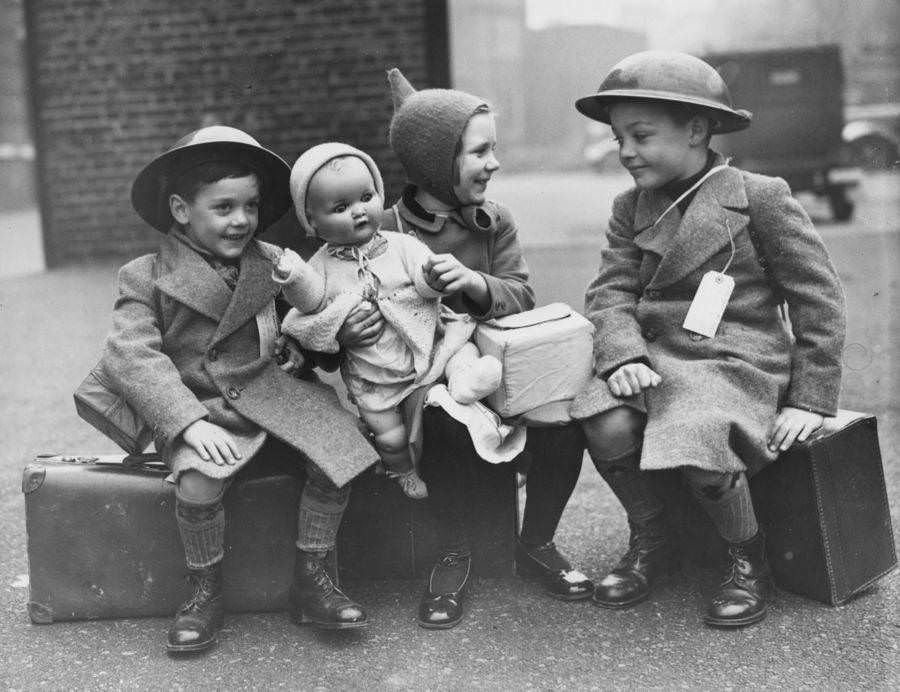
To protect children from the bombing campaigns, the British government launched one of the largest mass evacuations in history. Millions of children were sent out of major cities like London to live with host families in the countryside and coastal towns. Many of these children had never spent a night away from their parents. They carried small suitcases and name tags, often crying as they boarded trains with no clear idea of when they would return.

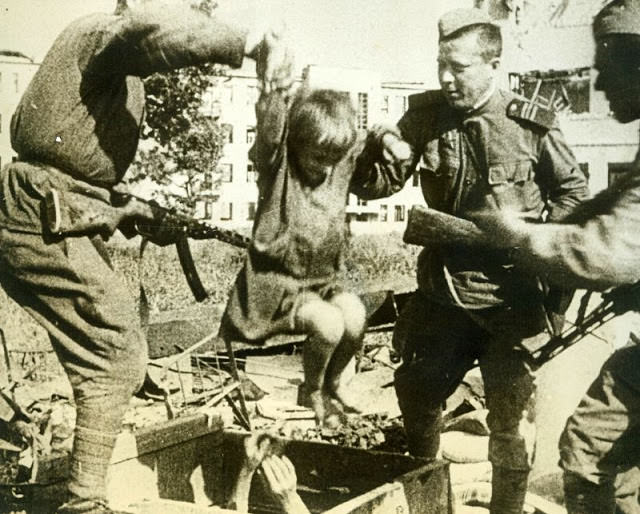
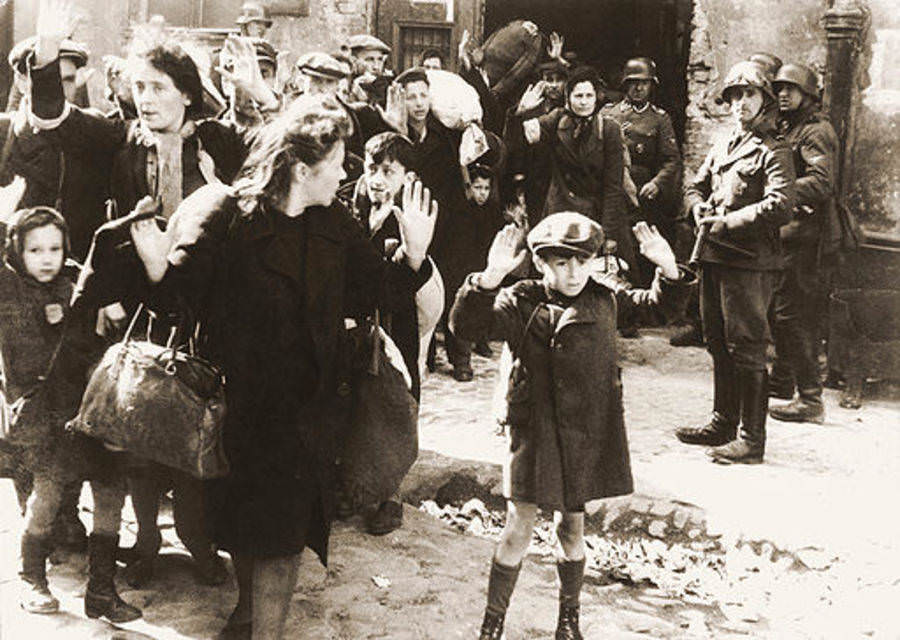
A Jewish boy raises his hands at gunpoint after Nazi SS soldiers forcibly removed him and other ghetto residents from the bunker, 1943.

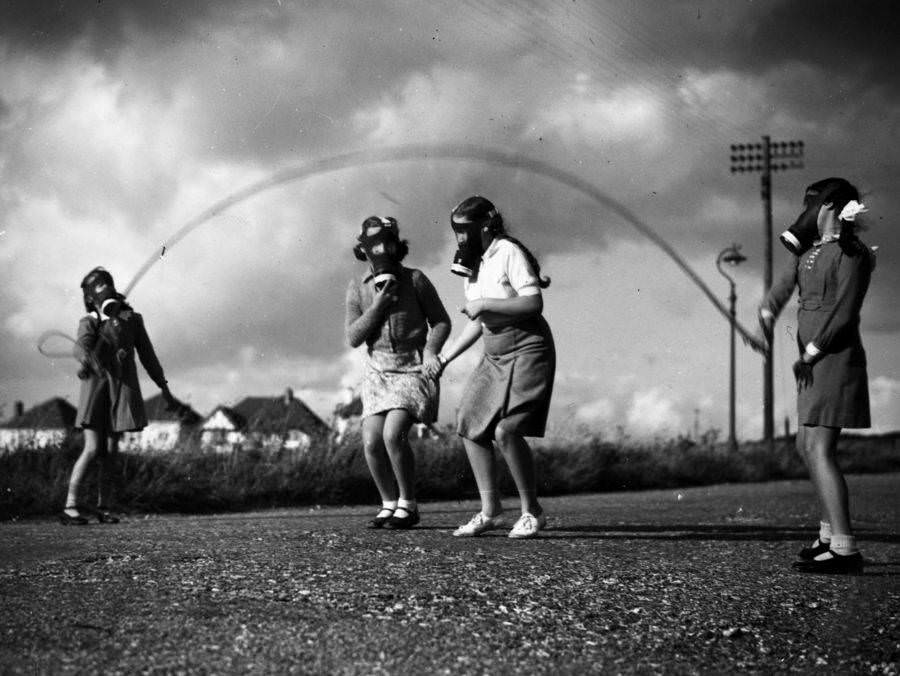
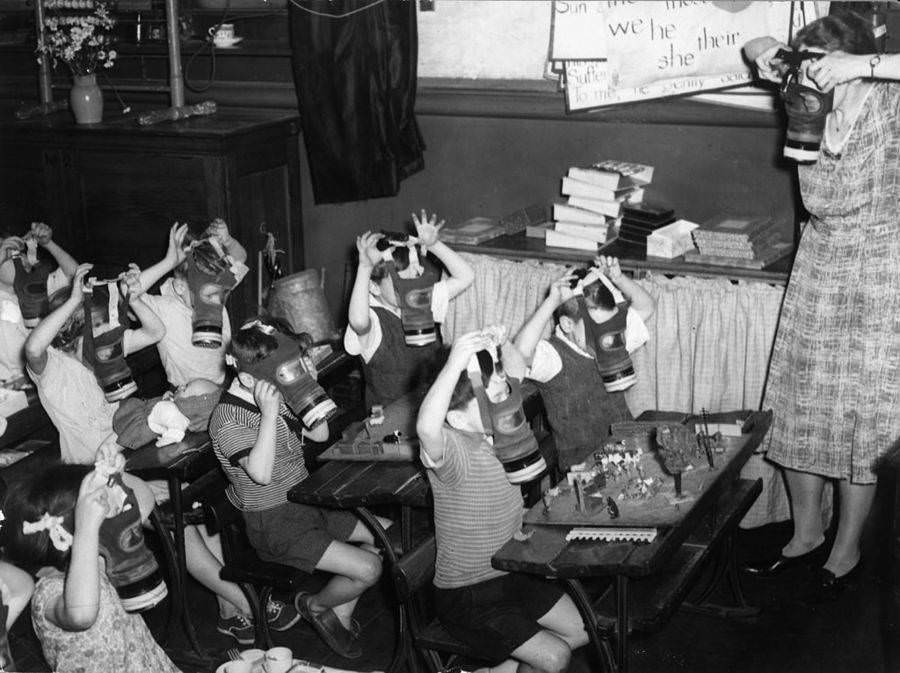
Even in the middle of wartime chaos, daily routines were maintained as best as possible. Evacuated children still attended school, still played in parks, and still went through drills designed to keep them safe. Gas mask practice was a regular part of life for British children, with both schools and families taking part in exercises to prepare for the threat of chemical attacks.

London children wear their gas masks as they skip in the park at their temporary homes on the south coast of England. 1940.
A young child named Freddie Somer cries upon arriving at King's Cross Station in London for wartime relocation. 1939.
A young child named Freddie Somer cries upon arriving at King’s Cross Station in London for wartime relocation. 1939.

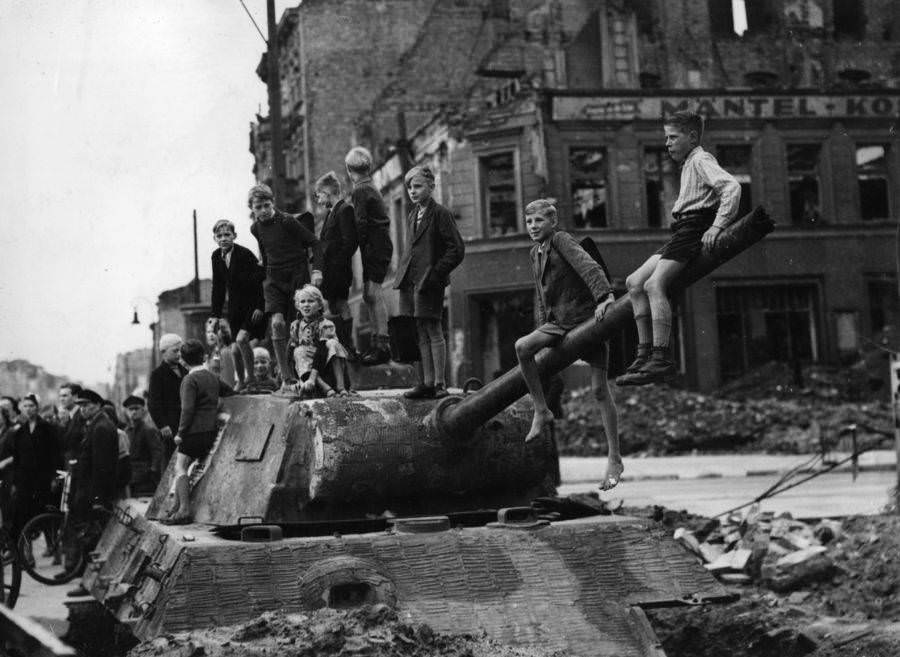
The end of fighting in Europe in 1945 left cities like Berlin in near-total ruin. Bombed-out buildings, shattered streets, and abandoned military equipment became the landscape of everyday life for German children in the war’s final months and immediate aftermath. With adult infrastructure collapsed, children navigated these environments largely on their own.

Children play on the bomb sites and wrecked tanks in Berlin in the aftermath of the fighting there. 1945.

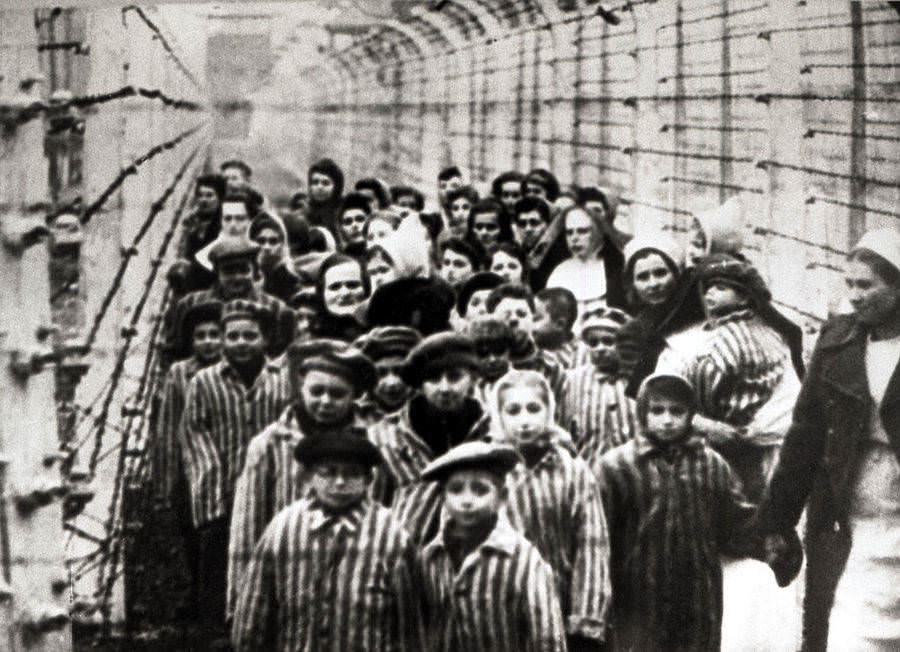
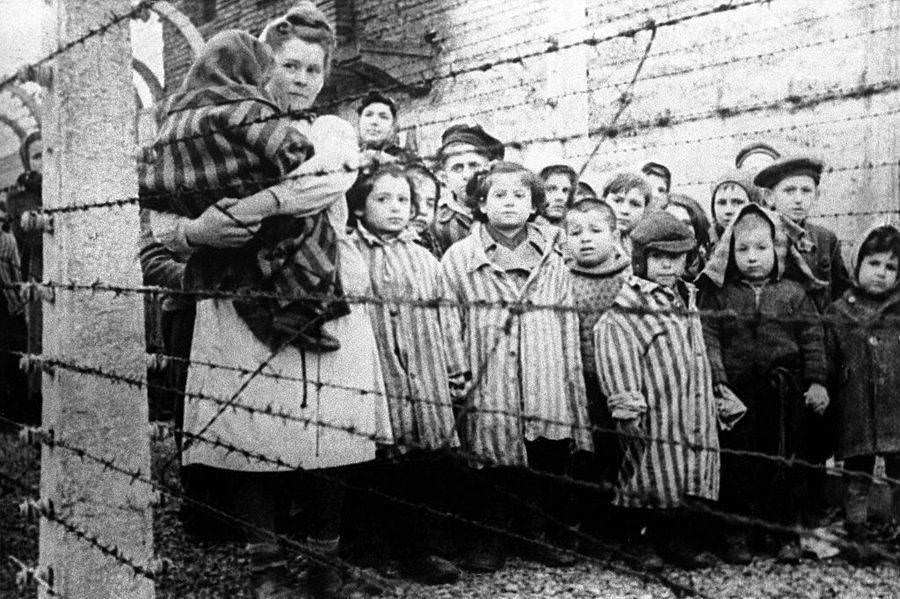
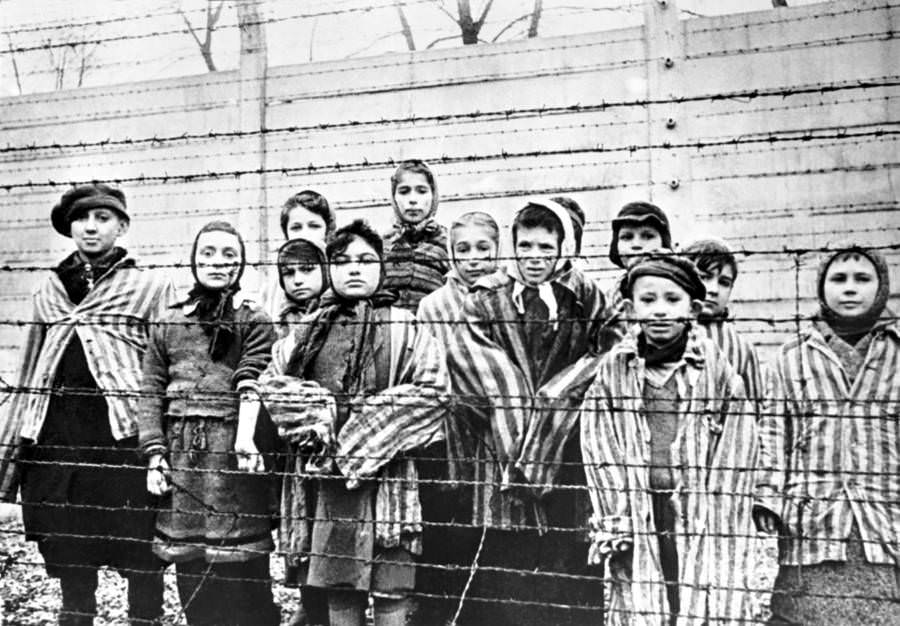
Nowhere was the war’s impact on children more devastating than in the Nazi concentration camps. At Auschwitz-Birkenau in southern Poland, children arrived alongside their families and were systematically murdered. When Soviet forces liberated the camp in January 1945, they found a small number of child survivors — skeletal, frostbitten, and dressed in prisoner uniforms — still behind the barbed wire.

A group of child survivors stand behind a barbed wire fence at the Auschwitz-Birkenau concentration camp in southern Poland, 1945.
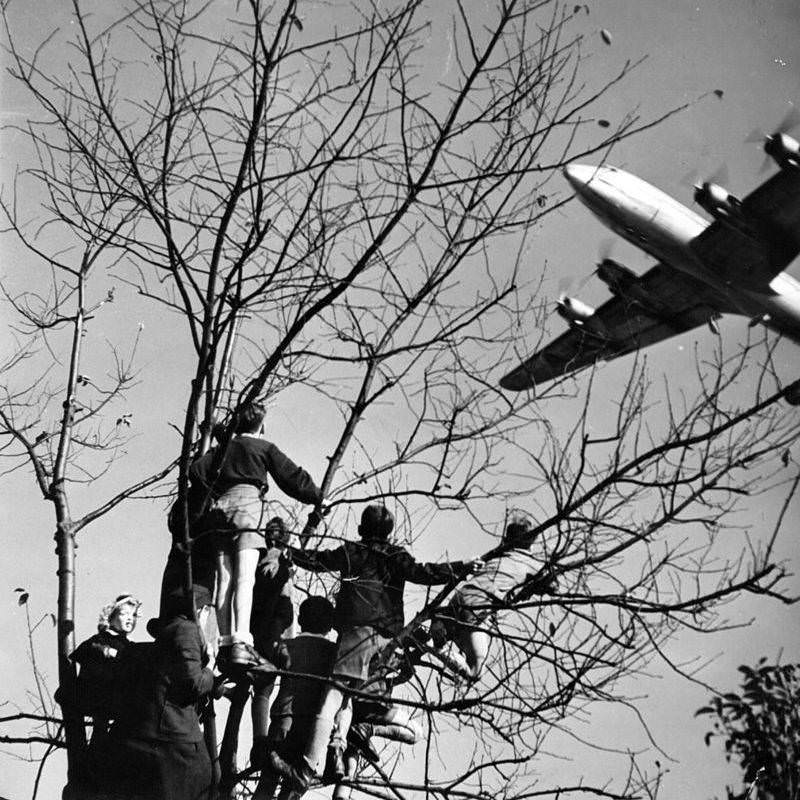
Children perch on a tree near the Brandenburg Gate to watch a U.S. cargo plane arrive during the Berlin Airlift. June 24, 1948.

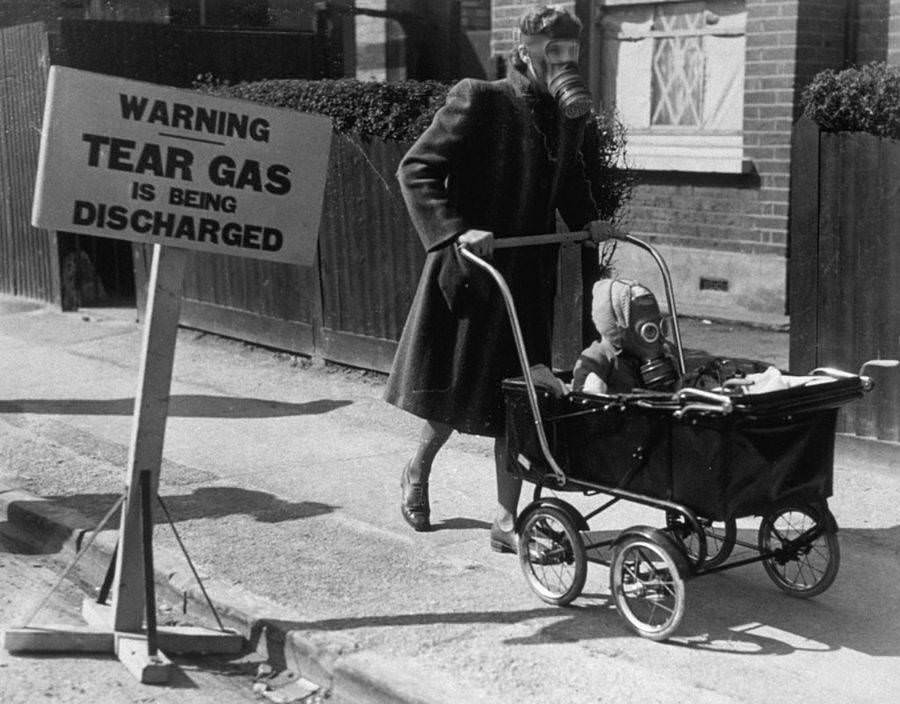
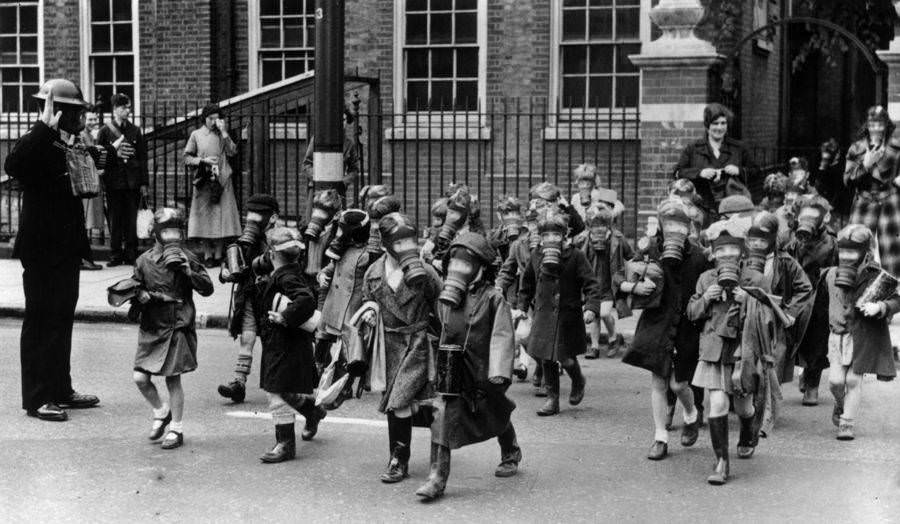
Gas mask drills became a fixture of wartime childhood in Britain. Schools conducted full evacuation exercises where students and teachers alike wore the rubber masks. Tear gas canisters were sometimes discharged during these drills to test their effectiveness, making the exercises feel very real to the children taking part.

A horde of children wearing gas masks carry out a practice evacuation of a school in Kingston, Greater London, after a canister of tear gas was discharged. 1941.

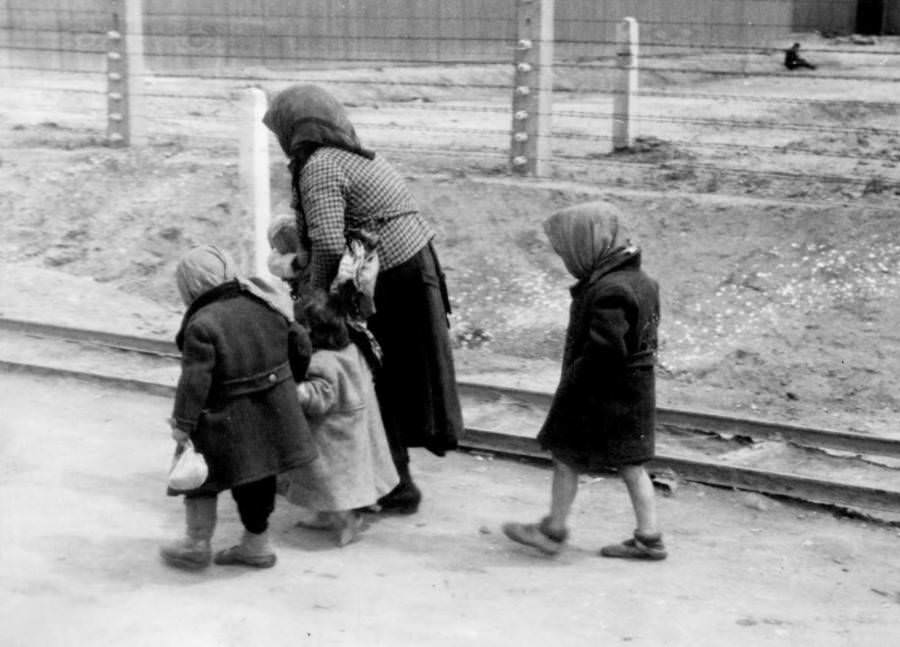
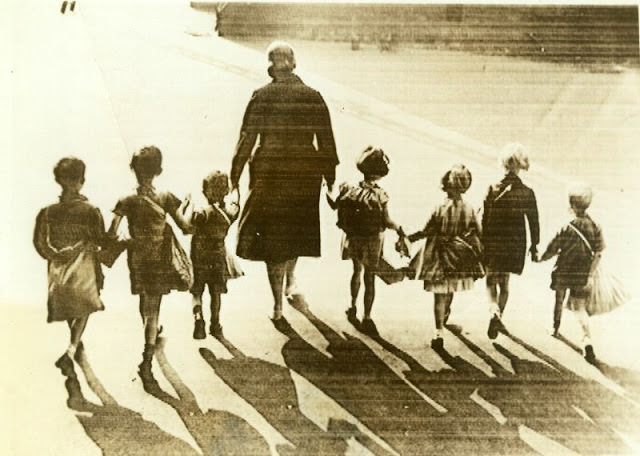
Among the most haunting images from the Holocaust are photographs taken inside Auschwitz-Birkenau in 1944. One shows an elderly woman leading several small children toward the gas chambers. These images were taken by SS personnel and were later recovered after liberation, serving as direct documentation of mass murder.

An elderly woman and several children walk to the gas chambers of Auschwitz-Birkenau. Poland. 1944.
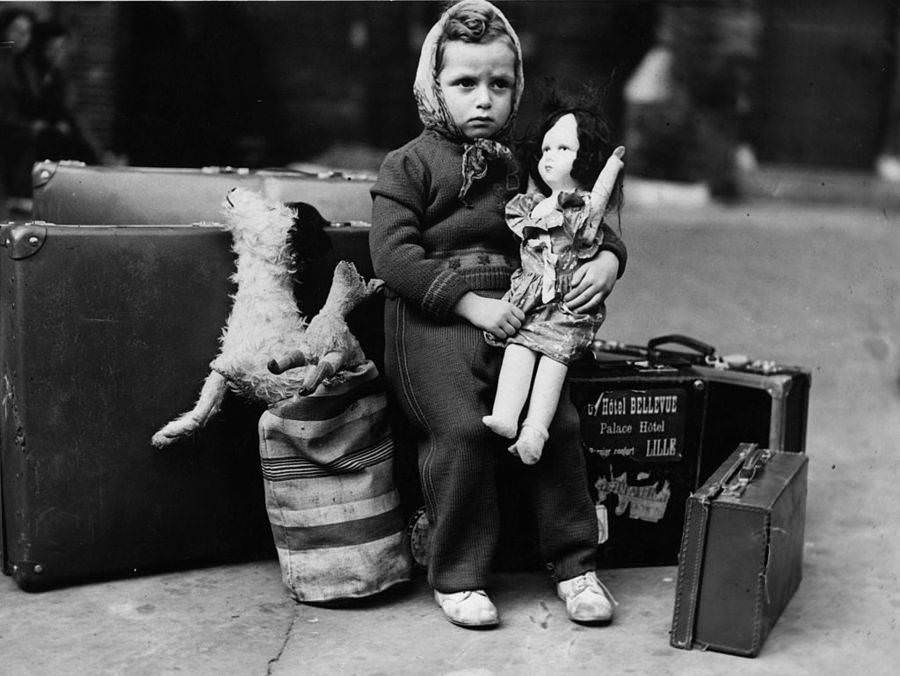
Three young evacuees sit on their suitcases ready for their journey away from the danger of the city. England. 1940.

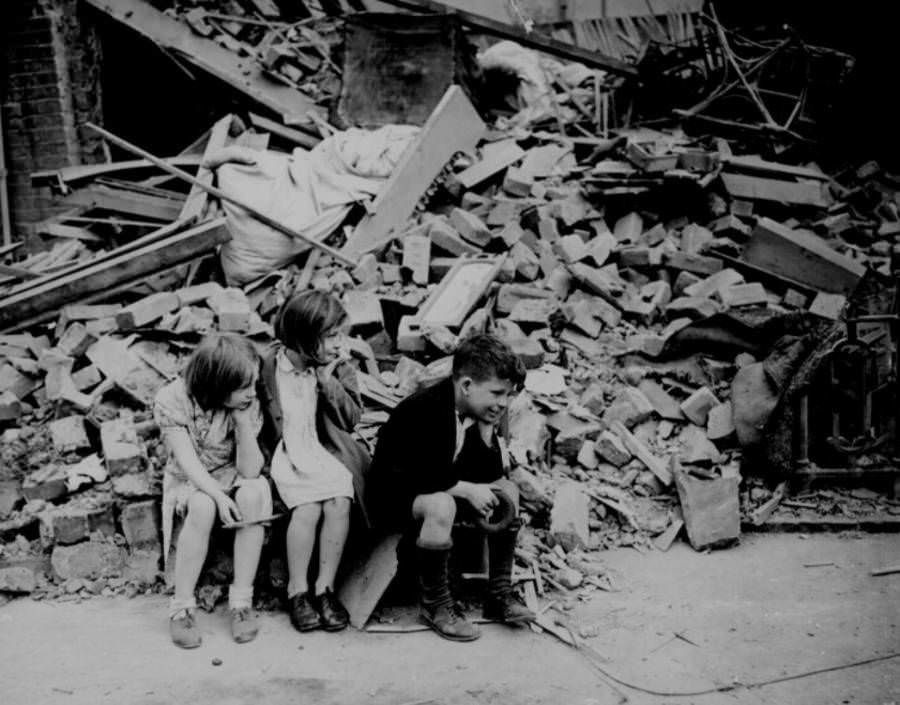
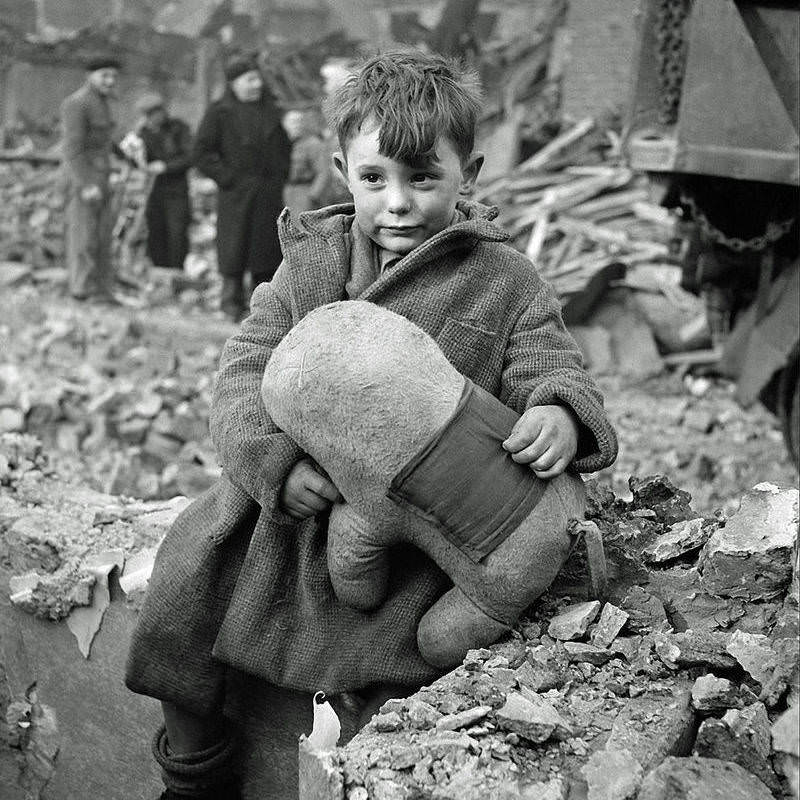
In London, the nightly bombing raids of the Blitz left thousands of families without shelter. Children who lost their homes were often photographed in the rubble, sometimes still clutching toys or personal belongings. These images circulated widely in the press and became powerful symbols of civilian suffering under aerial bombardment.

Children of an eastern suburb of London, who have been made homeless by the random bombs of the Nazi night raiders, 1940.
A mother and child wear gas masks during a tear gas exercise in Kingston-On-Thames, England, 1941.

An estimated 200,000 Polish children were kidnapped by Nazi authorities during the war. They were selected based on physical traits the Nazi racial program considered desirable and were taken to Germany to be raised as Germans. As many as 75 percent of them never returned to their families in Poland.

Jewish children, survivors of Auschwitz, stand with a nurse behind a barbed wire fence. Poland, 1945.
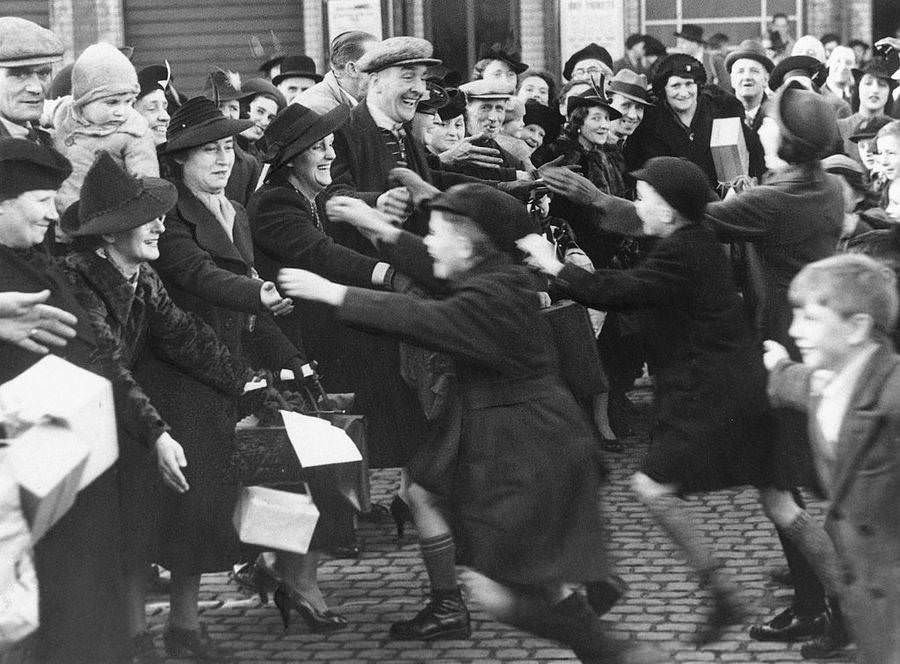
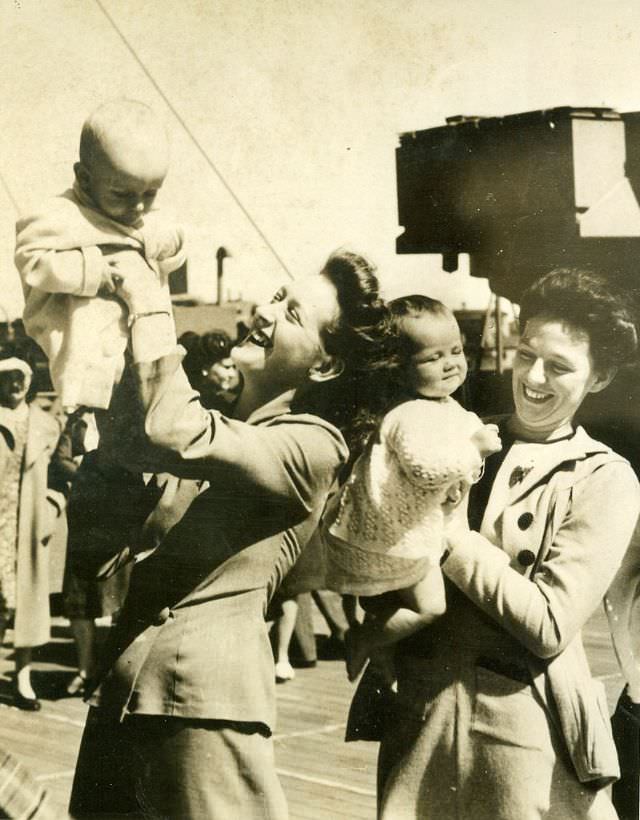
Evacuee children sent away from London greet their parents during a special one-day reunion, 1939.

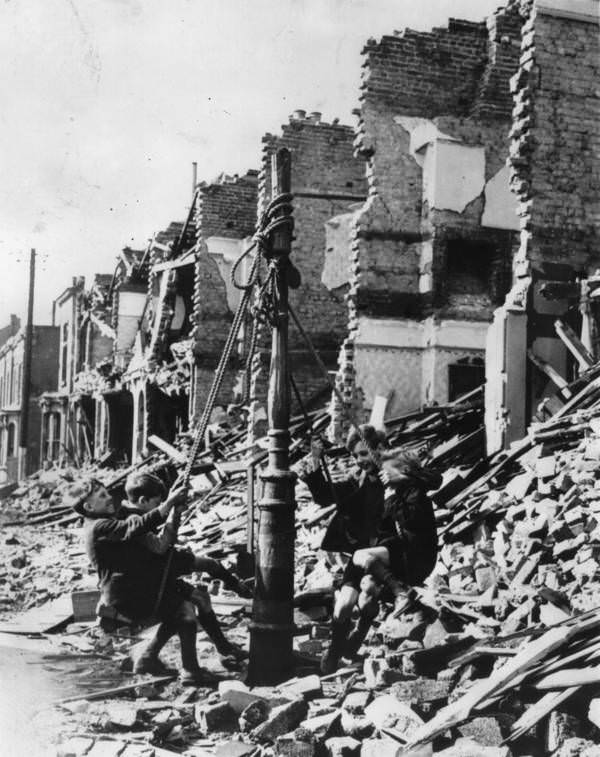
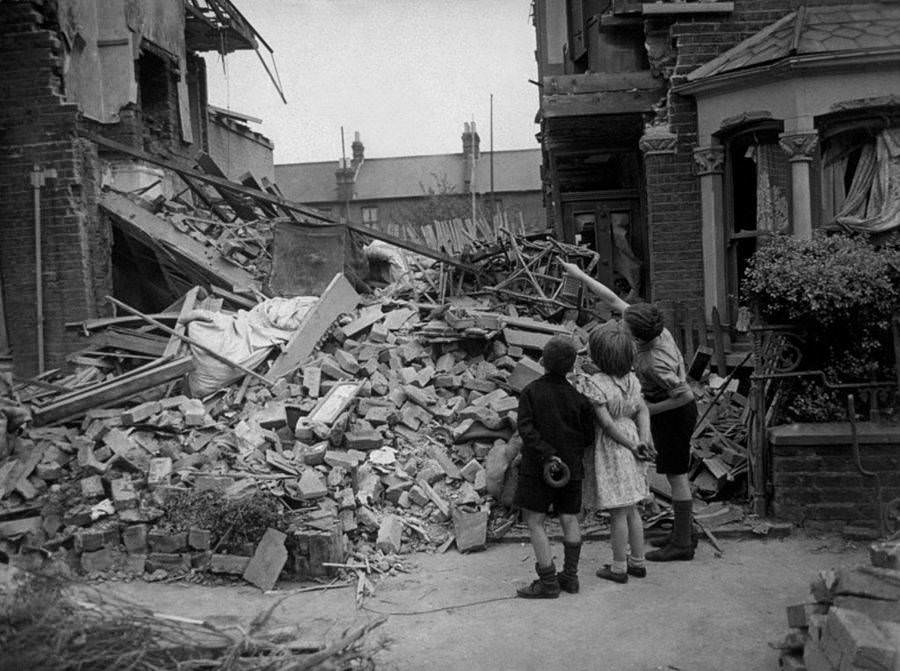
Not every wartime photo carried the weight of loss. Some showed children finding moments of normalcy — pointing out where their bedroom used to be, playing in bombed lots, or swinging from lamp posts in rubble-strewn streets. These ordinary gestures set against extraordinary destruction underscore just how adaptable and resilient children were forced to become.

A homeless boy points out his bedroom to his friends after his home had been wrecked during a random bombing raid in an eastern suburb of London, 1940.
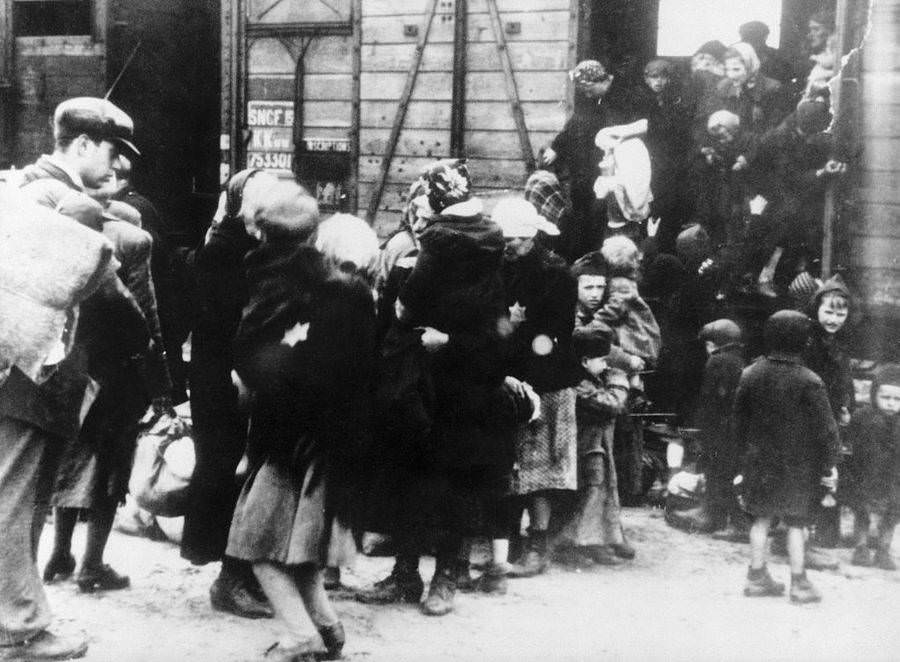
Mothers and their children step out of the train at Auschwitz concentration camp. Poland.

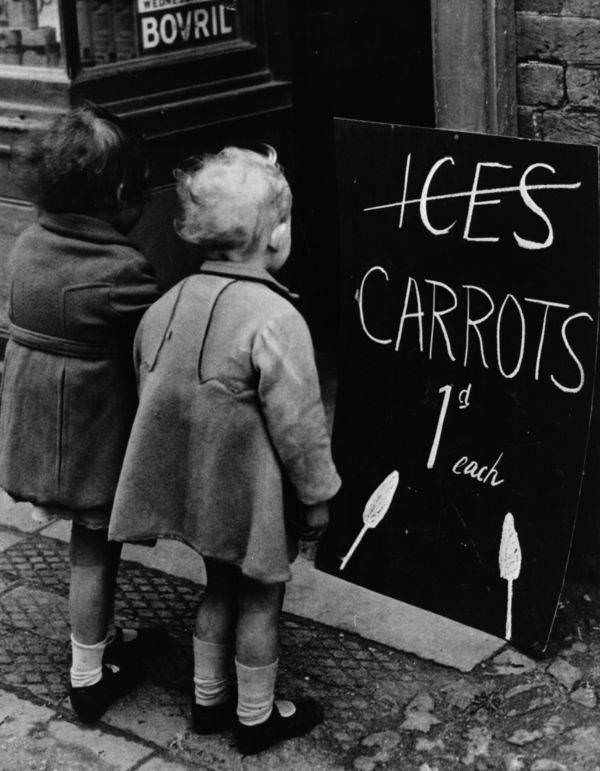
Wartime rationing changed life for British children in very practical ways. Food items that were once common became luxuries overnight. Sugar was heavily restricted, sweets disappeared from shop shelves, and creative alternatives were promoted through public campaigns. Signs advertising carrots as substitutes for ice pops were a small but telling sign of how deeply the war reached into everyday childhood.

Two little girls read a board advertising carrots instead of ice pops, 1941.
A group of London children inspect bomb damage outside their front door, 1944.
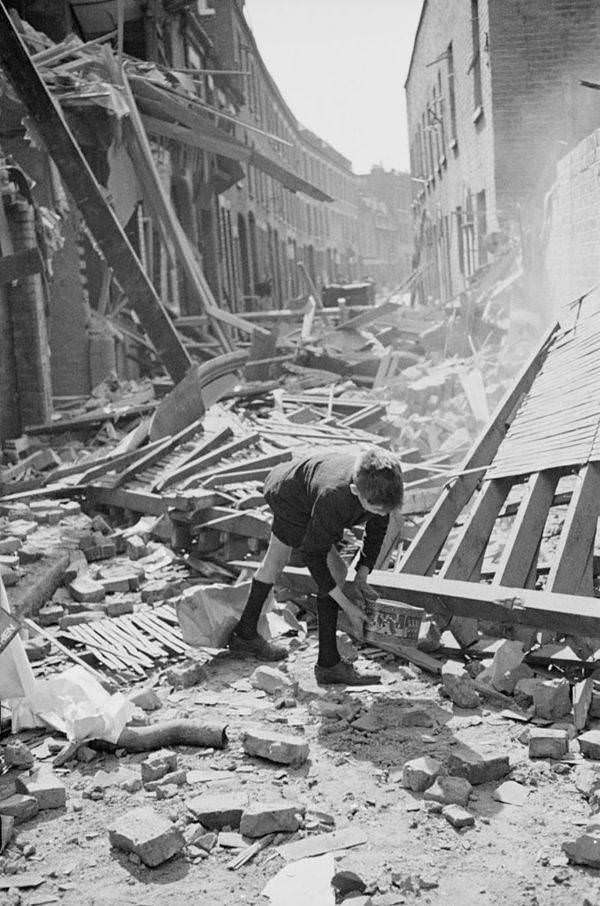
A boy retrieves an item from a rubble-strewn street after German bombing raids in the first month of the Blitz in England, 1940.

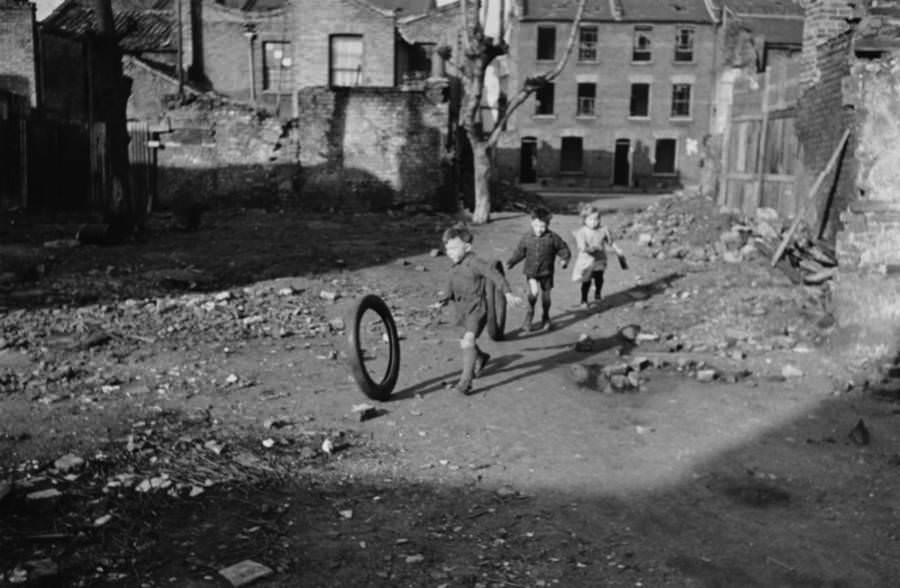
Even years after the war ended, bomb-damaged areas of London remained part of the urban landscape. Cleared lots and collapsed walls became informal playgrounds for local children, who had grown up knowing nothing but a city in various stages of destruction and reconstruction.

Children play in a bomb-damaged area of London, 1946.
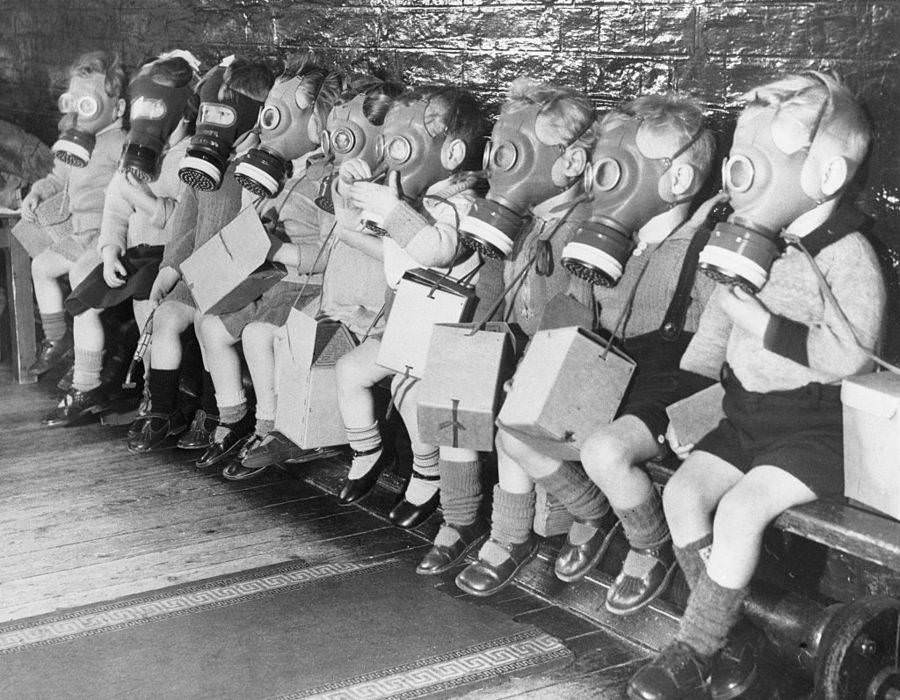
London schoolchildren try on their gas masks, 1941.
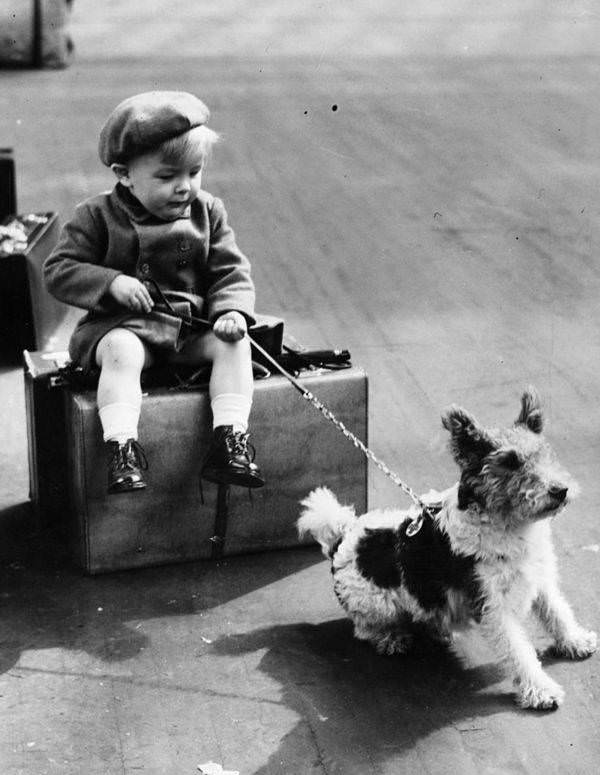
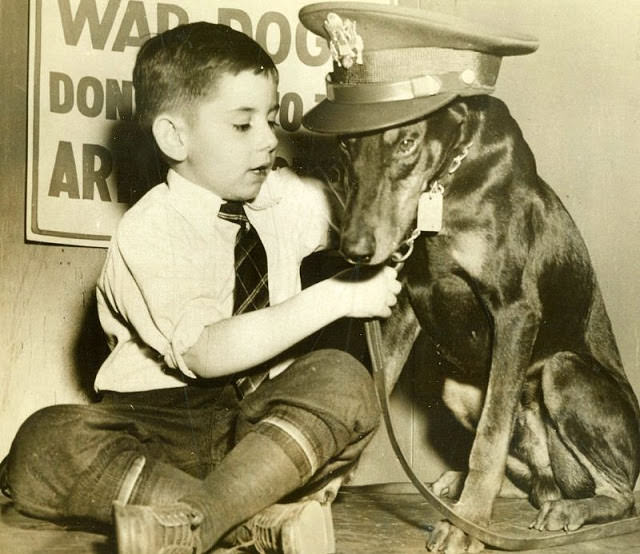
A young refugee hangs onto his dog's leash whilst awaiting wartime evacuation, 1940.
A young refugee hangs onto his dog’s leash whilst awaiting wartime evacuation, 1940.

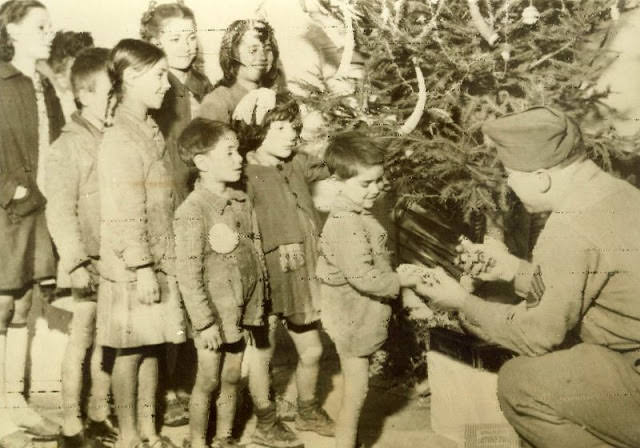
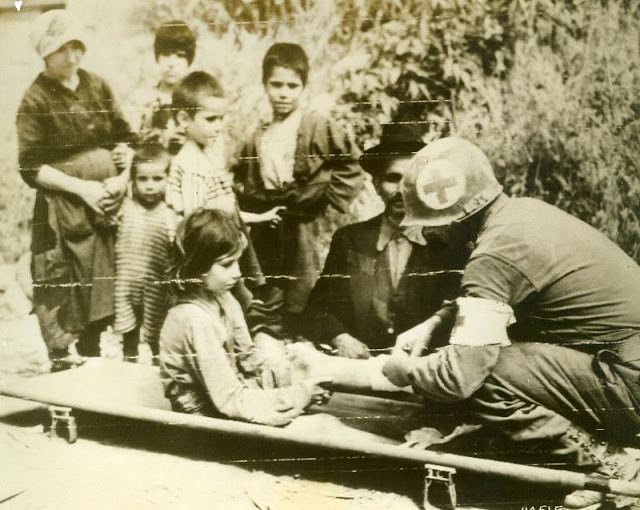
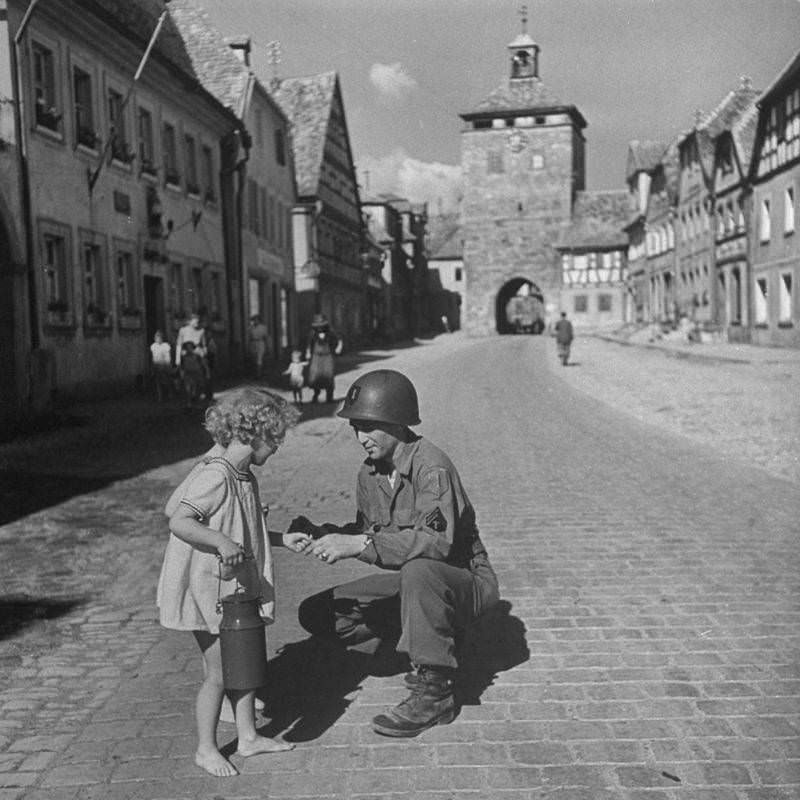
When American soldiers arrived in occupied and liberated territories across Europe, their interactions with local children were frequently documented. These encounters ranged from soldiers sharing food or candy with hungry kids to American medics treating children injured by the war’s violence. For many children in war-torn countries, Allied soldiers represented the first sign of relief in years.

American Supply Sergeant Ralph Gordon kneels in a street to give a piece of gum to a barefoot German girl, 1945.
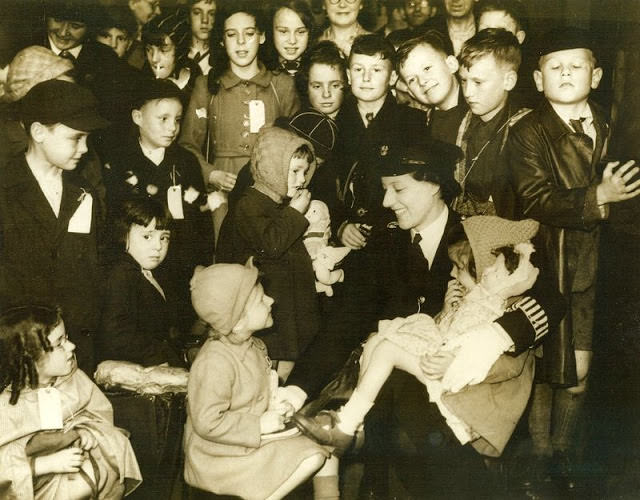
Some of the first children to be evacuated from London under a new law.
Child survivors of the Auschwitz concentration camp stand near the fence , 1945.

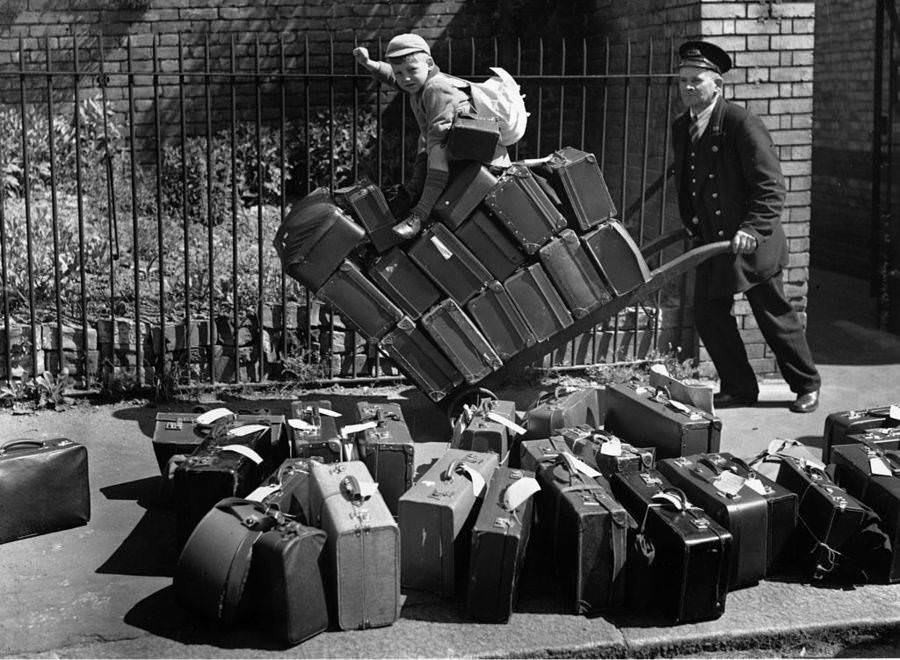
Railway stations became the stage for some of the most emotional scenes of the entire war. Children clutched stuffed animals, clung to parents, and waited on platform benches surrounded by luggage. Porters pushed cartloads of evacuee bags while children perched on top of the piles, heading for Wales, the countryside, or wherever the evacuation scheme had assigned them.

A porter pushes the luggage of evacuees bound for Wales on a trolley at a London railway station, with a young boy perched on top of the suitcases, 1940.
An abandoned boy holds a stuffed toy animal amid ruins following a German aerial bombing of London, 1940.
Young boys swing from a lamp post in the midst of rubble left by a bombing raid on London during the Blitz, 1940.
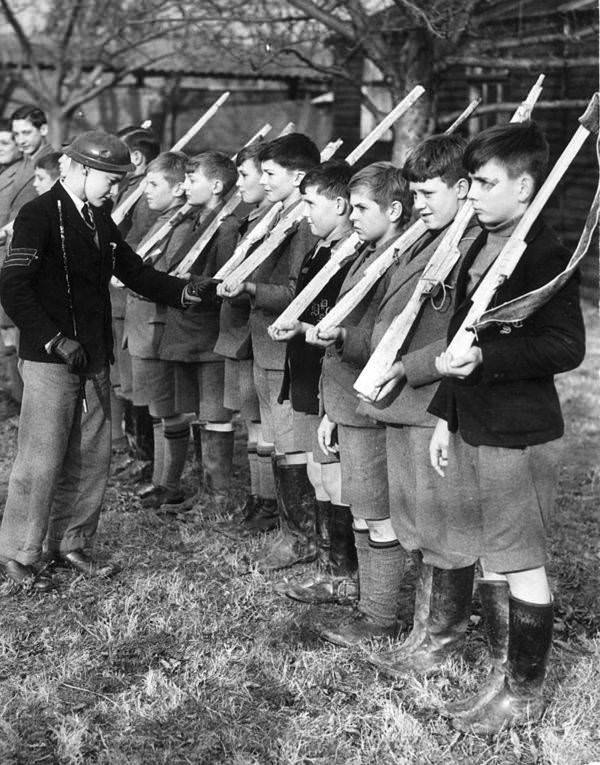
A young "Sergeant Major" inspects some British schoolboys who have been evacuated to Kent at the start of the war, 1939.
A young “Sergeant Major” inspects some British schoolboys who have been evacuated to Kent at the start of the war, 1939.
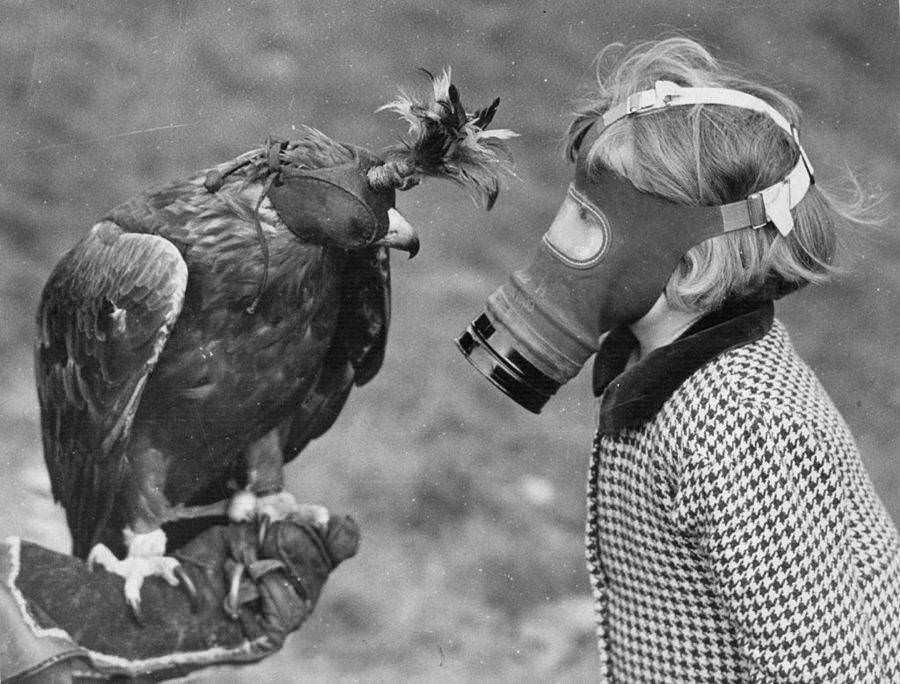
Little evacuee wearing mask and taking a  closer look at the eagle, 1941.
Little evacuee wearing mask and taking a closer look at the eagle, 1941.
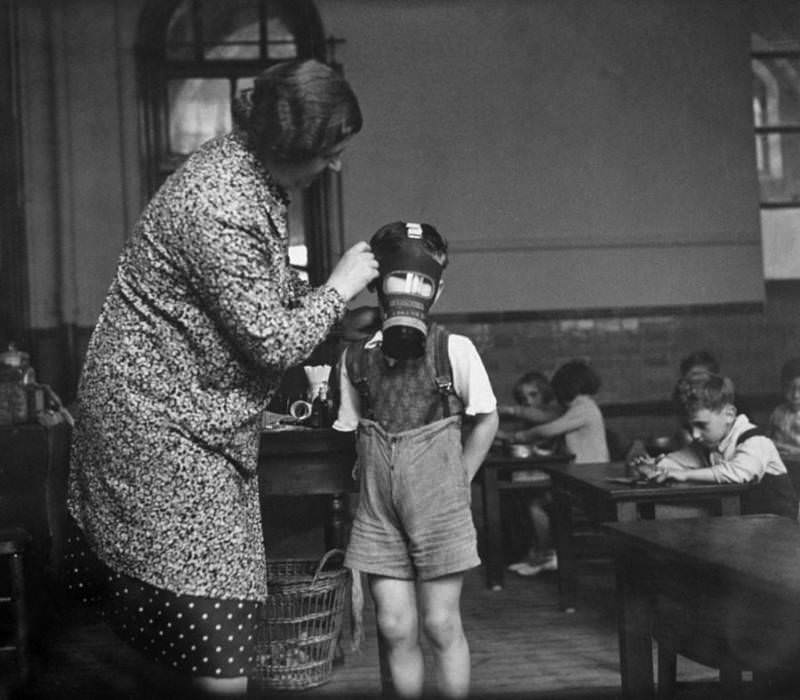
A woman fits a child with a gas mask at school. England, 1940.

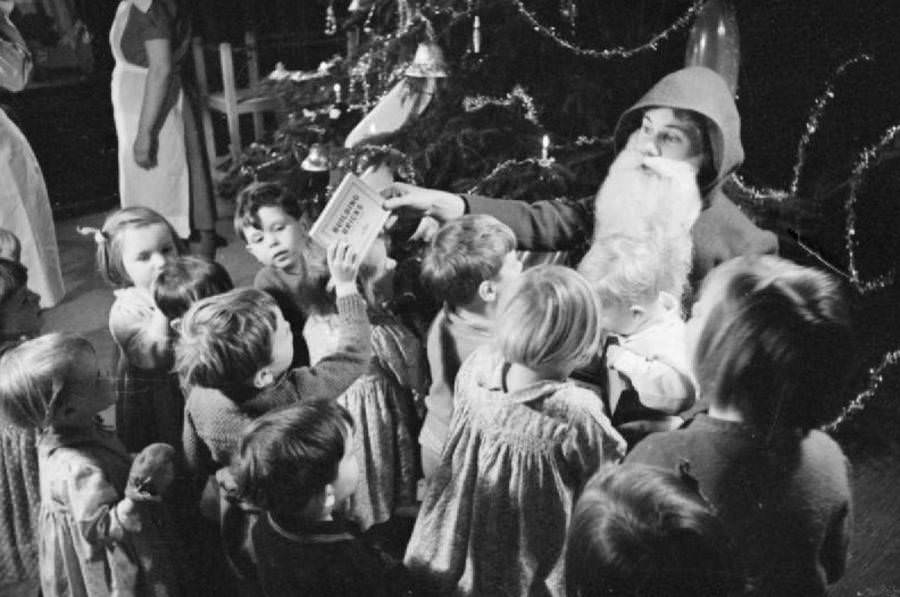
Despite everything, efforts were made to preserve moments of childhood joy for evacuated children. During Christmas 1941, a home for evacuees in Henley-on-Thames hosted a visit from Father Christmas, who distributed toys and games to the children staying there. Small gestures like these were a deliberate attempt to give children some sense of normalcy during an abnormal time.

Father Christmas hands out toys and games, including a set of building bricks, to children at a home for evacuees in Henley-on-Thames, England, 1941.
A little girl waits nervously with her doll and luggage before leaving London for her billet, 1940.
Safe at least.
Safe at least.
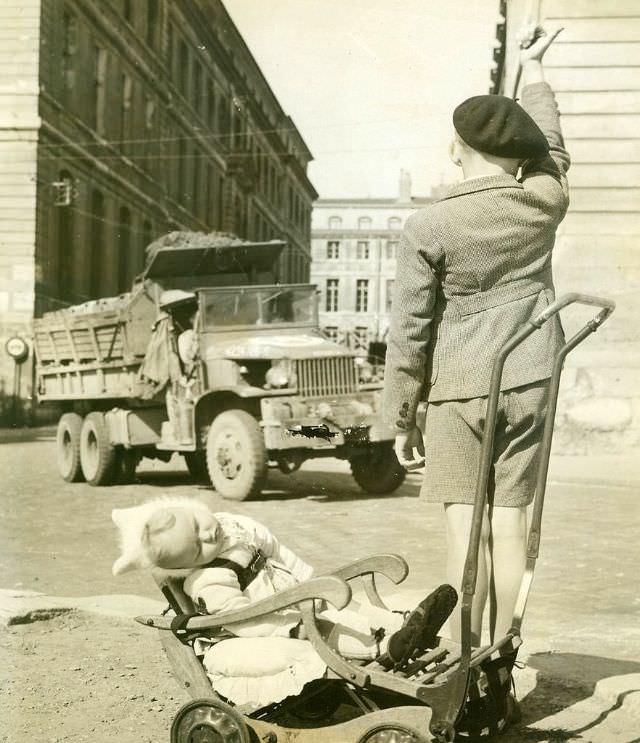
So long soldier, and good luck
Sugar baby - a refugee
Sugar baby – a refugee
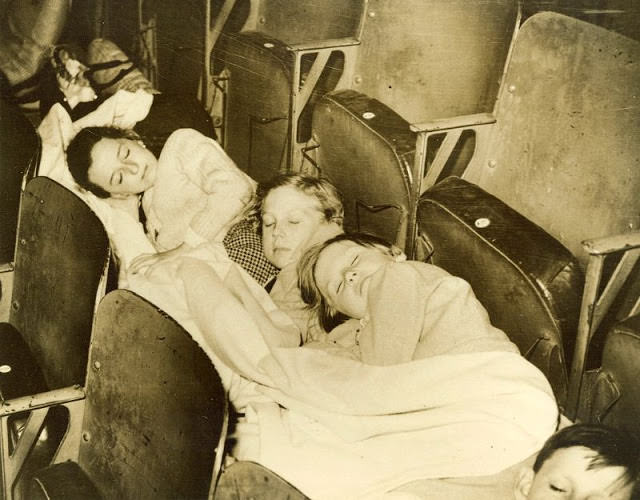
Theater of rest
Theater of rest
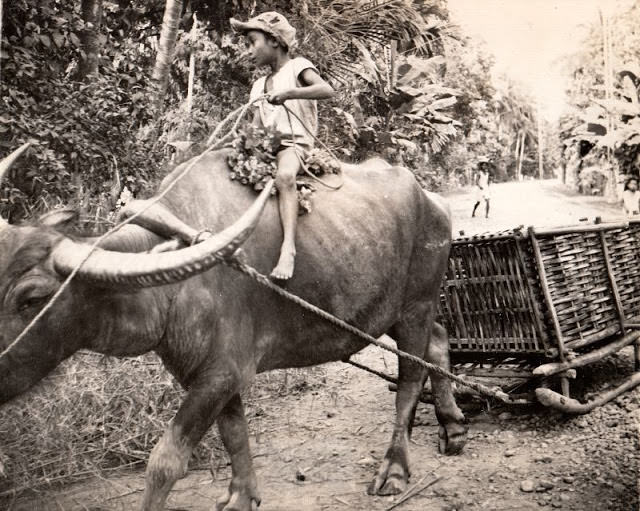
Travels in style
Travels in style
With the greatest of care
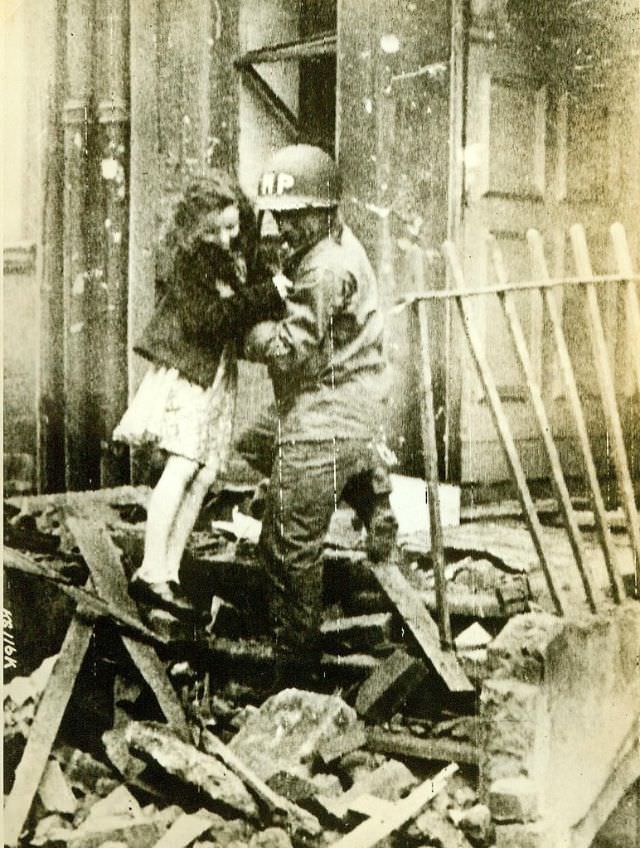
Yank aids flying bomb victim
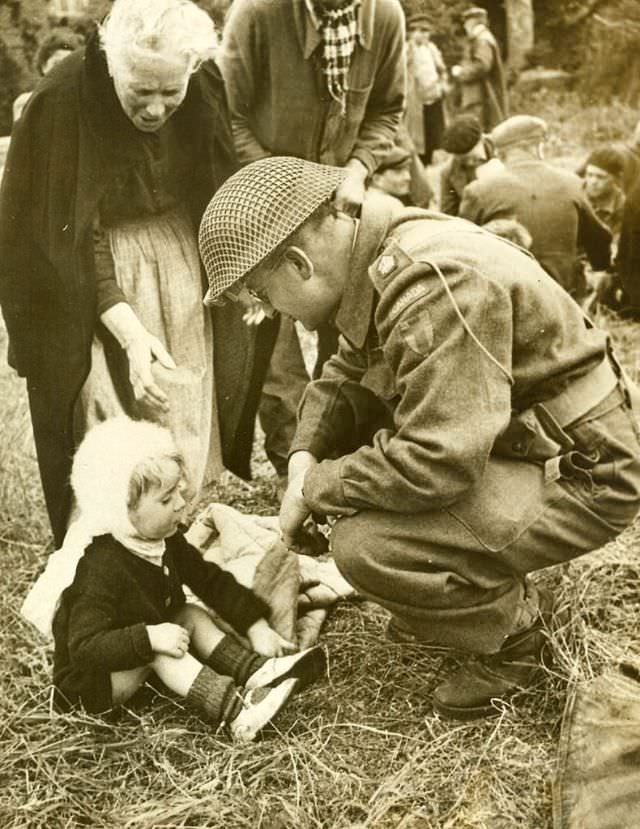
Young Frenchman finds a friend
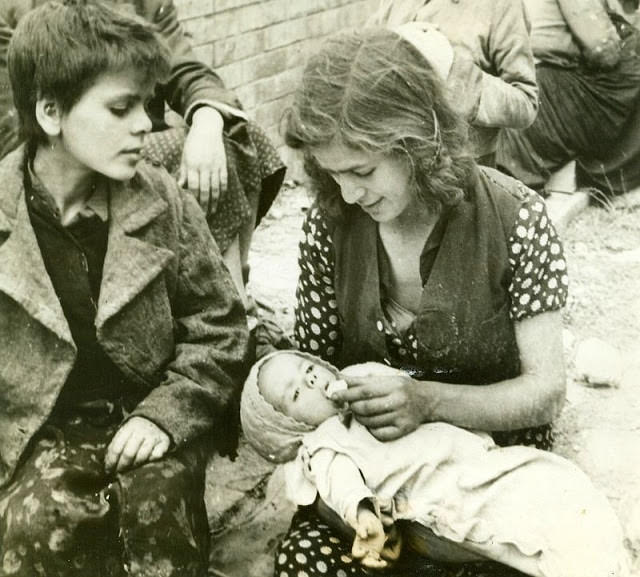
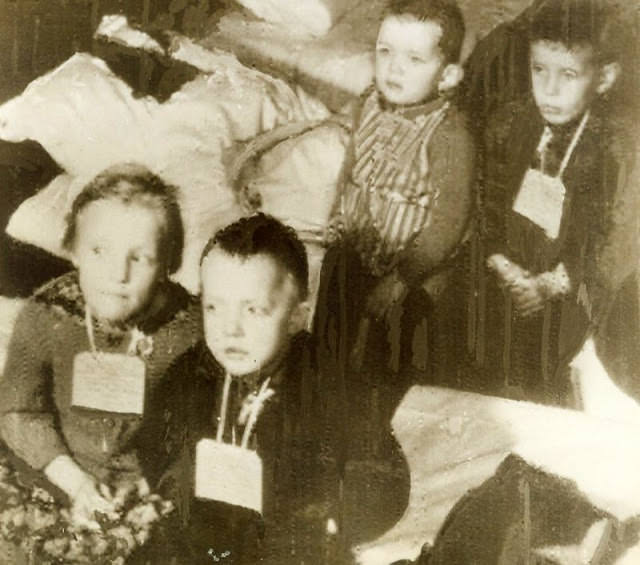
Youthful refugees
Youthful refugees
A lucky Kharkov civilian
Aussie wives head for U.S.
Children evacuated from London
But it's still home
But it’s still home
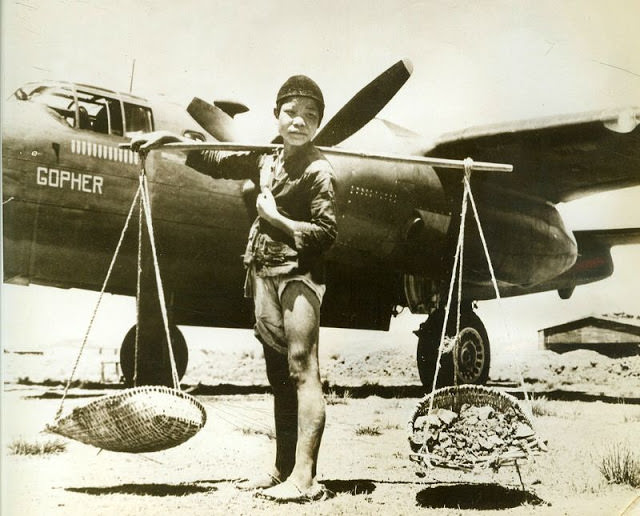
China feeds American warbirds
Chinese boy helps build airfield
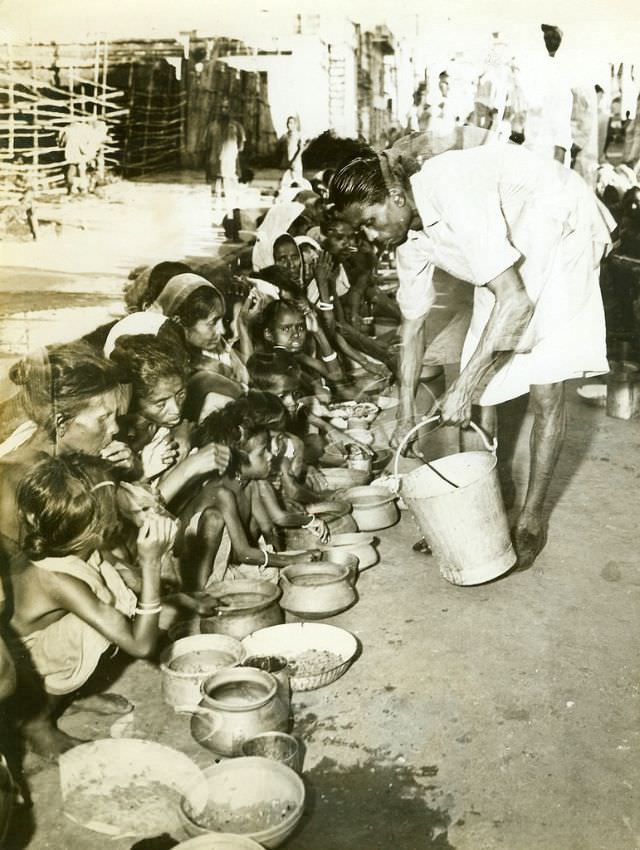
Famine in India
Famine in India
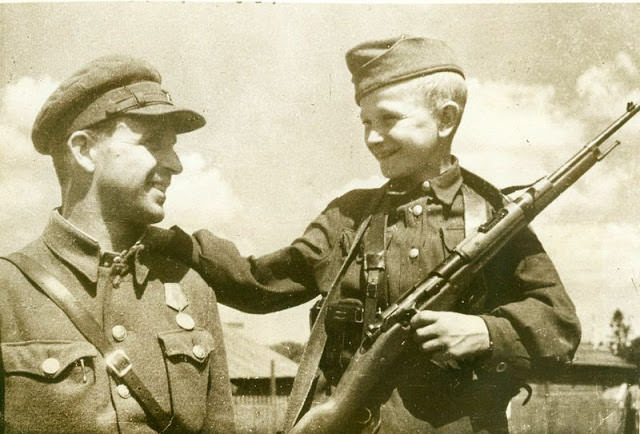
Father and son fight together
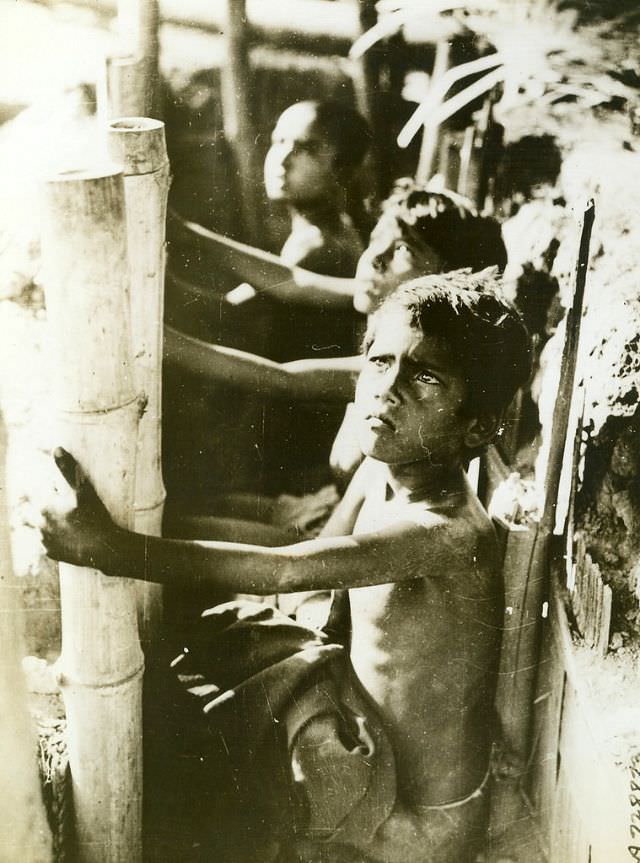
Fearful eyes of the innocent
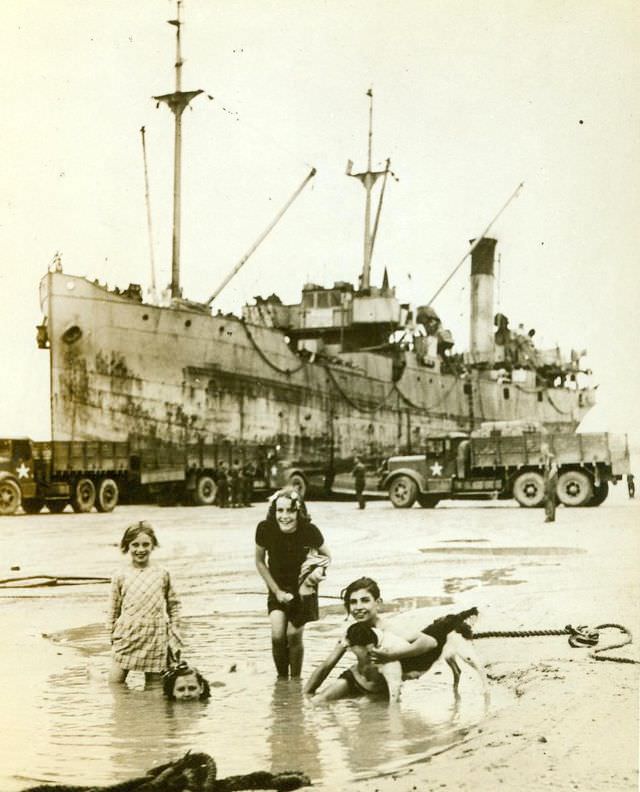
French children frolic near invasion craft
Head for Bastille Day Festivities
Going bye-bye
Going bye-bye
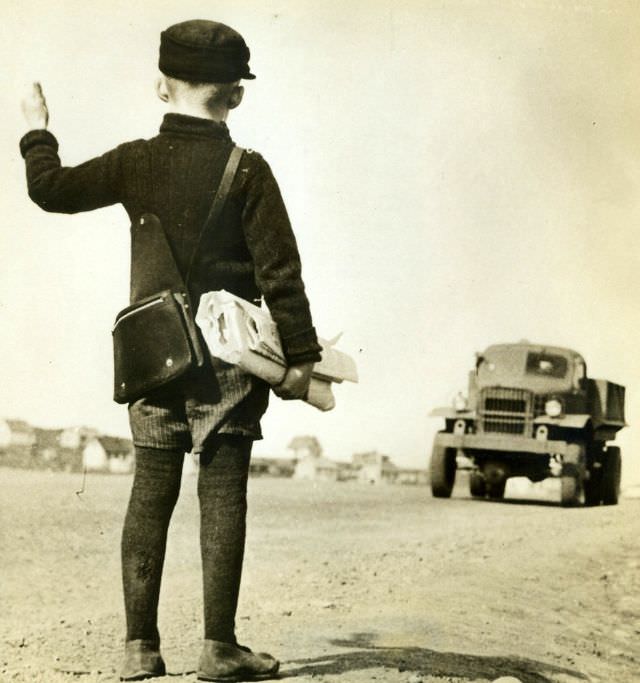
Hitch-hiking in the Iceland manner
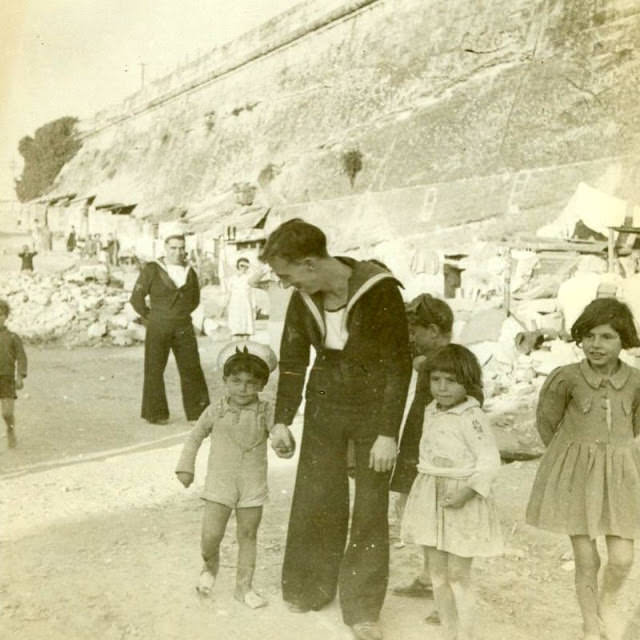
Malta's children can still smile
Malta’s children can still smile
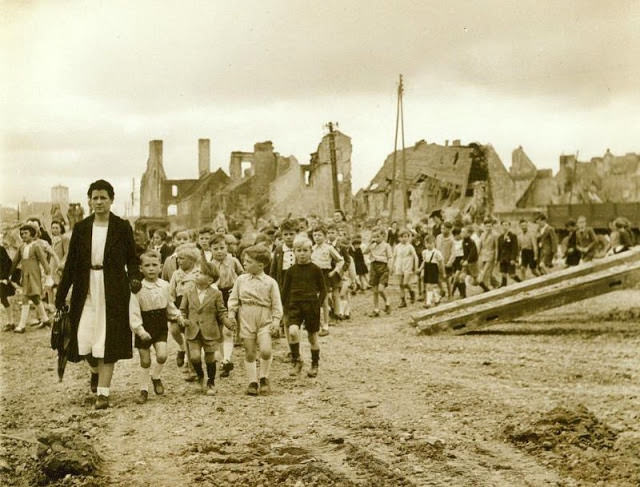
London children mobilized for evacuation
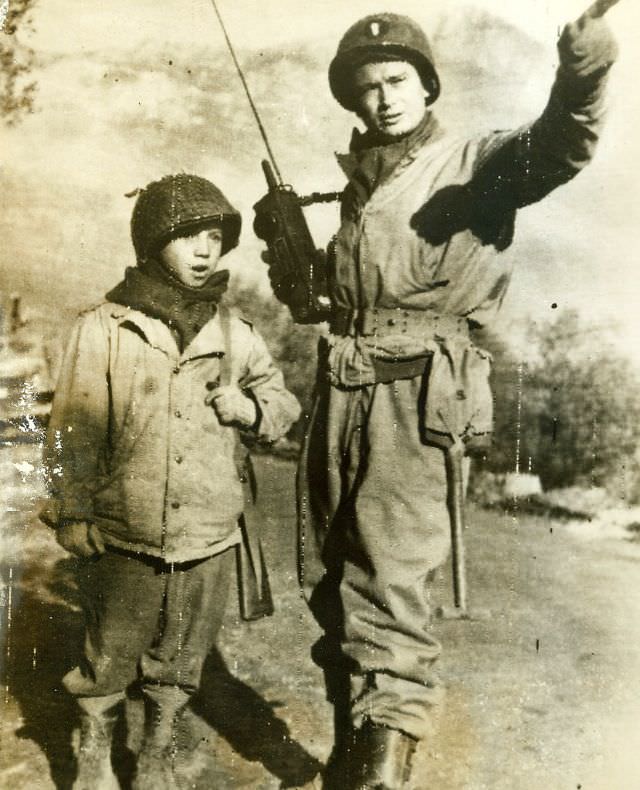
Mascot of the Yanks
Mascot of the Yanks
Merry Christmas from the yanks
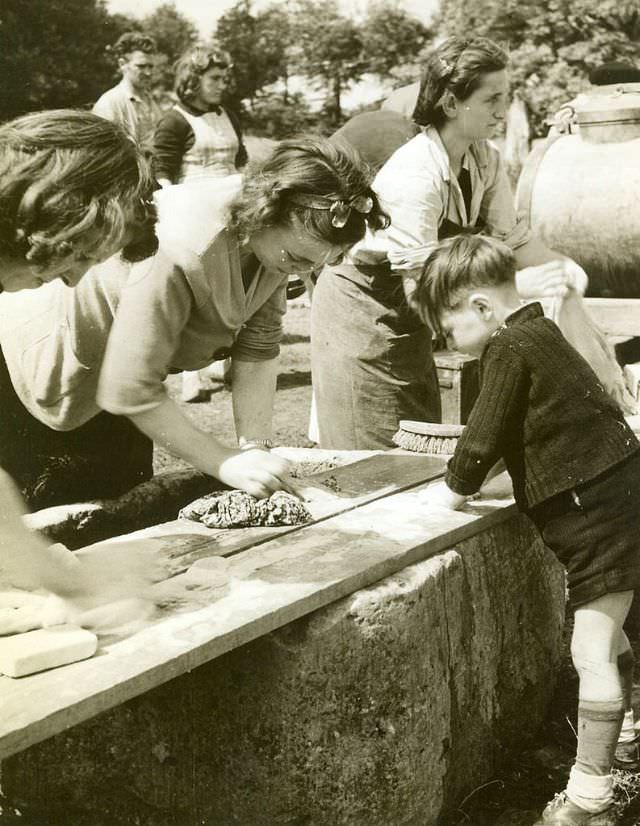
Mother's little helper
Mother’s little helper
Enjoyed this post? Get new ones in your inbox.

Leave a Comment

Your email address will not be published. Required fields are marked *

Share this Post 🥺

Please take a moment to share this content. Your support is greatly appreciated! 🙌🙏

Share this Post 🥺

Please take a moment to share this content. Your support is greatly appreciated! 🙌🙏
Scroll to Top
 
Hey Friend, Before You Go.. Please like & follow for more interesting content