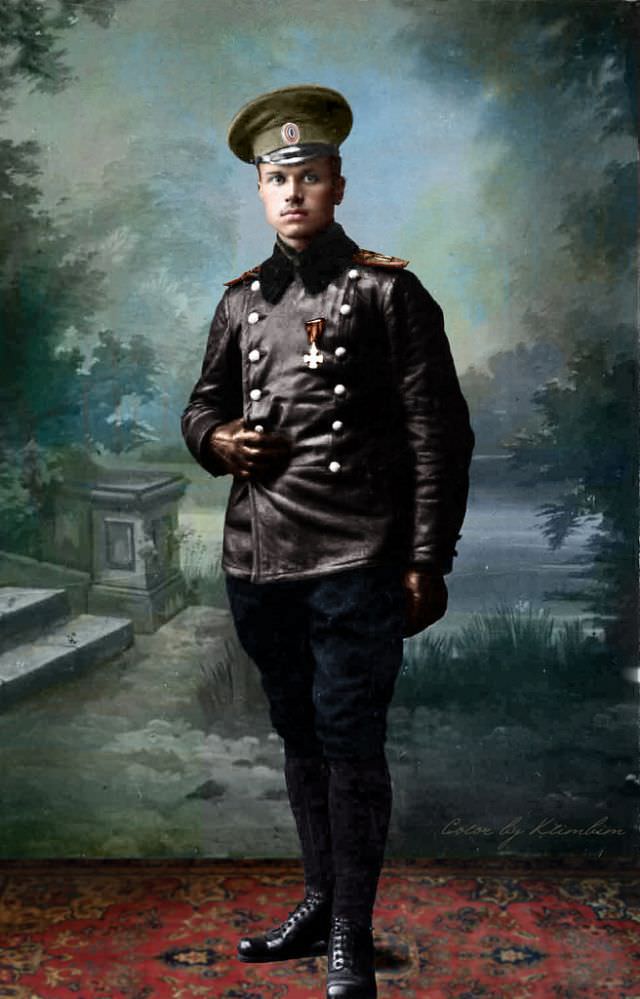

When World War I broke out in 1914, Russia fielded the largest military force on earth — over 5.9 million personnel. On paper, it looked unstoppable. In practice, the army was crippled from the start by poor roads, an underdeveloped railway network, and a command structure that struggled to move men and supplies where they were needed. What followed was one of the most devastating national military experiences of the entire war.
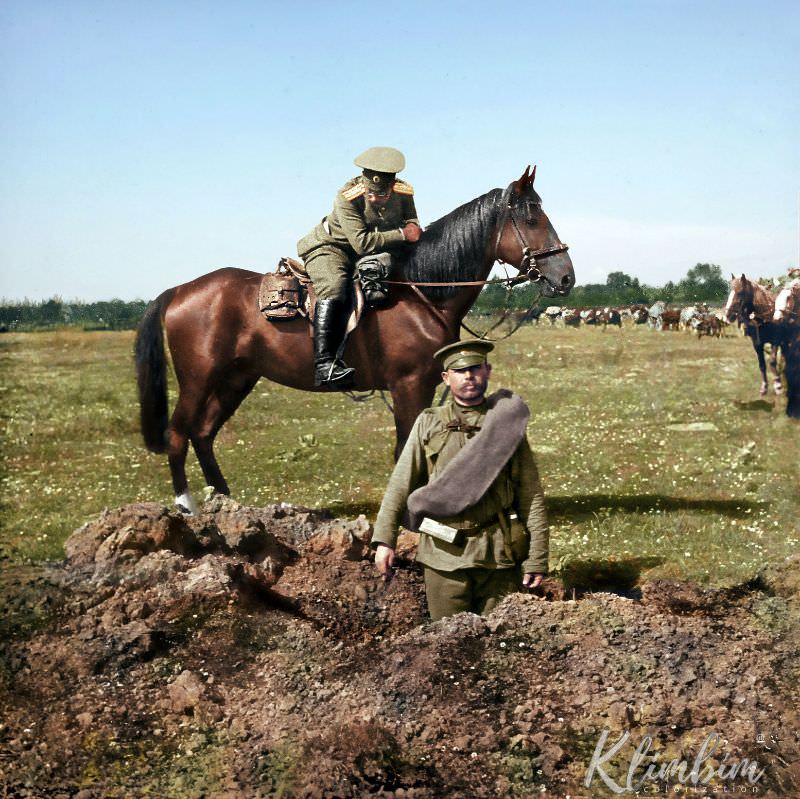
Russia’s war strategy was driven in large part by General Yuri Danilov, who pushed for offensives into both Germany and Austria-Hungary. The Eastern Front became Russia’s primary theater of war. But early results were catastrophic. The Battle of Tannenberg in late August 1914 ended in a complete Russian defeat, with two entire armies encircled by German forces. Tens of thousands of soldiers were killed or captured in the disaster.
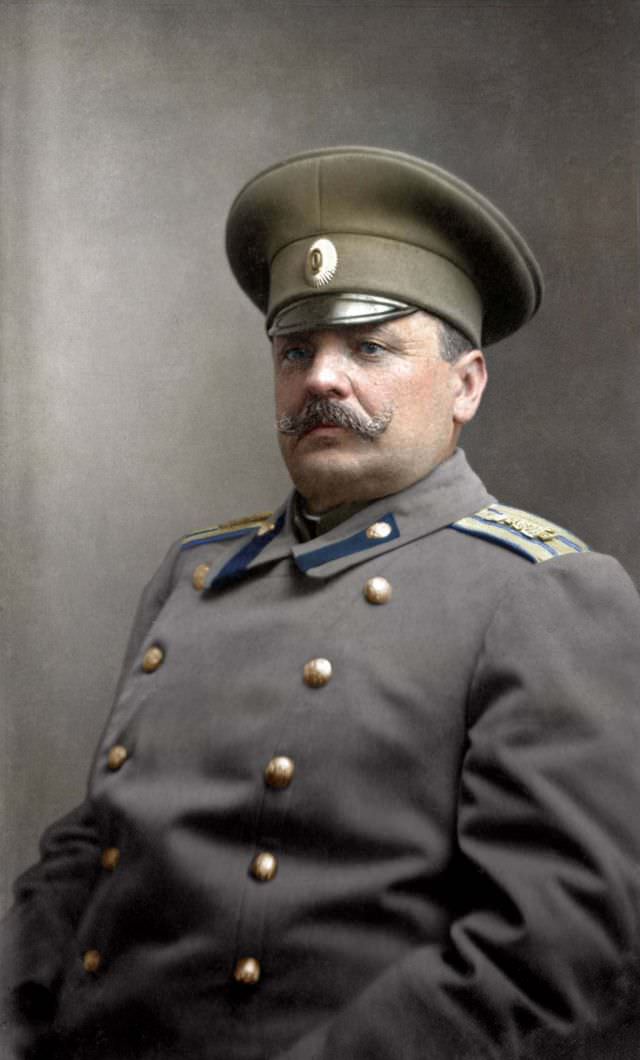
Among the commanders who would later define Russia’s war effort was General Aleksei Brusilov. Photographed around 1914, he was already regarded as one of the most capable officers in the Russian army — a reputation he would dramatically prove two years later.
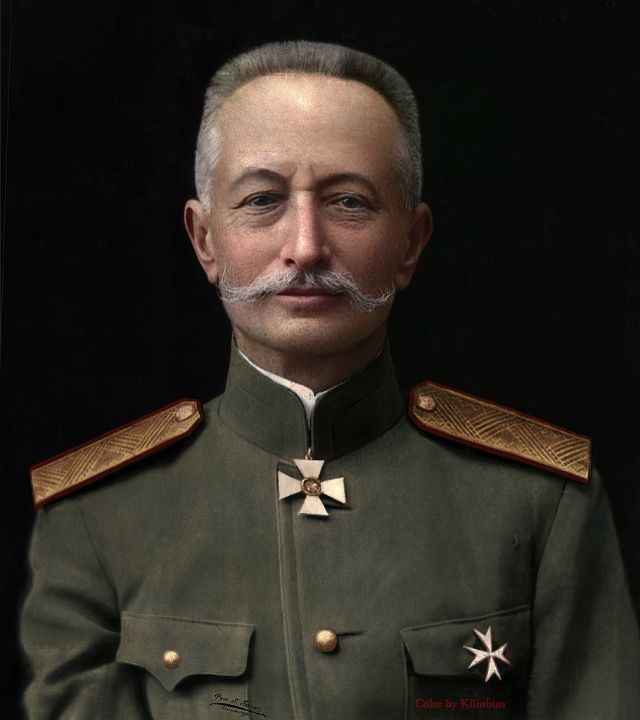
At every level of the army, officers and soldiers carried the weight of a grinding war. Captain Michael A. Dashkov of the 9th Russian Army, serving under General Lechitsky, was photographed in November 1914 — just months into a conflict that would last years and demand enormous sacrifice from men like him.
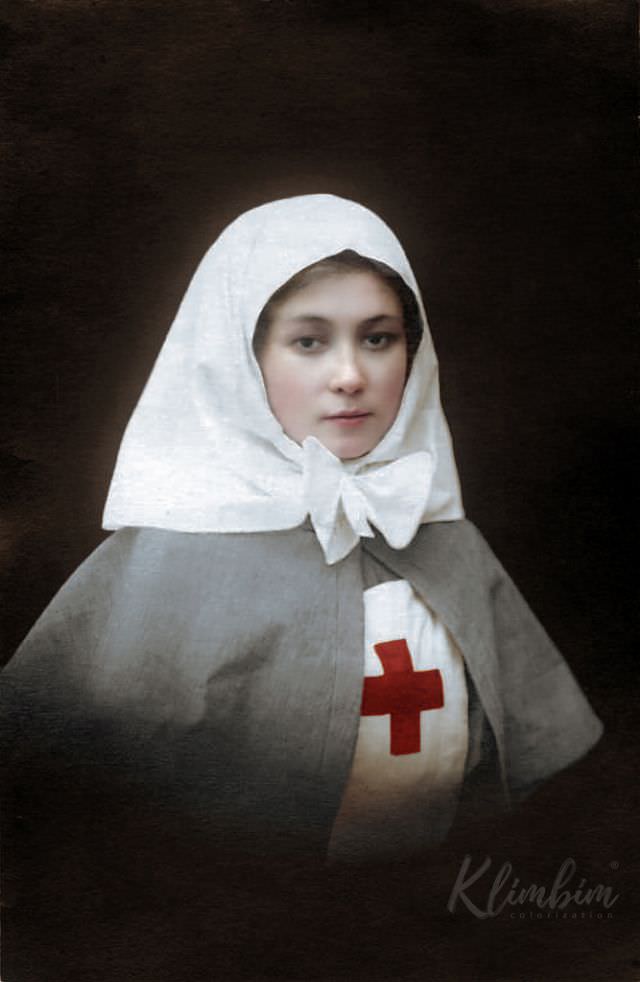
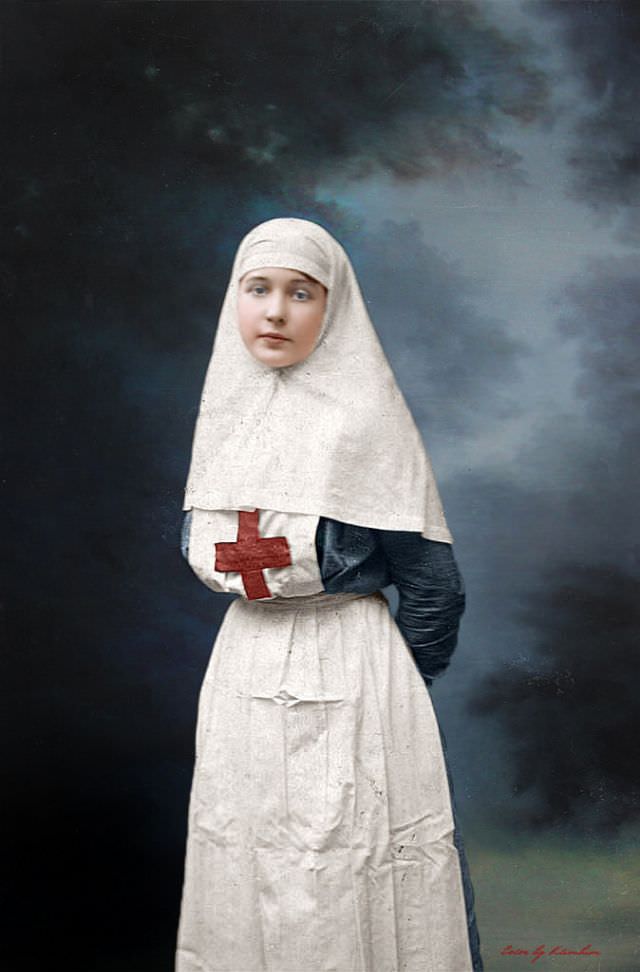
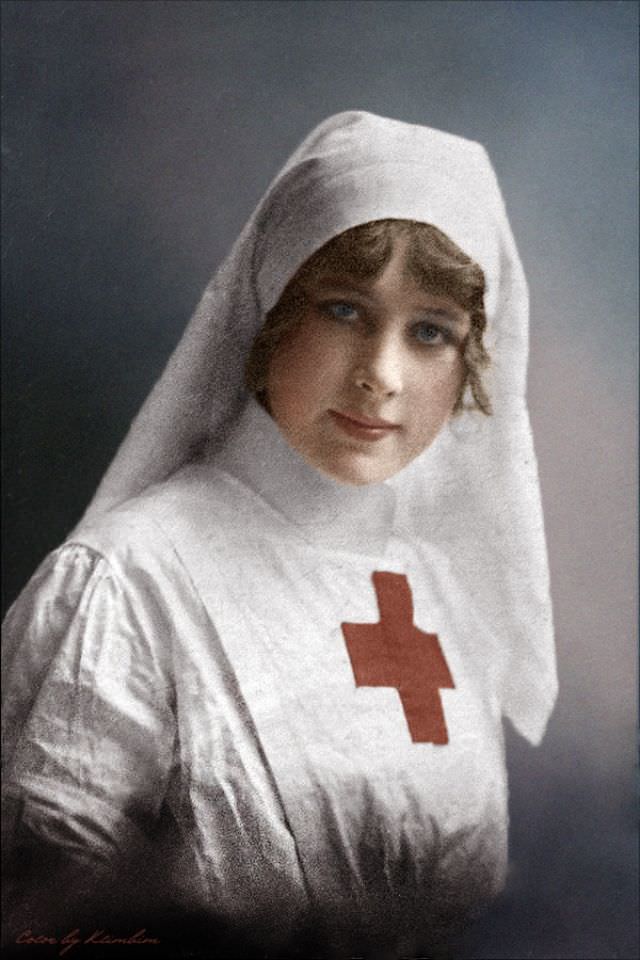
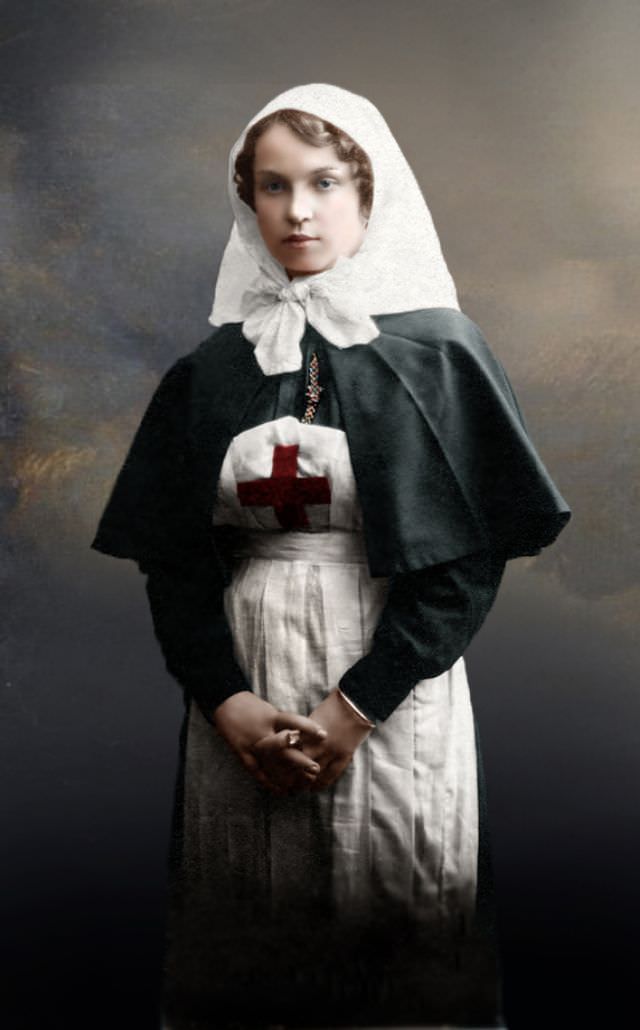
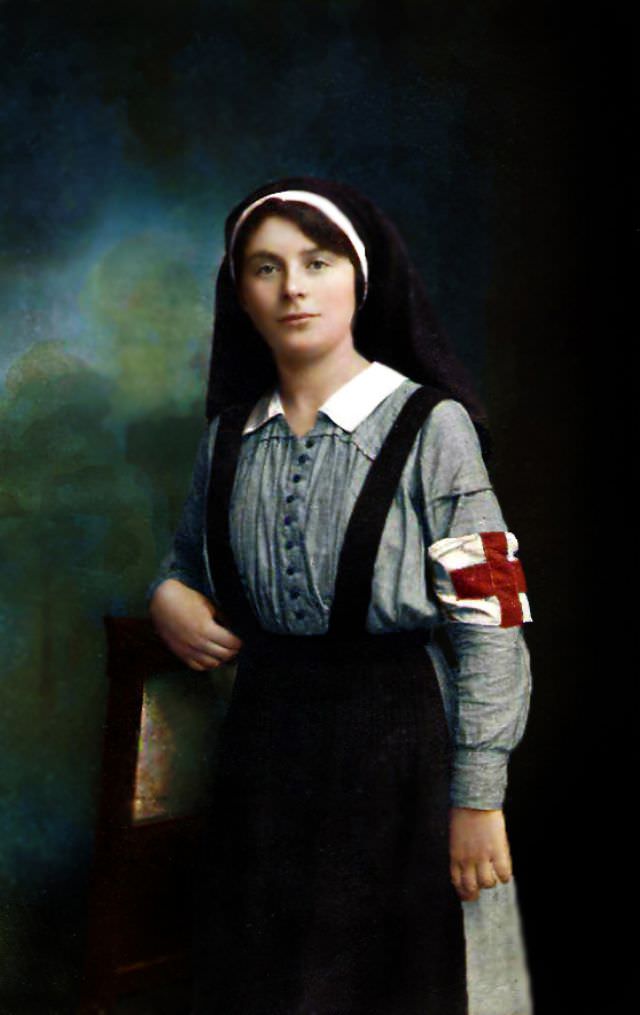
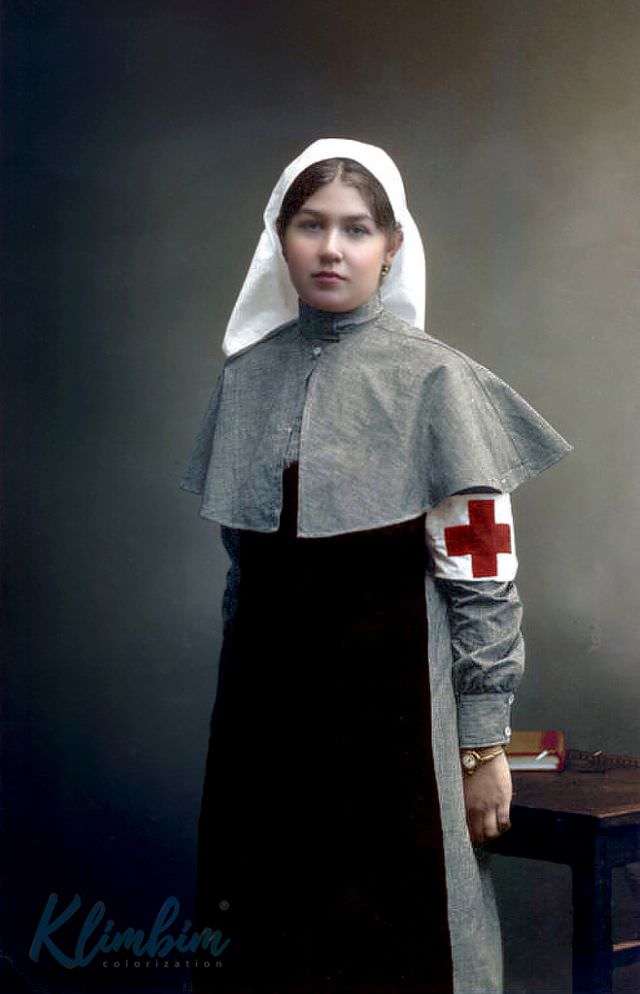
Russia’s war effort was not carried solely by men. Nurses served in field hospitals close to the front lines, treating catastrophic wounds under difficult conditions. Their work was essential, and their presence was documented throughout the war.
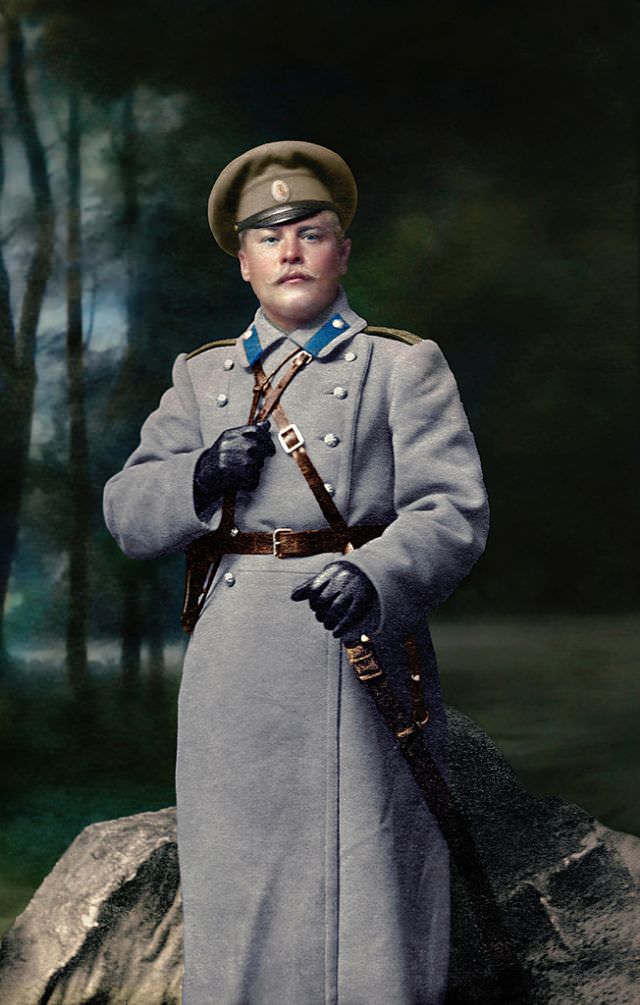
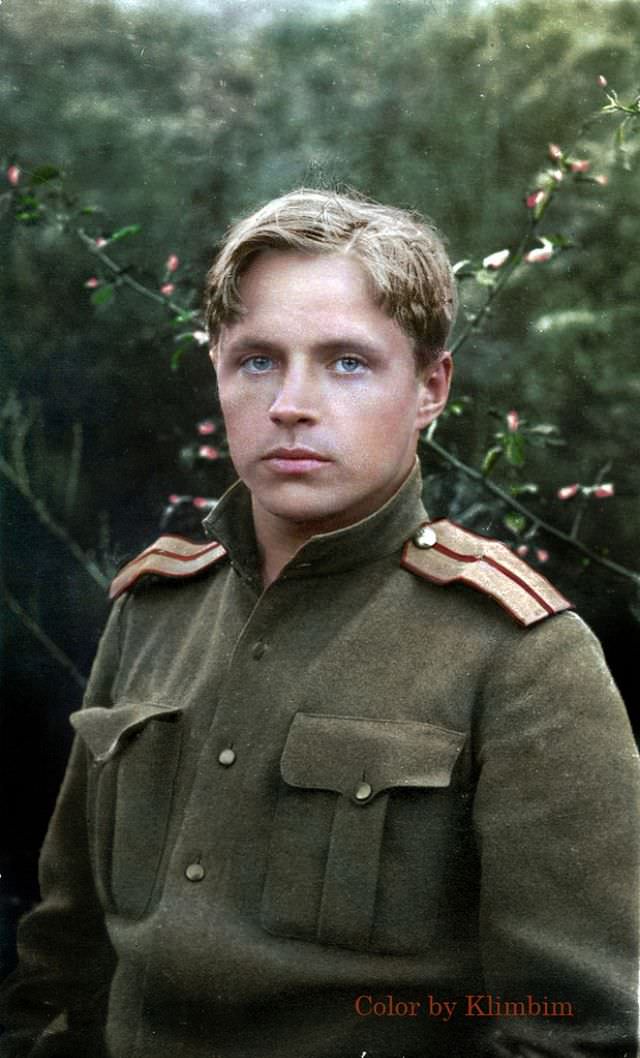
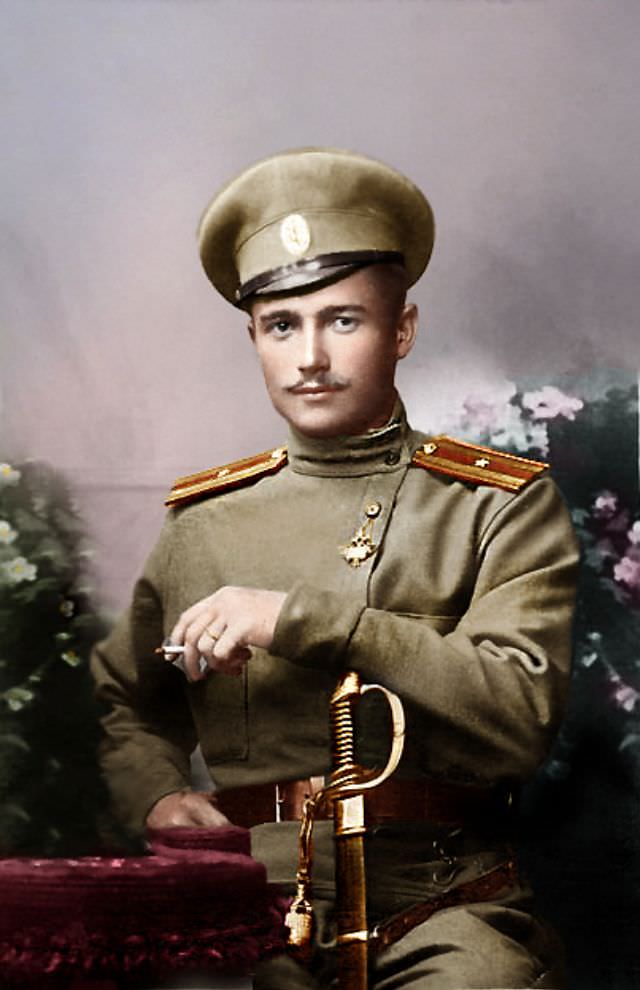
Military honors were awarded frequently to those who distinguished themselves. A young lieutenant photographed in 1915 wears the Order of St. Vladimir, one of Russia’s most respected military decorations, a visible mark of courage earned under fire.
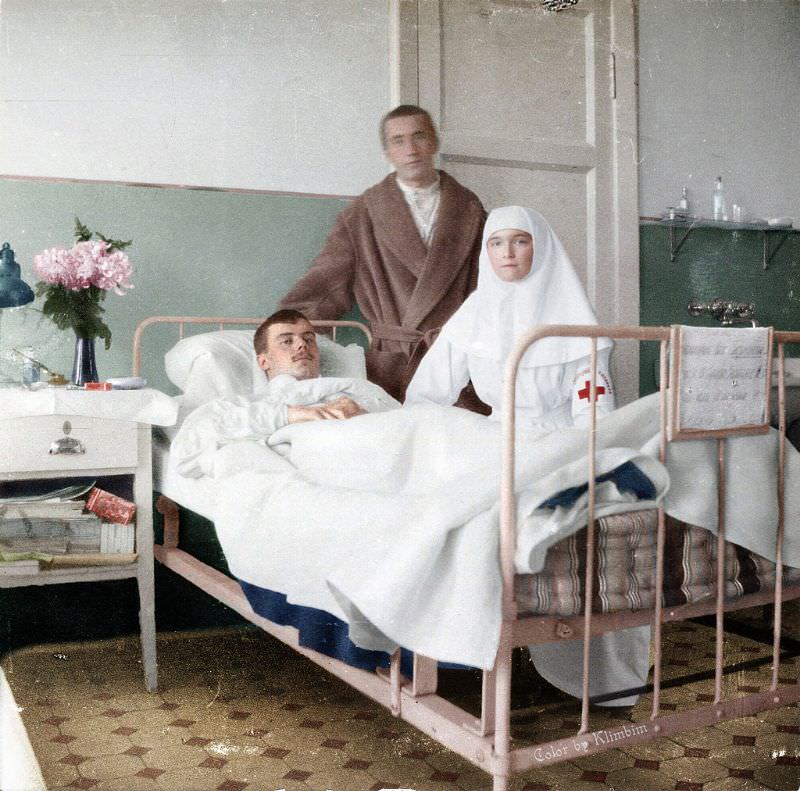
The Russian imperial family was directly involved in the war effort. Grand Duchess Olga, eldest daughter of Tsar Nicholas II, trained as a nurse and worked in military hospitals caring for wounded soldiers. She did not occupy a ceremonial role — she performed actual medical work alongside professional nurses.
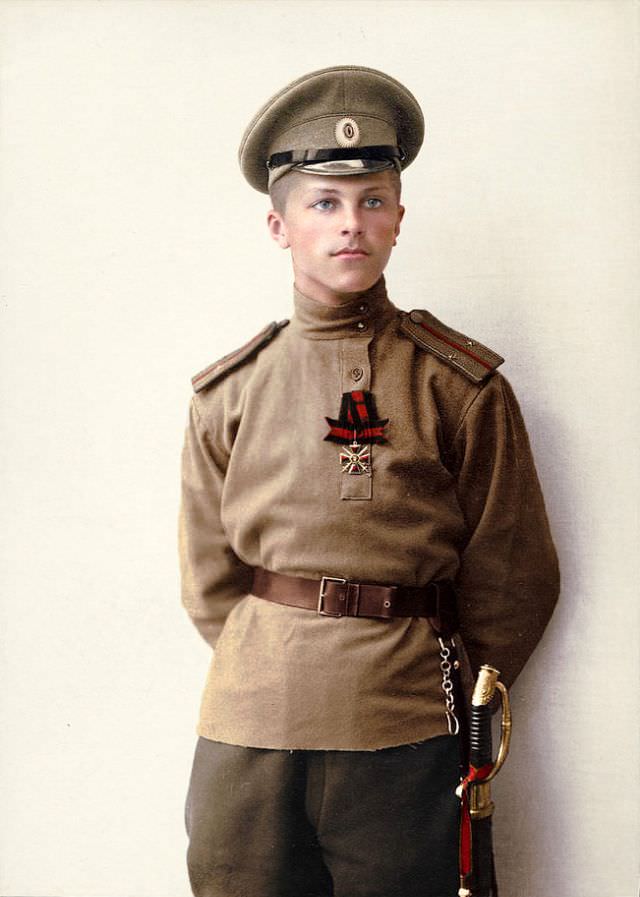
Russia’s air arm was growing during this period. Military pilots like Ensign Vasily Vishnyakov, photographed in 1915, were part of an expanding aviation force that conducted reconnaissance and combat missions across the Eastern Front.
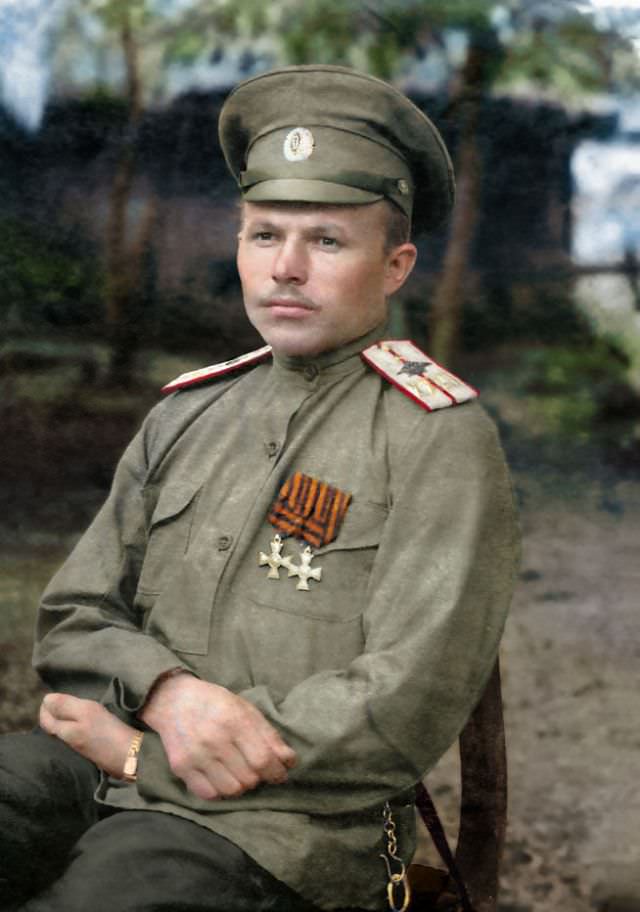
Observer-pilot sub-lieutenant Dobrovolsky, photographed in November 1915 in his Deperdussin aircraft, represented the technical side of Russian military aviation. Observation missions were critical — pilots gathered intelligence on enemy troop movements that infantry commanders relied on to plan their attacks.
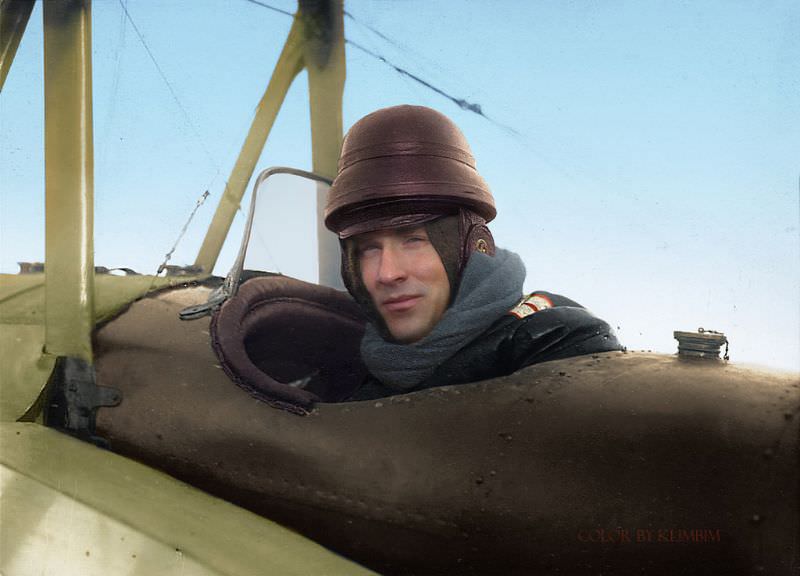
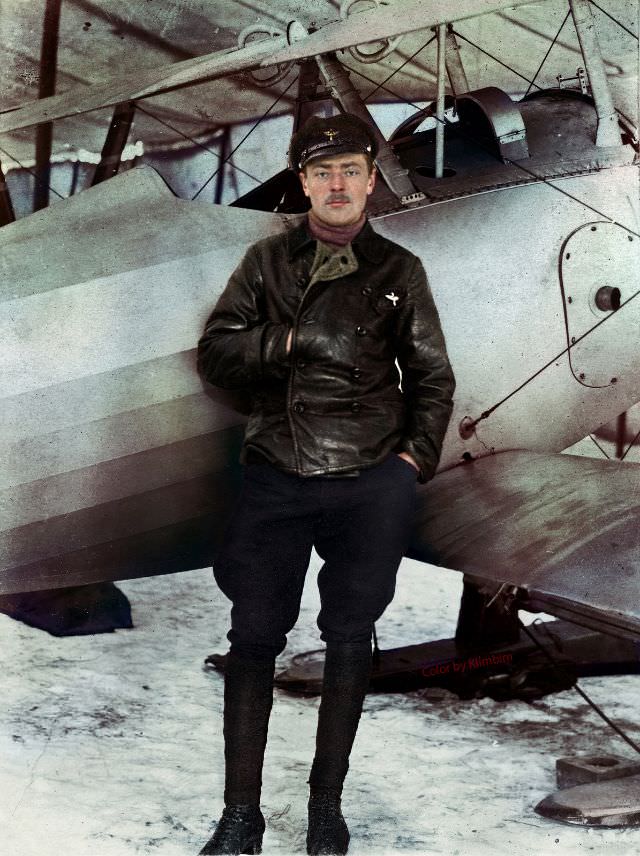
Russian aviator Pyotr Krisanov served during the harsh winter conditions of 1915 — a brutal environment for early aircraft and the men who flew them. Flying in open cockpits in Russian winter temperatures demanded extraordinary physical endurance.
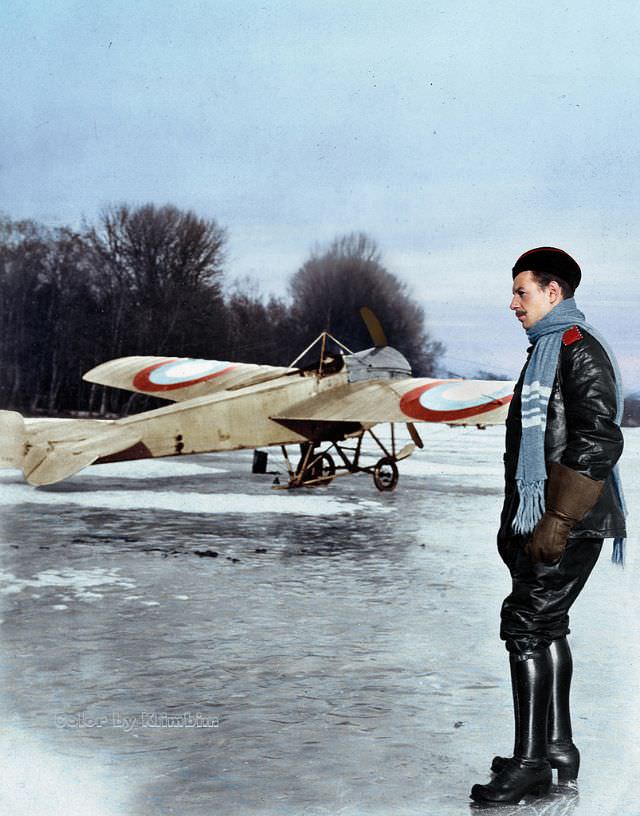
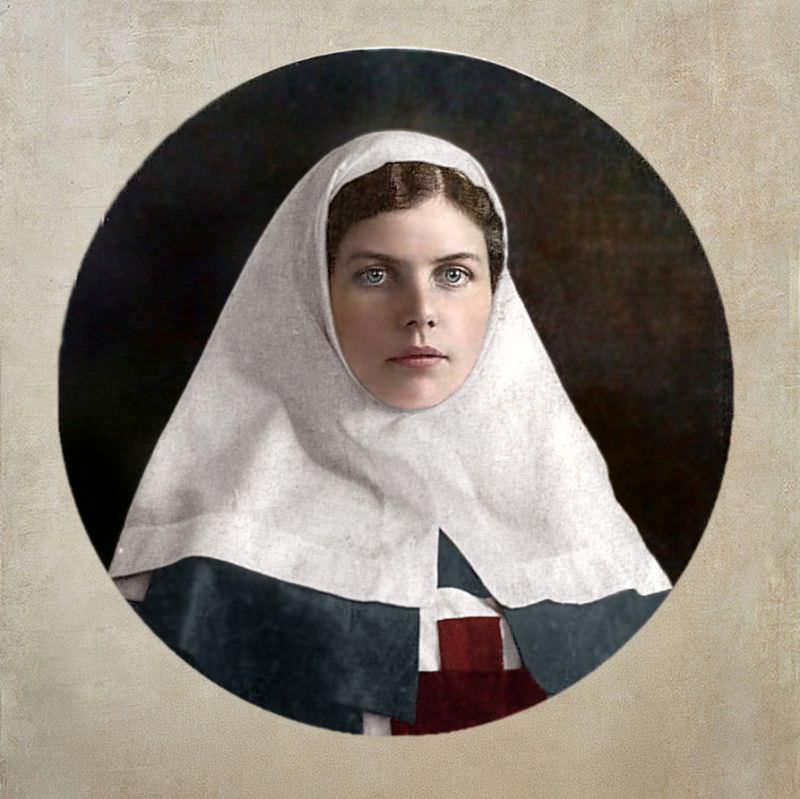
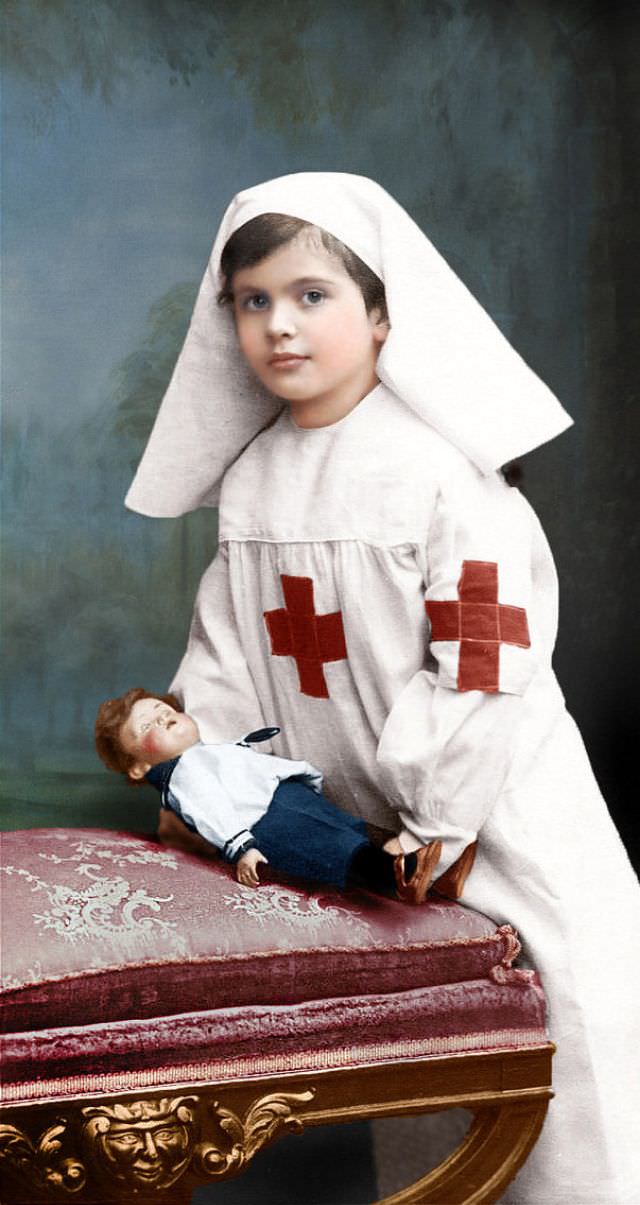
Nurses were a constant presence throughout the war, treating soldiers at field hospitals that were often located dangerously close to the front. Many worked under artillery fire, and their casualty rates reflected how exposed they were.
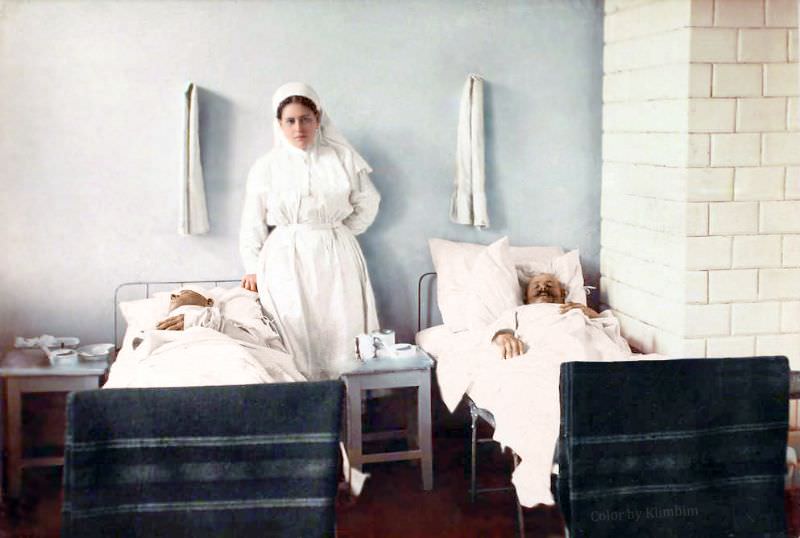
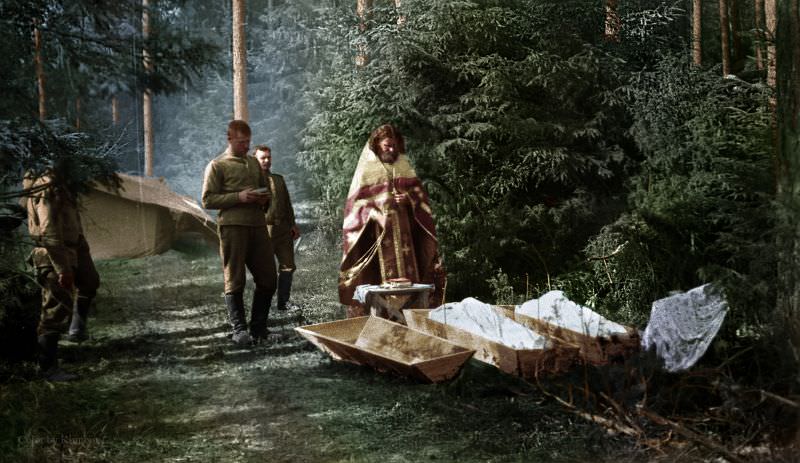
War left deep marks on families far from the front. Colonel Grigory Kuchin’s widow, Vera Ivanovna, was photographed in 1915 with her daughter Xenia and son Constantin — a family portrait shaped entirely by loss.
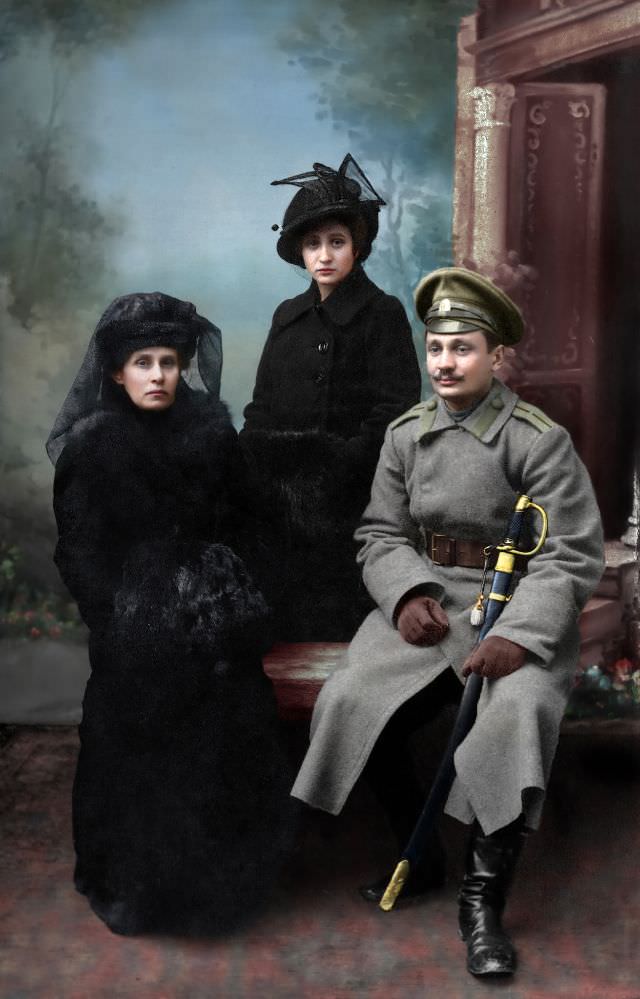
By the summer of 1916, Russian aviation had grown considerably. Aircraft were being used for both tactical strikes and battlefield observation, and images like this one — a plane photographed in flight on July 14, 1916 — capture just how much warfare had changed since 1914.
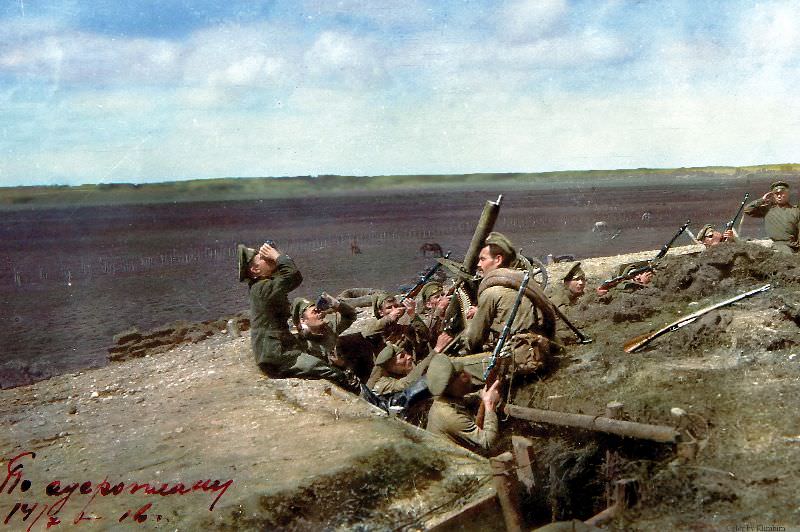
Death was a constant on the Eastern Front. Russian soldiers were buried near the places where they fell, often with minimal ceremony given the pace and scale of the fighting. This 1916 burial photograph reflects the ordinary tragedy of a war that consumed men at a staggering rate.
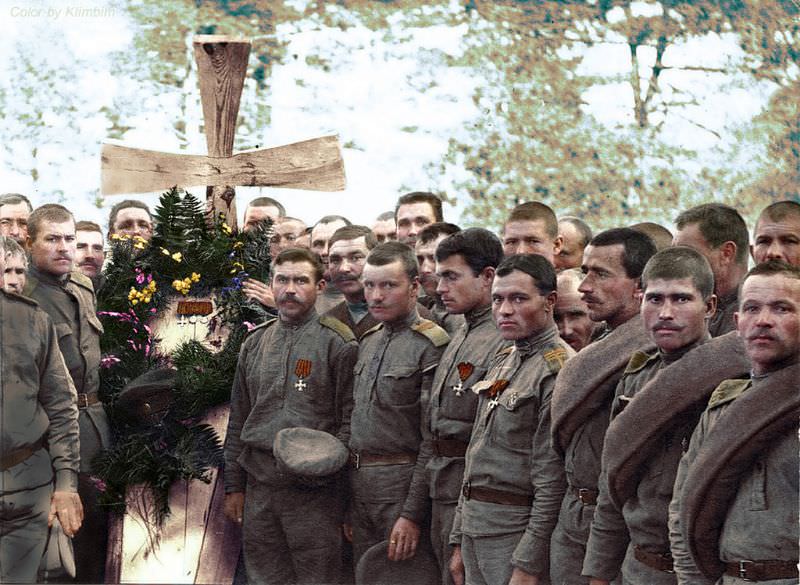
Even amid war, soldiers observed religious traditions. Easter 1916 was marked at the front, with men gathering to celebrate despite the ongoing fighting around them. For many Orthodox Christian soldiers, these moments of faith were among the few constants in an otherwise chaotic existence.
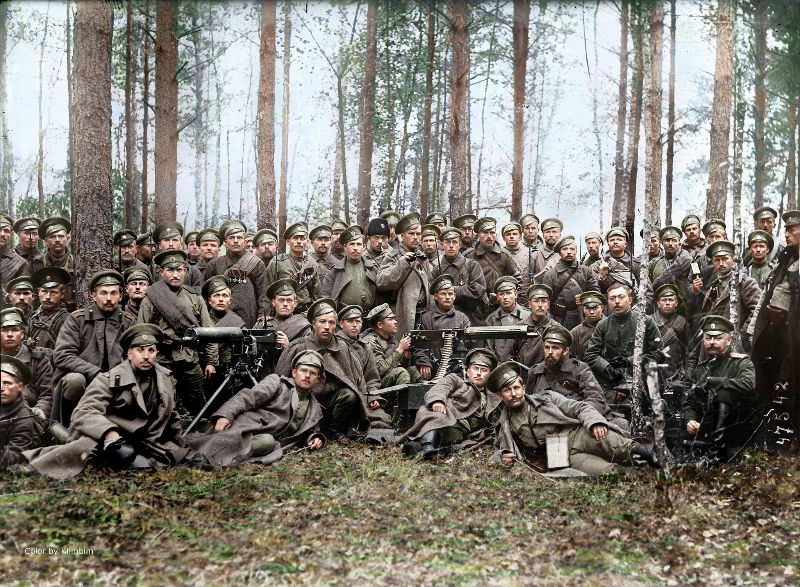
The summer of 1916 brought Russia’s greatest military achievement of the entire war. General Brusilov launched a massive offensive against Austro-Hungarian forces on the Eastern Front — an attack so well-planned and executed that it shattered four Austro-Hungarian armies. Historian Graydon Tunstall described the Brusilov Offensive as the worst crisis of World War I for Austria-Hungary and the Triple Entente’s greatest victory. Russian soldiers preparing to attack in 1916 were part of this massive operation.
The offensive succeeded, but it came at an enormous cost. Russian casualties numbered in the hundreds of thousands, and the army’s manpower reserves were badly depleted. The strategic success could not hide the human toll that was steadily destroying Russia’s ability to fight.
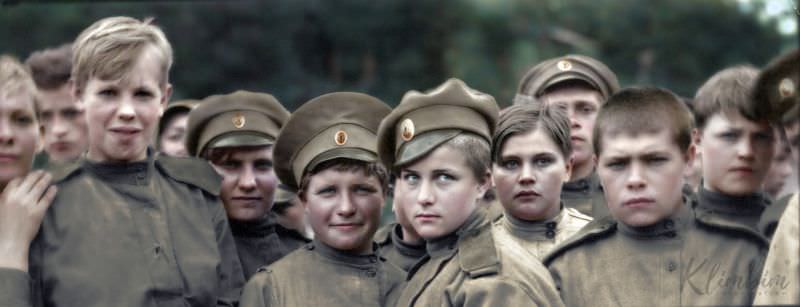
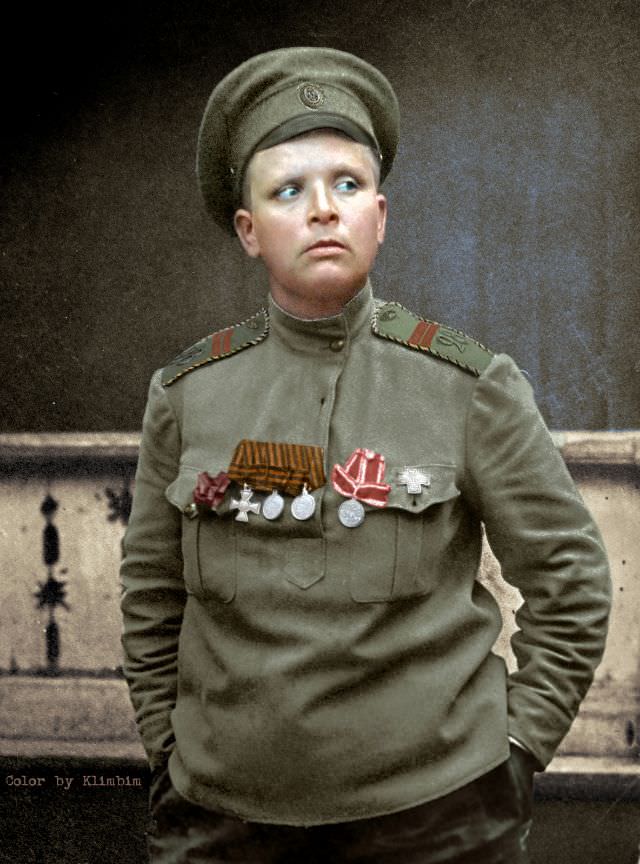
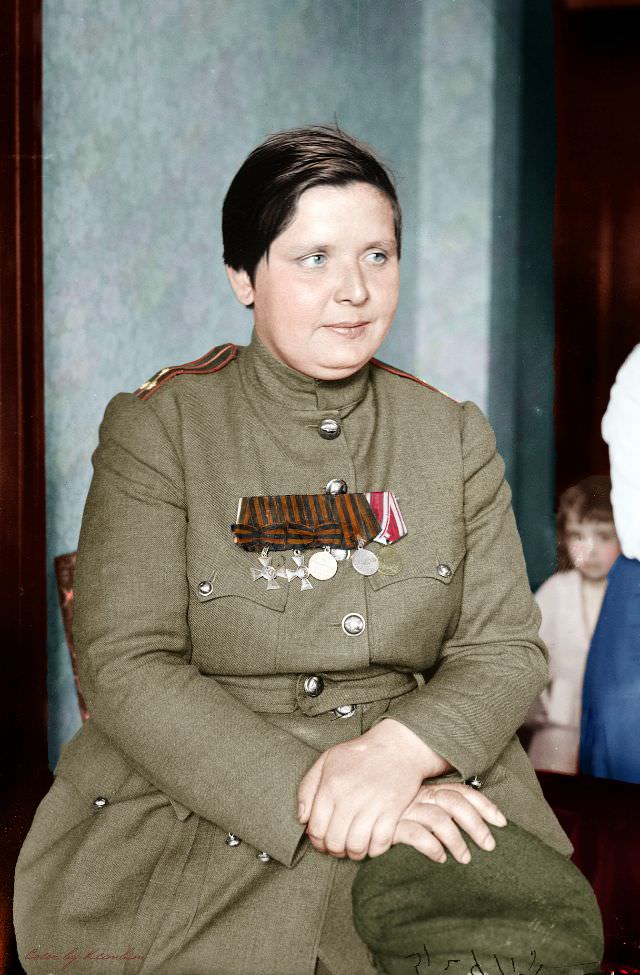
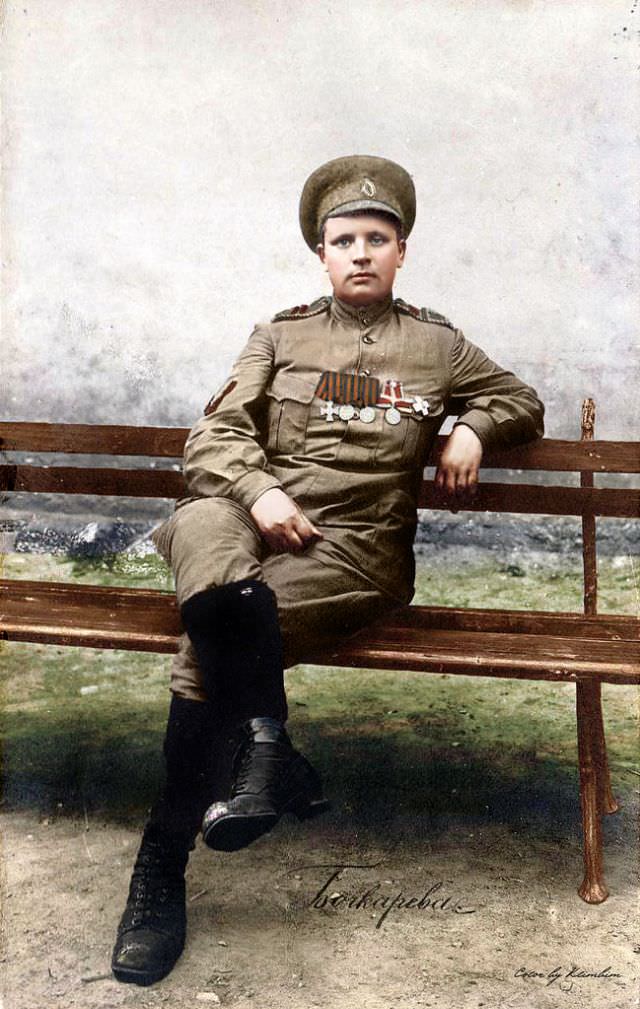
By 1917, with the army weakened and morale collapsing, Maria Bochkareva formed the Women’s Battalion of Death — an all-female combat unit intended to shame male soldiers into continuing to fight. Bochkareva, photographed in November 1917, had already served in combat herself before founding the unit. The battalion fought in the Kerensky Offensive, Russia’s final major military operation of the war.
The Kerensky Offensive of July 1917 was a military catastrophe. Launched by the provisional government after the February Revolution, it collapsed within days. Soldiers refused orders, units disintegrated, and the Russian army effectively ceased to function as a fighting force. The offensive destroyed what remained of the provisional government’s authority and accelerated the political crisis that brought Lenin and the Bolsheviks to power.
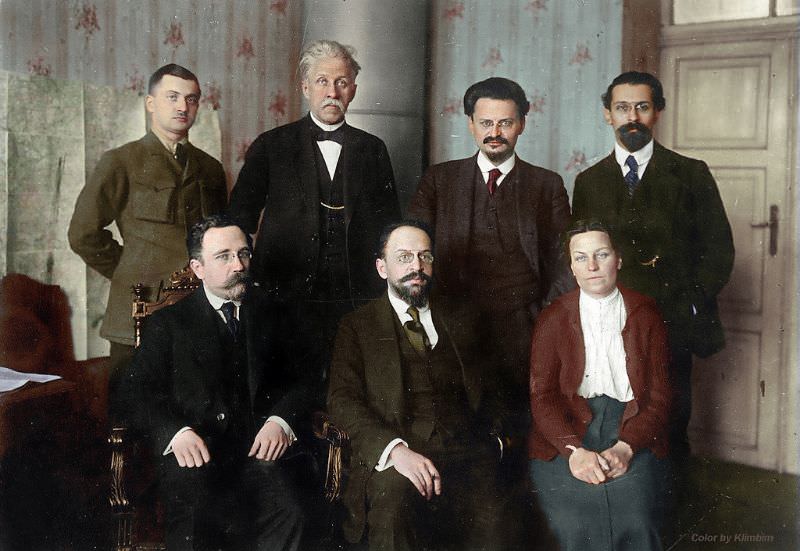
The Soviet delegation that gathered at Brest-Litovsk in January 1918 was there to end Russia’s participation in the war. Negotiations with Germany concluded on December 16, 1917, when an armistice was signed. The formal treaty, signed in March 1918, handed Germany significant territorial concessions, but it took Russia out of a war that had already cost the country more than it could bear.
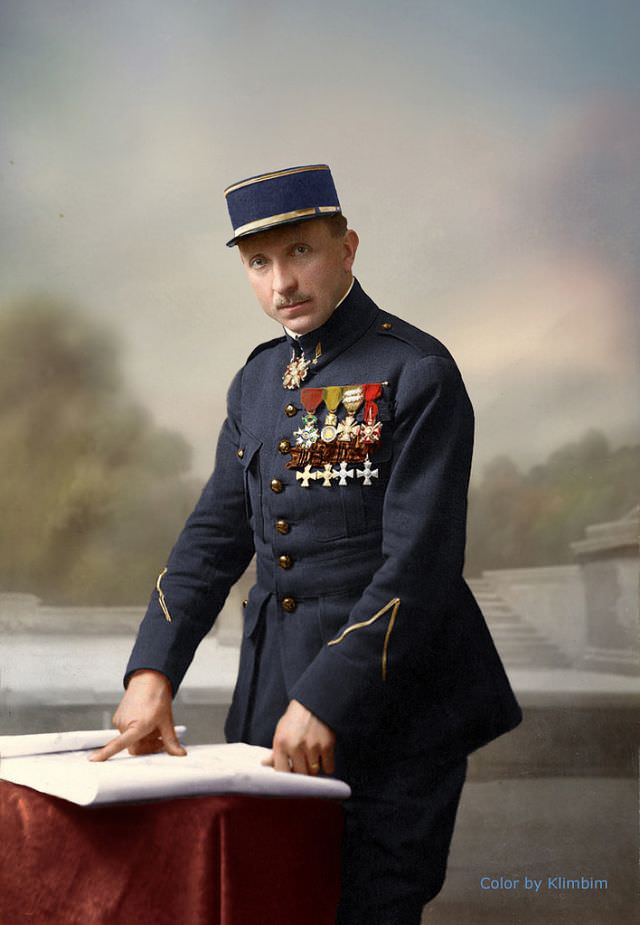
Alphonse Flavien Pairé was a French military pilot who flew with Russian forces and earned all four degrees of the St. George’s Cross — one of only two foreigners to do so, alongside Czech pilot Karel Vašátko. Their decorations reflected battlefield valor that transcended national boundaries.
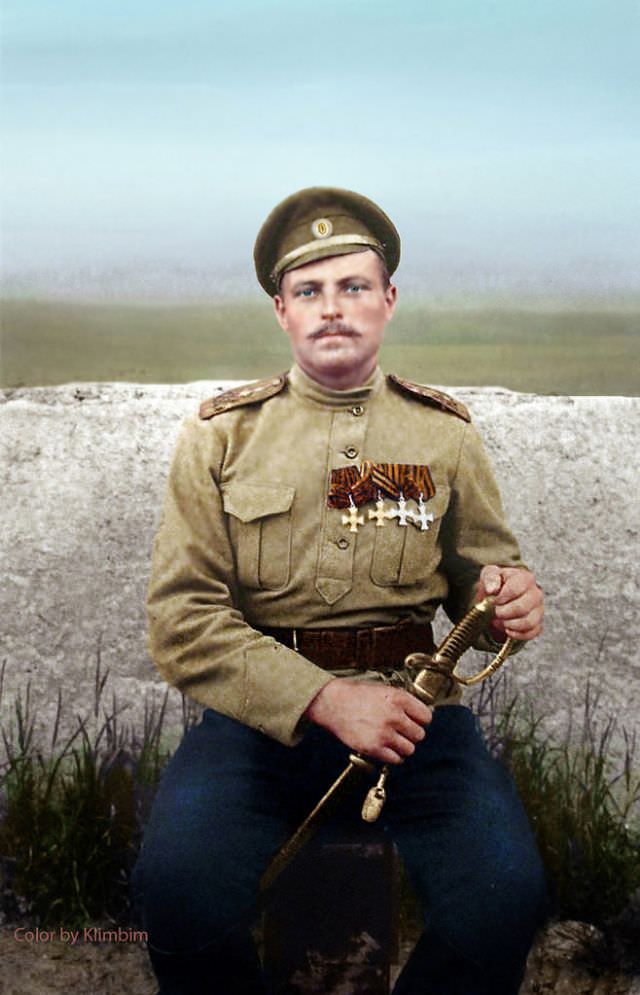
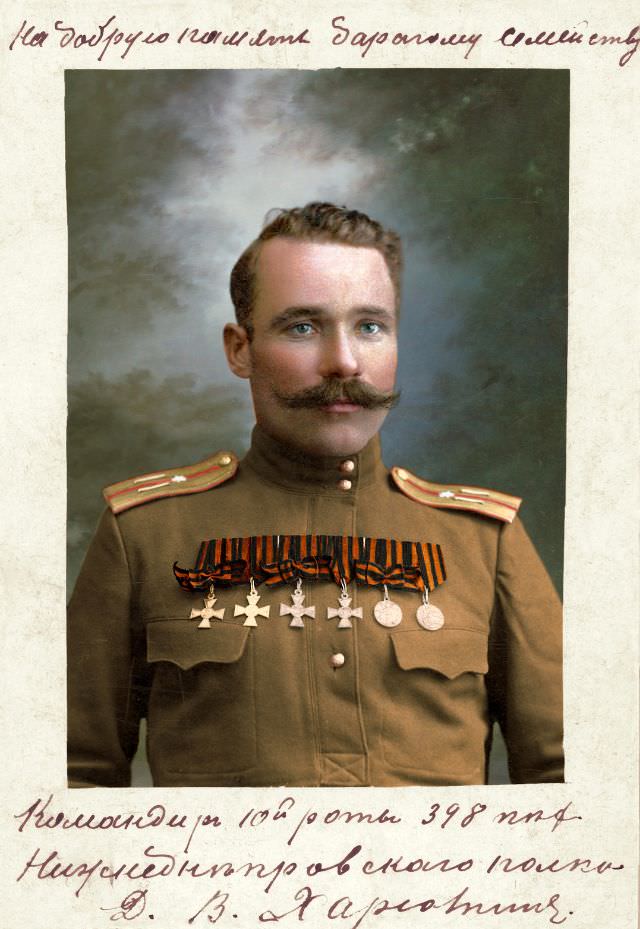
Dmitry Kharyutin, a Full Knight of the Order of St. George and commander of the 10th Company of the 398th Infantry Regiment, was among the soldiers decorated for extreme gallantry. The Order of St. George was Russia’s highest military honor, awarded only for acts of bravery in combat.
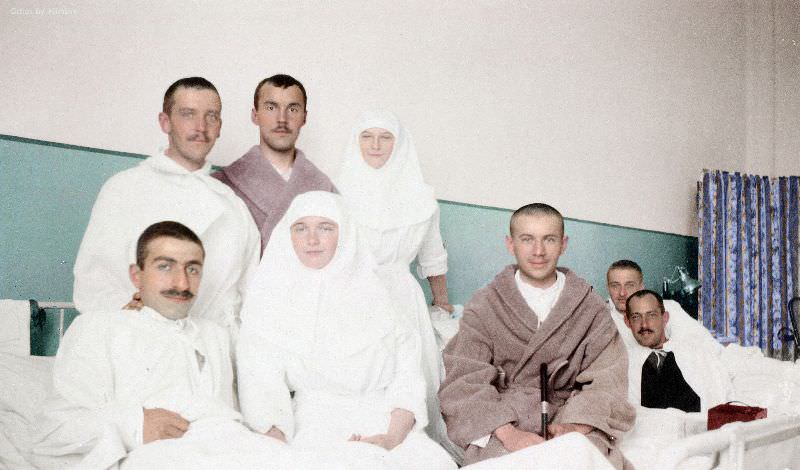
Grand Duchesses Olga and Tatiana Romanov both trained as nurses and worked directly with wounded soldiers in military hospitals. They are photographed here in that setting — not as royal observers but as working medical personnel who changed dressings, assisted surgeons, and sat with dying men.
Karel Vašátko, the Czech pilot who earned all four degrees of the St. George’s Cross alongside Alphonse Pairé, was one of the most decorated foreign fighters to serve with Russian forces during the war.
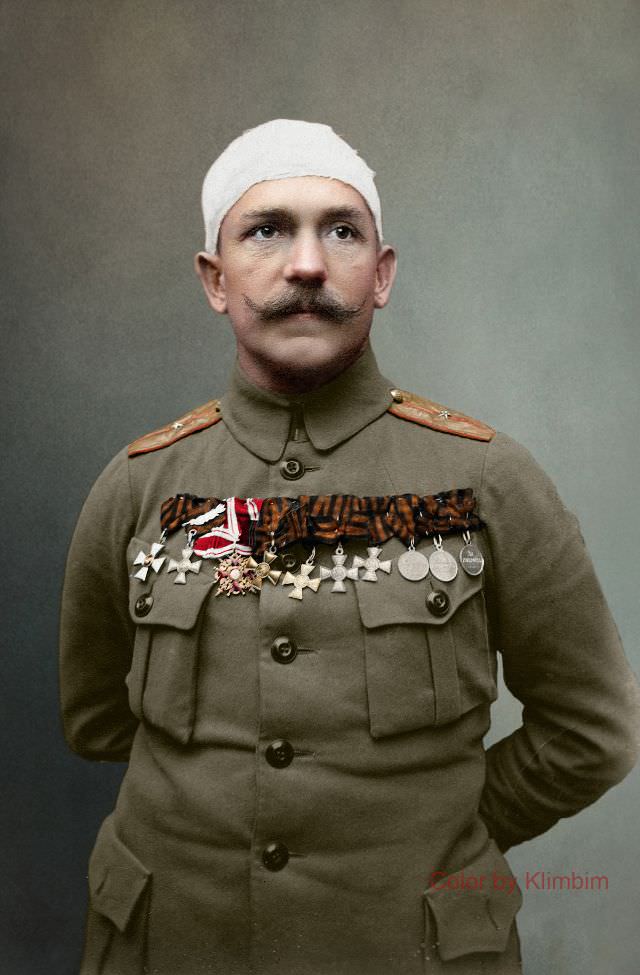
Maria Bochkareva’s story is one of the most remarkable of the entire war. She had petitioned Tsar Nicholas II directly for permission to serve as a combat soldier — and was granted it. She fought in multiple battles before forming the Women’s Battalion of Death in 1917.
Russia’s aviation corps produced a number of notable pilots. Pyotr Nesterov, an aircraft designer and aerobatics pioneer, was among the most significant. He is credited with performing the first loop in aviation history in 1913 and was killed in 1914 when he rammed an enemy aircraft — an act that made him one of the war’s first aviation casualties.
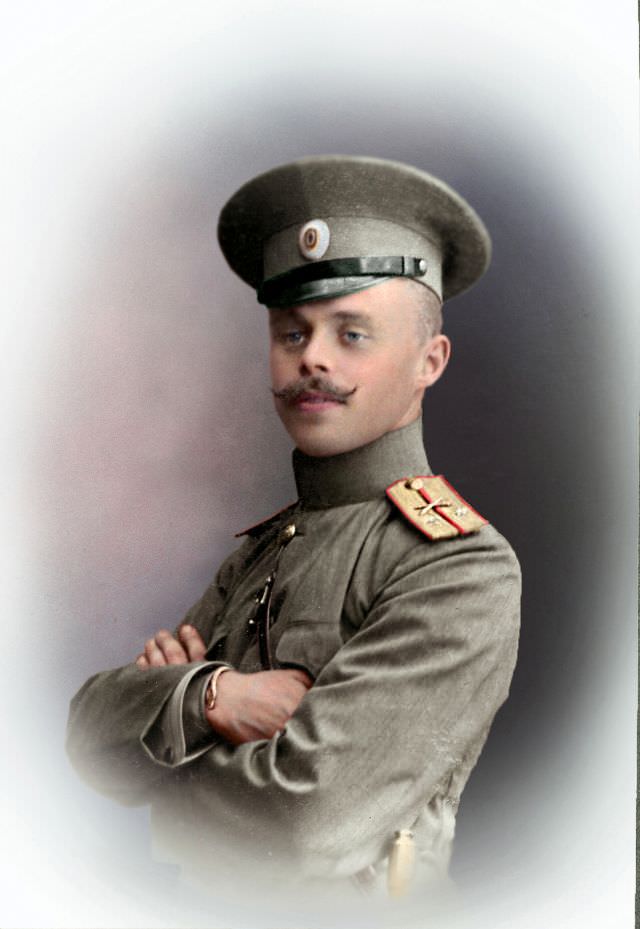
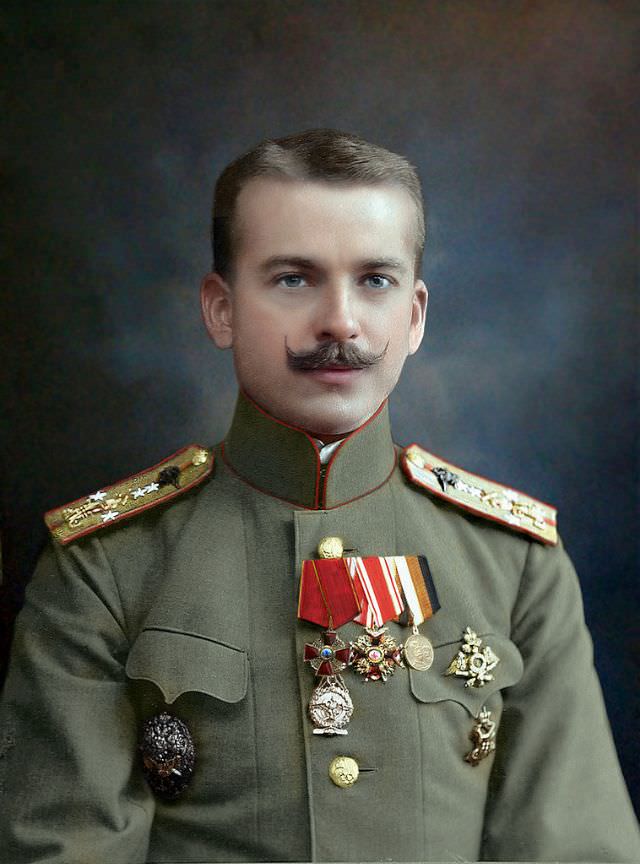
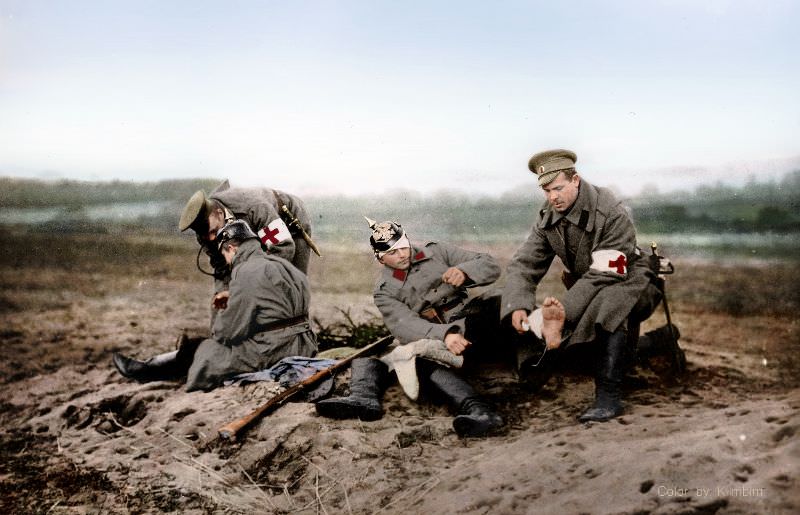
Red Cross personnel operated across Russian battlefields, working to reach wounded men even during active fighting. Their work saved countless lives, though the scale of casualties on the Eastern Front frequently overwhelmed available medical resources.
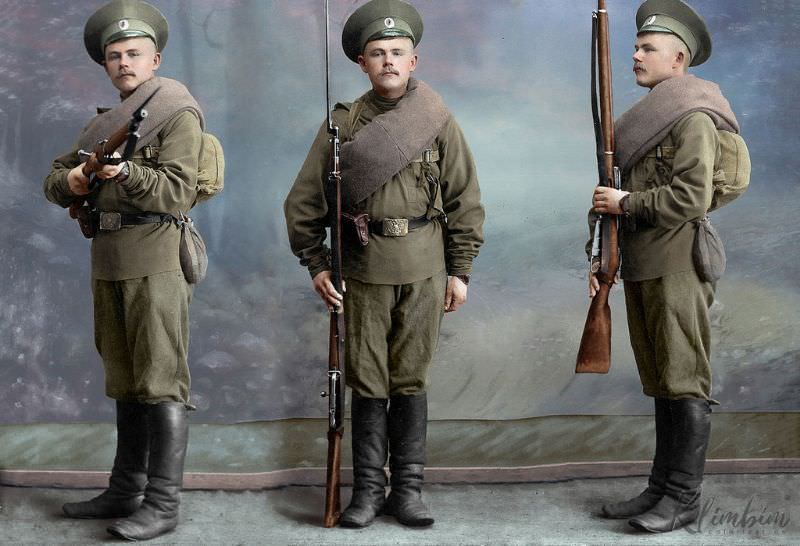
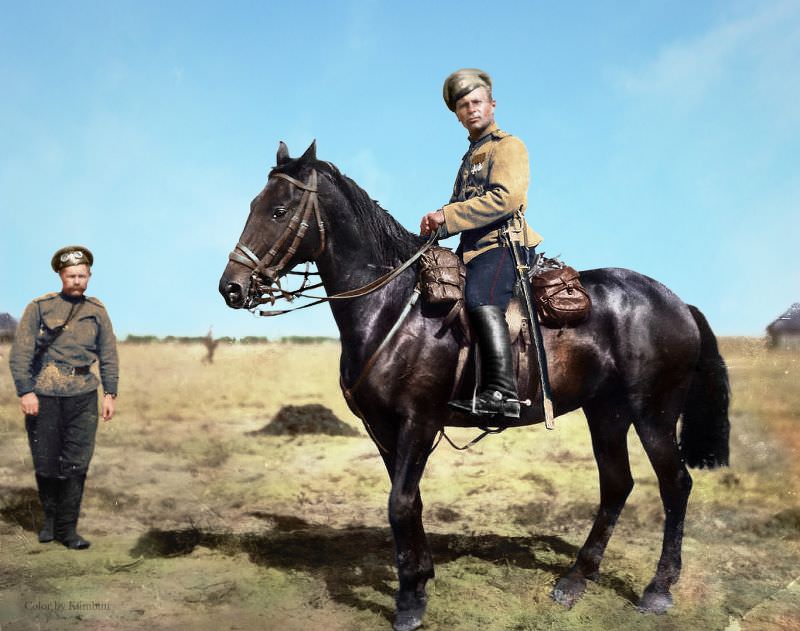
Cavalry remained part of Russia’s military throughout the war, though the nature of Eastern Front combat — more mobile than the trenches of the Western Front — gave mounted units more opportunity to operate than their counterparts elsewhere.
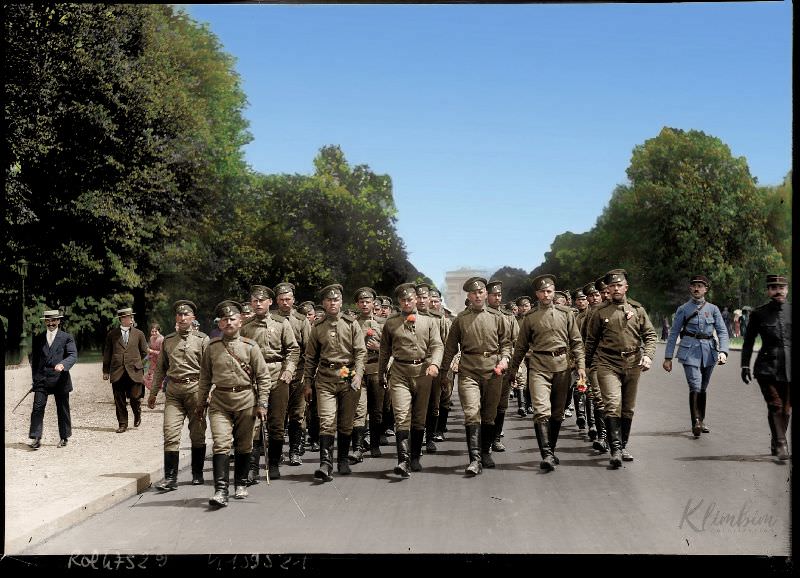
Russia sent an expeditionary force to fight alongside France on the Western Front — a force that served in French trenches far from home. These soldiers faced the same grinding attritional warfare that defined the Western Front, entirely removed from the vast spaces of the Eastern theater they were trained for.
Russian nurse Zinaida Malynich was among the many women who served in military medical roles. Nurses like her worked in conditions that ranged from established hospitals to improvised field stations just behind the fighting lines.
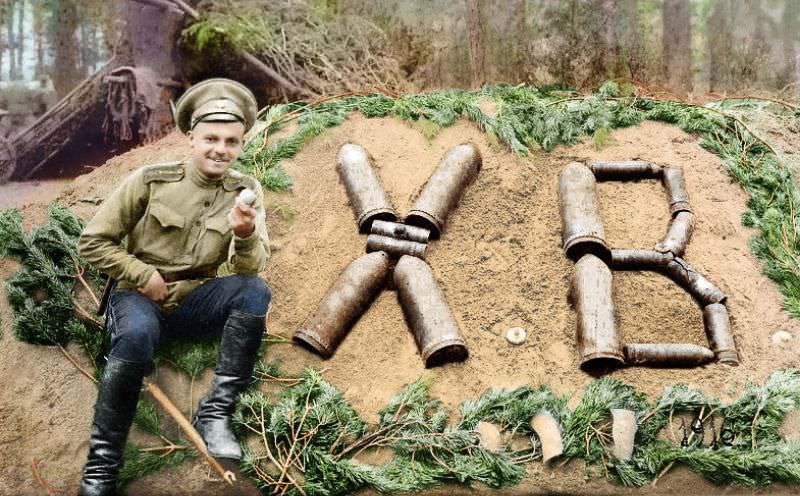
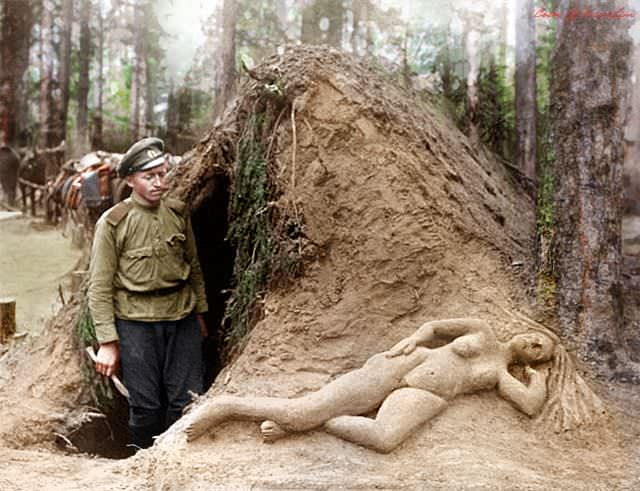
Soldiers found small ways to cope with the monotony and stress of wartime service. Russian scout Alekseev, photographed with a sculpture he made from moist sand, represents the ordinary humanity that existed alongside extraordinary violence throughout the war.
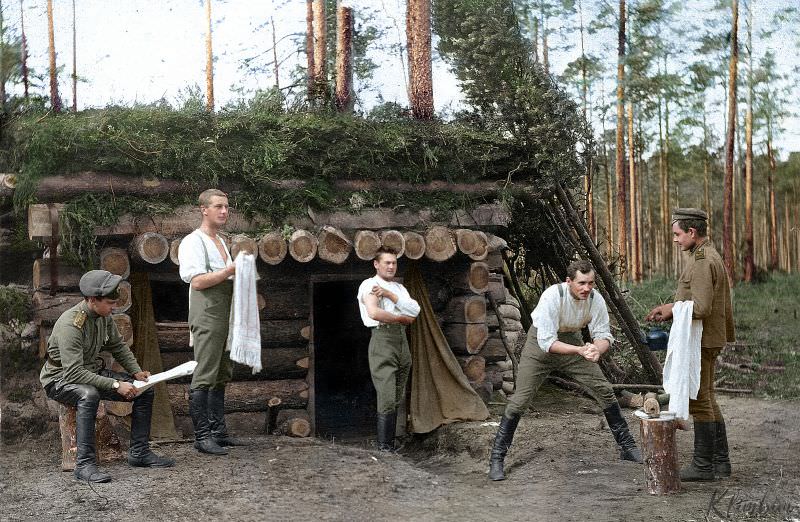
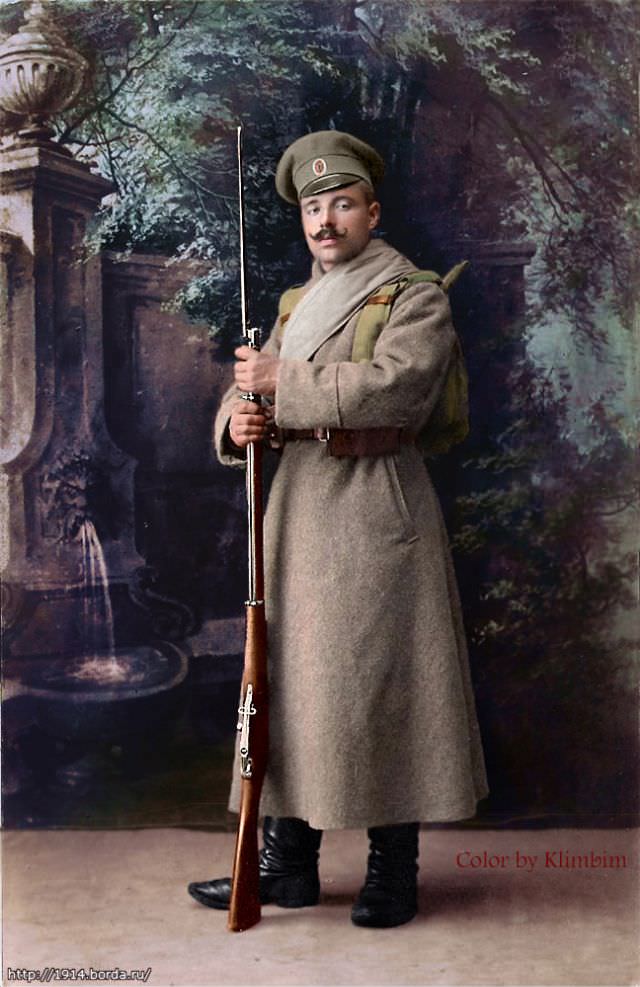
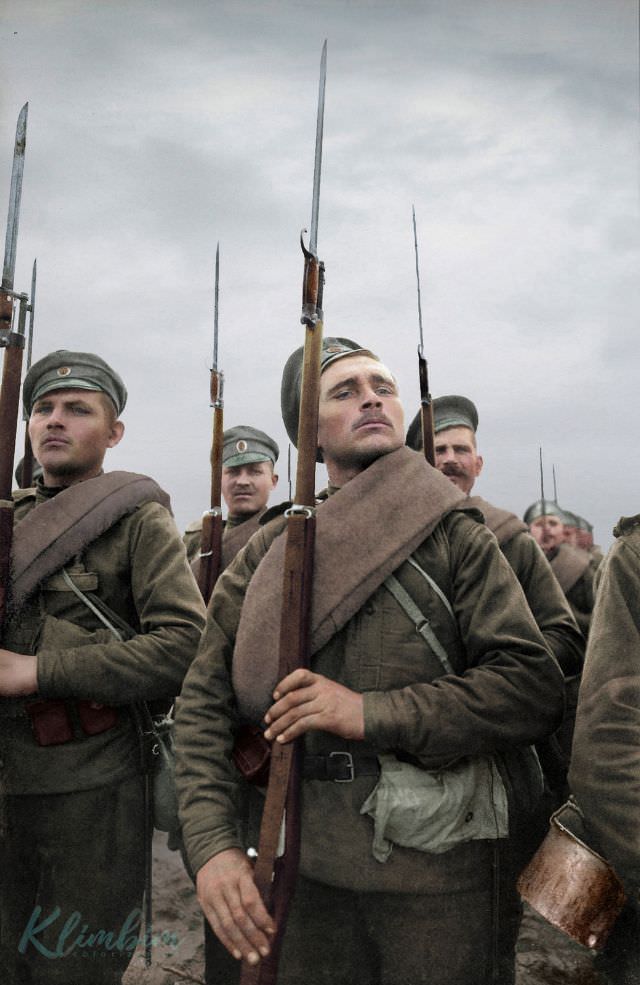
Russian soldiers are pictured here with Arisaka rifles — Japanese-manufactured weapons that Russia purchased in large quantities to make up for critical shortages in domestic arms production. The supply crisis was severe enough that many Russian soldiers went to the front without rifles, waiting for a comrade to fall before they could arm themselves.
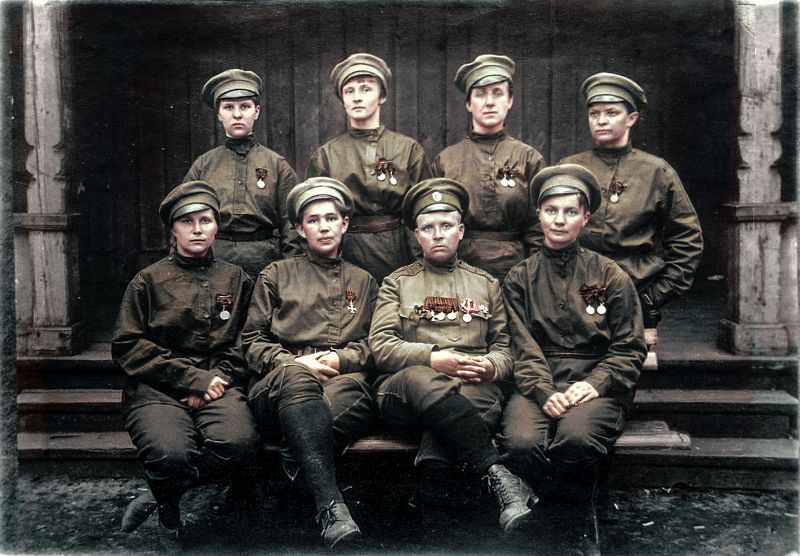
The Women’s Battalion of Death fought in actual combat during the Kerensky Offensive in 1917. While many male units refused to advance, the battalion attacked enemy positions and suffered significant casualties. Their combat record stood in sharp contrast to the widespread collapse of the male units around them.
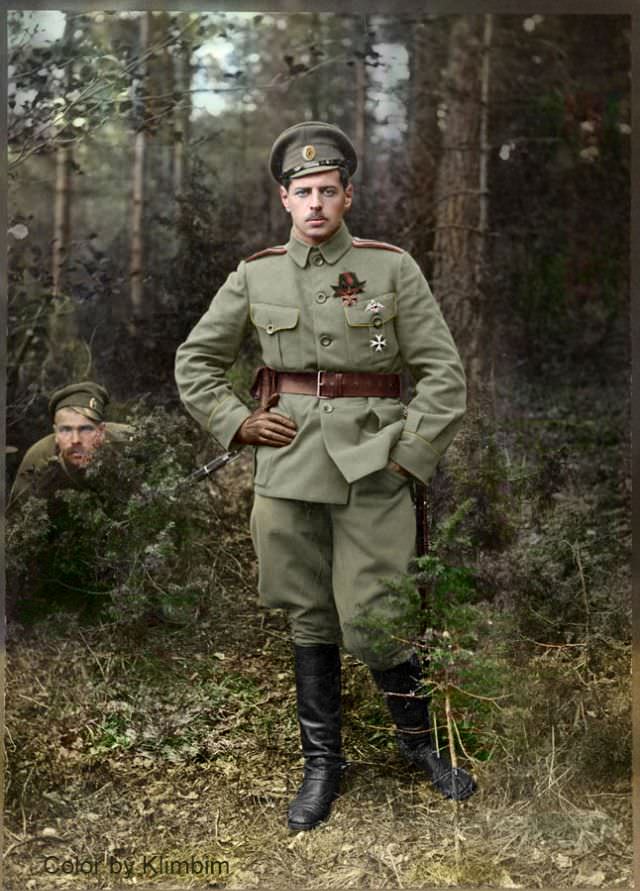
Evgeny Rudnev holds the distinction of being Russia’s first military pilot. His photograph represents the very beginning of Russian military aviation — a branch of the armed forces that grew rapidly once the war began and the value of aerial reconnaissance became undeniable.
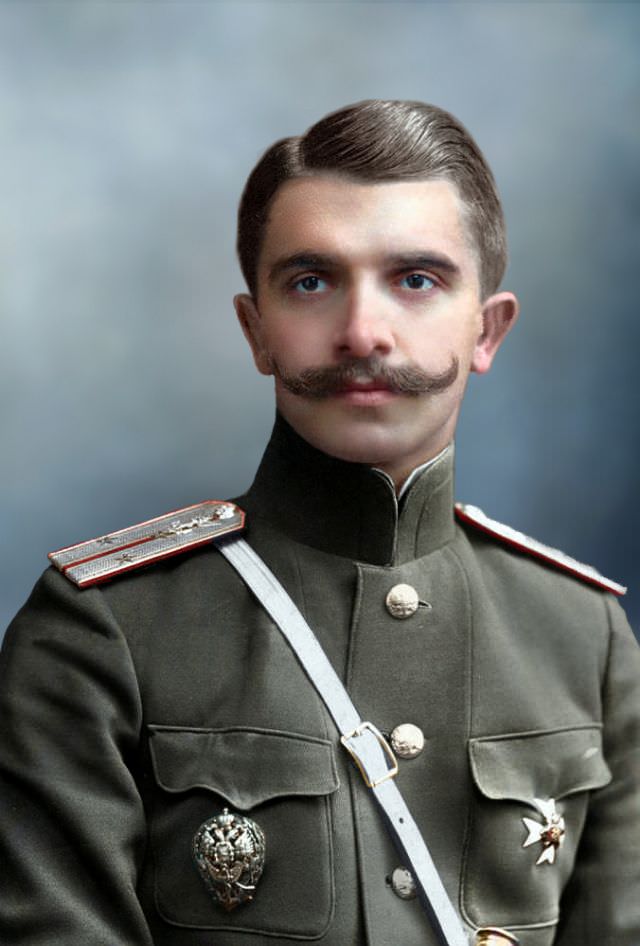
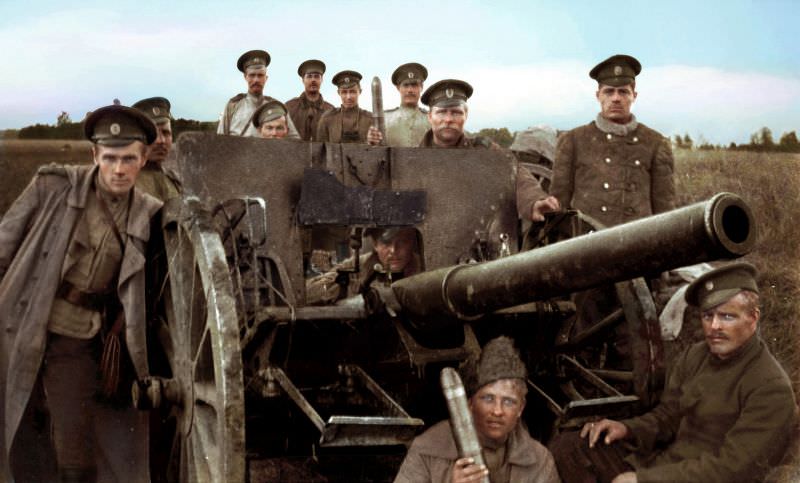
Vasily Nimensky, a priest at the Vilna military hospital, represents the role of the Russian Orthodox Church in the war effort. Military chaplains and hospital priests provided spiritual support to wounded and dying soldiers throughout the conflict.
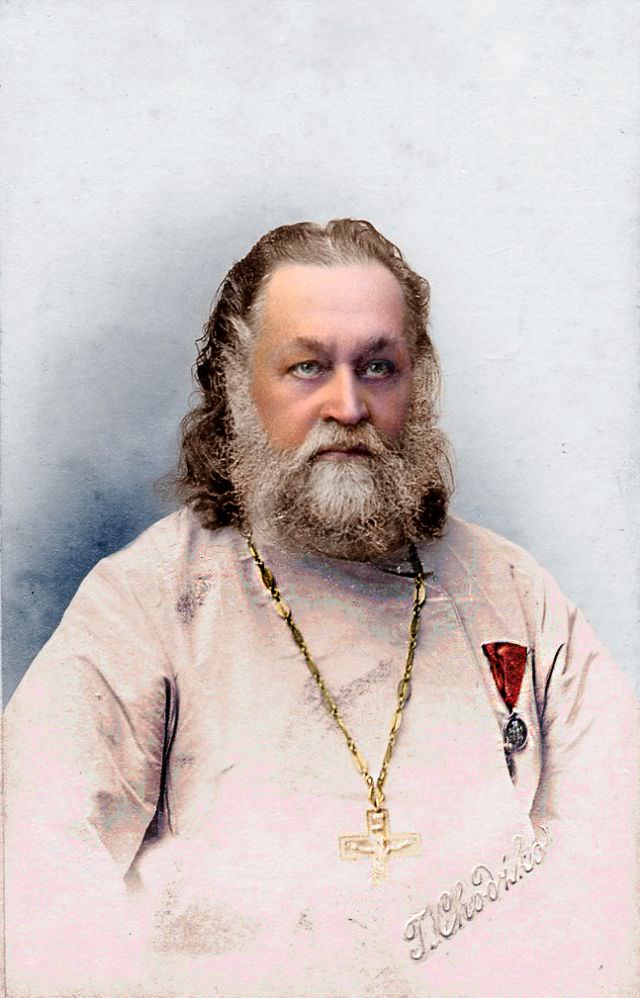
Over the course of the war, 15 million Russian soldiers served in total. Of those, 1.7 million were killed and more than 4 million were wounded. These colorized photographs — of soldiers, nurses, pilots, commanders, and the families they left behind — put faces to numbers that are otherwise almost impossible to comprehend.