At the turn of the 20th century, Vienna was one of the most important cities in the world. As the capital of the Austro-Hungarian Empire, it was home to more than two million people and served as the political, cultural, and intellectual center of a vast European power. The city buzzed with new ideas, clashing values, and a creative energy that made it unlike anywhere else on the continent.
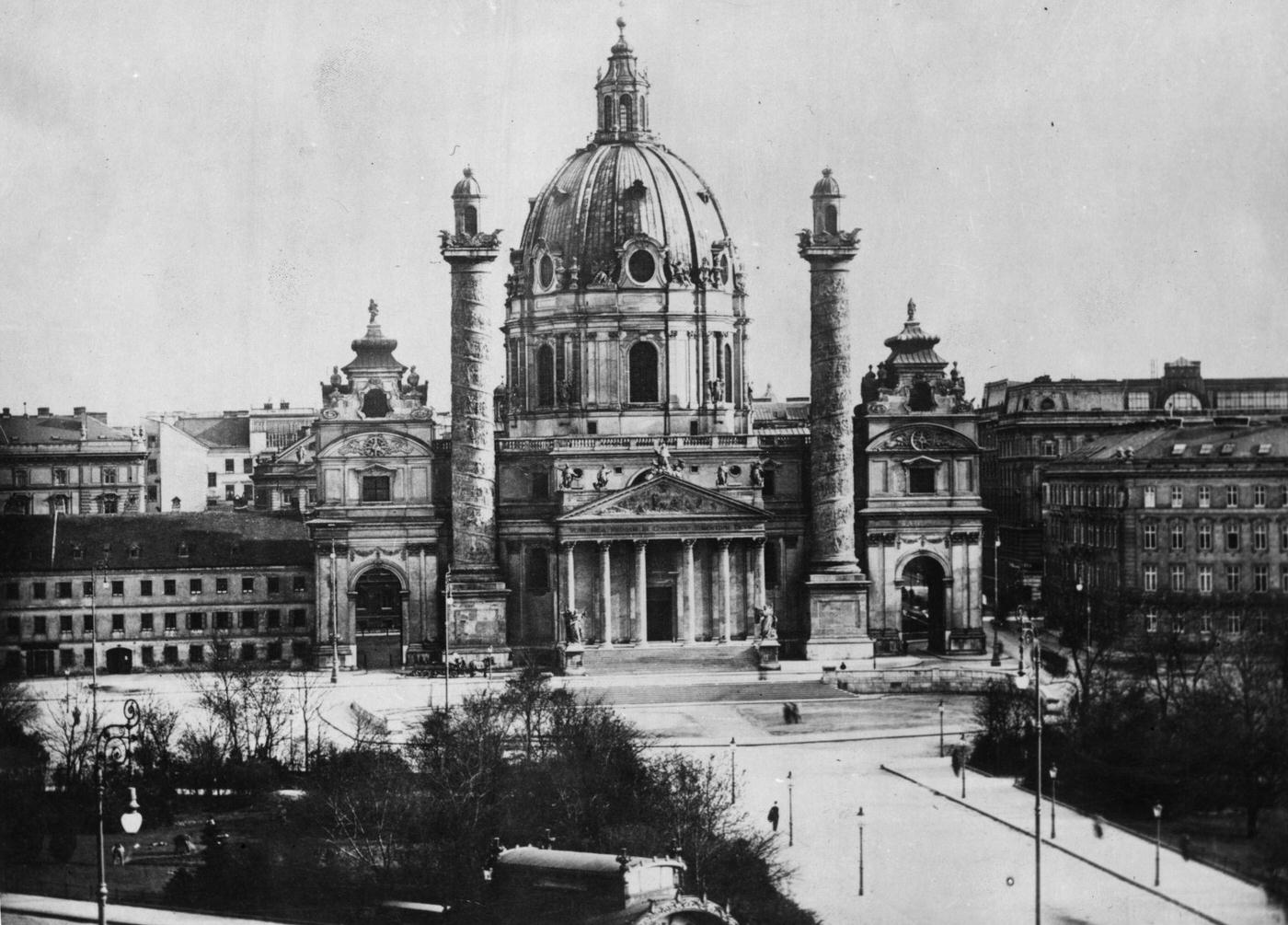
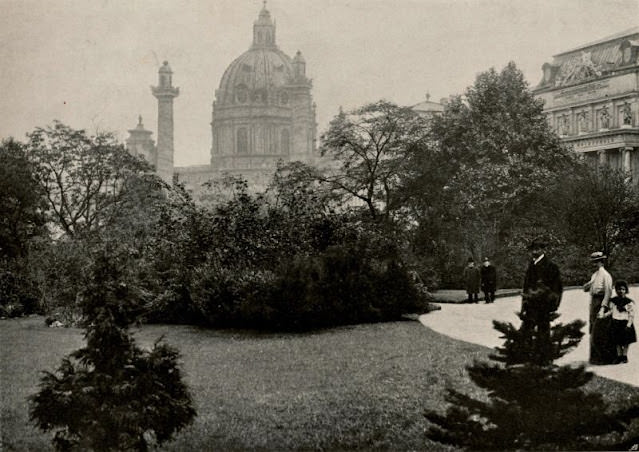
The Karlskirche in Vienna, Built between 1715 – 1737 and designed in a baroque rococo style by architect Johann Fisher von Erlach, Around 1900
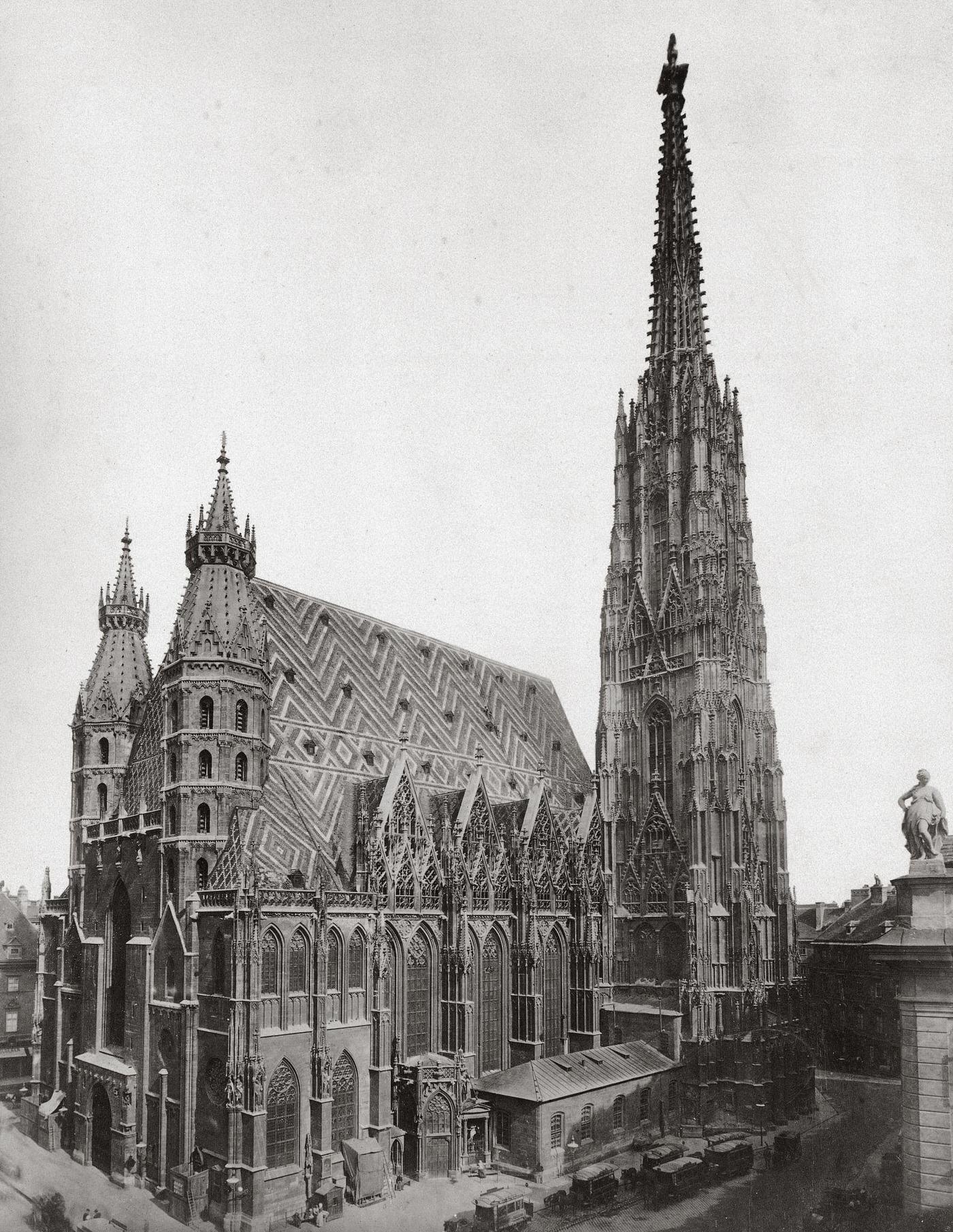
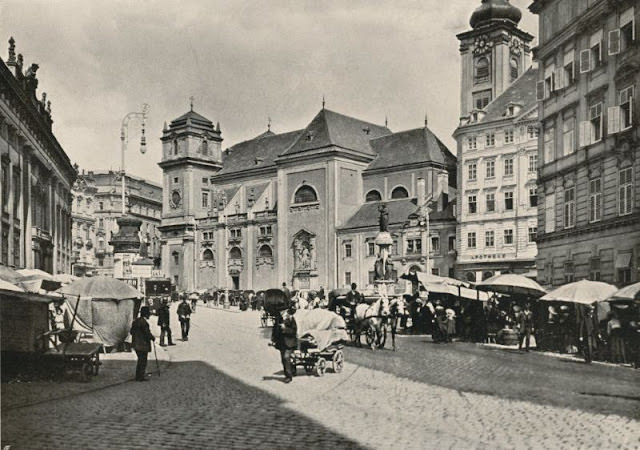
Vienna’s skyline was dominated by grand religious and civic buildings that had been accumulating for centuries. The Karlskirche, built between 1715 and 1737, stood as one of the finest baroque structures in Europe. Alongside it rose St. Stephan’s Cathedral, the Parliament building, the Rathaus, and the Votivkirche — each one a statement of imperial power and civic pride. Walking the city’s main boulevards meant passing monument after monument, fountain after fountain.
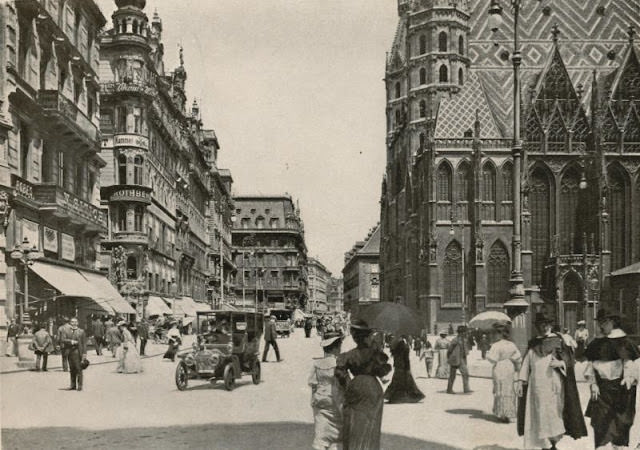
St. Stephan’s Cathedral in Vienna, 1903
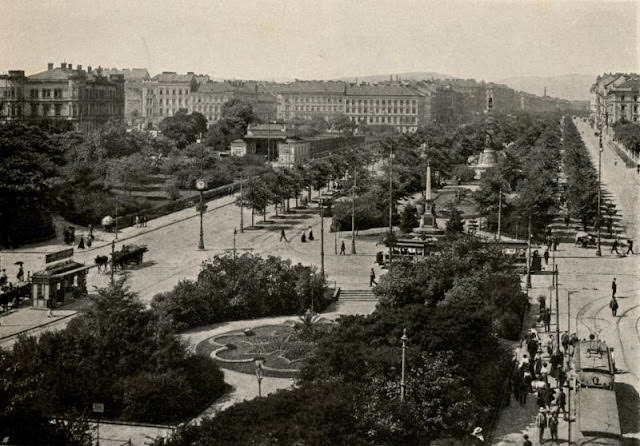
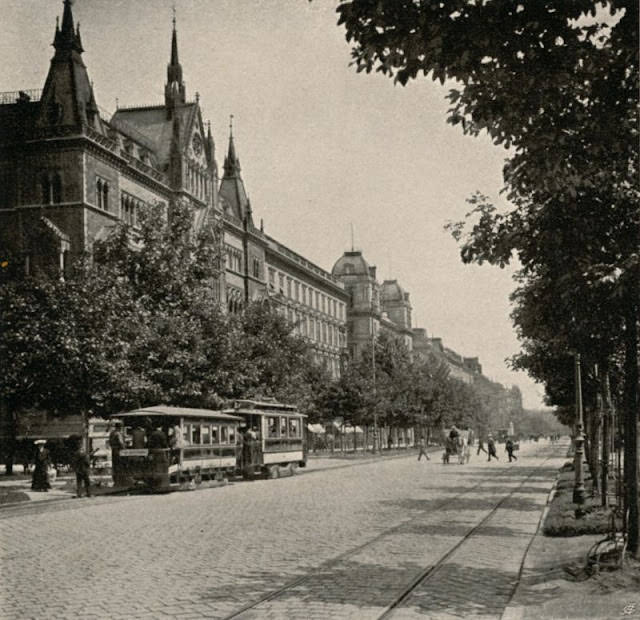
The Ringstrasse was the most impressive street in the city. Emperor Franz Joseph I had ordered its construction in the mid-1800s, and by 1900 it was fully lined with palaces, museums, opera houses, and public gardens. It was designed to show the empire’s strength and sophistication, and it succeeded. The buildings along the Ring drew from Greek, Gothic, and Renaissance styles, giving Vienna an almost theatrical grandeur.
The Ringstrasse at Vienna, From a sepia print, Around 1900
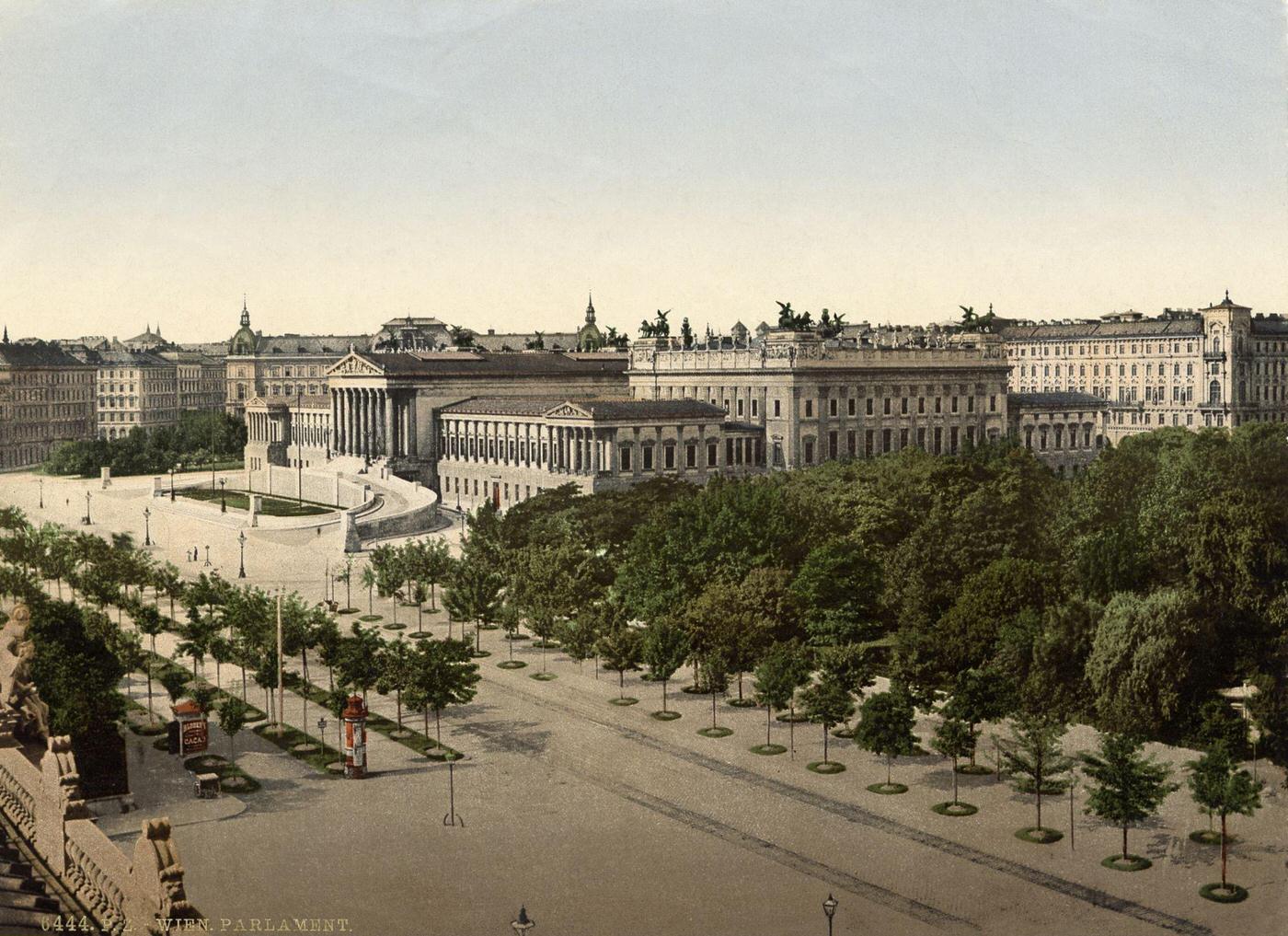
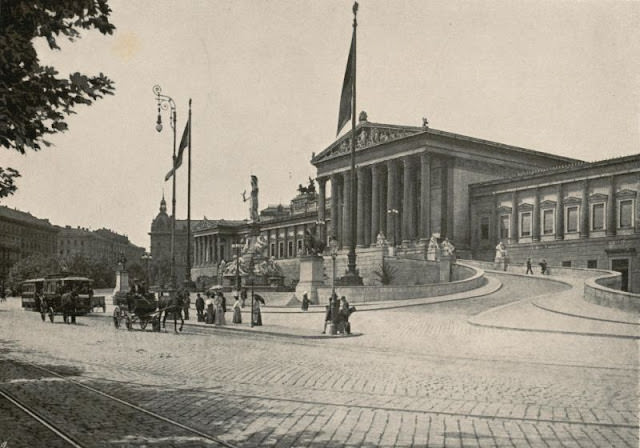
Austro-Hungarian Empire (Austria-Hungary), Austria, VIENNA, the parliament, 1901
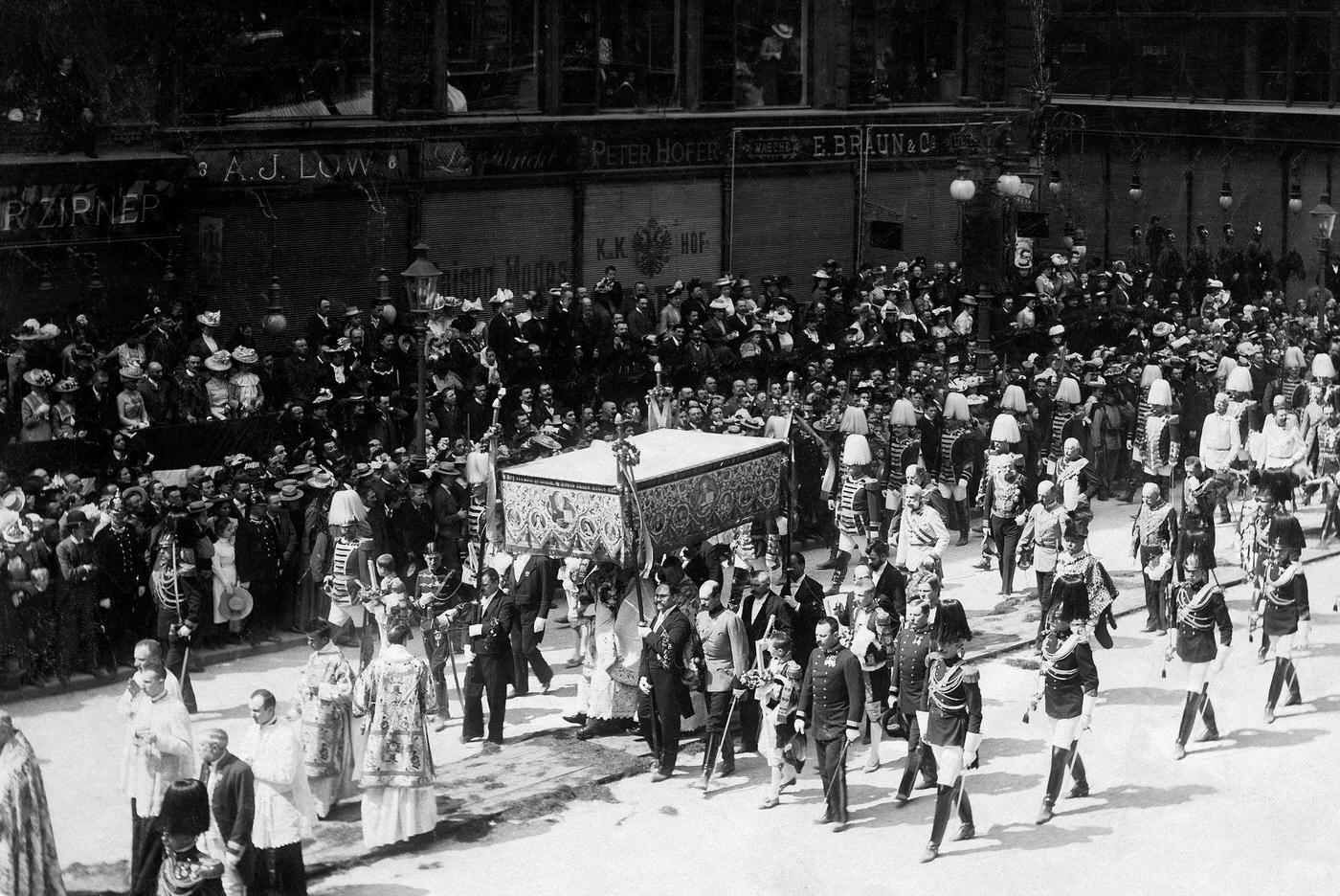
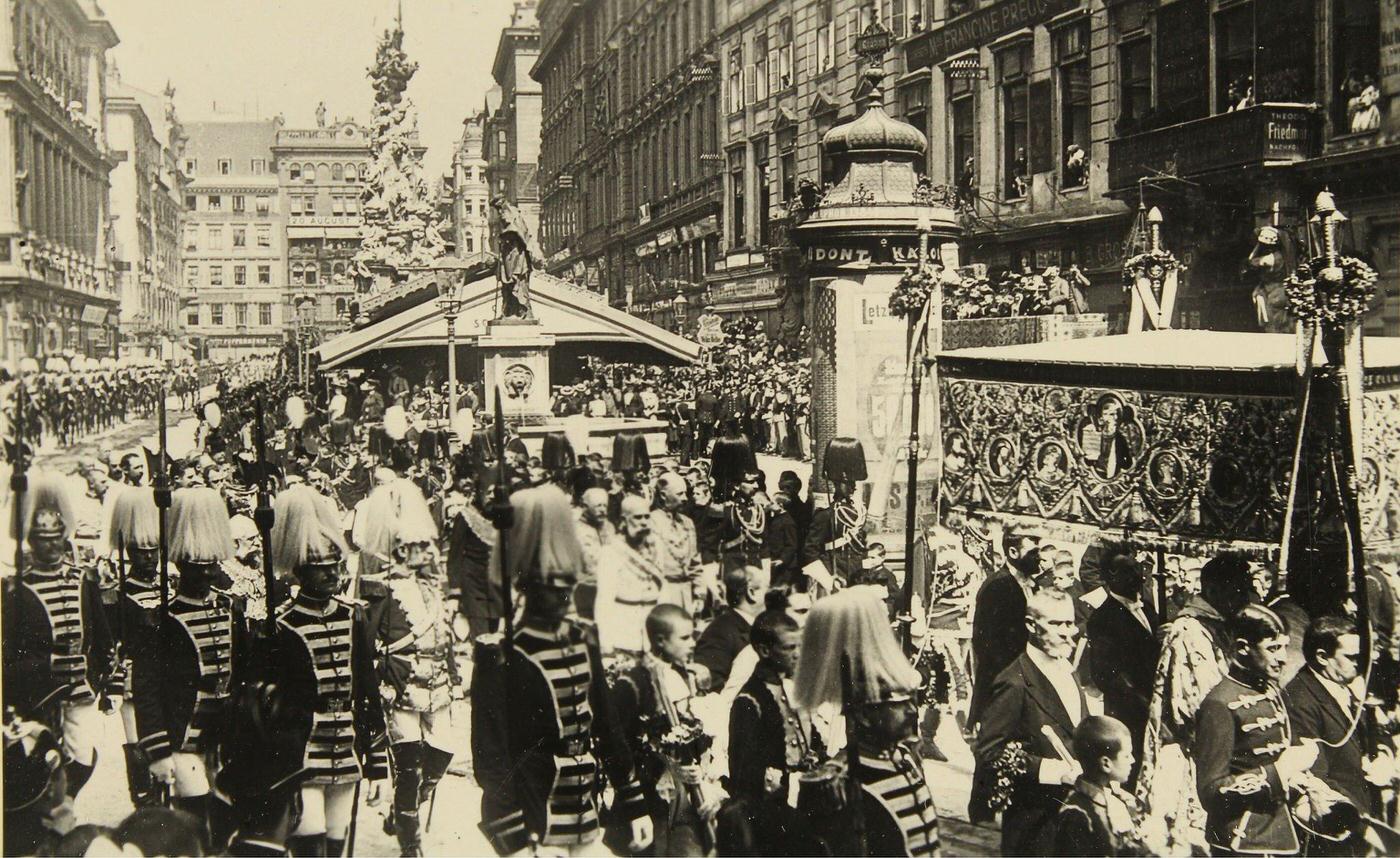
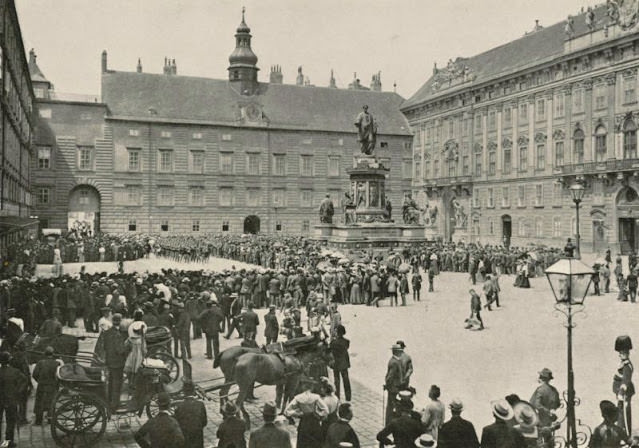
At the center of Viennese public life stood the Imperial Court itself. Emperor Franz Joseph I had ruled since 1848, and by 1900 he was one of the longest-reigning monarchs in European history. His presence shaped the city’s rhythm — from the grand Corpus Christi processions through the Graben to his appearances at the Hofburg Palace. The Jubilee celebrations marking his reign drew enormous crowds through the streets.
Franz Joseph I., Fronleichnamsprozession in Wien, 1901
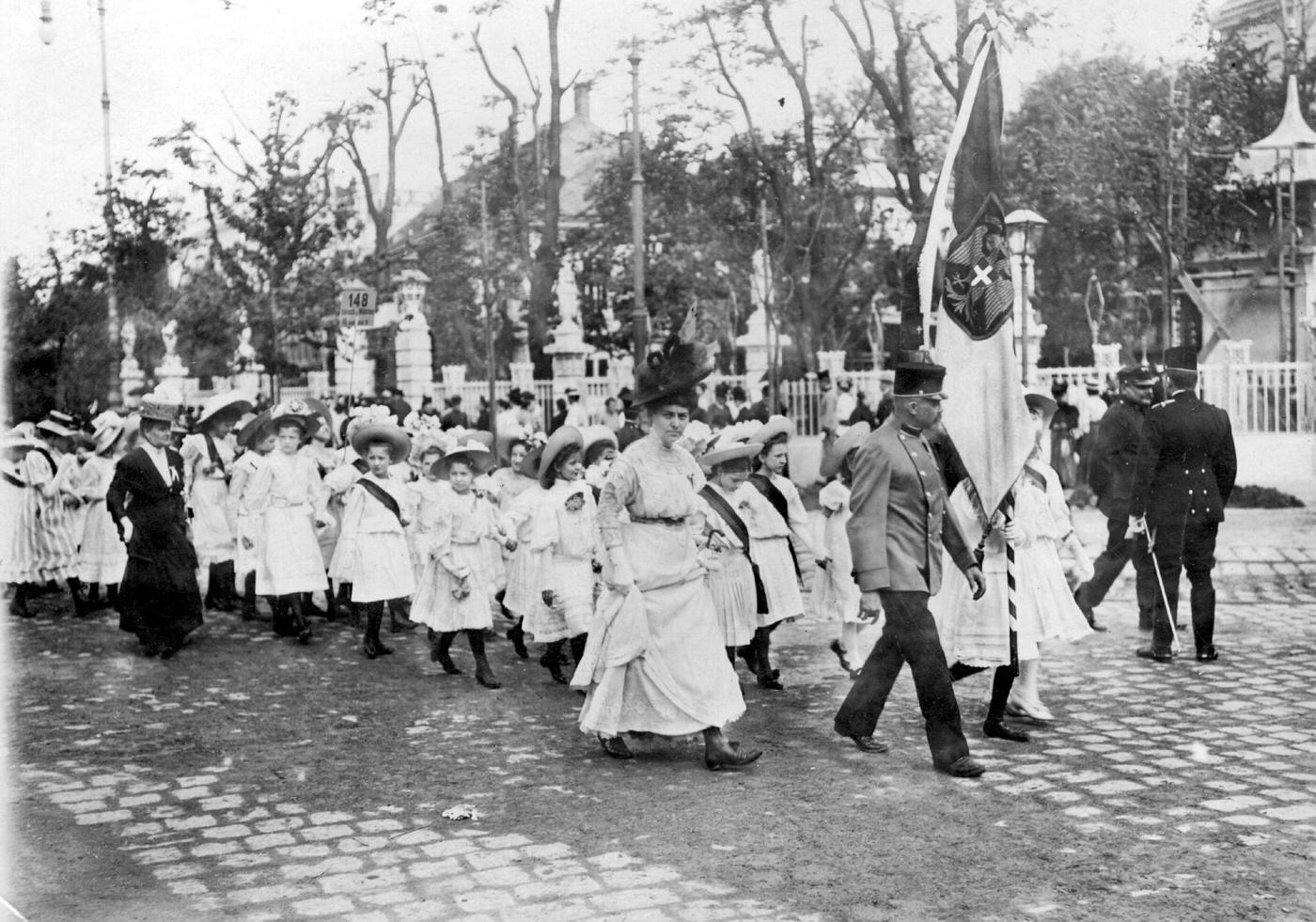
Children process through the streets in celebration of the Austrian Emperor’s Jubilee in Vienna, Around 1900
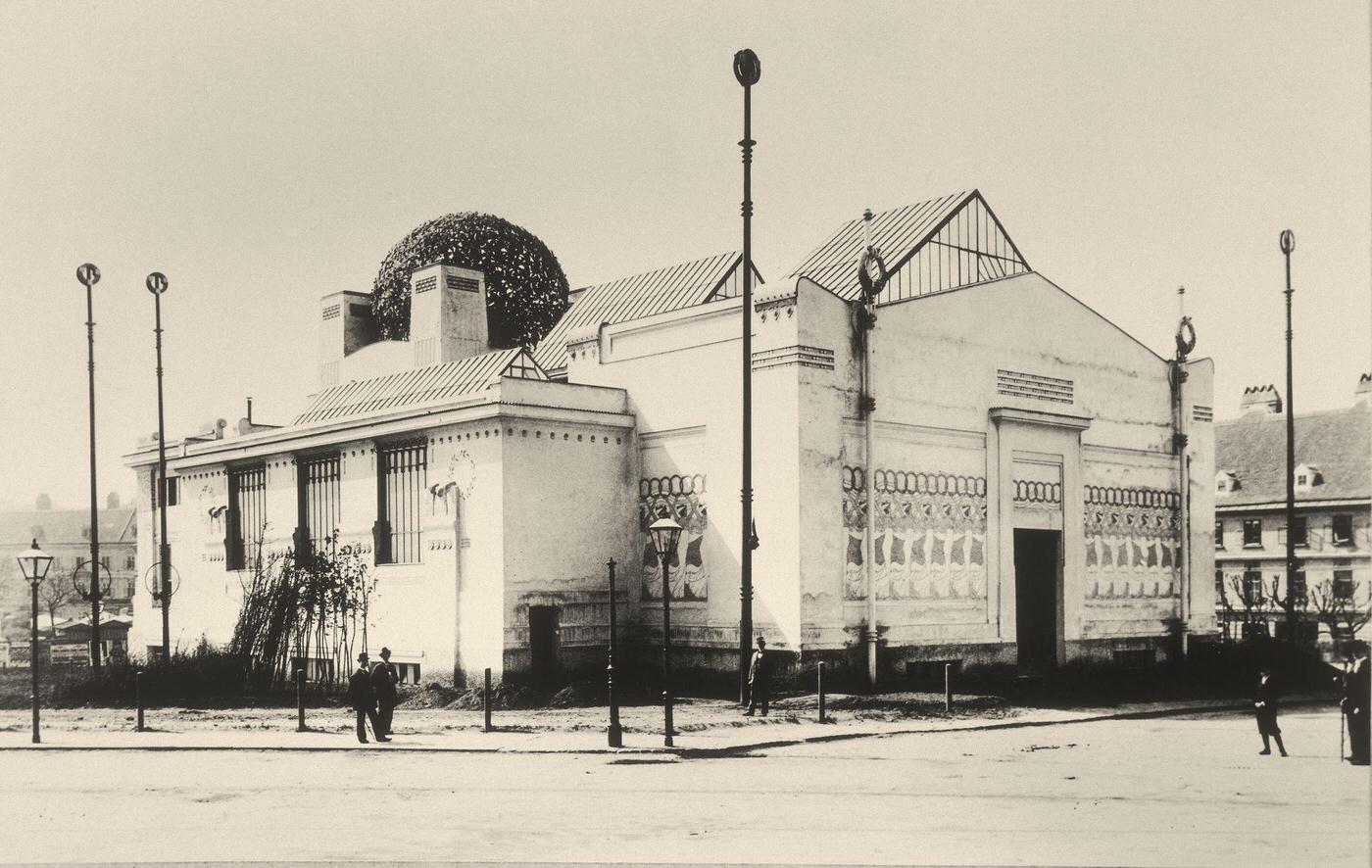
But Vienna in 1900 was not just a city of old power and ceremony. It was also a city in the middle of a modernist revolution. The Vienna Secession, founded in 1897, was a movement that deliberately broke from traditional academic art and architecture. Led by Gustav Klimt, Koloman Moser, and Josef Hoffmann, the Secessionists built their own exhibition hall — a striking white cube topped with a golden dome of laurel leaves — and adopted the motto: “To every age its art, to every art its freedom.”
Side elevation and back view of the Secession in Vienna (built in 1898 by Joseph Maria Olbrich), At the backside, the non-preserved fresco “Reigen der Kranztraegerinnen” by Kolo Moser, Around 1900s
Vienna Secession, 1900
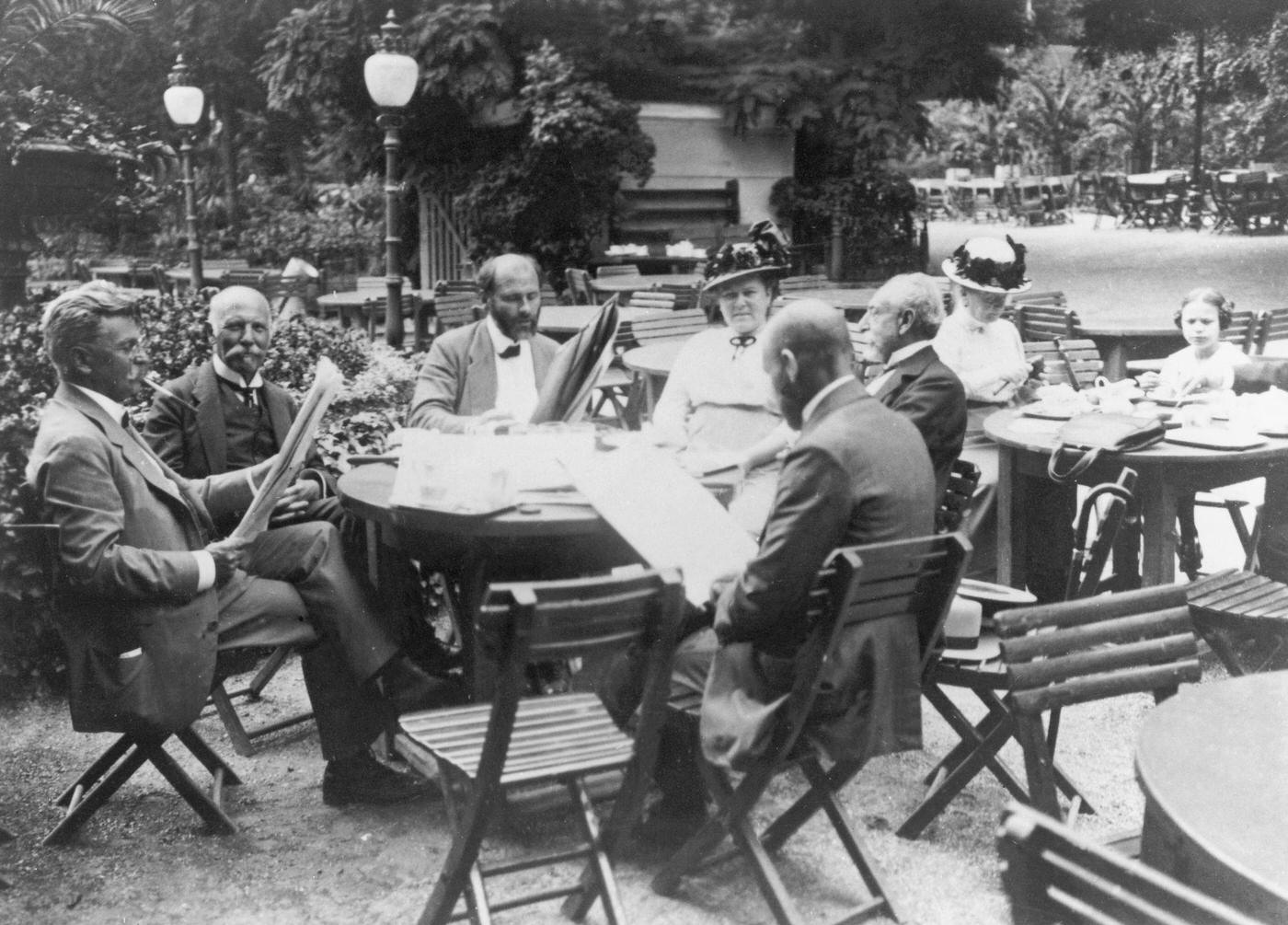
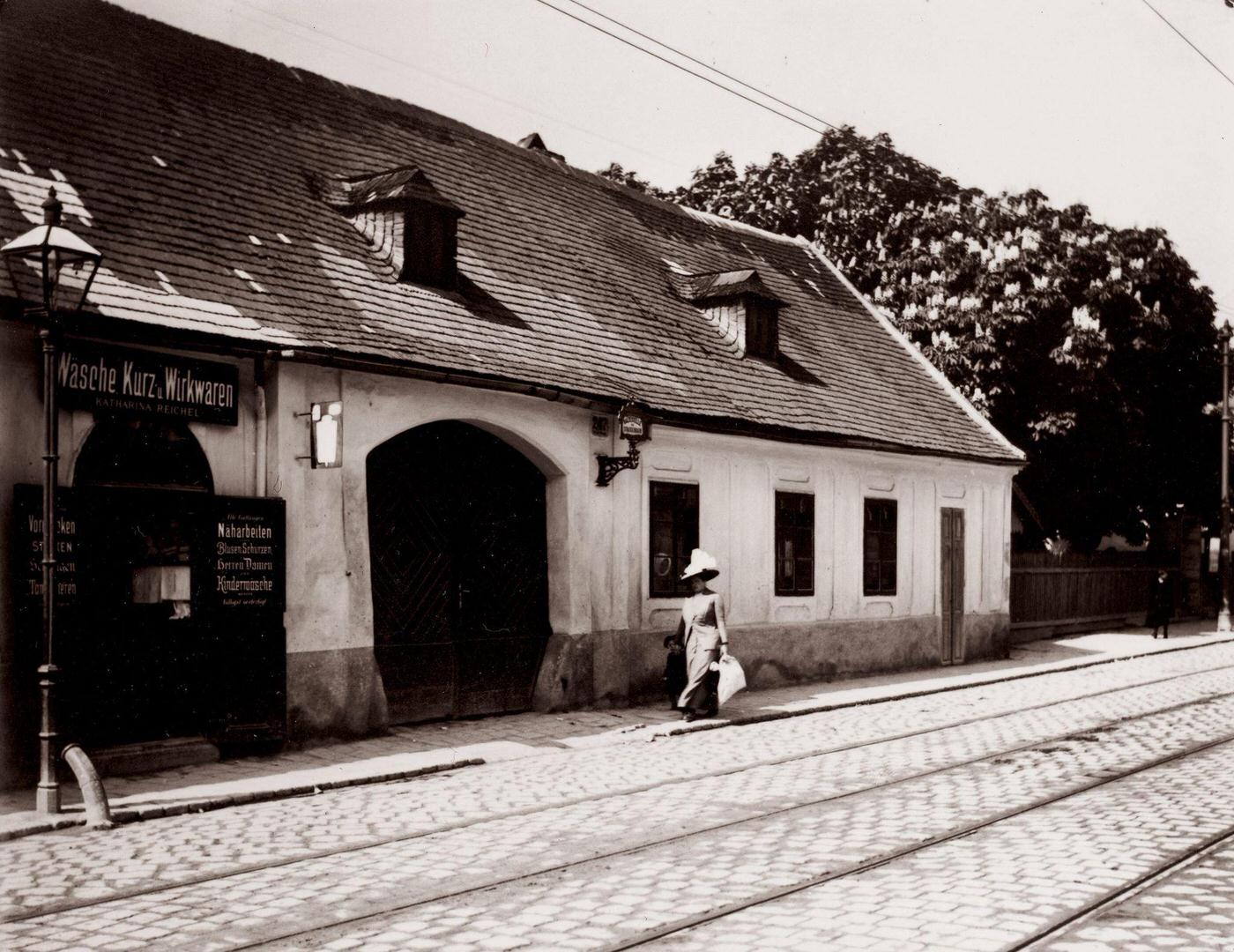
Gustav Klimt was one of the most recognizable figures in the city. His painting “The Kiss,” completed between 1907 and 1908, became the defining image of the era — richly decorated with gold leaf and charged with emotion. Klimt’s birthplace stood at Linzerstrasse 247, a modest building that would later be demolished in 1967. In his lifetime, he was a regular at the cafes and gardens of Vienna, mixing with writers, architects, and fellow painters.
Gustav Klimt in the tavern garden, Vienna, Around 1900
The birthplace of Gustav Klimt in Vienna, Linzerstrasse 247, torn down in 1967, Around 1900
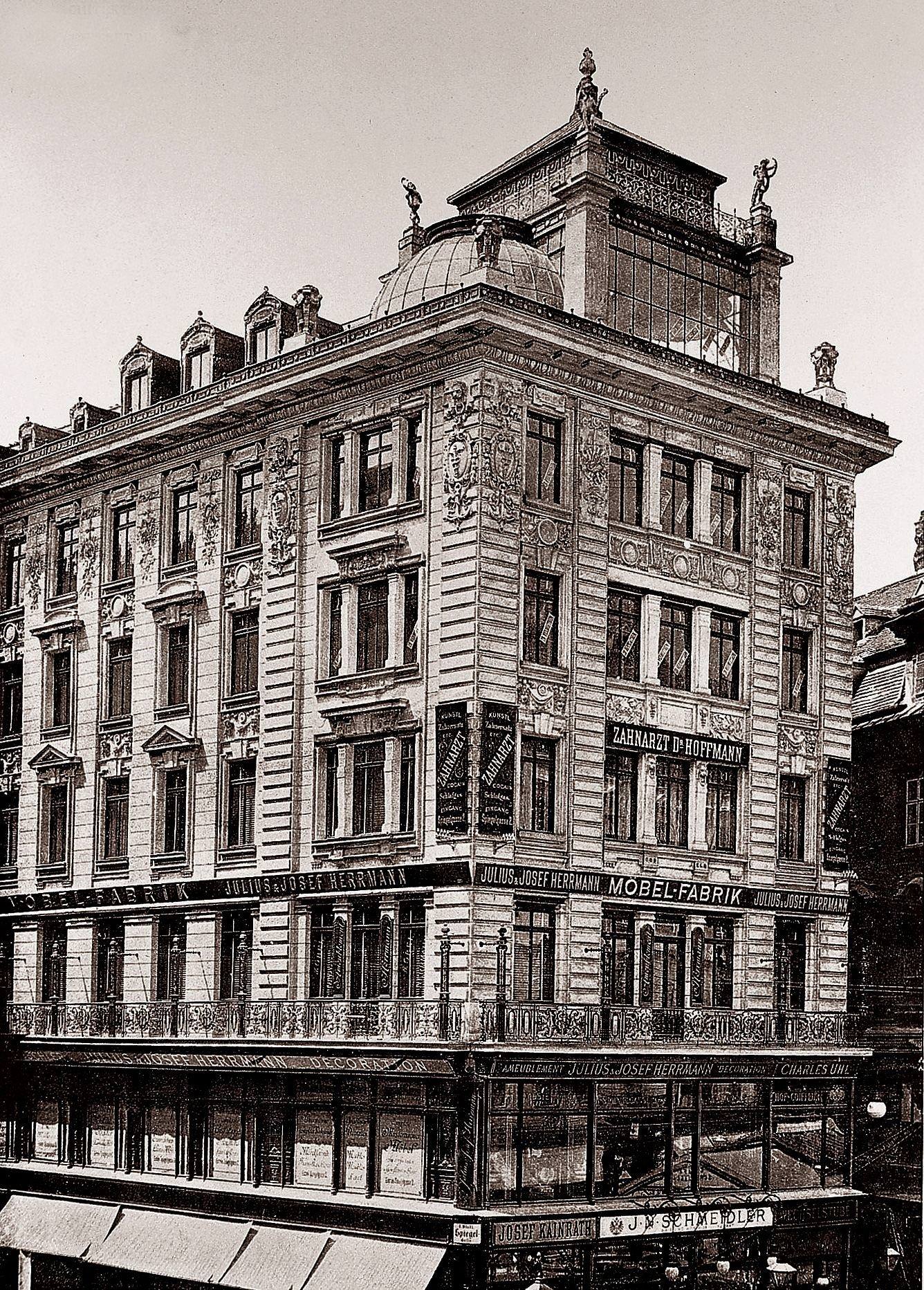
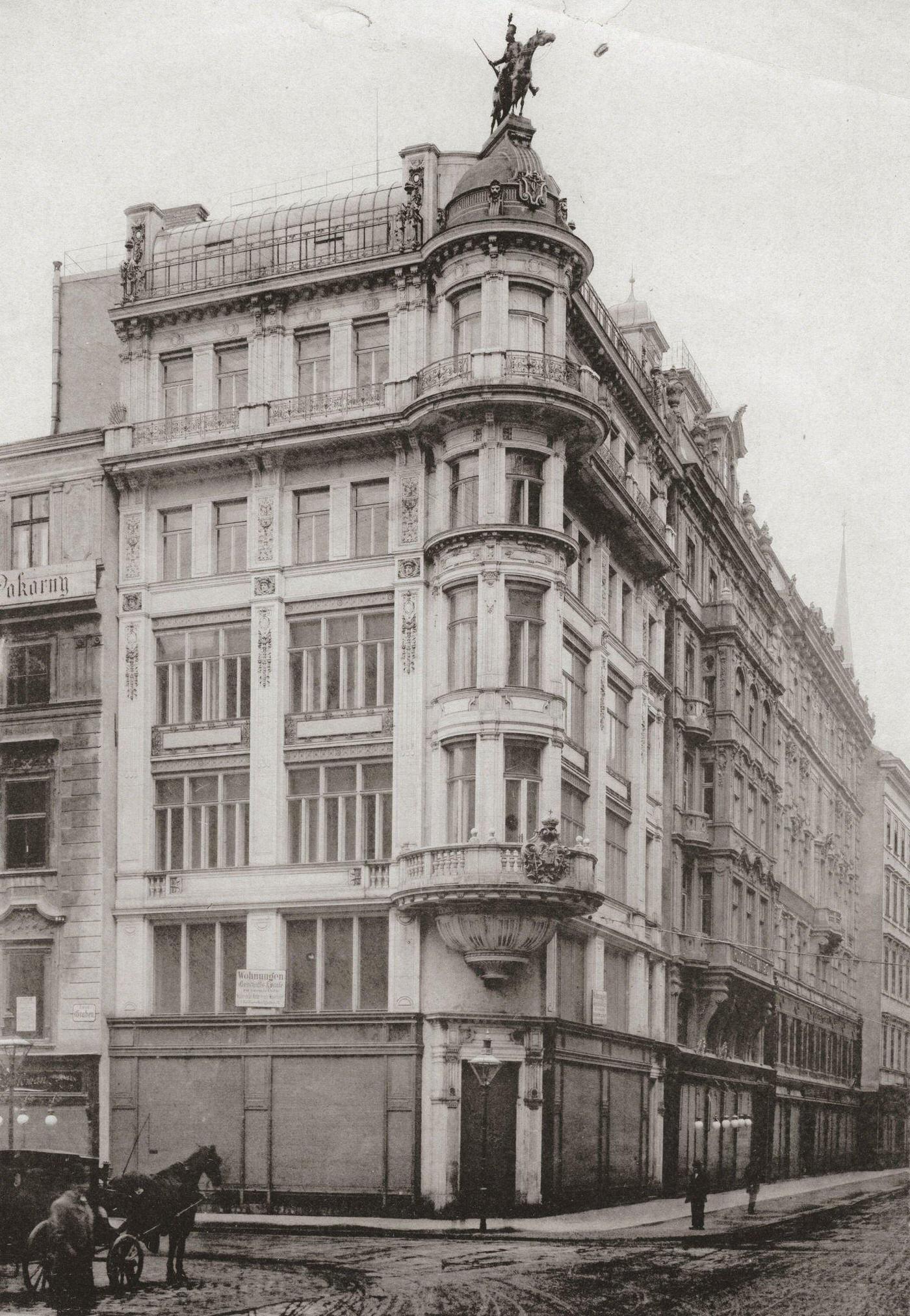
Architecture was changing too. Otto Wagner, one of the city’s leading architects, helped push Vienna toward a cleaner, more functional style. His 1895 building for the Anker insurance company at the corner of Graben and Spiegelgasse showed how modern design could work within the city’s dense historic core. Alongside him, architects like Carl Koenig left their mark across the city — in villas, market halls, and civic buildings built throughout the 1890s.
Building of Viennese insurance Company “Anker” in Vienna I, Corner of Graben 10 and Spiegelgasse 2. Built by Otto Wagner 1895, Around 1900
Otto Wagner, Josef Hoffmann, Otto Prutscher and Ko, Vienna coffee house, About 1903
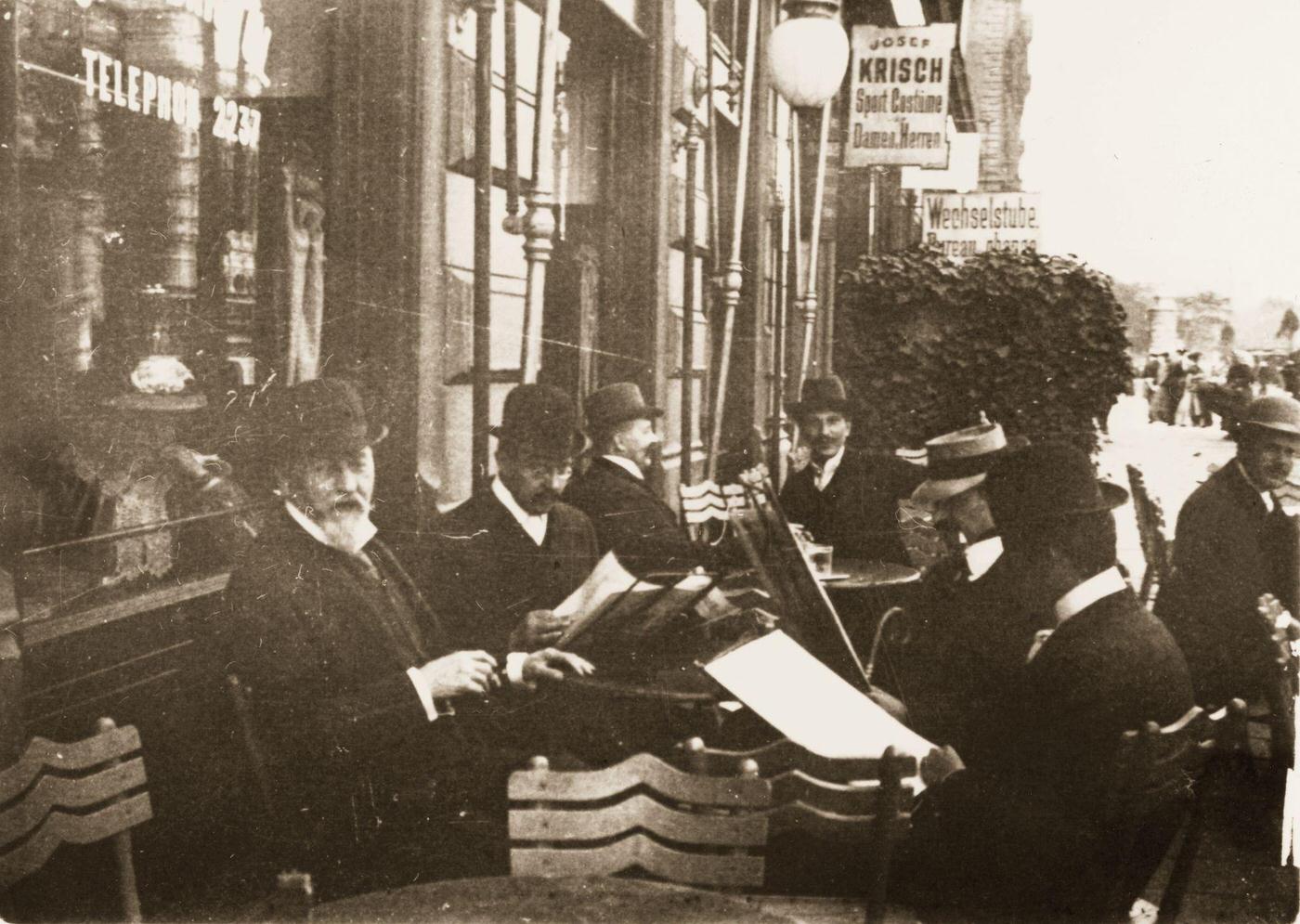
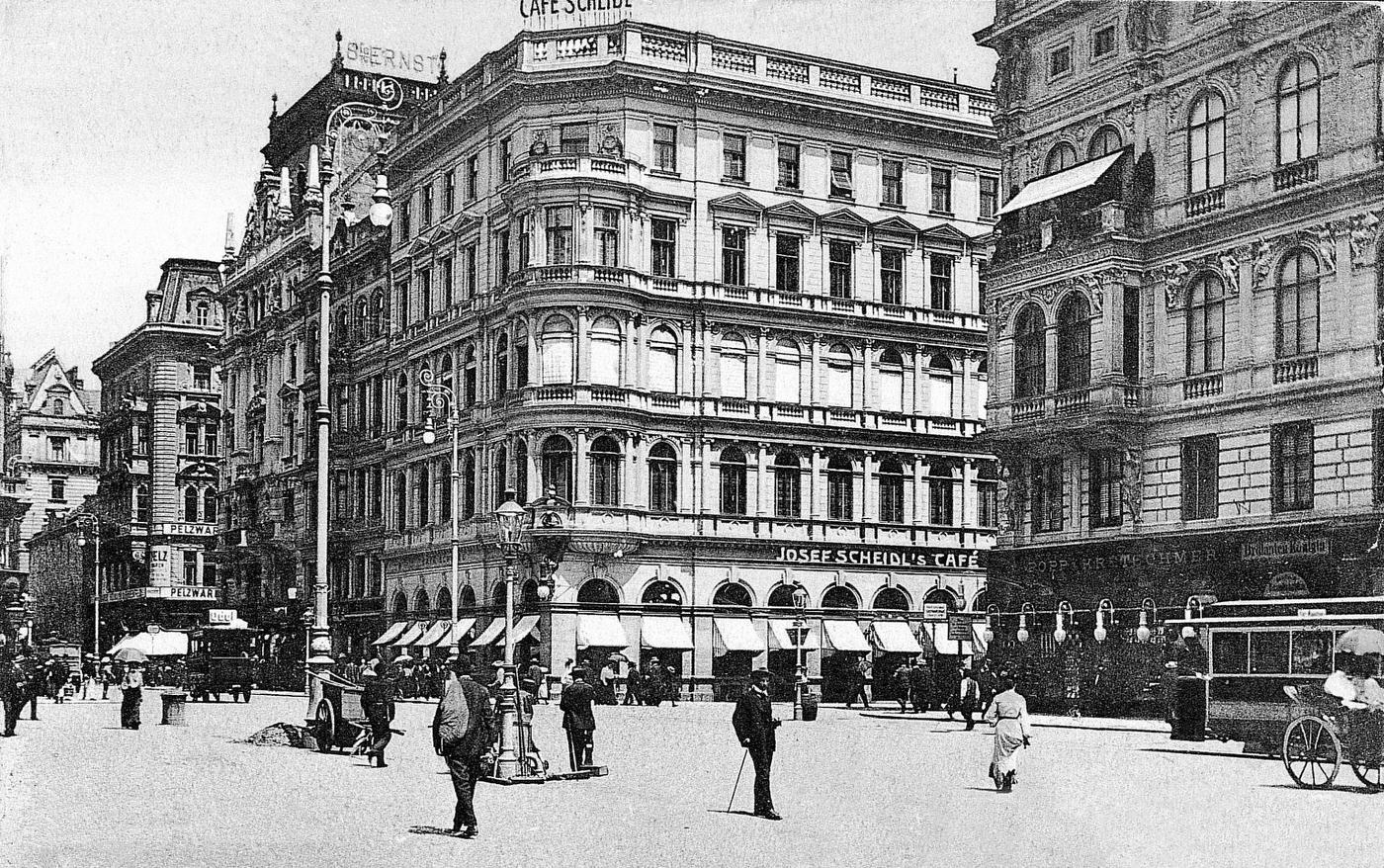
Vienna’s coffeehouses were more than places to eat and drink. They were institutions. Café Central, Café Museum, Café Sperl, and Café Scheidl each had their own loyal crowds of artists, writers, journalists, and thinkers. Sigmund Freud came to discuss psychology. Writer Stefan Zweig came to read the newspapers. Architect Theodor Herzl was a regular at Café Scheidl near the opera house. A man could sit for hours over a single coffee, reading, arguing, or simply watching the city pass by.
Cafe Scheidl, Cafe Scheidl (Vienna I, corner of Kaerntner Strasse/Walfischgasse) next to the opera house was Herzl’s regular cafe since he was a student. Cafe Scheidl was alongside Cafe Griensteidl, Cafe Central and Cafe Museum very popular with all important writers, journalists and artists, 1905
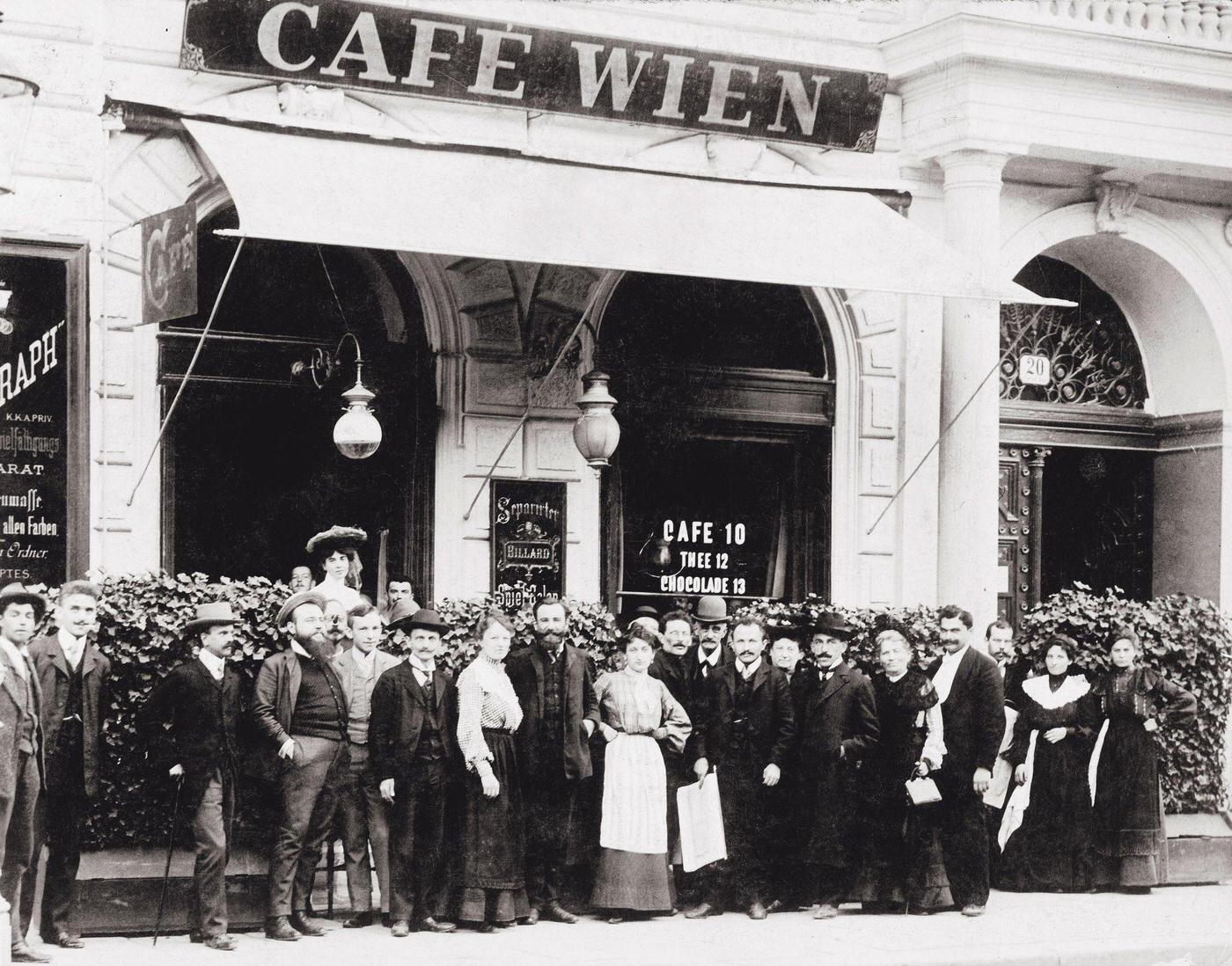
Groupportrait Of Staff And Guests, Cafe Wien, Austria, 1904
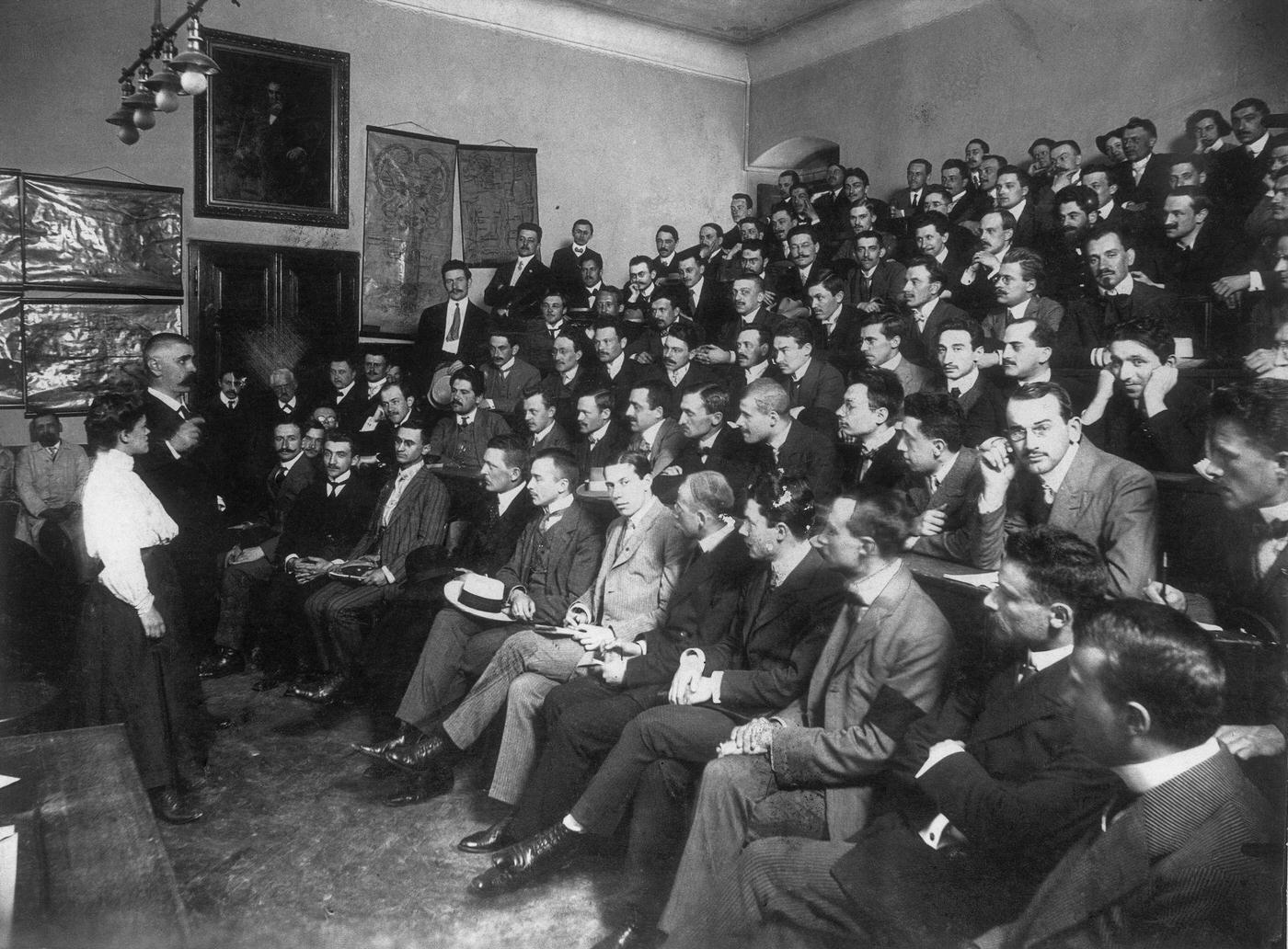
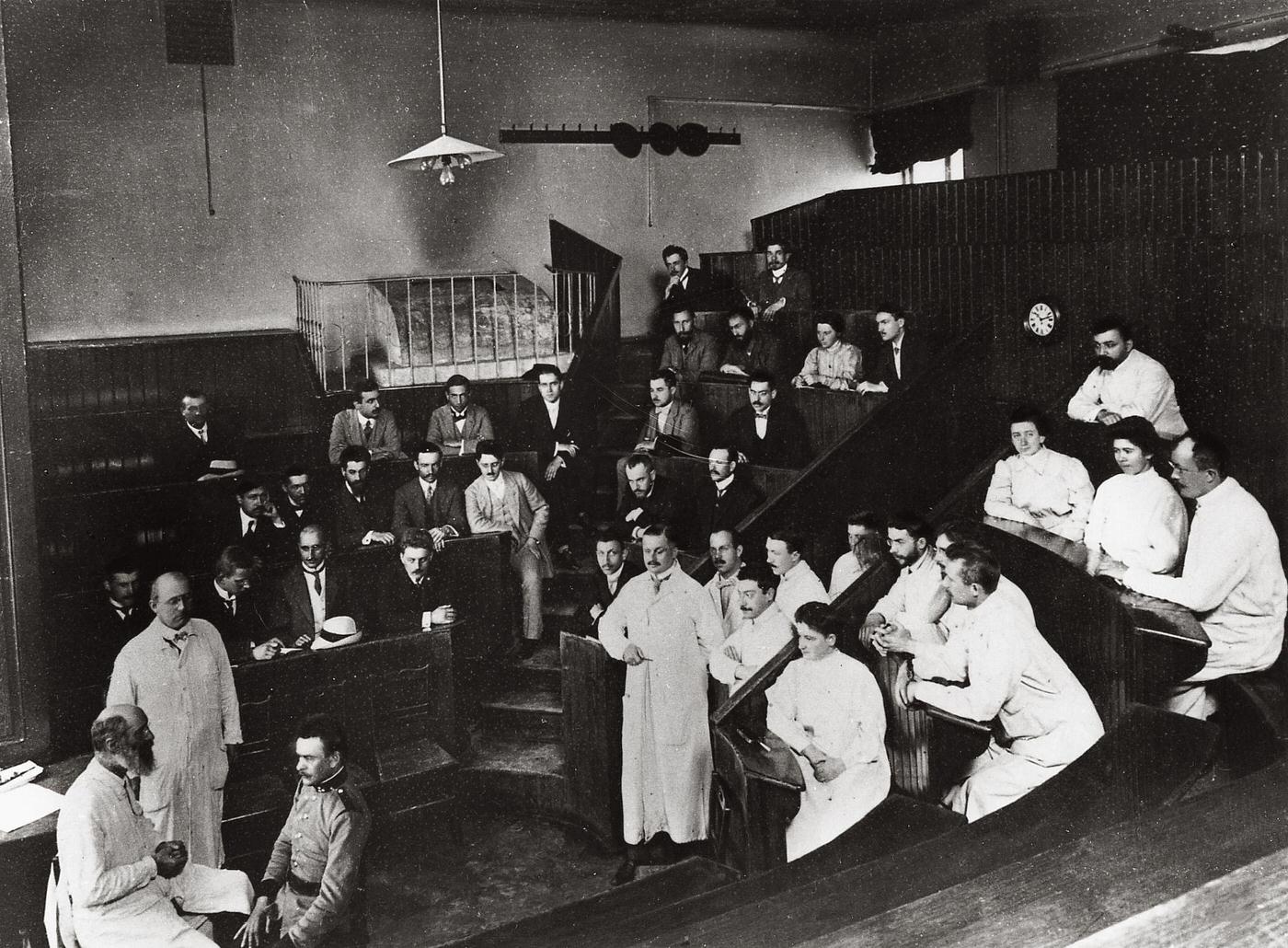
The university lecture halls were just as alive with debate. Sigmund Freud was developing his theories of psychoanalysis, challenging how people thought about the human mind. At the University Eye Clinic, Professor Ernst Fuchs conducted his research. Julius Wagner-Jauregg — who would later win the Nobel Prize in Medicine in 1927 — packed auditoriums with students eager to hear his work on treating mental illness through induced fever.
Auditorium filled with students at a lecture of Julius Wagner-Jauregg, physician and psychiatrist, who became famous for his treatment of mental disease by inducing a fever, which earned him the Nobel Prize in Medicine in 1927, Vienna, Around 1900s
Professor Ernst Fuchs in the Lecture Hall of the University Eye Clinic in Vienna, Around 1900s
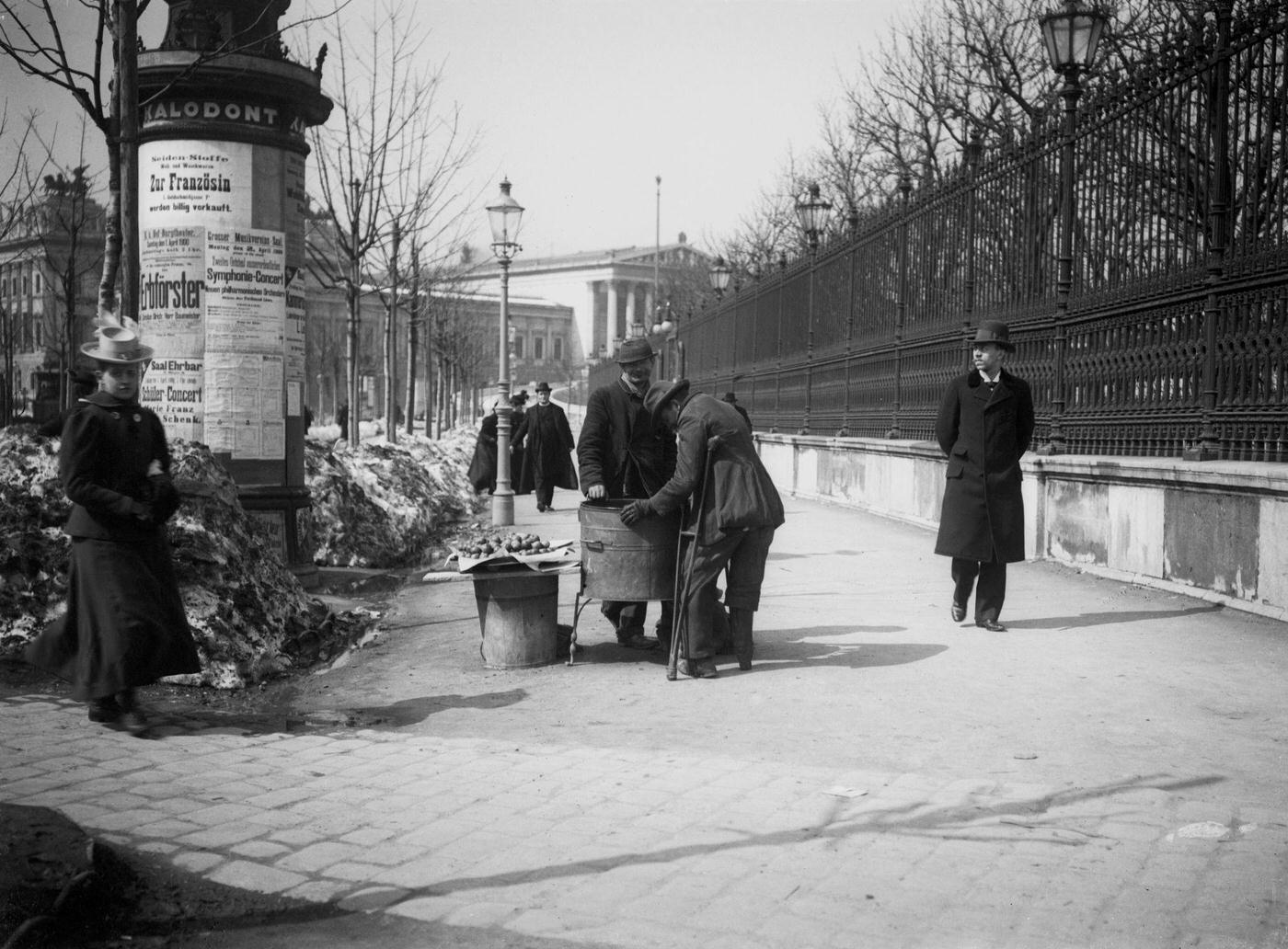
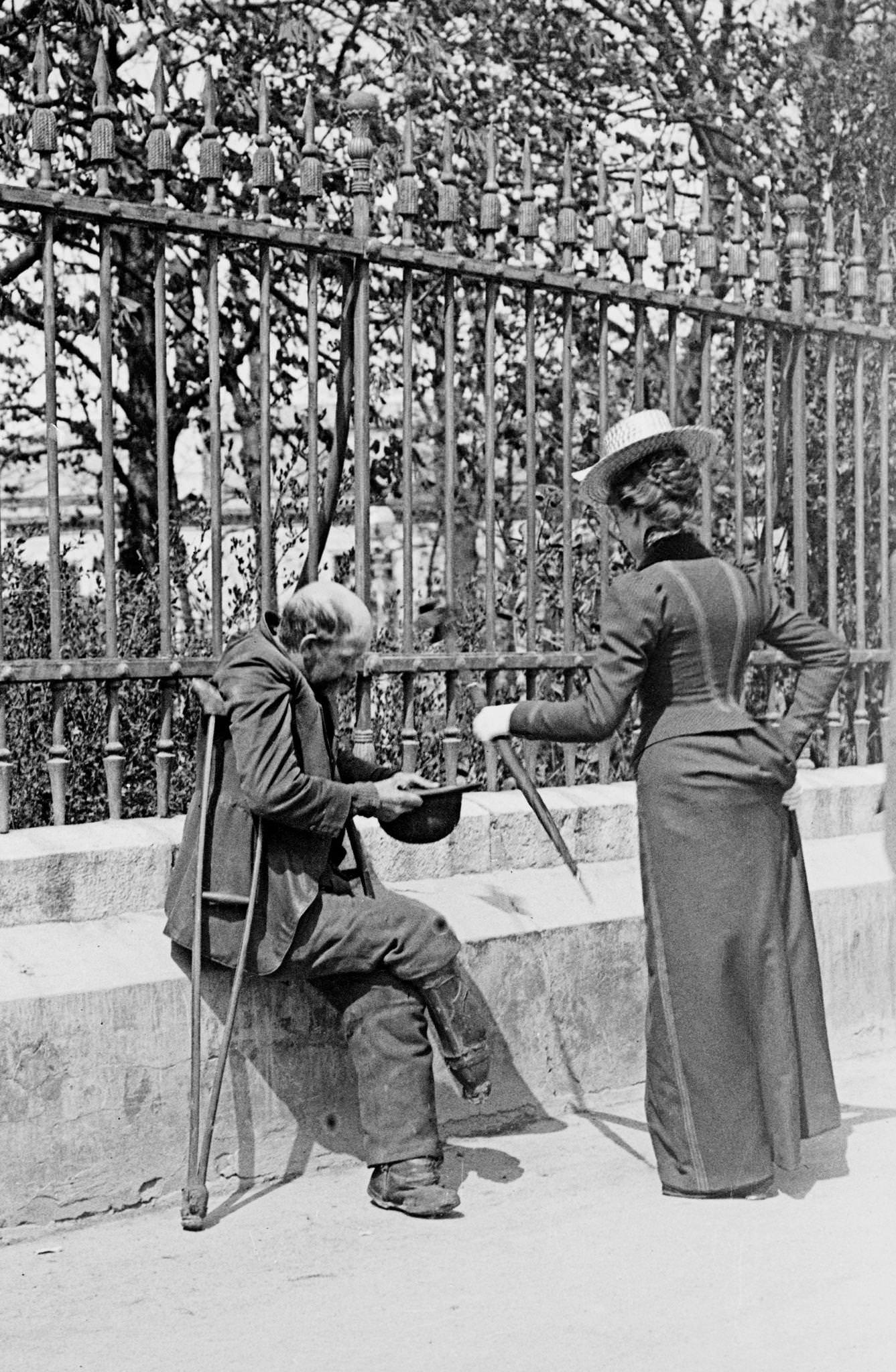
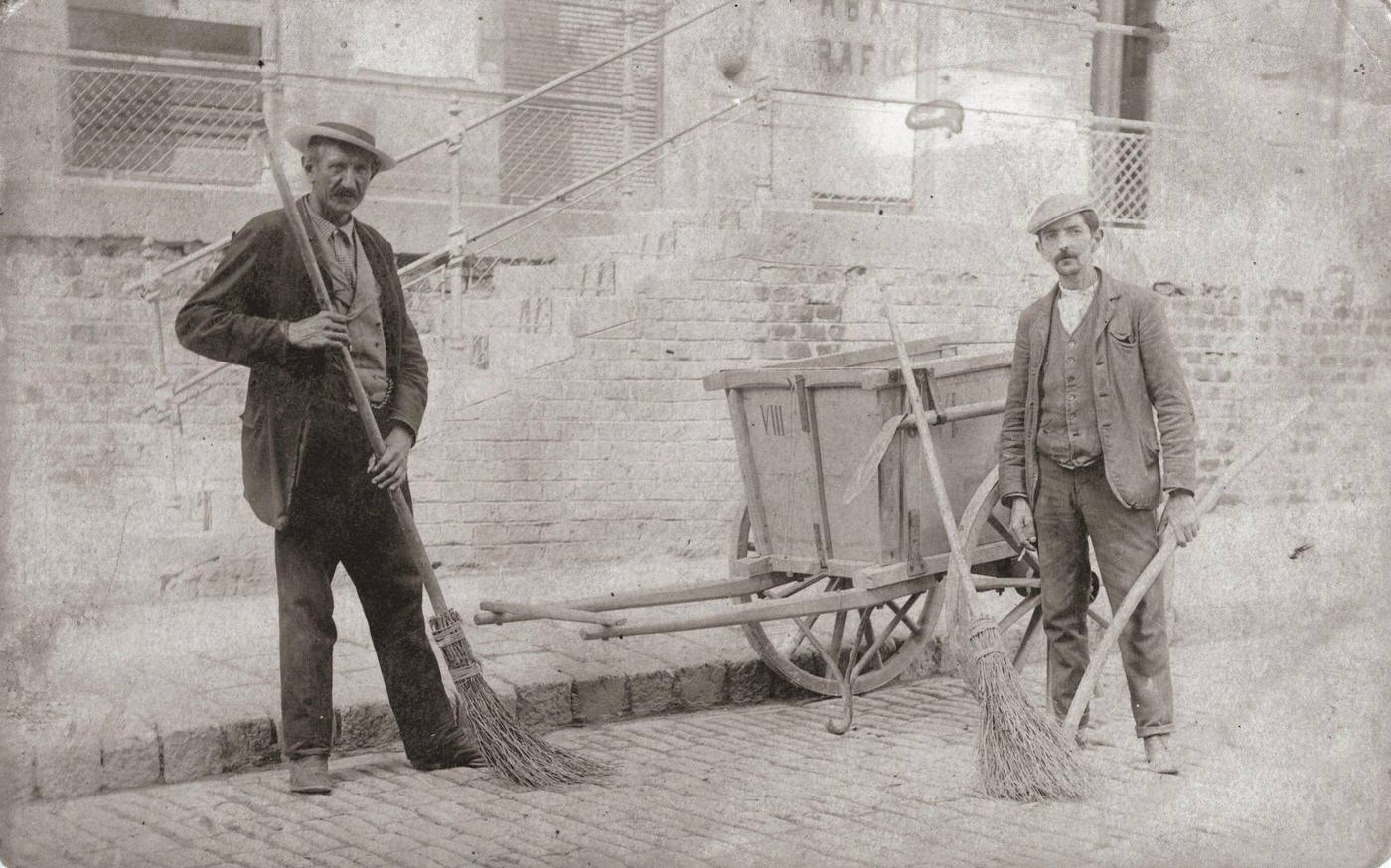
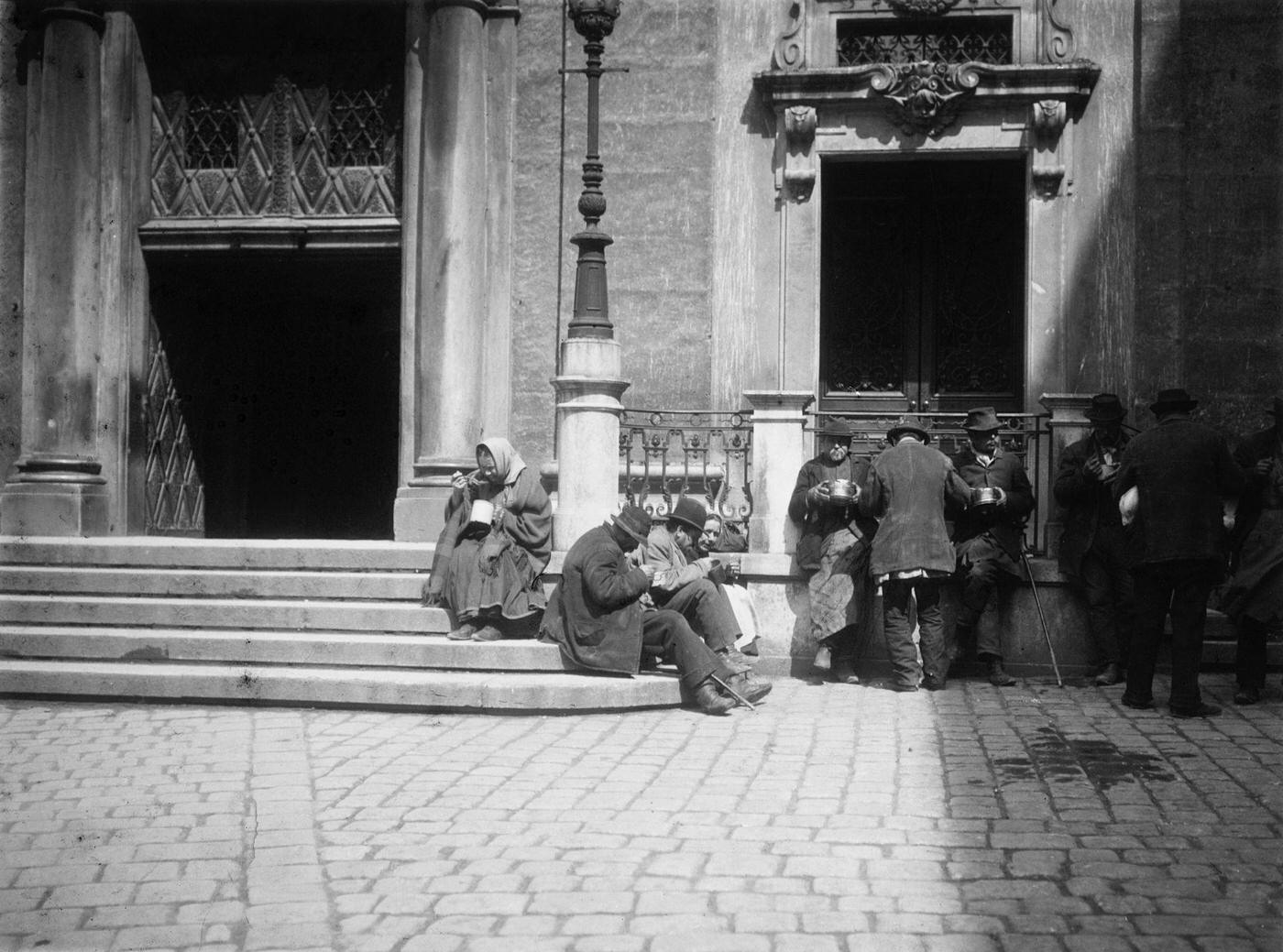
The city’s streets told a very different story from its grand lecture halls and gilded coffeehouses. Vienna had a large and visible working-class population. Street vendors sold asparagus, chestnuts, flowers, and sponges on the busiest corners. Scavengers moved through the alleys. Beggars gathered outside the Jesuit Church and along the Burgring. The contrast between the city’s imperial splendor and its everyday poverty was sharp and impossible to ignore.
A chestnut dealer at the Burgring, In the background the parliament, Vienna, 1900s
A Beggar is getting alms, Burgring, Vienna, 1900s
Scavenger in Vienna, Vienna, 1900s
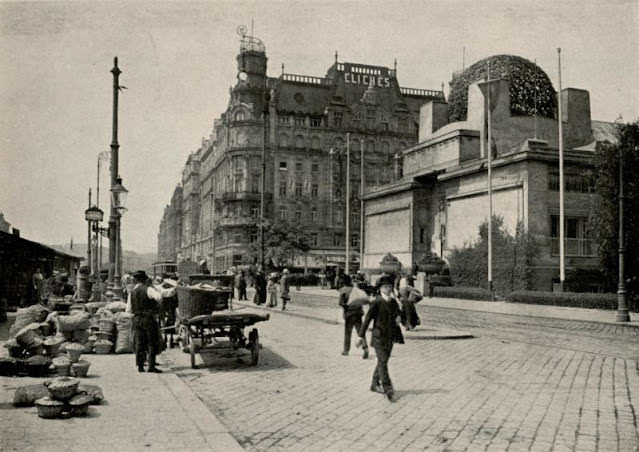
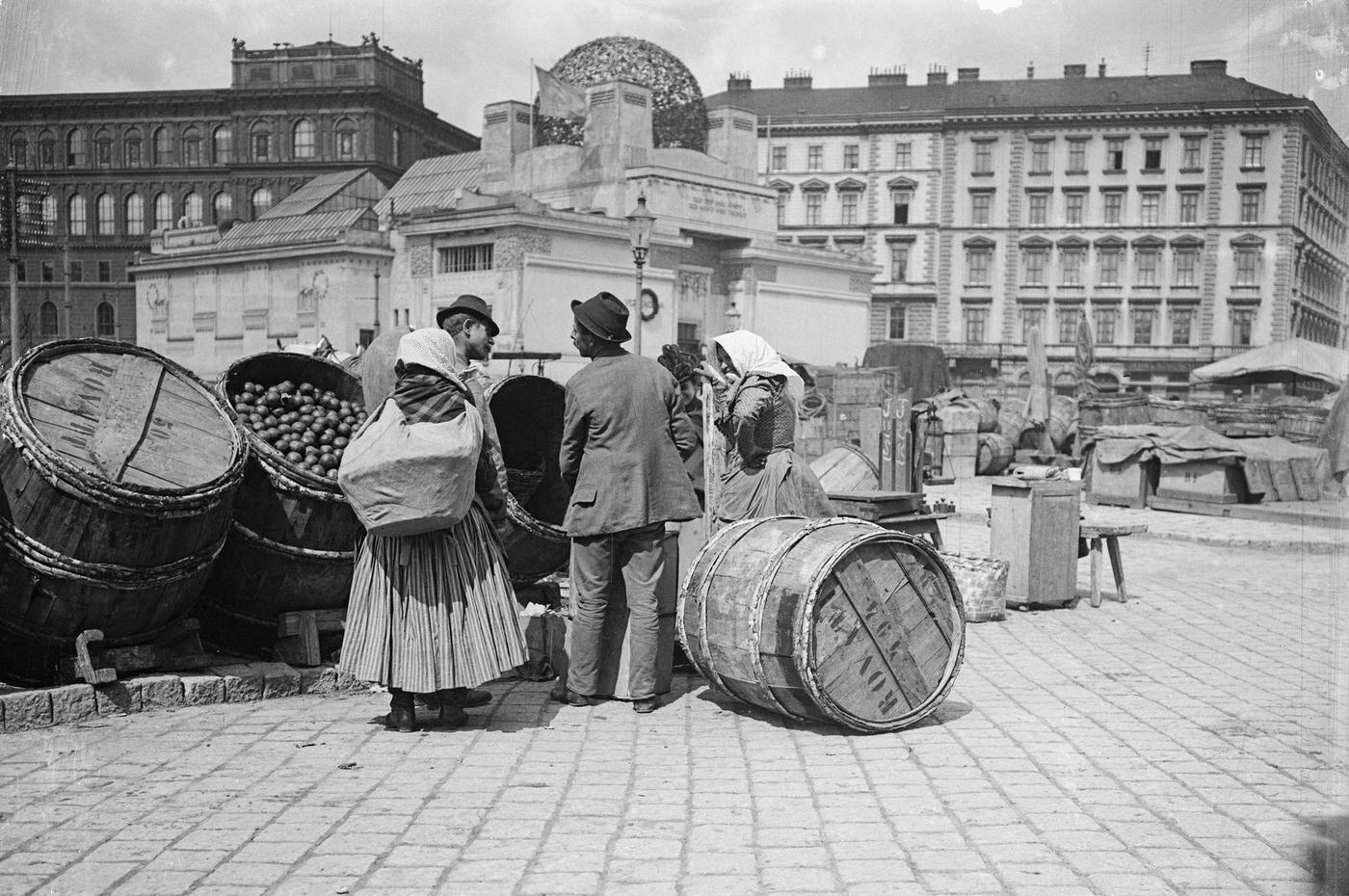
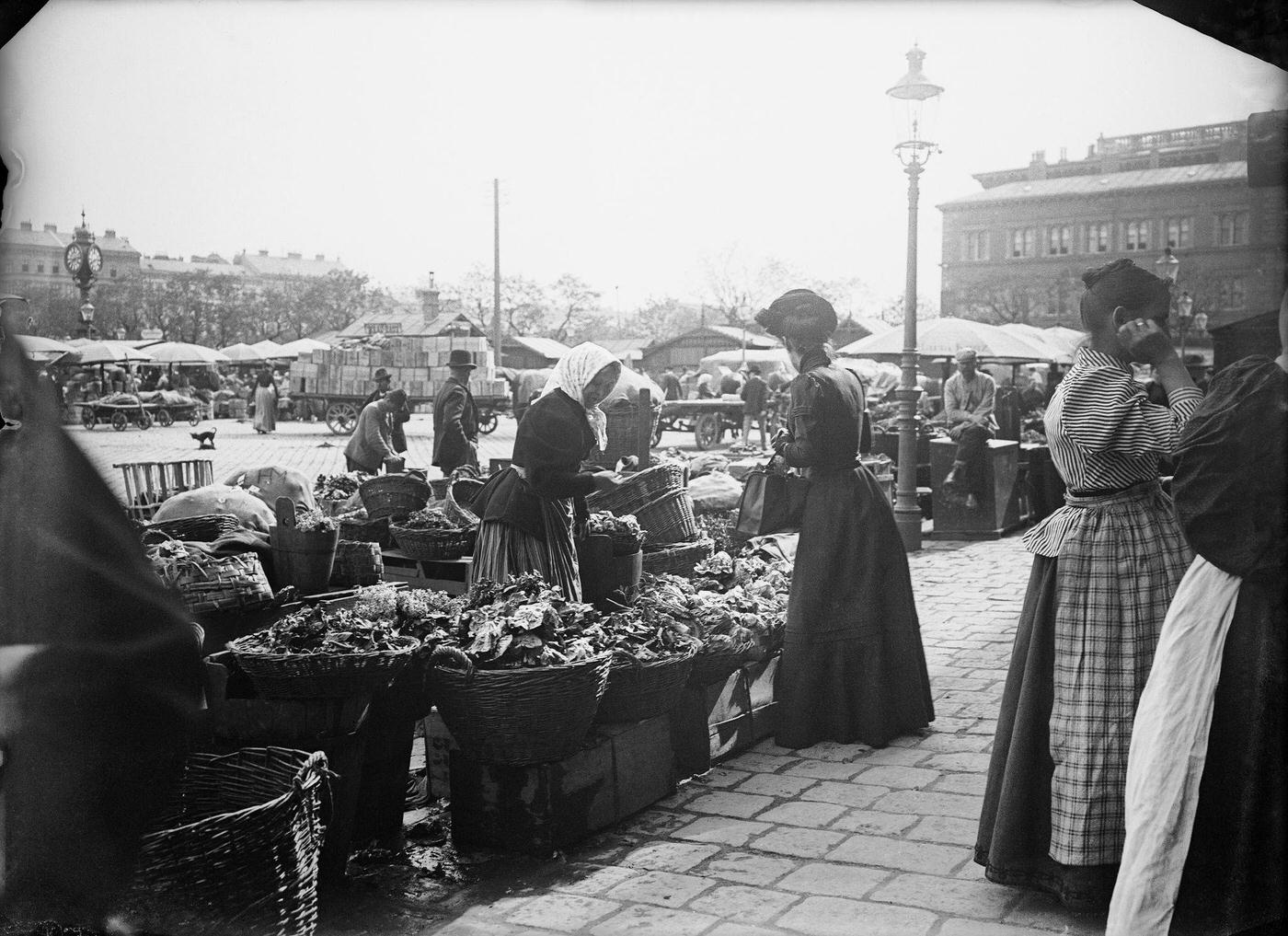
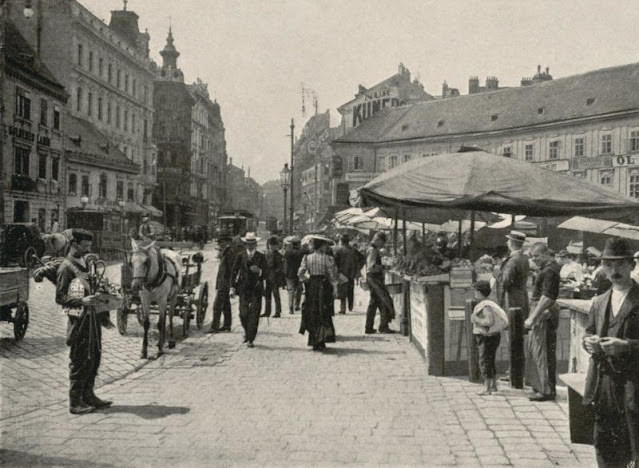
The Naschmarkt was one of the city’s great equalizers. Located in front of the Secession building, it was an open-air market where merchants sold fruit, vegetables, meat, and other goods to anyone with coins in their pocket. Nearby, the indoor market hall at Phorus Place in the 4th district handled larger volumes of trade. Vienna’s markets were the pulse of everyday life.
The Naschmarkt in front of the Secession, Vienna, 1900s
At the Naschmarkt, Vienna, Around 1900
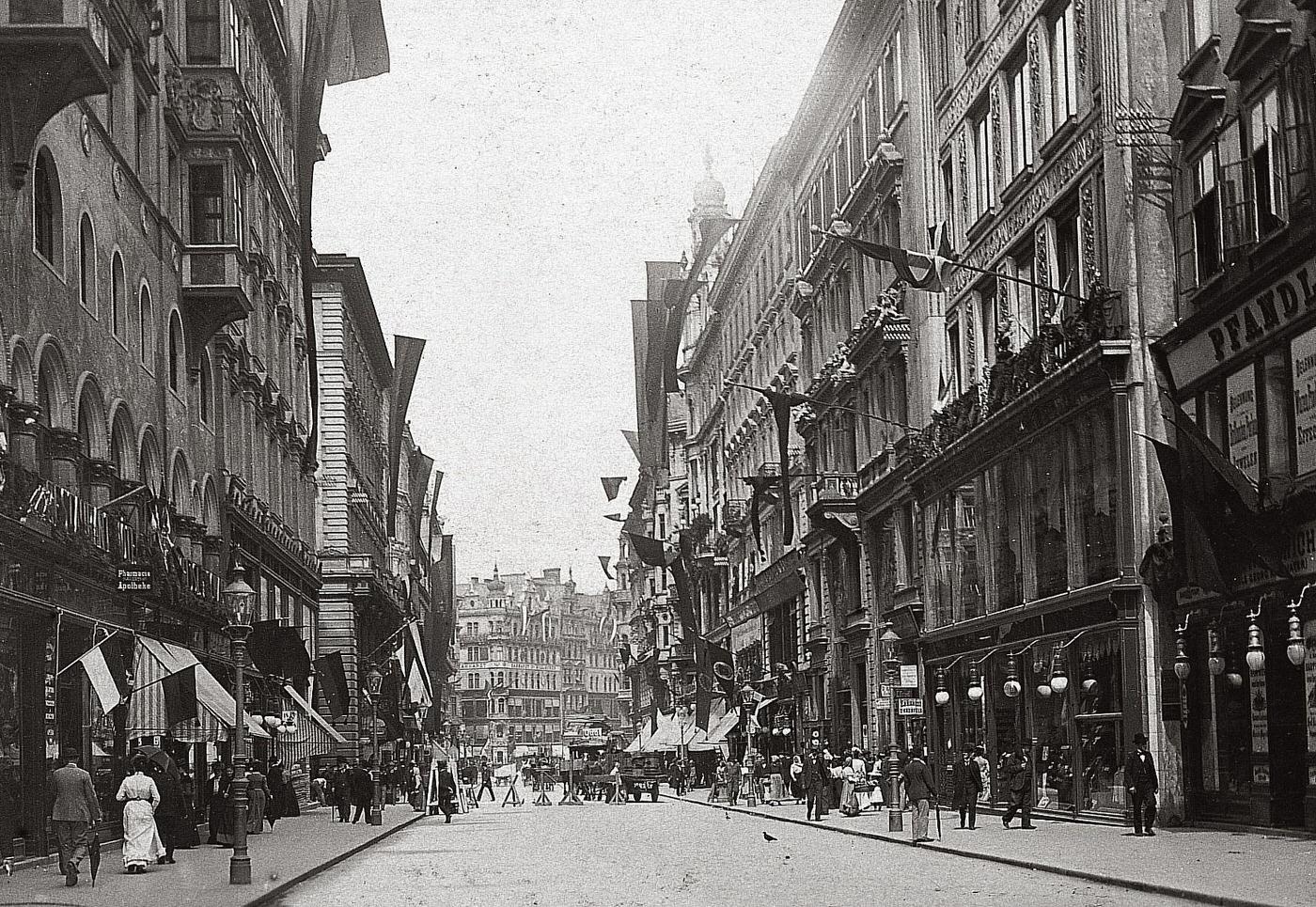
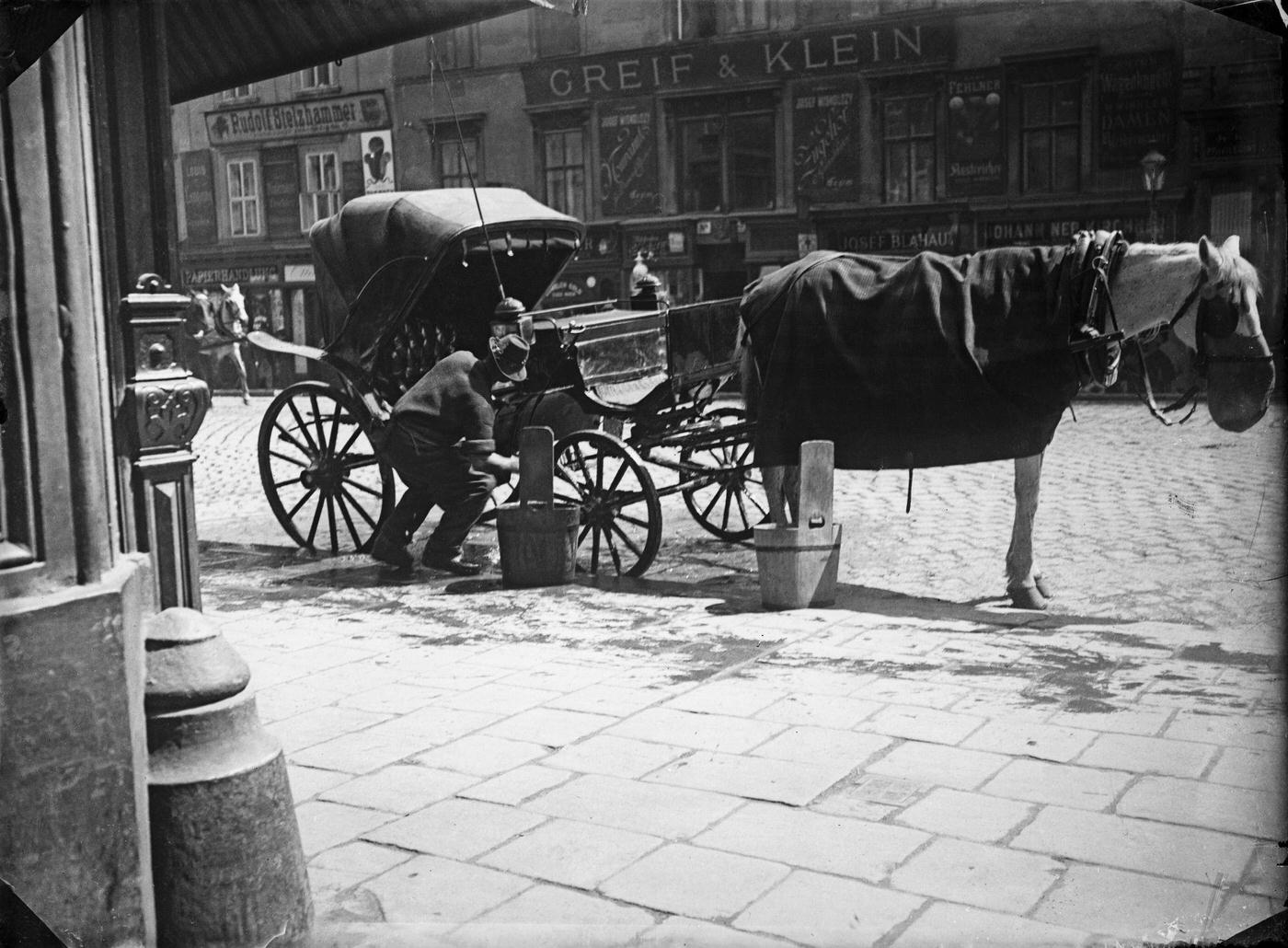
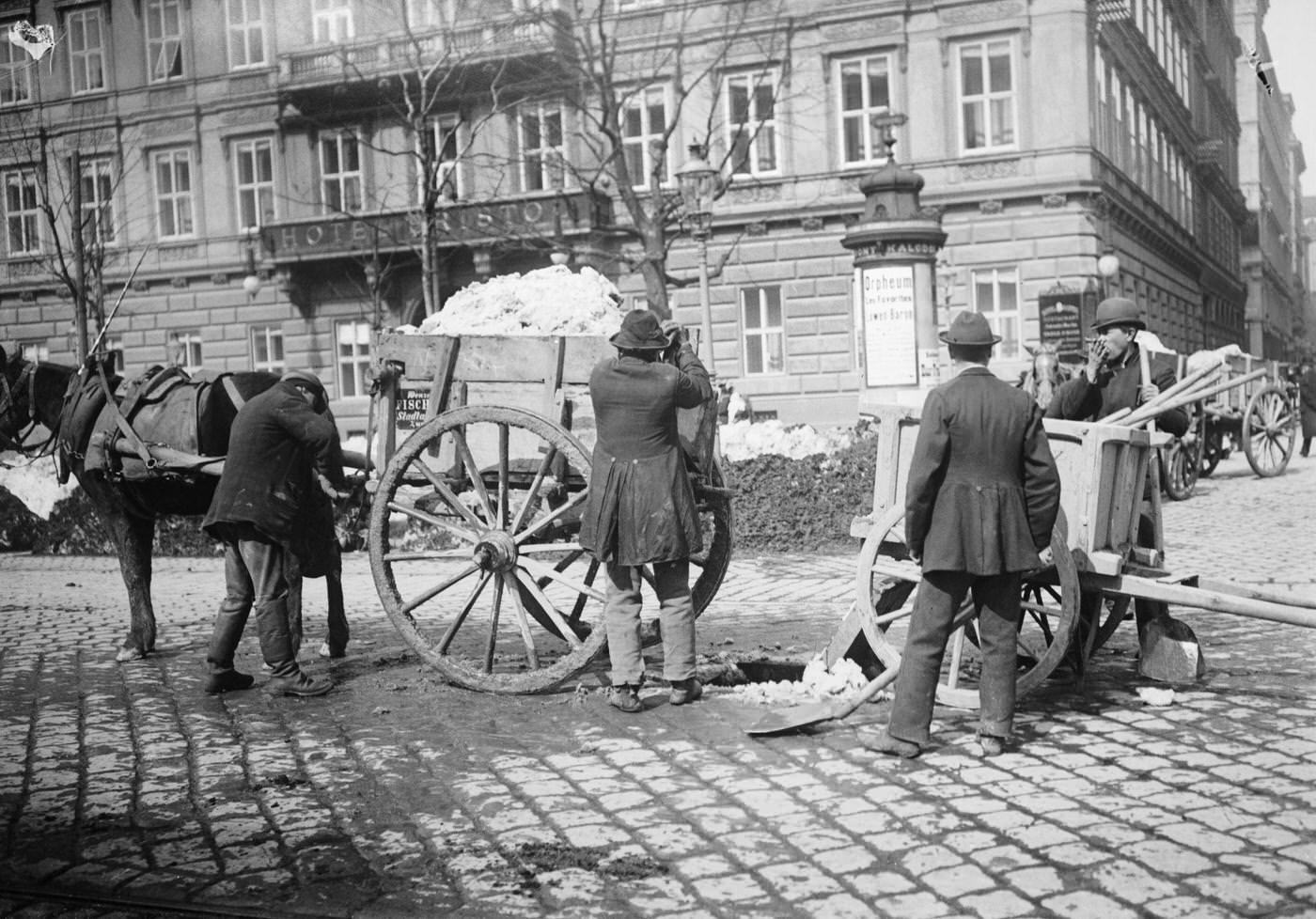
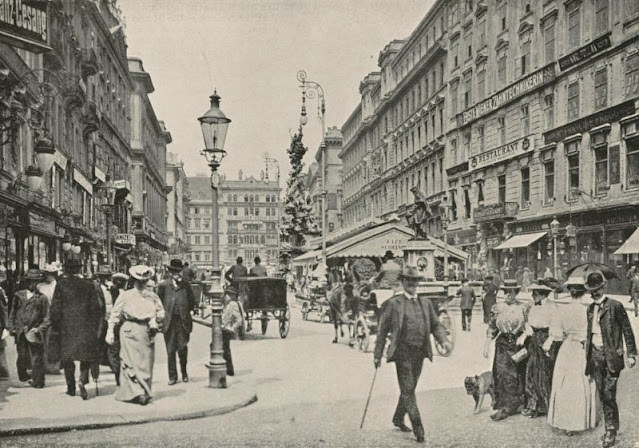
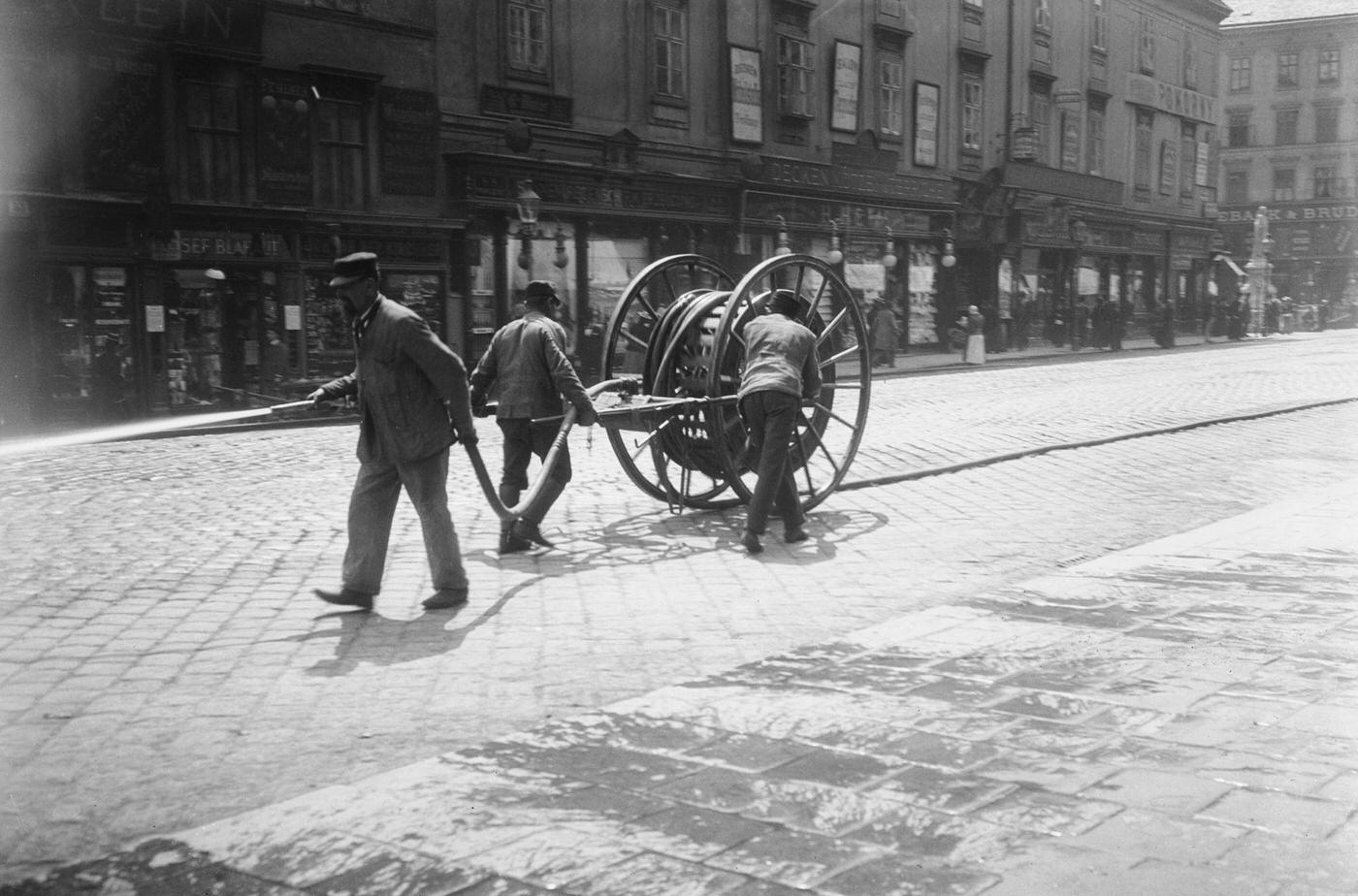
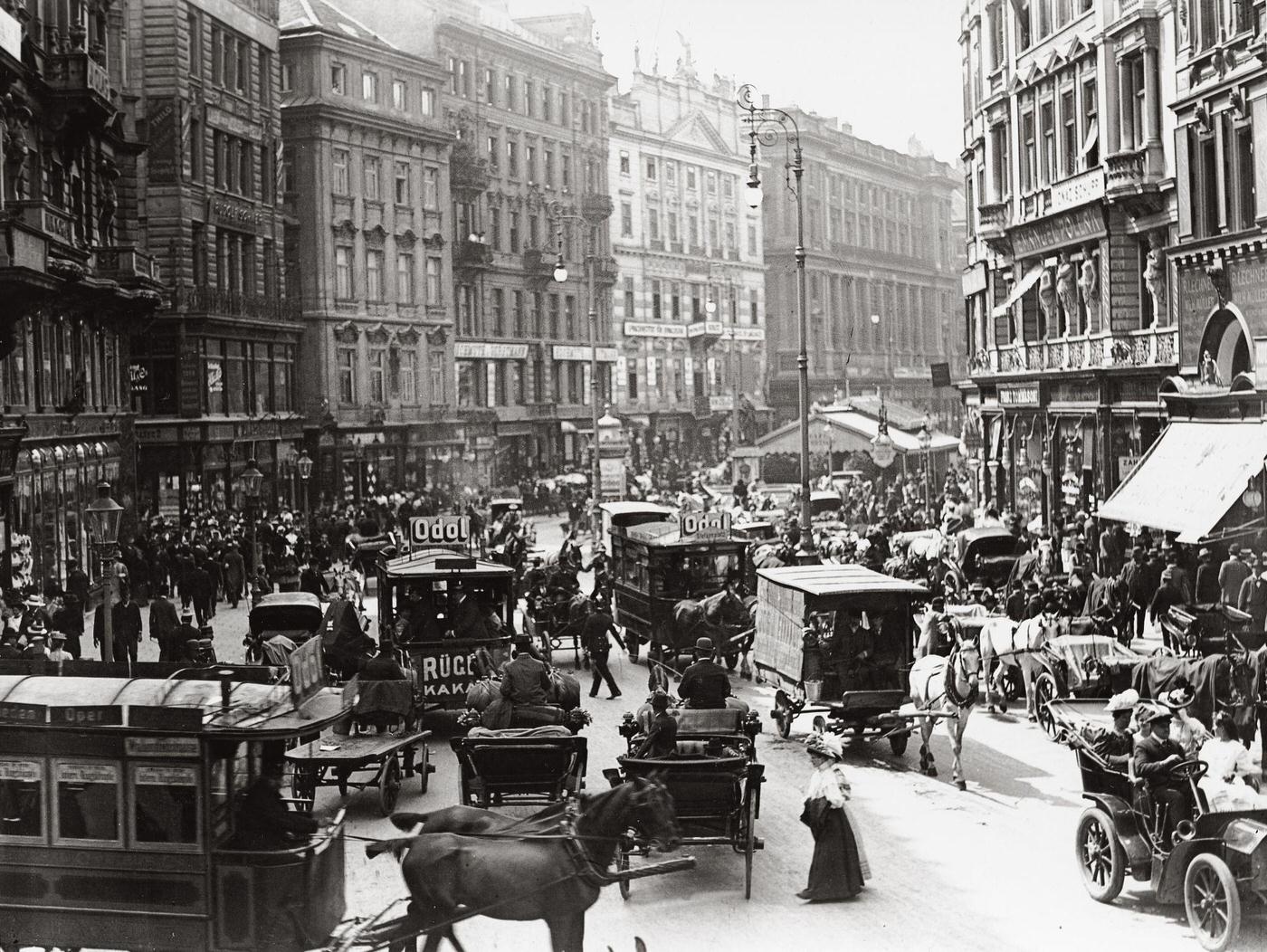
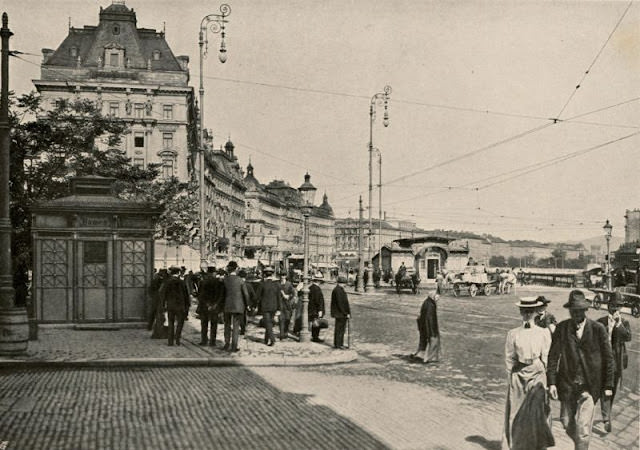
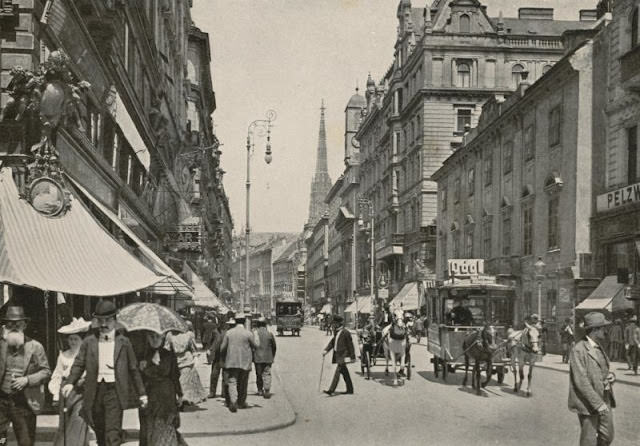
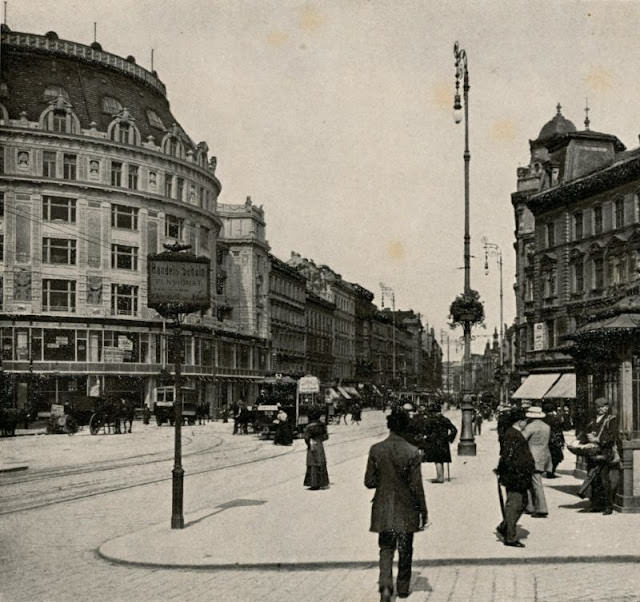
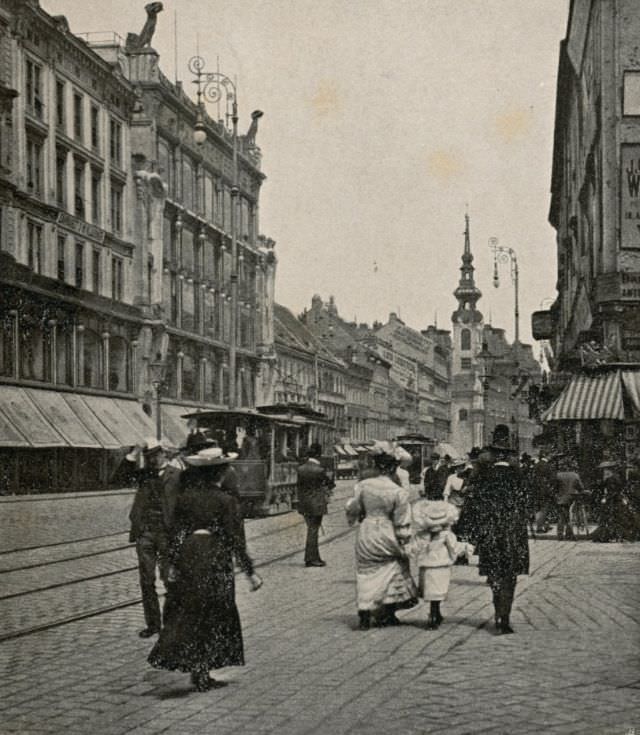
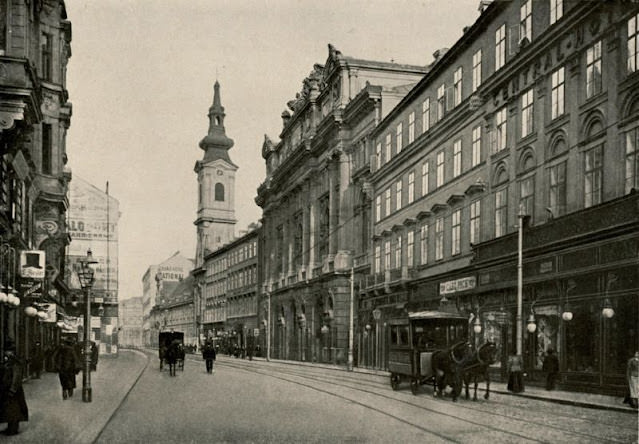
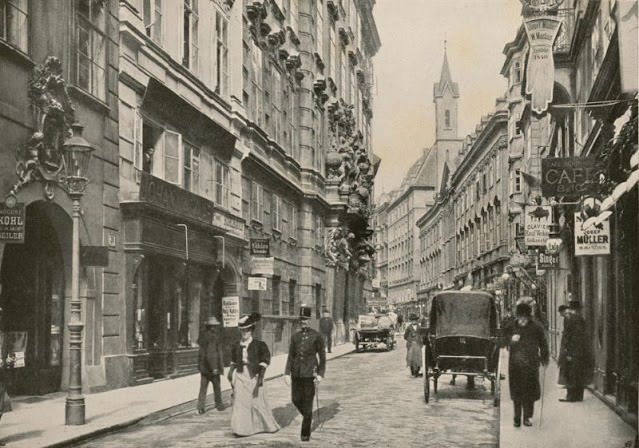
The Graben and Kärnntnerstrasse were the city’s main shopping streets. Horse-drawn carriages still dominated traffic. Cab horses were watered at the curbside. Workers cleaned the streets by hand. Snow on the Kärnntner Ring was cleared by teams of men with shovels. The city’s infrastructure was being built and maintained in full public view — pipes laid, lamps cleaned, and roads swept — a constant reminder of the labor that kept the imperial city running.
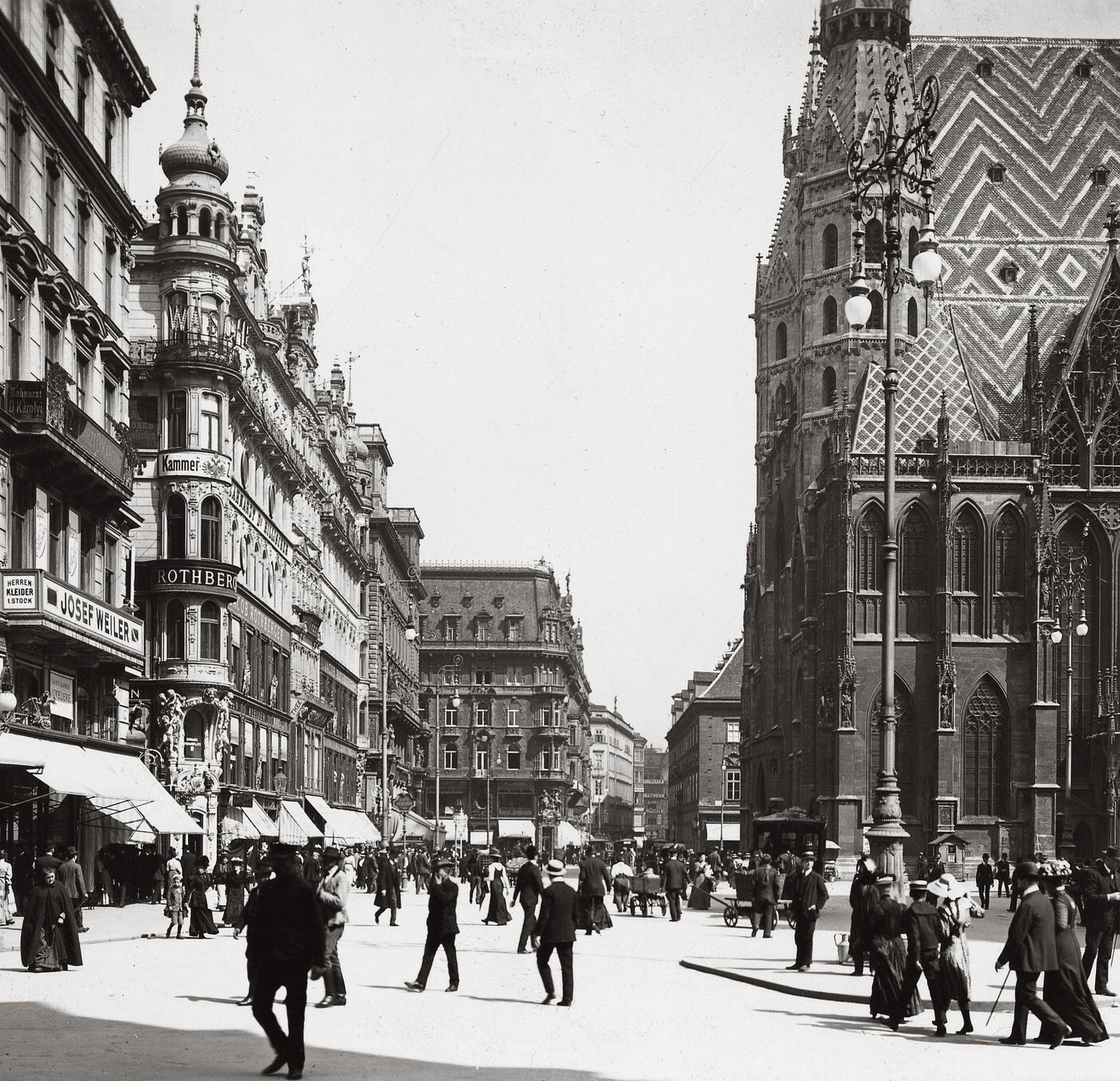
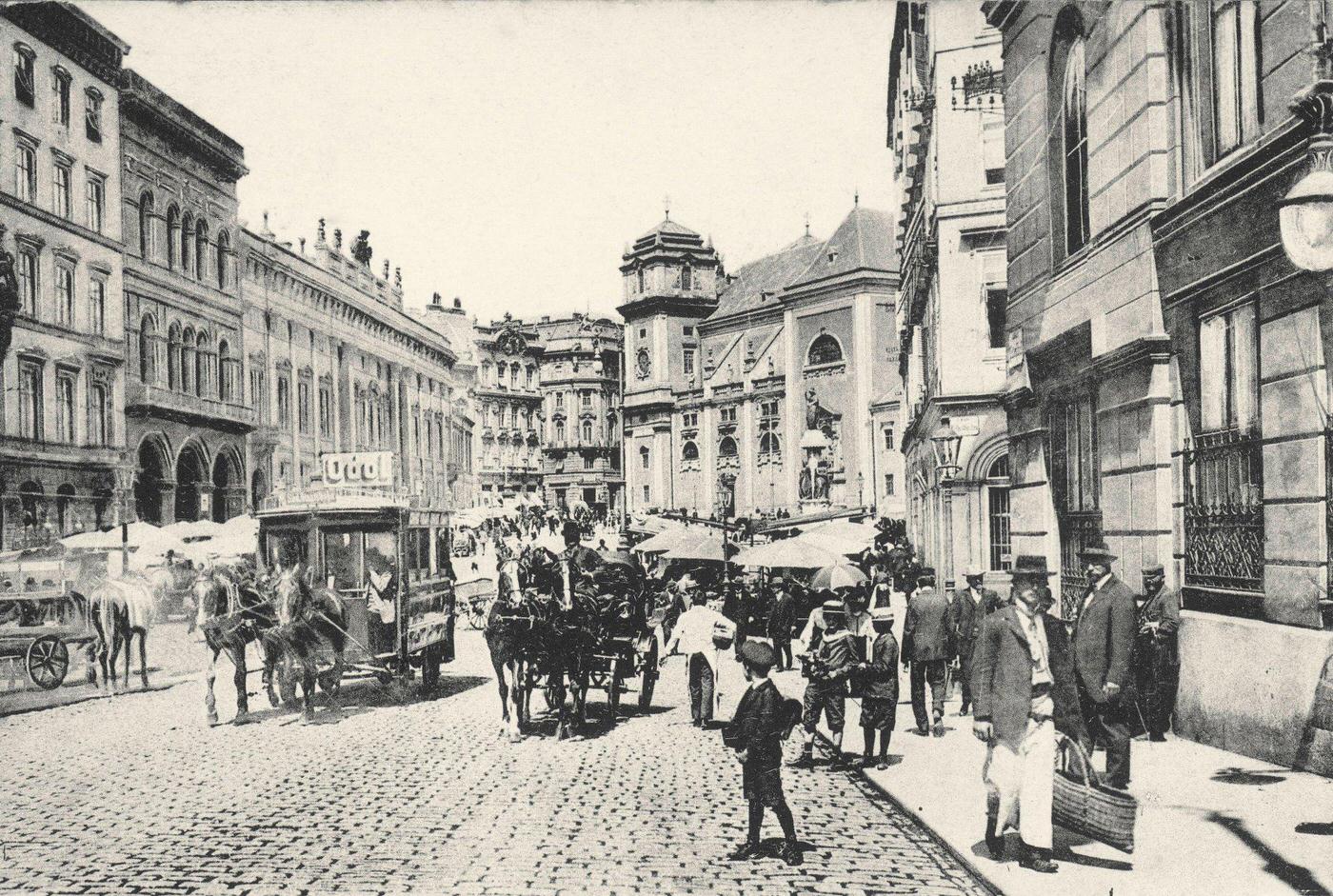
Kaerntner Street towards St. Stephan’s square, 1905
Streetlife in Vienna: man giving water to a cab-horse in Vienna, Austria, Vienna, 1900s
Snow removal on the Kärtner Ring, Hotel Bristol in the background, Vienna, 1900s
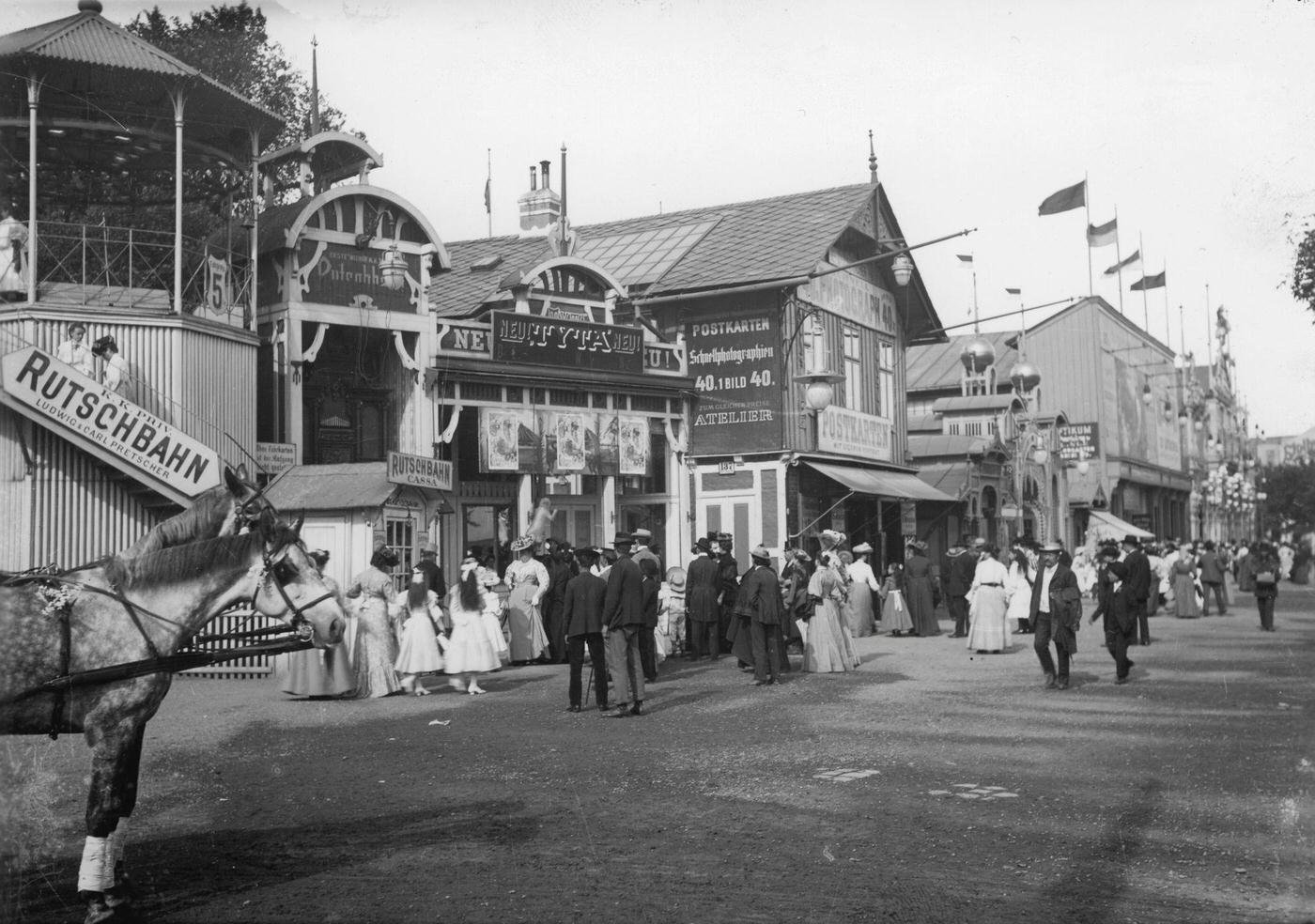
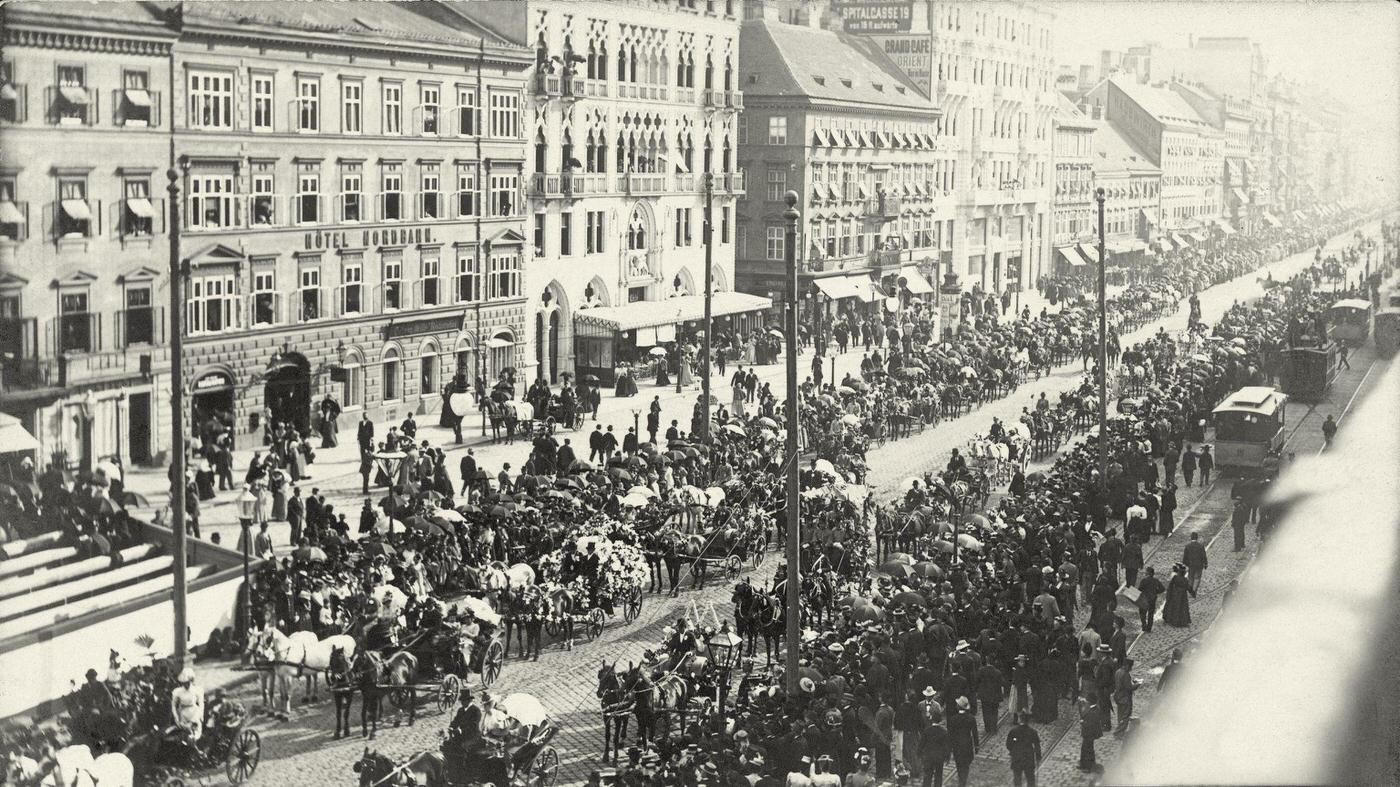
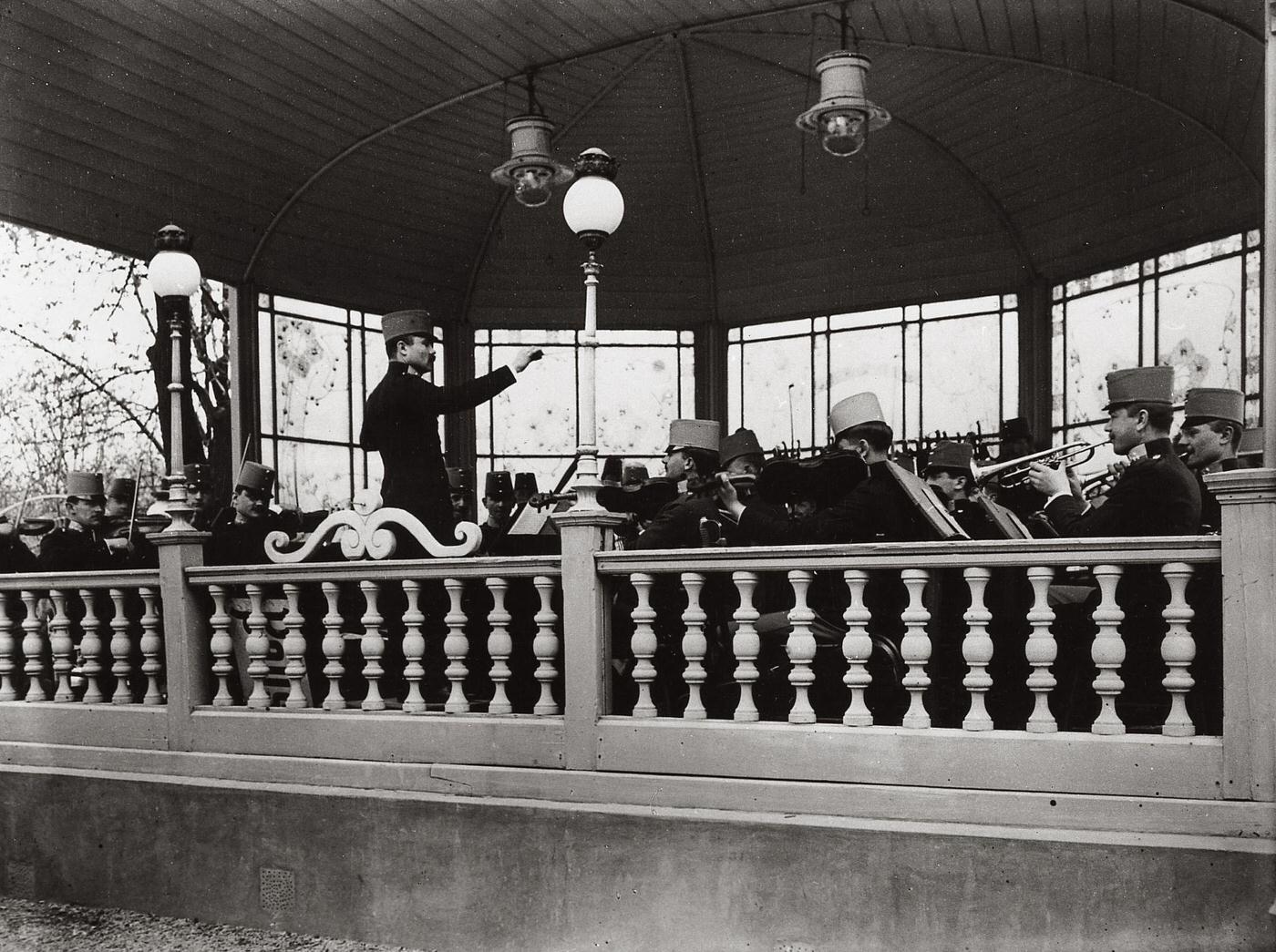
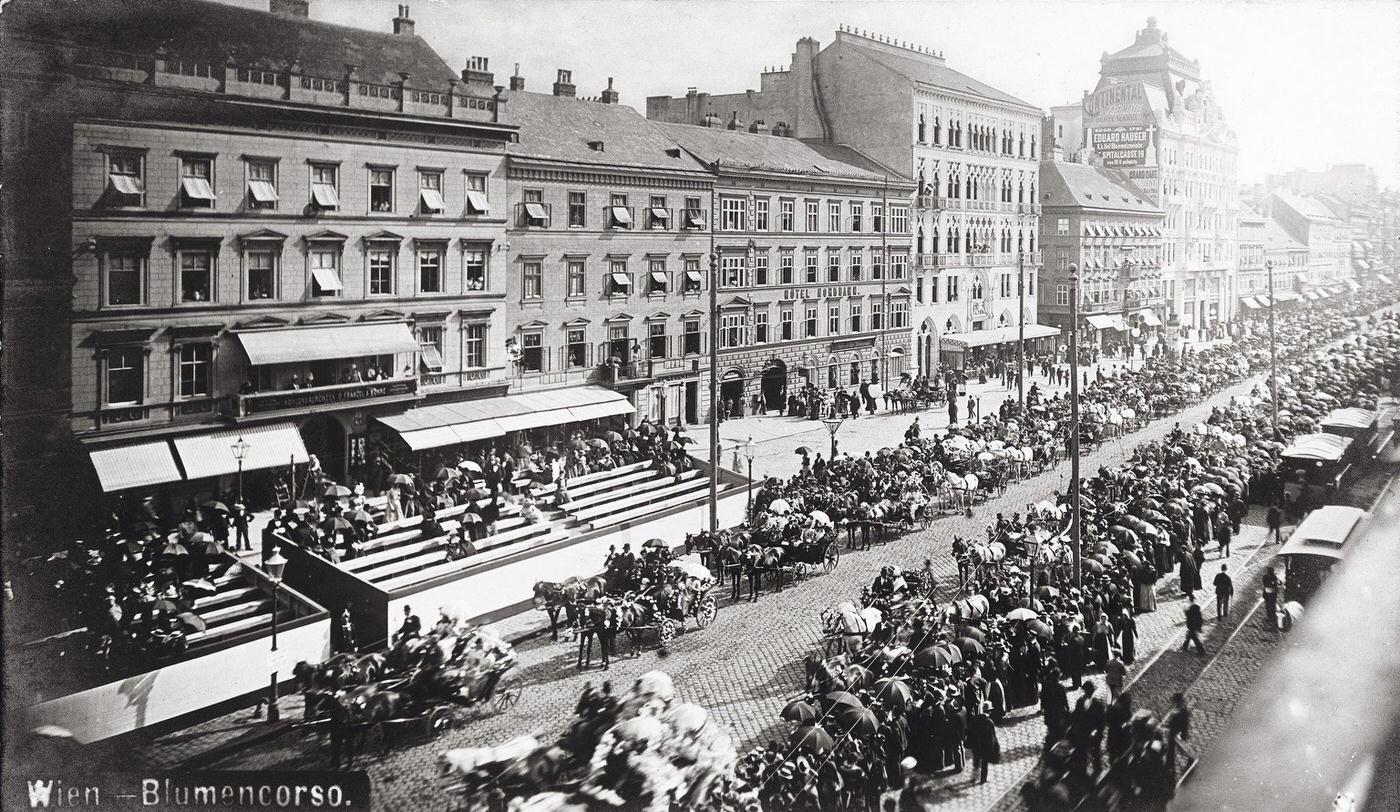
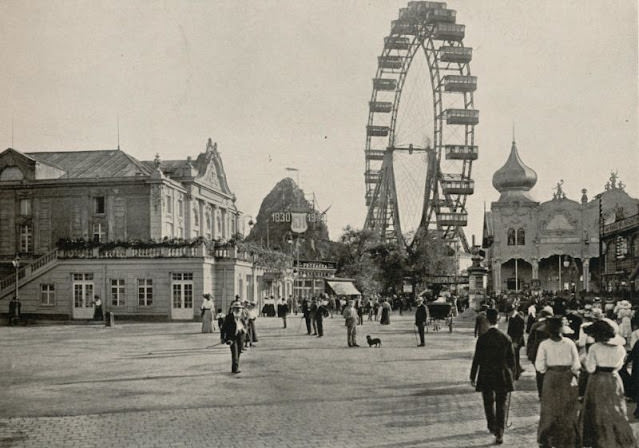
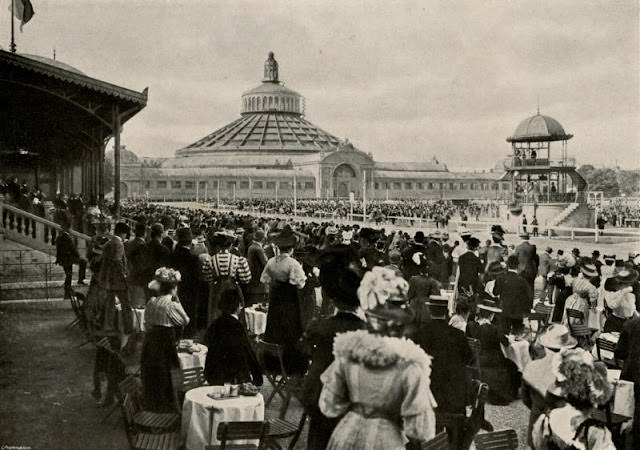
For leisure, Viennese residents turned to the Prater. The vast park contained the Wurstel Prater amusement area, home to the famous Riesenrad — the giant Ferris wheel built in 1897. Military bands played in the open air. Visitors arrived in horse-drawn carriages for the annual Flower Corso, when decorated vehicles paraded down the Praterstrasse in a spectacle of color and celebration.
Wurstel Prater amusement park, Around 1900
Flower parade in Vienna, decorated horse-drawn carriages in the Praterstrasse, 1st of June, 1902
Military band in the Viennese Prater (amusement park), Around 1900s
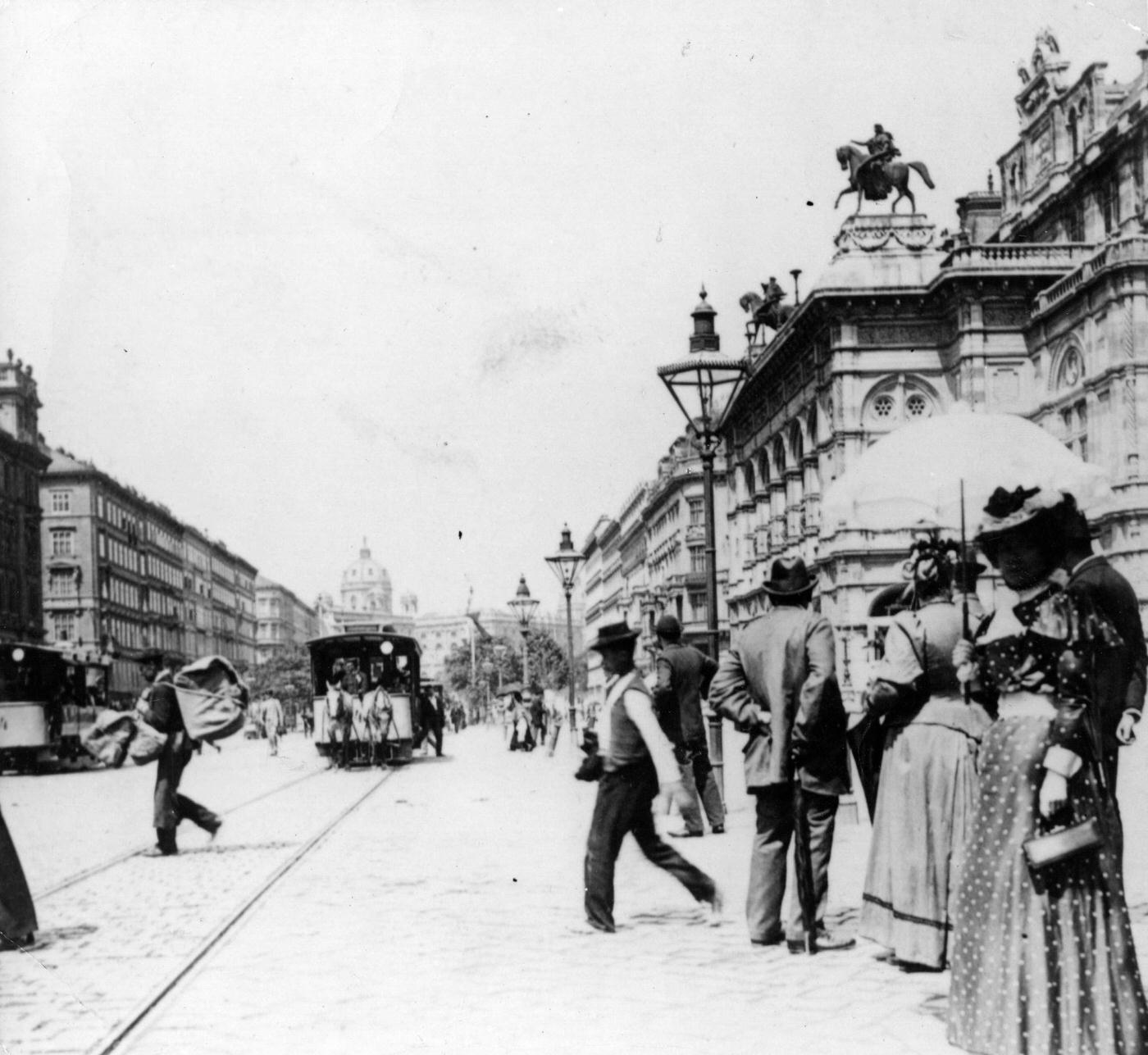
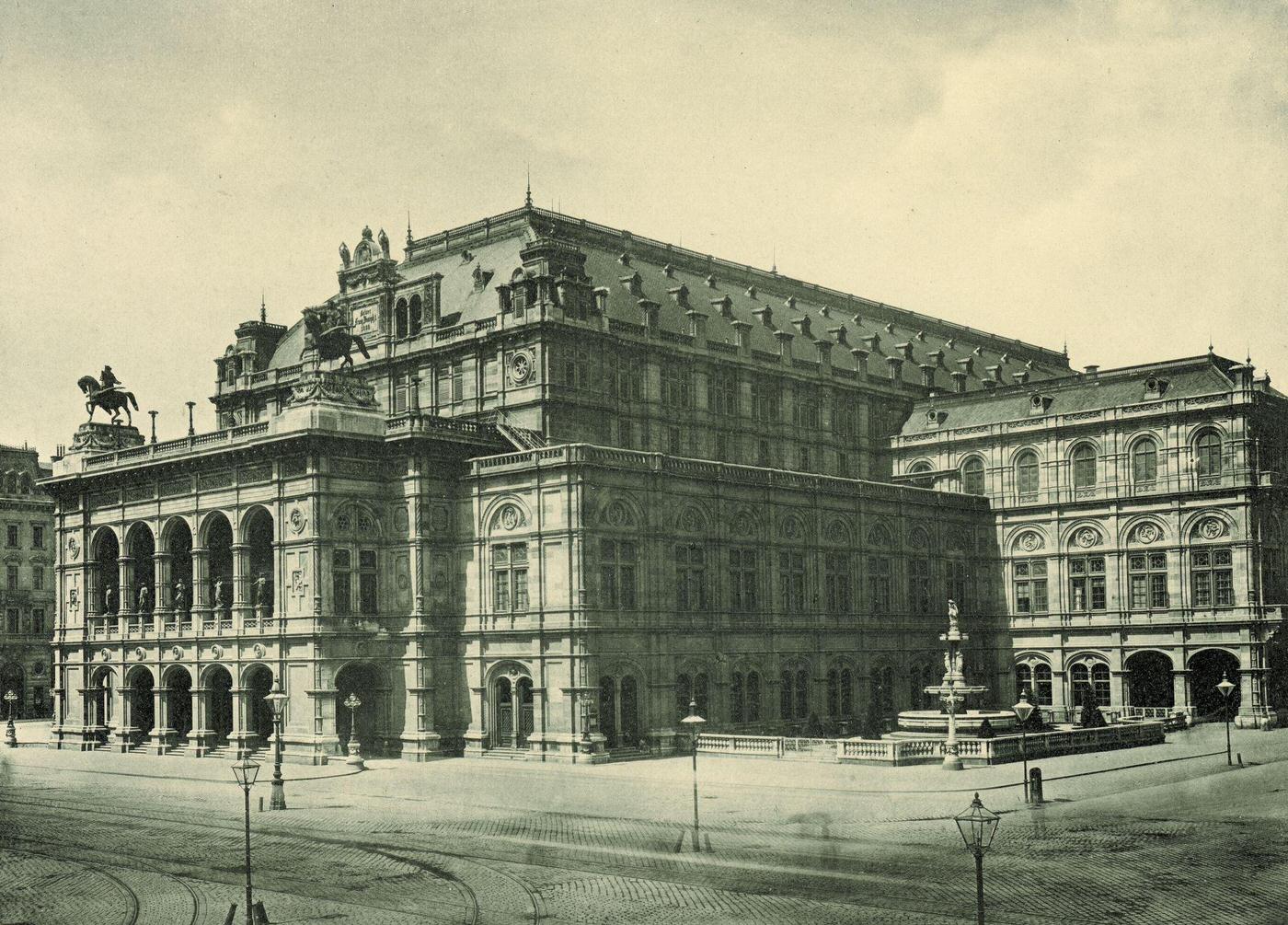
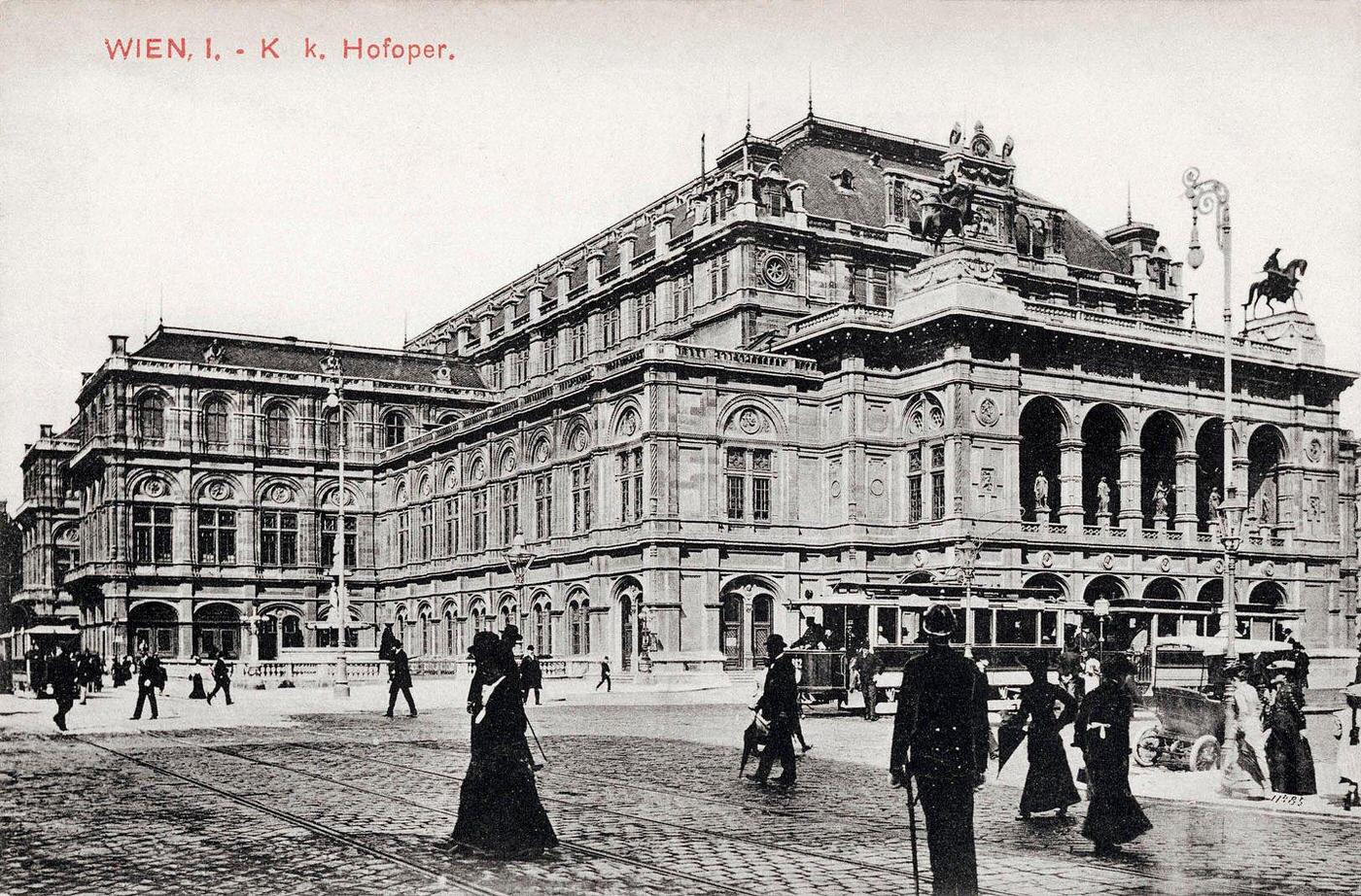
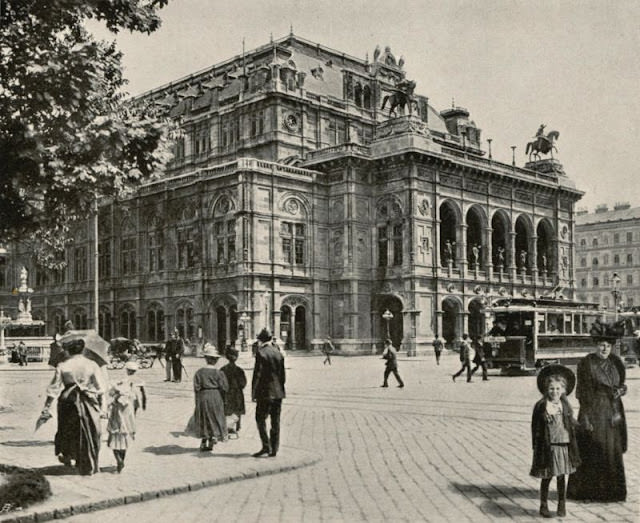
The Vienna Court Opera — known today as the State Opera — was another centerpiece of the city’s cultural life. Built in 1869, it sat on the Opernring and hosted the works of composers who were redefining music. The Second Viennese School, made up of Arnold Schoenberg, Anton Webern, and Alban Berg, was developing atonal music that stripped away the familiar rules of melody and harmony. Their concerts were sometimes met with outrage, sometimes with fascination.
Vienna Court Opera House (State Opera), Around 1900s
Vienna Opera House – exterior view from the early 1900s, 1900s
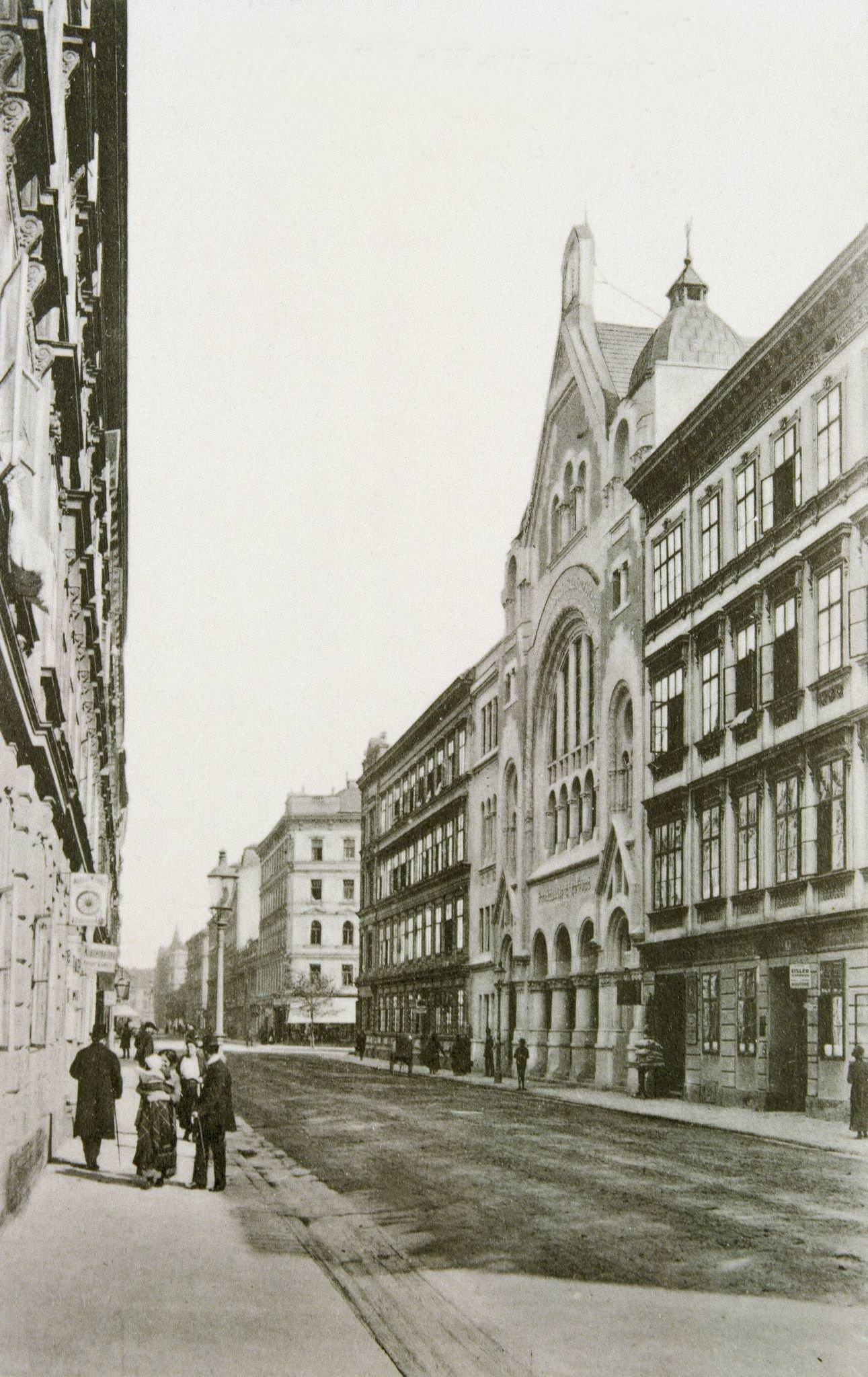
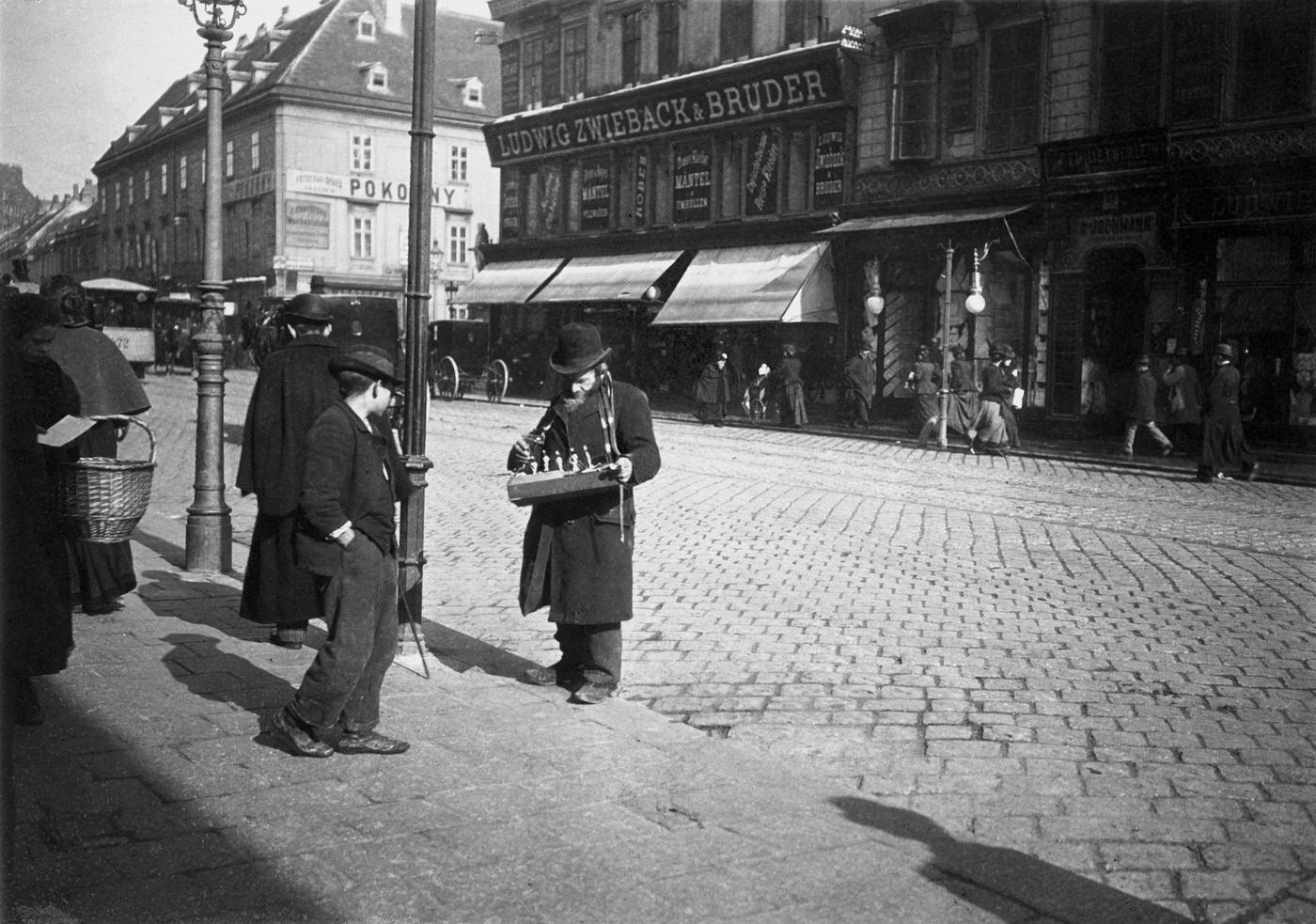
Vienna was also a city with a large and long-established Jewish population. Jewish traders, merchants, and professionals were a visible and integral part of city life. The Emperor Franz Joseph I Jewish synagogue — formally the Emperor Franz Joseph I Homage Temple — stood in the Leopoldstadt district, a neighborhood with a strong Jewish identity. Jewish street hawkers sold their goods on Mariahilfer Strasse alongside everyone else.
Emperor Franz Joseph I. – homage temple in Vienna (Jewish synagogue) in Pazmanitengasse in Vienna-Leopoldstadt, Vienna, Around 1900s
A Jewish street hawker at the Mariahilfer Strasse, Vienna, 1900s
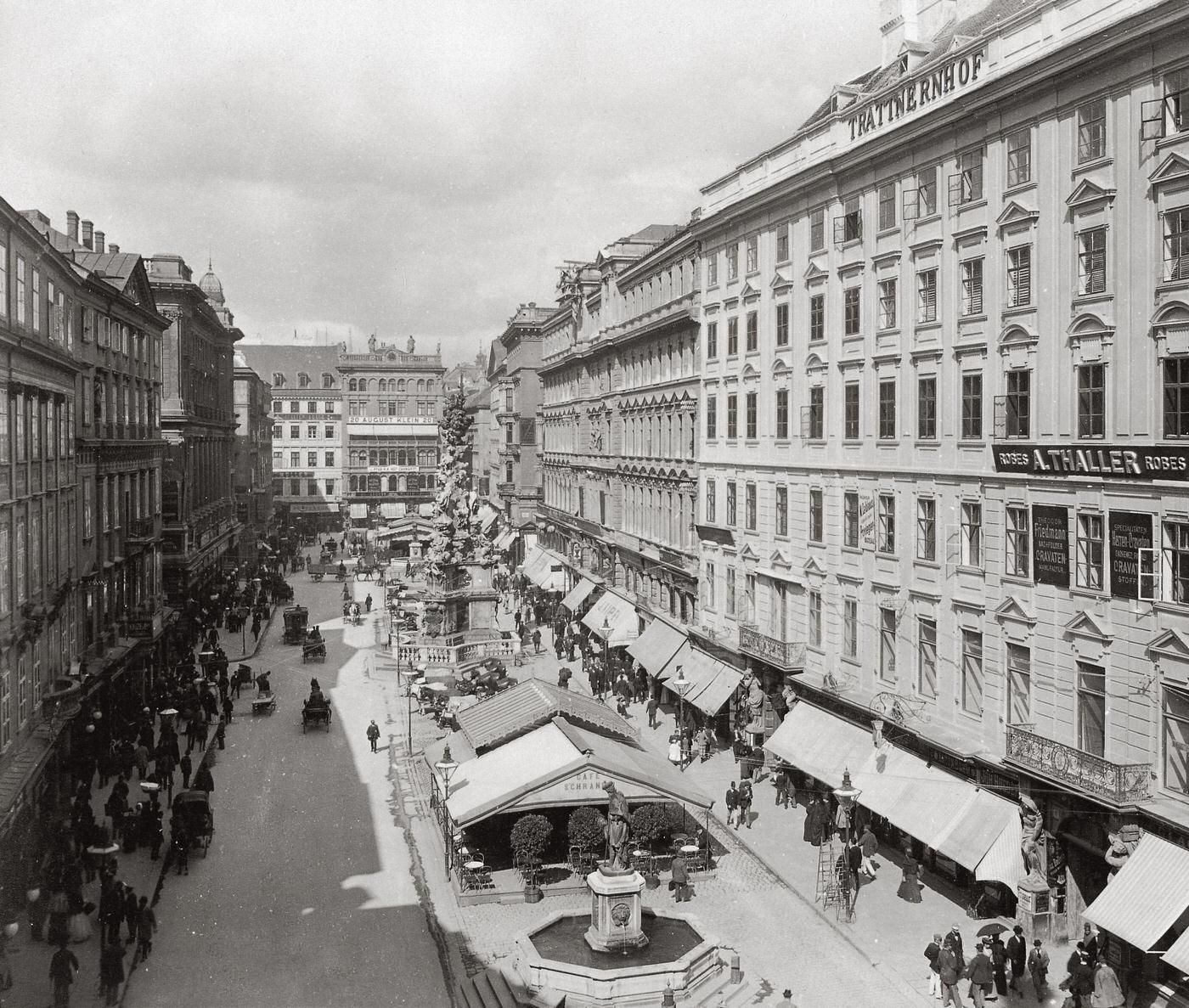
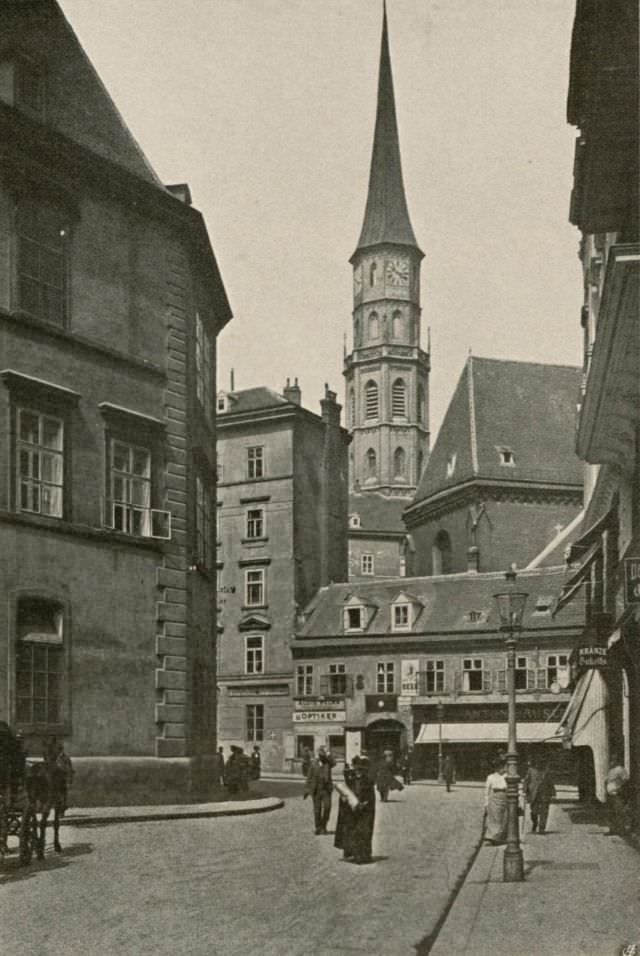
The Graben, one of Vienna’s oldest streets, was lined with shops and dominated by the Pestsäule — the ornate plague column erected in the 17th century to commemorate the end of the Black Death. By 1900 the column stood as a relic of a darker past in the middle of a busy, modern shopping street. Nearby, the Kohlmarkt connected the Graben to the Michaelerplatz and the grand entrance of the Hofburg Palace.
The Wiener Graben and the Pestsaeule (Black Death column), 1904
Graben, Vienna, 1900
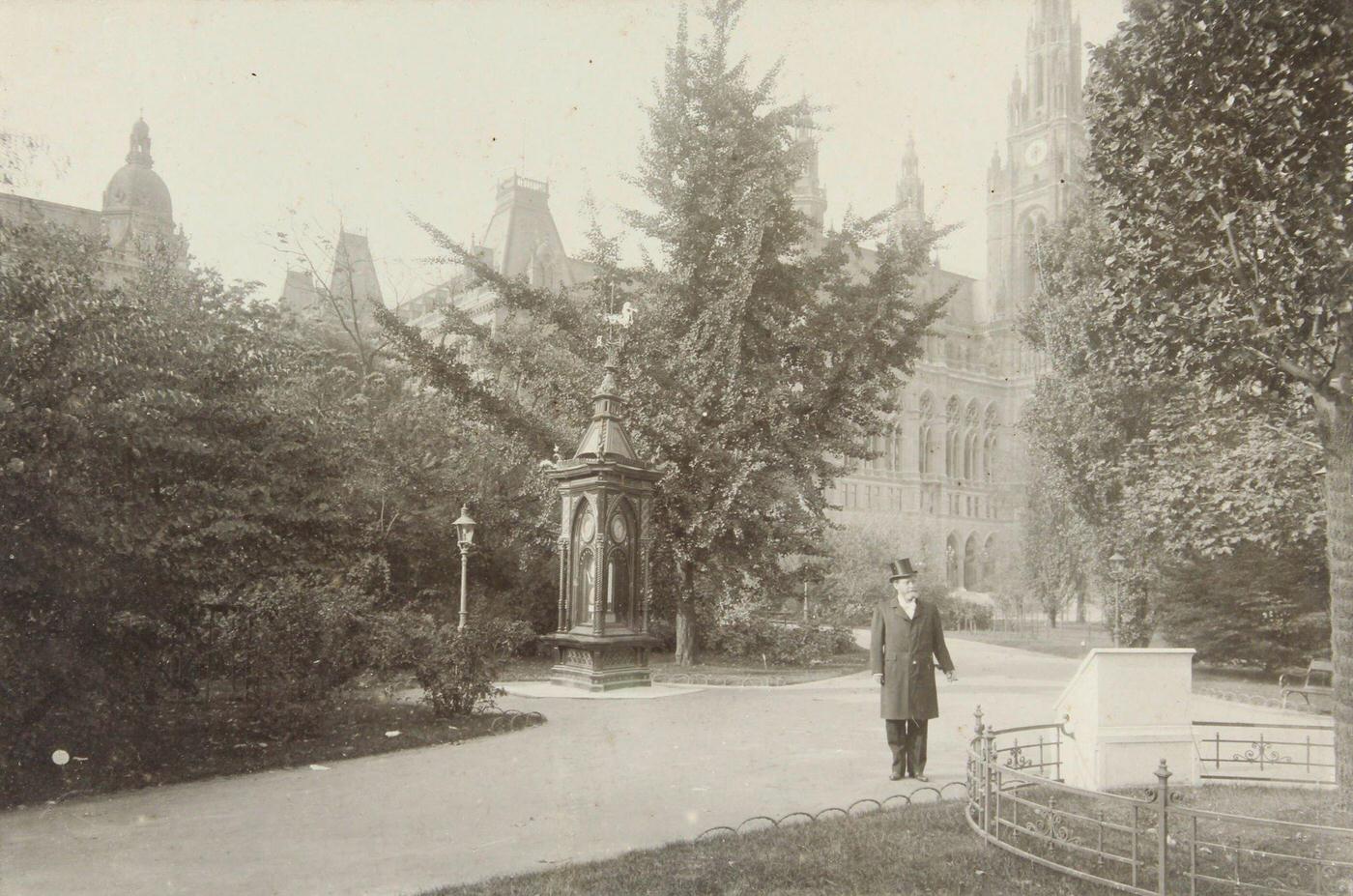
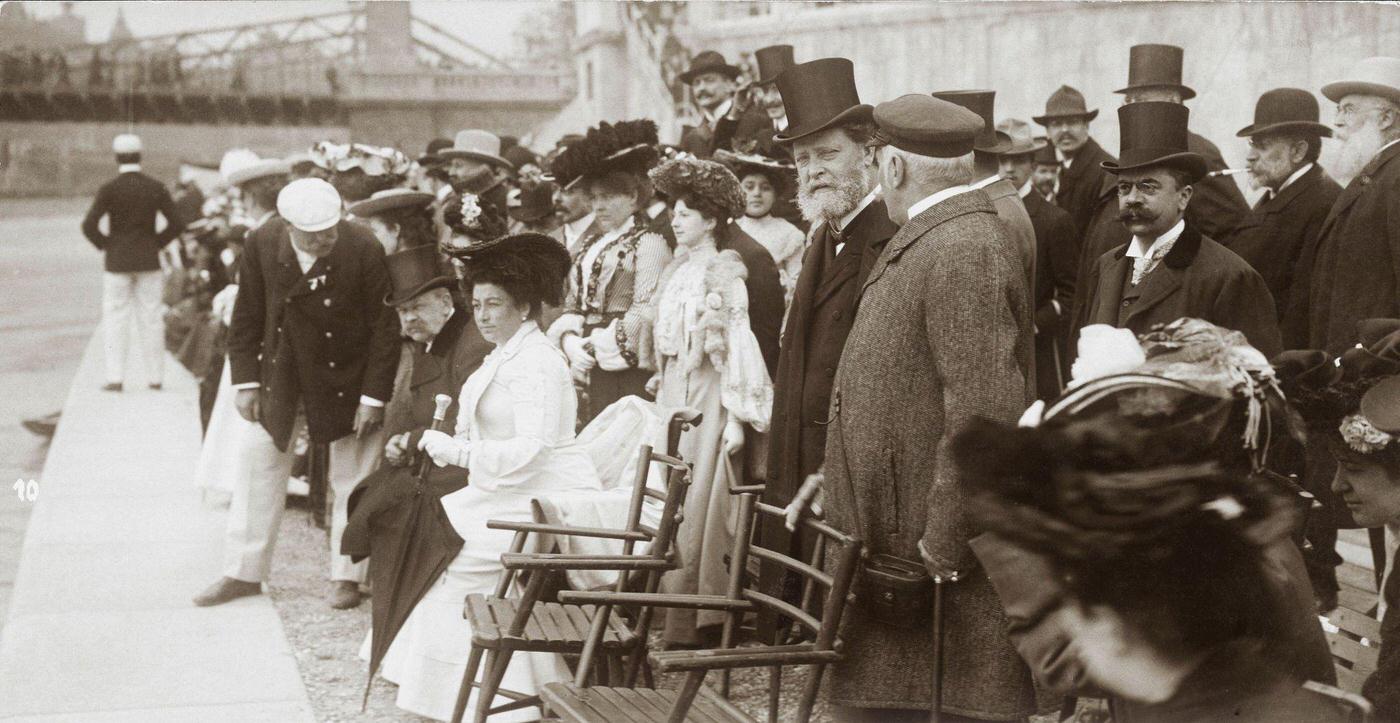
Vienna’s political life was equally turbulent. Mayor Karl Lueger, elected in 1897, was a populist who built a reputation for public works while also promoting an aggressive anti-Semitic political agenda. Lueger oversaw the expansion of the city’s infrastructure — water supply, gas lighting, and public transport — but his political movement fed the kind of ethnic nationalism that would grow more dangerous in the decades ahead.
The Viennese Mayor Karl Lueger At City Hall Park, About 1905
Mayor Karl Lueger watching rowers on the Danube canal, Vienna, May 10th 1903
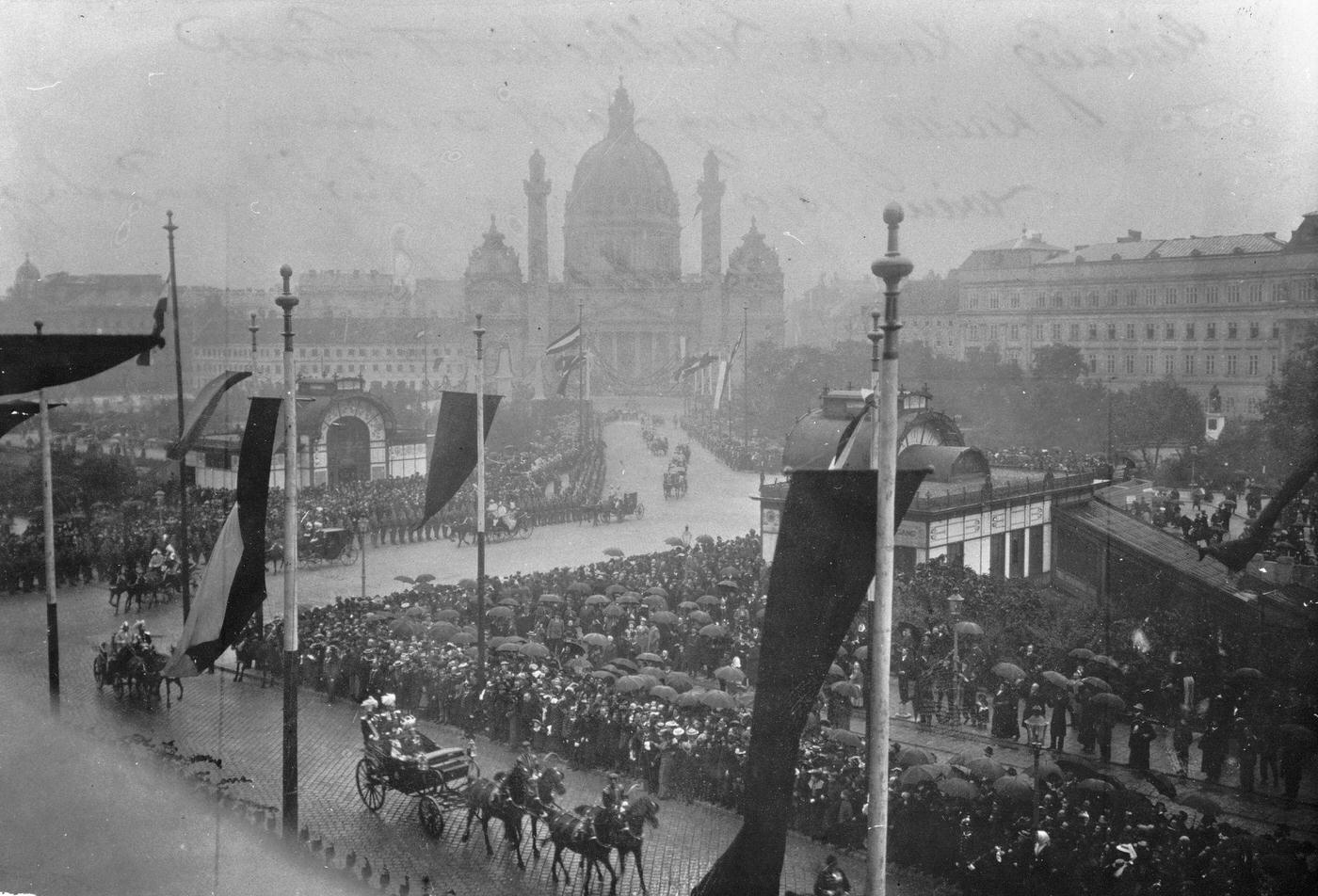
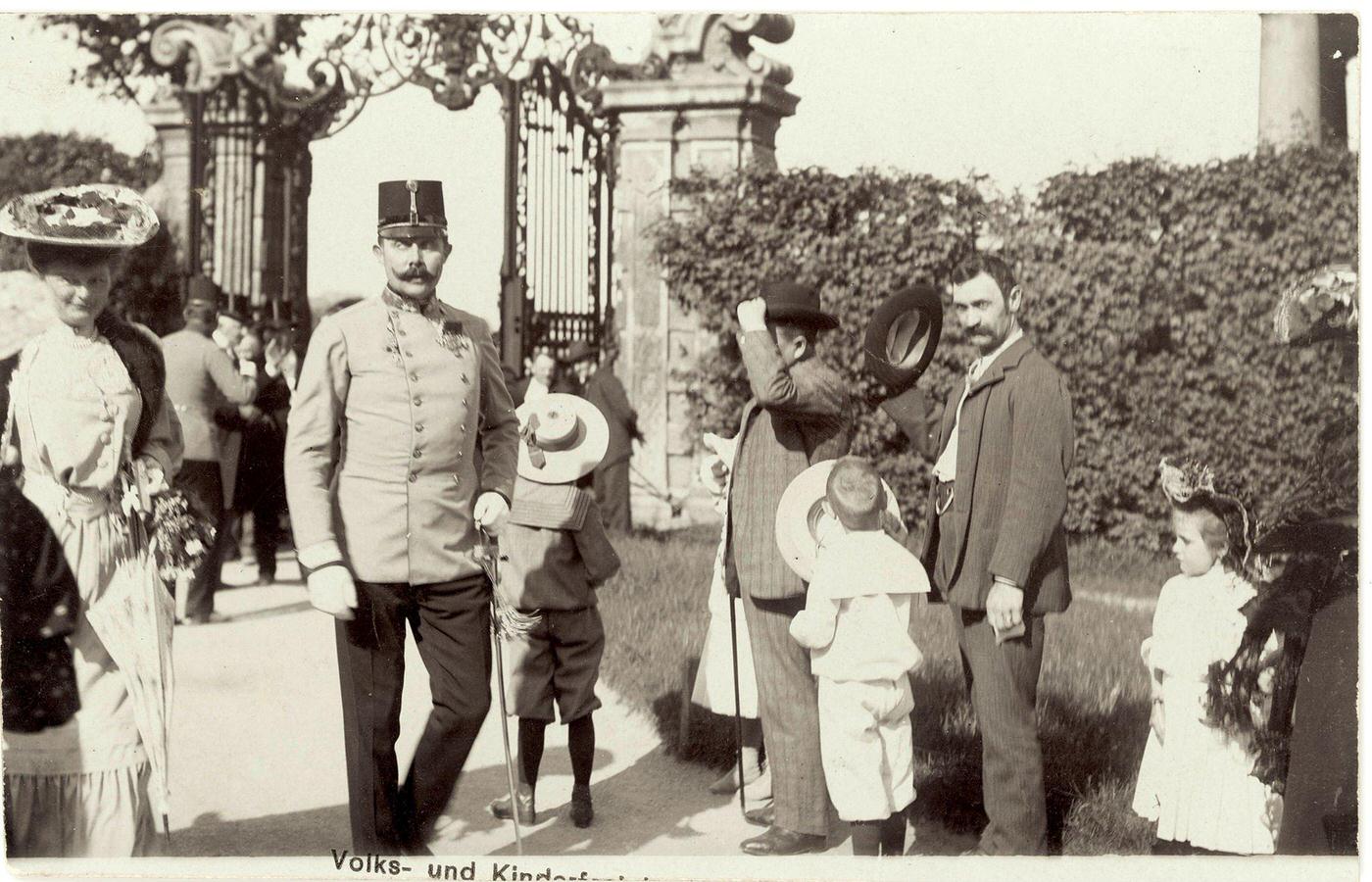
Foreign dignitaries moved through Vienna regularly. King Peter I of Serbia visited in 1903, the same year Germany’s Kaiser Wilhelm II came to meet Franz Joseph I. Archduke Franz Ferdinand — heir to the Austro-Hungarian throne — was a visible presence at events like the folk and children’s party at Belvedere in 1905. His assassination in Sarajevo in 1914 would bring the entire imperial world these photographs capture to an end.
Wilhelm II. in Austria, Visit with Kaiser Franz Joseph I. in Vienna, September 1903,
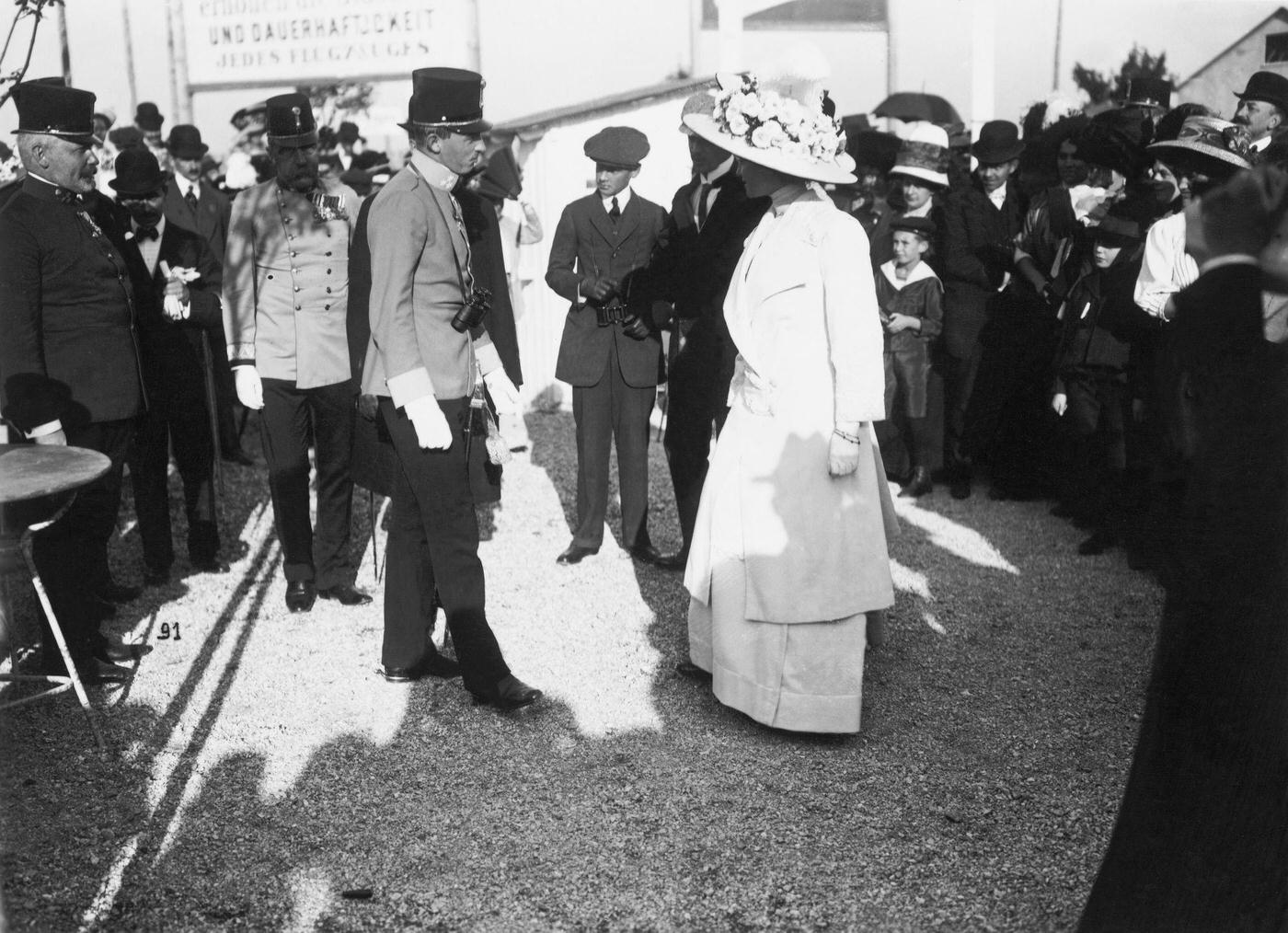
Archduke Franz Ferdinand Of Austria-Este In Belvedere, Folk and children’s party, 1905
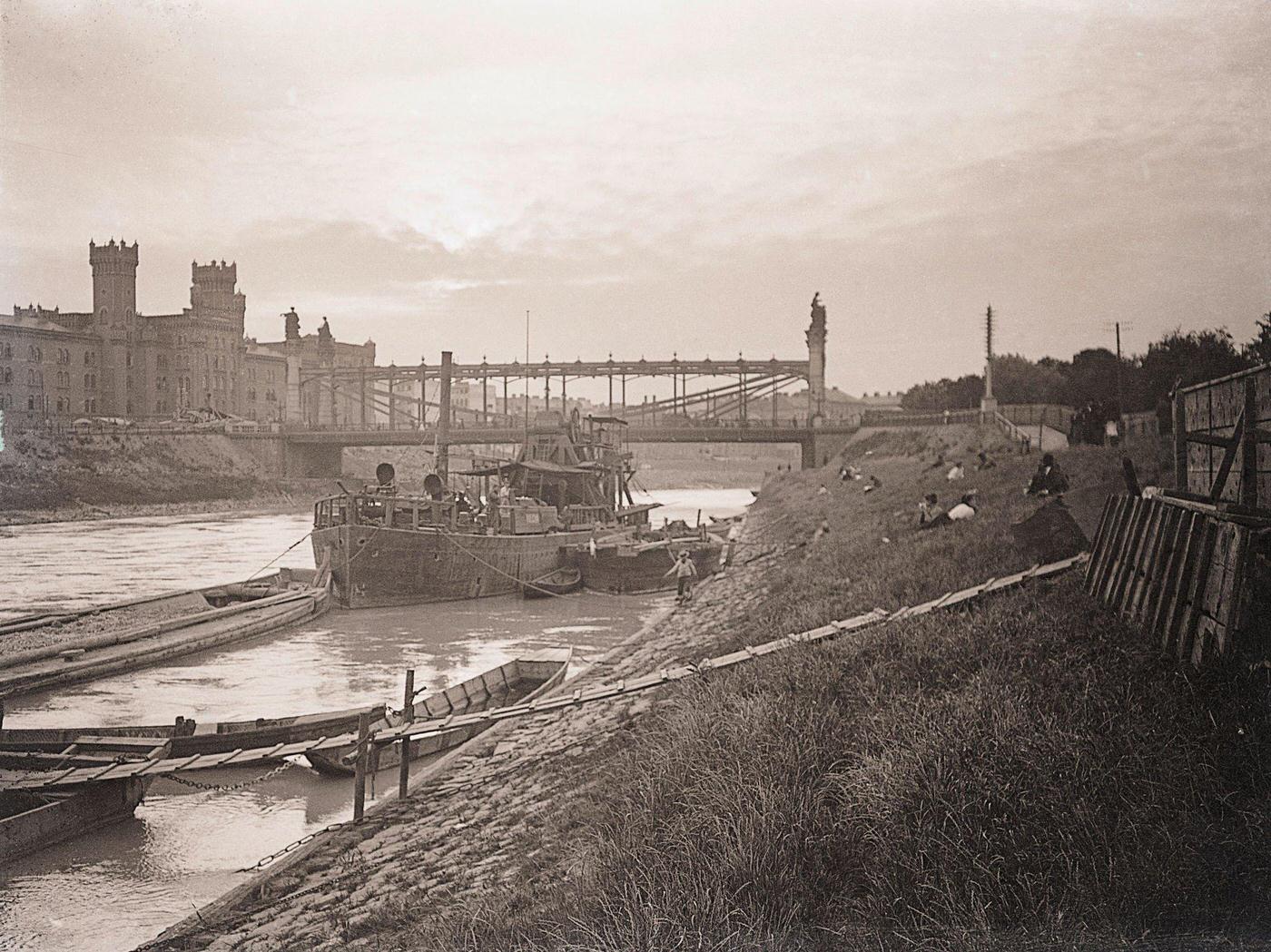
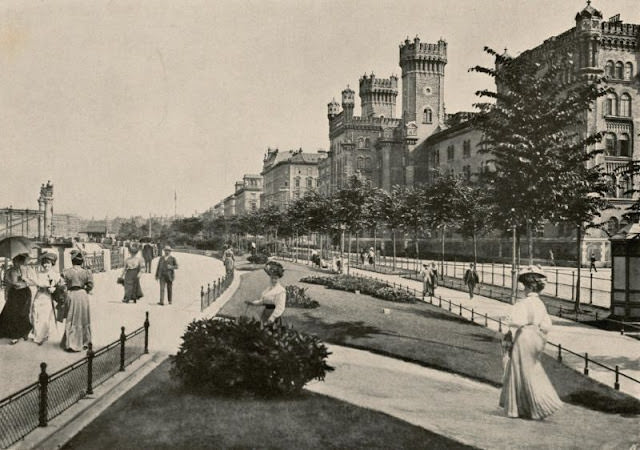
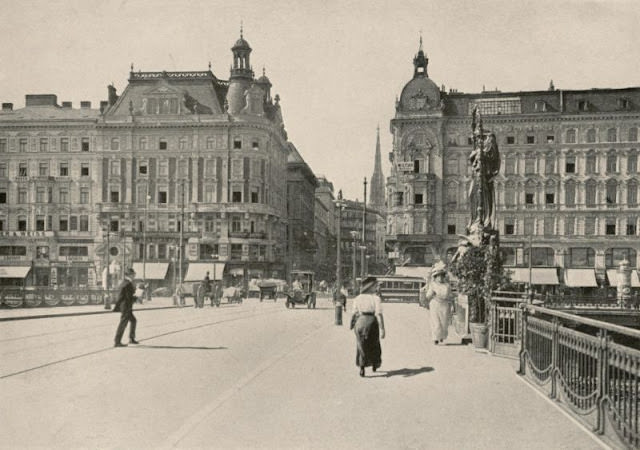
The Danube Canal ran through the city, crossed by bridges like the Augarten Bridge — formerly the Maria-Theresien-Bridge — with the Rossauer Barracks standing on its bank. Rowers took to the water on warm days. The Franz-Josefs-Kai ran alongside the canal, offering a long promenade above the water. The city’s relationship with the Danube was constant — practical, scenic, and deeply tied to Vienna’s identity as a river capital.
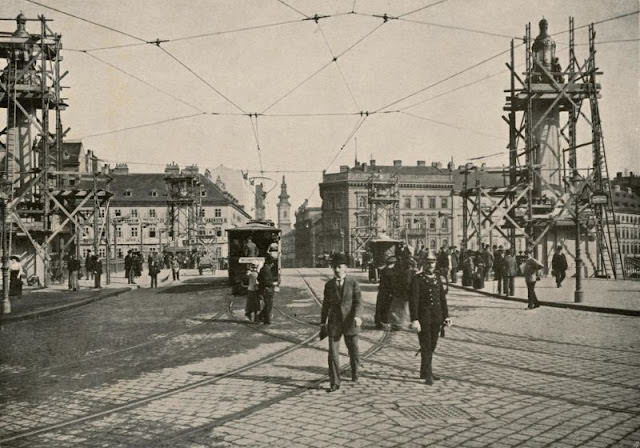
The Augarten-bridge (former Maria-Theresien-Bridge) over the Donau-Canal, Rossauer-Casern on the left, Vienna, 1905
Danube canal in Vienna, Austria, Around 1900
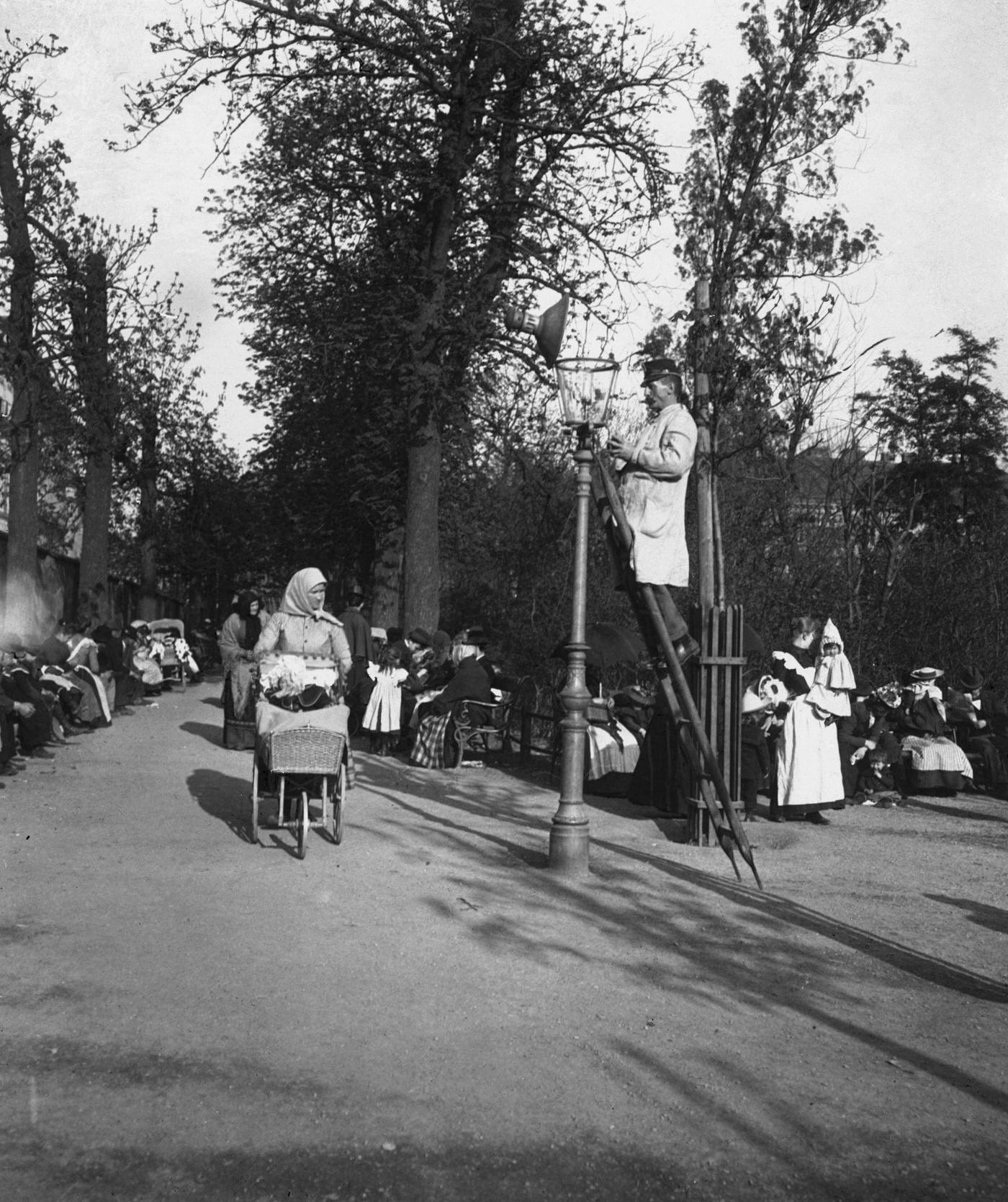
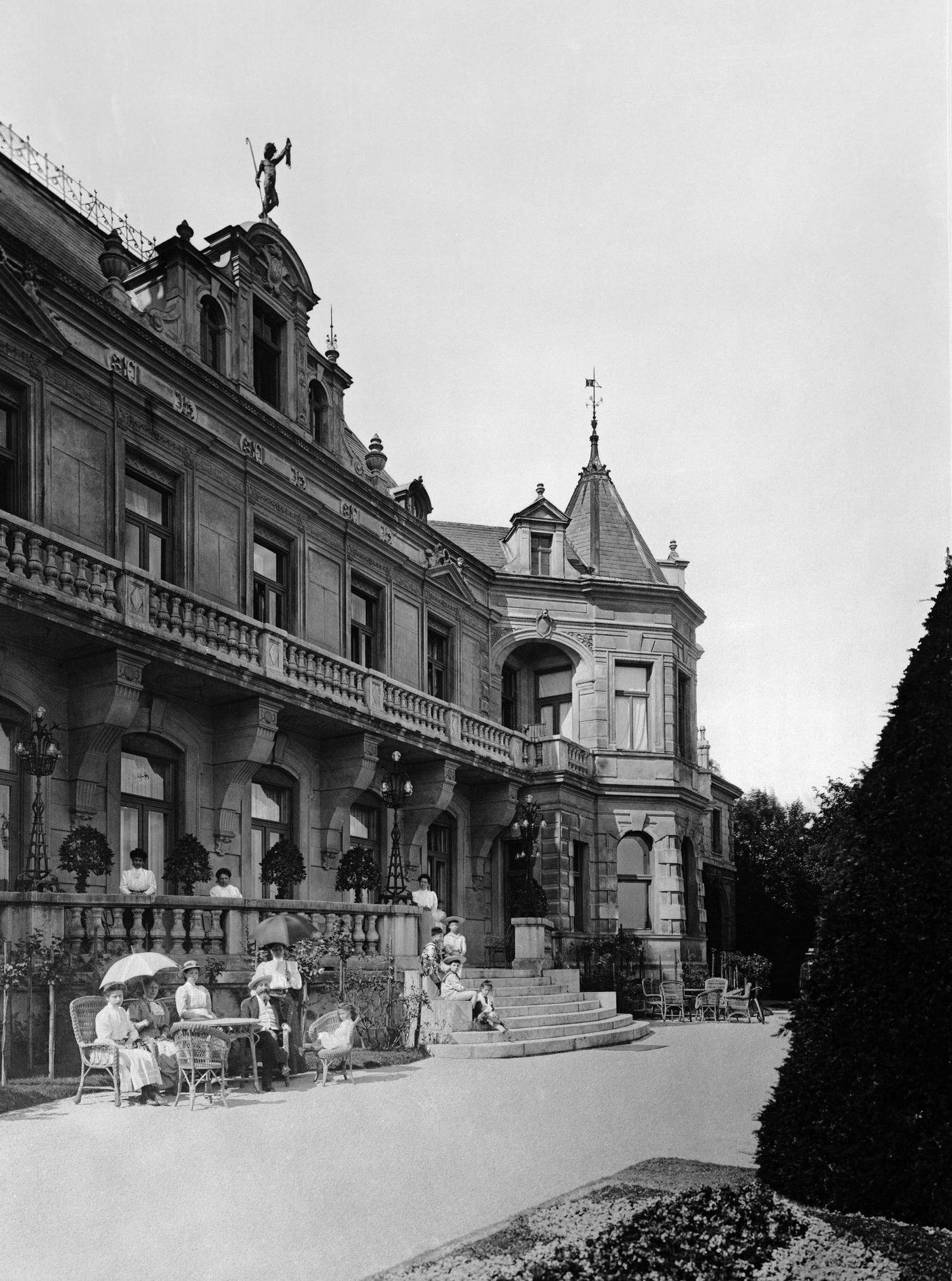
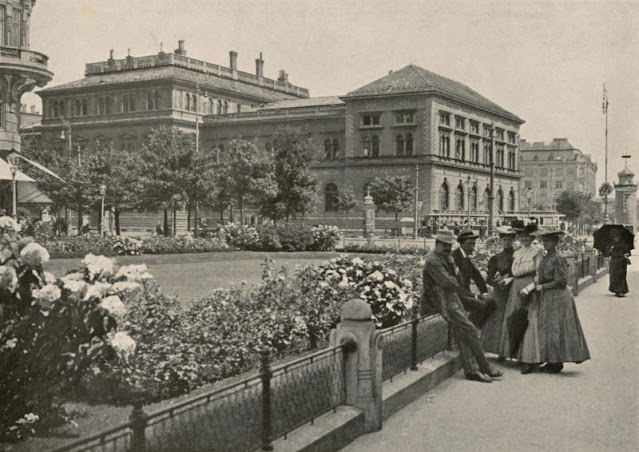
Back in the city’s quieter residential districts, life moved at a different pace. The parks of the Volksgarten bloomed in spring. Governesses walked children through manicured paths while workmen cleaned the street lamps. Wealthy families lived in spacious villas — like those built by architect Carl Koenig for clients such as Theodor Ritter von Taussig — set apart from the crowded tenements of districts like the Magdalenengrund in the 6th, known locally as the “Ratzenstadl.”
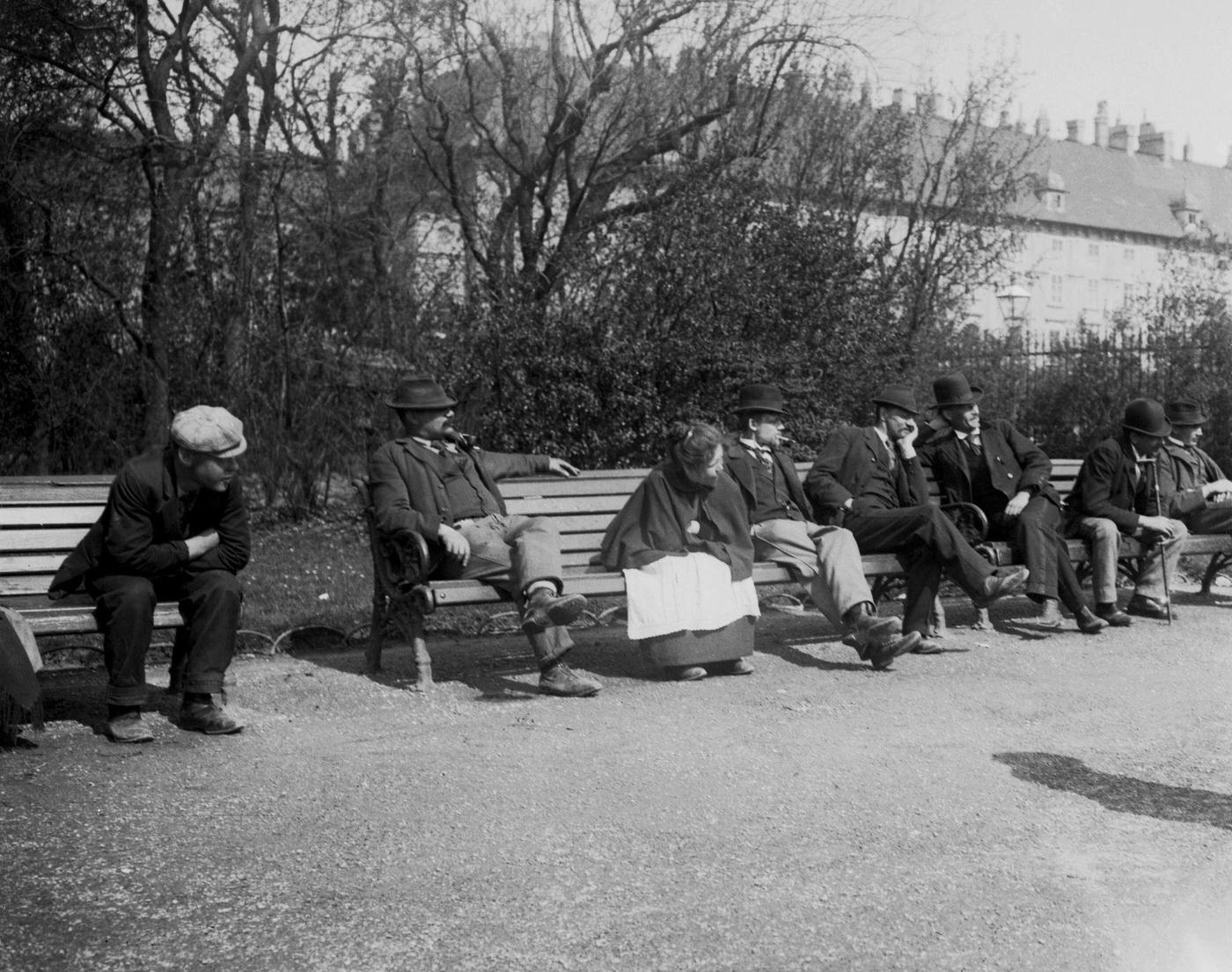
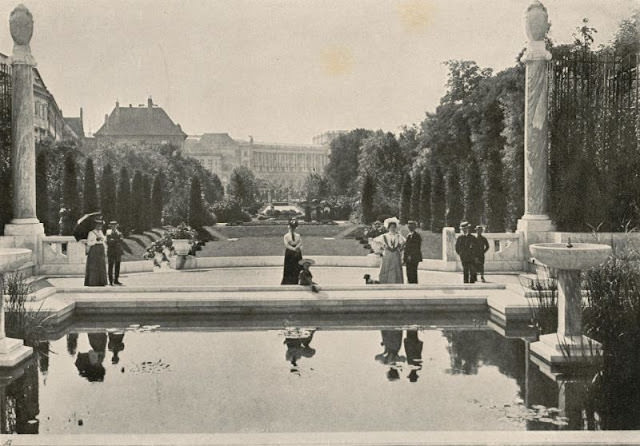
Spring in the Volksgarten, Vienna, 1900s
Governesses and Children in a park in Vienna, A man is cleaning a street lamp, Vienna, 1900s
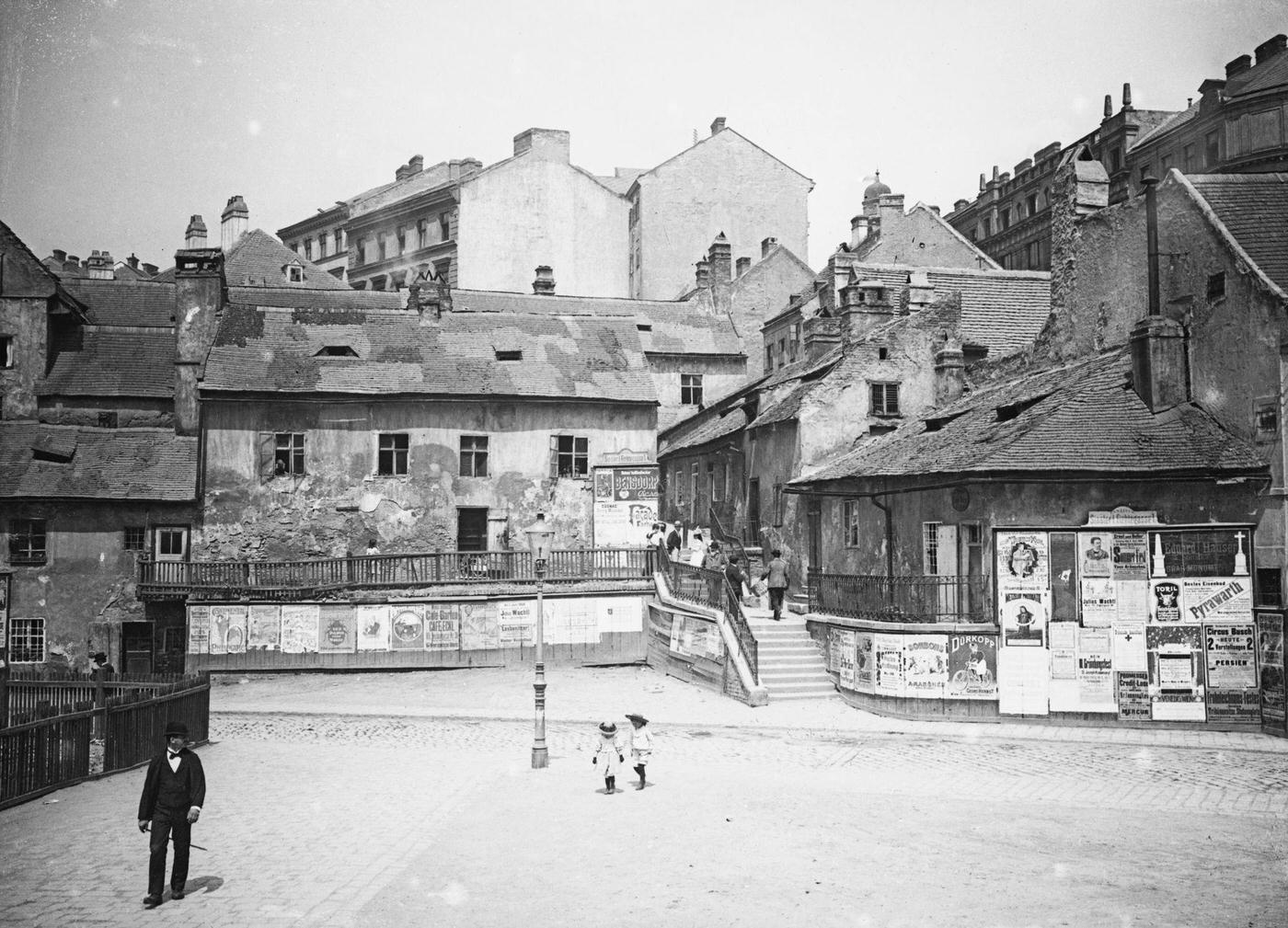
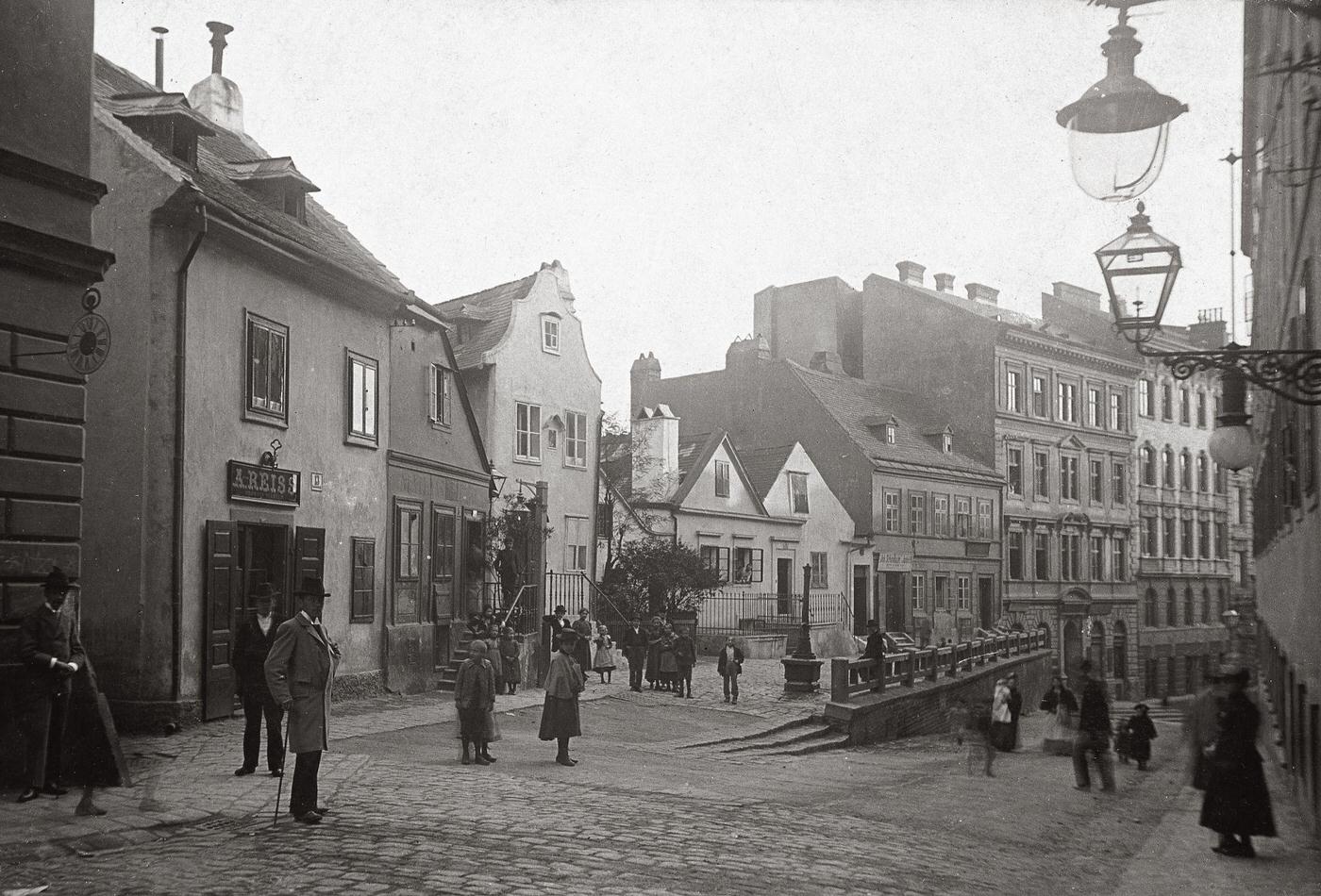
Magdalenengrund, the so-called “Ratzenstadl” in the 6th district of Vienna, Vienna, 1900s
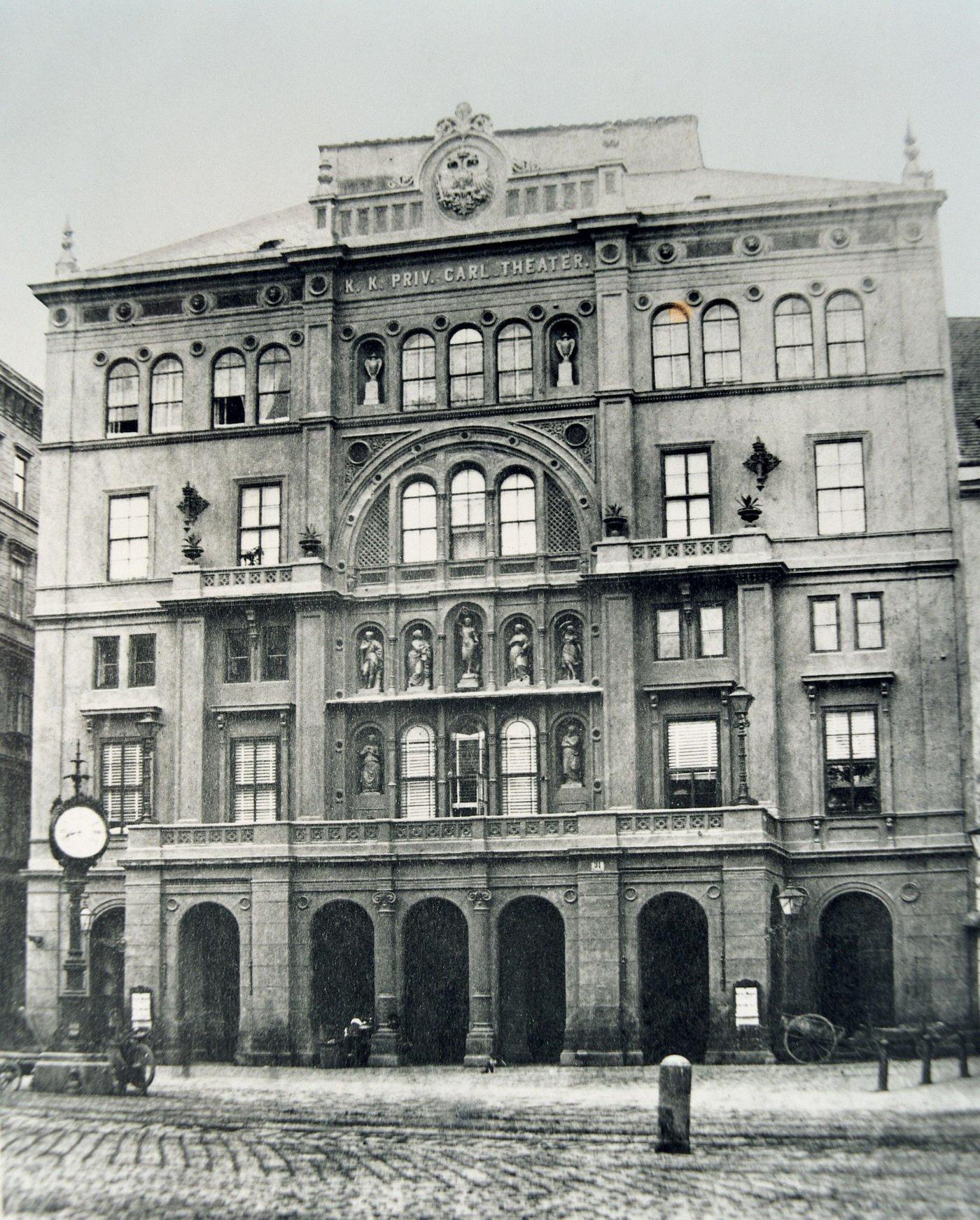
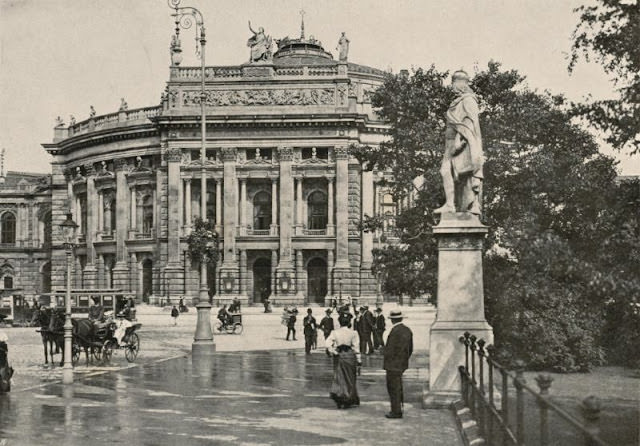
The Hofburg Theatre and the Academy of Fine Arts anchored the city’s cultural institutions. The Carl-Theater in Leopoldstadt’s 2nd district, opened in 1874, offered entertainment to a different part of the city. Music and performance were not confined to the upper classes — they ran through every level of Viennese society, from the grand opera house on the Ring to the small neighborhood theaters and the open-air stages of the Prater.
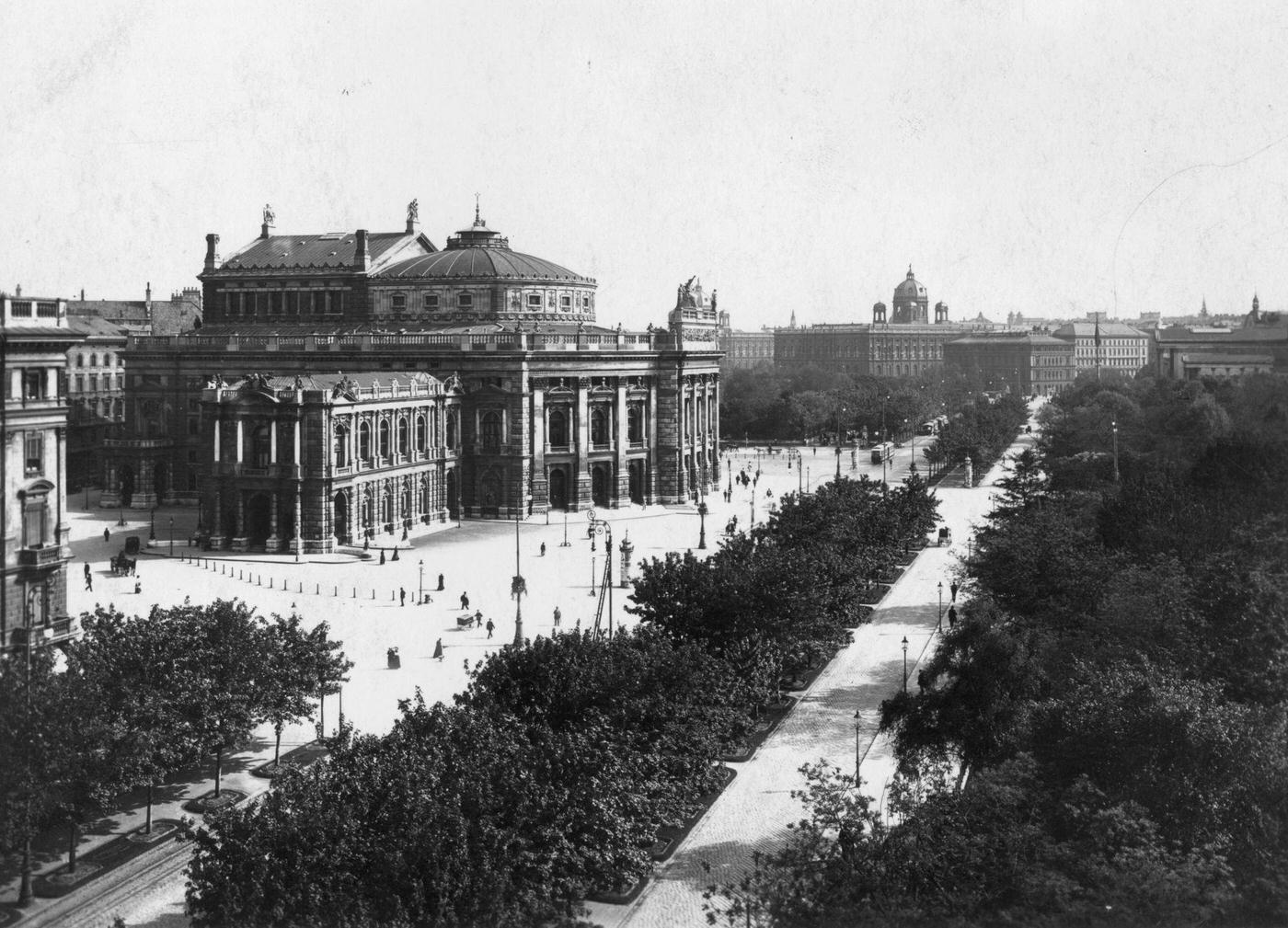
The Hofburg Theatre in Vienna, Around 1900
Carl-Theater in Vienna, Leopoldstadt 2nd district, Opened in 1874, destroyed during World War II, Around 1900
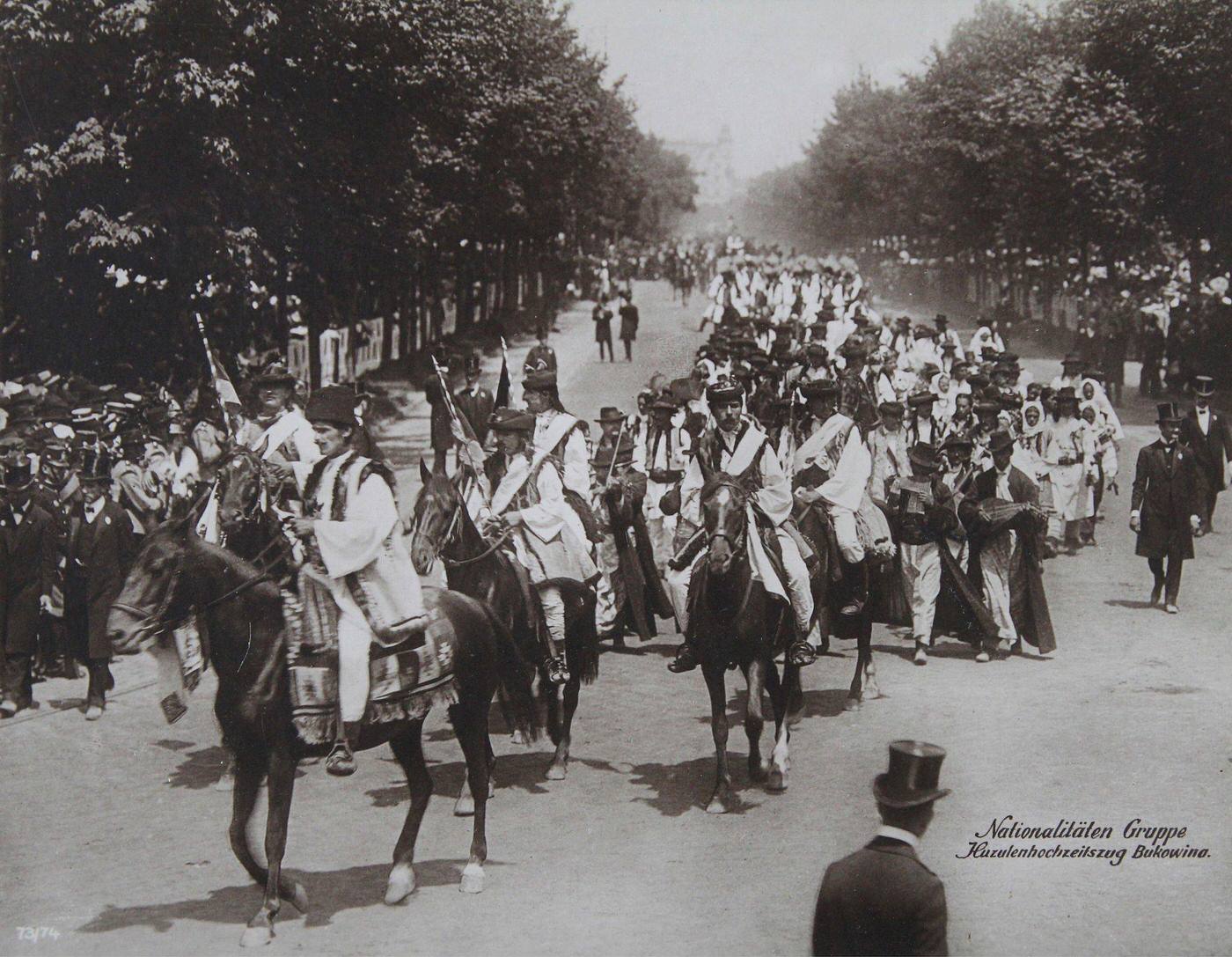
The Kaiser’s Jubilee Pageant of 1908 brought together nationalities from across the empire in a massive public procession. Groups representing Bukovina, Hungary, Bohemia, and dozens of other regions marched through Vienna’s streets in traditional dress. It was a deliberate display of imperial unity — a show of strength for an empire that, beneath the surface, was straining under the pressure of nationalism, ethnic tension, and political conflict.
Corpus Christi Procession In The Graben With Emperor Franz Joseph I, Vienna, About 1905
Here is a selection of remarkable photographs taken in and around Vienna at the turn of the 20th century, capturing the city’s streets, landmarks, and daily life in extraordinary detail.
Villa of Eduard Ast, 1905
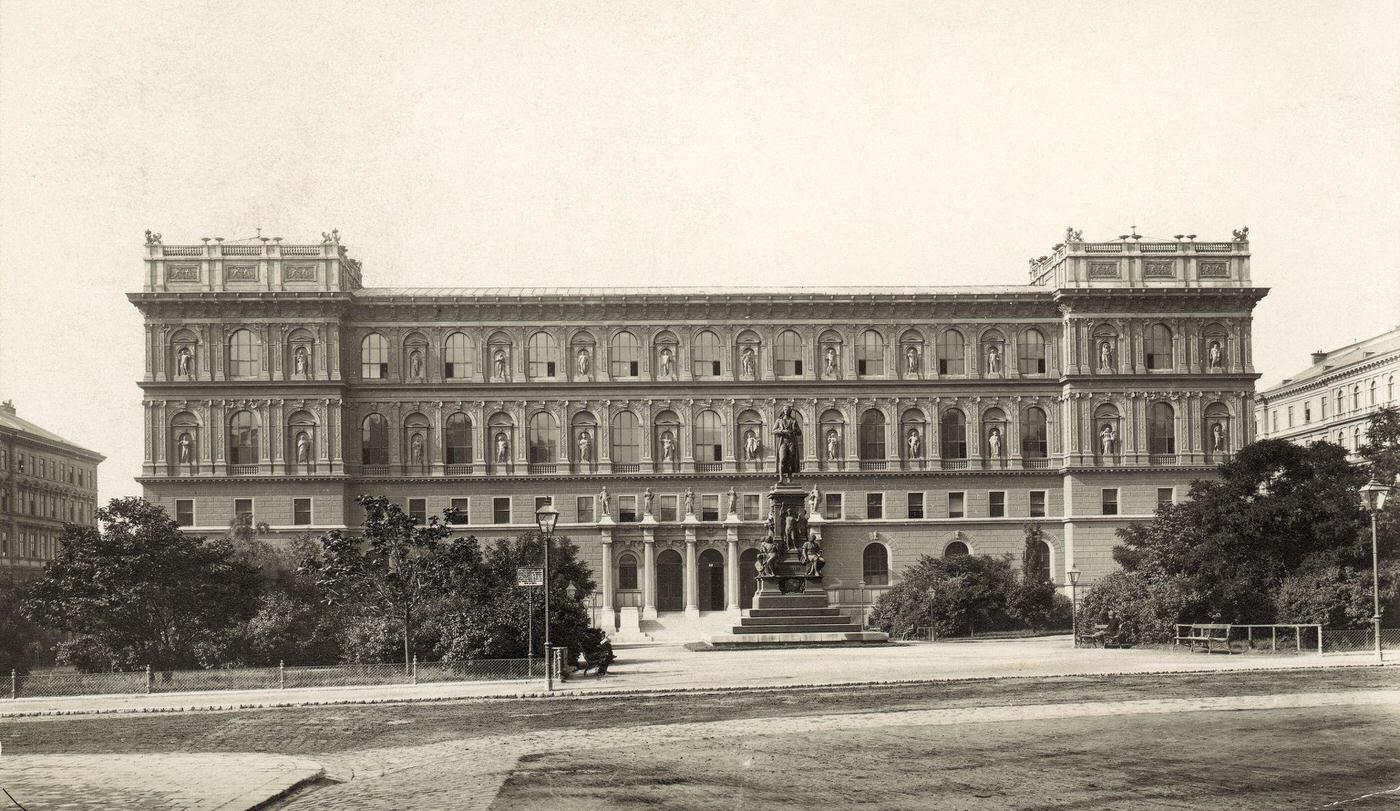
Academy – Akademie der bildenden Kuenste, in Vienna, Around 1900s
Villa Theodor Ritter von Taussig, Built by Carl Koenig between 1893-1895. In the foreground: the residents, Around 1900
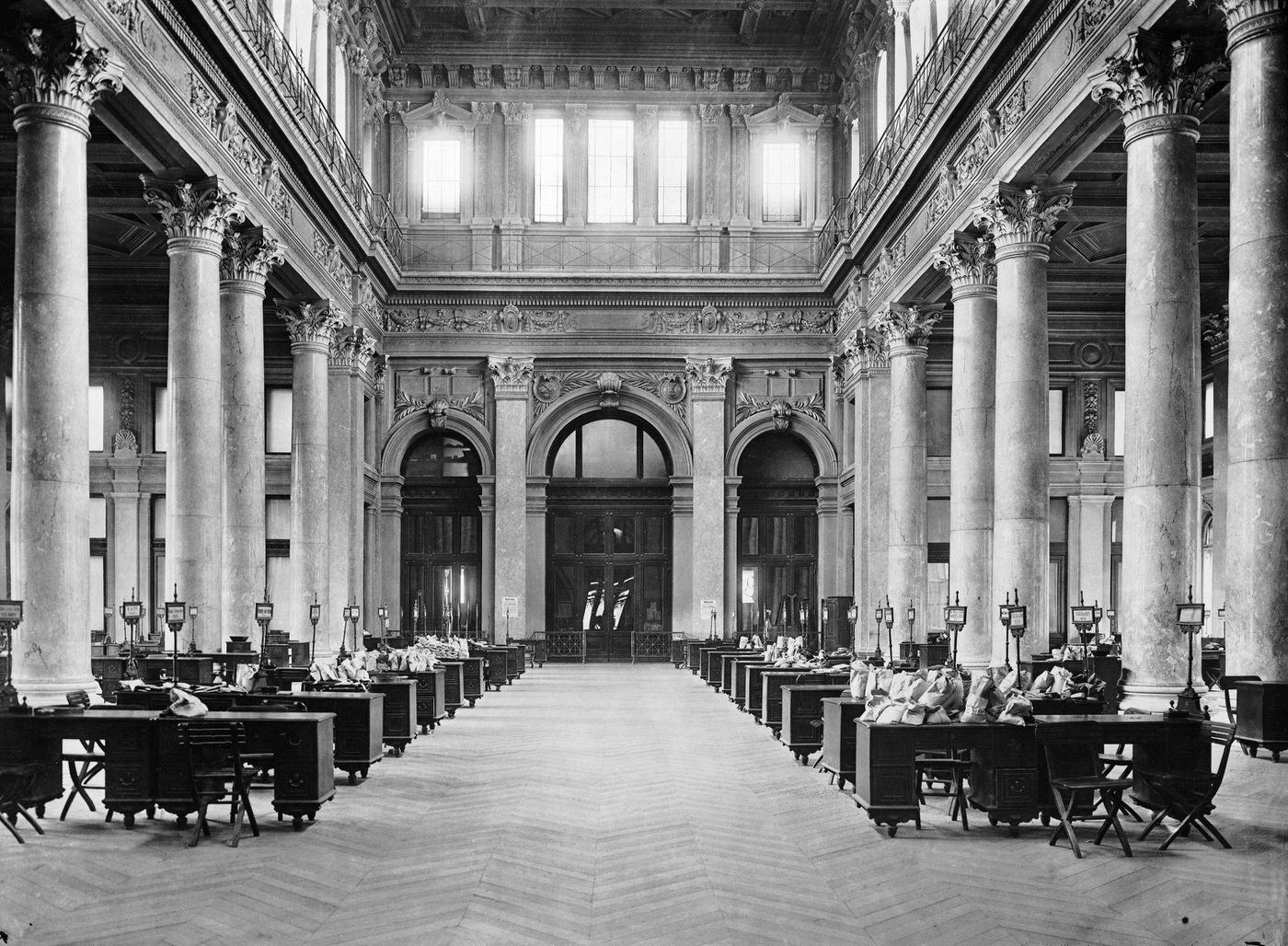
Agricultural stock market for agricultural products in Vienna (fruit and flour products). Built by Carl Koenig between 1887-1890. Great Hall, Around 1900
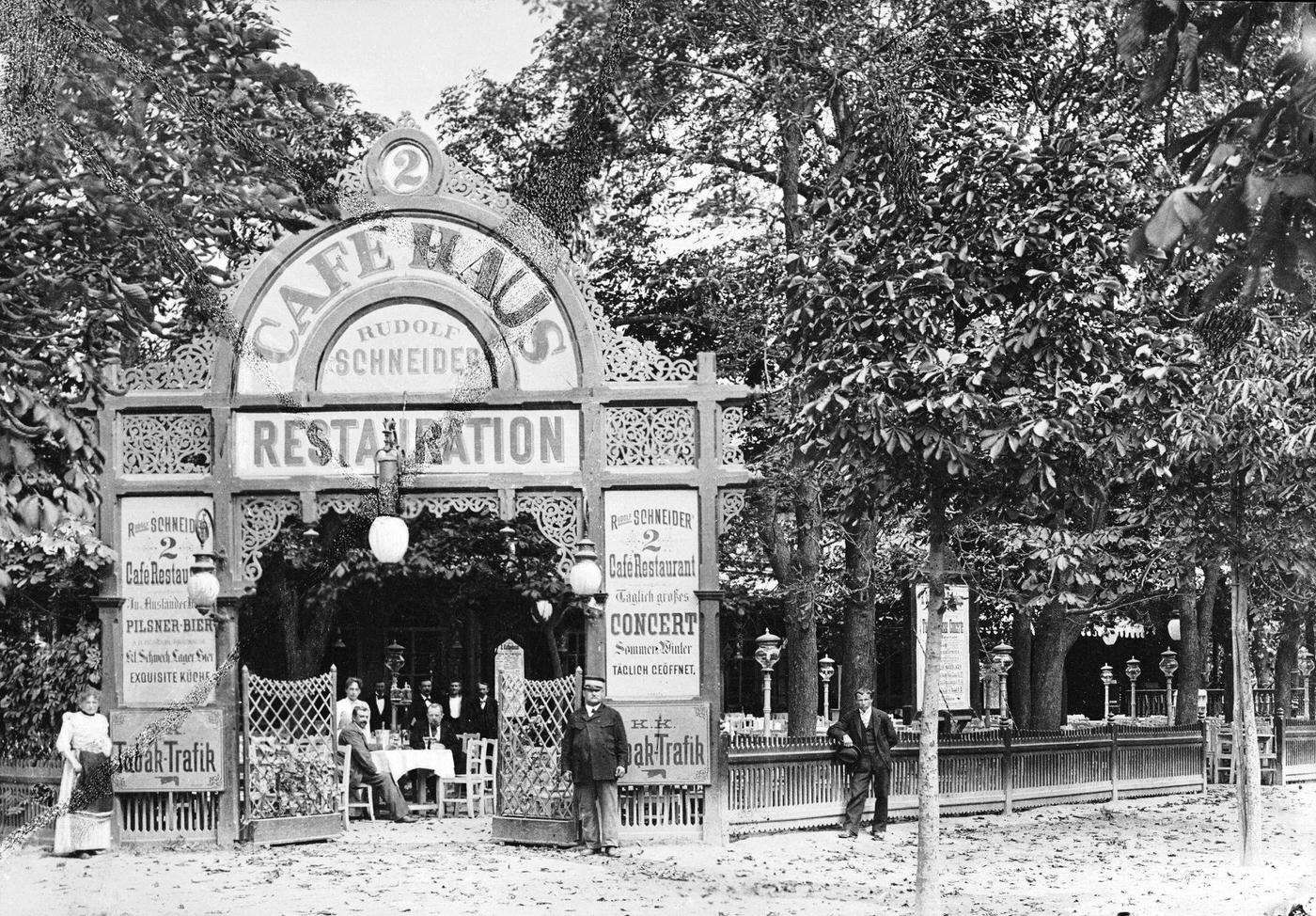
Vienna: Coffee House in Prater. Cafe-Restaurant by Rudolf Schneider. Entrance with the view on chestnut wood Guest garden, Around 1900
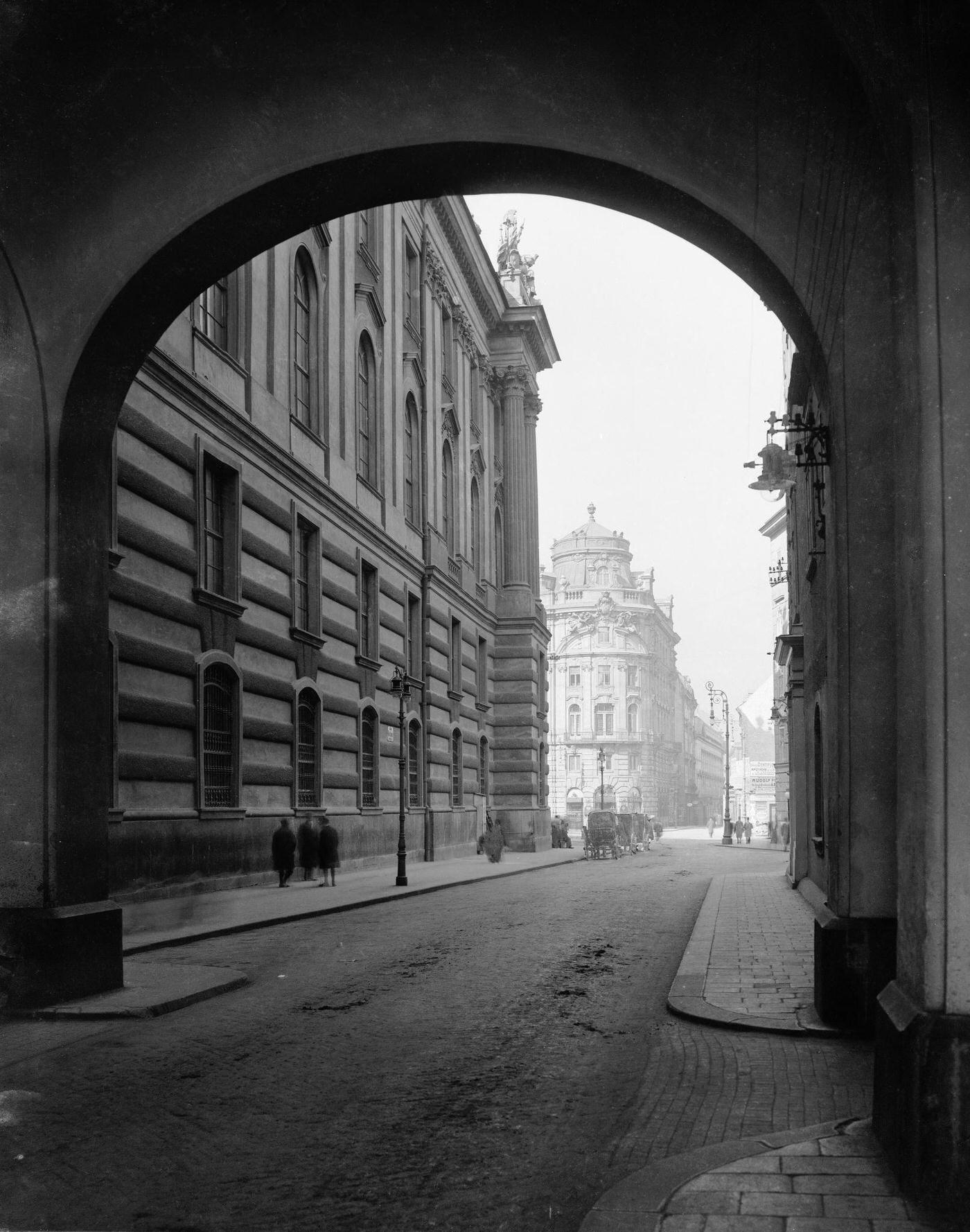
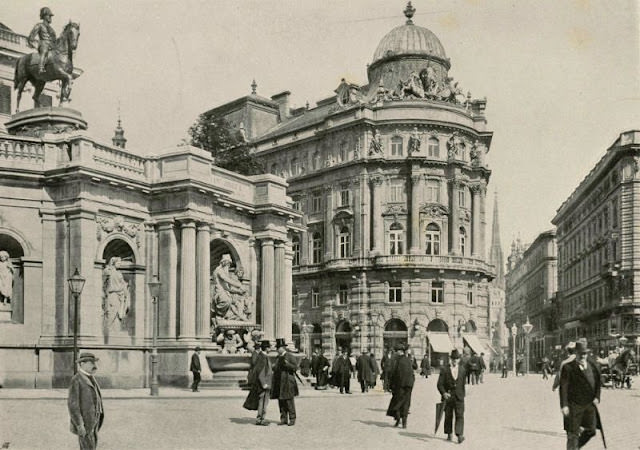
View at The riding school wing at the Hofburg, Michaelerplatz and Palace Herberstein (Michaelerplatz 2), Constructed by Architect Carl Koenig between 1896-1899, Around 1900s
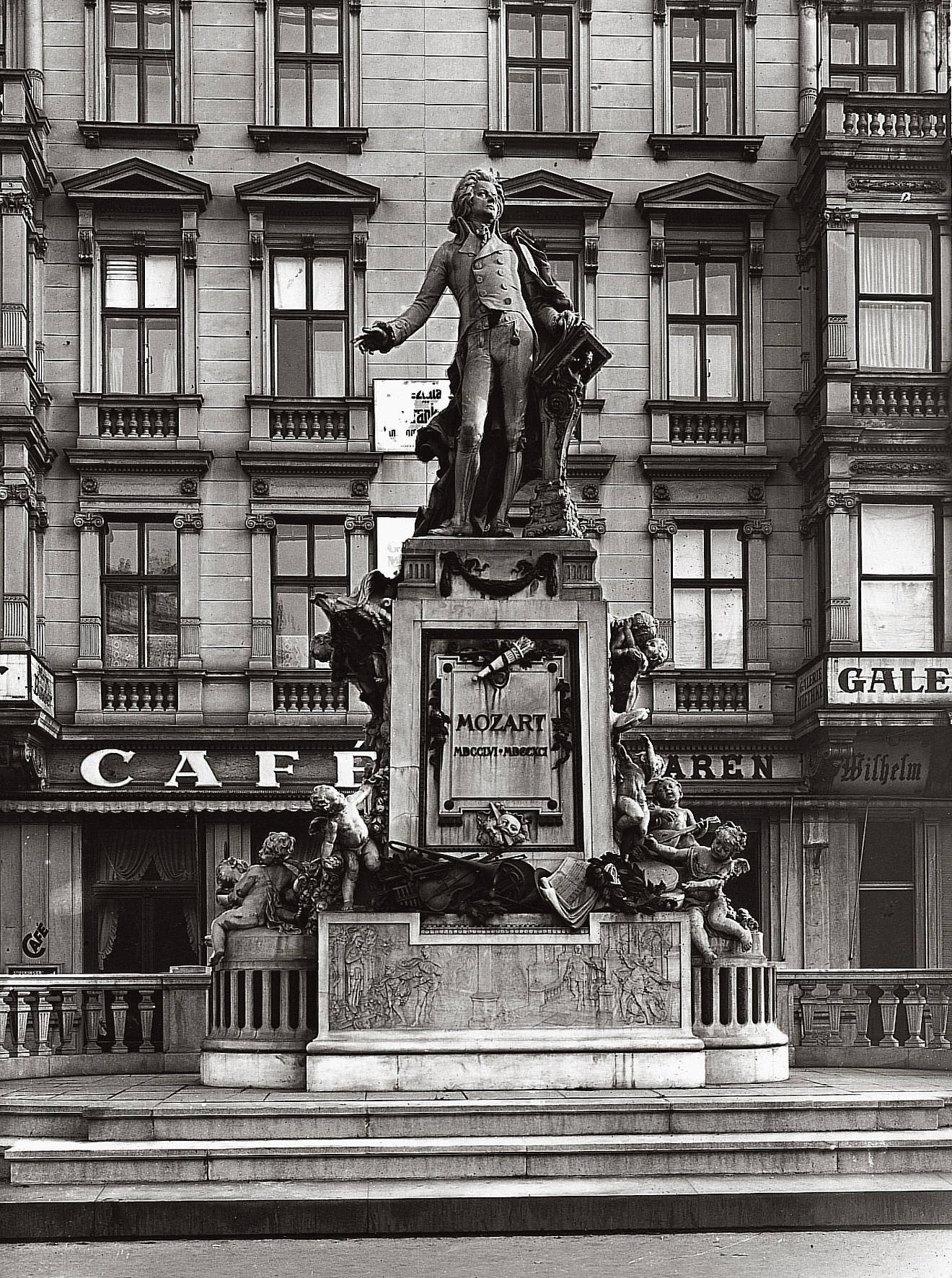
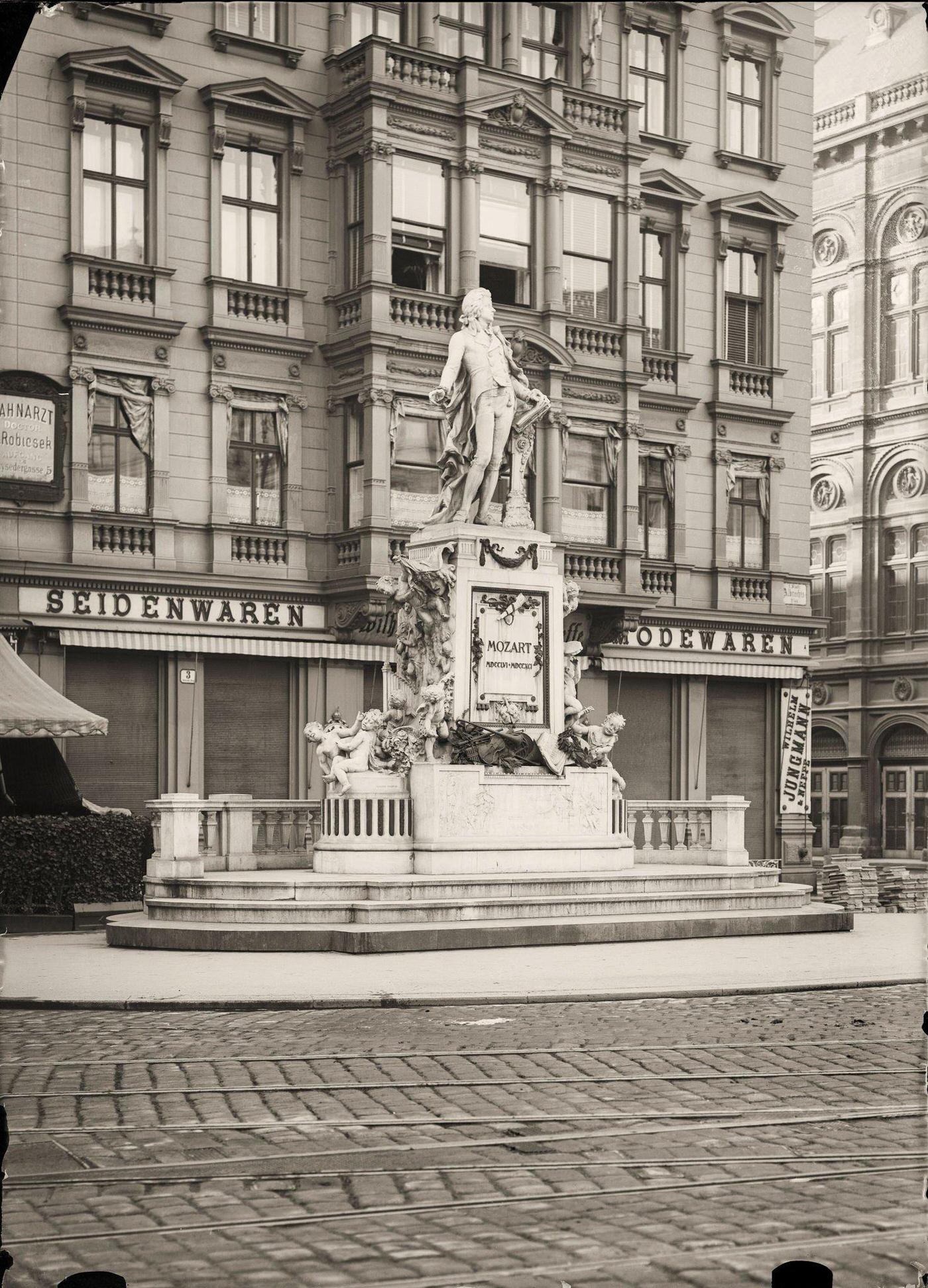
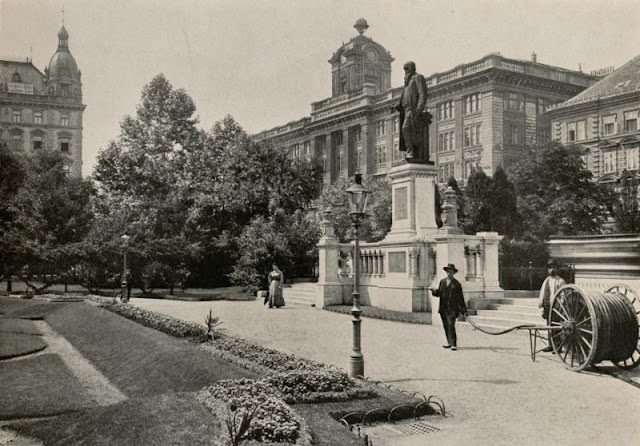
Mozart memorial on Albertina square, Vienna I., Uncovered in 1896, today set in Burg gardens in Vienna, Around 1900
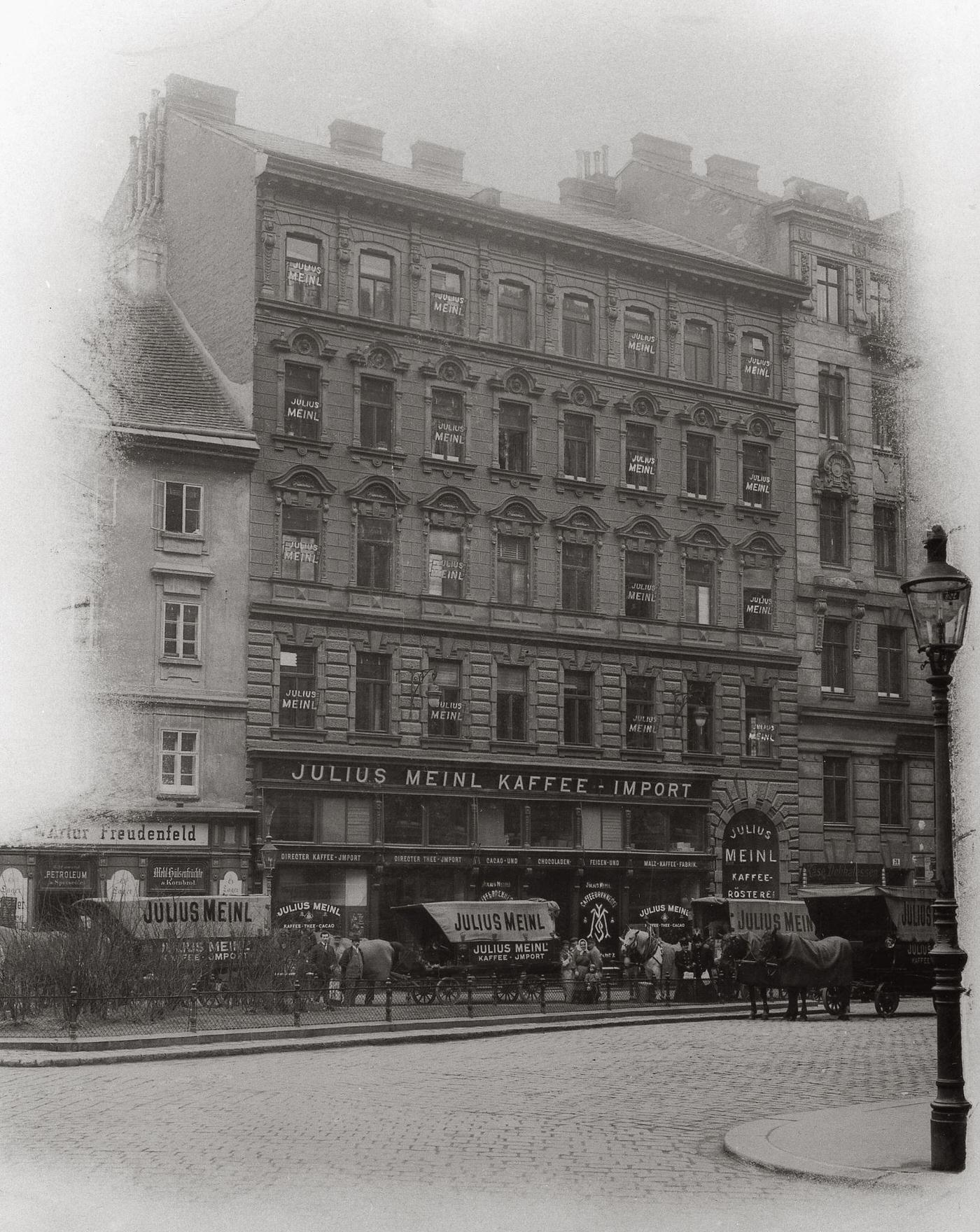
First Branch of Meinl-Group in Vienna, Founded in 1894 in Vienna VII. Neustiftgasse, Around 1900s
Stock-im-Eisen-square in Vienna, View on Graben, Institute for Technical Chemistry of the Vienna University of Technology today, Vienna, 18th of August 1900s
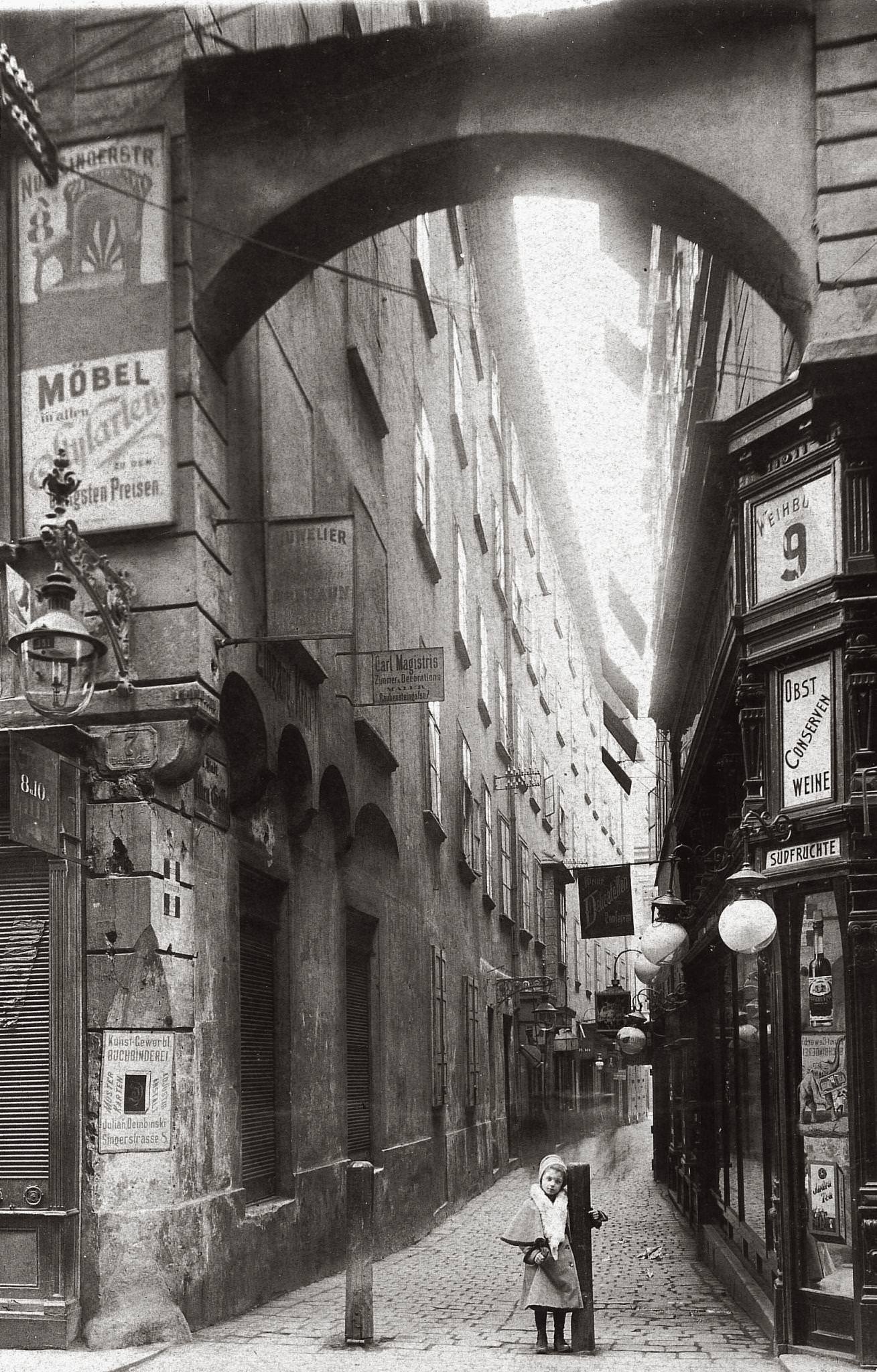
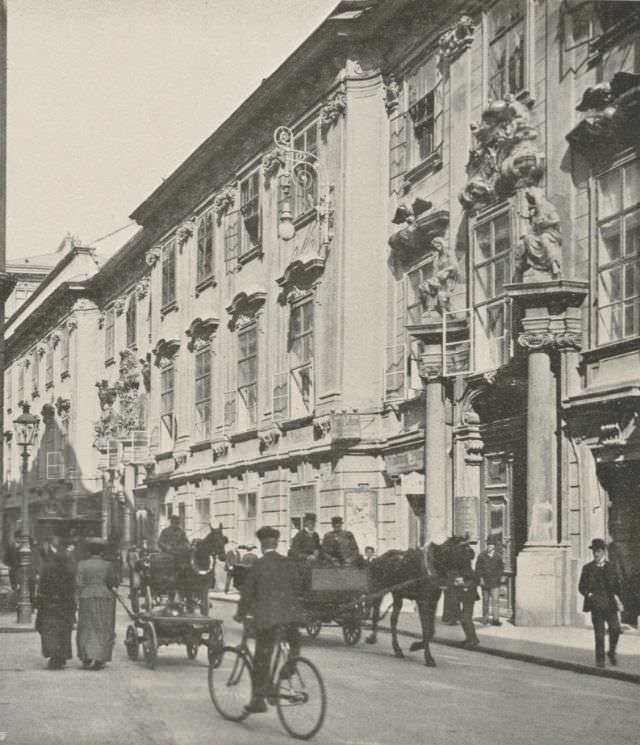
The Rotgasse in Vienna I, Around 1900s
Freyung, Vienna I, Around 1900s
Kaunitzlbergl in Vienna VI., Between Gumpendorfer street and Magdalenen street, Around 1900s
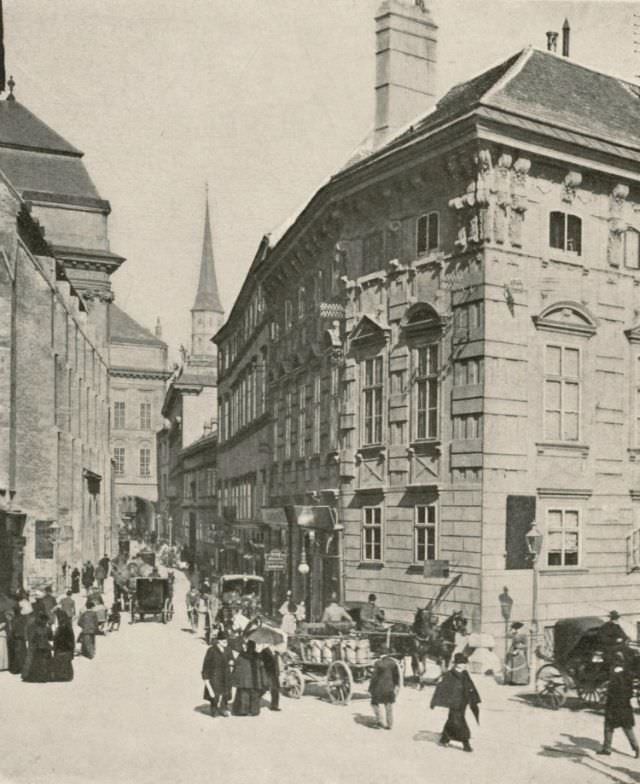
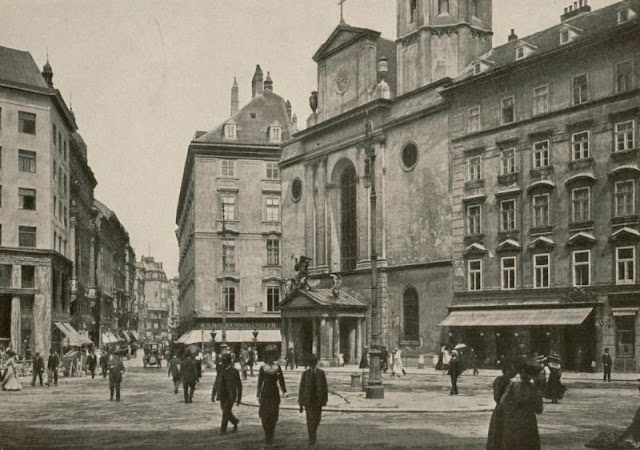
St. Stephan’s square with Red tower Street (Rotenturmstrasse), Around 1900s
Emperor Karl I. in public, Augarten-Palais in Vienna, Vienna, Around 1900s
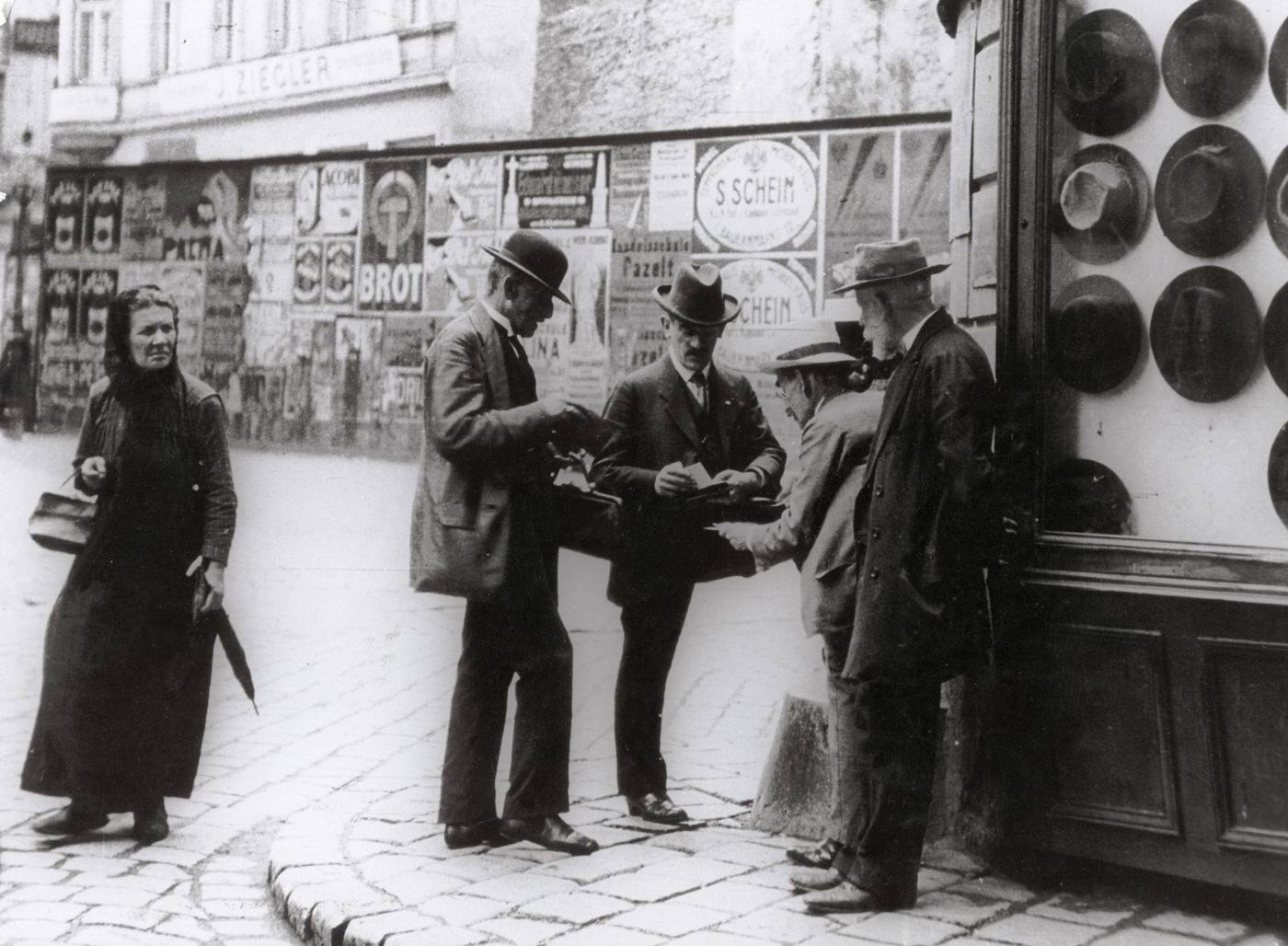
Jewish traders in front of a hat store, Vienna, Around 1900s
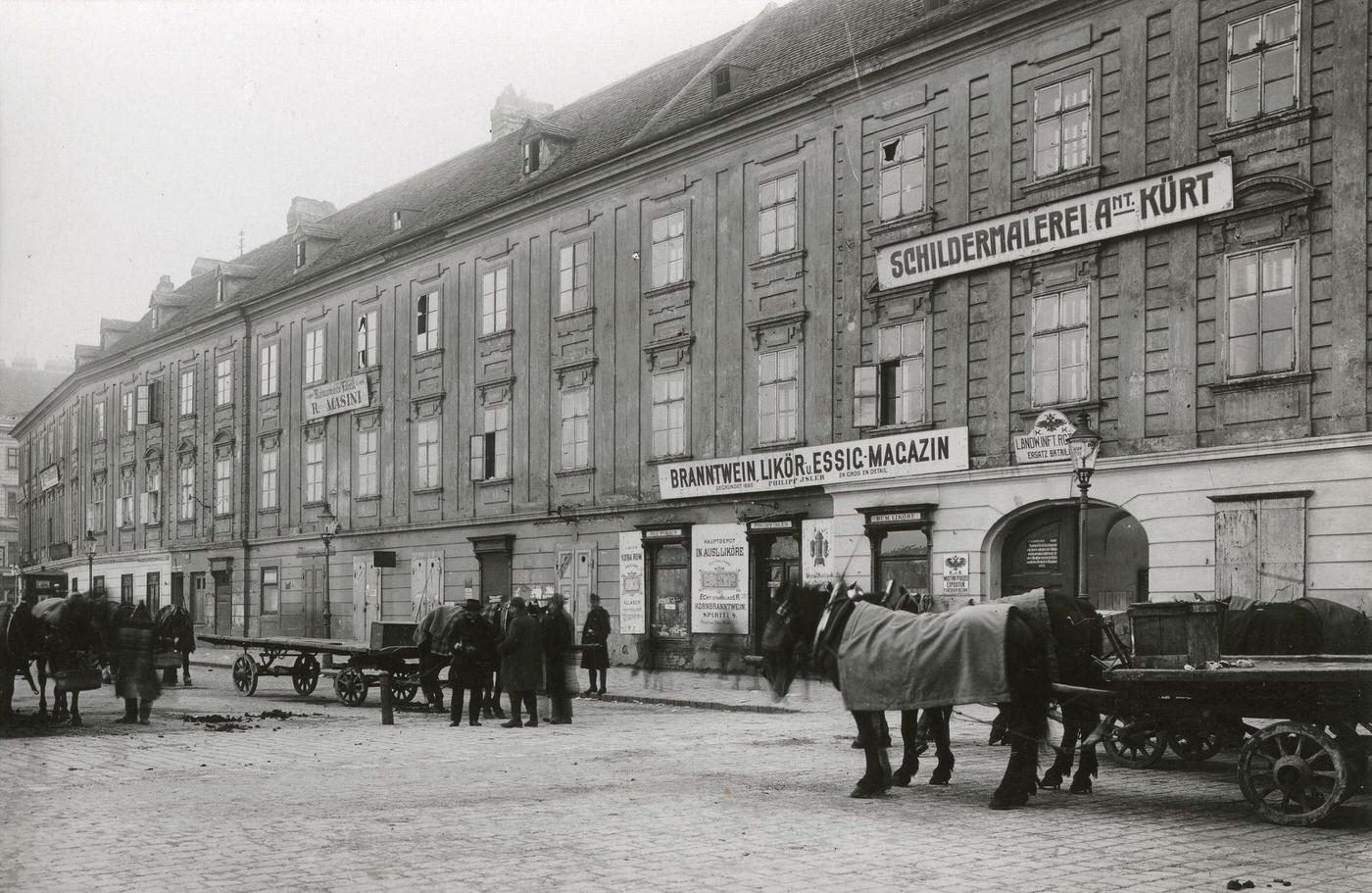
The so-called Freihaus, Vienna, Around 1900
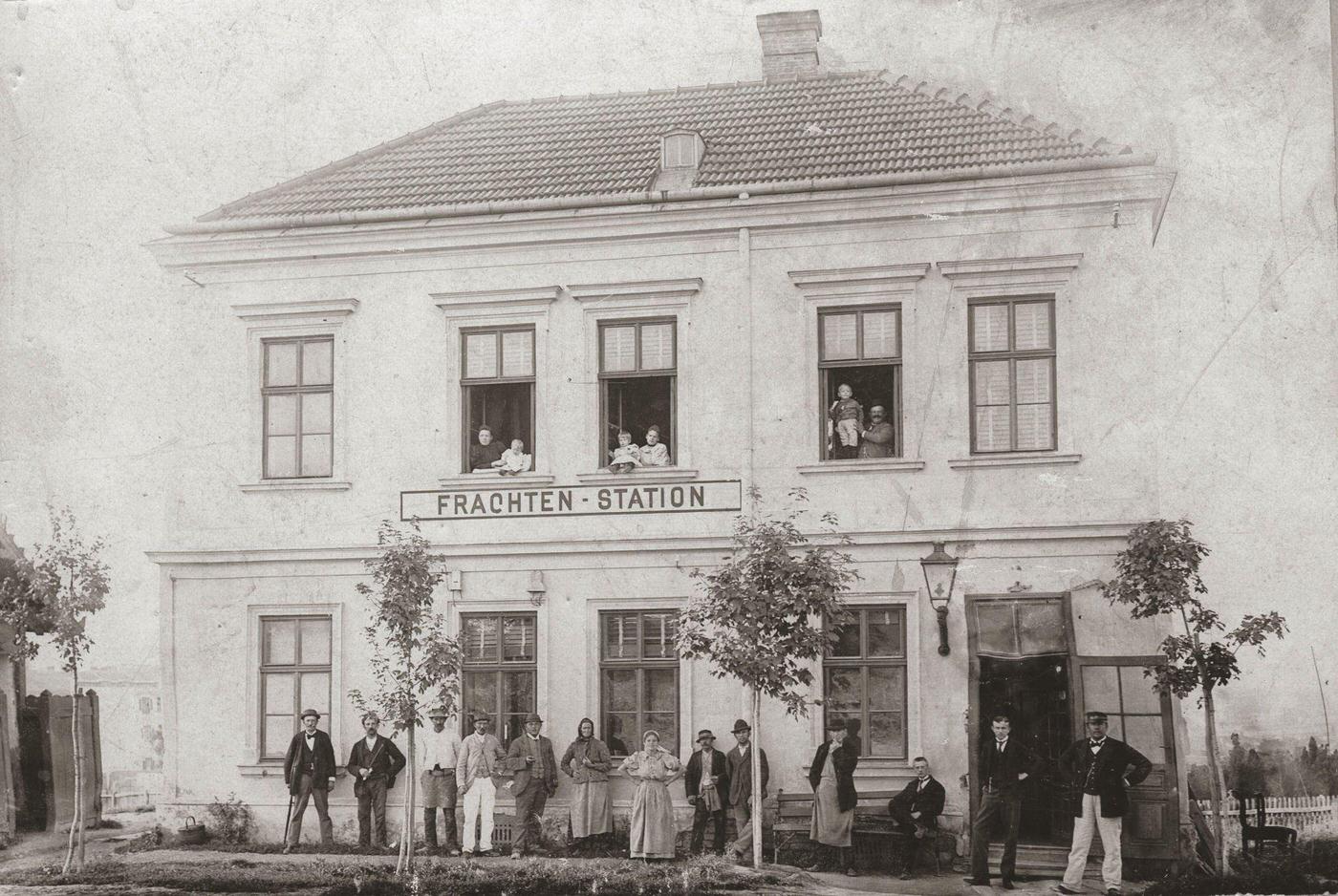
Train station in Matzleinsdorf, Vienna, Around 1900
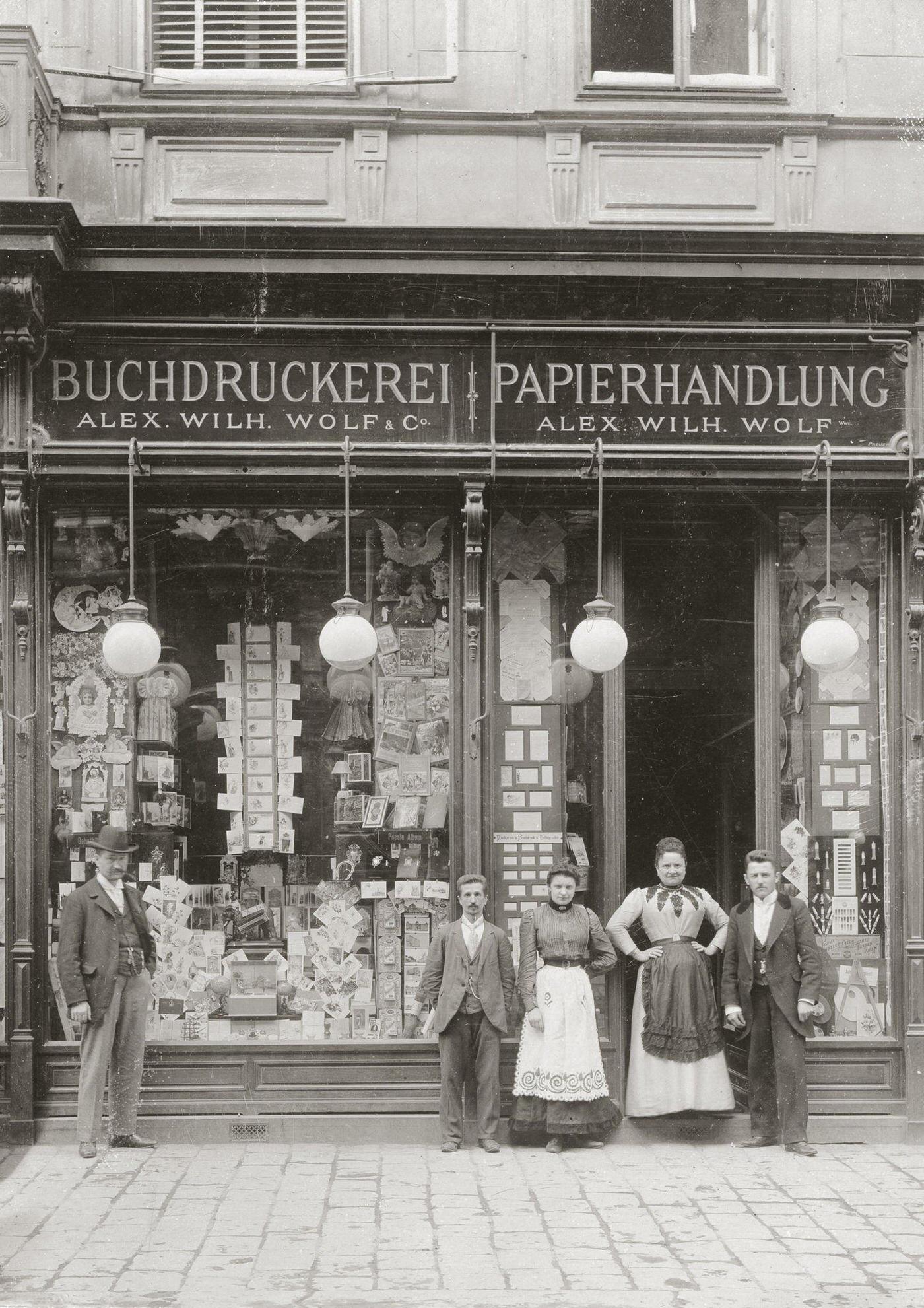
Store for paper products, Währinger Strasse, Vienna, 1900s
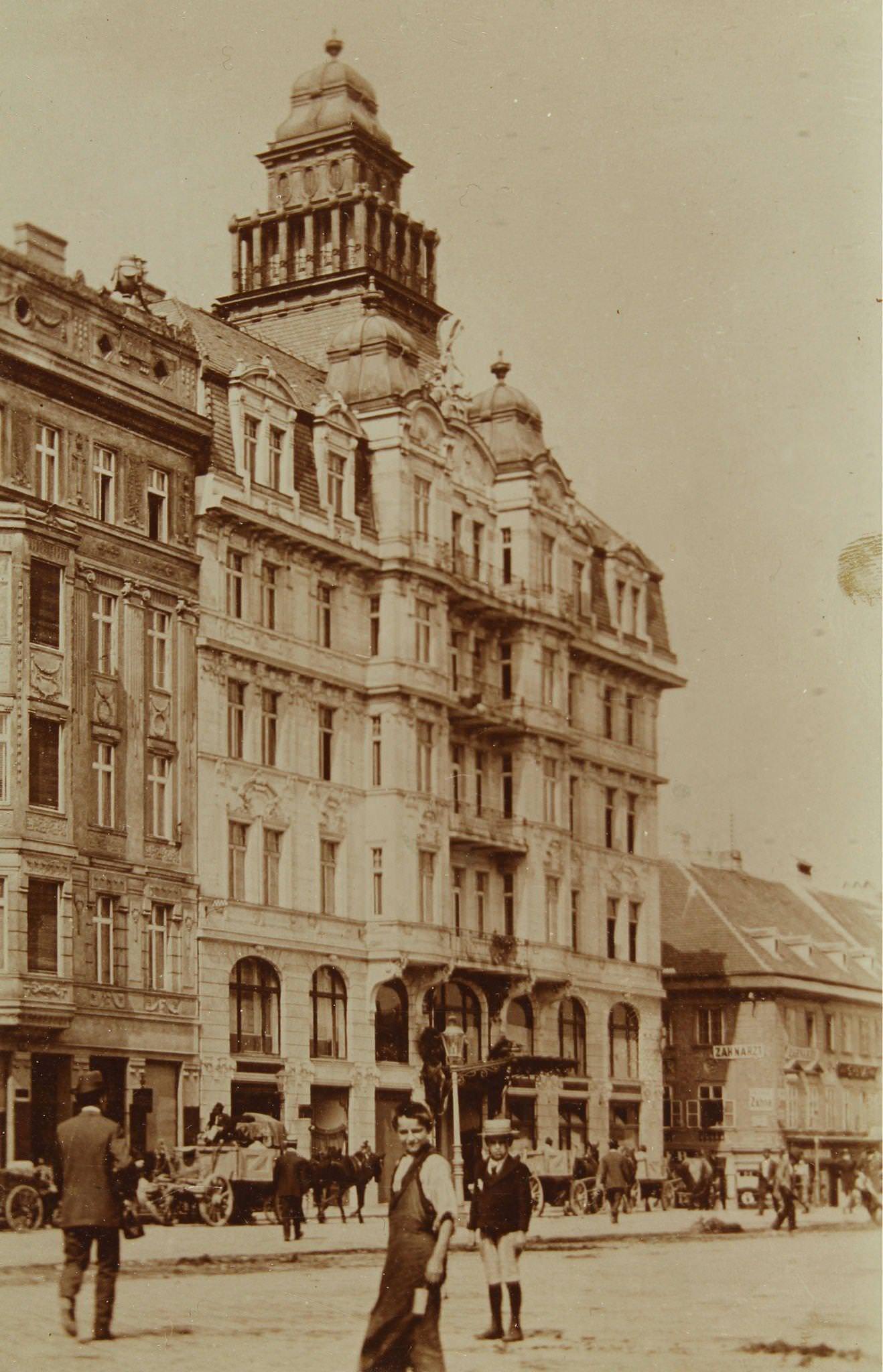
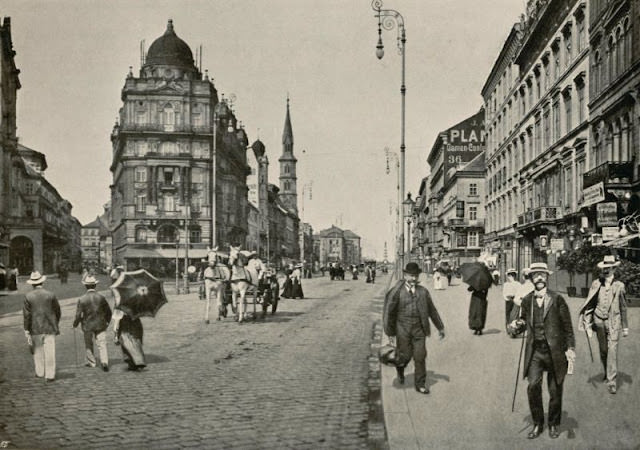
Corner between Kohlmarkt and Graben, 1905
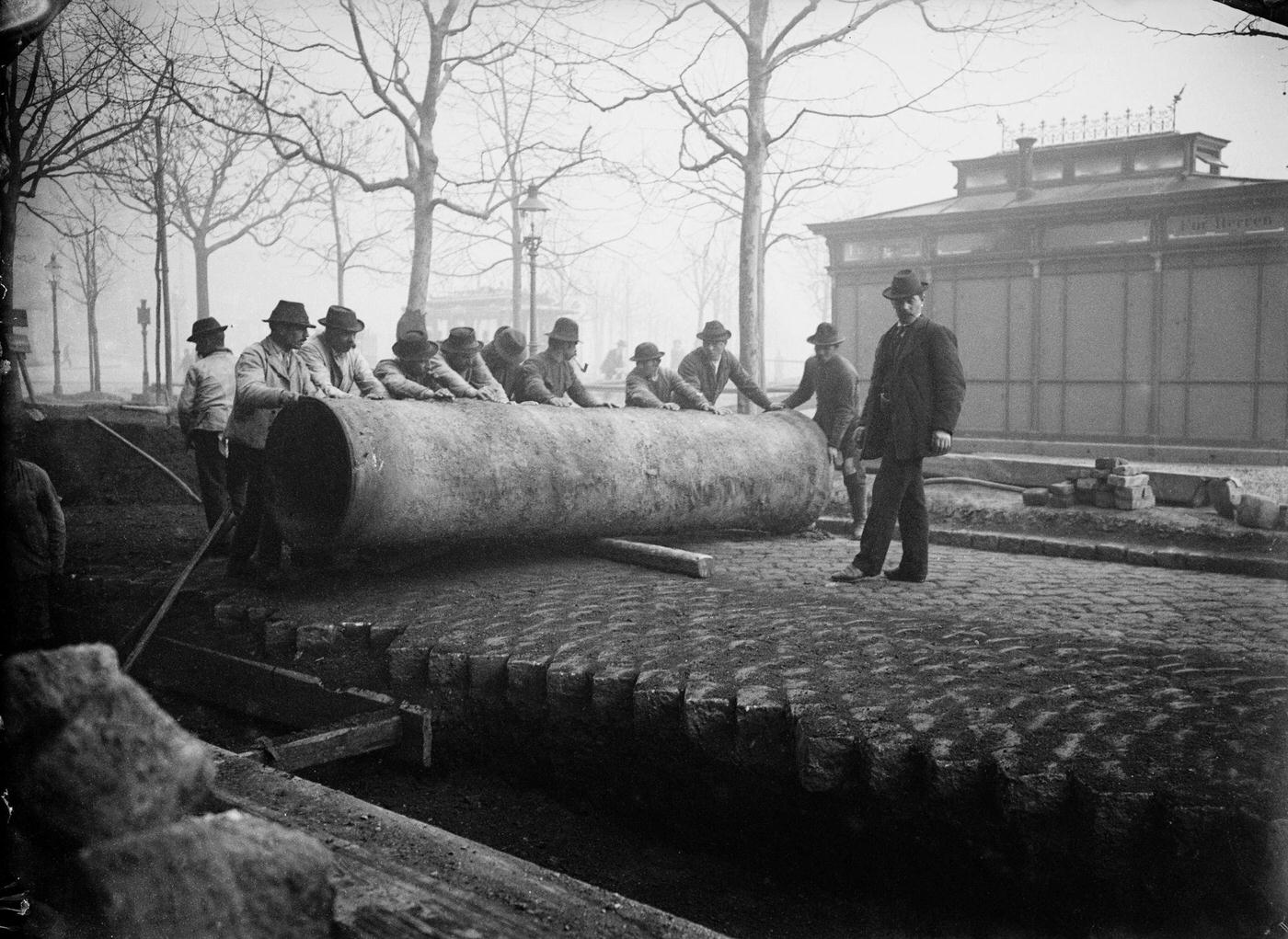
Man piping a sewer pipe, Vienna, 1900s
A coach for street cleaning in front of the k.u.k. Technisches Militärkomitee, Getreidemarkt 9, Institute for Technical Chemistry of the Vienna University of Technology today, Vienna, 1900s
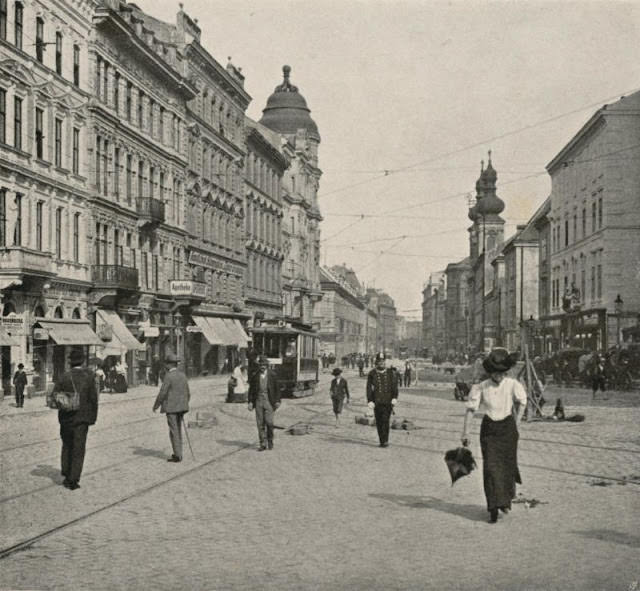
Men are cleaning the Mariahilfer Strasse, Vienna, 1900s
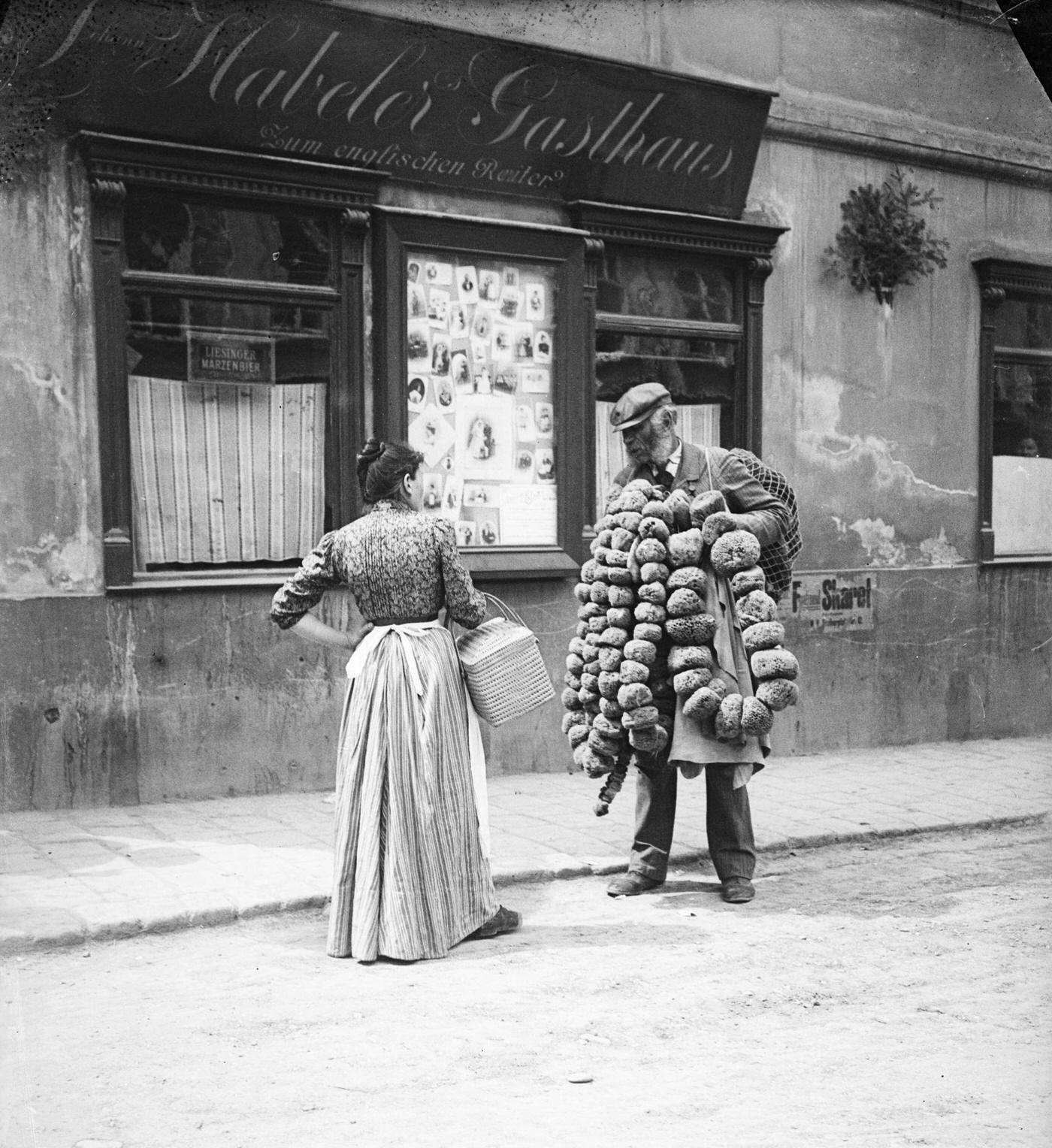
A sponge-dealer, Vienna, 1900s
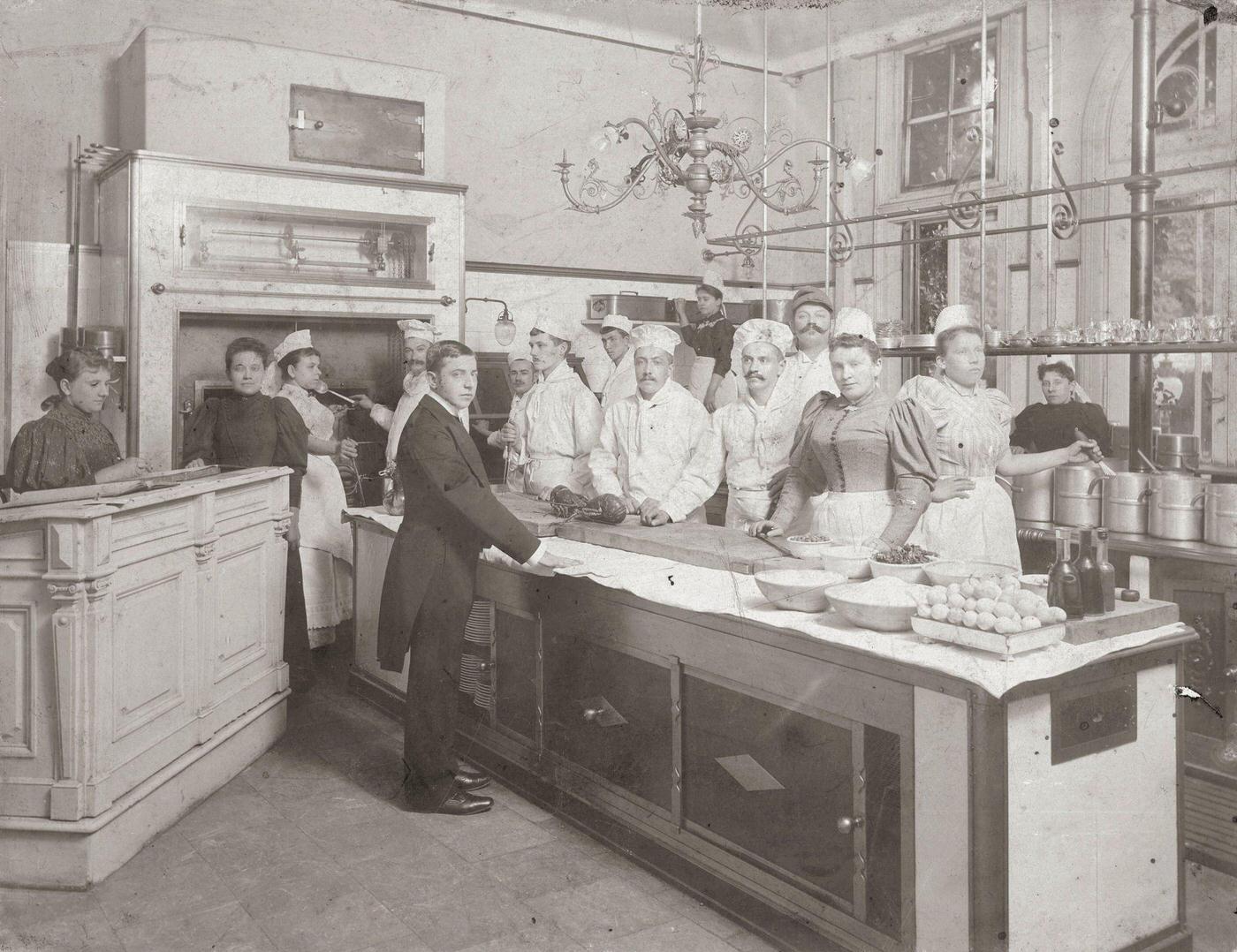
Kitchen of a restaurant in the city: 2 ovens, 2 skewers, cooks (with lobster), kitchen staff, waiter, accountant, Vienna
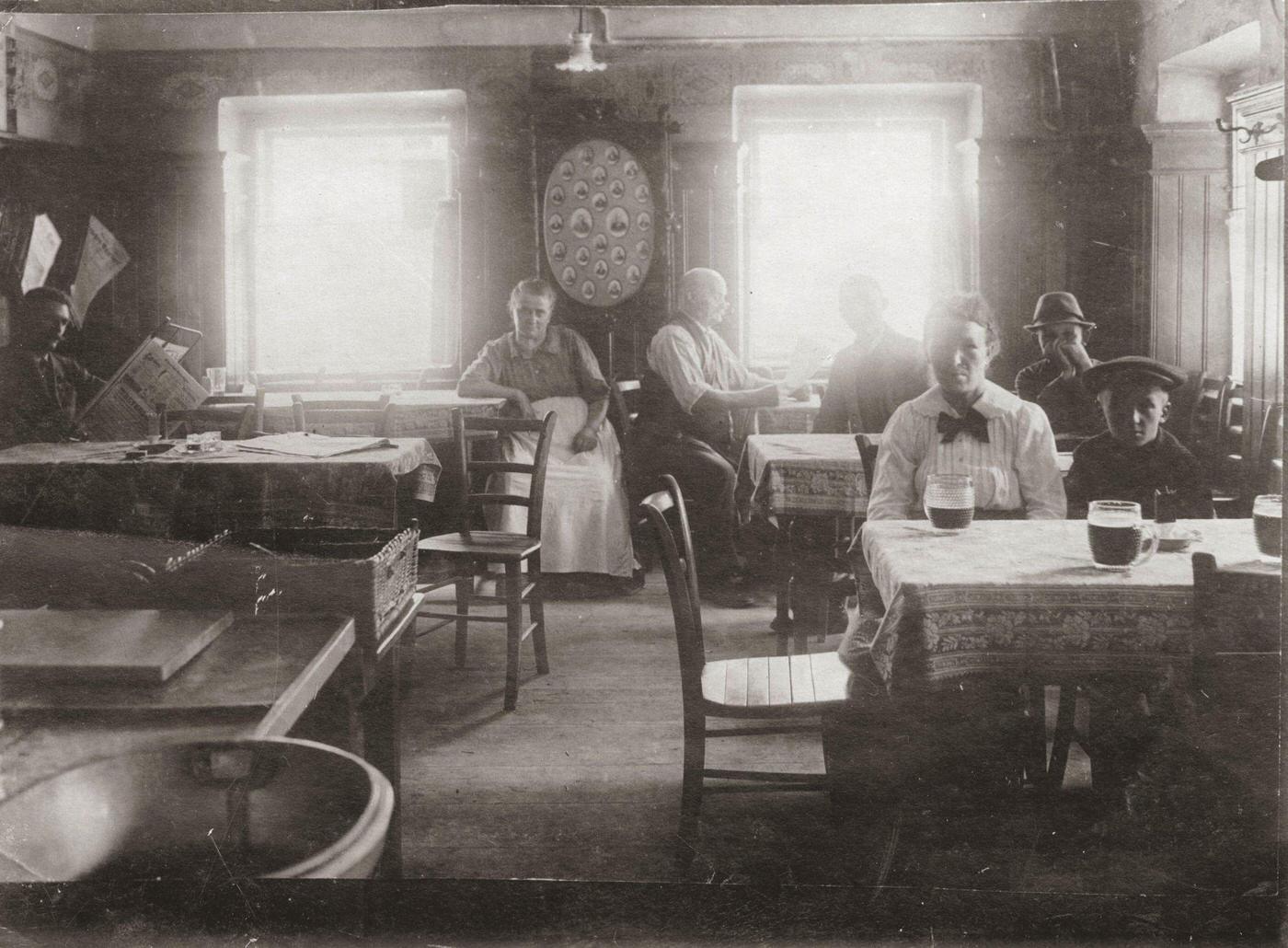
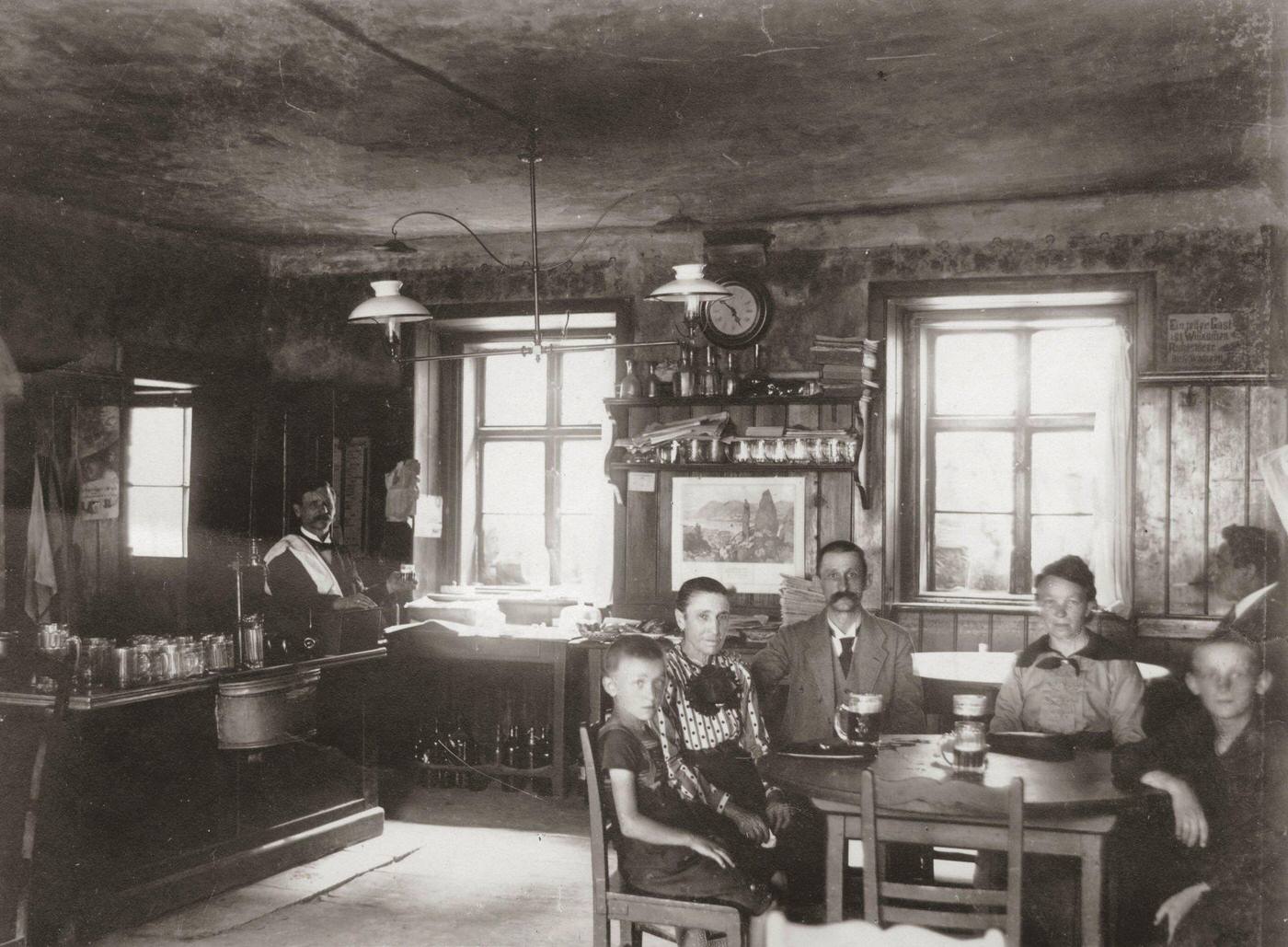
Inside the restaurant “Zum Kurfuersten” at Althahnstraße, The smallest tavern in Vienna with only 5 tables
Inside the restaurant “Zum Kurfuersten” at Althahnstraße, The smallest tavern in Vienna with only 5 tables, 1900
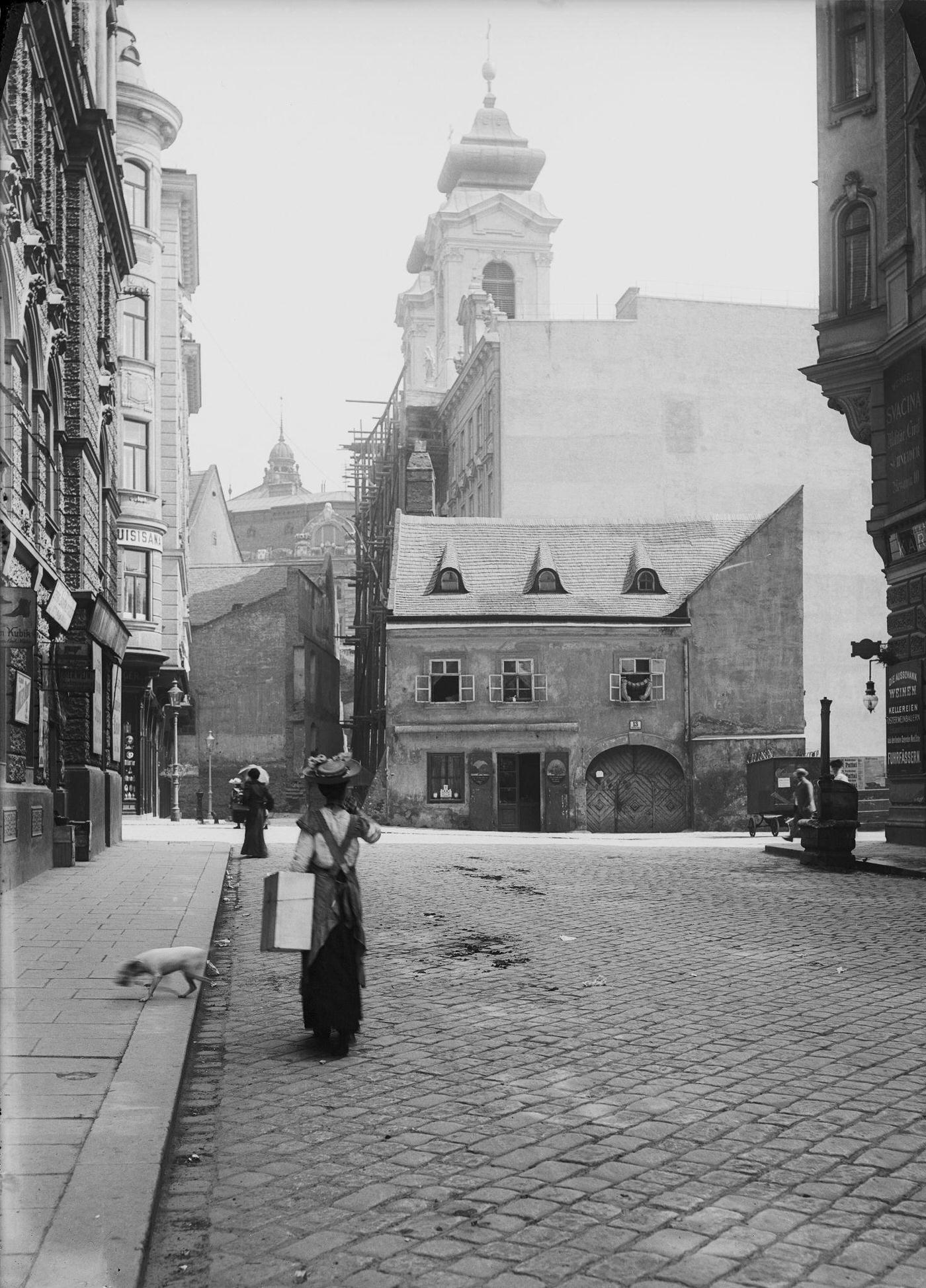
A servant is running errands, Vienna, 1900s
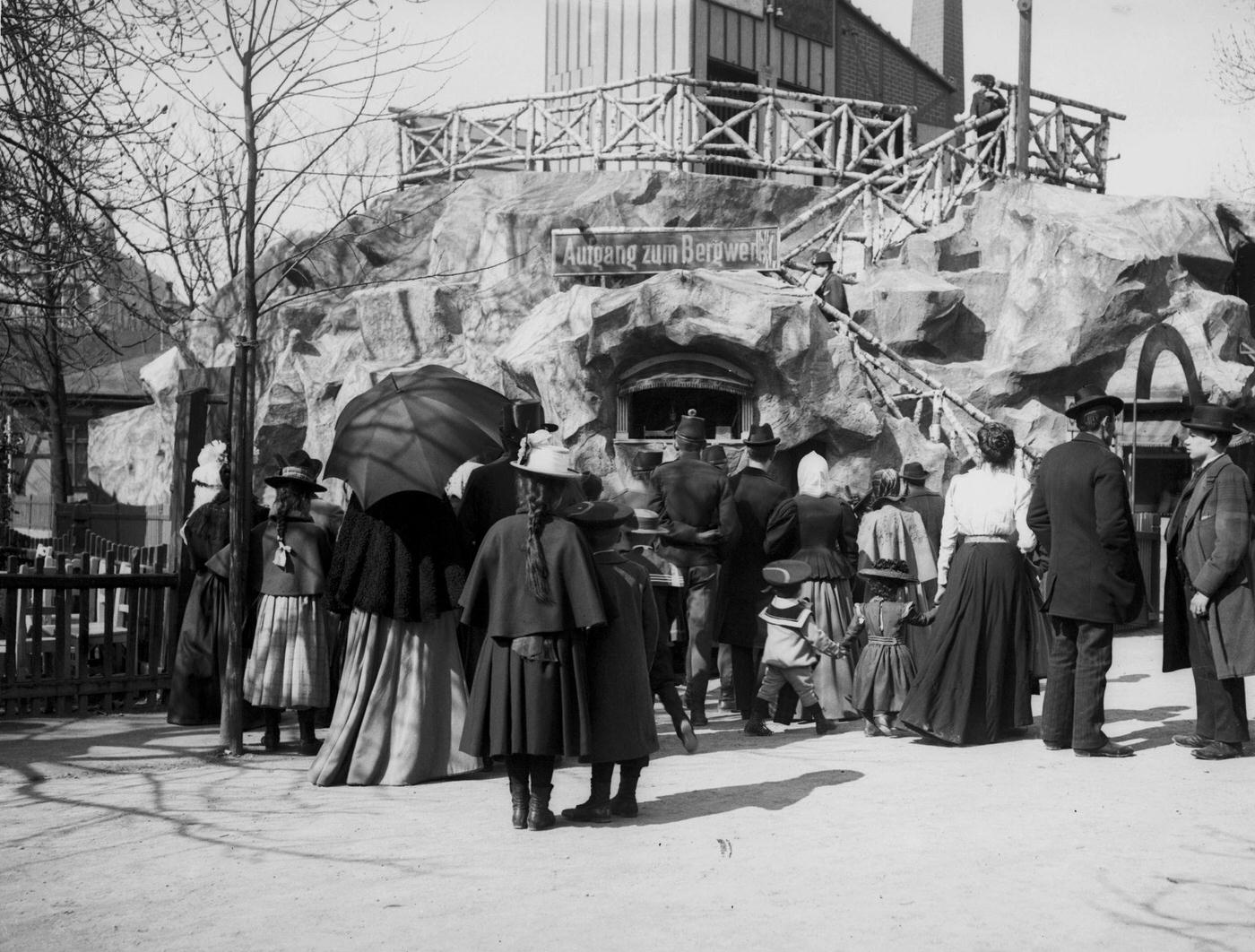
Visitors in the Prater, Vienna, 1900s
Beggars in front of the Jesuit Church in Vienna, 1900s
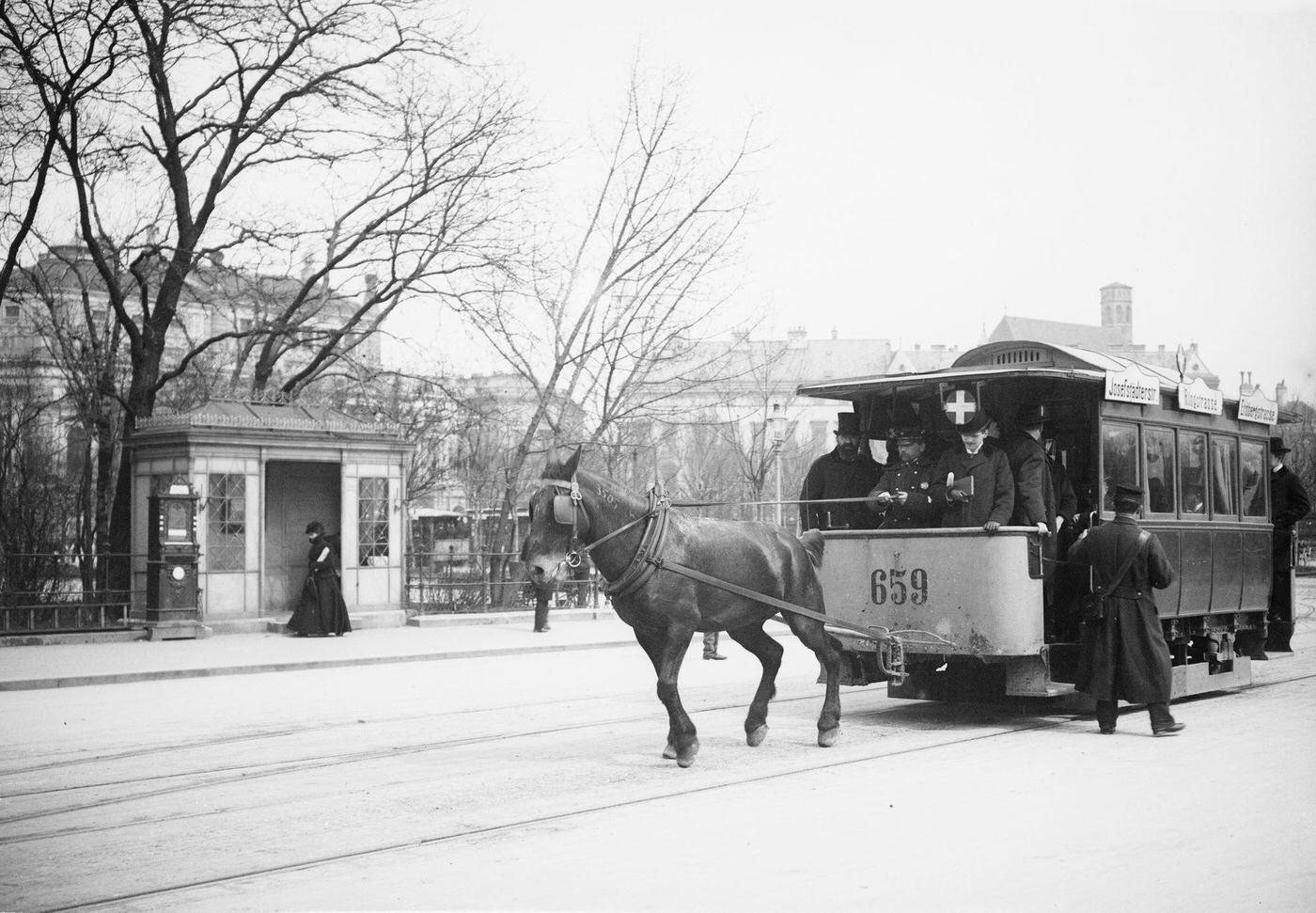
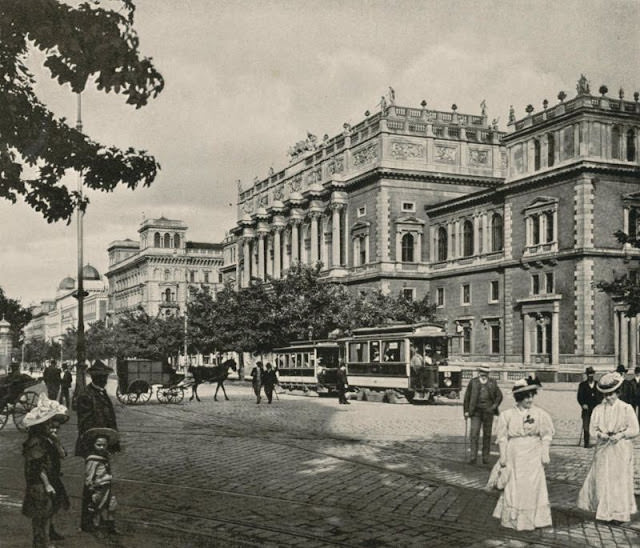
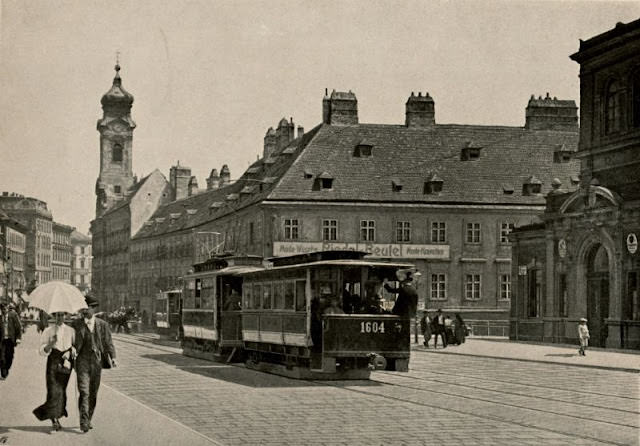
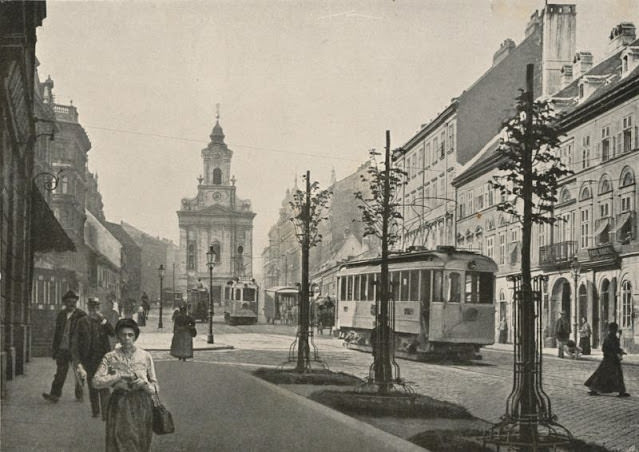
A Horse-Tram in Vienna, 1900s
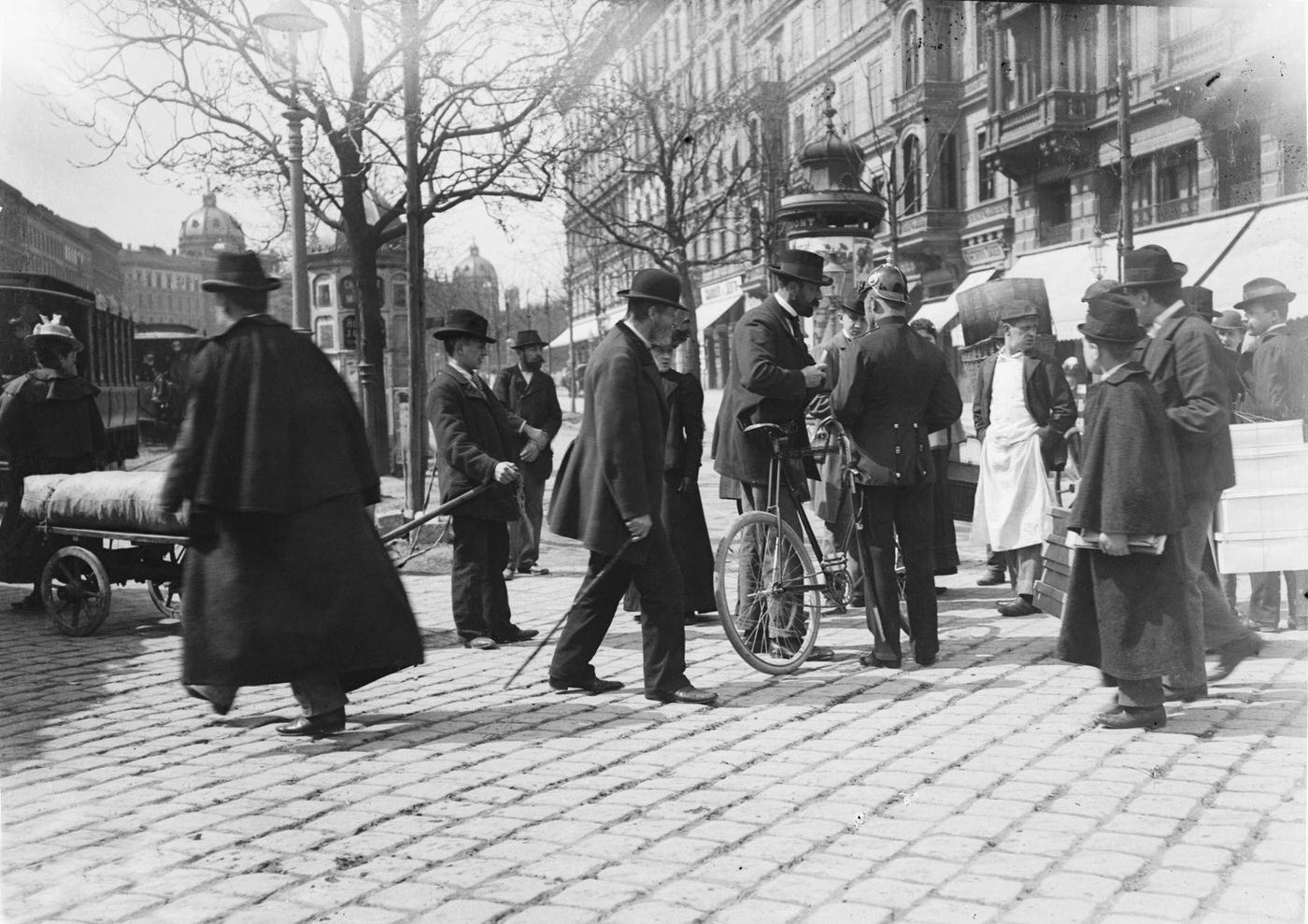
At the Opernring in Vienna, 1900s
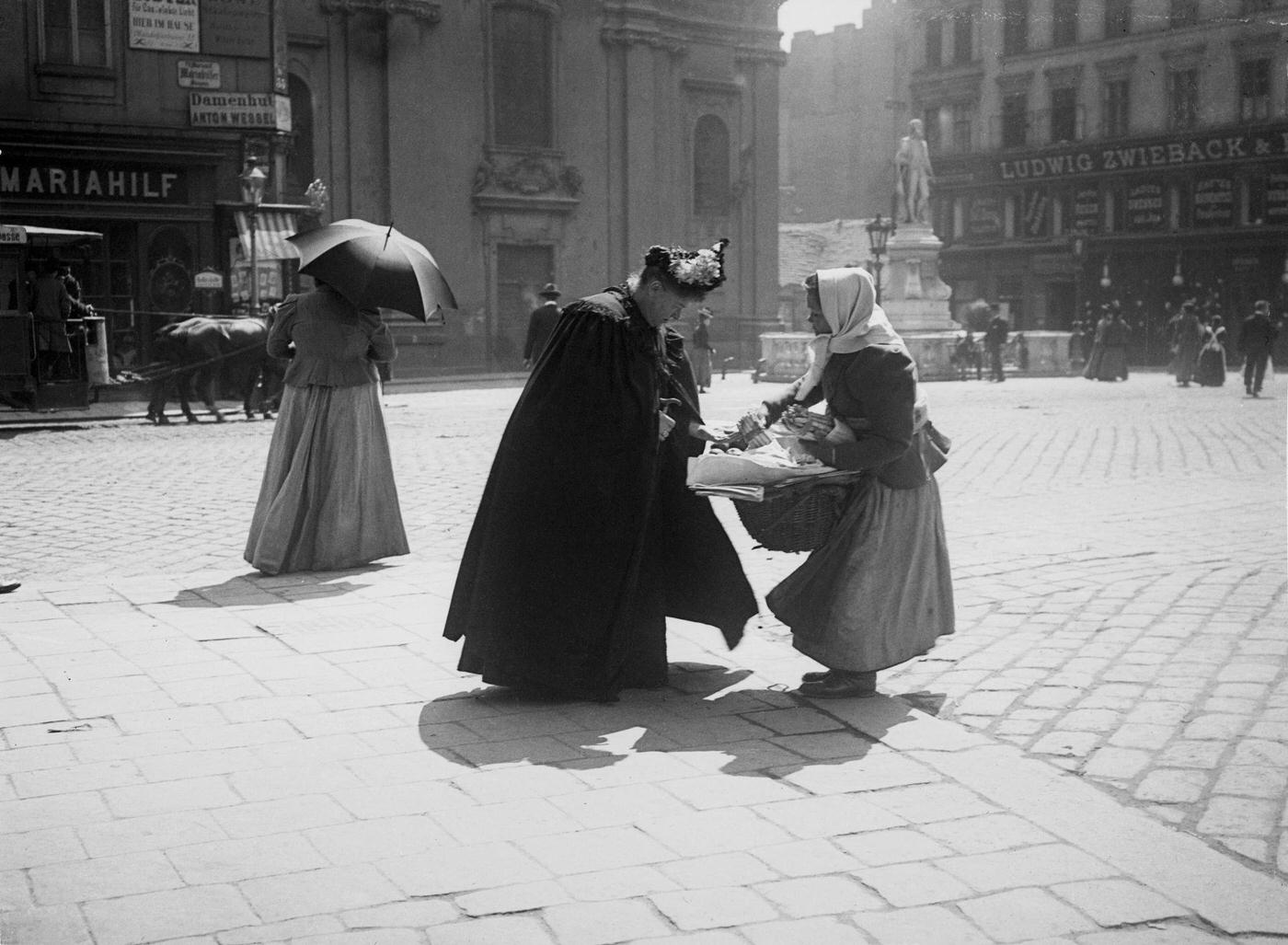
A client with an asparagus dealer, Mariahilfer Strasse, Vienna, 1900s
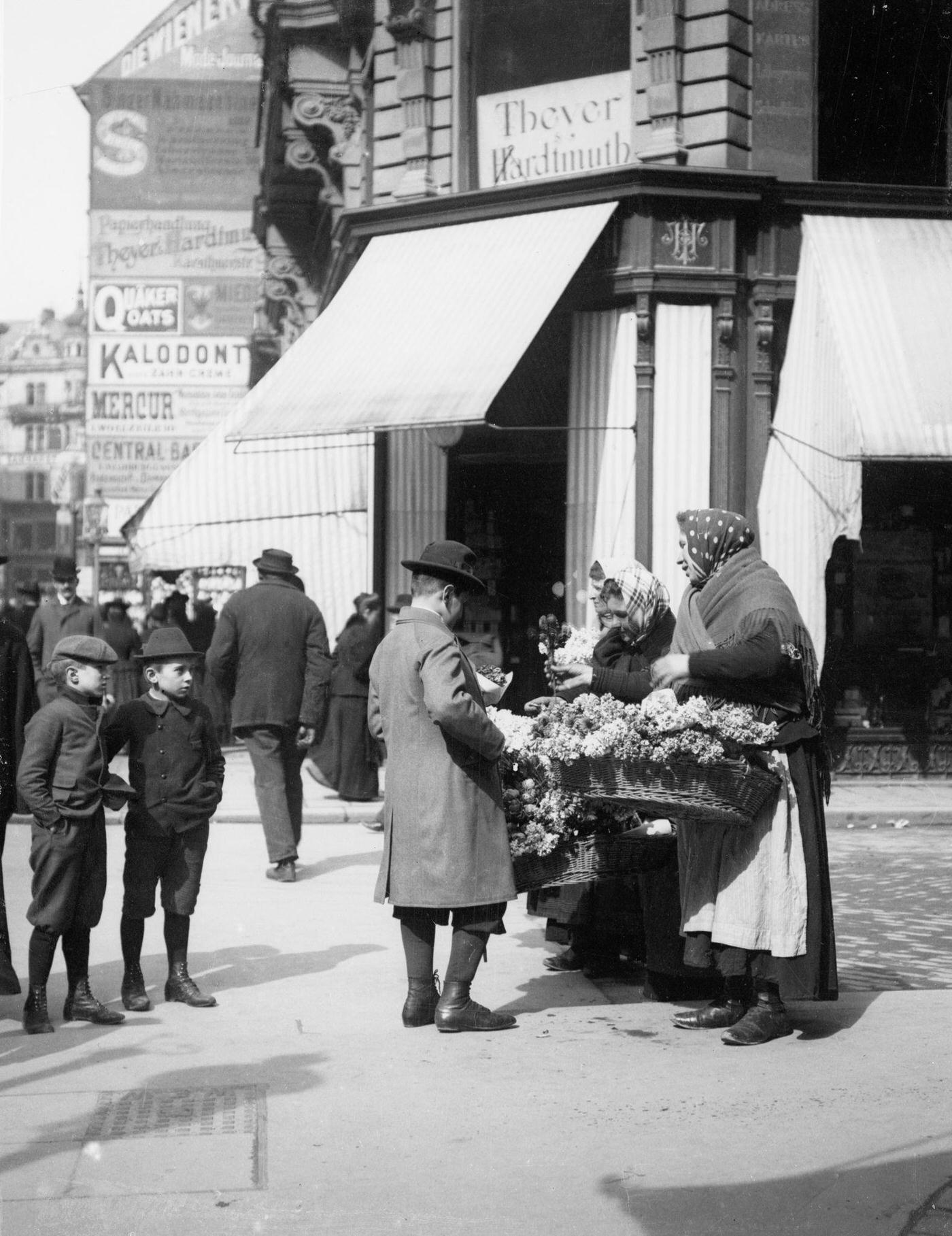
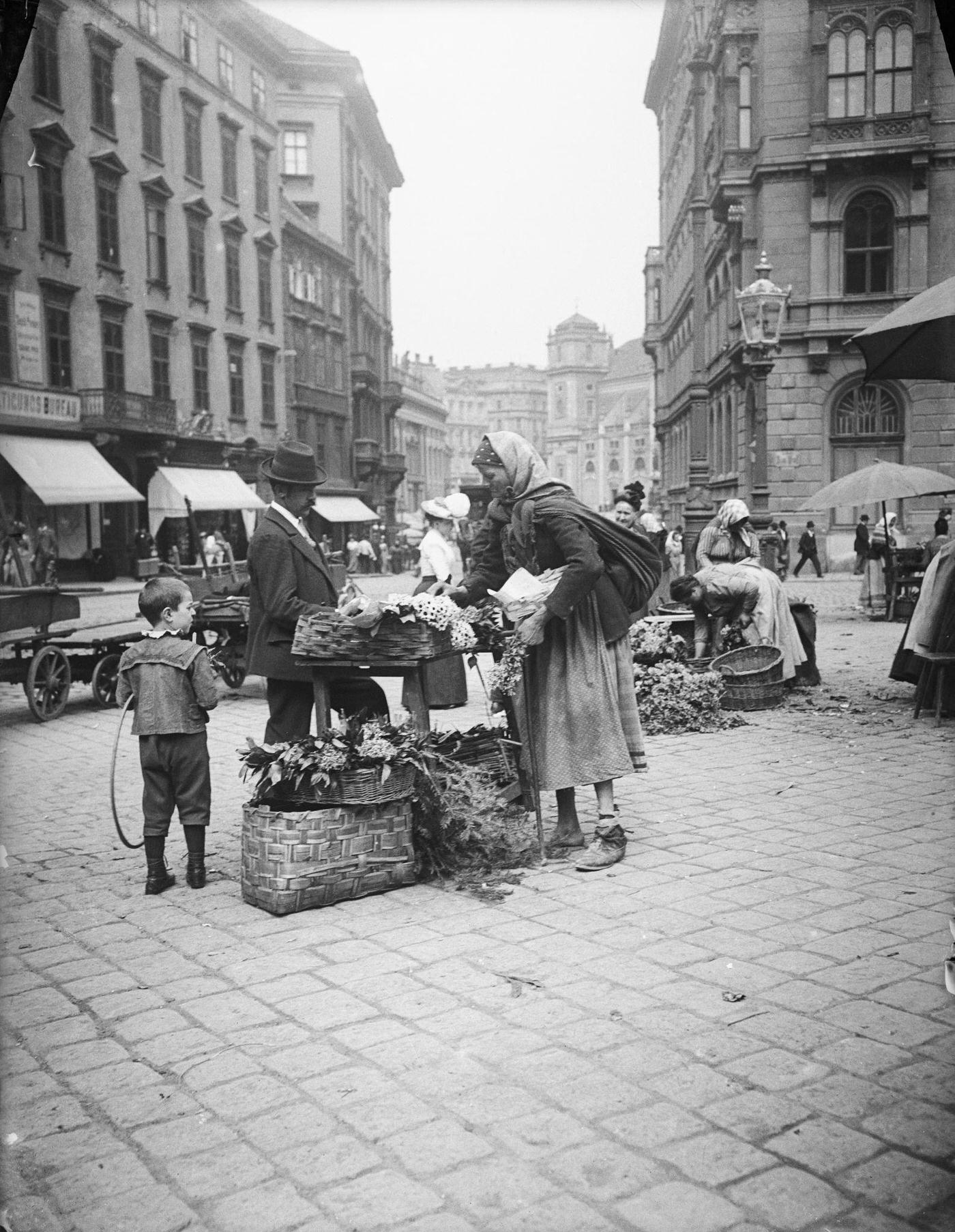
A florist with customers, Kärntnerstrasse, Vienna, 1900s
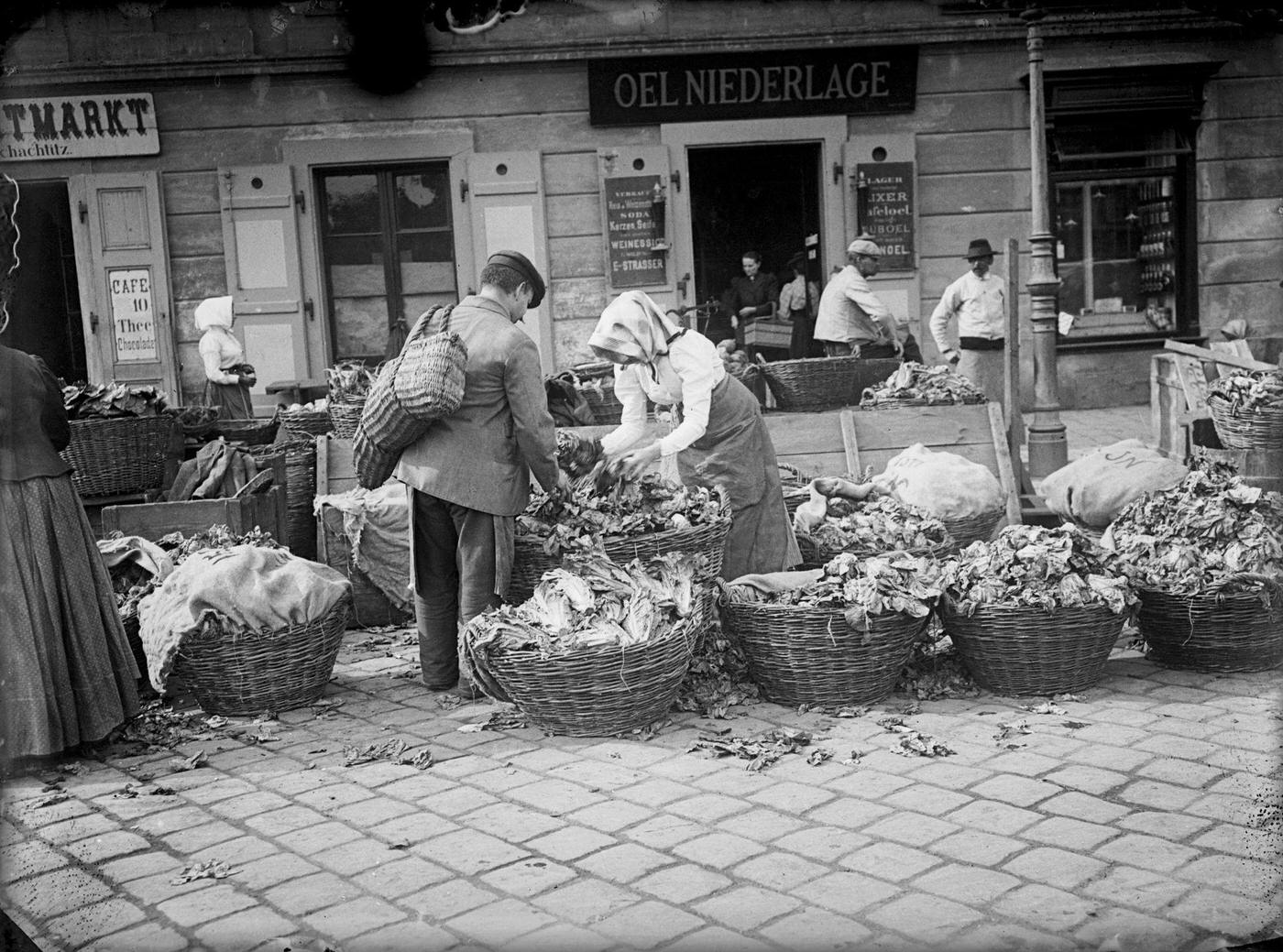
A greengrocer in Vienna, Around 1900
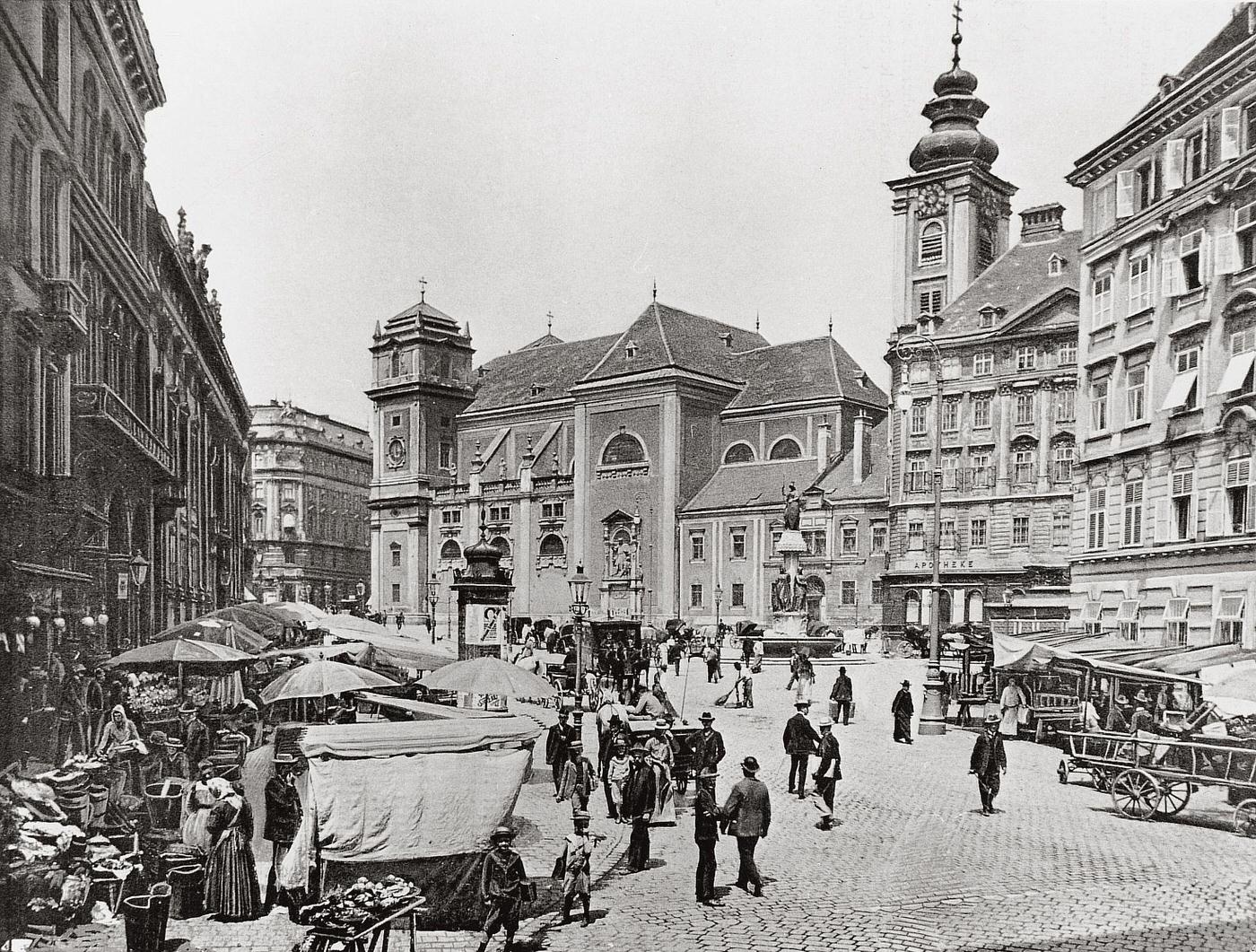
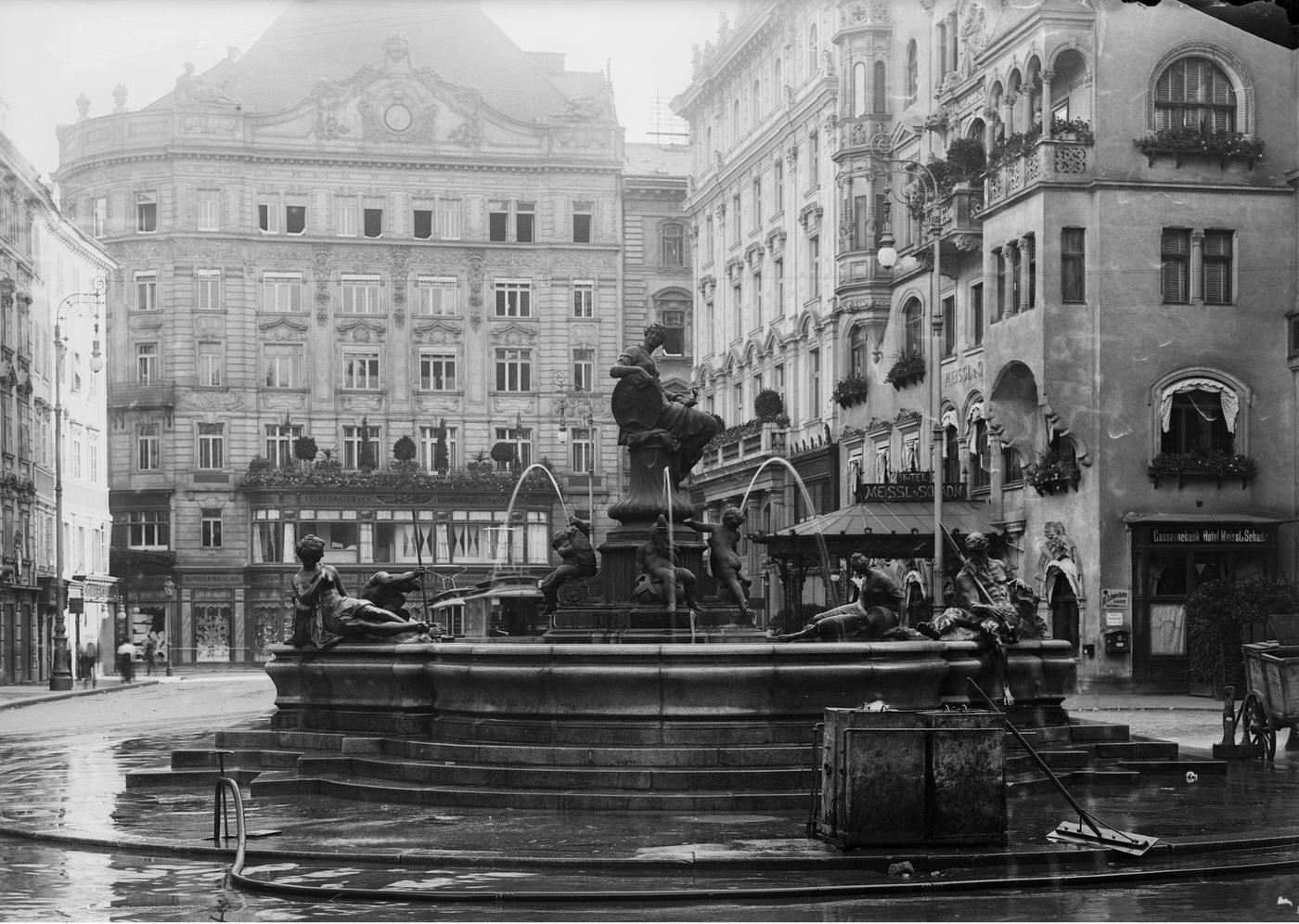
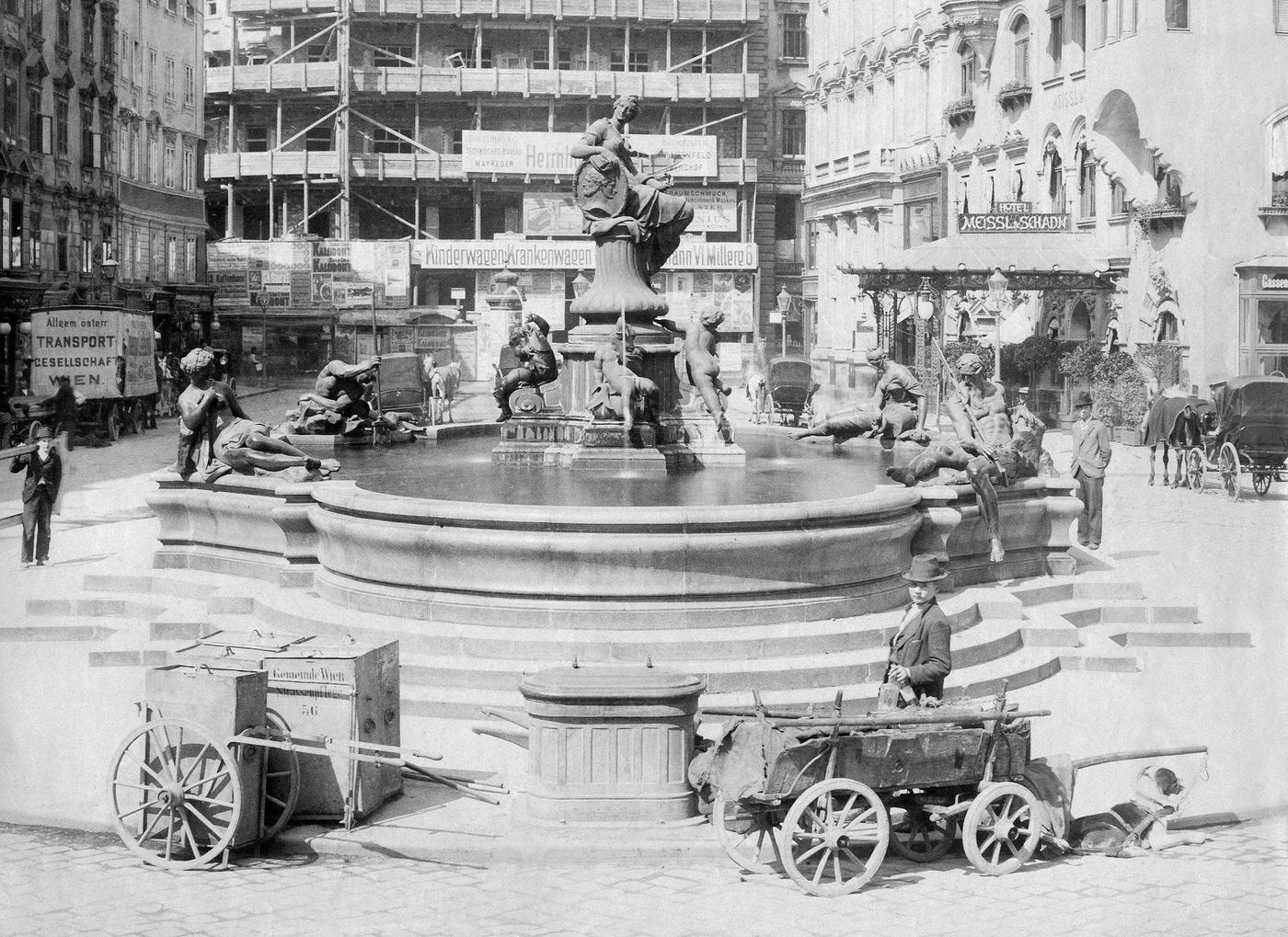
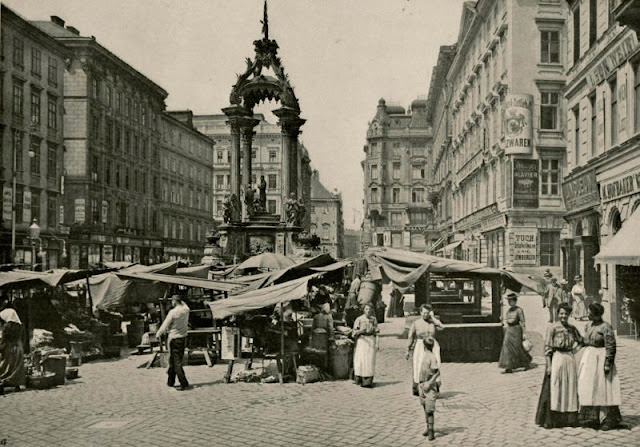
The Donnerbrunnen at the Neuer Markt, right the hotel Meissl and Schadn, Vienna, Around 1900
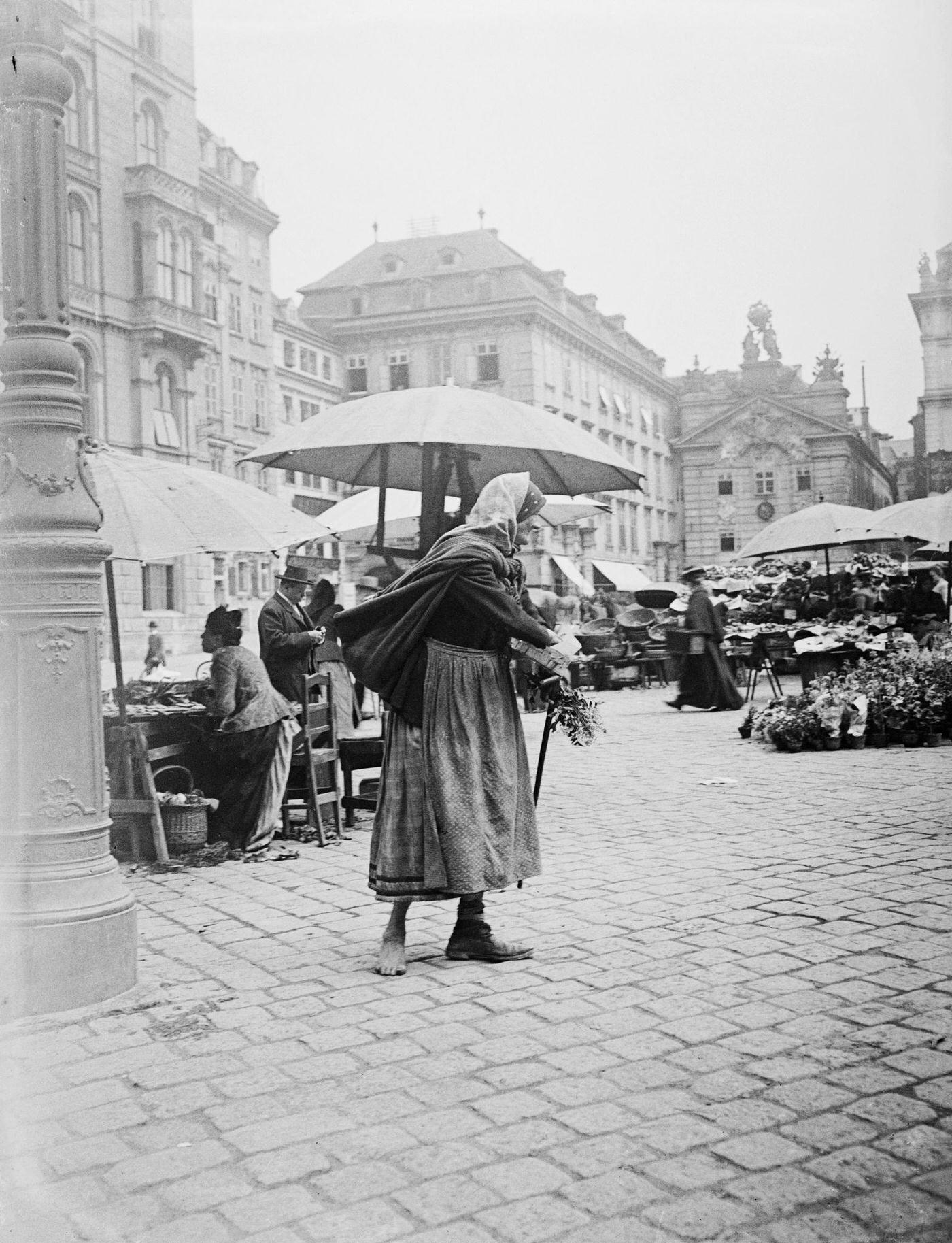
A florist at the market Am Hof, Vienna, Around 1900
A florist at the market Am Hof, Vienna, Around 1900
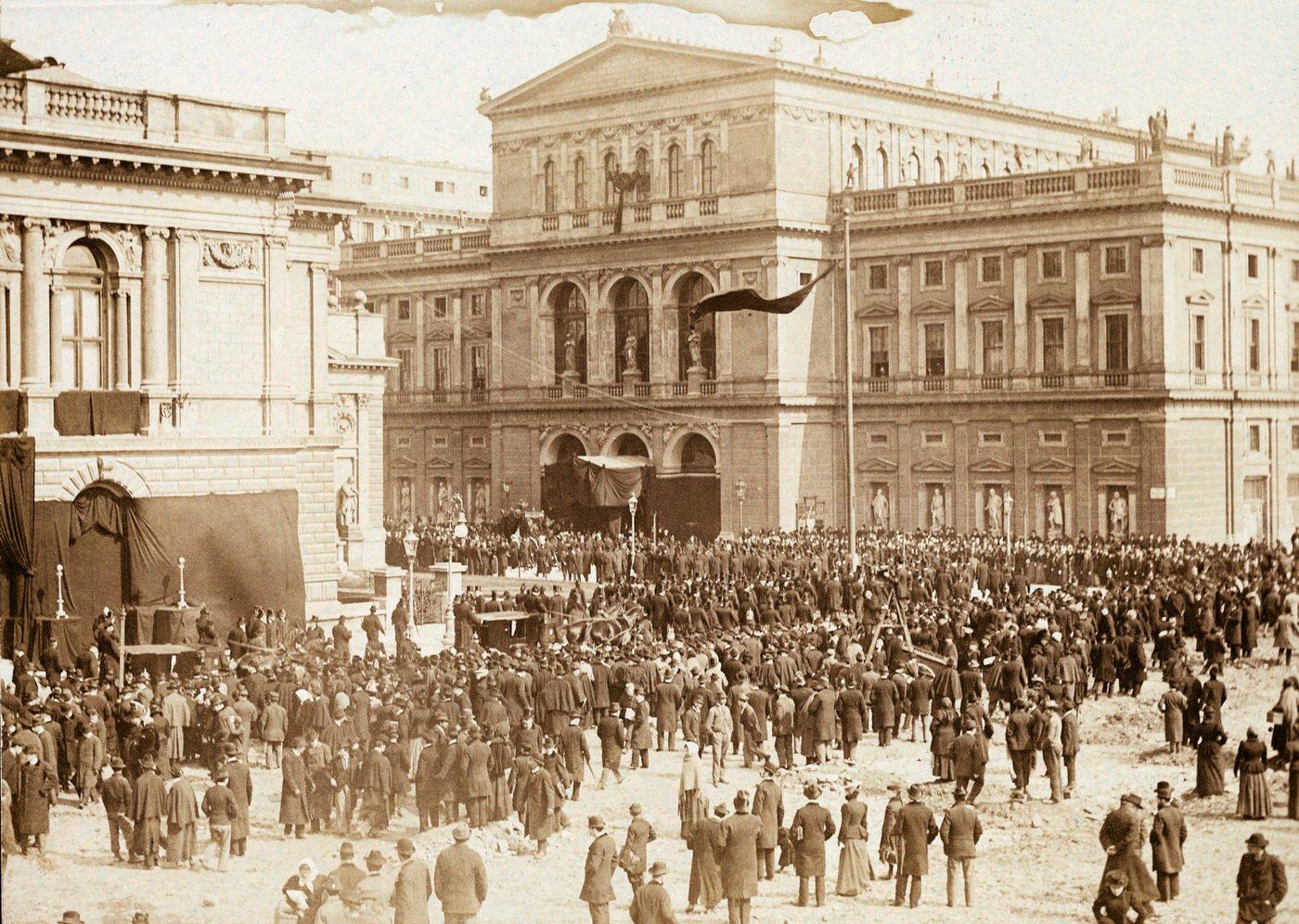
Funeral of Nikolaus Dumba (died March 23, 1900 in Budapest), Patron of Künstlerhaus and Wiener Musikvereins, Vienna, Austria, 1900
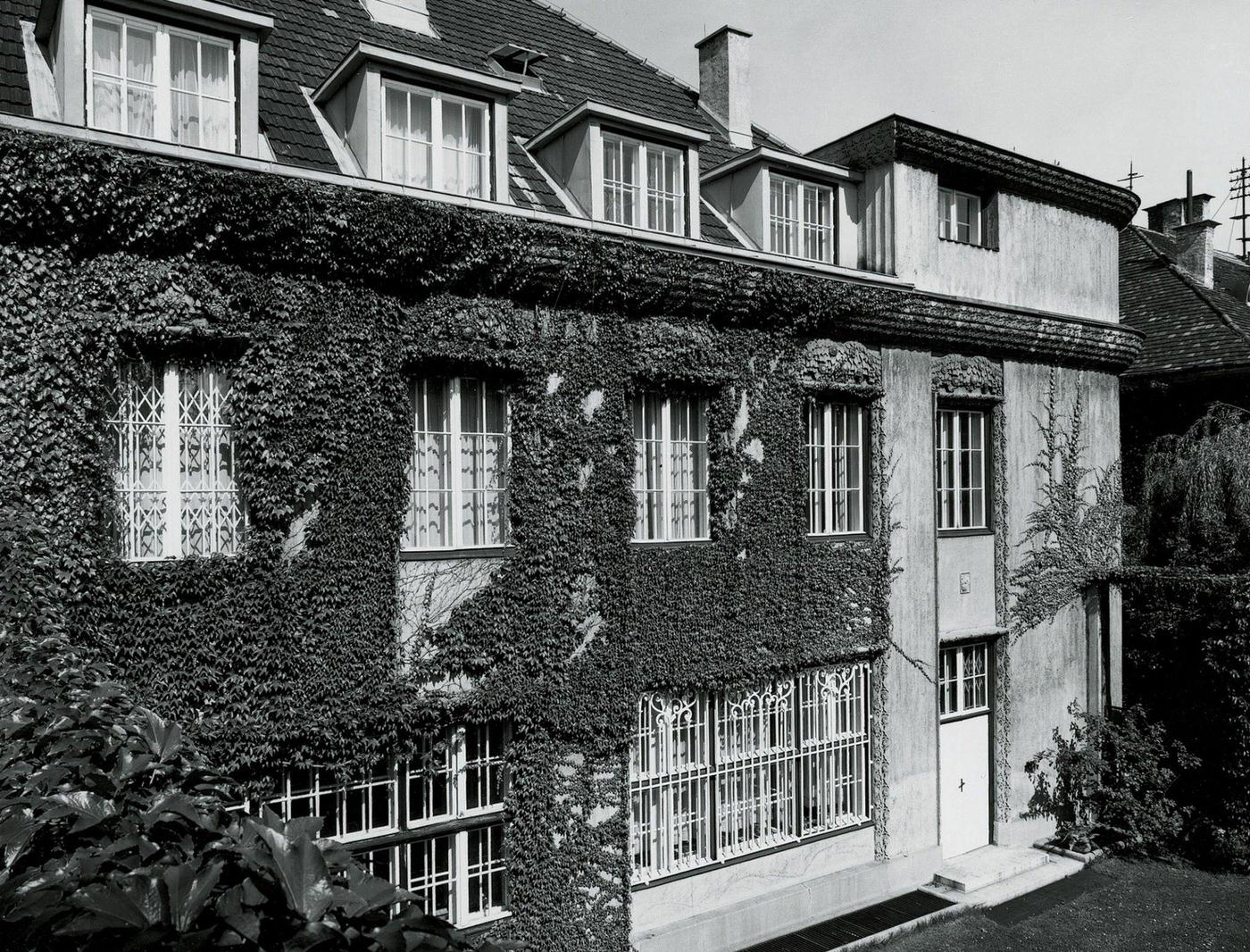
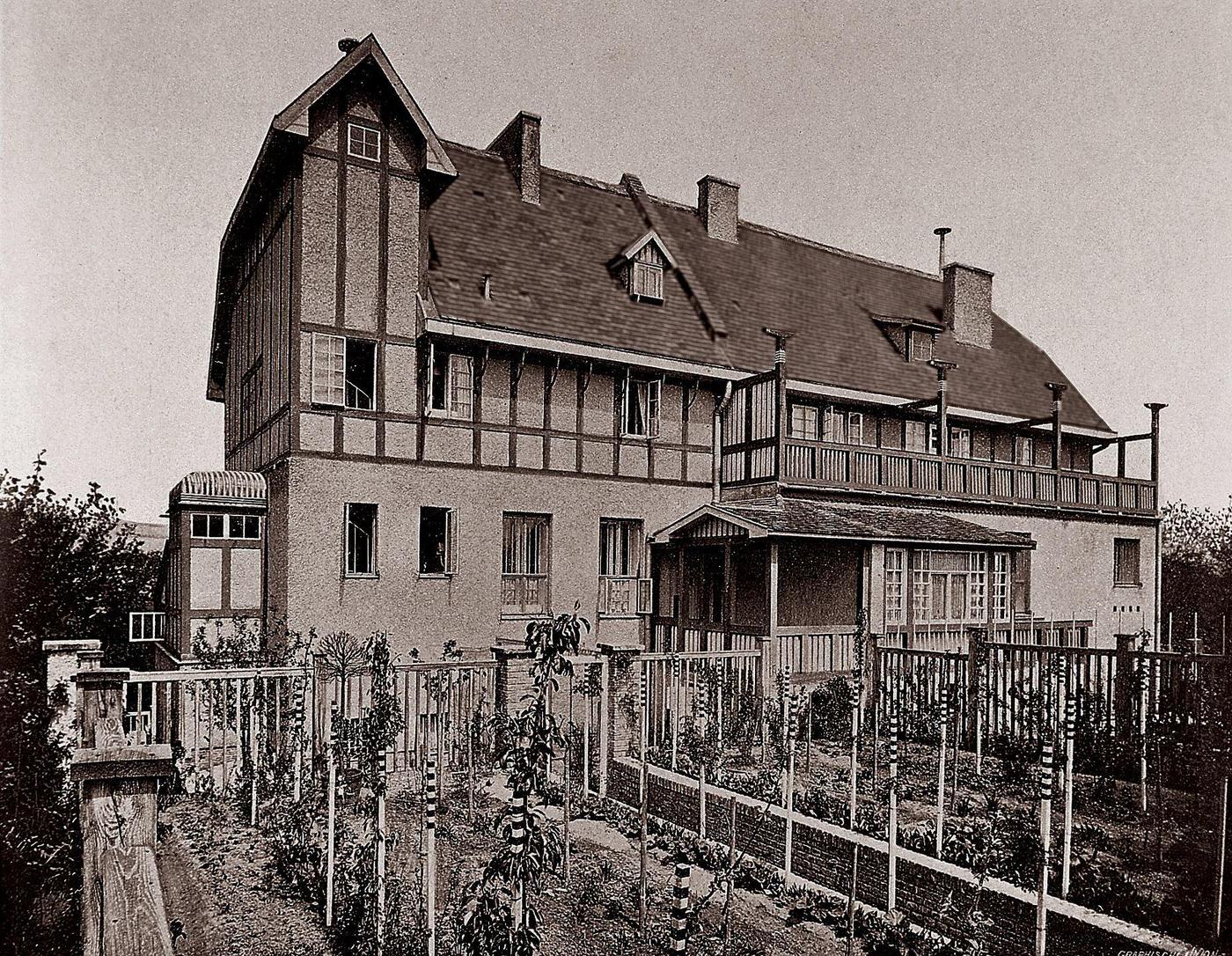
Pair of semi-detached houses of Carl and Kolo Moser, Hohe Warte in Vienna’s 19th district, Magazine “The Architect” (IX, page 85), Vienna, 1901
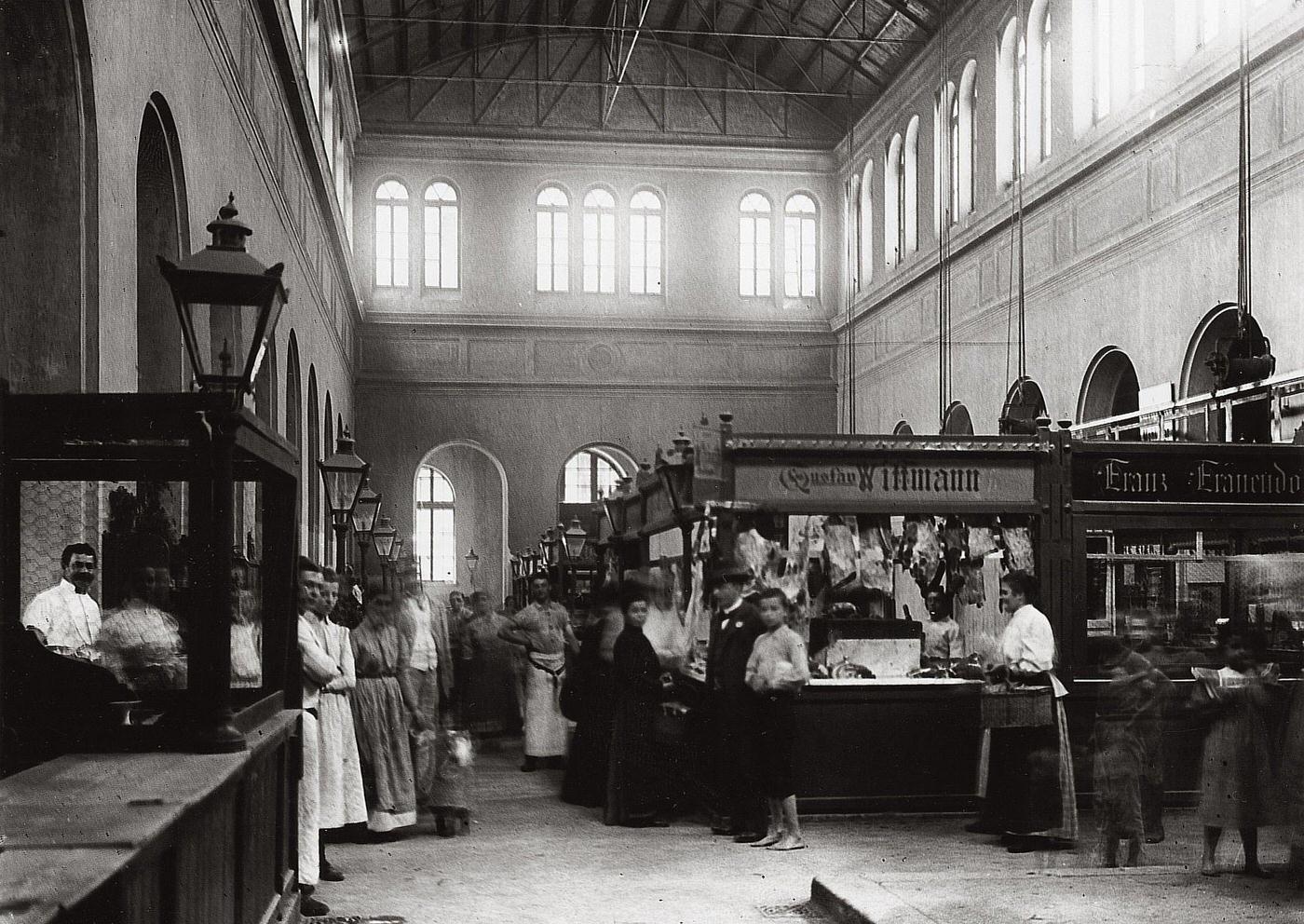
Market Hall in Vienna, Phorus place 4th district, 1901
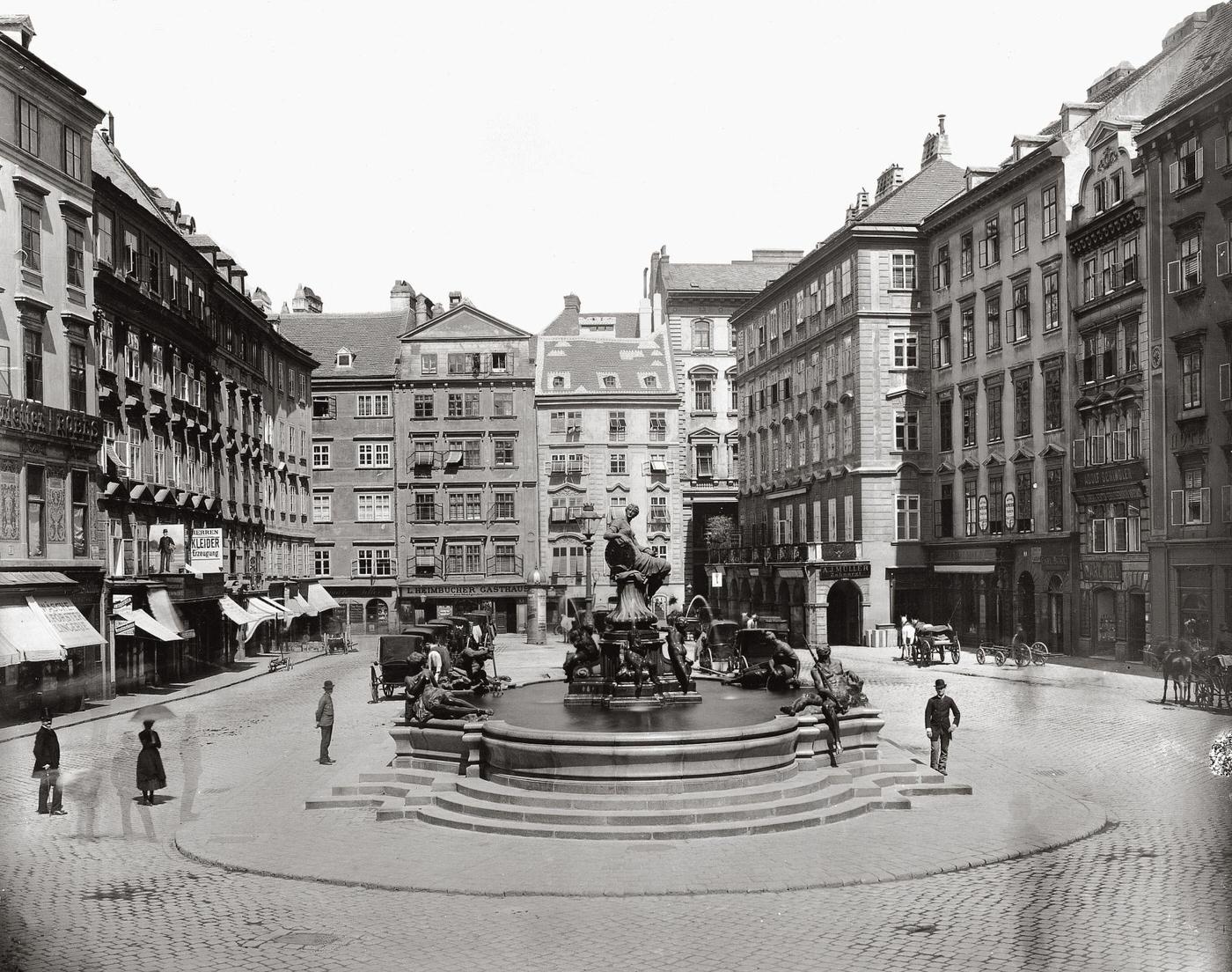
Neuer Markt in Vienna I with “Providentia” fountain, 1902
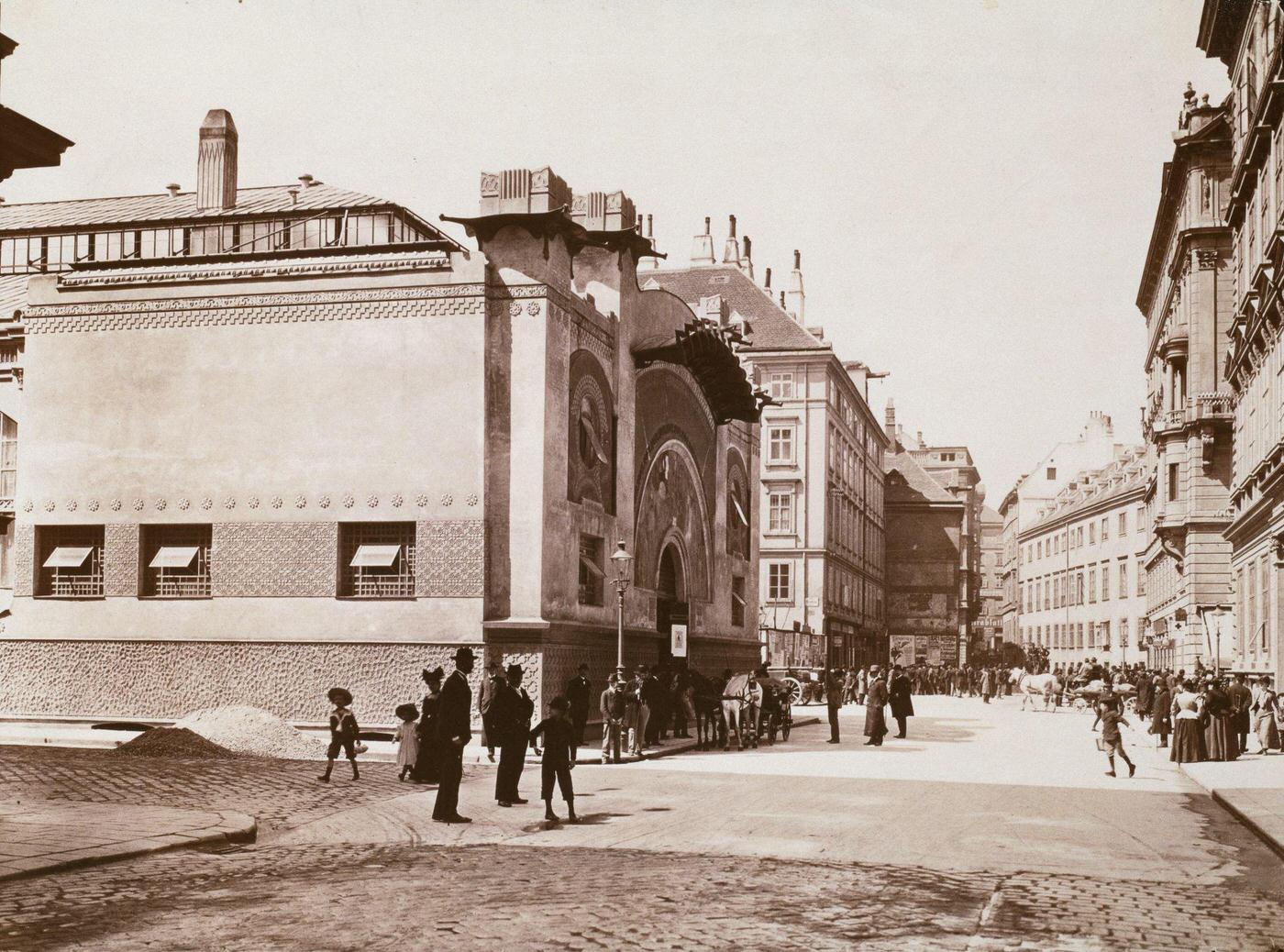
The Zedlitzhalle in Vienna I, Zedlitzgasse 6, built 1902 by Josef Urban, Exhibition-hall of the Kuenstlervereinigung “Hagenbund,” Vienna, 1902
Austria beneath the Enns (Lower Austria) – Vienna Providentia fountain at the new market, Designed by Georg Raphael Donner, 1902
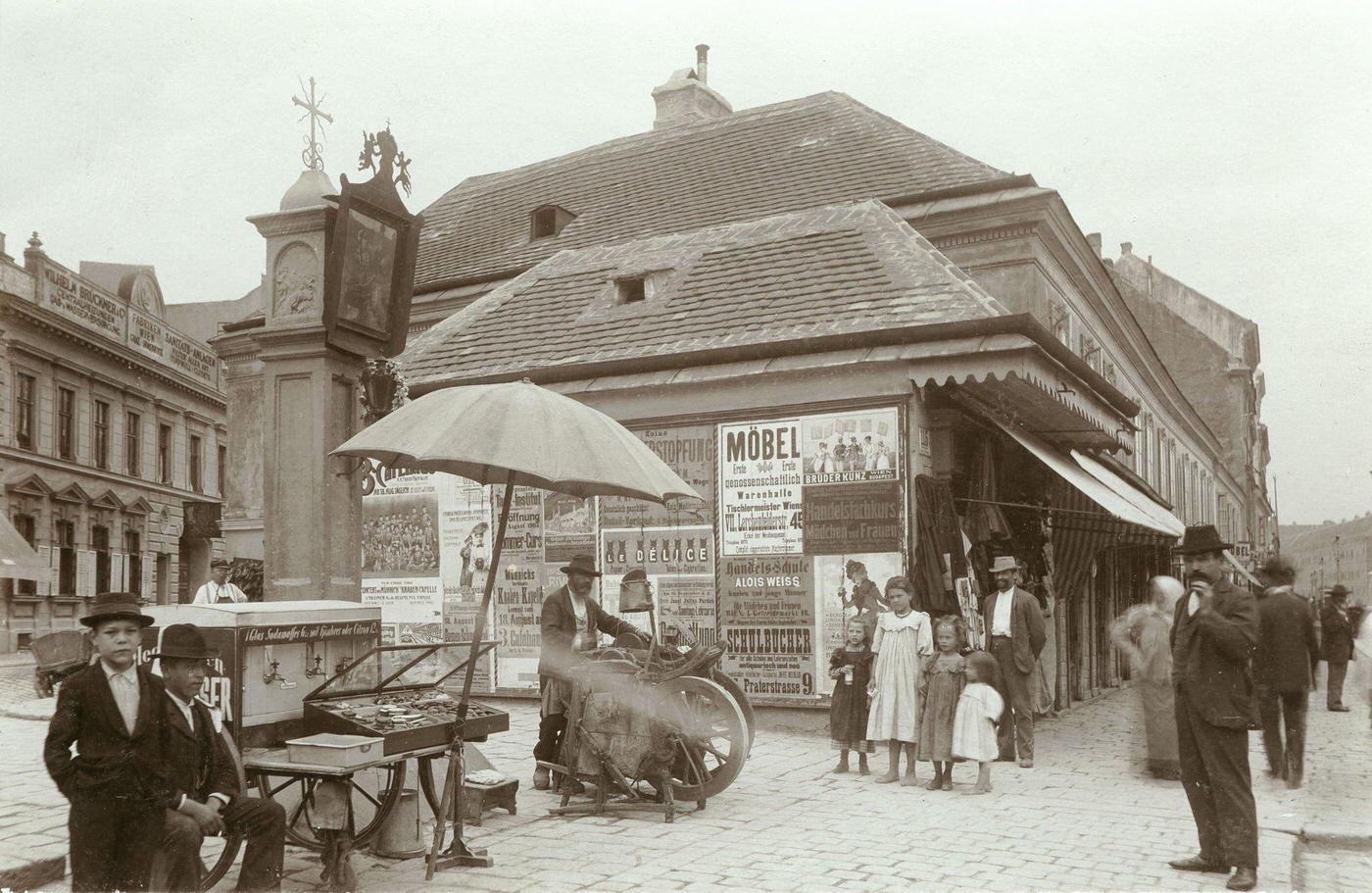
A knife grinder and pedestrians at the pest column, Landstrasser Hauptstrasse (street), Vienna, August 1903
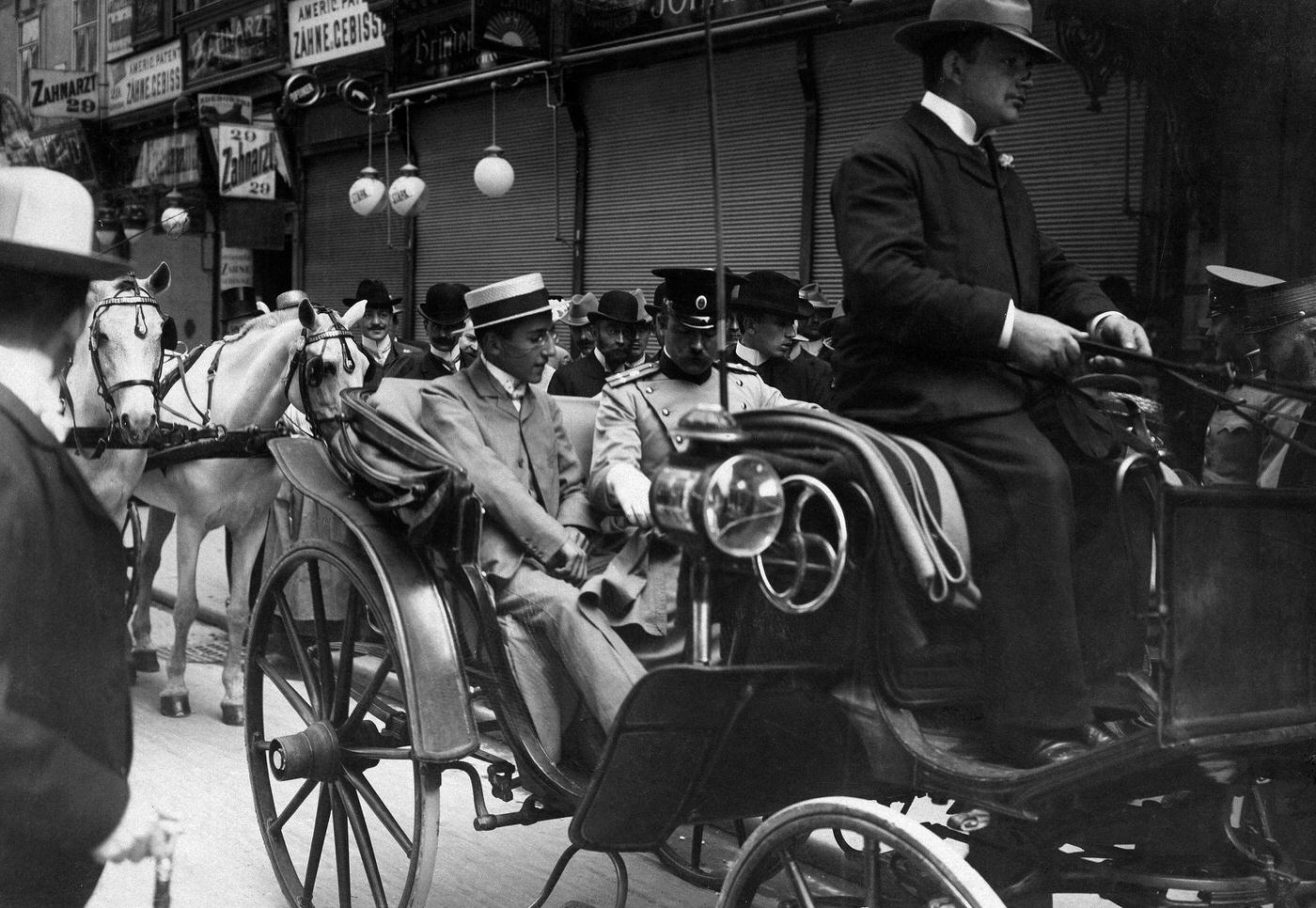
Karadordevic, Peter I – King of Serbia, Kronprinz in Wien, 1903
The Renovated Theater An Der Wien In Vienna Of The Left Line, Mariahilf district after modification by Fellner & Helmer in 1902, About 1905
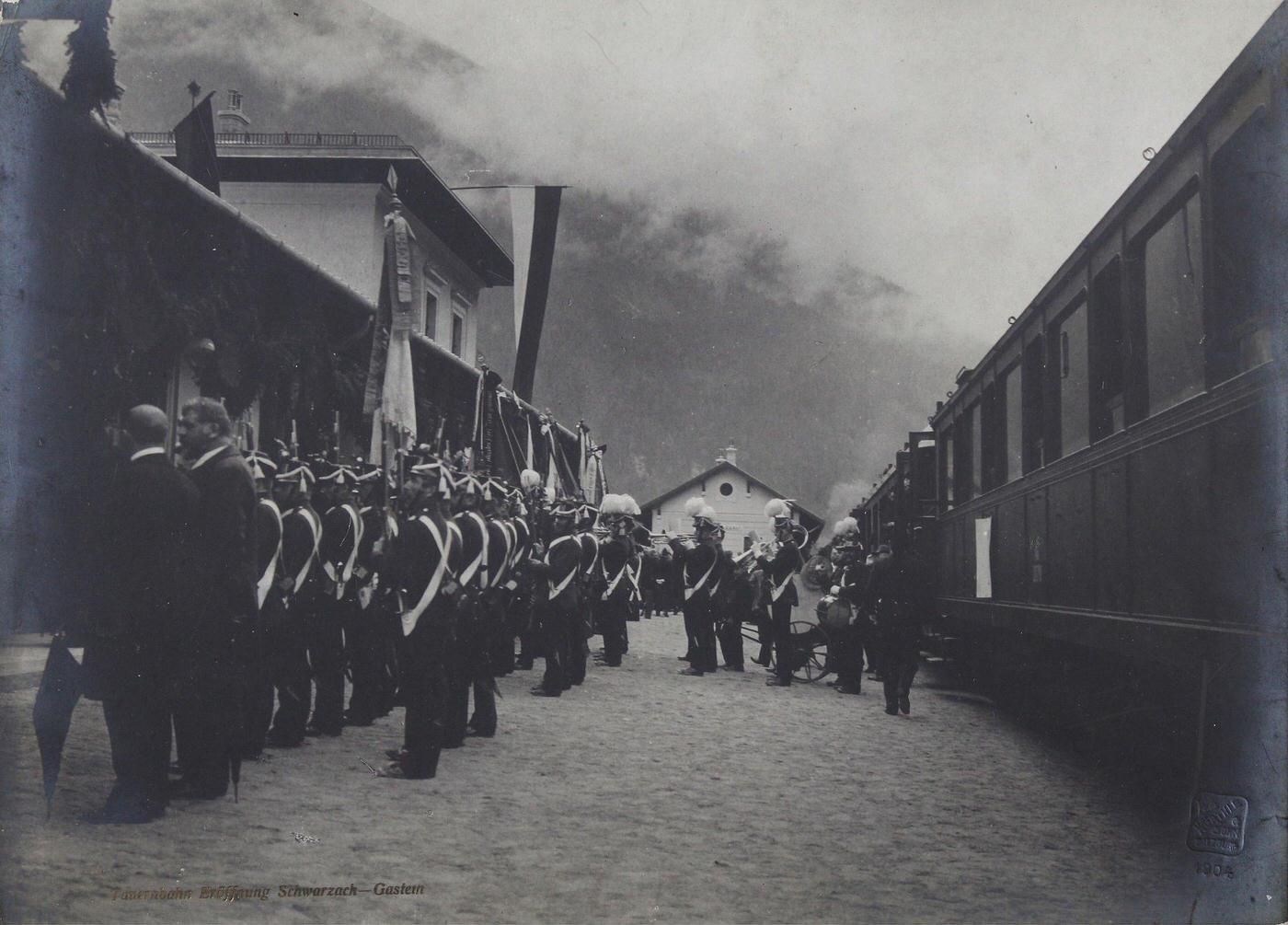
Opening Of The Tauern Railway between Schwarzach-St. Veit and Bad Gastein, 1904,
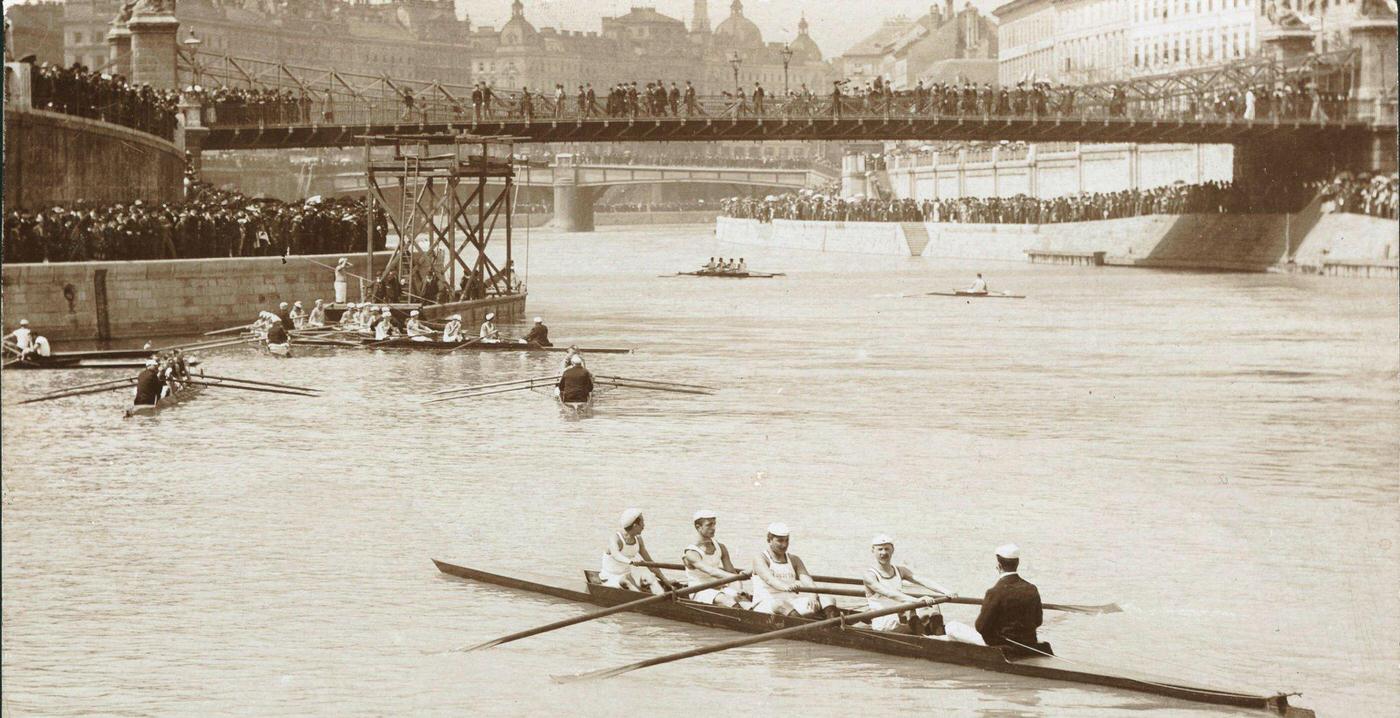
Rowers at the Danube channel, Vienna, Postcard, 1.5. 1904
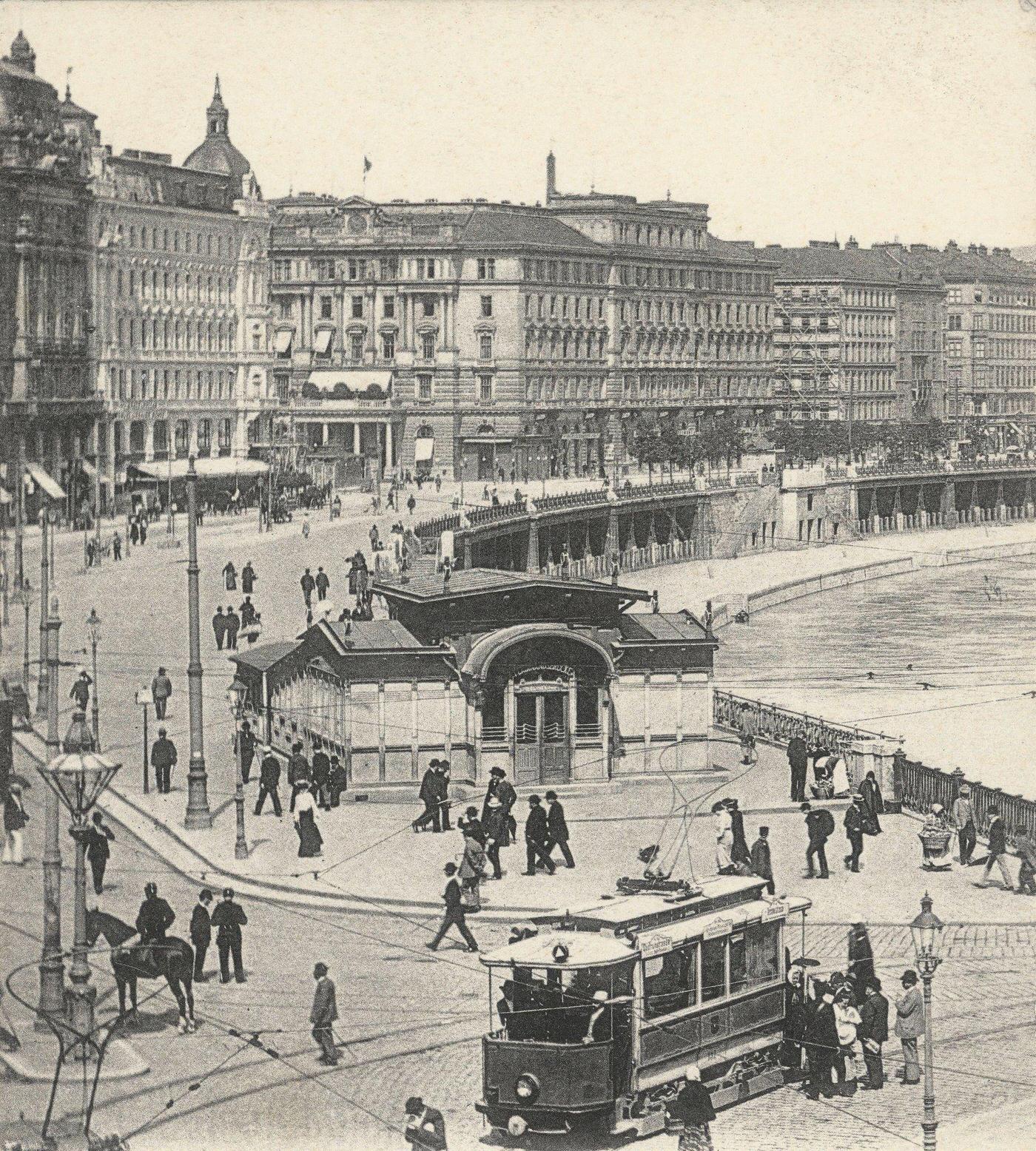
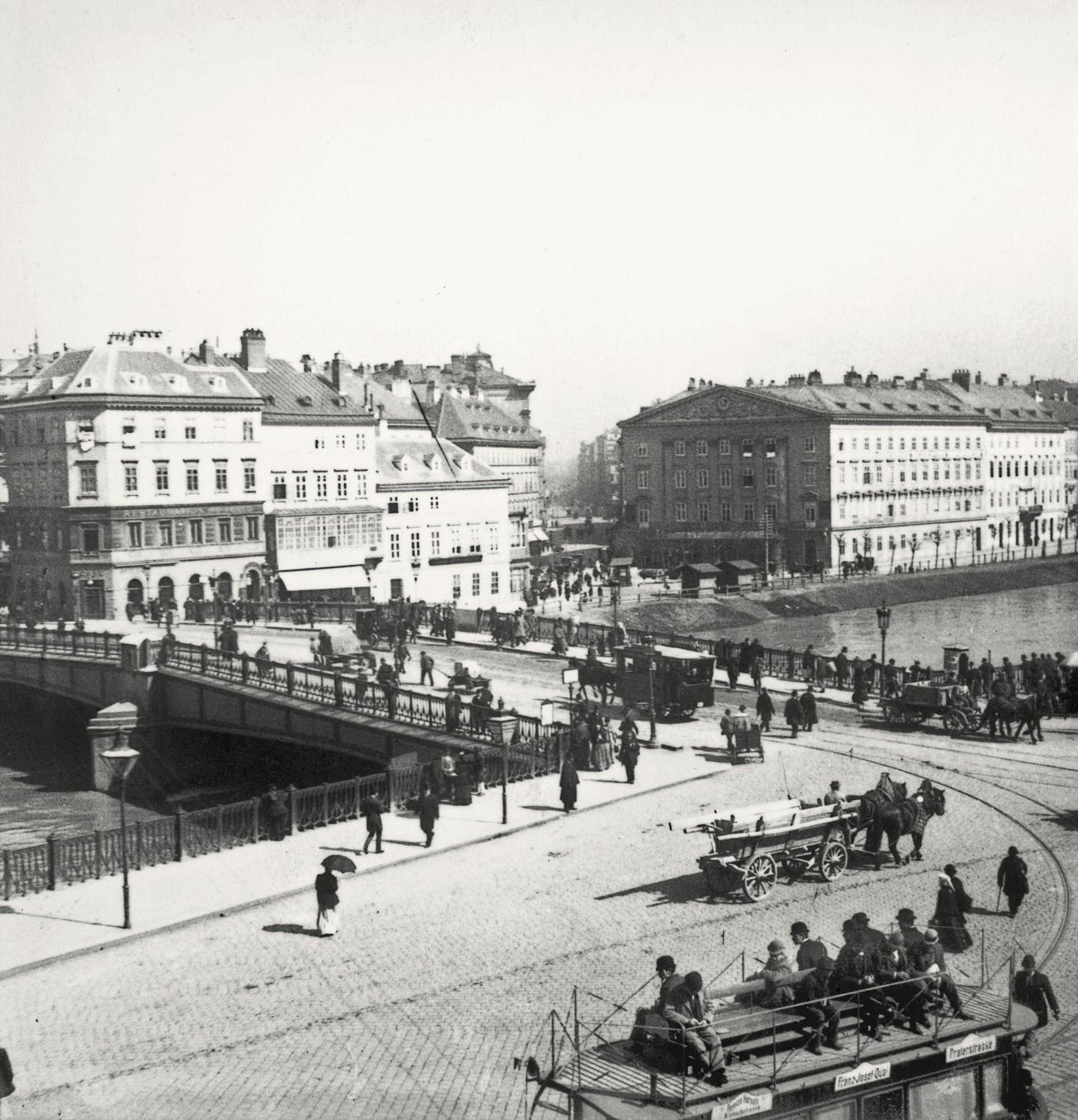
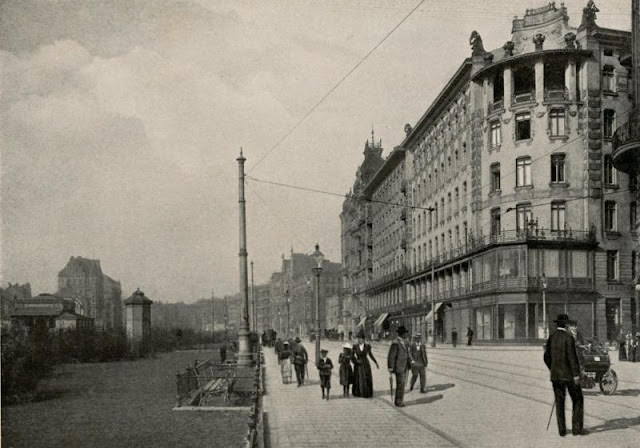
Franz Josefs Kai in Vienna, Austria, Around 1900
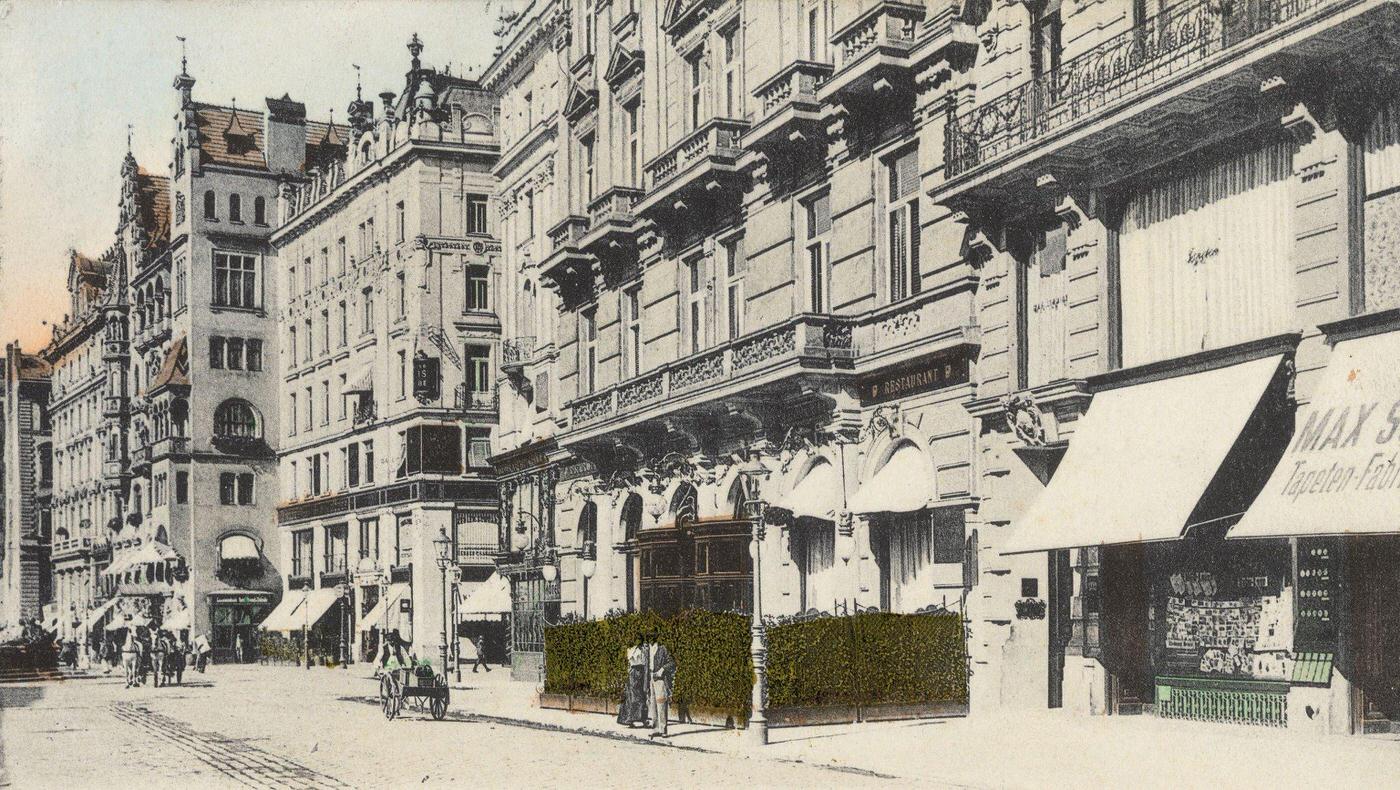
Hotel Meissl und Schaden, next to Hotel Krantz, Neuer Markt, Inner City, Vienna, Austria, 1905
Freyung in Vienna, Inner City, Schottenstift (Scottis Abbey) in the background, Vienna, Austria, 1905
Flower Corso In Vienna, Austria, About 1904
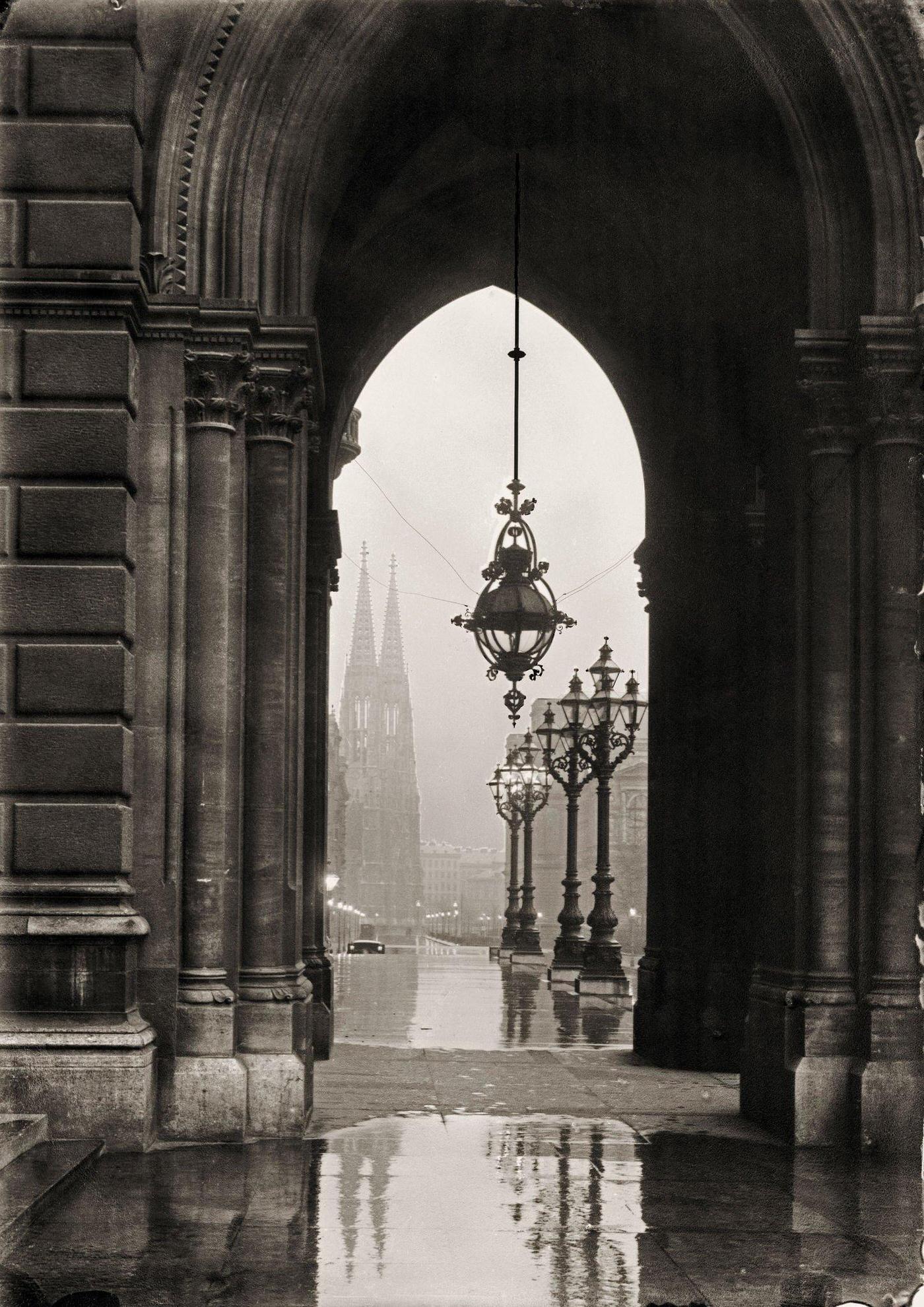
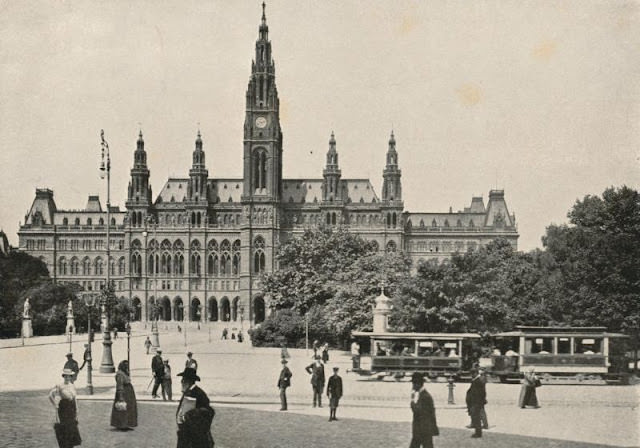
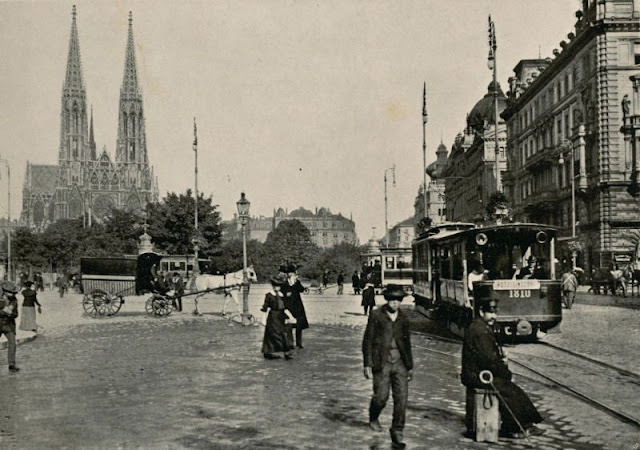
Rathaus, View from the town hall to the Votive Church (Votivkirche), Vienna, 1905
Mozart Memorial on Albertina Square, Vienna I., Set in Burg gardens, Vienna, 1905
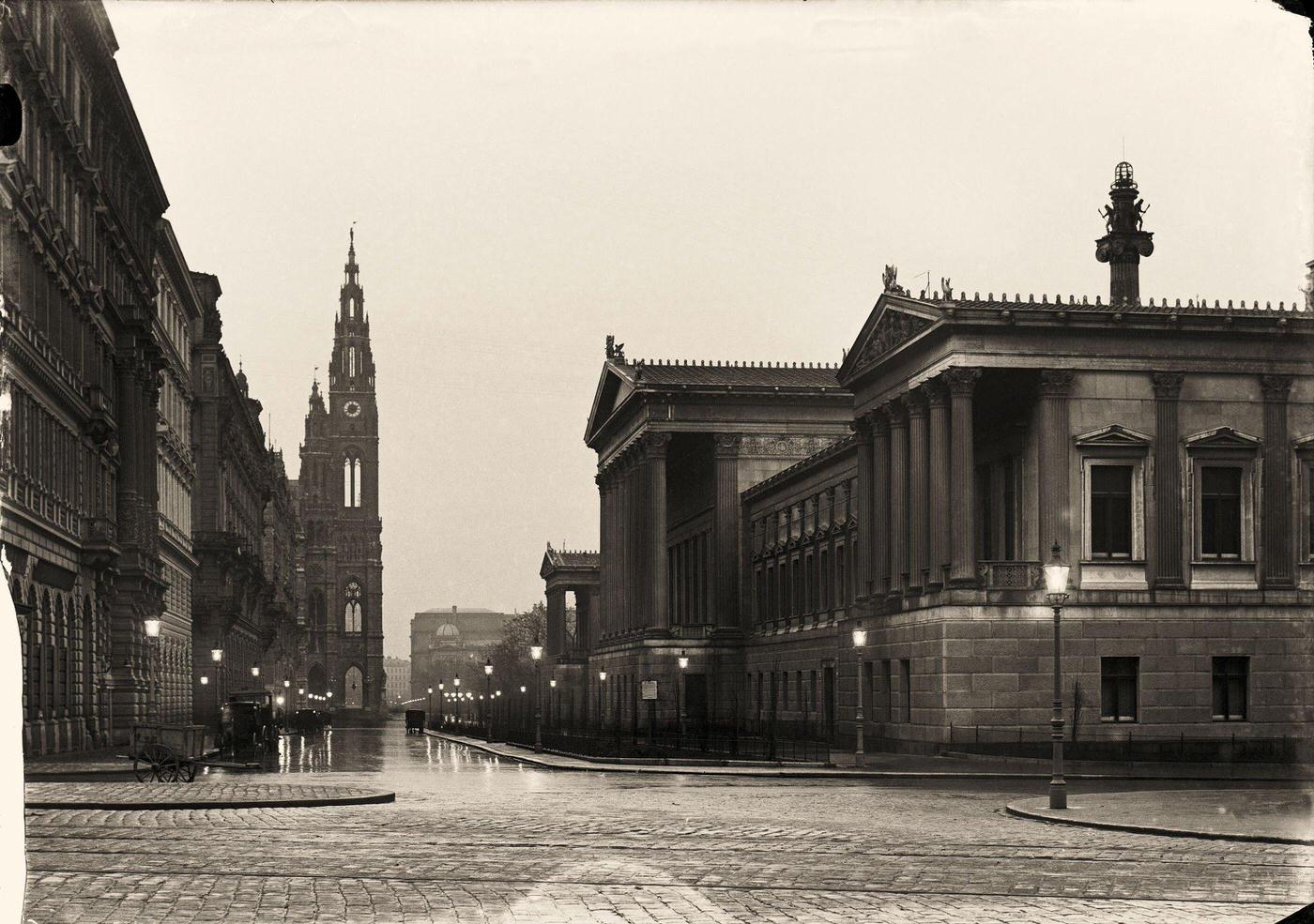
Vienna Parliament, Back side of the parliament and the Town Hall, Vienna, 1905
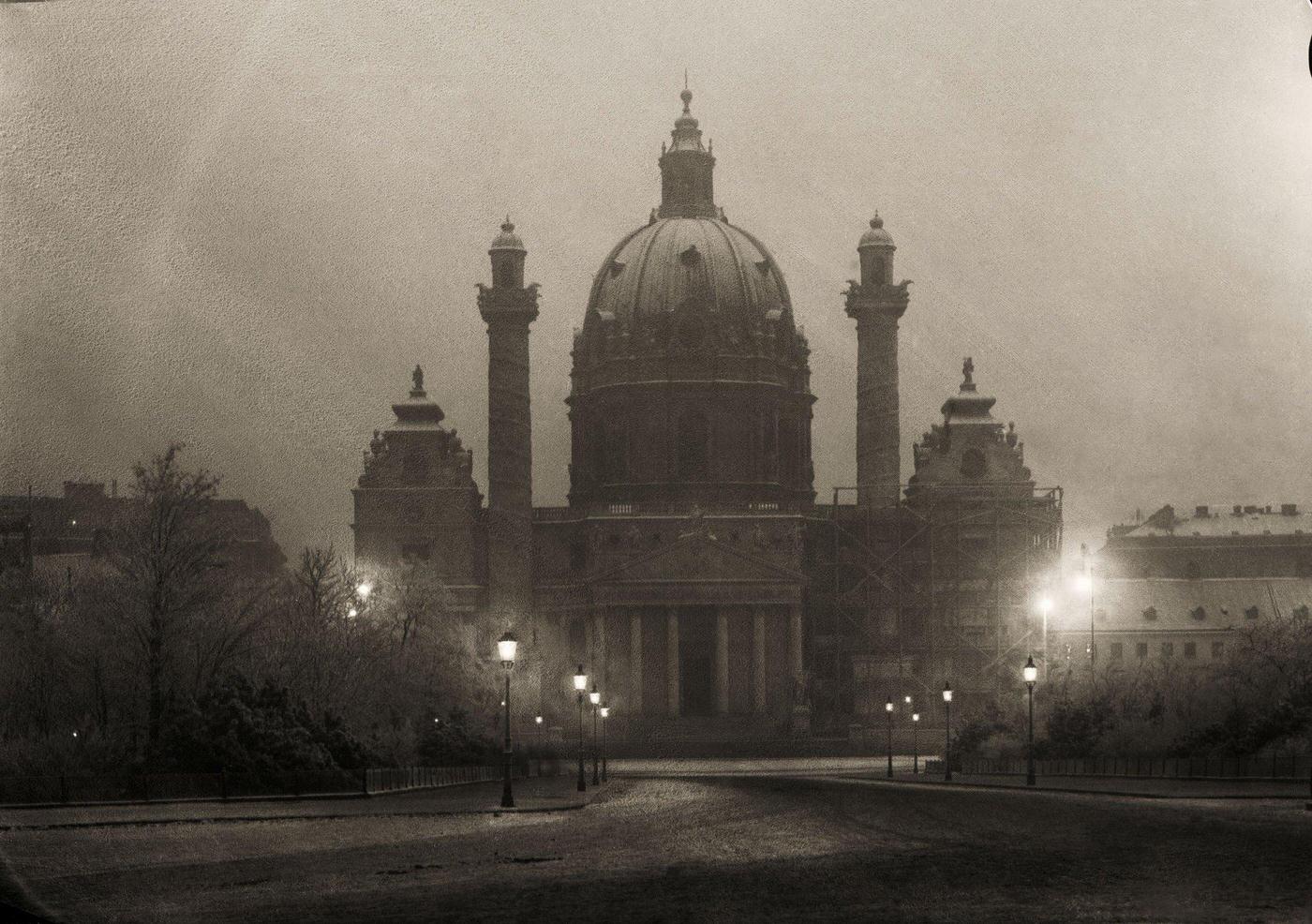
Karlskirche at night, Vienna, About 1905
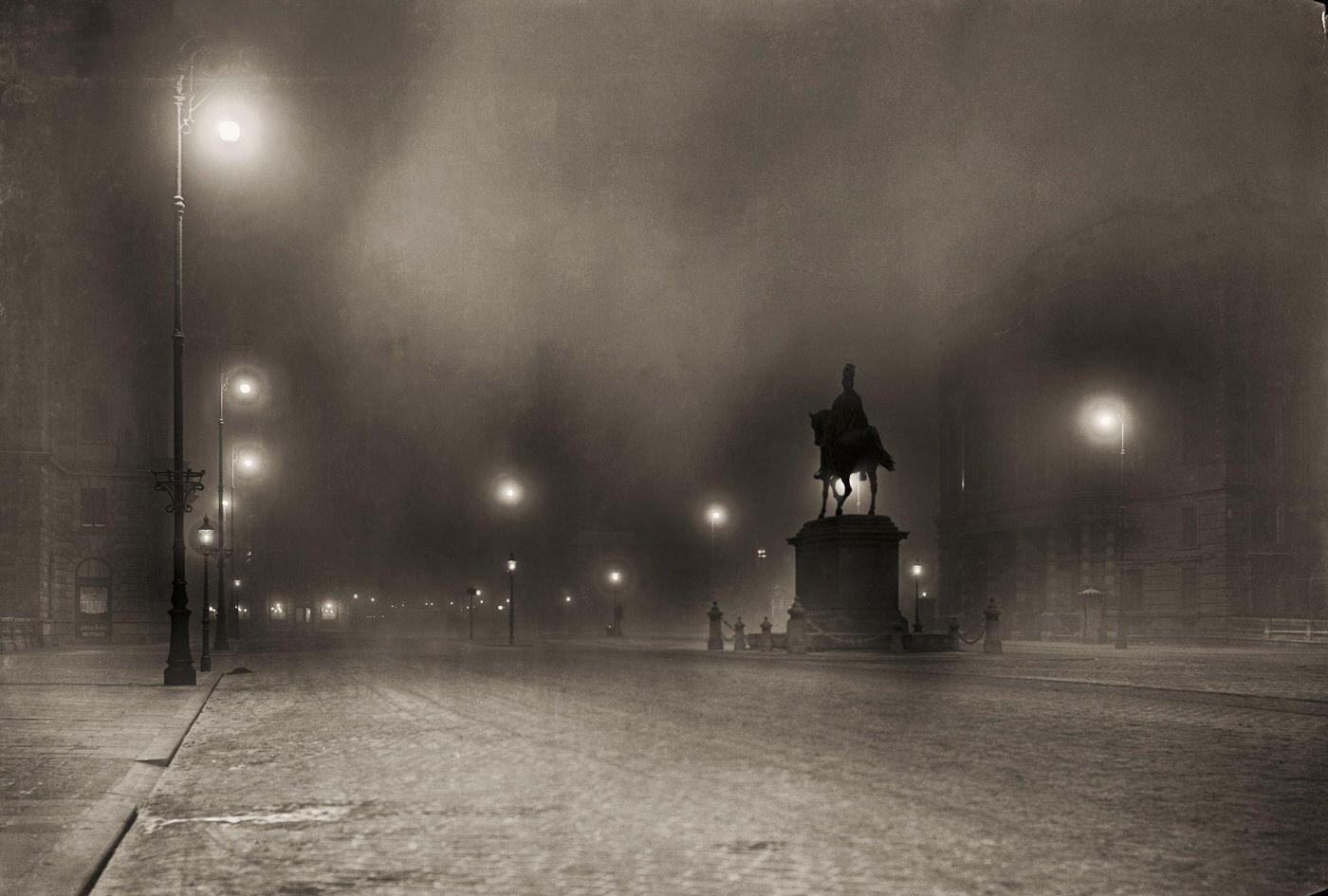
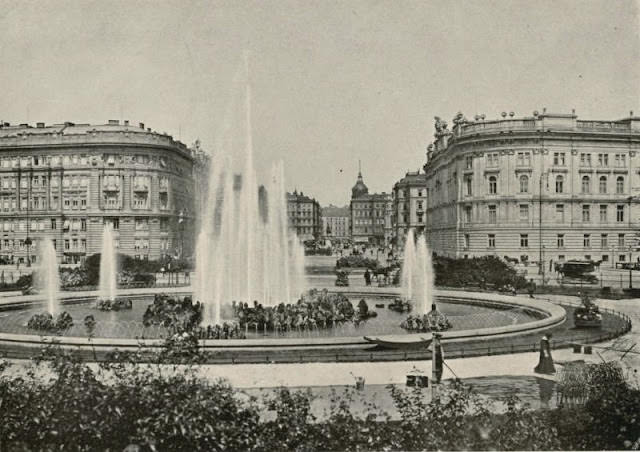
Schwarzenbergplatz at night, Monument of Karl Philipp Prince zu Schwarzenberg and Cafe Schwarzenberg, About 1907
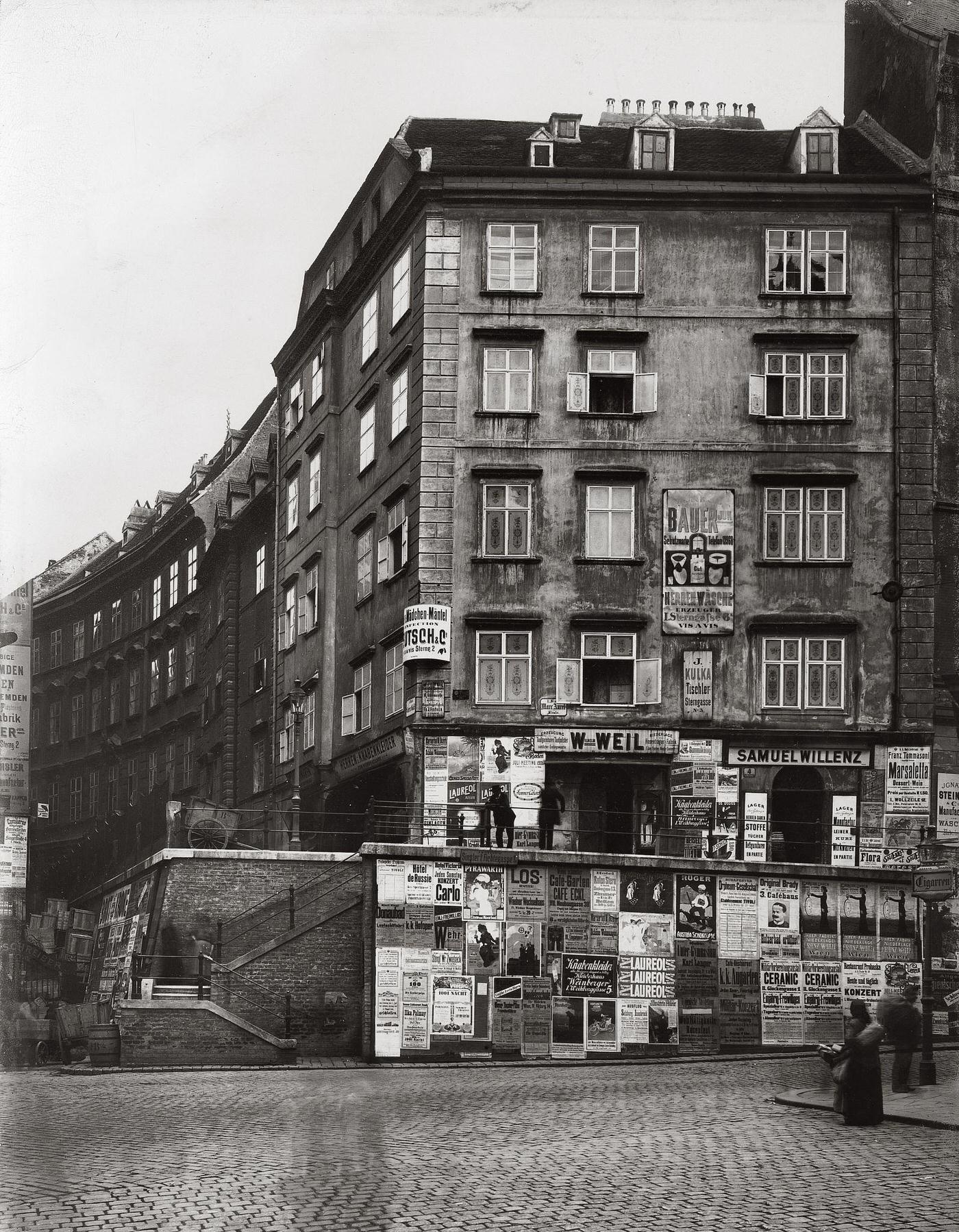
Billboards in Vienna I, Marc Aurel Strasse/corner Sterngasse, 1906
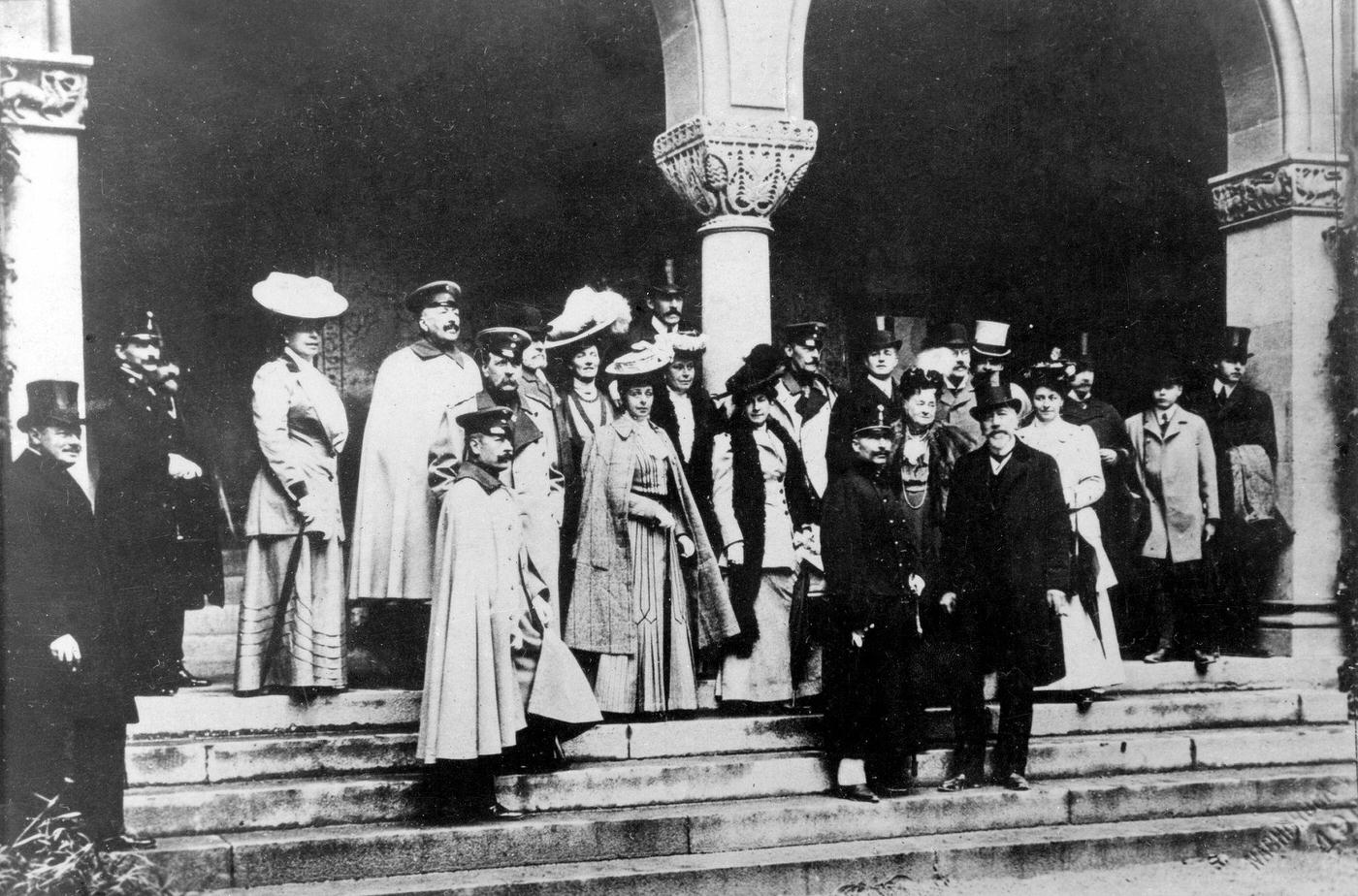
Wilhelm II. and group at Burg Kreuzenstein, German Emperor, 1906
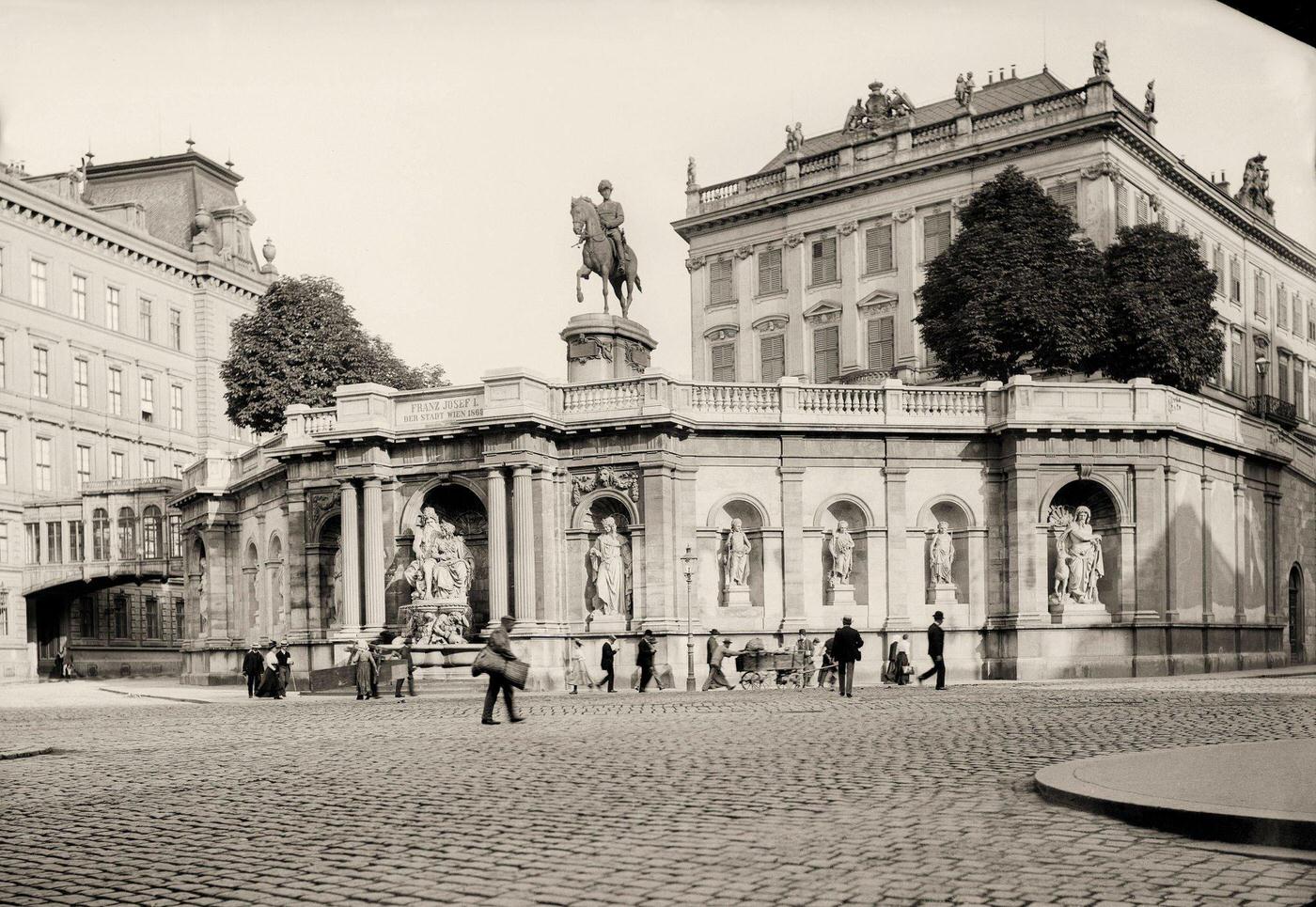
The Albertina in Archduke Albrecht palace, Albrechtsplatz, About 1907
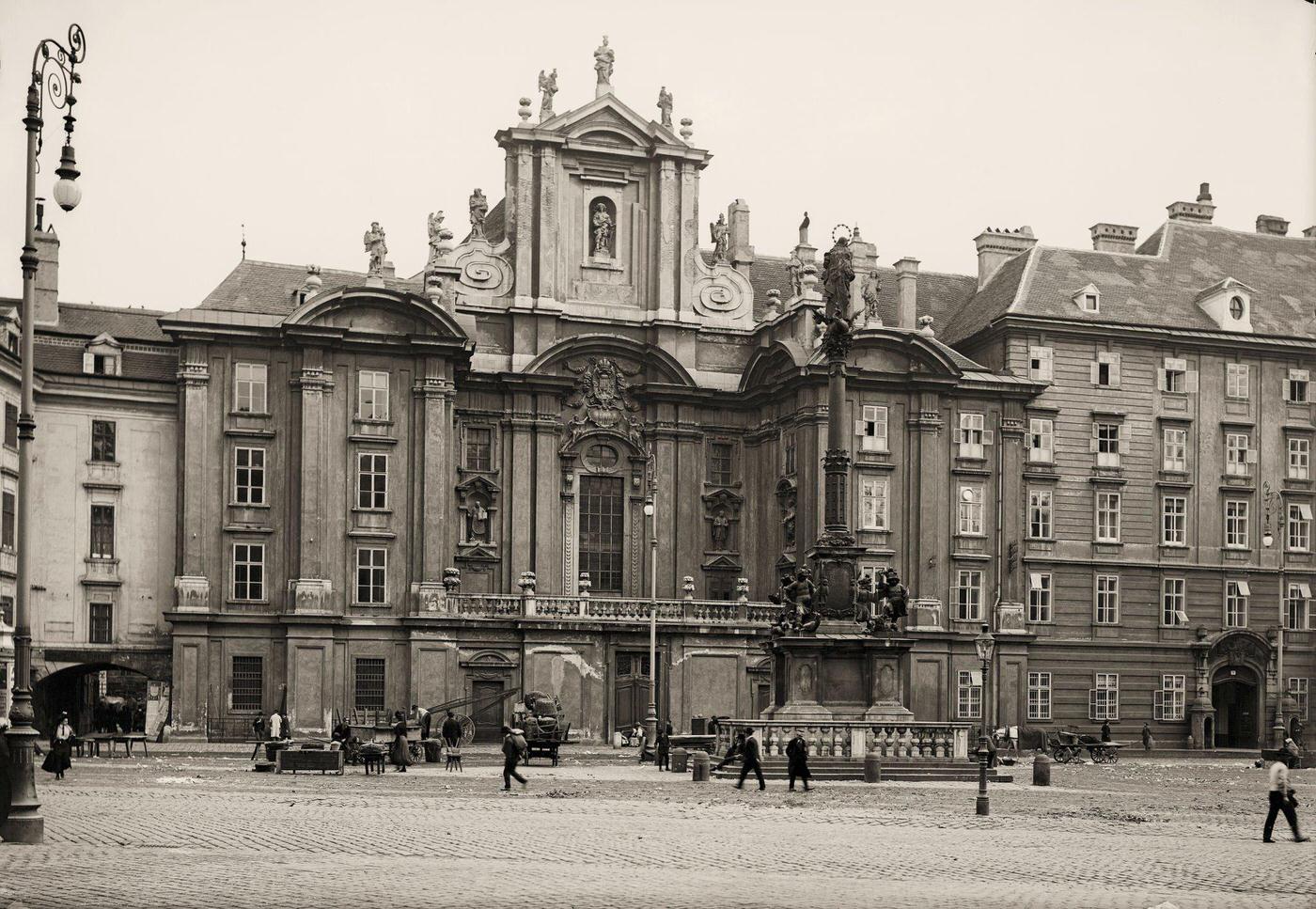
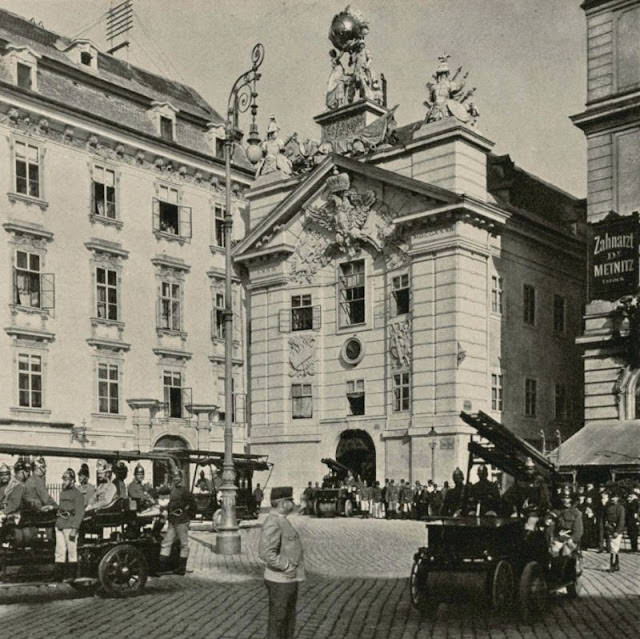
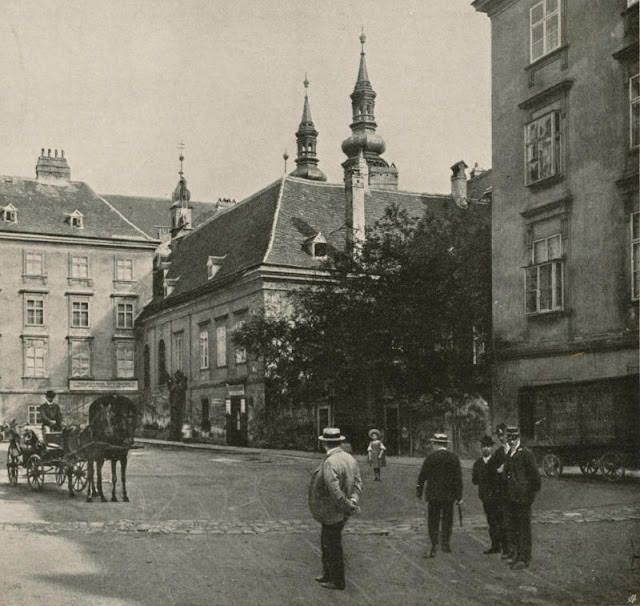
Square Am Hof with the church am Hof, Vienna, About 1907
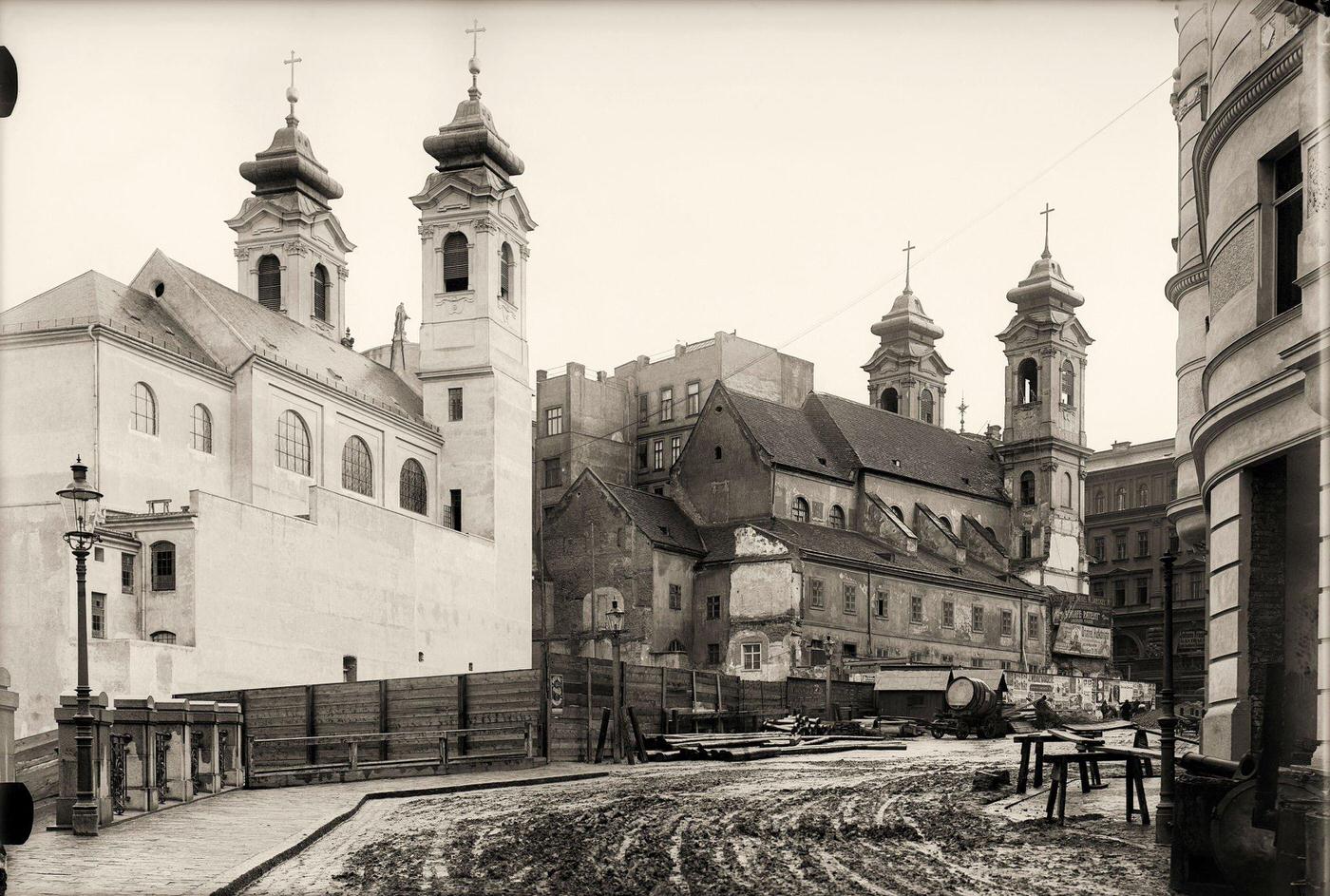
The new and old Laimgrubenkirche in Mariahilf, Vienna, About 1907
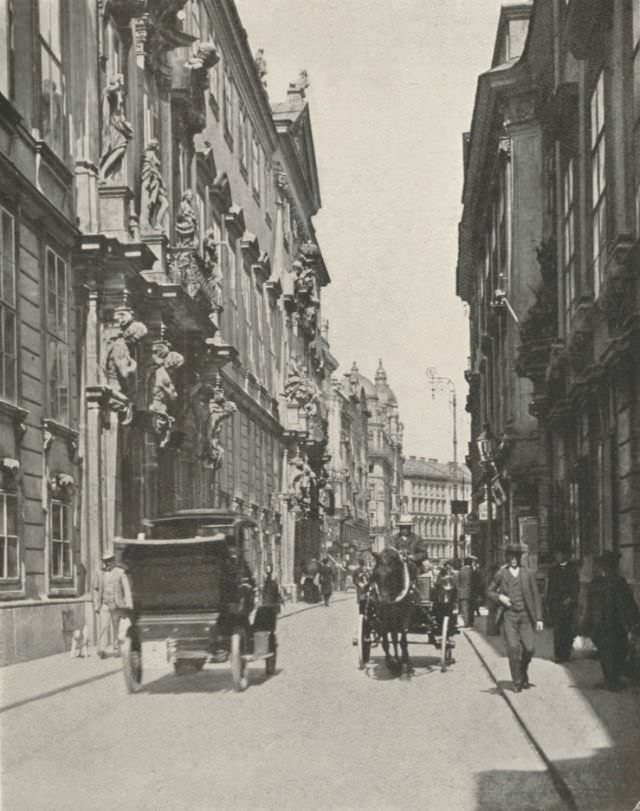
View from Stock-in-Eisen-Square towards Graben street, Horse carriage in foreground, About 1908
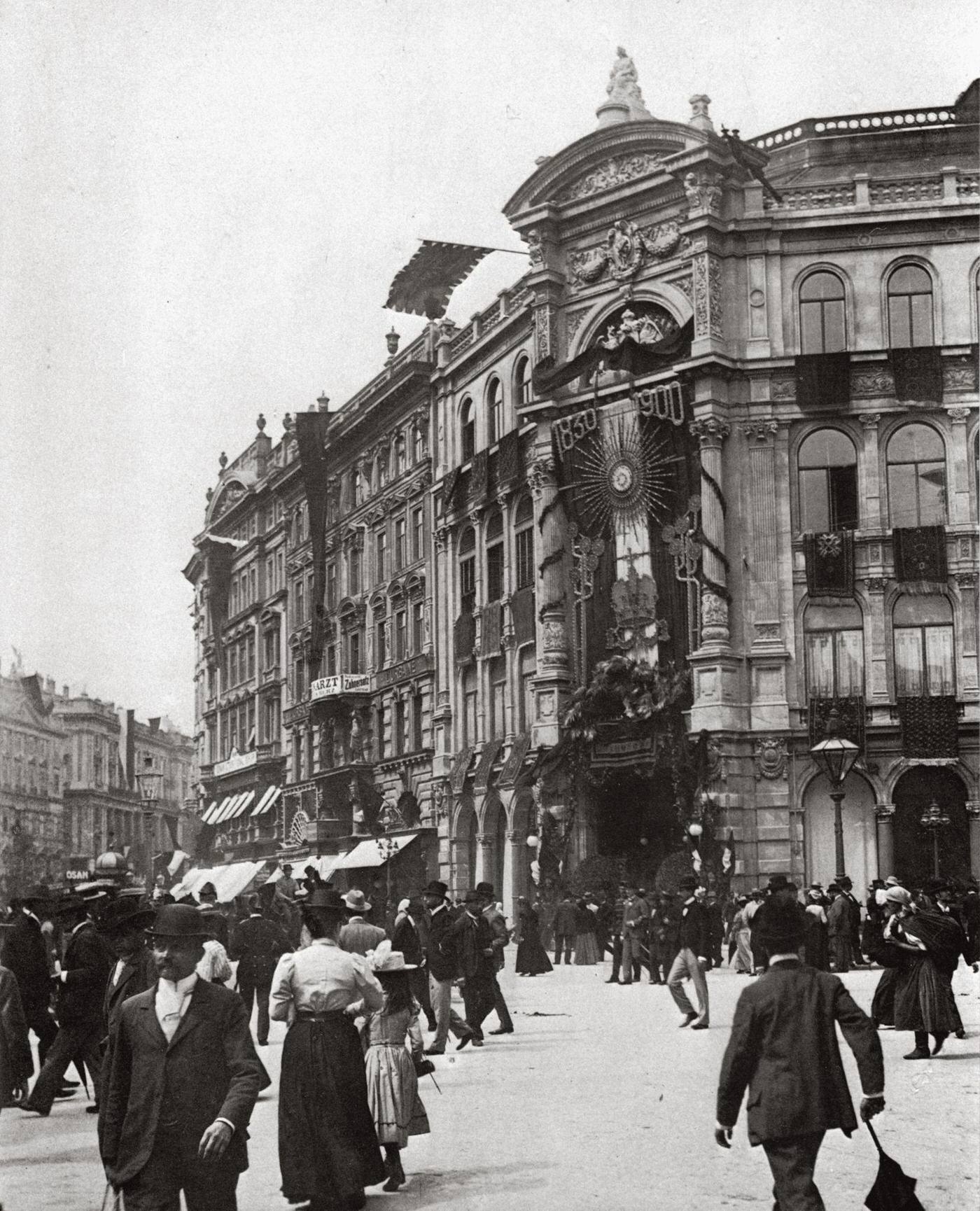
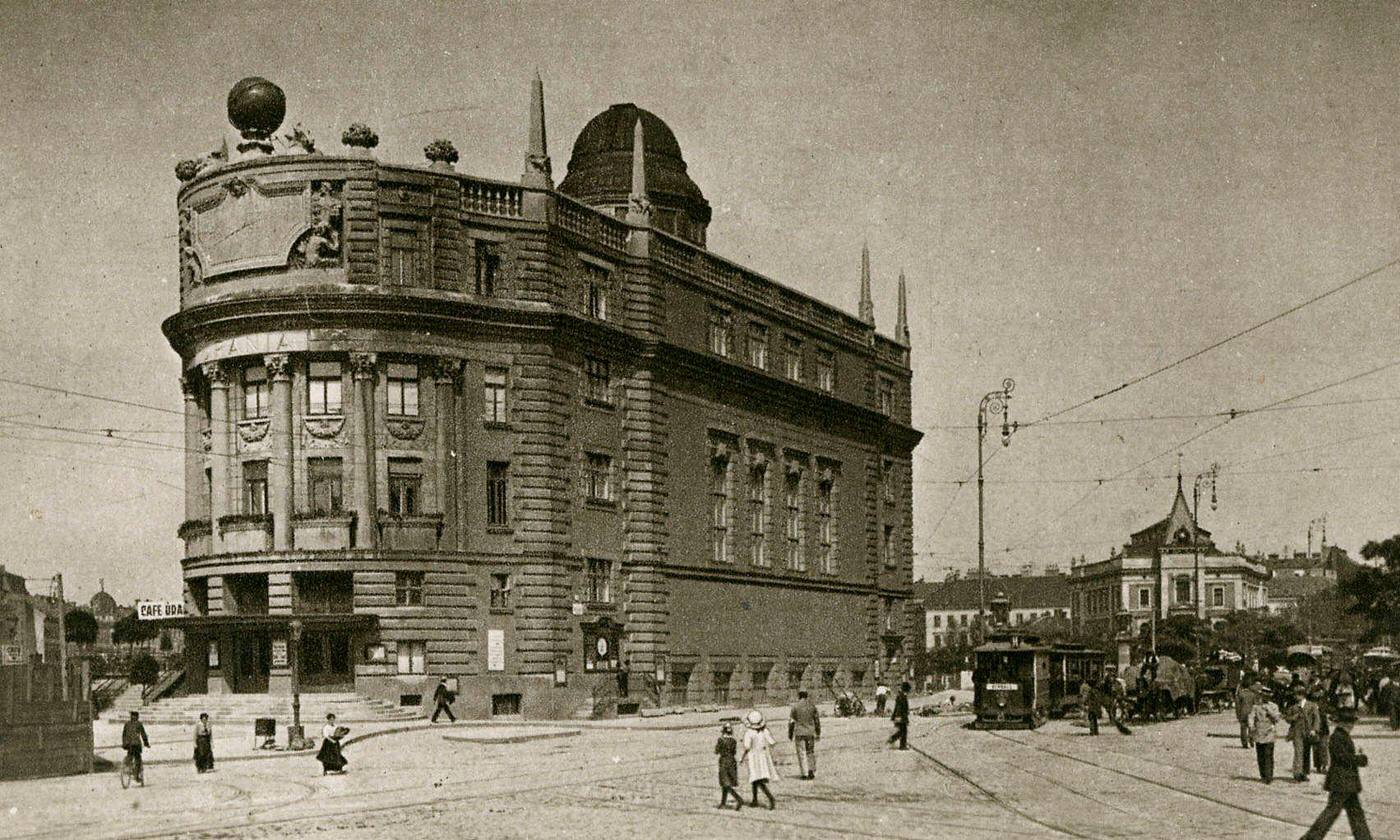
Palace Urania, Vienna, Austria, 1900s
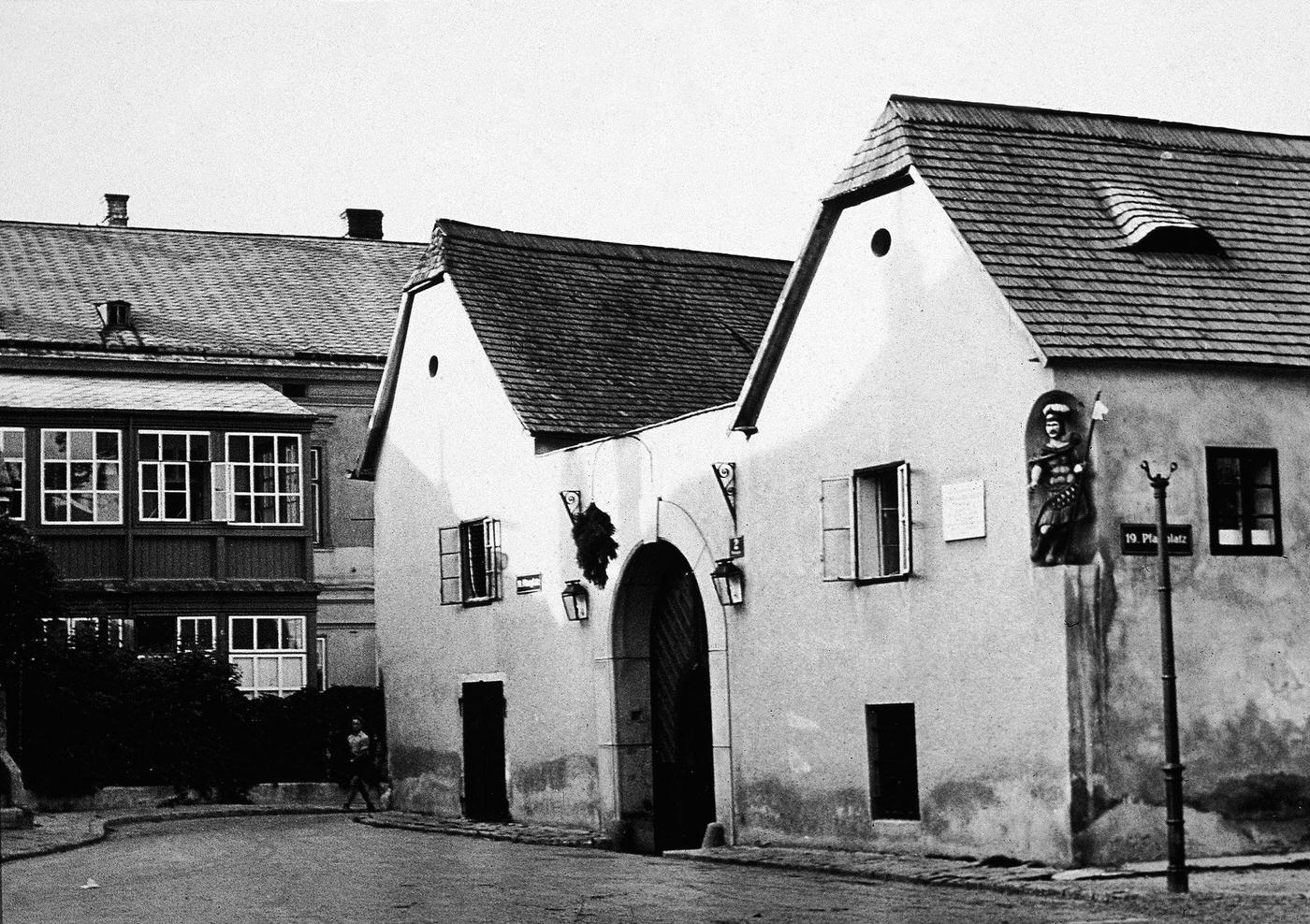
Exterior View Of Beethoven’s House, Heiligenstadt, Austria, 1900
Remember before social media they used to hand out flyers for all the best parties and clubs and the streets would be littered with them?
I would love for the city to be carefree like in these photos.
I really wish I coul d time travel to a Vienna juuust before cars like here. It would be fascinitaing to stand in front of the opera or in front of Burgtheater and hear/feel the difference the cars and roads make.


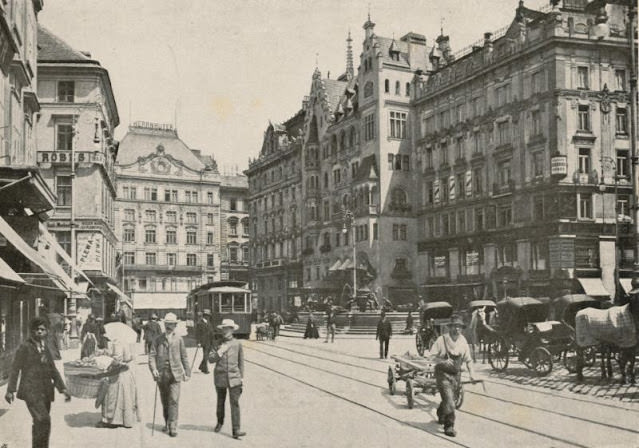
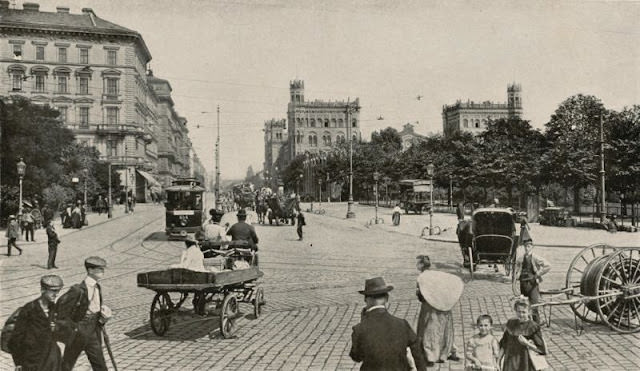
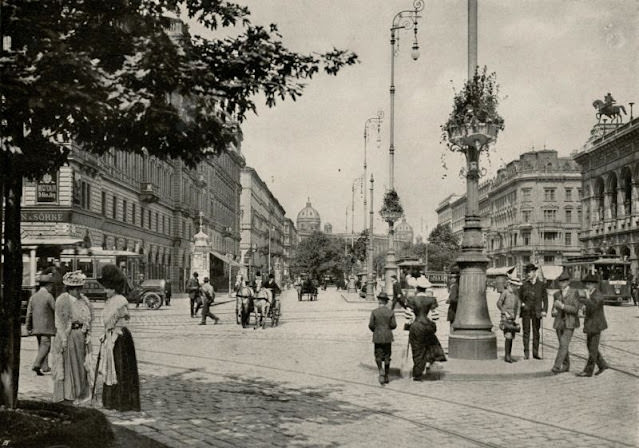
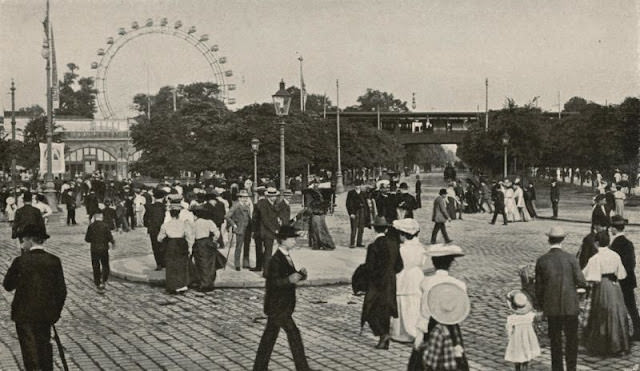

Remember before social media they used to hand out flyers for all the best parties and clubs and the streets would be littered with them?
I would love for the city to be carefree like in these photos.
I really wish I coul d time travel to a Vienna juuust before cars like here. It would be fascinitaing to stand in front of the opera or in front of Burgtheater and hear/feel the difference the cars and roads make.