Tucked into the southern slopes of the Albula Alps beneath the Piz Nair, St. Moritz is one of the most famous mountain resort towns in the world. The village sits at roughly 1,800 meters above sea level in southeastern Switzerland. It is small in size but enormous in reputation, drawing royals, celebrities, and wealthy travelers since 1864. By the late 19th century, it had already cemented its place as a premier winter-sport destination. Over the decades, St. Moritz hosted more than 20 FIBT World Championships and three FIS Alpine World Ski Championships.
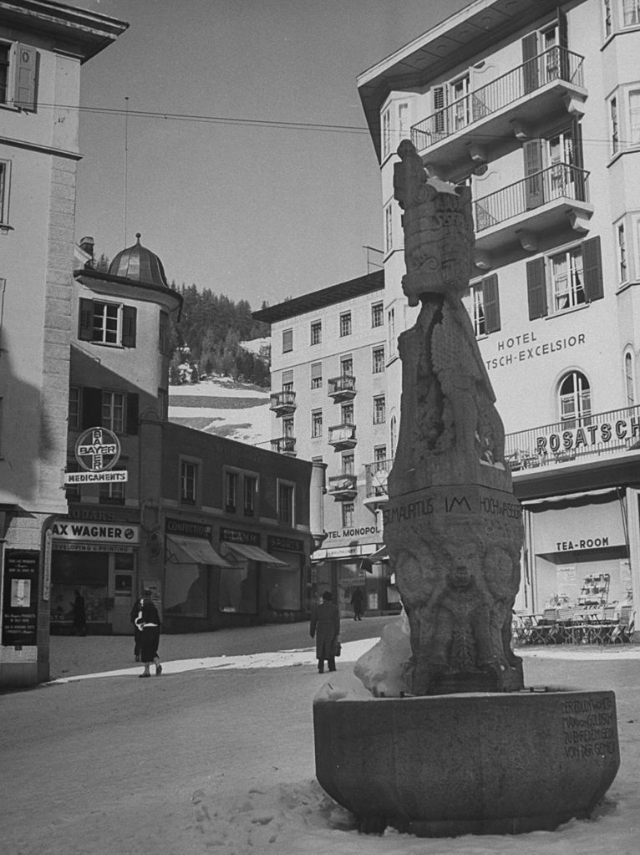
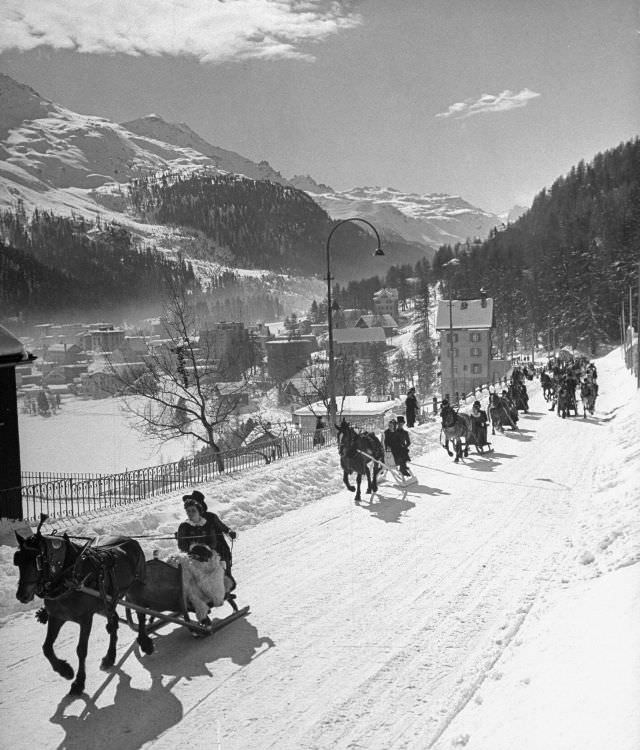
In 1947, just two years after the end of World War II, LIFE magazine photographer Alfred Eisenstaedt traveled to St. Moritz to document life at the resort. What he captured was a world returning to luxury — horse-drawn sleighs moving through snow-packed streets, well-dressed guests lounging on hotel terraces, and a social scene that had barely paused for the war.
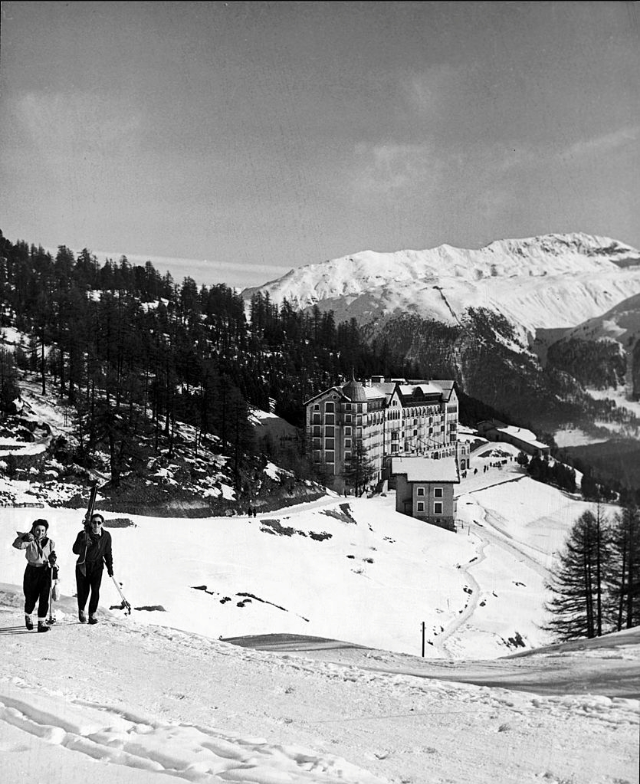
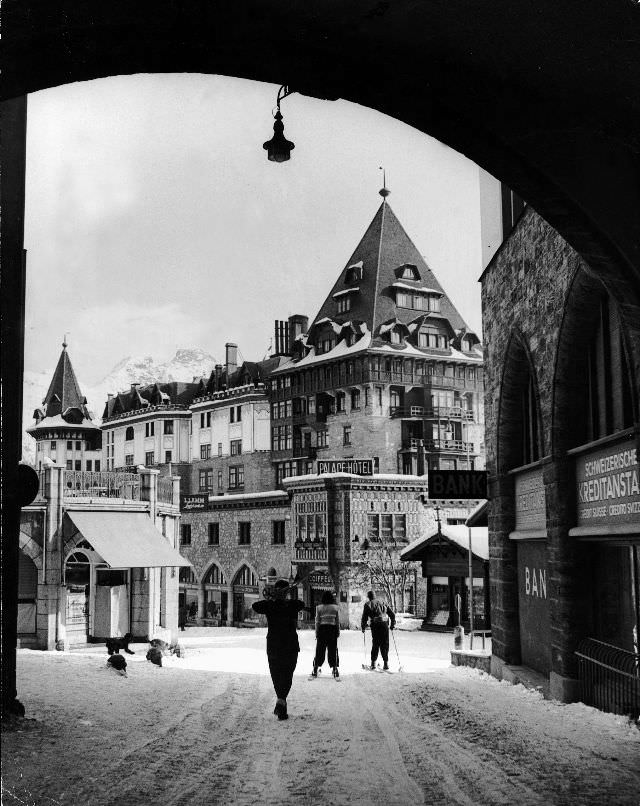
At the center of St. Moritz stood the Palace Hotel, a landmark of alpine elegance. Its towers rose above the snow-covered rooftops, visible from nearly every corner of the village. The Palace was not simply a place to sleep — it was a destination in itself, complete with private ice rinks, formal dining, and a staff trained to serve the world’s most demanding guests.
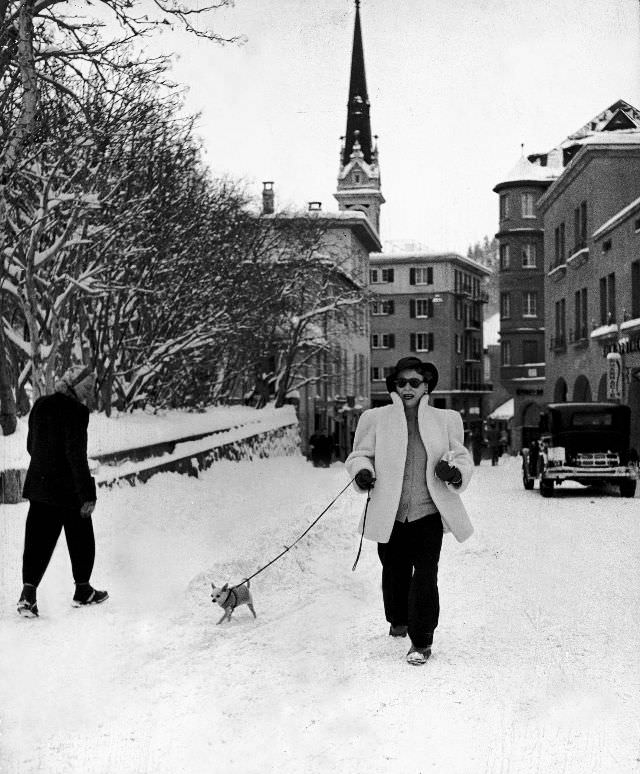
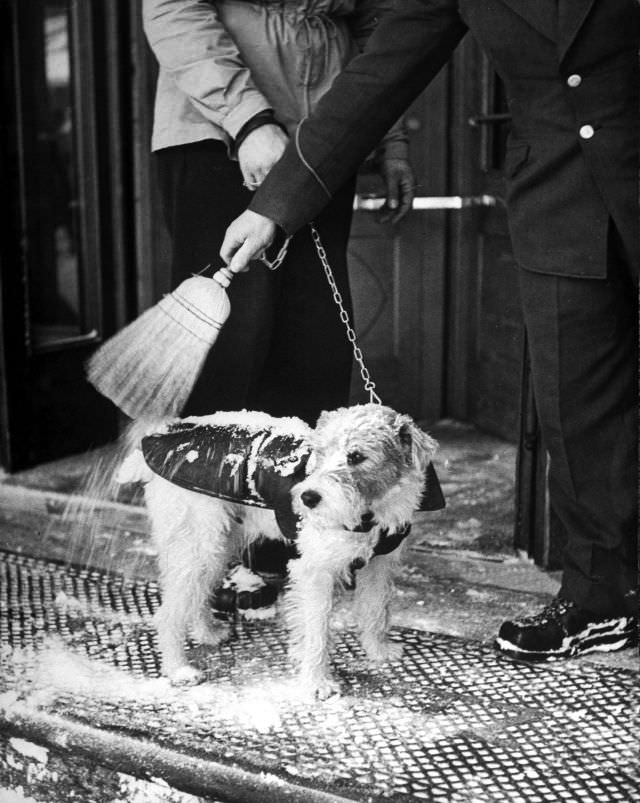
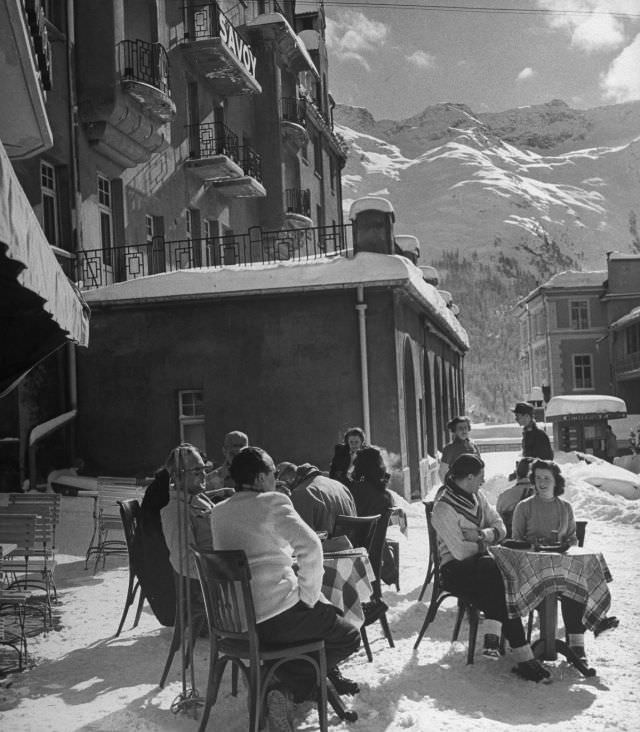
Life in St. Moritz moved at a leisurely pace, even by resort standards. Guests strolled the village promenade, stopped at café terraces, and watched the activity around them with no particular urgency. Even the pets of wealthy visitors were treated with remarkable care.
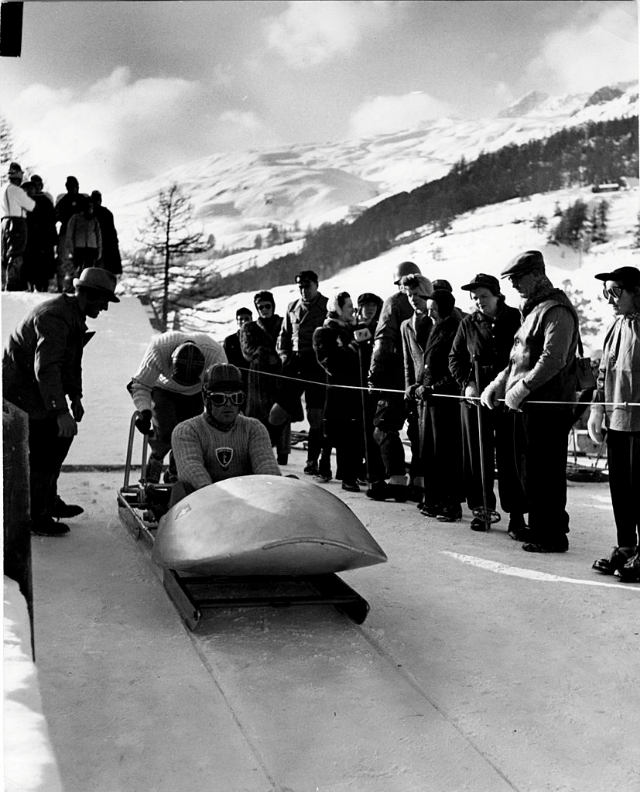
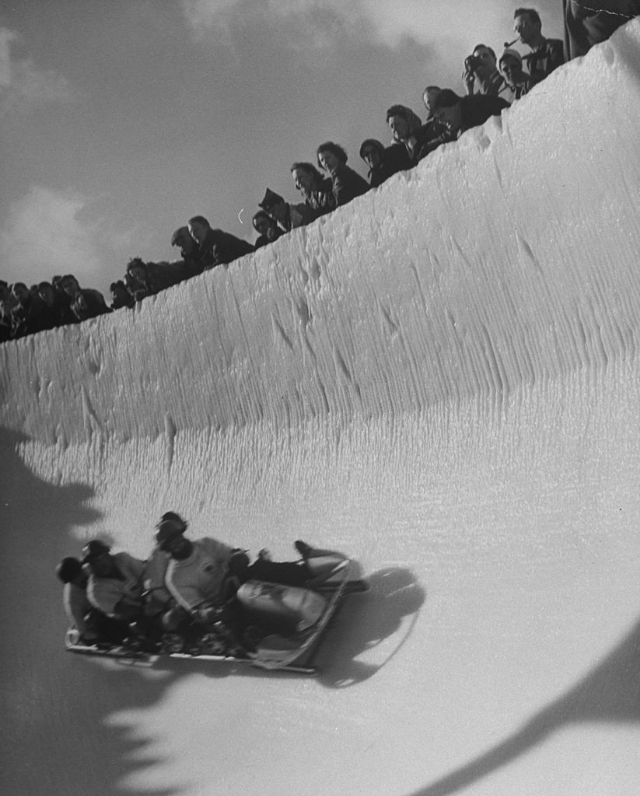
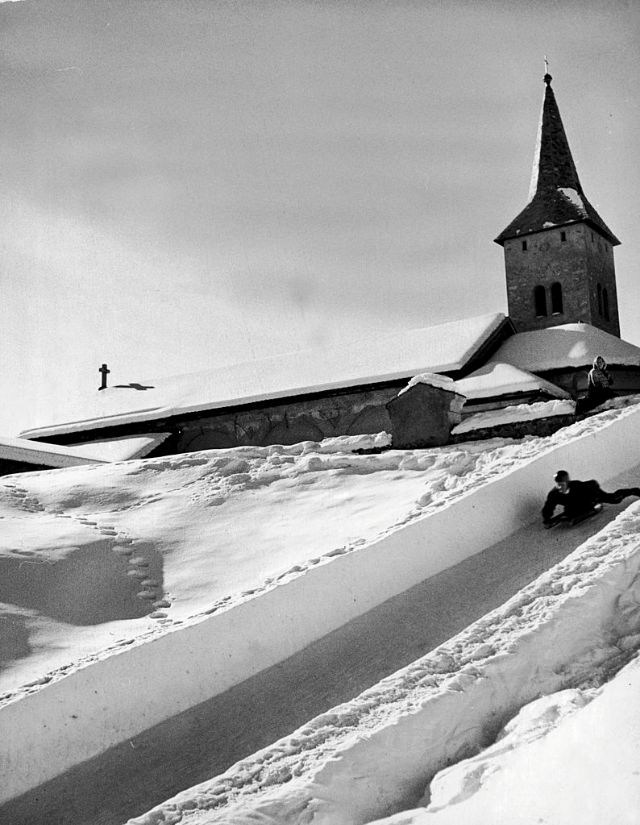
Sport was never far from the heart of St. Moritz. Swiss bobsledders trained hard on the famous runs, and the Cresta Run — a skeleton track first built in 1884 — remained one of the most daring attractions in the Alps. Riders hurtled down the ice feet-first on a cresta, a flat sled, at speeds that left spectators gripping the rails above.
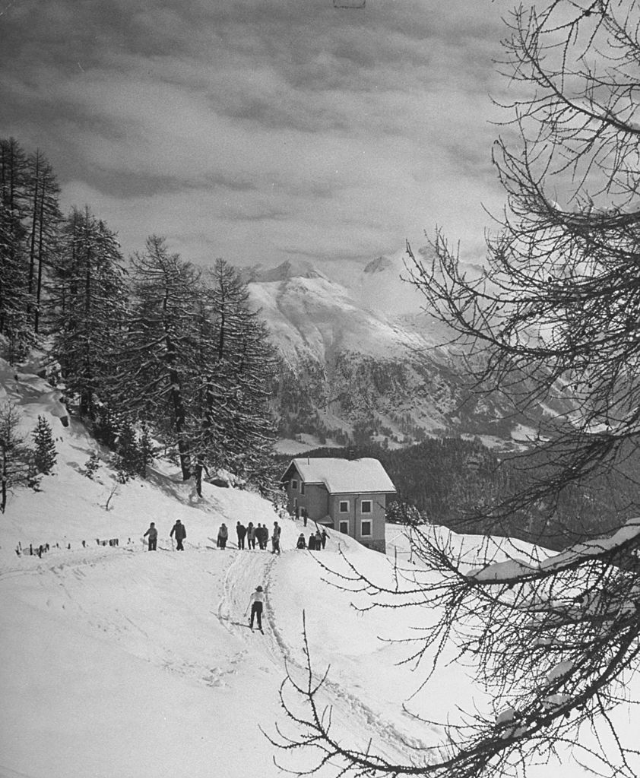
The village itself was a picture of alpine architecture buried in white. Church steeples, wooden chalets, and grand hotels all shared the same snow-laden backdrop. Eisenstaedt’s photographs showed the town as a kind of contained world — isolated by mountains, insulated by wealth.
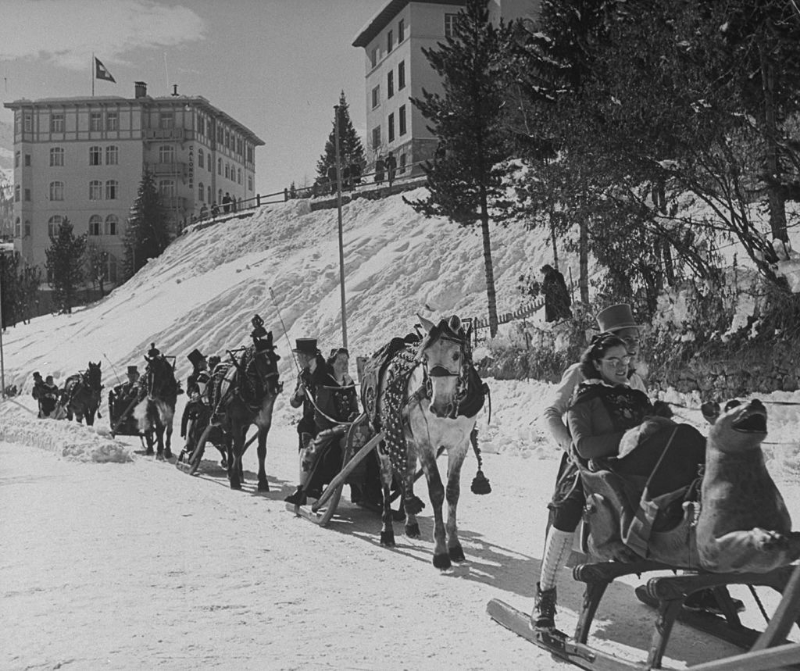
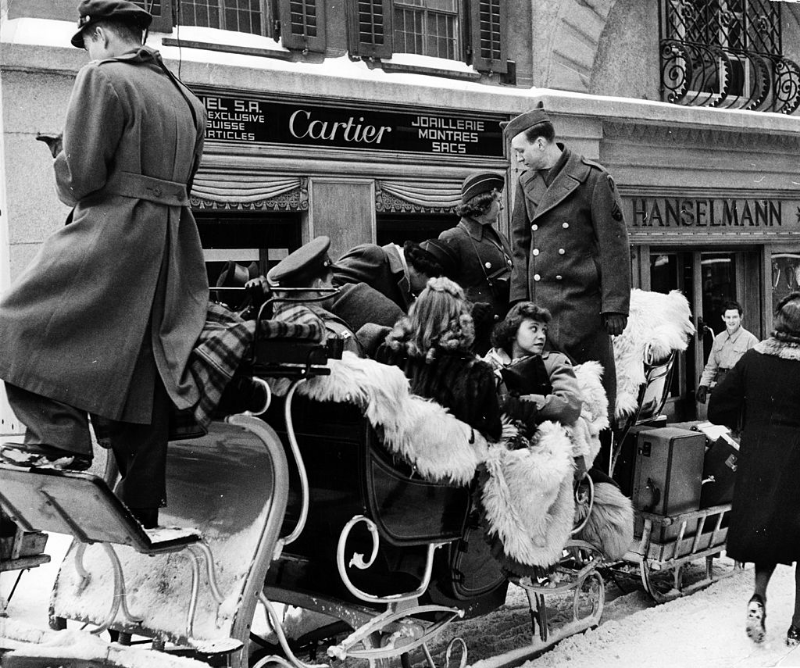
Not all visitors in 1947 were European elites. American GIs on leave from occupation duty in Germany made their way to St. Moritz, hiring sleighs at the station to carry them to their hotels. Their presence added an unexpected mix to the town’s usual crowd of aristocrats and socialites.
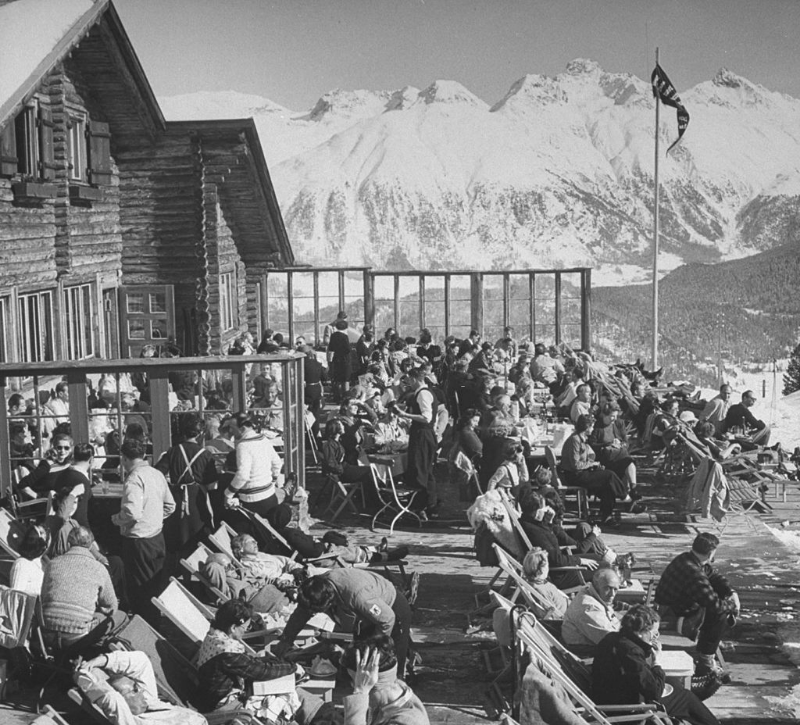
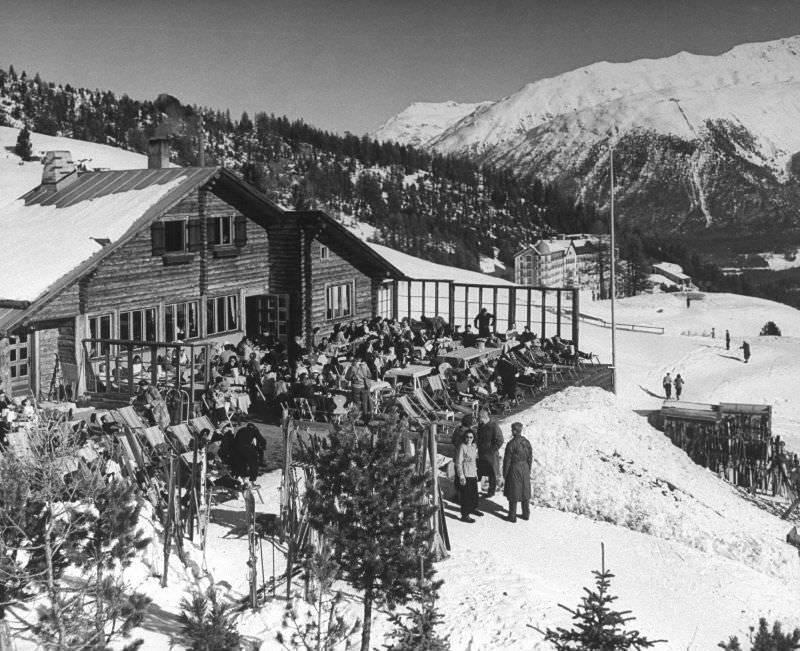
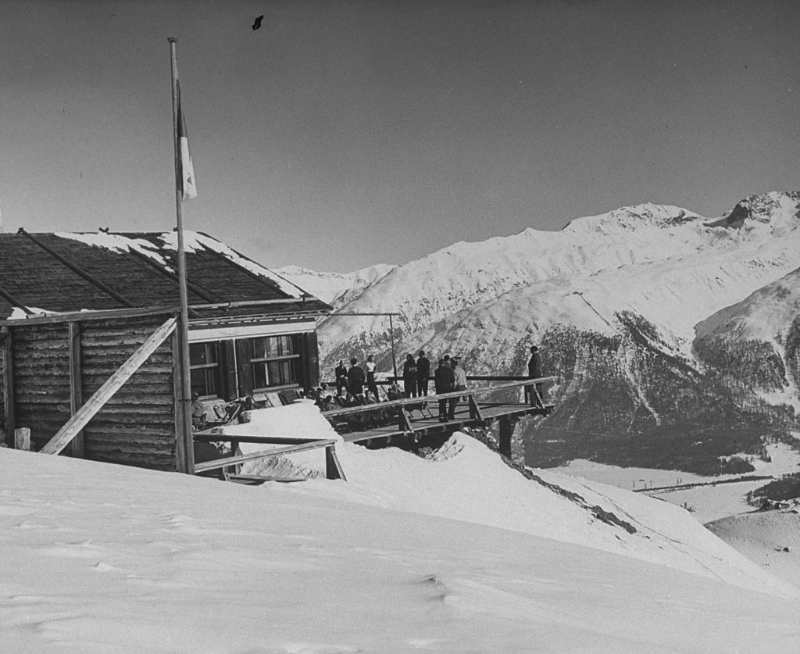
High above the village, accessible only to a select few, sat the Corviglia Club House. Perched in the Alps above St. Moritz, it served as a private luncheon retreat for an elite circle who preferred to eat well away from the general tourist crowd. Membership was not open to everyone, and that exclusivity was precisely the point.
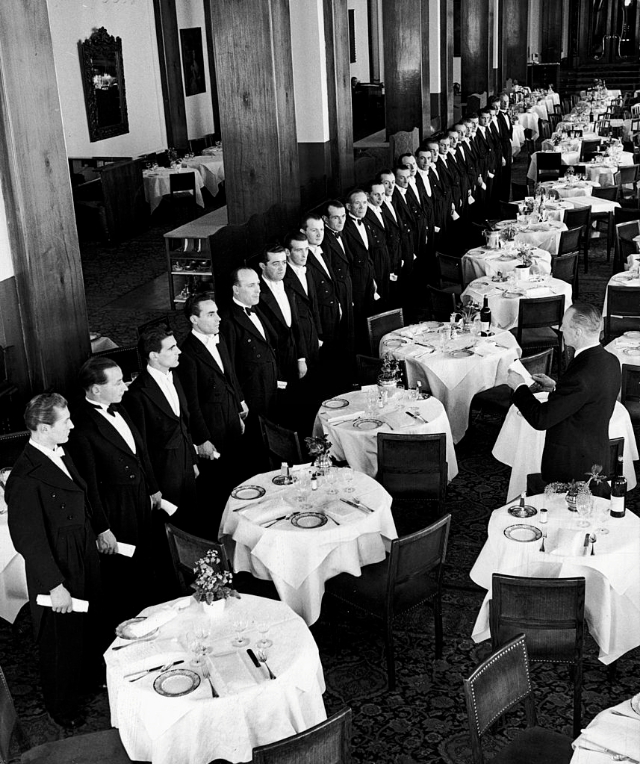
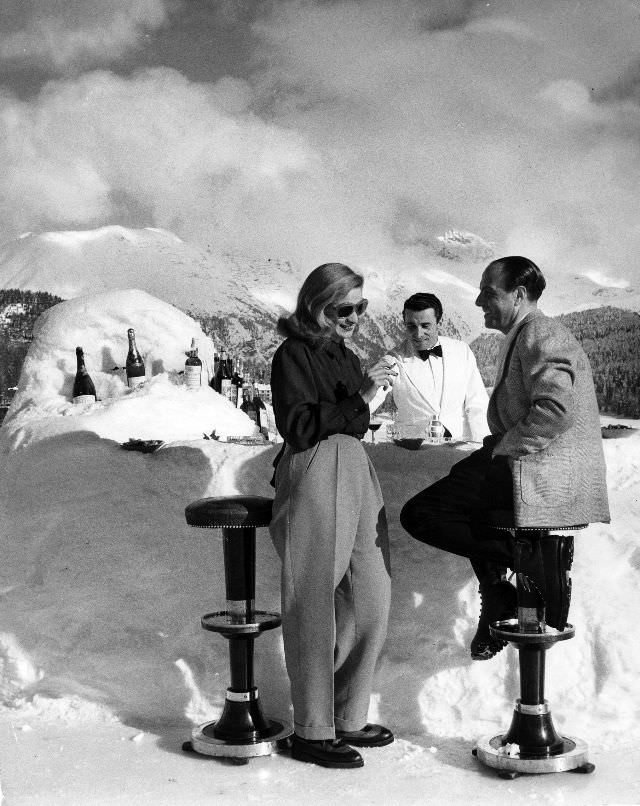
Back at the Palace Hotel, standards were maintained with military precision. The head waiter conducted daily inspections of his wait staff before service, ensuring every detail of presentation met the hotel’s exacting expectations. Midday cocktails were served outdoors on the Palace’s private ice rink, at a bar built entirely from packed snow.
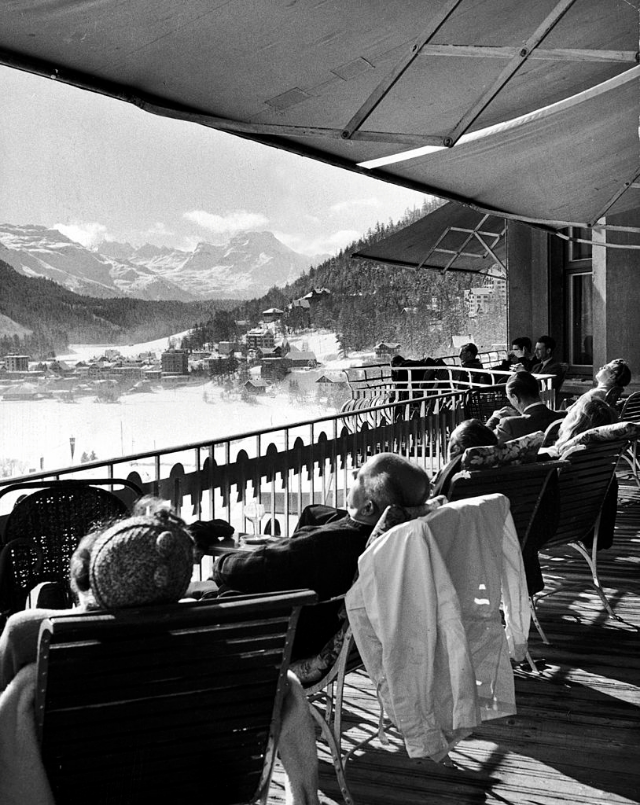
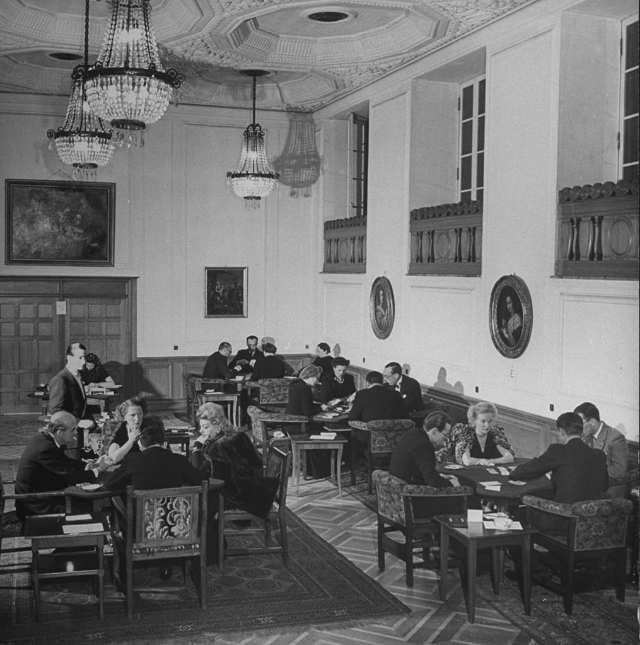
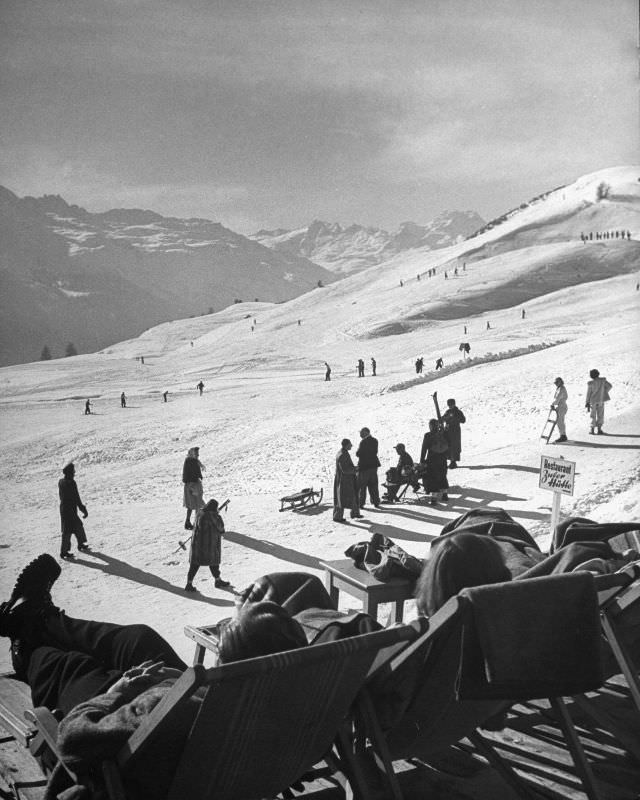
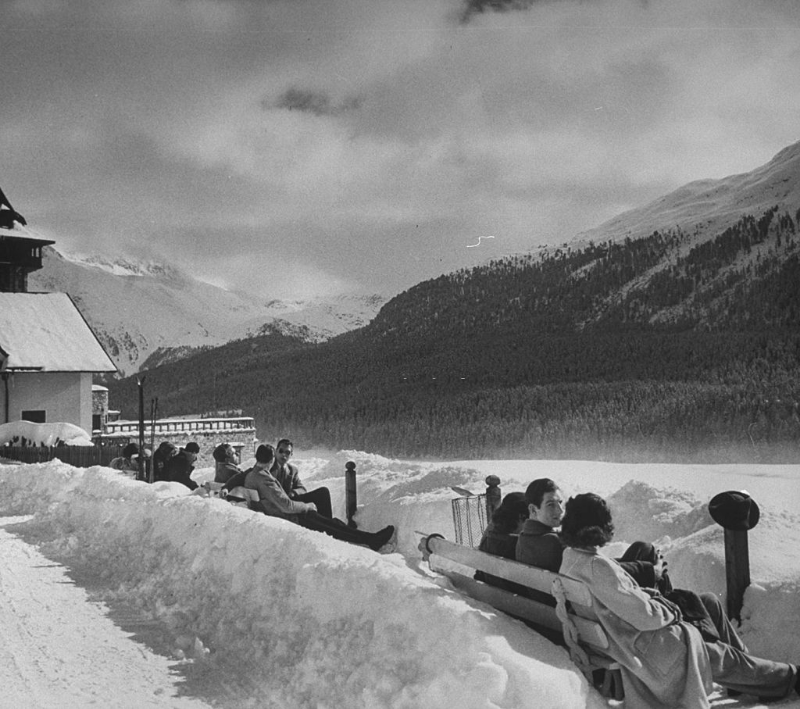
After lunch, many guests retreated to the hotel terraces to nap and sunbathe. The alpine sun in winter is deceptively strong at that altitude, and reclining in a lounge chair with a mountain backdrop was a well-established St. Moritz tradition. Others gathered inside the Kulm Hotel for afternoon bridge games, a pastime favored by guests who preferred cards to cold air.
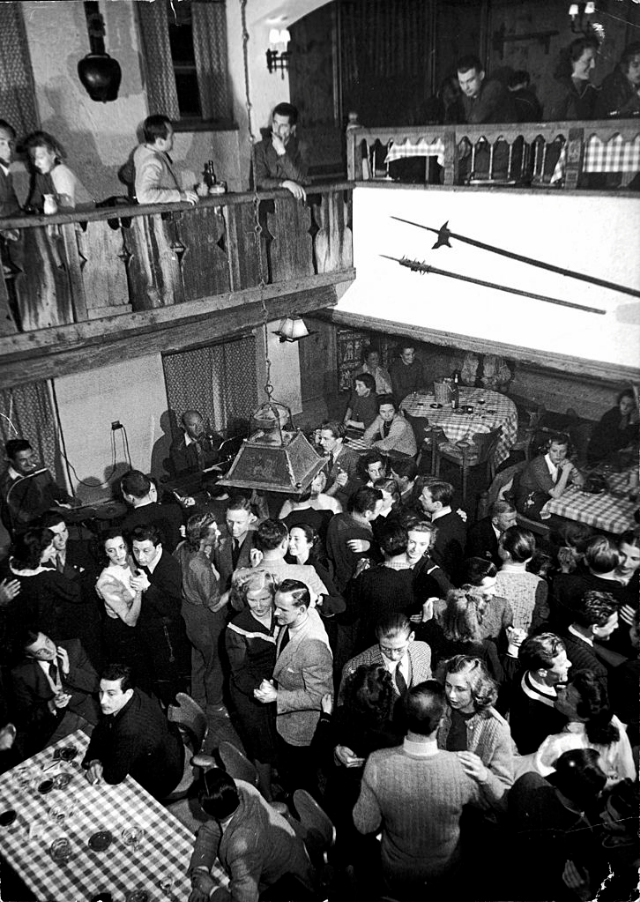
When evening arrived, locals and tourists alike gathered at the Chesa Veglia, a historic building that hosted dancing and drinking well into the night. The venue had a rustic warmth that contrasted sharply with the formal atmosphere of the grand hotels, and it drew a wide cross-section of St. Moritz’s winter population.
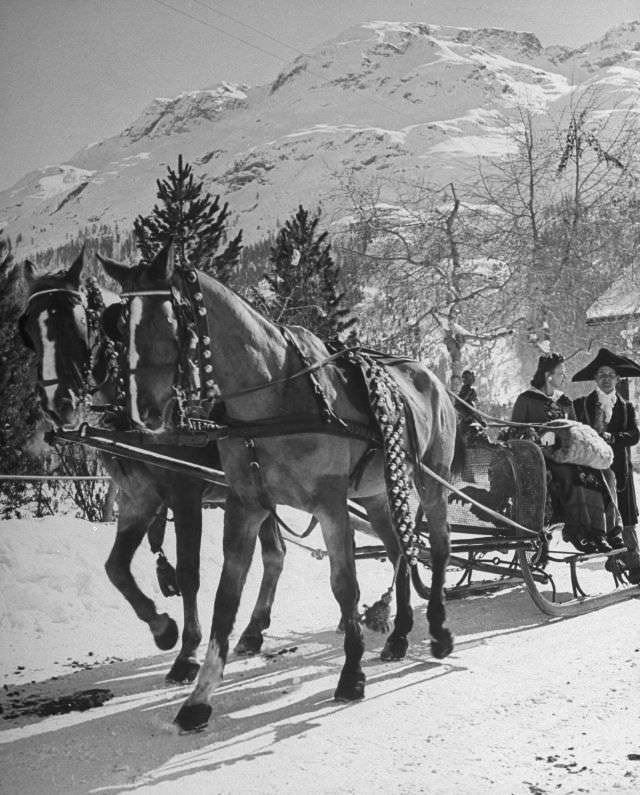
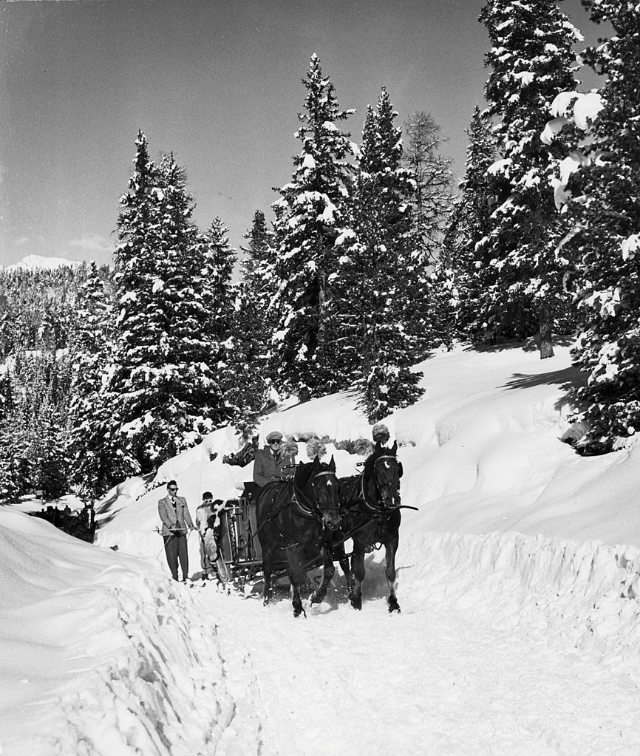
Café terraces in the village stayed busy throughout the day. Patrons sat outdoors bundled in coats, watching horse-drawn sleighs pass by and taking in the mountain scenery. The slopes drew a full range of ability levels — beginners shuffled carefully downhill while experienced skiers carved fast turns beside them. Loungers watched from deck chairs at the edge of the ski area, content to observe the action rather than join it.
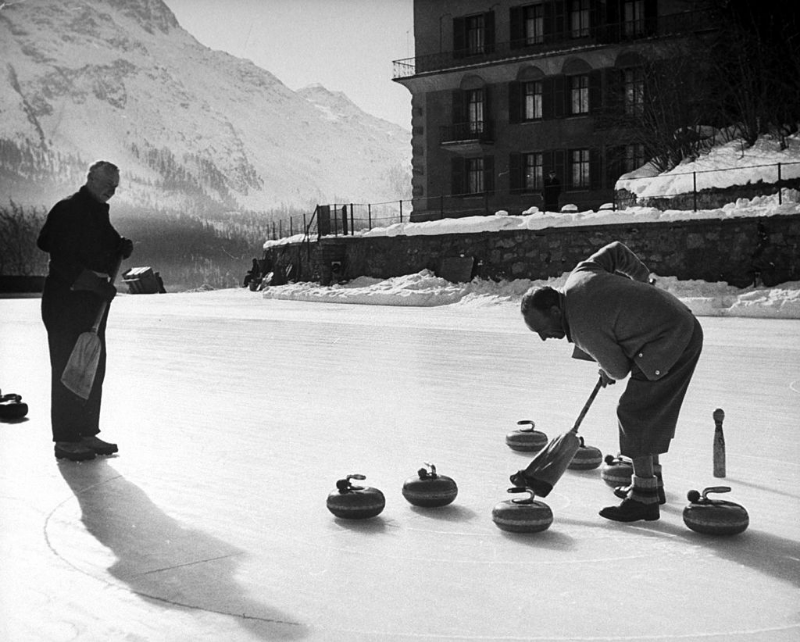
Curling was another winter pastime that drew participants to St. Moritz’s frozen ponds. Men slid heavy stones across the ice with focused effort, a sport that had been played in Switzerland for centuries. Meanwhile, the promenade at the center of the village offered quieter pleasures — benches where visitors sat and watched the town go by.
The Cresta Run drew its own crowd of spectators and riders. At the Church Leap section — one of the run’s most dramatic and dangerous corners — riders passed at high speed while onlookers watched from the banks above. The run demanded nerve and experience, and its reputation attracted thrill-seekers from across Europe.
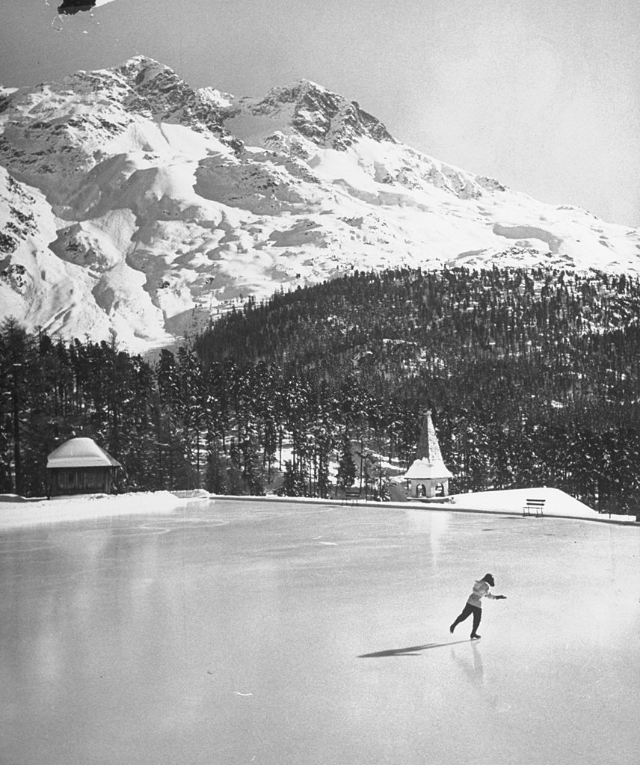
Three miles outside the village, the Suvretta House offered another level of exclusivity. This deluxe hotel had its own outdoor ice rink where guests could skate against a backdrop of open alpine terrain. The funicular from St. Moritz village to the Corviglia ski area made the slopes easily accessible, with the Hotel Chantarella marking the first stop on the ascent.
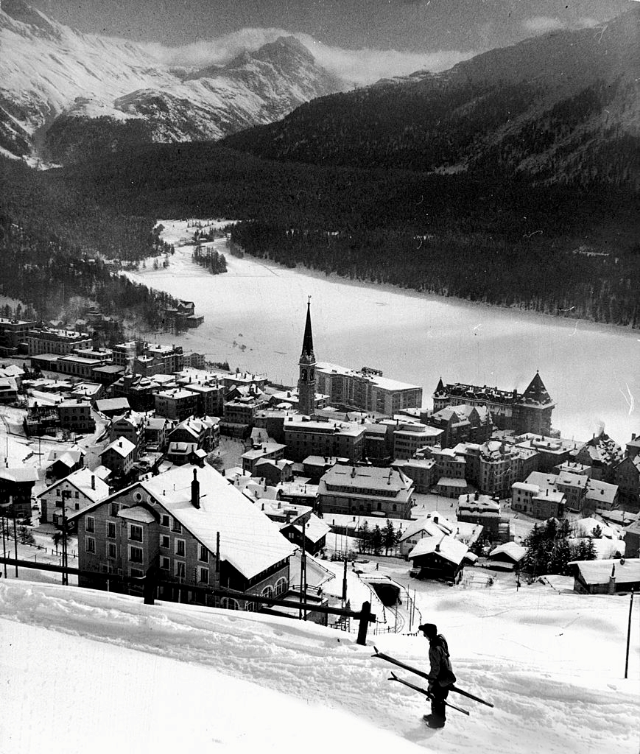
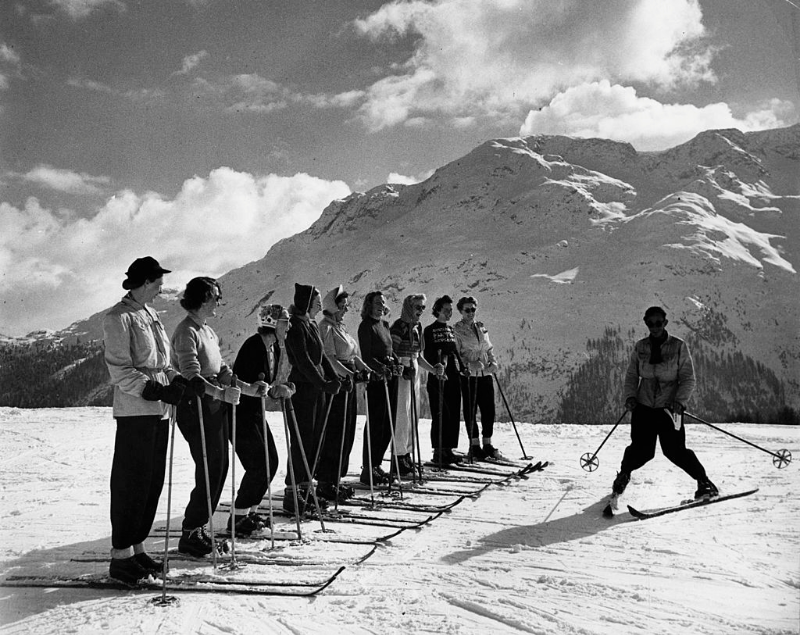
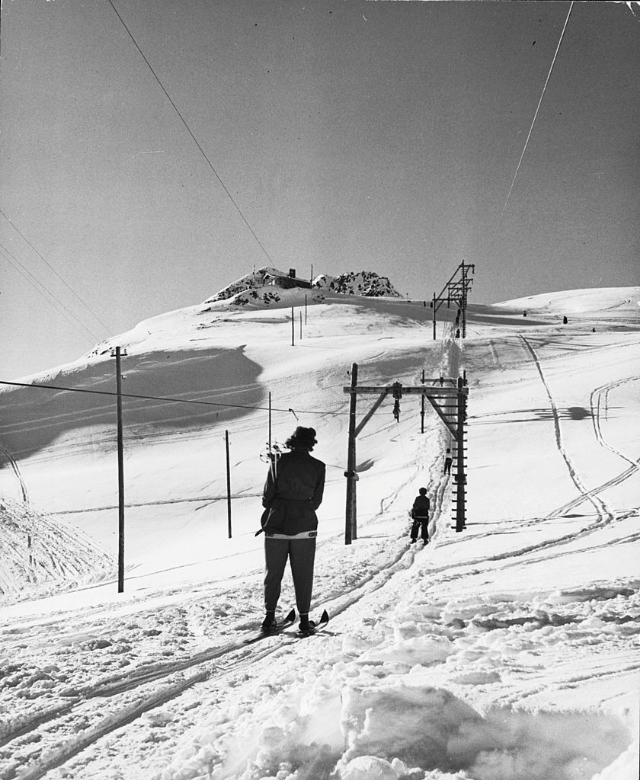
On the slopes, ski instructors gave lessons to guests of all levels. The terrain above St. Moritz ranged from gentle beginner runs to steep alpine descents. Ski lifts carried riders up the mountain efficiently, a relatively modern convenience that had made alpine skiing far more accessible than it was a generation earlier.
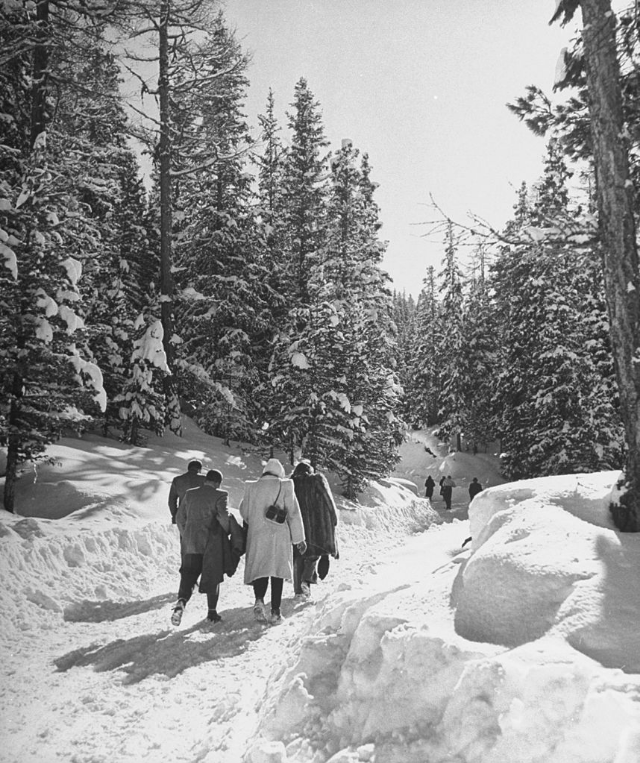
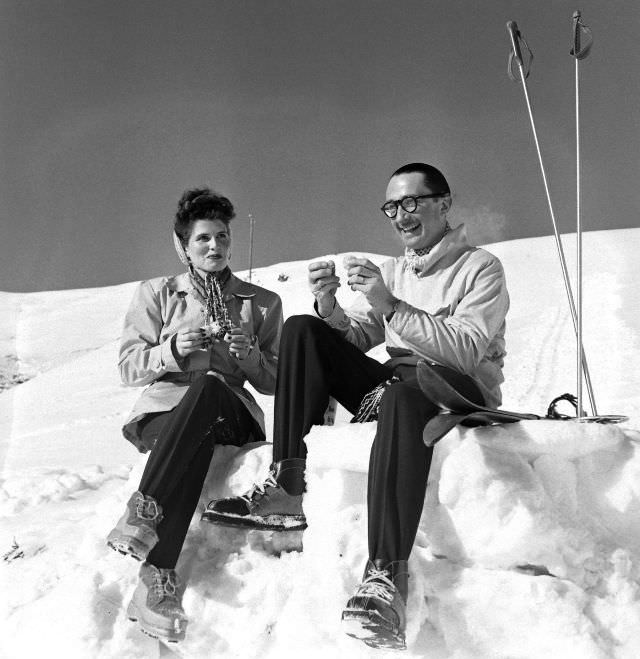
Even a simple conversation on a snow bank captured the ease of life in St. Moritz. Two skiers pausing mid-slope to chat, the mountains rolling behind them — Eisenstaedt’s camera caught these small, unhurried moments alongside the grander scenes of hotel life and sport. The snow-covered hills above the village framed everything, a constant reminder of the natural setting that made St. Moritz what it was.