Released in 1933, Duck Soup is the Marx Brothers at their most unfiltered. Fast jokes, physical gags, and a complete disregard for authority — the film packs all of it into 68 minutes and never lets up. Nearly a century later, it still lands.
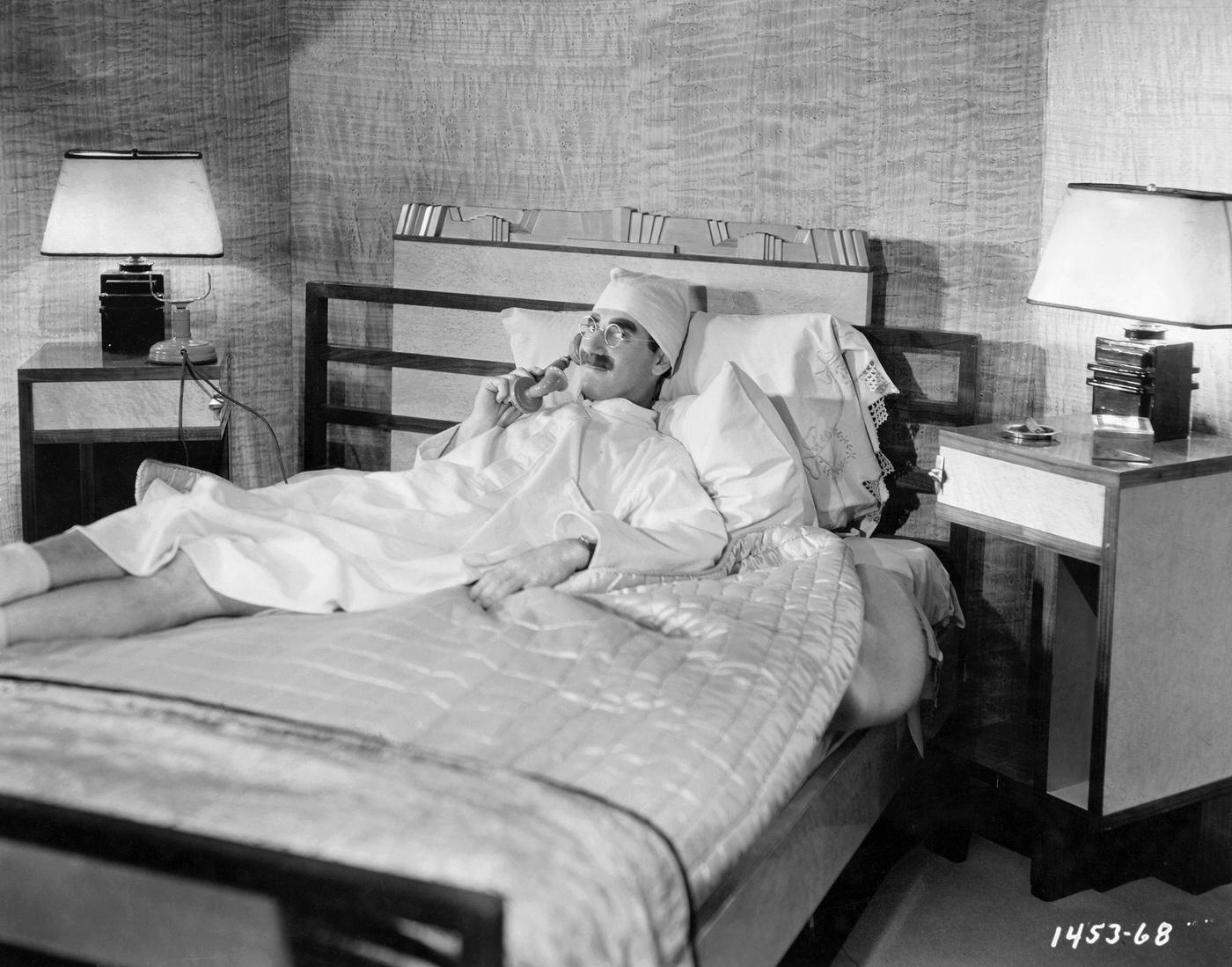
The story takes place in Freedonia, a fictional country on the verge of financial collapse. Wealthy widow Mrs. Gloria Teasdale, played by Margaret Dumont, agrees to bail out the nation — but only on the condition that Rufus T. Firefly is named its new leader. Groucho Marx plays Firefly, and from the moment he slides down a fire pole to accept the job, the film makes clear that no one in charge actually knows what they’re doing.
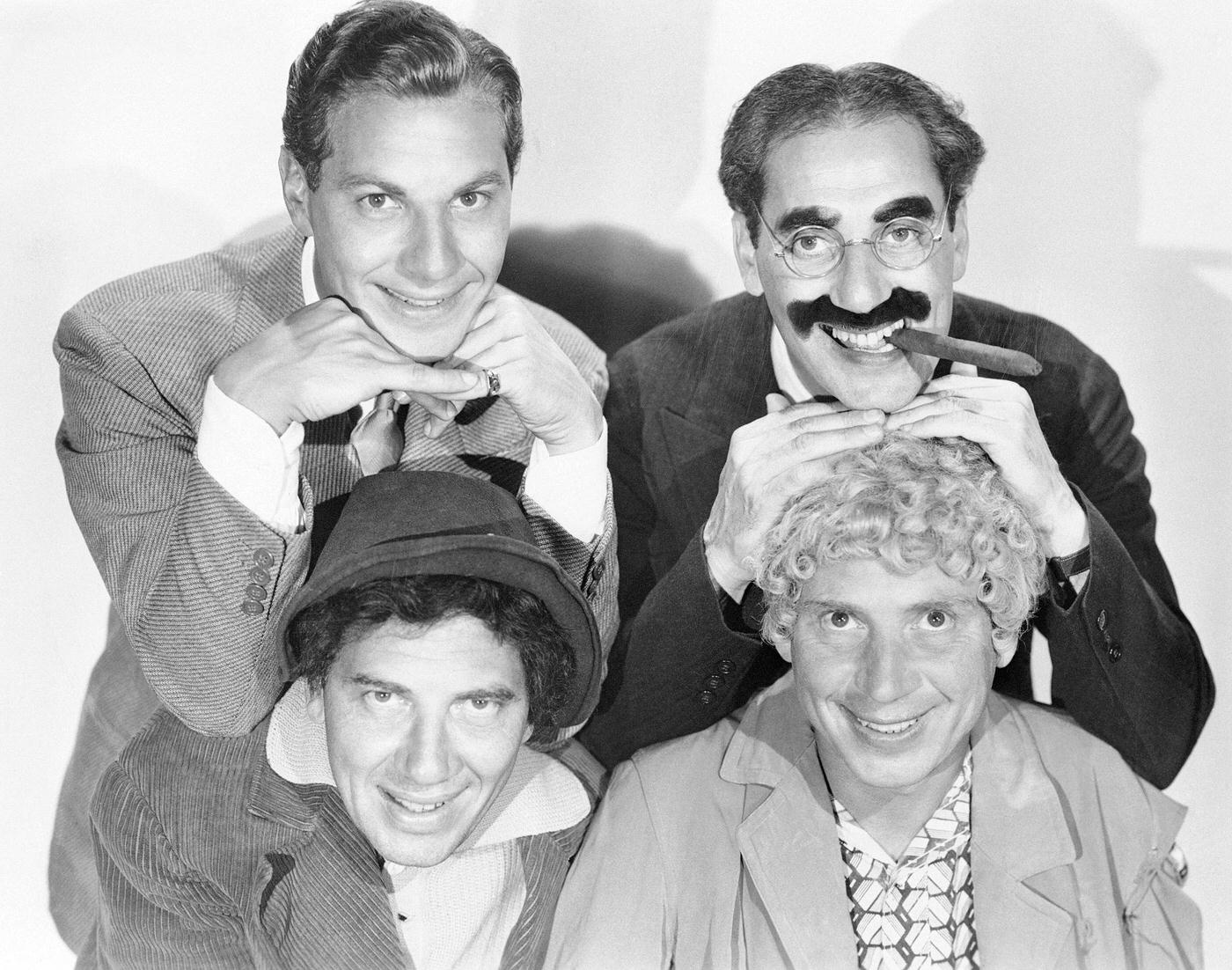
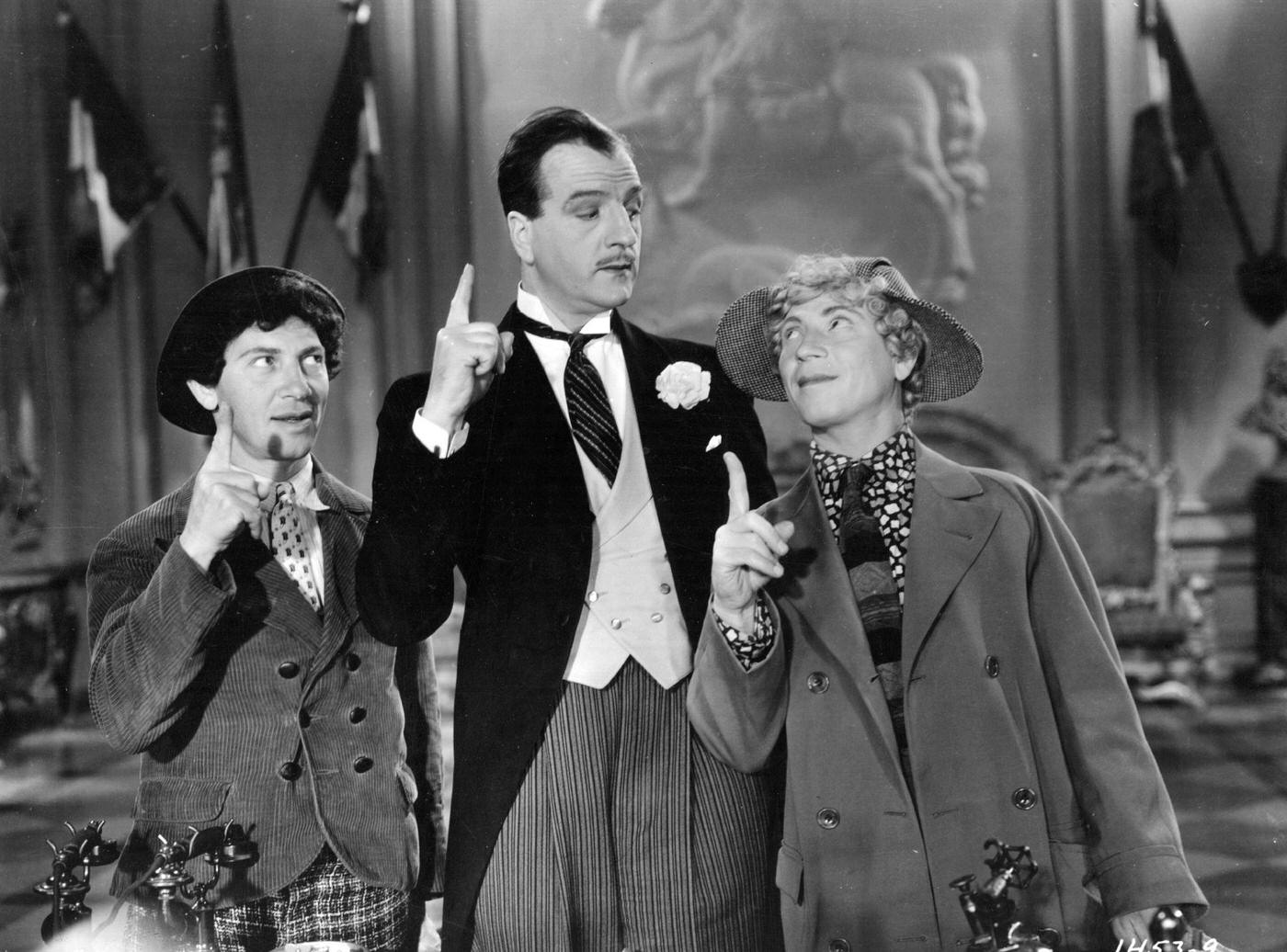
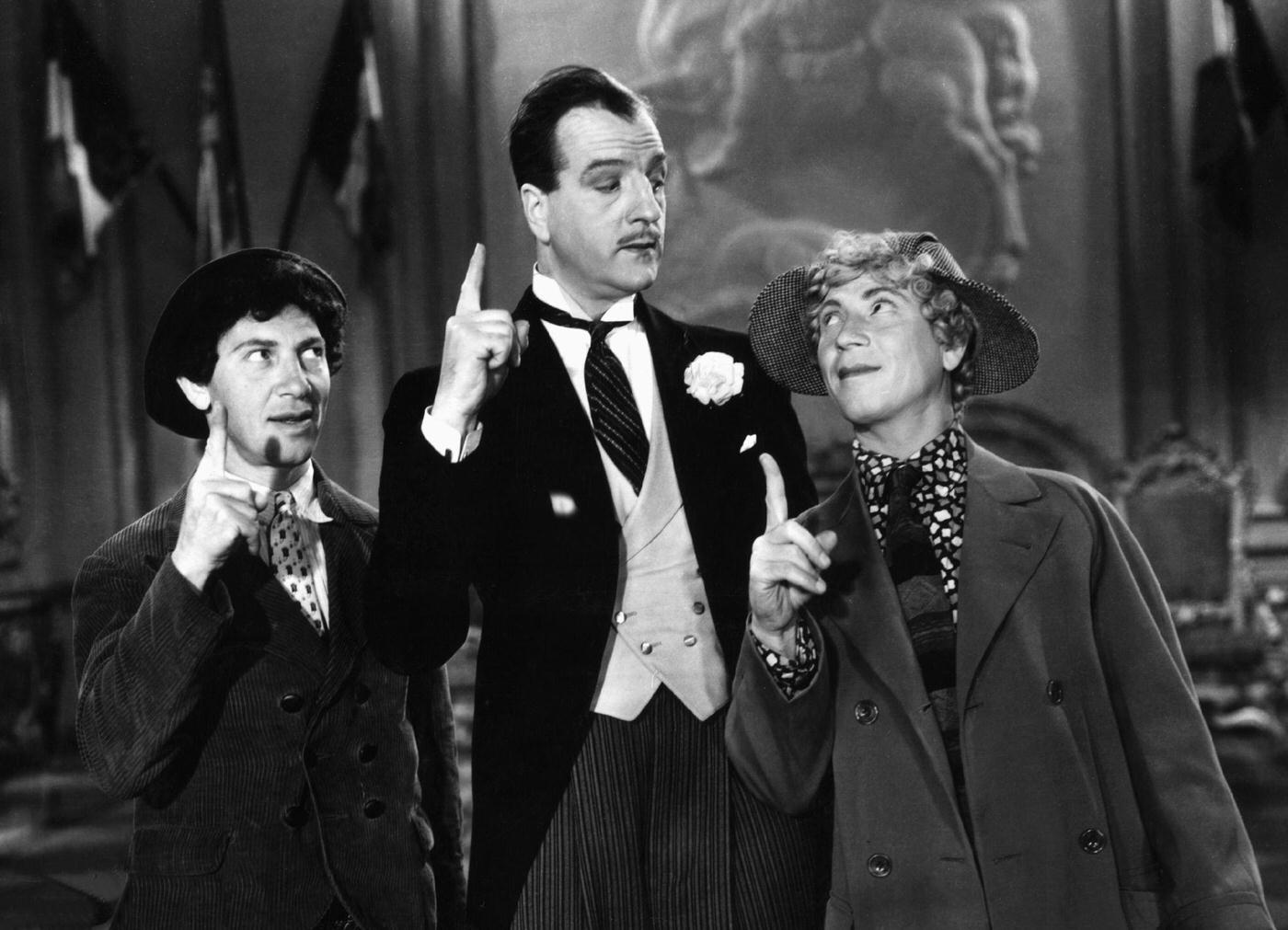
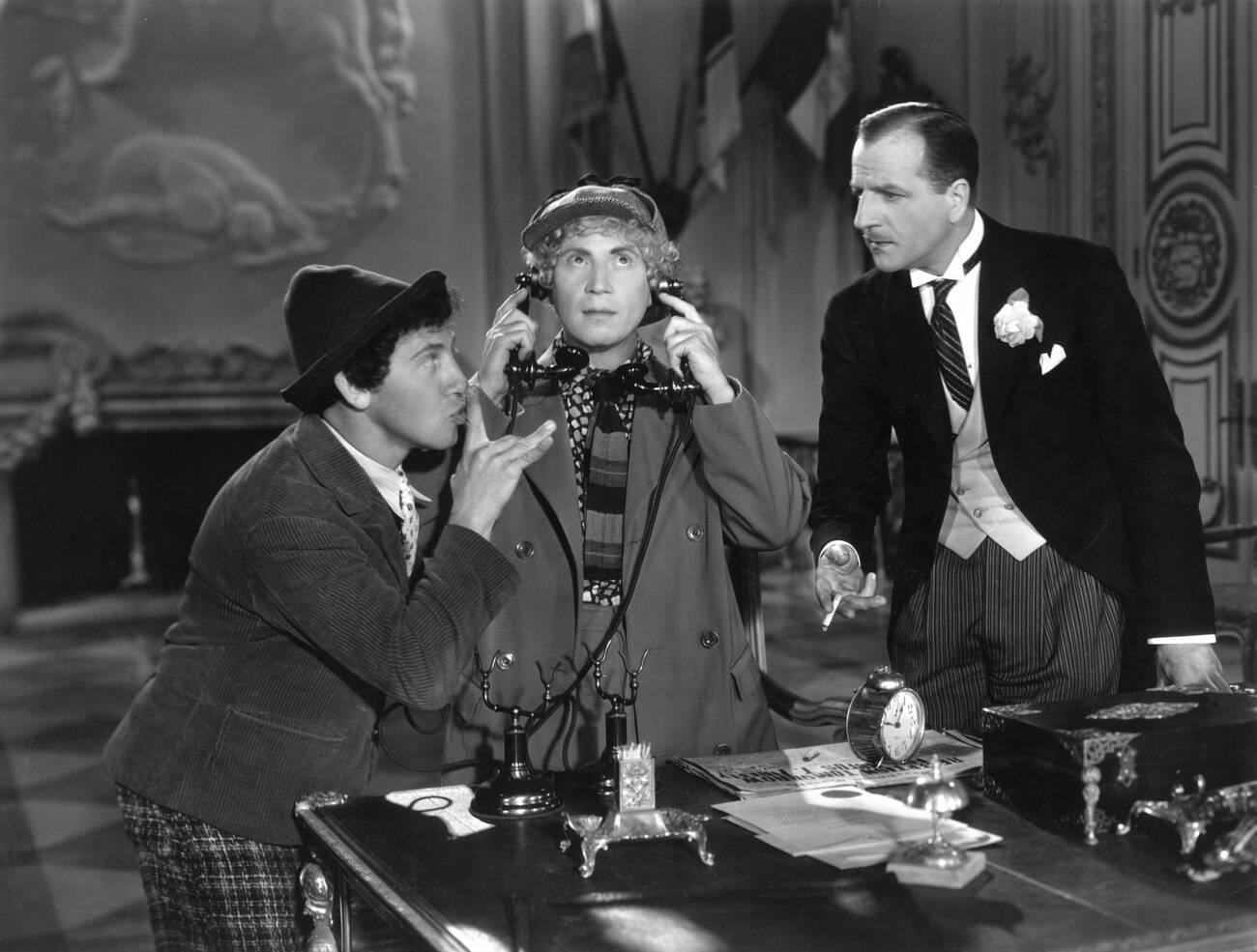
Neighboring country Sylvania has its eye on Freedonia. Ambassador Trentino, played by Louis Calhern, hires two spies — Chicolini and Pinky — to dig up dirt on Firefly. The problem is that Chico Marx’s Chicolini and Harpo Marx’s Pinky are spectacularly bad at their jobs. Their attempts at espionage turn into a string of absurd disasters that do more harm to Trentino than to Firefly.
Zeppo Marx appears as Firefly’s secretary, Bob Roland. It was a relatively straight role, consistent with the parts Zeppo typically played in Marx Brothers films. Duck Soup marked his final appearance with his brothers on screen — after its release, he retired from acting entirely, leaving Groucho, Chico, and Harpo to carry on as a trio.
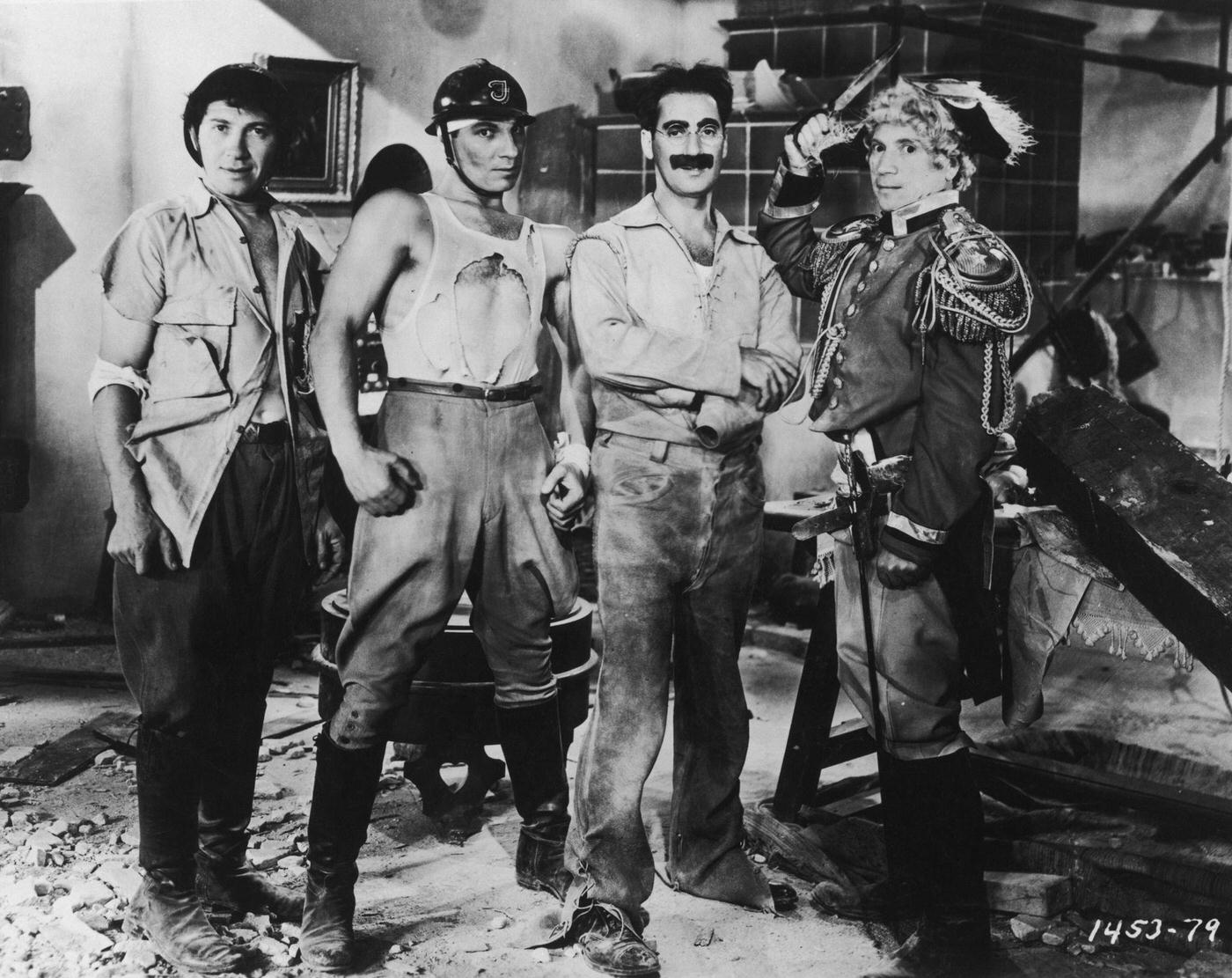
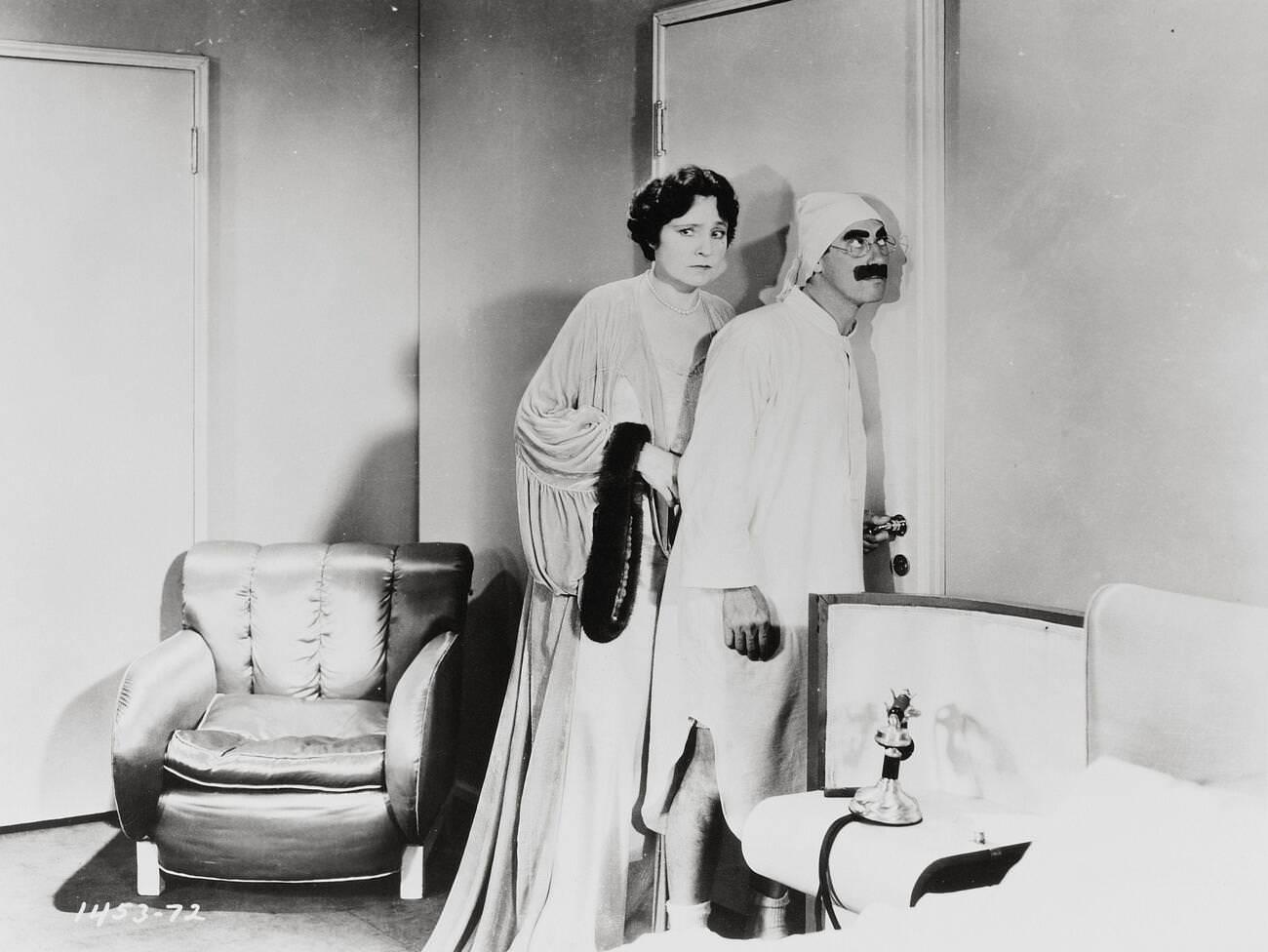
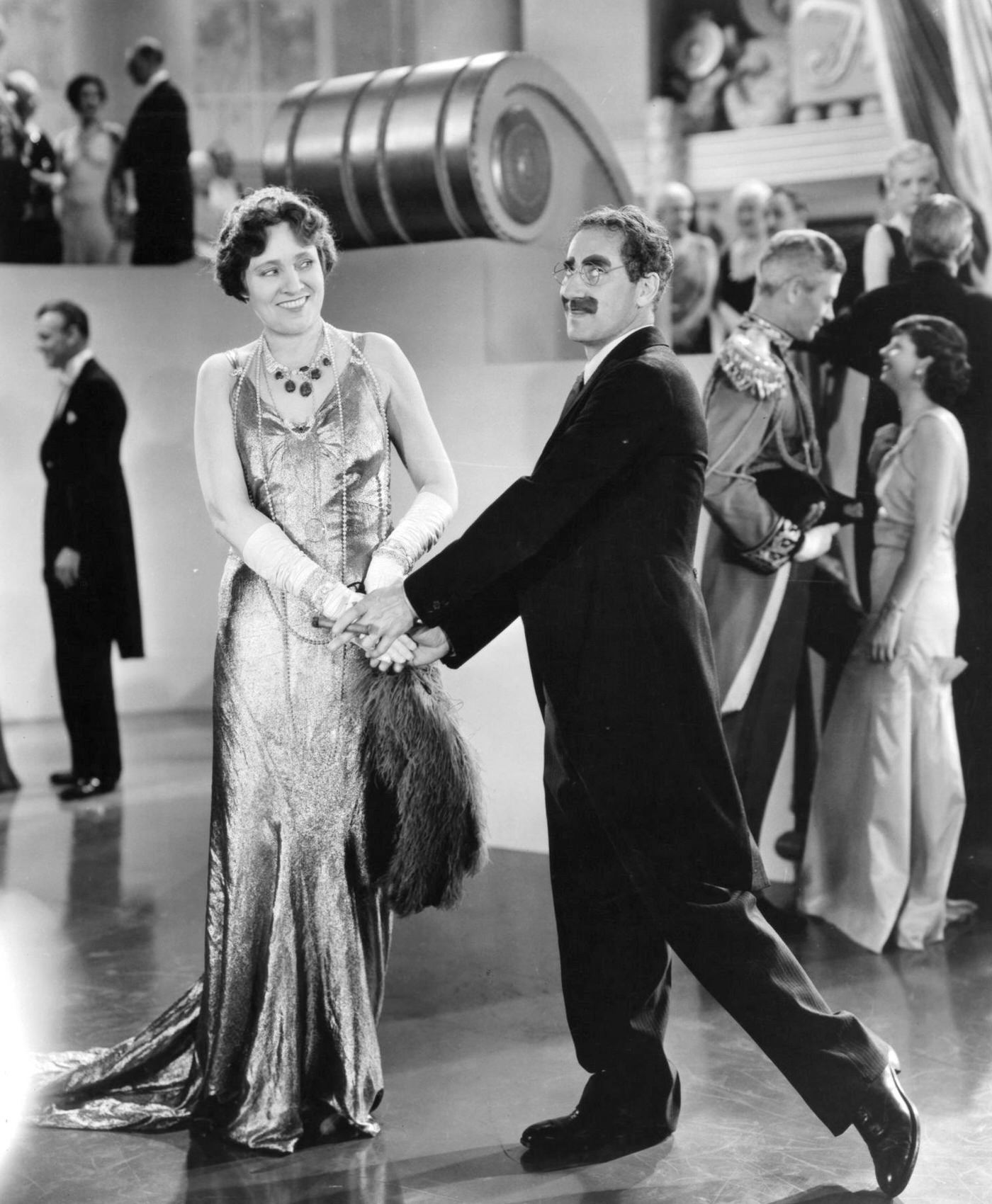
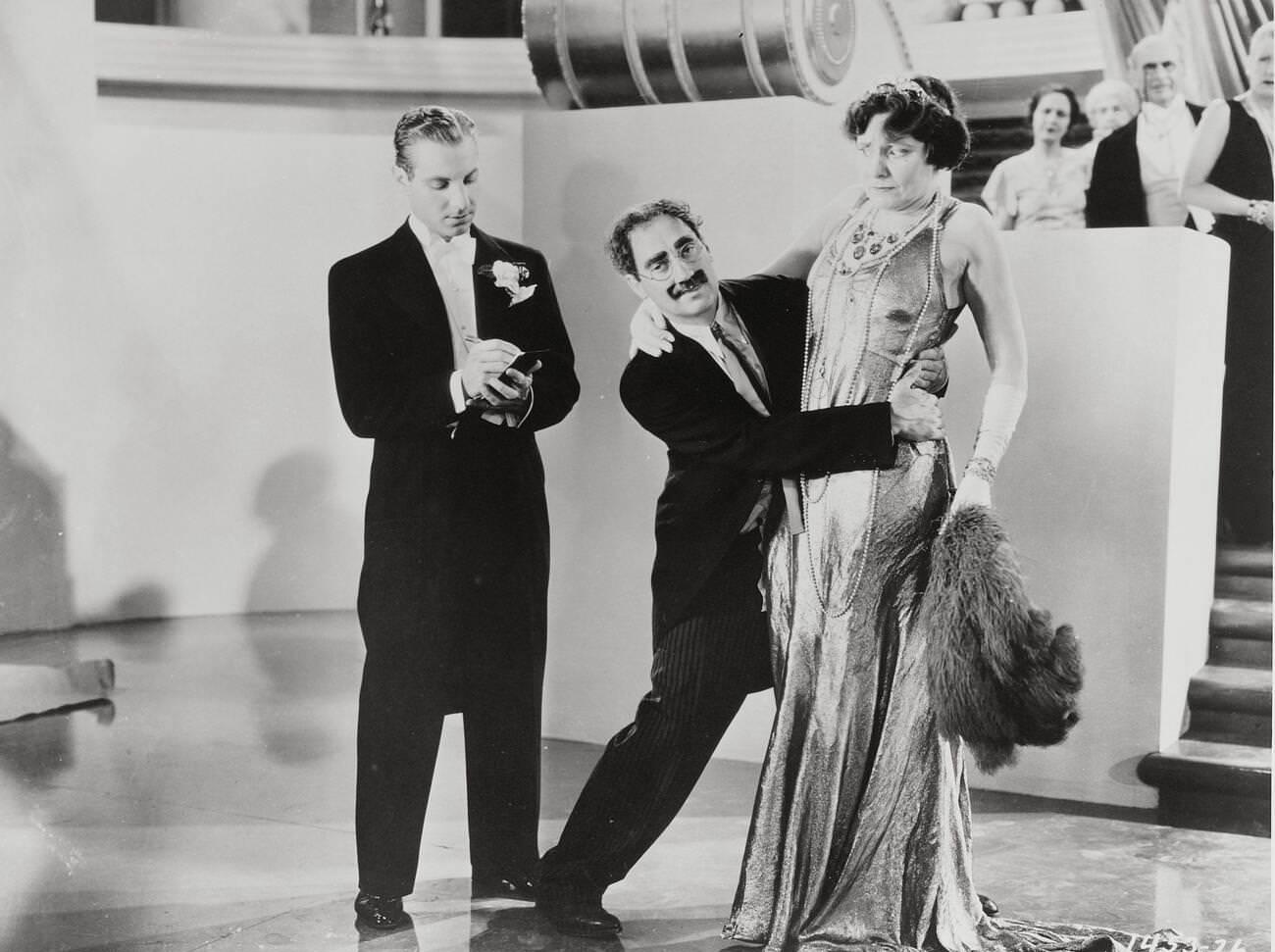
Groucho’s Firefly is a study in deliberate incompetence. He insults foreign dignitaries, ignores protocol, and delivers rapid one-liners that leave every serious character in the film looking ridiculous. His exchanges with Dumont’s Mrs. Teasdale are a masterclass in comic timing — she plays her role with complete sincerity, which only makes Groucho’s absurdity hit harder.
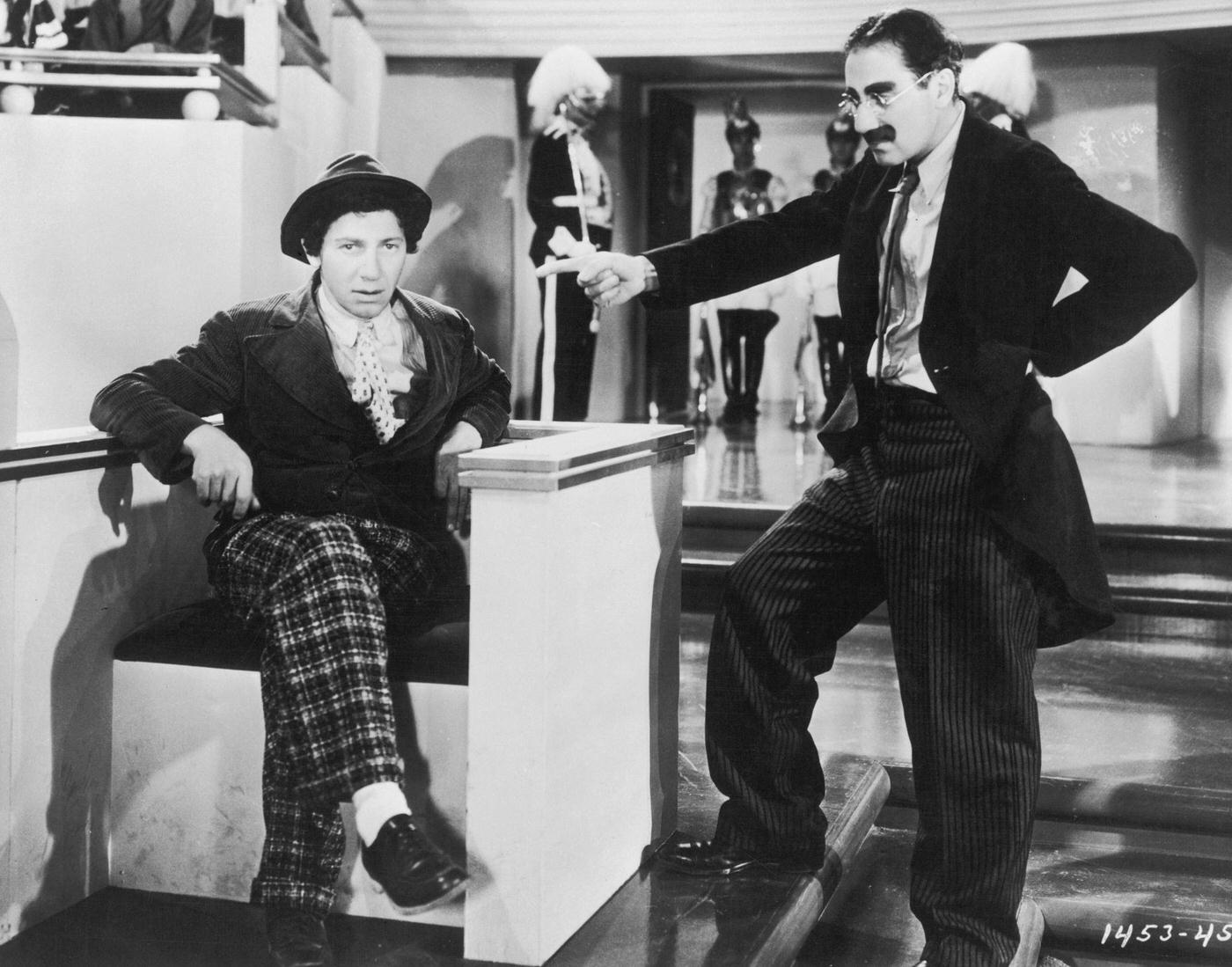
Director Leo McCarey guided the film with a pace that rarely slows. One of its most celebrated sequences involves Harpo and Chico disguised as Groucho — complete with greasepaint mustache and nightcap — trying to pass as his mirror reflection. The scene has no dialogue. It relies entirely on physical precision, and it works perfectly.
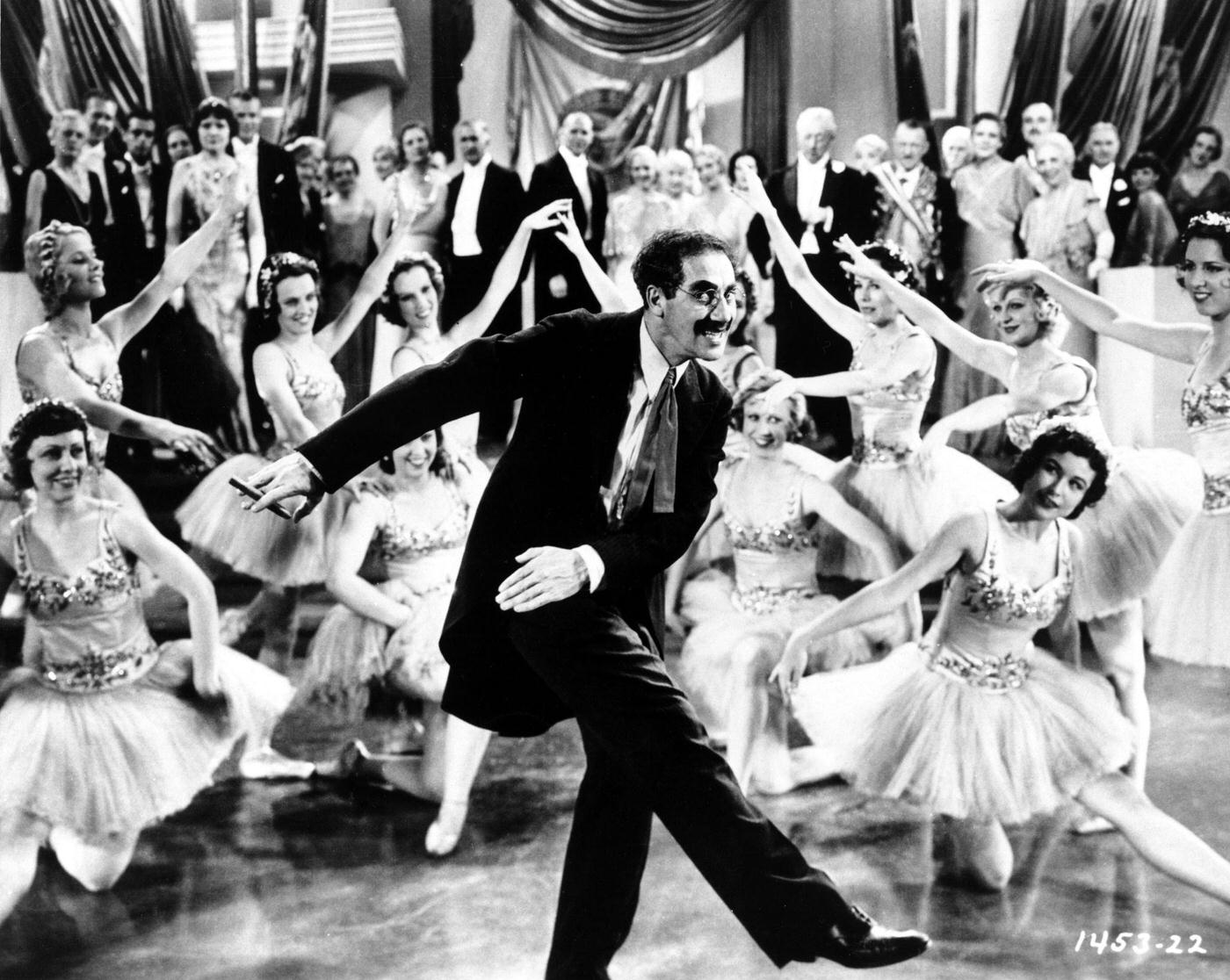
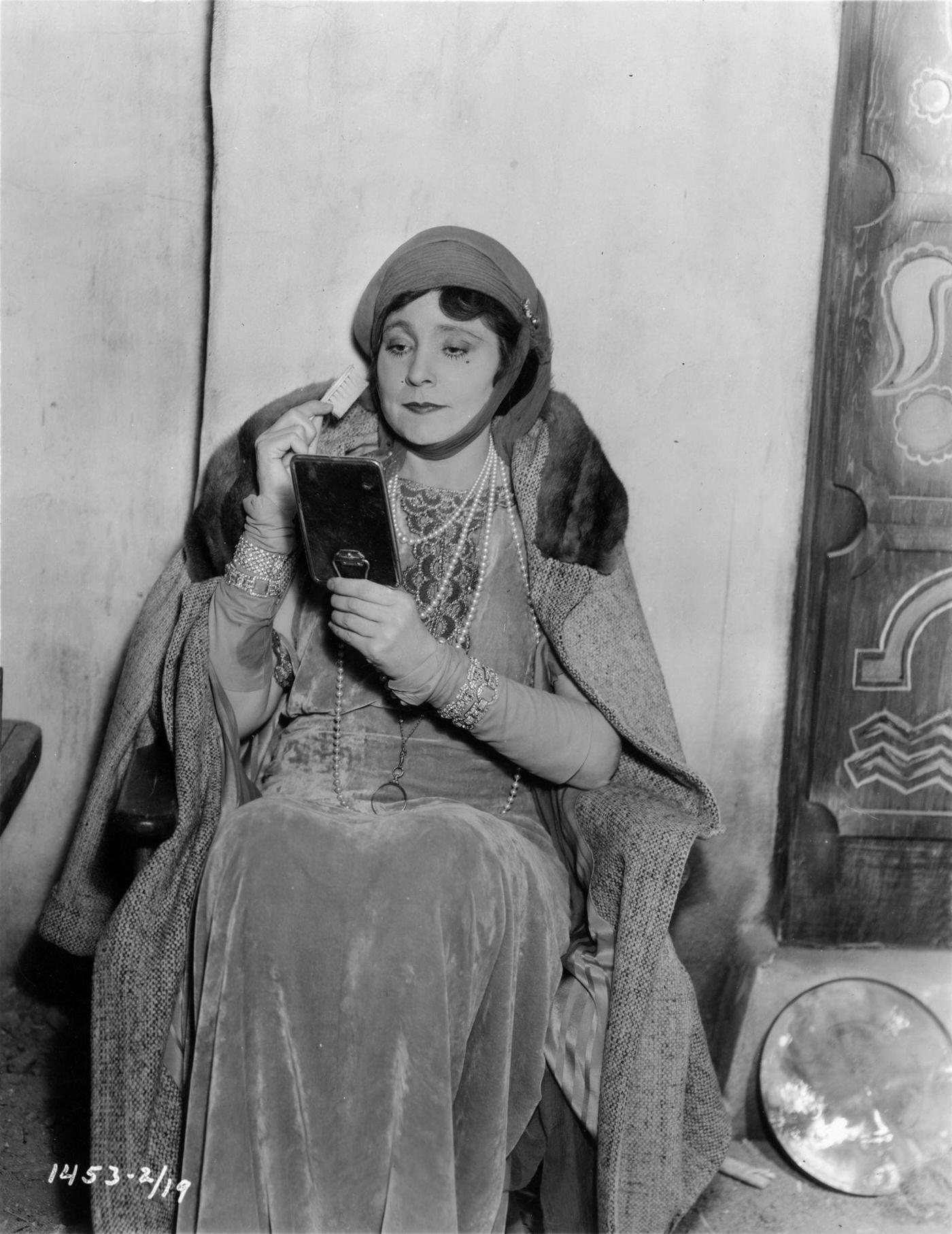
Margaret Dumont was a fixture in Marx Brothers films, and her role here as the nation’s financial backer is central to the plot. She funded Freedonia, she vouched for Firefly, and she watches the whole enterprise spiral into war. Dumont played every scene straight, never breaking, which gave the brothers a reliable straight-faced target for their chaos.
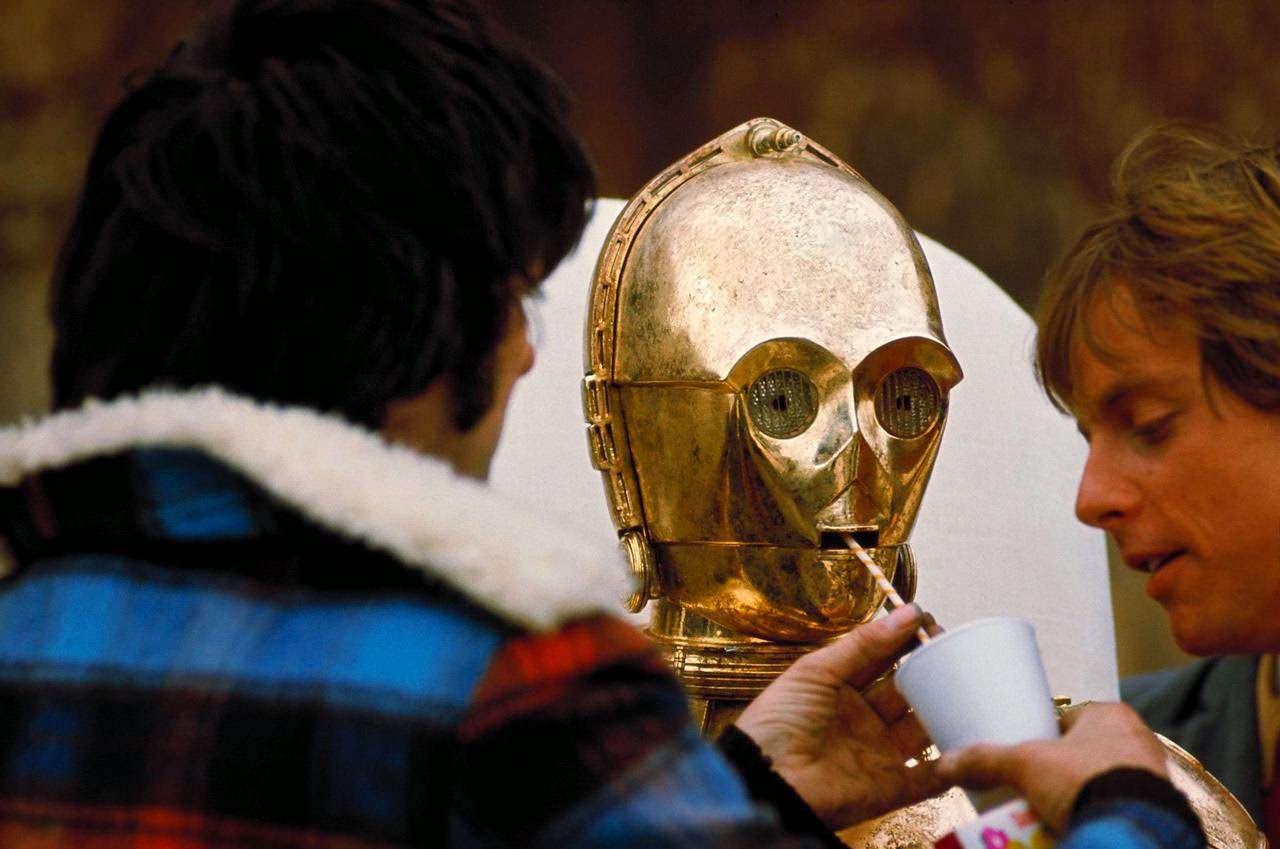
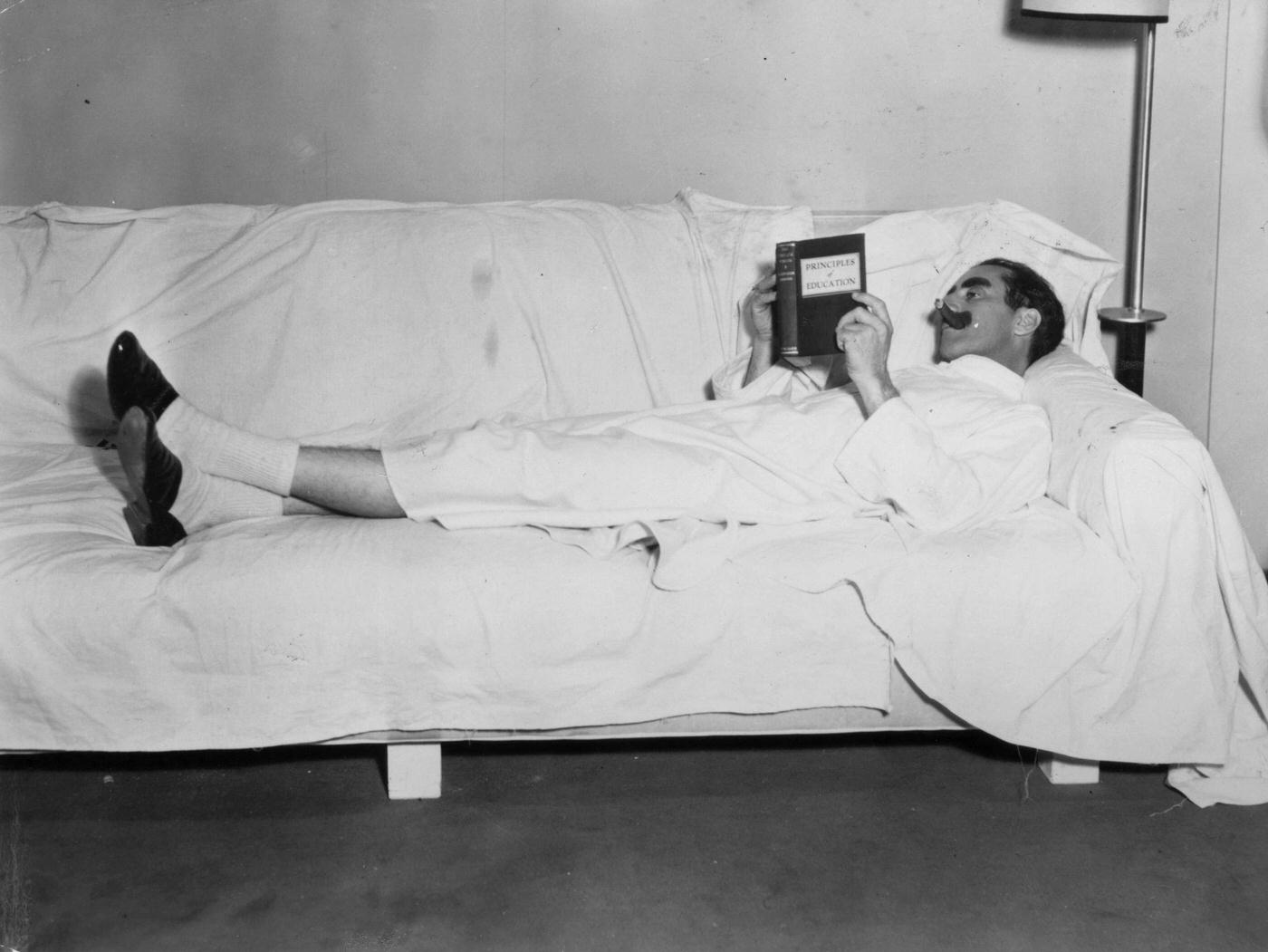
The film was shot at Paramount Pictures, and production wrapped in the summer of 1933. Behind the scenes, Groucho was known for staying in character between takes — or at least staying sharp. A now-famous behind-the-scenes photo caught him reading a book titled “Principals of Education” during a break on set.
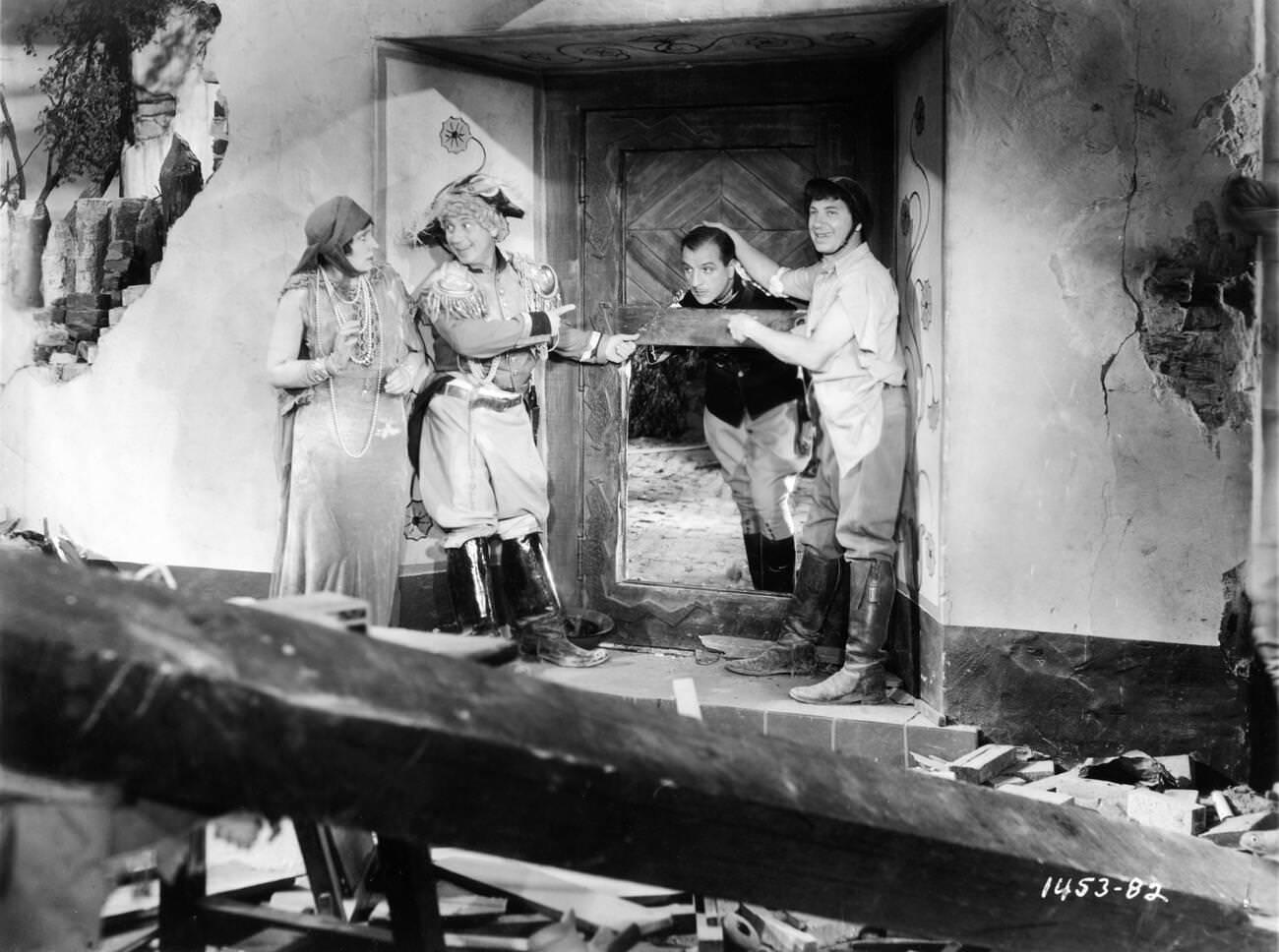
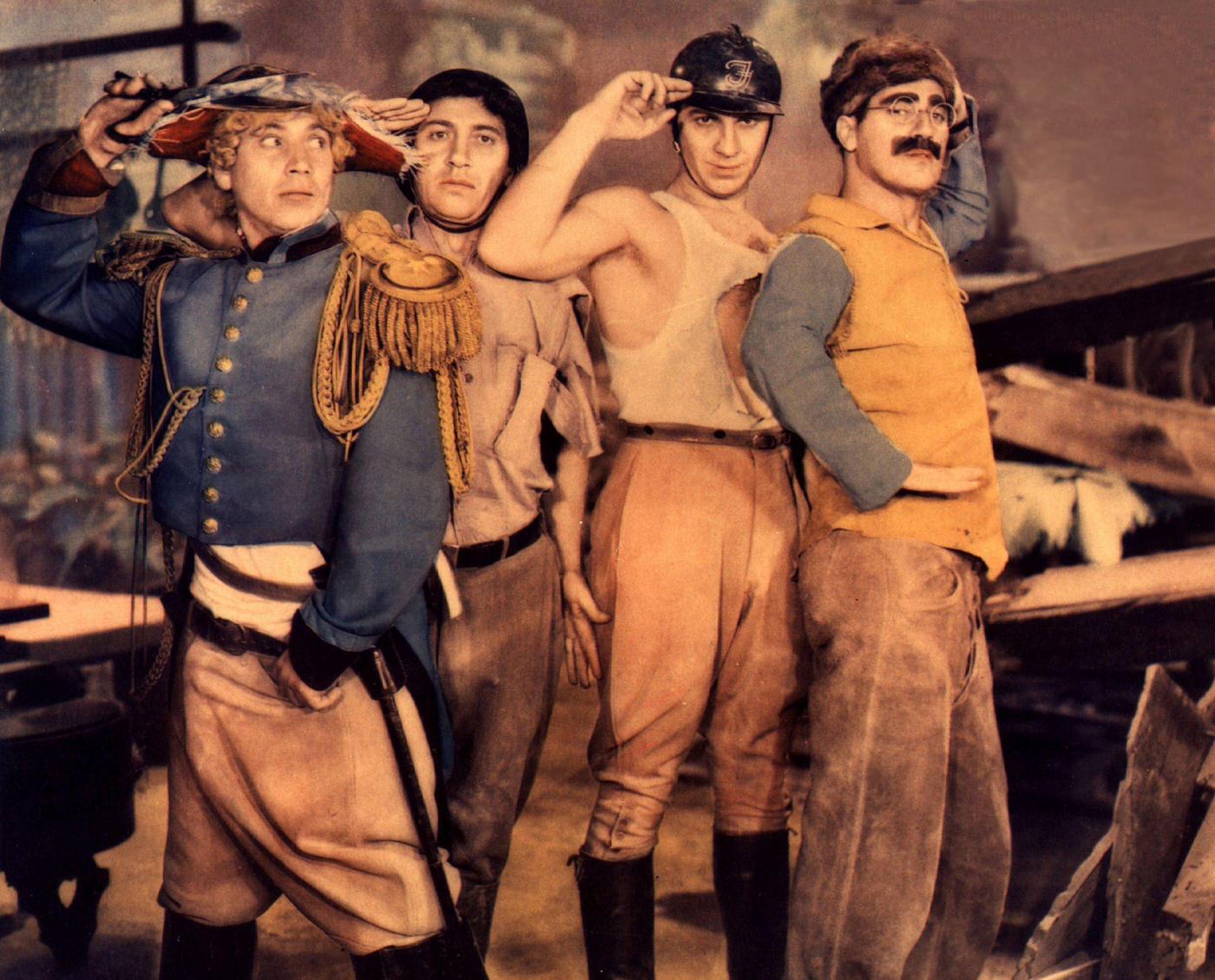
Freedonia’s war with Sylvania eventually erupts, and the film’s final act becomes a full-on battlefield farce. Soldiers in the film wear uniforms from completely different historical eras from one cut to the next — a deliberate joke about the absurdity of military pageantry. The chaos is total, and that’s exactly the point.
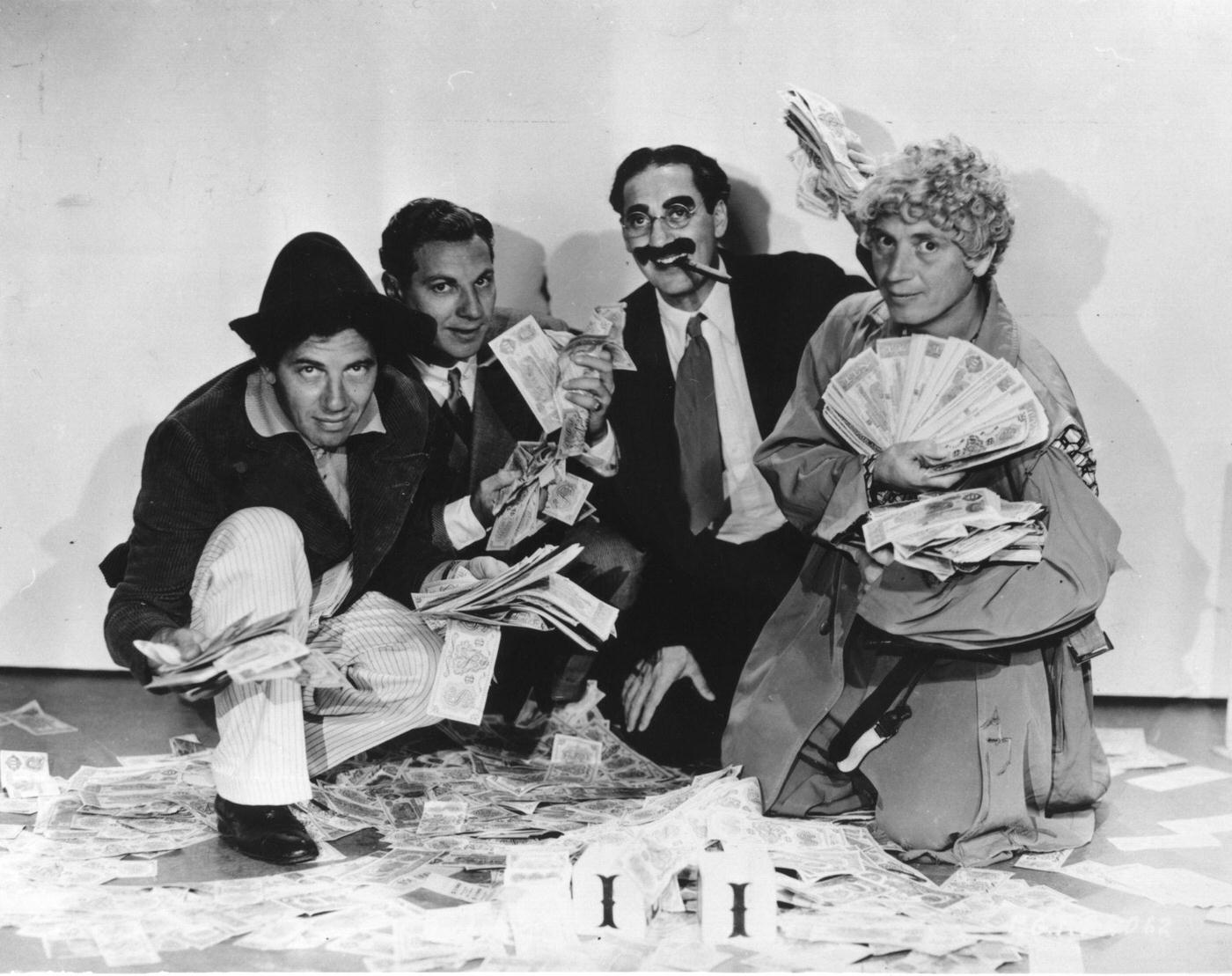
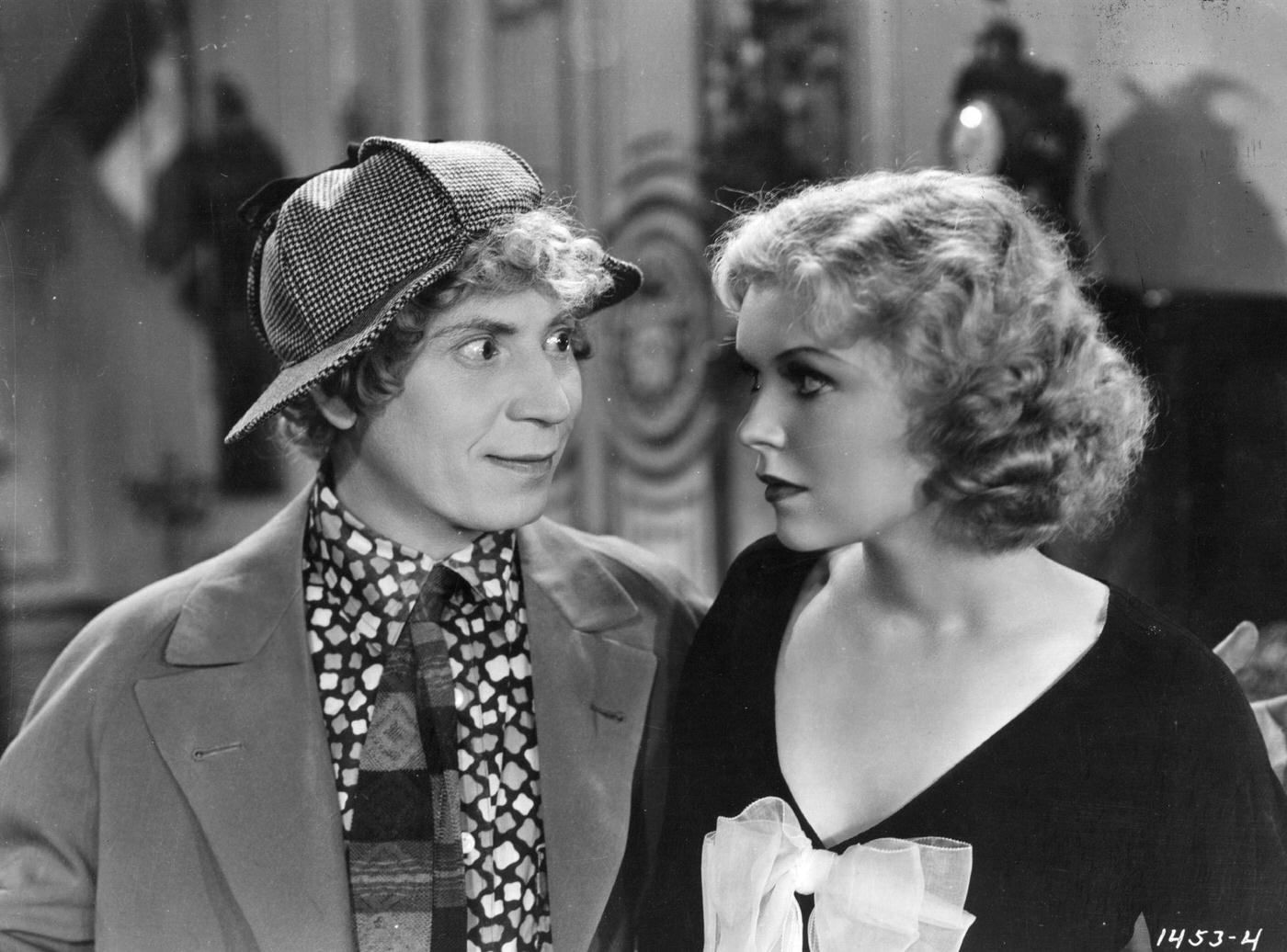
Duck Soup opened in November 1933 to mixed reviews. Critics of the time were divided, and the film underperformed at the box office. Paramount did not renew the Marx Brothers’ contract following its release. The studio considered the film a disappointment, and the brothers moved on to MGM, where producer Irving Thalberg reshaped their formula with more structured plots and romantic subplots.
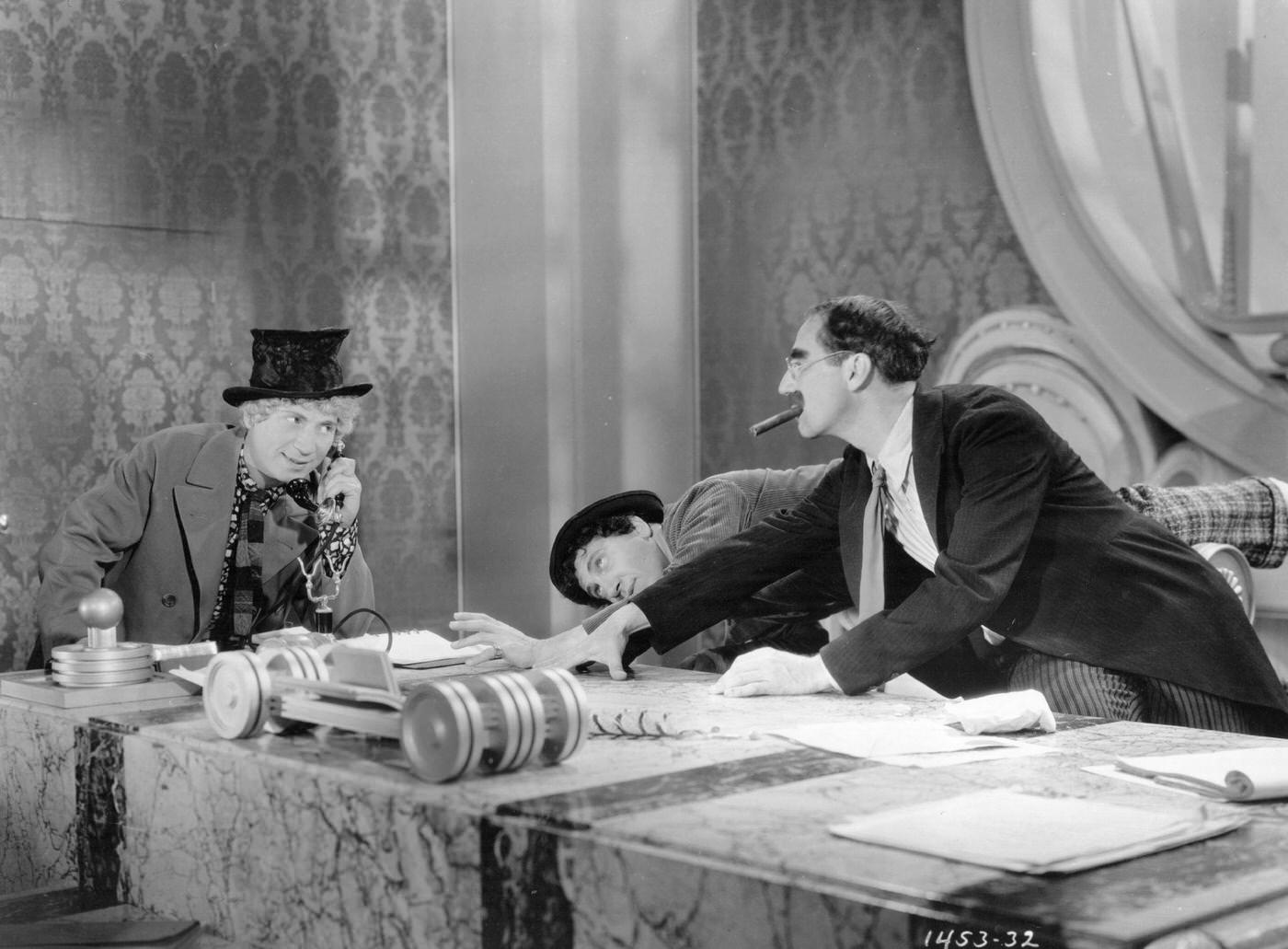
What critics in 1933 struggled with, later generations embraced. The film’s mockery of political leaders, warmongering, and national pride read as pointed satire in the years that followed — particularly after World War II, when audiences had a sharper frame of reference for what unchecked political ego could produce. Benito Mussolini reportedly banned the film in Italy, taking its satire personally.
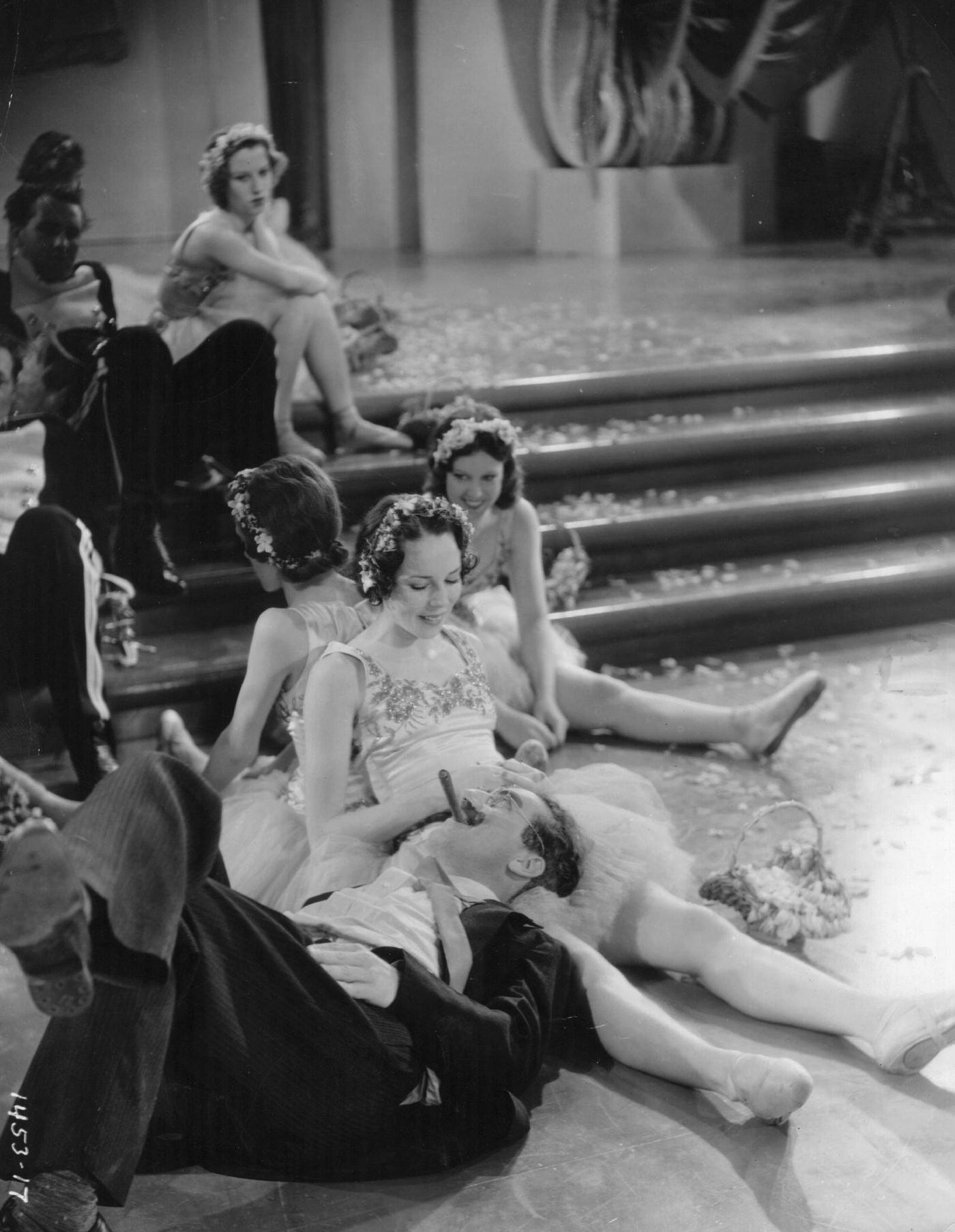
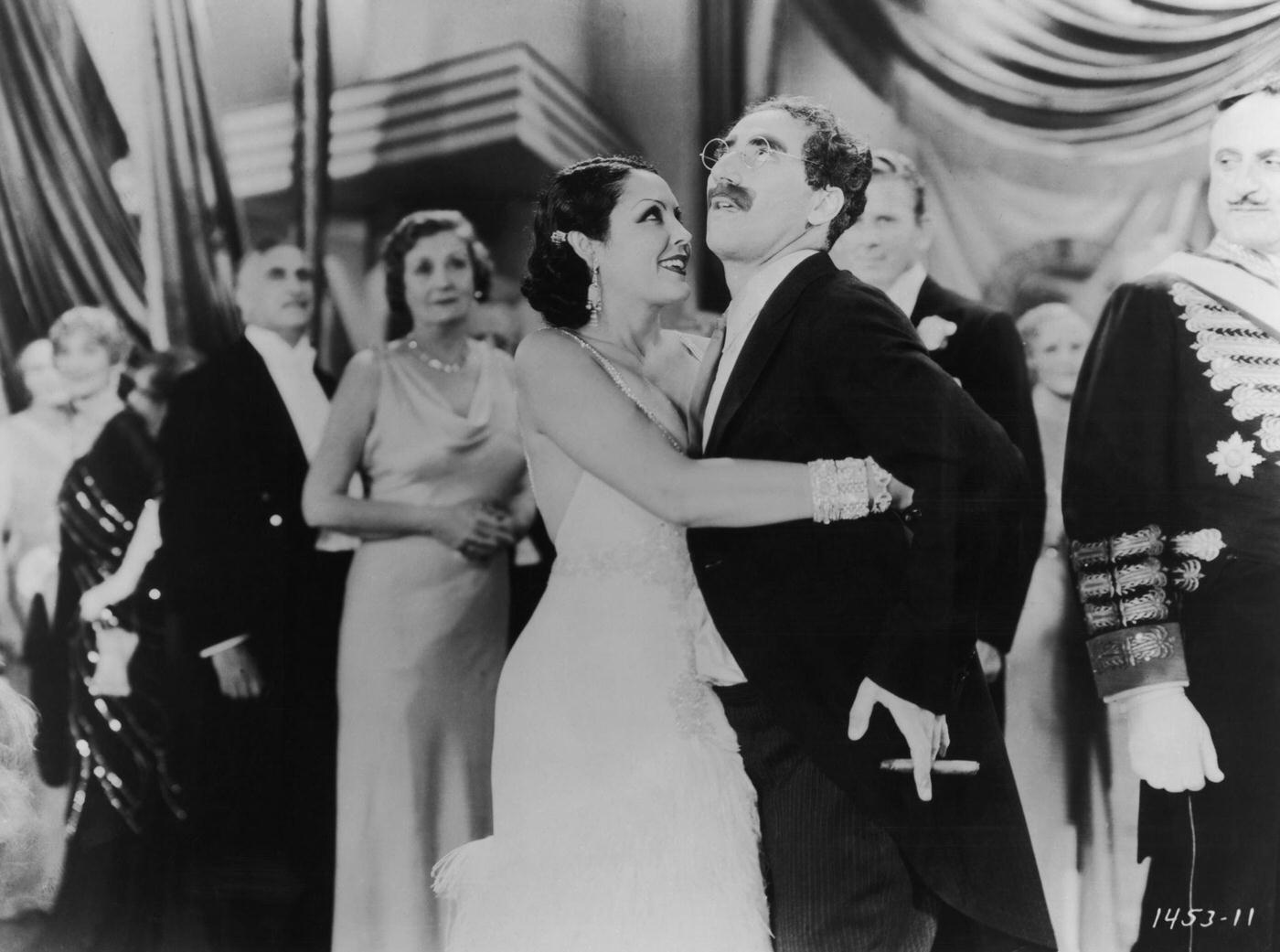
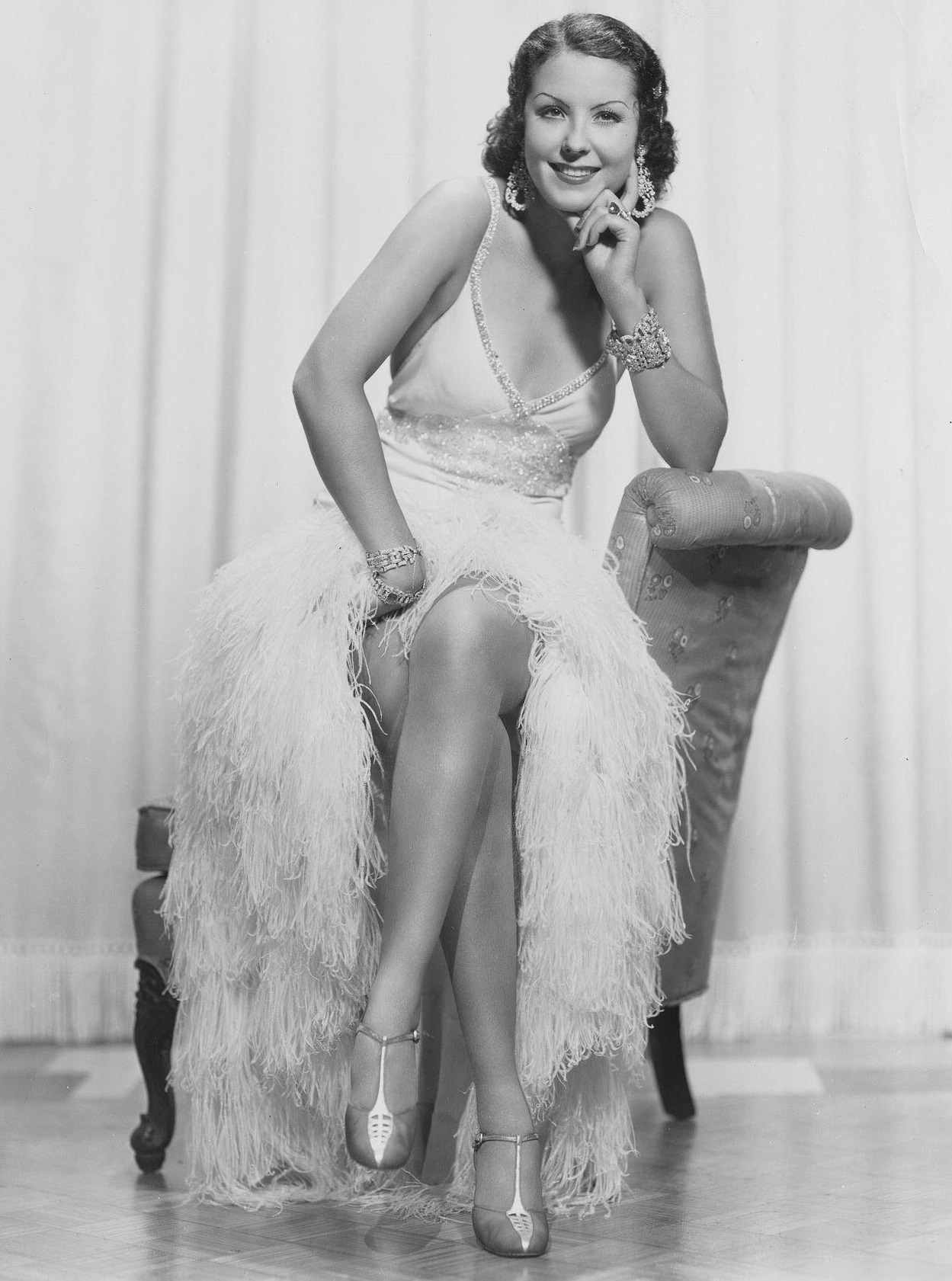
Raquel Torres plays Vera Marcal in the film, a spy working for Trentino alongside Chicolini and Pinky. Her scenes with Groucho are among the film’s more visually dynamic moments, and her presence added a layer of glamour to the otherwise deliberately chaotic production design.
The film’s musical numbers are brief but sharp. Groucho leads a cabinet meeting that breaks into song, mocking the pomp of political ceremony. The number “The Country’s Going to War” sets the tone — it treats the declaration of war as a vaudeville act, complete with choreography and call-and-response.
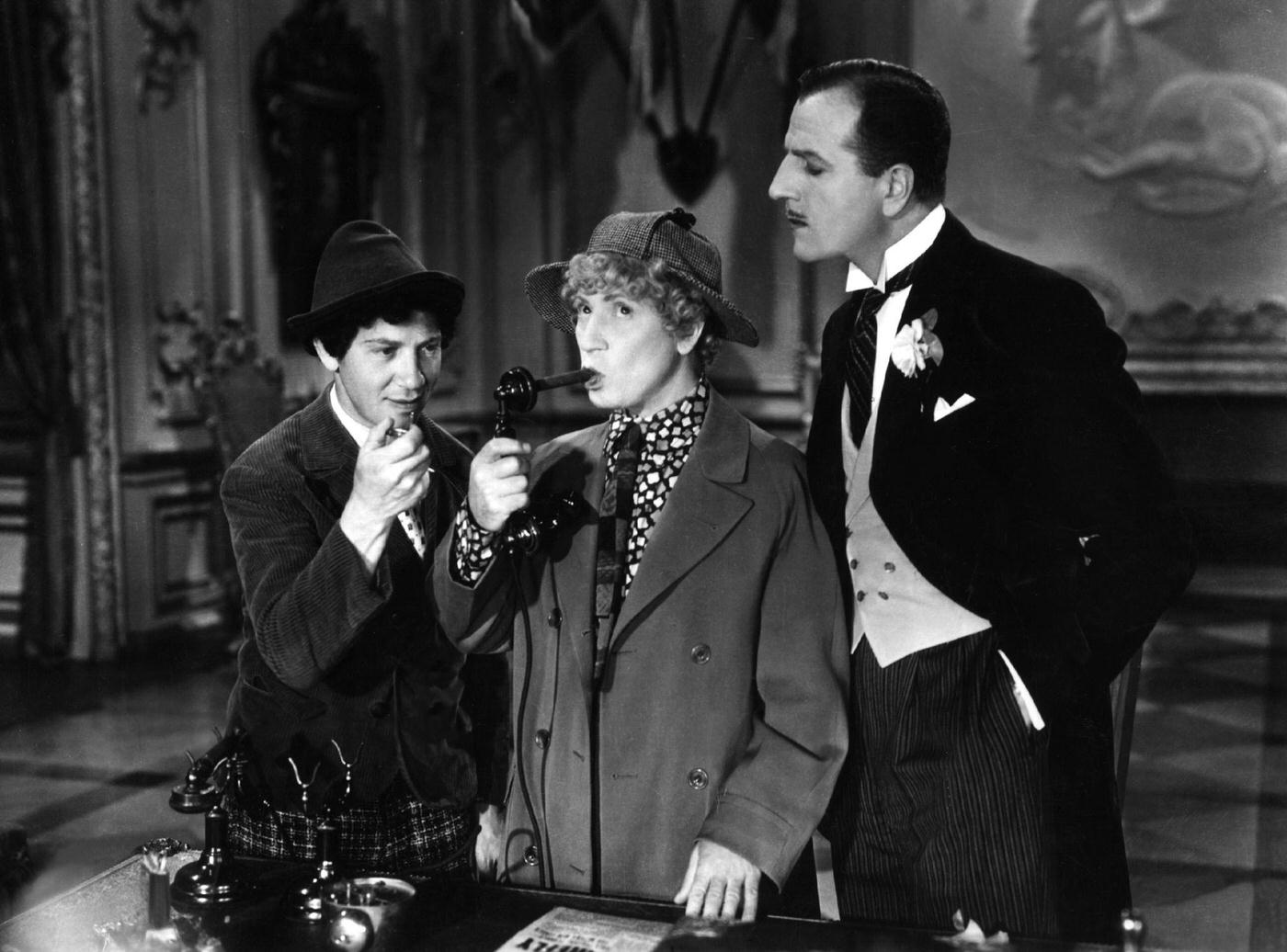
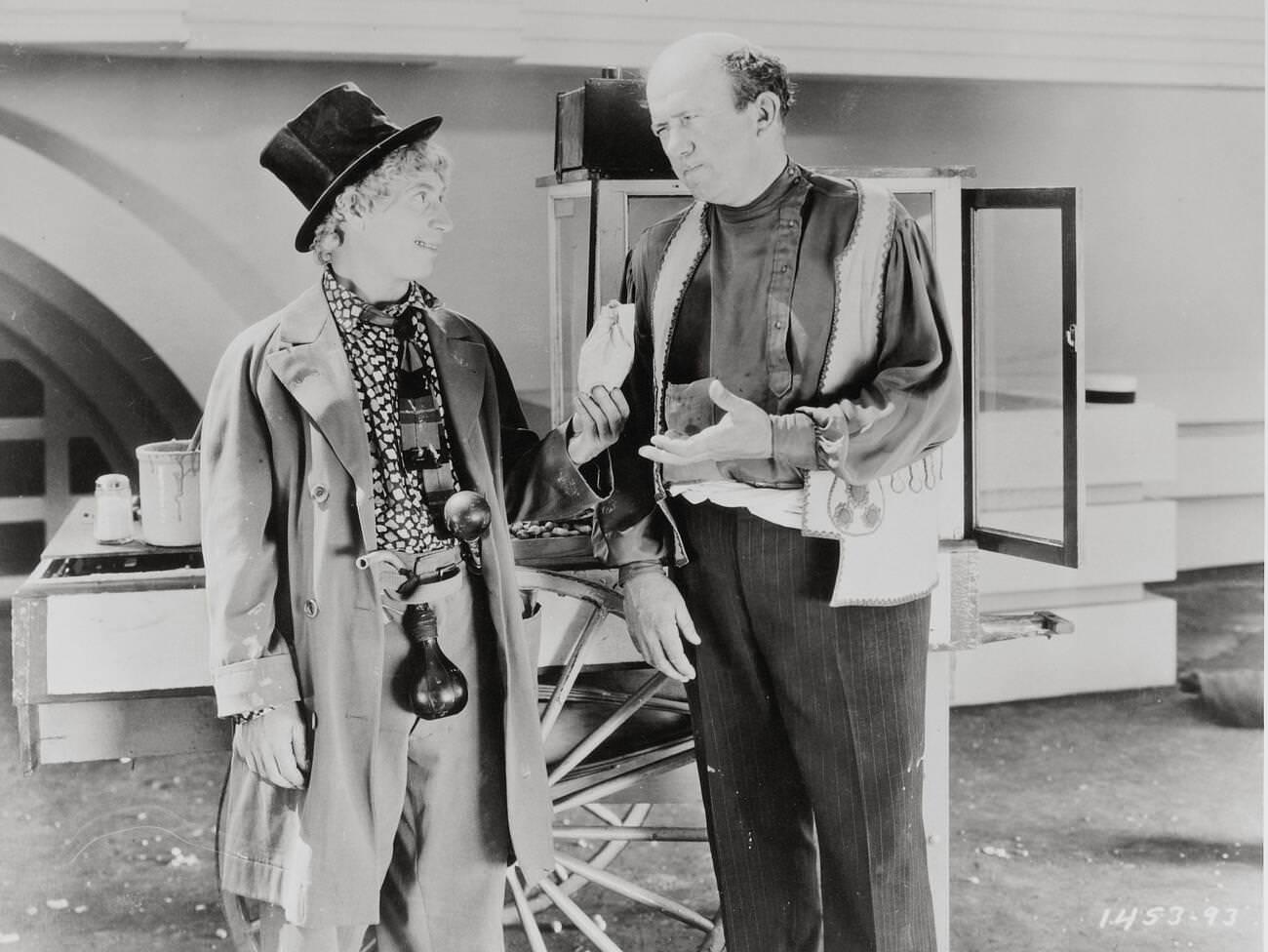
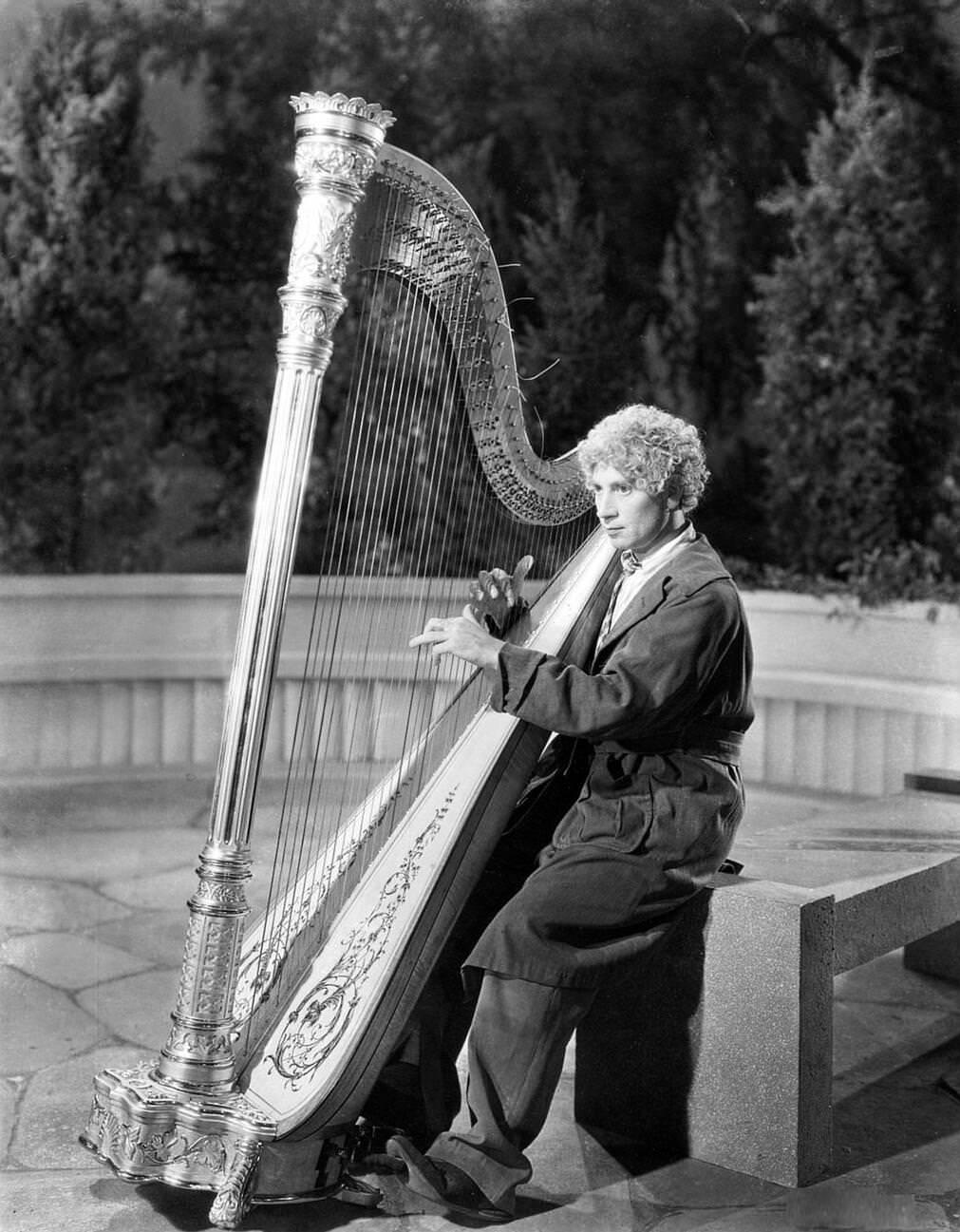
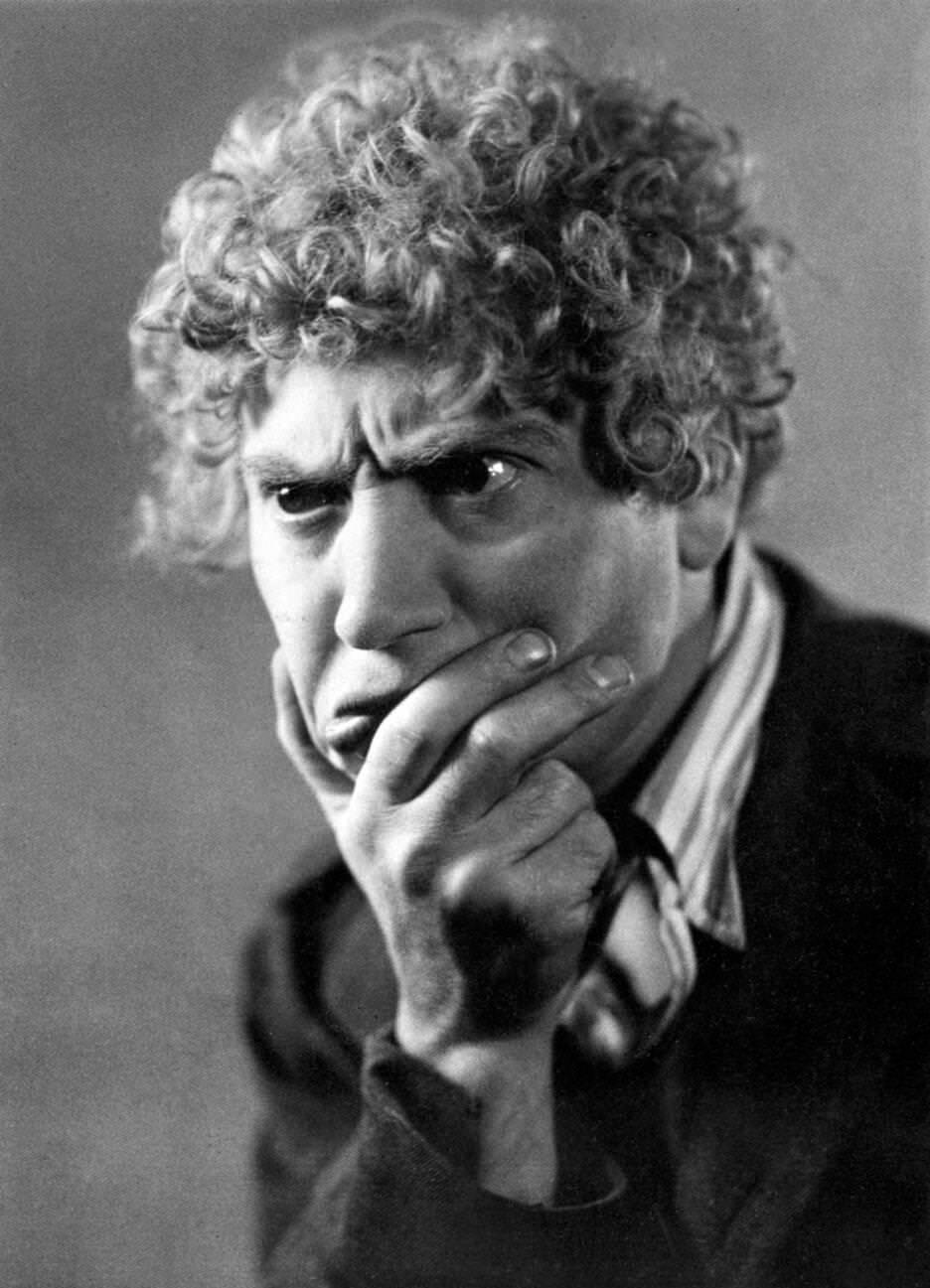
Harpo’s physical comedy throughout the film is relentless. He cuts off coat tails, burns hats, and destroys a lemonade stand run by an increasingly furious vendor — played by Edgar Kennedy — in a running gag that escalates with each encounter. Harpo never speaks a single word on screen, communicating entirely through expression and action.
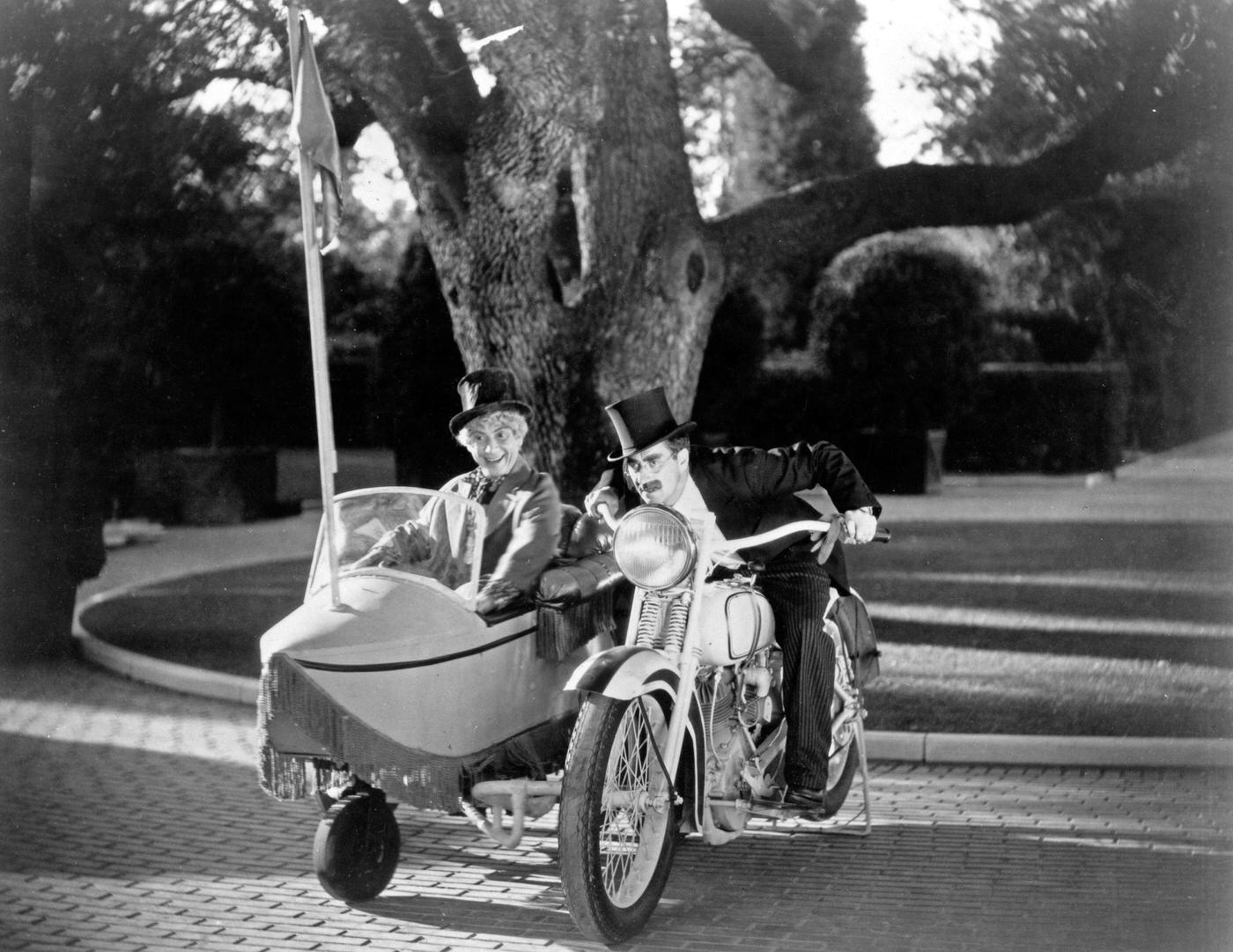
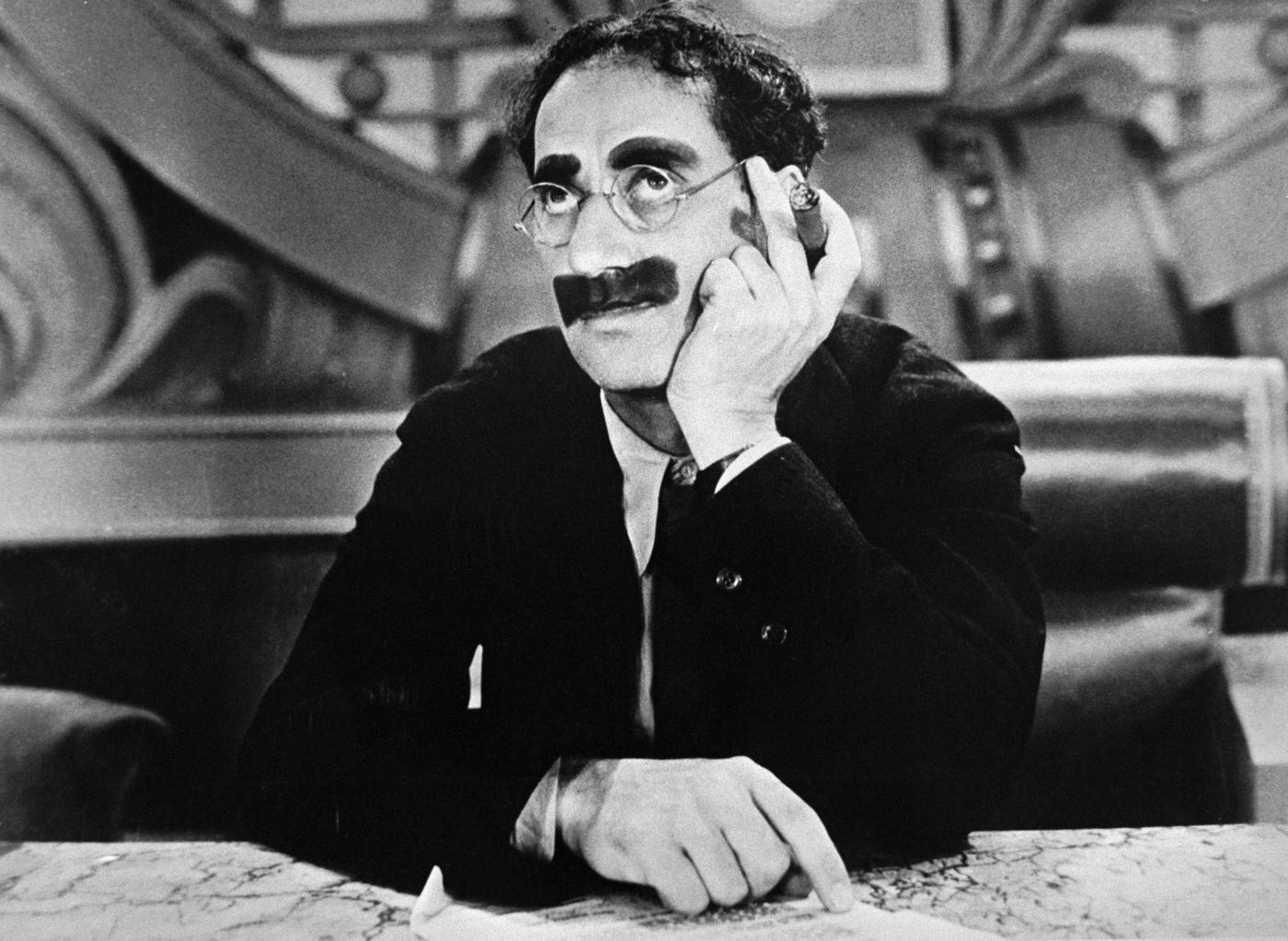
The trial of Chicolini is one of the film’s sharpest scenes. Accused of treason, Chicolini is put on trial — with Firefly serving as both prosecutor and judge. The proceedings make no legal sense, which is entirely deliberate. Groucho interrupts his own arguments, changes rulings mid-sentence, and at one point breaks into song rather than deliver a verdict.
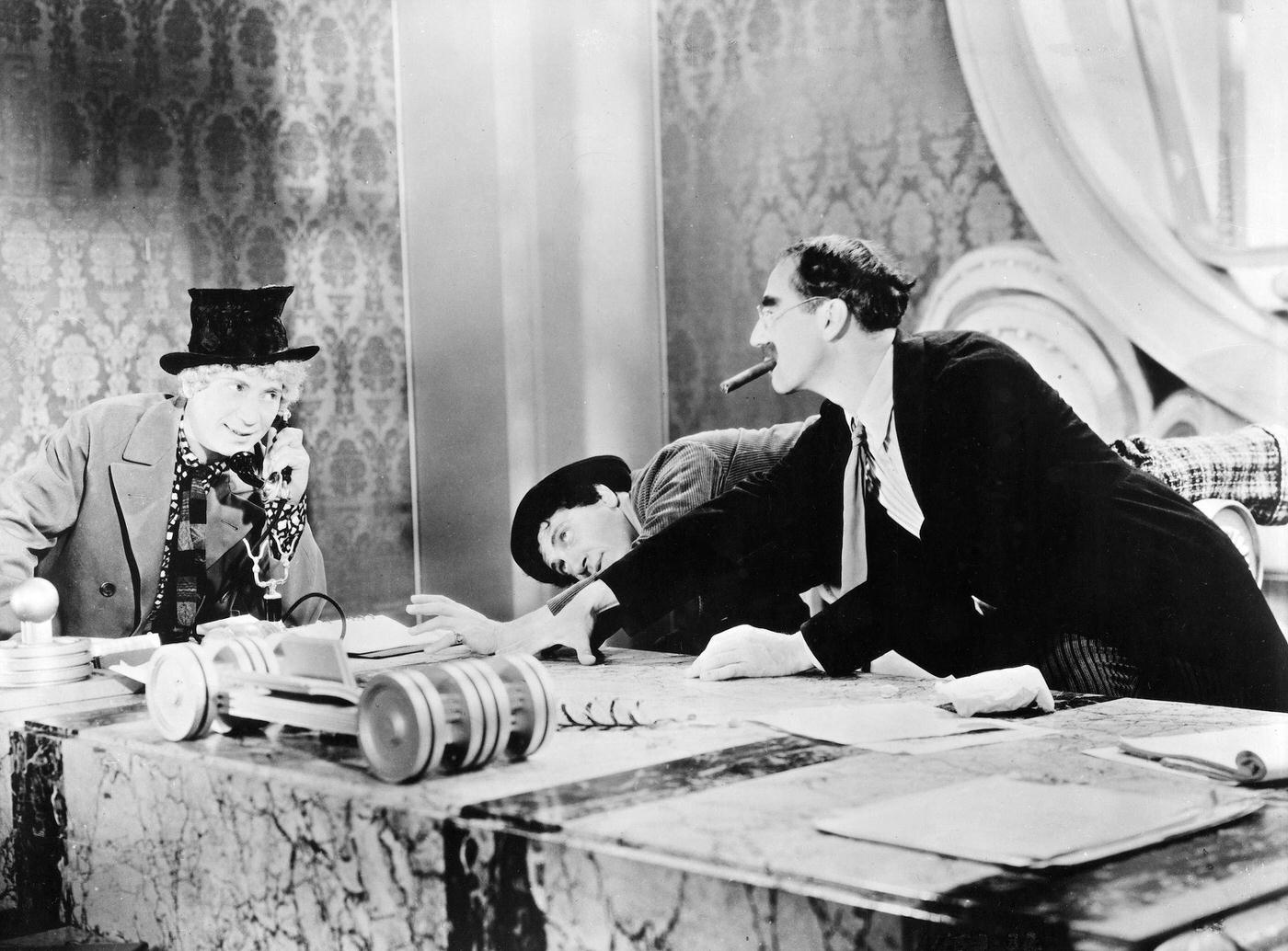
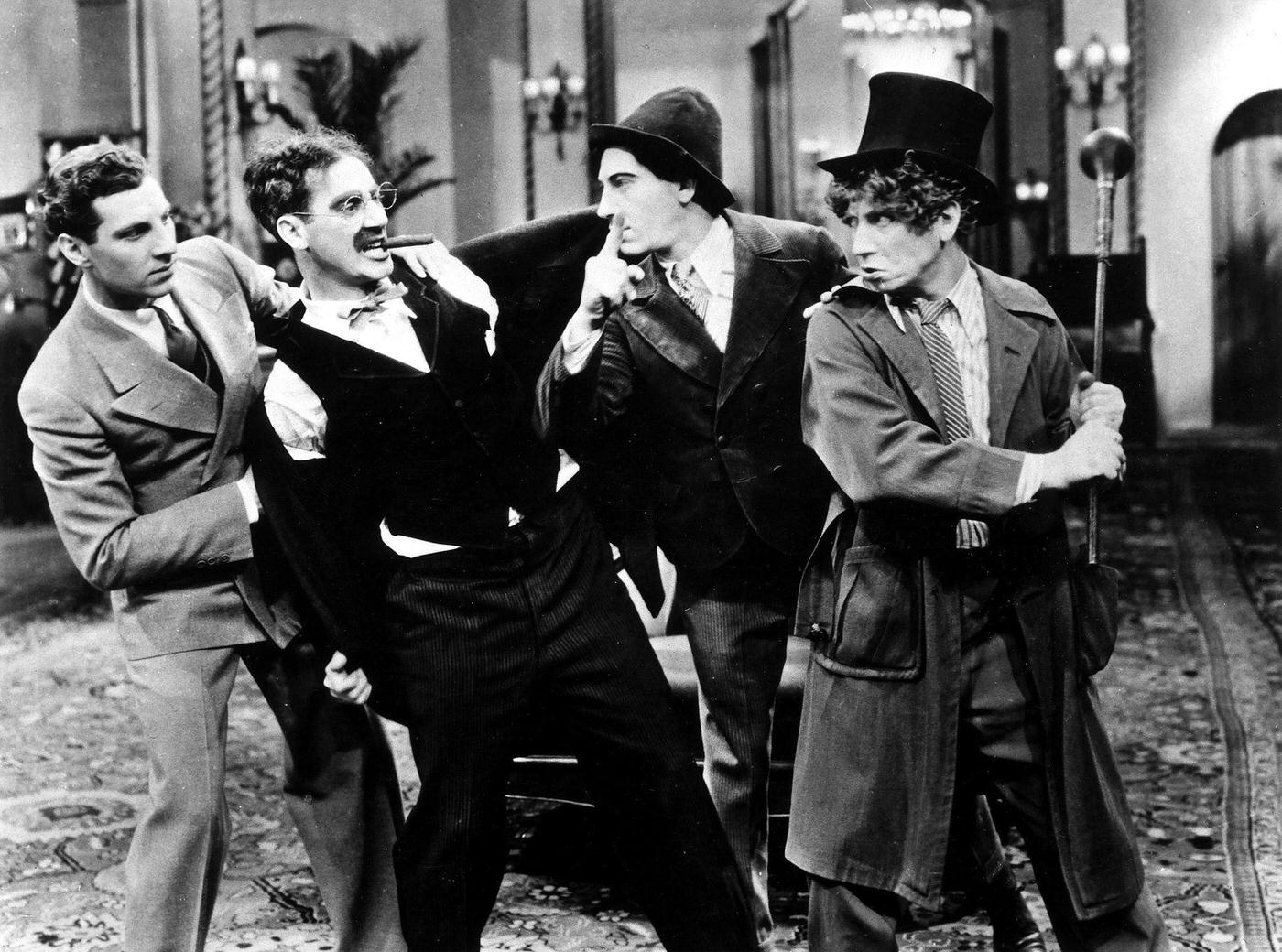
Chico’s Chicolini operates as a peanut vendor for most of the film, using his street-corner post as cover for his spy work. His interactions with Groucho are built on wordplay and deliberate misunderstanding — Chico’s fractured logic always manages to tie Groucho’s sharper wit into knots.
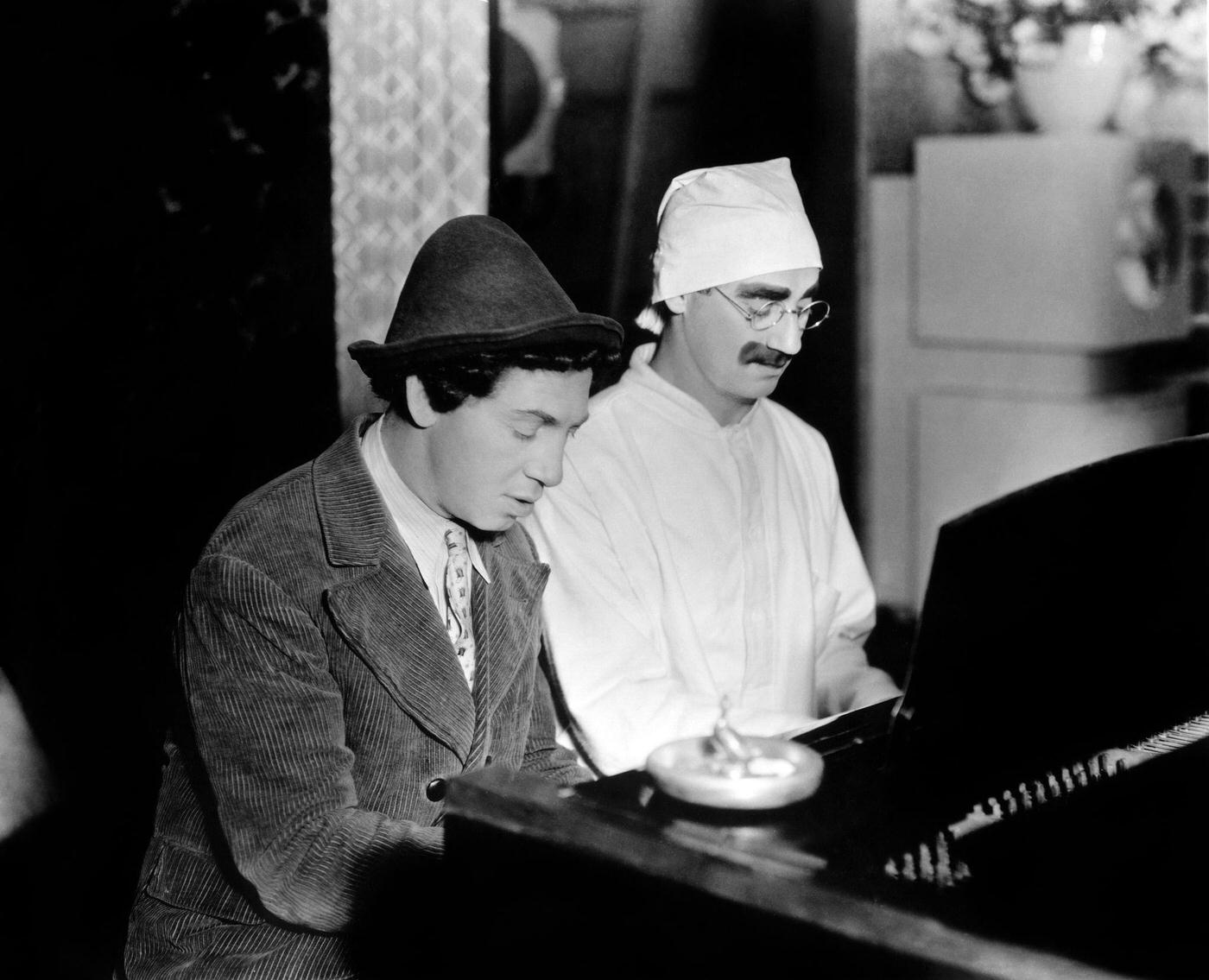
Duck Soup was the fifth film the Marx Brothers made for Paramount, following The Cocoanuts (1929), Animal Crackers (1930), Monkey Business (1931), and Horse Feathers (1932). Each film pushed further into political and social satire, but Duck Soup went further than any of its predecessors in dismantling the idea that authority figures deserve respect.
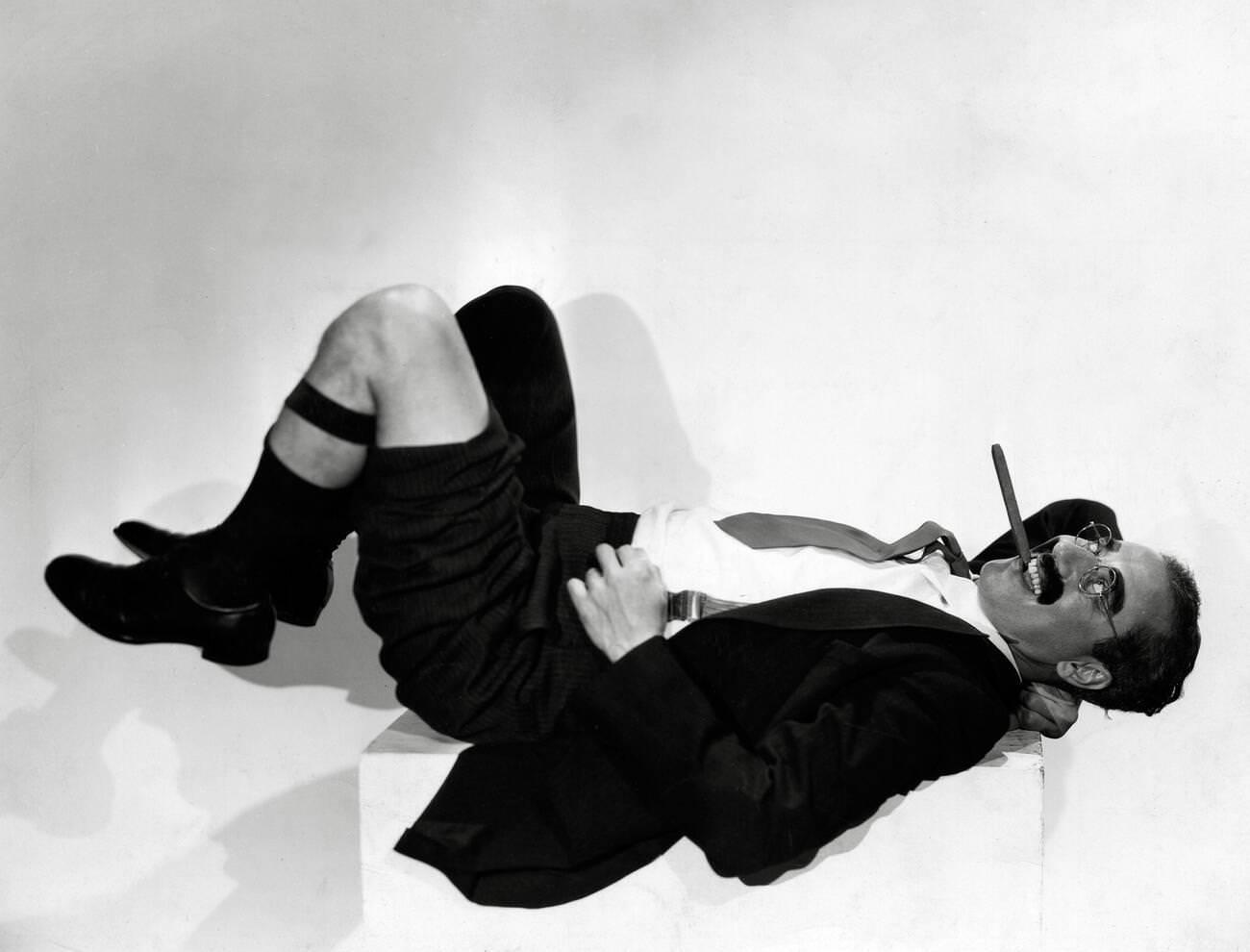
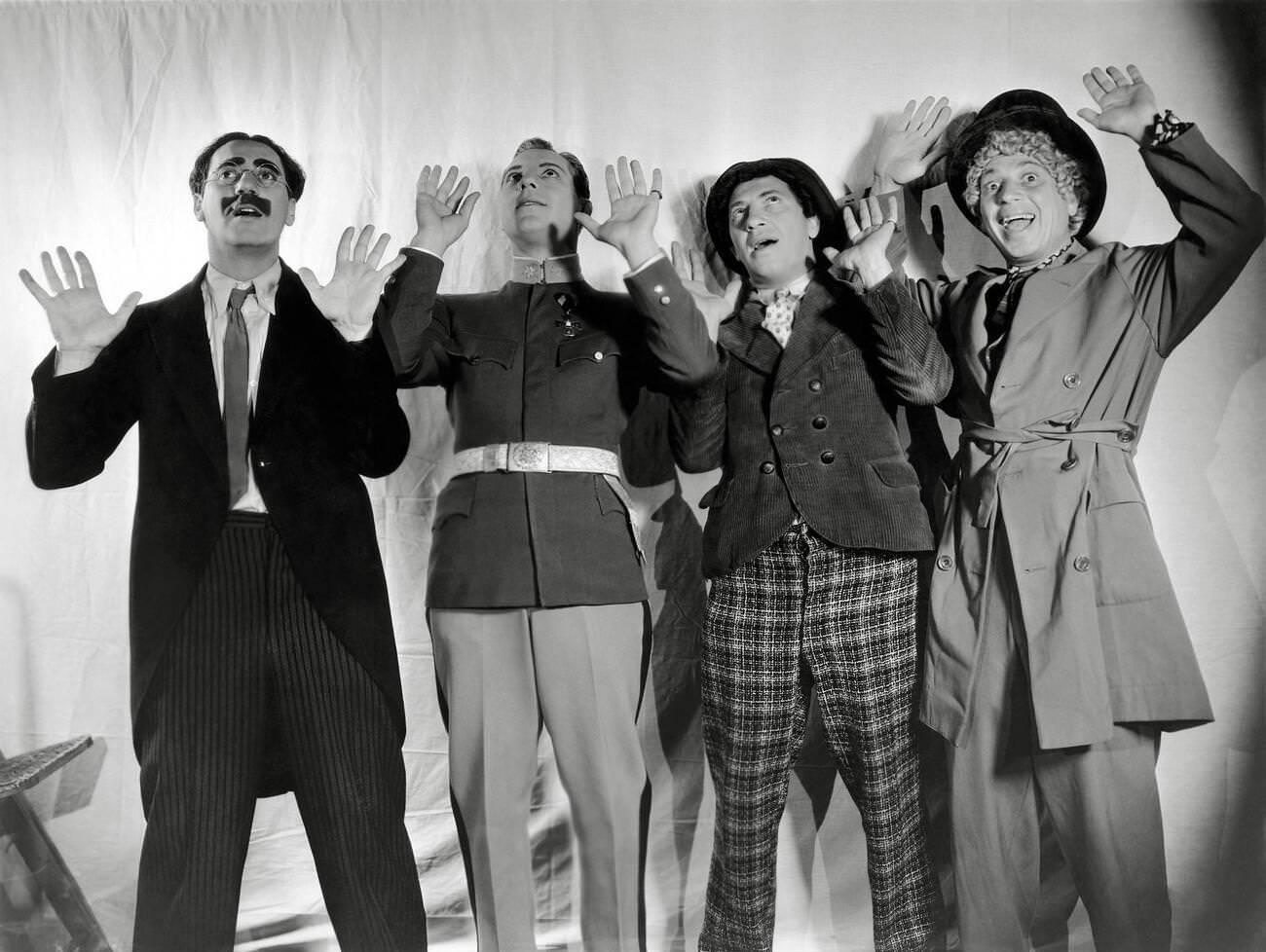
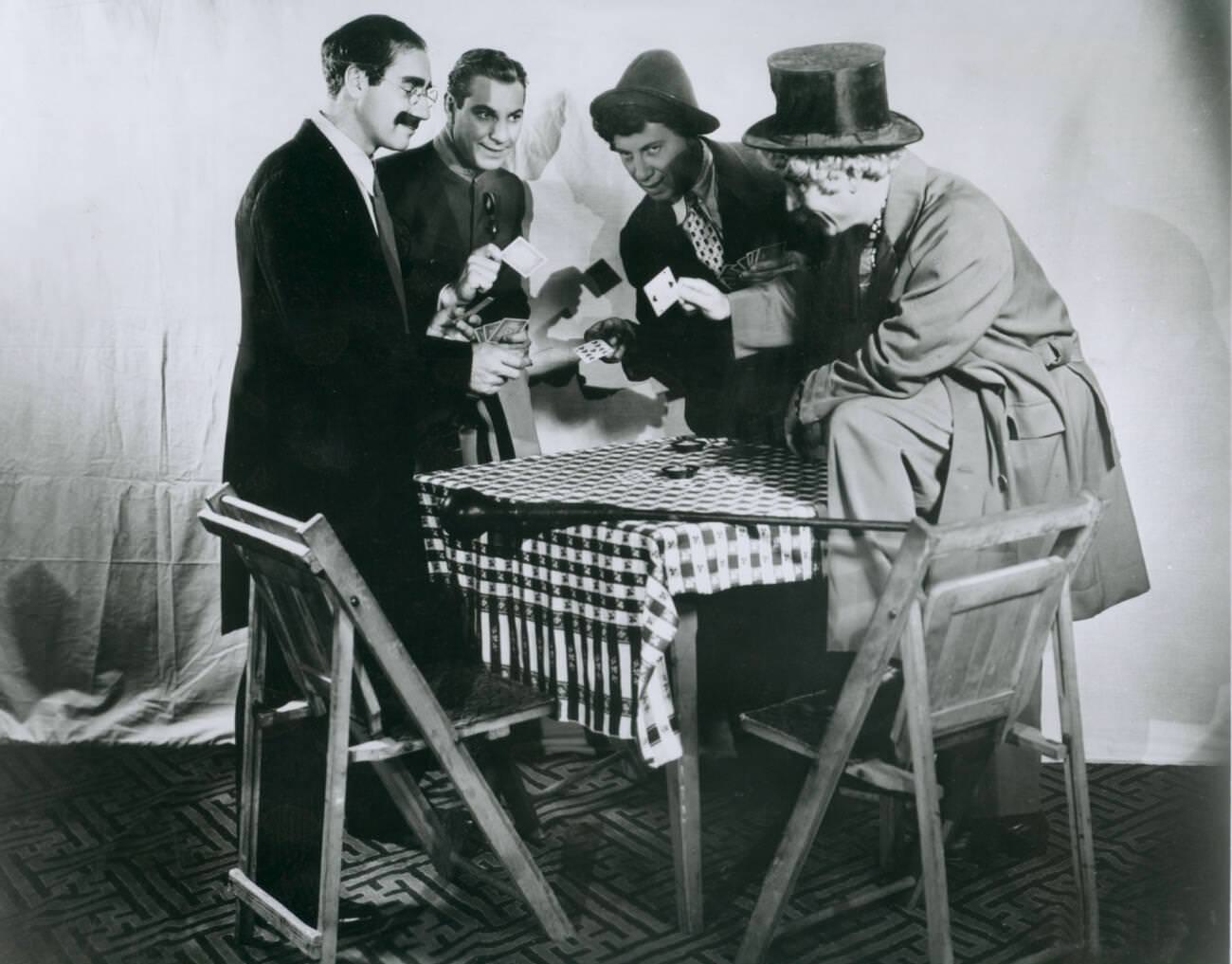
The four brothers — Julius (Groucho), Leonard (Chico), Adolph (Harpo), and Herbert (Zeppo) — had developed their act over decades of vaudeville before reaching Hollywood. By 1933, they had refined their comedic chemistry to a point where the timing between them required almost no adjustment on set. McCarey’s direction gave them room to run.
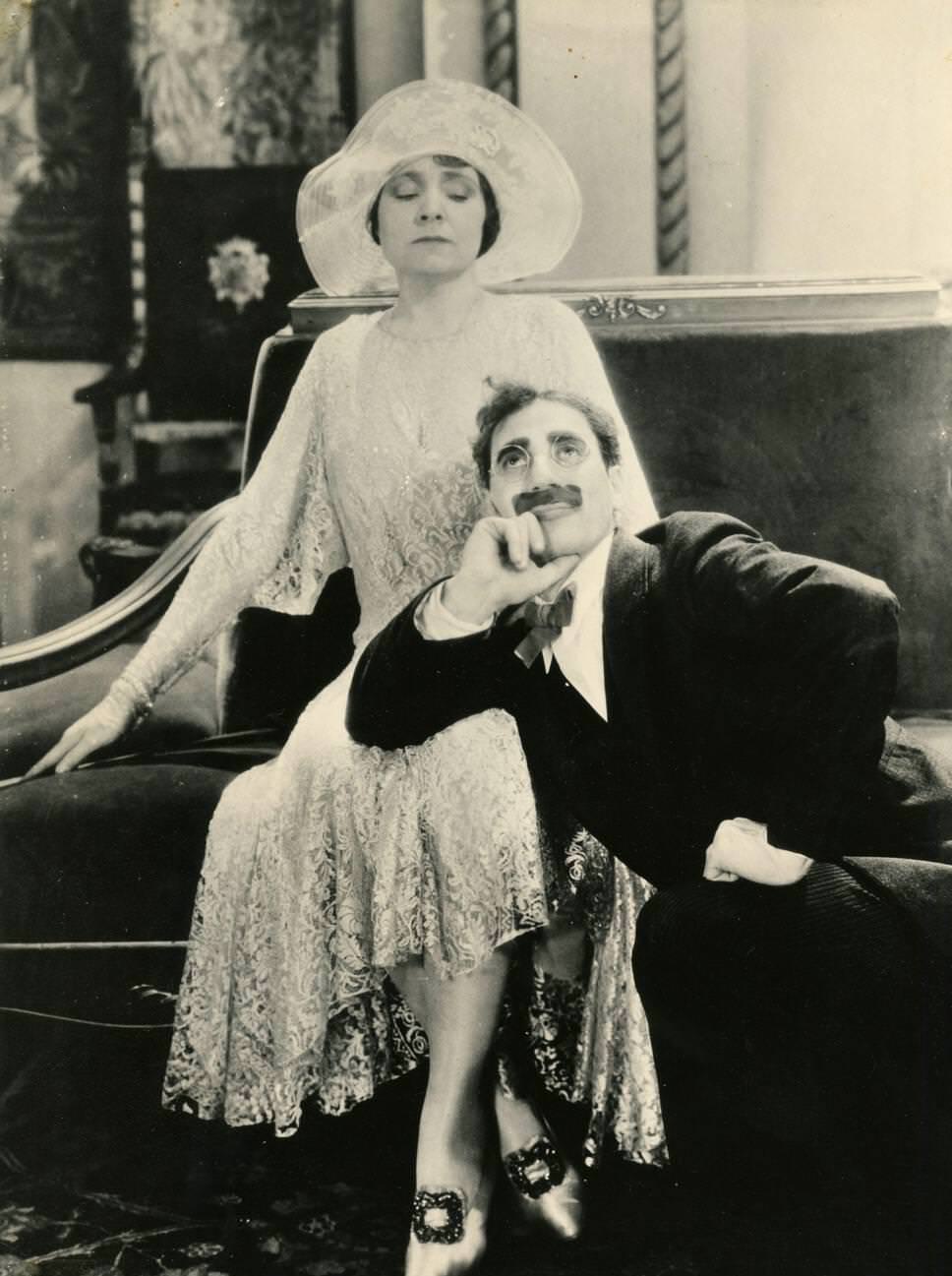
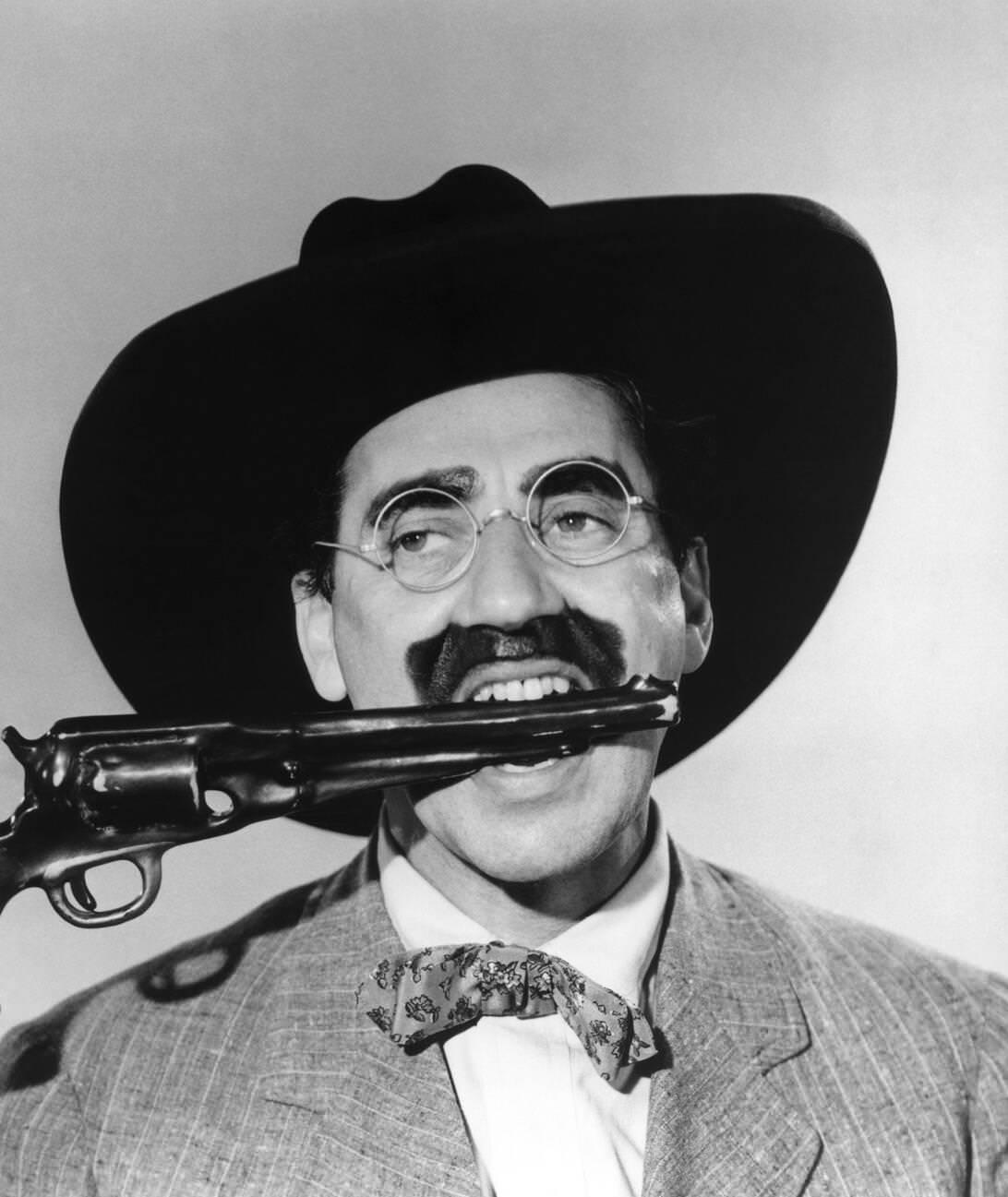
The film’s title was never fully explained by the brothers themselves — Groucho once gave a nonsensical recipe as the definition when asked. That deflection was entirely in keeping with the film’s spirit: earnest questions deserve absurd answers, and any attempt to impose meaning is fair game for mockery.
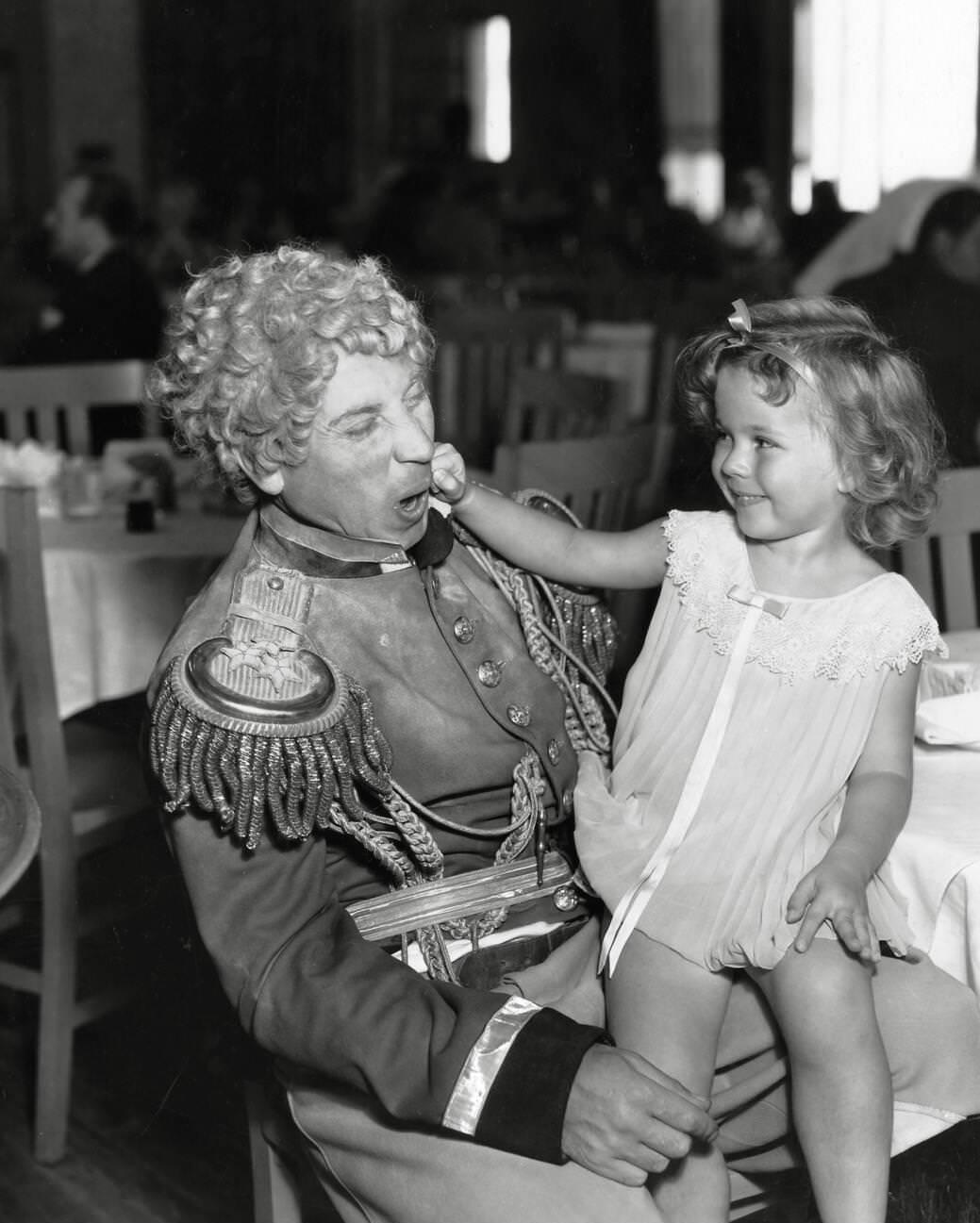
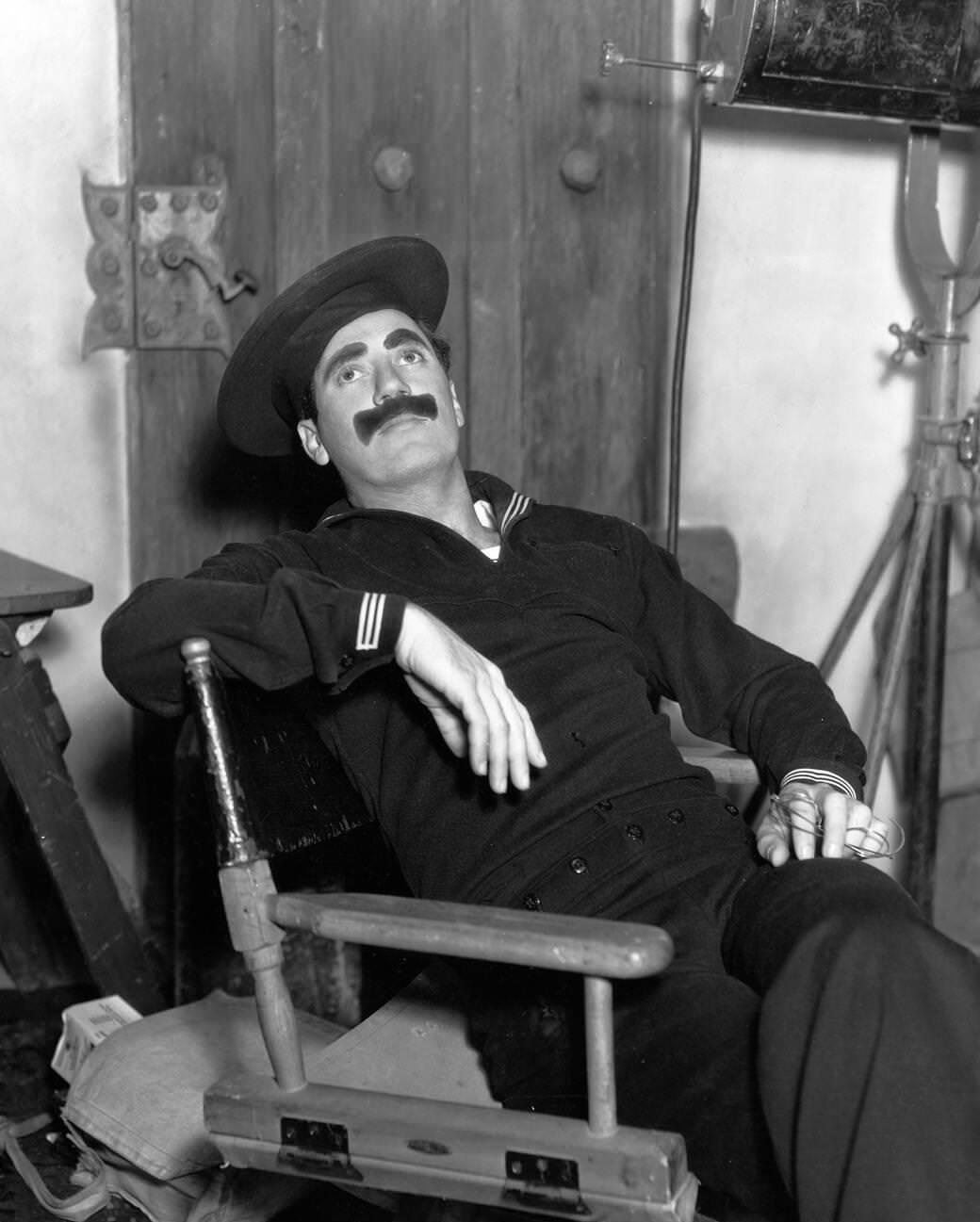
Leo McCarey later said that directing the Marx Brothers was one of the hardest jobs of his career — not because they were difficult, but because keeping them focused on a single scene was nearly impossible. They improvised constantly, and McCarey had to decide on the fly what to keep. Much of what made the final cut started as an unscripted moment on set.
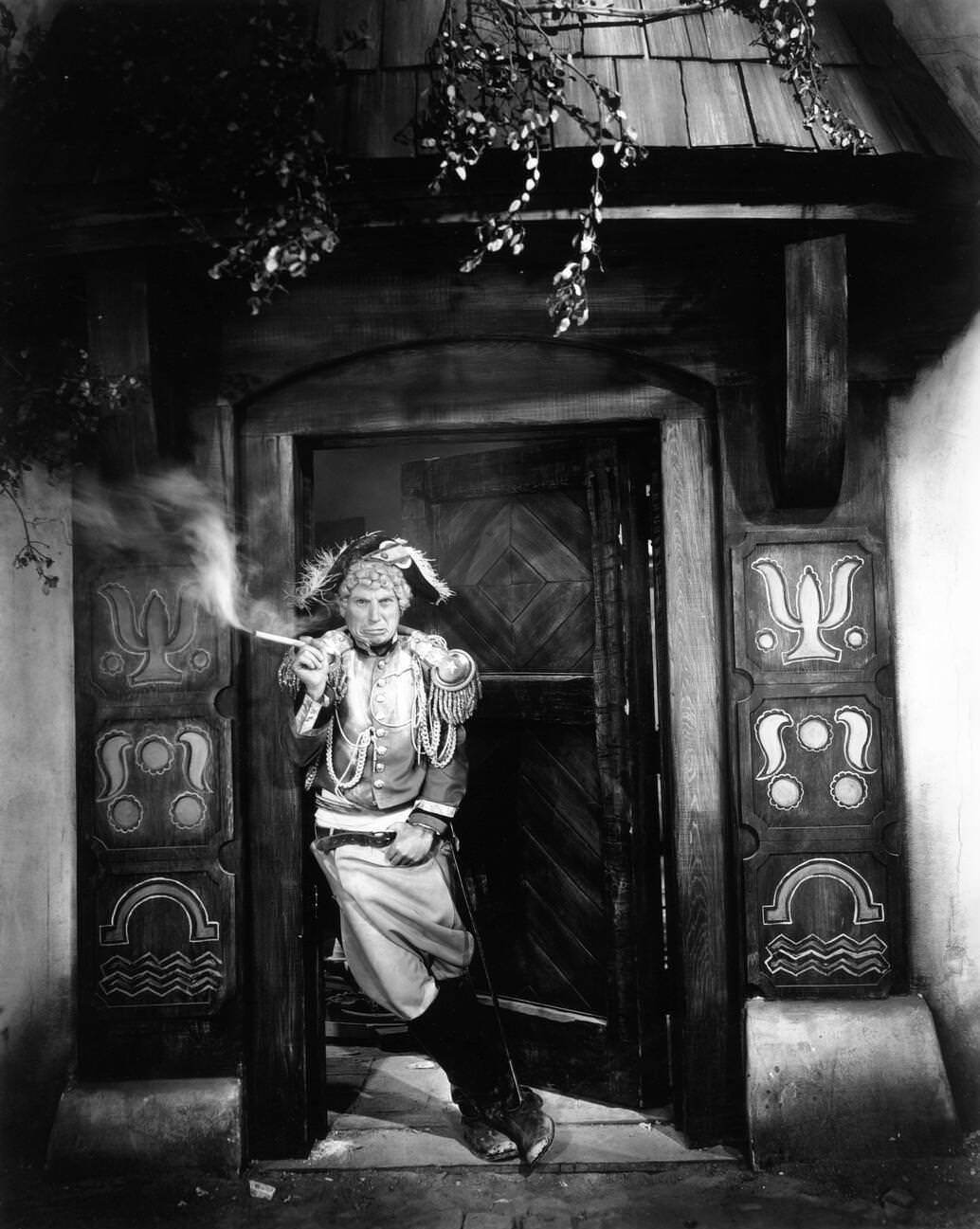
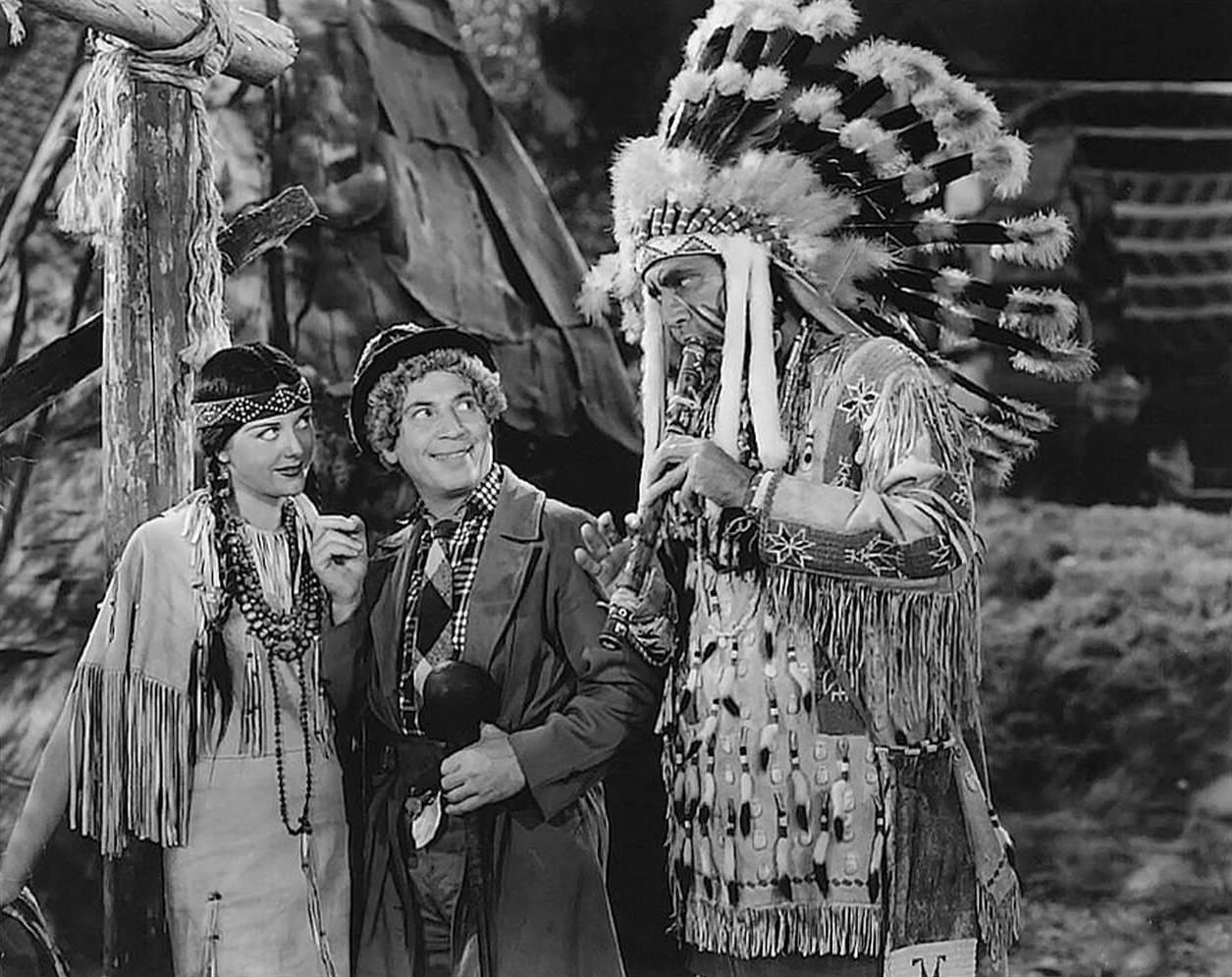
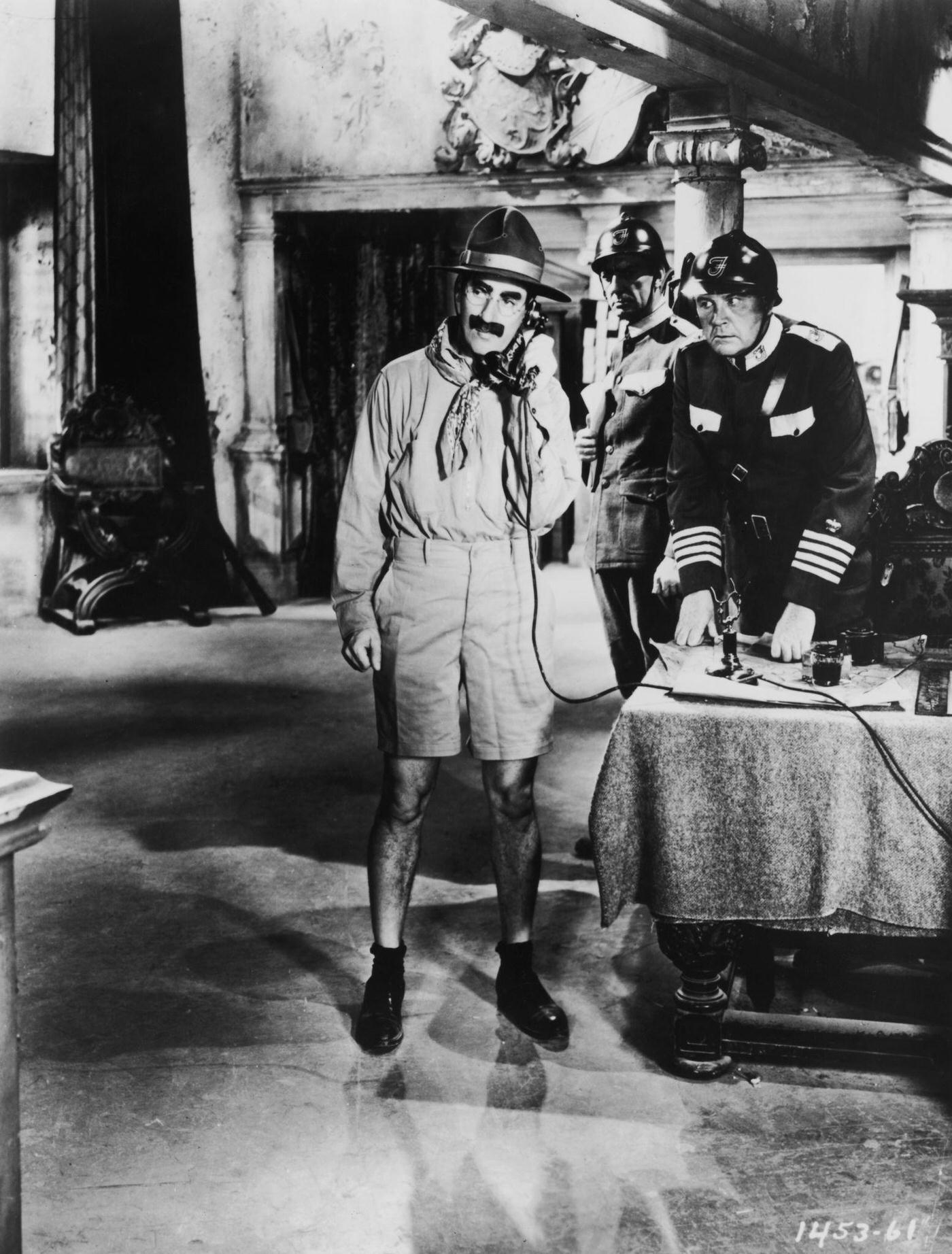
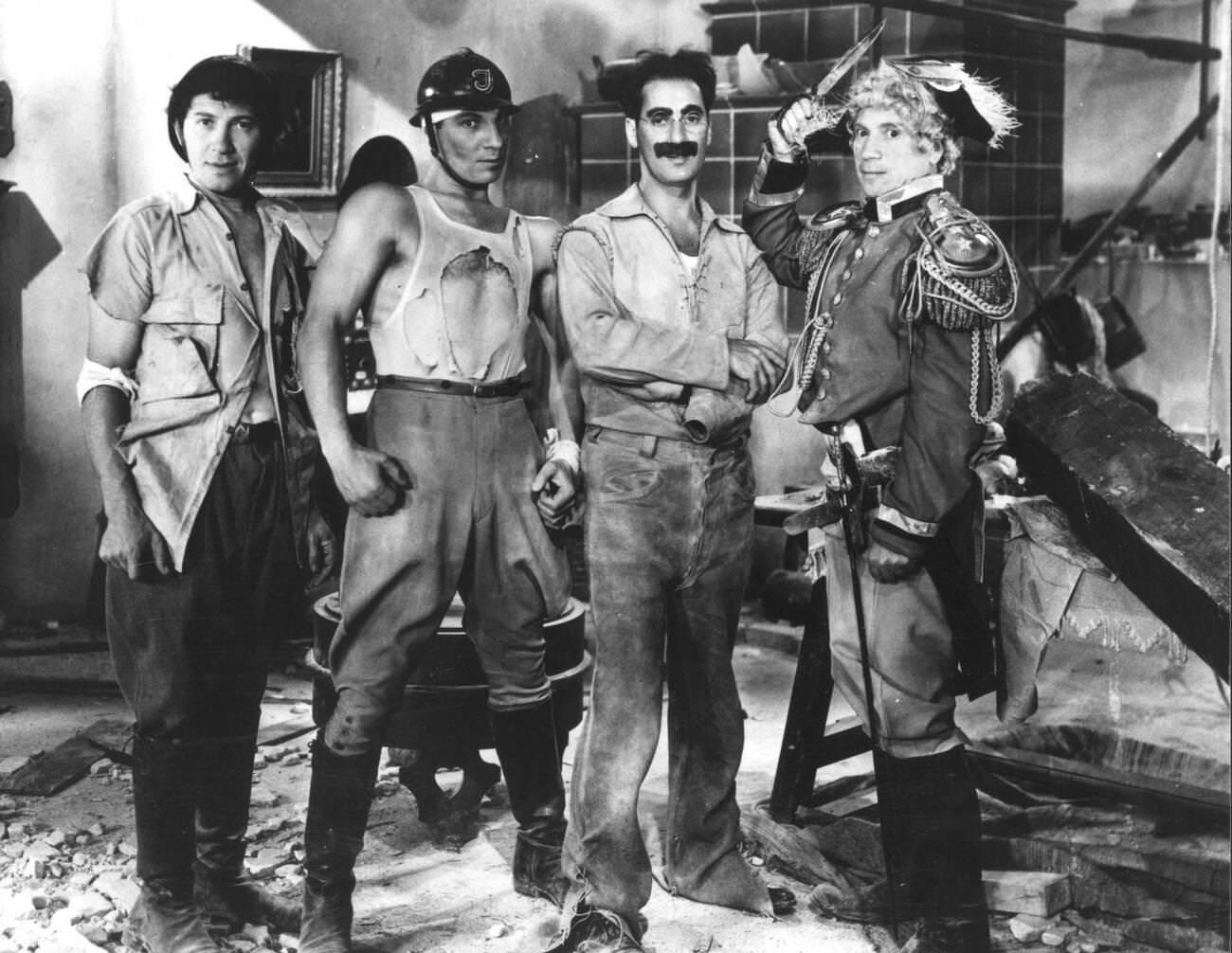
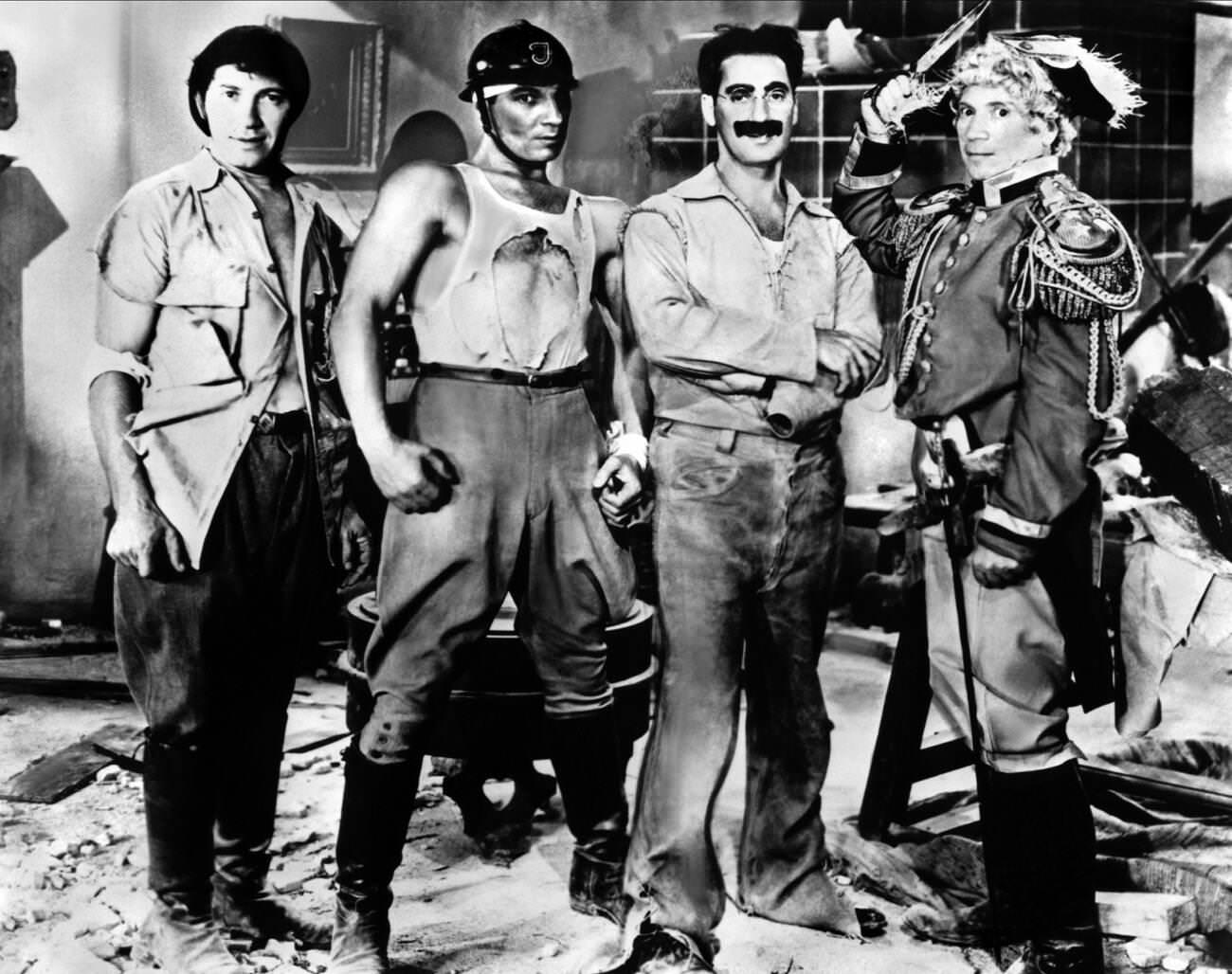
The film’s war scenes parody the glorification of military conflict. Soldiers celebrate the outbreak of war with singing and dancing. Firefly changes uniforms multiple times with no explanation, cycling through Revolutionary War, Civil War, and Davy Crockett-style frontier gear in rapid succession. The joke is that the costumes are interchangeable — and so, the film implies, are the wars.
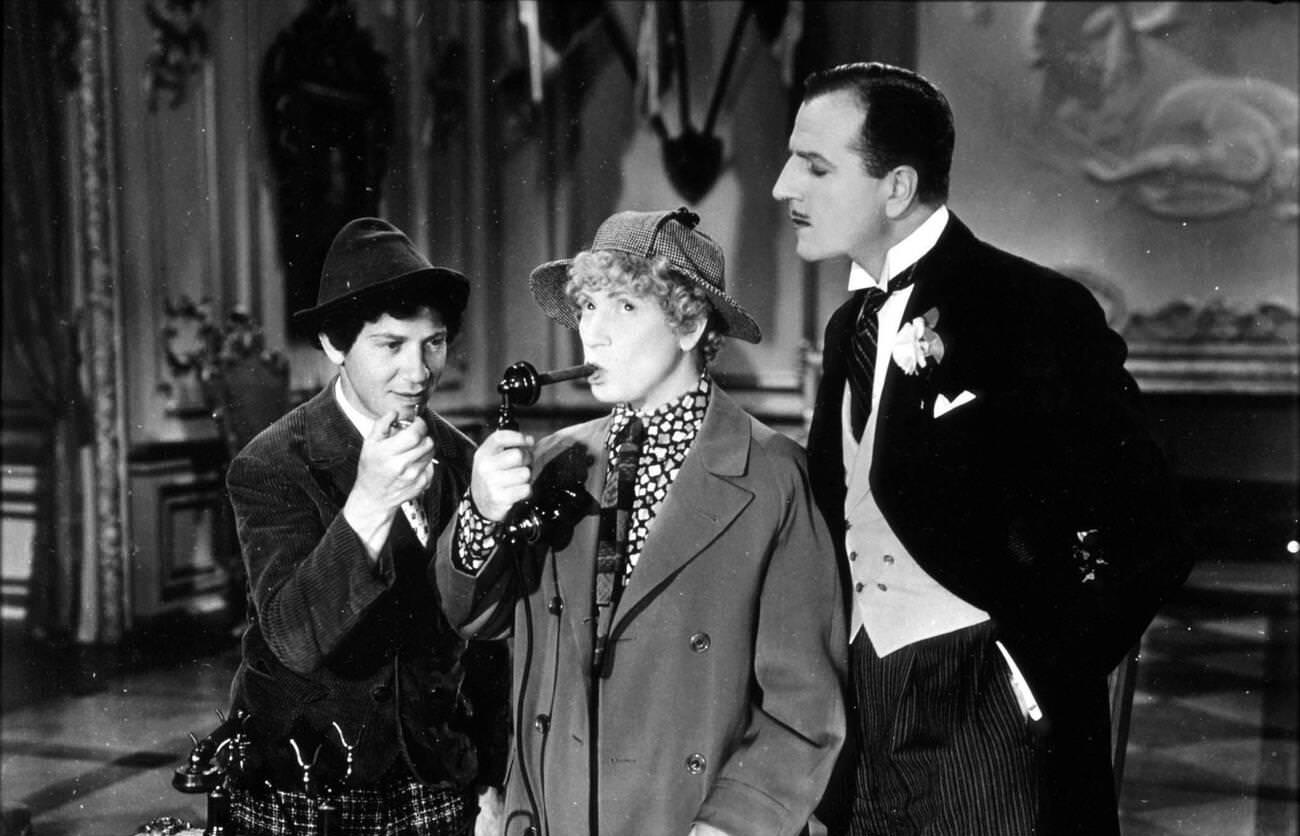
Louis Calhern plays Ambassador Trentino with straight-faced menace, which makes him the perfect foil. Every scheme he sets in motion unravels because of Chicolini and Pinky’s incompetence. Calhern plays his frustration seriously, and that sincerity is what makes the scenes work — the comedy lands harder when at least one person in the room refuses to acknowledge how ridiculous things have gotten.
Duck Soup was produced on a budget of approximately $1.1 million and earned around $1.3 million domestically — a slim return by Paramount’s expectations. The studio had hoped for the kind of returns the brothers’ earlier films had generated. When the numbers fell short, the partnership ended.
The film’s script was written by Bert Kalmar and Harry Ruby, who also wrote the songs. Arthur Sheekman and Nat Perrin contributed additional dialogue. The writing team had worked with the Marx Brothers before, and they understood the rhythm of how the brothers delivered material — short bursts, quick pivots, no pause long enough to let the audience catch up.