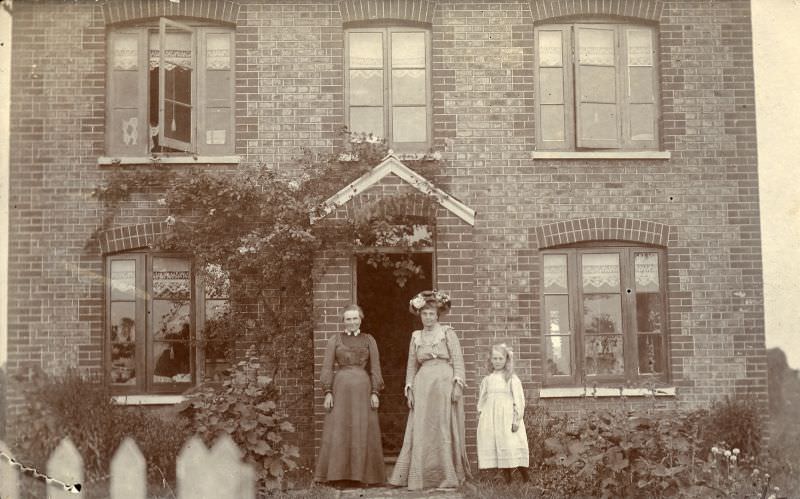
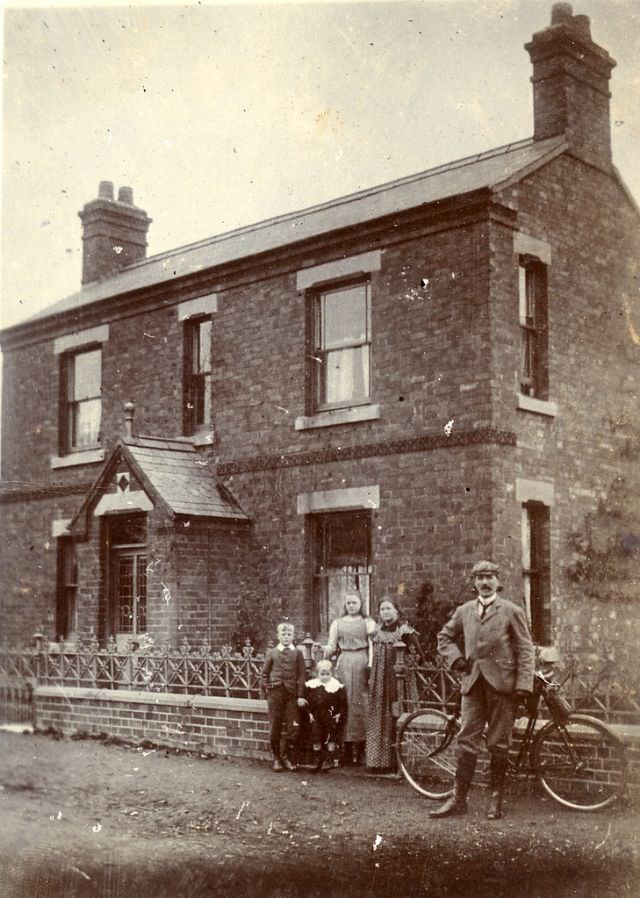
Between 1901 and 1910, King Edward VII sat on the British throne, and the era that bears his name was one of real change — in technology, in society, and in how ordinary people saw themselves. One habit from this period stands out in particular: people photographed themselves in front of their homes. These weren’t posed studio portraits. They were taken outside, on doorsteps, at garden gates, and along pavements, with the house firmly in the frame.
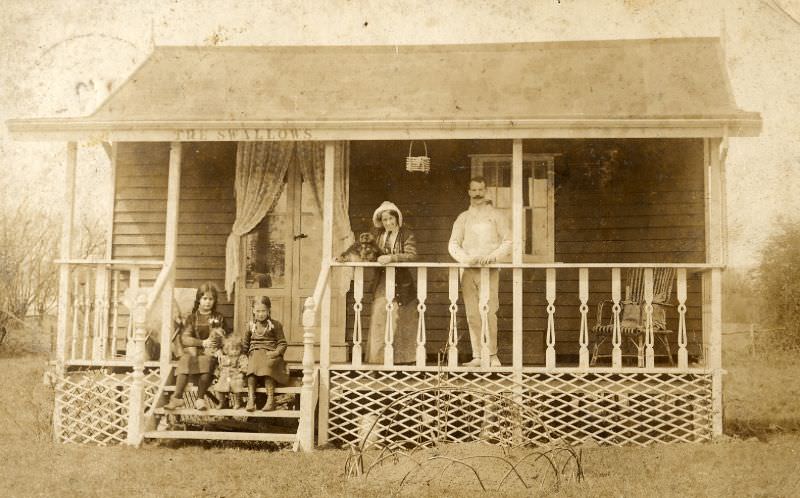
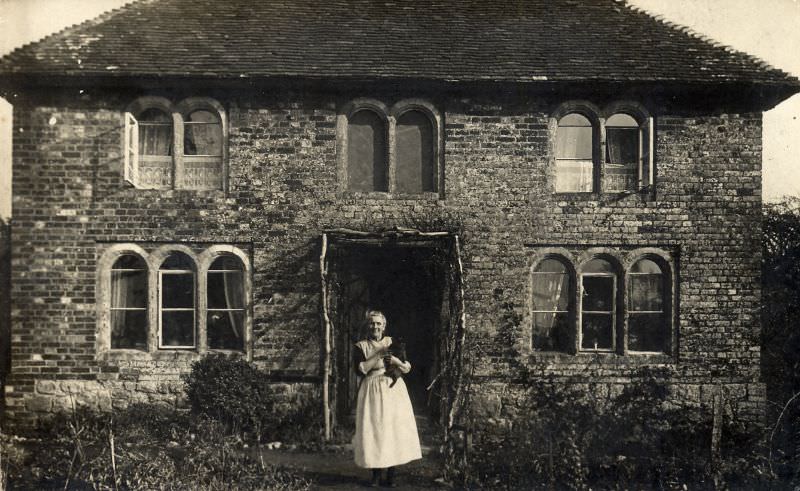
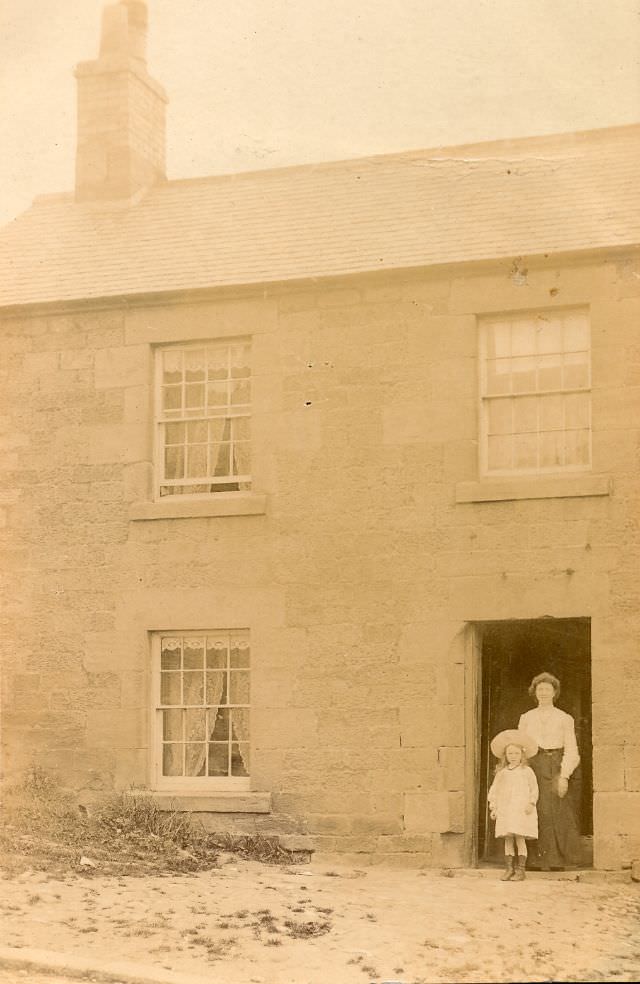
The homes in these photographs range widely. Some are large detached houses with manicured gardens. Others are modest terraced cottages, pebbledashed or stone-built, with a small patch of ground out front. A few are thatched rural dwellings. What they share is that the people standing in front of them clearly wanted the house in the picture. The building wasn’t just a backdrop — it was part of the statement.
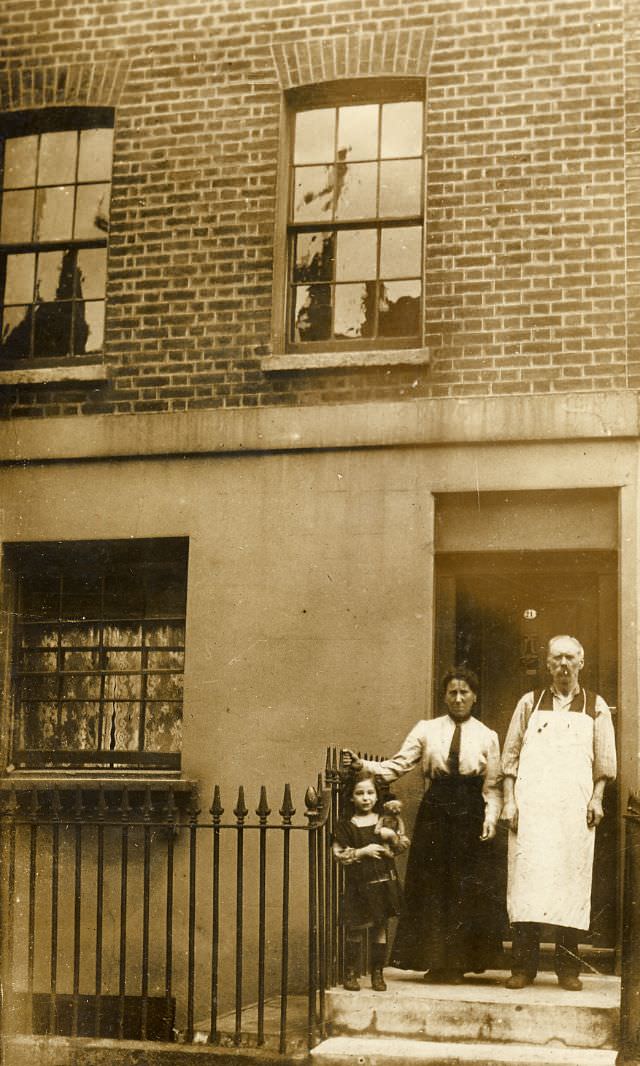
Some of these images were sent as postcards — a common practice in Edwardian Britain. One, posted in 1914, shows a London address and was mailed to a Mrs. Ward in Dumfries, Scotland. The sender captioned it simply: “Our house in 1914.” That brevity says a great deal. The house itself was the message.
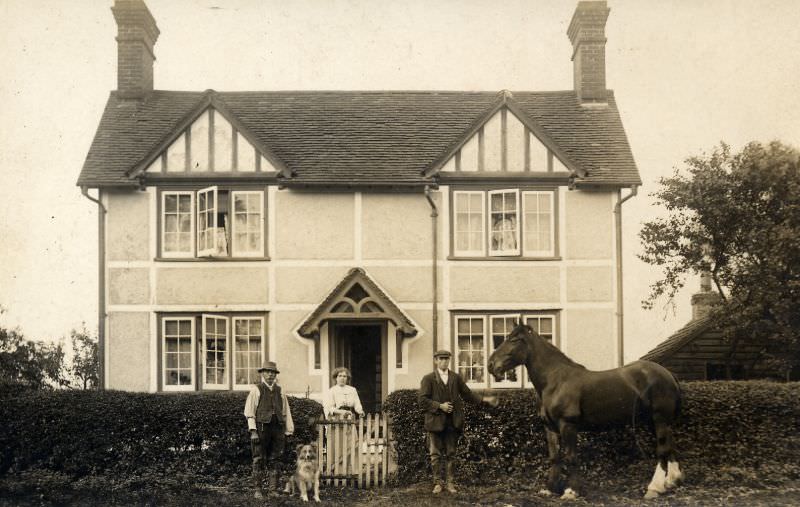
Clothing in these photos is just as telling as the buildings. Men appear in stiff collars and waistcoats. Women wear ankle-length dresses and elaborate hats or bonnets. Children are dressed as smaller versions of their parents — formal, neat, and upright. Even in rural settings, the subjects dressed carefully for the camera.
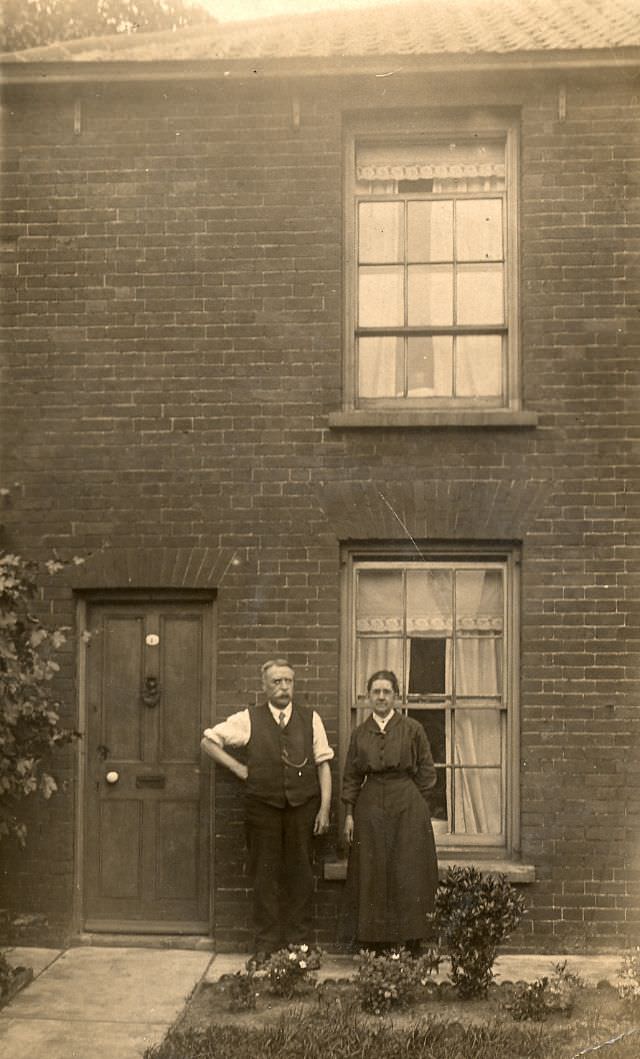
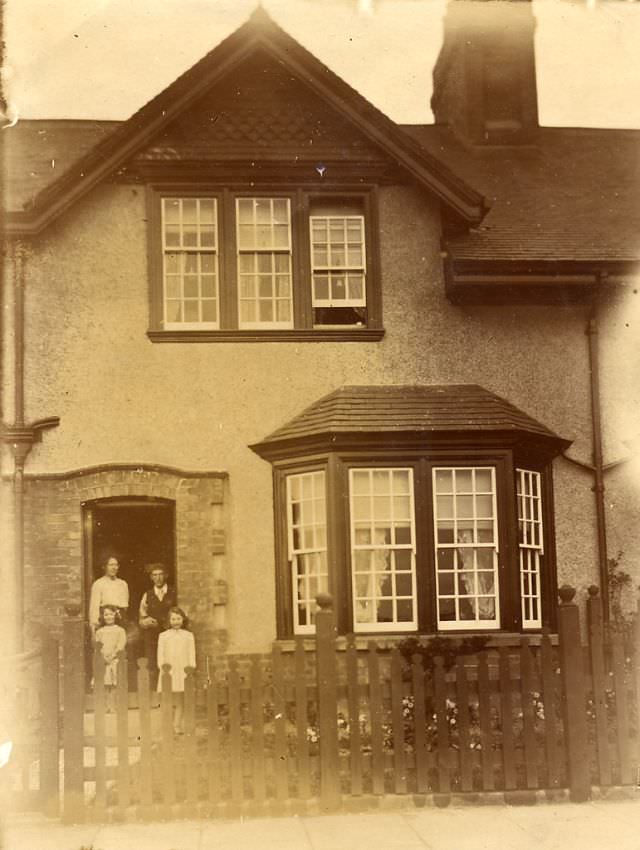
Class distinctions show up clearly across the collection. The size of a house, the style of dress, the number of servants visible — all of it marks where a family stood in the social order. A couple photographed in front of a large detached house occupied a very different world from a mother and child standing in the doorway of a narrow stone terrace.
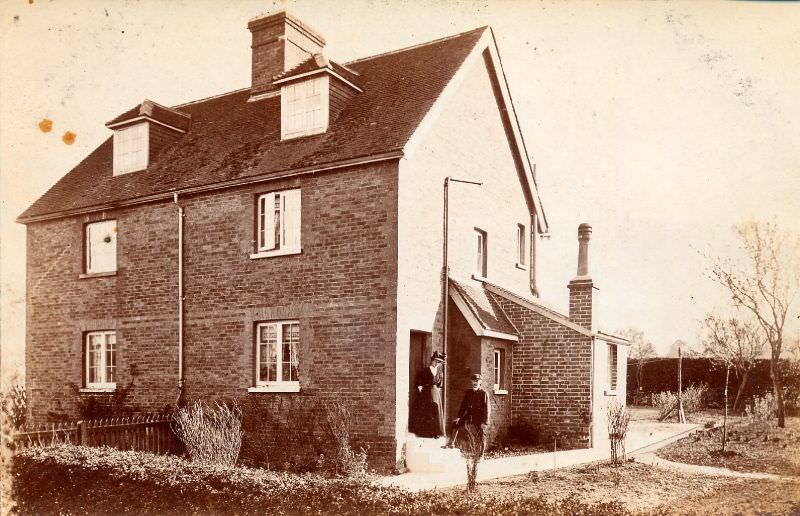
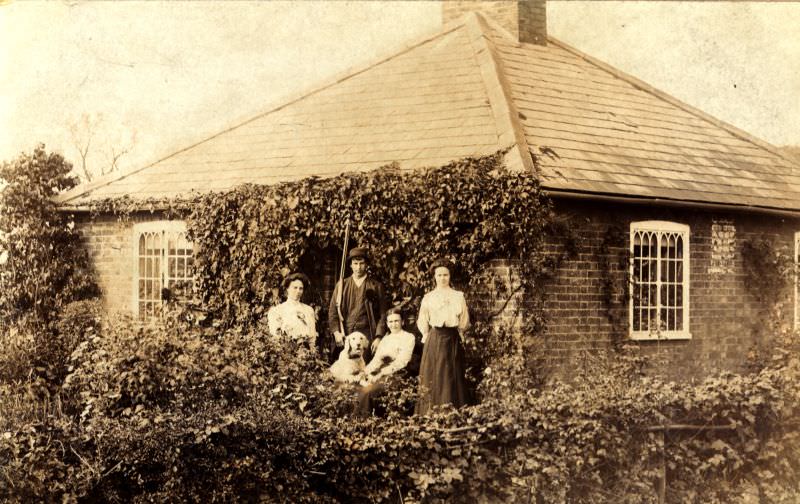
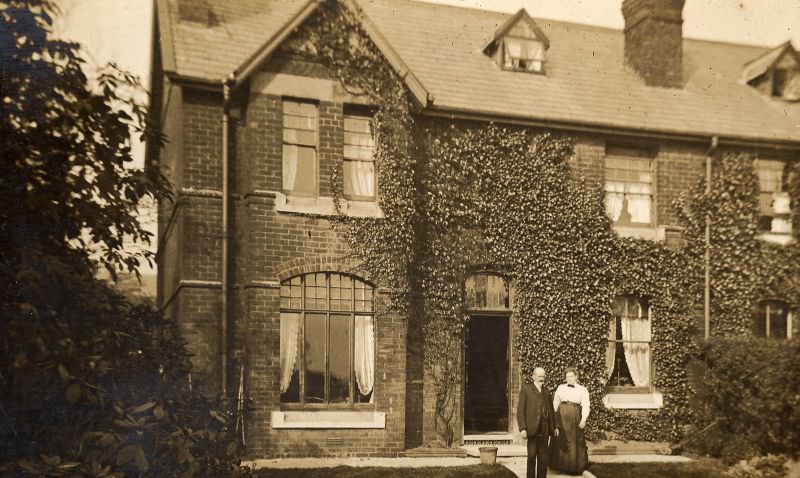
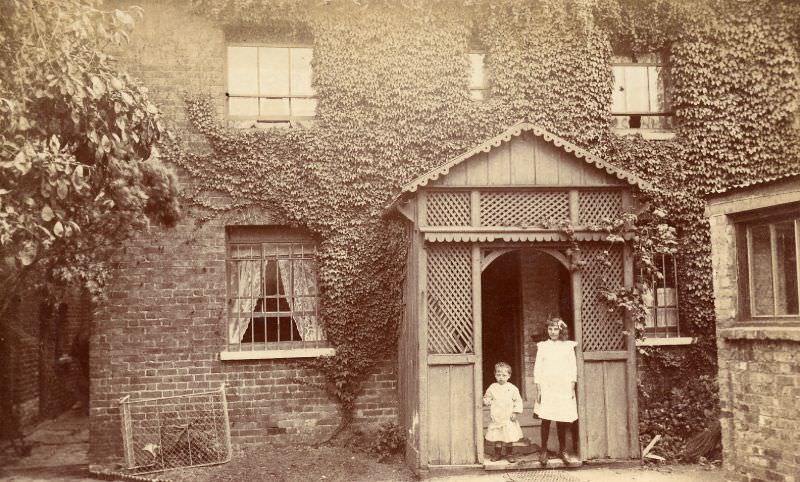
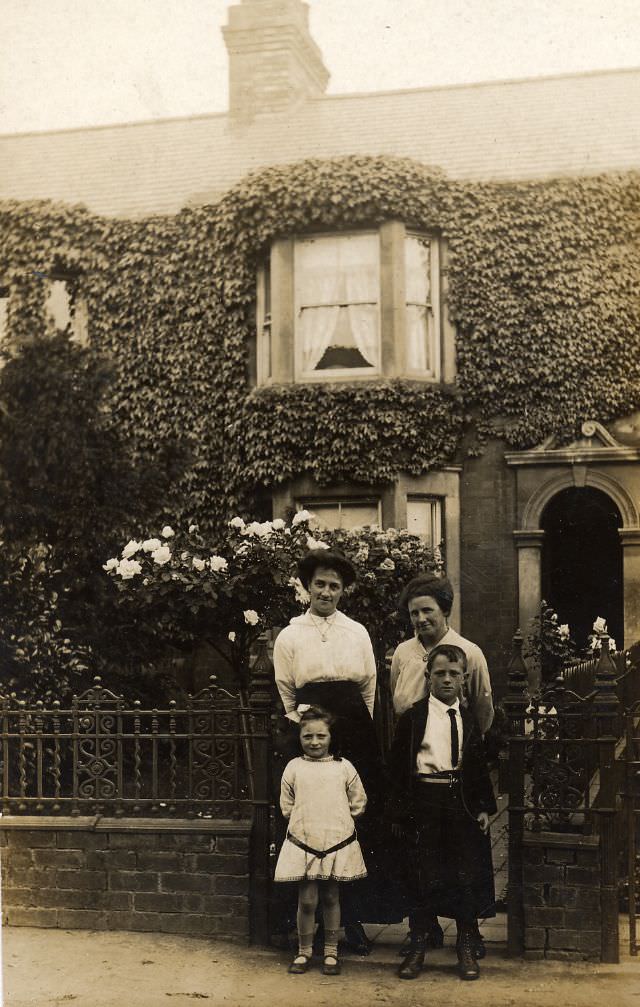
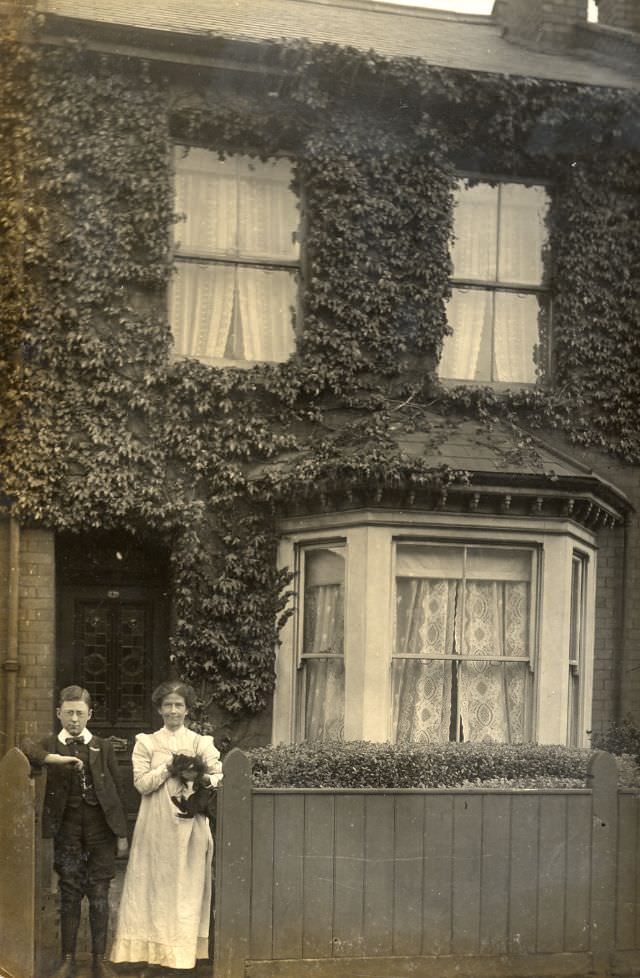
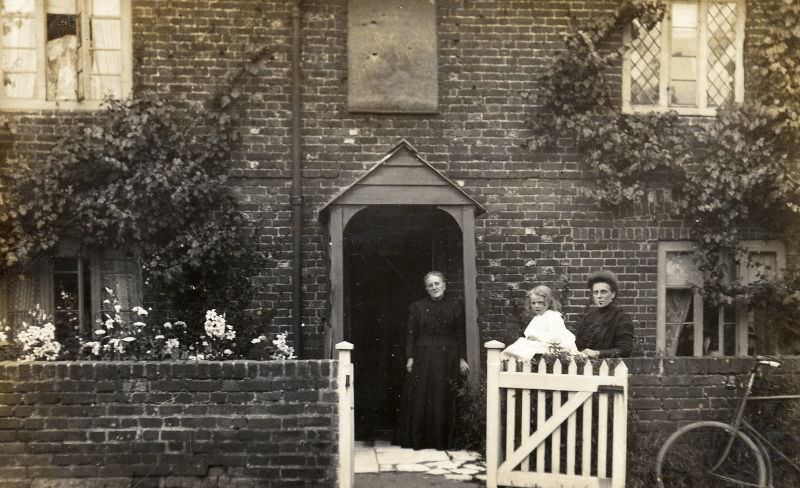
Ivy-covered walls appear often in these images — a mark of an established home, one that had been standing long enough for nature to take hold. Families posed proudly in front of these vine-draped facades, the greenery framing them like a living border.
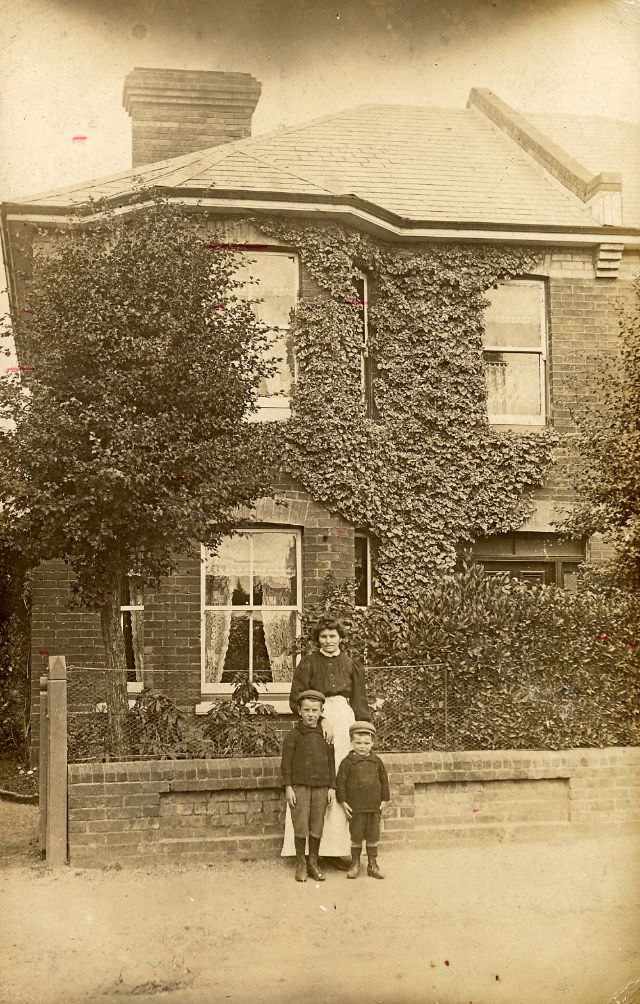
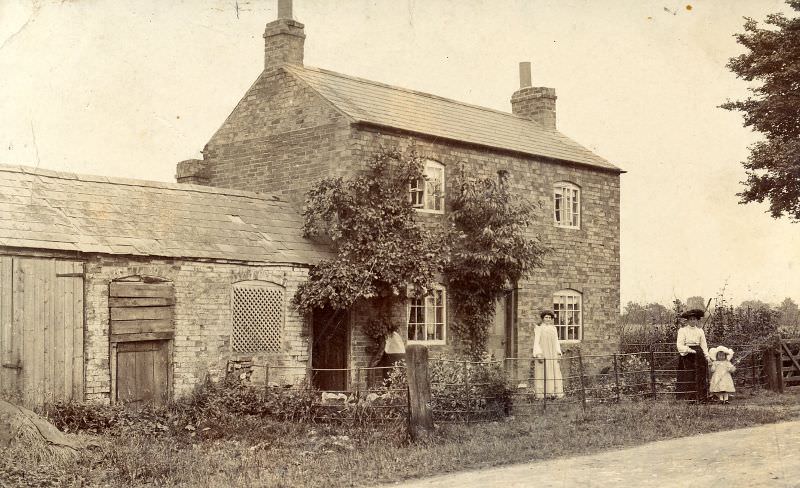
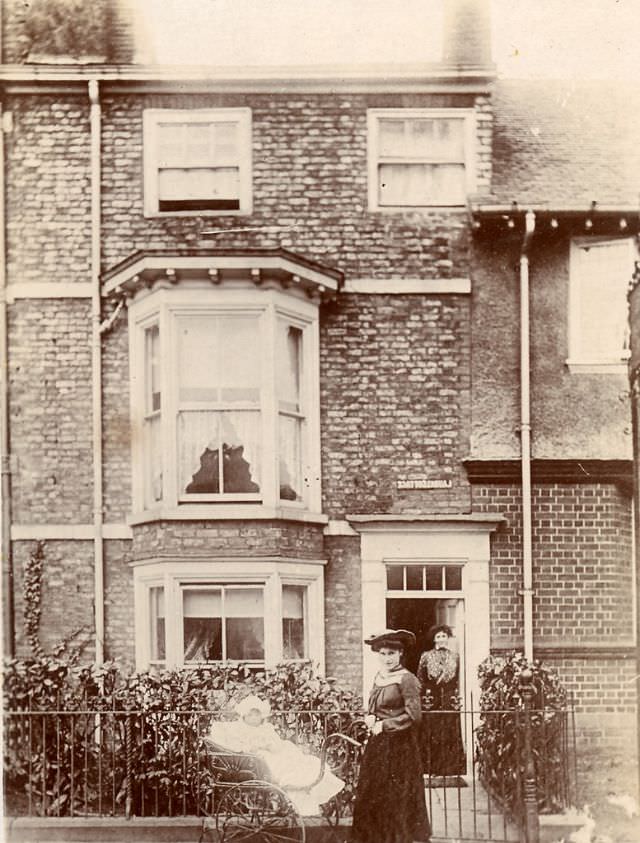
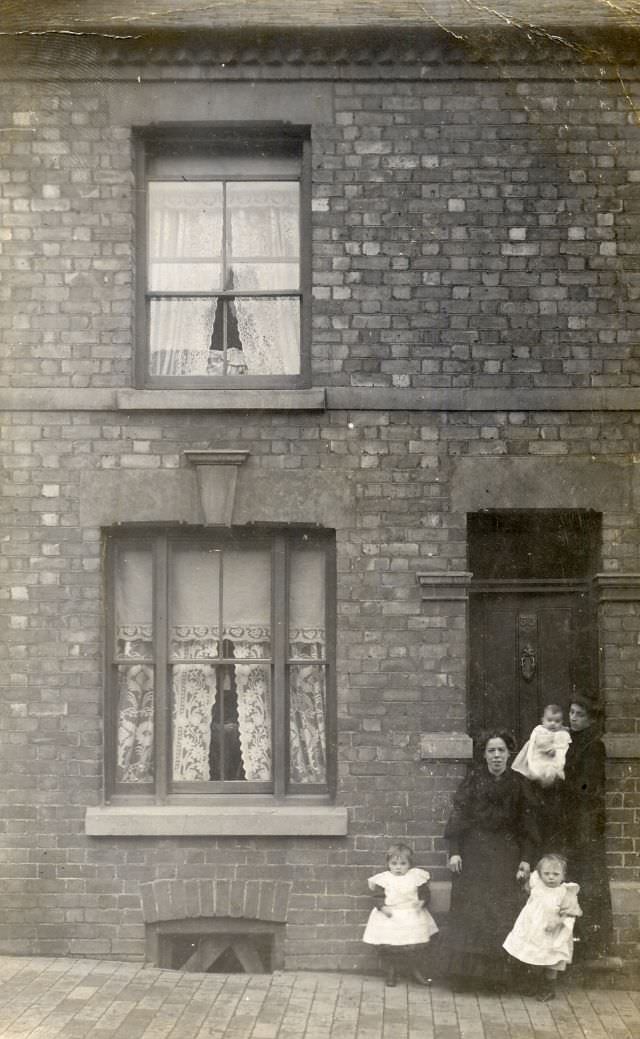
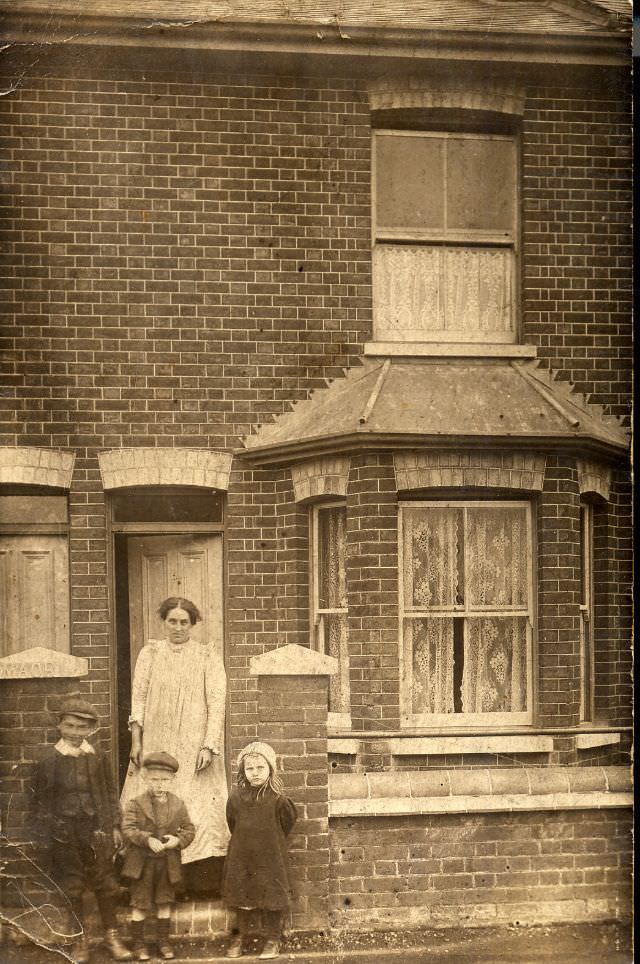
Babies and young children appear frequently — some in prams on the pavement, others held or stood beside their mothers at the front door. These weren’t just family portraits; they were documents of domestic life at a specific moment in time.
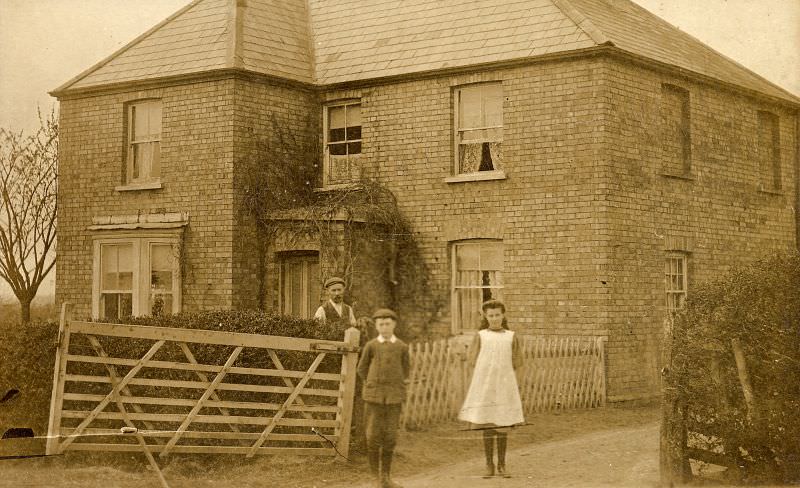
Wealthier households are easy to spot. Large houses with well-kept gardens, decorative timber porches, and Gothic architectural details signal a higher economic standing. In one image, a couple stands before a grand house; in another, children pose inside an ornate porch, its carved woodwork on full display.
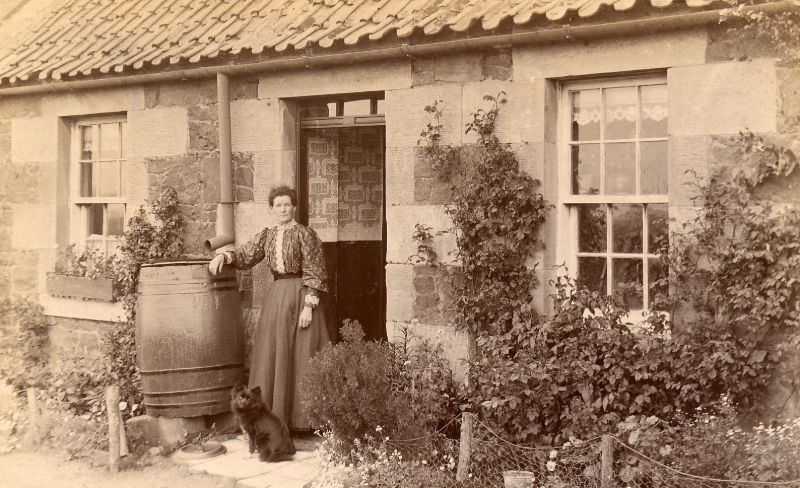
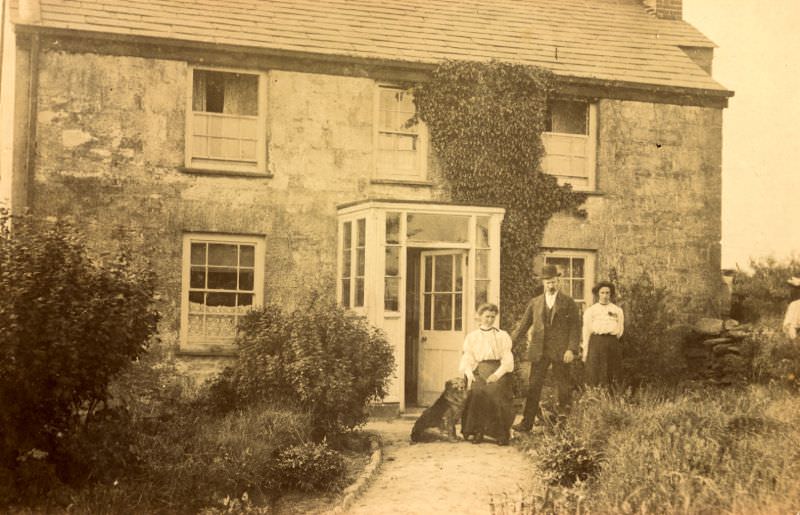
Animals make appearances too. A dog stands beside a woman outside a single-storey house. Siblings pose with their dog at the front of another. On a farm, hens and ducks peck around the doorstep while the family lines up for the camera.
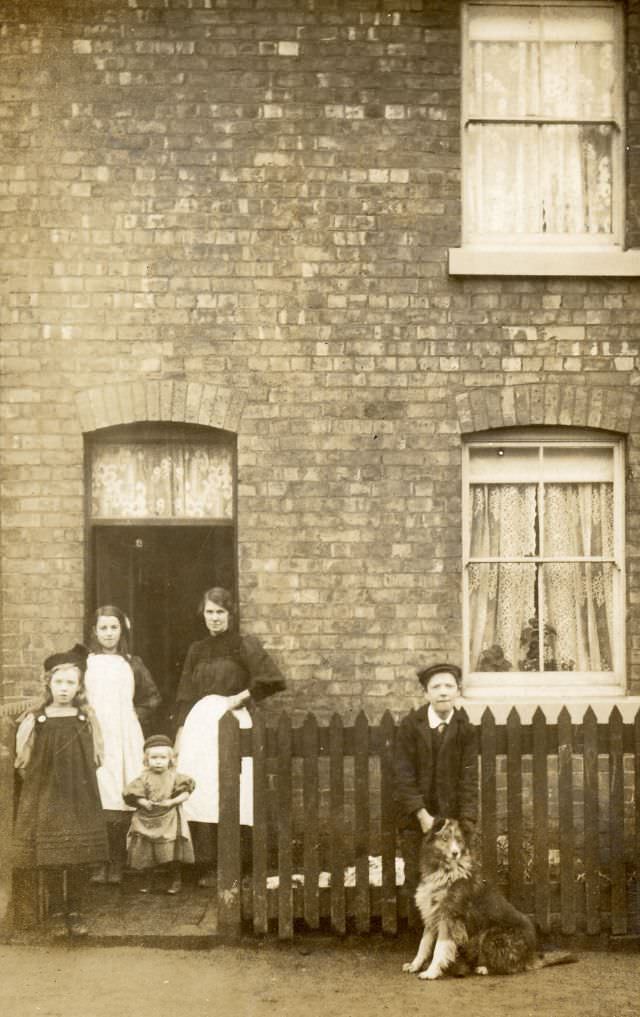
Terraced housing was the dominant form of working-class urban living during the Edwardian period. Rows of identical brick facades, each with a small front step and a narrow door, housed millions of British families. Several photographs in this collection show exactly that — a single mother, a young couple, or a small family standing at the entrance of their terrace home.
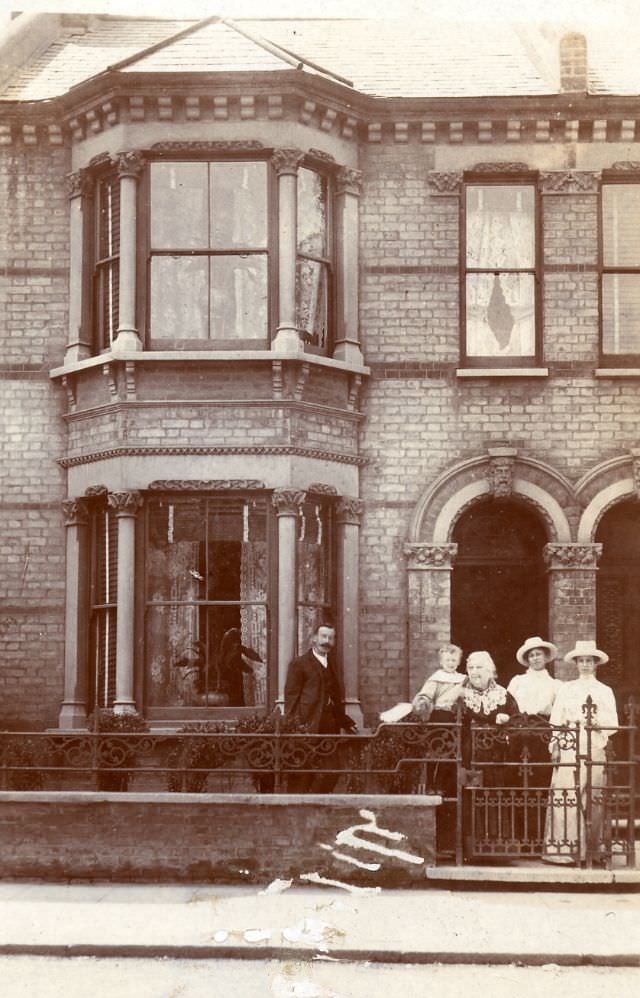
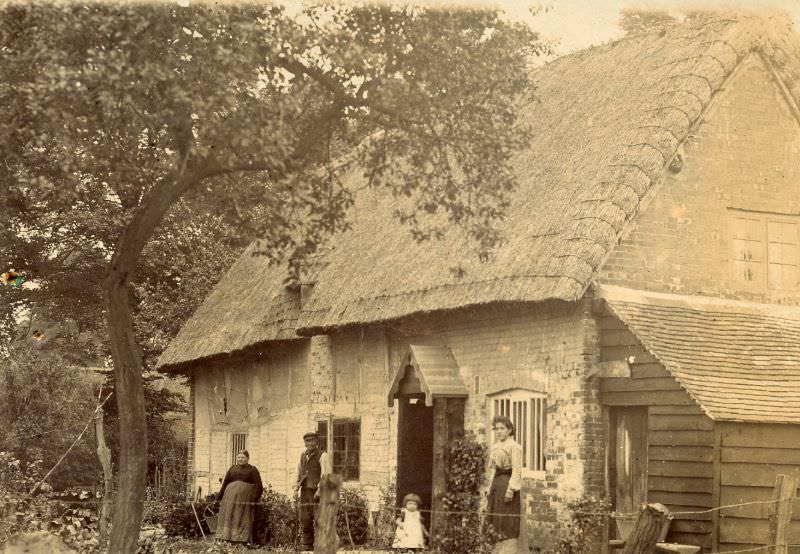
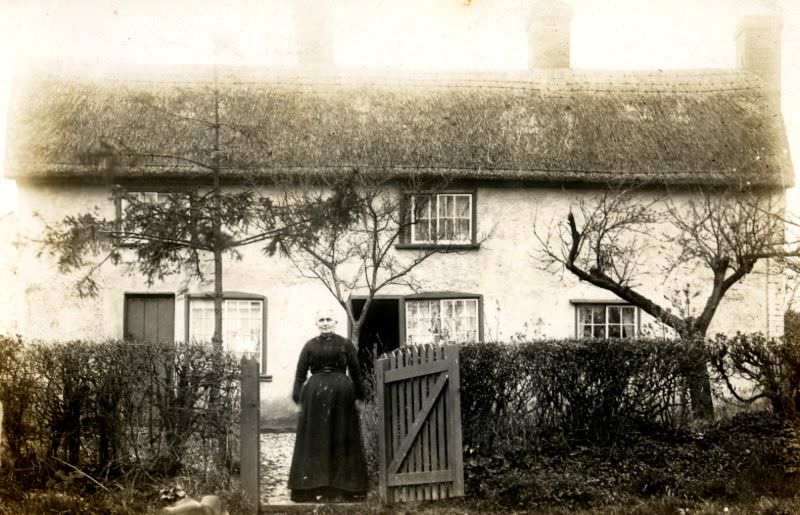
Thatched roofs appear in a number of the rural photographs, a reminder that many people in Edwardian Britain still lived in buildings that had changed little in centuries. A family outside their thatched house, or a figure seated on the doorstep of a thatched cottage, represents a way of life that was already starting to fade by the early 1900s.
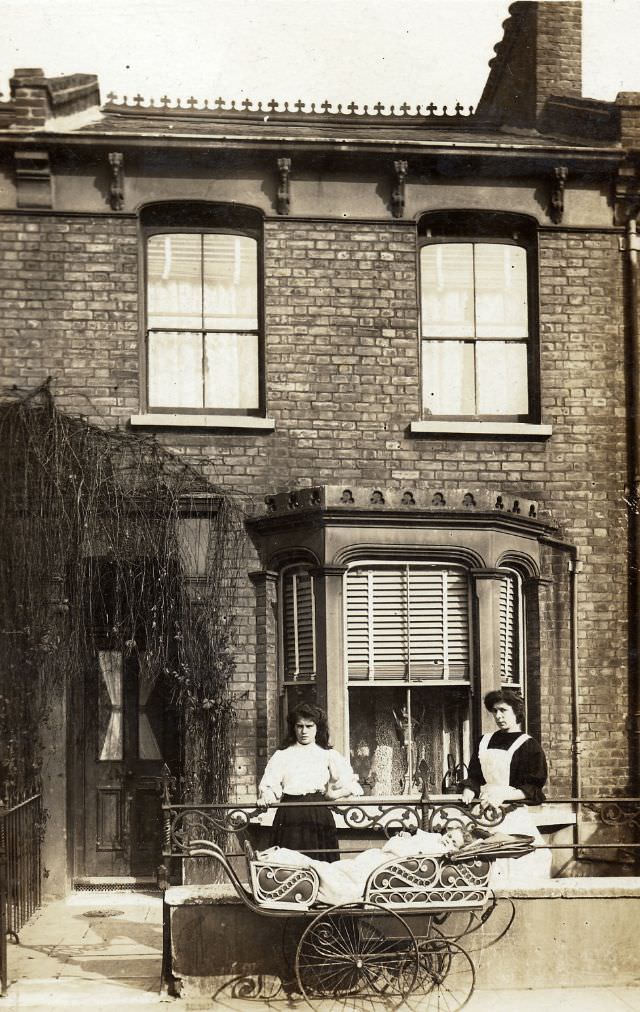
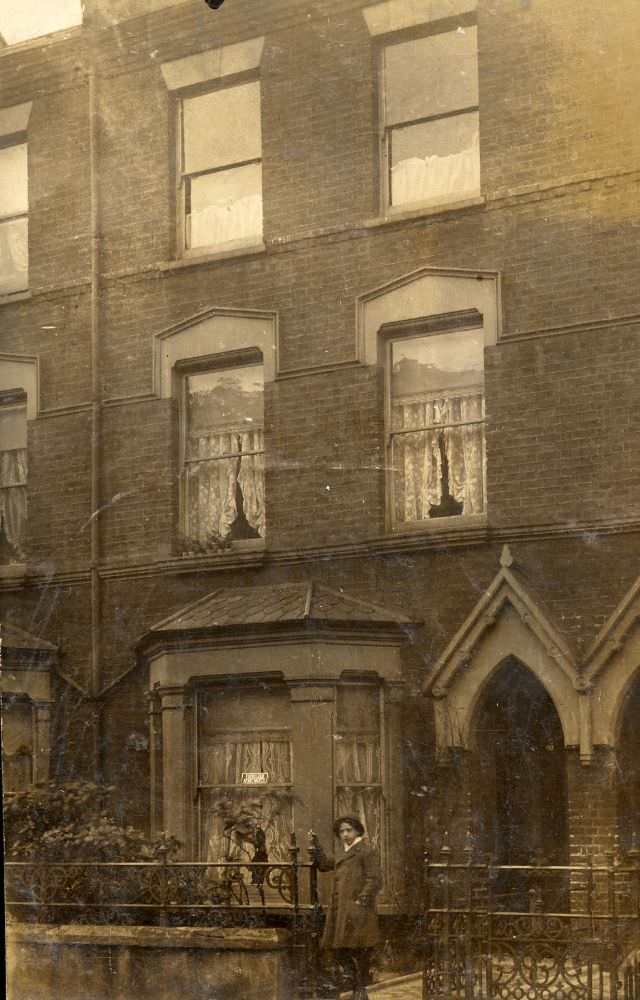
Gothic architecture found its way into ordinary terraced streets, not just churches or manor houses. Pointed arches, decorative stonework, and tall narrow windows gave some homes a distinctly dramatic look. A Gothic-style terrace house in one photograph shows how this design trend filtered down from grand buildings into everyday residential streets.
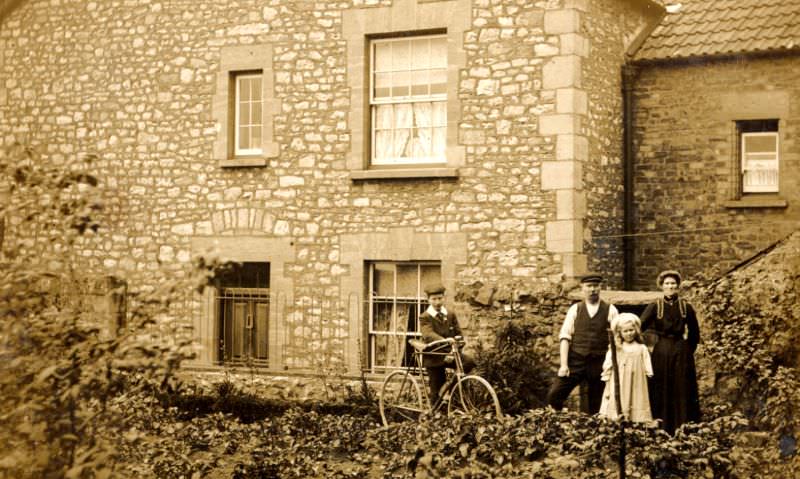
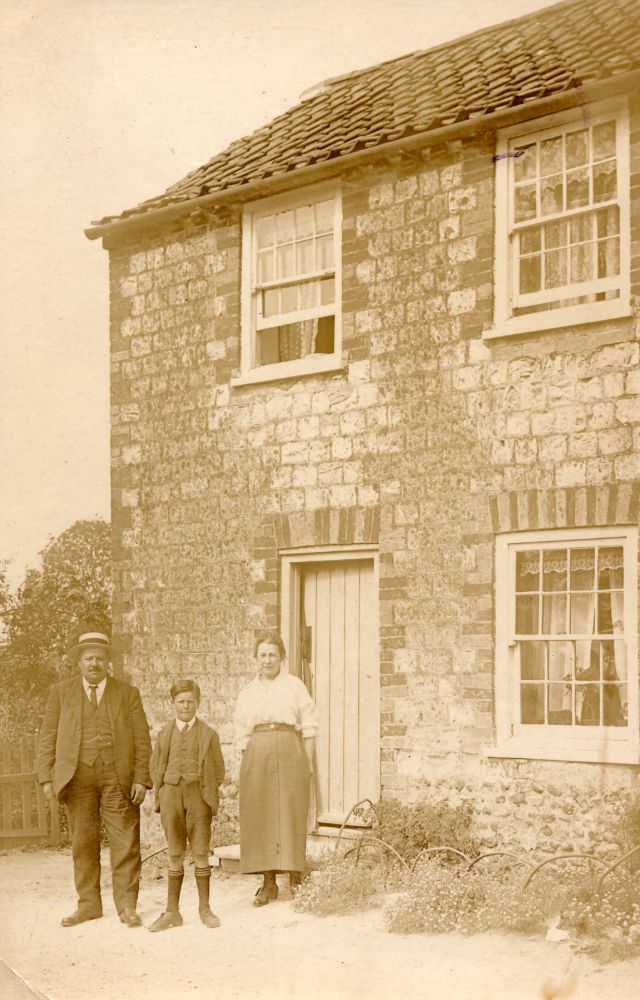
Stone construction was common in many parts of Britain, particularly in the north and in rural areas. Well-pointed stonework — where the mortar between stones is neatly finished — was a sign of a well-maintained home. The people standing in front of these buildings often matched their house in bearing: upright, composed, and deliberate.
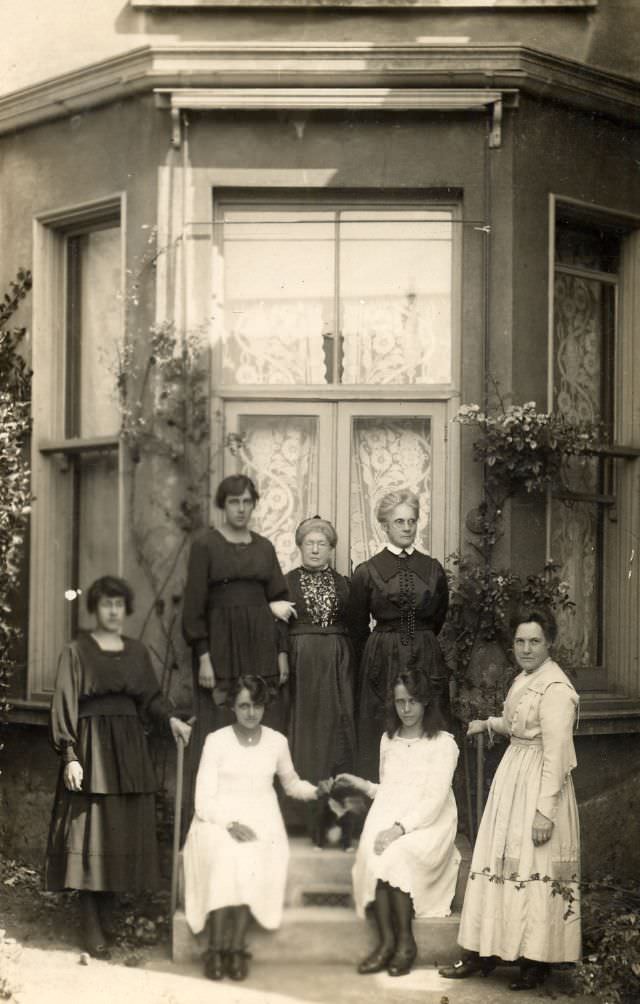
French windows — glass doors opening onto a garden — were a feature of more comfortable middle-class homes. Two ladies pose outside just such a window in one image, standing on a neat garden path. The detail hints at a household with space, light, and a certain level of refinement.
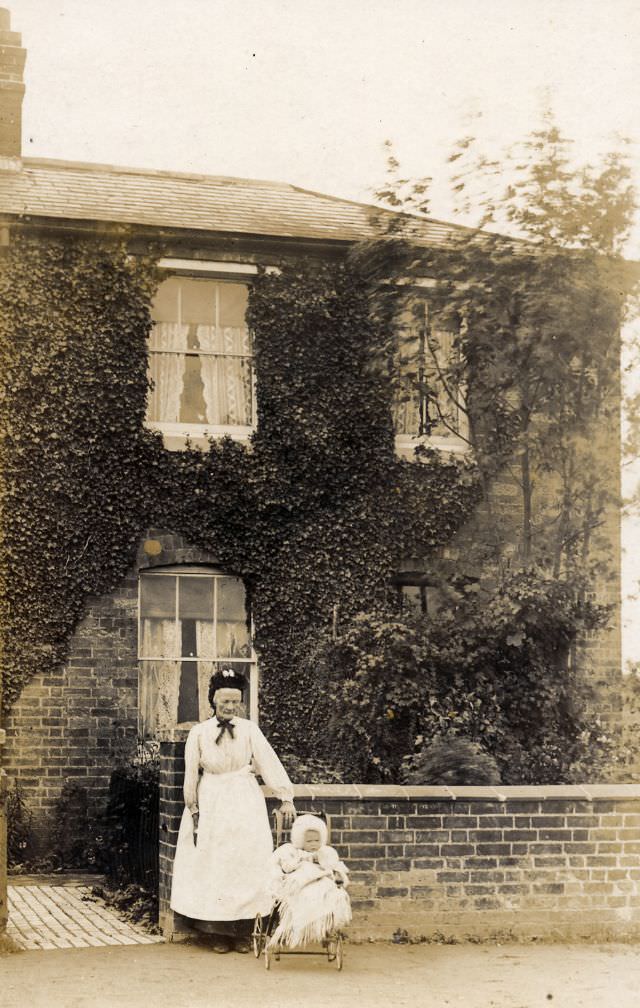
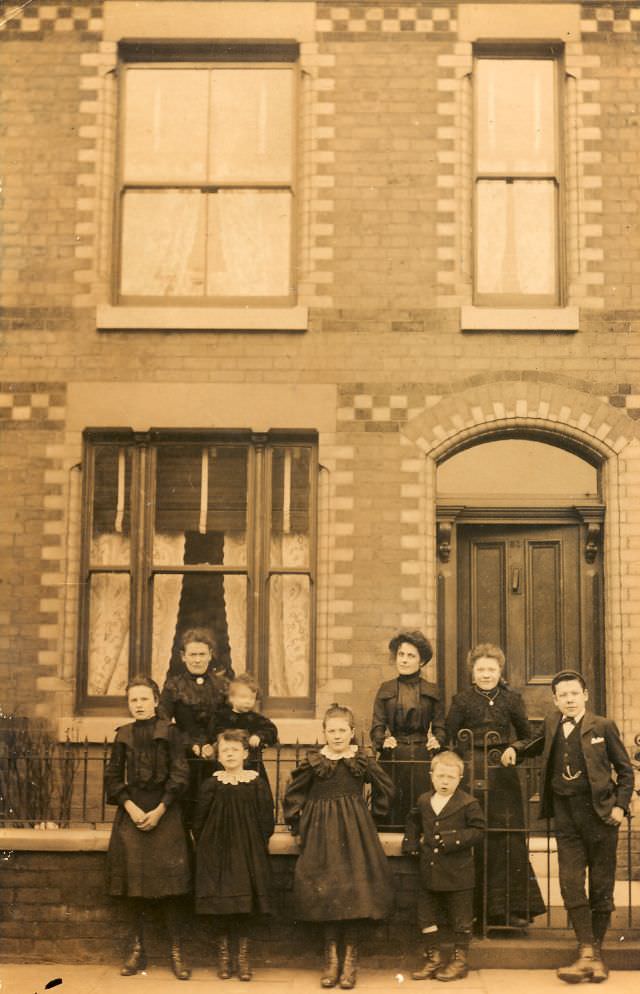
Some photographs show large groups gathered outside a single home — extended families, neighbours, or household staff assembled for the occasion. These group shots reflect the communal nature of Edwardian life, where households were rarely isolated units and community ties were strong.
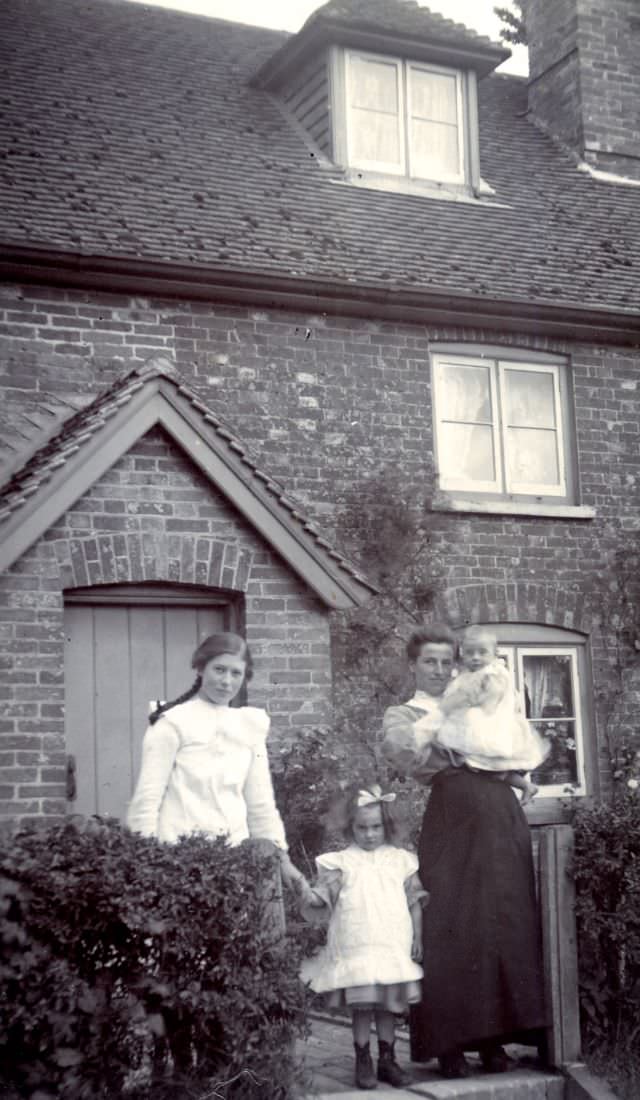
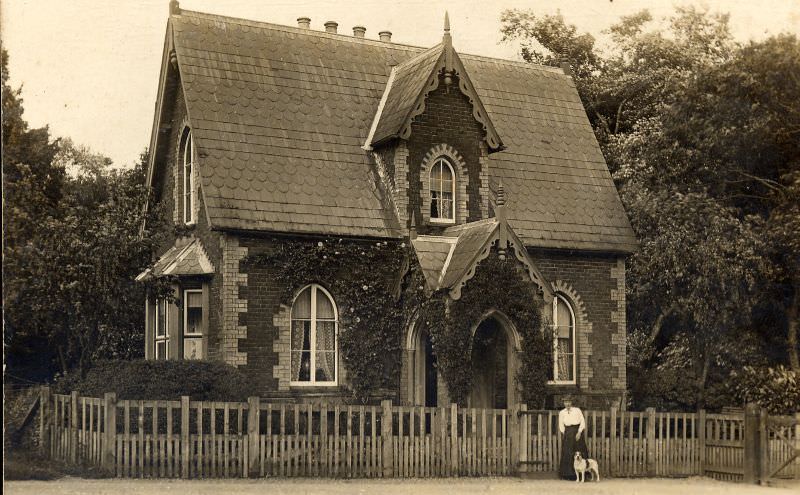
Gothic design influenced some of the more impressive private homes of the era — steep rooflines, ornate detailing, and tall chimneys. These houses were built to impress, and the families photographed in front of them knew it.
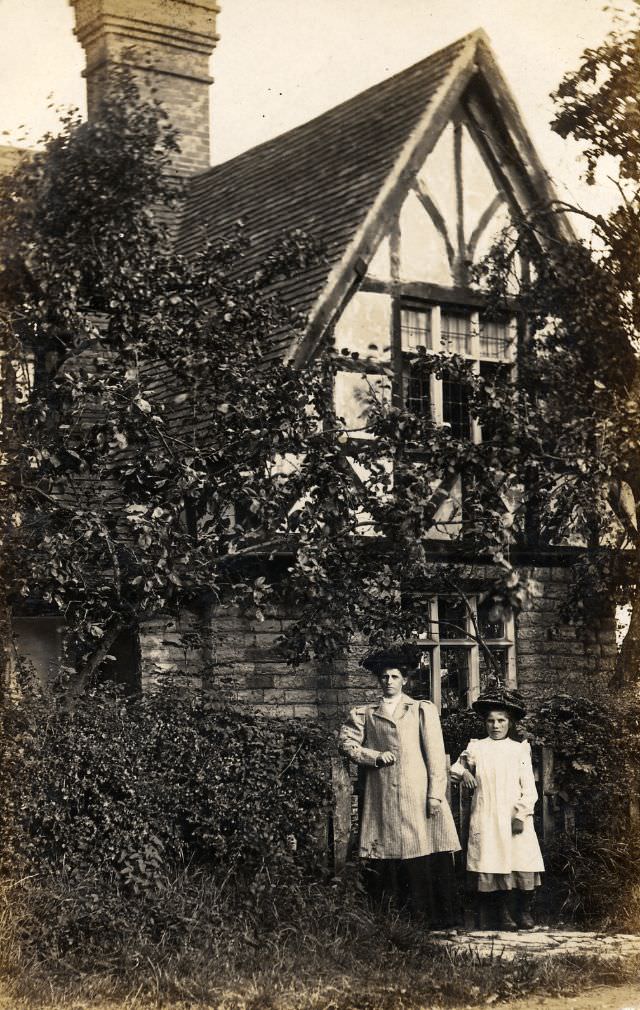
Timber-framed houses — with their distinctive black-and-white patterned facades — were especially common in parts of the English Midlands and the Welsh border counties. A mother and daughter standing in front of one such house represent a building tradition stretching back hundreds of years, still lived in and still standing at the start of the twentieth century.
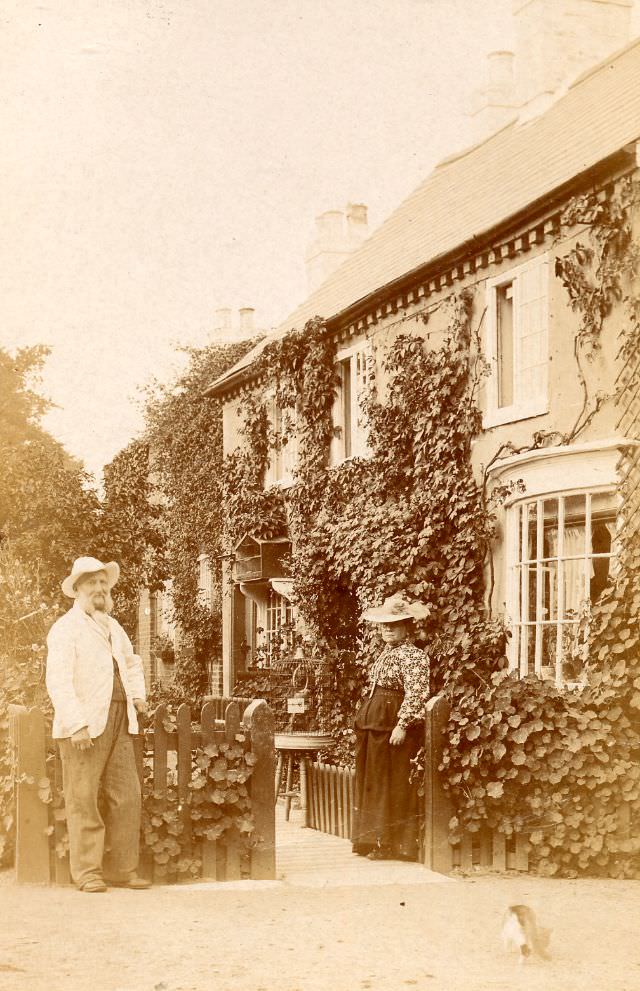
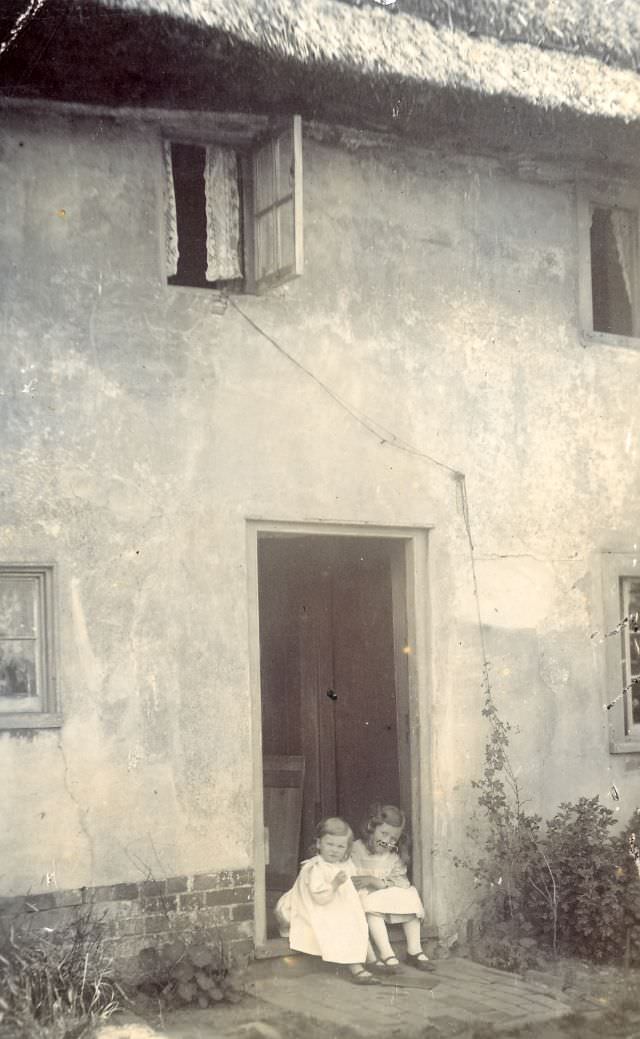
Older couples appear in several of these photographs — standing outside large homes they had likely occupied for decades. There is a stillness to these images. Two people, a house, and a camera. No explanation needed.
Named houses were a mark of middle-class identity in Edwardian Britain. Giving a house a name — rather than just a street number — signalled permanence and pride of ownership. “Minden Villa” is one such example, its name likely displayed on a gate or a small plaque beside the door.
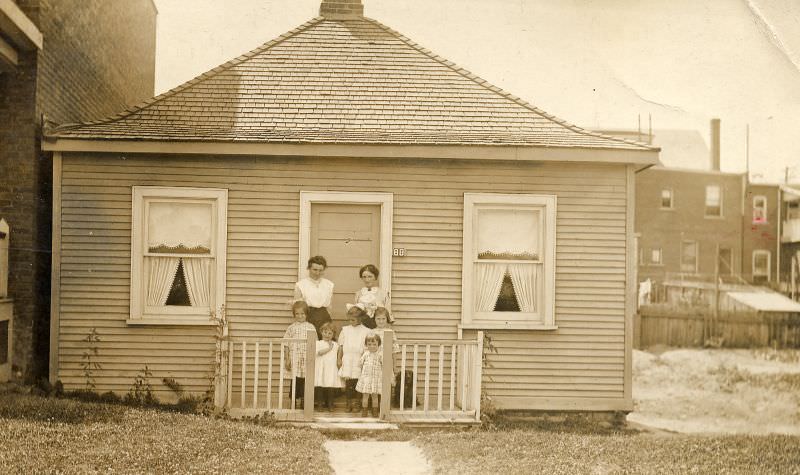
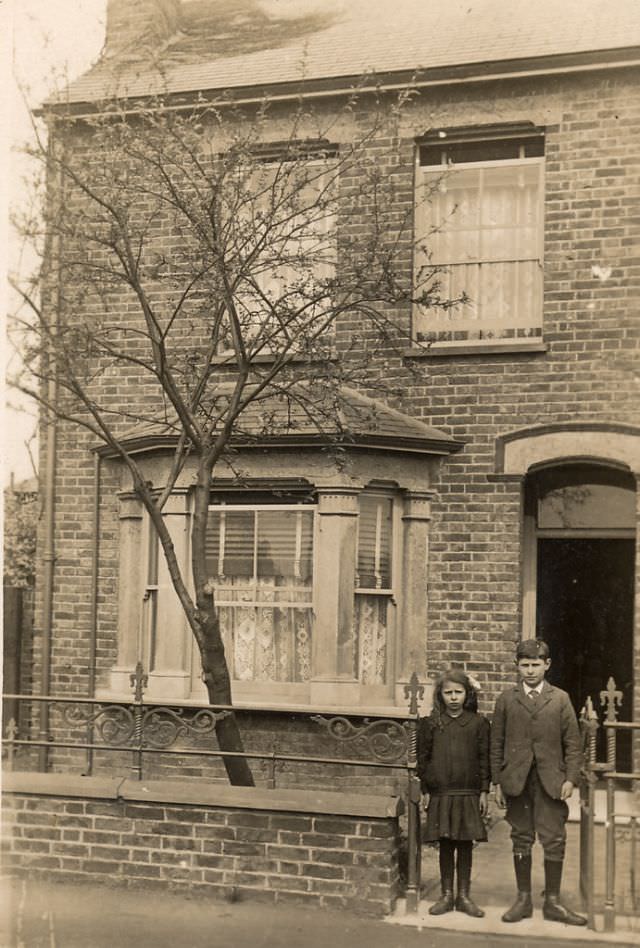
Not every photograph comes with a complete record. Some show an address without a street name, or a face without a name attached. The subjects stood still long enough for the shutter, and then life moved on — leaving behind an image but not always the full story.
Gardens in these photographs vary from the carefully clipped — with examples of topiary and neat borders — to the decidedly overgrown. One image shows a figure sitting in what is described simply as a weedy garden, while another shows someone sitting among potato plants. Both are as honest a picture of Edwardian life as any formal portrait.
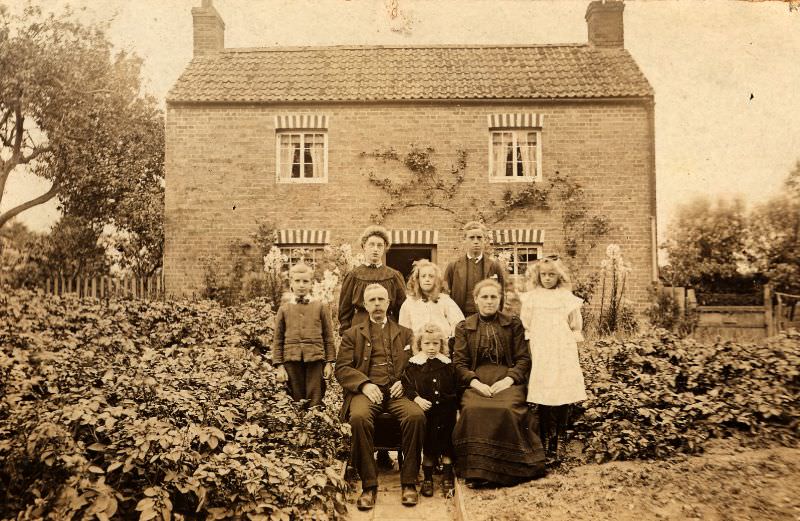
Working gardens — growing vegetables rather than ornamental plants — were practical necessities for many families. A kitchen garden wasn’t a hobby; it was part of how a household fed itself. The potato patch in one photograph is a small but direct window into that reality.
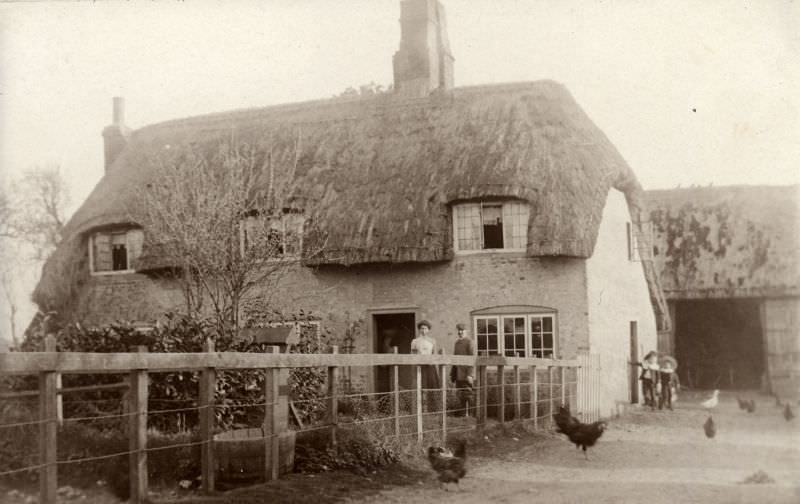
Farm households had their own version of this photographic tradition. Farmers stood at the front door while their children gathered at the side, and in the foreground, hens and ducks went about their business entirely unbothered by the camera. Rural Edwardian life was inseparable from its animals.
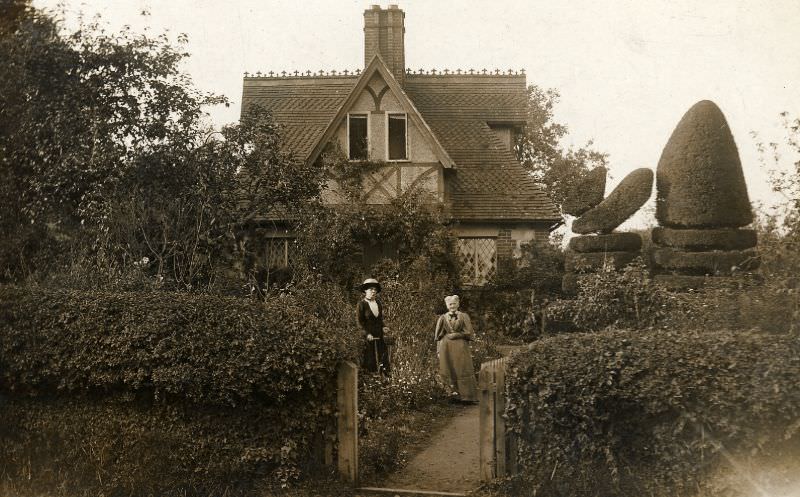
The romantic cottage style — low rooflines, climbing plants, and a carefully tended garden — appealed to those who wanted their home to feel picturesque. Two women stand in one such garden, surrounded by clipped topiary. It is a composed image, the garden as much a subject as the people in it.
Across all of these images — from rural cottages to London terraces, from grand villas to farm doorsteps — the same instinct is at work. People wanted to be seen in front of their homes. The house mattered. The family mattered. And for a brief moment, a camera recorded both.