Hey There! Before You Go. 😧
Get the best vintage content straight into your inbox!

Don't worry, we don't spam

Soviet Invasion Of Czechoslovakia: When The Soviets Arrived To Crush The Prague Spring, 1968

In the early hours of August 21, 1968, the citizens of Czechoslovakia woke up to the sound of tanks. Overnight, a massive military force had crossed their borders. Columns of armored vehicles rolled through city streets. Soldiers took up positions at government buildings, radio stations, and transport hubs. By morning, it was clear: the Soviet Union had moved to end an experiment in political freedom that had lasted less than a year.

The events of that night were the culmination of months of tension between Prague and Moscow. Earlier in 1968, Alexander Dubček had risen to lead the Czechoslovak Communist Party. His agenda was straightforward but radical by Soviet standards. He pushed for freedom of the press, greater rights for citizens, and a loosening of the tight controls the Communist Party had held over daily life since World War II. This period became known as the Prague Spring — a brief opening of political and cultural life in a country that had lived under rigid one-party rule.
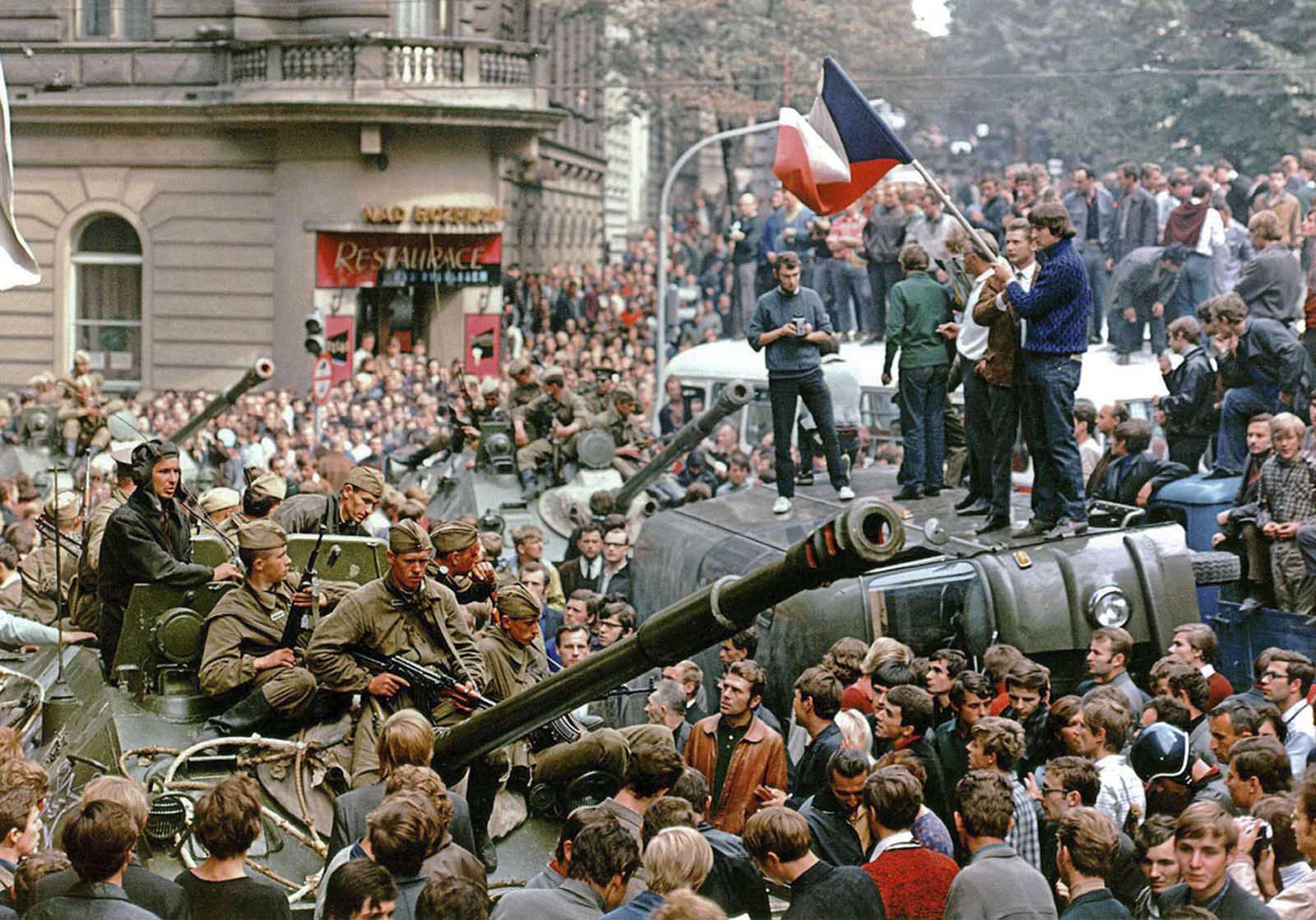
Prague residents surround Soviet tanks in front of the Czechoslovak Radio building.

The Kremlin watched Dubček’s reforms with deep alarm. Soviet leader Leonid Brezhnev and other Warsaw Pact leaders feared the changes in Czechoslovakia would spread to other Eastern Bloc countries. If one nation could loosen Moscow’s grip, others might follow. That risk was unacceptable to Soviet leadership. Diplomatic pressure failed to stop the reforms, so the military option was put into action.
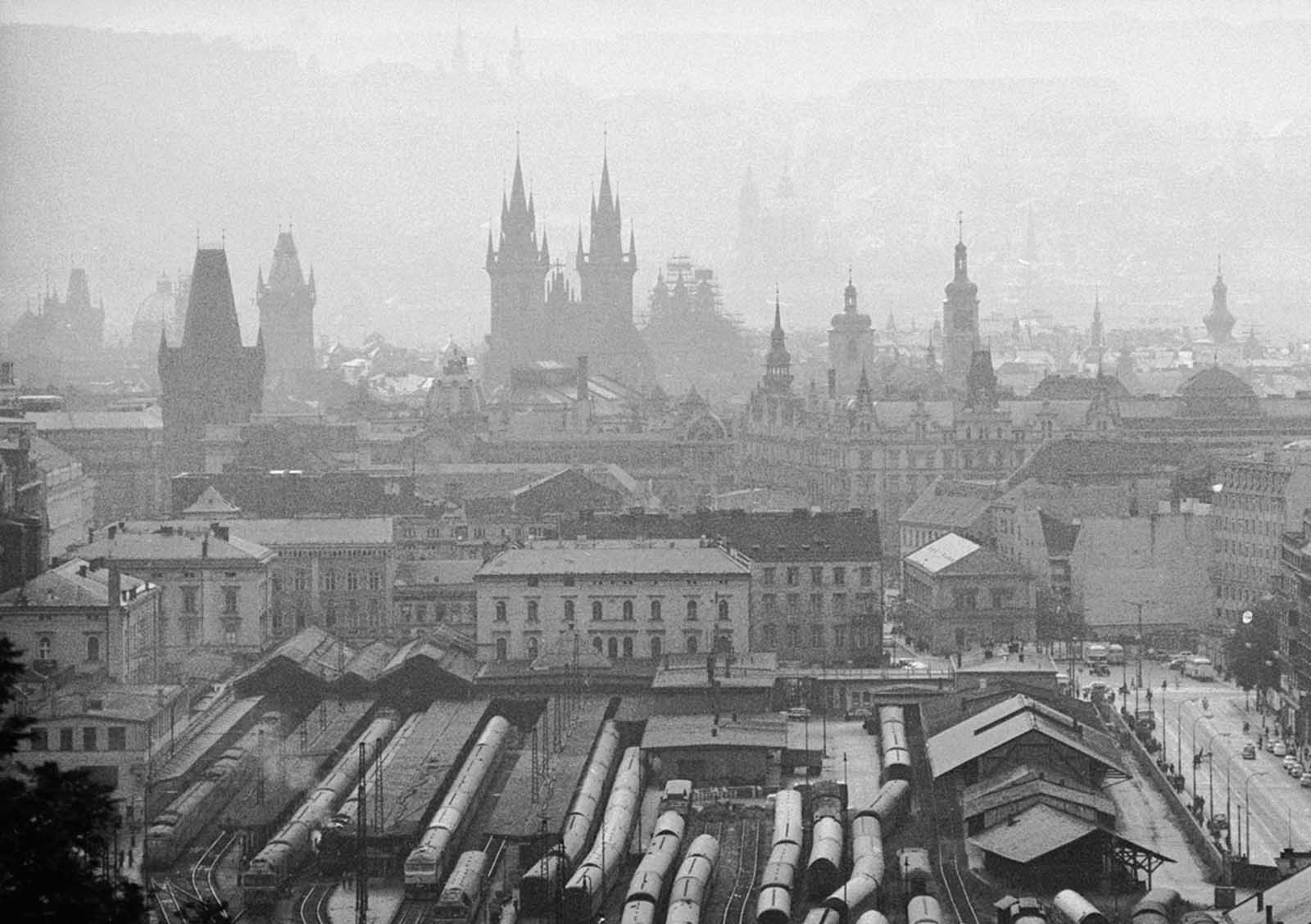
A view of the Czechoslovakian capital, Prague, from the surrounding hills, August 1968

The operation was called “Operation Danube.” It was the largest military mobilization in Europe since the end of World War II. On the night of August 20–21, approximately 250,000 Soviet and Warsaw Pact troops entered Czechoslovakia. That number eventually grew to 500,000 as the occupation solidified. Troops came from the Soviet Union, East Germany, Poland, Hungary, and Bulgaria. The sheer scale of the force was designed to overwhelm any possibility of organized military resistance.
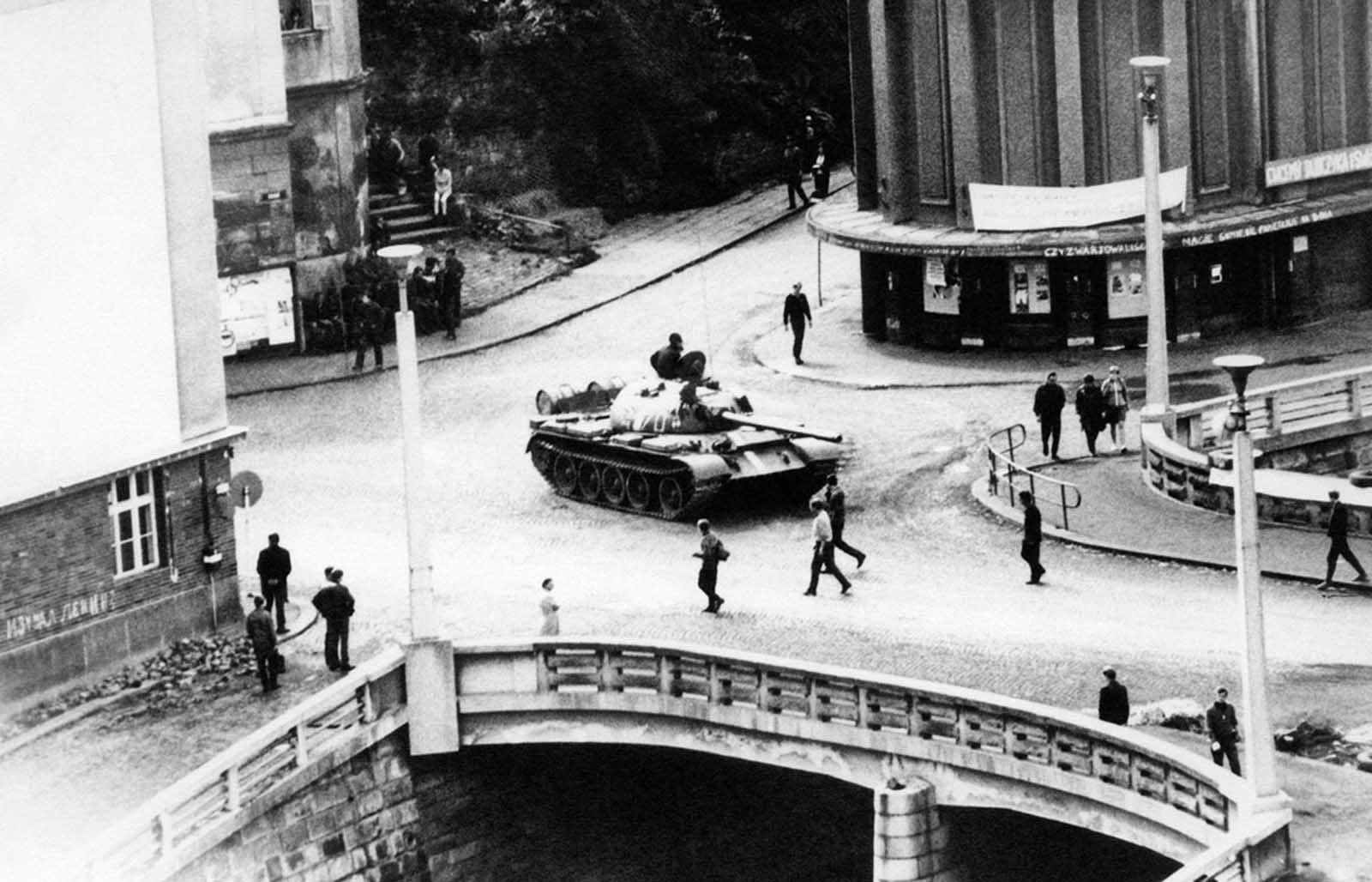
A photo taken in Trutnov, Czechoslovakia

The Czechoslovak military did not mount a large-scale armed defense. Government and party leaders, including Dubček, chose not to order their forces to fight back, knowing that resistance would lead to massive casualties against an overwhelming opponent. Instead, resistance took another form — it came from ordinary people in the streets.
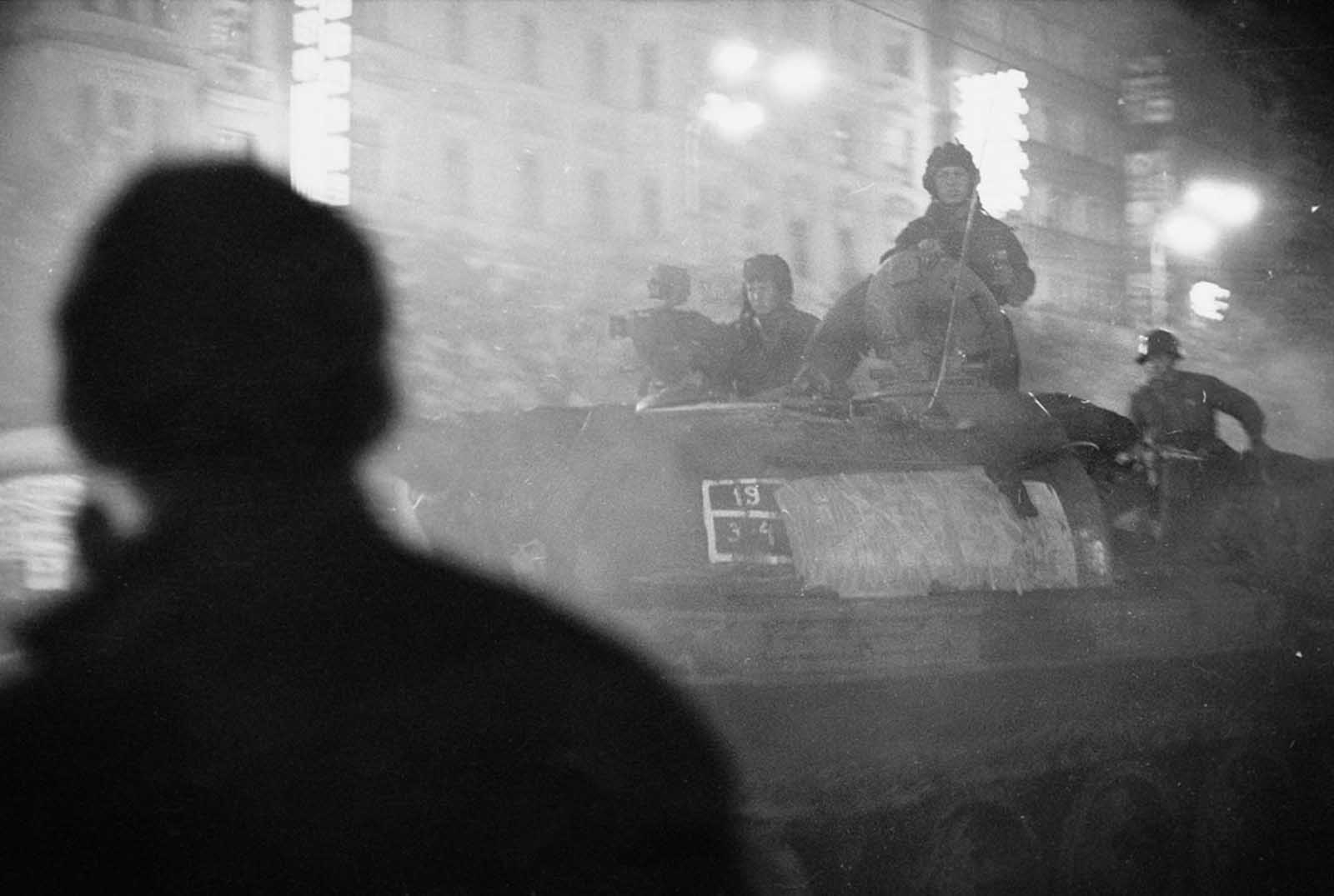
A shadowy figure watches Soviet tanks advance through the streets of Prague after nightfall in August 1968

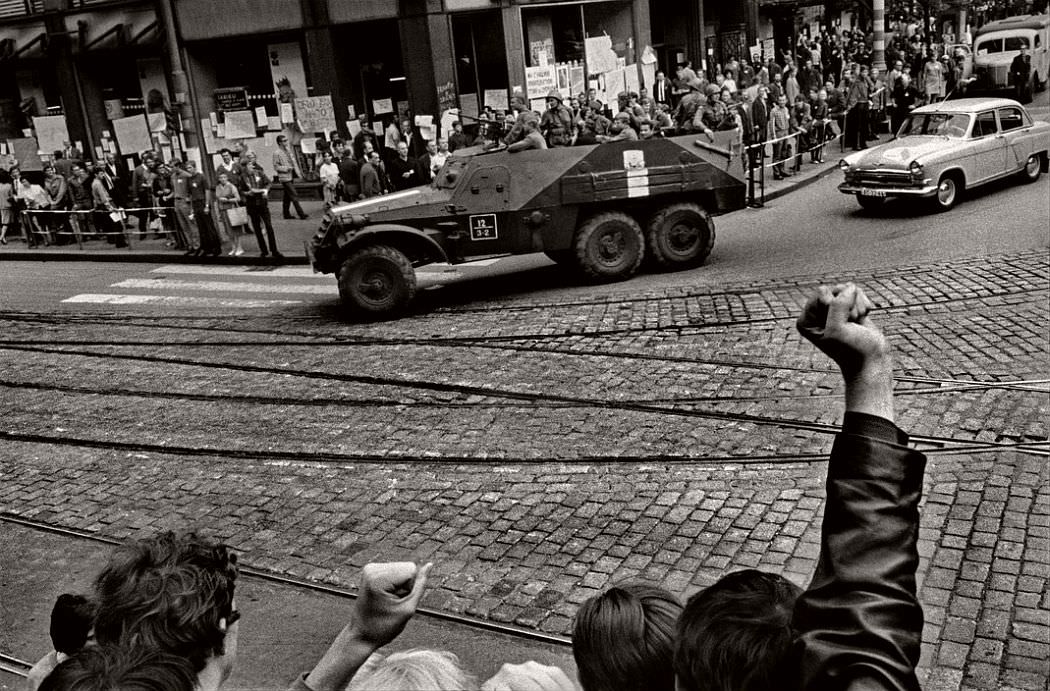
Across Prague and other Czechoslovak cities, civilians confronted the invading forces directly. Crowds surrounded tanks. People argued with soldiers, many of whom had been told they were there to defend Czechoslovakia from a Western threat — a lie that crumbled the moment they saw the reaction of the population they were supposedly protecting. Protesters removed street signs and changed building numbers to confuse the occupying troops. Underground radio stations kept broadcasting despite efforts to shut them down.
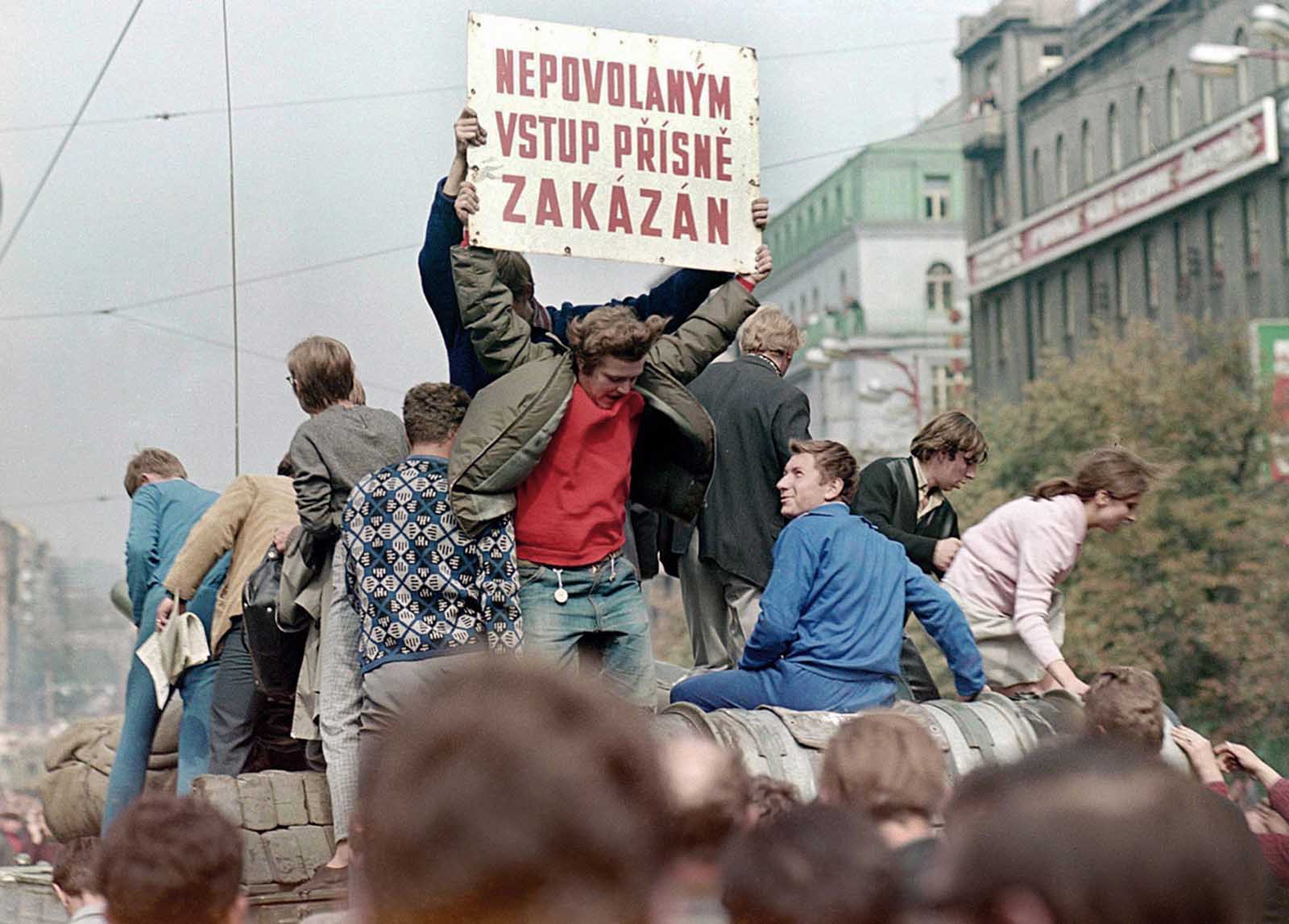
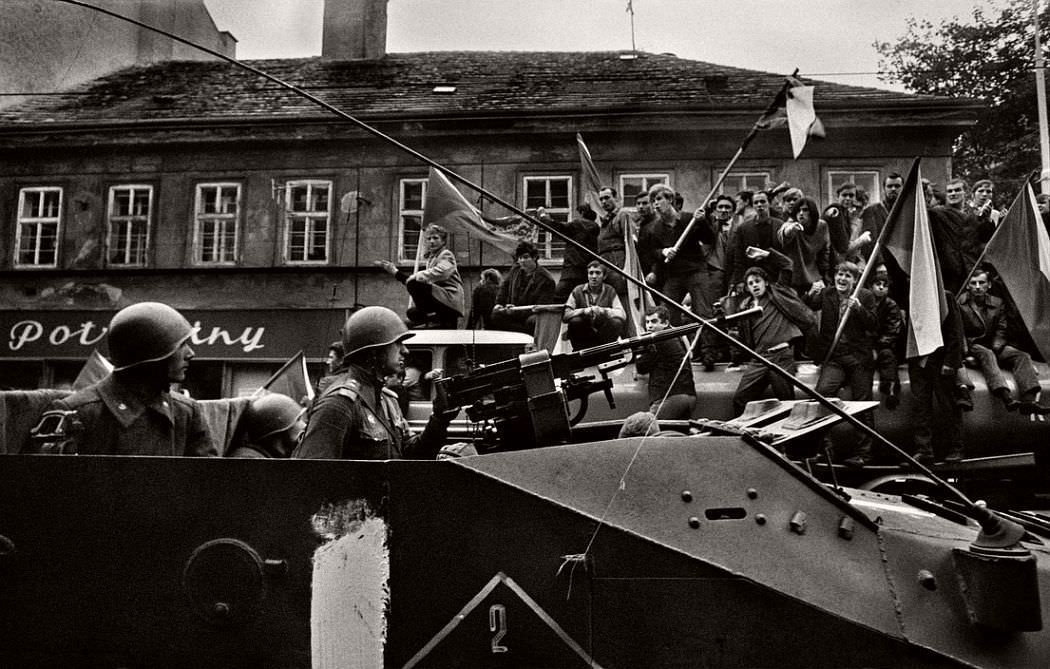
Prague residents ride on top of a Soviet army tank rolling down Wenceslas Square in central Prague

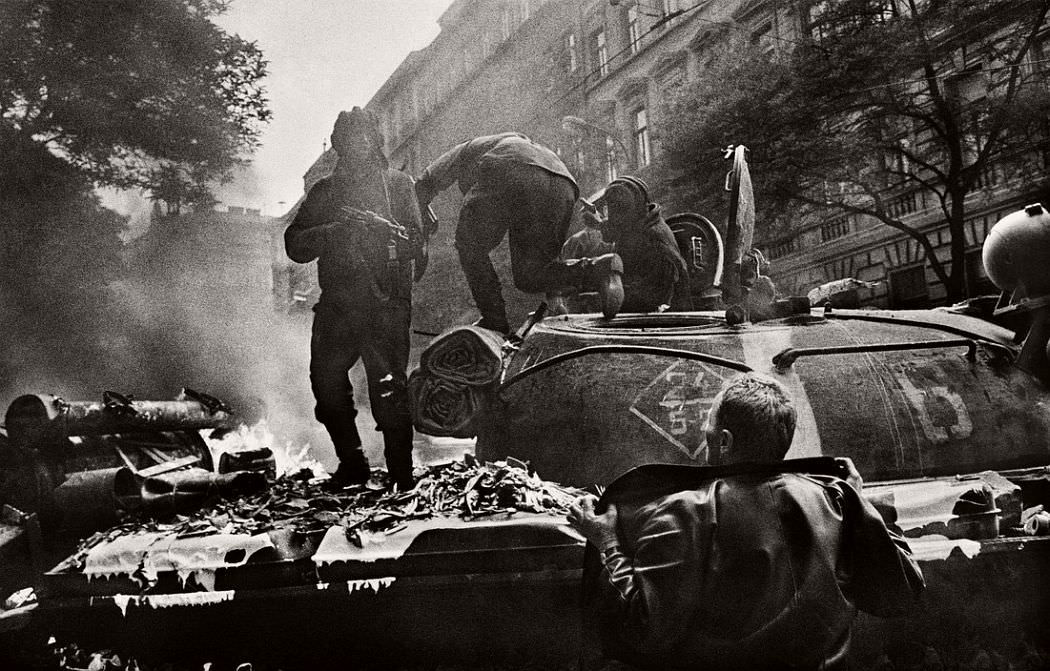
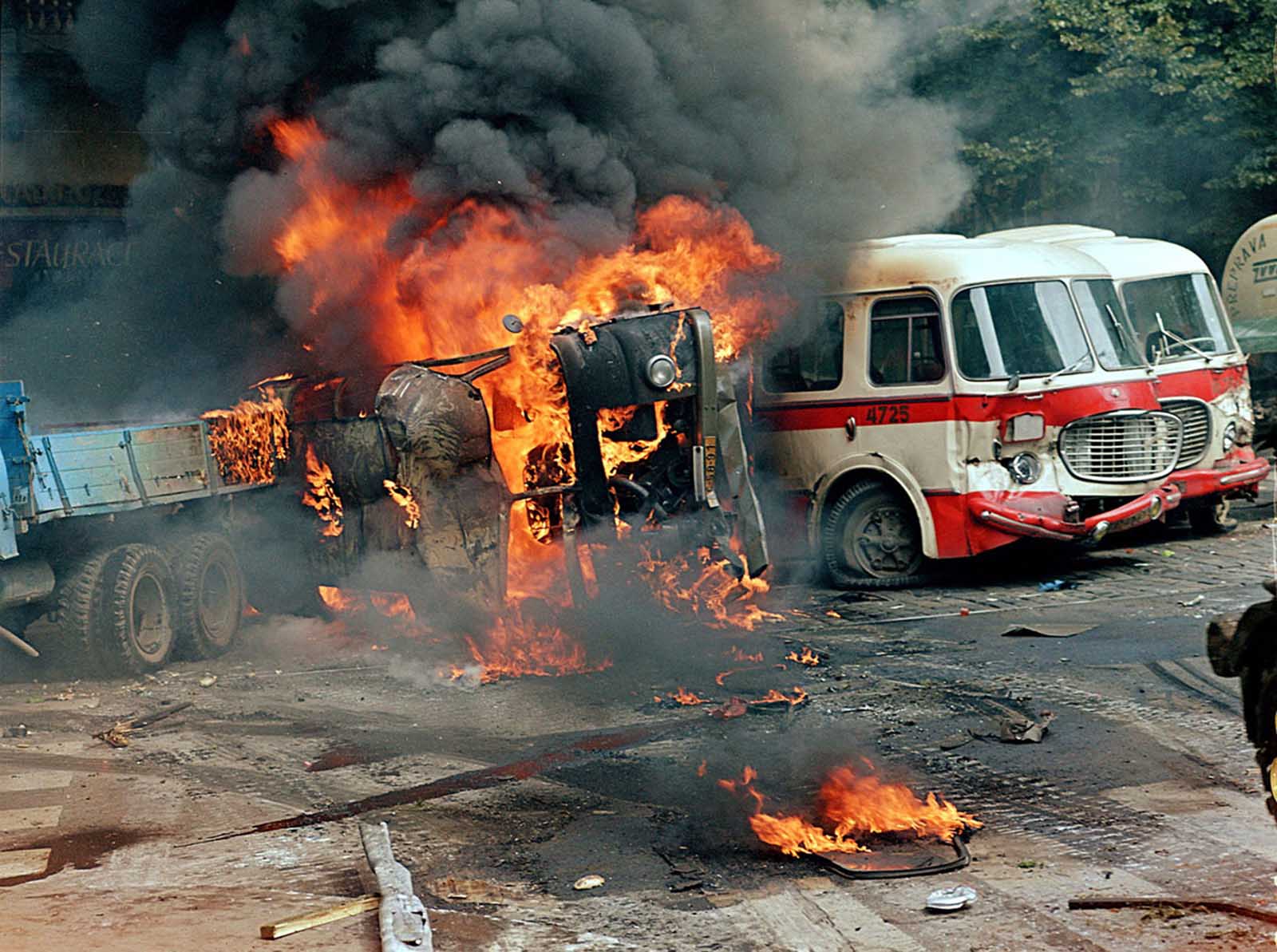
The area around the Czechoslovak Radio building in central Prague became one of the most violent flashpoints of the invasion. Citizens barricaded the building to prevent Soviet forces from seizing the broadcaster, which was still transmitting news of the invasion to the public. Vehicles were piled up and set on fire. Soviet tanks pushed through regardless.
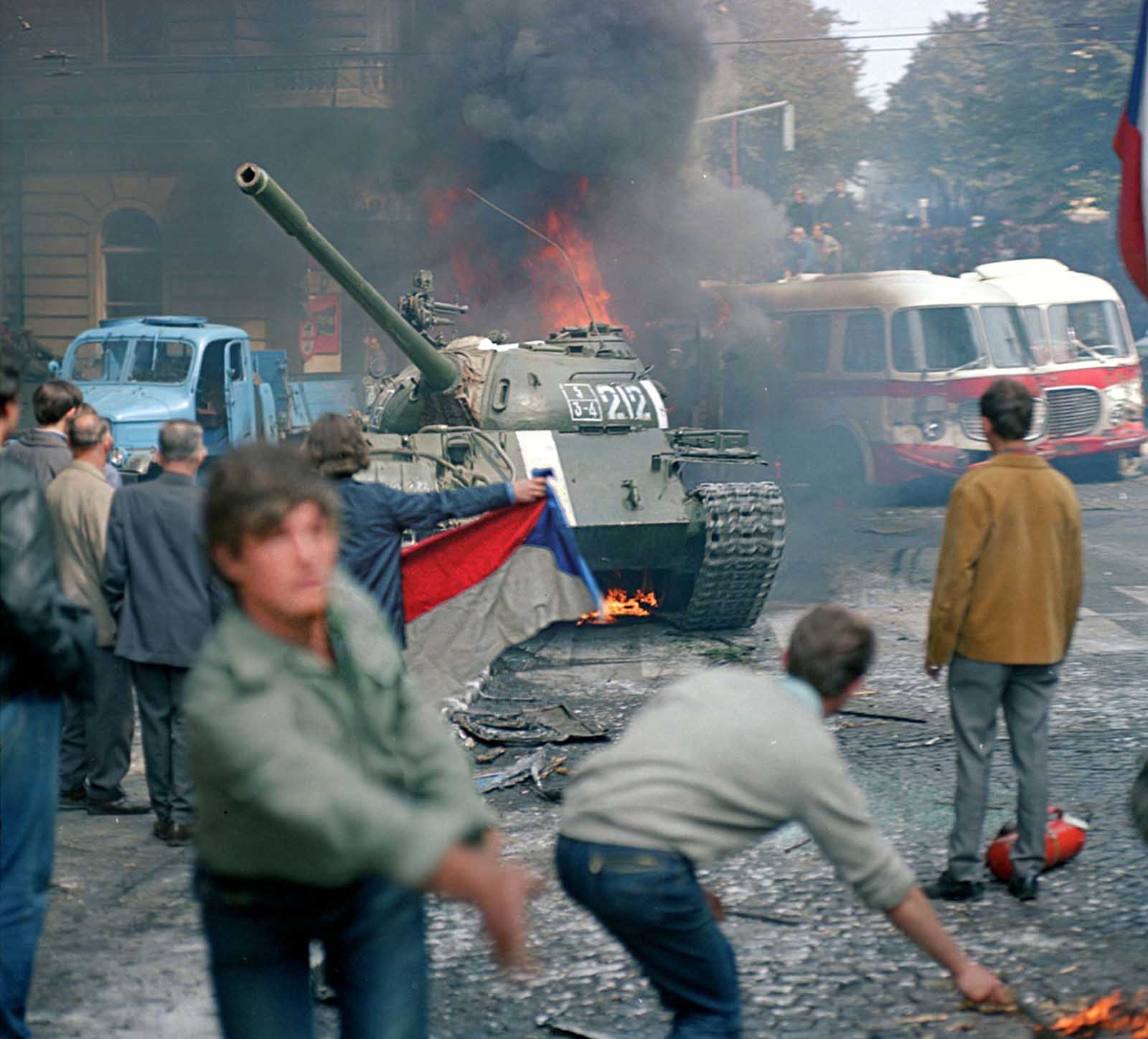
Prague residents, carrying a Czechoslovakian flag and throwing Molotov cocktails, attempt to stop a Soviet tank in downtown Prague on August 21, 1968.
A barricade made from trucks and buses burns in front of the Czechoslovak Radio building, in central Prague, on August 21, 1968.
A Soviet army tank rolls over a barricade made from trucks and buses in front of the Czechoslovak Radio building on August 21, 1968.

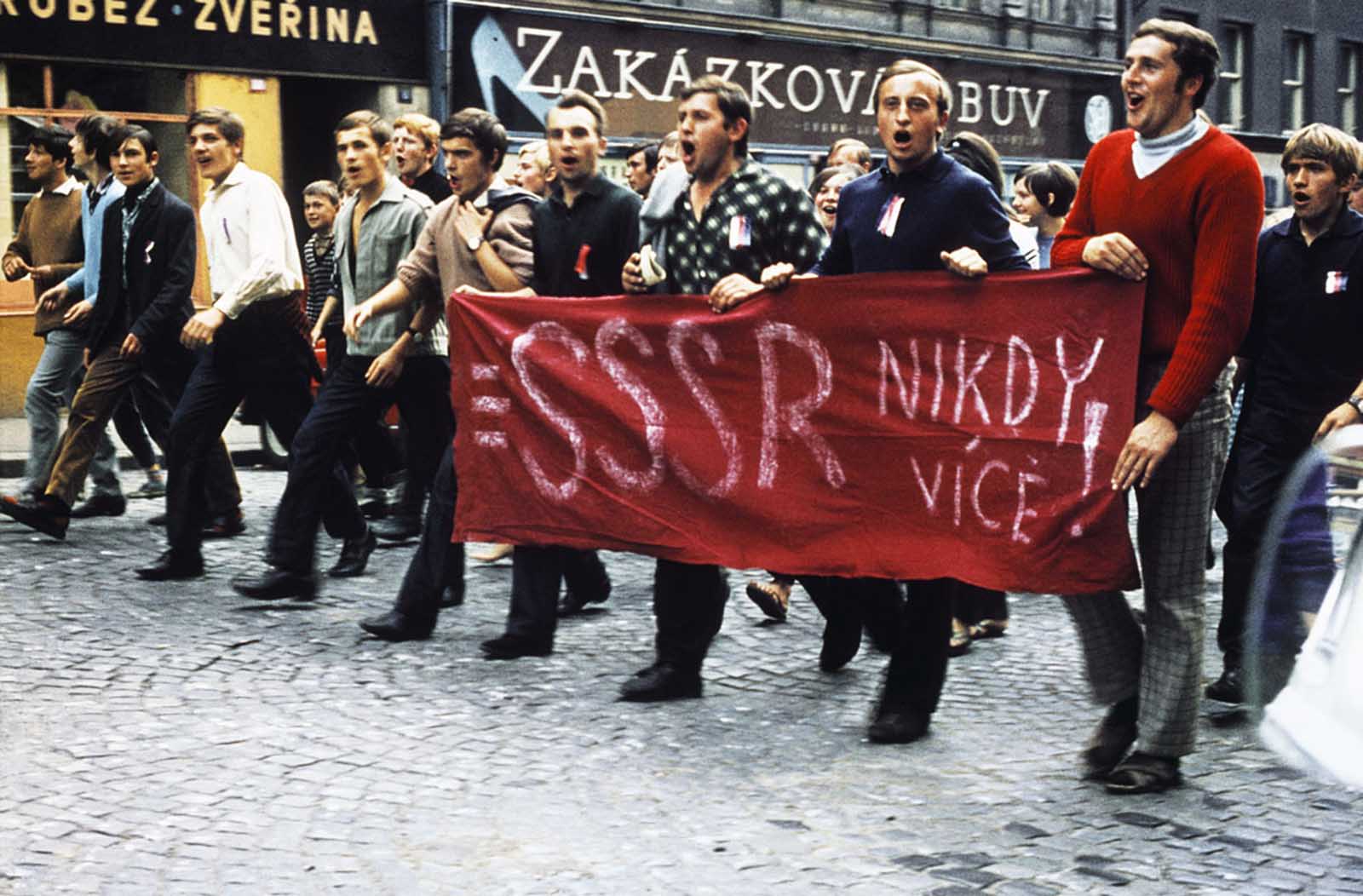
Soviet forces secured the radio building and other key sites, but they could not silence the population. The anger was visible on every street corner. People jeered at soldiers, climbed onto tanks to confront crews, and waved Czechoslovak flags in open defiance. In the city of Karlovy Vary, young Czechs marched through the streets wearing their national colors and carrying banners that read: “Never Again with the Soviet Union.”
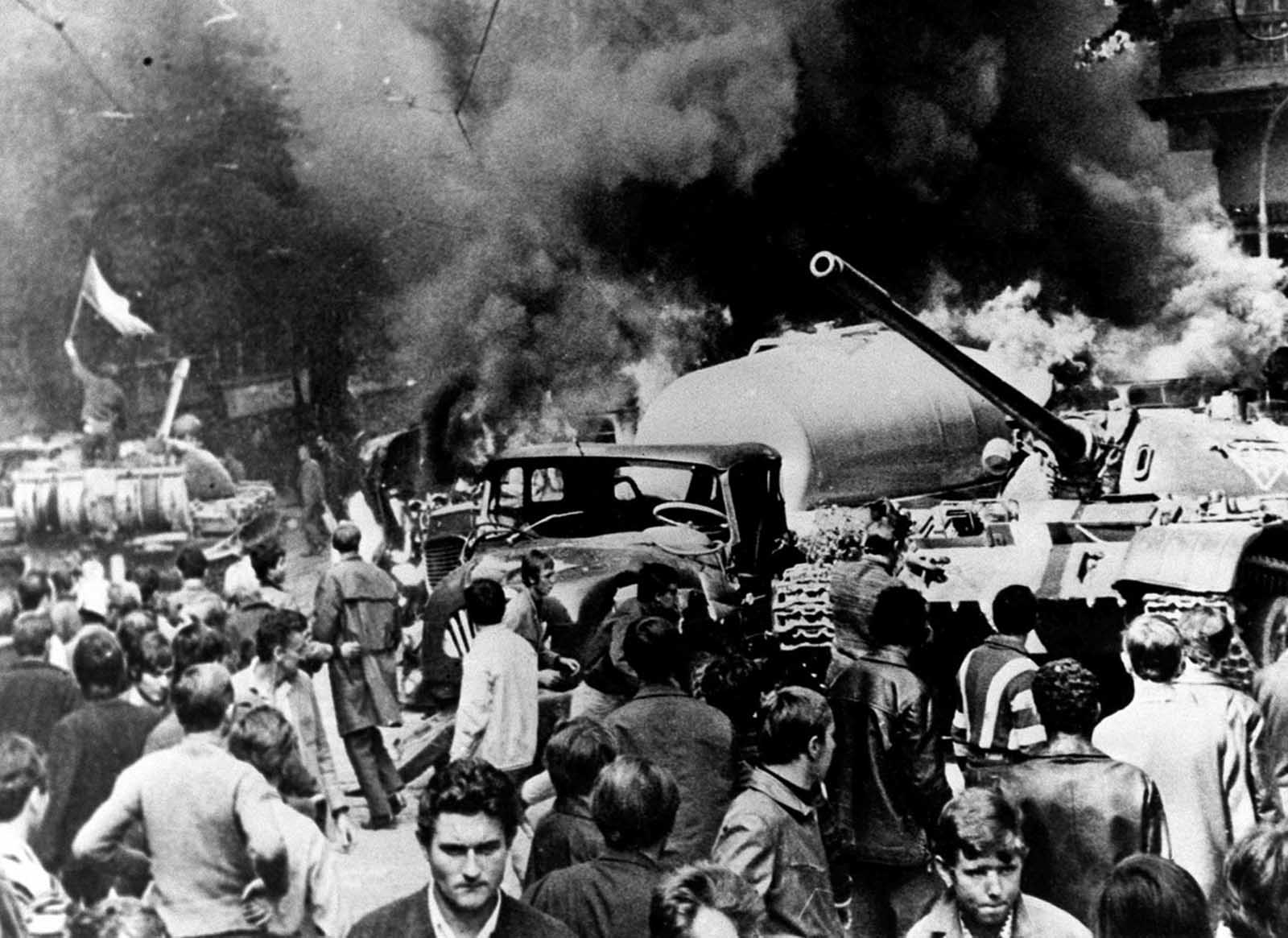
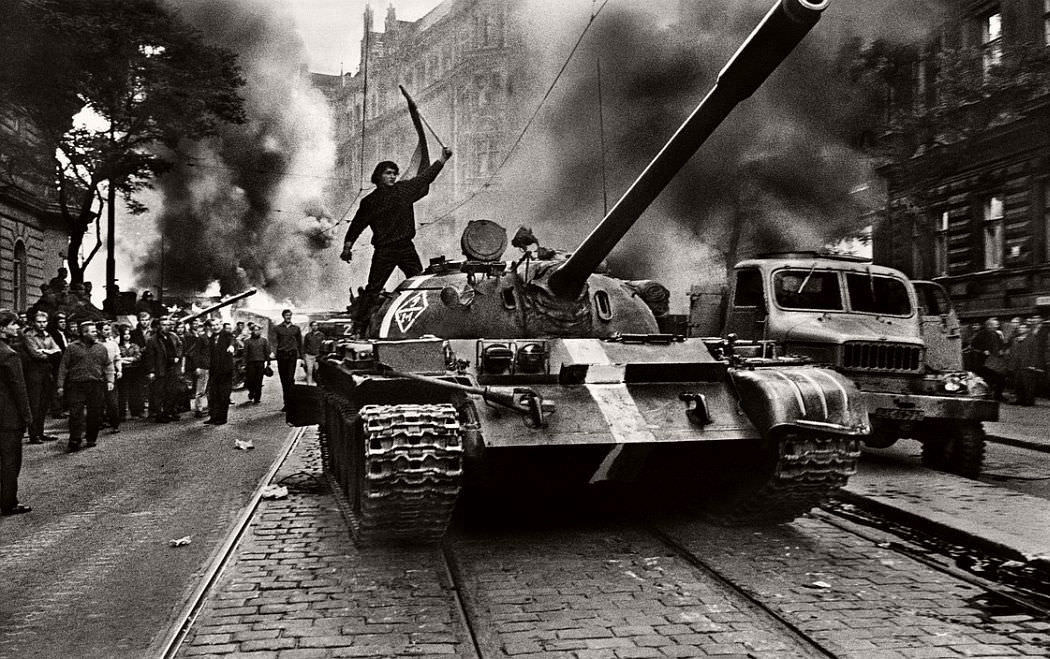
A Soviet tank, burning vehicles, and sullen citizens are seen in Prague on August 21, 1968, as Soviet troops entered the Czechoslovakian capital.
Original caption: "Karlovy Vary, Czechoslovakia.
Original caption: “Karlovy Vary, Czechoslovakia.

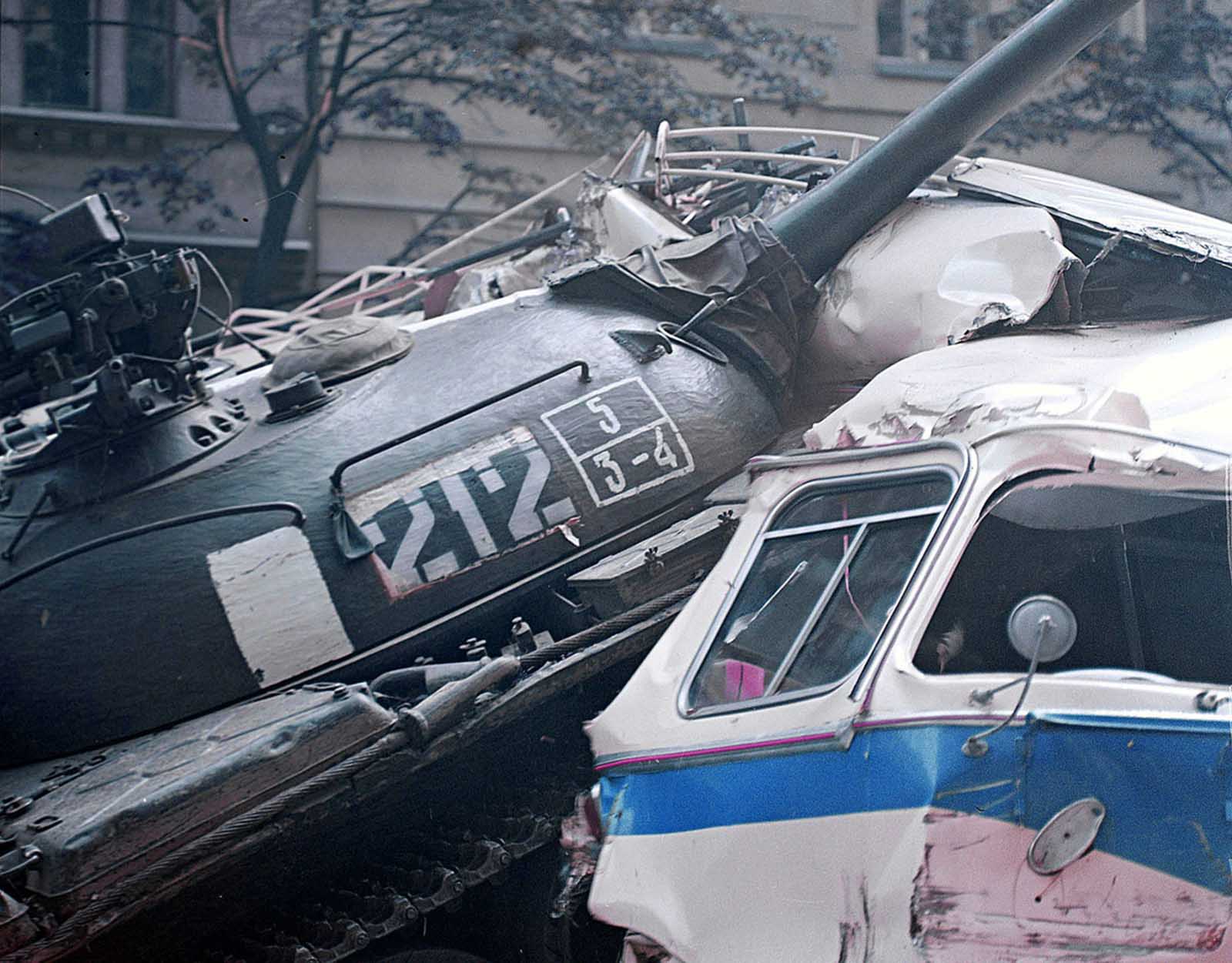
The invasion did not go entirely without physical setbacks for the Soviets. In one instance, a Soviet tank fell out of action when the bridge it was crossing gave way under its weight — one witness reported the bridge had been dynamited, though the sheer load of the armored vehicles may have been enough to bring it down. Such incidents did little to slow the overall occupation, but they reflected how unprepared parts of the force were for the terrain and the hostility they encountered.
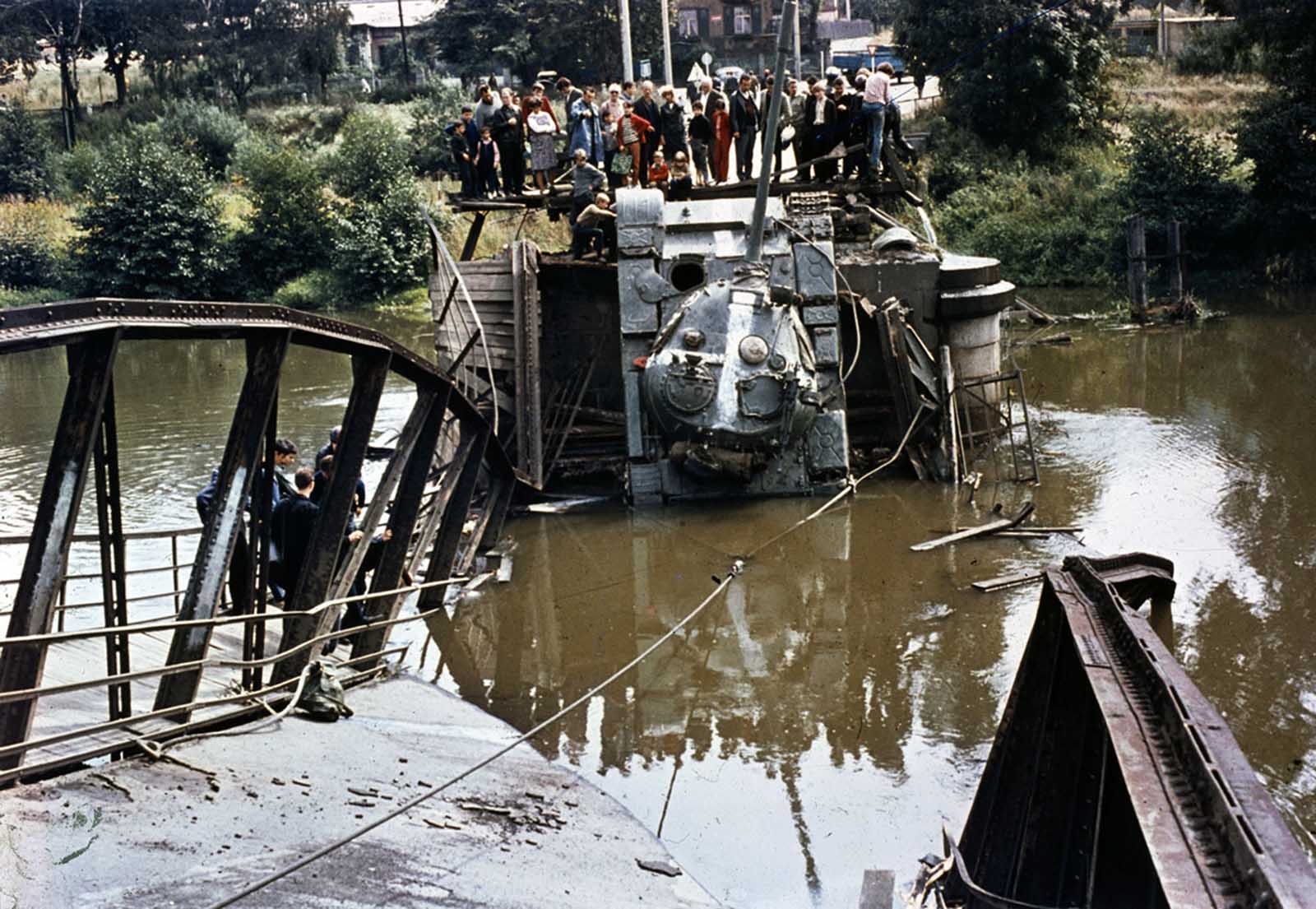
A Soviet tank is out of action after a bridge it was crossing gave way on August 21, 1968.
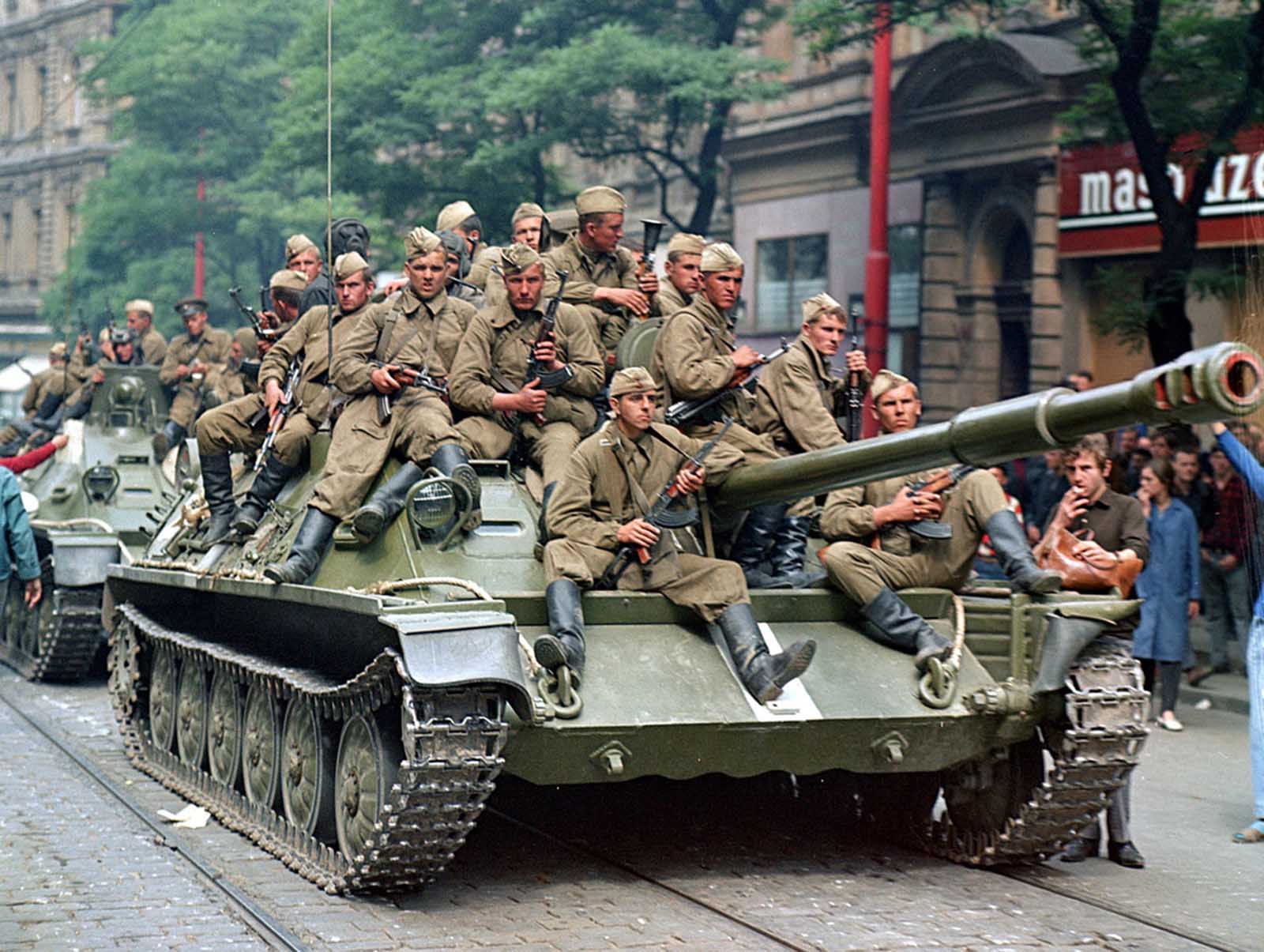
Soviet army soldiers sit on their tanks in front of the Czechoslovak Radio building, in central Prague, on August 21, 1968.

In the city of Košice, a member of the Czechoslovak army was jeered by local residents as he addressed a crowd outside city hall after troops had occupied the town. The scene captured a painful reality of the invasion: even Czechoslovakia’s own military personnel were caught between loyalty to the state and loyalty to their own people. Citizens were furious, and they directed that fury at anyone who appeared to be accepting the occupation.
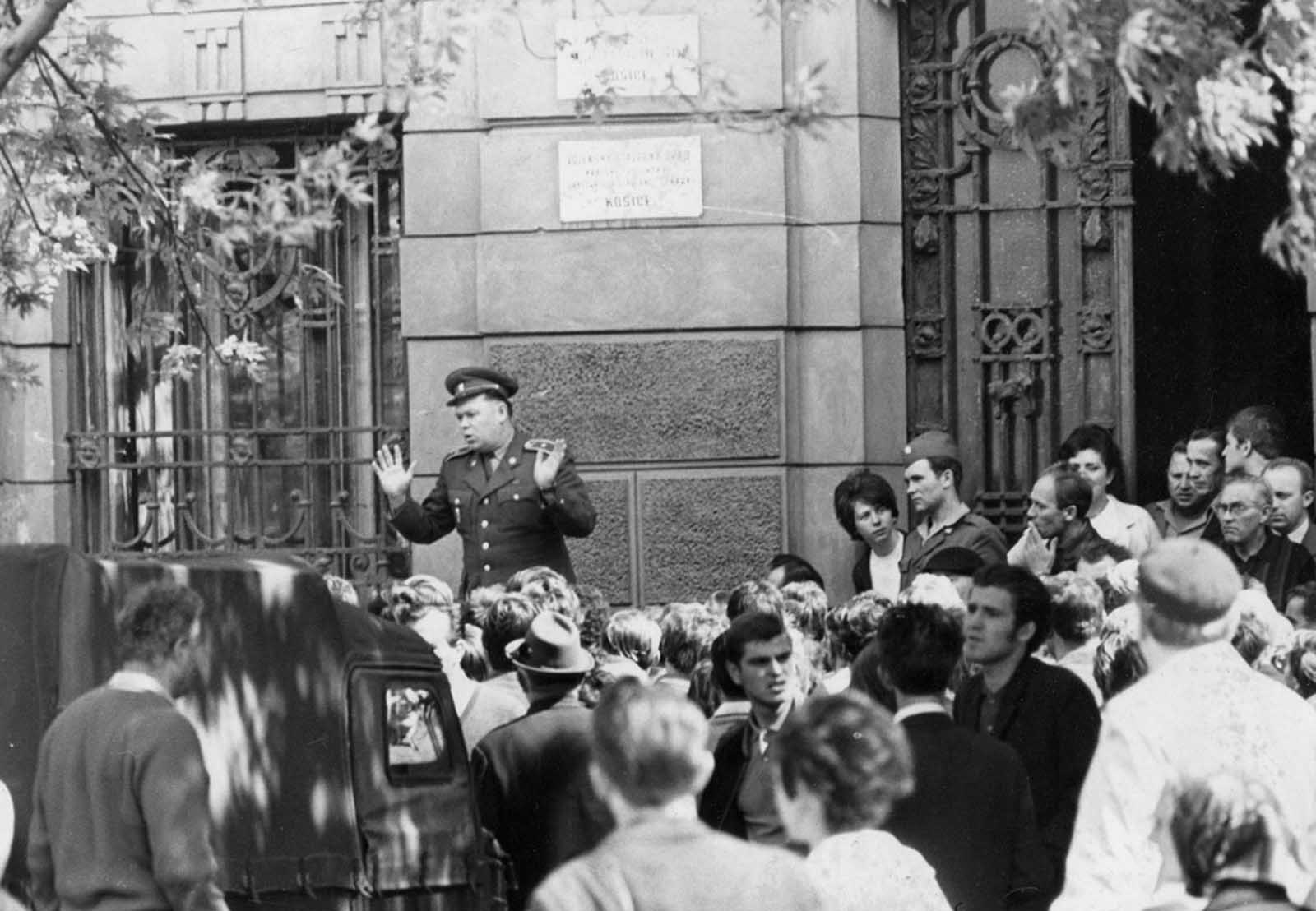
A member of the Czechoslovakian army is jeered by locals in Košice, Czechoslovakia.

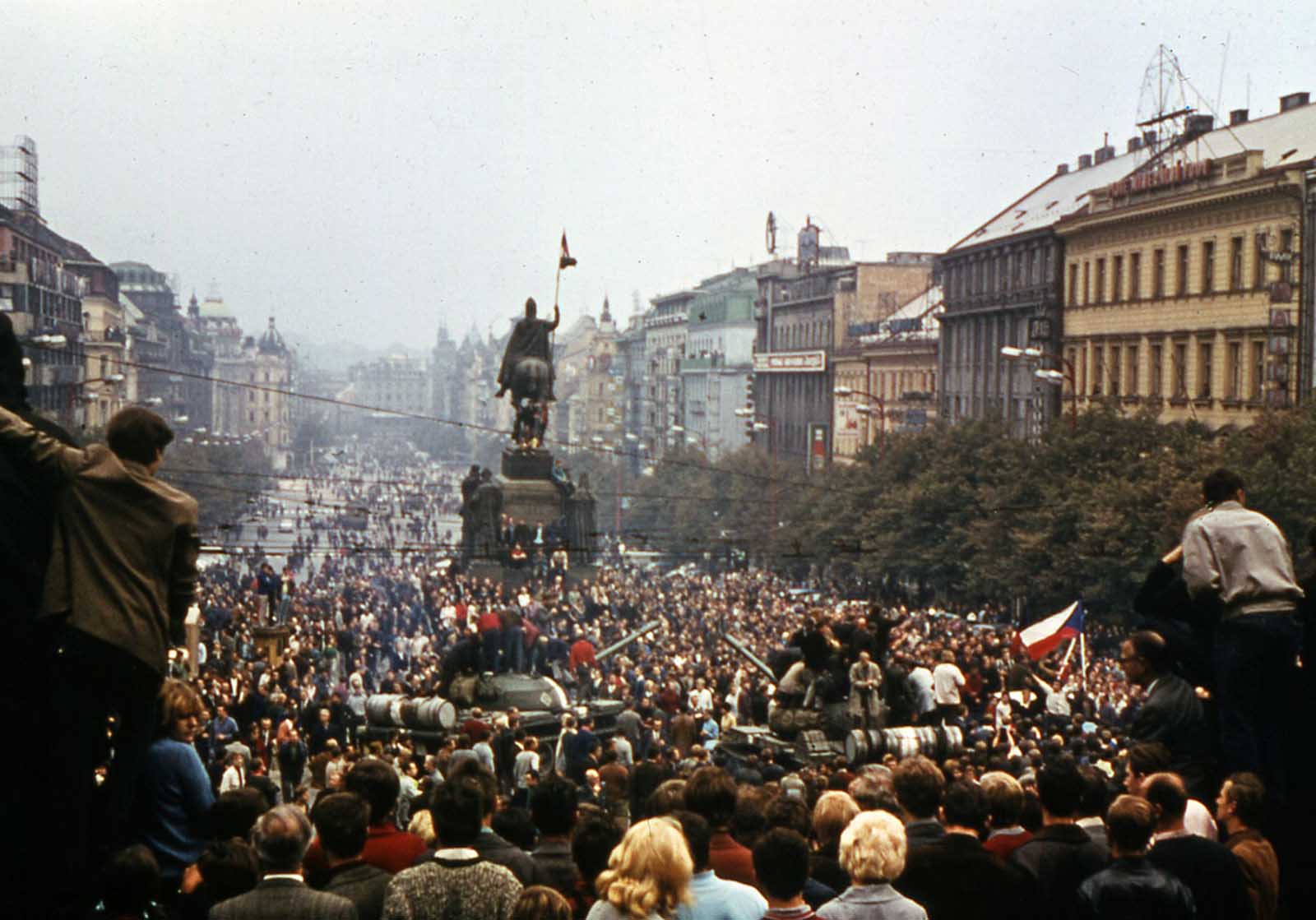
Mass protests broke out across the country in the days that followed the initial invasion. Wenceslas Square in downtown Prague became the center of demonstrations, drawing thousands of people at a time. On August 24, crowds filled the square in a direct show of opposition to the occupation. The protests continued for days, with ordinary Czechs and Slovaks refusing to accept the Soviet presence quietly.
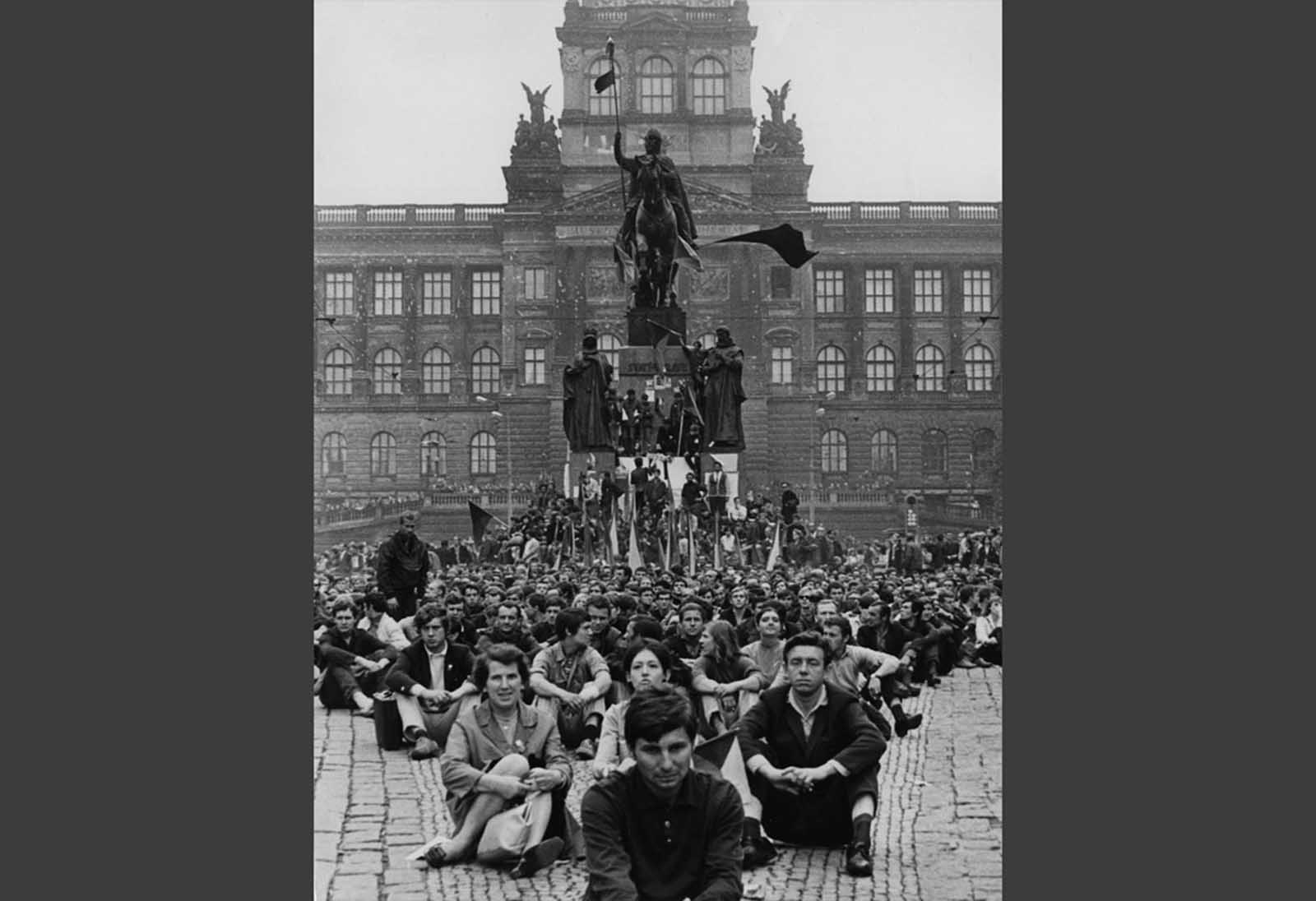
Thousands of protesters sit in Wenceslas Square, in downtown Prague, on August 24, 1968, demonstrating against the Soviet invasion
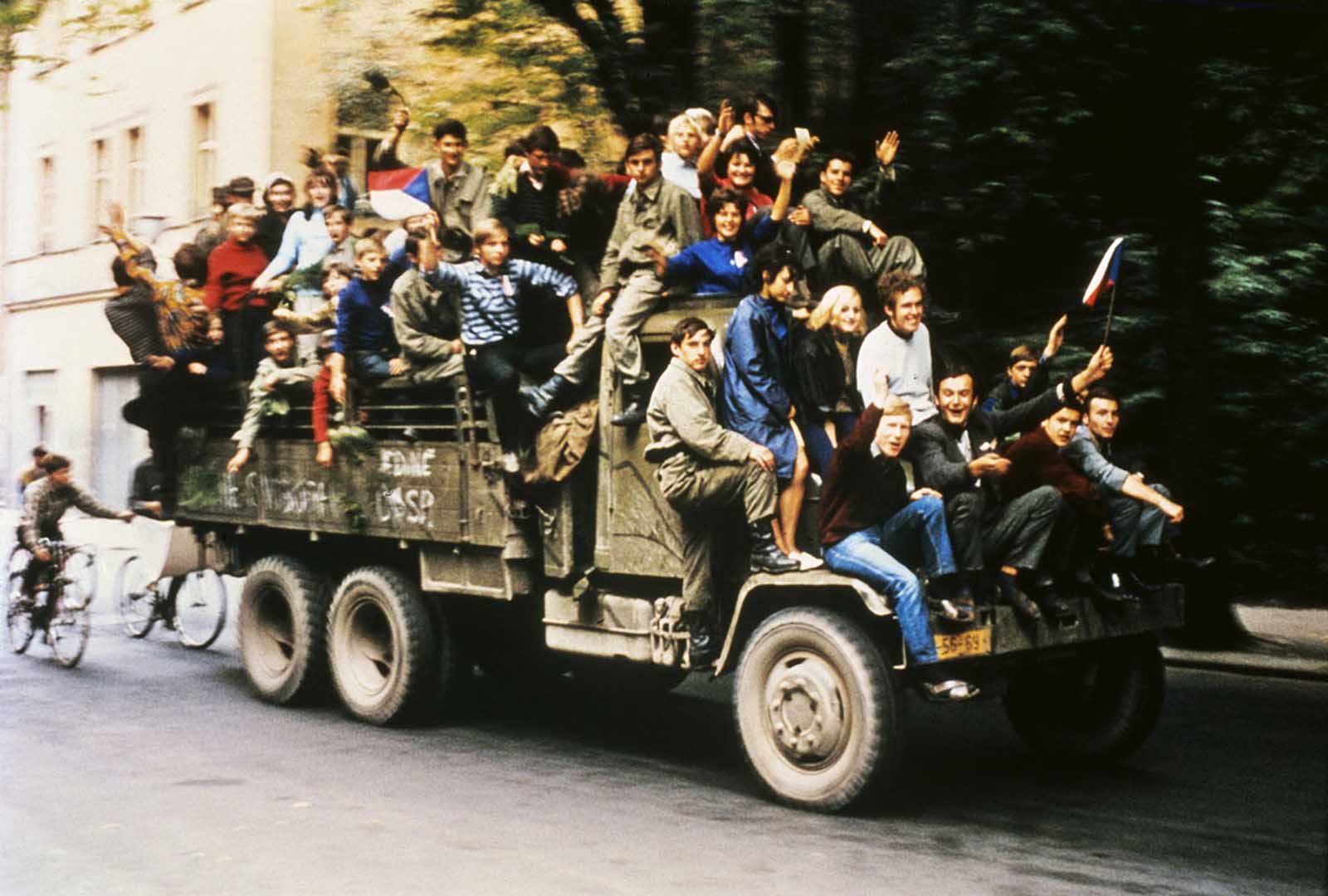
Czechoslovakian army trucks take young people around Prague as Soviet tanks had halted on the outskirts of town and began a siege of Czech army barracks.
Thousands of protesters crowd into Wenceslas Square, in downtown Prague, in August 1968, demonstrating against the Soviet invasion

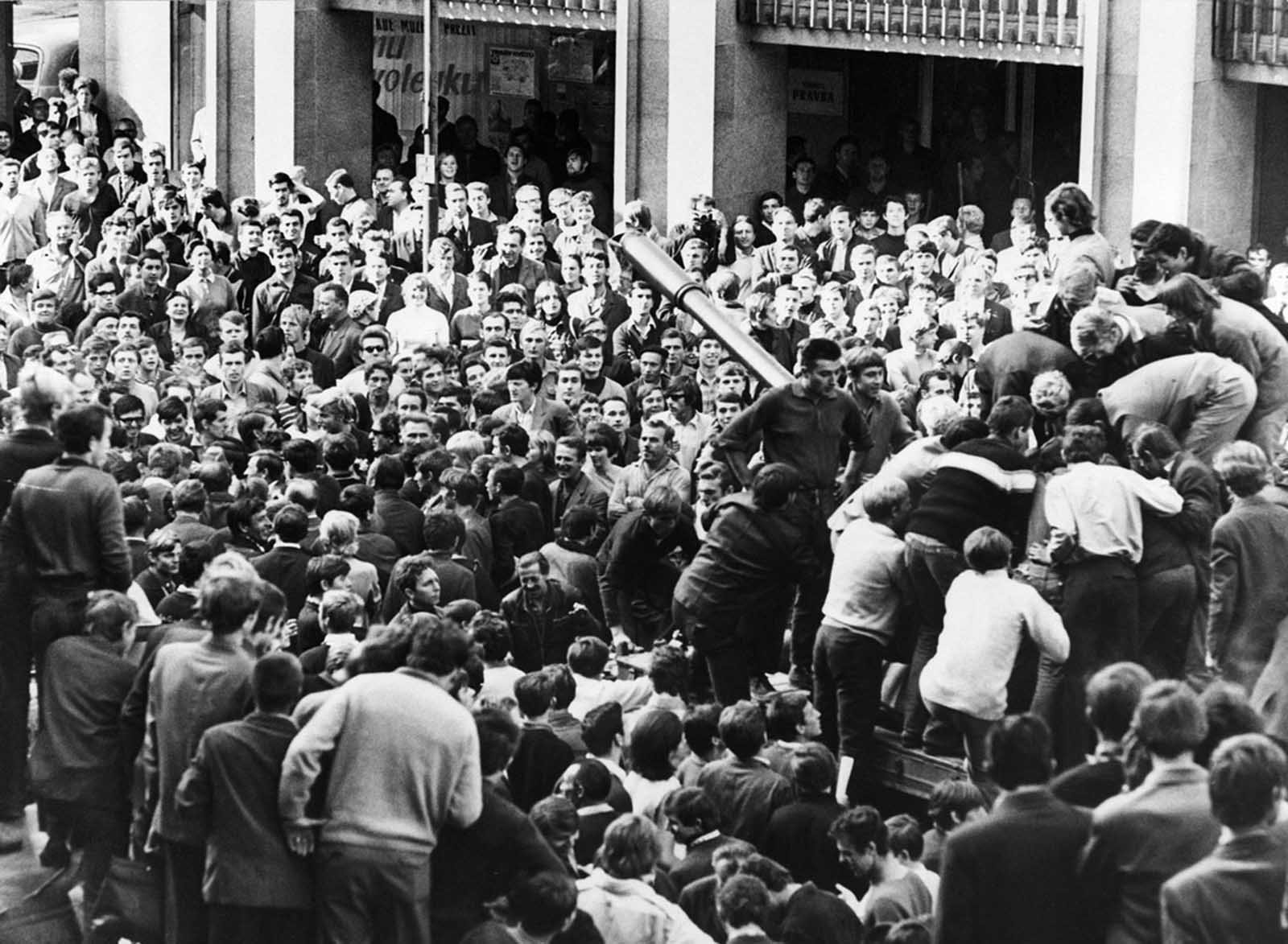
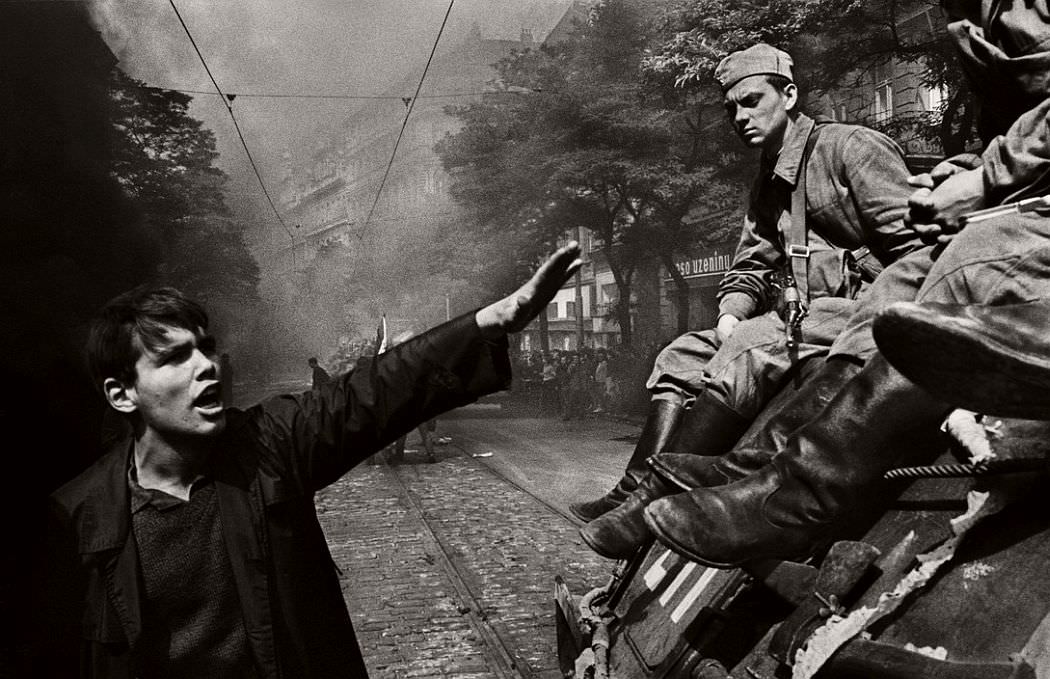
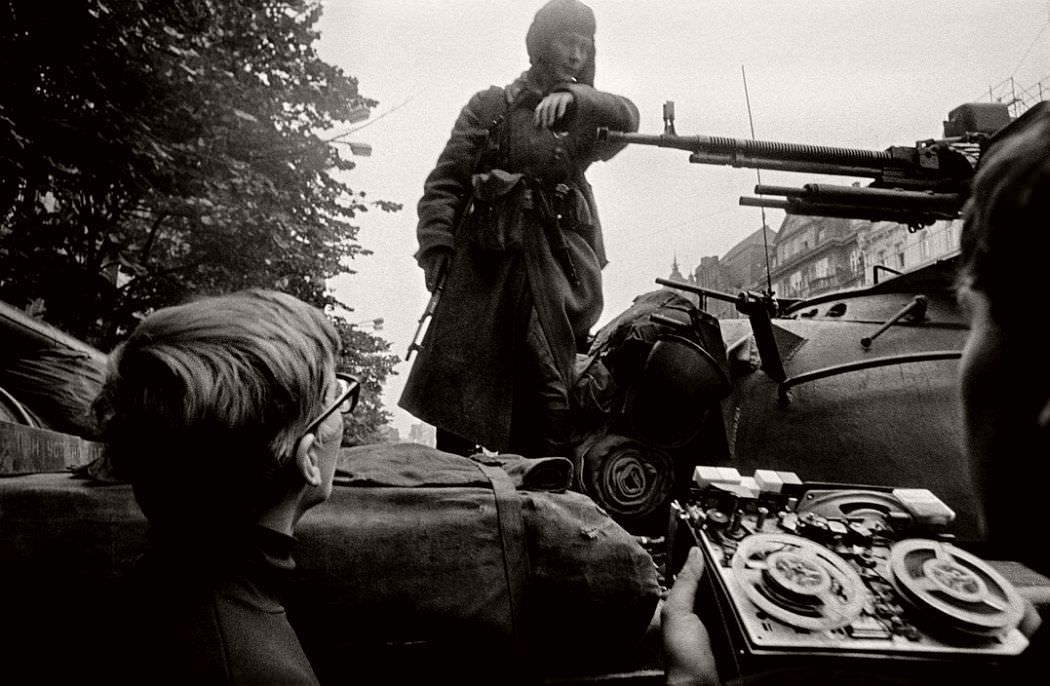
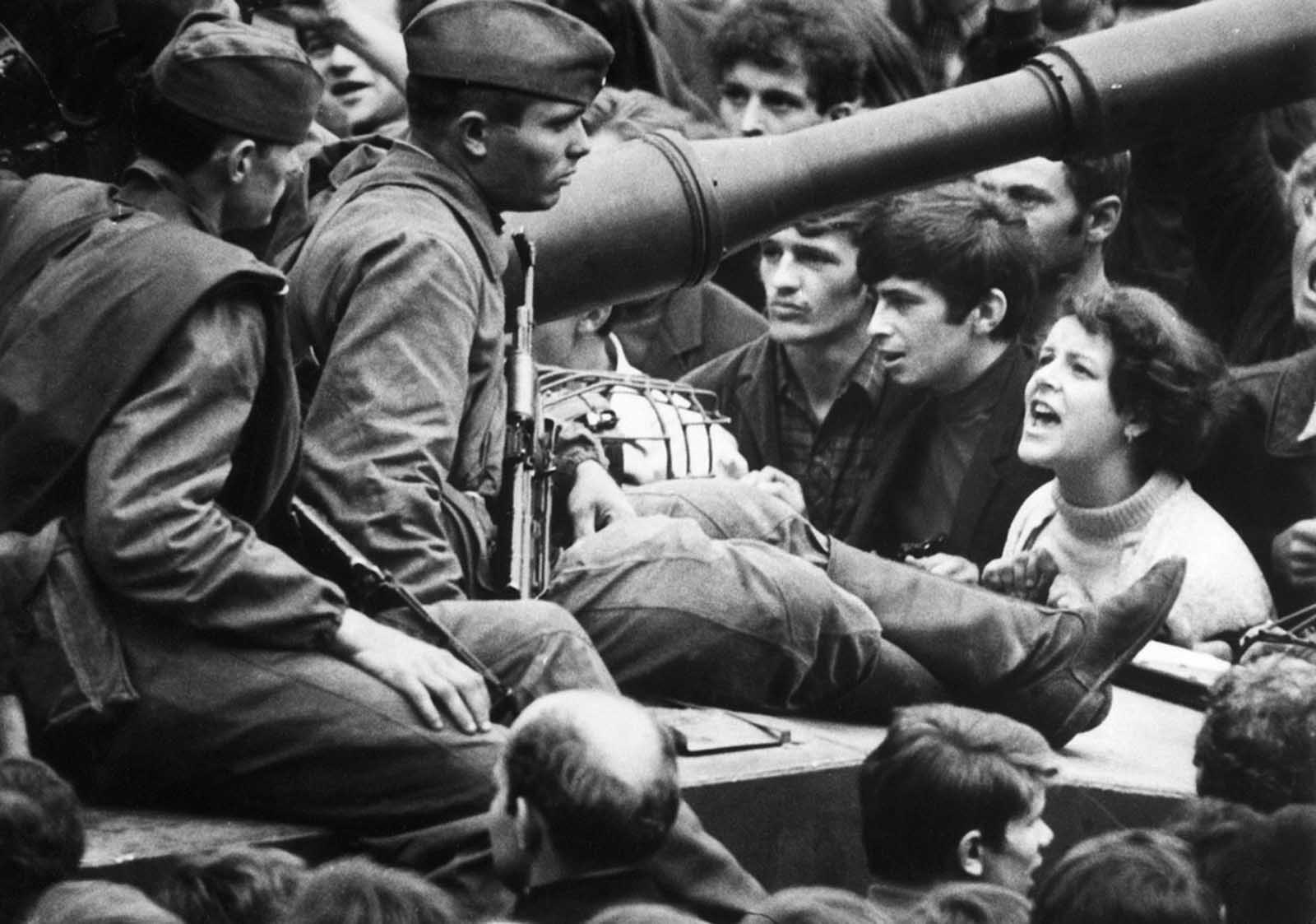
Confrontations between citizens and Soviet soldiers played out on streets throughout the capital. People shouted directly at tank crews. Young women pressed their faces close to soldiers and demanded answers. Men and women climbed onto turrets and mocked the crews inside. In Bratislava, citizens surrounded a Soviet tank and scaled it to confront the soldiers manning it. None of this stopped the occupation, but it documented — in real time — the full rejection of Soviet authority by the Czechoslovak people.
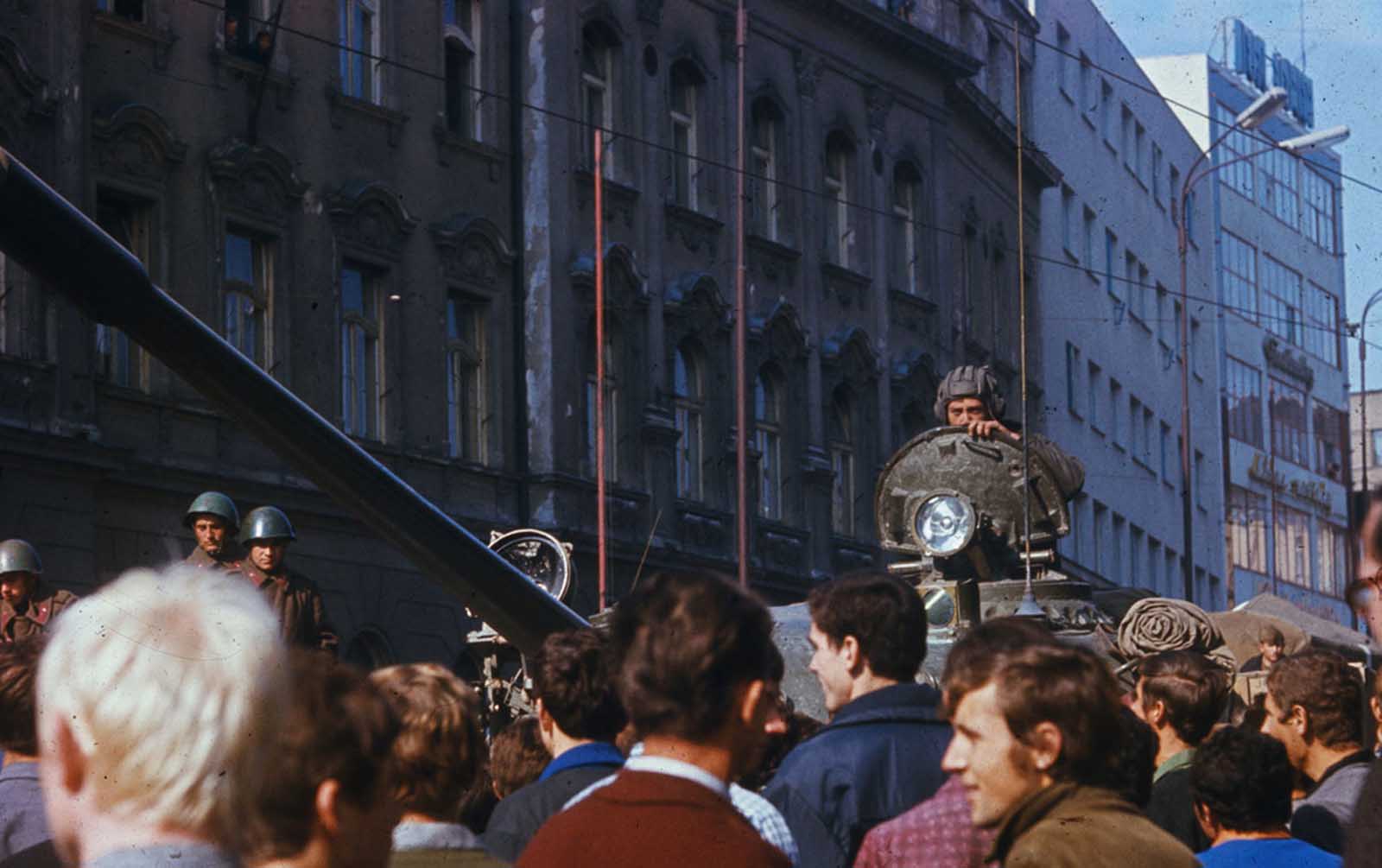
Czechs jeer a Soviet tank in downtown Prague.
A young Czech lets her feelings be known as she shouts at Soviet soldiers sitting on tanks in the streets of Prague on August 26, 1968.
Angry citizens surround a Soviet tank and climb its turret to mock the crew in Bratislava, Czechoslovakia, on August 22, 1968.

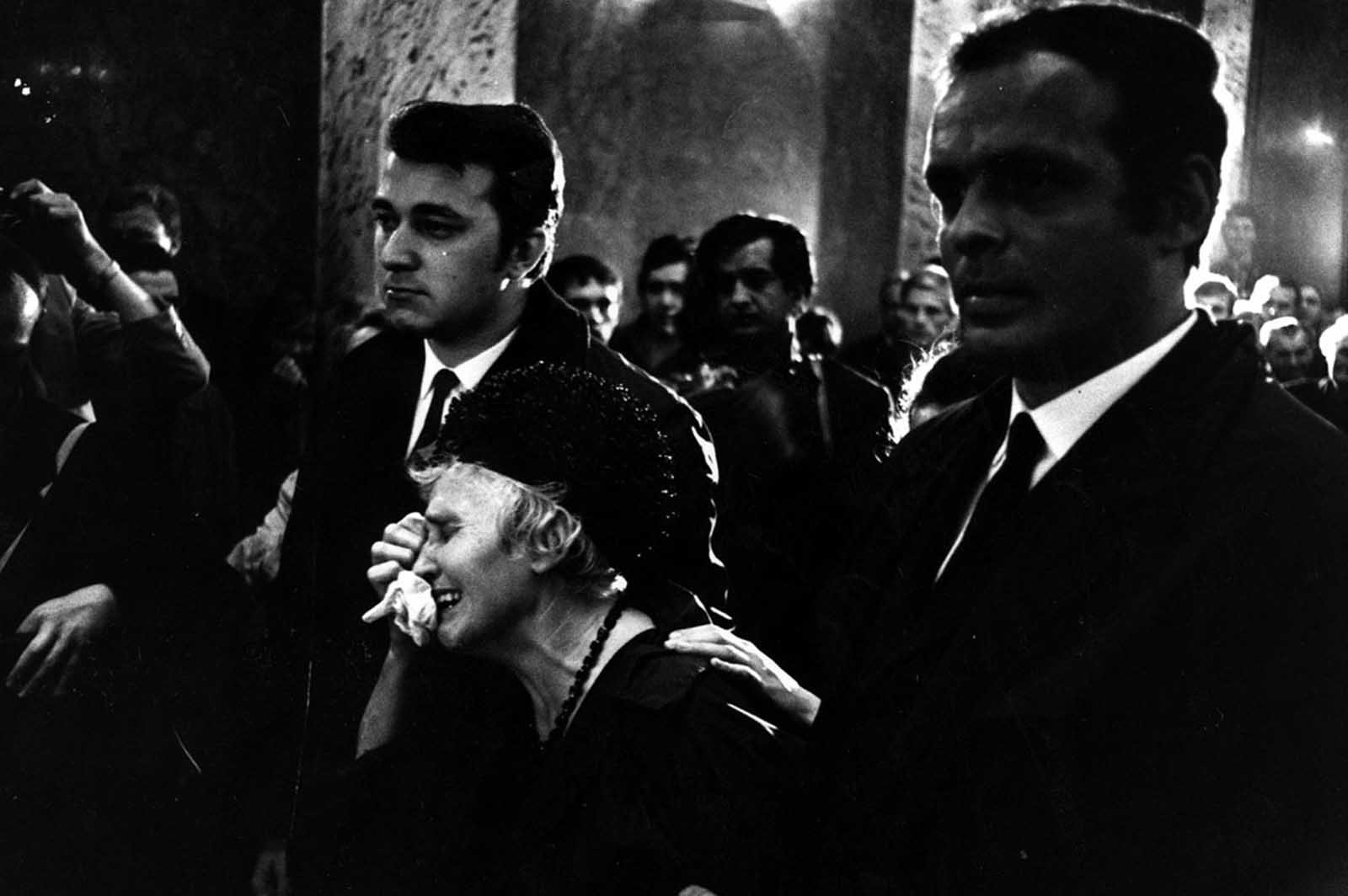
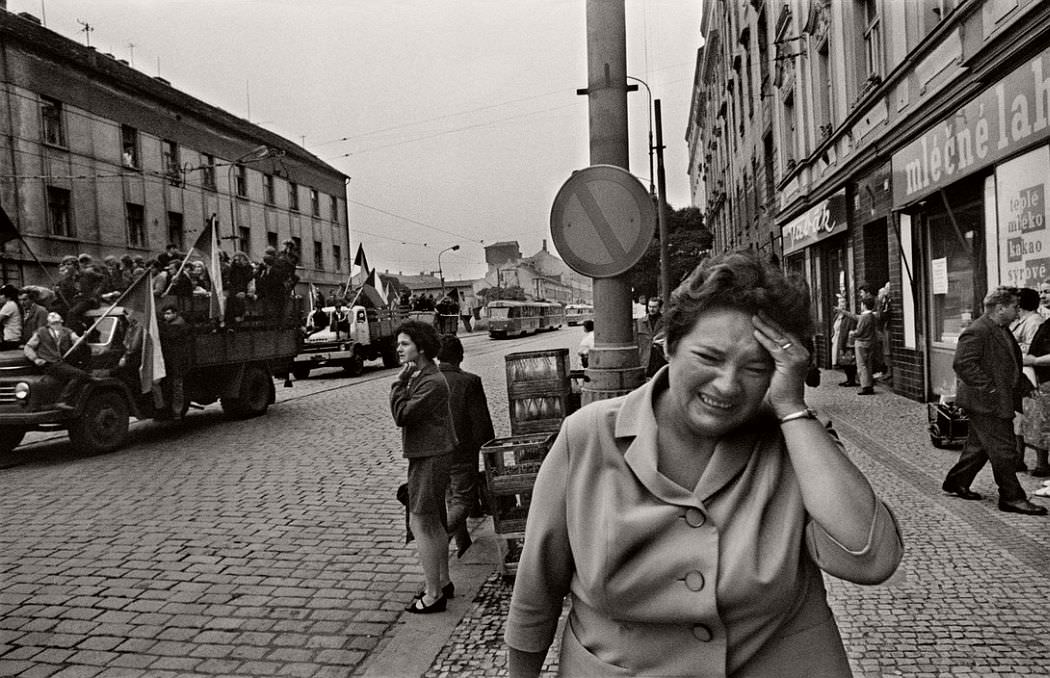
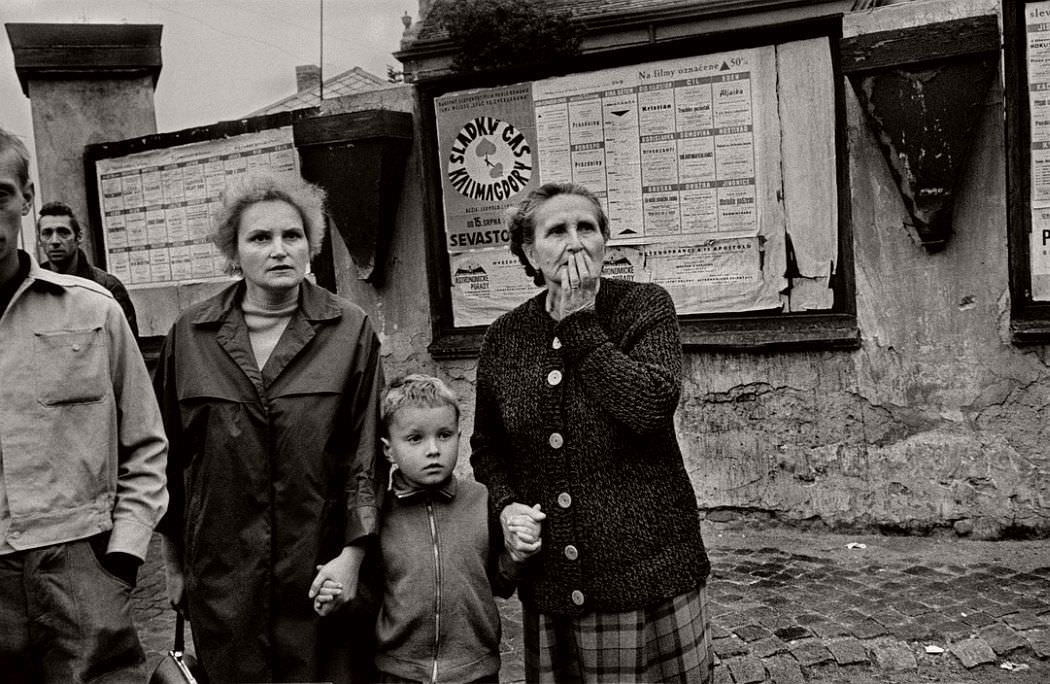
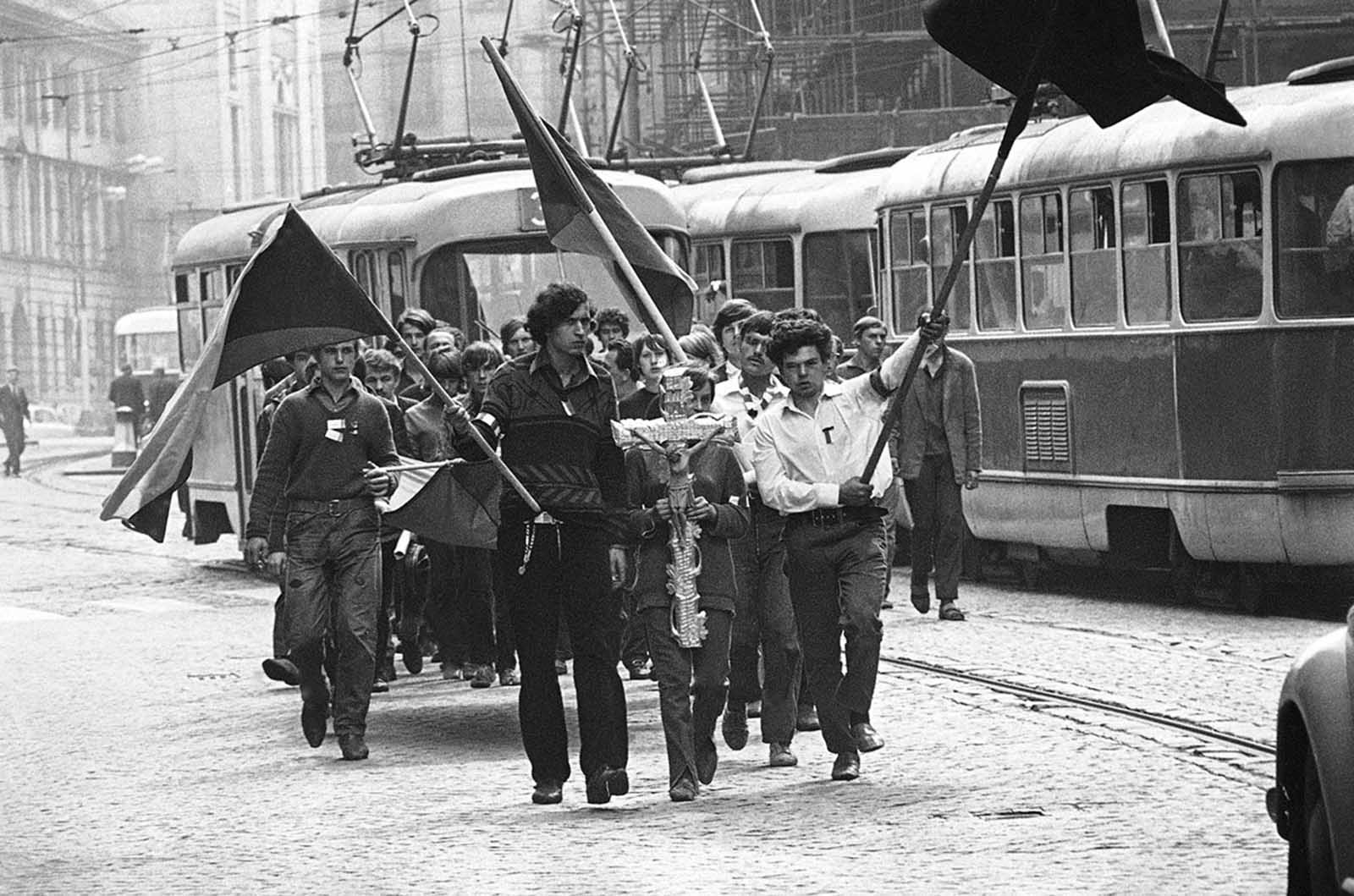
The human cost of the invasion extended far beyond the immediate clashes in the streets. Civilians were shot and killed. Funerals took place in the days and weeks after August 21. On August 27, young people in Prague carried a crucifix through the streets to the burial of a friend who had been shot by Soviet forces. A woman was photographed weeping at a funeral for one of the victims of the fighting. Thousands of Czechoslovaks chose to leave the country entirely, fleeing across the border into Austria before escape routes were shut down.
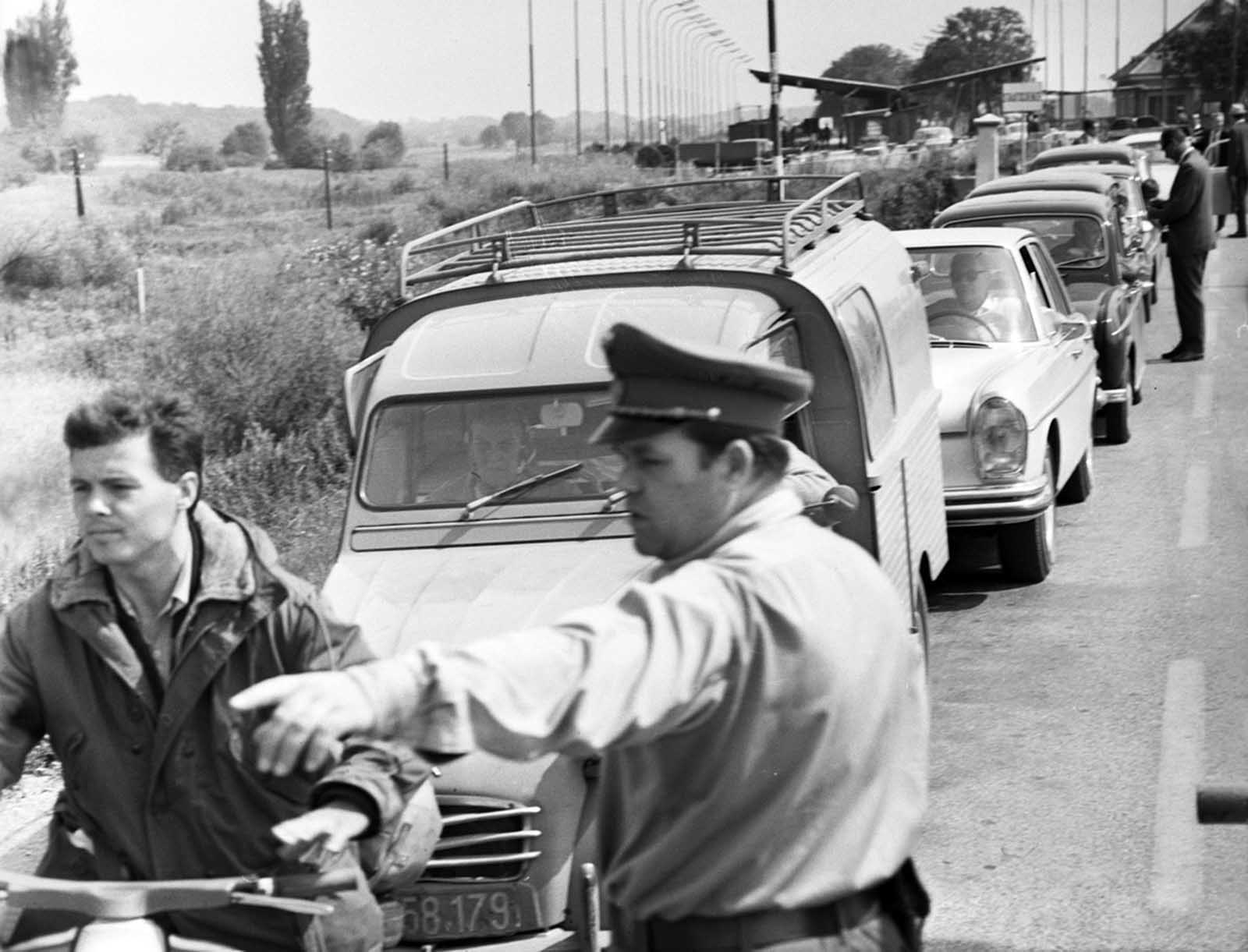
Czechoslovakian refugees flee the country, photographed here at the Austrian border, in autumn 1968.
Youths carry a crucifix on their way to the burial of a friend shot by the Soviets on August 27, 1968, in Prague.
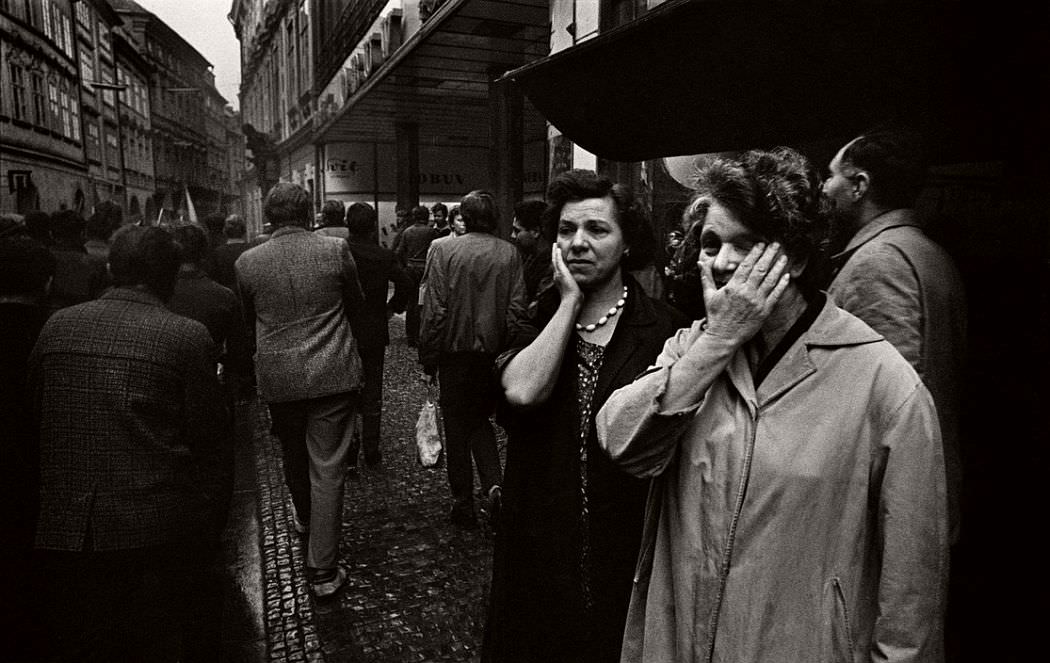
A woman weeps at a funeral for one of the victims of the fighting in Czechoslovakia

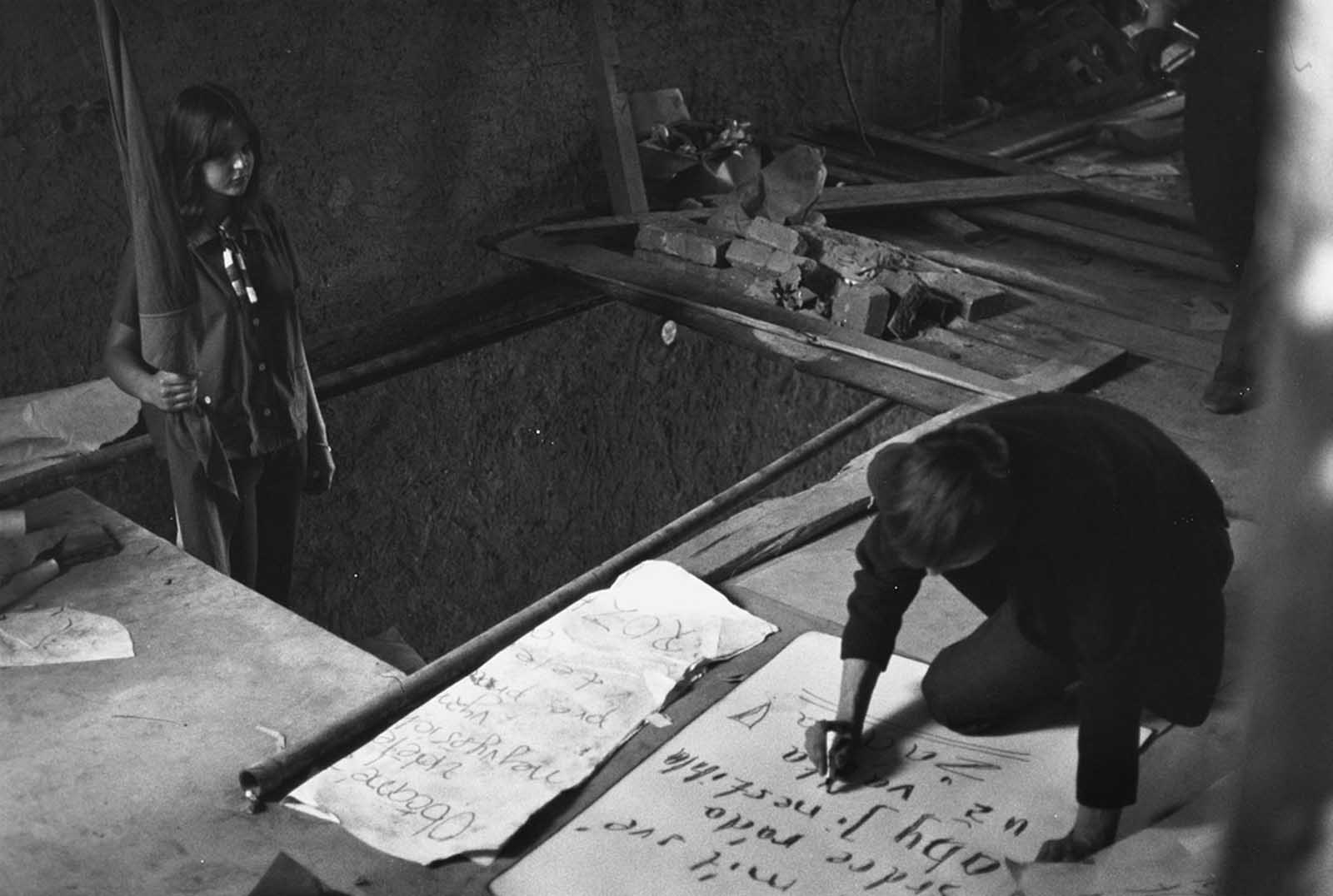
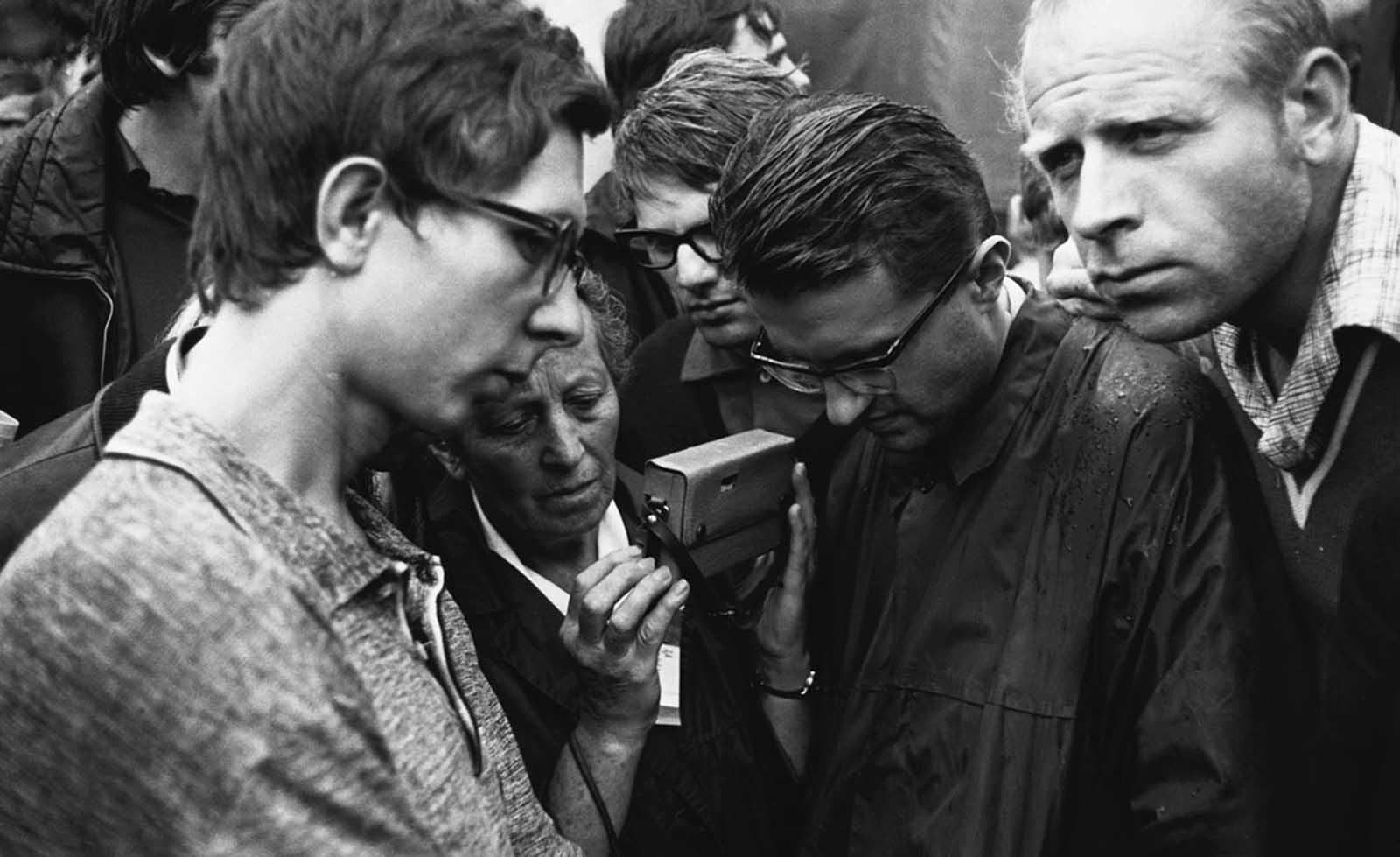
While Soviet armor controlled the streets, underground resistance organized quickly. Students produced anti-Soviet posters in secret. Citizens gathered around transistor radios to follow news of the occupation, searching for accurate information in a media environment the Soviets were working to control. These acts of defiance — small in scale but broad in participation — showed the depth of opposition to the invasion.
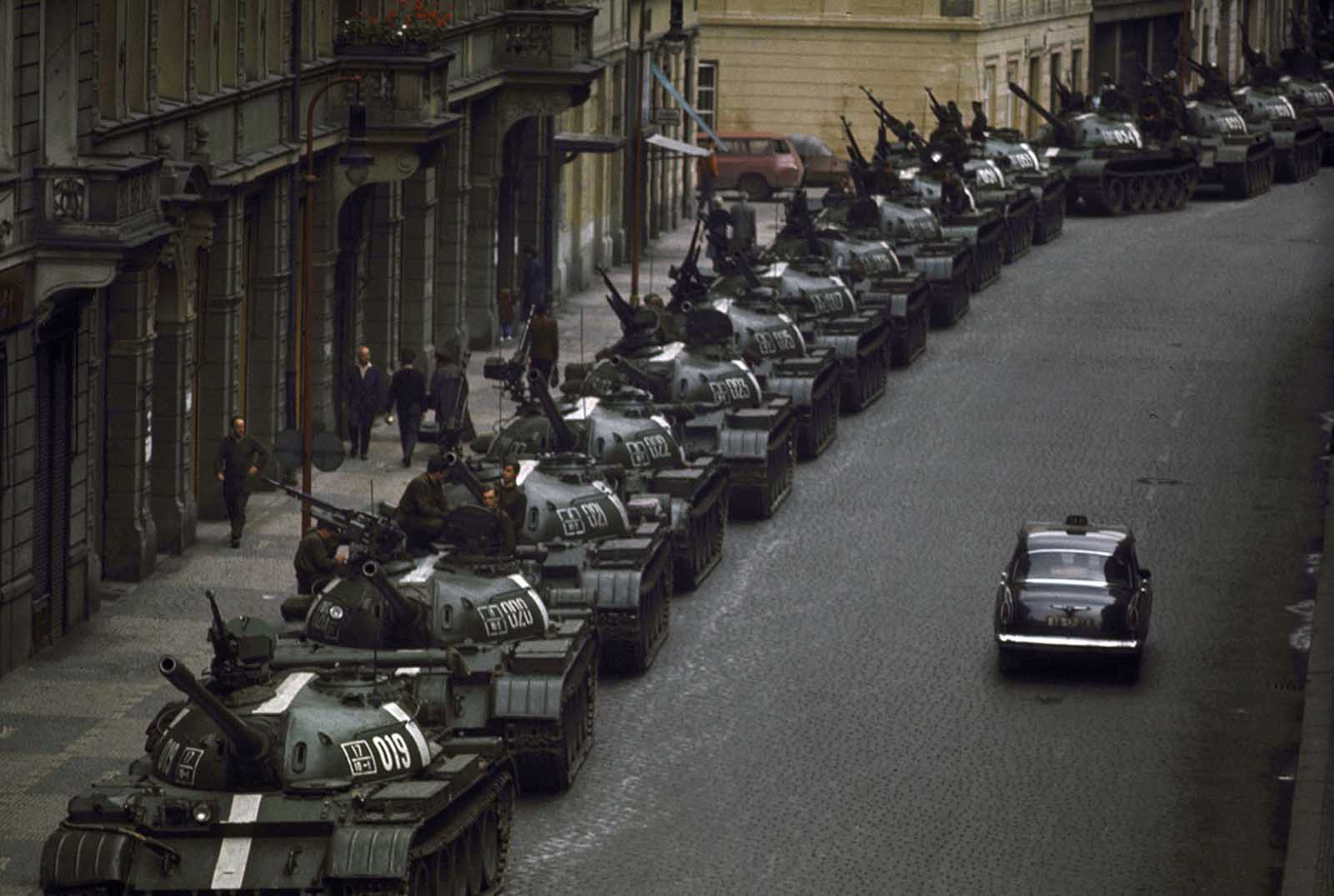
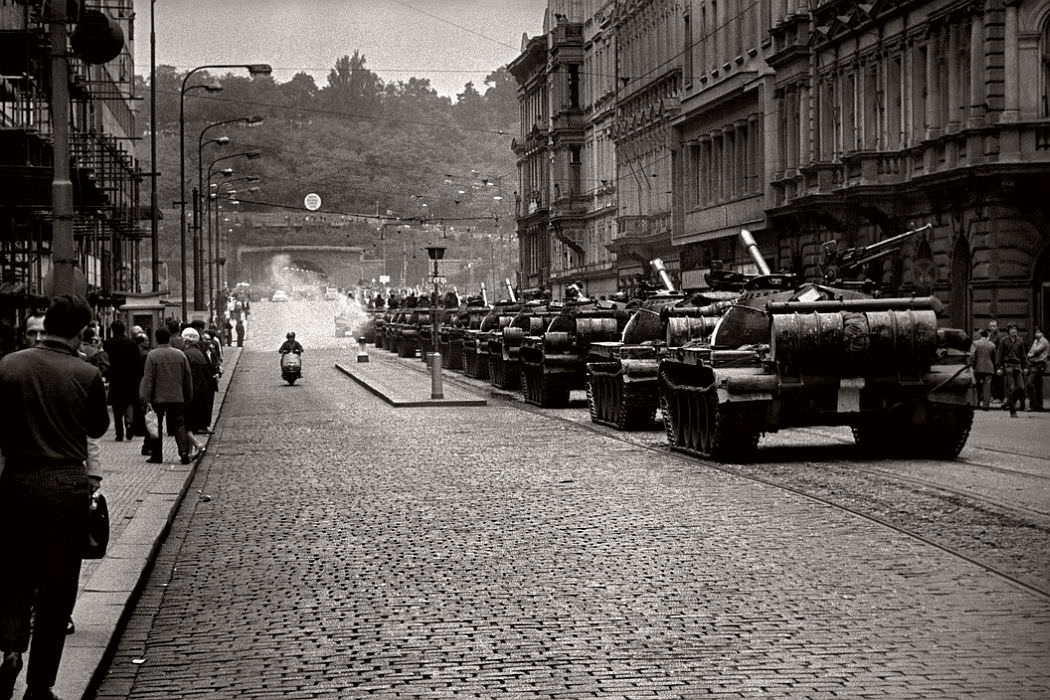
A lone car passes dozens of Soviet tanks during the 1968 invasion of Czechoslovakia.
Czechoslovakians gather to listen to a transistor radio for news of the Soviet invasion and occupation on August 29, 1968.
Students in the underground movement make anti-Russian posters on September 3, 1968, in Prague.

The Soviets moved quickly to dismantle the political gains of the Prague Spring. Dubček was forced from power and replaced by Gustáv Husák, a leader acceptable to Moscow. Husák’s government restored censorship, reinstated controls on movement, and rolled back the freedoms Dubček had introduced. Soviet troops remained in Czechoslovakia to enforce compliance and prevent any further attempts at reform. By September, columns of soldiers were marching through Prague not in the chaos of an invasion, but in the structured routine of a long-term occupation.
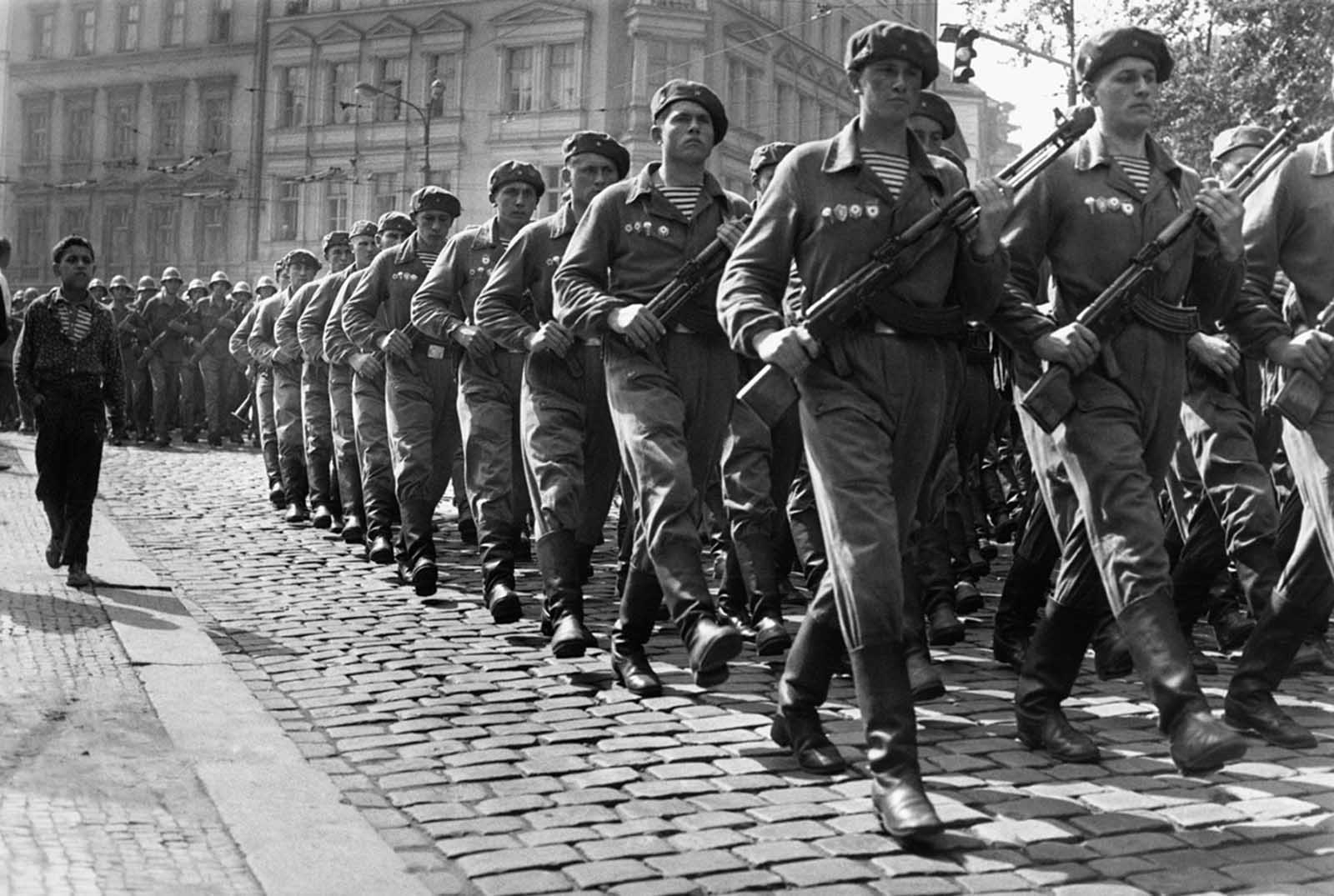
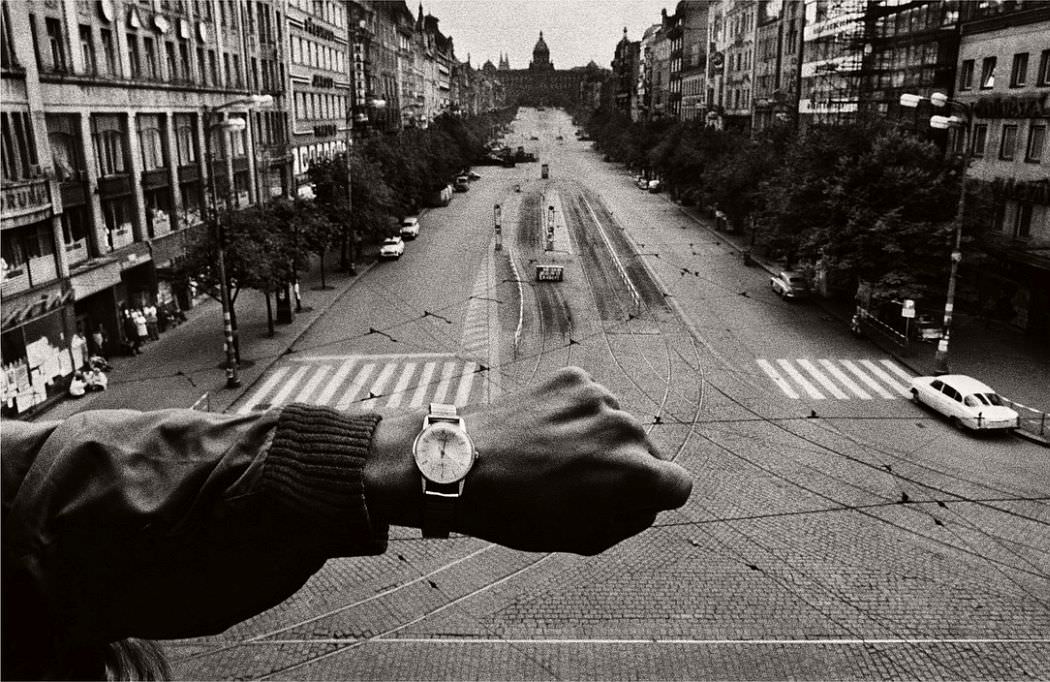
Soviet troops march through Prague in September 1968.
Soviet Invasion Of Czechoslovakia: When The Soviets Arrived To Crush The Prague Spring, 1968
Enjoyed this post? Get new ones in your inbox.

Leave a Comment

Your email address will not be published. Required fields are marked *

Share this Post 🥺

Please take a moment to share this content. Your support is greatly appreciated! 🙌🙏

Share this Post 🥺

Please take a moment to share this content. Your support is greatly appreciated! 🙌🙏
Scroll to Top
 
Hey Friend, Before You Go.. Please like & follow for more interesting content