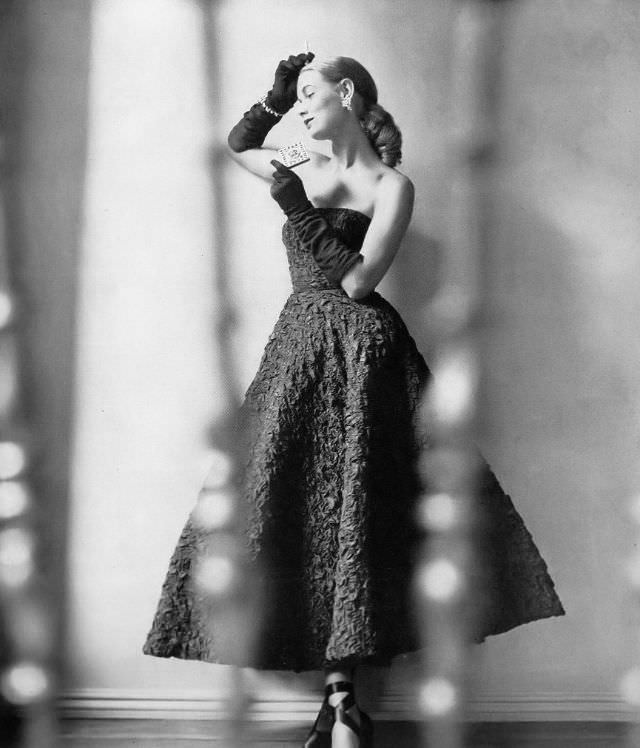
Kay Bell worked in fashion photography during one of the most turbulent decades of the twentieth century. While World War II reshaped daily life across the globe, it also forced fashion into a corner — fabric was rationed, designs were stripped back, and excess was out of the question. Bell photographed through all of it, building a body of work for publications like Vogue and Harper’s Bazaar that captured exactly how American women dressed, moved, and presented themselves during the 1940s.
Fashion photography at the time was largely a male-dominated field. Bell carved out her place in it not by mimicking the conventions already in place, but by leaning into narrative. Her images placed models in real contexts — at exhibitions, on beaches, in front of paintings, against desert backdrops. The clothes were always central, but so was the world around them.
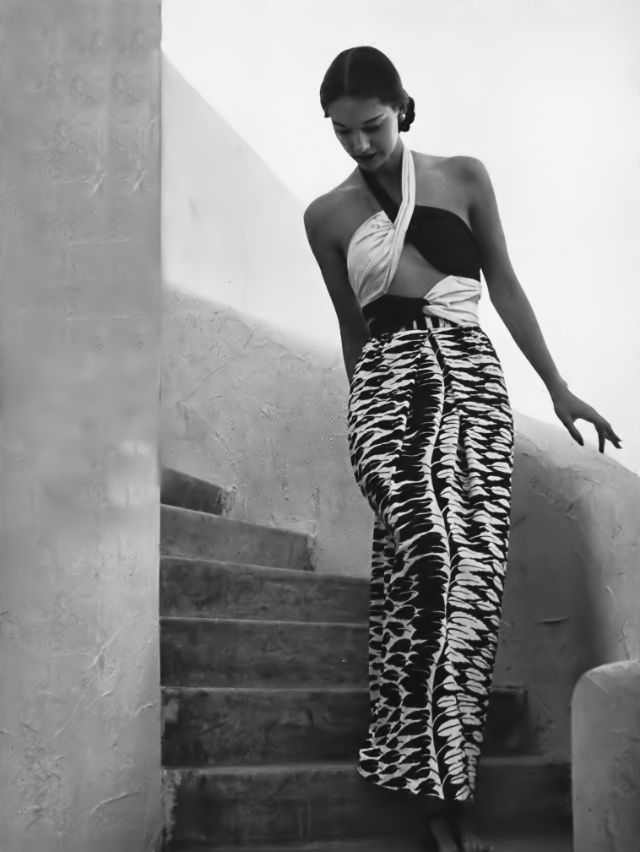
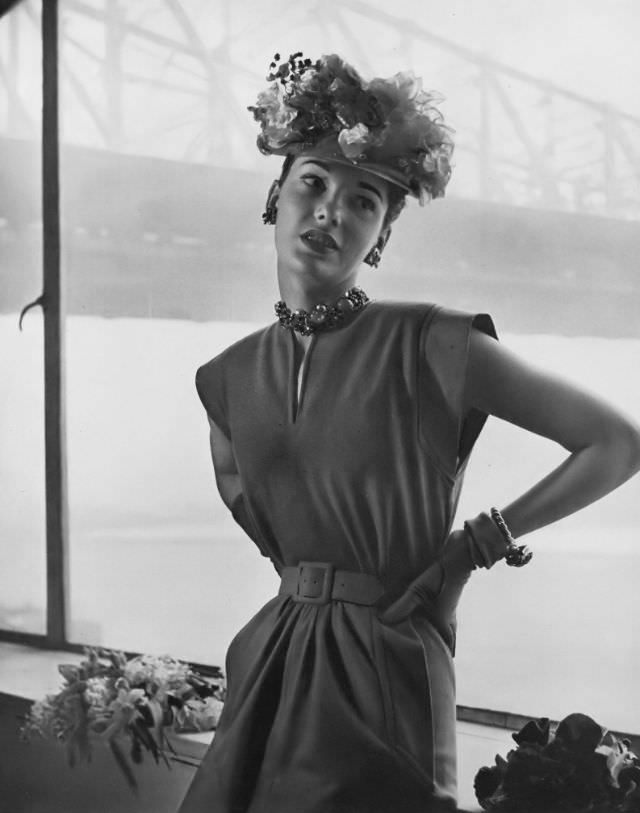
Her 1945 work for Vogue showed the particular character of mid-war fashion. Designs were bold in pattern but practical in structure. Gingham, rayon jersey, and cotton piqué appeared again and again. Sequin-trimmed prints, belted silhouettes, and utility-minded cuts defined the season. Model Marilyn Ambrose appeared in several of these shoots, wearing pieces that balanced wartime restraint with genuine style.
Marilyn Ambrose in a cabana dress of black and white rayon jersey, the printed leaves have sequins along the spines, Vogue, 1945.
Marilyn Ambrose in a mauve jersey dress, Vogue, 1945.
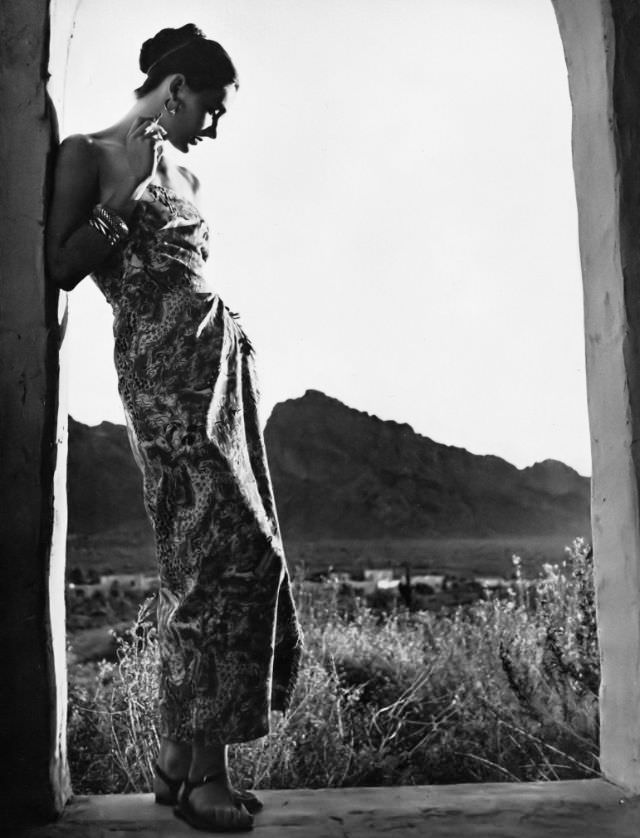
Bell’s 1945 Vogue assignments took her well beyond the studio. A shoot at Camelback Mountain in Arizona produced images rooted in a specific landscape — warm light, open terrain, and clothes that had to hold their own against an outdoor setting.
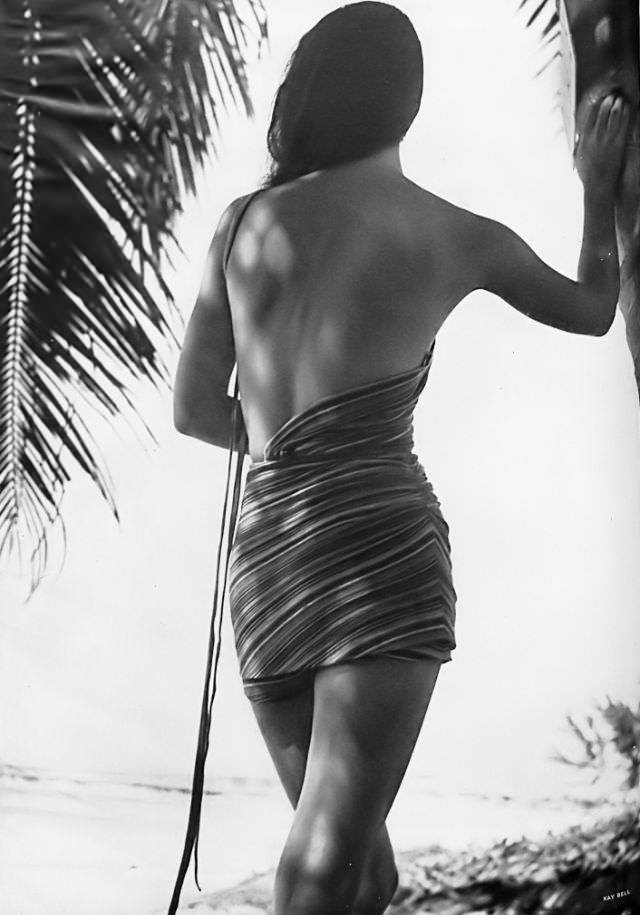
Marilyn Ambrose in dinner sarong in tangled white, black and cocoa brown cotton piqué by Hope Skillman, Camelback Mountain, Arizona, Vogue, 1945.
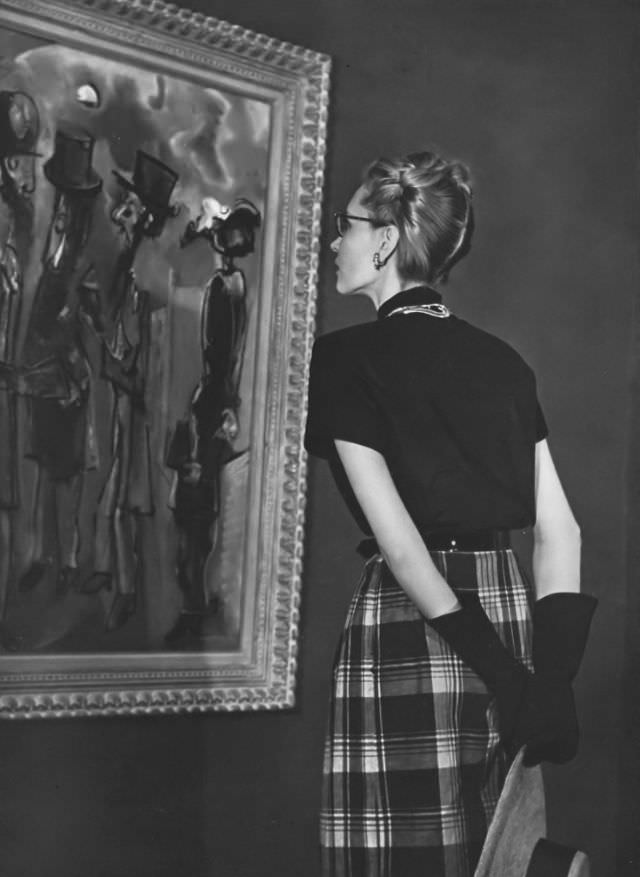
Back in the studio and on location in New York, Bell photographed a range of day and evening looks. One striking image placed a model in a bright gingham dress in front of a painting by Max Weber — fashion and fine art sharing the same frame.
Model in a bright-and-black gingham dress with bold plaid skirt and short sleeves, belted in black patent leather by David Crystal, in front of a painting by Max Weber, Vogue, 1945.
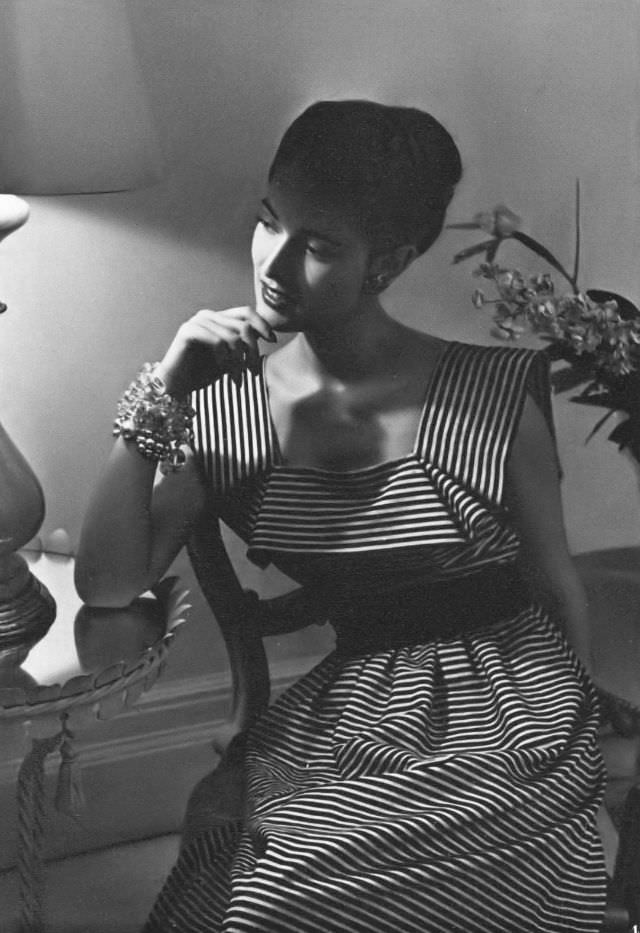
Model in a pink-and-black striped piqué party dress by Capri, Vogue, 1945.
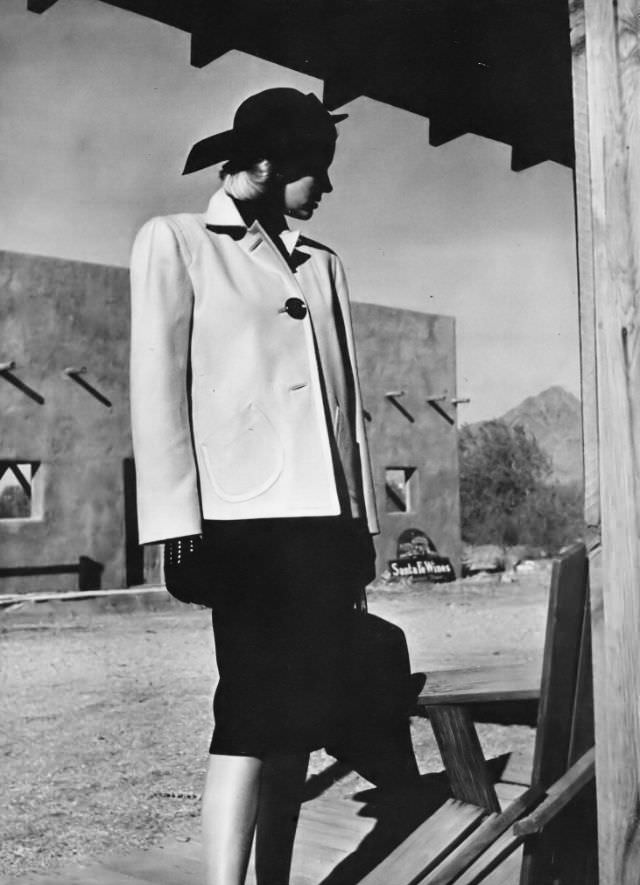
Model in a short sand-beige coat of wool velour by Duchess Royal, Camelback Mountain, Arizona, Vogue, 1945.
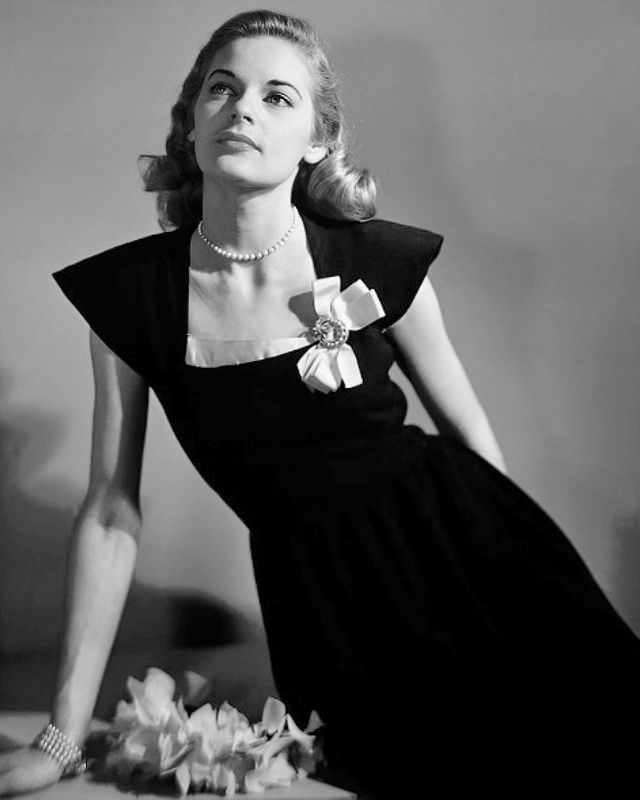
Not all of Bell’s 1945 work appeared in Vogue. A shot for Glamour magazine that year showed a model in a black dress with a pink-bordered neckline and a Marvella bracelet — a quieter image, but precise in its details.
Model in black dress with pink bordered neckline, bow in corner, Marvella bracelet, Glamour, 1945.
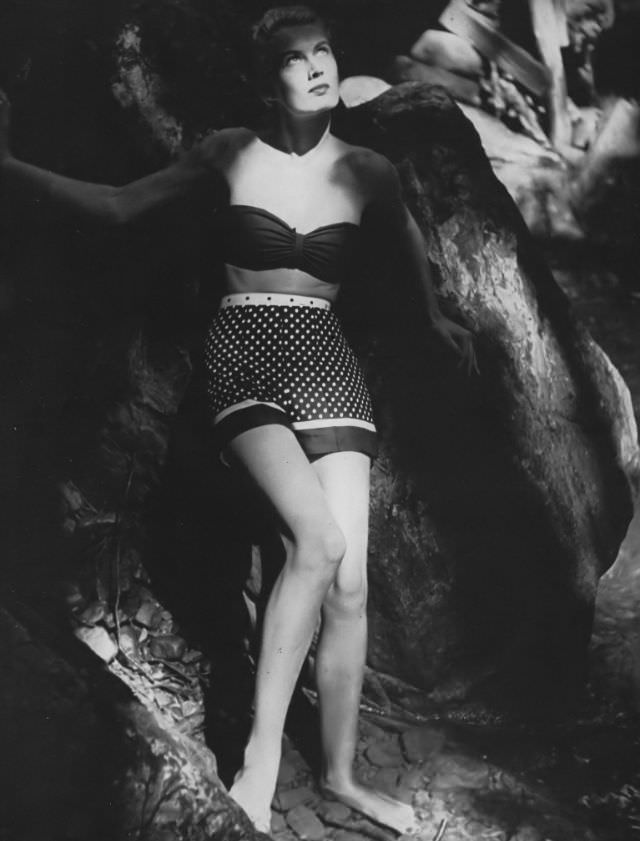
Model in black gabardine strapless bra and boxer-pants of Everfast cotton by Duchess Royal, Vogue, 1945.
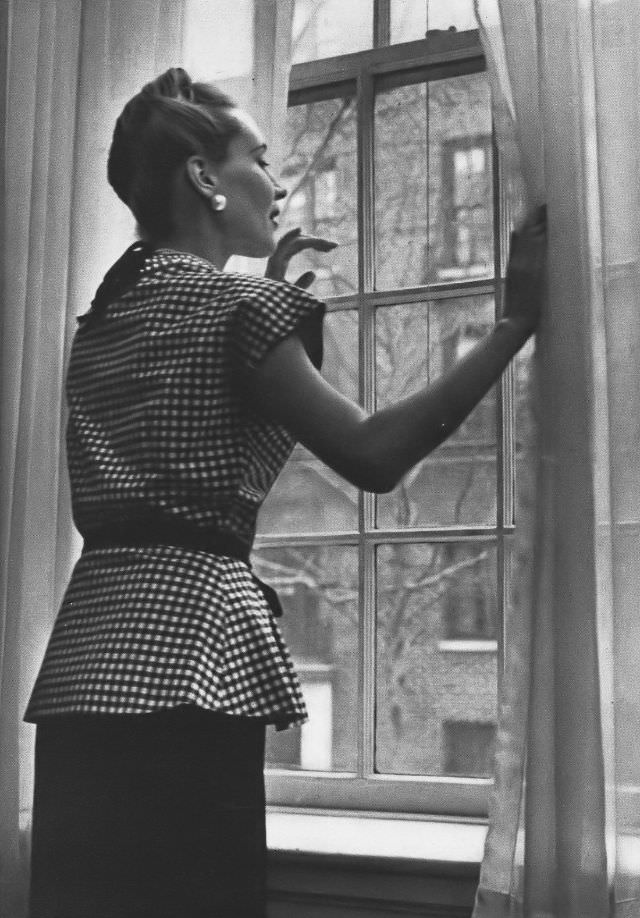
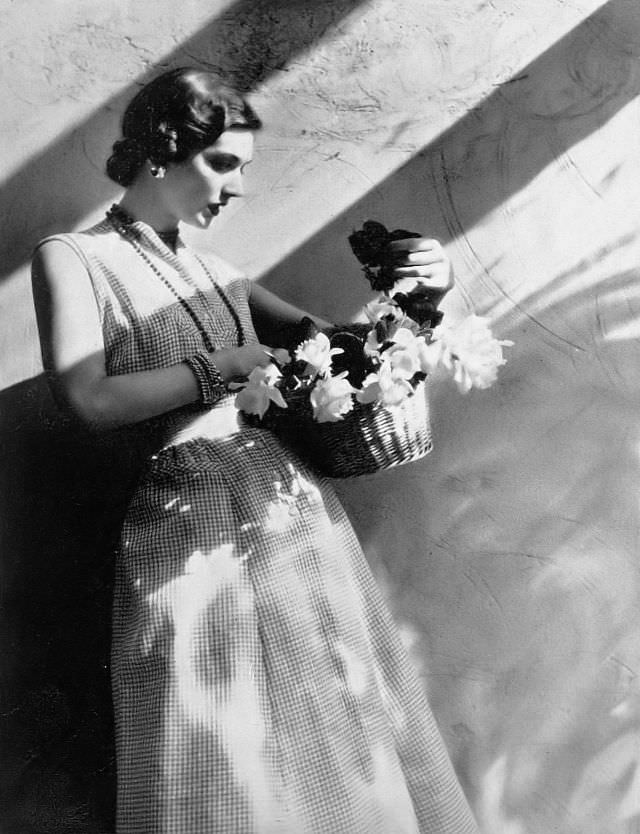
Model in black-and-white checked gingham ripple peplum top over straight black rayon skirt at Bloomingdale, Vogue, 1945.
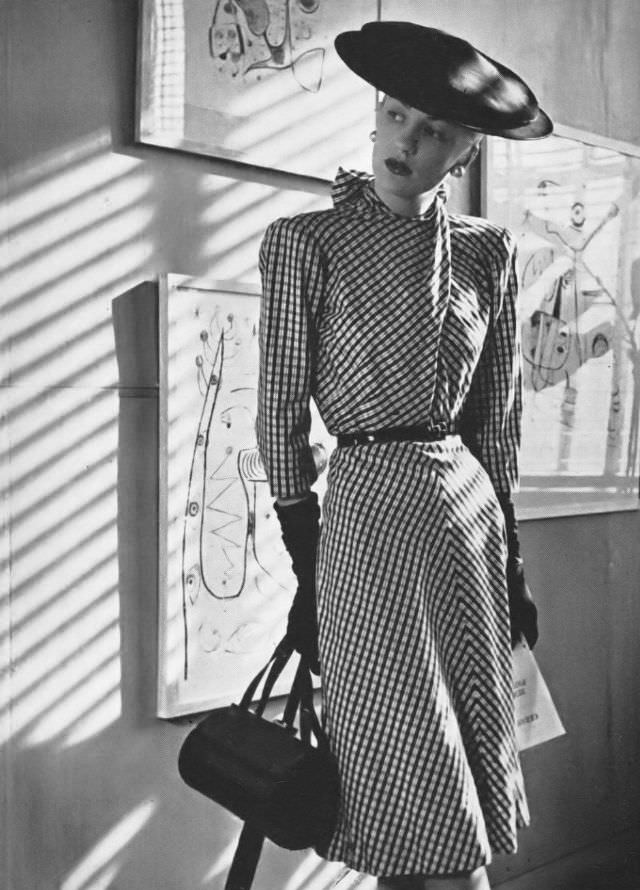
Bell had a habit of grounding fashion shoots in cultural spaces. A 1945 session placed a model at the Joan Miró exhibition — the black-and-white cotton taffeta dress held in tension with the surrounding artwork.
Model in black-and-white cotton taffeta dress with a back-tied neck by Troy Guild, at the Joan Miró exhibition, Vogue, 1945.
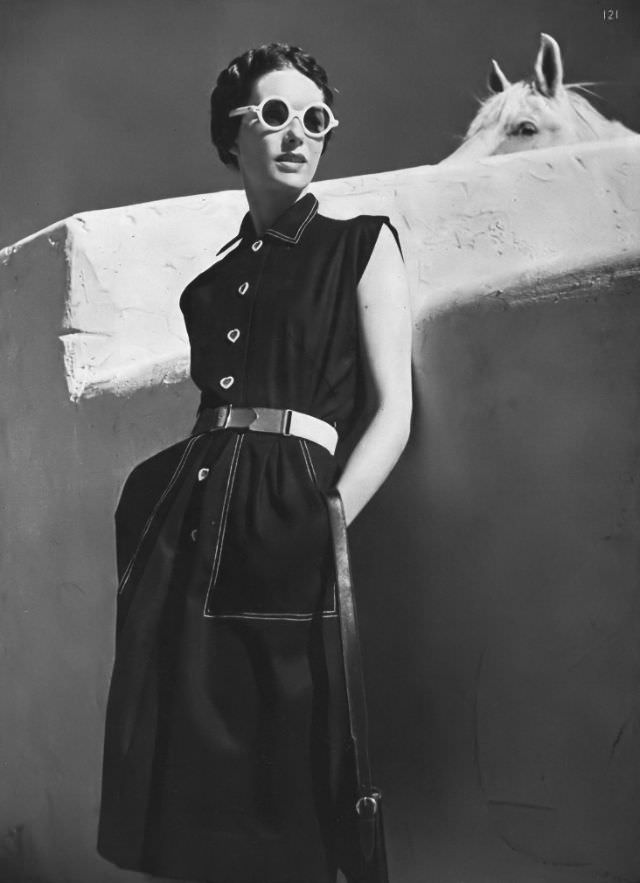
Model in spun-rayon-cotton dress with white stitiching and canvas belt by Townley, Arizona, Vogue, 1945.
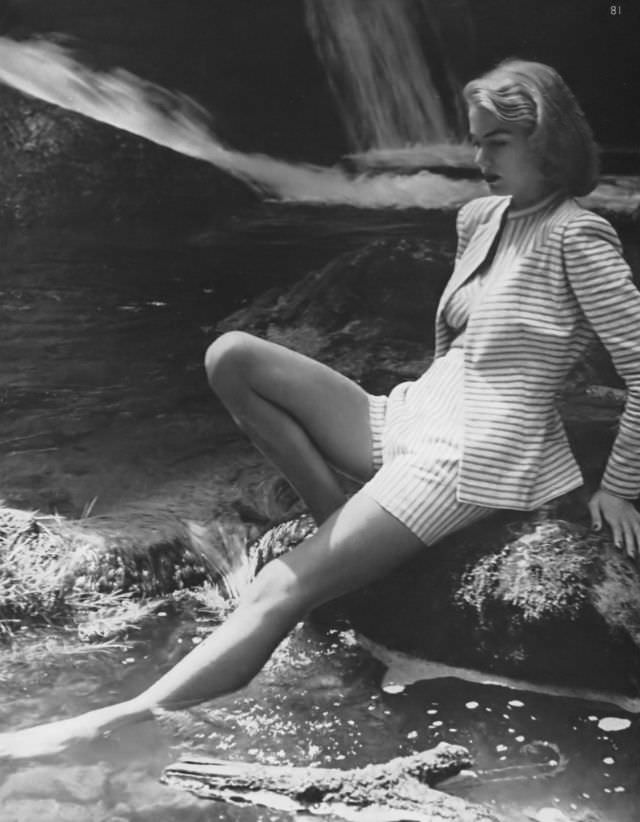
Model in sun-suit of coarse white Mexican cotton penciled with green by Tina Leser, Vogue, 1945.
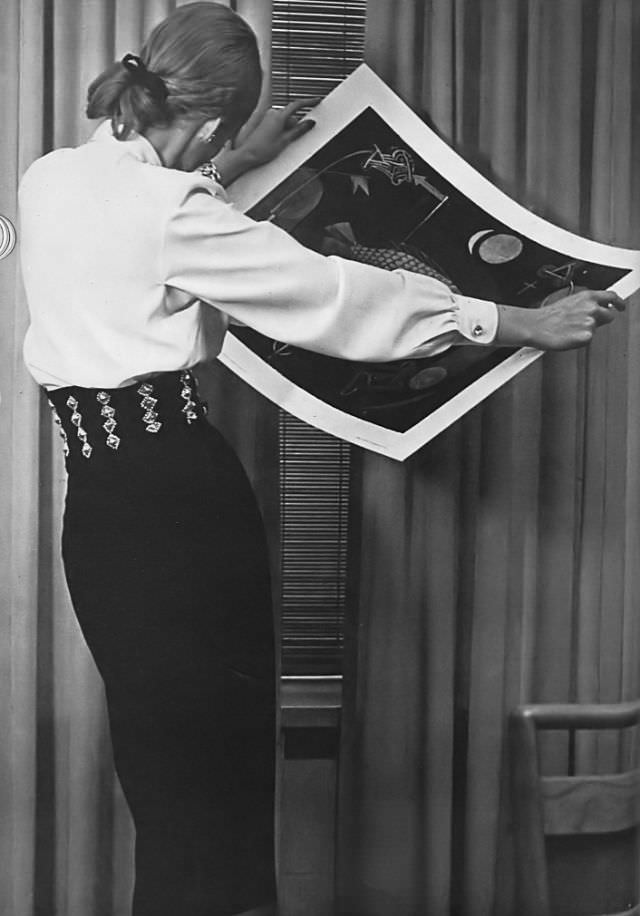
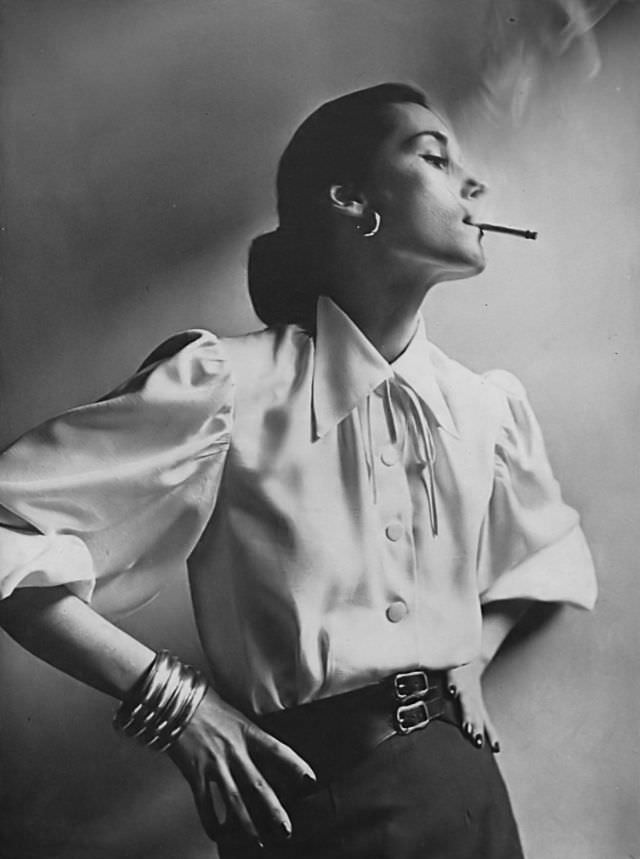
Model in white jewel-buttoned blouse by Florence Gainor and wide decorated belt by Midtown, Vogue, 1945.
By 1946, the war had ended and fashion began its slow shift toward something more expressive. Designers pushed at the boundaries that had been in place for years. Extravagant sleeve volumes, bare midriffs, and structured suiting all appeared in Bell’s work that year. The clothes told the story of an industry catching its breath and then exhaling fully.
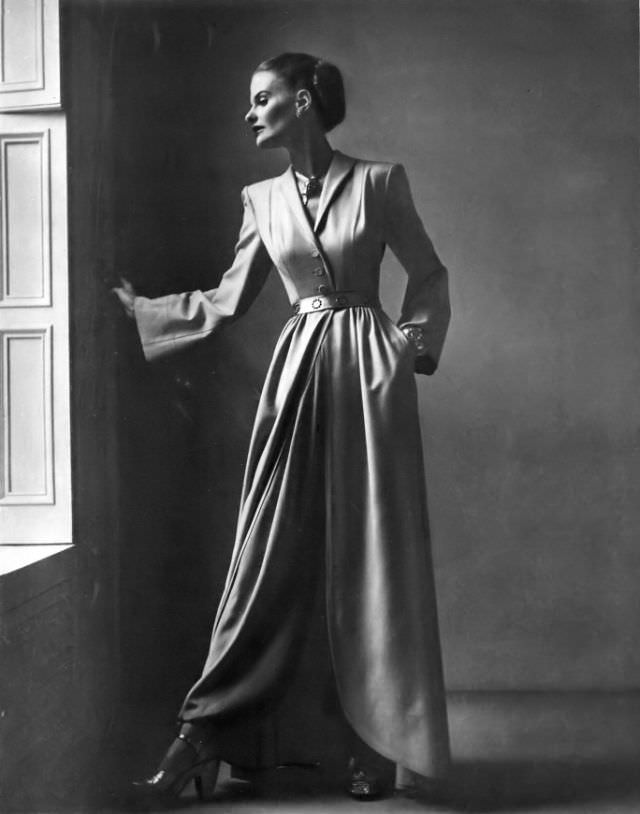
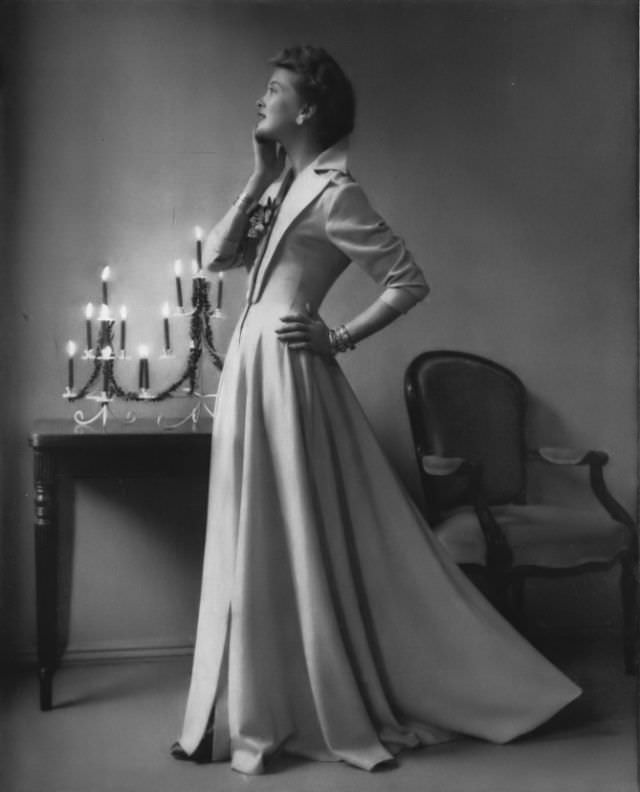
Dorothy Tivis in egg-nog beige wool cut-away hostess coat by Joseph Whitehead for Bergdorf Goodman, Vogue, 1946.
Model in a swirl of stripes on a wool jersey one-piece suit with a partly bare middle by Claire McCardell, Vogue, 1946.
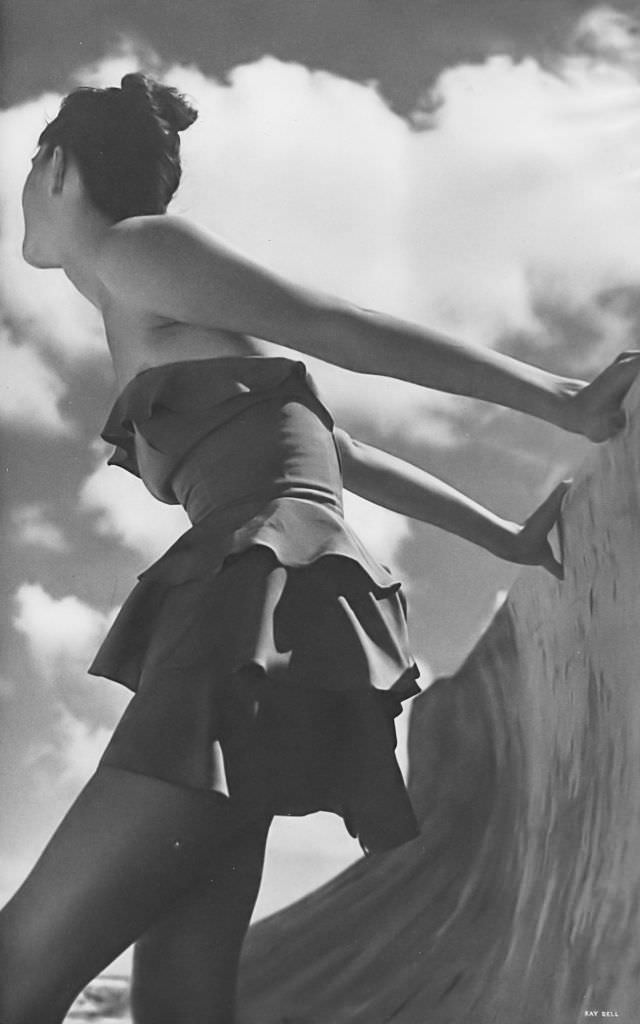
Model in bloomer suit with detachable bustled flounce in green rayon faille by Louella Ballerino for Jantzen, Vogue, 1946.
Model in silk shantung blouse with extravagantly full sleeves, Vogue, 1946.
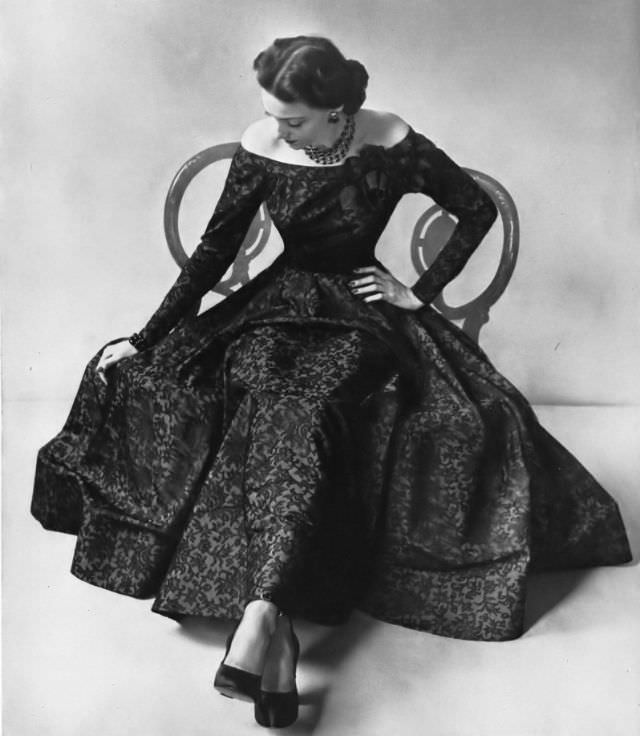
In 1947, Bell’s work took on a richer, more luxurious quality. Evening wear grew dramatic — full skirts, Chantilly lace, velvet trim, and Cartier jewelry all made appearances. Fur entered the frame too. Meg Mundy wore an ermine tunic by Maximilian alongside a midnight-blue beaver hat by Lilly Daché for Harper’s Bazaar, a shot that announced postwar abundance in no uncertain terms.
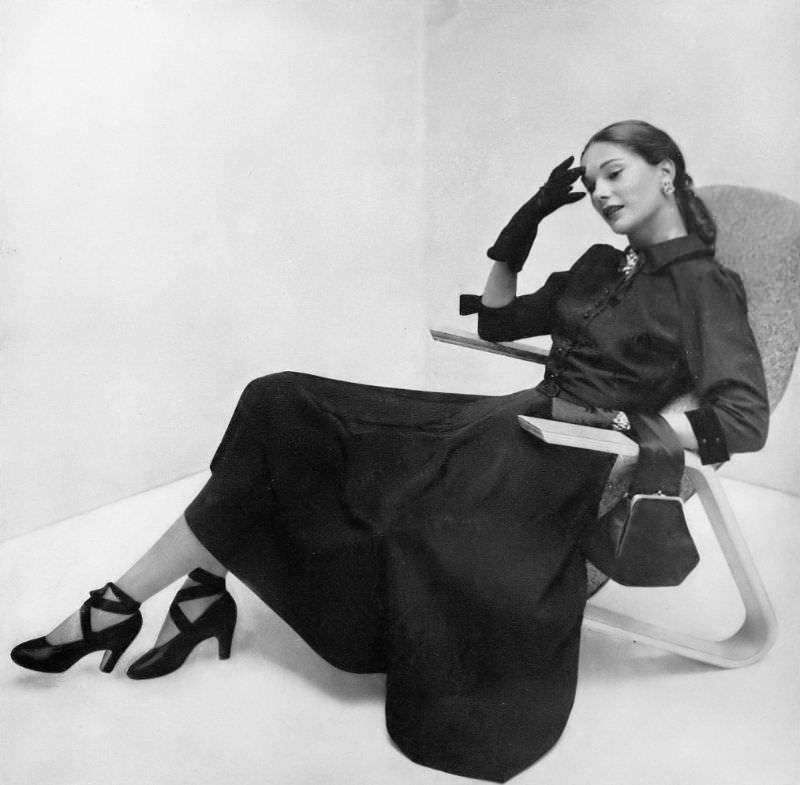
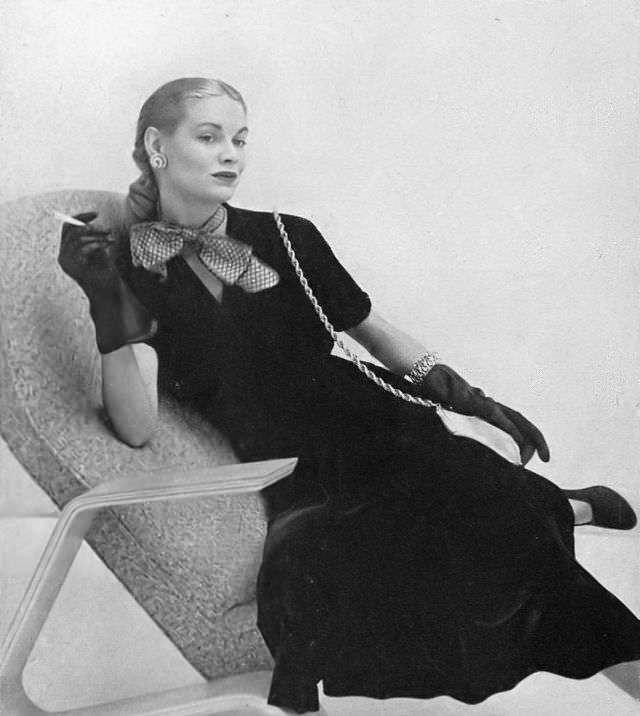
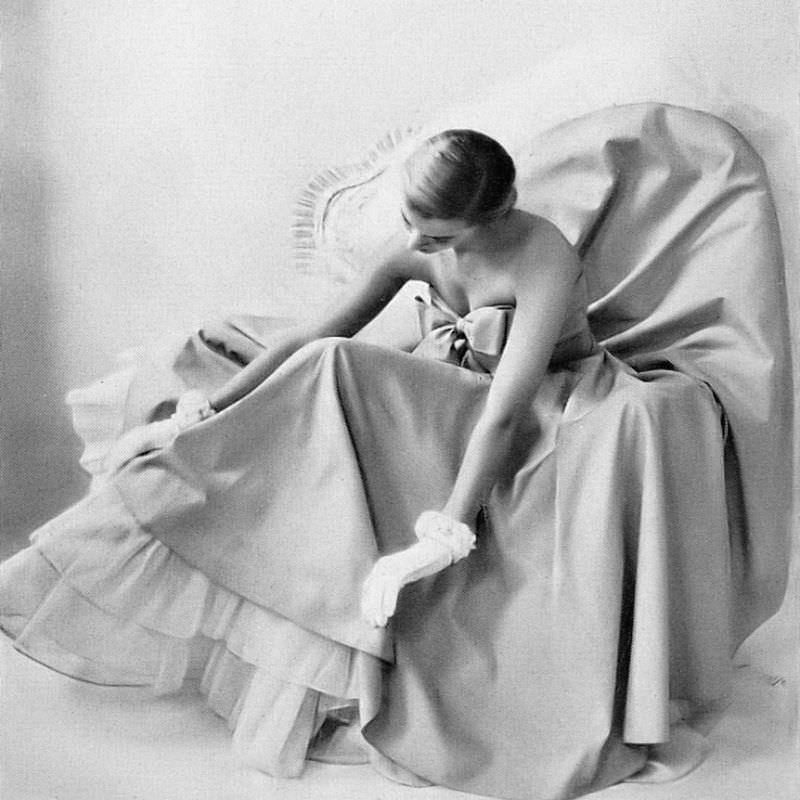
Marilyn Ambrose in tissue faille dress with velvet edges, velvet tie, belt and cuffs, fastened with tiny mock-jet buttons by L’Aiglon, shoes by I. Miller, chair by Saarinen, Vogue, 1947.
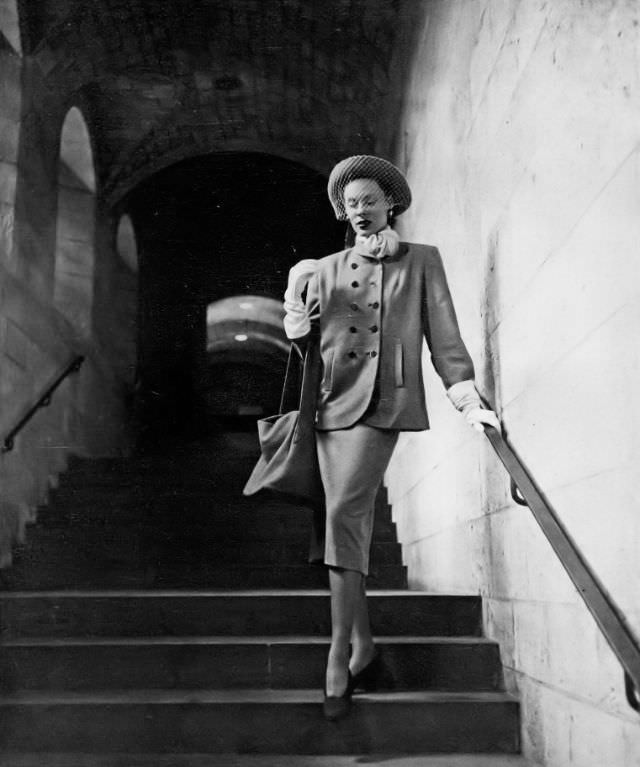
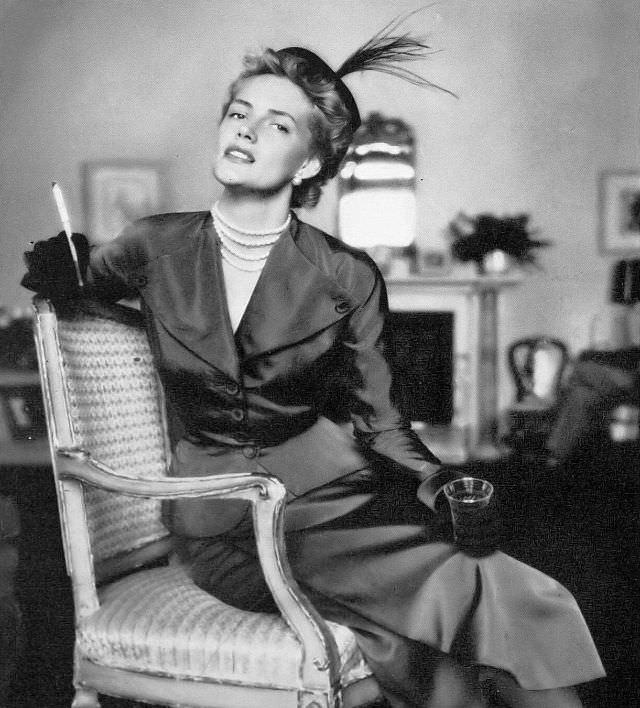
Meg Mundy in brass-buttoned box jacket, Vogue, 1947.
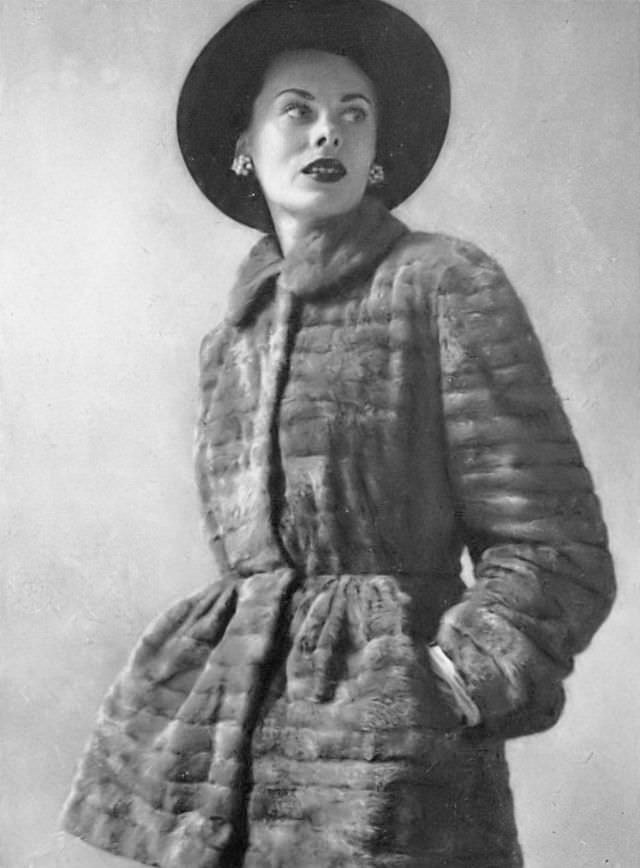
Meg Mundy in ermine tunic, its waist is tight and peplum wide, by Maximilian, midnight-blue beaver hat by Lilly Daché, Harper’s Bazaar, 1947.
Model in black Chantilly lace filigreed on rayon taffeta in this gown with a very full skirt by Ben Reig for Saks Fifth Avenue, Vogue, 1947.
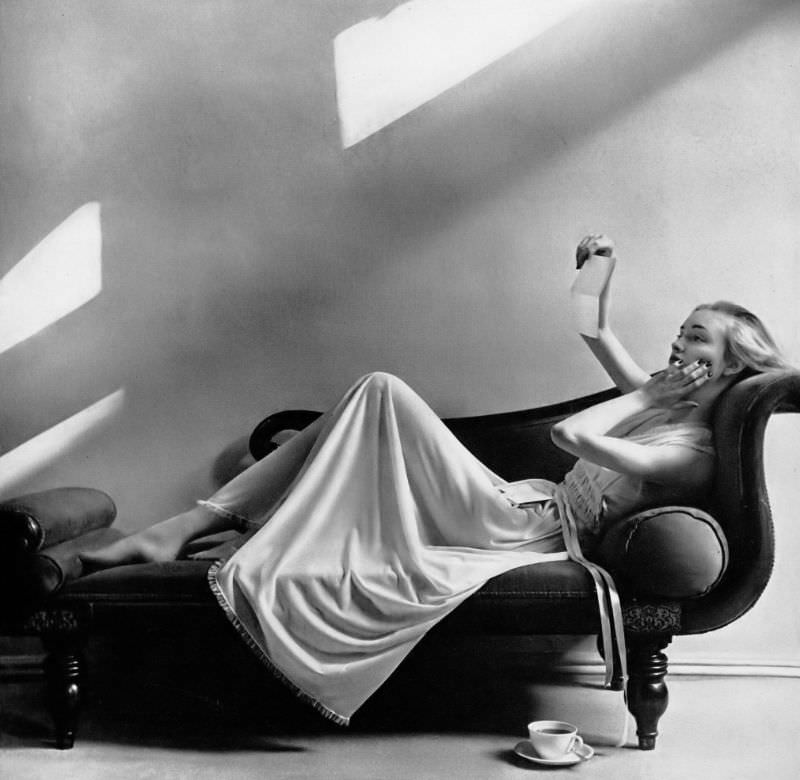
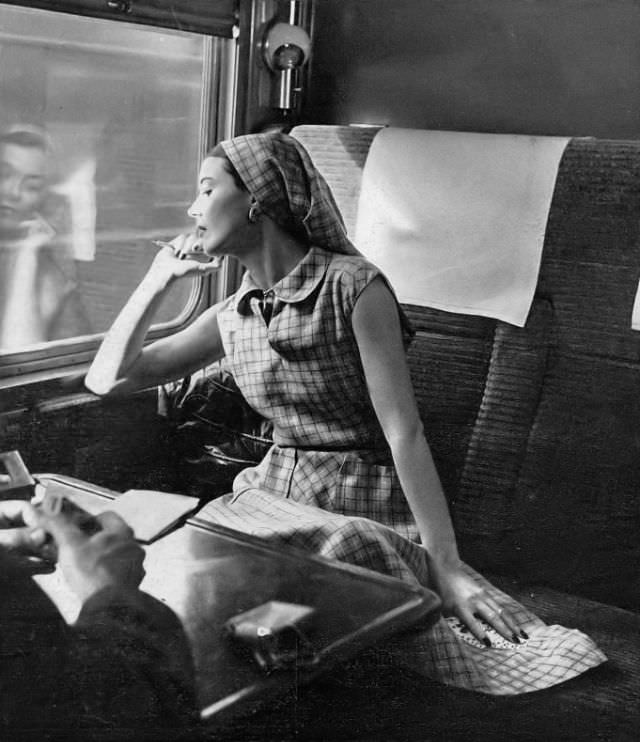
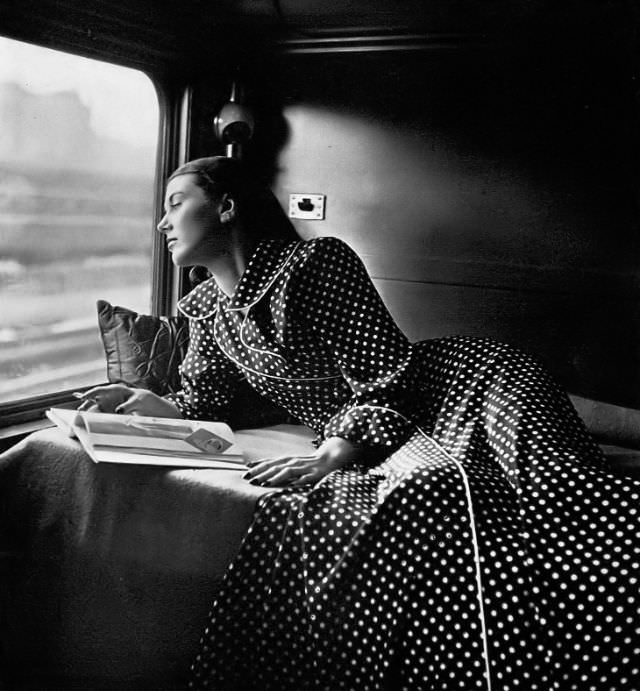
Bell also photographed more intimate pieces that year — nightwear, travel robes, and daywear designed for real life. A sheer nylon tricot nightgown with a deep-V neckline by Vanity Fair appeared in Harper’s Bazaar alongside travel-ready linen dresses and lightweight rayon robes. These weren’t glamour shots. They were practical fashion treated with the same care Bell gave to couture.
Model in heather-soft sheer nylon tricot nightgown with deep-V neckline and shirred midriff by Vanity Fair, Harper’s Bazaar, 1947.Model in ideal travel dress of a cool tattersall-checked linen in red and white on tan by Henry Rosenfeld, Harper’s Bazaar, 1947.Model in ideal travel robe in navy blue-and-white in sheer rayon with big round collar revers by Raymodes, Harper’s Bazaar, 1947.Natalie Paine in soot-black velveteen dress fastens at the side with shirring at the right shoulder by Aywon, worn with big taffeta bow by Emily Wetherby, Harper’s Bazaar, 1947.Natalie Paine in strapless but lightly boned dream dress of cloqué taffeta by Ceil Chapman, jewelry by Cartier, Harper’s Bazaar, 1947.
The 1948 work represents some of the broadest range in Bell’s decade-long output. She shot at the British Colonial Hotel in Nassau, on Montagu Beach in the Bahamas, in New York department stores, and in understated studio settings. Designers like Mainbocher, Adele Simpson, and Jo Copeland were among those featured. Models including Marilyn Ambrose, Meg Mundy, Lucille Lewis, and Betty Bridgers appeared across multiple editorial assignments.
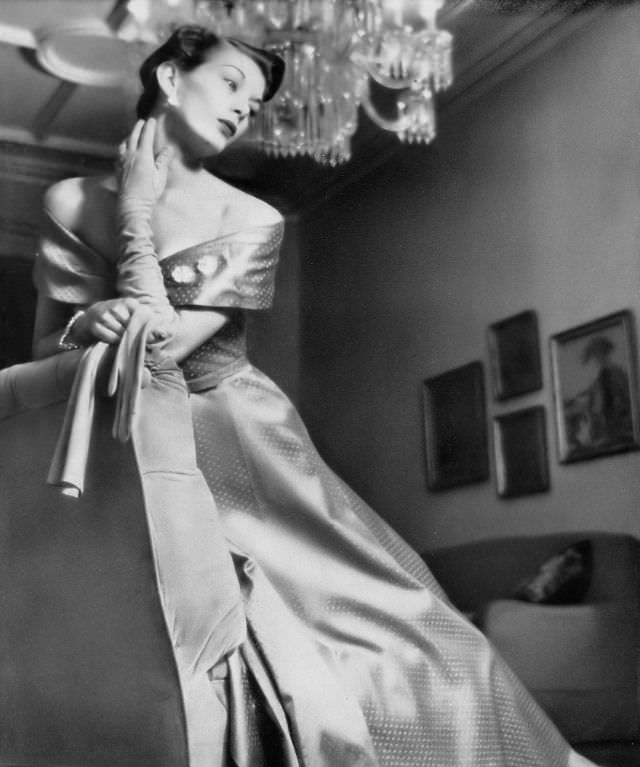
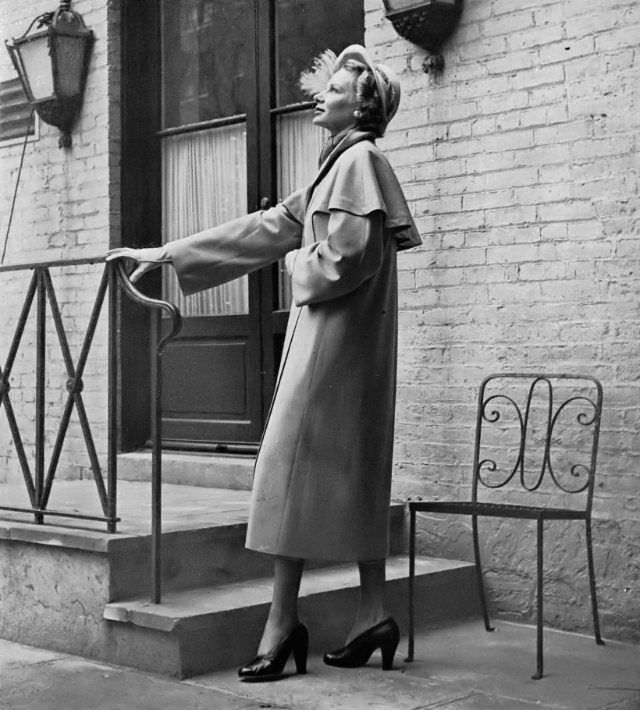
Betty Bridgers in dotted mauve satin gown by Larry Aldrich, jewelry by Eisenberg, Harper’s Bazaar, 1948.Joan Pedersen in Miron gabardine coat with capelet by George Carmel at Saks Fifth Avenue, Harper’s Bazaar, 1948.
Lily Carlson in Spring colored jacket over a sleeveless black rayon crêpe dress by Jo Copeland of Patullo’s at Saks Fifth Avenue, Vogue, 1948.
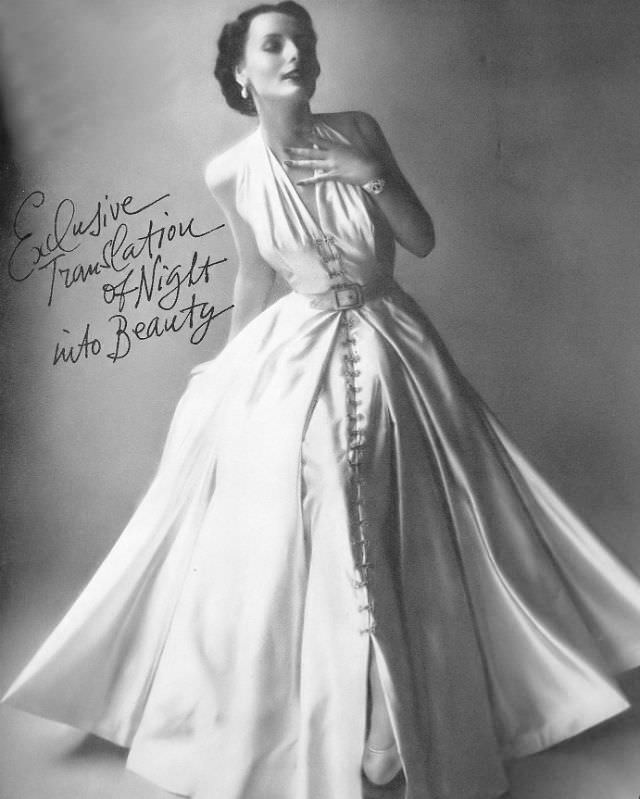
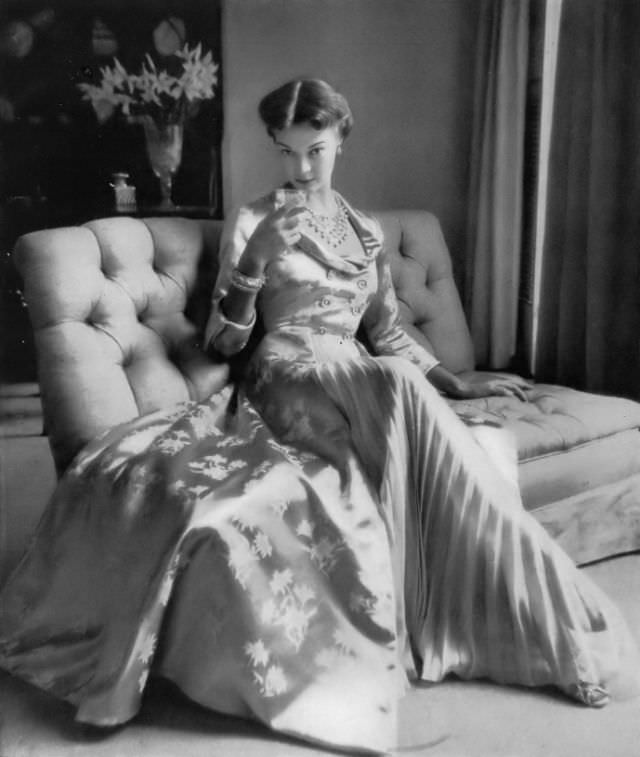
Lucille Lewis in beautiful silk-satin gown with billowing skirt exclusively at Bergdorf Goodman, Harper’s Bazaar, 1948.
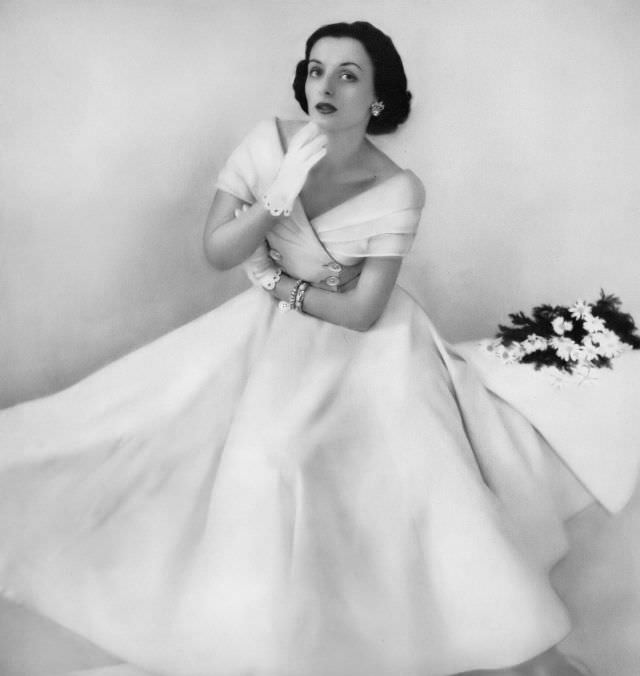
Lucille Lewis in lovely party dress of white piqué, double breasted with triple shawl collar of organdy by Herbert Sondheim, Harper’s Bazaar, 1948.
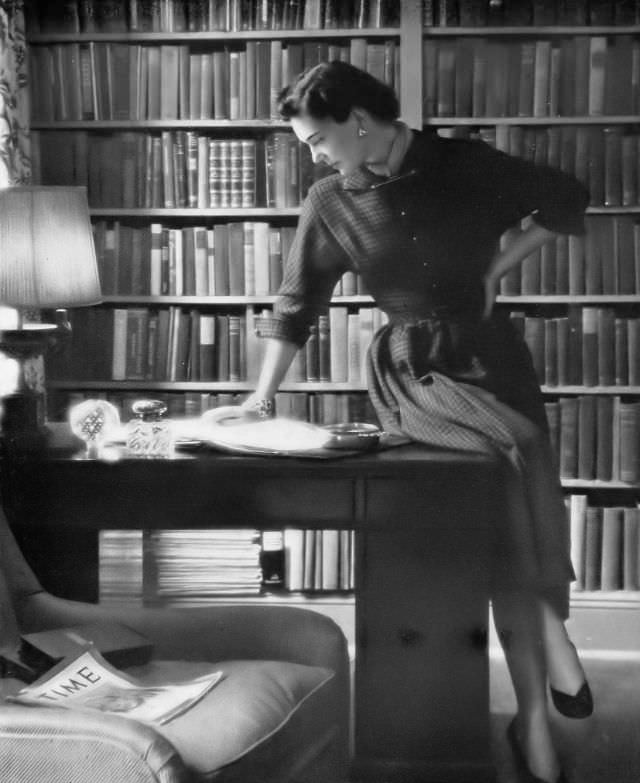
Marilyn Ambrose in black and brown checked wool dress by Ken Classics, Harper’s Bazaar, 1948.
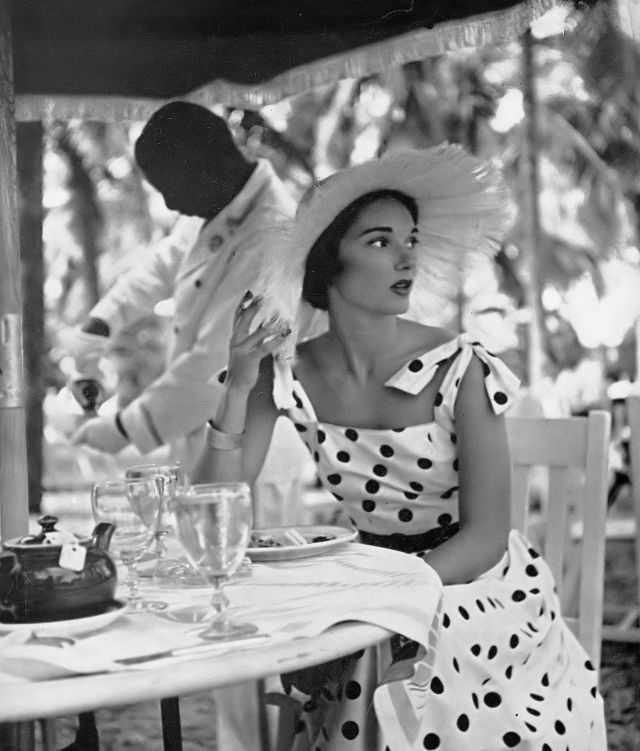
Marilyn Ambrose in sun-dress of white cotton poplin with navy blue coin dots by L’Aiglon, at the British Colonial Hotel at Nassau, Harper’s Bazaar, 1948.
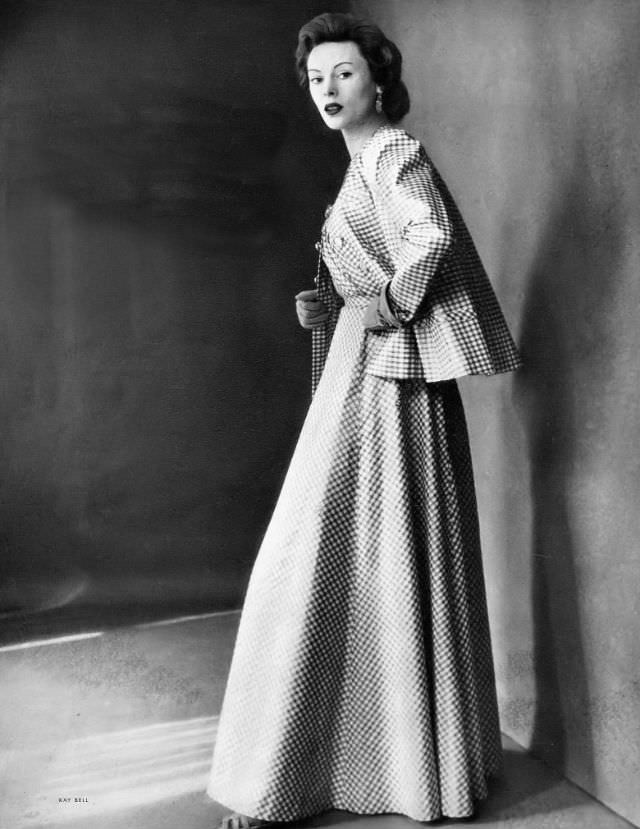
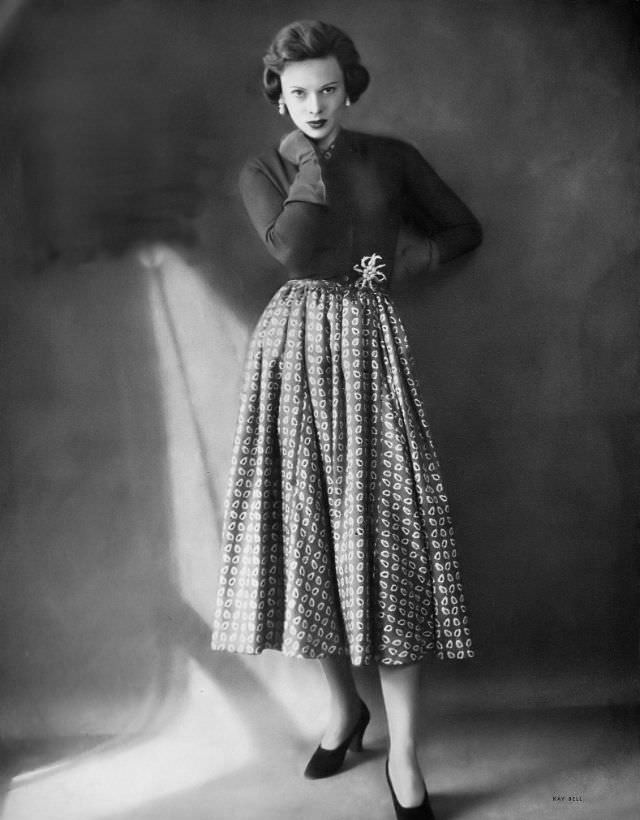
Meg Mundy’s 1948 appearances for Harper’s Bazaar captured a more refined, evening-focused wardrobe. Mainbocher dressed her in a long evening ensemble of off-white cotton checked in gold Lurex, and separately, in a ruby red cashmere cardigan over a ruby and green tie silk dress — finished with a jeweled starfish by Jean Schlumberger.
Meg Mundy in long evening dress and jacket of off-white cotton checked in gold Lurex by Mainbocher, Harper’s Bazaar, 1948.
Meg Mundy in ruby red cashmere cardigan cut at the waist with ruby and green tie silk dress beneath by Mainbocher, flexible jeweled starfish by Jean Schlumberger, Harper’s Bazaar, 1948.
Model in charming dress of red and white checked sheer cotton by Nelly Don, Harper’s Bazaar, 1948.
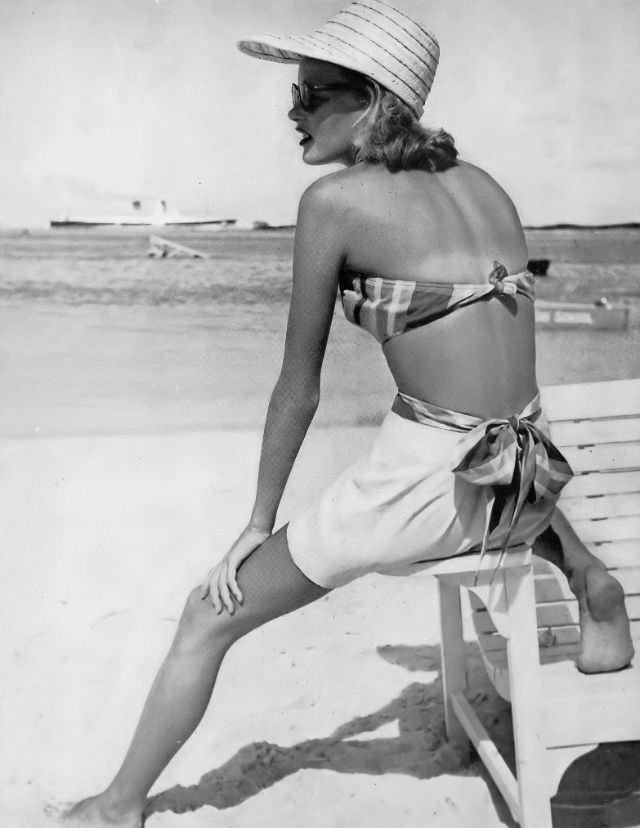
Model in cotton halter top, plaided in yellow, black and brown with plain shorts of yellow sharkskin, tied with plaid sash, by Cabana Sportswear, Montagu Beach, Nassau, Bahamas, Harper’s Bazaar, 1948.
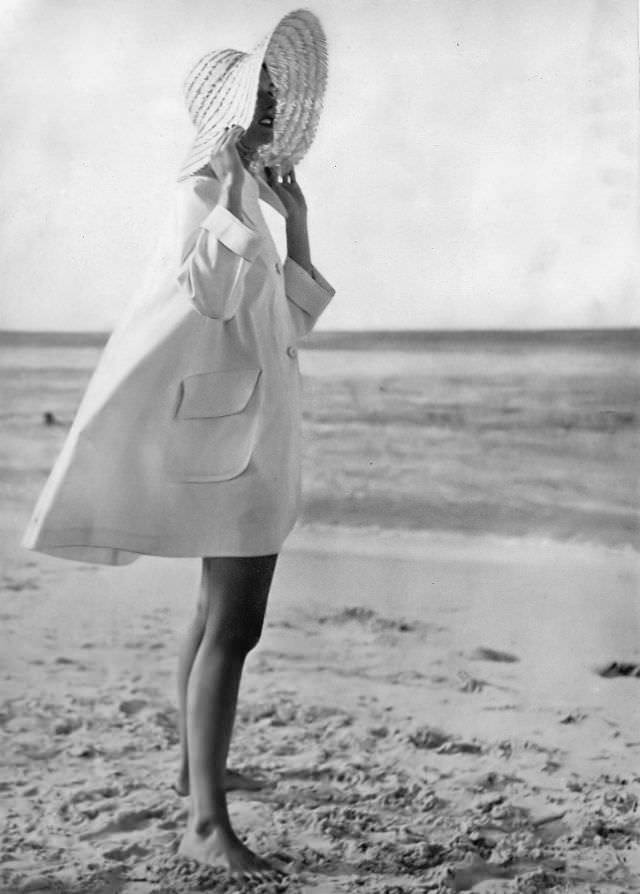
Model in lovely homecoat of thin wool flannel from Bergdorf Goodman, Vogue, 1948.Model in pink chambray strapless dress that can be worn over a full-length petticoat of dotted Swiss muslin as shown here, by Adele Simpson, Harper’s Bazaar, 1948.Model in sea-going topcoat of stiff white poplin with big collar and patch pockets by Sunclothes, at British Colonial Beach, Bahamas, Harper’s Bazaar, 1948.
Bell’s reach extended across the Atlantic as well. A 1948 shoot for Harper’s Bazaar UK featured two British designers — Dorville and Frederick Starke — their tweed shirtwaist and pincheck designs photographed side by side in a single frame.
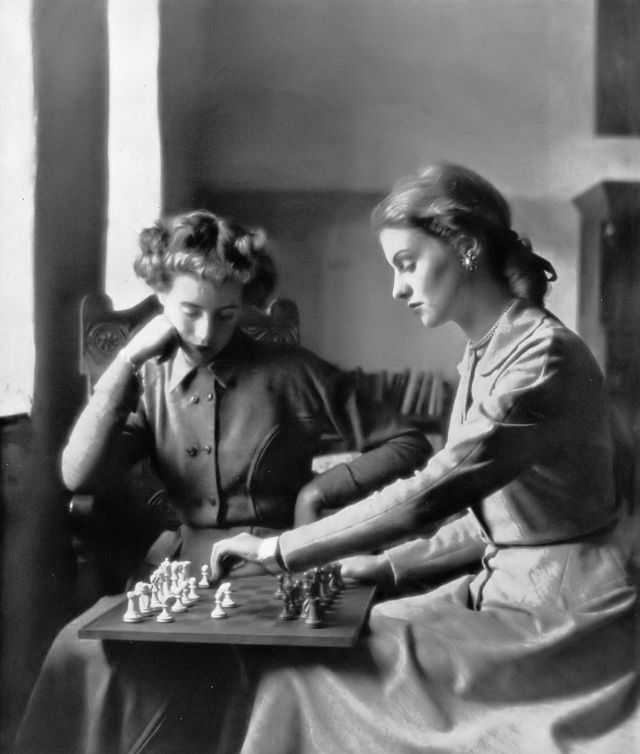
Pat O’Reilly in gray-and-white pincheck tweed dress by Dorville, model in yellow-and-brown herringbone tweed shirtwaist dress by Frederick Starke, Harper’s Bazaar UK, 1948.
By 1949, Bell’s portfolio closed out the decade with a selection of refined, sophisticated looks. Jean Patchett appeared in mink — first a Royal Pastel stole, then a tea-and-twilight coat of imported rayon brocade from Bergdorf Goodman. Barbara Mullen wore a piqué town suit with black pin-dots and a black jacket by Sheila Lynn. These final images from 1949 reflected where fashion had arrived after a decade of constraint and reinvention.
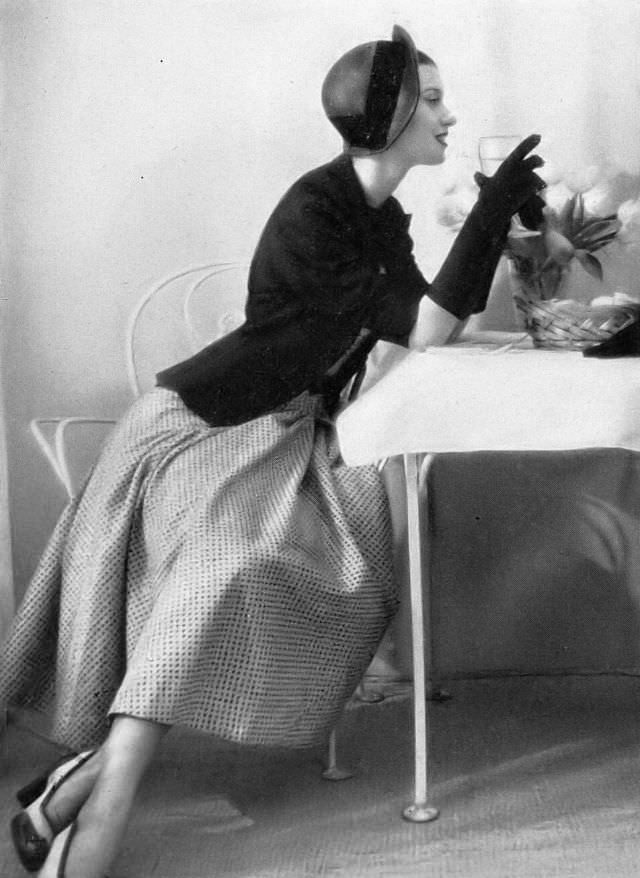
Barbara Mullen in piqué town suit, a low-necked greige dress with black pin-dots and black jacket by Sheila Lynn, hat by Florence Reichman, Harper’s Bazaar, 1949.
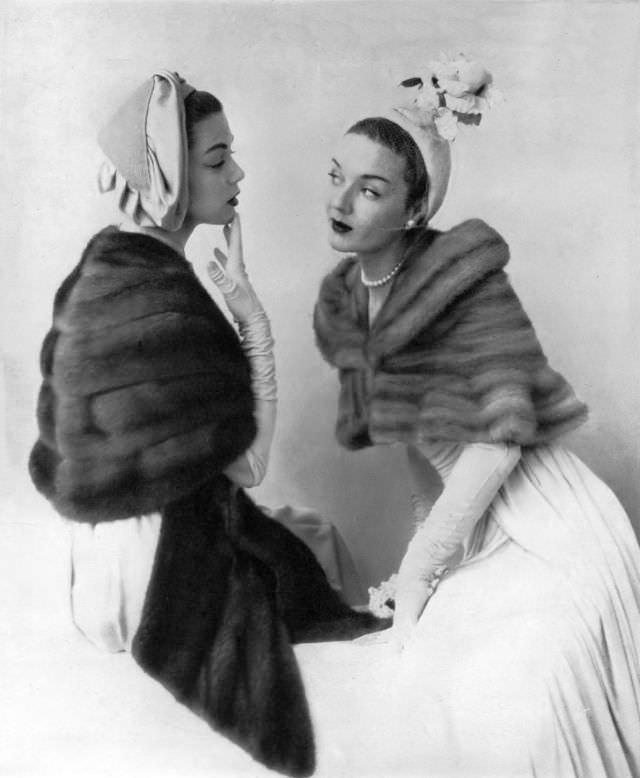
Jean Patchett in Royal Pastel mink stole and model in Silver Blue mink mantlet with convertible shoulder-cuff by Bergdorf Goodman, Vogue, 1949.
Jean Patchett in tea-and-twilight coat of imported rayon brocade with cut-away pleated panel of silk chiffon from Bergdorf Goodman, Vogue, 1949.Model in plum colored faille two-piece with winged lapels and skirt with loose wrap-around panel by Paul Parnes, Harper’s Bazaar, 1949.
Rachel Mitchell is a vintage fashion enthusiast with a passion for all things retro. She is interested vintage fashion styles, trends, and accessories, and provides tips and tricks for incorporating vintage pieces into modern wardrobes.