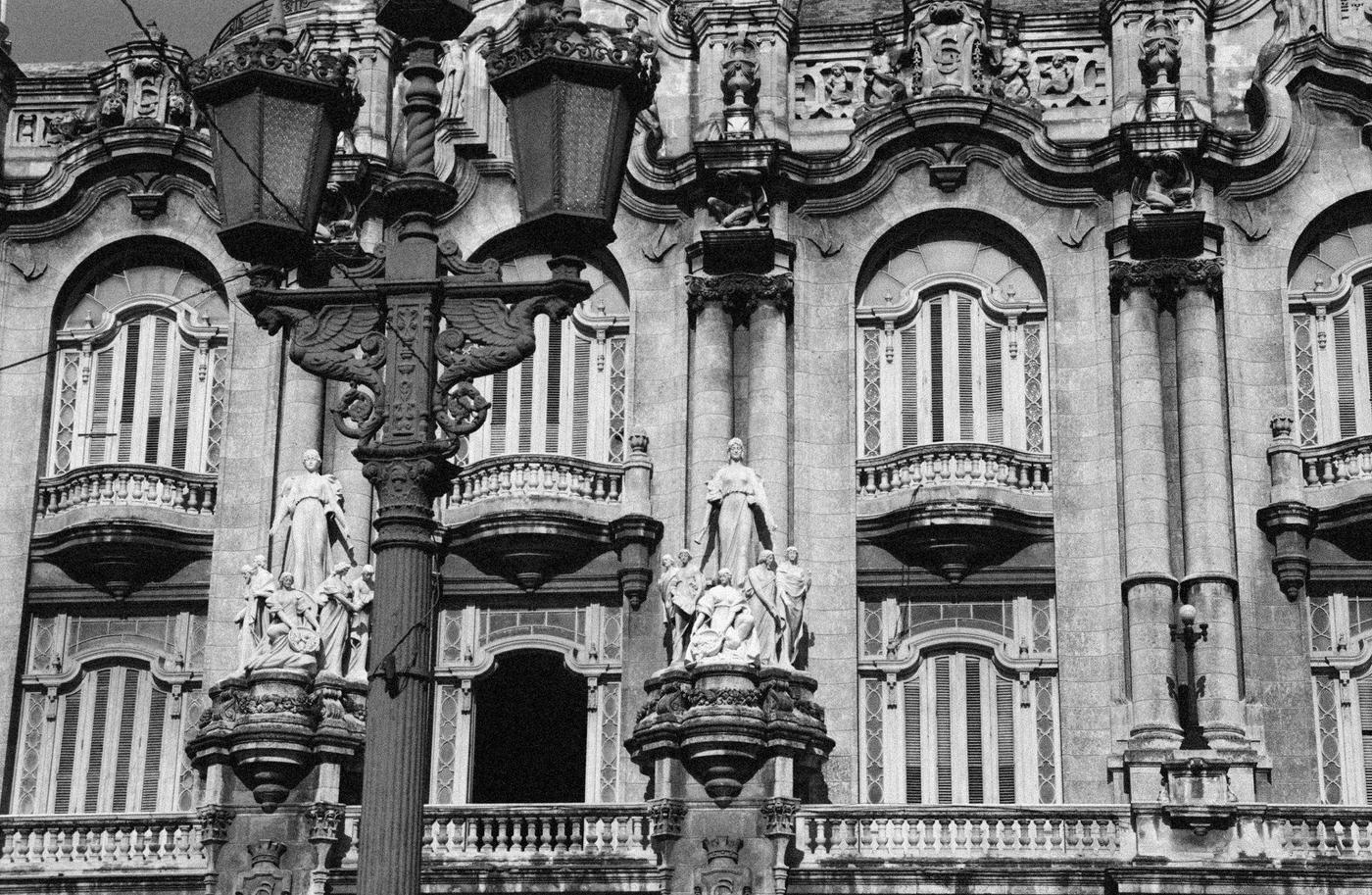
In the 1930s, Havana wore two faces. On one side sat gleaming boulevards, grand hotels, and a nightlife that drew the world’s elite. On the other, political unrest and economic hardship tested the Cuban people at every turn. Together, these forces shaped one of the most vivid and complicated decades in the city’s history. Havana had earned its nickname — the “Paris of the Caribbean” — and photographs from the era show exactly why.
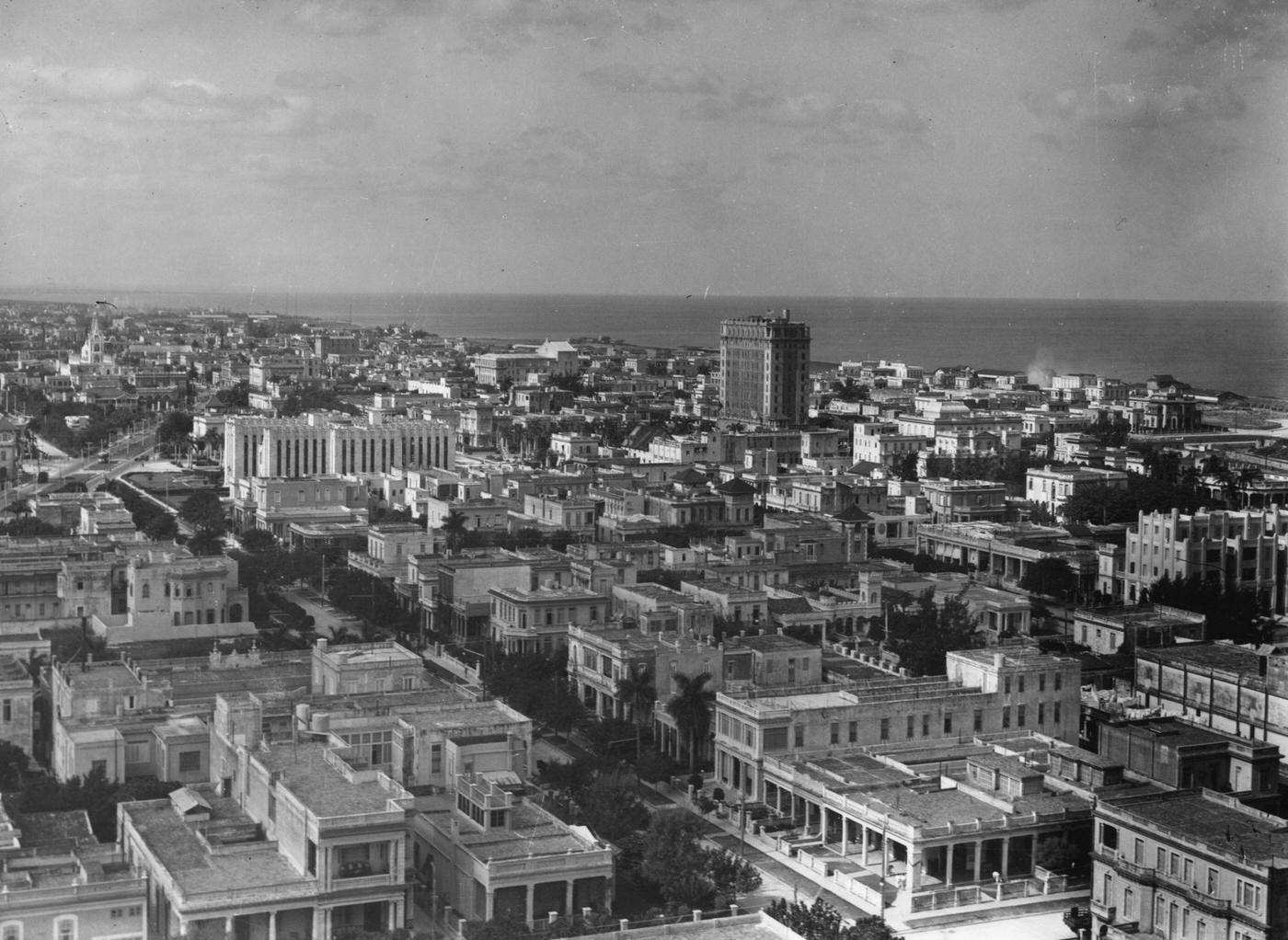
The city’s skyline was a striking mix of Spanish colonial grandeur, neoclassical formality, and the sleek lines of art deco design. Flat-roofed houses spread across the hillsides while the harbor below buzzed with trade and traffic. Havana was Cuba’s beating heart — its capital, its chief seaport, and the center of its cultural life.
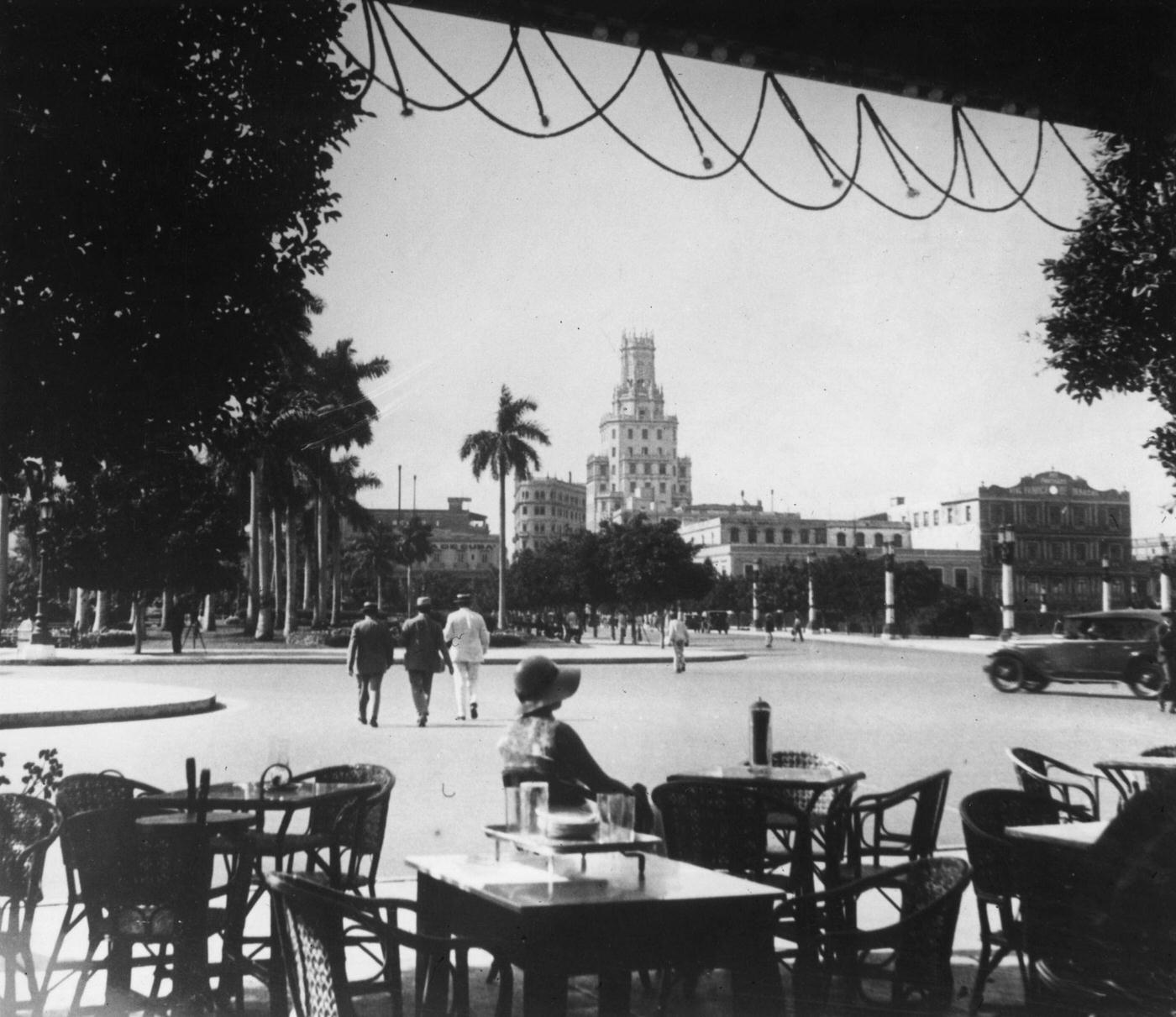
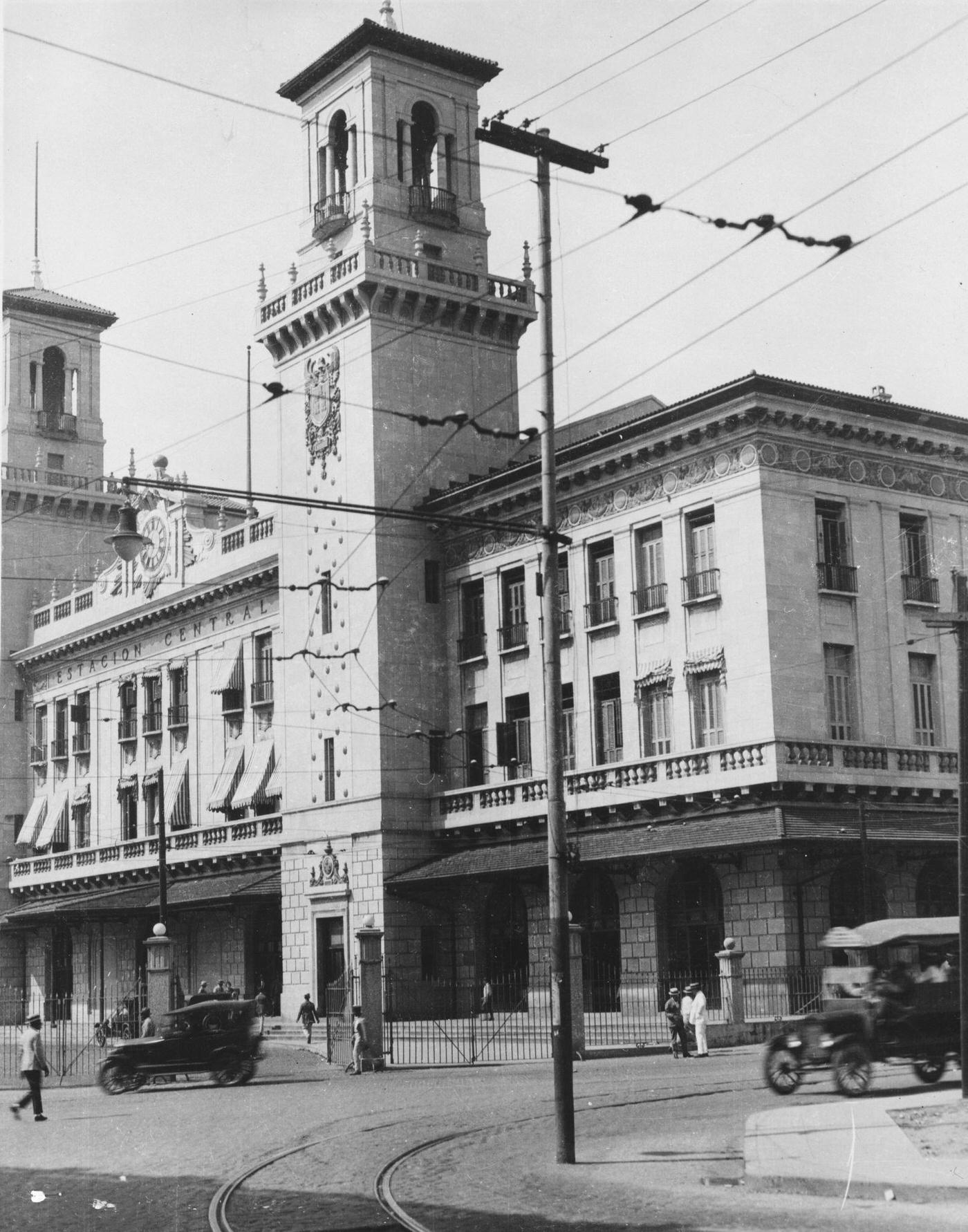
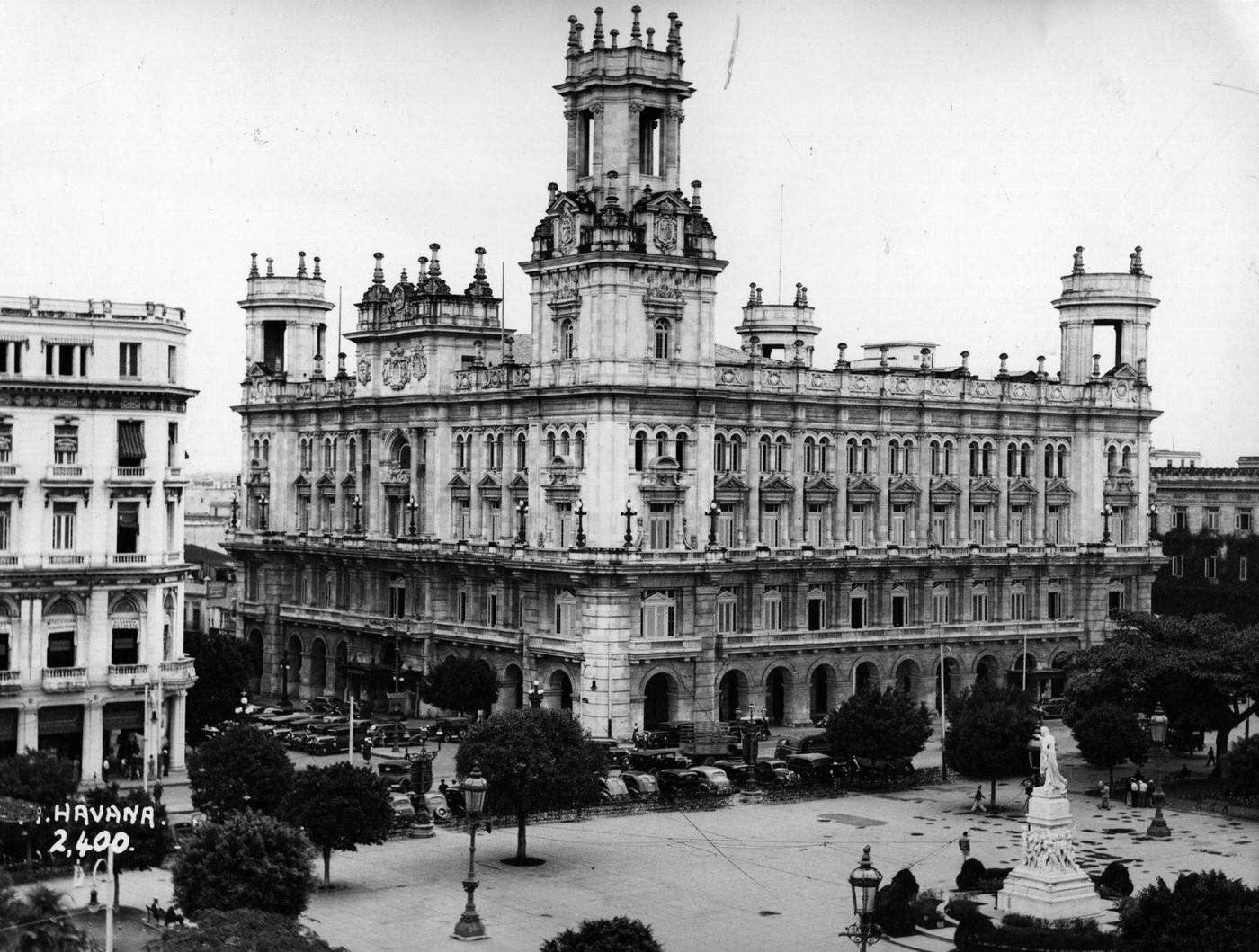
Modern infrastructure was rising fast. New telephone buildings, hotels, and civic institutions signaled that Havana was not just keeping pace with the world — it was racing ahead. The Central Station stood as one of the city’s proud architectural landmarks, welcoming travelers from across Cuba and beyond.
Street life in Havana was rich and constant. Vendors sold fresh fruit and handcrafted goods from the sidewalks. Children filled the parks and plazas. Classic cars cruised the avenues while the scent of Cuban coffee and tobacco drifted through the warm air.
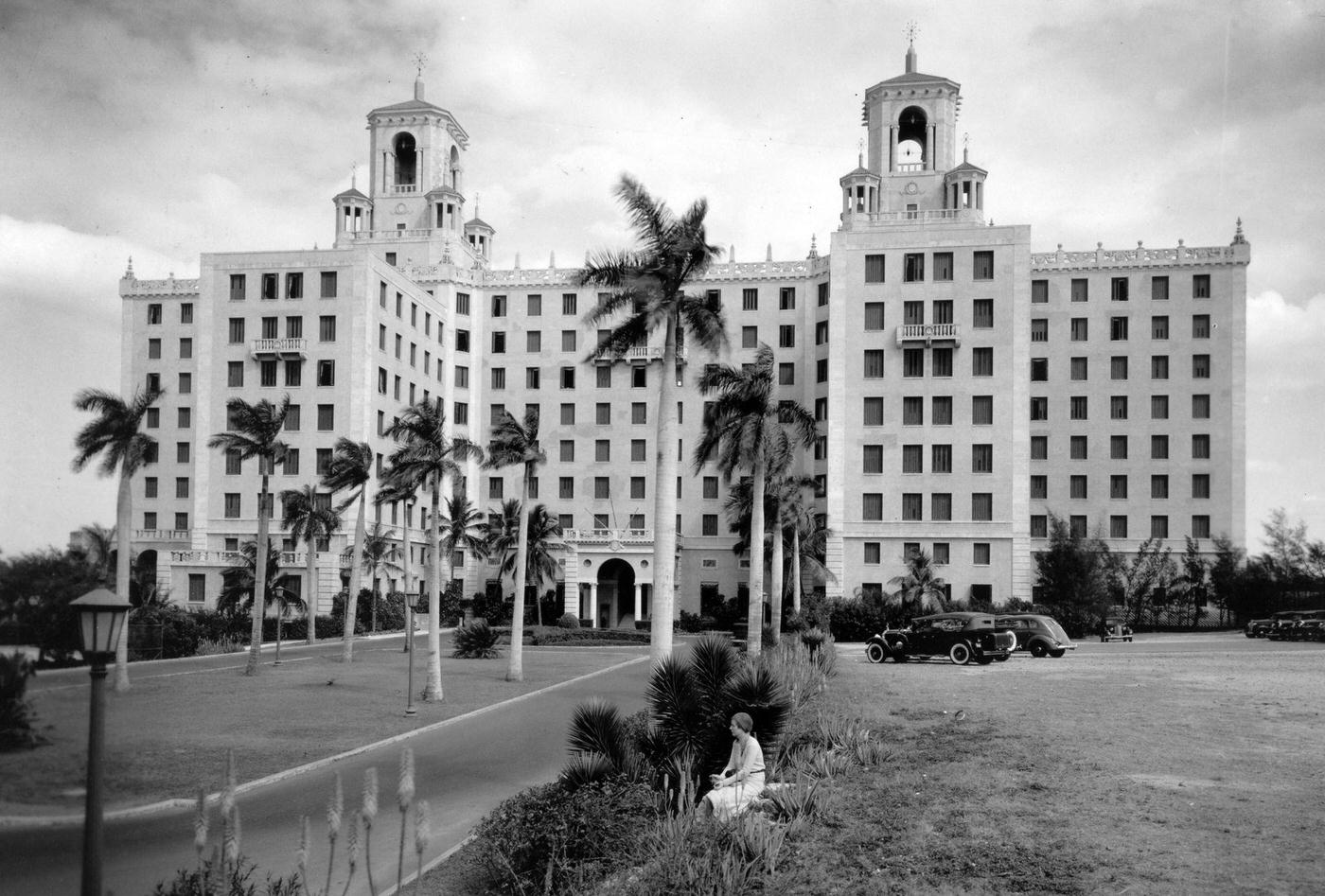
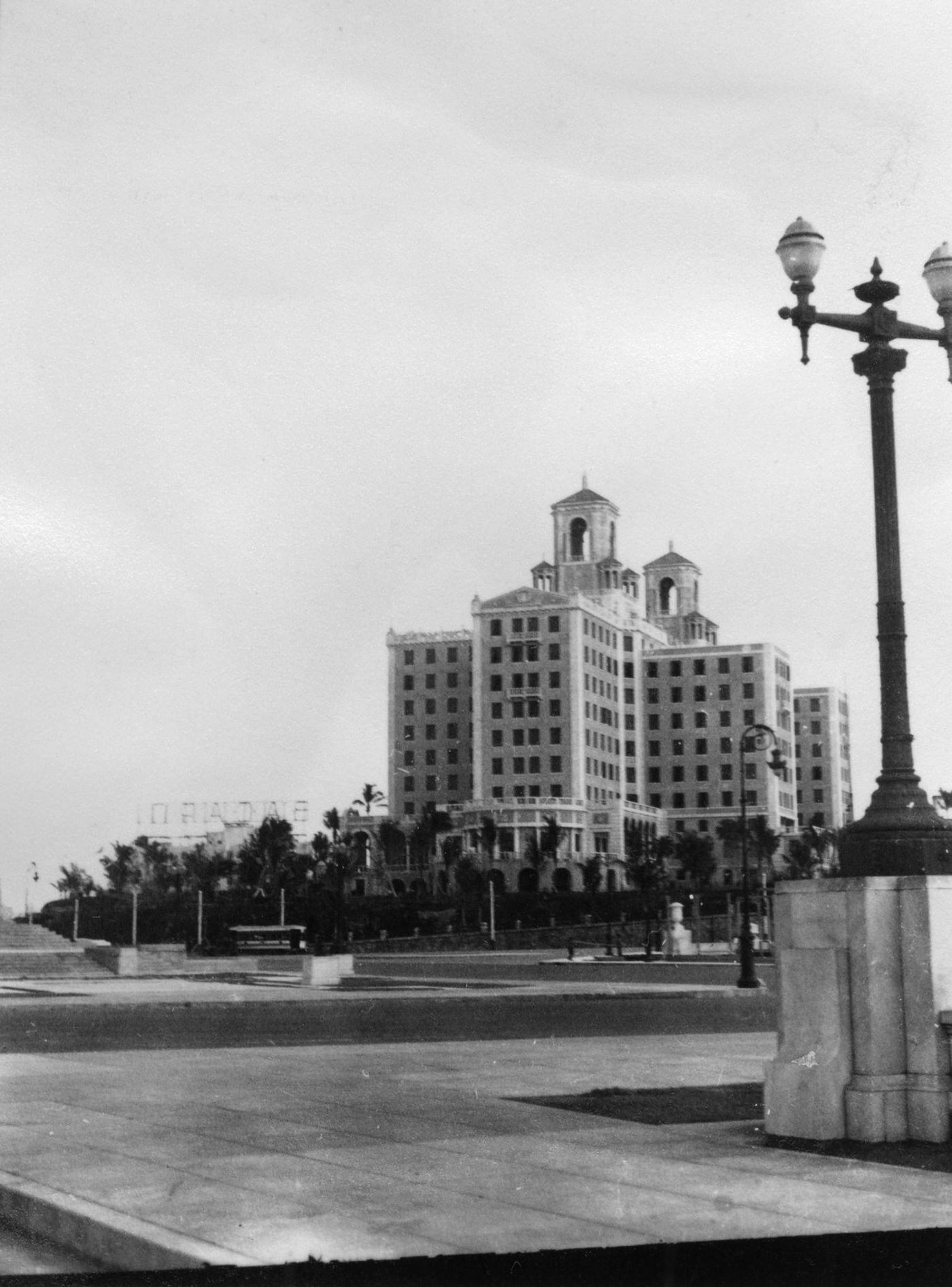
At the top of Havana’s social scene sat the Hotel Nacional. Perched on a hill overlooking the Malecón, the city’s iconic seaside promenade, it became the address of choice for wealthy tourists, diplomats, and celebrities. Its terraced gardens and sweeping sea views made it one of the most recognized buildings in all of the Caribbean.
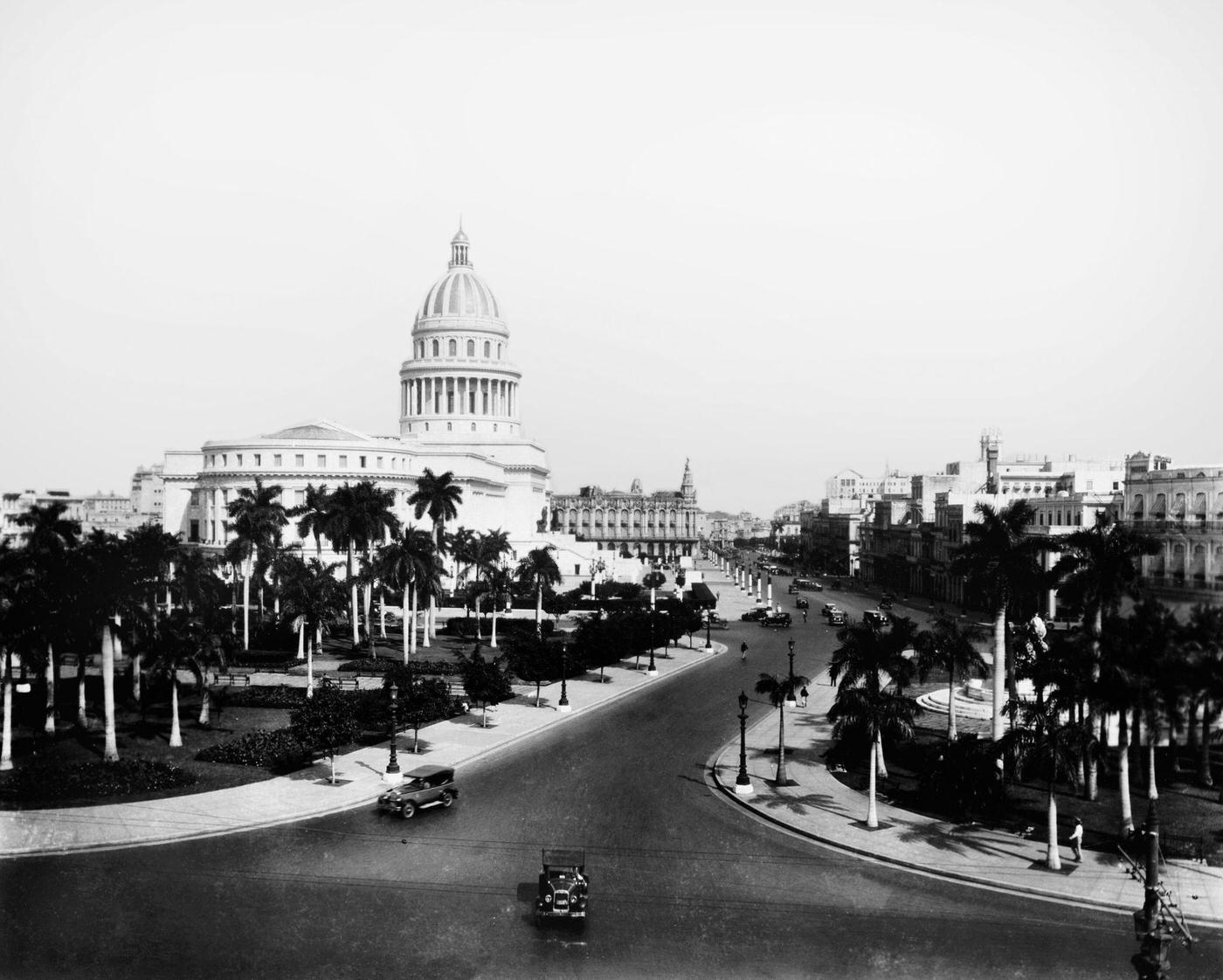
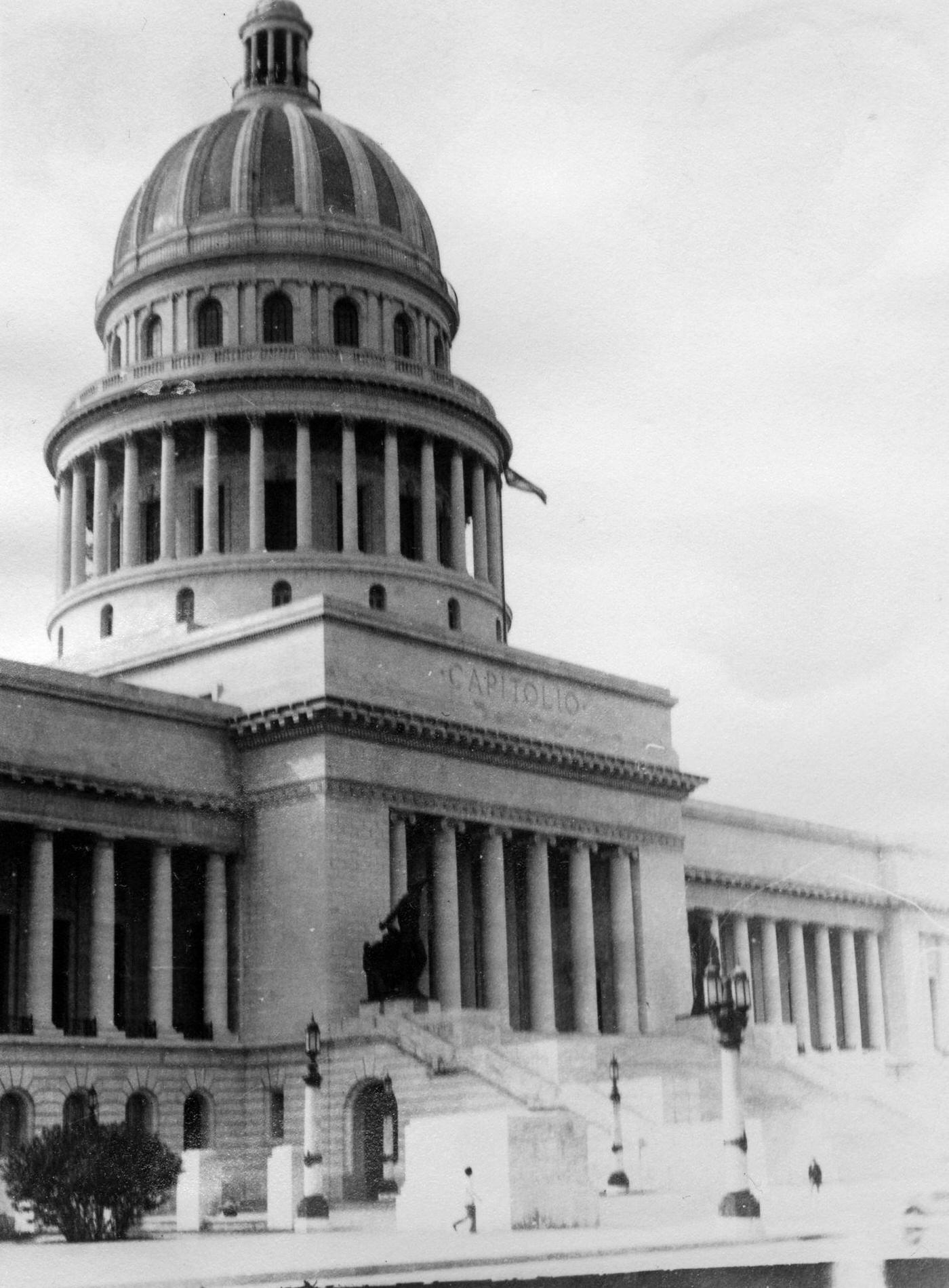
Opened in 1929, El Capitolio was still fresh on the Havana skyline when the 1930s began. Modeled closely after the United States Capitol in Washington, D.C., it served as the seat of Cuba’s government and quickly became the defining symbol of the city. Its massive dome dominated every view of central Havana.
Music was everywhere in 1930s Havana. Afro-Cuban jazz, son, and traditional Cuban rhythms poured out of nightclubs, theaters, and open-air plazas at all hours. Street musicians performed for locals and tourists alike, keeping the city in a near-constant state of sound and movement.
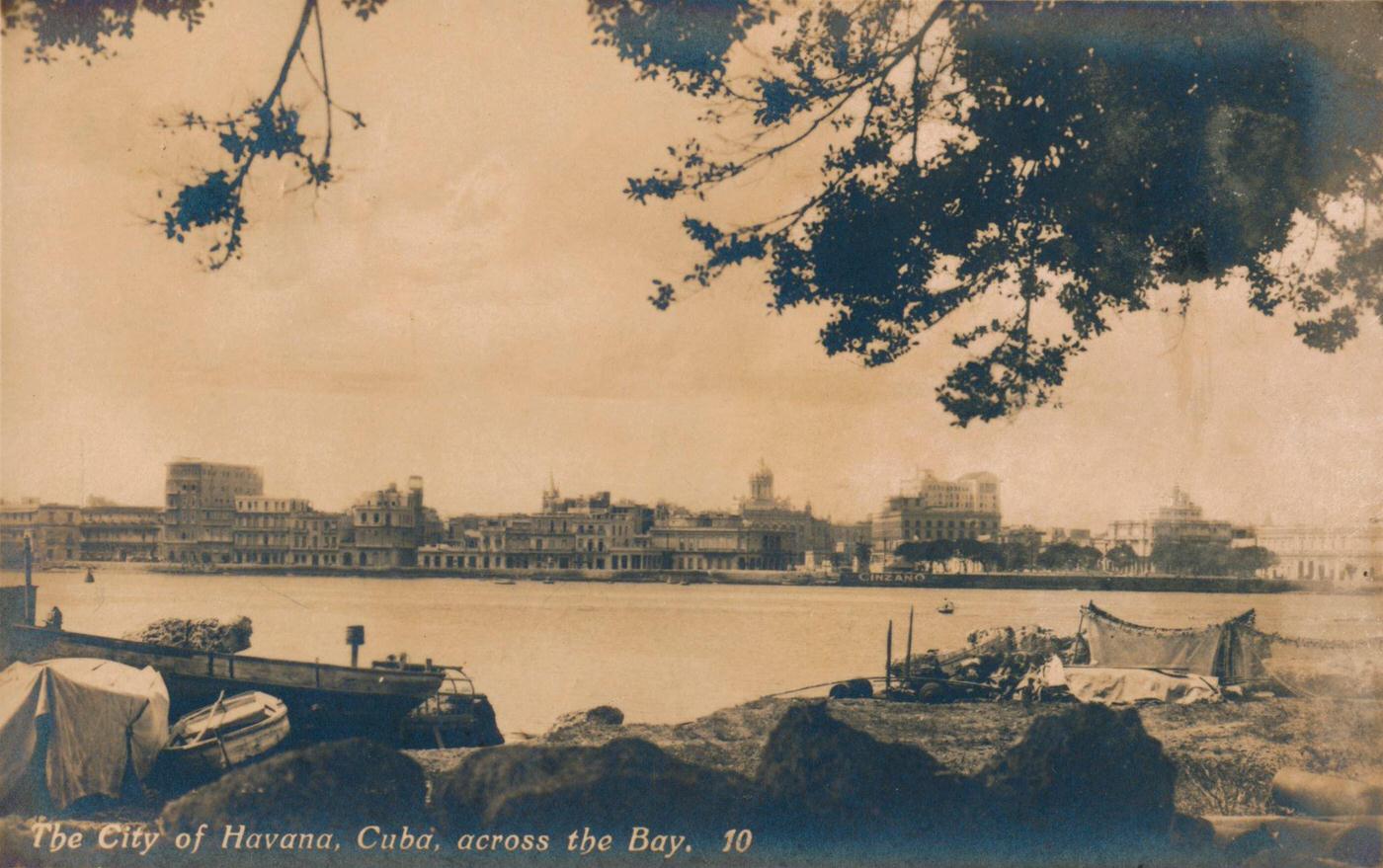
Viewed from across the bay, Havana presented a dramatic silhouette of towers, domes, and dense urban blocks rising from the waterfront. The city’s port was one of the busiest in the hemisphere, and its skyline reflected the ambition of a capital that saw itself on the world stage.
When night fell, Havana truly came alive. The Tropicana nightclub was the crown jewel of the city’s entertainment scene. Its open-air stage hosted elaborate floor shows featuring costumed dancers, live orchestras, and performances that blended theatrical spectacle with Afro-Cuban dance traditions. It drew visitors from across the Americas and Europe.
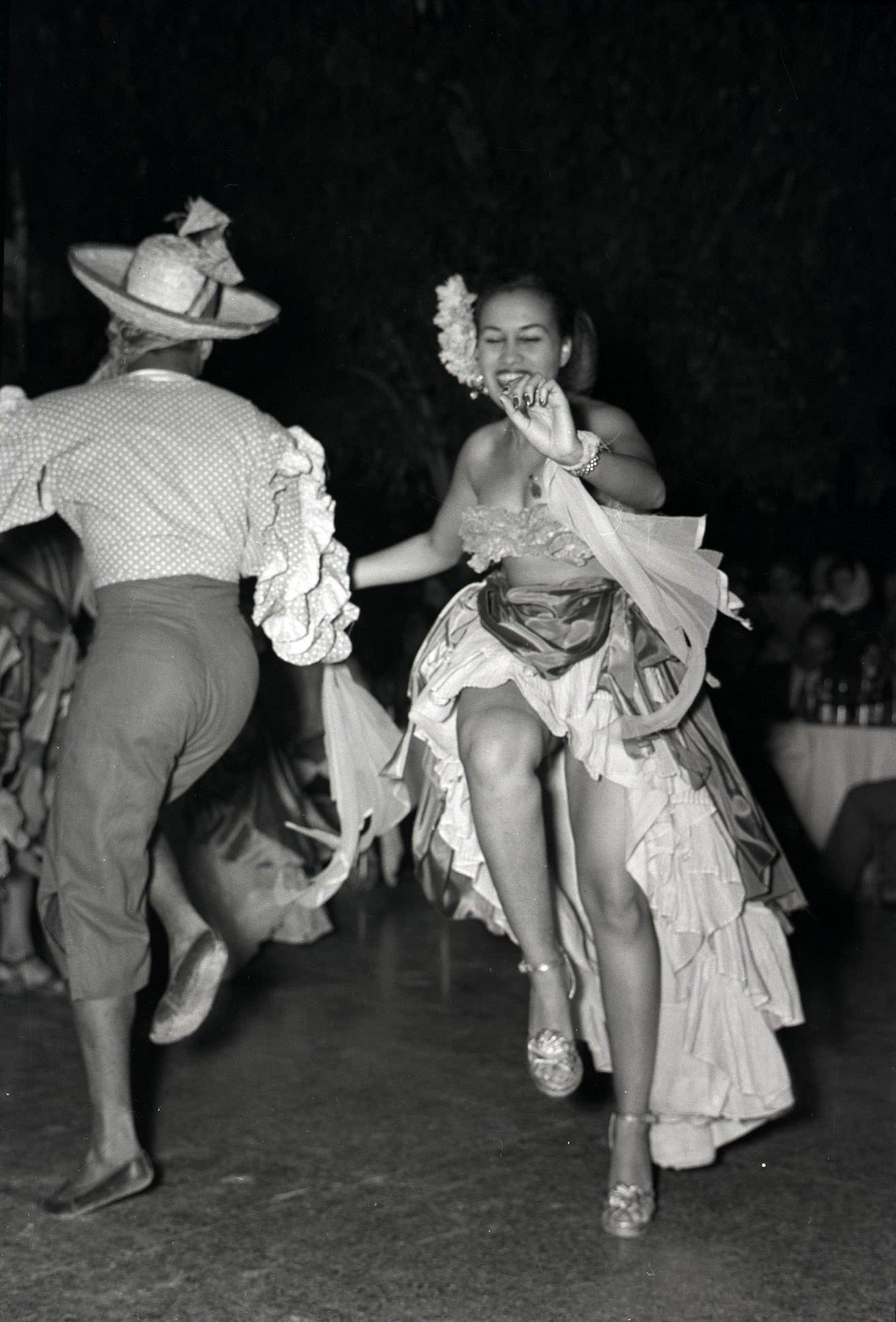
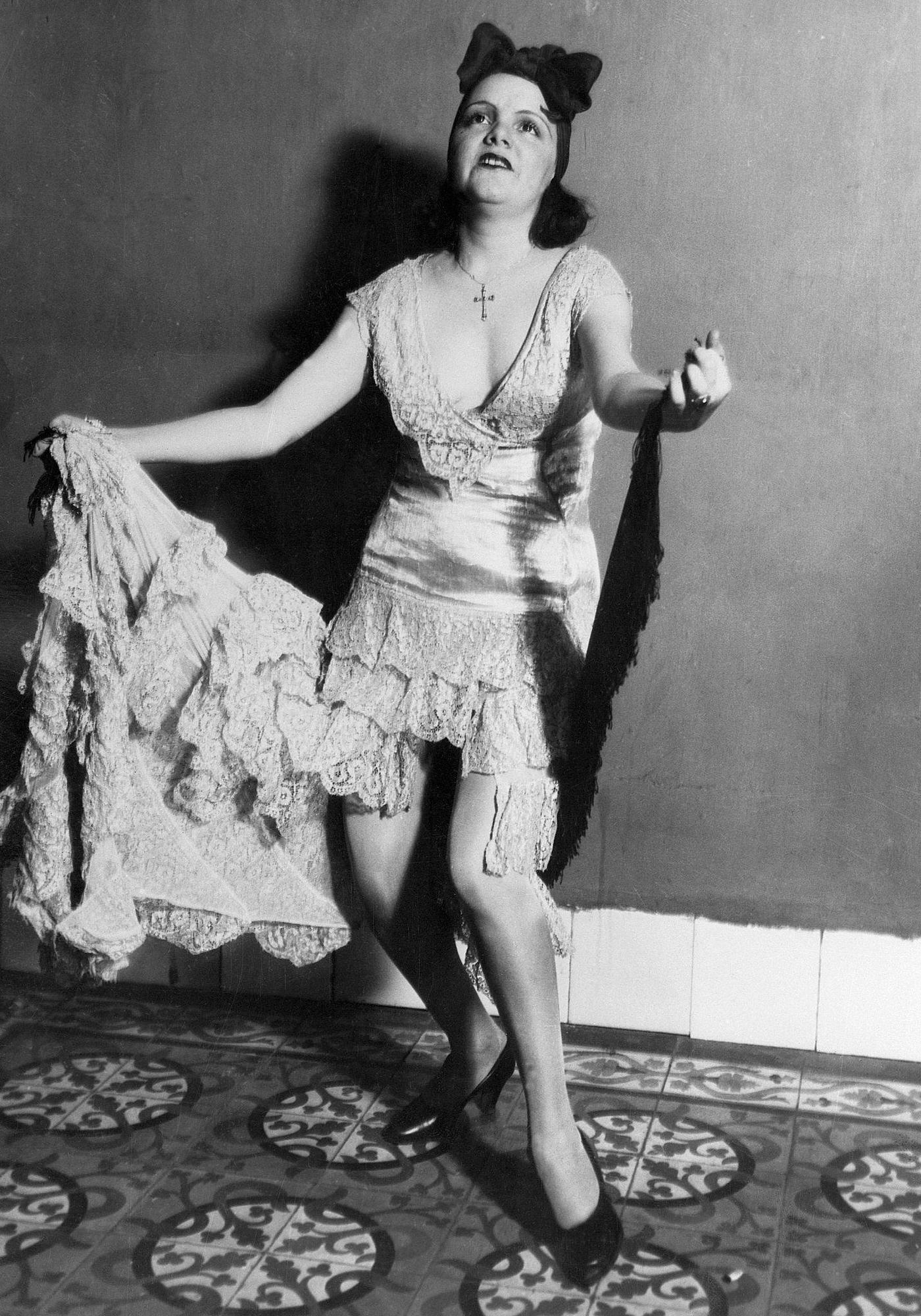
The rumba was one of Cuba’s most celebrated dances, and in the 1930s it was gaining audiences far beyond the island’s shores. Rooted in Afro-Cuban traditions, the dance was characterized by sharp hip movements, intricate footwork, and expressive costumes. Professional dancers performed it in clubs and theaters, keeping the tradition both alive and visible.
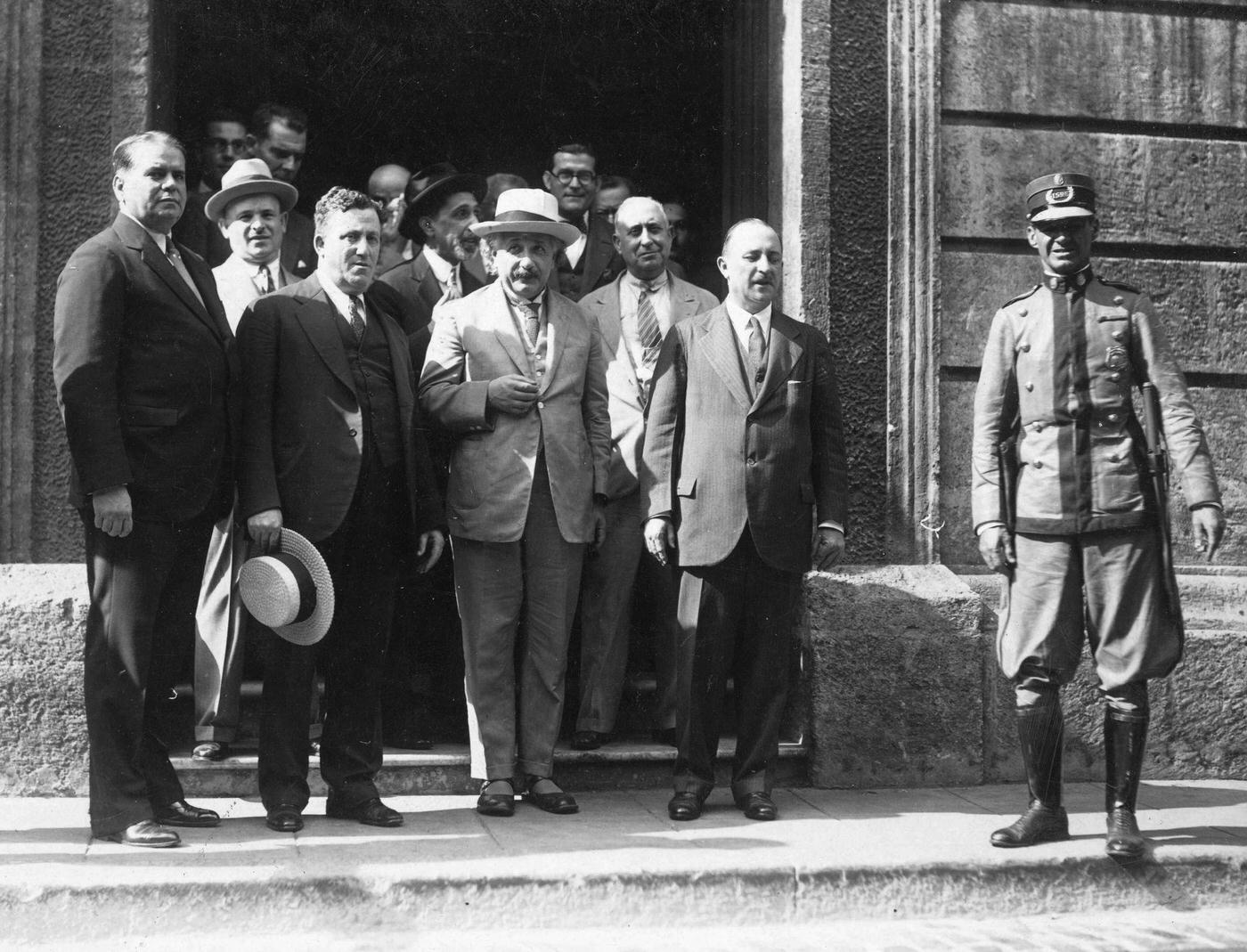
Havana also attracted serious intellectual visitors. In 1930, physicist Albert Einstein visited the city and appeared at the Cuban Academy of Sciences, where he posed for photographs alongside local dignitaries. His presence underscored Havana’s standing as a city of international significance — not just a resort destination, but a place that engaged with the wider world of ideas.
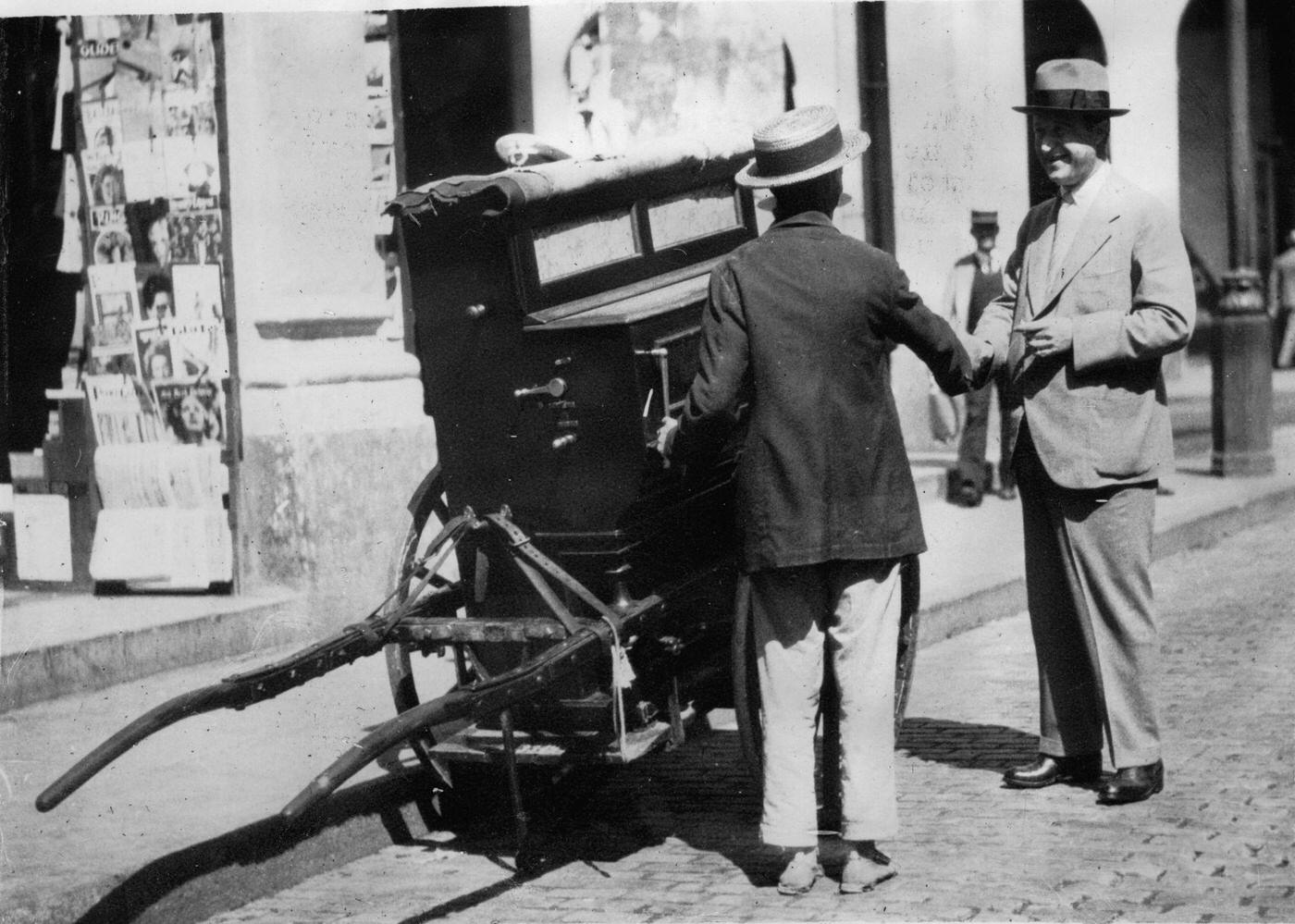
Tourism was a major industry, and tourists were a familiar sight on Havana’s streets. They gathered around street performers, explored the old city on foot, and sampled the food and drink that locals had perfected over generations. Havana welcomed them warmly — their dollars were a vital part of the city’s economy.
El Capitolio remained one of the most-photographed structures in Havana throughout the decade. Its broad steps and towering facade drew visitors from the moment it opened, and it served as the natural backdrop for portraits of tourists, dignitaries, and residents who wanted to capture their time in the city.
The Hotel Nacional de Cuba drew an extraordinary roster of guests in the early 1930s. Beyond the wealthy tourists who filled its rooms, it hosted heads of state, film stars, and business magnates. Its neo-colonial towers and seaside location made it one of the most photographed buildings in the Caribbean.
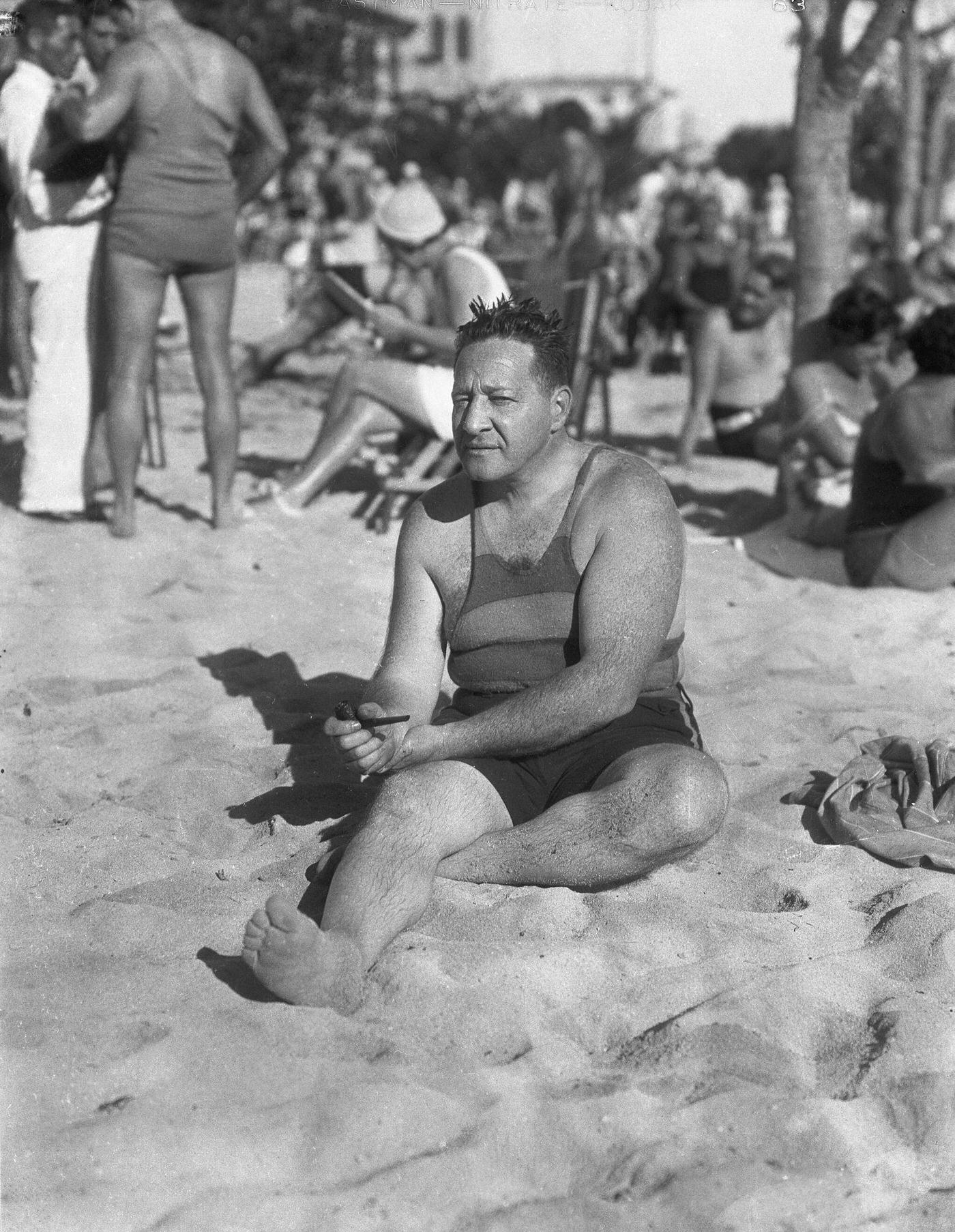
Well-heeled American visitors made Havana a regular stop on their travel circuits, particularly as Prohibition drove many to seek the bars and clubs that operated freely on the island. Prominent lawyer Arthur Garfield Hays was among those who made the trip, photographed enjoying the city’s hospitality in 1930.
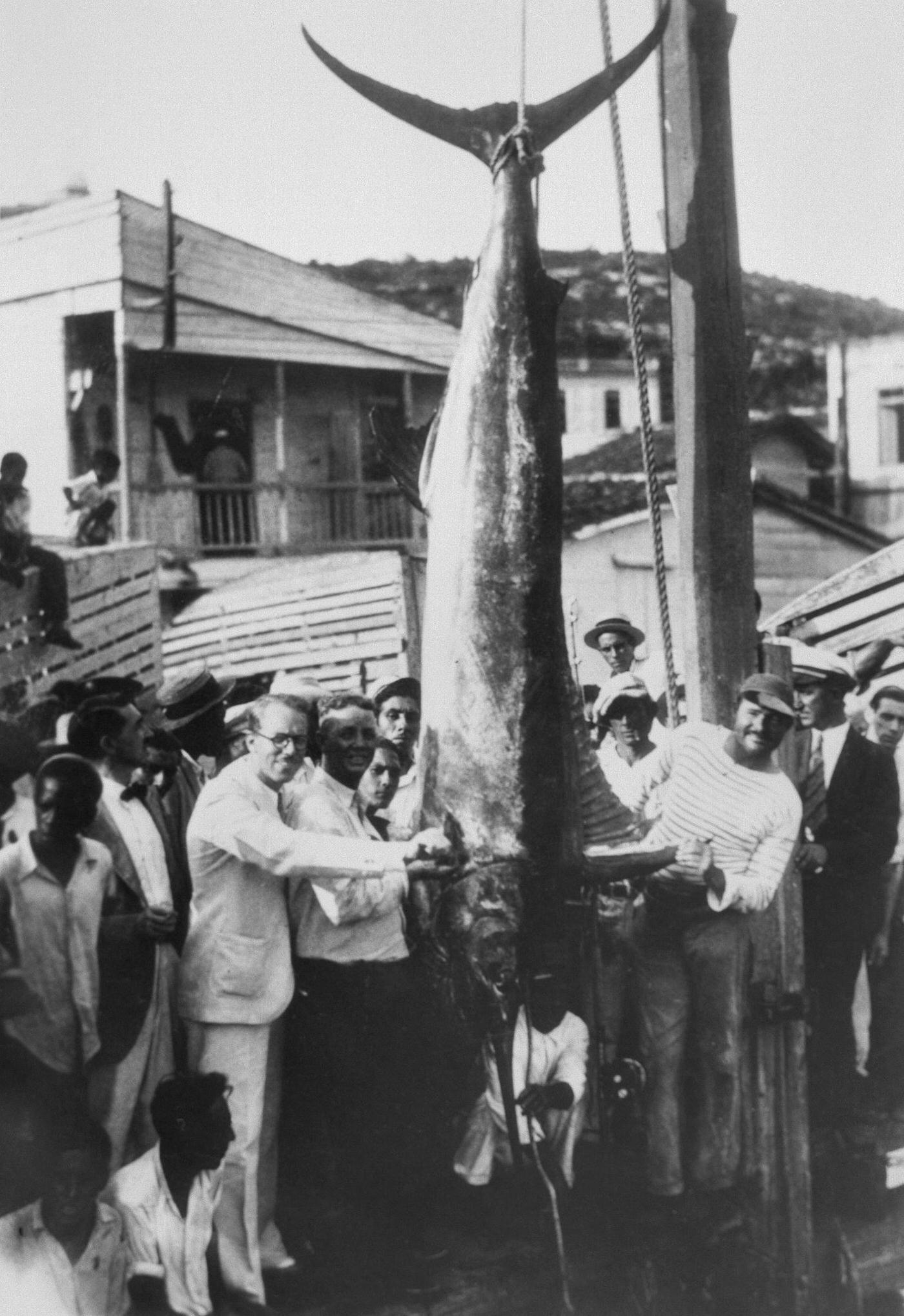
Ernest Hemingway’s connection to Cuba began in this period. He fished the waters off the Cuban coast extensively, and in 1930 he was photographed with a record-breaking Black Marlin he had caught there. Cuba’s deep-sea fishing offered some of the best conditions in the world, and Hemingway became one of its most famous devotees.
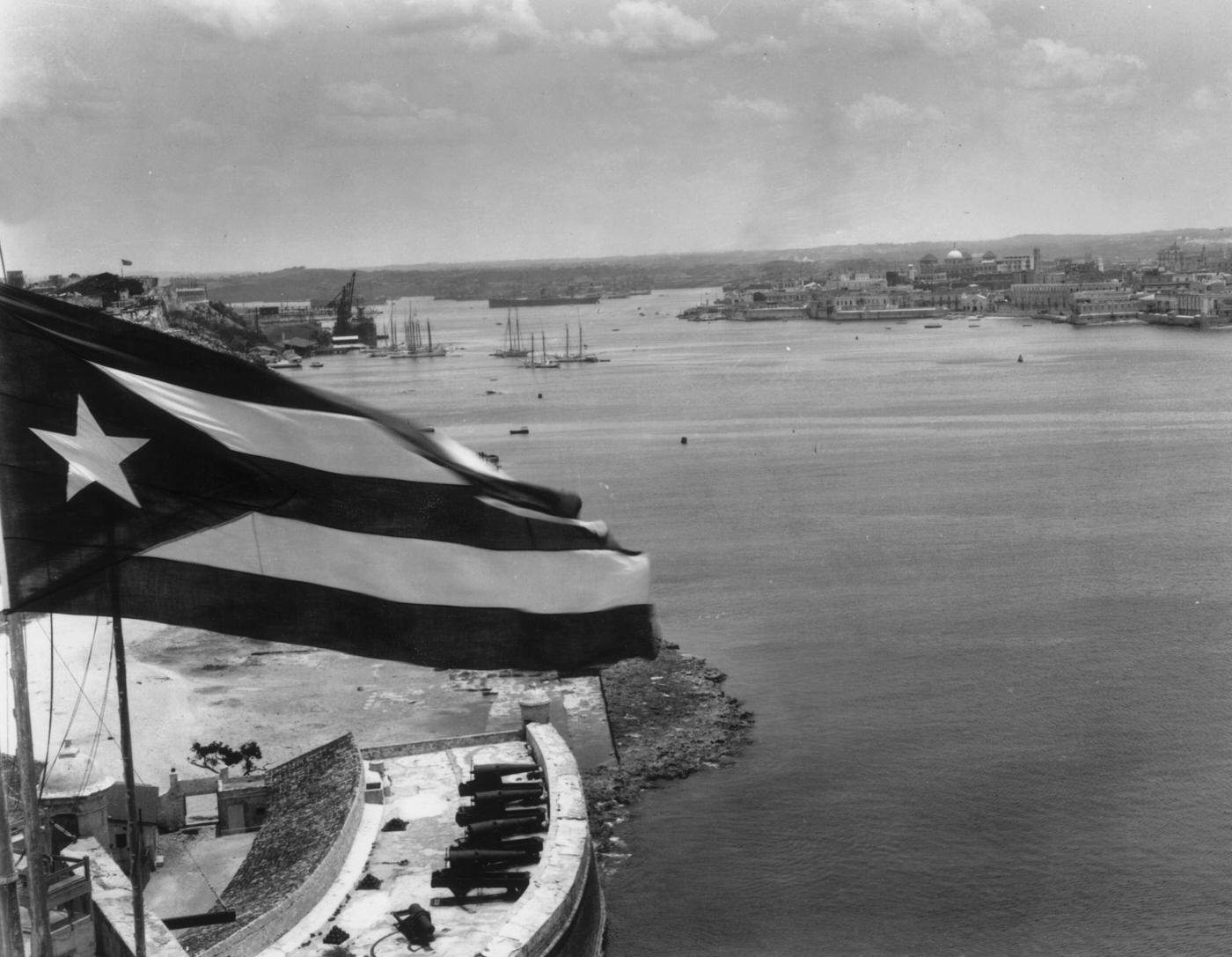
By 1934, Cuba had survived one of the most turbulent chapters in its modern history. The Machado dictatorship, which had grown increasingly brutal, collapsed in 1933 following a general strike and military revolt. A new government took power, and the Cuban flag continued to fly above the port city — battered by years of upheaval but still standing.
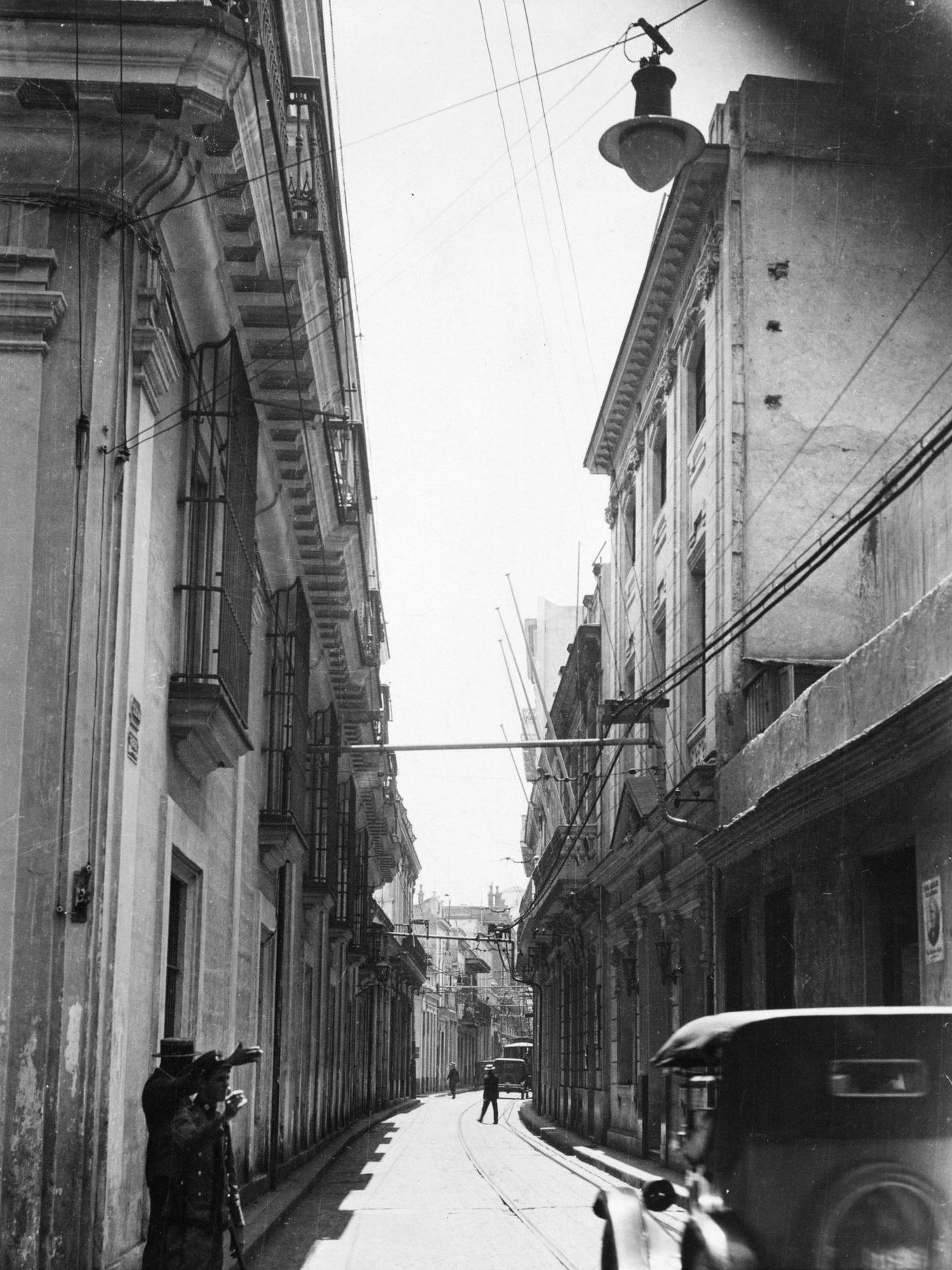
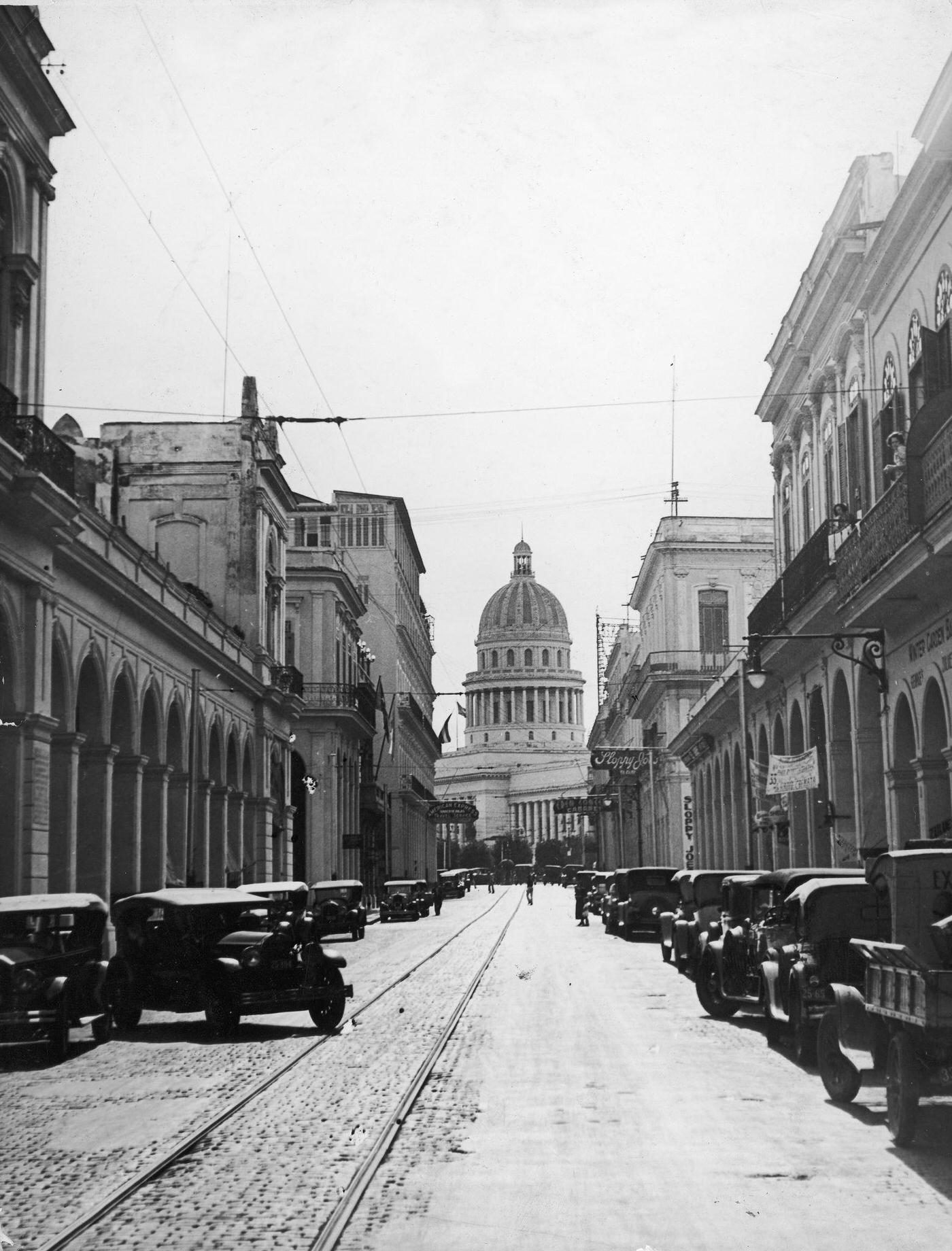
By the mid-1930s, Havana’s streets were filling with automobiles. Calle Zulueta and other central thoroughfares were lined with parked cars, and the Capitol building loomed behind them — a reminder that this modern, mobile city had grown up fast. The contrast between the old colonial fabric and new 20th-century infrastructure was visible on nearly every block.
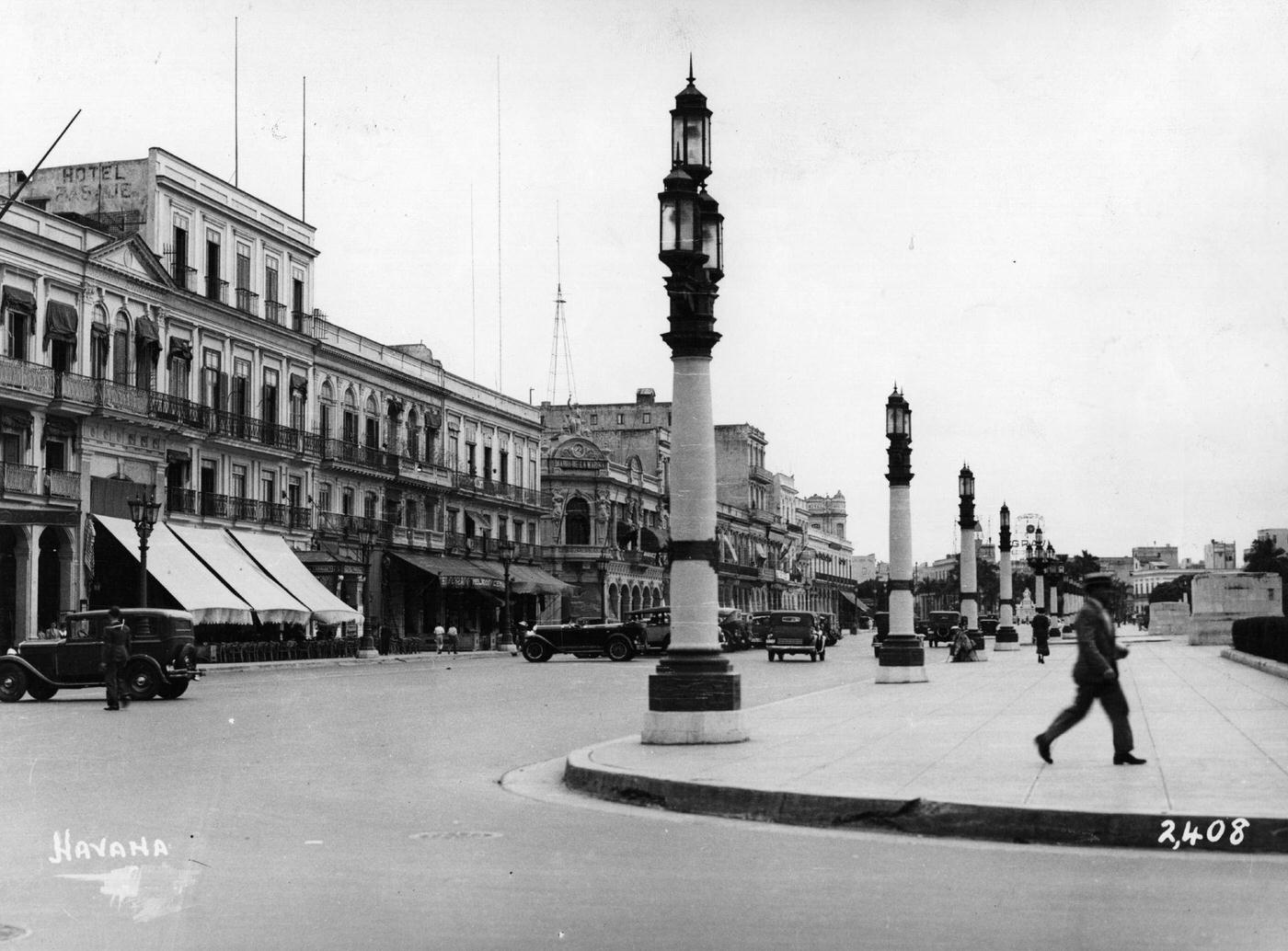
Street-level Havana in 1935 was a study in contrasts. Fashionably dressed pedestrians shared the sidewalks with laborers and vendors. Bright storefronts stood alongside crumbling colonial facades. The city’s inequalities were visible in plain sight, even as its reputation for glamour and nightlife continued to draw visitors from around the world.
Havana’s public squares served as the social anchors of neighborhood life. They were places to meet, debate, rest, and watch the city move around you. Shaded by trees and lined with benches, they offered a pause from the noise and heat of the surrounding streets.
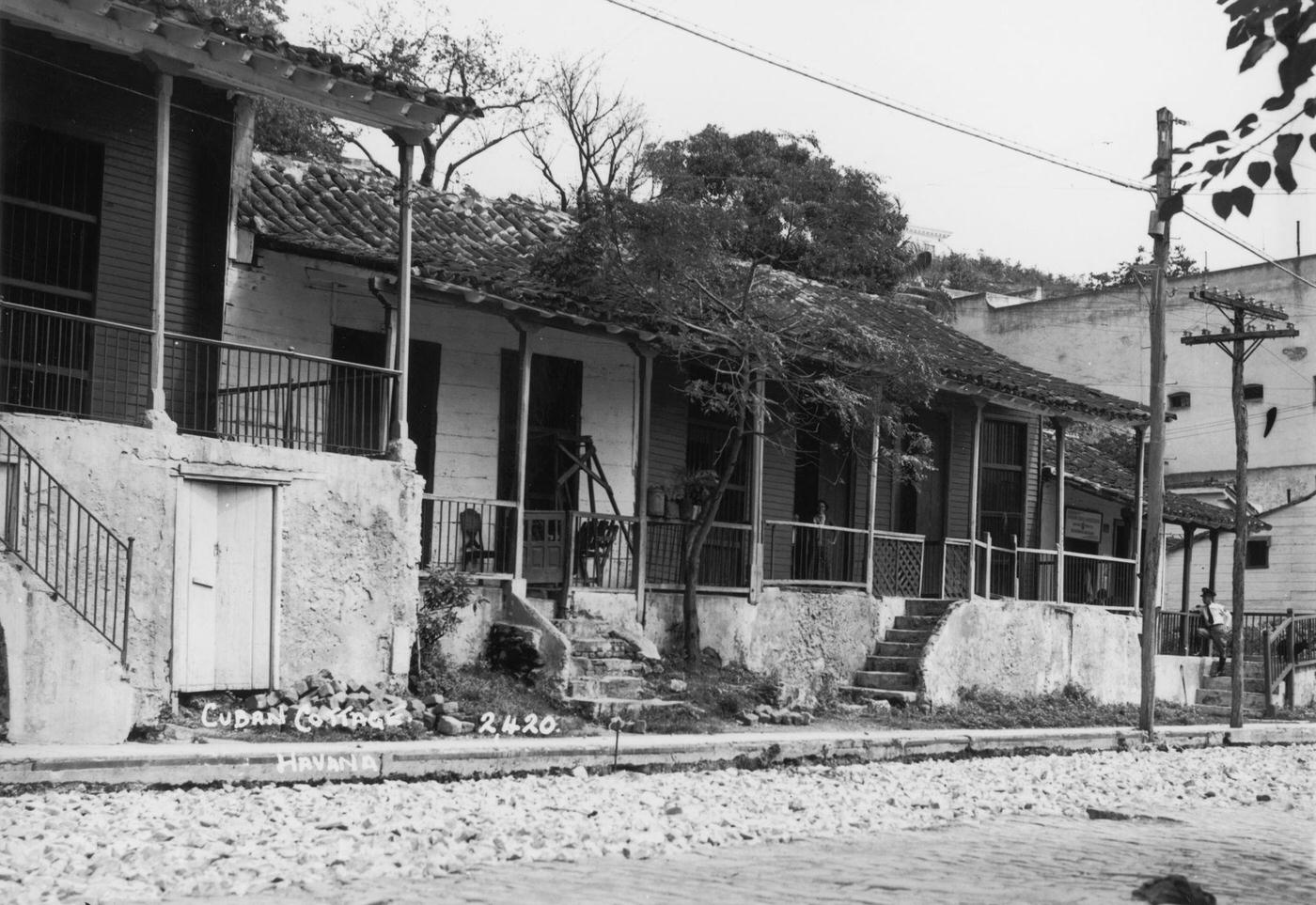
Not all of Havana looked like the postcard version. Away from the grand hotels and civic monuments, stretches of low, run-down housing told a different story. Single-storey homes with peeling paint and worn facades housed the city’s working-class residents, many of whom lived far from the prosperity that tourists came to enjoy.
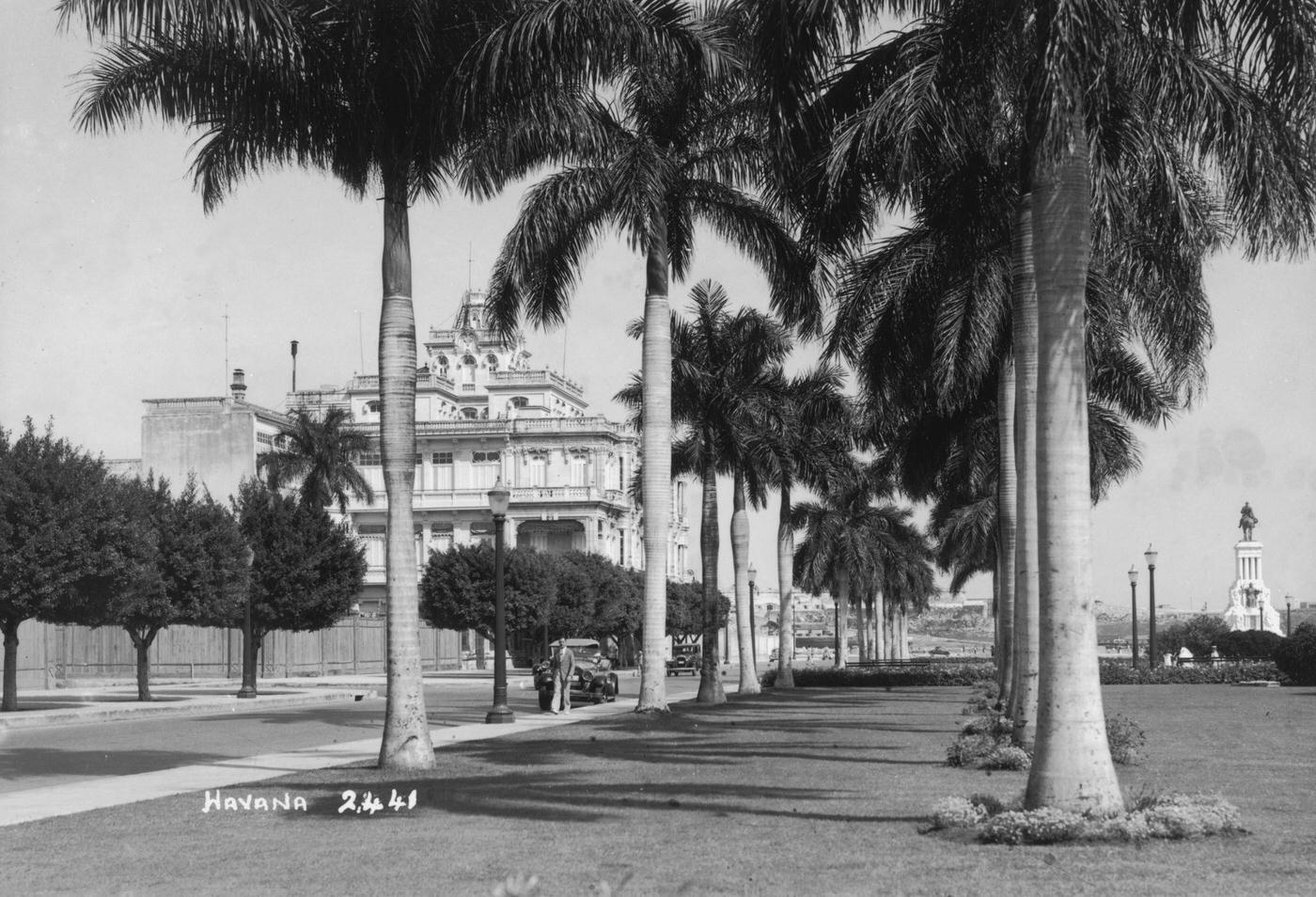
Alongside the contrasts of wealth and poverty, Havana retained the natural beauty that had drawn travelers for centuries. Palm trees lined the city’s streets, their fronds catching the Caribbean breeze. Even in the modest outer neighborhoods, the landscape offered a softness that tempered the harder edges of urban life.
At the center of it all, Havana’s monumental core projected power and permanence. The National Capitol anchored the cityscape, surrounded by imposing government buildings and broad avenues. For Cubans and foreigners alike, this was the image of Havana that lodged in memory — bold, beautiful, and unmistakably itself.
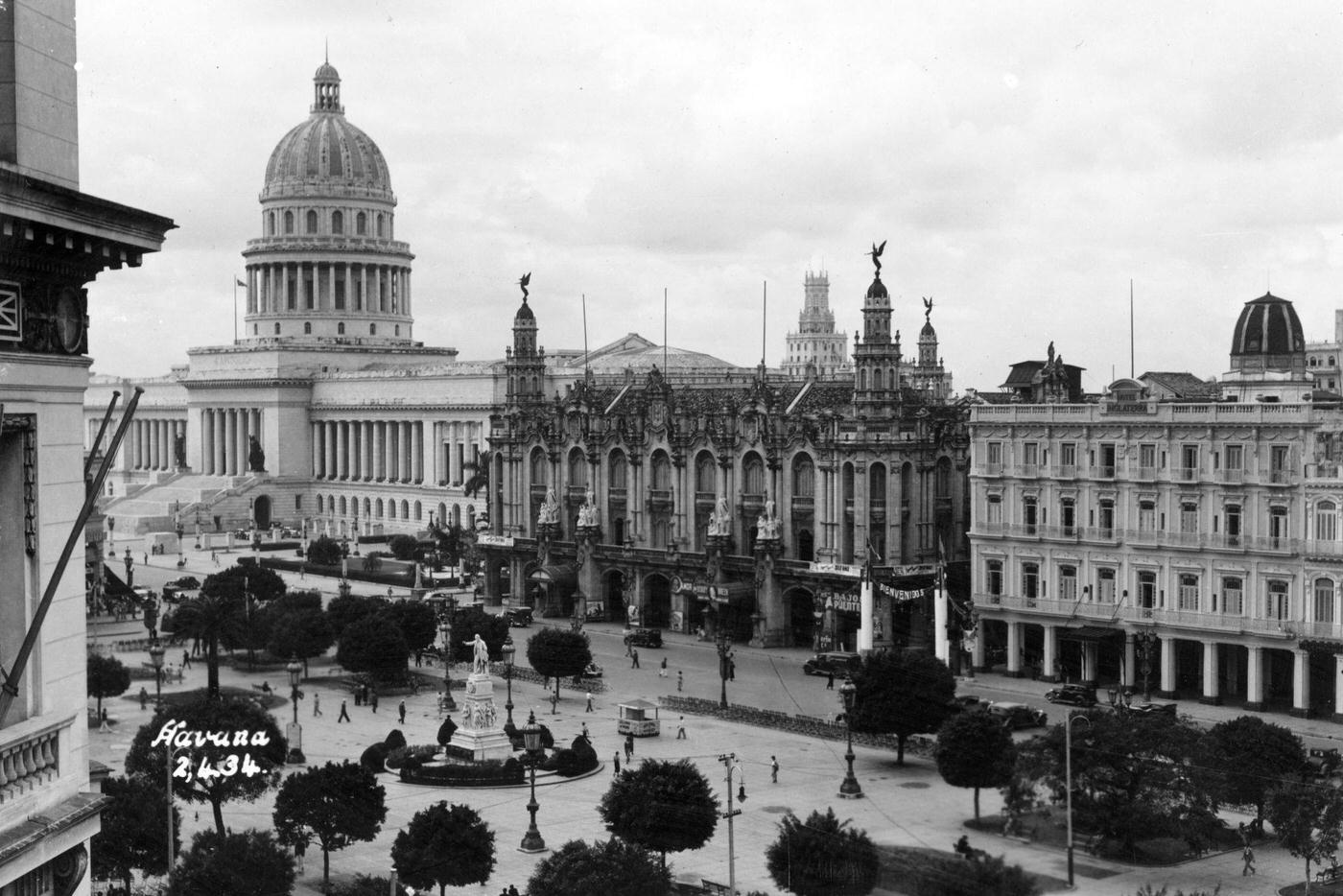
The García Lorca Theater — known earlier as the Gran Teatro de La Habana — was one of Havana’s most important cultural institutions. It staged opera, ballet, and theatrical productions that rivaled anything being performed in Europe or North America. For Havana’s cultural elite, an evening at the theater was a central part of city life throughout the 1930s.