On the night of February 16, 1962, a violent storm surge tore through the North Sea and slammed into the coasts of Germany, the Netherlands, and Denmark. The event — known as the North Sea Flood of 1962 — killed hundreds in Germany alone and more than 1,800 in the Netherlands. It remains one of the deadliest natural disasters in postwar European history.
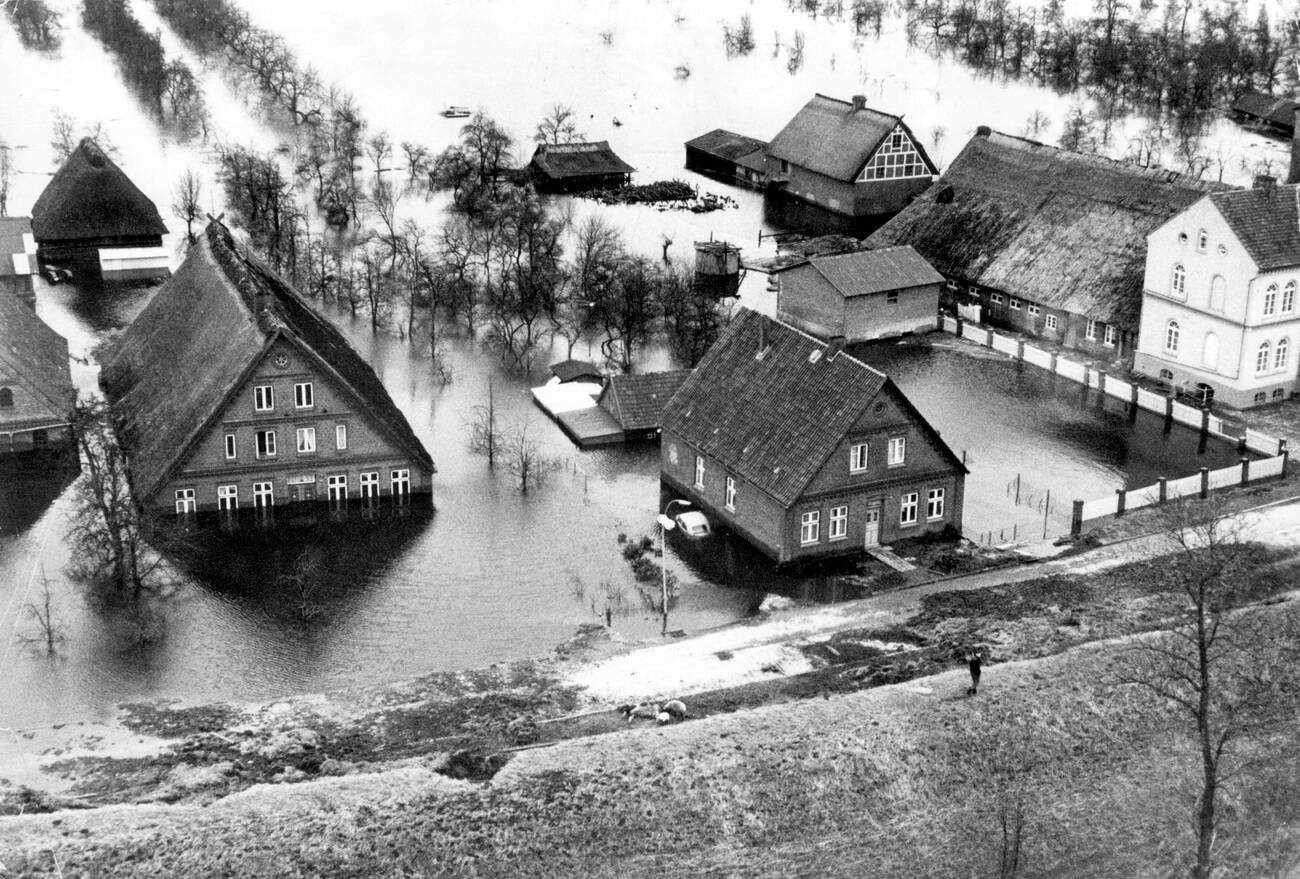
The disaster began with an extratropical cyclone called “Vincinette,” which formed over the Atlantic Ocean and moved east toward the European coastline. As it gained strength, it combined with an unusually high spring tide to produce a massive storm surge. Coastal dikes that had stood for decades buckled under the pressure. Water poured inland with little warning, catching thousands of people in their beds.
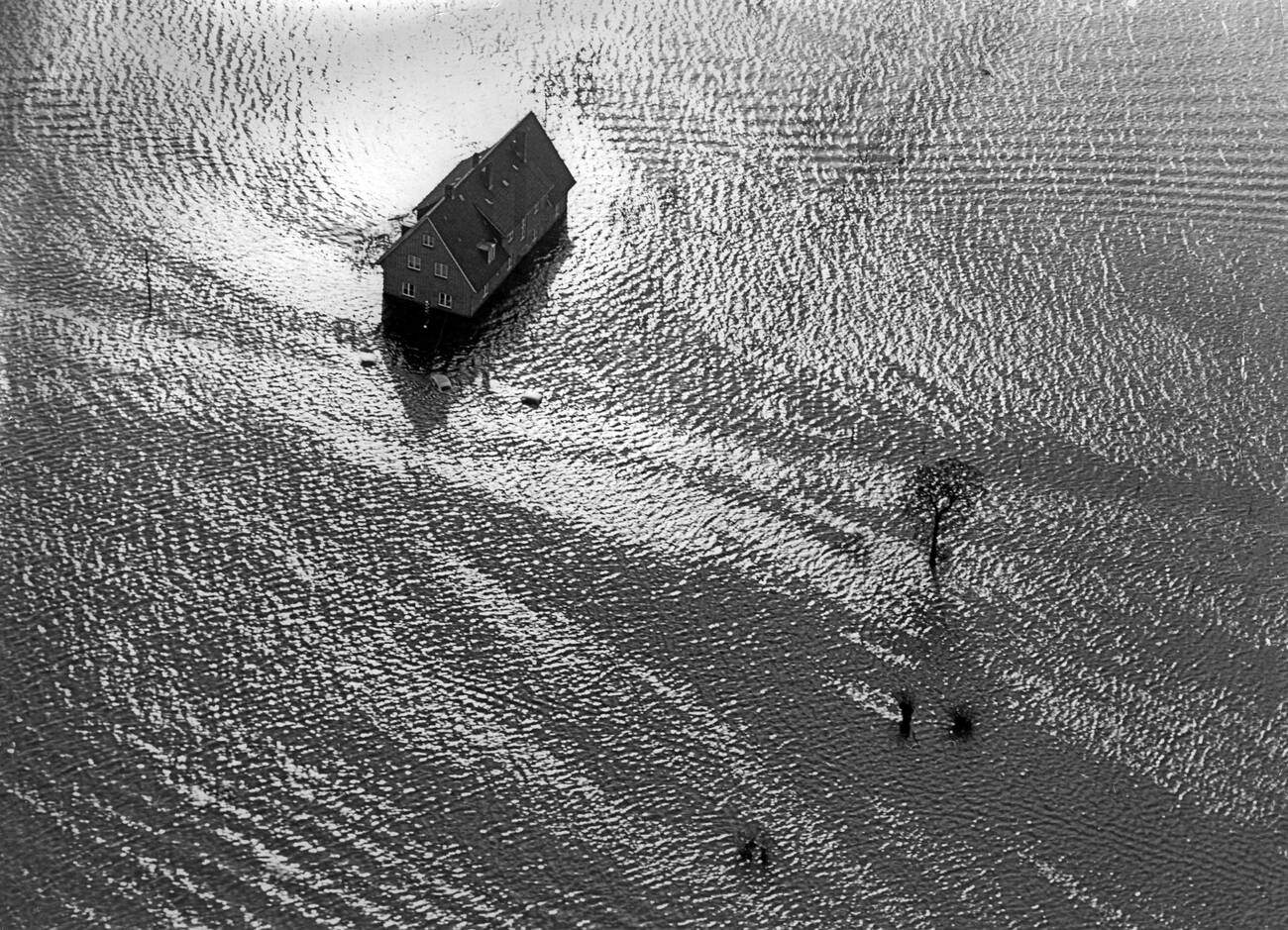
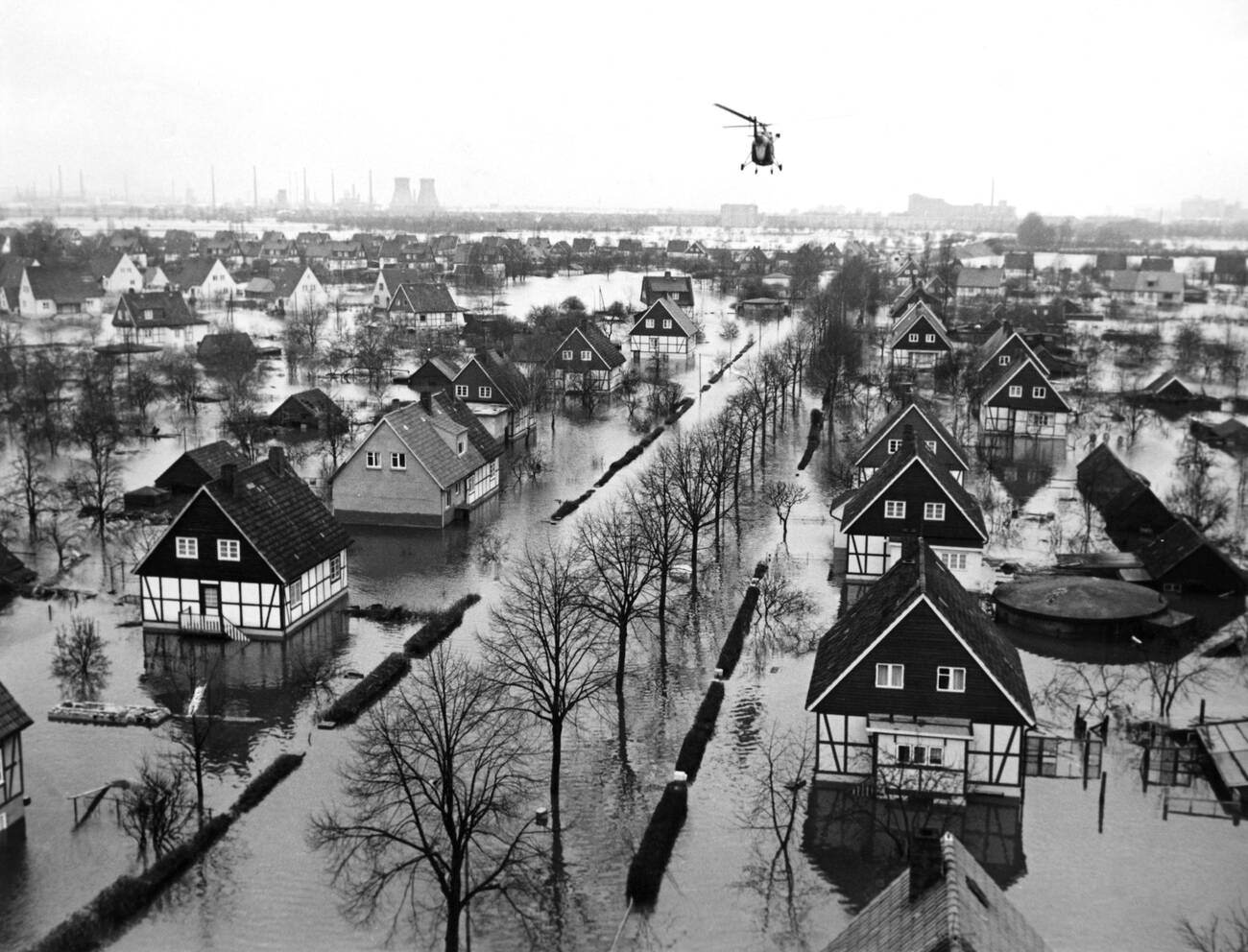
Hamburg suffered more than any other German city. Floodwaters overran the city’s dikes and submerged more than 20% of its total urban area. An estimated 315 residents lost their lives, and over 60,000 were left without homes. The Fish Market, the St. Pauli Piers, and the Wilhelmsburg district were among the worst-hit zones. Wilhelmsburg, a densely populated island district, was almost entirely underwater.
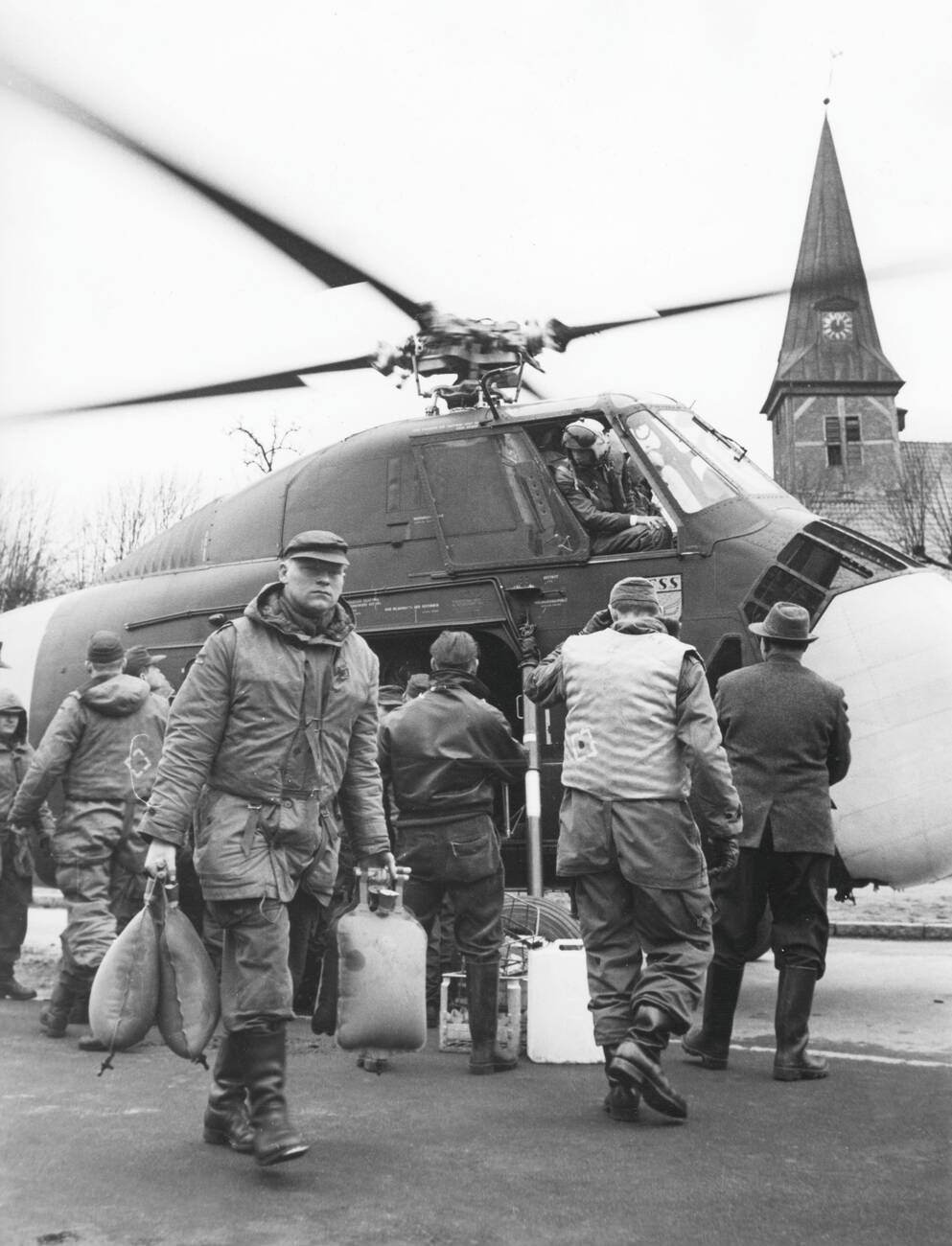
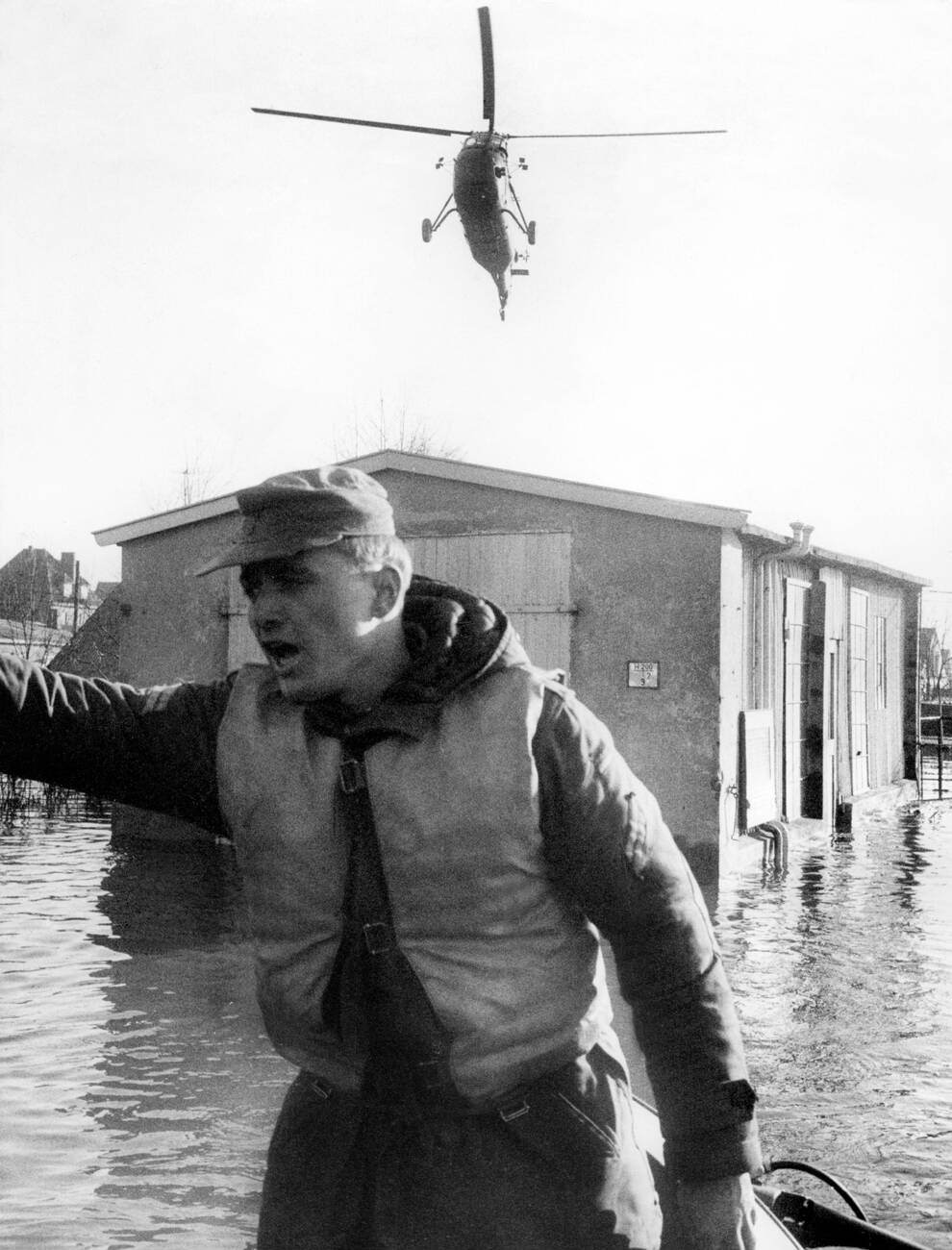
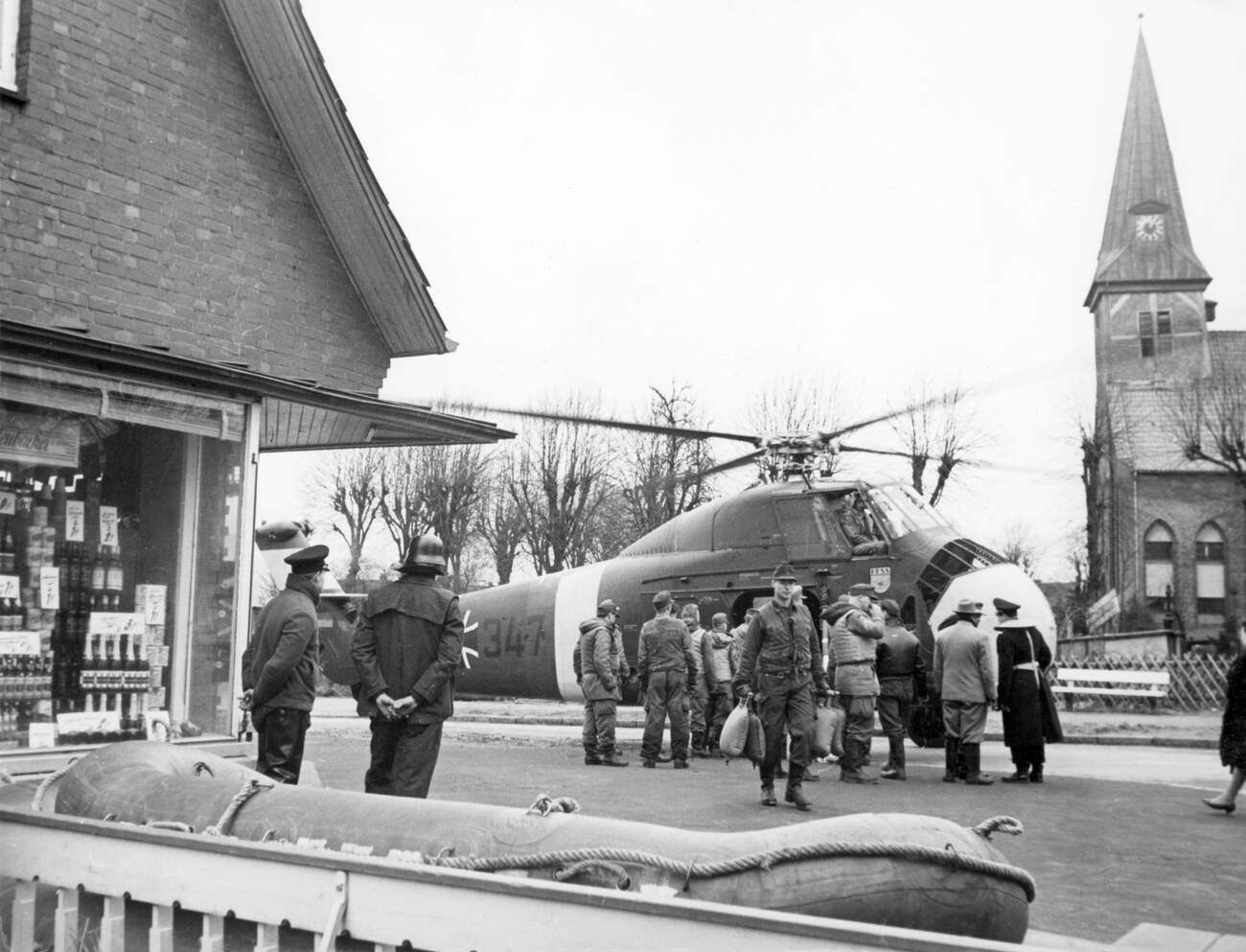
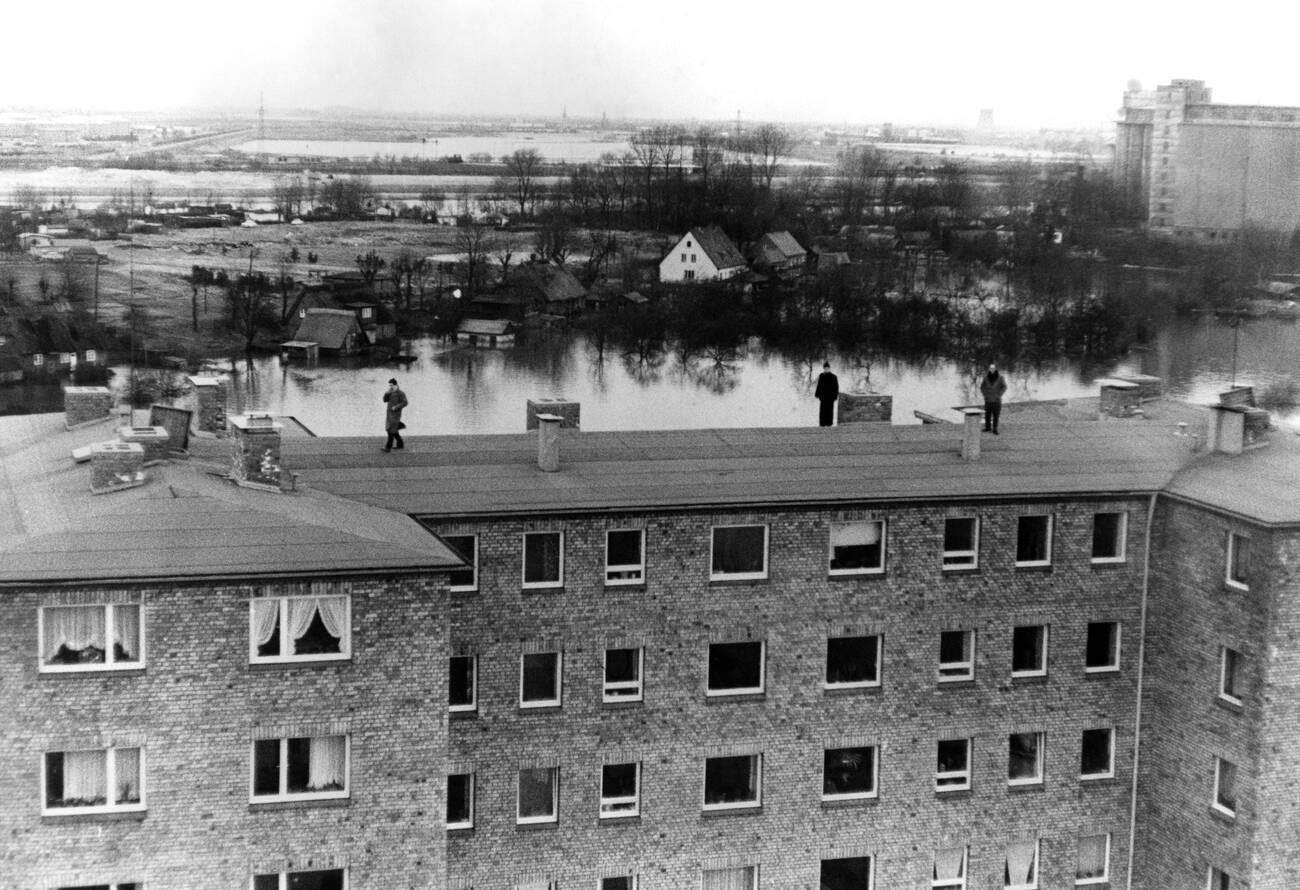
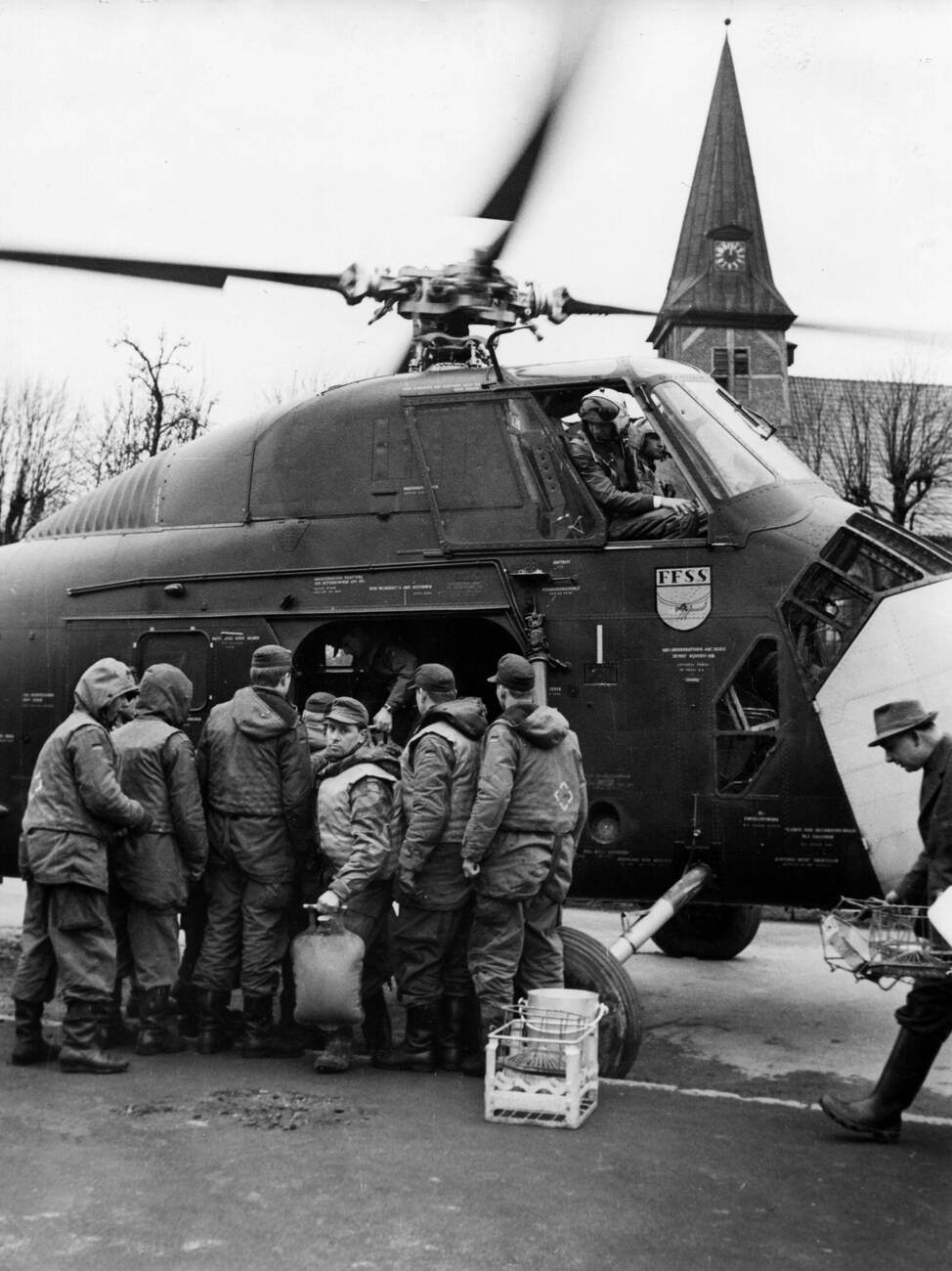
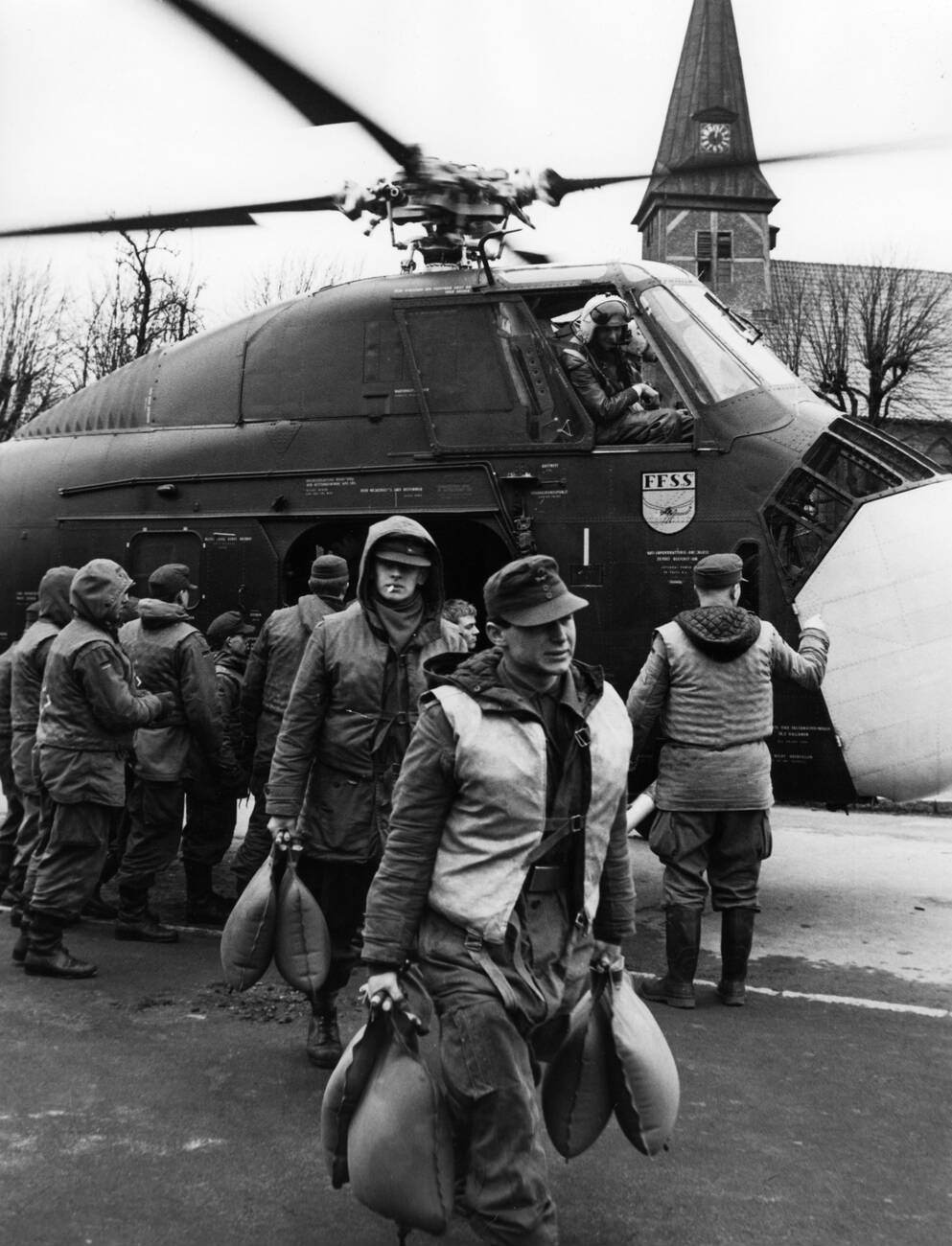
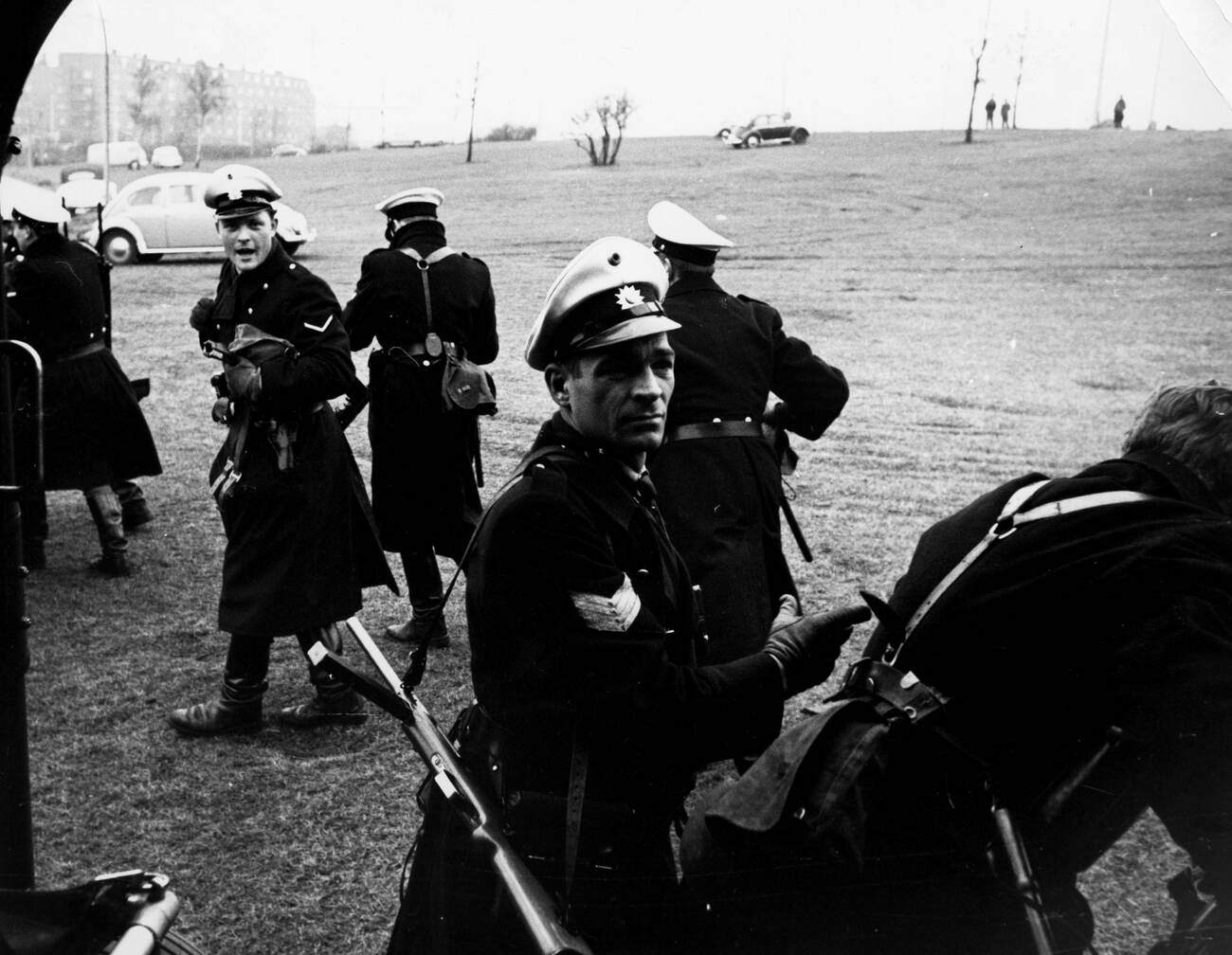
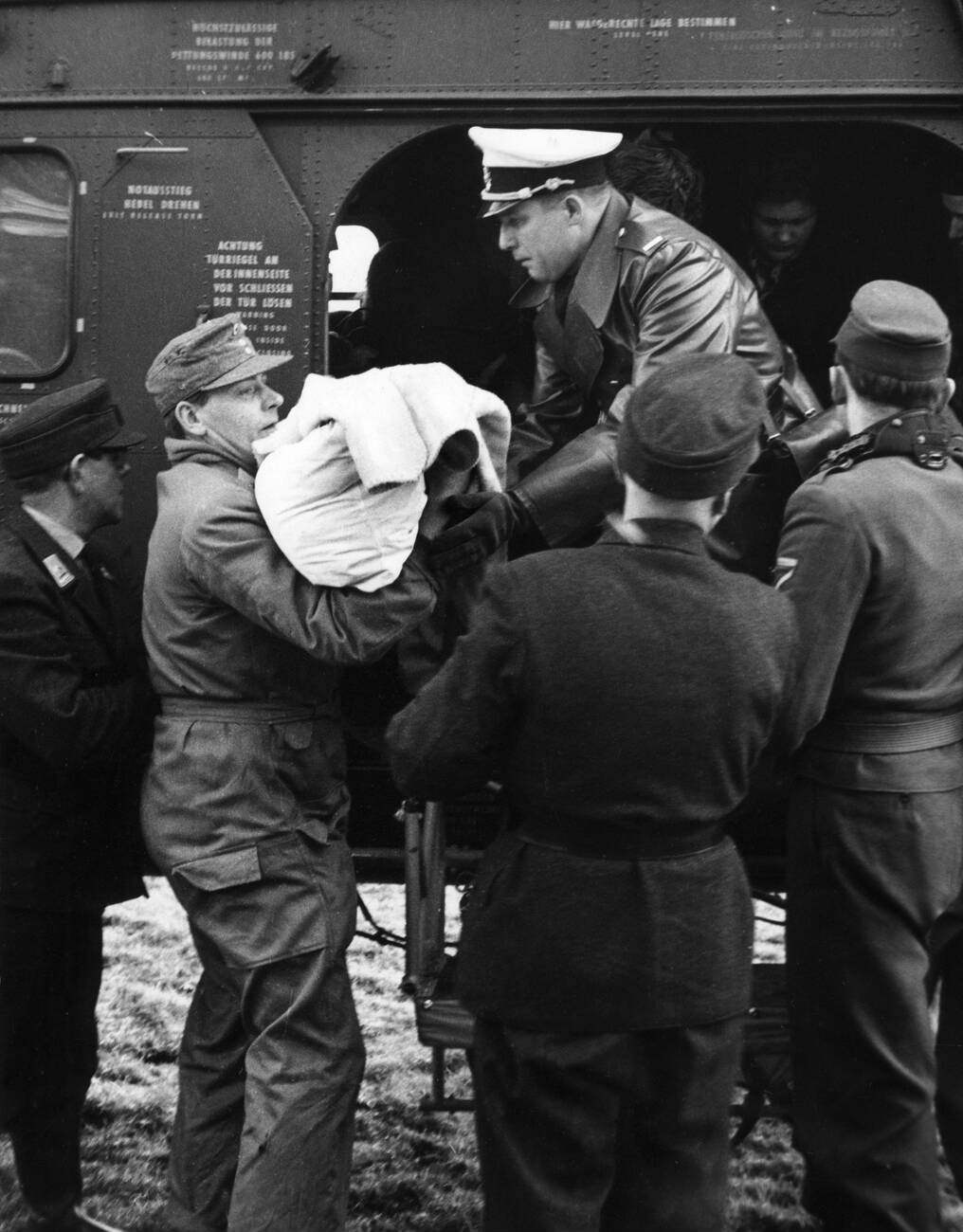
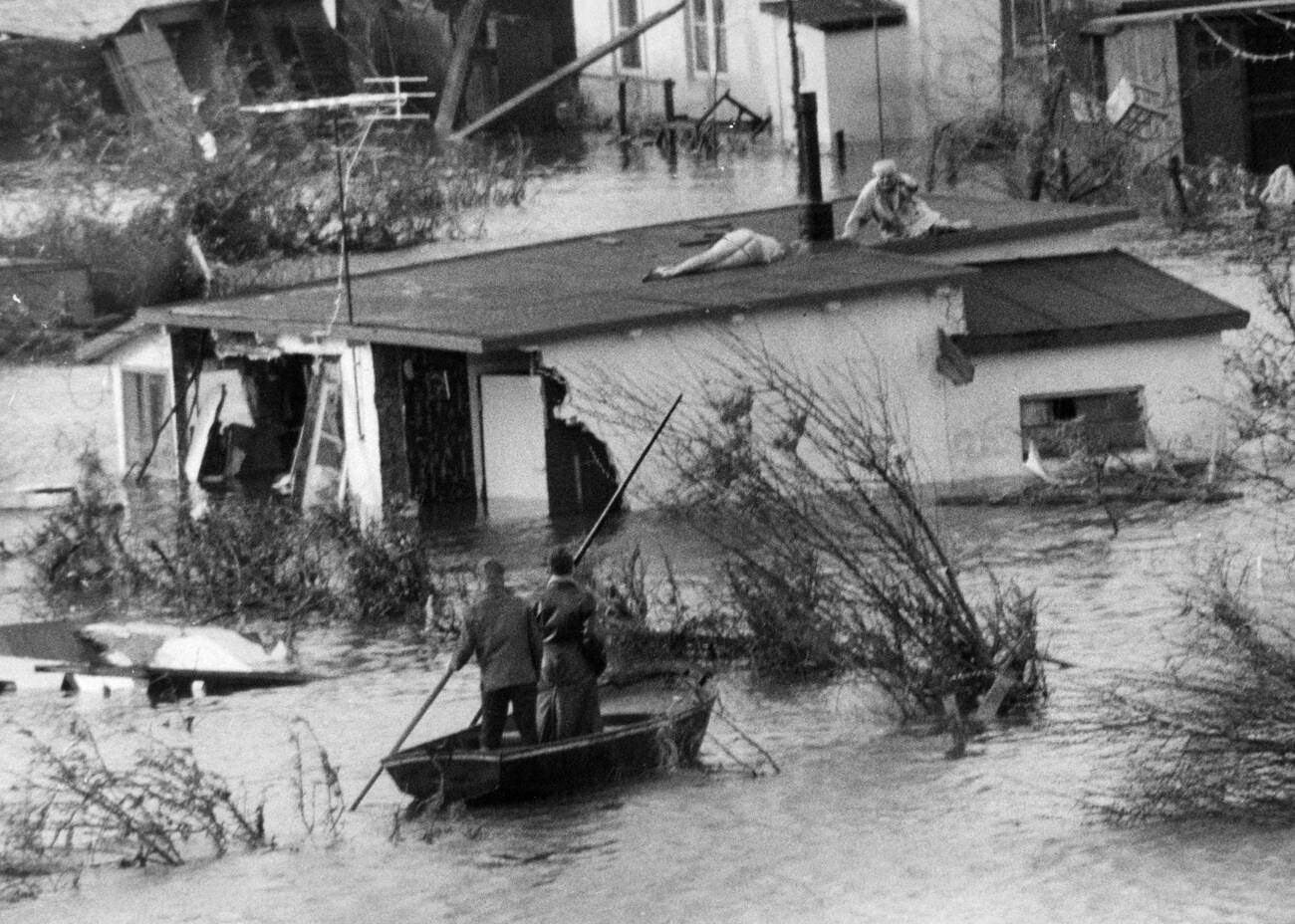
With roads flooded and many residents stranded on rooftops, helicopters became the primary means of rescue in the early hours and days after the surge. The military, police, and civil defense units worked around the clock to pull survivors from the water. Rescue workers navigated streets turned into rivers, reaching people who had no other way out.
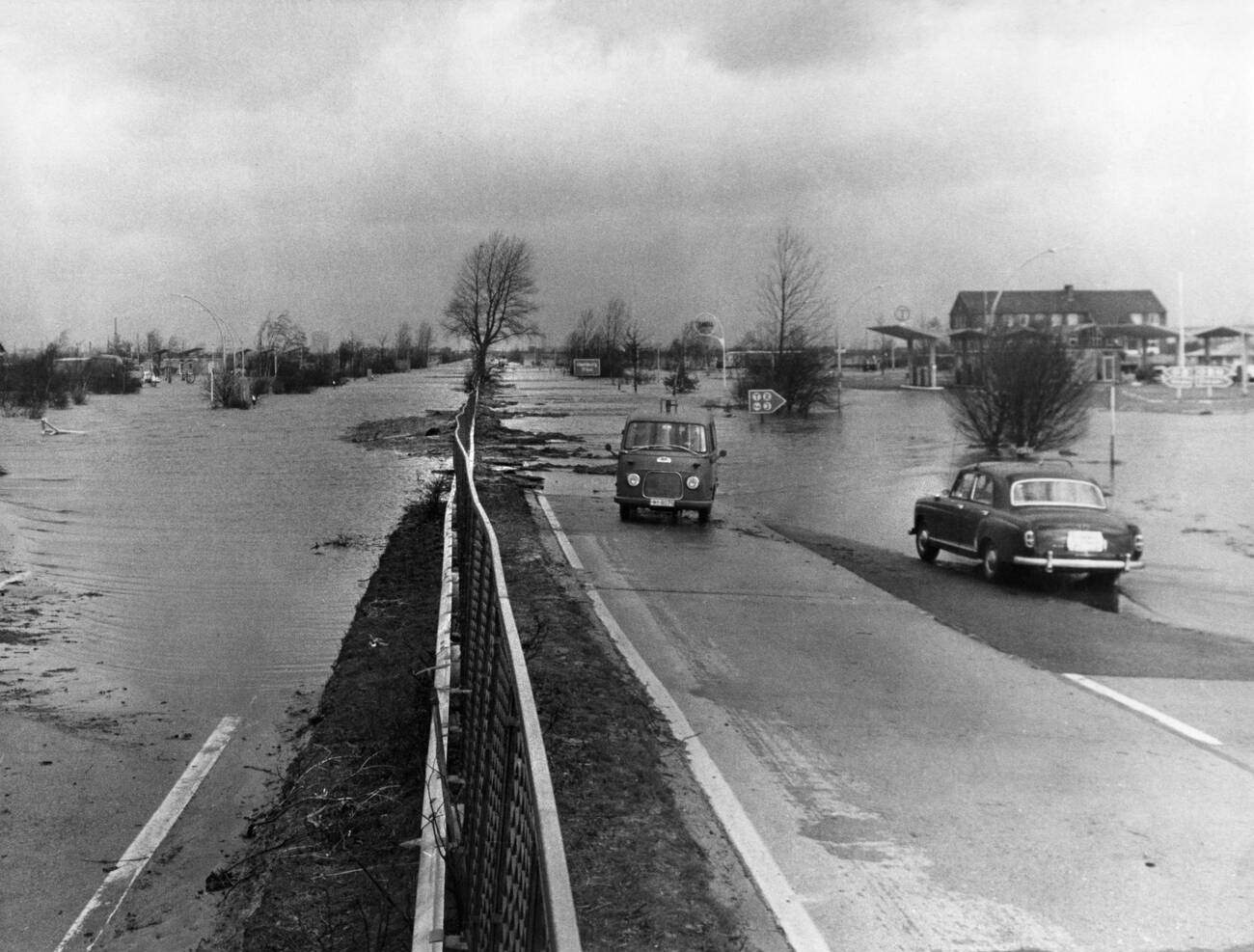
The scale of the flooding was unlike anything Hamburg residents had ever seen. Entire neighborhoods disappeared beneath brown, contaminated water. The city’s sewage system was overwhelmed, and the floodwaters quickly became a serious public health hazard. Gas lines and electrical systems were knocked out, leaving large sections of the city without power or heat in the middle of February.
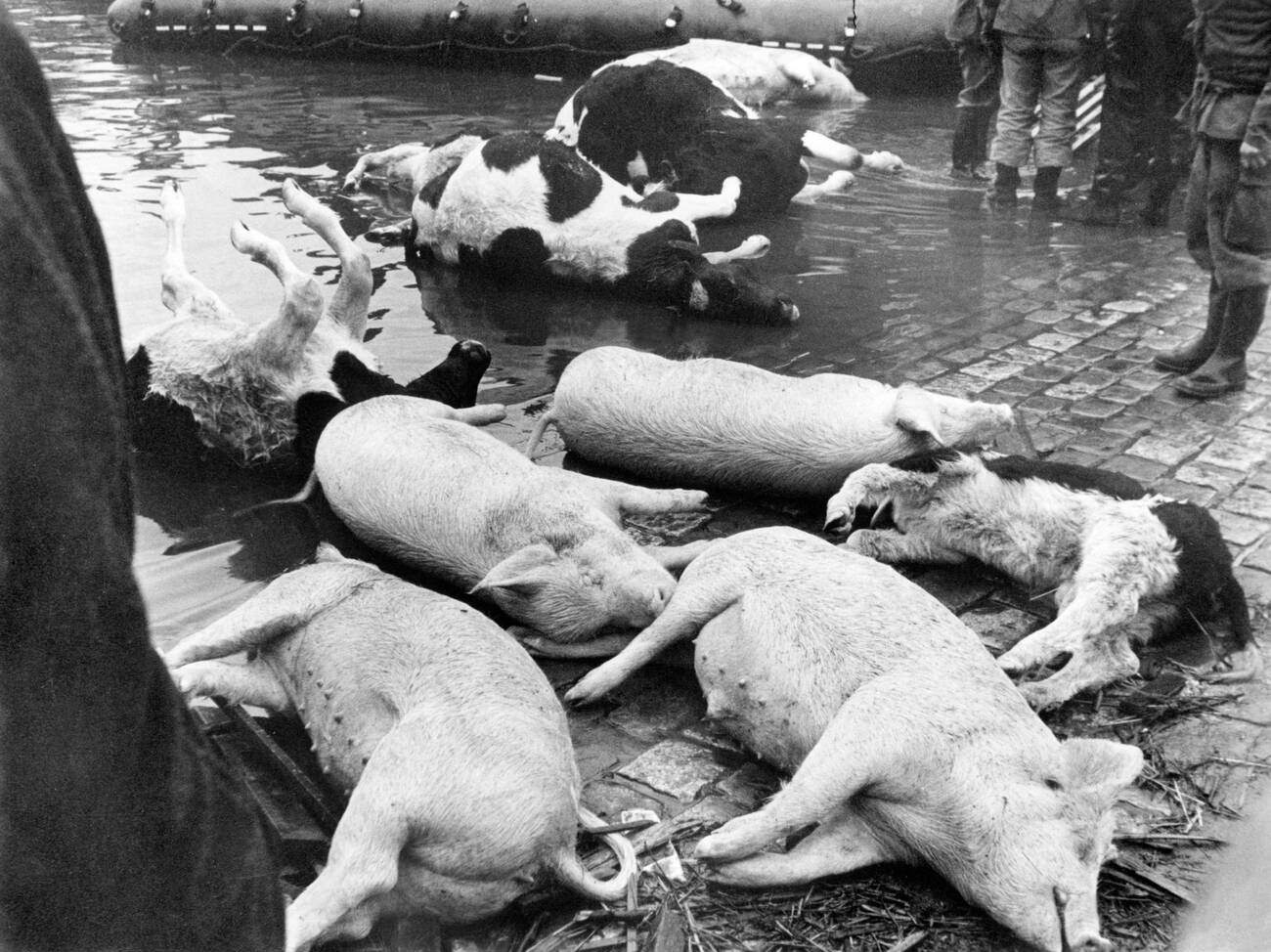
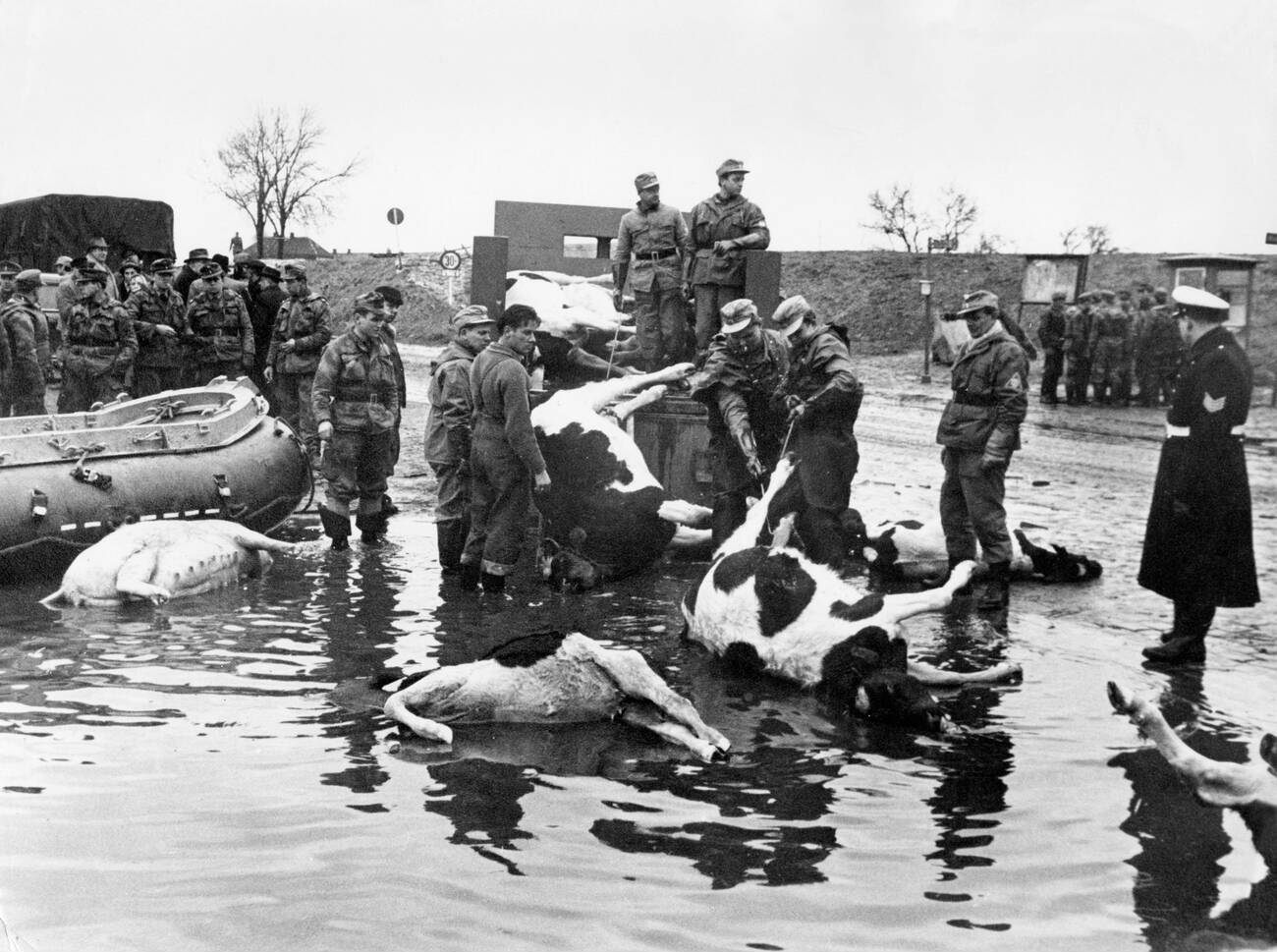
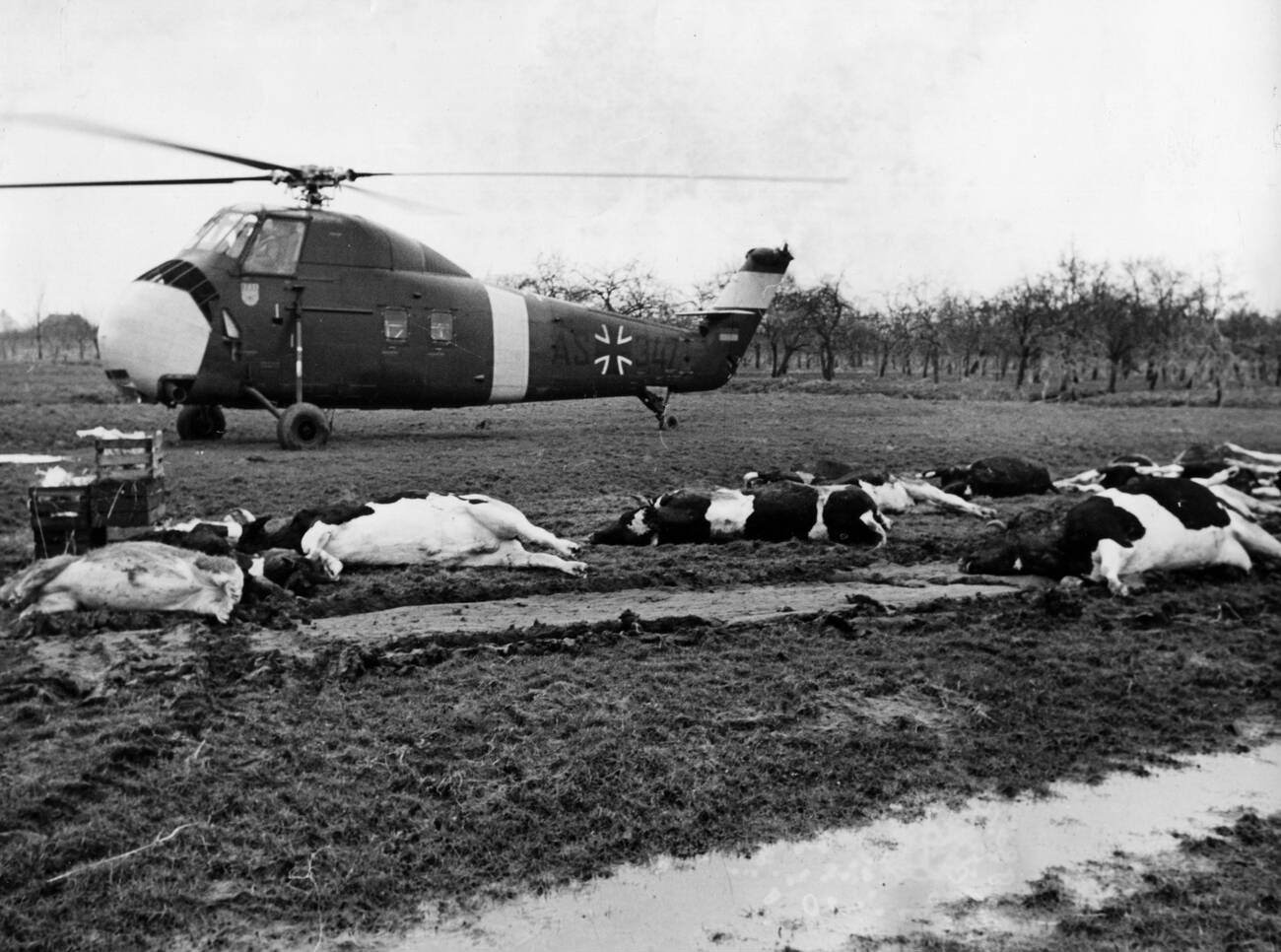
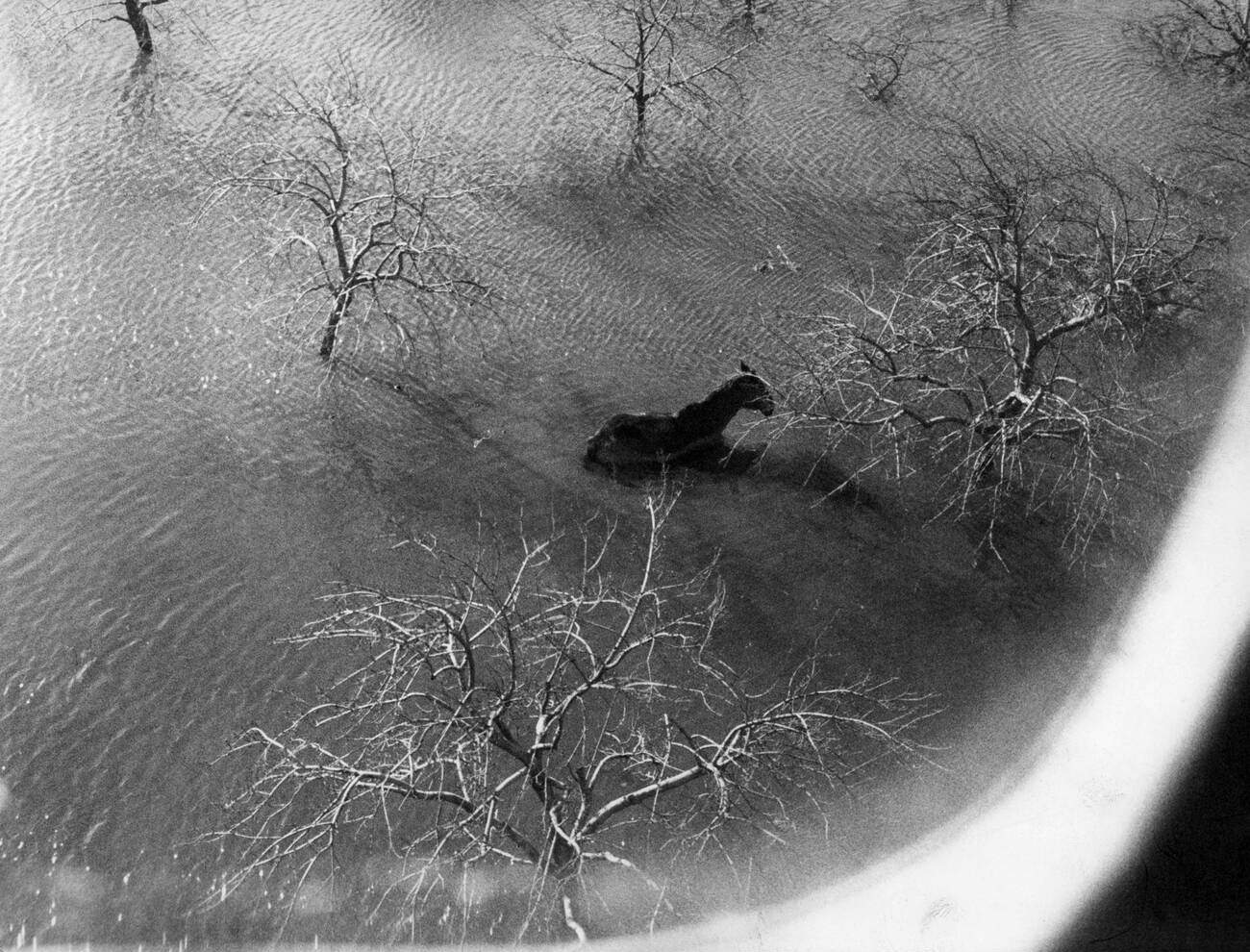
The agricultural damage was staggering. Farms across the flooded regions lost enormous numbers of livestock. Animals that could not be moved in time drowned in their stalls or were swept away by the current. The loss of cattle and other farm animals added another layer of economic devastation on top of the destruction to homes and businesses.
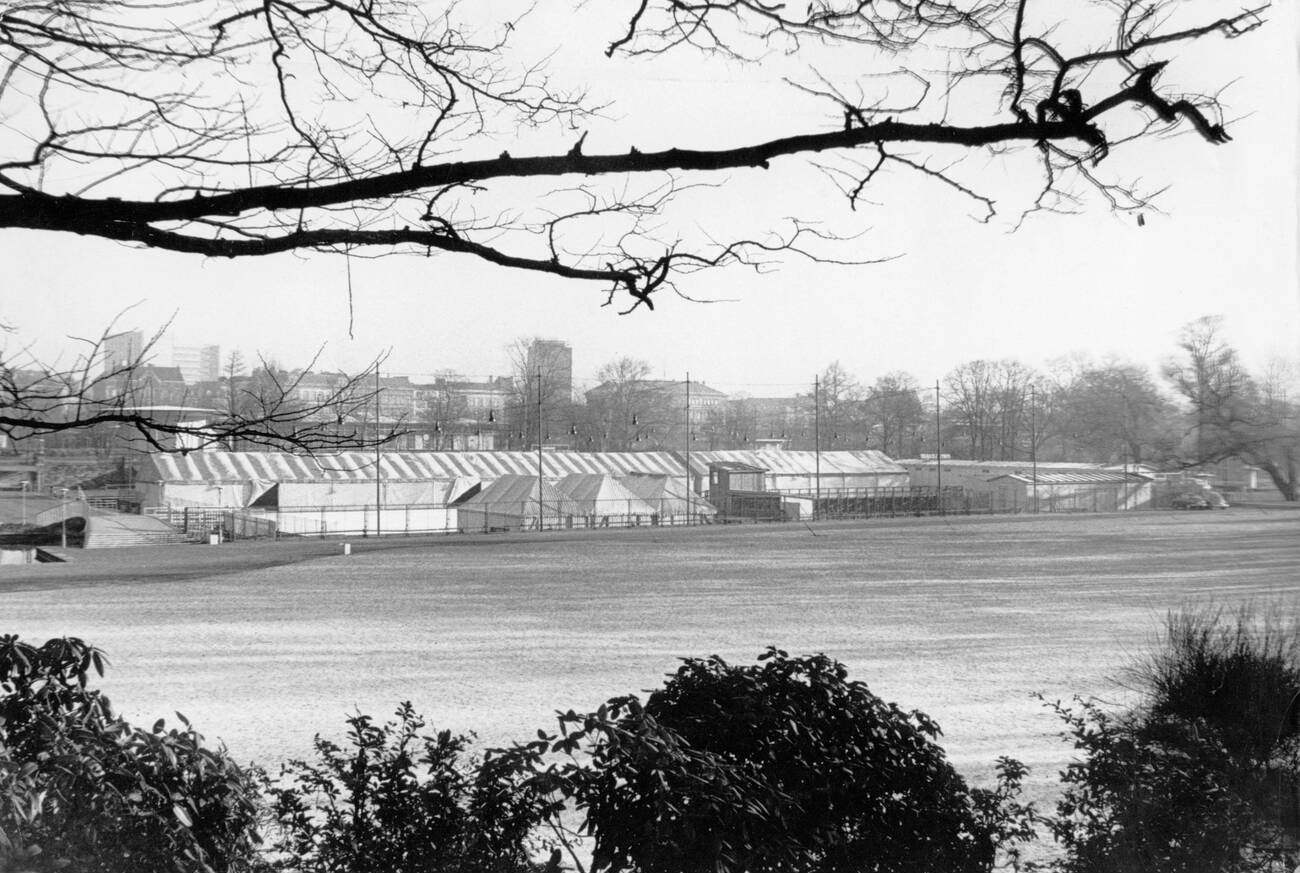
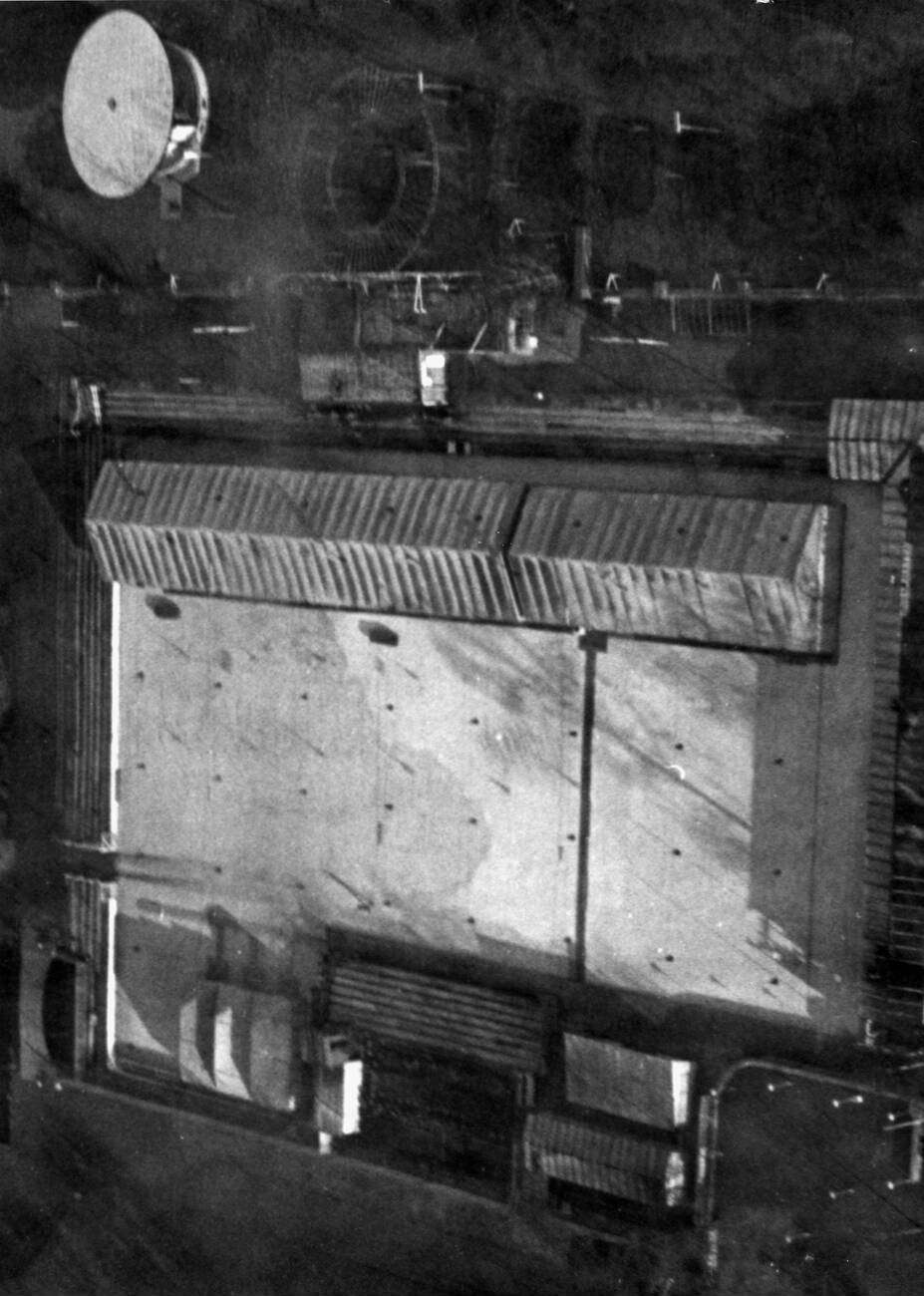
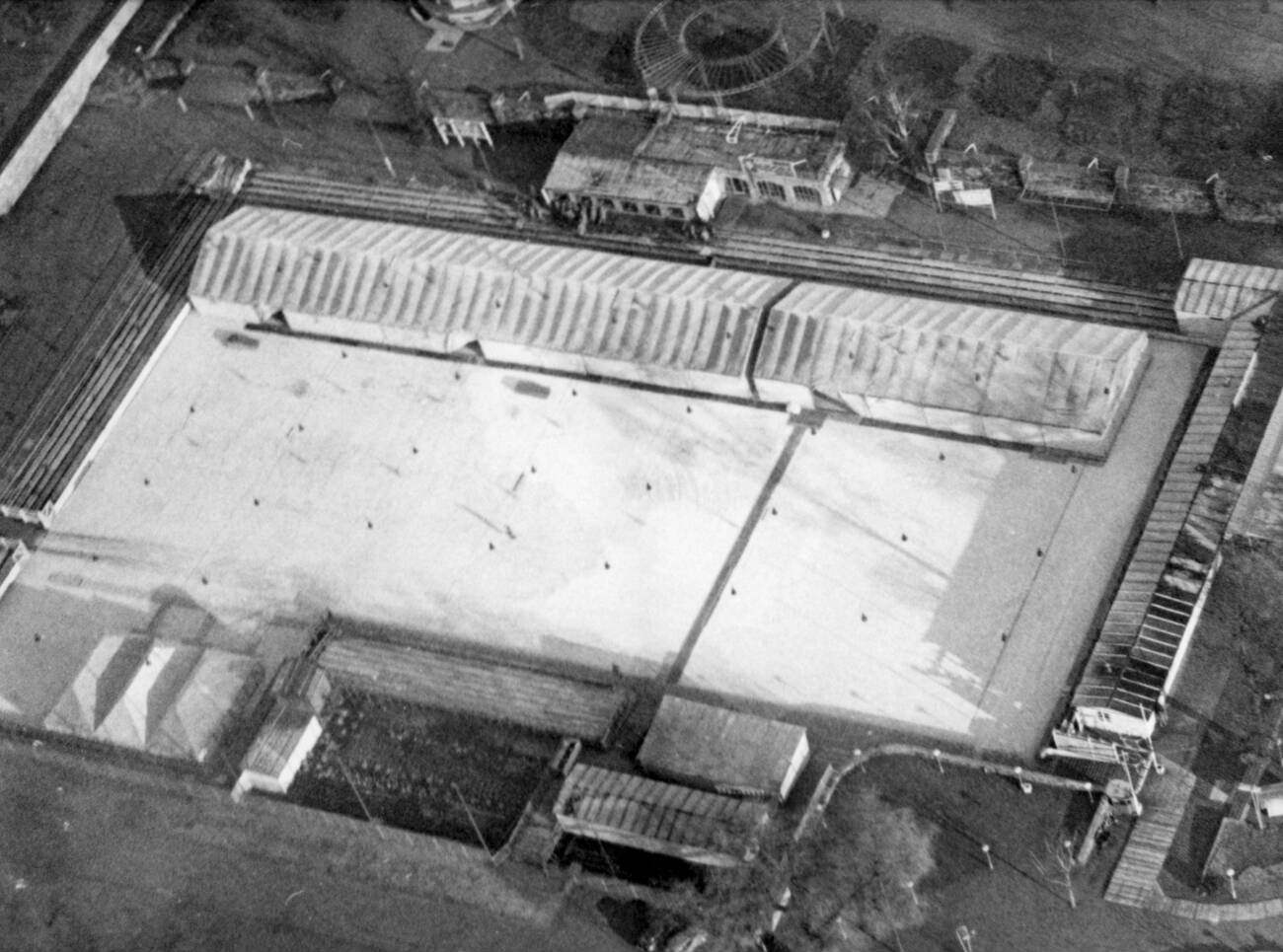
As the waters receded, the full human cost came into focus. Authorities needed large spaces to manage the dead. Ice rinks in Hamburg were converted into temporary mortuaries, where victims were laid out for identification by surviving family members.
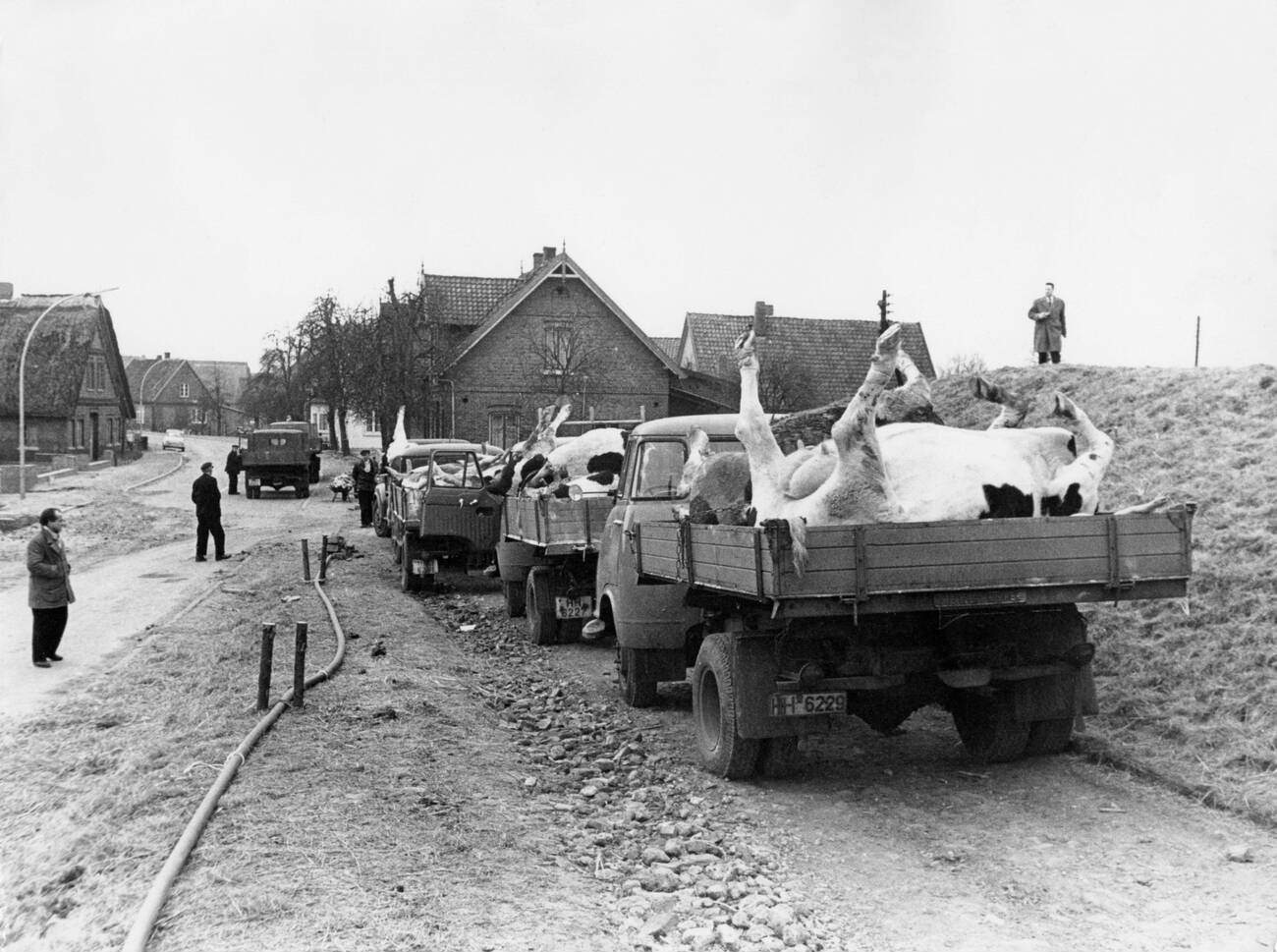
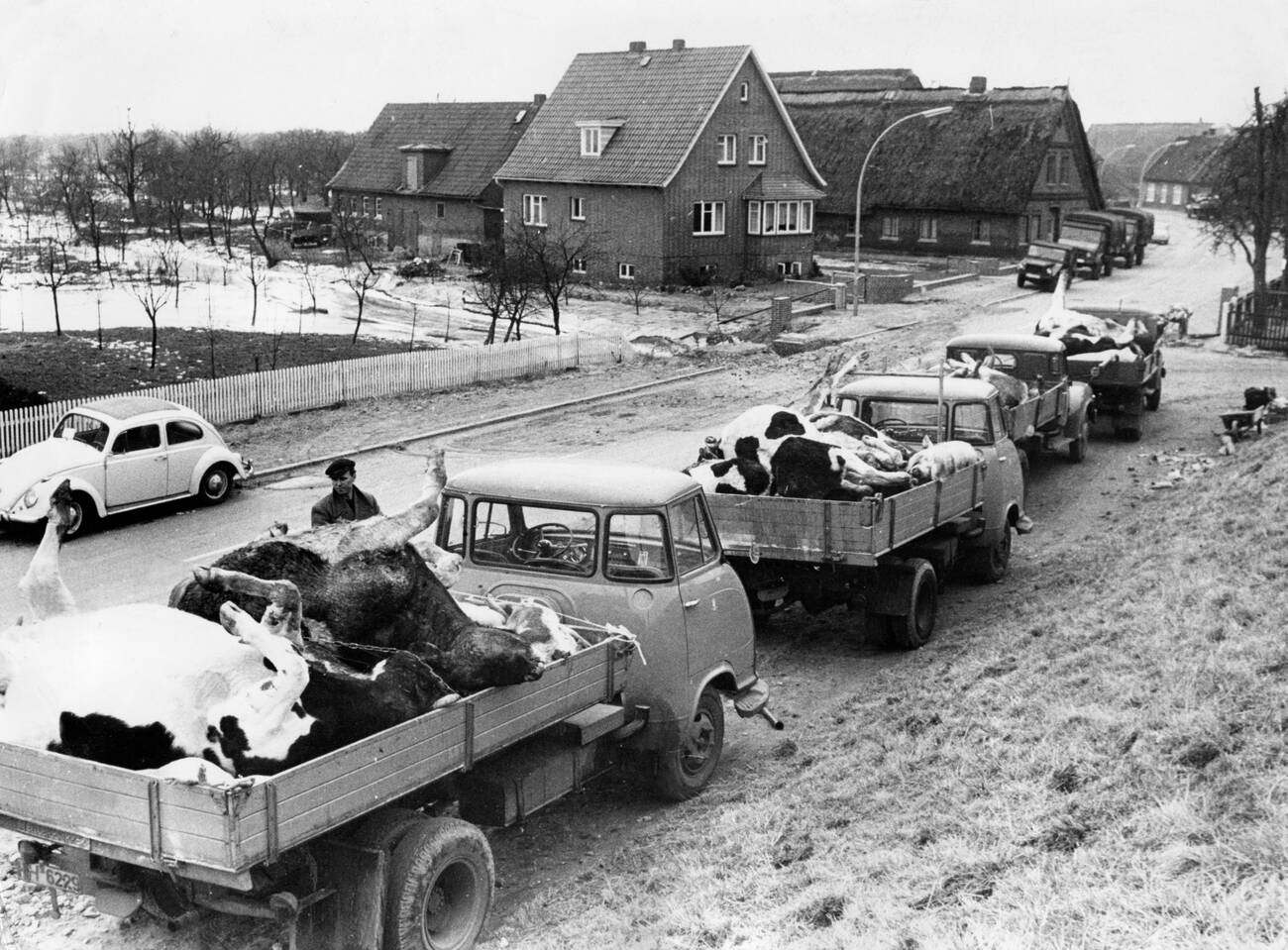
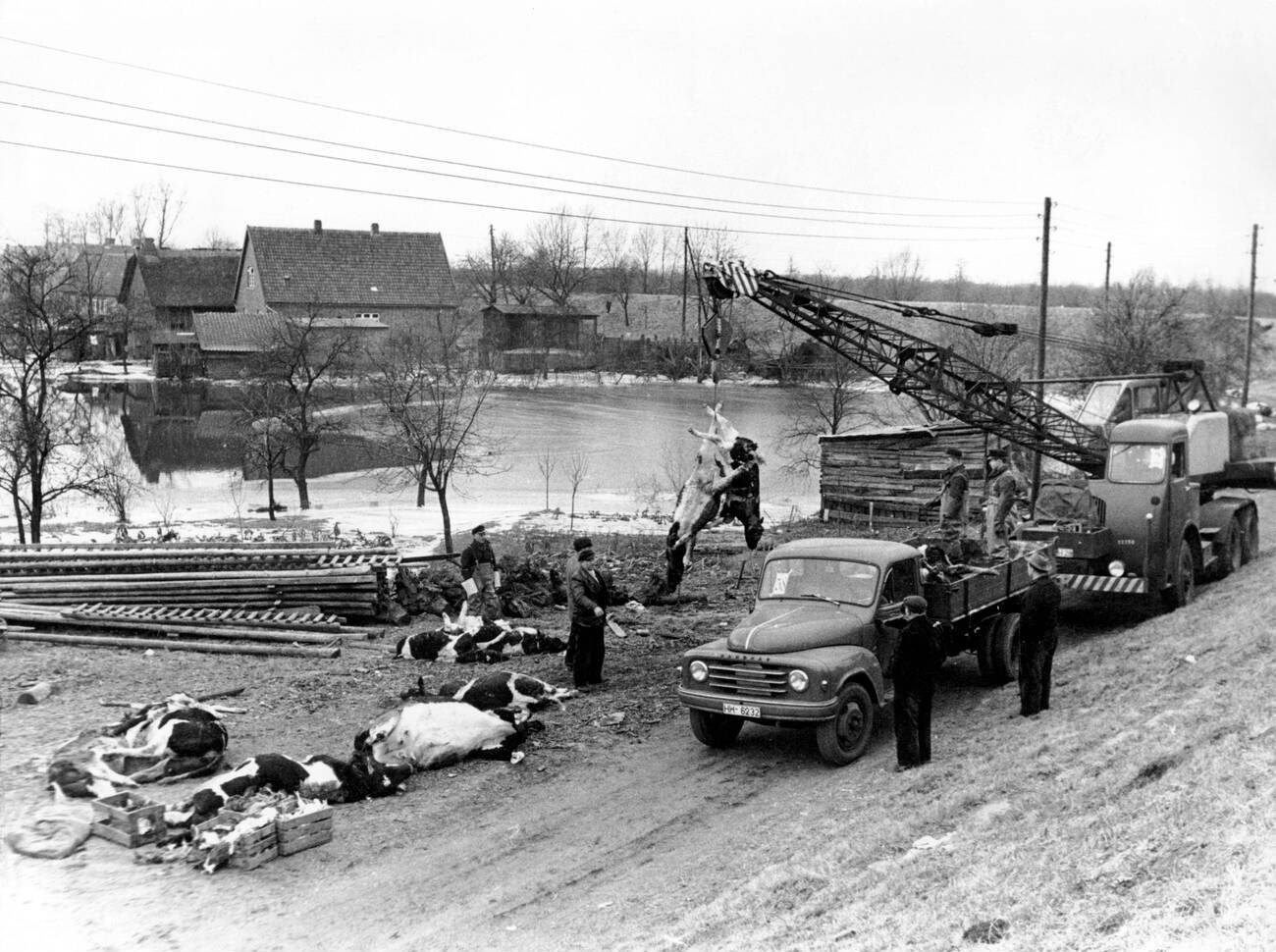
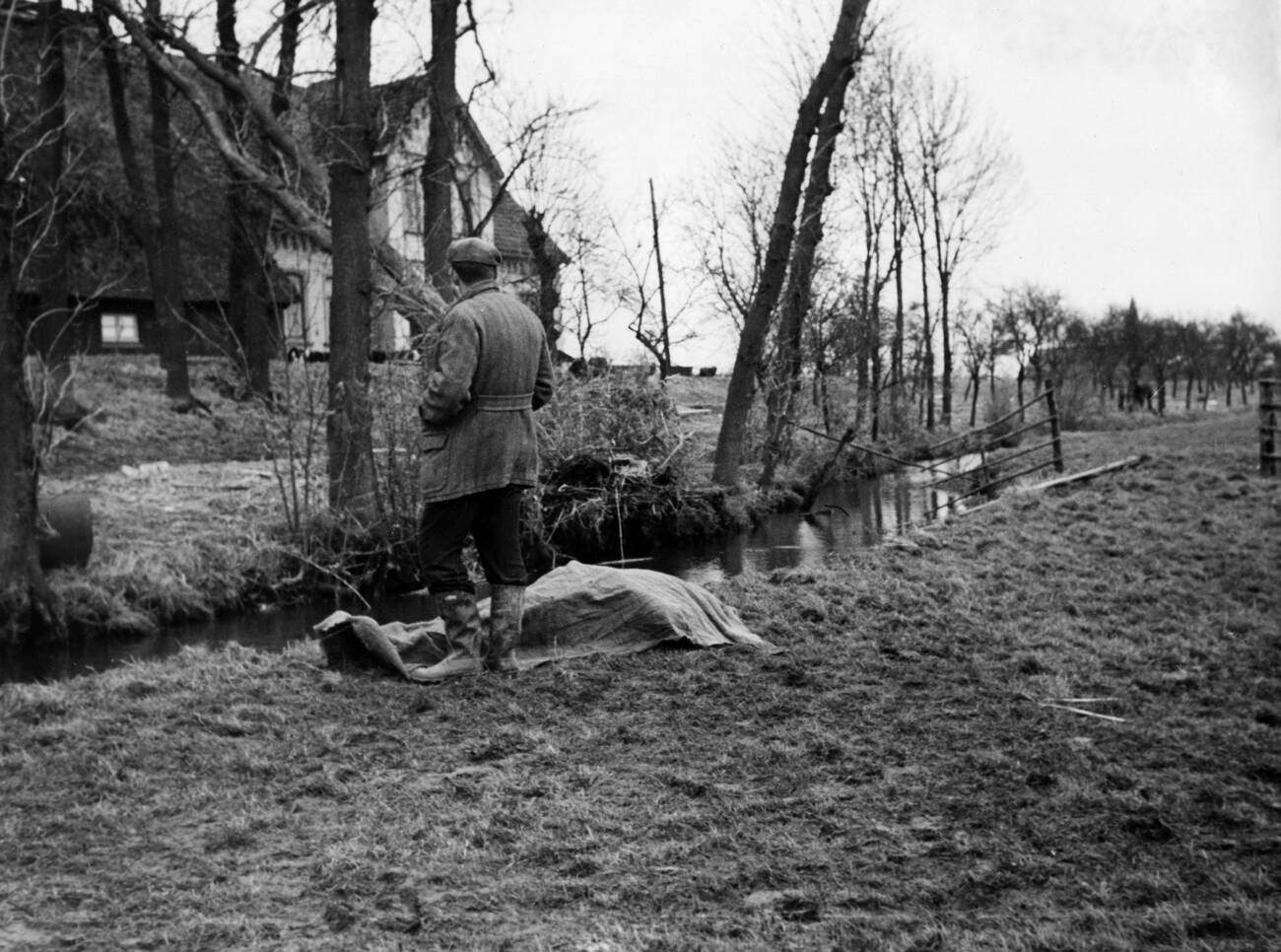
The removal of dead livestock from flooded fields and streets became a major logistical operation. Trucks were mobilized across affected districts to collect carcasses before disease could spread further. Workers and soldiers handled the grim task in cold, wet conditions.
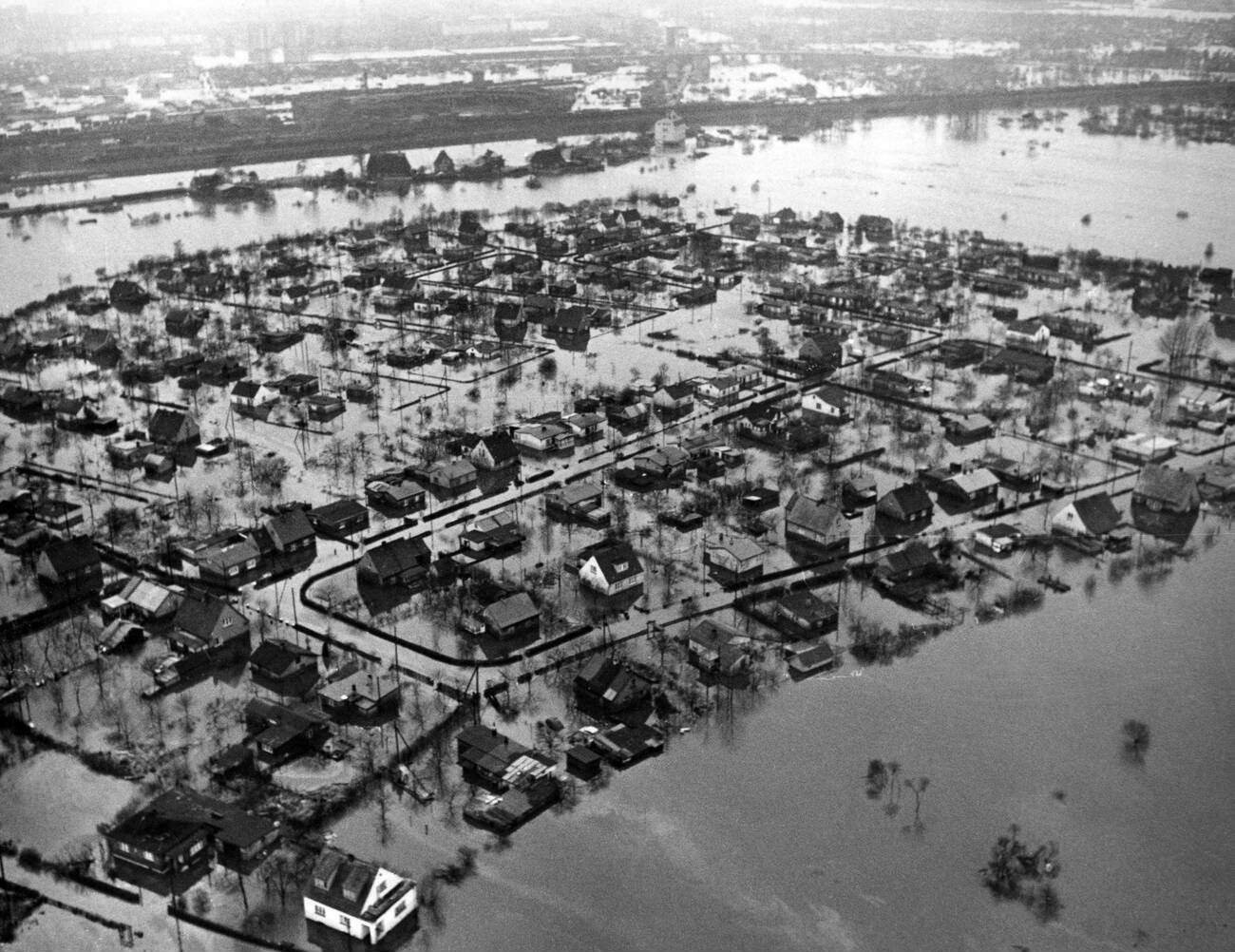
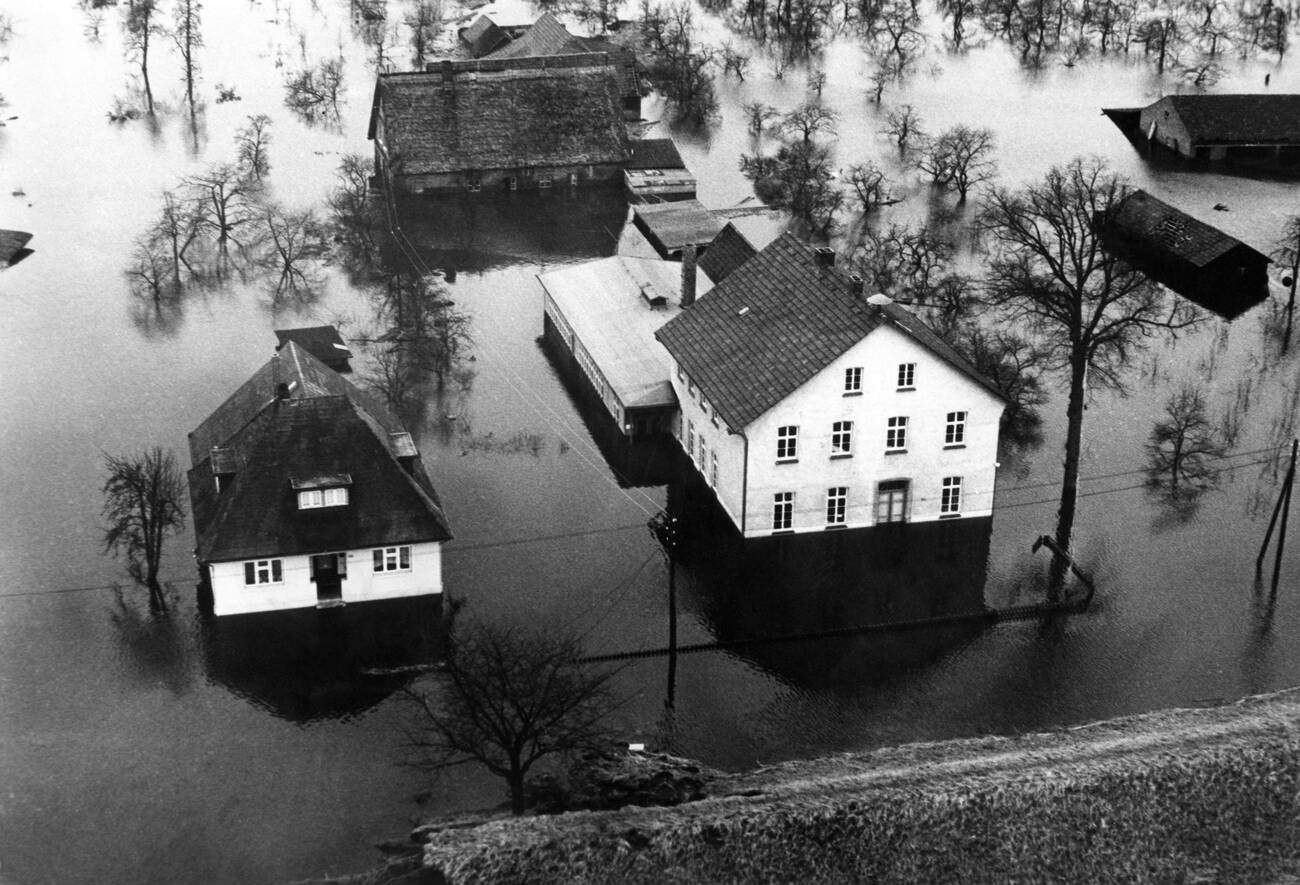
Across the flooded zones, the scenes were the same: waterlogged streets, collapsed buildings, and residents trying to salvage whatever they could carry. Ships in Hamburg’s port were tossed onto land, and warehouses full of goods were either submerged or structurally ruined. The port, which drove much of Hamburg’s commerce, ground to a halt.
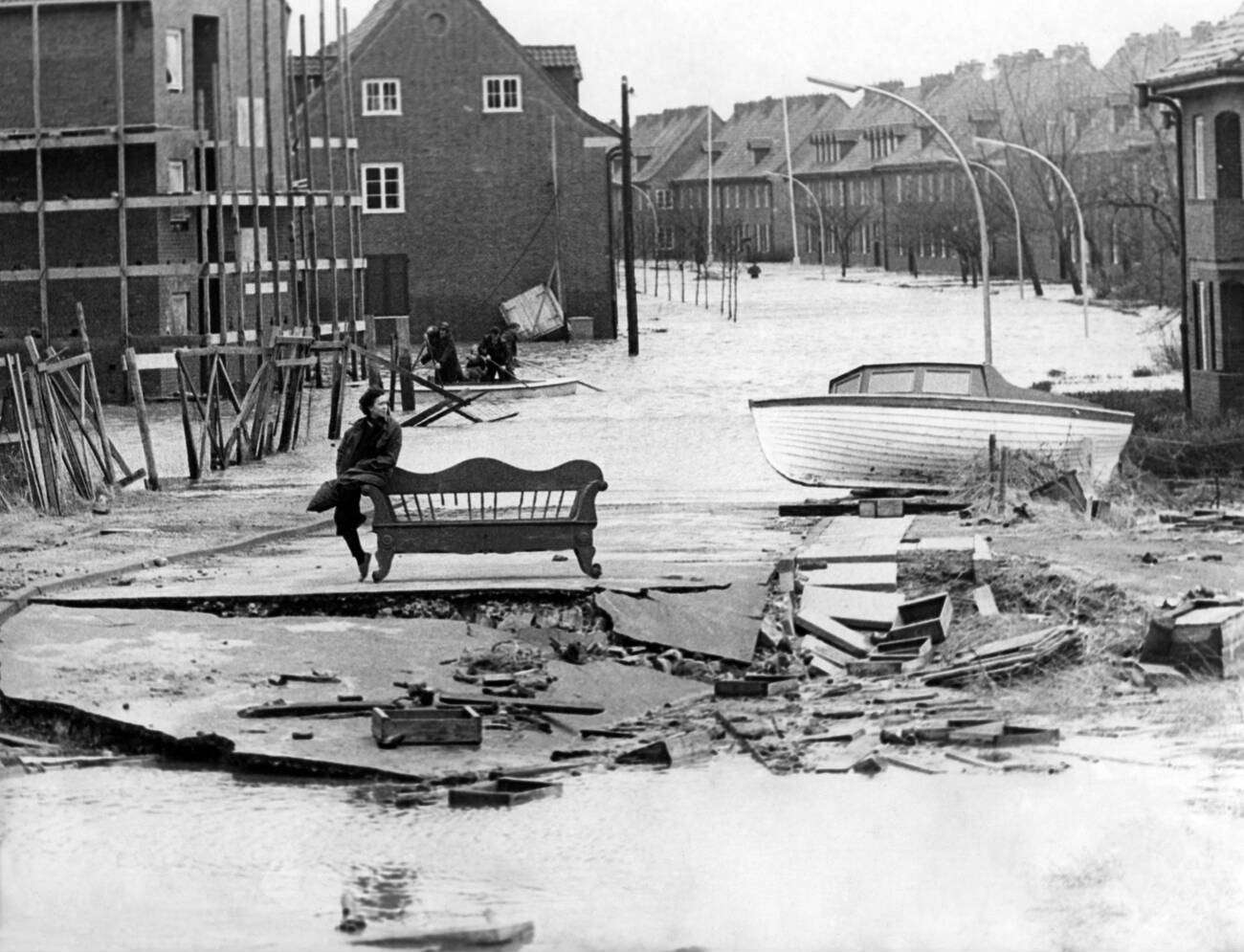
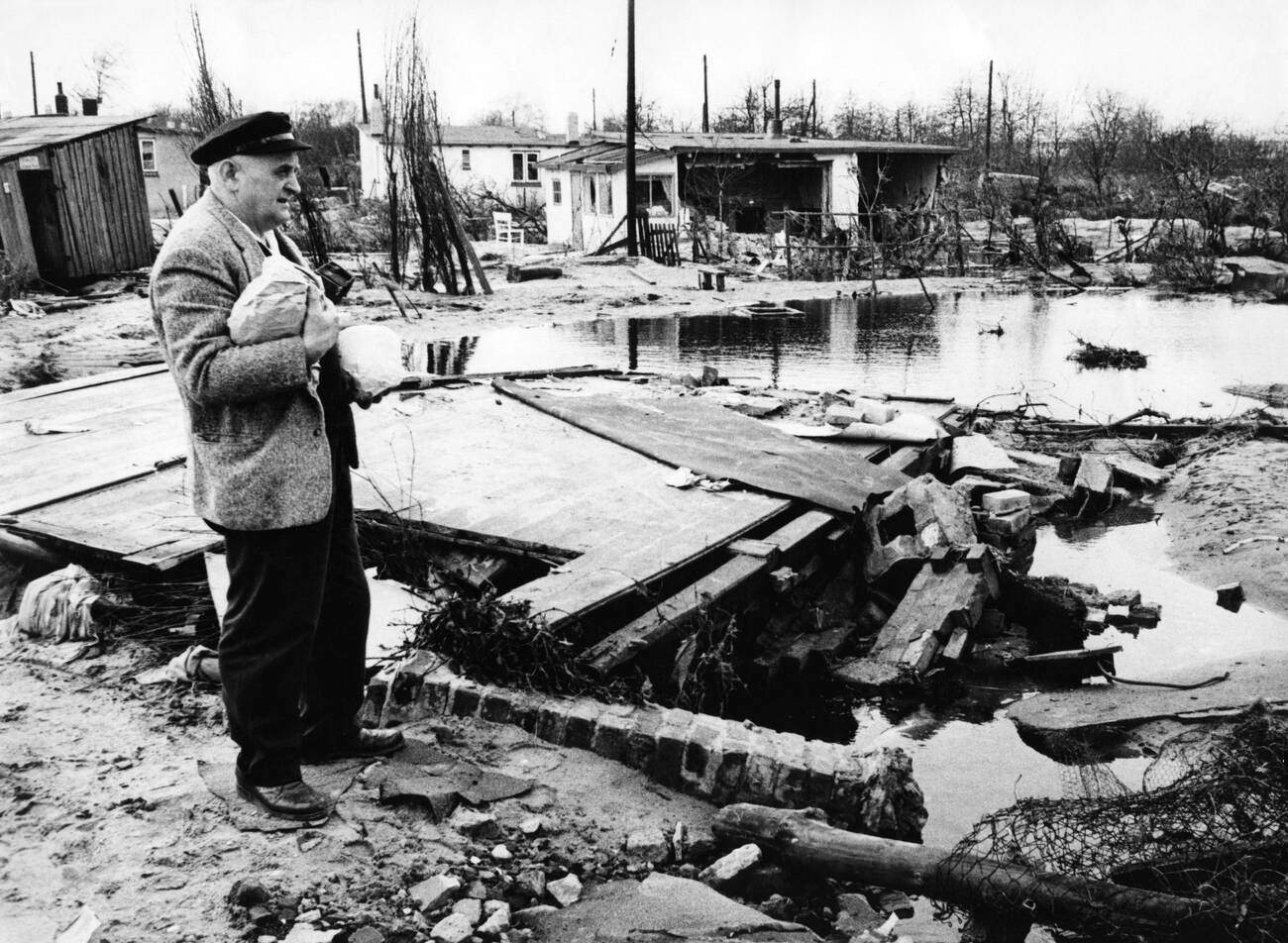
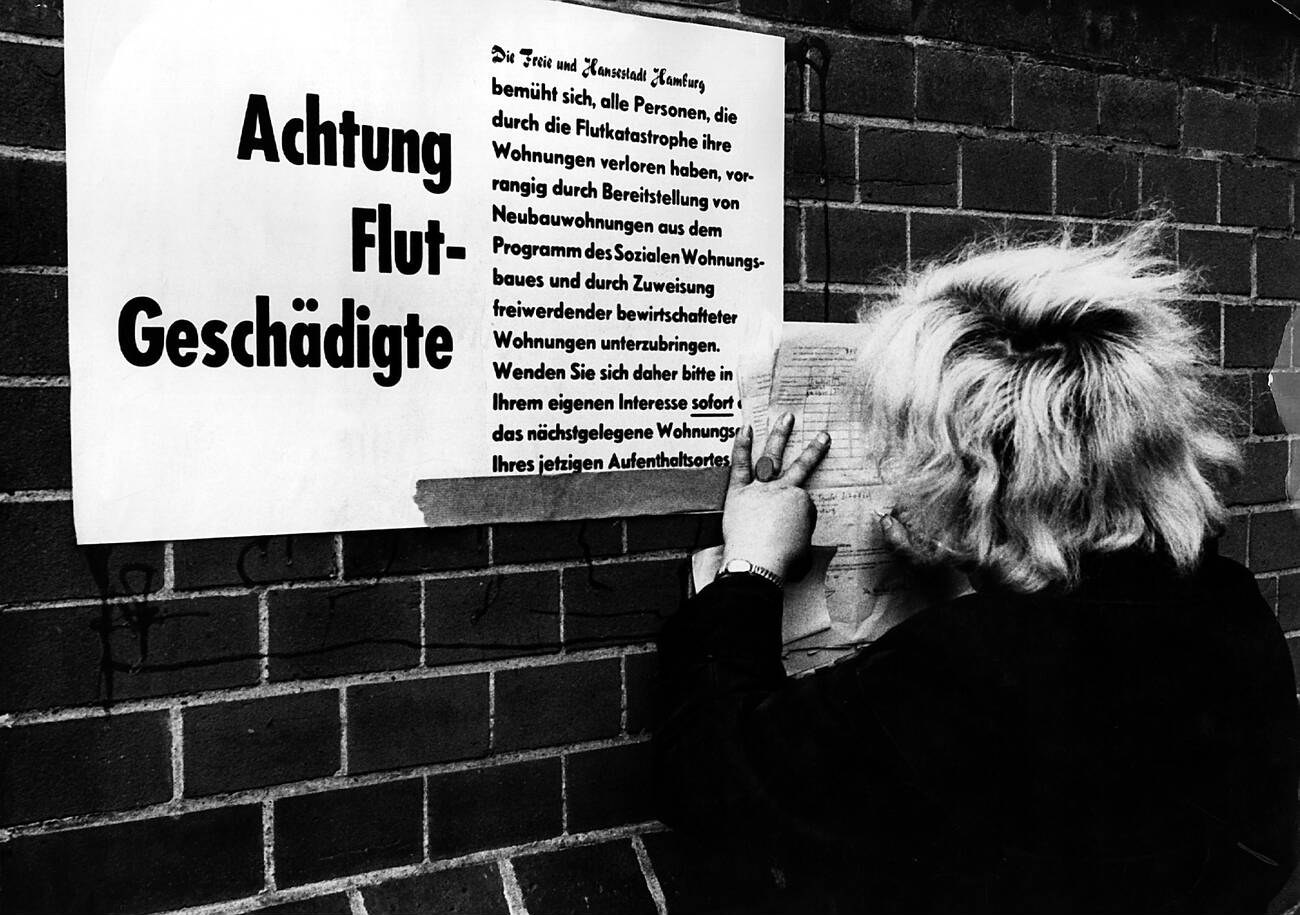
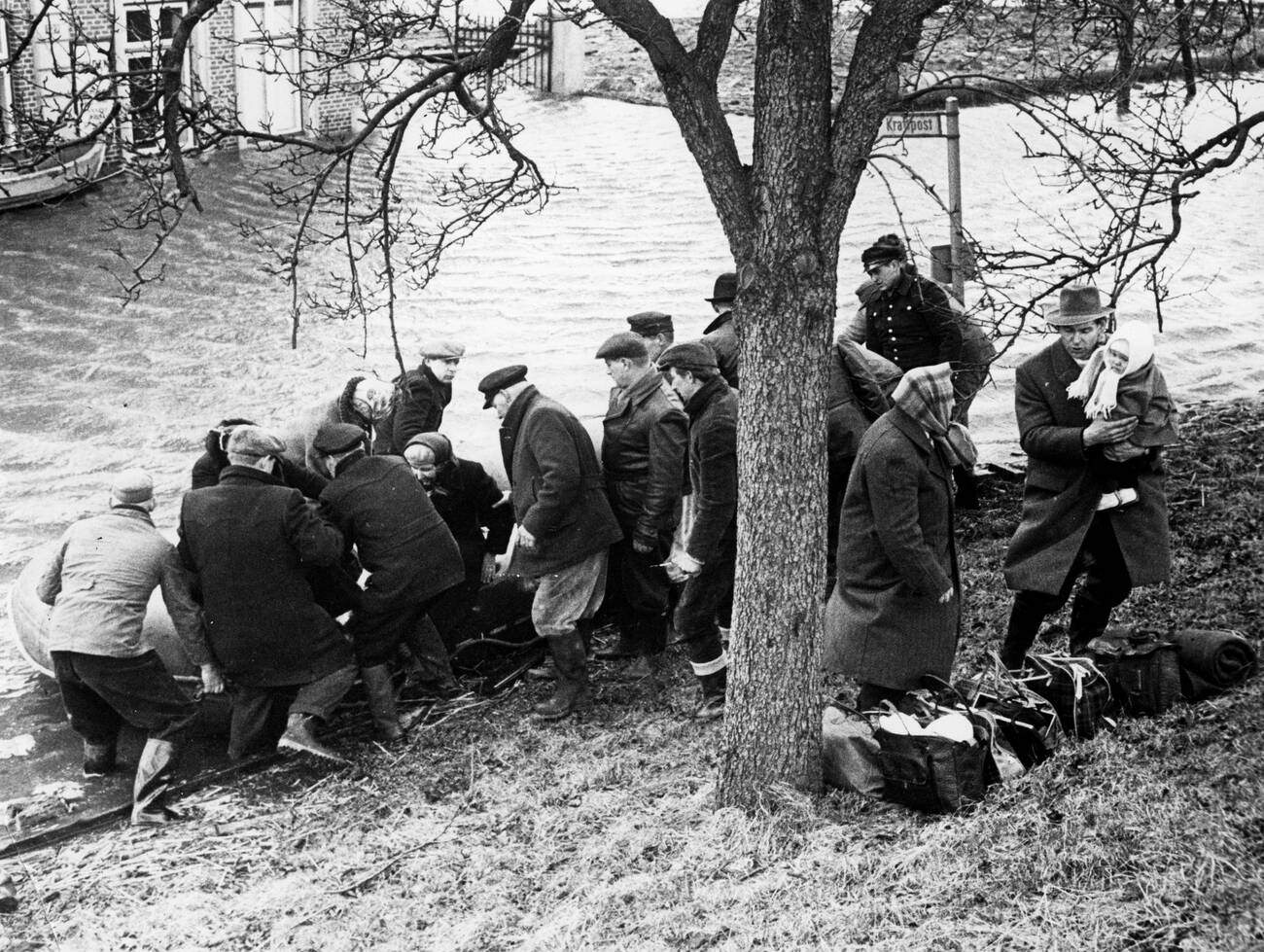
Evacuation efforts required enormous coordination. Residents — many of them elderly, injured, or in shock — were moved through flooded streets by boat, truck, and helicopter. Emergency shelters were set up in schools and gymnasiums throughout the city and surrounding areas. Thousands of people who had lost everything were relocated far from their neighborhoods, some for weeks or months.
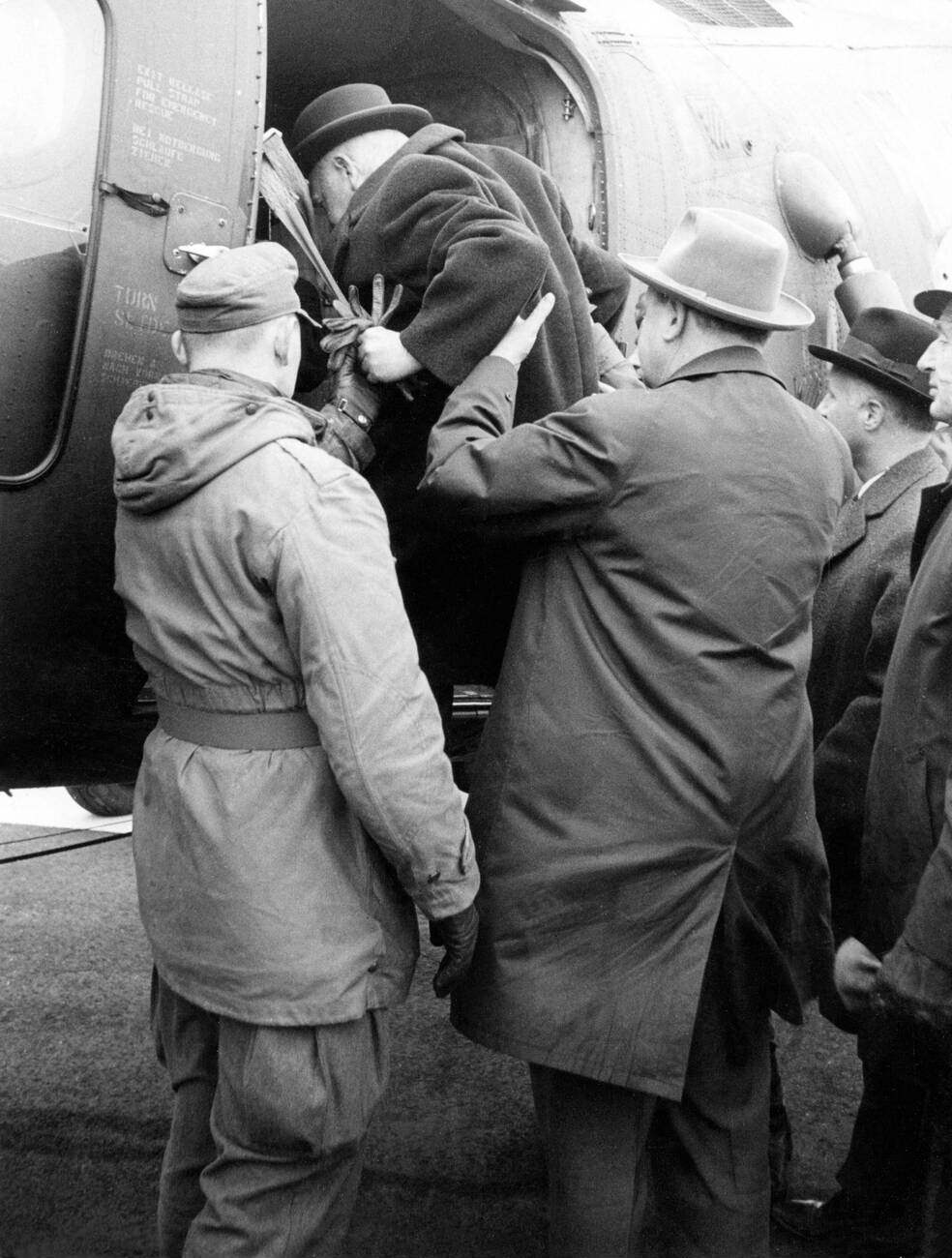
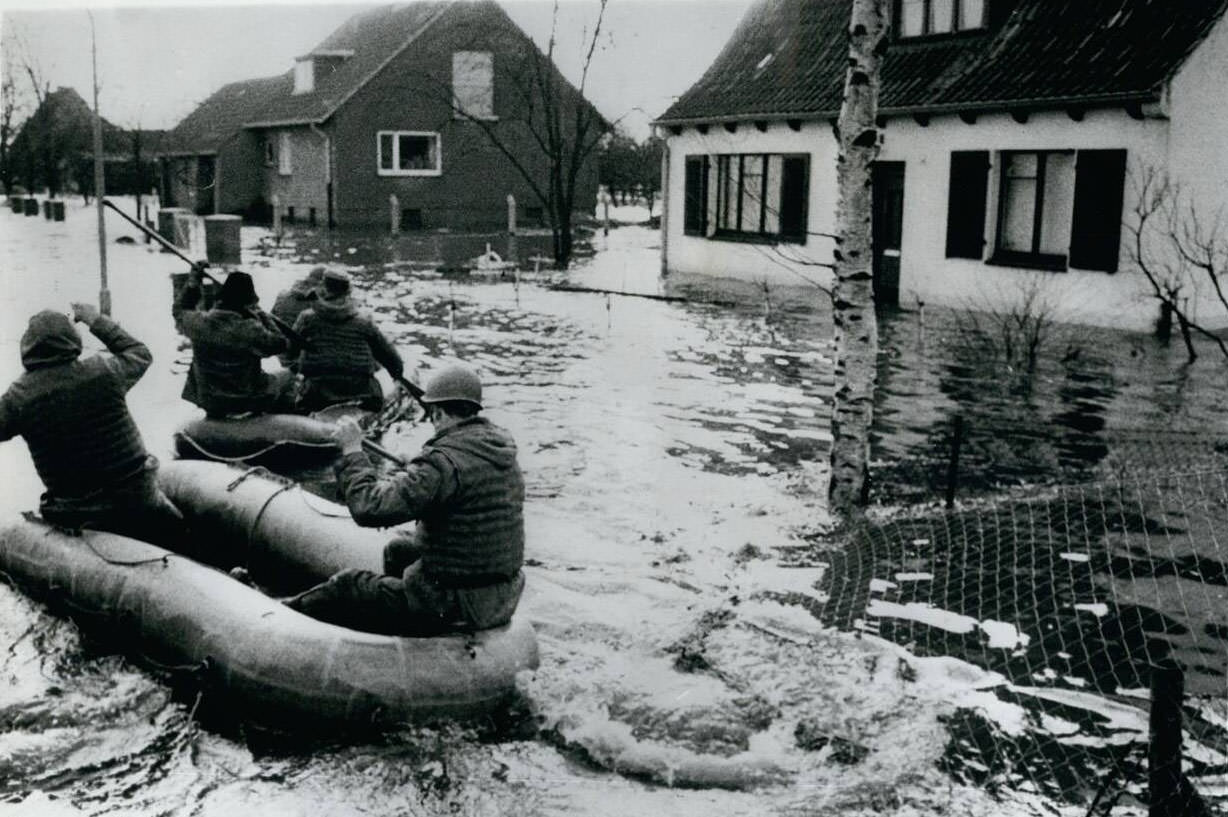
The response drew help from beyond Germany’s borders. British troops stationed in West Germany joined local forces in rescue operations, navigating the flooded streets of Hamburg by boat and helping to distribute supplies to stranded residents.
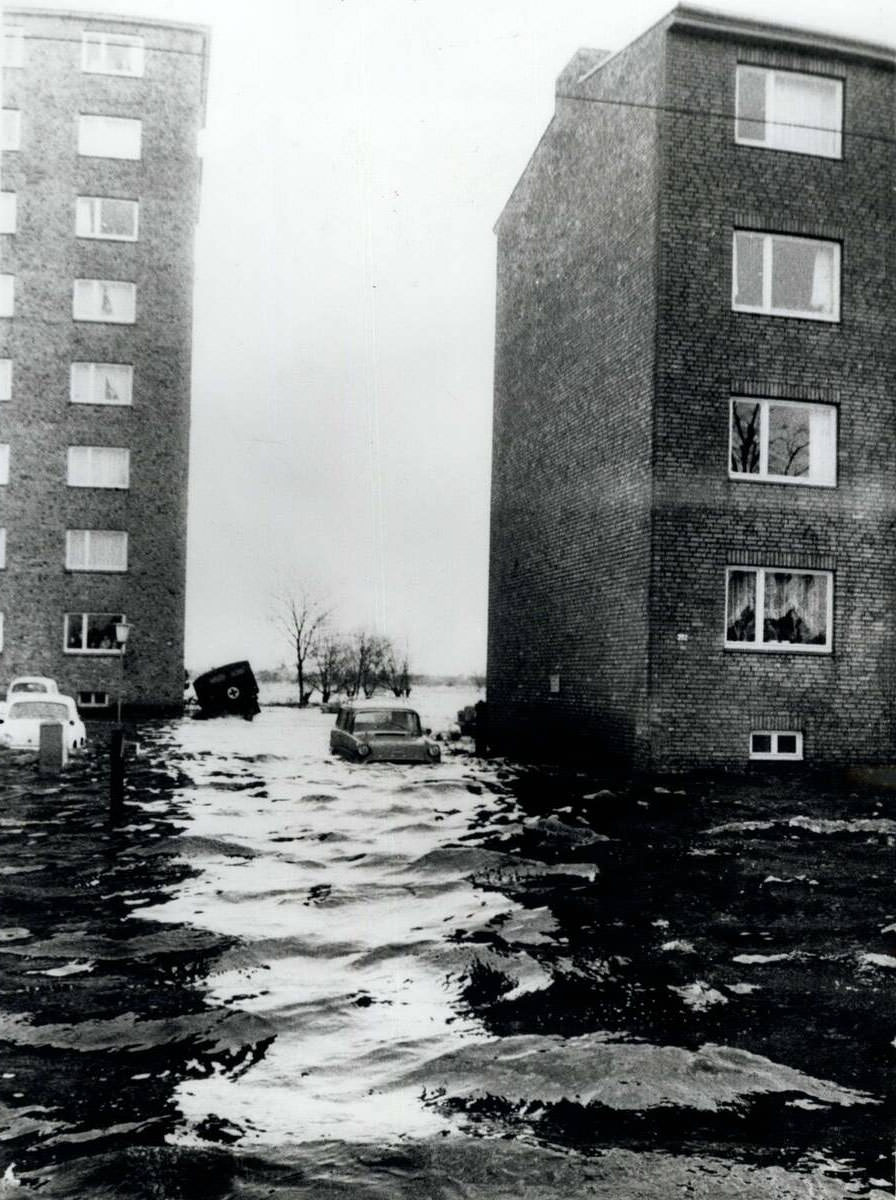
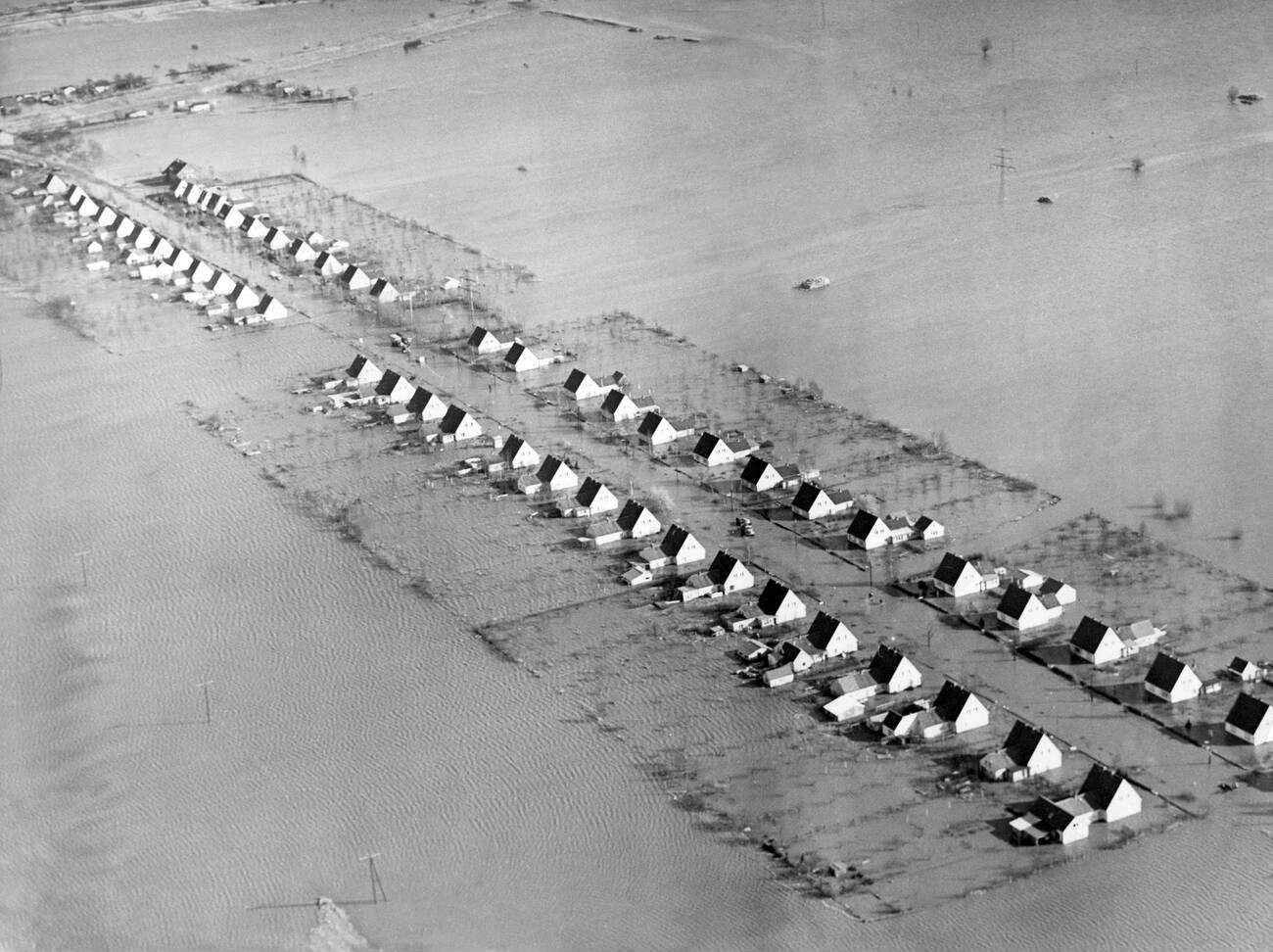
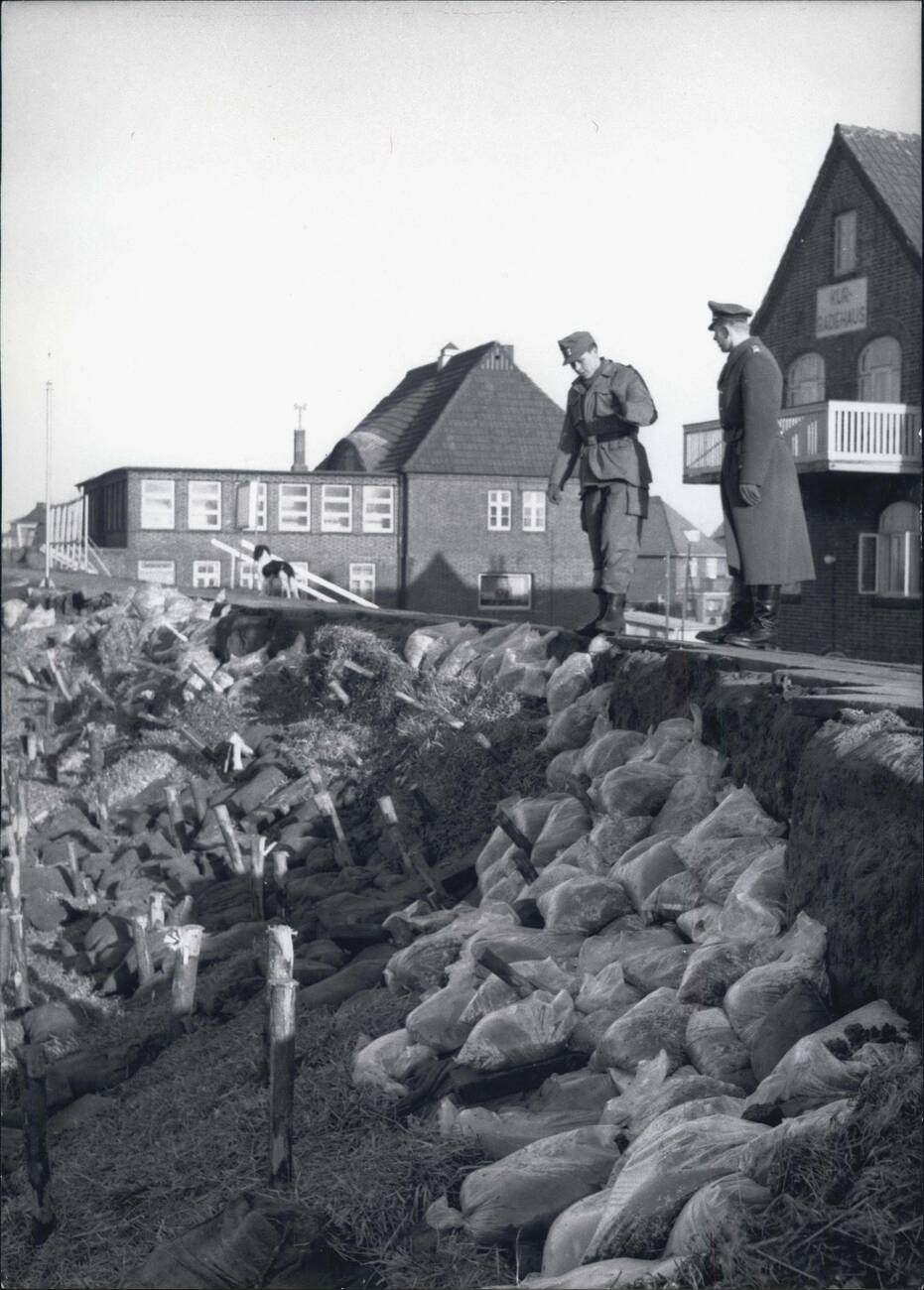
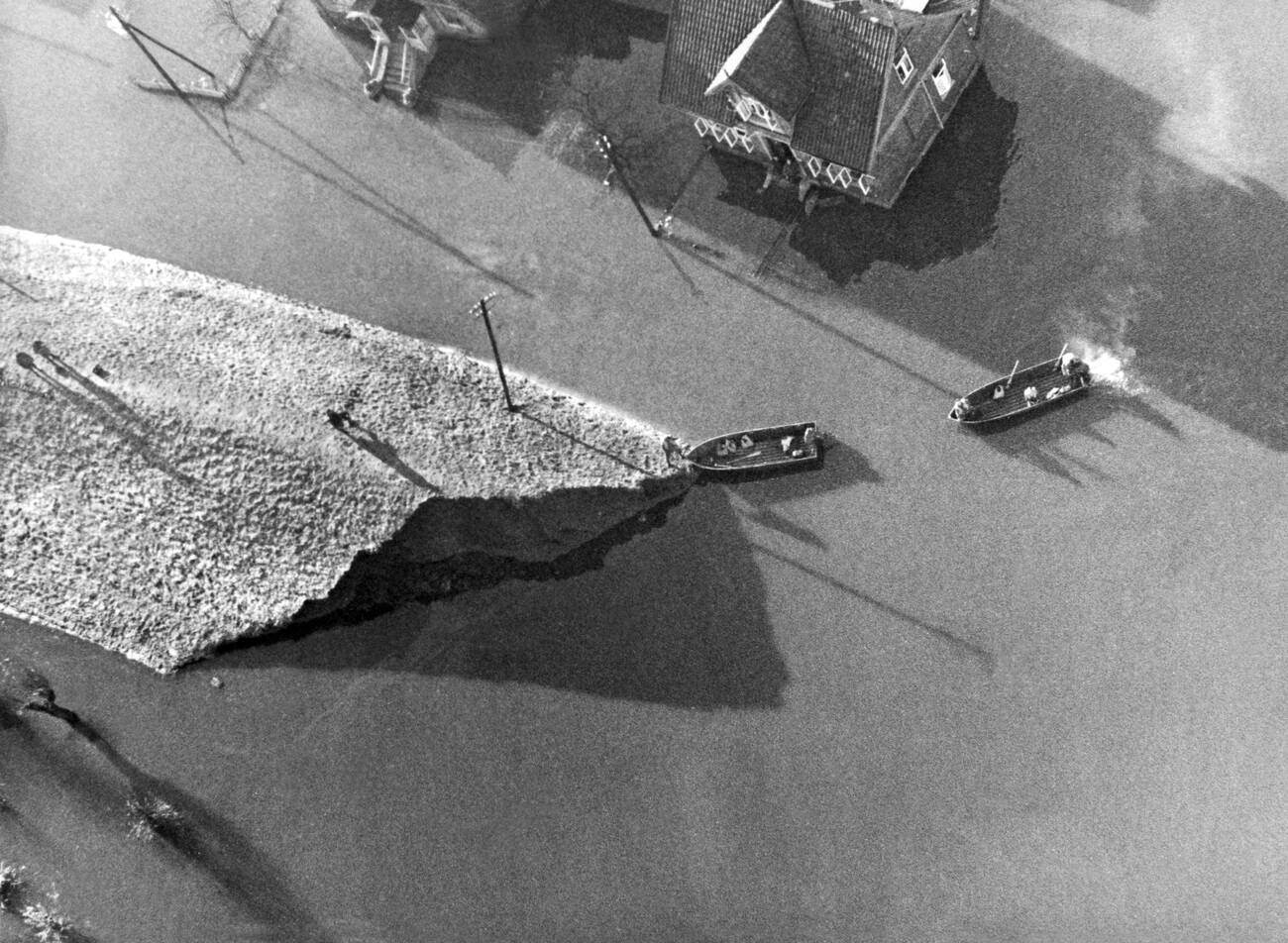
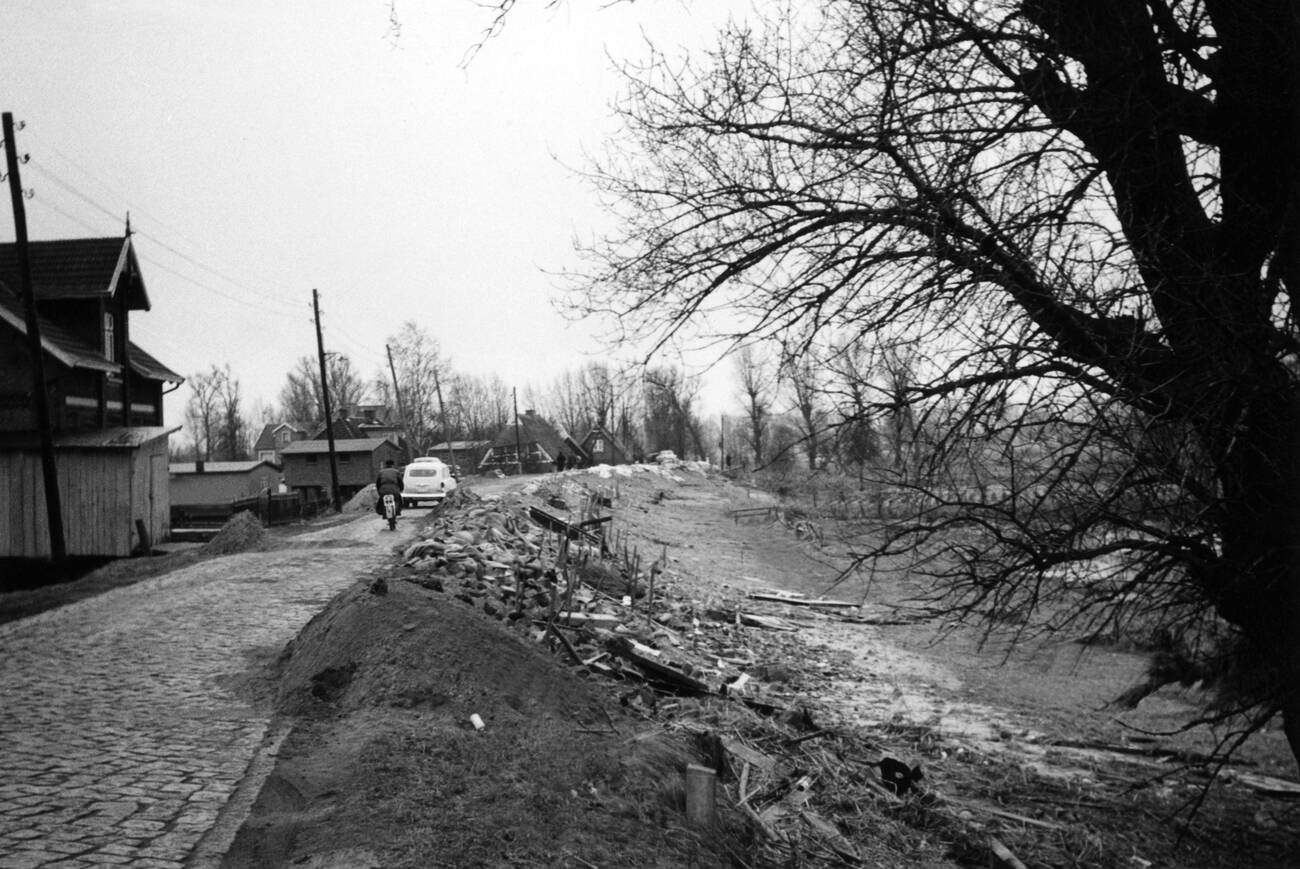
The physical damage to the coastline itself was extensive. In Büsum and other coastal towns, dikes that had protected the land for generations were torn apart. The scale of the destruction made it clear that the existing flood defenses were no match for a storm surge of this magnitude.
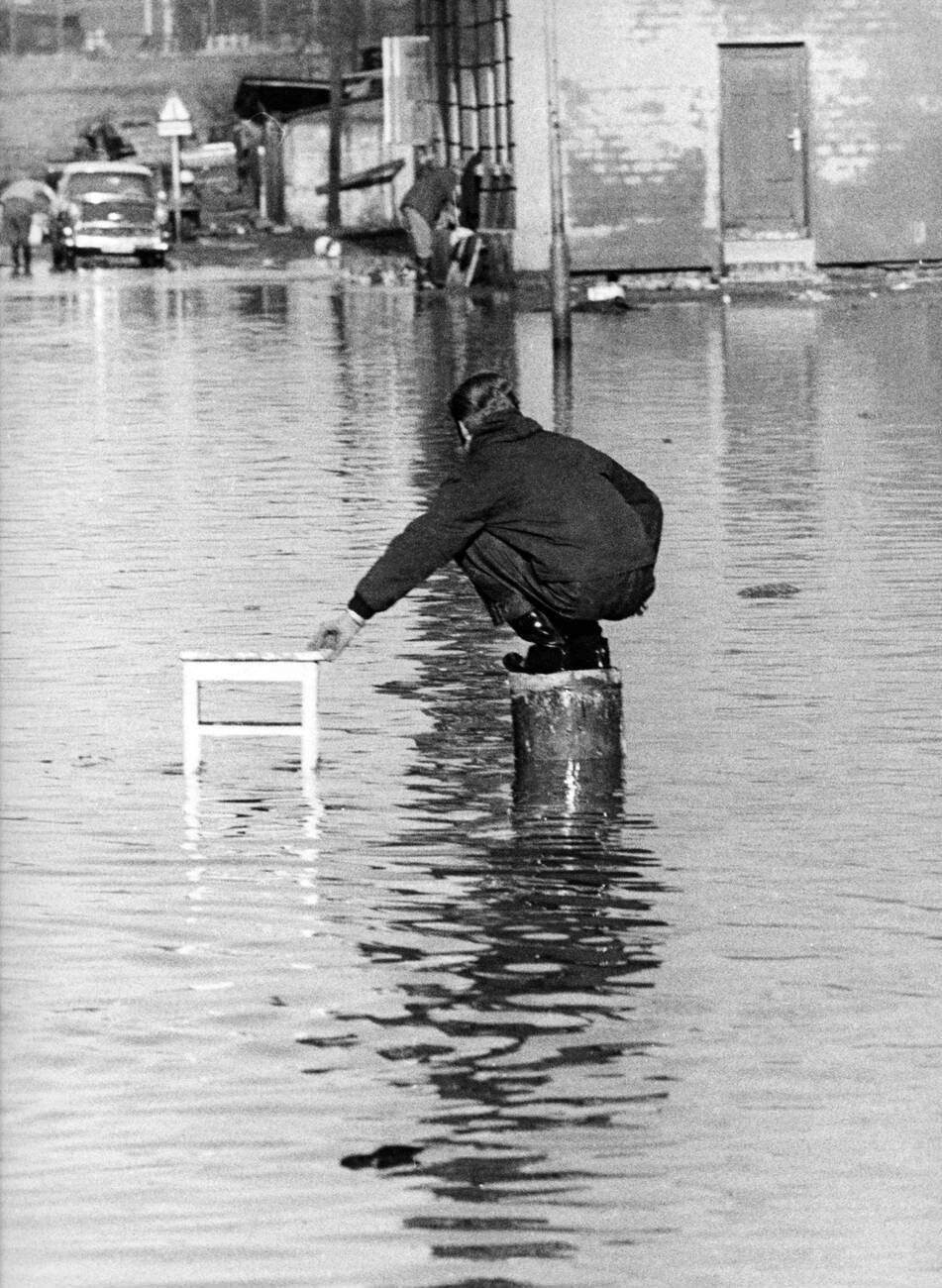
On the streets of Hamburg, the water reached the upper floors of many buildings. Cars were submerged. Furniture floated through intersections. Residents waded through chest-high water to reach higher ground or waited for rescue on rooftops.
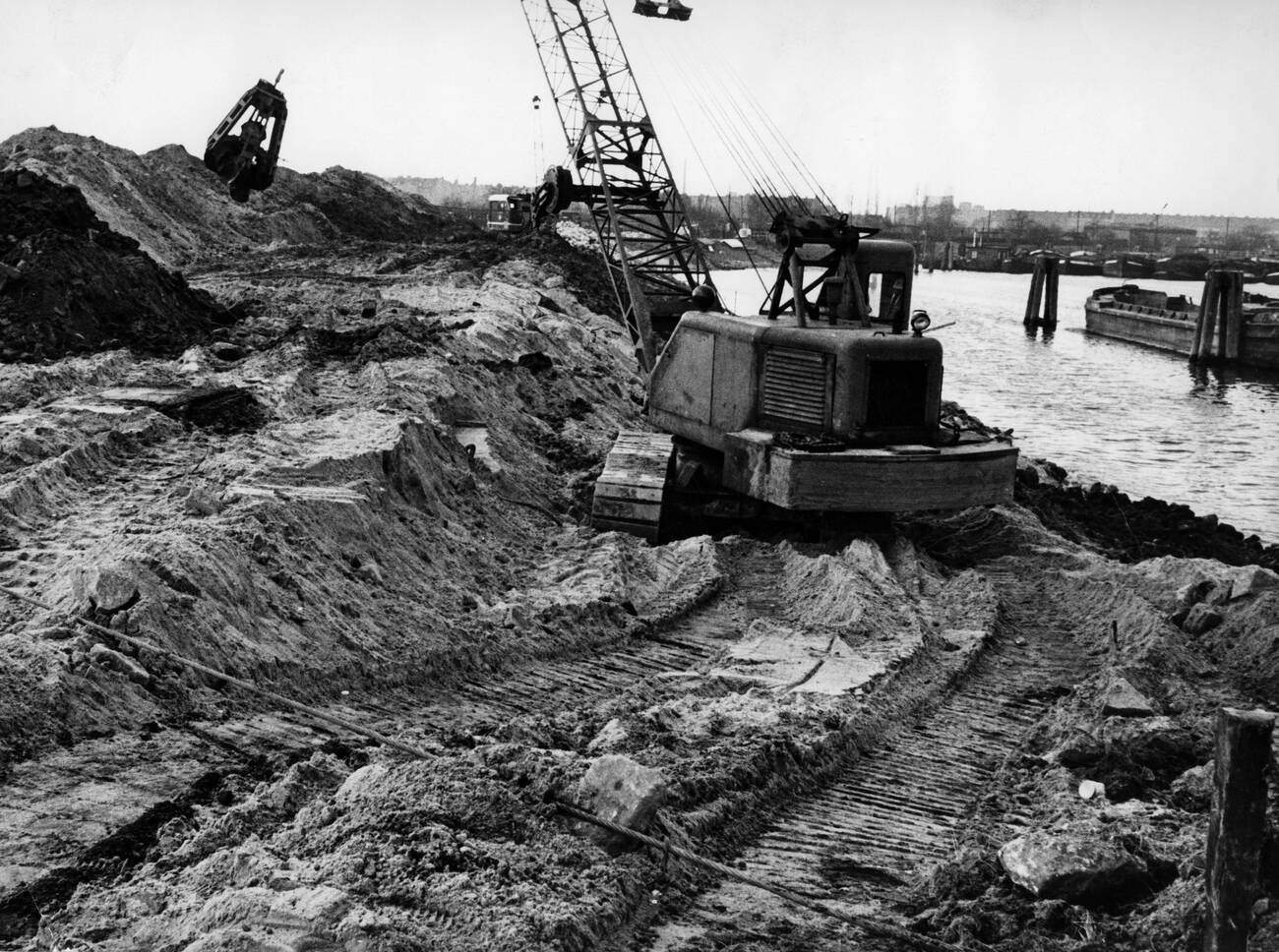
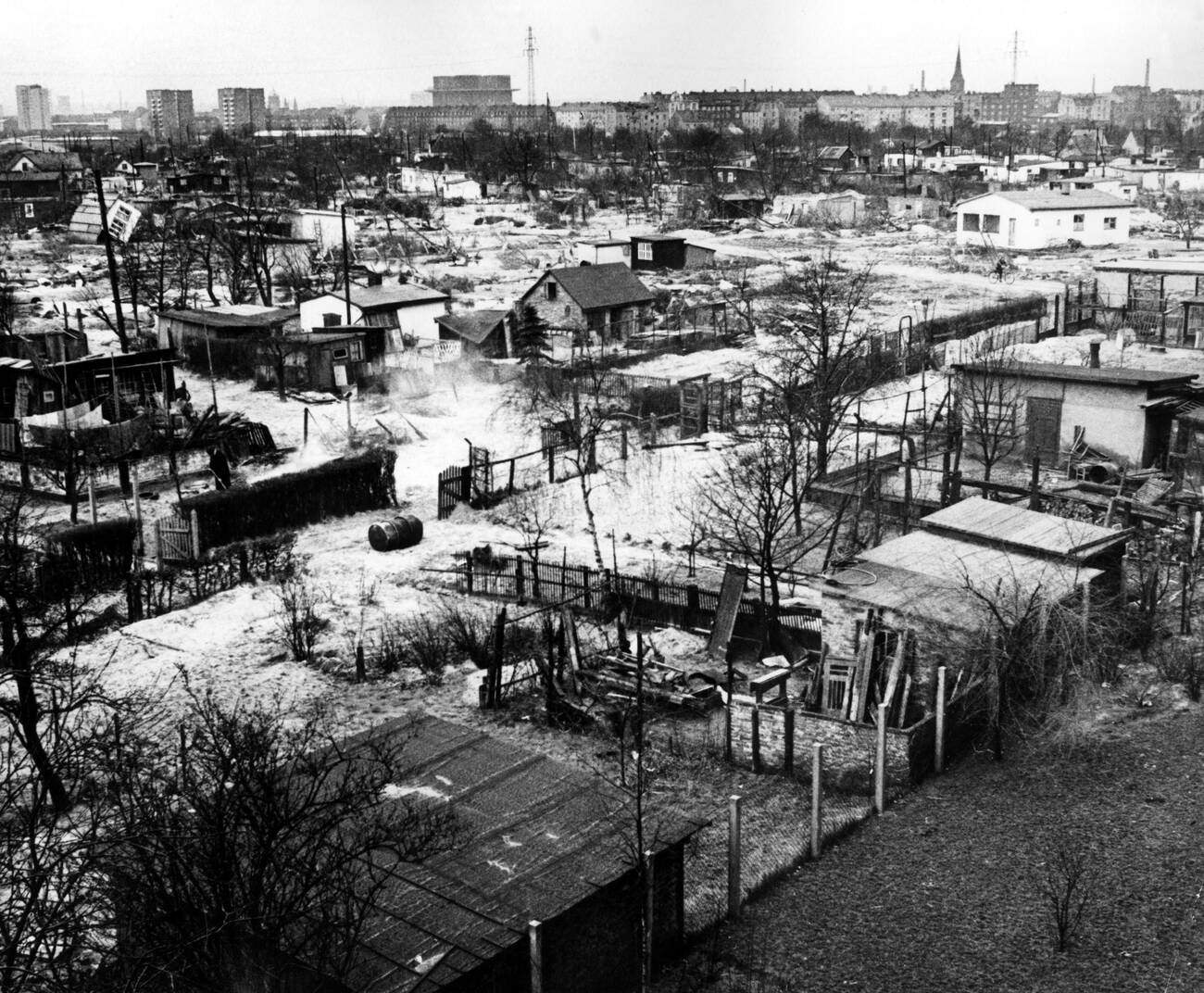
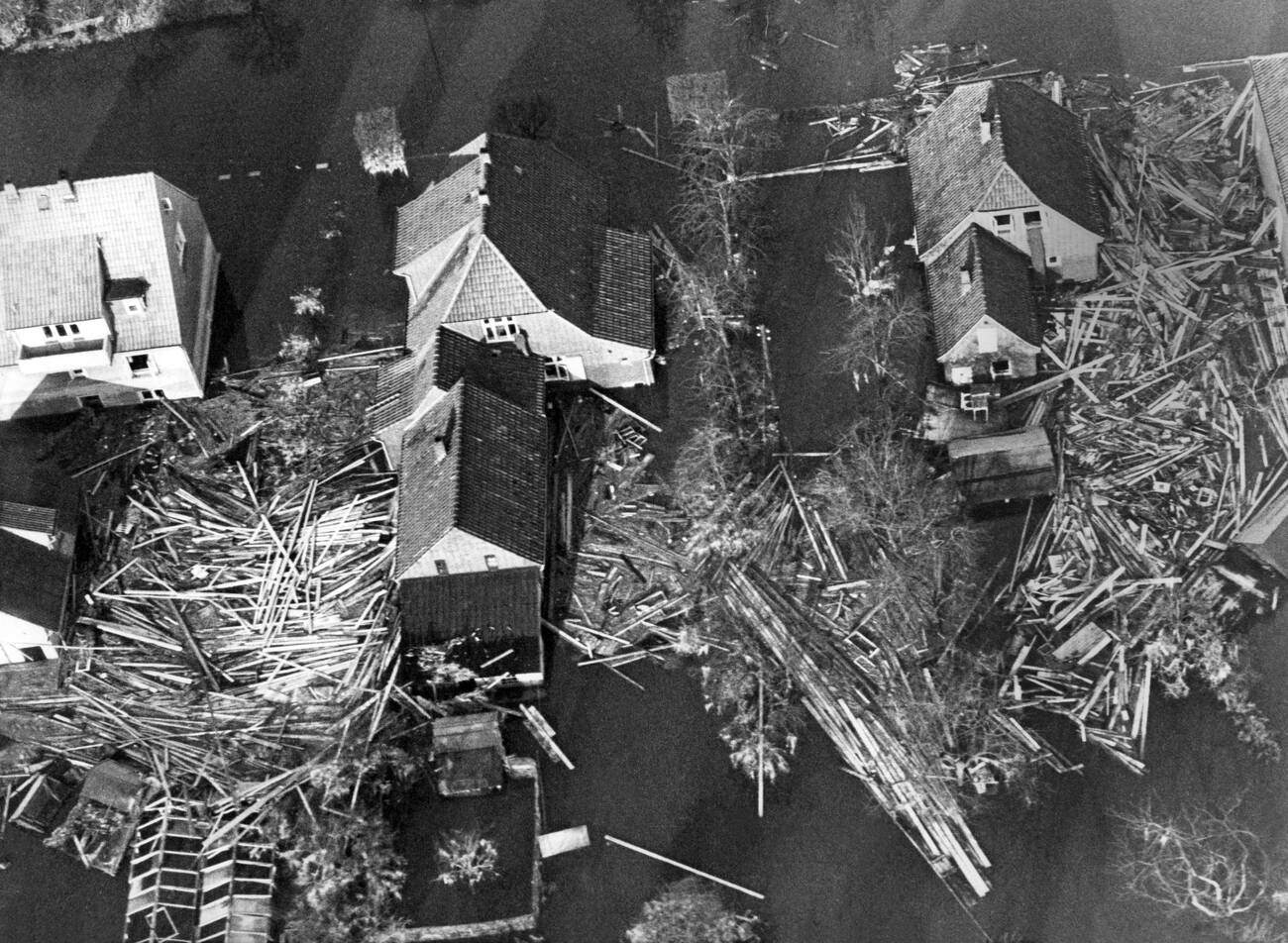
Helicopters were essential not just for rescue but for delivering emergency supplies — food, water, medicine, and sandbags — to areas that were completely cut off by the floodwaters. Military pilots flew continuous sorties in cold, difficult conditions to keep stranded communities alive.
In Wilhelmsburg, some of the most harrowing scenes played out. The district’s low elevation made it especially vulnerable, and most of it was completely submerged. Signs posted in the streets marked the location of relief points and shelter. Residents who survived emerged to find their homes either destroyed or stripped of everything by the water.
The agricultural destruction extended beyond cattle on the ground. On flooded farmland, helicopters flew over fields littered with the carcasses of drowned cows. The losses devastated farming families who depended on their animals for their income and livelihood.
With the mortuaries filling quickly, authorities set up tents to store corpses as the death toll climbed. The temporary facilities were a stark measure of the scale of loss. Bodies were catalogued and held until they could be identified and arrangements made.
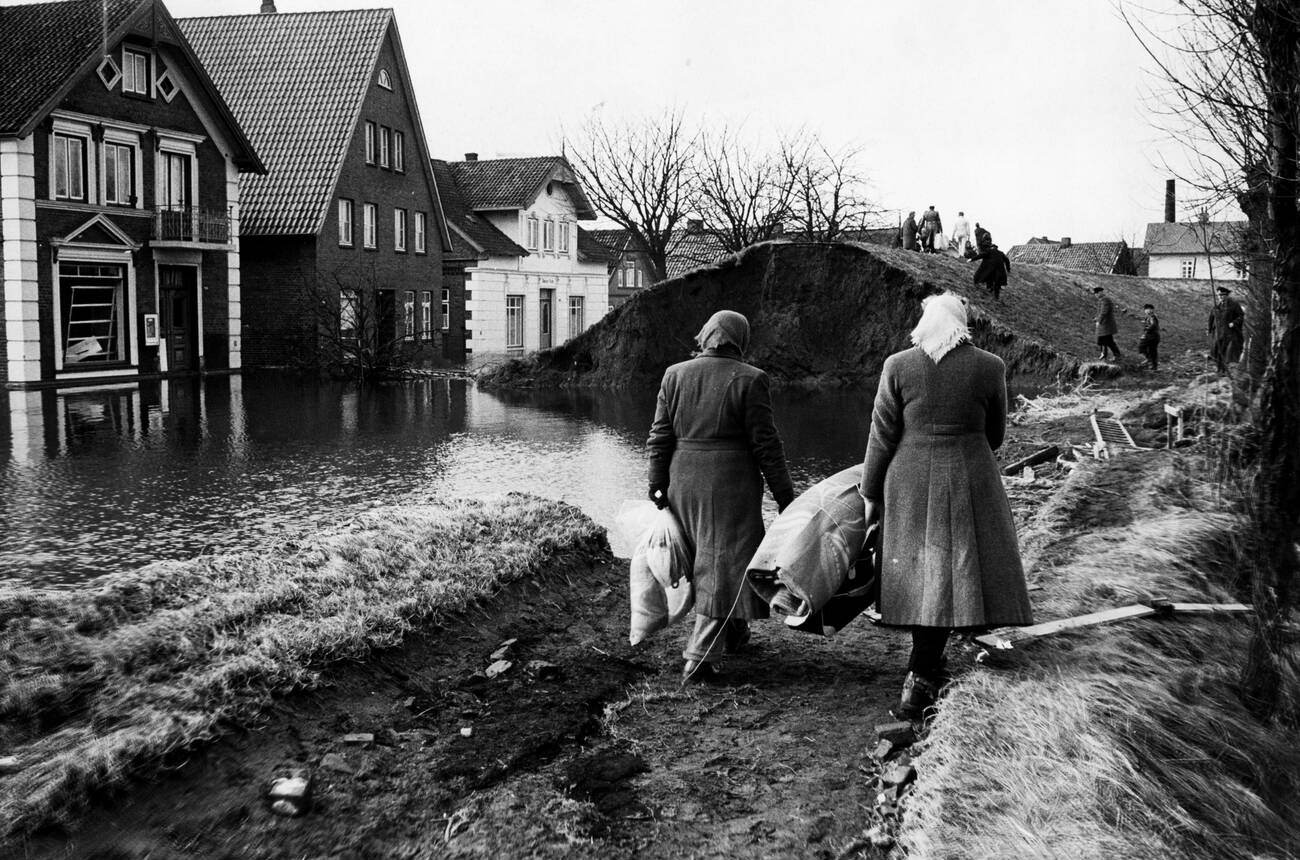
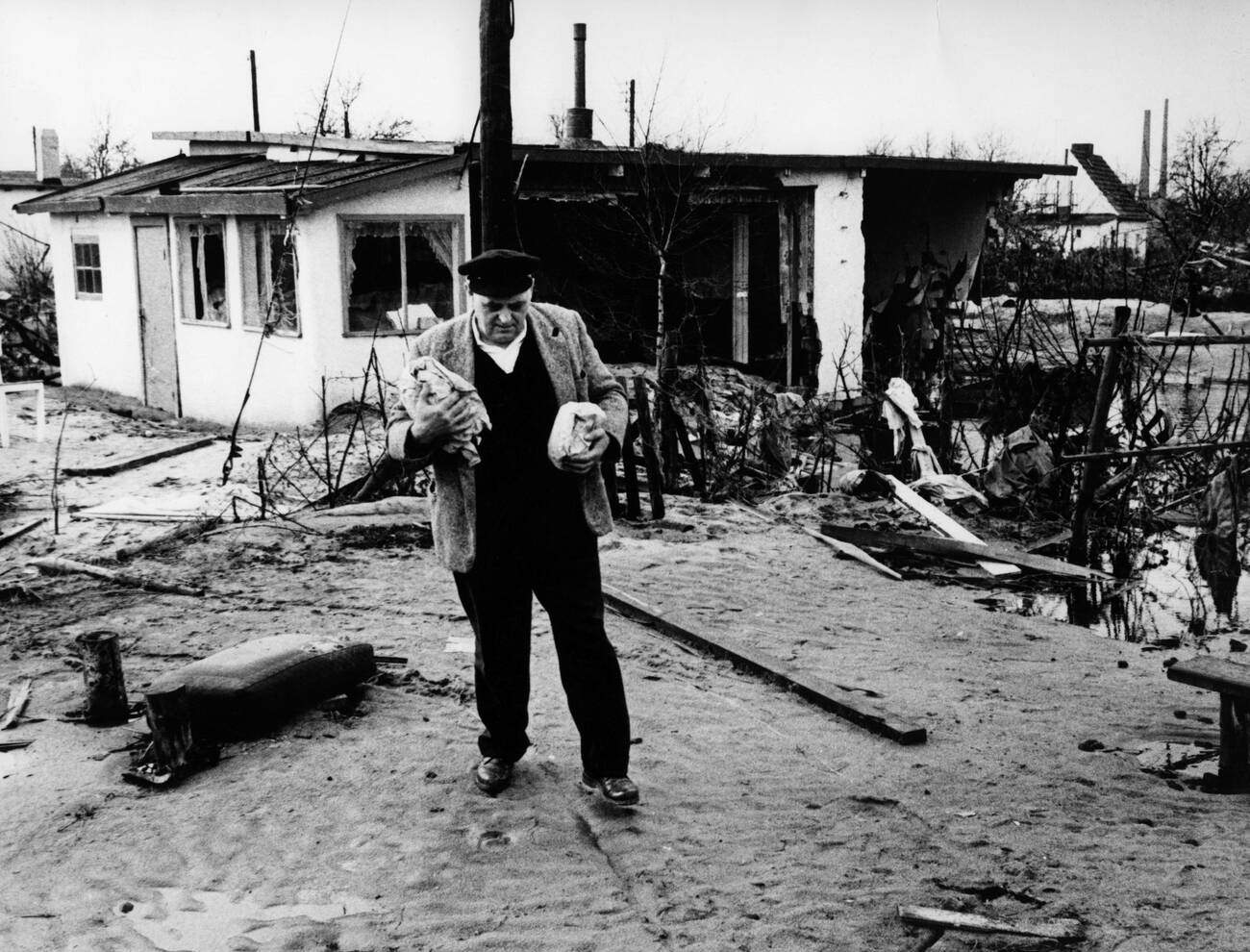
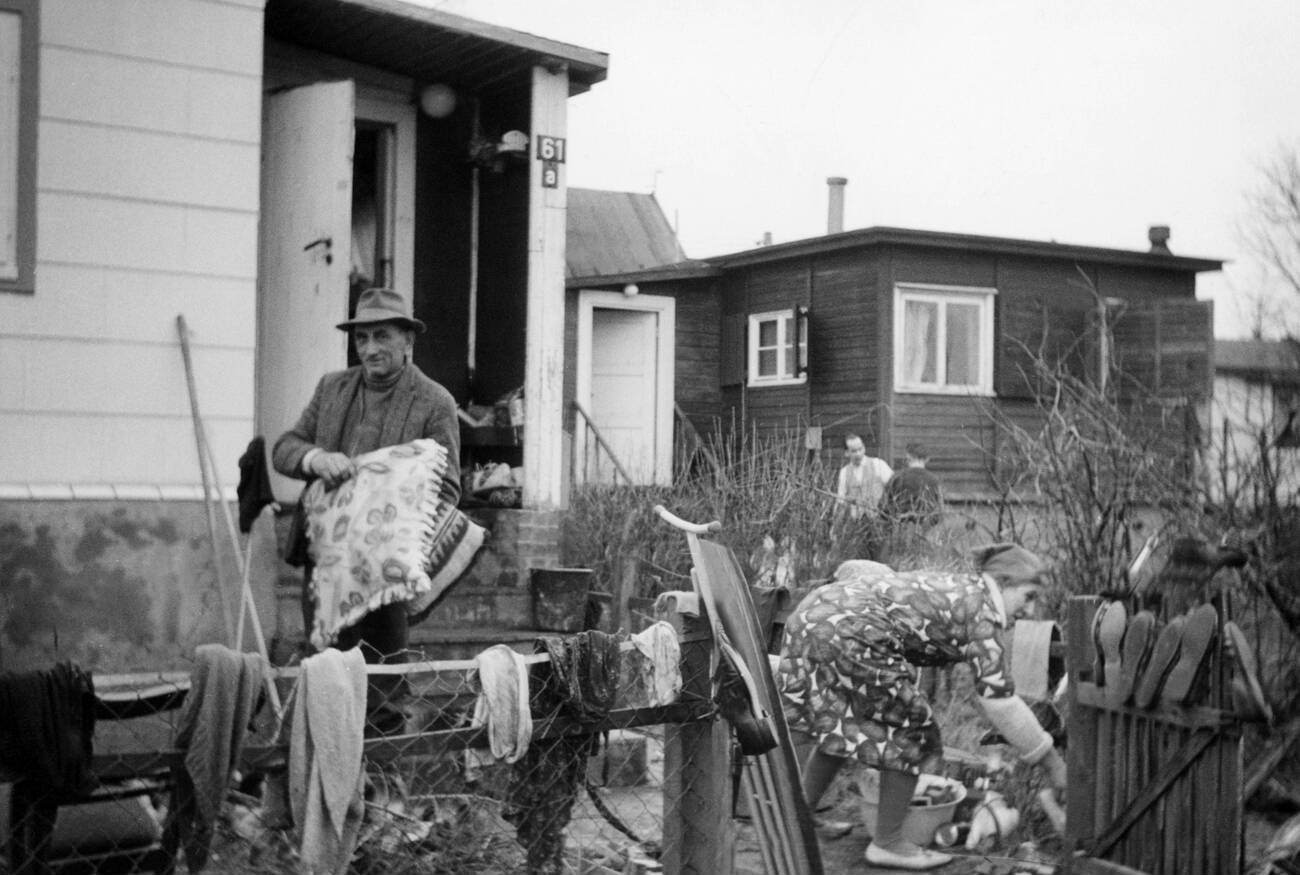
Despite the destruction around them, many residents refused to leave without saving what they could. Women were photographed clutching clothes, documents, and household items they had managed to pull from the flood. For many, those salvaged goods were all that remained of their former lives.
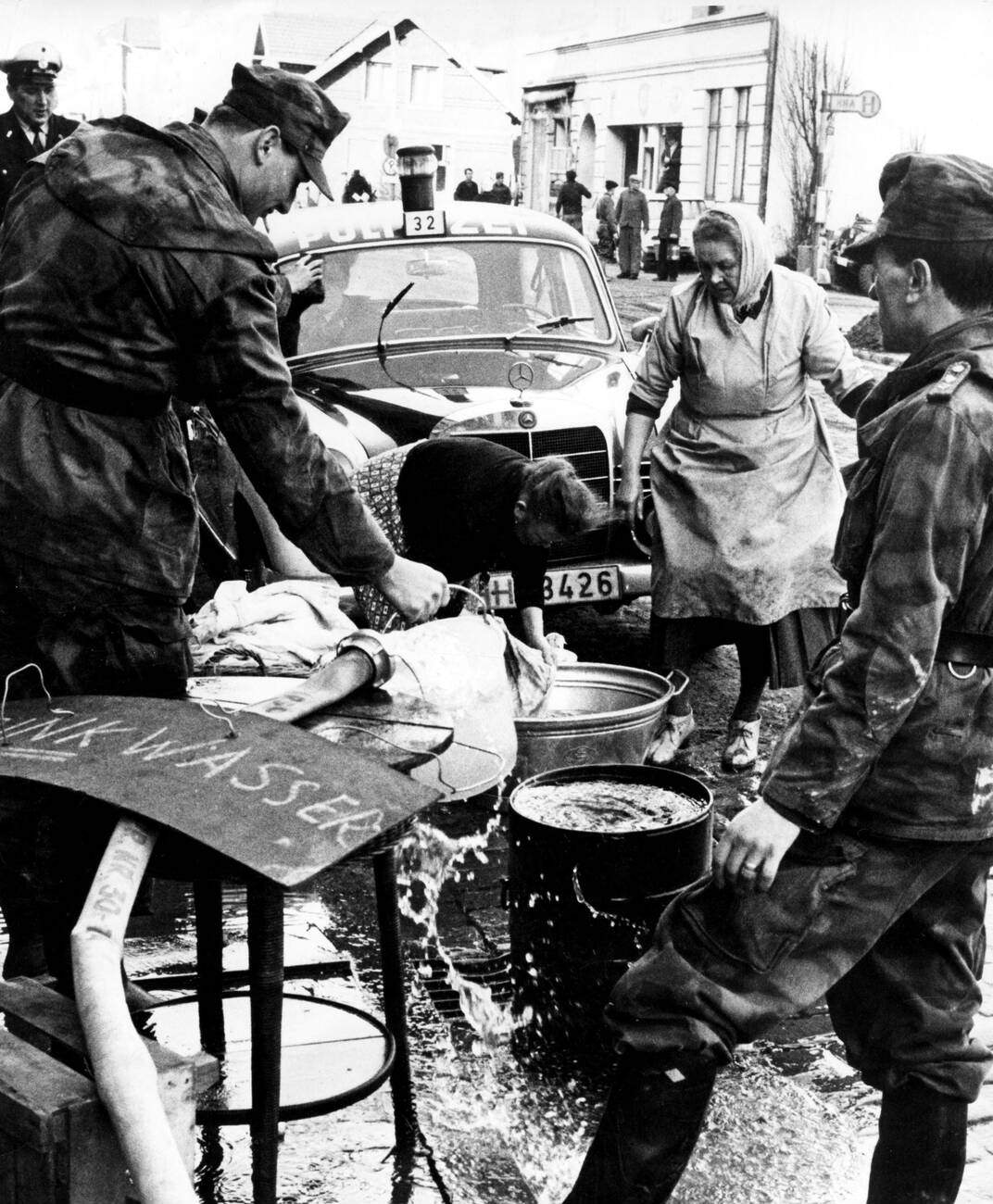
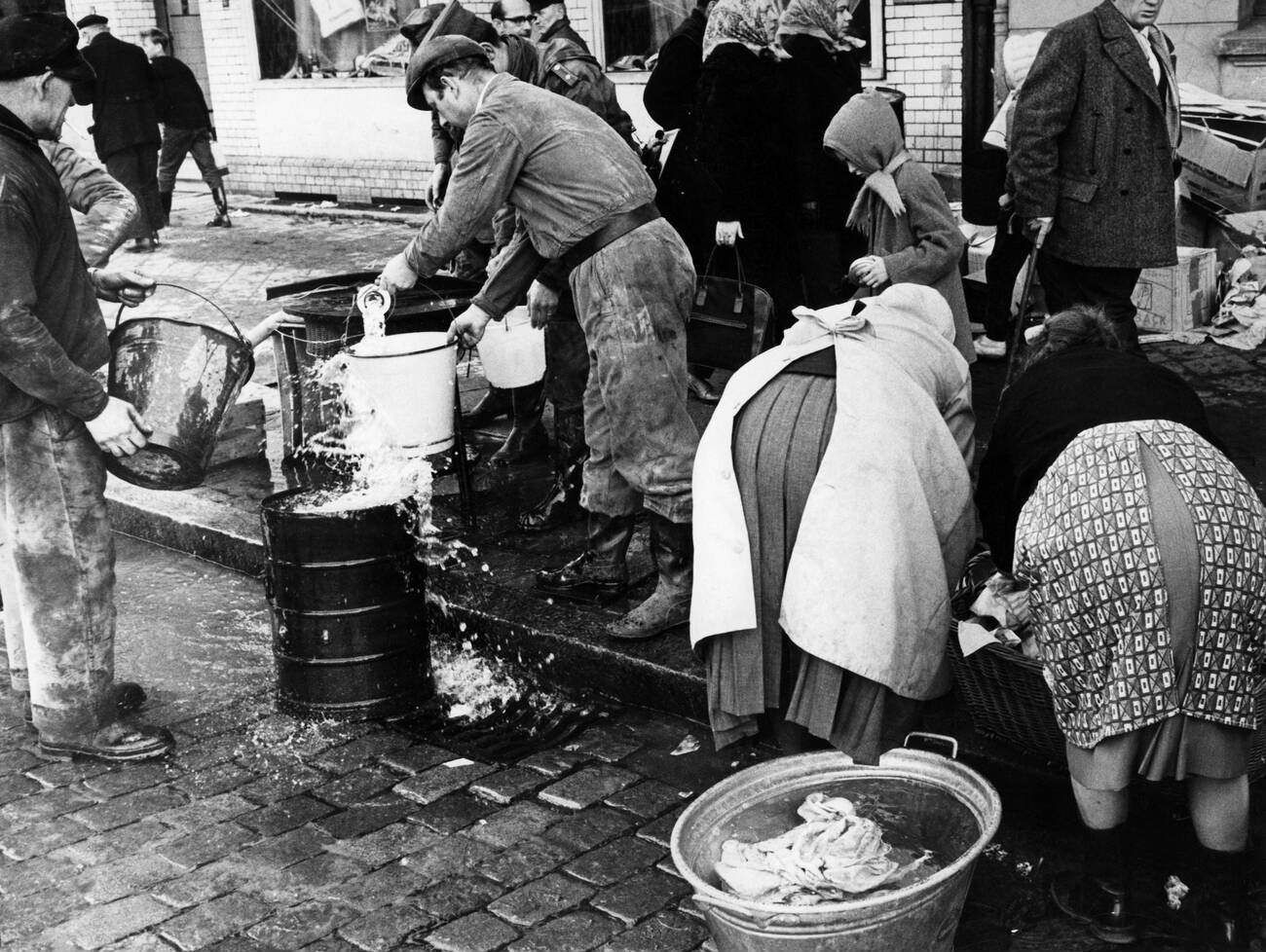
Clean drinking water became scarce almost immediately. The Bundeswehr — West Germany’s armed forces — organized distribution points across the city, where residents lined up to collect water in buckets and containers. The contamination of the water supply by the flooded sewage system made these distribution efforts a matter of life and death.
In the neighborhood of Moorfleet, survivors were gathered at collection points after being pulled from the water. Some had spent the entire night clinging to rooftops or upper-floor windows before being reached by rescue teams.
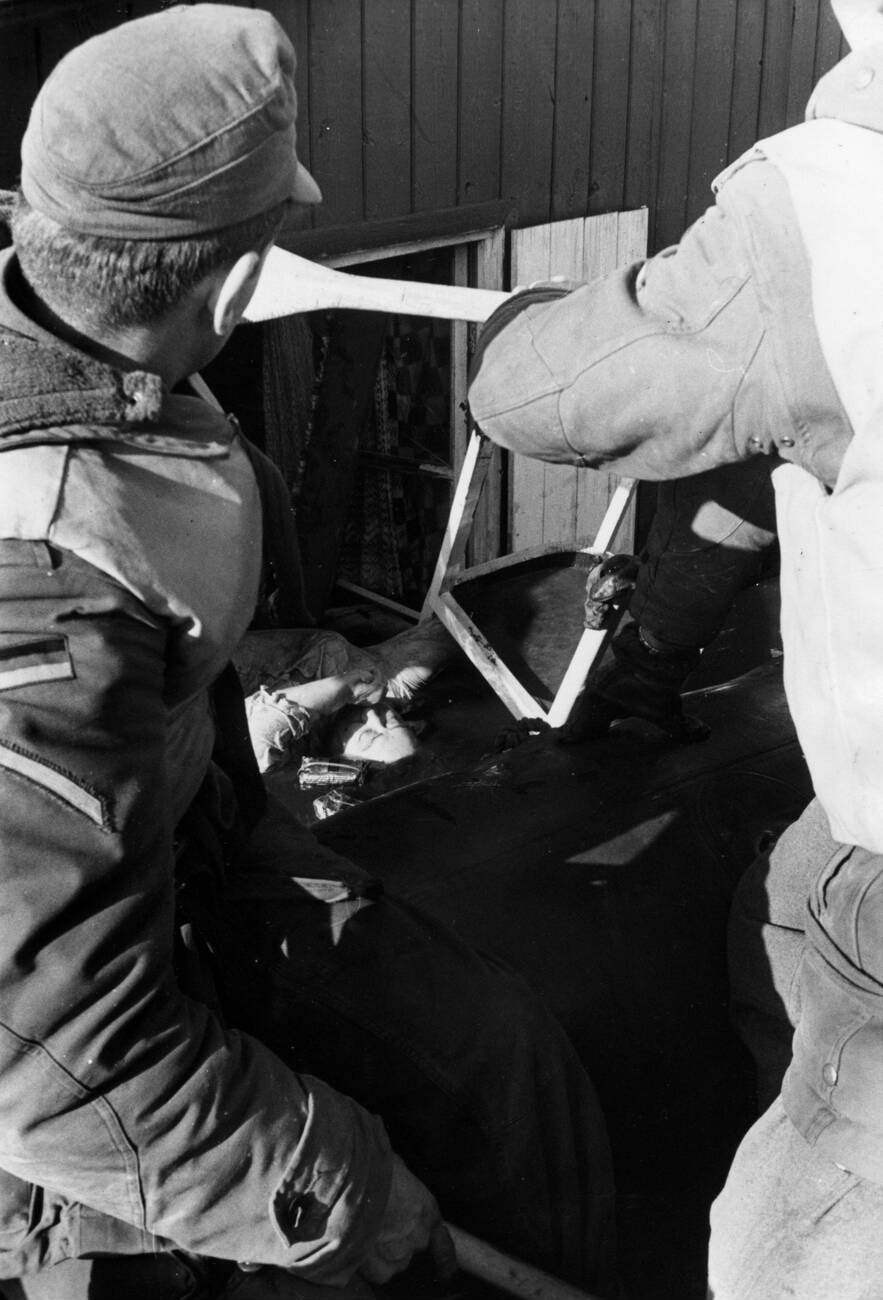
Workers assigned to recovery operations faced scenes that were deeply disturbing. Corpses were found in flooded homes, on rooftops, and in the streets. Photographs from the time document aid workers alongside the dead — a raw record of the human cost of the disaster.
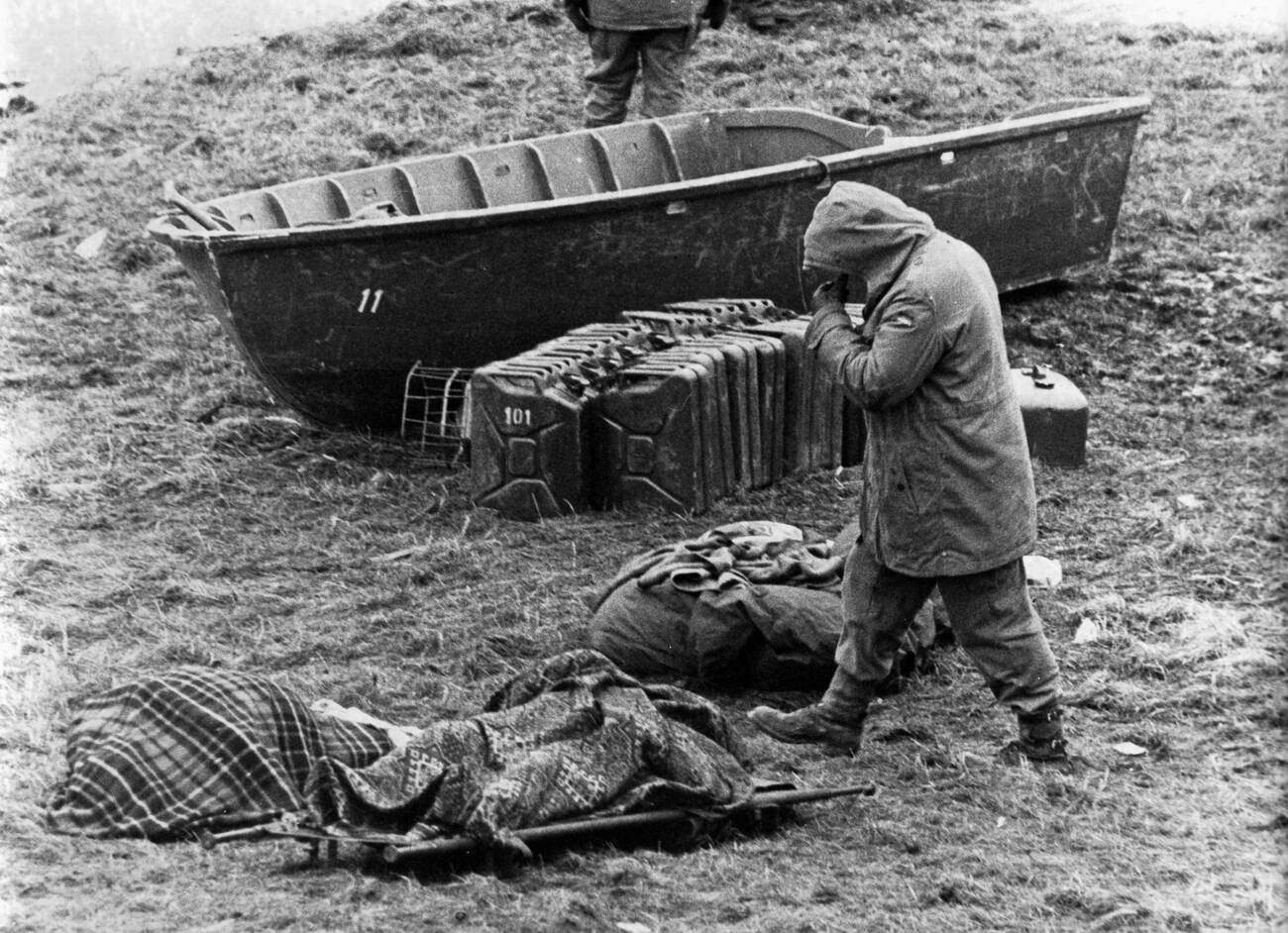
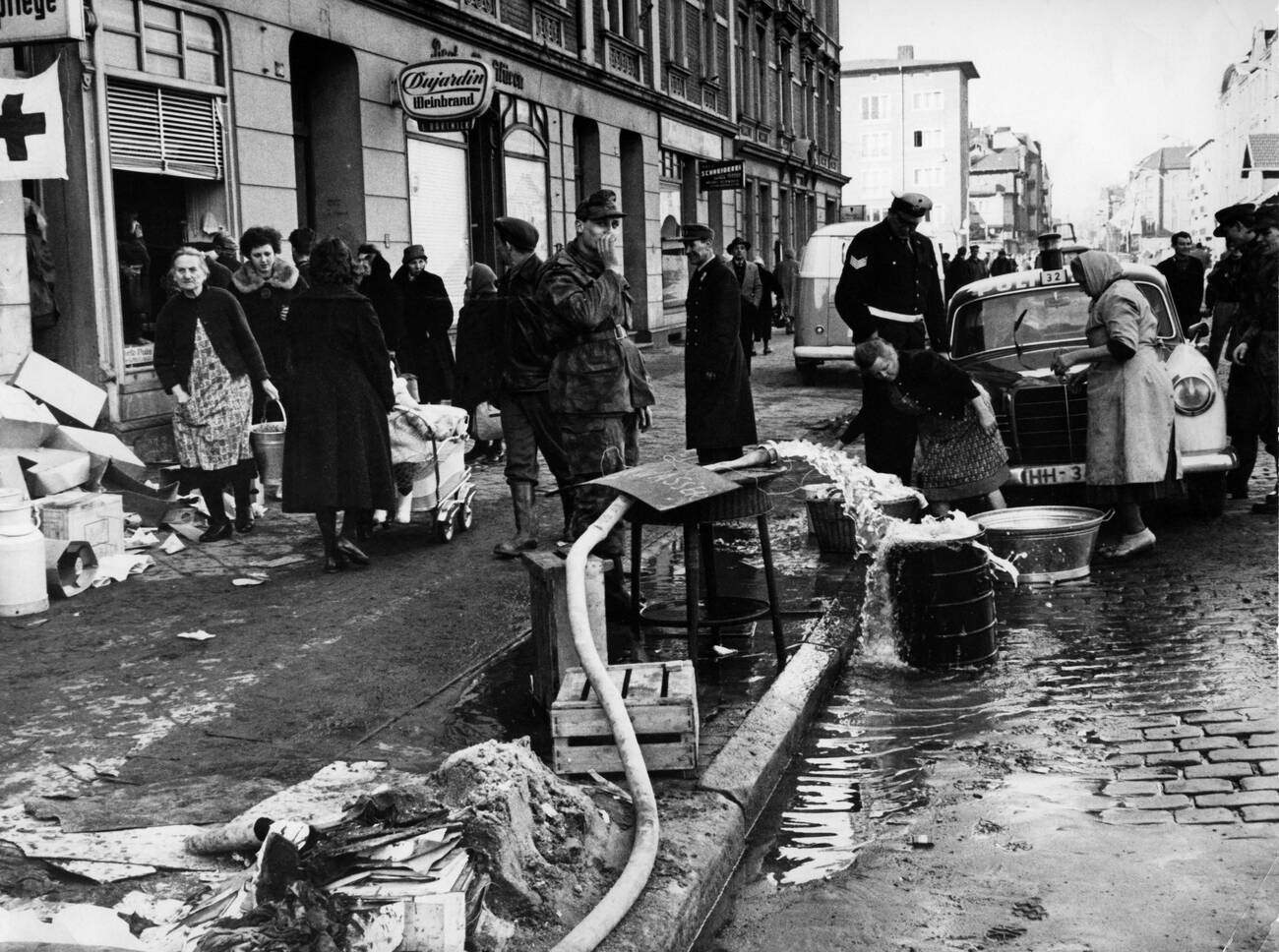
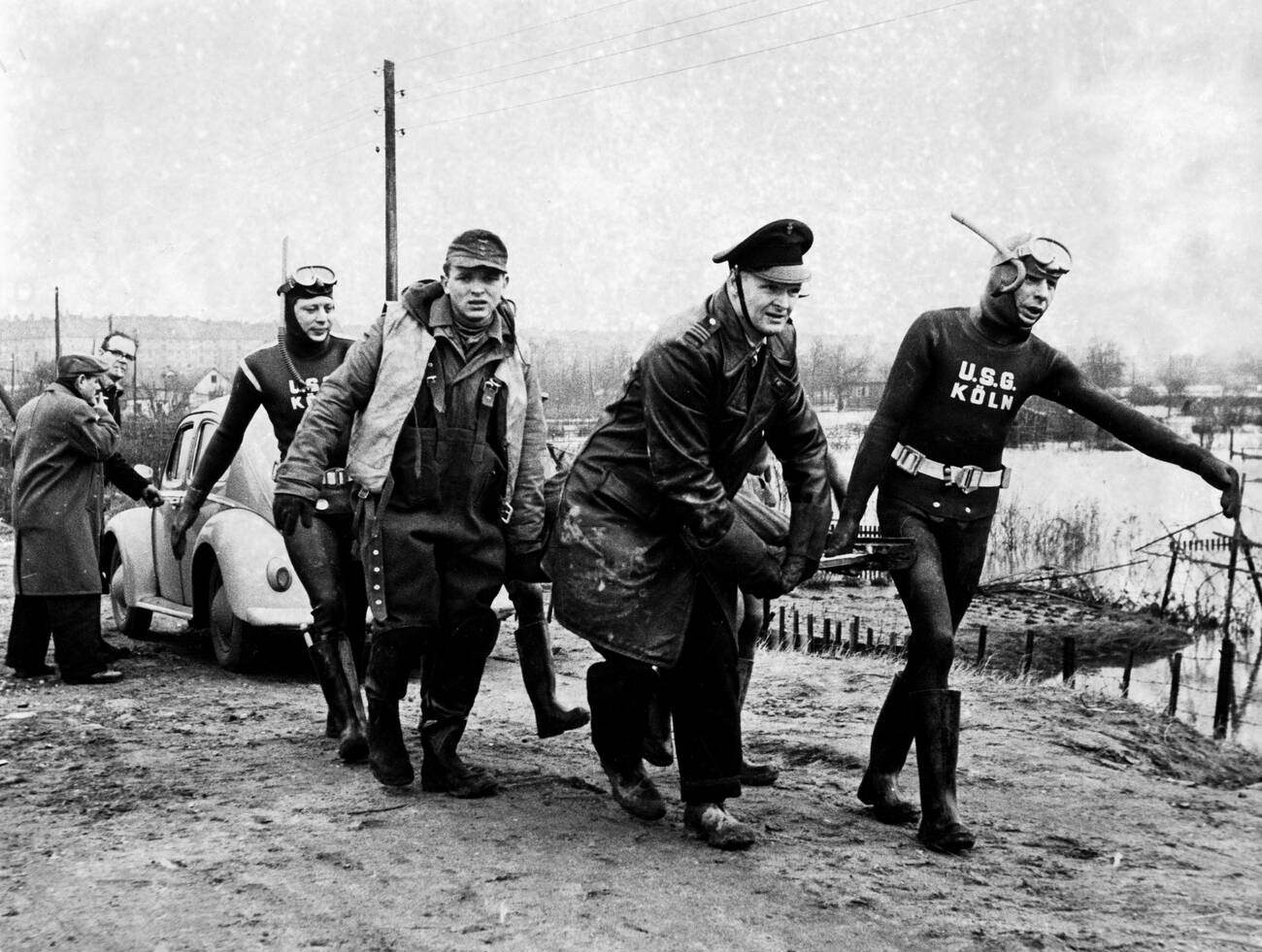
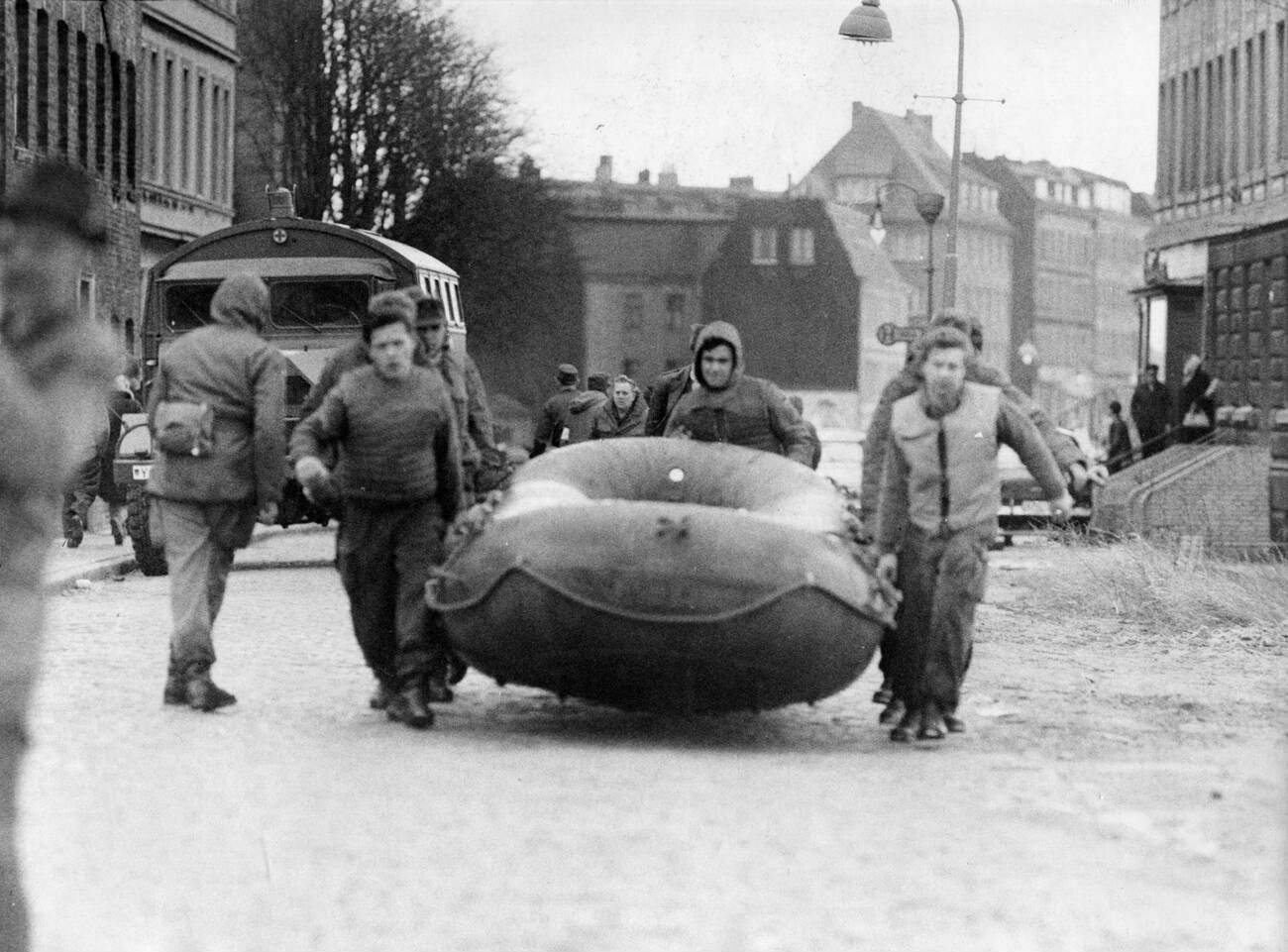
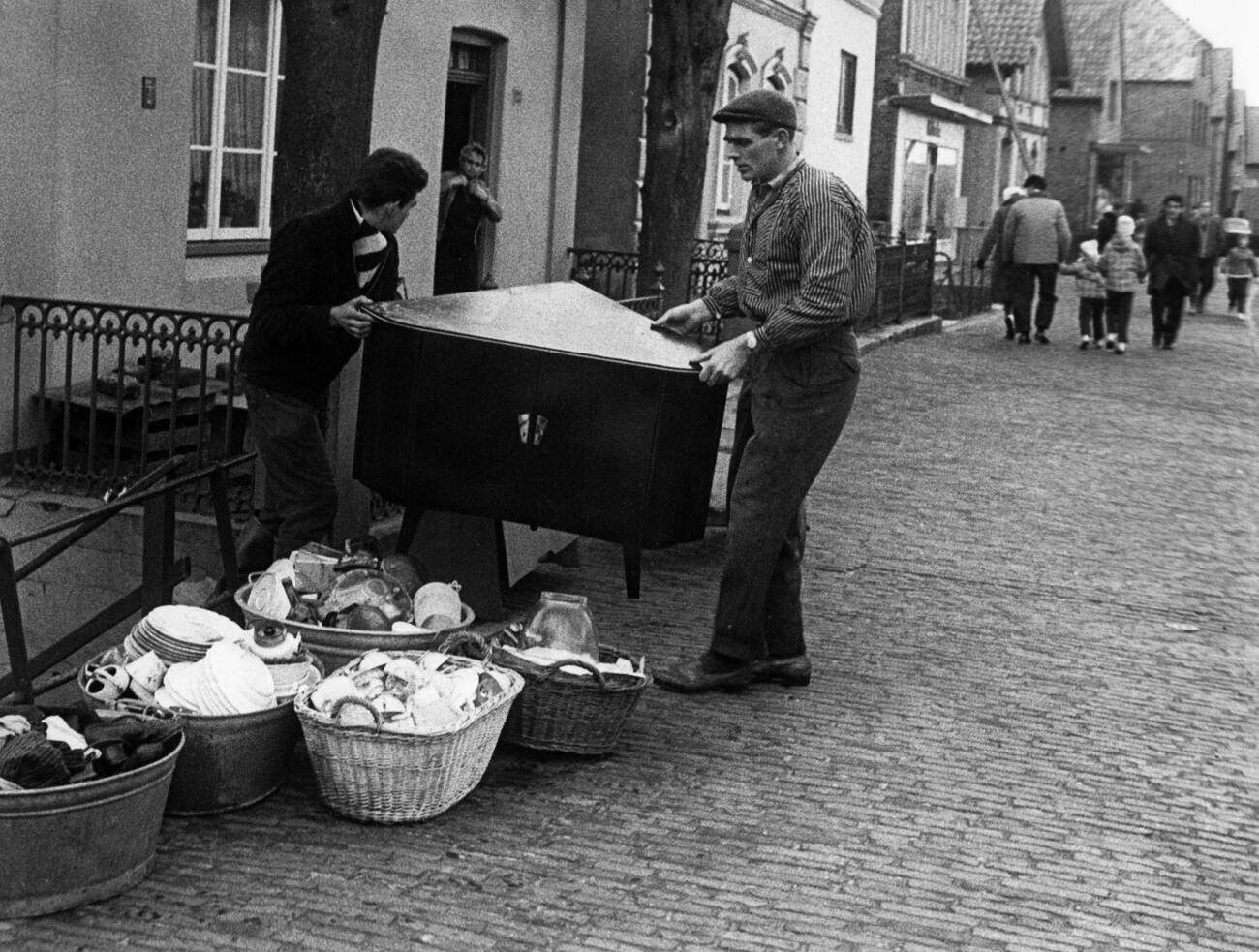
In the district of Finkenwerder, residents carried furniture and personal belongings through flooded streets, trying to move salvageable items to dry ground. Two men photographed doing this captured the broader reality of what ordinary Hamburg residents faced in the days after the surge.
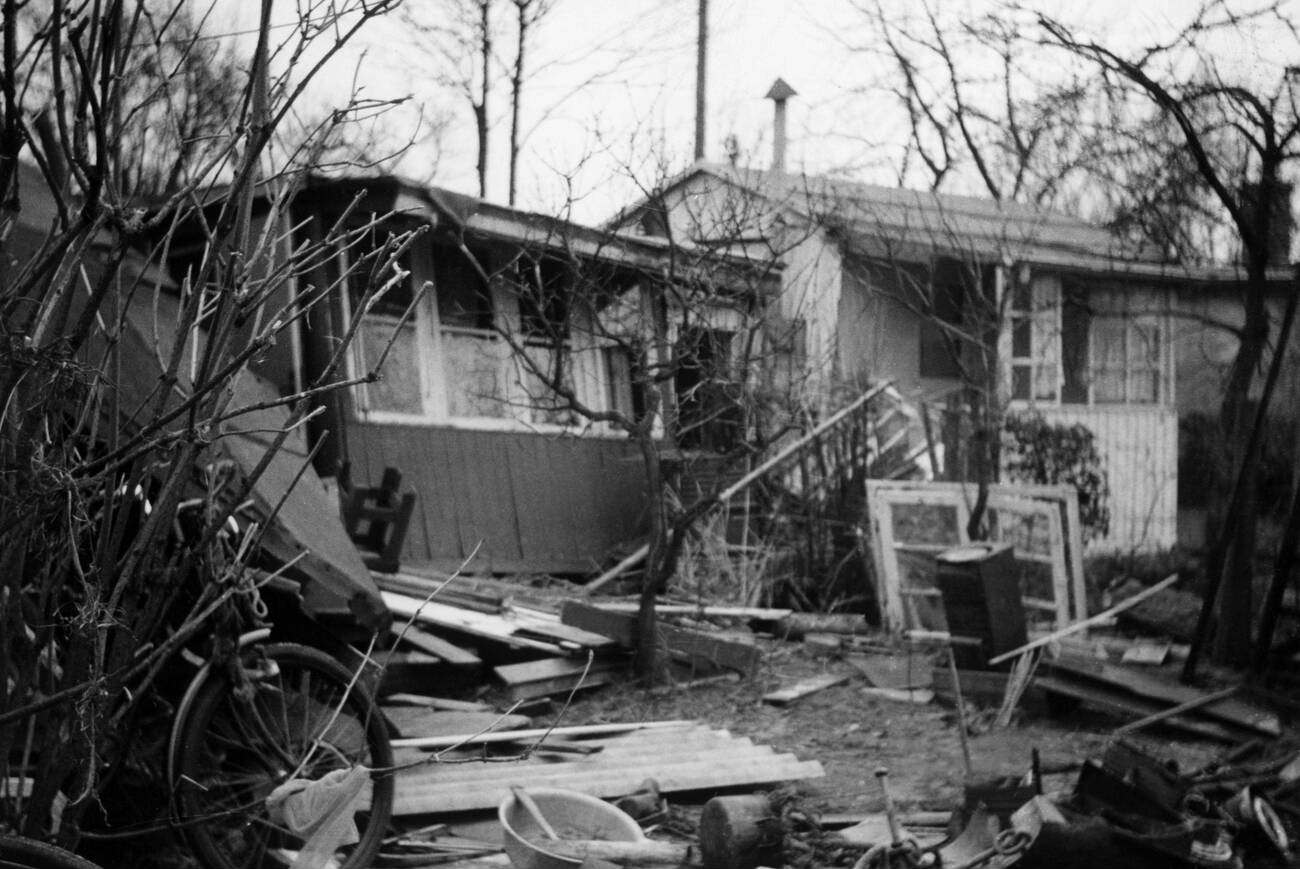
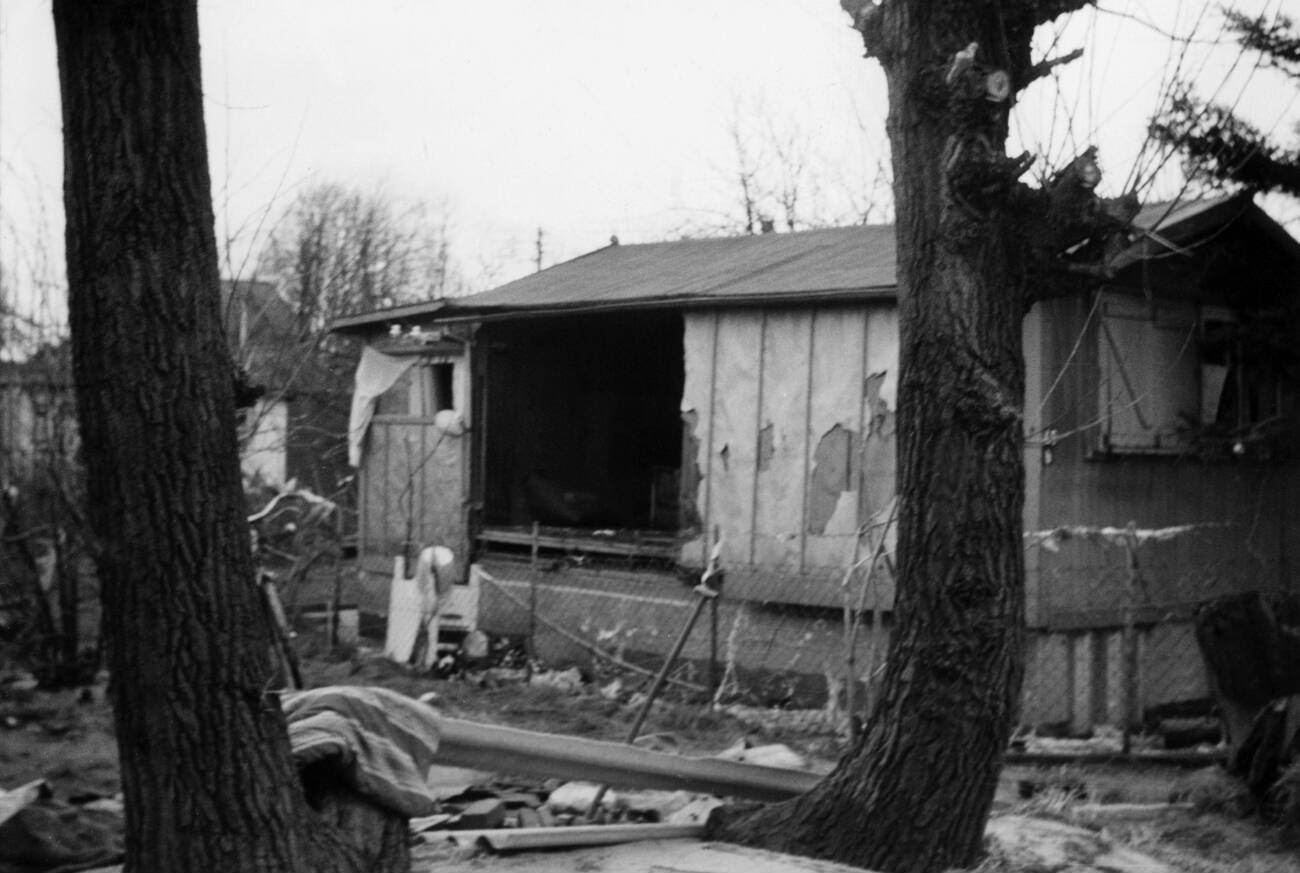
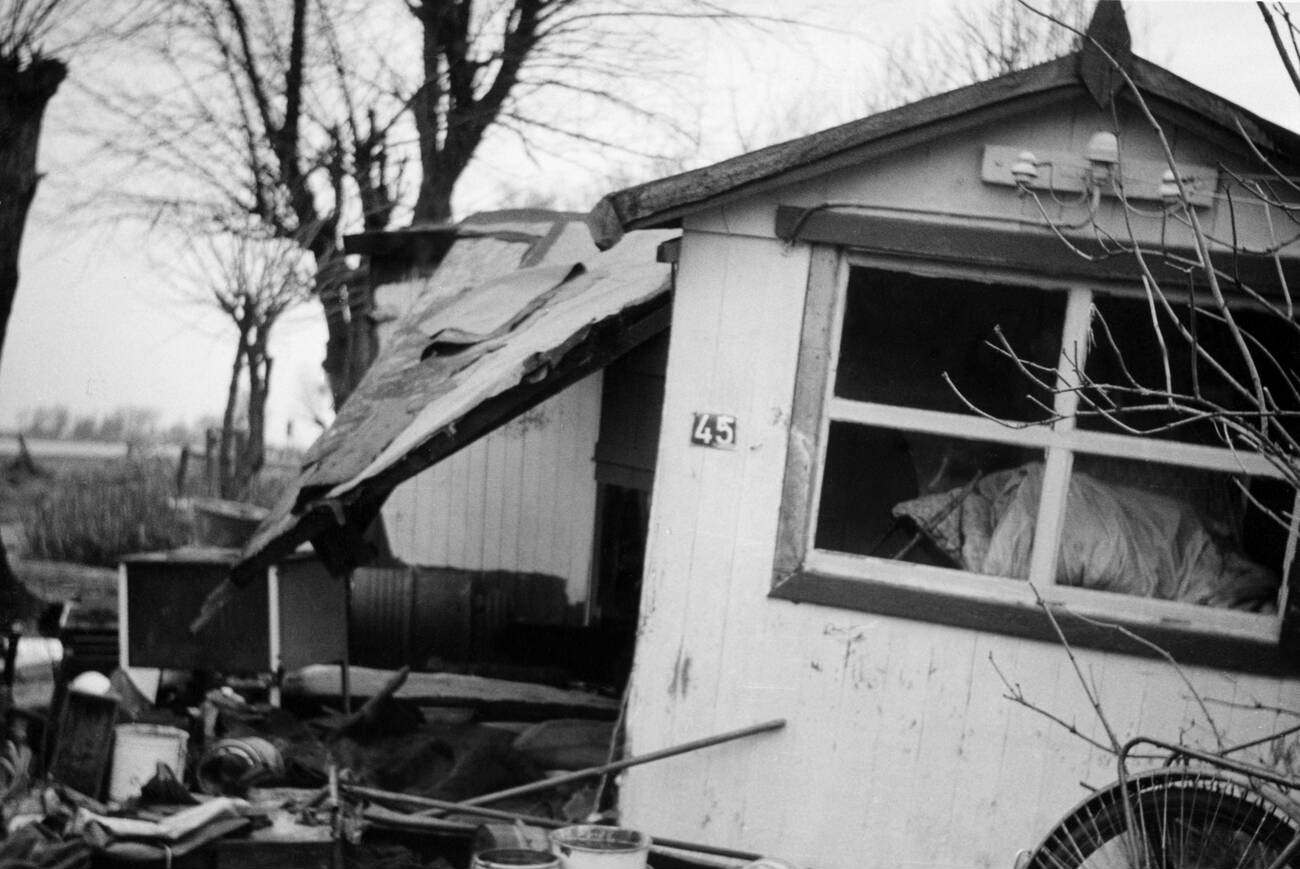
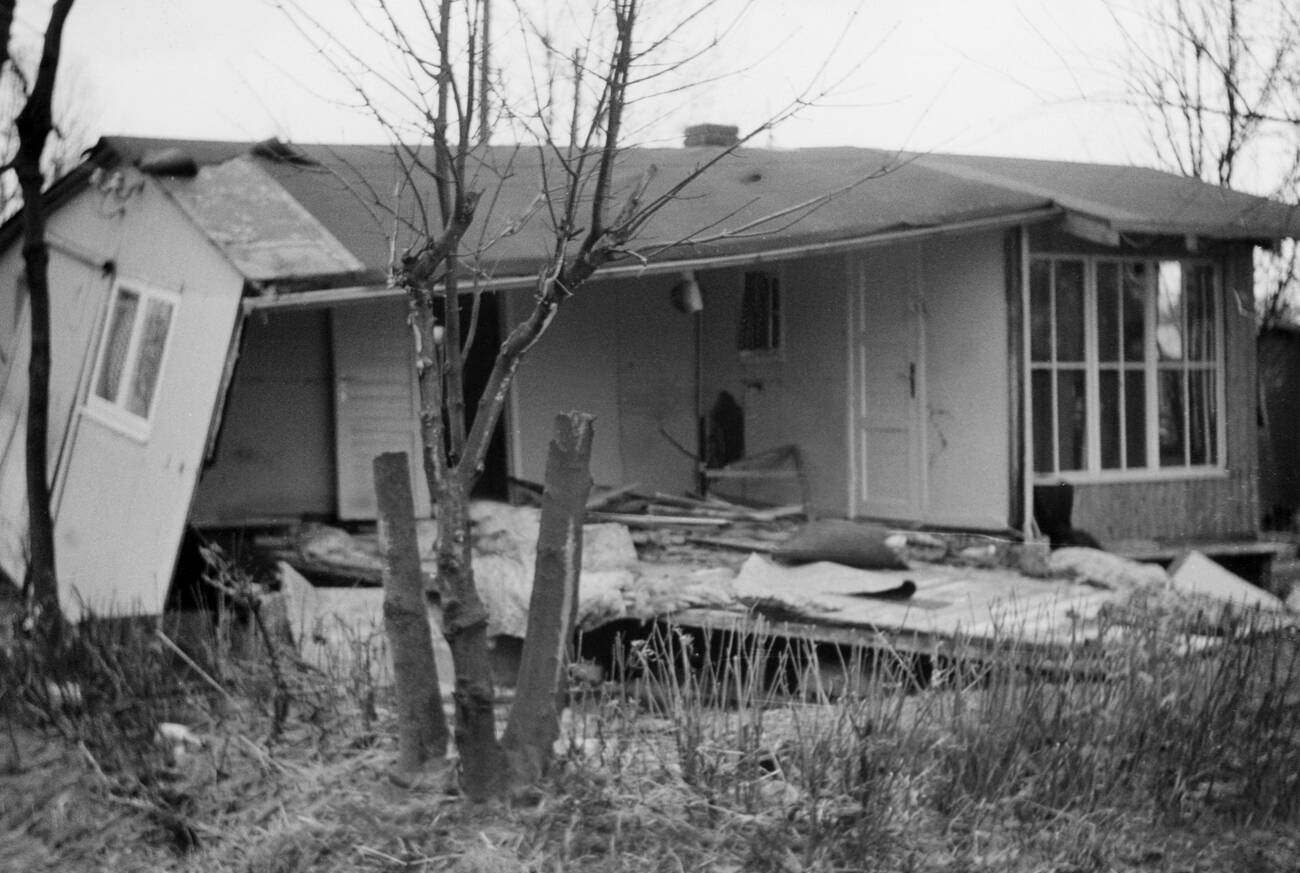
In the Kirchenwerder area of Hamburg, the neighborhood of Overhaken was reduced to ruins. Houses were flattened or structurally destroyed by the force of the water. Some buildings simply collapsed. Families returned to find nothing left standing.
Bundeswehr soldiers moved through the flooded city by boat, reaching areas that were otherwise completely inaccessible. Their role expanded from rescue to recovery as the days passed and it became clear that many who had not been found quickly had not survived.
Men stood in front of the wreckage of homes that had taken lifetimes to build. The structural damage in some areas was total — walls caved in, roofs collapsed, foundations undercut by the force of the water. For many residents, there was nothing left to return to.
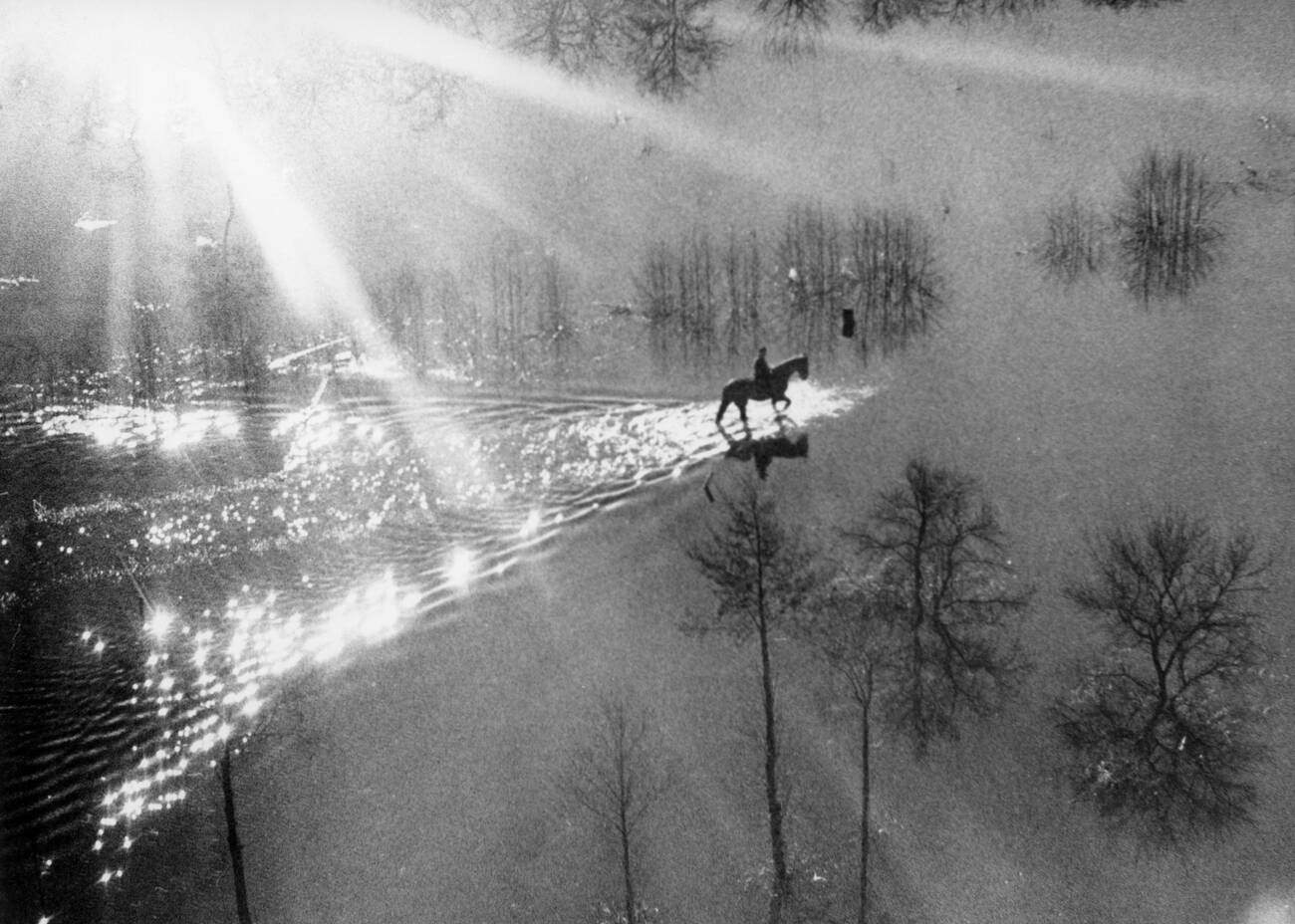
Farmers whose land had been swallowed by the floodwaters searched on horseback for their missing livestock. With vast tracts of farmland still submerged or waterlogged, the full accounting of lost animals took days. Many farms in the Hamburg lowlands lost their entire herds.
Children who had survived the flood returned with their families to search what remained of their homes. Boys were photographed picking through debris for anything useful — tools, food, clothing — in houses that were still dripping with mud and water.
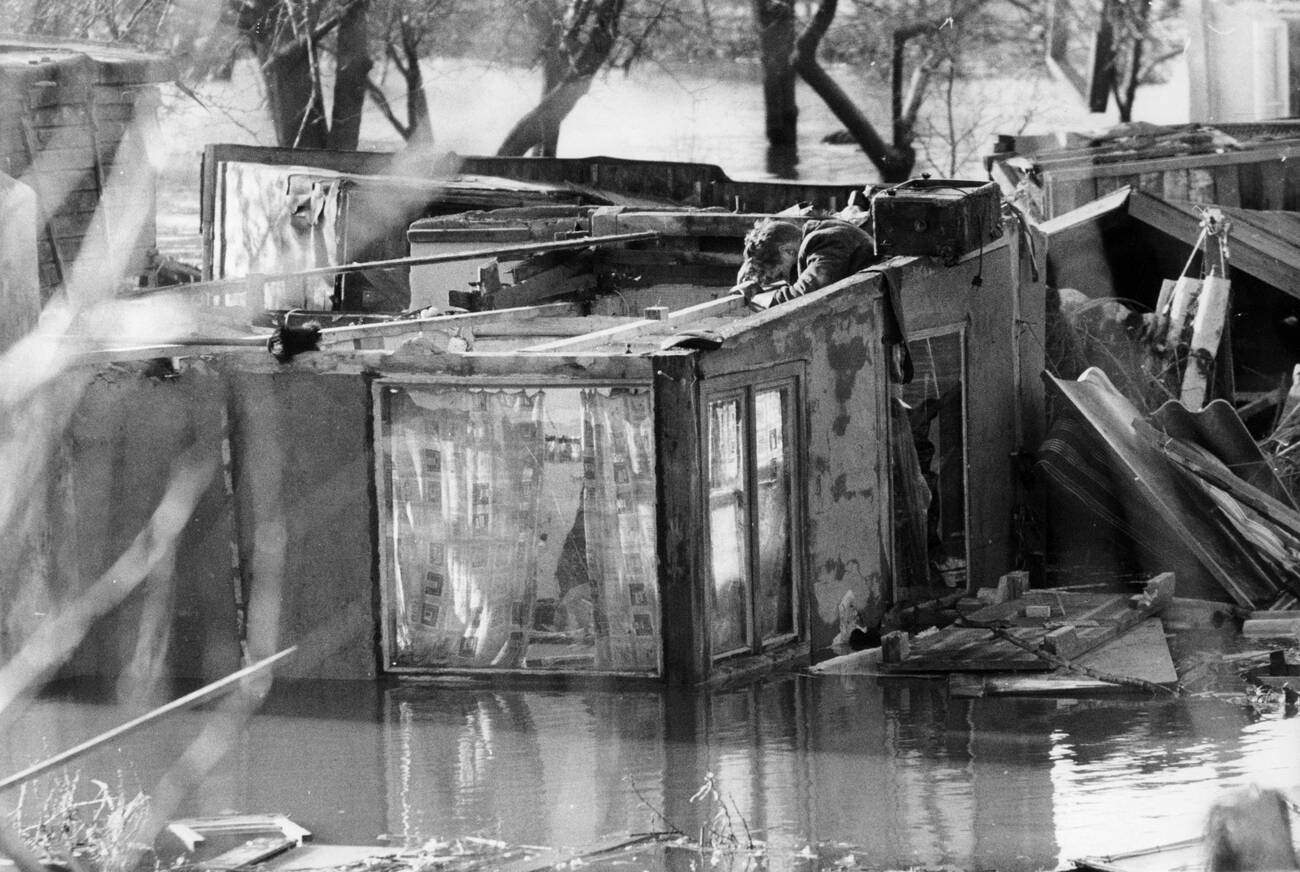
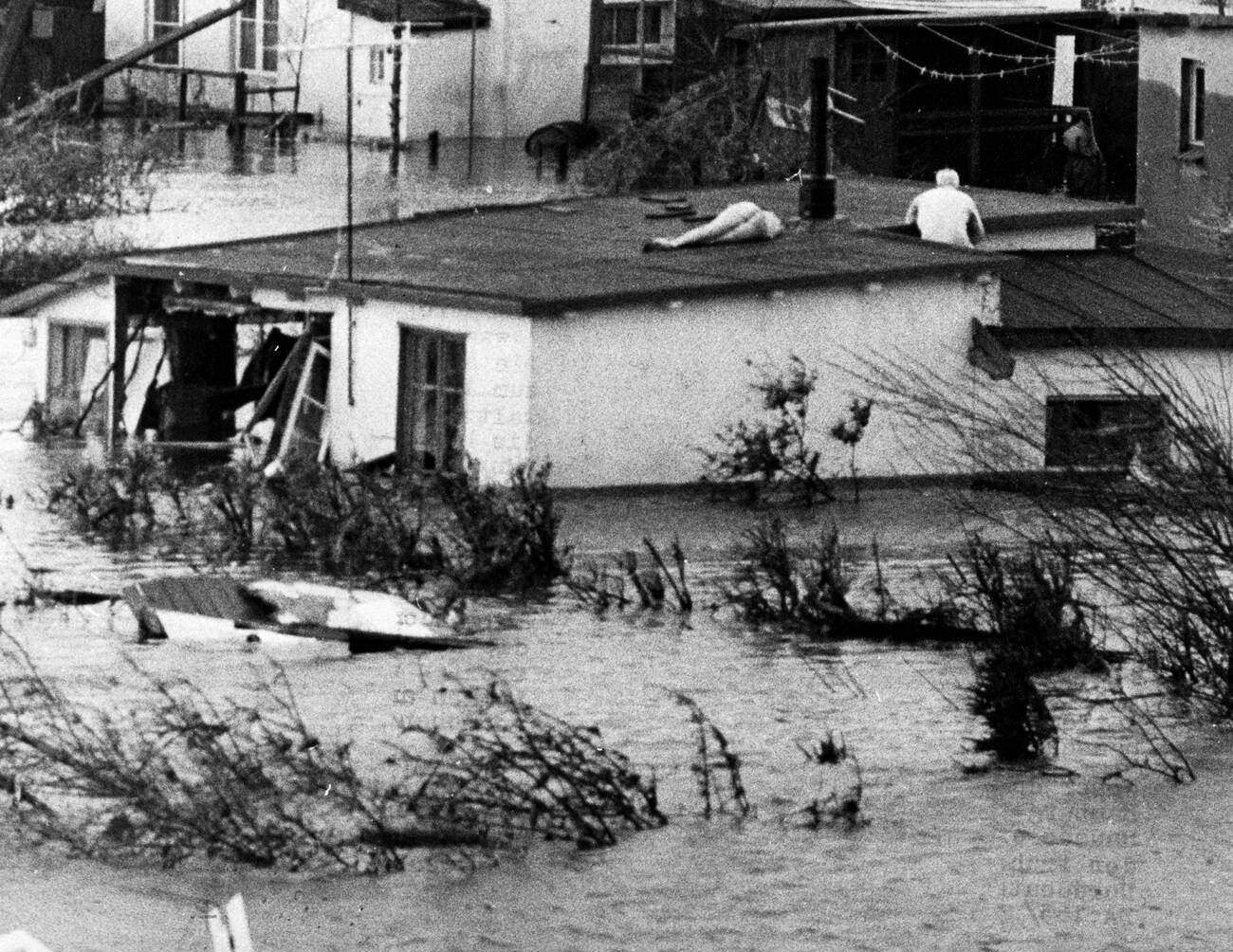
Some of the most haunting photographs from the disaster show survivors carrying their dead. One image captures a man on a rooftop, carrying the corpse of his wife — a scene that encapsulates the raw personal grief beneath the larger statistics. Across Hamburg, families faced the loss of parents, spouses, and children who had simply not made it through the night.
In the Netherlands, the flood took an even greater toll. More than 1,800 people died, primarily in the provinces of Zeeland, South Holland, and North Holland. Coastal dikes failed across a wide stretch of the coastline, flooding vast areas of low-lying land. Denmark’s western coast also flooded, with Esbjerg and Ribe among the hardest-hit cities, though the Danish death toll was significantly lower than in Germany or the Netherlands. In the months that followed the 1962 flood, Hamburg enacted the “Hamburg Plan” — a sweeping program of new dike construction, storm surge barriers, pumping stations, and a formal flood warning system. The Netherlands accelerated its own Delta Works program. Both countries fundamentally changed how they defended their coastlines as a direct result of what happened during those deadly February hours.