
Hey There! Before You Go. 😧
Get the best vintage content straight into your inbox!

Don't worry, we don't spam

The incredible story of the Siège d’Amour: How a Cabinetmaker created the ultimate piece of Furniture for pleasure!

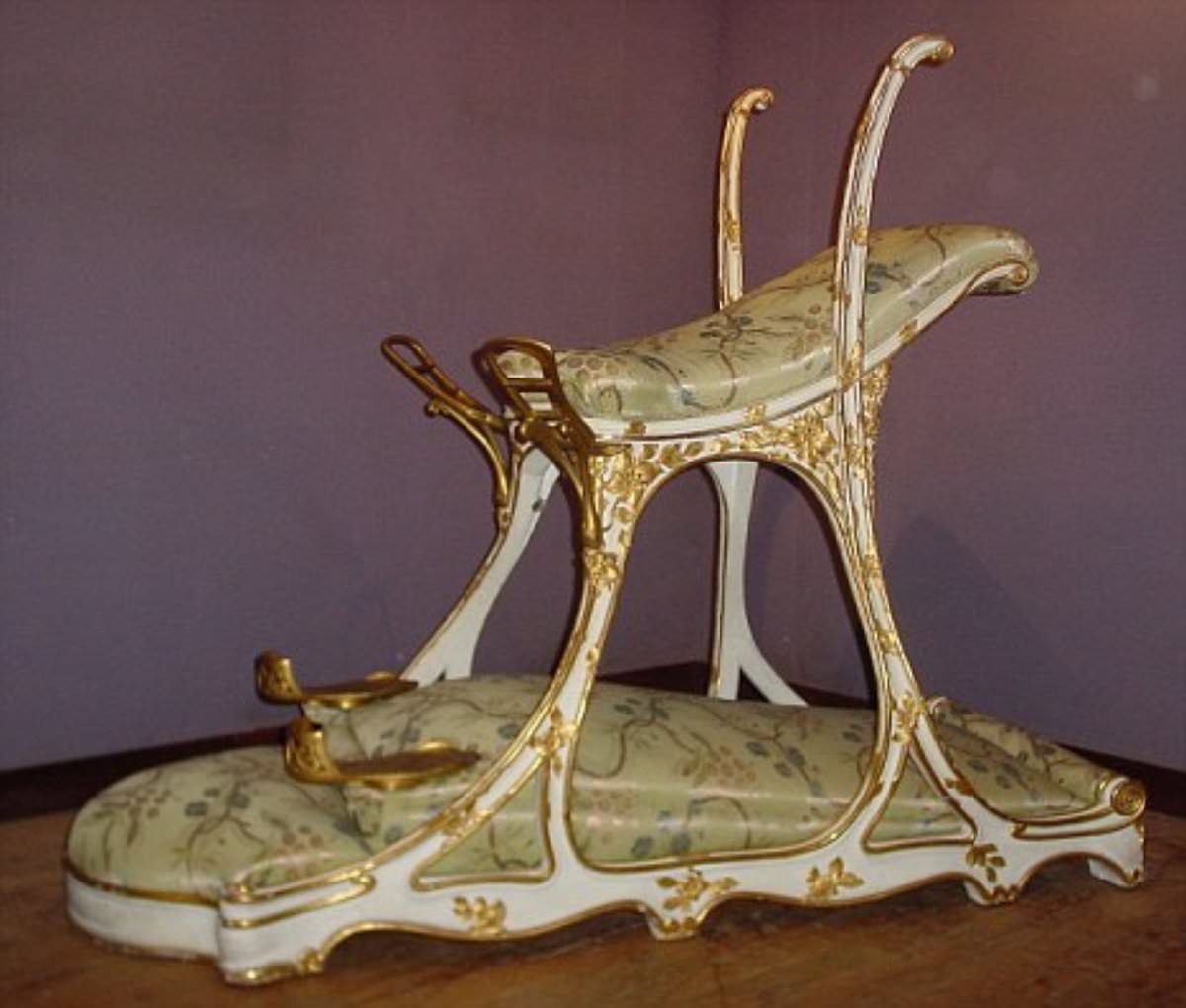
In 1890, a Parisian cabinetmaker named Louis Soubrier received an unusual commission. His client was not just any wealthy patron — it was Albert Edward, Prince of Wales, heir to the British throne and one of the most well-known pleasure-seekers in all of Europe. The piece Soubrier was asked to build was unlike anything in any palace or parlor. It was a custom chair designed for one purpose: intimate encounters at Paris’s most celebrated high-end brothel, Le Chabanais. The finished piece became known as the Siège d’Amour — the Love Chair.

The incredible story of the Siège d’Amour: How a Cabinetmaker created the ultimate piece of Furniture for pleasure!

The prince, widely called “Prince Bertie” by those close to him, was famous across Europe for his appetite for pleasure. He traveled to Paris frequently and was a regular at Le Chabanais, which opened its doors in 1878 and quickly became the most fashionable brothel in the city. The establishment catered exclusively to the elite — its guest list over the years included Hollywood stars like Humphrey Bogart, Mae West, and Cary Grant. But among all its distinguished visitors, Bertie held a special place. He was not just a frequent guest; he was a patron who shaped the space to his own tastes. The Hindu room was Bertie’s preferred suite inside Le Chabanais. The bordello was known for its theatrically decorated rooms, each built around a different theme. Guests could choose between the Turkish Chamber, the Pompeii Room, the Japanese Salon, and several others. Each space was designed to transport its visitors into a different world entirely, and no expense was spared in creating that effect. Le Chabanais was not a back-alley establishment — it was a showpiece of fin-de-siècle Parisian excess.

But the room itself was not enough for Bertie. He wanted furniture built specifically around his physical needs and his preferences for entertainment. Soubrier built the Siège d’Amour to accommodate three people at once. The design placed two women facing each other, while the prince was positioned behind them to engage with both. The chair featured adjustable padded headrests, armrests, and footrests — each element carefully engineered to provide comfort for all three occupants during use. The construction of such a piece required real cabinetmaking skill. Soubrier had to account for weight distribution, structural stability, and the ergonomics of multiple body positions simultaneously. The chair was built to measure, meaning it was sized and shaped specifically for Bertie’s body. It was not a novelty item or a prop — it was a functional, finely crafted piece of furniture made with the same level of care a master craftsman would bring to any high-end commission.

The incredible story of the Siège d’Amour: How a Cabinetmaker created the ultimate piece of Furniture for pleasure!

France had legalized brothels in 1802, but they remained a source of public controversy throughout the 19th century. Some viewed them as a necessary and regulated outlet, while others condemned them as centers of moral corruption. Regardless of public opinion, establishments like Le Chabanais continued to operate openly in Paris and other major European cities, drawing wealthy and powerful clientele who had the means to pay for discretion and luxury in equal measure. Bertie eventually became King Edward VII in 1901, following the death of his mother, Queen Victoria. By that time, his wild years in Paris were well behind him in terms of public visibility, but the objects he left behind told a different story. The Siège d’Amour remained at Le Chabanais as a testament to the prince’s specific and elaborate tastes. It was not the kind of furniture that could be repurposed or discreetly moved into a drawing room.

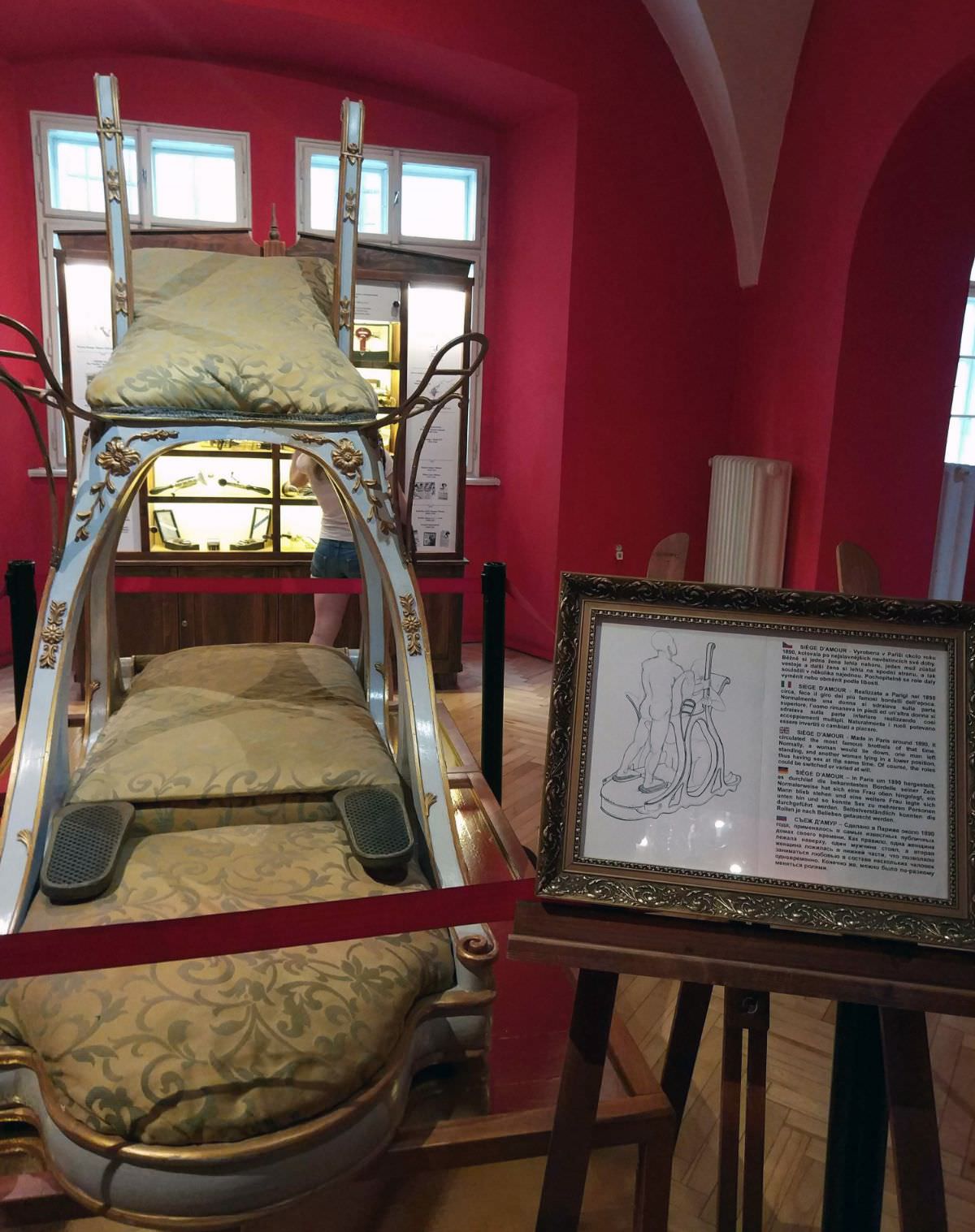
Le Chabanais itself operated for decades before French authorities shut down all licensed brothels in 1946 under the Marthe Richard law. When the establishment closed, its contents were auctioned off. The Siège d’Amour passed into private hands and eventually made its way into museum collections. Today, a Siège d’Amour is displayed at the Sex Machines Museum in Prague, where visitors can see the chair up close and examine the craftsmanship that went into its construction. What makes the Siège d’Amour historically significant is not just its scandalous backstory. It represents a very specific intersection of royal privilege, skilled craftsmanship, and the culture of elite Parisian nightlife at the turn of the 20th century. Soubrier did not build a crude or hastily assembled object. He built something that required technical precision, and he built it for one of the most powerful men in the world. The chair exists as a physical record of how the wealthy lived — and played — in an era that presented a very different face to the public than it showed behind closed doors. The story of the Siège d’Amour is also a reminder that history is not only made in throne rooms and battlefields. Sometimes it is made in the private spaces where powerful people pursued their most personal desires, and sometimes those spaces leave behind objects that outlast the people who used them by more than a century.

Enjoyed this post? Get new ones in your inbox.

Leave a Comment

Your email address will not be published. Required fields are marked *

Share this Post 🥺

Please take a moment to share this content. Your support is greatly appreciated! 🙌🙏

Share this Post 🥺

Please take a moment to share this content. Your support is greatly appreciated! 🙌🙏
Scroll to Top
 
Hey Friend, Before You Go.. Please like & follow for more interesting content