Anne de Zogheb was born in 1931 in Alexandria, Egypt, to a French mother and an Egyptian father. She grew up in Cairo, a city that blended European and Middle Eastern culture in ways that would later show up in her refined, cosmopolitan presence on the runway. As a young woman, she moved to Paris to study art — a move that placed her at the center of the postwar fashion world just as it was exploding with new talent and ambition.
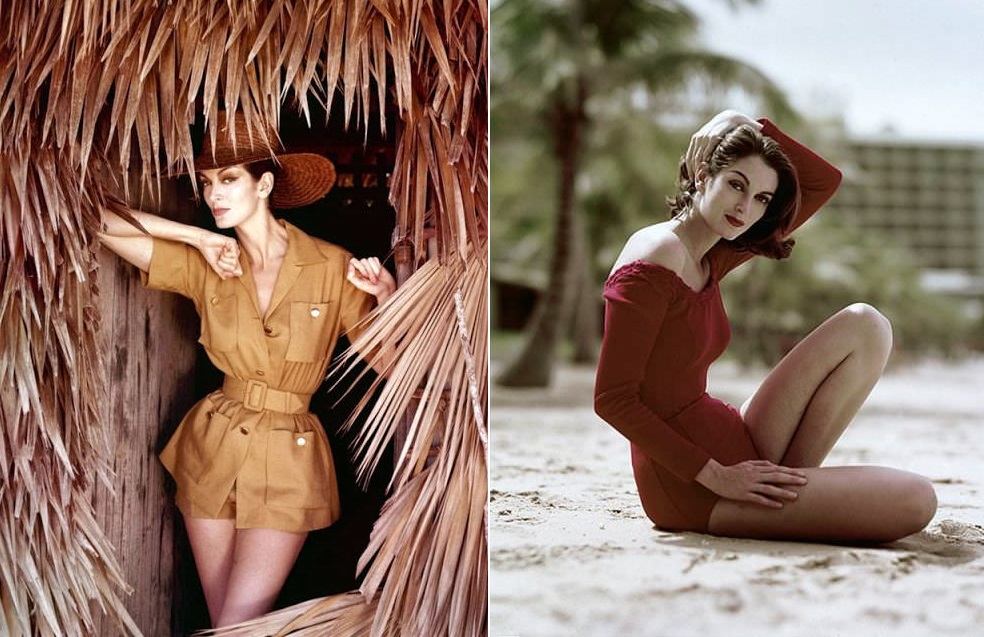
Her modeling career took off in the 1950s, and she rose quickly. The pages of Vogue and Harper’s Bazaar became familiar territory. She worked with the biggest houses in fashion — Dior, Chanel, Balenciaga, Givenchy, Nina Ricci, Pierre Balmain, and more. Her look was not flashy or theatrical. It was precise. Editors and photographers responded to her ability to carry a garment with complete authority, whether it was a structured suit or a sweeping evening gown.
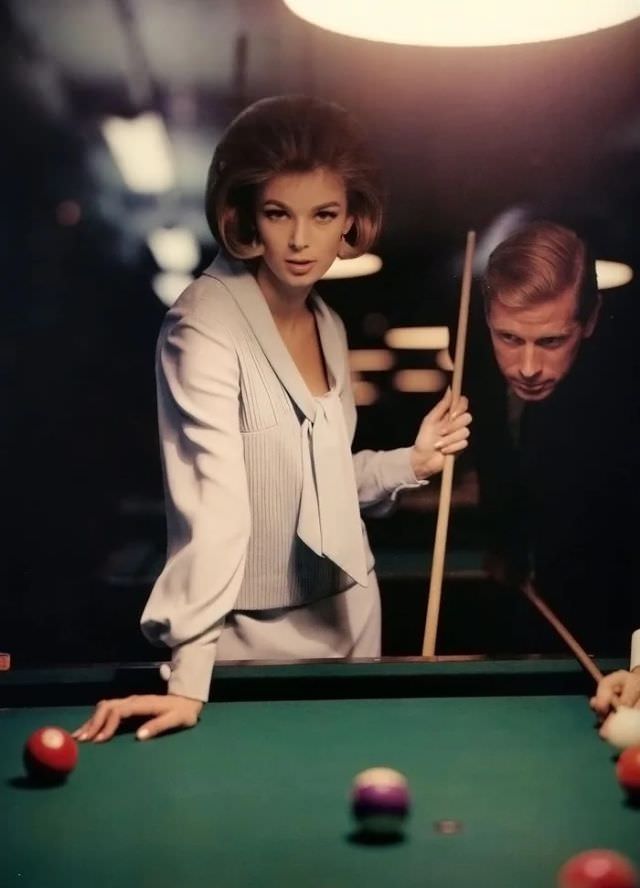
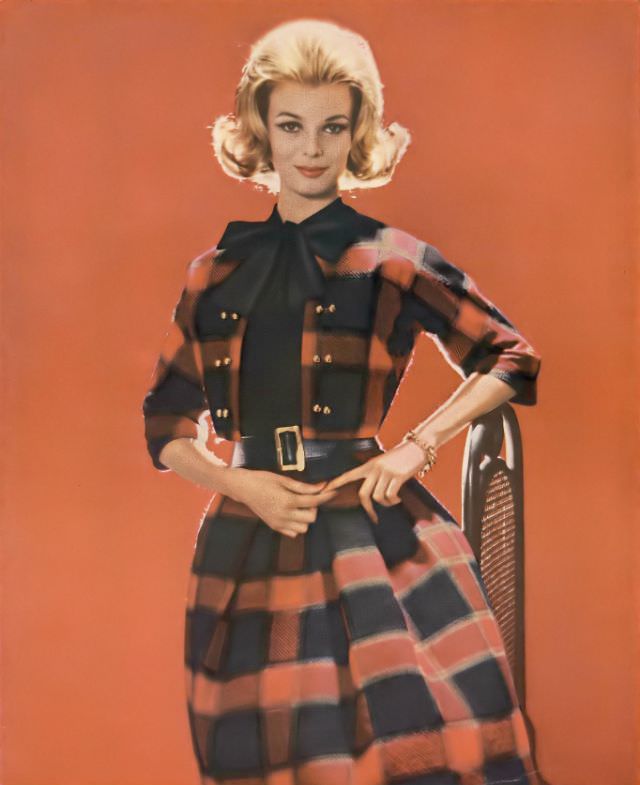
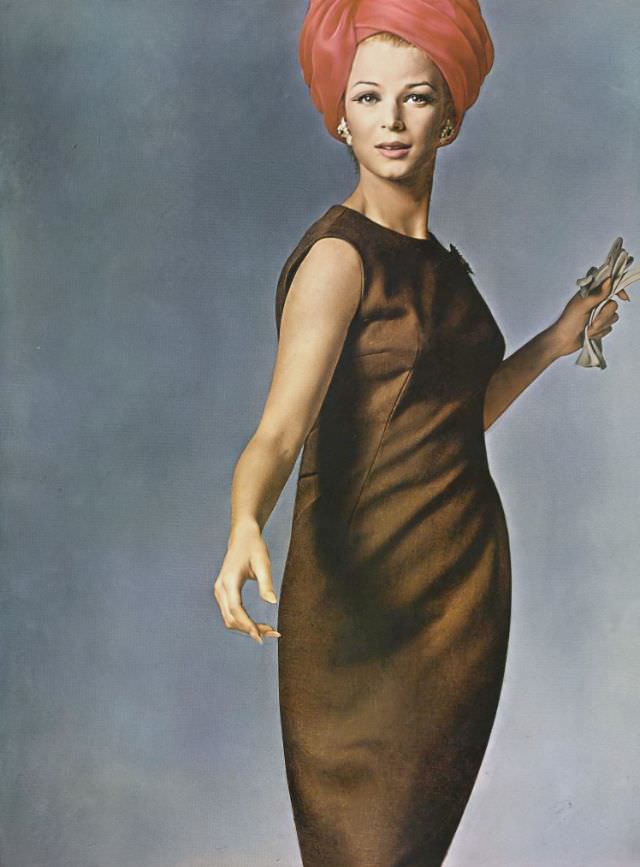
By the early 1960s, de Zogheb was one of the most in-demand faces in American and European fashion publishing. Her editorial work from this period is extensive and remarkably varied. She appeared in McCall’s in New York and across Vogue’s many seasonal issues, modeling everything from casual sportswear to high-drama evening wear. The breadth of her appearances reflects just how versatile she was.
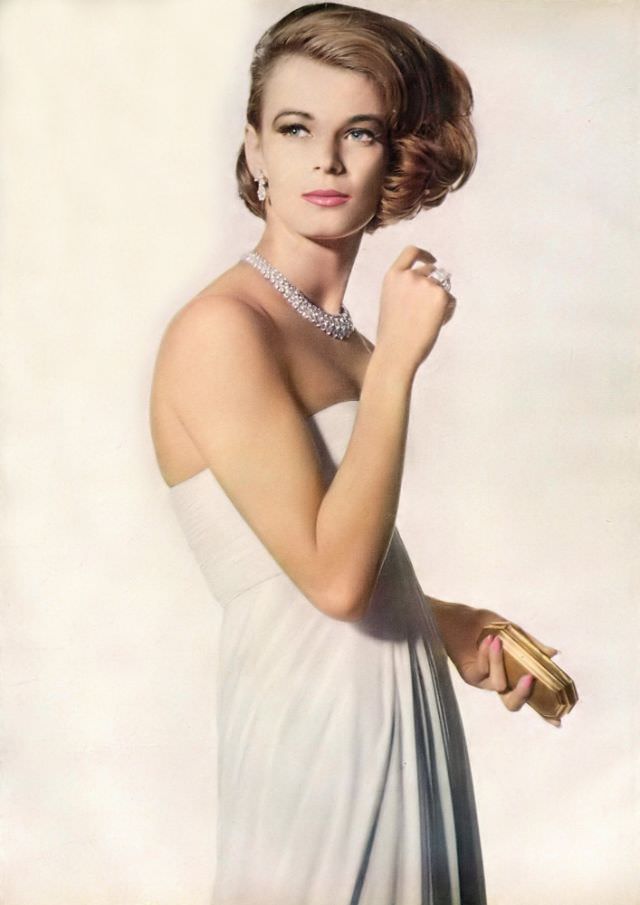
Parisian couture defined much of her editorial output in 1961. Madame Grès, one of the most technically gifted designers of the twentieth century, was known for sculpting fabric directly on the body like a classical draper. De Zogheb wore that tradition with ease. That same year, she also appeared in natural and wool knitwear by Bettina, showing that her range extended well beyond couture gowns into the growing ready-to-wear market.
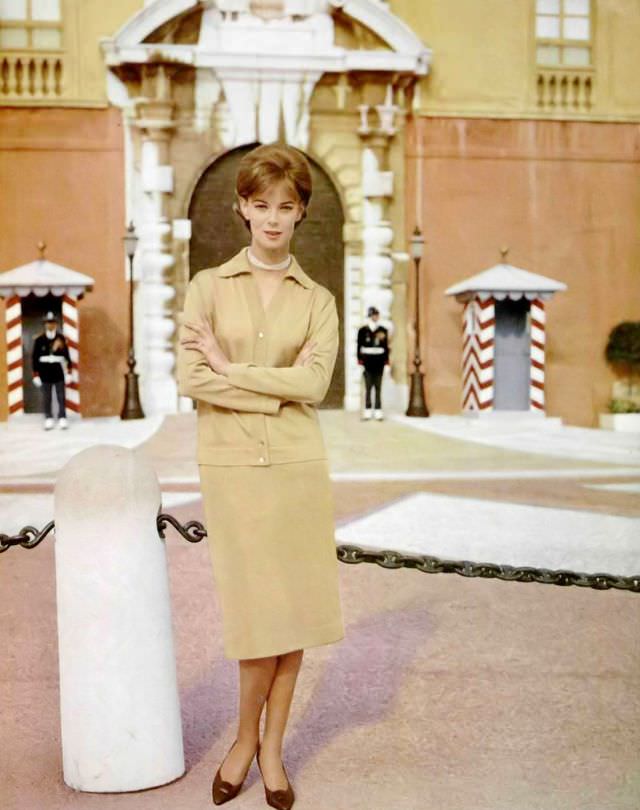
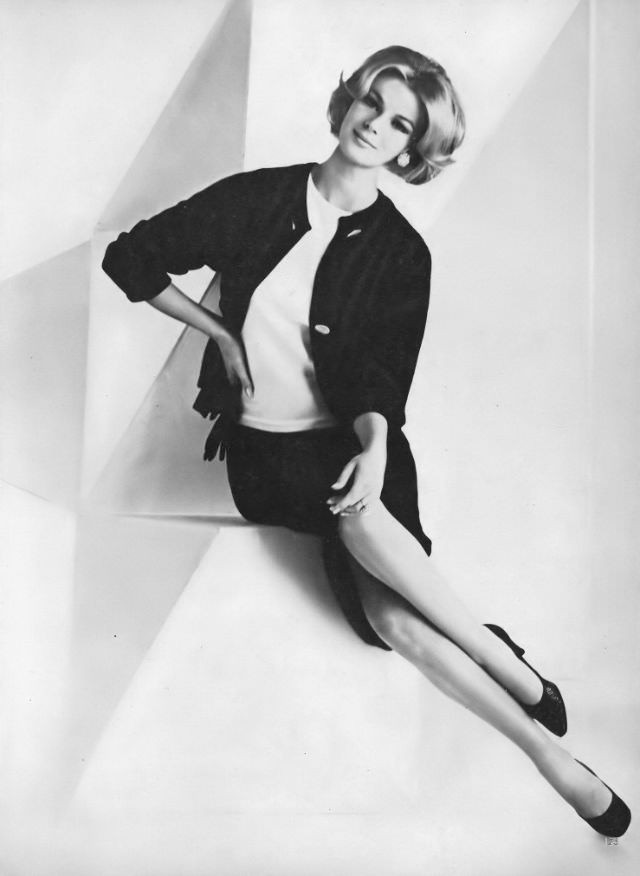
Pringle of Scotland supplied the navy-blue cashmere cardigan suit she wore in Vogue’s December 1961 issue. The combination of a sleeveless cashmere top underneath and Palizzio shoes completed a look that was clean, polished, and entirely suited to her natural bearing. That same year, she modeled a shiny full-length silk and cellophane cloak over a satin gown by Nina Ricci for Life magazine — a pairing that required a model who could command both the grandeur of the garment and the camera’s attention simultaneously.
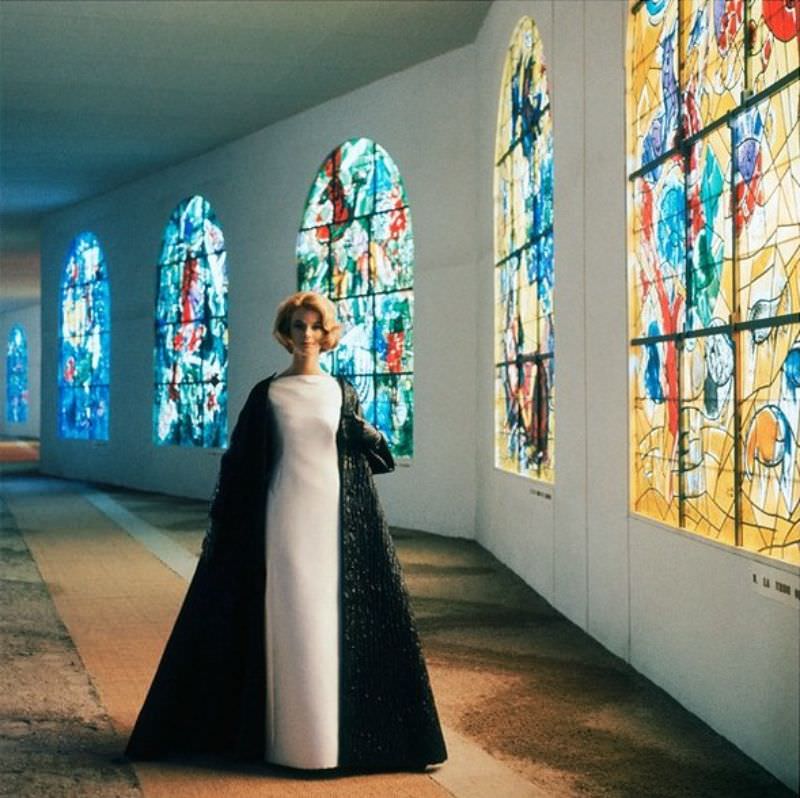
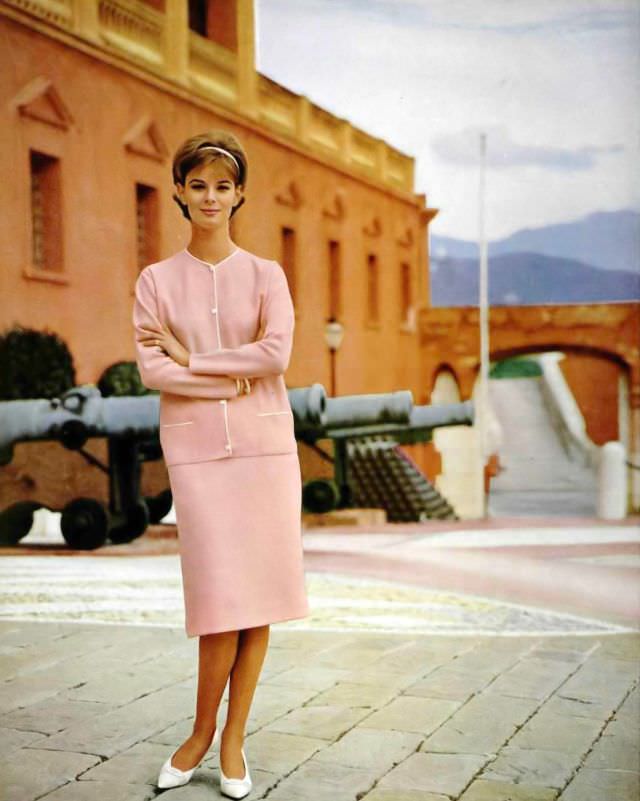
Her hair was treated as carefully as her clothing. Vogue’s September 1961 issue highlighted a side-swept coiffure designed for her by Guillaume in Paris — a detail that underscores how every element of her image was deliberately composed. Guillaume was one of the most respected hairstylists in French fashion at the time, and the fact that Vogue credited him by name alongside de Zogheb signals her status in the industry.
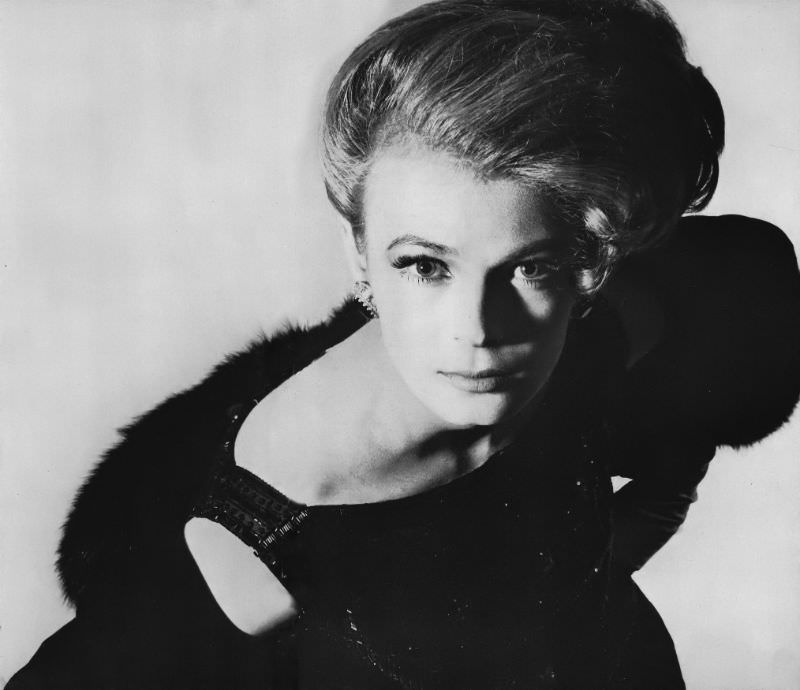
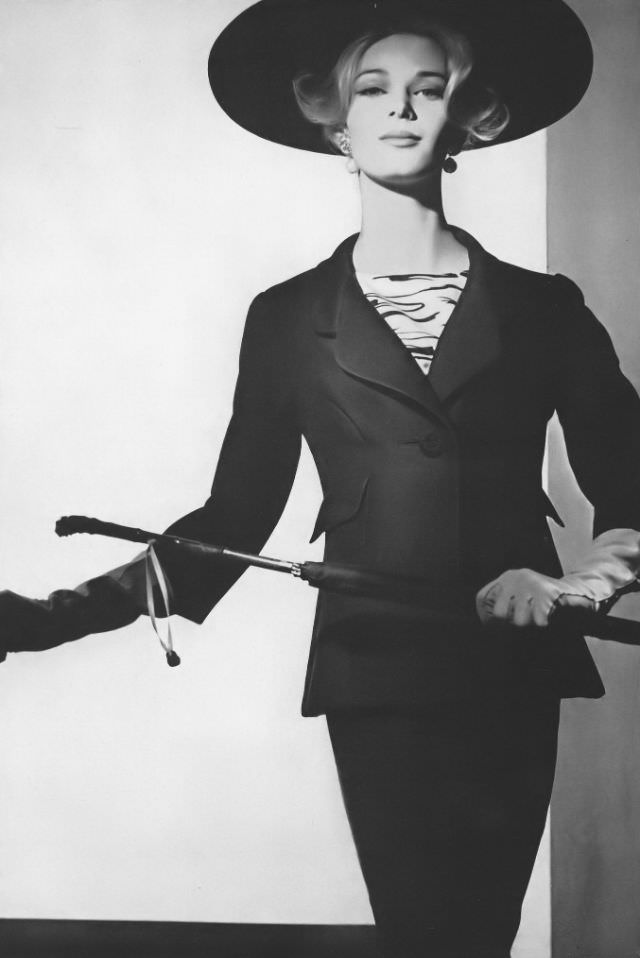
In 1962, de Zogheb’s editorial output reached its peak volume. She appeared across multiple Vogue issues throughout the year, modeling a striking range of American designers alongside European names. For January, she wore a black silk worsted suit with a zebra-striped blouse by Adele Simpson, a hat by Mr. Arnold pulling the look together with a bold graphic contrast.
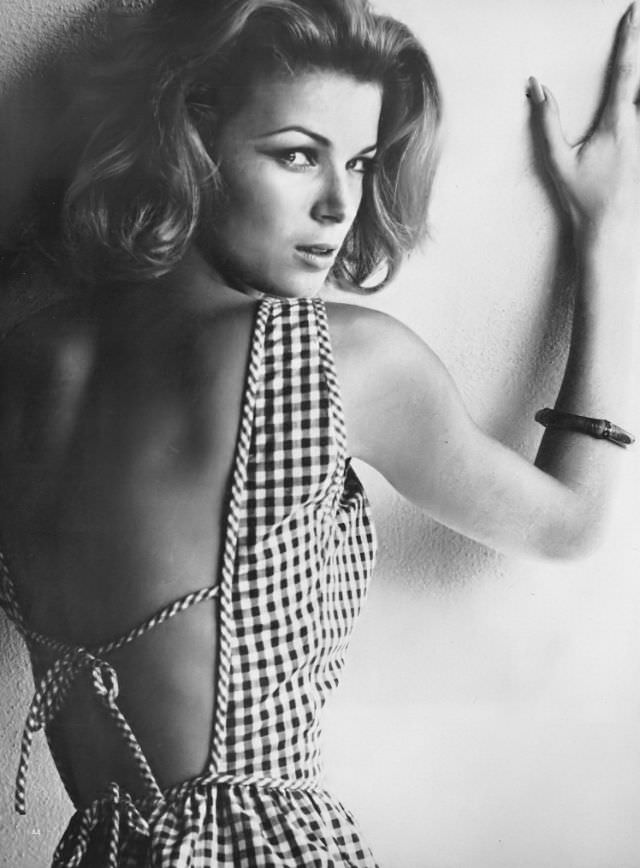
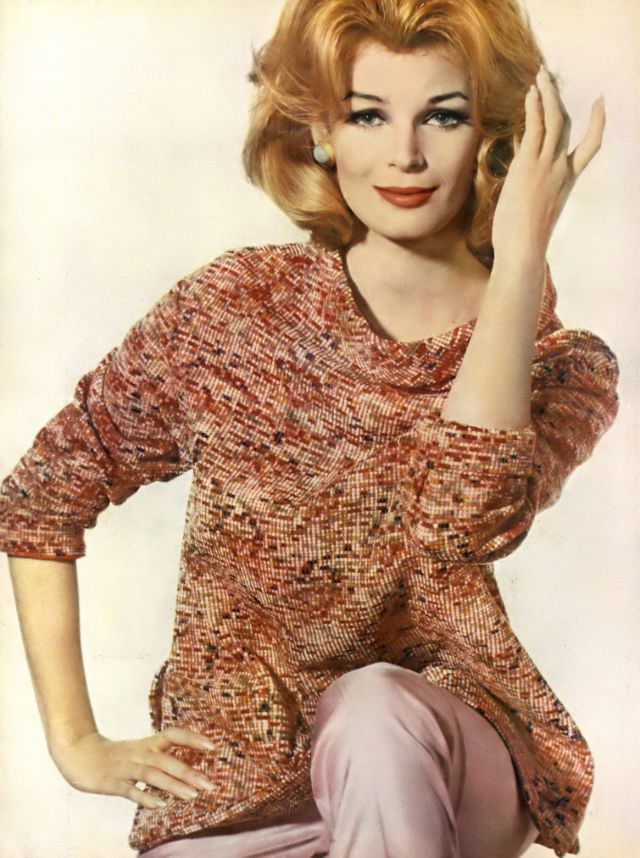
Her Vogue work in mid-1962 included a cowled coral chenille shirt from Bergdorf Goodman paired with silk pants by Mr. Pants — a more relaxed, editorial direction that showed fashion moving toward casual elegance. That same year, she wore a deep blue Givenchy ottoman shell top with a loopy sash and short skirt for Vogue’s November issue, demonstrating how seamlessly she moved between American sportswear and Parisian couture.
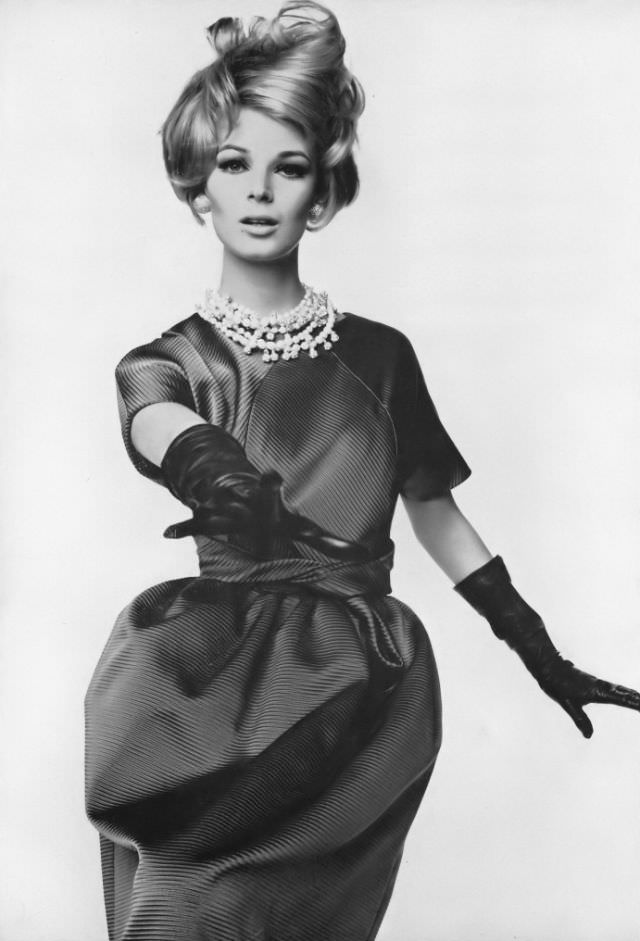
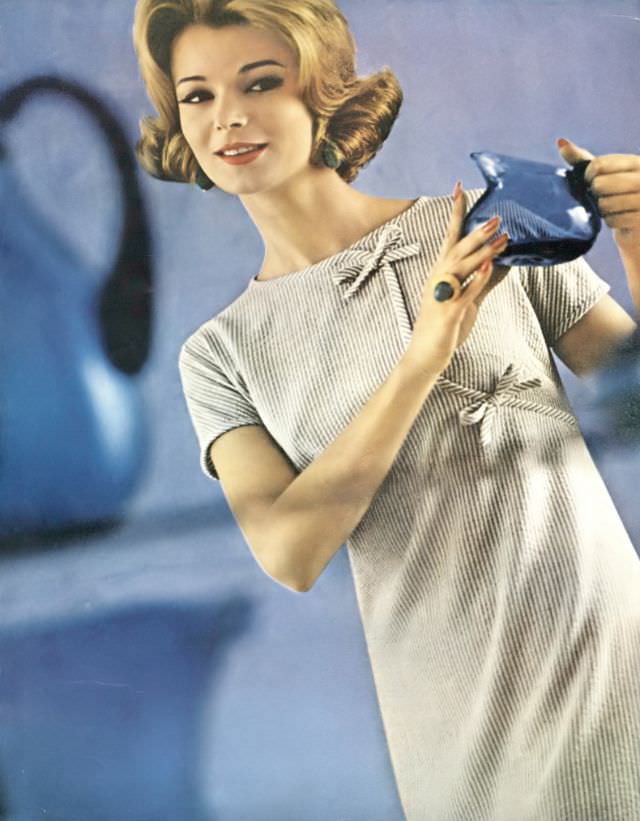
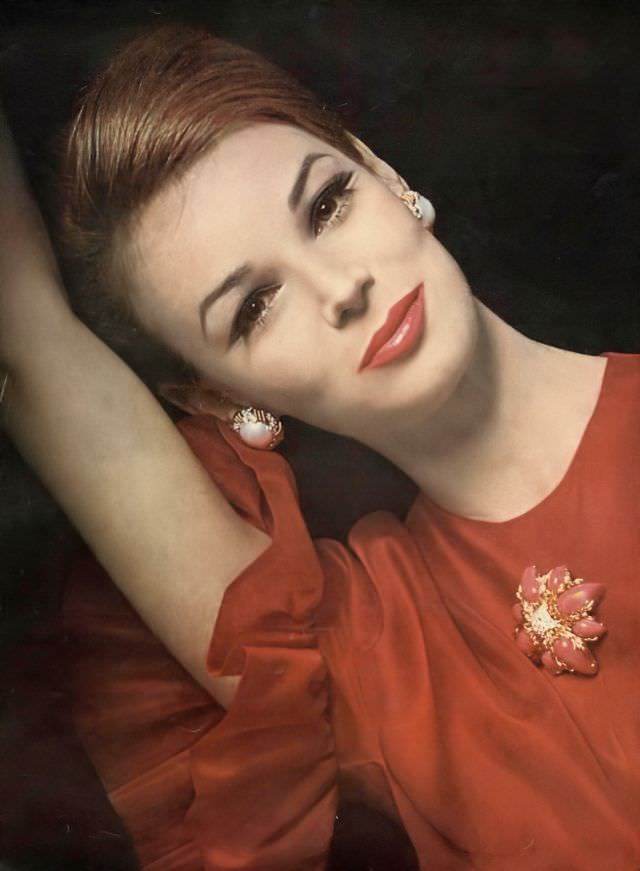
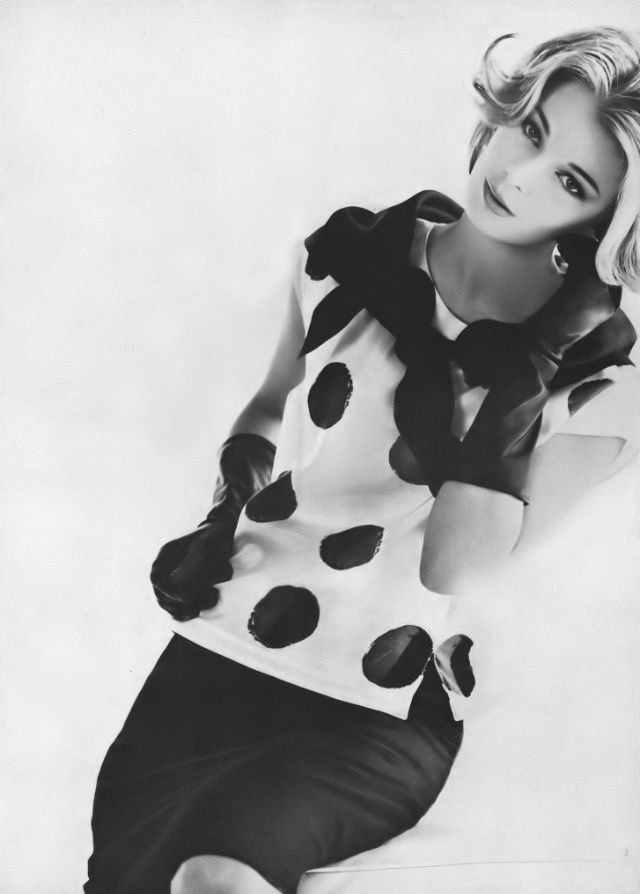
Among her 1962 appearances, a ruffled cranberry blouse of doubled silk organza over China silk lining by Sarff-Zumpano, featured in Vogue’s July issue, stands out for its layered construction and rich color. She also appeared in a silk overblouse of black-on-white coin dots by Vera for Vogue in January — a simpler, more graphic statement that worked just as well on her frame.
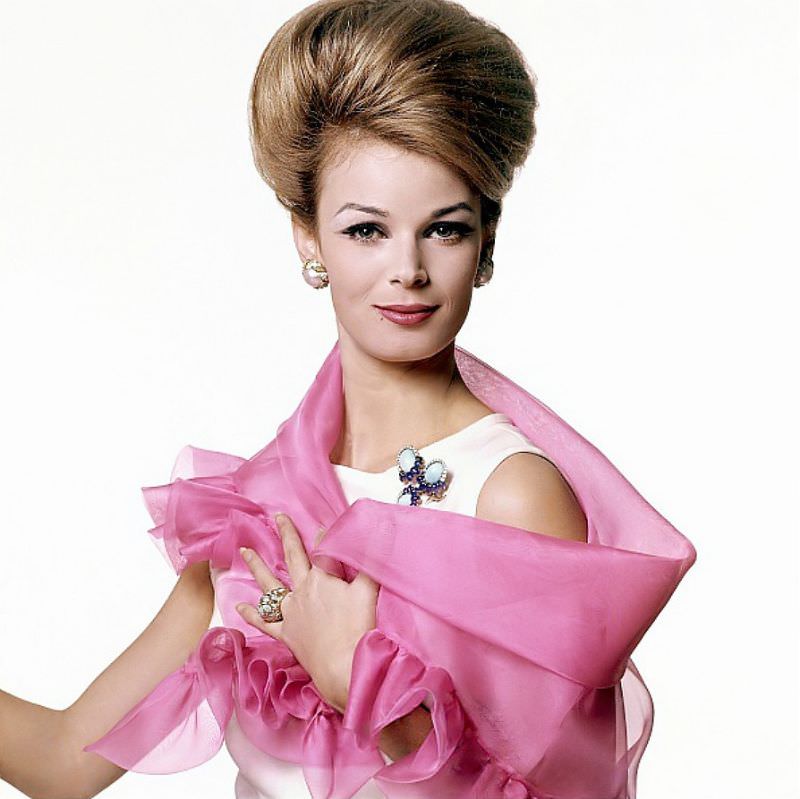
She also took on commercial advertising work during this period. Lady Van Heusen ran two separate ads featuring her in 1962, placing her image in a context aimed squarely at the American consumer market — a sign that her appeal reached beyond high fashion into mainstream retail. A banana-yellow silk blouse sprayed with trapunto tulips, paired with a matching wool tweed skirt from Lord & Taylor, appeared in Vogue in January 1962, another example of her reach across different retail tiers.
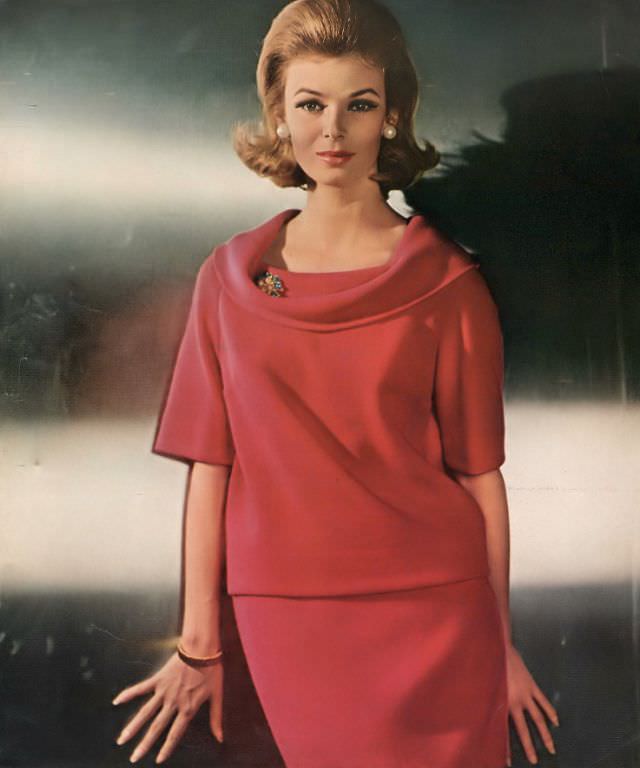
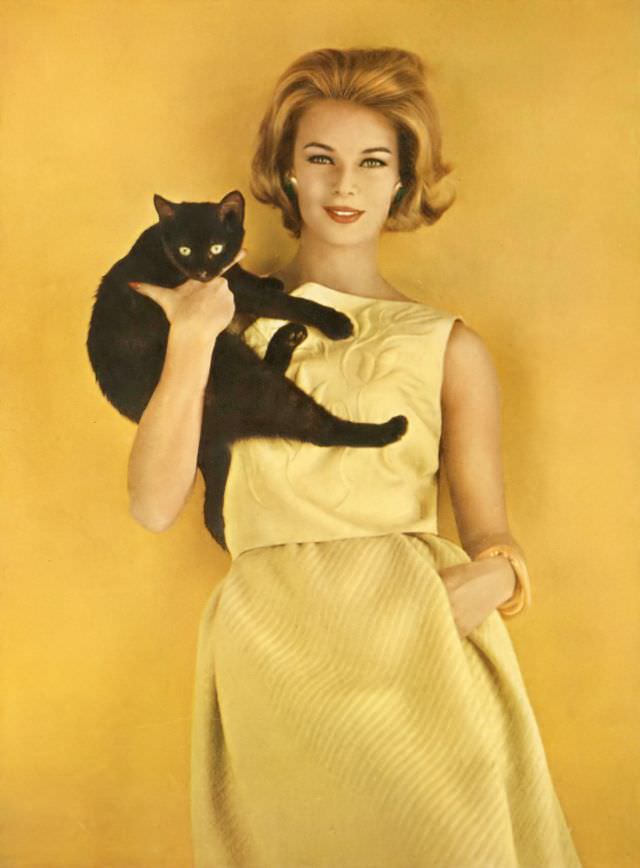
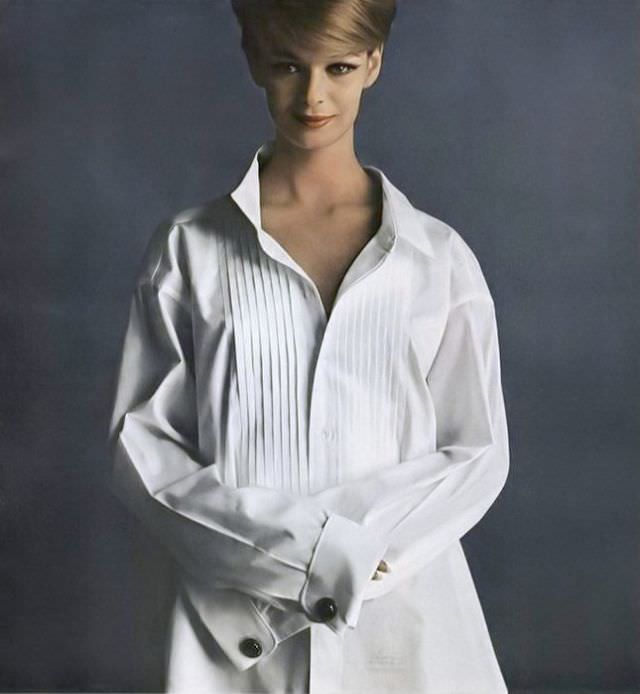
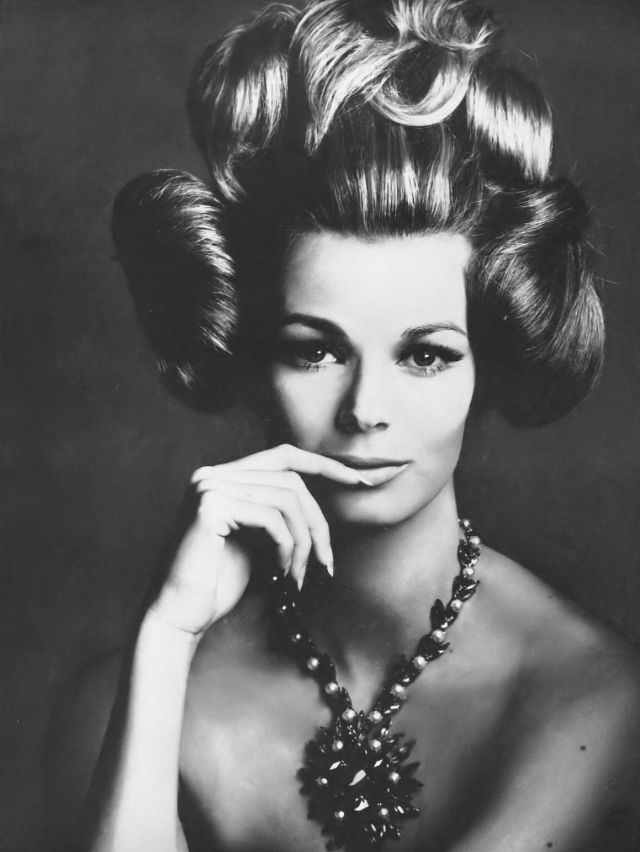
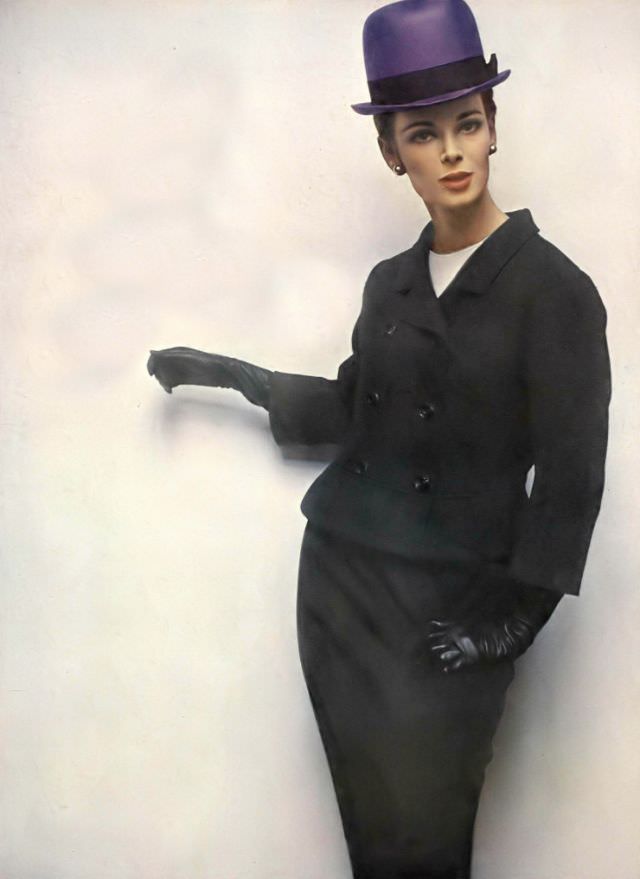
Her coiffure continued to receive dedicated attention in editorial credits. For Vogue’s November 1962 issue, her hair was styled by Carita, and she wore a pendant star of amethyst and pearls on a leafy chain by Scémama for Saint Laurent — a jewelry credit that placed her within the orbit of Yves Saint Laurent’s early independent work. In January 1963, she appeared in two strong looks by Gustave Tassell: a black lightweight tweed suit with a violet straw bowler, and a wool tattersall check dress and jacket with a yellow straw bowler.
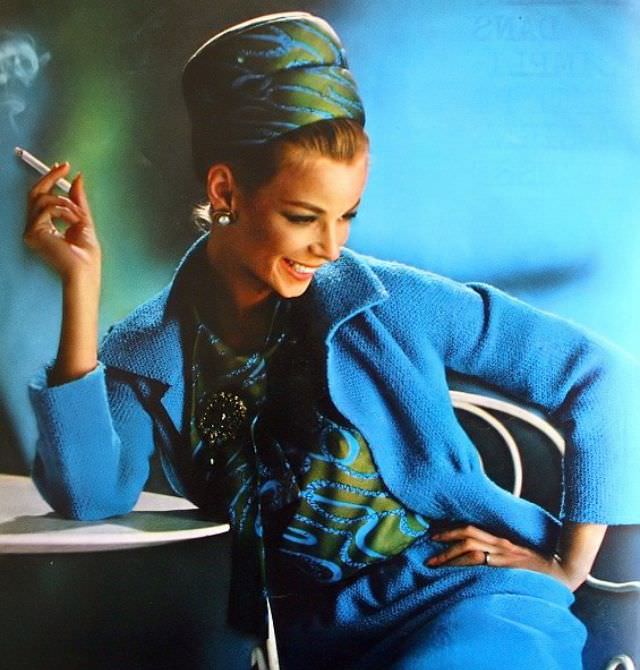
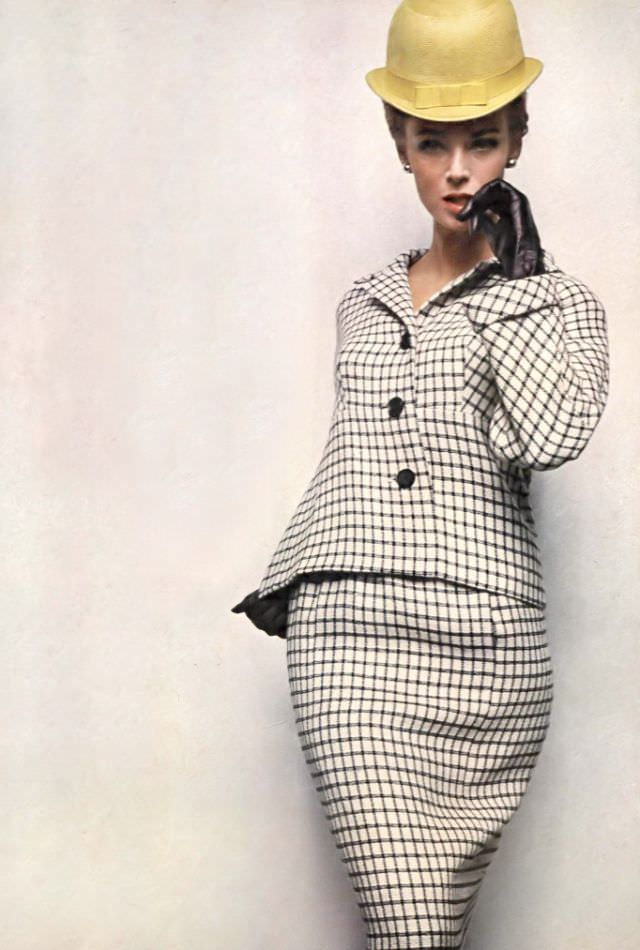
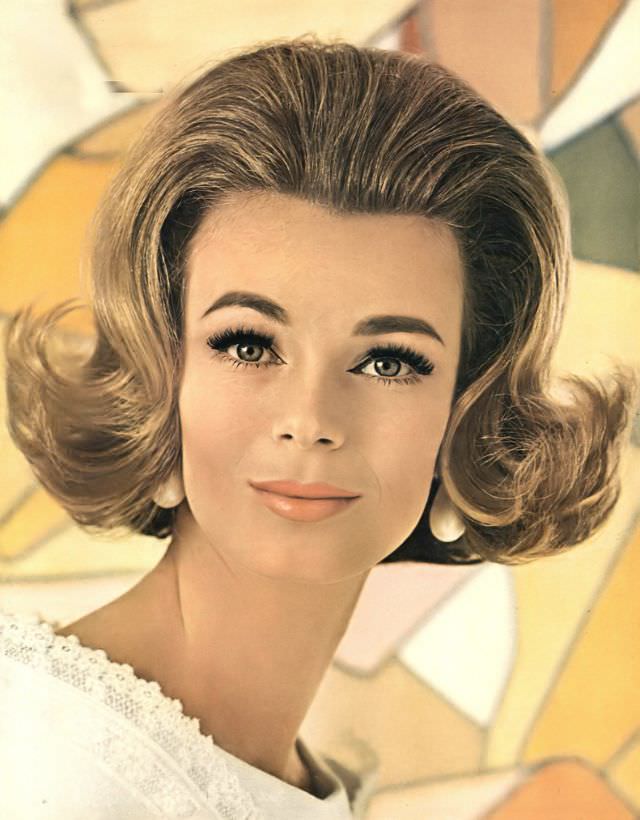
By 1963 and into 1964, her Vogue appearances continued steadily. She fronted a Shades-of-Youth hair color advertisement by Dorothy Gray in April 1963, with a coiffure by Marc Sinclair. Kimberly — a label specializing in fine knit dresses — featured her repeatedly in 1964, across Vogue’s August, September, and December issues. The brand’s structured, well-finished knitwear suited her measured, poised presence. Harper’s Bazaar also ran her in a whipcord wool knit suit by Kimberly in August 1964.
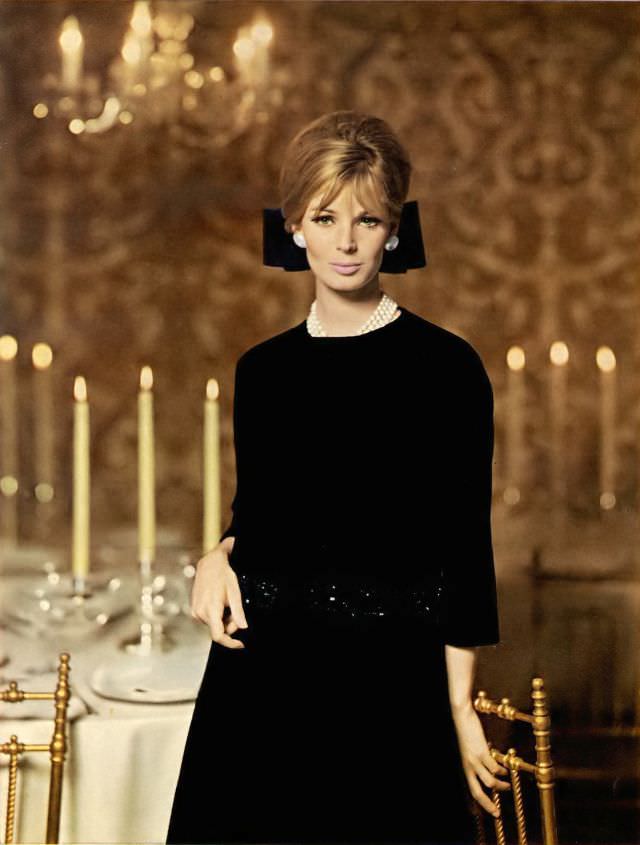
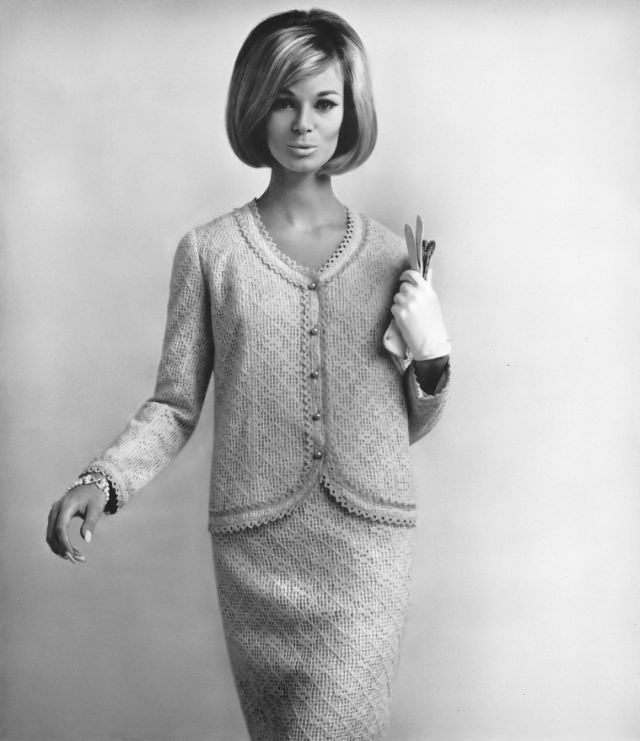
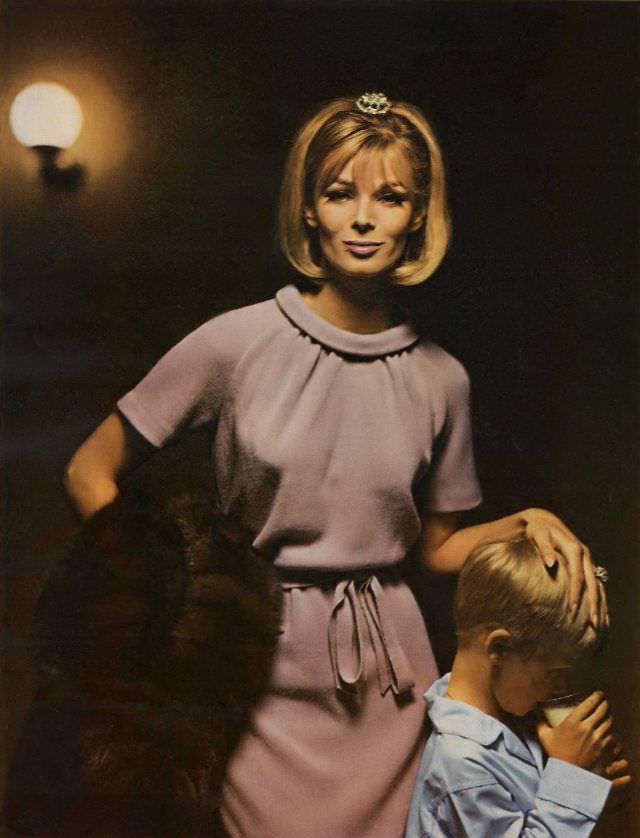
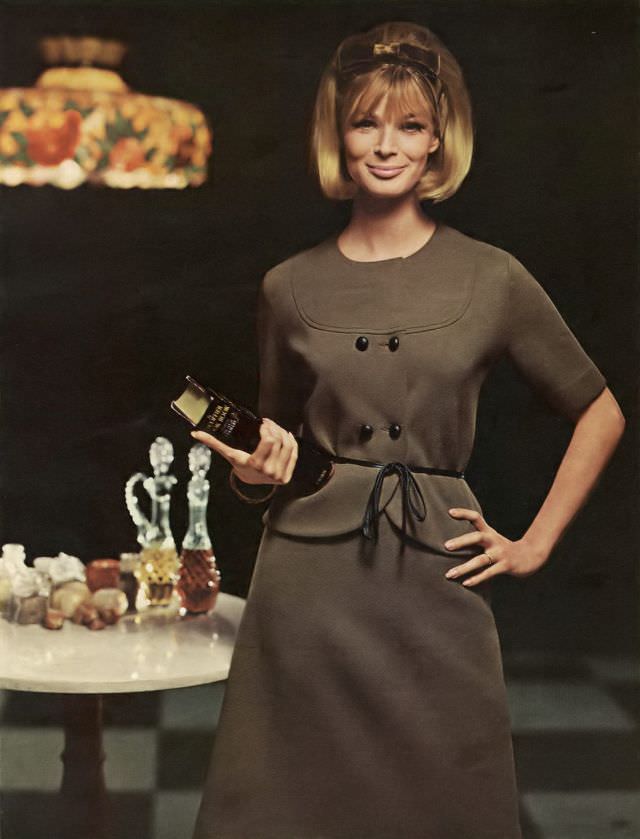
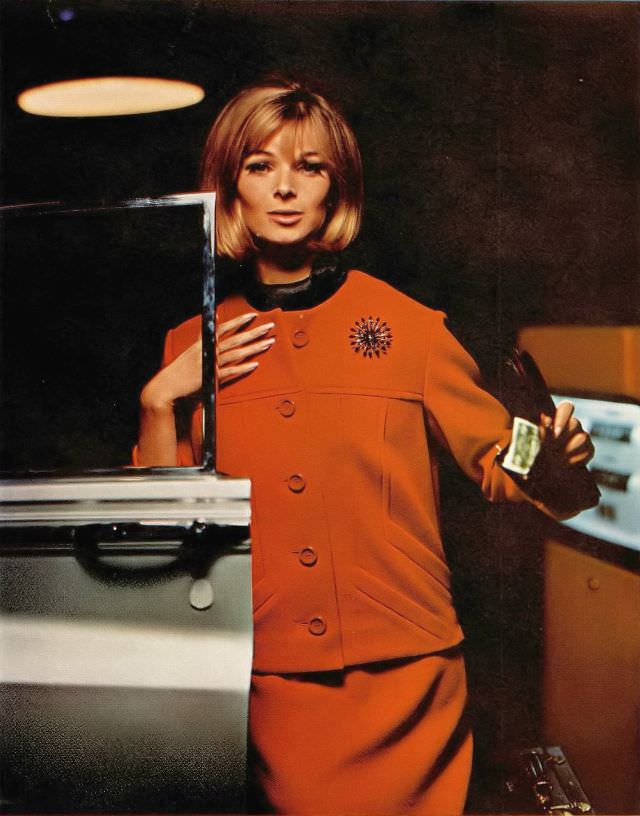
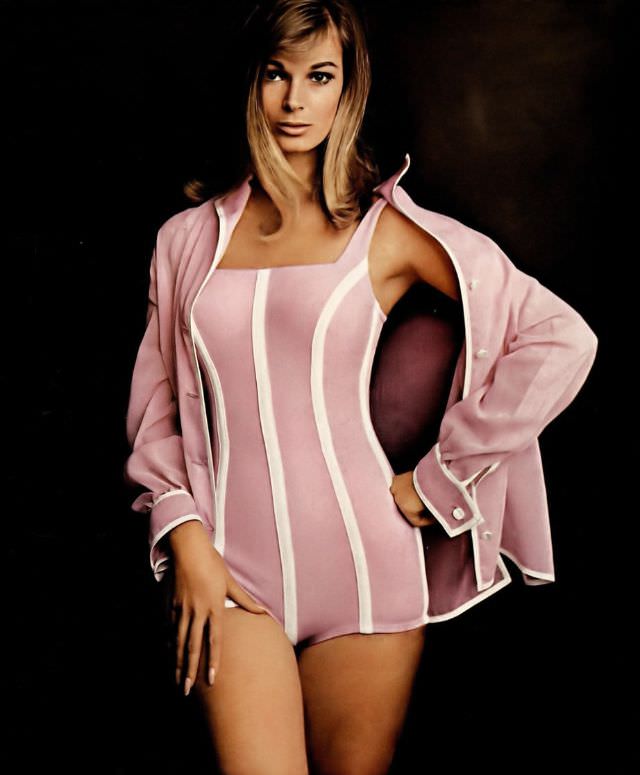
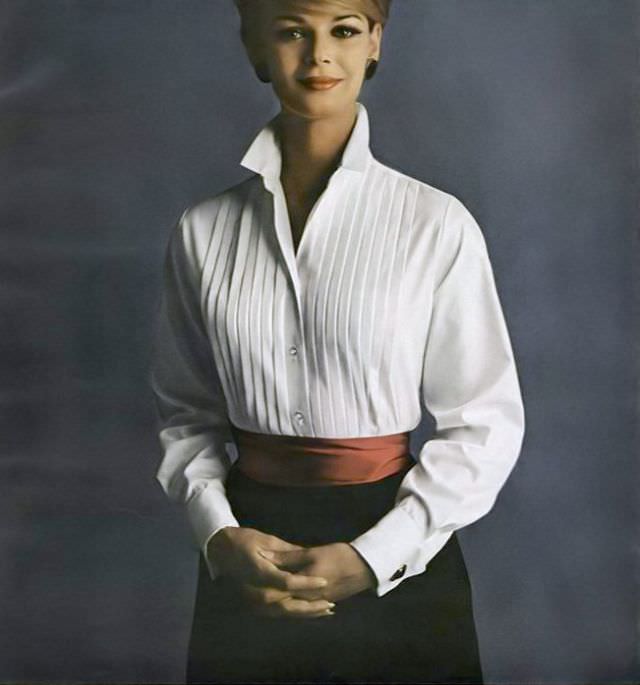
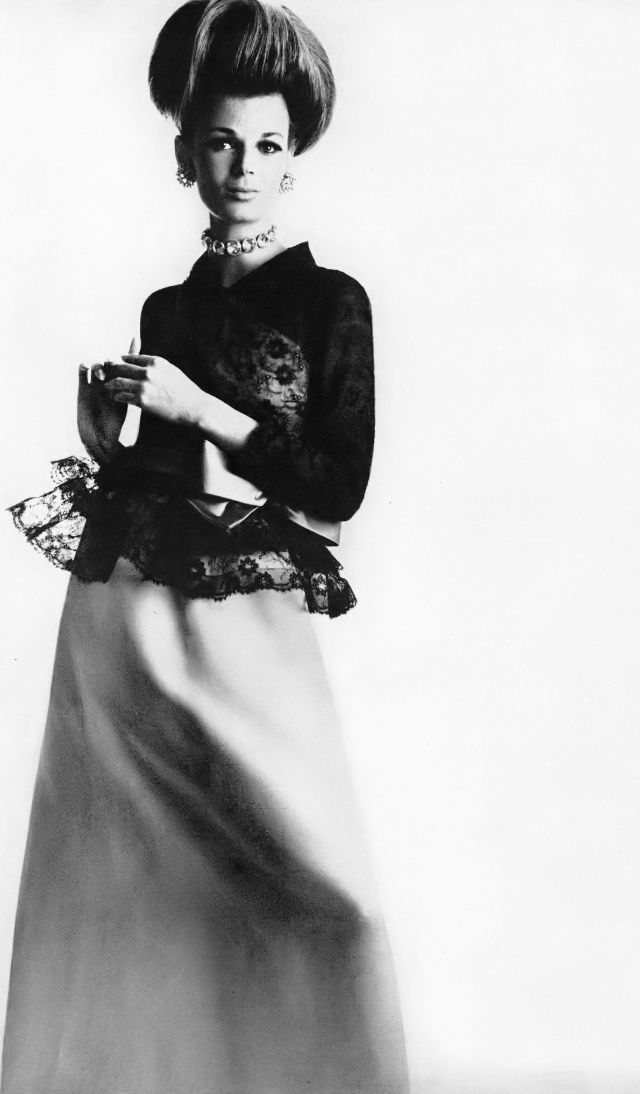
Her final years of active modeling, 1965 and 1966, included some of her most visually striking work. For Vogue’s November 1965 issue, she wore a black Chantilly lace peplum jacket over a strapless white satin dress with a purple satin sash by Teal Traina — a high-contrast, formally dramatic look. In January 1965, she modeled a Dacron jacket and dress by Sylvia de Gay for Robert Sloan. For Harper’s Bazaar, Oleg Cassini dressed her in a Peter Pan swimsuit and matching beach coat — a more relaxed, resort-focused image that carried its own kind of precision.
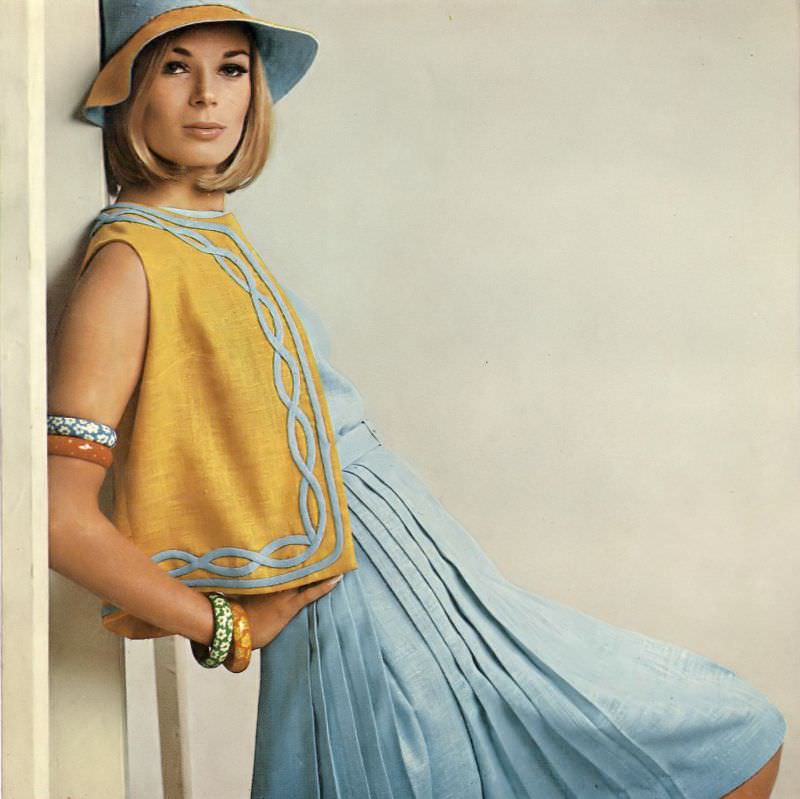
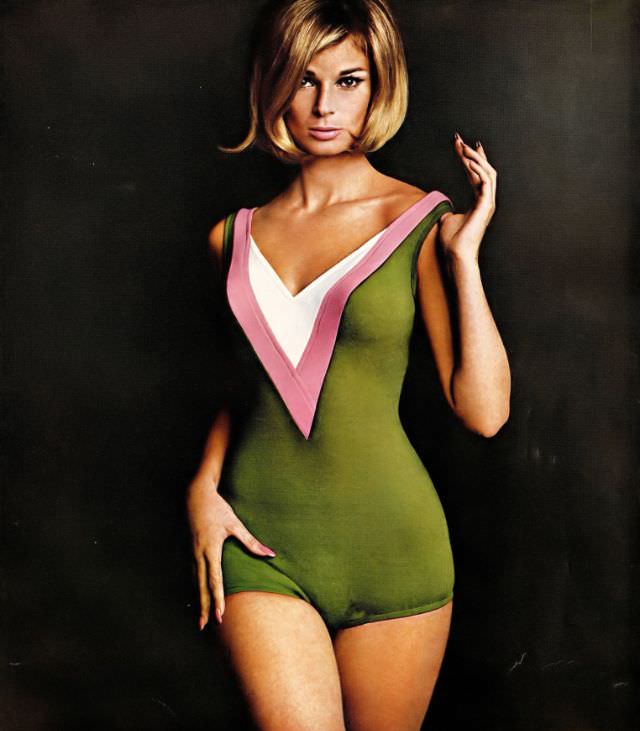
In 1956, she had married Prince Charles de Zogheb, a member of the Lebanese royal family. They had two children together, and she stepped back from modeling to focus on family life and charity work. The volume and consistency of her published work across roughly fifteen years — spanning couture houses, American ready-to-wear labels, commercial advertising, and beauty campaigns — marks her as one of the most fully documented models of the early 1960s fashion era.