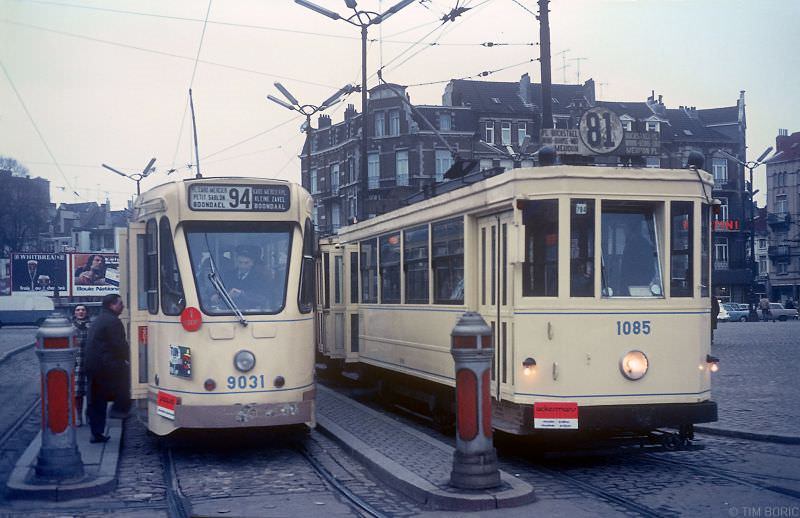
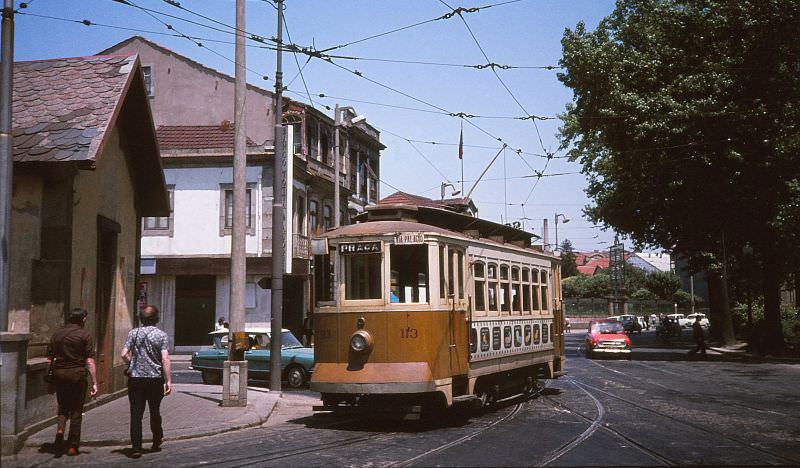
When World War II broke out, American and British railroads were transformed almost overnight. Trains stopped being a simple way to get from one city to another and became arteries of the war machine. Steel was rationed, civilian production slowed, and the locomotives and cars already on the tracks were pushed harder than ever before. New passenger equipment was rarely built. Instead, railroads repaired what they had and kept it running around the clock.
Government policy made it clear: troops and cargo came first. Passenger schedules were cut, routes were consolidated, and ordinary travelers had to work around military priorities. Trains hauled tanks, artillery shells, fuel, and thousands of soldiers to ports up and down both coasts. A seat on a passenger train became something you were grateful for, not something you took for granted.
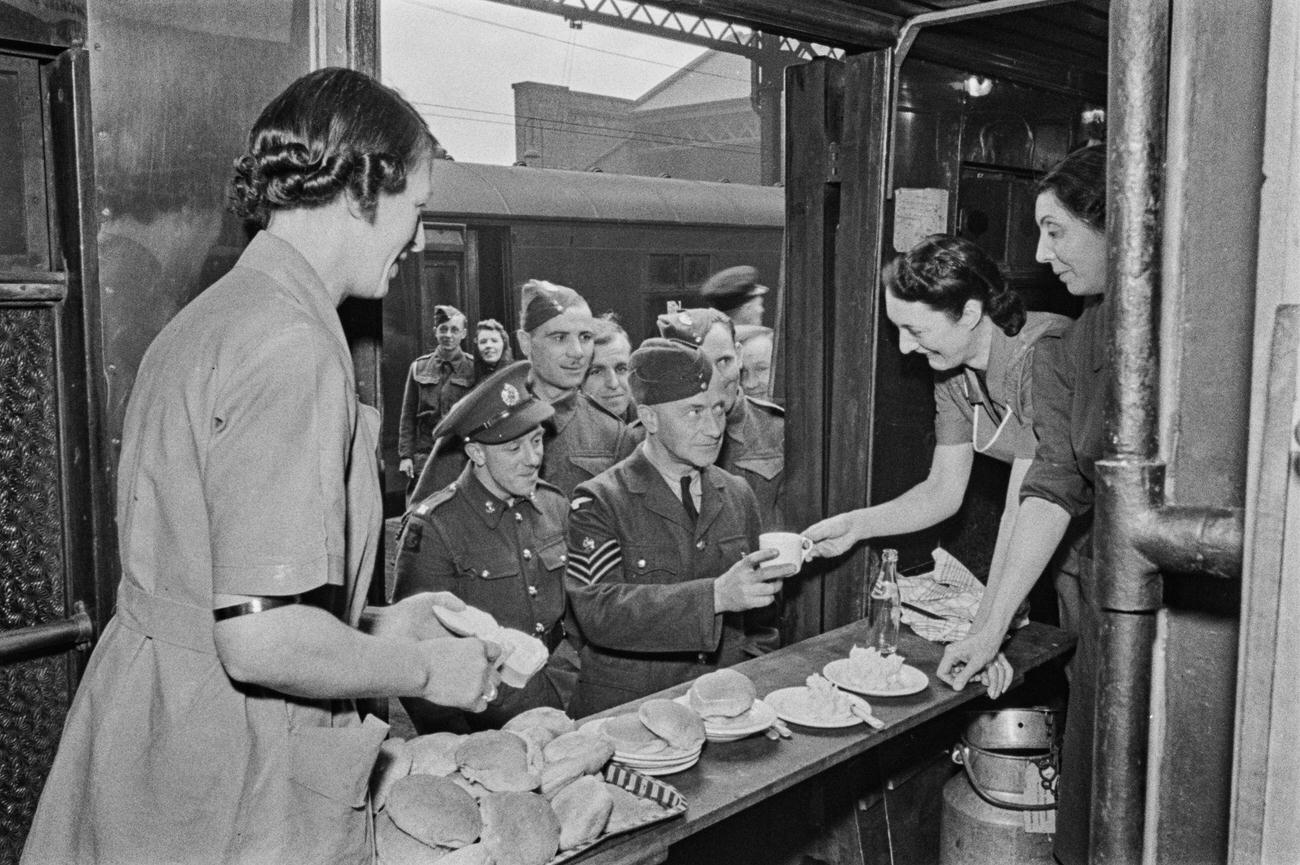
Three female workers from the Young Men’s Christian Association (YMCA) serve tea and rolls to British servicemen from their canteen in a train carriage at a railway station in Glasgow, Scotland during World War II on 12th December 1941.
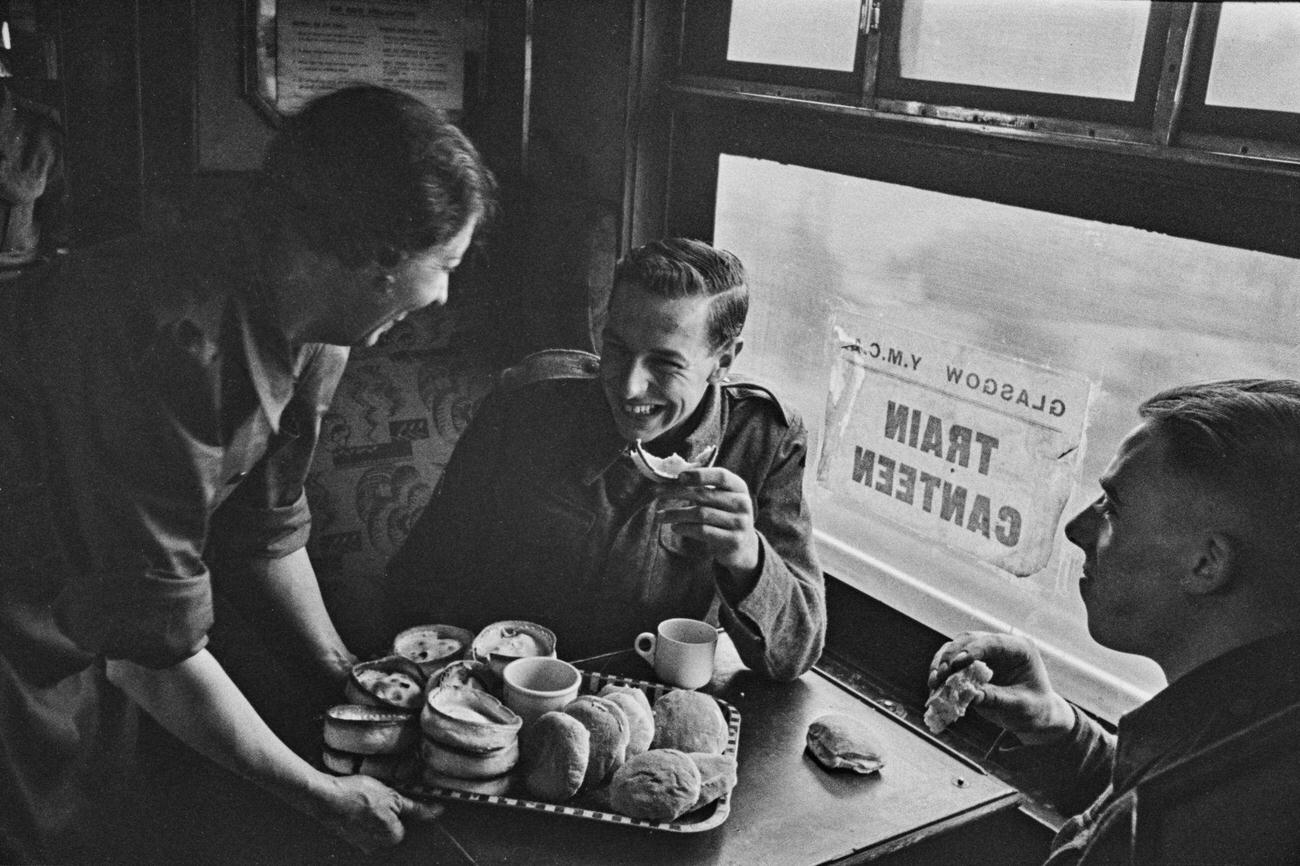
On both sides of the Atlantic, volunteer organizations stepped in to make the journey more bearable for servicemen. At British railway stations and inside carriages, YMCA workers set up rolling canteens, handing out tea, rolls, and pies to soldiers who were often traveling for days with little comfort. It was a small gesture in the middle of an enormous war, but it mattered.
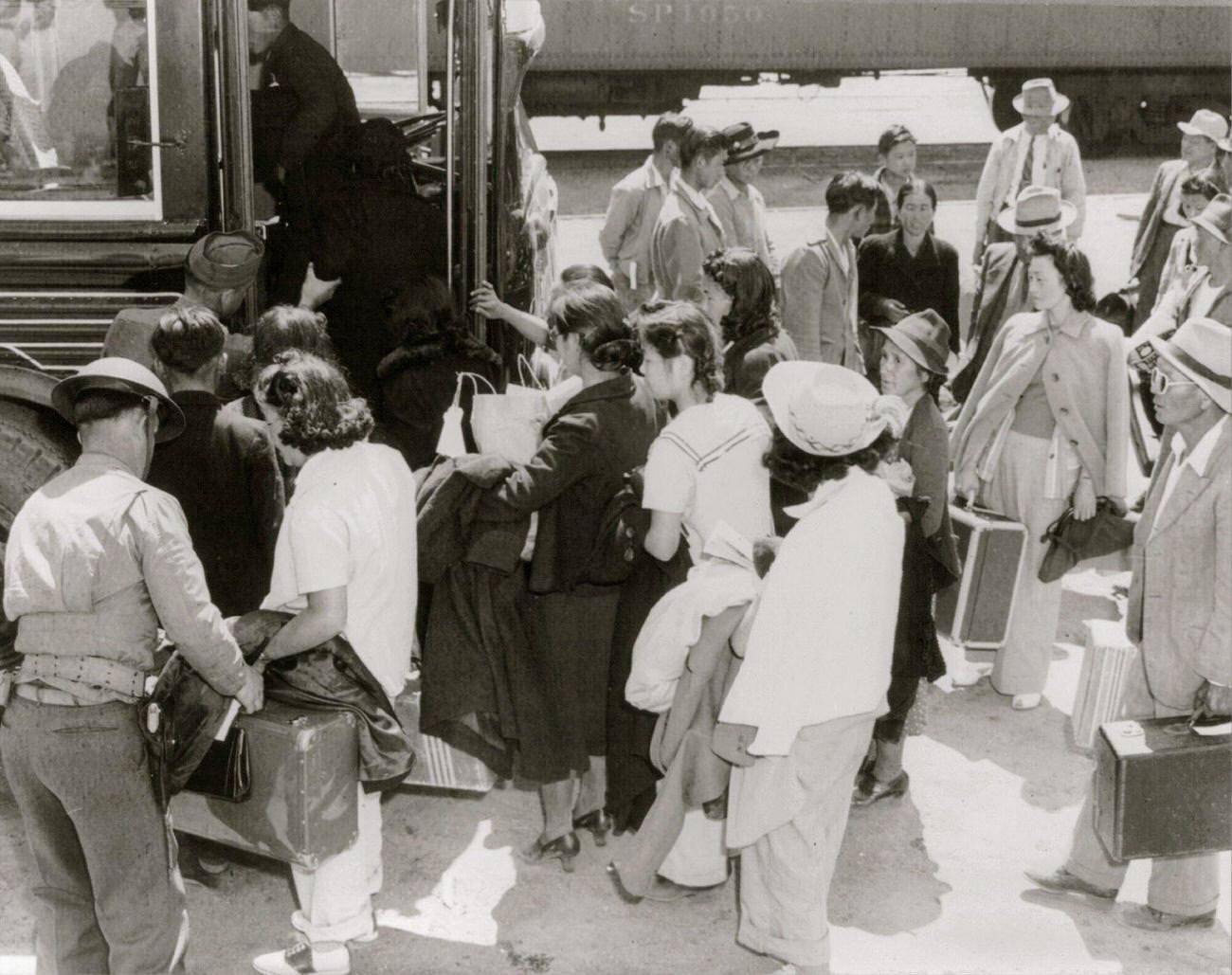
Trains also became tools of darker wartime policies. In May 1942, Japanese American families were loaded onto trains at stations like Lone Pine, California, and transported to War Relocation Authority centers. These were not voluntary departures. The federal government had ordered the forced removal of people of Japanese ancestry from the West Coast, and the railroad was the machine that carried it out.
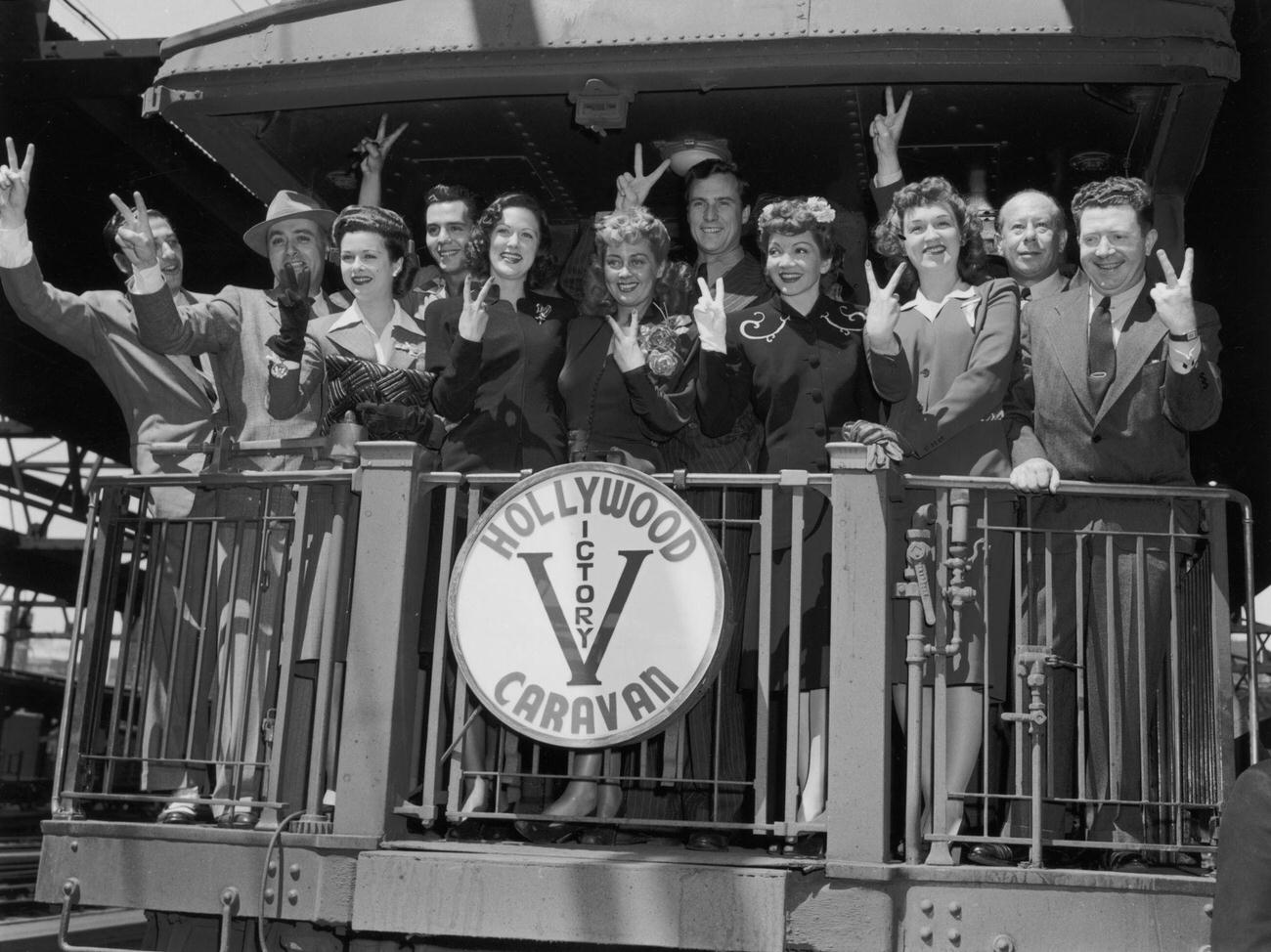
Not all wartime rail travel was grim. Hollywood threw its support behind the war effort through the Hollywood Victory Caravan — a cross-country train tour in 1942 that brought famous actors and entertainers to cities across the United States to raise money for war relief. Stars mingled with soldiers, posed for photographs, and performed at stops along the route.
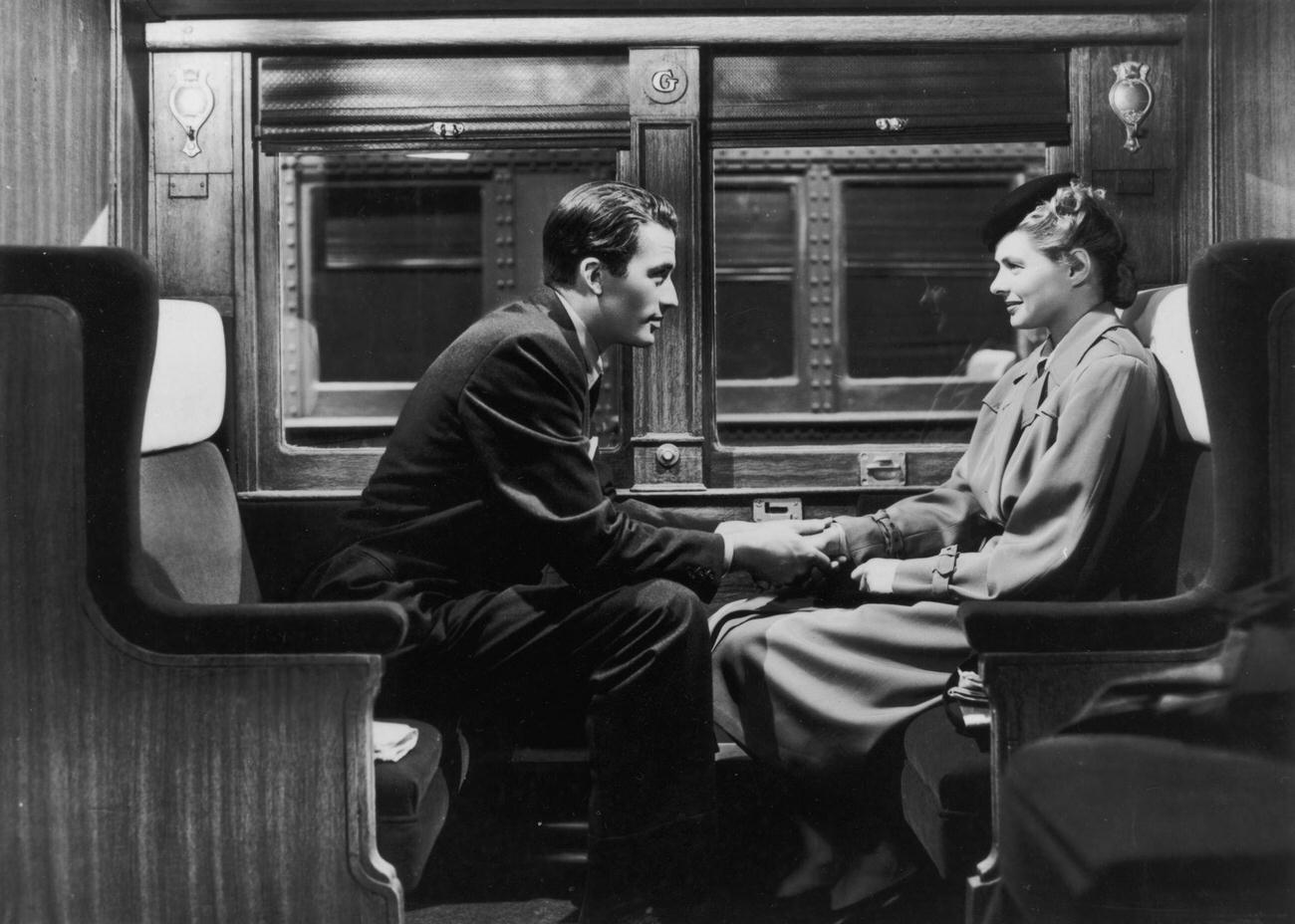
Trains appeared frequently in the films of the decade as well. In 1945, Gregory Peck and Ingrid Bergman filmed scenes together aboard a train, capturing the atmosphere that millions of Americans were living through — the rumble of the cars, the close quarters, and the sense that every journey carried some kind of weight.
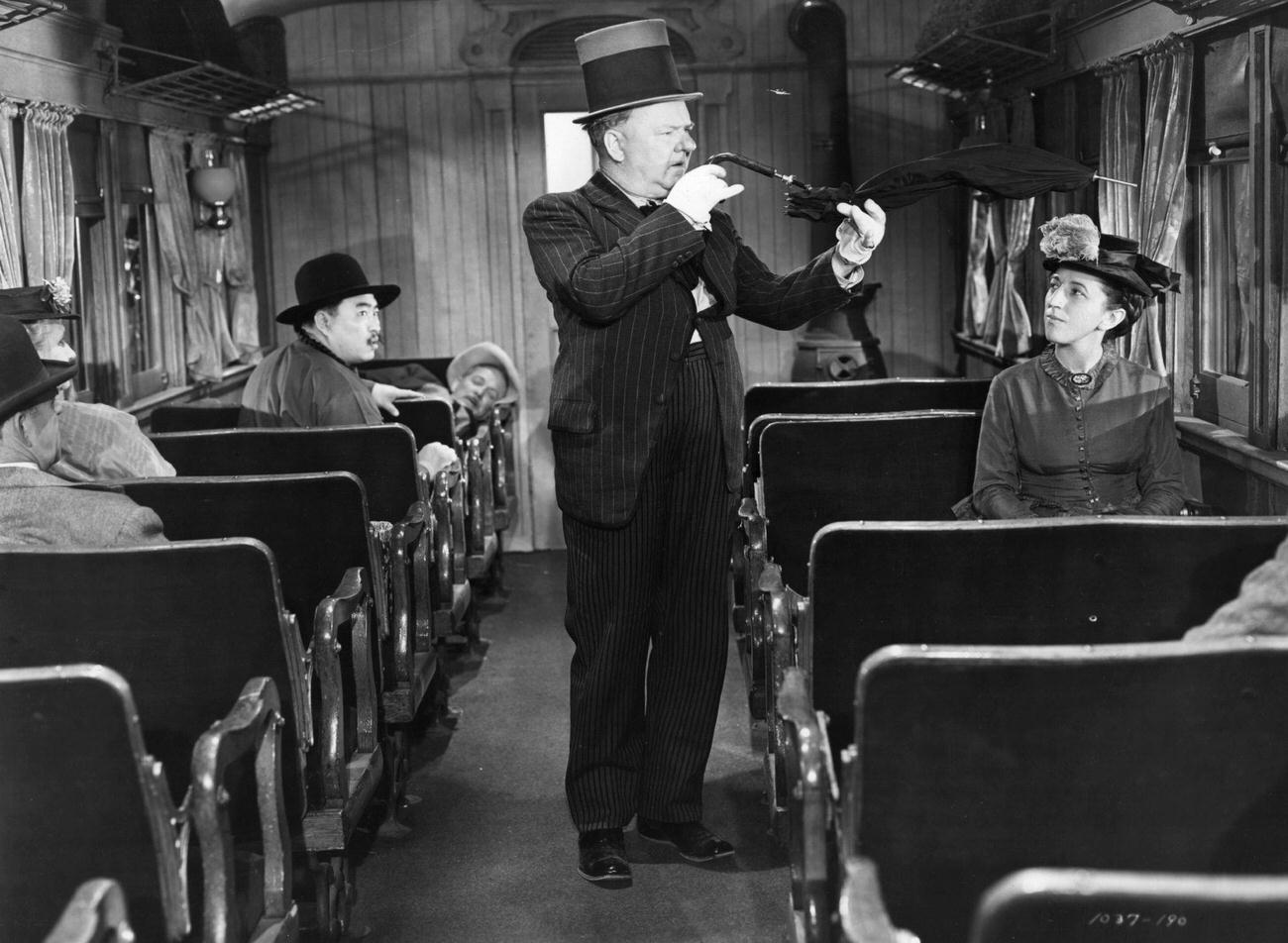
Films had long used the train as a setting for drama and comedy alike. Margaret Hamilton, best known as the Wicked Witch in ‘The Wizard of Oz,’ appeared in a train scene in ‘My Little Chickadee,’ the kind of screwball comedy that gave audiences a brief escape during hard years.
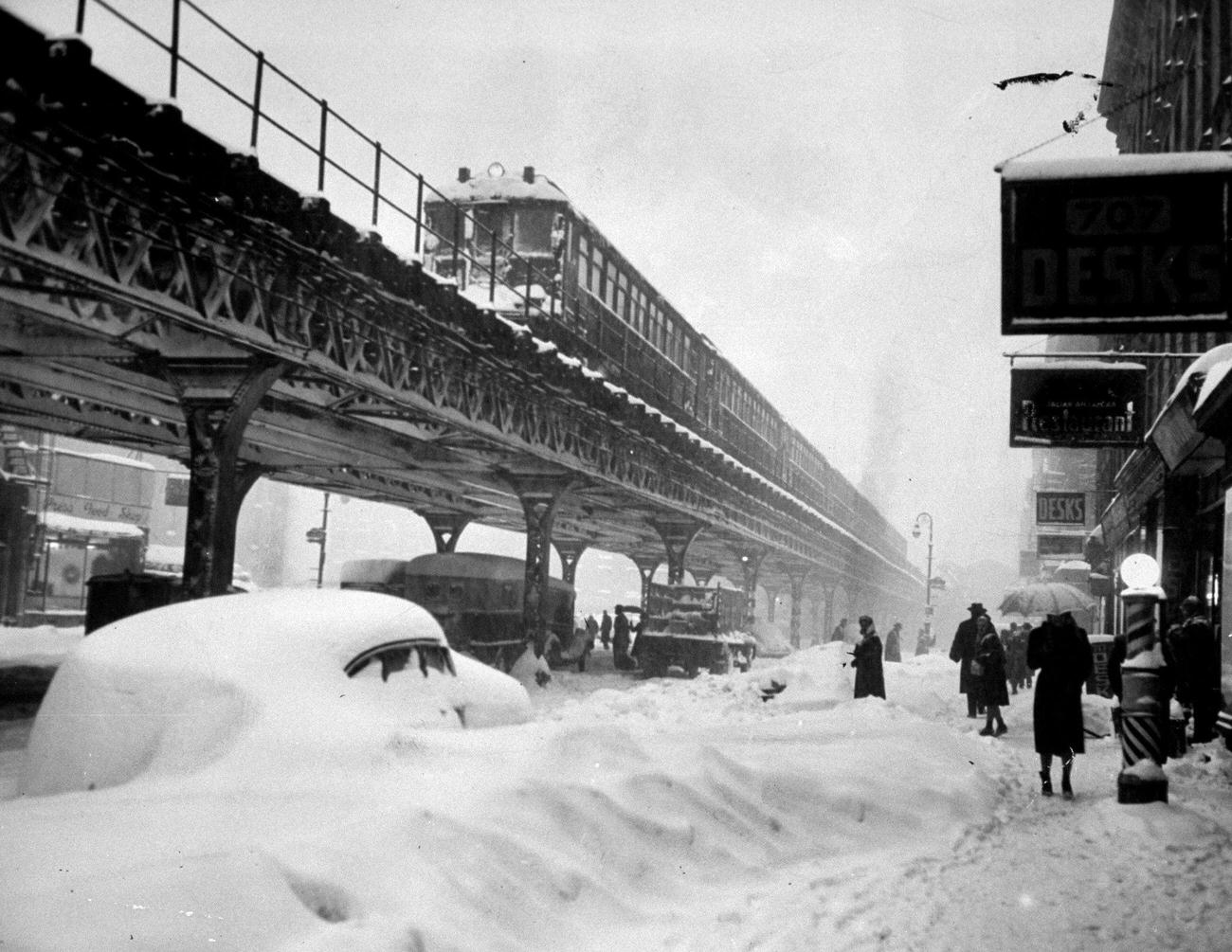
New York City’s rail network was its own world. The elevated trains — the ‘El’ lines — ran above street level on iron structures, threading through neighborhoods and rattling windows in buildings nearby. A heavy snowstorm could bring the entire system to a standstill, as happened on Third Avenue at 42nd Street when snow locked cars to the tracks and halted service completely.
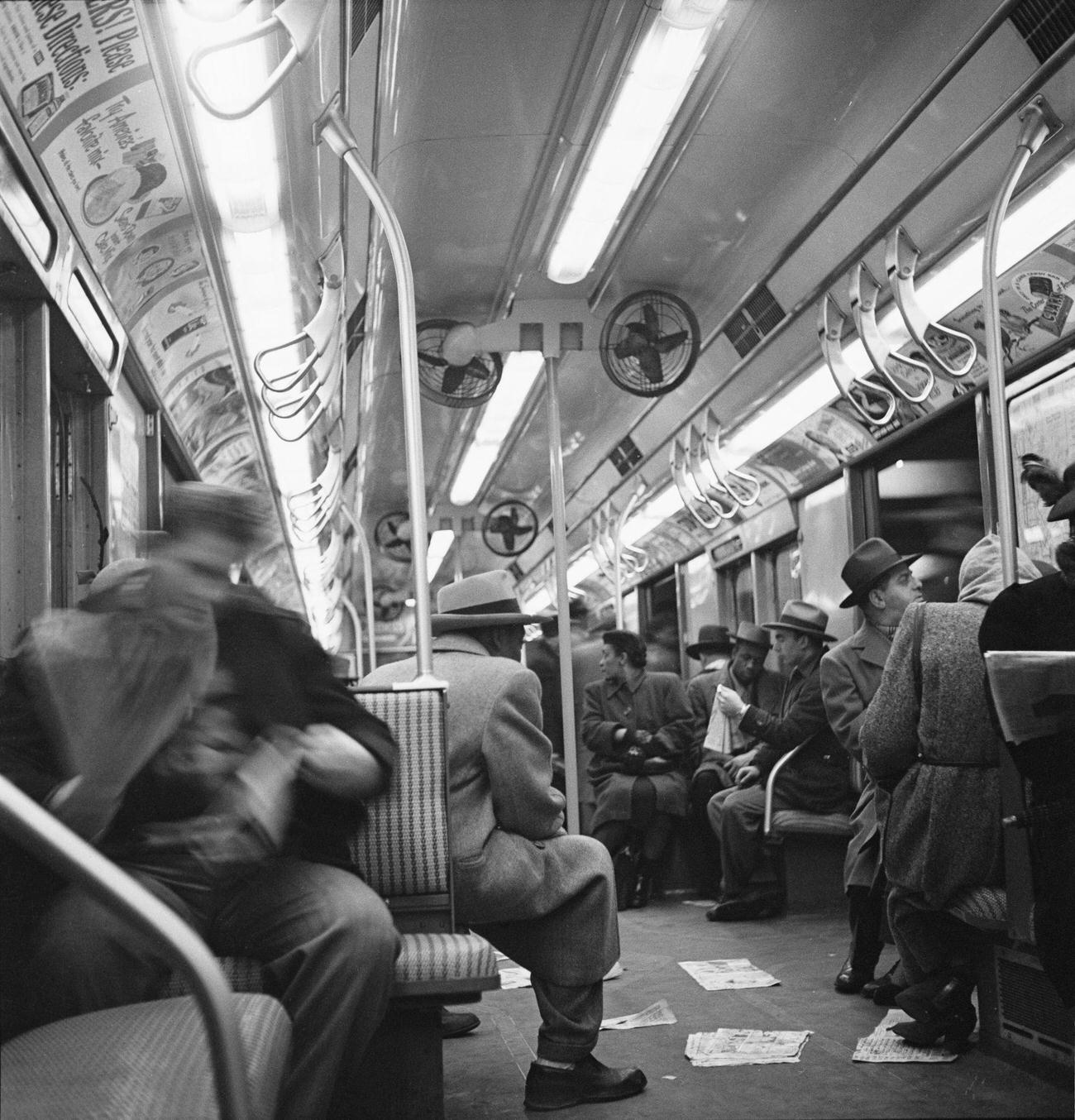
Underground, the subway was packed. At Times Square station in 1948, passengers stood elbow to elbow in cars fitted with ceiling-mounted fans — the closest thing to air conditioning that most subway riders would see for years. The heat in those cars during summer was intense, and the fans did only so much.
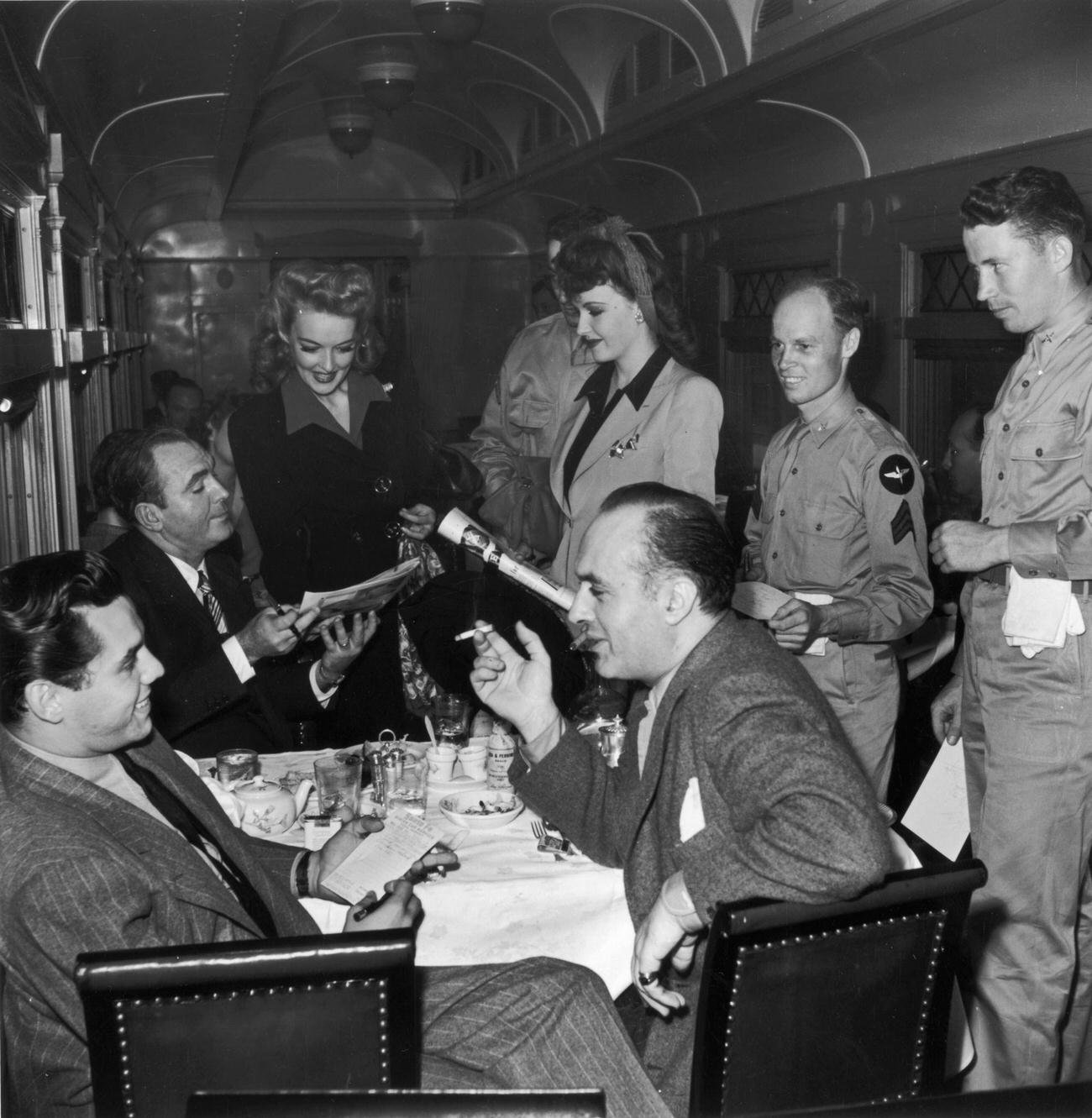
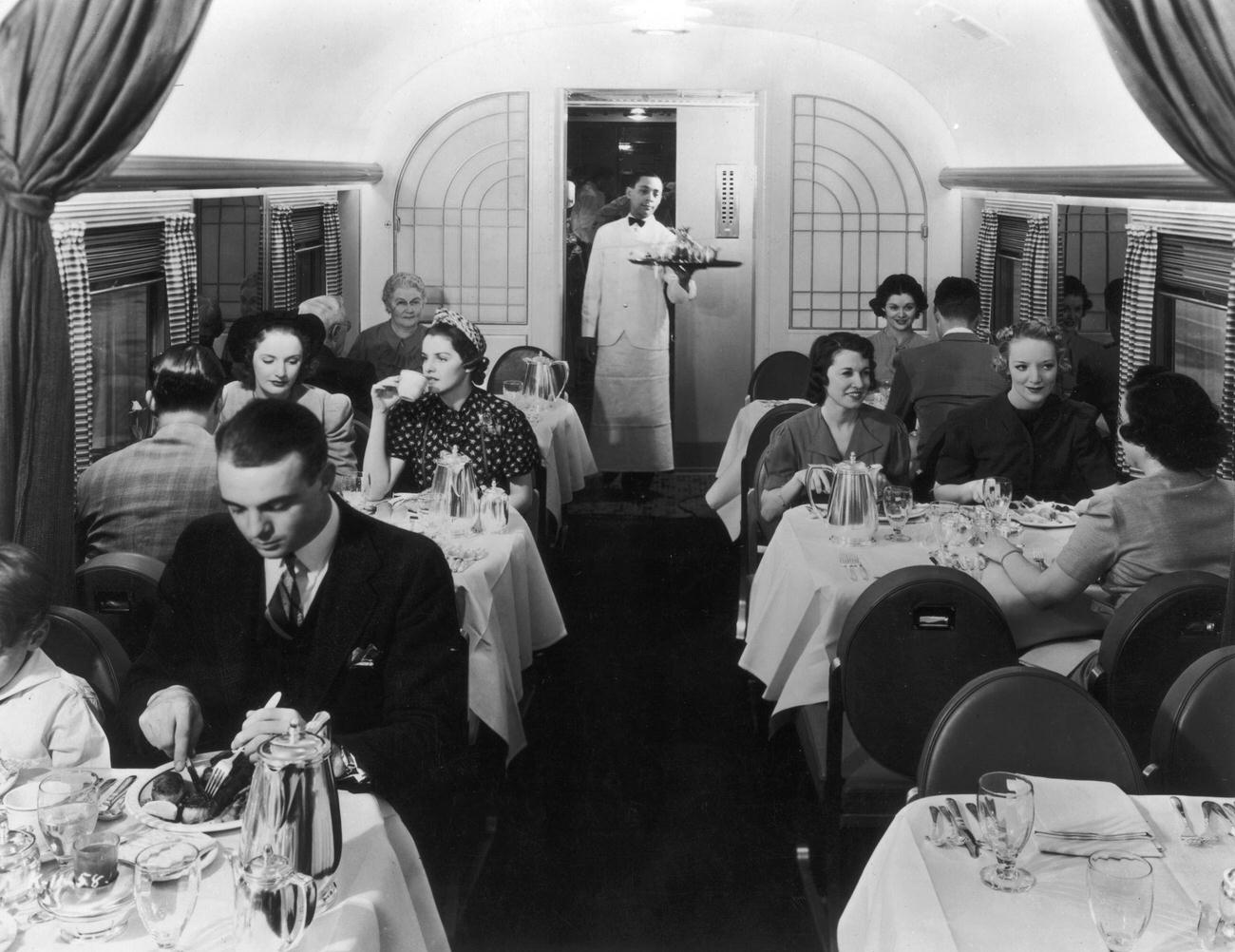
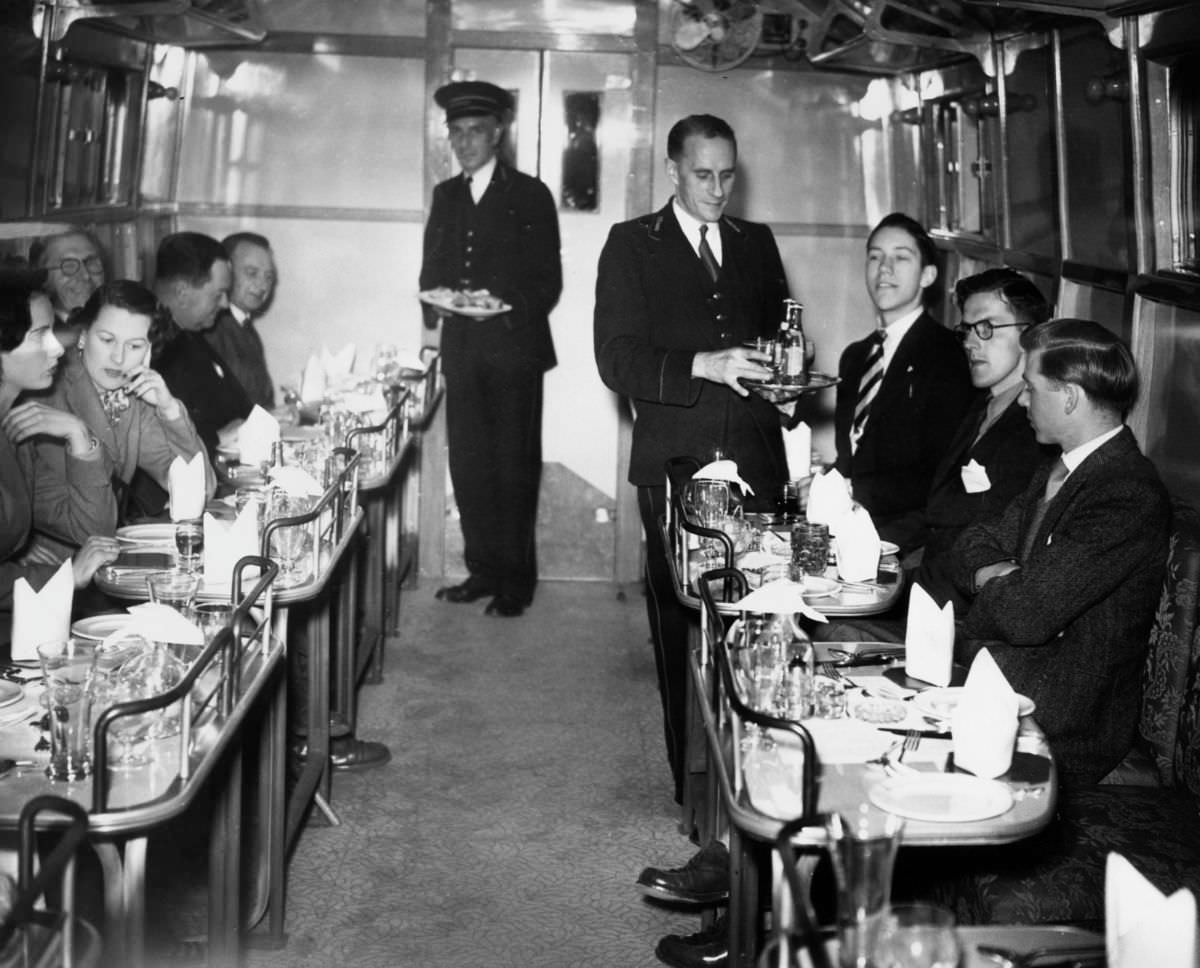
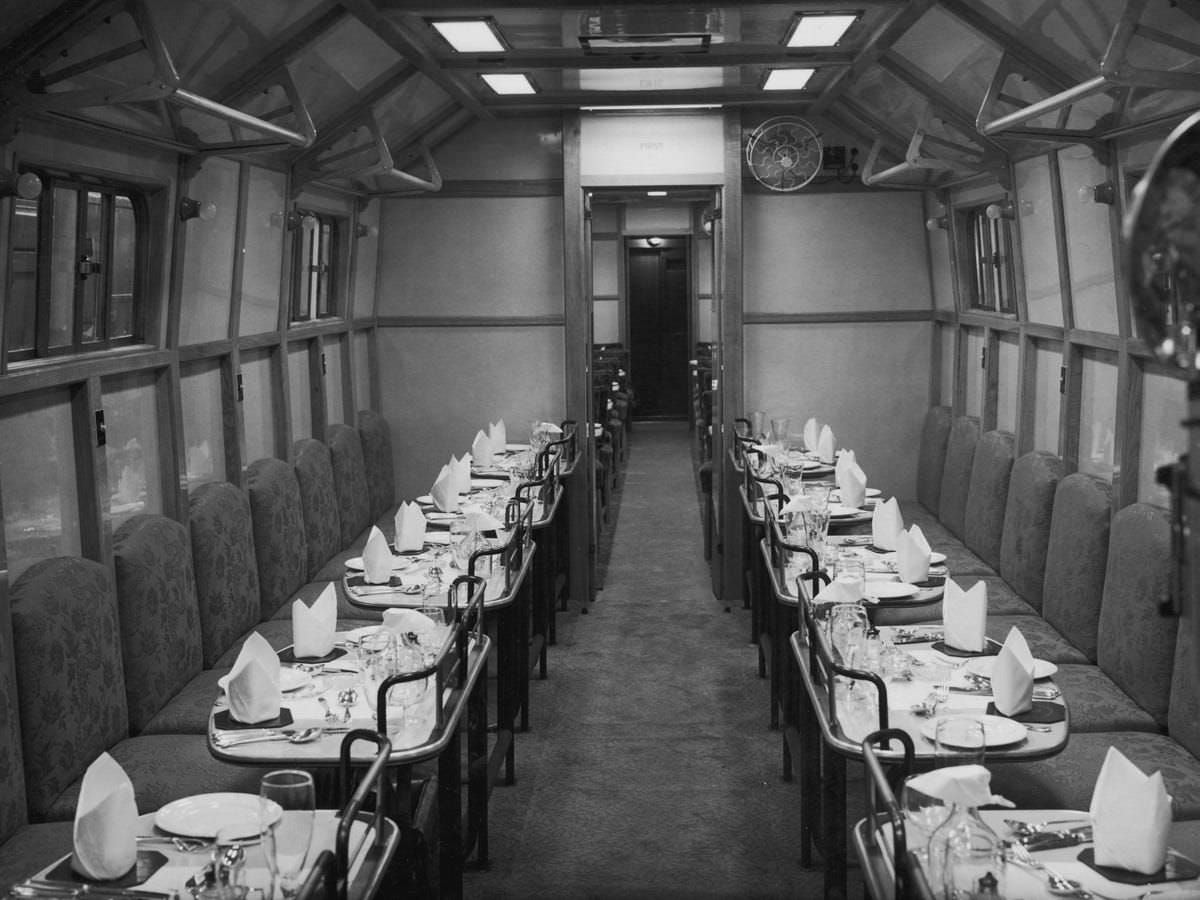
For those who could afford a long-distance ticket, the dining car was one of the great pleasures of rail travel. White tablecloths, waitstaff in uniform, and a full menu made the experience feel closer to a restaurant than a mode of transportation. In 1945, passengers in dining cars could order full meals while watching the countryside pass outside the window. Even in wartime, the railroads worked to maintain that standard.
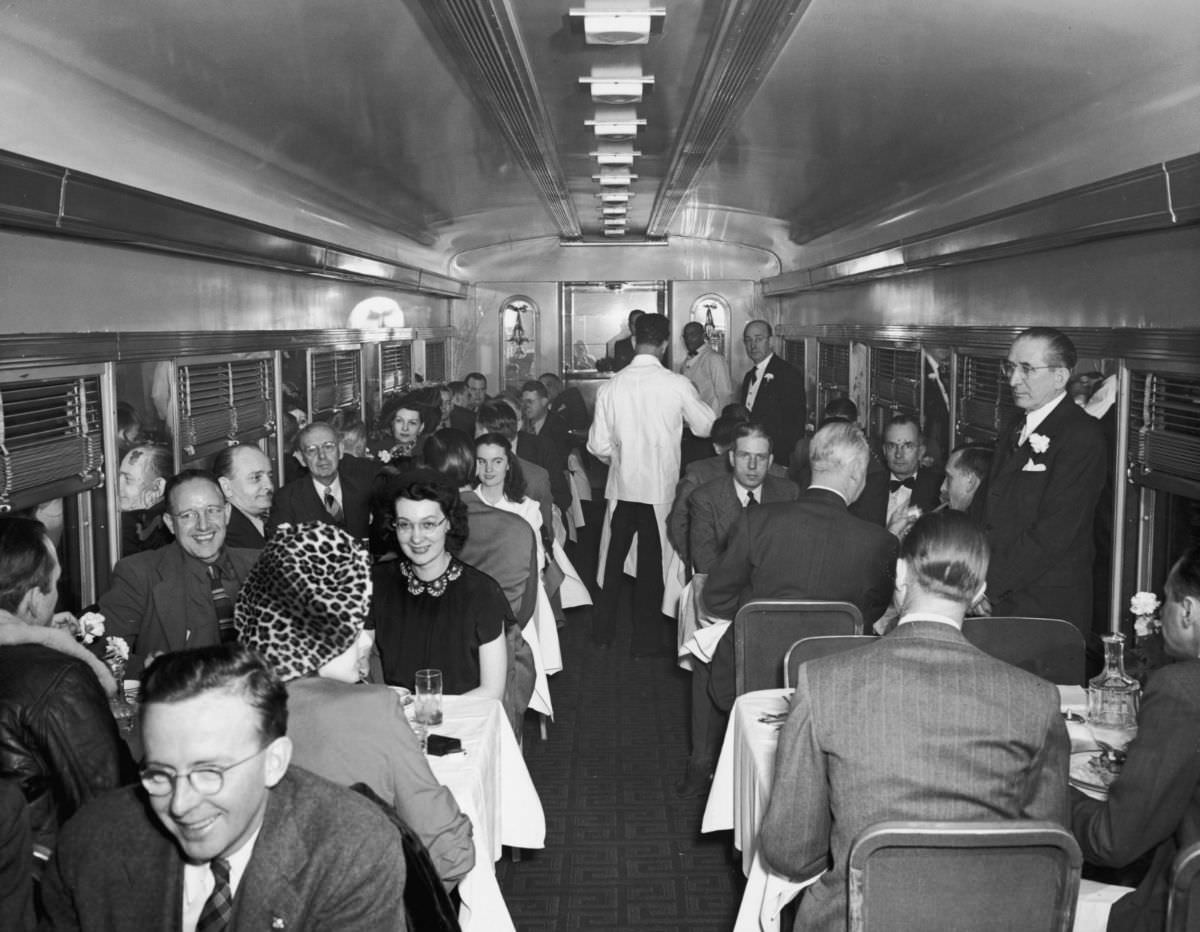
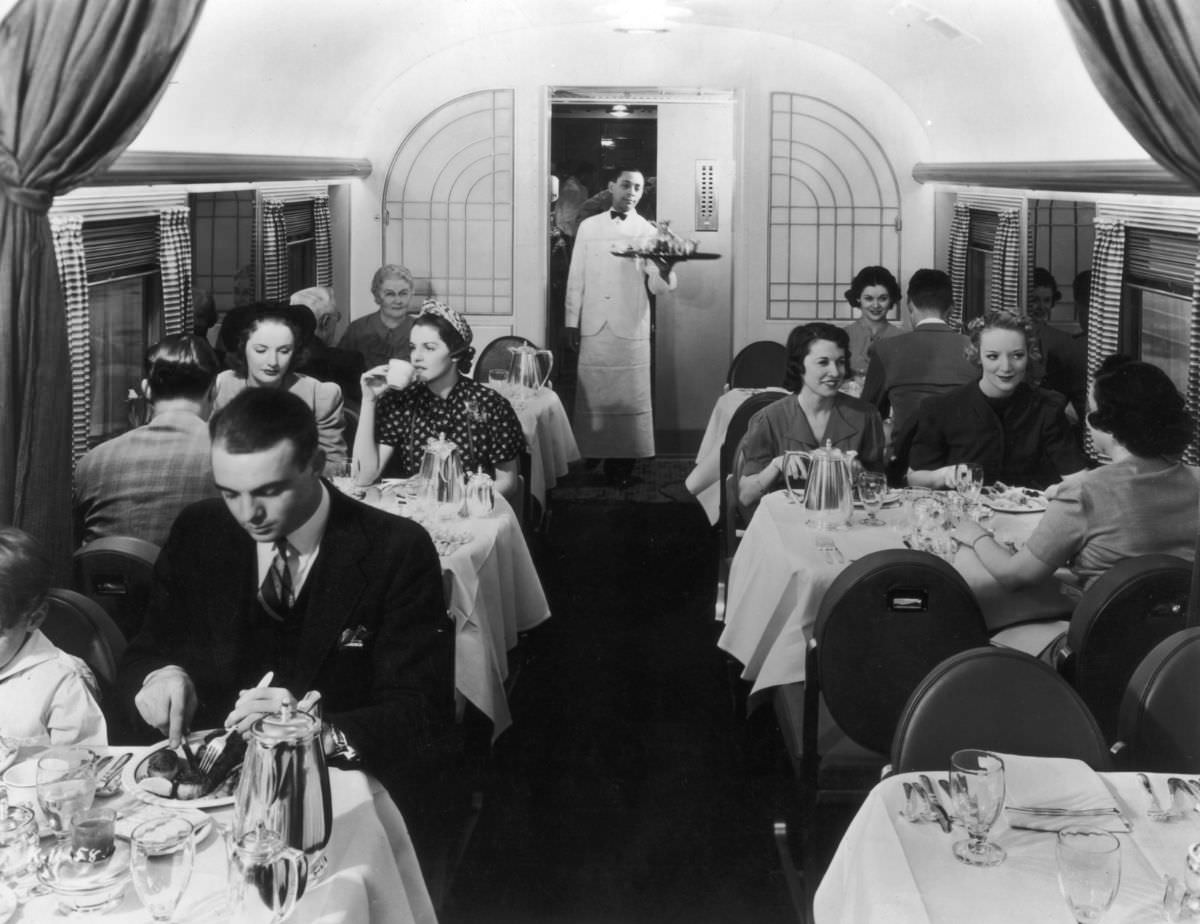
By the mid-1940s, British railways were also feeding their passengers well. Diners aboard Great Western Railway locomotives, including oil-fired engines, sat down to meals served in proper restaurant cars. The GWR was known for maintaining a level of service that the wartime years had strained but not broken.
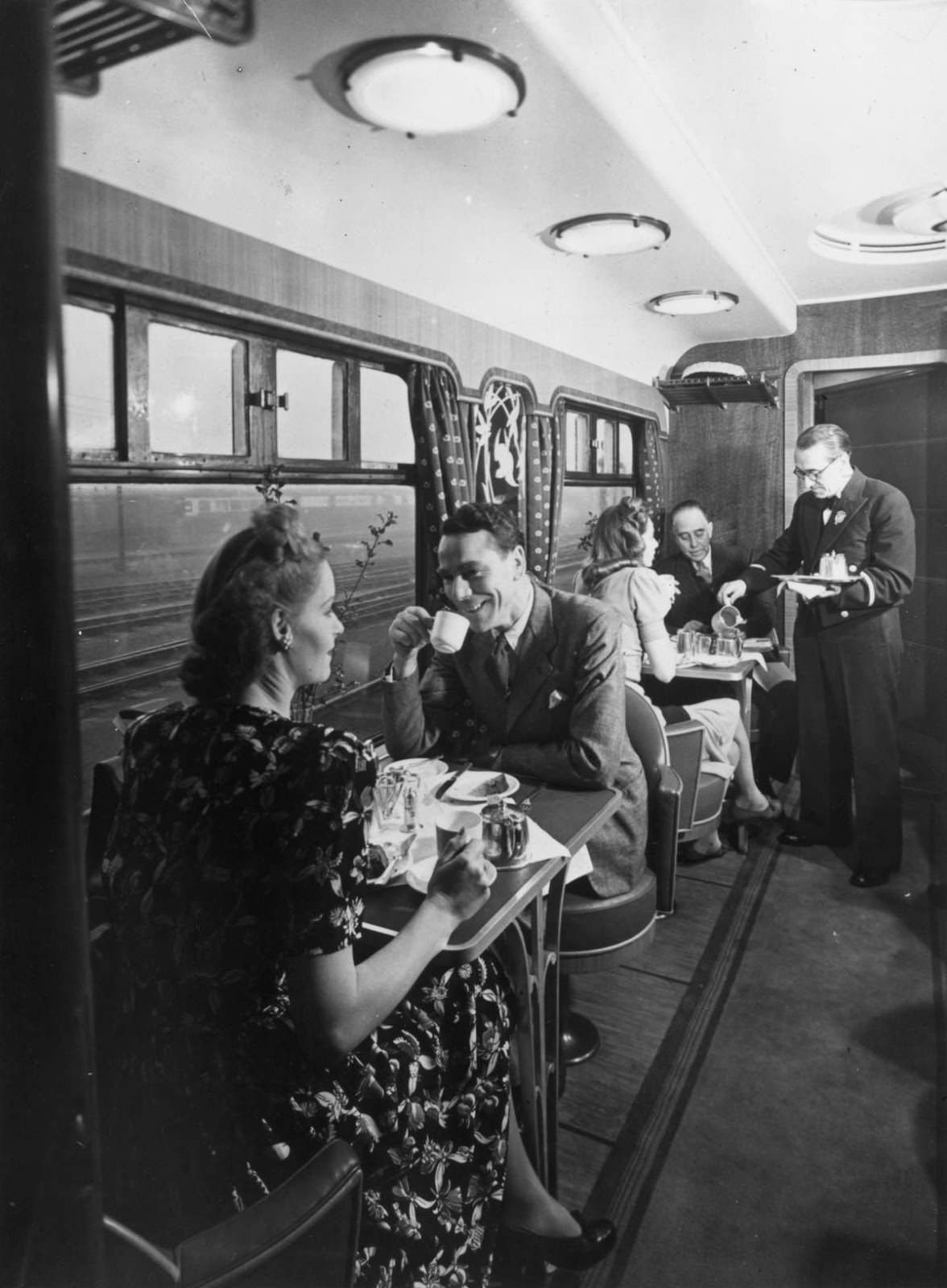
Private compartments offered another kind of experience entirely. In the Blue Train — one of Europe’s most storied luxury services — passengers traveled in enclosed compartments with upholstered seats, curtained windows, and enough space to spread out. A couple could book a compartment and spend the night crossing France in genuine comfort.
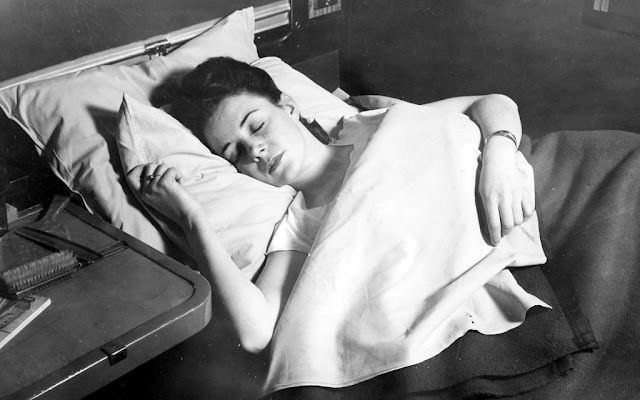
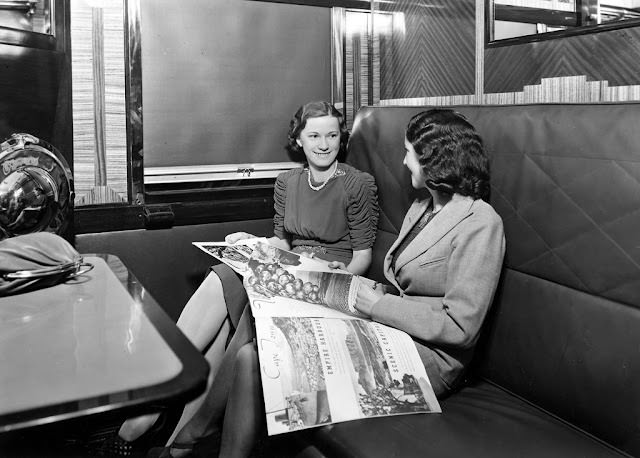
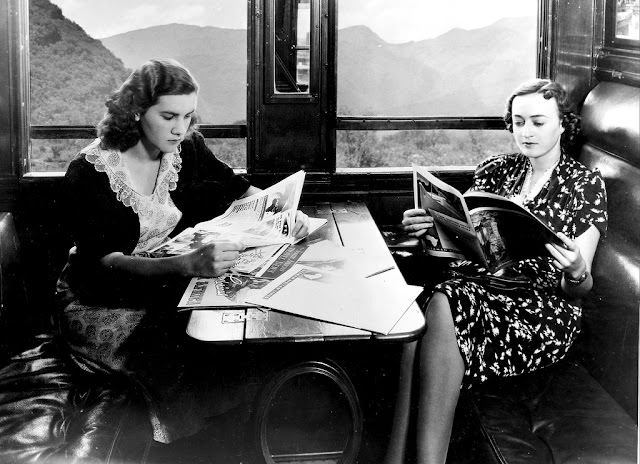
First-class travel on British trains gave passengers their own compartment with plush seating, privacy, and room to read or simply watch the landscape roll by. The experience was quiet compared to the crowded third-class carriages farther down the train.
After the war ended, British Railways introduced new tavern cars — social carriages designed to feel more like a pub than a rail car. The ‘Jolly Tar,’ the first of its kind, debuted at Waterloo Station in London on May 25, 1949. New restaurant cars followed, signaling that the railways were investing in the passenger experience again after years of wartime austerity.
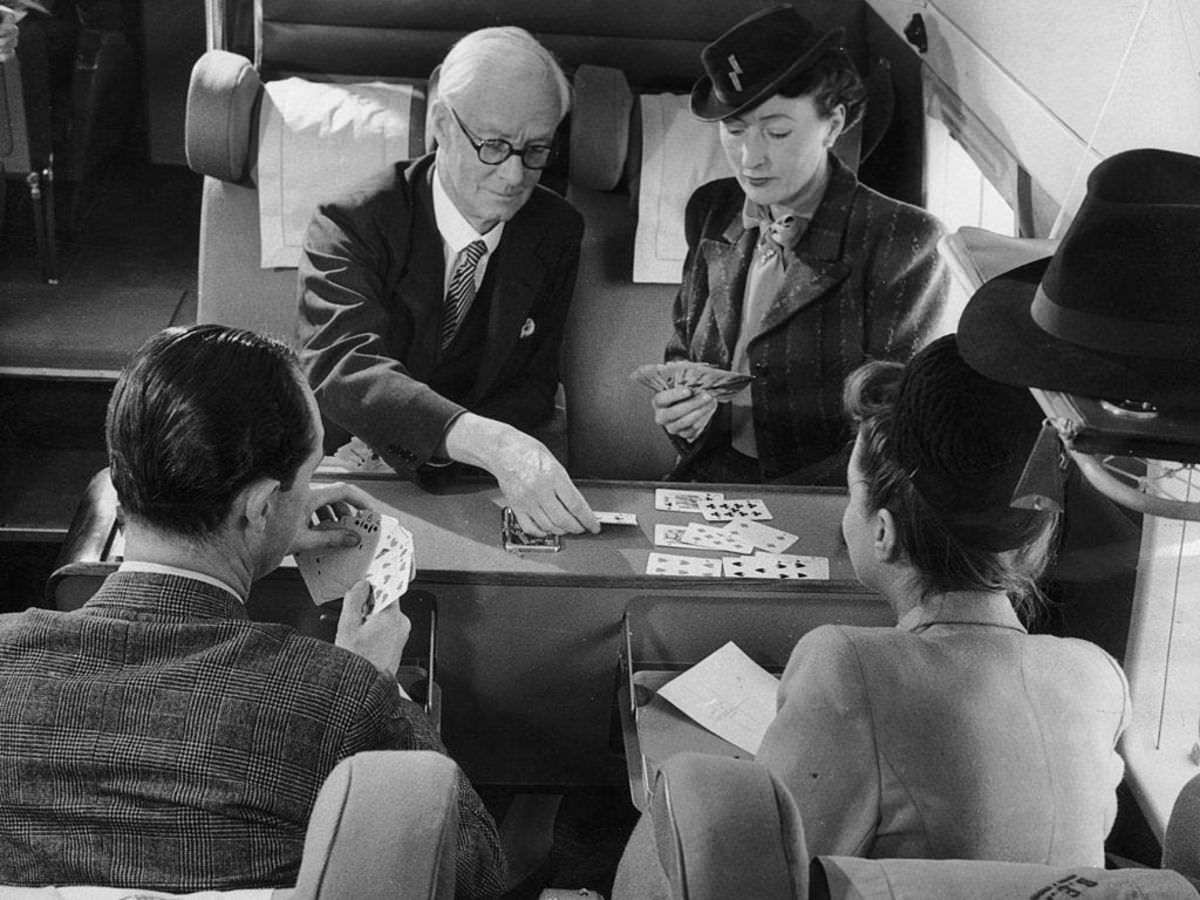
Passengers on long trips found other ways to pass the time besides eating. Card games were common. In 1947, passengers aboard a BEA Vickers Viking — a short-haul aircraft — were already playing cards in the air, a sign that flying was beginning to compete with trains for the traveling public’s attention.
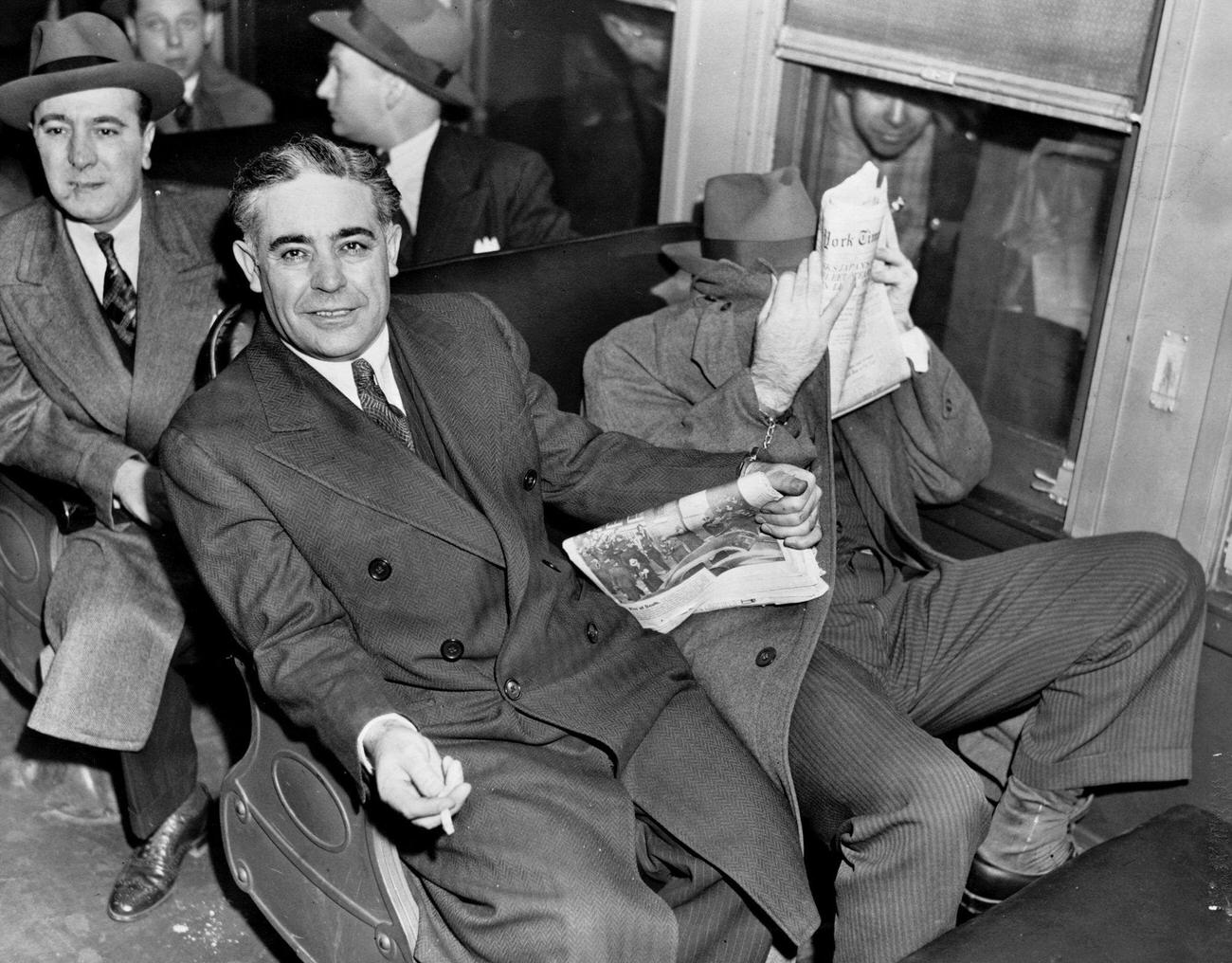
The train also moved people who had no say in where they were going. In 1944, convicted murderers Emanuel ‘Mendy’ Weiss and Louis Capone — both members of the Murder, Inc. organization — were transported by train to Sing Sing Prison, shackled together and surrounded by deputy sheriffs. They were executed in the electric chair at Sing Sing in March 1944.
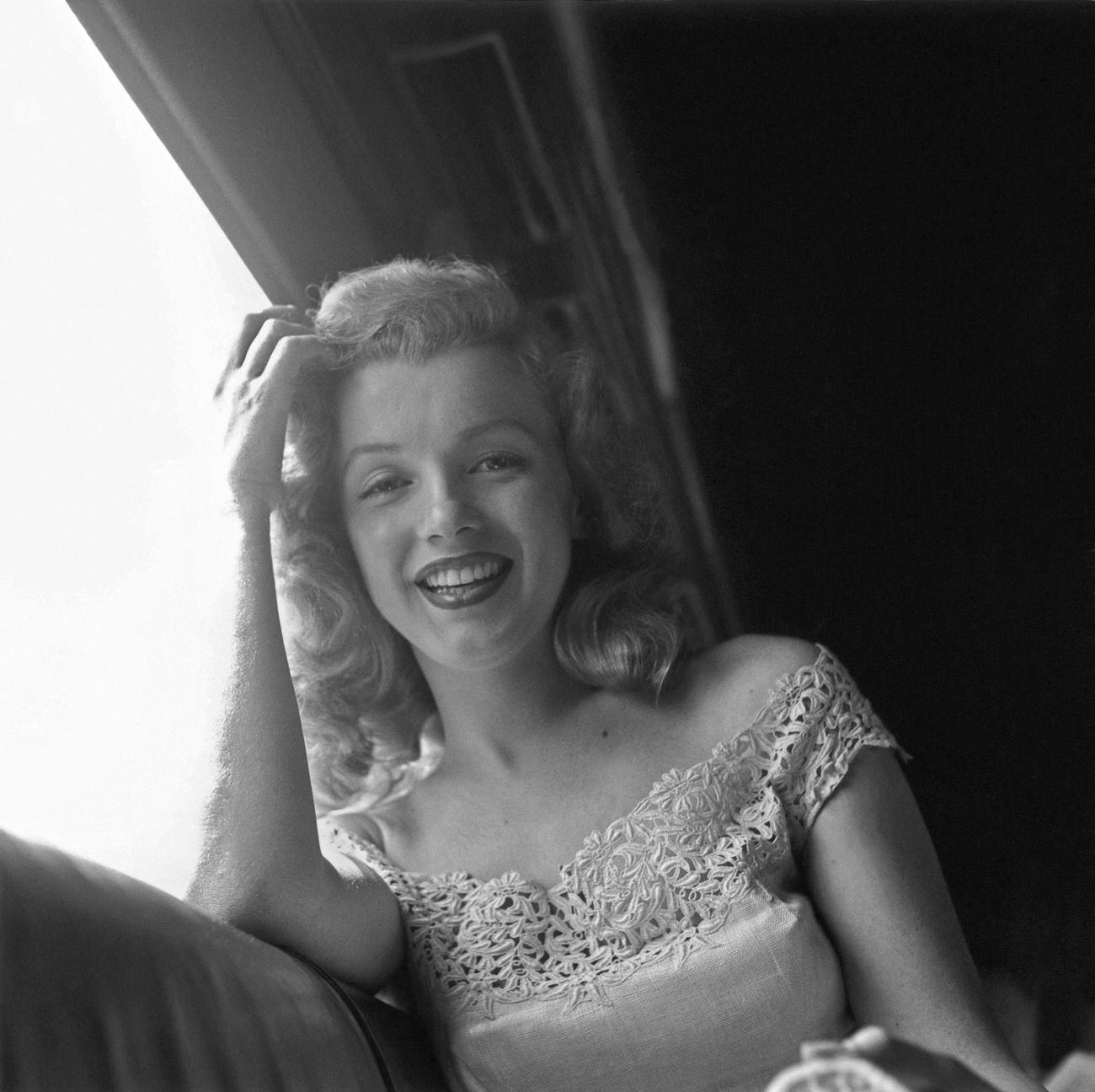
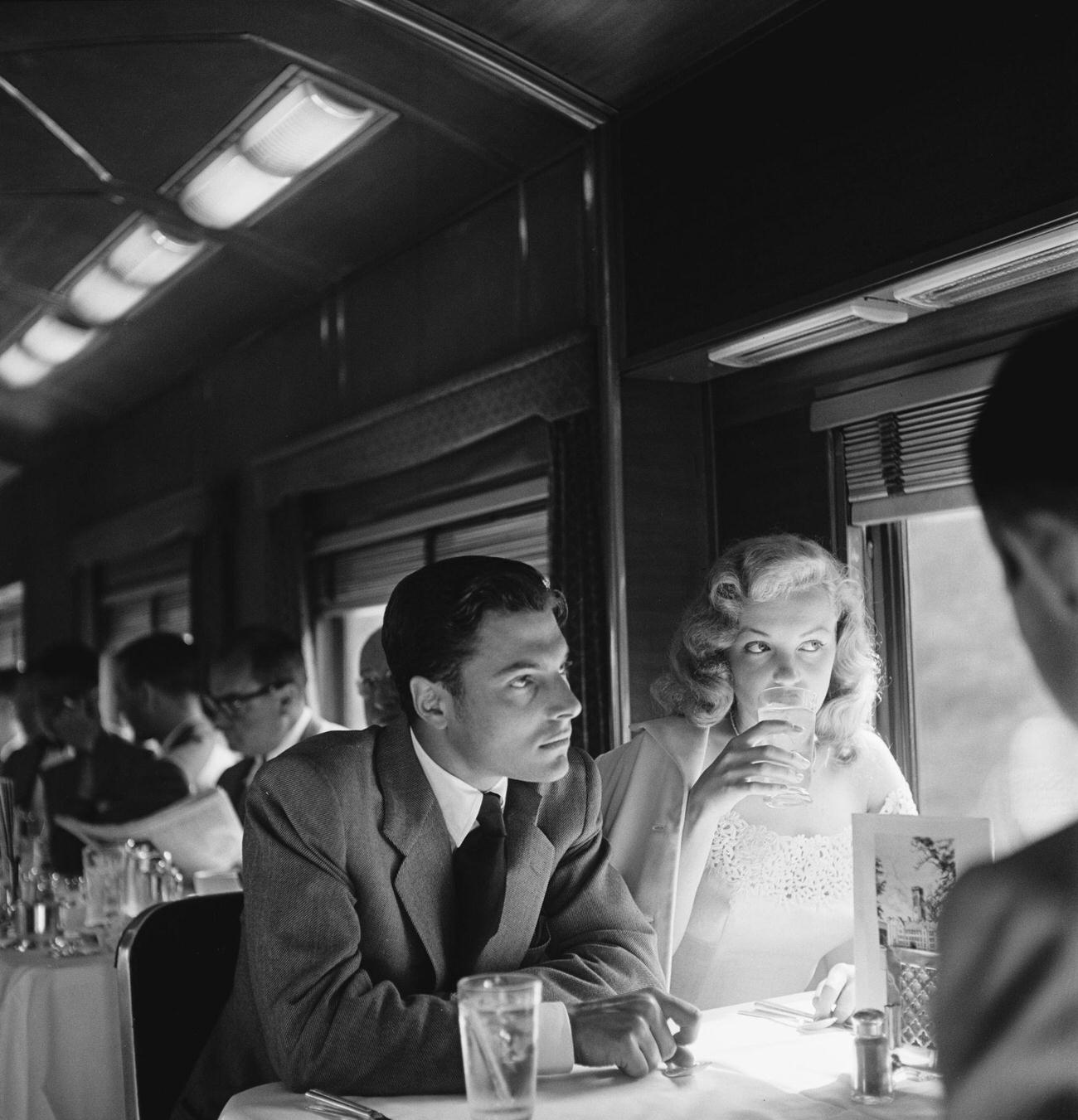
By the late 1940s, even celebrities were riding the rails for ordinary reasons. In June 1949, Marilyn Monroe boarded a train from New York City to Warrensburg, New York, accompanied by actor Lon McAllister. The trip was connected to a photo shoot — one of many she did in those early years of her career before she became a household name.
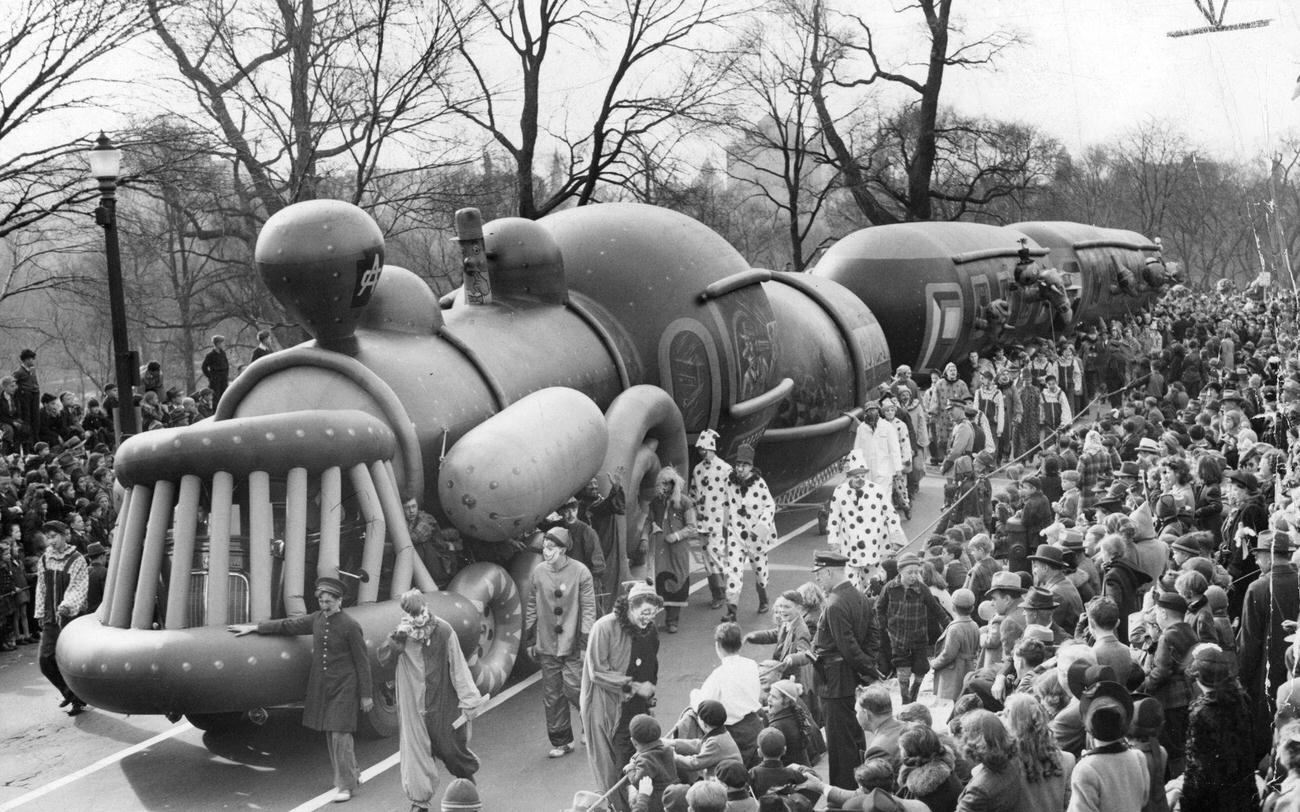
Community life touched the rails too. In 1941, a train-shaped balloon made its way along Beacon Street as part of the annual Santason parade — a lighthearted image from a year that would soon become defined by war. It served as a reminder that for most of the decade, trains were woven into daily life in ways that went far beyond getting somewhere.