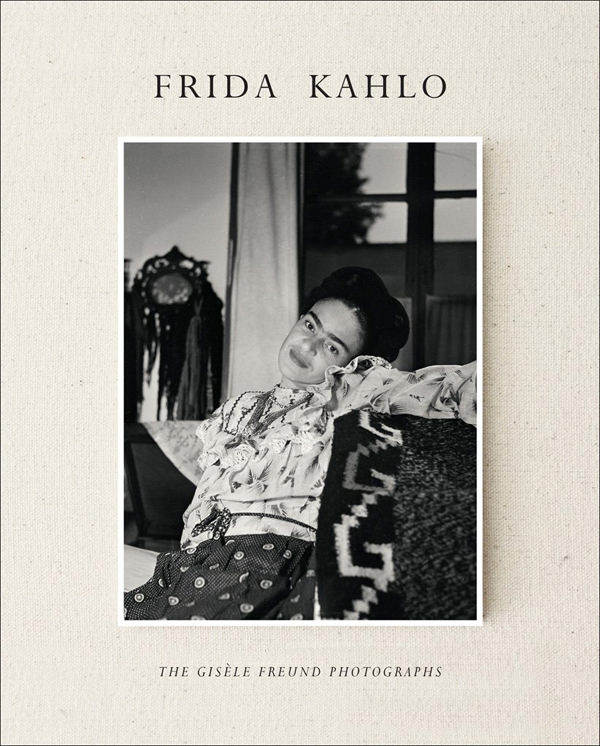

Gisèle Freund was a German-French photographer who built her reputation capturing the faces of some of the 20th century’s most important literary and political figures. Her portraits were known for their intimacy — she had a way of photographing people that felt private, not posed. When she spent two years living in Mexico, she formed close friendships with muralist Diego Rivera and his wife, painter Frida Kahlo. Those friendships gave her rare, direct access to Kahlo’s world.

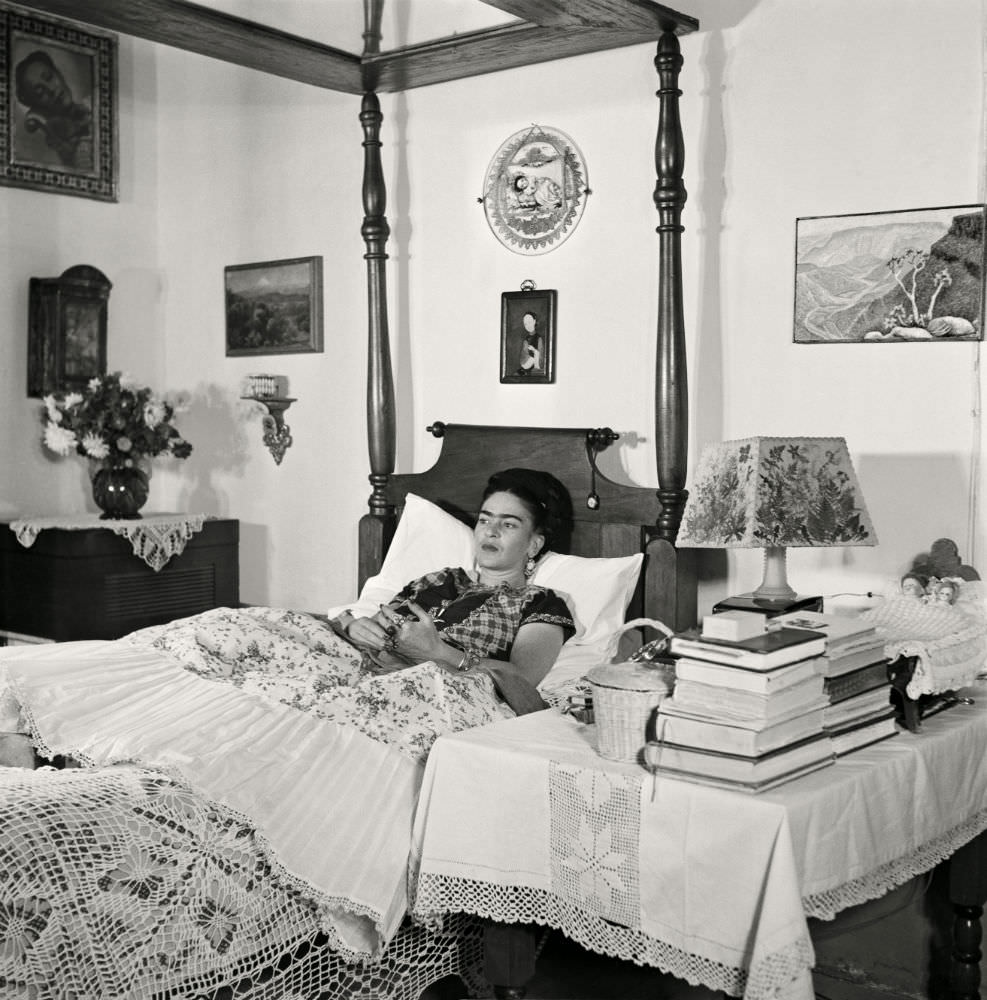
The photographs Freund took of Kahlo were shot in the final years of Kahlo’s life. By that point, Kahlo had endured decades of physical pain from a bus accident she suffered as a teenager, along with numerous surgeries and chronic illness. She spent long periods confined to her home in Coyoacán, Mexico — a place known as La Casa Azul, or the Blue House. It was inside these walls that Freund documented her.

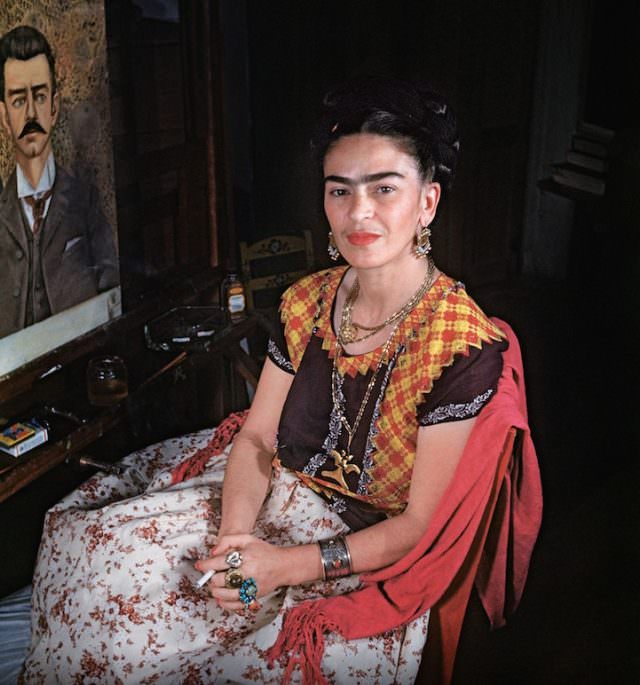
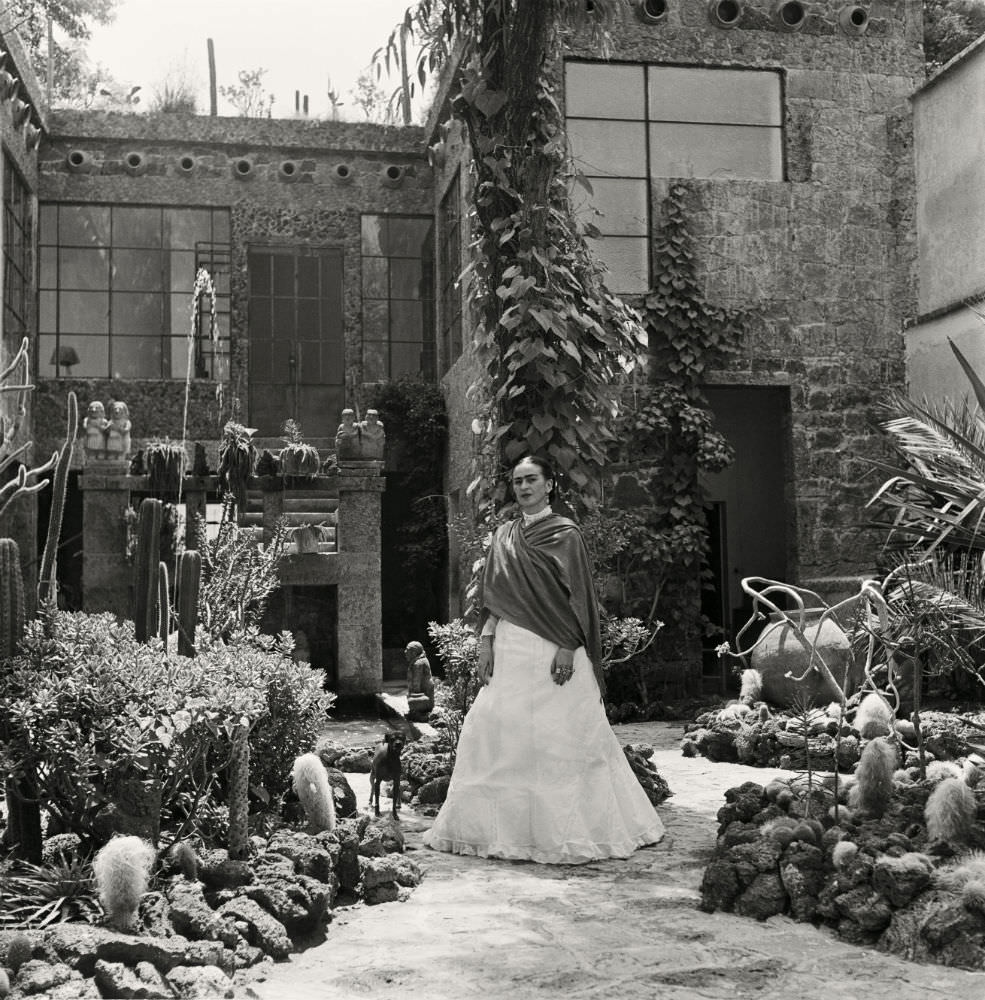
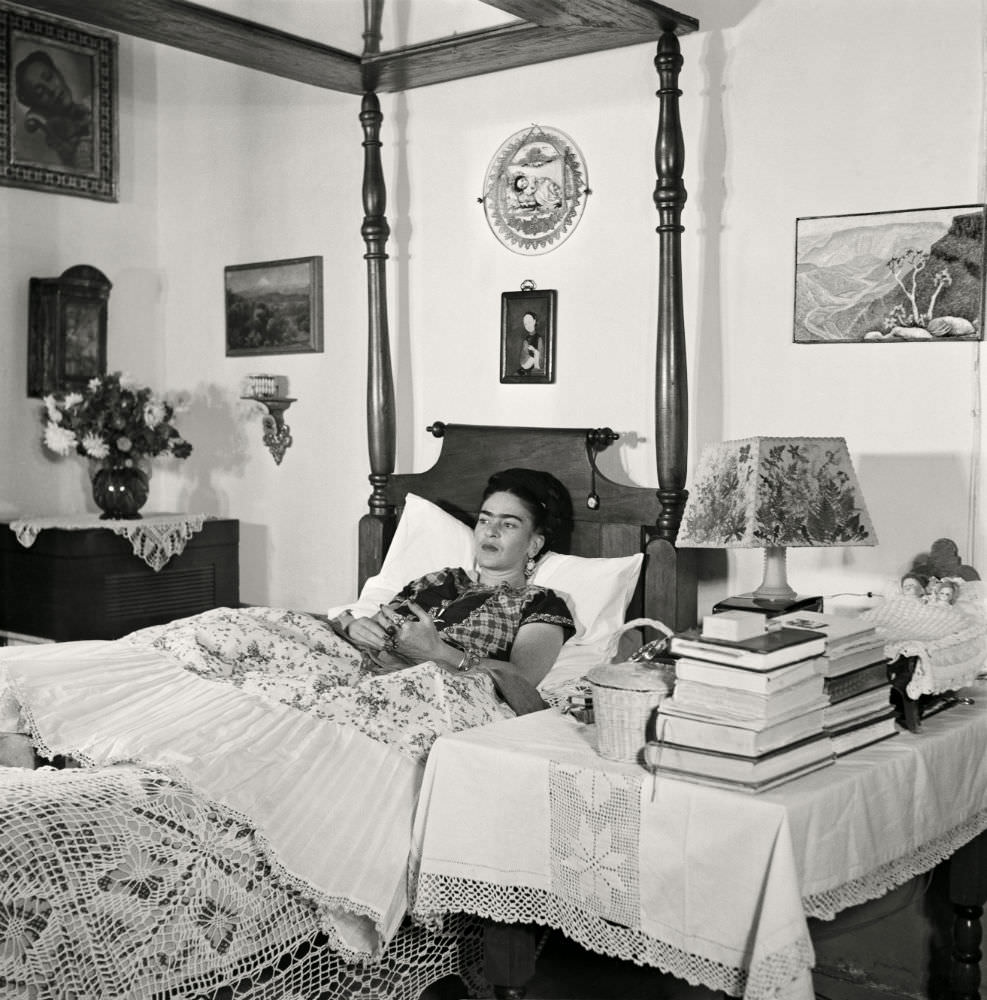
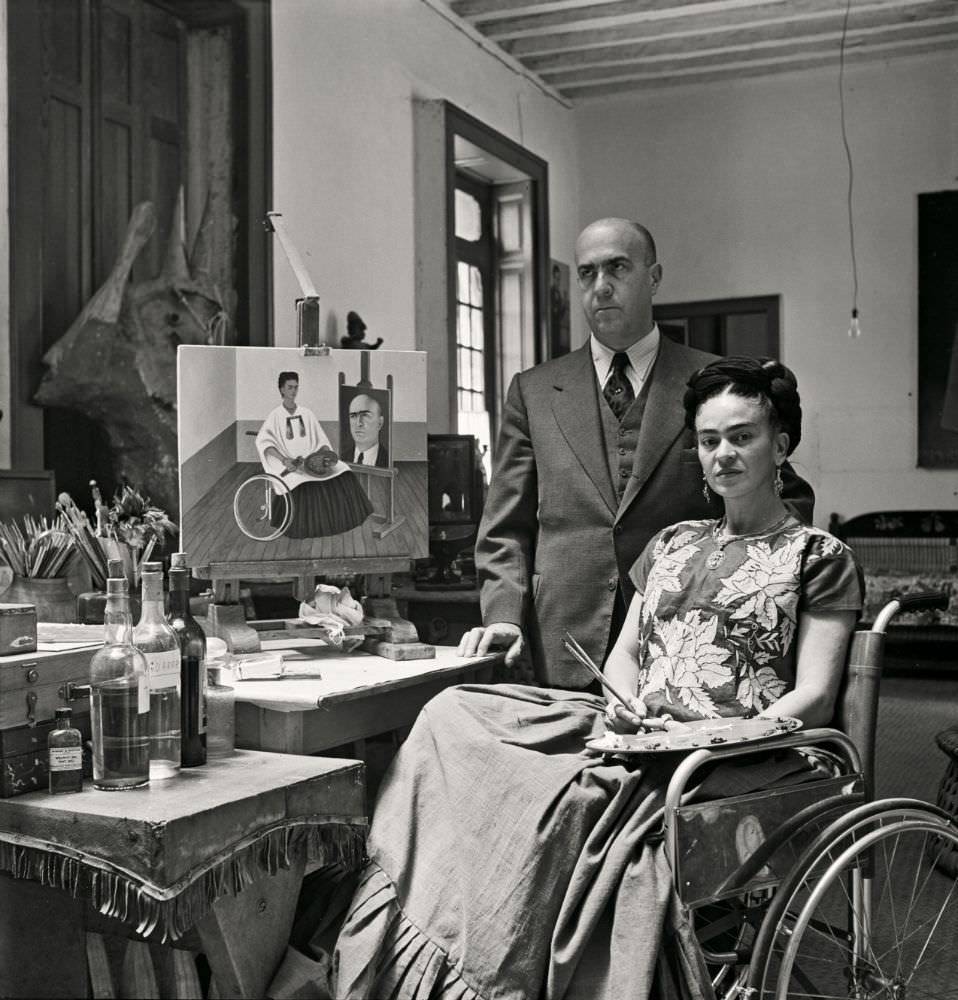
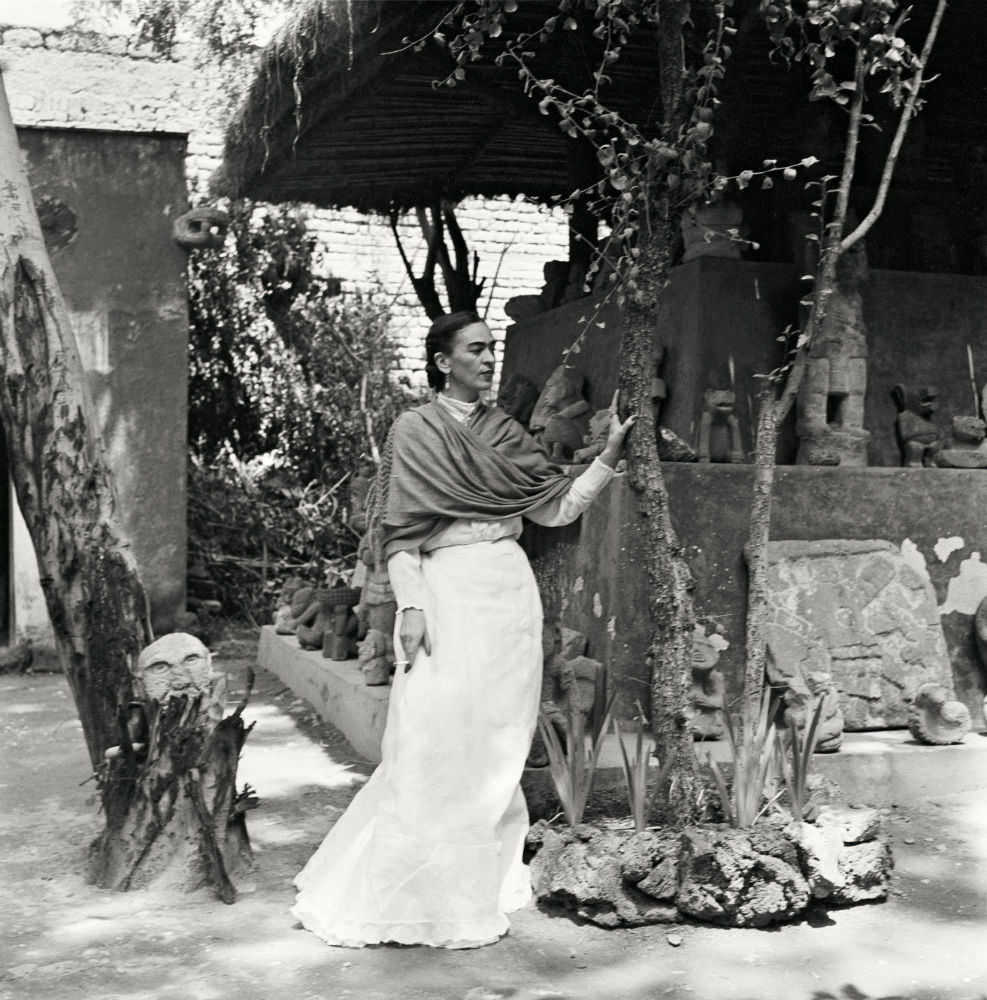
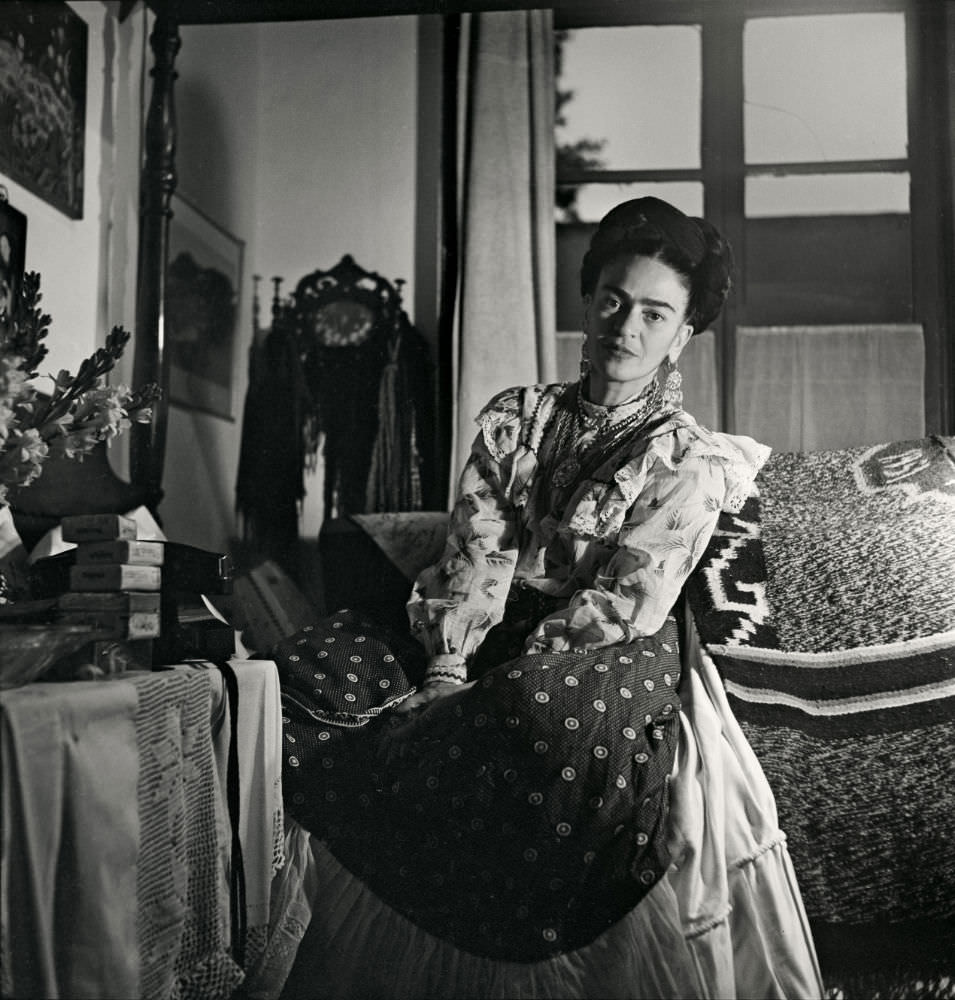
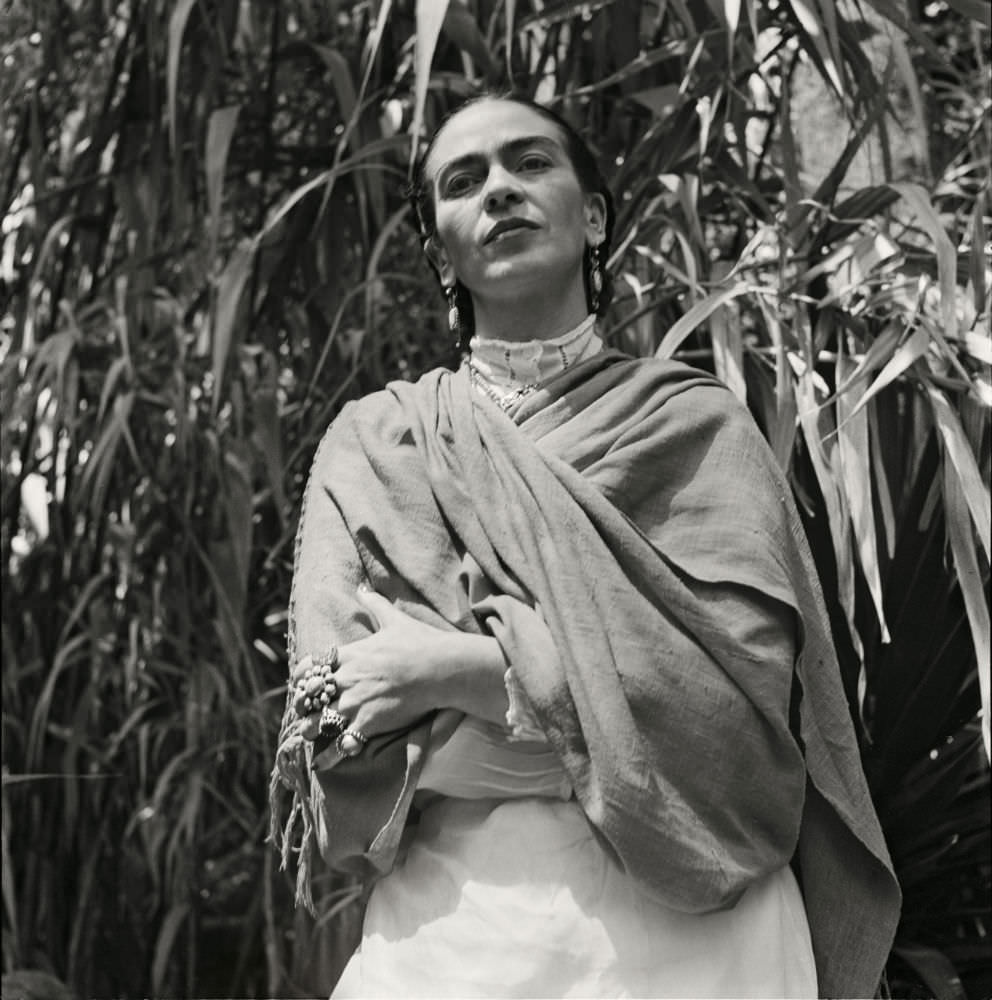
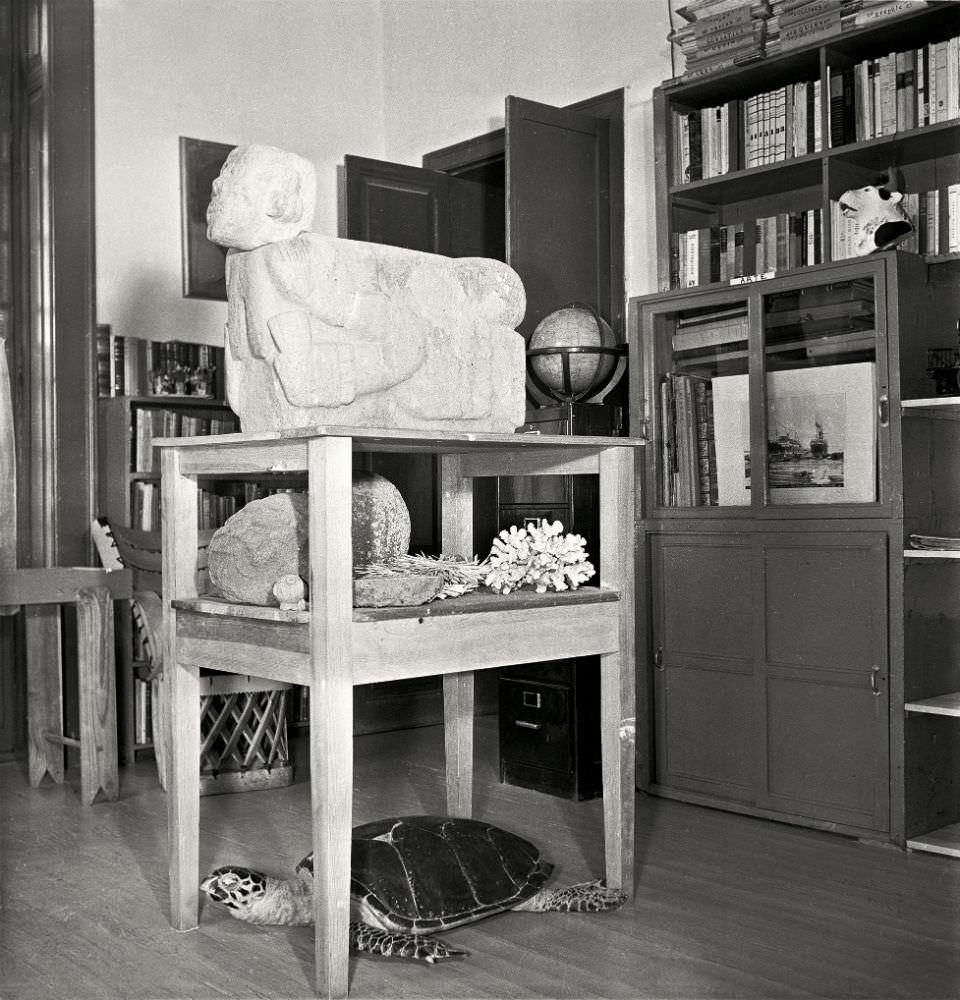
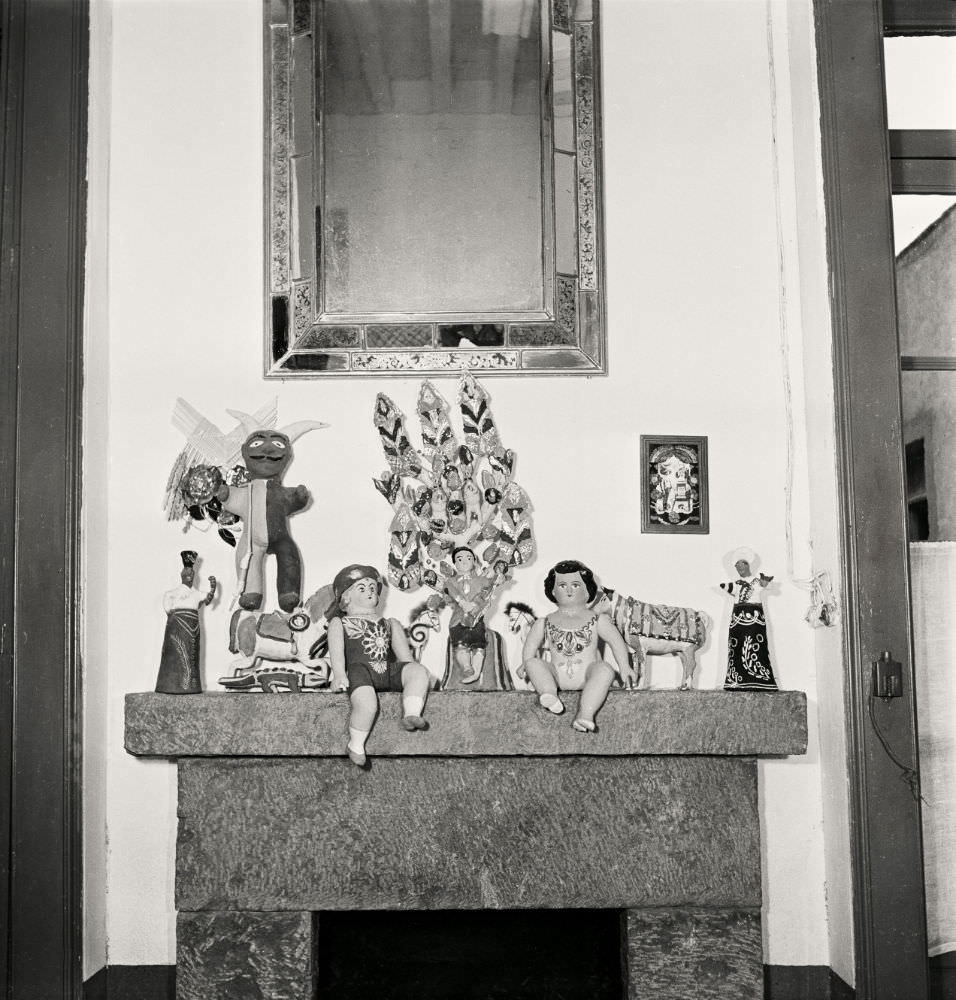
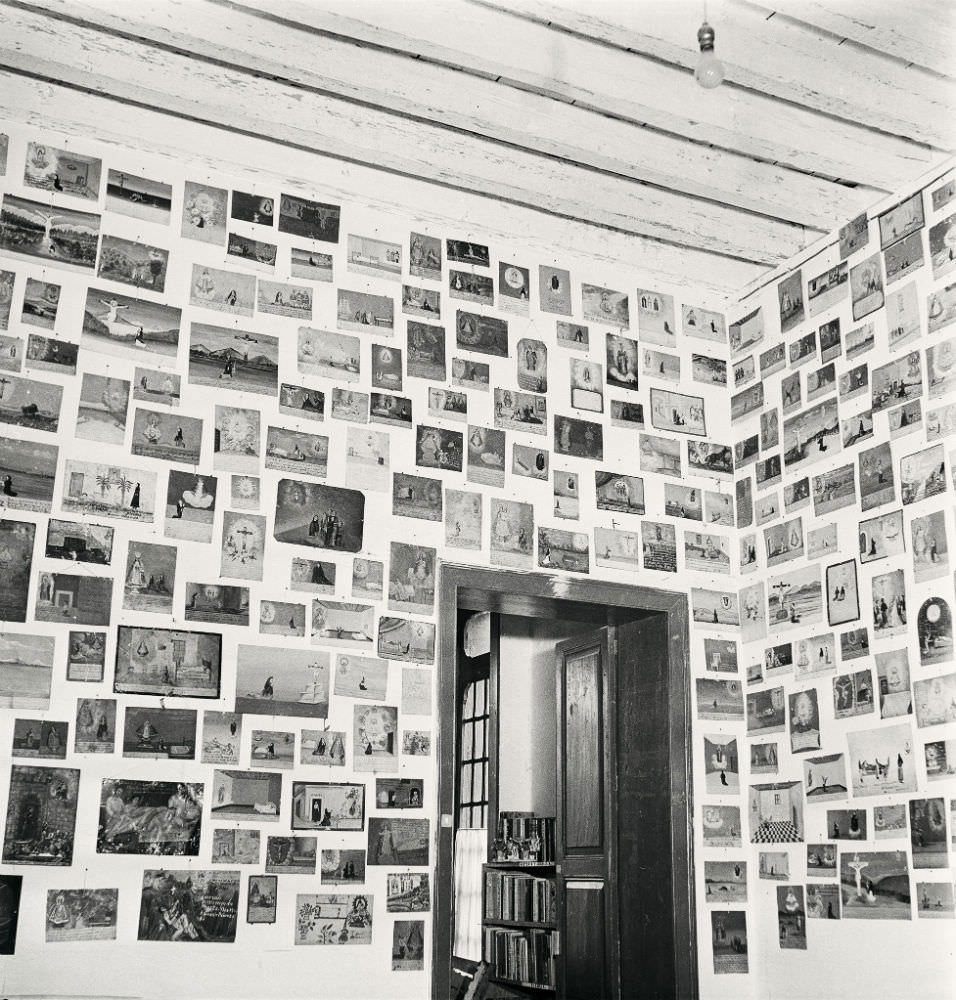
Kahlo appears throughout Freund’s photographs surrounded by her own paintings, folk art objects, and the vivid, colorful environment she had built around herself. The home was not just where she lived — it was an extension of her artistic identity. Pre-Columbian figurines, hand-crafted furniture, and traditional Tehuana clothing all fill the frame alongside Kahlo herself.


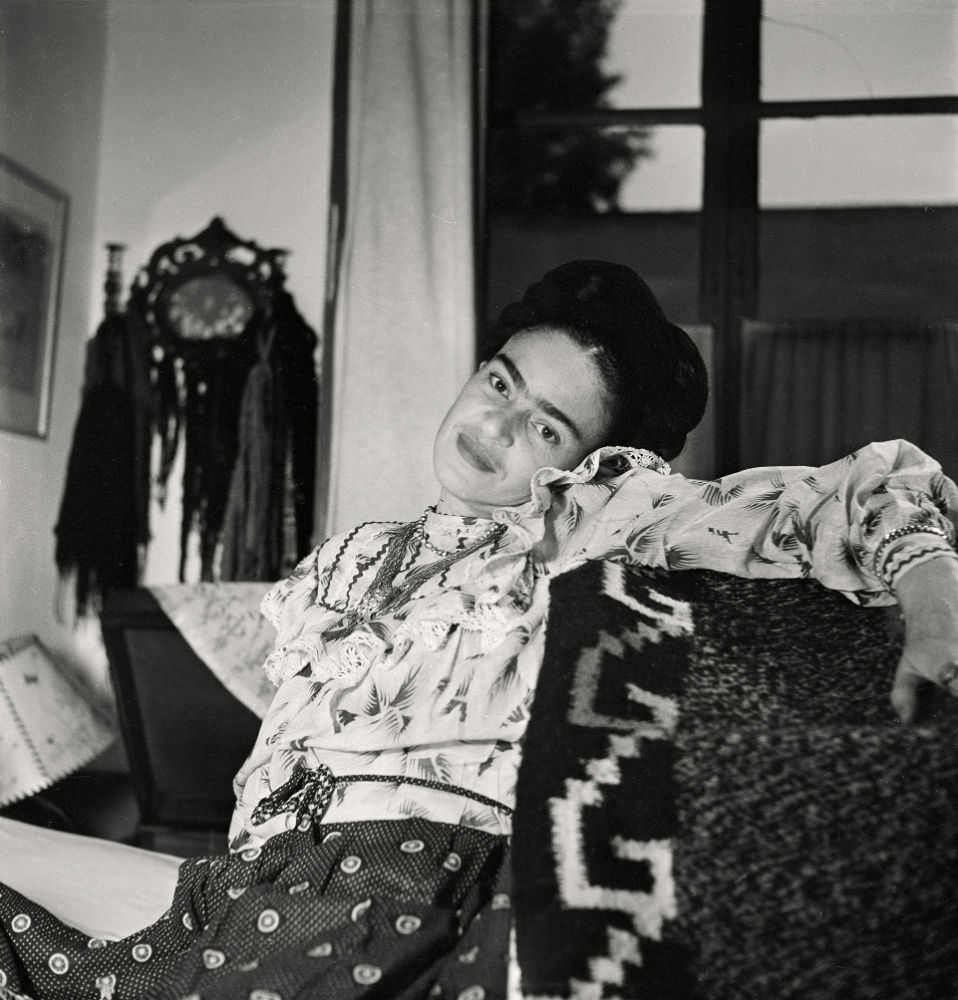
Freund’s camera catches Kahlo in unguarded moments — sitting at her easel, resting among her belongings, or simply existing in a space she had shaped entirely on her own terms. These are not glamour shots. They are documentary portraits of a working artist at home, aging and ill but still deeply engaged with her craft.


Kahlo’s Tehuana dress — the traditional clothing she wore daily — is a constant presence in the photographs. She adopted it partly as a political statement of Mexican national identity and partly because the full skirts concealed her injured leg. Freund’s close-up compositions often highlight the elaborate embroidery, jewelry, and headdresses Kahlo wore, treating her appearance as an artwork in itself.


The relationship between photographer and subject matters here. Freund was not an outsider assigned to shoot a celebrity. She was a friend with years of trust built between them. That dynamic is visible in how relaxed Kahlo appears — there is no performance for the camera. What Freund recorded was simply Frida Kahlo living her life inside the home where she was both born and would later die in 1954.


Freund’s photographs stand as a direct historical record of Kahlo’s personal environment during her final years. They show the paintings stacked against walls, the objects she collected, and the physical space of La Casa Azul in careful, natural detail. No other photographer had the same sustained access to Kahlo in this setting, which makes this body of work uniquely valuable as a visual document.


For more photographs of Frida Kahlo at her home, explore the portraits taken by photographer Sylvia Salmi, which offer another personal perspective on Kahlo’s life at La Casa Azul.