
Petersburg, Virginia has a long history that stretches back to the 17th century. The city was officially incorporated in 1748, and by the time of the American Revolution, it was already a place of strategic importance. British forces occupied it during that war, and Major-General William Phillips bombarded it while facing positions held by the Marquis de Lafayette north of the river. In the decades that followed, Petersburg grew into a busy hub for free Black Virginians and became a major railroad center. By 1860, it ranked as the second-largest city in the state.
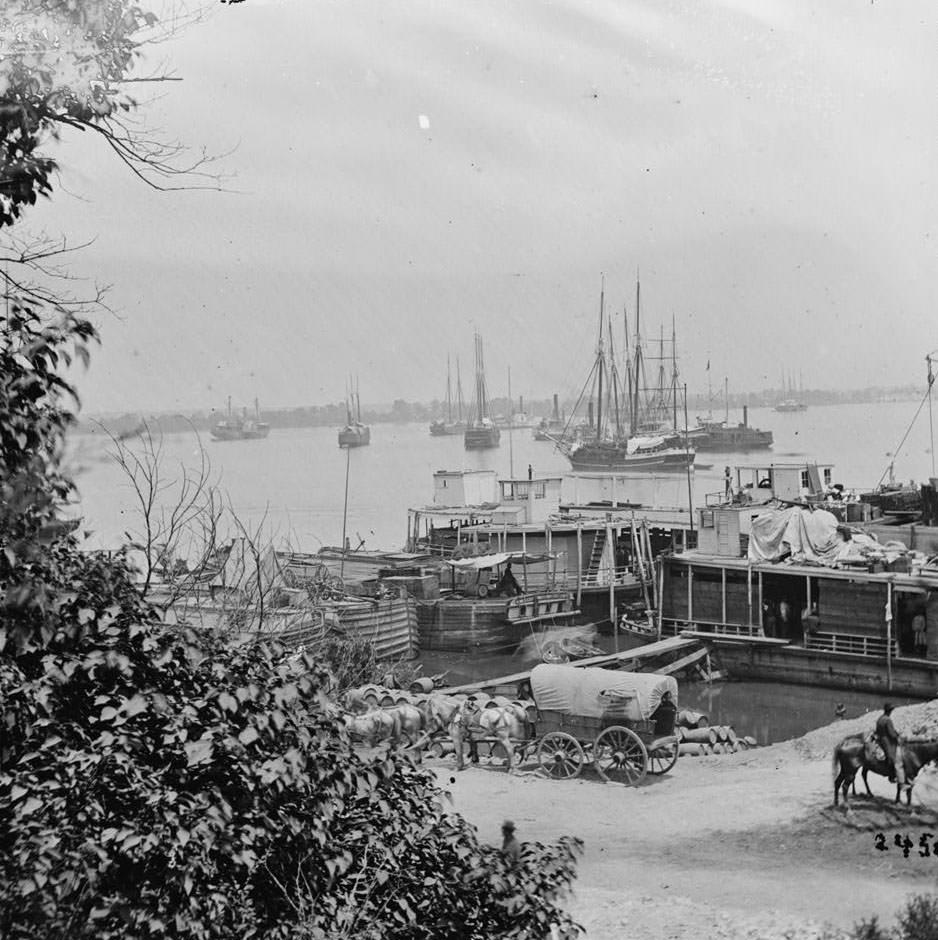
When the Civil War broke out in 1861, Petersburg contributed heavily to the Confederate cause. The city sent several infantry companies, artillery units, and three cavalry companies to the Confederate Army. In April 1861, more than 300 free Black men from Petersburg volunteered to work on the fortifications at Norfolk, Virginia. Slaveholders also provided enslaved labor for the war effort. The city’s role in the conflict was not just military — it was logistical. Petersburg’s network of railroads made it the main supply line connecting the rest of the Confederacy to Richmond, the Confederate capital.
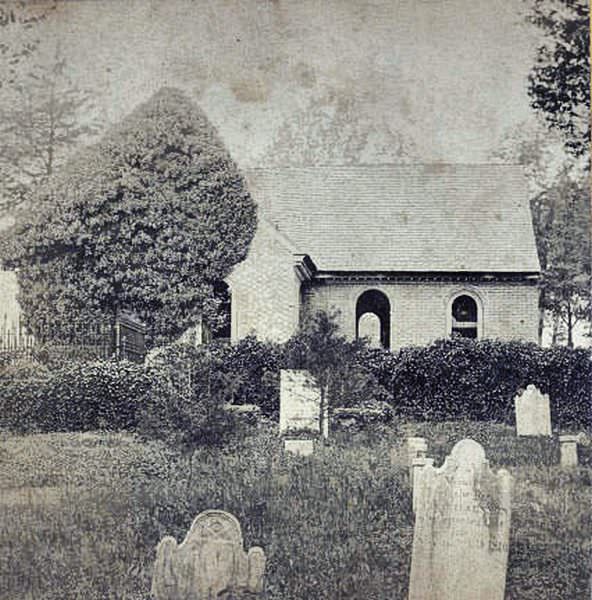
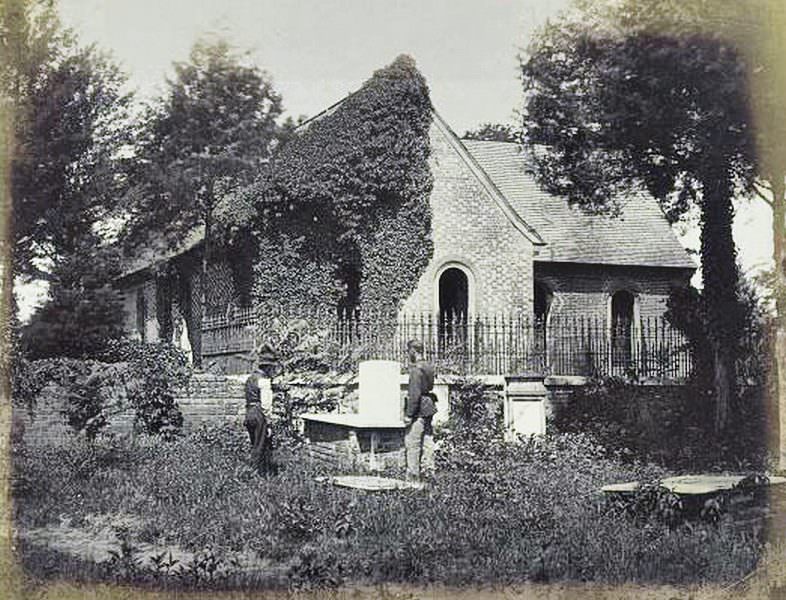
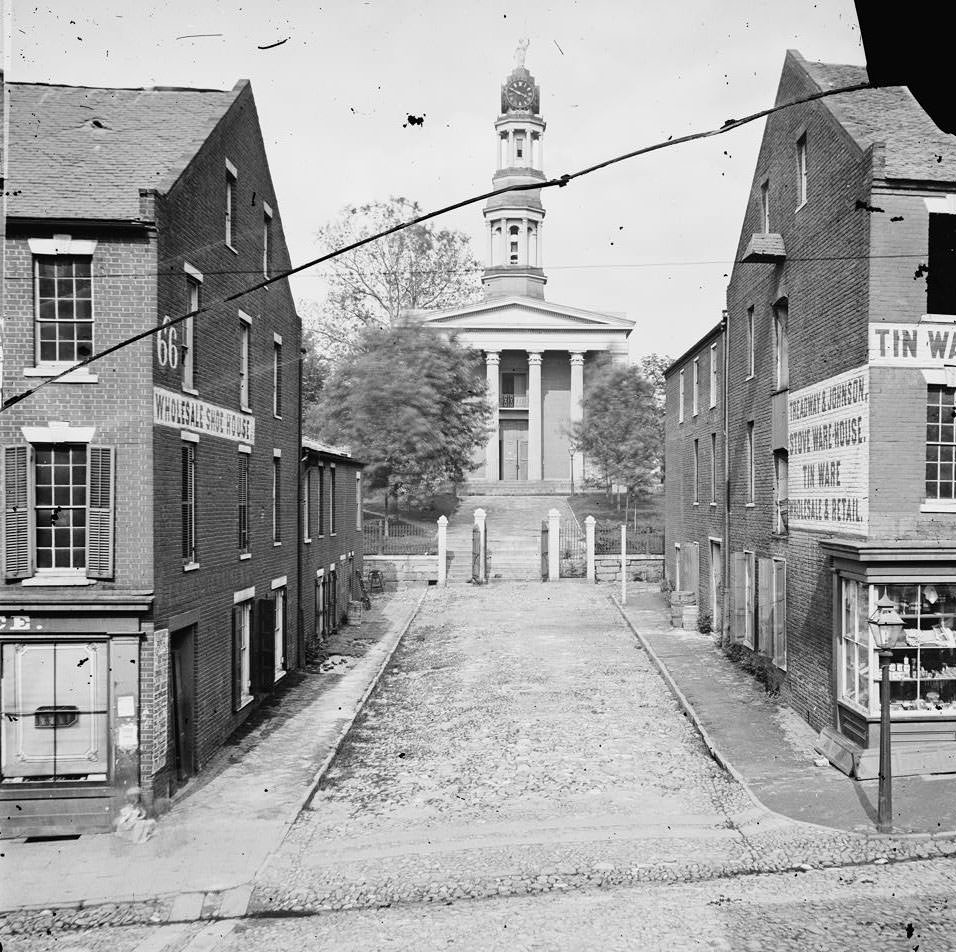
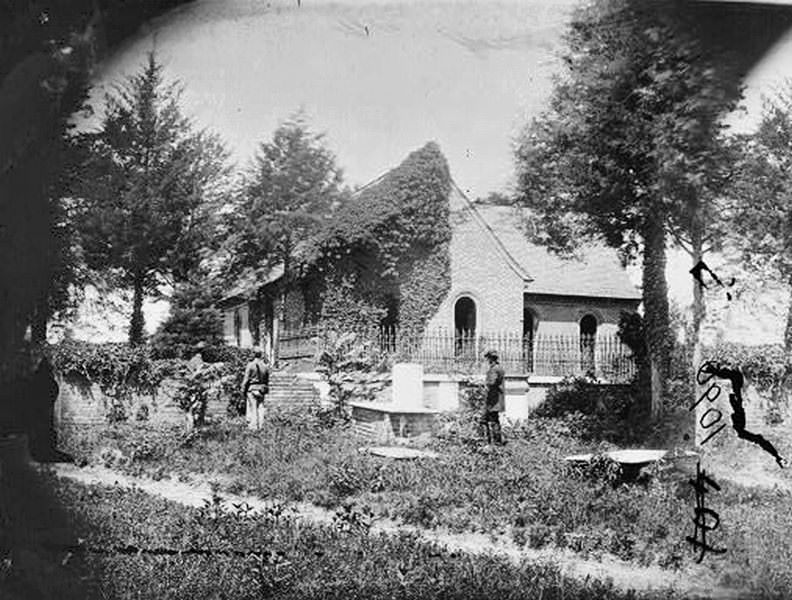
One of Petersburg’s most enduring landmarks from this era is Blanford Church, built in 1729. It stood as a silent witness to decades of the city’s history, long before the war arrived at its doorstep.
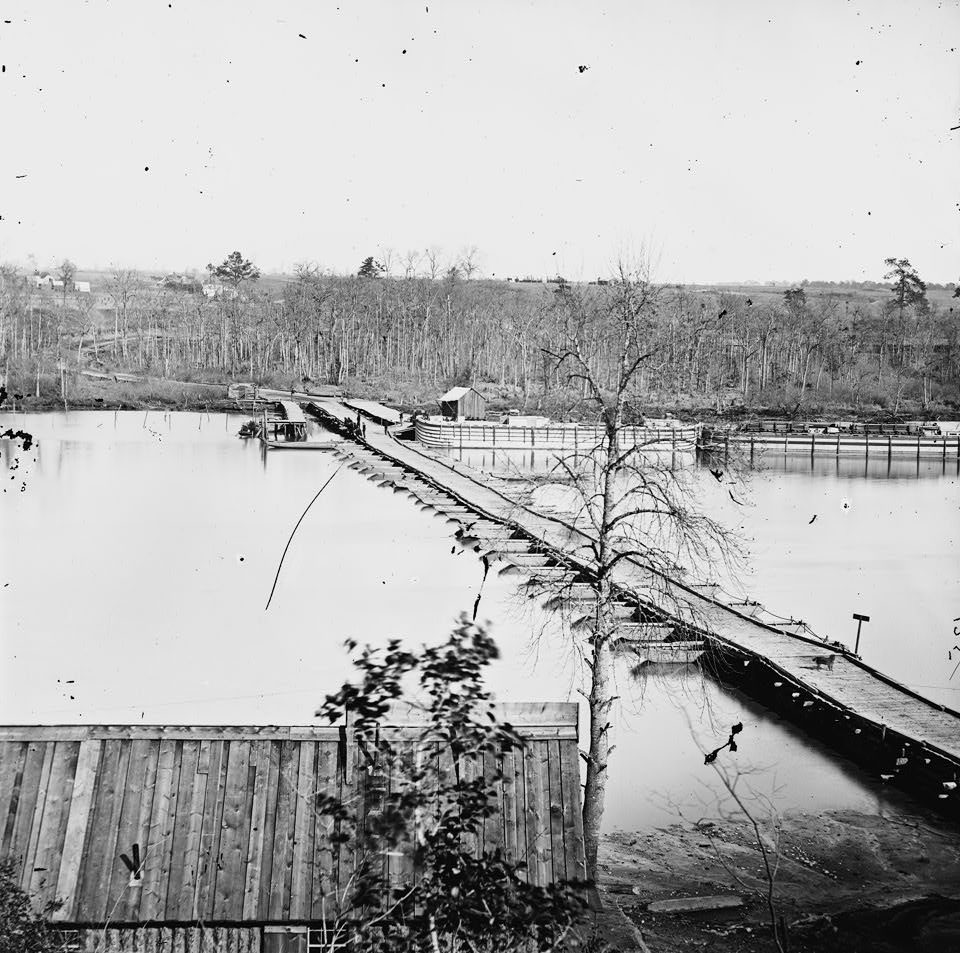
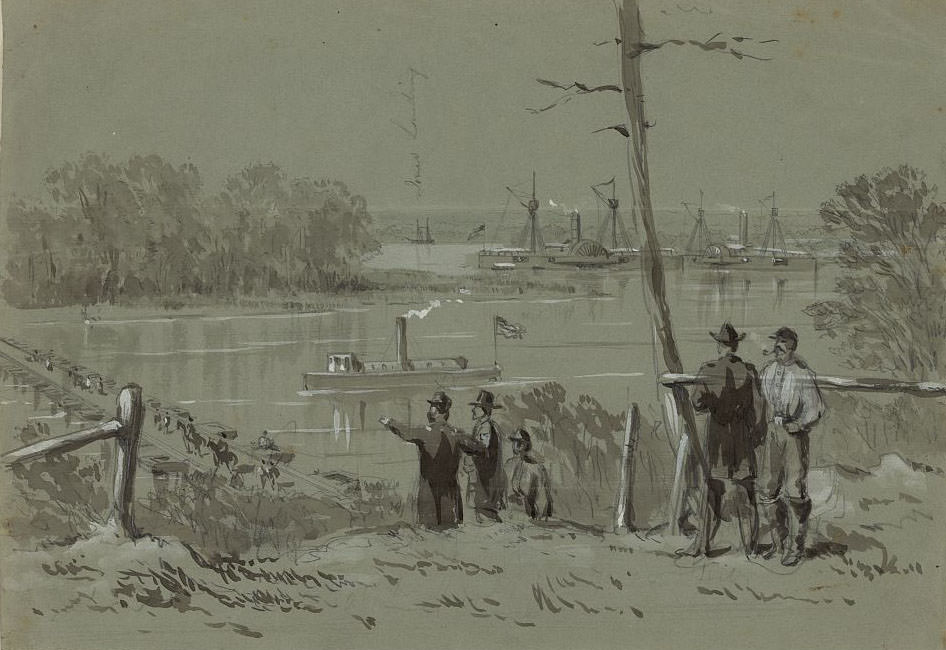
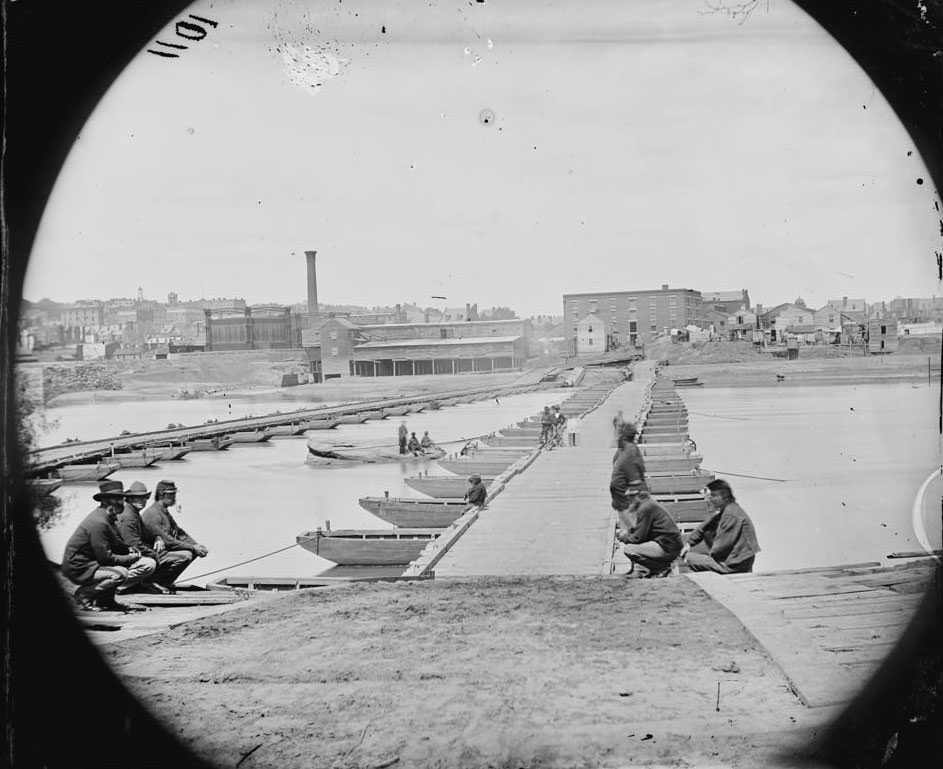
General Ulysses S. Grant launched his Overland Campaign in 1864 with the goal of breaking the Confederacy’s grip on Virginia. Petersburg became a primary target. If Grant could cut the railroads running through the city, he could strangle Richmond’s supply lines. Union forces crossed the Appomattox River using pontoon bridges, pressing deeper into Confederate-held territory.
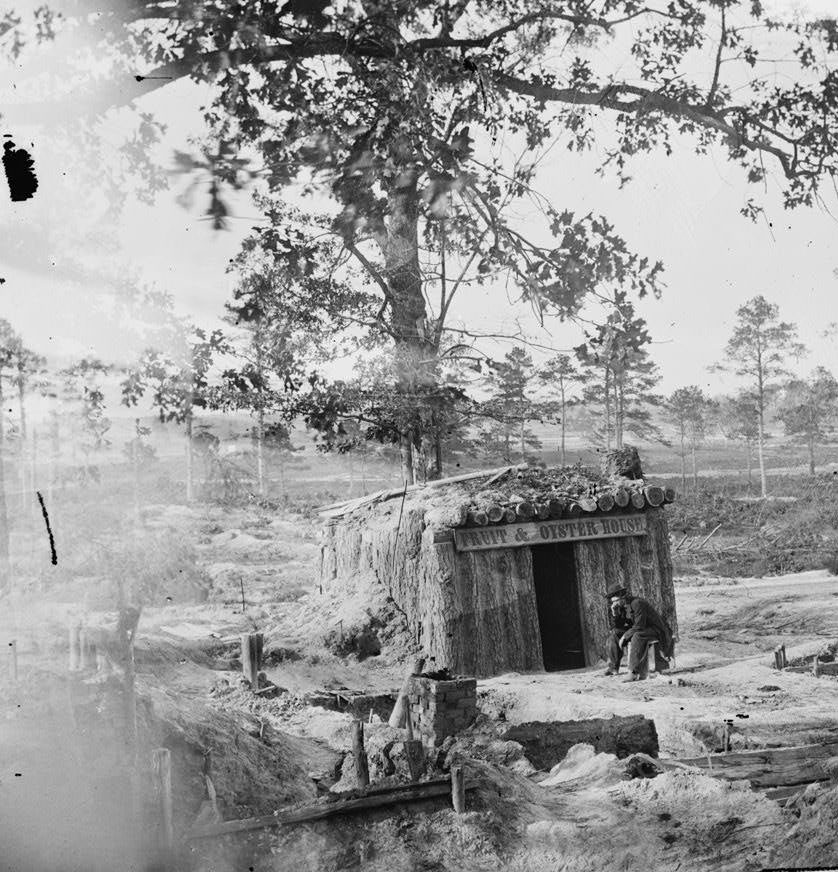
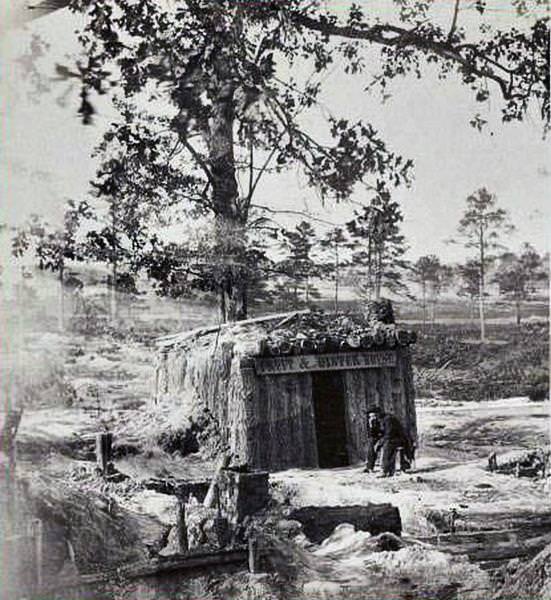
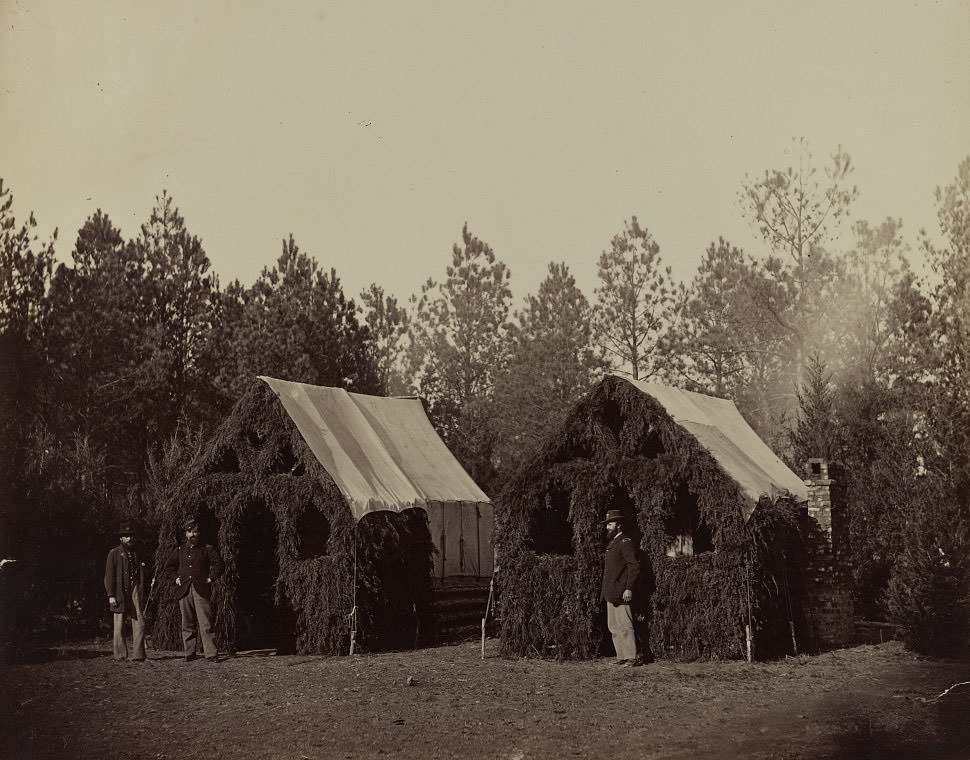
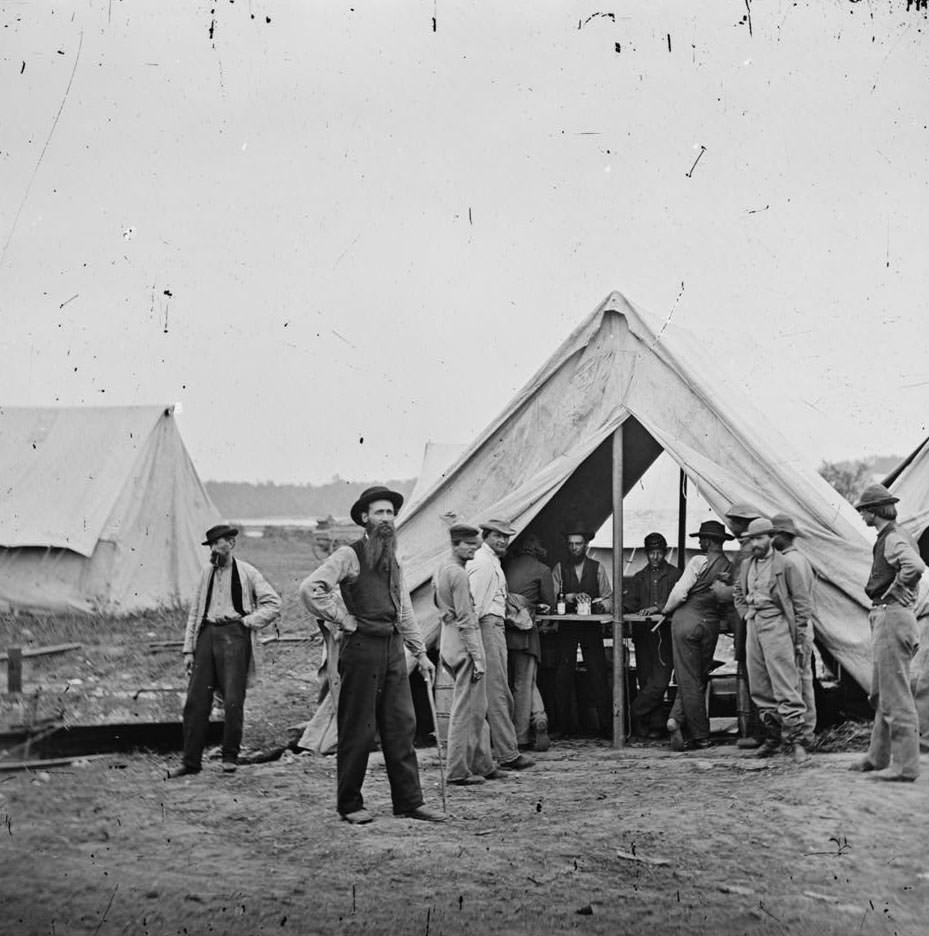
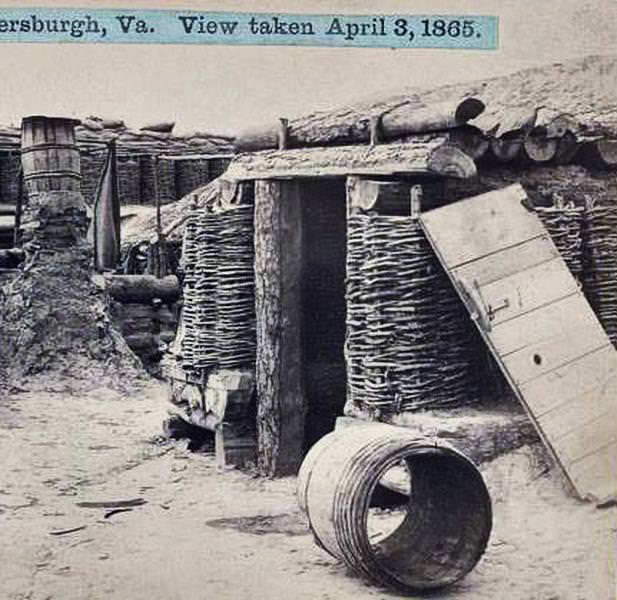
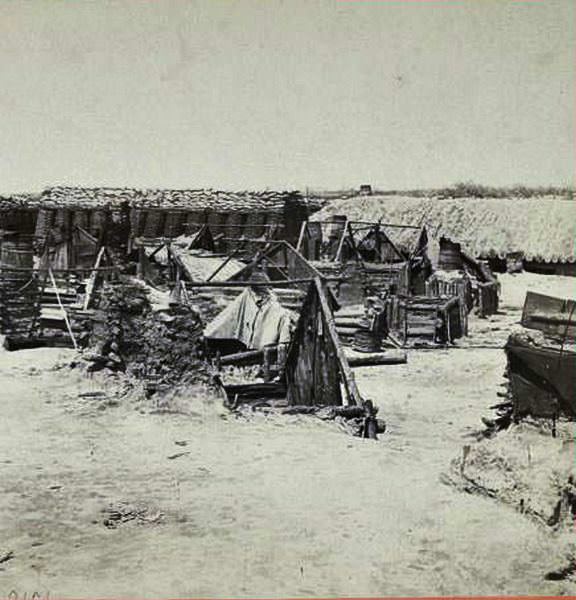
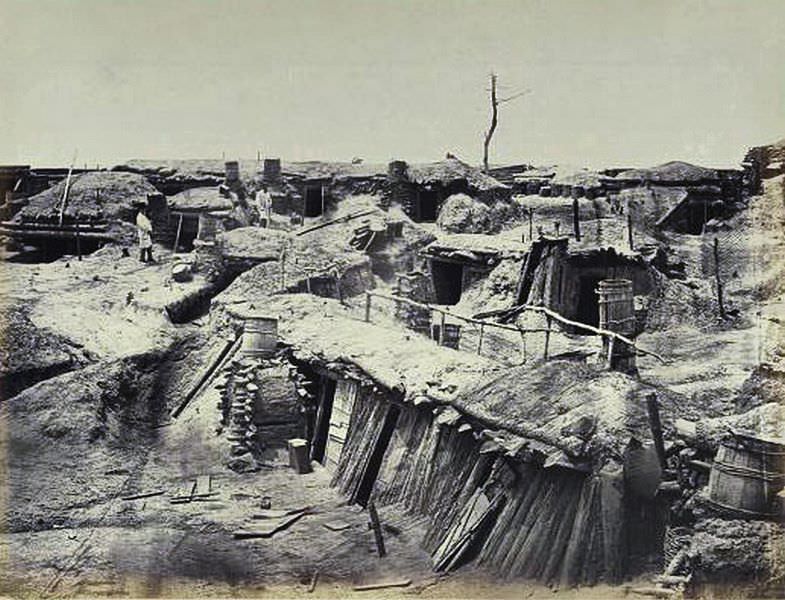
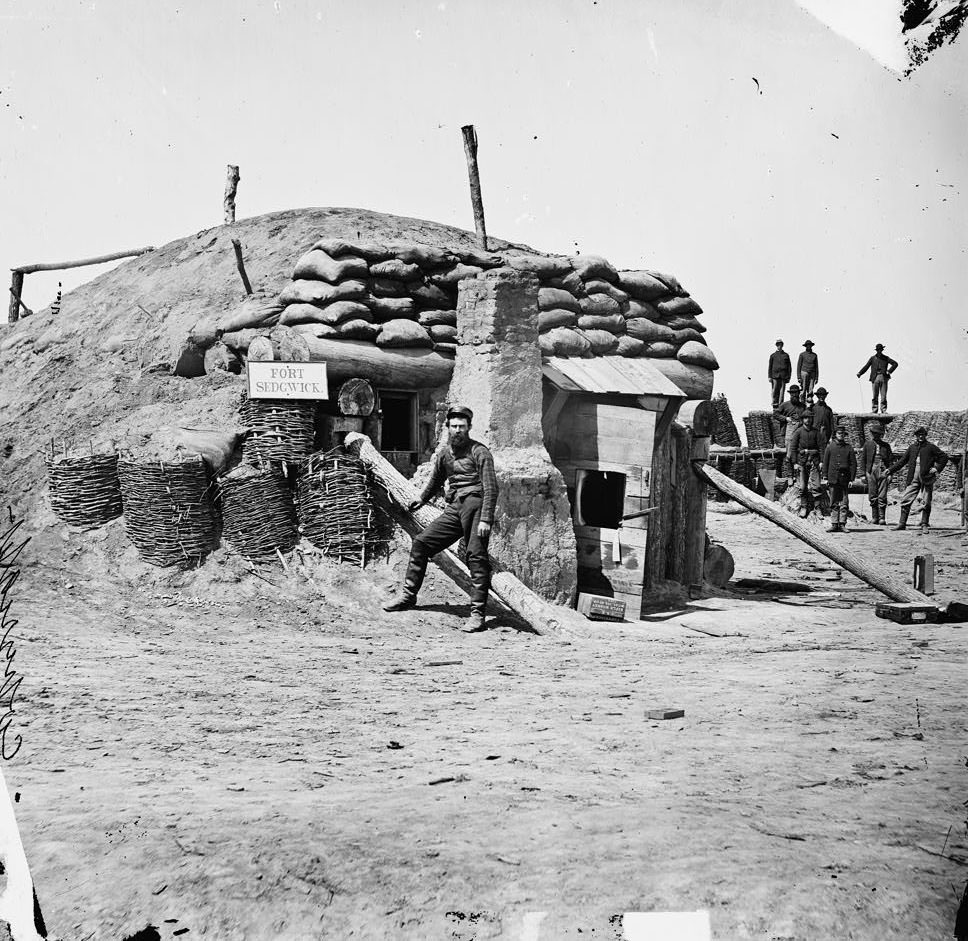
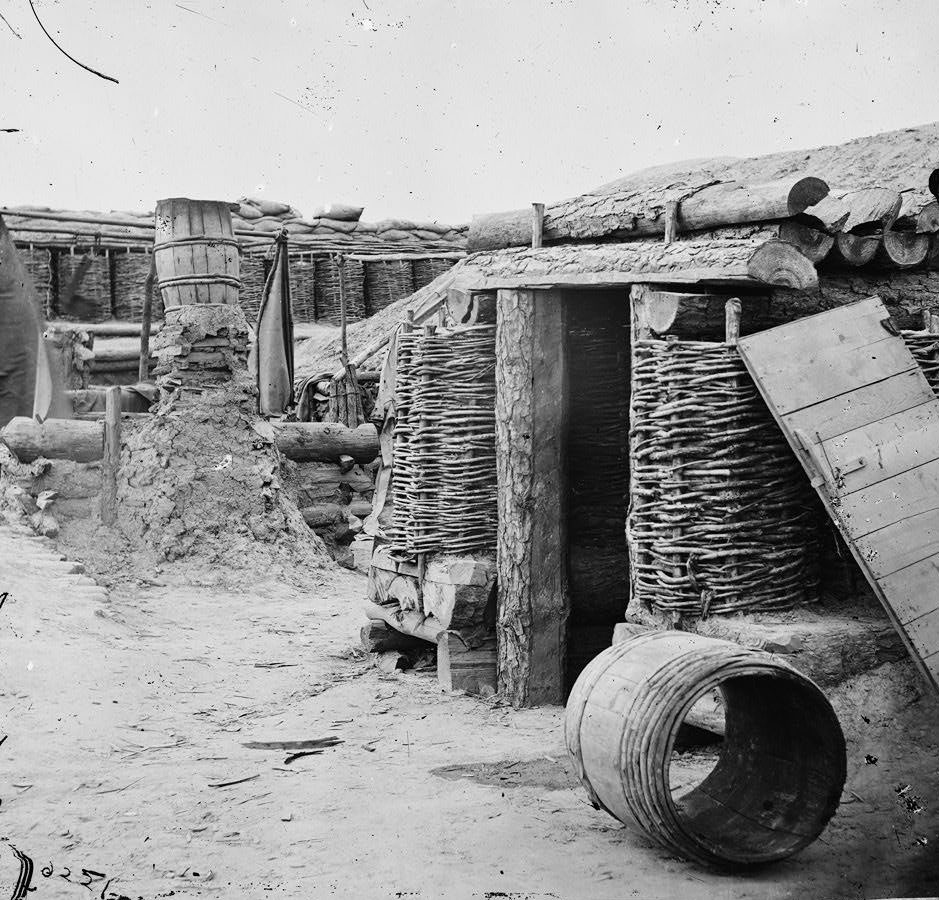
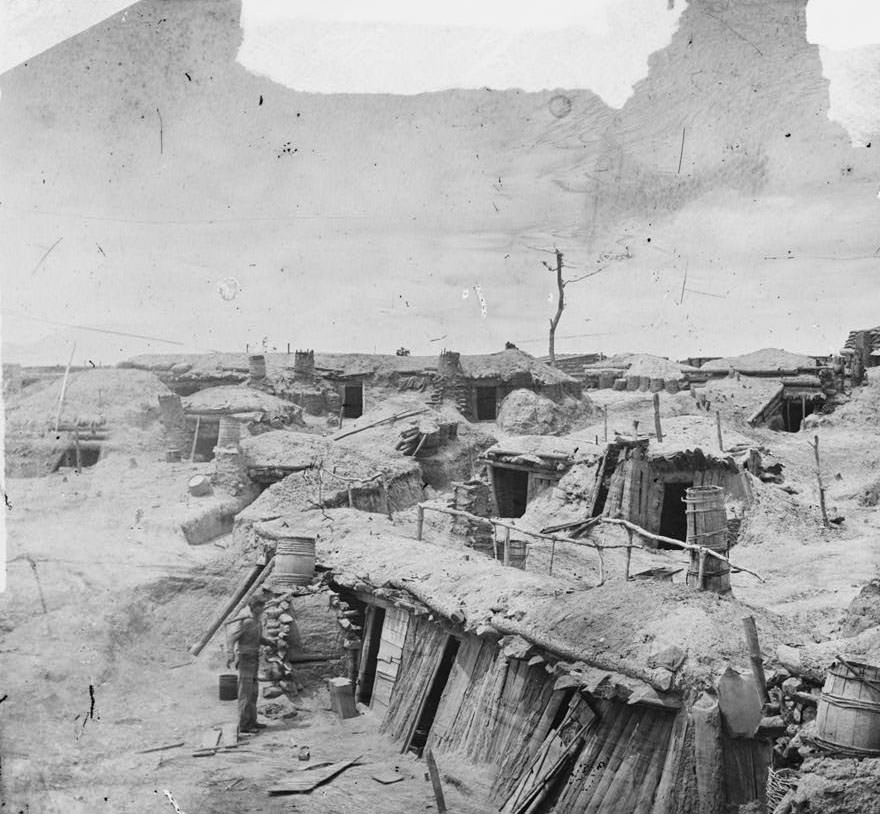
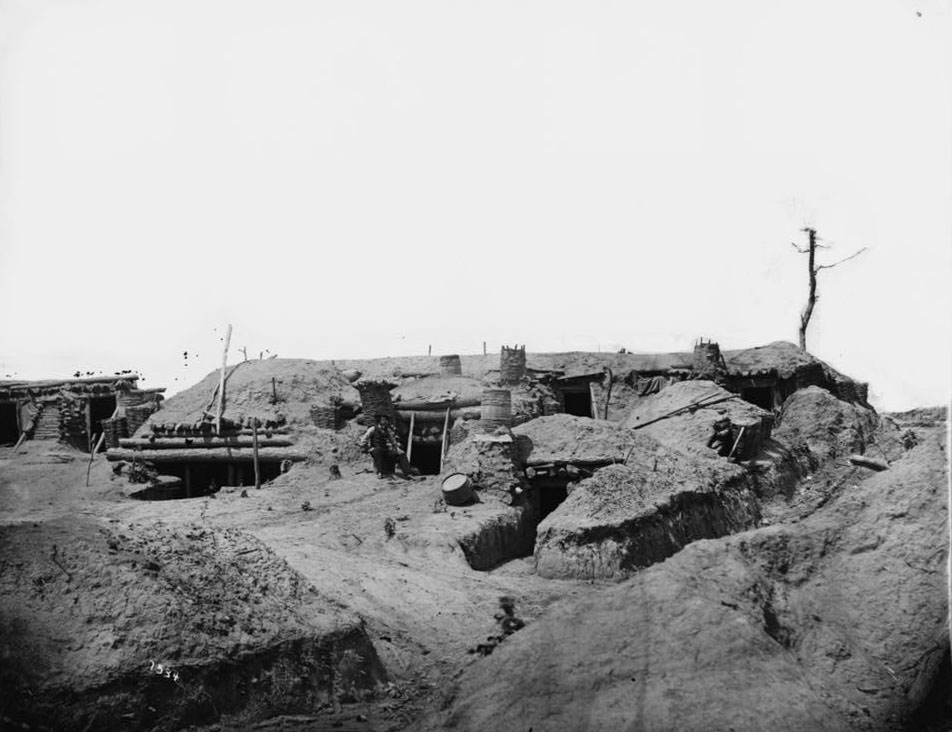
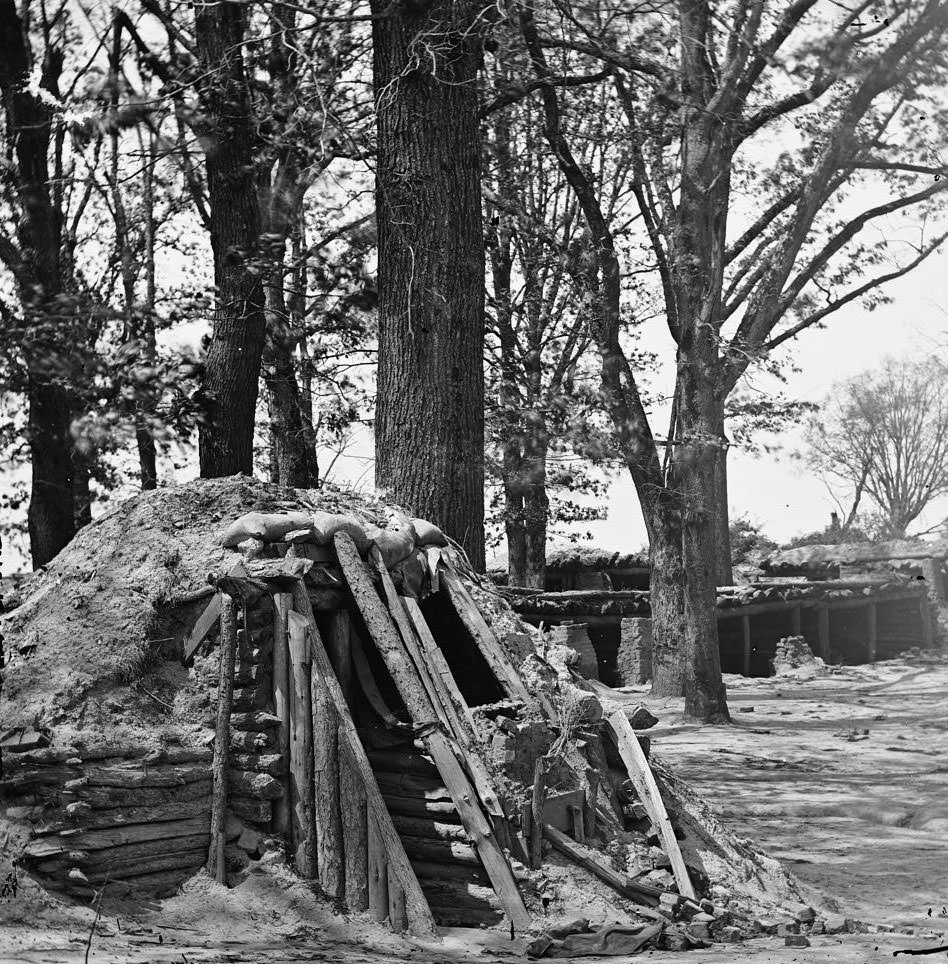
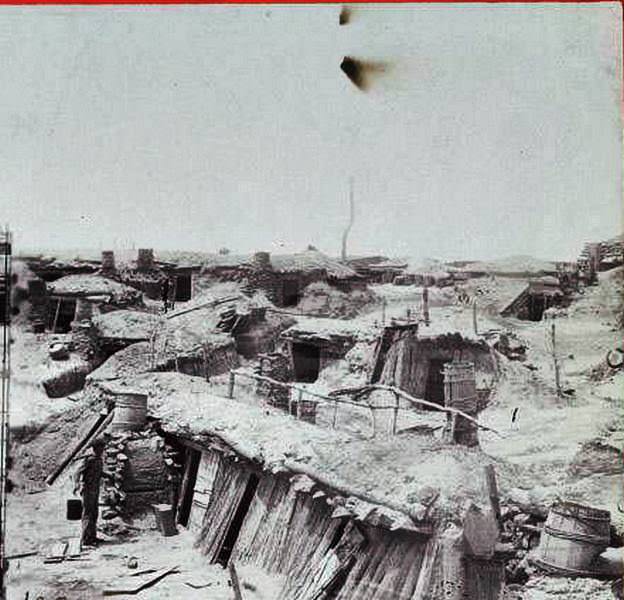
Life near the siege lines was harsh, but soldiers and civilians adapted in creative ways. Vendors set up shop in bomb-proof structures — reinforced dugouts designed to withstand artillery fire — selling food and goods to troops on both sides of the lines.
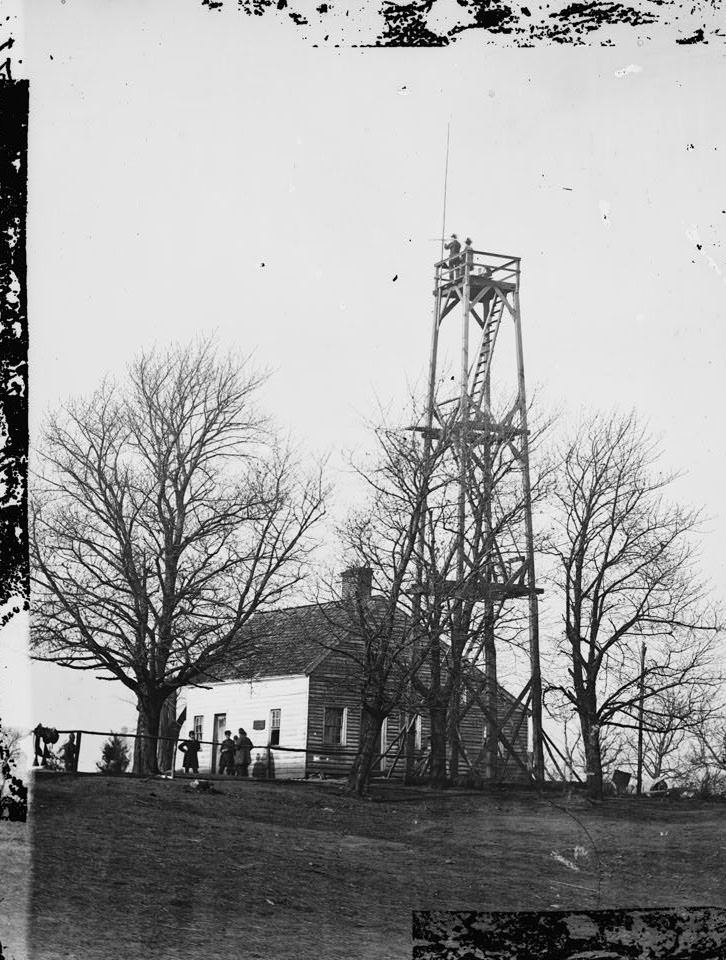
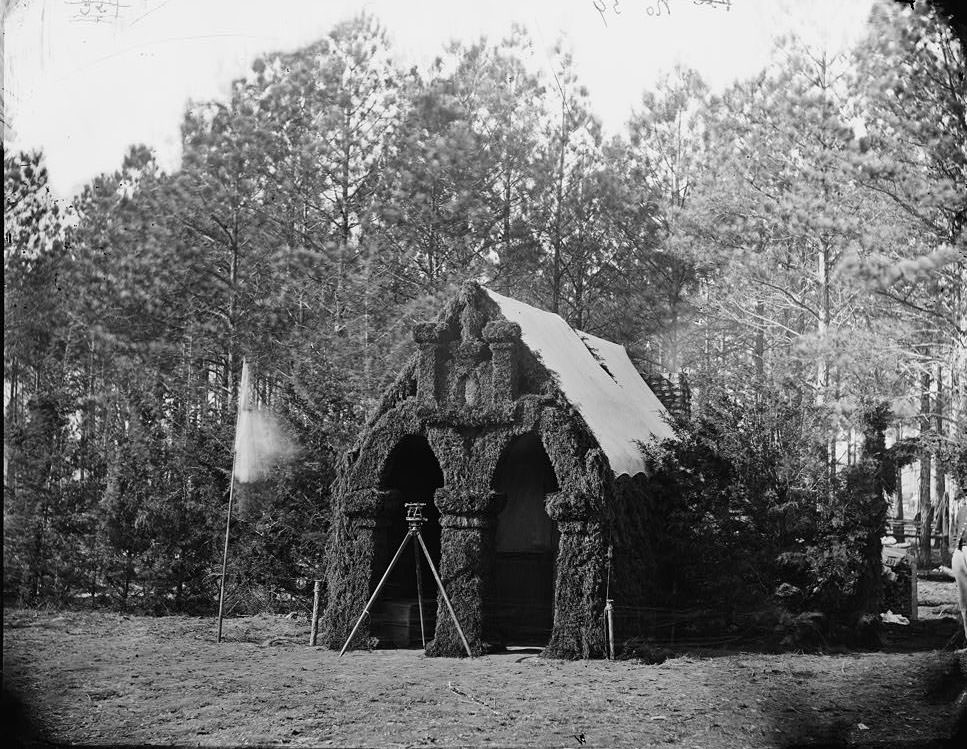
Observation and communication were critical during the siege. Union forces built signal towers at key points along their lines to monitor Confederate movements and coordinate artillery fire. The 14th New York Heavy Artillery maintained one such tower at their headquarters outside Petersburg.
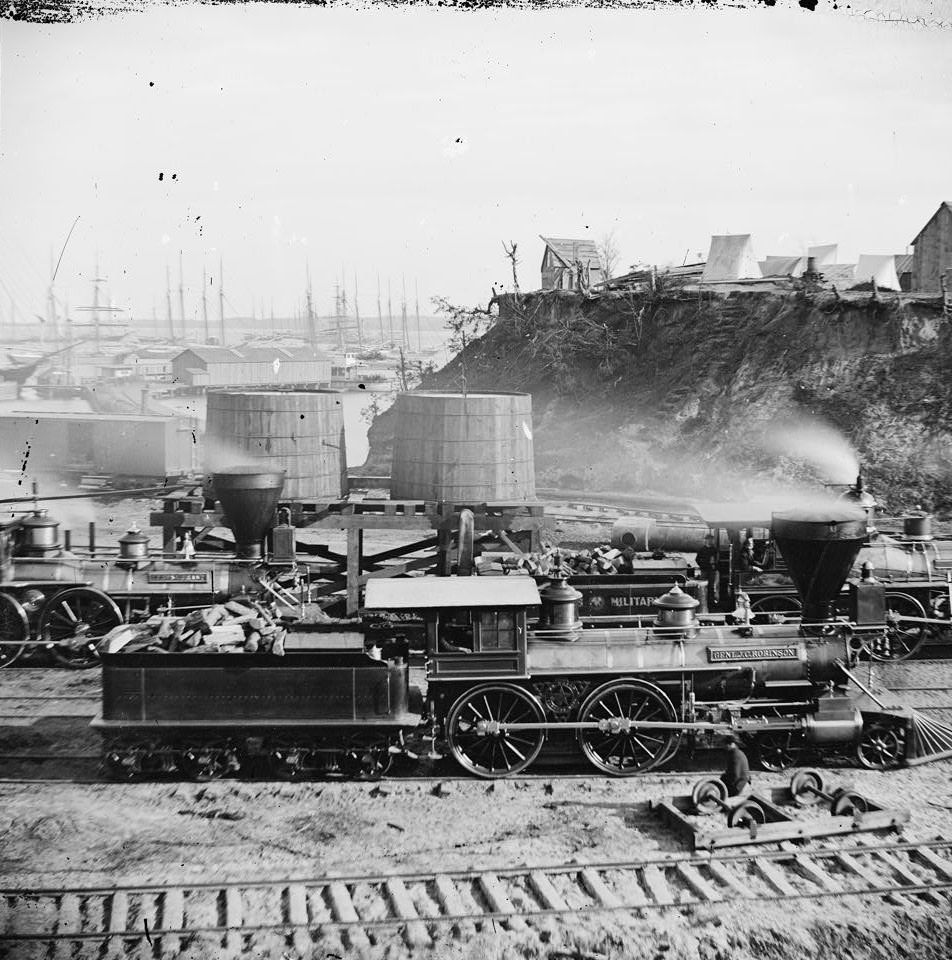
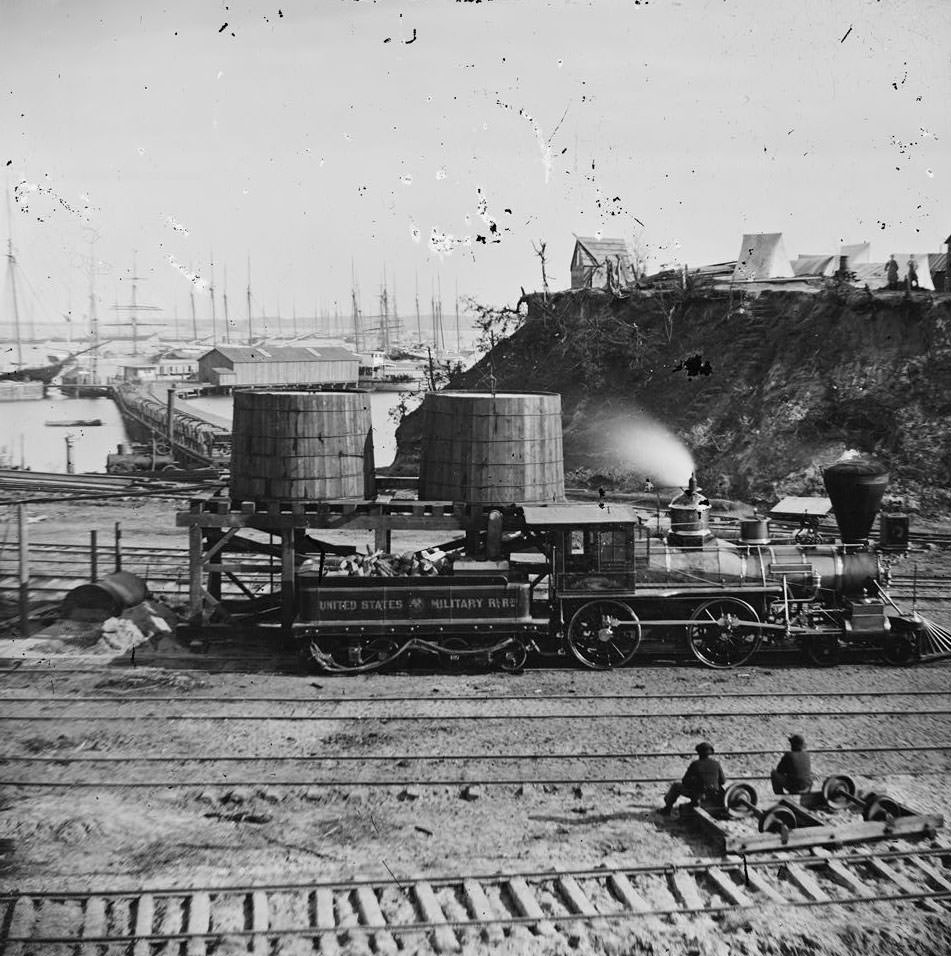
The U.S. Military Railroad played an enormous role in sustaining Union operations around Petersburg. Locomotives hauled supplies, ammunition, and troops across miles of track that the Army maintained and expanded throughout the campaign. These engines were the industrial backbone of the Union war effort in Virginia.
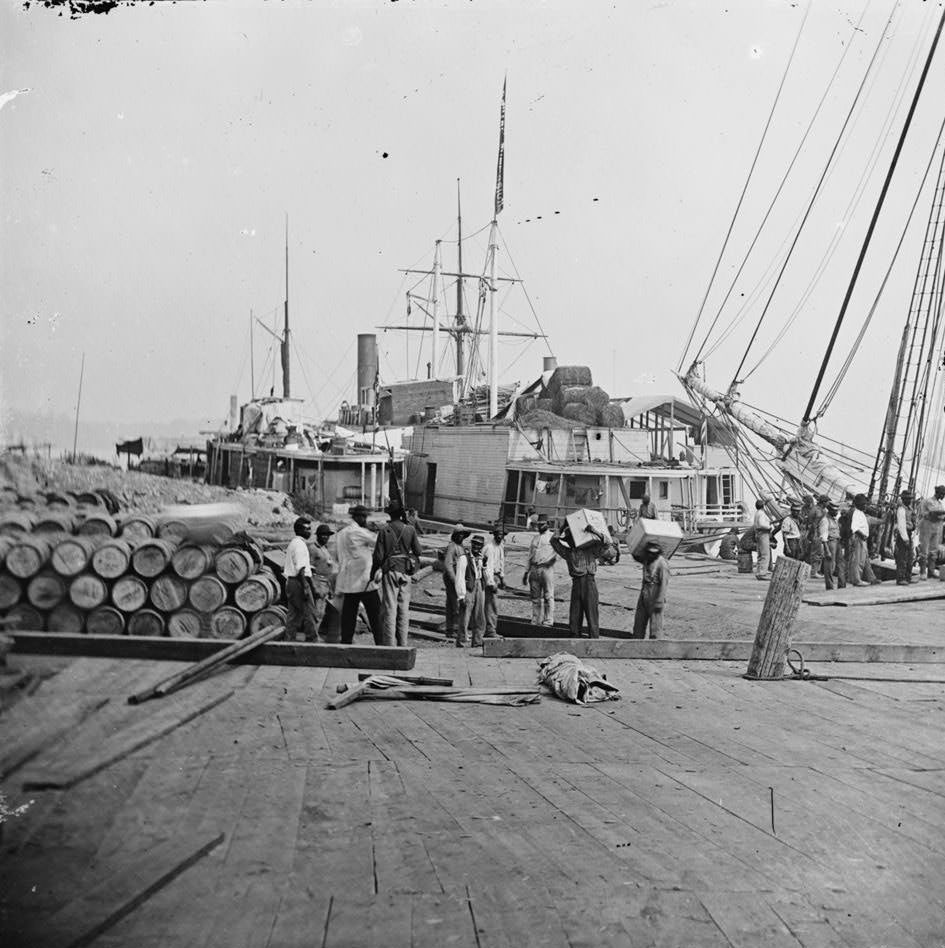
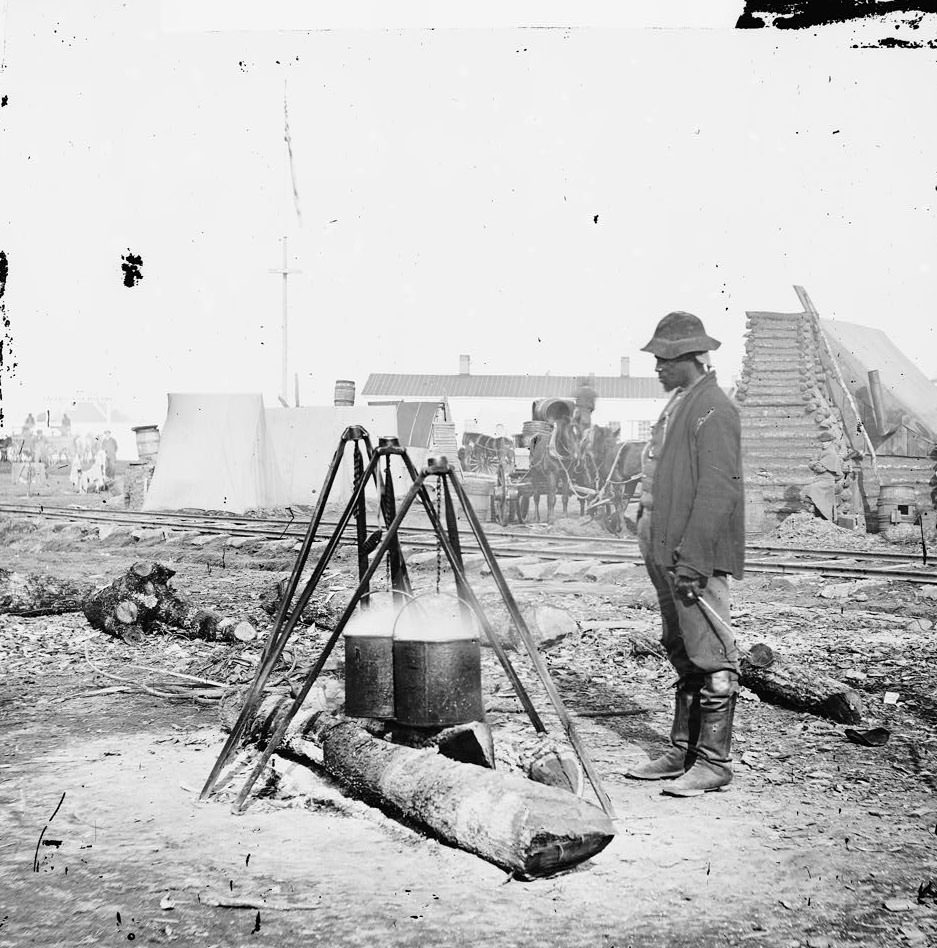
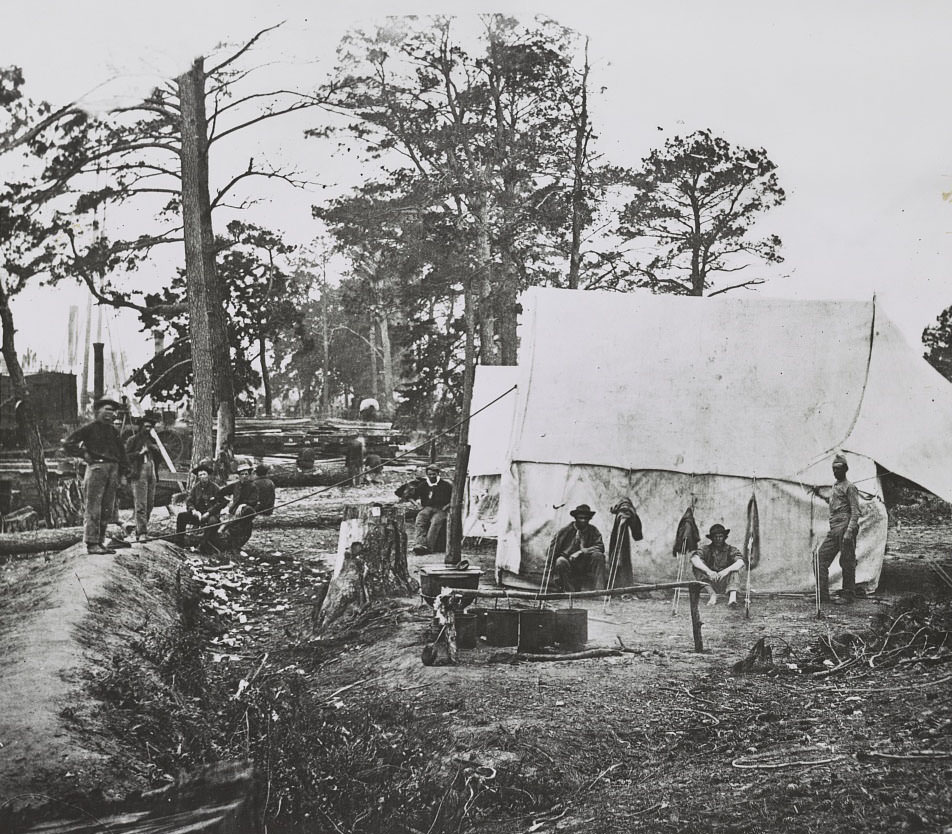
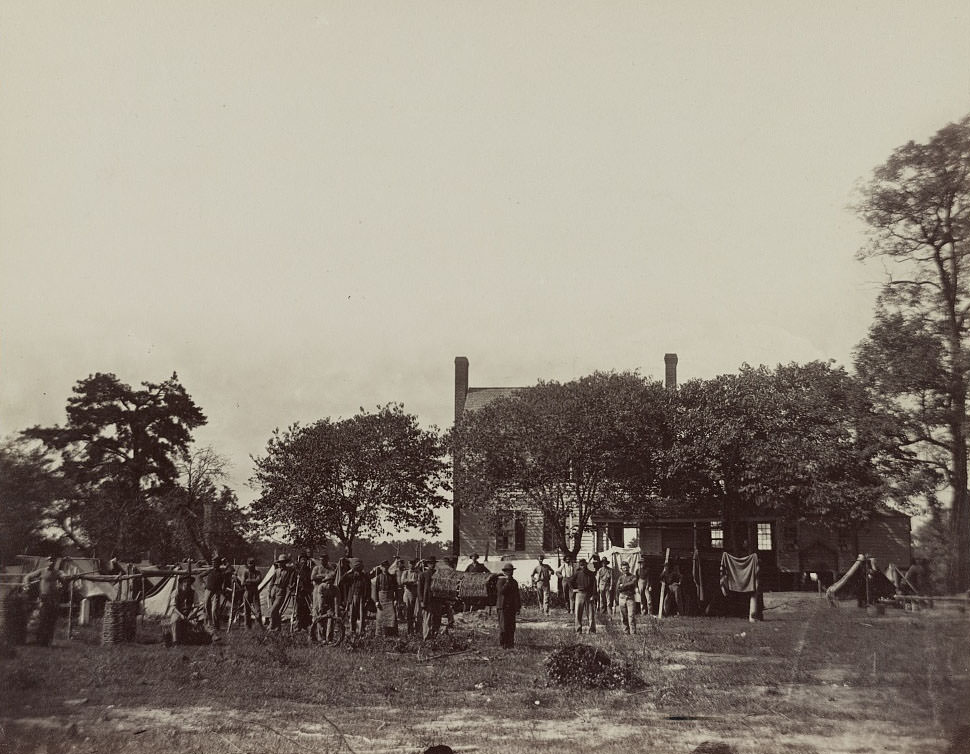
Behind the front lines, thousands of support personnel kept Union forces fed, healthy, and armed. Army cooks prepared meals for large numbers of soldiers under difficult conditions. Black soldiers and laborers served in vital roles throughout the campaign — including as cooks, laborers, and in fully organized combat units.
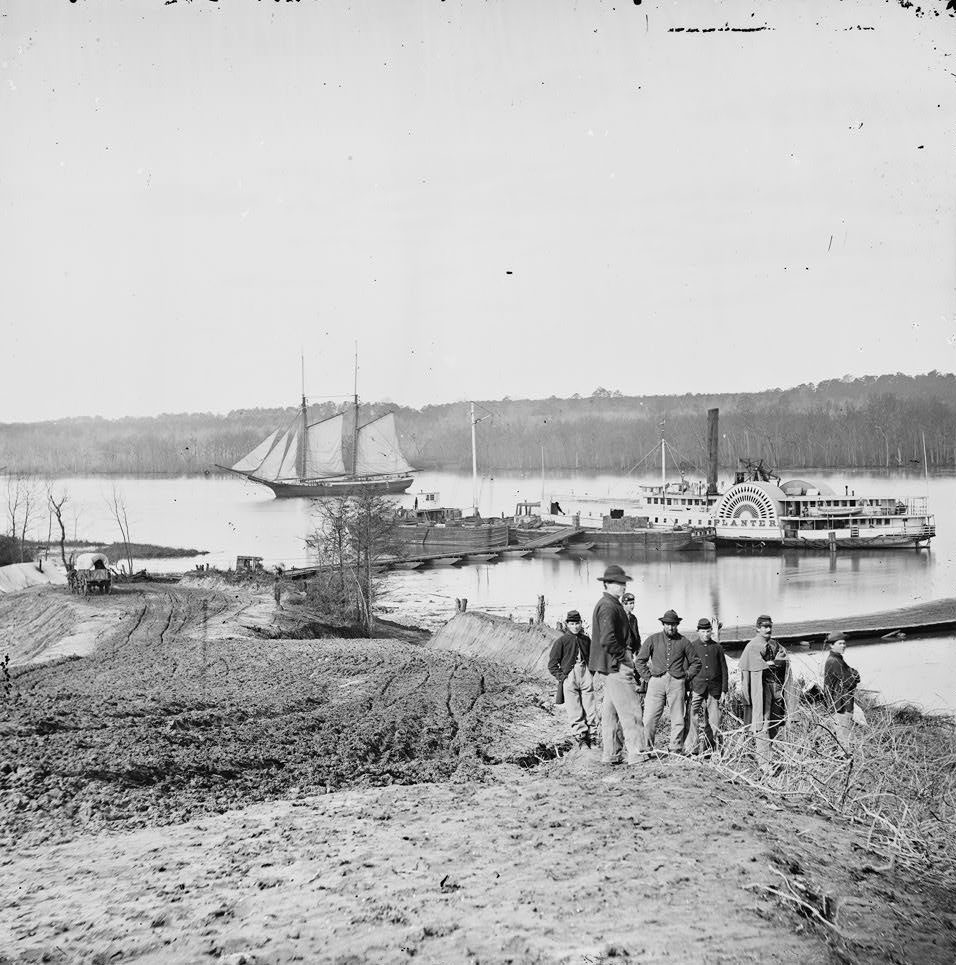
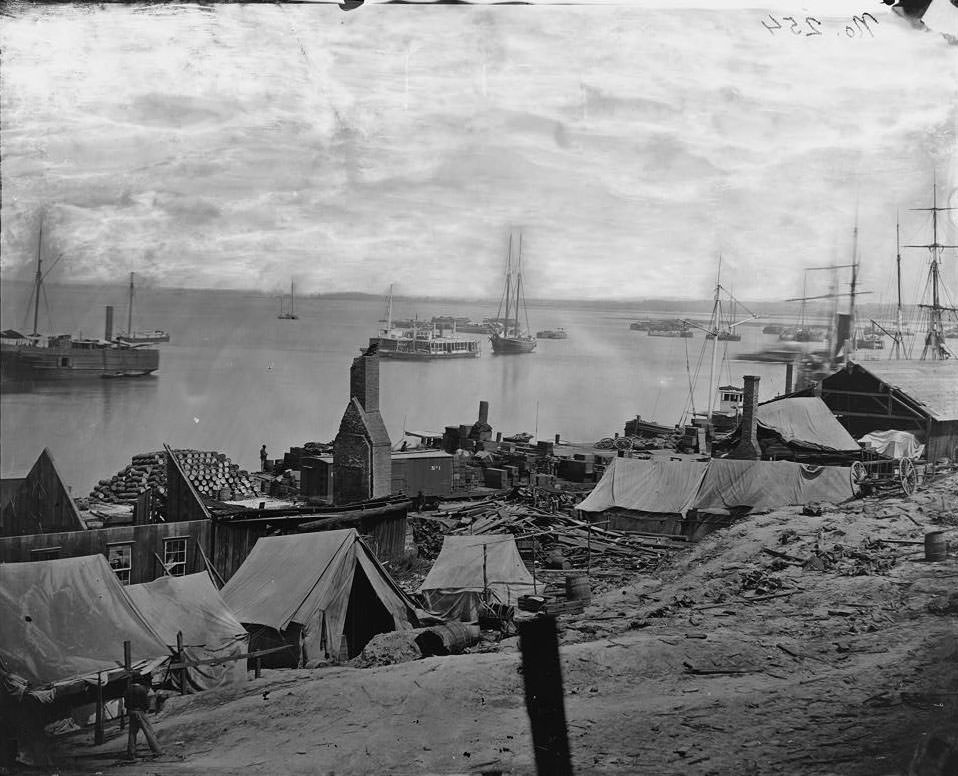
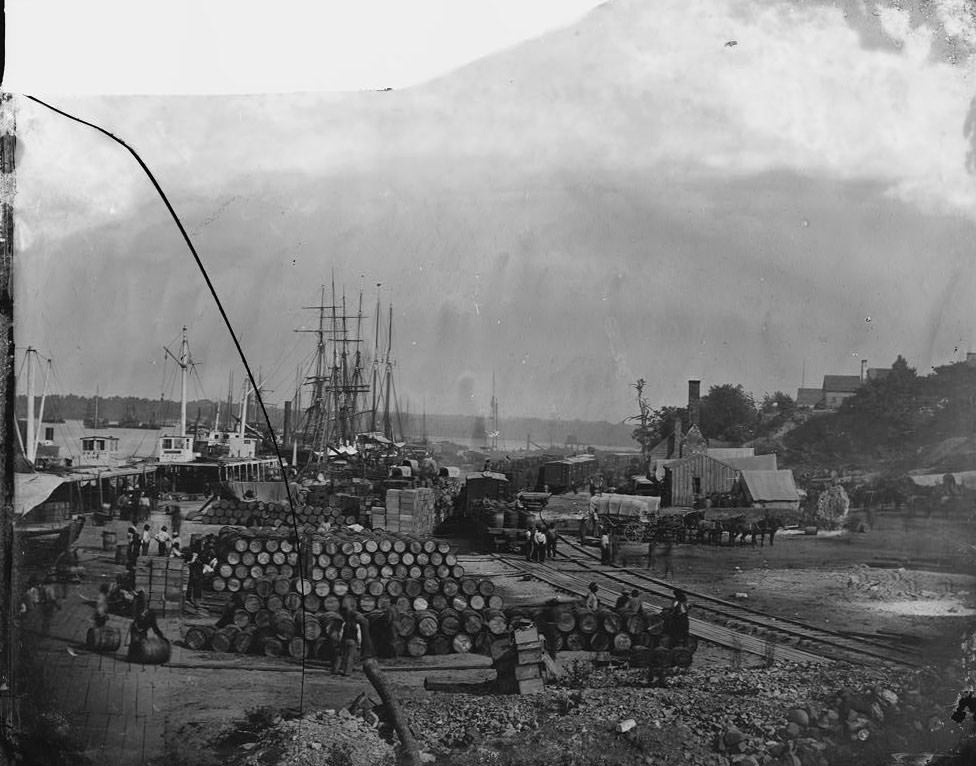
The Appomattox River served as a critical supply artery for Union forces. Medical supply boats docked at wharves along the river, bringing in medicine and evacuating the wounded. The wharf at the General Hospital was one of the busiest points along the waterway.
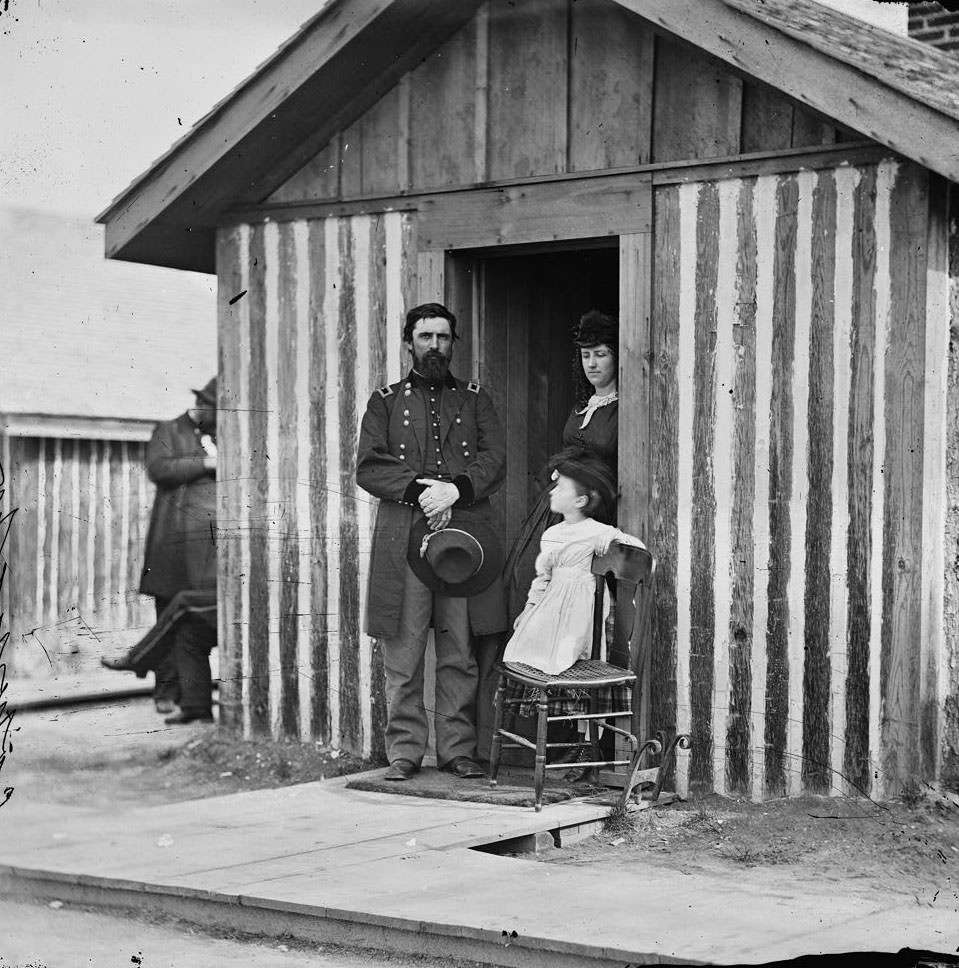
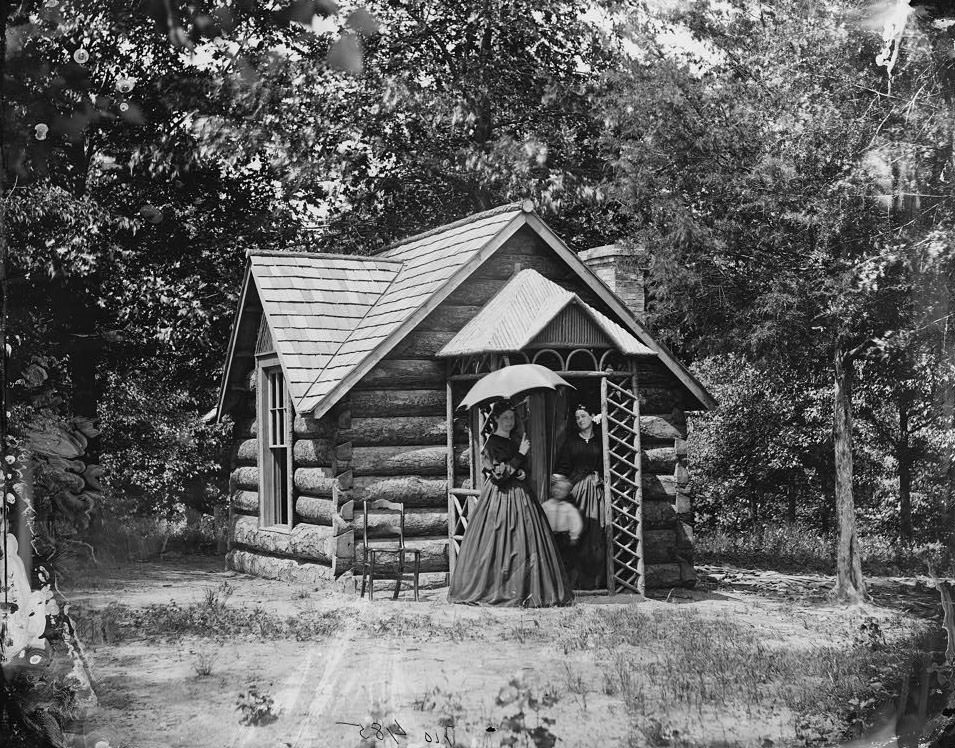
General Ulysses S. Grant commanded the entire Union Army from his headquarters near Petersburg. His presence close to the front lines reflected the seriousness with which he treated the siege. His chief of staff, Brigadier General John A. Rawlins, also set up quarters nearby, living with his wife and child just behind the lines.
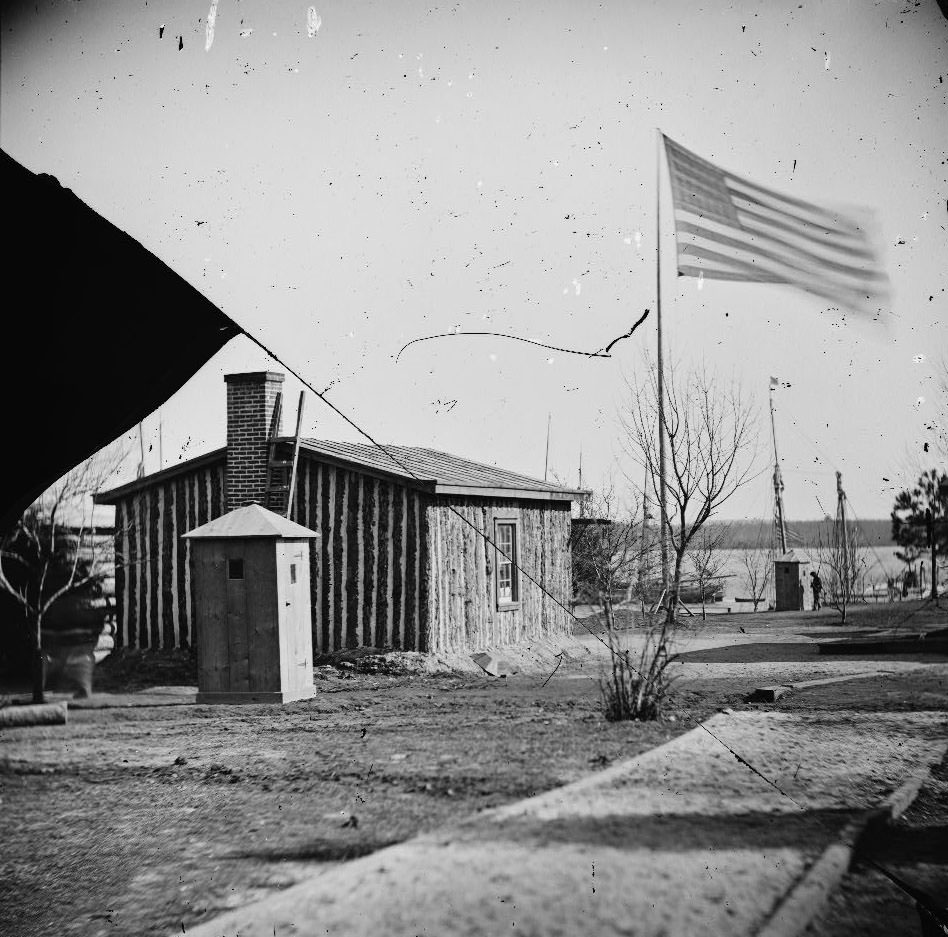
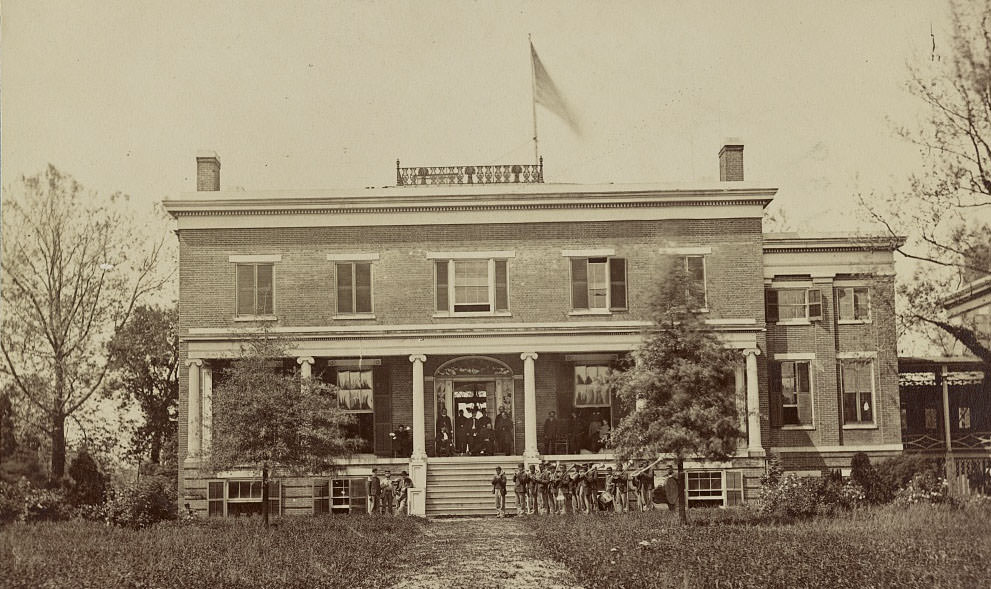
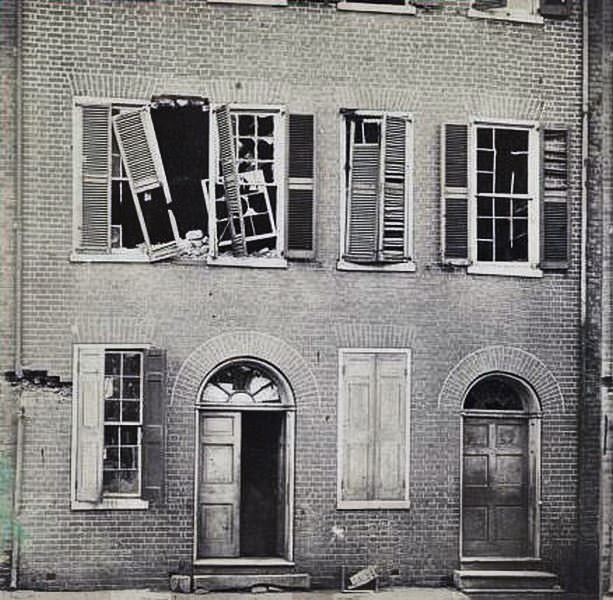
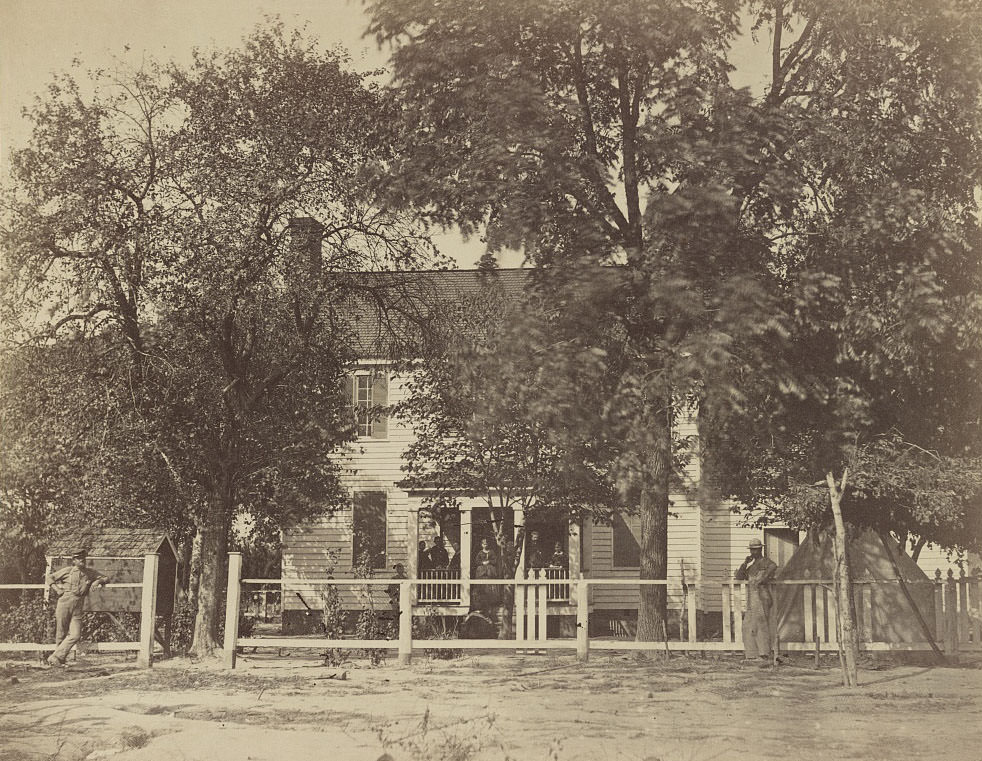
Artillery fire during the siege left visible destruction across Petersburg’s streets and buildings. Bollingbrook Street took significant damage from Union shot and shell. The Dunlop house, a notable structure on the north side of the city, bore clear evidence of the bombardment.
Even in the middle of a siege, commerce found a way. Entrepreneurs opened bomb-proof restaurants directly on the Petersburg lines, serving meals to soldiers who needed a break from field rations. These underground or reinforced establishments became a common feature of life along the trenches.
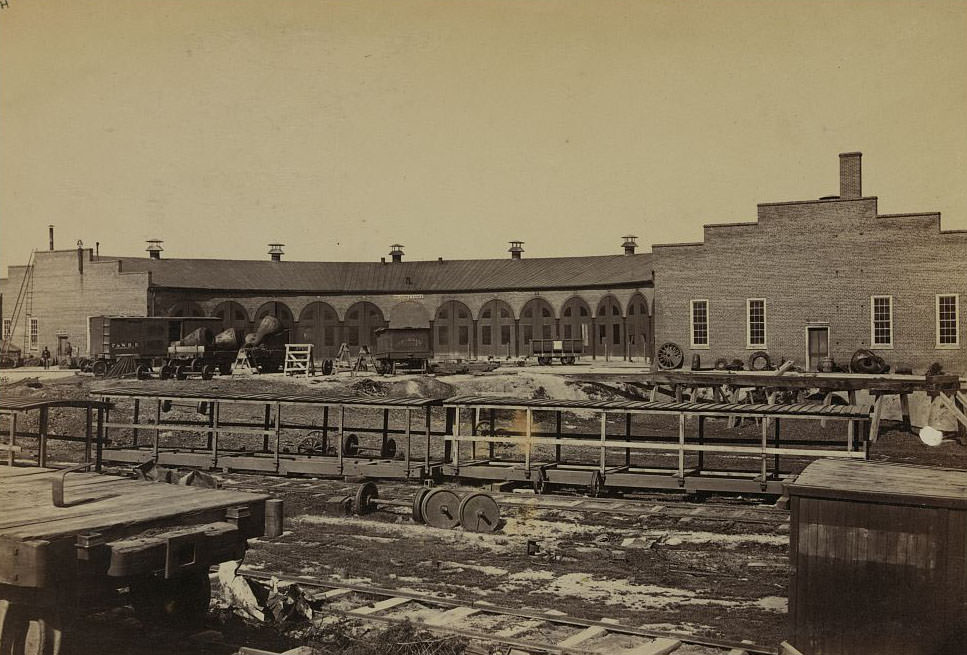
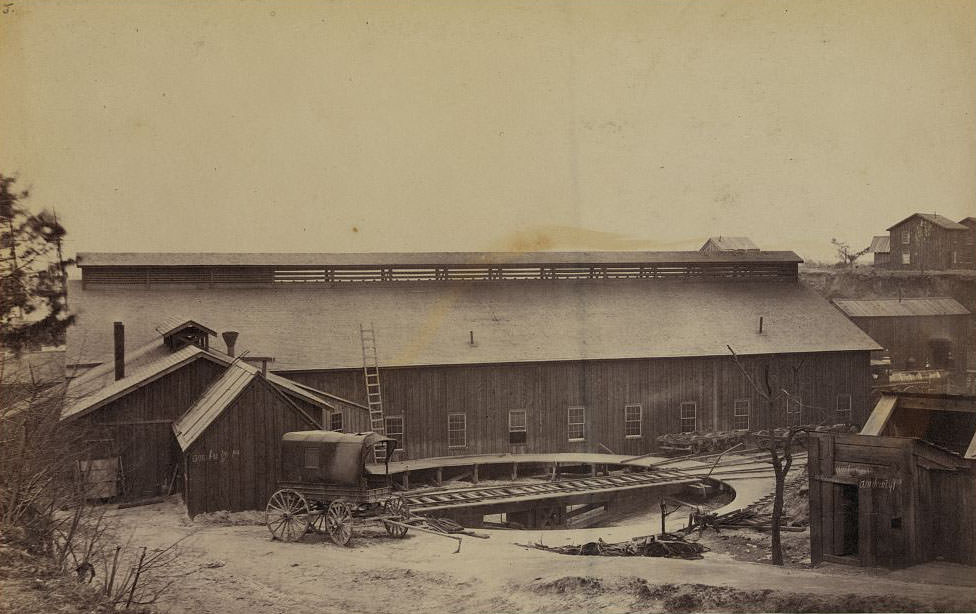
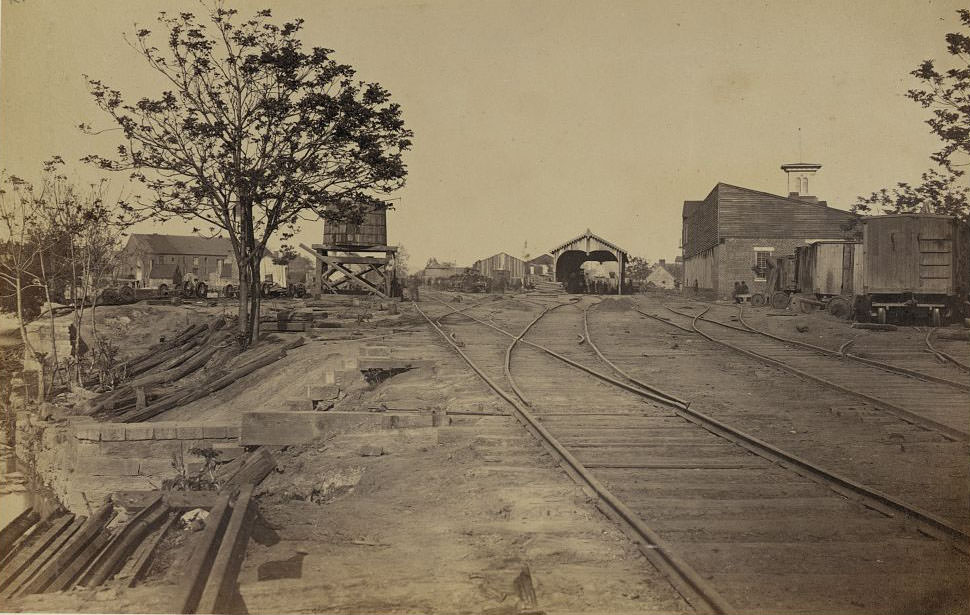
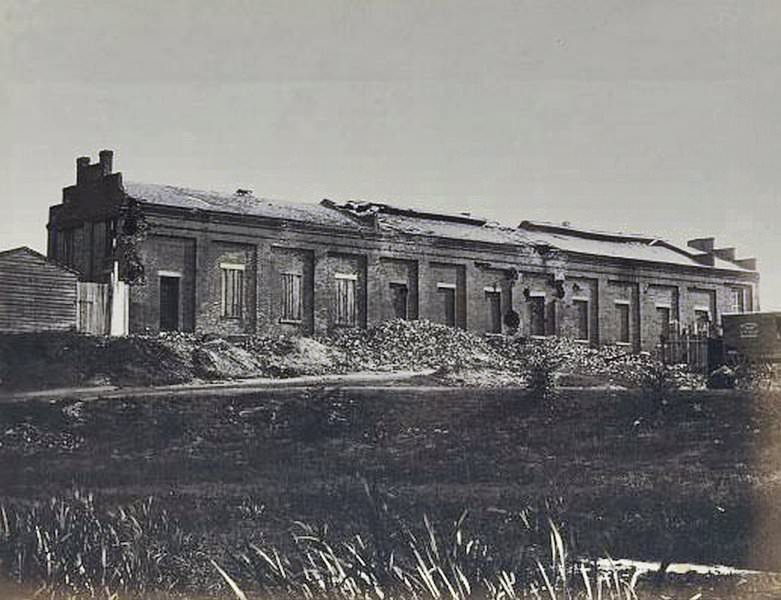
The railroad infrastructure around Petersburg was extensive. Roundhouses stored and maintained locomotives, while turntables allowed engines to be rotated and redirected onto different tracks. Confederate troops and supplies had long used the Pocahontas Island depot — built for the Richmond and Petersburg rail line — to move men and materiel through the city.
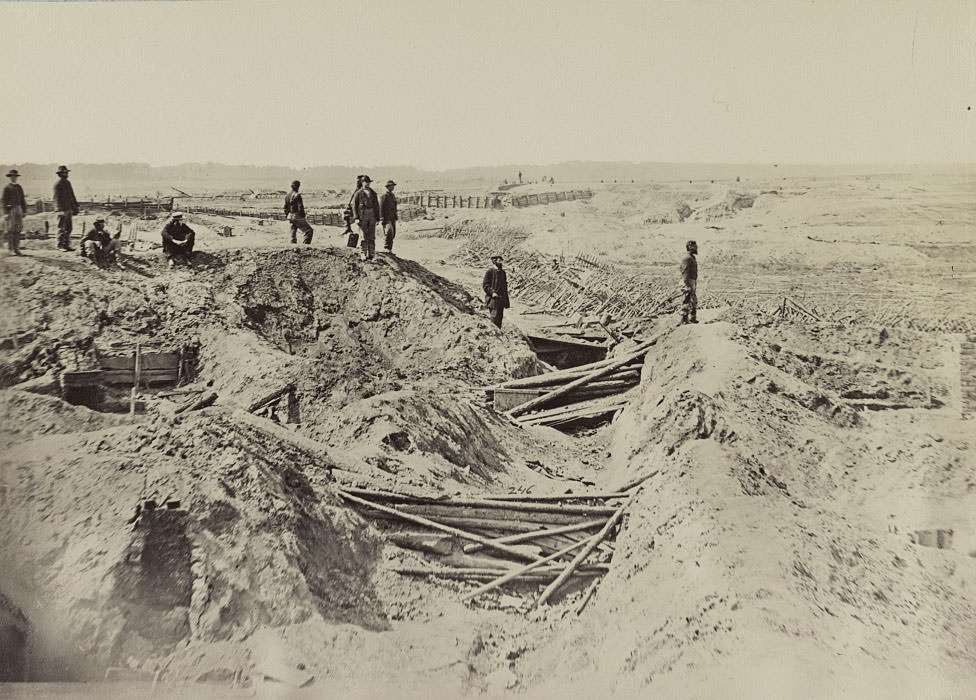
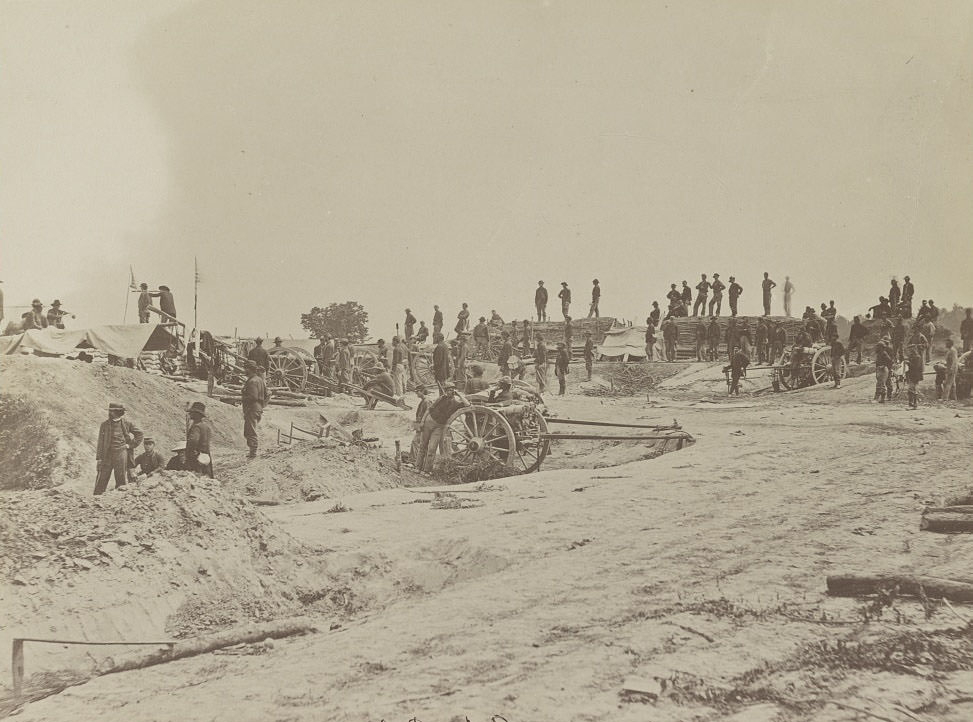
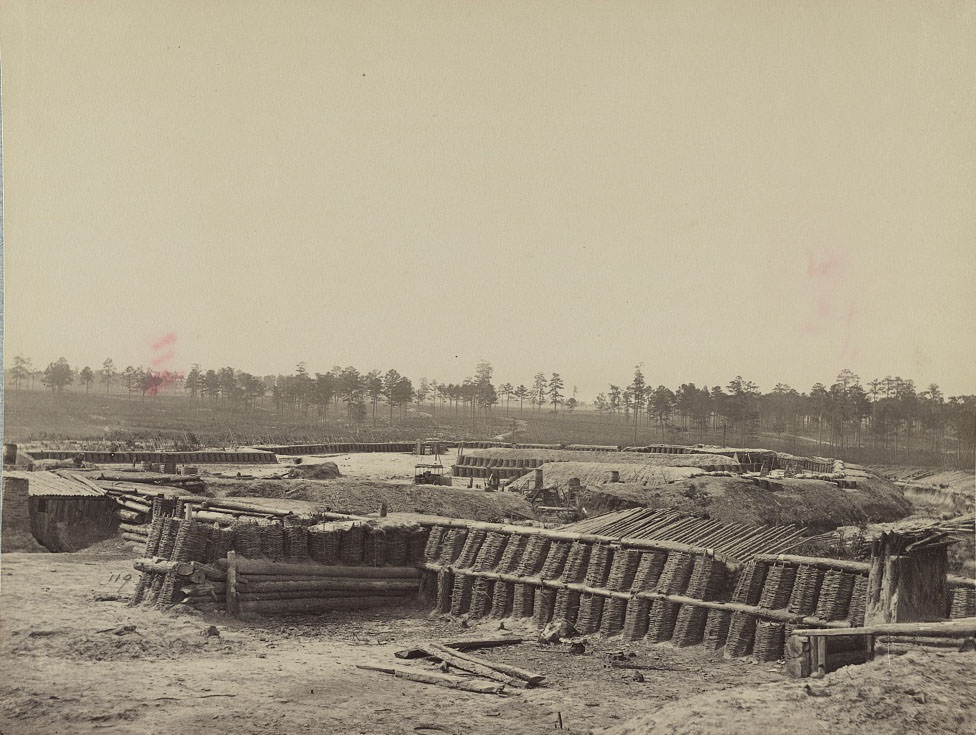
Union forces built and occupied a series of forts along their siege lines. Fort Sedgwick became one of the most well-known positions in the Union line. Confederate soldiers nicknamed it “Fort Hell” because of the near-constant fire it received from Confederate Fort Mahone — which Union troops, in turn, called “Fort Damnation.” The two forts sat directly across from each other, and the ground between them was among the most dangerous on the entire front.
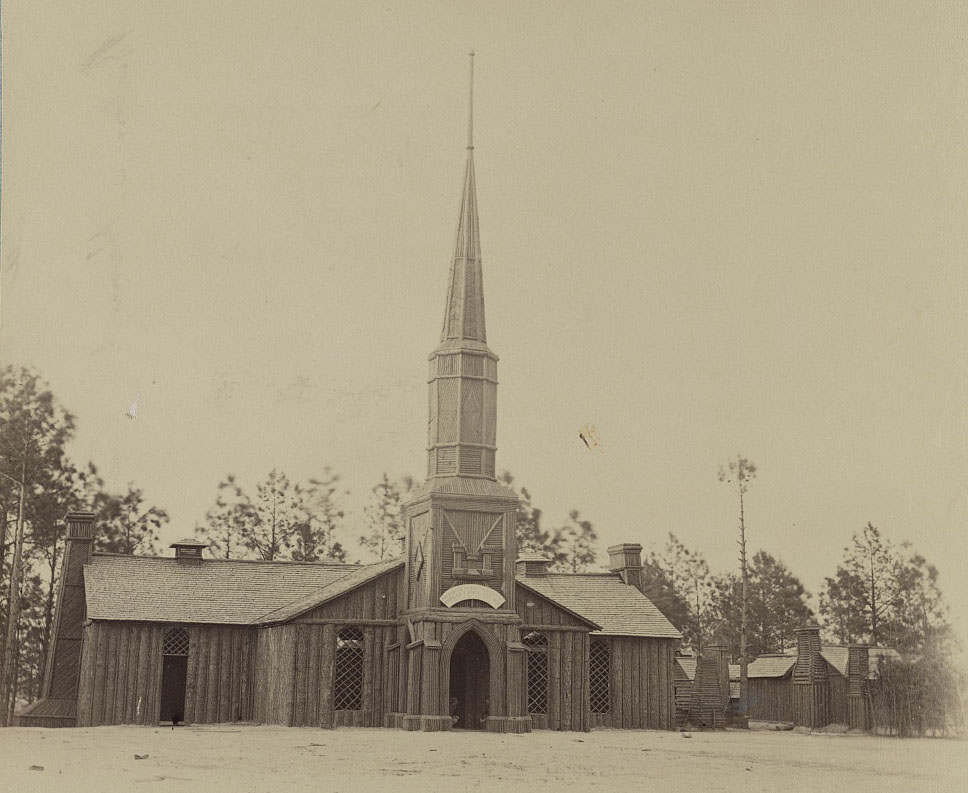
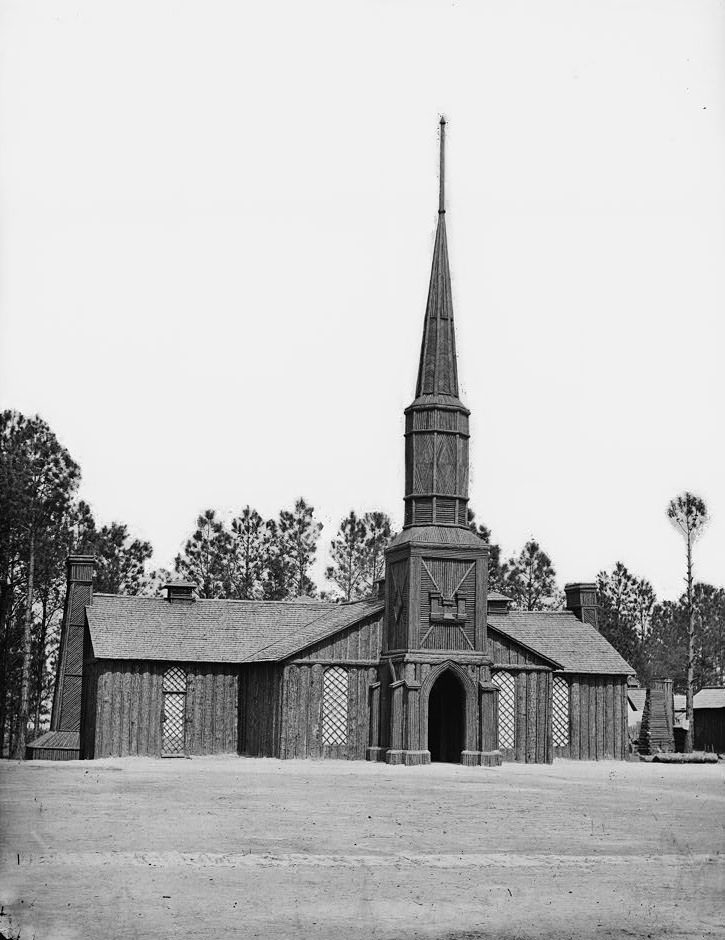
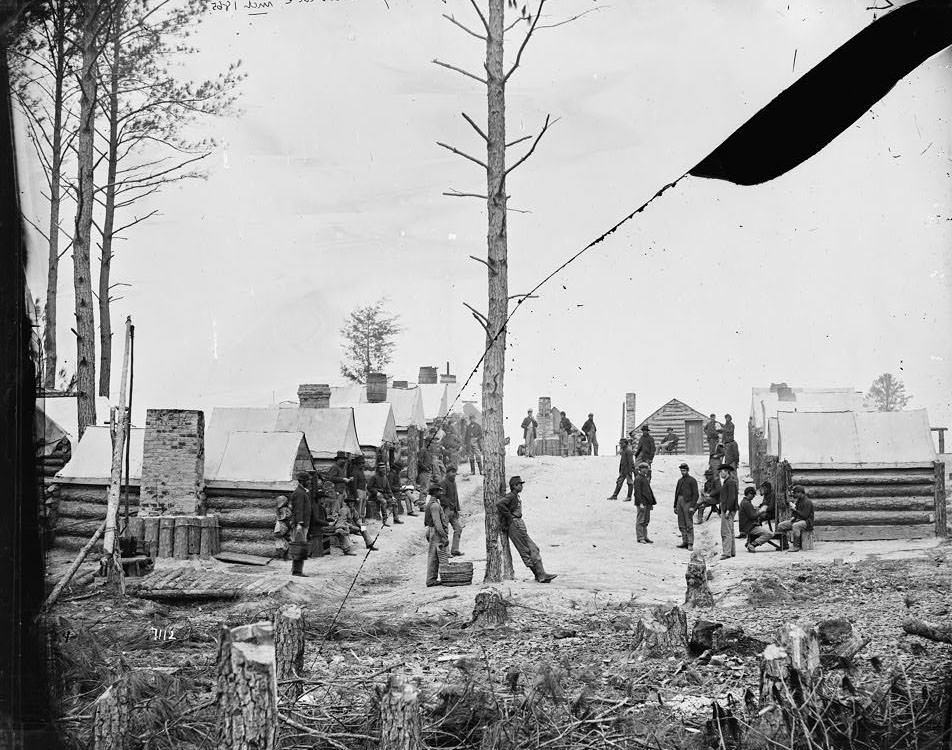
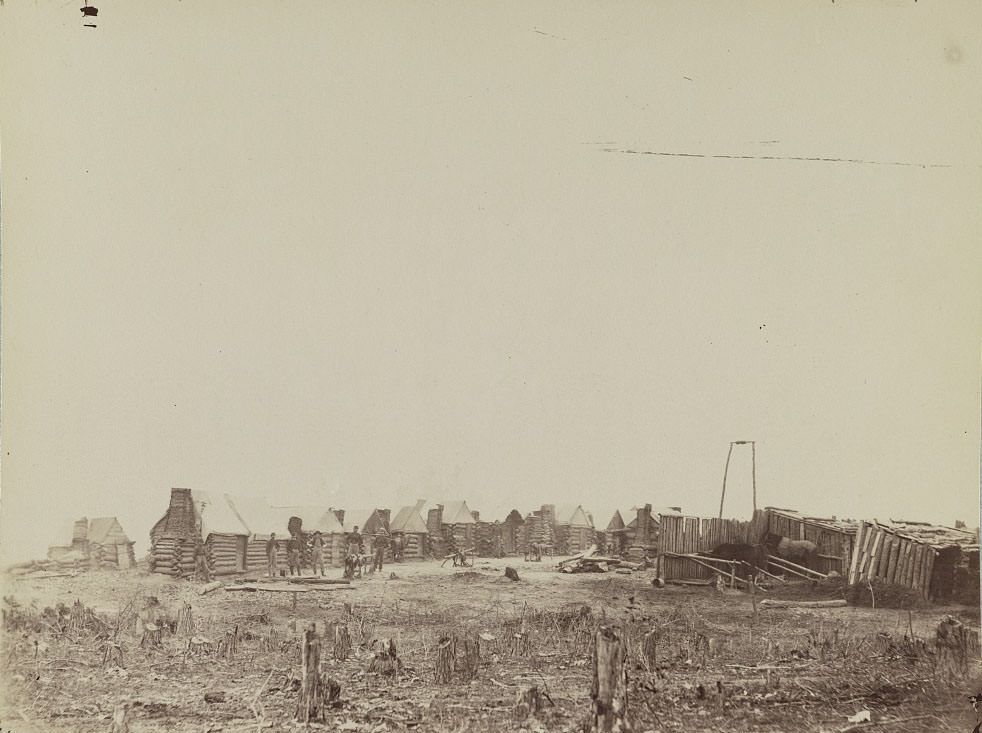
Soldiers in the Union camp outside Petersburg built more than just military structures. The 50th New York Engineers constructed a log church in their camp, complete with the engineer insignia above the door. Religion and community helped men endure the grinding monotony and danger of siege life.
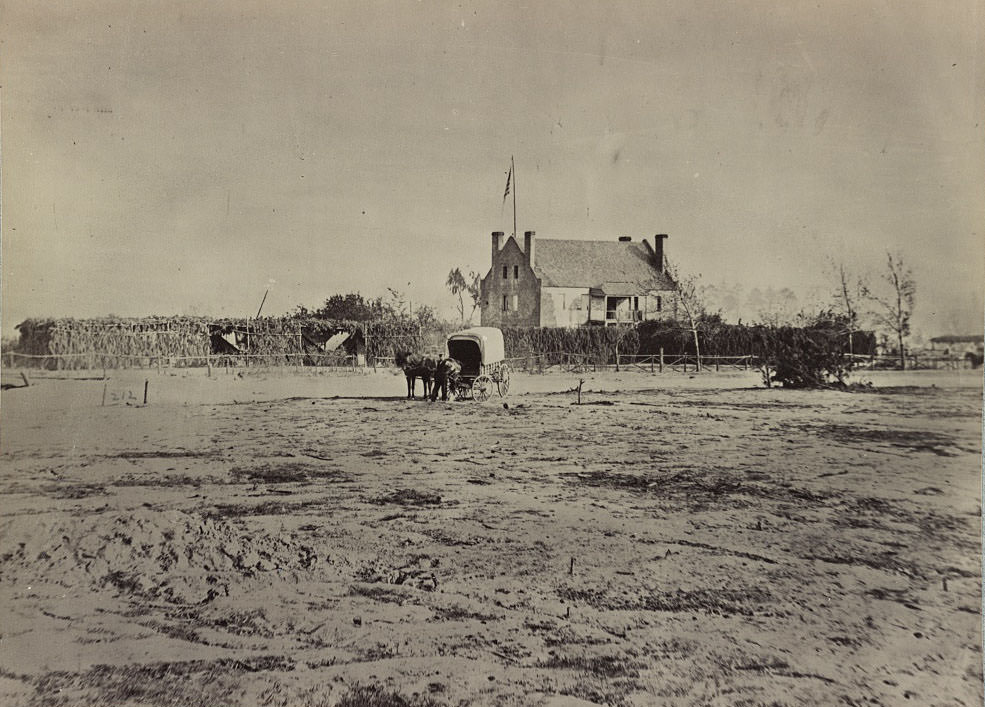
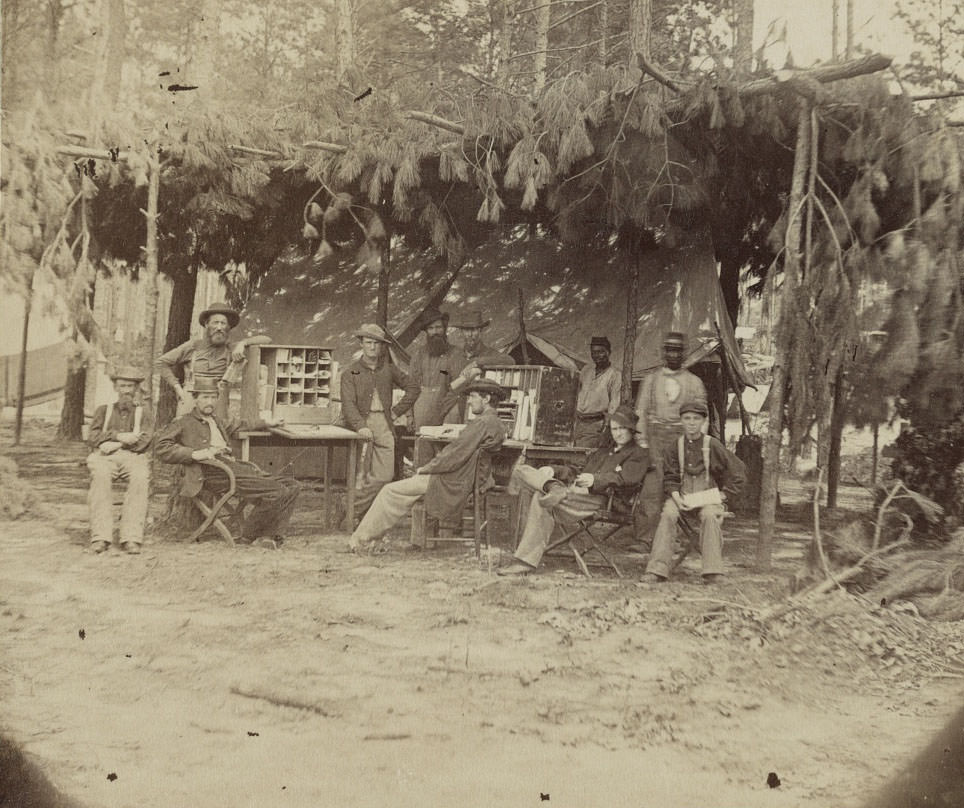
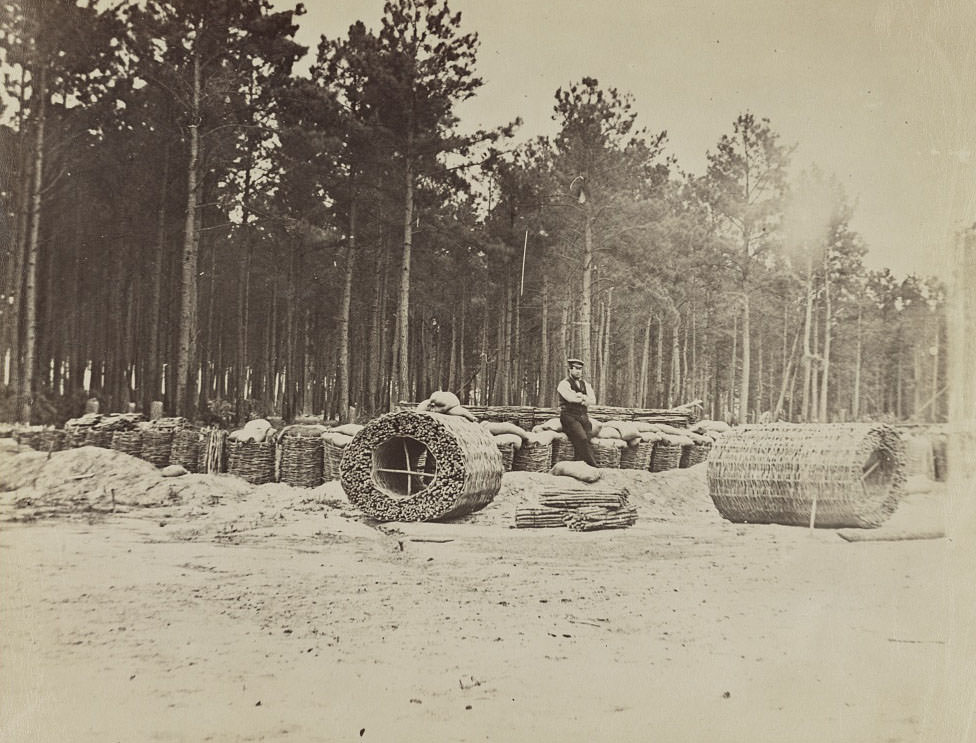
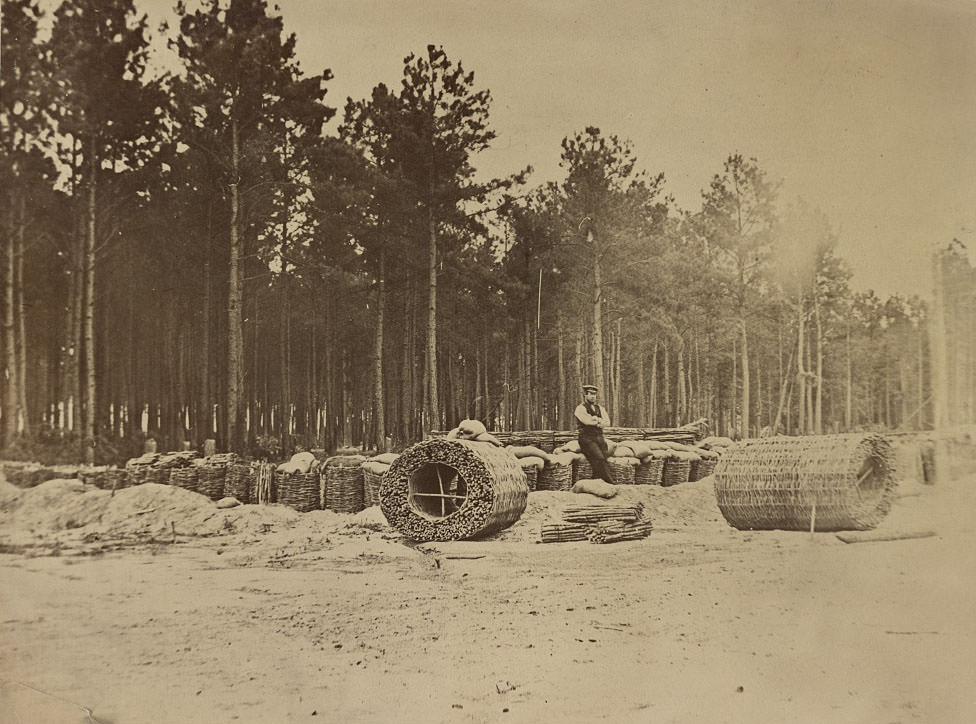
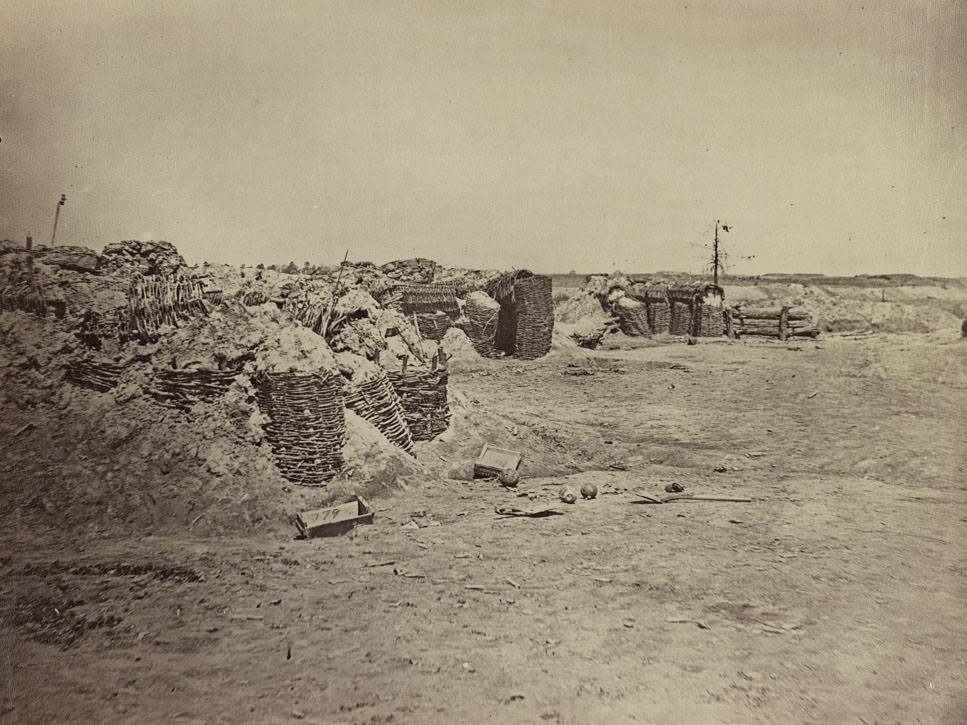
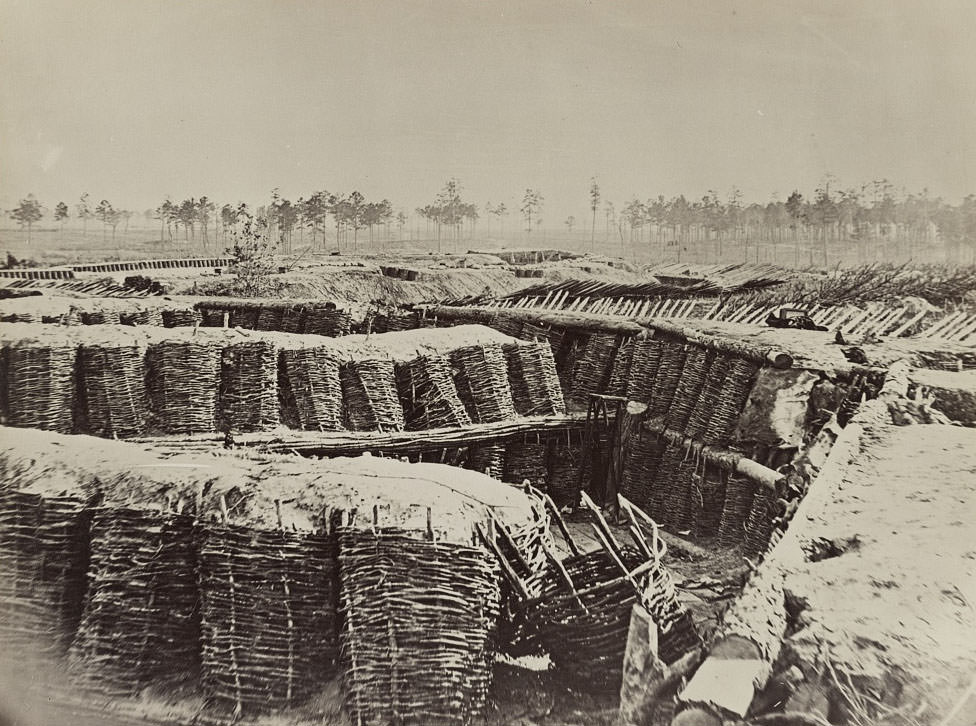
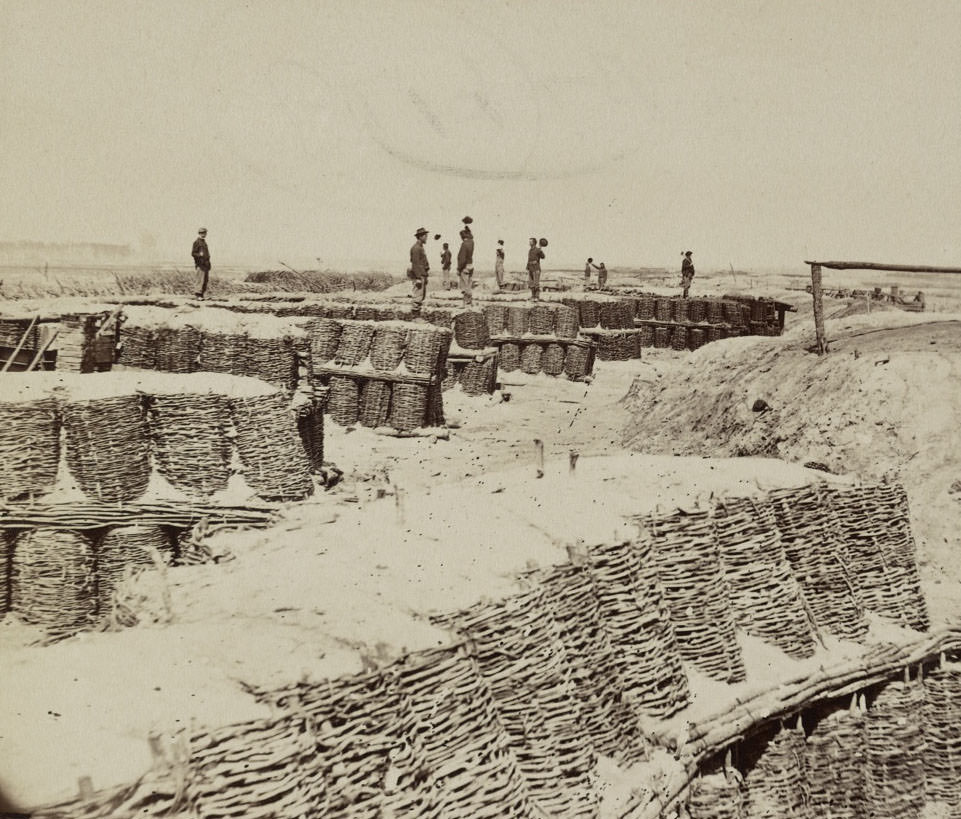
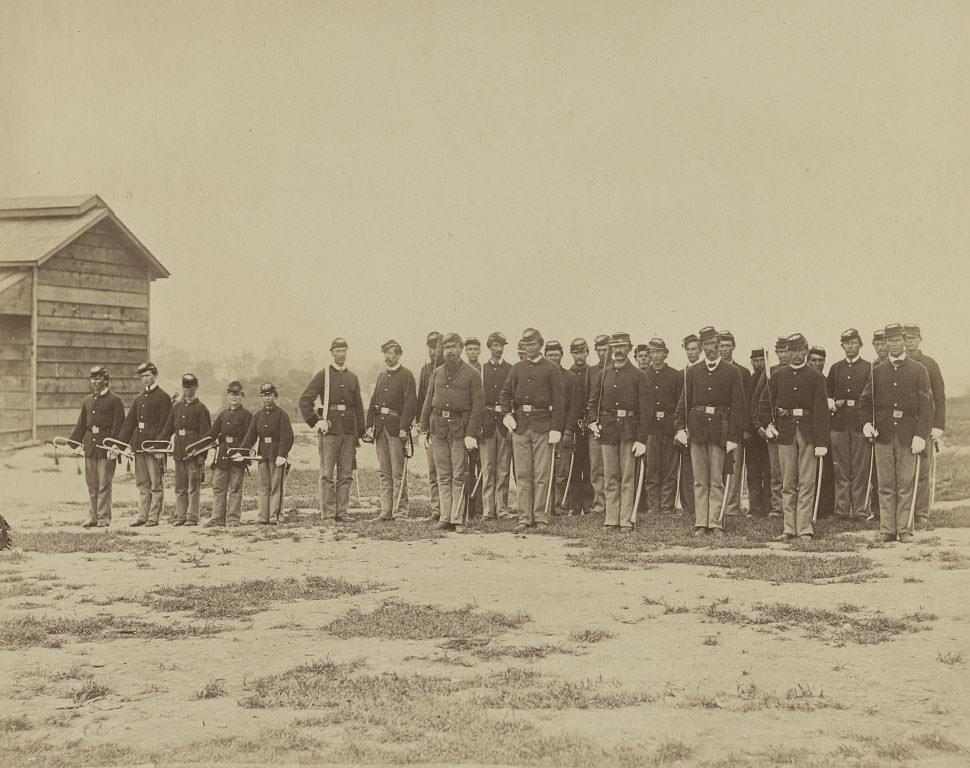
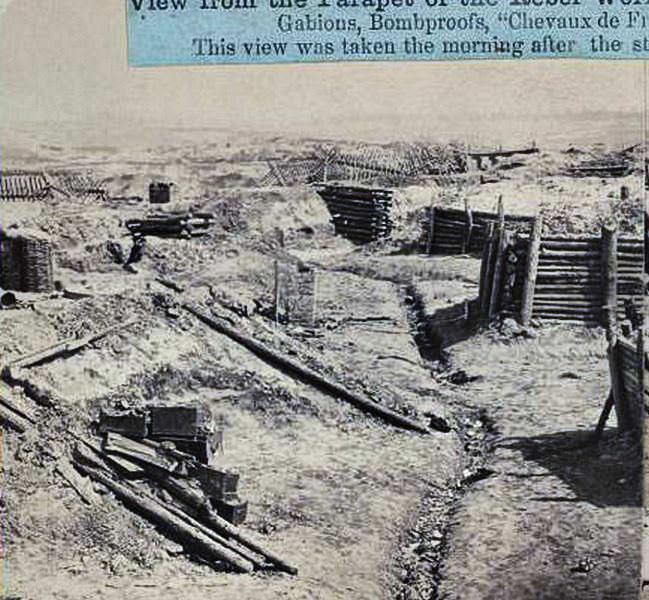
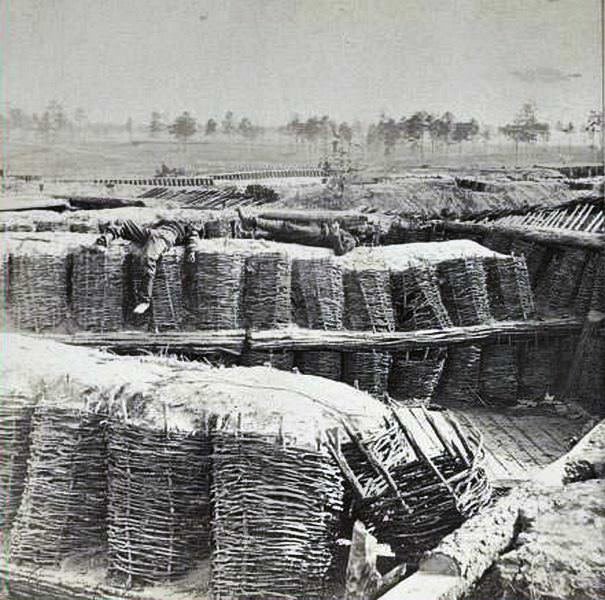
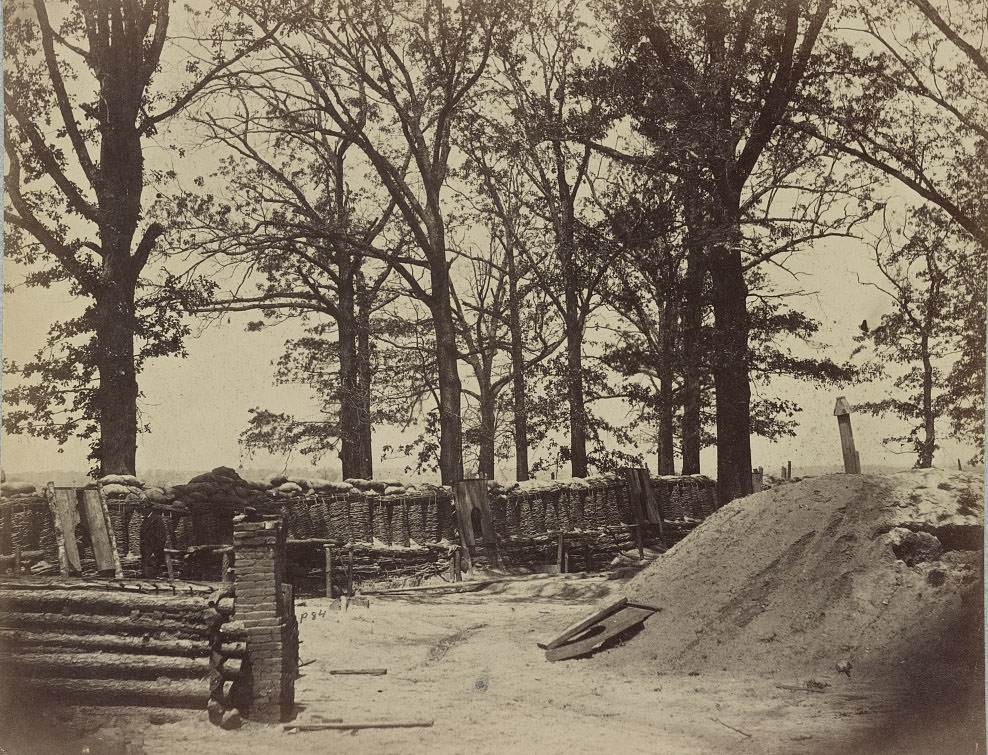
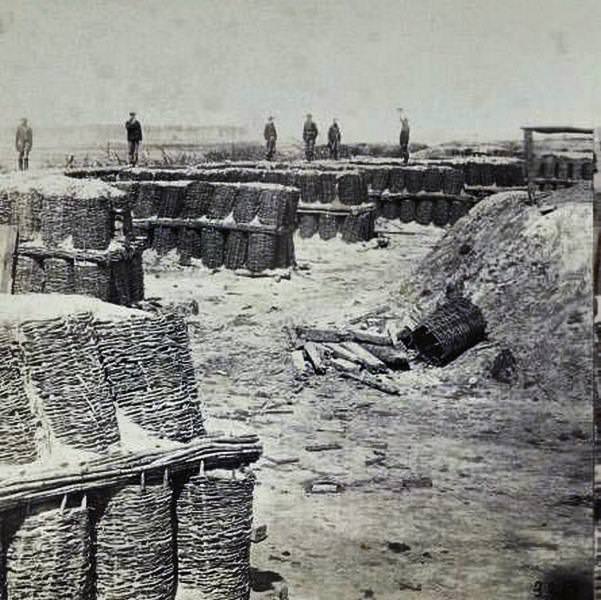
Engineering units were essential to the siege. Gabions — large cylindrical baskets filled with earth — were stacked to form walls and defensive barriers. The U.S. Engineer Battalion used them extensively to build and reinforce positions along the Union line.
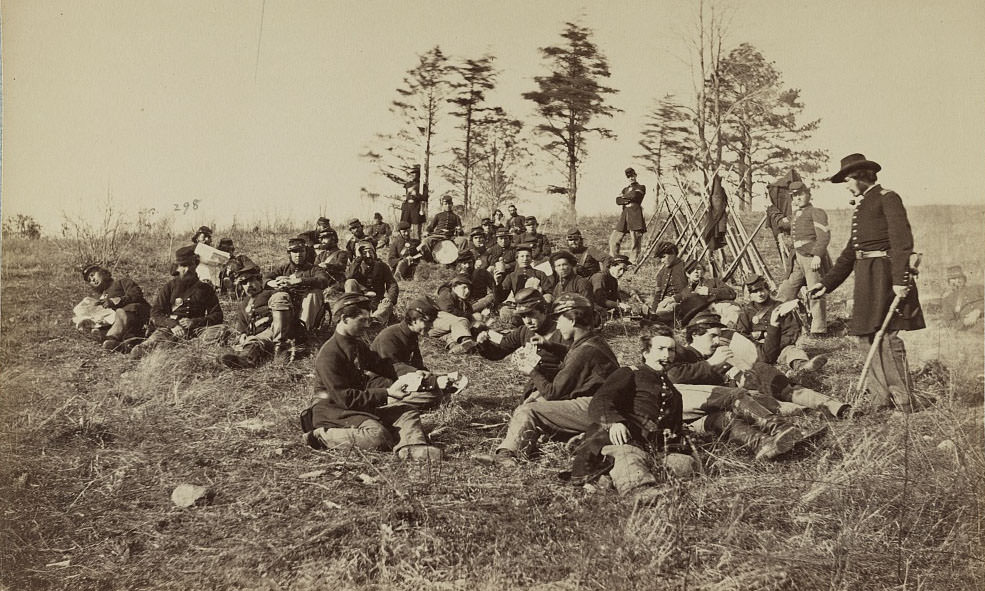
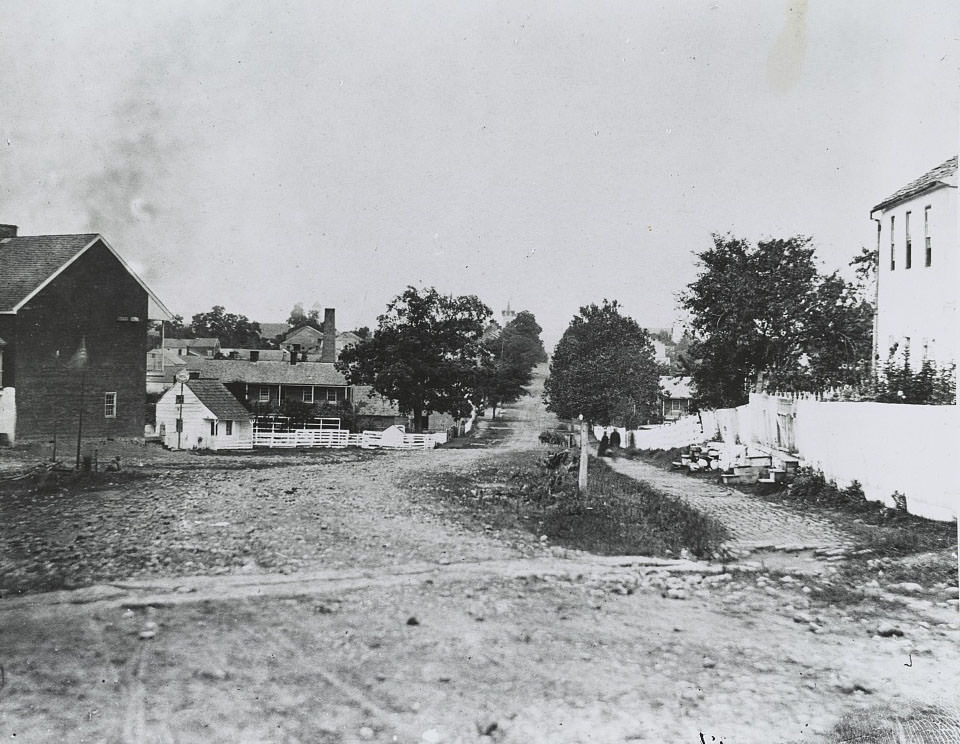
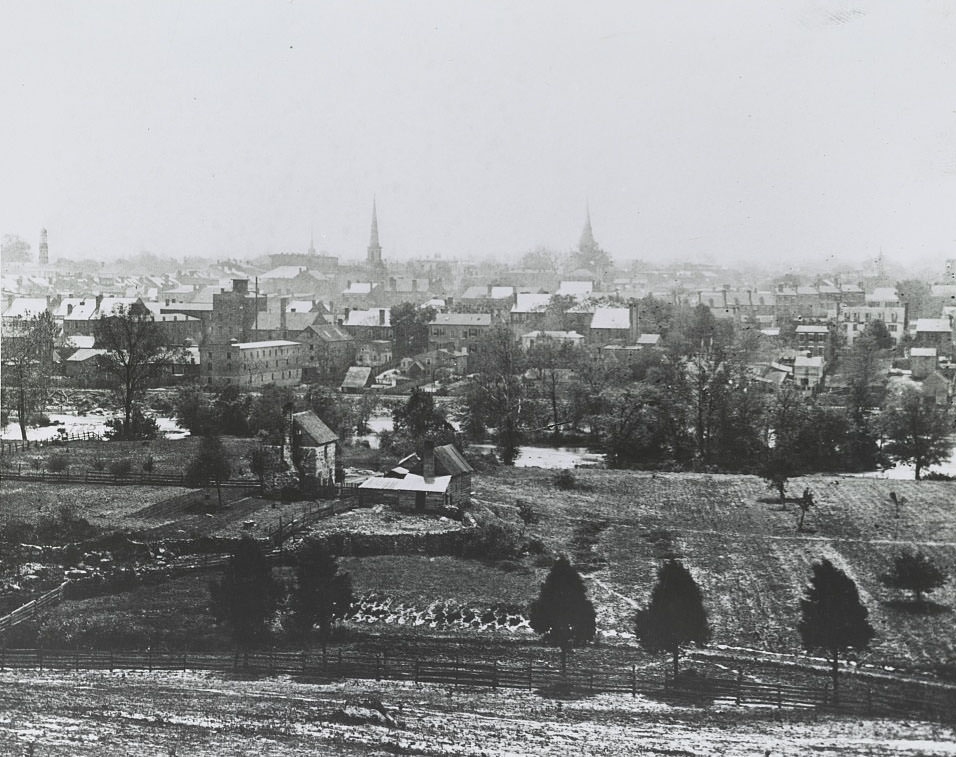
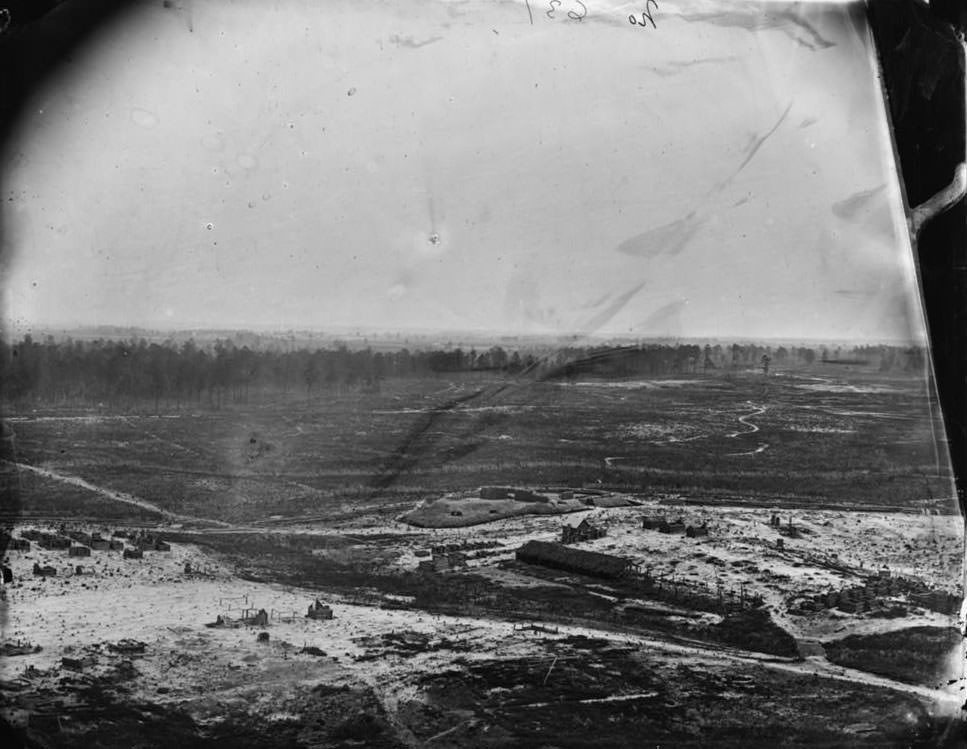
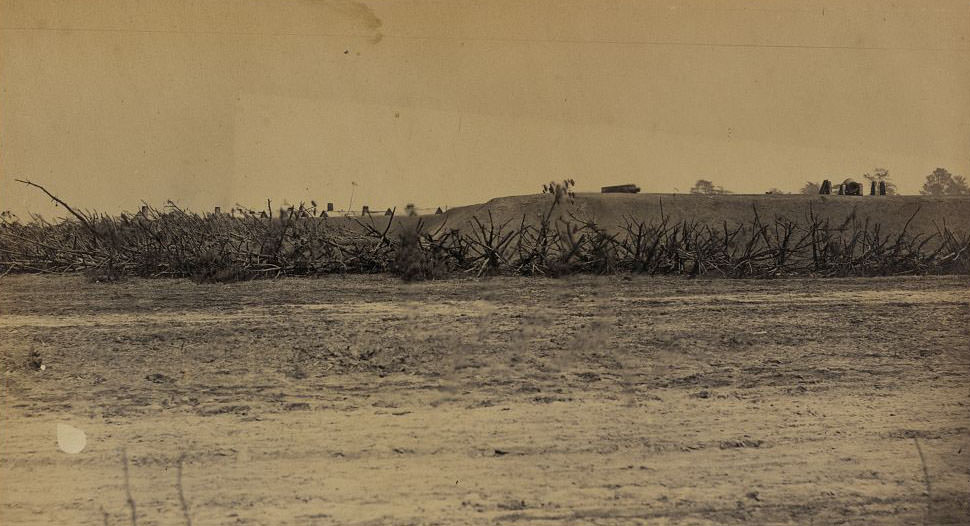
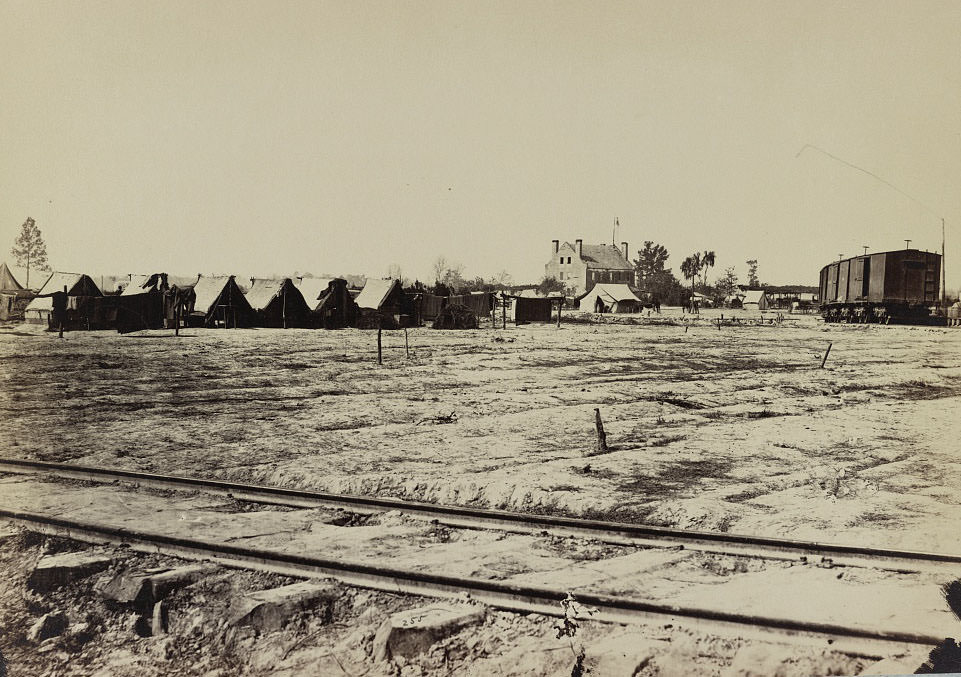
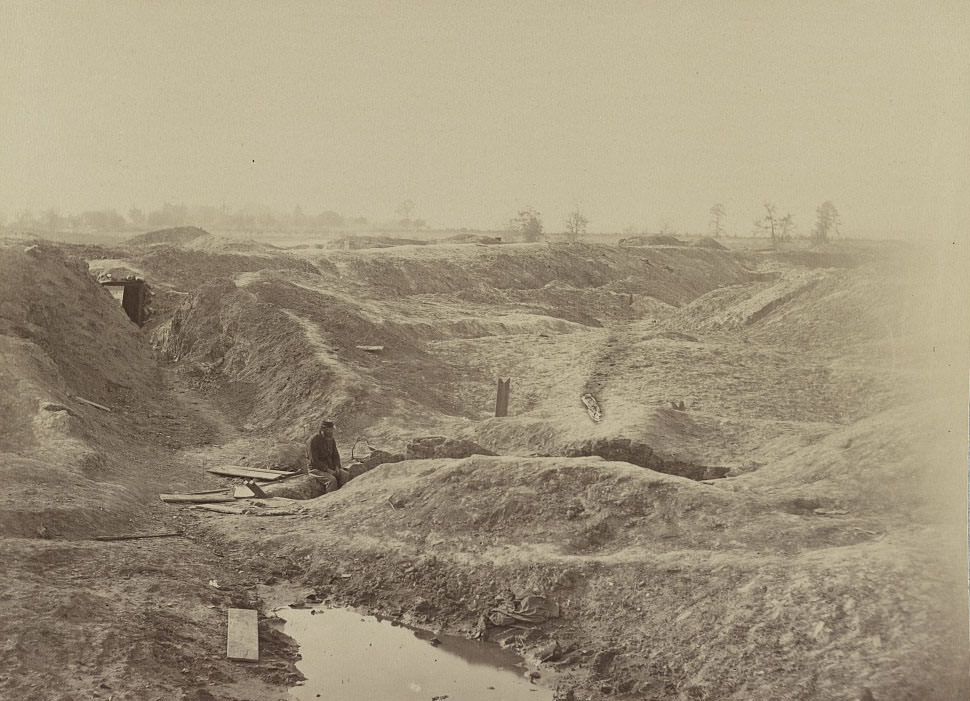
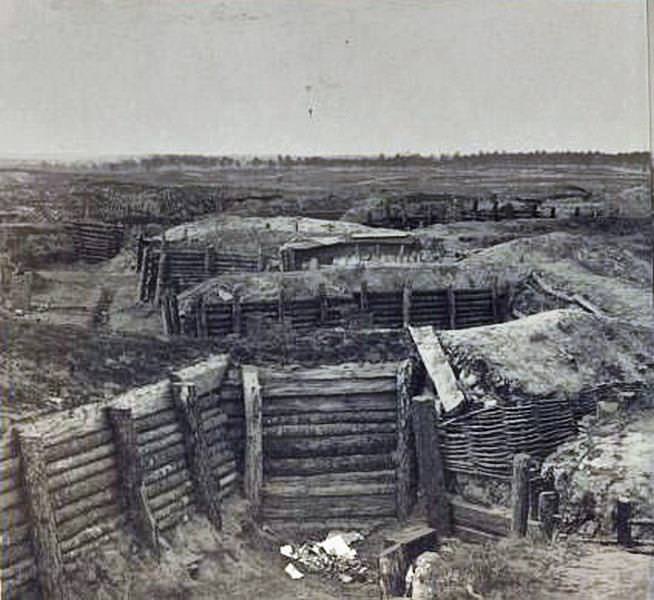
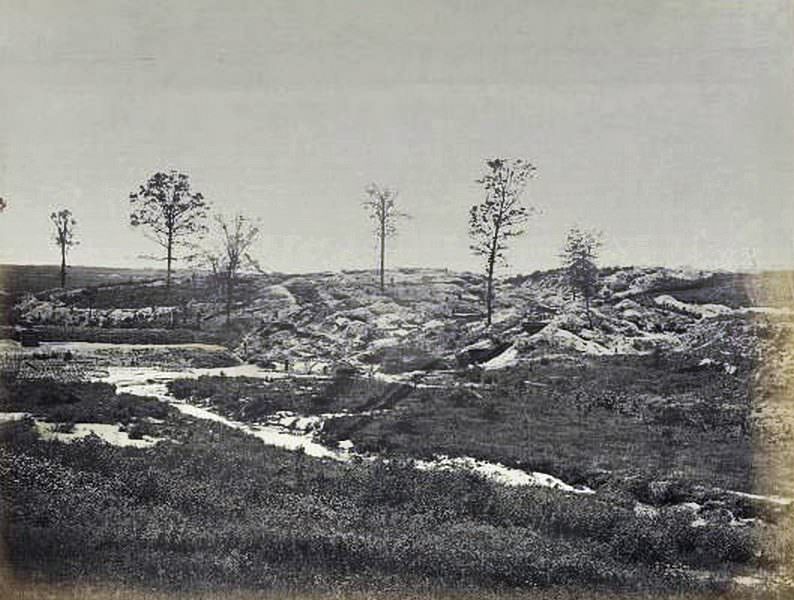
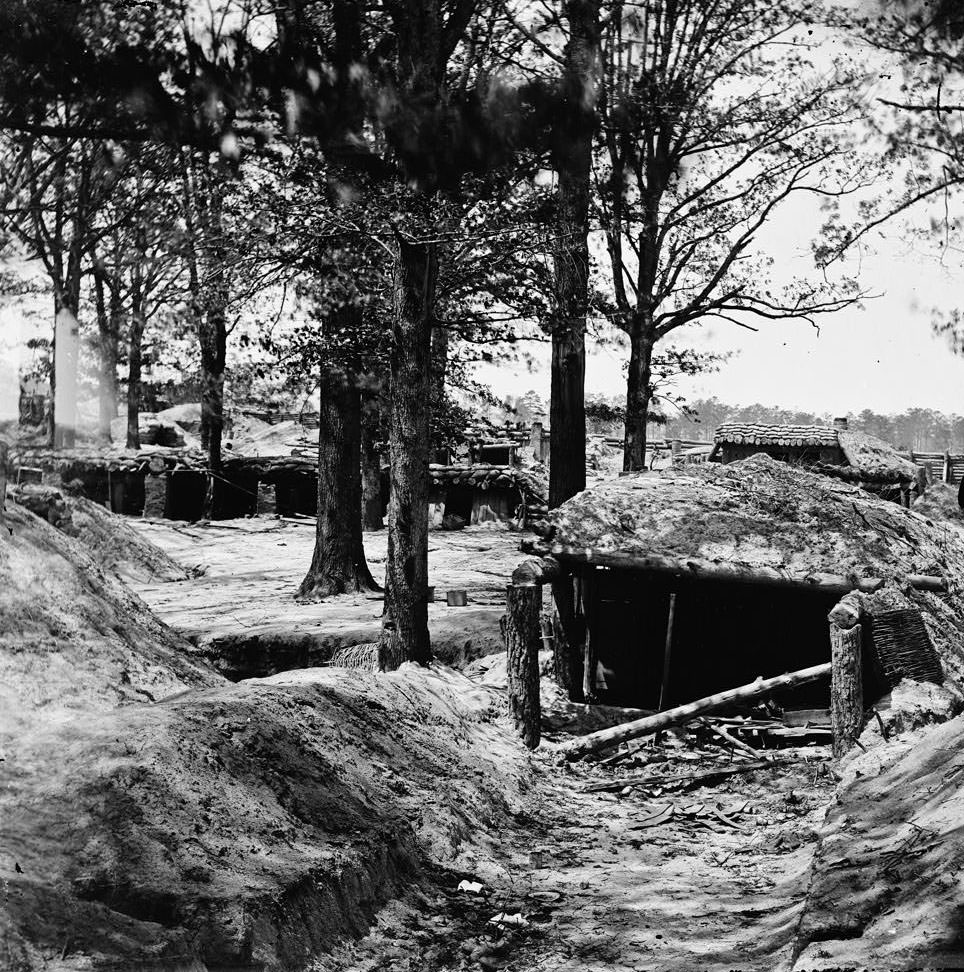
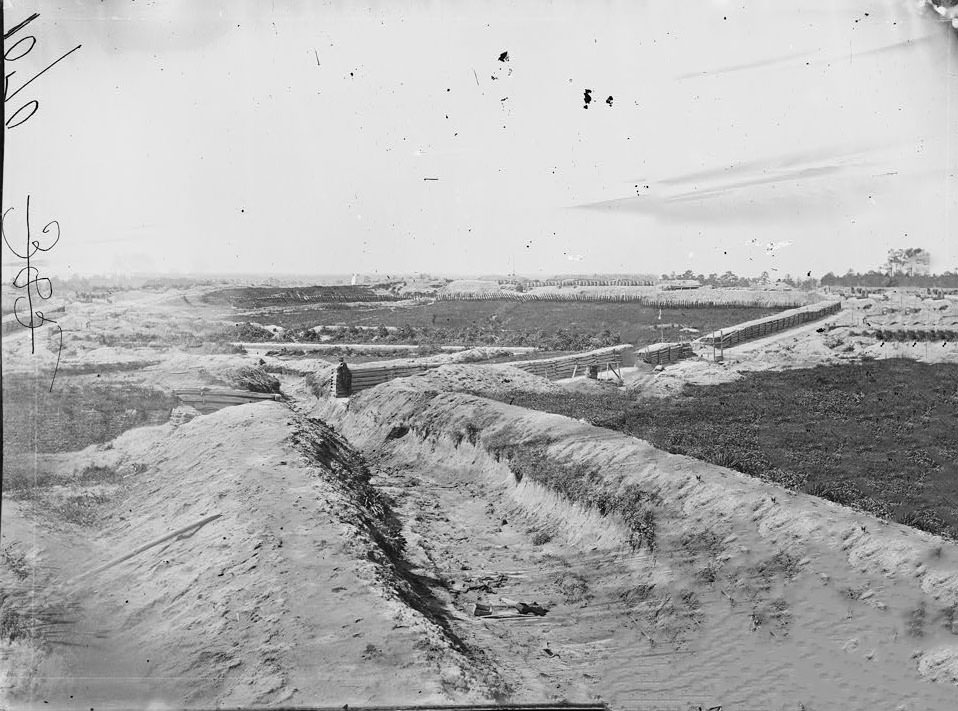
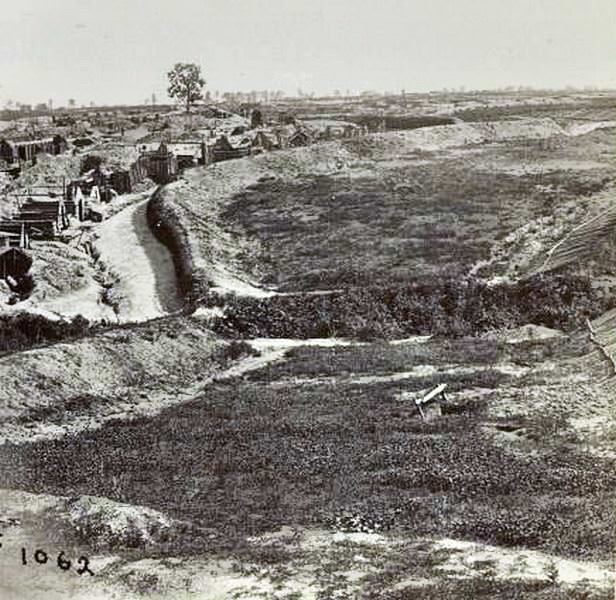
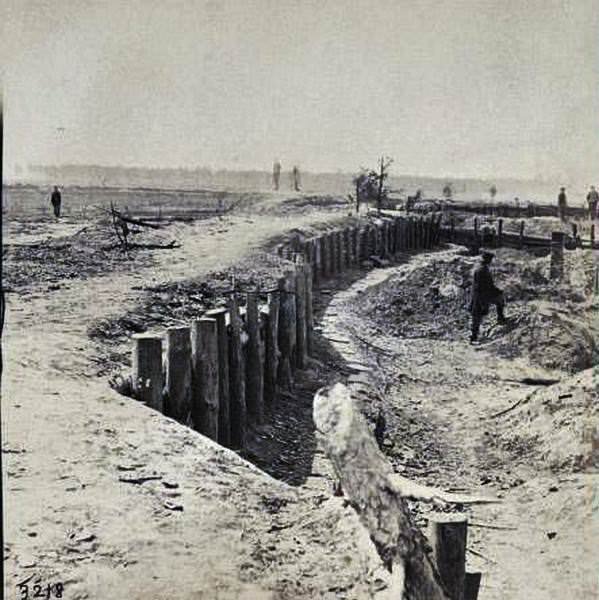
Warren Station, located in front of Petersburg, served as a key position along the Union lines. Headquarters of the 6th Army Corps were established there, and the surrounding area saw significant Confederate fortification work. Photographs taken at Warren Station show the dense earthworks the Confederates constructed to hold back Union advances.
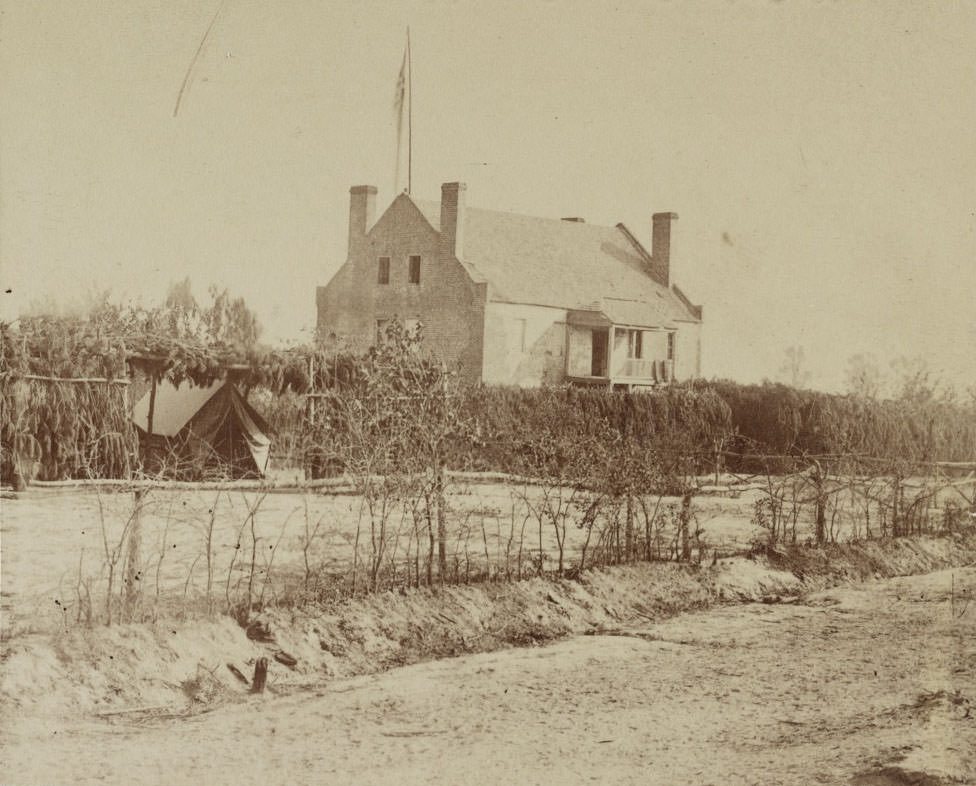
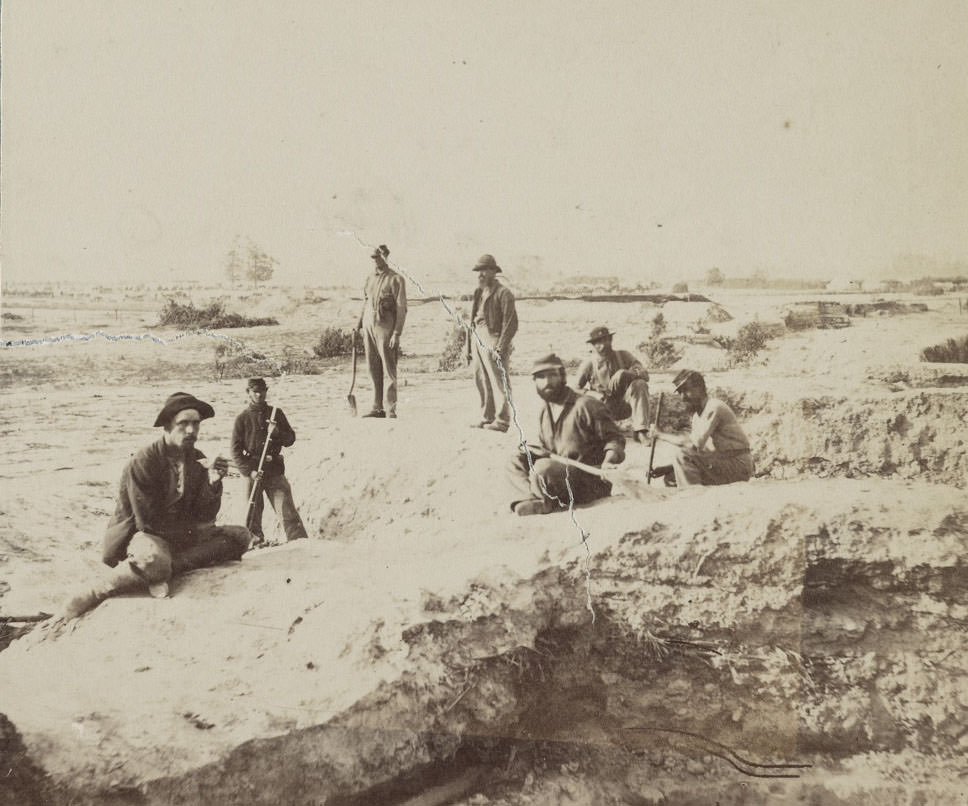
Fort Mahone was among the strongest Confederate positions in the Petersburg defensive network. Known to Union soldiers as “Fort Damnation,” it sat directly opposite Union Fort Sedgwick and was kept heavily armed throughout the siege. Nearby, Fort Rice formed another anchor in the Union line, adding depth to the Federal positions.
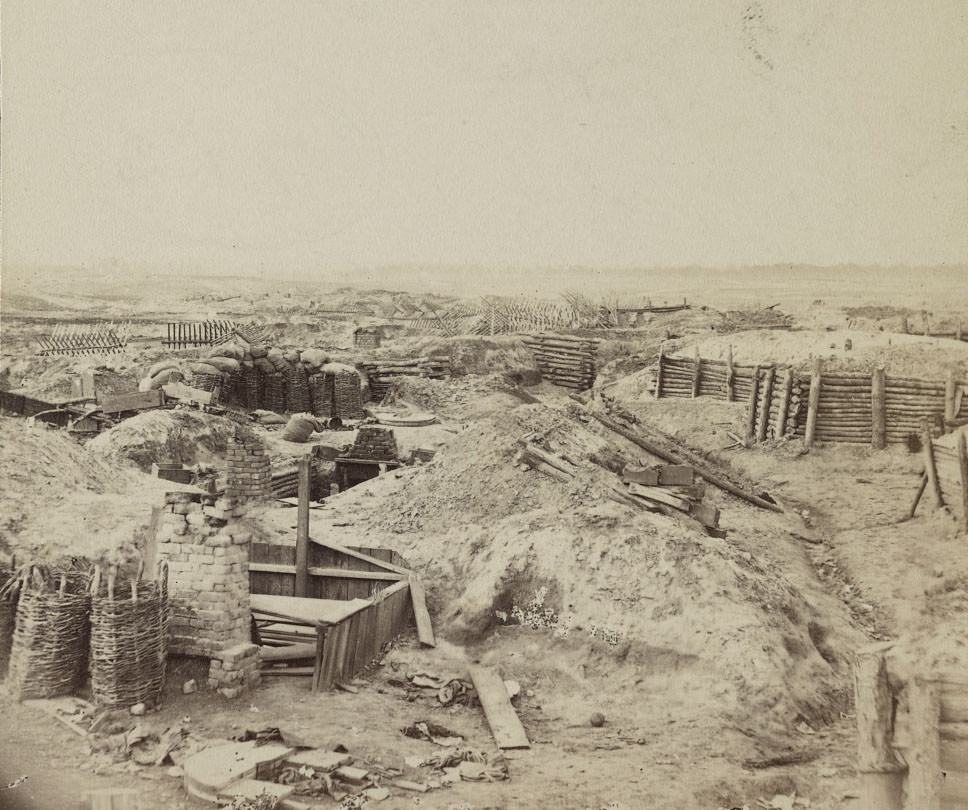
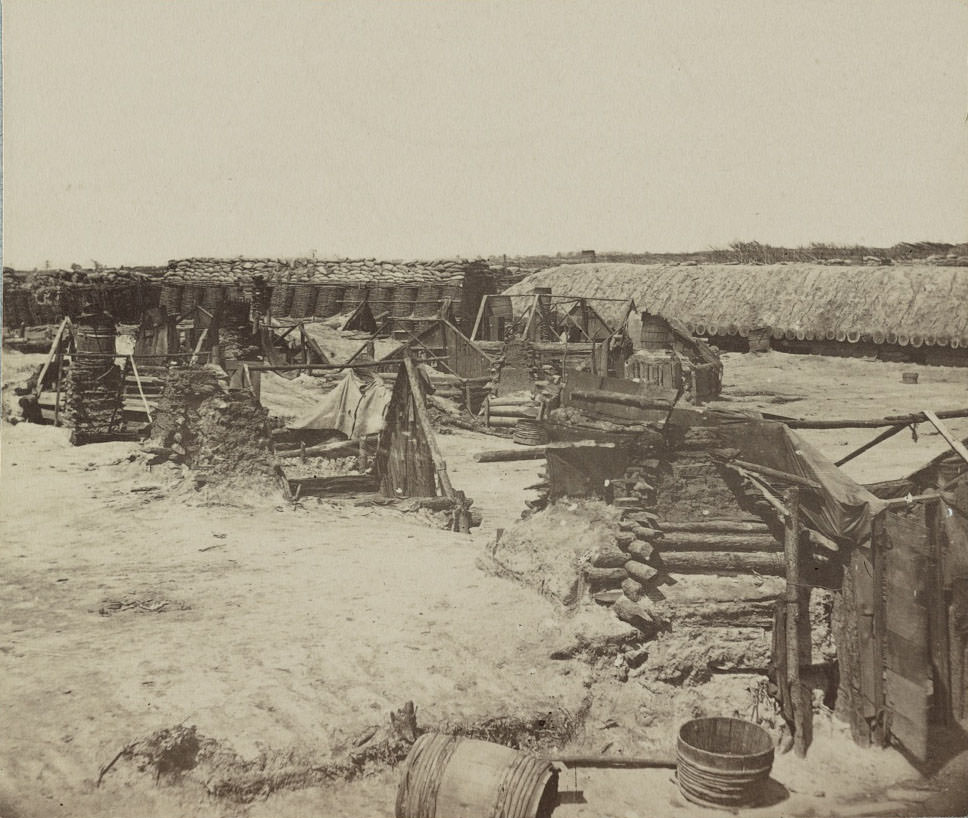
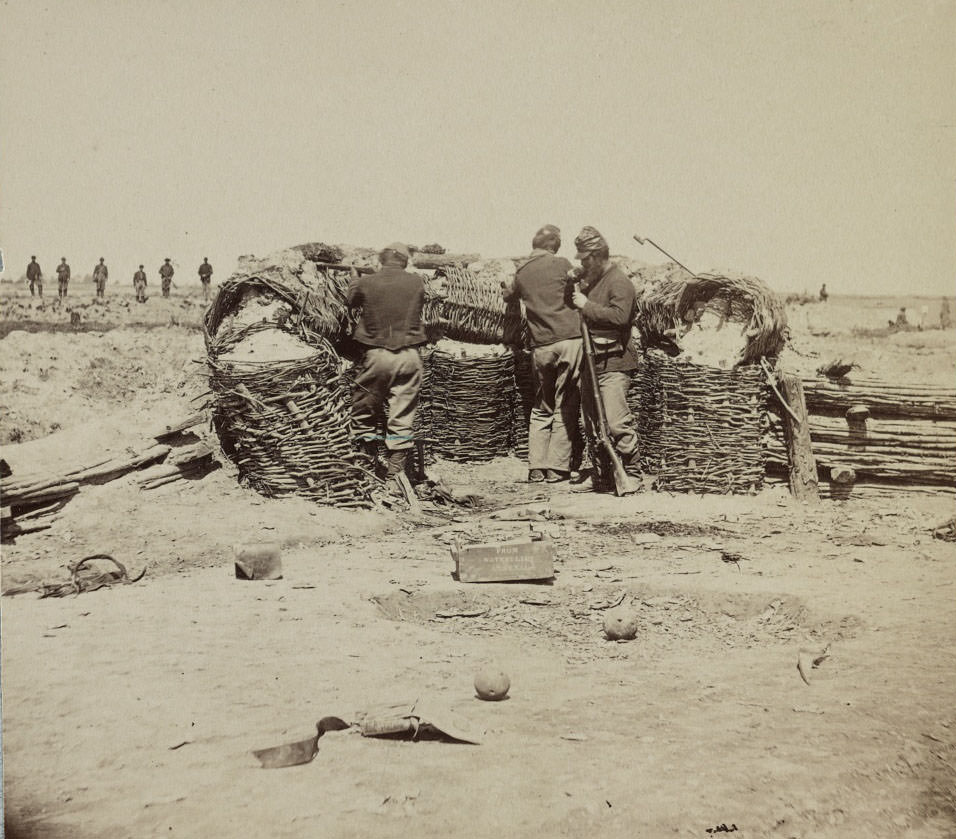
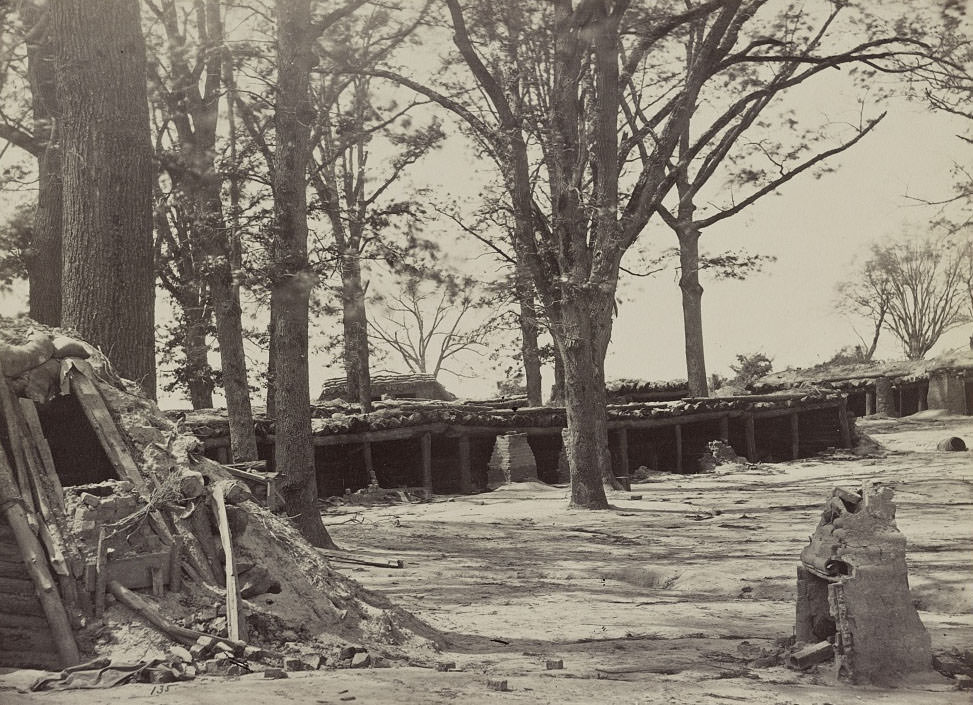
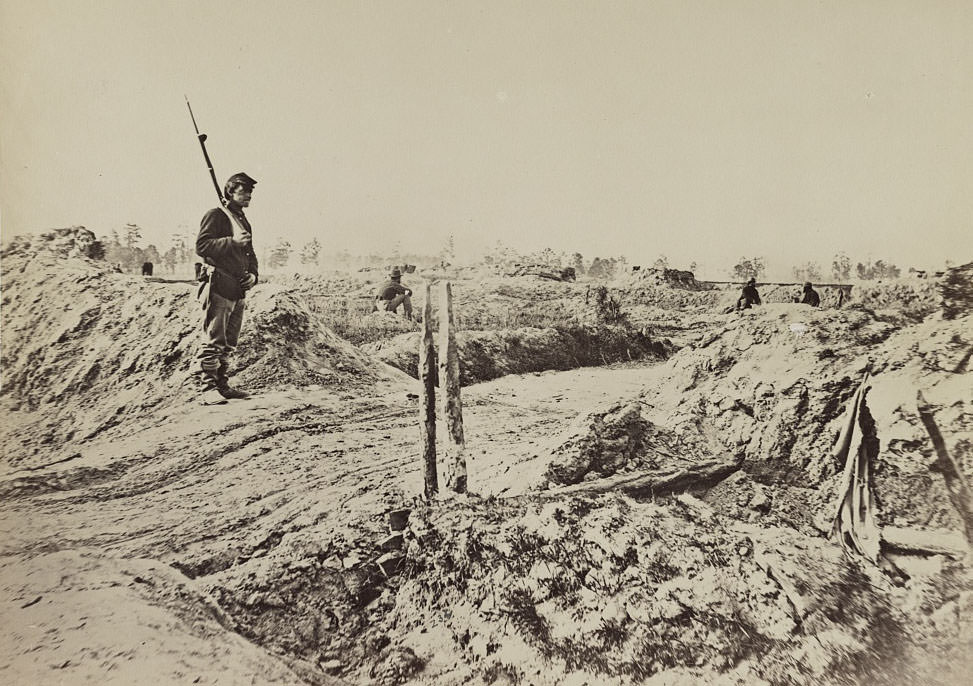
Observation posts like the Crow’s Nest battery gave Union forces elevated vantage points over Confederate lines. Soldiers stationed there could track enemy movement and direct fire with greater accuracy than was possible from ground level. Rifle pits dug into the earth along the picket line provided forward positions where small groups of soldiers kept watch on enemy activity.
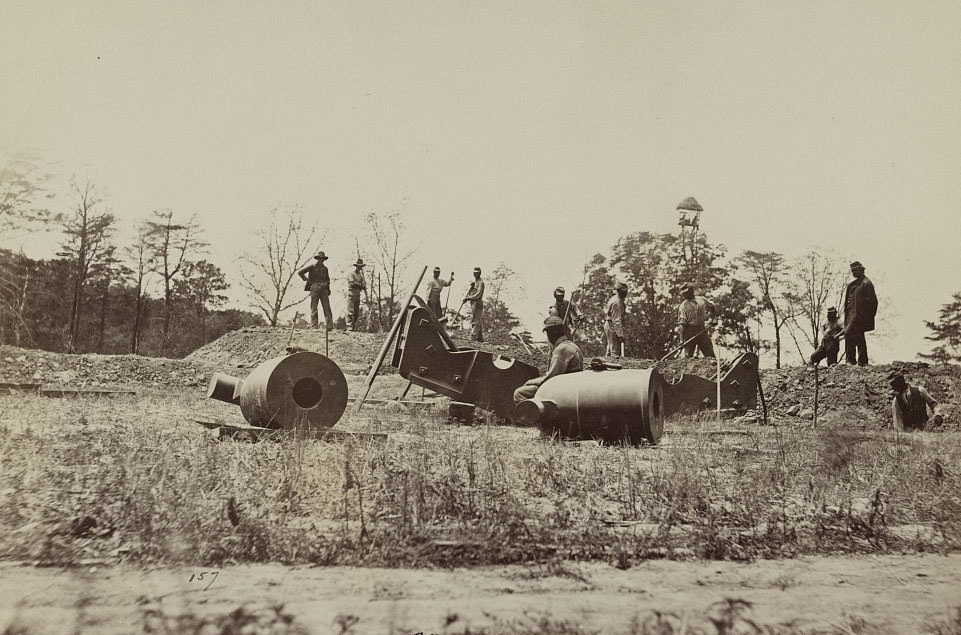
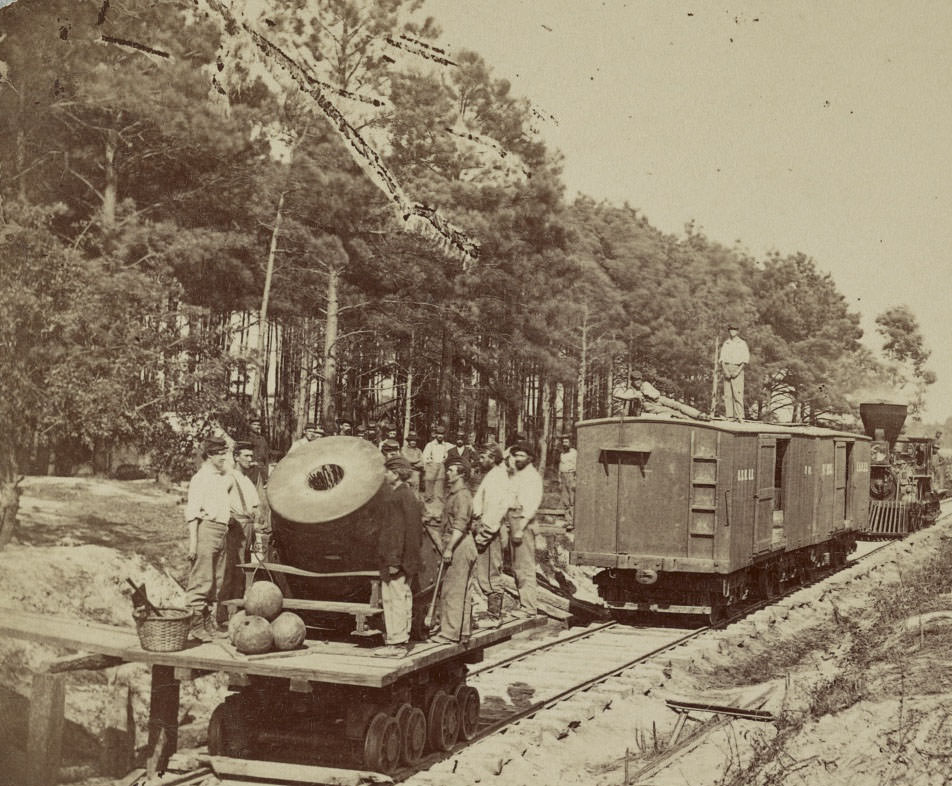
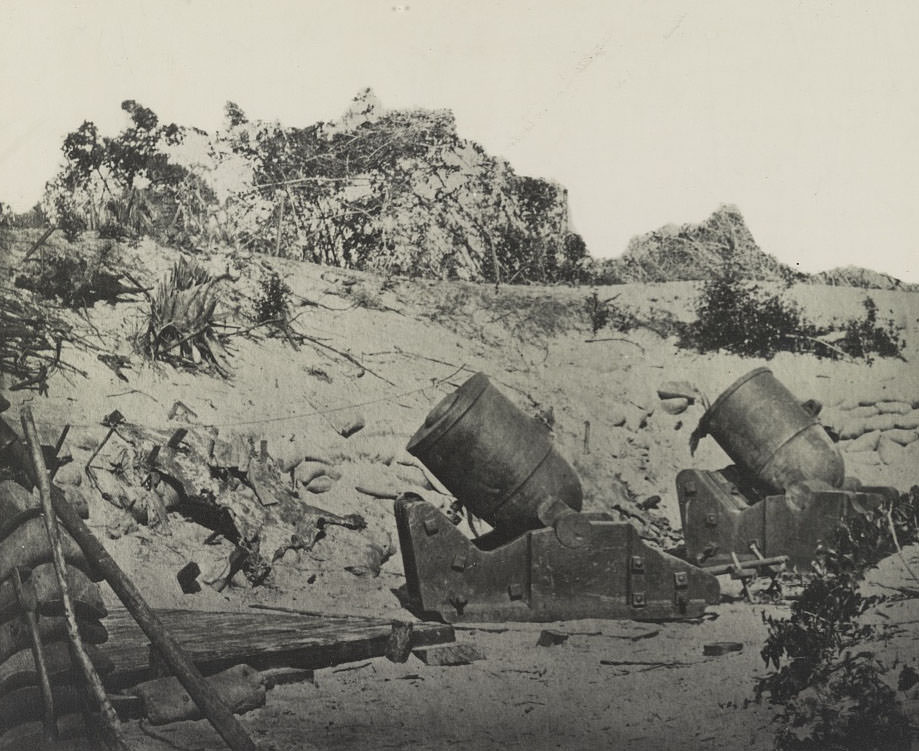
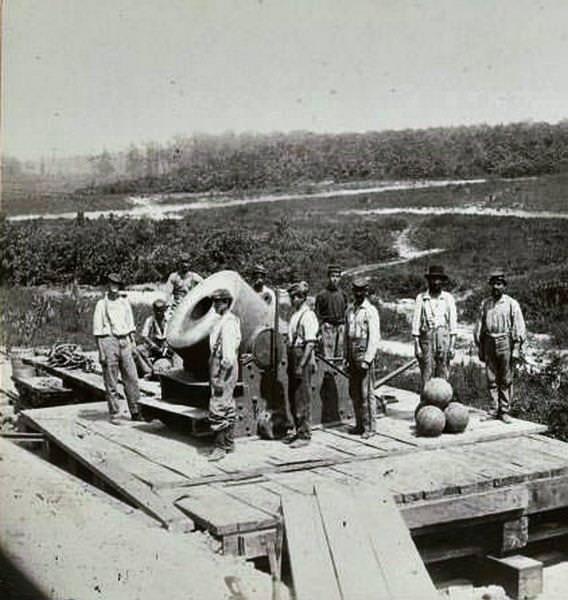
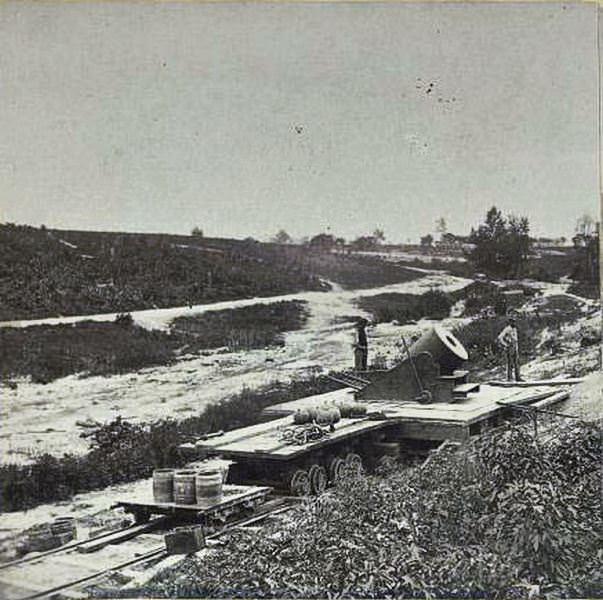
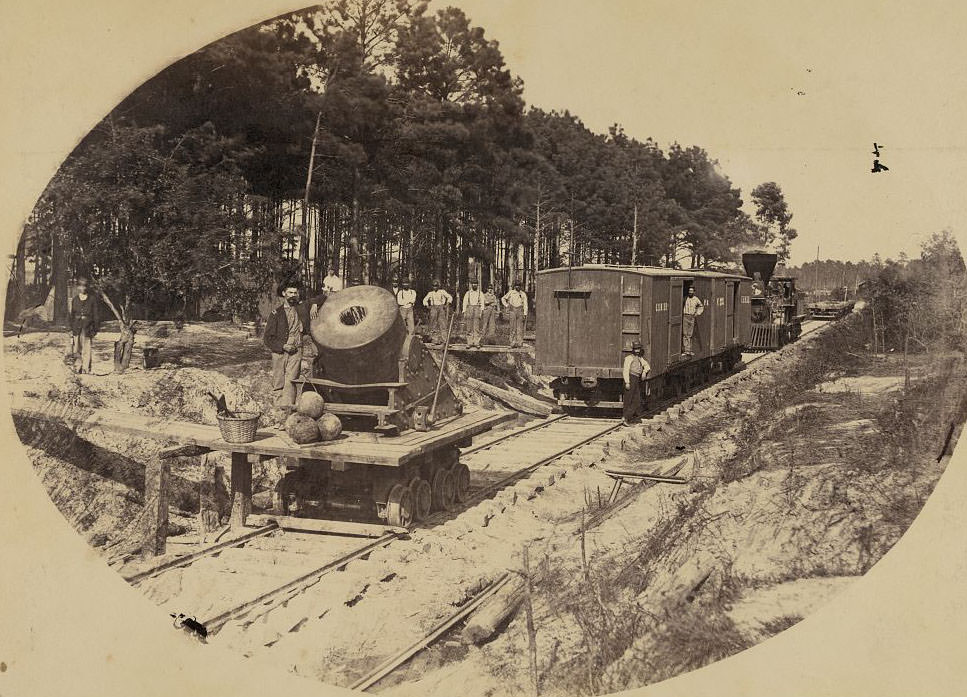
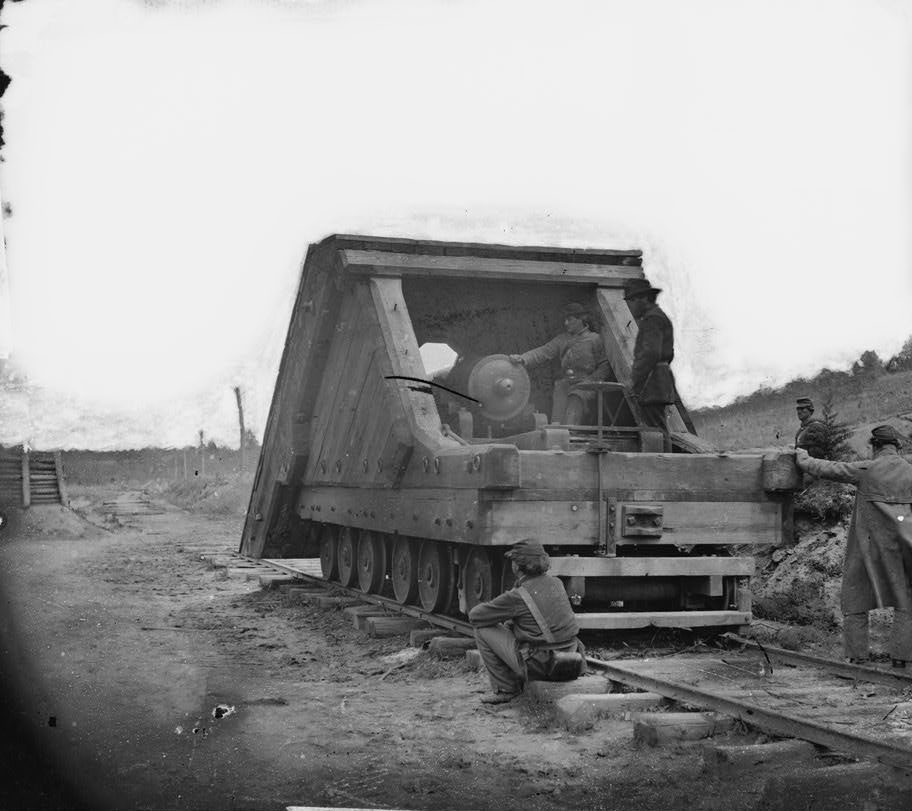
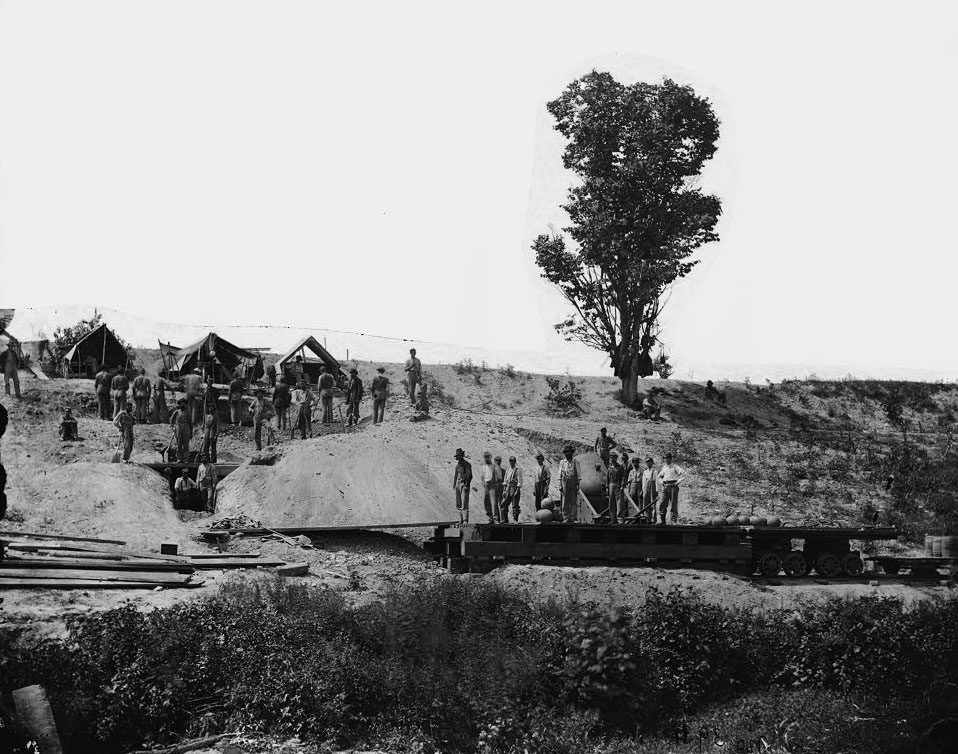
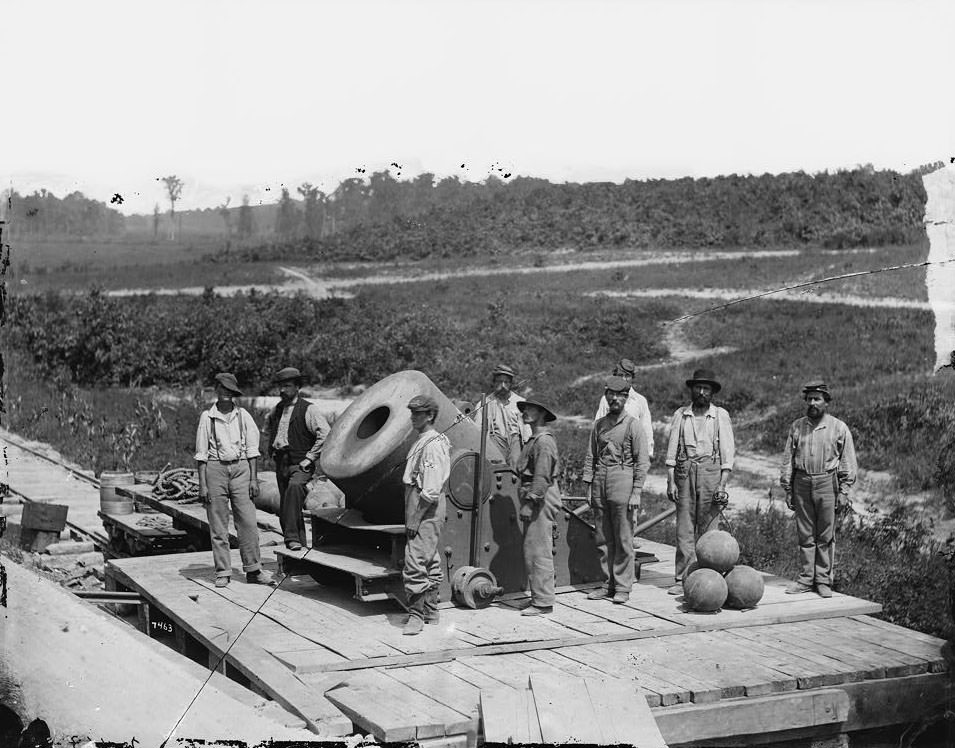
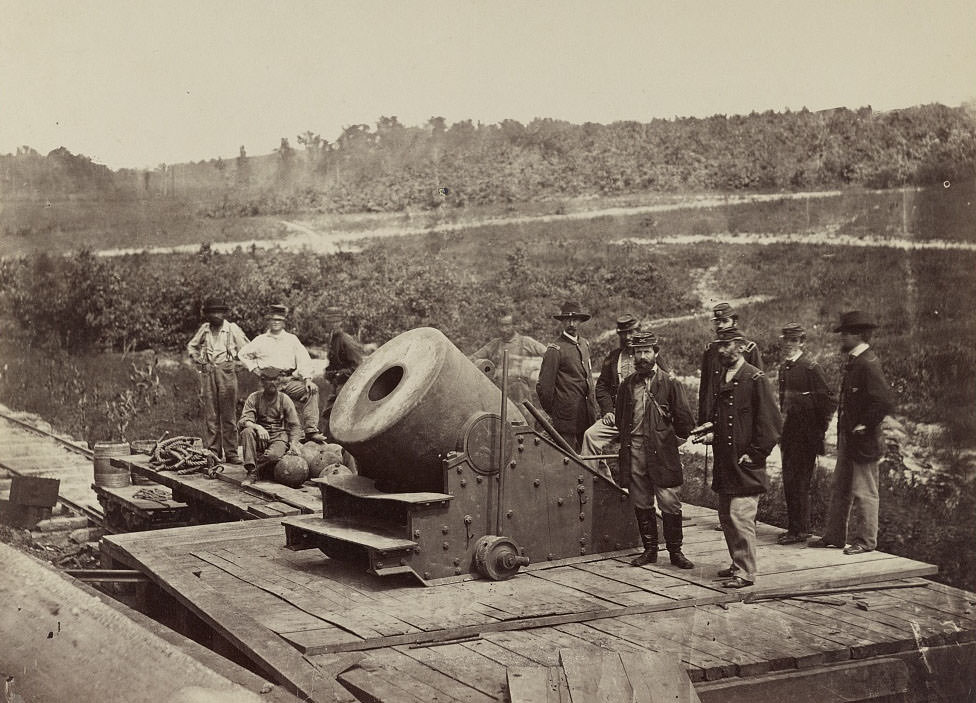
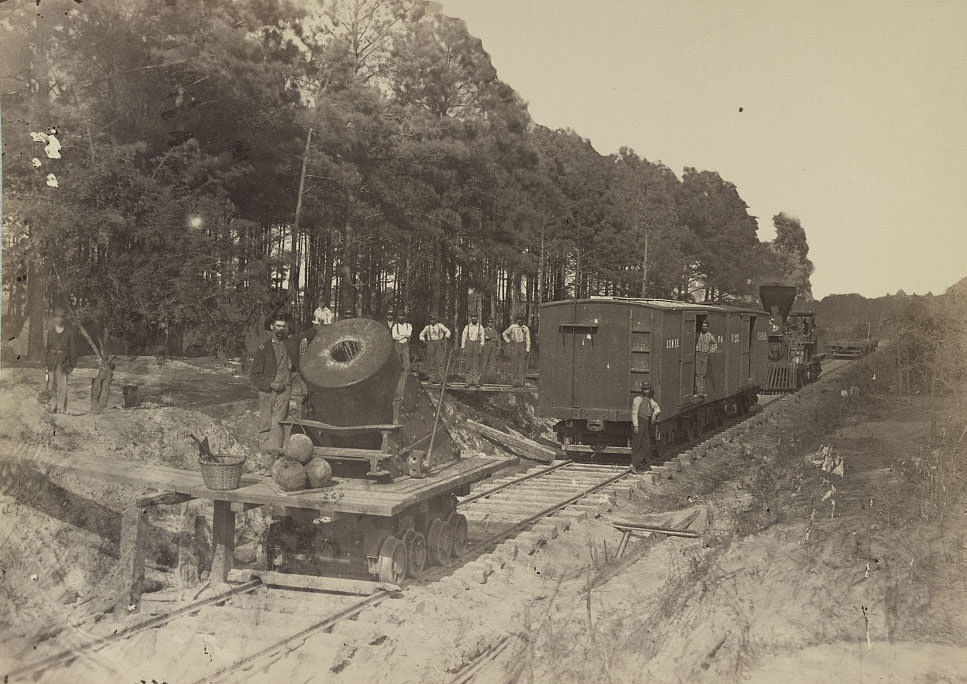
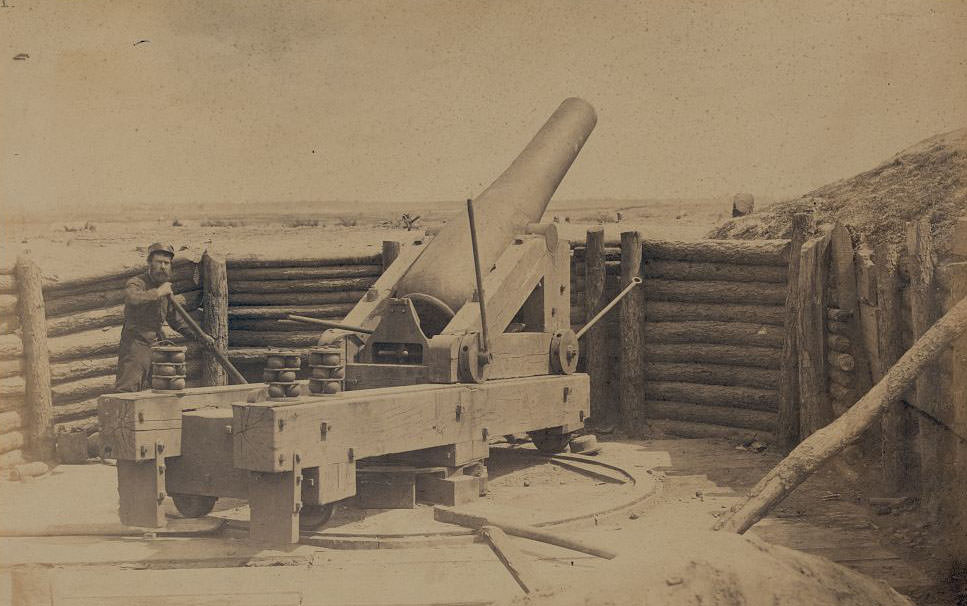
One of the most powerful weapons deployed during the siege was the 13-inch mortar known as the “Dictator.” It was mounted on a specially reinforced flatbed railroad car, which allowed Union forces to move it along the tracks to different firing positions. The Dictator could hurl a 200-pound shell over two miles, making it one of the most feared weapons in the Union arsenal around Petersburg.
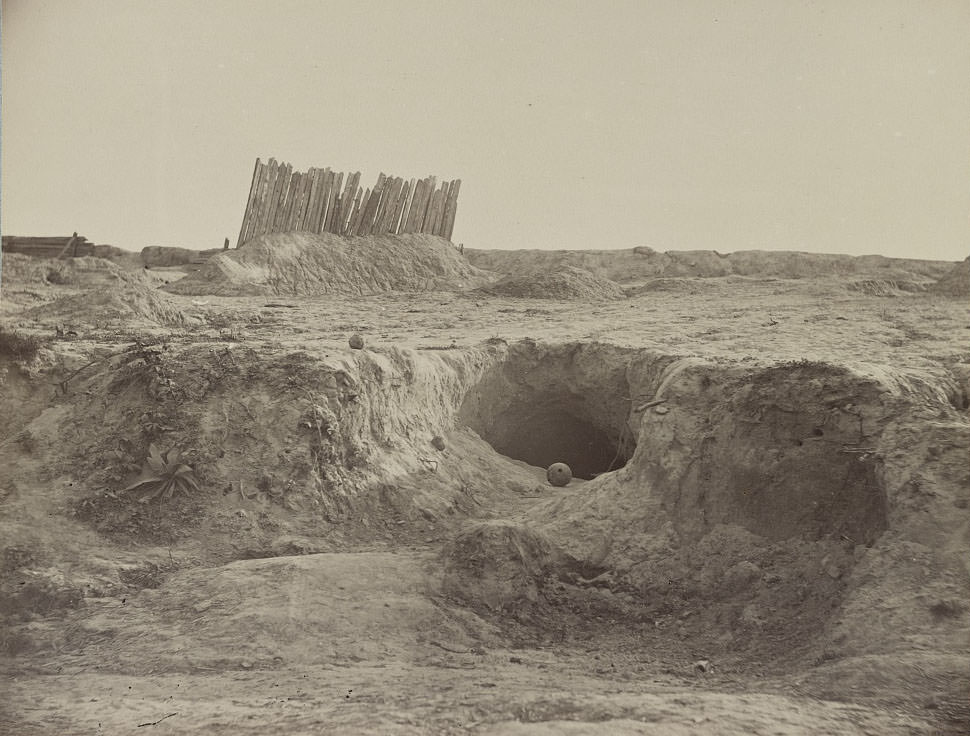
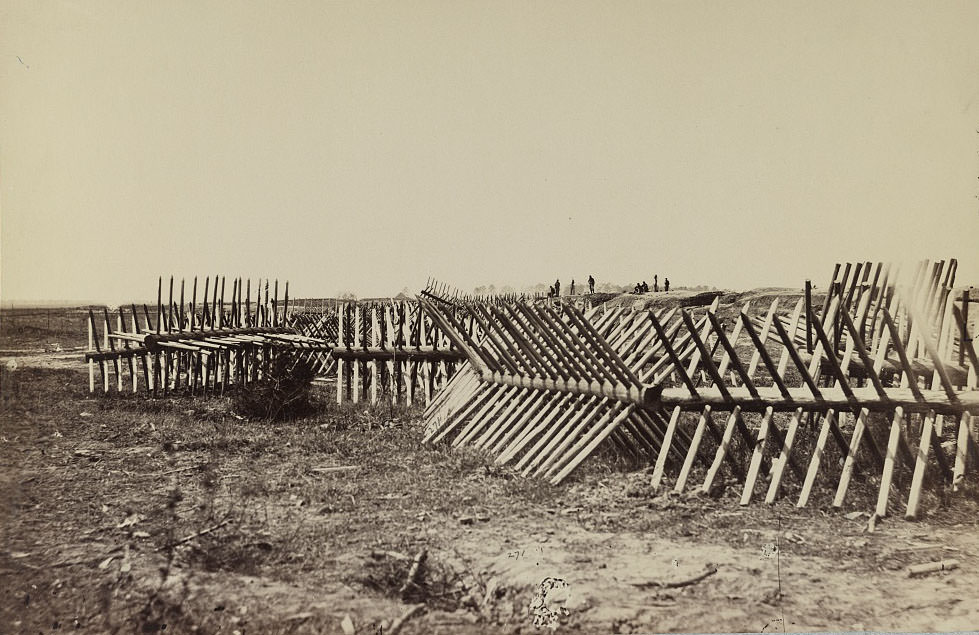
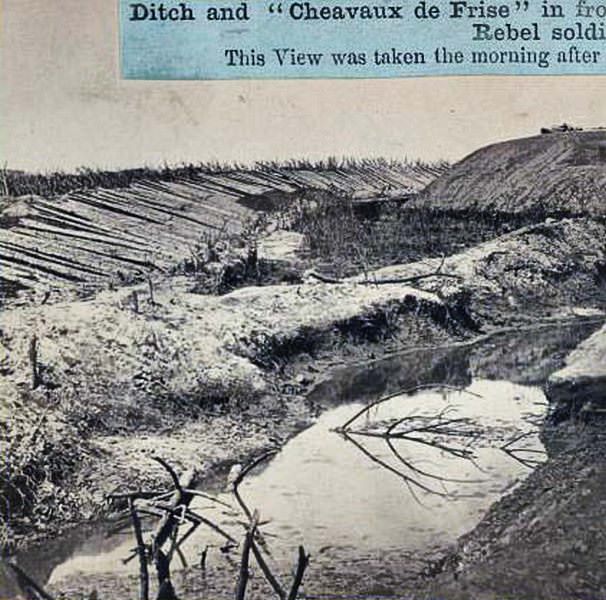
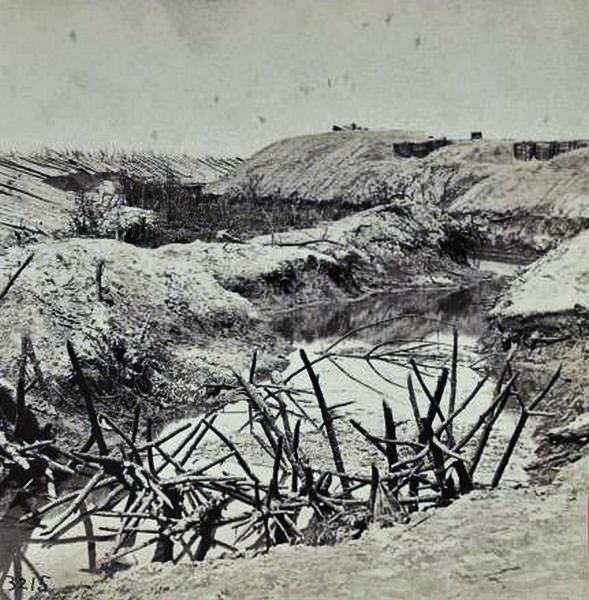
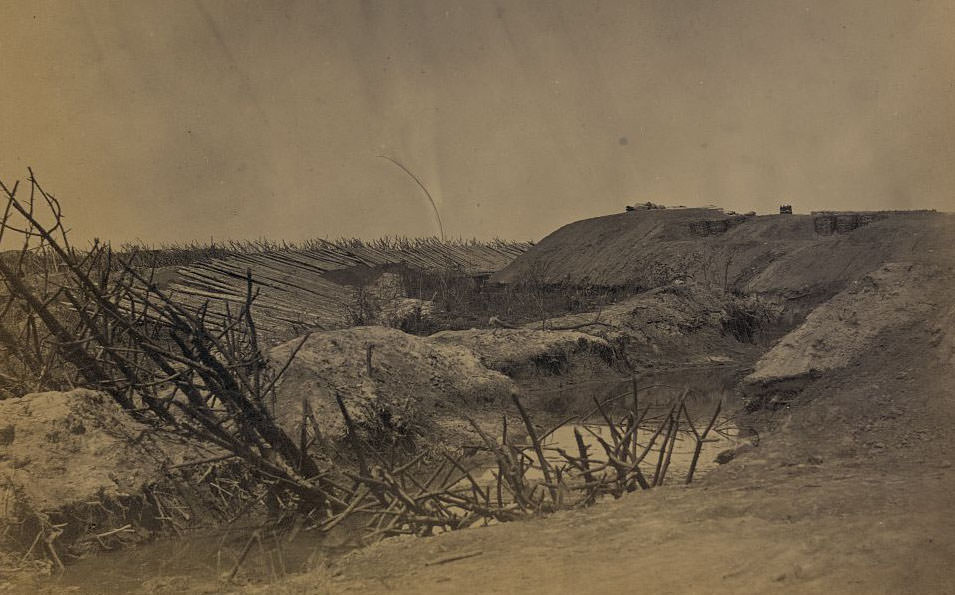
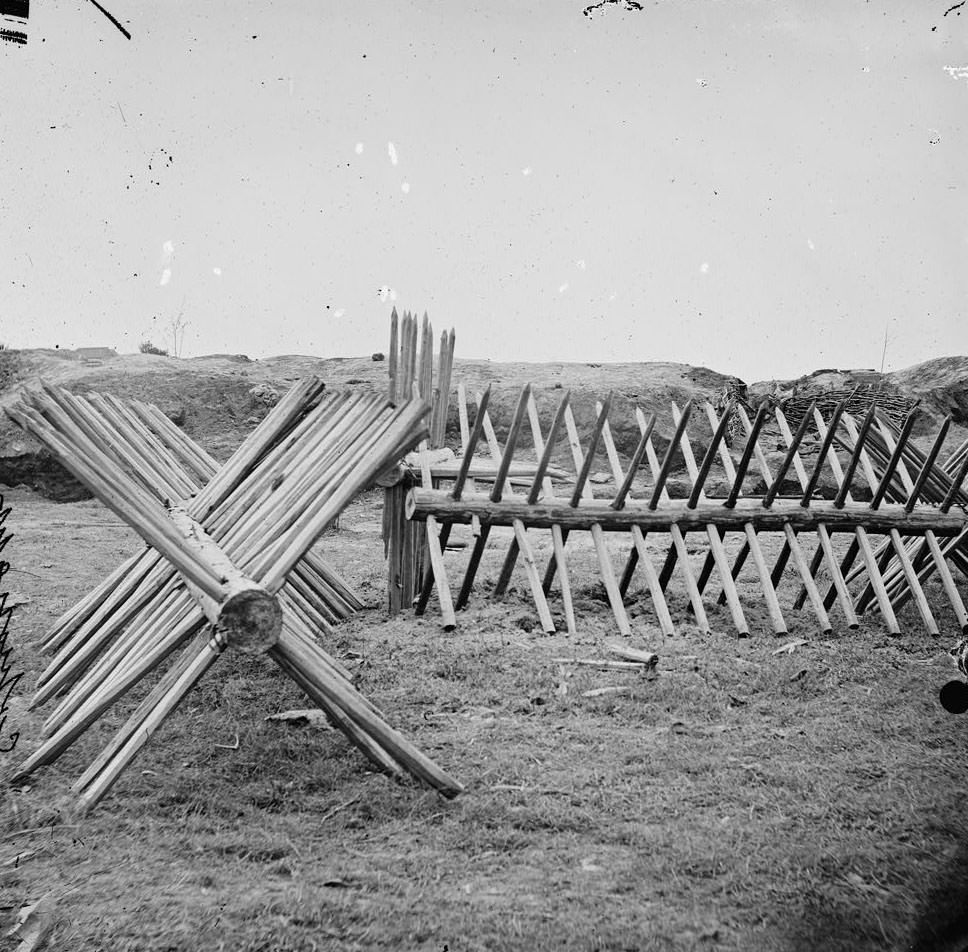
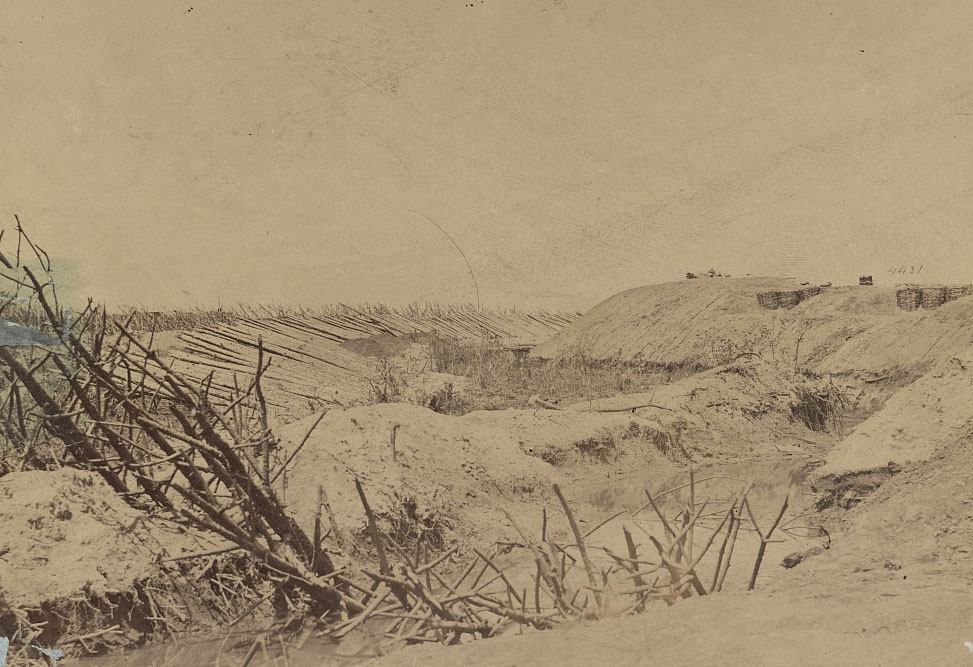
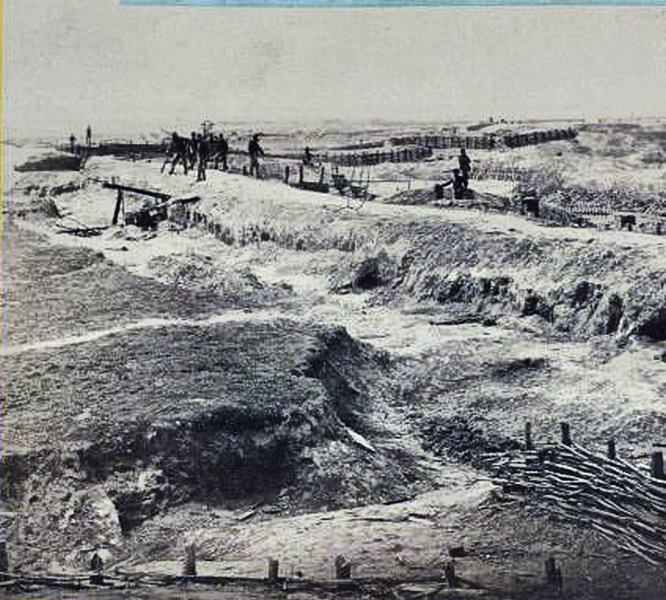
Both Union and Confederate forces made heavy use of chevaux de frise — wooden frames with sharpened stakes jutting outward — to block infantry assaults. These obstacles were placed in front of trenches and fortifications throughout the siege lines, making any direct attack extremely costly.
The dead were buried where they fell or close to the front. Lone graves at Warren Station marked where soldiers died far from home. The siege cost thousands of lives on both sides over the course of nearly ten months of fighting.
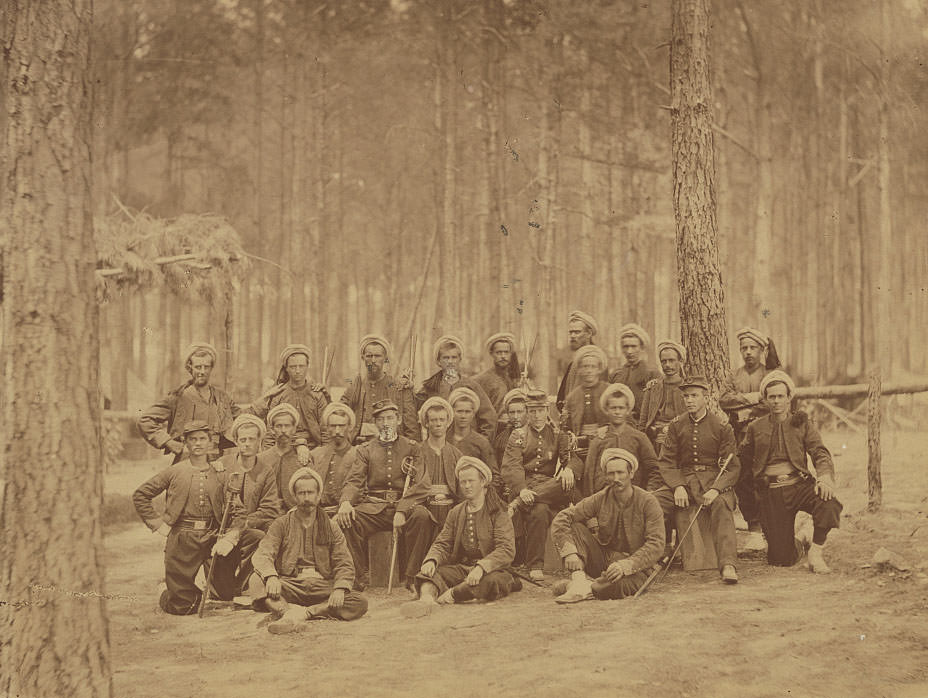
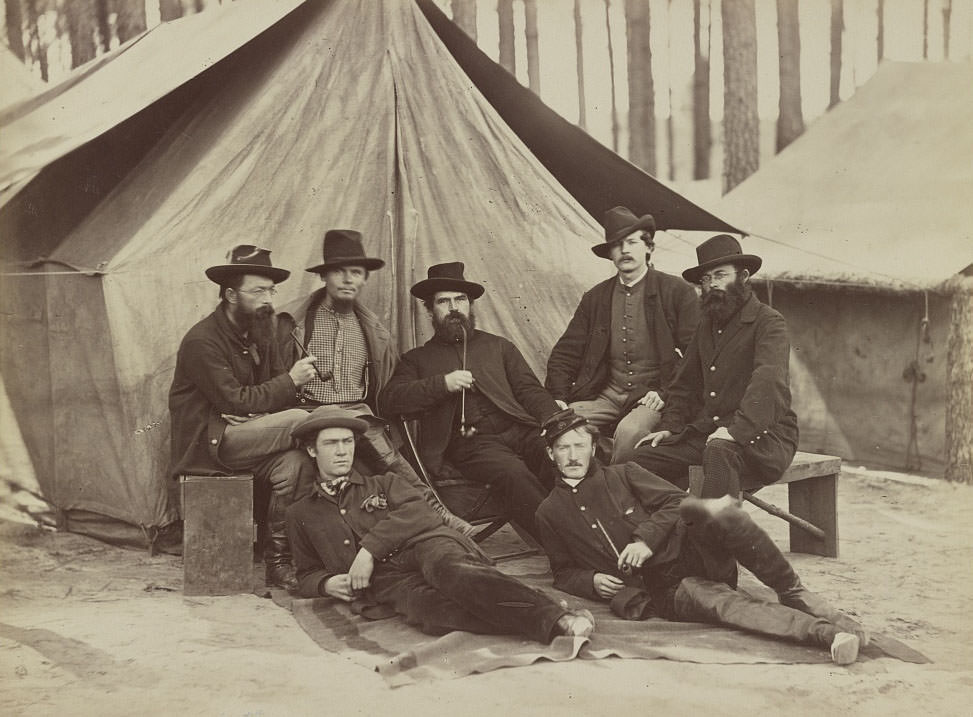
Medical personnel were stationed throughout the Union lines. Surgeons from the 3rd Division of the 9th Army Corps worked near the front, treating the wounded under constant threat of enemy fire. Hospital stewards managed supplies and assisted in procedures. Surgeon John H. Brinton supervised medical operations and posed with his attendants for photographs that survive today.
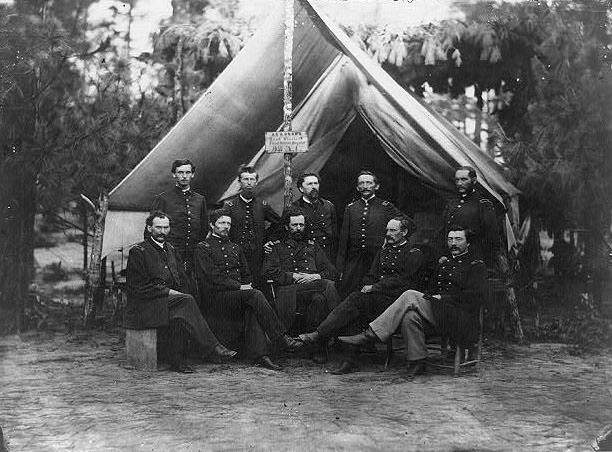
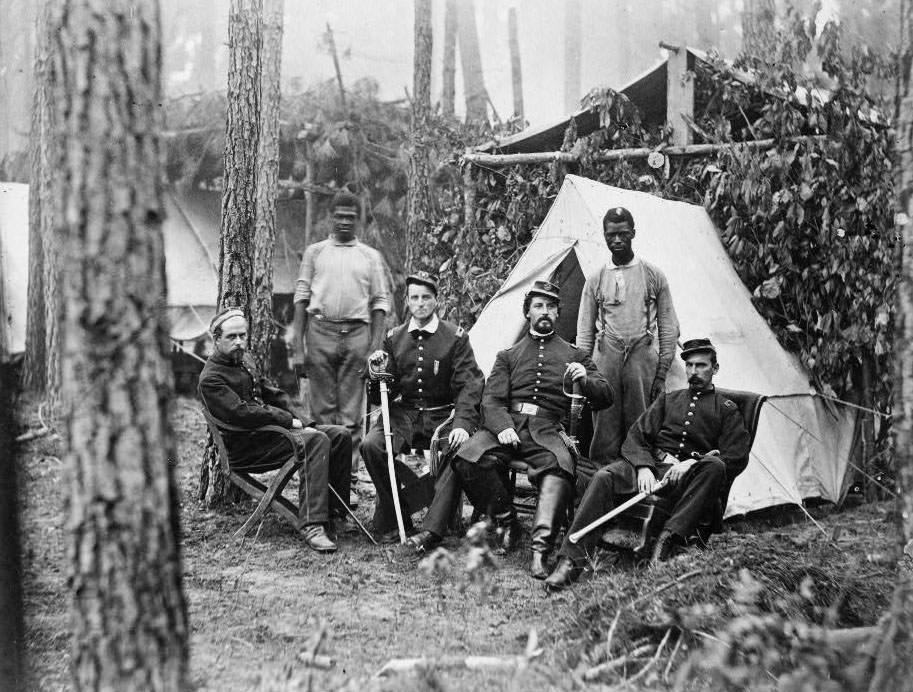
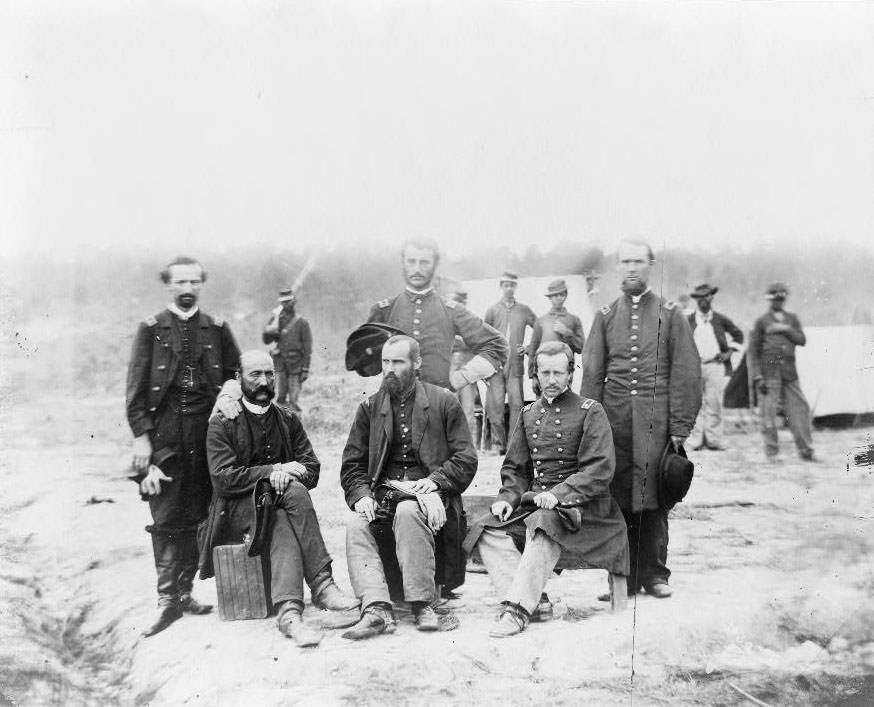
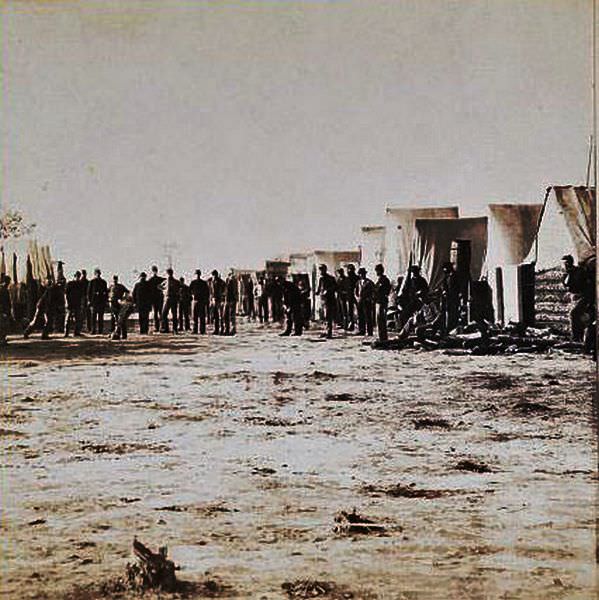
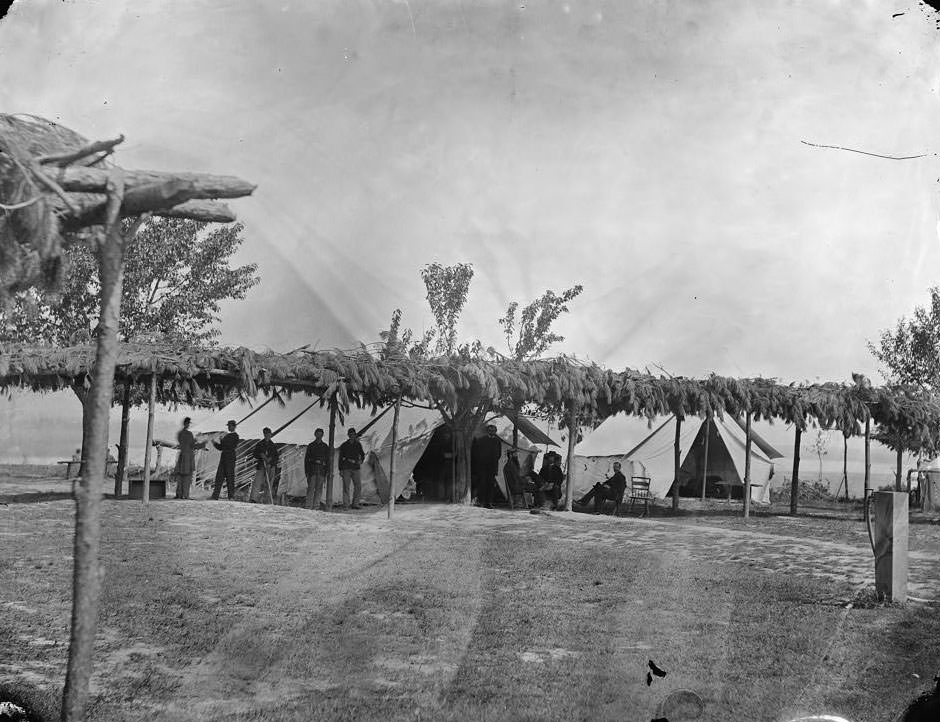
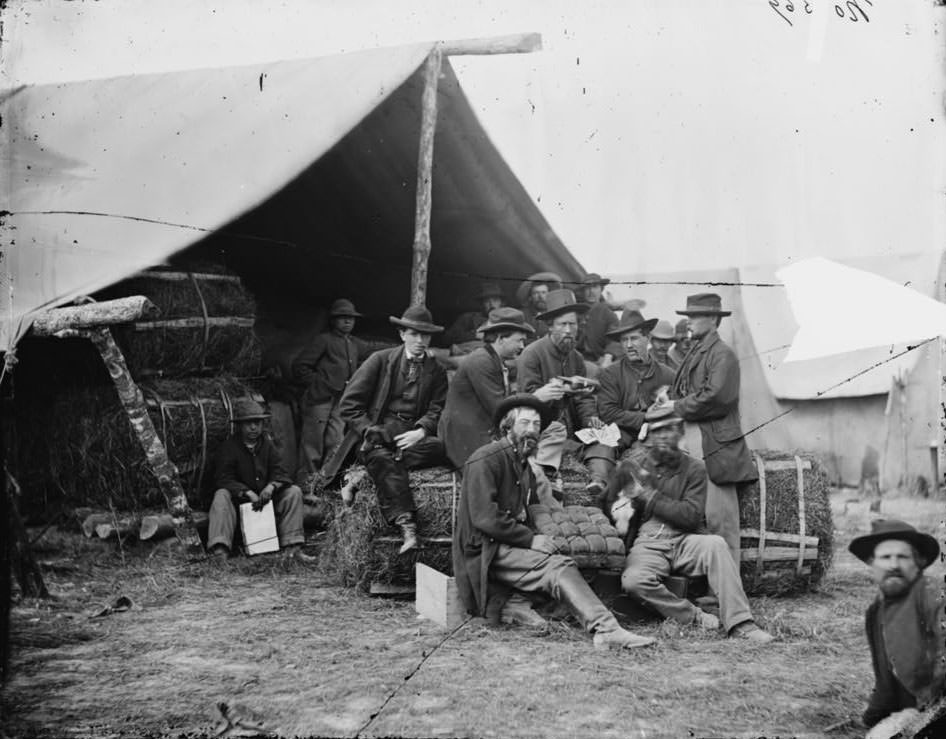
Sutlers — civilian merchants licensed to sell goods to soldiers — set up tents and bomb-proof shops throughout the Union camp. They sold food, tobacco, and personal items to troops who had money to spend. The 13th New York Artillery found time between bombardments to play baseball in camp, a pastime that grew in popularity among soldiers on both sides during the war.
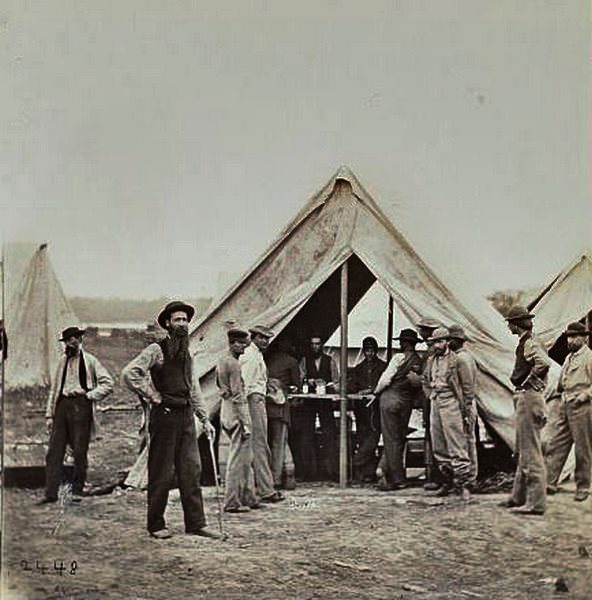
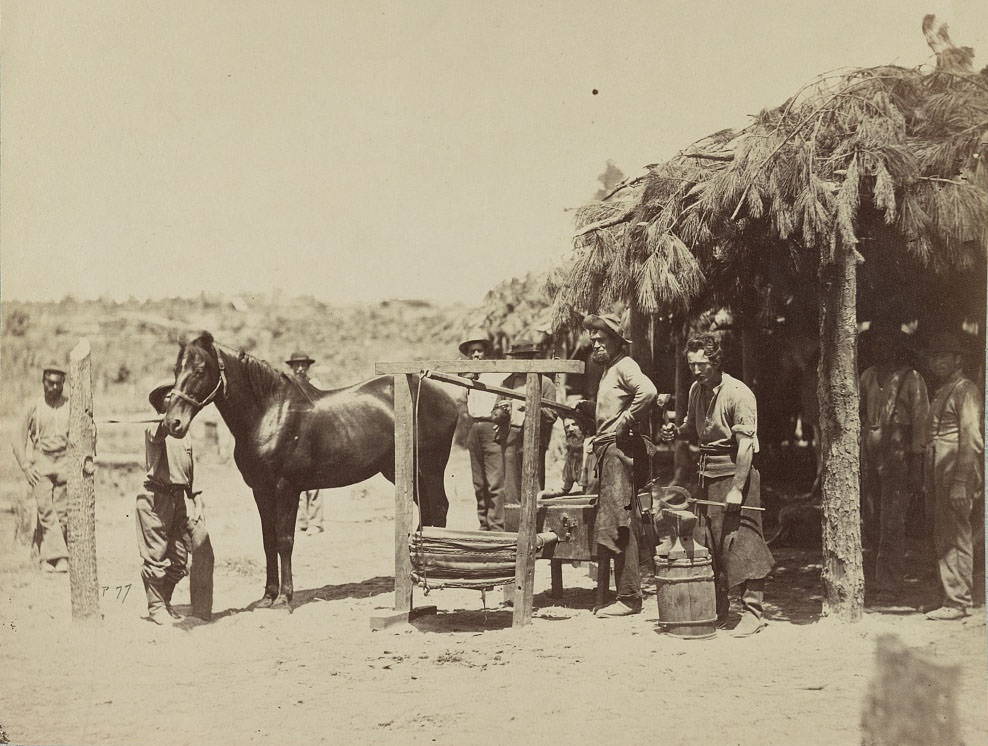
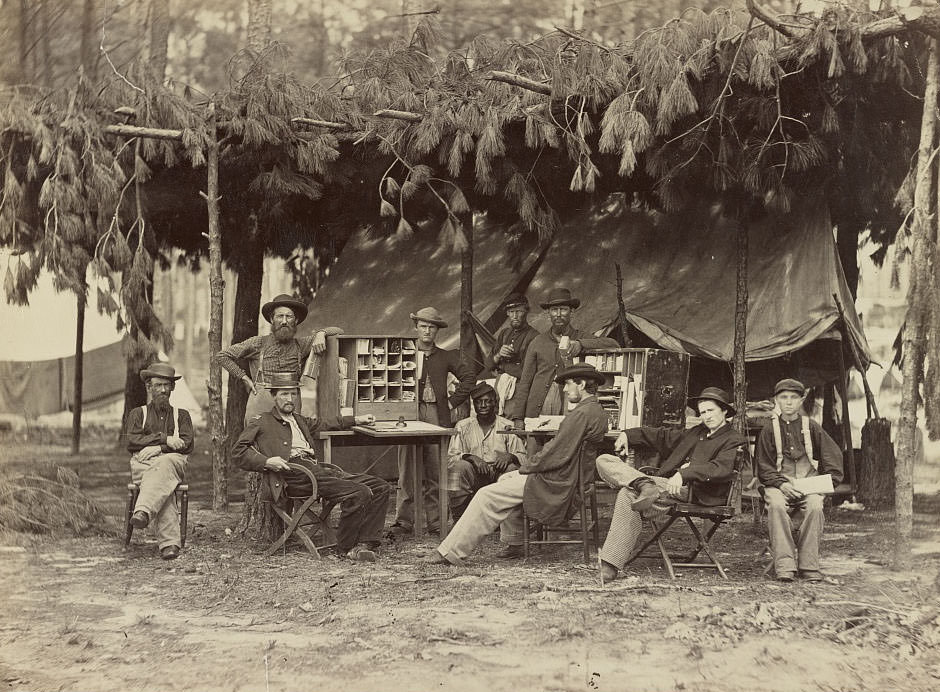
The quartermaster and mechanical support departments kept the Army running. Blacksmiths at army forges repaired weapons and equipment in the field. The quartermaster’s mechanics of the 1st Division, 9th Army Corps, maintained the tools and vehicles that made long-term siege operations possible.
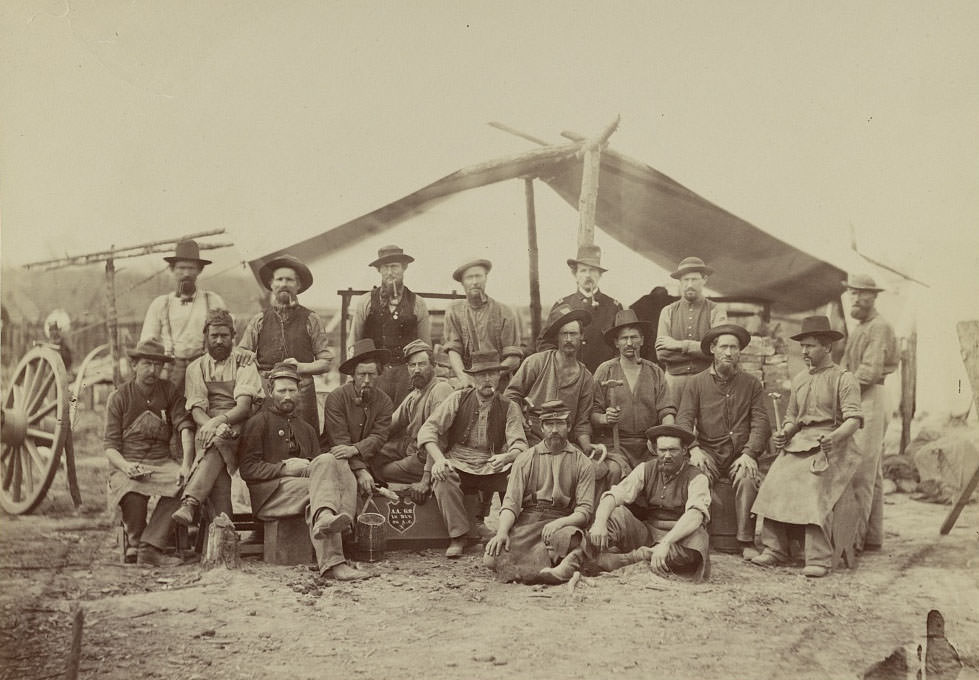
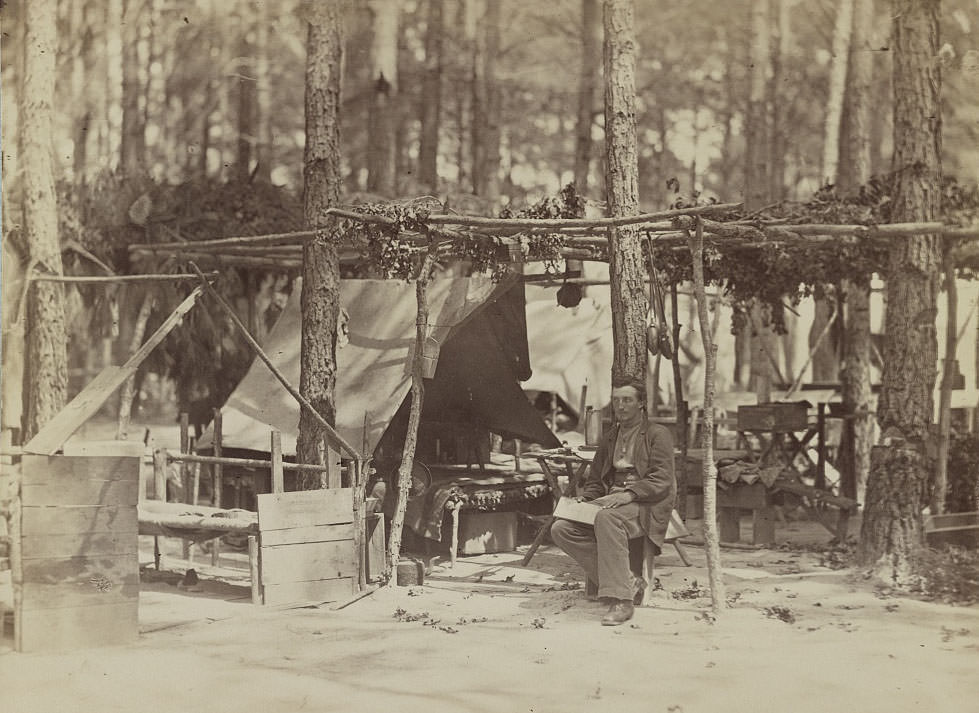
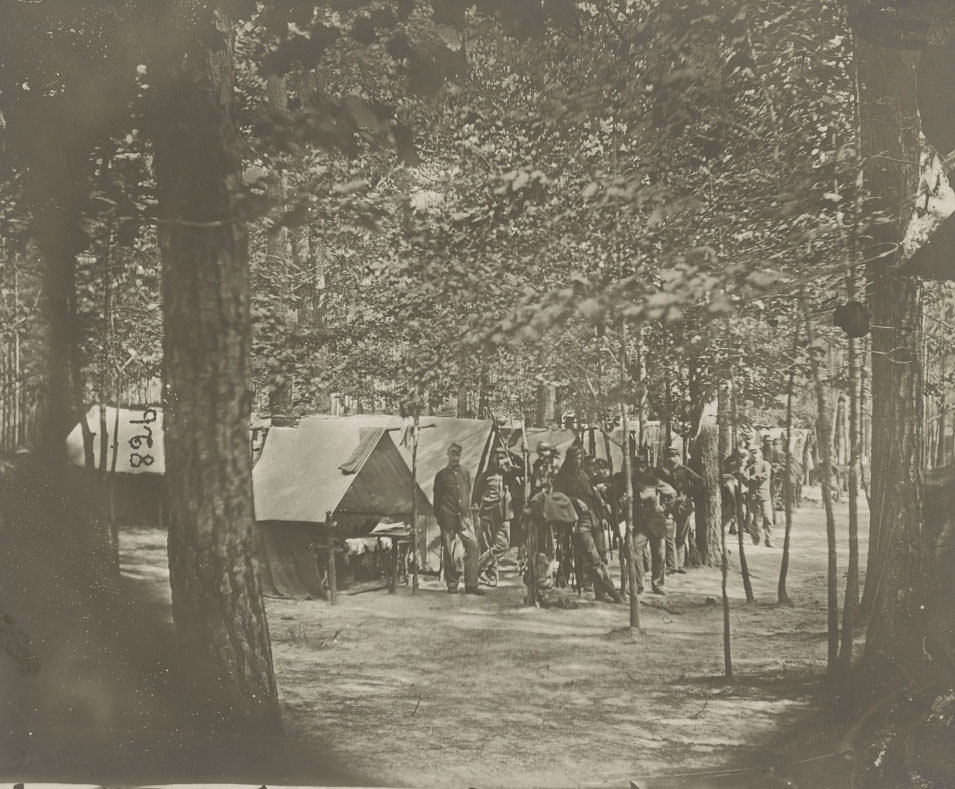
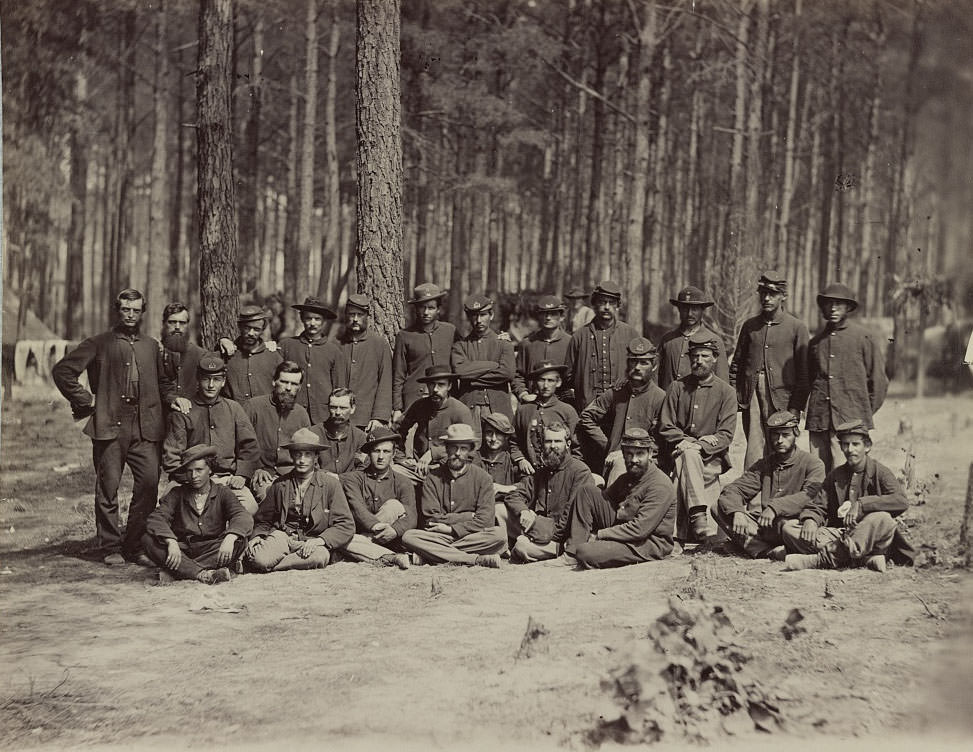
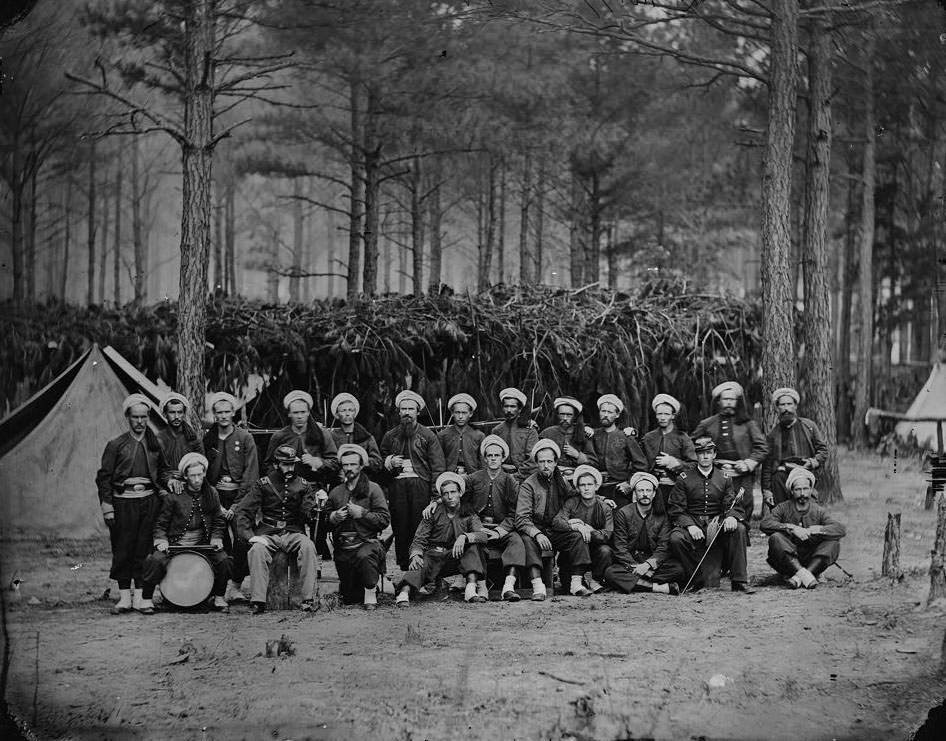
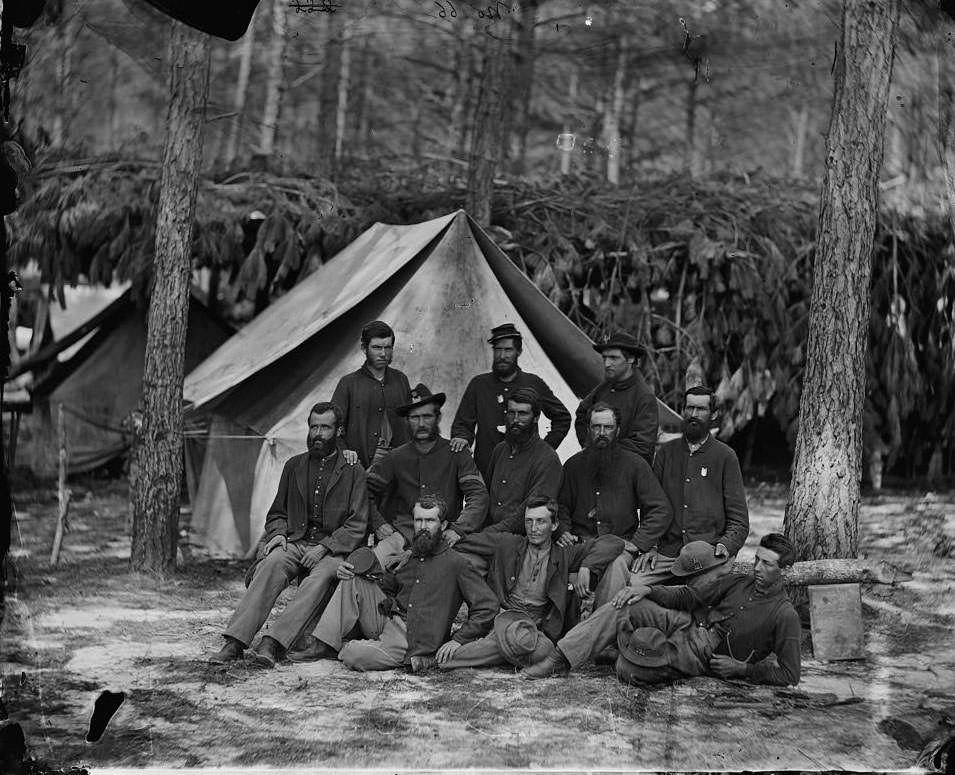
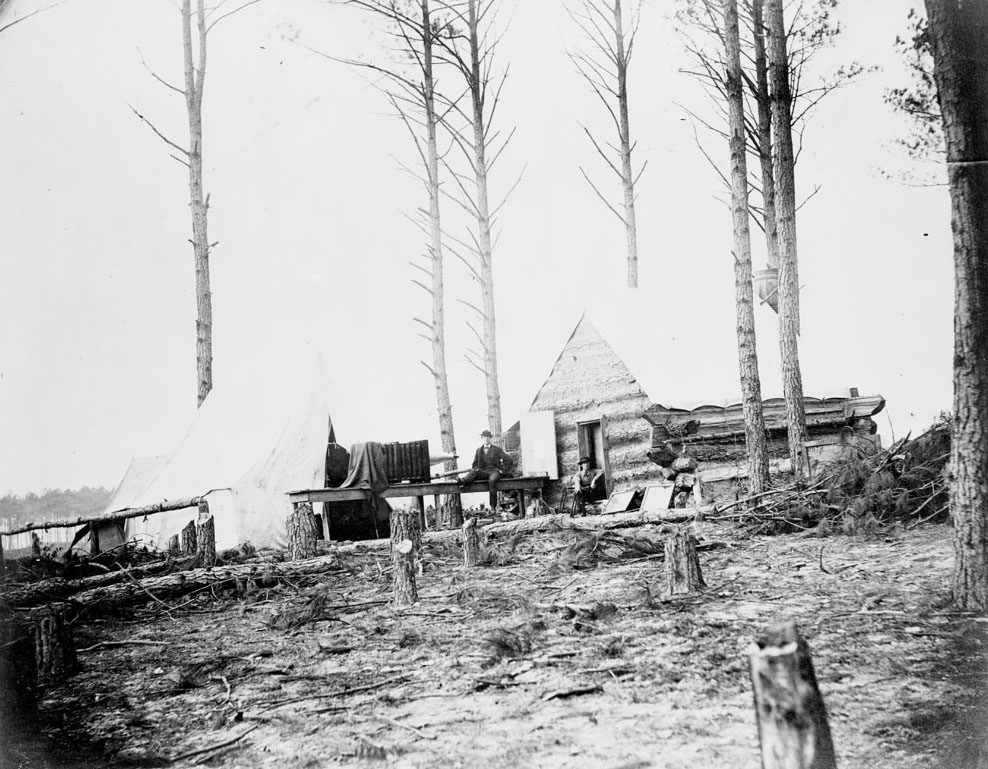
The U.S. Engineer Battalion had its own headquarters and extensive camp in front of Petersburg. Companies B and D of the battalion were photographed multiple times, reflecting the close relationship between the war’s photographers and the engineering units that often worked alongside them. Mathew Brady’s photographic team — traveling in a wagon fitted out as a mobile darkroom — captured many of the scenes visible in this collection.
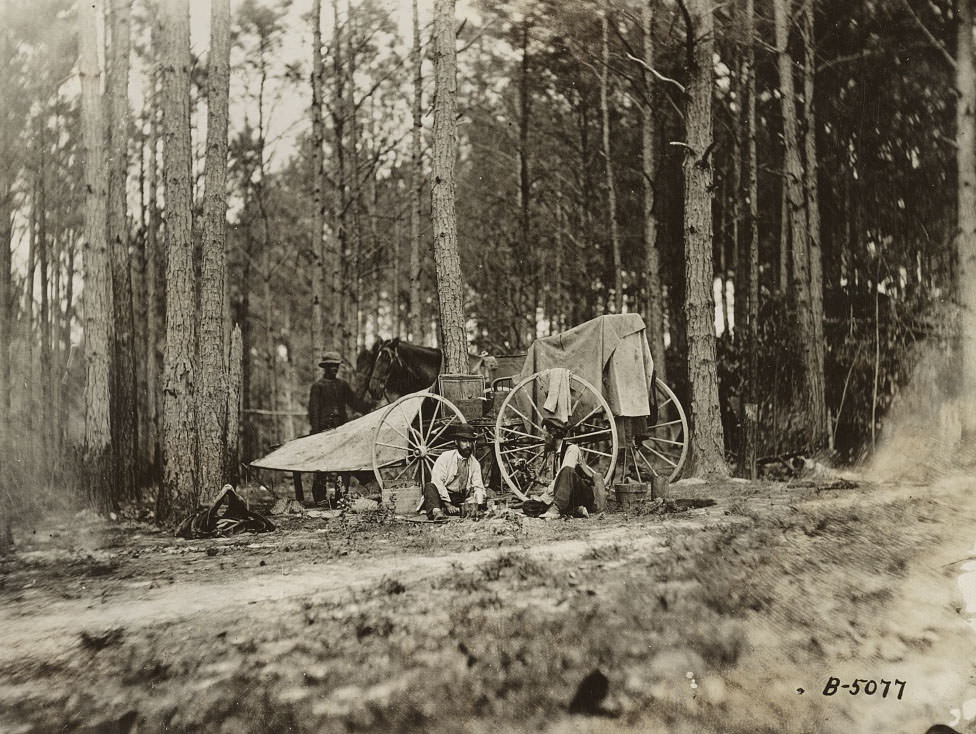
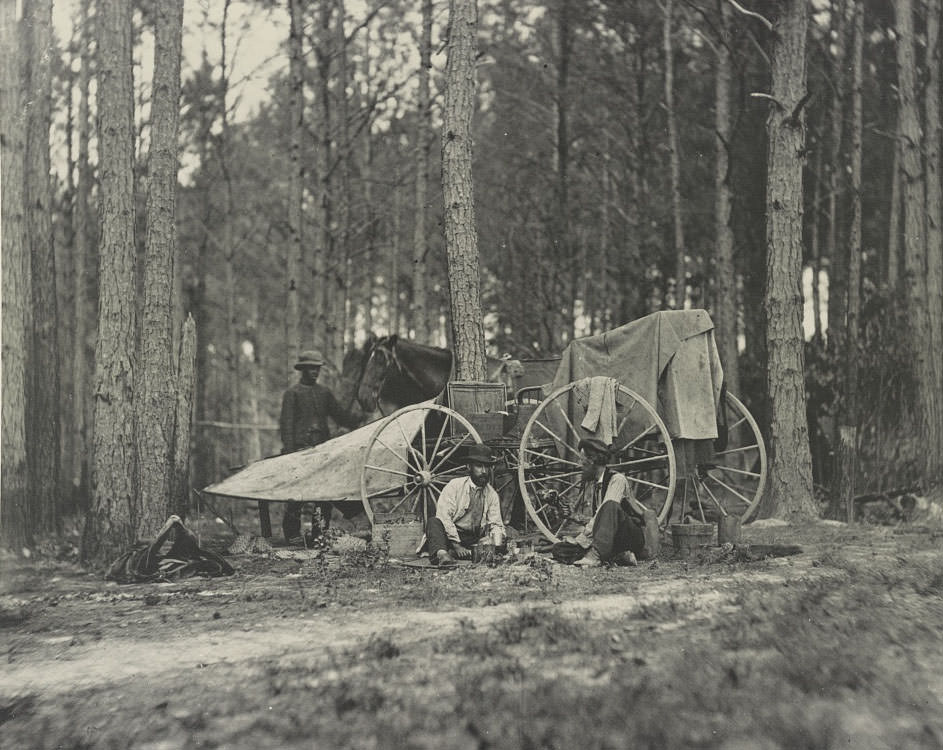
Ambulance corps units operated near the front lines, ready to move wounded men away from the fighting as quickly as possible. The Chief Ambulance Officer of the 9th Army Corps maintained a separate camp dedicated to this purpose. Hospital stewards of the 2nd Division worked alongside surgeons to treat casualties from both the infantry assaults and the constant artillery exchanges.
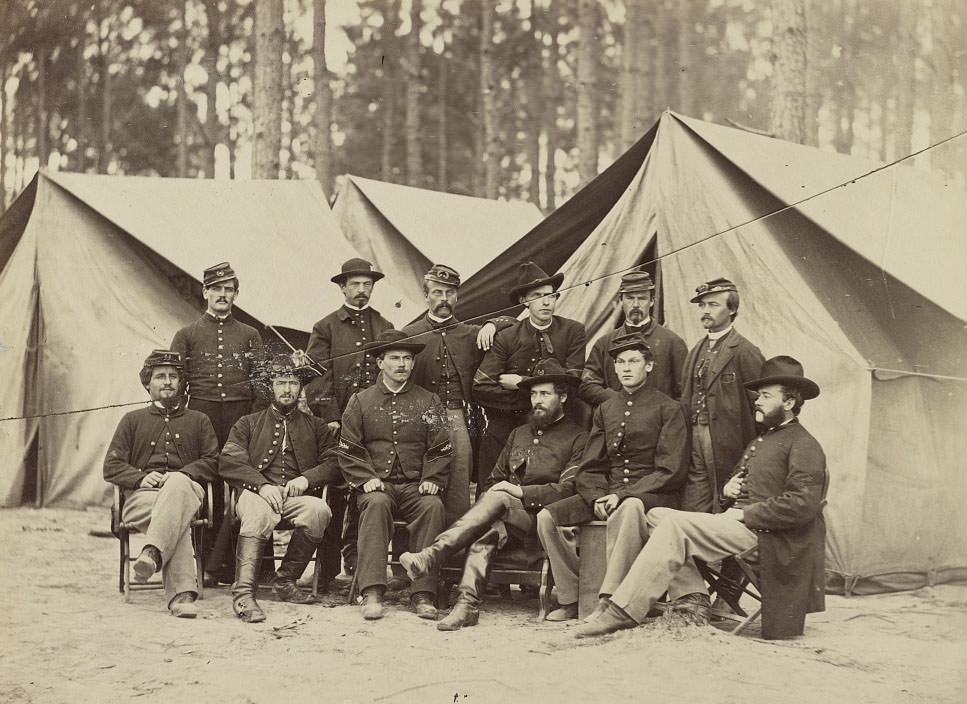
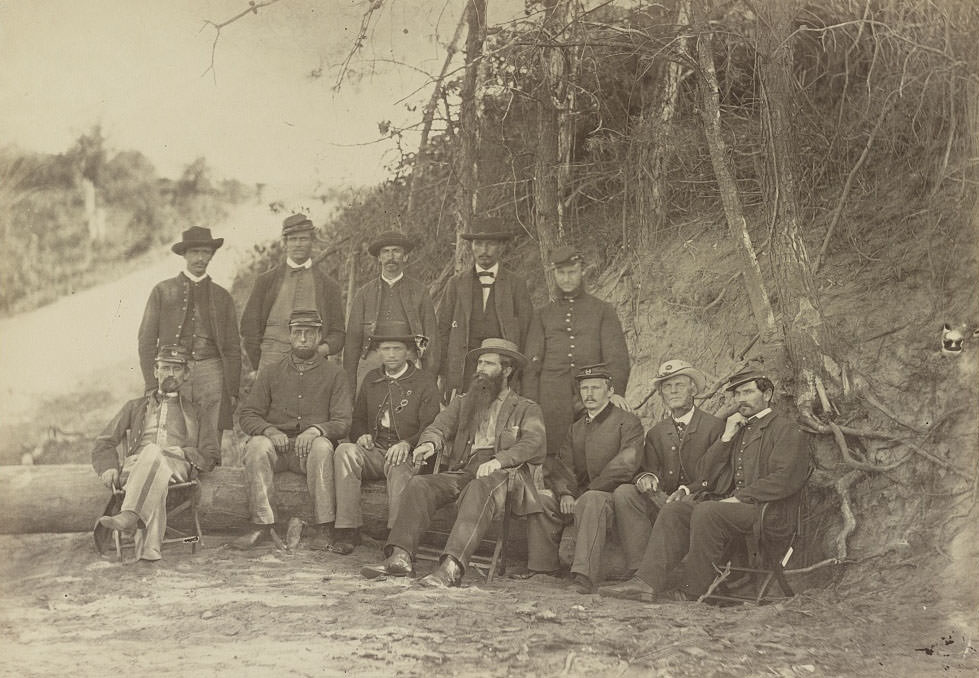
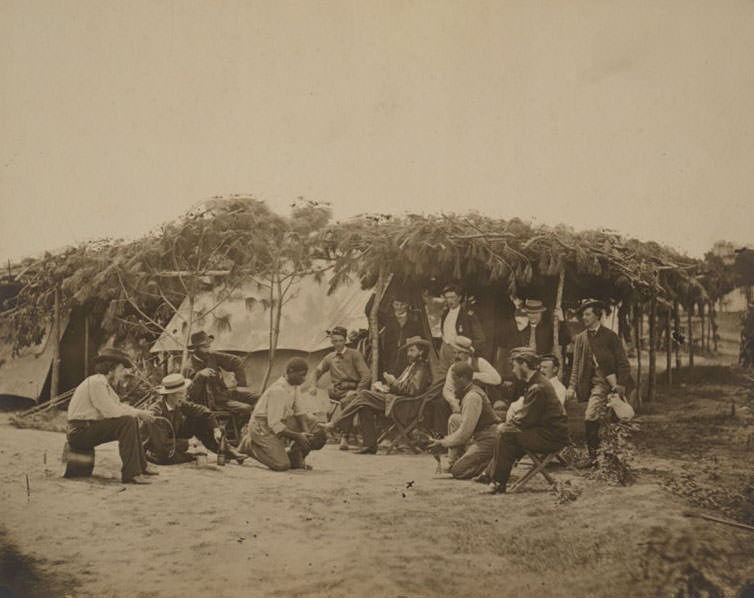
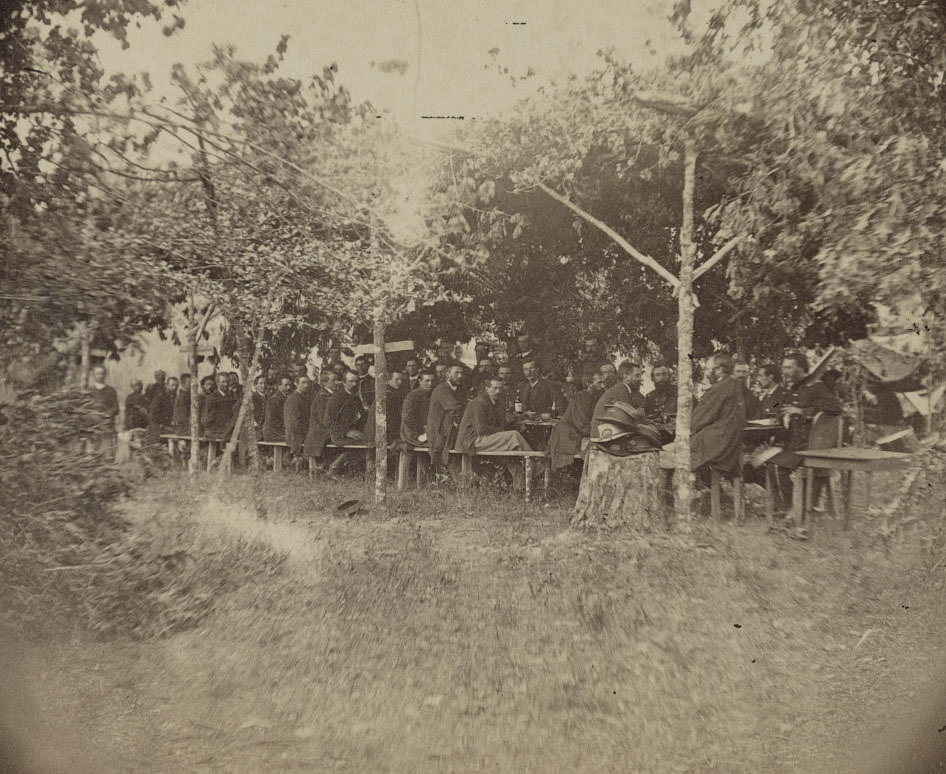
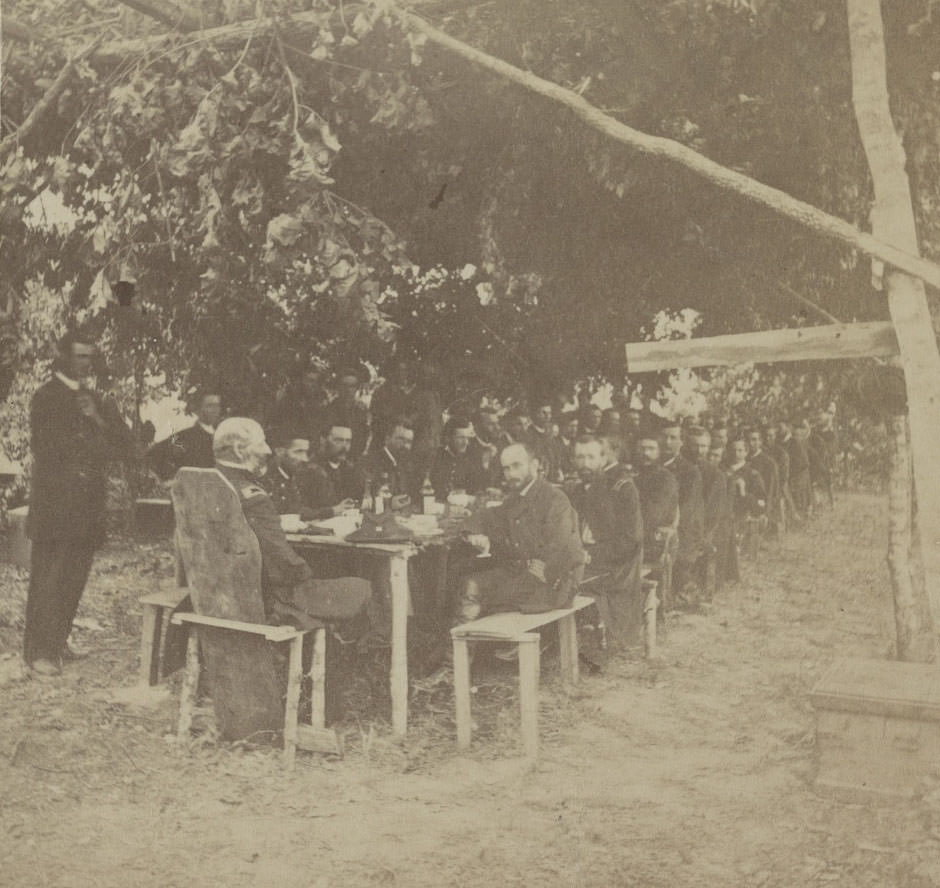
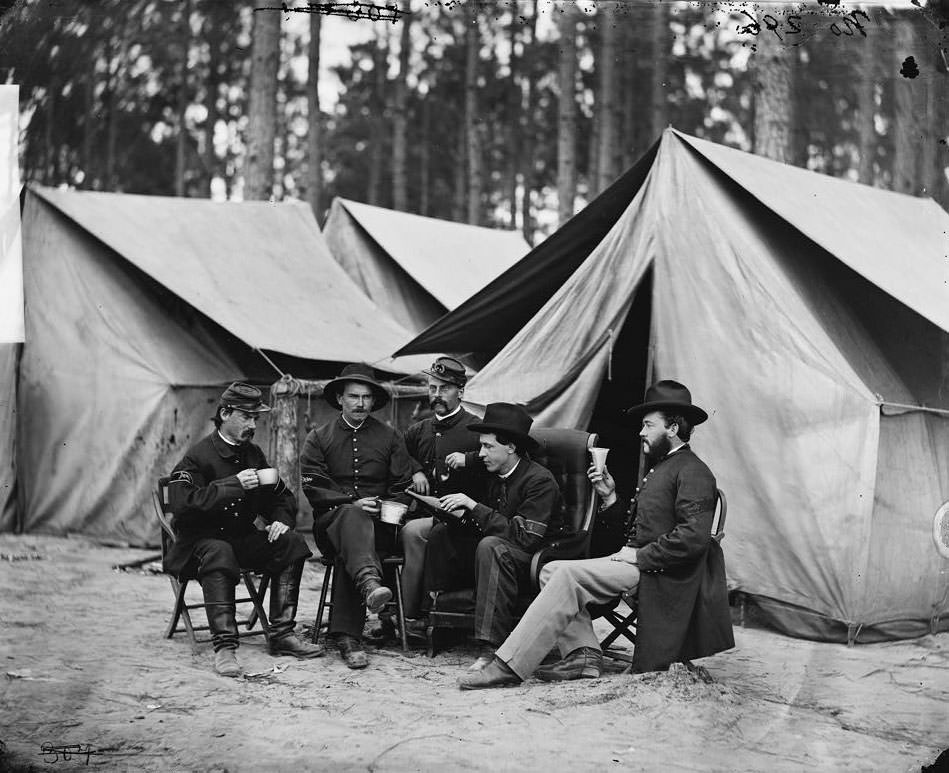
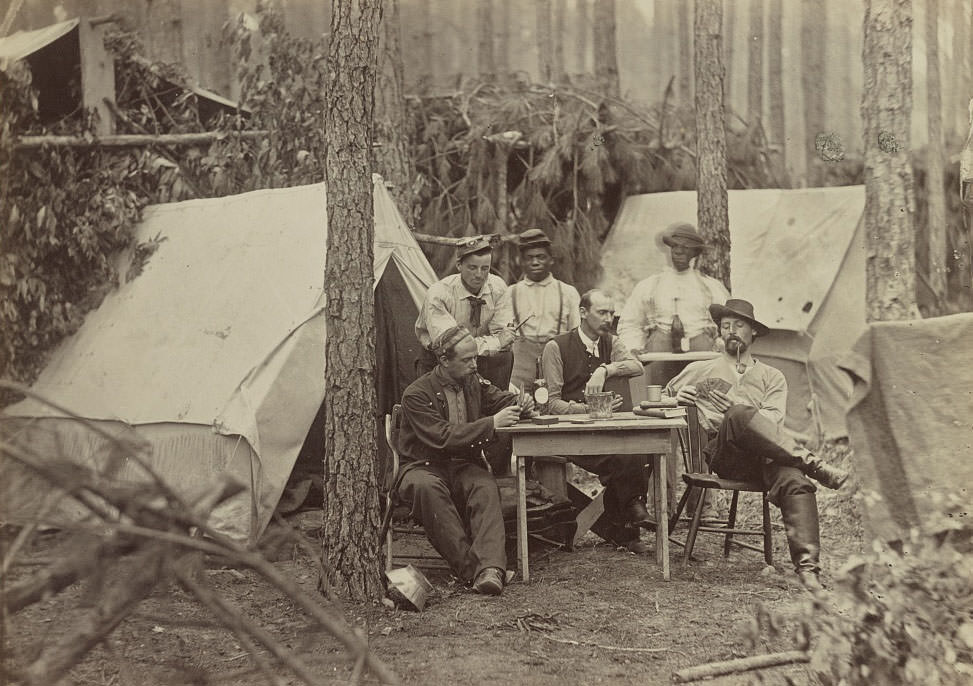
Even in the middle of a prolonged siege, soldiers found ways to maintain morale. The Essayon Dramatic Club, formed by men of the U.S. Engineer Battalion, staged performances for troops in camp. Officers of the 114th Pennsylvania Infantry were photographed playing cards outside their tents — a quiet moment in the middle of one of the war’s longest campaigns.
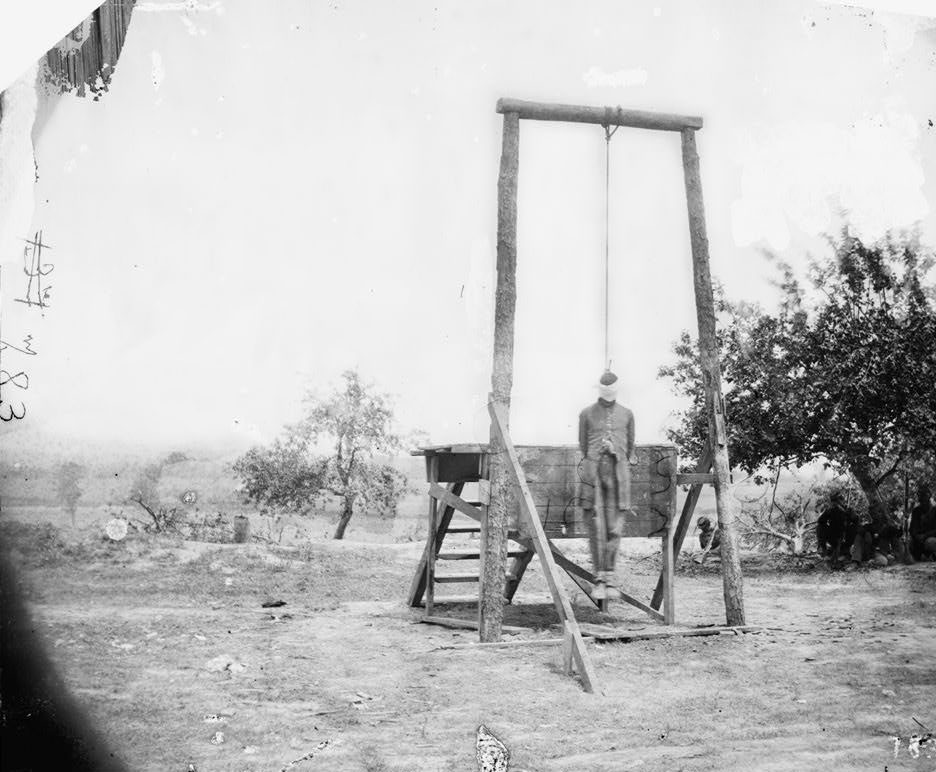
Military justice was also carried out near Petersburg. On Jordan’s Farm outside the city, the execution of William Johnson was documented by photographers — one of the stark realities of wartime discipline that cameras captured without filter.
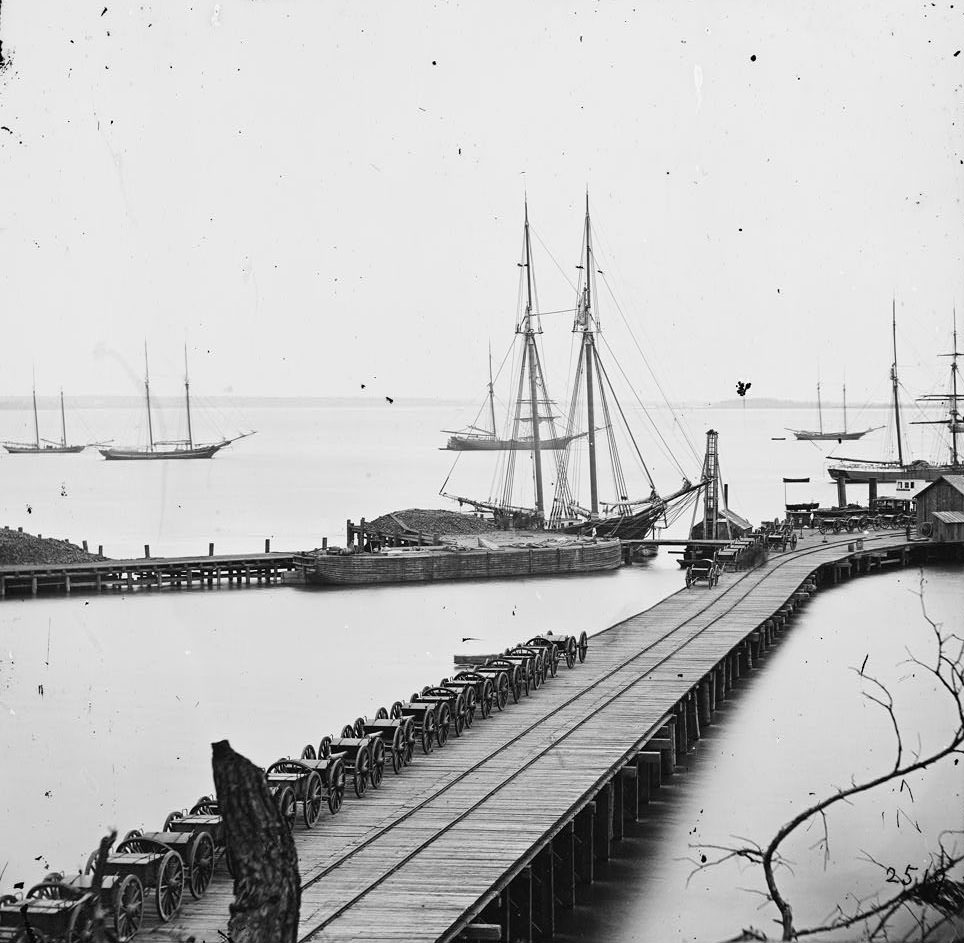
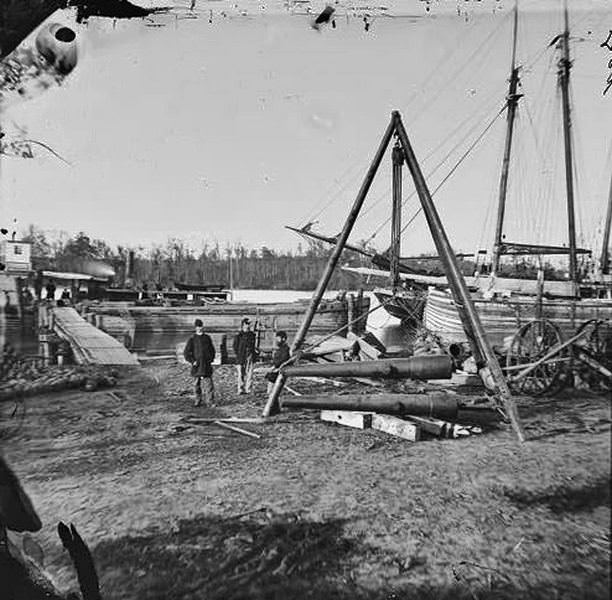
On August 4, 1864, an explosion tore through ordnance barges moored at the wharves along the Appomattox. The blast destroyed the docks and sent shockwaves through the Union supply operation. Photographs taken shortly after show the extent of the damage to the wharf structure.
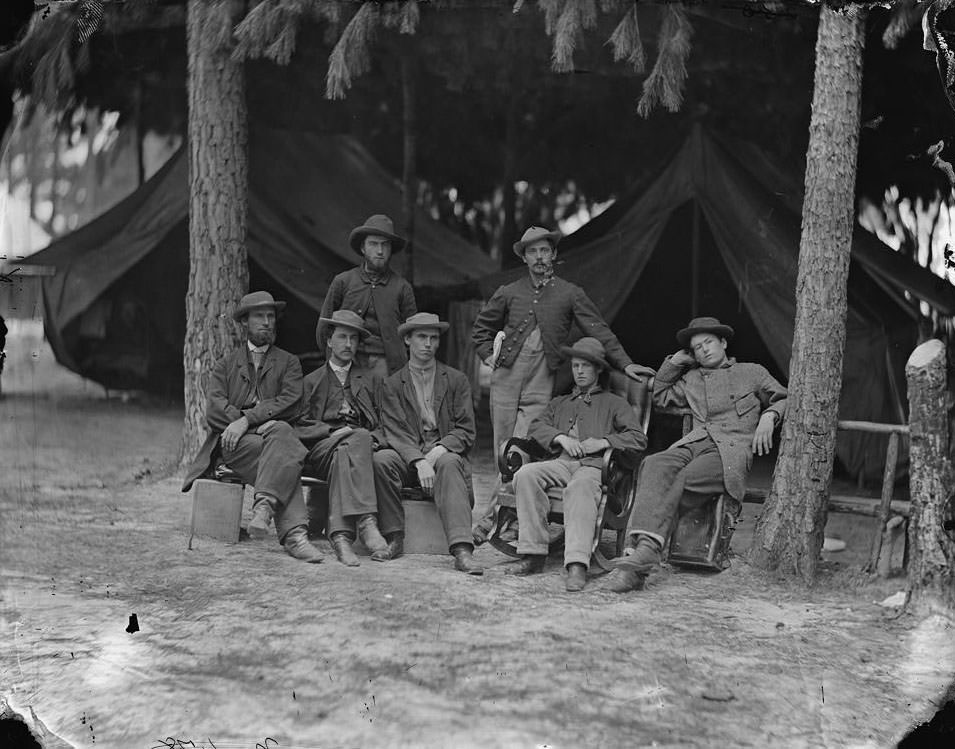
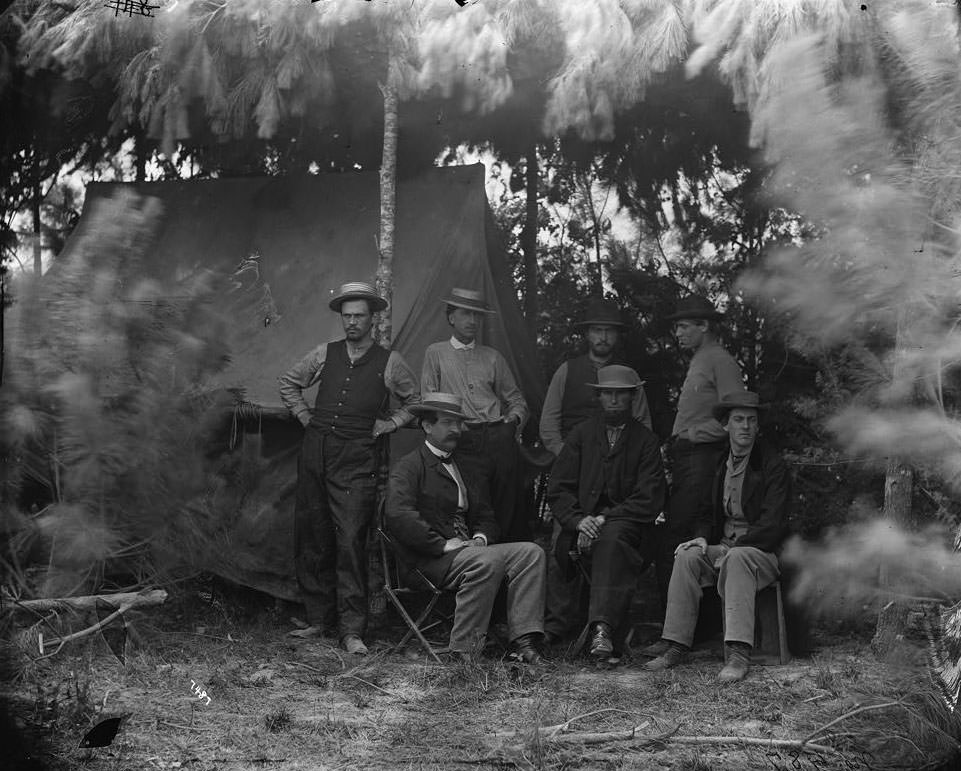
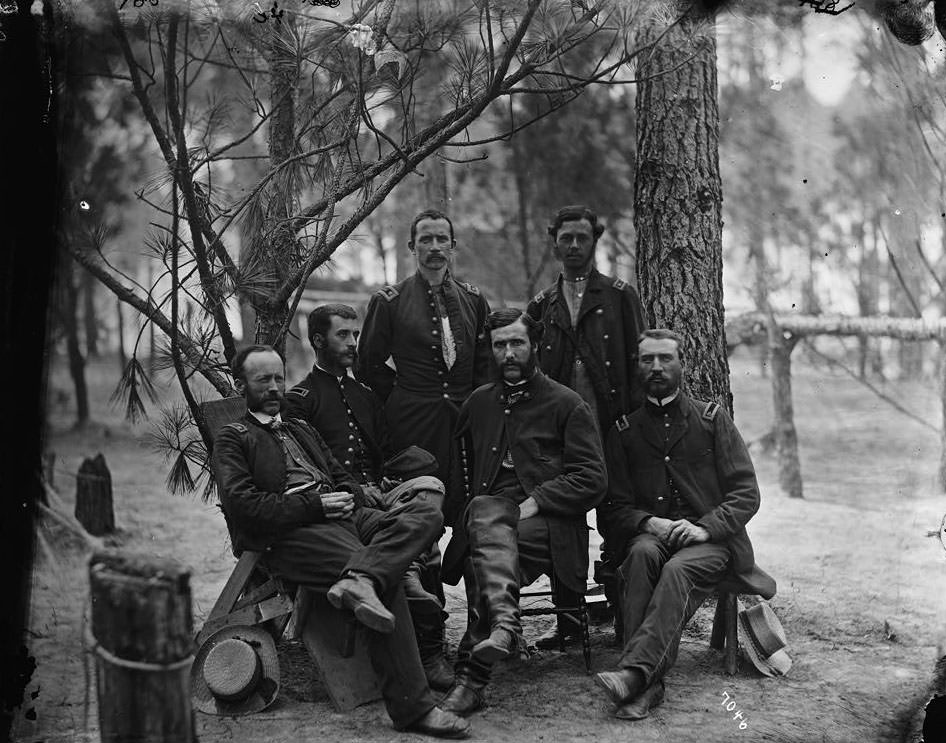
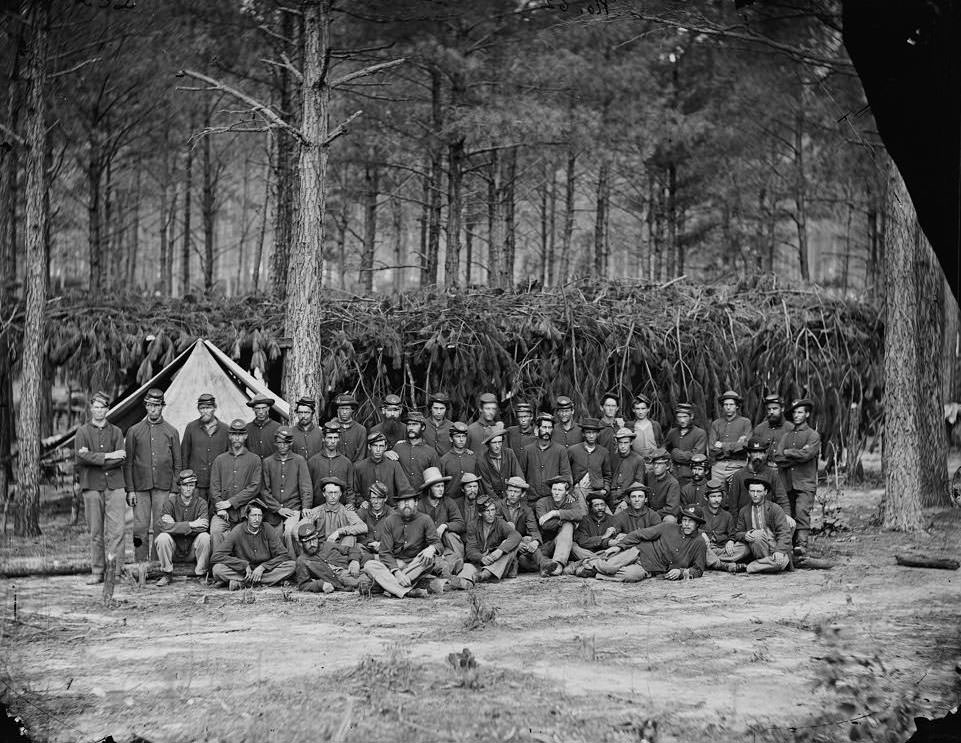
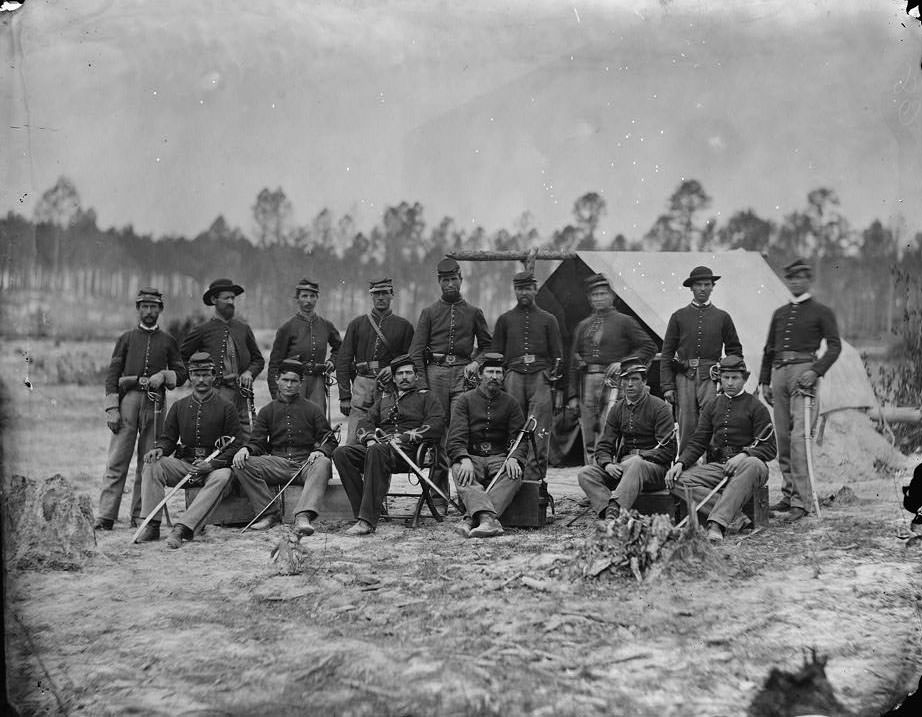
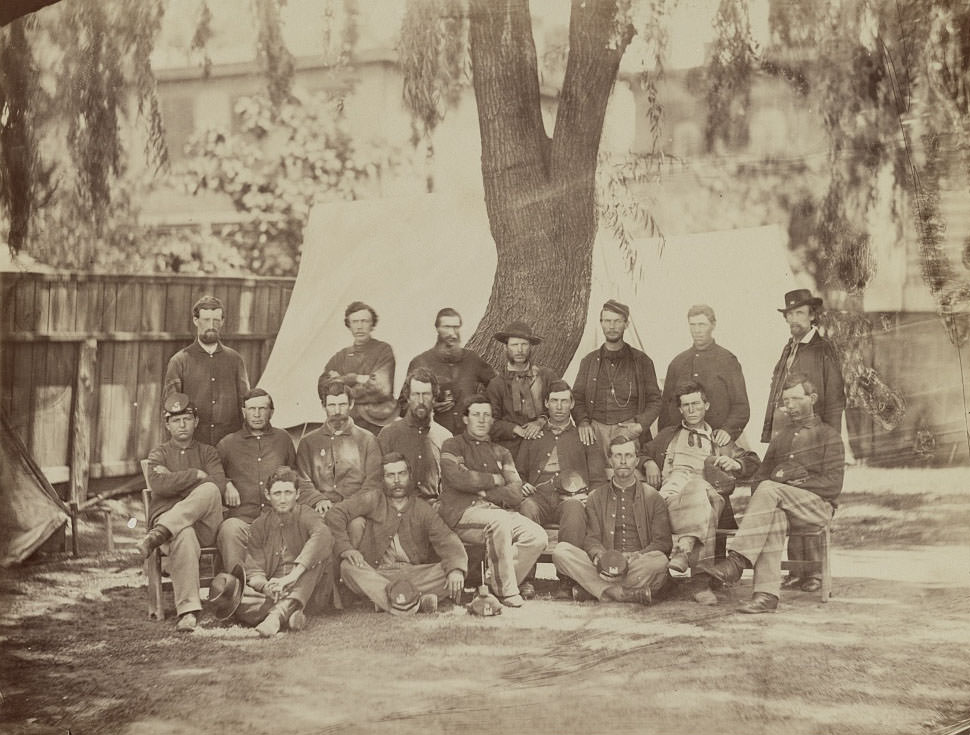
The U.S. Engineer Battalion was one of the most photographed units of the entire siege. Companies B and D posed for multiple group portraits, and their wagons, equipment, and camp structures appear throughout the photographic record. Officers of the 1st Massachusetts Cavalry were similarly documented at Army of the Potomac headquarters.
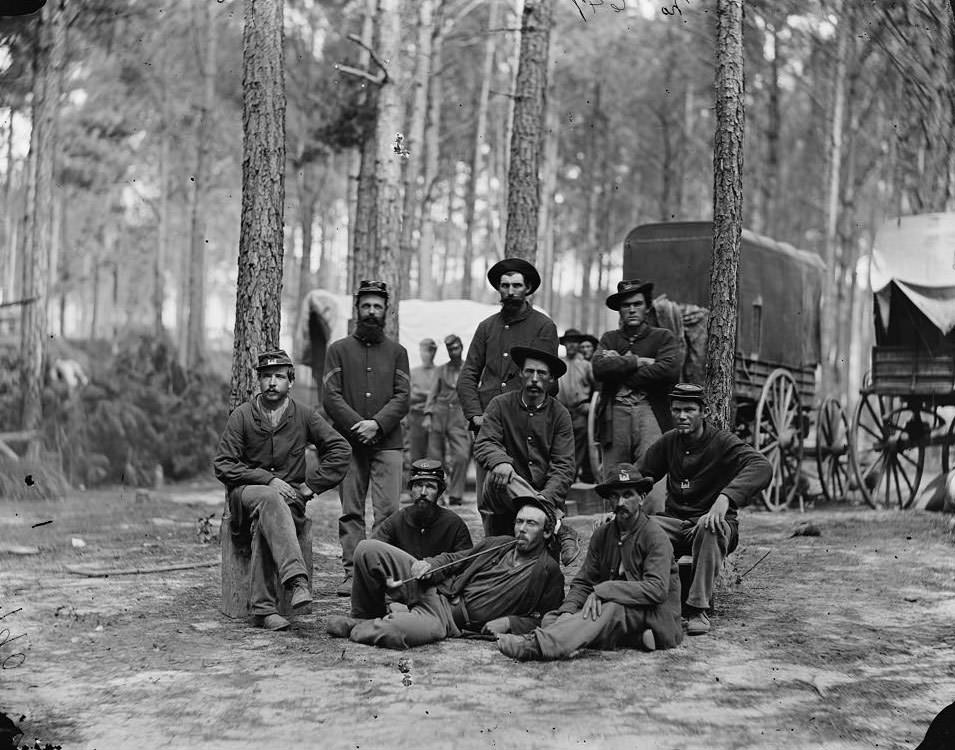
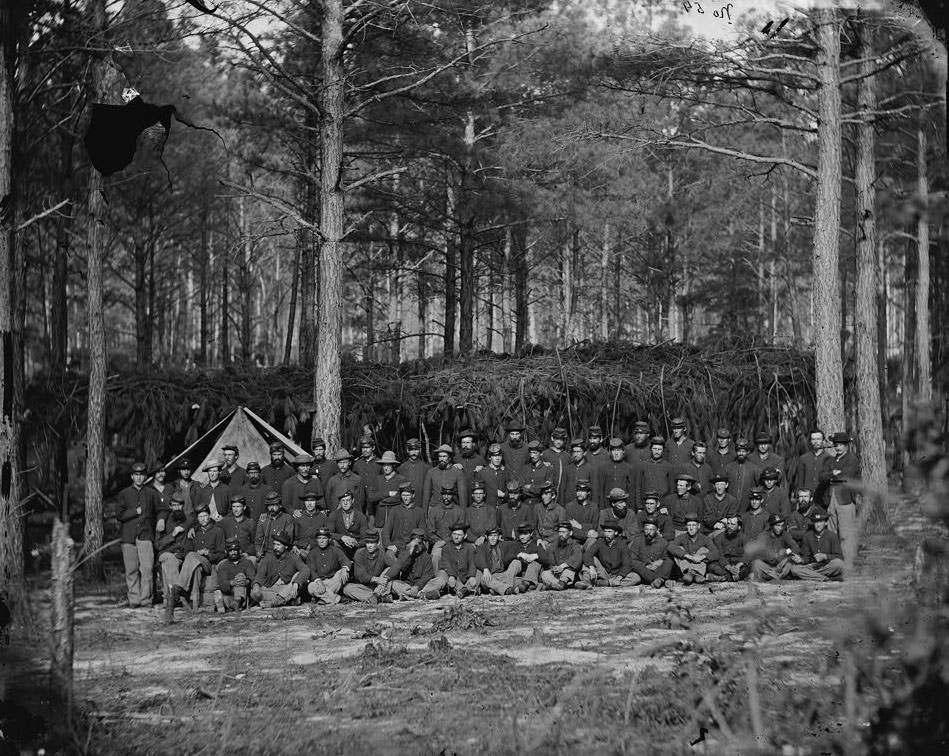
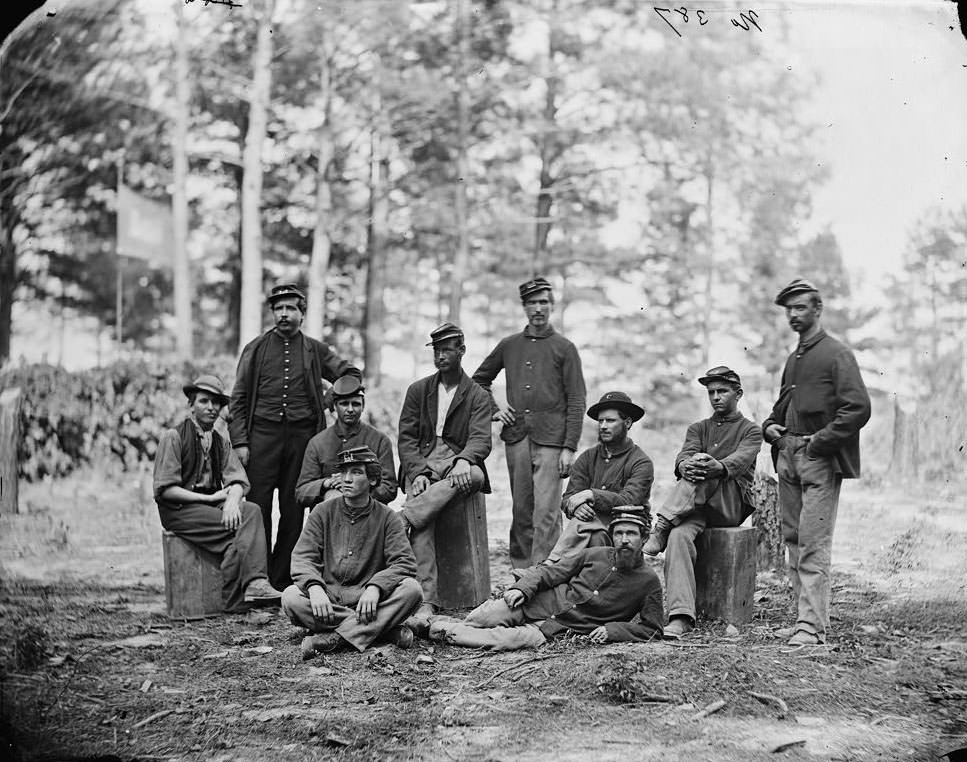
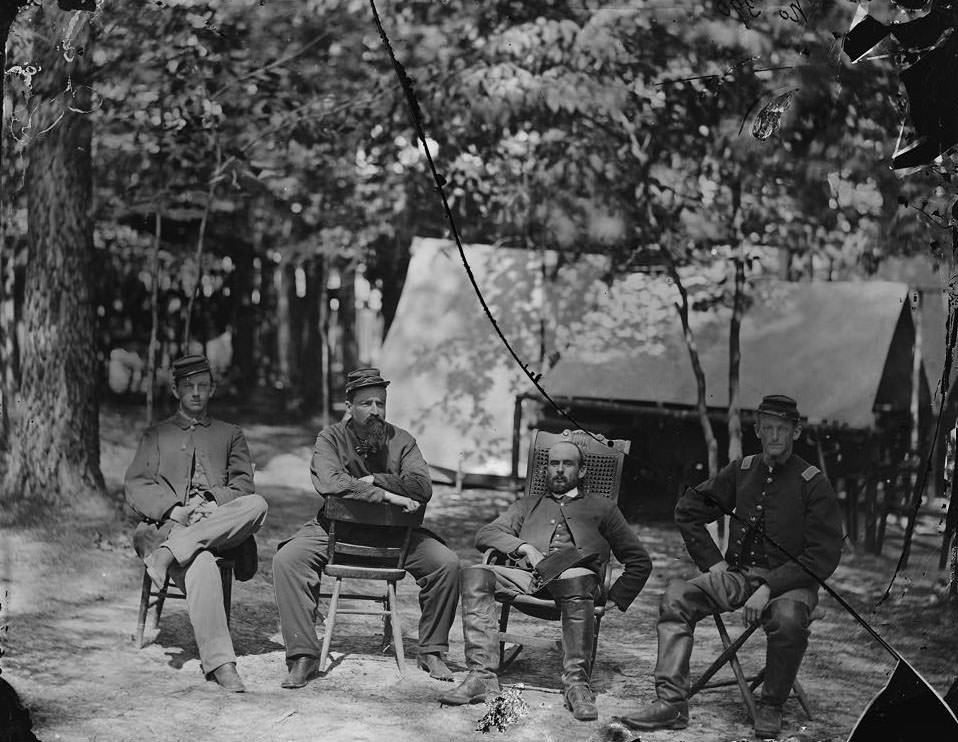
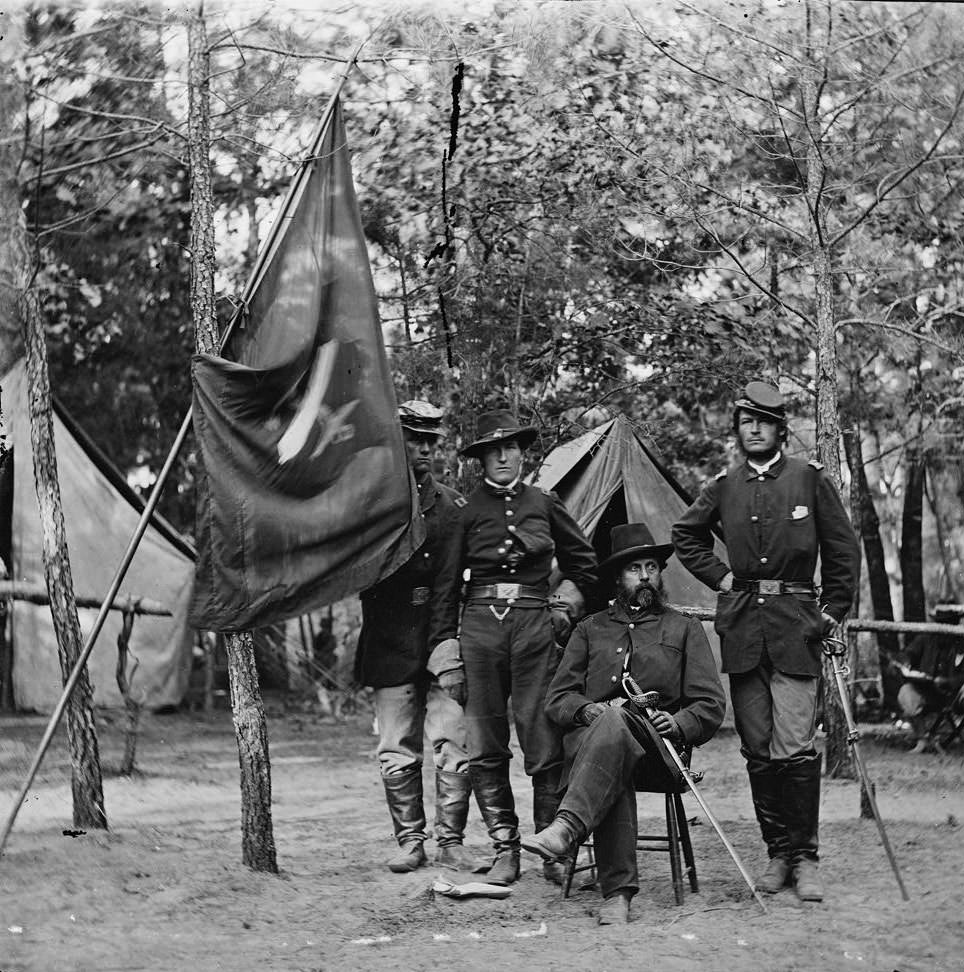
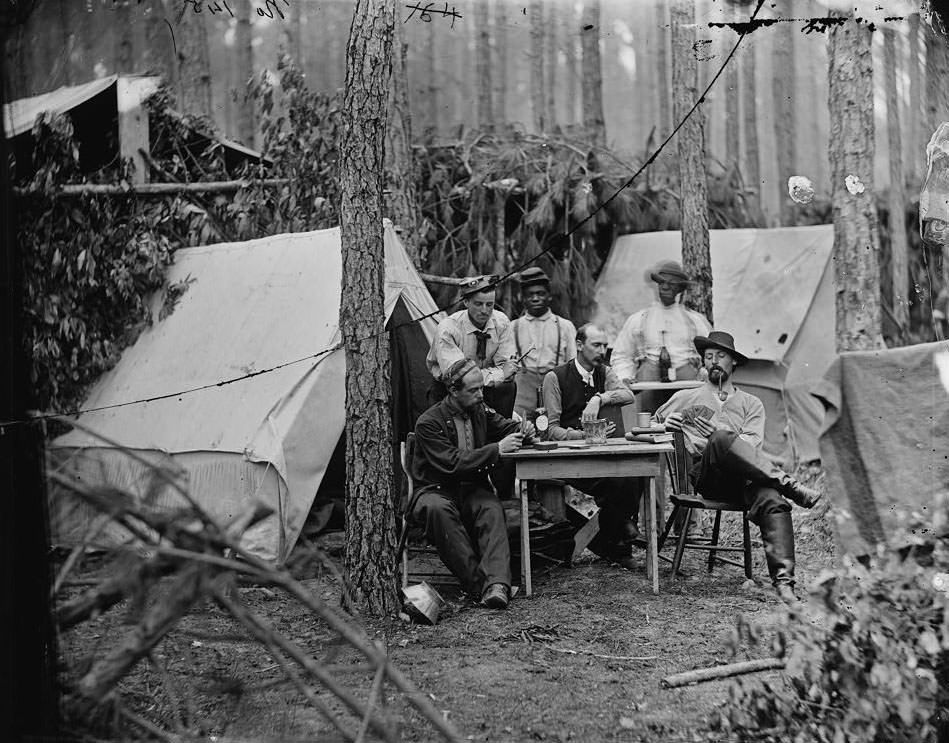
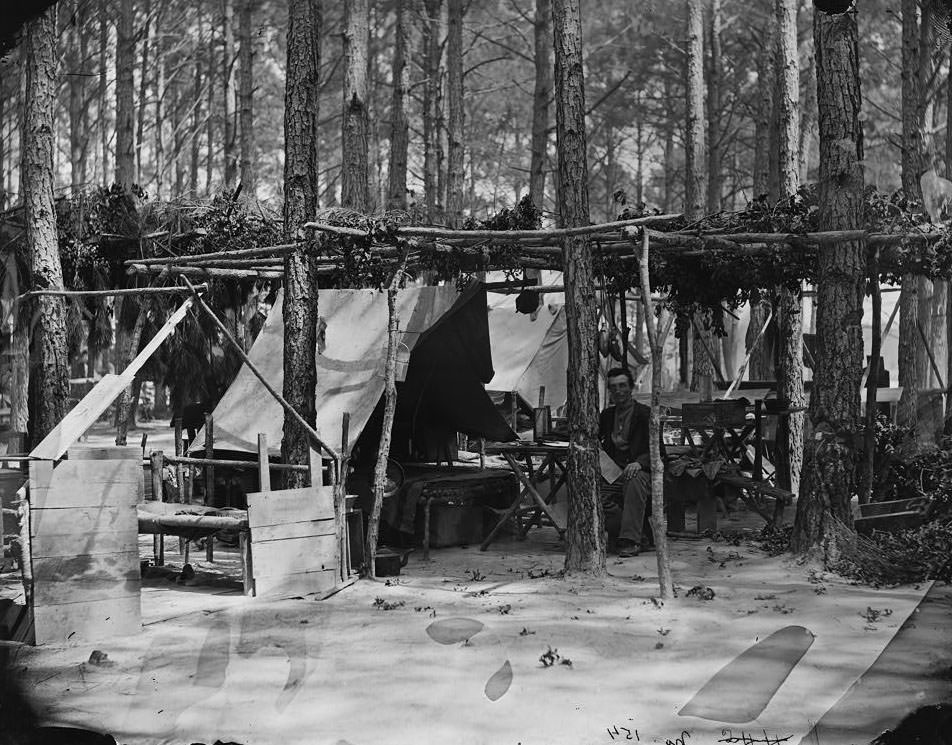
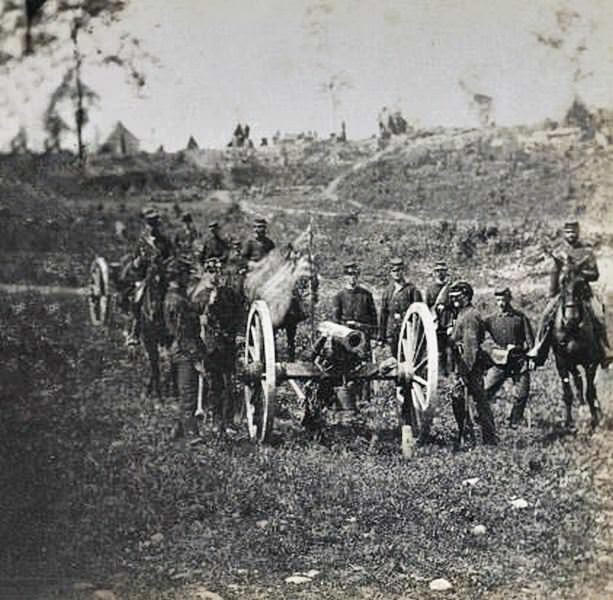
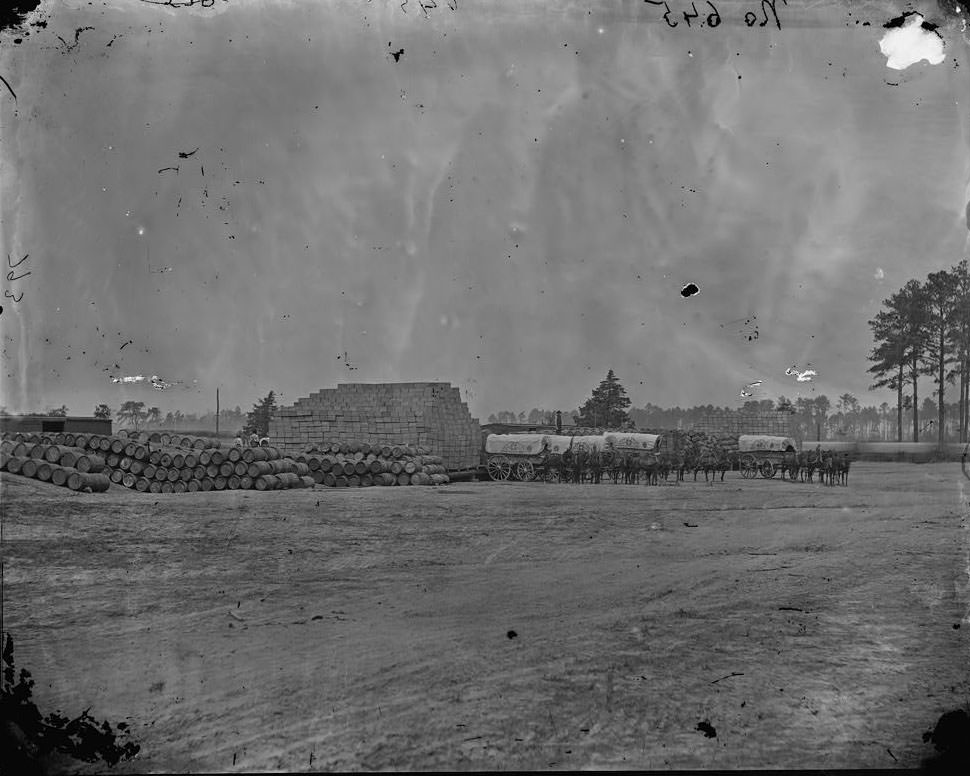
Artillery on rail platforms gave Union commanders flexibility that fixed batteries could not match. A railroad gun and its crew could be repositioned quickly along the network of tracks surrounding Petersburg, making it difficult for Confederate gunners to predict where the next attack would come from. Supply depots like the one at Cedar Level kept the entire operation stocked with food, ammunition, and equipment.
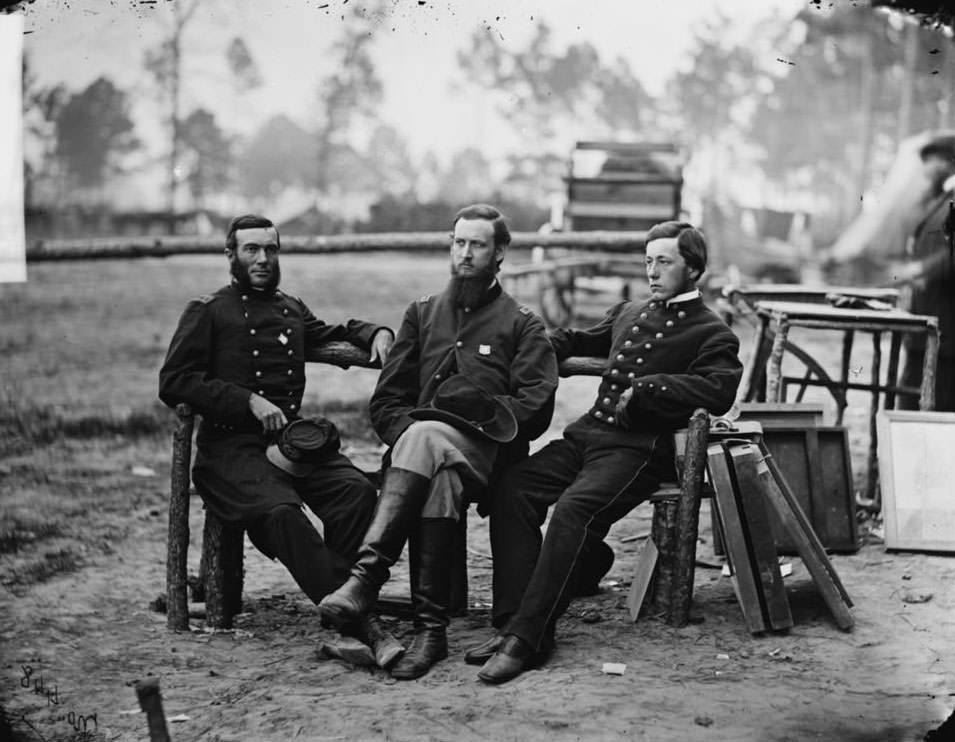
General Edward Ferrero commanded the 4th Division of the 9th Corps, which was composed entirely of United States Colored Troops. These men fought at the Battle of the Crater in July 1864 — one of the most catastrophic Union assaults of the entire siege. Brevet Major General C.H.T. Collis commanded the 114th Pennsylvania Infantry, a unit that appears in dozens of photographs from the Petersburg lines.
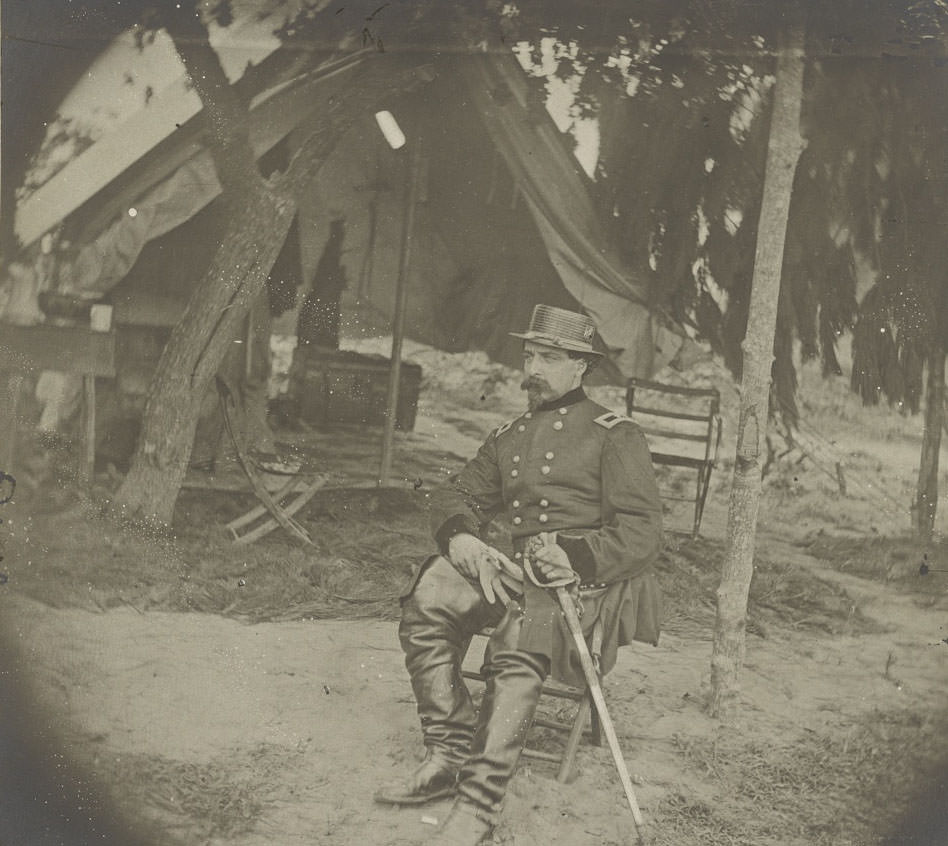
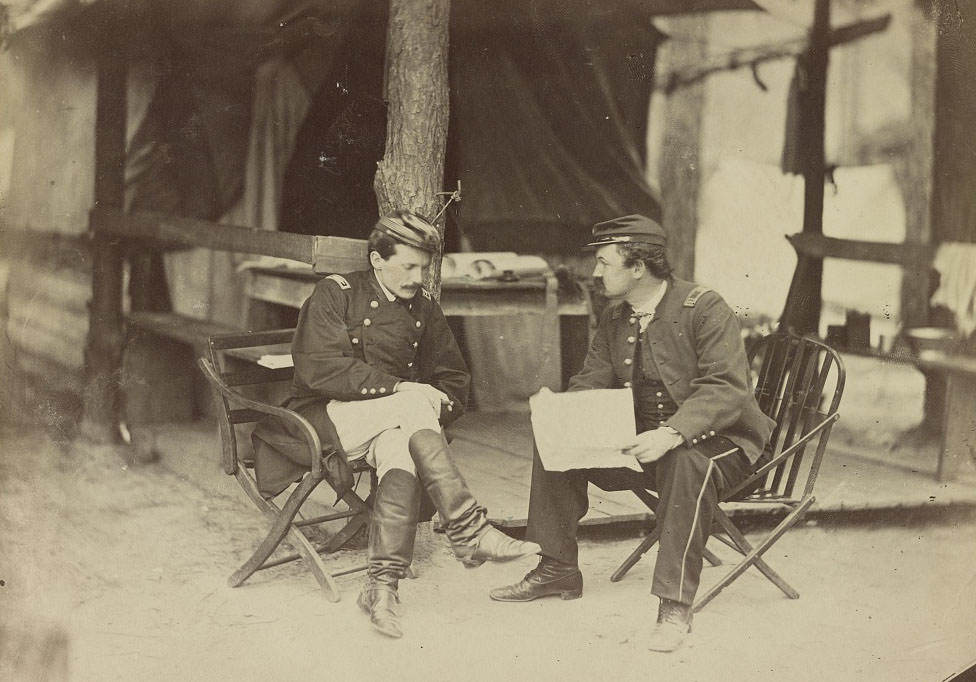
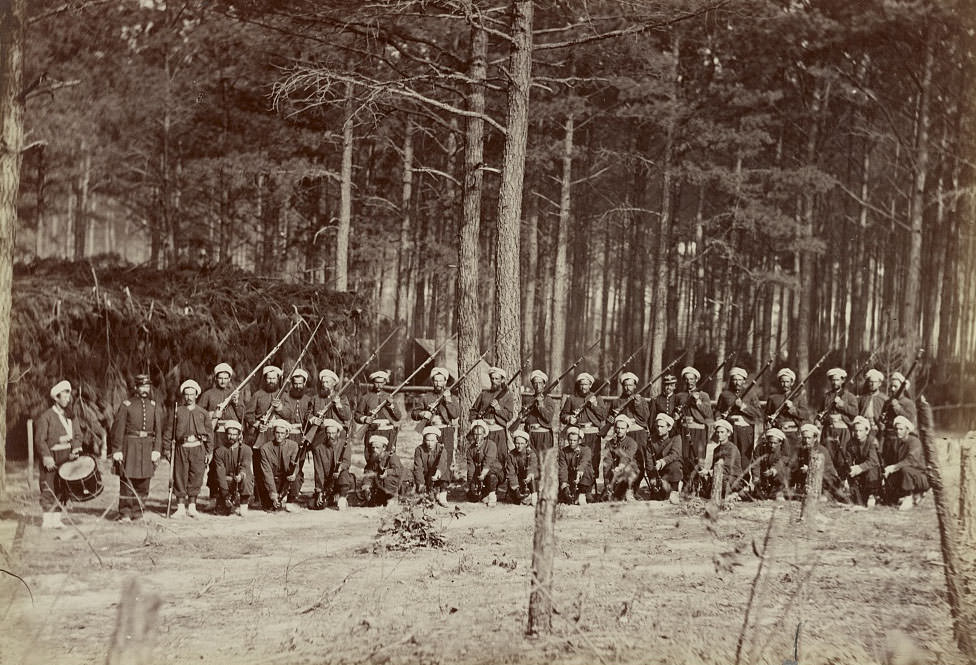
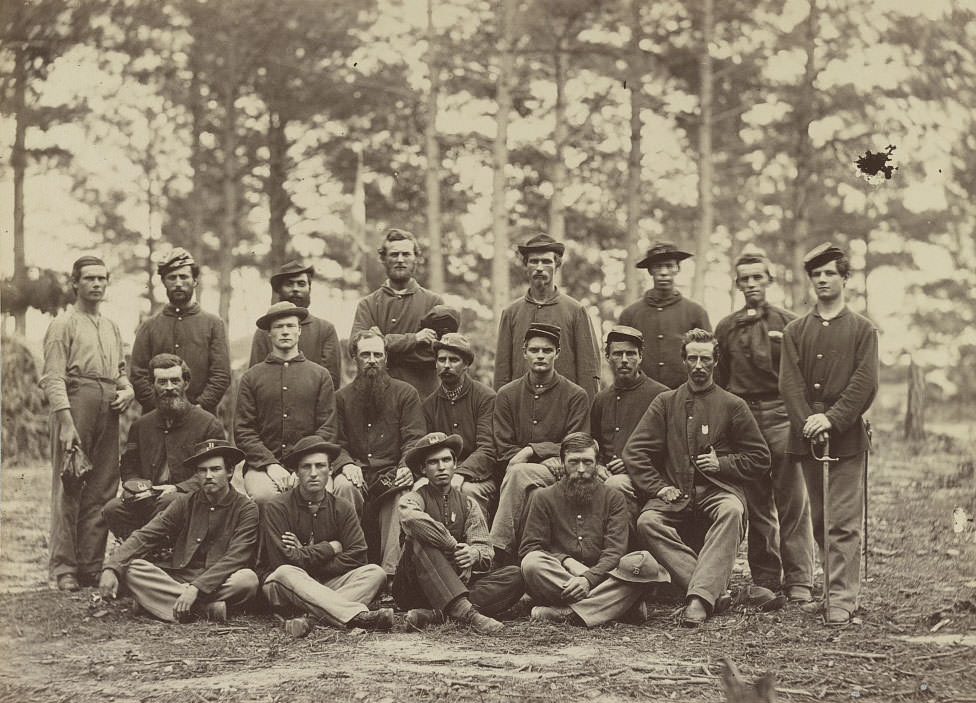
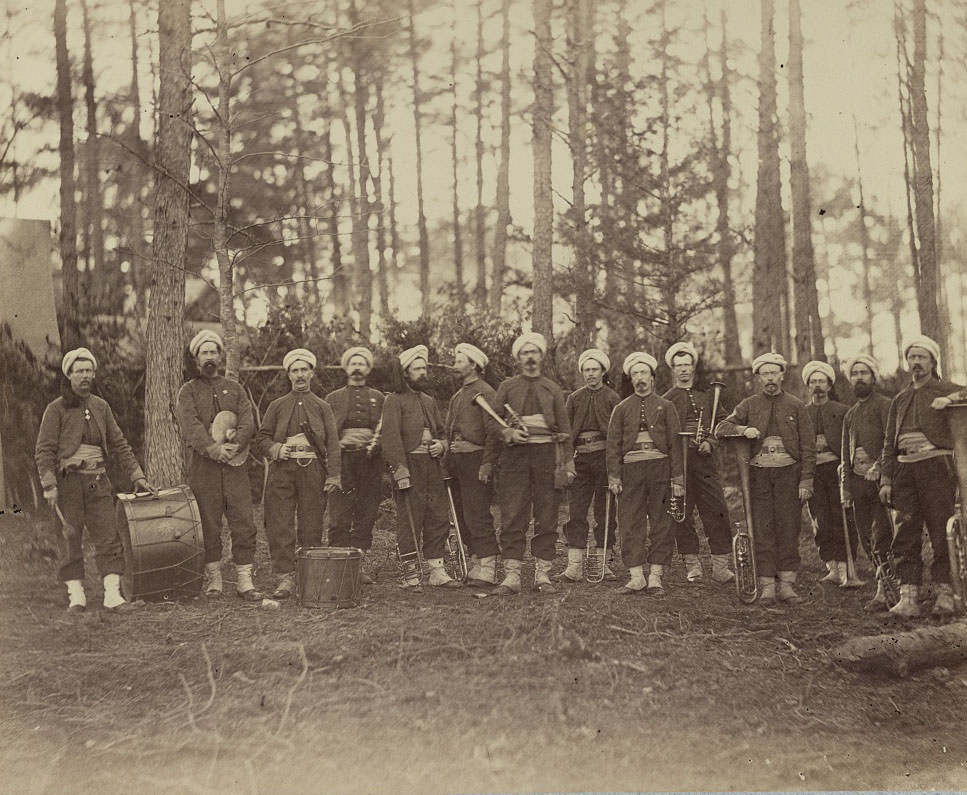
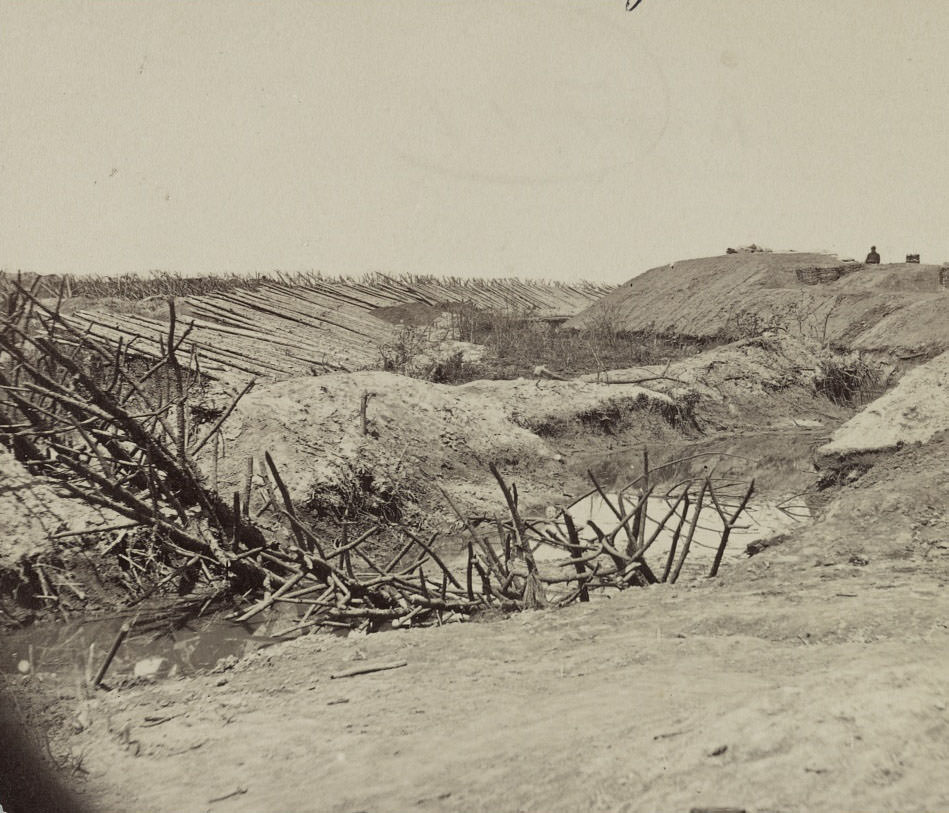
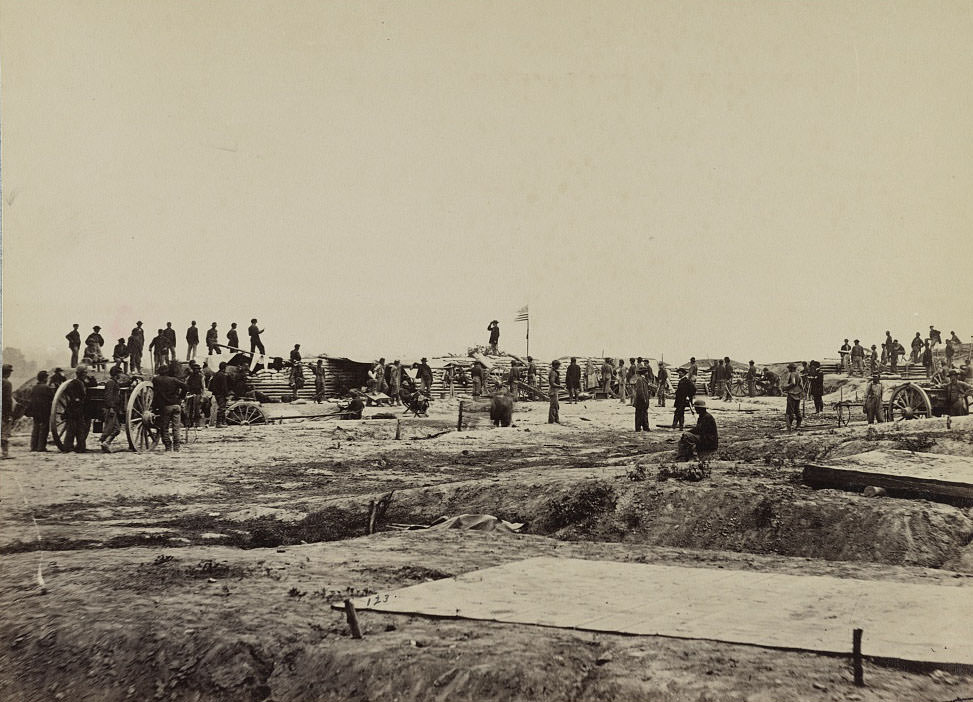
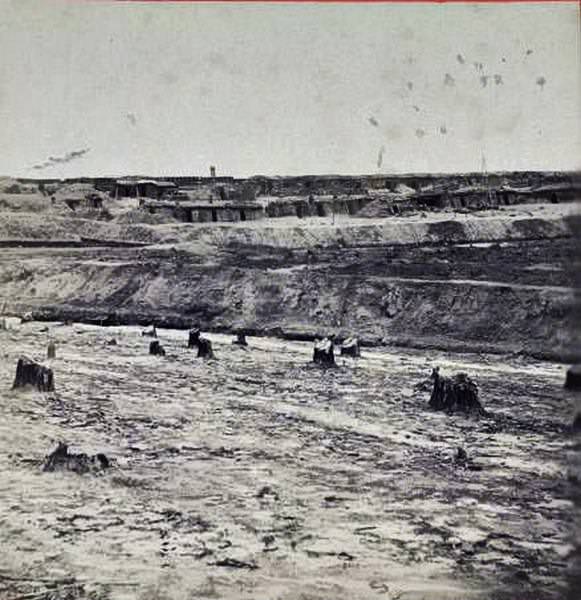
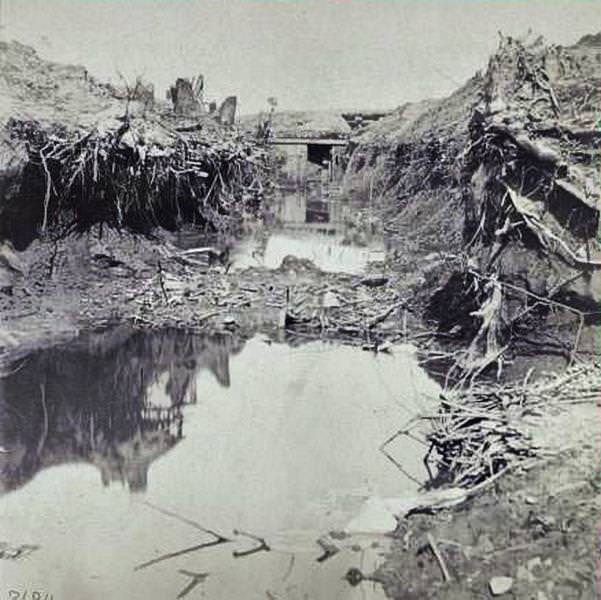
The outer Confederate fortifications were among the most formidable defensive works of the entire Civil War. When the 18th Army Corps captured sections of these outer lines on June 15, 1864, photographers were on hand to document what Union soldiers had broken through. These images showed the depth of the earthworks and the scale of labor that went into building them.
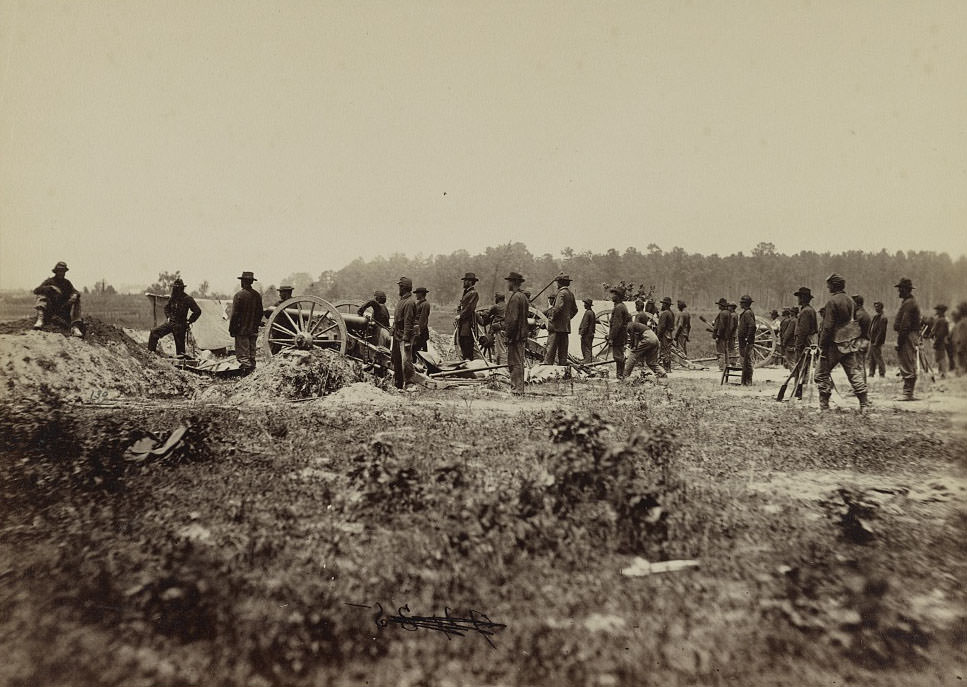
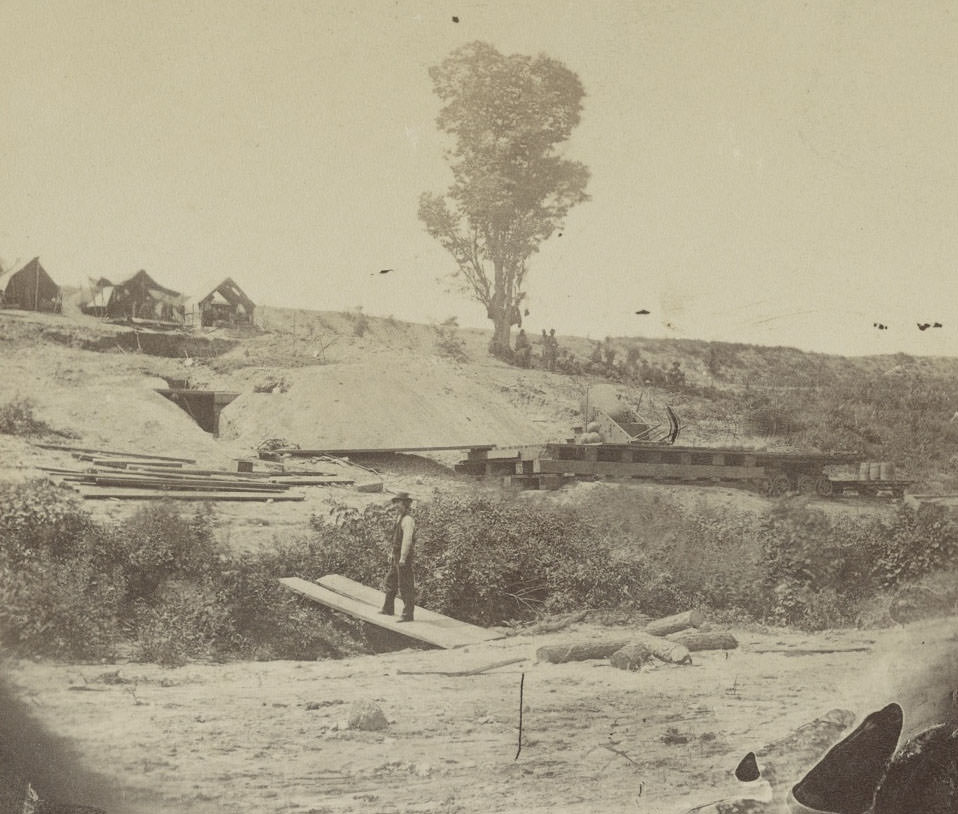
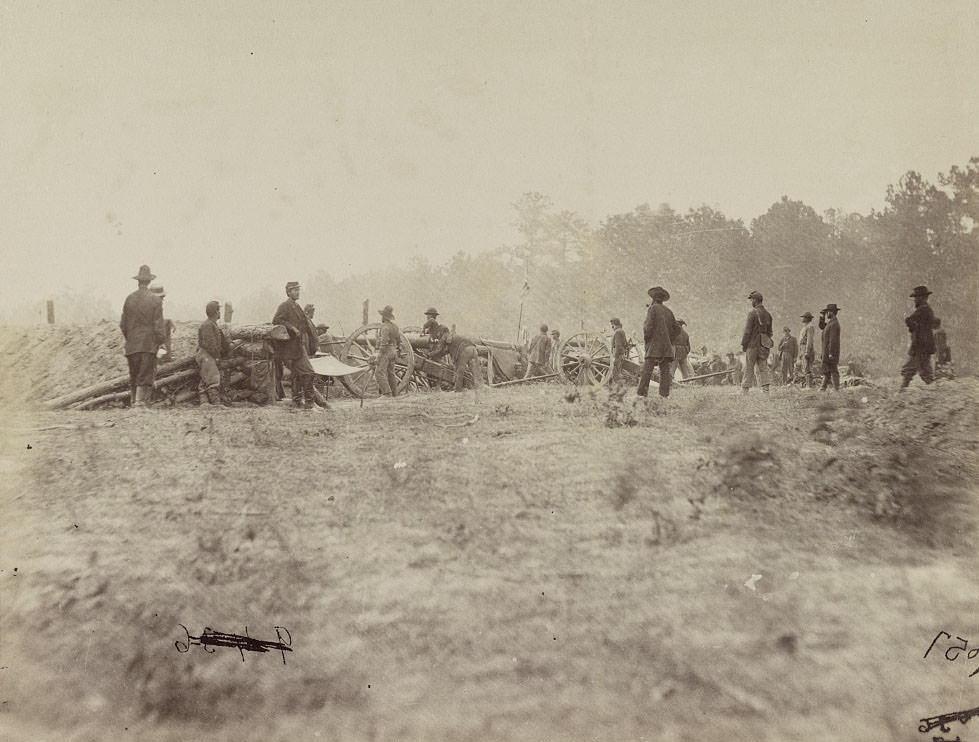
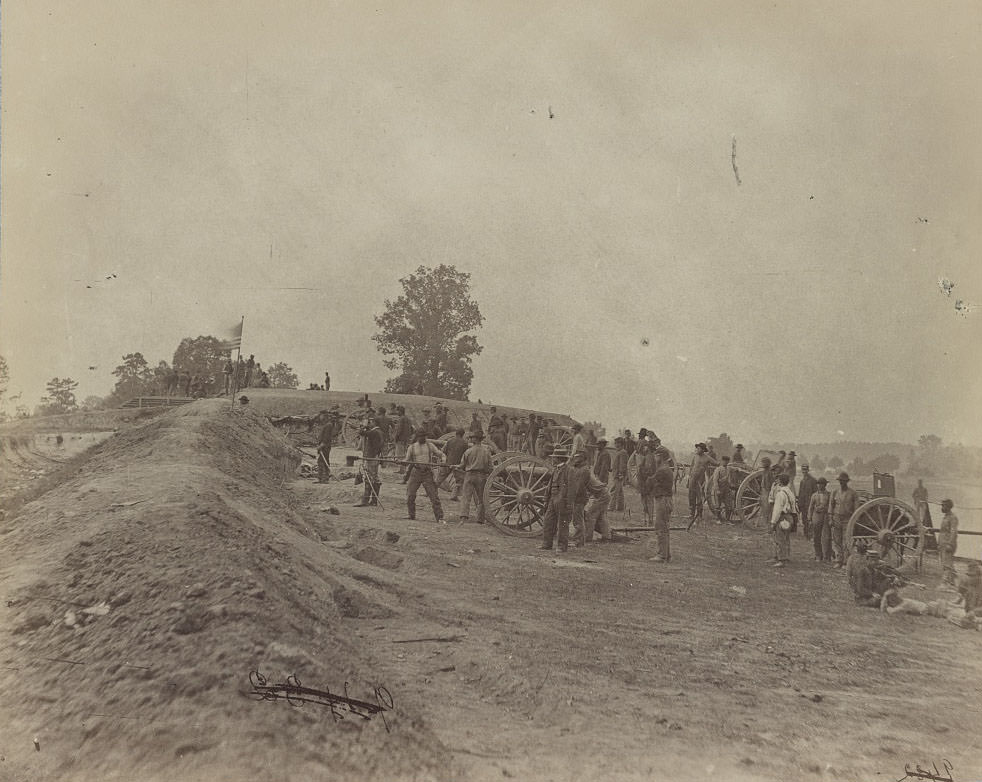
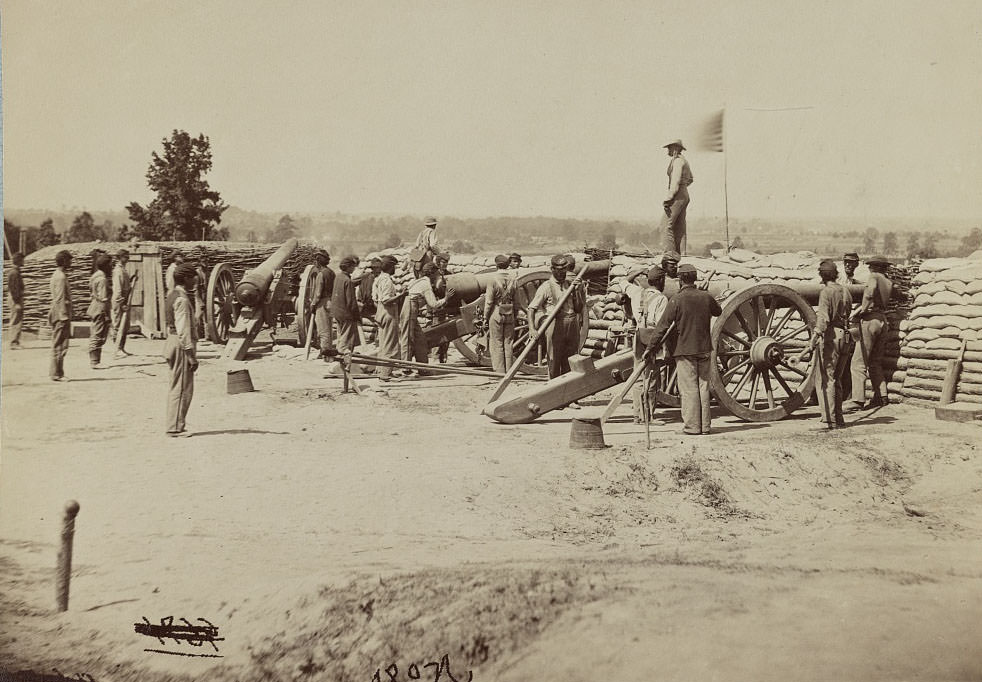
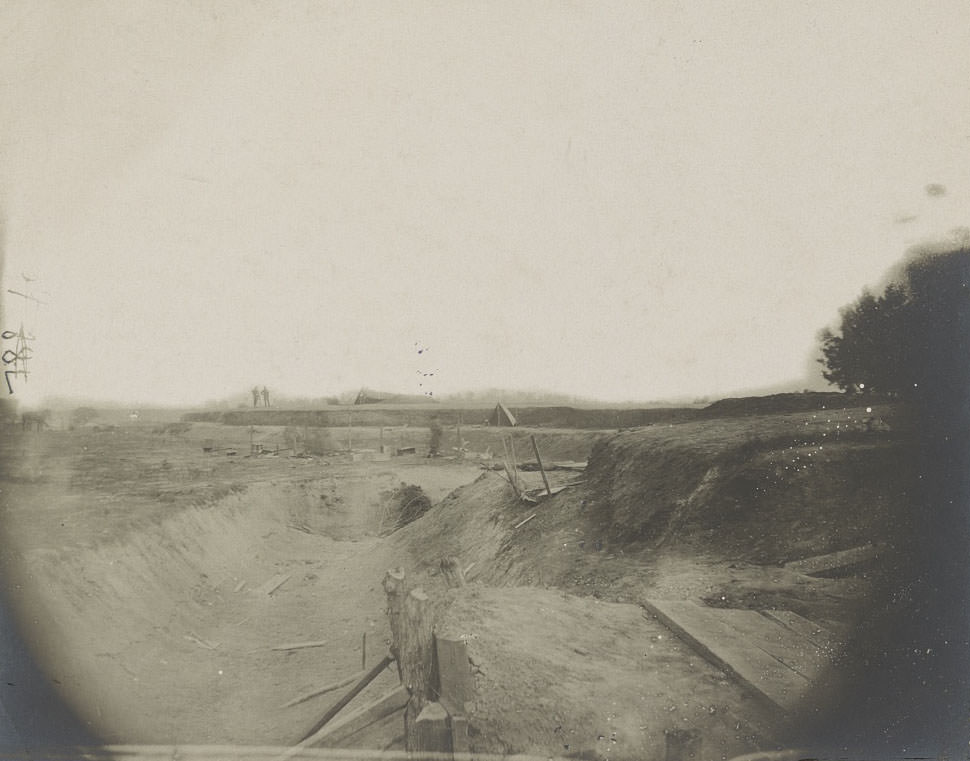
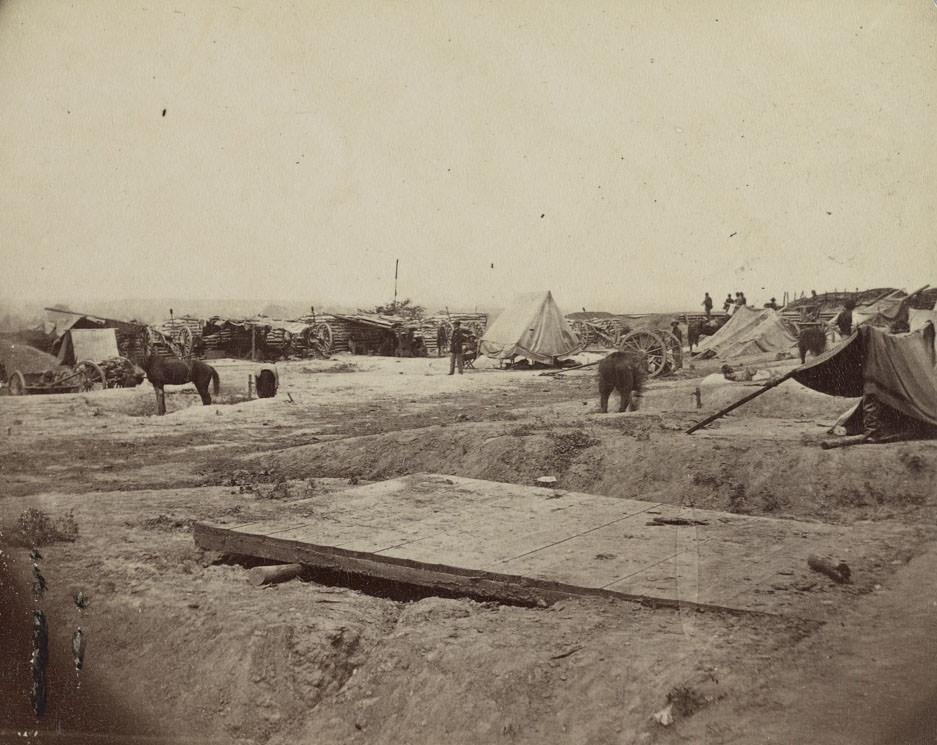
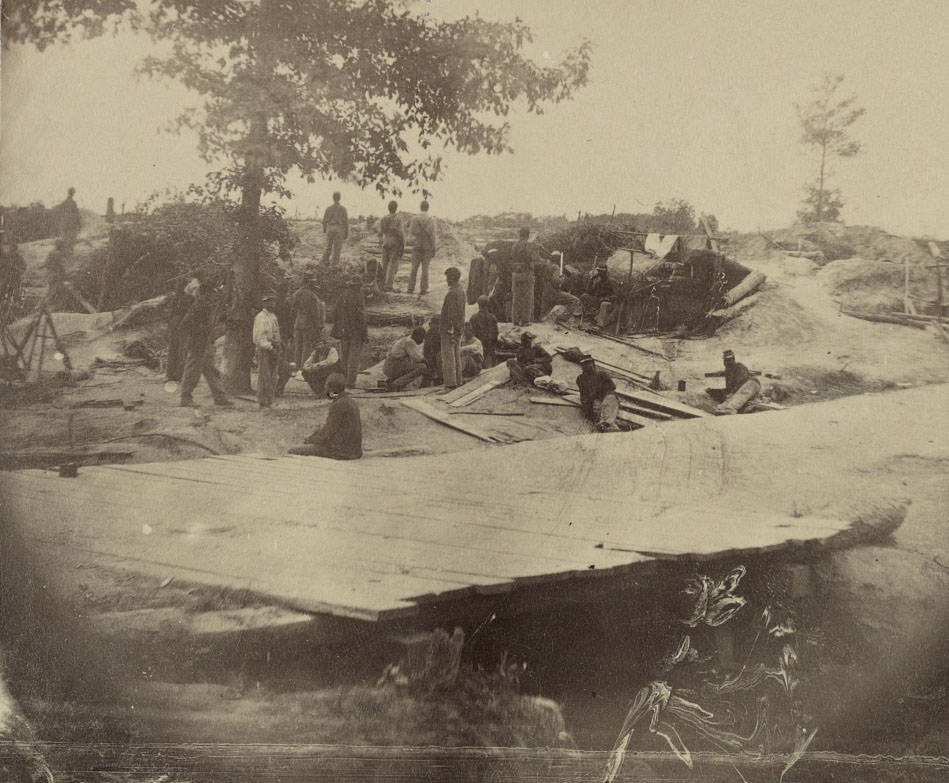
United States Colored Troops occupied sections of the Union line in bomb-proof shelters built into the earthworks. These fortified living quarters protected soldiers from the constant shelling that characterized life in the trenches. Photographs taken on August 7, 1864 show these structures clearly along the Federal line.
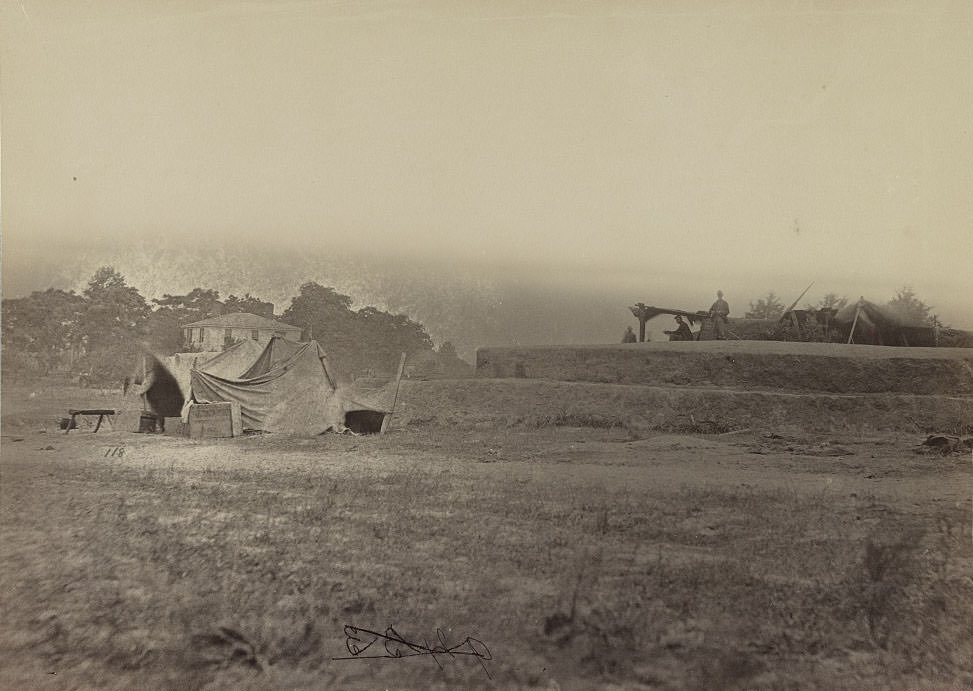
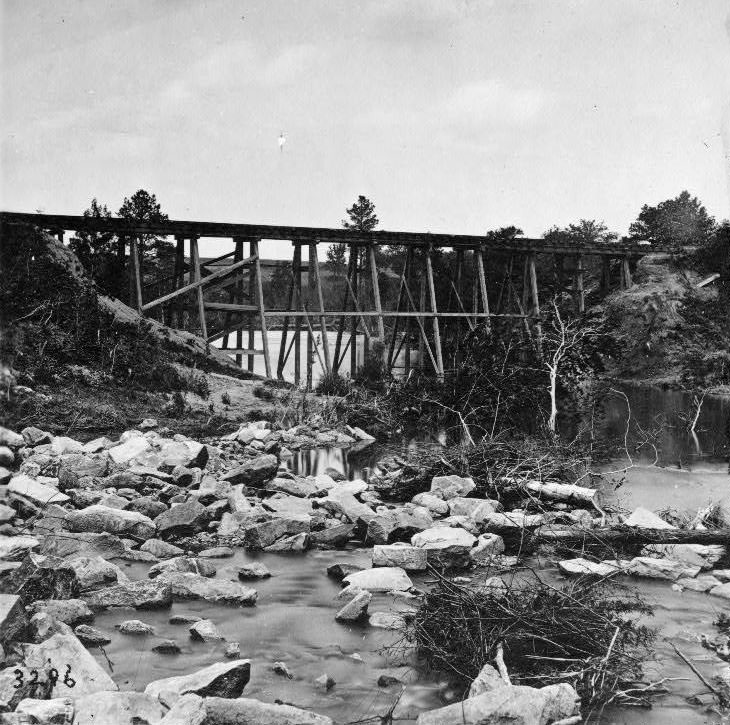
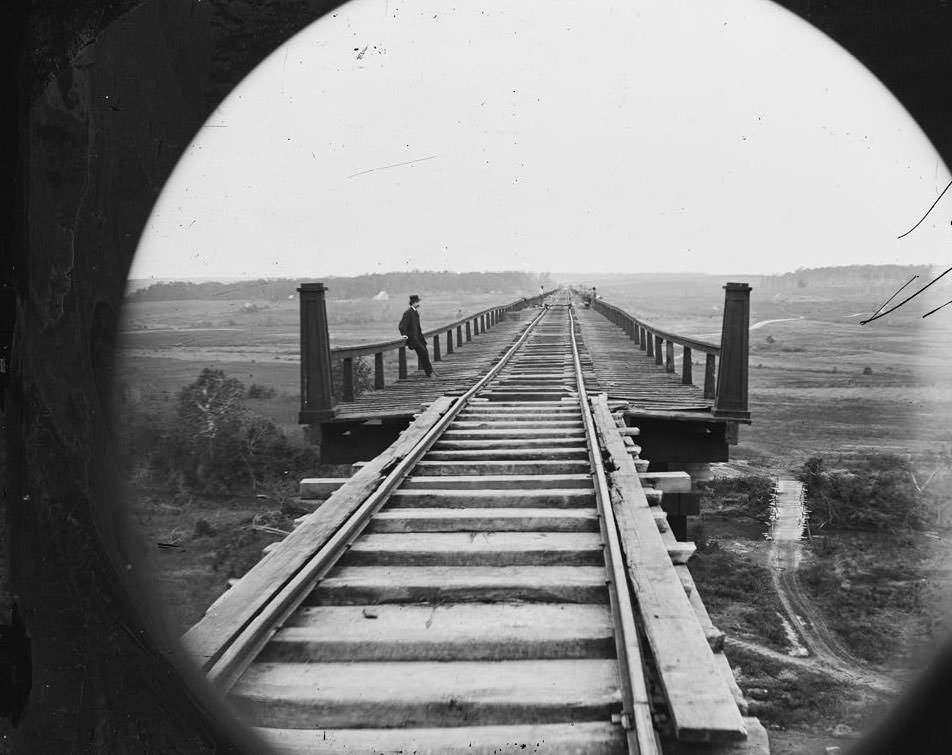
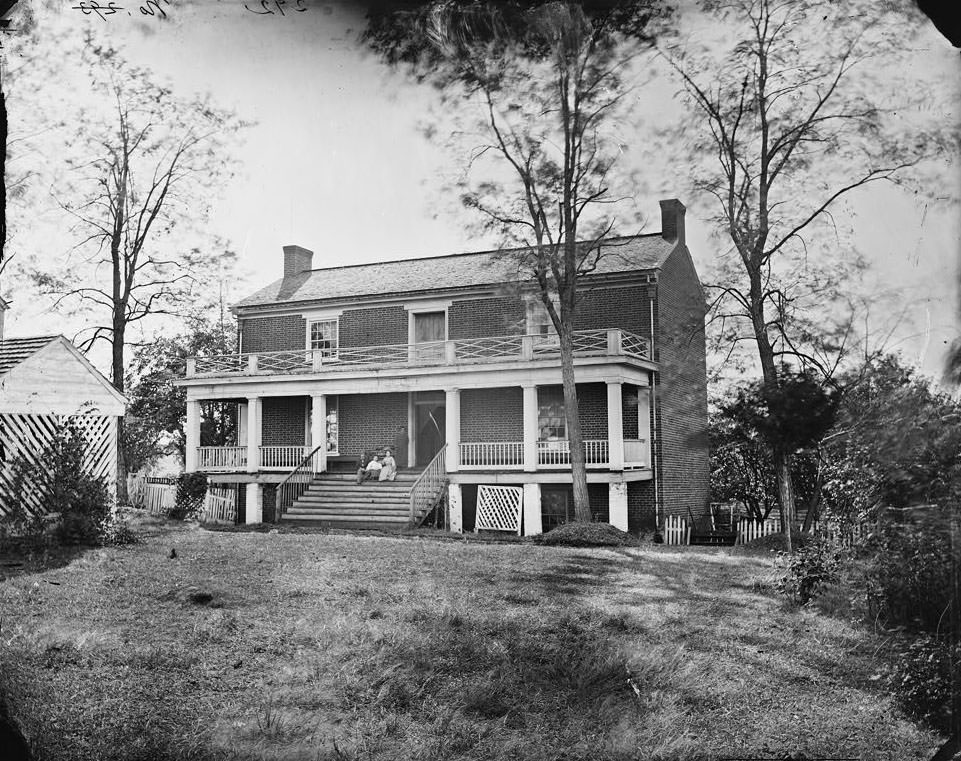
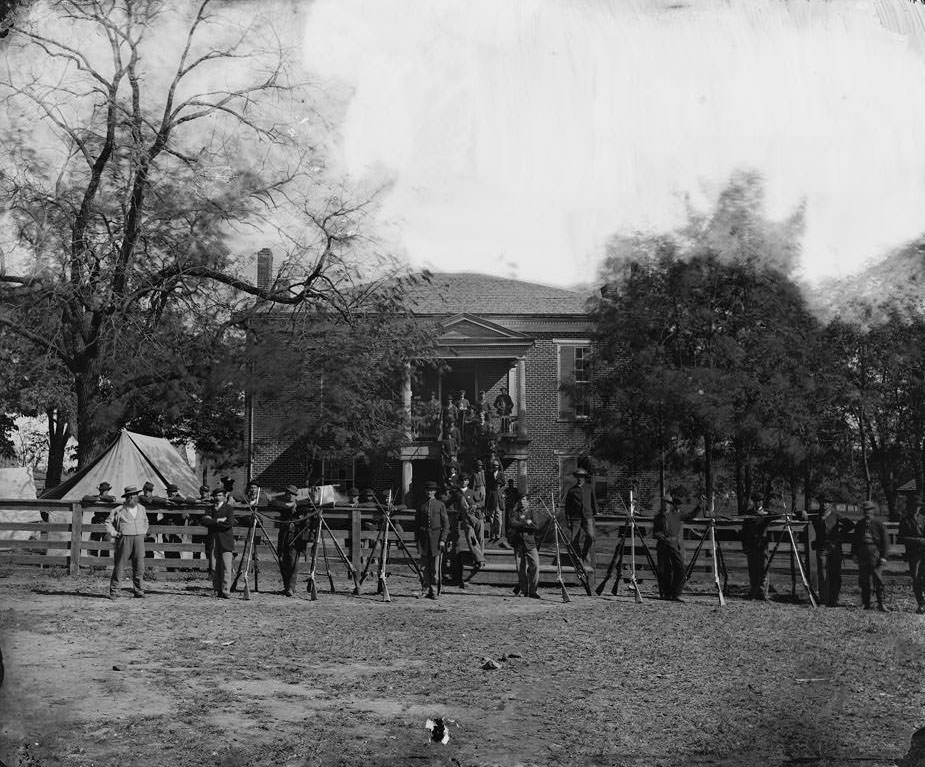
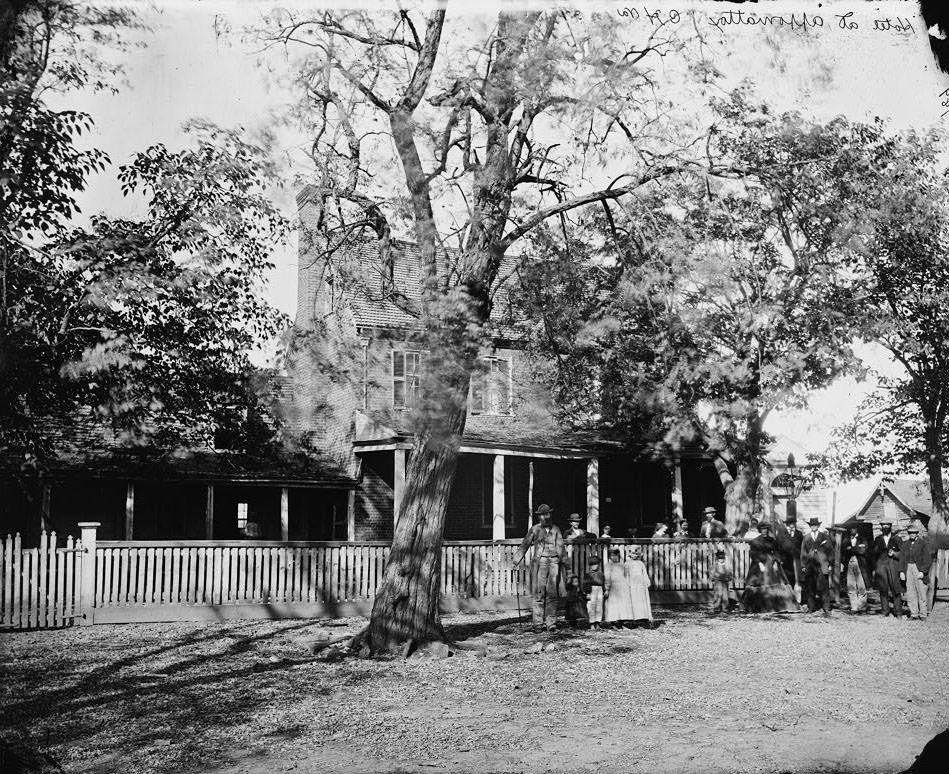
As Union forces pushed their left flank to Weldon, North Carolina, and cut the Southside Railroad in early April 1865, the Confederates could no longer sustain Petersburg’s defense. Grant’s forces broke through the lines on April 2, 1865. The fall of Petersburg forced General Robert E. Lee to abandon Richmond and march his army south in an attempt to link up with Confederate forces in North Carolina. He never made it. Surrounded at Appomattox Court House on April 9, 1865, Lee surrendered to Grant. The trestle bridges and railroad infrastructure around Petersburg documented in these photographs tell the story of why Petersburg mattered so much — and why its fall ended the war in Virginia.
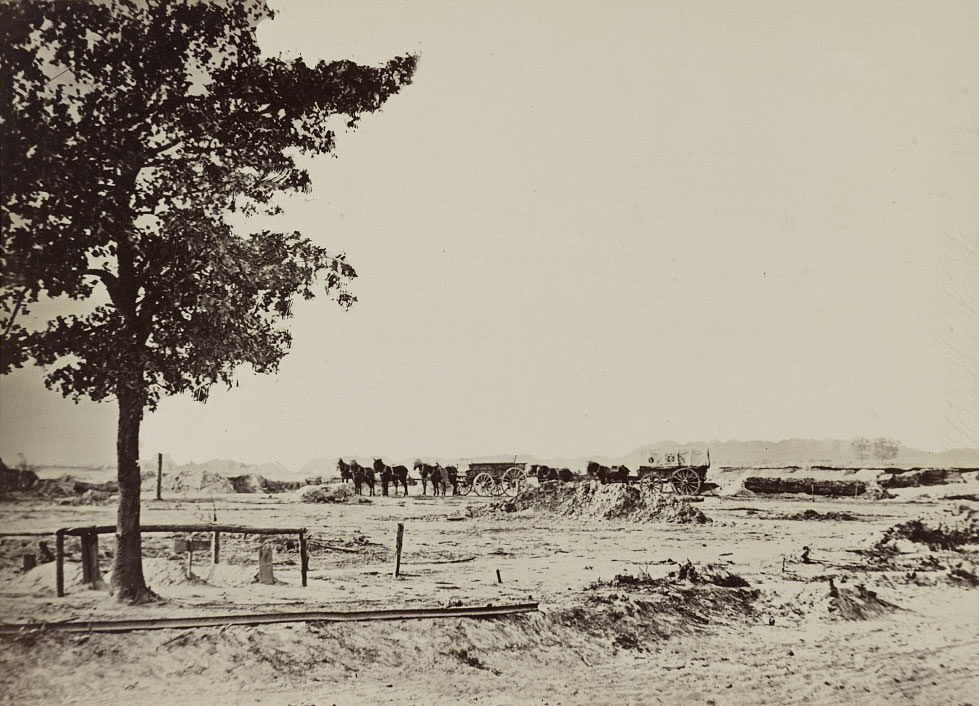
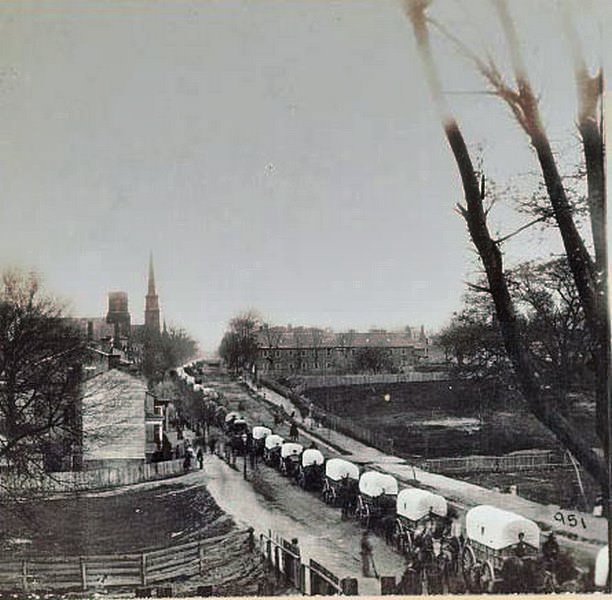
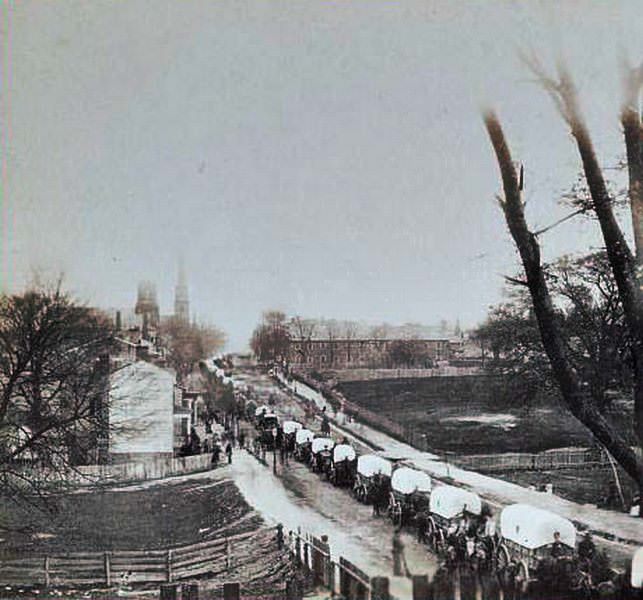
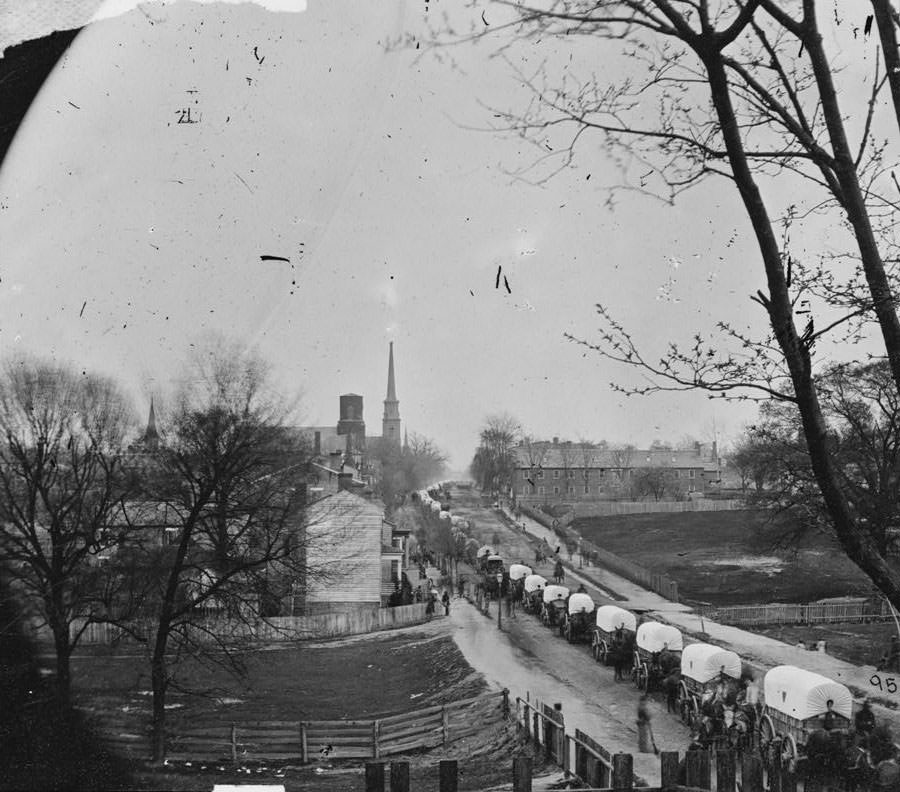
When Confederate forces evacuated Petersburg, the first Union wagon trains rolled into the city carrying provisions for its residents. These wagons moved through streets that had been under bombardment for months. The arrival of Federal supply trains marked the end of the siege and the beginning of a new chapter for the city.
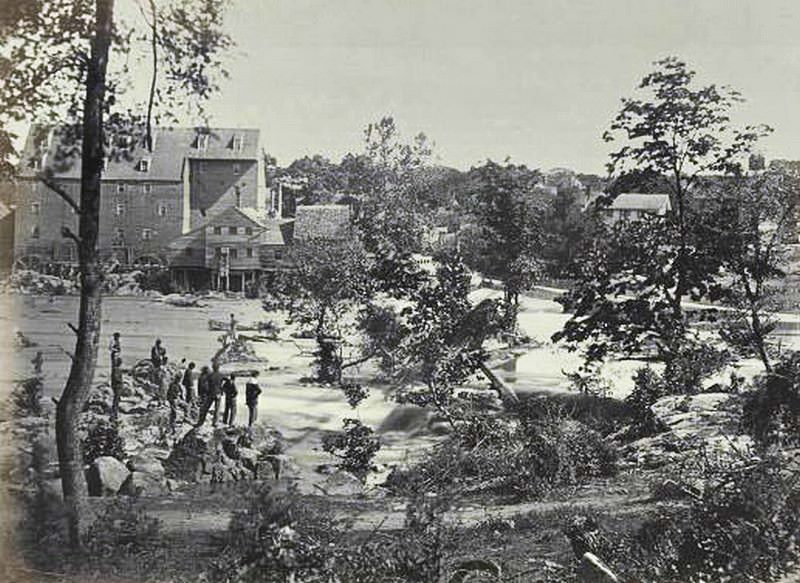
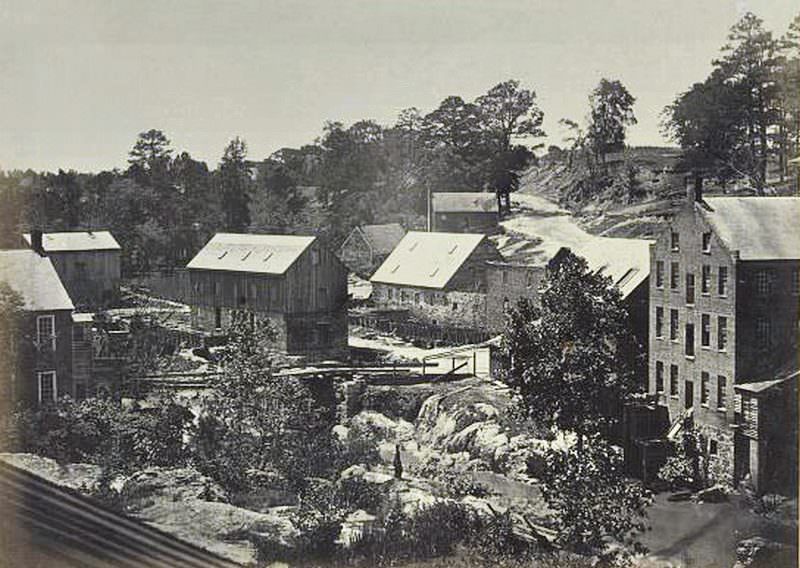
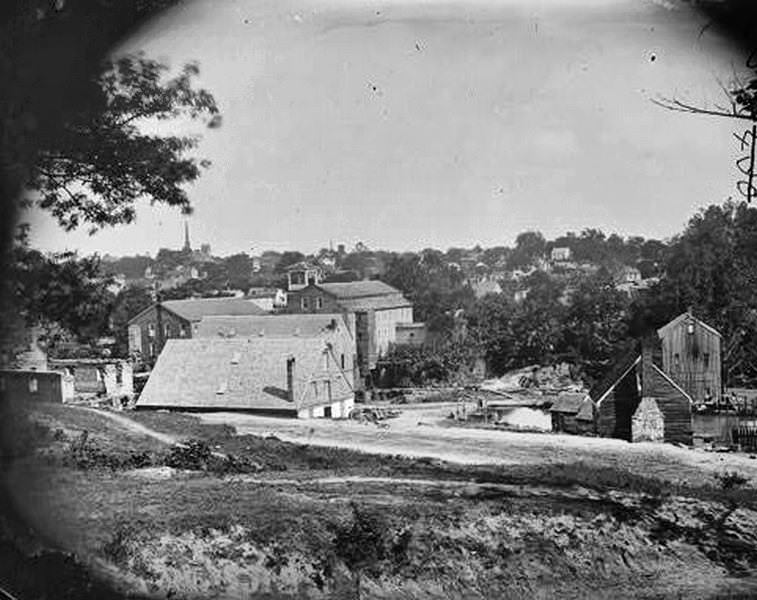
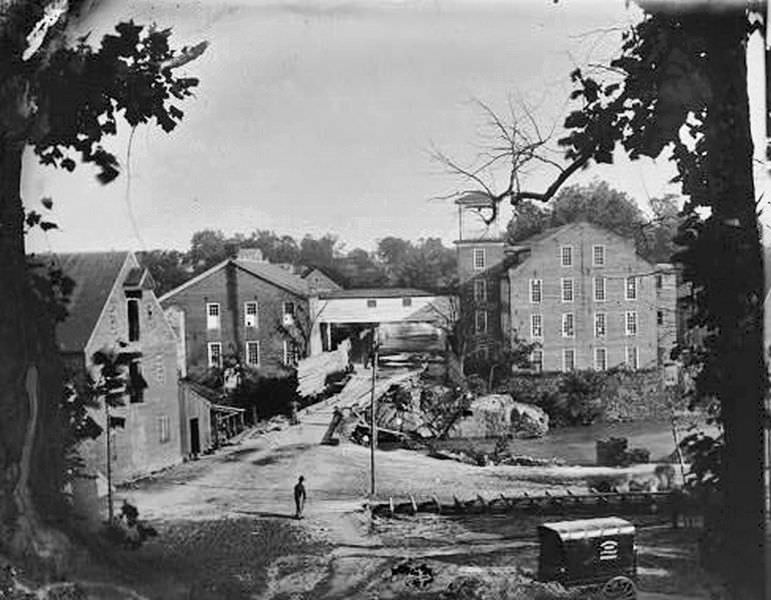
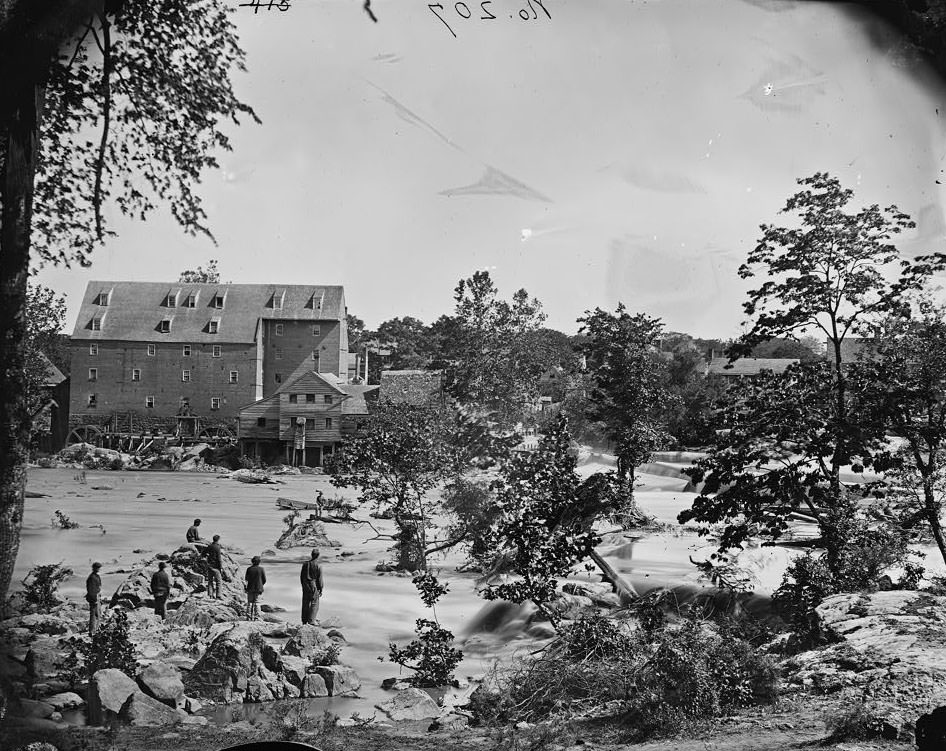
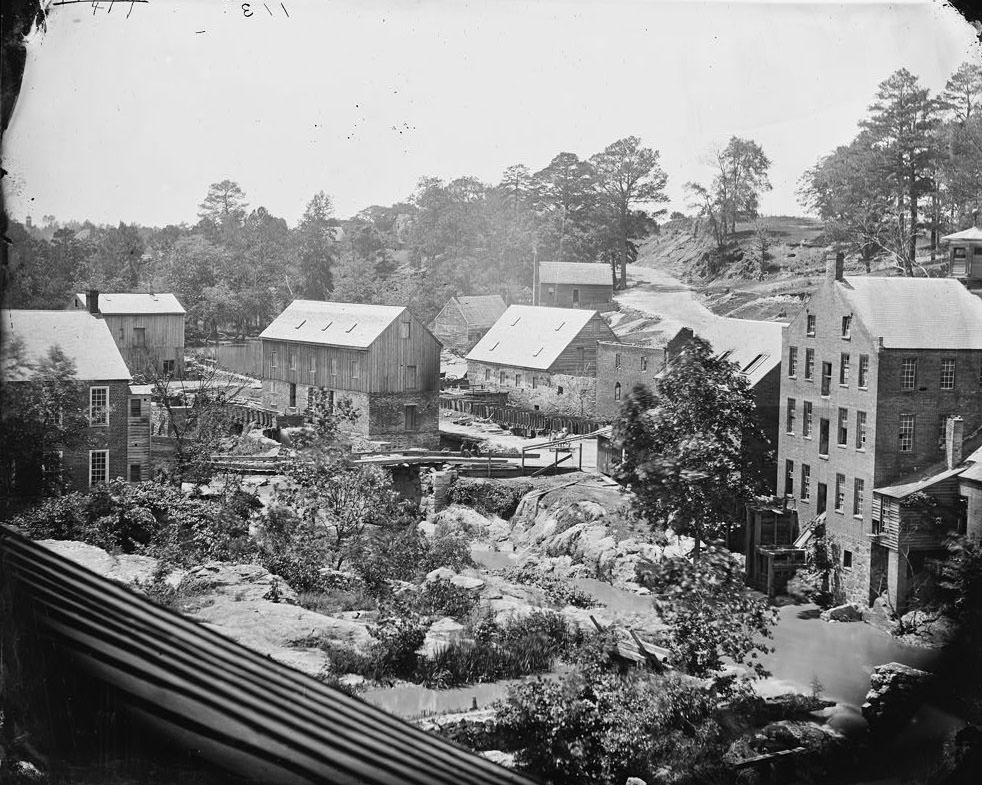
Johnson’s Mill on the Appomattox stood as one of the working structures that had served Petersburg’s civilian population before the war. By 1865, soldiers were wading through the river near Campbell’s Bridge as Union troops fanned out across the region. The Petersburg Gas Works, photographed in 1866, gave a sense of the city’s industrial character before the conflict reduced much of it to rubble.
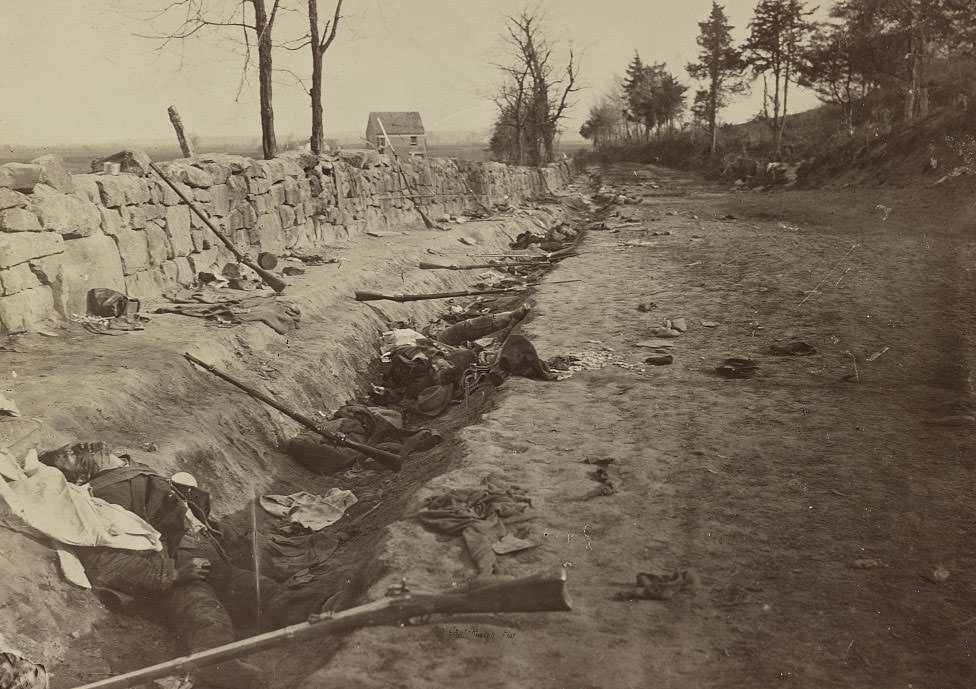
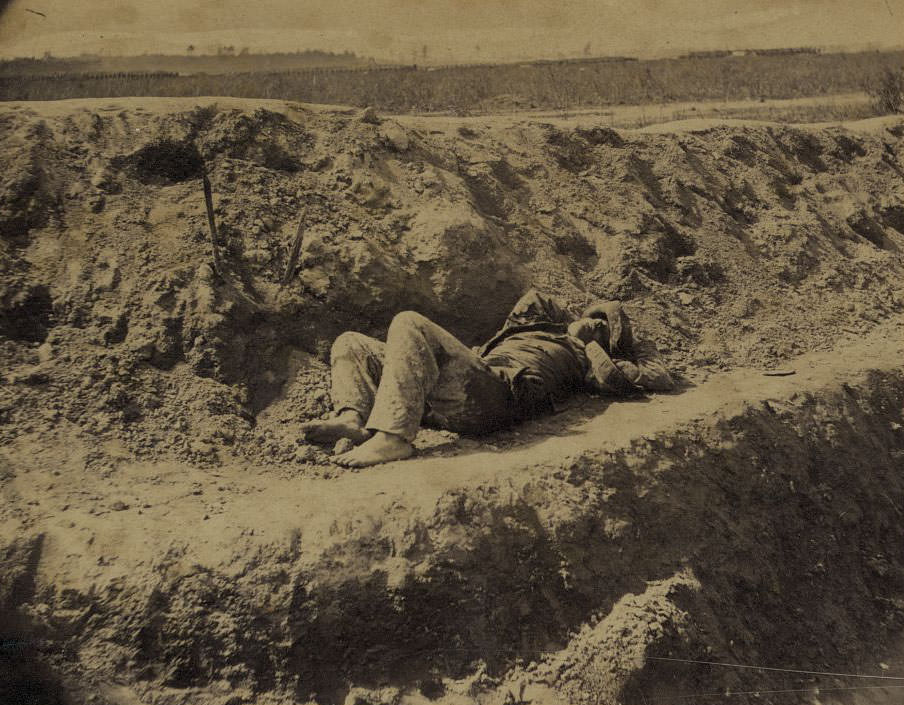
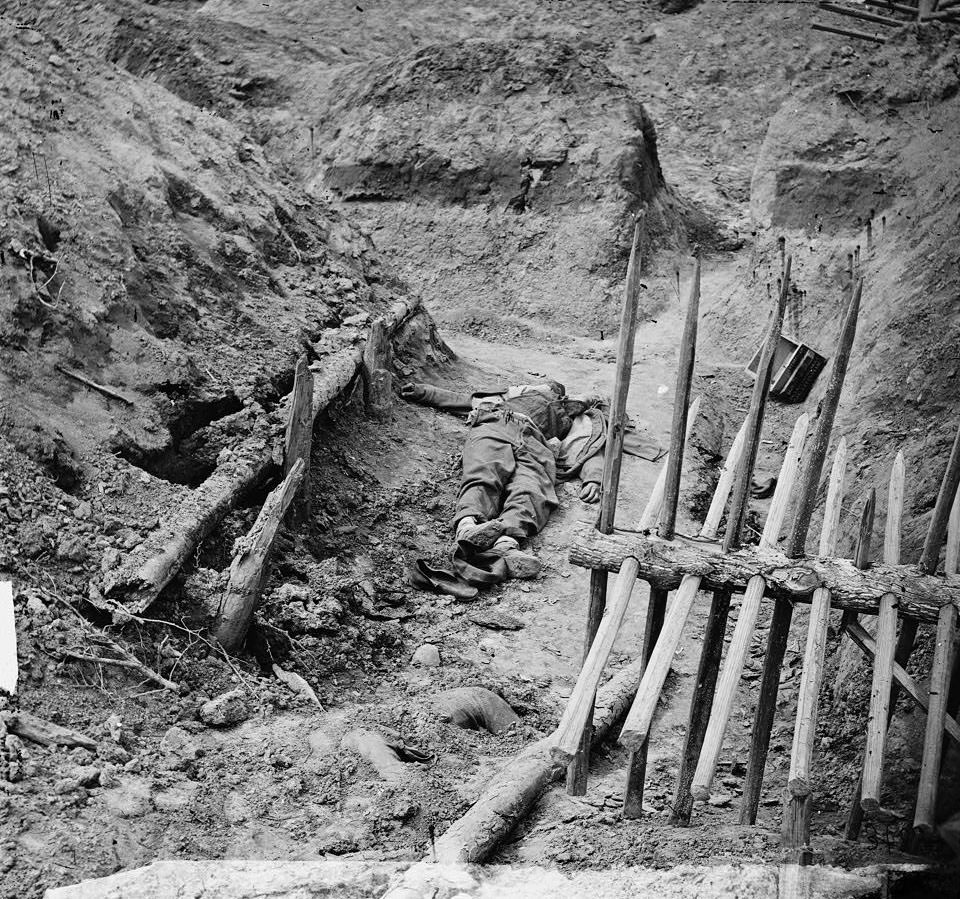
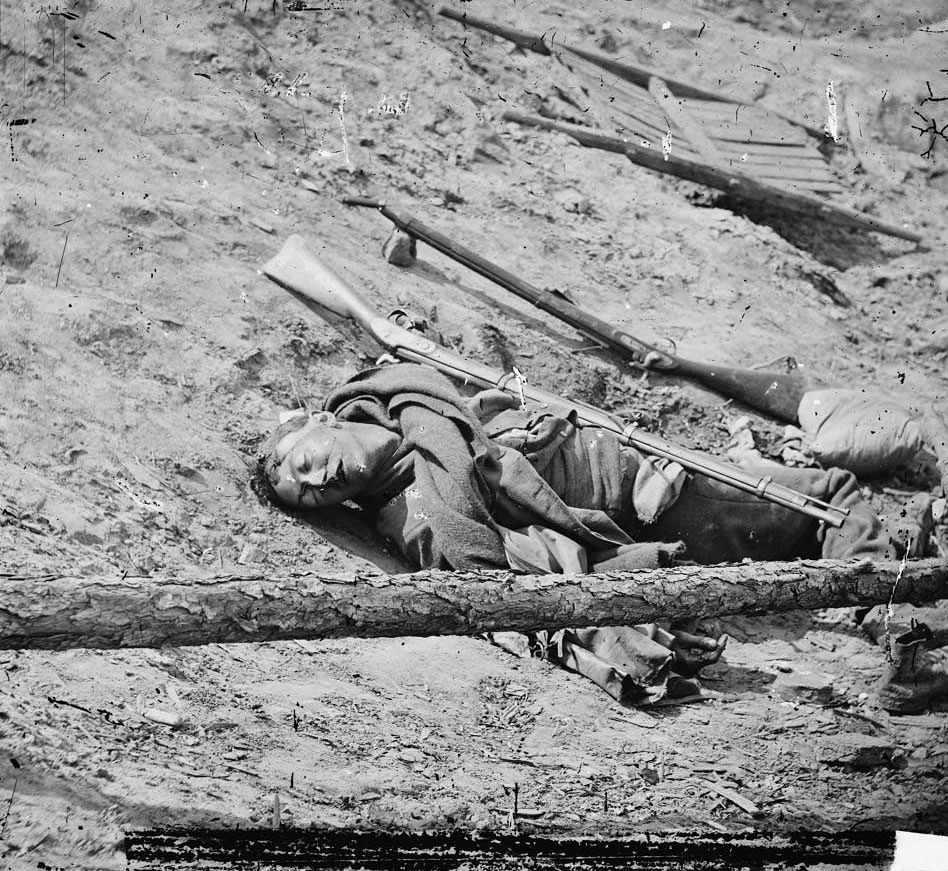
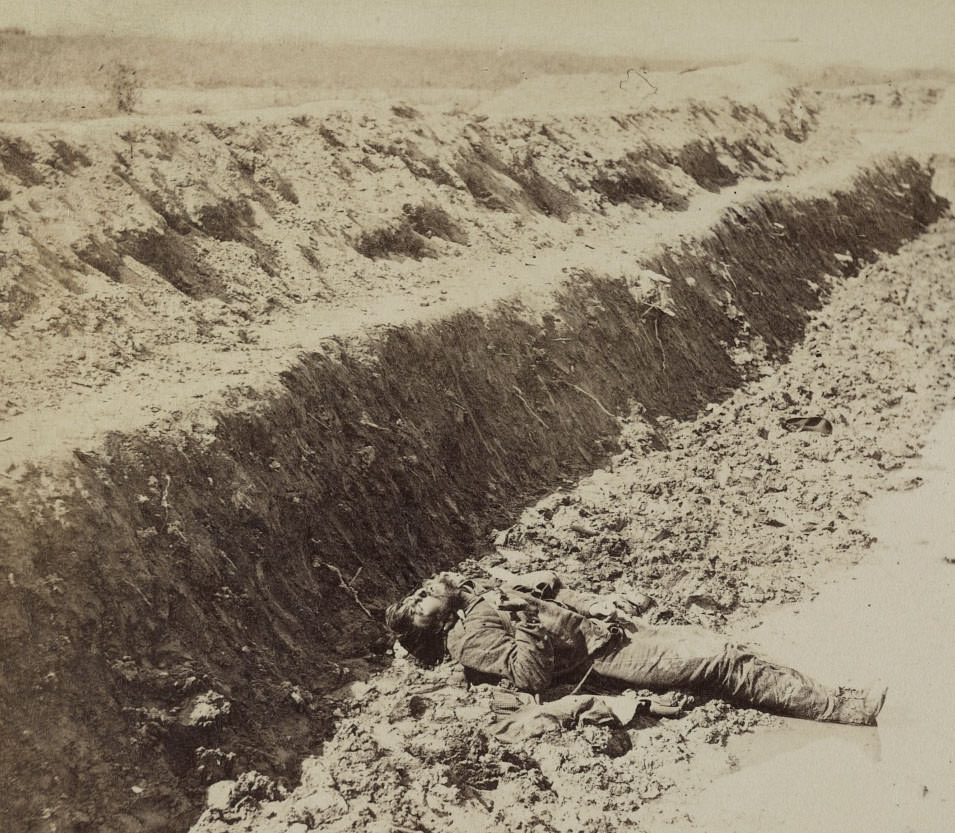
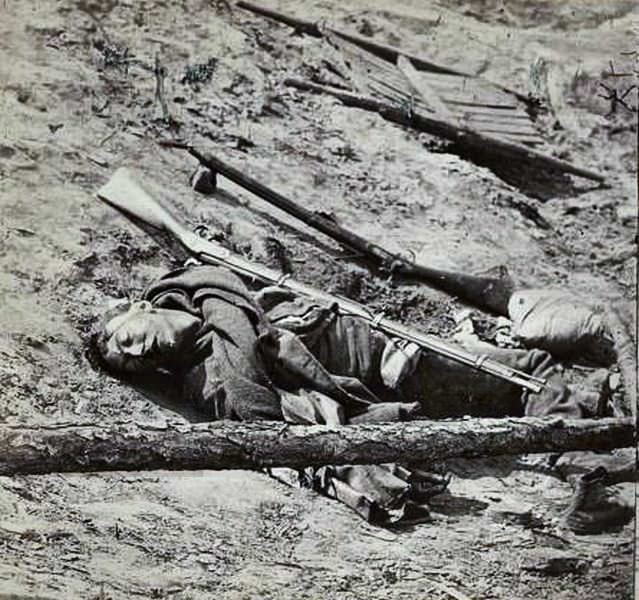
The dead from the siege’s final days were photographed where they lay. A dead Confederate soldier was found in the trenches of Fort Mahone, still holding his rifle. On April 3, 1865, photographers documented Confederate and Union dead side by side in the same trench lines — a stark image of what the ten-month siege had cost both armies.
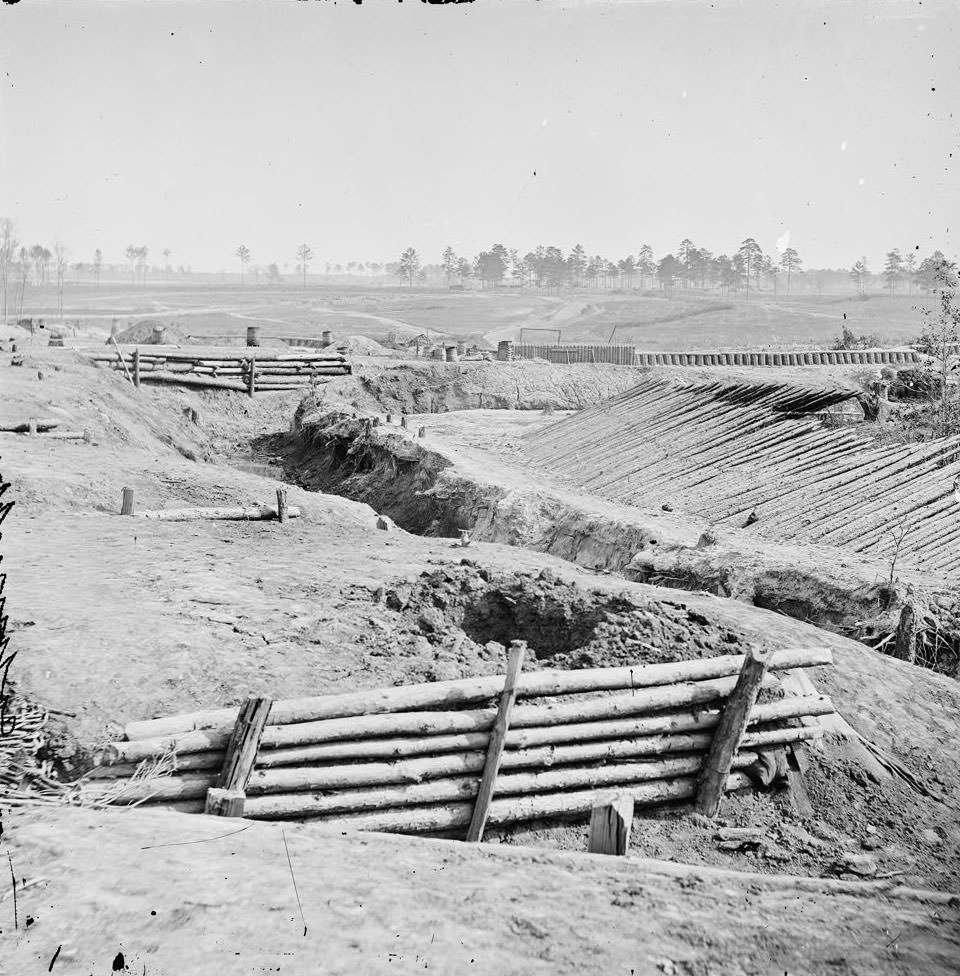
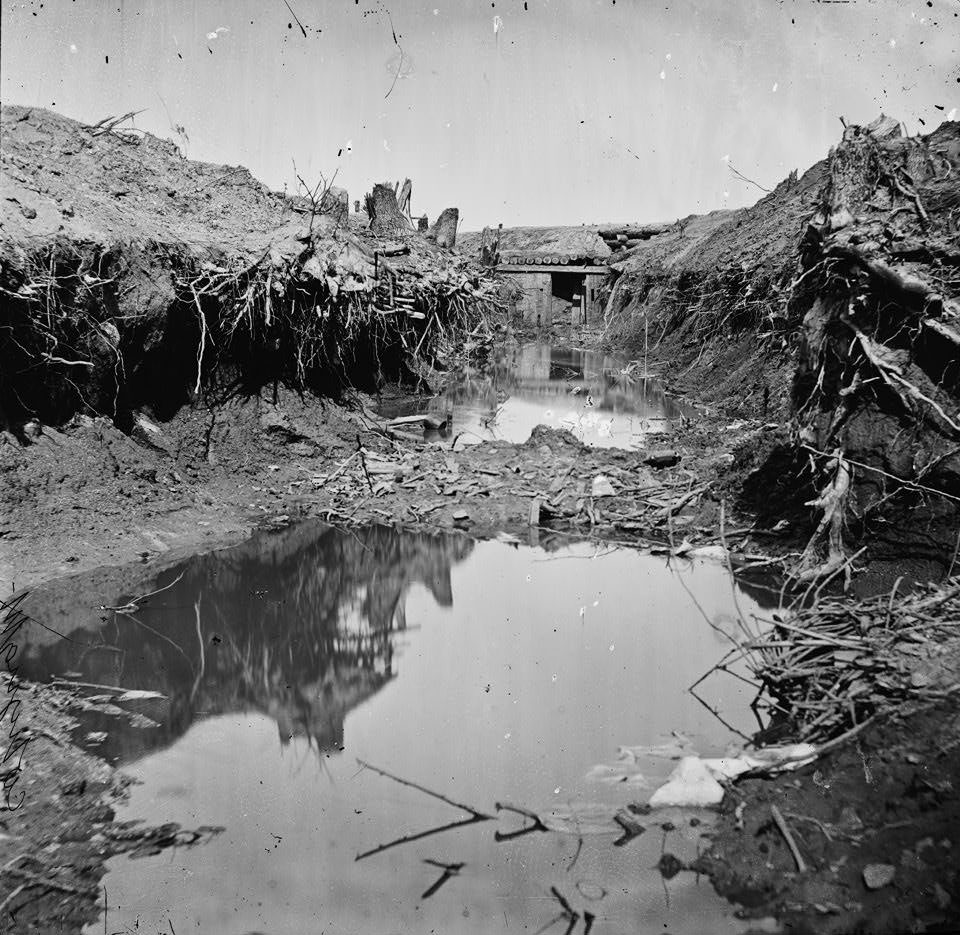
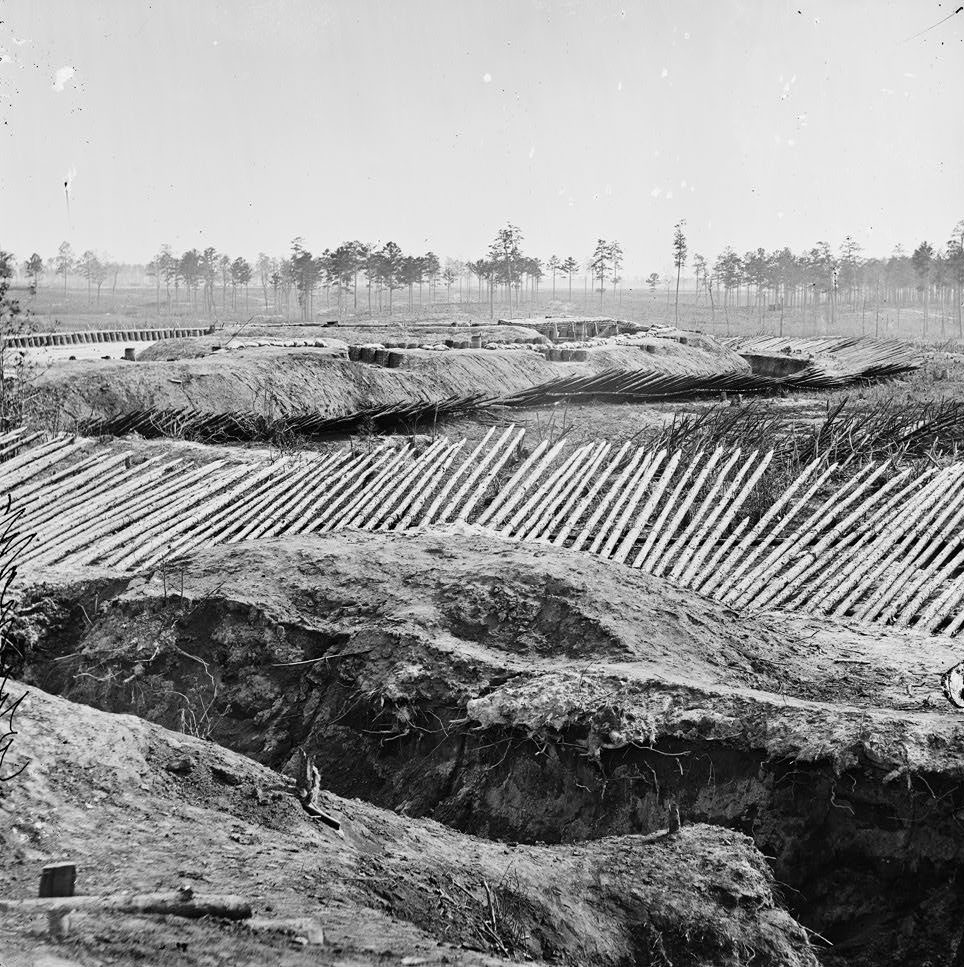
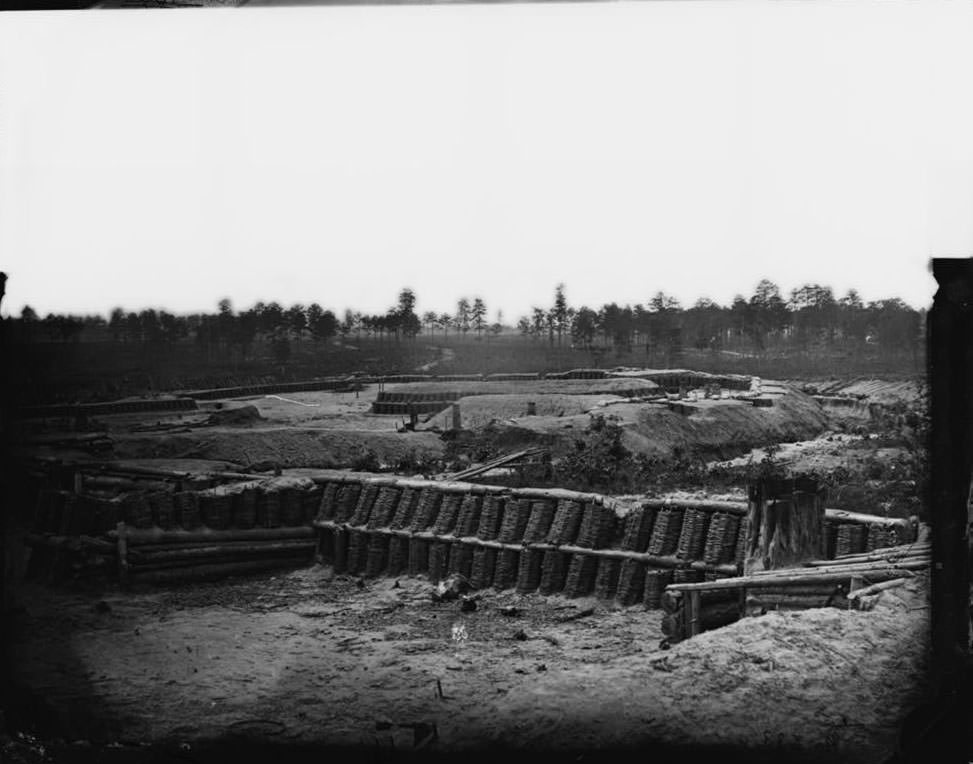
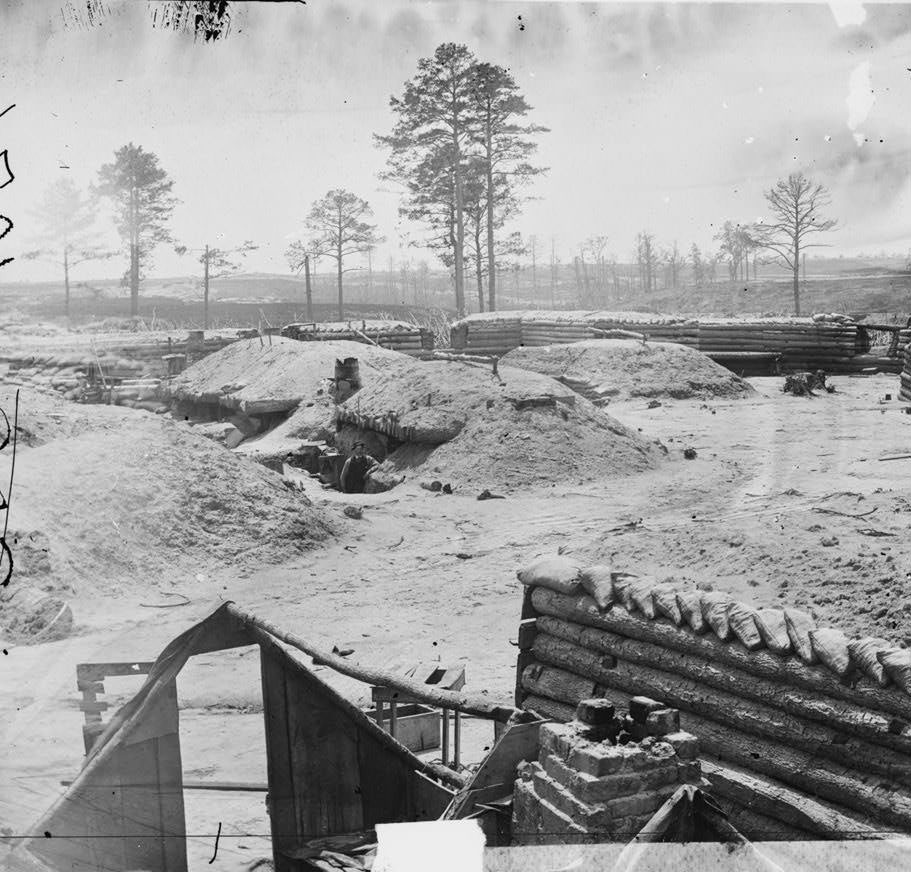
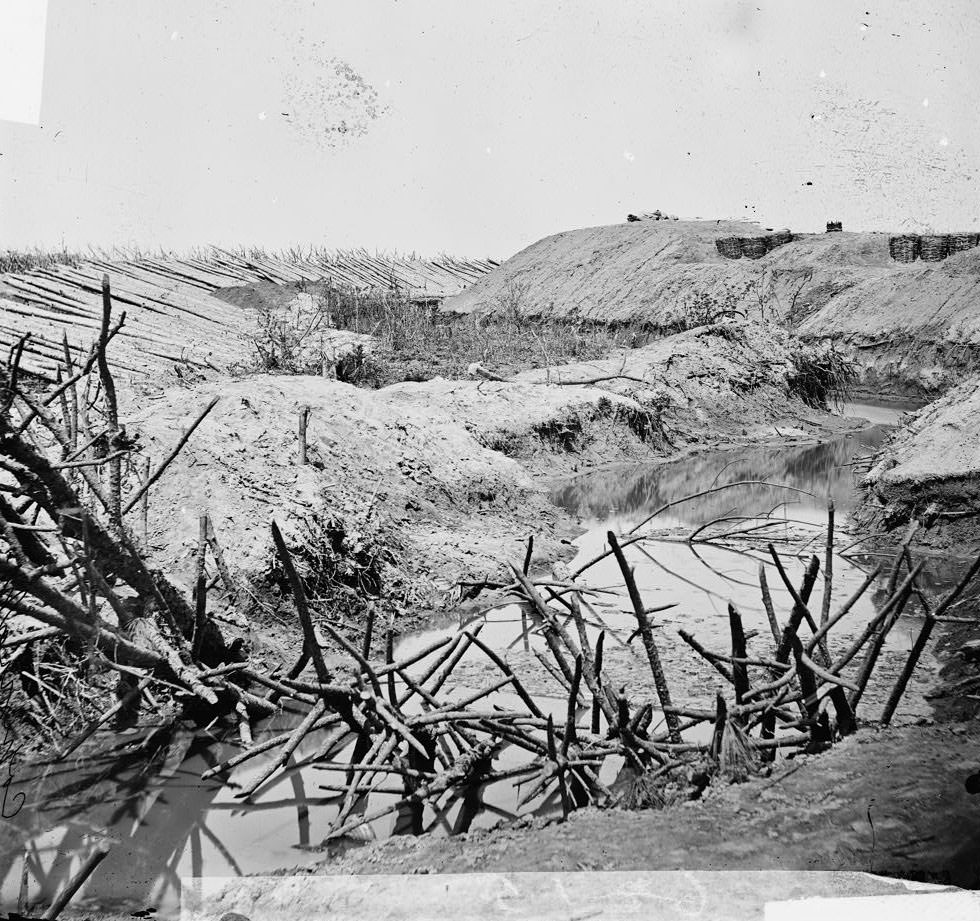
Inside Fort Mahone, Confederate engineers had dug a mine shaft aimed at undermining Fort Sedgwick — a mirror of the Union’s own mine that had detonated in July 1864. The Confederate mine was never completed. When Union forces overran the fort on April 2, 1865, they found the partially dug tunnel and the bodies of the soldiers who had defended it to the last.
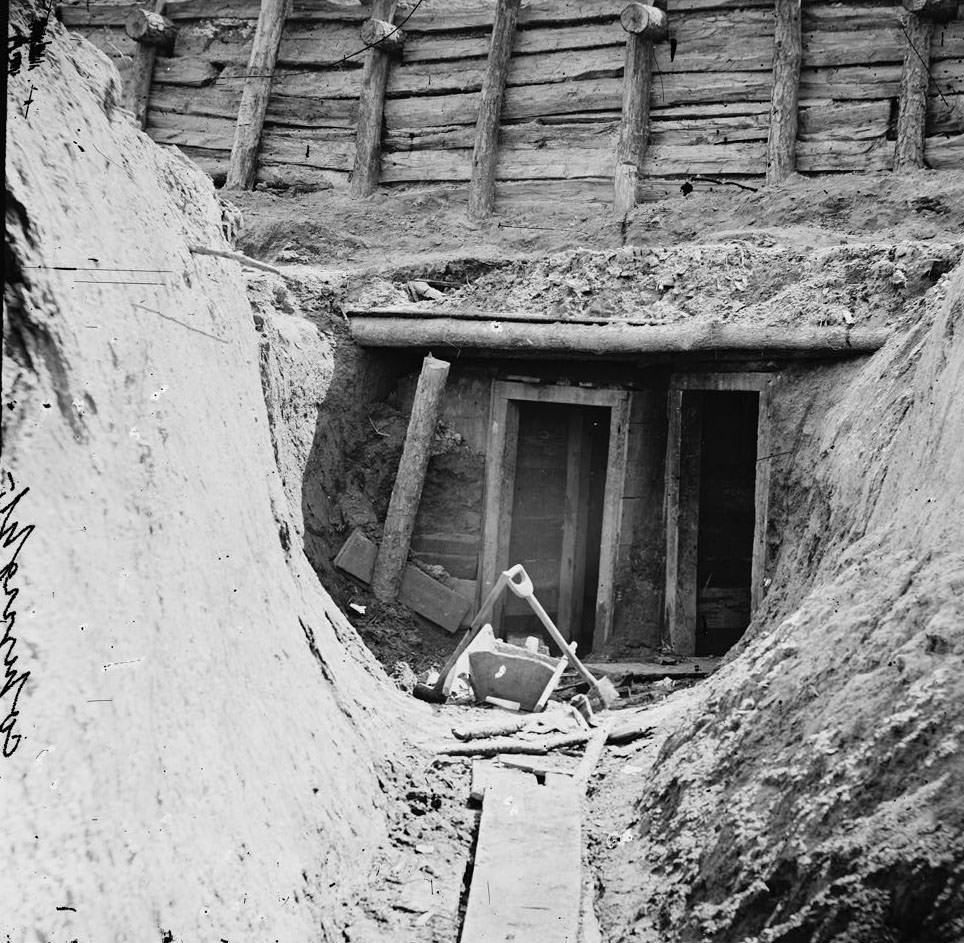
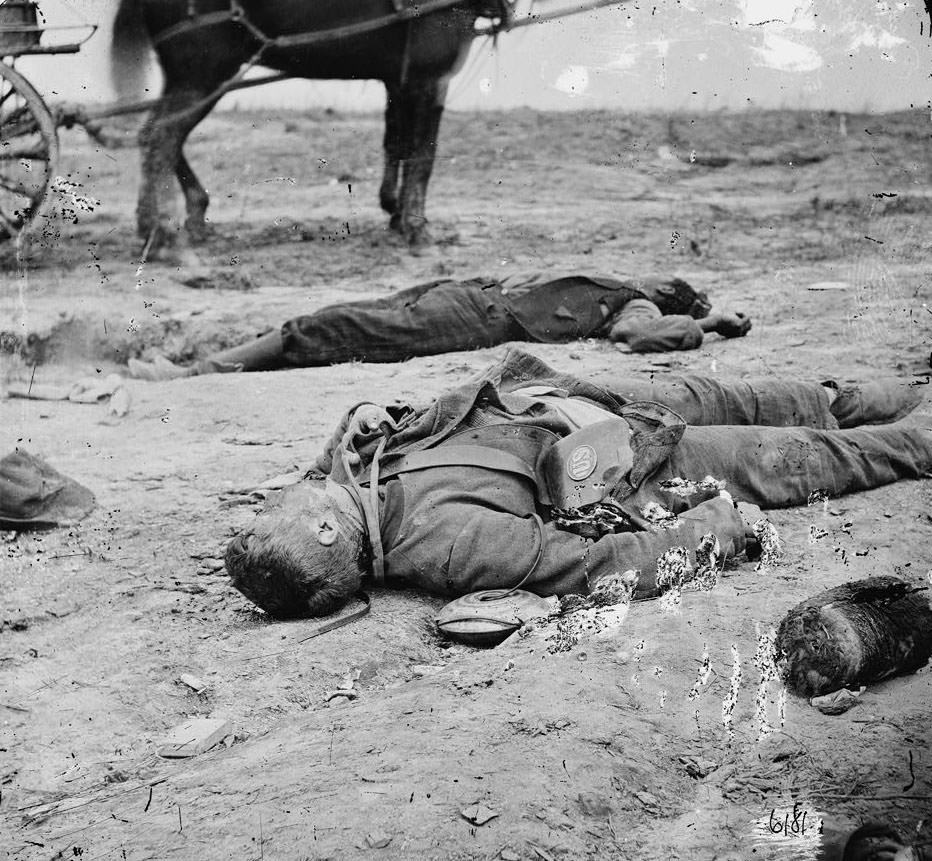
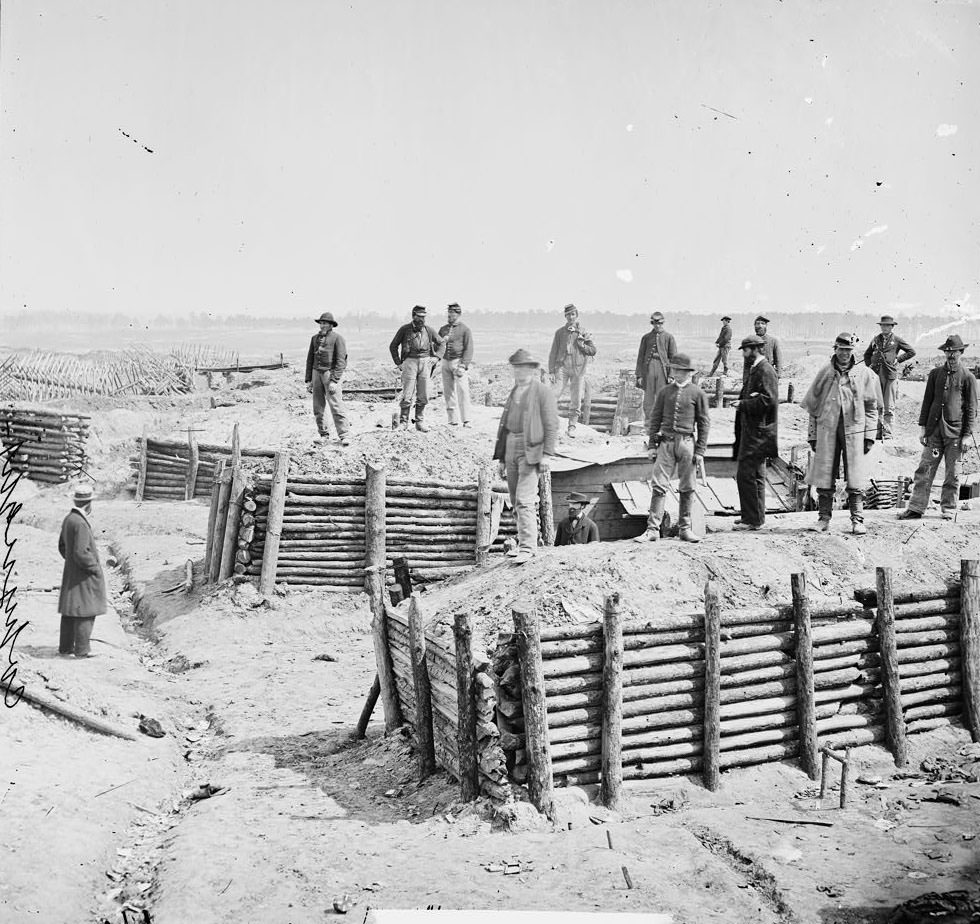
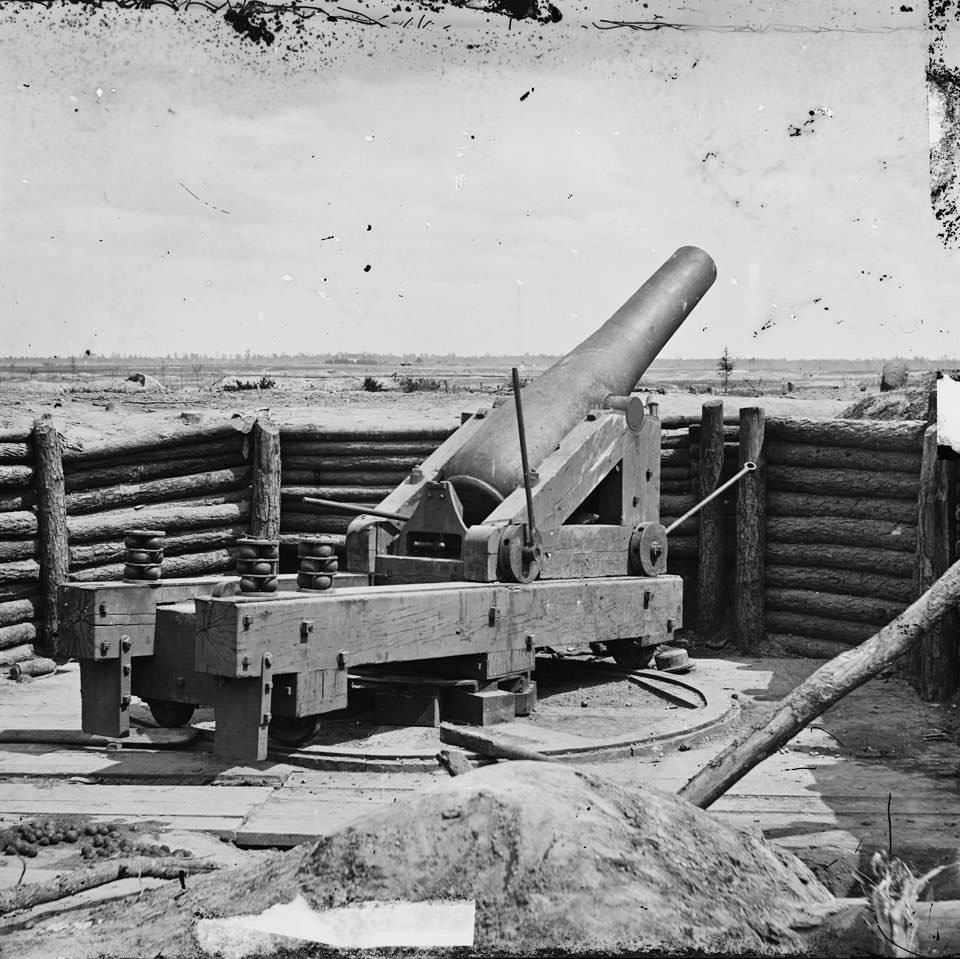
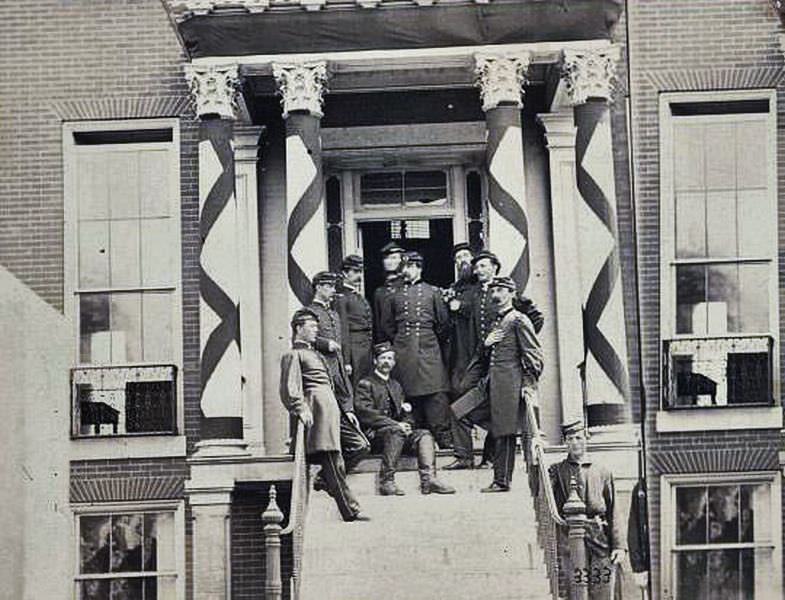
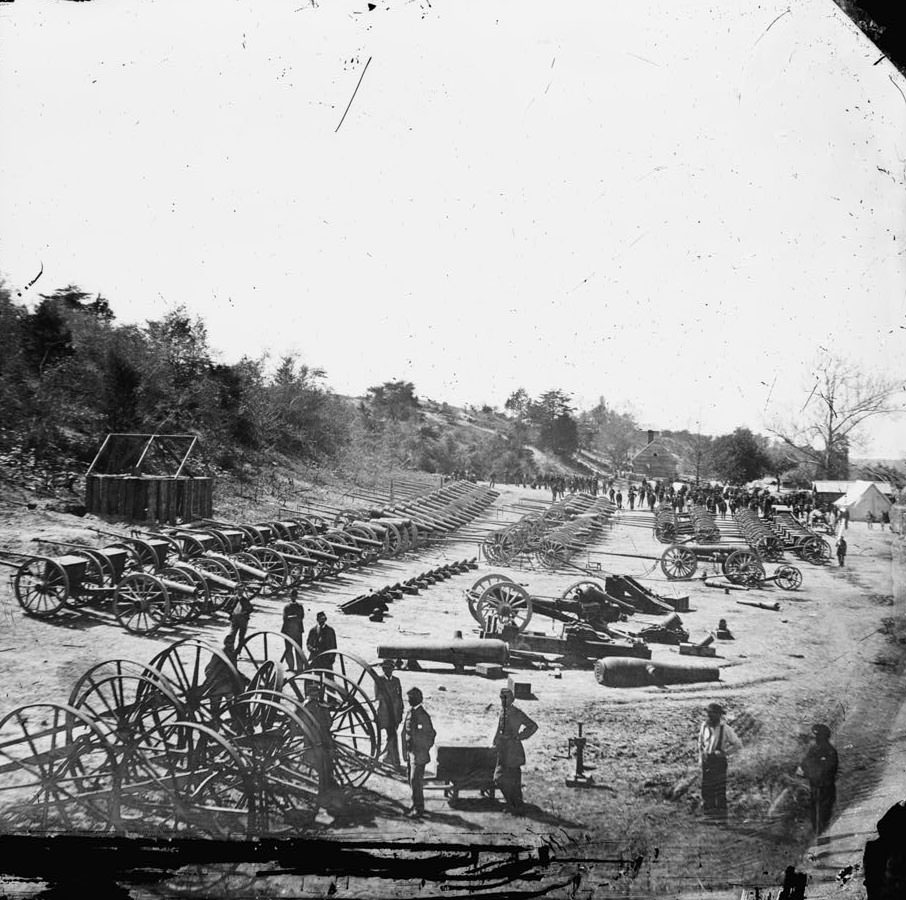
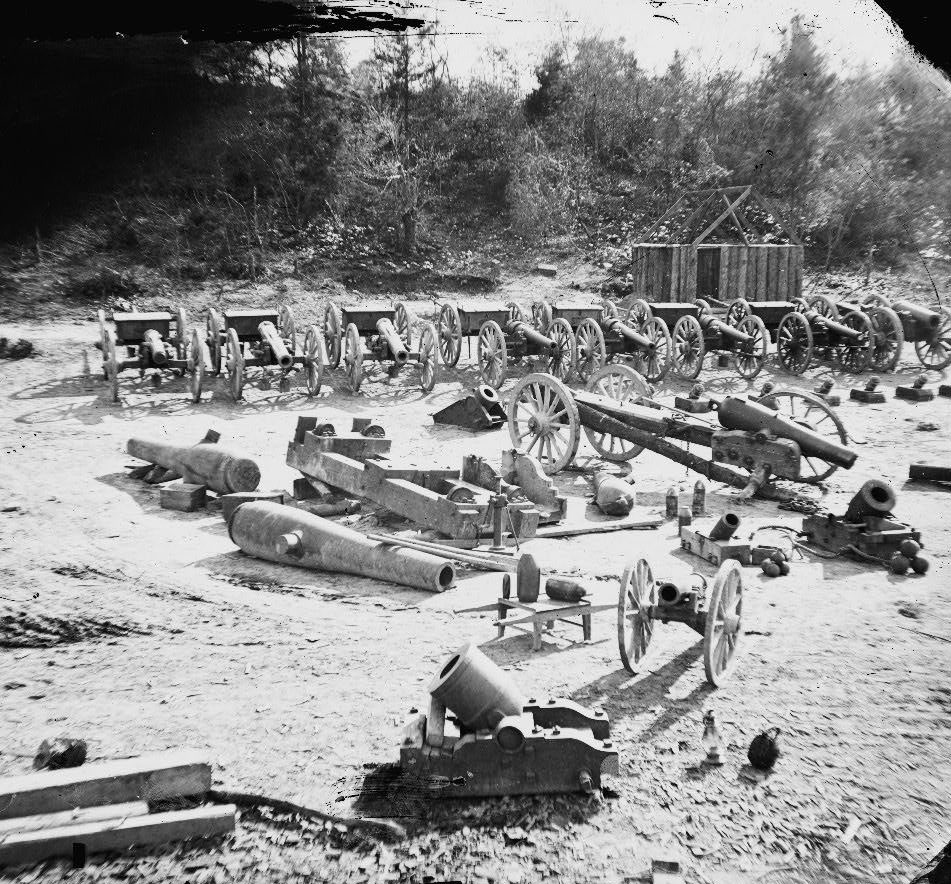
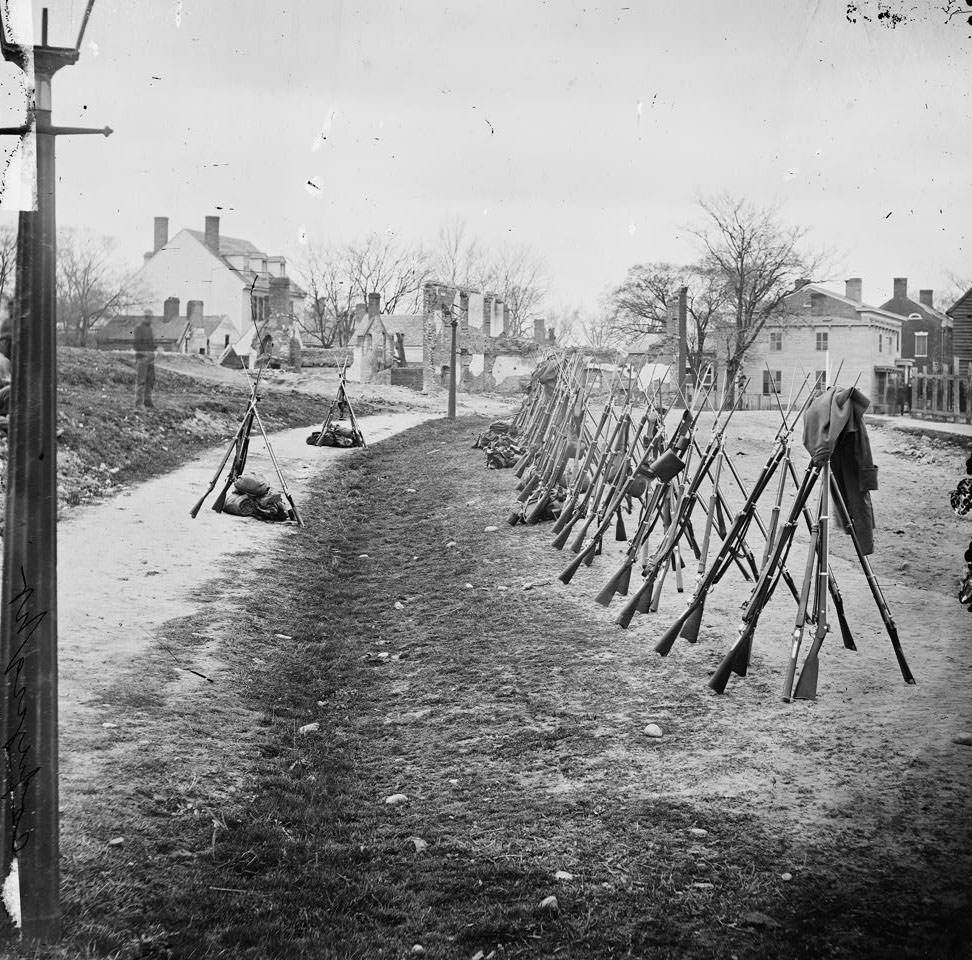
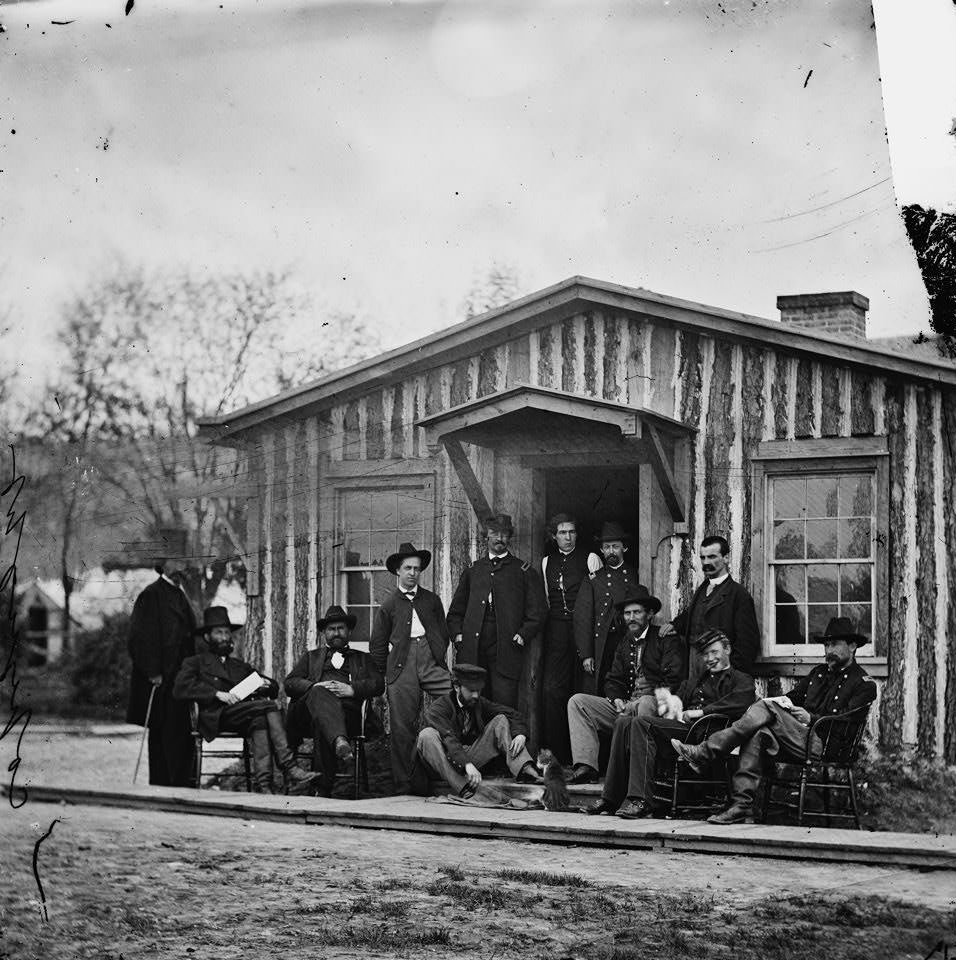
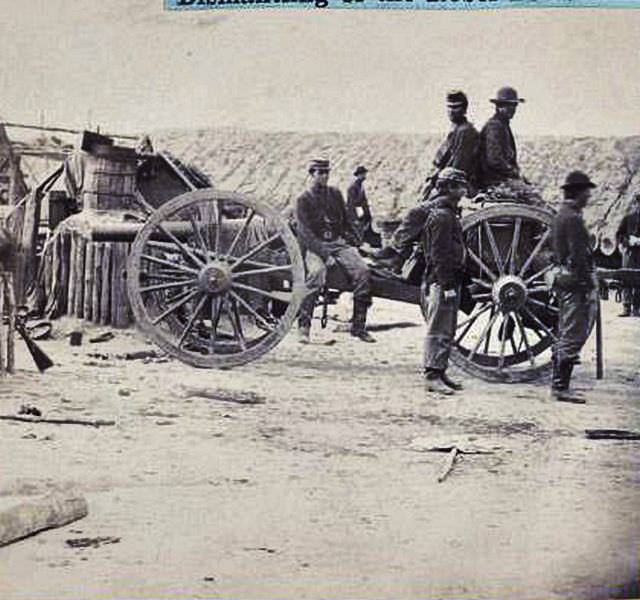
After the Confederate evacuation, Federal soldiers moved through the former Confederate fortifications removing artillery and salvaging usable equipment. Rows of stacked Union rifles photographed in the streets of Petersburg signaled that the fighting was over. Grant’s staff posed for photographs in the city they had spent nearly a year trying to capture.
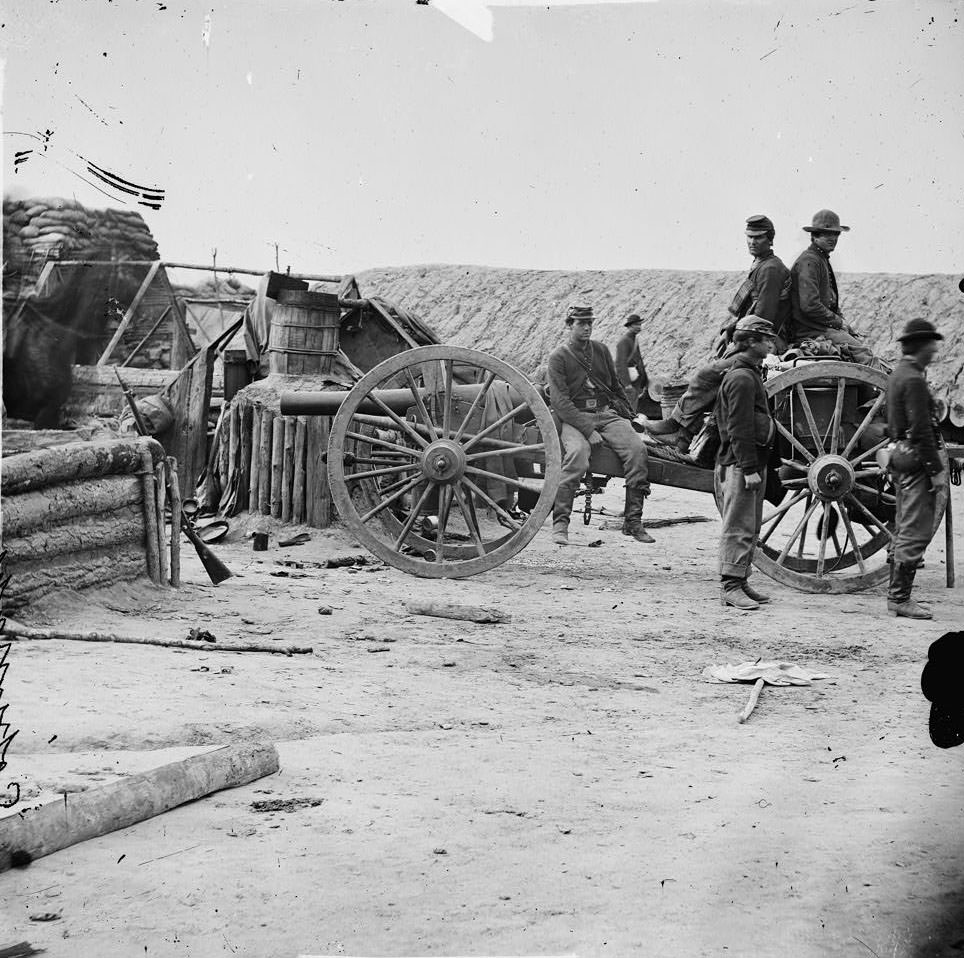
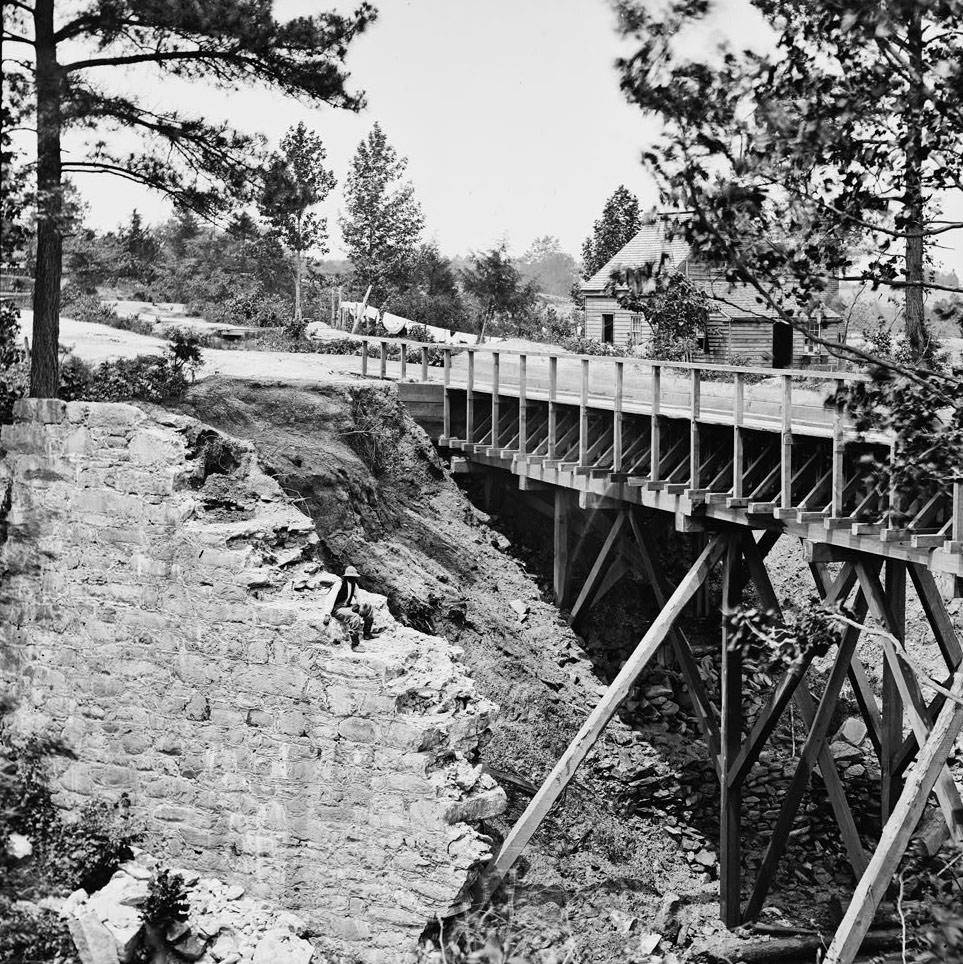
The High Bridge of the South Side Railroad spanning the Appomattox River was one of Lee’s final objectives after Petersburg fell. His army tried to use it as an escape route heading west. Union cavalry reached it in time to prevent a clean getaway, and a fierce skirmish broke out over control of the crossing. The bridge’s fate was one of the last acts of the Army of Northern Virginia before its surrender.
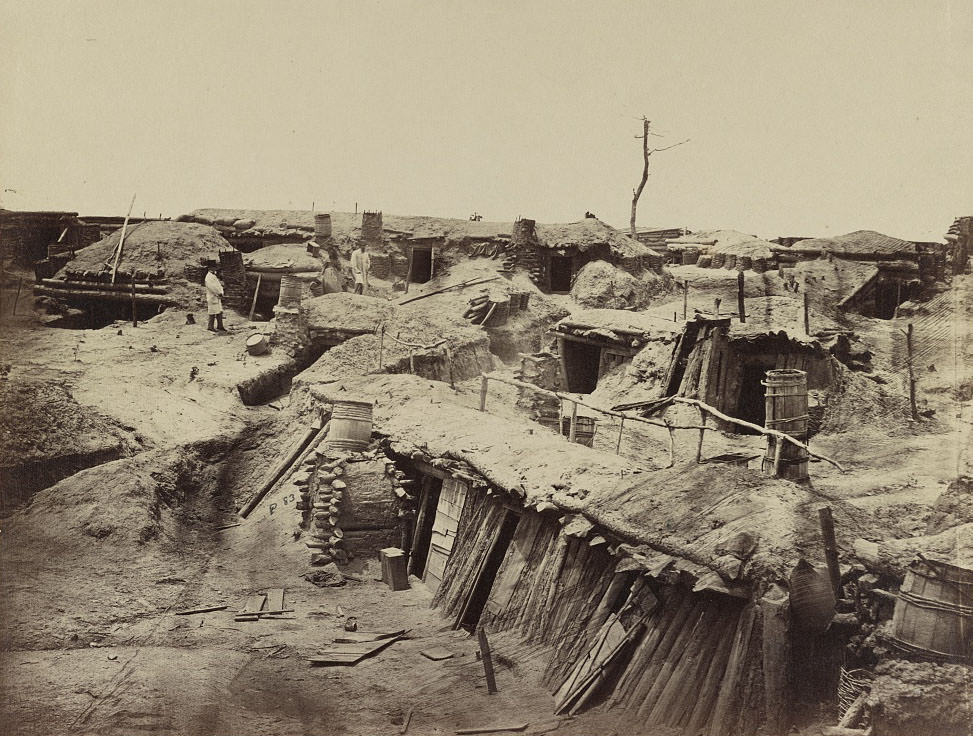
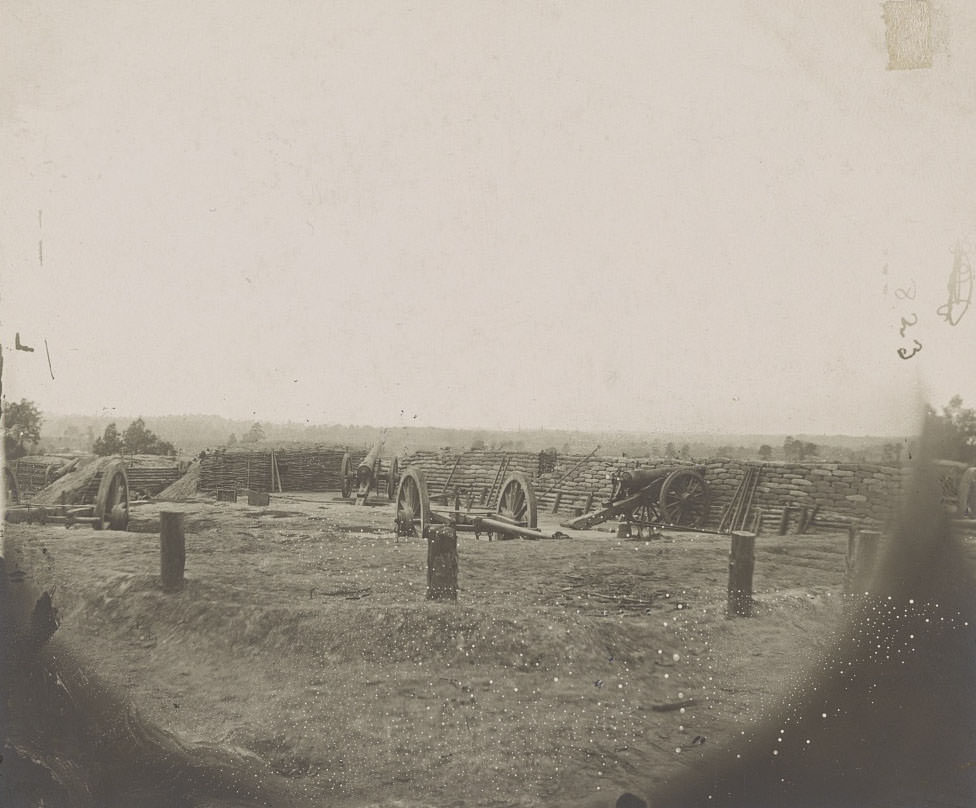
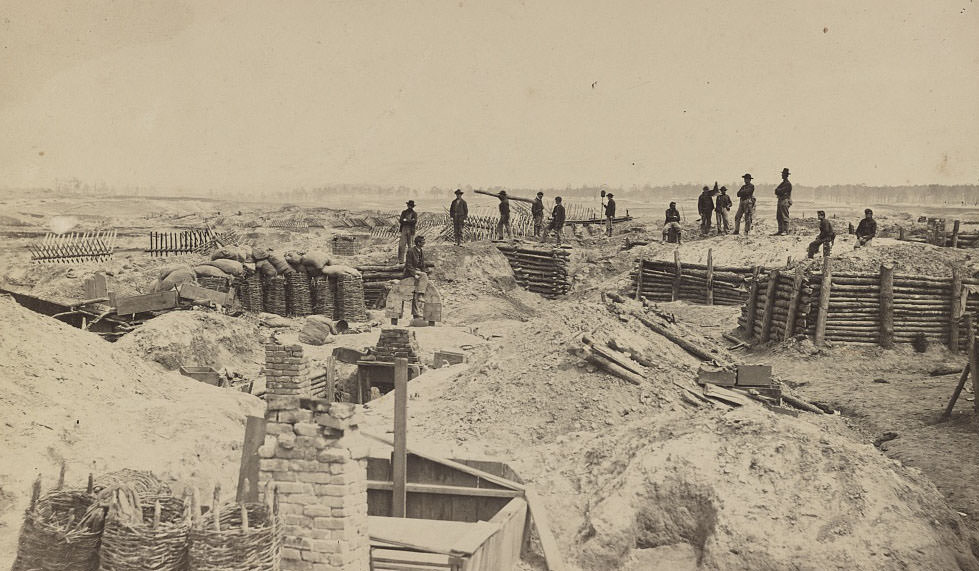
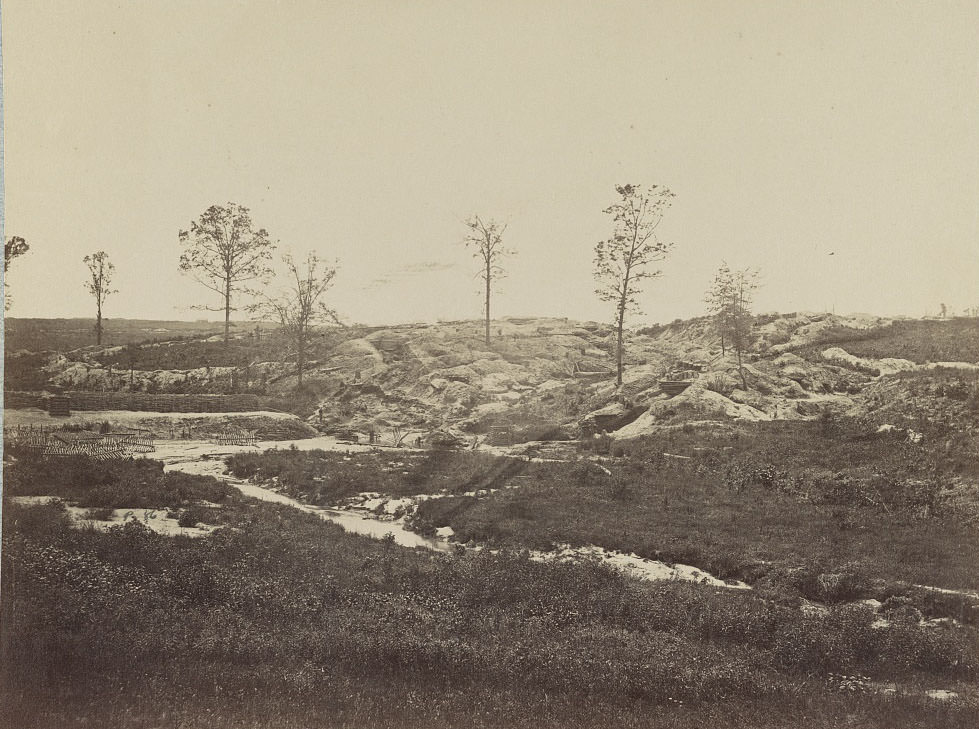
The photographs taken on April 3, 1865 — the day Union forces entered Fort Mahone — are among the most widely recognized Civil War images. Dead Confederate soldiers lay in the trenches exactly where they fell. Some images show Union and Confederate dead in the same narrow ditch, separated only by the chevaux de frise that had divided them in life.
After the war ended, many freedmen migrated to Petersburg to rebuild their lives. They worked along the Appomattox River, started businesses, and established churches and community institutions. The city they arrived in was battered and scarred — its streets torn up by artillery, its wharves damaged by explosions, its forts stripped of guns. But the photographs taken during and after the siege preserve exactly what Petersburg looked like in those years, offering a direct and unfiltered view of one of the Civil War’s longest and most defining campaigns.





It’s regrettable that Petersburg never seemed to fully recover, unlike Fredericksburg.