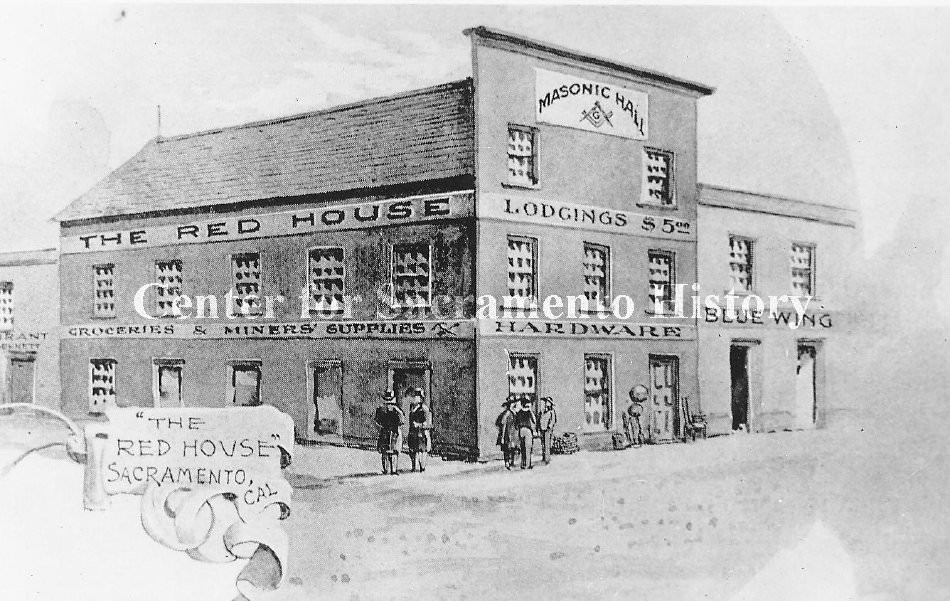
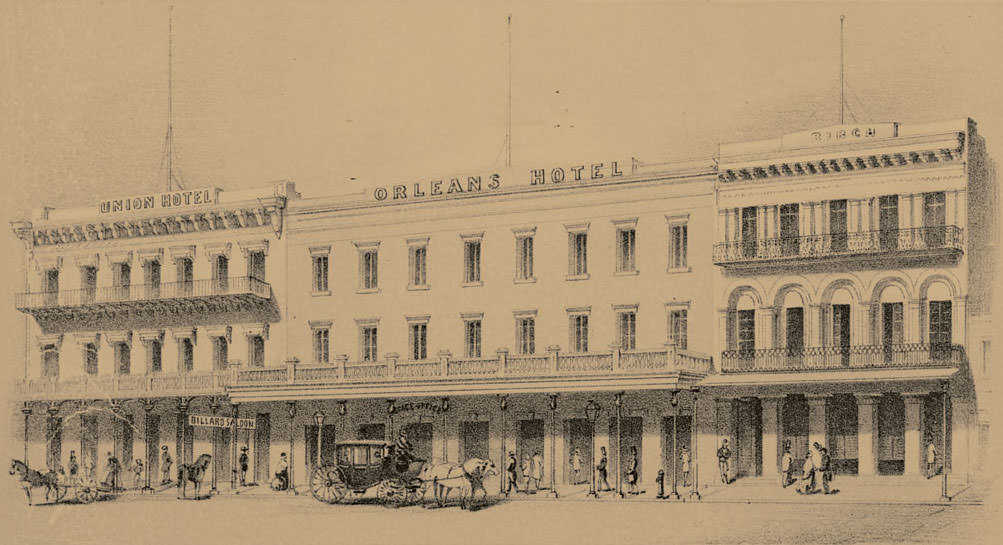
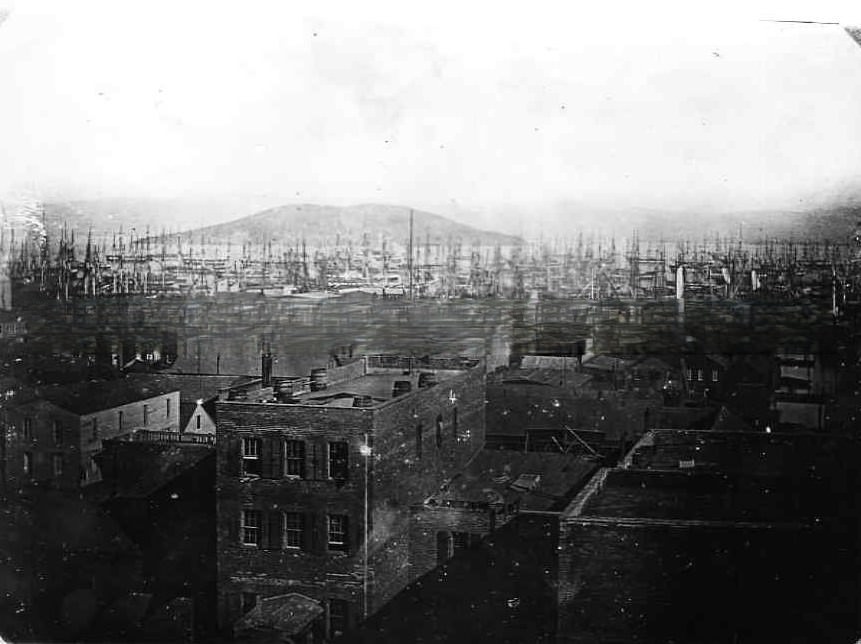
Sacramento’s story begins in 1839, when John Sutter arrived at the junction of the American and Sacramento rivers. He built Sutter’s Fort to develop an agricultural settlement, and it quickly drew merchants and entrepreneurs looking for opportunity on the western frontier. Less than a decade later, everything changed. In January 1848, gold was discovered at a sawmill in the nearby foothills, and Sutter’s Fort — sitting close to the river and well-positioned for supply and travel — became the beating heart of the California Gold Rush.
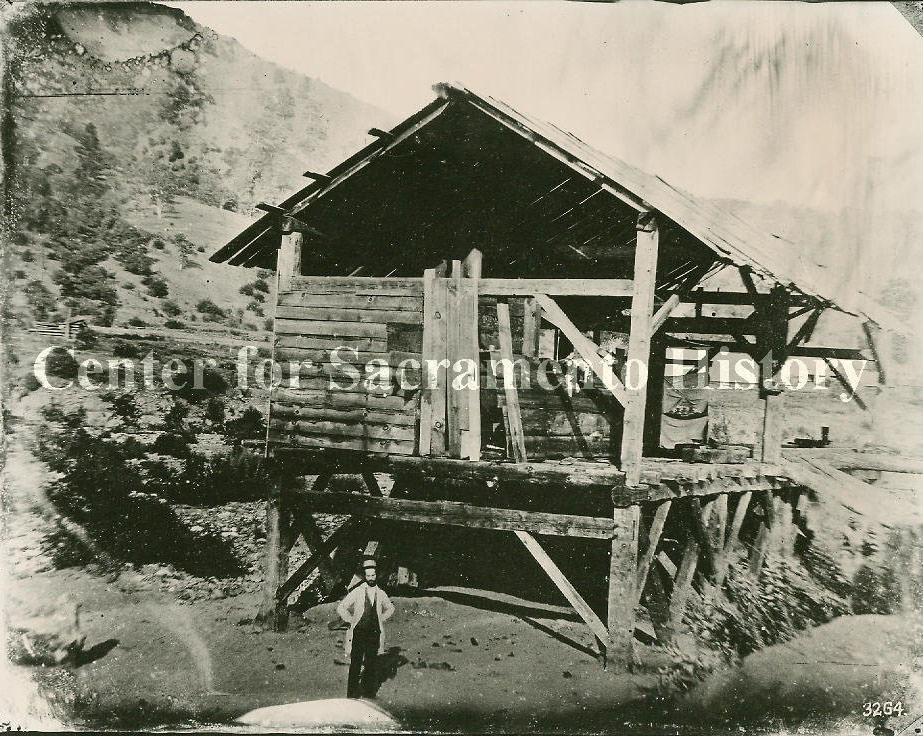
Word of the discovery spread fast. Thousands of fortune-seekers flooded into the region, and Sacramento grew at a pace no one had planned for. The city that rose up was built quickly and cheaply — wooden frames covered in canvas were common structures. There was little time for permanence when gold was waiting in the hills. Streets filled with miners, merchants, and wagons moving goods from the Embarcadero to the foothills.
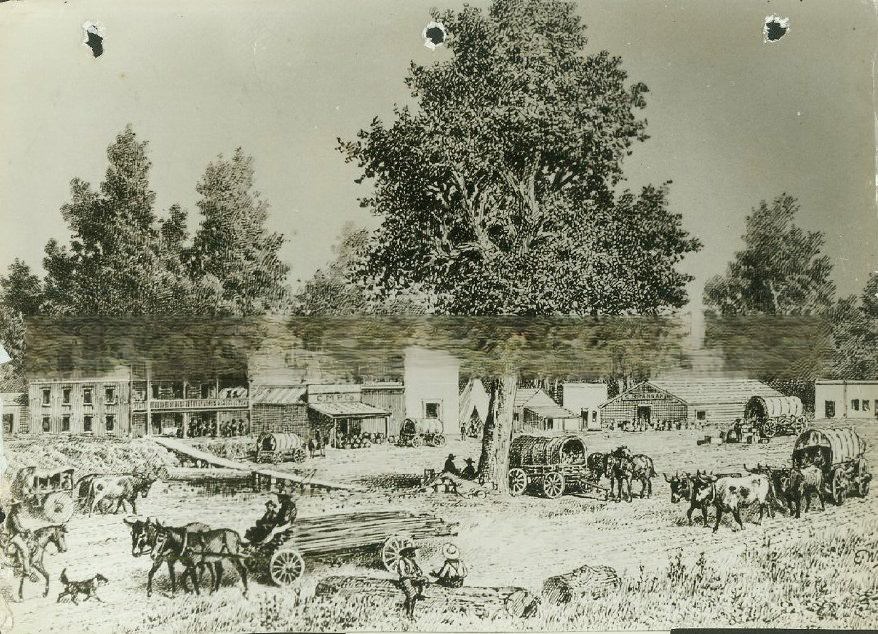
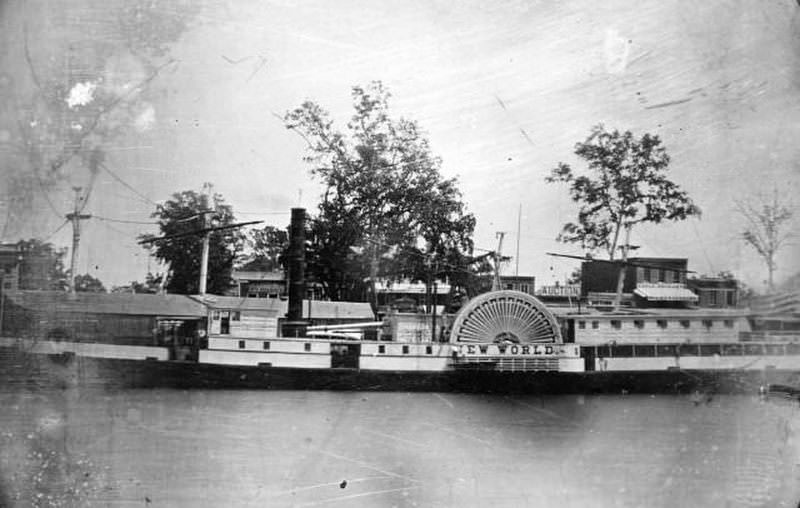
The Sacramento River was both Sacramento’s greatest asset and its greatest threat. In January 1850, the American and Sacramento rivers crested at the same time following heavy rains. The floodwaters swept across the low-lying ground the city was built on, washing away merchandise staged at the Embarcadero and dealing a severe blow to the local economy. It was a disaster that would shape how city leaders thought about infrastructure for years to come.
![North [West] side of Montgomery street, from California to Sacramento, 1855](https://www.bygonely.com/wp-content/uploads/2022/09/Sacramento_1850s_1.jpg)
Hardin Bigelow stepped up in the wake of that January flood. He pushed for emergency measures — levees and dams — to keep the rivers at bay. His efforts earned public trust, and he was elected Sacramento’s first mayor. His preparations worked: when flooding threatened again in March 1850, the city was better protected. Bigelow’s tenure marked a turning point in how Sacramento managed its relationship with the water surrounding it.
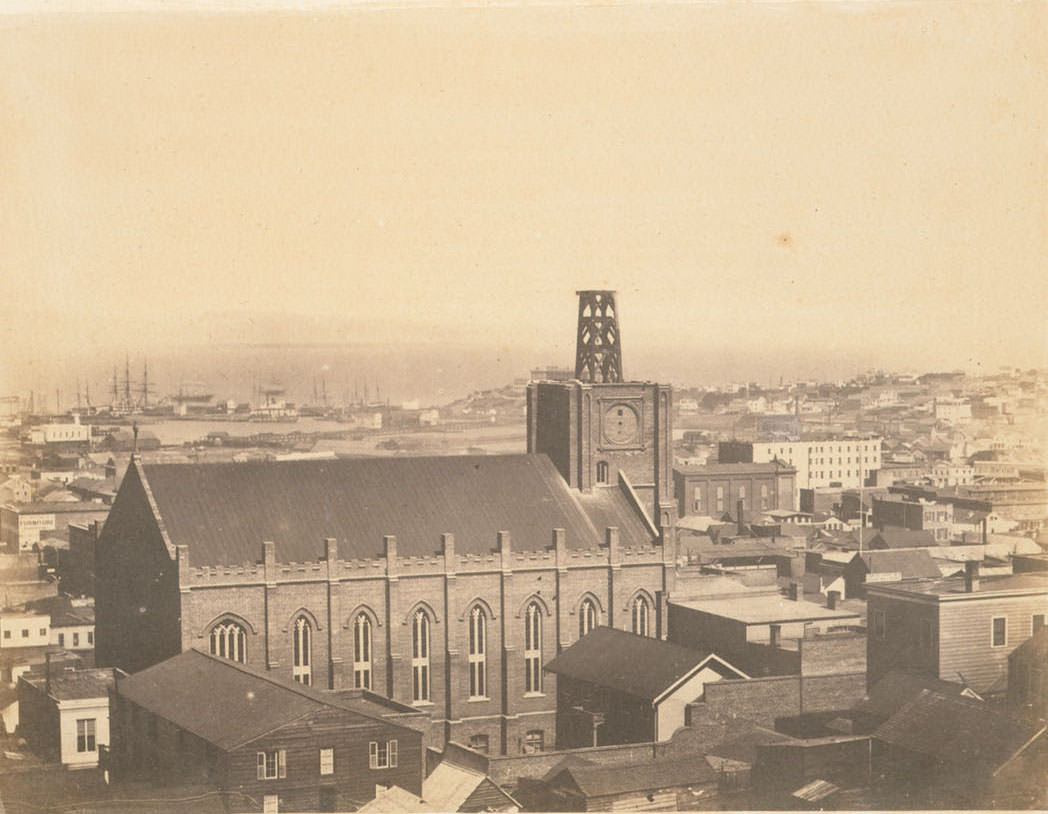
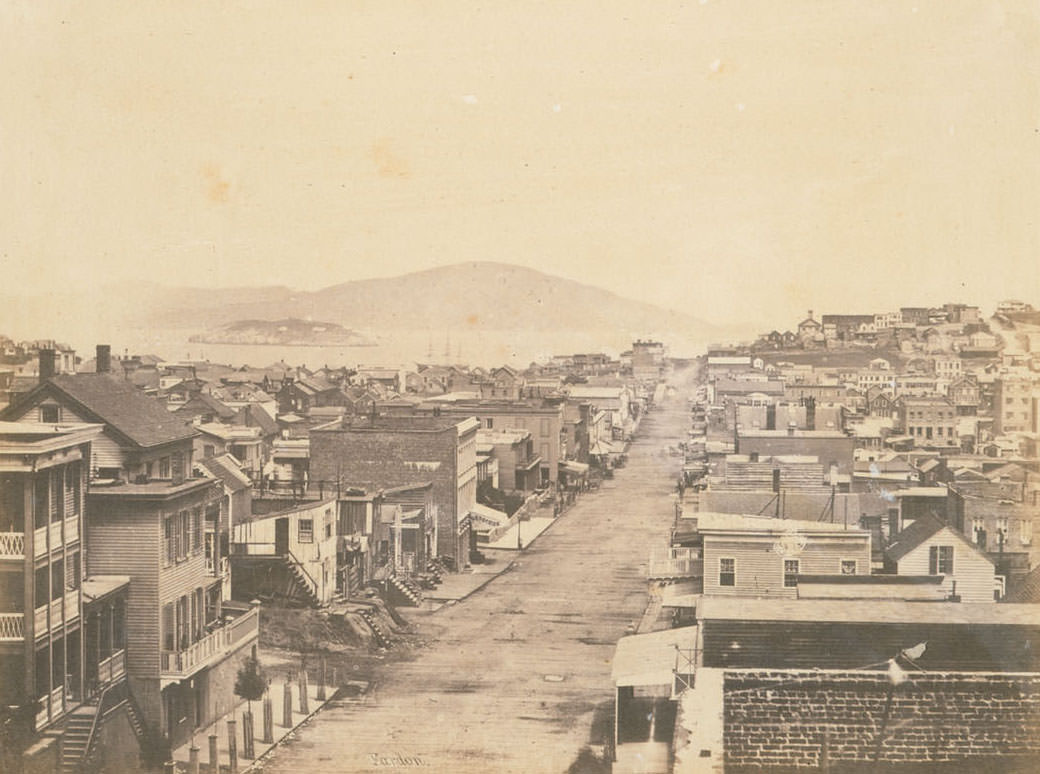
Fire was an equally dangerous threat. In April 1850, Sacramento suffered its first major fire. By November of that same year, a second fire destroyed several commercial buildings. The pattern was clear: a city built from wood and canvas, crowded with people and goods, was dangerously vulnerable. In response, a group of citizens formed California’s first volunteer fire protection organization — Mutual Hook and Ladder No. 1 — on February 5, 1850, marking the official beginning of the Sacramento Fire Department.
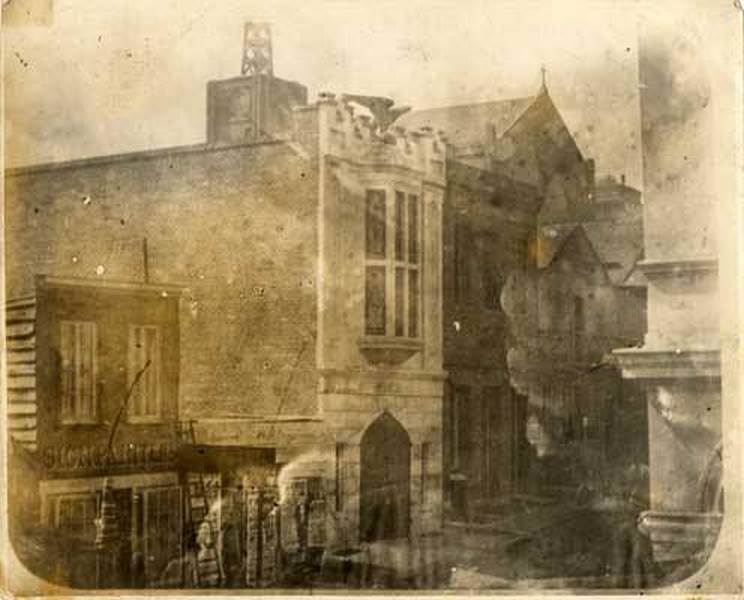
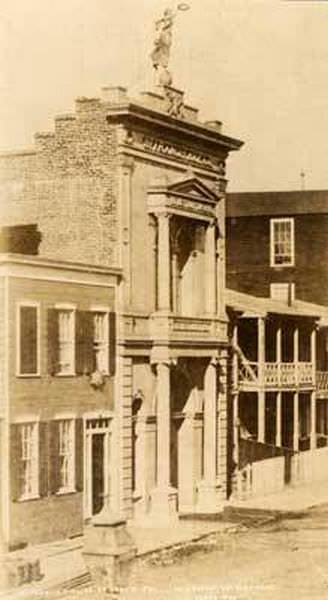
To slow the spread of flames driven by wind, the city installed iron window shutters on commercial buildings. It was a practical solution to a real and recurring problem. The threat of fire was taken seriously not just in Sacramento but across the region, as communities watched entire blocks burn in other California towns.
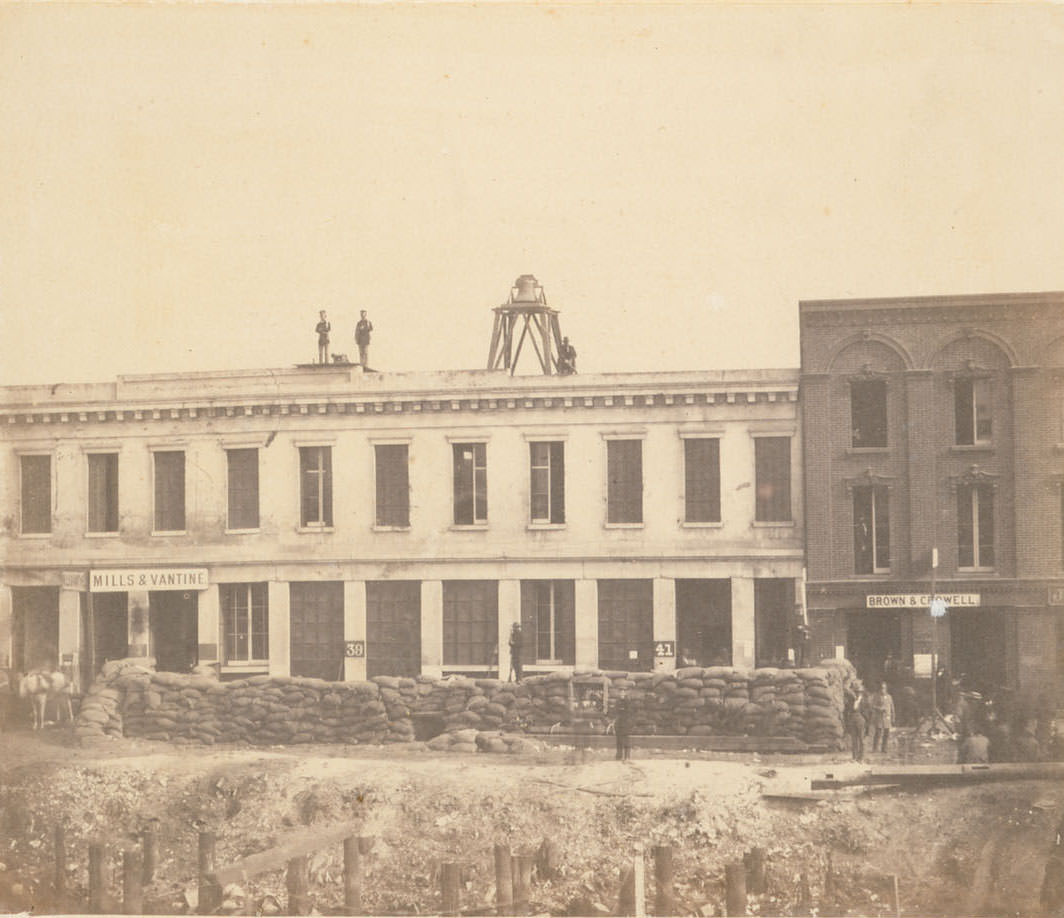
Sandbag fortifications are in front of the building, armed guards are on the sandbags and on the roof, and the bell of the Monumental Engine Co. is mounted on the roof, as are small cannons. Cora and Casey had been hanged here some weeks previously.
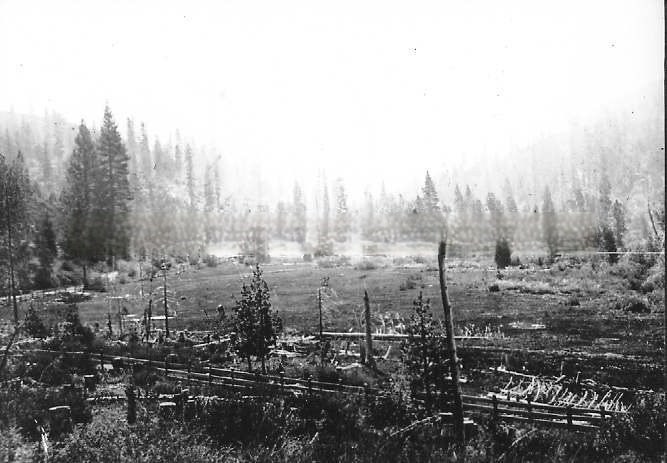
Mining camps in the surrounding mountains fed Sacramento’s economy. Supplies moved from city merchants to prospectors working the hills, and the trade kept businesses alive even as individual miners struck out. Early mining settlements were rough and temporary, built for function rather than comfort.
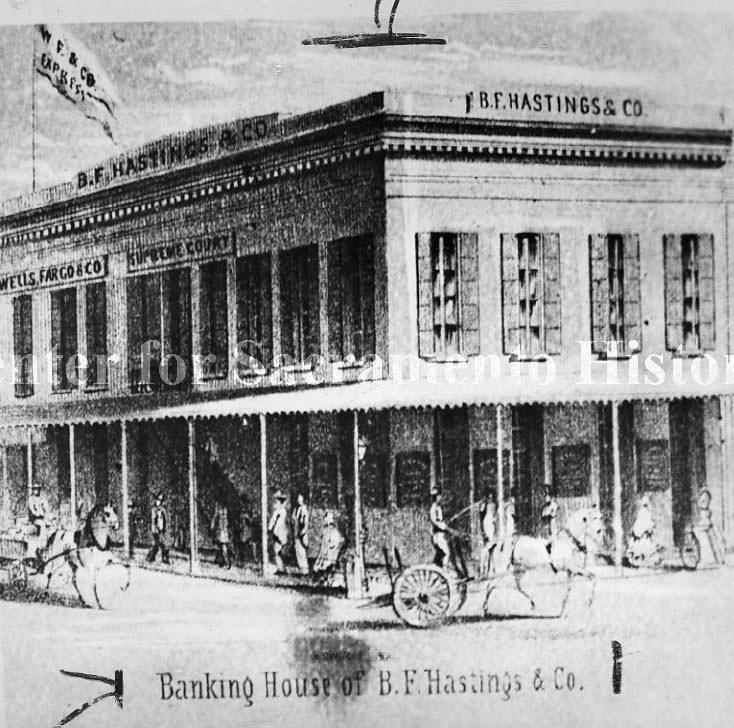
Back in Sacramento, commerce was taking root in a more permanent way. Stores, warehouses, and service businesses opened along the city’s main streets. Furniture dealers, express companies, wholesale warehouses, and newspapers all set up operations during the 1850s, reflecting a city maturing beyond its gold rush origins.
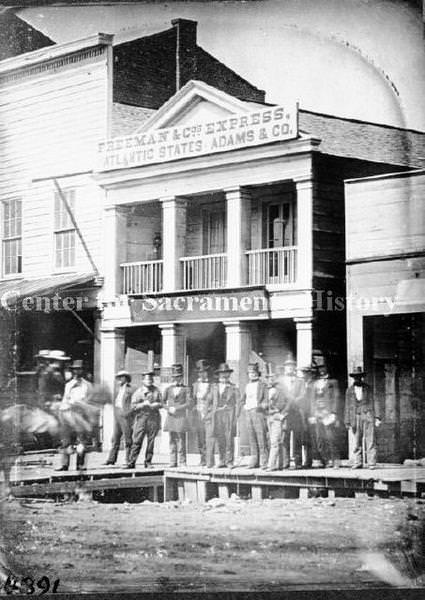
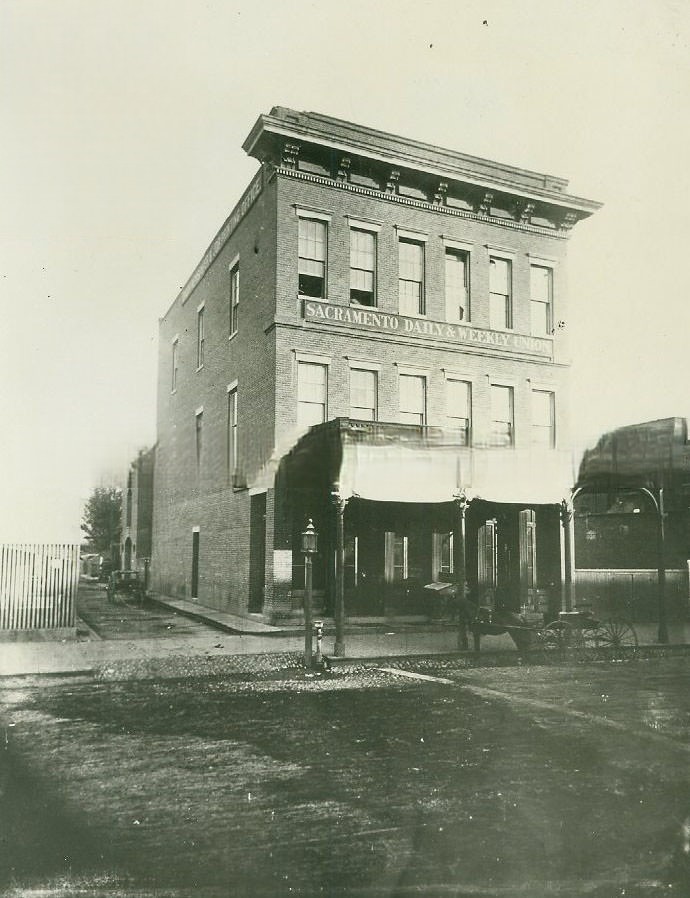
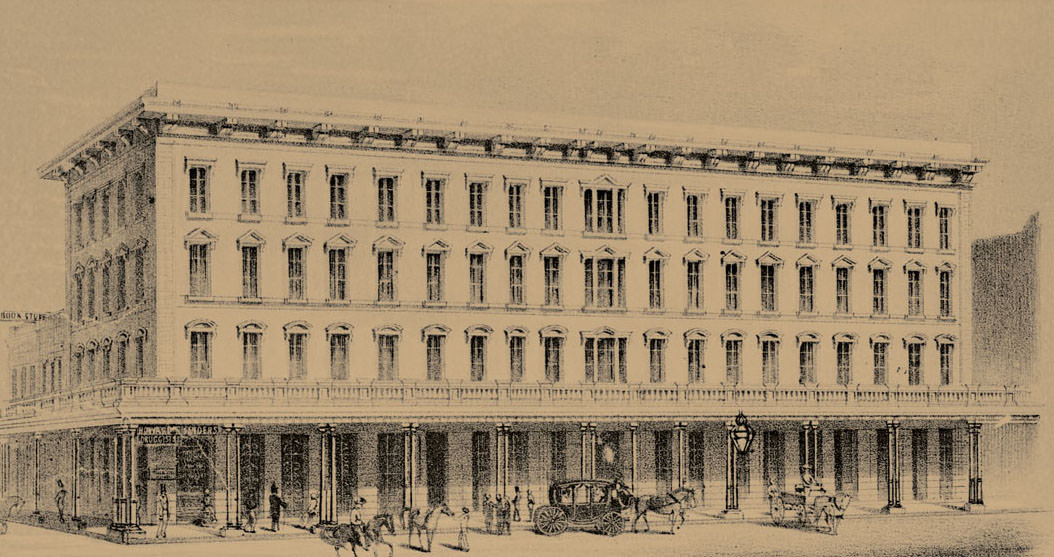
By the mid-1850s, Sacramento had established retail and civic institutions that signaled its permanence. The Mechanic’s Store at 4th and K Streets — later known as Weinstock and Lubin’s — operated as one of the city’s early commercial anchors. Furniture warerooms like those of John Breuner and J.G. Clark served a growing population that was settling in, not just passing through.
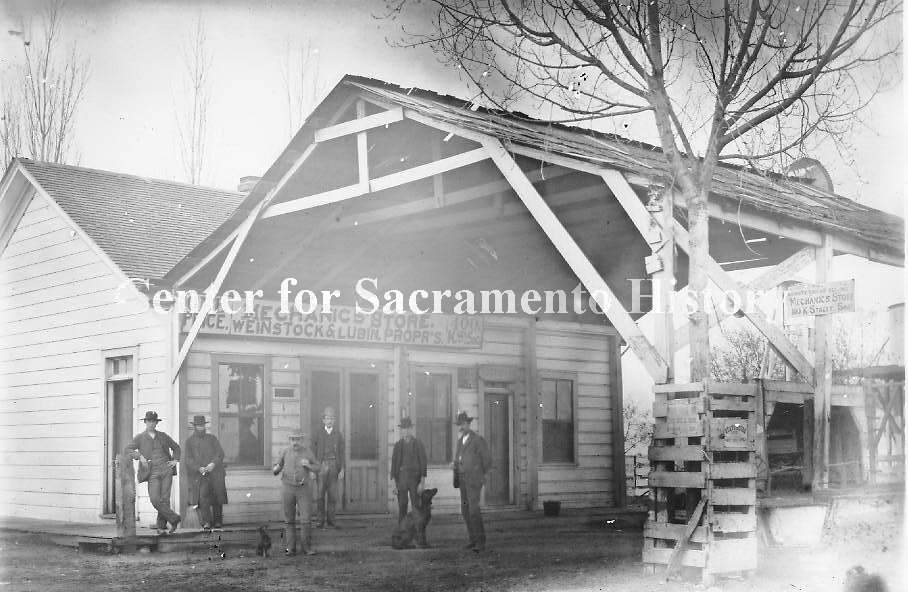
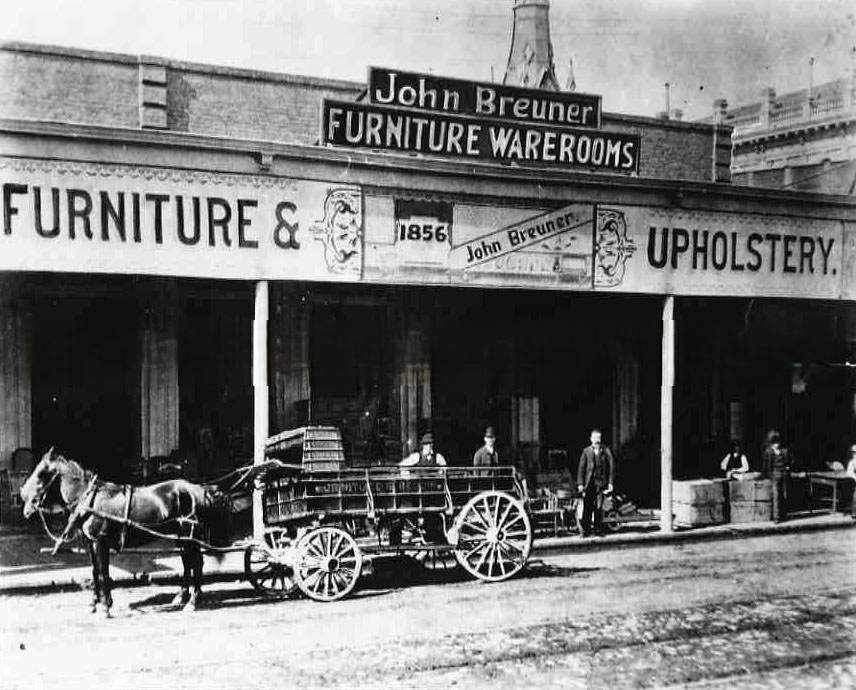
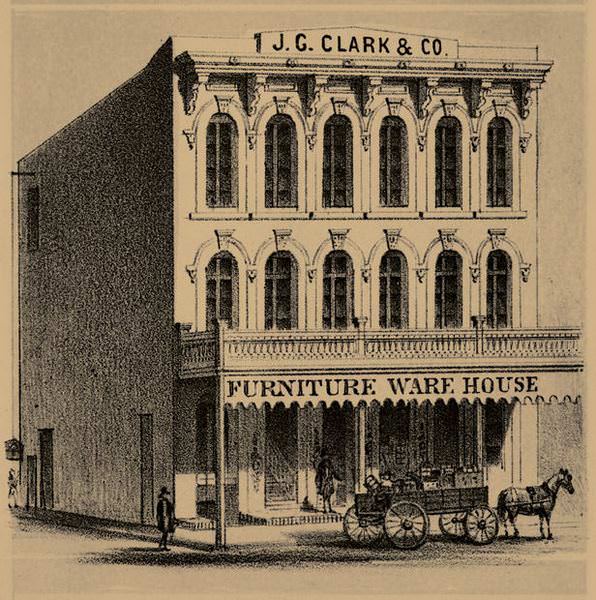
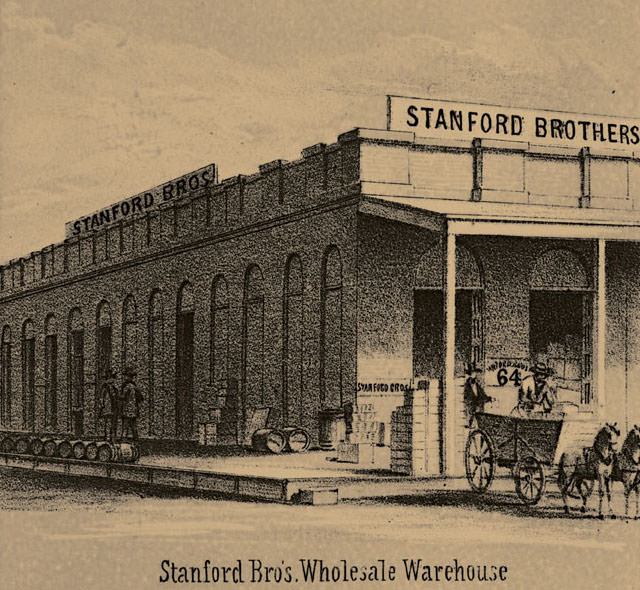
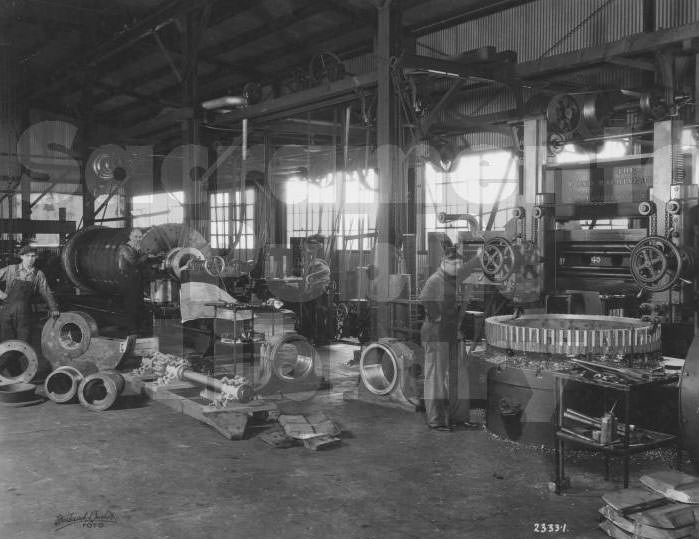
Wholesale operations grew alongside retail. Stanford Brothers’ warehouse was among the prominent commercial establishments of the late 1850s. The Stanford family — which would later produce Leland Stanford, California governor and railroad tycoon — built their early fortune through Sacramento’s wholesale grocery trade. The Southern Pacific Railroad shops, photographed in 1858, showed that Sacramento was already becoming a hub for transportation infrastructure.
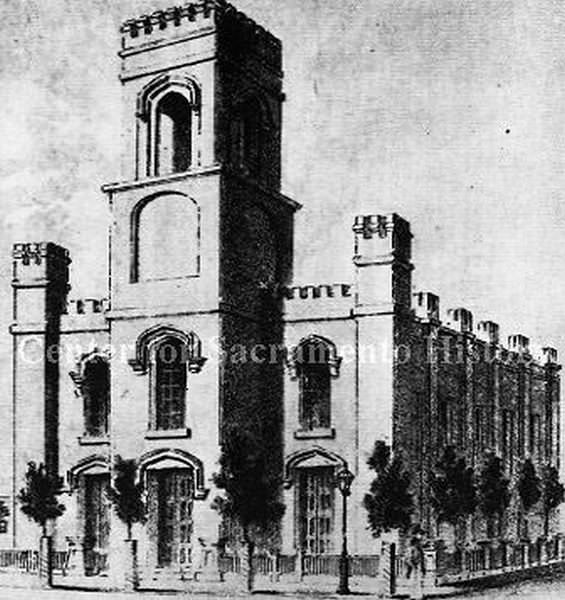
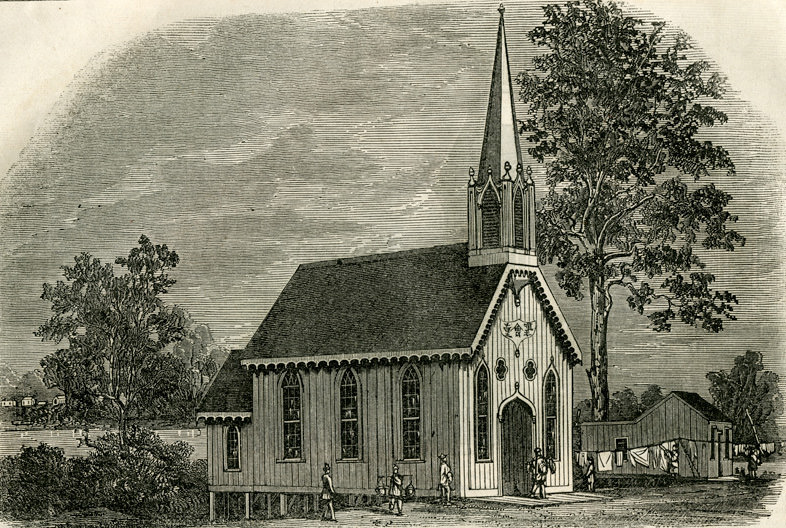
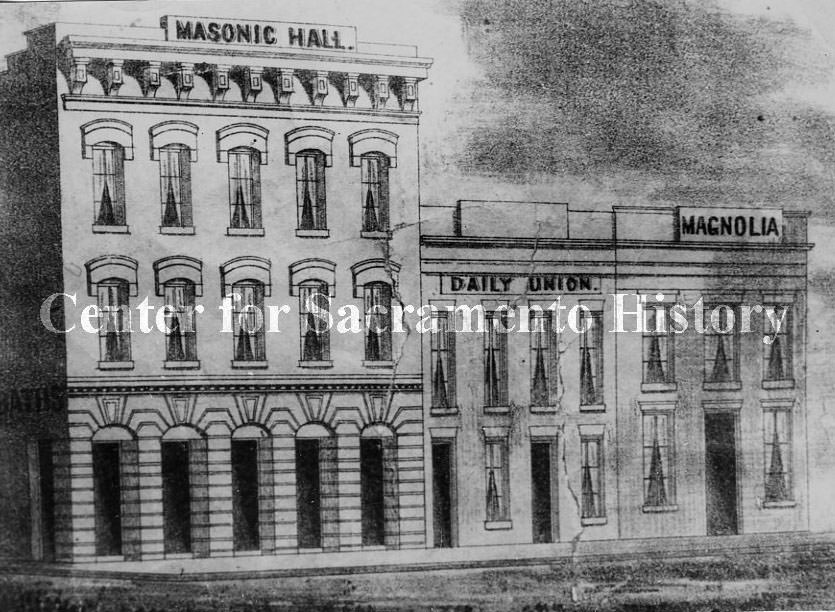
Religious and civic institutions also took shape across the city during this period. The First Congregational Church opened its doors, and the Chinese Chapel on Sixth Street served Sacramento’s growing Chinese immigrant community — one of the largest in California, drawn to the region by the gold rush and railroad construction. The Masonic Hall on J Street served as the lodge’s second home in Sacramento and stood as a marker of organized community life.
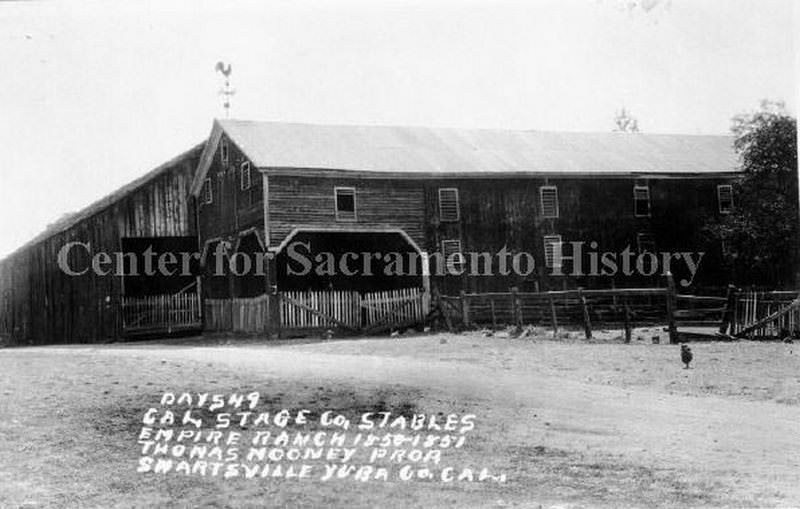
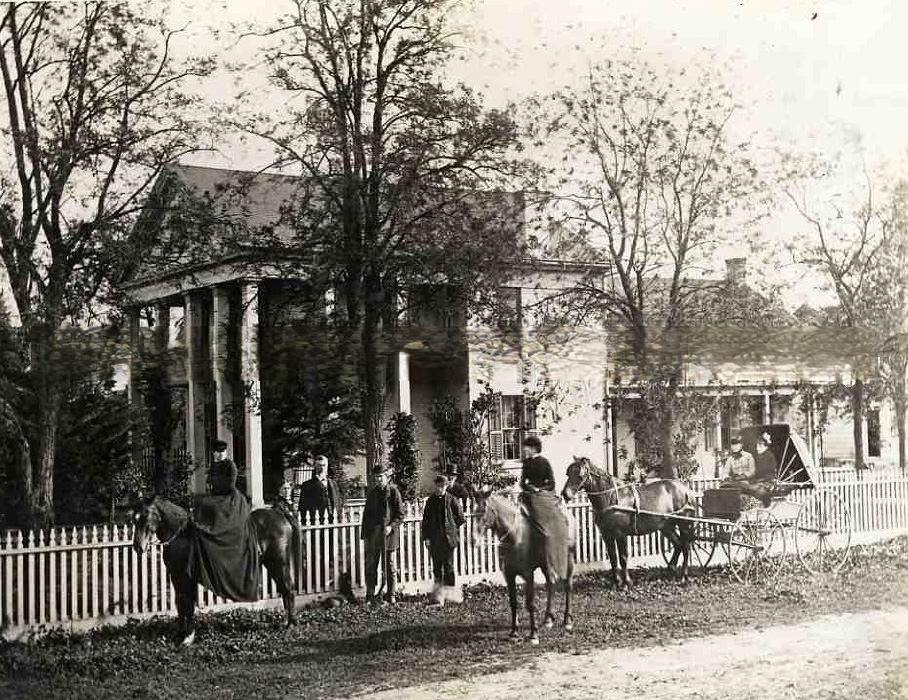
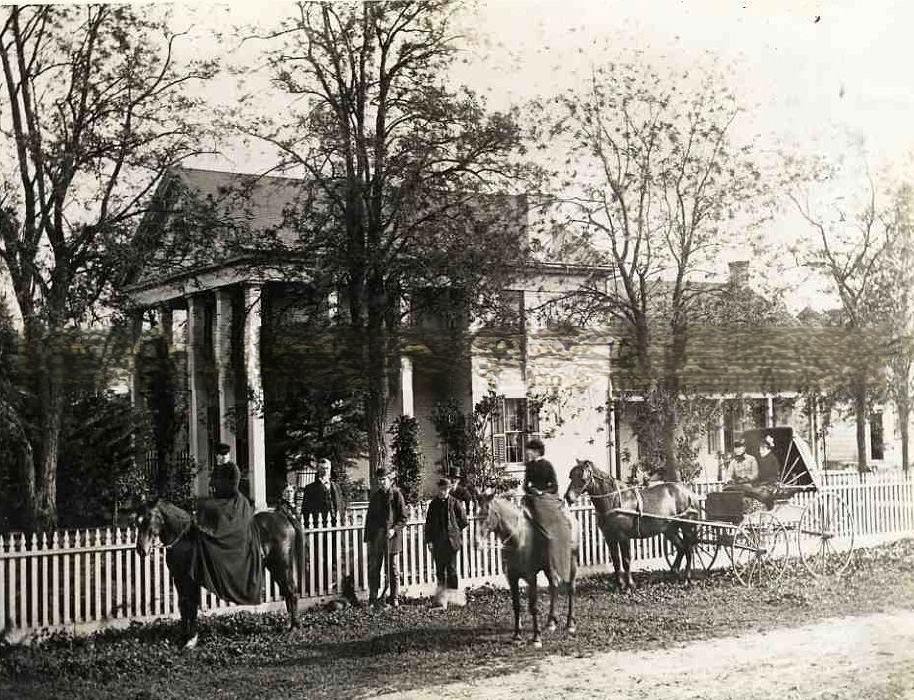
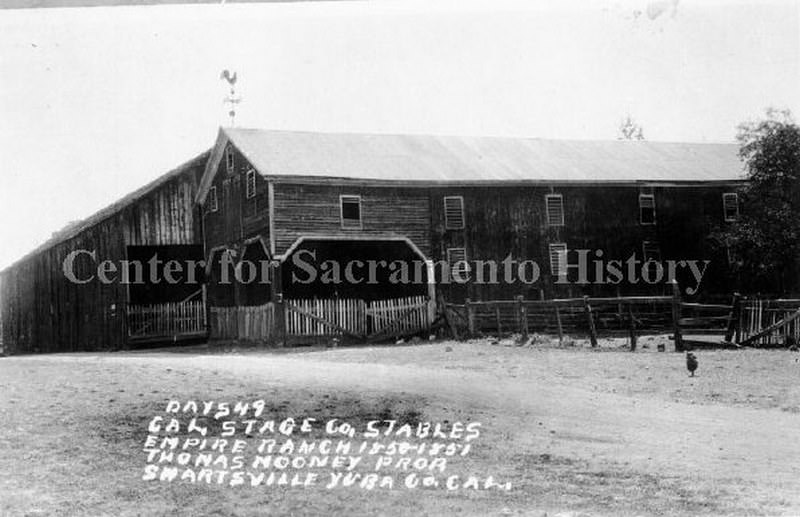
Outside the city center, colonial-style brick homes like the McConnell residence near the Cosumnes River represented a more settled, rural way of life taking hold around Sacramento. These properties stood in contrast to the chaotic urban growth of the city itself. Empire Ranch, the Thomas Mooney property, was another example of the agricultural roots that ran beneath the gold rush frenzy.
By the late 1850s, Sacramento looked very different from the canvas-and-timber camp it had been a decade earlier. Brick buildings lined the streets, civic and commercial life was organized, and the city’s layout was increasingly permanent. Three major floods ultimately forced city leaders to take drastic action: thousands of cubic yards of dirt were hauled in by wagon to physically raise the entire city one story. The original street level from that era survives today in the basements and boardwalks of Old Sacramento.