
The first modern vending machine appeared in England in the early 1880s. It dispensed postcards and was little more than a metal box with a coin slot. Within decades, the concept had exploded into something far stranger and more ambitious. Machines began selling books, sandwiches, soup, stockings, and — in at least one documented case — already-lit cigarettes for a penny. The history of vending machines is really a history of human convenience taken to its most creative extremes.
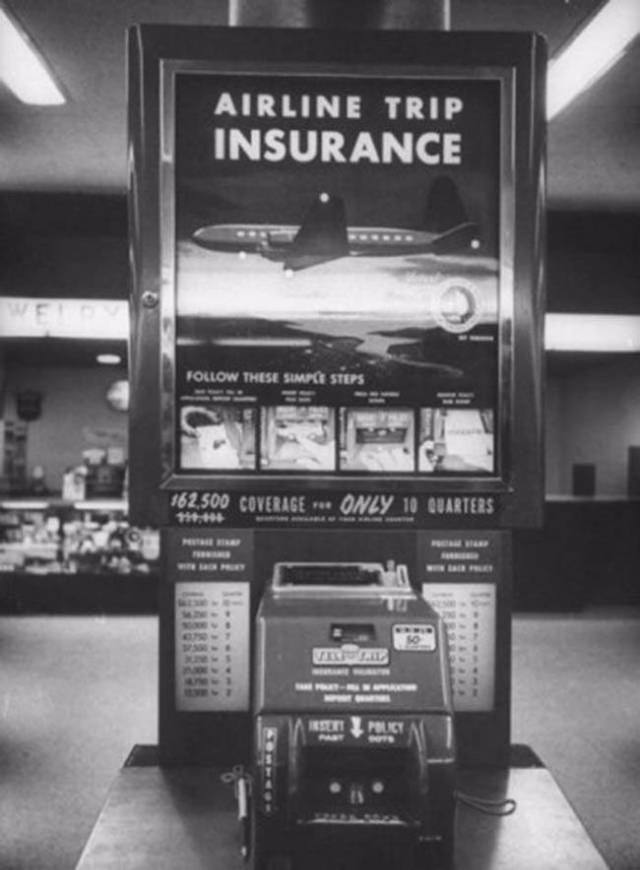
Airports were early adopters of unusual vending concepts. In the mid-20th century, before online booking and digital policies, travelers could buy flight insurance directly from a machine in the terminal — no agent, no paperwork, no waiting in line.
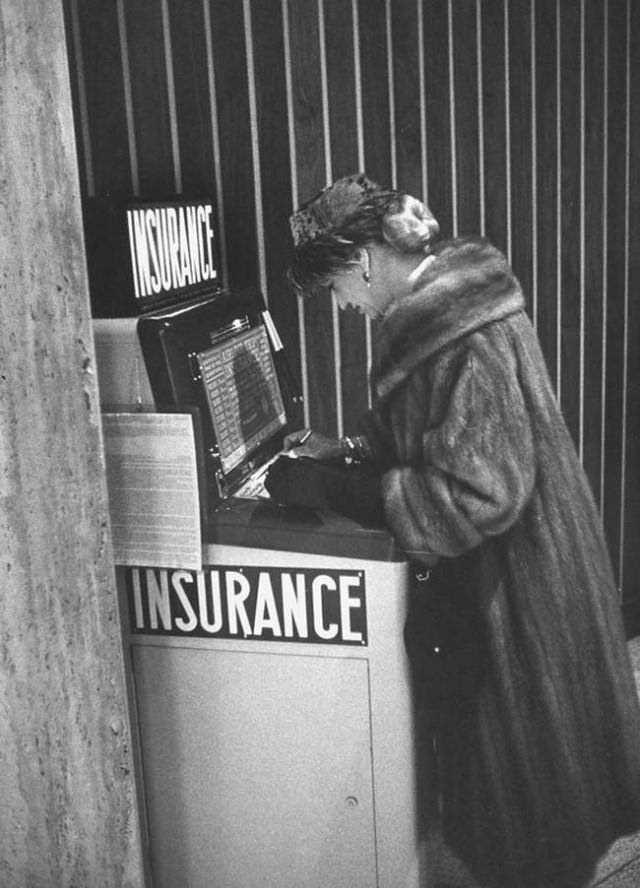
Flight insurance machines appeared at multiple airports across the United States. For just a handful of quarters — $2.50 at some locations — a traveler could walk away with a policy before boarding. The machines were stocked with forms and printed policies, all dispensed automatically.
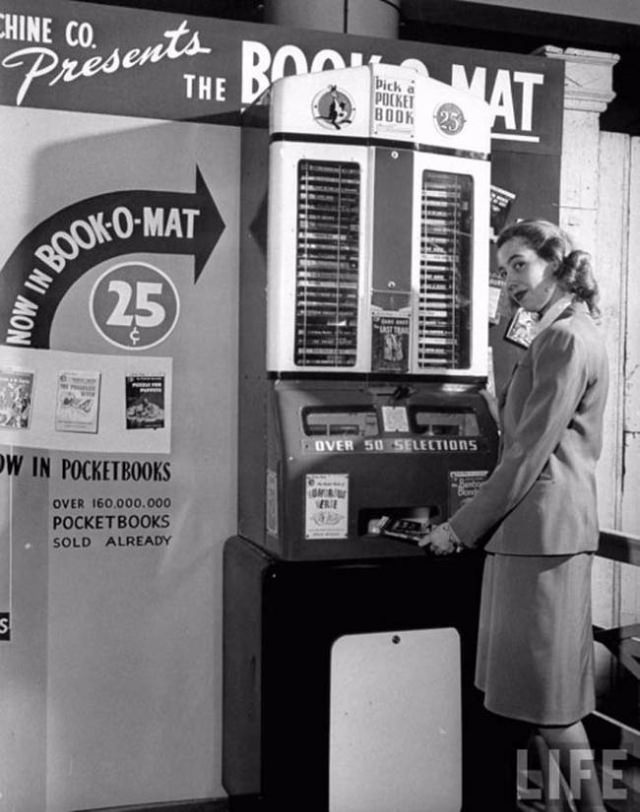
Books were another early candidate for vending machine sales. At just 25 cents a title, these machines made reading accessible to anyone passing through a train station or public space. No bookstore required.
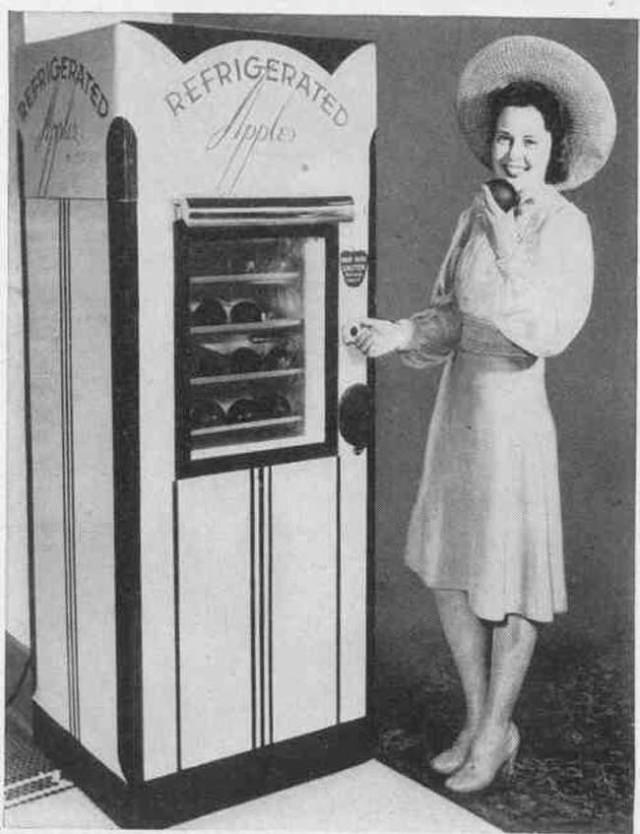
Fresh produce also made its way into automated dispensers. Apples, eggs, potatoes, and even milk showed up in machines across Britain and Europe well before the modern era of refrigerated vending. A machine selling apples might seem unusual today, but in a world before 24-hour supermarkets, it was a practical solution.
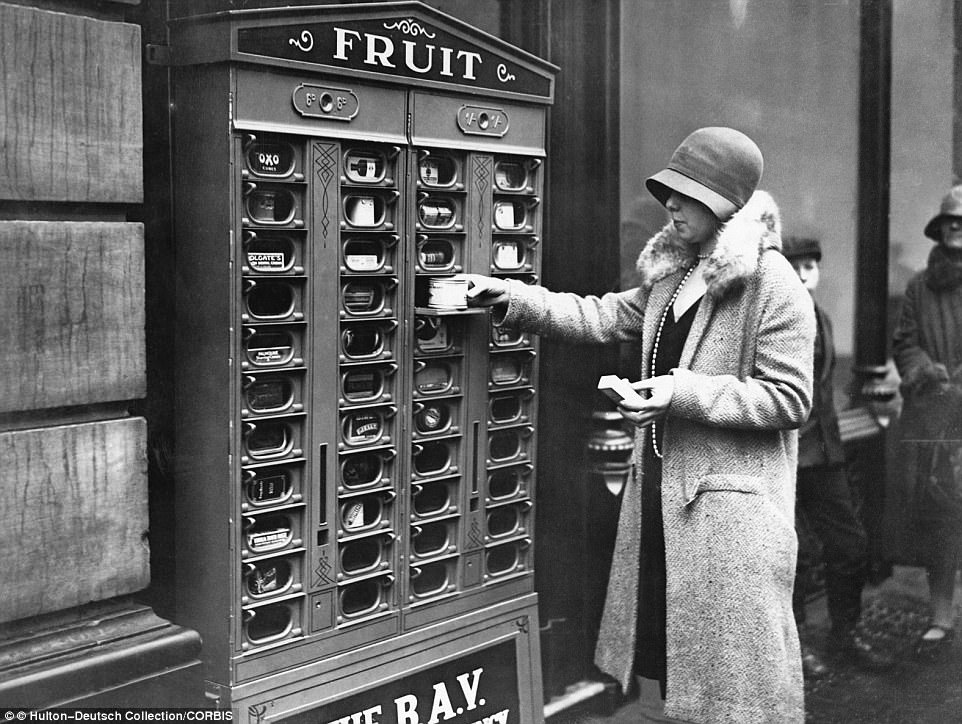
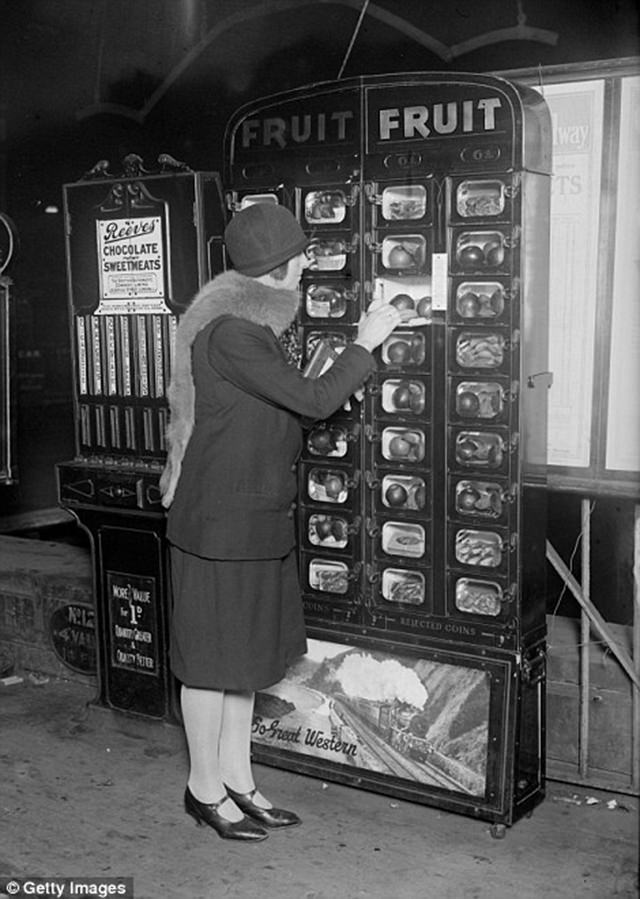
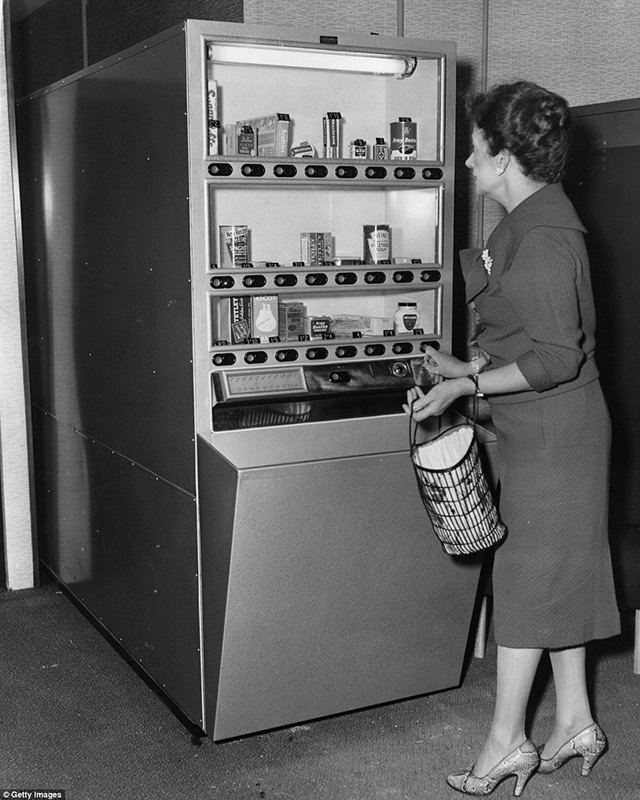
By the 1920s, vending machines in London were already selling a surprisingly wide range of grocery staples. Oxo cubes, tinned food, matches, and Colgate products sat behind glass panels at Paddington Station and other high-traffic spots. Shoppers could restock basic cupboard items without setting foot inside a shop.
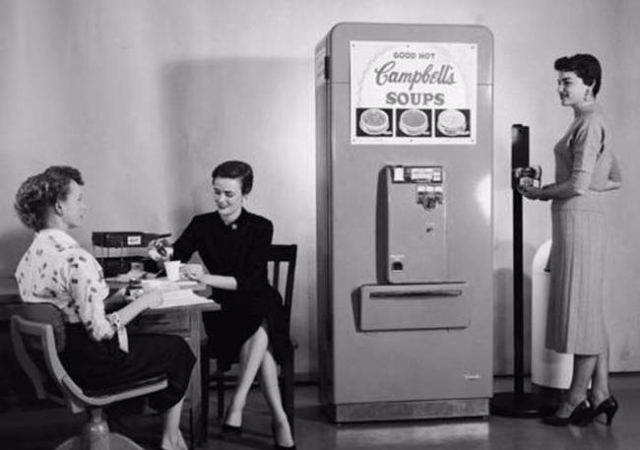
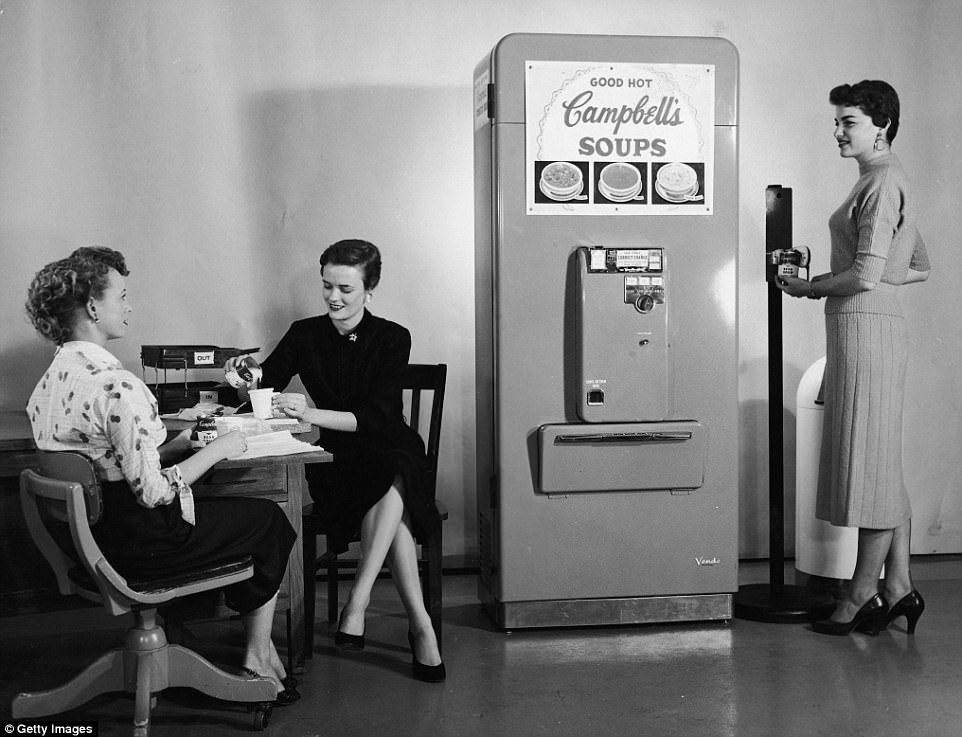
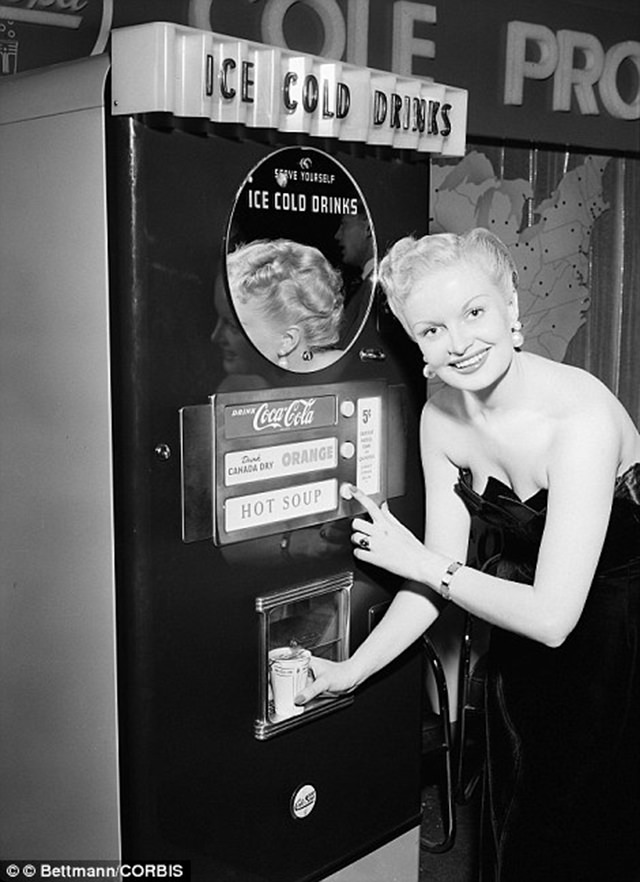
Hot food vending was a serious industry by the mid-20th century. Soup was one of the most popular automated meals, with Campbell’s machines appearing in office buildings across America. Workers could grab a hot cup of soup without leaving the building — or even without standing in a cafeteria line.
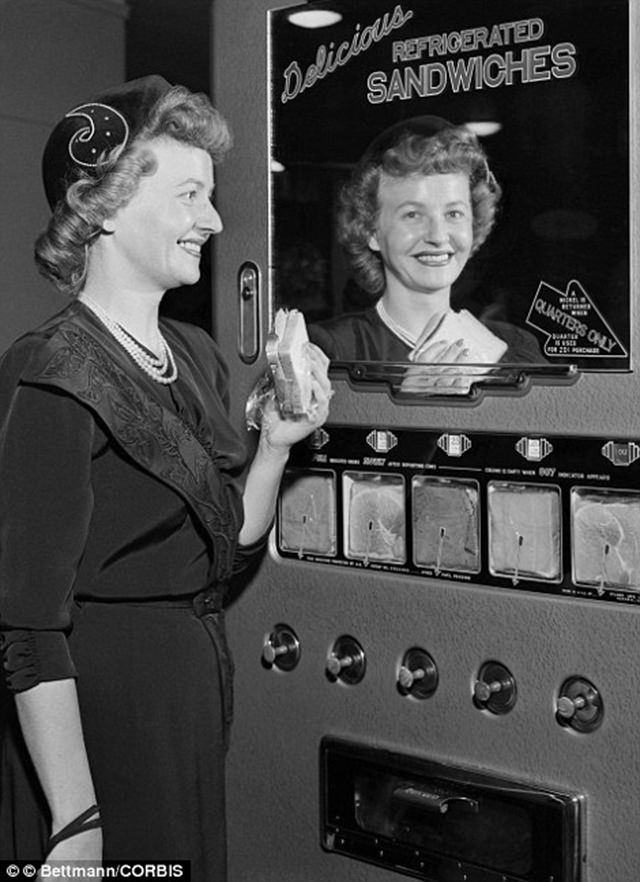
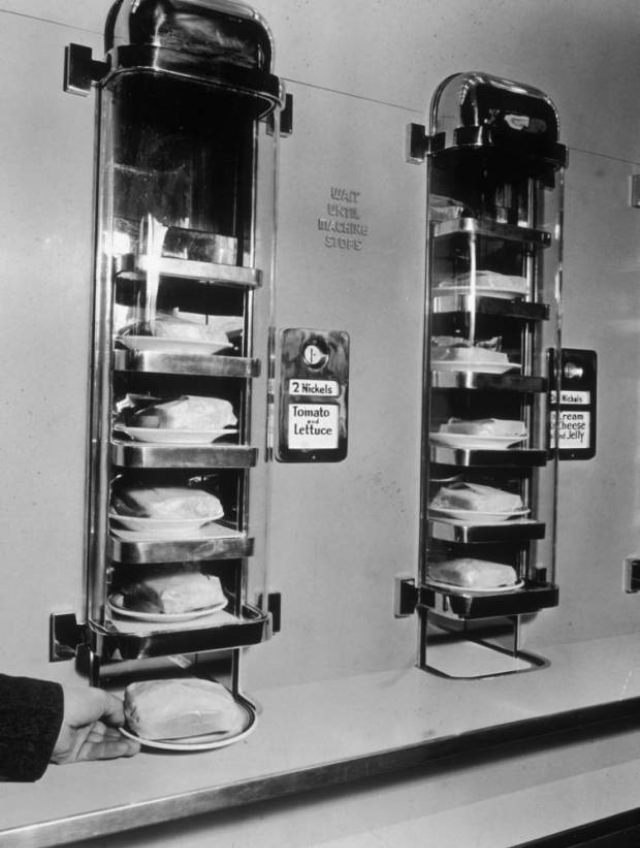
Sandwiches entered the vending machine world around the same time. Cream cheese and jelly sandwiches appeared in machines as early as 1945. The sandwich dispenser debuted publicly at the Chicago Exhibit in the 1950s and drew significant attention from retailers and food manufacturers alike.
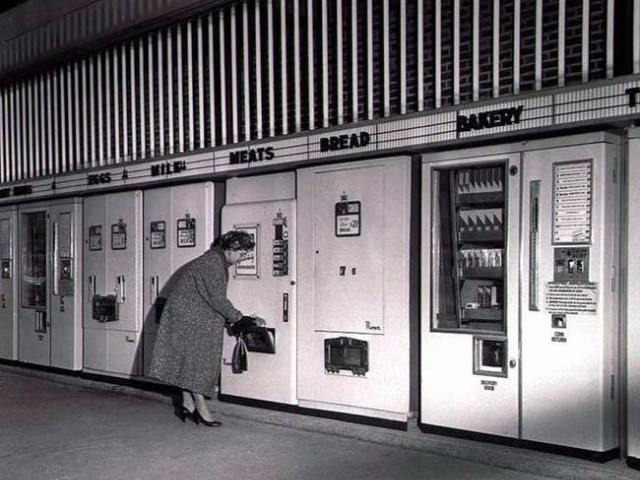
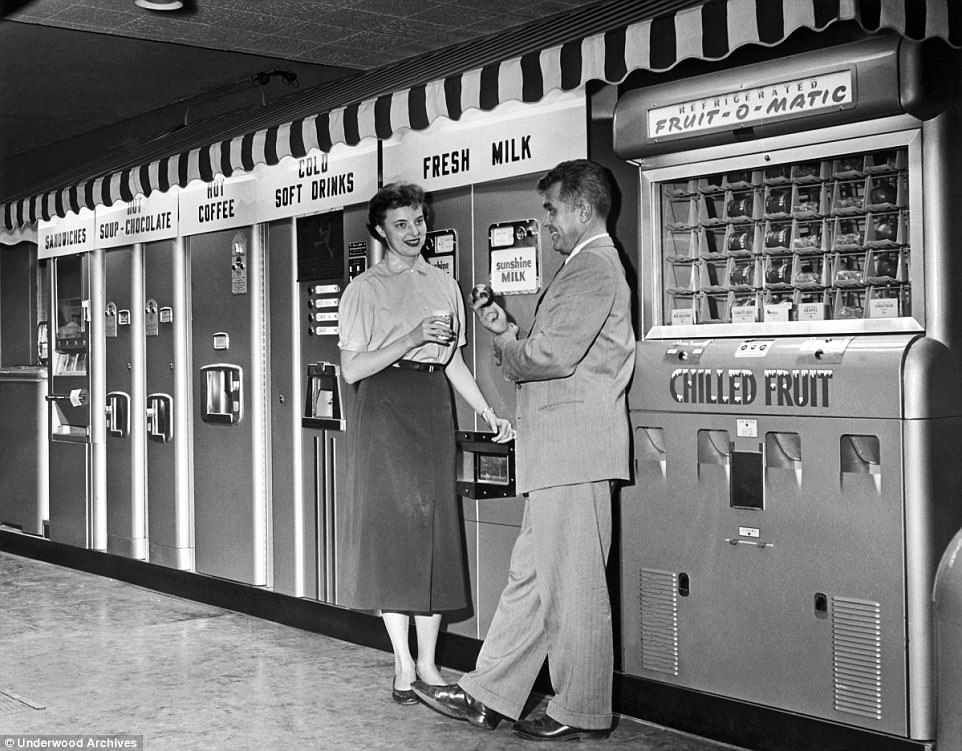
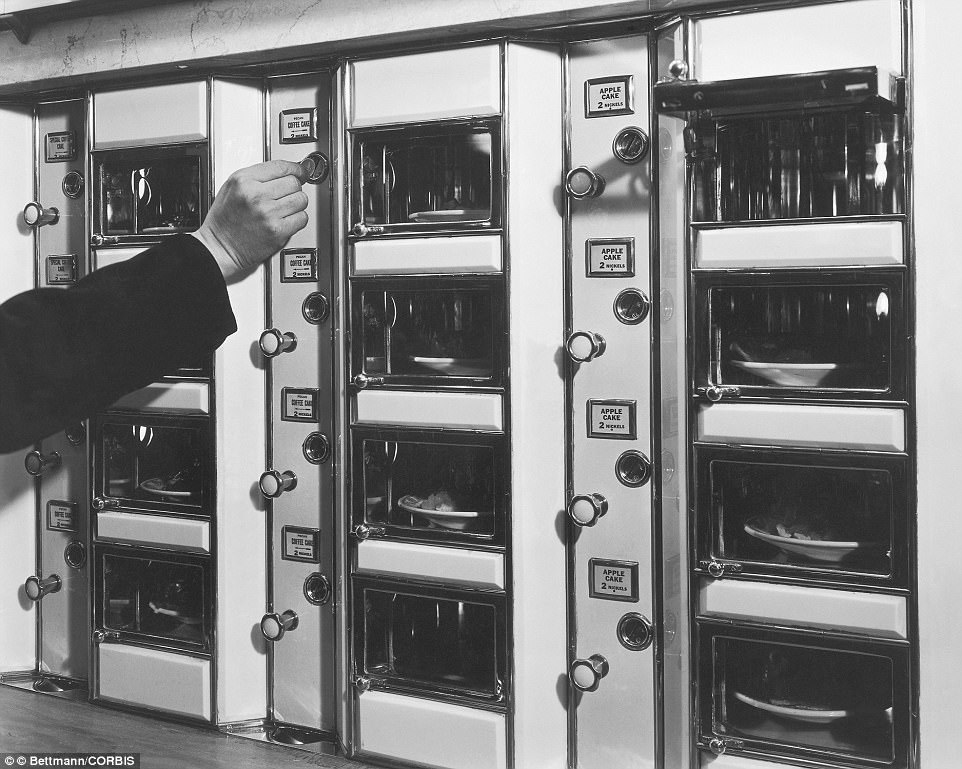
The Automat took the vending concept even further. Popularized in the 1940s, the Automat was essentially a cafeteria replaced entirely by coin-operated windows. Customers could select from rows of hot meals, sides, and desserts — all without interacting with a single staff member.
Cigarette machines were common for decades, but one early machine took the concept to an extreme — it dispensed already-lit cigarettes for a single penny. The machine handled the ignition itself, handing the customer a ready-to-smoke cigarette through a small opening.
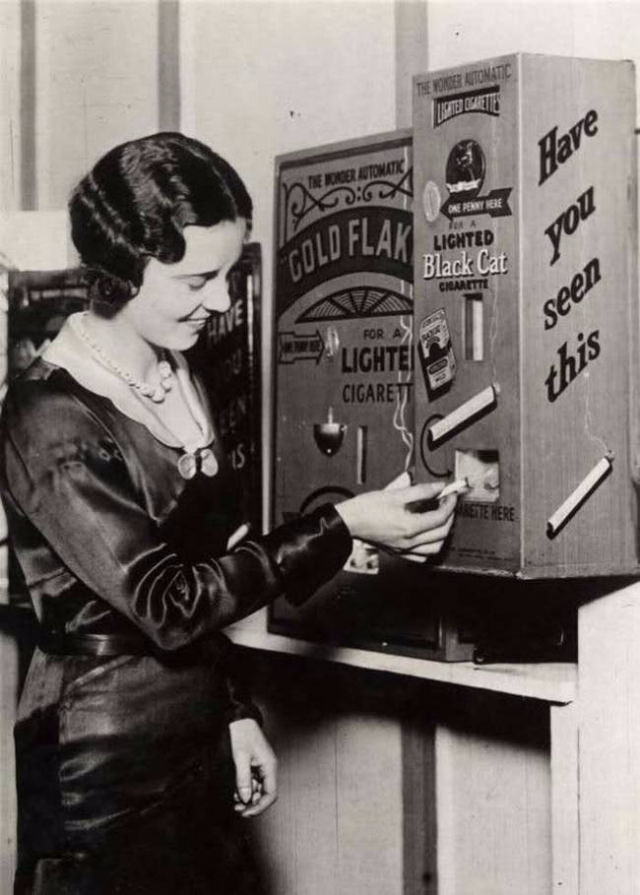
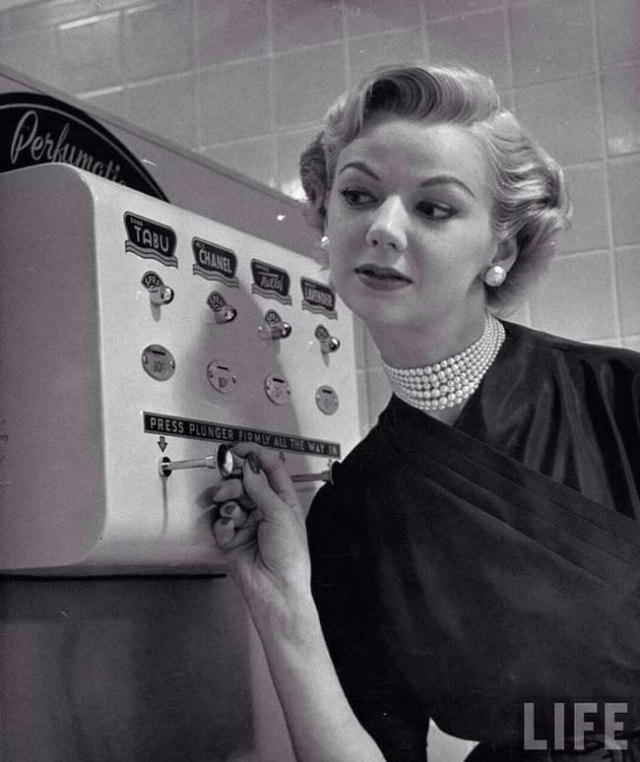
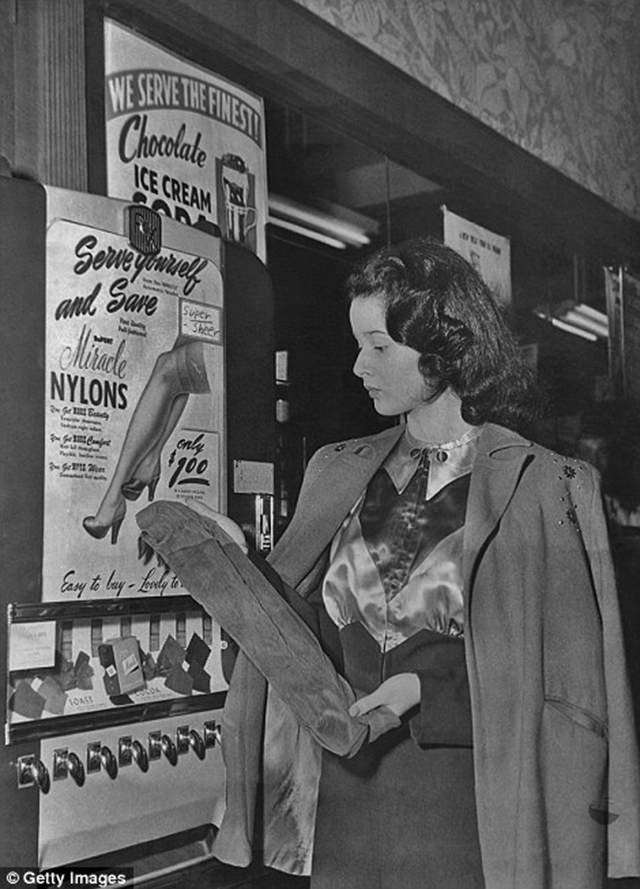
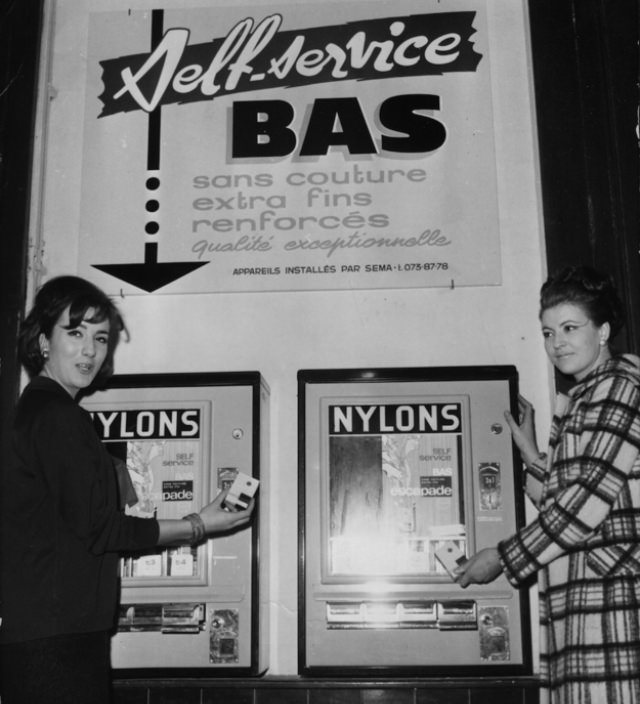
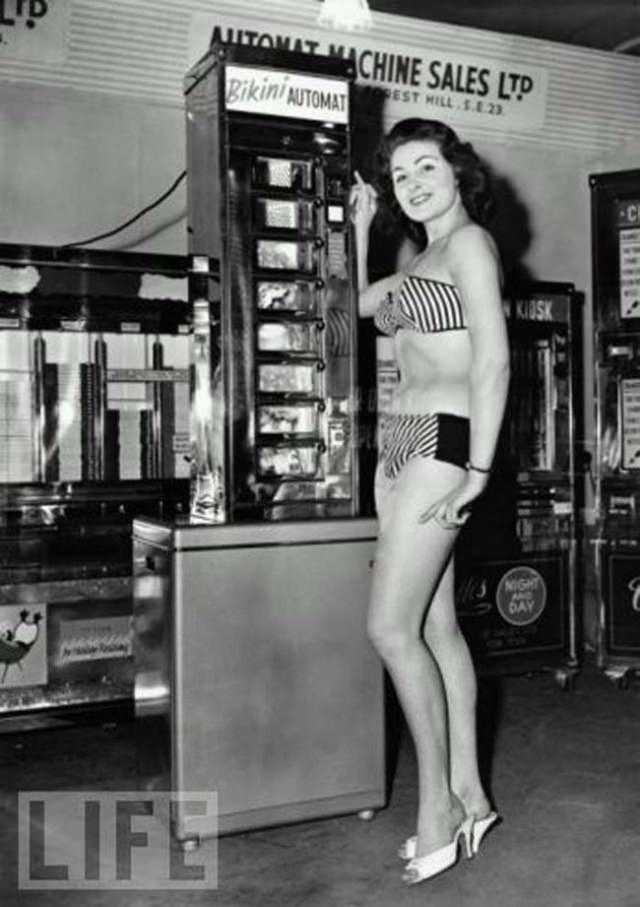
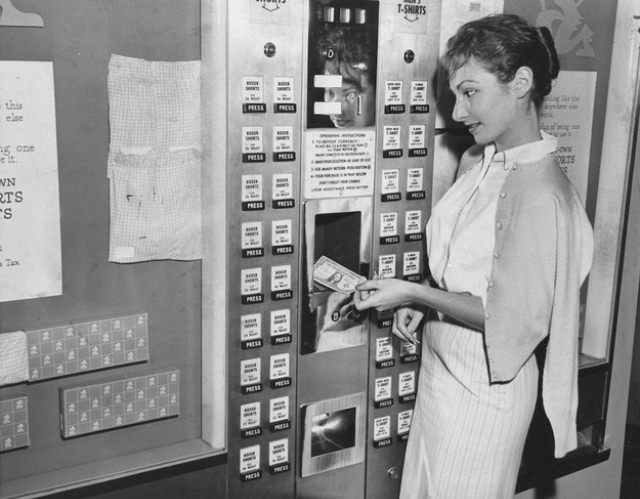
Personal care and clothing items were also widely available through machines. Perfume dispensers, nylon stockings, pantyhose, bikinis, and even men’s shorts all found their way behind coin-operated panels. Macy’s sold men’s shorts for just 97 cents from a machine, making it one of the more unexpected retail experiments of the era.
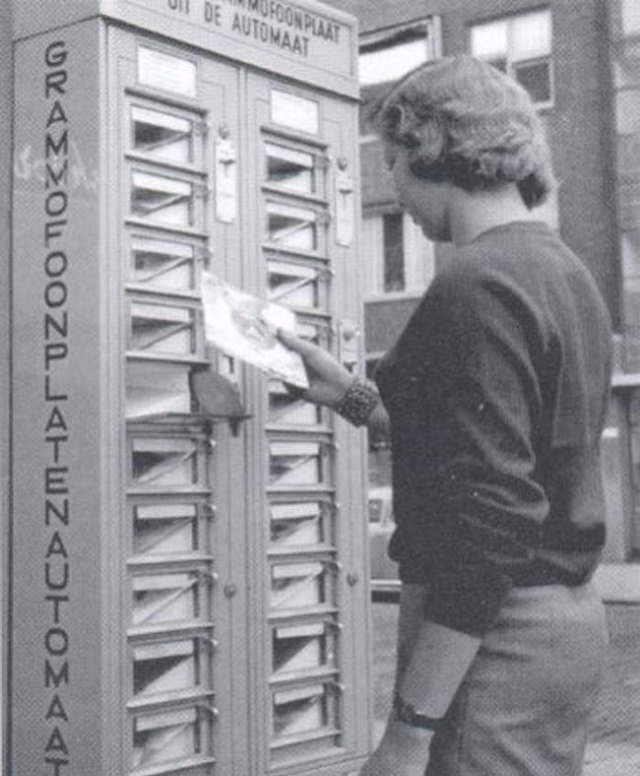
Music made its way into the format too. By the mid-20th century, 45 rpm record vending machines allowed customers to buy the latest singles on the spot. This was years before music streaming, even before cassette tapes — a physical record, dispensed from a machine, was cutting-edge retail.
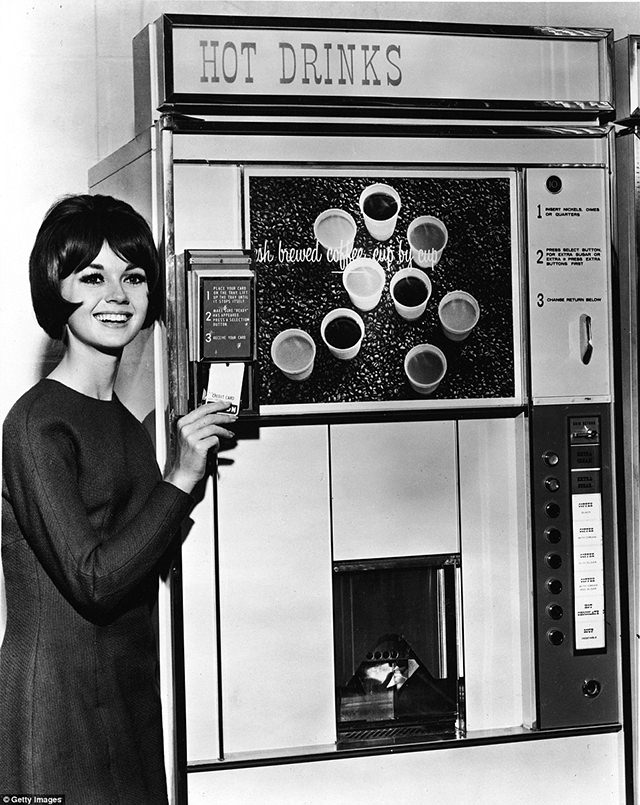
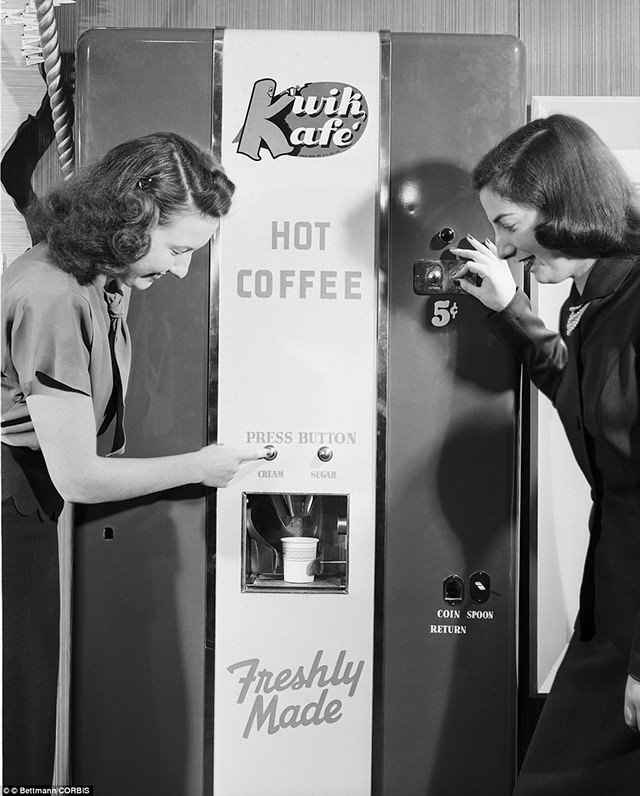
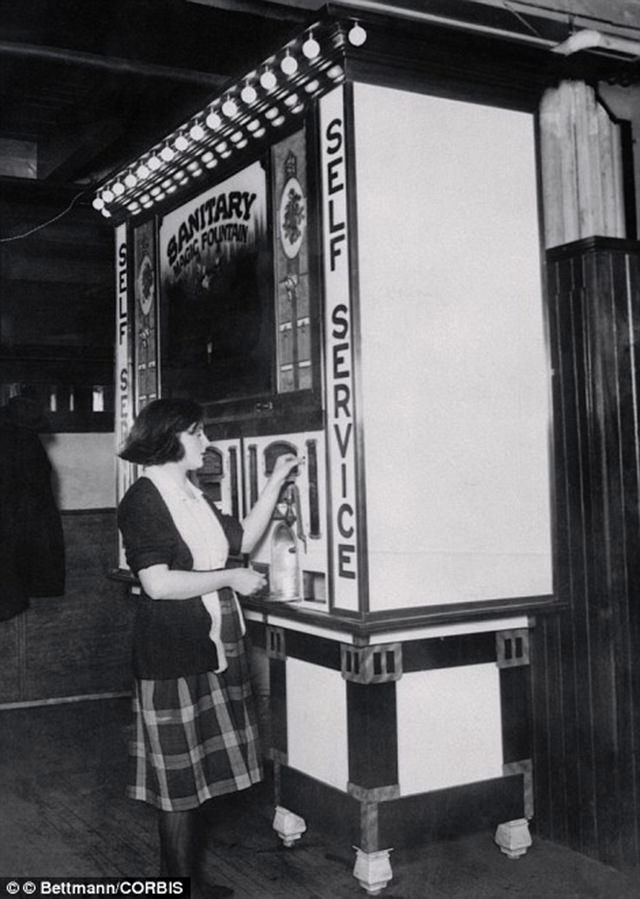
Beverages — both hot and cold — drove much of the vending machine industry’s growth. The Maiworm Company introduced a soda machine in 1928 that was the first of its kind not to require a soda squirter. Coffee machines made a major public debut at the World’s Fair of Vending Machines in 1947. By the 1960s, some machines already accepted credit cards for coffee purchases.
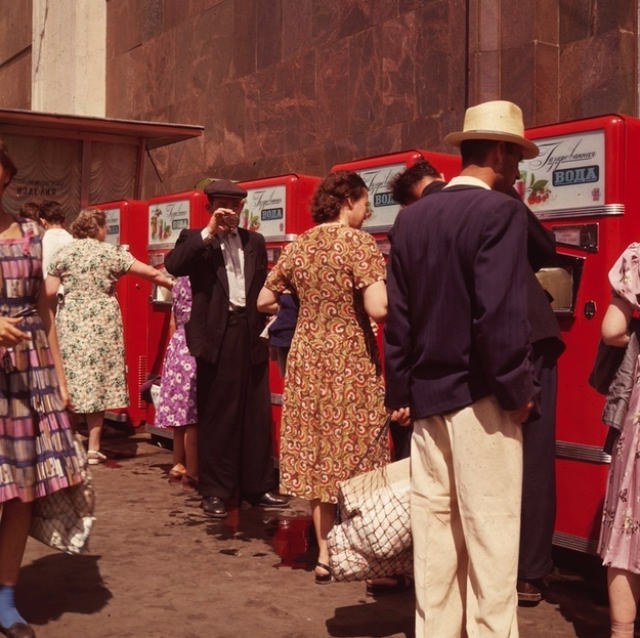
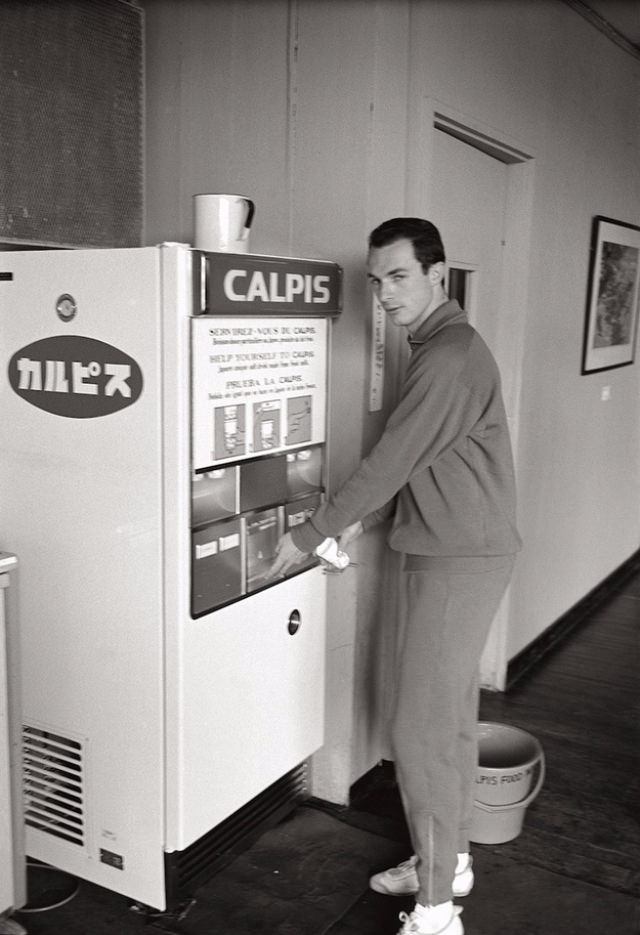
Japan and the Soviet Union both had their own takes on drink vending. Lemonade machines appeared on the streets of Moscow, while machines selling Calpis — a popular Japanese dairy-based beverage — were widespread across Japan. Each country adapted the technology to fit its own tastes and infrastructure.
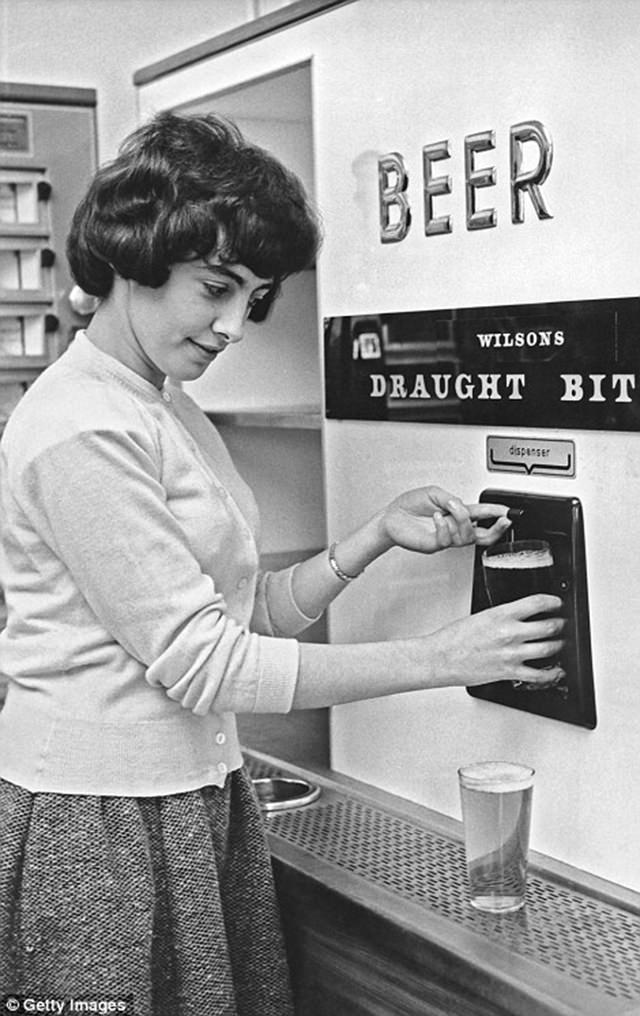
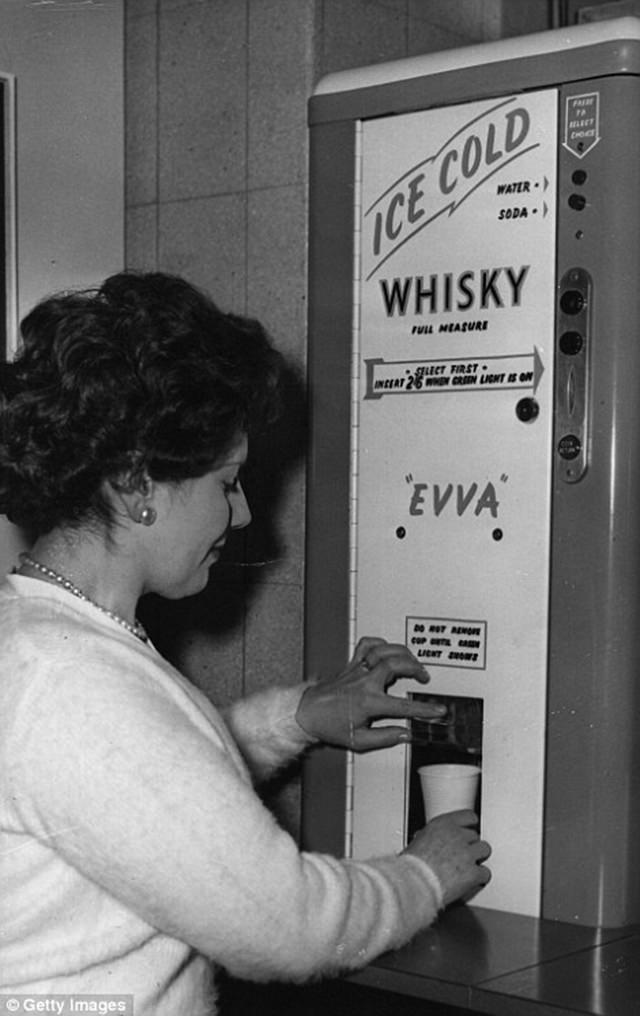
Alcohol found its way into the format by the 1960s. A woman buying whisky from a self-service machine was photographed in Britain, representing a broader cultural shift toward automated retail. Beer dispensers also appeared, allowing customers to pour a pint without a bartender in sight.
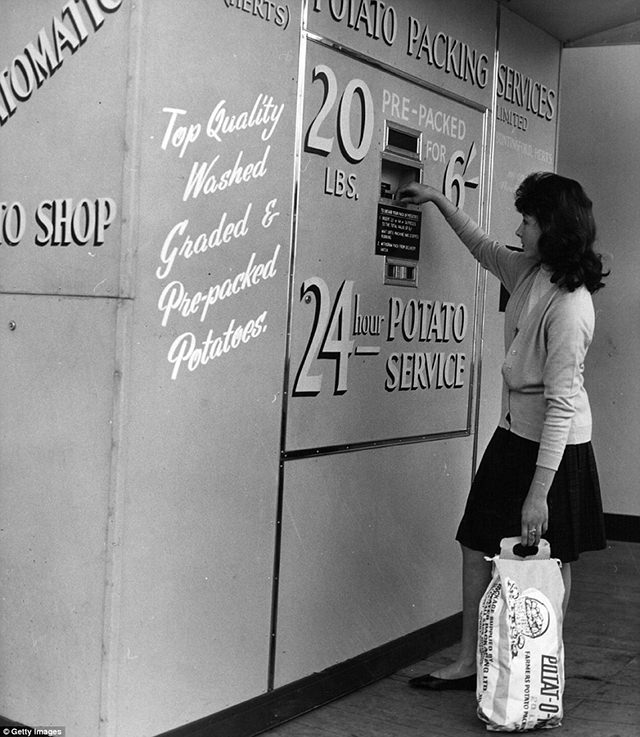
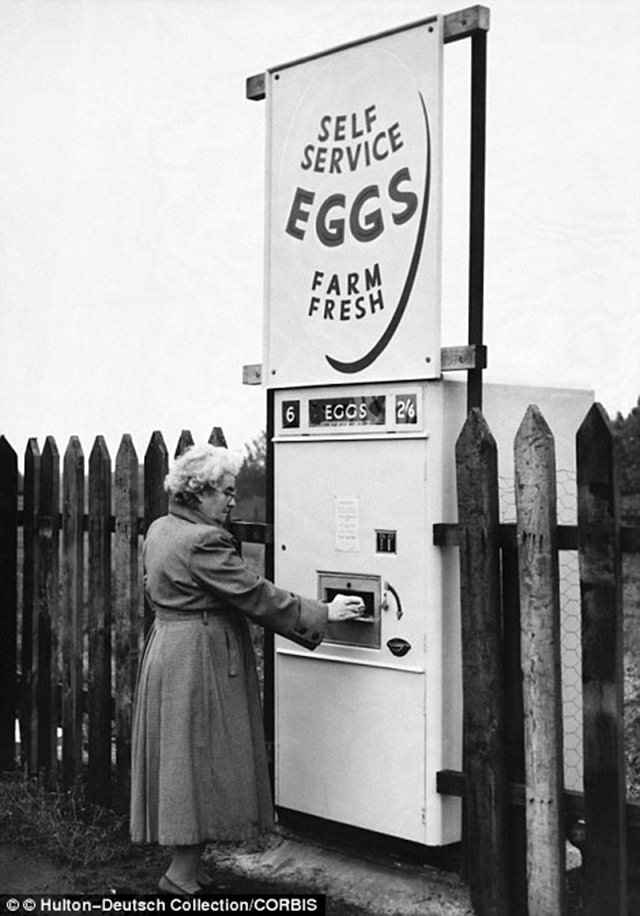
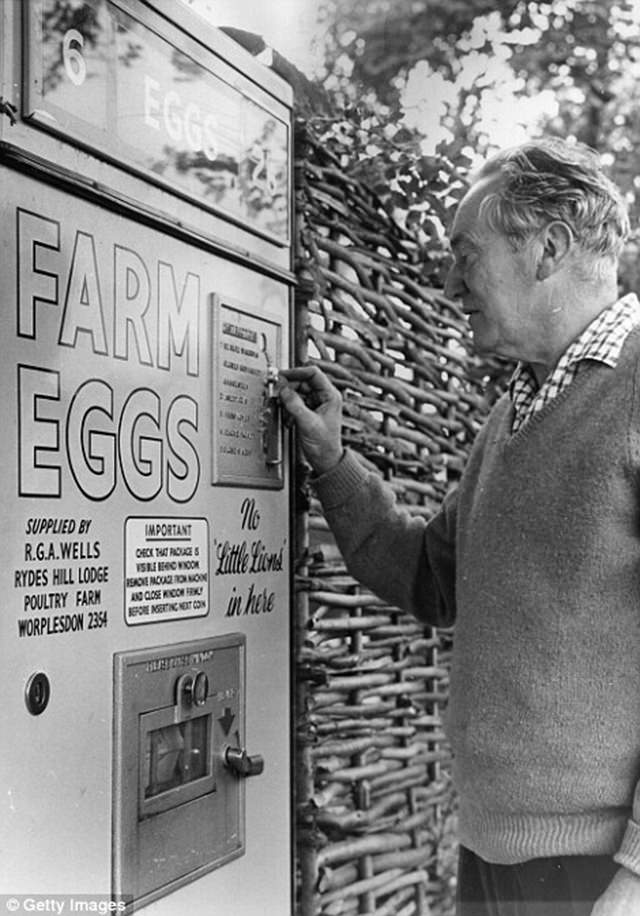
Fresh eggs and potatoes were staples of British vending machine culture in the early 1960s. A potato vending machine opened in Chelsea in 1962 — the first of its kind in Britain. By 1963, egg machines appeared in both Derbyshire and Surrey, allowing customers to buy fresh eggs from roadside dispensers without visiting a farm or shop.
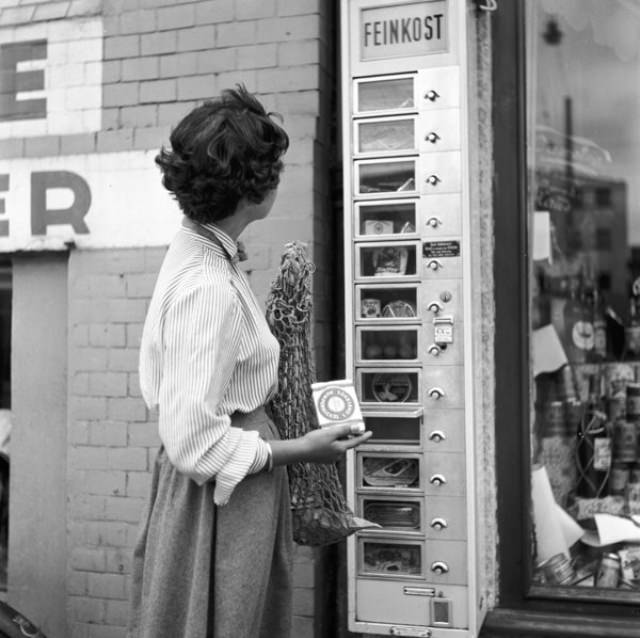
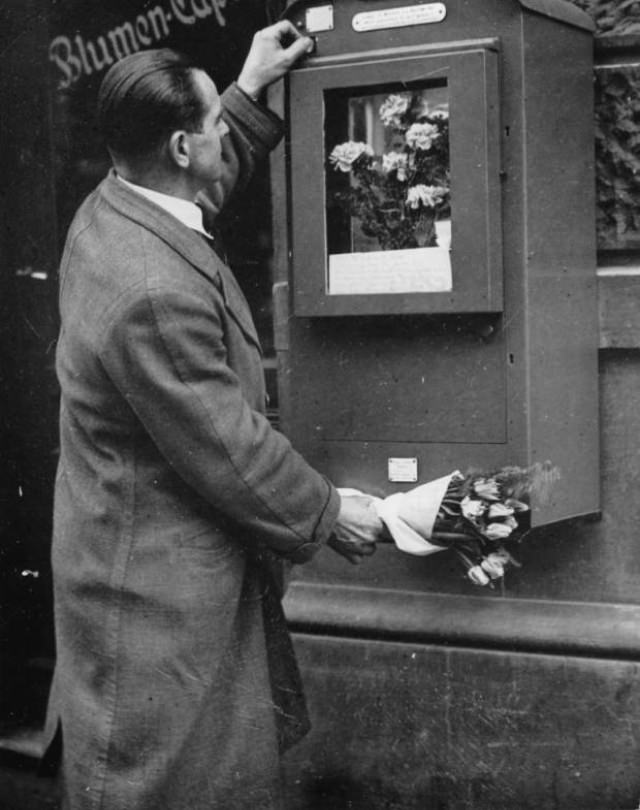
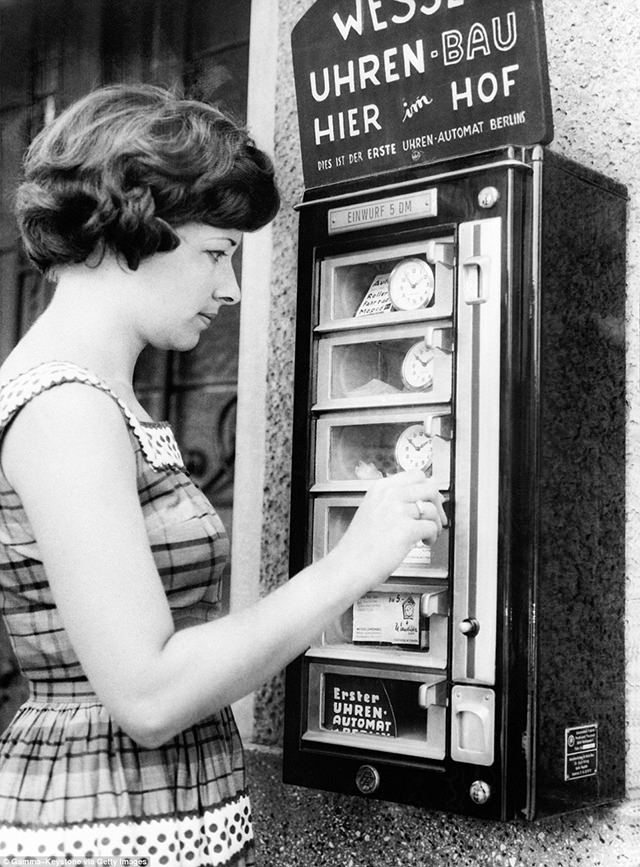
Germany had its own distinct vending culture. A “Feinkost” (fine food) machine mounted directly on a shop’s wall dispensed specialty groceries as early as 1955. Berlin later introduced flower vending machines where customers could purchase full bouquets around the clock. A machine in Germany also dispensed clocks — a product that would seem almost impossible to automate.
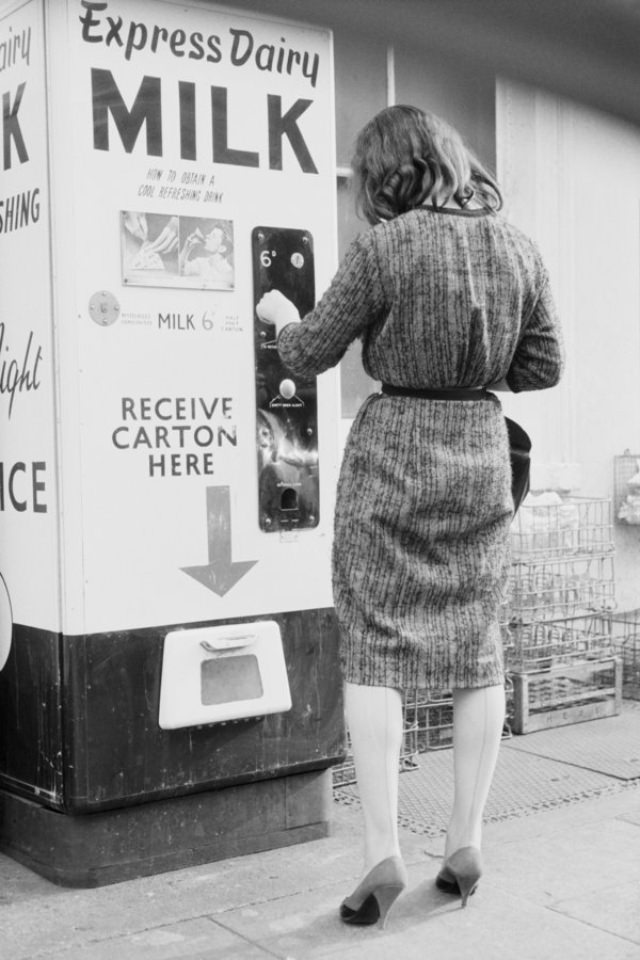
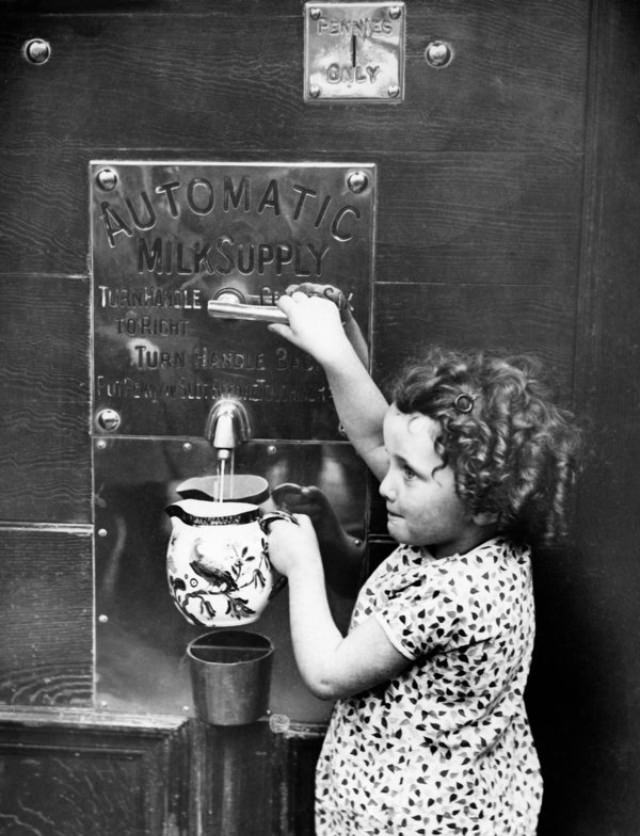
Milk machines became a fixture in the United Kingdom around 1960. They appeared on streets, in stations, and outside shops — dispensing glass bottles or cartons at any hour. The machines helped fill the gap during times when milkmen weren’t making deliveries.
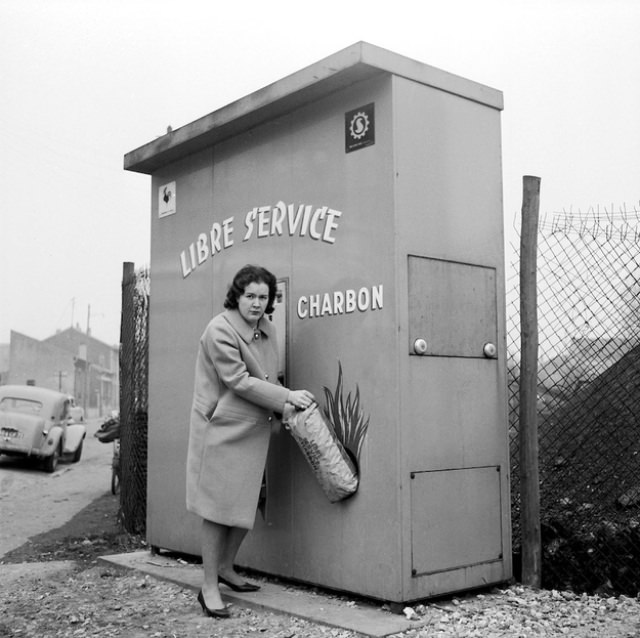
Coal — one of the most essential household fuels before central heating — was sold from vending machines in both England and France. These machines weren’t glamorous, but they served a real need in a time when coal heated homes and powered stoves.
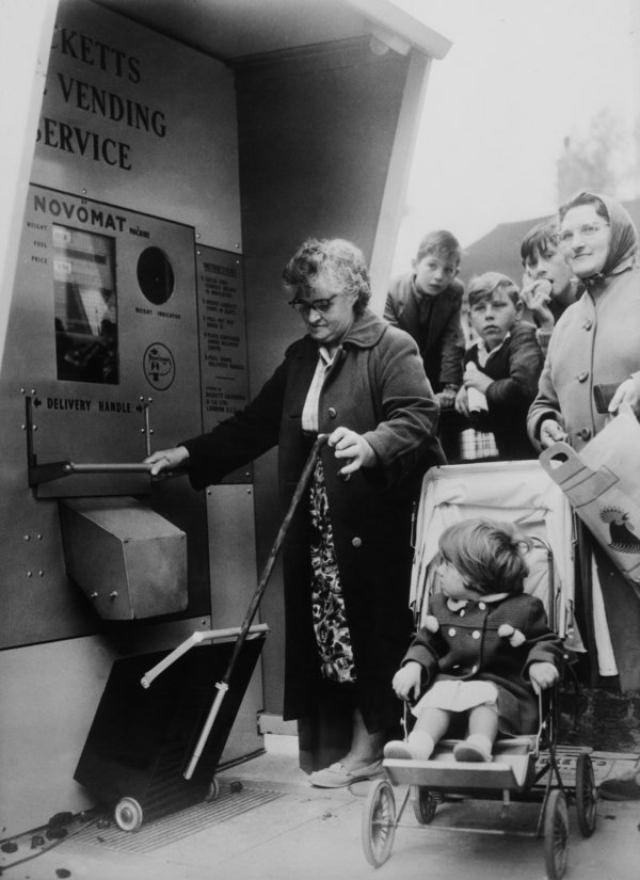
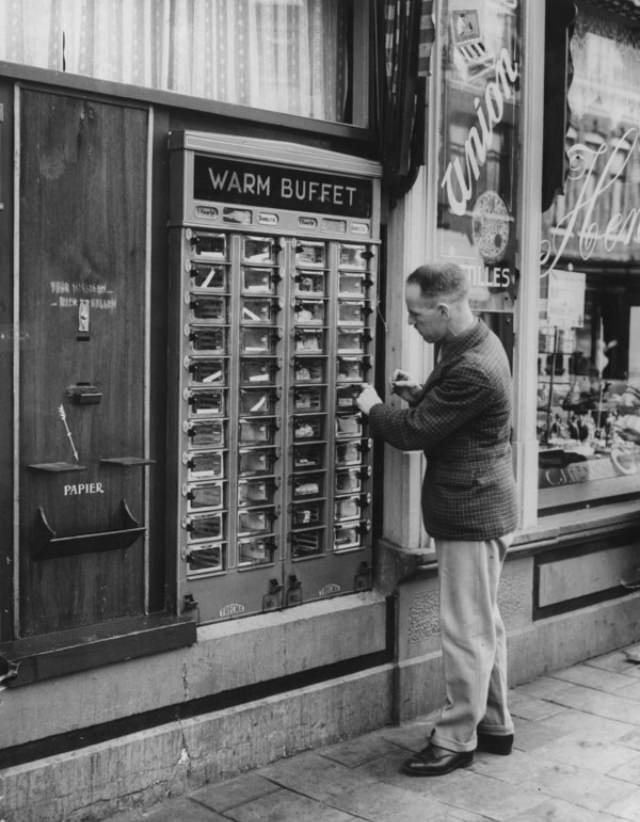
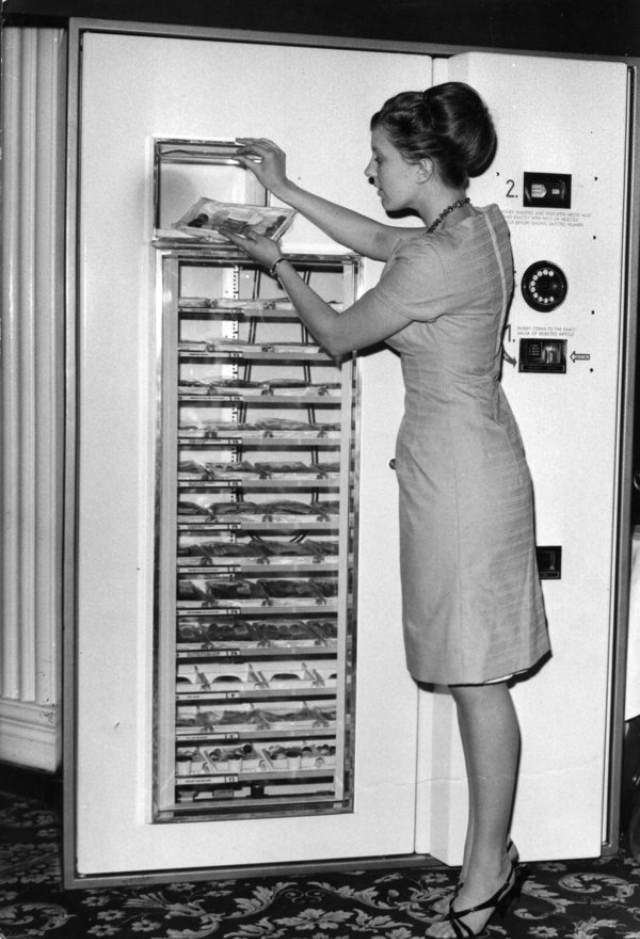
Warm meals from vending machines were a feature of Dutch public life as well. The warm lunch vending machine at Zandvoort in the Netherlands offered hot food to beachgoers and workers. The refrigerated “5 Star Microdine Hot Meal Service” took the concept further by keeping meals cold until they were heated for dispensing — a significant engineering step.
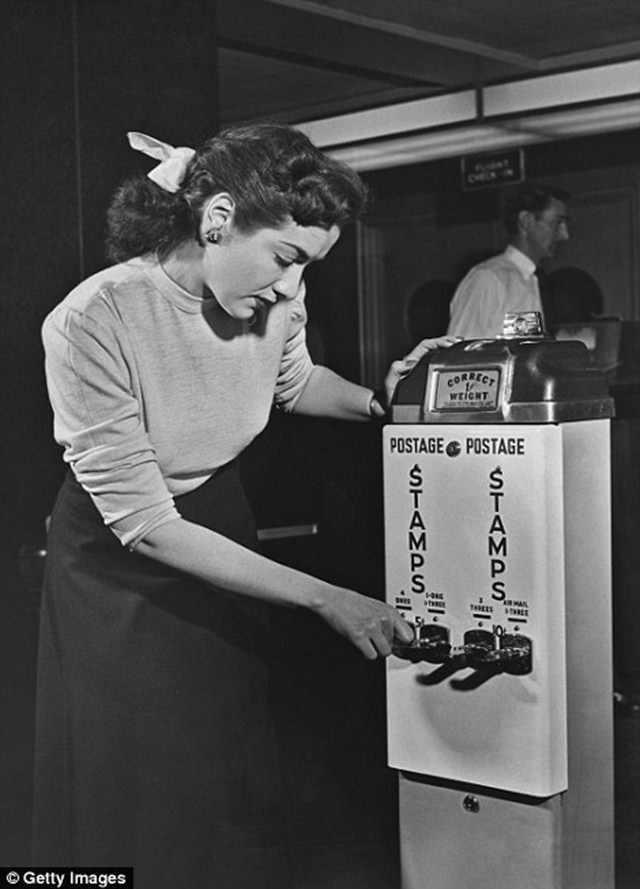
Stamps were another logical addition to the automated retail world. Post office vending machines allowed customers to buy postage without waiting in line — a convenience that was especially valuable on busy days. Light bulbs, meanwhile, appeared in machines that could be found in hardware and general retail locations.
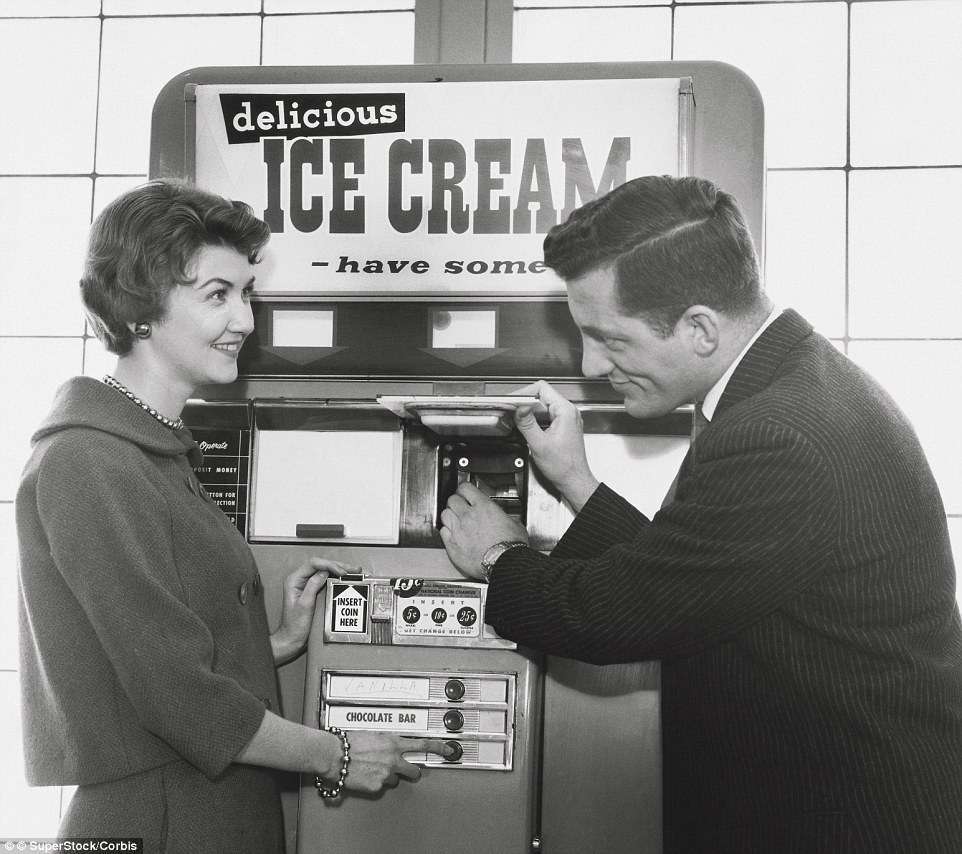
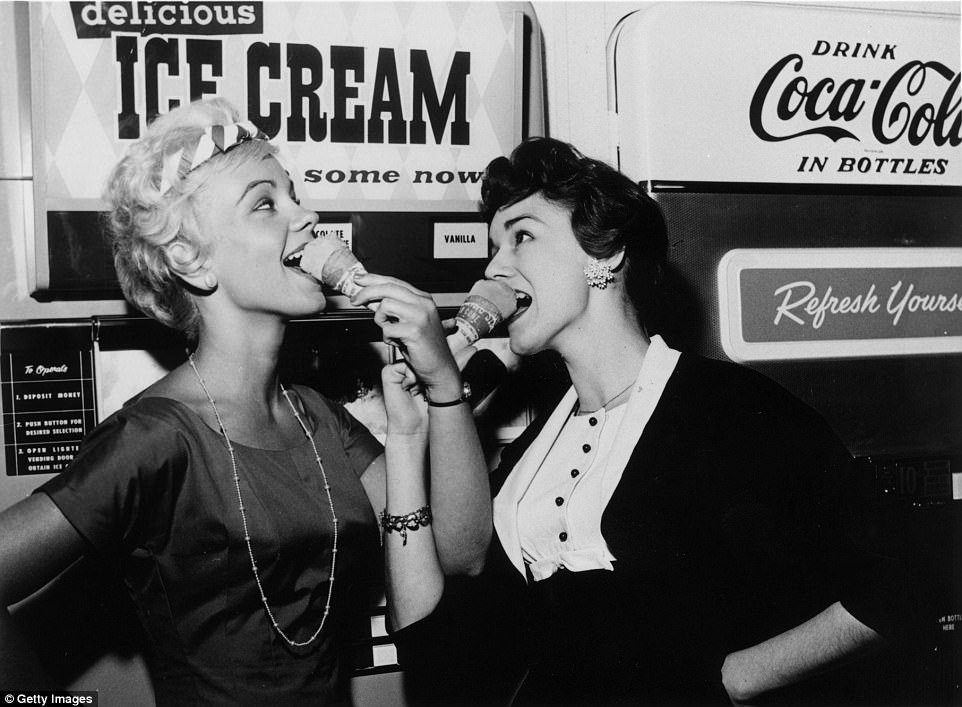
Ice cream machines solved a problem that had stumped earlier vending engineers: keeping products frozen rather than just cold. By 1952, dedicated ice cream vending machines maintained the freezing temperatures needed to keep products solid until purchased. A couple buying ice cream from one such machine in the 1930s showed how early the demand existed.
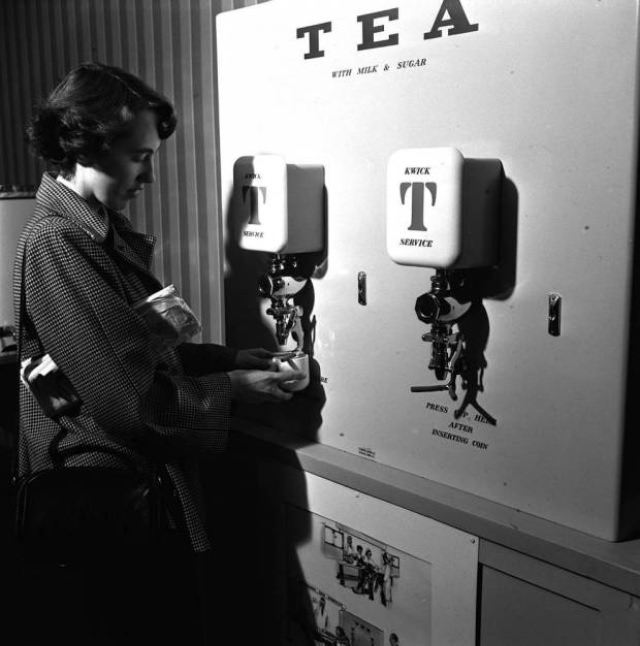
Tea — specifically tea with milk and sugar — had its own dedicated machine. No customization was offered; it came exactly one way. The machine reflected the standardized tastes of the era and the practical limits of automation at the time.
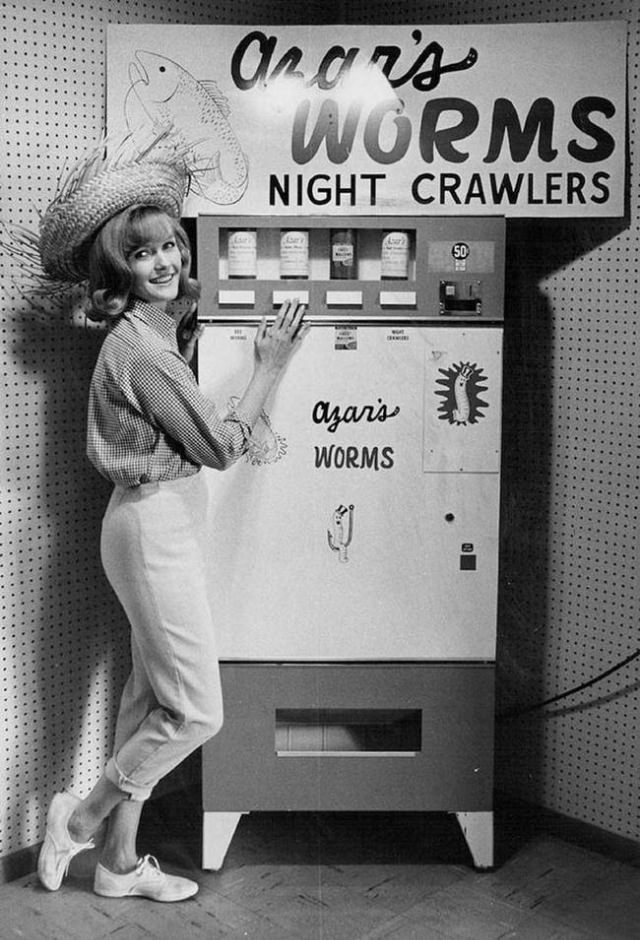
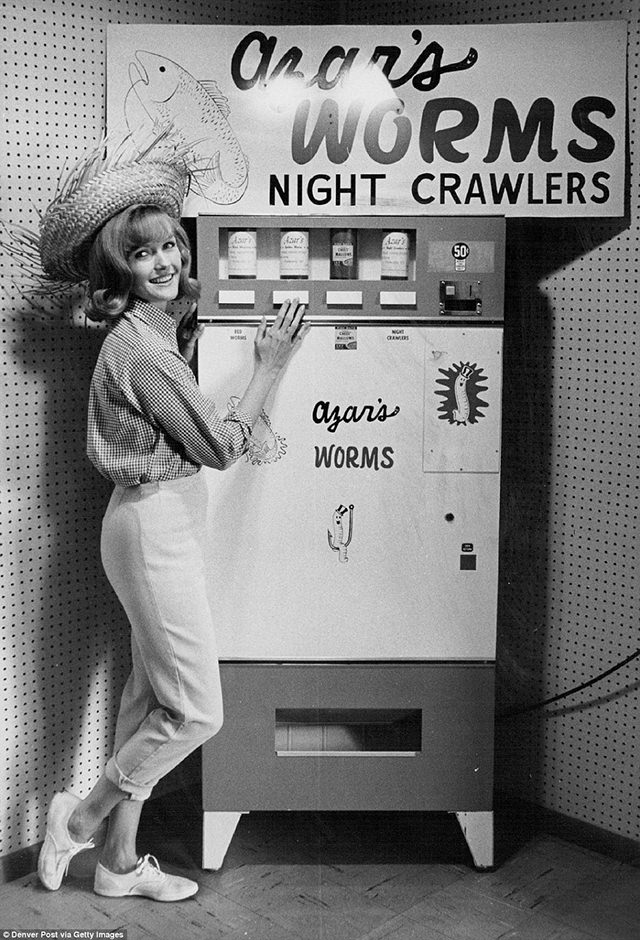
Fishermen were catered to as well. Bait machines appeared at fishing spots, dispensing live worms in temperature-controlled tubs for 50 cents each. A 1965 photograph shows one such machine, marketed specifically to anglers who needed bait on short notice. The machine maintained the correct temperature to keep the worms alive until purchased.
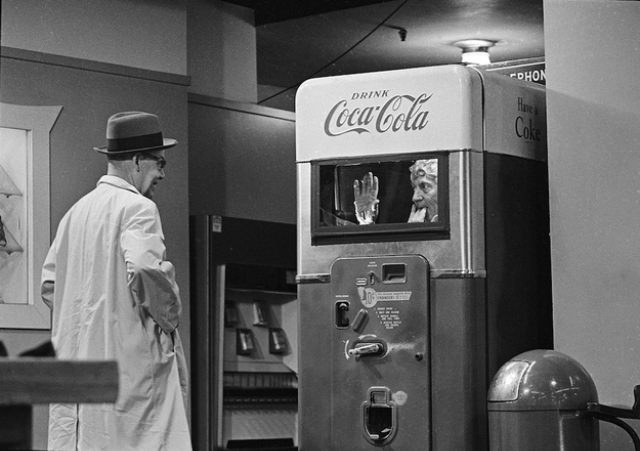
Some vending machine moments became genuinely famous. Harpo Marx once hid inside a Coca-Cola vending machine to surprise an unsuspecting person on Candid Camera — a stunt that required the cooperation of the show’s crew and a machine large enough to conceal a grown man.
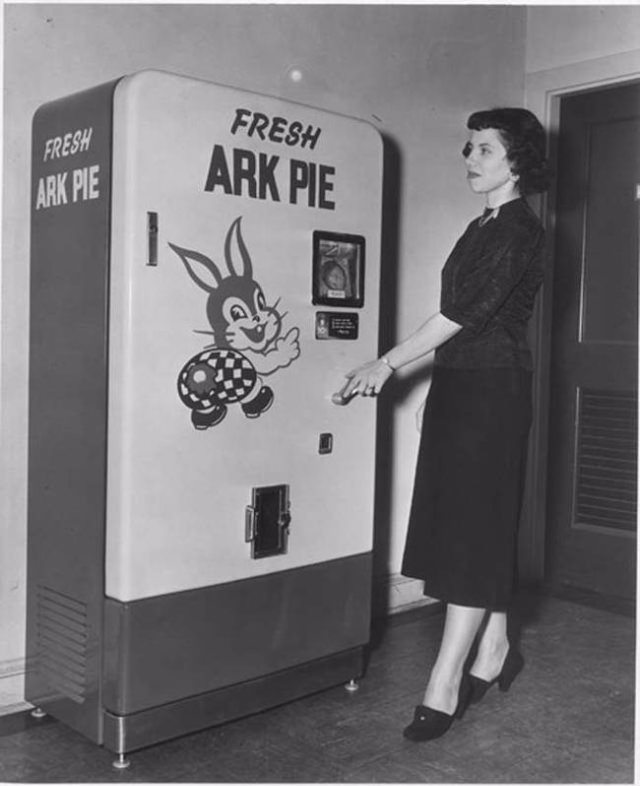
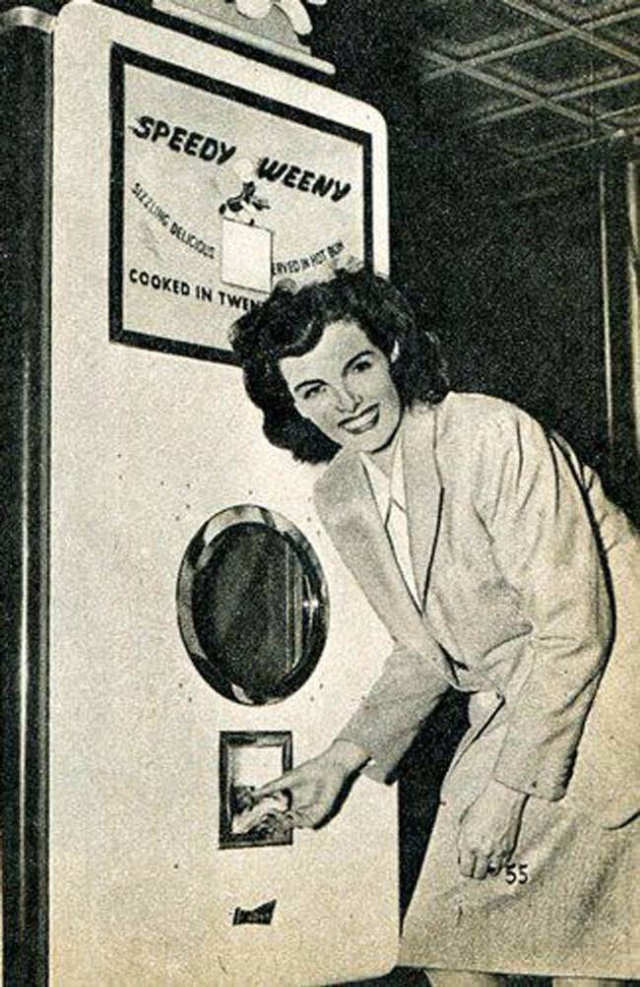
Other machines were simply hard to categorize. “Ark Pie” machines, hot dog dispensers, and unidentified food machines appeared in various locations without much documentation. Some sold items that no longer exist under the same names. Others sold things that seemed ordinary at the time but look bizarre from today’s perspective.

When I was a little girl in the 1970s, my dad‘s office building had a coffee vending machine. It also dispensed hot chocolate and chicken broth. It was free because it was for employees, and though the quality was probably not great, my brother and I thought it was a real thrill to get a hot (lukewarm?) drink from it.
I wonder if coffee vending machines exist anywhere today?
The airport in Austin, TX has a robotic coffee machine that lets you control the sugar and cream. It’s not as simple as yours, but it’s the same concept.
I’ve never be to a college campus that didnt have one
My dad’s office building in the 90s had the same thing. I used to love getting hot chocolate from there
I had to read a lot of comments below to know that you aren’t being sarcastic here..!
Coffee vending machines were pretty much ubiquitous in my youth (UK & western mainland Europe). I’ve had coffee from both bean-to-cup machines, and freeze dried coffee machines. You put your cup under the nozzle, put some coins in, & push the button corresponding to the type of coffee you want – latte, americano, espresso… And it either grinds & brews, or just blasts freeze-dried piss into your cup.
There’s still plenty around – my local “convenience store” has a Costa branded bean-to-cup machine.
And actually a lot of chain places get their coffee out of essentially what is a vending machine… Greggs for example (one of the highest grossing UK food outlets) has machines where the staff just needs to pick the cup size & push a button. The coffee is passable, and obviously very consistent.
Most people here see it as less good than barista-brewed coffee, obviously.
I got coffee at a Virginia rest stop from one :).
I use one on my college campus a few times a week.
KLIX machines are still pretty common in the UK in a certain type of place.
Coffee, tea, hot chocolate, soup and if you’re very lucky Bovril
Yeah, a tonne of places have a bean-to-cup machine for £2, but if you’re at a depot somewhere waiting for a pickup you’ll enjoy something warm or wet from a KLIX cup for 50p (or sometimes free).
Coffee and hot chocolate vending machines are on the WA state ferries. The coffee is terrible though.
My first full time job had a coffee vending machine in the break room. Worst coffee ever, but it was cheap.
Vermont’s welcome center in Guilford has one!
Did it use those cups with playing cards printed on them? I miss those machines!
U.S. Highway roadside rest area buildings (which have restrooms and maps for travelers) have these vending machines, and they offer coffee, tea, and hot cocoa. Near them are vending machines with cold drinks and others for snack food and candy.
those are still super common but I’ve never heard of one having chicken broth. good idea tho
I find coffee vending machines at freeway rest areas. Pretty terrible coffee, but it works.
My community colleges (I went to two different ones) both had these!! I think they’re so cool.
Got hot fries from a train station vending machine in Europe. Also bring-your-own bottle milk.
I wouldn’t say this is common in “Europe”, it’s famously a Dutch thing (FEBO).
I used to live somewhere with a milk vending machine with different flavours, including one that changed every so often and it was awesome
Up until the seventies, the city about five miles away from me had a milk carton vending machine out in front of the dairy.
Also, I remember using one of those “perfume” spraying machines in a restroom back then, too, but it was in the men’s room and it sprayed your choice of four different colognes. My father dared me to try it, even giving me a quarter to do it. It reeked!
I didn’t see anything particularly weird. Have you see vending machines in Asia?
This is triggering a memory for me… I looked it up and apparently it was Netherlands, where I remember there being burgers, fries, as well as pastries, savoury sandwiches etc, in vending machines around the city. They had little booths behind for prepping the food and filling the slots when they got bought. This was about 15-20 years or so ago.
Google Febo, these things are still around.
i’ve seen pictures and such of “automats” since i was a kid, and always wanted to try one. if i’m every in the Netherlands again, i’ll have to check it out!
That actually sounds more like an automat
First few jobs I had in the 90s had the one with coffee, hot chocolate, and broth. When I was too broke to bring my lunch, that broth was there to save the day. Never tried the coffee, but the hot chocolate was weak.
There is a raw meat vending machine in Weston, MO. It has steaks, sausages, and a variety of other things. It is outside of a meat market.
In 1955, John Gilbert Graham bought a life insurance policy on his mother from a vending machine as she boarded a flight at Stapleton Airport in Denver. He knew it was a sound investment, as he placed a bomb in her luggage. The bomb exposed shirt after takeoff, killing everyone on board.
Shortly thereafter, they stopped selling life insurance from vending machines in airports.
When I was a little girl in the 1970s, my dad‘s office building had a coffee vending machine. It also dispensed hot chocolate and chicken broth. It was free because it was for employees, and though the quality was probably not great, my brother and I thought it was a real thrill to get a hot (lukewarm?) drink from it.
I wonder if coffee vending machines exist anywhere today?
The airport in Austin, TX has a robotic coffee machine that lets you control the sugar and cream. It’s not as simple as yours, but it’s the same concept.
I’ve never be to a college campus that didnt have one
I had to read a lot of comments below to know that you aren’t being sarcastic here..!
Coffee vending machines were pretty much ubiquitous in my youth (UK & western mainland Europe). I’ve had coffee from both bean-to-cup machines, and freeze dried coffee machines. You put your cup under the nozzle, put some coins in, & push the button corresponding to the type of coffee you want – latte, americano, espresso… And it either grinds & brews, or just blasts freeze-dried piss into your cup.
There’s still plenty around – my local “convenience store” has a Costa branded bean-to-cup machine.
And actually a lot of chain places get their coffee out of essentially what is a vending machine… Greggs for example (one of the highest grossing UK food outlets) has machines where the staff just needs to pick the cup size & push a button. The coffee is passable, and obviously very consistent.
I find the quality of vending machine coffee significantly worse than instant coffee from home.
It’s a sacrifice, but when you’re freezing your ass off and the college cafe isn’t open yet, they’re lifesavers. 😂
My dad’s office building in the 90s had the same thing. I used to love getting hot chocolate from there
The downtown bus terminal in Knoxville TN has coffee and hot chocolate vending machine. It’s $1.25 for a 12oz cup.
I got coffee at a Virginia rest stop from one :).
Yes, I was going to say rest stops. Nothing like feeding your change into the slot, making your choice, and having the cup drop sideways so your precious coffee can spew all over the outside of the cup and down the drain. I almost wanted that to happen, for the bent-over belly laugh it caused me.
KLIX machines are still pretty common in the UK in a certain type of place.
Coffee, tea, hot chocolate, soup and if you’re very lucky Bovril
Yeah, a tonne of places have a bean-to-cup machine for £2, but if you’re at a depot somewhere waiting for a pickup you’ll enjoy something warm or wet from a KLIX cup for 50p (or sometimes free).
Coffee and hot chocolate vending machines are on the WA state ferries. The coffee is terrible though.
My first full time job had a coffee vending machine in the break room. Worst coffee ever, but it was cheap.
Vermont’s welcome center in Guilford has one!
Did it use those cups with playing cards printed on them? I miss those machines!
U.S. Highway roadside rest area buildings (which have restrooms and maps for travelers) have these vending machines, and they offer coffee, tea, and hot cocoa. Near them are vending machines with cold drinks and others for snack food and candy.
I find coffee vending machines at freeway rest areas. Pretty terrible coffee, but it works.
My community colleges (I went to two different ones) both had these!! I think they’re so cool.
Got hot fries from a train station vending machine in Europe. Also bring-your-own bottle milk.
I wouldn’t say this is common in “Europe”, it’s famously a Dutch thing (FEBO).
I used to live somewhere with a milk vending machine with different flavours, including one that changed every so often and it was awesome
Up until the seventies, the city about five miles away from me had a milk carton vending machine out in front of the dairy.
Also, I remember using one of those “perfume” spraying machines in a restroom back then, too, but it was in the men’s room and it sprayed your choice of four different colognes. My father dared me to try it, even giving me a quarter to do it. It reeked!
I didn’t see anything particularly weird. Have you see vending machines in Asia?
This is triggering a memory for me… I looked it up and apparently it was Netherlands, where I remember there being burgers, fries, as well as pastries, savoury sandwiches etc, in vending machines around the city. They had little booths behind for prepping the food and filling the slots when they got bought. This was about 15-20 years or so ago.
Google Febo, these things are still around.
i’ve seen pictures and such of “automats” since i was a kid, and always wanted to try one. if i’m every in the Netherlands again, i’ll have to check it out!
That actually sounds more like an automat
First few jobs I had in the 90s had the one with coffee, hot chocolate, and broth. When I was too broke to bring my lunch, that broth was there to save the day. Never tried the coffee, but the hot chocolate was weak.
Lookup “Automat”, its basically a restaurant that serves via vending machines.
The movie Dark City had a bunch of scenes in one.
https://youtu.be/IyNa4vZHC9c
There is a raw meat vending machine in Weston, MO. It has steaks, sausages, and a variety of other things. It is outside of a meat market.
In 1955, John Gilbert Graham bought a life insurance policy on his mother from a vending machine as she boarded a flight at Stapleton Airport in Denver. He knew it was a sound investment, as he placed a bomb in her luggage. The bomb exposed shirt after takeoff, killing everyone on board.
Shortly thereafter, they stopped selling life insurance from vending machines in airports.
I wish I had a soup machine at my job.
1 and #22 are the same photo