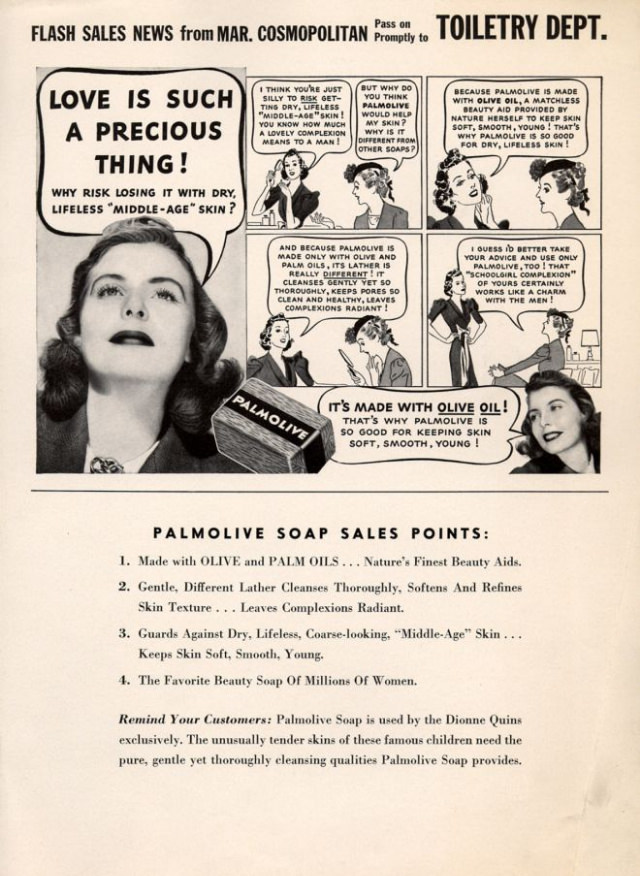
Advertising in the 1930s and 1940s operated on a simple but damaging formula: find a woman’s insecurity, make it bigger, then sell her the solution. Palmolive soap ads from this era did exactly that. They told women that dry, dull skin — what the ads called “middle-age” skin — was a threat to their marriages. The message was direct: if your husband pulls away, look in the mirror first.
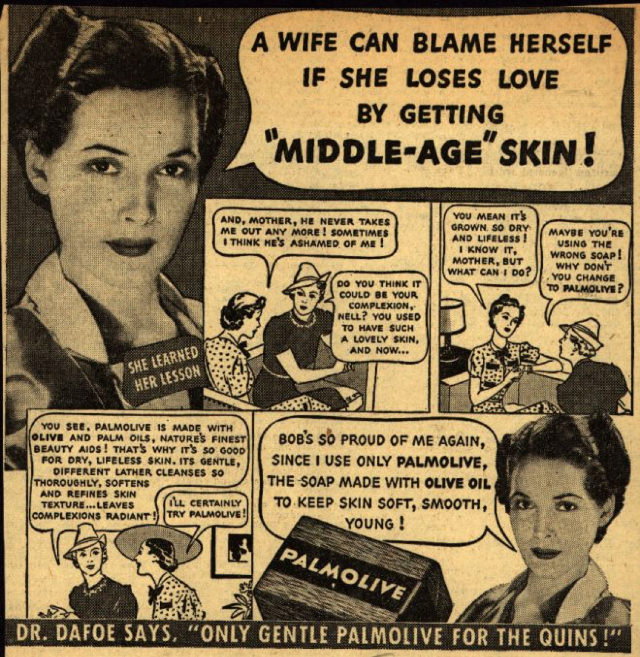
The ads frequently framed the husband’s emotional distance as the wife’s fault. If he seemed cold or disinterested, the copy suggested she ask herself whether her skin was to blame. This wasn’t subtle. Some ads posed the question outright — does your husband shut you out? — and then pointed straight to her complexion as the answer.
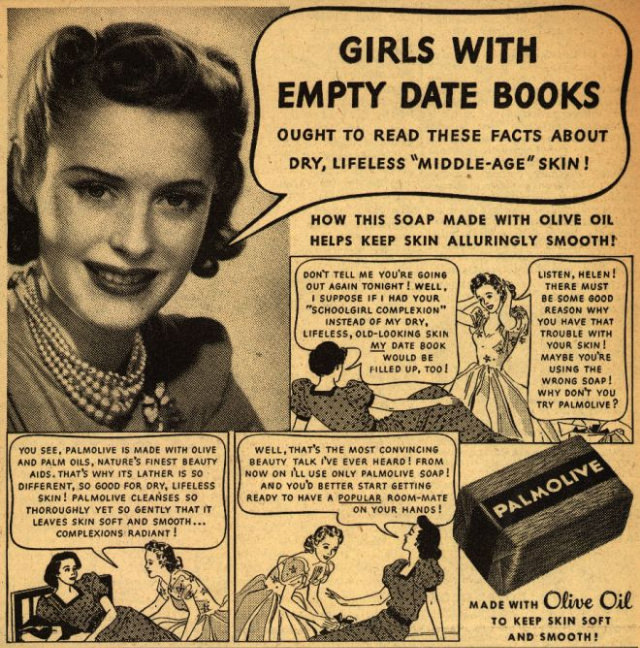
Palmolive leaned heavily on the phrase “middle-age skin” as a warning label. The term was used to describe skin that had lost its softness and glow — something the ads presented as a personal failure rather than a natural part of aging. Women were told that allowing their skin to reach that stage was a choice, and a dangerous one.
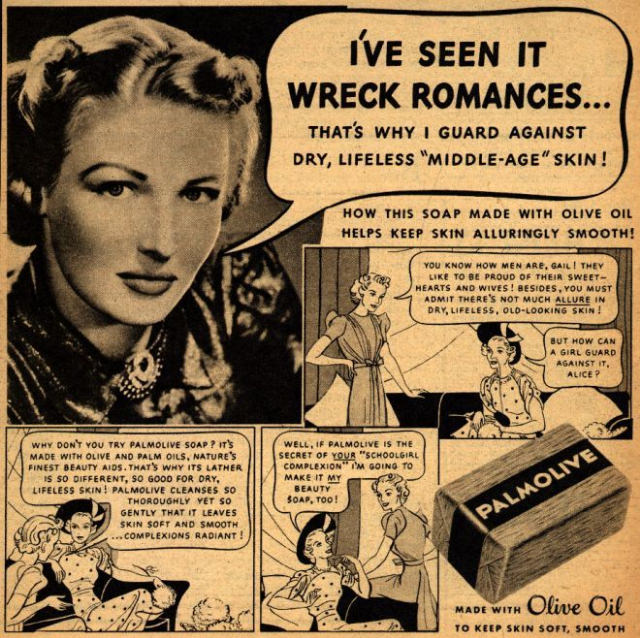
The ads were part of a much wider trend in mid-century advertising that sold products by manufacturing shame. Beauty brands, soap companies, and hygiene product makers all used a version of the same playbook. Palmolive simply applied it to the fear of a failing marriage, which made the stakes feel especially high.
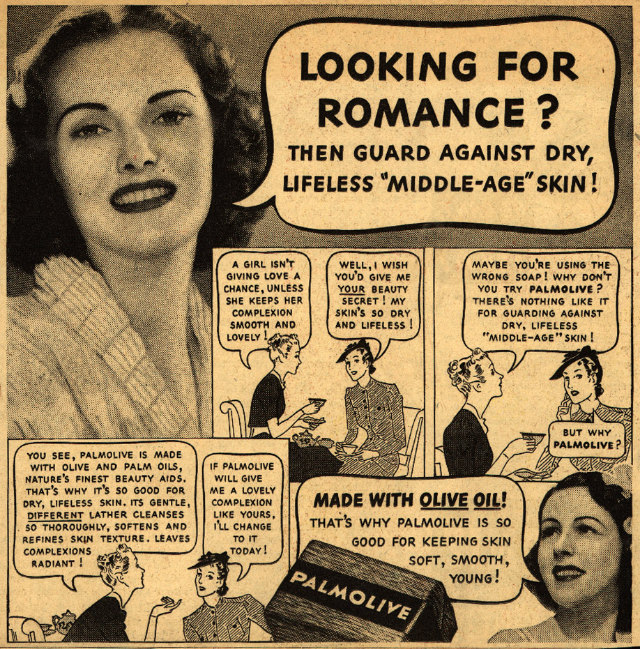
Many of the ads featured women in domestic settings — at vanity tables, in kitchens, or seated beside their husbands. The visual language reinforced the idea that a woman’s primary role was in the home, and that her worth within it depended on her appearance.
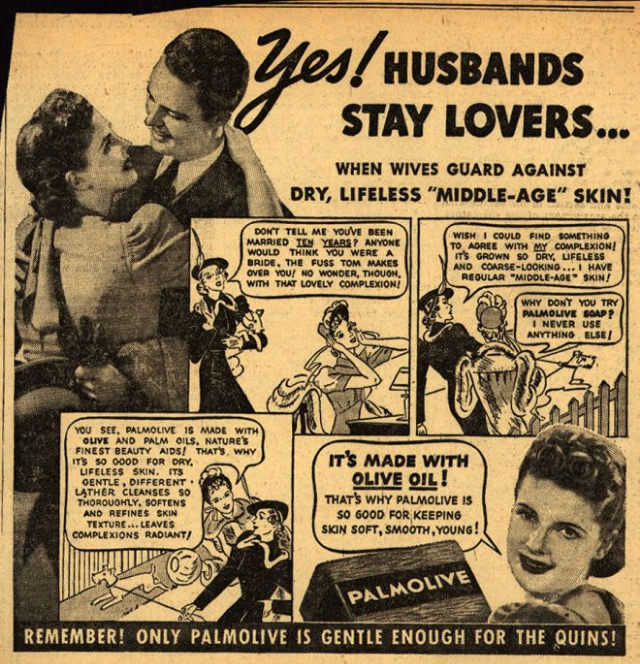
Copywriters of the era were skilled at making the threat feel personal. The ads often used second-person language — “your husband,” “your skin,” “your fault” — so that each reader felt the message was aimed directly at her. It created urgency and made the product feel like a necessary fix.
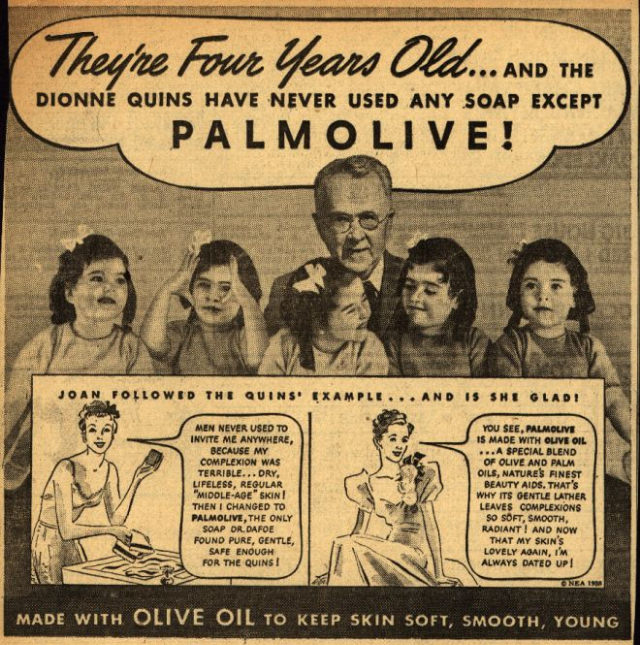
Palmolive also used endorsements and testimonials. Women in the ads claimed that switching to Palmolive had transformed their skin and, by extension, saved their relationships. These stories were presented as real, relatable, and achievable — as long as the reader made the right choice at the soap counter.
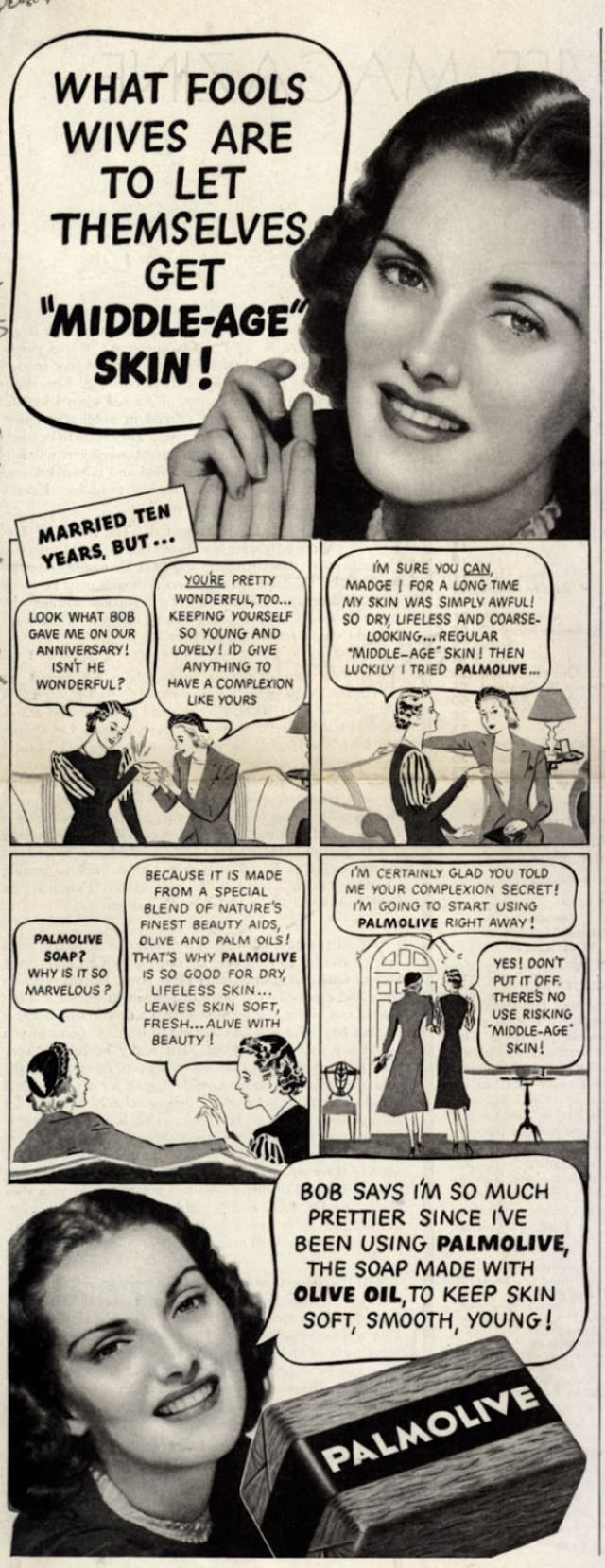
The idea that a bar of soap could carry the weight of a marriage says a great deal about how women were viewed in this period. Their value was tied to physical appearance, and that appearance was something they were expected to maintain through constant effort and the right products.
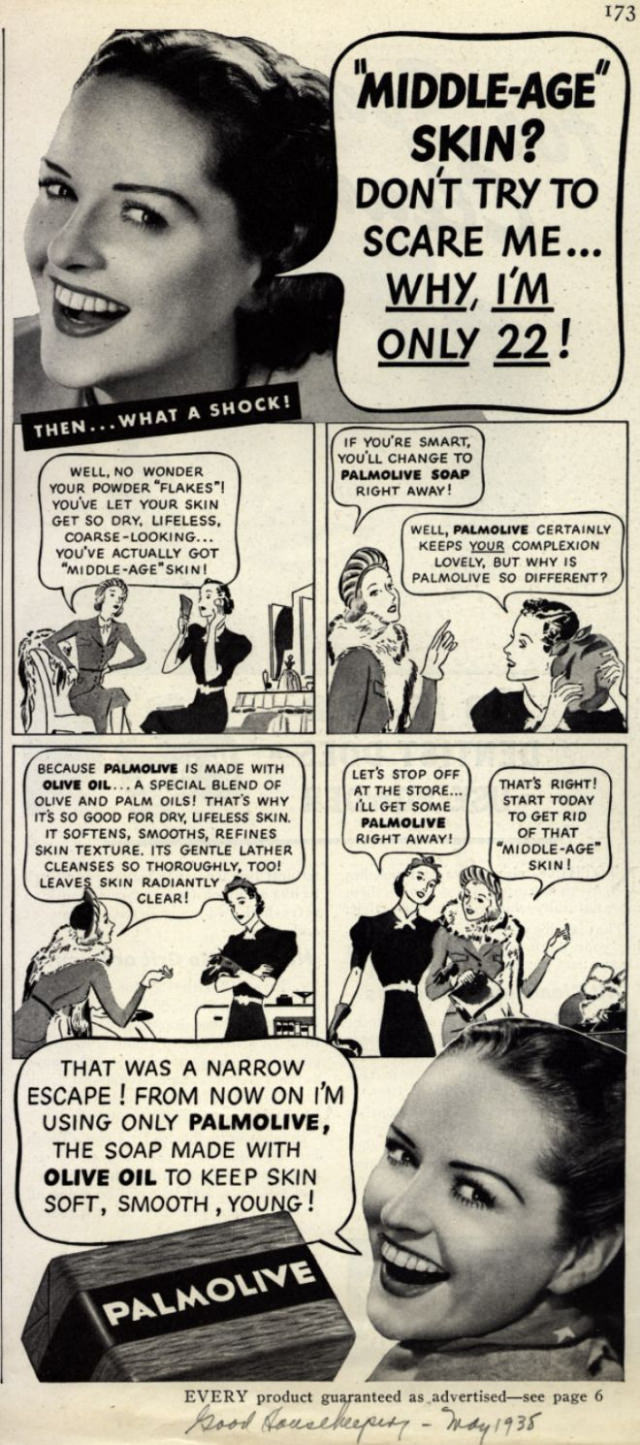
What makes these ads particularly striking today is how openly they placed the blame on women. There was no attempt to soften the accusation. If a marriage was struggling, the ads told women to examine their skincare routine before anything else.
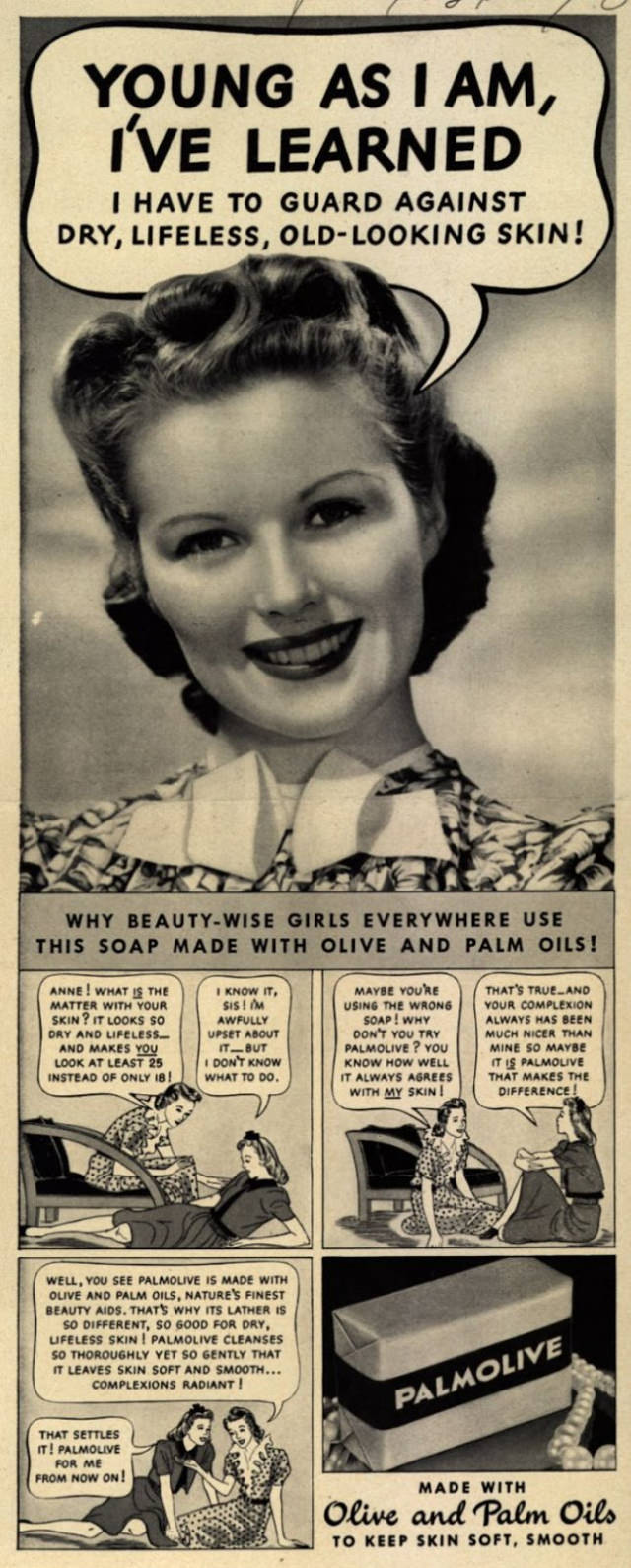
The visual design of the ads matched the tone of the copy. Illustrations and photographs showed anxious-looking women studying their reflections, or husbands turning away. These images made the emotional stakes visible and reinforced the fear the copy was selling.
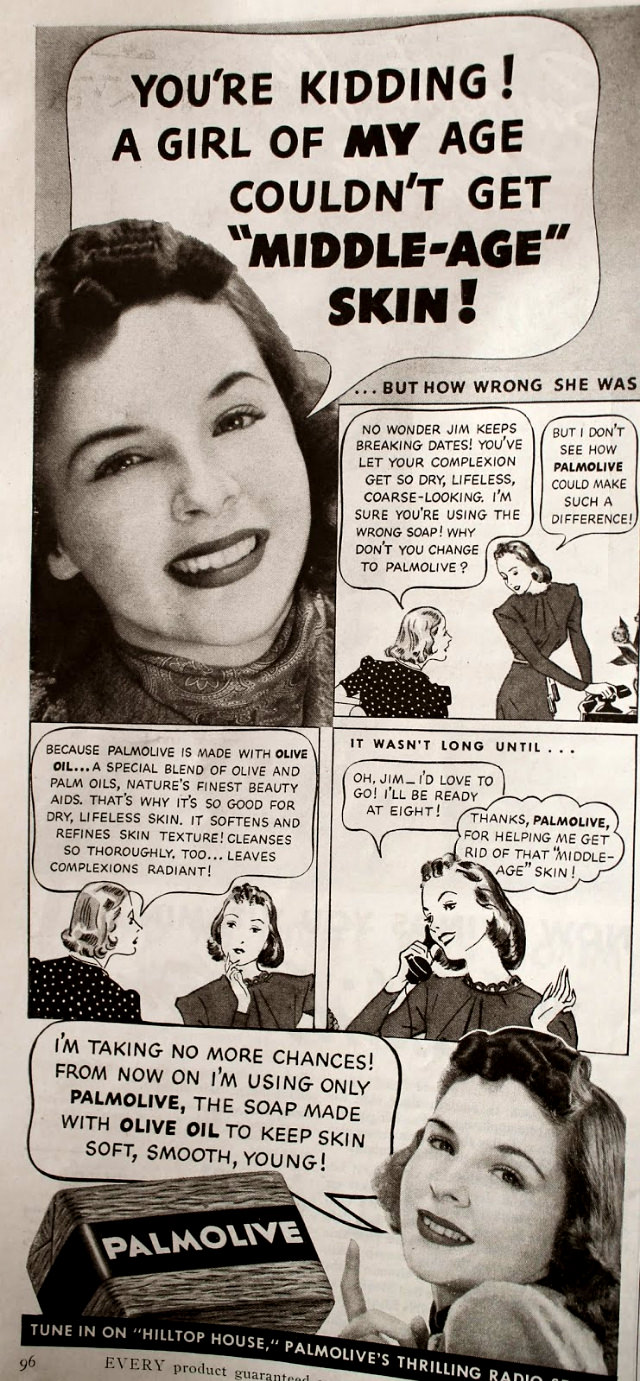
Palmolive was far from alone in using this approach. But the marriage angle gave their ads a specific edge. Skin cream and soap were reframed not as beauty products but as tools for keeping a family together — a framing that gave them far more power over the reader.
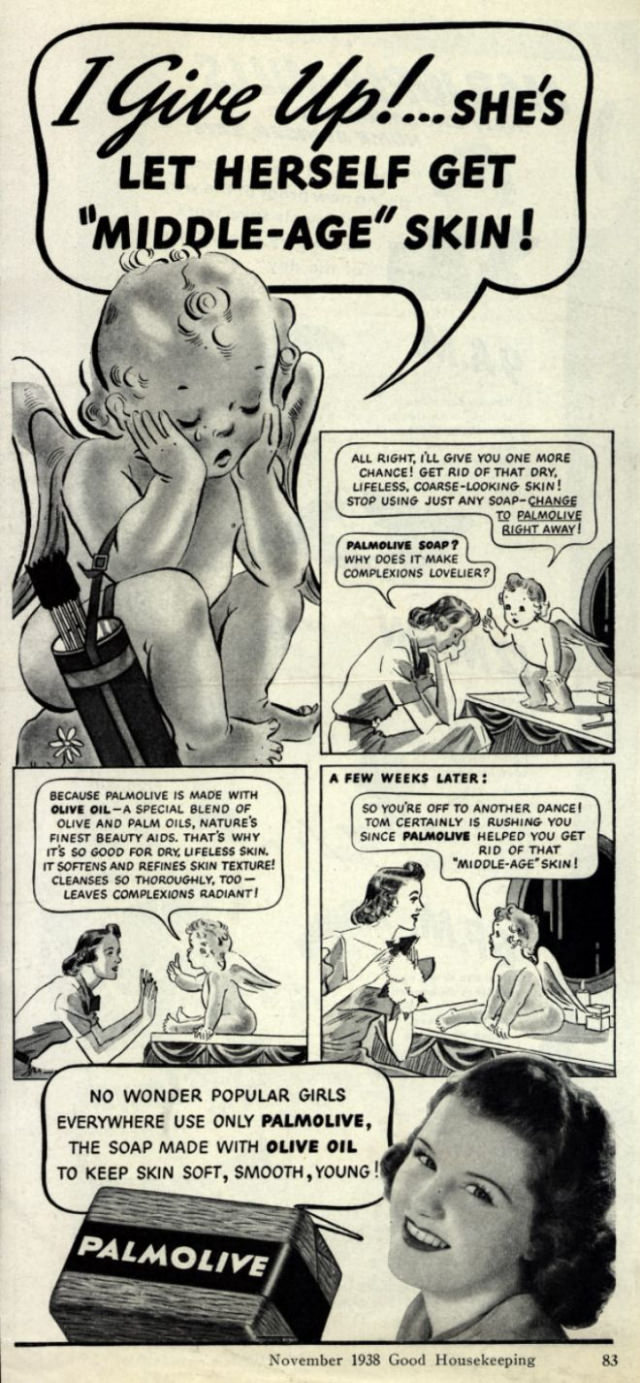
By the 1940s, the ads had become more polished in their presentation, but the core message remained the same. A woman’s skin was her responsibility, her husband’s happiness depended on it, and Palmolive was the straightforward solution.
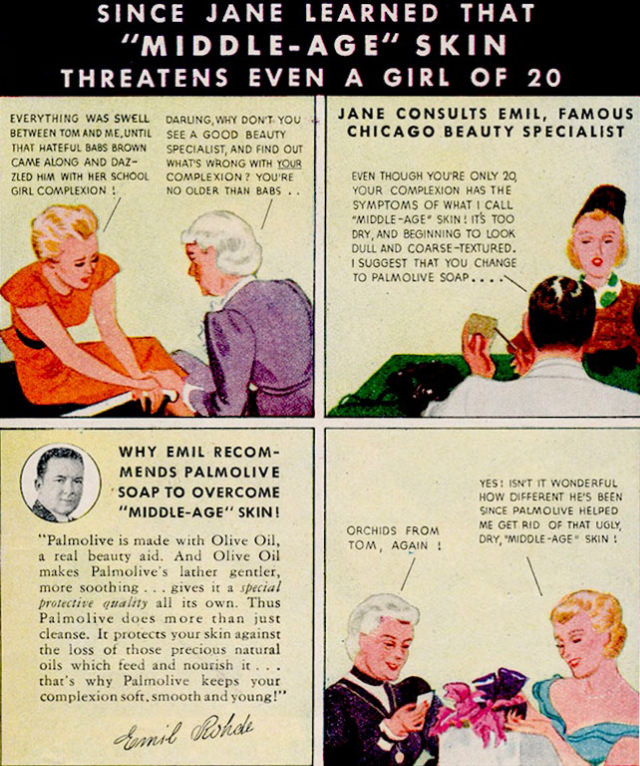
Looking at these ads as a collection, the pattern is impossible to miss. Every headline, every illustration, and every block of body copy worked toward the same goal: making women feel that aging skin was a moral failing with real consequences for their home life.
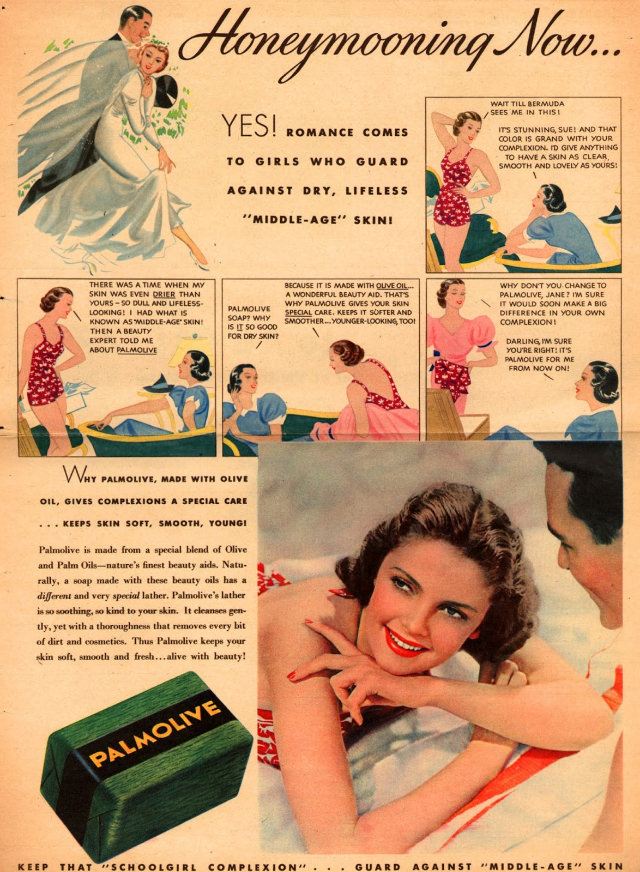
These ads are now primary sources — direct windows into the gender norms and advertising tactics of mid-century America. They document, plainly and without filter, what advertisers believed women feared most, and how willing they were to exploit that fear to move product off the shelf.