
Nestled at the foot of the Sierra Nevada mountains in southern Spain, Granada sits at the meeting point of four rivers and centuries of layered history. From its days as a Moorish stronghold — which lasted from the 11th century until 1492 — to its role in the Spanish Civil War of 1936, the city has never sat quietly. These photographs, taken throughout the 1960s, capture Granada during a decade when the old and the new existed side by side on the same narrow street.
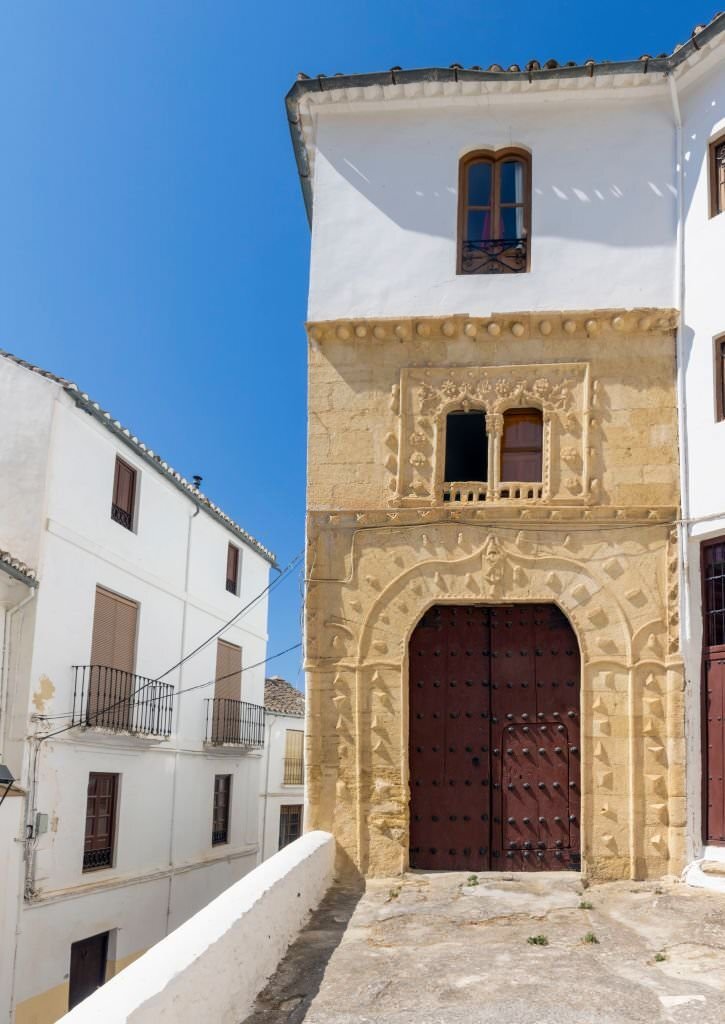
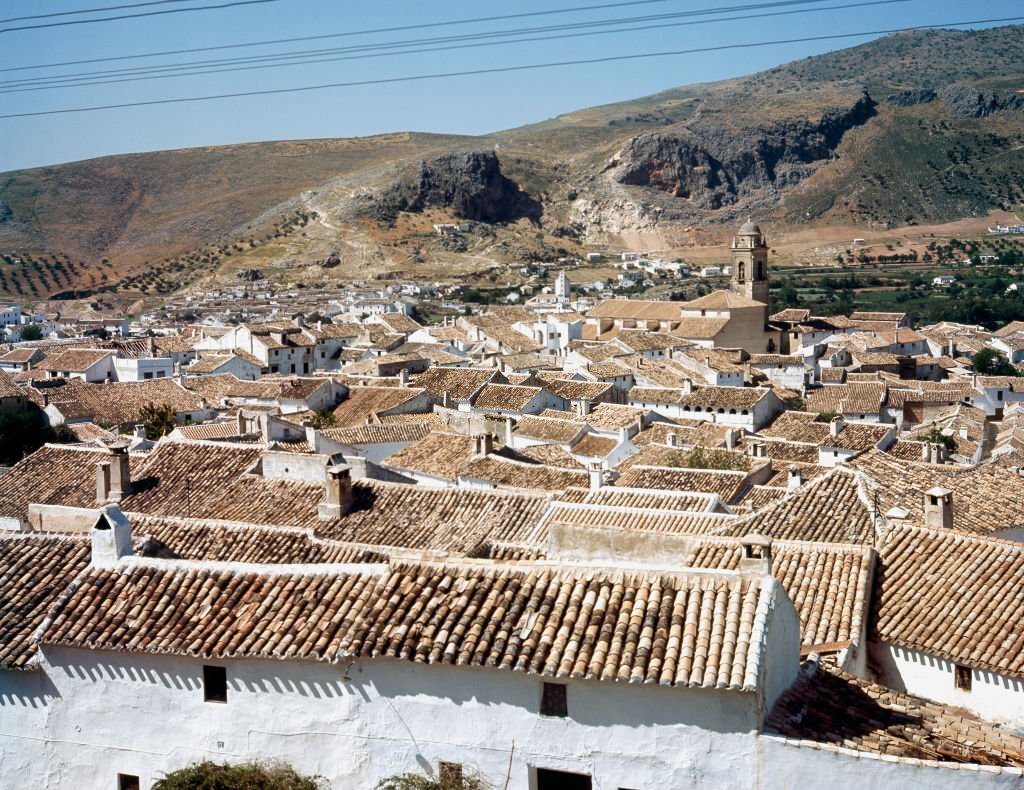
The province surrounding Granada is dramatic in its own right. Rocky ridges, white hilltop towns, and deep gorges define the landscape beyond the city limits. Alhama de Granada, one of the province’s most striking towns, perches above a gorge carved by the Alhama River. It was a place the Moors famously mourned losing to Spanish forces in 1482, decades before the full fall of the Nasrid kingdom.
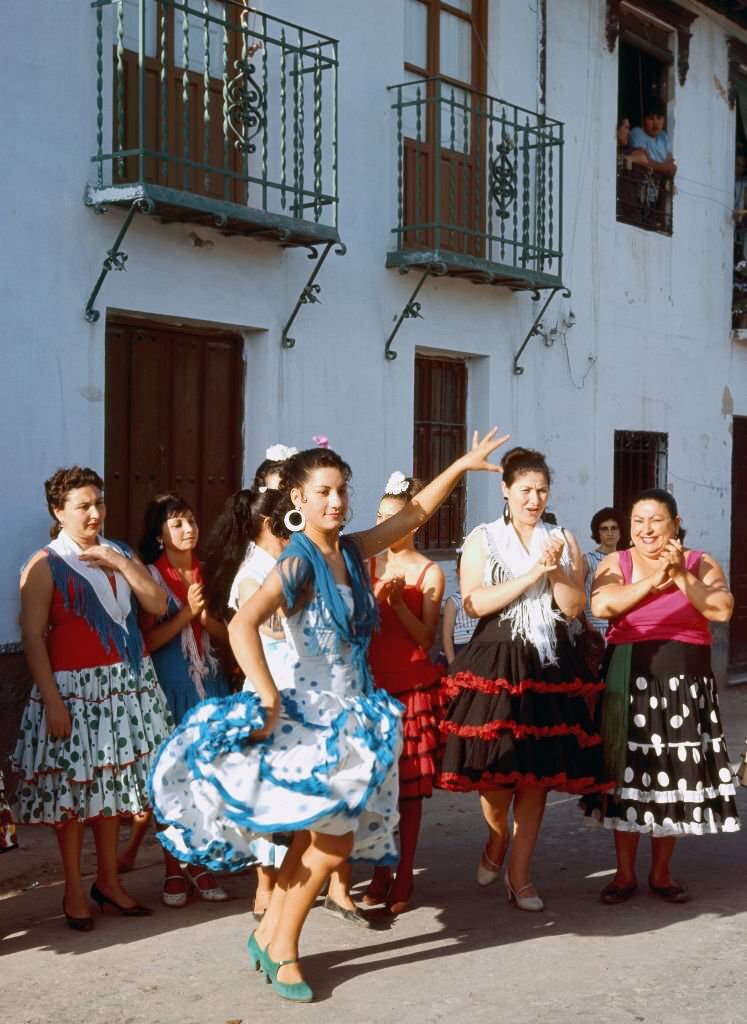
No neighborhood defined Granada’s cultural identity in the 1960s quite like Sacromonte. Built into the hillside northeast of the city center, Sacromonte was home to the Roma community, who had lived in cave dwellings carved directly into the rock for generations. Flamenco wasn’t a stage performance here — it was woven into daily life. Visitors came from across Europe and beyond to watch performances in intimate cave settings, where the sound bounced off bare stone walls.
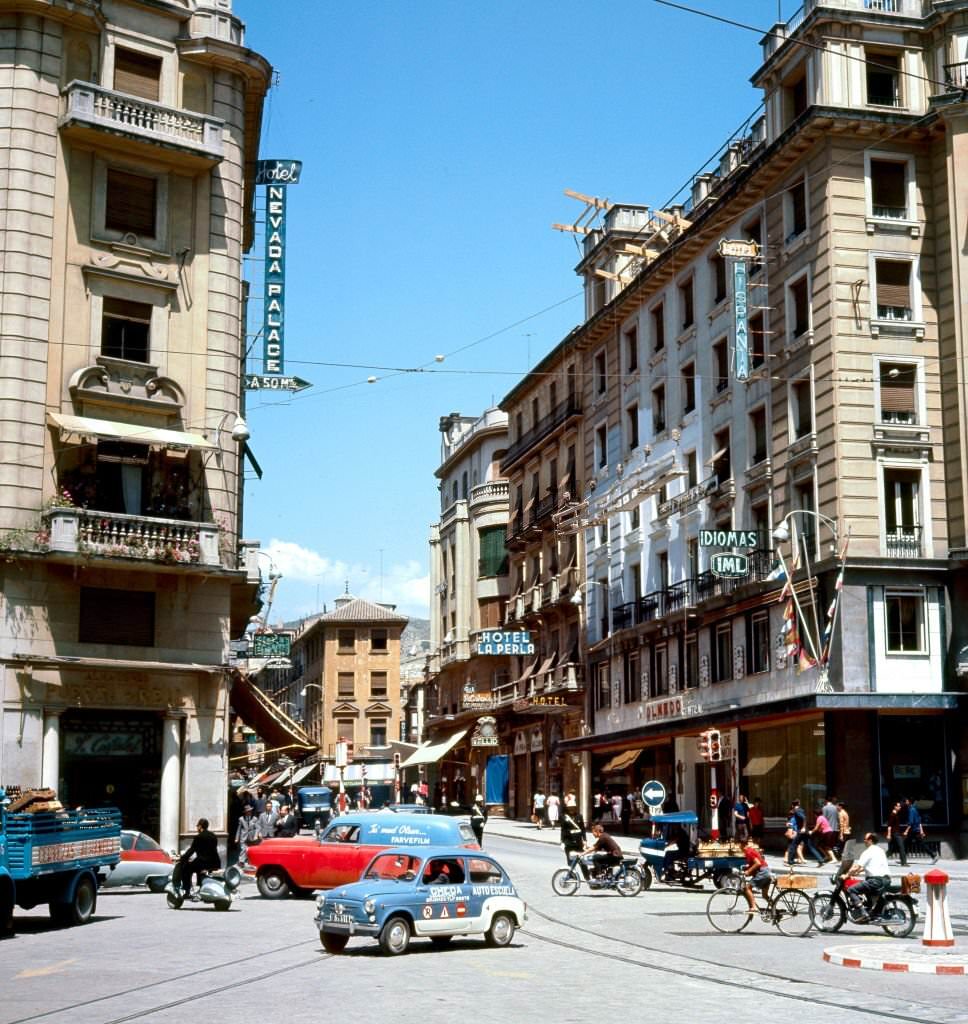
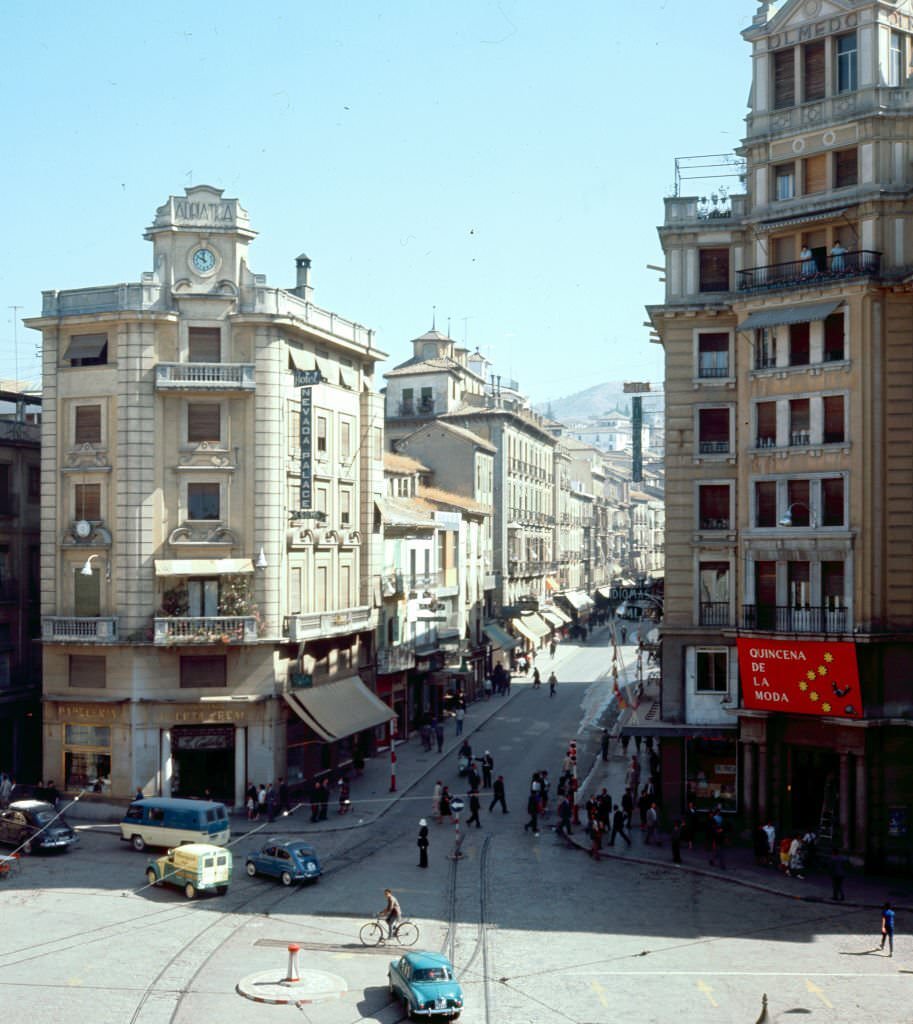
The Puerta Real, or Royal Gate, served as Granada’s commercial heart. The street of Los Reyes Católicos — named for the Catholic Monarchs, Ferdinand and Isabella — ran through the city’s busiest shopping and transit corridor. By the 1960s, cars had joined the foot traffic, and shop fronts lined both sides of the boulevard. It was the pulse point of the modern city.
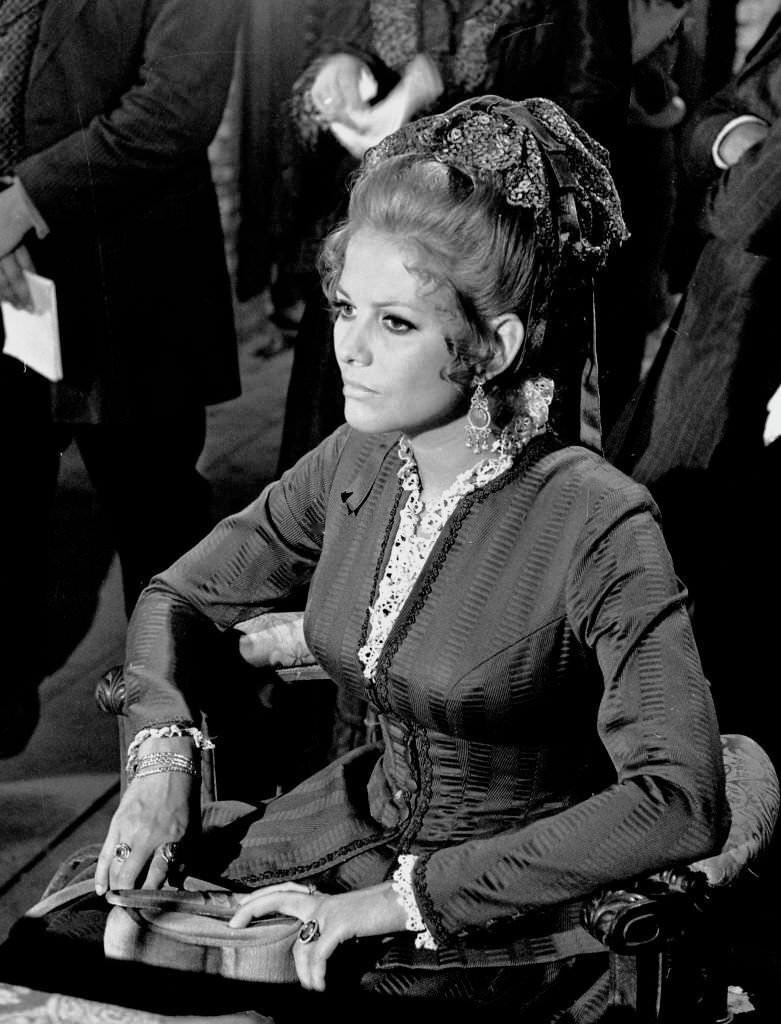
Granada’s striking landscapes and historic architecture attracted filmmakers during this period. In 1968, Italian actress Claudia Cardinale was photographed in the city during filming of Sergio Leone’s epic western “Once Upon a Time in the West.” The production used locations across Spain, and Granada’s unique visual character made it a natural choice for the project.
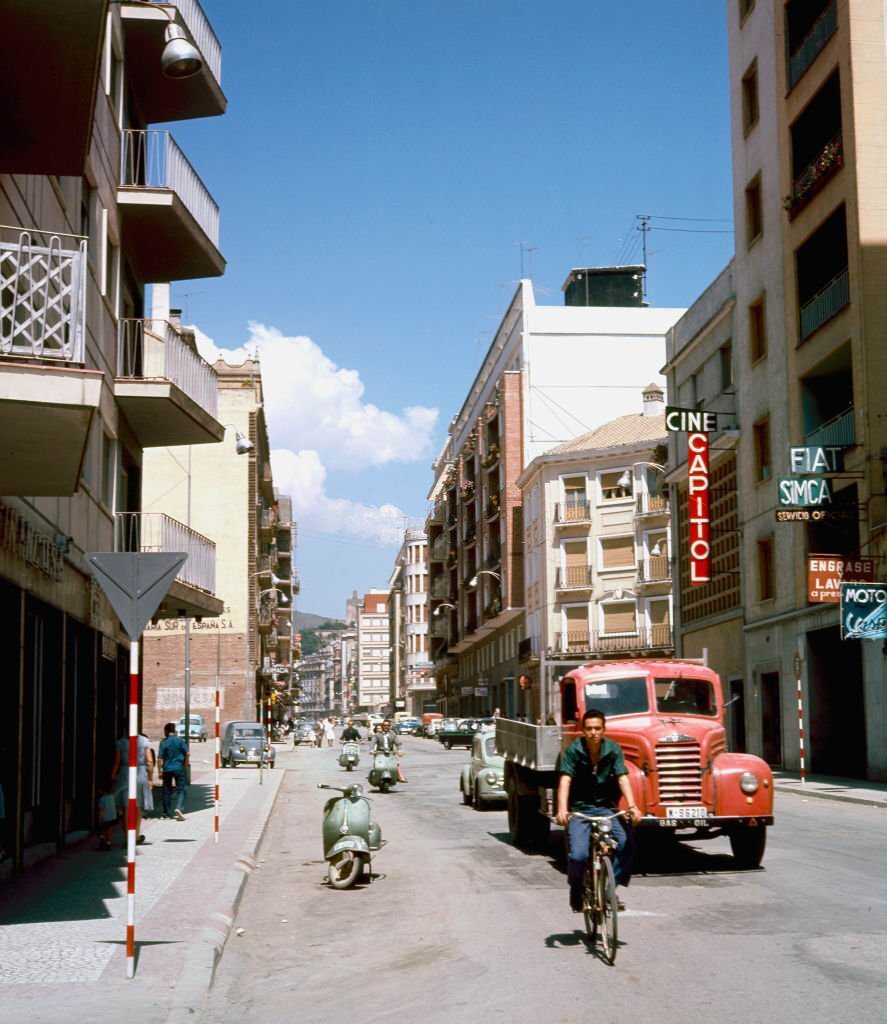
Granada’s streets in the late 1960s had a particular rhythm. Narrow lanes in the older quarters gave way to wider avenues in the city center. Vendors, schoolchildren, priests, and tourists all moved through the same spaces. The architecture shifted from whitewashed medieval walls to Baroque church facades within a few hundred meters.
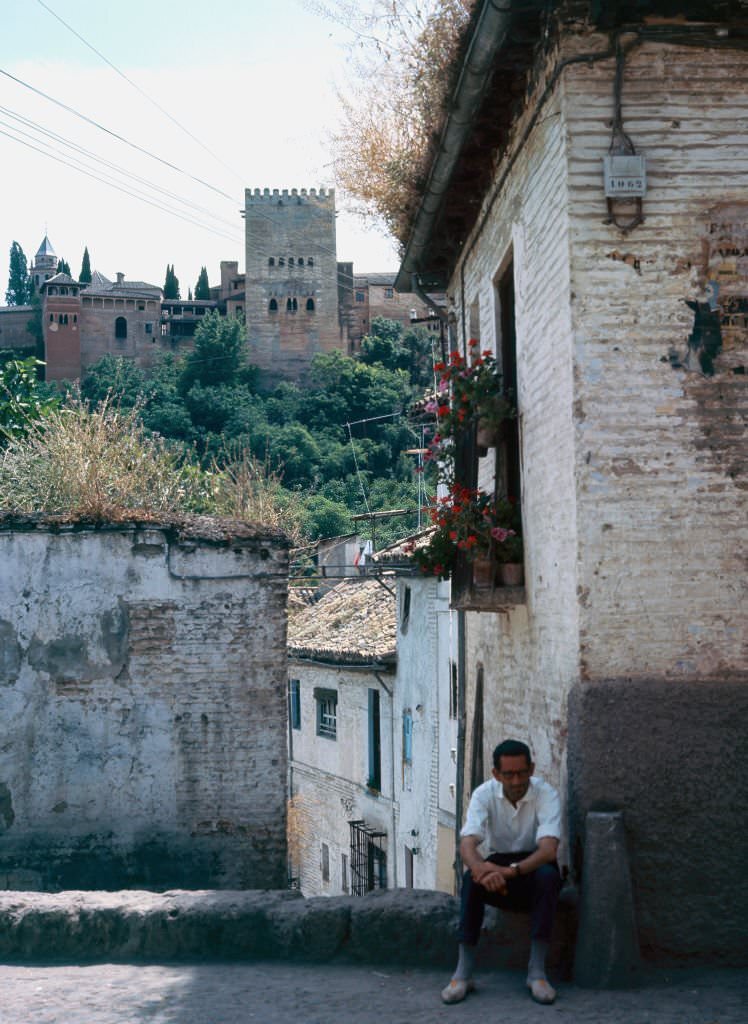
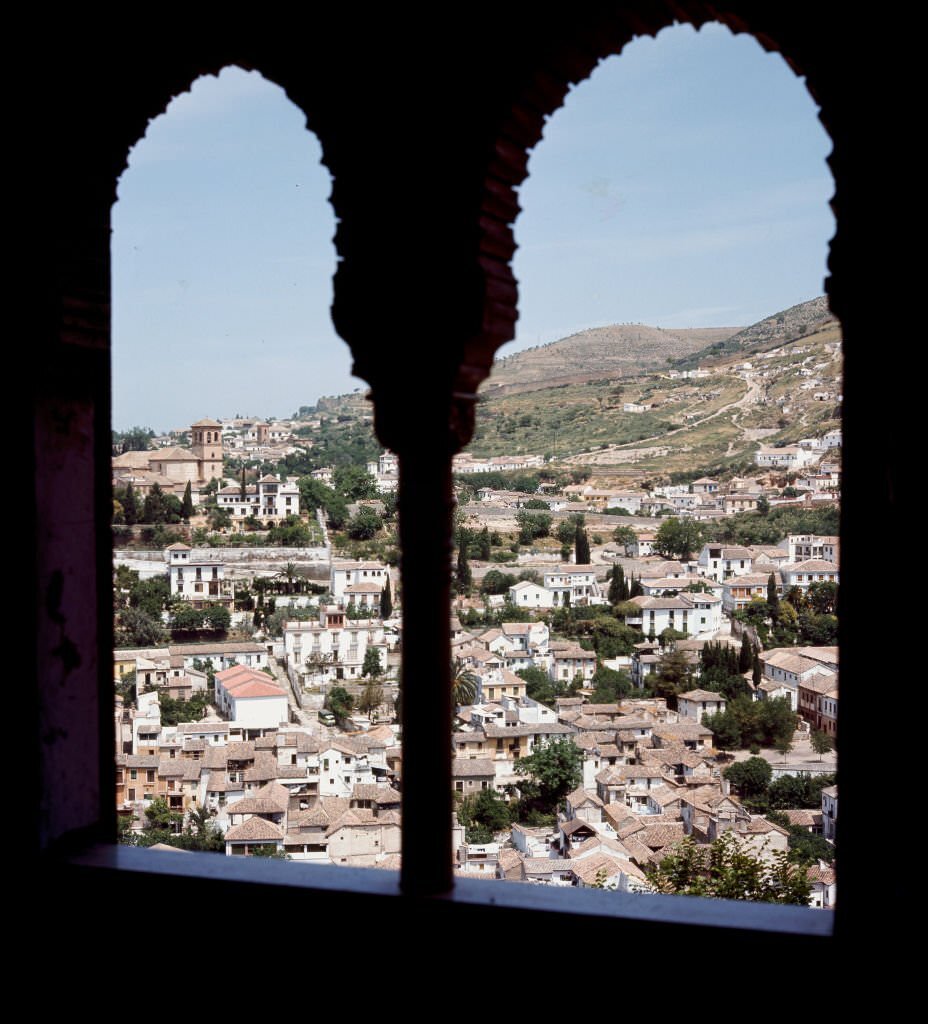
The Albaicín — Granada’s ancient Muslim quarter — sits on a hill directly across from the Alhambra. After 1492, Muslims and Jews were pushed into this neighborhood as the reconquered city reorganized itself. By the 20th century, the whitewashed houses and steep switchback streets remained largely intact. Cafes and tapas bars clung to corners where the hillside opened into views of the Alhambra across the valley.
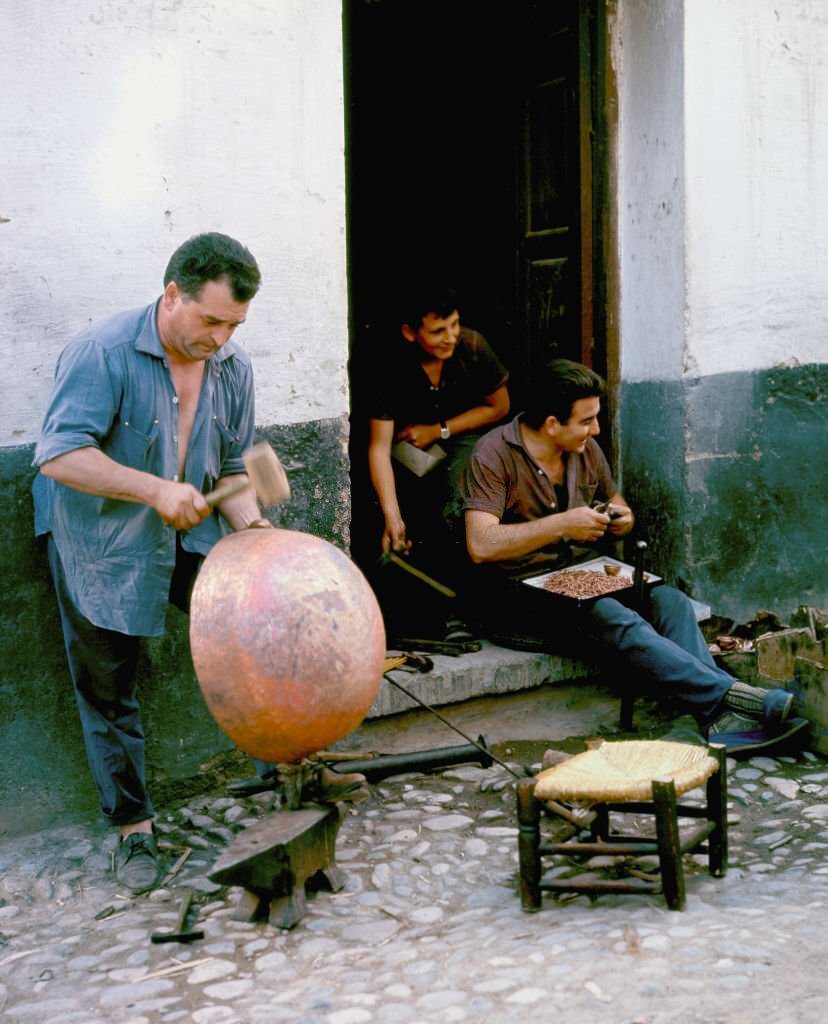
The Albaicín was also a working neighborhood. Artisans practiced traditional crafts in small workshops tucked between residential buildings. Leather goods, ceramics, metalwork, and textiles were common trades. These craftsmen operated much as their predecessors had for centuries, using techniques passed down through families.
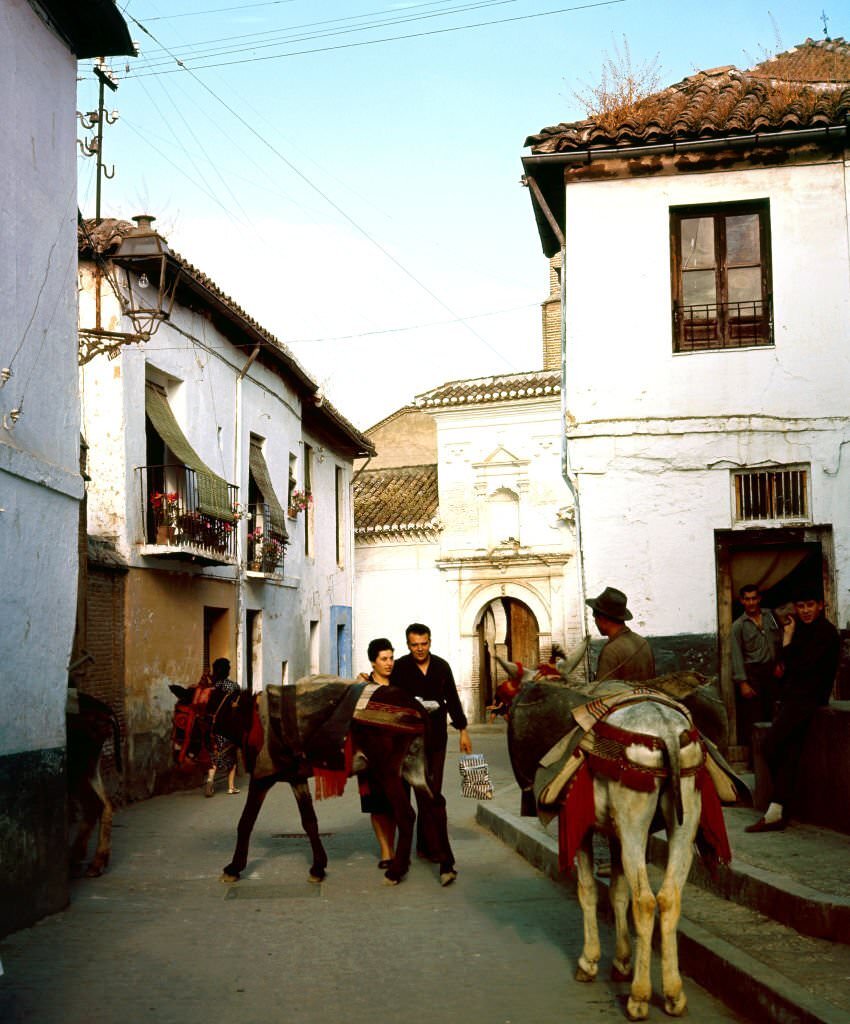
Calle del Agua — literally “Water Street” — is one of the Albaicín’s oldest thoroughfares. Its name references the water channels, known as acequias, that the Moors engineered throughout the neighborhood to supply homes and gardens. Many of those channels were still functioning in the 1960s, hidden beneath the streets and behind garden walls.
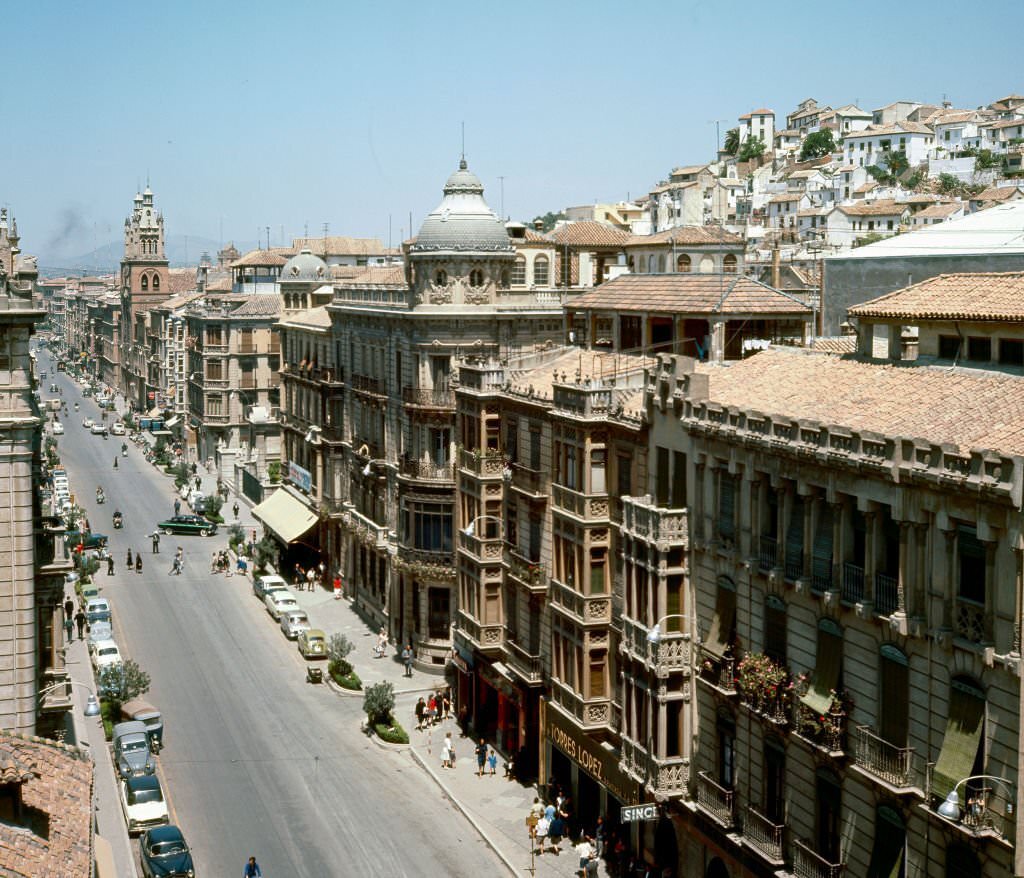
The Gran Vía de Colón was Granada’s answer to the grand European boulevard. Driven through older neighborhoods at the turn of the 20th century, it connected the cathedral district to the northern parts of the city. By the 1960s, it was fully lined with banks, hotels, and commercial buildings, and carried the heaviest vehicle traffic in the city.
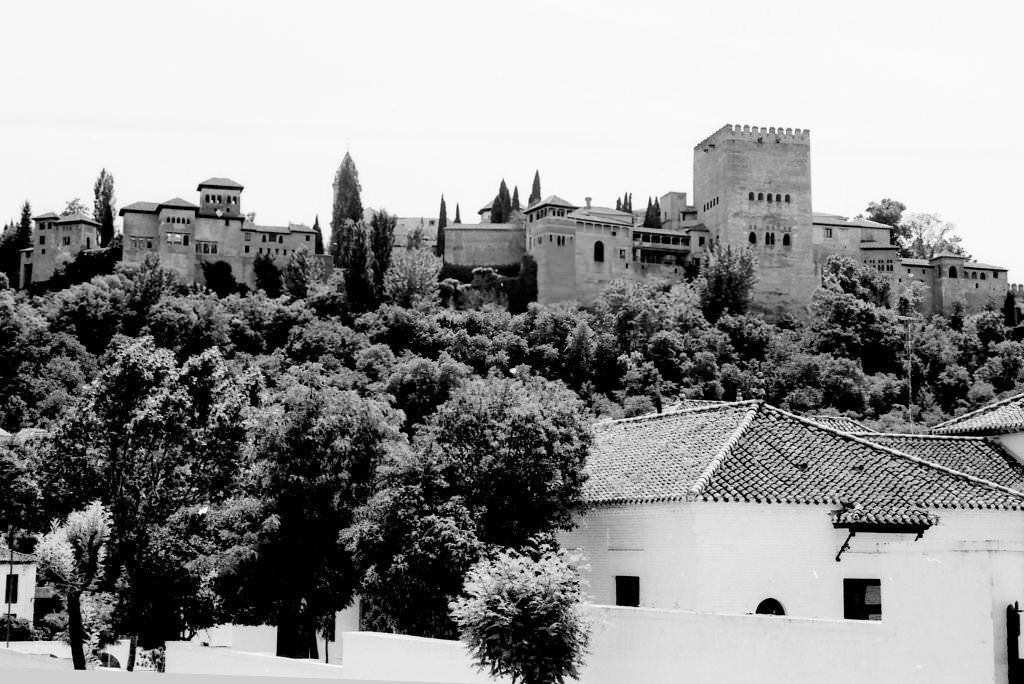
From the higher vantage points of the city, Granada spread out in layers. The dense medieval core gave way to wider 19th- and 20th-century streets on the plains below. The Sierra Nevada dominated the skyline to the southeast, snow-capped for much of the year. The Alhambra complex sat prominently on its own ridge, visible from nearly every elevated point in the city.
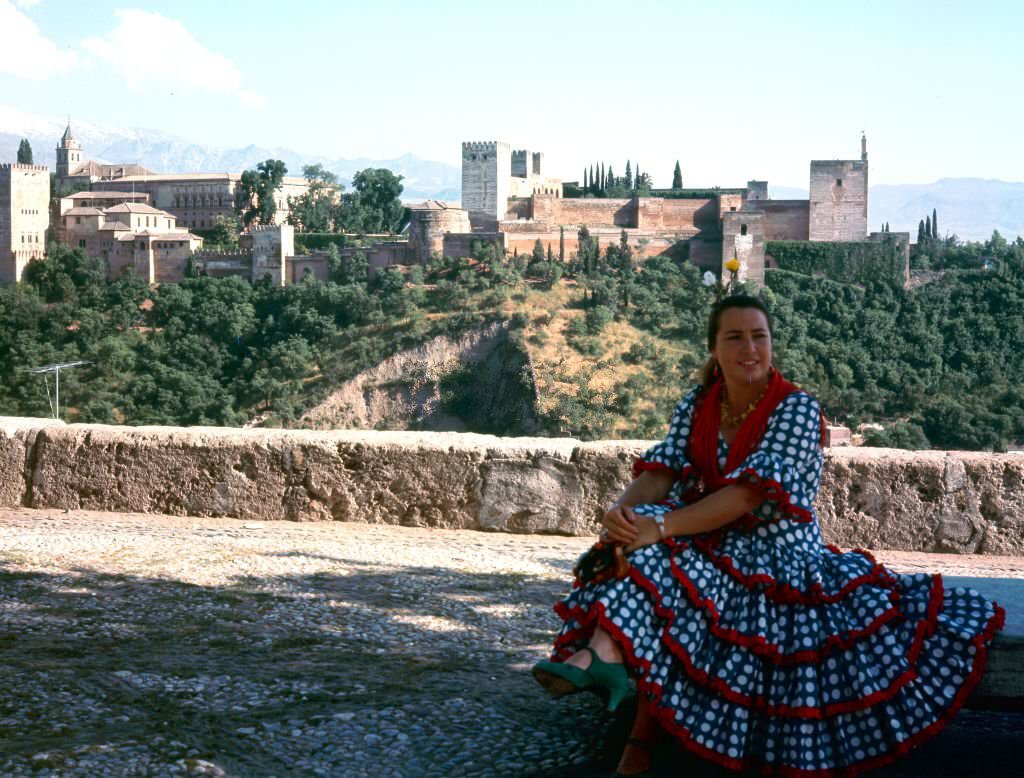
The Alhambra is Granada’s defining structure. Built by the Nasrid dynasty — the last Muslim rulers of the Iberian Peninsula — the complex includes palaces, towers, gardens, and a fortress. Construction began in earnest in the 13th century and continued until the fall of the kingdom in 1492. The Nasrids inscribed Arabic calligraphy across nearly every interior surface, weaving poetry and religious texts directly into the walls.
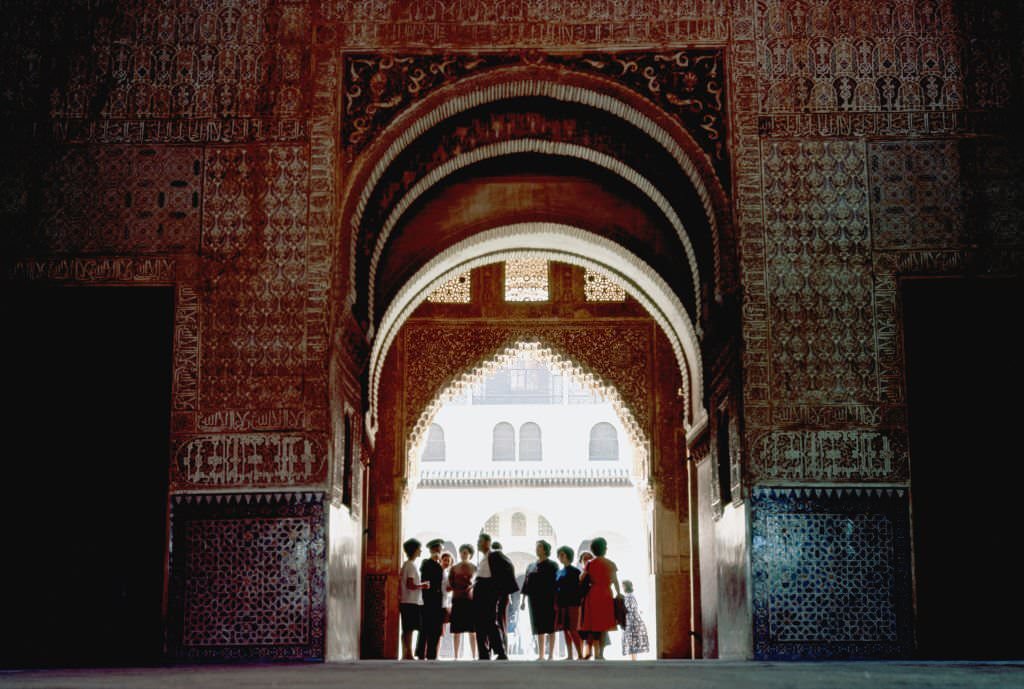
The Courtyard of the Myrtles — Patio de los Arrayanes — sits at the center of the Comares Palace within the Alhambra. A long rectangular pool reflects the surrounding arcades and the Torre de Comares, the tallest tower in the complex. Rows of myrtle hedges line the pool on both sides, a design that has remained unchanged for centuries.
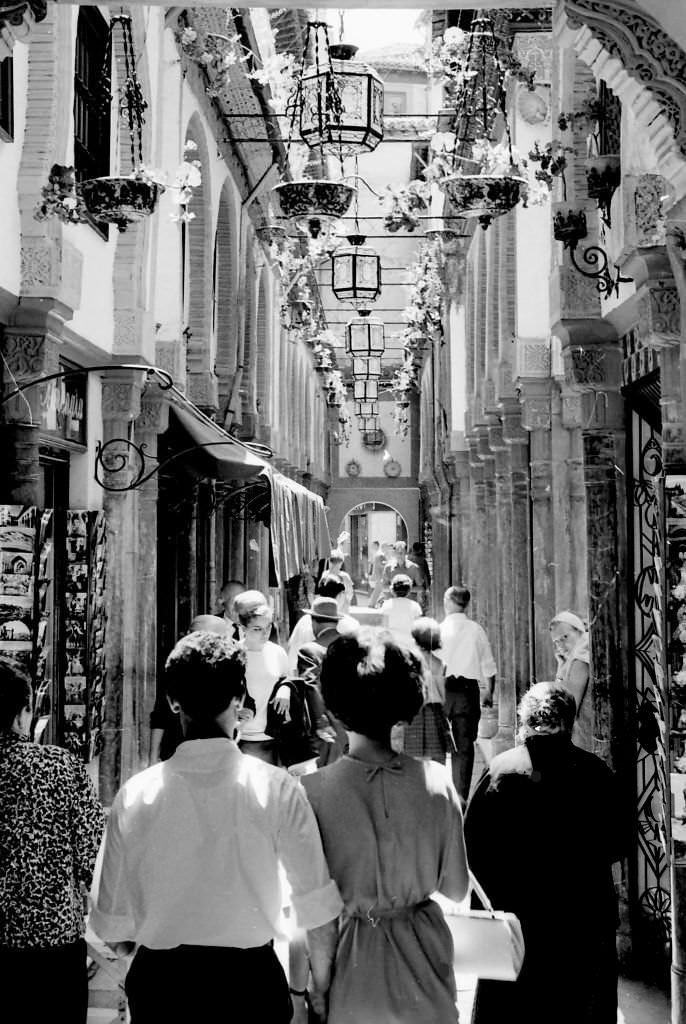
The Alcaicería, located just steps from the cathedral, was originally a Moorish silk market — one of the most important in the medieval Islamic world. After a fire destroyed much of it in the 19th century, it was rebuilt in a Moorish Revival style. By the 1960s, its narrow covered alleyways were packed with souvenir shops and craft stalls, drawing tourists navigating the maze of lantern-lit passages.
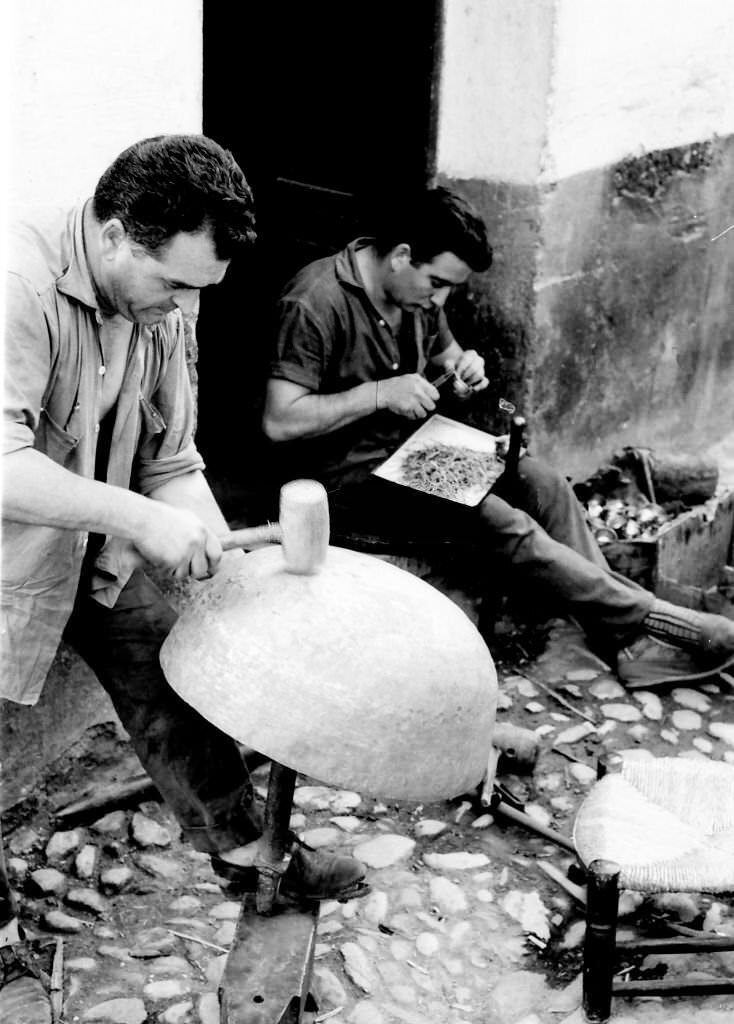
Granada’s craftsmen in the mid-1960s still relied heavily on hand tools and traditional techniques. The city had a long tradition of fine woodwork, marquetry, and taracea — the Moorish art of geometric inlay using wood, bone, and shell. Workshops near the Alcaicería and the Albaicín supplied both locals and the growing tourist trade.
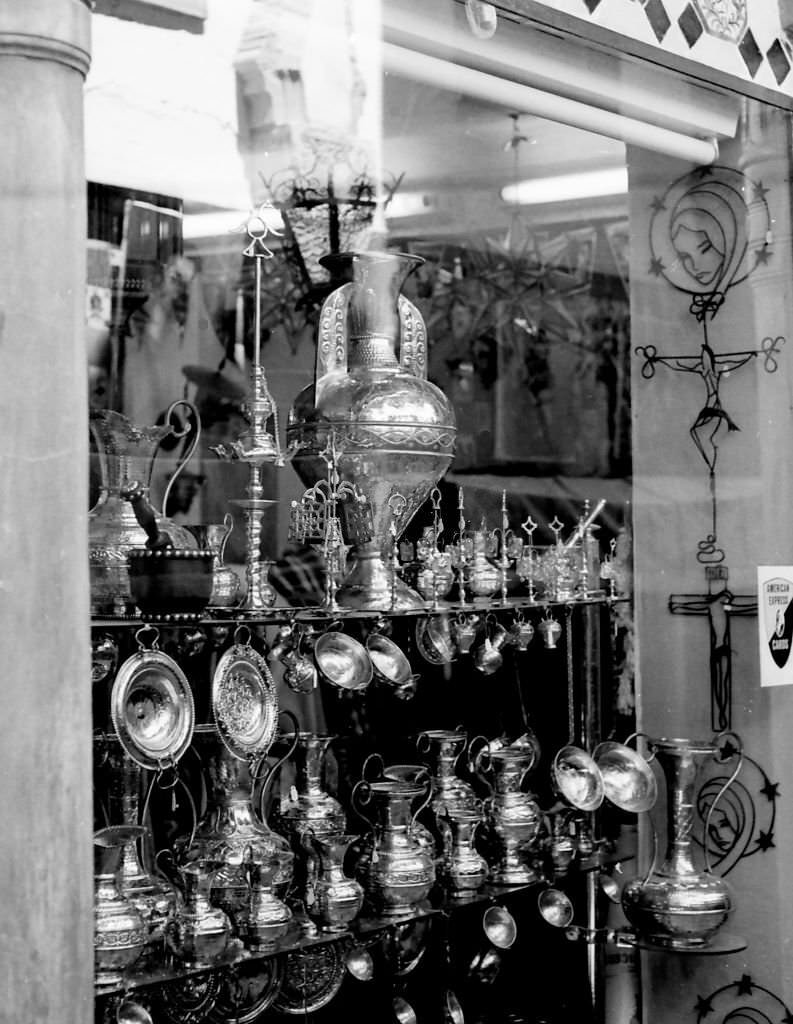
By 1966, tourism was becoming a significant part of Granada’s economy. Spain had opened itself to international visitors under Franco’s economic modernization plan of the late 1950s and early 1960s, and Andalusia became one of the primary destinations. The souvenir shops of the Alcaicería sold ceramics, embroidered textiles, castanets, and miniature Alhambra replicas to the steady flow of foreign visitors.
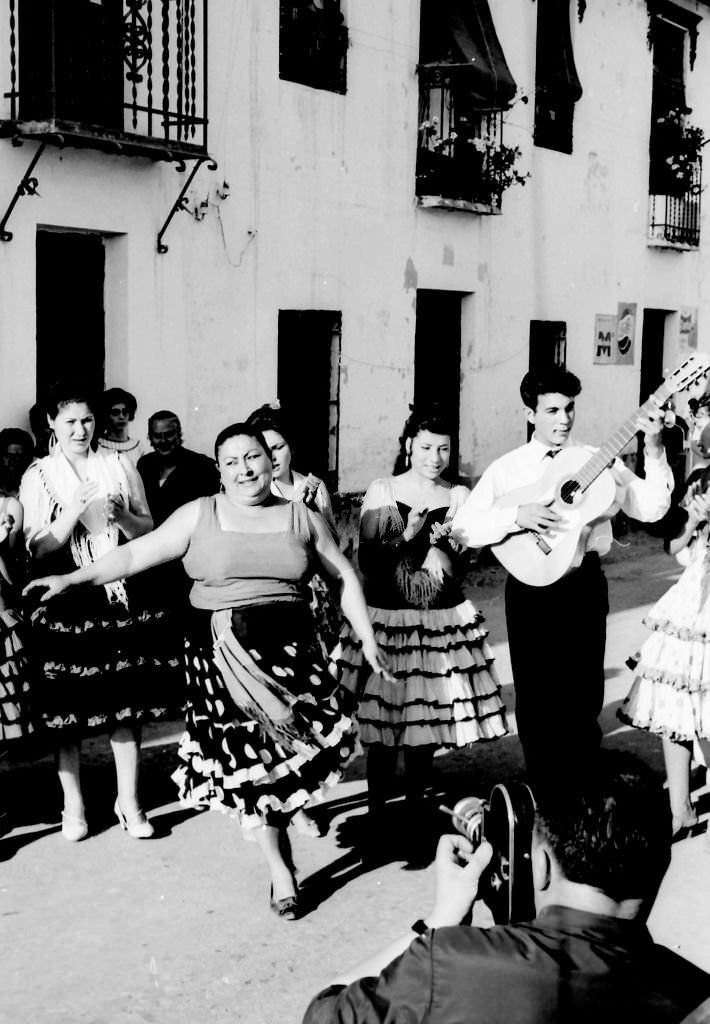
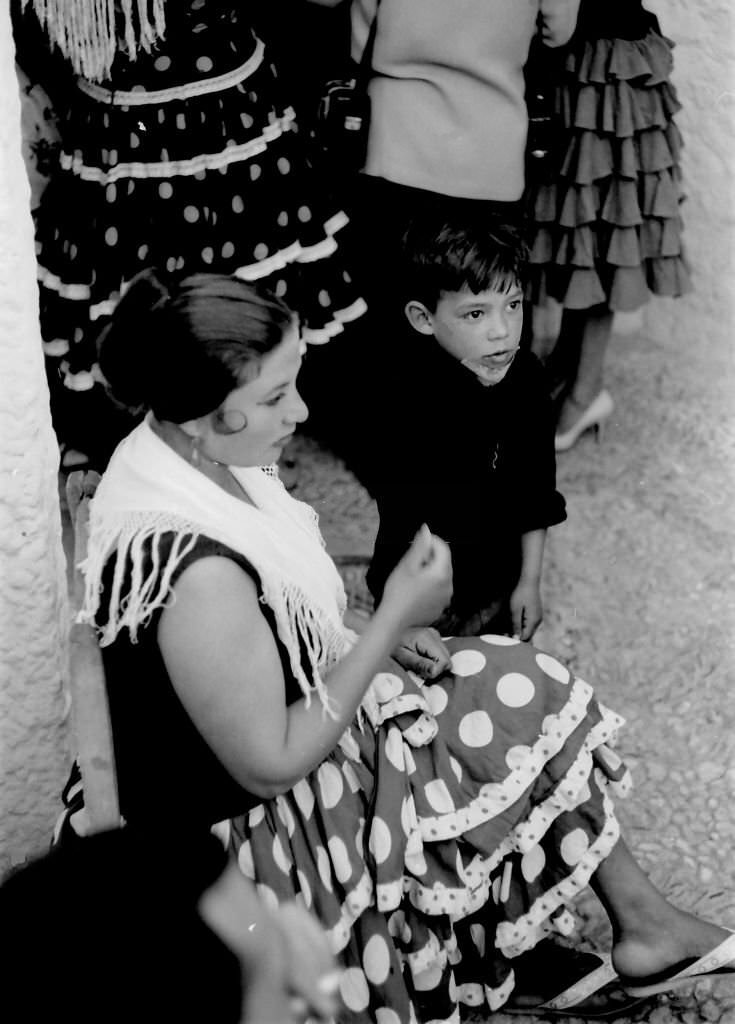
Daily life in Sacromonte in the mid-1960s was communal. The cave homes — called cuevas — were often whitewashed inside and out, with multiple rooms dug into the hillside. Families gathered outside during the day, and the neighborhood’s social life spilled onto the hillside paths. Despite its popularity with tourists, Sacromonte remained a tight-knit residential community.
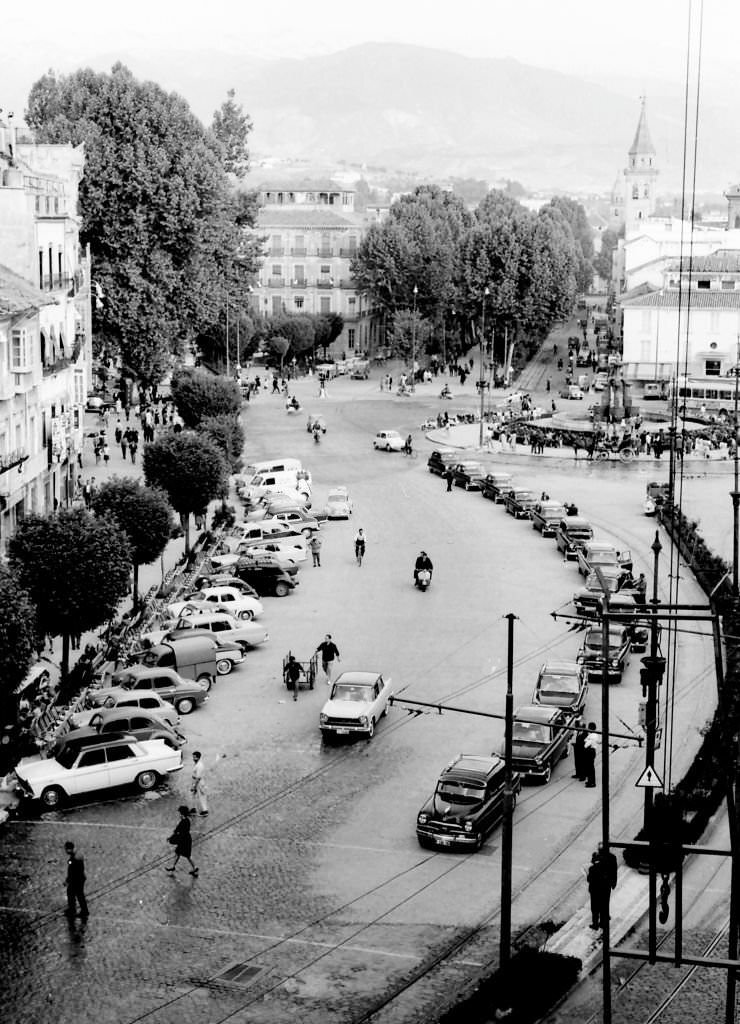
The Puerta Real in 1966 was a busy transit node. Buses, taxis, and pedestrians all converged at this central plaza, which marked the edge of the old commercial district. The Fuente de las Batallas fountain anchored the square, and shops and cafes lined the surrounding buildings at street level.
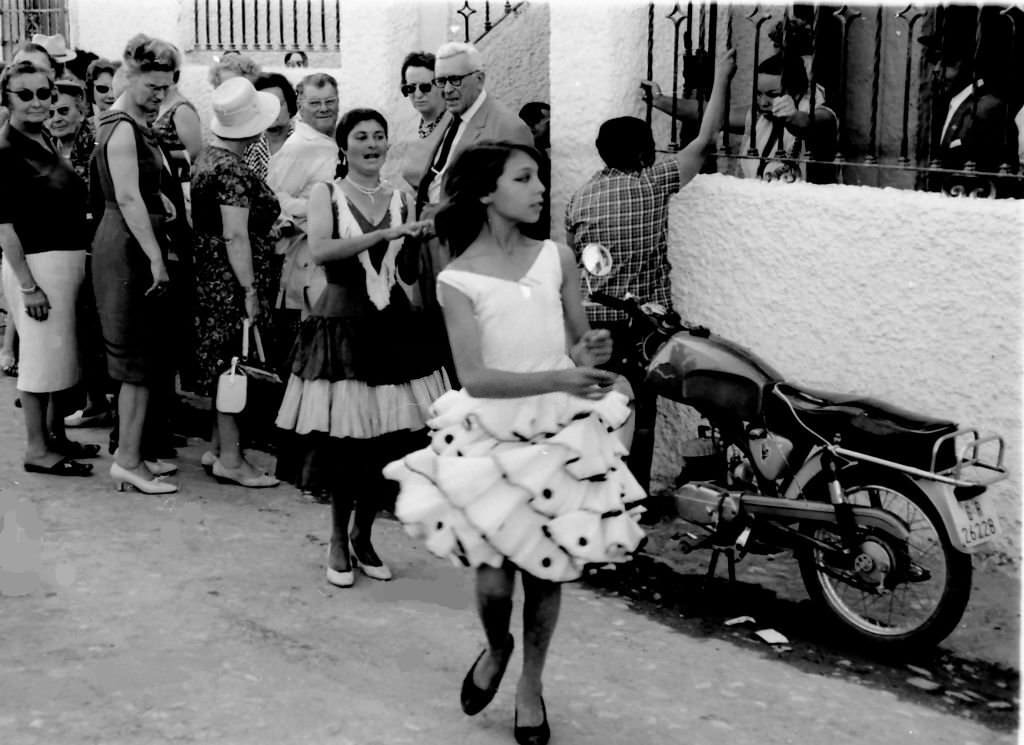
Flamenco in Sacromonte was not a polished tourist show. Young girls learned the dance the same way older women had — by watching, repeating, and performing in informal settings within the community. The style associated with Sacromonte, known as zambra, had roots in the Moorish period and was distinct from the flamenco forms found in Seville or Cádiz.
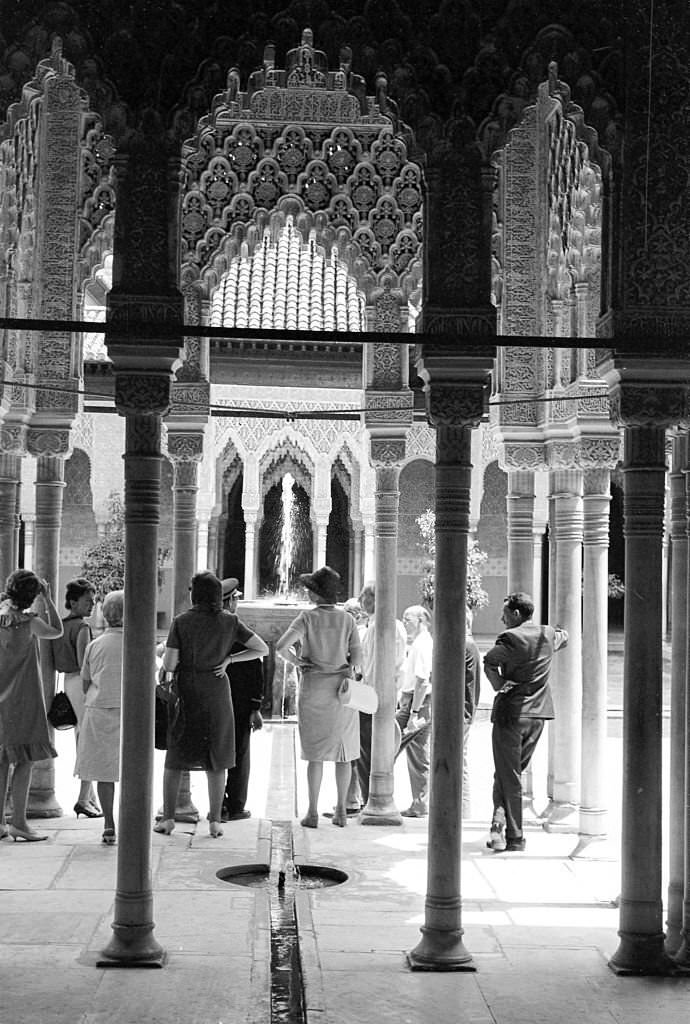
The Courtyard of the Lions is the most photographed space in the Alhambra. Built under Sultan Muhammad V in the second half of the 14th century, it features a central fountain supported by twelve marble lions arranged in a circle. Slender columns and intricate honeycomb plasterwork surround the courtyard on all four sides. The lions — which function as a water clock — represent one of the most sophisticated hydraulic engineering projects of the medieval Islamic world.
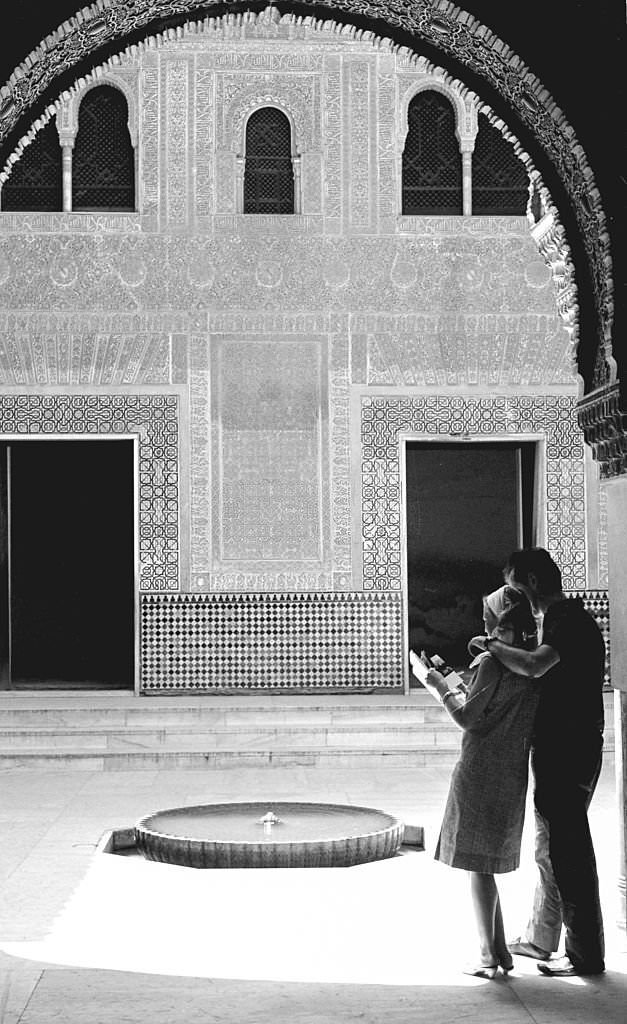
The Cuarto de Comares — the Comares Quarter — housed the official throne room of the Nasrid sultans. The Salón de los Embajadores, or Hall of Ambassadors, sits inside the Torre de Comares and features a domed cedar ceiling with over 8,000 individual pieces arranged in a geometric star pattern representing the seven Islamic heavens.
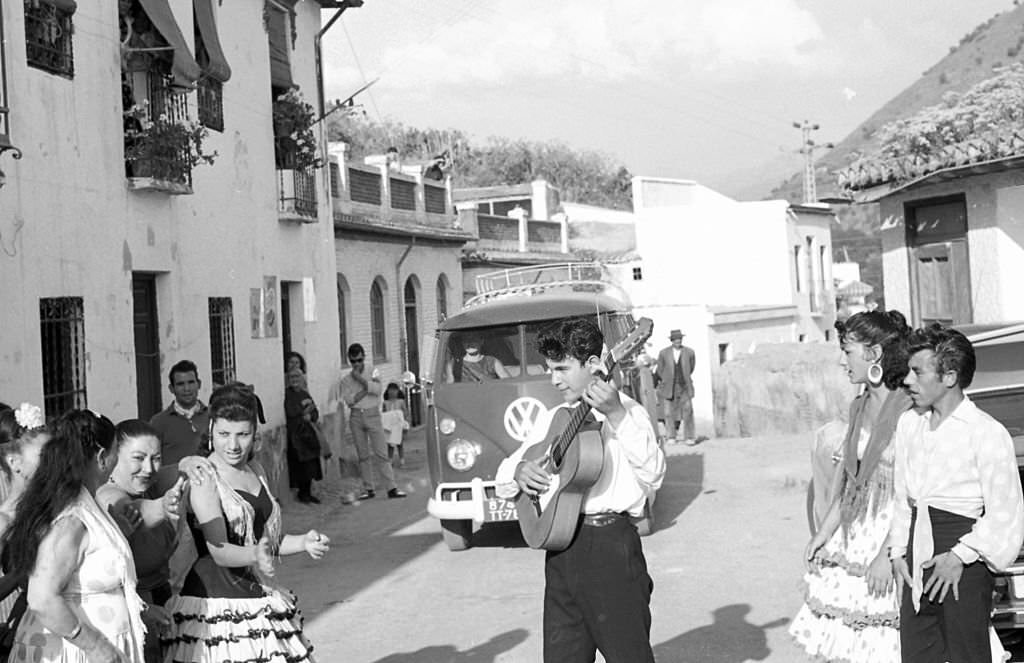
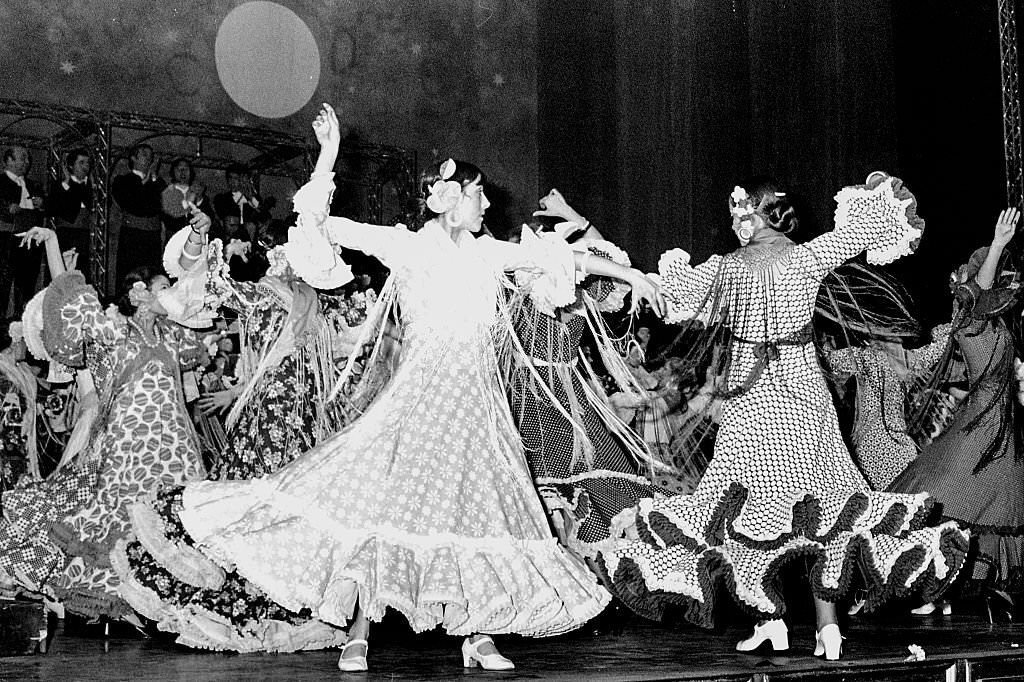
Flamenco performances in Granada in the 1960s ranged from deeply traditional cave shows in Sacromonte to more staged productions in city tablaos — dedicated flamenco venues. Dancers wore the traditional bata de cola, the long ruffled skirt, and performances incorporated cante jondo, the deep, emotionally raw style of flamenco singing that originated in Andalusia.
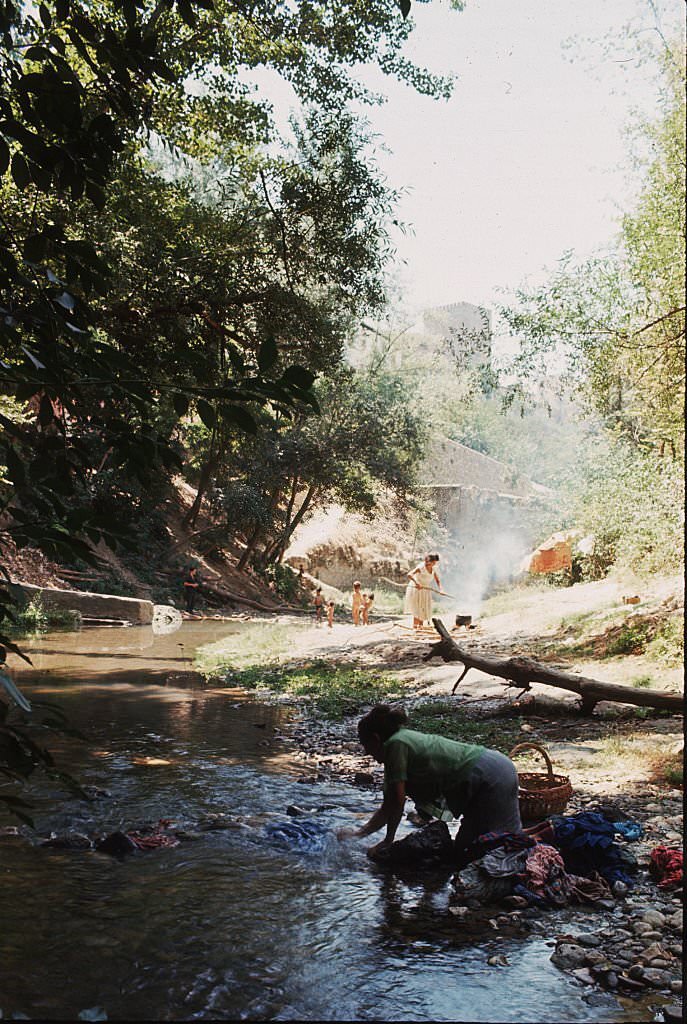
The Río Darro flows along the base of the Alhambra hill before being channeled underground through the city center. In the 1960s, sections of the river near Sacromonte were still used for daily tasks. Women washed clothes in the shallows while children played along the banks. Cooking fires burned nearby, and the towers of the Alhambra and the Albaicín loomed directly above.
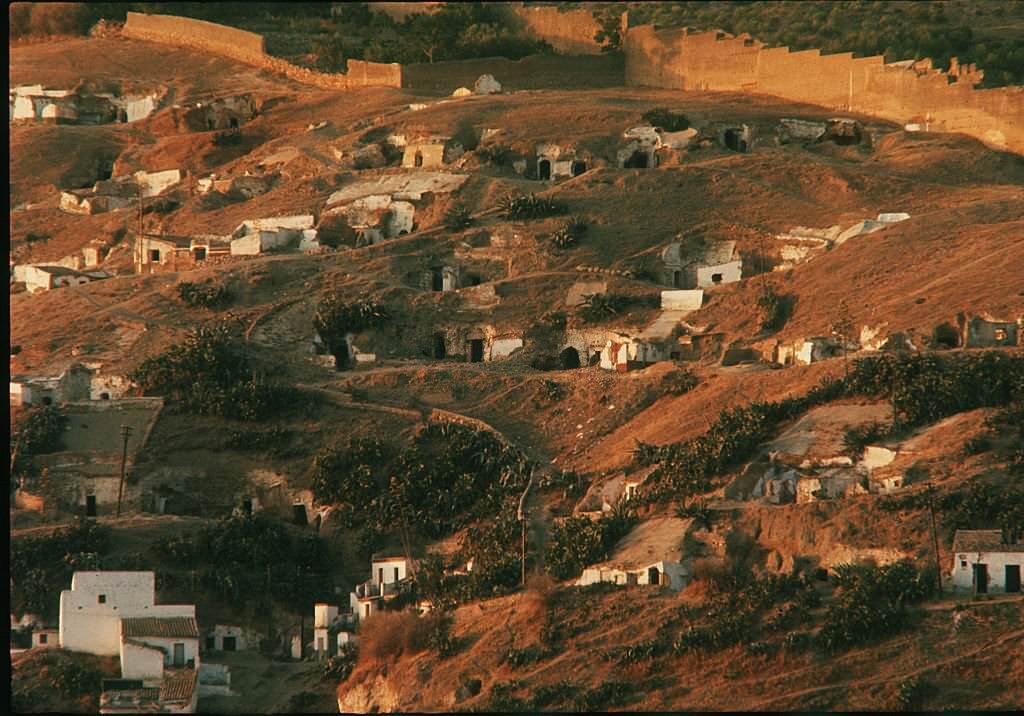
The cave homes of Sacromonte climbed the hillside above the Darro valley. From a distance, the whitewashed entrances of the grottoes dotted the terracotta-colored slopes like irregular windows. The caves maintained a stable temperature year-round — cool in summer, warm in winter — making them genuinely practical dwellings rather than merely traditional ones.
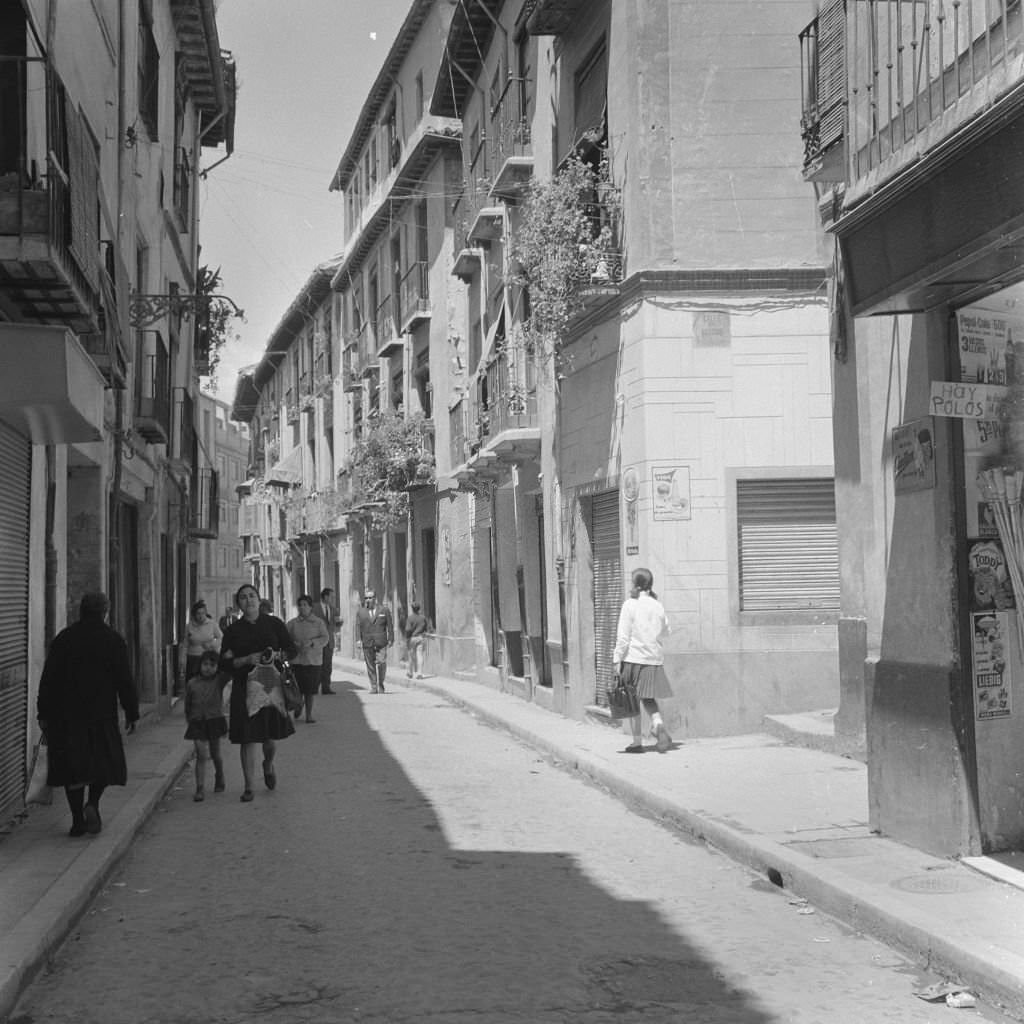
The summer of 1965 in Granada’s streets showed a city in motion. Spain’s economy was growing faster than at any point in the 20th century, and the effects reached even smaller provincial cities. New consumer goods appeared in shop windows, motorcycles joined the older bicycles on the road, and more young people moved through city centers in fashions influenced by the rest of Western Europe.
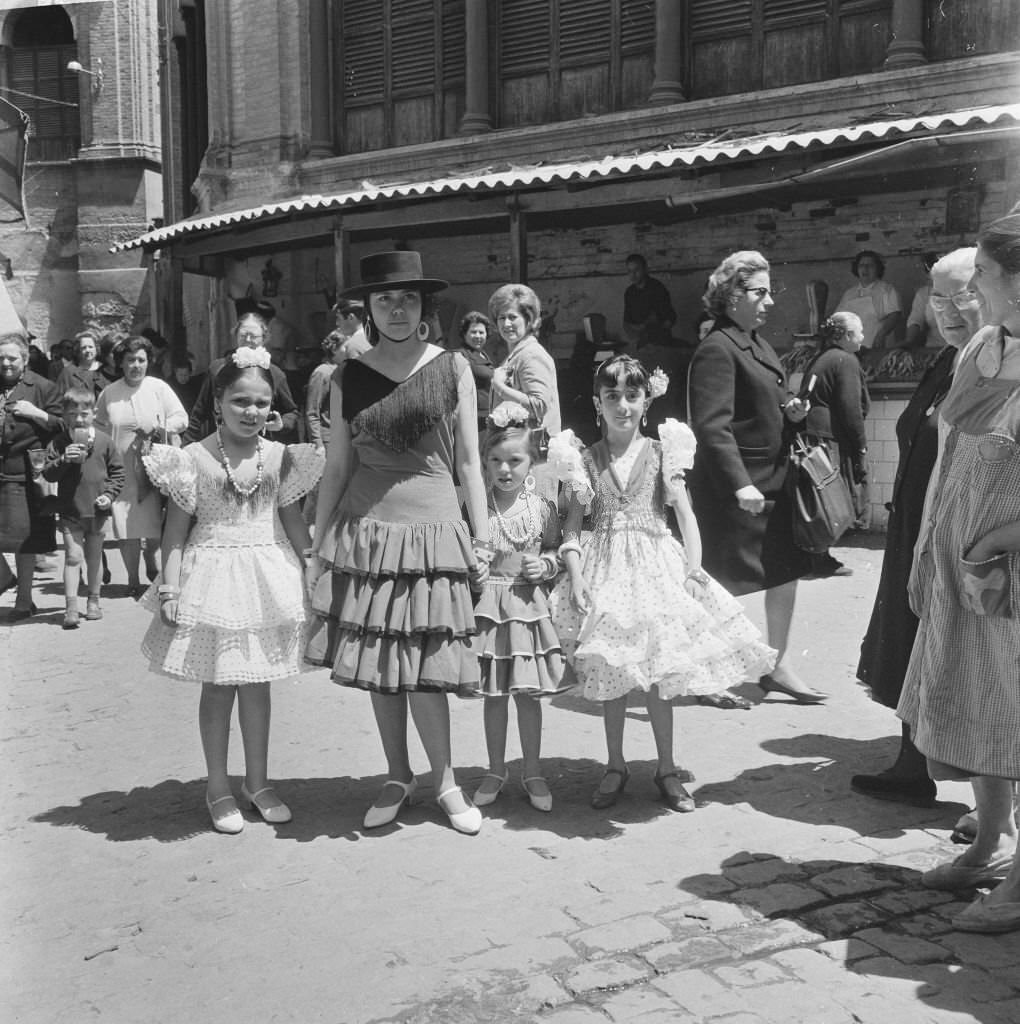
Granada observed its religious and civic festivals with considerable ceremony. On the feast of Santa Cruz in late July, the city’s streets filled with processions, music, and costumed participants. Girls wore traditional Andalusian dress — layered flounced skirts, embroidered shawls, and flowers pinned in their hair — a visual tradition tied closely to the region’s identity.
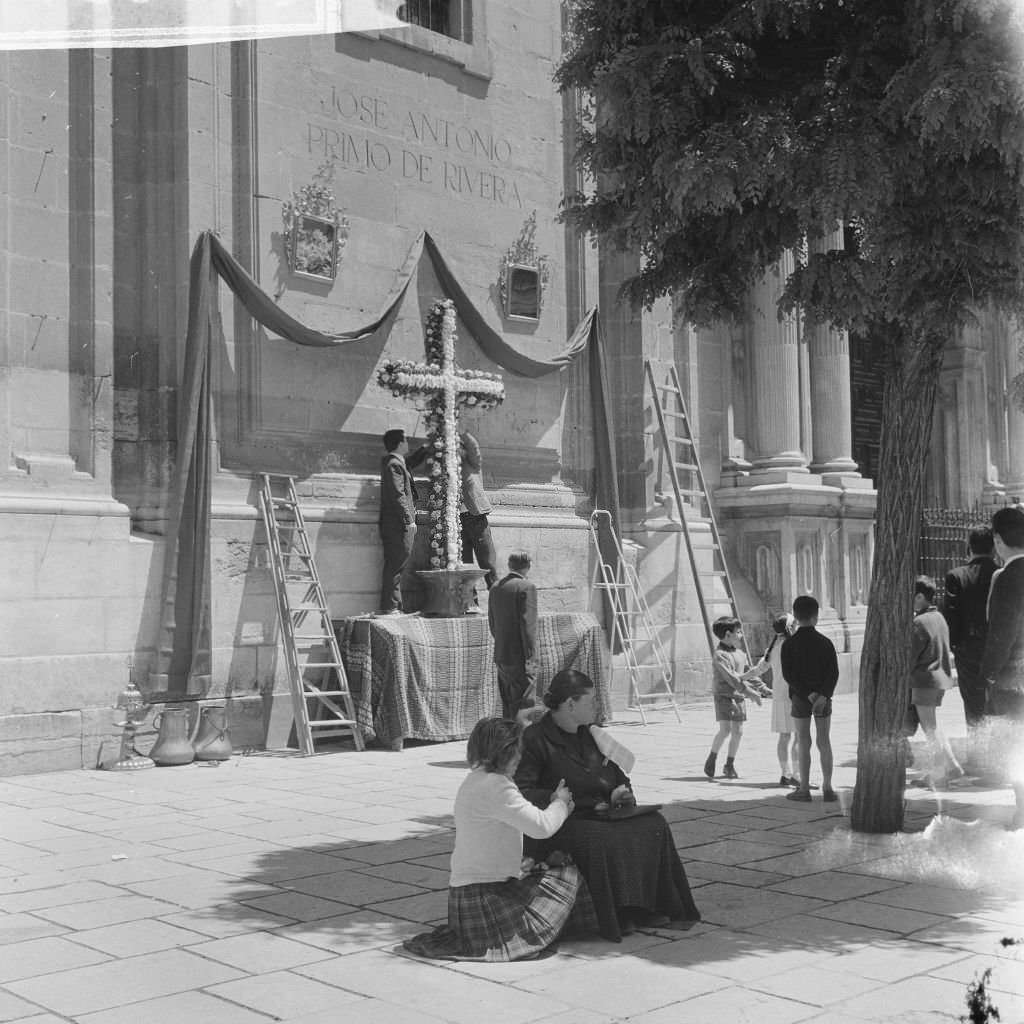
The Cathedral of Santa María de la Encarnación stands at the center of Granada’s religious landscape. Construction began in 1523 and wasn’t completed until 1703, resulting in a structure that blends Gothic, Renaissance, and Baroque elements across nearly two centuries of work. Attached to the cathedral is the Royal Chapel — Capilla Real — which holds the tombs of Ferdinand and Isabella, the monarchs who oversaw the final conquest of Granada in 1492.
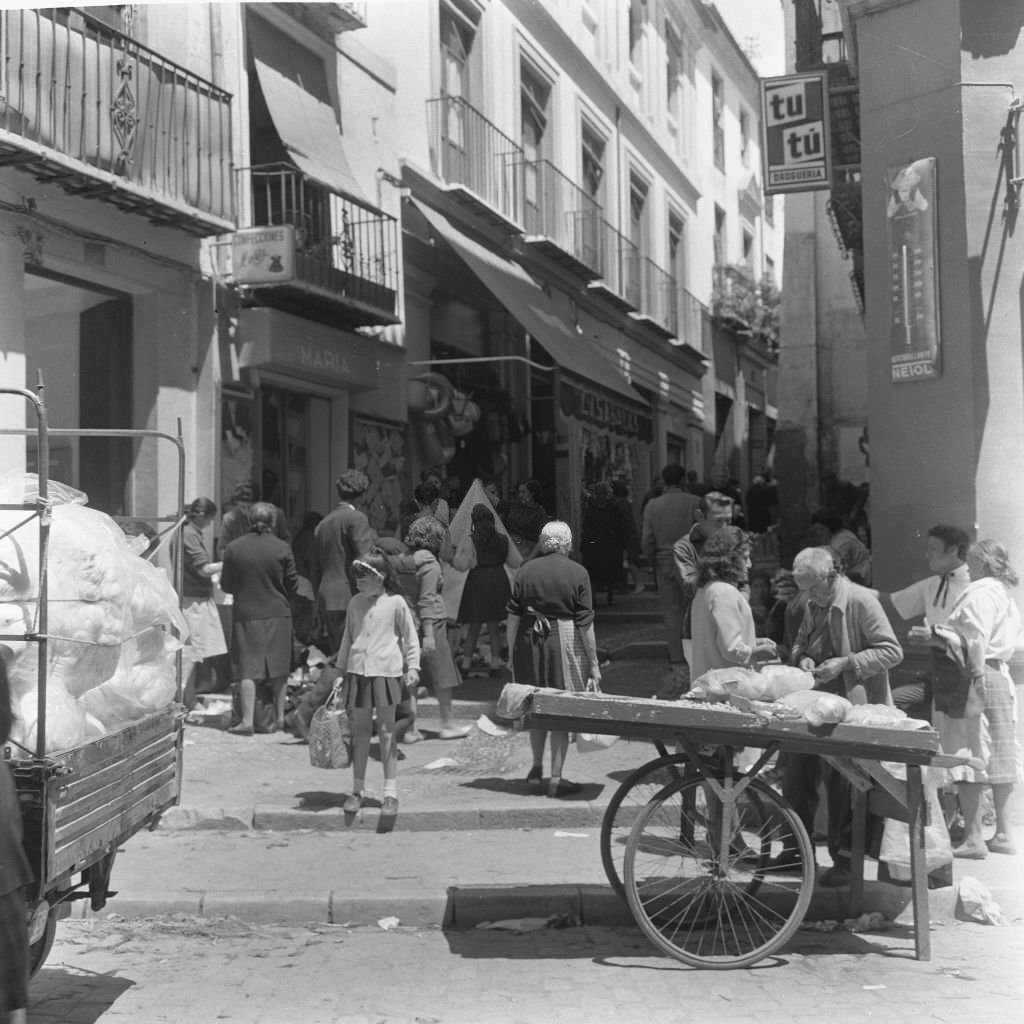
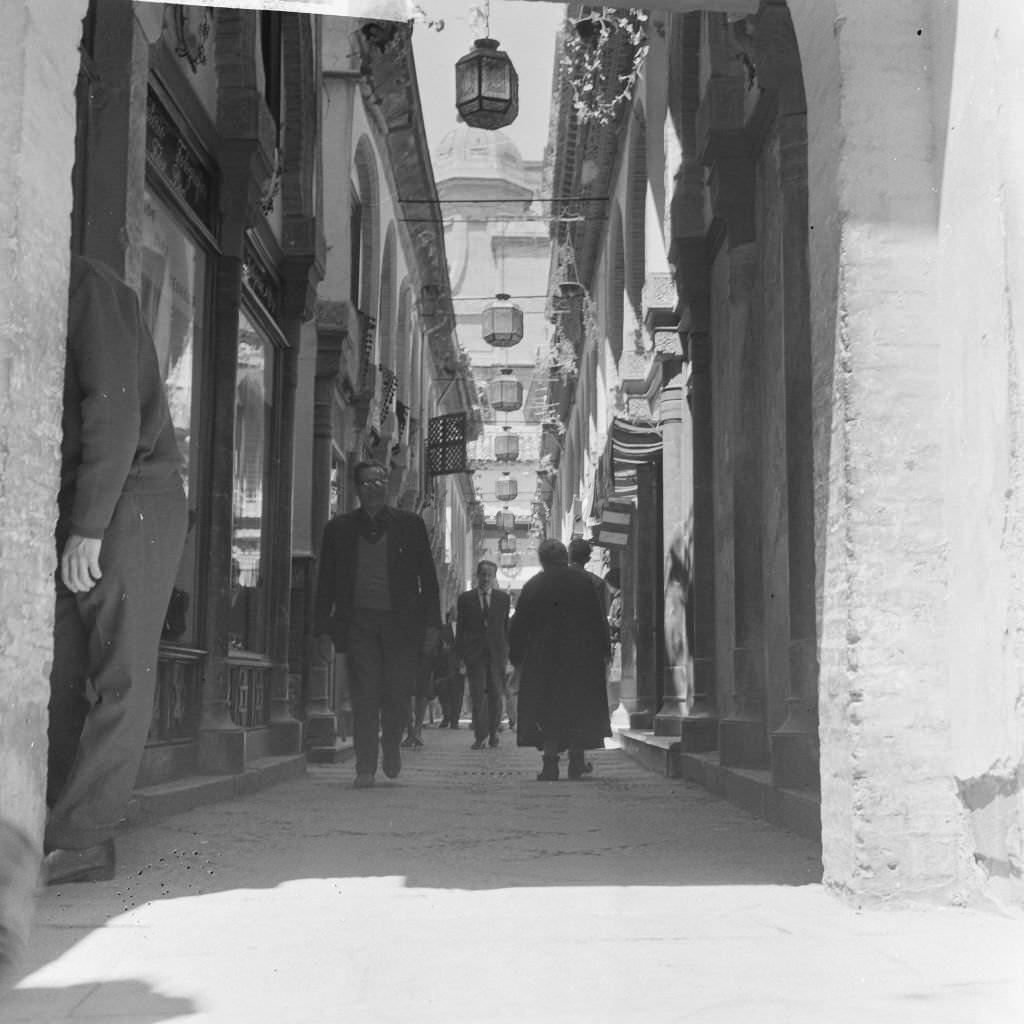
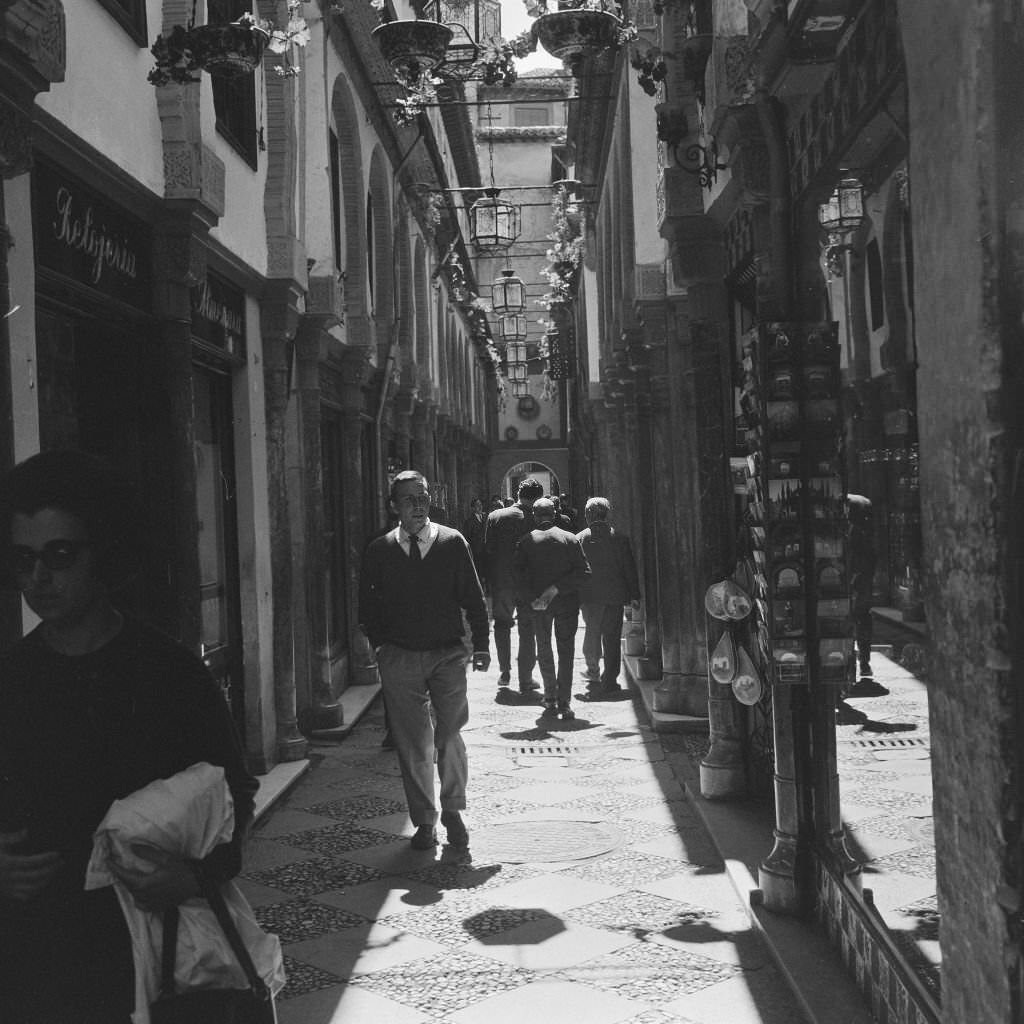
Granada’s street life in 1965 played out across a city of contrasts. The older quarters had changed very little structurally in decades, while the newer commercial streets reflected mid-century Spanish urban development. Awnings shaded shop fronts from the intense Andalusian sun. Men gathered at outdoor café tables, and markets operated in open plazas just as they had for generations.
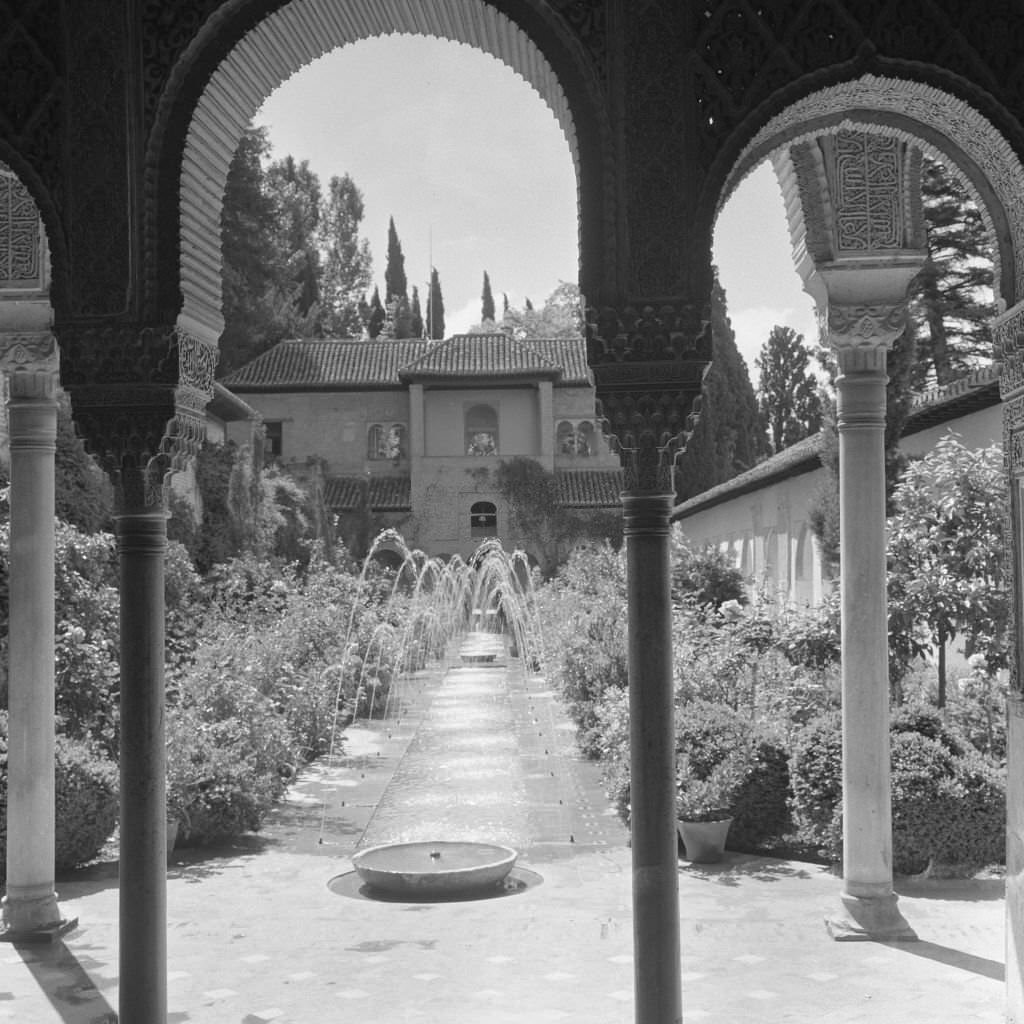
Above the Alhambra complex sits the Generalife — the summer palace and gardens of the Nasrid sultans. Its name derives from the Arabic Jannat al-‘Arif, roughly translated as “the garden of the architect” or “the garden of the knowledgeable.” The terraced gardens, water channels, and fountains were designed to provide a cool retreat from the summer heat. By the 1960s, the Generalife was a major attraction for visitors exploring the full Alhambra complex.
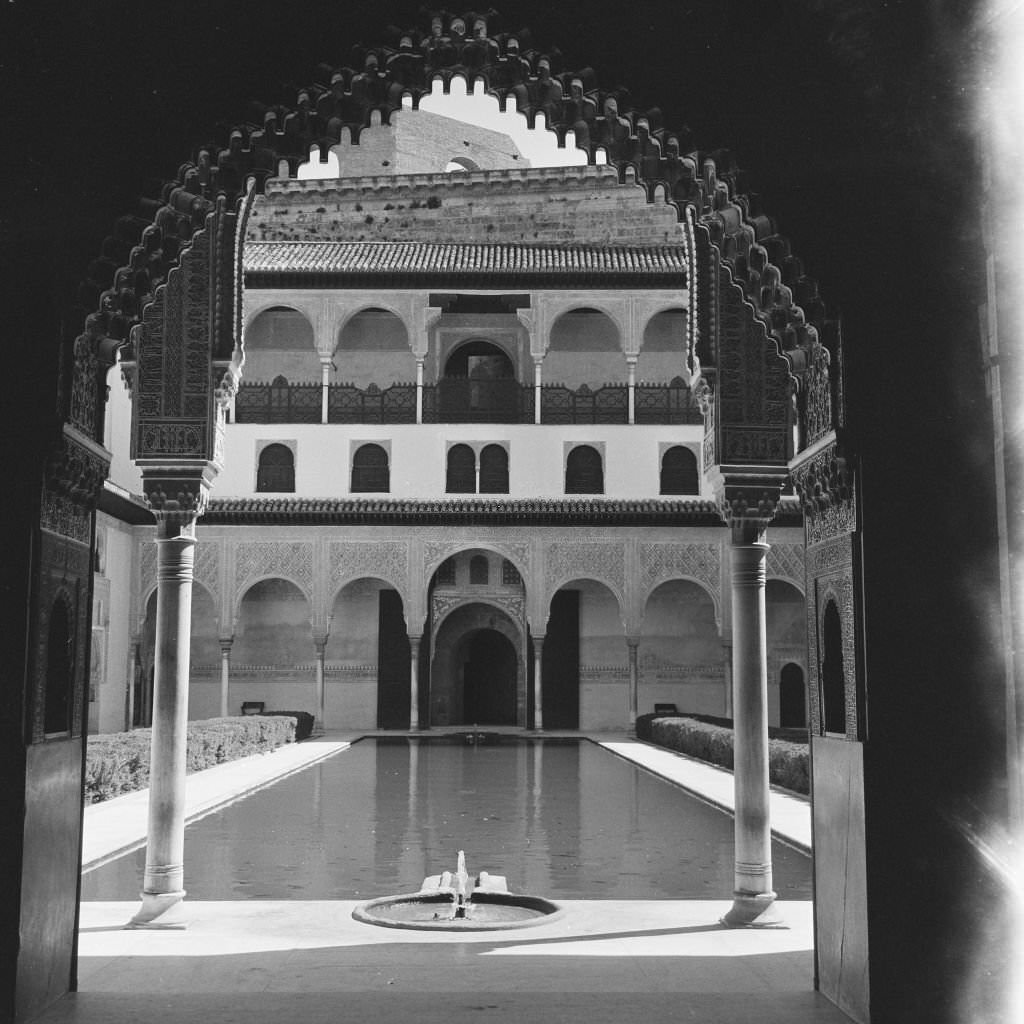
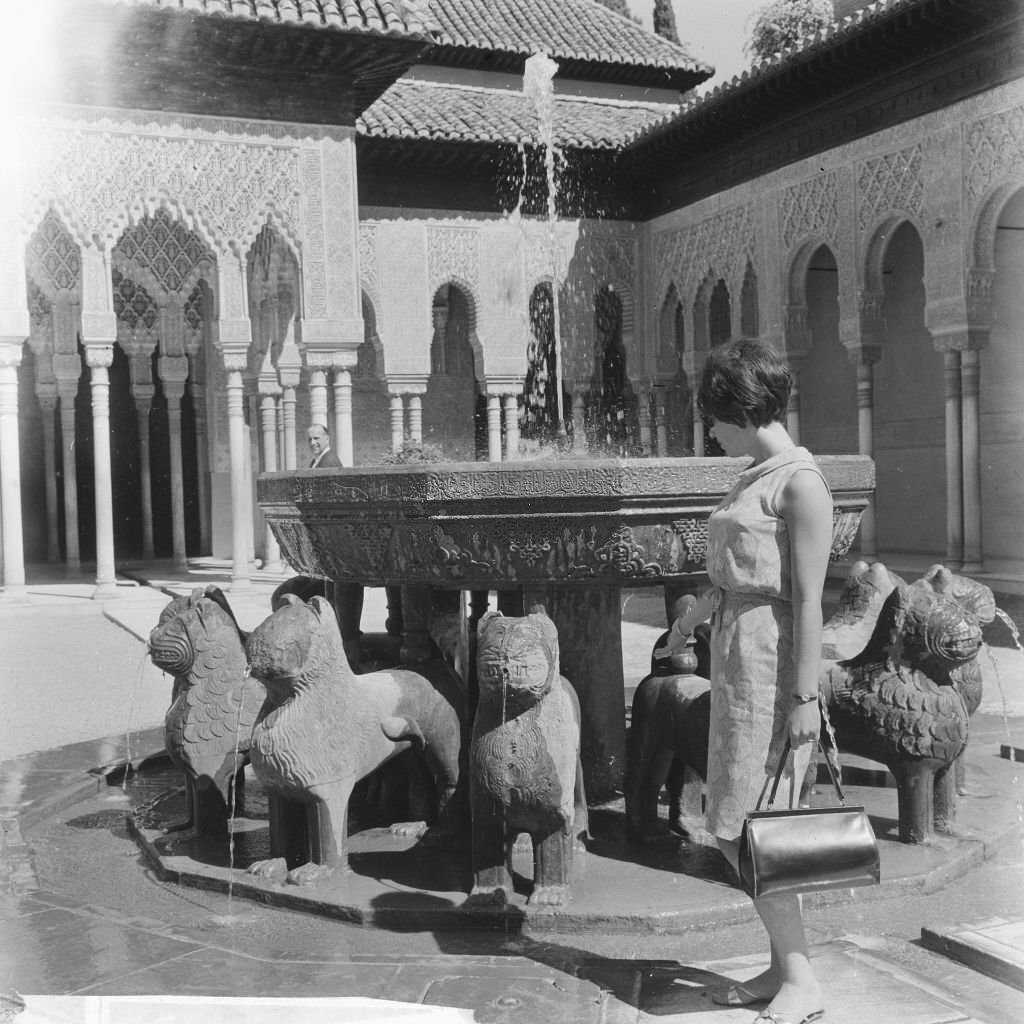
The Alhambra in the mid-1960s was already one of Spain’s most visited monuments, drawing hundreds of thousands of tourists each year. Restoration work had been ongoing since the 19th century, when the complex was found in serious disrepair following decades of neglect after the Napoleonic Wars. By the 1960s, much of the key interior decoration had been stabilized and was open to visitors.
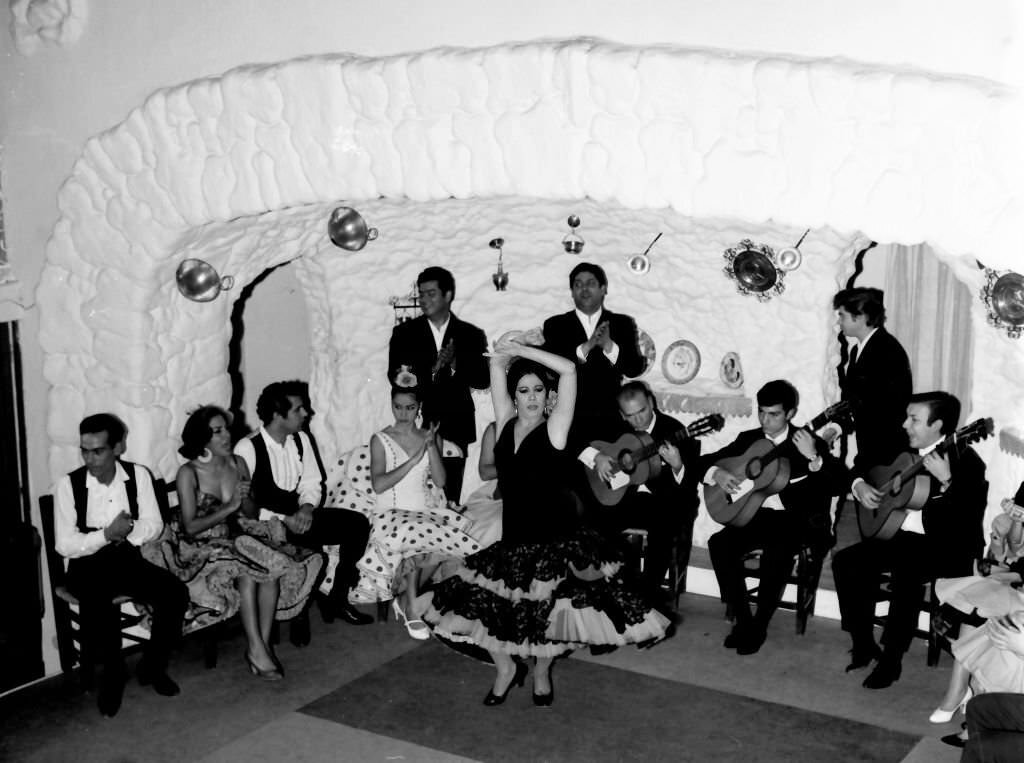
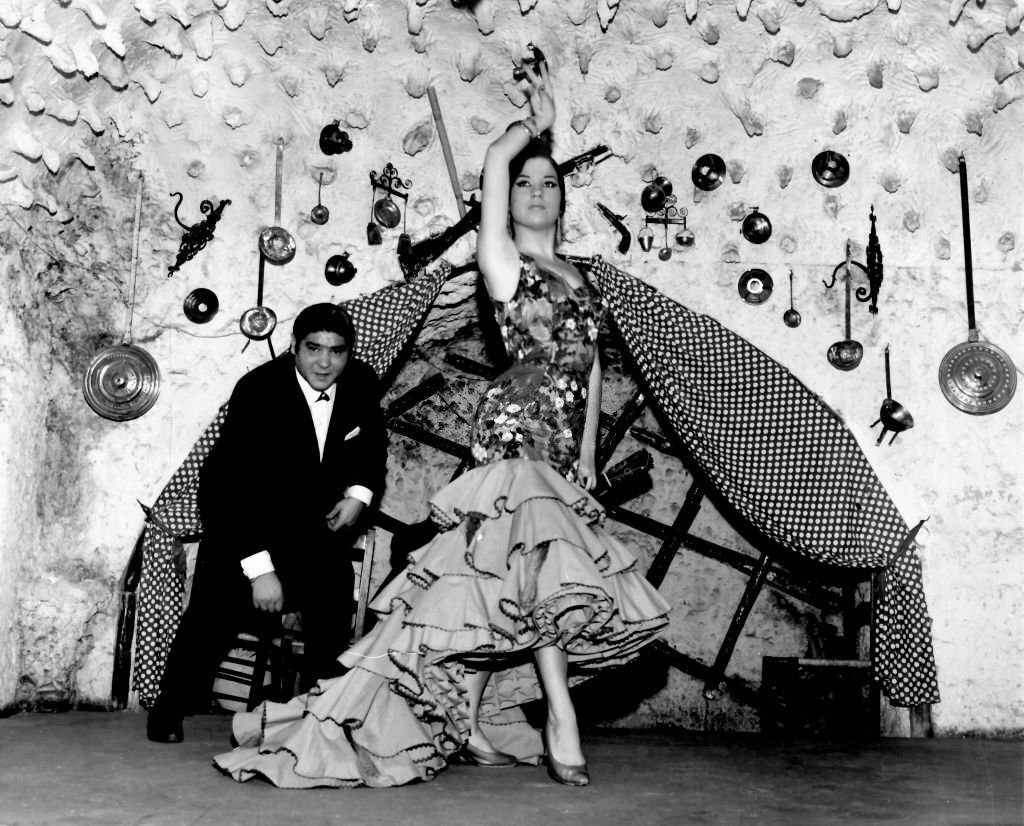
Granada’s tablaos in 1965 were dedicated performance venues where flamenco was presented nightly for paying audiences. Unlike the informal performances in Sacromonte’s caves, tablaos were more structured — a small stage, close seating, and a set program of dance, song, and guitar. Professional dancers trained for years to perform in these spaces, and the best Granada tablaos were considered serious artistic venues.
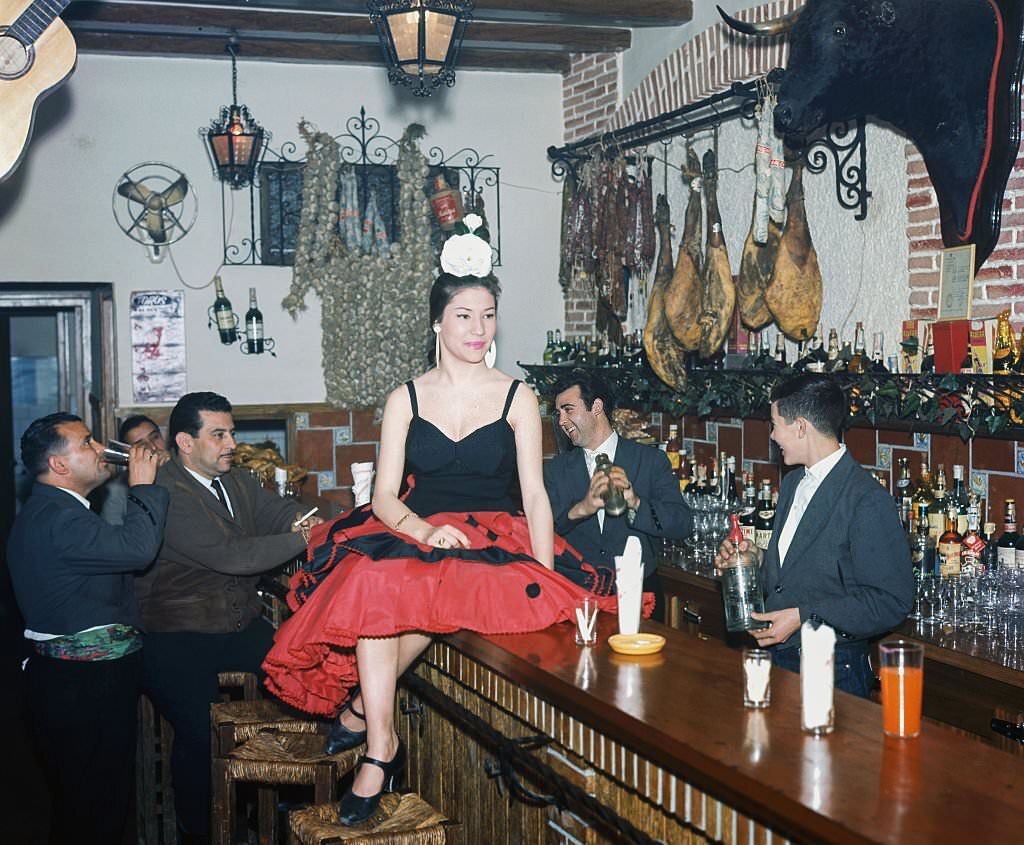
By 1964, Granada’s entertainment scene blended traditional Andalusian performance with a more modern nightclub atmosphere. Some venues offered flamenco as part of a broader evening show that included drinks, dinner, and sometimes other musical acts. These clubs catered largely to tourists and wealthier local residents, and they helped sustain flamenco as a professional performance tradition during a period of rapid social change across Spain.
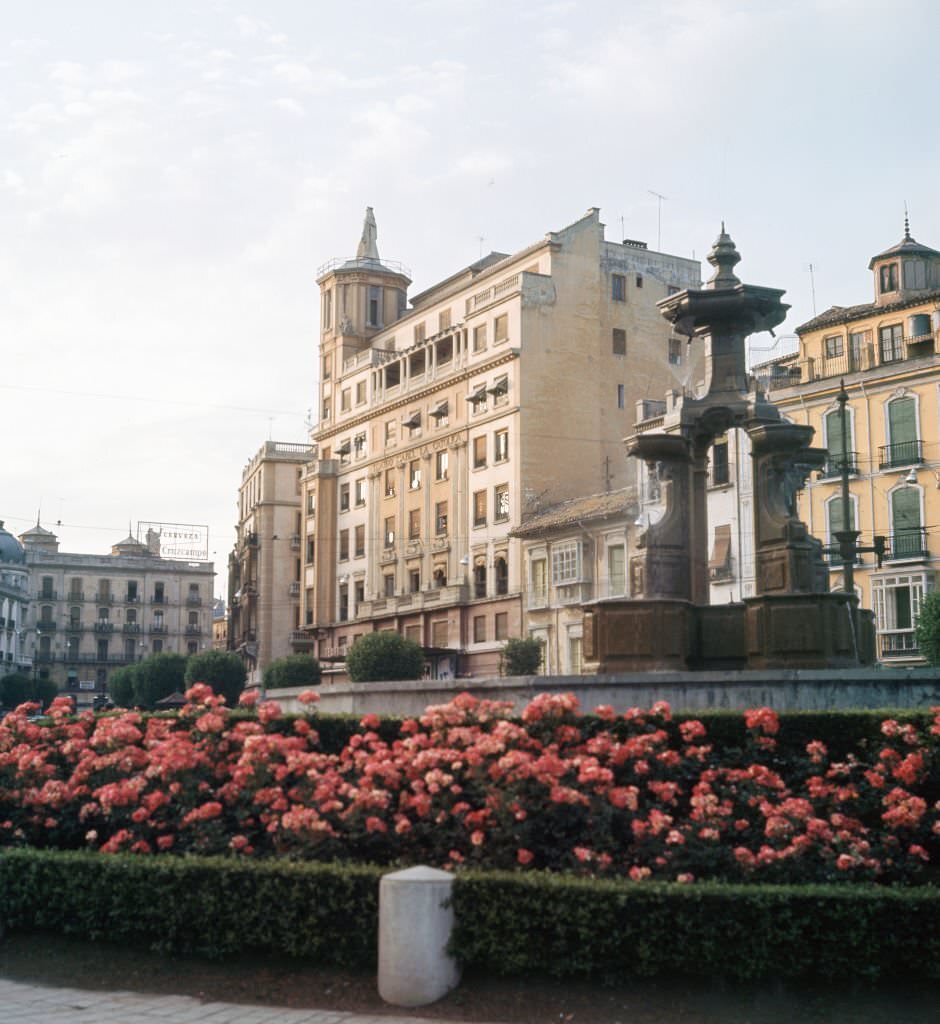
The Fuente de las Batallas — the Fountain of the Battles — stood at the Puerta Real and served as a meeting point and navigational landmark in the city center. Surrounded by benches and heavy pedestrian traffic, it marked the boundary between the older commercial streets and the newer 20th-century developments that spread toward the city’s outskirts.
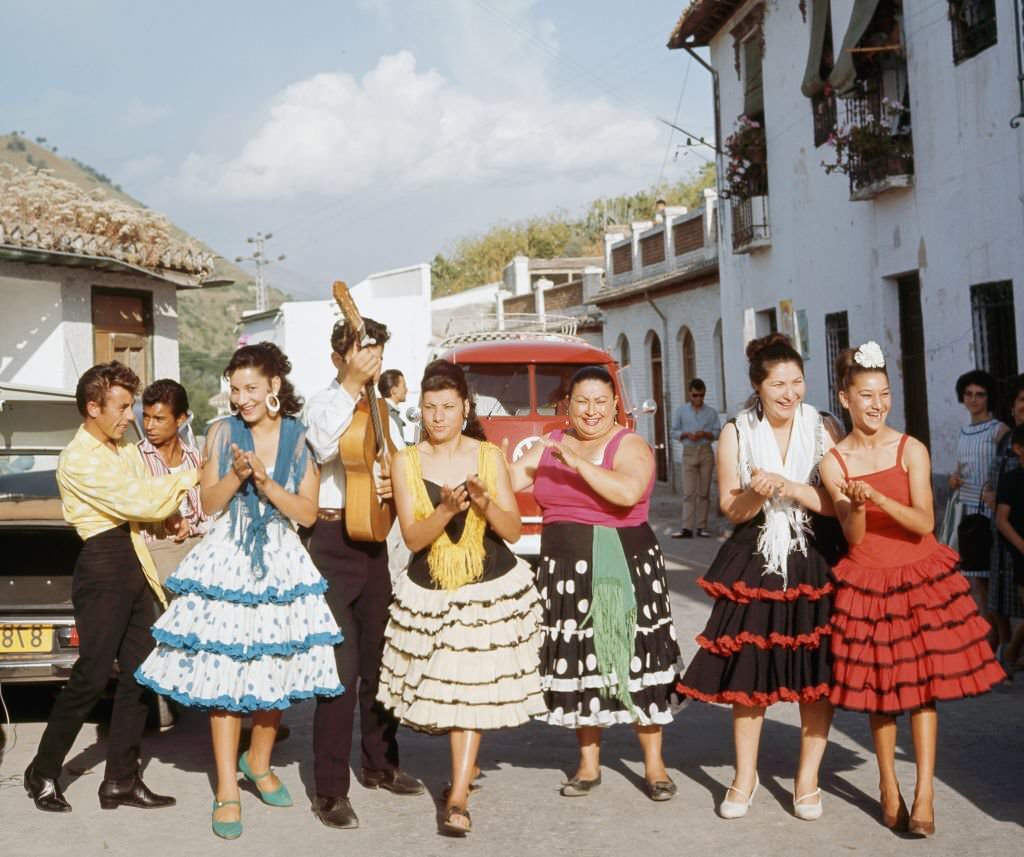
The Roma community of Sacromonte had lived in the hillside caves since at least the 15th century, following the Spanish Reconquista. By 1964, the neighborhood was well established as both a residential community and a cultural destination. The caves ranged from basic single-room dwellings to more elaborate multi-room homes decorated with copper pots, religious imagery, and colorful tiles.
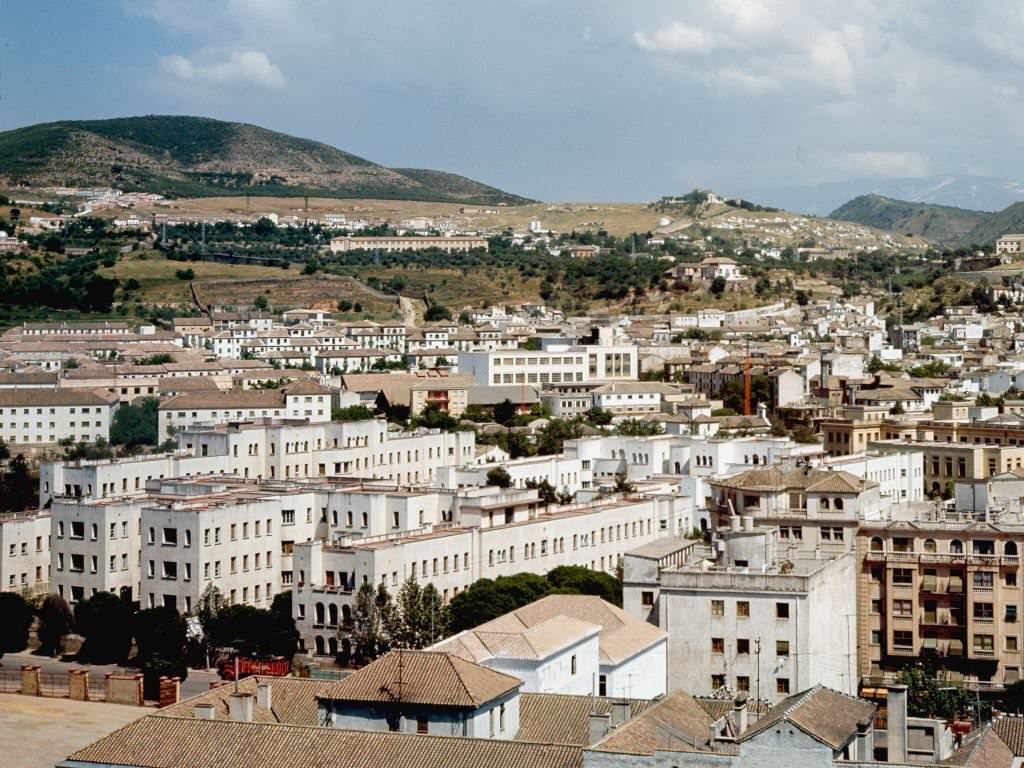
Looking out from the Alhambra’s towers and walls, Granada spread across the plain below. The city’s growth in the mid-20th century had pushed housing and industry toward the flatlands to the west and northwest, while the historic core remained dense and compact around the cathedral and the Albaicín hill. The Sierra Nevada formed a permanent backdrop to the southeast.
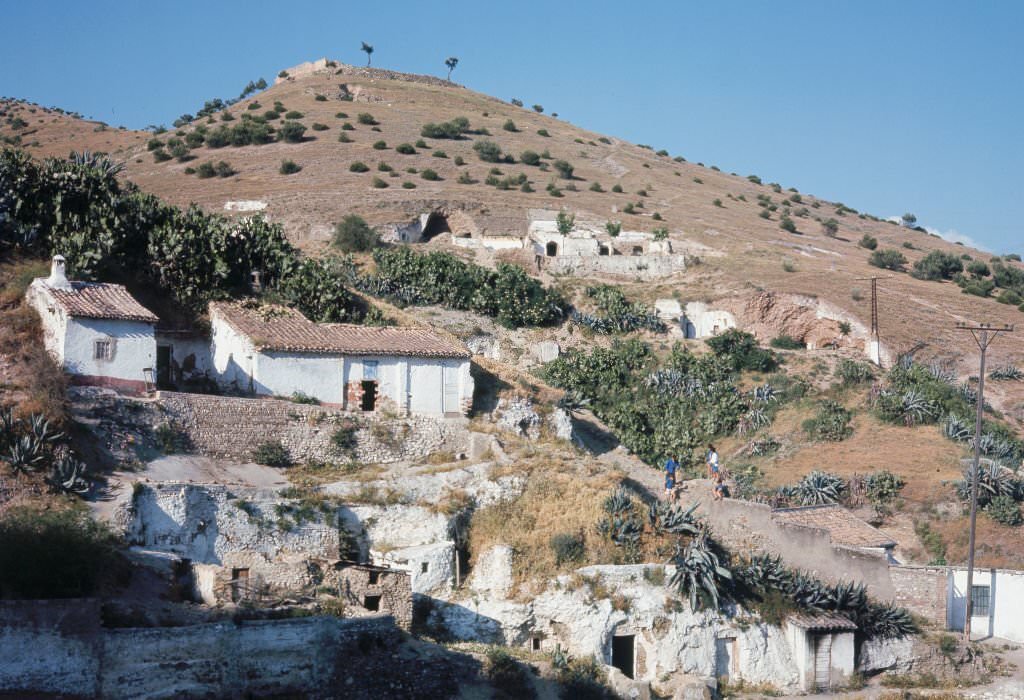
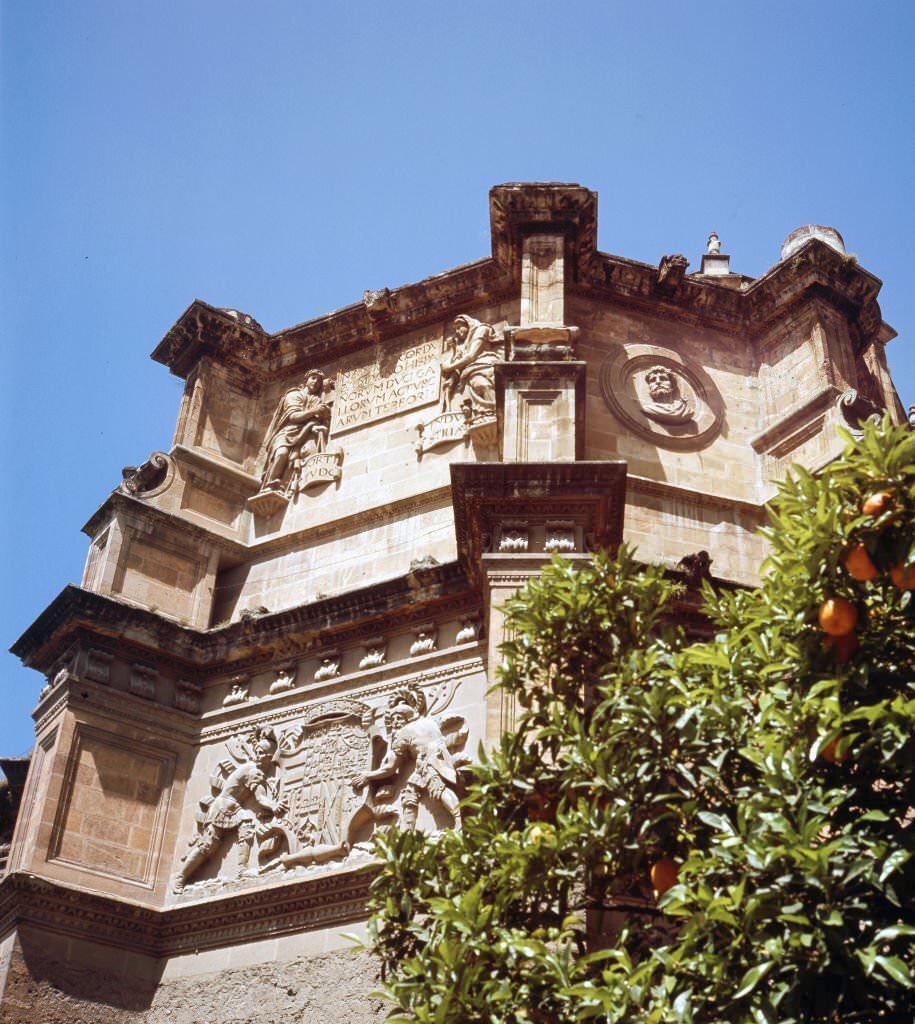
Granada’s religious architecture extended well beyond the cathedral. The city held fine Renaissance, Baroque, and Neoclassical churches, convents, monasteries, hospitals, palaces, and mansions built across several centuries. The Church of the Jerónimos — built for the Hieronymite order — was among the city’s significant Renaissance structures, reflecting the wealth and religious intensity of post-Reconquista Granada.
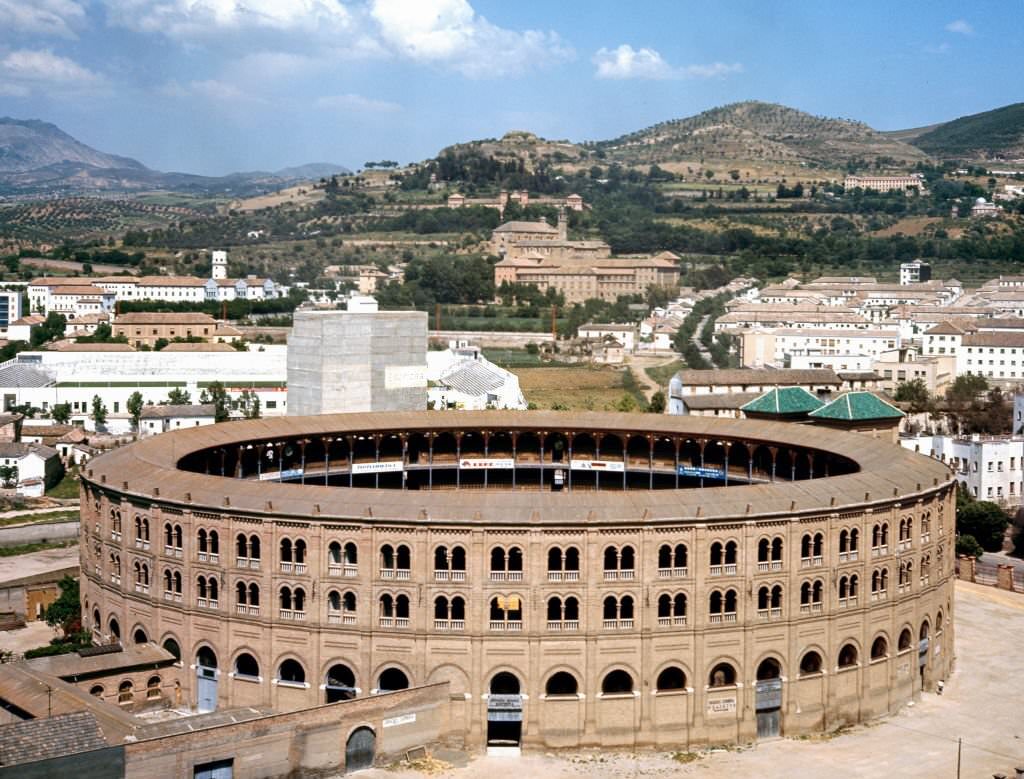
Bullfighting remained a prominent fixture of Granada’s cultural calendar in the 1960s. The city’s Plaza de Toros hosted corridas during the summer festival season, drawing both local crowds and visitors. The bullring, like those across Andalusia, was a social venue as much as a sporting one — attendance was linked to civic identity and the region’s broader cultural traditions.
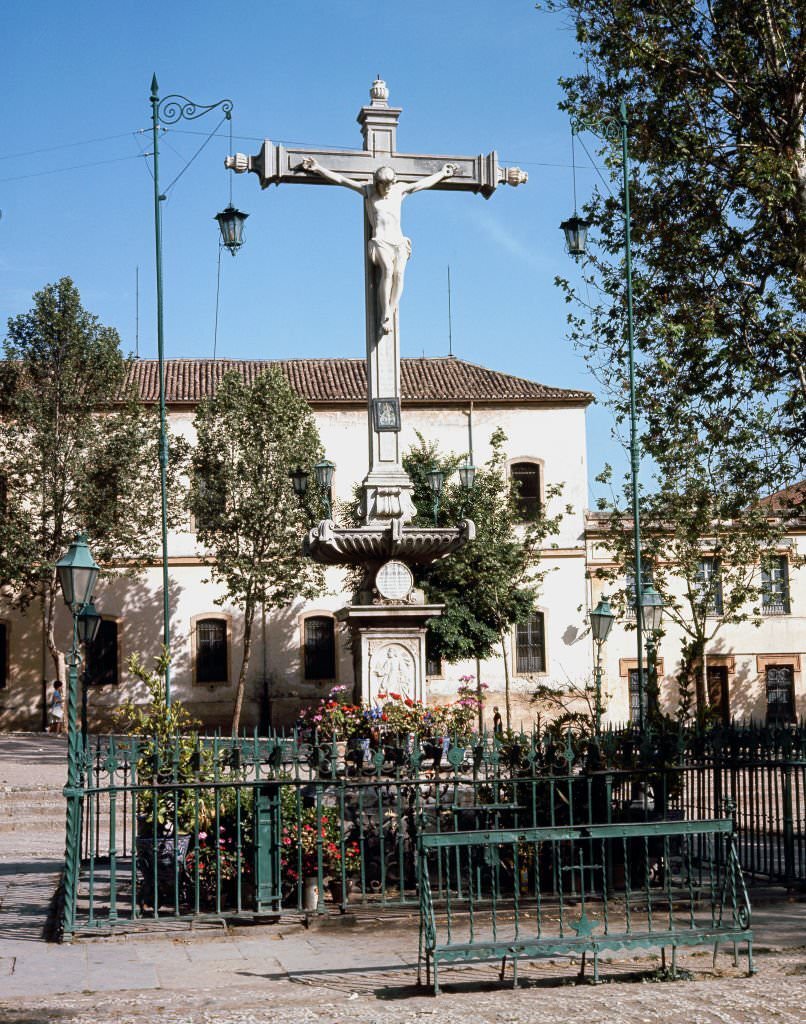
“El Señor de los Faroles” — the Lord of the Lanterns — refers to a cherished religious statue and the procession associated with it in Granada. The figure, carried through the city streets during religious festivals, was surrounded by hundreds of lanterns and accompanied by solemn music. These processions drew enormous crowds and were central to the city’s Holy Week and festival traditions.
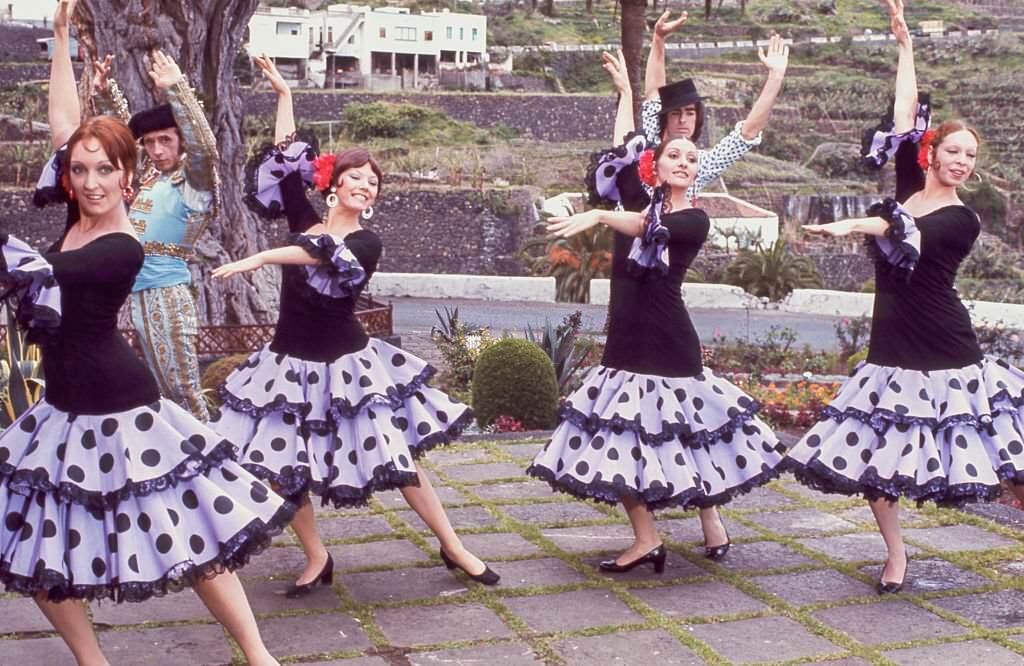
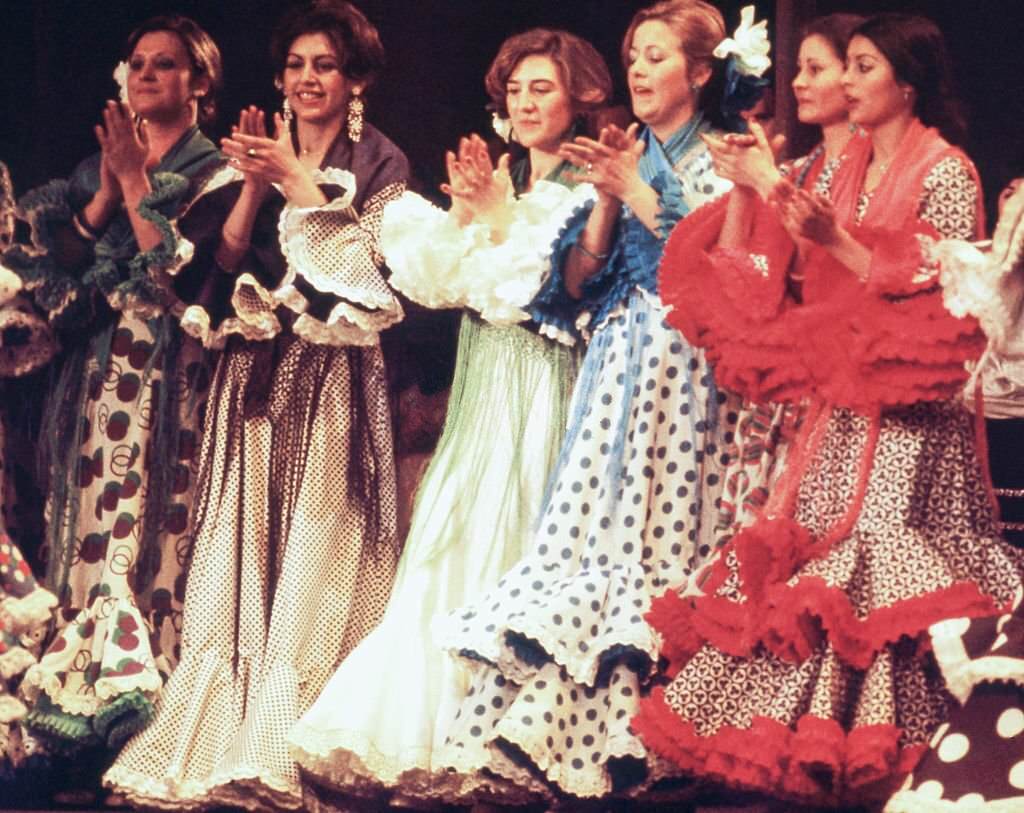
Flamenco in Granada in 1964 existed across a spectrum — from raw community performances in the caves of Sacromonte to polished professional shows in the city’s theaters and clubs. Male dancers were as integral to the tradition as female ones. The zapateado — the rapid, rhythmic foot-stamping technique — required years of physical conditioning to execute properly, and serious performers trained from childhood.
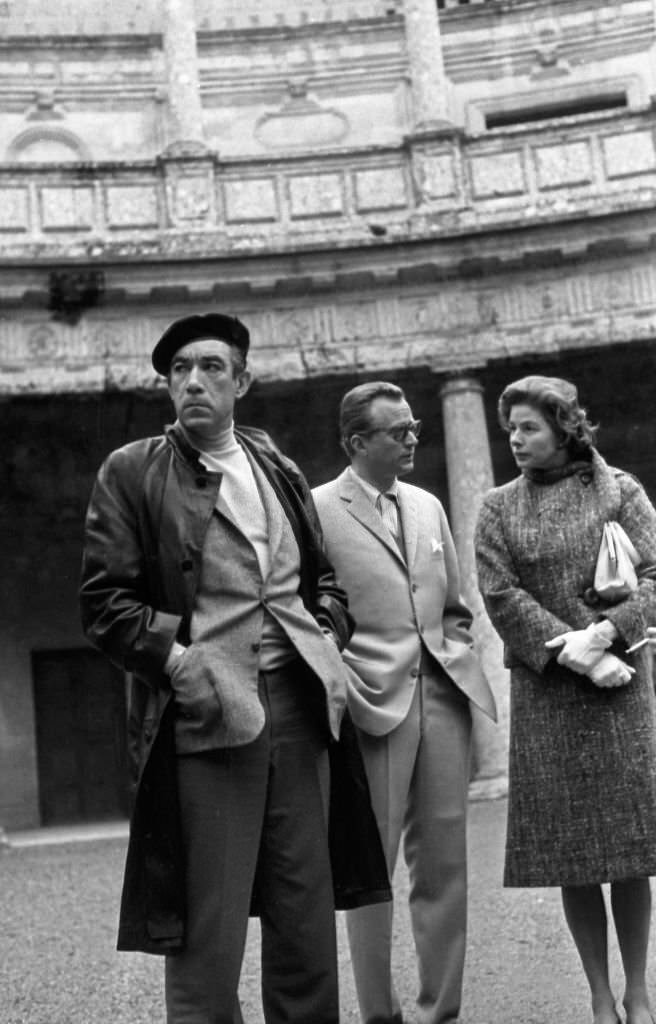
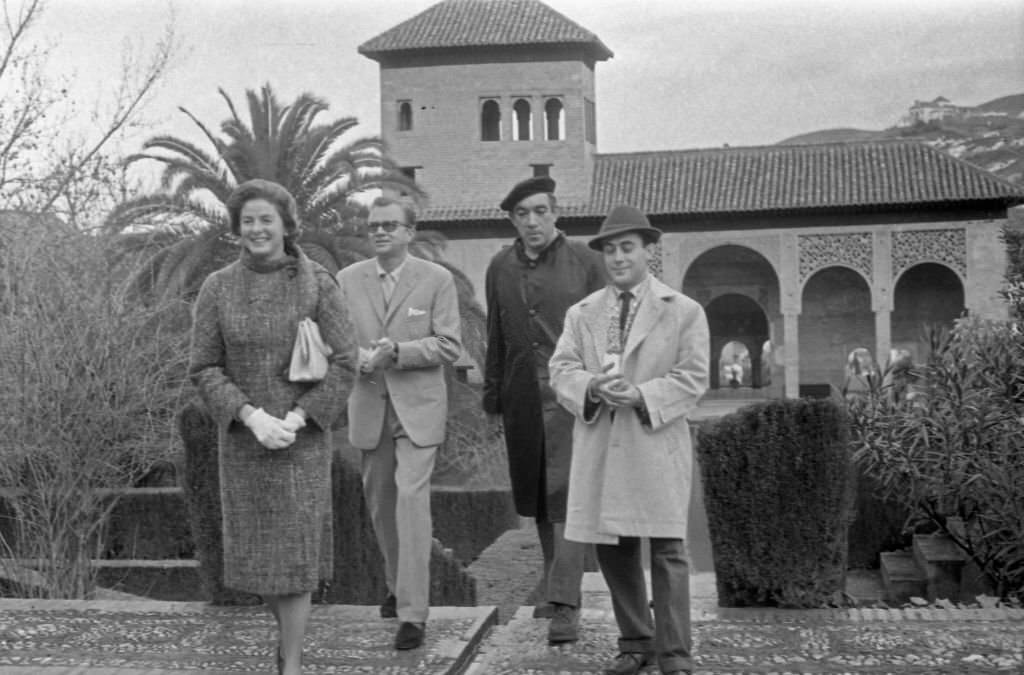
In 1962, Hollywood actors Anthony Quinn and Ingrid Bergman visited the Alhambra together. Both were among the most recognized film stars in the world at the time. Their presence in Granada drew attention to the city’s international profile and reflected the broader pattern of European tourism that was drawing celebrities and artists to Spain’s historic sites throughout the early 1960s.
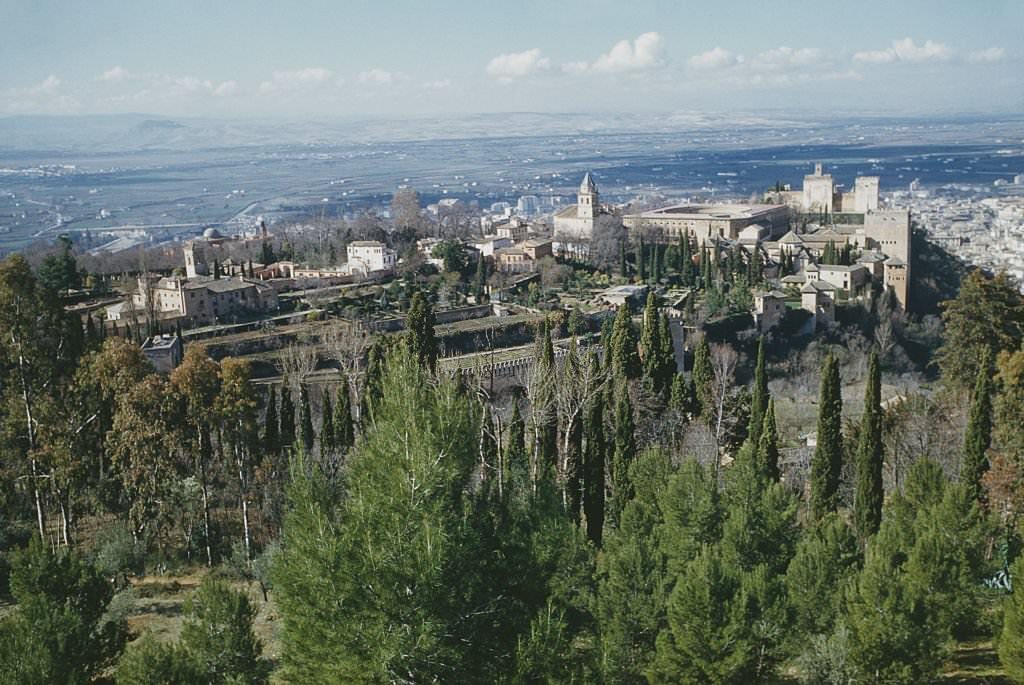
The Silla del Moro — the Moor’s Chair — is a hilltop position above the Generalife that provides one of the most complete views of the Alhambra complex. It sits at the remains of a small Nasrid fortification called the Torre del Agua. From this vantage point, the full scale of the Alhambra is visible: the palace complex, the Alcazaba fortress, the towers, and the gardens all laid out against the mountain behind.
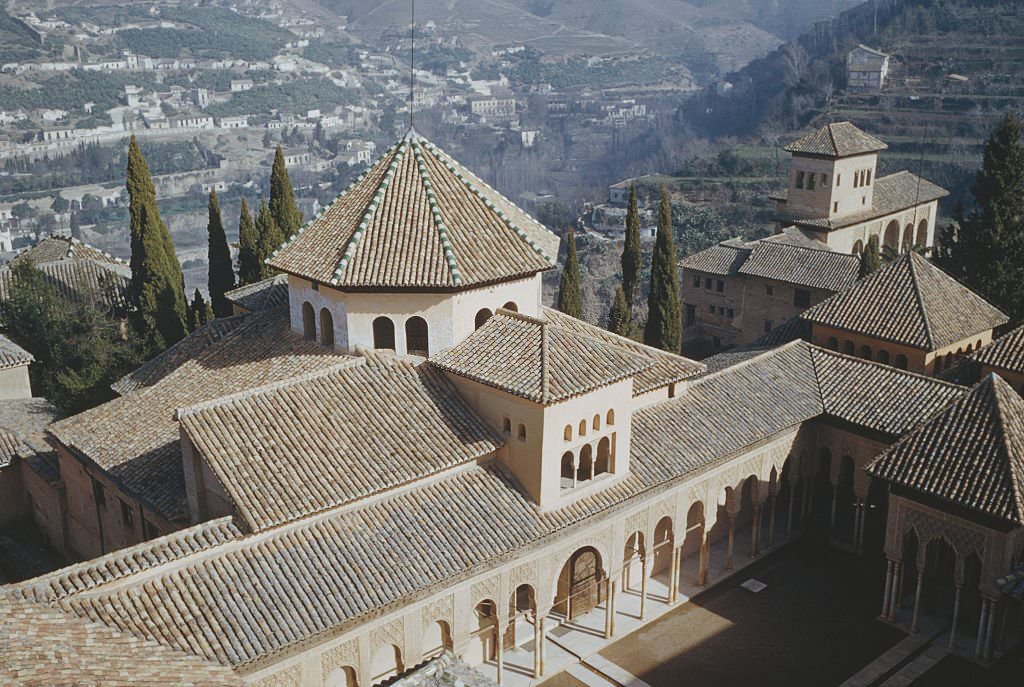
Seen from above, the Court of the Lions reveals the mathematical precision of its layout. The courtyard is divided into four sections by water channels that run from the central fountain to the surrounding halls — a design representing the four rivers of paradise described in the Quran. The 124 marble columns supporting the surrounding galleries are arranged in deliberate groupings, not in a uniform row, giving the arcade a rhythmic visual quality.
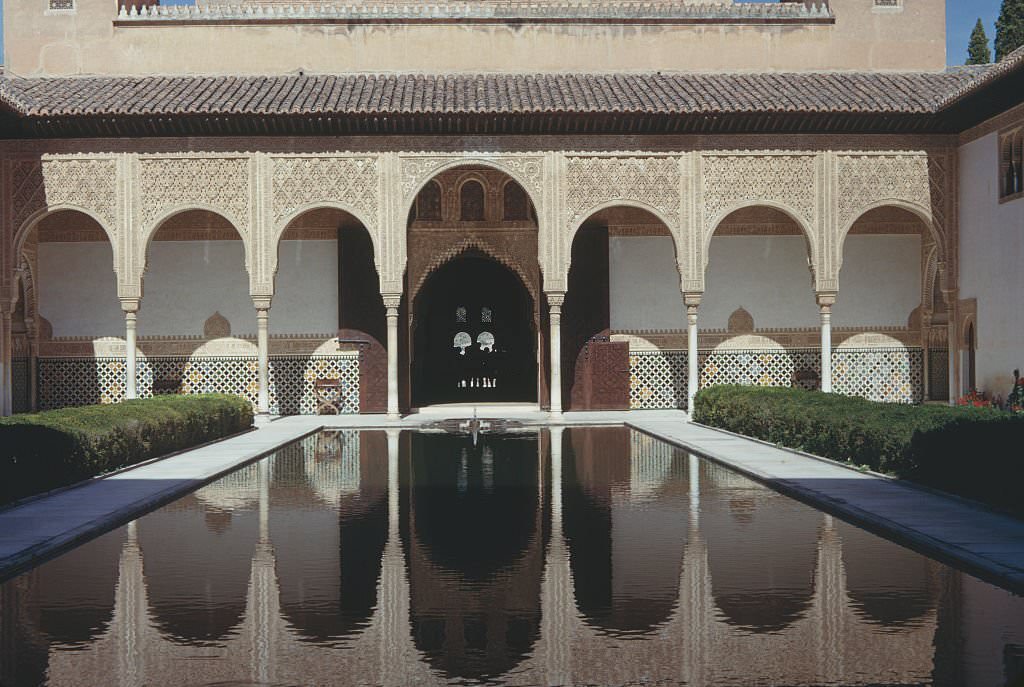
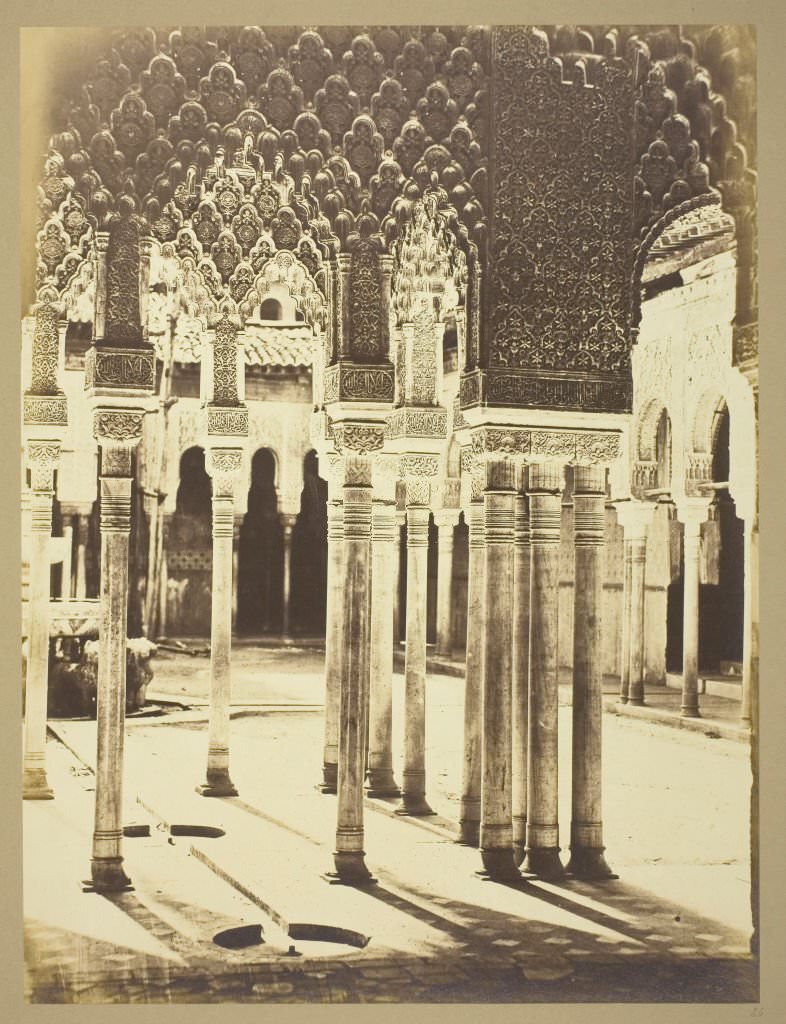
The Alhambra’s interiors in 1960 were already drawing visitors from across the world, but the experience was far more intimate than it would later become. Smaller crowds moved through the palaces, and access to spaces like the Court of the Myrtles and the entrance to the Lions complex required no timed reservations. These photographs from the earliest years of the decade document the Alhambra at a moment when its details could still be studied quietly, without the pressure of large tour groups moving through on fixed schedules.




