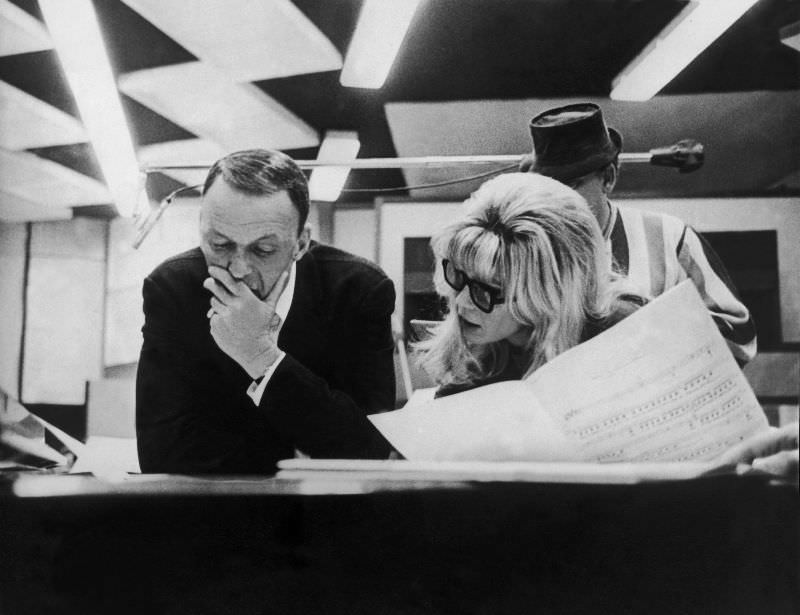
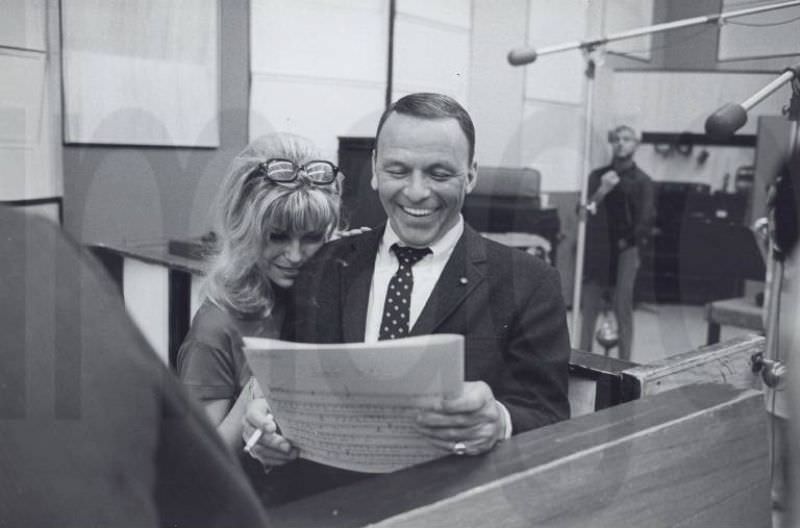
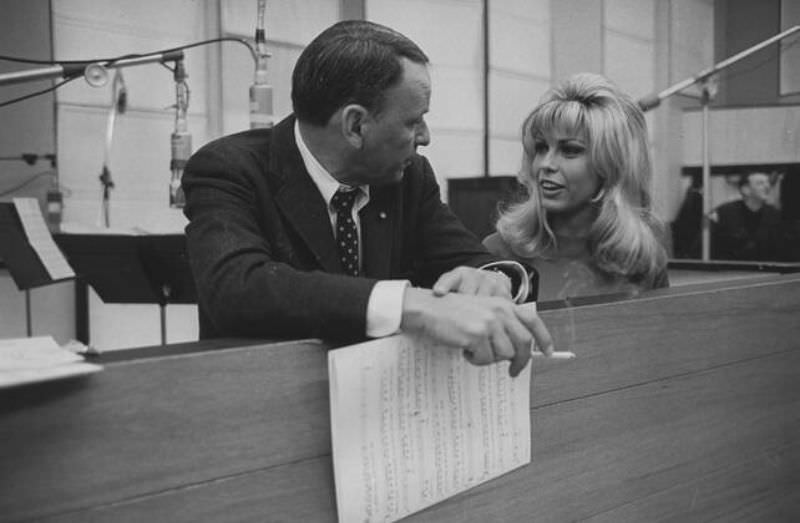
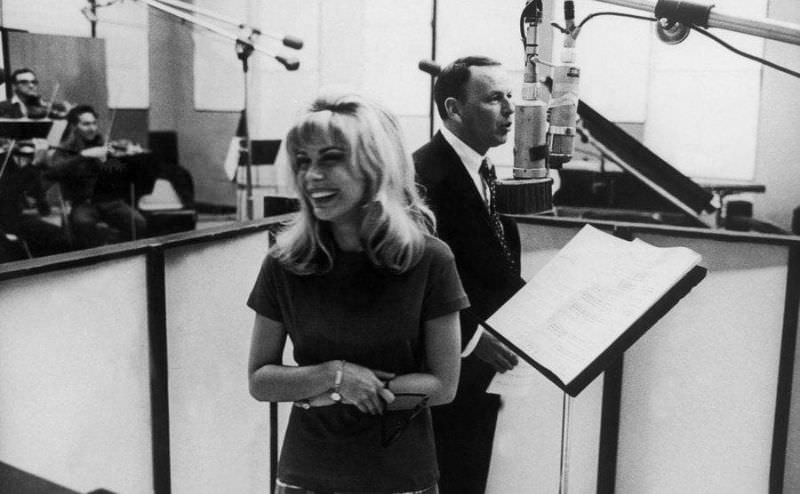
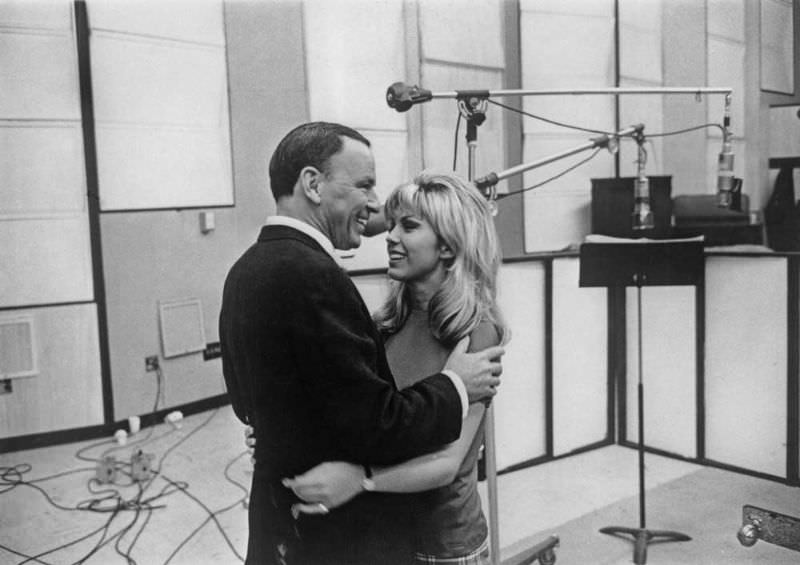
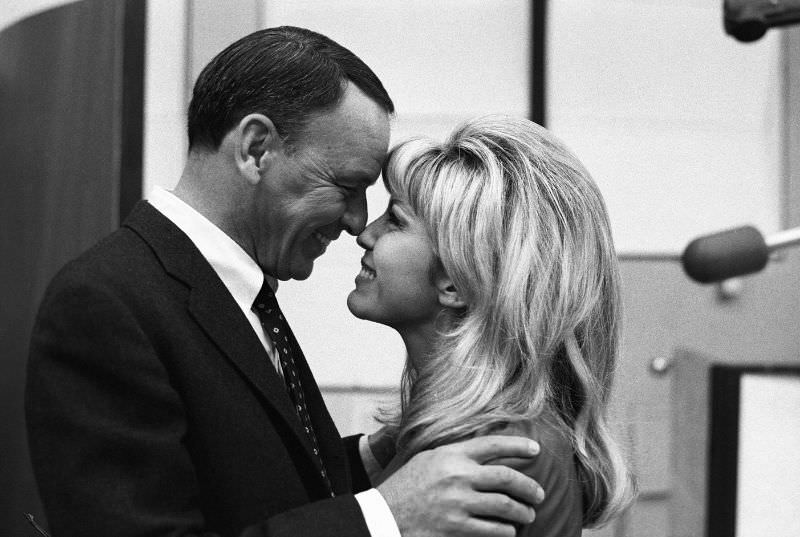
By 1967, Frank Sinatra was one of the most recognized entertainers in the world. His daughter Nancy was no longer just a famous last name — she had become a star in her own right. Her 1966 hit “These Boots Are Made for Walkin'” had reached number one, and she was riding the peak of her solo career. That year, photographer Ed Thrasher documented a recording session where the two shared the studio together.
Frank first met Nancy’s mother, Nancy Barbato, in the summer of 1934 in Long Branch, New Jersey, while he was working as a lifeguard. The two eventually married in 1939. Their marriage produced three children: Nancy, born in 1940; Frank Jr., born in 1944; and Tina, born in 1948. The couple divorced in 1951 after twelve years together.
Throughout the marriage, Sinatra’s personal life was anything but quiet. Gossip magazines regularly reported affairs with actresses including Marilyn Maxwell, Lana Turner, and Joi Lansing. His extramarital relationships were widely covered and contributed to the breakdown of his first marriage.
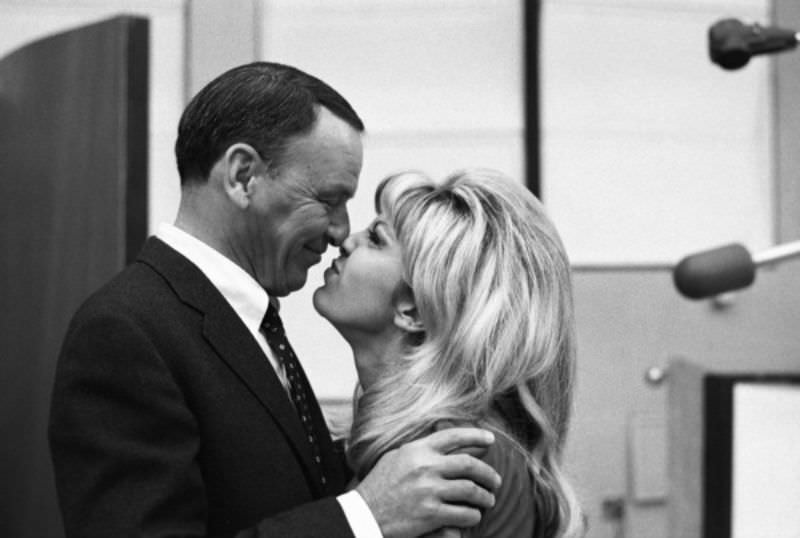
Despite the turbulence in his personal life, Frank maintained a close bond with his children — Nancy in particular. The two collaborated professionally on multiple occasions, including the 1967 duet “Somethin’ Stupid,” which hit number one on the Billboard Hot 100 that same year the session photos were taken.
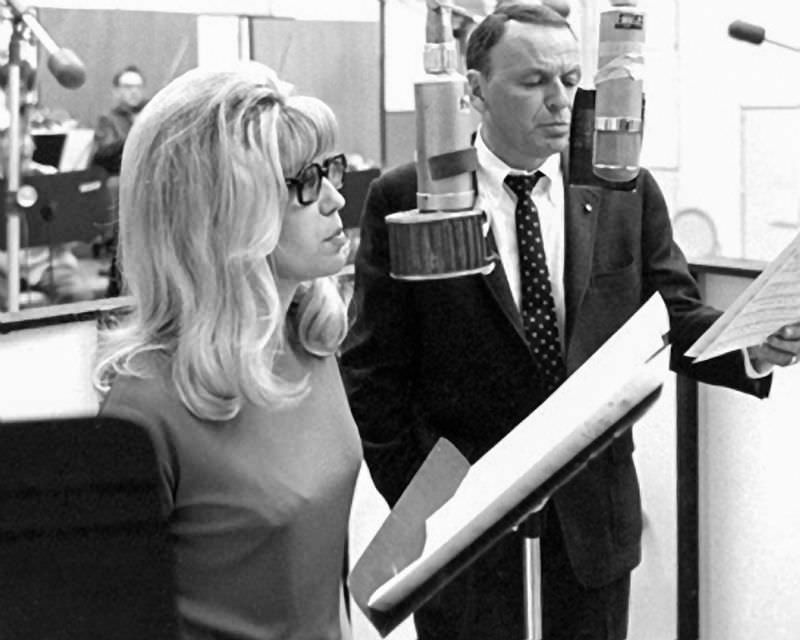
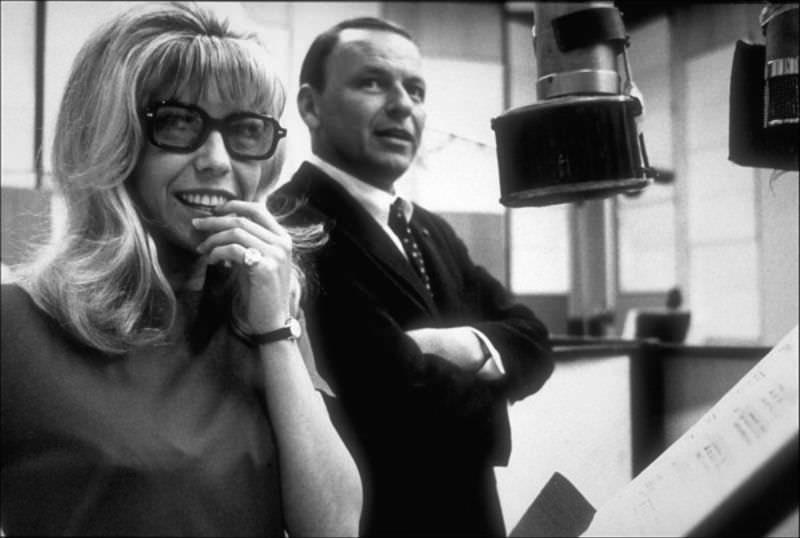
Ed Thrasher was a well-known photographer and art director who worked closely with Reprise Records, the label Frank Sinatra co-founded in 1960. Thrasher had regular access to artists in the studio, which is how he came to document sessions like this one. His work produced some of the most candid and intimate images of Sinatra ever taken.
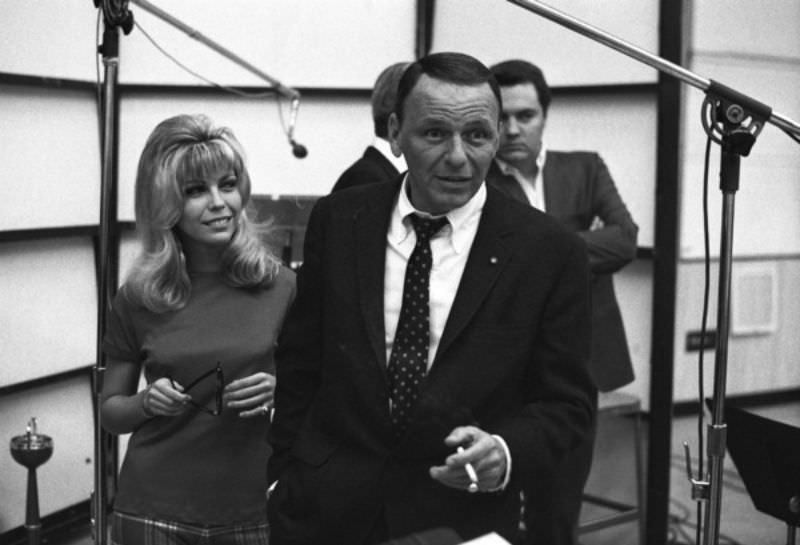
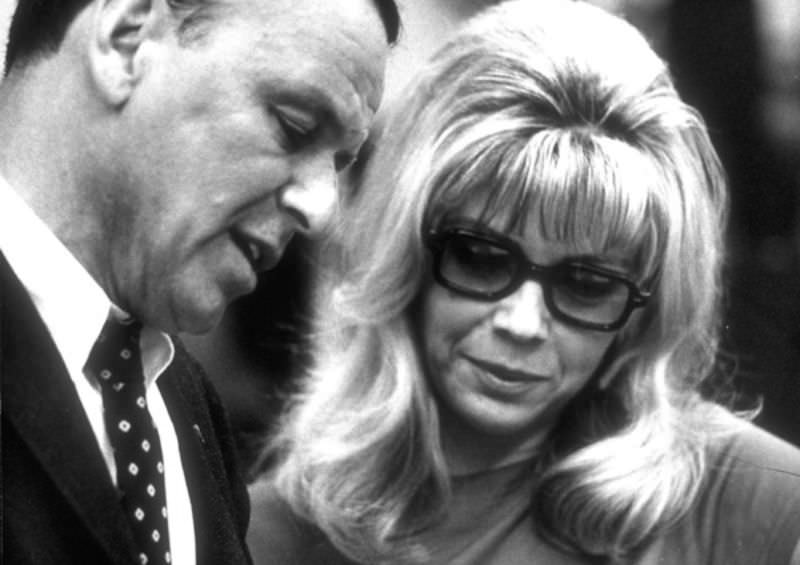
The studio setting captured by Thrasher shows both performers in a relaxed, working environment. These were not posed publicity shots — they were documentation of an actual session, which gives the photographs a rare authenticity rarely seen in images of major stars from that era.
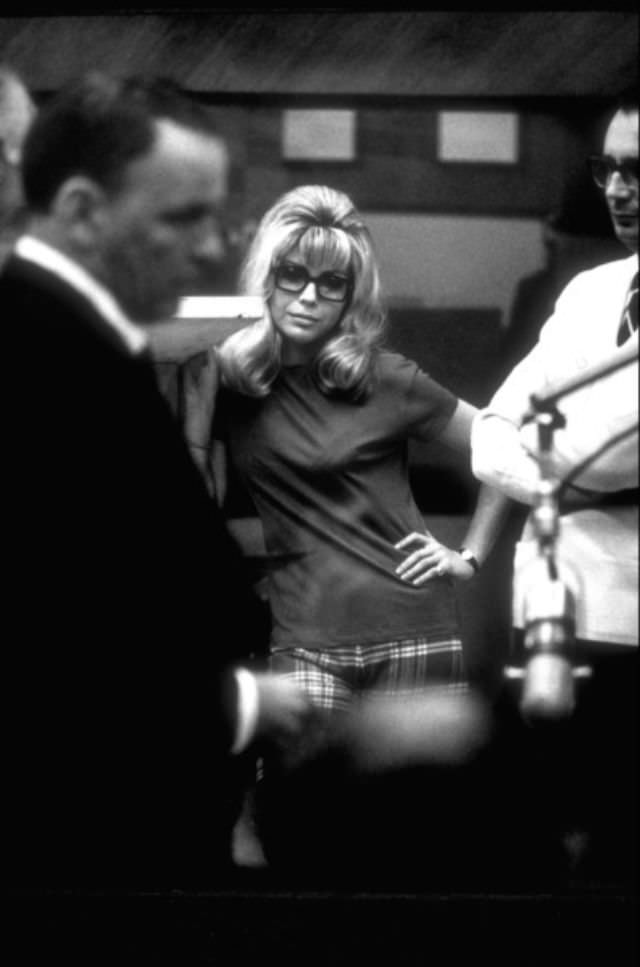
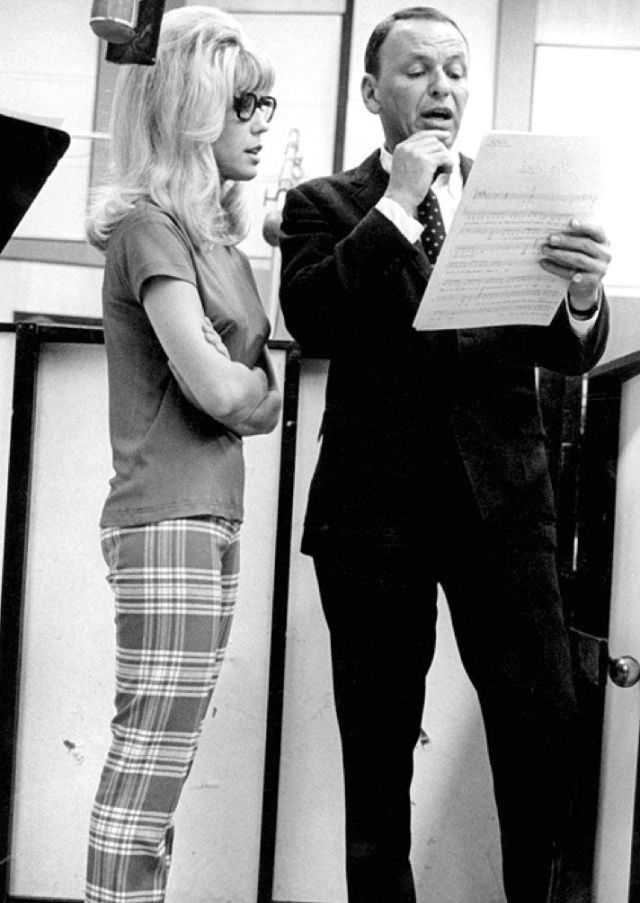
Nancy Sinatra was 27 years old at the time of this session. She had already signed with Reprise and was working under producer Lee Hazlewood, who shaped much of her mid-1960s sound. Frank, at 51, was still recording prolifically and performing worldwide. The generational dynamic between the two is visible in Thrasher’s frames.
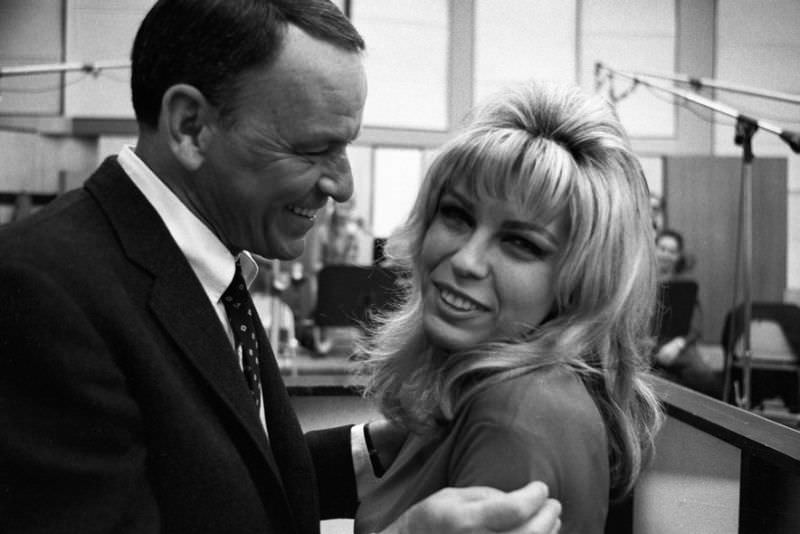
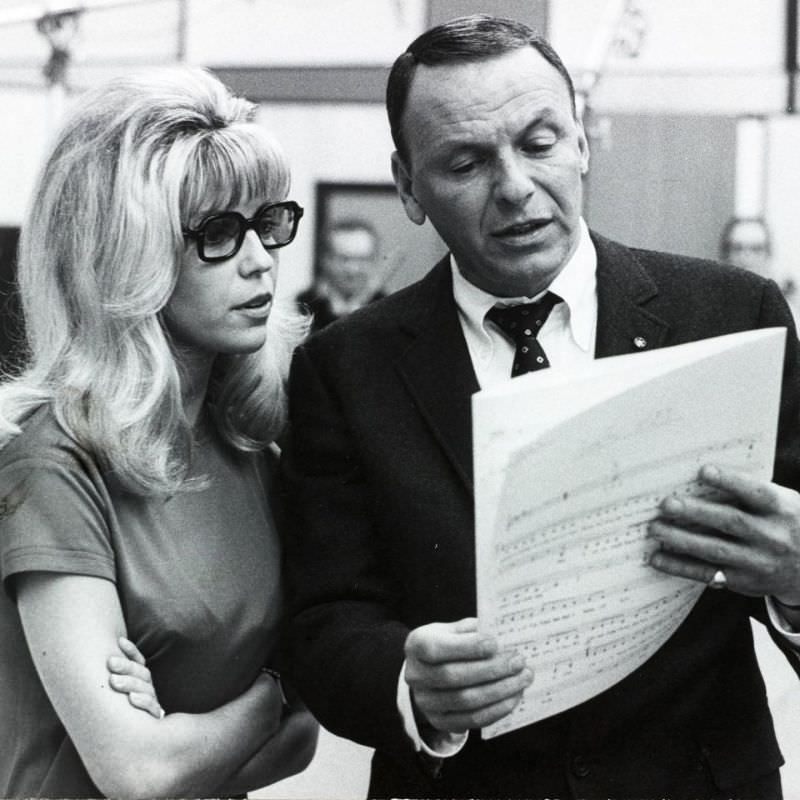
What Thrasher captured was a father and daughter who happened to also be professional colleagues. Both understood the demands of the recording process, and both brought years of experience into the same room. The photographs stand as a document of a specific moment in music history — one family, one session, one year that produced some of the most memorable pop music of the decade.