Singapore in the 1980s was a city in the middle of a dramatic transformation. The government pushed hard to move the economy away from labor-intensive manufacturing and toward high-tech industries like wafer fabrication. The goal was clear: compete differently from neighboring countries that could offer cheaper wages. The strategy worked. By the end of the decade, Singapore had established itself as one of the busiest ports in the world, a growing financial center, and a serious player in international tourism and aviation.
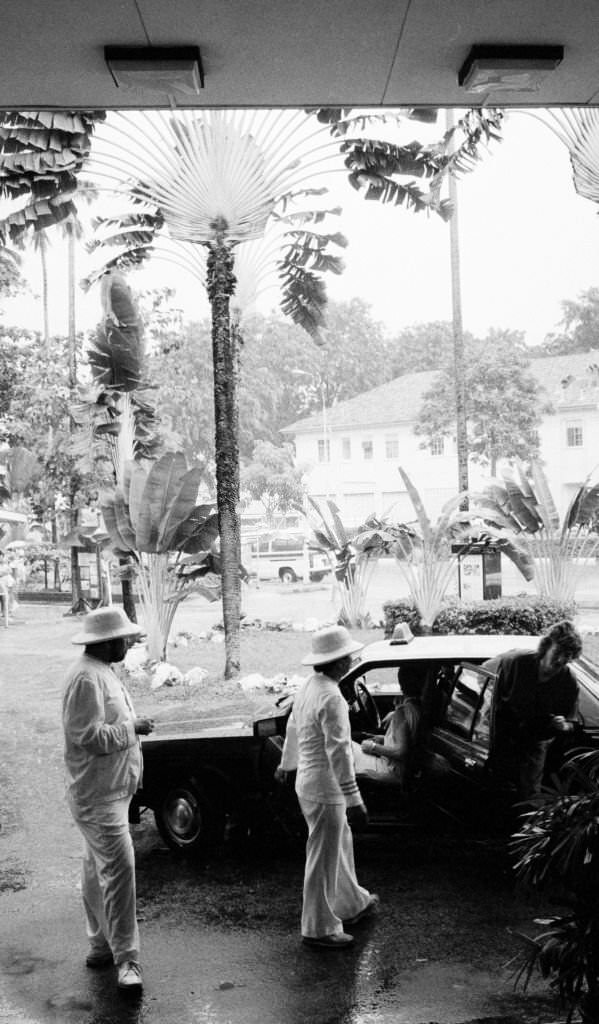
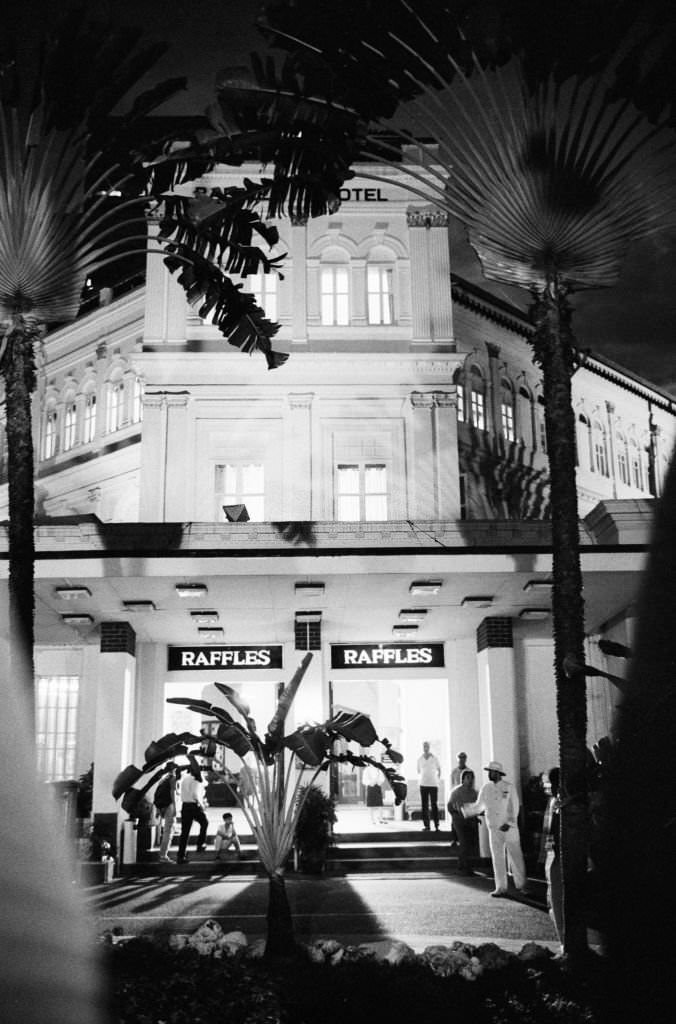
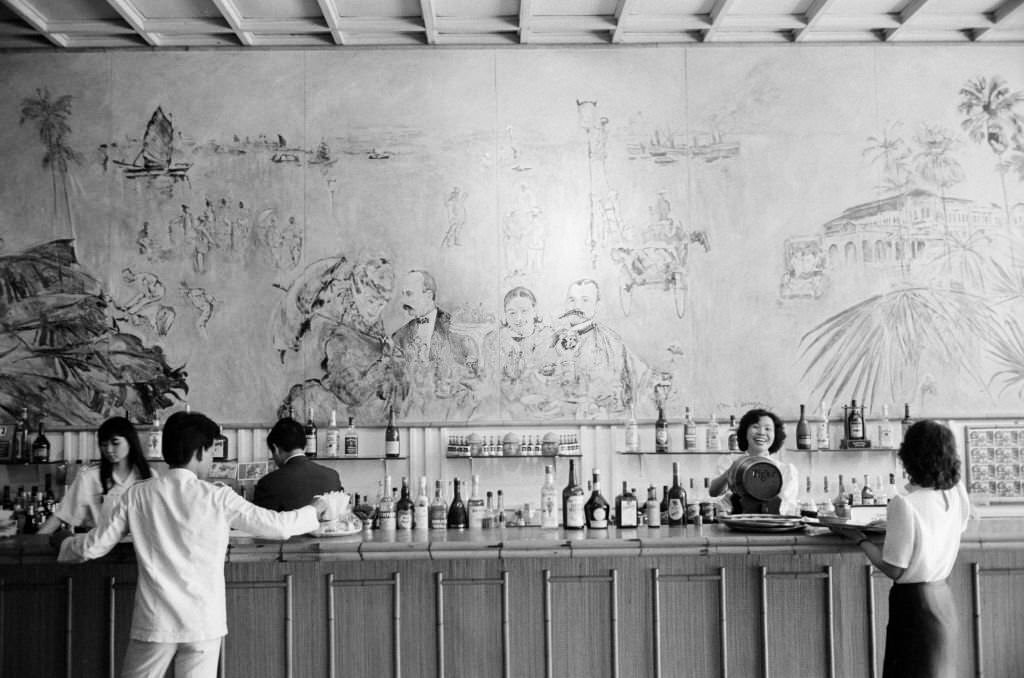
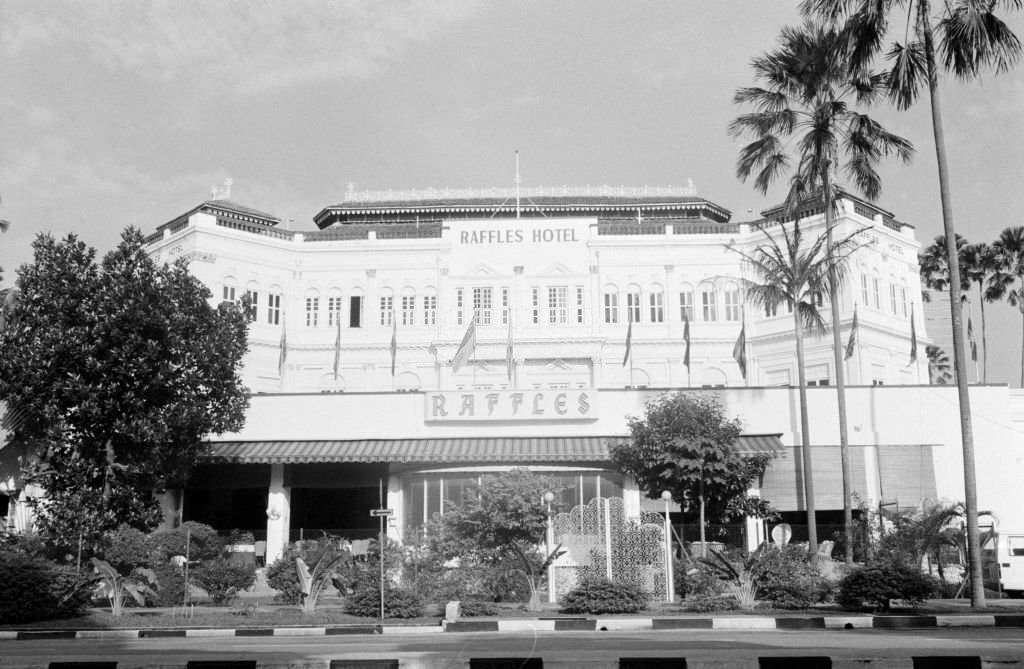
Few symbols captured Singapore’s global ambitions in this era better than Raffles Hotel. The colonial-era landmark on Beach Road remained one of the most recognized hotels in Asia throughout the 1980s, attracting international visitors and hosting high-profile events. Its white-suited valets and grand entrance were a familiar sight to anyone arriving in the city.
Two valets in colonial-inspired white suits welcoming guests to the Raffles Hotel, 1989
The entrance to the Raffles Hotel, Singapore, 1989
The Raffles Hotel in Singapore, 1988The Raffles Hotel in Singapore, 1988The Raffles Hotel in Singapore, 1988
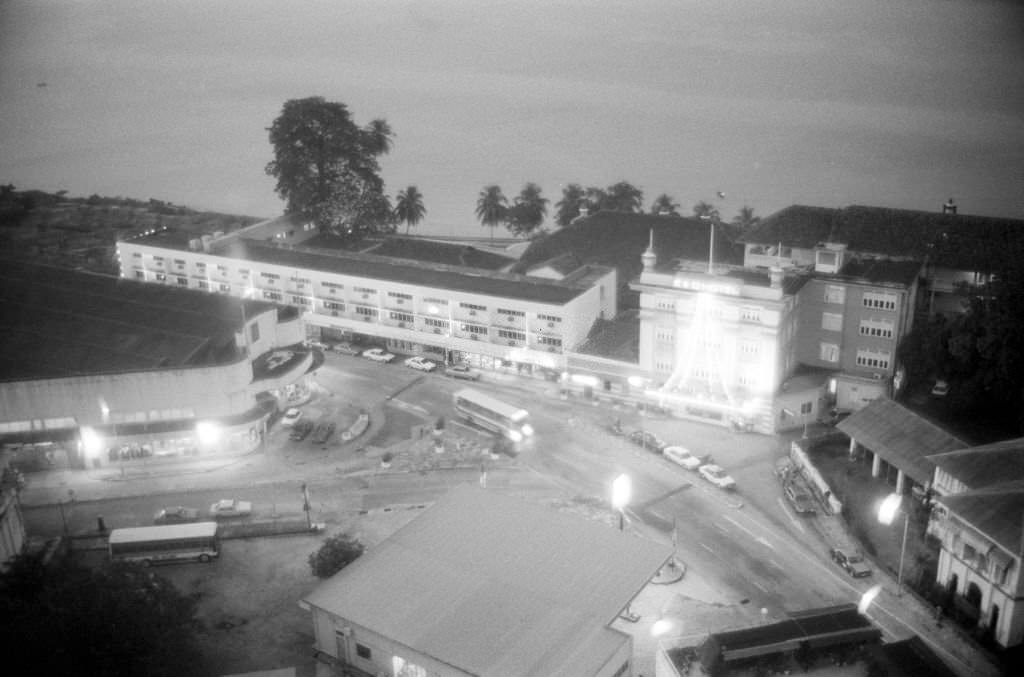
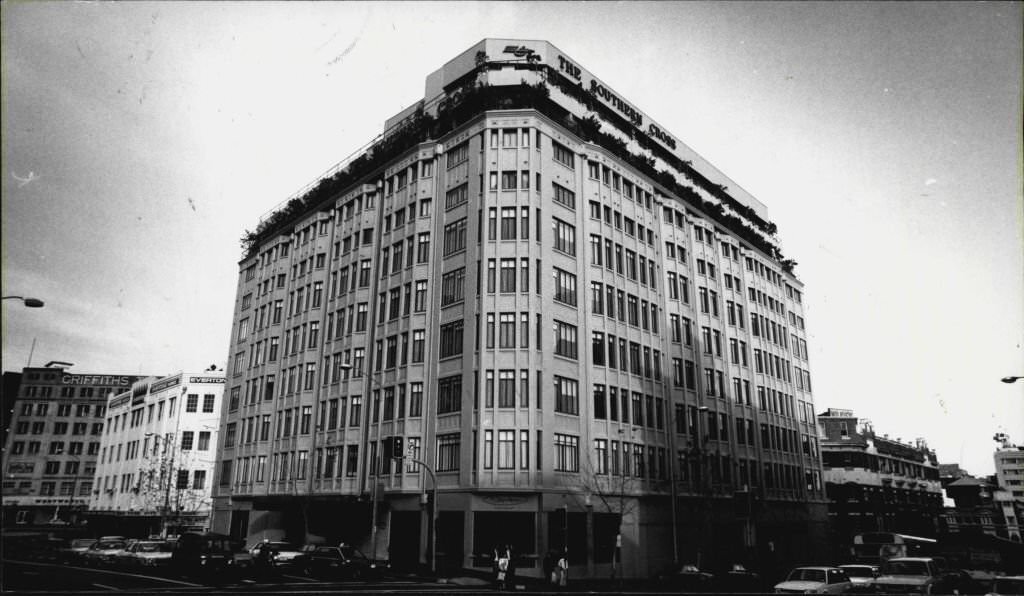
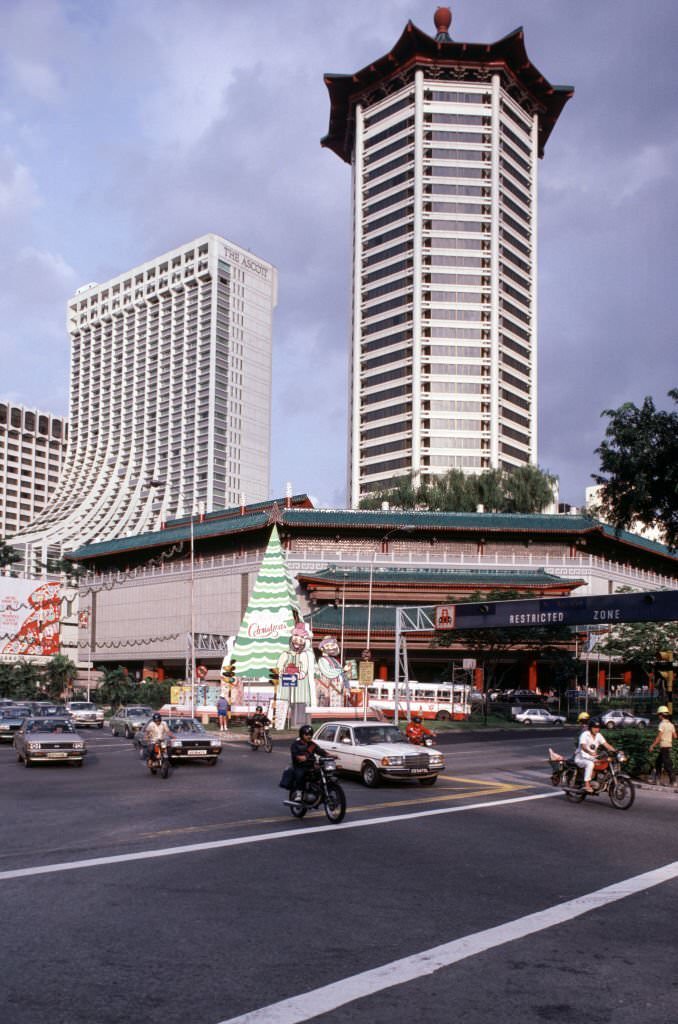
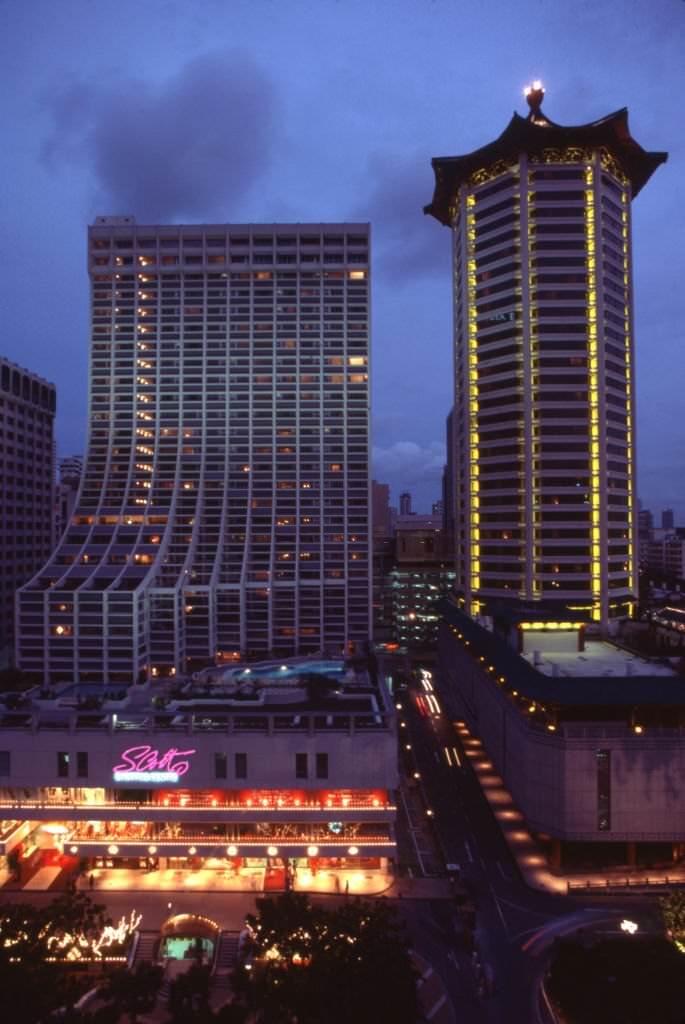
The hotel scene was expanding well beyond Raffles. New properties were rising across the city, including the Dynasty Hotel and the Southern Cross Hotel, which gained rooftop extensions in 1988. These additions reflected how rapidly Singapore’s hospitality sector was growing to meet increasing tourist demand.
New rooftop extensions at the Southern Cross Hotel, 1988
Dynasty Hotel’ in Singapore, 1986
View of the ‘Dynasty Hotel’ in Singapore, in 1986.
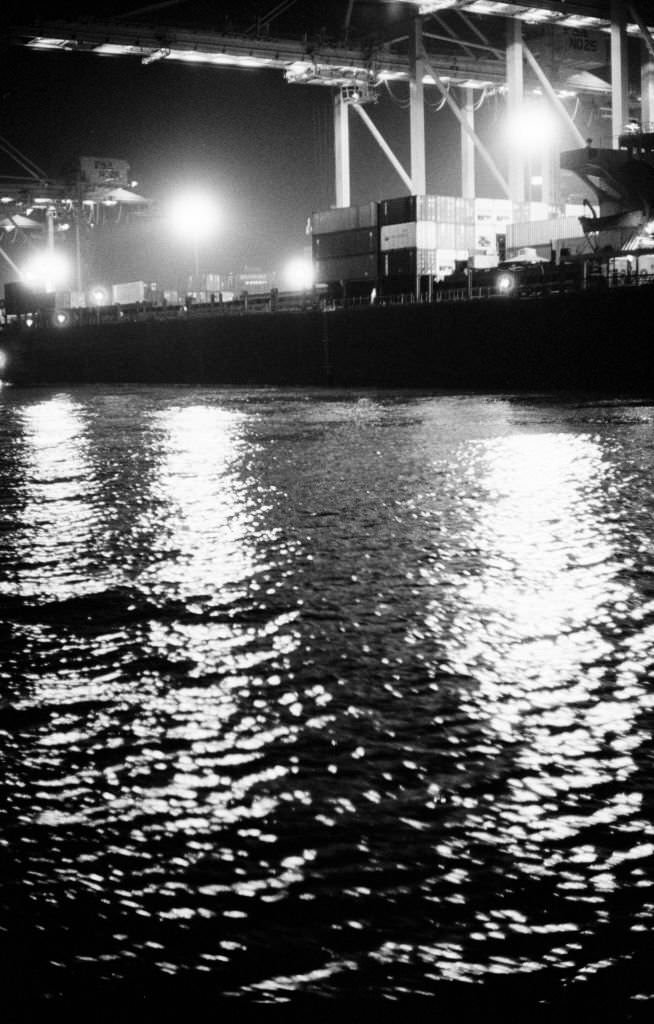
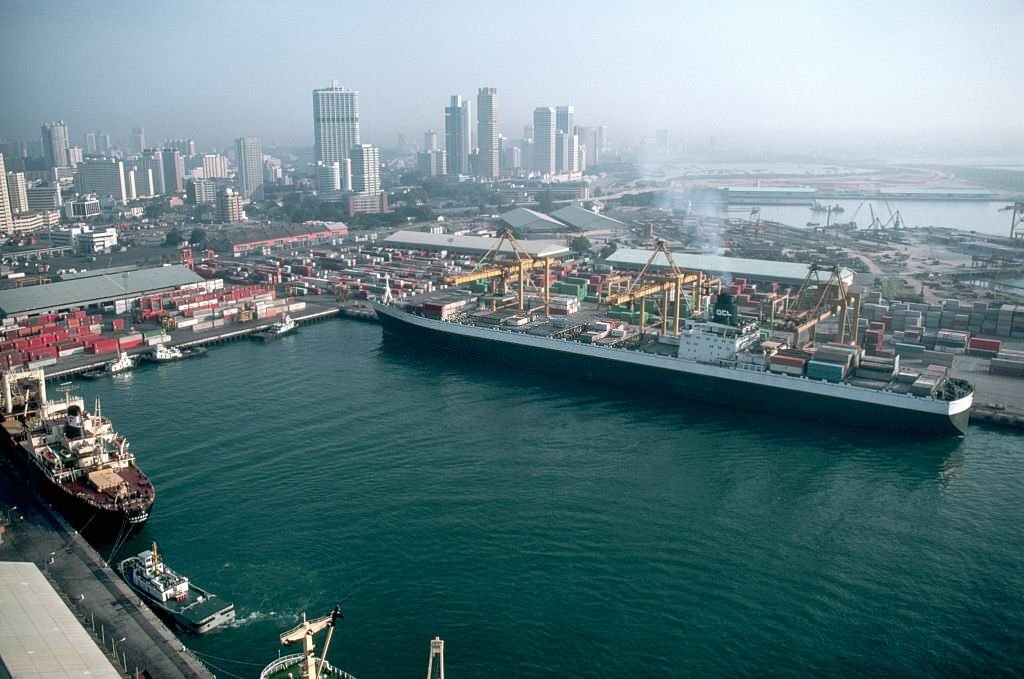
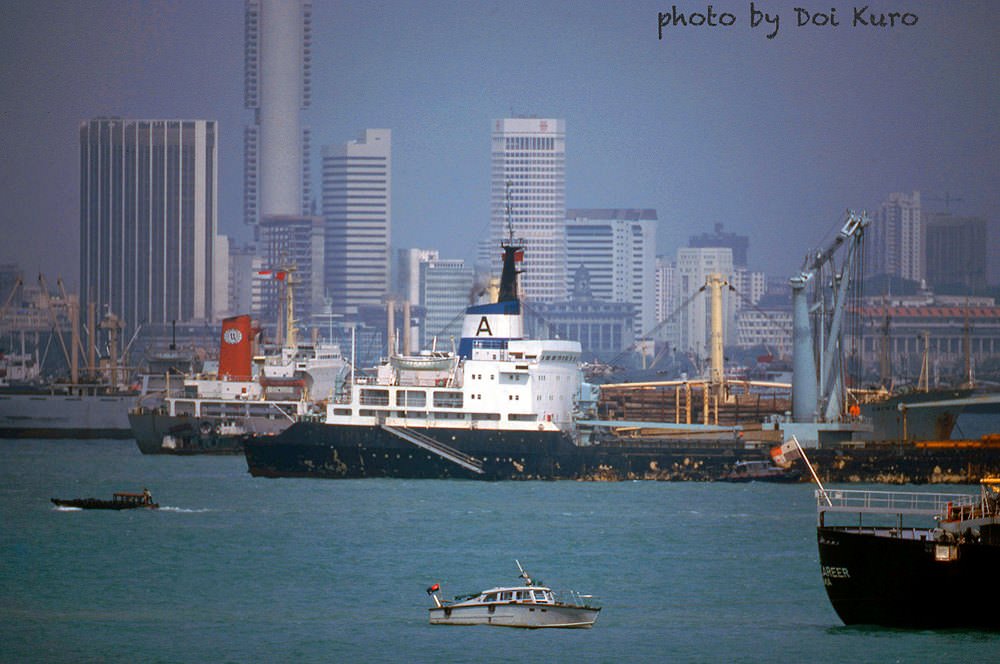
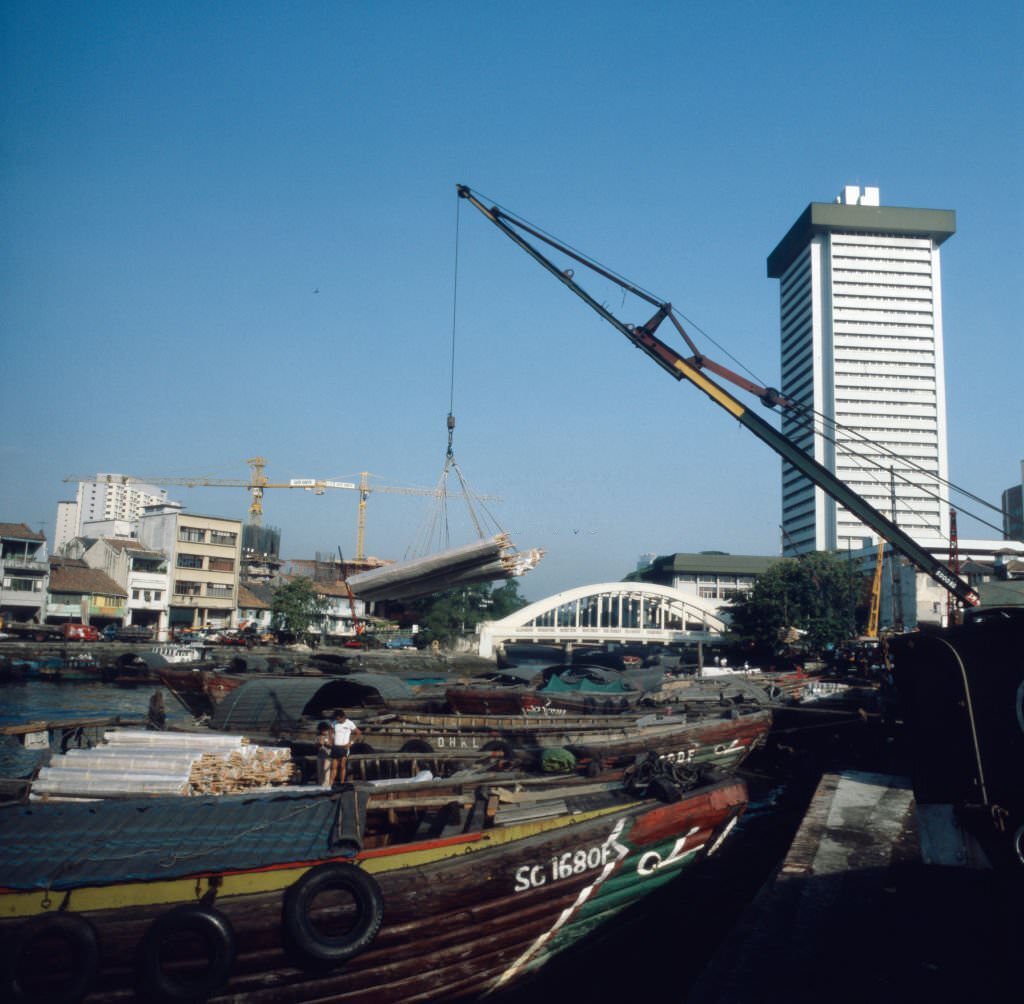
Singapore Changi Airport opened in 1981, and Singapore Airlines rapidly grew into a major international carrier. Down at the docks, the port was operating around the clock. Cranes swung over stacked containers late into the night, and cargo ships lined the berths at Jurong Port and beyond. This relentless port activity was central to how Singapore built its economic power.
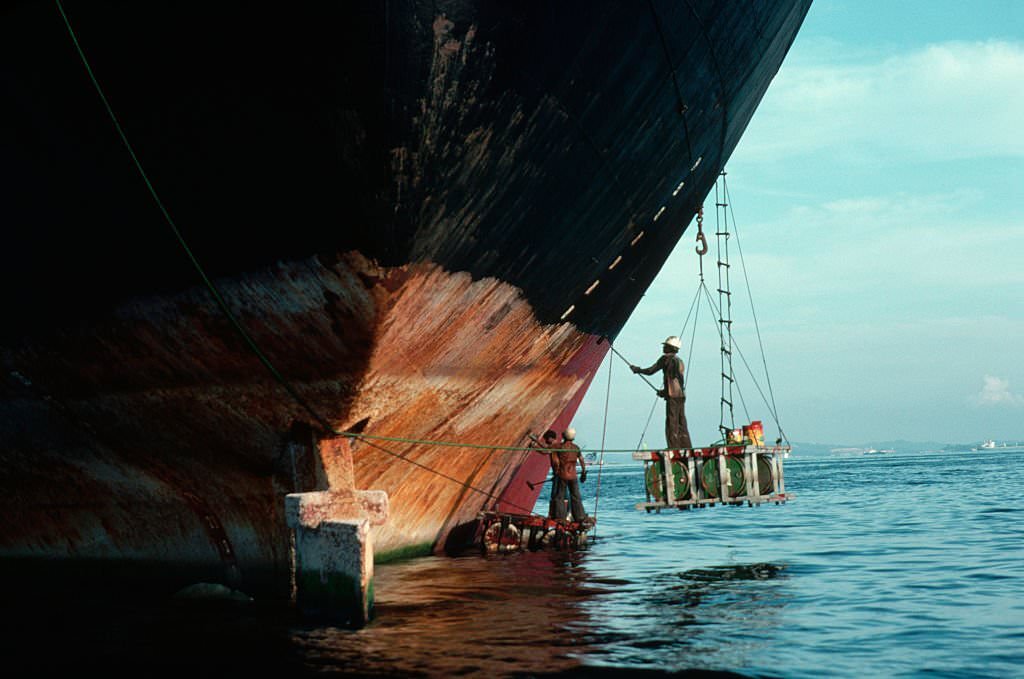
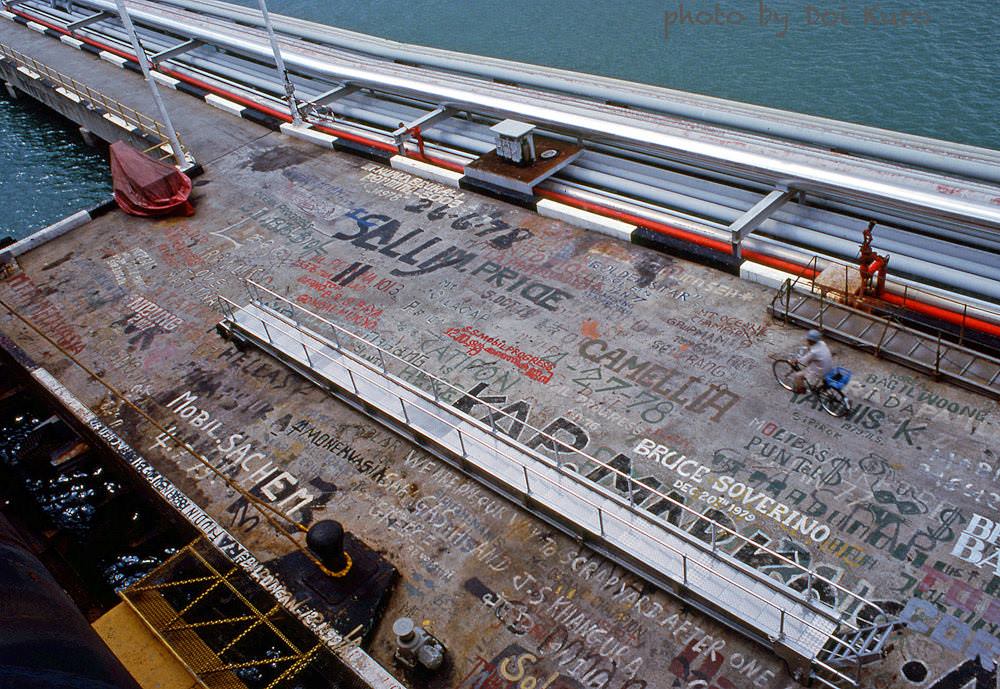
Cranes and containers on the illuminated docks of Singapore’s commercial port, 1989Cargo Ship at Wharf in Singapore.Painting Ship Hull From Scaffolding.Sea berth, Jurong port, 1979Port of Singapore, 1979
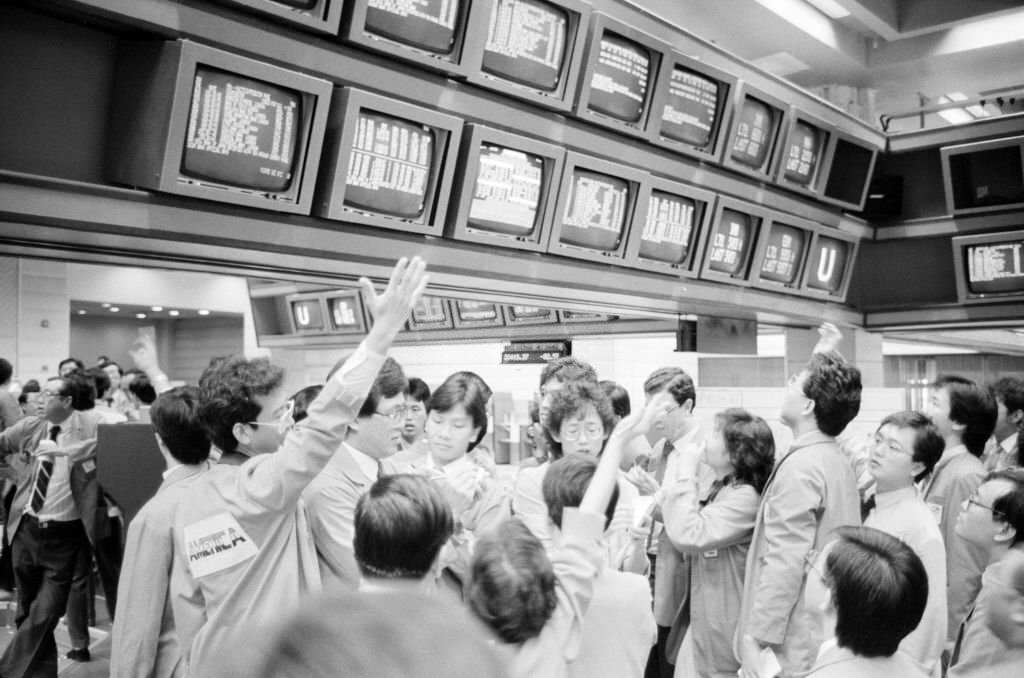
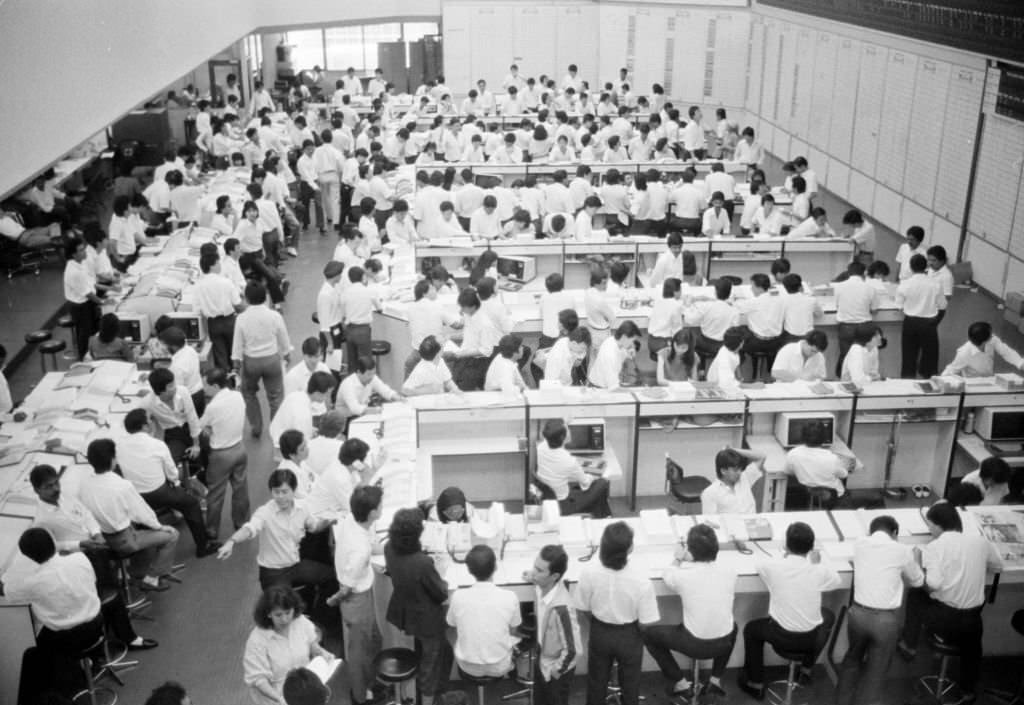
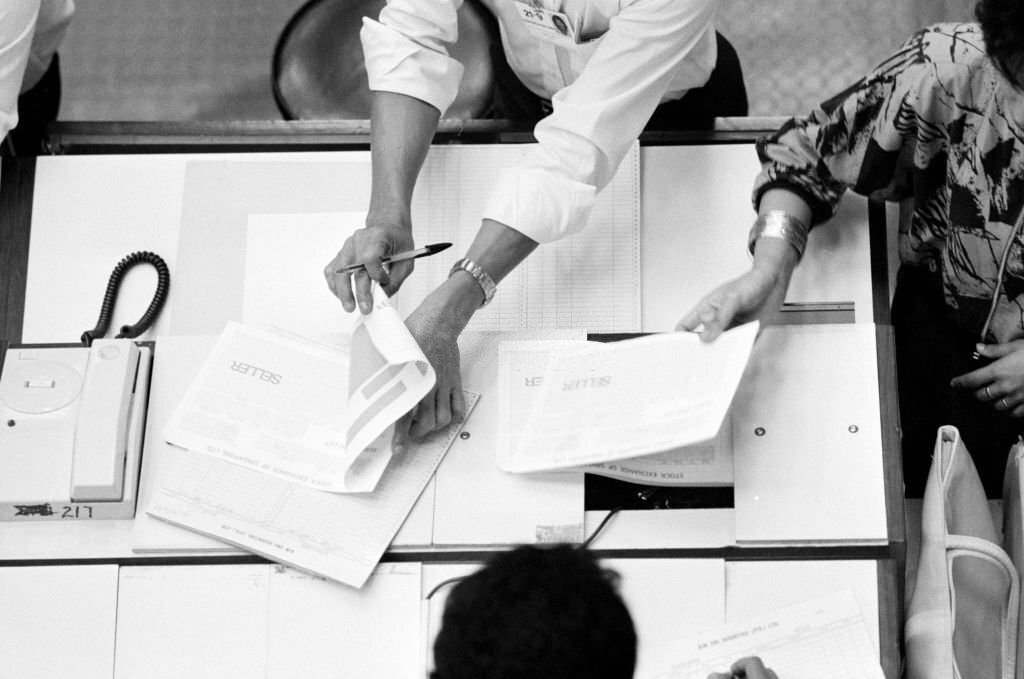
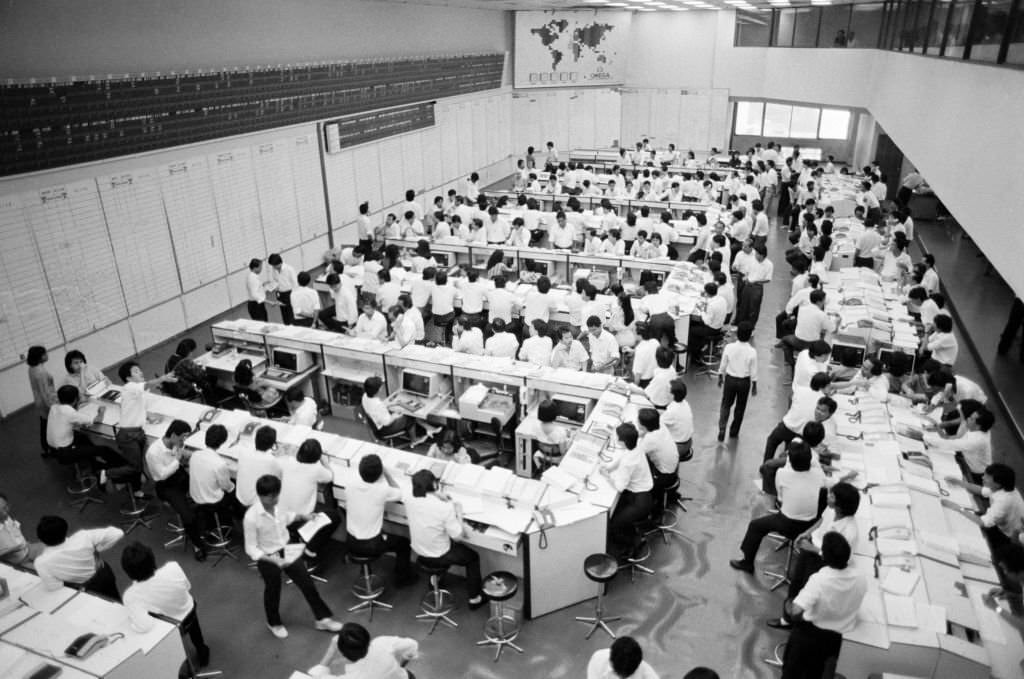
Finance was another pillar of Singapore’s rise. The Singapore Stock Exchange buzzed with activity in 1987, with brokers and criers watching screens closely as share values shifted by the second. The trading floor was a high-energy environment, and the images from that year capture the intensity of a financial hub operating at full pace.
The Singapore Stock Exchange. Here, criers attentive to the screens displaying the values of the stock exchange, 1987La Bourse De Singapour, 1987The Singapore Stock Exchange. Bird’s eye view of broker hands, 1987The Singapore Stock Exchange, 1987
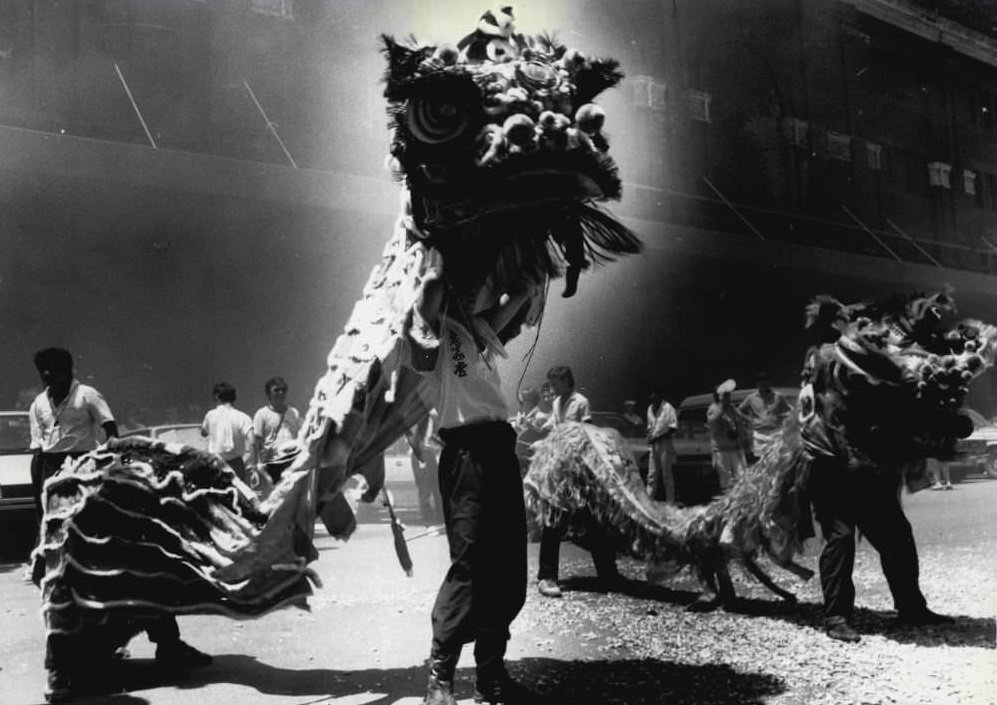
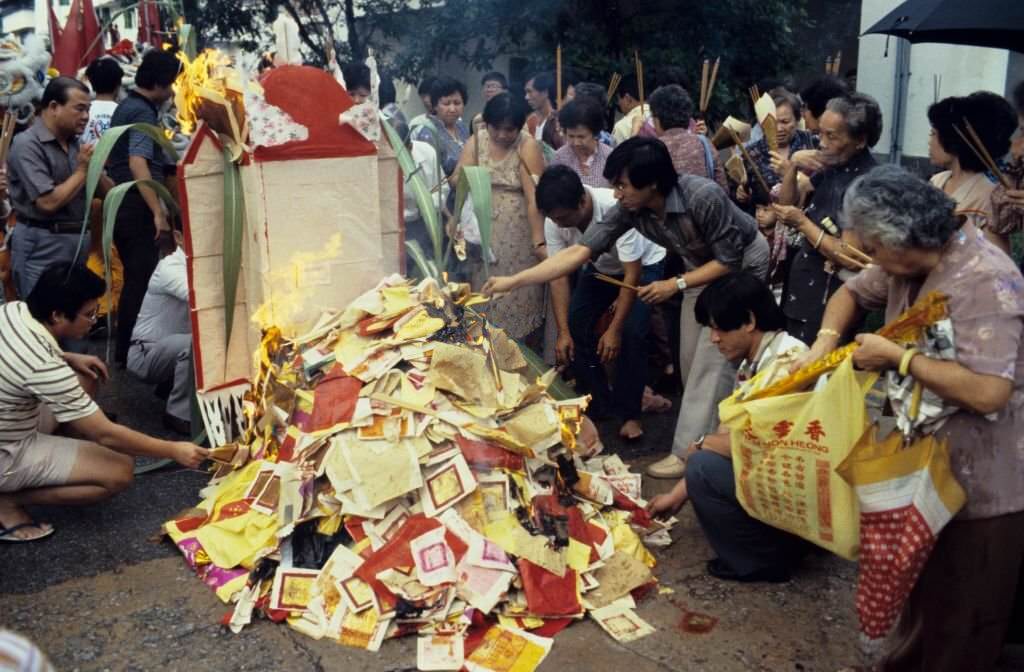
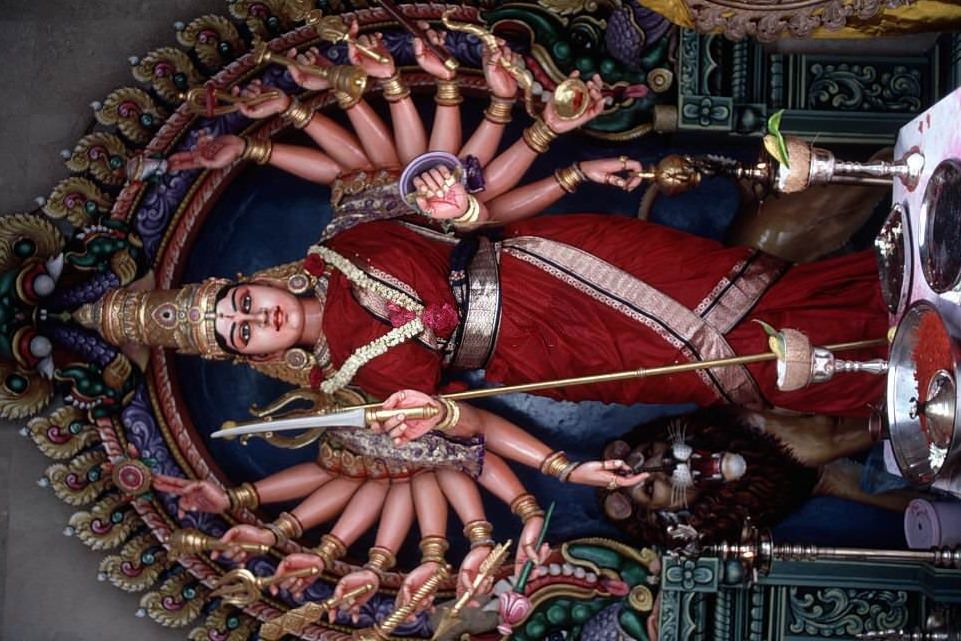
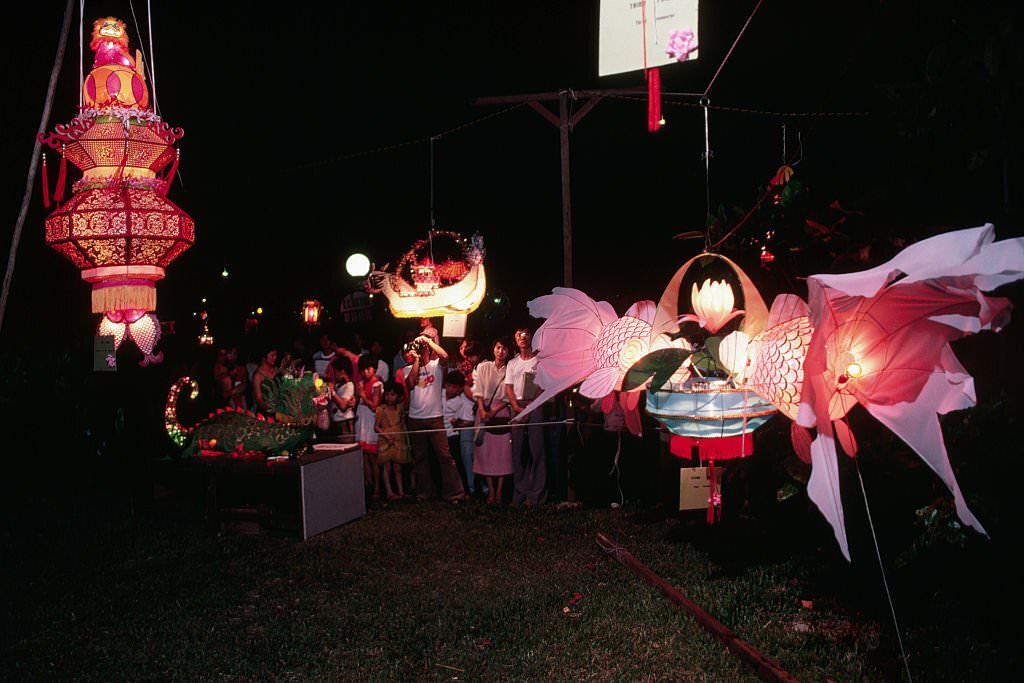
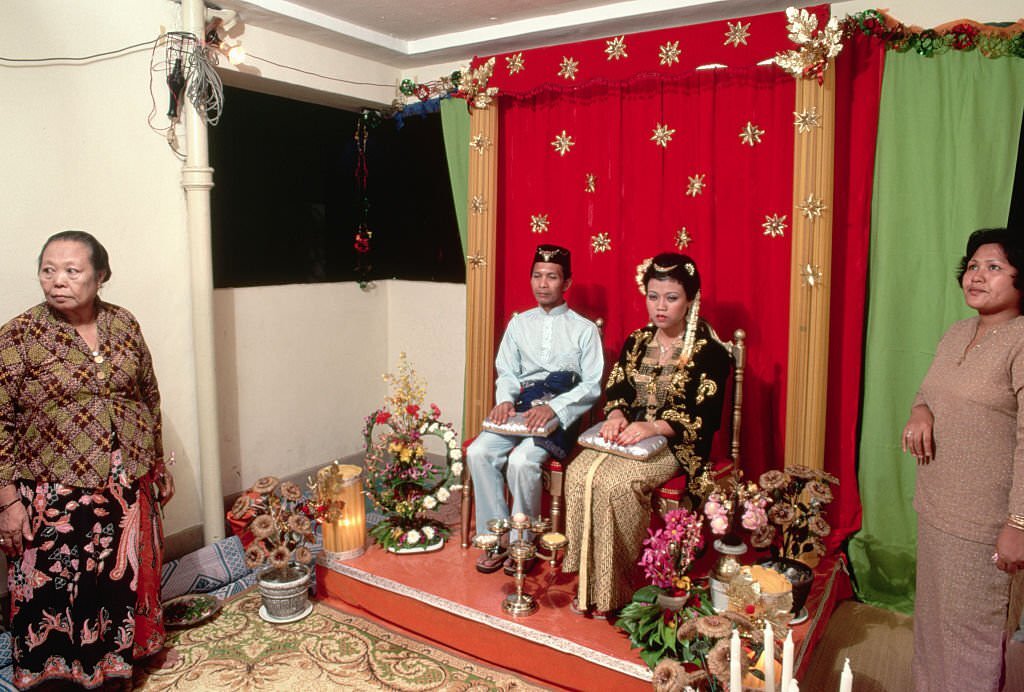
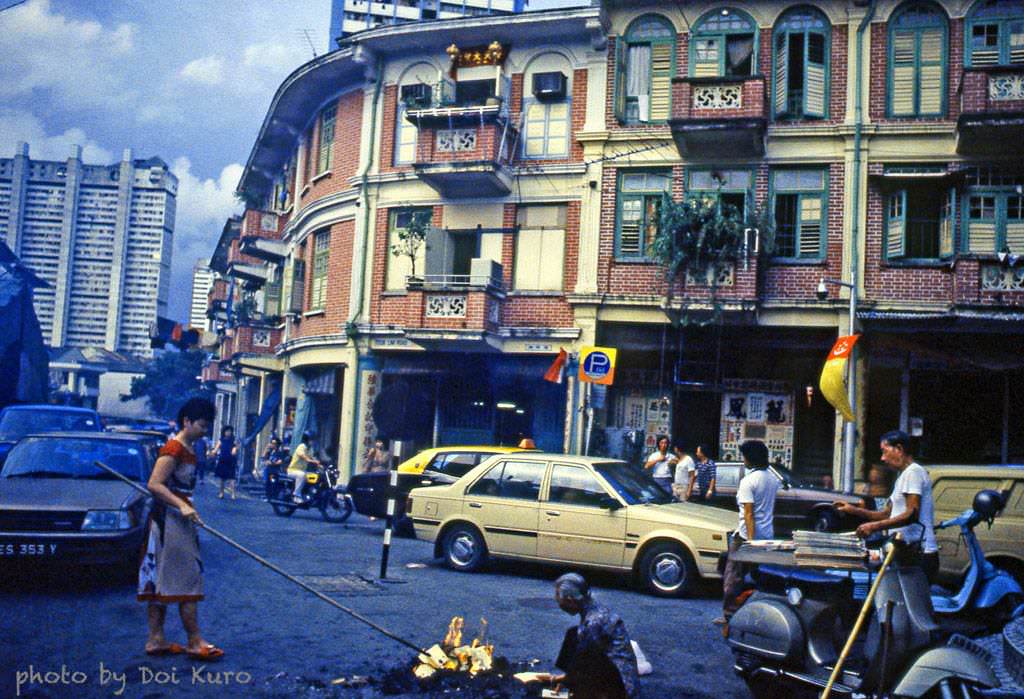
Cultural life in Singapore remained vivid throughout the decade. Chinese New Year brought large celebrations in 1987, and the Monkey God Festival drew devotees to Chinatown to burn offerings in his honor. Paper lantern festivals lit up the streets, and Hindu temples displayed richly detailed deity figures. A Malay wedding in this era was a communal affair, drawing together family and neighbors in traditional dress.
Chinese new year celebrations in Singapore, 1987Devotees burning offerings to the Monkey God during his Festival in Chinatown, Singapore, 1985Hindu Deity in Singapore Temple, 1980sSeveral onlookers examine paper lanterns shaped like dragons, fish, boats, and other things at a paper lantern festival in Singapore.Malay Wedding in Singapore, 1980sBurning paper, 1984
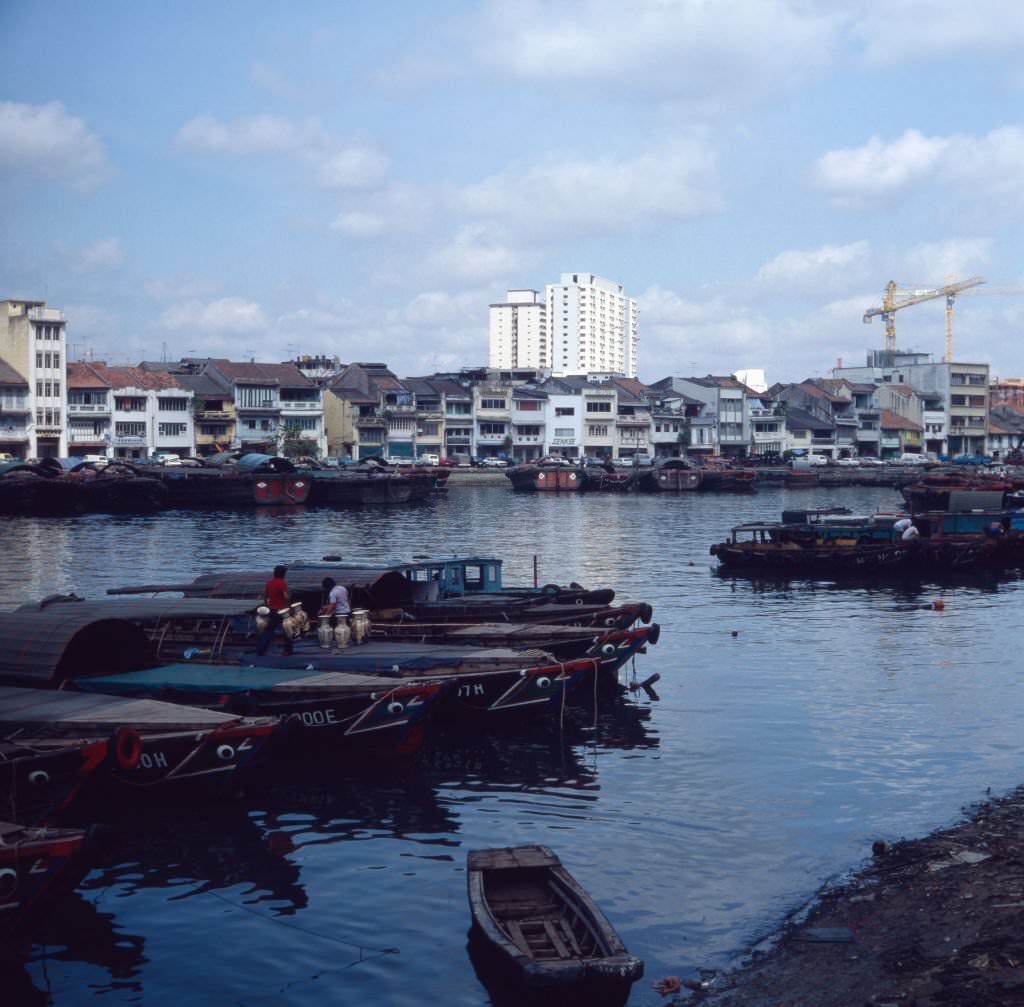
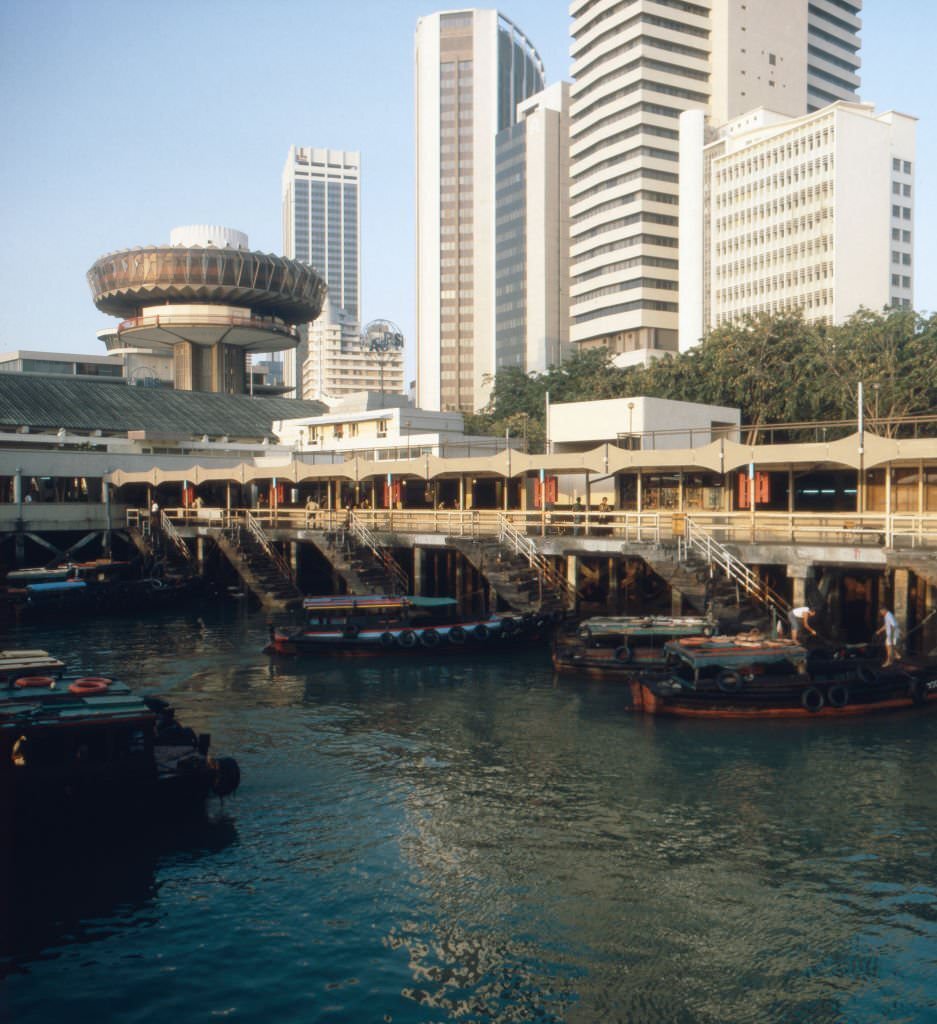
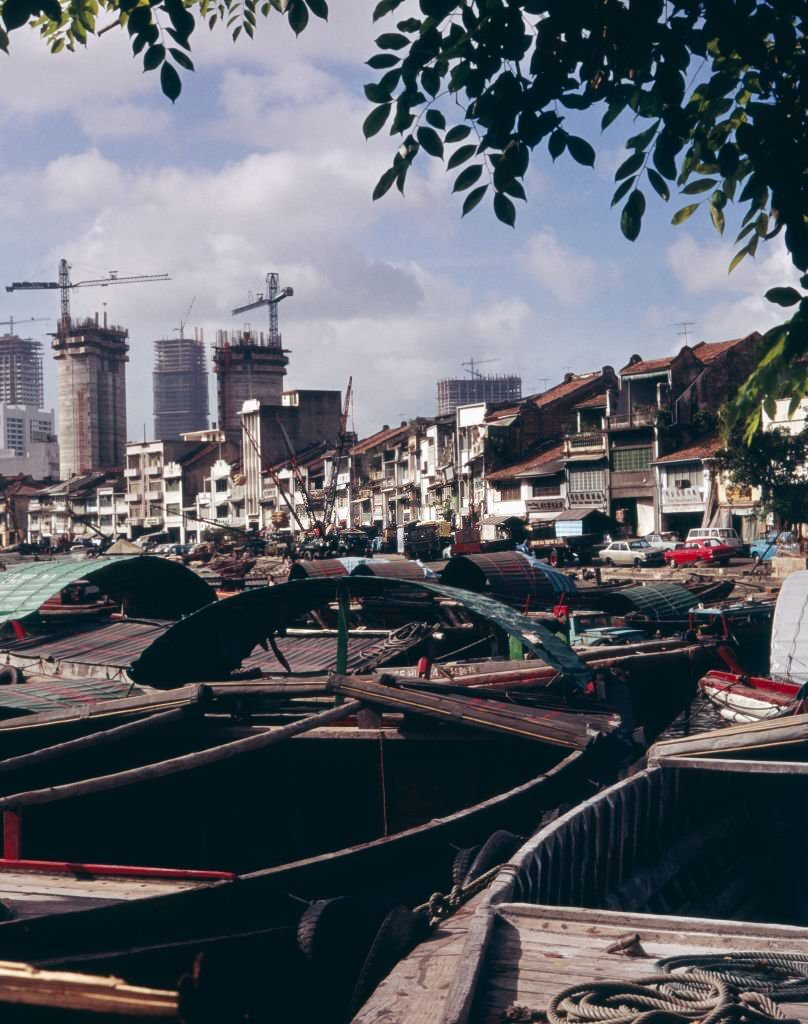
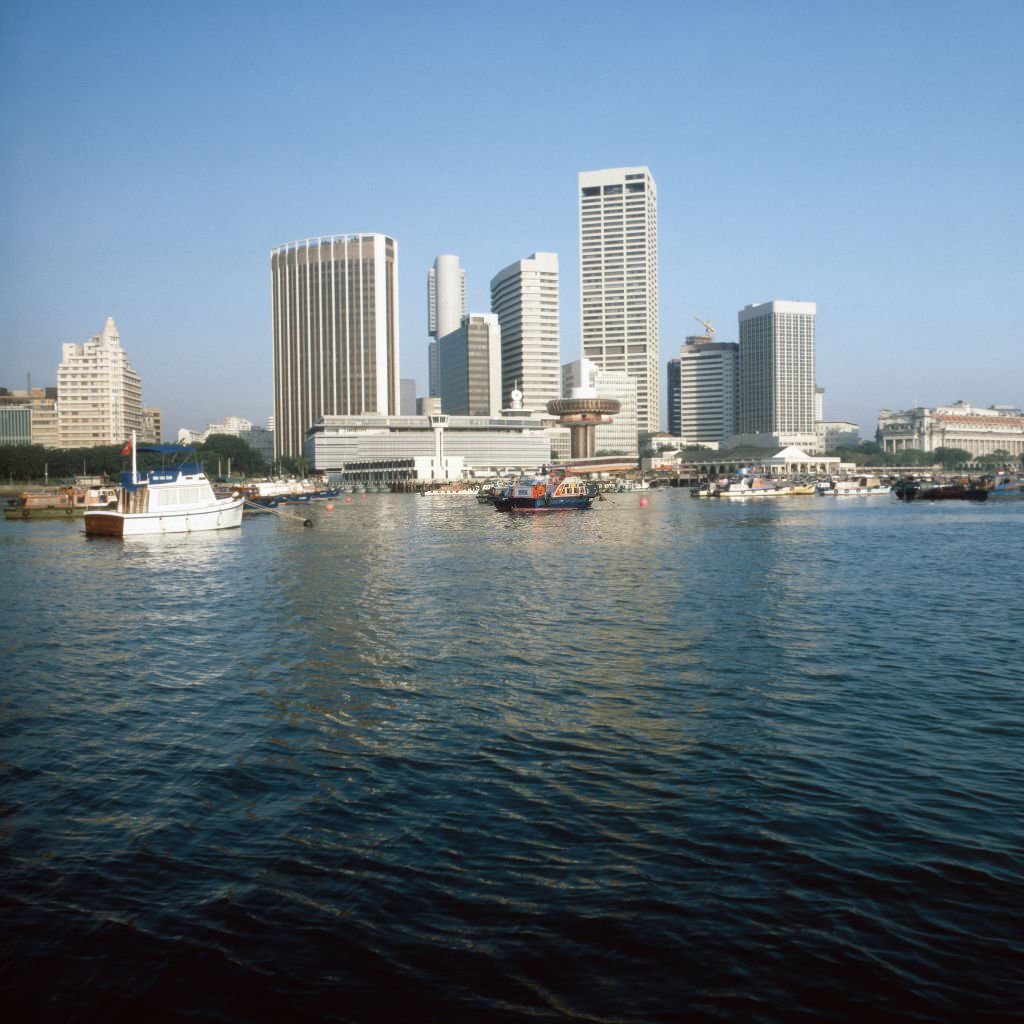
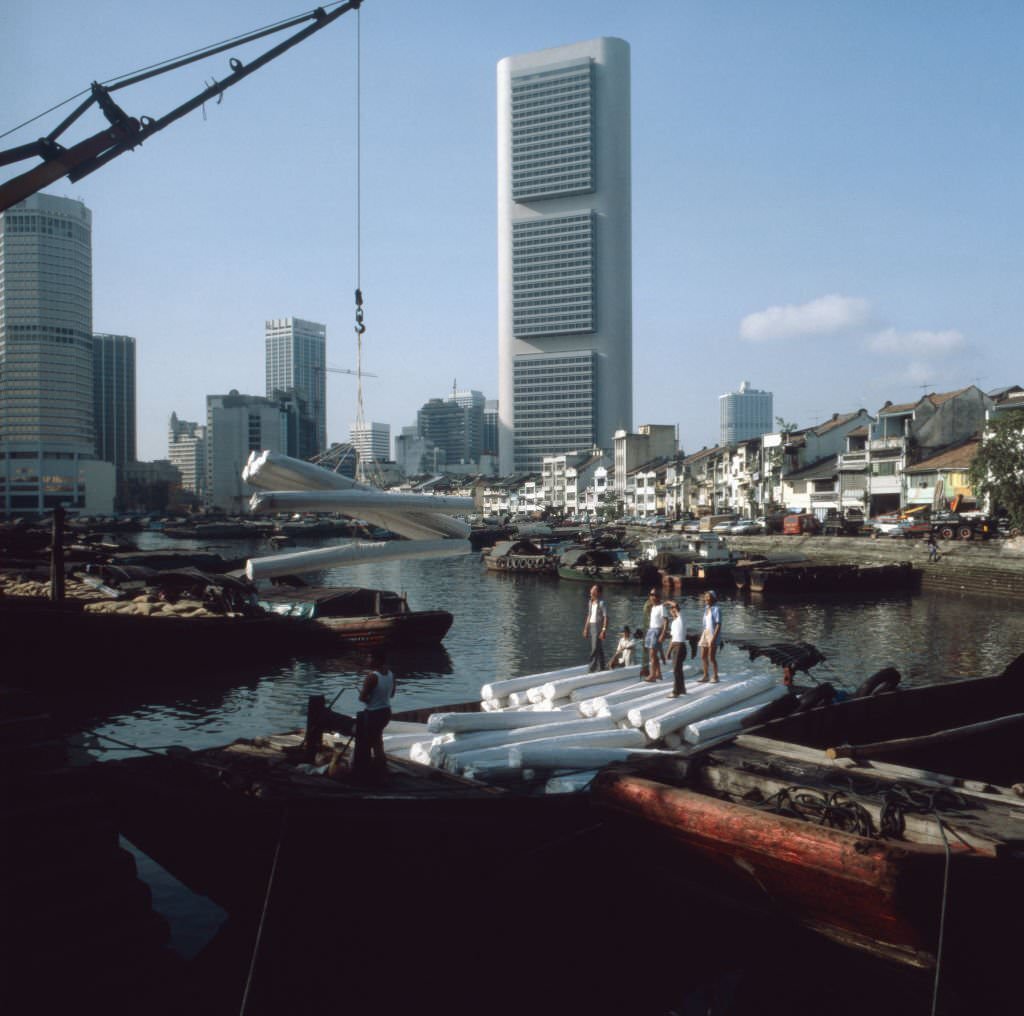
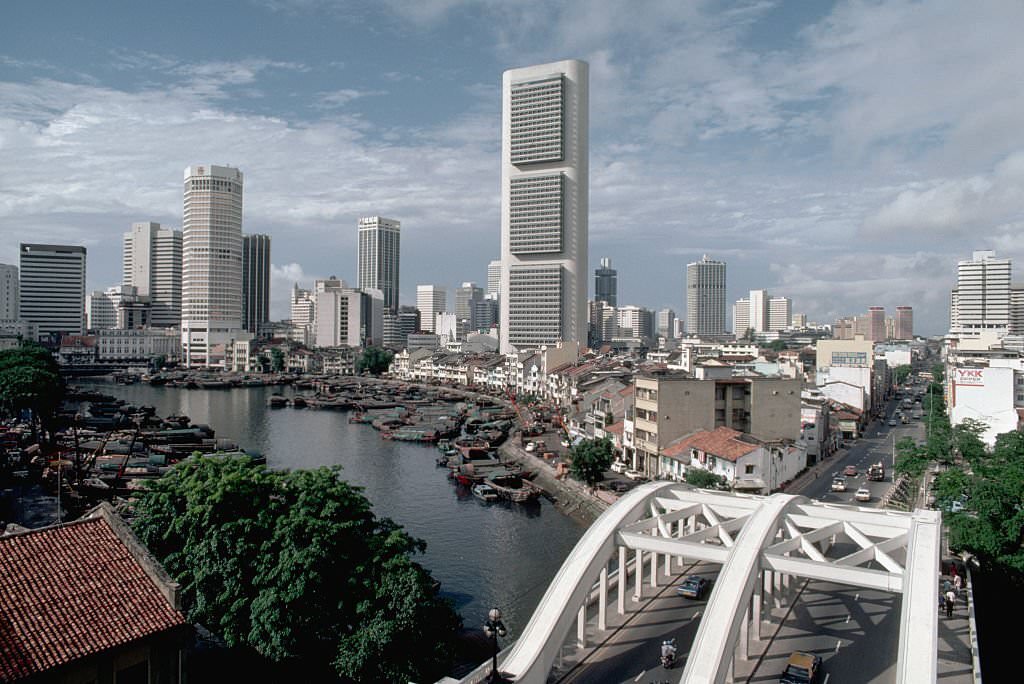
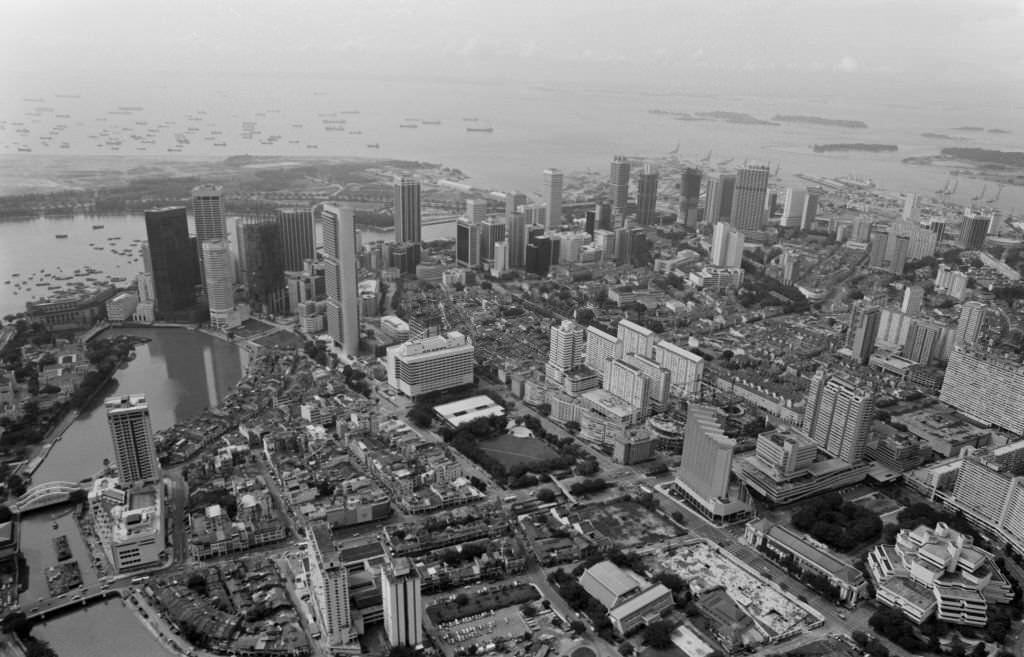
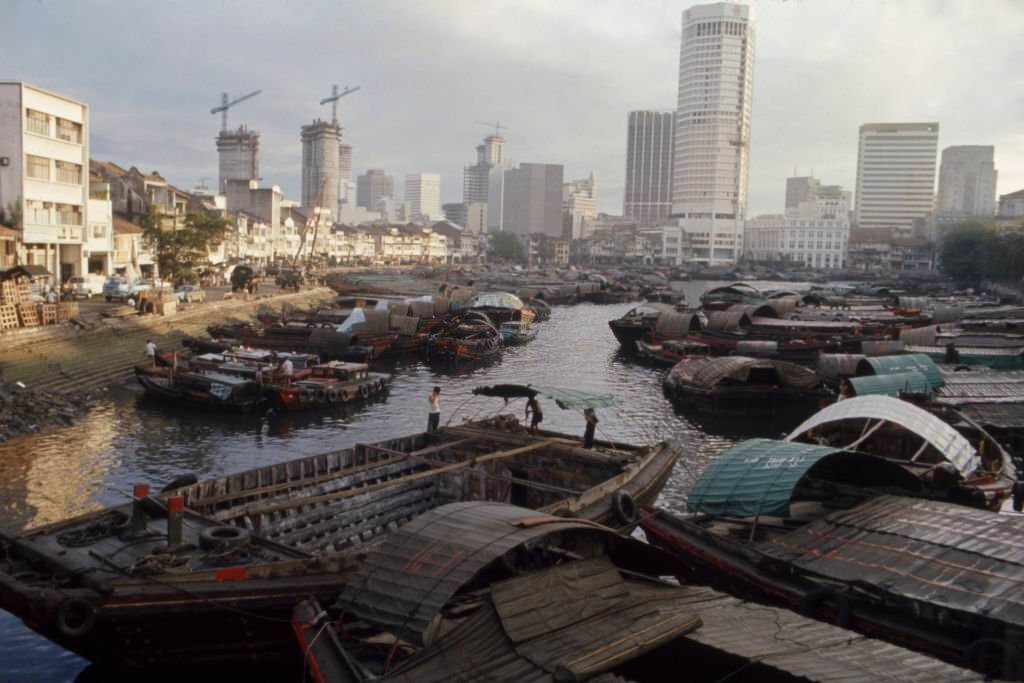
The Singapore River skyline was changing fast. Boats still docked along the quays near bridges, with clusters of shophouses behind them, but the growing line of towers beyond them told a different story. Aerial photographs from 1985 show just how much new construction had already altered the city’s shape.
The skyline at the harbour of Singapore River, Singapore 1980s.The skyline at the harbour of Singapore River, Singapore 1980s.The skyline at the harbour of Singapore River, Singapore 1980s.The skyline at the harbour of Singapore River, Singapore 1980s.The skyline at the harbour of Singapore River, Singapore 1980s.The skyline at the harbour of Singapore River, Singapore 1980s.Boats are docked at a quay in the Singapore River near a bridge and a group of skyscrapers, 1980sAerial view of Singapore on April 6, 1985.
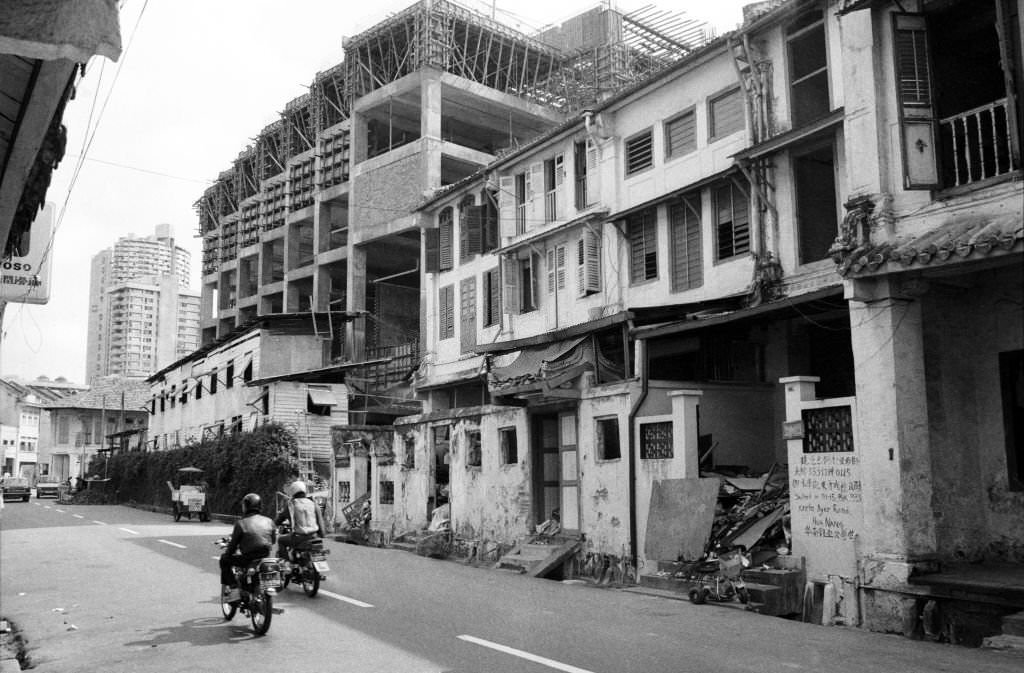
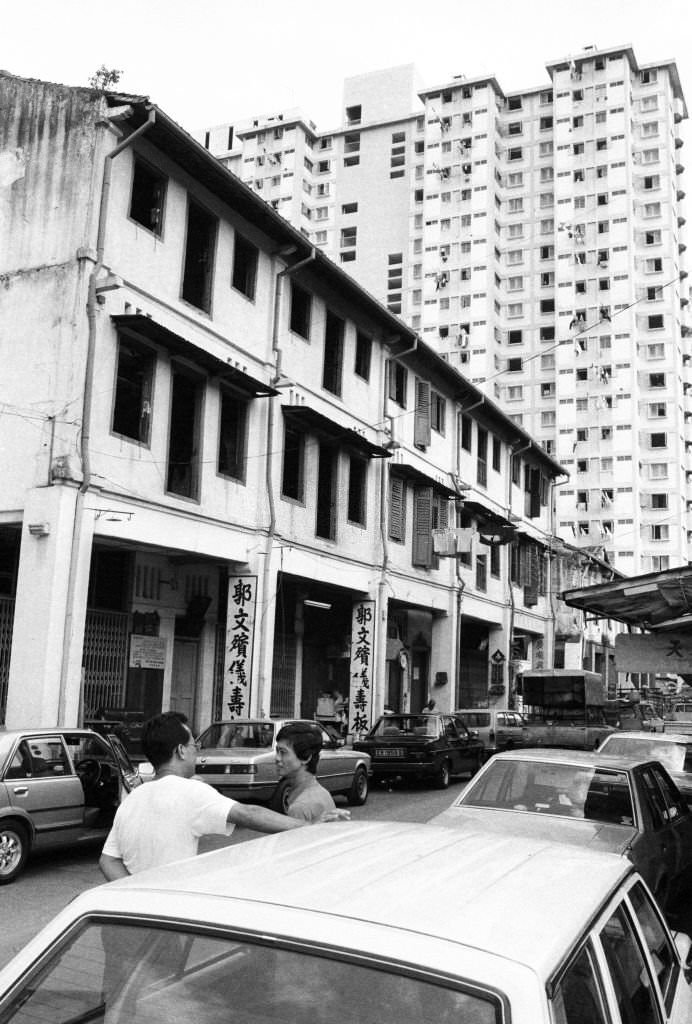
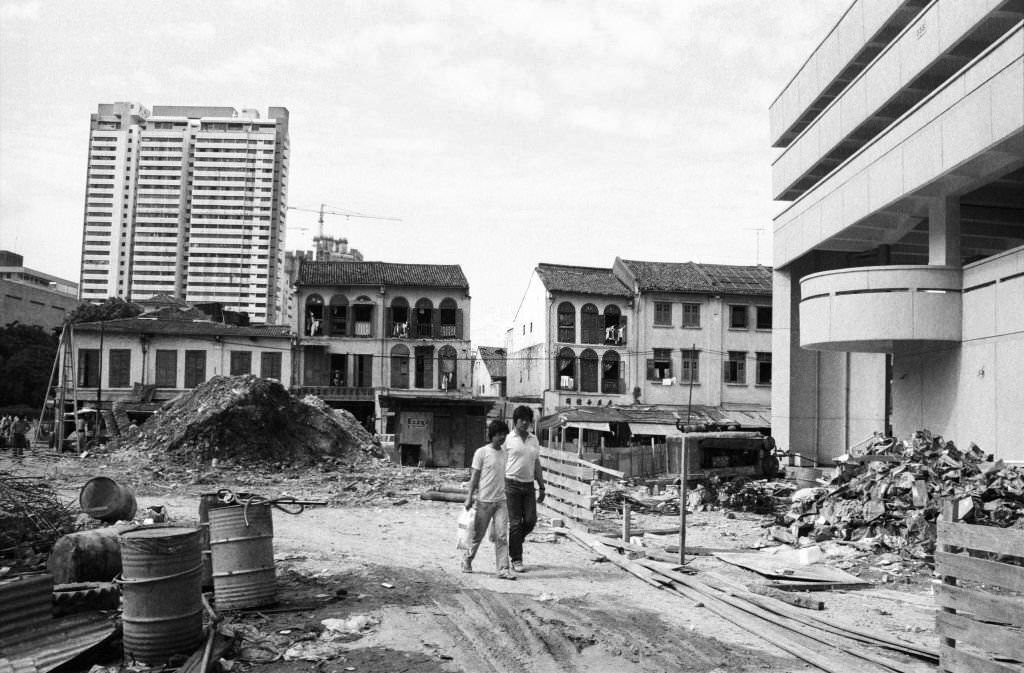
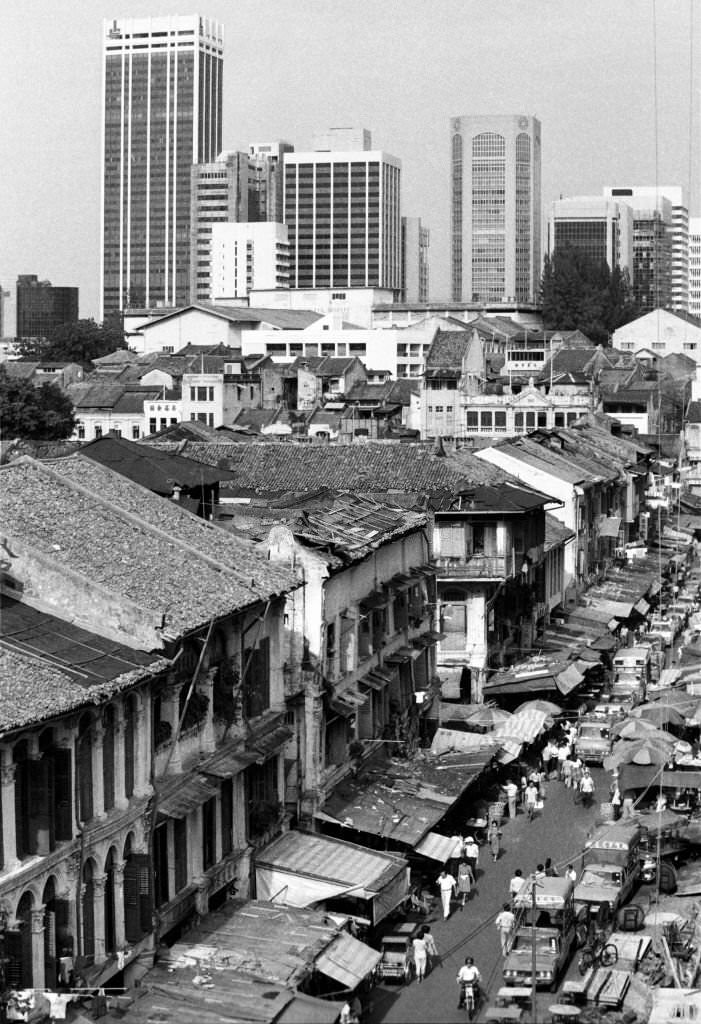
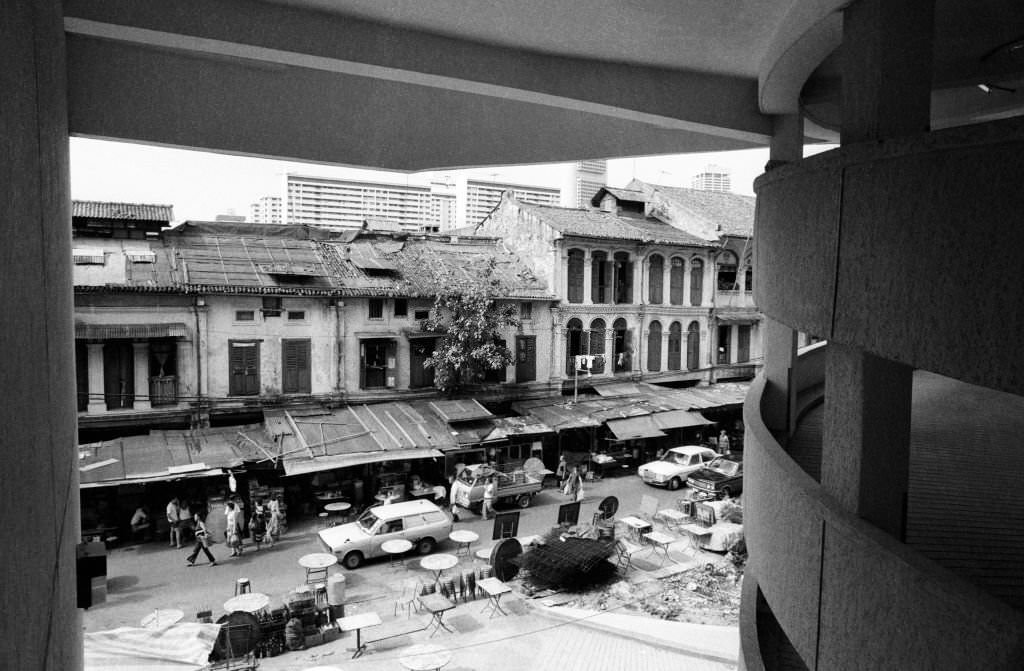
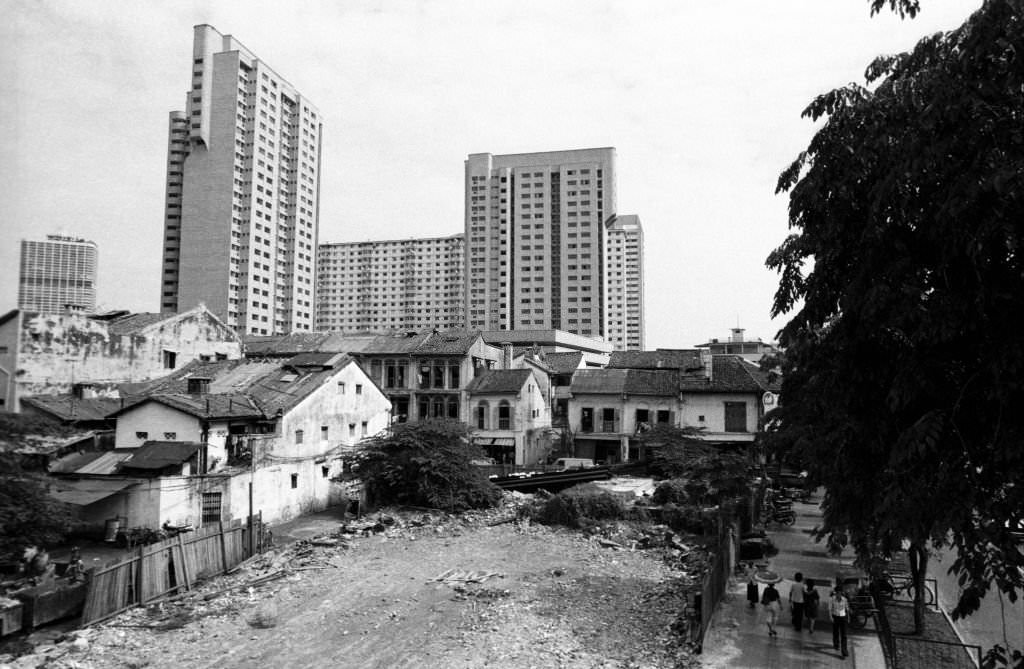
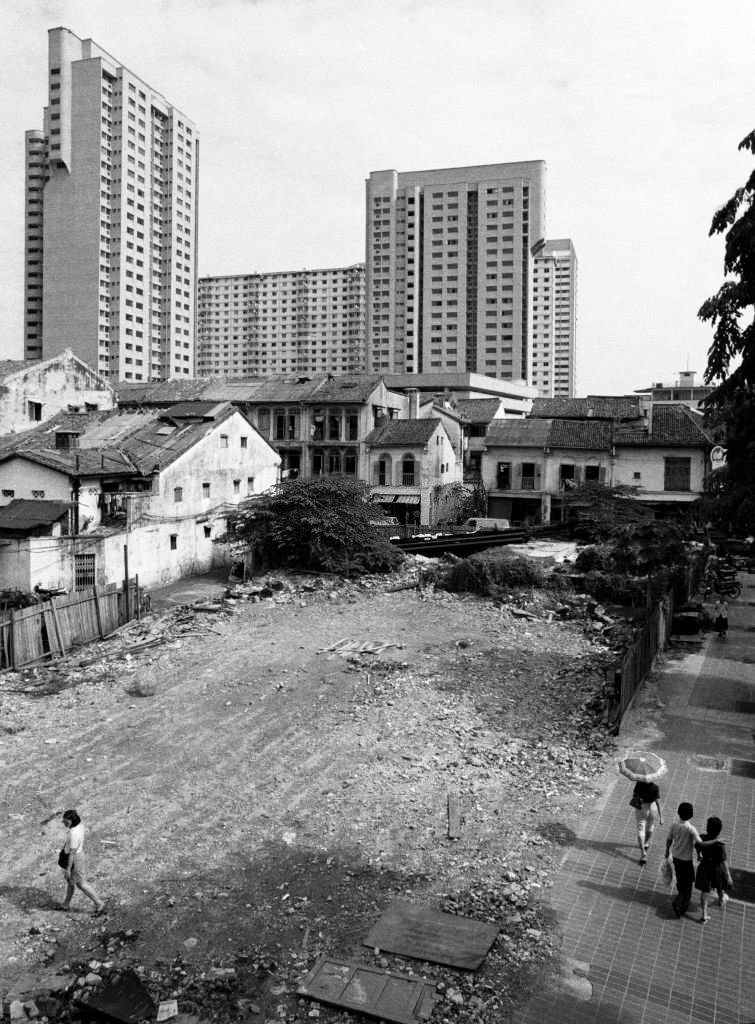
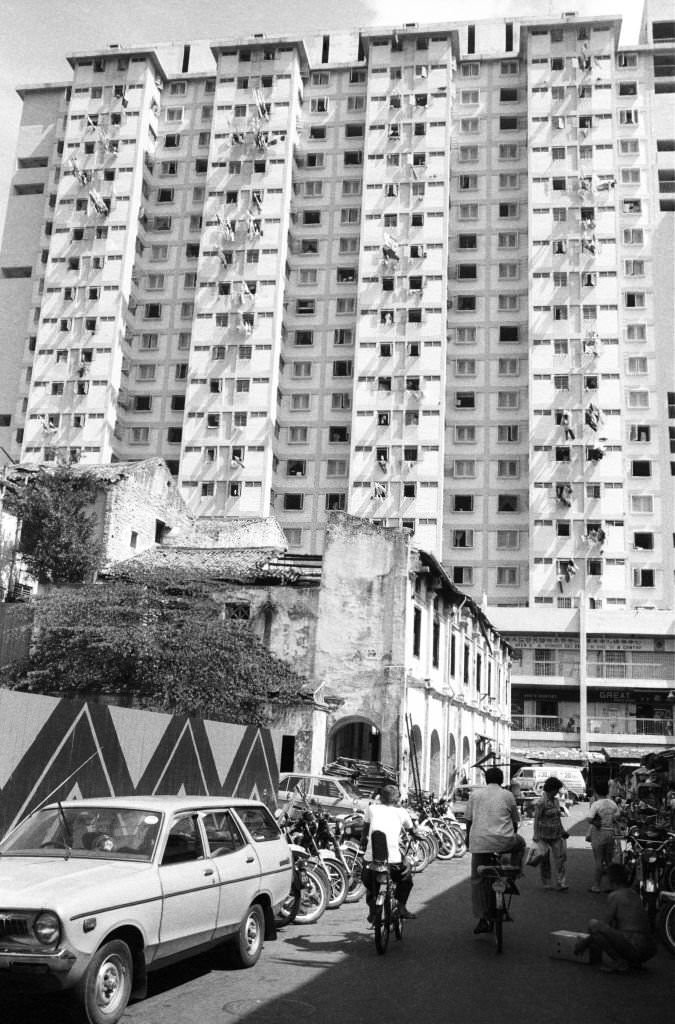
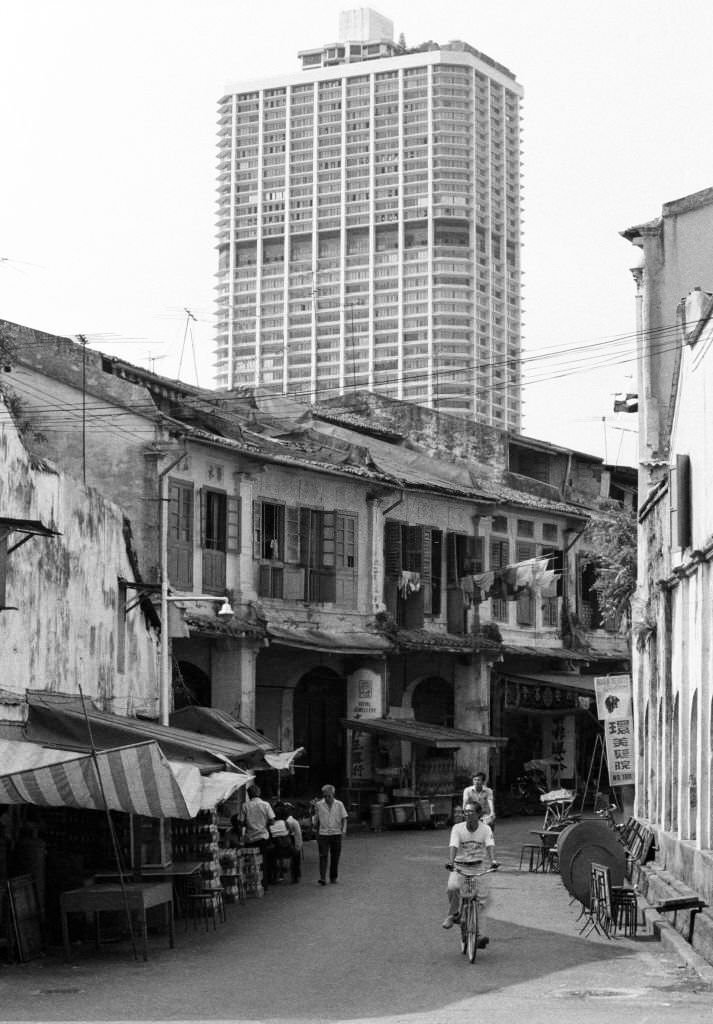
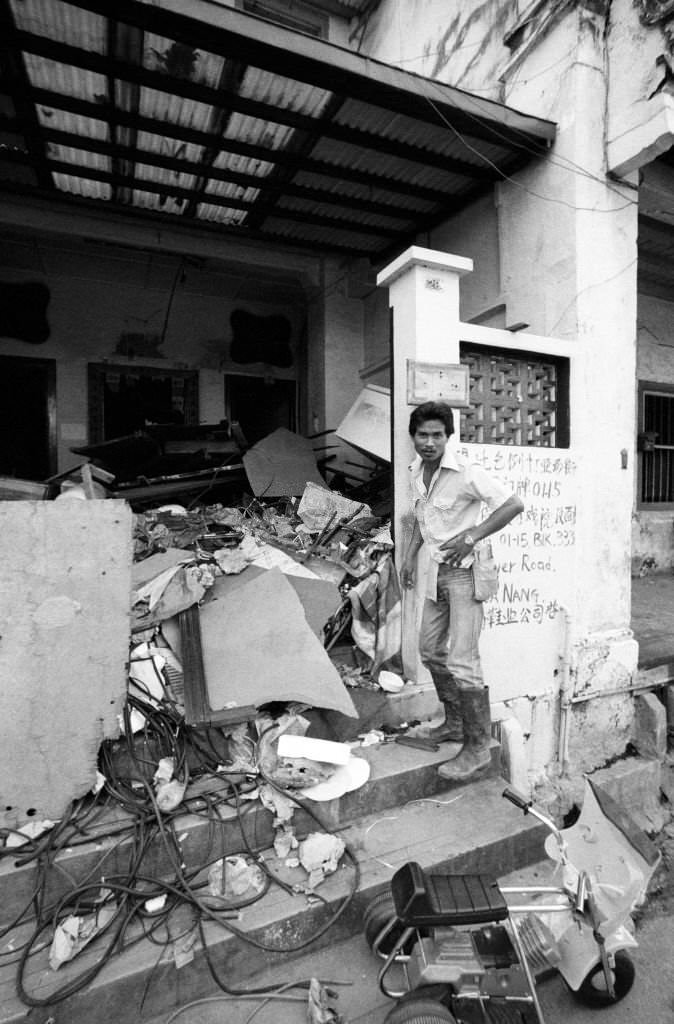
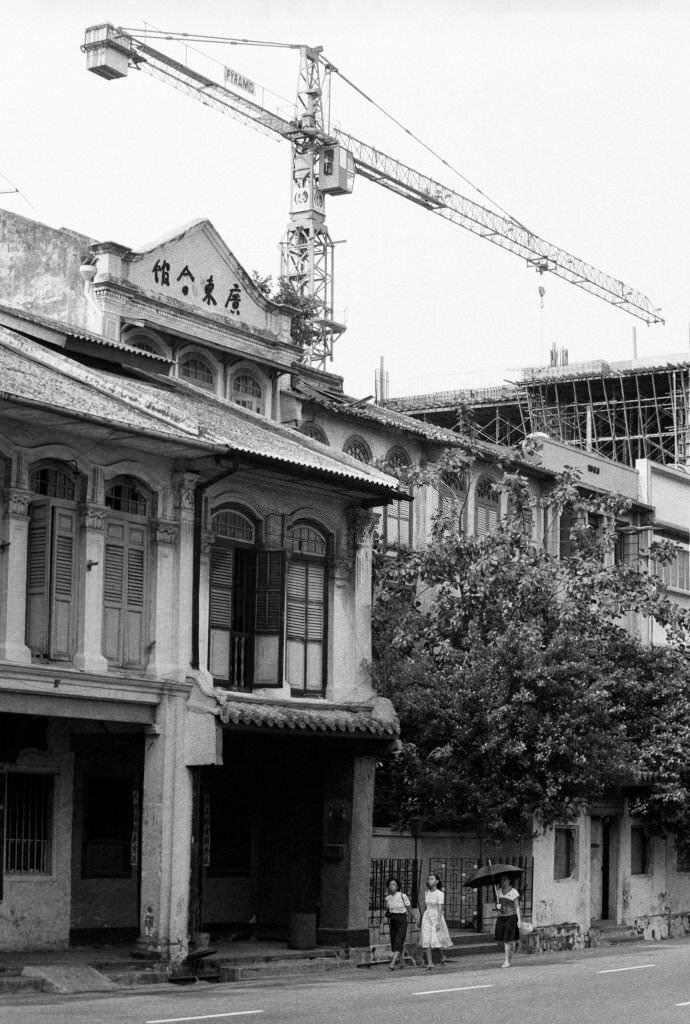
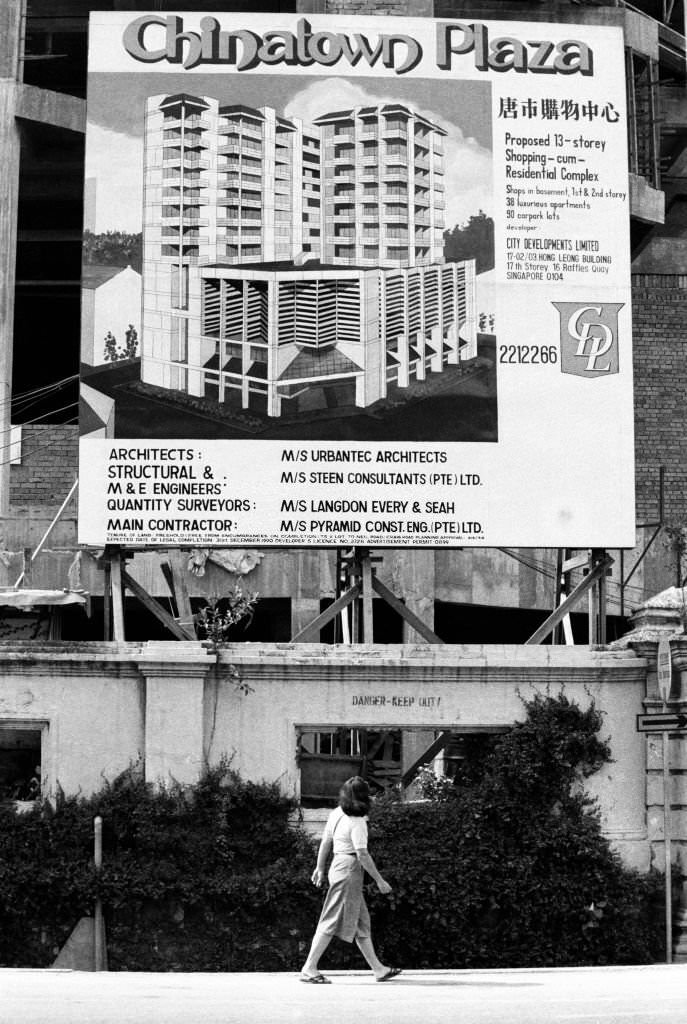
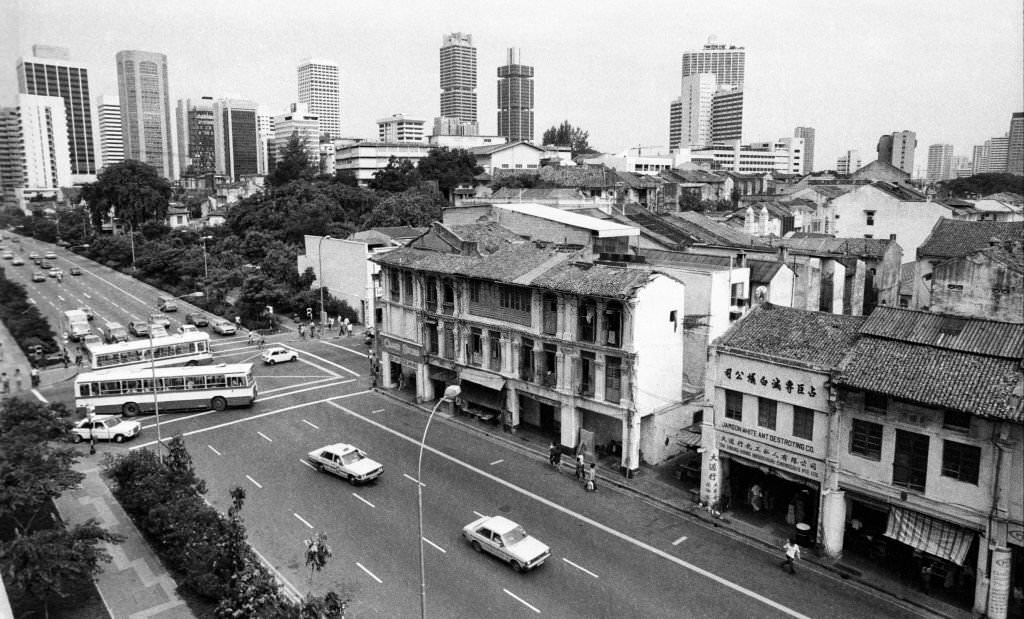
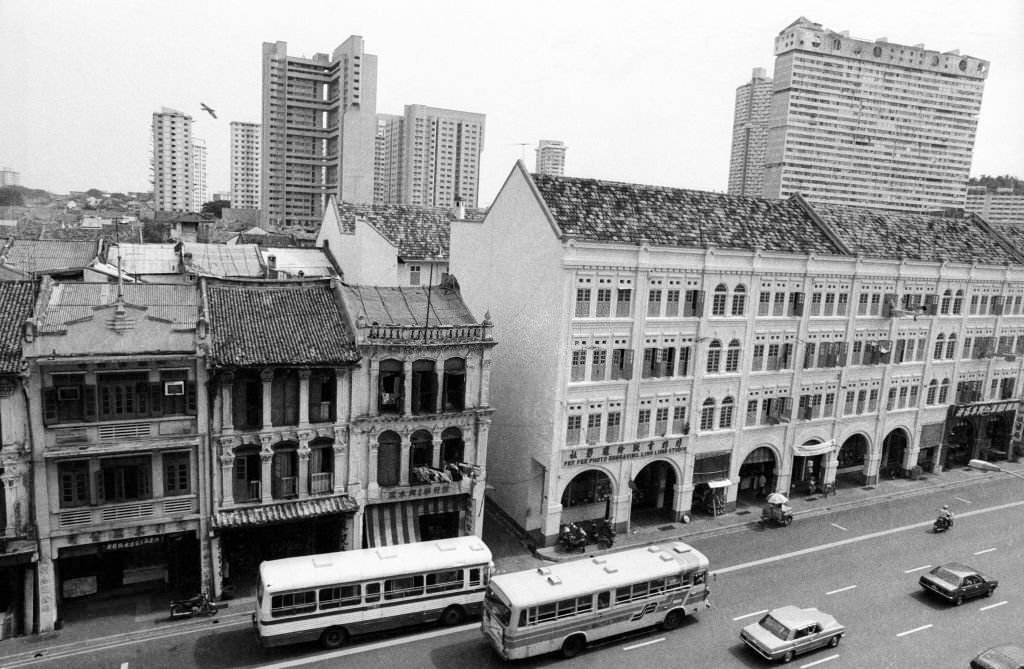
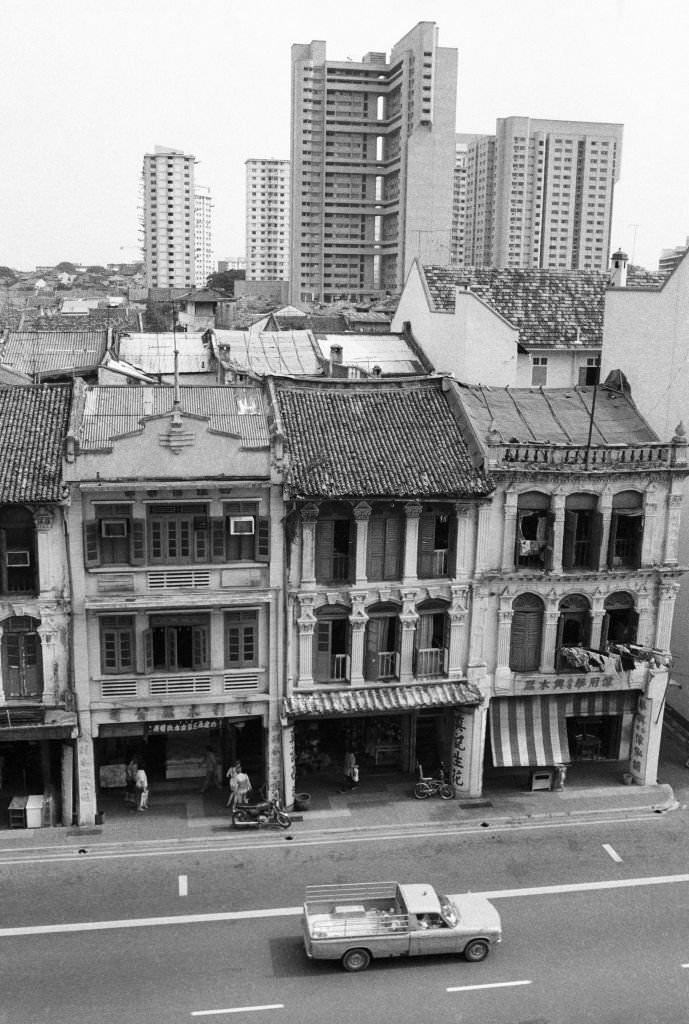
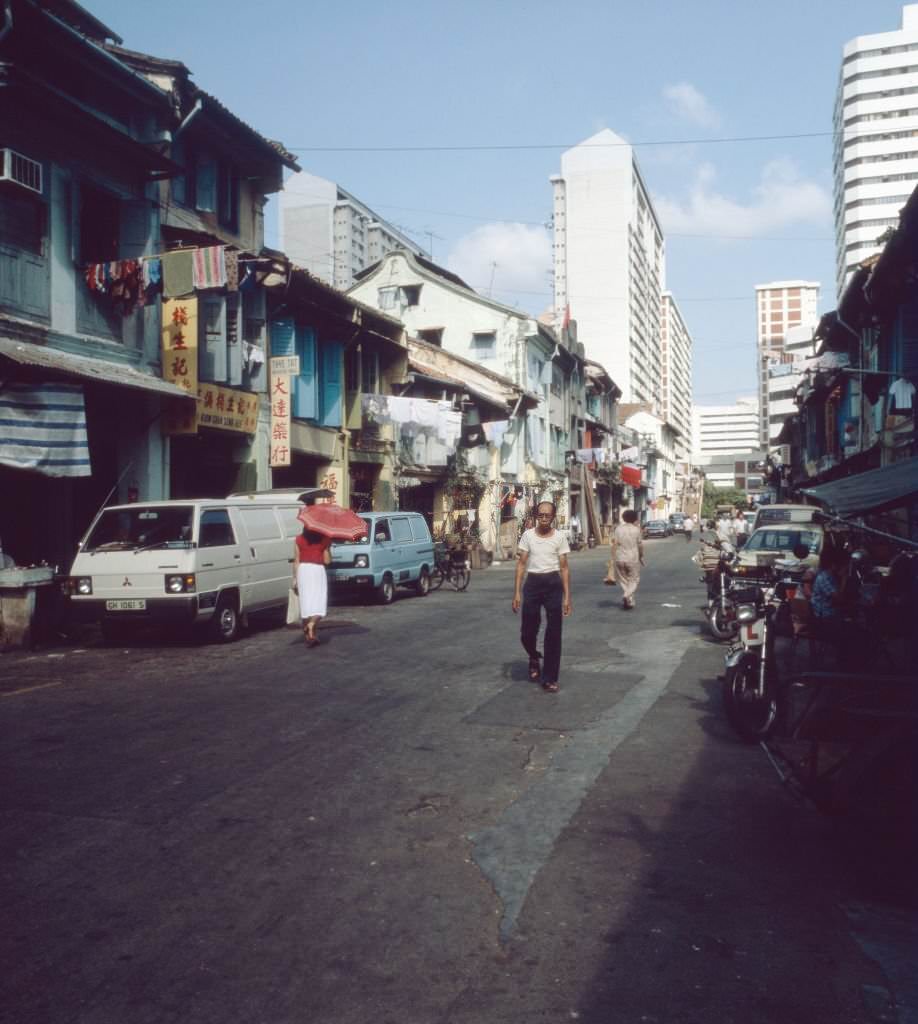
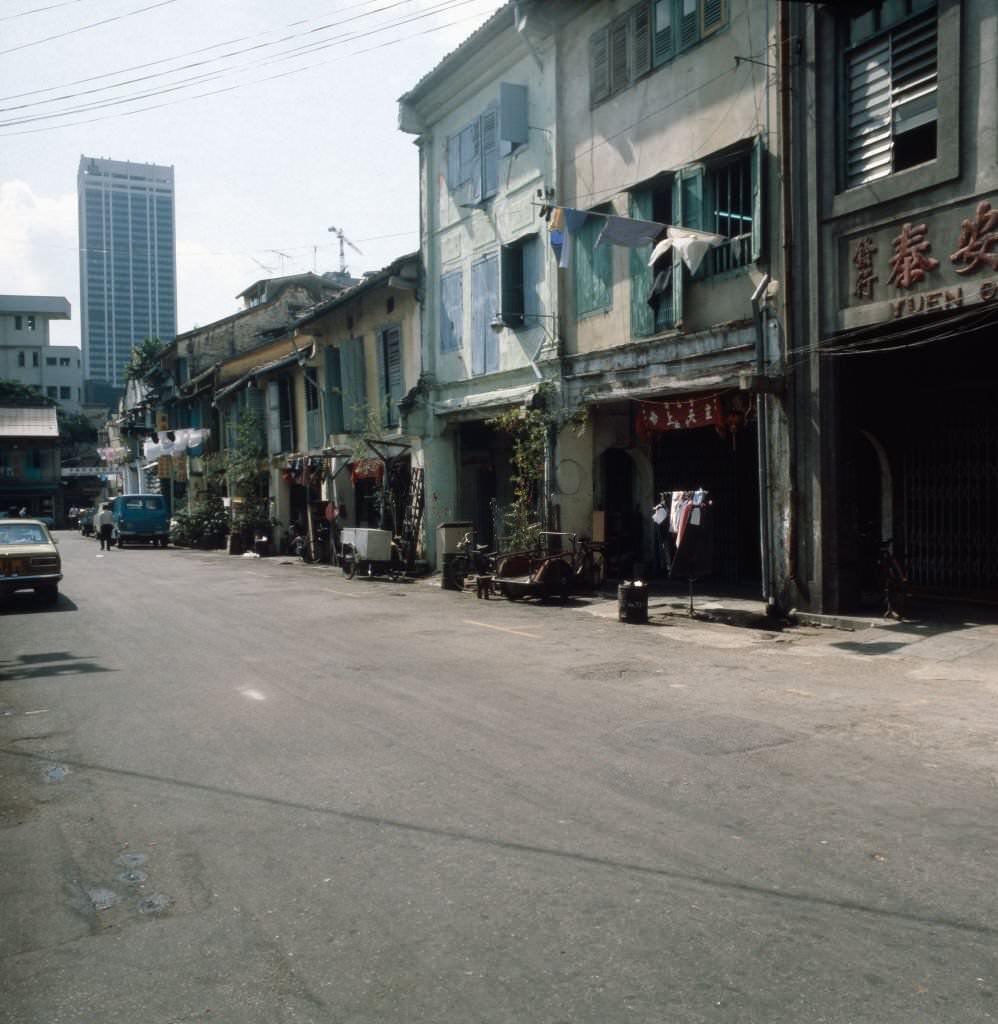
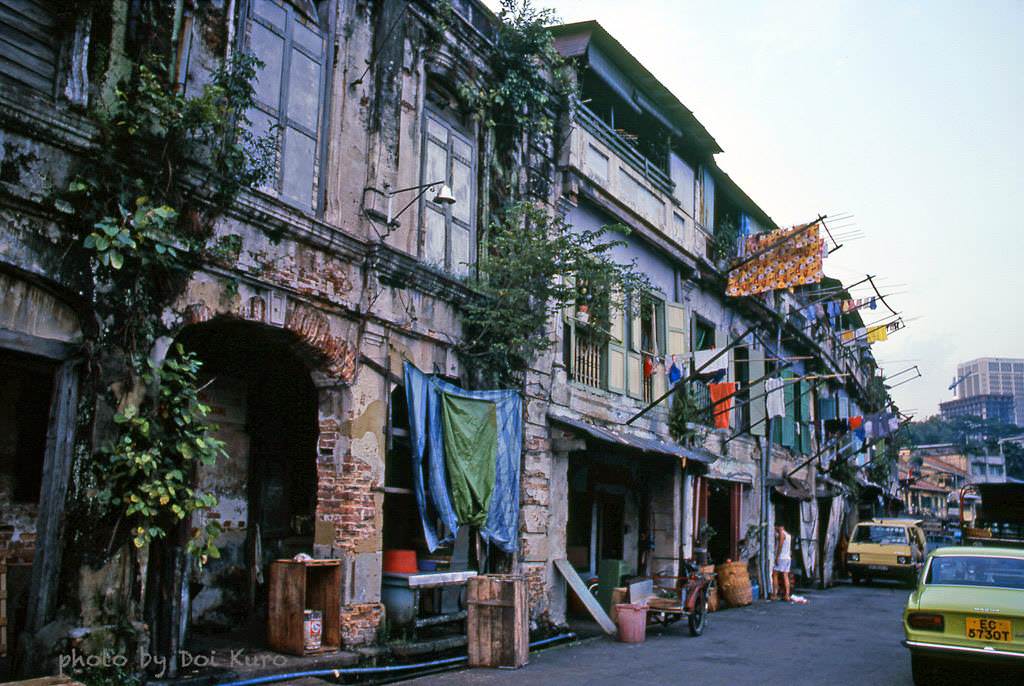
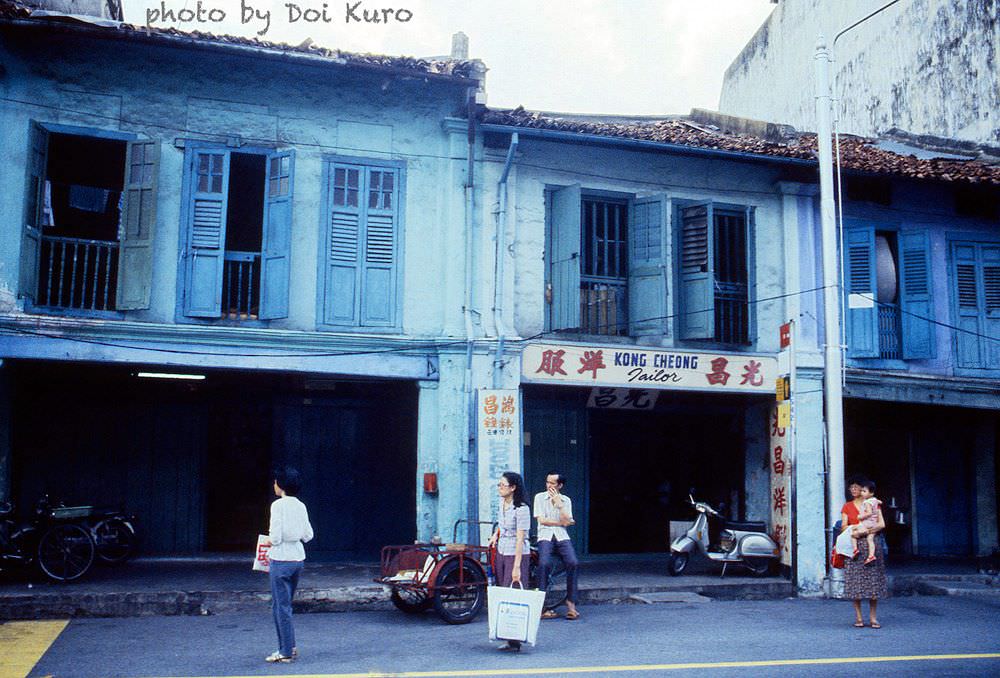
Chinatown was the area where this transformation was most visible — and most contested. In 1983, large sections of the neighborhood were being demolished to make way for new developments like Chinatown Plaza on the corner of Neil Road and Craig Road. Rows of shophouses on New Bridge Road, Pagoda Street, Smith Street, and elsewhere were cleared, with residents and traders relocated before bulldozers moved in. A government worker was photographed checking that a Craig Road shophouse was fully vacant before demolition began. Vacant lots sat rubble-strewn between surviving buildings, waiting for construction crews.
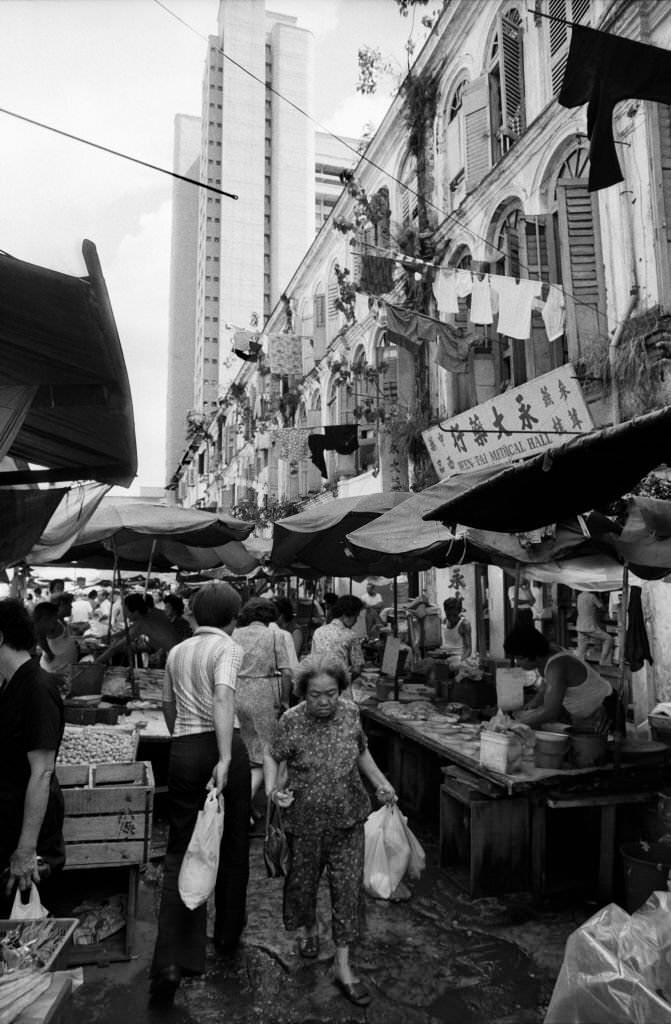
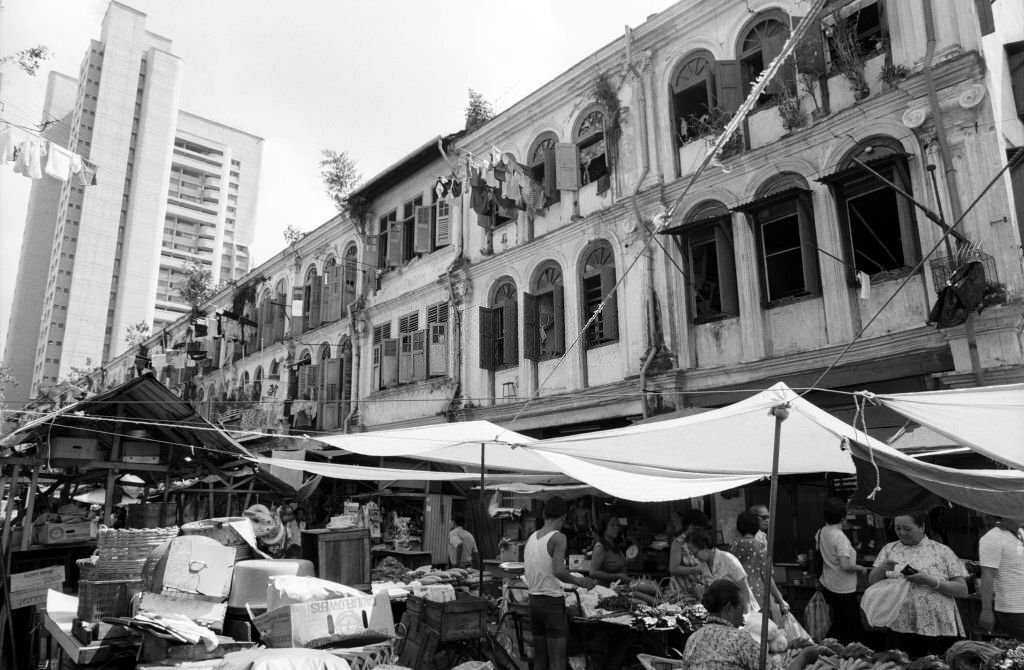
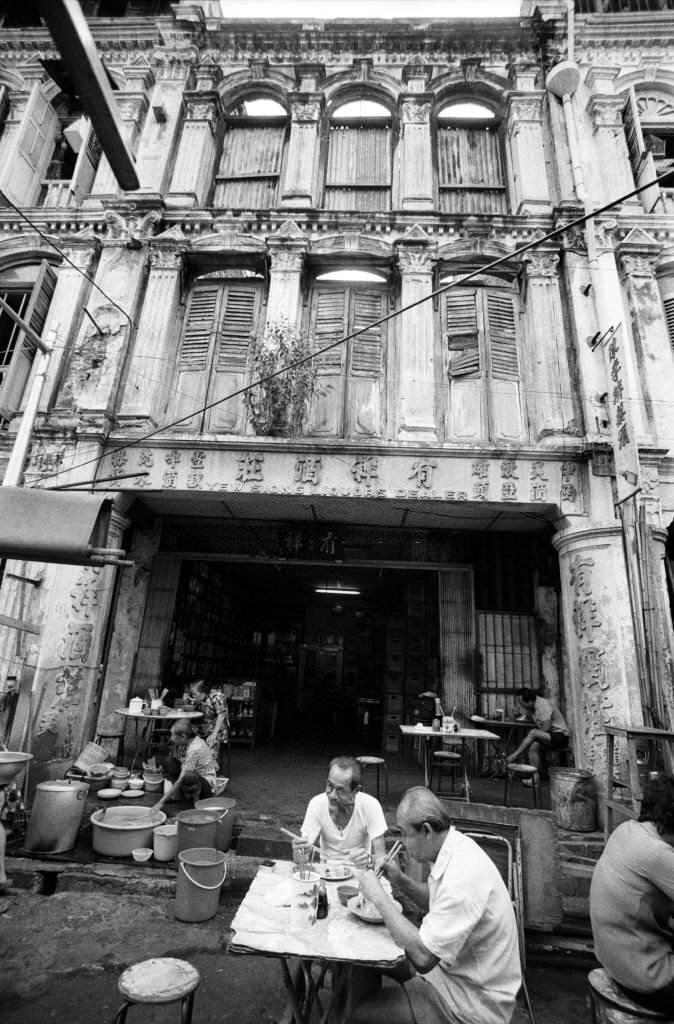
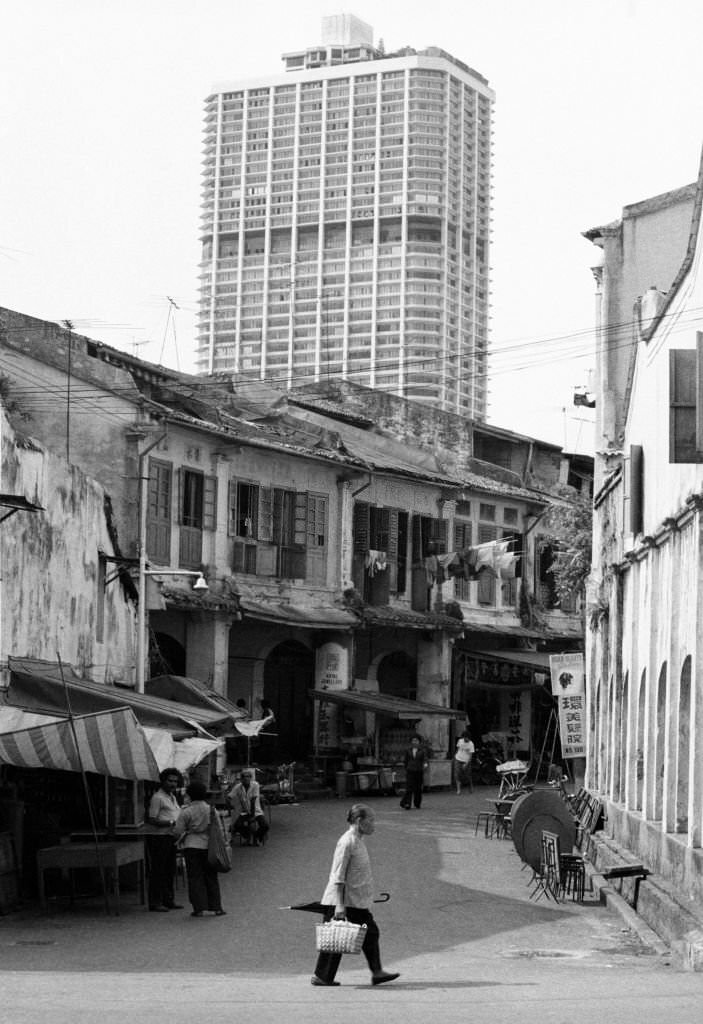
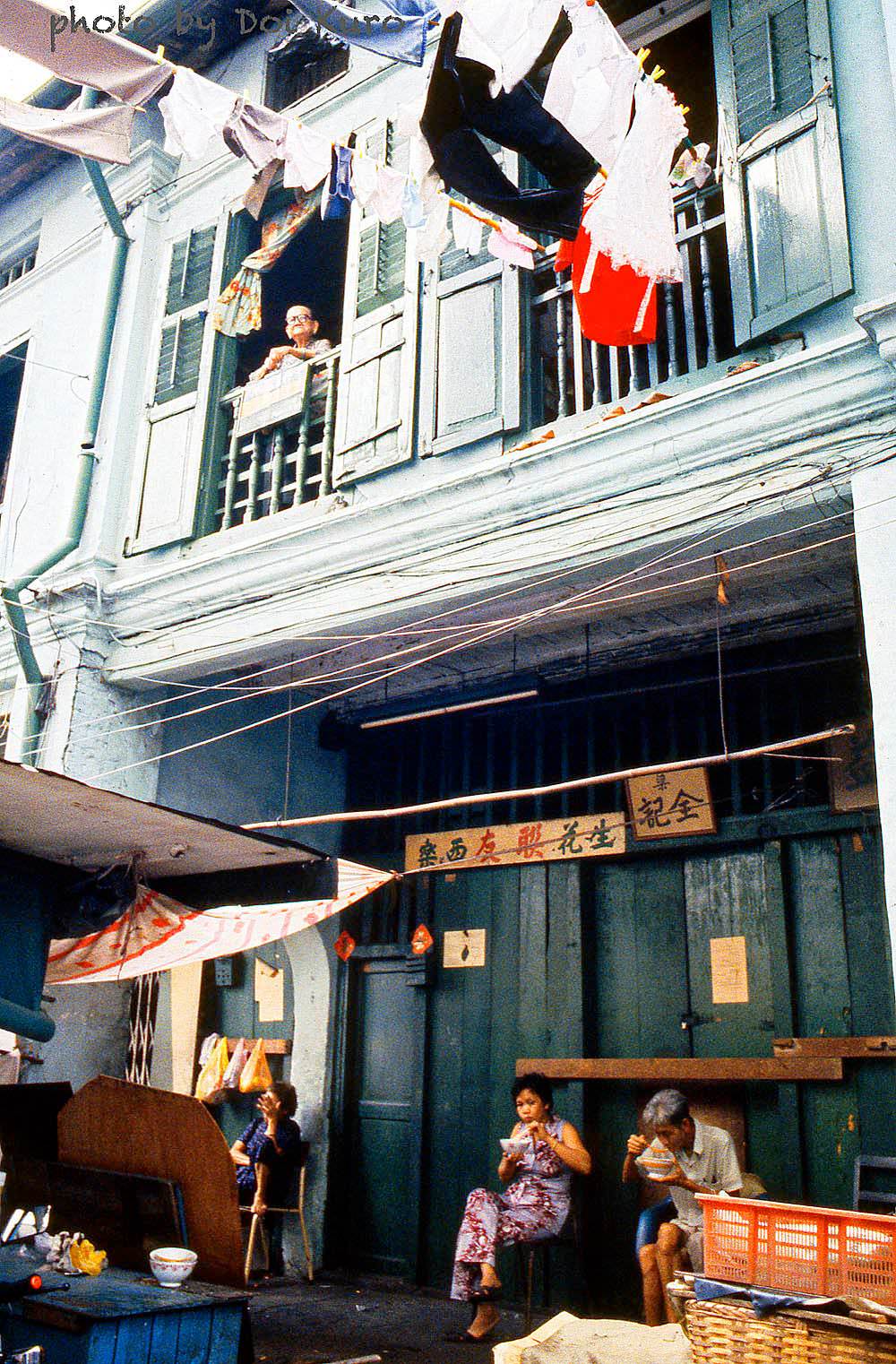
Sago Street market enjoys a final few weeks of authentic living heritage in Singapore’s bustling Chinatown before falling victim to urban renewal, 1983Chinese shophouses on Craig Rd fall victim to urban renewal during the construction of Chinatown Plaza, Chinatown, Singapore, 1983.Sago Street market enjoys a final few weeks of authentic living heritage in Singapore’s bustling Chinatown before falling victim to urban renewal, 1983.Sago Street market enjoys a final few weeks of authentic living heritage in Singapore’s bustling Chinatown before falling victim to urban renewal, 1983.The high-rise Kreta Ayer Complex (renamed the Chinatown Complex in 1984) looms above shophouses on Sago Lane, Chinatown, Singapore, 1983.Rubble-strewn vacant lot awaits redevelopment alongside the Chinatown Complex on the corner of Smith St and New Bridge Rd, 1983Looking down Smith St towards the Central Business District, Singapore, 1983Bustling Smith St seen from the newly built car park of the Kreta Ayer Complex, Chinatown, Singapore, 1983A shophouse eatery on Trengganau St seen in the final weeks of Chinatown’s authentic living heritage, Singapore, 1983Vacant lot awaits redevelopment after shophouses were demolished along New Bridge Rd from Pagoda St to Temple St, Chinatown, Singapore, 1983
Vacant lot awaits redevelopment after shophouses were demolished along New Bridge Rd from Pagoda St to Temple St, Chinatown, Singapore, 1983.
Derelict shophouses on Spring St prior to demolition face the high-rise Kreta Ayer Complex Chinatown, Singapore, 12 July 1983.
Duxton Road before residents and traders are relocated in September 1983
Duxton Road before residents and traders are relocated in September 1983
Government worker checks that this Craig Rd shophouse is vacant before demolition begins, Chinatown, Singapore, 1983
A crane aids construction of Chinatown Plaza on the corner of Neil Rd and Craig Rd, while authentic shophouses on Neil Rd await a conservation order Chinatown, Singapore, 1983
Construction of Chinatown Plaza replaces shophouses on the corner of Neil Rd and Craig Rd, Chinatown, Singapore, 12 July 1983.Shophouses on Upper Cross St seen before their residents are relocated in September 1983.Shophouses await Conservation Order in Chinatown, Singapore, 1983Shophouses on Upper Cross St seen before their residents are relocated in September 1983, and before being restored following conservation status in 1989, Chinatown, Singapore,
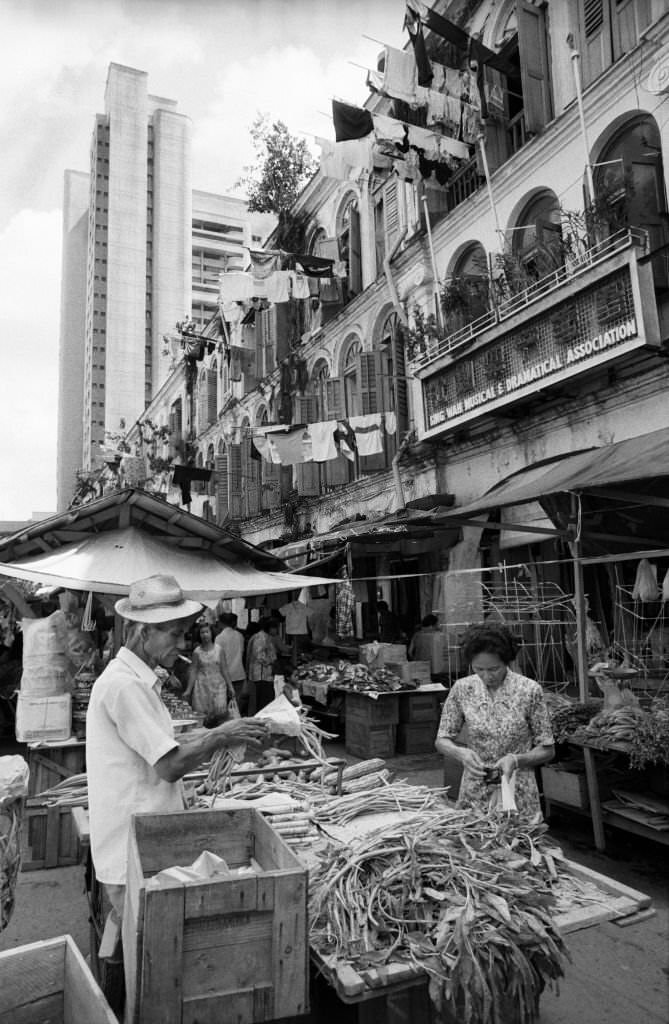
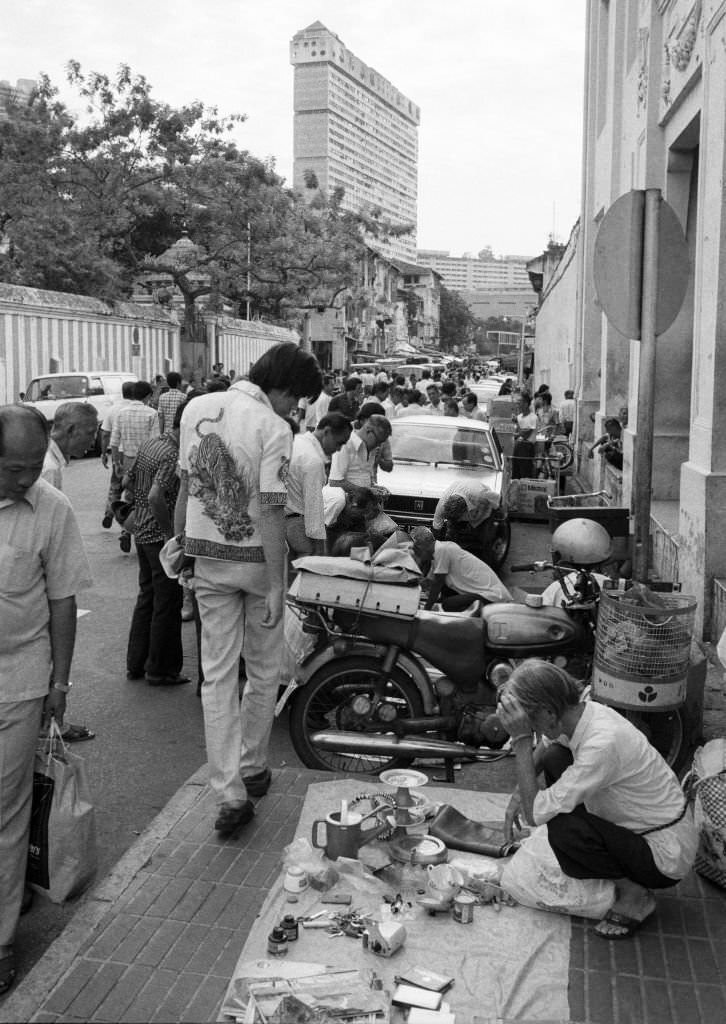
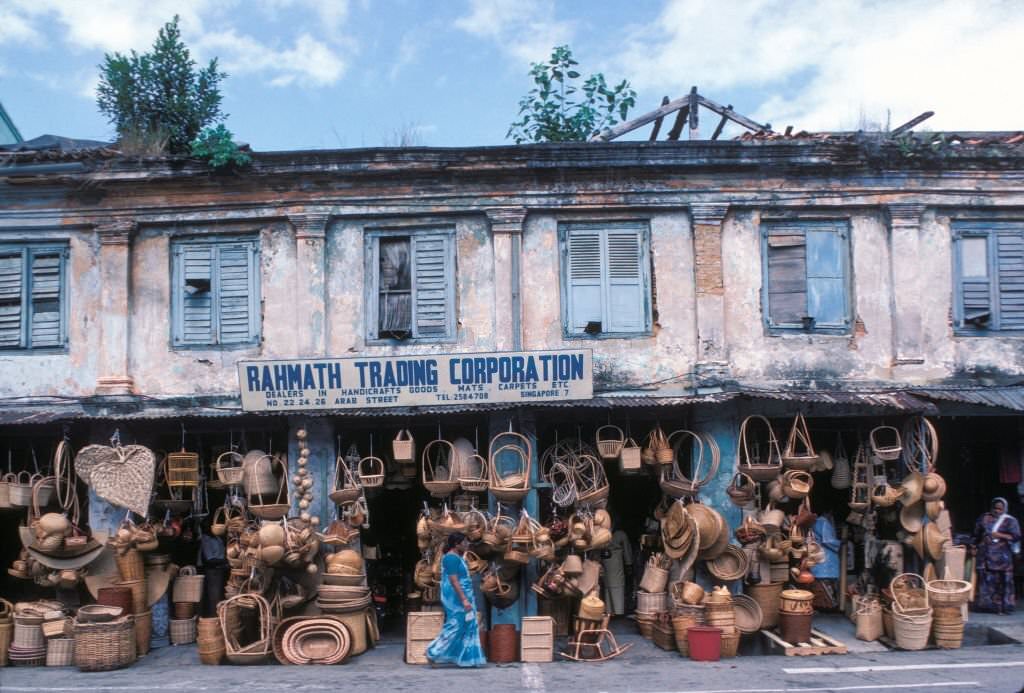
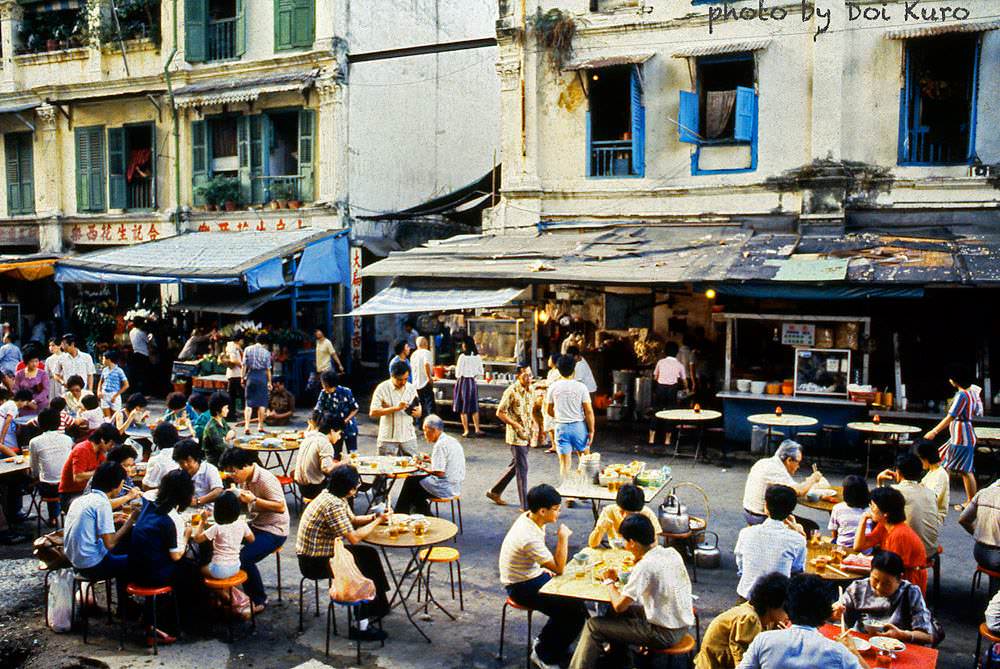
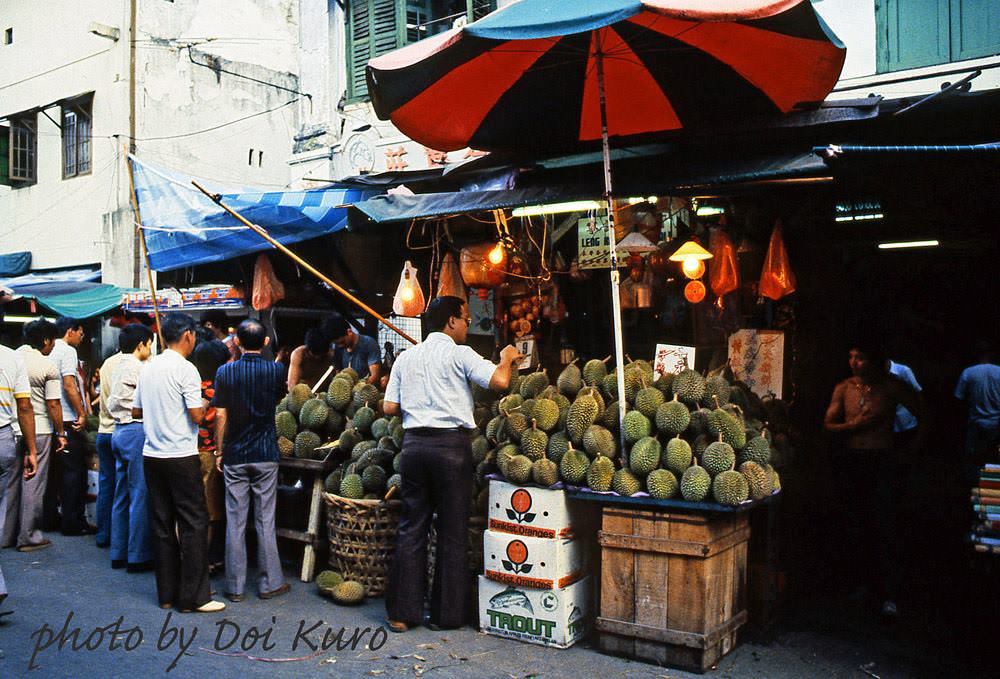
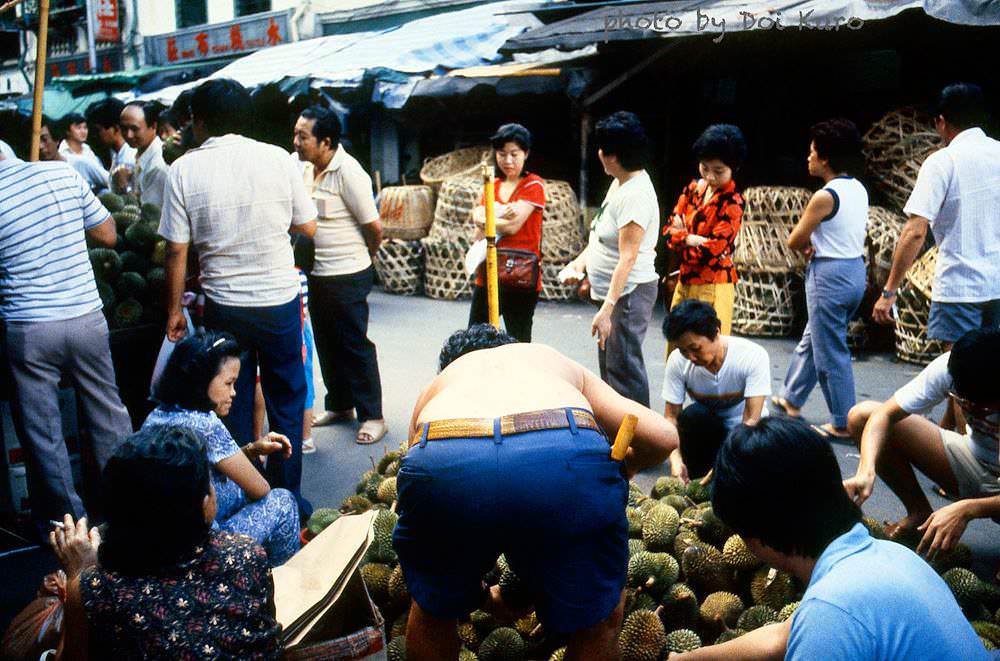
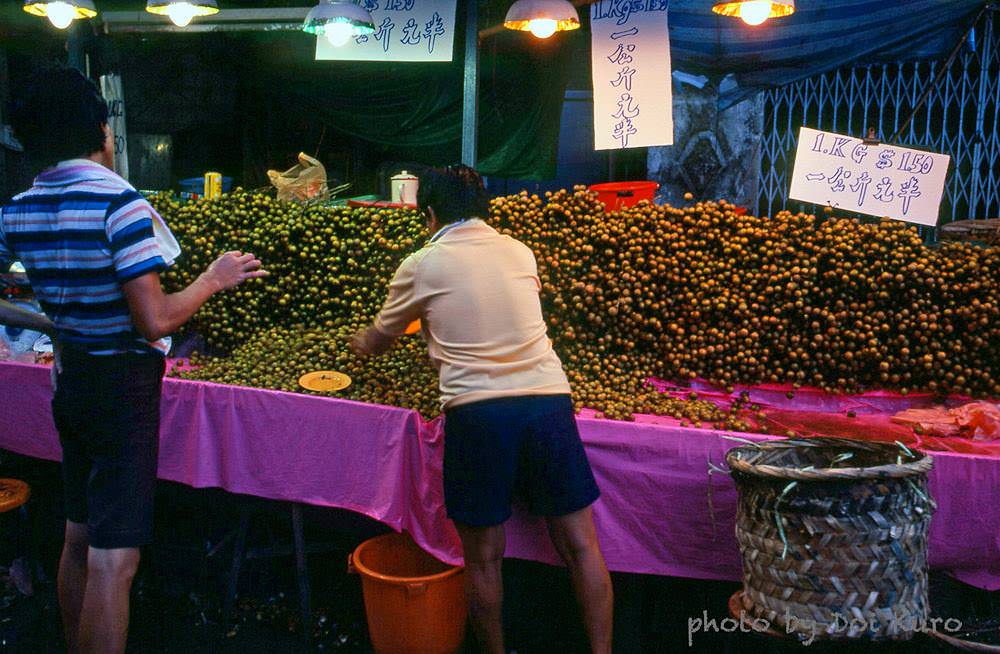
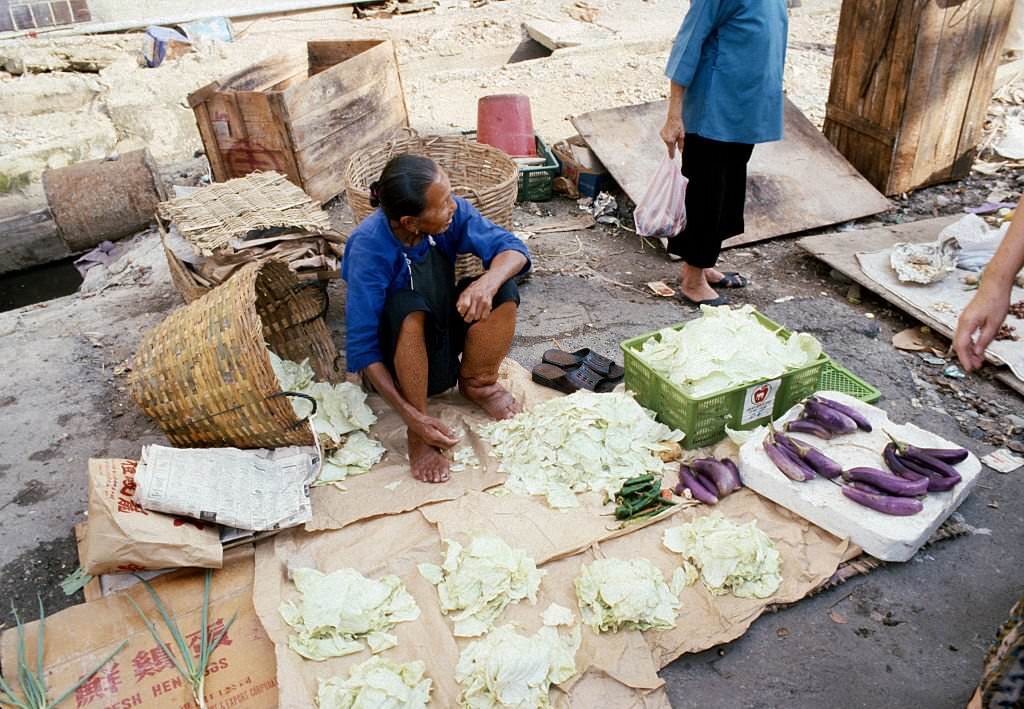
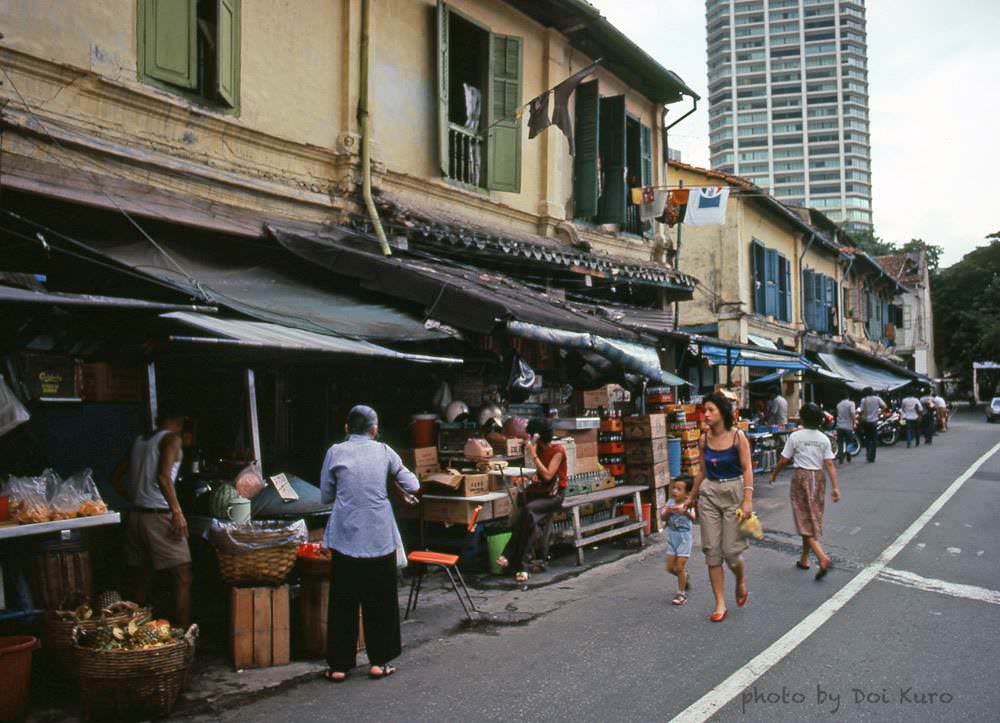
Even as demolition crews worked through the streets, daily life in Chinatown continued right up until residents were moved out. Hawkers sold goods on Pagoda Street. A market on Sago Street drew morning shoppers. Vendors offered baskets, lychees, durians, and fresh produce from street stalls that had operated for generations. Street eateries served meals to workers and neighbors. These photographs from 1983 and 1984 are some of the last records of Chinatown functioning as an unaltered, living community before redevelopment reshaped it.
Hawkers sell wares on Pagoda St, Chinatown, Singapore, 12 July 1983.Market, Chinatown, Singapore, 1983.On the way in the streets of Chinatown in Singapore, 1980s.On the way in the streets of Chinatown in Singapore, 1980s.Basket shop in Singapore, April 1985.Street food stalls, 1984Durian season, 1984Durian vendor, 1984Lychee vendor, 1984Street stall, 1984
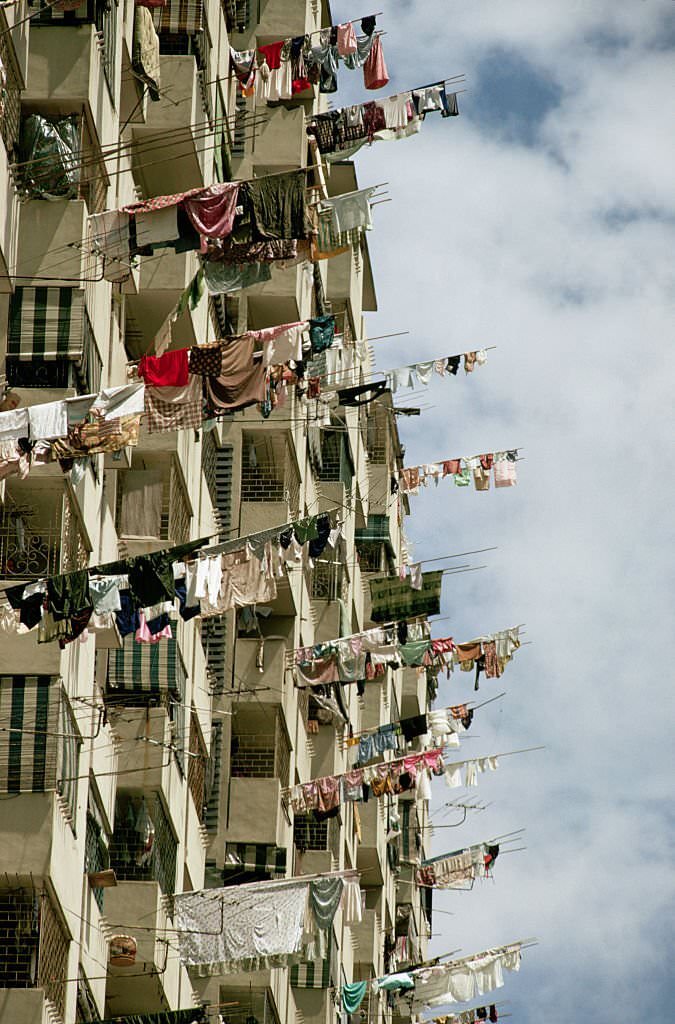
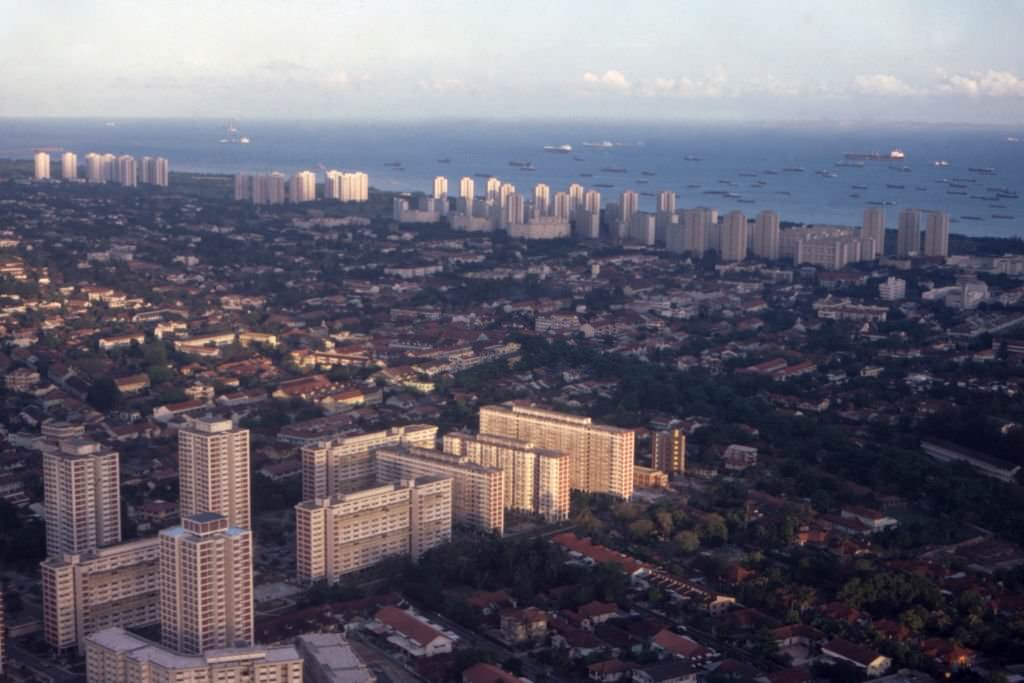
The Housing Development Board was reshaping how and where most Singaporeans lived. New towns like Ang Mo Kio were built with larger apartments and better amenities than earlier public housing projects. By the end of the decade, between 80 and 90 percent of the population lived in HDB apartments. Laundry hanging from apartment balconies became one of the defining images of everyday Singapore life. The first Mass Rapid Transit line began running in 1987, linking housing estates directly to the city center and changing how residents moved around the island.
Laundry hangs out to dry on apartment balconies in Singapore, 1980sApartment, 1979
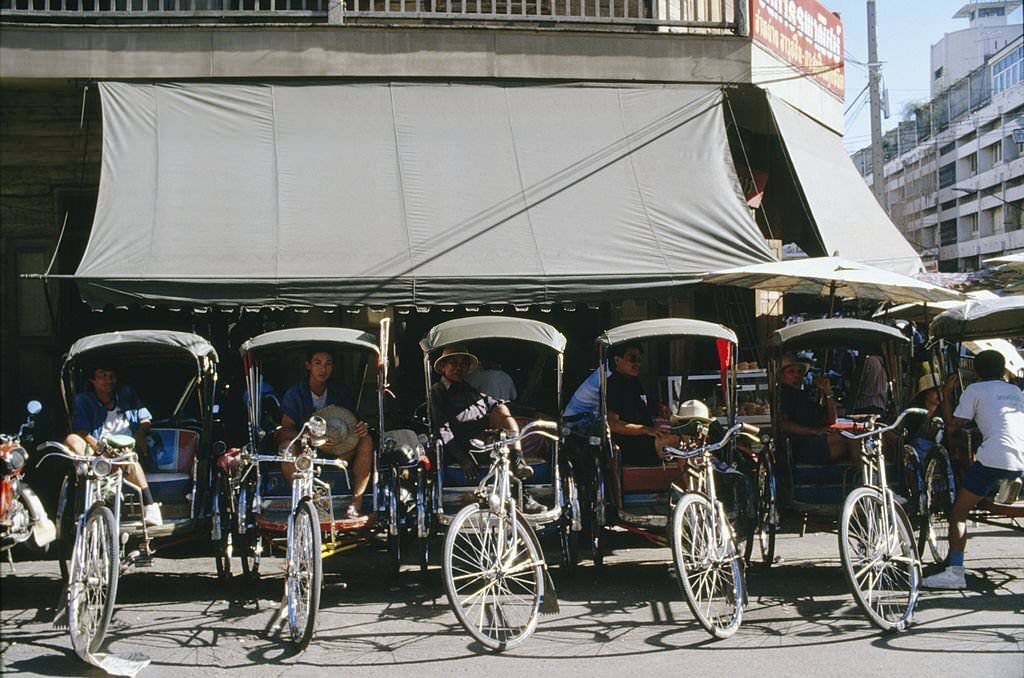
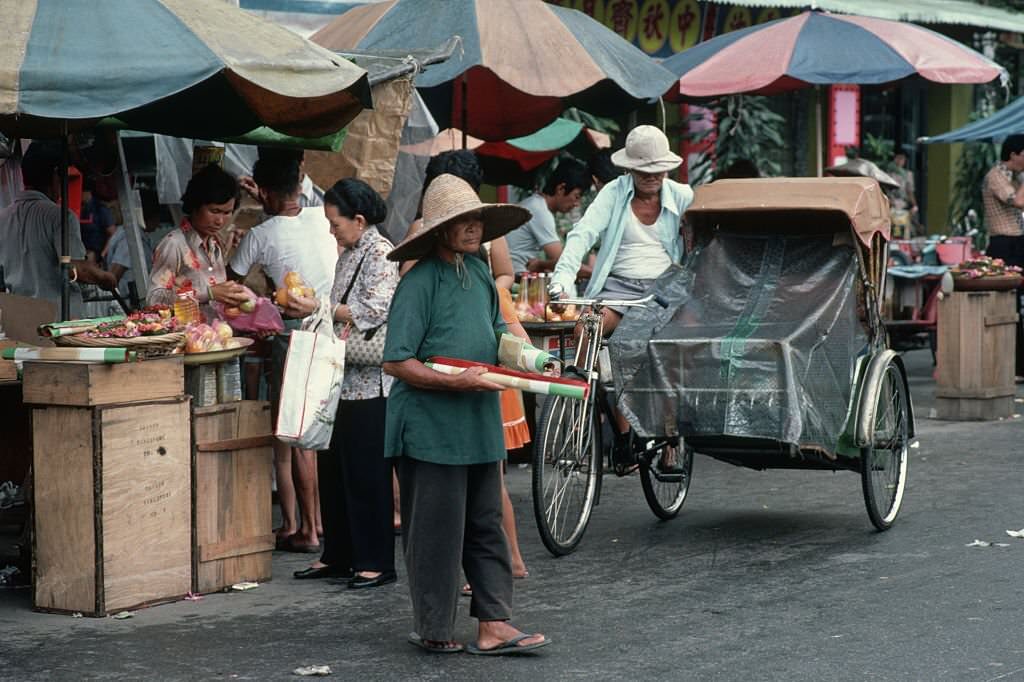
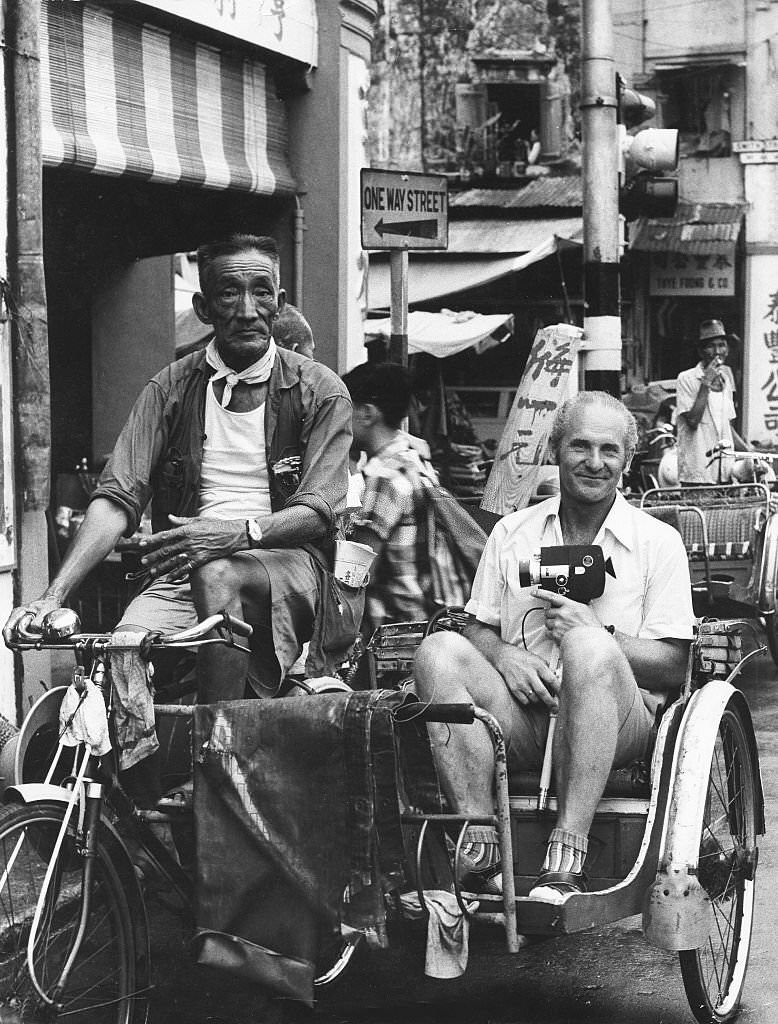
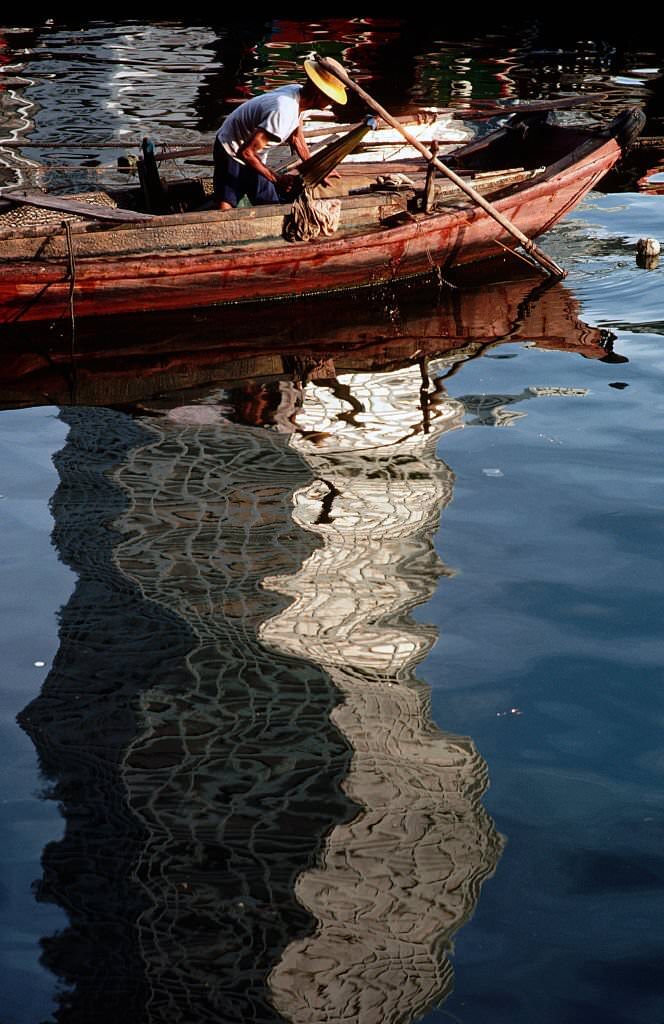
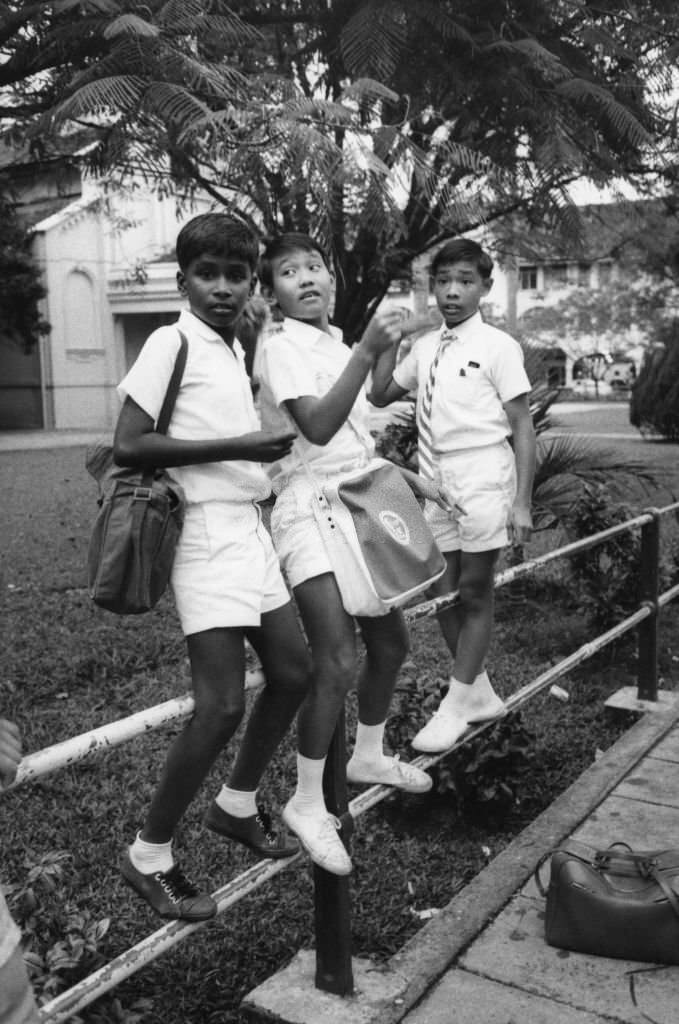
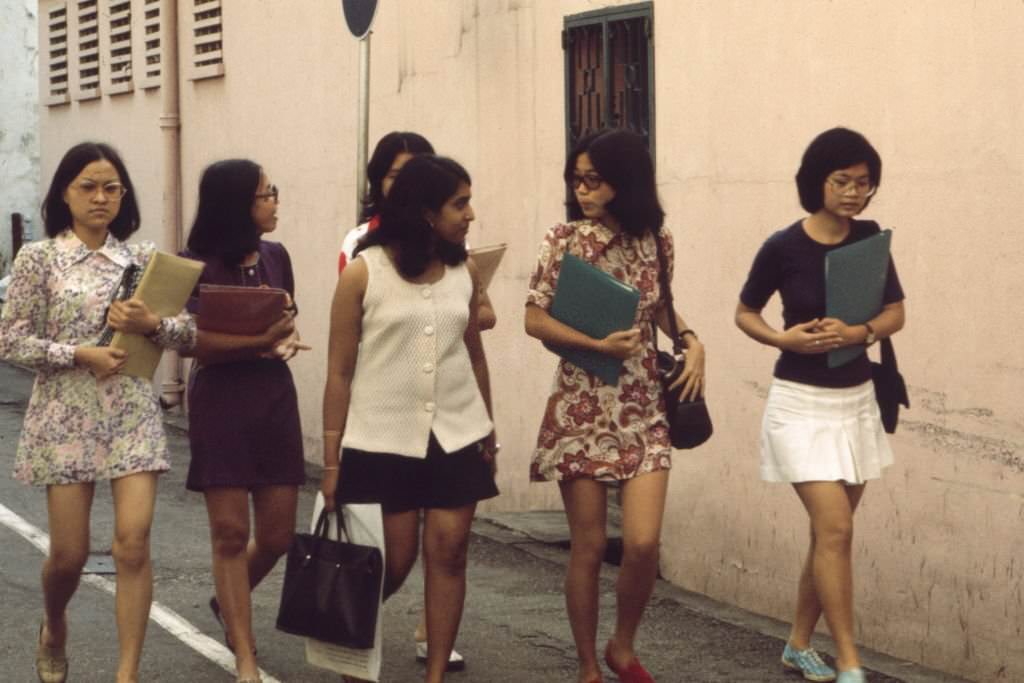
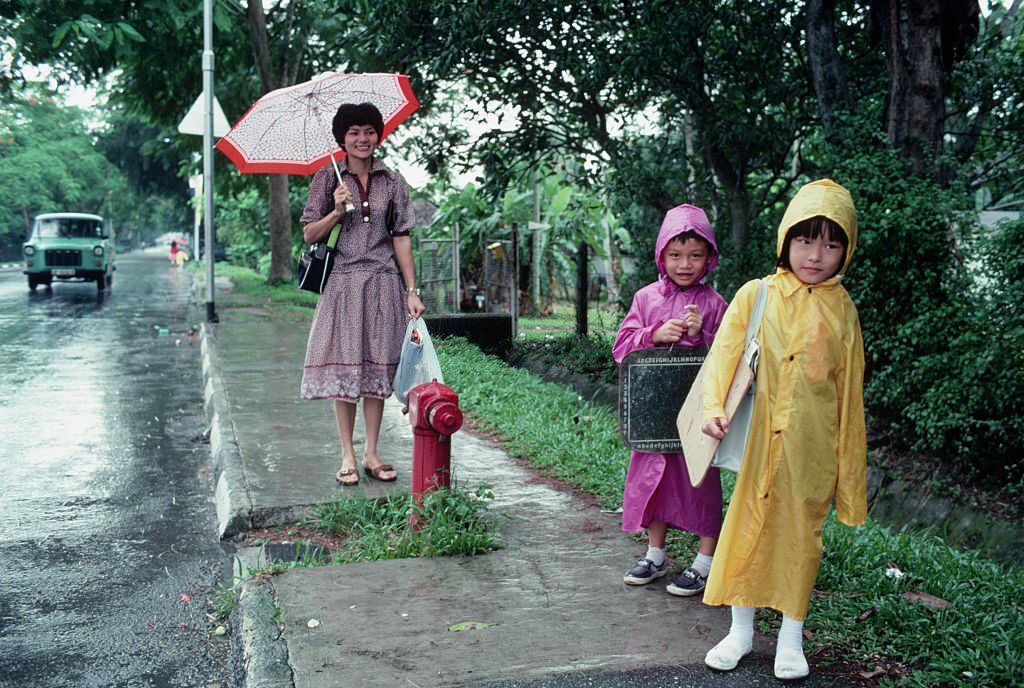
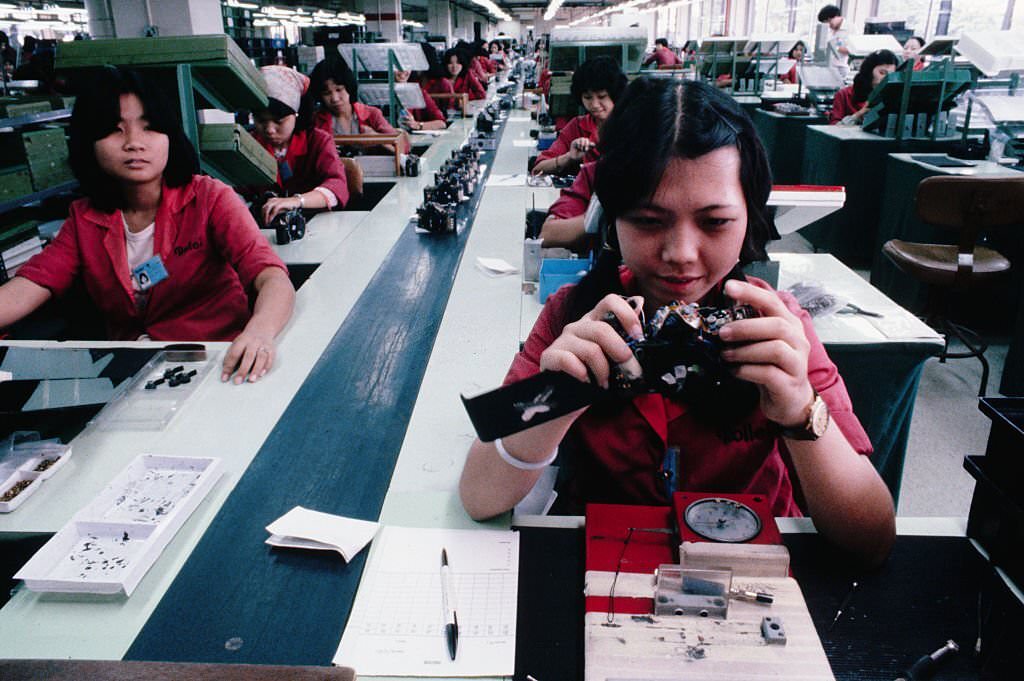
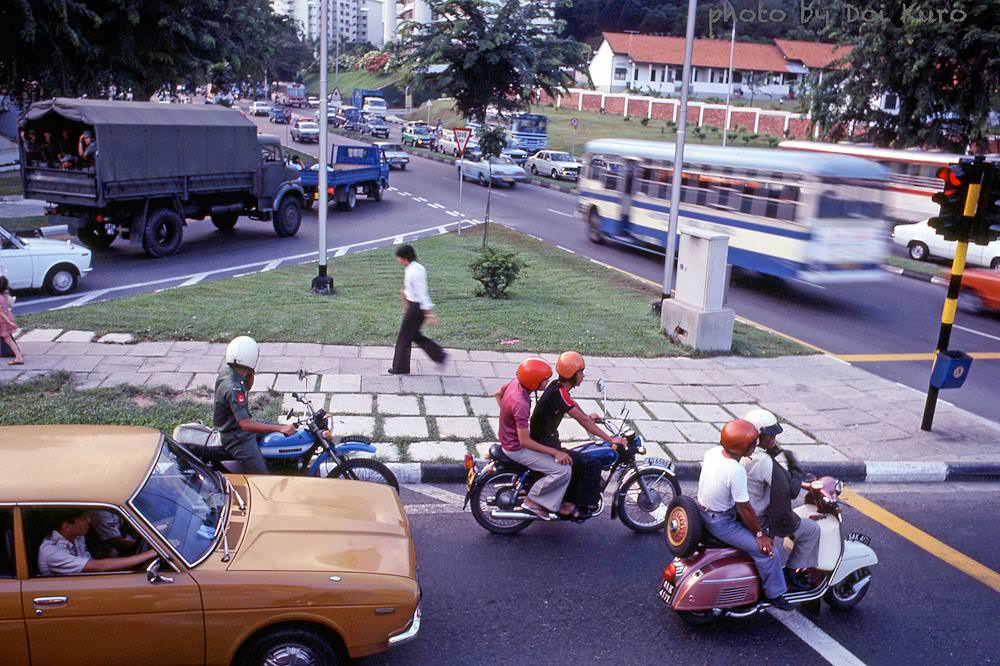
Street life in early 1980s Singapore still moved at a human pace. Bicycle rickshaws carried tourists and goods through busy roads. A fisherman prepared his boat beside a river that reflected the towers rising on the opposite bank. Schoolchildren waited at bus stops, and groups of female students walked the streets. Camera assembly workers sat at factory lines, representing the new industrial economy the government was building.
A bicycle rickshaw stand in Singapore, 1985.A woman stands next to a man parking a bicycle rickshaw at a market in Singapore.
Tourist with a film camera in a cycle rickshaw in Singapore, 1980s
A fisherman prepares his boat by a reflection of a skyscraper in Singapore, 1980s
Schoolchildren perched on a fence in Singapore, March 1981.Group of female students on the street in Singapore, March 1981.Two school children wait at a bus stop in Singapore, accompanied by a woman who is possibly their mother, 1980sCamera Assembly Workers in Singapore, 1980s
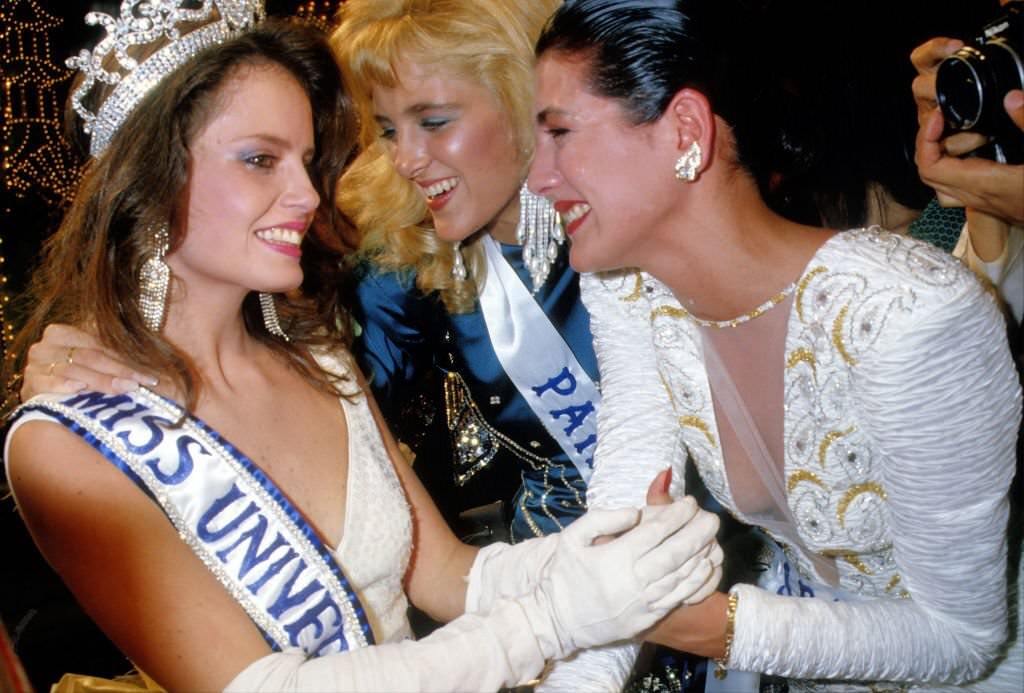
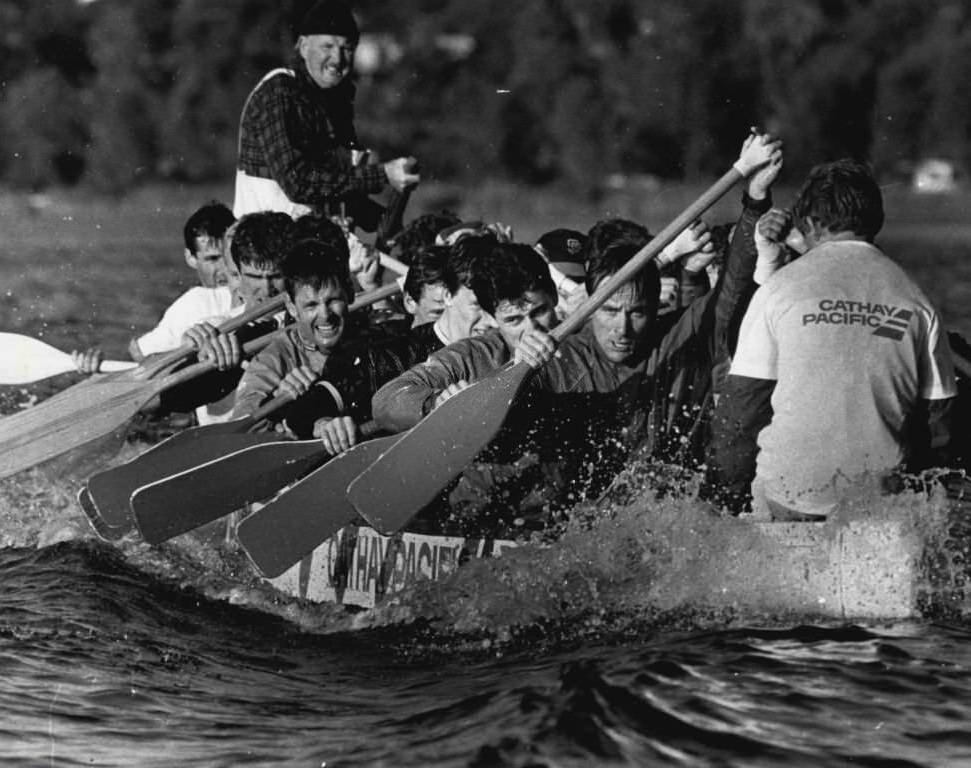
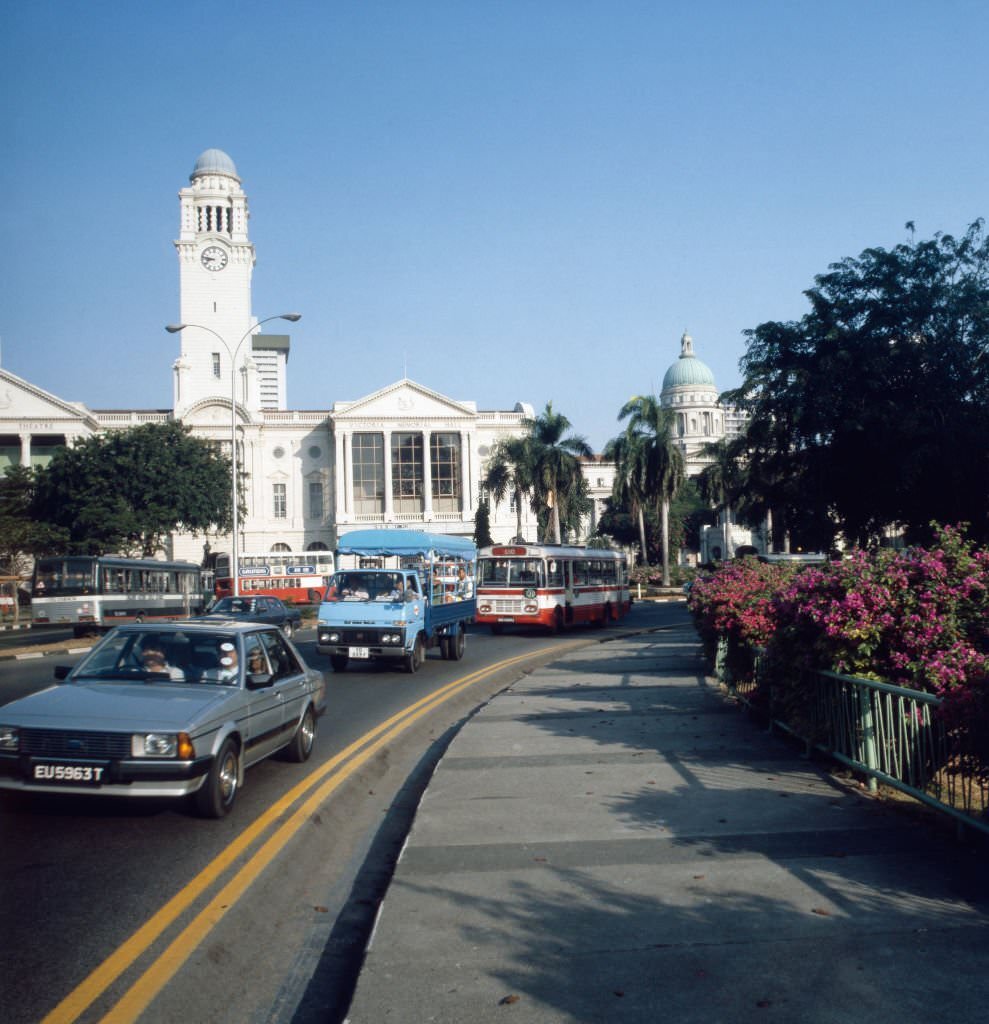
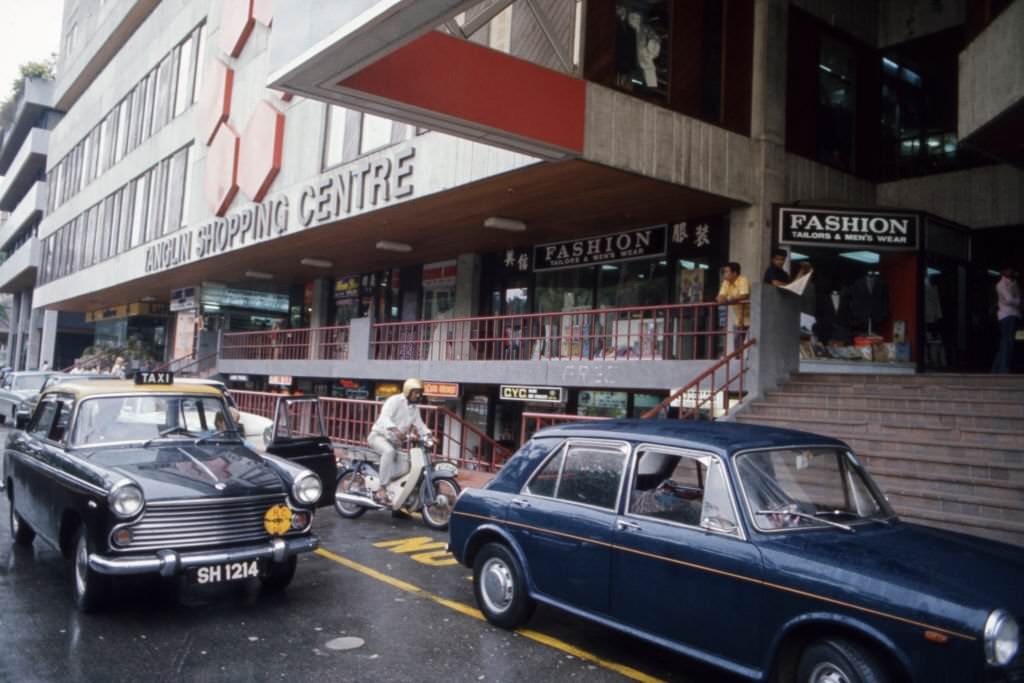
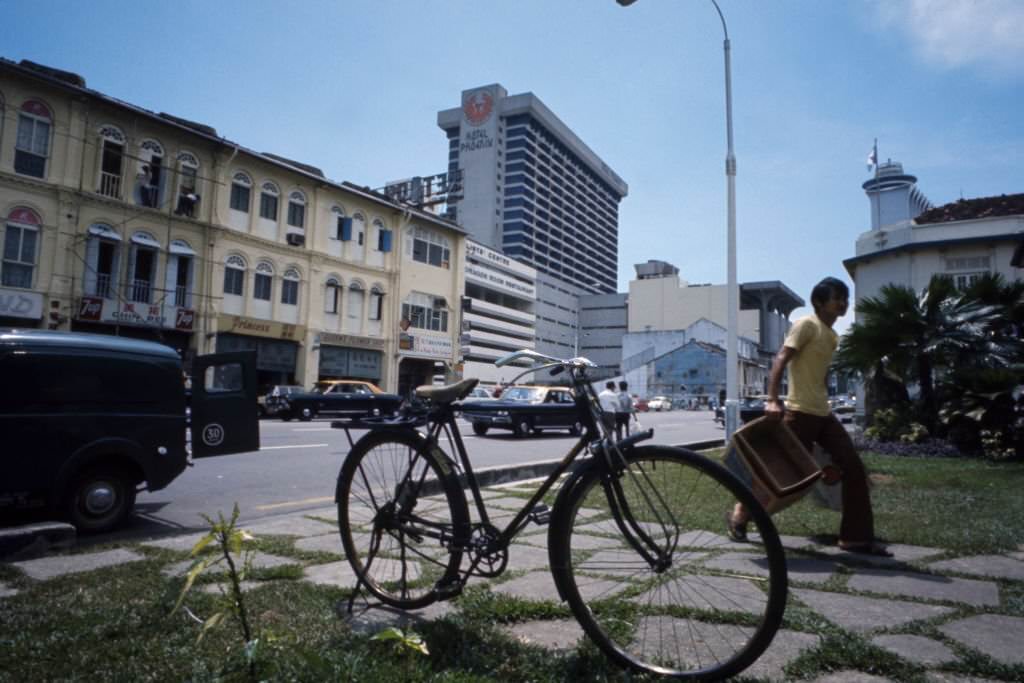
Singapore attracted international attention in the 1980s beyond trade and finance. The 1987 Miss Universe pageant brought contestants to Harborfront. Dragon boat teams came from as far as Australia to train for World Championships hosted in Singapore in 1986. The Victoria Theatre and Concert Hall drew visitors as a cultural landmark, and shopping centers like Tanglin Shopping Center and Orchard Road were already drawing locals and tourists alike.
Miss Universe contestants 1987 in Harborfront, Singapore.At Narrabeen Lakes this morning the Australian Dragon Boat team were practising for the World Championships in Singapore, 1986Visitation of the Victoria Theatre and Concert Hall in the city of Singapore, 1980s.The Tanglin Shopping Center in Singapore, March 1981.Bicycle parked on Orchard Road in Singapore, March 1981.
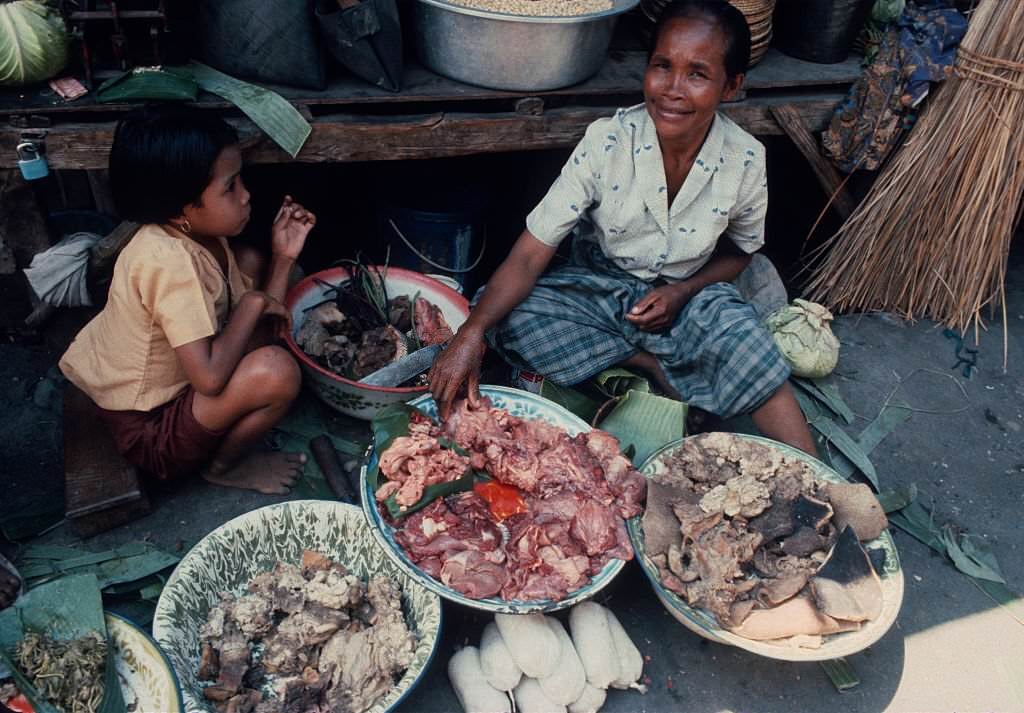
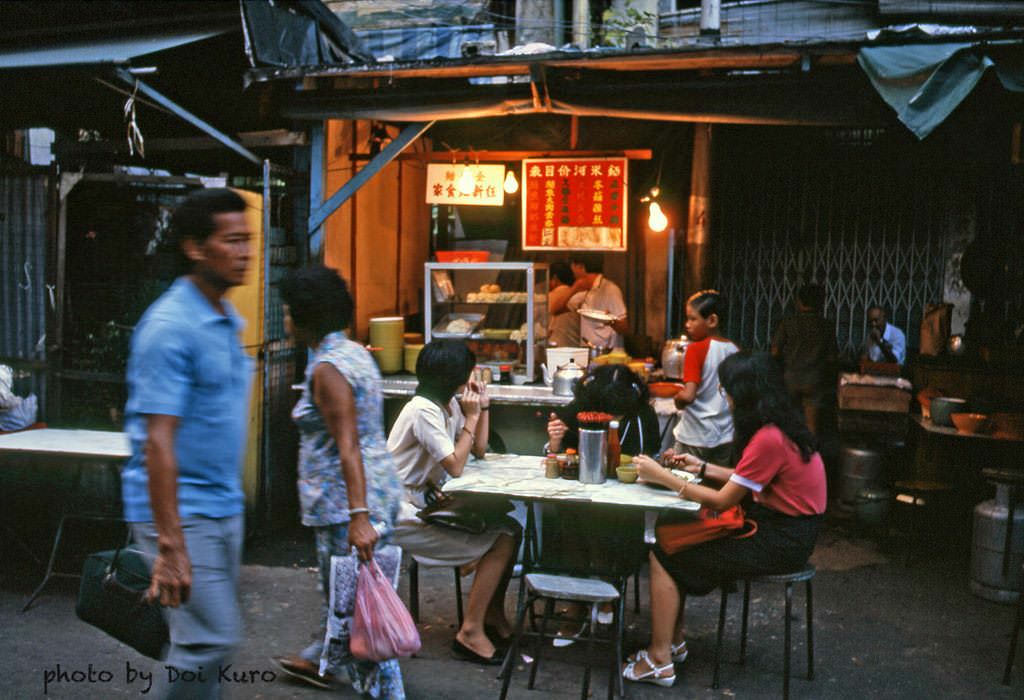
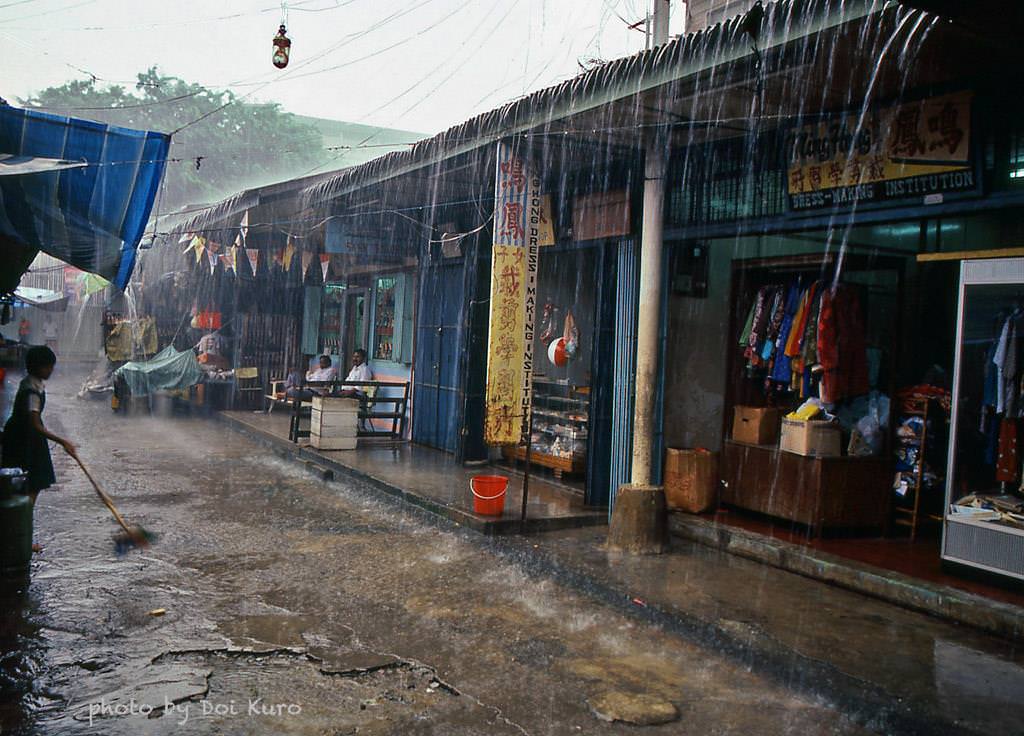
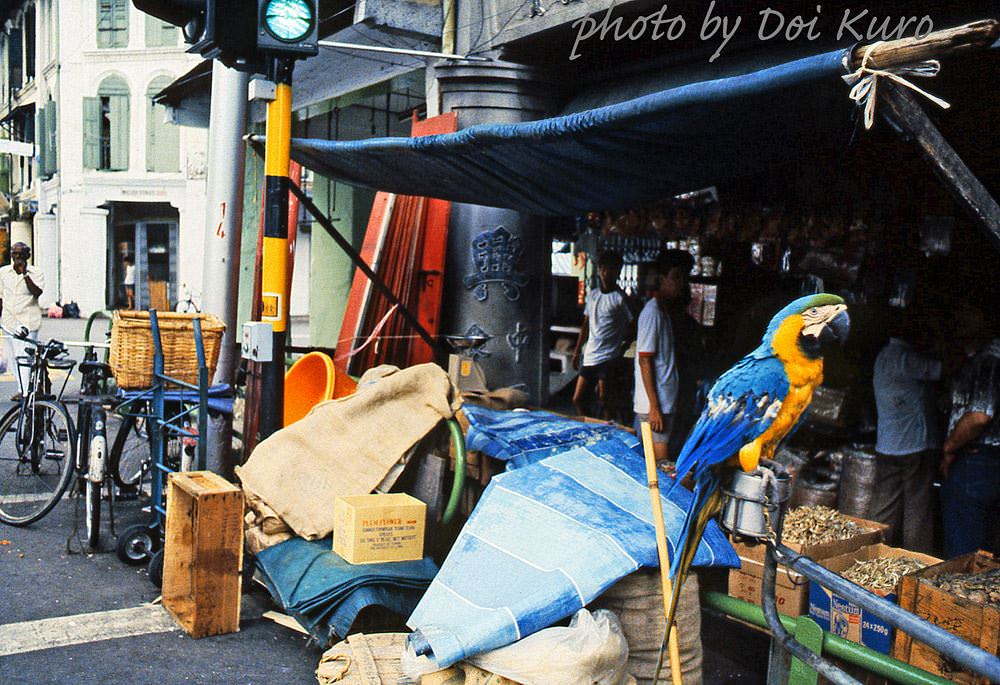
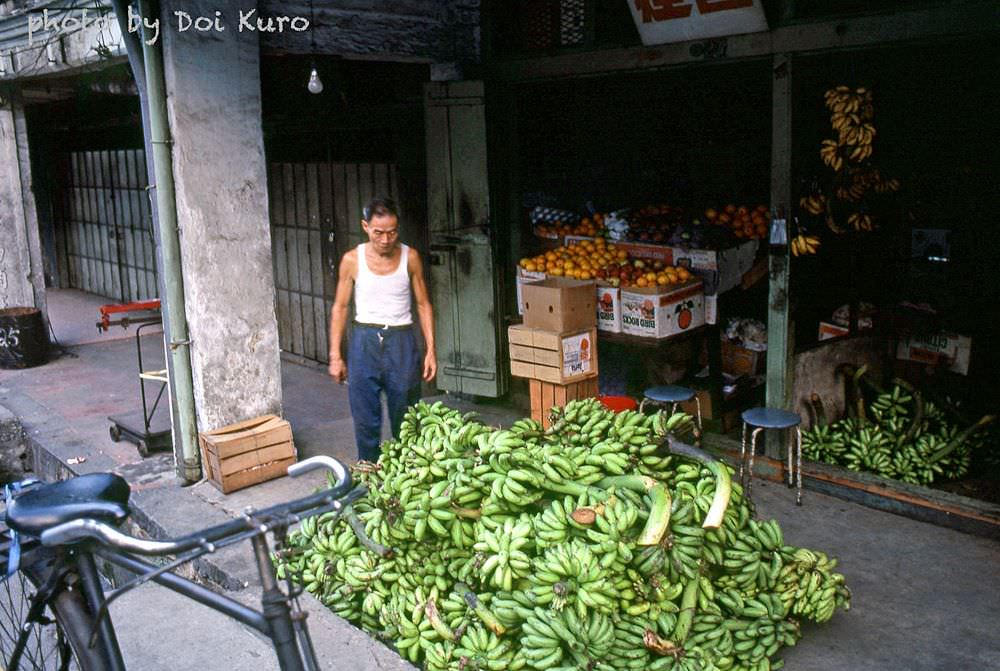
The food culture of Singapore was inseparable from its streets. Hawker stalls and cookshops served breakfast and lunch to workers across the city. Vendors sold fruit in the rain. Restaurants lit up at night along busy roads. The durian — pungent and beloved — appeared everywhere during its season, sold from roadside carts and stalls. These scenes from 1984 and nearby years capture a food culture that was already a source of deep local pride.
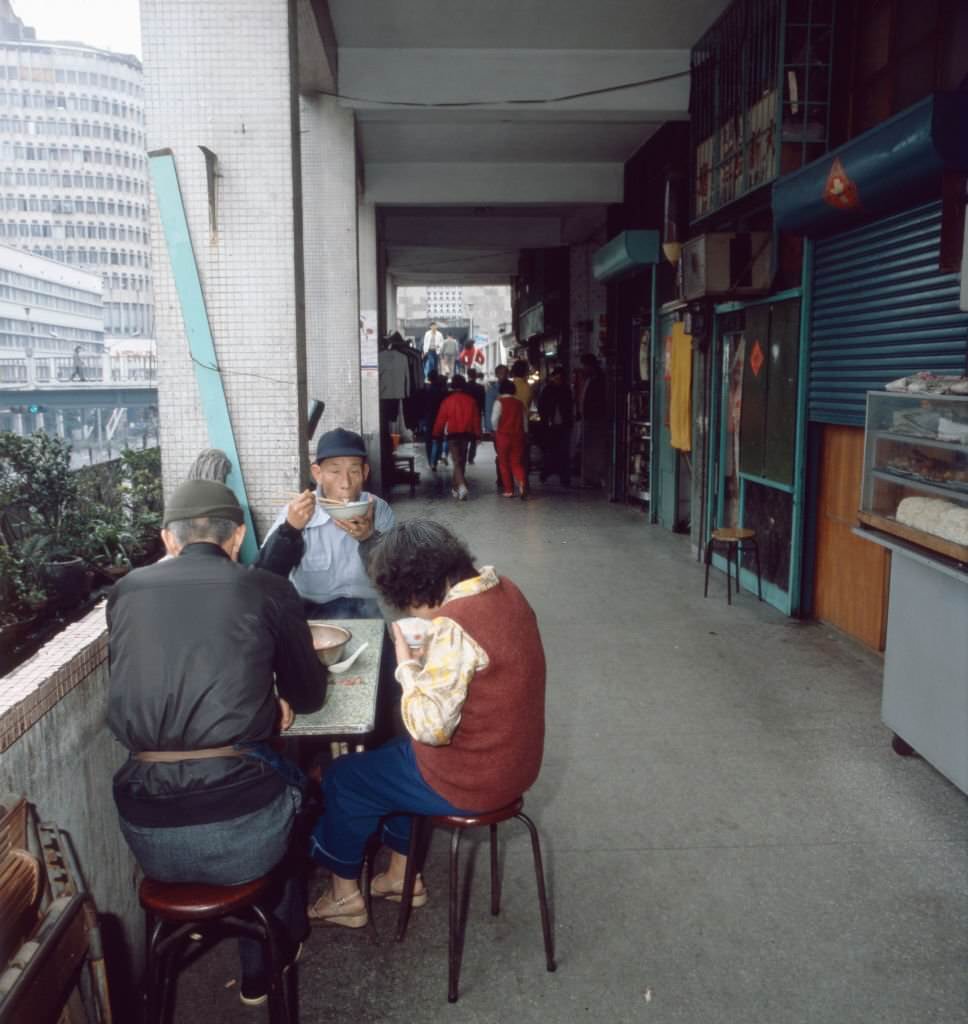
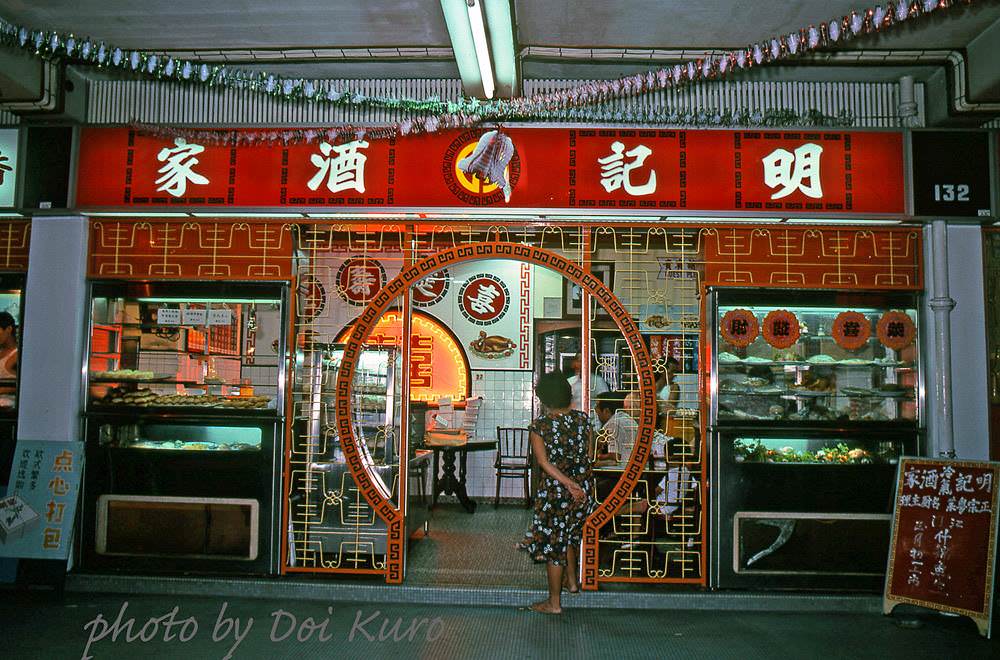
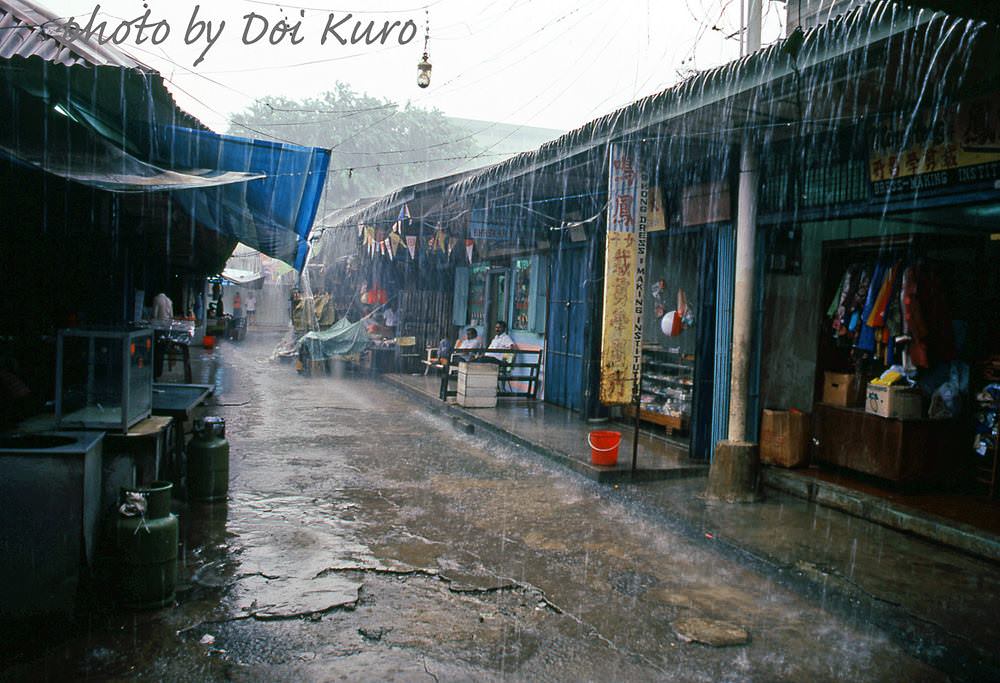
Having lunch in a cookshop of Singapore, 1980s.Breakfast landscape, 1984Restaurant at night, 1979Take shelter from the rain, 1984Squall, 1984Cockatoo, 1984Green bananas, 1979
The political framework of Singapore also shifted during the 1980s. In 1984, the government introduced Non-Constituency Members of Parliament, allowing up to three losing candidates from opposition parties to take seats in parliament. Group Representation Constituencies were created to ensure that minority communities — Malay, Indian, and others — had guaranteed representation in the legislature by grouping seats into multi-member electoral divisions.
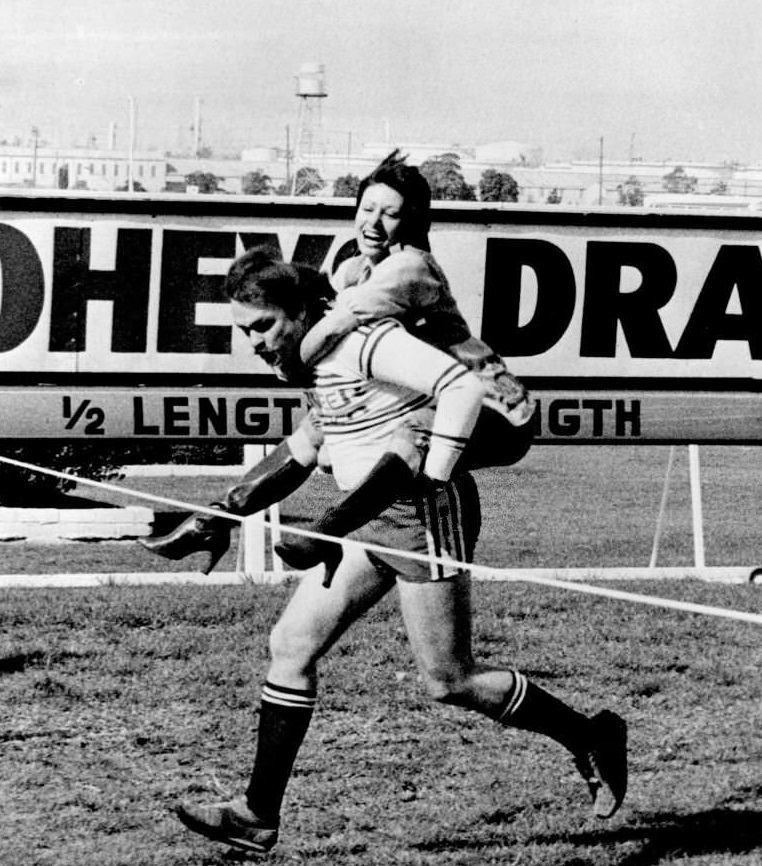
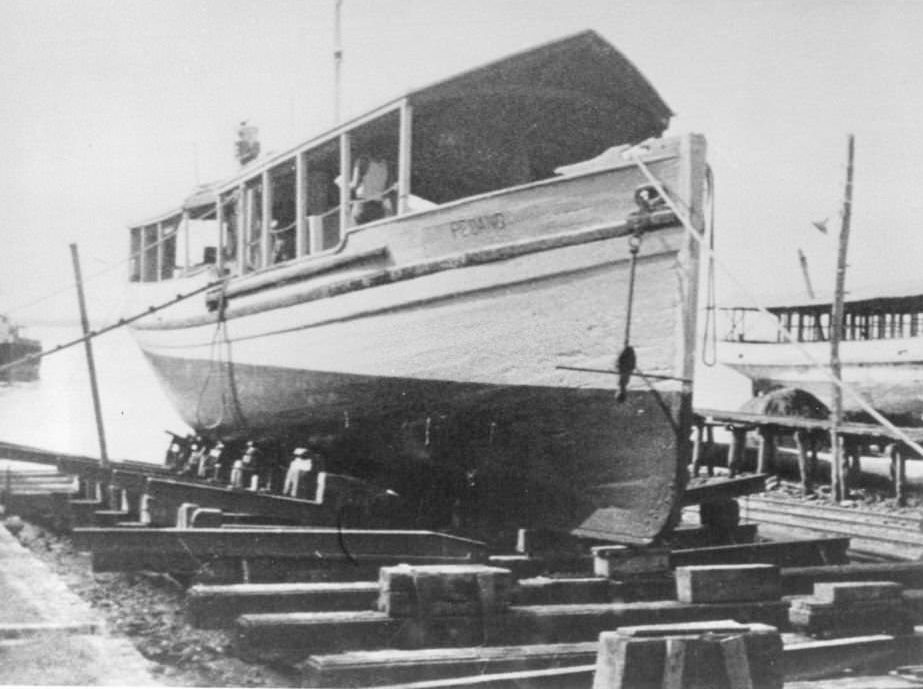
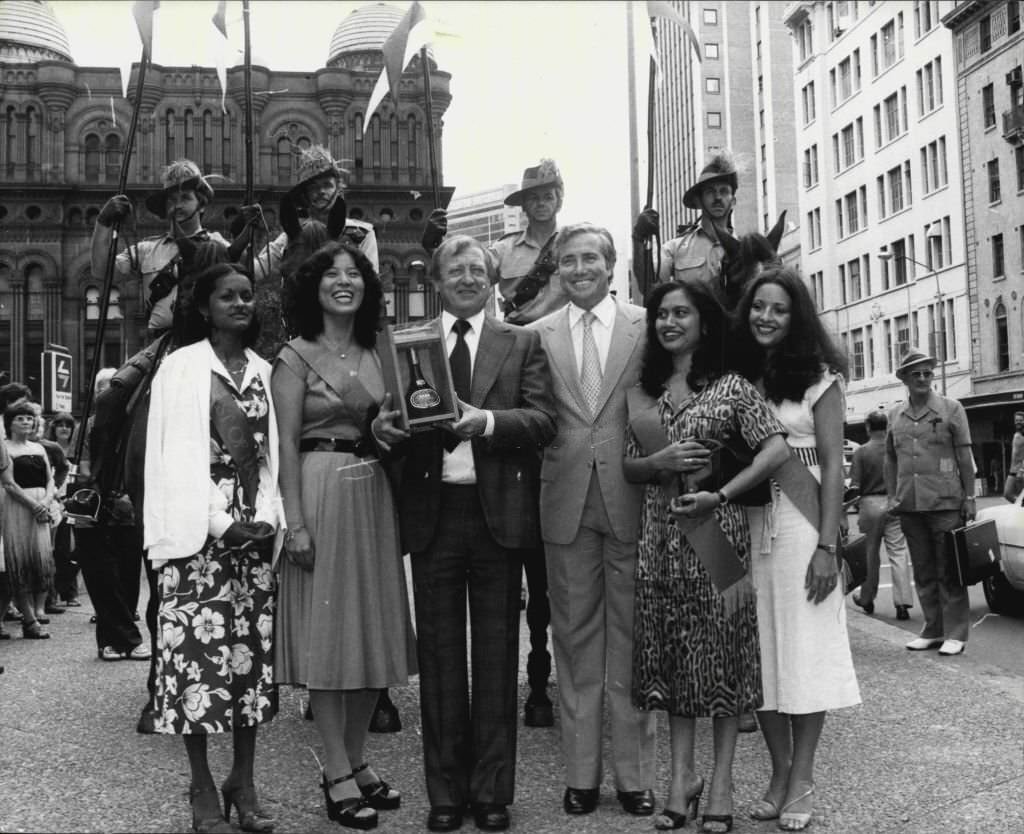
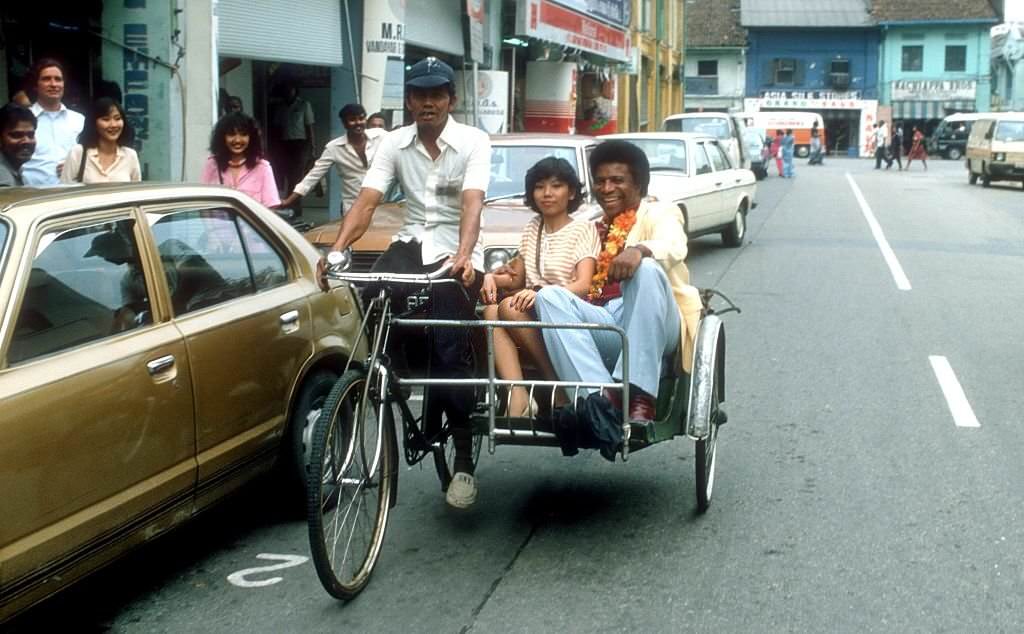
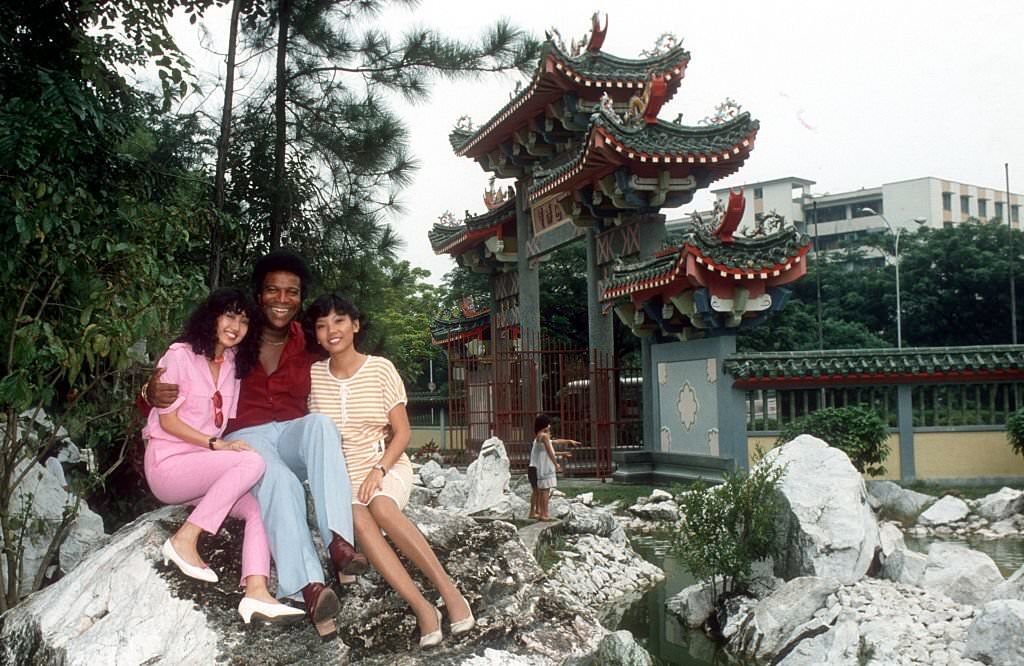
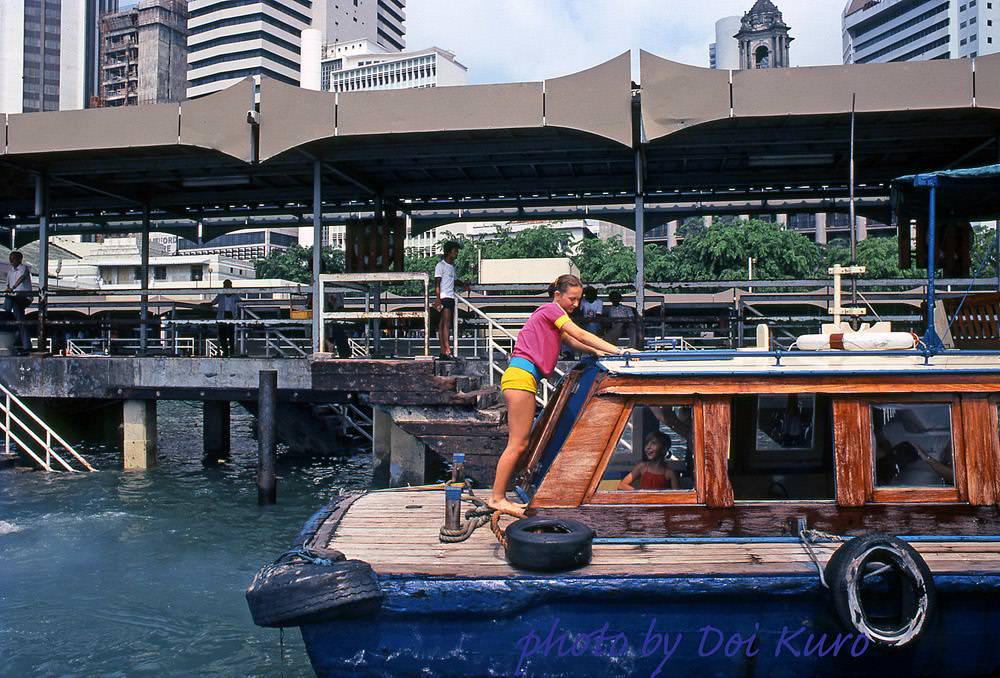
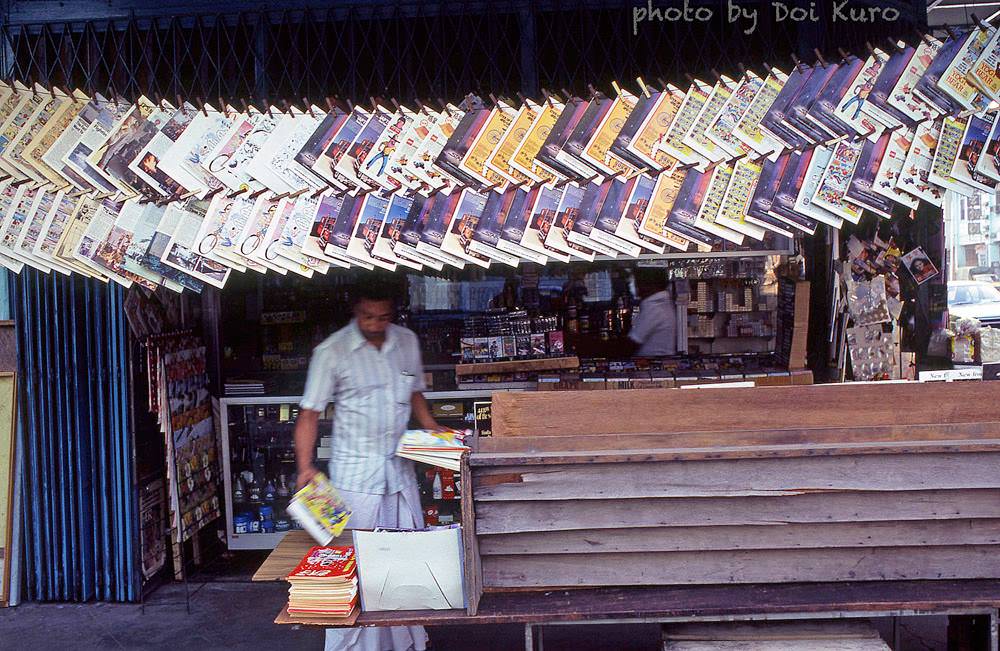
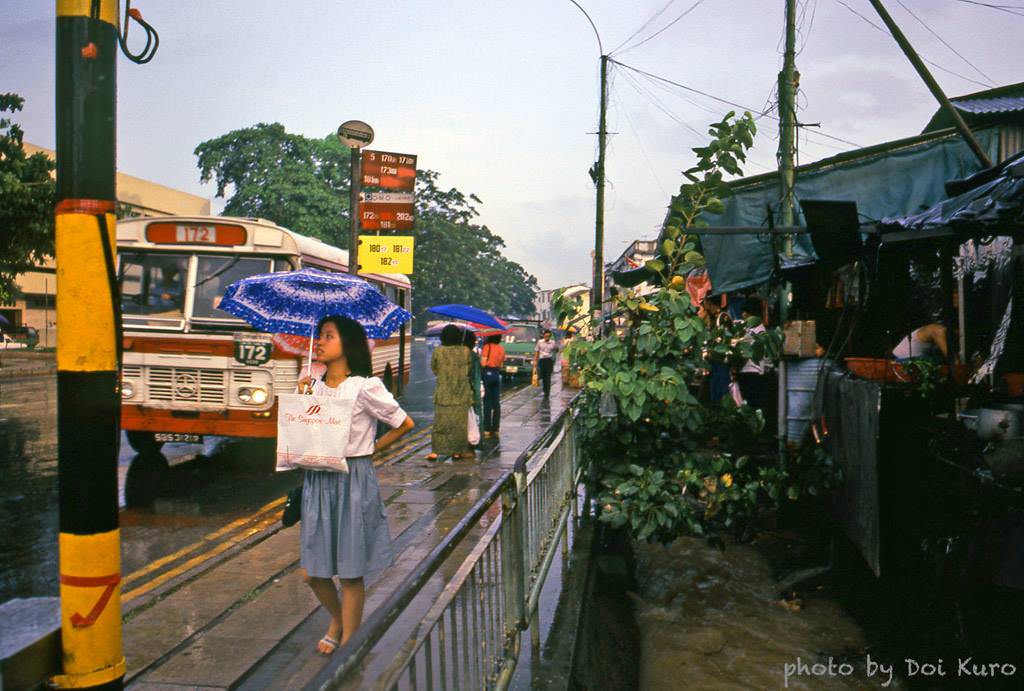
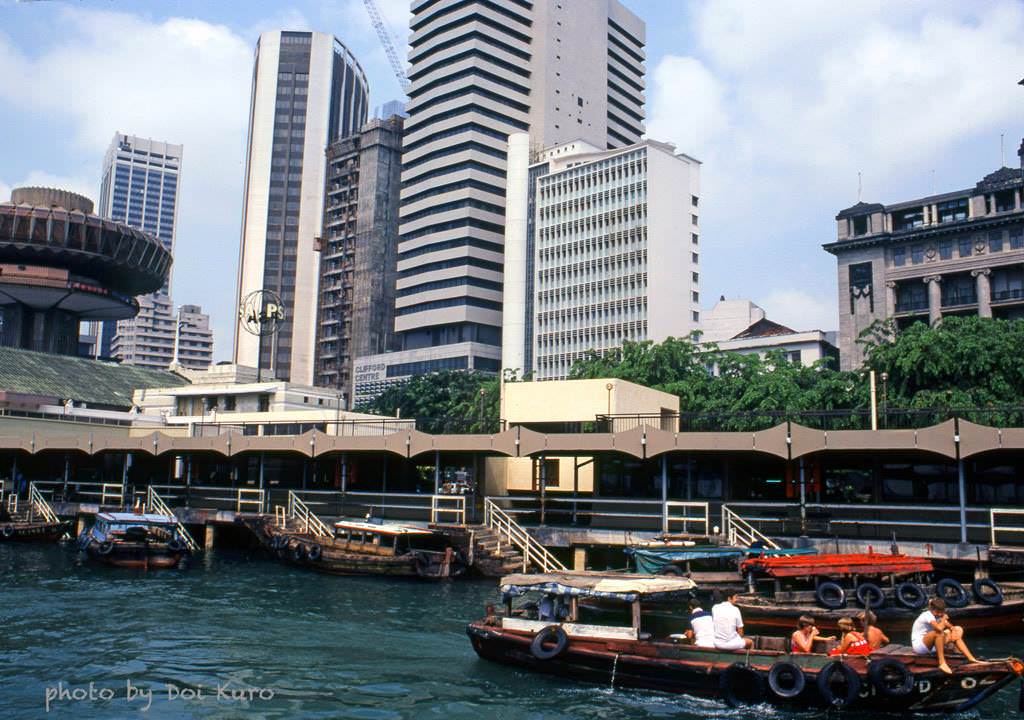
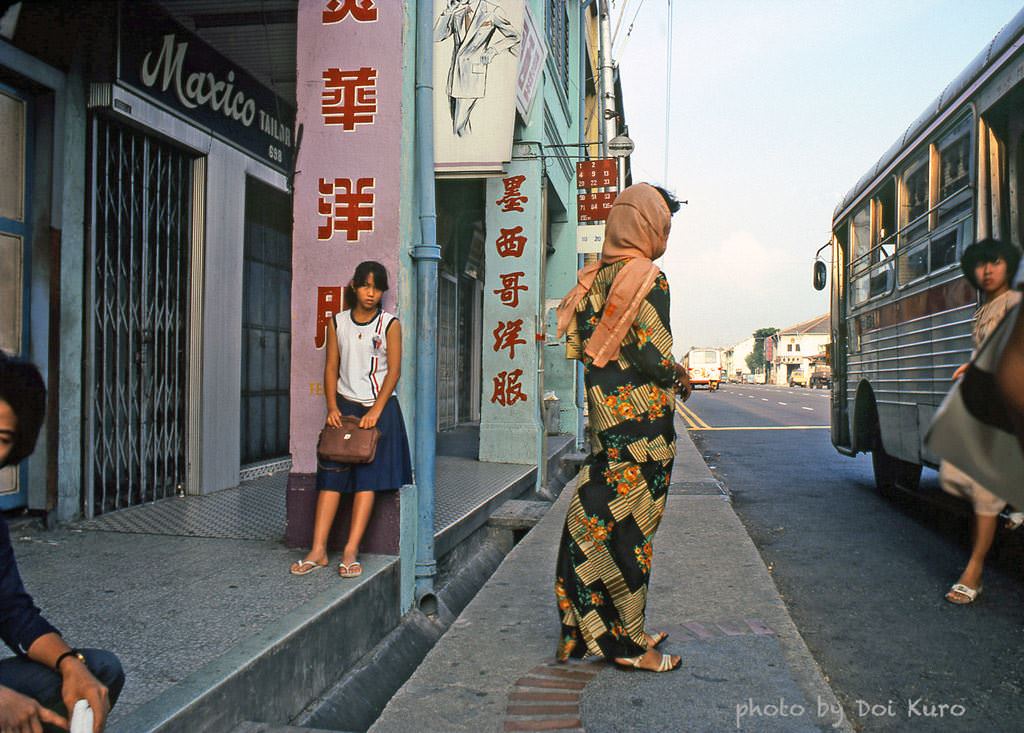
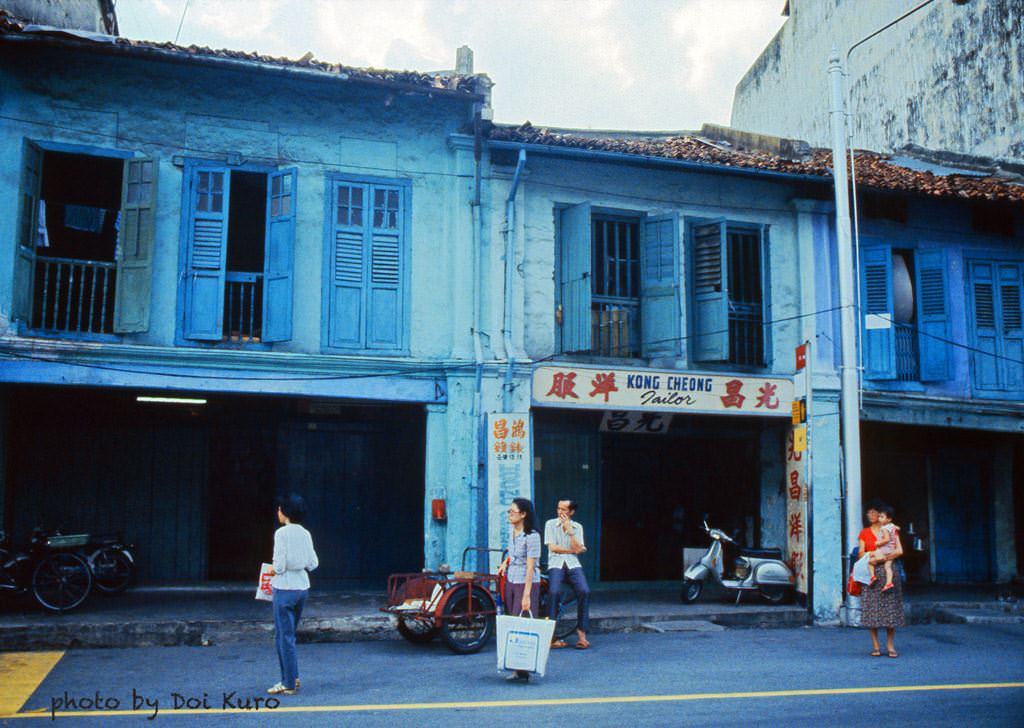
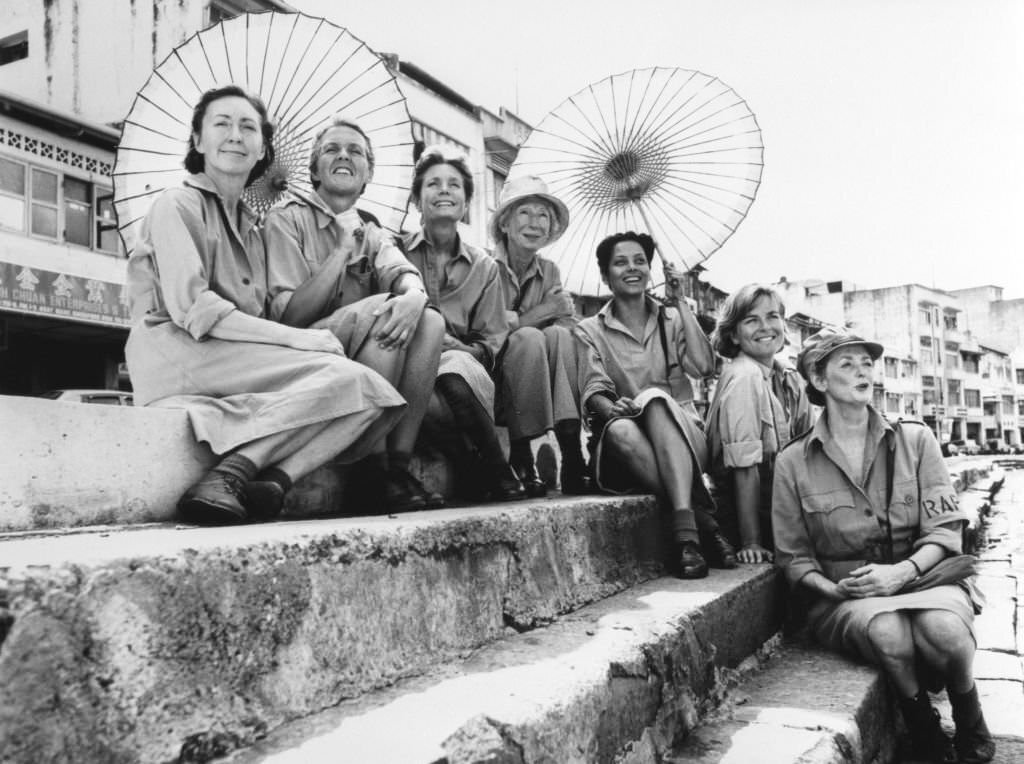
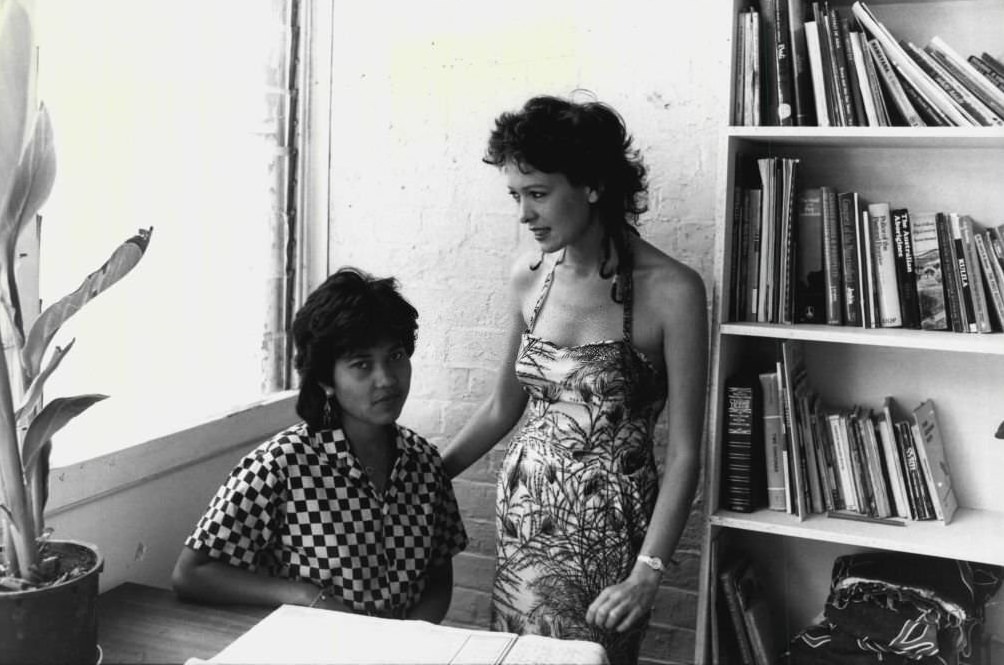
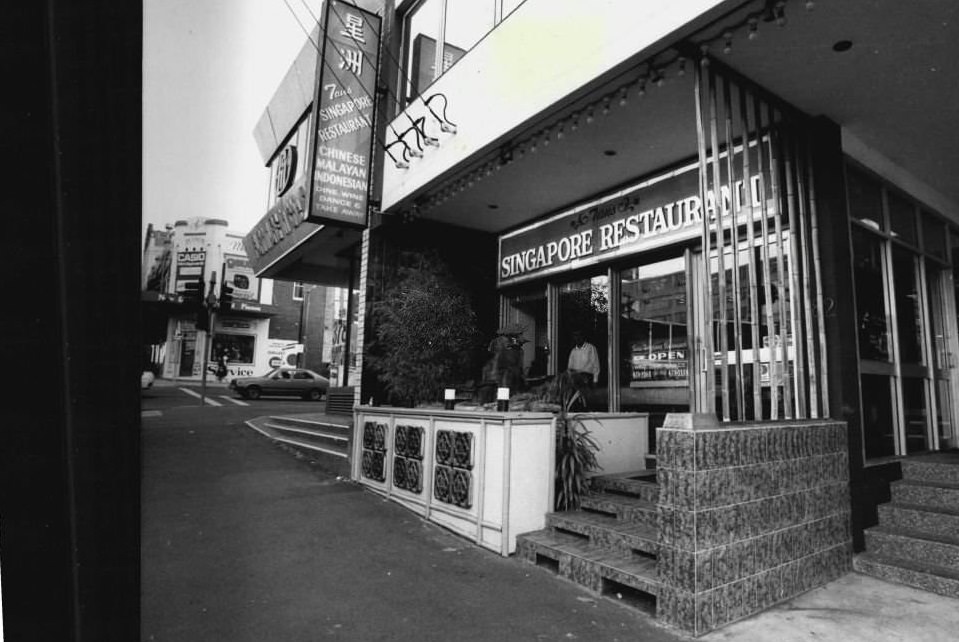
Malay with Elephantiasis, Singapore, 1983.View of Singapore, March 1981.Floating district in Singapore, March 1981.Singapore Airlines Handicap. Celebrity Horse and Jockey Hop won by Grant Goldman wearing Manly, 1980Various pix of the “Krait”, a boat used by “Z Force” in raids behind enemy lines around Indonesia and Singapore, 1980People posing, 1980sSingapur, 1980sRoberto Blanco in Singapur, 1980Clifford Pier, 1979Signal waiting, 1979Waiting for a bus, 1984Magazine stand, 1979Street house, 1979Bus stop, 1979Clifford centre, 1979Bus stop, 1979Bus stop, 1984Television – Elspet Gray in rehearsals for new BBC TV show ‘Tenko’ – SingaporeLily Rahiu and overseas uni student from Singapore with her flat mates Peter Miggitt and Vanessa Forrest, 1984.Tan’s Singapore Restaurant at 392 Pacific Hwy. Crow’s Nest, 1983.