
Before supermarkets, refrigerators, or delivery apps, Americans relied on a network of small, specialized shops to meet their daily needs. In the late 19th century, shopping was a routine, almost daily activity. Without reliable ways to keep food fresh, families bought groceries in small amounts and returned to the store the next day to do it all over again. These weren’t just places to buy goods — they were neighborhood anchors where merchants knew their customers by name.
Stores of this era operated six days a week and stayed open until the last customer had been served, no matter how late that was. There were no fixed closing times. Owners and their workers simply kept the doors open as long as business demanded it. For those who couldn’t afford store prices, street vendors and open-air markets offered a cheaper alternative, and many poor families relied on them almost entirely.
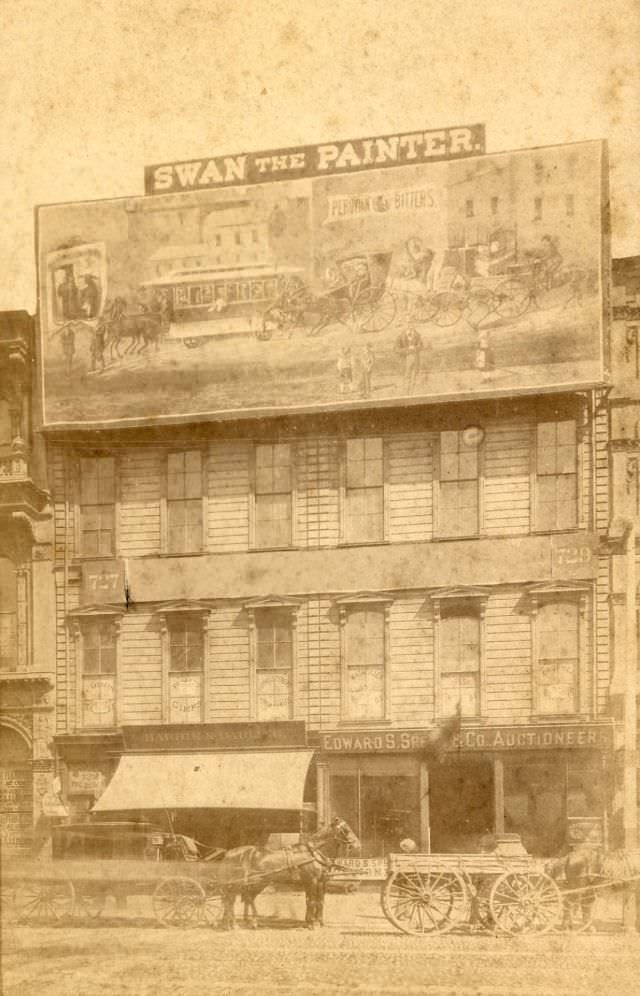
By the 1860s, storefronts were already becoming a defining feature of American towns. Combination businesses — like a general store doubling as an auction house — were common, especially in smaller communities where one merchant had to serve many purposes. Hardie & Darling’s establishment reflects this practical approach to commerce.
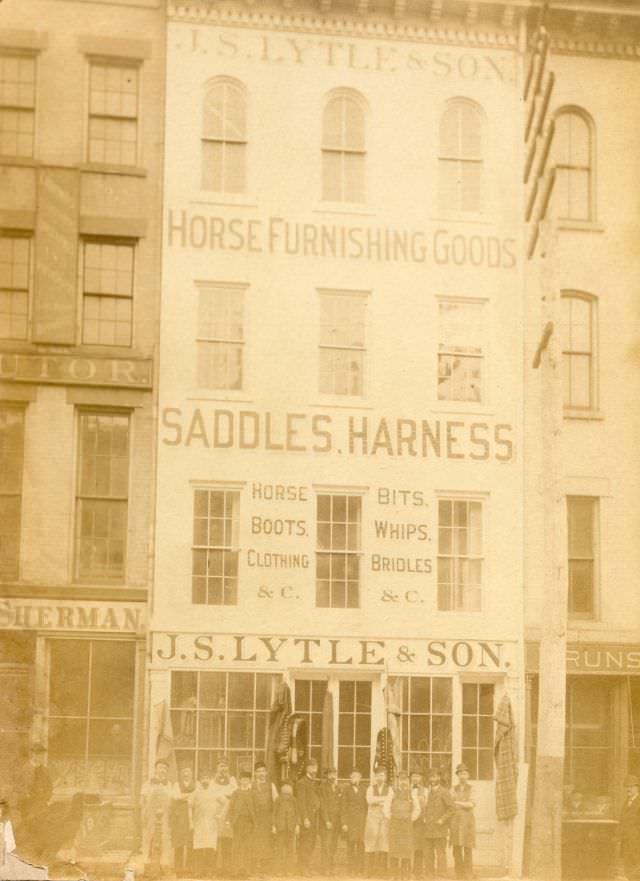
Horses were essential to 19th-century life, and businesses that catered to them were just as vital as any grocery or dry goods shop. Stores selling harnesses, saddles, and other horse furnishings were a normal sight on American commercial streets throughout the 1870s.
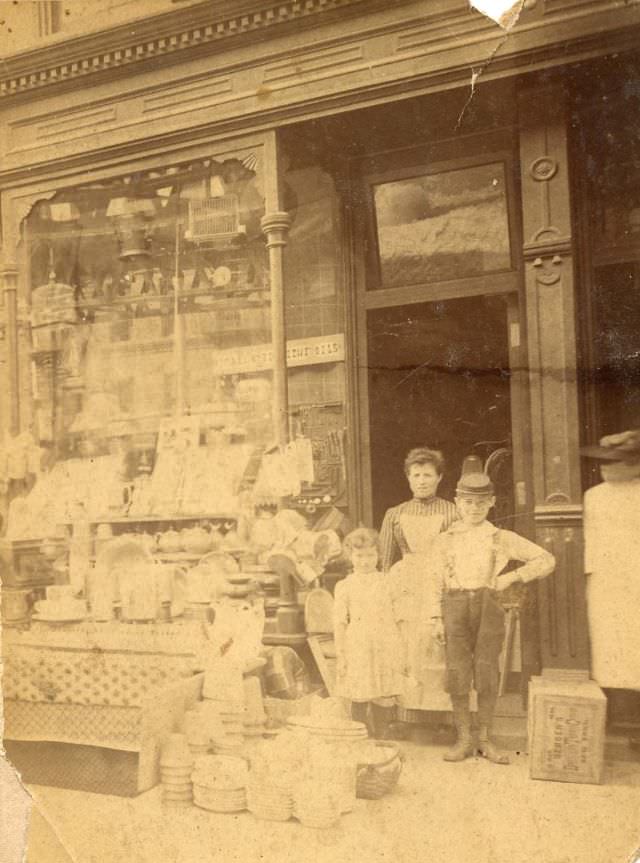
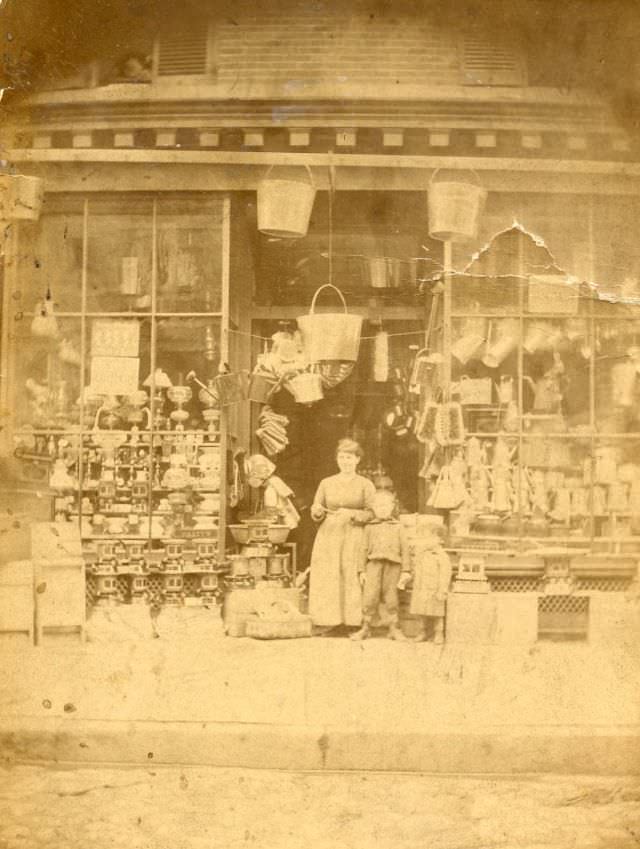
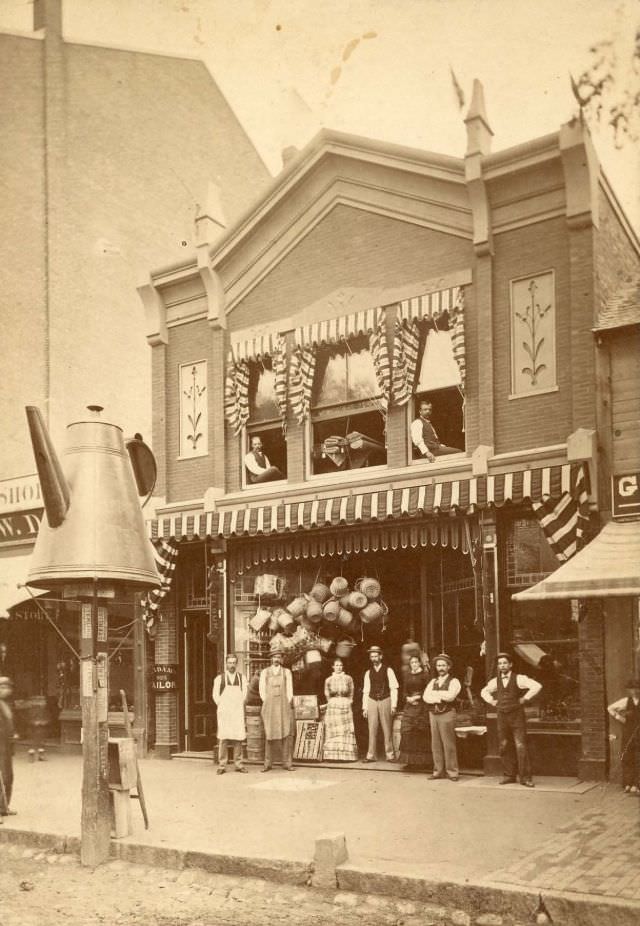
New York City in the 1870s was a dense commercial landscape. Tinware stores sold pots, pans, buckets, and kitchen tools — practical goods that every household needed. Shopkeepers often displayed their wares on the sidewalk outside to attract passing customers, turning the street itself into part of the store.
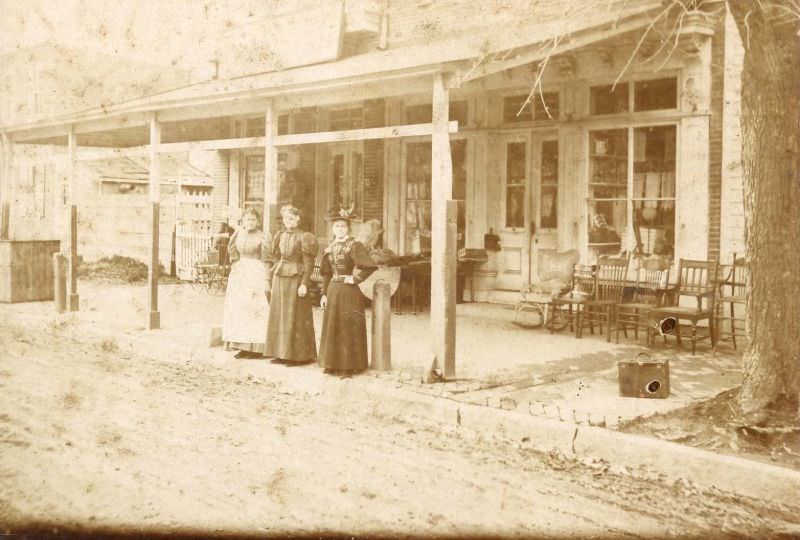
Women were the primary shoppers of the household in this era. A trip to the general store was a daily or near-daily task, often involving stops at multiple shops — one for bread, another for meat, another for dry goods. General stores stocked a broad range of items, making them a convenient one-stop option in smaller towns.
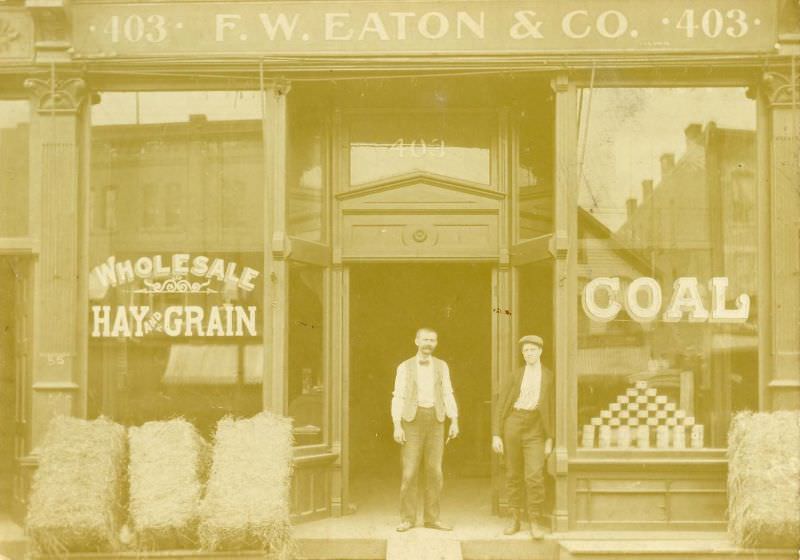
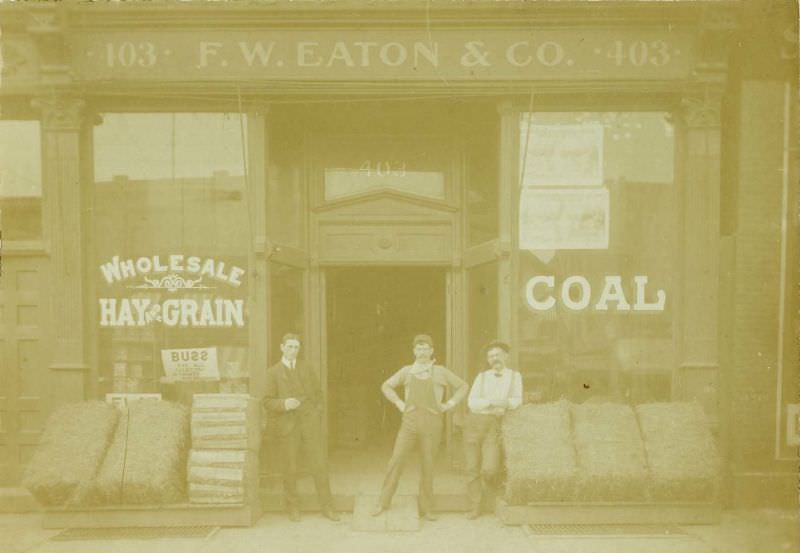
Fuel and feed stores like F.W. Eaton & Co. supplied two of the most critical resources of the 19th century: coal for heating homes and grain and hay for feeding livestock. These businesses operated at the intersection of domestic life and agricultural need, serving both city dwellers and nearby farmers.
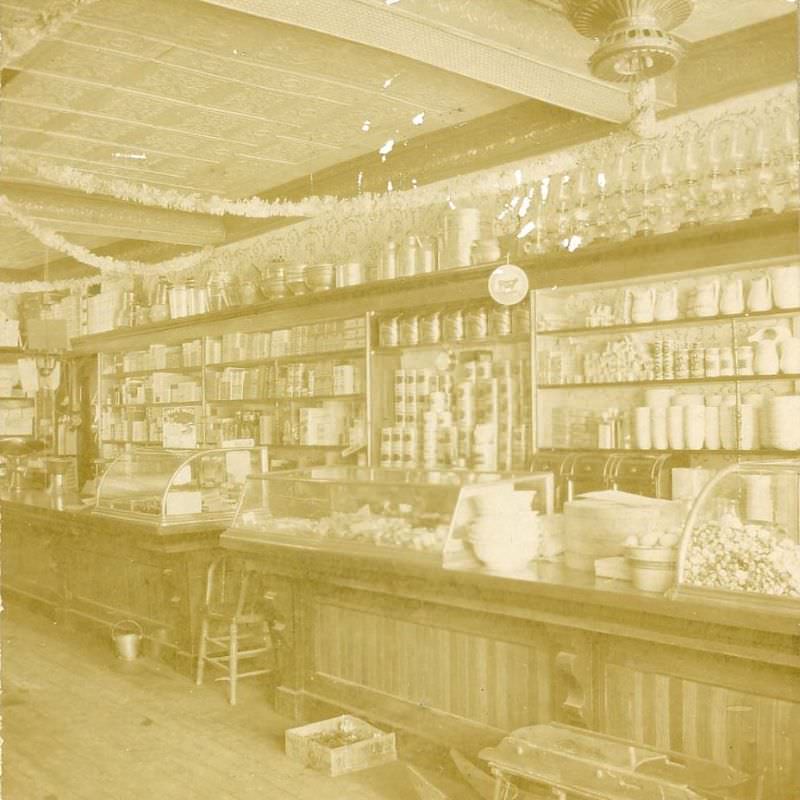
The interior of a typical 1880s grocery store was a world away from the wide aisles and fluorescent lights of a modern supermarket. Shelves ran floor to ceiling, stocked with tins, jars, and dry goods. The grocer stood behind a counter and retrieved items for each customer personally. Self-service shopping did not yet exist.
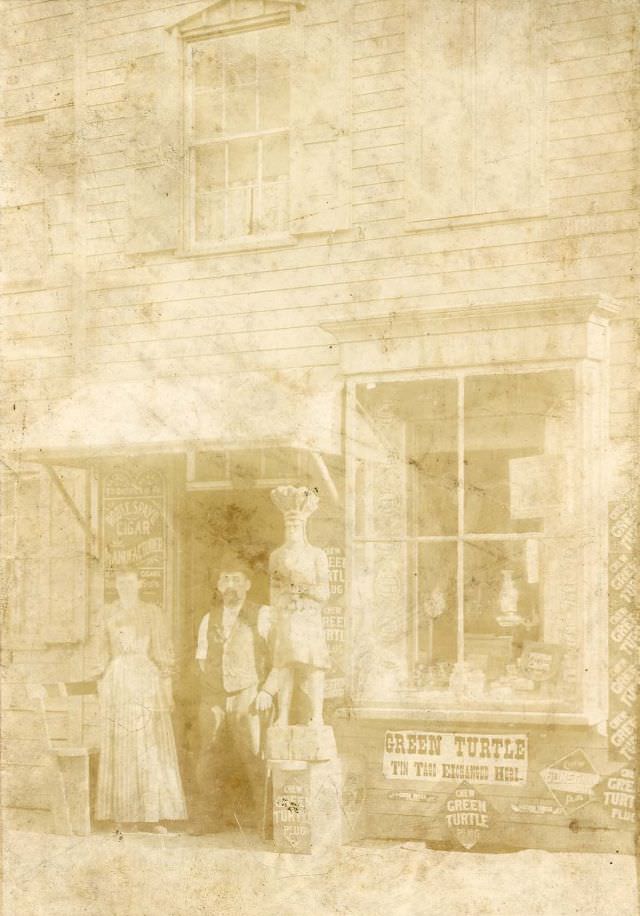
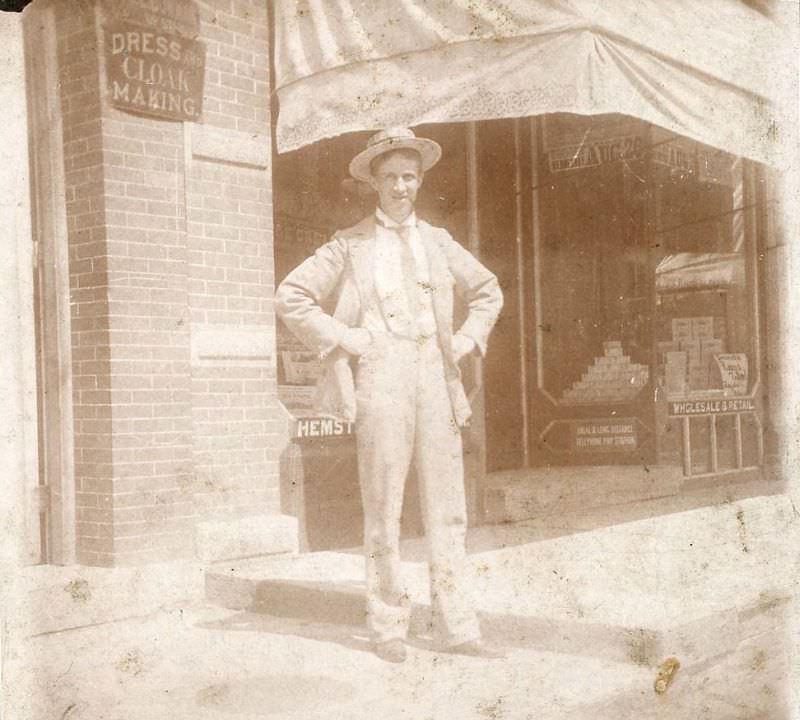
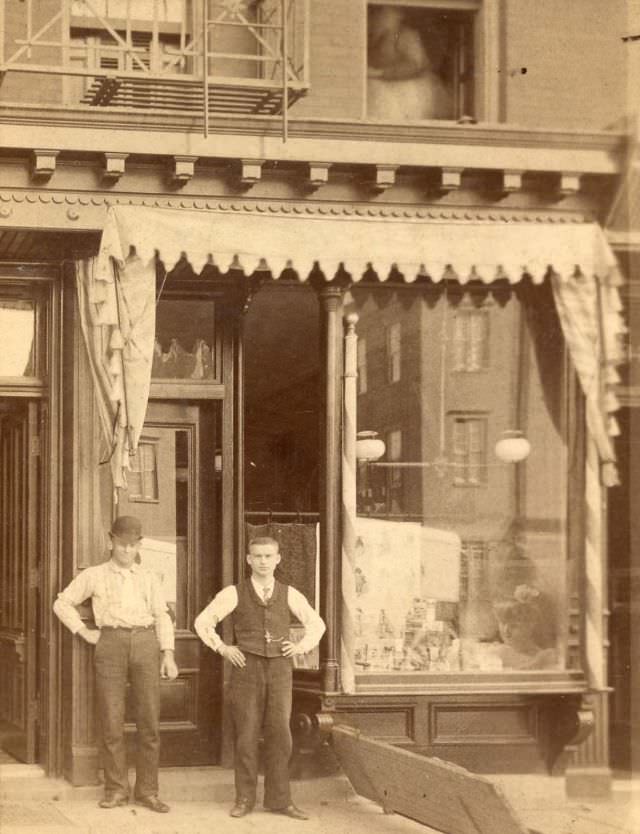
Specialty shops defined 19th-century retail. A tobacconist sold only tobacco products. A dressmaker or cloak shop offered custom-made clothing. In Gloversville, New York — a city famous for its glove-making industry — clothing trades were especially prominent. Shopkeepers almost always posed outside their storefronts for photographs, using the images as a form of advertisement and personal pride.
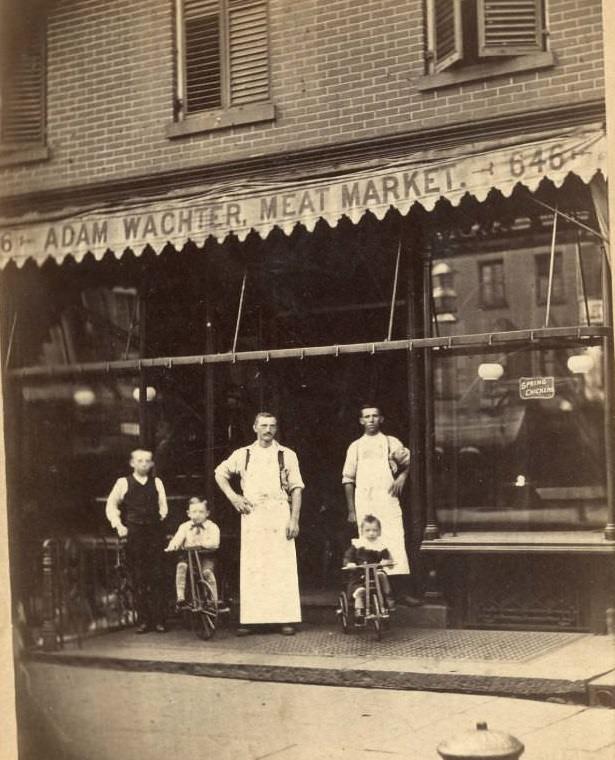
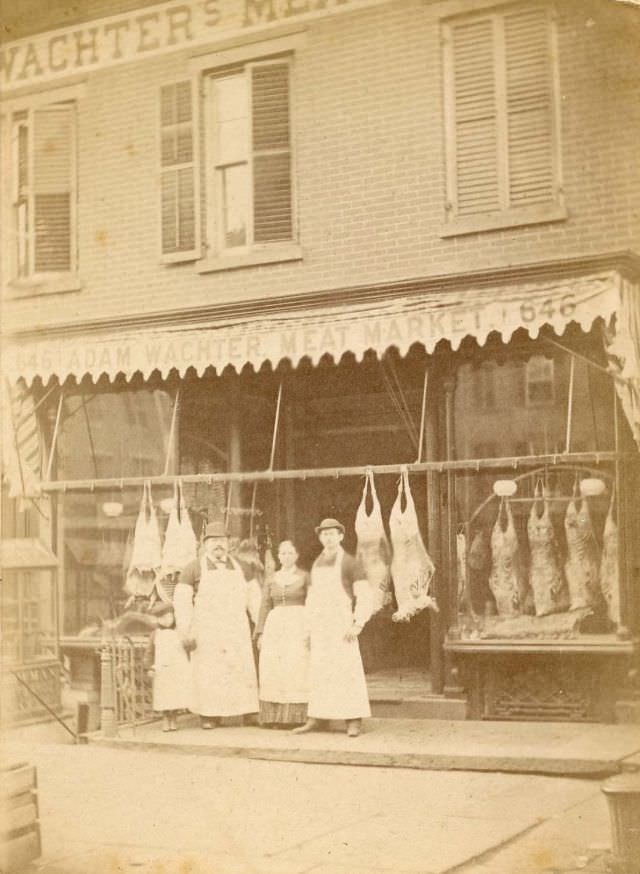
Meat markets were neighborhood institutions. Butchers like Adam Wachter built loyal customer bases in their immediate communities. Without home refrigeration, families bought only what they could eat that day, meaning visits to the butcher were frequent and the relationship between shopkeeper and customer was close.
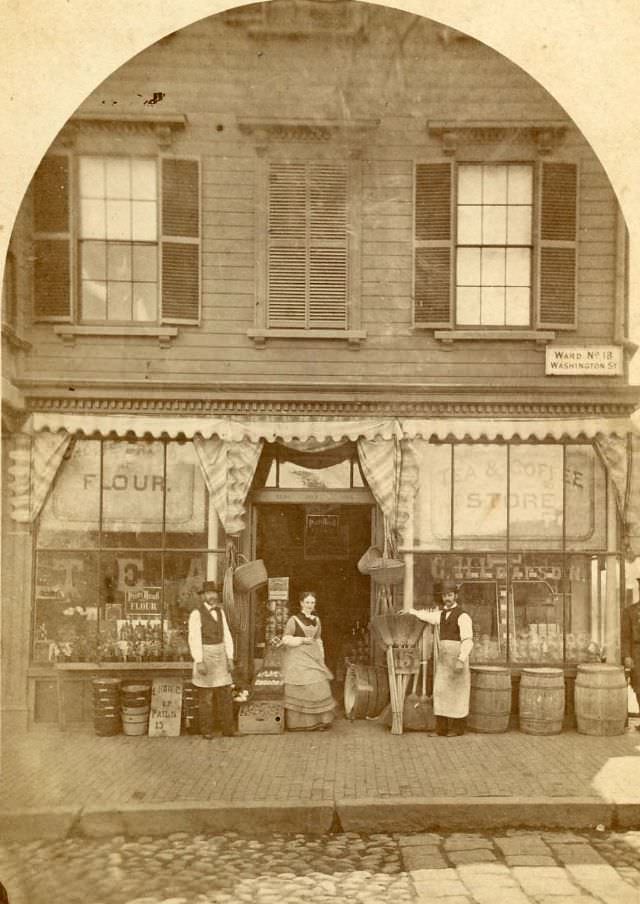
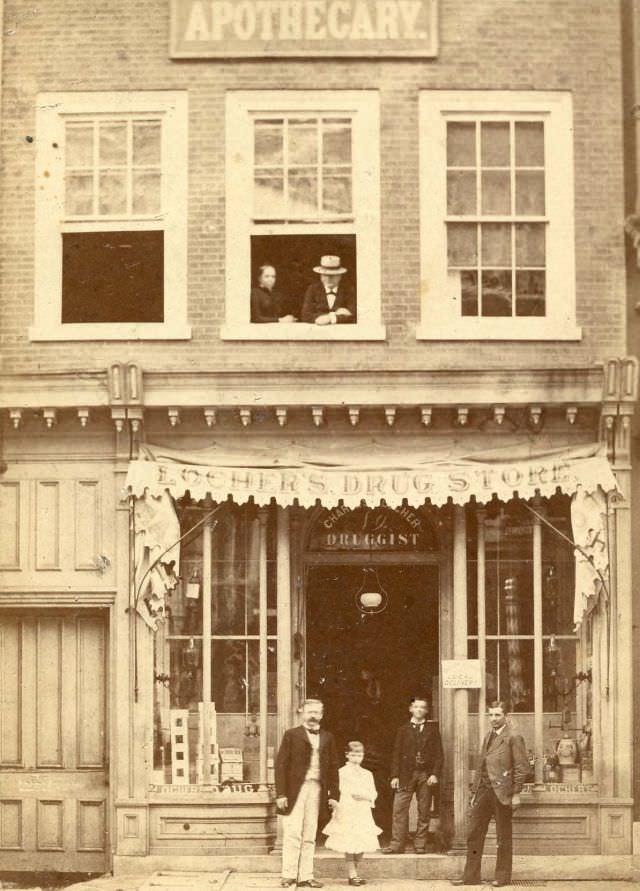
Drug stores in the 1880s served a broader function than they do today. Beyond selling medicines, they often stocked toiletries, household chemicals, and basic health supplies. Philadelphia’s Locher’s Drug Store was part of a growing trend of urban pharmacies that served dense city neighborhoods, where residents lived within walking distance of most of their daily needs.
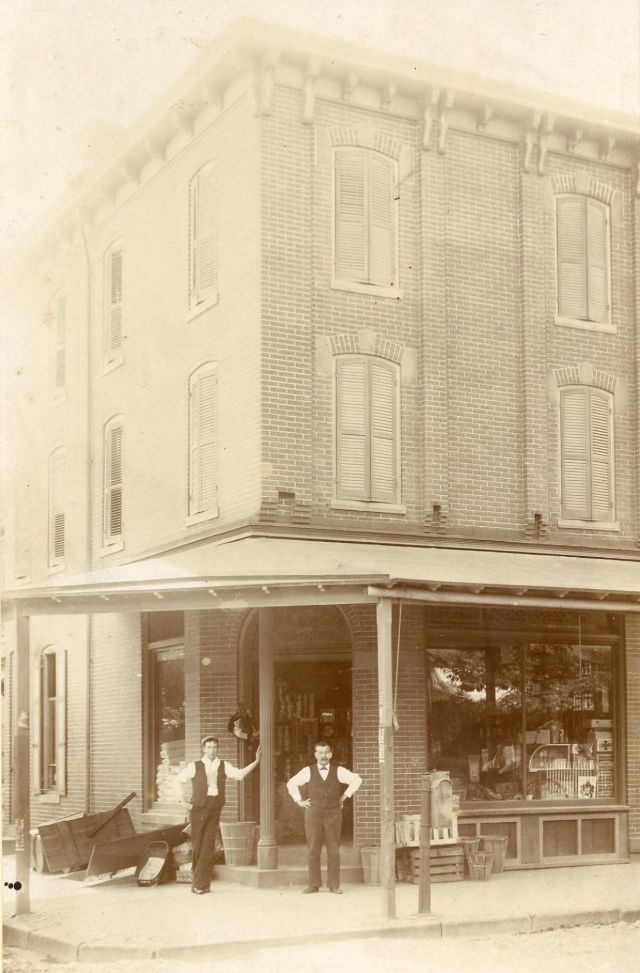
Corner stores occupied a special place in 19th-century neighborhoods. Their location at street intersections gave them maximum foot traffic and visibility. These shops stocked a bit of everything and served as informal gathering spots where neighbors exchanged news and conversation.
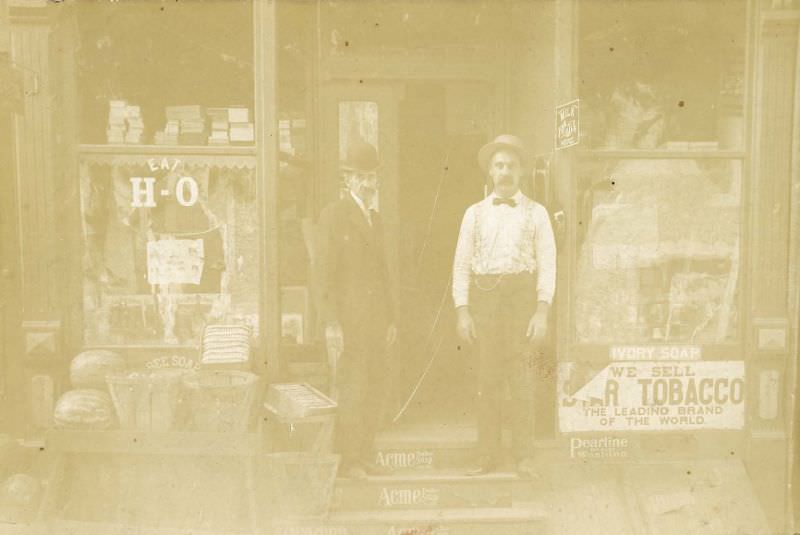
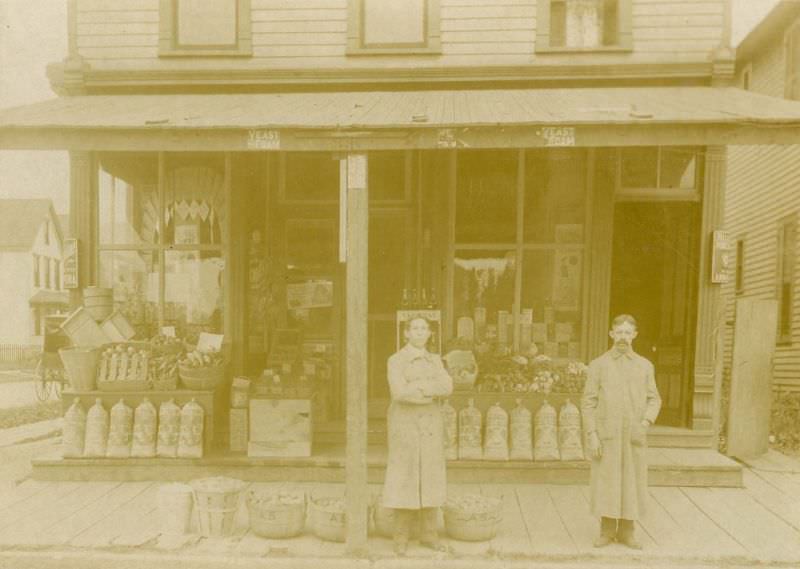
Grocery stores ranged from modest single-room operations to larger establishments with several employees. Owners frequently appear in photographs taken in front of their shops — a deliberate choice. These images served as proof of a legitimate, established business at a time when reputation and trust were the foundation of commerce.
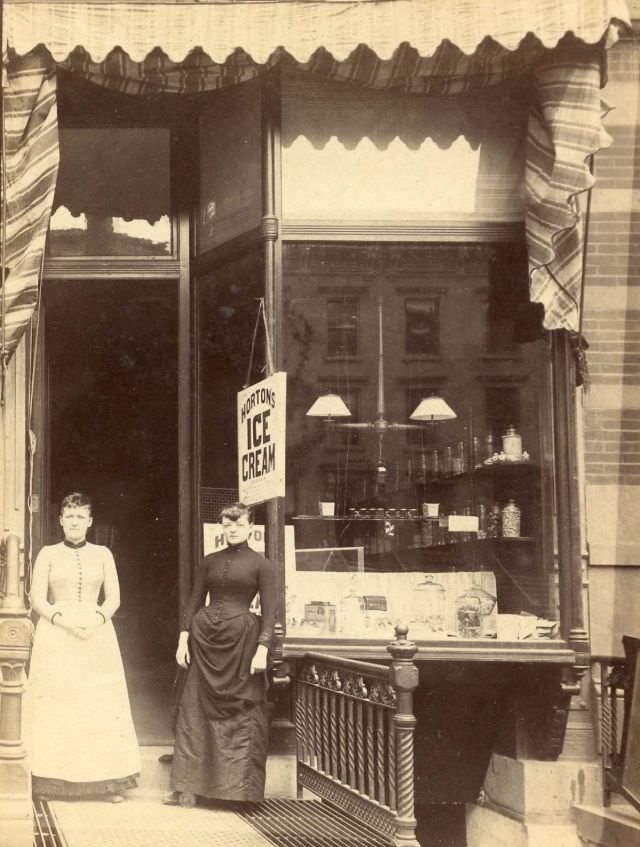
Ice cream shops were a growing novelty in 1880s American cities. Horton’s Ice Cream was a well-known New York brand during this period, and storefronts selling their product attracted curious and eager customers. Ice cream was still a treat associated with warmer months, when demand for something cold and sweet ran high.
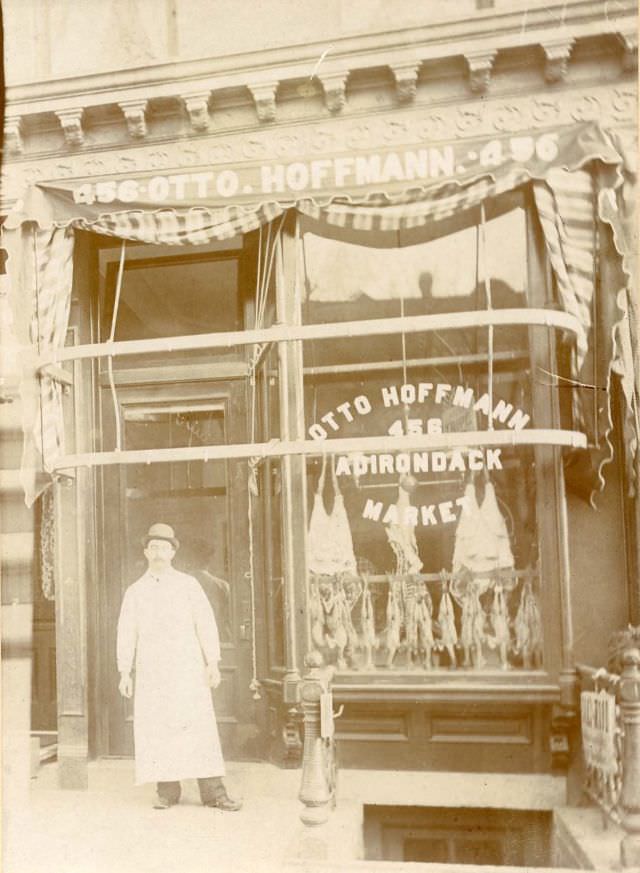
By the 1890s, meat markets had become even more established as essential retail businesses. The butcher’s apron and the hand-lettered sign above the door were familiar sights across American towns and cities. Markets like Otto Hoffmann’s Adirondack Market traded on regional identity and personal reputation to build a steady clientele.
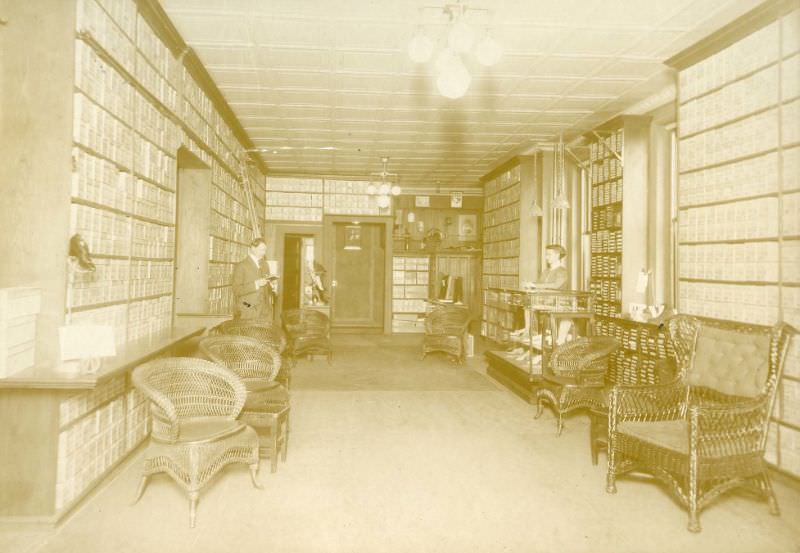
The interior of a shoe store in the 1890s was a carefully arranged space. Rows of shoes lined the shelves, and a sales clerk assisted each customer individually — measuring their feet and retrieving the correct size from the back stock. Ready-made shoes were becoming more affordable by this decade, as industrial production drove prices down.
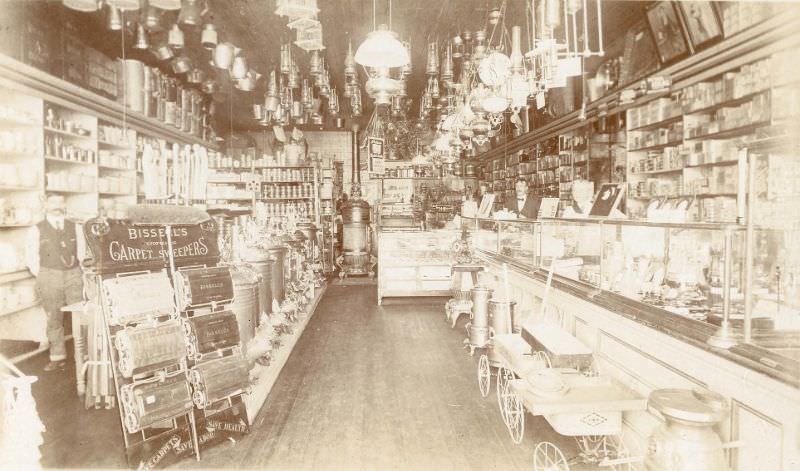
Hardware stores of the 1890s were packed with tools, nails, rope, pipe fittings, and building supplies. These shops catered to tradesmen, farmers, and homeowners alike. The density of goods on display — hanging from walls, stacked on shelves, and piled in bins — made browsing a physical challenge, but experienced clerks knew exactly where everything was.
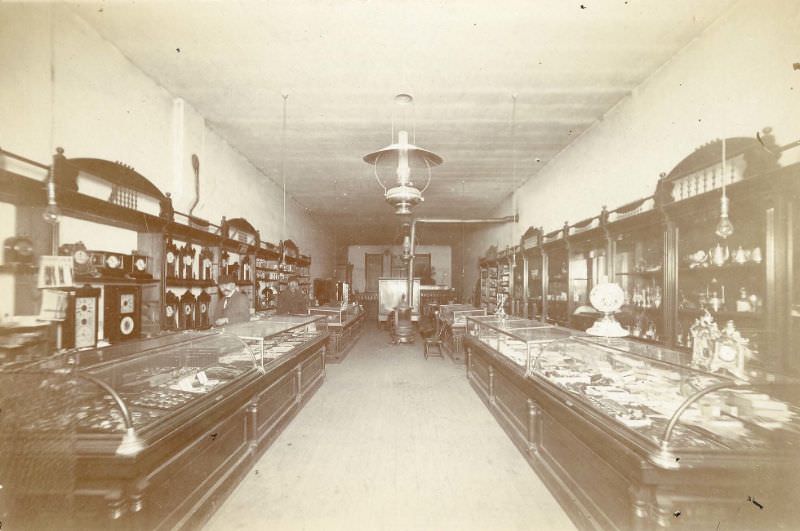
Jewelry and watch stores occupied the upscale end of 19th-century retail. Watches were expensive, precision-crafted items that required skilled repair, and jewelers like Herman Lemp served a clientele with disposable income. Glass display cases showed off rings, brooches, and pocket watches to customers who browsed in a quieter, more formal atmosphere than the bustling grocery or hardware store.
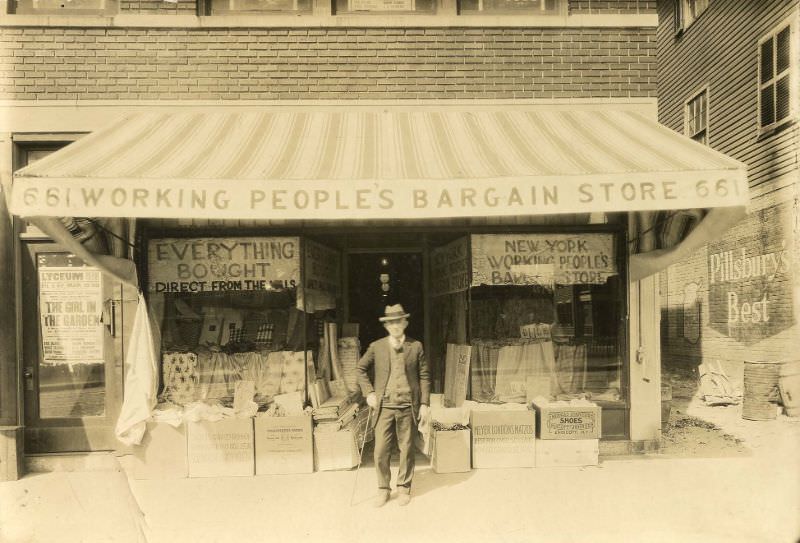
Not all stores catered to the middle or upper class. Shops like the Working People’s Bargain Store in New York explicitly targeted working-class customers with lower prices on everyday goods. The name itself was a marketing strategy, signaling affordability and solidarity with the city’s vast laboring population.
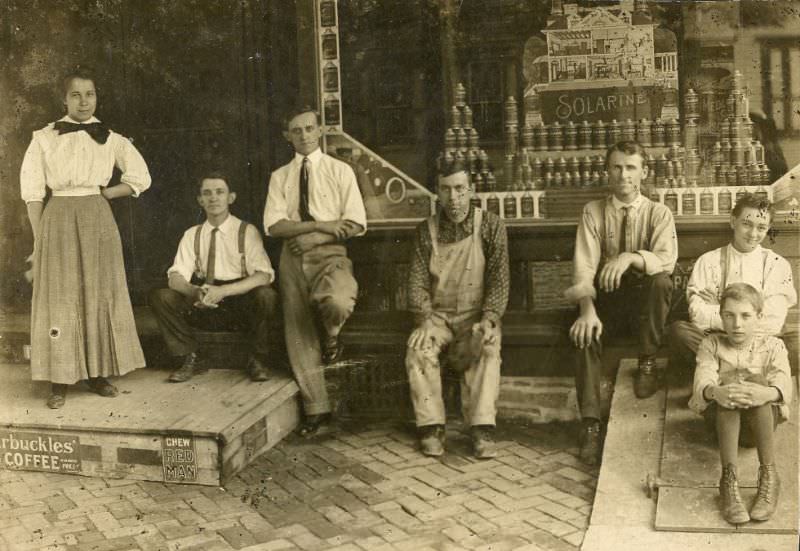
Grocery stores attracted a wide cross-section of the community. By the 1890s, some larger grocery operations had begun stocking a wider variety of canned and preserved goods, slowly reducing the need to shop every single day. Still, fresh produce, bread, and meat required frequent trips, and the neighborhood grocer remained a daily fixture in most Americans’ lives.
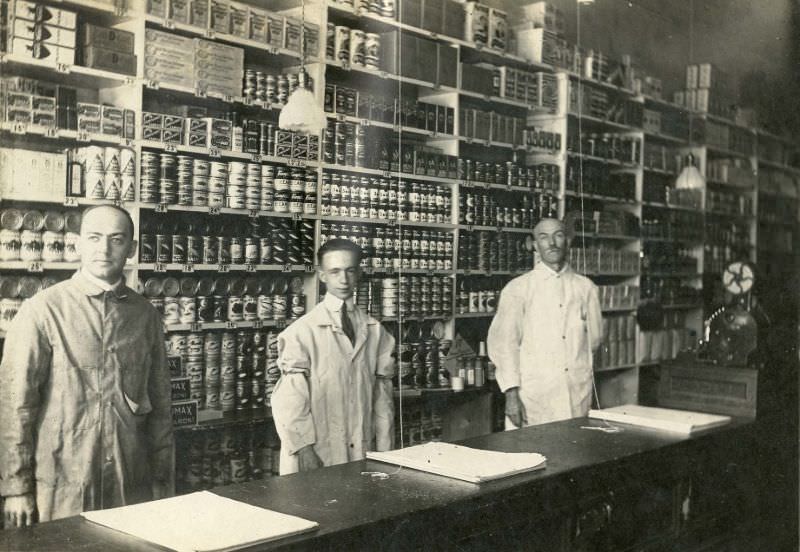
The counter was the heart of any 19th-century grocery store. Customers stood on one side, and the grocer stood on the other, filling orders from a list spoken aloud or written on a slip of paper. Credit was common — many regular customers ran a tab and settled their accounts at the end of the week or month.
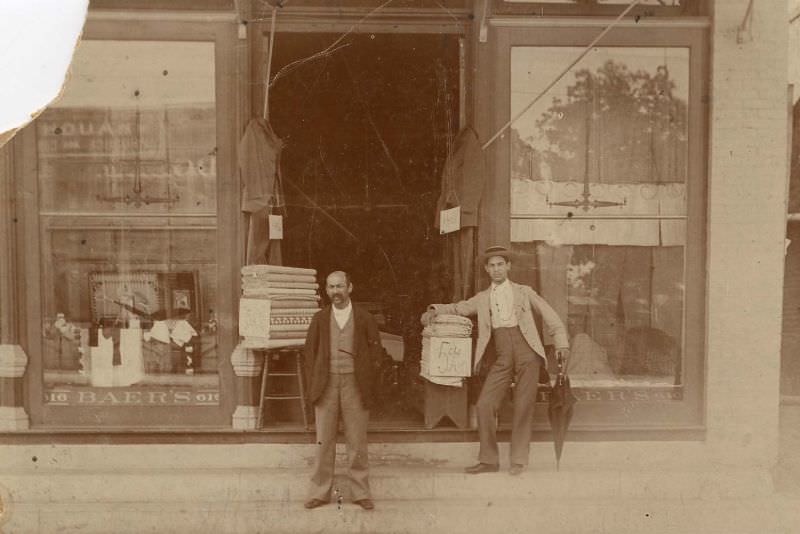
A haberdashery sold men’s clothing and accessories — hats, shirts, ties, and gloves. These shops were a staple of 19th-century commercial streets, serving men who needed both work clothes and finer dress attire. The variety of retail establishments captured in these photographs reflects just how specialized and community-driven American commerce was before the age of mass retail.




