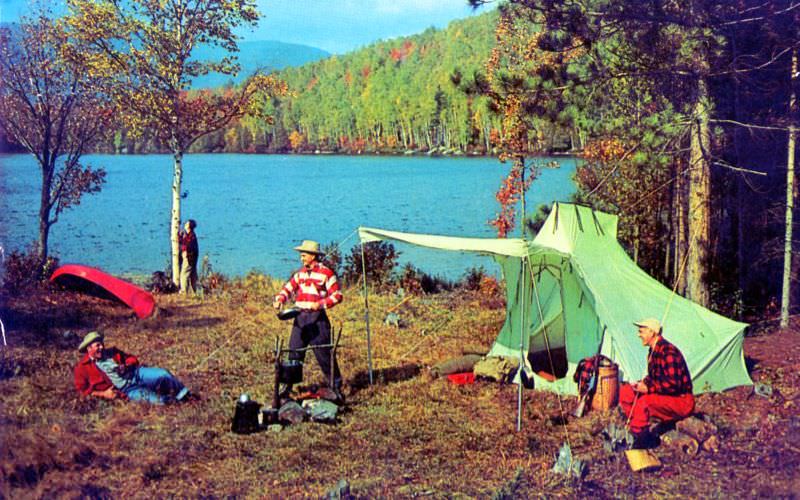
By the 1950s, camping had moved well beyond its early-century reputation as a pastime for the wealthy. Families from all walks of life were loading up their cars, hitching trailers, and heading out to national parks, state parks, and coastal campgrounds across the country. It was a decade when the open road felt full of promise, and spending a night — or a week — under the stars became a genuine American tradition.
Camping, at its core, means staying away from home overnight, using tents, cabins, or vehicles rather than built-up lodging. What set the 1950s apart was the boom in car ownership and the expansion of the national park system, which gave millions of Americans easy access to wilderness they’d never seen before. From the forested hills of Pennsylvania to the rugged coasts of Washington State, campgrounds filled up every summer.

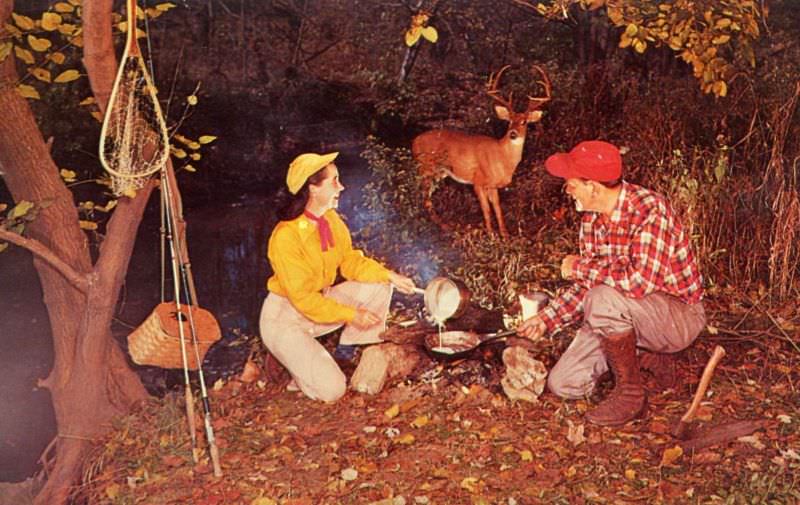
Wildlife encounters were a natural part of the camping experience. Spotting deer near a campsite, like this buck in West Nyack, New York, was a common thrill for families venturing into wooded areas. The Pacific Northwest offered a completely different kind of scenery — dramatic, windswept, and vast.

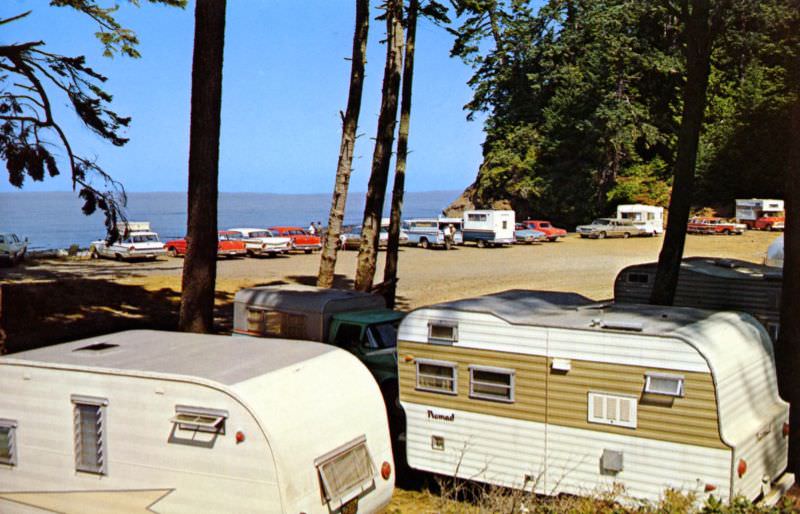
Washington’s Olympic Peninsula drew campers seeking some of the most untamed landscapes in the country. Its beaches, dense rainforests, and mountain ranges made it a destination unlike anywhere else in the lower 48. Organized youth camps also thrived during this era, teaching children skills like cooking, navigation, and cooperation.

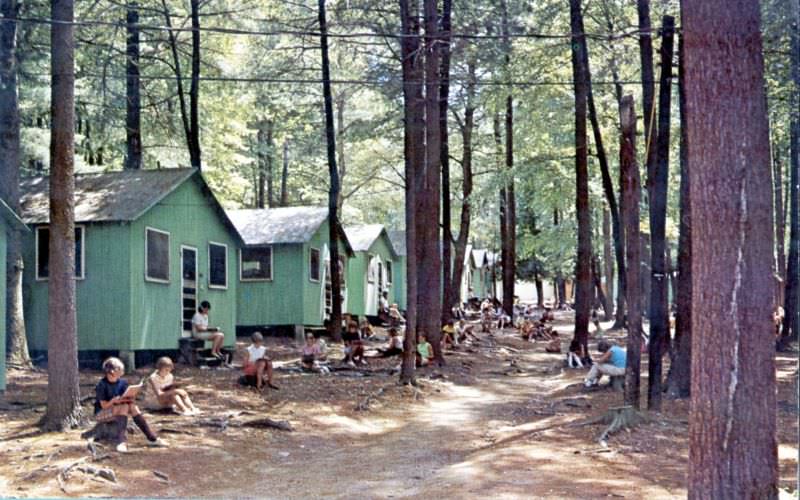
Camp Nawakwa in Arendtsville, Pennsylvania, sat nestled in the rolling hills of Adams County. Camps like this one were fixtures in the lives of American children during the 1950s — a place to spend the summer away from city life. State parks around the country offered a more family-oriented option, with developed campgrounds that balanced convenience with nature.


Bennett Spring State Park in Missouri and the parks of Door County, Wisconsin, were popular stops for Midwestern families. Both areas offered fishing, hiking, and quiet evenings by the fire. Along the Washington coast, camping near Port Angeles meant waking up to the sight of the Olympic Mountains rising above the tree line.

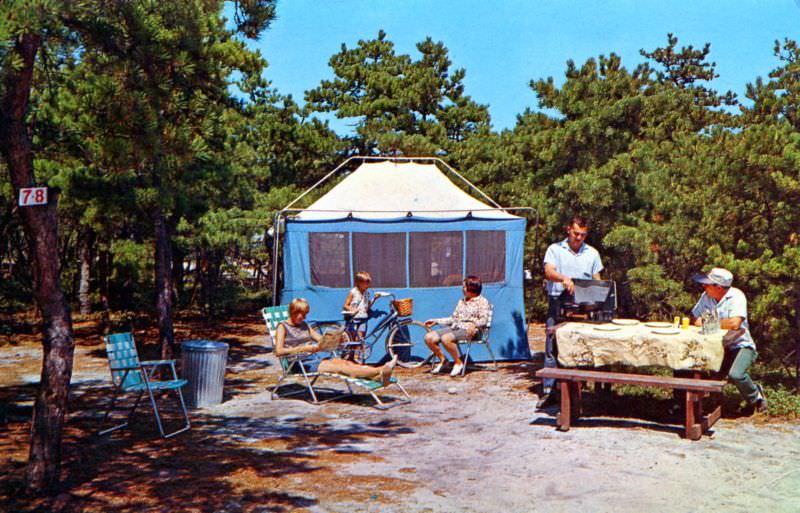
Cape Cod drew campers to the Atlantic shore, where the National Seashore provided miles of protected coastline. North Truro, sitting at the narrowest point of the Cape, was a favorite spot for those who wanted sand, sea breeze, and simplicity.

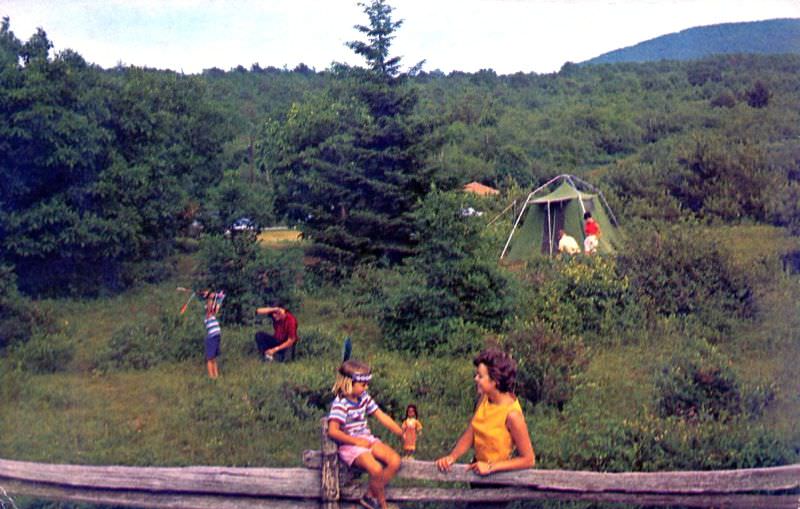
For children, camping meant freedom. At Shenandoah National Park in Virginia, kids roamed campsites, explored trails, and played in the open air with little supervision needed. The park’s long stretch of the Blue Ridge Mountains made it one of the most visited in the East.

Mealtimes at camp had their own rhythm. In the Pocono Mountains of Pennsylvania, groups gathered around camp stoves and picnic tables for what campers called “chow time” — a no-frills meal that somehow always tasted better outdoors.

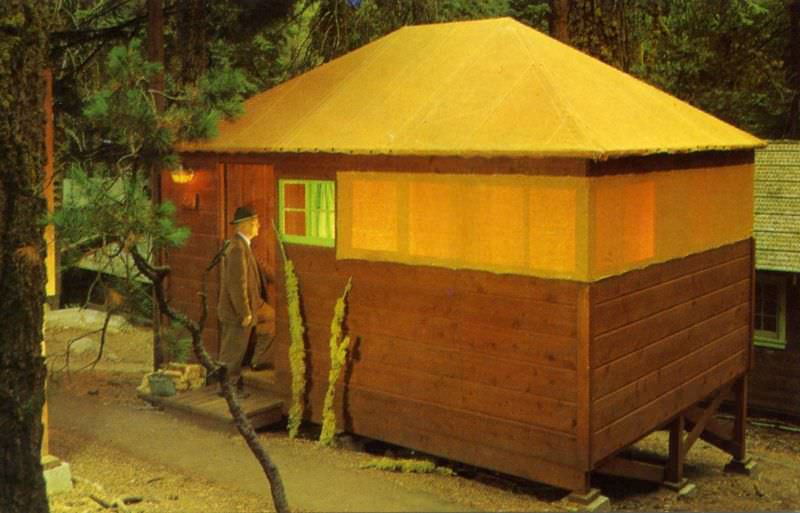
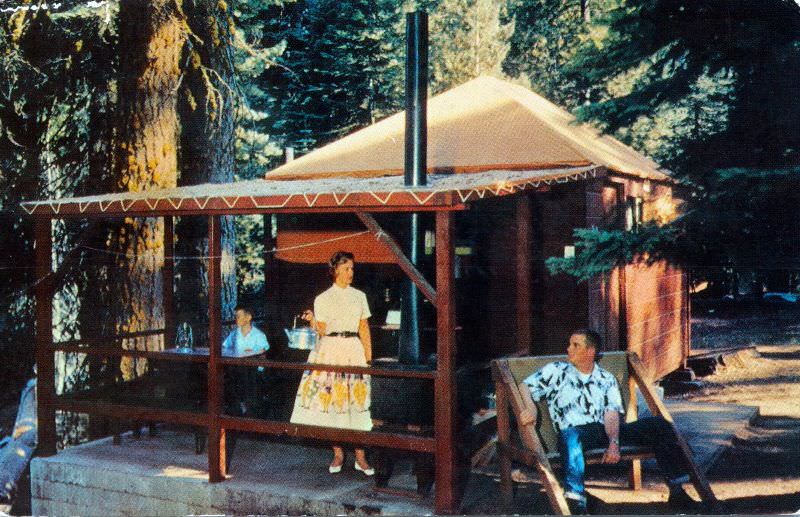
Out west, Sequoia and Kings Canyon National Parks offered something extraordinary: camping among the largest trees on Earth. The parks provided comfortable cabin accommodations for those who wanted shelter without sacrificing the forest setting.

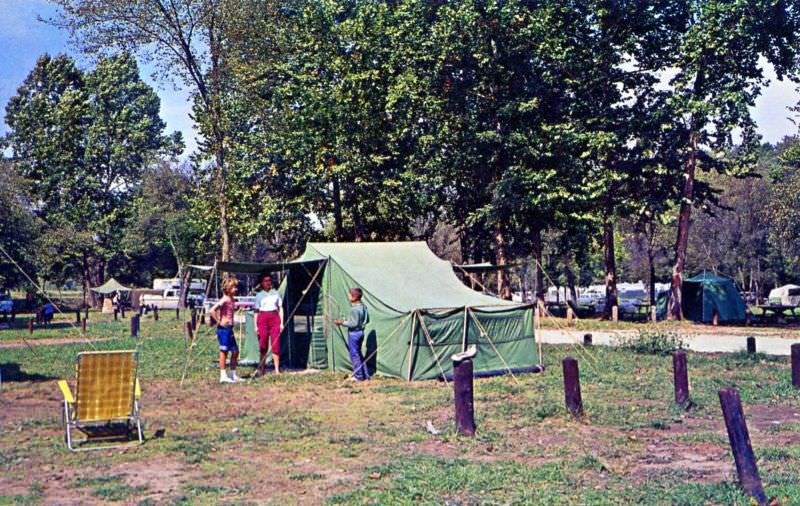
Family camping in the Midwest looked different from park to park. In Elkhart, Indiana, campsites filled with tents and folding chairs as families settled in for the weekend. Back in California’s giant sequoia groves, even everyday tasks took on a different feel surrounded by ancient trees.


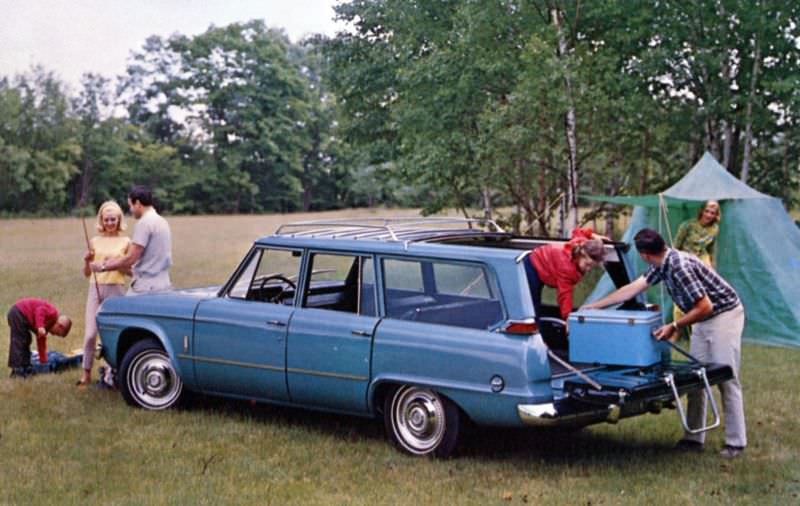
The 1950s also saw a rise in vehicle-based camping. The Studebaker Wagonaire was one of several station wagons that became synonymous with the American family road trip, capable of hauling gear across hundreds of miles of highway.

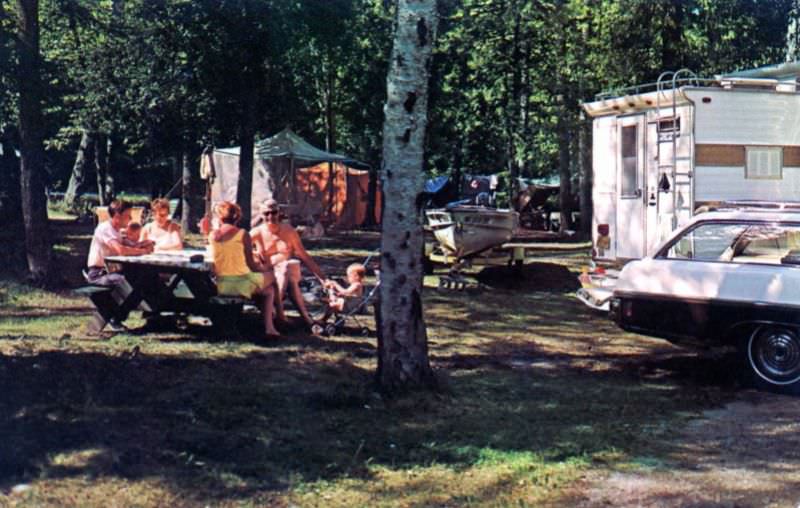
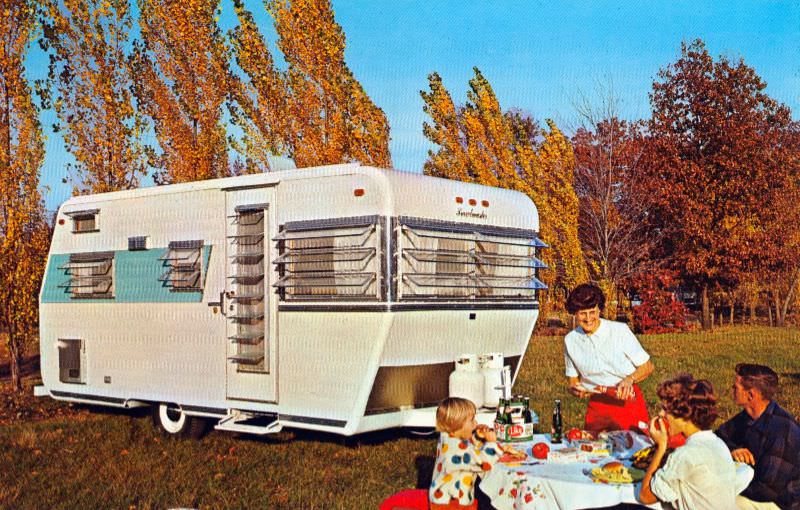
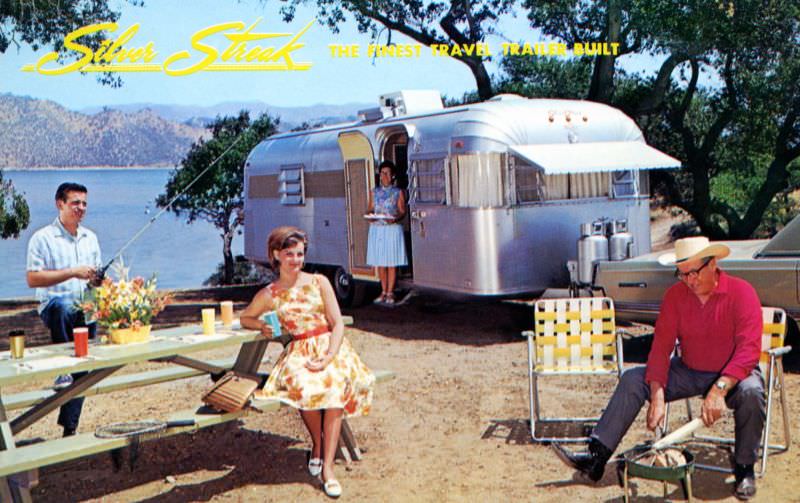
Travel trailers took vehicle camping even further. Silver Streak trailers, built in El Monte, California, were known for their sleek aluminum bodies and durability. They gave families a self-contained home on wheels — beds, a kitchen, and shelter all in one unit.

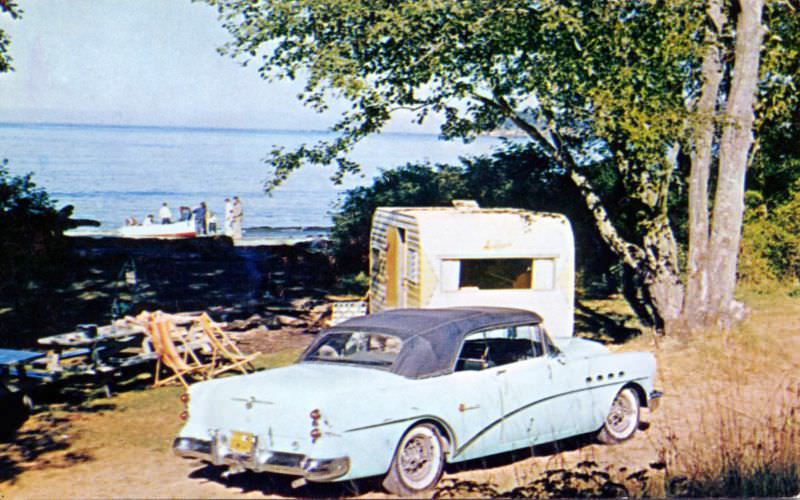
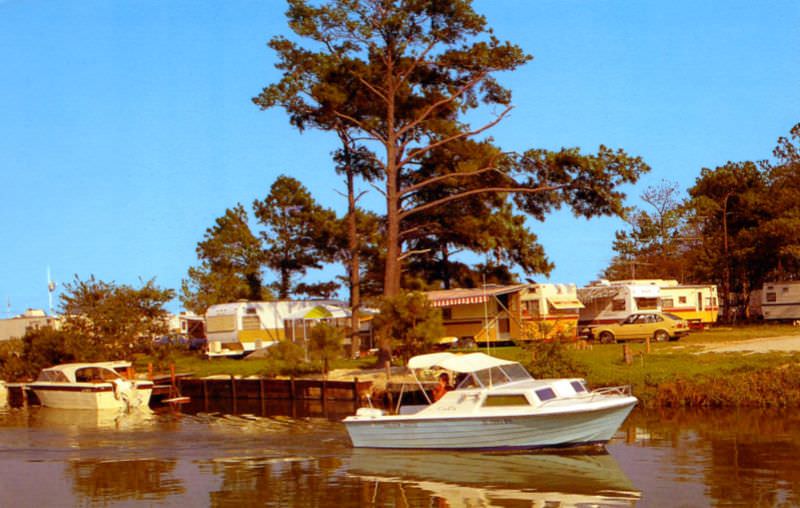
Trailer parks and campgrounds designed specifically for RVs and travel trailers became a business of their own. On the Delaware coast, Treasure Beach Campground at Little Assawoman Bay offered trailer sites right along the water, combining the ease of coastal access with the comforts of a rolling home.